Archive for the ‘Icons & Iconoclasts’ Category

e type

The E Type not ‘Pete’ the painter. Never owned or driven one but always loved the things…

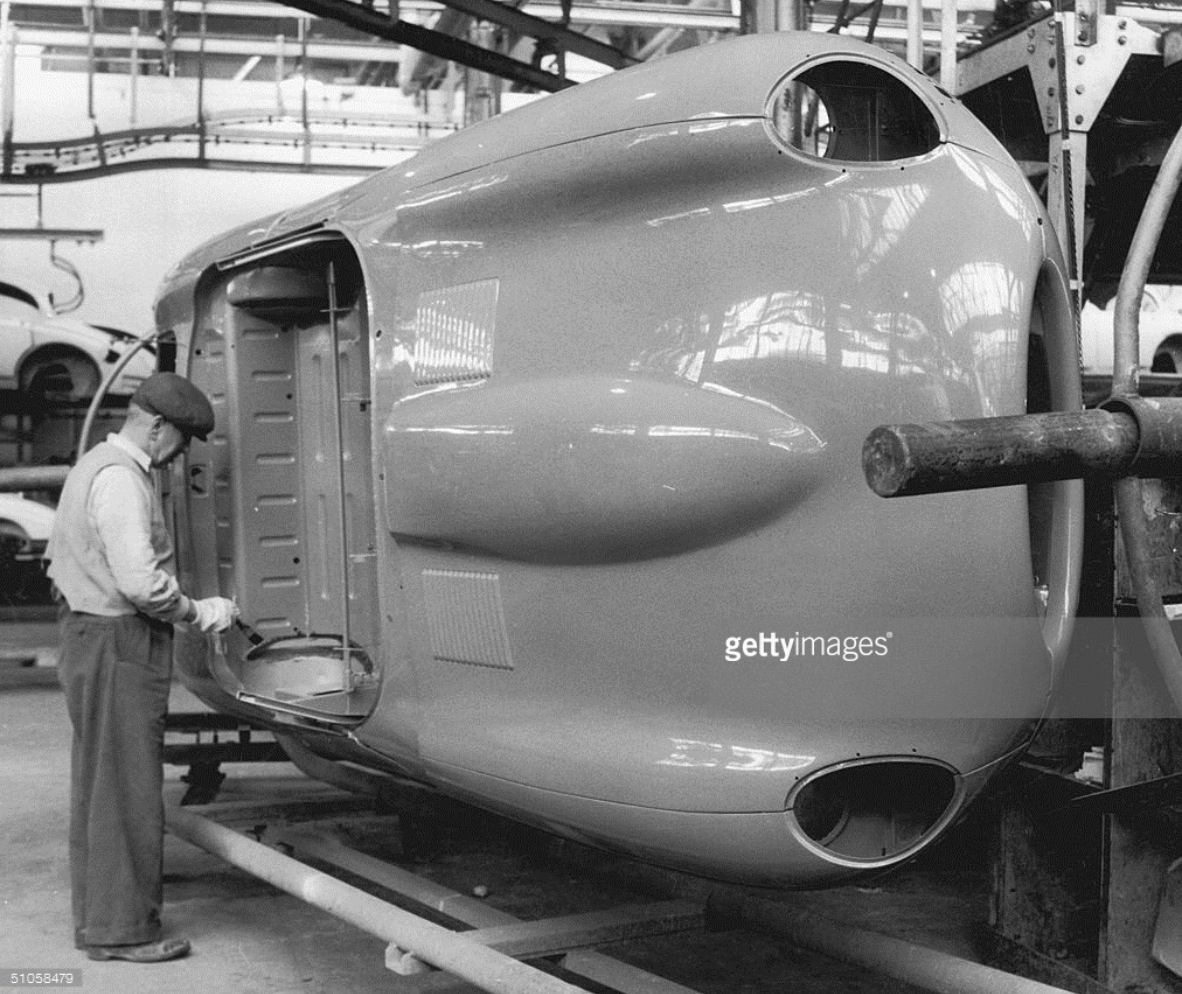
The shot is dated 25 May 1961, ‘pete’ is completing the ‘computer aided finish’ of the cars luscious body, looks like a house-brush to me! I’ve got a nice E Type article ready to go, must get reader Rob Bailey, an old Alfisti, racer mate and E Type owner to pen me two paragraphs about ‘the owners experience’ then its done!

The ‘E’ was released, export only at first from March ’61, so this is an early-build 3.8 drop-head in the Browns Lane, Coventry paint shop.

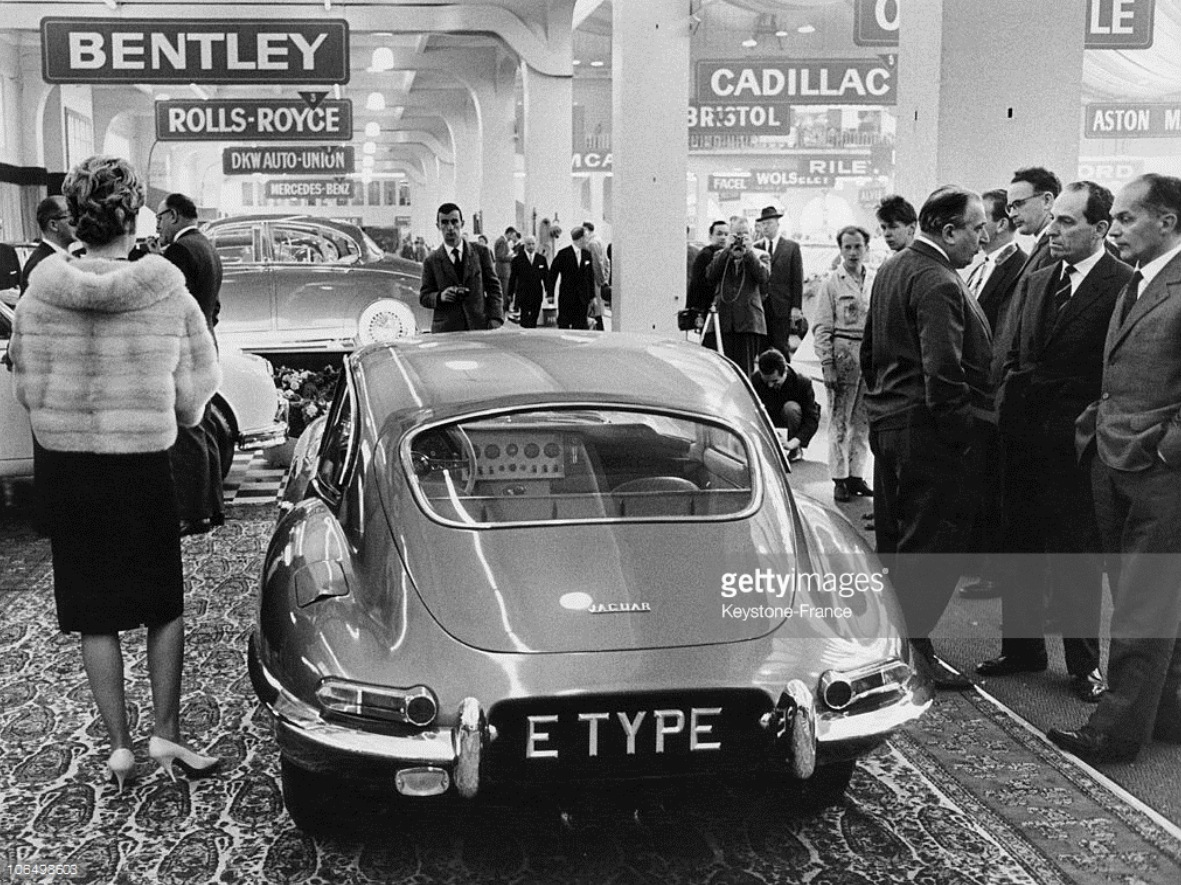
The picture below is at the Geneva Show in November 1961.

etype 2

Credits…Getty Images

The shot below is again Browns Lane, the production lines idle on 14 February 1972, during the UK Miners Strike. On the line are V12 E’s and XJ6′, has their ever been a more curvy, muscular but handsome sedan? ‘Grace, Space, Pace’ was Jags sedan advertising tagline of the sixties, says it all really!

Tailpiece…

jags

MCR July 16 a primotipo

For many of us, it’s probably difficult to imagine life in the immediate post-war with the hardships placed on society by the hostilities – dependant upon our age of course. Certainly many of our parents and grand-parents had a frugal existence for at least the first 10 years after WW2 ended. A family with a car was an exception, not the rule. The point of having a car made even more difficult with fuel rationing. So to be involved in motor sport wasn’t often on too many people’s minds, but it was on 2 young enthusiasts, one of whom could tap into his dad’s vast experience. It of course, also helped they had the right connections. But things could have been a lot different if the original intent of building a ‘mud plugging’ Trials special had eventuated.

MCR July 16 b primotipo

July 1946 Prescott paddock John & Charles Cooper with the prototype Cooper Special 500 (Motor Sport)

To indulge in such motor sporting pleasures in early post-war a few quid no doubt helped. Eric Brandon, then 25, with access to his family’s Halsey’s Electrical business could help there. He was almost 3 years to the day older than his toolmaker mate, John Cooper, 22, and his experienced 52yo dad, Charles with their Surbiton Garage facilities at their disposal. But after hours! This meant mud plugging was quickly scratched from the agenda when Cooper junior was exposed to what would become ‘The 500 Club’ movement. Having only come into the thoughts of a group of  Bristol Aeroplane Co Motor Sports Club enthusiasts nearing the end of 1945 and slightly later the concept gained publicity in the pages of 3rd April 1946 The Motor.

MCR July 16 c primotipo

Go to British Pathe to see a great film showing John Cooper being a rascal around Surbiton in Cooper T2.

http://www.britishpathe.com/video/racing-car/

Seventy years ago in 1946, circuit racing was in limbo and needing to find a proper home again. There had been an event in North London’s Cockfosters estate, prior to its full development on 14th July 1945. But the likes of Goodwood, Silverstone, et al were still pipe dreams for enterprising Motor Clubs to demob from the War Ministry. Until such, Hillclimbing and Sprints, or Speed Trials as they tended to be called had to suffice. So the ‘Coopers got coopering’ and between them turned out their interpretation of a small 500cc racing car after the odd favour was forthcoming. Not least getting ones hands on a Speedway JAP engine and rear end damaged Fiat Topolinos to graft the salvaged front end/suspension from the baby Fiats together. One of which was supplied by a man, who would also build racing cars, John Heath of HWM.

The 5 week effort to build the prototype of what would be the two early JAP motorcycle-engined Cooper specials saw Eric & John each have a birthday just prior to the shared competition debut of the new Cooper special at the 27th  & 28th  July 1946 Prescott Hillclimb. However, in the run up to the event (Friday 26th) that rascal John, with Cooper Garages’ trade plate ‘307 PD’ took the prototype for a spin and caused a bit of a racket around Surbiton. Even so, it wasn’t enough to stop the Cooper special’s Prescott debut going without hiccups, nor another that would follow. Just 500cc of J A Prestwich, Charles Cooper-breathed upon ‘Speedway’ JAP engine produced enough torque to set forth a series of engine mount failures and head scratching to solve it from continuing to happen. Also at the July Prescott meeting, John fluffed a gearchange and bent a valve. They were however, young, keen and although not the first within the ‘The 500 Club’ movement to create their own cars, one of the very earliest to have a car running. Just two 500s built and ran before the Cooper. In the process meaning they were about to get noticed and soon there was plans afoot to help make motor sport easier to be a part of.

MCR July 16 d primotipo

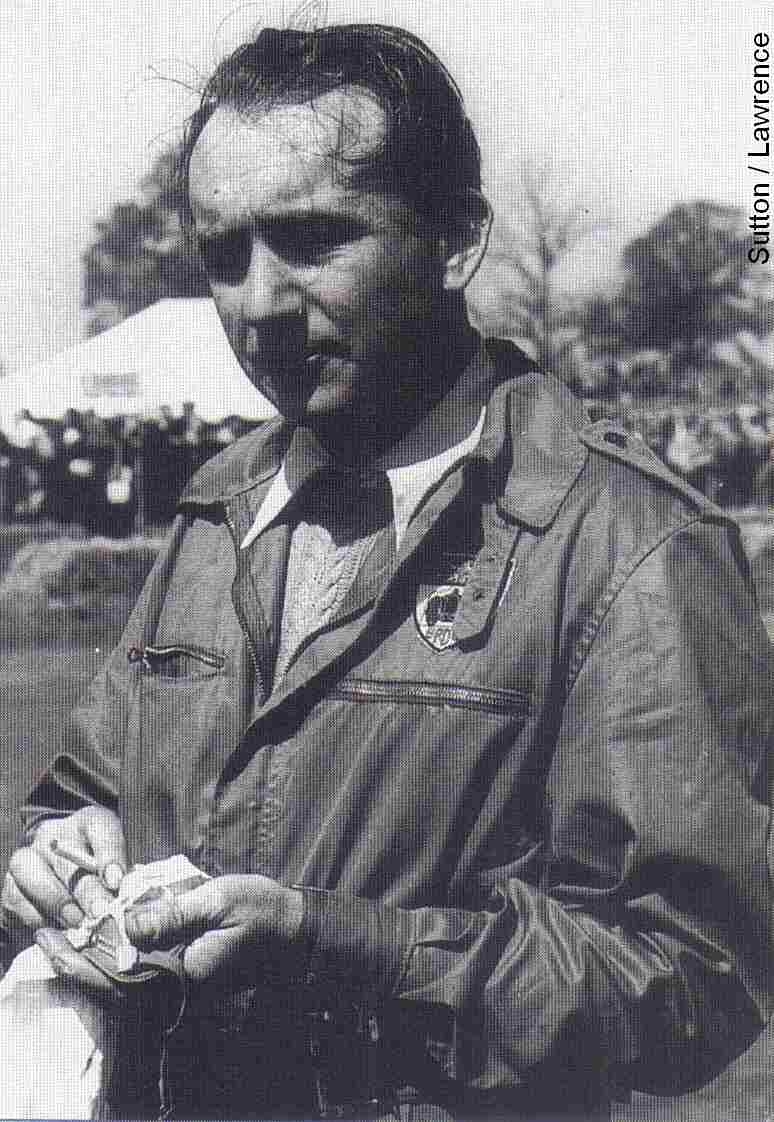
Eric Brandon (Sutton/Lawrence)

Essentially John and Eric’s 1946 events with the Cooper special consist of 4 events. That 1st Prescott, followed by another 31st August event with further engine mounting issues as previously mentioned. Their 3rd event was the 7th September Brighton Speed Trials on Madeira Drive. Early that morning bringing on another of John’s Kingston by-pass tests! As he stated in an April 47 IOTA feature “It was a joy to be alive though the occupants of the houses probably thought otherwise, and I believe blamed the “Hellish” racket on to Jeff Taylor whose works are situated nearby and who was also racing at Brighton that day.” Jeff was in fact Geoffrey Taylor, who built Alta racing cars in the area and getting the blame that time. But no doubt the locals would soon learn who the real culprits were as they spotted Cooper racing cars on their streets and by-ways in the years to come!

Brighton showed promise with their efforts to iron out the bugs in the Cooper special when both John and Eric ran entry #29 Cooper in two classes. John in the ‘Racing Cars up to 850cc’ – that he duly won with a 35.81 second run over the 1 kilometre course. Eric running the ‘Racing Cars up to 1100cc’ for a 4th place in class. Amongst their fellow competitors were Alec Issigonis and George Dowson with their Lightweight special and Marcus Chambers running his Austin. A name or two, part of BMC and Mini folklore. ‘Issi’ came second to Cooper and Dowson won the 1100 class.

MCR July 16 e primotipo

Part of 15 September 1946 West Court entry list (S Dalton Collection)

The fourth 1946 meeting for John and Eric was the 15th September, West Court Speed Trails – run by the Hants & Berks Motor Club at Finchhampstead. That day dawned with hostile reception from Cooper senior when awoken by Eric breaking a manhole cover in the process of loading up the car below Charles Surbiton Garage flat. Despite his threats of damage to the Cooper special, West Court became a successful day for John & Eric. The full entry list reads as a who’s who of British motor sport of the day and into its future – Sydney Allard, Roy Salvadori, Daniel Richmond and Ken Wharton to name a select few.

With 13 entrants in Class 5 (Racing Cars up to 1100cc) and what appear to be 10 starters, John and Eric did themselves proud with the following times.

58 J Cooper Cooper Special 498 1st run 25.7; 2nd run 24.73

60 E Brandon Cooper Special 498 1st run 27.66; 2nd run 24.42

Giving a few other drivers and larger class cars a fright, because they too could only muster 24 point something second passes at best. After this, enthusiasm down Surbiton way was on a high.

MCR July 16 f primotipo

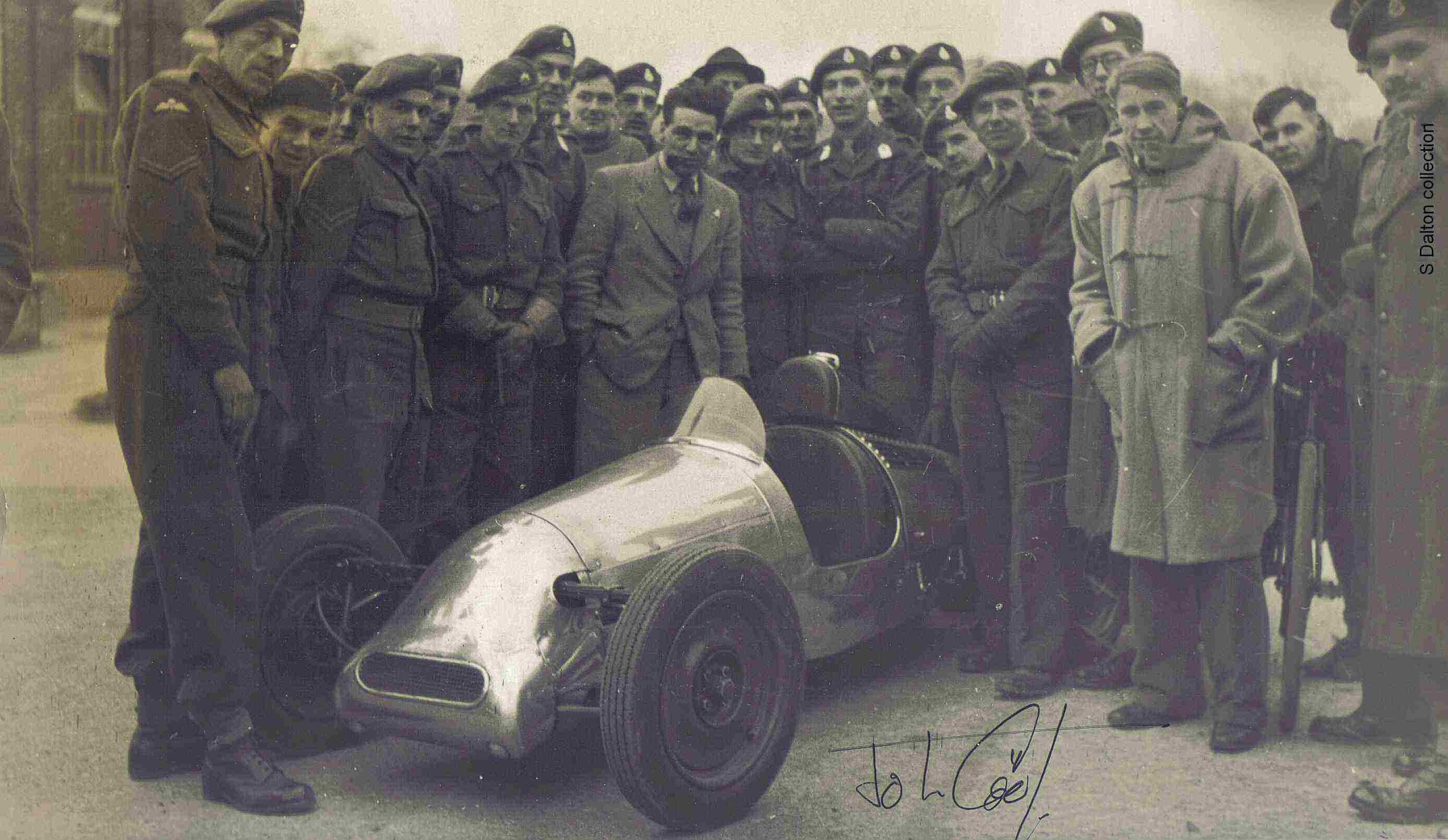
Upon showing this photo to Mr Cooper (as I always called him) in 1997, he recalled that it was a visit he made with the Cooper special prototype to the Cadets of Sandhurst – Royal Military Academy. He’s the one with the pipe in the middle. (S Dalton Collection)

So by the end of 1946, the 500 Club was gaining popularity. In ‘The Sporting Side’ feature of the 8th January 1947 The Motor, there’s a piece titled ‘The 500 Virus’ stating the Club already has a membership of 247 with 67 cars under construction. Garnered so successfully because of the club’s ethos to help amateur racing car builders get started.

Showing some of his astute ways, Charles Cooper knew that not everybody had the wherewithal to build a racing car. So Cooper’s made mention in early April 1947 of their intent to start production to ‘make hay’ of this 500 virus. At the time they were in the process of completing a small streamlined sports car with a Triumph motorcycle engine and Eric Brandon’s own slightly tweaked second version of the prototype Cooper special. A couple of the ever so slightly visible differences between each car being the nose/grille treatment, slightly different in shape to #1 and more sloped placement of the grille. While on #1’s there is 2 spaced dimples under the grille area and on its RHS cockpit area there’s a lever poking through the bodywork and Eric’s car doesn’t feature this. The head fairing on each of the engine covers differ too, on #1 it looks like an afterthought and on Eric’s it’s made to be there, plus dimensionally smaller. There was also a lone inch added to the wheelbase of Eric’s car to accommodate his frame a little easier. As best I can find this car made a brief appearance with #1 on the Saturday of the 2 day, 26th – 27th April 1947 Prescott practice meeting and there’s photographic evidence of them together at the 11th May 1947 Prescott meeting. Around that time there was also a bit of publicity for the Cooper-Triumph sports car in the pages of 23rd April 1947 issue of The Motor and a month later in The Autocar.

Events-wise 1947 brought forth more variety of events, seeing John and Eric criss-crossing England. But in the main that’s not what this feature is about. It’s just a reminder of the efforts those 3 men and their little ‘childs car’ – that some press christened it at the time – played 70 years ago in creating what many Cooper racing car and Mini Cooper enthusiasts enjoy to this day. We know who got the last laugh! Retrospectively, in Cooper model ‘Type-number’ code, the Cooper special prototype became T2, Brandon’s T3 and the Cooper-Triumph T4. With the T1 title entrusted to the Cooper-Austin 7 special of 1935 – John’s 12th birthday present.

This Saturday, 30th July there is a special 70th anniversary meeting being held at Prescott Hillclimb to celebrate Cooper. https://www.prescott-hillclimb.com/

MCR July 16 g primotipo

Artists impression of Eric Brandon Cooper 500 by Peter Garnier (Iota)

Credits…

Special thanks to Stephen Dalton for writing the article and use of images from his collection

The Motor, MotorSport, British Pathe, Sutton Images, Iota, Dacre Stubbs Collection/Martin Stubbs

Tailpiece: Dwarfed by the 1904 Mercedes 18/28, John Cooper sits in the 500-based, Cooper-Triumph T4 sports car at the 1947 Brighton Speed Trials (Dacre Stubbs / Martin Stubbs collection)

MCR July 16 h primotipo


teutonic tiller

Wonderful drawing of Fangio’s 1954/5 Mercedes W196 cockpit. Was there ever a more complex GP car than this in the context of ‘its time’!? A very successful one mind you…

Click here for an article on this fabulous car; https://primotipo.com/2015/10/09/mercedes-benz-w196-french-gp-1954/

Drawing Source: Setright ‘The Grand Prix’…

image

Evocative Jesse Alexander pre-start shot of the Mario Andretti/Lucien Bianchi Ford GT Mk2 and a young Ford fan…

The American, Italian/Belgian combo survived 97 laps before retiring with head gasket failure of their 6982cc pushrod V8.

Andretti was the ‘young gun’. He won the USAC Championship in 1965 and had plenty of wins too in 1966, but had limited sportscar experience, Le Mans, was his first GT40 race! Bianchi was the opposite, vastly experienced in such cars with three straight Tour de France victories from 1957-9 and a Sebring 12 Hour win with Jo Bonnier in 1962 to his credit.

The pair started 12th and steadily worked their way up the field, but luck was not on their side, retiring in the eighth hour.

They hit it off though, Holman & Moody paired them together again in a MkIV in 1967.

Le Mans 1966 Ford prep

Pre race preparation, Hawkins/Donohue Ford Mk2 in the foreground, the #6 Andretti/Bianchi car clear…a military operation! (Dave Friedman)

The GTs’ famously failed to win in the previous two years but Ford made no mistakes in 1966, no less than thirteen of the powerful cars, both GT40’s and Mark 2’s started with Bruce McLaren and Chris Amon victorious in a Shelby American entered Mk2.

They ‘beat’ Ken Miles and Denny Hulme in the ‘infamous form finish’ in another Shelby Mk2.

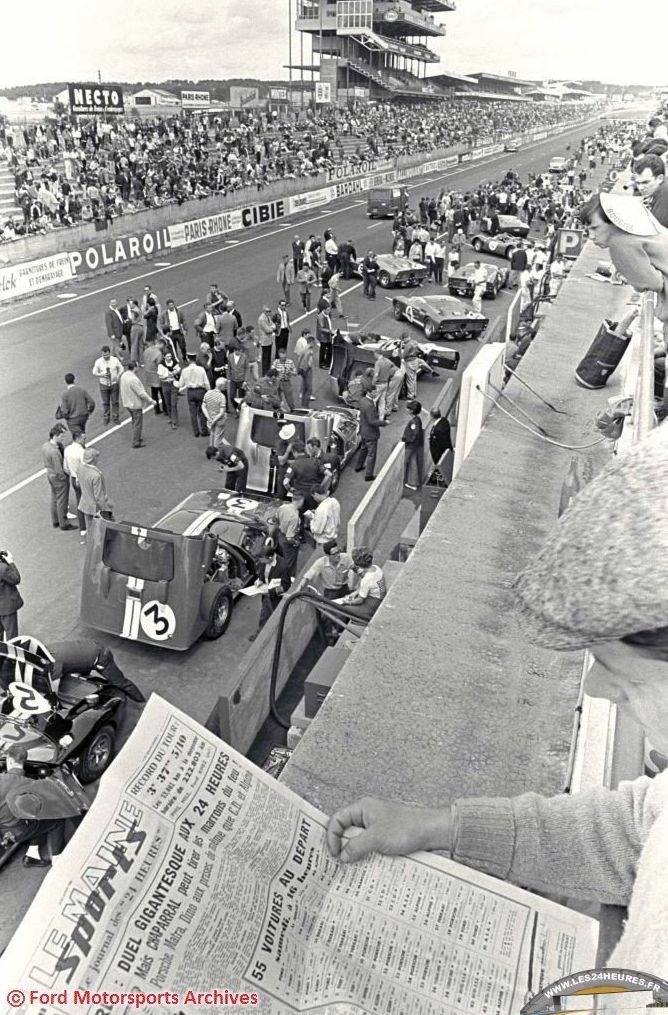
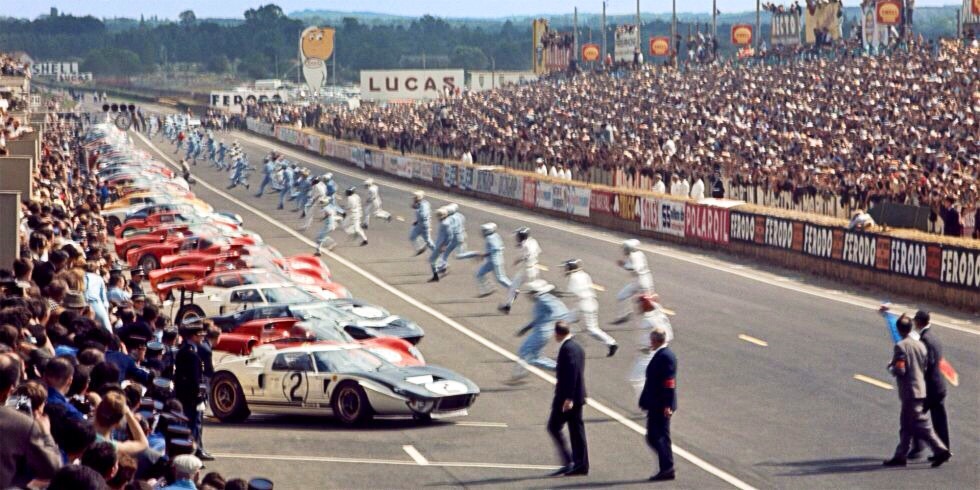
LeMans 1966 grid forming

(Ford Motorsports Archive)

Gridding up pre start, above.

#2 is the victorious McLaren/Amon Mk2, #3 Gurney/Grant Mk2 (DNF), #4 Hawkins/Donohue Mk2 (DNF), and the rest. Captures the moment doesn’t it?

Le mans '66 start

(unattributed)

Le Mans ’66 start, look at that crowd.

#3 Dan Gurney, #4 Paul Hawkins, from grid slot 11!- what a blinder from the race start from the Aussie, #1 Ken Miles, the yellow car alongside is John Whitmore, #2 Bruce McLaren in the winning car- all Ford Mk2, you can just see the tail of the Bucknum Mk2, from 9th on the grid! and the rest.

Hill Le Mans 1966

(Automobile Year 14)

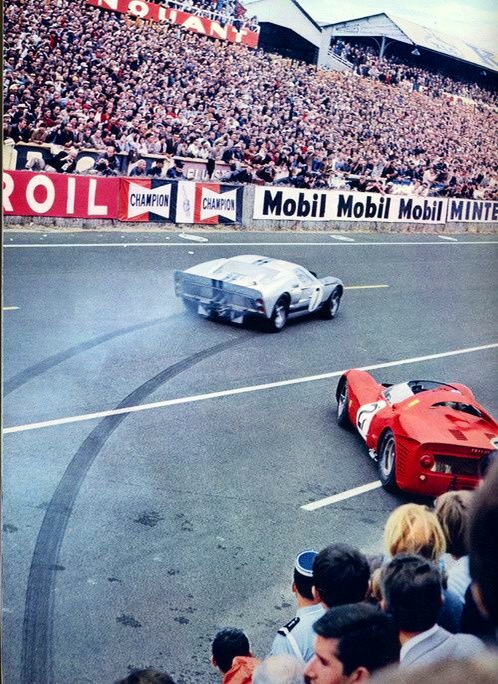
Every man and his dog have used this photograph in online and more traditional media down the decades! I first saw it in Automobile Year- I should check to see who the photographer is- such a marvellous action shot.

Graham Hill squirts his Alan Mann Racing Ford Mk2 off the line leaving the NART Pedro Rodriguez/Richie Ginther Ferrari P2/3 ‘Spyder’ on the line…’slippery diff functioning well.

In a race of incredible attrition amongst the front-runners only three of the thirteen Ford GT’s which started finished and only two Ferrari GT’s of 14 which set off at 4pm were running 24 hours later. The Hill/Brian Muir Mk2 retired on lap 110 with front suspension damage and the Ginther/Rodriguez car on lap 151 with gearbox failure.

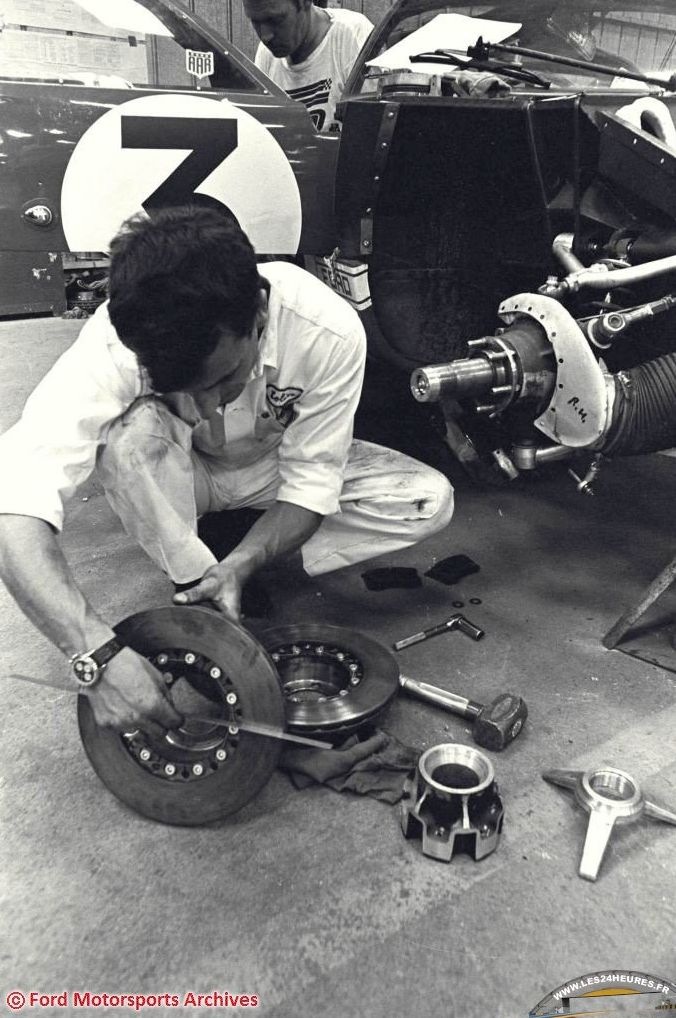
Hub repair

(Ford Motorsport)

A Shelby-American mechanic checks a new disc before fitment to the Gurney/Grant Mk2 hub assembly.

The beautiful standard of fabrication and workmanship of the front upright and suspension assembly clear in this shot. Front suspension comprises double wishbones, coil spring/damper units and adjustable sway bar. Steering arm also in shot, knock off nut etc.

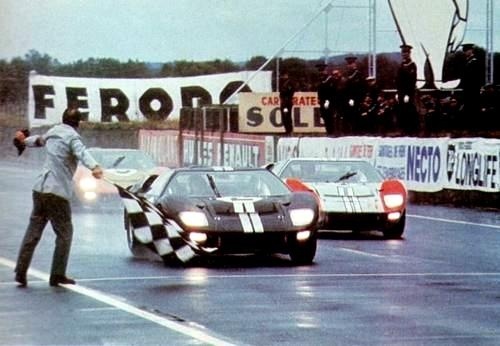
66 Le Mans form finish...

(unattributed)

Almost to the finish…the Shelby American cars of McLaren on the left, Miles on the right, at about this point Miles backs off allowing McLaren/Amon to take the win.

The absolute detail of the finish has several versions but the sequence as follows seems to be generally accepted.

At the race halfway mark four GT Mk2’s comprised the lead group. By 9 am only three Mk2’s were left of the ? which started- all the GT40’s had retired. Ford Director of Racing Leo Beebe was not happy as Ken Miles and Dan Gurney had been dicing for the lead- against team orders- the Gurney/Grant car was the last of the Mk2’s to retire just before 9 with head-gasket failure.

1966 formation finish

(unattributed)

It was at this point that Beebe decided upon a ‘dead heat’ between his two lead cars. This, it was thought,  would stop the competition between the remaining cars and emphasise the win as one for the car rather than the driver.

The organising club, the ACO told him that a dead-heat would not be possible as the McLaren/Amon car, which started from grid slot 2, would have covered a greater distance than the Miles/Hulme car which started from pole- a difference according to the club of 8 and 20 metres depending upon the account.

But, assuming the cars were still running at 4 pm, Beebe decided to push ahead with his plan and instructed Miles to ease his pace at the last pit stop- the Miles/Hulme car led at that point, to allow McLaren to catch up.

Just before 4 pm it started to drizzle again.  Ken Miles whilst pissed off, wants no part of it of the contrived finish, so eases gently before the flag in the photo above, or Bruce surged, depending upon the account, allowing Bruce McLaren and Chris Amon /McLaren to take the win.

Miles was dead in a Ford J car testing accident at Riverside, California within two months. The great British American the lead development driver of the GT40 program was in the view of many the more deserving of the drivers to win the race- but there are many layers to this race finish. Beebe’s successful attempt to get his cars to the finish and over the line first is understandable, to say the least, given the failures of the GT40 and Mark2’s at Le Mans in 1964 and 1965.

In terms of ‘deserving drivers’ lets not forget Bruce did a huge amount of the initial GT40 testing for JW Automotive way back in 1964 and subsequently, not to forget that he raced the cars at Le Mans in 1964, (GT40 with Phil Hill DNF gearbox on lap 192) 1965, (Mk2 with Miles DNF gearbox on lap 45) 1966 and 1967 (MK4 4th with Donohue).

Photo Credits…

Jesse Alexander, Ford Motorsport Archive, Automobile Year

Tailpieces…

image

Andretti and friends before the off (Jesse Alexander)


Ford Mk2 rear suspension

Mk2 business end, Daytona 1967. Note 2 roll bars to counteract the forces on the bankings (Automobile Year)

Finito…


avus 2 cars

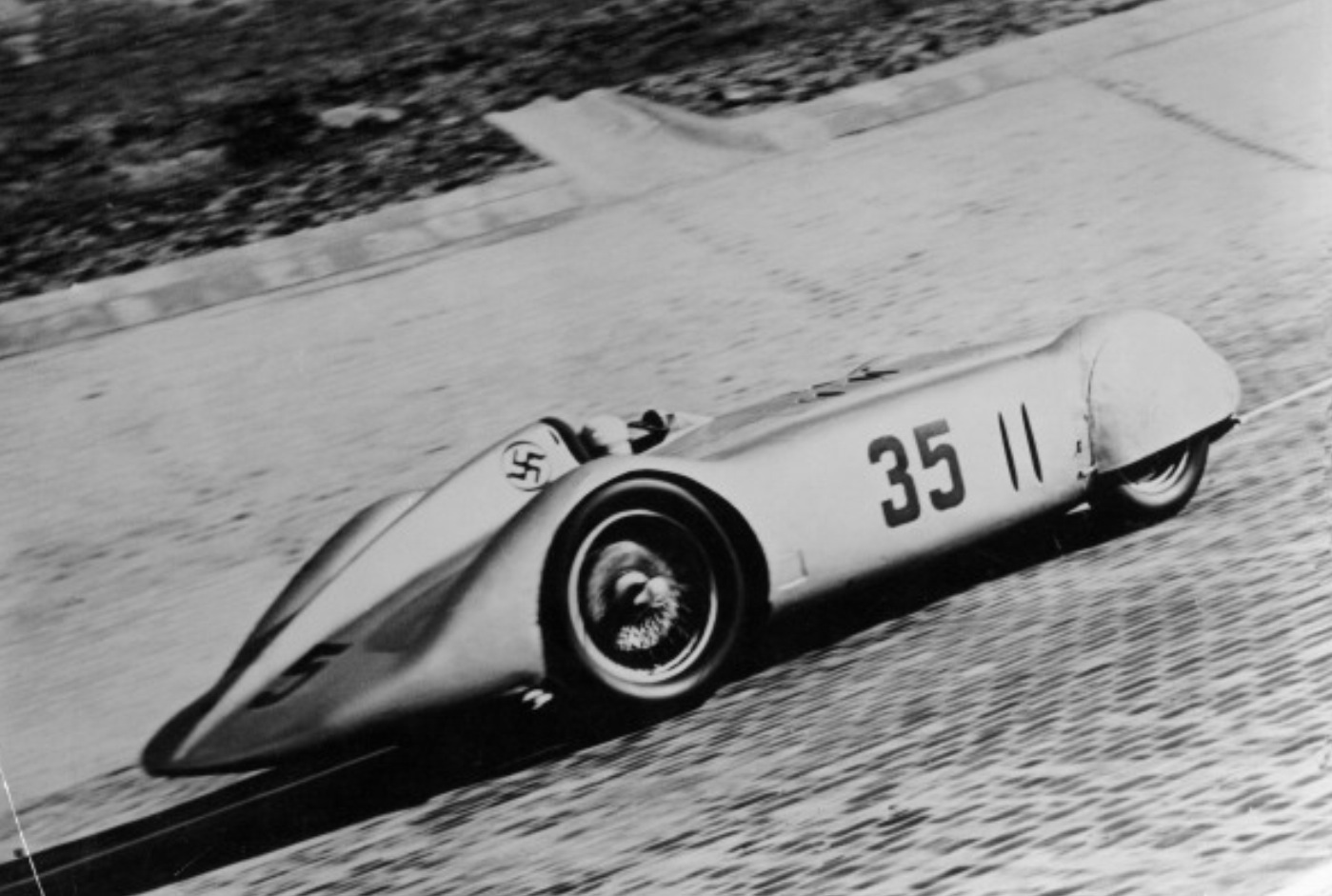
The 1937 Avus-Rennen is one of ‘those races meetings’ I suspect most of us would have rather liked to attend, these photos are of Hermann Lang’s Mercedes W25 during testing the week before on May 22, 1937.

His car is a 1936 speed record chassis rebuilt with a long wheelbase and the ‘standard’ 5.7-litre straight-eight fitted to the W125 GP cars that season.

The final race of the meeting was the fastest race ever until the Monza 500 in 1958, Rosemeyer’s Auto Union fastest practice lap was 176.7mph and the fastest race lap, in two of the heats, was 171.74mph by Rosemeyer and Lang!

avus tower

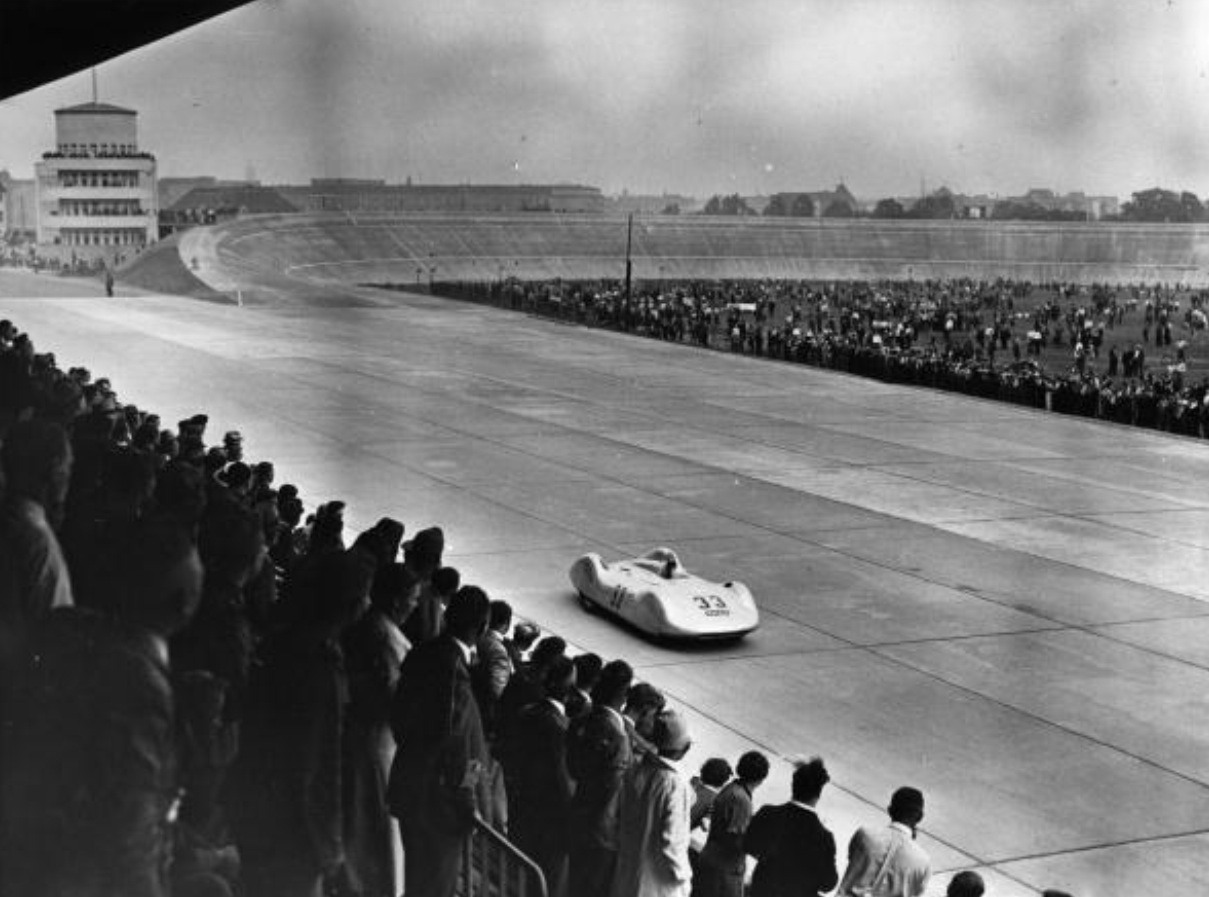
Hermann Lang testing his Mercedes W25 modified 1936 speed record car the week before the 1937 race (ullstein bild)

The Germans didn’t race at Avus during 1936. They were rebuilding Berlin’s fastest circuit in the world into something even quicker with the addition of the ‘Nordschleife’ and massive ‘wall of death’ banking at 44 degrees. Avus was built in 1921 and used for racing until 1998 when it was fully absorbed into Germany’s road network as autobahn #115.

avu banking

avu unload

avu crowd

Rosemeyer and friends AU Type C (Max Ehlert)

The 1937 race was a Formula Libre event, 300,000-400,000 spectators attended- what a spectacle it must have been. Such was the level of national prestige involved the German teams went all out to win, building special cars and testing them in three sessions before the meeting itself.

avus au

Rosemeyer on the Avus banking, Auto Union Type C Streamliner, Hasse or von Delius in AU C Type then Seaman W125 (Ullstein Bild)


avu kids

avu audi unload

AU’s were all Type C V16’s, 2 streamliners (Rosemeyer and Fagioli) and 2 open wheelers (von Delius and Hasse)


avu alfa

Non German cars also rans! Scuderia Ferrari Alfa Tipo 12C-36 of Nuvolari, Brivio and Farina withdrawn before the race

Because of concerns about tyre-life, such was the weight, speed of the cars and tyre-technology of the day, the 30 May event was split into two heats of 7 laps apiece and a final of 8 laps comprising the first four place-getters from each heat.

The heats were won by Rudy Caracciola and Manfred von Brauchitsch in ‘Benz W125 and W25K-DAB(5.6V12) respectively, the final by Hermann Lang’s Mercedes W25K-M125- all these cars were ‘Stromlinien’ (Streamliners), single-seaters with all-enveloping bodywork.

avus race

Caracciola this side in Mercedes W125 and Rosemeyer Auto Union Type C (Ullstein Bild)


avu tree

avu audis

Rosemeyer #31 and von Delius AU Type C’s

Kolumbus.f1 has a well researched, detailed account of this meeting, click here to read it, just scroll down the page, there are a couple of other events before you get to Avus;

http://www.kolumbus.fi/leif.snellman/gp372.htm

During practice for the meeting Lang’s car, with wheel covers fitted was doing 390kmh when trapped air under the car ‘lifted the front wheels from the ground- luckily the driver kept calm and finally managed to bring the wheels back down’…the wheel covers were removed for the race!

avus wheel

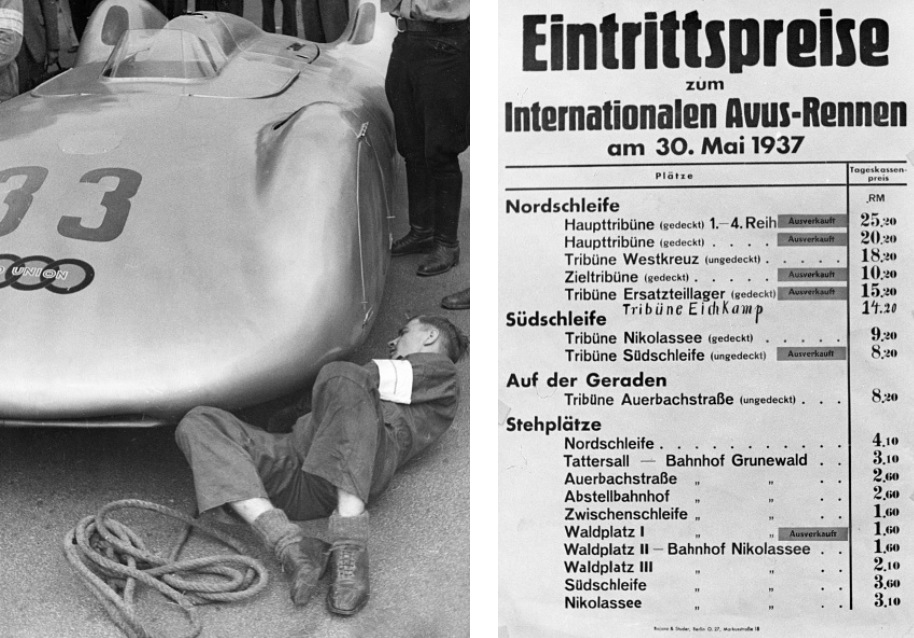
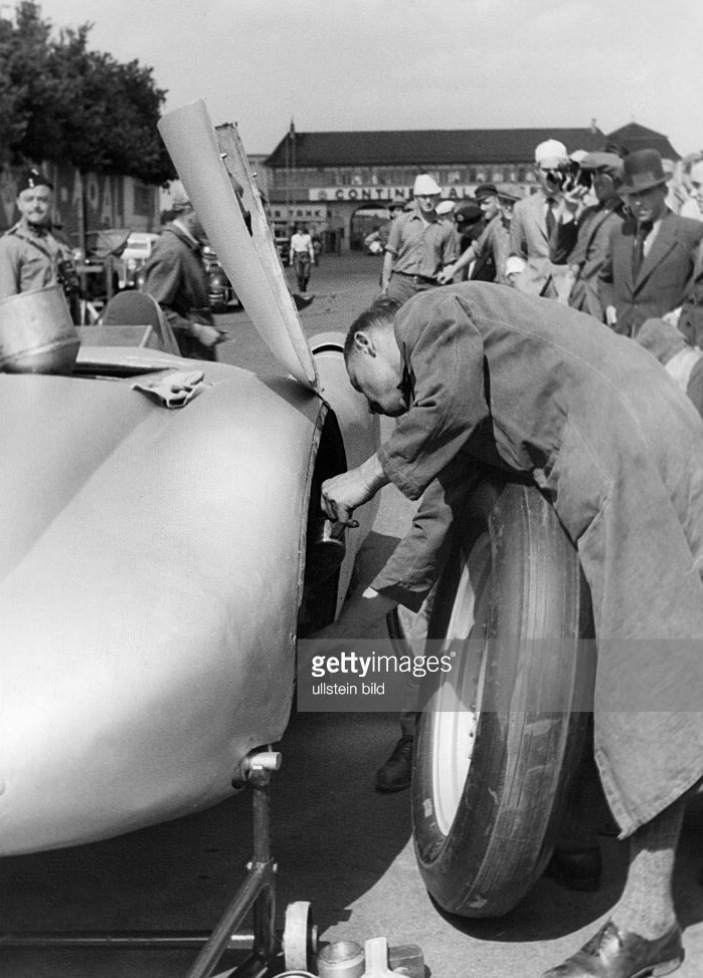
Tyre technician checks out the Continental ‘slick’, big challenge keeping tyres up to these big, heavy, powerful cars. Lang’s car as per text (Ullstein Bild)


avu 32

von Delius 6 litre V16 being gently warmed up, what awesome cars


benz 37

Hermann Lang’s winning Benz W25K

Down the decades the role of ‘aerodynamic guinea pig’ has not always been conducive to drivers attainment of retirement age. Bernd Rosemeyer’s fatal Auto Union speed record attempt on 28 January 28, 1938 an in-period case in point.

avus butt

Caracciola’s W125 Benz, Avus 1937 (Ullstein Bild)

Checkout this Avus ’37 Footage…

Etcetera…

avo cara

Caratch during testing, Northcurve Benz W125 (ullstein bild)


avu sign

Fagioli’s AU Streamliner Type C


avu butt

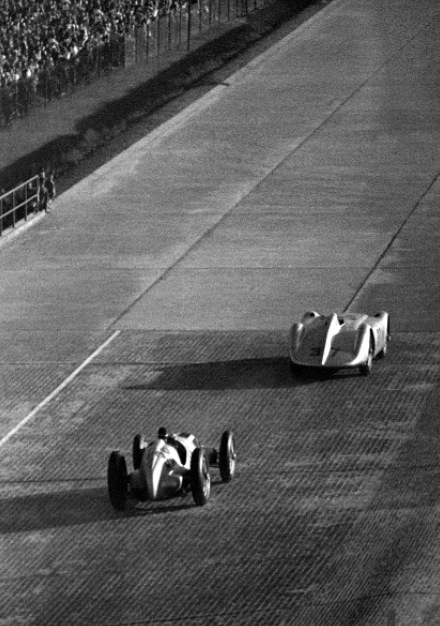
Love this shot for the contrast between Langs leading Streamliner W25 ahead o Dick Seaman’s open-wheeler W125 ‘normal’ GP car


avu 1

Avus, Fagioli Auto Union during practice 27 May 1937 (Imagno)


avu 2

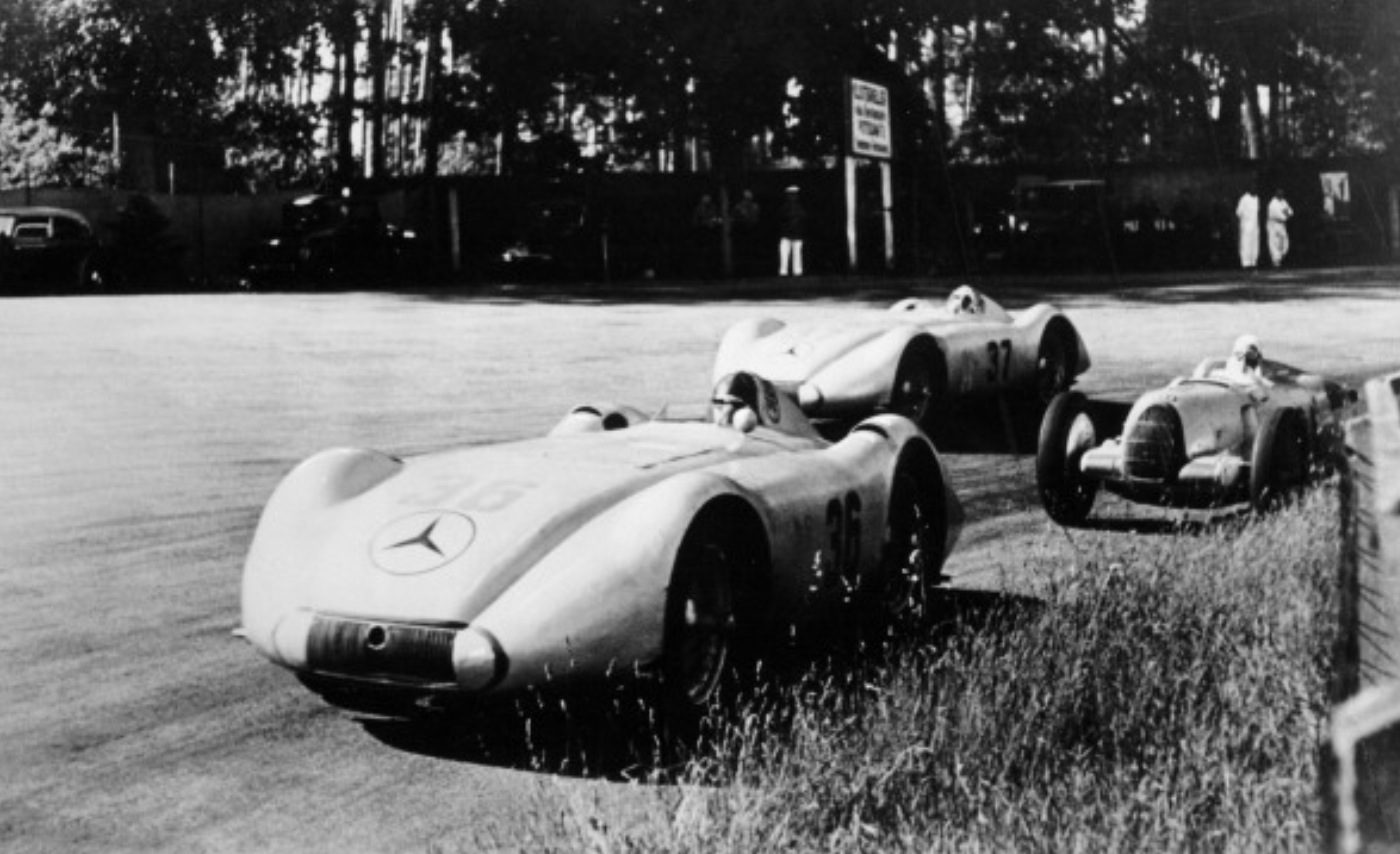
Von Brauchisch’ big Benz 1936 W25 with 700bhp DAB V12 and Lang 1936 LWB speed record W25 5.7-litre Straight-8 ahead of one of von Delius or Hasse AU Type C open-wheeler 6-litre V16 (Heritage Images)


avu 3

Caratch and arch-rival Bernd, Avus ’37 (ullstein bild)

Credits…

All images not attributed by Ullstein Bild, Heinrich Hoffman, Imagno, Max Ehlert, Heritage Images, Kolumbus F1

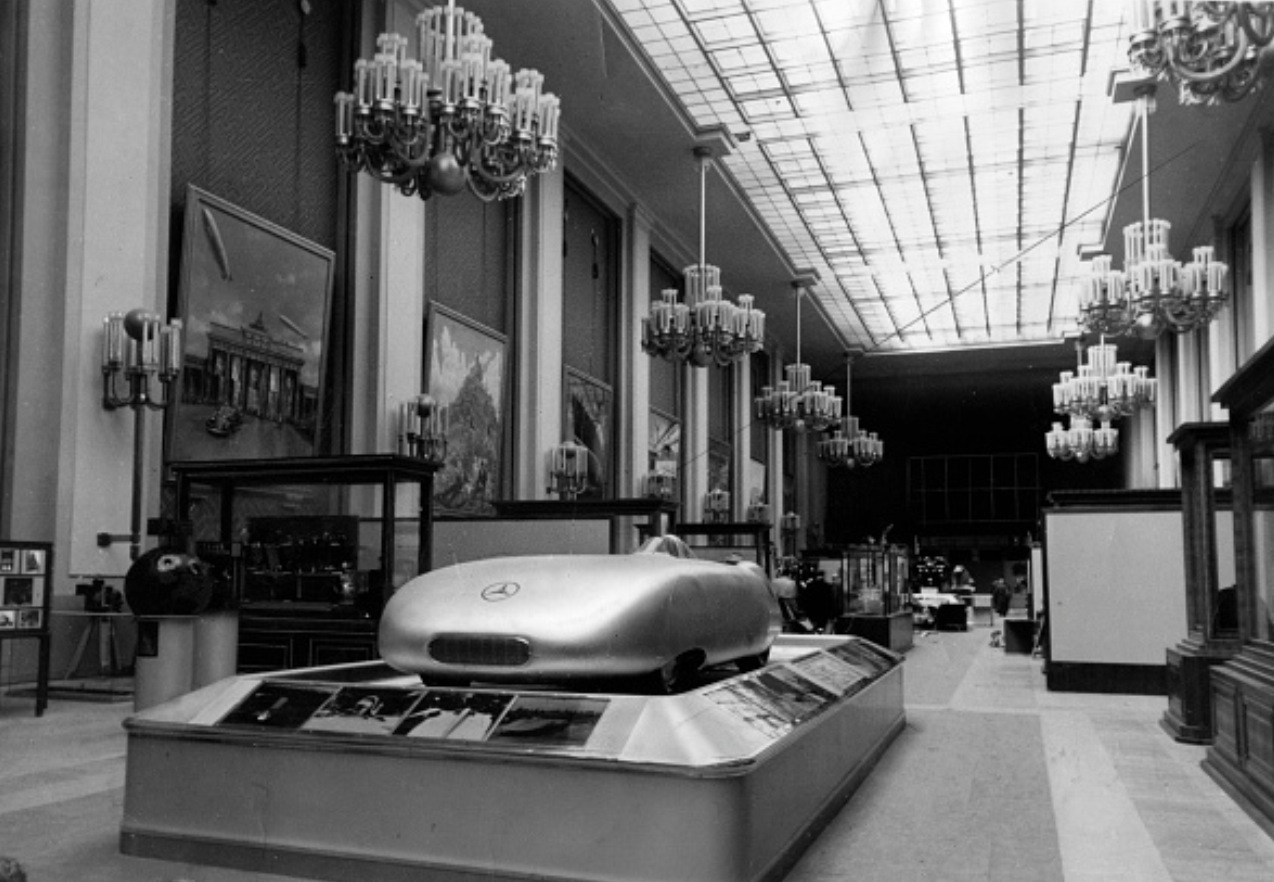
Tailpiece: Stromlinien on display, place undisclosed 1937, am interested to know if any of you can pick the venue…

avus display

(Heinrich Hoffman)

Finito…


image

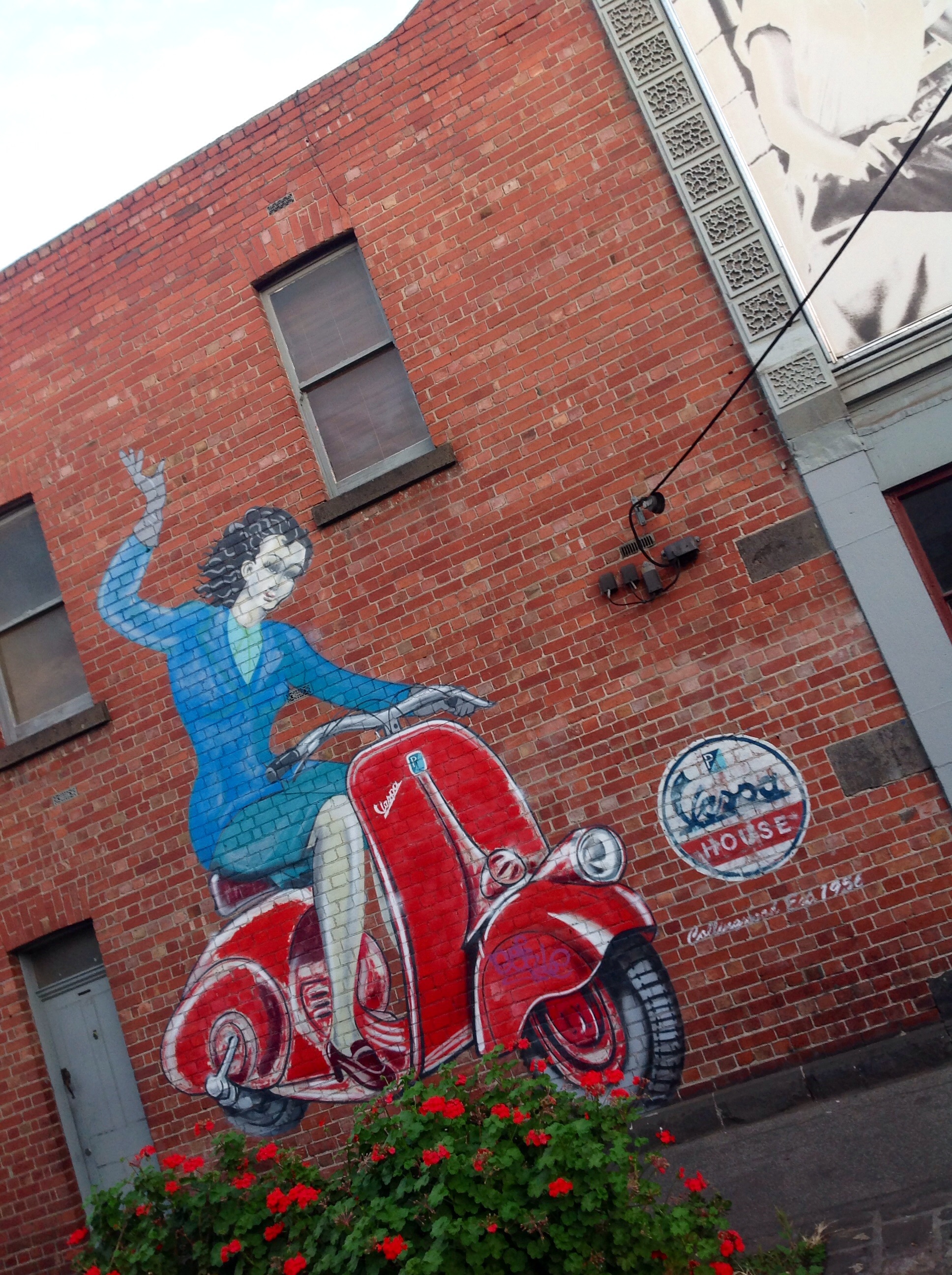
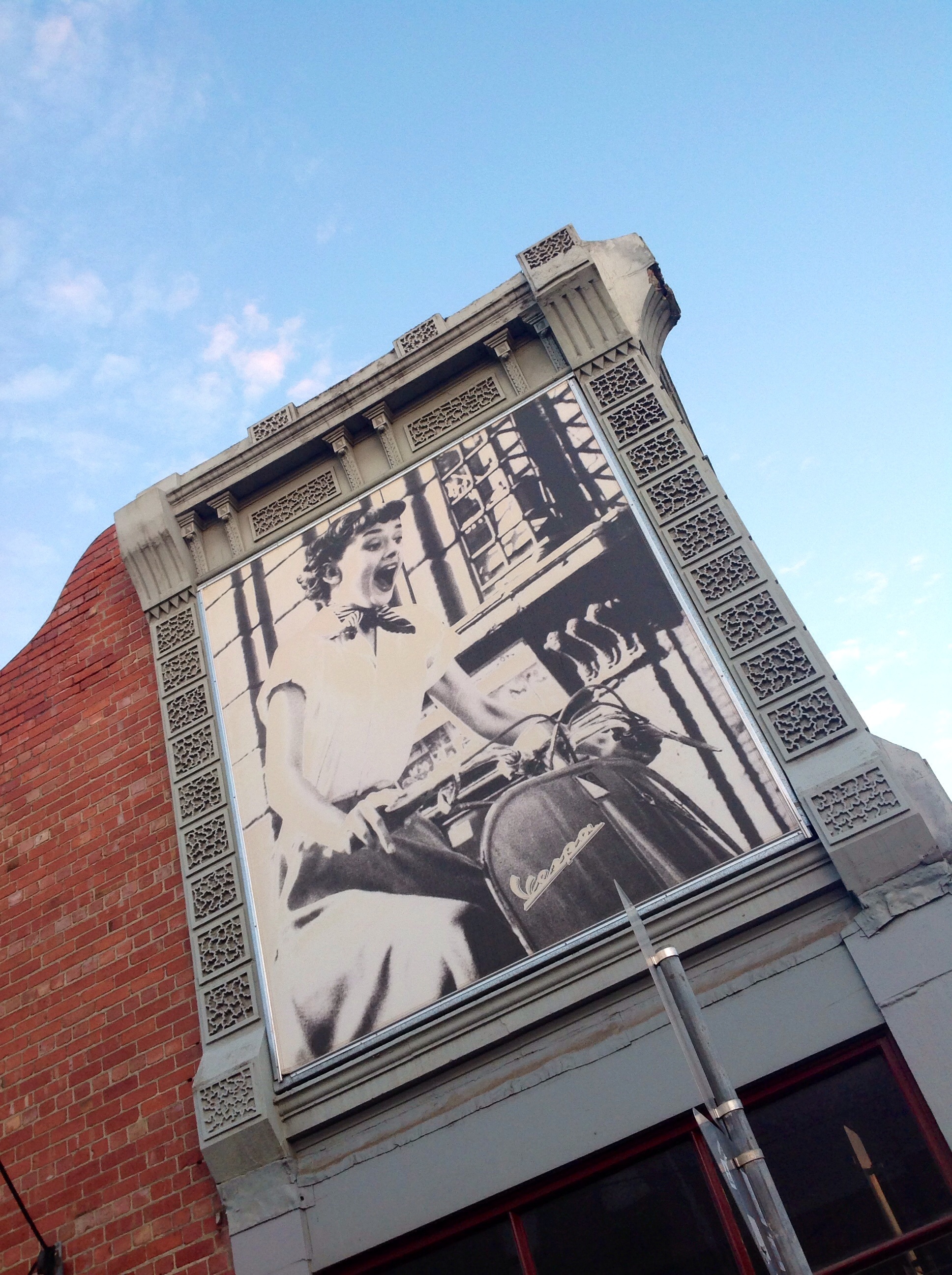
This is ‘Vespa House’ just around the corner from my joint in Johnston Street, Collingwood in Melbourne’s inner east…

I’m a fan of street art and always get a lot of pleasure from the work of urban artistes near me. I love the whole Vespa culture thing too, i think its about time i bought one.

The development of Australian inner cities is nowhere near as dense as most of those of Asia and Europe, fundamentally its a thing of the last 20 years. Before then most of us lived on quarter-acre suburban blocks. Post kids many of us have ‘moved in’,  i’m one of those schmucks clogging up our inner city roads. Mind you, i’m only 3 km from Melbourne’s GPO so i get around on foot, by train and especially tram. Melbourne’s ‘Myki’ is London’s ‘Oyster’ card and works pretty well.

Still its time for a Vespa too i reckon…

Click here for an interesting article on the post war rise and rise of the charismatic ‘Wasp’; http://www.bbc.com/culture/story/20131122-the-vespa-motoring-with-style

image

Photo Credits…

M Bisset


image

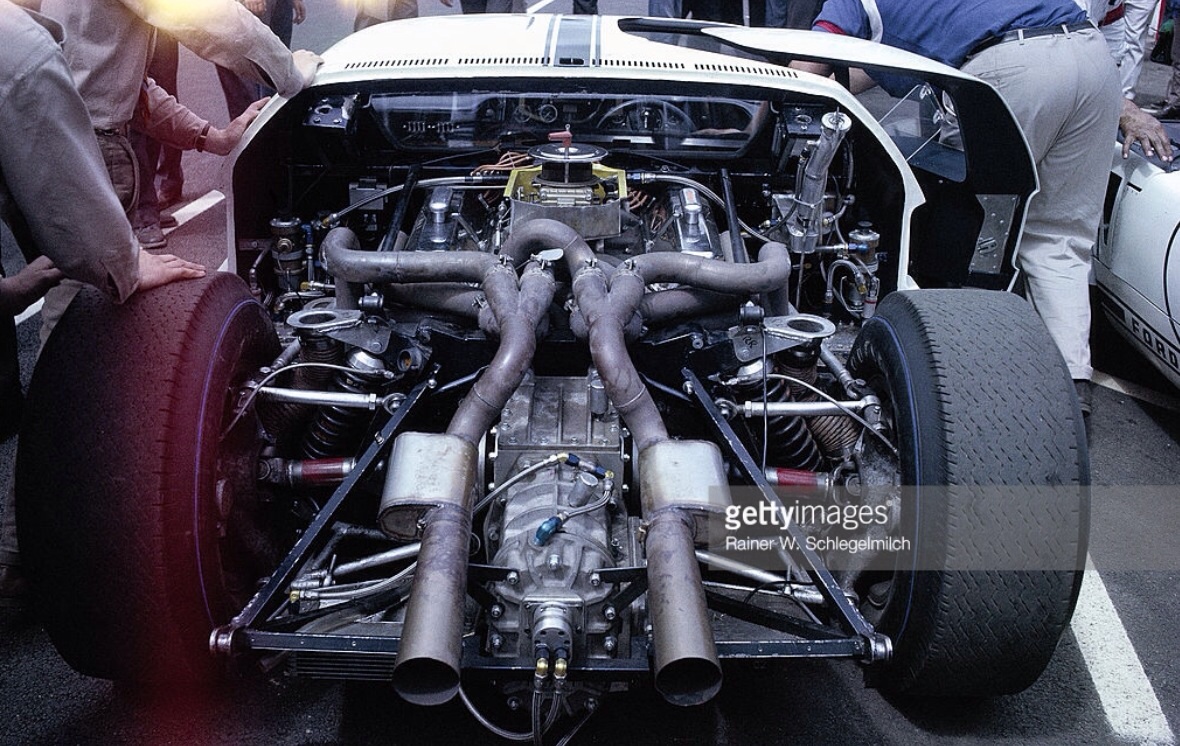
A Shelby American mechanic fettles the Bruce McLaren/Ken Miles Ford GT40 Mk2 ‘106’ prior to the Le Mans 24 Hours commencement on 20 June 1965…

I always thought the 4.7/5 litre GT40 variants were masterpieces of Eric Broadley packaging, if a bit beefy given the steel rather than aluminium monocoque mandated by Ford- but the 7 litre Mk2 and Mk4 are altogether less subtle expressions of the genre! Successful ones at that.

You can’t see ‘Henrys’ cast iron blocked, ally headed 427cid pushrod OHV V8 under all the plumbing, the dry sumped 90 degree, 107.2mm X 96.1mm lump was fed by a single, big Holley 4-barrel 780CFM carb developing circa 485bhp@6200rpm and 475lb.ft of torque@3200-3600rpm, plenty for a car weighing 1200Kg.
The ‘cross-over’ exhaust sytem is a masterpice of the pipe-benders art, mufflers interesting and unusual on a racer, maybe to save the drivers ears a tad? You can just see the gulping, big mouth of the monster Holley in front of the exhausts.

To the right near the roof is the water radiator neck, filler and temperature sender, to the right are the gold colored fuel pumps, the fuel tank had a capacity of 159 litres.

You can see the Kar-Kraft / Ford T44 four-speed ‘box, in fact ’twas the failure of this very special transaxle, the design of which was led by Ed Hull, which caused chassis #’106′ retirement on lap 45 of the classic.

There are plenty of lovely ‘Aeroquip’ aircraft braided fittings too, well in advance of their adoption in F1, for brake lines and various oil feeds around the transaxle, note the transmission oil-radiator under the mech’s elbow.

See the big, rear, grey stove enamelled chassis diaphragm below the exhaust and above the ‘box to support the engine/gearbox and location of the rear suspension, the top of the spring/shock’s clear- there, too, is the brake cooling duct which takes air collected from the body. Big cast magnesium uprights, beefy driveshafts and top suspension link and forward facing radius rod and brake calipers for the outboard mounted, ventilated discs are also in shot.

image

The quick-lift jack and ‘captive frame’ on the car is typical of Shelby’s thoughfulness and endurance racing knowledge…

Mind you they had a shocker of a race!

Five cars were entered, two Mark 2’s and three Daytona Cobra Coupes and all failed to finish; the Miles/McLaren Mk2 after 45 laps due to gearbox failure, the Amon/P Hill Mk2 on lap 89-clutch. The Johnson/Payne Daytona ‘2287’ was out on lap 158-head gasket, Gurney/Jerry Grant Daytona ‘2286’ on lap 204-engine and Daytona ‘2601’ Schlesser/Allen Grant on lap 111-clutch.

So, a disaster for Ford, their best placed car was the AC Cars Ltd entered Daytona Cobra Coupe driven by Sears/Thomson which finished eighth, the race was won, famously by the 3.3 litre V12 Ferrari 250LM of Masten Gregory and Jochen Rindt, the latter flogging the thing to within an inch of its life!

It was Ferrari’s last Le Mans win with the first of four on the trot to come for Ford from 1966-69- wins for the Mk2 and Mk4 in 1966 and 1967 and 1968/9 for the Mk1 5 litre GT40.

Finally, Shelby American made amends in 1966, taking the first two places in the infamous ‘Ford Form Finish’ ahead of arch rivals, the Holman Moody prepared Ford Mk2’s…

Etcetera…

image

(unattributed)

Le Mans 1965 start.

The Amon/Hill GT40 Mk2 on pole, then Surtees/Scarfiotti Ferrari 330P2 , Bondurant/Bucknum GT40 in 3 and McLaren/Miles GT40 Mk2 in grid 4

image

(unattributed)

McLaren/Miles Ford GT40 Mk2 early in the race, Le Mans 1965.

Both Mk2’s failed due to transaxle preparation mistakes with a gear that was intended for scrap being put into one gearbox and dirt on a bearing surface in the other.

image

(unattributed)

Carroll Shelby beside the Chris Amon/Phil Hill GT40 Mk2 chassis ‘106’ at Le Mans 1965- note the ‘at meeting’ fabricated rear spoiler addition.

image

(unattributed)

Shelby American Le Mans garage- Daytona Cobra Coupes #12 Schlesser/J Grant, #10 Johnson/Payne #9 Gurney/A Grant- all DNF.

Credits…

Rainer Schlegelmilch, teamdan.com

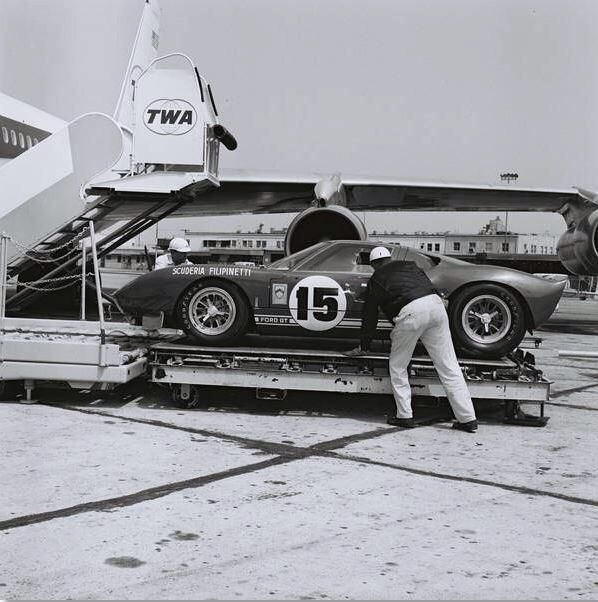
Tailpiece: Filipinetti’s GT40 Mk2, prepped by Shelby American on the way to Europe at LAX, it too failed to finish driven by Ronnie Bucknum and Herbie Muller…

image

Finito…

image

(The Enthusiast Network)

Frank Kurtis, Wally Parks and Ray Brock inspect the ‘D-A Lubricants’ Teams new Kurtis 500H Offy 255 to be driven by Johnny Thompson at Kurtis’ Glendale, California factory on March 24, 1958 …

image

(The Enthusiast Network)

Notable is the independent front suspension which Kurtis believed “although heavier than a tube axle, will provide better traction on the corners and give better control and less tyre wear”. In fact 500H chassis #715 was the only one of Kurtis’ Indycars fitted with Dubonnet trailing arm independent suspension.

This later model Kurtis Roadster also has a ‘full-laydown’ and ‘offset’ 255cid 360bhp Offy to lower the cars profile and put more weight to the inside of the car, trends Kurtis started in 1952. The 500H was radical for its day and was widely reported upon in various magazines as here in Motoring Life.

k 500h

Frank initially laid down the Cummins diesel in 1952, tilting the Offys fitted to the other two roadsters that year by 36-degrees from being straight in the frames.

Although he wanted the Offy ‘flatter’, Meyer Drake didn’t make the internal changes to the engine to allow that logical change. This feat was achieved by George Salih, a former Meyer Drake employee who built and modified an engine with Meyer Drake’s assistance which was fitted to a Quinn Epperly built chassis to suit in 1957, setting a new trend.

The 1958 500 was won by Jimmy Bryan’s Salih Offy, Johnson’s Kurtis Offy (in color below) started from grid 21 completing only 52 laps.

Thomson, one of the best drivers of the era, was innocently involved in a massive 15-car lap one crash which killed Pat O’Connor. He continued with bent front suspension, but tyre wear and handling and steering problems forced his retirement in a tragic race.

Chassis #715 raced at Indy in 1959 driven by Duane Carter and in 1960 by Don Freeland for seventh place and a withdrawal respectively. Smokey Yunick bought and entered the car for Carter, converting it to a conventional beam front axle setup. ‘Twas a pity as the IFS was never really sorted, appropriate testing and development never really gave the car the chance it deserved in its original form. The car still exists, albeit in beam axle spec, it was restored in 2007.

image

(unattributed)

Thomson had a very successful 1958 season, he won four of the thirteen championship races at Springfield, DuQuoin, Syracuse and Sacramento, all were in the team’s Kuzma Offy on dirt. He was third in the USAC Championship behind Tony Bettenhausen and George Amick.

Johnny was killed in a sprintcar race at Allentown , Pennysylvania in September 1960, his car crashed and flipped into Allentown Fairgrounds infield.

kurtis

Factory 1948 Kurtis 1000 chassis #316 Offy which was ninth in the 1948 Indy 500 driven by Tommy Hinnerschitz, the Eastern Sprintcar champion. Fantastic shot of the well back, aluminium crankcase, iron block, 500 pound Offy 270cid/325bhp @ 5500rpm engine, spaceframe chassis, its 1948 remember. Made of ‘4130’ chrome-moly steel tube, beam front axle not so pretty from a road-racing perspective, but these were dual purpose dirt and pavement cars, drum brakes and fuel all carried up the back. Quite a thing of beauty (Offenhauser)

Frank Kurtis is best remembered for his all-conquering midget and Indy racers, but he also built sprint cars, sportscars, quarter midgets and karts…

The United States boomed in the late 1940s after recovery from the Great Depression and World War II. The racing world reflected better economic times, in 1942 the Indy 500 was canceled after the government banned motor racing. Restored after lack of use, the first postwar Indy in 1946 was a box-office-smash. Many new and innovative cars took to the track, among them Kurtis racers, the first of which appeared in the mid 1930’s.
image

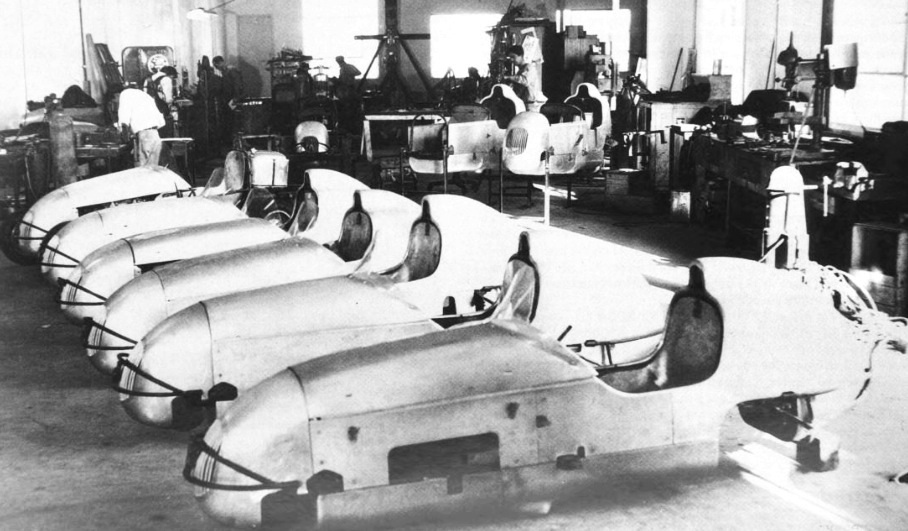
Undated shot of a staged Kurtis Midget production line, for a time he was building a car a day! Kurtis built more of the things than any other manufacturer (Frank Curtis Collection)

image

Huge field of Midgets on lap one of a race at Mineola Fairgrounds, Nassau County, New York on 23 August 1948. This venue used from 1925 to 1949 (Racing One)

Frank Kurtis, a native of Crested Butte, Colorado was born on January 25, 1908. He moved with his Croatian born family – his real name was Kuretich – he was one of eight children, to Los Angeles in 1922. He began building cars as a youngster at his father’s blacksmith shop in Pueblo, Colorado which repaired cars and horse-drawn buggies. It was Frank’s talented father who instilled precision craftsmanship into the youths psychy.

His first car was a T-Model Ford to which he added a special body. In the early 1920’s Kurtis began his car making apprenticeship with Don Lee Coach and Body Works, the local Cadillac dealer, broadcaster and racer nut who built custom cars for Hollywood stars. Father and son both worked at Lee’s, Frank improved his welding and metal shaping skills building some quite exotic car bodies.
image

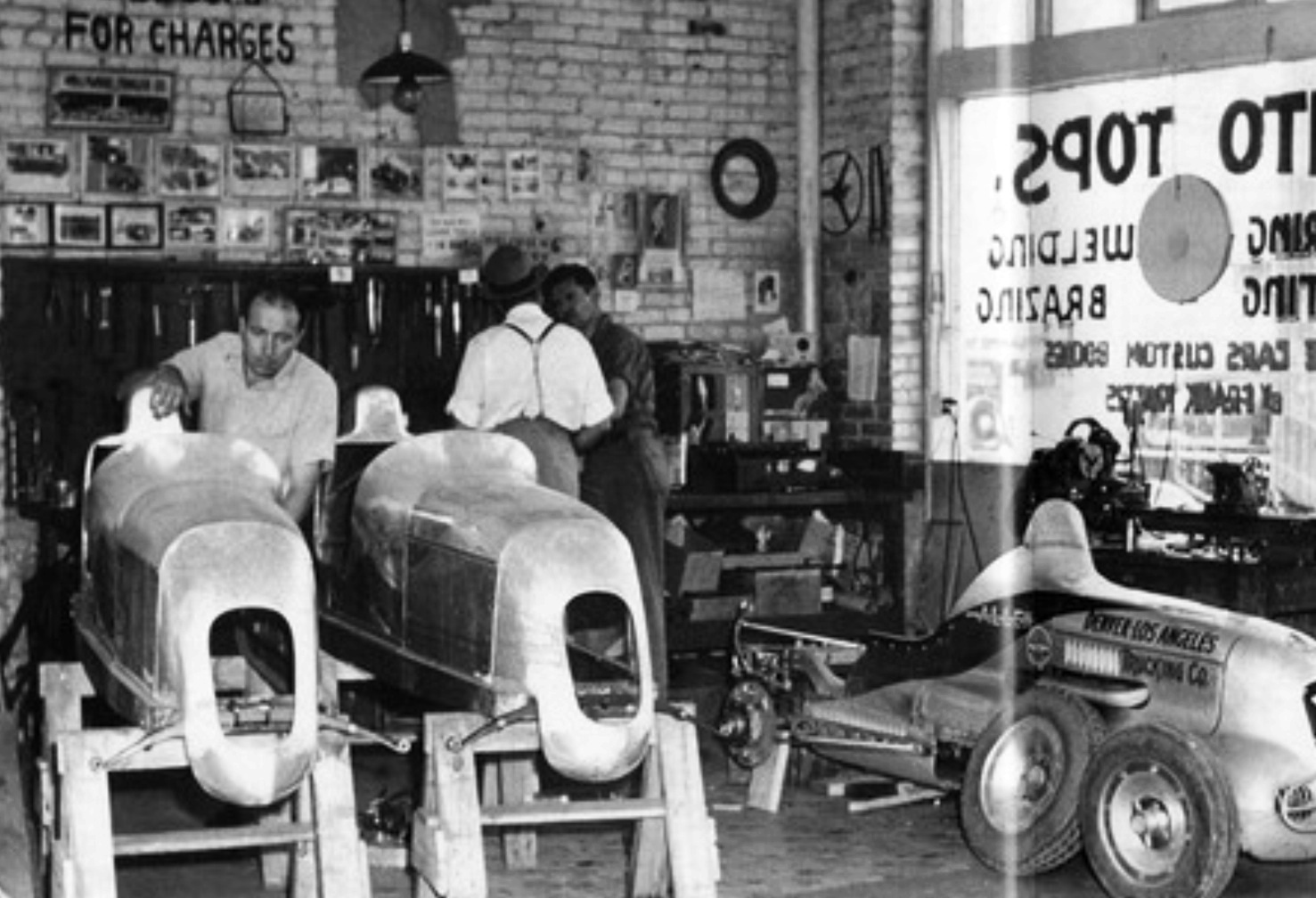
The beautiful rail-frame midget on the right, known as the Jewel Box was built by Kurtis for Charlie Allen and driven, and later by owned, Roy Sherman. The guy between the two frame-rail midgets being built is Kurtis’ Ted Halibrand, later famous for his alloy wheels (unattributed)

Kurtis’ first work on a racing car seems to be the construction of a one-off radiator shell for a roadster run at Jeffries Ranch, a half-mile dirt track at Burbank, California. Work on the Atlas Chrome Special and Stagger Valve Fronty Ford followed.

Frank’s first complete Midget was built for Tommy Lee, Don’s son in 1936. A succession of cars followed including the Jewel Box Offy and other Midgets for Charley Allen, Lou Fageol, Rex Mays, Bob Swanson, Roy Sherman, Ted Halibrand and others.

image

Bill Schindler’s Mike Caruso owned Kurtis Black Deuce Offy won 53 races in 1947 and 1948, taking the American Drivers Club title in 1948. Kurtis set a styling trend which continued for decades if not today (Racing One)

Post war, by 1946, he was building an assembly line of Offy engined midgets. Watching pre-war midgets bucking and bouncing through the turns, he thought their centre of gravity was too high and suspensions too stiff, his racers points of difference addressed these ills.

Frank’s chassis were stiff spaceframes made of ‘4130’ chrome-moly tube rather than the sheet steel rail-frames of his earlier cars and those of most of the competition. The suspension used torsion bars which reduced unsprung weight and allowed better road holding. He used Dzus fasteners which allowed the body to be removed in minutes, which meant the Offy could be serviced more quickly between events. The cars were lower and more softly sprung which made his chassis easier to handle and gave superior traction so the powerful Offy’s could put all their horses to the dirt. He built hundreds of them.

The Midget craze was dying by 1948, race fans were losing interest in the smaller cars, being attracted by bigger Champ Cars and Kurtis was there to service that market…

image

Walt Faulkner in his JC Agajanian Grant Piston Rings 1948 Kurtis 2000 Offy 220 at the California State Fairgrounds on 15 October 1950. He is contesting an AAA Sprint/Champcar race, note the difference in size compared with the various Midget photos (Racing One)

image

Johnny Parson’s Kurtis Offy 270 1950 Indy winning chassis. The car had no type designation but was built in 1948/9 and called Kurtis Kraft Spl . Parsons was second the year before in the same car (unattributed)

In 1949 a Kurtis-Kraft dirt car won the AAA title, in 1950 the same chassis driven by Johnny Parsons – the Wynns Oil Spl – won the Indy 500.

In this period Frank built a one of a kind Buick and a production sportscar which was later to become the Muntz Road jet in 1950. More of the sportscars later in the article.

image

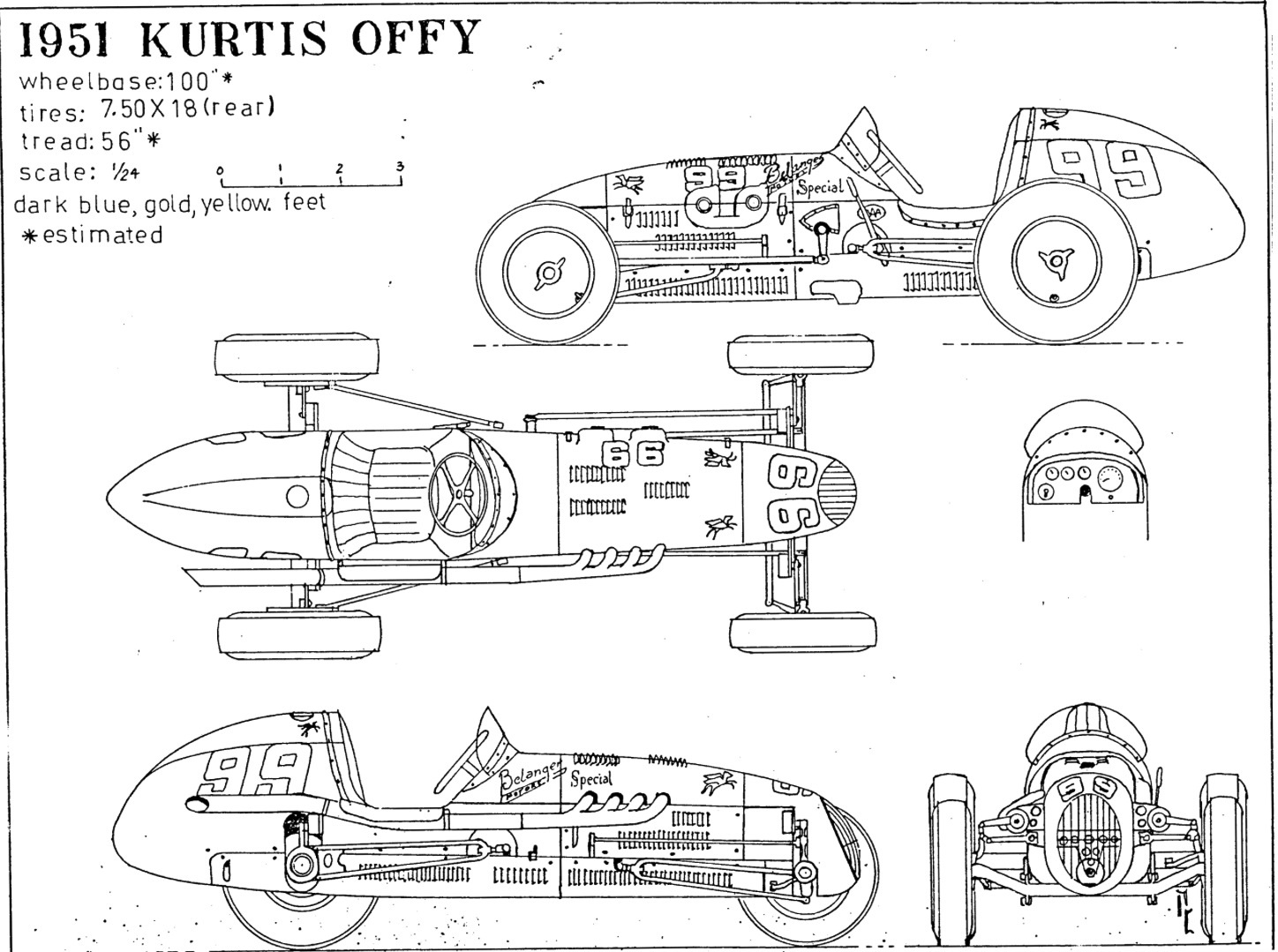
The 1951 Indy 500 was won by a stretched-midget built from Kurtis parts supplied to Meyer Drake, the Offy engine manufacturers.

It was allocated chassis # 327-49. Originally powered by an experimental centrifugal-supercharged Offy Midget engine with a capacity of 106.81cid, weighing 280 pounds. So fast was the car, that their customers complained about unfair competition, so Meyer Drake sold it to Murrell Belanger.

It won the 1951 500 in Lee Wallard’s hands with a slightly-undersized 241cid Offy. The engine was a combination 270 block and 220 crank which they managed to squeeze into the chassis designed for the much smaller 107cid blown Midget engine.

image

1951 Indy front row;  Jack McGrath KK 3000 Offy, winner #99 Lee Wallard K Offy and#18 Duke Nalon Kurtis Novi  V8 (unattributed)

image

Lee Wallard Kurtis Offy 241 1951 winner. Stretched-Midget built by Meyer Drake from Kurtis parts (unattributed)
image

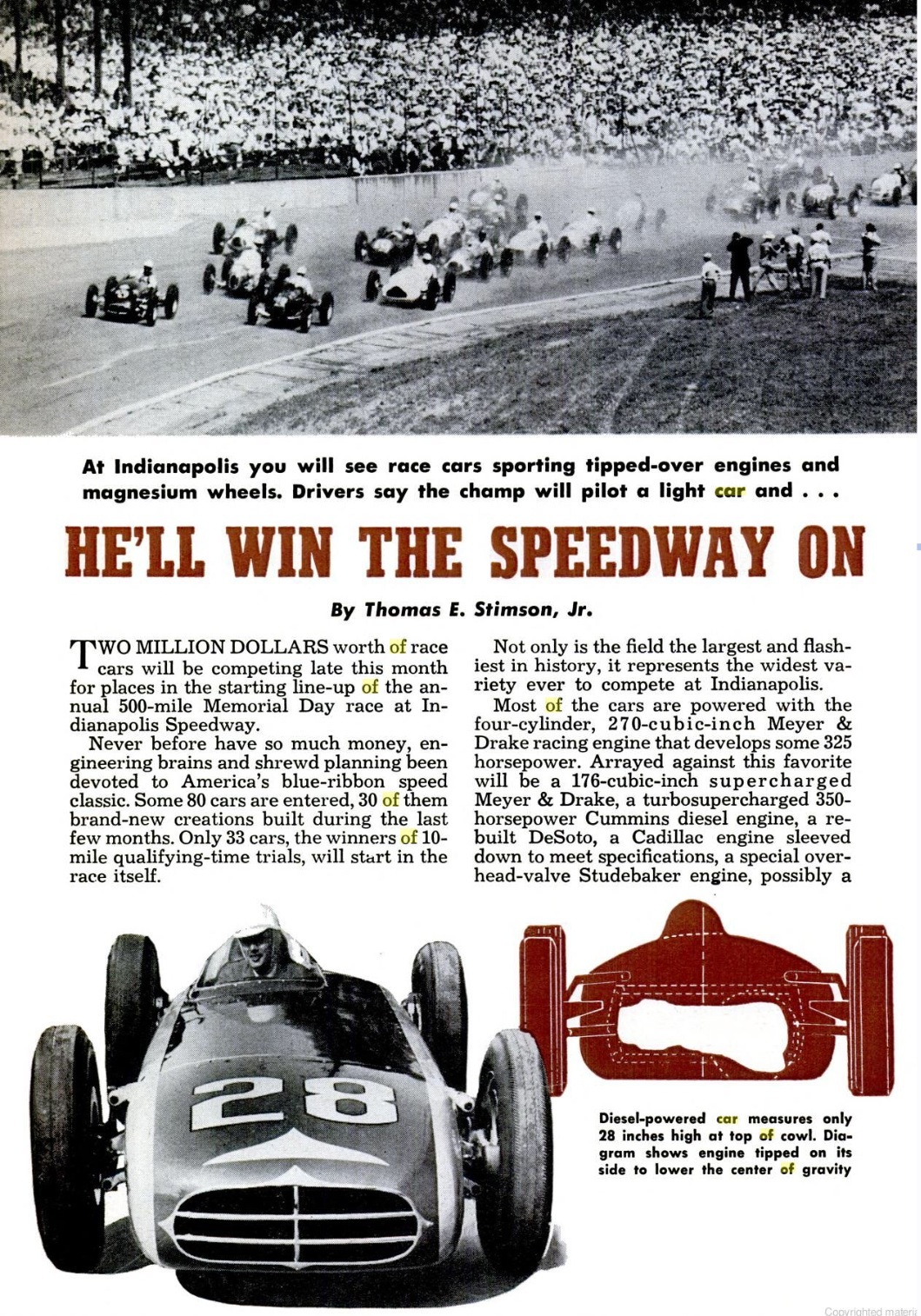
Popular Mechanics May 1952 article about the upcoming Indy 500, pic shows the low build of the Kurtis 1952 roadsters

In 1952 Kurtis built three pioneering roadsters (500 Series) with elongated wheelbases and lowered bodywork and centre of gravity.

Popular Mechanics reported that the cars weighed 1500 pounds, the frames were of chrome moly elliptical section tube plus a nine inch deep aluminium sheet box that also served as part of the skin. To save weight, the cowl and firewall were designed as structural parts of the frame. The front suspension system comprised two torsion bars mounted in a crisscross fashion instead of parallel to the frame.

Joe Scalzo, “They showed up at the speedway looking like freaks among all the high bodied dirt track cars and antediluvian front-wheel drives.”

The cars fates varied. The Cummins Diesel was out early with a broken supercharger but its huge, tall 401cid straight-six, with the engine laid on its side, plonked it on pole despite weighing 2150 pounds dry. In so doing Frank Kurtis built the first laydown-chassis Indycar.

The Auto Shippers, an upright roadster (type 500A) didn’t start, but oilman Howard Brighton Keck’s Offy 270 powered Fuel Injection Spl’\ driven by national midget champion, Bill Vukovich, dominated the race before a steering pin failure resulted in a kiss of the wall with 20 miles to run.

Vukovich won in the Kurtis 500A ‘Fuel Injection Spl’ in 1953/4.
image

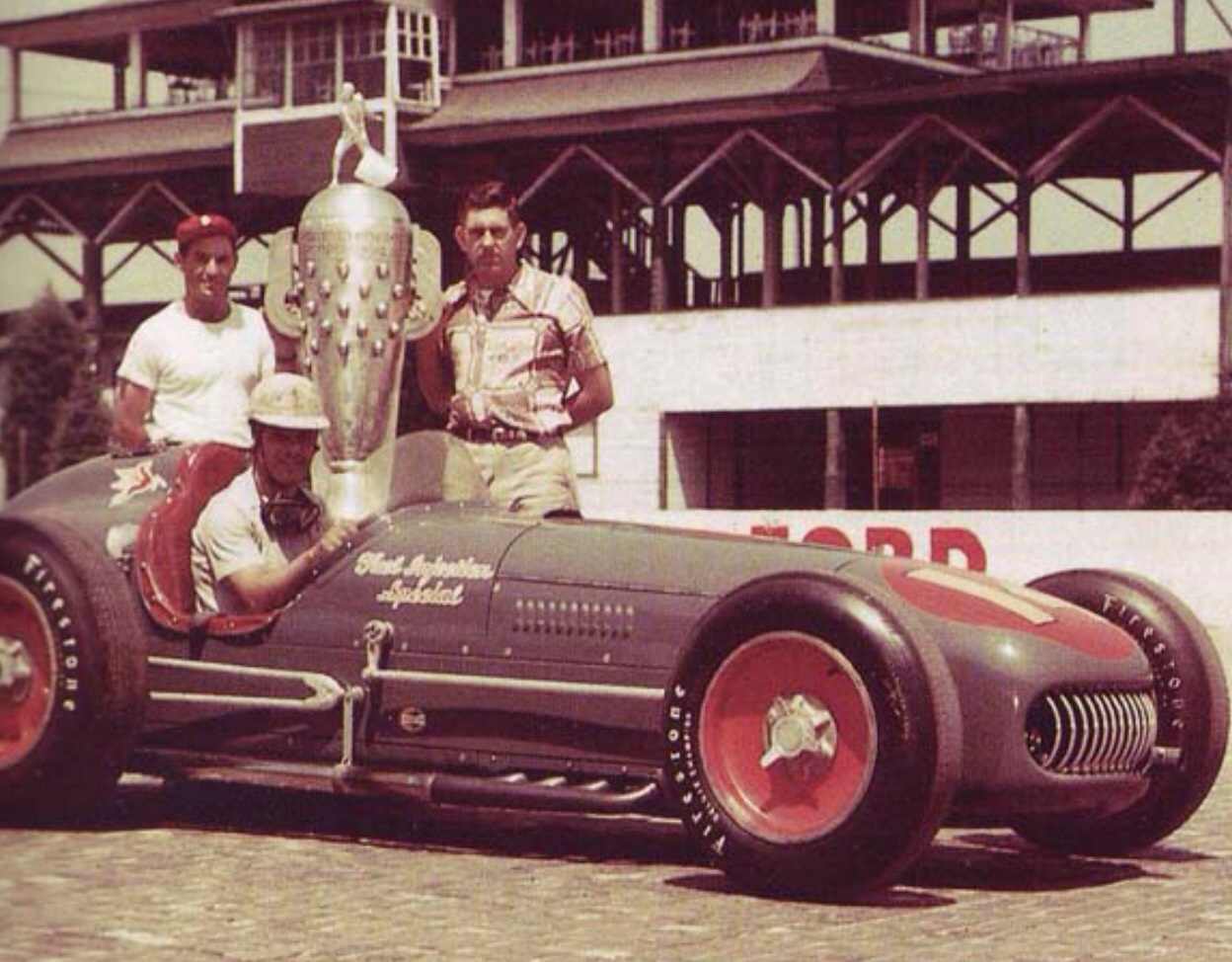
Vukovich, Jim Travers and Frank Coon after their 1953 500 win, Kurtis Kraft 500A Offy 270. The Offy 270 gave circa 345bhp @ 5500rpm in 1952 on methanol. Fuel rules at Indy were not strictly enforced then, a dose of ‘pop’ – nitro-methane – in qualifying for four or so laps was good for another 40bhp! (unattributed)

Scalzo related the changes needed to make the car competitive. “Arriving…late for its debut, it was immediately hailed a disaster by Howard Keck’s longtime mechanics Jim Travers and Frank Coon…the ‘Toonerville Trolley’ had torsion bars behind the rear axle and in front of the front axle and the anchor points were wrong. It had a vertical steering shaft holding the two steering arms together and its steering geometry was off…the track surface made the out of balance Fuel Inj Spl a flexing spastic. Travers and Coon rescued it with remedial repairs…Jim and Frank were rich in racing savvy and were veterans of weekly Midget brawls at Gilmore Stadium and Culver City Speedway, they were used to tricking out Keck’s stable of 110cid Offys.”

“To overcome the flaws of the Fuel Inj Spl they fell back on old speedway racing habits. Among other things they ‘jacked-weight’ across its rear end, and by deliberately misaligning its 270cid Meyer-Drake by one-bolt and 36-degrees to the bell-housing, wedged hundreds of static pounds to the FI Spl’s left…All this worked like a charm…Additionally, they and colleague Stu Hilborn had a reputation for…making Offy horsepower,” Scalzo said.

image

Vukovich sets off after a pitstop in his victorious Kurtis 500A Offy 1953 run. He won in 1954 but died in the ’55 500 in an accident not of his making (Racing One)

Kurtis cars won the 500 in 1953, 1954 and 1955. For the next eight seasons through to 1963, when Kurtis made his ‘model 500L for lemon-Scalzo’, (the bulbous American Rubber 73 missed the cut) upwards of 60 KK’s raced at Indianapolis. Production numbers of the cars appears as follows; 11 in ’53, 10 in ’54, 6 in ’55, 5 in ’56, 16 in ’57 and 7 between 1958 and 1962.

Scalzo, “The end of Frank Kurtis was sad. A disgruntled and embittered FK turned into an awful grouch pigeonholing Kuzma, Epperly, Lesovsky and especially AJ Watson as thieves who stole all his roadster ideas and became heroes at his expense.”
image

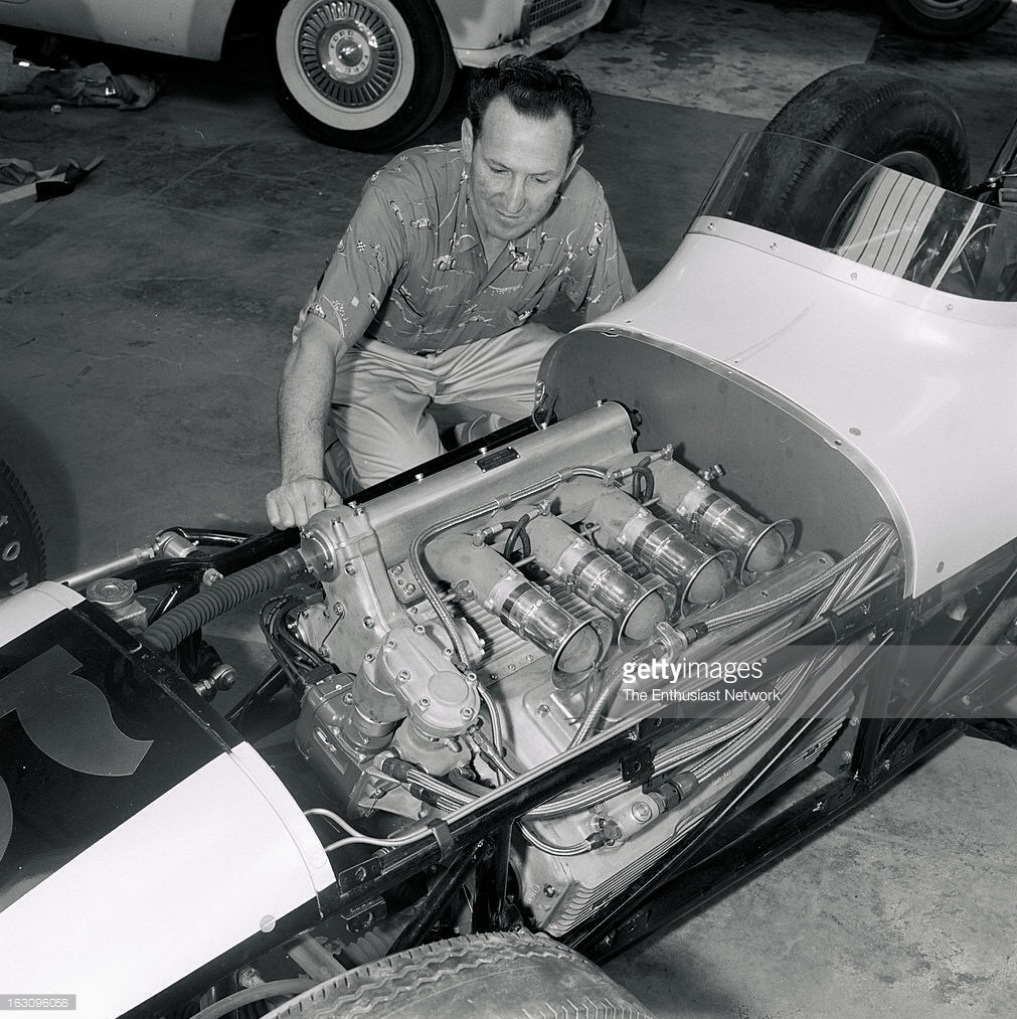
George Bignotti beside his 1960 Indy entry, the Kurtis Seal Fast Spl driven by AJ Foyt, DNF clutch. The ultimate expressions of the roadster trend started by Kurtis were full-lay-downs built by Salih, Epperly, Kurtis and others. Also Watson’s ‘offsets’ built with ‘short-tower’ lower block Offys than the 270’s taken back to 255cid used by others; the regs demanded a 4.2-litre unsupercharged limit from 1957. This car was built as a Kurtis, but for 1960 had an Epperly chassis, body and front end. Offy engine a 255 cid four cylinder, five bearing, monobloc, DOHC four valve, Hilborn injected unit giving circa 350/360bhp @ 6200rpm on methanol, weight 452lbs (The Enthusiast Network)

Frank Kurtis’ Indy track record is to be envied in the extreme. His Offy powered cars sat on the Indy pole eight times, he won five times; in 1950 (Parsons), 1951 (Wallard), 1953/4 (Vukovich,) and 1955 (Sweikert). His cars were also fourth in 1947, third in 1948 and second in 1949 and 1952. Fifteen of the top 20 cars at Indy in 1953 were Kurtis chassis!

The last Kurtis chassis victory in a National Championship event was Van Johnson’s victory at Langhorne on June 14, 1959 in Kurtis Kraft 4000 chassis #368-53.

image

Champion Ad promoting Bob Sweikert’s 1955 Kurtis 500D Offy Indy win

One of the most famous and bizarre Kurtis appearances was Rodger Ward’s entry of a Kurtis Offy Midget in the inaugural F1 US Grand Prix at Sebring in 1959…

Promoter Alec Ullman was chasing bums-on-seats, the entry of Ward, the 1959 Indy champ made commercial sense. Ward had had some road racing success, racing his Midget against sports cars, notably at a Lime Rock meeting during a Formula Libre race.

kurtis ward

Rodger Ward’s Kurtis Offy Midget chasing, and soon passing George Constantine’s Aston Martin DBR2 at Lime Rock, a twisty ‘right hand’ road course on 25 July 1959. Ward beat some of the best sports racers in the country in this F Libre race (Offenhauser)

For the Grand Prix though, his two-speed gearbox, two-speed rear axle, hand braked, supercharged 1.7-litre Offy was at a severe disadvantage to the other front engined F1 cars, let alone the revolutionary Coopers. The Kurtis was chassis #O-10-46, yes folks it was built in 1946! The car raced on 12-inch wheels and Firestone slicks pre-dating their reappearance in F1 in 1971!

Ward qualified last and DNF with clutch failure after 20 laps in the race won by Bruce McLaren’s Cooper T51 Climax after Jack Brabham ran out of fuel on the last lap. His fourth place, pushing the Cooper over the line, gave him the title.

image

Rodger Ward contesting the 1959 USGP at Sebring in his supercharged Kurtis Offy Midget. He won the Indy 500 that year in a Watson Offy 255 Roadster (Louis Galanos)

While the focus of this article is the Indy cars, Kurtis also built some fantastic sports cars…

In 1949 he built the Kurtis Sports Car which featured on the cover of the very first Motor Trend magazine in October 1949. Kit prices started at $1495, inflation drove costs up so much that only 17 kits were sold, Kurtis sold the rights to Earl Muntz in the early 1950’s. Almost 400 of these steel bodied, Caddy/Lincoln engined Muntz Jet’s were built.

In 1953 Kurtis built the 500S, the chassis and suspension of which took its cues from the 500A Indy Roadster. The chassis was a ladder-frame, drilled for lightness, the solid front axle was tubular suspended by trailing arms and torsion bars. A live axle was also used at the rear, again suspended by torsion bars.

The 500S could be supplied as a kit or complete ex-factory, the body was aluminium, and with cycle-guards was aggressively handsome. The complete car sold for $4986 less engine and ‘box. It’s estimated that 30 500S cars/kits were sold from 1953-5.

Bill Stroppe’s short-wheelbase, 282cid ‘flathead’ Mercury V8 powered car was the most successful racer, achieving many wins in 1953/4.
image

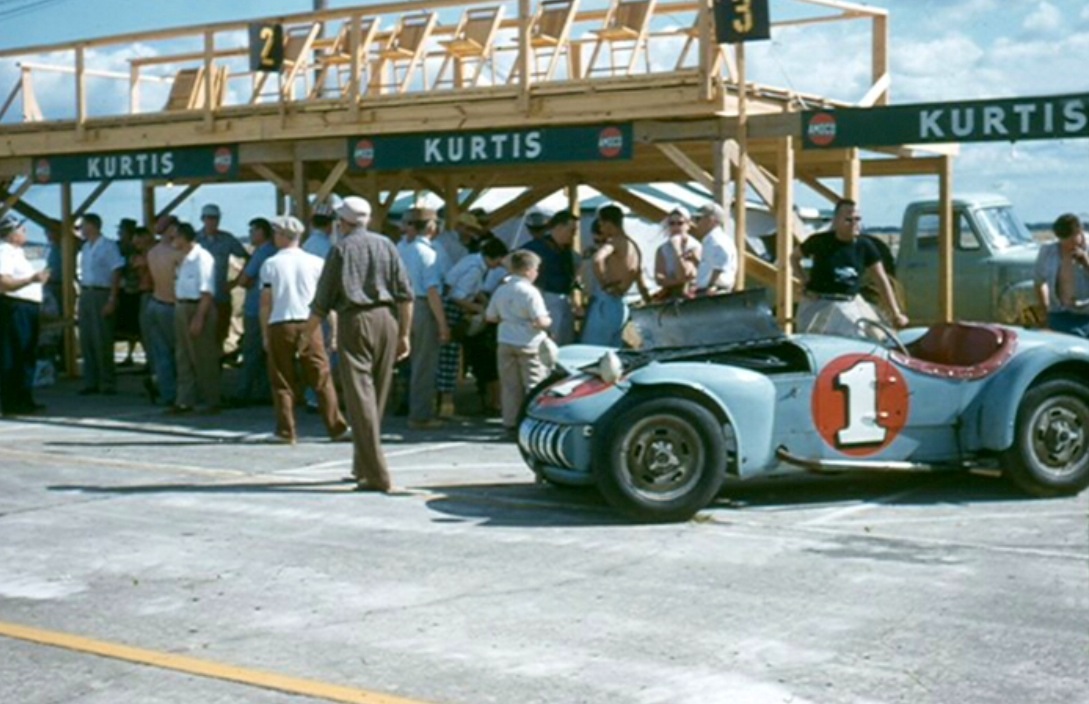
Kurtis 500S, 1955 Sebring 12 Hour. The Jack Emsley/Jim Rathman car was out on lap three with Cadillac engine failure. The race was won by the Hawthorn/Phil Walters Jag D-Type (unattributed)

The 500X followed, it was an evolution of the earlier car but with a much nicer spacefame chassis. Although live-axle suspension remained, the rear axle incorporated a Halibrand quick-change unit. Between six and 12 were built (quite a range!) the cars were clothed in a very attractive aluminium body.

The 500M was designed for smaller engines, used a fibreglass body, and the Kurtis 500KK kit chassis pictured below, 18-20 cars were built.

image

In the early 1960’s Kurtis laid down three machines which were essentially widened Indy Roadster chassis. One of these, Jack Lufkin’s 1964 Bonneville Streamliner, was the fastest Kurtis ever, topping 245mph in 1968. Several other racers were built, including a ’62 Bonneville A-Model pickup, a pair of dragsters and a Saab powered H-Modifed car also in 1962.

Kurtis designed and built the start-carts for the Lockheed Corporations SR71 Blackbird, a project which continued into the 1980’s.

Frank Kurtis retired in 1968, but his son Arlen continued the business which diversified into high performance drag racing and water skiing. In more recent times he has built “limited productions of a few models of cars and parts his dad once built.”

Etcetera…

image

The factory Kurtis Kraft ‘1000’ Offy’, 1948 Series Champcar. Powered by ‘270’ Offy. Cutaway from a photo original  (John Wickhart)
image

The 1951 Meyer Drake built stretched-midget built from Kurtis parts is sometimes allocated chassis # ‘327-49’ . Won ’51 Indy fitted with Offy ‘241’ cid engine (unattributed)

image

image

I love this shot as it gives great human-scale to these Midgets and 91 or 110cid Offys. The Kurtis was raced by Don Lowe at left, fettling the car with owner Miles Spickler on June 2, 1949. The upcoming meeting is at Lakeside Speedway, Denver. Offy Midget engines were 100/102 and 110cid in the 1960’s. Iron block, aluminium crankcase, three bearing monobloc – the block and head one unit – DOHC, two-valve, circa 237lbs in weight. Post-war they were fitted with two 1.5 inch Riley carbs and later, Hilborn continuous fuel injection. By 1947 the engine produced 120bhp @ 6000rpm on alcohol and in 1950 injected form 143bhp @ 8000rpm on alcohol (The Denver Post)

image

Kurtis Kraft Offy Speedcar, not sure of date or model. Hilborn injected 110cid engine  (David Kimble)
image

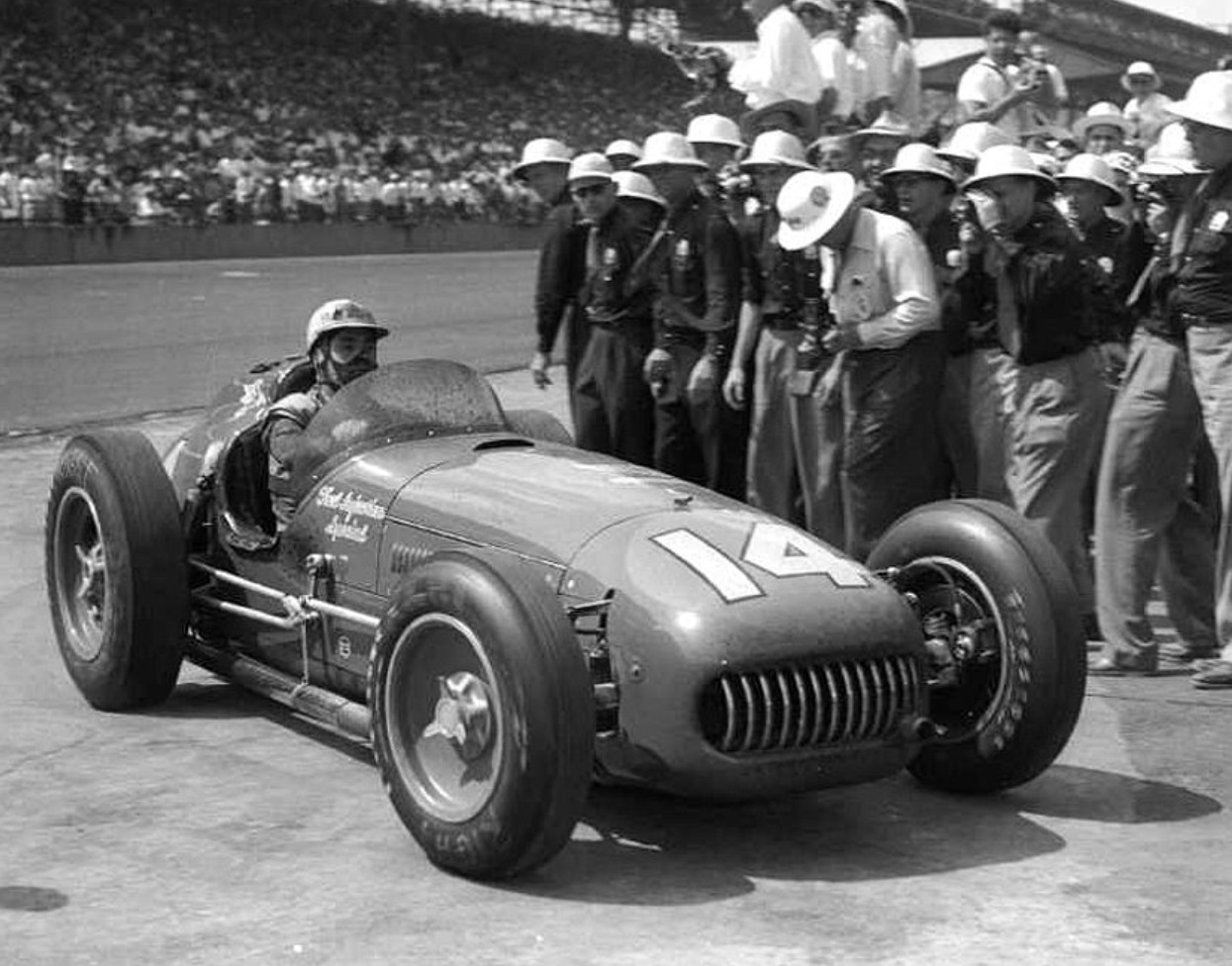
Vukovich, Kurtis Kraft 500A Offy 270, 1954 Indy winner. Vukovich used the same chassis #353-52 in his 1952-54 races (unattributed)

image

Vukovich leads the 1953 Indy 500, Kurtis 500A Offy (Max Staub)
offy 270

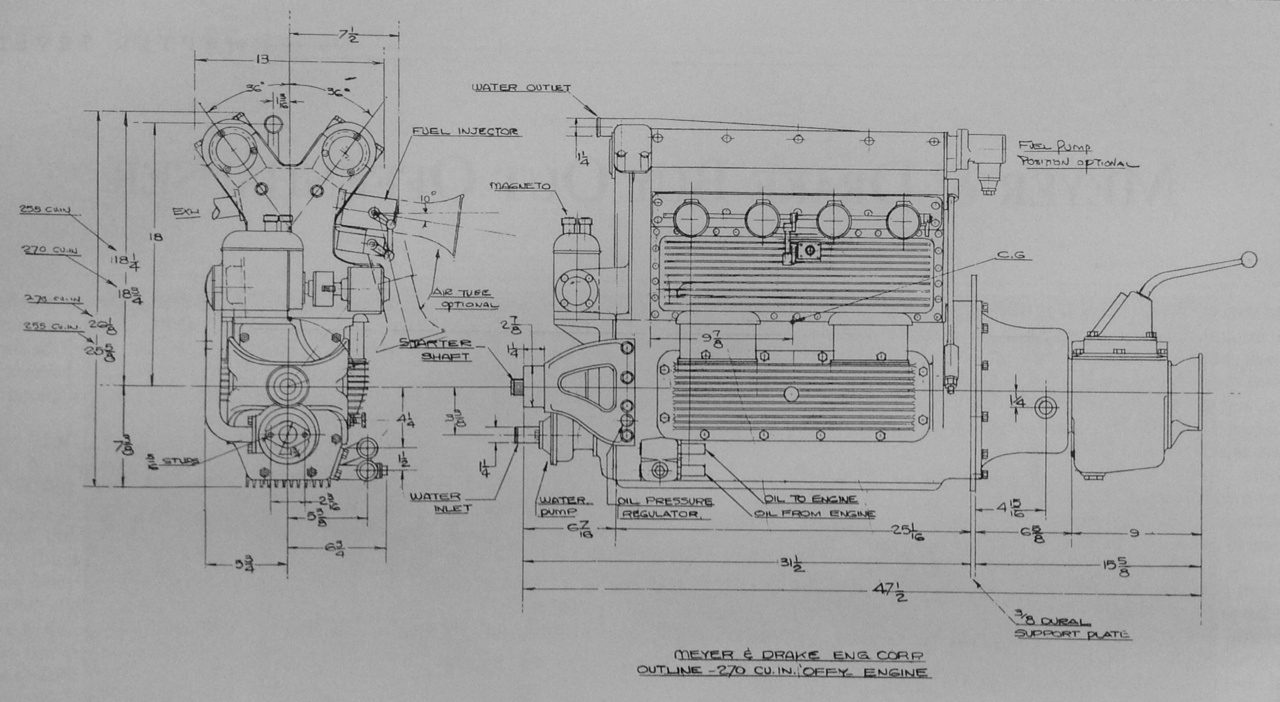
Leo Goossen’s factory drawing of the Offy 270 which was the supreme engine in championship racing from 1947-56. This is a later injected version. When the capacity limit was reduced to 4.2-litres the engine capacity was reduced from 274 to 255cid, Meyer Drake simply reduced the internal dimensions of the engine a smidge (Leo Goossens)

image

Bibliography…

Joe Scalzo ‘Indianapolis Roadsters 1952-64’, Popular Mechanics May 1952, Don Capps on The Nostalgia Forum, Gordon Eliot White ‘Offenhauser’

Photo Credits…

The Enthusiast Network, Racing One, David Kimble, John Wickhart, Frank Kurtis Collection, Louis Galanos, Max Staub

Tailpiece…

image

coops

(Getty)

One tends to sometimes forget that British Entrepreneur, Engineer, Team Owner John Cooper was also a driver and the birth of Cooper as a marque is a function of his need for a racer…

The great Brit is piloting his works Cooper T20 Bristol F2, the caption for the photo says in the ‘IV Daily Express International Trophy’ race at Goodwood on Whit Monday, 10 May 1952′. In fact JC was entered for that meeting/race at Silverstone on that day as #14 but did not arrive, so ‘praps this is a practice shot.

Before focusing on the construction and sales of his cars and managing the team he was a very capable driver taking many 500cc wins, a class for which the first Cooper, famously constructed of two Fiat 500’s welded together to provide an independently suspended car, was built.

image

Cooper 500 Drivers L>R in this 1948 photo; John Cooper, George Saunders, Charles Cooper, the shot credits Chas as the cars designer and Stirling Moss. ‘New midget racing cars made by Charles Cooper at his Surbiton, Surrey garage’ is the caption (Popperfoto)

The front-engined Cooper Bristols Types 20 and 23 ‘launched’ the successful careers of Mike Hawthorn and Jack Brabham amongst many others, i wrote an article about them, click here for the link; https://primotipo.com/2015/02/10/stirling-moss-cumberland-park-speedway-sydney-cooper-t20-wm-holden-1956/

I started to research an article to write on John Cooper’s career and influence and came upon the obituary published by Britain’s ‘The Telegraph’ on 27 December 2000, it seems to me it covers things rather well so here it is, truncated slightly and with my photographic additions…

image

JC at left, having already done a few laps, slightly quizzical supervises Ken Wharton’s test of a Cooper T23 Bristol at Goodwood in 1953. What a ripper period scene, love the casual dude in suit pants, vest, tie and fag! (Popperfoto)

‘John Cooper, who has died aged 77, was one of the great figures in the history of motor racing; his Cooper-Climax cars were the force behind Jack Brabham’s dominance of the drivers’ championship in the early 1960s, while his Mini Cooper was destined to become a symbol of the decade itself.

Cooper and his small design team at Cooper Cars first came up with a rear-engined sports car in 1955. Based around a Coventry Climax firepump engine, the “Bobtail” Cooper-Climax was without peer in its class. By narrowing the chassis and fitting slender bodywork which left suspension and wheels exposed, Cooper then created a rear-engined Formula Two car which could easily be upgraded to meet the demands of Formula One.

image

Jack Brabhams Cooper T40 Bristol ‘Bobtail’ on the way to a lucky Australian Grand Prix win at Port Wakefield, South Australia in 1955 (unattributed)

By 1957, the Australian Jack Brabham had joined Coopers, and a 2-litre version of the Formula Two car was entered for the Monaco Grand Prix. Brabham pushed it home in sixth, having been third. On twisting circuits, the nimble rear-engined Cooper could challenge the comparatively flat-footed Ferraris’, Maseratis’ and Vanwalls’ which traditionally competed for places on the podium.

image

Stirling Moss on his way to the first mid-engined car F1 win, Cooper T43 Climax 1.9, Argentine GP 19 January 1958 (Getty)

The next year, in the Argentine Grand Prix, Stirling Moss drove a Cooper to a first world championship victory by the rear-engined car, and at Monaco another Cooper won, this time driven by Maurice Trintignant.

image

Moss, Argentina 1960, Moss giving away more than 500cc to his competitors, the Coventry Climax FPF 1.9 litres (Getty)

The persuasive Cooper then managed to talk Coventry Climax into building full-sized 2.5 litre engines for his works’ drivers – Brabham and Bruce McLaren – and under his direction Coopers promptly won both the 1959 and 1960 Formula One constructors’ titles, while Brabham took two consecutive world champion drivers’ titles. By 1962 every Formula One marque had put their engines where Cooper had his – behind the driver.

cooper

John Cooper aboard the Cooper T49 ‘Monaco’ in March 1959 during a press release, Brands Hatch (John Ross)


image

Lap 1 Portuguese GP 1960; Brabham’s Cooper T53 Climax from Gurney’s BRM P48 DNF and Surtees Lotus 18 Climax DNF. Jack won the race having had a huge accident in Oporto the year before (Autosport)


image

Argentine GP 1960 post victory in the UK; McLaren 1st Cooper T51 Climax, Brabham DNF and JC (unattributed)

In the mid-1940s, Cooper had competed against Alec Issigonis, the designer of the Mini, in hill-climbs. Soon after its launch in the mid-1960s, Cooper suggested to George Harriman, head of the British Motor Corporation (the Mini’s manufacturer), that he should market a tuned-up version. Harriman doubted that he could sell more than 1,000; the final total of owners attracted by Cooper’s modifications exceeded 125,000.

Cooper was consulted regularly about improvements to the design and an entire family of Mini Cooper variants evolved, among them the Mini Cooper S. The Mini Cooper lorded it over rally racing for the rest of the 1960s, winning multiple championships and four consecutive Monte Carlo rallies between 1964 and 1967.

image

It was the first economy car to become a status symbol, the height of chic. Its owners included King Hussein of Jordan and members of The Beatles. “Drive a Mini Cooper – the most fun you can have with your clothes on!” ran the advertisements. “If your tyres survive more than 2,000 miles, you’ve driven like a wimp.”

At the end of the decade the car featured prominently in the film The Italian Job (1969), in which Michael Caine and his team of bullion raiders made the most of the Mini’s virtues of small size and great speed to escape pursuit via the roofs, sewers and marble staircases of Turin. The Minis were painted red, white and blue, and the film not only helped boost sales of the Mini Cooper all over the world but, by identifying the car with a time of great British style and ingenuity, helped it also to attain immortality.

image

John Cooper was always going to be involved with cars! Caption of this 27 May 1935 photo’ Dwarfed by a full-sized car, Mr CW Cooper of Surbiton drives the miniature racing car which he built for his son John. The tiny vehicle is fitted with a 1.25 horsepower two-stroke engine and can travel 52 miles an hour. The other car is an Alfa Romeo 8C Monza, does anybody know who the occupants are? (Fox Photos/Getty)

Cooper was born on July 17 1923 at Kingston, Surrey. His father Charles ran a modest garage in nearby Surbiton; among the cars he maintained for customers was the Wolseley “Viper” raced at Brooklands by Kaye Don. When John was eight, his father made him a half-scale car with a motorcycle engine. At 12, he was given a lightweight Austin 7-based special capable of 90mph; he tried it out at Brooklands but was chased off the track by enraged officials.

On leaving Surbiton County School at 15, John became an apprentice toolmaker, and after RAF service in 1944-45, he and his friend Eric Brandon (later a successful racing driver) built themselves a single-seater racing car for the new 500cc class. Two scrap Fiat 500 front-ends were welded together to provide an independently suspended chassis, on to which was mounted a 500cc motorcycle engine behind the driver’s seat to chain-drive the back axle.

Wearing sheet aluminium bodywork, this first Cooper racing car was very successful, and a second was built for Brandon in 1947. Cooper and his father then founded the Cooper Car Company to build a batch of 12 replica 500s for sale. One of their first buyers was the 18-year old Stirling Moss.

The Cooper Car Company quickly became the first, and largest, post-war specialist racing car manufacturer; Lotus, Lola and March – among others – would follow them. While John Cooper provided the firm’s enthusiasm and drive, Charles Cooper kept control of the firm’s finances.

image

Cooper after victory at Rouen in 1952. Cooper MkV 500 (Heritage)

John Cooper was also a very capable racing driver in his own right. In 1952 at Grenzlandring he scored the first 500cc race to be won at an average of more than 100mph, and the next year drove his streamlined works car to victory in the Avus Speedbowl, Berlin. He also enjoyed first places at Monza and at Rouen.

image

JC record breaking at Monthlery, France on 9 October 1951, car is streamlined, slightly stretched Cooper MkV JAP. 500 & 1100cc engines used (Popperfoto)

Click here for an interesting article on the Cooper Land Speed Record cars;

http://www.ugofadini.com/cooperstory.html

image

JC in the chassis of the Mk V record-breaker, a variety of JAP engines used, 15 November 1952 (Central Press)

In the early 1950s, Coopers diversified into front-engined sports and single-seater racing cars. The first British world champion driver, Mike Hawthorn, first made his mark in a 1952 Cooper-Bristol Grand Prix.

A warm, even extrovert man, John Cooper relished every moment of his fame, although he was perhaps never the same after being badly injured in 1963 when his prototype four-wheel drive Mini Cooper crashed. It was many months before he was fully fit, and in 1965 – the year after his father died – he sold the Cooper Car Company to the Chipstead Motor Group.

image

1966 US GP Watkins Glen; front row Brabham in BT19 Repco DNF, Bandini Ferrari312 DNF and Surtees Cooper T81 Maserati 3rd. Jim Clark took the only win for the BRM H16 engine in his Lotus 43  (Alvis Upitis)

Although he continued to co-direct the Formula One racing team until 1969, when it was disbanded, from the mid-Sixties onwards its homegrown construction was overtaken by more sophisticated and better-funded technology at Lola, Lotus, BRM and Ferrari. Characteristically, Cooper never felt any envy as his company was upstaged.

He retired to the Sussex coast, where he founded the garage business at Ferring, near Worthing, which still bears his name. Recently, he had been much cheered by the decision of Rover to develop a new generation of Mini Coopers, primarily for enthusiasts in Japan. Rover’s new owner, BMW, has embraced the project, and just before his death Cooper was delighted to see his son drive the prototype BMW Mini Cooper.

John Cooper was appointed CBE last year. He leaves a wife, a son and daughter. Another daughter predeceased him.’

image

JC ‘races’ the ‘first Cooper ‘ his dad built for him in 1930 (Keystone France)

Credits…

‘The Telegraph’ John Cooper obituary 27 December 2000,  GP Library, GP Encyclopaedia

Getty Images, Keystone France, Alvis Upitis, Central Press, Popperfoto, Heritage Press, Fox Photos, Autosport, John Ross Motor Racing Archive

Tailpiece: ‘I don’t care Bruce just go faster!’ With Bruce McLaren and Phil Hill in 1964…

image

European/British GP, Brands Hatch 1 July 1964; JC, Phil Hill 6th and McLaren DNF #10 is Hill’s Cooper T73 Climax. Clark won the race in a Lotus 25 Climax (G Pollard)

Finito…


lancia

Anything designed by Vittorio Jano works for me…
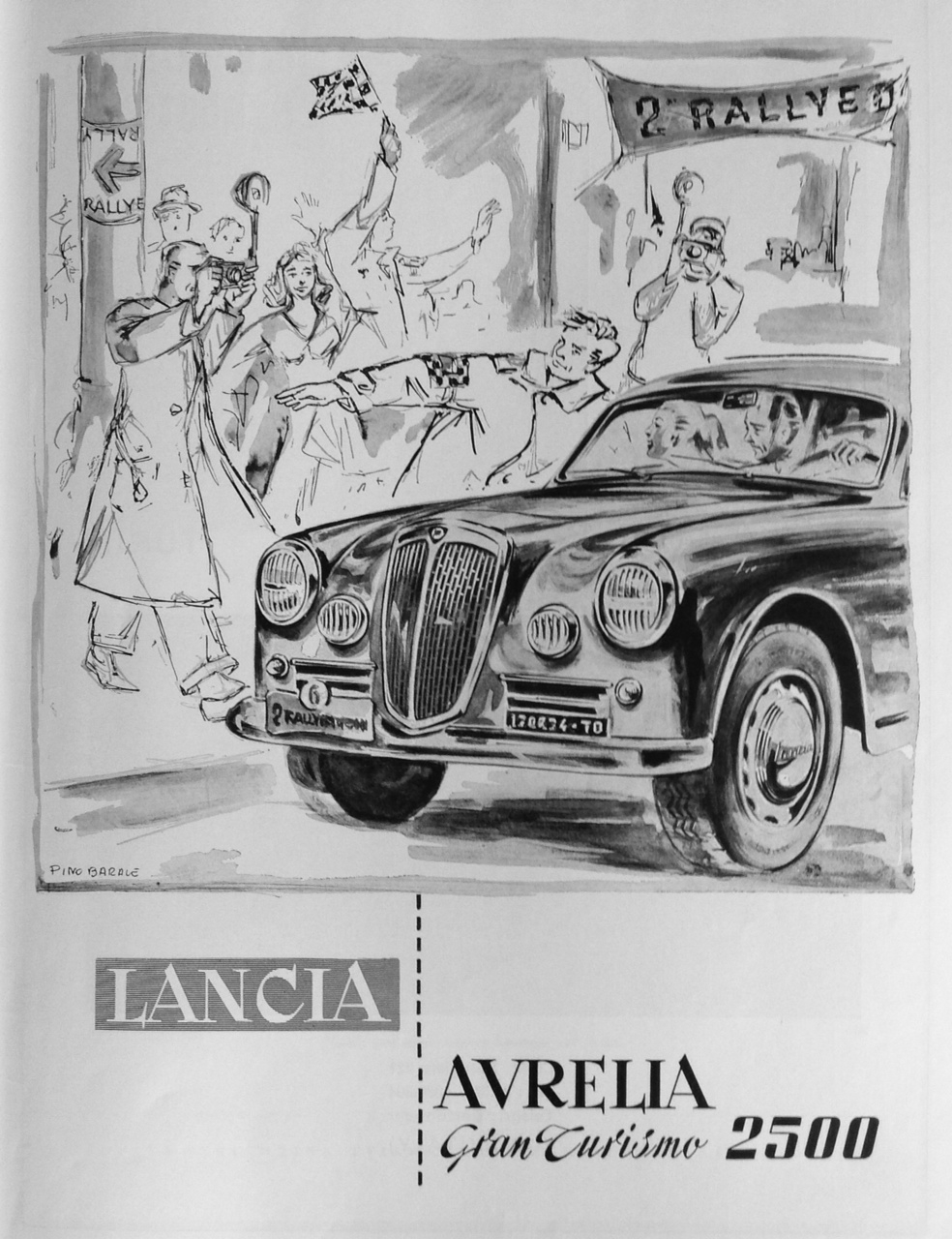
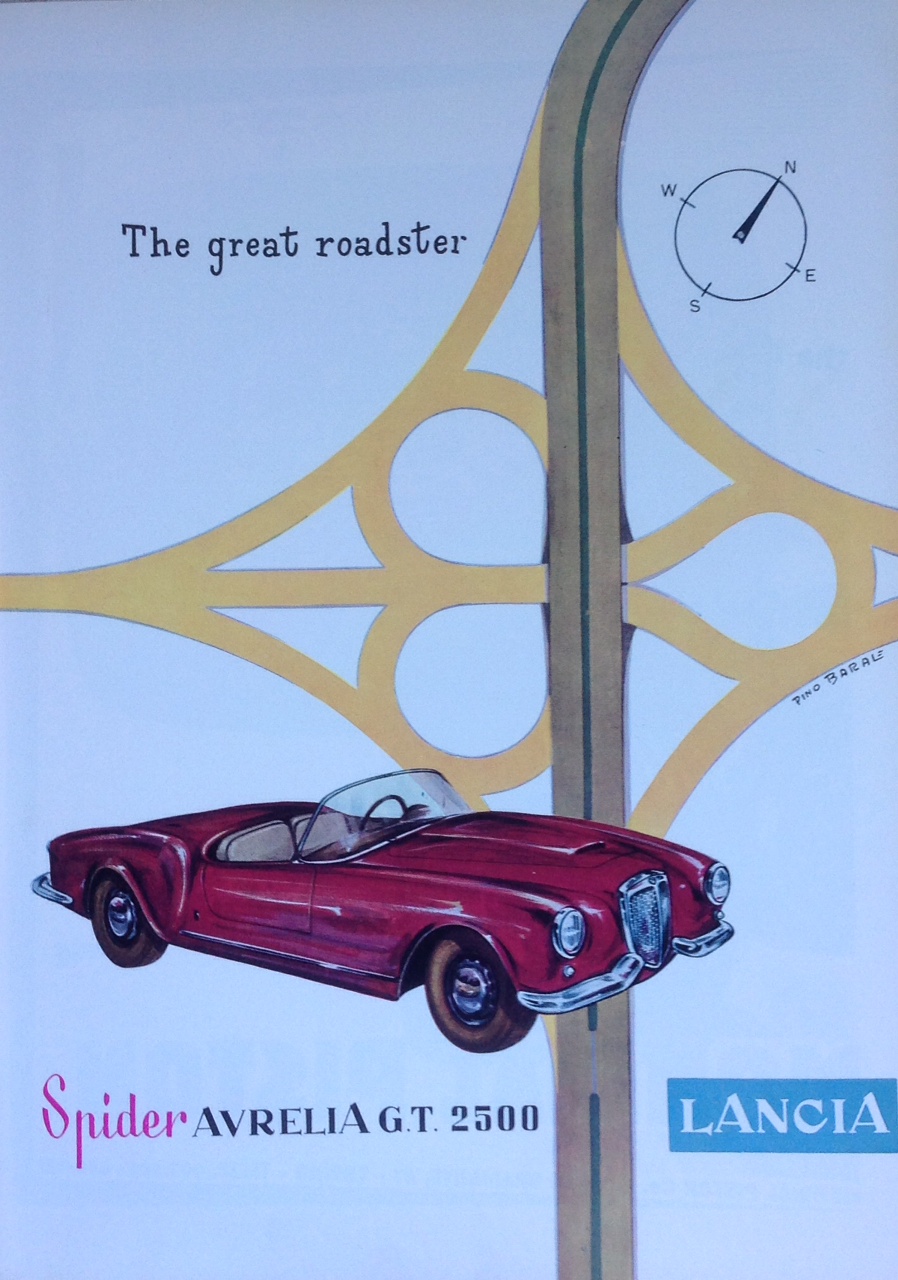
Unitary chassis construction, 2451cc OHV V6, Weber twin throat carb, circa 118bhp @ 5000rpm. 115mph. 4 speed box but the transaxle was innovatively located at the rear as are inboard mounted drum brakes.

Front suspension sliding pillar, semi trailing arms at rear, De Dion tube on fourth series cars.

The car was remarkably advanced for its time, one of a series of stunning Lancia’s designed by Jano, the ‘apex of which’ was the D50 GP car which first raced at Barcelona in the 1954 Spanish Grand Prix.

B20 Coupe body Ghia designed and Pininfarina built, Francesco de Virgilio the senior member of Jano’s design team.

lancia 2500

These cars also useful competition tools; here is the Johnny Lurani/Sambuynd Gatta GT2500 during the 1953 French Rallye des Alpes on the Passo Pordoi. (Mailander)

image001

Credit…Automobile Year