Archive for the ‘Obscurities’ Category

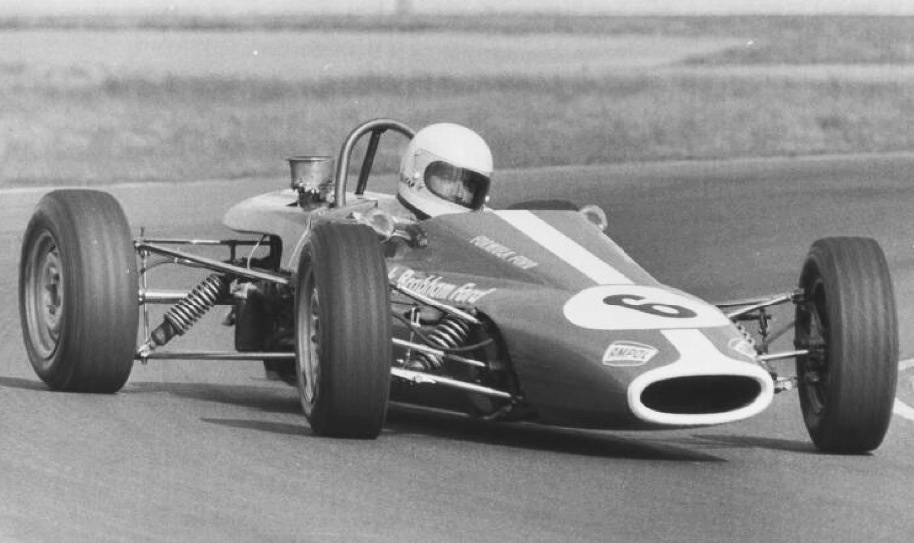
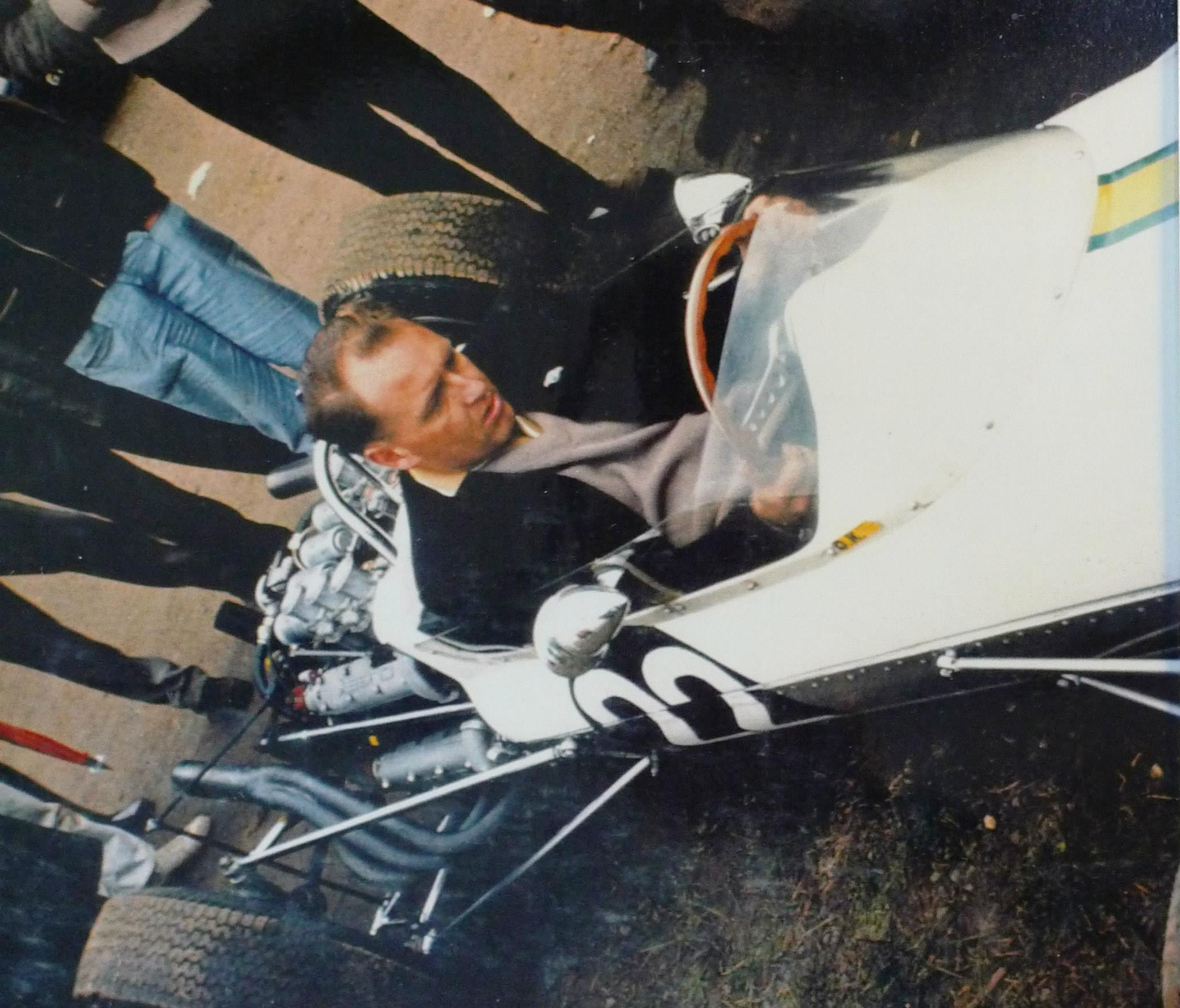
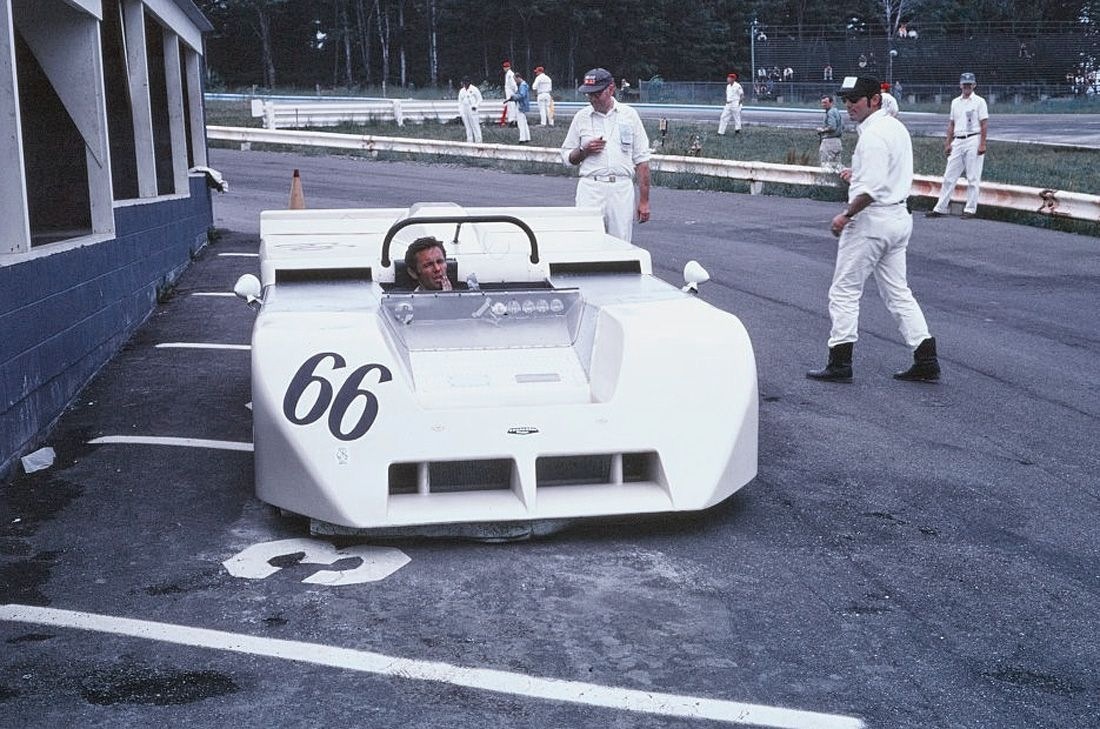
JMF trying to stay warm at chilly Silverstone, 5 October 1970…

In this day and age of every Tom, Dick and Irving recording their every exploit from the bedroom to the mountain top it’s instructive to look at just how far we have come in camera packaging over four decades or so.

Patrice Pouget is just about to shoot some action footage from a precariously mounted camera atop the svelte tail of a Maserati 250F for a documentary on the great mans life. ‘Fangio’, directed by Hugh Hudson and narrated by the champ himself was released in 1971. The car is ‘2516’, originally a 1955 ex-works car raced mainly by Jean Behra and then sold to Australian Reg Hunt and raced in turn by Bib Stillwell and Arnold Glass before returning to Europe in the sixties and Historic Racing.

I must watch it.

Credit…

Terry Disney

Tailpiece…


(NAA)

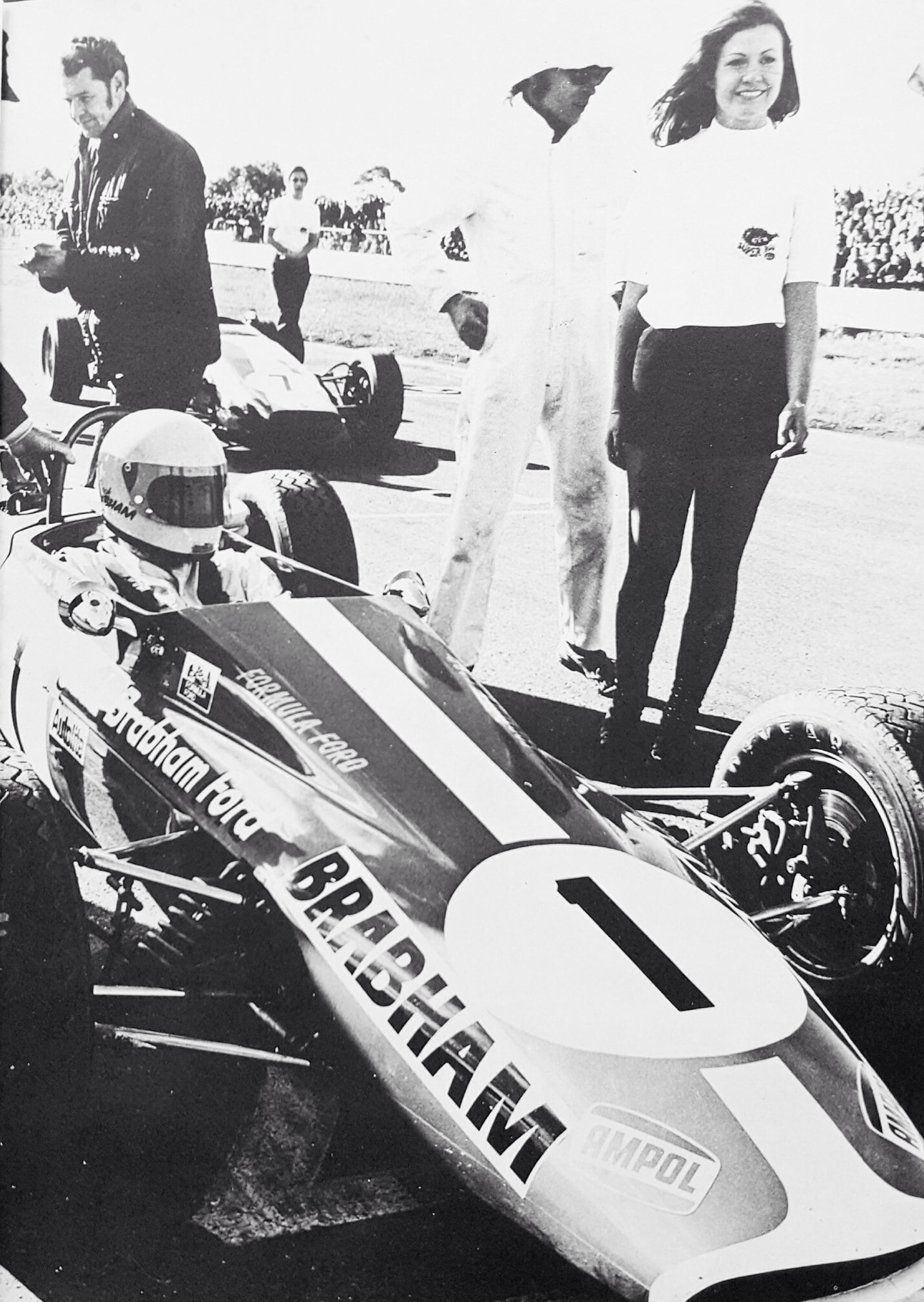
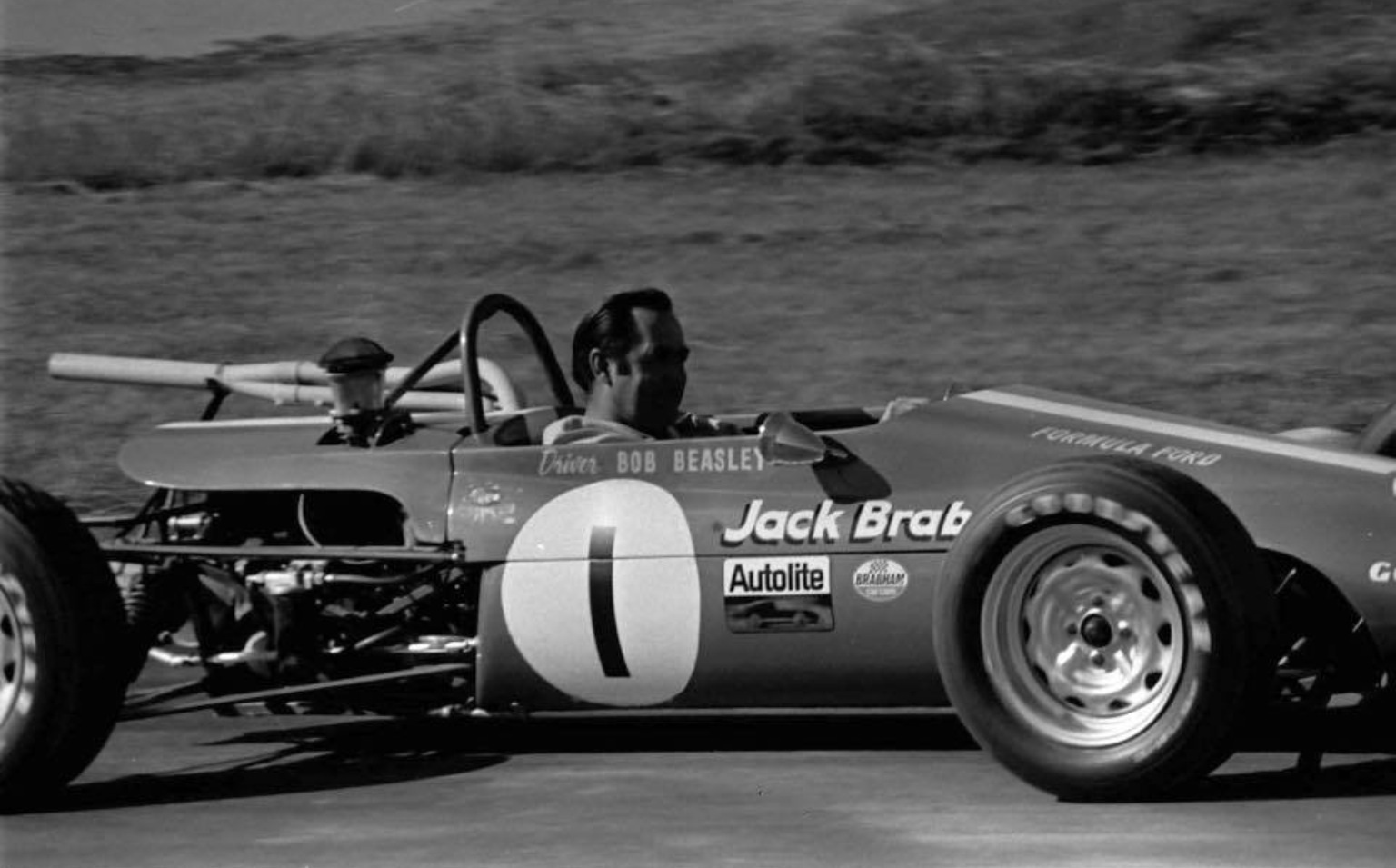
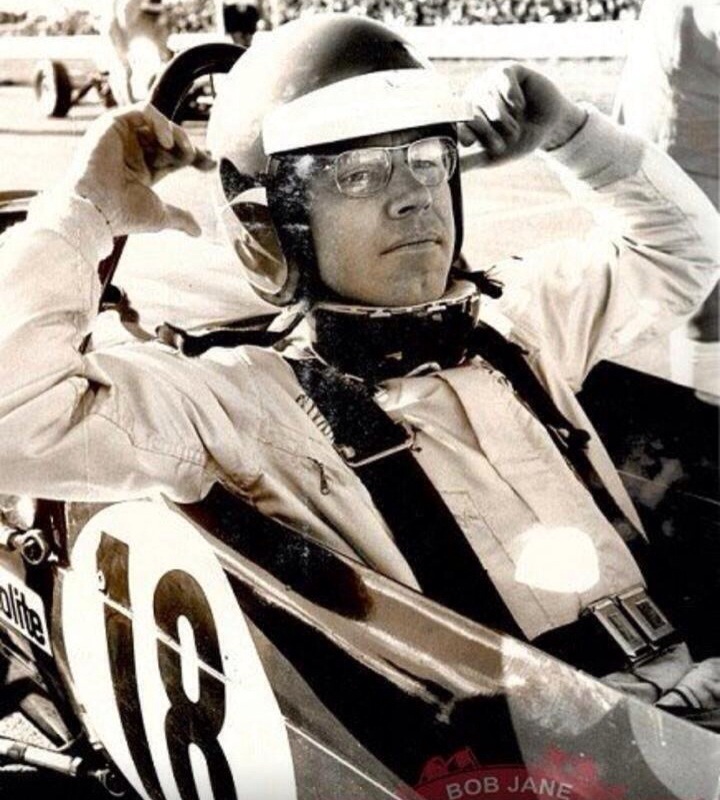
Jack Brabham testing the ‘Jack Brabham Ford’ Bowin P4X Formula Ford normally raced by Bob Beasley, August 1971…

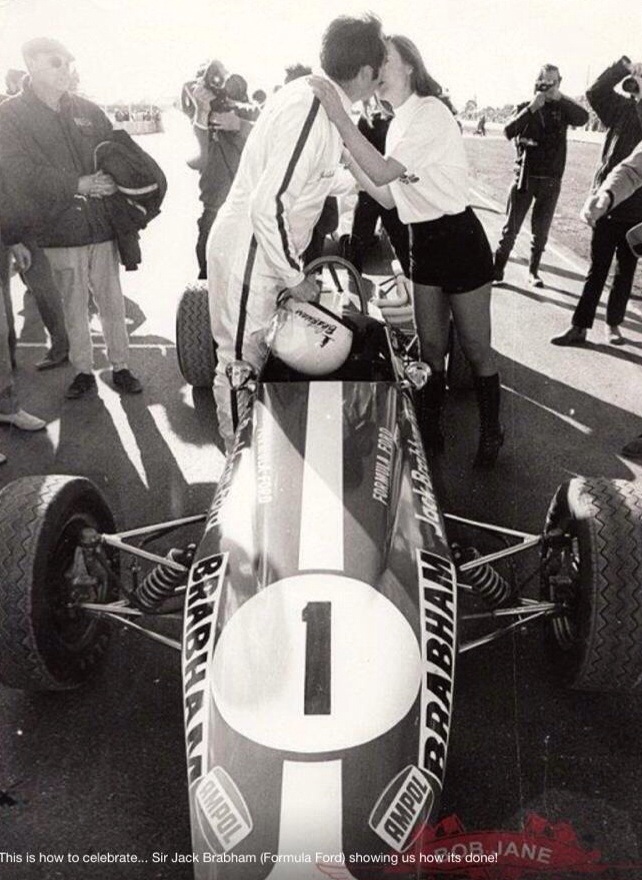
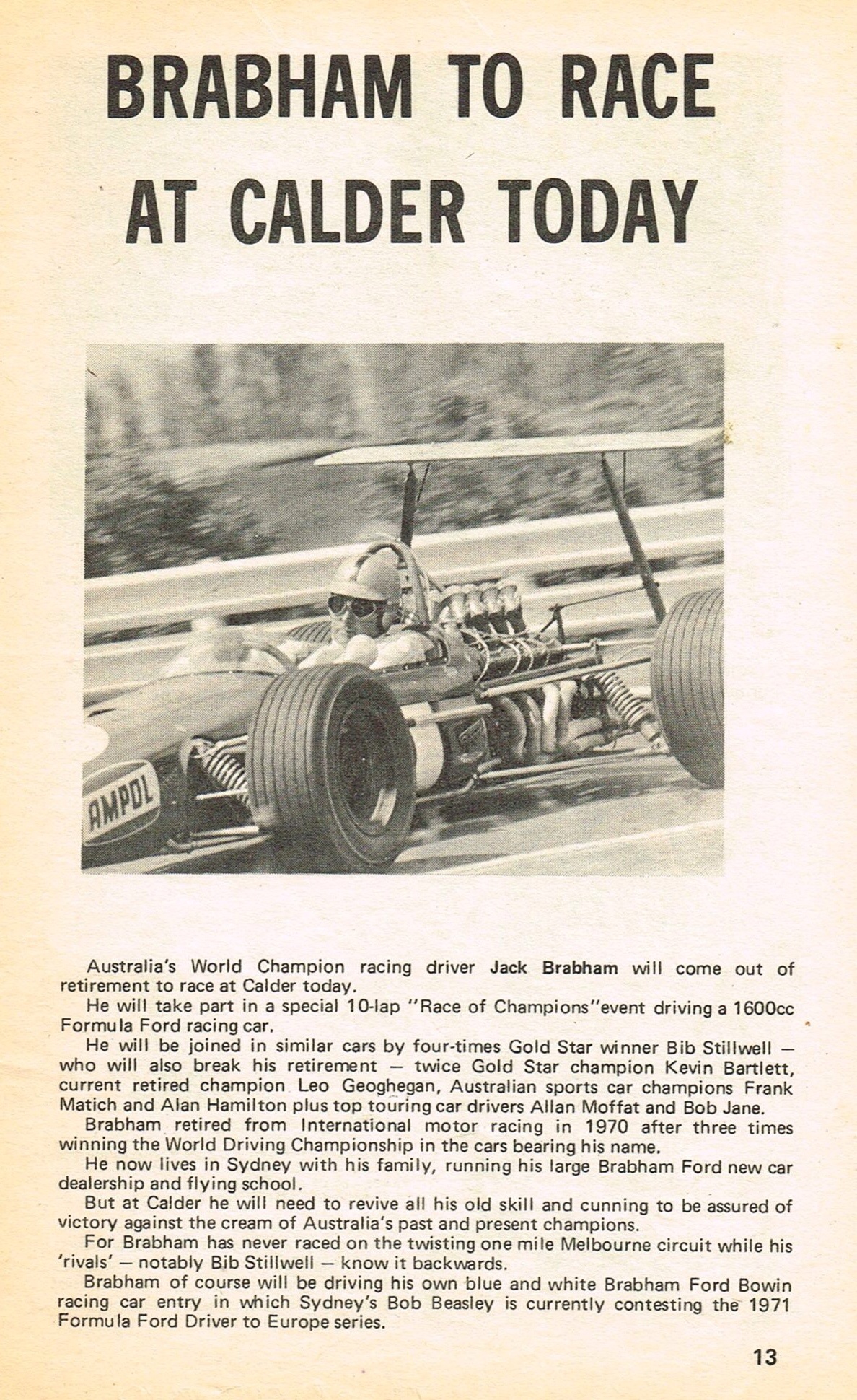
I’ve rattled on a couple of times before about Jack’s last ‘in-period’ race victory being the Calder Raceway ‘Race Of Champions’ on 15 August 1971- he beat a stellar field.

Jack carried #1 on the flanks of the Bowin in the Calder race- its hard to know where this photo is taken, maybe its at Calder on the weekend of the meeting or perhaps Jack is putting in a few test miles elsewhere to get the hang of the car- its 100 bhp and Goodyear RR12 all weather tyres rather than the 440 bhp, slick shod F1 Brabham BT33 Ford he raced in 1970.

Maybe he is thinkin’- ‘i’ll just soften the rear bar a smidge and see if i can get a bit more bite from the back’…

Check out this article for heaps more on the Bowin Formula Fords;

Bowin P4A and Oz Formula Ford Formative…

(R Beckman)


Jack checks his times, eagle eyed Brabham watchers will note the Bell Star as the one he wore thru most of 1970, his last F1 season (R Hawthorn)


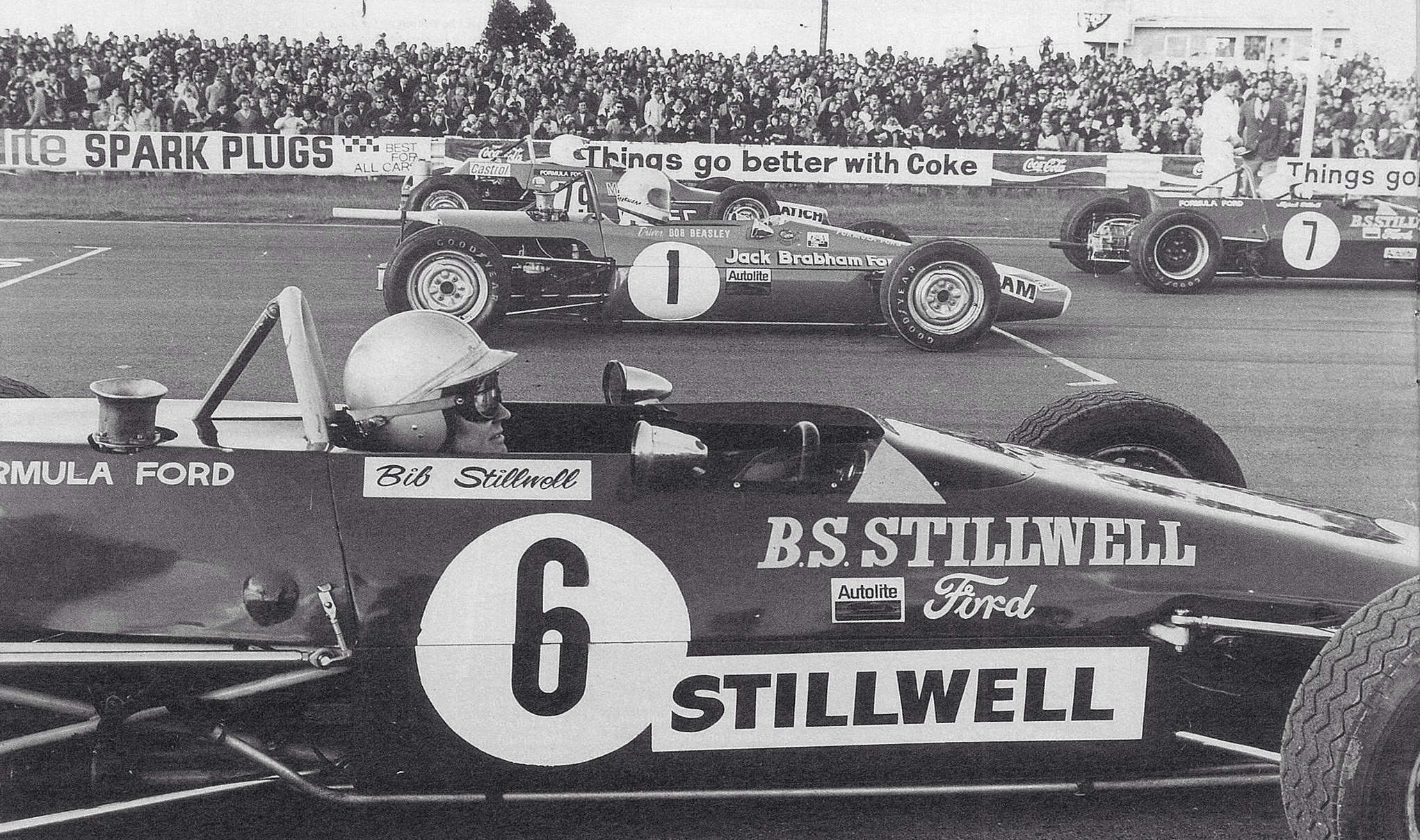
Front to rear, Stillwell Elfin 600, Brabham Bowin P4X and Matich Aztec- at right front Jane in the other Stillwell Racing Elfin 600 (Bennett)

The Calder race was a wonderful bit of promotion by Bob Jane- here is Tom Naughton’s ‘Racing Car News’ race report from the October issue of ‘The Monthly Bible’…

‘With all the pomp and ceremony of a Grand Prix, Calder staged a ‘Race Of Champions’ for their 15 August meeting.

Coming out of retirement were Jack Brabham and Bib Stillwell (Australian Gold Star National Champion 1962-1965) along with some of todays champions, and all mounted in borrowed Formula Fords, they turned on a most entertaining race. The ‘Master’ showed the way home, easing effortlessly away from the main scrap and showing that he had lost none of the skill after his period of retirement’. (only 8 months at the time!)

‘Brabham lined up in his own (Jack Brabham Ford, Bankstown, Sydney) FF normally steered by Bob Beasley, while Bib Stillwell took over his number one car (Elfin 600) usually driven by Larry Perkins (he won the Driver to Europe Series that year).

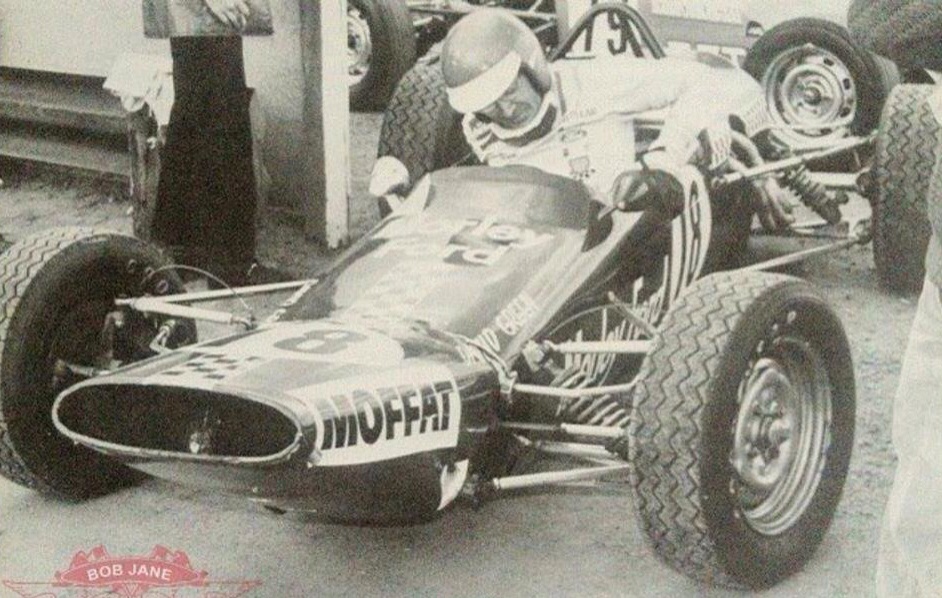
Allan Moffat (in fact the only driver without racing car experience) (not quite true, he had an outing or two in Bob Jane’s Brabham BT23E Repco Tasman car boofing it at Sandown in 1968) took over David Green’s car (Wren).

Bob Jane hopped into Mike Stillwell’s Elfin 600, Alan Hamilton into Graeme Peart’s (Wren) and Kevin Bartlett into Murray Coombs’ car (Wren). Frank Matich took over Mike Hall’s Aztec, while Leo Geoghegan slipped into Peter Edwards’ car (Elfin 600)’.

Moffat Wren, with 3 Elfin 600’s behind him- perhaps Leo G immediately behind him and Jack ranging in, partially obscured to his outside, Jack is ranging in (autopix)


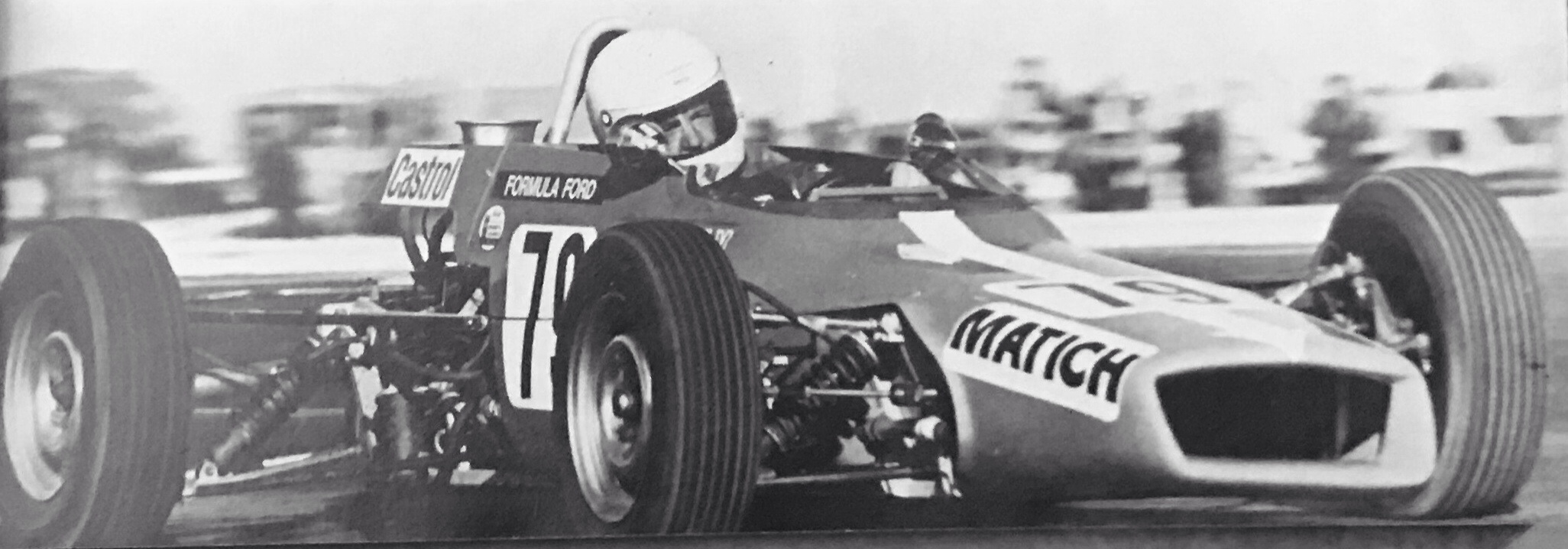
Frank Matich in Mike Hall’s Aztec. In August 1971 FM is up to his armpits in the build of the Matich A50 Repco F5000, so my guess he may have preferred to stay in Sydney, in which he was to win the November AGP at Warwick Farm – wonder what he thought of the Melbourne, Ould brothers built Aztec? (AMRA)

‘That was the field and at the flag Jane was first away, leading from Moffat, Brabham, Geoghegan and Hamilton. By lap 2, the front three had closed up and on the following lap both Moffat and Brabham slipped by at Repco. Geoghegan came up to challenge Jane, while Brabham took the lead on lap 4. He started to ease away from the rest, while Jane slipped Moffat at Toyota, these next three keeping close company. By lap 6, Geoghegan took Moffat, and then inherited second spot when Jane slipped wide at Repco, dropping back behind Stillwell’.

‘Oops! The same thing happened the last time I drove one of these open-wheeler thingies’. Moffat in David Greens slightly second-hand Wren (Bob Jane)

In lap 9, Stillwell started a challenge on Moffat and Hamilton, but in front Brabham was well clear. He took the flag in true champion style, with Leo second, then a scrapping duo of Hamilton and Moffat, with Stillwell hard on their heels, then came Jane, Matich and Bartlett. Leo did the fastest lap, a 48.6.’

The three Brabham sons all had stints in Australian Formula Ford before heading off to Europe, Geoff in 1973/4 aboard Bowin P4X/Elfin 620/Bowin P6F, Gary in 1982 with the Birrana F73 and David in 1986/7 with Van Diemen RF85/86. There is a neat bit of symmetry in the ‘old man’ also having a race win in Oz FF- was it his very last race win I wonder?

Credit…

‘Racing Car News’ October 1971, Laurie and Nick Bennett Collection, Bob Jane Heritage Collection, Autopix, Australian Motor Racing Annual, Jonathon Koch Collection for the program and RCN, National Archives Australia, Lynton Hemer, Russell Beckman, Stephen Dalton Collection, Russell Hawthorn

Etcetera…

(S Dalton Collection)

From the Calder 15 August meeting program. Car in the photo is Jack’s last Tasman mount, the Brabham BT31 Repco at the Sandown Tasman meeting in February 1969

The race certainly had a great entry, for overseas readers, Stillwell, Bartlett, Matich and Geoghegan were all Gold Star Champions and Moffat, Jane and Hamilton national title holders on multiple occasions aboard Touring Cars and Sports Cars in Hamilton’s case. Jack probably requires no introduction…

For the sake of correctness, the car driver/combinations did not quite start as listed in the program.

Brabham was aboard the one off Bowin P4X- slightly different in the suspension to production P4A’s, Matich the Aztec, Jane a Stillwell Elfin 600, Geoghegan the Edwards Elfin 600 with Moffat, Bartlett and Hamilton aboard Wrens.

Brabham doing a parade lap in the P4X at Oran Park on 26 March 1972 (L Hemer)

Tailpiece: ‘It feels a bit like the ‘Stang, gearchange is on the right anyway’…

Moff saddles up in David Green’s Wren Formula Ford, these cars (not to forget his ‘Mk2’s constructed in the later 1970’s) were built in reasonable numbers by Bill Reynolds in his Carlisle Street, St Kilda workshop, not too far away from Calder.

Allan Moffat’s open-wheeler appearances, apart from this, were limited to a couple of races in the States circa 1966/7 (details please) and limited laps in Bob Jane’s Brabham BT23E Repco at Sandown in 1968.

Finito…

image

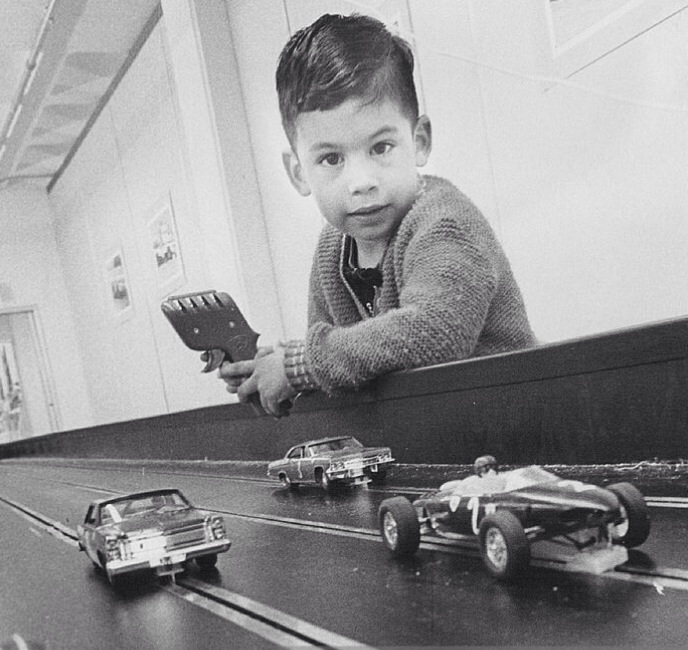
It can only be a Formula Libre race, somehow I doubt 4 year old Ray Dones had a future as a race promoter…

This shot of the little dude and his eclectic grid of racers was taken at the Denver Toy and Hobby Show on 3 April 1965, but it could just as easily be me at the ‘Scalextric’ track at Rosebud on Victoria’s Mornington Peninsula in 1969.

We ‘useter holiday at McCrae during the long, hot Australian summer- in between working on the ‘tan my brother and cousin spent lotsa time and money on donuts and laps at that place up the road in the Summer of ’69.

I never did parlay my Scalextric pace at 11 to exceptional Formula Vee speed at 21, sadly!

Credit…

Georgia Lowell

image

McCrae in the summer of ’69

Finito…

(D Lupton)

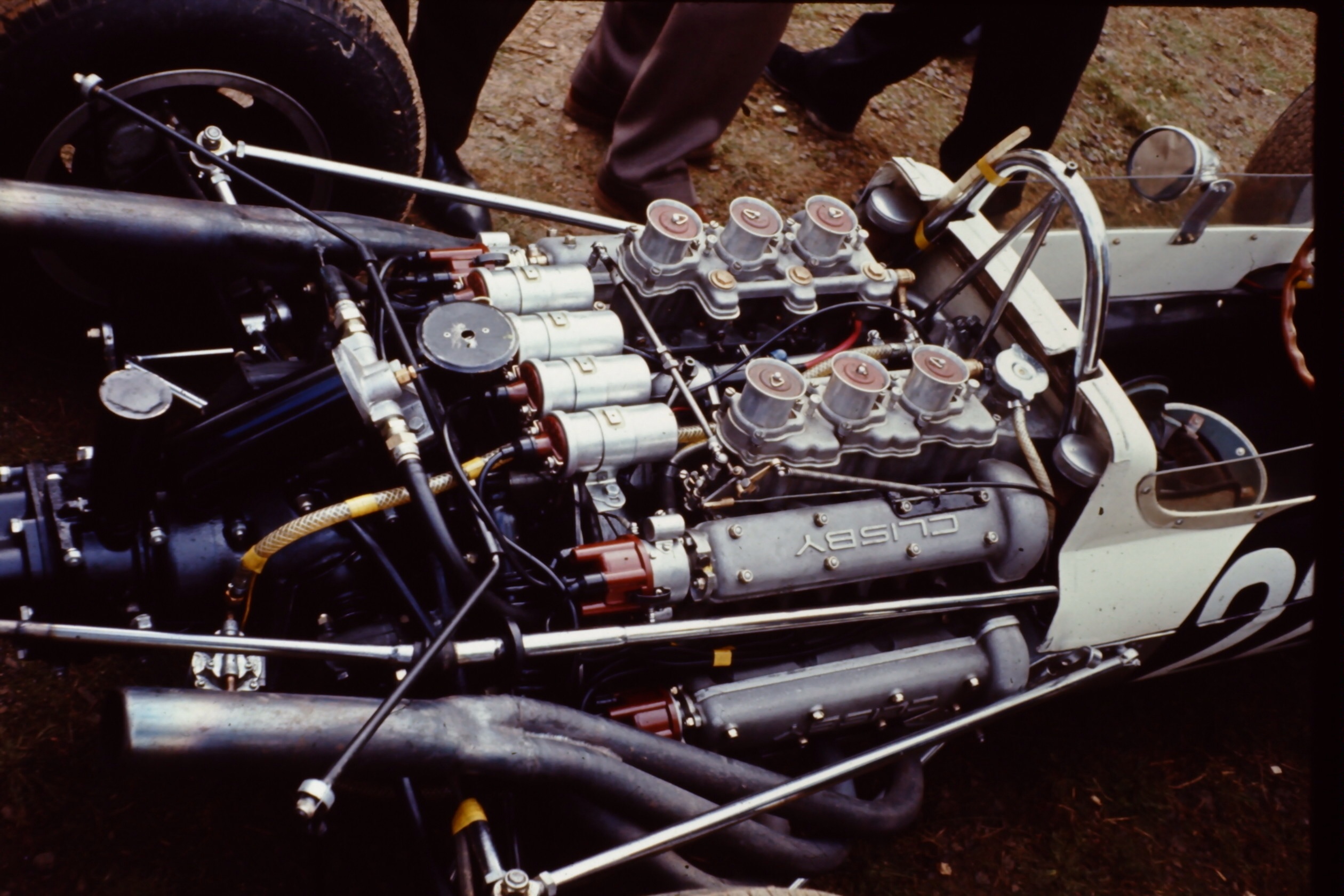
Andy Brown’s unique Elfin Mono Clisby V6 in the Calder paddock during the 21-23 May weekend in 1965…

Melbourne racer, restorer and Brabham expert Denis Lupton sent this photo to me yesterday- it is magnificent in its colourful detail so I thought we might finish the weekend as we started it- with a Clisby theme. I’ll pop it into the other article too, but it was too good to ‘lose’ within there, so here it is in all of its detailed glory.

Click on the link to the earlier article for the engine’s full technical details, the following occurs to me in absorbing the photograph.

Clisby Douglas Spl and Clisby F1 1.5 litre V6…

Isn’t it an exquisite little thang! Denis’ shot is so sharp we can easily see the beautiful finish of the cam-covers, ‘Clisby’ script and contrasting coloured retaining bolts. Three of the four Bosch-Clisby distributors are clear, as is the battery of four coils to provide lotsa spark for each of the twin-plugs per cylinder.

Blow the shot up and the intricate, beautifully fabricated, ‘Rose’-jointed throttle linkage is clear- as are the two triple-throat Clisby carburettors- boy they look yummy, so nicely made and finished. Die or sand cast?

Garrie Cooper designed the Type 100 Elfin or more colloquially the ‘Mono’ to suit the Ford pushrod and Lotus Ford twin-cam inline four-cylinder engines- I wonder if the tub of this chassis, Mk1 ‘M6548’ is different to the rest, perhaps Mono Experts Ron and James Lambert can let us know.

Either way, routing the exhausts to clear the top of the aluminium full-monocoque tub and then through the rear suspension linkages was a challenge and a test of the pipe-benders art. The nickel plated top radius rod on this side is clear as is the similarly shiny gear linkage which pops from under the fibreglass body and travels between the cam-covers to the Elfin modified VW case- Southcotts cut the gears in Adelaide if my memory of a conversation with James Lambert last weekend is correct.

The oil filter is atop the ‘box, as is the rear black roll-bar which is set to full soft at this stage of the Autumn weekend. That engine is low, the conceptual thinking of the 120 degree V6 is clear in terms of getting the masses as low down in the chassis as possible.

Wow. A visual feast.

And, if only…

Photo Credit…

Denis Lupton

(A Clisby)

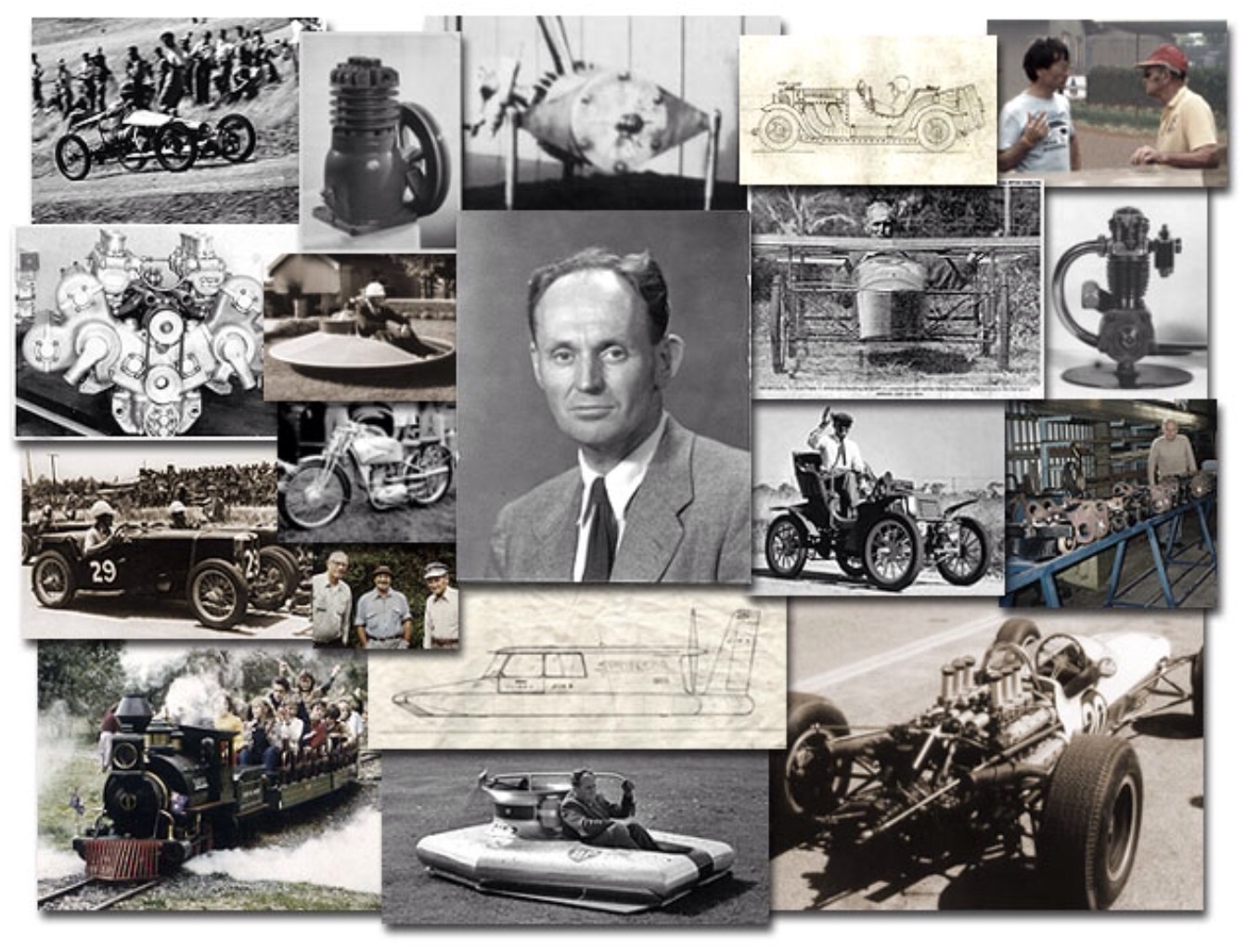
Harold William Clisby was one of those guys who did it all, above hurtling along in his 1952 Clisby Douglas Special…

Born in Norwood, Adelaide on 3 August 1912 he was a talented intuitive engineer/inventor from his childhood Meccano set fiddlings. He worked initially for his father in the family clothing business, for GM in an engineering capacity during the war, then post conflict made his fortune building Clisby Air Compressors and the Clisby/Sherline Lathe amongst many other products- Clisby Engineering Pty. Ltd. continues to this day. Click on the link at the end of this article for a comprehensive account of some of Clisby’s life.

(clisby.com)

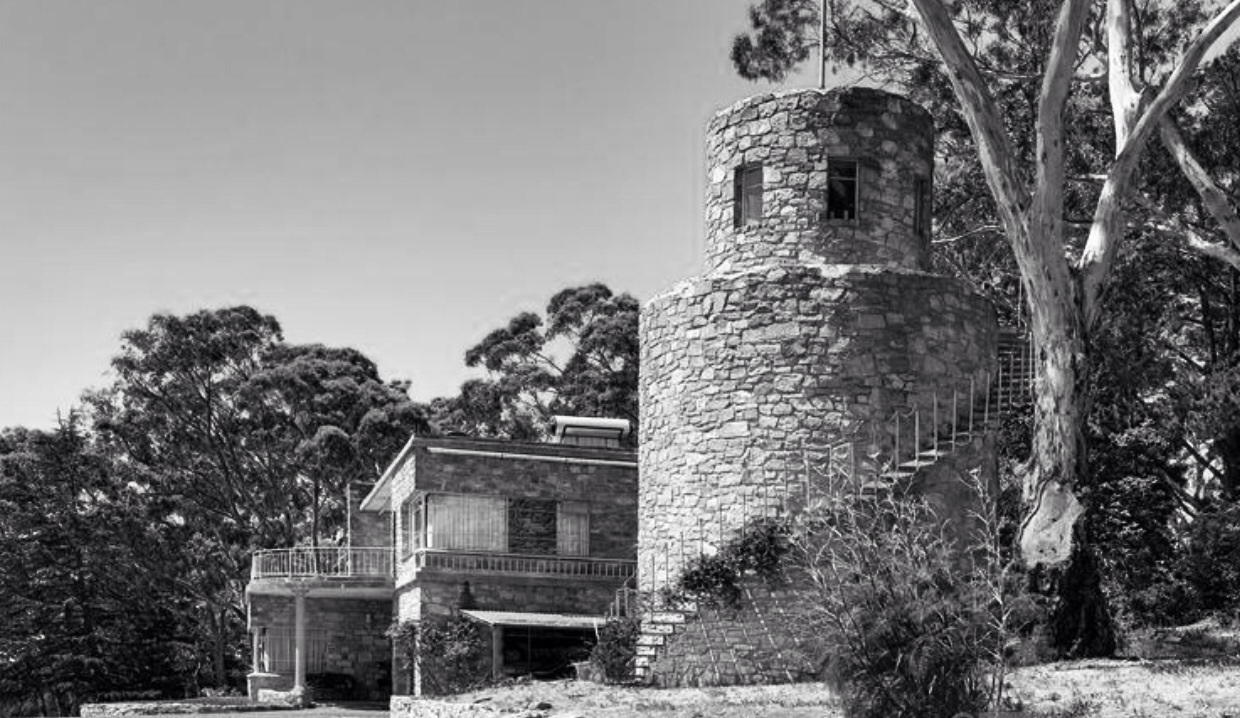
In addition to the above he built his own stone castle, complete with miniature railway line in the Adelaide Hills, various cars and motorcycles and a 120 degree, DOHC, 2 valve, 1.5 litre V6 GP race engine! This motor was fitted into an Elfin T100 Mono chassis- in so doing creating the first, the only, all-Australian, make that South Australian Grand Prix car.

This article started as a quickie on Harold’s ’52 hillclimber but a ‘teaser’ on the V6 at the articles end turned out longer than planned- that is a marvellous feature story for another time, but a précis of the Elfin Clisby V6 forms the second part of this piece.

Clisby built this home/castle in the Adelaide Hills at Teringie- set on 1.62 ha it has a dungeon, catacombs, a tower with views across Adelaide and its own miniature railway- even a cannon to keep Ferrari’s lawyers away…

The Clisby home included its own miniature railway- what a place in which to grow up as a kid?! Clisby commenced construction in 1953, the home completed over a 15 year period

Harold was one of the instigators of the Sporting Car Club’s Collingrove Hillclimb built on land owned by the Angas family.

He spent a lot of time driving all around the large property with Robert Angas looking for a suitable hillclimb location in Angas’ Land Rover. Eventually the duo settled on a marvellous, challenging bit of geography- the land was surveyed and the Sporting Car Club of South Australia soon accepted a proposal to run the venue- which they do to this day, its one of the longest continuing motorsport venues in Australia.

Of course, as a co-instigator of the project Clisby needed a car to compete in the first meeting, the ‘South Australian Hillclimb Championship’ in March 1952, having cut his racing teeth in a modified MG TC he raced at Lobethal, Woodside and other local venues.

‘Having only three weeks to go before the maiden run, Harold decided that he would like to build a vehicle to compete…A rough layout was was drawn on a blackboard using the engine and gearbox of a Douglas motorcycle, time was short so all of the details had to be carefully planned’ clisby.com state.

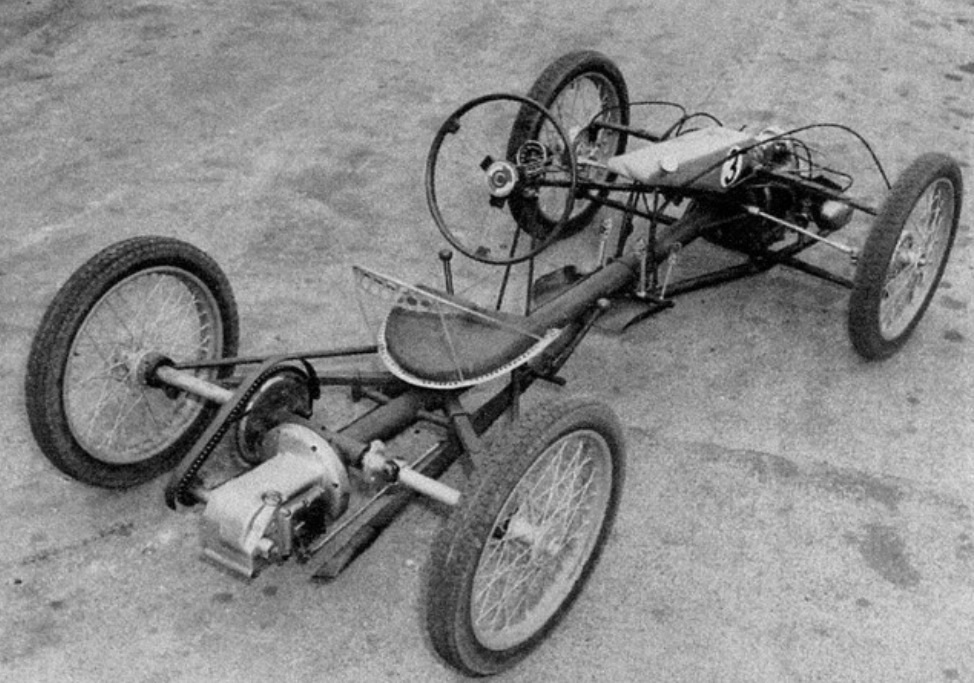
‘The springs came first, as they would take the longest time to manufacture. A single tube of 3 inches in diameter was used for the chassis: the engine located on the front end of the tube, using a brake drum, the rear end to be attached to the gearbox, used the rear cover of a differential.

The wheels were from scrapped motorcycles, a chain drive drove a  large sprocket on the rear axle and incorporated the single rear drum brake.

Universal joints were used to produce independent rear suspension; a six foot long tailshaft of 7/8-inch diameter was supported on one end of the engine and one of the gearboxes.

The steering box was rack and pinion coming from a previously built incomplete automobile. The front wheels included their own drum brakes. A tapered fuel tank came from a pedal assisted motorcycle, the steering wheel from an MG and the seat supplied by Colin Angas from a farm implement.(!)

The engine was stripped, the ports were polished to accommodate slightly larger carburettors and the pistons were shortened and lightened by removing the bottom piston ring. A motorcycle speedometer was re-calibrated to show engine revolutions per minute. A racing magneto was used to replace the magdyno.’

Great shot shows the key elements of this amazingly simple but effective racer. Note independent rear suspension- fixed length uni jointed driveshafts and forward racing radius rods for location. Chassis and gearbox clear (A Clisby)

‘All these elements were collected and assembled within 2 weeks allowing a week to test the box of tricks prior to the hillclimb.

Harold had trouble registering the vehicle for the road, as they did not believe the car weighed just 350 pounds!

With one week to go, he then decided to drive the car to the town of Angaston some 60 miles away (from Adelaide) on a Saturday morning wearing a flying suit, arriving about 1 1/2 hours later.

He then drove the car up the hill (Collingrove Hillclimb) using maximum acceleration. Returning to Robert Angas home (on the property where Collingrove was built), he then discovered the tailshaft had twisted like a long letter ‘S’! He then proceeded to straighten the shaft using an anvil and carefully drove the car home.

With only a matter of a few days remaining, a new 2 inch diameter shaft was provided, still only supported at each end. At high engine revolutions, the shaft also distorted. A third shaft was made of 1 inch diameter, 16 gauge tubing cut into three sections, the centre section was supported by ball races within the 3 inch diameter main tube.

This easily withstood the engine revs of 8000 rpm. The following Saturday morning, the car was now ready to attack the hillclimb and was driven again to Angaston.

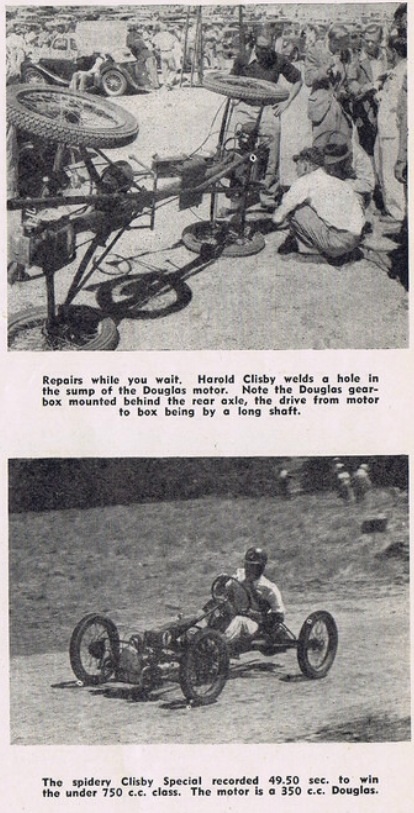
After a number of other vehicles had successfully climbed the hill, Harold’s turn finally came in the under 500cc class. He pressed the accelerator pedal until the rev indicator showed 8000rpm, then took his foot straight off the clutch, the rear wheels spun on the tarmac and the car shot off up the hill in a satisfactory manner.

There was little trouble in changing gear into the various bends until reaching the top, where the descent back to the paddock was made on a rough rock track. One rock knocked a hole in the crankcase, allowing all the oil to drain out.

Returning to the pit area, the car was rolled on its side and the hole was welded up with acetylene and oxy torch supplied by an oil company. The vehicle was now ready for a second run. Using the same procedures used from his first experience, the time was improved setting a record that wasn’t broken in its class for seven years’.

(Australian Motor Sports April 1952)

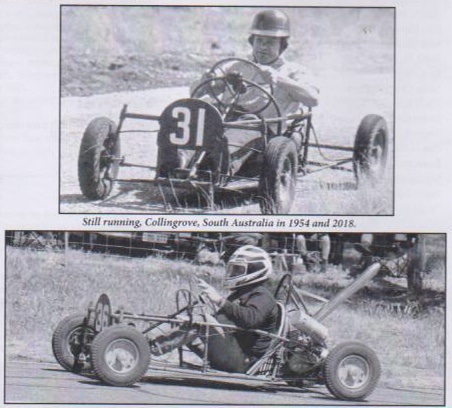
‘After the success of his hillclimb vehicle, he was then approached by several of his friends to design and build small competition cars with 125cc engines as the driving force. These were constructed out of steel tubing with rack and pinion steering and front and rear transverse independent suspension all round. The wheels were cast aluminium and fitted with 8 X 4 wheelbarrow tyres. Looking back he felt the cars led the way into the go-kart era in Australia’ clisby.com records.

Clisby Bantam: ‘This car is one of 6 examples developed and constructed in 1954…originally owned and raced by Lindsay Lemussurier of Adelaide. Used in a number of AHCC events including the 1954 Championship at King Edwardd Park, Newcastle, where it competed against Jack Sheppard and Jim Gosse in similar Clisby Bantams- and Ron Tauranac in his Ralt 500, who won. The Clisby Bantams were given the moniker of ‘screaming blowflies’ by track event announcers’ (From the VSCC Mt Tarrengower October 2018 program courtesy of Bob King)

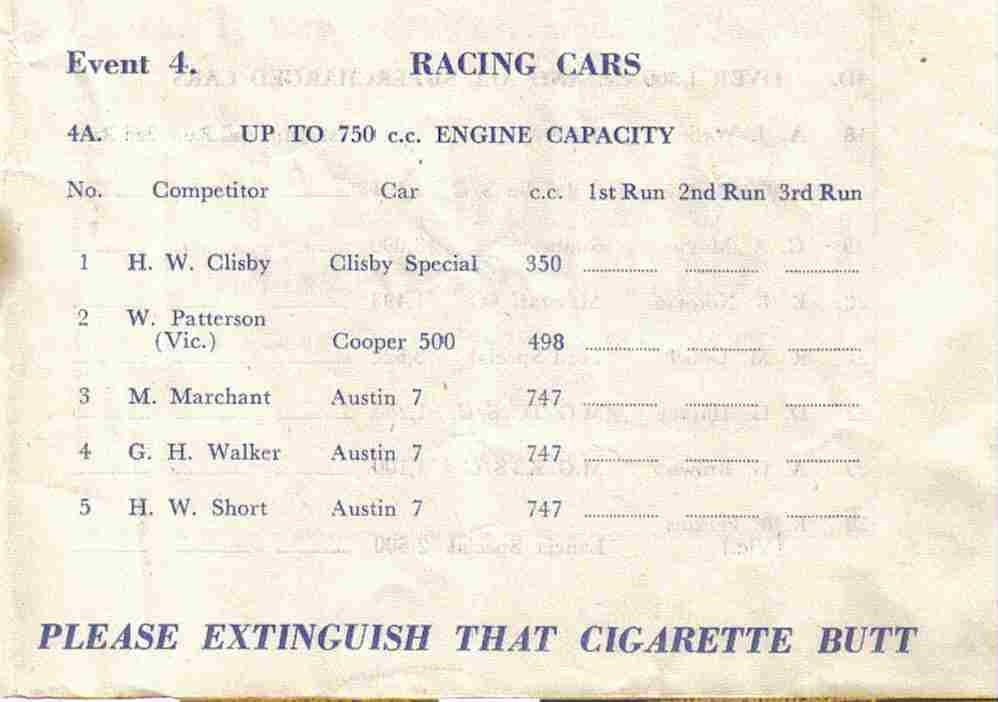
Collingrove opening March 1952 meeting entry- Harold’s opposition included a youthful Bill Patterson’s Cooper 500. Stephen Dalton advises he also competed in a production sports MG TD. Love the cigarette butt warning!- tidiness or bushfire avoidance?  (S Dalton)

Specifications…

Chassis-

Backbone frame of single three-inch by 16 gauge steel tube. Engine mounted on clutch housing welded to front, gearbox mounted on steel pressing welded to rear. Independent front suspension by twin transverse leaf springs. The transverse leaf springs mounted above and below clutch housing. Independent rear suspension by splayed quarter elliptic springs and halfshafts located by radius rods trailing at 30 degrees. Rack and pinion steering. Motor cycle wheels- front 19 X 2 1/4 inches, rear 19 X 2 3/4 inches, three-inch motorcycle ribbed tyres at front, grip tread at rear. Mechanical brakes- non-compensated 6 inch BSA cable operated at front, single central rod operated eight-inch Douglas at rear.

Transmission/Gearbox-

Seven-inch single dry plate clutch mounted direct on engine. Three piece tubular steel drive shaft running on ball races mounted within tubular backbone chassis. Four-speed positive stop Douglas gearbox with hand operation- overhung at rear of the chassis with final drive by chain to differential-less swinging halfshaft back axle

Engine-

Douglas air-cooled, horizontally opposed, pushrod OHV two cylinder engine. Bore/stroke 60.8 X 60mm, 348cc. Wet sump lubrication, BTH magneto ignition. Bottom piston ring removed and piston skirts shortened by 1/2 inch, ports bored out and polished, two Amal carbs, compression ratio 8:1, 30bhp, maximum rpm 9000

Monoposto body to be fitted, weight when registered 325 pounds.

Construction quoted as commenced on 19 February 1952, inaugural Collingrove meeting 15 March 1952 during which a time of 50.1 seconds was achieved. The class record was set at the second Collingrove meeting at 47.2 seconds for the up to 750cc class- the report says the car used the standard engine in the first meeting, with presumably the modified engine at the second. ‘Since then it has had further runs, but Mr Clisby is now faced with excessive wheelspin and so is tackling the problem of weight distribution’.

(Courtesy Australian Motor Racing Annual No 3)

That ‘F1 Car’- Elfin T100 ‘Mono’ Clisby V6, chassis ‘M6548’…

(K Drage)

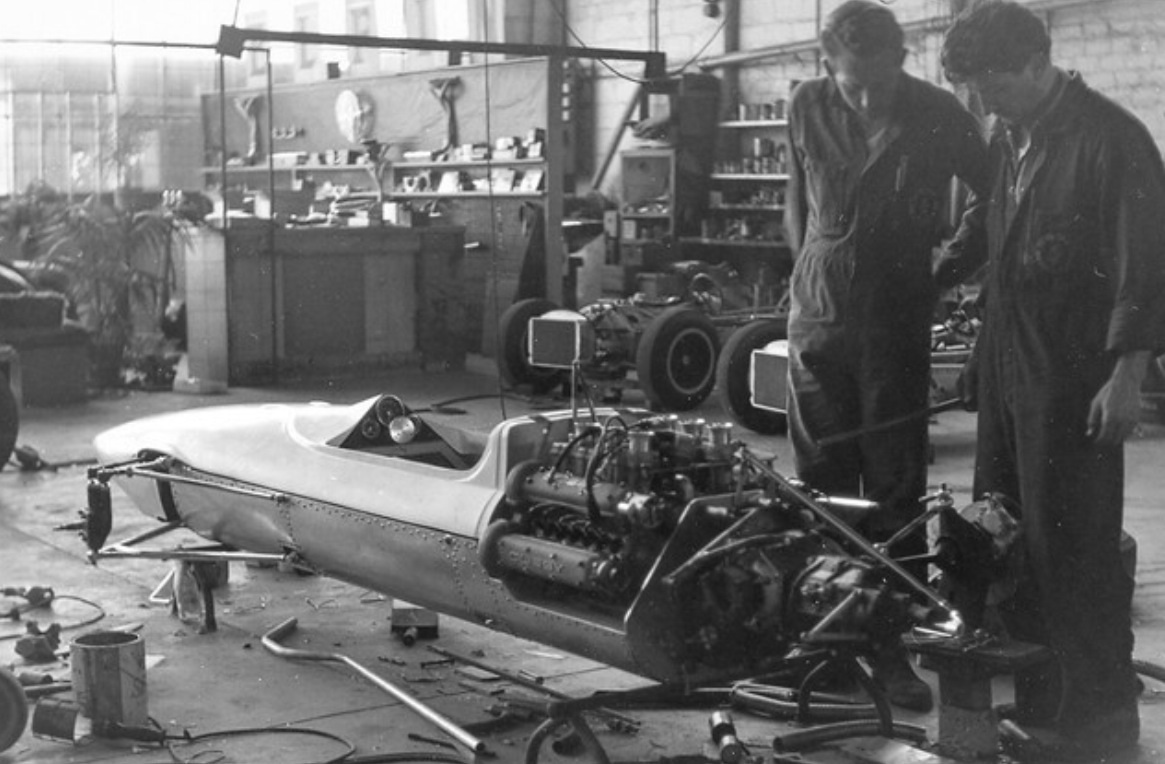
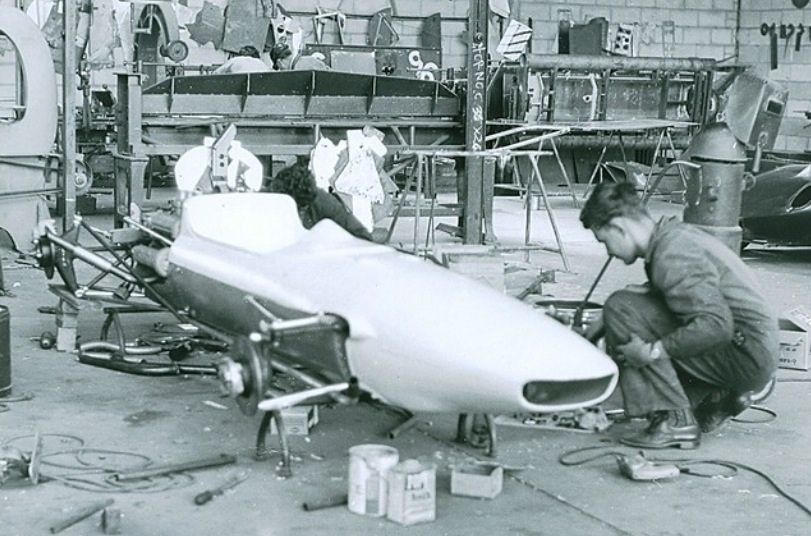
Elfin boss Garrie Cooper and legendary ace welder, Fulvio Mattiolo ponder the next step in the build of Andy Brown’s Clisby V6 engined Mono at Edwardstown, Adelaide during 1965.

Those with strong knowledge of the GP formulae will appreciate that 1965 was the final year of the 1.5 litre F1 and that therefore the little Clisby V6 was a tad late to the party!

The Elfin Clisby only raced on four occasions- at Mallala on 19 April 1965 when a rear tyre blew destroying the cars rear suspension, at Calder on 23 May when Brown retired with water porosity problems, back home in South Australia at Mallala on 14 June when the car popped an oil line in practice, non-starting the race. The cars last appearance was a championship one, Brown started the 11 October 1965 Mallala Gold Star round but retired from the race won by Bib Stillwell’s Brabham BT11A Climax after 8 laps when the engine locked up beneath him in the straight gyrating from high speed for 300 metres until coming to rest gently in the infield.

With that the project, one engine, was put to one side forever, there is a Repco epilogue however.

The chassis, engine and gearbox (using a VW case) were all made in South Australia, hopefully one day this extraordinary piece of Australian history- our only ‘all Australian’ GP car will run again.

An engine and the Elfin chassis are extant, sufficient of the engine patterns and moulds exist, with the will of all involved- chassis owner, the very keen James Calder, the Clisby family, and, critically Kevin Drage, the senior engineer on this project all those years ago this stunning machine will run. It must run- the combination is a national engineering treasure. Some very recent chatter online is promising too…

(Clisby)

Ferrari had been racing Vittorio Jano designed 1.5 litre F2 and 2.5 litre F1 DOHC, 65 degree V6 engines in the late fifties, Mike Hawthorn won the 1958 drivers title so equipped. Their 1961 championship winning car, the mid-engined 156, was powered by a 1.5 litre V6, initially with a Vee angle of 65 degrees and later 120 degrees. By the way, the first track test of Ferrari’s 156 120 degree V6 engine was at Modena, the car driven by Phil Hill, in April 1961.

During a long fact-finding trip to Europe in 1960 Clisby chose a 120 degree, DOHC, 2 valve V6 design for his proposed GP and sportscar engine. He set about the design process on a portable drafting machine in the cabin of the ship which brought him back to Australia.

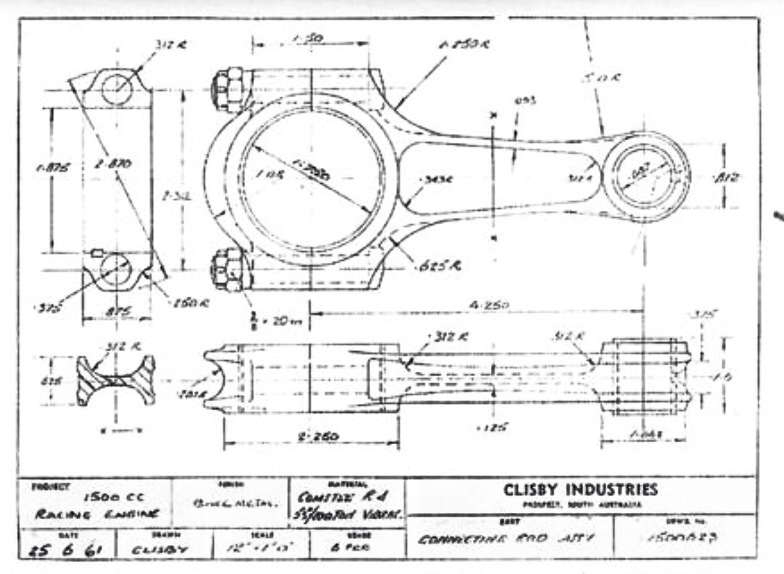
In order to construct the engine he also needed to upgrade his Prospect, Adelaide, Clisby Industries factory facilities to ‘manufacture our own con-rods, pistons, distributors and oil pumps…plus build our own manufacturing equipment such as sand foundry, electric melting furnace, sand mixer, crankshaft grinder, camshaft grinder, nitriding furnace etc’ Clisby Development Engineer at the time Kevin Drage recalled.

The essential elements of the all aluminium engine (the extent of local content extended to the Comalco aluminium used, the bauxite and alumina was mined and processed in Australia) was a four main bearing, billet steel crank, twin overhead gear driven camshafts, two 14mm plugs per cylinder fired by conventional coil and ‘…dual ignition circuits- there were four distributors, one master and one slave for each of the two ignition circuits fired from each camshaft. This allowed the spark requirements to spread across 4 coils’ said Kevin. The distributors were Clisby modified Bosch components. A generator was in the front of the engines Vee, a starter motor at its rear.

The engine capacity was 1476cc, its bore and stroke 73 X 58.8mm with the engines ultimate potential size circa 2 litres. Clisby saw a gap in the market in Europe for engines of 1.5 to 2 litres for both GP and sportscar use. With a very modest initial compression ratio of 8.5:1 and cam timing derived from the BSA Gold Star motorcycle, around 170-180 bhp was expected from the early engines.

Carburetion caused a big problem, conventional twin-choke Webers would not feed the wide angle engine. Drage wrote to Weber to enquire about purchase of some of its triple choke carbs, only to be advised of their exclusive supply agreement of said units with Ferrari. The Scuderia’s lawyers followed this up with a salvo several months later advising ‘that they (Ferrari) owned the copyright to the 120 degree, V6 layout and that we should cease building our engine forthwith and certainly not attempt to market it!’ KD recalled.

Clisbys therefore decided to build their own carburettor bodies to which were fitted standard Weber chokes, auxiliary venturis, jets etc sourced from twin choke carbs Weber were happy to supply. ‘Harold drew up the triple carburettor body and had a set of patterns made. We joked that we should have left and right hand carburettors to make the fitting symmetrical. A few days later, Alec Bailey, who was working on the engine with me, came in to work with a set of left hand carburettor patterns which he had made up at home in the evenings! So we did finish up with a pair of left and right hand triple choke carburettors after all!’

Ron Lambert ponders the next step in the Elfin Clisby- he is still spritely and fettling Elfins in Tasmania (K Drage)

Kevin Drage in the Calder paddock 23 May 1965, Andy Brown a DNF in his Elfin Mono Clisby that weekend. Installation of 1.5 litre V6 into a monocoque chassis designed for the Lotus-Ford twin-cam inline four beautifully done (R Lambert)

The 260 pound, incredibly low, compact engine broke cover from about March 1961 with articles in Sports Car World, Road and Track, Sports Car Graphic and other publications following in 1962.

By then the BRM P56 and Coventry Climax FWMV 1.5 litre V8’s were dominating GP racing- Ferrari was developing its own V8, its ultimate 1.5 litre F1 weapon was the Ferrari 1512- a Flat-12 engine which formed a structural member of the cars semi-monocoque ‘Aero’ chassis in 1965. The point here is that by the time the Clisby engine was announced, let alone run, the game had well and truly moved on, but it does not matter in terms of the engines Australian historical significance.

Denis Jenkinson in his March 1963 MotorSport ‘Continental Notes’ wrote of Jack Brabham’s prospects for that GP season ‘…it looks as though the Australian is getting the design sorted out nicely…He will be dependent upon Coventry Climax and Colotti for the major components of the car…but the cars should be well in the running and he may even be patriotically inspired to try a Clisby V6 engine in a Brabham…’ if only it were true and had come to pass?!

As the engine came nearer to the stage of being installed in a car Kevin Drage initiated discussions with multiple AGP winner and Gold Star Champion, the wealthy Lex Davison. Kevin Drage recalled ‘…Lex was interested in seeing the Clisby engine run in a car…Initially he was prepared to fund an Elfin Mallala but later with the advent of the forthcoming Australian 1.5 litre Series he proposed building and campaigning an Elfin Mono. However by this time Harold had lost interest in the V6 project and was devoting his time to building model steam railway engines.’

‘I didn’t want to see four years of my involvement sidelined so I had discussions with Lex and Garrie Cooper regarding getting the Elfin Clisby Mono project off the ground. However, Andy Brown stepped in and offered to fund the Elfin Mono and Harold agreed for Andy to proceed- and the rest, as they say, is history’.

In fact Lex did order and pay a deposit on a Mono to be fitted with a Ford 1.5 twin-cam- this car was to be raced by young up-and-comers, but with Lex’ death at Sandown in early 1965 the project did not proceed.

Once on the dyno and in the car the V6 design’s problems surrounded engine balance and porosity of some of the castings- nothing which could not have been sorted with time and development.

Saucy titillating shot of the Clisby Mono- shot captures the Elfins ally monocoque- Cooper’s first such design, the challenge of accommodating the exhausts and ultra low layout of the 120 degree Vee Six (A Clisby)

I’ve already gone further with this teaser than I had planned, lets come back to this marvellous project with a feature later and finish on the thought below.

The sad thing is that Clisby should have persisted with the motor’s development in Australia at a capacity of 2 litres. Both BRM and Lotus (Coventry Climax) with 2 litre variants of their F1 V8’s engines proved to be Tasman Series winners despite a category limit of 2.5 litres and therefore those motors giving away capacity to fellow competitors. Mind you it’s easy for me to say ‘push on’, Clisby’s was a family business, I hate to think how much in cold hard cash, diverted resources and opportunity cost this amazingly ambitious project cost.

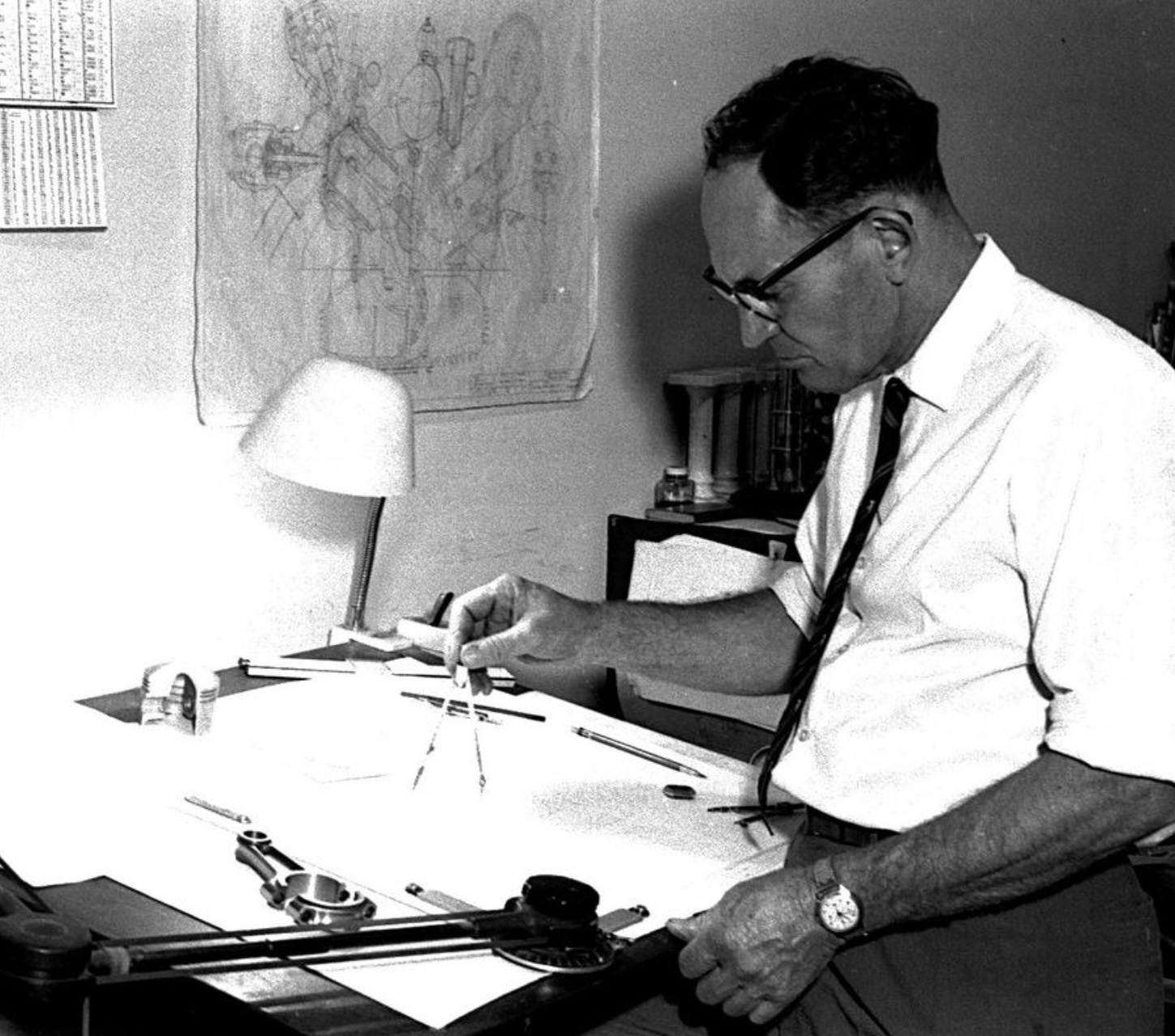
Harold Clisby with the original cross-sectional drawing of the Clisby V6 above the drawing board in his office (K Drage)

And that Repco epilogue, you ask?

When Repco Brabham Engines in Maidstone were looking for an Australian concern to cast their cylinder heads for the race program from 1966 to 1969 they chose Clisby given the problems they encountered in making the complex aluminium castings of their V6, and the learnings they had made as a consequence!

There is something rather neat about Australia’s first but largely unraced GP engine contributing to the World Championships of its Repco successors!

(K Drage)

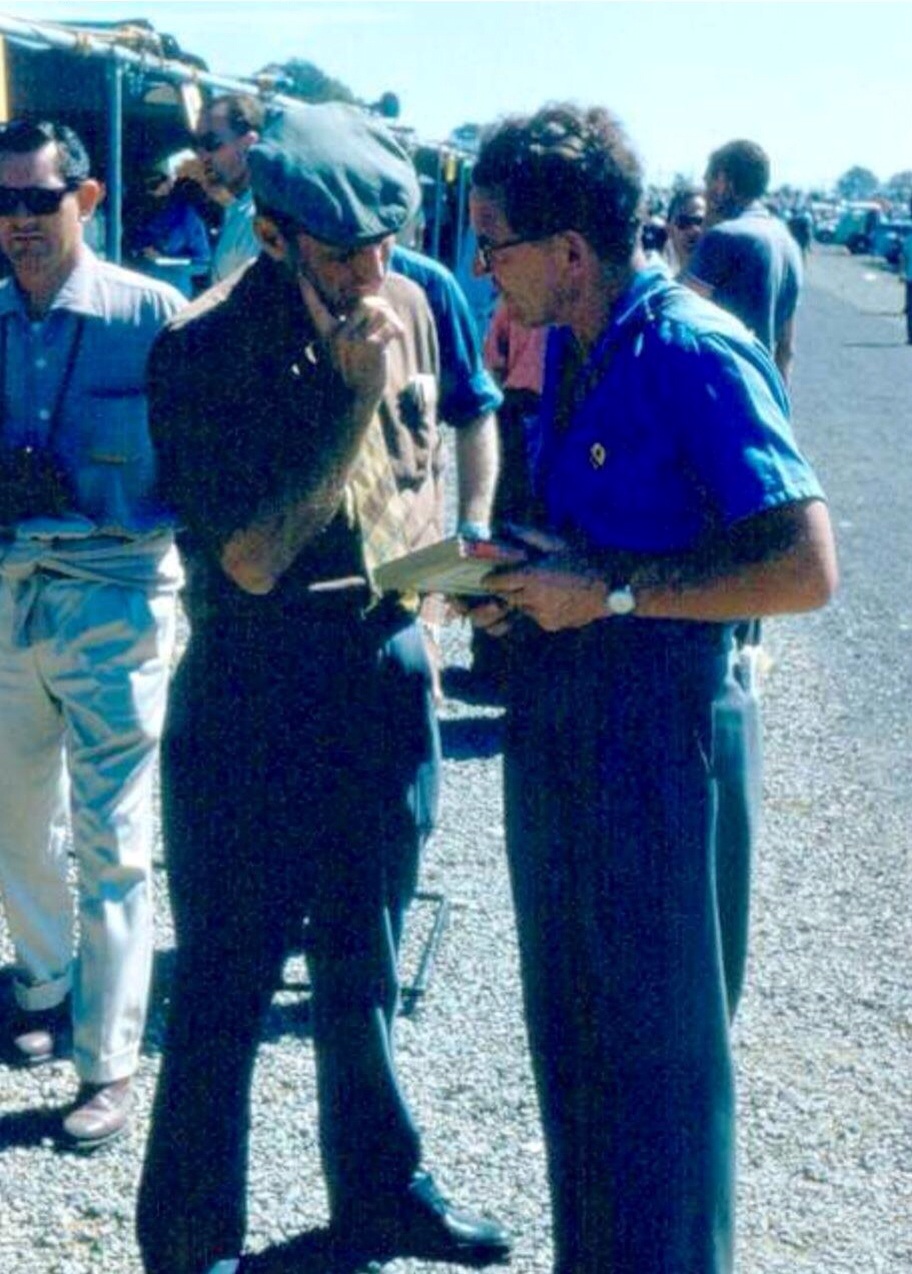
I had a chuckle at this Kevin Drage photo of Harold Clisby (left) and Phil Irving in the Sandown paddock during the circuits opening international meeting on 12 March 1962…

‘No Phil, I’ve already got a copy of “Tuning for Speed”, I don’t need another’ is perhaps the conversation between these two great engineers. For sure the weather is not their interest.

At that stage Clisby is well into the build of his V6 whereas Phil is a couple of years away from starting the design of the aluminium GM Oldsmobile F85 block based 1966 World Championship winning ‘RB620’ V8.

The interesting bit in that context is that the Lance Reventlow owned, Chuck Daigh driven, mid-engined Scarab RE Buick V8 was competing at Sandown that weekend. If Jack, winner of the Sandown Park International in a Cooper T55 had not seen that GM motor before- its the brother of the F85, he most certainly did that weekend as i’ve posted a photo before of Jack looking lustfully at the engine and perhaps pondering its possibilities!

With Repco’s resources, Phil’s first 2.5 V8 ‘RBE620’ ‘E1’ burst into life about twelve months after he first put ink on paper, in Repco’s Richmond test-cells in March 1965- at about the same time as Harold’s V6 was being installed into Andy Brown’s Elfin Mono after a journey which started in 1960- whilst noting that Clisby Engineering and Repco Ltd were enterprises of vastly different sizes! Harold and his two offsiders also built an engine from scratch, most of it in-house too, whereas the first Repco jobbie did use plenty of components off the shelf, albeit to rather good effect!

(Clisby)

Credits…

Kevin Drage on The Nostalgia Forum, ‘Harold Clisby: The Life of a Restless Engineer’ on clisby.com, Australian Motor Sports April 1952, Andrena Clisby via Kevin Drage, Kevin Drage, Ron Lambert, Stephen Dalton Collection, Bob King Collection

Harold Clisby’s Biography, in part…

http://clisby.com/hwc.html

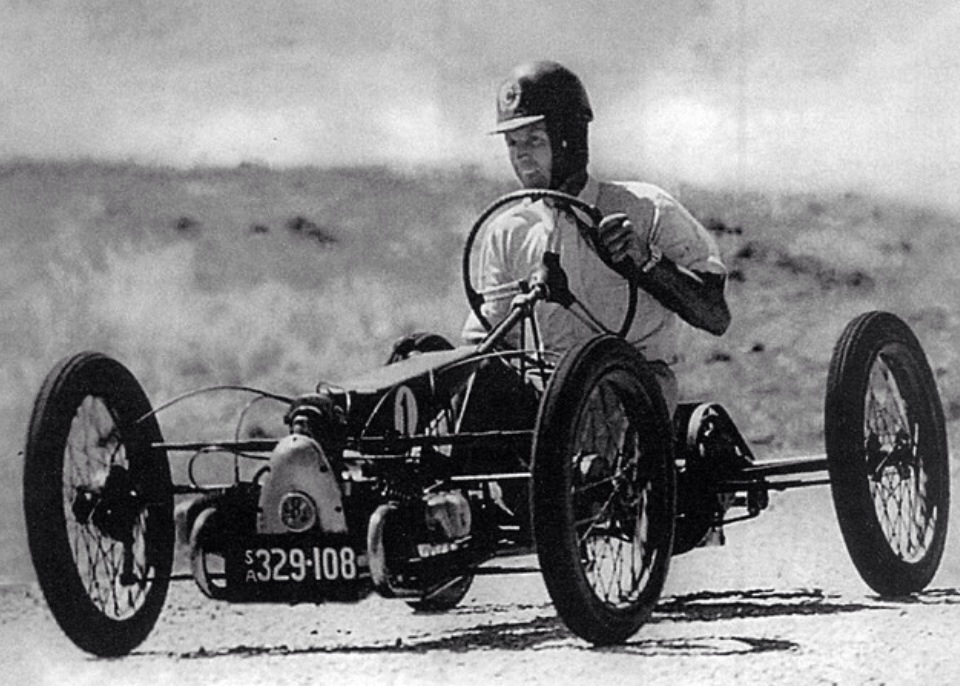
Tailpiece: Forty year old Harold Clisby with his Clisby Douglas Special in 1952…

(A Clisby)

Its a photograph of crystal clear clarity in terms of mechanical layout- from the flat-twin Douglas engine and mount, simple tubular chassis, independent front and rear suspension and seat which appears to be from a tractor!

‘Hang on Harold’! is the message as he departs the startline!

Ones legs getting dislodged from the pedals and touching terra-firma at speed does not bare thinking about!

Finito…

(B King)

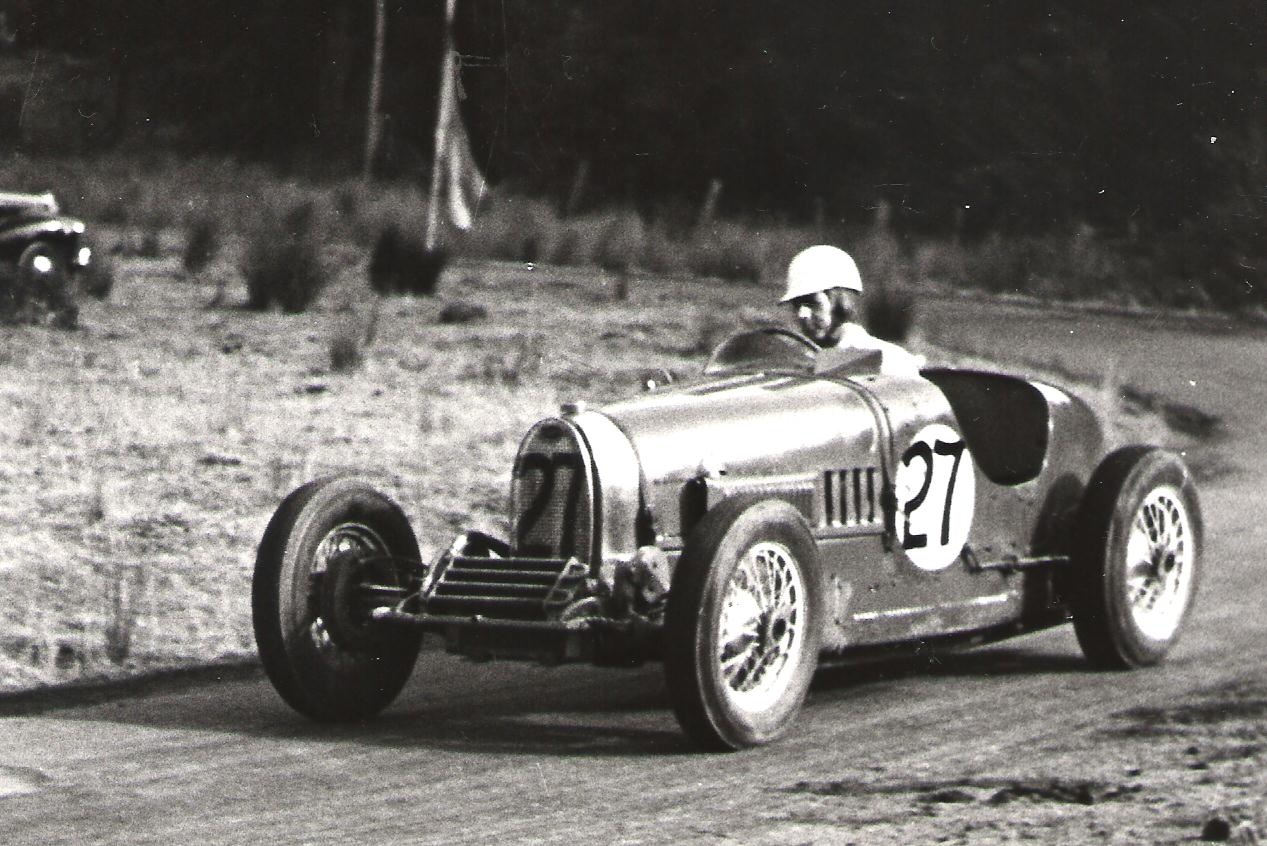
Many European and American engines were used to replace the tired original in racing Bugattis in Australia – notably Ford’s V8 and Hudson’s side valve straight eight – ‘there’s no substitute for litres’…

However, it was Australia’s own cast iron, pushrod-OHV ‘grey’ Holden six that was as effective as any.

We will take a look at two important examples where a ‘grey’ successfully replaced the sophisticated mid-nineteen twenties single overhead cam, three valves per cylinder, 1500cc, Bugatti unit.

Bob Baker of coachbuilding fame, powers through Tin Shed corner at Rob Roy. This body would not have been the best example of his art (B King)

Type 37 Bugatti, chassis no. 37209…

This is the Bugatti that multiple Australian Grand Prix winner Bill Thompson made his Phillip Island debut with in 1929.

His race lasted but two laps before he exited with a blown-up motor – youthful over-enthusiasm perhaps? This was far from the end of the cars participation in the AGP, with the next owner Ernie Nichols contesting the 1934 and 1935 GPs at the same venue.

After a succession of well known drivers, it returned to Sydney where it was prominent in the early post war racing scene, first with Roy Murray and then Irwin ‘Bud’ Luke. The latter finished a splendid seventh in the 1949 AGP at Leyburn the ageing car winning the handicap and averaging 73 mph for the 150 miles. At Easter Bathurst, 1951, it was a victim of the well named Conrod Straight after having achieved almost 98 mph.

Fishermans Bend did not provide the most exciting background for photographers to display their wares. This is John Hall at the wheel, possibly on the way to a podium in the B Grade Scratch Race (B King-Spencer Wills)


Paddock shot at Phillip Island (B King)

It was back at Bathurst for the AGP in 1952, but now Holden engined. It was said to be the first Holden engined racing car – do our readers know of an earlier Holden powered special? The car today is little changed from when it was last raced seriously in the nineteen sixties and is still in regular use.

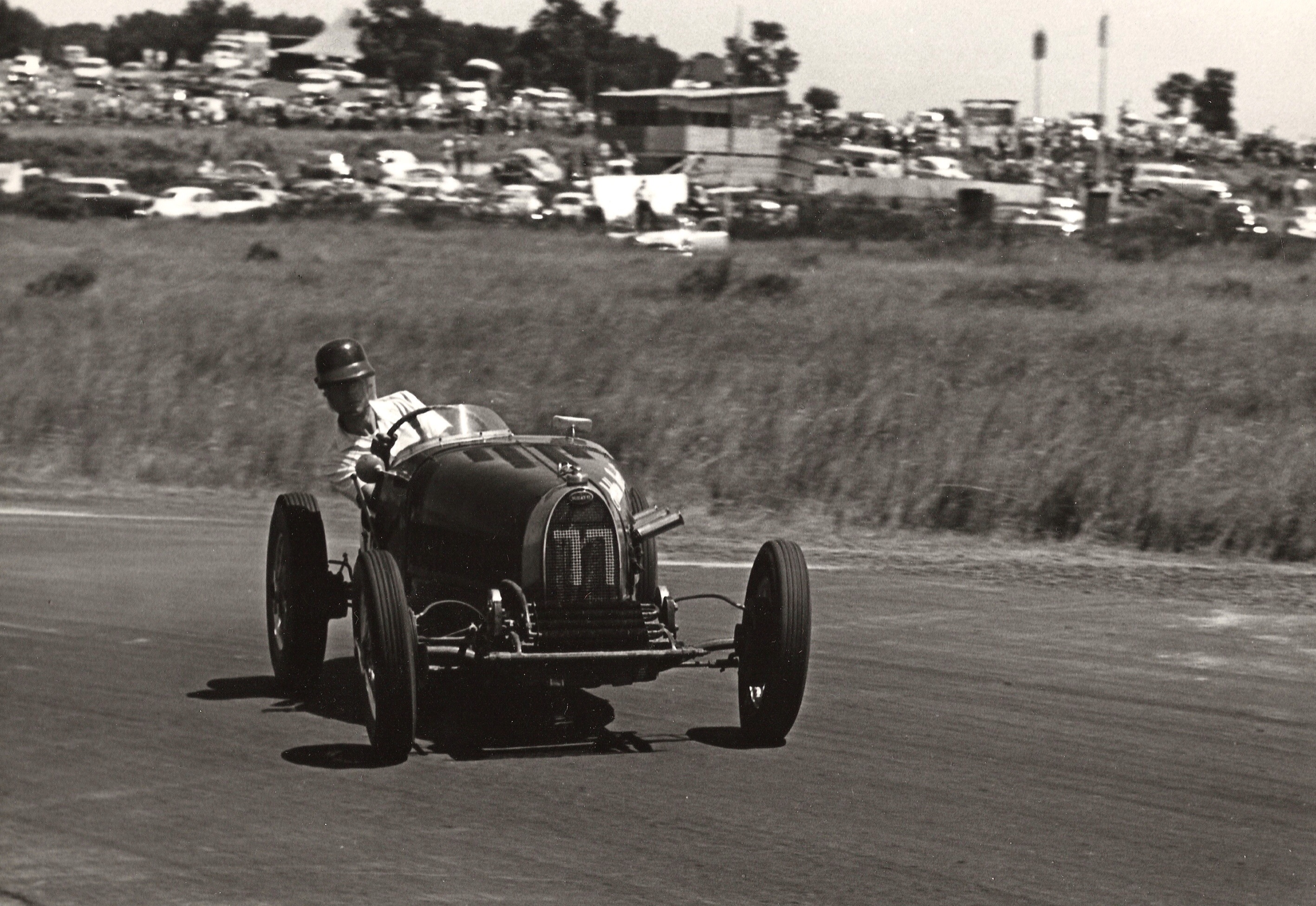
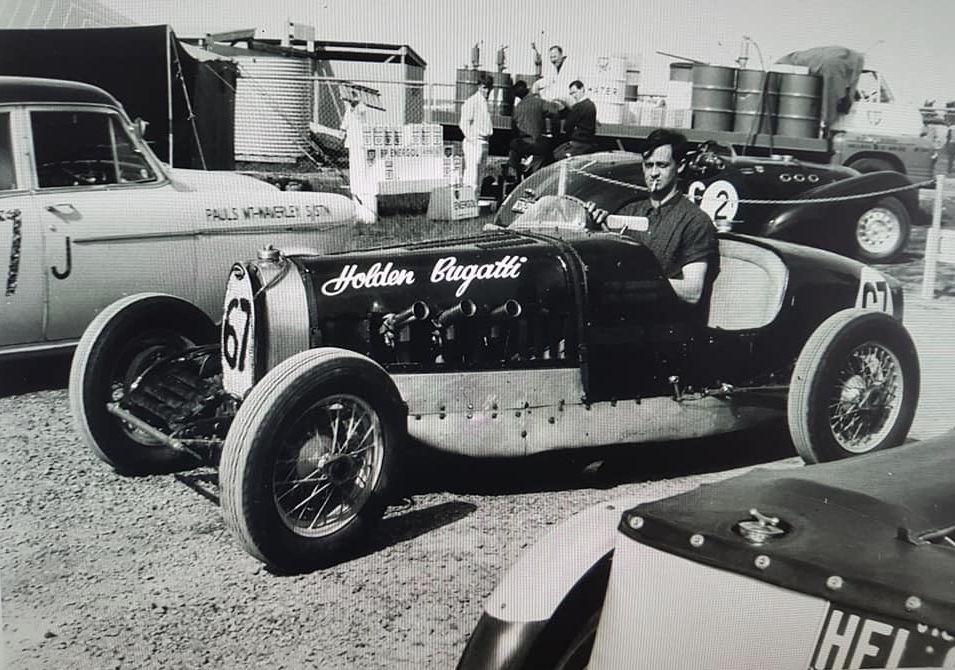
In terms of the articles opening photograph.

The Holden Bugatti was still an effective racing car into the sixties in the hands of a number of drivers – the 3 inlet trumpets are a give-away that this is no ordinary Bugatti. Who is the driver entering Repco Corner at Phillip Island, probably in the late nineteen-fifties though folks? We can confidently rule out Valery Gerrard. John Hall was rotund, as was John Marston. Therefore it is likely to be Barry Elkins or John Pyers?

(B King)

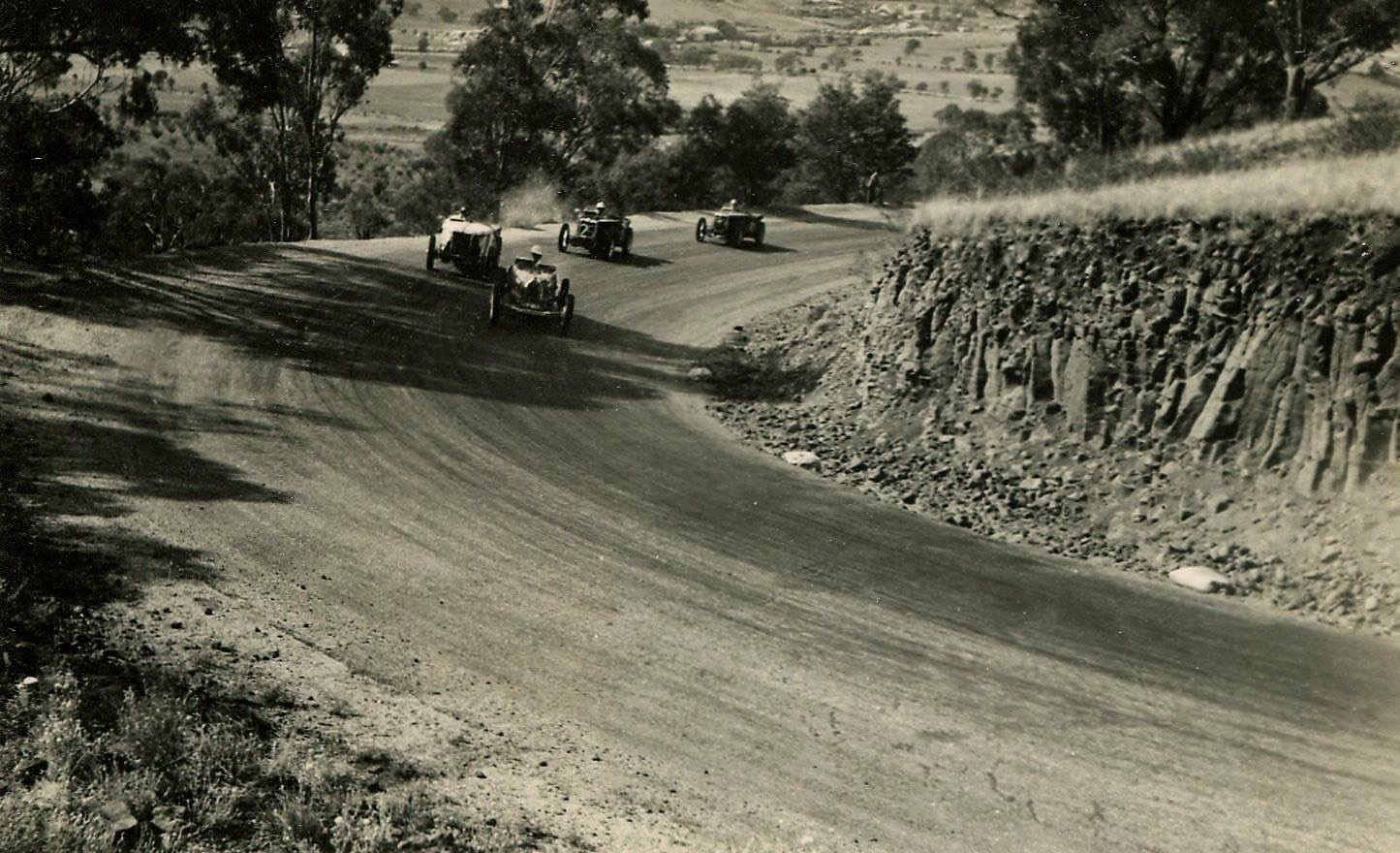
The old girl (above), still with unsupercharged Bugatti engine, was  still able to hold a bevy of stripped TC’s up the mountain at Bathurst.

(P Coleby)

‘37209’ again, and still in action at Calder circa 1962 when owned by the Watson brothers, driver unknown.


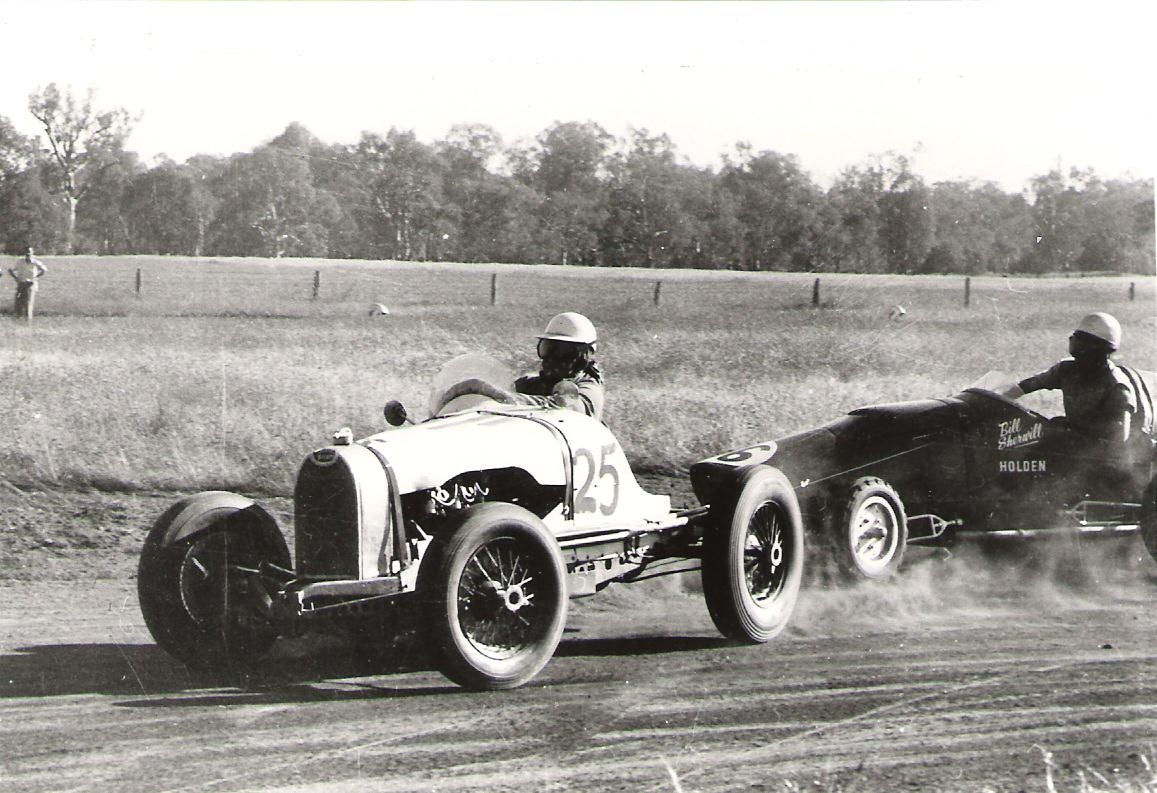
John Cummins in ‘37332’ keeps Bill Sherwill honest on the dirt at Tarrawingee, near Wangaratta, Northern Victoria. This is a good illustration of Cummo’s flamboyant style (B King)

Type 37(A) Bugatti, chassis no. 37332…

John (Cummo) Cummins, grand prix driver, raconteur, racing commentator and all round good fellow will be familiar to many readers as the driver of this Holden engined Bugatti special.

And it was a very special car. New in 1928, it gained fame as the feature car of TP Cholmondeley Tapper’s “Amateur Racing Driver” (Foulis). The car was owned by New Zealander Tapper’s partner, Eileen Ellison, and they campaigned it extensively in England, Europe and South Africa.

TP Cholmondeley-Tapper frightens a sapling in the unmodified Type 37 at a Bugatti Owners Club hillclimb at Chalfont-St Peter 25 May 1935. Presumably when the car was owned by Eileen Ellison (Bill Brunell Collection-MPL)

In the early thirties they had it supercharged at Bugatti’s Molsheim factory. In the mid-thirties it was modified by Leslie Bellamy; he fitted his eponymous independent front end which was detrimental to the cars appearance, and probably also to its handling, as it shortened the wheelbase.

(B King)

Cummo found the engineless car in Newcastle-on-Tyne in 1952 and brought it to Australia where Len Sydney fitted a hot Holden engine.

Here above is the down-at-heel Bellamy. No engine, no problem- fit a ‘grey’. This was possibly the third racing car so fitted with Lou Molina and Silvio Massola splitting the two Bugattis in the precedence stakes with their ‘MM Special’.

John’s position as an engineer at Chamberlain’s gave him access to a veritable Who’s Who of tuning experts – this resulted in a standing ¼ mile time of 14.4 seconds and 135mph on Conrod Straight. In recent times the car has been returned to the standard configuration of a supercharged Type 37A Bugatti.

Bibliography and Photo Credits…

‘Bugattis in Australia and New Zealand, 1920 – 2012’. Bob King & Peter McGann. (Self published 2012), ‘Amateur Racing Driver’ TP Cholmondeley-Tapper (Foulis, undated), Bill Brunell Collection in the Motoring Picture Library

Bob King Collection, Kees Jansen, Spencer Wills, Peter Coleby Collection

Tailpiece: John Cummins, ‘The Wall’, Templestowe Hillclimb, in Melbourne’s then outer, now inner east…

(B King)


Finito…

‘My signature shot, Jim Clark Lotus 49 Ford DFW and Chris Amon Ferrari Dino 246T. Two of the best drivers of their time. Taken early in my photography journey. Not only is it a record of the 1968 Surfers Tasman race, the pic is pretty well balanced and shows the scenic aspect of the old Surfers Paradise track. I describe in the Tasman book, the trauma experienced in getting to and from the race’ (R MacKenzie)


I finally bought the Tasman Cup bible at Sandown a while back, what a ripper book it is!…


There are some heavy dudes involved in it. Publisher Tony Loxley has assembled a swag of ‘in period’ talent- journalists, photographers and drivers to contribute, forty in all. I blew my tiny mind when I got it home and penetrated the thick plastic, protective cover to unveil content rich words and images. That Sunday afternoon was completely shot.

At $A95 it’s a snip, nearly 500 pages of beautifully printed and bound hardcover with about ninety percent of the (900’ish) images unfamiliar to me. Mucking around with primotipo I’ve seen plenty of shots in the last four years or so- it was awesome to view a vast array of unseen images, some from the archives of ‘snappers ‘I have met online’ who have kindly allowed me to use their work on my ‘masterpiece’.

Which brings me to Rod MacKenzie’s work.

I’ve used his images before but the material in the Tasman tome is sensational for its compositional artistry. So I gave him a yell and said you choose two photos (Clark and Muir) and I’ll choose two (Gardner and Walker) to showcase the work and support this article. The photo captions are Rod’s, his ‘artists notes’ if you will. We plan some occasional articles going forward, many thanks to Rod.


‘Frank Gardner, Brabham BT23D Alfa Romeo negotiates Newry Corner at Longford, Tasmania 1968. Perhaps one of the wettest races i have attended. At least i was taking photos, not driving! This pic has its own appeal, i just pressed the button. Frank’s skills were tested and you can see the race was on public roads with spectataors in the most unsafe areas. Fences were barbed wire, no run-off and badly cambered roadway.’ (R MacKenzie)


Rod writes about his work…

‘We all have favourites.

In over fifty years of motor racing photography some of my earlier photos remain dear to me.

However, the photos were not quite as important as the spectacle of close racing between highly skilled ‘pilotes’ in competition with their cotemporaries.

They at the time were the source of income to attend the many race circuits and were sold to magazines in Australia and overseas.

Now the photos have become most important.

These photos are now historical records of these men and some women whose exploits have been written about and add reality to reports and clarity to memories.

I also endeavoured to photograph many of the competitors ensuring not only ‘the stars’ were captured.

Without the photos, memories become clouded and distorted. Not by intent, but by the passage of years.

My photos of several Tasman Series spent some time in the proverbial shoebox during a period of having a new family to bring up.

They were revisted to be included in two books (so far) from Tony Loxley of ‘Full Throttle Publishing’ about Formula 5000 and The Tasman Cup and have been included in many other books now. I have released some of the photos on social media and they are still appreciated judging from some of the comments received.

I take pride in my photos as i try to add ‘something’ above and beyond a picture ‘of a car on asphalt somewhere’. A good black and white photo in my view is more difficult to produce than a colour photo and just suits the history of races.

My photos should convey the ‘atmosphere’ of motor sport- the drama, the commitment, the excitement, the humour, the unusual, and the extraordinary when that is possible.

Consequently my shots can be moody and dark, bright and clear, or show incidents capturing moments of drama.

They generally also have content to ensure recognition of the location of the subjects. The content may be from background, the cars, the weather or the occasion.

Together, Mark Bisset and i plan a small series of ‘favourites’ chosen between us from my vast collection.

These random photos will continue to appear as time and subject allow, and i also invite you to sample a few more from my http://www.rodmackenziecollection.com/ website and Facebook Group.

Until the next offering, enjoy the photos here’.

Rod MacKenzie


‘One of those shots that work even when most things are not right for composition. The car is too far away, the foreground is irrelevant, the background does not relate to much. BUT John Walker, Matich A50 Repco, in a 1973 wet Tasman race came undone at the Warwick Farm Causeway, and used the short circuit to recover. The pic shows how lost he seemed to be!’ (R MacKenzie)


This weighty addition to my shelves got me tangentially thinking about what ‘The Essential Library of Books on Australian Motor Racing History’ comprises. I reckon its these works, in no particular order…

.‘The Official 50 Race History of The Australian Grand Prix’ Graham Howard (and others)

.‘Bathurst: Cradle of Australian Motor Racing’ John Medley

.‘Lex Davison: Larger Than Life’ Graham Howard

.‘David McKays Scuderia Veloce’ David McKay

.‘John Snow: Classic Motor Racer’ John Medley

.‘As Long As It Has Wheels’ James Gullan

.‘Phil Irving: An Autobiography’

.‘Jack Brabham Story’ Brabham and Doug Nye

.‘Tasman Cup 1964-1975’ Tony Loxley (and others)

.‘History of The Australian Touring Car Championship’ Graham Howard and Stewart Wilson

.’Historic Racing Cars In Australia’ John Blanden

The above books don’t cover the Repco Racing story in anything remotely approaching full. Two that sorta do are Malcolm Preston’s ‘Maybach to Holden‘ and Frank Hallam’s ‘Mr Repco Brabham’ but both have warts. Malcolm’s is good, mind you, my Repco Brabham Engines buddies say it has quite a few errors. Hallam’s book is 70% insight and 30% arrant bullshit, but you need a fair bit of Repco knowledge to separate, page by page, the gold from the crap. I’ve stayed clear of marque specific books- Catford on Elfin and King on Bugatti for example, as I’m trying to get spread of topics from a small number of books not a long list of works…

I’m really interested to hear from you all on additions or deletions to the list.

The debate isn’t ‘my favourite books on Australian motor racing’ but rather the minimum number of books which most thoroughly tells the history of Australian motor racing. What books should a young enthusiast with limited funds buy is perhaps the filter to apply to your thinking?

Whilst the biographies listed may seem specific- they are, but they also cover heaps of related racing stuff over the period of the subjects life, so have great breadth.

Pre-war Oz racing books are thin on the ground, few were written- in that sense Medley’s and Gullan’s books are gold. So too are the relevant chapters of the ‘History of The AGP’ which provide lots of context in addition to the race reports themselves.

Howard, McKay and Medley were/are enthusiasts/racers who have wonderful historic perspective and deep insight that only masters of subject matter have. Bringing all of the threads about a topic together and drawing conclusions is hard, all have that ability.

All of the books listed are out of print except ‘John Snow’ (Medley still has copies) ‘History of the AGP’ and ‘Tasman Cup’, but all can be obtained with patience on eBay. The only one which is a bit on the exy side is Phil Irving’s book, the prices of which are high given huge global Vincent enthusiast demand in addition to us car guys.

In any event, all debate on the topic is invited, and yes, lets hear of your favourite books as well…

Credits…

Rod MacKenzie Collection

Tailpiece: Bob Muir, Lola T300 Chev, Warwick Farm 1972…


(R MacKenzie)

‘Action! Getting close to Bob Muir’s Lola T300 in the Esses at Warwick Farm in 1972. This remains my favourite Warwick Farm location although getting it right was really difficult. There were only a few places that were close enough to warrant an uninteresting background.

So we have the best location, best looking Lola, and a great photo that shows Muir’s speed and commitment at the most difficult section of the ‘Farm’.

Finito…

(Jalopy Journal)

Franz Weis fettles his Chaparral Chev in the paddock prior to the Lime Rock GP, 6 September 1971…

This car has to be the least known of all of Jim Hall’s machines?

The 2J ‘Sucker Car’ frightened the bejesus out of Hall’s fellow Can-Am competitors who leant on the SCCA who banned the car- the combination of fans and Lexan skirts constituted ‘moveable aerodynamic devices’.

Predictably and rightfully Hall told them to go and shove it, after all, he had shown SCCA officials the car before the team raced it and said officialdom had pronounced it legal. It was such a shame because that single action in some ways tore the heart out of the series by removing its most interesting team and the ‘anything goes’ principle which made the Can-Am great.

In any event, into 1971 the Rattlesnake Raceway boys didn’t have much to do so dusted off a chassis built by Don Gates at Chevrolet R&D in 1966- the ‘GS-111’ which was intended as the basis of a Chaparral Indy entry.

This never happened as Chaparral were up to pussy’s-bow with Can-Am and World Sportscar Championship commitments at the time and as a consequence the single-seater languished in a corner of the teams, Midland, Texas base.

Car appears built with low drag in mind, tiny front winglet, rear wing integrated into rear body. Chev engine appears well forward, up and over exhausts and dry sump tank clear- weird vertical brackets at the rear, DG300 Hewland ‘box assumed (Jalopy Journal)

So Franz Weis, Hall’s mechanic, engine builder and test driver dusted the chassis off and turned it into an F5000 machine which he raced in the final two 1971 rounds of the US SCCA L&M Continental F5000 Championship at Brainerd and Lime Rock in August/September.

At the Minnesota GP weekend at Brainerd on 15 August David Hobbs was on pole in his McLaren M10B Chev with a time of 1:31.739, with Franz back in 21st spot on 1:39.973 in a grid of 30 cars.

Franz failed to finish his heat with engine dramas after 19 laps and was 22nd in the final completing 47 of the 60 laps with undisclosed problems. The race was won by Brett Lunger from Eppie Wietzes and Lothar Motschenbacher in Lola T192 and McLarens M18, all Chev powered of course.

It had been a tough weekend but hardly unexpected even for a well tested car. The guys had three weeks before the final round of the series- won that year by David Hobbs’ Hogan Racing McLaren M10B Chev, to get the car ready.

At Lime Rock he qualified the car 13th in a field of 28 cars with a time of 53.276 seconds compared to the well developed and sorted Hobbs M10B pole time of 50.475 seconds. A collision on the first lap ended the cars short racing career. Hobbs won the race from Sam Posey’s Surtees TS8 Chev and Skip Barber in an F1 March 711 Ford.

The remains of the Chaparral F5000 are said to exist but their whereabouts are a mystery. Hall had unfinished F5000 business of course and became the dominant team fielding Lolas driven by Brian Redman until the SCCA ditched the category at the end of 1976 for a return to Can-Am albeit the ‘F5000’s in drag’ were a shadow of the ‘real-deal’ cars we all loved…

Inboard coil spring/shock- rocker top, lower wishbone, hip mounted radiators, totally different in appearance to anything else on the grid in 1971. It would have been very interesting to see how quick the combination was had the car appeared much earlier in the very competitive season (unattributed)

Further Reading…

Checkout Allen Brown’s summary and photos of the car on oldracingcars.com;

http://www.oldracingcars.com/f5000/chaparral/

Note Allen’s request for information on the detailed specifications of the car, please get in touch with either Allen or me and we can publish such details.

Credits…

The Jalopy Journal, oldracingcars.com

Tailpiece: Franz Weis, Chaparral 2J, Watkins Glen 1970…

Franz Weis eases the brilliant new Chaparral 2J Chev along the pitlane in 1970 (unattributed)

Finito…

Arthur Wylie, Javelin Spl/Wylie Javelin, Rob Roy, date uncertain, possibly 1952 (L Sims)

Bruce Polain, a prominent Australian historic-racer, historian and restorer wrote this tongue in cheek piece about how Arthur Wylie’s radical Javelin Special/Wylie Javelin could have changed the face of motor racing history. Bruce’s full ‘bio’ is later in this article…

‘In addition to my personal motor sport participation, I had for some years been a contributor to the motorsport media and one of the monthly contributions I made actually took over from an old acquaintance, Mike Kable who had moved to a full-time position with the Murdoch Press.  My new task was to assemble ‘Spotlight’ for the first magazine of its type in the country – ‘Australian Motor Sports’. Initially edited and published by Arthur Wylie, a well known driver and enthusiast, it is a collector’s item these days.

I also took photographs such as this cover shot of Ray Kenny driving Barry Collerson’s Lago Talbot T26C at Castlereagh Airstrip.


 Spotlight was fun as I made it my business to collate about forty snippets of information for each monthly edition of the magazine.  This meant my phone was often busy as I chased up the same number of informants.


My association with both Jowetts and Arthur Wylie was the catalyst that created an interest by me to purchase a racing car built by Arthur some fourteen years prior with support from the importers of Jowett. It used a Jowett Javelin engine that was supercharged but it was far more innovative than that, as the construction placed the engine behind the driver.  This was in the period when the only other post war race cars with a rear engine, used motor cycle engines. However, while the Wylie project was quite different to local thoughts, it was not in contravention to that permitted within Grand Prix car rules.  Furthermore, the rules at the time allowed engines up to 4500cc normally aspirated.  Or if supercharged, the engine capacity was limited to 1500cc – this latter was the concept that Wylie used. As it eventuated I purchased the supercharged Wylie Javelin in March 1963 and retained ownership until September 1997 and during that period it was actively used with many successes.

Bruce Polain with Arthur Wylie in his creation at Amaroo Park in 1976 (Polain)


However, it was at the 1988 Australian Bi-Centennial Meeting at Oran Park where the s/c 1500cc Wylie Javelin, built in 1950, had its first encounter with a Grand Prix Ferrari with an engine capacity of 4500cc. The latter being the actual car that won the British GP in 1951 when driven by the Argentinian driver Jose Froilan Gonzalez and it was still coloured in French Blue, as it was when raced by Louis Rosier in 1952.


It brings to mind the ‘wotif’ or ‘if only’ situation.


For instance, in Australia, during 1950 we had Wylie, an experienced race driver/engineer building a most innovative rear engined car that would likely fit the specifications for the Grand Prix Cars of the period but the car did not leave Australia as neither the thought nor the finance was considered.


Therefore, while the ‘if only’ situation of an Aussie Special contesting the 1951 British GP was never an issue, the possibility of such a contest could now be staged at Oran Park some 37 years later as both the subject cars were entered. On one hand we had the GP winning Ferrari in the capable hands of its current owner, Gavin Bain of N.Z. who expended huge effort creating a beautiful restoration which included repurchasing back from Australia the original V12 engine where it served time in Ernie Nunn’s record breaking speedboat – after Frank Wallbank of Auburn had remanufactured a new crankshaft and 12 con-rods. On the other hand the Wylie Javelin had also been well prepared for this event.


What an opportunity to revisit the past?


On the day, and in in a series of races for quite a number of historic cars, there was also ‘a race within the race’ – that of the Ferrari and the Wylie Javelin.  In short, a re-run of the ‘wotif’ British GP of 1951.

The day was incredibly hot – so I drained the radiator water and replaced it with 100% coolant.  Plus, each time we returned to our pit, my sons-in-law crew (Mark Woolven and Craig Middleton) had buckets of water to pour over the radiator to obviate after boiling – and it worked.  Despite the conditions the WJ ran like a clock. The two cars met on four occasions and in the first instance the Ferrari was in the lead – however then the Wylie Javelin increased its pace and for all starts the W.J finished narrowly ahead of the Ferrari. Such a result begs conjecture as to what would have been the case if, in 1951, Arthur and the Wylie Javelin had somehow made it to the British GP – would the rear engined revolution have started earlier?


Actually, because of limited funds the Javelin was not raced in the early years, but was hill-climbed successfully.  However, it did appear in the 1953 AGP at Albert Park and ran in sixth position until a spin resulted in the loss of three places, which position it held to the end.

Polain from Bain at Oran Park in 1988 (Polain)


We know that years later, Jack Brabham driving a rear engine Cooper finished sixth in the 1957 Monaco which signified a change, later confirmed by Stirling Moss in a similar car winning the 1958 Grand Prix in Argentina.   Clearly, Arthur Wylie was well ahead of his time. Sadly, neither the Wylie nor the Ferrari are likely to meet again as both cars have been sold – The Ferrari to England and the Wylie to South Australia where it sees little active use – its current role is as a display feature at a winery.


There was another car at this meeting that I had previously owned – the Maybach 3 (or 4 dependent upon who you talk to), photo below.  It was also a dominant car being powered with a 400 hp Chevrolet V8 and had achieved many successes in days gone by and had come from West Australia to compete.  Lucky for us the circuit did not suit the Maybach’s gearing and once again the W.J. prevailed…


(Max Stahl)


Bruce Polain…


Bruce Polain was a month old when his father carried him across the Sydney Harbour Bridge on opening day. His first involvement with motor sport was visiting Foleys Hill aged 16years 10months while on his ‘L’s, he first raced at Mount Druitt in his MGTC – when racing was only up and down the strip. After Mount Druitt was extended, he was part of the Daniel/Spring/Polain entry in the 1954 24 hour race where they won the open (sports) category.


Immediately thereafter he left for the UK season as spanner for Mike Anthony in Mk6 Lotus – Mike was number three and Colin Chapman drove the leading team car.  This was in the days when Chapman had a day job and Lotus was operating out of a single car garage at the back of his father’s pub. He attended the UK meetings with the Lotus and all the F1 meetings, plus the Le Mans 24 hour and Rheims 12 hour on a Harley Davidson.


After arrival back in Australia in 1955 he joined Manly Warringah Sports Car Club holding numerous committee positions and promoted regular Foley’s Hill events, 24 hour trials plus probably the most successful Schofields Race Meeting.  He inaugurated the Mona Vale Sprint and represented the club at CAMS State Council. He was appointed CAMS Noise Panel Chairman and awarded life membership by MWSCC.

He raced a Jowett Javelin at Bathurst 1957 plus innumerable club events which generated his interest in the Jowett based Wylie Javelin, which he purchased in 1963 in very sad condition. After being rebuilt over the years much work resulted in many successes- example Geelong 13.2  Silverdale 39.16. He eventually sold the unique car in 1997.


Into the eighties Bruce created and then ran on multiple occasions the ‘Seaforth GP’ which took racing cars to the streets of Seaforth (on Sydney’s North Shore) for three 2.35 km laps. It was an amazing promotion with free entry for driver’s and spectators and always plenty of media coverage on all four local TV networks.


As Stephen Dalton observed in contributing this – ‘appropriate to combine AMS and the Wylie Javelin as one’. Indeed! Photograph is of Arthur lined up for the 18 July 1953 Fishermans Bend quarter-mile sprints (S Dalton)


Apart from salvaging the Wylie Javelin from destruction Bruce purchased the ex-Paul England Ausca chassis/body then sourced wheels, Repco Grey engine/gearbox and diff to bring the car back to life, winning at Amaroo in its first appearance. He purchased the ex-Barry Garner Rennmax in bits and again rebuilt it, as well as a Ginetta GT4, began the process for the Thompson Ford and also campaigned a very early Mallock U2. In 1983 he purchased one of Australia’s great racing cars, the Repco Research built Maybach 3 from Lance Dixon. The car was substantially reconfigured by Ern Seeliger after Stan Jones and Repco put it to one side with Stan’s purchase of a Maserati 250F- Ern replaced the Maybach six with a Chevrolet small-block V8, De Dion rear suspension and other changes. In Bruce’s ownership  its handling problems were solved with the intention of racing it in the UK in partnership with Arnold Glass where Arnold then living – however the Poms would not accept Maybach’s heritage so the car was sold.


In addition to the ‘Spotlight’ snippets in Australian Motor Sport he has contributed race and vehicle reports to Sports Car World, Racing Car News and other magazines – and with the knowledge gained from this pursuit plus the time spent on CAMS State Council has expended much effort on bringing to to CAMS attention many of its deficiencies.  In the interim he was the major contributor to the concept of (non-CAMS) ‘GEAR’ and awarded a life membership. GEAR has now been successfully extended to Queensland.


When CAMS closed Catalina Park, Bruce was somewhat disenchanted so formed ‘Friends of Historic Catalina’ $40 entry. John Large, then President of  CAMS was one of the early members) and spent funds on fence repairs, trimming undergrowth and patching tar- then (courtesy of the Navy, another story) painted the Armco battleship grey, the DSR were so impressed they renewed the licence without consulting CAMS (another story). The circuit was then used for lap dashes for another ten years. When the period for review came, CAMS (although invited, another story) did not officially turn up and that is why the circuit was closed. These days the circuit’s closure is said to be due to indigenous or noise reasons but Bruce claims that is incorrect, as at the time it was just the normal 10-year reassessment, as required under the Local Government Act, that applies to many council operations. That years later, council assigned the area to an Aboriginal Group was not the issue at the time- that latter decision was merely to devolve themselves of the responsibility of maintenance which automatically occurred whilst there was income from motorsport.


Professionally he has served decades as a shipping traffic manager, property developer, grazier and executive accommodation operator.  Married since 1960 to Tilli – one son and three daughters – Currently writing his memoirs which may put a new slant on CAMS History given that the current CEO rejects consultation.


Javelin Special Technical Specifications…

As reported in-period in MotorSport


Changes to the cars specifications from the above include a Marshall M200 supercharger, replacement of the Norton gearbox with a close ratio Jowett box which drove through a Ford differential with open driveshafts,. Early in the cars life the swing axles were replaced by a De Dion rear end and torsion bars donated by a Javelin.


(ACCM)

Bruce with plenty of interest (above) at a race meeting in the mid-nineties. Inherent design brilliance clear- mid-engine, Jowett low flat-four aluminium crankcase, cast iron head 1486cc, OHV, two-valve engine, its only the supercharger which makes the motor look ‘big’. Ron Reid’s Sulman Singer trailer in the background an ever-present member of the Oz historic scene for decades (still is, the car is now in his sons hands)

(ACCM)

Grainy photograph above shows SU carb at top-left, supercharger and inlet manifold. Standard Javelin heads were modified to allow the exhausts to exit to the rear.

(ACCM)

Photo above included to show the cars wonderful lines- and a great overhead shot of the suspension. You can see the De Dion tube, exposed axles and twin radius rods. At the front you can see the transverse leaf spring. Twin-fuel tanks, one each side of the driver, whopping big steering wheel and left hand change for the four speed Javelin close-ratio gearbox.

(ACCM)

Three little shots above.

To the left shows the chain drive from the crank to blower. In the middle a clearer one of the front suspension which comprises top transverse leaf spring, lower wishbones and co-axial shocks. Front radiator is clear as is the ‘semi’-spaceframe chassis. The far right shot is rear suspension detail- to the right the De Dion tube and to the left the open driveshafts/axles from the Ford differential.

In terms of the rear suspension, Bruce comments; ‘The torsion bar rear end was very clever- the two torsion bars (one either side) run alongside the chassis tubes with the ride height adjustment at the end- all of it was ex-Javelin and standard. As built it would have been fine on those rough circuits but for the later hot-mix variety I softened the suspension with positive results. I took a couple of leaves out of the front transverse spring and ground about thirty thou off the two rear torsion bars- it worked fine’.

The two two photos below ‘bring it all together’.

The first shows the chassis devoid of bodywork and the two side fuel tanks. It shows the two main chassis tubes and additional structural elements, can we call it a ‘semi-spaceframe’?

(SCW)


(SCW)

The other shot above reveals the key mechanical components and their justaposition- Jowett engine and four speed gearbox with the shortest of prop-shafts joining a Ford differential. Open axles and De Dion tube with two forward radius rods each side. Neat, clever, simple.


Arthur Wylie and his (and brother Ken’s) Javelin Special, with Wylie looking suitably nautical- I wonder what yacht club it is, in the 1953 AGP Albert Park paddock. Note attention to detail of the new car with its neat little grille and bonnet badge.


‘In Period’ Race Record of the Wylie Javelin…


The ‘Javelin Special’ appeared on Jowett agent ‘Liberty Motors’ stand at the 1951 Melbourne Motor Show.

Motor Manual reported that ‘One of the most interesting exhibits at the show…was the first pubic appearance of the Javelin racing car designed by leading driver Arthur Wylie. The little rear-engine car took pride of place on the stand and was painted vivid yellow’.

Wylie was dealing with a few health issues as the car was completed, as a consequence the Javelin’s competition debut was delayed- Stephen Dalton’s research shows he entered three races at the October ’51 Bathurst meeting, listing two different engine capacities, 1499cc and 1501cc to get under and over 1500cc, but did not appear, the reason given was ‘driver with a ricked back’.

The car finally appeared at the Rob Roy Hillclimb, Melbourne Cup Day meeting on 6 November 1951.

He set a time of 27.42 seconds in the first of three runs throughout the day, on one of his runs AMS notes he spun at ‘Tin Shed’ and went across the Spillway backwards whilst feeling the limits of his new car. I wonder if his concerns about the suitability of the swing-axle rear suspension started then?!

During that notable meeting Jack Brabham won his first road-racing Australian title- the 1951 Australian Hillclimb Championship driving his ‘Twin Special Speedcar’ dirt track midget, which, with the addition of front brakes satisfied the scrutineers of its eligibility.

Jack Brabham at Rob Roy during his November 1951 Australian Hillclimb Championship winning meeting ‘Twin Special Speedcar’ (L Sims)

In November 1951 Arthur contested the Victoria Trophy at the LCCA’s Ballarat Airfield meeting, he struggled during the 17 lap handicap race as ‘all his gears had left him except for top’.

He took a class win at Rob Roy in March 1952 and on the  Templestowe Hill that June.

In November 1953, by then with the De Dion tube rear suspension fitted, he took the Under 1500cc record at Rob Roy in the Australian Hillclimb Championship- and was third outright.

Arthur Wylie, Javelin Spl, Rob Roy 1954 (Polain)

That same month Arthur and his brother Ken entered the revolutionary little car in the first Australian Grand Prix held at Albert Park on 21 November. It was the circuit’s first meeting, and notable as the first AGP held in a major population centre or city.

Graham Howard’s ‘History of The Australian Grand Prix’ records that the ‘Most opportunistic start of the field had been made by Wylie’s yellow Javelin, a very accelerative little car, and he strung together a series of openings to be sixth (momentarily fifth) as the field swept through the very fast corners on the opposite side of the lake- and then on the quick left hand kink outside the football ground he lost it and had to wait for most of the field to go past before he could rejoin’.

Lex Davison’s new HWM Jaguar passes the spinning Arthur Wylie on lap 1 of the 1953 AGP, Albert Park (SCW)

Both Wylies drove the car, they managed to finish ninth overall despite a slipping clutch. Bruce observes that the car then had no baffle behind the radiator and in such a long race both brothers suffered from heat exhaustion as a consequence.

The sophisticated nature of the car (below) and it’s unusual appearance drew crowds of people eager to have a look at the Javelin’s secrets, developed as it was by a talented young local.

Sensational 1953 AGP Albert Park paddock shot from the Dacre Stubbs archive. Stunning engine detail inclusive of SU carb, Marshall blower, water header tank, clutch linkage atop Javelin gearbox- and bottom right, one of the two main chassis longerons. Workmanship and attention to detail clear (Dacre Stubbs)


Ken Wylie, Javelin Spl ahead of Jack Brabham, Cooper T23 Bristol, Victoria Trophy, Fishermans Bend 1954 (SLV)

Stan Jones ran the car when offered it by the Wylies when his own Cooper failed at Templestowe, Jones took the car to a class record of 61.51 seconds.

At Fishermans Bend in March 1954 (photo above) Ken Wylie contested the Victoria Trophy finishing third behind Stan’s Maybach and Jack Brabham’s Cooper T23 Bristol. In a strong performance Wylie was in second from lap 23 and appeared set to finish in that slot until slowed by tyre wear allowing Jack ahead.

Wheels have it that Arthur drove the car to 3rd in the 1954 Victoria Trophy but it was brother Ken Wylie at the wheel that day

The following week Rob Roy succumbed to the little cars speed, Wylie set a class record with a race report recording that ‘this car is a very consistent performer and shows a clean pair of wheels to many of the larger racing machines in the longer road events’.

The brothers took the car to Orange at Easter 1954 contesting a series of races at Gnoo Blas- second in a 22 mile handicap and victory in the Redex 45 mile scratch race at an average speed of 95mph a good yield for the weekend. The Javelin was recorded at 132mph using a 3.3:1 rear axle.

Arthur Wylie and his steed at Gnoo Blas in 1954 (aussiehomesteadracing)

Wylie advertised the car in his Australian Motor Sports magazine in August 1954 and after listing its successes his ad said ‘contrary to what the armchair experts may say, the car has never blown a head-gasket, run bearings or broken piston rings etc. The car has the original motor’.

The little racer was bought by Arthur Griffiths of Toowoomba who air-freighted the car and trailer from Essendon Airport in outer Melbourne to Brisbane- the trailer was cut in half to fit into the aircraft and then welded back together again upon arrival in Queensland!

Leyburn was close by to Griffiths, success in September 1954 was achieved with a scratch race victory ahead of Rex Taylor’s ex-Whiteford Talbot-Lago T26C. Later in the day Griffiths won in front of Ken Richardson’s Cooper JAP.

Like practically every other racing car in Queensland, Griffiths entered the Javelin in the 1954 Australian Grand Prix held at Southport on the Gold Coast.

Motor Manual reported that ‘Arthur Griffiths…was one of Queensland’s main hopes in the race. For the first two thirds of the race he fought a continuous duel with Doug Whiteford (Black Bess Ford V8 Spl) but within a lap of Whiteford’s withdrawal the Javelin blew a cylinder head gasket forcing him out of the race’, he was in third place at the time. Lex Davison won this dramatic race in an HWM Jaguar.

I wrote about the 1954 AGP at Southport a while back, click here to read about it;

1954 Australian Grand Prix, Southport, Qld…

Arthur Griffiths, Javelin Spl during the 1954 AGP (Polain)


Flat out during the AGP (E Hayes)

It was about this time the car obtained the name ‘Wylie Javelin’, which was thought to more appropriate after the car moved from Wylie ownership although its nickname amongst the racing fraternity was ‘The Goanna’ given the similarities in physical appearance of the reptile and car!

In March Griffiths raised the flying quarter class record at Leyburn from 112.7mph to 117mph but during the June meeting a rear axle failure caused a considerable rebuild- he was leading Geordie Anderson’s  Jag XK120 at the time. The car then passed back to Arthur Wylie in Melbourne before he sold it to Don Gorringe who was the Jowett agent in The Apple Isle, Tasmania.

Gorringe’s first meeting in the little machine was under the Wylie’s supervision- he contested the support events at the 25 November 1956 Tourist Trophy meeting at Albert Park, the wonderful photo below shows the car in the capacious park’s paddock.

(G McKaige)


Don Gorringe, Baskerville 1958 (Gorringe Family)

Gorringe had much success with the car and as a notable businessman about Hobart it was not uncommon for Don to drive the racer on the road, it was a quiet place after all!

(Gorringe Family)

I have written about the Tasmanian Youl brothers previously. The young graziers were making their way in motor racing, John was looking for the next step up from his Porsche 356 and in April 1958 acquired the Wylie Javelin racing it at all of the local venues.

He won races inclusive of setting a lap record at Baskerville, won a state hillclimb championship, took the Penguin Hill record- perhaps during the March 1959 meeting which he won, and finished third in the Australian Hillclimb Championship held at the Queens Domain, Hobart in November 1959- Bruce Walton in the Walton Cooper took the win that day, the second of six ‘on the trot’ championships Bruce won.

Youl completely rebuilt the car and commented at the time that it was the best handling machine he had ever driven. After he bought a Cooper T51 Climax to step into national competition the car lay idle for a while but was eventually taken to Victoria by John Sheppard on John Youl’s behalf- and was then sold to Victorian, Bob Punch.

When Punch offered it for sale, frustrated with its reliability, he was considering fitment of a Peugeot engine, it was at this point Bruce Polain came in- the little car was lucky Jowett enthusiast Polain came onto the scene then. The car was never cut and shut or butchered with other mechanicals in an effort to keep it competitive with more modern machines.

The racer continued to live an active life with Bruce a much loved member of the historic scene. It appeared at the first ‘All-Historic’ meeting at Amaroo Park in 1976 with John Youl as guest-driver in the Grand Parade.

In 1984 the Wylie Javelin toured New Zealand and continued to race all over Australia upon its return. In 1997 Bruce sold it, since then, sadly, the car has seen more sedentary use, somehow not right for such a significant and always raced machine…

Don Gorringe at the end of a race at Baskerville ahead of Stan Allen Fiat 1400 Spl with John Youl in the distance aboard the red Porsche 356 (oldracephotos)

Etcetera…

Stephen Dalton very kindly sent through this article on the new car from the June 1951 issue of Australian Motor Sports- before the car had first raced.


There is more- Sports Car World article…

Bruce has found an article about his car way back in 1966, it may be a bit challenging in parts to read but is included for completeness.


Arthur Wylie and AMS Snippets…

‘The pages relate to the 27-28 January 1979 Amaroo Historics meeting, with the Wylies guests for the meeting. A nice insight into Arthur and AMS’ wrote Stephen Dalton.

(S Dalton)


(S Dalton)


‘A tribute to Arthur Wylie’ 1990 Amaroo Historics Program cover in the style of AMS…


(S Dalton)

Credits/Bibliography

Bruce Polain, Australian Motor Sports, (ACCM) Australian Classic Car Monthly October 1996, ‘Historic Racing Cars in Australia’ John Blanden, Eric Hayes, George McKaige, oldracephotos.com.au, Max Stahl, Leon Sims Collection, Gorringe Family Collection, Martin Stubbs and Dacre Stubbs Archive, Stephen Dalton and his collection, Sports Car World


Tailpiece: John Youl, Wylie Javelin, Queens Domain, Tasmania, November 1959…

(oldracephotos)

Finito…

Holden LJ Torana ad-shoot at Sandown Park circa 1972…
The Tommy Torana is of no interest other than that GMH are promoting a mid-spec Torana-Six rather than the huffin’ and puffin’ 202 GTR-XU1, surely one of Australia’s finest all-round touring-car racers on tarmac and dirt?

Two of Bob Jane’s cars form the backdrop- the Tasman Formula Brabham BT36 Waggott 2 litre and McLaren M6B Repco 5 litre ‘740’ V8 sports-racer. John Harvey raced the Brabham and both Harves and Jano shared the one of a kind, Repco powered McLaren- albeit it was with John at the wheel that the car won the 1971 and 1972 Australian Sportscar Championships.

John Harvey, McLaren M6B Repco, Warwick Farm Esses 1972 (oldracephotos)

Both cars are superb jiggers and still extant, the McLaren still in Australia and owned by Bob (ongoing family litigation duly noted). Jane’s taste in racing cars down the decades has been flawless, his machines included but are far from limited to a Maserati 300S, Jag XKD, Jag E Lwt, Elfin Type 100 ‘Mono’ Ford, Brabham BT11A Climax, Elfin 400 Repco, Brabham BT23E Repco, the Rennmax built Jane Repco, Bowin P8 Repco, Ralt RT4 Ford plus twenty or so touring cars/sports sedans the most mouth watering of which were the Shelby built Ford Mustang, John Sheppard built Holden Torana GTR-XU1 Repco and Holden Monaro GTS350 and Pat Purcell constructed Chevy Monza. Lets not forget the Porsche 956 tho it was a lease deal not a car he owned. I’ve lost touch with exactly which cars he retains but I think the scorecard includes the Brabham BT11A, Ralt RT4, McLaren, Monaro and a 635 CSI BMW rings a bell- be great to hear from those who know.

Many other fellas raced these cars other than Jane- the uber successful businessman put way more into racing than he ever extracted- the tabloid family stoushes of recent decades are a sad final chapter in a great mans life.

Sandown old-timers know this bit of real estate rather well. The racers are facing the wrong way in the pitlane, the models are standing more or less on the spot, depending upon your car, that brakes and a downshift or two into second gear would be considered for the ‘Peters’ or ‘Torana’ (depending upon your era) left-hander and then the blast up the back straight.

Harvey again, Brabham BT36 Waggott, into the WF Esses 1972 Tasman round (unattributed)

Etcetera: Bob Jane Racing brochure circa 1971 from Murray Thomas’ Collection…

Credits…

Greg Feltham Collection, Murray Thomas Collection

Tailpiece…

‘When You’re Hot- You’re Hot’ absolutely captured the performance variants of the Torana at the time- the GTR ‘poverty pack’ and ‘ducks-guts’ GTR-XU1. But, at fourteen years old at the time, overall I thought ‘Going Ford Was The Going Thing’! Fords ‘Total Performance’ approach to motor racing globally was intoxicating for a teenaged racing nut- this one anyway!

Finito…