Archive for the ‘Obscurities’ Category

Panther GT clay model, at the October-November 1968 Turin Motor Show…

Scuderia Brescia Corse was founded by a group of racers disaffected by their local governments refusal to reignite the Mille Miglia. The outfit, named after the town where the Mille started, prepared cars of any type for privateers wealthy enough to use their services. The roll-call of their top drivers down the years is impressive and includes Carlo Facetti, Teodoro Zeccoli, Giampiero Moretti, Umberto Maglioli and Nino Vaccarella. The variety of cars raced is also mouth-watering- Porsche 906, Ford GT40, Ferrari 206S, 512M and Alfa T33’s included. By the late sixties the team had become quite successful in regional, national and international events.

At the Bertone stand in Turin Scuderia Brescia Corse showed a model of a car the team intended to build to contest the World Sportscar Championship- shortly thereafter at the Geneva Show the stunning prototype was unveiled.

The car had some quite original thinking including an alloy and titanium monocoque (also described as a spaceframe in some sources) chassis, hydraulically controlled rear spoiler and 24 volt electrics to allow the use of smaller, lighter conductors.

BRM were the intended engine provider- their 3 litre V12 was initially to be the cars motor but in the end the team courted Maserati instead. In time honoured fashion sufficient funding could not be secured so the car withered on the vine- a shame, it would have been a welcome addition to grids awash with variety in the immediate pre-1970 period.

 Credits…

 Getty Images, Petrolicious, Pinterest


Brrrm-Brrrmm…

Posted: June 3, 2018 in Fotos, Obscurities
Tags:

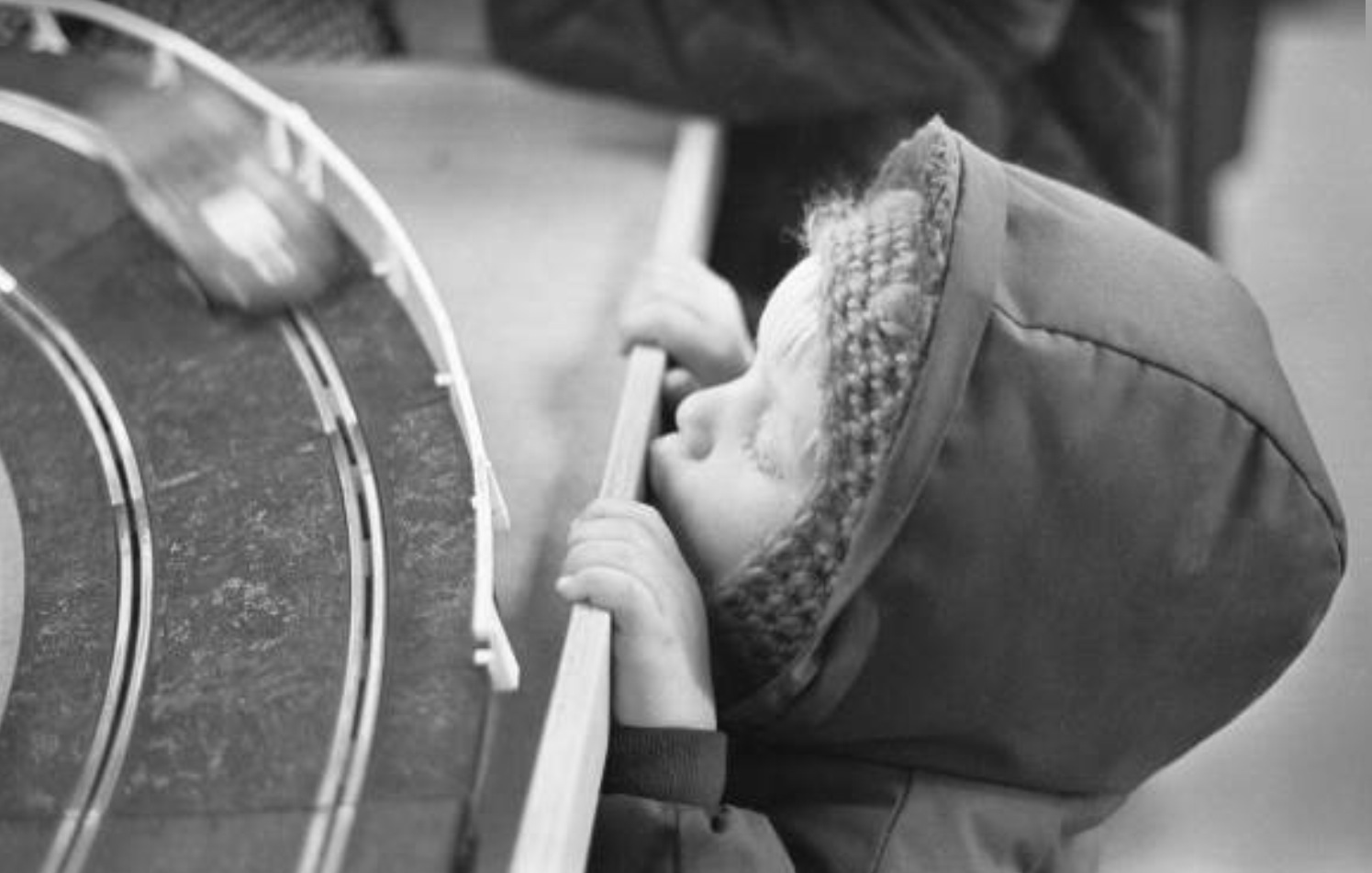
Love this post by Australian racer/enthusiast Ed Holly on Facebook the other day. He happily reported he still has the record but not the turntable upon which to play it…

The Spotify (you can’t beat it mind you) generation really struggle with records and turntables, mind you vinyl is staging a comeback of sorts.

Didn’t we all have Scalextric sets or a mate who had one? The image gave me all kinds of happy flashbacks. School holidays in the sixties were a blur of train sets, slot cars, a Yogi Bear or Flipper movie with mum at Balwyn Cinema (Melbourne, Victoria, Australia) with WH Lowe’s Ferrari showroom opposite in Whitehorse Road to drool over, choc-top ice cream in hand afterwards- and billy-cart manufacture of course.

Ken Holt, the Caltex Servo owner at Greythorn never did crack the shits no matter how many ball-bearings me ‘an me mates cadged in our quest for ultimate, super steep Fintonia Street speed.

Pram wheels at the front and ball bearings at ze rear was the gun setup which provided speed, plenty of front end bite and bulk oversteer of which Kevin Bartlett would have been proud.

After a couple of hours of that it was time to go inside, sort the brushes on the Chaparral and go Scalextric racing- I never did have that record mind you…

Credits…

Ed Holly, Getty Images

Tailpiece: Christmas shopping 1968- that could be mine…


(Mirrorpix)

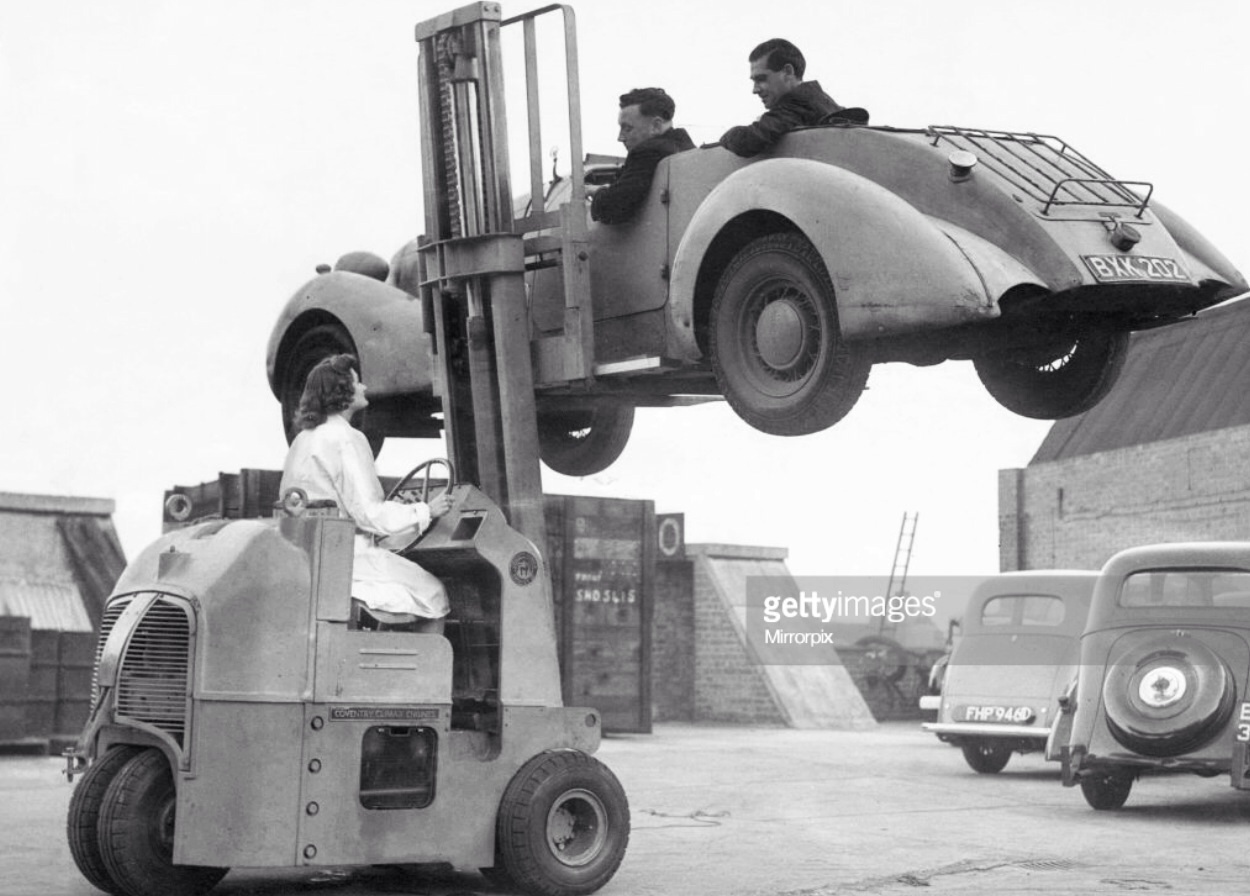
The Coventry Climax ET199 was said to be the first British produced forklift truck, 8 October 1946…

‘Seen here being demonstrated by a girl worker at the Coventry factory that produces the truck. The demonstration included lifting a racing car weighing nearly one and a half tons’ the Getty Images caption advises. I wonder what the ‘racing car’ is?

So, there you go, a Coventry Climax trivia question the answer to which you have always been waiting for!

Post war ‘Climax changed its focus away from car engines into other markets including marine diesels, fire pumps and forklift trucks. The ET199 was designed to carry a 4,000 lb (1,800 kg) load with a 24-inch (610 mm) load centre and a 9 ft (2.7 m) lift height for those with a particular interest in these devices.

The fire pump market and race adaptations of that engine proved rather successful for the company!

(Mirrorpix)

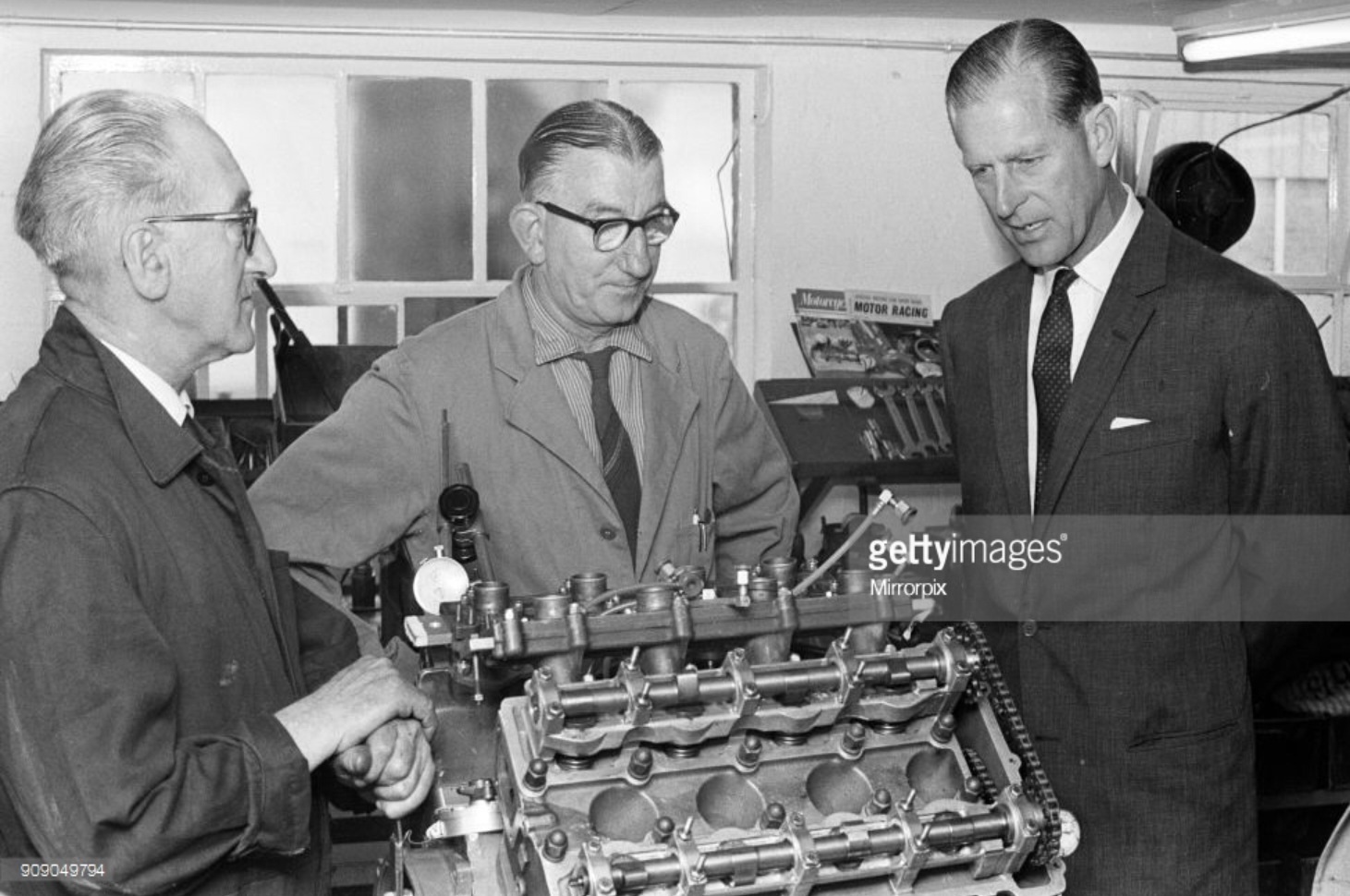
In another bit of trivia Prince Phillip paid the lads in Coventry a visit on 21 June 1966 and is doing his best to show some interest in a 2 valve Climax FWMV V8. Those with a keen knowledge of the company’s history will recall the only works Climax engines deployed in F1 that year was the special 2 litre, 4 valve FWMV Leonard Lee built for Colin Chapman to tide Jim Clark over until the BRM H16 engine was ready to pop into Col’s Lotus 43 chassis. Click here for a short article on the Lotus 33 which used this engine.

Jim Clark: Lotus 33 Climax: Monaco GP 1967: Out with the Old…

Credits…

Getty Images, Digby Paape

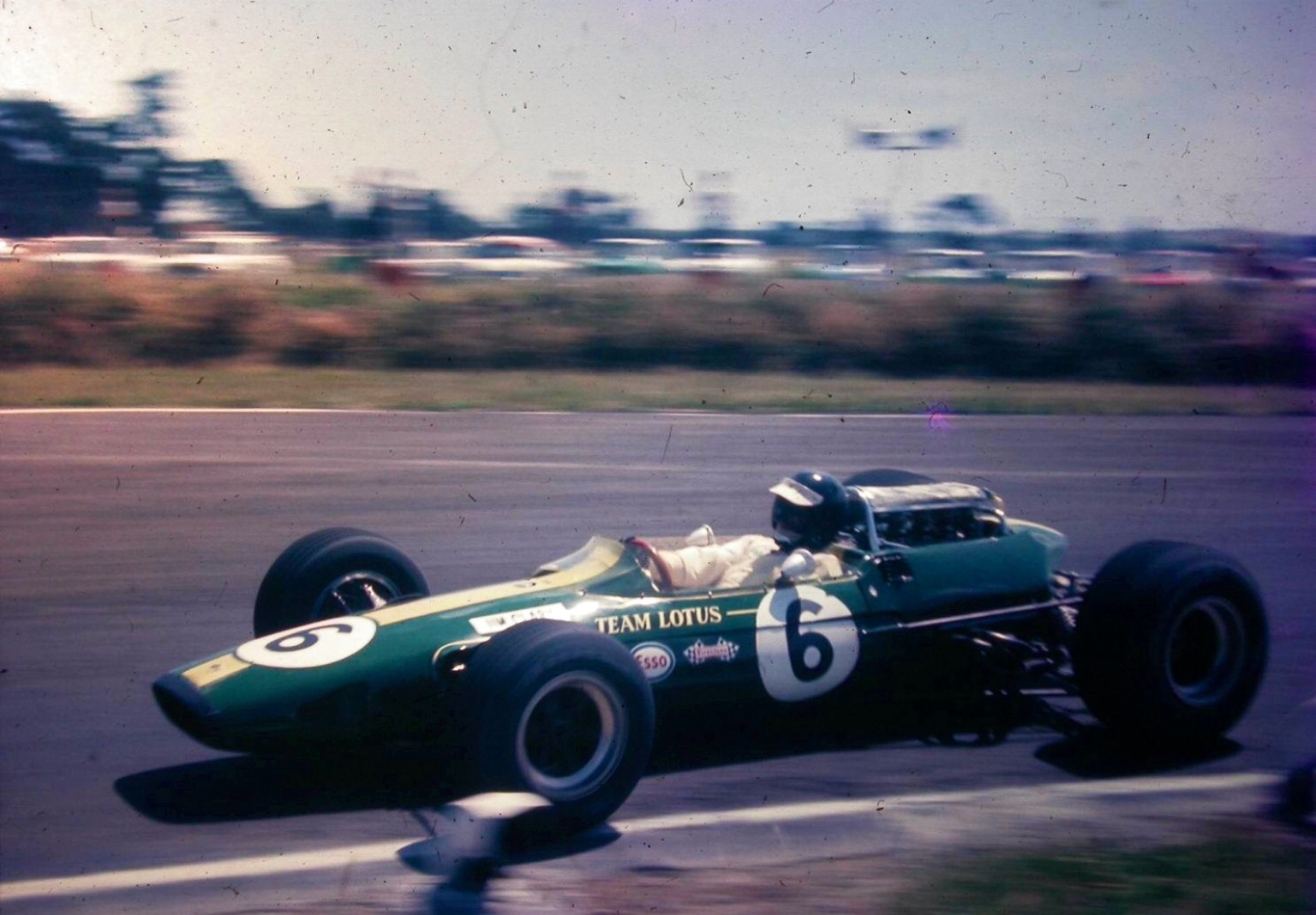
Tailpiece: Clark in the 2 litre Lotus 33 Climax FWMV V8 at Levin, New Zealand in 1967, he won the race and the series in ‘R14’…

(Digby Paape)

Clarks Lotus 33 ‘R14’ was a chassis which had been kind to him. He first raced it at Brands Hatch in July 1966, and, fitted with the super, trick, only 2 litre version of the Coventry Climax FWMV V8 it had served him well, he drove the car when the heavy ‘H16’ engined Lotus 43 was unsuited to the circuit or circumstances. His best result against the new 3 Litre F1’s was a strong third in Holland.

He won the Tasman series in ‘R14’, assisted greatly by the unreliability of the Brabhams and the BRM P261’s which had been so dominant the year before. He raced a Lotus 43 in South Africa, the first GP of 1967, then ‘R14’ for the last time at Monaco, finally getting his hands on the Lotus 49 at Zandvoort. By that time he was a British Tax exile so the first time the Scot saw the car was when he drove it in Holland, he hadn’t even tested the thing!

Finito…

The Vauxhall 30/98 was an iconic high performance, light touring car despite the relatively small number, circa 596, built.

Such was the build quality and the fact that ’old car people’ saw the intrinsic merit of the Laurence Pomeroy design a large proportion of those constructed between 1923 to 1927 still exist. They were popular in Australia, we have a lot of 30/98’s in Oz in relative terms, the cars are a very welcome and admired part of the historic car scene. This short article is about two Velox bodied fast tourers shipped to Australia in 1924, chassis numbers OE86 and OE100.

In some of my history of Australian motor racing articles i’ve mentioned the grip on the publics imagination transcontinental or city to city record breaking had in the formative motoring years of this great sun-bleached land. Vauxhalls featured heavily in these achievements in the hands of Boyd Edkins and others.

30/98 at the Queensland/Northern Territory border fence (unattributed)

John Balmer was the scion of a well to do Victorian family, his mother acquired 30/98 chassis number OE100 as a gift for him. He competed in various motorsport events with it, and together with co-driver Eddie Scott set the transcontinental Darwin to Adelaide, Fremantle (Perth) to Adelaide, and Adelaide to Melbourne records during 1936 in the car.

OE100 was somewhat bruised by this experience so its core components- 4224cc 112 bhp four cylinder engine, gearbox and front end wheel to wheel were fitted into OE86, another 30/98 owned by RS Robinson, a friend of Balmer’s from their Melbourne University and Citizen Air Force training days.

With sponsorship provided by Shell, Dunlop and Repco, Balmer and Richard Kent established a new 9326 mile circumnavigation of Australia record of 24 days, 11 hours and 58 minutes in 1938. The Repco advertisement at this articles outset recognises that remarkable achievement of grit and endurance.

Crossing the Katherine River in the Northern Territory (unattributed)

John Balmer was killed on a bombing mission over Berlin in 1944 but left his share of the car to Robinson’s wife Janet. The car was retained by the Robinson family in Victoria’s Warrnambool area, little used other than in occasional VSCC events until sold in 2016- and restored by Paul Chaleyer in Blackburn, Victoria.

Bibliography…

ausauto.com, MossGreen auctions

Tailpiece: The transcontinental adventurers, John Balmer and Richard Kent, ‘Boys Own’ stuff isn’t it? Blackall is in central Queensland…


(Popperfoto)

Stirling Moss does his thing…

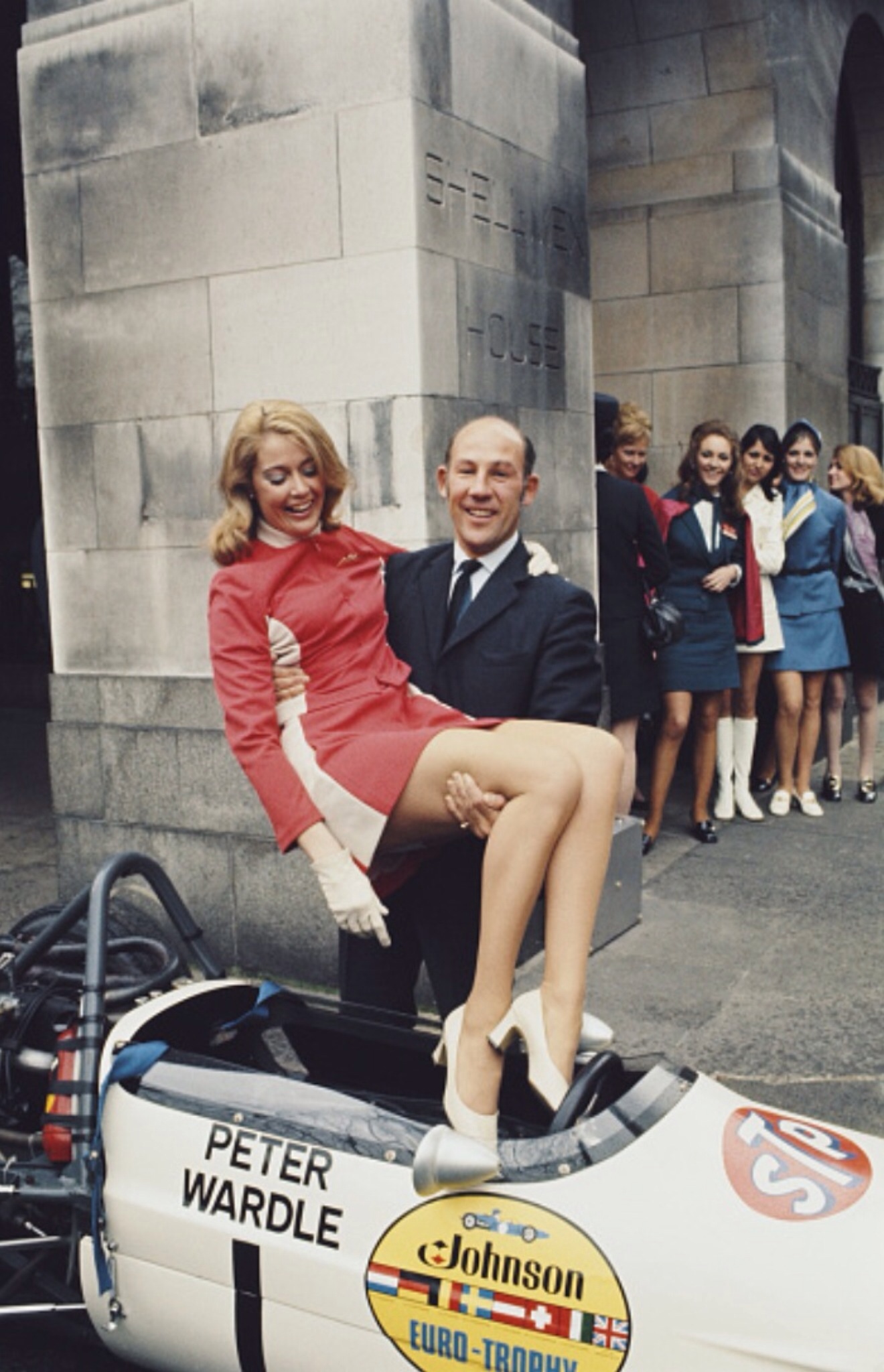
Here he is gently hoisting Miss Heathrow, Carol Marshall, into the cockpit of Peter Wardle’s Lotus 59 Formula Ford outside the Savoy Hotel on 16 April 1970.

Its the press launch of the Johnson Wax Euro Formula Ford Trophy with Stirling present in his capacity as ‘Director of Racing for Johnson Wax’- Claude Bourgoigne won the 1970 championship in a Lotus 69F.

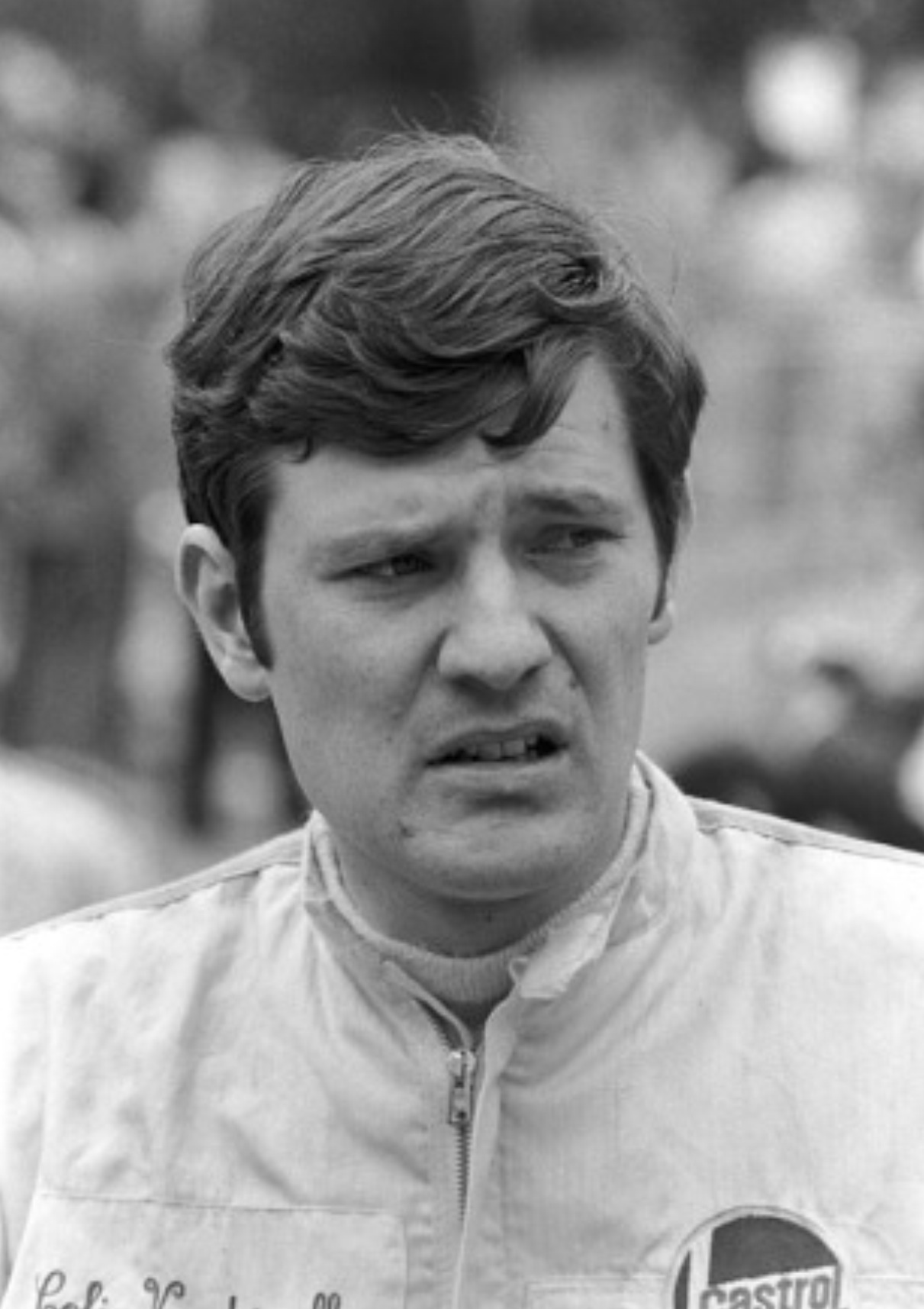
I was researching the winner of the series and found this gem by Marcus Mussa on tentenths.com. Its British Formula Ford and Formula Atlantic champion, Grovewood Award winner and ‘Vanwall’ Tony Vandervell heir Colin Vandervell providing his recollections of the 1970 ‘EFDA European Formula Ford Championship’ series- he was second in the ‘Magic Merlyn’, the Mk11A chassis also raced by Emerson Fittipaldi and Jody Scheckter.

Colin Vandervell pensive, atypical it seems (ESPN)

‘The series was run initially by Nick Brittan and I seem to remember Tony Dron was involved (maybe he was Nick Brittan’s assistant at the time). I spoke to Colin Vandervell, who is blessed with an incredible memory- who told me a bit about the 1970 season. The series was sponsored by Johnson Wax. First prize was a F3 Lotus, with Holbay engine and a full budget for 1971!
First round – Zandvoort. Nick Brittan would not let Colin enter as he considered him not experienced enough! Race was won by Tony Trimmer.
Second round – Zolder. Colin got in and finished 2nd, miles behind Claude Bourgoignie, thanks to a lot of cars dropping out/crashing etc.
Third round – Anderstorp. Colin won
Fourth round – Salzburgring. Colin won
Fifth round – Hockenheim. Colin finished 4th. The first 20 cars were inside and all over each other- no chicanes at the time! Colin describes the race as “highly dangerous”. He was in the lead for most of it with Trimmer then the main pack caught them two laps from the end and they were swamped.
After Hockenheim there was a hill-climb in Switzerland, which Bourgoignie won.
Then at Imola Colin was 1.5 secs quicker than anyone in practice but (Colin) Chapman arranged for a bunch of Lotus drivers to enter with instructions to take Colin out! At the first corner two Lotuses (Loti?) hit him, Mo Harness barrel rolled 15 times and ended up in a ditch, bits of his rear suspension ripping off one of Colin’s brake lines.
Imola and Hockenheim were very, very fast tracks at the time. Colin says he used a 25/25 (24/24?) top gear at these tracks, higher even than Silverstone.
The final was at Brands Hatch and Colin won again.
In the end Bourgoignie was champion by only 3 points by virtue of winning or being well placed every time. Colin is sure he would have won if Brittan had let him into the first race.
Colin was of course driving his Merlyn (ex Emerson Fittipaldi, future Jody Scheckter and Frank Sytner!). In those days FF ran on road tyres – Avon crossplies in the dry and Firestone radials in the wet (for the wealthier drivers!).’
1970 EFDA/Johnson Wax Series Results
I’ve included the full list to enable you to cast your eyes over the array of talent, many of whom came through into the professional ranks in the coming years if not F1.
1. Claude Bourgoigne (B) Lotus-Holday 69F
2. Colin Vandervell Merlyn-Rowland Mk11A
3. Tony Trimmer Lola-Steele T200
4. Tom Belso (DK) Hawke-Lloyd DL2A
5. Jac Nelleman (DK) McNamara-Steele
6. Ian Taylor March-Spence 708
7. Hans Meier (A) Hawke-BRM L2A
8.Peter Lamplough Palliser-BR MWDF2
9. Brian Nelson (IRL) Crossle Nelson 16F
10. Huub Vermeulen (NL) Lotus-Holbay 61M
11. Tom Strous (DK) Lotus-Holbay 61M
Charles Carling Crossle Lucas 16F
Bob Evans Palliser-BRM WDF2
Derek Lawrence Titan-Lucas Mk6
Hakan Dahlqvist (S) Lotus-Holbay 61M
Peter Wardle Lotus-Holbay 69F
Vern Schuppan Palliser BRM WFD2
Mike Fraser Royale-RP RP3
Giancarlo Naddeo (I) De Sanctis
Mo Harness Lotus-Holbay 69F
Theo Koks (NL) Lotus Holbay 61M
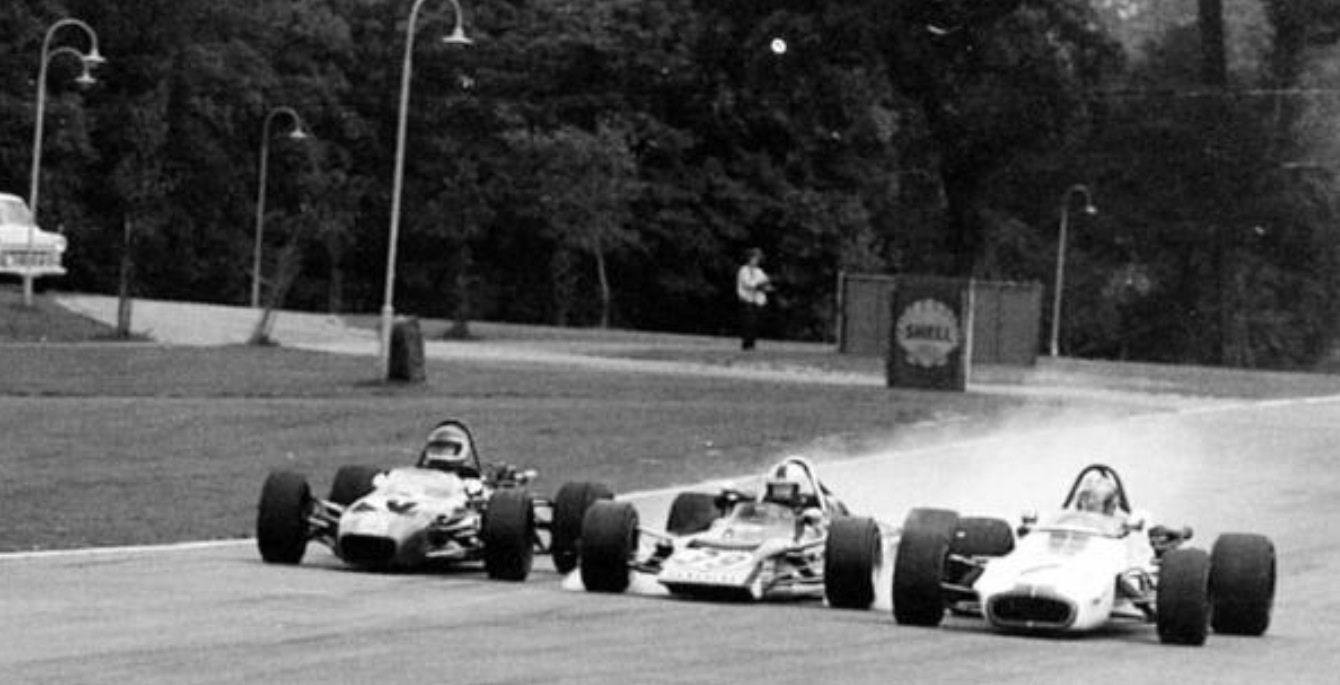
Crystal Palace F3 Final, 10 September 1971…
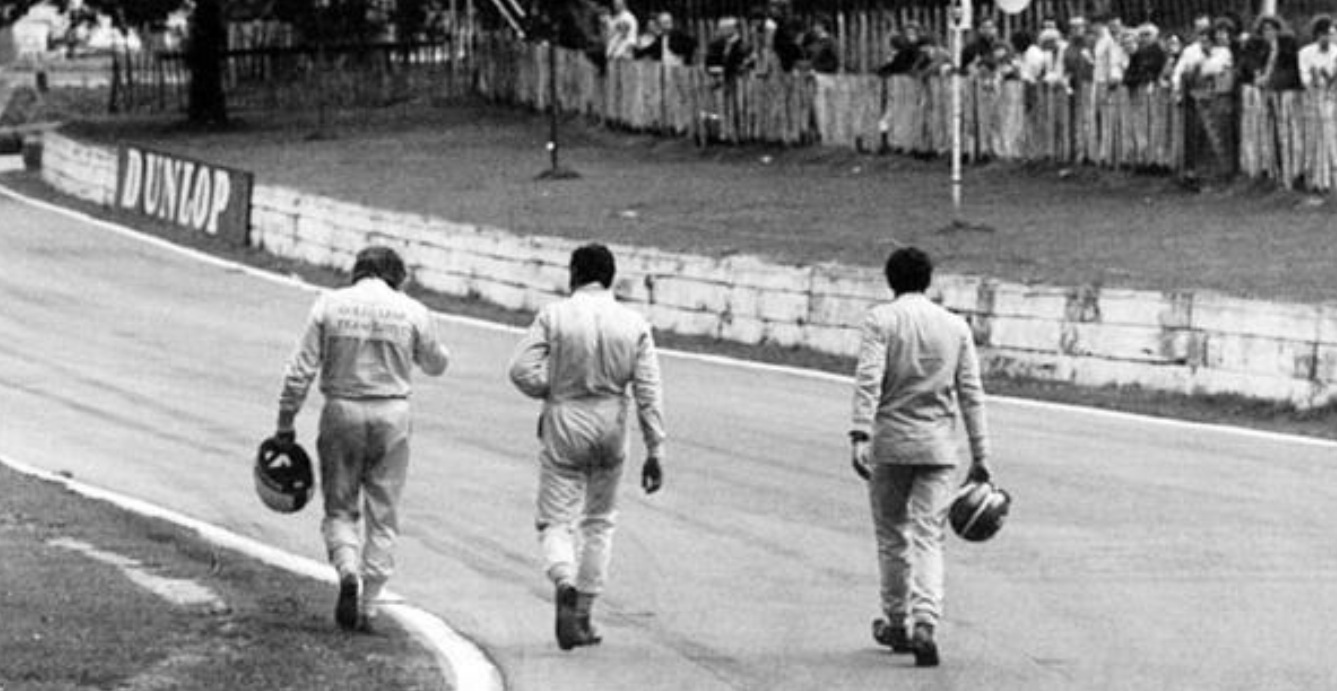
Before and after!
The plunge for the lead coming into the kink before North Tower. Jody Scheckter, Merlyn Mk21 Ford, Dave Walker, Lotus 69 Ford and on the right Colin Vandervell, Brabham BT35 Ford. Jody has plunged down the inside just as Walker popped out of Vandervell’s slipstream with the Lotus and Merlyn about to lock wheels- all three cars made contact.
Roger Williamson won that day in Tom Wheatcroft’s March 713M Ford.

(unattributed)

Walker, Scheckter, Vandervell- the long walk home! (unattributed)

Check out this summary of Colin Vandervell’s career written by Andrew Marriott…

http://en.espn.co.uk/f1/motorsport/story/9325.html

Photo and other credits…

Popperfoto, ESPN, f3history.co.uk

Finito…

ballila ad

Fiat ad for the Balilla Berlina circa 1932…

‘The new Balilla, for everyone, women’s elegance’.

The Balilla was a 1 litre, 4 cylinder, 4 seater built at the Lingotto plant and also assembled in Poland, Germany and France from 1932-37. With a 3 speed ‘box, the car did around 50mph. Not normally primotipo material but the ad caught my eye!

Fiats on test at the famous, iconic Lingotto, Turin factory (Getty)

Credit…

Fiat, Getty

Chris Amon on the ‘Warwick Farm 100’ grid, 9 February 1969. DNF lap 1 after a tangle with Piers Courage. Rindt won by 45 seconds from Bell’s 246T. Checkout the wing mount detail (B McInerney)

Amongst the most jewel like Ferraris of the late sixties are the F2 Dino 166 and Tasman Formula 246T’s…

Just yummy they are. The 246T had enough of everything to do the job, but not too much of it, including its wings.

Amon didn’t race so equipped in 1968, his first Tasman Dino year, but wings exploded in F1 that season so he did return with these small aerodynamic aids in 1969, together with four 300 bhp V6’s to power the cars raced by he and Derek Bell that summer.

They were works entries with logistics on the ground taken care of by David McKay’s Scuderia Veloce, Sydney based outfit. David and Chris went way back to 1962/3 when McKay’s support of him in a Cooper T53, and Chris’ speed in it that summer brought him to the attention of Reg Parnell- and off to Europe he went.

Amon’s 246T wing in the Pukekohe paddock, Jan 2-4 1969. He won the NZ GP that weekend in ‘0008’- his ’69 Tasman mount, Bell raced ‘0010’ to 4th (M Feisst)

But its the 246T wings which interest me…

Chapman’s Lotuses returned to Australasia with World Champ Hill and World Champ Aspirant Rindt at the wheel in 1969. Colin’s Lotus 49 DFW ‘aero-phalluses’ were notable for their size and the regularity with which they parted company with the chassis to which they were, usually temporarily, attached.

It was these component failures on both Lotuses at Montjuic Parc, Barcelona several months after the Tasman that caused the FIA to act, constraining the size of wings from the ’69 Monaco GP. Click here for an article in relation to those events.

‘Wings Clipped’: Lotus 49: Monaco Grand Prix 1969…

Graham Hill’s Lotus 49B Ford DFW with its big, hi-mounted wing in the Pukekohe paddock, 1969. Its high in the airstream to catch ‘clean air’, not a problem- the mounts themselves were under-engineered bigtime though. Hill, Oliver and Rindt all had failures, in the case of Oliver and Rindt huge accidents which could easily have been fatal (M Feisst)

I am a complete Lotus nutbag but joisus Chappers should have been shot for the death and destruction caused to his drivers/customers by component failure over the years? The Latin term ‘caveat emptor’ could have been designed with Lotus purchase in mind. On the other hand, butch though the engineering sometimes was, the 1961/2 156 springs to mind- shite didn’t and doesn’t tend to fall off Ferraris.

Look at (in the Pukekohe paddock photo above) the spidery, small, multi tube structure which supports the little wing. The mounts are triangulated and supported forward to the roll bar. The adjustment mechanism to alter the angle of incidence is simple and neat. The chord of the wing is shallow with endplates, not so common at the time, to ‘capture’ airflow.

Note the throttle linkage, water and oil fillers and breathers, also the Willans harness attached to the roll bar.

Amon at Teretonga, I think, in 1969. Courage won in Frank Williams Brabham BT24 Ford DFW- a portent of the success they would have in GP racing that season with an FW run Brabham BT26 Ford DFV. Again, check out the Dino wing and its mounts. Chris was 3rd behind Hill (unattributed)

Chris took a great win in the ’69 Tasman, he won the first two rounds at Pukekohe and Levin after Rindt spun away the lead, before Jochen won on the Wigram airfield circuit. Piers Courage won at Teretonga in his bi-winged Brabham BT24 Ford DFW before the circus crossed the Tasman Sea to Australia.

Chris won well at Lakeside, the Australian Grand Prix was run in very hot conditions- with both Lotuses suffering wing failure that weekend. Jochen drove away from the field at Warwick Farm in streaming rain after Amon and Courage tangled early on. Chris won again at Sandown by 7 seconds from Rindt and took the series with 44 points from Rindt and Courage on 30 and 22 points respectively.

Graham Hill suffers what would not be the last Lotus 49 wing failure during the 1969 Australian Grand Prix at Lakeside. He pitted, a mechanic hack-sawed the wing mounts and removed the offending items allowing GH to rejoin and finish 4th behind Amon and Bell both aboard Dino 246T’s and Leo Geoghegan’s Lotus 39 Repco (G Ruckert)

Amon’s 1968 Tasman Dino Season…

Amon’s Tasman Dino…

The Ferrari 166 Dino…

Temporada F2 Series Argentina: San Juan 1968: Ferrari Dino 166

Amon after his Lakeside AGP win (J Stanley)

Bibliography…

oldracingcars.com

Photo Credits…

Mike Feisst/The Roaring Season, Brian McInerney, John Stanley, Graham Ruckert

Tailpiece: Amon on his way to AGP victory at Lakeside on 2 February 1969, Ferrari 246T ‘0008’…

(J Stanley)


David Mist wasn’t a motor racing photographer but he took some interesting shots on assignments allocated to him by the advertising agency USP Benson…

The client on this occasion was Shell, the ‘talent’ the Scuderia Veloce racing team owned and operated by David McKay and perhaps the Warwick Farm circuit itself. Mist’s gigs incuded the ’63 and ’67 AGP weekends, ‘the 1965 Shell Racing Series Scuderia Veloce Racing Team’ and a meeting at Catalina Park, Katoomba. Click here for a link to an article which includes background on SV; https://primotipo.com/2017/01/04/scuds/

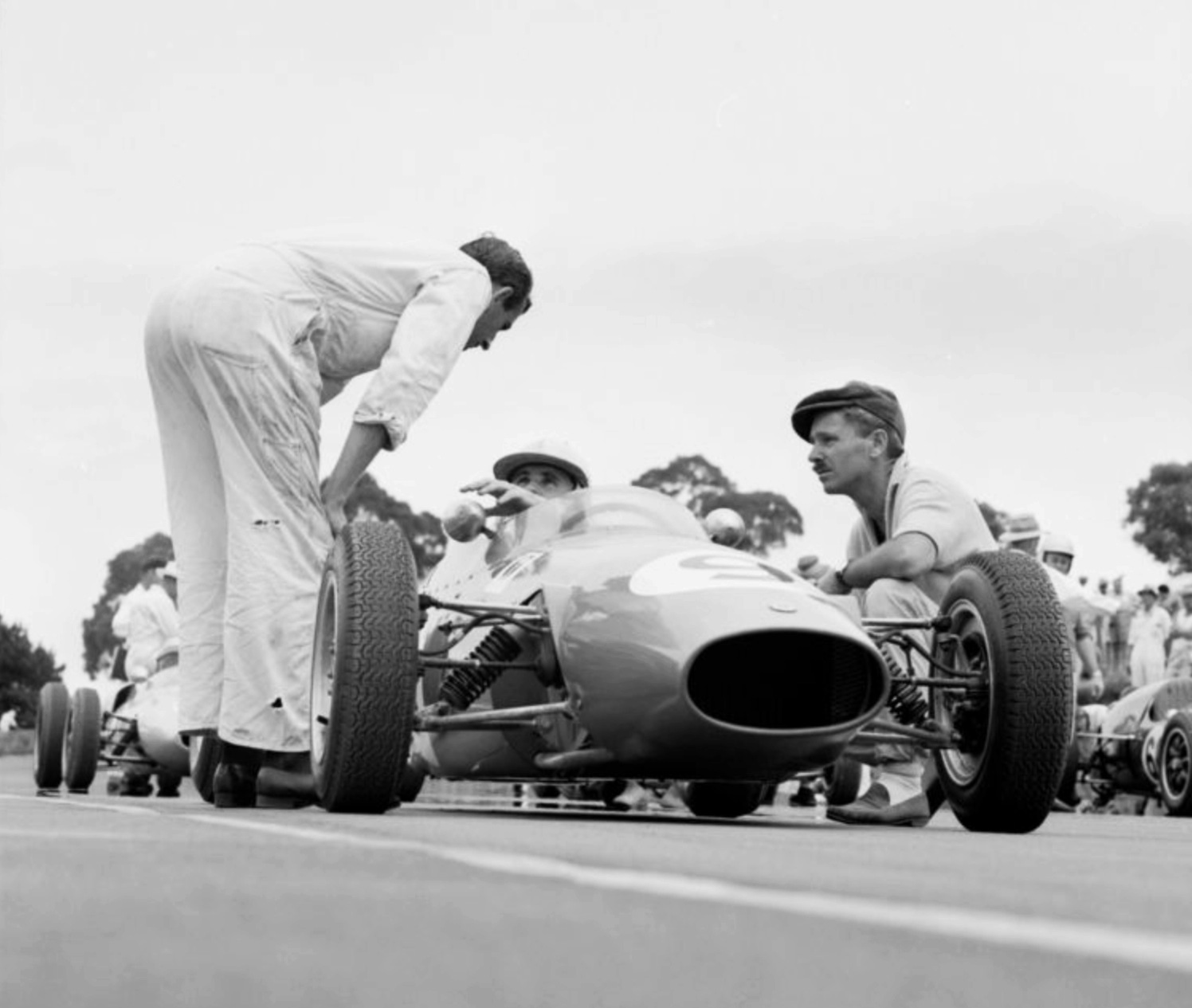
Its David McKay on the grid, above, with driver Greg Cusack and Greg’s Elfin Catalina Ford FJ circa 1964. It won the 1964 Australian Formula 2 Championship, at Lowood, Queensland, chassis ‘6310’ is now owned by the National Motor Racing Museum.

Cusack came through the world of rallying and burst onto the racing scene with speed in a Lotus 23, an Elfin Mallala sportscar, the Catalina above and then into a Brabham BT6 Ford. During this time he progressively built a significant automotive retailing business, a Ford dealership in Canberra. Perhaps this dual focus of business and racing mitigated against ultimate motor racing success but he rose right through the ranks to race McKay’s Brabham BT23A Repco Tasman 2.5 Formula car.

Interestingly this very chassis, Jack’s 1967 Tasman weapon- ‘BT23A-1’ has recently been acquired by the National Automobile Museum, which is good and bad! Good in that it stays in Australia, bad in that it now becomes a static museum exhibit rather than occasionally raced as it has been by Peter Simms for the last 30 years.

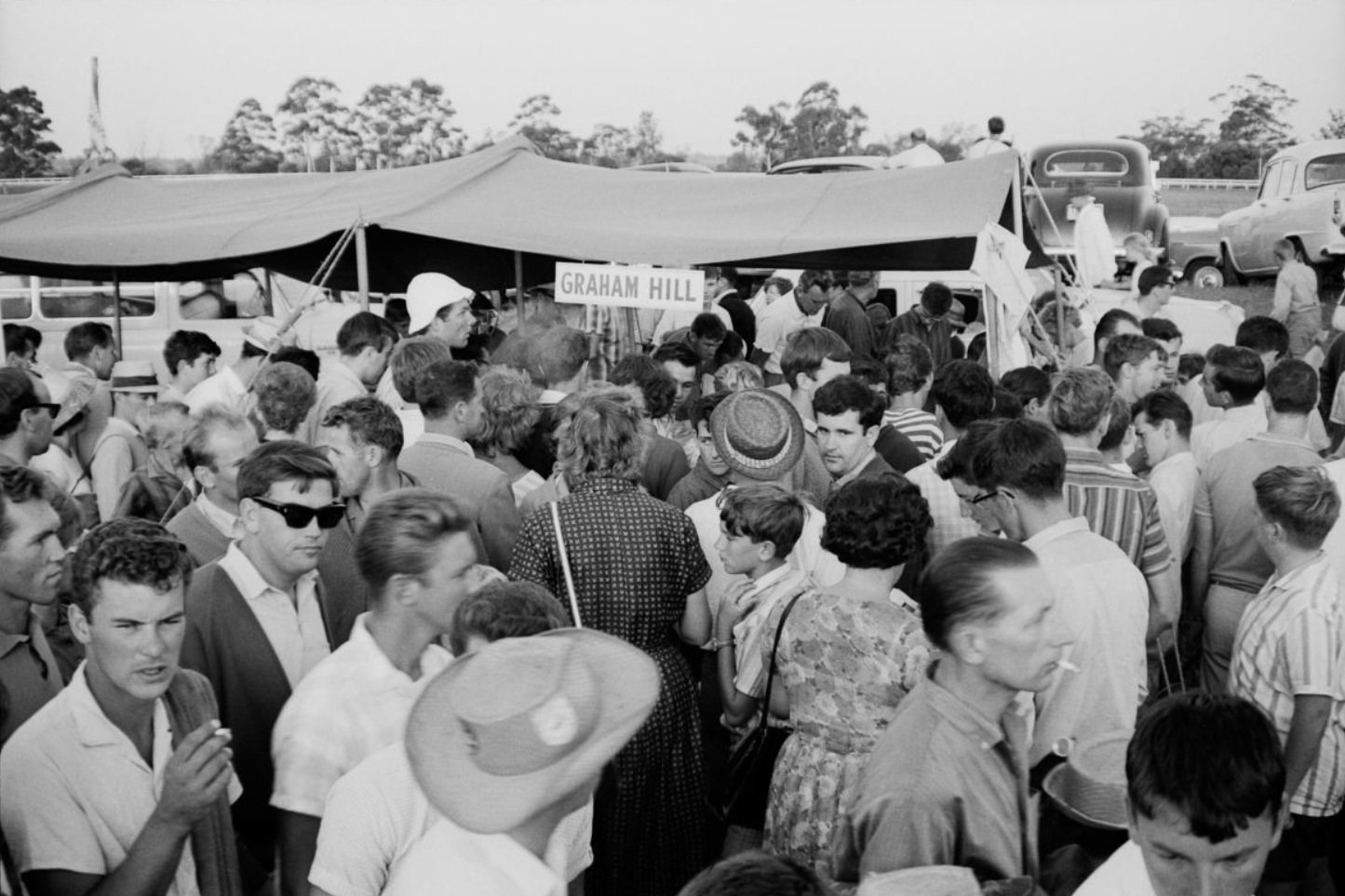
The Tasman meetings attracted enormous crowds, here the crush is around Graham Hill’s Lotus in 1967.

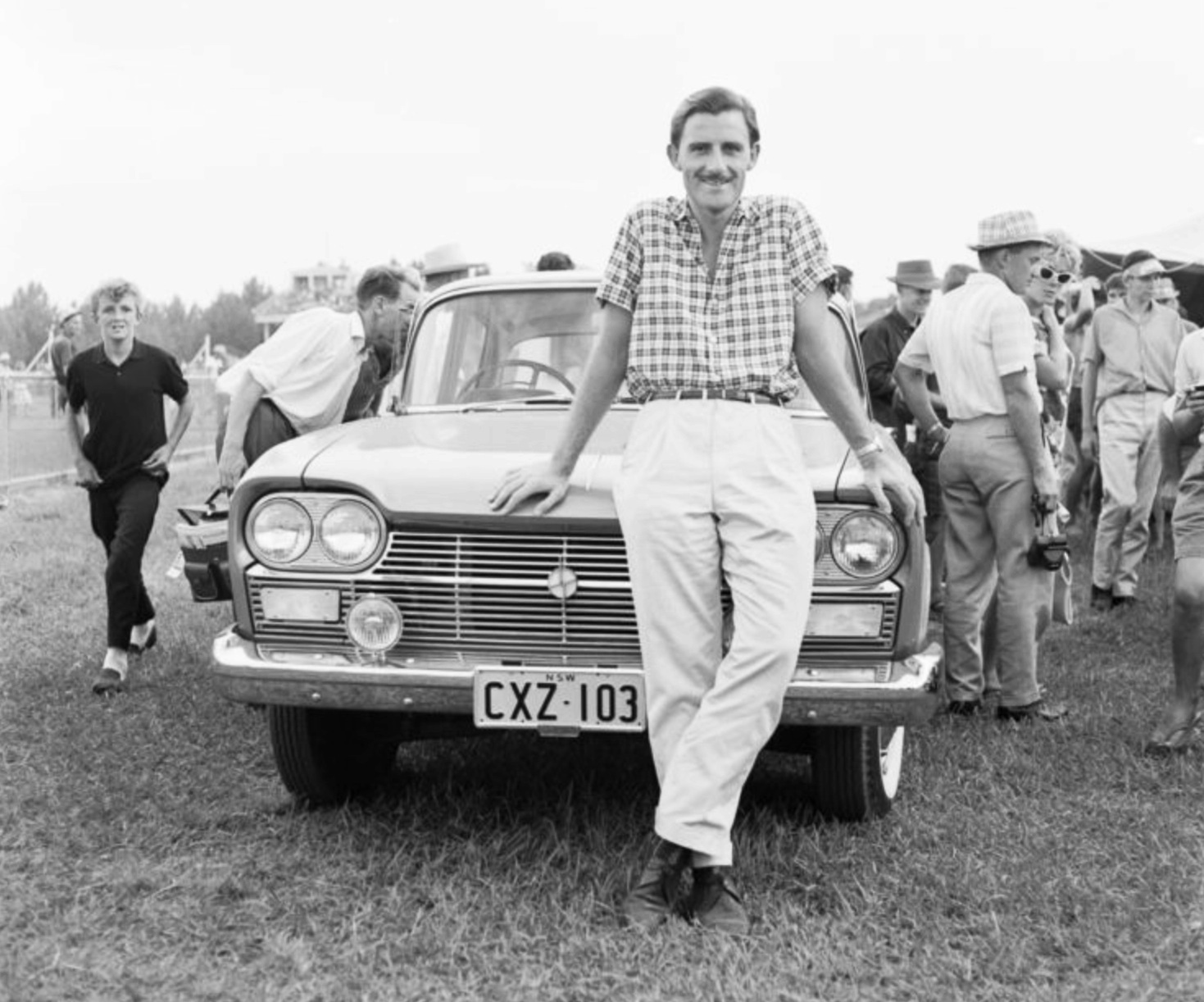
Sticking with Graham, here he is no doubt leaning against his courtesy car for the weekend. Its a big Datsun/Nissan Cedric, I wonder what GH thought of it? I wrote an article about the Prince/Nissan R380 racer a short while ago which tangentially talks about the rise and rise of the Japanese manufacturers in Australia in the sixties. Click here to read it;

Prince, Datsun, make that Nissan R380…

The popularity of touring car racing in Australia began in the fifties and has exploded exponentially since. Sadly. Sadly in that the ascension has been at the expense of the purer forms of the sport- single seaters and sports-racing cars. Still, the market has spoken and we enthusiasts of the Real McKoy have to suck it up and remember the glory days of the fifties to seventies, and even then other than at Tasman time, grids could be pretty shitful in quantity if not in quality.

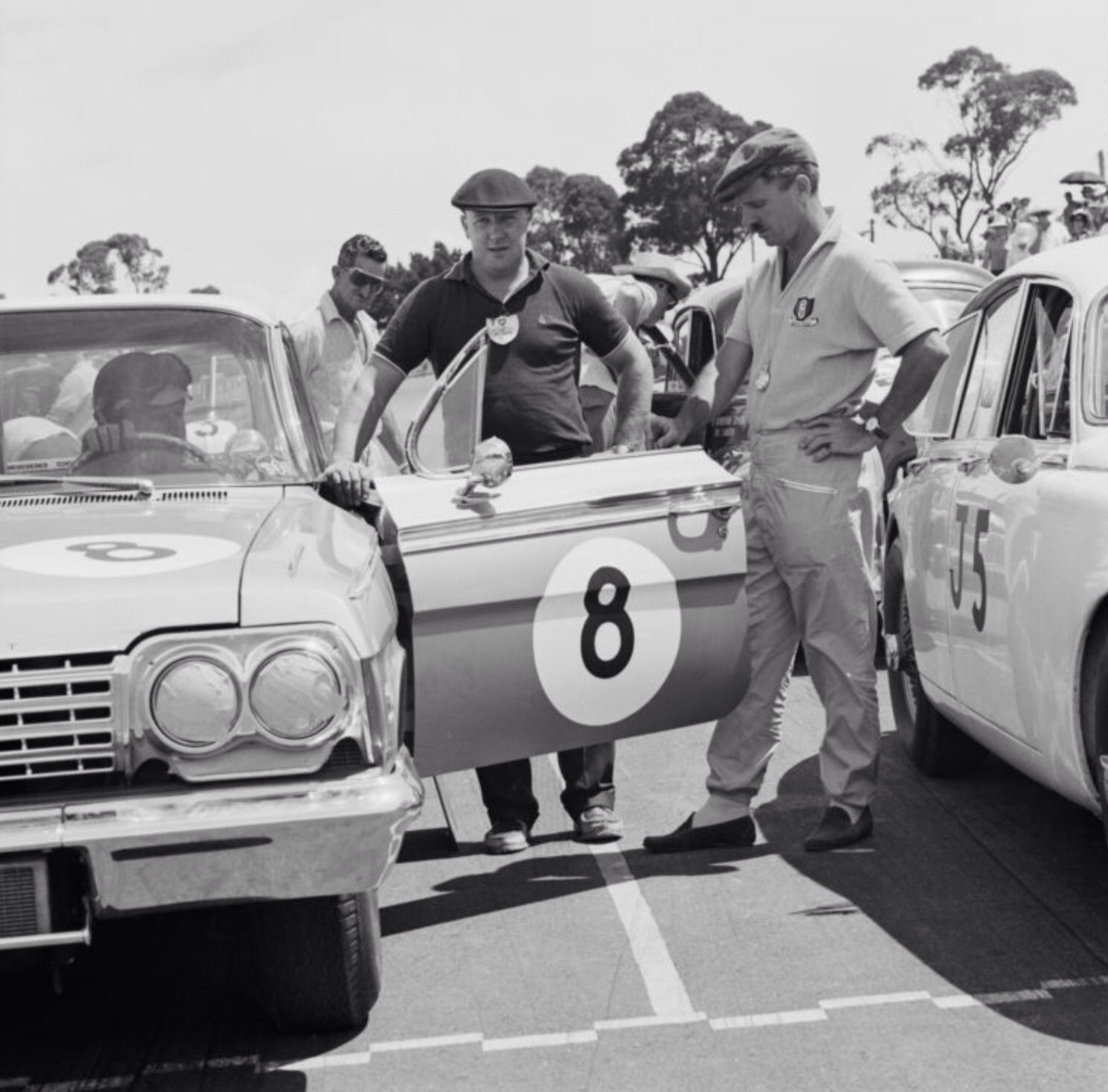
One of the touring car greats as a racer, personality and crowd pleaser was Norm Beechey, winner of the 1965 and 1970 ATCC in Ford Mustang and Holden Monaro 350 respectively, here aboard his Chev Impala in 1963.

He was a member of the SV squad at the time, winning the NSW Touring Car Championship in this car on the ultra tight, Catalina Park circuit. McKay is alongside the car together, I think with Claude Morton, Norm’s mechanic. David is in driving gear so he’s not quite retired. I’m guessing this as the 1963 Australian GP weekend in February, McKay finished a splendid 4th in his Brabham BT4 Climax in that race behind Brabham, Surtees and McLaren.

The spinner below is Gavin Youl in a Brabham BT2 Ford, the passing Nota BMC is Les Howard’s chassis owned by John Medley for 45 or so years!

Photo Credits…

All shots by David Mist

Finito…

The Ove Andersson/Arne Hertz Alpine Renault A110 1600S blasts through a village during the ’72 Rallye du Maroc…

The 24-30 April event was based in Rabat, Casablanca and comprised 1563 Km of competitive stages on asphalt and gravel. The Simo Lampinen/Andreasson Solve Lancia Fulvia HF 1.6 Coupe won the event, the Andersson car failed to finish with engine failure.

Photo Credit…

Jean Claude Deutsch


(K Hyndman)

Jody Scheckter’s works F2 McLaren M21 Ford BDF (left) at Trojan Racing’s workshops in Beddington Farm Road, Croydon on 1 October 1972…

Alongside it is the first Trojan T101 ‘101’ F5000 coming together, the cars are close relations.

Jody took one European F2 Championship win in chassis # M21-72-01 at Crystal Palace in May, the title was won that year by Mike Hailwood’s works Surtees TS10 Ford BDA.

The South African charger was competitive throughout the season, but like others running BDA’s stretched close to 2 litres struck engine dramas. The standard cast iron Ford Cortina 711M block just didn’t want to be bored that far, pistons came close to kissing each other which is rather sub-optimal. The bespoke alloy Ford Cosworth BDG block solved that from 1973. Hailwood ran Brian Hart prepped 1850cc BDA’s and took a hotly contested first 2 litre Euro F2 title from Jean-Pierre Jaussaud Brabham BT38 Ford and Patrick Depailler March 722 Ford.

Jody recalled his McLaren M21 F2 year in an article titled ‘McLaren and Me’ on mclaren.com…

It was Phil Kerr who approached me about driving for McLaren…I don’t think F2 was their major interest, and I think in a way they were playing on the side with it. Teddy Mayer preferred the big time stuff.

F2 obviously wasn’t F1 or CanAm, which had been their main thing, and I had the only M21. I can’t remember thinking at the time that they weren’t putting enough effort into it, however I would probably not have known at that stage. That was the first works drive after running my own car, so whatever it was was fantastic.

At the beginning we had an 1800cc motor, and the other guys were 2-litres, so it was underpowered. We would run less and less wing to try and do the same speed on the straights, and then we had no downforce.

The car wasn’t bad. But initially it had a broken shock absorber, which nobody discovered. We weren’t competitive at all, and with me being new in, obviously people thought I wasn’t competitive. If you’re on your own, when you go well it’s good, and if you don’t, you wish had others cars to compare against!

In one way it was nice because you’re the only driver they’re concentrating on. If there was another one could you have developed the car quicker? Possibly, but I didn’t really think about it.

After a few races we went down to Goodwood and Denny Hulme drove the car and played around with it a bit. They had found in the workshop that one of the shock absorbers was broken. So they changed that, and Denny went out and did 1m14.2s or something like that, and I went out and in three laps did a 1m13.8s. I think we were doing 1m15s before that.

London Trophy, Crystal Palace 29 May 1972. Scheckter won in his #60 McLaren M21 Ford BDF by 1.5 seconds after 50 laps from Mike Hailwood’s #46 Surtees TS10 Ford BDA and Carlos Reutemann’s Brabham BT38 Ford BDF (J Fausel)

And then we went to Crystal Palace. I’d raced there in F3 and Ford Escort Mexicos, and I quite liked that circuit. The car was going well, and we won. After that everyone was looking at the car, wondering why it was going so quickly. I remember at Rouen passing Carlos Reutemann on the outside of a bend going down the hill.

Crystal Palace was a real breakthrough in a way. In those days there were F1 drivers competing, and, if you did well in an F2 race, you immediately showed that you were good enough to go up to the next level. Which is what happened.

Later Lotus came and wanted me to drive for them. I told McLaren and they said, ‘OK, we’ll give you a drive in the last Grand Prix, at Watkins Glen.’ I don’t think they’d thought about it, but when other teams start making offers, they knew they had to do something!

Watkins Glen (1972 US GP) was good because nobody recognised me, and I could walk around and not be bothered. I thought the M19 was fantastic. It was my first F1 car, and it just seemed to grip more and more, you could go faster and faster and nothing was happening, rather than sliding all over the place. It was nothing compared to the downforce of today’s cars, but in comparison to my F2 car the M19 had much more downforce, and bigger tyres as well’.

The story of Scheckter’s rather successful F1 career is one for another time.

McLaren pulled out of the production racing car market with effect the end of 1972. Trojan, acquired by Peter Agg in 1960 took over Elva Cars in 1962, Bruce McLaren worked with Elva to develop his McLaren-Elva Mk1A for the 1965 season, the Trojan built McLaren cars dated from 1969. The mutually fruitful partnership lasted until the end of 1972 at which point Agg continued building cars named Trojan- the T101 was the first.

January 1973 Trojan T101 ‘101’ is the car shown ‘as advertised before Ron Tauranac arrived in the design department’ Ken Hyndman

Trojan went into 1973 with a new F5000 design which was in essence the marriage of  the Ralph Bellamy designed F2 M21 front end with an M18/22 McLaren F5000 rear attached to a new chassis. Bruce would have approved, very much in his ‘Whoosh-Bonk’ tradition this machine!

The new car, designated ‘T101’ was designed by Paul Rawlinson with Ron Tauranac- post-sale and exit of Brabham to Bernie Ecclestone, brought in by management at the seasons commencement to ‘make the car work’.

Work it did- Jody Scheckter won the US F5000 L&M Championship in 1973 with 3 wins in T101 chassis ‘103’ at Laguna Seca and Michigan in May and Mid Ohio in early June. He then decamped and raced a Lola T330 (HU20) owned by Bob Lazier winning in it at Watkins Glen in mid-June after boofing T101 ‘103’ during practice.

He was back aboard T101 ‘103’, the chassis repaired at Trojan, at Road America Elkhart Lake on 29 June and Road Atlanta in mid-August and then raced another T330 (HU24) said to have been bought with his winnings, at Pocono on 3 September before ending the season in his faithful T101 ‘103’ in the final of the nine round championship at Seattle on 30 September where he was 3rd.

Scheckter and Redman at Pocono in 1973 (J Knerr)

Brian Redman aboard a sinfully sexy Carl Haas Lola T330 Chev (HU14) at the Riverside first L&M series round in 1973, he won. Mechanics names anyone? (M Paden Hewitt)

The above puts a wonderful gloss on the Trojan season but does not tell the whole truth!

Brian Redman started his reign as the ‘King of F5000’ in 1973, although he was uncrowned that year. He won the US Championship from 1974-76, and aboard the works Carl Haas Lola T330 in ’73 won five rounds- Riverside, Elkhart Lake, Road Atlanta, Pocono and Seattle.

The only thing which cost him the title were his factory Ferrari 312PB World Endurance Championship sportscar rides, he missed several rounds. The only L&M Championship race where Jody beat Brian ‘man on man’ was at Watkins Glen where T330 ‘HU20’ prevailed over Redman’s ‘HU8’.

The evolved for 1973 Lola T330 (from the late ’71-’72 T300) was a stunning production racing car which begat a whole series of dominant F5000 and single-seat Can Am cars- T332, 332C, 332CS and 333. Category destroyers in some ways, these cars!

But let’s not take anything away from the Scheckter/Trojan 1973 L&M wins- to finish first, first you have to finish and that they did that in spades! Jody won with 144 points from Redman’s 130 and Mark Donohue, Lola T330 AMC on 64 points.
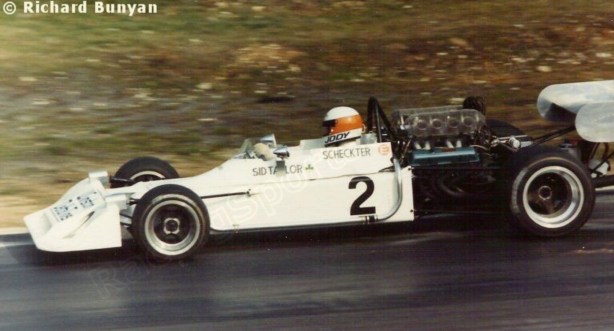
Scheckter in the Trojan T101 ‘103’ Chev at Brands on 17 March 1973, first British F5000 championship round. DNF in the race won by Peter Gethin’s Chevron B24 Chev from Brett Lunger’s Lola T330 Chev and Tony Dean’s Chevron B24 Chev (R Bunyan)

The team did a couple of British early season F5000 Championship rounds to shake the car down before shipping it to the US, where they were ‘match fit’ from the start of the season.

Sid Taylor and Jerry Entin owned the car Scheckter raced and expected Tauranac would work on its development during the season but Ron was sucked into the 1974 Trojan F1 program, so Taylor/Entin received little help. What development the car lacked was more than made up for by Jody’s endeavour behind the wheel mind you!

Scheckter 1st from David Hobbs Lola T330 3rd, Peter Gethin Chevron B28 at left 2nd and Kevin Bartlett Lola T330 DNF behind Gethin. Laguna Seca 1973. Bartlett had a guest drive of Redman’s works/Haas machine whilst Brian was away on Ferrari sportscar duties- he was 3rd in his heat and DNF the final (unattributed)

Kiwi Ken Hyndman worked at Trojan Racing and took the colour factory shots on his first work day there on 1 October 1972…

Hyndman wrote on ‘The Roaring Season’- ‘The M21 F2 race car that Jody Scheckter had driven at Oulton Park a few weeks prior (on 16 September, DNF transmission in the race won by Peterson’s works March 722), was in the midst of being dismantled so as to form the basis of a new F5000 car. The main body/tub was a McLaren M22 and the suspension/steering was from the M21.’

In fact it seems clear that whatever Trojan did with ‘M21-72-01’ late in 1972 the car was sold to French hillclimber Yves Martin who used it in the following years.

In more recent decades the car is part of Scheckter’s collection of cars he raced.

Perhaps some components were used in the F5000 T101-1 build. Given the M21 was a one-off- only one chassis was built and raced by Jody in 1972, maybe the car was used in the workshop to help create the necessary drawings/patterns for components needed for the T101 batch build of six cars.

Shape of the T101 nose as raced different in profile compared with the original design as being constructed here in October 1972. M21/1 at right (K Hyndman)

The photo above shows ‘The Trojan F5000 T101X (T101 ‘101’) was first drawn up by a likeable young designer, Paul Rawlinson. He had also been a mechanic…Paul had the design that was M21 ahead of the engine and a M22 F5000 behind.’

‘The T101X had a concave surface nose section like a Porsche 917/10 Can Am car for added downforce. It had a full width nose with NASA type ducts for cooling the front brakes. This was to be powered by an Alan Smith tuned 5 litre engine…and looked pretty neat…’

‘Note in the background is the inverted M10B tub for (then Australian F5000 coming-man) Warwick Brown’ Hyndman observed, adding in relation to the Brown tub ‘that does not seem to match the records of the car (M10B-19)’ which indeed it does not but the chassis at a glance does look like that car at that time Ken!

Etcetera…

McLaren M21 ‘M21-72-01’

Yves Martin in his ex-Scheckter McLaren at Saint-Germain-sur-Ille hillclimb in 1974.

(T Le Bras)

Trojan T101 ‘103’

Ron Bennett and Scheckter (below) ponder the setup of the T101 in the Elkhart Lake paddock in June 1973. Alan Smith brought over his slide-injected engine for this race, Jody didn’t like the feel of it though, so they went back to carbs for the rest of the season. Clearly from the Brands shot above Jody used the injection engine early in the season too.

Suspension of the T101 was period conventional- single top link, inverted lower wishbone, coil spring/dampers and adjustable roll bar at the rear with upper and lower wishbones at the front. The gearbox is the good ‘ole Hewland DG300, F5000 standard issue.

(J Entin)
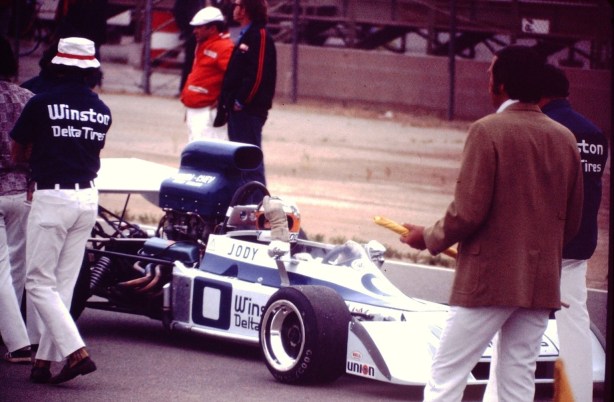
Scheckter gridding up at Riverside. ‘Look’ of the car in terms of chassis and nose similar to its Chevron B24/8 and Elfin MR5 contemporaries (M Paden Hewitt)


References/Photo Credits…

 Ken Hyndman Collection, oldracingcars.com, Jutta Fausel, Jerry Entin, Joel Griffin, Richard Bunyan, Jim Knerr, Thierry Le Bras, Michael Paden Hewitt

Tailpiece: Scheckter in the mist, Trojan T101 Chev, Michigan 1973…

Jody won at Michigan on 20 May from Derek Bell guesting in the Haas/Redman T330 and Peter Gethin’s Chevron B24 Chev (unattributed)

Finito…