Archive for the ‘Obscurities’ Category

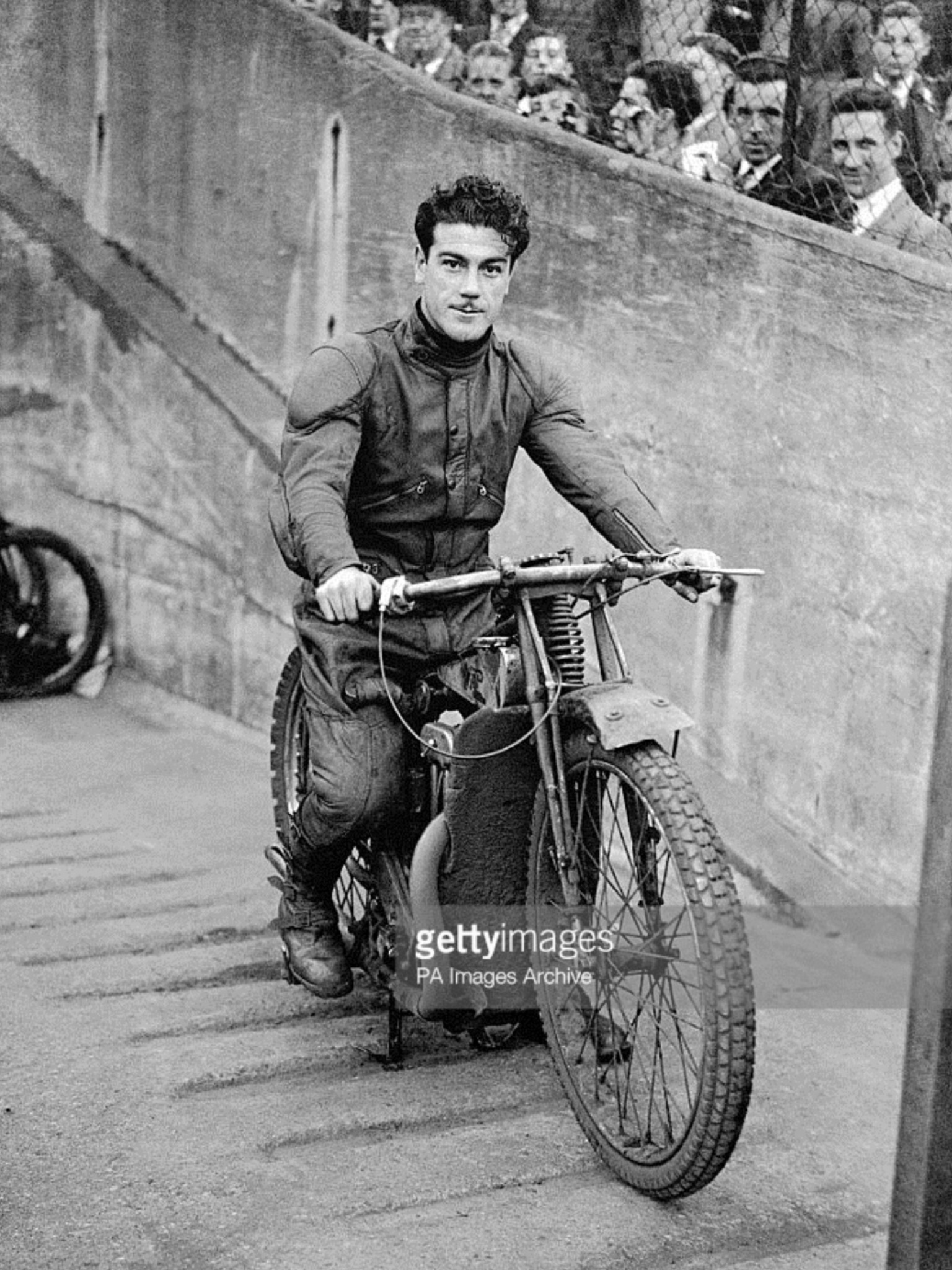
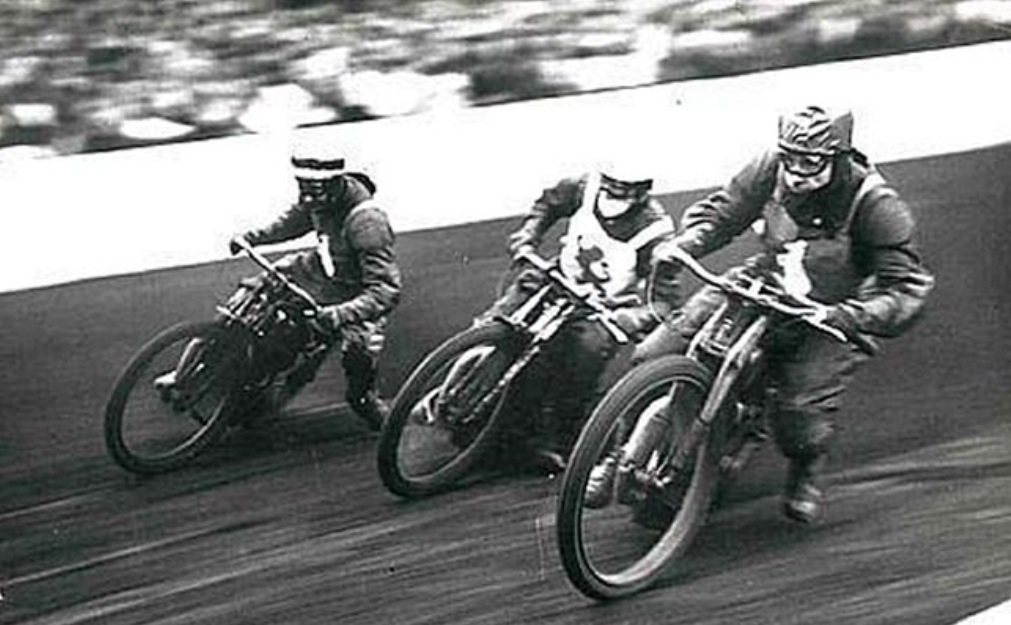
Lionel Van Praag, Wembley, London 10 September 1936…

Its amazing what you don’t know, in fact I’m never surprised at my own ignorance. I reckon I know a bit about my interest and hobby, but really I’m only scratching the surface of motor racing history in Australia.

Australian topics are hard too, the research that is- pre-War there was little in the way of local magazines, post war it becomes a bit more straight forward from the time of the publication of ‘Australian Motor Sports’ magazine and the relatively large number of publications which followed it. What is fascinating in the research adventure is the stuff you find looking for something else.

In this case it was randomly coming upon this image of Lionel Maurice Van Praag (1908-1987) after winning the inaugural World Speedway Championship at Wembley on 10 September 1936.

An Australian World Motor Racing champion pre-war, wow! And not without some controversy too. And I had never heard of the Redfern lad despite his admission to the Sport Australia Hall of Fame in recent times.
L>R- Charlie Spinks, Arthur Atkinson and Lionel Van Praag, First Test England/Australia at Belle Vue in 1938 (defunctspeedway.co.uk)

Graham Howard wrote that ‘Van Praag was a speedway rider and aviator, born on 17 December 1908 at Redfern, Sydney. The only child of Sydney-born Louis Van Praag, tram conductor, and Mozelle May. A bright student and an all-round athlete, he was educated at Cleveland Street Intermediate High and Redfern Junior Technical schools, both in inner Sydney. He was apprenticed as a typewriter mechanic, he had a natural feel for machinery that was useful all his life’.
image

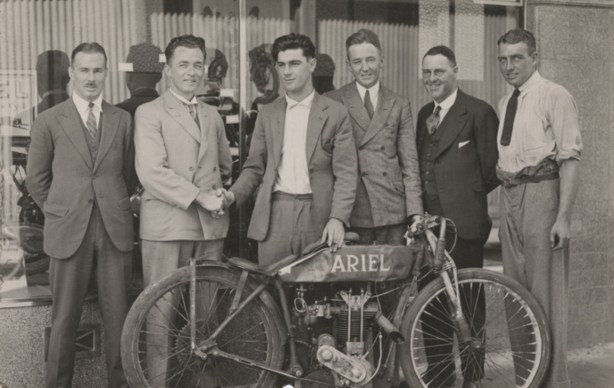
LVP, middle of shot at Speedway Royal, Wayville, Adelaide in 1928. Bike is an Ariel ‘3 and a half’ (M Gray)

Lionel began riding motorcycles at 15. After a number of novice races at the Olympia Speedway at Maroubra he concentrated on the Speedway Royal in Sydney from July 1926, almost instantly he became a senior competitor. He then had an outstanding 1926-27 season in Brisbane. He was successful in the eastern mainland Australian States and in New Zealand. In 1931 after years of rejecting offers, he followed other Australian riders who competed in England and joined the Wembley Team, riding in both the UK and Europe during the Australian off season.
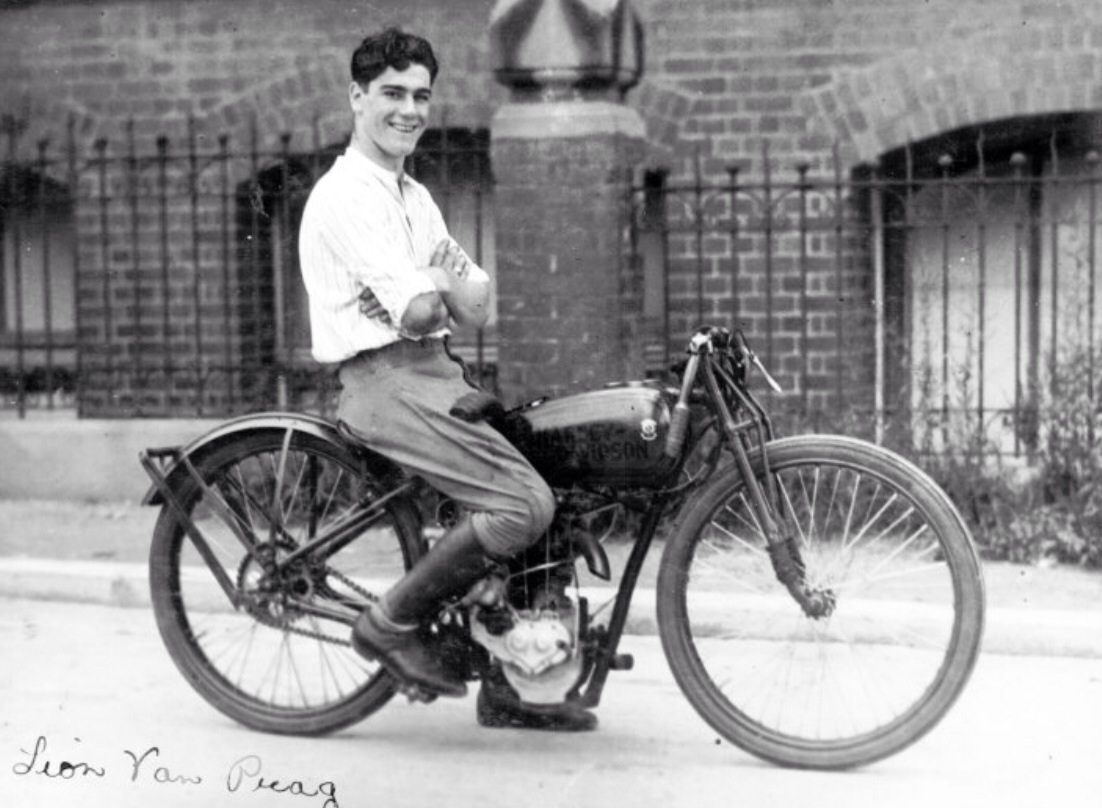
Lionel Van Praag aboard a Harley Davidson ‘Pea Shooter’ in 1927, 19 years old. Factory 1926  racer designed for US AMA races- devoid of brakes, clutch and transmission. Frame shortened, weight 215 pounds, 350cc OHV, circa 100mph (unattributed)

The first World Speedway Championship, at Wembley, London 1936…

The event was a strange one as riders carried into the meeting a score of bonus points amassed in the qualifying rounds. It was possible that the rider who scored best on the night would still not be world champion because of his qualifying record- and such was the case.

‘Bluey’ Wilkinson scored a maximum but Langton had more bonus points than Van Praag. In a night of excitement and controversy, Eric Langton and Van Praag lined up for a match race but Eric broke the tapes. Van Praag declared he would not be champion by default and sportingly demanded a re-run! Langton gated ahead and led until the final bend when leaving the smallest of gaps and he was unable to hold the dashing Australian, the Hall of Fame entry says.
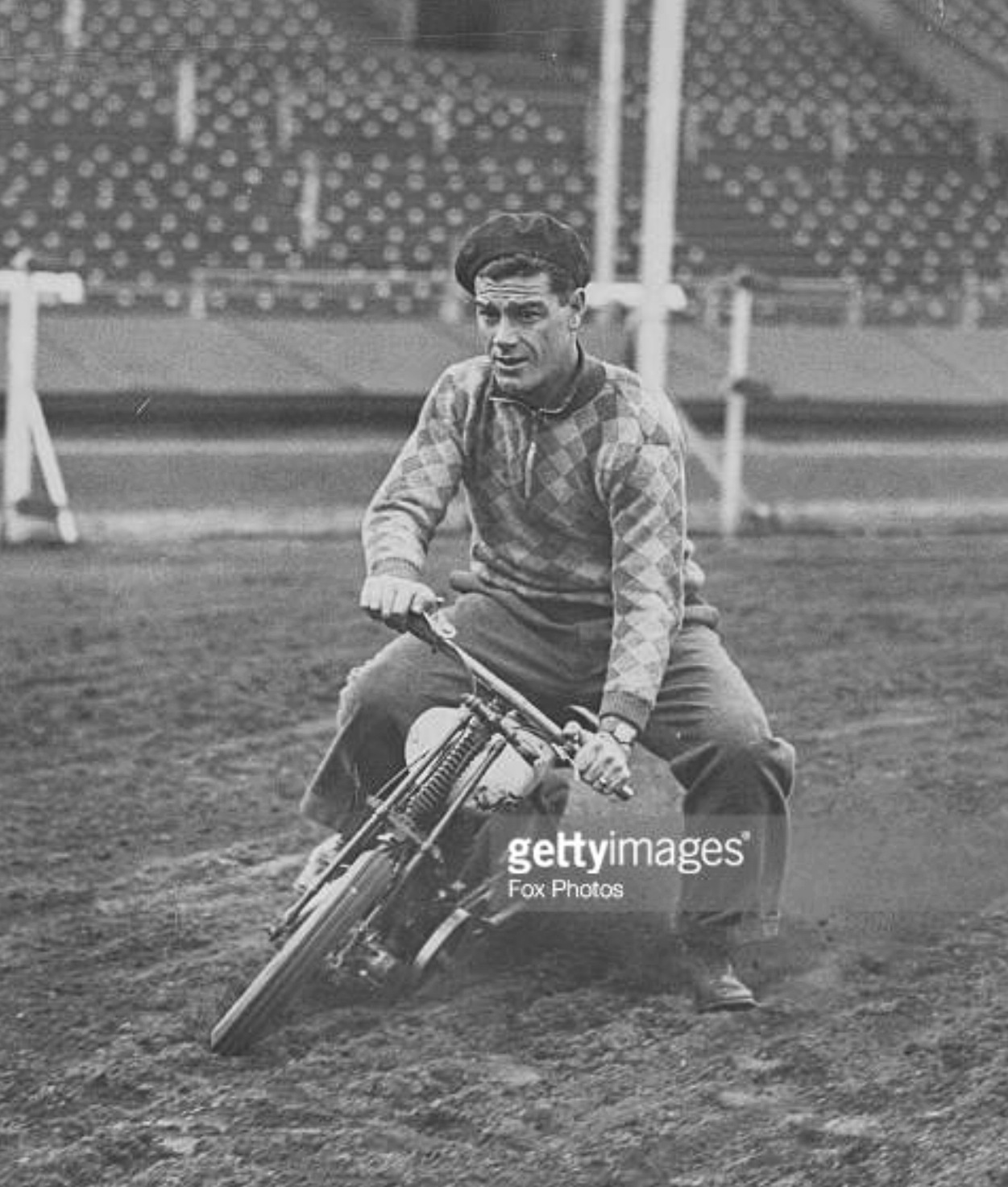
LVP on a mini-bike at Wembley in 1932 (Getty)

Further ‘Langton’s near miss …assumed a degree of controversy in later years. The deciding match race with ‘Praagy’ was ‘fixed’ between the pair according to sources close to the action. It was alleged that Eric and Lionel agreed that whoever got to the first corner in front would go on to win and they would split the prizemoney between them. It almost worked out, Langton was ahead until the final corner when he left a small gap which Van Praag couldn’t resist going for. The first ever world final was won by about a wheel width and the Australian took the title’.

Van Praag also qualified for the finals in 1937-7th, 1938-4th and 1939. In 1931-39, and again in 1947, he represented Australia in Tests against England.

He learned to fly in the UK at Broxbourne, Hertfordshire in 1931, it was a capability he put to good use throughout the rest of his life.

Graham Howard wrote that ‘Van Praag was a non-drinker and a heavy smoker, and he had a short temper if provoked. At around 5 ft 9 ins (175 cm) he was taller than most of his rivals; he was dashingly handsome, with dark curly hair and notable physical strength. He had a minor role in the British film Money for Speed (1933), but an envisaged cinema career did not materialise’.
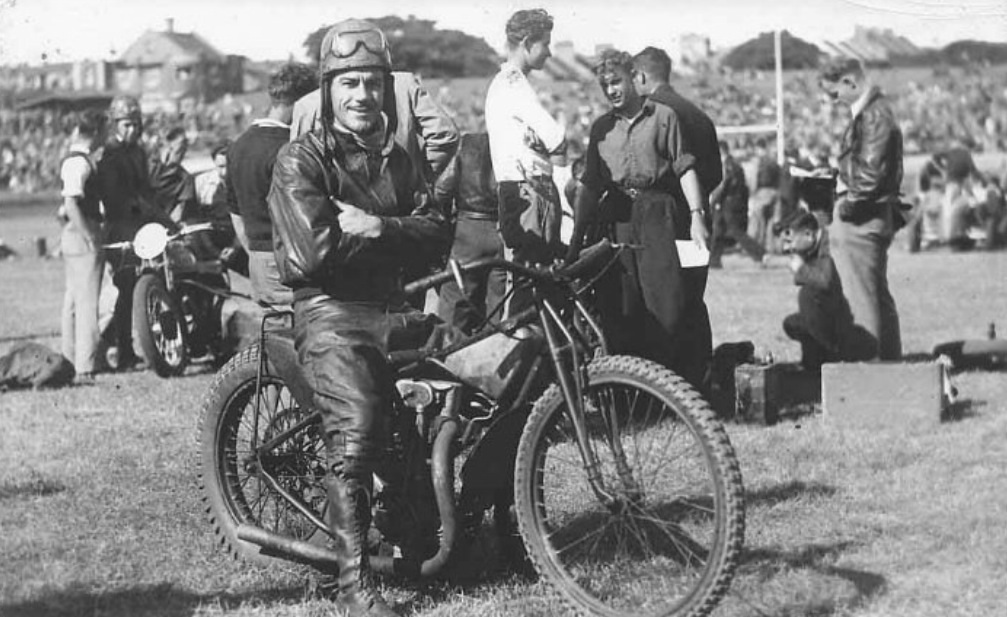
LVP on a 1930’s JAP, date and place unknown (defunctspeedway.co.uk)

On 11 August 1941 Van Praag enlisted in the Royal Australian Air Force and was appointed to No.2 Wireless Air Gunners School, Parkes, New South Wales with the rank of acting sergeant.

Engaged on flying duties, he was promoted to probationary pilot officer in October 1942 and flight lieutenant in October 1944.

In January 1942 the transport plane of which he was a co-pilot, an RAAF Douglas DC-2 A30-8, was shot down by a Japanese aircraft over the Sumba Strait, off Indonesia whilst on a flight from Surabaya, Java to Koepang/Kupang Timor. For thirty hours, whilst subject to shark attacks, he and his Captain, Flying Officer Noel Webster, supported the two crew-members, both non-swimmers and secured their survival, acts of bravery for which they were awarded the George Medal.

A full account of the incident appears in the book ‘And Far From Home’, written by John Balfe who flew with Lionel.

Balfe had this to say about Van Praag as a man ‘…in flying with Van I had perceived in his slight wiry form, a man of particular capacity and directness. He cared nothing for false values in anything or anyone and did not hide from the fact. I found him only a week out of hospital after the ditching (of the DC-2) but already back in a comprehensive engineering workshop he had behind his unpretentious home on Botany Bay’s (Sydney) north shore. He had plant and equipment there to wet the appetite of any metal engineer. One of the real Australians, Van had led a hard life racing motorcycles from early manhood and lived to standards he had not relaxed. He was moderate in thought and habit and held in quiet contempt those who were not. He valued his friendships above human faults, but chose his friends carefully and for the most part made them for life. His mind and memory remained sharp and retained an accuracy in detail that I had noted flying with him in 1943’.

After recuperating from the ditching, Lionel returned to flying C-47’s with No 36 Squadron out of Townsville, Far North Queensland. His RAAF appointment ended on 27 July 1945.
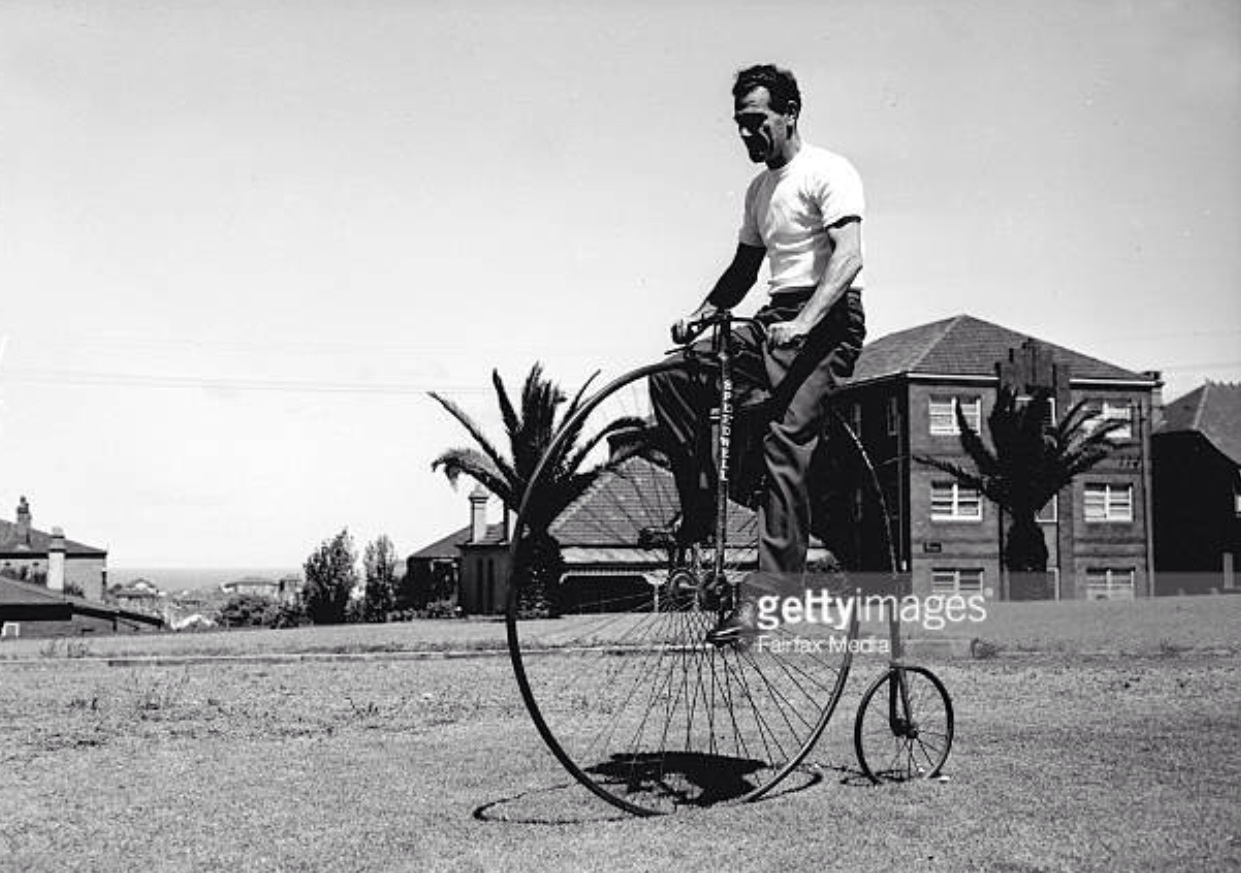
LVP aboard a Penny Farthing in 1951, interesting to know the occasion, and place! (Fairfax)

Post war Lionel resumed motorcycle racing and soon developed a career in aviation…

Van Praag headed a riders’ consortium that promoted speedway at the Sydney Sports Ground in 1945-48. He rode for the English team New Cross in 1947. After 1948 he effectively retired from racing, although in the early 1950s he briefly raced self-built small speedboats off Manly on Sydney Harbour.

In his new career as a commercial pilot in 1952 he combined his aviation and speedway interests by contracting with Empire Speedways to carry the Great Britain and Australian competitors, along with their bikes and equipment between the various Australian speedway venues in a Lockheed Lodestar.

He flew charter, and freight planes, did aerial top-dressing or crop-dusting in a Bristol Freighter, this plane was lost in December 1961 when it crashed at Wollongong after an engine failure on a freight flight. Lionel and the rest of the crew escaped injury. He later flew for an airline in Pakistan for a year before returning to Australia.
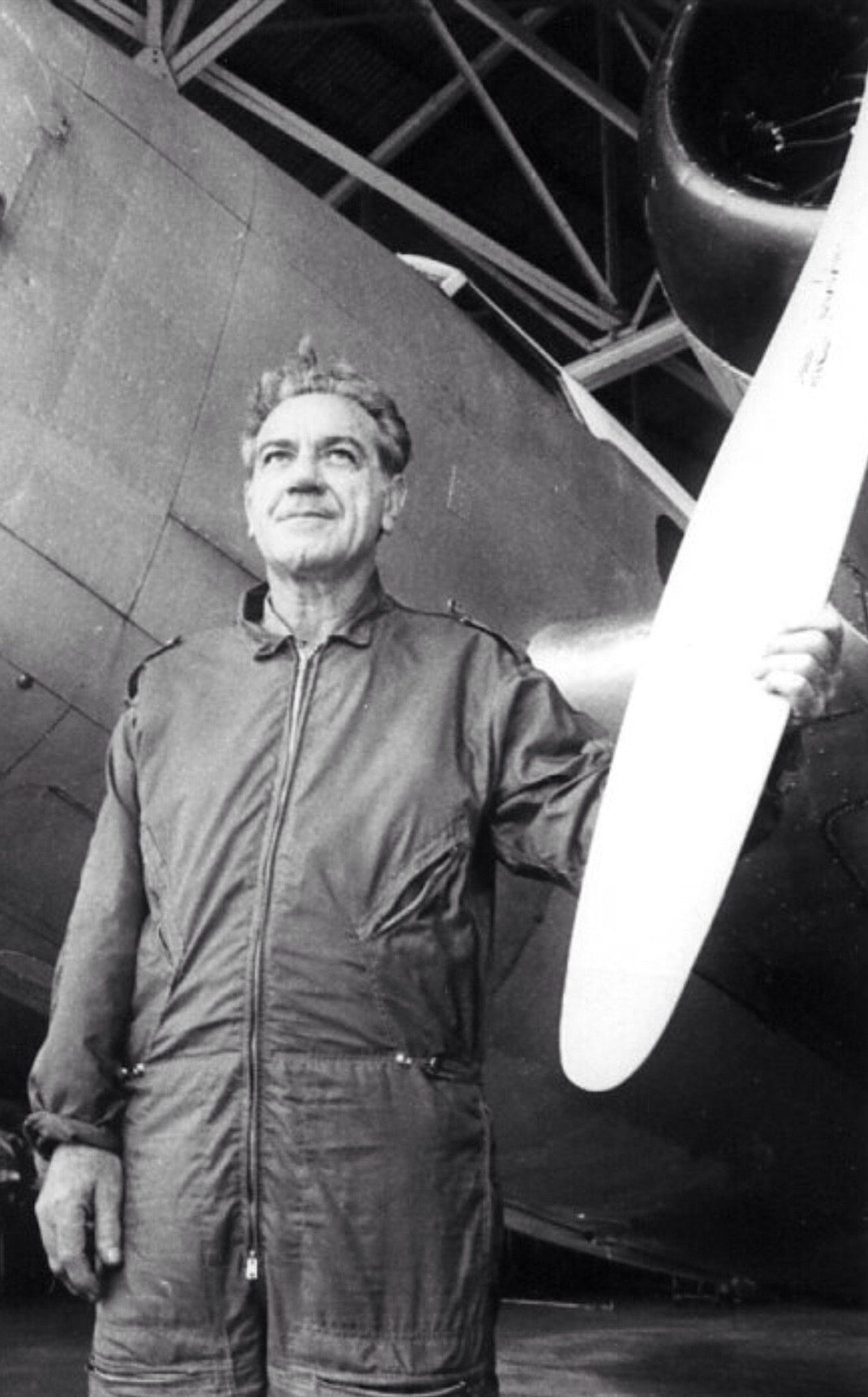
LVP in his later aviation years (adastron.com)

He joined Adastra Aerial Surveys, a company originally formed as a flying school in 1930 at Mascot, Sydney circa 1962 as a pilot and later became chief pilot. Although he had two well-publicised crashes, including the one described above, people who flew with him valued his informality and his resourceful flying ability.

In adult life, Van, as he was known, turned away from his Jewish upbringing. In 1929 at the district registrar’s office, Redfern, he married Elizabeth Margaret Pearl Cosgrove, a machinist, they divorced in April 1937. On 1 October that year at the register office, Hendon, England, he married Gwendoline Iris Hipkin, a dressmaker.

In 1968 he retired to his own Island, Temple Island, south of Mackay. In 1973, aged 65, he ferried a Hudson VH-AGJ from Sydney to Strathallan Museum in Scotland. Hudson’s were the primary survey aircraft used by Adastra.

He died on 19 May 1987 from emphysema, at Royal Brisbane Hospital. His wife, their daughter and two sons and the daughter of his first marriage survived him.

Post death recognition includes being inducted into the Sport Australia Hall of Fame in 1990. In addition, in 2000, the Government of the Australian Capital Territory decided to honour several Australian sportsmen with the naming of streets, including ‘Van Praag Place’ in the Canberra suburb of Gordon.

Three of my fathers uncles served in World War 2. As I became a teenager and understood, to an extent, what they endured in the Middle East and New Guinea I held these wonderful, private, kind, gentle but strong men in considerable awe. I always called them my ‘Boys Own Heros’ when I saw them at family events. Certainly Lionel Van Praag was a Boys Own Hero- in spades. Truly an amazing, full life of achievement.

Bibliography…

‘Australian Dictionary of Biography’ entry by Graham Howard, Australian Sports Hall of Fame, adastron.com

Photo Credits…

Getty Images, Fox Photos, PA Images, , Malcolm F Gray, State Library of South Australia, Fairfax, defunctspeedwaysuk.com

Tailpiece: LVP and friends at the Sydney Sportsground on 4 September 1945, first post-war meeting I wonder?…
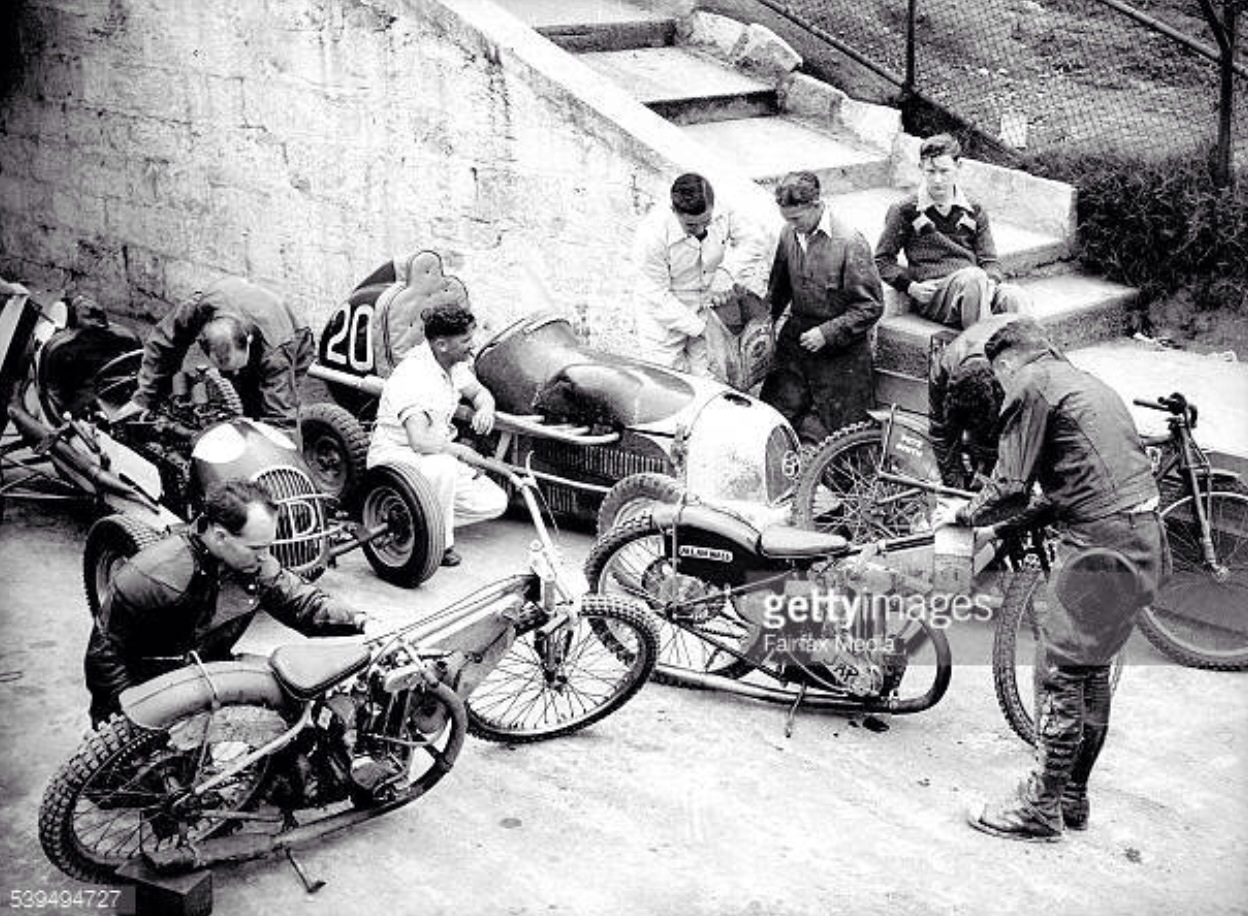


(Jack Inwood)

Three-time Kiwi Gold Star champion Jim Palmer leads John Riley during the 1964 running of the ‘Renwick 50’ held each November in the township of Renwick…

Palmer’s car is the ex-Jack Brabham works 1964 Tasman Series  Brabham BT7A Climax FPF ‘IC-2-63’, Riley’s the ex-Tony Shelly Lotus 18/21 Climax FPF.

When I initially saw this shot I imagined the cars were returning to the paddock but in fact they are entering what was in effect a single car at a time part of the track, a right-hander, the course was essentially rectangular in layout through the roads of Renwick.

The Marlborough region is a stunning part of New Zealand, its the countries largest wine growing area, in the far north of the South Island and famous the world over for some marvellous Sauvignon Blanc whites.

Palmer’s ex-Clark Lotus 32B Climax during the January 1966 Levin Tasman round, he was 5th in the race won by Richard Attwood’s BRM P261. Jim Clark won the ’65 Tasman in this car, chassis ’32-FL-8′ with 4 wins and then sold it to the Palmer family. Superbly prepared and driven, Palmer won the 1965/6 NZ Gold Star in it and then finished 4th in the ’66 Tasman with a mix of speed and reliability- only Stewart, Hill and Clark were in front of the plucky Kiwi. The car then raced in Oz in the hands of Greg Cusack and Mel McEwin. Ultimately restored by John Dawson-Damer in Sydney and sold/part exchanged for a Lotus 79 to Classic Team Lotus 20 years ago. 2.5 CC FPF and ZF 5 speed box clear in shot as is very beefy rear chassis diaphragm (TRS)

Click here for an article about the Lotus 32B and the Levin International won by Jim Clark in 1965;

‘Levin International’ New Zealand 1965…

The Renwick event was run from 1960 to 1967. Frank Shuter won the first in his Ferrari 625, but it was  Palmer who had a bit of a mortgage on it.

He won in 1964, 1965 and 1966 in Cooper T53, Brabham BT7A and Lotus 32B, the latter the car Jim Clark won the Tasman Series with in 1965. All of these cars were powered by the venerable 2.5 litre Coventry Climax FPF 4 cylinder engine- the World Championship winning engine of 1959-60. Palmer won the New Zealand Gold Star, the NZ drivers championship in 1964/5, 1965/6 and 1967/8 in the Brabham, Lotus and a McLaren M4A Ford FVA F2 respectively.

Jim Palmer aboard the Scuderia Veloce Brabham BT11A Climax, not so long before vacated by Spencer Martin, at Bathurst, Easter 1966. The shot is taken near the crest at Reid Park Gate. Palmer drove well, albeit against no other 2.5 litre competition, to win the racing car feature Mt Panorama Gold Cup. It was about this time he failed his CAMS licence due to some vision issues, a great shame as the speedy Kiwi would have been a welcome addition to our Gold Star grids, skinny as they were (John Ellacott)

A top driver he retired too early in my book, partially due to being unable to get an Australian CAMS racing licence, he was long-sighted in one eye. He also married and decided to focus on his retail motor trade and property business interests which centred on Hamilton where he still lives.

Jim Palmer in the ex-Clark Lotus 32B Climax on the way to 6th place in the 1966 Warwick Farm 100 on 13 February. Clark won from Hill and Gardner (Bruce Wells)

The 1964 Renwick 50 was run over 20 laps of the 2.414 km course (three variants of Renwick roads were used over the years) on 14 November, a smidge under 50 km in total. Palmer won and took the lap record at 1: 17.0 with Morrie Stanton, Stanton Corvette 2nd and Red Dawson in a Cooper T53 Climax 3rd.

Check out this YouTube footage which shows the undulating, narrow nature of the circuit. Whilst the caption says 1965, the footage is from several of the Renwick meetings including 1964.

Bibliography…

sergent.com, ‘Bathurst: Cradle of Australian Motor Racing’ John Medley, oldracingcars.com

Photo Credits…

Jack Inwood/The Roaring Season, John Ellacott, Bruce Wells, Marlborough Car Club

Tailpiece: Chris Amon, Maser 250F, Renwick 50 November 1962…

Chris Amon, Maser 250F just ahead of Bob Eade’s similar car with John Histed’s Lola Mk2 Ford behind. Angus Hyslop Cooper T53 Climax won from Amon and Barry Cottle, Lola Mk1 Climax. This race on 10 November 1962 was Chris’ last race in the Maser (Marlborough Car Club)

Postscript: Next stage of Chris Amon’s career…

Click here for an article on the next critical months in Amon’s career after the Maserati was put to one side and Chris drove David McKay’s Cooper T53 Climax in the 1963 Australasian Internationals; https://primotipo.com/2017/09/06/chris-amon-cooper-t53-and-the-australian-grand-prix-1963/

Finito…

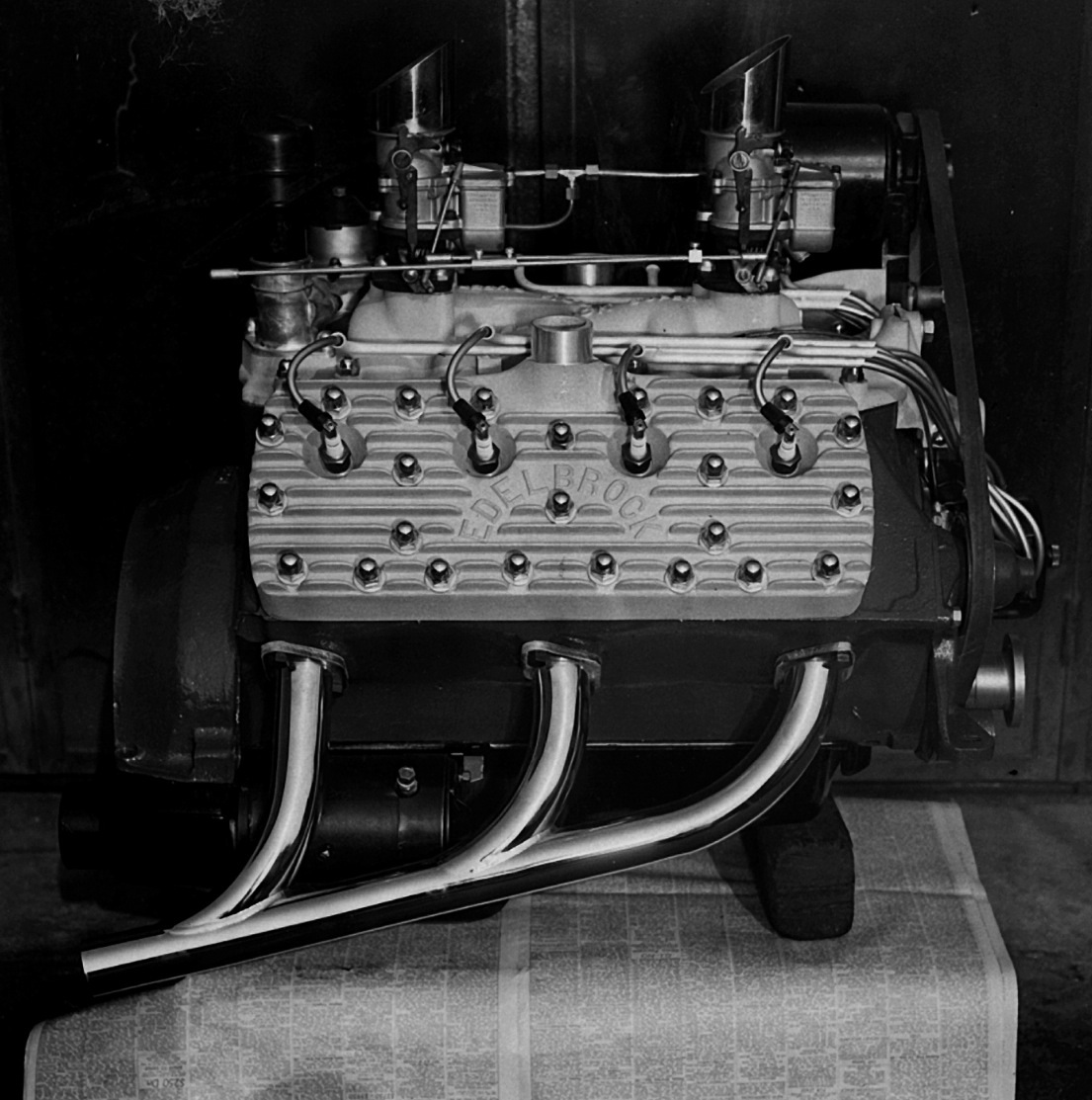
Don’t listen to him! Trust me girls, we can get 142 bhp @ 7,600 rpm out of this V8 ’60’ Flattie on methanol!…

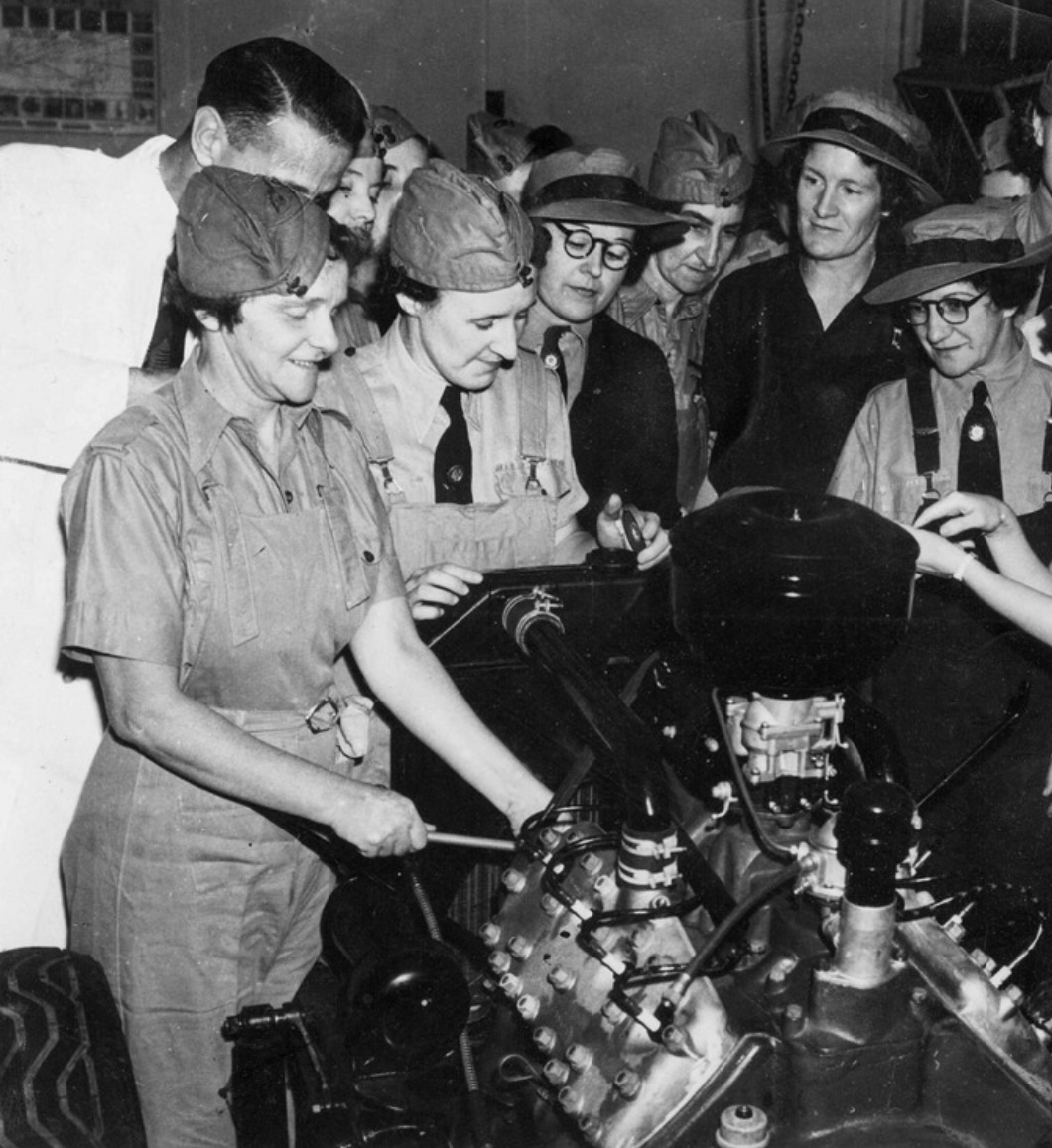
The chief mechanic trying to reassure her team she can take on Doug Whiteford’s Ford V8 Special ‘Black Bess’ post-war with a combination of Edelbrock manifold, two Stromberg 2-barrel carbs, Offy heads, Jahns pistons to suit the .030 overbore, a Claysmith crank and Isky cam. Not to forget the hand fabricated extractors.

The first shot was taken during World War 2 at Ford’s Geelong factory in Victoria, Australia. The ladies of the Womens Emergency League, VAD Transport Services and Red Cross are learning how to maintain a Ford V8.

I am interested to know exactly which variant of the venerable Ford Flathead V8 this is, and the car to which it is fitted!

Henry Ford and his ‘flathead’ V8 creation in 1932 (FoMoCo)

Credit…

State Libraries of Victoria/South Australia, FoMoCo

Tailpiece: Doug Whiteford’s ‘Black Bess’ leads the ‘Woodside Handicap’ at Woodside, South Australia on 10 October 1949…

(SLSA)

Click here for an article about Doug Whiteford’s 1950 Australian Grand Prix winning Ford V8 Spl ‘Black Bess’;

Doug Whiteford: ‘Black Bess’: Woodside, South Australia 1949…

Finito…

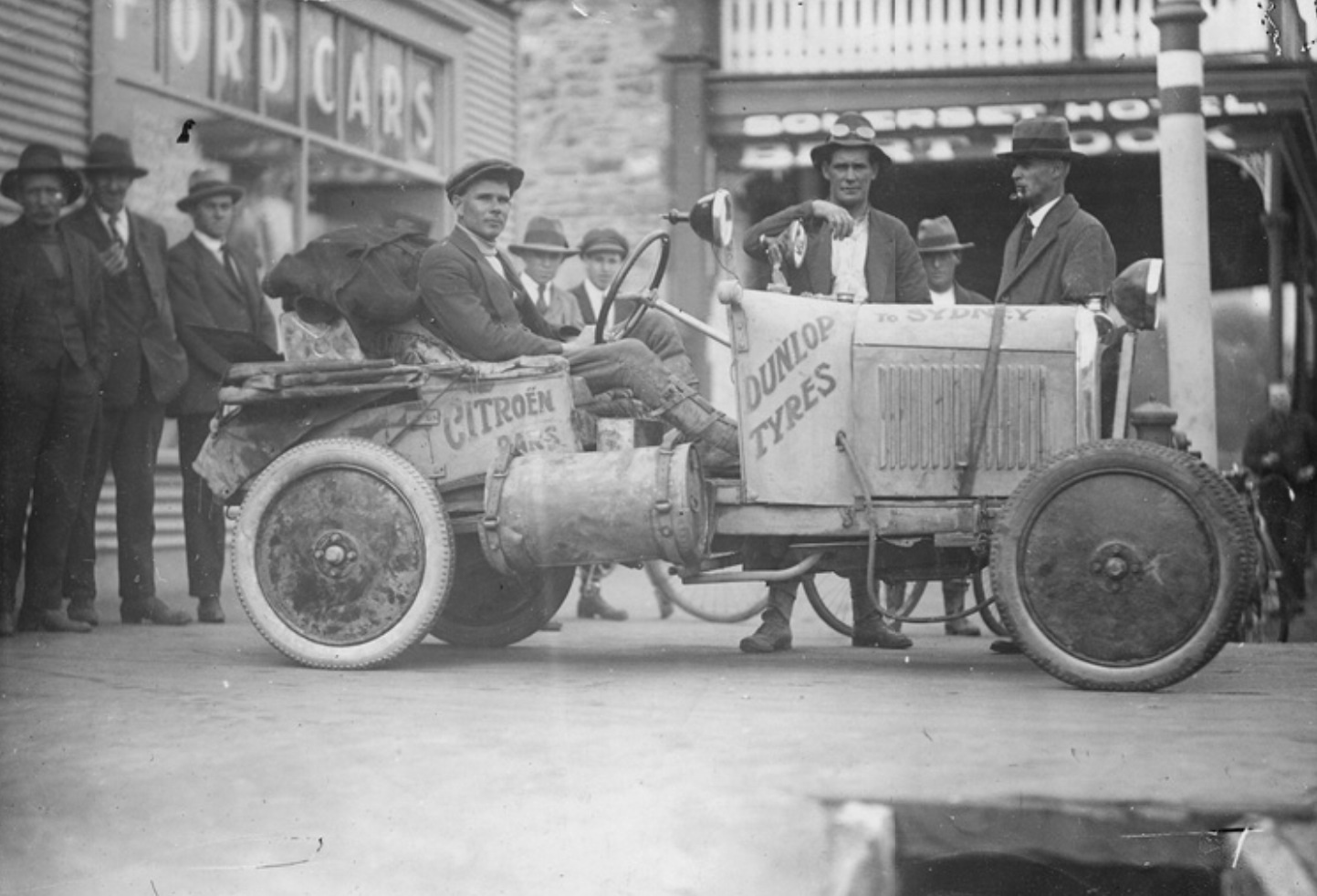
WJ Phipps and J Seery drove this 7 hp Citroen Type C from Fremantle, Western Australia to Adelaide, South Australia, Melbourne, Victoria in May 1923, and on to Sydney New South Wales, a  journey of about 3,180 miles…

The West Australian pair left Freo in the 856cc, 4 cylinder, 3 speed small car on 1 May. Phipps originally intended to make the trip on a motor cycle and sidecar but received an offer from the Citroen agents to use the small car instead, he then invited Seery to accompany him. In various reports described as a planned as an attempt on the Fremantle-Sydney transcontinental record, or to prove a small light car could make the challenging journey, the trip became a ‘more leisurely touring drive’ after the loss of four days due to hub damage.

Phipps quipped that ‘When we left Perth we were the laughing stock of all motorists because no-one dreamed we would be able to get through’. Even the cars agents were somewhat dubious about their prospects. The intrepid adventurers travelled all day and night, one sleeping whilst the other drove.

The route chosen took them from Fremantle to Kalgoorlie (WA) Port Augusta to Adelaide (SA) Melbourne and then on to Sydney (Victoria and NSW respectively).

The Perth ‘Daily News’ reported that ‘Despite the fact the whole outfit with luggage weighed 18 cwt, (including 23 gallons of petroleum benzine and 8 gallons of water) the little car had no difficulty in negotiating this heavy route’. For hundreds of miles, the pair followed the transcontinental railway line as much as possible, there was no track at all, with large limestone boulders having to be moved before they could proceed.

The car was delayed by four days near Naretha, 180 miles from Kalgoorlie on the transcontinental railway line, ‘owing to one of the wheels crashing into an obscured stump’ the Citroens hub was broken necessitating a spare to be delivered by rail from Perth. Apart from that mishap they ‘never had a spanner on the car’.

The most challenging part of the trip were the Yardu Sandhills in central WA where the Citroen got through unaided, taking five hours to go 12 miles. Other heavier cars on previous trips having to be hauled through by bullock teams.

Adelaide was reached in 157 driving hours on 11 May, this section of the trip was 1,769 miles. Behrens and Marshall (another report says Maugham-Thiem Motor Works) were the Citroen agents in Adelaide, the photograph of the car is out front of their Flinders Street showrooms.

The car then set off for the 571 miles to Melbourne at 2pm that afternoon 11 May. The other most difficult leg of the trip was the section near Kurow Lake, there, instead of being axle deep in sand, they were axle deep in mud. They arrived in Melbourne at 8 am on 14 May.

After a days rest Phipps and Seery then set of for the 594 mile Sydney leg at 10.45 pm on 16 May via the Hume Highway route. They stopped for a night in Gundagai, wet and cold from exposure and set off again on Saturday arriving that evening, 19 May ‘…in Martin Place with West Australian air’ a quip referring to the fact that the tyres had not been pumped up at any time on the journey. The car was shod with Dunlop ‘Railroad’ tyres, averaged 38-44 miles per gallon, used 1.5 gallons of lubricant with the average speed for the entire trip 16.5 mph.

In a parting shot Phipps said ‘We are on a holiday trip…we will return in the car…we intend on the way back to the West to have some dingo shooting on the Nullarbor Plain’.

I wonder if this significant Citroen survived?

Credits…

WS Smith/State Library of South Australia. ‘The Daily News Perth’ 2 June 1923, ‘Perth Sunday Times’ 20 May 1923, ‘The Express’ Adelaide 11 May 1923

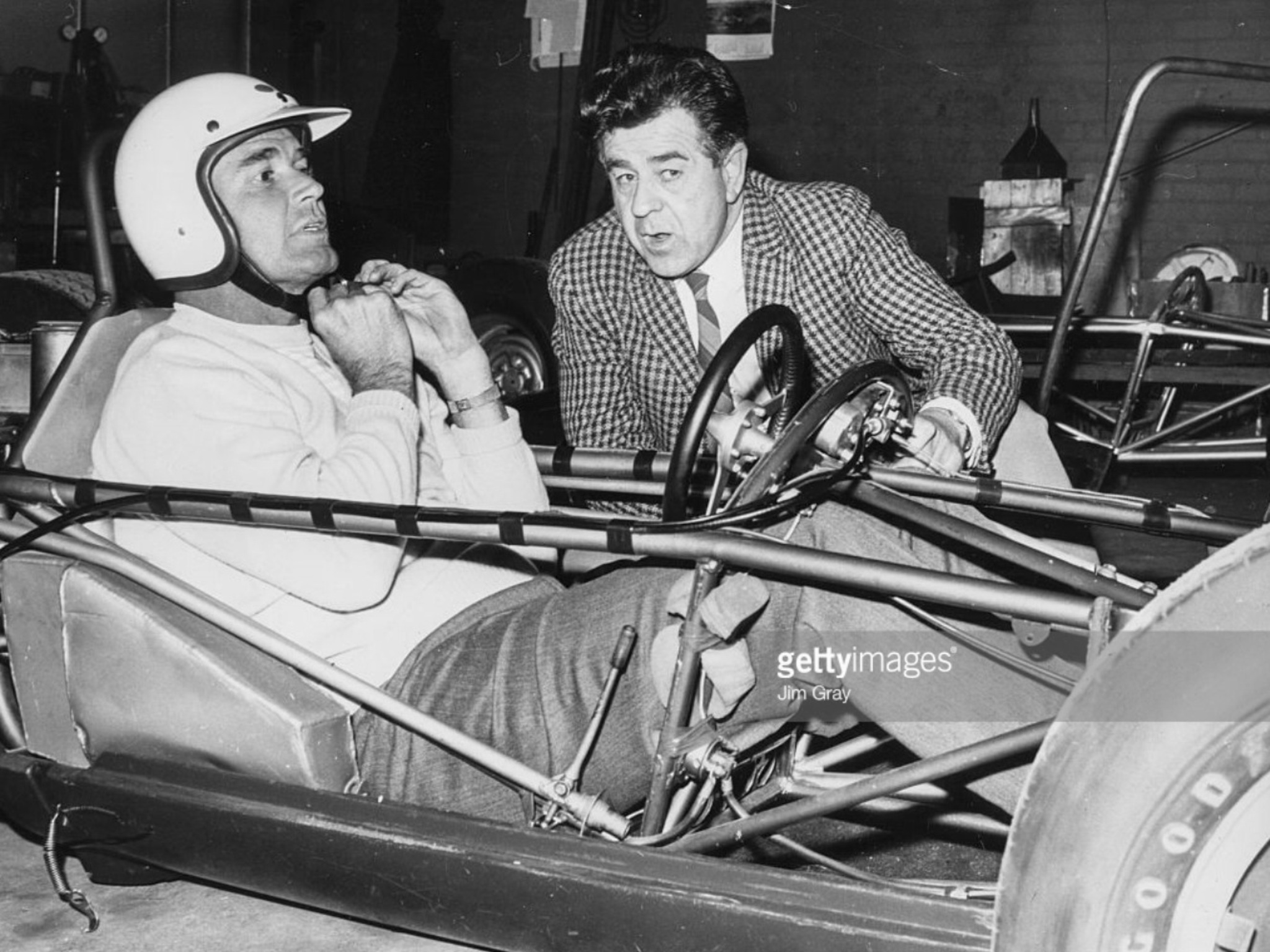
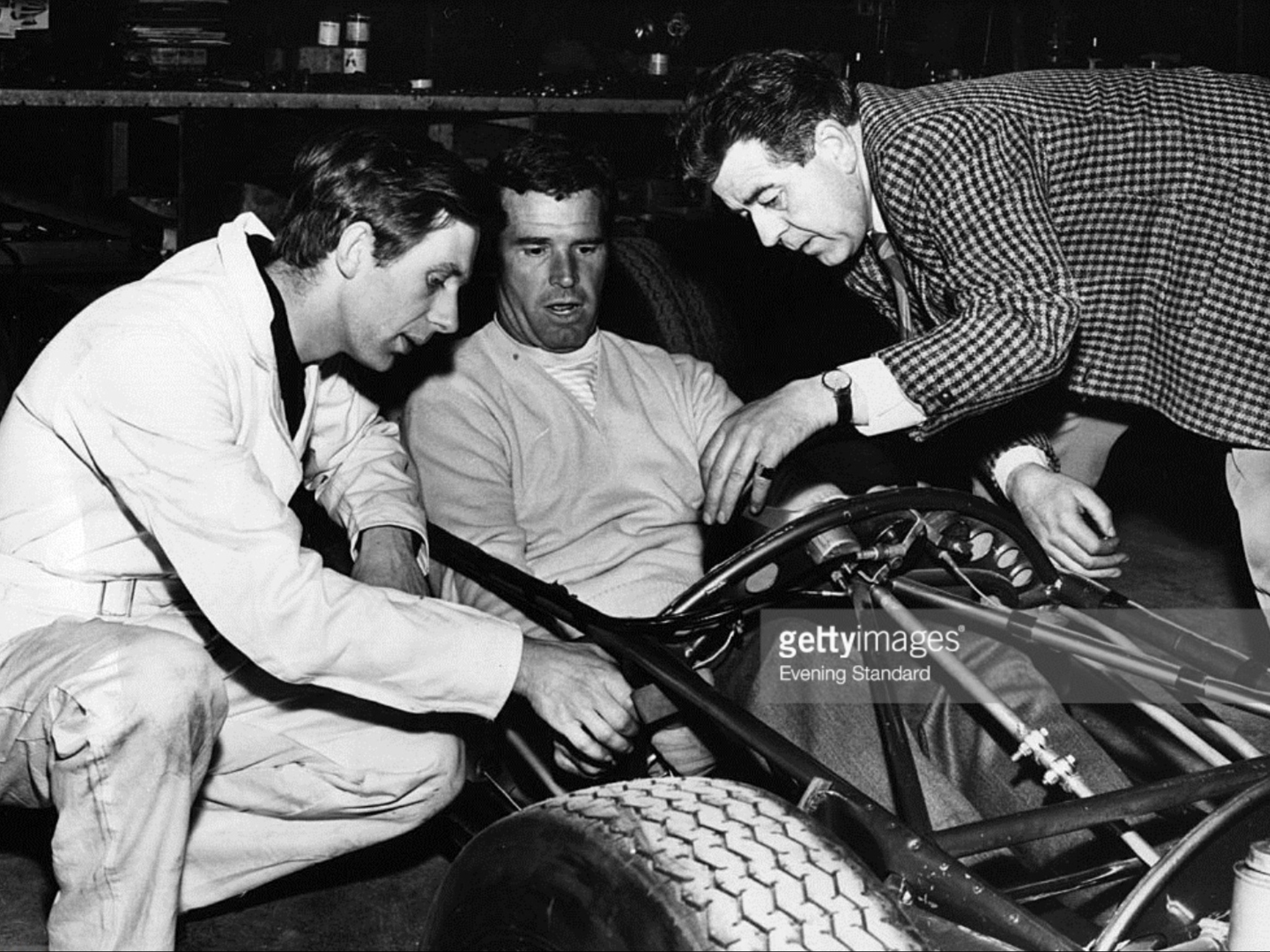
James Garner is fitted to a Jim Russell Racing Drivers School Formula 3 car on 14 April 1966…

Jim Russell supervises ‘Pete Aron’s’ preparation for some laps at Snetterton. I wonder exactly what make and model it is?!

The business end of the iconic film ‘Grand Prix’ is about to get underway, the race scenes were filmed, famously, during the 1966 Grand Prix season.

Garner is sharpening his driving skills to cope with the in-car rigours of his role as Peter Aron. Of course he rather enjoyed it all didn’t he, becoming a racer and an entrant of some note.

Garner’s ‘American International Racing’ Lola T70 Mk3B Chev finished second in the 1969 Sebring 12 Hour driven by Ed Leslie and Lothar Motschenbacher behind the winning Penske T70 of Mark Donohue and Chuck Parsons.

By the time these shots were taken in the UK Garner had already done quite a lot of driving under the tutelage of Bob Bondurant in the US, but I wonder if the JRRDS laps were his first in single-seaters?

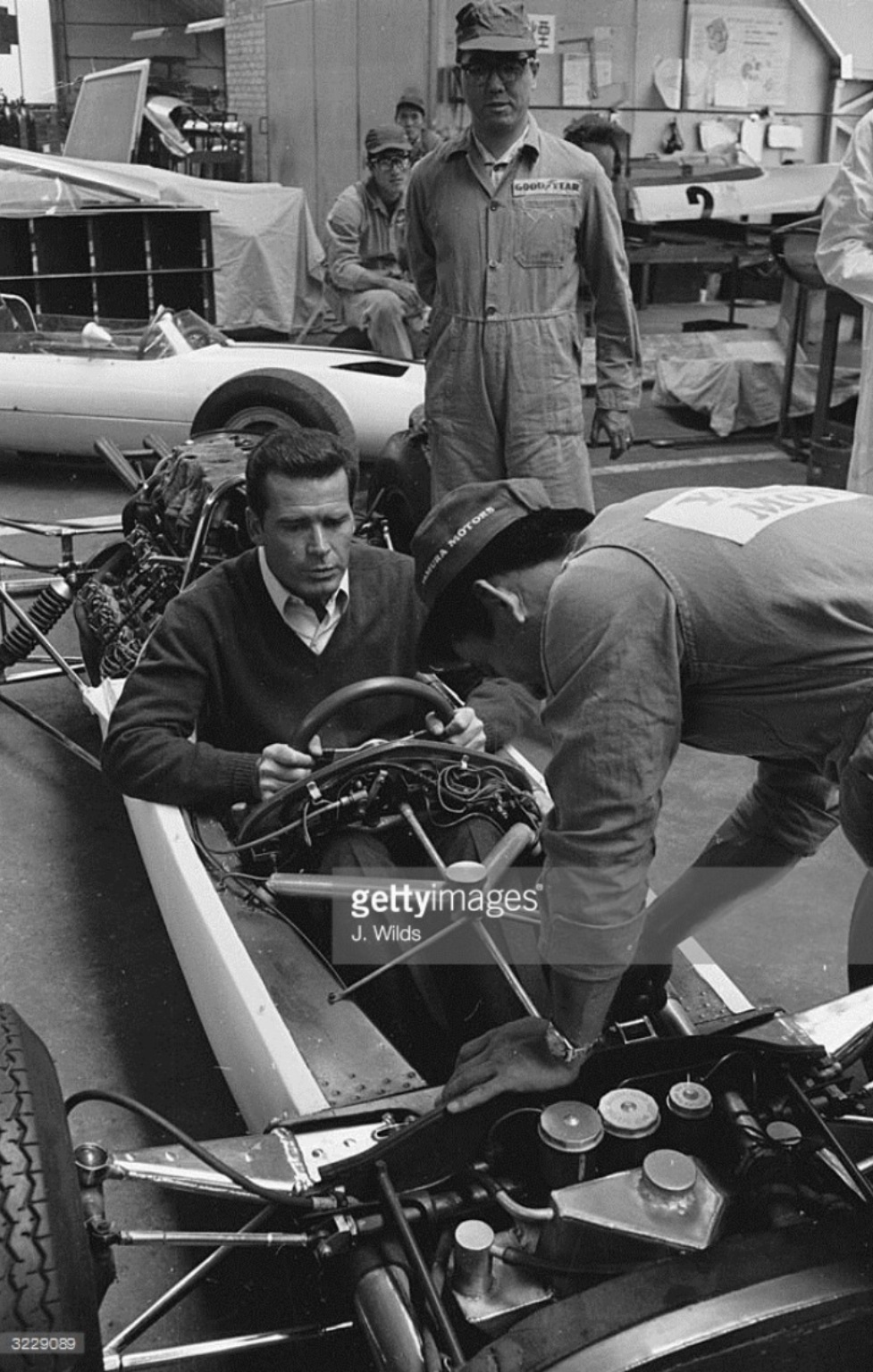
The ‘Tailpiece’ workshop shot below is on-location at the Cooper, Surbiton, Surrey factory. ‘Pete’ is sitting aboard his Japanese Yamura car which looks rather suspiciously like a Lotus 25 Coventry Climax, the cam-covers of the little 1.5 litre FWMV V8 are removed.

What a film! I wrote a short piece about it ages ago, click here if you’ve not read it, its focus is on Francoise Hardy;

https://primotipo.com/2014/10/17/francoise-hardy-on-the-set-of-grand-prix-1966/

Photo Credits…

Jim Gray, Evening Standard, J Wilds

Tailpiece: Pete being fitted to his Yamura F1 car, July 1966…

The on-circuit shots of the Yamura were of Bruce McLarens 1966 F1 contender, the McLaren M2B that year fitted with Ford, Serennissima and BRM engines. The contract was a nice little earner in the team’s first year in Gee Pee racing. Aron’s helmet design was Chris Amon’s sans the Kiwi logo. Checkout this really interesting article about McLaren’s involvement in the film on mclaren.com;

http://www.mclaren.com/formula1/heritage/action-mclaren-at-the-movies-6114785/


A promotion for Indian motorcycles, Adelaide 1923, the only items missing are a bow and arrows…

I spat my chockie biscuit out when I came upon this snap! Too funny and sooo politically incorrect and unacceptable in todays societal morays. I think I would have slotted into 1923 quite nicely.

Details are few other than the three bikies were at a sporting event, I’m guessing the Indian bloke hailed from the Adelaide suburbs rather than the American prairies.

As to locale, its probably not the go at the Adelaide Oval during the cricket, and the ‘Speedway Royal’ Wayville, just outside Adelaide’s ‘Square Mile’ hadn’t quite opened yet, so who knows where it is.

Anyway. Look and laugh, just luvvit! I mean no disrespect to any North American Indian readers, my mirth is at the ‘creativity’ of the Indian ‘Sales and Marketing Team’ here in Australia. Still no doubt it achieved the ‘cut through’ marketers seek.

As to the model of bike, the Indian lineup about then was the ‘Scout’, ‘Chief’ and ‘Big Chief’. I’m guessing it’s the 1200cc Big Chief, coz that’s what the dude on the bike looks like!

Credit…

Searcy Collection- State Library of South Australia

image
(SLWA)

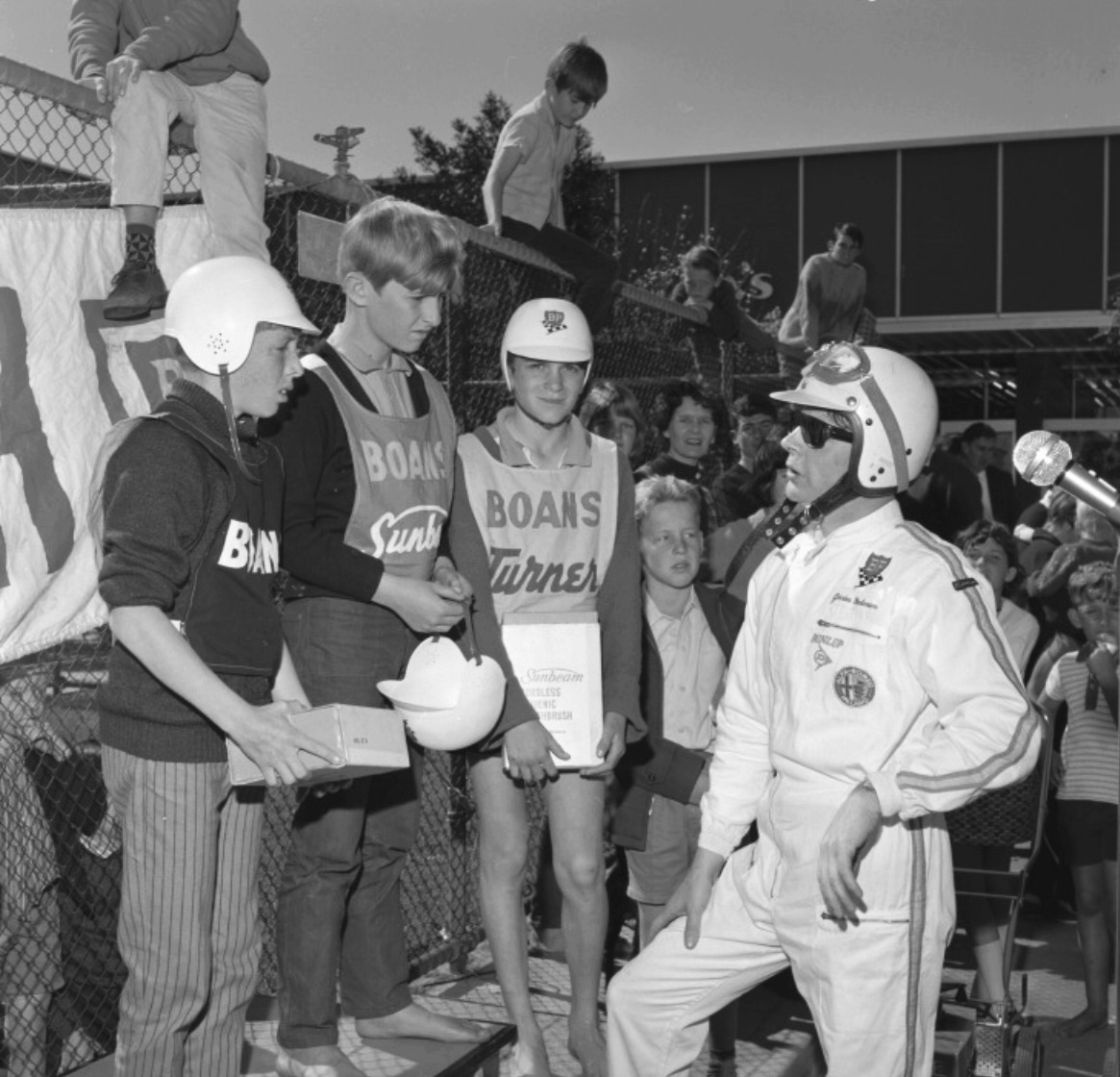
To keep a sponsor happy that is! Here it’s Perth racer Gordon Stephenson presenting the prizes to the winners of a department store lawnmower racing competition…

WTF you may well say?

Boans was an iconic West Australian department store for almost a century. Remember when every state or city had such emporiums of shopping pleasure for those so inclined? Myer in Victoria, Grace Brothers in New South Wales, Malcolm Reid in South Australia and so on. Now the buildings may still exist but the companies have been absorbed into a small number of conglomerates over the last forty years; Boans were chomped up by the Myer Group in 1986.

A sign of the times, competition and change is the rise in online retailing in the last decade or so. At the time of writing, mid November 2017, Amazon have just launched in Australia. The potential impact has executives of our major local retailers soiling their undergarments with fear. And rightfully so, Change is the Continuum.

image
(SLWA)

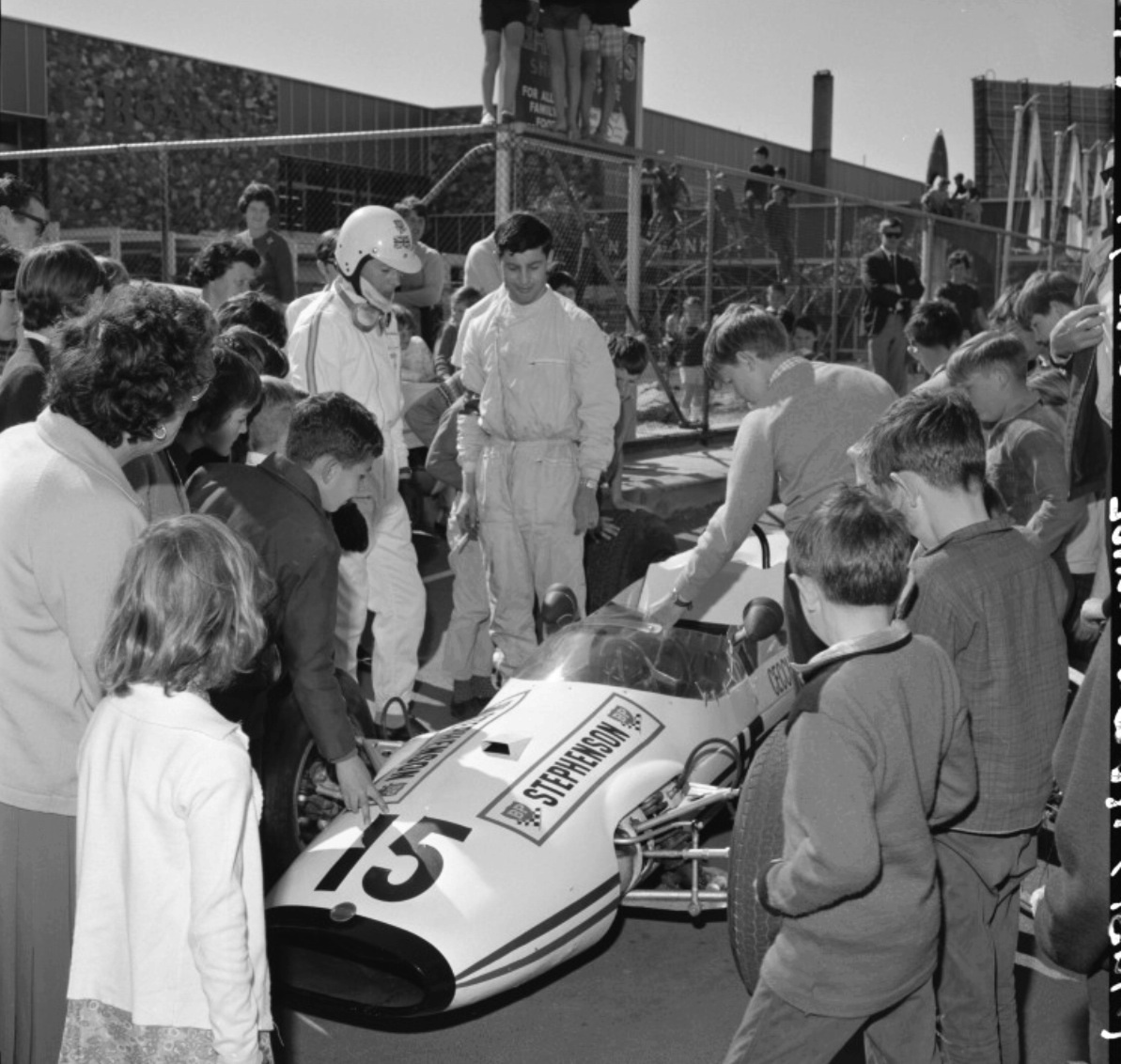
Stephenson showing the kids his Tasman Cooper T70 Climax. I wonder if he fired the 2.5-litre Coventry Climax FPF and did a lap or two of the Boans, Morley carpark!? The car taken to Perth by Don O’Sullivan who bought it from Bill Patterson in Melbourne, Stephenson only raced it for 12 months

It seems that Boans organised a cross-promotion to raise their profile and flog a few lawnmowers, rolling BP into the fun. Poor BP sponsored Gordon drew the short straw that day to display his car and hand out the prizes. The local media did the rest to maximise exposure.

FTD was awarded to the kid who pushed his mower ‘for Chrissakes pick a Victa two-stroke son it will be lighter than the four-stroke Scott-Bonnar’ – across Boans carpark the fastest; Morley is 10km from central Perth.

Cooper T70 Climax…

Cooper T70 Climax #FL-1-64 is an interesting, significant car as the 2.5-litre Coventry Climax FPF engined car raced by Bruce McLaren and Tim Mayer in the 1964 Tasman Series, and then by 1961 World Champ, Phil Hill, in mildly updated form in the 1965 Tasman.

It was later purchased by Richard Berryman in the mid-1970s and was restored and is owned by his son Adam Berryman, a Melbourne mate of mine.

The history of the two T70s car is covered in the two articles below rather than restate the history of one of the ‘first real McLarens’ built.

Stephenson was a stalwart of WA racing for decades, mainly in Touring Cars. He had a busy season in 1968 racing both his ex-Alec Mildren Racing Alfa Romeo GTA and the Cooper in local circuit races at Caversham, having several wins in the T70, and hillclimbs at Mount Brown, York.

The story of the Mildren GTA’s is told here, inclusive of their extensive West Australian history;

image
Racers checkin’ out the opposition, helmets only required for the BP decal attached and related photo op! (SLWA)

Credits…

State Library of Western Australia, Terry Walkers Place

Tailpiece…

image
(SLWA)

They are ‘racin!

Finito…

Any Brabham is an over Australian $175-200K proposition these days, except one!…

There was a time, a long time, that the Australian Motor Industry was in expansionary mode behind the high tariff walls that allowed us to live in fools paradise along with most other western countries. Said tariffs in Australia started to reduce circa 1972/3. That was a pivotal moment for our automotive sector, it was never the case that our industry would cease to manufacture cars as a result of that policy change, there are a host of factors company by company that led to that outcome, but the quite correct reduction in tariffs was the first factor in a death by a thousand cuts.

The big three of the Australian industry in the sixties were General Motors Holden, Ford and Chrysler Australia. Chrysler/Mitsubishi’s Adelaide, Tonsley Park manufacturing facility is long gone, it is essentially a technology park these days whilst Holden and Ford have ceased manufacture much more recently, Holden in the last month. It was quite eery to drive past the Ford Geelong factory a week ago and see it in silence, the carparks empty of the workers who built engines there for decades.

GMH, Ford and Toyota, the other local manufacturer in more recent times are mere importers these days, a whole sector of manufacturing is gone due to the failure or desire of the local subsidiaries of global transnationals to make cars the punters want. Our cost structures are high, the global transnationals can and do decide where to make cars in a manner which maximises their profits and high cost locations hardly enhance that. Not to mention Government Policy Fuck-Wittery. It’s more complex than that, I’m getting off-point!

Back to 1963, much simpler times.

GMH, dominant in big cars, but with Ford chasing them down, looked enviously at the growth in the small car market and particularly the market share of BMC, (British Motor Corporation) Ford, VW and others.

GMH’s answer was the Vauxhall Viva, provided by GM’s UK subsidiary and first introduced in Oz in April 1964. The two door, small cars performance was ordinary, its virtues cheapness of running costs and a slick gearbox.

From small acorns do big things grow though- the late sixties to early seventies six-cylinder Torana GTR, GTR-XU1 and later the mid-seventies V8 L34 and A9X owe their parentage to the little, wheezy, Pommie Vauxhall Viva.

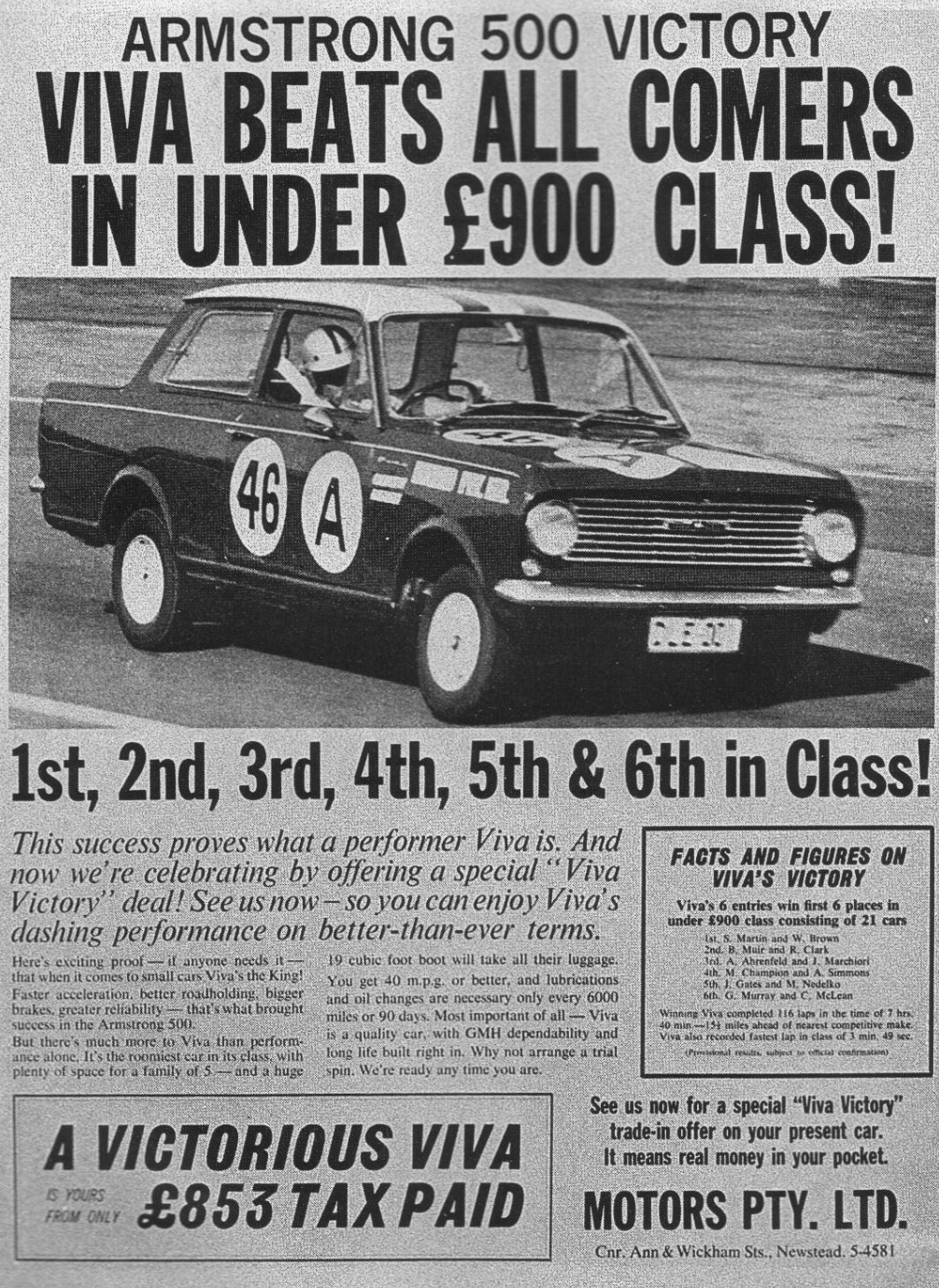
Its initial Australian performance credentials were bolstered by Class A (cars costing under 900 pounds) victory in the 1964 Bathurst 500, where the Spencer Martin/Bill Brown (car #46 in the ad above) driven Viva triumphed over 5 other Vauxhalls, Hillman Imps, Morris Mini 850, NSU Prinz and VW Beetles.

An updated car- the ‘HB’ Holden Torana was released in May 1967. With its conventional front engine/rear drive format, it found favour amongst traditional Oz buyers compared with some of the opposition- the new-fangled BMC cars and rear engined ‘Gunter-Wagen’ – VW Beetle. Small Fords- Anglia, Cortina always did well here. Perceived positives of the ‘HB’ were just enough power, the ‘box, rack and pinion steering and coil sprung, as against leaf sprung rear end.

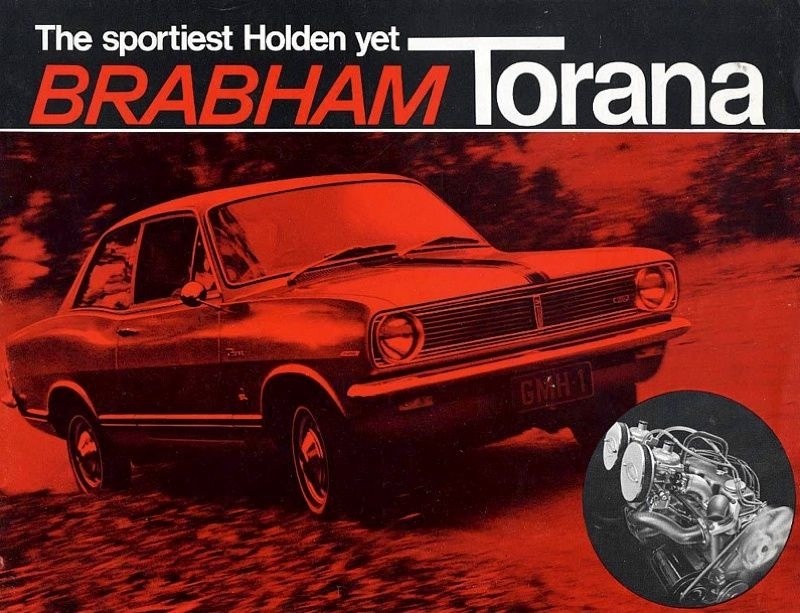
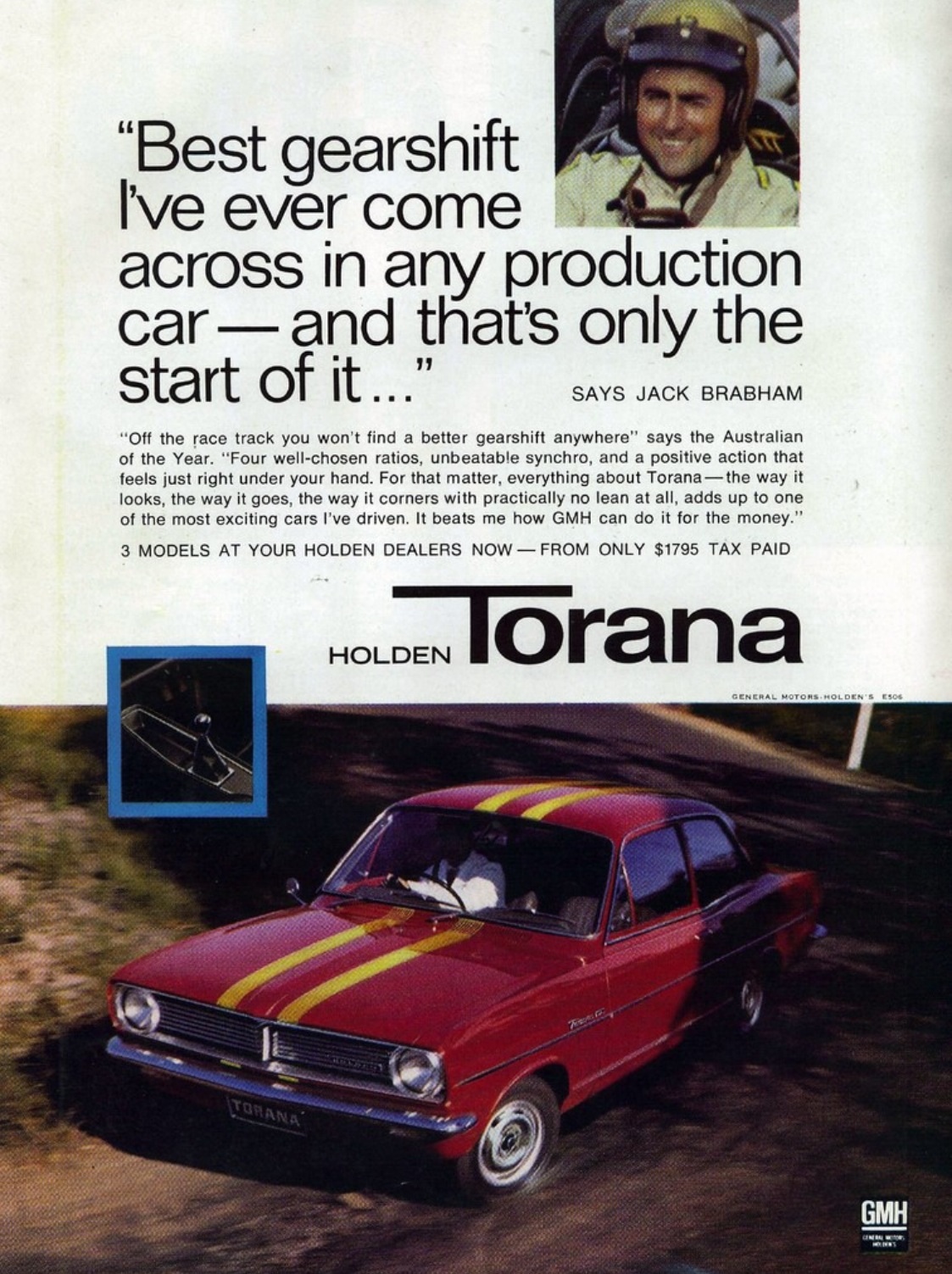
By 1968 the 1159cc pushrod OHV engine gave 69bhp. It was to this base that the ‘breathed on’ Brabham Torana was released. It is not my intention to go through the timeline iterations of the Brabham Torana but in essence the package included a free flow exhaust system, twin Stromberg carbs which gave circa 79bhp, not a lot but 20% more than a base Torana ‘poverty pack’. The spec also included disc brakes up front, low profile 6 X 12 inch wheels/tyres on super wide 4 inch rims!, rally GT stripe and Brabham decals. The top speed of the base model Tommy Torana was 80mph, Jack’s did 89…with a huge tailwind I suspect.

It was pretty unimpressive though, ‘me mums Morrie 1100 with yours truly at the helm had no trouble regularly shutting one down on the trip from North Balwyn to Monash University- the fellow parked in a different corner of the Clayton car park to hide its shame.

Progress is an amazing thing though. By 1969 the little Viva had evolved into six-cylinder (as well as the four cylinder) cars, by 1970 the only car I was interested in at the Royal Melbourne Show car display was the ‘LC’ Torana GTR-XU1.

And the rest as they say, is history- a swag of Australian Touring Car Championship and Rally wins. Depending upon the model, these cars were amazingly adaptable motor sport tools.

And Jack started it all!

Not really at all.

For him it was a commercial deal, he had nothing whatsoever to do with the spec of the Brabham Torana’s- but they are the cheapest Brabhams on the planet albeit not ones built by Motor Racing Developments!

Jack aboard a Brabham Viva at Longford in 1967- Ford jacketed Denny Hulme looks on from the right

Credits…

Unique Cars and Parts, oldracephotos.com.au

Tailpiece: Jack Has His Hand On It…

Finito…

smedley twin plug FPF Levin, NZ January 1964 (Smedley)

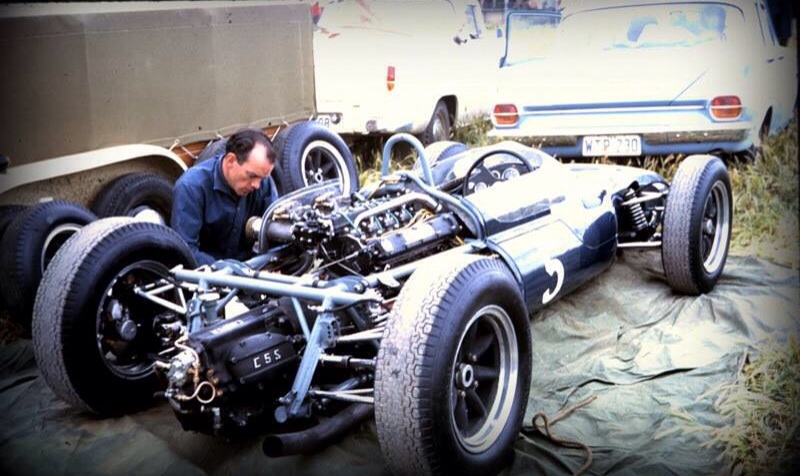
Geoff Smedley fettles his twin-plug 2.5 Coventry Climax FPF engine fitted to John Youls’ Cooper T55 …

In the late Formula Libre period in Australasia – just before the Tasman Cup commenced on 1 January 1964 – the engine of choice was very much the Coventry Climax FPF. In fact the Tasman Formula was specifically designed around the ready availability and price of the 1959/60 World Championship winning 2.5 litre engine to allow the locals to compete against the internationals on more or less equal terms.

Before then (1 January 1964) the-go was the 2.7 litre Indy FPF, most of the locals and visiting internationals each summer raced this engine.

But down in Australia’s south, in beautiful Tasmania, a very clever engineer, Geoff Smedley was working on another solution to make the FPF produce more reliable power and torque. His driver was the very quick John Youl, the car an ex-works/Bruce McLaren 1961 F1 Cooper T55. Here is the story in Geoff’s words.

image

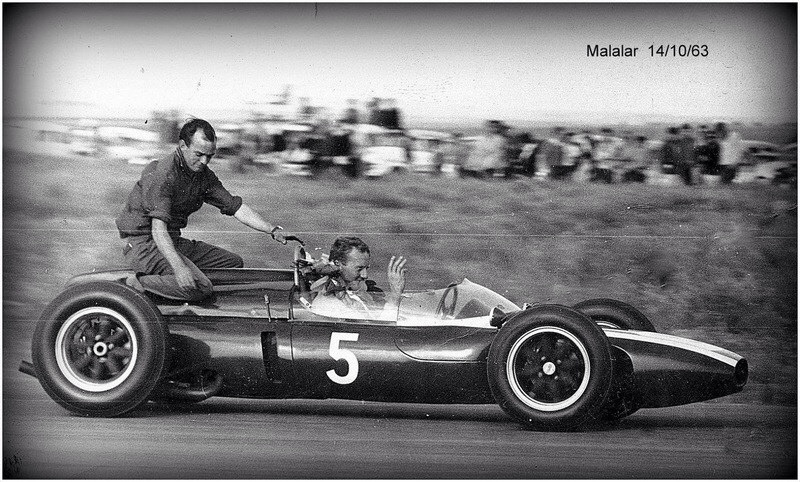
John Youl cruises thru the Warwick Farm paddock in 1963, Cooper T55 Climax (Smedley)

‘Firstly, in 1963 the fad was to re-sleeve the 2.5 Climax to 2.7 litres chasing more hosepower but ‘bigger holes’ was the American way, I was sure a better alternative could be found.

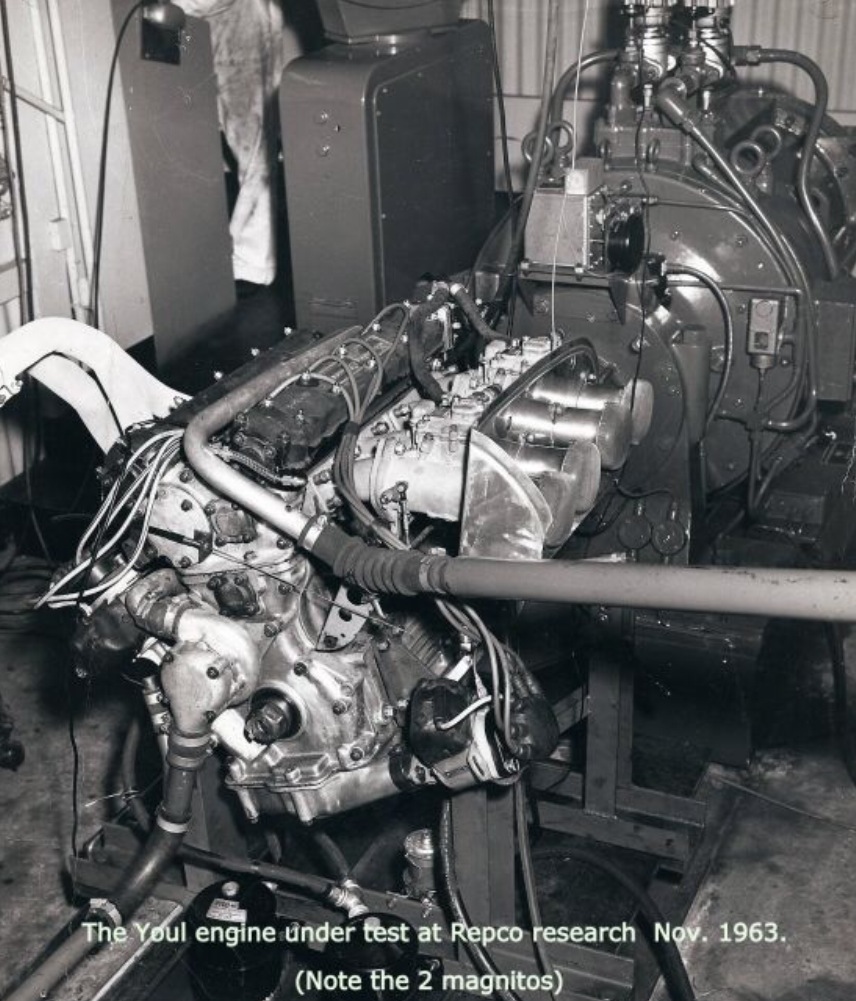
Frank Hallam at Repco Research had been playing around with a twin plug head for one of Brabham’s engines, using two distributors driven from the rear of each cam bank and couldn’t make it work through an inaccurate spark which was put down to windup in the camshafts in the high rev range.

I preferred to stick with a man’s toy, the magneto. Two of these more robust spark producers set up properly must be the answer. A total new drive was made up for a second maggy from the crankshaft protruding from the front of the sump which allowed comfortable room within the confines of the T55 chassis, and the head modified to accommodate a second plug.’

‘1963 saw the end of alcohol fuel for our cars, reverting back to 100 octane caused a few problems leading to the idea of a cleaner more efficient fuel burn. Obviously there are easier methods today, but 50 years ago we were still looking in any way we could, without the aid of computers, only perhaps with a slide rule and something to write on, and a lot of time was lost to mistakes, but on the occasion when you were successful it was nice being 10ft tall….’

‘The initial effort seemed rewarding with a test day at Symmons Plains, the result was pleasing and being able to alter each magneto individually, the differences were very noticeable.’

‘Living in Tasmania and being able to carry out this work undercover of our opposition, based on the Australian mainland, was an advantage, I and my young family were living at Symmons Plains in those days and my workshop was a converted coachouse close to the main homestead where all the chassis work was carried out. The big advantage I had was having full use of the family workshop (Bedford Machine Tools) where I was able to produce any part required.’

‘The final test of the engine was to take it all to Melbourne and place it on Repco’s dyno at Dandenong to test the result. We were met by Frank Hallam who was very dubious about the whole thing, but some four hours later he confessed that our 2.5 Climax had shown better figures than any previous Climax including the fashionable 2.7 litre. The horsepower was up, but more importantly the torque figures were so much improved. Those days of satisfaction have melted into oblivion and all that is left is a lot of frustrated old farts that look back and remember when….!!!!’

smedley fpf on dyno The Smedley twin plug, twin magneto engine being being tested on the Repco Research dyno in November 1963. The engine reverts to ‘standard’ by replacement of the standard CC sump. (Smedley)

Racing the Cooper T55 twin-plug FPF…

‘Gosh! It’s hard to believe more than 54 years have passed since those heady days, but it doesn’t seem that long,  but as mentioned I have been pressured into writing my autobiography which has meant scratching back over the coals to bring those great times back to life again, starting with taking the land speed record way back in 1961’.

We will trouble Geoff for that story, achieved by Geoff’s Chev engined Cooper T51 owned and driven by Austin Miller, another time.

‘I went to work for John Youl in 1962 and stayed with him until his retirement in 1965, we had a lot of fun as a team being able to work here in Tassie so privately and then going to the mainland where the car would be pounced on and inspected for the sign of any tinkerings that may help our opposition! So in that respect it was always a lot of fun, and yes, the duel ignition trick really did work wonders on the old FPF engine’.

image

John Youl and Geoff Smedley aboard the Cooper T55 ‘twin-plug’ for a debut win- on the victory lap after winning the Advertiser Trophy Gold Star round at Mallala, South Australia in October 1963. John won from the 2.7-litre Brabham BT4 Climax of Bib Stillwell and Wally Mitchell’s Brabham BT1 Ford 1100 (Smedley)

‘Now the very first race for this new configuration was the Gold Star Race at Mallala, South Australia on the October 14, 1963 which we won from Bib Stillwell and Wally Mitchell. Then came the Hordern Trophy Race at the ‘Farm on December 1, 1963, we won that one as well from David McKay and Bill Patterson’.

‘Then it was off to New Zealand for the 1964 Tasman Series.’

‘In that series of races we came back with (in heats and championship races) one first, two seconds including Lakeside, two thirds including Sandown and fourth’s at Levin, Wigram and in the New Zealand Grand Prix at Pukekohe behind Bruce McLaren, Denny Hulme and Tim Mayer. We were fifth at Longford in the final round’.

image

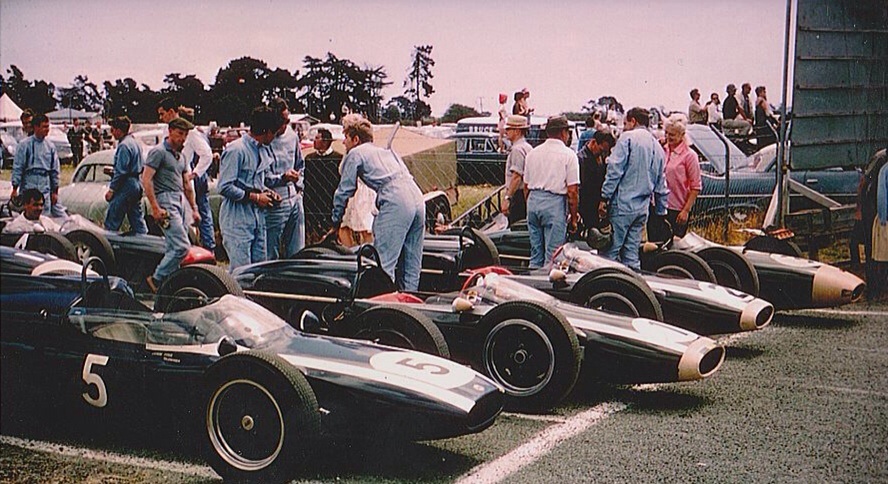
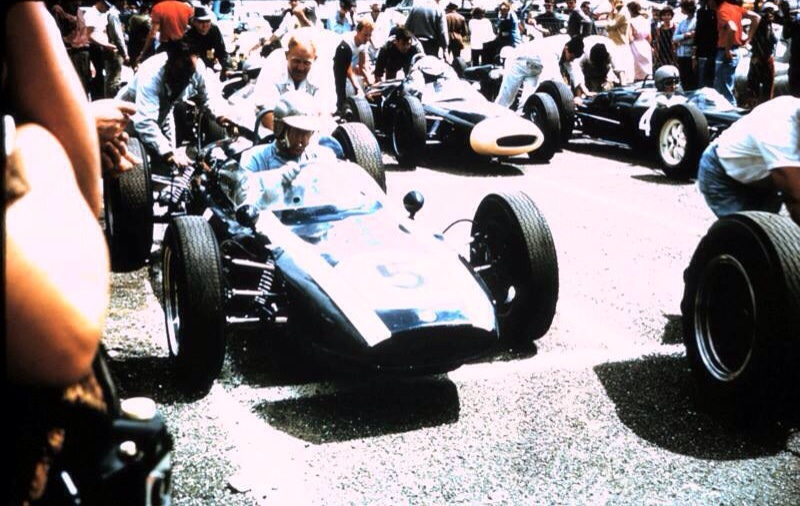
Levin form up area for the very first Tasman Championship race on 4 January 1964. Youl’s #5 Cooper T55 Climax, the two Cooper T70’s of McLaren #1 and Tim Mayer and then the victor, Denny Hulme’s works Brabham BT4 Climax. Mayer was 2nd, McLaren 3rd and Youl 4th (Smedley)

‘Prior to all this, we, like others using the Jack Knight gearbox on their Coopers, found the crown wheel and pinion was the big weakness and only two-three races seemed to be their life span. So I set about making two sets myself as I fortunately had access to the family business’s machine shop. The first set of these was fitted to the gearbox just prior to fitting the duel ignition system’.

‘This new CWP was straight cut but considerably stronger using a much higher grade steel than the original. Although a little noisy at first, it soon settled down by fitting a separate oiling system. The same CWP was in the car when John sold it to Arnold Glass in 1965.’

image

John Youl, Cooper T55 Climax at Mount Maunganui, NZ, December 1963 (Fistonic)

‘The car, then around 1967, I think – Cooper T55 Chassis No. F1/11/61 – was sold to a collector in the USA and years later in the nineties the car was sent to England to be auctioned. I have found it there in photos sitting in the pits in places such as Goodwood and the like’.

‘The car is back today in its original form being Bruce McLaren’s 1961 works car it looks great and I have no idea but it could still have the twin plug motor in it, who knows!’

image

Smedley with his charge, note the comments about the gearbox in the text, twin plug 2.5 FPF fitted, Longford Tasman 1964 (Smedley)

 Etcetera…

image

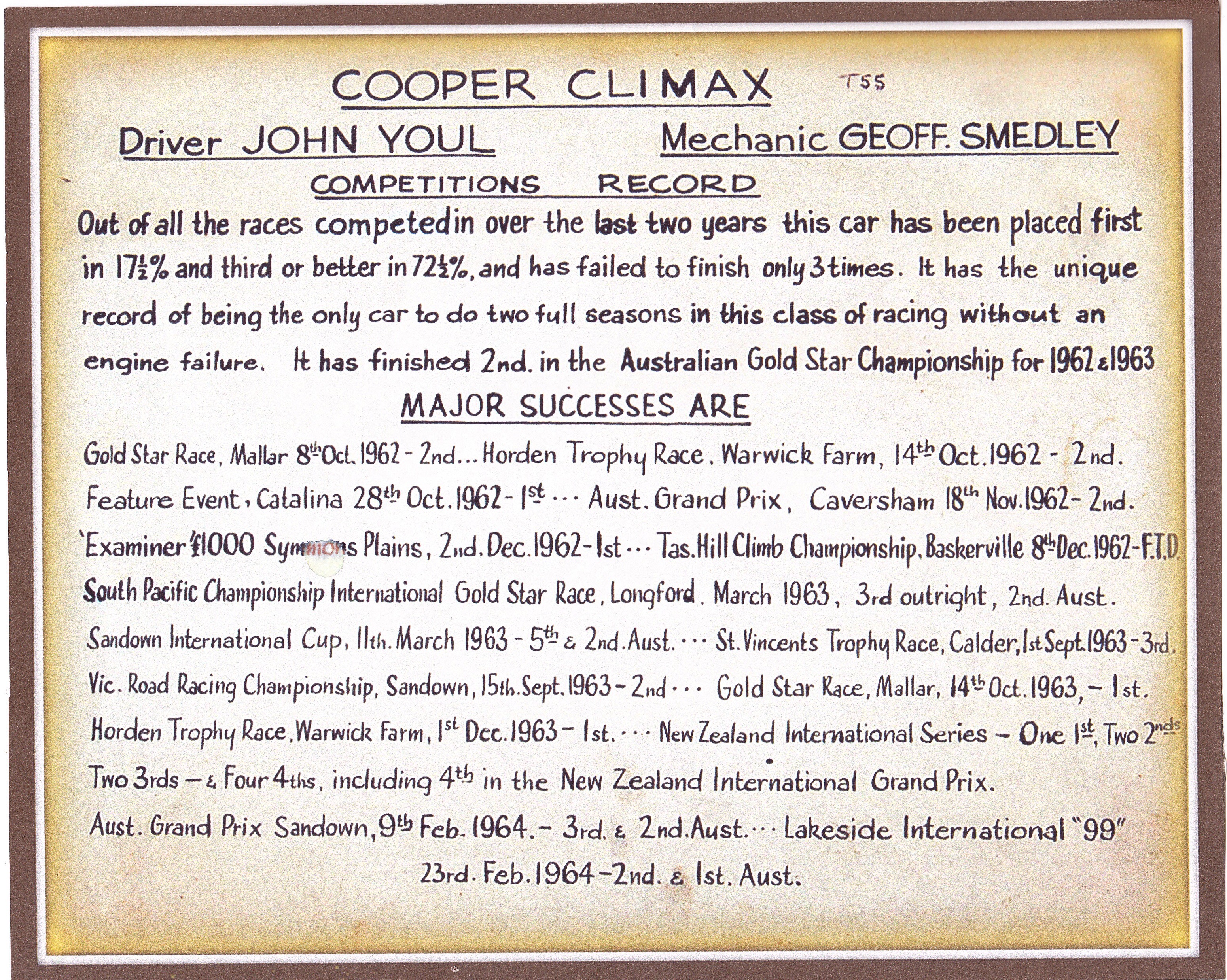
‘The card was drawn up by John Youl himself as a record of the T55 during his period of ownership’- Geoff Smedley

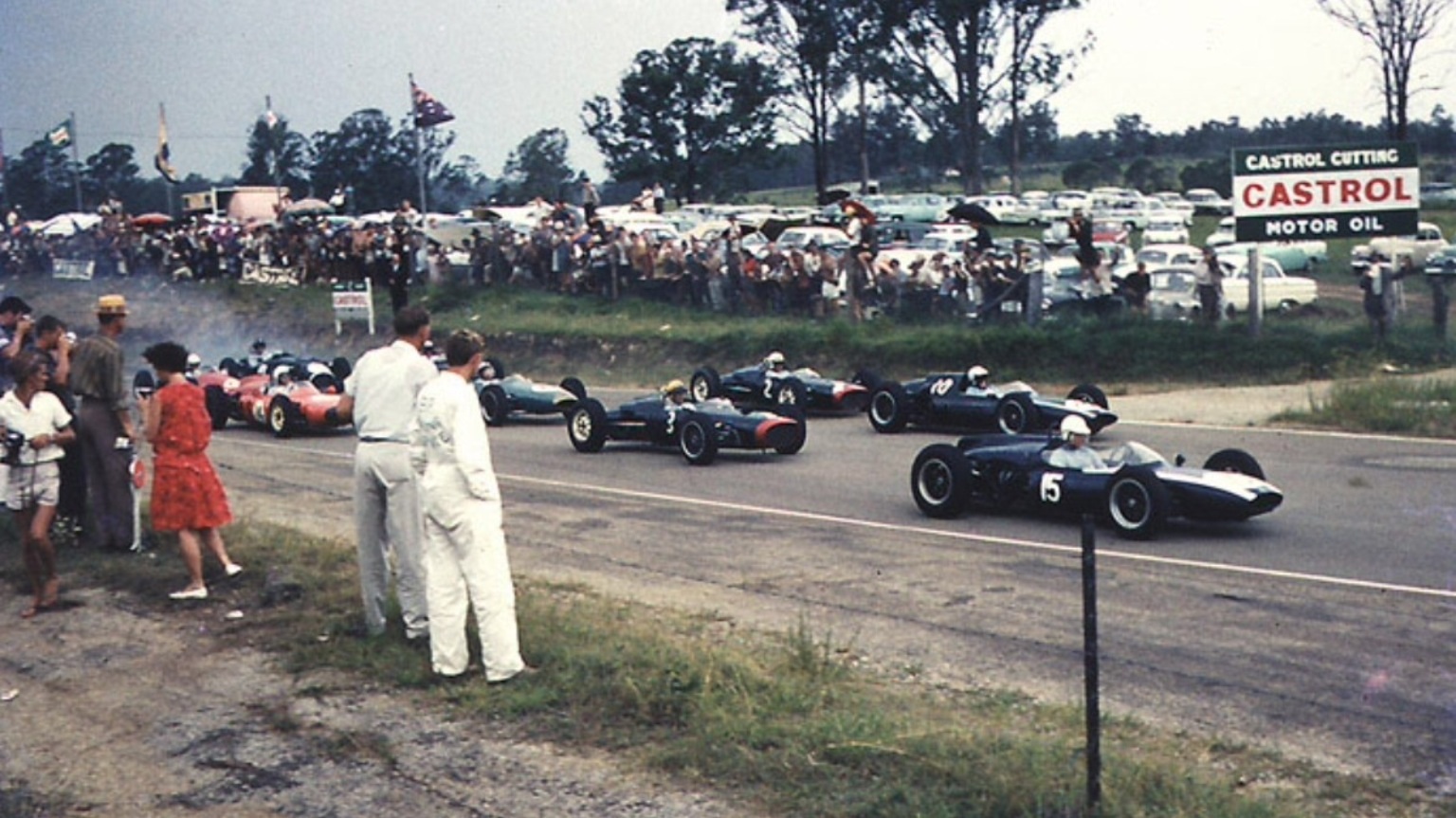
The shot below is of Youl jumping from second grid slot, away from McLaren #10 on pole, Tony Maggs #3 and John Surtees #2, as well as Bib Stillwell in the light blue Brabham BT4 and Chris Amon’s red Cooper T53; its the start of the Lakeside International on February 17, 1963.

McLaren, in a Cooper T62, the two Lola Mk4A pilots Maggs and Surtees, and Bib were all driving the latest cars with 2.7 FPFs, Youl was in a 1961 car, his Cooper T55 fitted with a 2.5 FPF, not Smedley’s twin-plug engine either. Surtees won from Graham Hill’s Ferguson P99 and Stillwell. Youl retired on lap seven that day.

Its such a shame duty-called for John Youl, he was needed to manage the families large grazing properties in Tasmania, so his racing career was ended way before it should have. For sure he was a driver of world class, as indeed was Smedley as an engineer/mechanic.

image

(Smedley)

Special Thanks…

Geoff Smedley, many thanks for this very special account of an interesting engineering obscurity which should be more widely known

Credits…

Geoff Smedley Collection, Milan Fistonic, oldracingcars.com

Tailpiece: John Youl, Cooper T55 Climax in the Levin form up area, January 1964…

image

Car #4 is Chris Amon in a Reg Parnell Lola Mk4A Climax, perhaps Denny Hulme’s Brabham alongside him (Smedley)

image

Luvverly shot of a Bristol 403, the typically helpful Getty Images caption dates the shot as between 1940 and 1950 and notes the Eiffel Tower and Arc de Triomphe in Paris…

‘From Marble Arch to the French landmark by air ferry’ is a caption clue, so perhaps it’s a promotional shoot for a new service of moving cars around?

I think so, after a ferret around, note the shot below, i am not suggesting the car in the transport is a Bristol, wotizzit I wonder?

ferry

The aircraft is a Bristol Type 70 Mk32, a former military transport plane before its inaugural flight as a car ferry with Silver City Airways in 1949. These flights were between Lympne Airport in Kent and Le Touquet, France.

Credits…

Bettman, Monty Fresco, J Wilds, Robert Sands

Tailpiece…

image

(J Wilds)

Captain Bill Pegg with Bristol Brabazon aircraft and the prototype Bristol 402 Cabriolet (20 more were built) in Bristol on 3 September, 1949.

Finito…