Archive for the ‘Obscurities’ Category

image

Walt Hansgen hustles his Scarab Mk4 Chev around Riverside Raceway during the 1964 LA Times Grand Prix…

Parnelli Jones won in a Cooper ‘King Cobra’ Ford, the event run on 11 October 1964. Roger Penske was 2nd in a Chaparral 2A Chev and Jim Clark 3rd in a Lotus 30 Ford. Walt didn’t finish the race with an oil leak but the speed of the car was proven with 2nd grid slot, McLaren’s McLaren Elva Mk1 Olds was on pole, Bruce also DNF with a loose water hose.

This was the last of the Scarabs, i will get around to an article on the sports-Scarabs soon.

Credit…

The Enthusiast Network

jochen skis

(Imago)

Jochen Rindt showing good form in his ‘Kneissl’s’ in early 1968…

Love this PR shot, its useless from a skiers perspective tho as the caption includes no information as to the resort, Austria is as precise as it comes!

Jochen joined Brabham for 1968 from Cooper, it wasn’t a great season for the team as the Repco ‘860 Series’ DOHC, 32 valve 3 litre V8 was as unreliable as its forebears in 1966 and 1967 were paragons of dependability, in the main at least, drivers and manufacturers titles won for Brabham and Hulme in 1966/67 respectively.

jochen color

Rindt BT24 Repco, Monaco 1968 (Getty)

Until the ’68 Brabham BT26 was ‘ready’ Jochen raced the 1967 BT24 in South Africa, Spain and Monaco, the cars speed demonstrated by Q4 and 5 at Kyalami and Monaco. These shots are all of the ’68 Monaco GP race won by Graham Hill’s Lotus 49 Ford, Jochen qualified 5th and boofed the car in the race.

Detailed stories about the 1967 and 1968 Brabham Repco seasons i will write soon.

jochen butt

The ’67 BT24 ‘760 Series’ 2 cam/2 valve Repco beside its ’68 BT26 ‘860 Series’ DOHC/4 cam sibling and Jochen happy despite a character-building season. Despite the difficulties Jochen enjoyed his year with Brabham and likewise Brabham and Tauranac working with him. ‘Twas a close run thing that he didn’t rejoin the team for 1970. He had committed to Jack who waived the verbal agreement when Chapman offered Rindt a ‘deal he could not refuse’, so off to Lotus he went… (Getty)

image

Monaco; 68 lap 1 down the hill past Rosies Bar and into Mirabeau; Rindt BT24 from Hulme’s McLaren M8 Ford, the BRM’s of Attwood (not in shot) then Rodriguez P133 and the rest (Schlegelmilch)

jochen profile

Rindt, again at Monaco 1968, the elegant simplicity of the ’67 Championship winning Brabham BT24 Repco clear (Getty)

Credit…

Imago, Getty Images, Rainer Schlegelmilch

jochen tailpiece

Eyes on the apex! Rindt, Monaco 1968 (Getty)

Tailpiece…

image

The 1968 Repco ‘RB 860 Series’ engine may have lacked reliability but not poke! Rindt put it on pole twice in ’68, here at Rouen and at Mosport, Canada. In France Jochen picked up a puncture from the debris of Jo Schlesser’s horrific Honda RA302 accident and had a fuel tank leak later in the race, DNF . Here he is in the cockpit of his BT26 during practice. French GP 1968 (Schlegelmilch)


Hot Wheels…

Posted: April 21, 2016 in Fotos, Obscurities
Tags:

image


The Museum of Urban Art, Sau Paulo, Brazil…

My partner tripped over this on Instagram, luvvit, but she has no idea who the artist is. I’d like to know as it reminds me of my ‘Dinky’ childhood, ‘Hot Wheels’ the toy cars of the generations after mine!

Hot Wheels are still made, here are the top 50 of their cars, just in case you wanted to know!;

http://au.complex.com/sports/2013/02/the-50-best-hot-wheels-of-all-time/

Credit…

Museum of Urban Art, Brazil

Tom Phillis…

Posted: April 18, 2016 in Fotos, Obscurities
Tags: ,

image

Phillis takes his Honda 350/4 for a practice lap at The Isle Of Man on June 4 1962…

Sadly, the young Australian World Champion and GP winner was killed on lap 2 of the 350cc event on 6 June aged 28.

Born in Marrickville in Sydney’s inner west on April 9, 1934, Phillis was a trend-setting international motorcycle racer as the first rider to win a World Championship Grand Prix on a Japanese machine. Aboard a Honda 125 he won the 1961 Spanish 125GP at Montjuic Park, Barcelona on 23 April.

He was the first Aussie to achieve a ‘Grand Prix Double’, (Clermont Ferrand France 21 May 1961 aboard Honda’s 125 and 500cc) the first man to lap the Isle of Man at 100mph on a push-rod bike and was Australia’s second World Motorcycle Champion. (Keith Campbell, the first, won the 1957 350 World Championship aboard a Moto Guzzi) His record of six GP wins in the ’61 season wasn’t improved upon by another Australian rider until Gregg Hansford did so in 1978).

Phillis clinched a drama-filled World 1961 125 Championship in the last round on October 15 in Argentina, whilst Mike Hailwood won the World 250 Championship on a machine supplied by the British Honda agent.

image

Phillis aboard a Norton on the Fishermans Bend, Melbourne grid in February 1959 (Charles Rice)

Tom Phillis’ daughter Debra has created an interesting website about her fathers racing exploits, click here for an interesting read and array of photographs of this great rider;

http://www.tomphillis.com/

Credit…

Central Press, MotorsportRetro.com

Tailpiece: Tom Phillis takes Honda’s first ever championship GP win at Montjuic Park, Barcelona, Spanish 125cc GP on 23 April 1961…

image

(unattributed)


fishermans bend

Luvverly poster/program to promote the October 1955 race meeting at Fishermans Bend, 6 Km west of Melbourne’s CBD…

My guess is that the ‘artists car’ is Lex Davison’s Ferrari 500/625 and the bike an MV Agusta 4…

fishos buildings

Fishermans Bend Aerodrome was located near the emergence of the Yarra River with Port Phillip Bay. The area was a vast swamp owned by the Commonwealth Government. In the early 1930s, a primitive airstrip was built there which was used by gliding and light aircraft enthusiasts.

In 1935 the Government built the Commonwealth Aircraft Corporation (CAC) factory, together with a long sealed airstrip. CAC is the best known of the Australian aircraft manufacturers of the Word War 2 and post war era’s. It began as a private company founded by Lawrence Wackett, a captain with the Australian Flying Corps known for his engineering ingenuity. After World War I, Wackett began design and manufacture of civil aircraft.

‘The CAC was conceived in 1935 by Essington Lewis then managing director of BHP. It was a private company formed by a consortium including BHP and GMH (Holden) to manufacture military aircraft with the intention of providing Australia with the tools to fight the modern war that was looming’.

‘Land was selected adjoining the recently completed GMH (General Motors Holden, 191 Salmon Street) factory at Fishermans Bend.

The factory manufactured a modified US designed advanced trainer under licence which became known as the Wirraway. Other wartime aircraft built included the Wackett elementary trainer, the P51 Mustang and the Boomerang, a fighter aircraft conceived, designed and manufactured in little over three months’.

fishos planes

Bristol Beaufort Mk VIII being built at Fishermans Bend in 1943 (unattributed)

‘Fishermans Bend became a centre of the wartime aircraft industry with the adjacent Department of Aircraft Production factories and the Aeronautical Research Laboratories. During the war CAC produced two interesting prototypes which sadly never made it into production. The Woomera, the first was a three seater medium bomber that had remotely operated turrets in the rear engine nacelles. The other was an interceptor, the CA-15 or Kangaroo, it was a 721 km/h fast fighter with a range of 4000 Km’.

‘After the war the CAC Sabre, one of the ultimate Sabres of the type was built. With a more powerful Avon turbojet and twin 30mm cannons the (American) frame was 60% redesigned. Post WW2 the facilities continued manufacturing and assembling aircraft’.

aerial with airfield

Aerial view of Yarra River, Newport and Fishermans Bend circa 1940-50. The smoke is coming from the Newport Power Station. To its right is the exit of the Yarra River into Port Phillip Bay. The straight road which ends at the Yarra near the berthed ship is Williamstown Road, there was a car ferry to cross the Yarra, the Westgate Bridge was opened in the mid-70’s. In the middle of the shot are the runways of the airfield used for racing. Shot also shows the Dept of Aircraft Production, Commonwealth Aircraft Corporation and the GMH Holden factory on the right or ‘above’ the runways. Melbourne CBD is lost in the haze at the top of shot but not far away as the crow fly’s (Francis Hodgson)

For the aviation history buffs click on this link to a very detailed publication about Fishermans Bend’s 60 year role in Australian Aviation…

Its a government document of value. Therefore a global rarity.

Click to access a274981.pdf

The Aerodrome was also used for car and motorcycle racing from 1949 to 1966, using the main airstrip and the 3 km perimeter road.

The Commonwealth Aircraft Corporation was taken over in 1986 and the majority of its buildings demolished in 2003-04.

fishos start

Flavour of the era. Love this Fishermans Bend shot; ‘Victoria Trophy’ meeting February 1958 with the front engined cars of Ted Gray, Tornado 2 Chev and Stan Jones Maserati 250F up the front. Policeman and his horse oblivious to the cacophony, note the ‘safety’ fence. Industrial heartland of inner western Melbourne in the background (Geoff Green)

‘Westgate Park’ now occupies part of former CAC land. The aerodrome’s runway became Todd Road, the taxi runway became Wharf Road. A legacy of the past is found the names of some of the nearby streets; Sabre Drive, Wirraway Drive and Canberra Drive. The railway line which serviced industry in the area remains but is no longer used and isn’t connected to the contemporary rail system.

The former CAC factory, at 344-370 Lorimer Street and 231-249 Todd Road Port Melbourne, was constructed from 1937 to manufacture military aircraft.

The only remaining buildings of the extensive factories are a section of ‘saw-tooth’ factory to the west (now part of Hawker de Havilland/Boeing) and four hangars at the eastern end of the former factory at the corner of Lorimer Street and Todd Road. These hangars, dating from WW2 comprise one US made ‘Butler’ and three British designed ‘Bellman’ hangars.

jolly fishos

Fishermans Bend sports car race October 1958. #16 Derek Jolly’s Lotus 15 Climax, various Austin Healey 100’s and a Lotus 11 behind Jolly. To the far right is the Coad Bros Vauxhall Holden Repco Spl which the family still owns (Kevin Drage)

Motor Racing at Fishermans Bend…

Airfield circuits popped up post World War 2 globally; in Australia at Point Cook, Fishermans Bend, Leyburn, Caversham, Mallala and Lowood.

The infrastructure was available, people were looking for things to do postwar and governments sought ways of creating economic activity locally.

fishos scene

Fishos’ paddock, 10 February 1957. It would have been hot but at least it was sealed, unlike all but airfield circuits at the time! #49 the Graham Hoinville MG TC, which the prominent competitor, engineer and CAMS official still owns! (unattributed)

These photos are not to show a particular race meeting but rather are selected to ‘taste’ the flavour of the place; typically airfield flat and featureless, desolate, industrial backdrops and devoid of much in the way of amenities or safety considerations.

blue car at f bend

Greg McEwin’s HRG 1500 from South Australia. The body of this car, styled on the Healey Silverstone was built by Ray Manser in Adelaide, it first raced at Port Wakefield in September 1951.Note the aircraft factory backdrop, October 1953 meeting (SLV)

The Light Car Club of Australia and the Harley Motor Cycle Club were the circuits promoters on behalf of the Air Force Association, meetings were run to raise money for a variety of disparate charities over the years.

The pent up demand for entertainment post war is shown by a Melbourne ‘The Age’ newspaper  article dated 31 October 1949 which estimated crowd numbers at 70000 people for a program of car and ‘bike events! Staggering really. Crowds of over 30000 were common, by 1952 ‘The Age’ pointing out the demand for motor sport should the quality of venues be improved.

download

A Cooper Bristol and Maybach 3 (or 4 Chev) , Fishermans Bend. I found this shot in the SLV archive, i’m certain about the cars, thats the easy bit! Perhaps its Tom Hawkes CB leading Stan Jones in Maybach, but it could be another CB and could be Ern Seeliger in Maybach. Stan retained Maybach after he acquired his 250F. Ern modified the car with Chev engine and mainly raced it but Stan used the car right up to 1959 on occasion. Interested to get a view from Aussie enthusiasts as to who and when (SLV/Reg Fulford Collection)

‘Fishos’ was used up until 1960 for road racing, as the surface deteriorated the government was unwilling to resurface it just for the sake of motor-racing.

The last road-race meeting was organised by the LCCA on 14 February and the last sprint meeting by the Victorian Amateur Drivers Club on May 5, 1960.

The airstrip was then used as a drag racing venue until 1966, ‘Riverside Raceway’ played an important part in the formative stages of Drag Racing in Australia…

drag

(Ray Sprague Collection)


Early sixties wonderful Fishos scene (T Beyer)


ash

Unmistakable Fishermans Bend backdrop. The ‘Rails’ of Ash Marshall (near) and ‘Fizzball’ Collins at Riverside in 1965 (moondog.net.au)


Drag racers view- cars lined up date unknown (T Beyer)

Random Fishos’ Shots…

austin healey 100's

Ron Phillips and Doug Whiteford in Austin Healey 100S’ 14 October 1956. Dougs #’3907′ a little more understeering than Phillips #’3906′ (unattributed)


lukey bristol

Len Lukey in his Lukey/Cooper Bristol after finishing 2nd in the October 1958 Victorian Road racing Championship, Derek Jolly in brown congratulating him. Ted Gray won this race in the Tornado i wrote about a while ago (Kevin Drage)


vrrc 1

After the finish of the Victorian Road Racing Championship October 1958. Winner is Ted Gray in the dark blue Tornado 2 Chev V8, light blue car Ern Seeliger in Maybach 4 Chev V8 and the yellow Cooper T41 Climax of Austin Miller . Note how flat and featureless the place is, circuit in classic period style bordered by hay bales (David Van Dal)


lap scoring

Lap charting Fishos 1949 style. Wonderful evocative shot from Martin Stubbs archive. Male at left in bright, white shirt Bib Stillwell 4 time Gold Star champion in the 60’s, beefy guy is Peter Ward and elegant lady with the ‘big’ lapchart is Diana Davison, Lex’ wife (Dacre Stubbs Archive)


2 red cars @ f bend

Part of the nose of the blue McEwin HRG, O’Donohue’s Jim Gullan built Ballot Olds and Otto Stone’s MG K3, October 1953 meeting (SLV)


ausca

Paul England in the Ausca Holden from Doug Whiteford’s Maser 300S, Otto Stone in the Norman Hamilton owned Porsche 550 Spyder and Ron Phillips Austin Healey 100S 10 February 1957 (unattributed)


bob jane 300s

Bob Jane on the Fishermans Bend grid October 1958. Ex-works Maserati 300S, his debut in the car in which he was ‘wild and wooly’! He got the hang of the racing caper, dual Australian Touring Car Champion in 1971 and 1972 (Kevin Drage)


wylie and jb fb vic trophy 54

Ken Wylie and Jack Brabham Wylie Javelin and Cooper T23 Bristol. 22 March 1954 Victoria Trophy (SLV)


lex, vic trophy march 54

Lex Davison, HWM Jaguar, Victoria Trophy 1954. Davison won the 1954 AGP at Southport on Queenslands Gold Coast in this car (SLV)

Credits…

progcovers.com, australiaforeveryone.com, Greg Smith, Francis Hodgson, Kevin Drage, David Van Dal, Dacre Stubbs Archive, Geoff Green, State Library of Victoria, Reg Fulford Collection, Ray Sprague Collection, moondog.net.au

Thanks to Pat Ryan, Stephen Dalton and Shane Bowden for helping ID some of the cars in the SLV shots

Tailpiece: ‘Circuit Maps’…

(O Plada)


aerial 2


(O Plada)

Finito…

Emeryson…

Posted: April 10, 2016 in Fotos, Obscurities
Tags: ,
image

(Bert Hardy)

Paul Emery racing ‘the wrong way’ at Brands Hatch in 1951…

Car is the Emeryson 500 front-engined and front wheel drive car built by he and his family. Click here for an interesting article on the various Emeryson cars.

http://www.500race.org/web/Marques/Emeryson.htm

The photo below is Emery being pushed onto the grid in his Emeryson JAP twin 500cc car ‘for race 1, amateur built cars, the very first race at Brands Hatch during the inaugural Brands event on 16 April 1950’.

emery

Credits…

Bert Hardy, Fox Photos

image

Barry Sheene laps Brands Hatch in a 1976/7 Surtees TS19 Ford in his first F1 drive on 25 April 1978…

It would have been interesting if Bazz gave cars a ‘red-hot’ go from about then, born in 1950 he was 28 and had already won the 1973 Formula 750 and 1976/7 500cc World Titles for Suzuki.

Not too many motor-cyclists have made the transition from bikes to cars successfully at elite level. Three spring to mind; John Surtees, Mike Hailwood and less obviously Johnny Cecotto. His speed and race wins on bikes flowed into F2 drives, badly broken legs in his Toleman Hart during 1984 British GP practice, he had already banged himself about on bikes, ended an F1 career of great promise.

image

Buckle up. At the time the Surtees TS19’s were being raced in the British F1 Series, so were ‘still current’

Sheene still had unfinished business on bikes though; always a threat when on a decent machine, he raced on in 500’s, his battles against Kenny Roberts the stuff of legend, his last win the 1981 Swedish GP.

An accident at Silverstone during 1982 British GP practice was one too many. He hit a fallen competitors obscured bike at around 160mph, slid for 150 metres, breaking both legs again, and an arm. Undimished, Sheene had enormous courage and resilience, he raced on into 1983 on a semi-works Suzuki even finishing 8th in the British GP 12 months after the awful accident. Unsurprisingly, his ultimate edge was dulled, he retired from bikes in 1984.

image

Place, date and bike unknown (unattributed)

Barry did race touring Cars and trucks prior to emigrating from the UK to Oz in the late 1980’s, he left his beloved Britain in search of sun to help ease arthritis partially caused by his many race prangs down the years.

An immensely likable character, he was soon as popular here as in Europe mixing property development, motorsport TV coverage and commentary with product endorsements. He and Oz Touring Car Legend Dick Johnson did a series of TV ads for Shell for years which both polished its brand and were iconic in terms of their laconic humor. Sadly lost to cancer at the all-too-young age of 53 in 2003.

image

Isle of Man 1971, Barry Sheene at Quarter Bridge after crashing out of the race in apalling conditions whilst 2nd in the 125cc race on his Suzuki. His only IOM TT race. 21, how young does he look!? (Bob Thomas)


image

‘you missed the apex by that much!’ Sheene, George Harrison and John Surtees, Brands during the test

image

Barry, George and those Linea Sport overalls so period!

Credits…

Roger Lings, Bob Thomas, Patrick Litchfield, Keystone France

Tailpiece: You can be certain the one thing, ‘the two amigos’ aren’t talking about is Texaco…

image

22 May 1978 (Litchfield)


image

Norman Dewis, famous as Jaguar’s test and development driver was often entered as a relief driver but until 1955 had not raced a Jag…
Here he is in the factory ‘D Type’ during the 1955, horrific Le Mans event. He co-drove Don Beauman’s car the pair failed to finish when Beauman ‘beached the car atop the sand dunes’ at Arnage. Mike Hawthorn and Ivor Bueb scored a hollow win in ‘XKD 505’.

image

Umberto Maglioli’s head in his Ferrari 118 LM ahead of the Beauman, Hawthorn and Jacques Swaters D Types during the early laps of the 1955 Le Mans 24 Hours (Klemantaski)

Before he joined Jaguar, as the 500cc F3 movement grew, and with a fellow LeaF employee Dewis designed and built a neat Rudge-powered F3 car, the DNC. In its first race at Silverstone in July 1950, he qualified on pole and led for two laps before engine failure. It was rebuilt to do more races in 1951, in October that year Dewis joined Jaguar.

As noted Dewis had been a Jag reserve driver before, but the 1955 Le Mans was his only race/works drive for his Browns Lane employers. He had done most of the D development work, the result, the long-nose 1955 car.

Jaguar’s works 1955 Le Mans entries were for Hawthorn/Jimmy Stewart, Tony Rolt/Duncan Hamilton and Don Beauman/Desmond Titterington. Beauman, an old friend of Hawthorn’s was hired after a test under Lofty England’s watchful eye.

Two weeks before Le Mans Titterington and Stewart crashed their Ecosse D’s during the Eifelrennen at the Nurburgring. Stewart decided to retire and Des was hospitalised. So, days before the race Ivor Bueb was slotted into Hawthorn’s car and Dewis into Beauman’s. Their car ‘XKD508’ ran as high as 4th before the Mercedes team withdrew their 300 SLR’s but on lap 106 Beauman ‘parked it’ at Arnage and retired it unable to free it from the sand.

Click here to read an interesting interview with Norman Dewis in MotorSport about his life;

Lunch with… Norman Dewis

Credit…

Getty Images, Klemantaski Collection, Nicholas Watts

Tailpiece: Hawthorn’s D  from #12 Dreyfus/Lucas Ferrari 750 Monza and Fangio’s Benz 300SLR during the first torrid stint by both Mike and J-MF…

image

(Nicholas Watts)


bar honda

Honda finished fourth in the 2006 F1 Constructors Championship, behind Renault, Ferrari and McLaren Mercedes but ahead of the other Japanese Teams; Toyota 6th, MF1 Toyota 10th and Super Aguri Honda 11th. Honda broke through for an F1 victory in the ‘modern era’ when Jenson Button won the Hungarian GP in the teams new for 2006, mandated 2.4 litre V8 engined RA106 chassis.

But there is more than one way to ‘skin the public relations cat’. Setting a new Formula 1 car land speed record over the Bonneville flying mile with an average speed of 400 kph was Honda’s PR mission they called the ‘Bonneville 400’.

The racer used for the attempt was its 2005 F1, 3 litre V10-powered BAR-Honda 007. For the runs out on the salt, the car was fitted with an upright rear fin instead of the standard wing and used a parachute to help slow down at the end of each run.

Driver Alan van der Merwe, the team and the car broke F1 class records three times.

honda side

During the final attempts, the Honda set two LSR’s  for GP cars. Over the flying mile, the car achieved an average speed of 397.360kph (246.908mph). The second record was over the flying kilometer, an average of 397.481kph (246.983mph).

The magic 400 kph average remained outta reach, though earlier in the  week the car hit 400.454 kph on one pass of the measured mile. ‘007’ wasn’t able to match the feat on the return trip.

17th July 2006 Bonneville 400. Day 1. Formula 1 land speed record attempt on the Bonneville Salt Flats, Utah. USA Images copyright free.

17 July 2006 ‘Bonneville 400’
Day 1. F1 land speed record attempt, Bonneville Salt Flats, Utah. USA (Honda)

While disappointed that they didn’t set the record at 400, Honda were pleased with the success achieved but not as happy as they were with their first F1 win since the 1967 Italian GP victory by John Surtees! Button took that win, his first in F1 racing 3 weeks later on 6 August 2006.

Jenson won in changeable greasy conditions from Pedro de la Rosa’s McLaren MP4/21 Mercedes and Nick Heidfeld’s BMW Sauber F1.06. It was a well deserved win for both team and driver.

image

Button, Honda RA106, victorious in Hungary 2006 (Clive Mason)

image

Button, Hungary 2006, intricacies of modern F1 cars aerodynamics clear in this shot (Clive Mason)

image

Button, Hungary 2006 (Mark Thompson)

Photo Credits…Honda Corp, Clive Mason, Mark Thompson

Tailpiece: I bet ‘007’ Sounded Sensational on the Bonneville Salt!…

Listen and see the YouTube footage;

17th July 2006 Bonneville 400. Day 1. Formula 1 land speed record attempt on the Bonneville Salt Flats, Utah. USA Images copyright free.

17 July 2006 ‘Bonneville 400’, BAR-Honda 007, Alan van der Merwe (Honda)

Pascal’s Bugatti…

Posted: February 28, 2016 in Fotos, Obscurities
Tags:

image

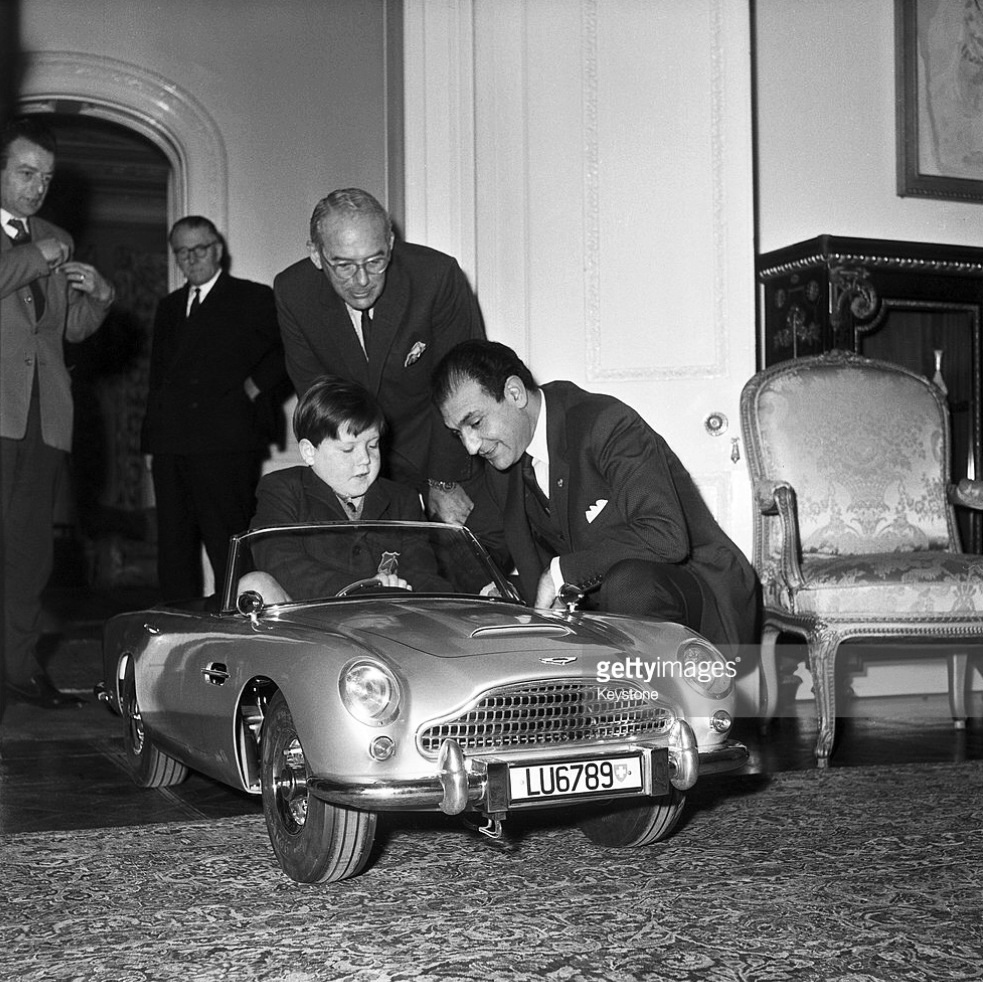
‘Pascal’ dreams of Grand Prix success, shot on 1 February 1956 in front of the Arc de Triomphe du Carrousel in the Place du Carrousel, Paris…

It gave me a chuckle! I wonder who has that little car now?

pasdcal bug

Credit…

Jerry Cooke