Archive for the ‘Obscurities’ Category

geo

One of the greatest poster artists of all time, ‘Geo Ham’ was born in Laval, France to wealthy parents on 18 September 1900. Georges Hamel showed great artistic skills from childhood. Encouraged by his father, whose enterprises included postcard publishing, he initially painted Mayenne countryside landscapes. Other inspirations included a biplane flown overhead by a local politician tossing leaflets below and a 1913 motor race in Laval. Soon all he wanted to do was to sketch and paint these motorised  devices.

ham plane

Armed with advice from painter and playwright Eugene Morand, at 17 he moved to Paris and enrolled at Art Deco, the National School of Decorative Arts.

At 20 he drew his first cover for Omnia, a prestigious French car magazine. By 23 he was receiving regular commissions and into the 1930s was regarded as one of the finest painters of cars and aeroplanes, his clientele included Amilcar, Rolls-Royce, Talbot, Delahaye and Chenard et Walker. He was engaged by most race organisers, including the ACO, and was recognised as an official painter of French aviation by Aeropostale in 1931.

In 1935 he went to Ethiopia to cover the Second Italo-Ethiopian War for L’Illustration, that yaer “he was found with General Franco’s troops in Spain.”

geo ham 1

(Wikipedia)

Villeneuve/Hamel Derby L8, Le Mans 1934 (Jorge Curvelo)

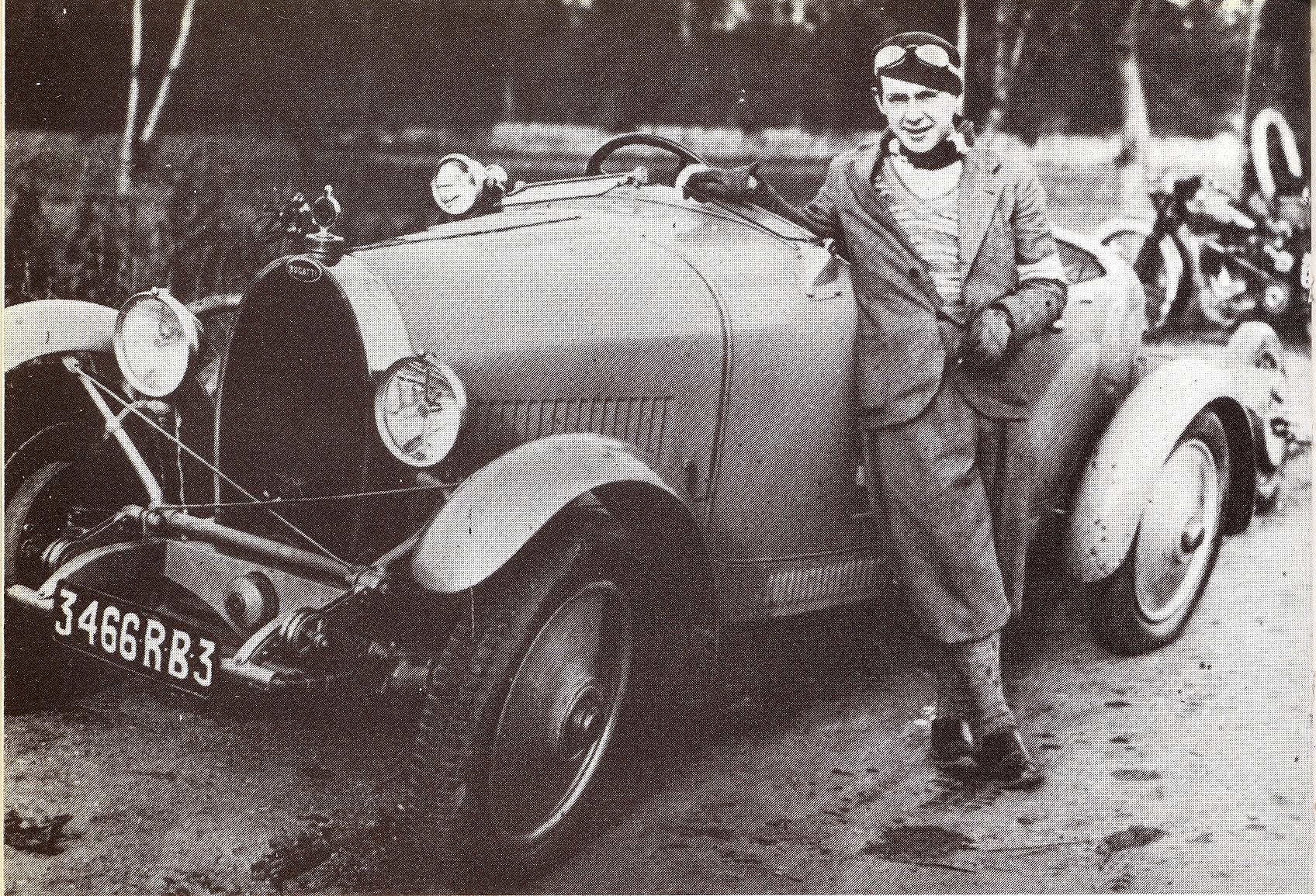
Hamel with his September 1927 built, Bugatti T40 ‘Sport Modifiee’ #40576. To Ernest Friderich 4/1928-G M de Marsilan-then Hamel in 11/1928 for a ‘prix couvreur’ of Frs 15000 (H Conway Collection)

He enjoyed competing when not in his studio, often racing or acting as mechanic for gentleman racer Michel Dore. With him, he contested the Toul-Nancy and Arpajon events at Aisne and Picardy before performing on a larger stage at Le Mans in 1934. He co-drove a French, front wheel drive, 2-litre V8 Derby L8 owned by Louis Villeneuve. Fuel feed problems forced withdrawal of the car on lap 44, the race was won by the Luigi Chinetti/Philippe Etancelin Alfa Romeo 8C2300.

His work continued post-war, but with the advent of greater photographic content in newspapers his business declined. He sold his Bugatti Type 40 (#40576) and “made a reputation as a seducer with Paul Morand,” a writer, diplomat and academic.

In a sad end to a life lived full, he died in June 1972 at the Val-de-Grace military hospital in Paris, with another friend, Jean-Adrien Mercier at his side. He passed without an heir, forgotten. Only 19 people attended his funeral with his artworks “dispersed or sold.”

geo 2

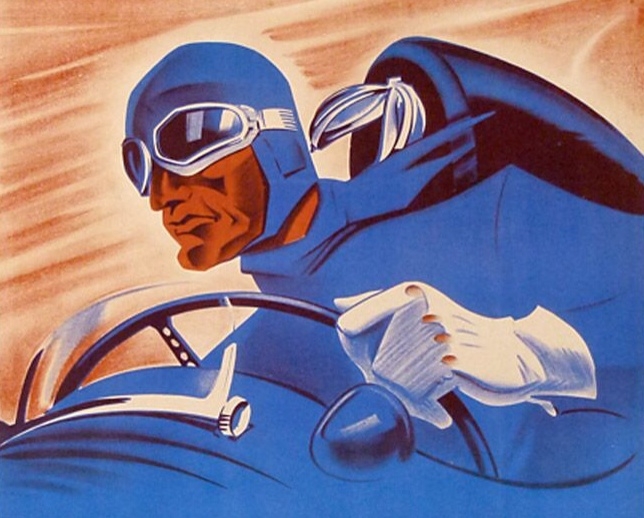
Crop of ‘Prix de Paris’ poster, Montlhery 1958 (Geo Ham)

Credits…

Wikipedia, Jorge Curvelo, Bob King, Julien Dub, Kees Jansen

Tailpiece…

geo 3

Finito…

bib

Bib Stillwell’s new fangled Cooper T43 Climax leads Stan Jones olde world Maserati 250F off Long Bridge towards Newry Corner, Longford 3 March 1958…

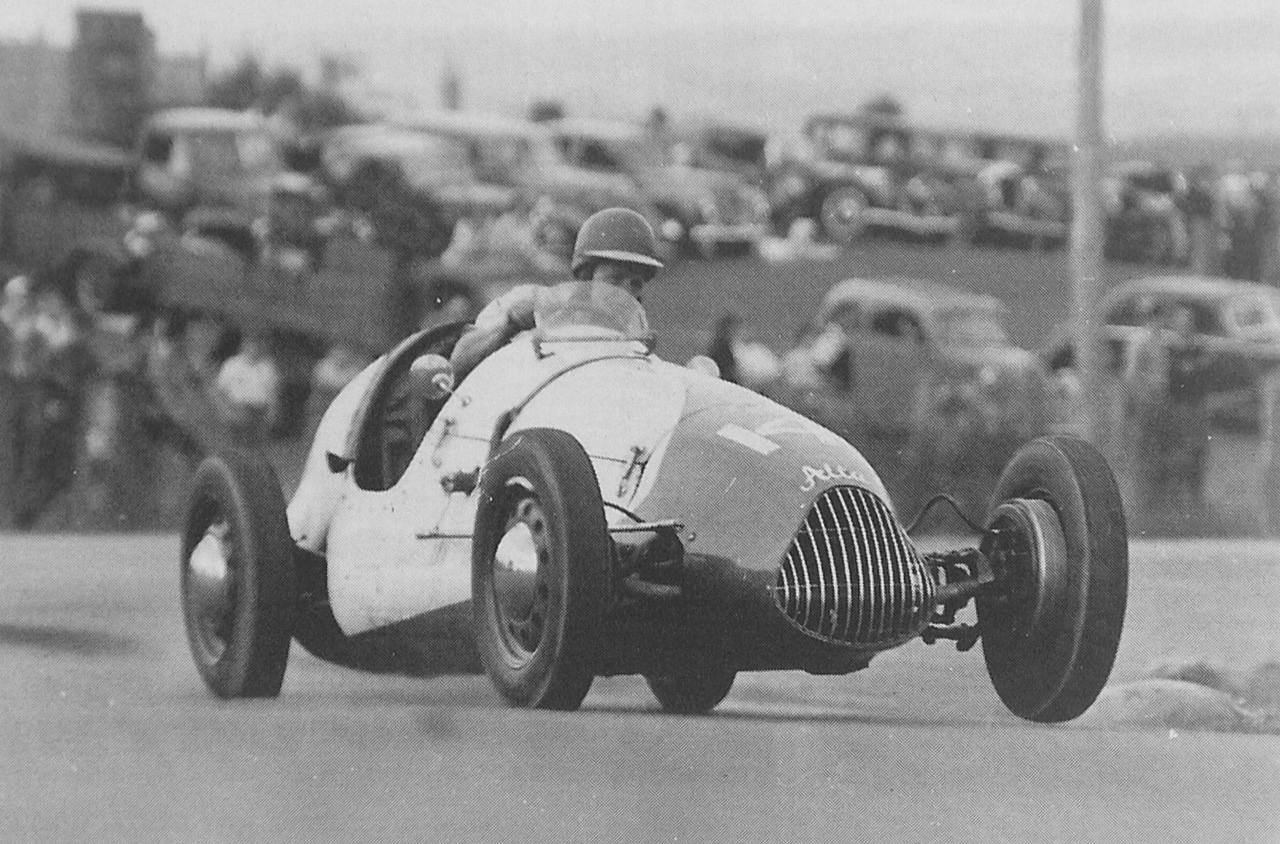
Ted Gray’s Lou Abraham’s owned Australian Special, ‘Tornado 2 Chev’ took the win in the Longford Trophy. There was life in front engined cars yet, Jones took the 1959 Australian Grand Prix at Longford in his fabulous Maserati, albeit assisted by the absence of 2.5 litre Climax engined Coopers, that would change soon enough. Stillwell was still learning his craft, his time at the top came in the sixties with four Australian championships on the trot from 1962 to 1965.

As usual photos stimulated the article, this time a great series of shots Lindsay Ross of oldracephotos.com posted on ‘The Nostalgia Forum’. The fact that Tornado won this and other races makes the car one of the great Australian Specials, up there with the Charlie Dean/Stan Jones/Repco Maybach and the crazy-innovative Chamberlain brothers built Chamberlain 8.

I didn’t so much see the Tornado as hear it for the first time. I was at Sandown in the 1970’s and heard what i thought was an F5000 on circuit, in fact it was Tornado, small block, injected Chev V8 powered. I made a bee-line for the car in the paddock and marvelled at the smarts behind its construction and the ‘balls of steel’ of the fella who raced it in period.

Other tangents in this article are the Tornado’s pilot, Ted Gray about whom little has been written, the 1958 Gold Star series and AGP which he deserved to, should the planets have been better aligned, won!

stns car fettled

(Walkem Collection)

Otto Stone, leaning over the Maser’s engine and John Sawyer fettle Stan Jones’ 250F in the Longford paddock. Jones’ performances in the car improved once Stone started preparing it. By 1958 they understood the Italian stallion’s nuances and Stan’s driving was a little more of a ‘percentage game’ than a ‘win or bust’ approach, dividends were Gold Star victory in 1958 and an AGP win in 1959.

glass

Arnold Glass in his ex-works/Reg Parnell Ferrari 555 Super Squalo. He was 3rd ahead of Doug Whiteford and Len Lukey. The bucolic pleasures and ever-present dangers of Longford readily apparent (oldracephotos.com)

The entry for the third round of the Australian Drivers ‘Gold Star’ Championship race was one of great depth for the day, and reflected competitor interest in Longford, allocated a round of the championship for the first time that year.

Arnold Glass had raced his Super Squalo since November 1957, having bought the car off John McMillan who raced it for a short time after it was sold to him by Reg Parnell. It was an ex-works 1955 555 Super Squalo, I wrote about it a while back, click here to read the article; https://primotipo.com/2015/08/25/arnold-glass-ferrari-555-super-squalo-bathurst-1958/

Coopers were starting to arrive in Australia in numbers, the transition from front engined Grand Prix cars and Australian Specials to ‘reasonably priced’ mid-engined cars, the first of which were Coopers was underway.

Jack Brabham won the first mid-engined AGP victory with his Cooper T40 Bristol at Port Wakefield in 1955, but that was a lucky win and flattered to deceive, at the time anyway. By March 1958 Stirling Moss had won Cooper’s first World Championship GP in Argentina, by the end of the year the ‘paradigm shift’ was pretty clear, despite the lack of a 2.5 litre Coventry Climax engine.

miller and patterson

Austin Millers Cooper T41Climax FWB 1.5 Climax ahead of Bill Patterson’s Cooper T39 Climax (oldracephotos.com)


doug and arnold

Whiteford, Maserati 300S #4 and Glass, Ferrari 555 Super Squalo in the Longford form-up area (Walkem Collection)

Doug Whiteford’s ex-works Maser 300S was an outright contender in Formula Libre championship events in Australia when he first bought it after the 1956 Olympic GP meeting, won by Stirling Moss in a 250F, at Albert Park. Despite Doug’s artistry behind the wheel, he was still one of the countries best drivers, the Maser was finding the going tough with so many fast single-seaters around by 1958.

Arnold Glass was not of the same calibre or experience as Whiteford but drove the Ferrari well and shone in 1959 when he acquired the ex-Hunt/Stillwell 250F, which was a more forgiving and faster car.

Lou Abraham’s Melbourne built Tornado Chev was one of the greatest of Australian Specials of the 1950’s. The big V8 engined, ladder frame chassis car, capably driven by Ted Gray was easily capable of taking the Gold Star and the AGP at Bathurst in 1958 with more luck and reliability. It was to be a mixed but successful Tasmanian weekend for the team.

Bib Stillwell, Cooper T43 Climax, Bill Patterson, Cooper Bobtail, Bruce Walton in Norman Hamilton’s Porsche RS550 Spyder, Doug Whiteford, Maserati 300S and Ted Gray’s Tornado Chev (A Lamont)


tornado

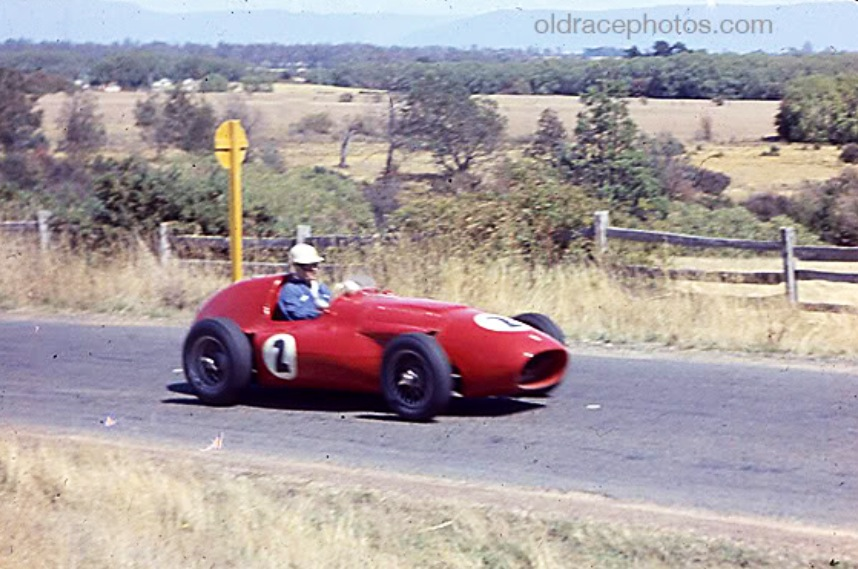
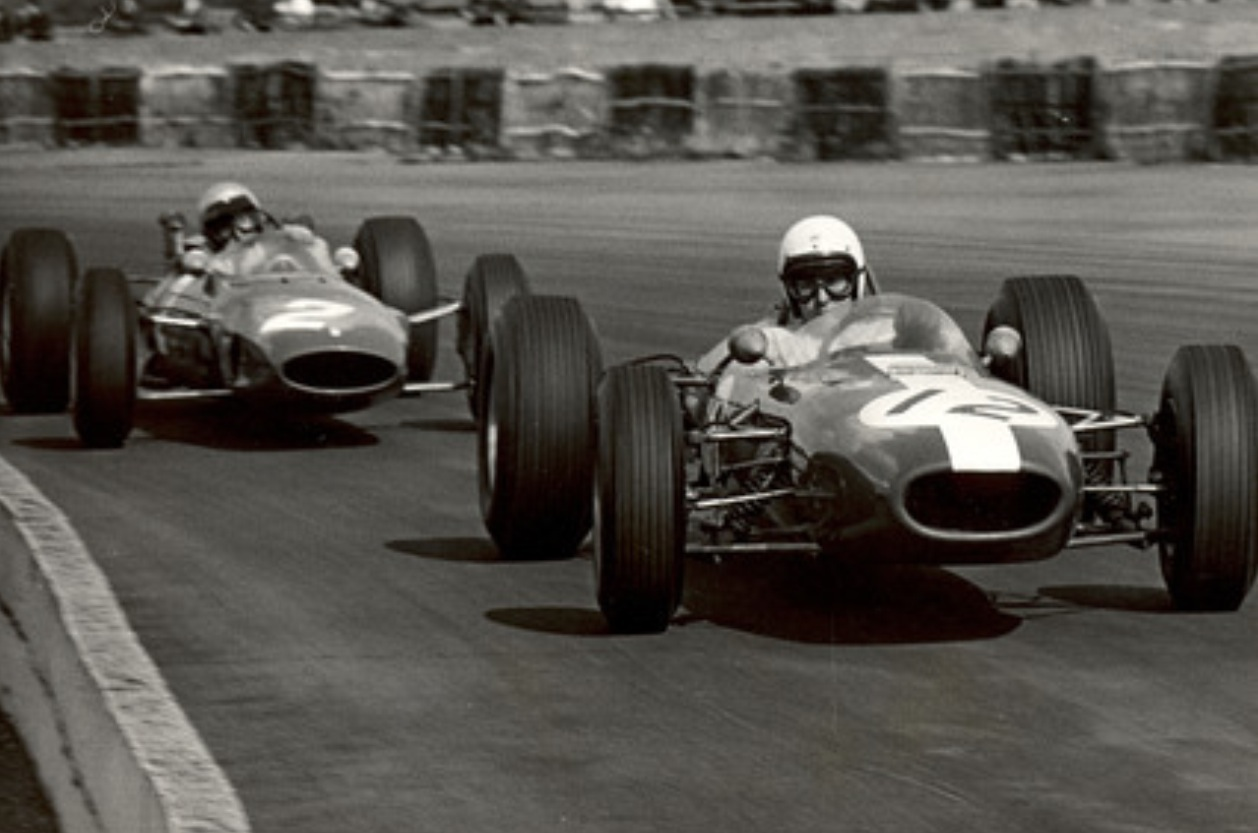
Ted Gray in the victorious, big, blue, booming Tornado 2 Chev, bellowing its way thru the beautiful Tasmanian countryside. Longford 1958 (oldracephotos)

The 1958 Longford Trophy…

The thrill of seeing some fast cars from the mainland attracted circa 40,000 raceday spectators despite the possibility of rain.

Ted Gray was in bed with flu, so Geelong’s Tom Hawkes did a few laps in the Tornado. Things got worse for the team in early practice on raceday when the gearbox failed. With the aid of  Hawkes and a Ford truck gearbox from a wreckers yard, Lou Abrahams and his crew replaced the unit in time to record a nominal practice time at the rear of a sports car race. Alec Mildren damaged his Cooper in a preliminary race so only six cars faced the starter for the 54 mile Longford Trophy race, if the race lacked quantity of starters it certainly had quality.

Bib Stillwell’s new Cooper Climax got the jump from Stan Jones’ Maser 250F, Gray’s Tornado, Arnold Glass’ Ferrari, Len Lukey’s Cooper Bristol and Doug Whiteford’s Maserati.

jones 2

Stan Jones, Maserati 250F, Longford 1958. Shot taken in practice, car bearing the scars of an attack on the local real estate or another car by Stanley (oldracephotos.com)

With 3 laps completed Stillwell held a small lead from fellow Melbourne motor trader Jones, the rest were within 250 metres of each other. Stillwell retired with pinion trouble, Jones simultaneously lost the 250F’s third gear, Tornado took the lead on lap 4 from Jones, Glass, Whiteford then Lukey.

Gray extended his lead over Jones but was being progressively splattered with oil from the errant ‘box, he pressed on when the taste! of the oil made him aware the problem was the gearbox not the engine. Gray had also lost first and second gears but the torque of the big Chev V8 was still an effective combination relative to Jones who was short third gear, the Maser DOHC six-cylinder engine less able to ‘plug the torque gaps’ than the Chevy.

Jones tried to chase Gray down, but the Tornado took the win several seconds from Stan, the big, wonderful Chev engined special clocked 147.5 mph over the measured mile. Glass was third, 8 seconds behind Jones then Whiteford and Lukey, less than 30 seconds separated the five cars after 54 miles.

Stan Jones won the Gold Star in 1958 with wins at Fishermans Bend and Phillip Island in Victoria and seconds at Orange, NSW, Longford and Lowood, the Queensland airfield circuit.

tornado AMS PW

Ted Gray in Tornado 2 Ford ahead of Stan Jones Maser 250F, Port Wakefield, South Australia  (Stephen Dalton Collection)

Lou Abraham’s Melbourne built Tornado’s were two of the great Australian Specials of the 1950’s...

The Tornado was no ‘flash in the pan’, it was built by a couple of wily racers and their team who knew their way around racing cars and V8’s. There were two cars, three really, the short life of Tornado 1 led to Tornado 2 but before both was a highly modified Alta V8.

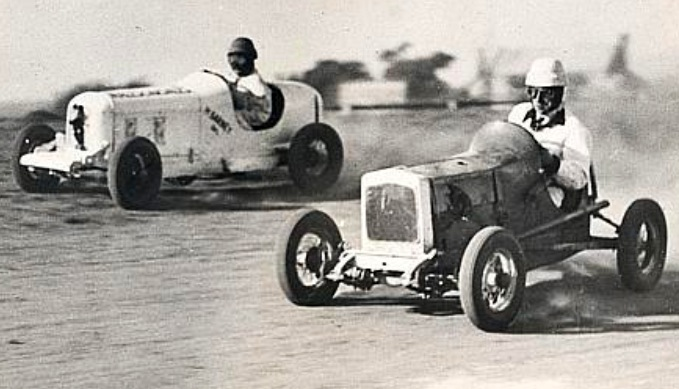
Wangaratta, Victorian driver Ted Gray first came to prominence well before the war, when, as a young motor apprentice he contested the events won by Peter Whitehead’s ERA at Aspendale Speedway in Melbourne on  October 1 1938. Whilst Whitehead won the day and took the lap record, Gray nearly matched him in his motor cycle engined midget.

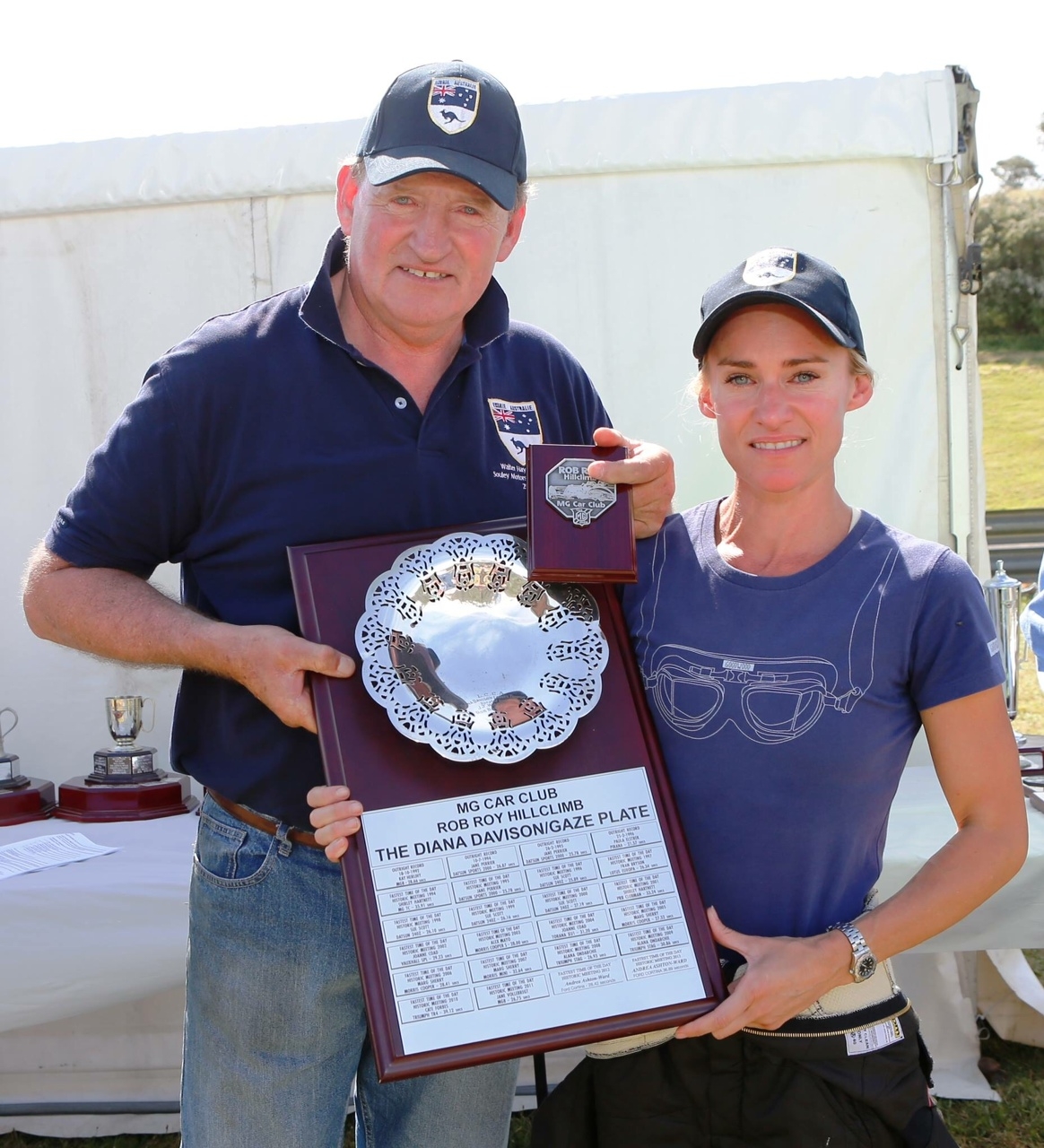
He almost did it again two months later coming close to Whitehead’s ERA times at Rob Roy hillclimb in outer Melbourne, again driving the Alan Male owned midget. Alan Male’s career commenced as a salesman for the Fisher Norton agency in Melbourne, shortly thereafter he started a used car business which provided the cashflow to pursue his passion and the means to promote his business.

gray

Ted Gray on the left and Colin Best on the last lap of a Speedcar event at Aspendale Speedway, Melbourne in 1939. Details of chassis’ and engines unknown  (vintagespeedway.com)

Gray also contested the January 30 1939 Rob Roy meeting when Frank Kleinig became the first driver to break 30 seconds in the Kleinig Hudson, perhaps the most famous and longest lived of all Australian Specials.

As War loomed Gray contested one of the last pre-war Australian motor races at Wirlinga, Albury, on June 17 1940. ‘The Male Special’ was the ex Alan Sinclair Alta 1100 fitted with a Ford V8, Alf Barrett was the scratch man, but Gray was not giving the exotic GP Alfa Romeo Monza too much. Barrett won the 6 lap preliminary with Gray in second, both failed in the 25 and 75 Mile Events.

There was the occasional event during the war years., in his book Jim Gullan recalls a three heat match race to raise money for charity between Gray in the Male Spl/Alta V8 and Jim’s Ballot Ford V8 at Aspendale Speedway. Ted won the first heat, Gullan the second and Ted by half a wheel the third ‘…we were lapping the dirt track at 80mph in one long sideways drift, it was exciting!’ Gullan recalled.

Gray set FTD at an early postwar Greensborough Hillclimb. He contested the 100 Mile NSW Grand Prix at Bathurst in 1946 in the ex-Mrs Jones (Alfa 6C 1750SS) Alfa Ford V8, Gray second to Kleinig in the over 1500cc handicap and fourth in the 100 Miler, Alf Najar’s MG TB Spl was the victor.

Gray received a lot of publicity when he recorded a 73mph average in the Alfa V8 from Wangaratta to Melbourne to win a bet in 1946! These days there is a dual lane freeway from Albury to Melbourne but that was not the case post war, Ted would have been flying to do that time! No doubt he was well familiar with the Hume Highway, his home and motor dealership business were in Wang but at least one account records him having an engineering shop in Little Bourke Street, Melbourne, now vibrant as the city’s ‘Chinatown’.

gray alta

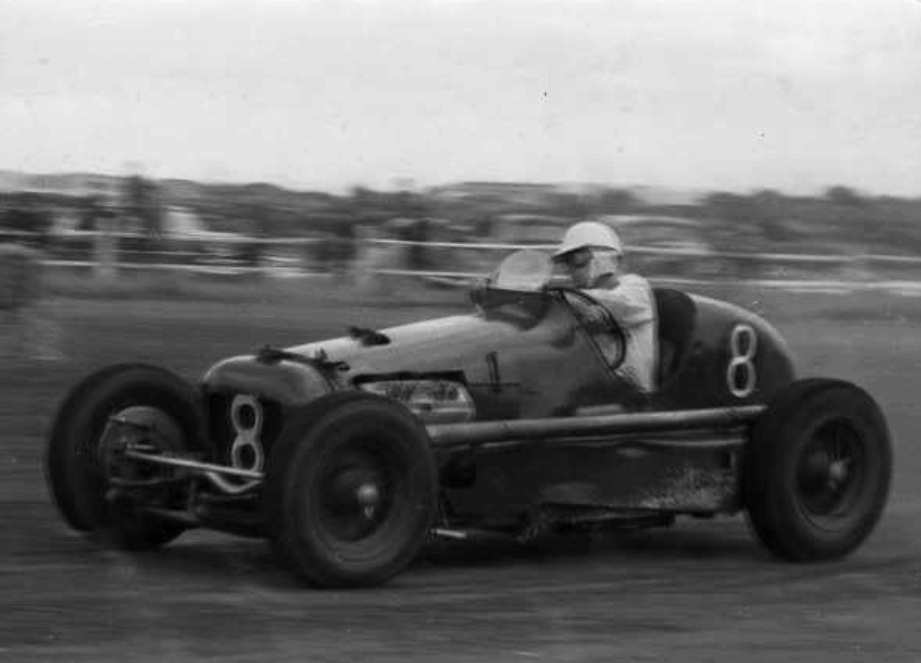
Ted Gray in the Alta Ford V8, Fishermans Bend March 1954. 4th in the Victorian Trophy . This car still exists, restored by Graham Lowe to its original form in the mid ’80’s (SLV)


gray 2

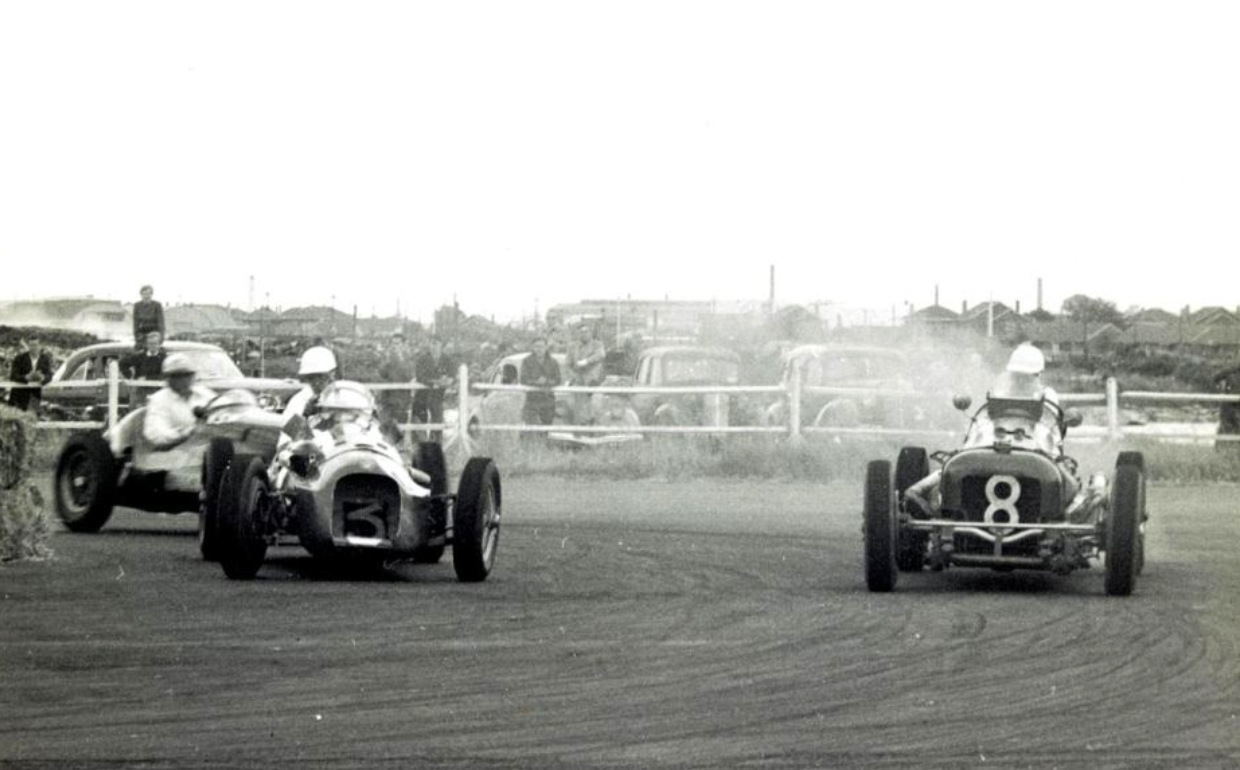
Another shot of the Abrahams/Gray #8 Alta V8 at the ‘Victoria Trophy’ meeting at Fishermans Bend, Melbourne on 22 March 1954. #3 is Lex Davison’s HWM Jag, winner of that years AGP at Southport, Queensland, and Jack Brabham in a Cooper Bristol (SLV)

Around 1948 Gray re-acquired the Male Spl/Alta V8 he raced pre-war and fitted a Ford Mercury side-valve V8, to which was installed a local OHV conversion made by Lou Abrahams.

The car first ran in this form at Fishermans Bend in October 1952 and was competitive enough to place fourth in the 1954 Victoria Trophy at FB. The capacity of the chassis to handle the engines power had been reached, so Gray and Abrahams decided to build a new car ‘The Tornado’ was the name Lou also used on his boats.

Gray was obviously a talented, fast driver with mechanical sympathy, he often drove cars owned by others throughout his career. The engine out of the Alta 1100 referred to above was built into a special by speedway racer Bill Reynolds in Melbourne. He constructed a neat ladder frame chassis and transverse spring suspension front and rear car. It passed into Bill Dutton’s hands, Gray raced it for him from late 1949, more often than not the Alta engine problematic.

ted gray bathurst

Gray in the Alta 1100 Spl at Bathurst in 1950, LF tyre off the deck (Historic Racing Cars in Aust)


lou abrahams

Lou Abrahams towards the end of his life, he died in February 2014 at 88. Cruising Yacht Club, Rushcutters Bay, Sydney. He won Sydney-Hobart twice in 1983 and 1989, sailed it 44 (times, 43 consecutively, a record. He also sailed 7 ‘Fastnets, the biennial classic off Britain and Ireland  (unattributed)


fishos start

Flavour of the era. Love this Fishermans Bend shot; ‘Victoria Trophy’ meeting February 1958 with the front engined cars of Gray, Tornado 2 Chev and Jones Maserati 250F up the front. Policeman and his horse oblivious to the cacophony, note the ‘safety’ fence. Industrial heartland of western Melbourne in the background (Geoff Green)

Lou Abrahams, a wealthy but unassuming man started racing dinghy yachts in his teens but transferred his sporting inclinations to cars and speed-boats, before later returning to yachts, his first Sydney/Hobart victory came in 1983.

In the fifties his ‘Louisco’ plastics and packaging business provided the cashflow for expensive mechanical pursuits. Ian Mayberry whose father and uncle worked on Tornado, recalls that Lou’s father owned the George Hotel in Fitzroy Street, St Kilda. Abrahams also had a screenprinting, fabrics and plastics business named Colortex Fabrics in Murrumbeena which he later sold to Nylex Ltd, becoming a board member of that public company in the process.

Gray built the Tornado 1 chassis from formed box sections of sheet steel, the structure had boxed side and cross members and specially made cross-members front and rear to which the suspension was attached.

Ian Mayberry doesn’t recall how Lou, Ted and his uncle, Bill Mayberry met, but the three of them were the teams core. Lou basically did the engines and between Ted and Bill they built the chassis and body and maintained the car.

Some of the bodywork was built at the panel business owned by Ian’s father Jack, who painted it and Bill, located at 248 East Boundary Road, East Bentleigh, a southern Melbourne suburb. Ted Gray’s workshop Ian believes at that stage, was in Coburg or Carlton, both inner northern Melbourne suburbs. The workshop looked after retail customers but was also where the car was built and maintained.

Independent suspension was used front and rear, the front comprised a transverse leaf spring low down with upper control arms and shockers from a Peugeot, at the rear a transverse leaf spring was again used on top of Holden lower control arms.

tornado front end

Tornado 1 front suspension detail; Peugeot upper control arms and shocks, transverse leaf spring at the bottom. Brakes Chev drums with Mustang aircraft internals ‘They worked very well at Orange’ said AMS, but perhaps not so well at Bathurst later in the year! (AMS)


tornado rear sus 2

Tornado 1 rear end; suspension by top transverse leaf spring and Holden wishbone below, diff a quick change Halibrand with Ford V8 crownwheel, brake drums Chev with P51 Mustang fighter mechanisms, note rear and 2 side fuel tanks, also crossply road tyres upon which the car is being raced, the car chewed its tyres, races lost as a consequence! (AMS)

Lancia stub axles were grafted onto the Peugeot steering knuckles to take advantage of the centre lock wire wheels, steering was Peugeot rack and pinion. Fabricated hubs were used at the back with Lancia splined hubs and wheels with Monroe Wylie telescopic shocks. The bridge type structure at the back housed a Halibrand quick change final drive brought back from the States by Lou with various engine goodies. Dodge universals were used on the rear drive shafts.

Brake drums were Chev 11.5 diameter and 2 inches wide, the operating mechanism was from a Mustang fighter aircraft and had ‘one cylinder operating a one piece self energising single shoe to each wheel. Ted figured they stopped five tons or so of P51 Mustang, so they should stop the Tornado…’

tornado engine

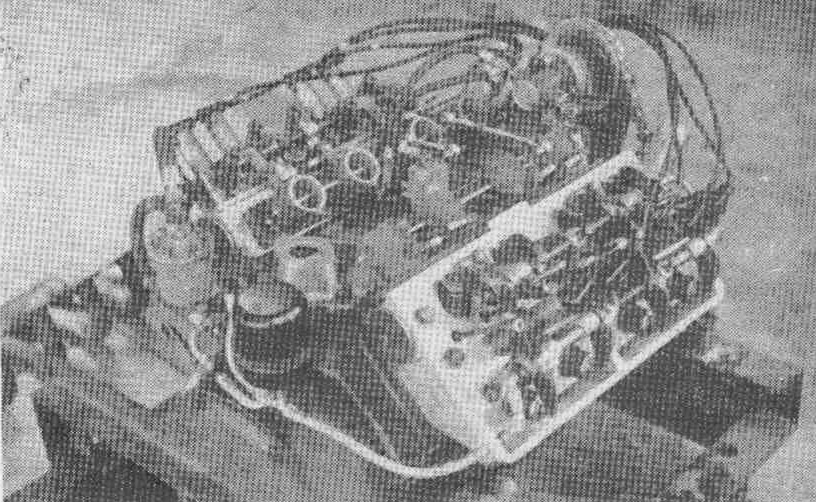
Tornado Ford Mercury based engine. Block cast iron, heads bespoke aluminium designed by Lou Abrahams. Shot of OHV gear and central ‘plugs, pump for Hilborn-Travers fuel injection at the engines front (AMS)

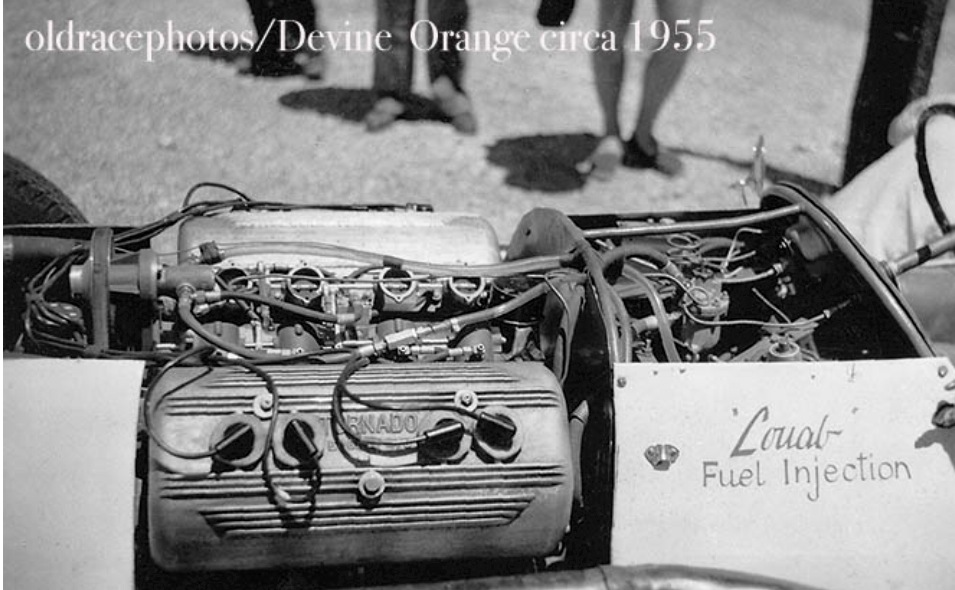
The engine was Abrahams responsibility and was unique as the first in Australia to use fuel-injection.

The Ford Mercury V8 was bored and stroked to over 5 litres, the most innovative element it’s locally cast aluminium, OHV heads designed by Abrahams to replace the side-valve originals. They featured hemispherical combustion chambers with valves 1 7/8 inches inlet and 1 5/8 inches exhaust in size, inclined at an included angle of around 90 degrees operated by rockers from standard cam followers. ‘Plugs were centrally placed, the whole lot topped by attractive aluminium rocker covers which could be seen, seductively, through the bonnet sides.

Each exhaust port had its own pipe, the inlet ports had a cast light alloy stub incorporating an air butterfly and spray nozzle from the Hilborn Travers fuel injection system. A Scintilla magneto provided the spark with the water pump and clutch standard. Drive was via a standard Mercury gearbox with a close ratio gearset imported from the US.

tornado engine

Engine of Tornado 1 Ford on its Gnoo Blas debut at Orange, NSW in January 1955. Ford Mercury side-valve block with bespoke aluminium heads designed by Lou Abrahams in Melbourne . ‘Louab’ fuel injection Hilborn-Travers based. Nice lookin’ thing innit?  (oldracephotos.com/Devine)


Ted Gray and Tornado 1 Ford at Gnoo Blas, January 1955 (K Devine)

The frames to take the body were of round steel and ‘are part of the chassis’ ; one in front supported the radiator, there was another at the firewall and ‘another which carries the kitchen type Laminex instrument panel’ (!) and one behind the seat.

Pedals were pendant, the brake master cylinders mounted into a beefy ‘top hat section arch’ under the scuttle. Instruments comprised tach, oil and fuel pressure, oil and water temperature and a push-pull switch for the magneto. Fuel was carried in three tanks, one in the tail and one either side of the driver.
tornado orange debut

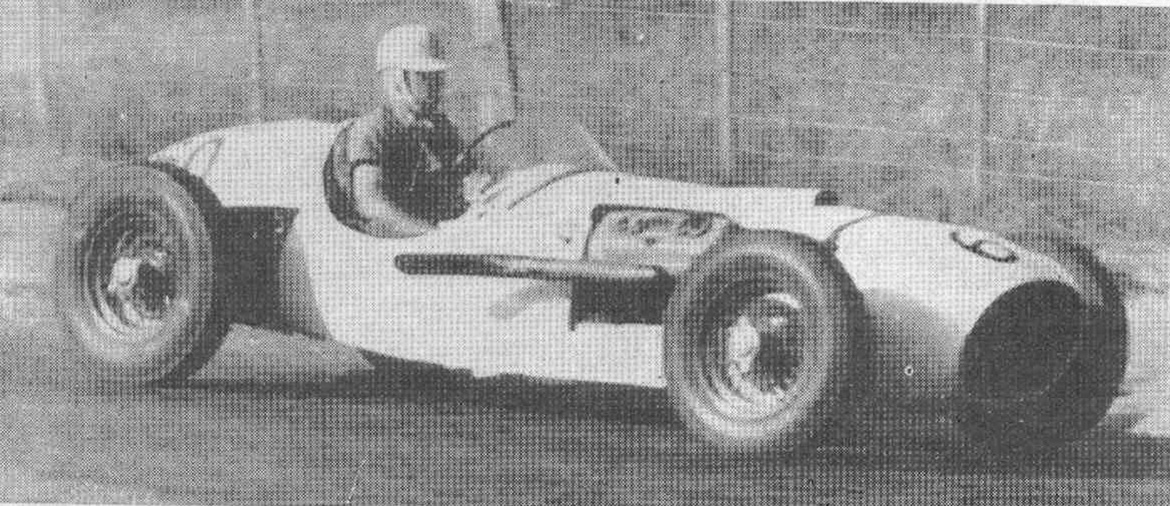
Tornado 1 Ford on its debut at Gnoo Blas, Orange, January 1955 ‘…first outing last month showed that it will be a very impressive car in the very near future’ Note engine exposed thru bonnet (AMS)

When completed Tornado 1 Ford made its debut, painted white with red highlights, at Gnoo Blas, Orange in January 1955 where its potential was clear despite various teething problems. Back in Victoria in February, the car retired from the 50 Mile Victoria Trophy held at Fishermans Bend with grabbing brakes, prophetic as things turned out, Lex Davison took the win in his HWM Jaguar. At Albert Park for the Argus Trophy in March, the big V8 placed third in a heat and fifth in the final, Doug Whiteford was the winner in his Talbot Lagp T26C.

Off to Bathurst in October for the NSW Road racing Championship and disaster.

Gray, running fourth in the ‘Group A’ race ‘was running neck and neck with Robinson’s Jaguar Spl…Down the straight for the last time and the white Tornado either locked a brake or touched Robinson’s rear wheel, sliding horribly out of control for over 150 yards before hitting a bank and a tree on the left, bits spraying down the road. Miraculously, a very lucky Ted Gray survived, receiving multiple fractures and severe shock but Tornado was a write-off. Rebuilt, its great days were yet to come’ said John Medley in his ‘Bathurst Bible’.

tornado bathurst

John Medley; ‘ Until seeing Garrie Cooper’s 1978 AGP accident (in an Elfin MR8 Chev F5000 at Sandown) i hadn’t seen one worse. In the overcast from up on Griffin’s Mount, all one could see was white bits flung down the road, rolling and bounding. Ted Gray wore white overalls and helmet. That he actually stepped out before collapsing is incredible’ (Bernard Coward photo in ‘Bathurst: Cradle of Australian Motor Racing’ by John Medley)

The two partners decided not to rebuild the rooted car but rather use what they could in Tornado 2, Abrahams incorporating all they had learned from the previous cars completed the reconstruction of the car with Bill Mayberry and other artisans whilst Gray was in hospital, recovery took six months.

Tornado 2 had a ladder frame steel chassis with three inch wide side members and incorporated most of the suspension and steering parts from Tornado 1 including the Peugeot steering, Lancia stub axle and Holden suspension components, the Halibrand diff, Ford engine and ‘box were also transferred from the old to the new. The P51 Mustang braking system was removed and replaced by a conventional drums all round setup built by Patons Brakes in Melbourne, eventually a Repco subsidiary.

Gray’s involuntary racing vacation was around six months, Abrahams and his team did an amazing job building the replacement so fast, the blue painted fibre glass bodied car made its debut in the hands of multiple Australian Hillclimb Champion, Bruce Walton at Albert Park in March 1956.

Walton performed well, despite teething problems, an appearance at the Geelong Sprints resulted in a standing quarter mile of 15.1 seconds. The car was continuously modified throughout 1956 to get it running fast and reliably, the ‘high maintenance’ constantly cracking fibreglass body was replaced by an aluminium one late in the year.

Gray contested the 1956 AGP meeting at Albert Park won by Moss’s works Maserati 250F, but the beast only lasted 15 laps before retirement. Its future competitiveness was underlined at the opening Phillip Island meeting in December 1956 with two wins on the very fast open circuit suited to the cars power and strong handling.

Tornado 2’s 1957 season commenced at Fishermans Bend in February, a tyre failed whilst holding second place. At Albert Park for the Victoria Trophy meeting on March 24, he was third behind Davison and Jones in Ferrari 500/625 and Maserati 250F, a good result but retirement followed in the championship race, a Gold Star round that year, the first year for the prestigious annual award for Australia’s Champion driver.

gray albert park

On the Albert Park grid alongside Bob Jane’s Maserati 300S. Here Tornado 2 with low cut body sides and Ford engined (autopics.com/Peter D’Abbs)


tornado chev engine

Tornado 2 with Chev engine, bespoke rocker covers as with the Ford engine. Hilborn-Travers injection incorporated in specification, Vertex magneto clear. Circa 380 bhp claimed (Merv Bunyan Collection)

The car failed to score any Gold Star points and later in the year a Chev Corvette 283 cid V8 engine replaced the faithful Ford/Abrahams V8. Despite the ongoing development of the Ford Mercury based engine with its trick Abrahams head, the lighter, over-square, OHV in standard form small block Chev was the way to go with plenty of parts to improve the engines performance readily available in the US. The engine was sourced using contacts of Abrahams and Jack Mayberry at Holden.

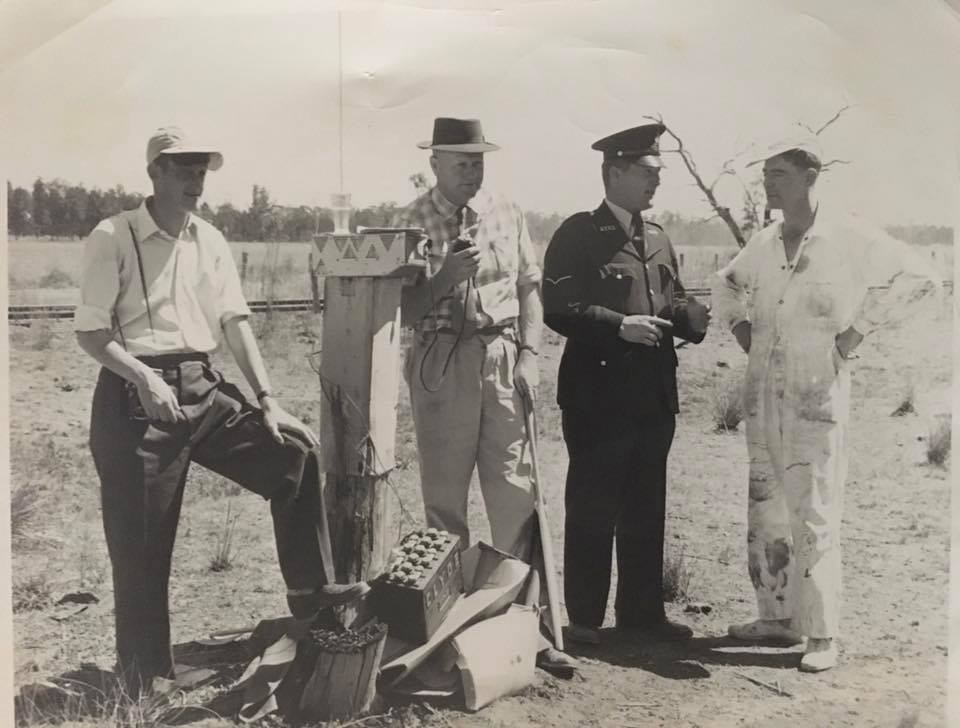
With Commonwealth Oil Refineries (soon to be BP) sponsored Australian Speed Records scheduled at Coonabarabran in central NSW on 28 September, the small team had only a week to adapt the Chev to the Ford ‘box, fit the fuel injection system and fettle the thing into running order.

The car was unloaded from its trailer on the long 620 mile tow from Melbourne to Coonabararan, over 200 miles was covered to run the engine in and refine its tune on public roads! BP had chosen cars and drivers to attempt the various records which were held on a four mile stretch of road linking Coonabarabran with Coonamble via Baradine. The sealed aggregate surface was good and allowed high speeds but it was only 18 feet wide and had a pronounced crown.

Runoff to the sides was limited by white posts, to the east by trees, and to the west by a railway line and a string of telegraph poles. Additional hazards were small dirt tracks to give farm access and a dirt road near the railway line both of which provided plenty of dust…a bend at each end of the 4 miles limited run-in and braking and slowing down. Such attempts were best held in the cool of the morning for optimum engine performance but media needs meant they were held later in the day when the wind was gusting, so no motorcycle attempts were made.

Timing crew at Coonabarabran (C Sparks)

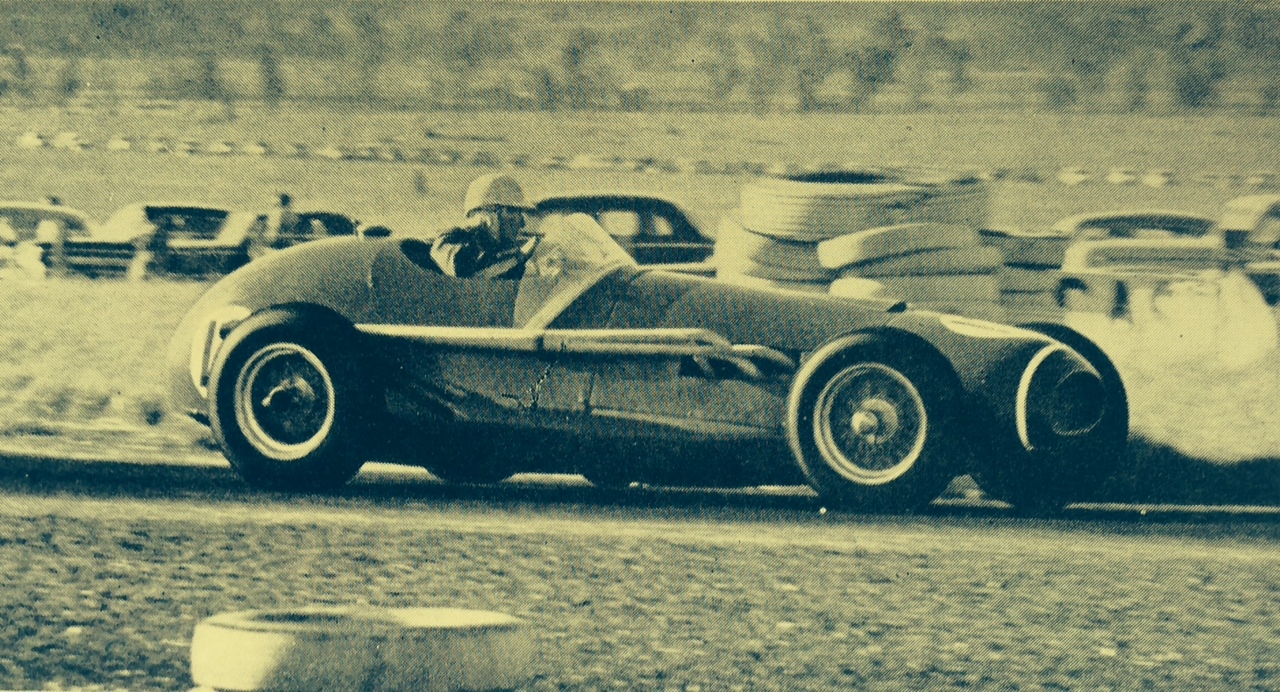
The Tornado was fitted with a 3:1 final drive ratio and 19 inch wheels with 5.25 inch wide tyres, Ted was aiming for over 160mph but magneto dramas limited revs to 5,300rpm. The team lowered the ratio to 2.8:1 to reduce revs, achieving 157.53mph on the Sunday to take the outright record from Davison’s Ferrari 500/625, the very same chassis ‘005’ with which Alberto Ascari won his 1952/3 world championships, which was quicker the day before. Tornado 2 created a sensation at 157.5 mph, the big, spectacular blue car thundering and bellowing across the plains on the long, flat public roads.

Straight to Bathurst from Coonabarabran for the NSW Road Racing Championships on October 6, two years after the demise of Tornado 1. The cars aluminium fuel tank split, the fuel leak the cause of its retirement, this metal fatigue was overcome by sheathing the ‘ally tank in 1/2 inch thick fibreglass. A week later at Fishermans Bend was more successful, Gray taking a strong win.

tornado

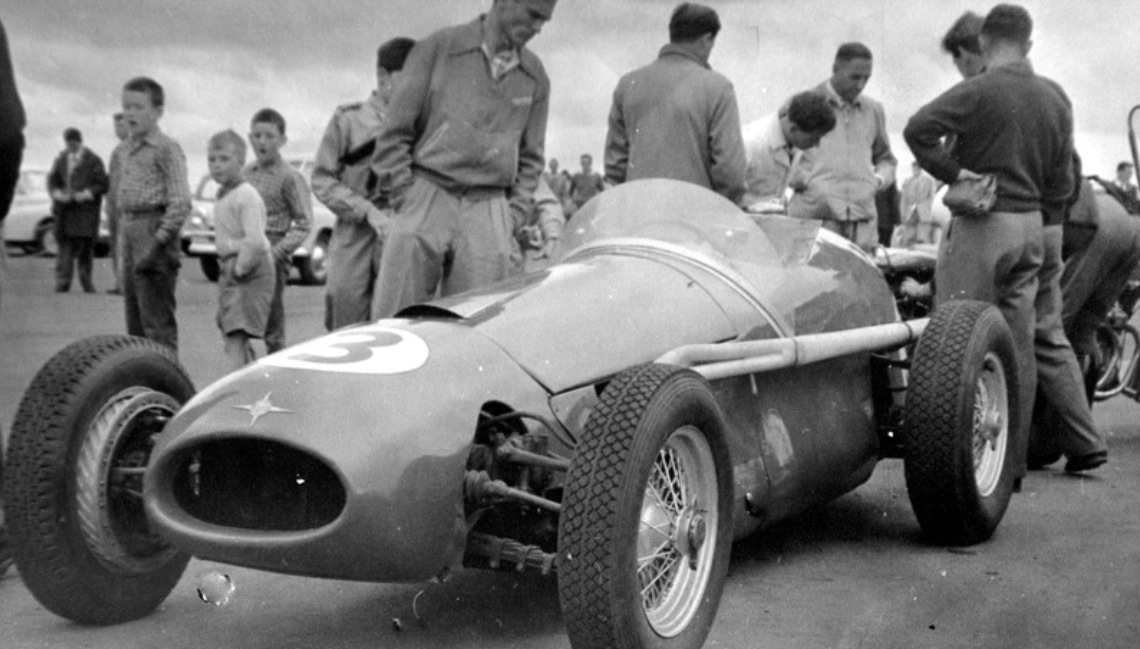
Tornado Chev in the Bathurst paddock, AGP meeting 1958. Its derivative of the best GP cars of its day but has a beauty all of its own. Bill Mayberry built the Tornado bodies (Kevin Drage)

Whilst of ‘plebian origin’ in comparison to its main competitors for the 1958 Australian Drivers Championship, Davison’s and Arnold Glass Ferrari 500/625 and 555 Super Squalo, Stan Jones and Doug Whiteford’s 250F and 300S Maserati’s and the Mildren, Lukey, Miller, Hawkes Coopers of front and mid-engined inclination, Tornado 2 was much more than the sum of its parts and had consistently shown championship winning speed if not reliability.

Perhaps one of the great injustices of ‘motor racing’s world of mighta beens’ is Tornado 2s failure to win the Gold Star in 1958 just when it needed to as the mid engined tide came in. It was not until 1971 that an Australian built car won the AGP and Gold Star, that honour going to Frank Matich aboard his Matich A50 Repco at Warwick Farm in late 1971.

The 1958 Gold Star comprised nine meetings held in Victoria, New South Wales, Tasmania, South Australia and Queensland, a big program of travel in the days when the continent was the same size as now without today’s road  network!

gnoo blas

Tornado 2 at rest, Gnoo Blas, 1958 (Ian McKay Collection)

South Pacific Trophy, Gnoo Blas, Orange NSW 27 January.

Gray chased Brabham’s Cooper in second, set the first 100mph lap of the circuit and retired with a misfire, Brabham won the race from Jones Maser and then set-off for his European season.

tornado fishos

Handsome beastie that it is! Tornado 2 Chev in the Fisherman’s Bend paddock February 1958. Spectators cars Jag Mk7 ? and Holden FB (Geoff Green)

Victoria Trophy, Fishermans Bend, Melbourne, Victoria 23 February.

‘The Carnival of Motor Racing’ was a combined car and motorcycle meeting, Jones won a close race from pole. Gray qualified and ran second until he had throttle linkage problems, he returned to the race but later retired, Jones won from Glass’ Ferrari and Whiteford’s Lago.

fishos first lap

First lap at Fishermans Bend, the flat industrial landscape clear in this shot. The big front engined cars of Glass and Jones with Gray obscured on the outside lead the pack (Geoff Green)

Longford Trophy, Tasmania 3 March.

Covered at this articles’ outset, a win for Gray’s Tornado after practice dramas.

fishos 3

Tornado 2 Chev, Fishermans Bend, February 1958. Good front suspension shot showing the Peugeot top wishbone/shock and transverse lower leaf spring (Geoff Green)

South Australian Trophy Race, Port Wakefield, South Australia 5 April.

Jones led the race until his radiator was blocked by straw from a haybale he attacked, Lukey’s Cooper Bristol won from Austin Miller’s Cooper. Gray didn’t enter.

tornado lowood

Gray kept the lead at Lowwod on 15 June for most of the race but slowed towards the end when the ‘breaker strips’ on his rear tyres started to show, allowing Mildren to take the lead (AMS)

Queensland Road Racing Championship, Lowood, Queensland 15 June.

Jones led until problems with the Masers rear end caused its retirement. Gray led Mildren’s Cooper until Tornado’s tyres started to shred towards the races end, Gray’s easing gave Mildren the win from the Tornado and Lukey’s Cooper Bristol.

The Tornado turned the tables on Mildrens Cooper the following day at Gnoo Blas, Orange when Gray won the ‘Canoblas Trophy’ a 55 mile race with the Cooper second, the event contested by 17 cars. Tornado was timed at 153mph and Mildren’s 2 litre Cooper T43 Climax at 145mph.

The dedication of competitors at the time was absolute, it was an 825 mile all night drive from Lowood to Orange. ‘The Canberra Times’ reported ‘The Queensland Grand Prix finished at 4.30pm…each in private cars towing the racing cars, they left Lowood at 5.30pm and travelling in company most of the way arrived at Orange at about 8am. ‘They then prepared their cars, practiced…started a 4 lap scratch race at noon and the Canoblas Trophy at 2.30pm…’

It wasn’t too far for Alec to then drive back to Canberra, where his business was, but Ted had a 325mile drive from Orange to Wangaratta to be at work on Tuesday, before towing Tornado back to Lowood again in late August, 875 miles, or a bit like driving from London to Rome without the autoroutes.

Lowood Trophy Race, Queensland 31 August.

Jones led from Gray and eventually took him on the oil soaked track but this time the Tornado had diff problems . Mildren’s Cooper passed Jones, taking the win from Victorians Jones and Lukey.

vrrc 1

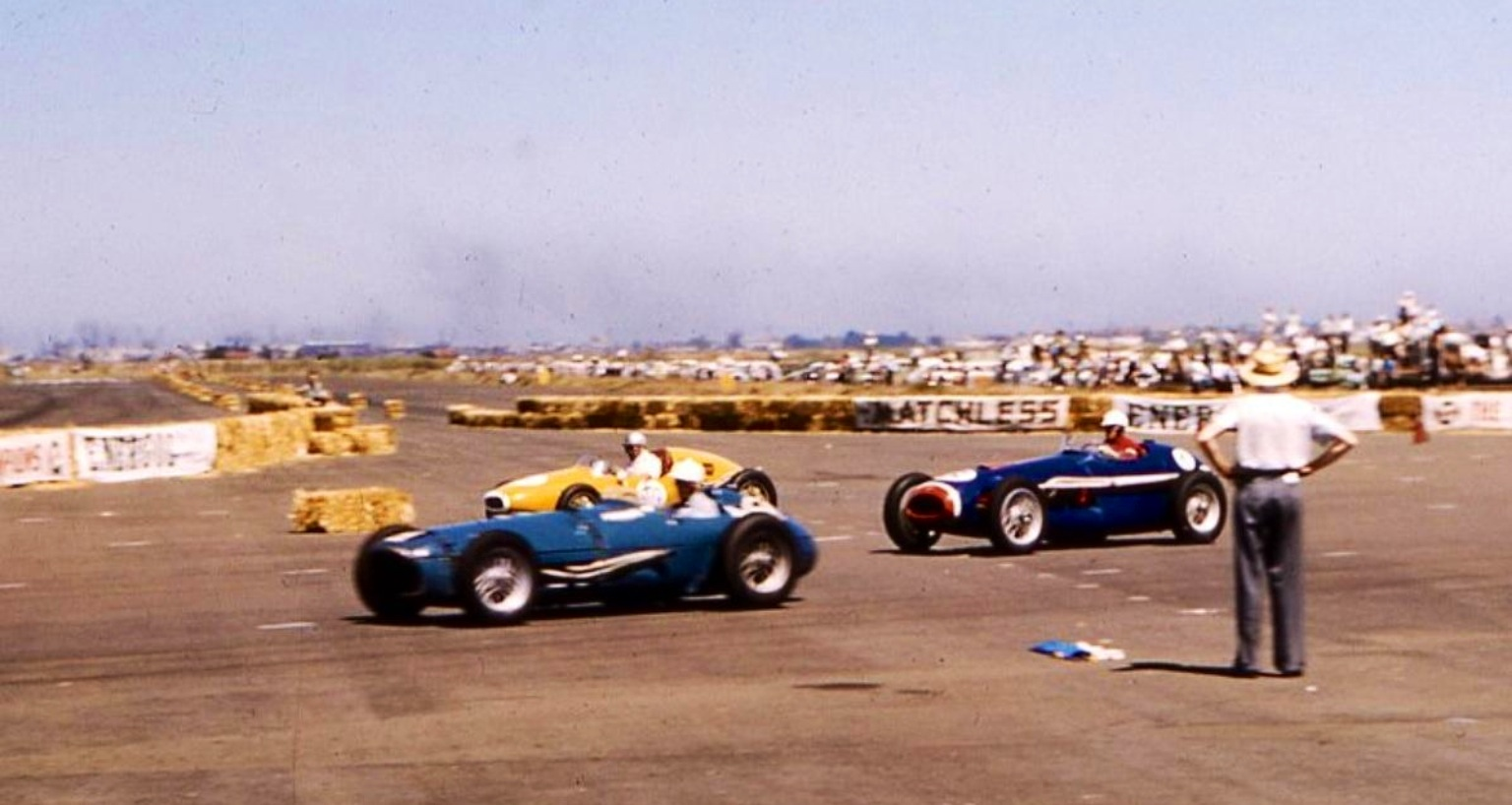
Finish of the VRRC Race at Fishermans Bend, October 1958. Gray won in the ‘red nosed’ Tornado, yellow car Austin Miller’s Cooper T41 Climax and Ern Seeliger’s blue Maybach 4 Chev (David Van Dal)

Victorian Road Racing Championships, Fishermans Bend 18 October.

The championship was not part of the Gold Star in 1958 and a week before the AGP at Bathurst, so it was perhaps a risky event to contest, but it was an excellent one for the team, Gray won the race from Len Lukey’s Cooper Bristol with Austin Miller’s Cooper T41 Climax third.

vrrc 2

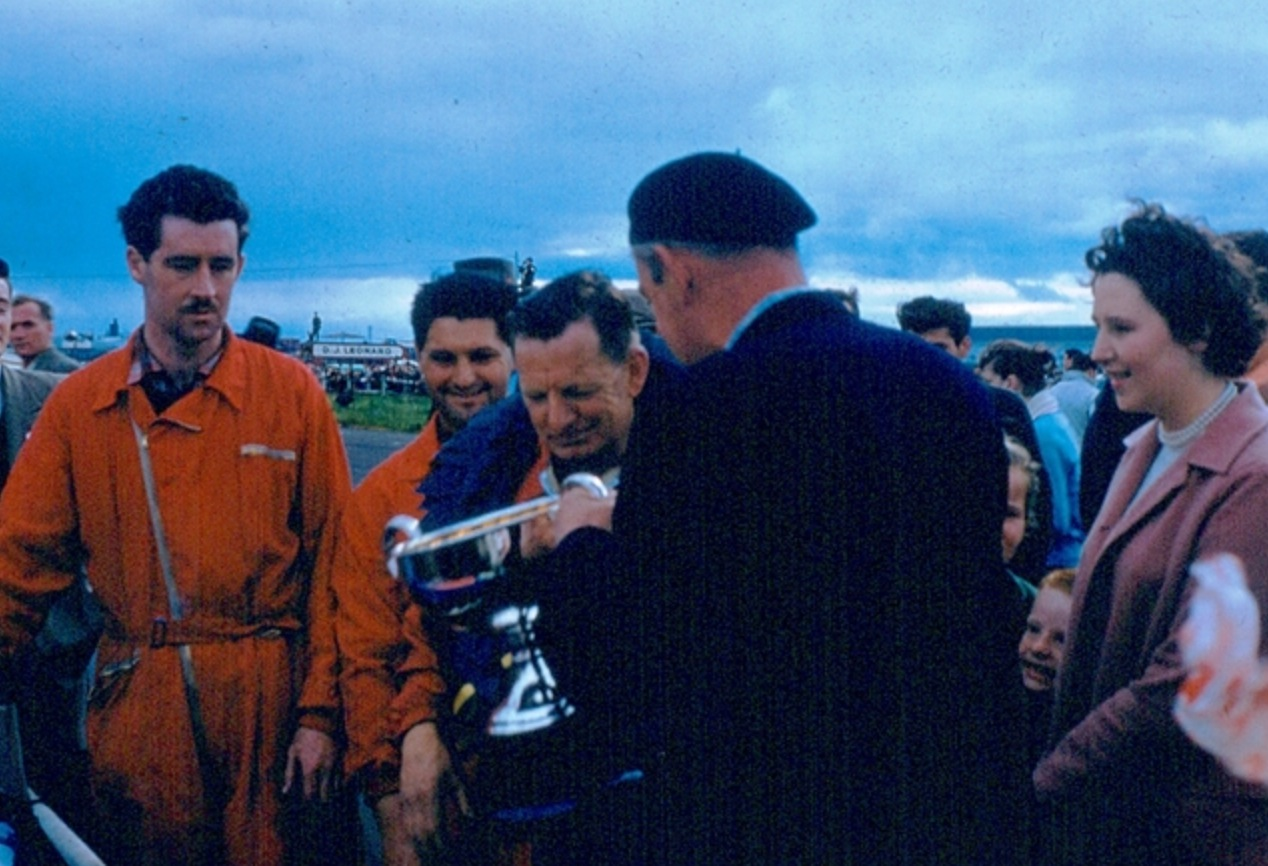
41 year old Ted Gray getting the trophy and plaudits of the crowd. VRRC champ, Fishermans Bend 1958. Bill Mayberry in moustache and stocky Lou Abrahams in red  (Kevin Drage)


agp grid

(David Van Dal)

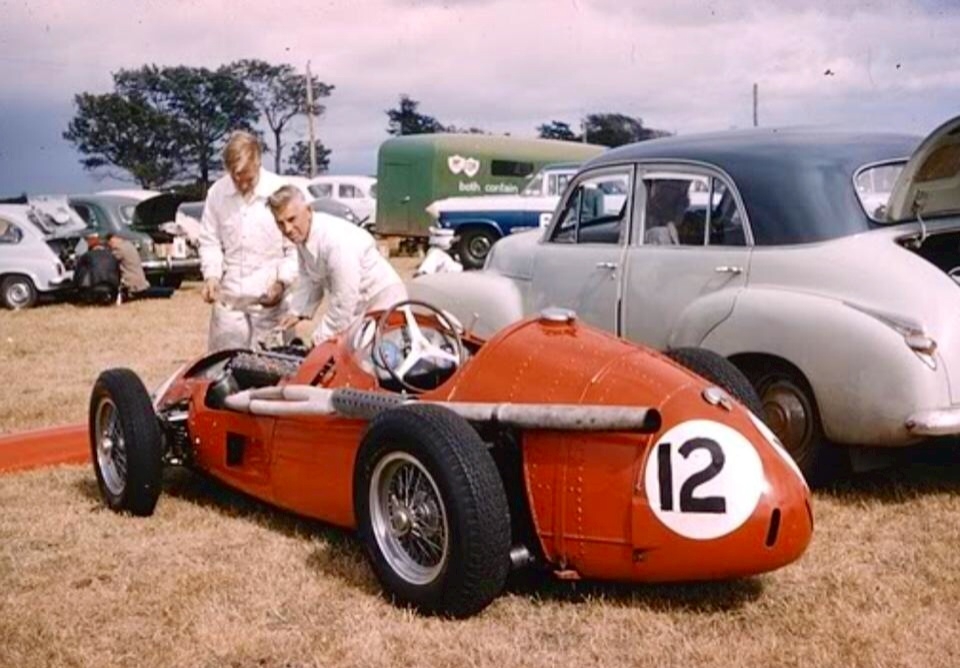
Bathurst, 23 October 1958. A preliminary race i suspect as the grid is not as for the AGP itself #12 Davison Ferrari 500/625, white nosed Ferrari Super Squalo of Kiwi Tom Clark with Tornado on the outside of row 1. Row 2 L>R Mildren’s Cooper T43 Climax, Merv Neil Cooper T45 Climax and Curley Brydon’s Ferrari Chev, the Jones Maser is obscured by Neil’s Cooper against the fence on row 3. Red clad Tornado crew looking on.

Gray was on pole from Jones, Davison returning to racing in his unsold Ferrari 500/625, Neil’s Cooper T45 and Lukey’s Cooper Bristol. Jones led Davison from the start, Ted’s strategy was to start with a light fuel load build a lead and stop later in the race for fuel. He soon passed Jones and Davo, the three cars ran spectacularly nose to tail for the next 12 laps.

bathurst nose to tail

Jones 250F leads Tornado across the top of Mount Panorama during their great dice (Alan Stewart Collection)

On lap 19 he made his stop but only had a lead of 10-12 seconds, then his stop was cocked up, taking another 25 seconds before setting off in chase. On the first lap out he achieved the fastest standing lap of Mount Panorama ever, he was too fast though, boofing the fence at Skyline, damaging Tornado’s steering and suspension, the car retired two laps later.

He had led for 20 of 24 laps and set the fastest ever speed of 155.17mph recorded on Conrod Straight. Jones led Davo for another 2 laps, until breasting the first hump on Conrod the 250F dropped a valve after 7 laps of clutchless gear changes. Davison eased his pace, over 2 minutes ahead of Ern Seeliger in Maybach 4 Chev and Tom Hawke’s Cooper T23 Repco Holden. It was one of the greatest AGPs ever.

tornado melbourne

The new and old; Brabham’s Cooper T45 Climax 2 litre leads Ted’s Tornado and Jones Maser 250F on lap lap 2 of the ’58 Melbourne GP at Albert Park. Moss’ winning Cooper T45 is further up the road  (AMS)

Melbourne Grand Prix, Albert Park, Victoria 23 November.

Moss and Brabham disappeared into the distance in their 2 litre Cooper Climaxes, Gray retired whilst fastest local, Jones also withdrew with falling oil pressure, Whiteford, Stillwell Maser 250F and Len Lukey took the remaining Gold Star points.

Philip Island Trophy Race, Victoria 26 December.

Jones won the race and Gold Star in his GP Maser from pole, Mildren and Roxburgh were 2nd and 3rd in Cooper Climaxes. Gray didn’t enter and Stan Jones won the Gold Star he deserved.

Tornado was barely raced in 1959 which was a pity as Jones Maser 250F won the AGP at Longford early in the year and Gray finished second to Stillwell’s Cooper at Bathurst in pouring rain for the NSW Road Racing Championship in October, Mildren’s Cooper was third, there was life in the front engined cars still.

Perhaps with more reliability in 1959, after all the learnings of the hard year in 1958 the wonderful, big blue V8 could have prevailed but as the great Frank Gardner said ‘IF Yer Auntie Had Balls She’d be Yer Uncle’. Ifs, buts and maybe’s mean nothing in sport, but the speculation is fun!

Lou and Ted raced the car in the 1960 New Zealand Grand Prix at Ardmore on January 9. An interesting idea but they were on a hiding to nothing with the plethora of Coopers racing in Australasia by then, Brabham won from McLaren and Bib Stillwell all in Coopers. Tornado retired after 5 laps with magneto dramas.

bz gp

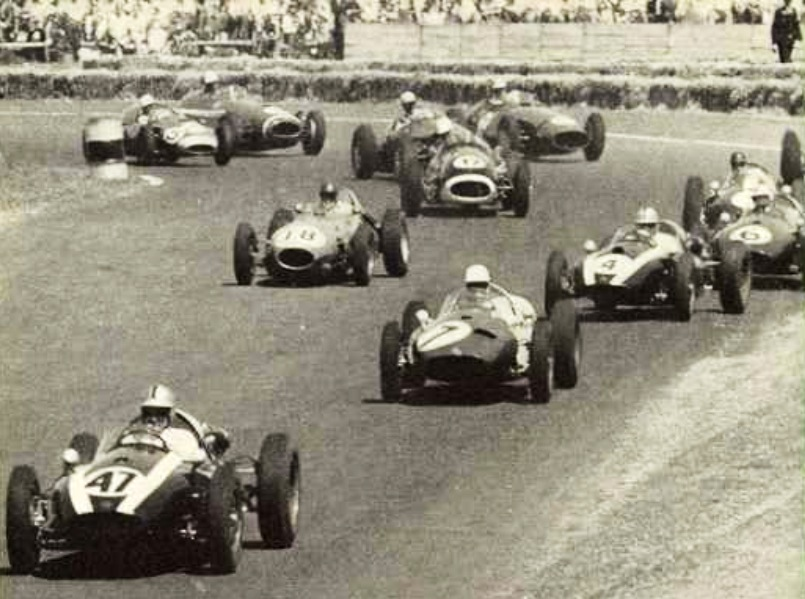
First lap of the 1960 NZGP, Ardmore, College Corner; #47 Bruce McLarens Cooper T45, #7 Moss Cooper T51 #4 Brabham Cooper T51 #18 David Piper Lotus 16 Climax, Gray in Tornado is at the rear of this shot on the outside of a Cooper, light colored band on the nose. 14 of the cars which started were front-engined so Ted was far from alone and with an engine not the largest in this F Libre race (sergent.com)


Symmons Plains March 1961. Mel McEwin in Tornado from Lex Sternberg Whiteford Climax and Bob Wright, Mercury V8 Spl (HRCCT)

Upon its return to Australia Tornado was sold to South Aussie, Mel McEwin who contested both the 1960 and 1961 Australian Grands’ Prix in it but the car was by now, like all other front-engined cars, being blown off by 2.5 Litre FPF engined Coopers. The 2495cc variant of the FPF engine was now fairly common in ‘The Colonies’, scarcity in this part of the world gave the front engined cars a slightly longer front line racing life than would otherwise have been the case.

In 1965/6 the car passed to ex-Cooper racer John McDonald as a ‘fun car’ after his frontline career finished, but he had a massive accident in it at Calder ‘breaking the car in half’. In the early seventies the car was restored by McDonald in Canberra making its historic racing debut at Hume Weir, Albury on Boxing Day 1976.

The big, bellowing, blue Tornado has been an occasional starlet at historic events for decades, sold to Frank Moore, it has been a part of his collection of Australian Specials/Cars since 1999.

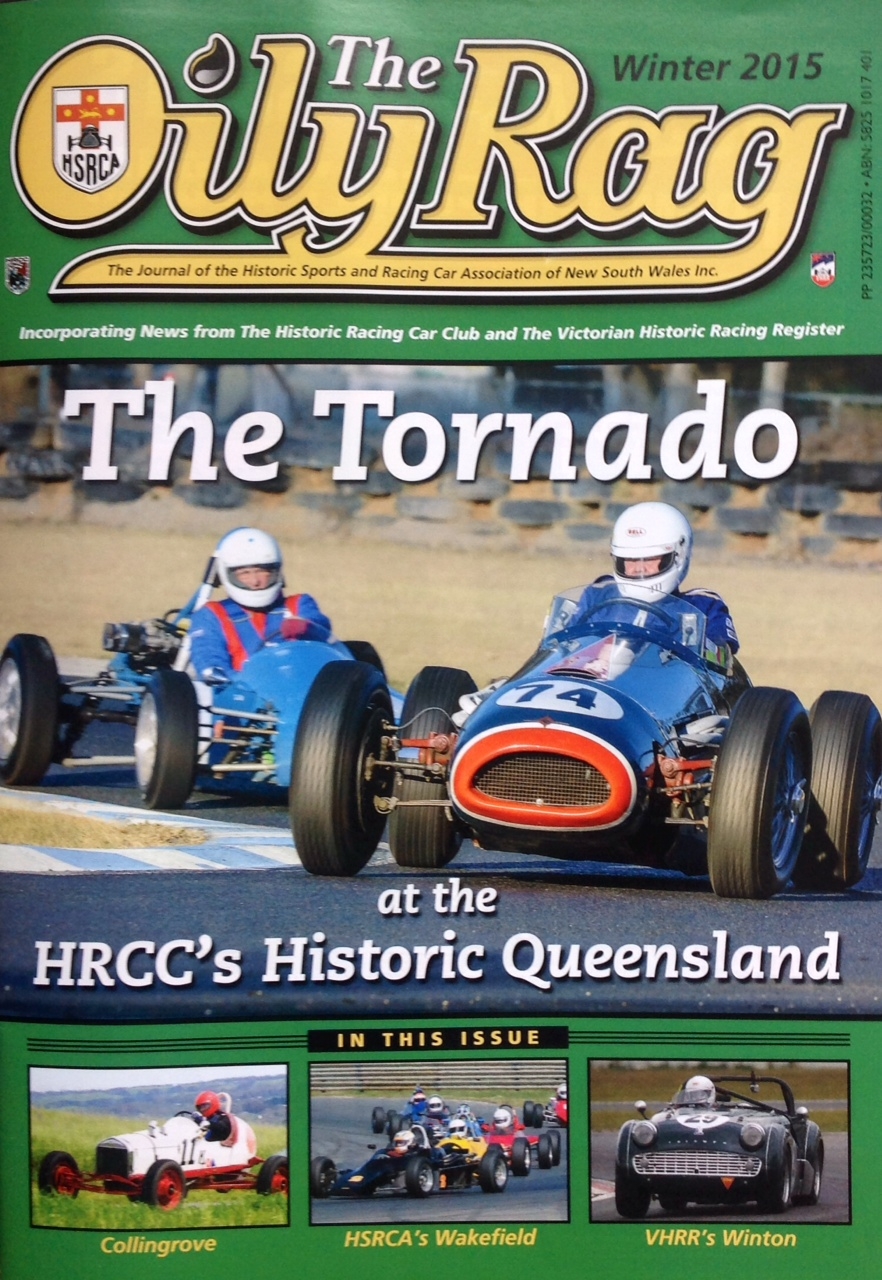
tornado cover

After this articles publication David Rapley, Australian racer, historian, author and restorer got in touch with his insights on Tornado, a car he fettles in Melbourne for its Queensland owner Frank Moore…

‘I was delighted to read your work on ‘The Tornado’ as Teddy Tornado is a great friend of mine having spent a lot of time with me in recent years. My comments/contribution is only of a very minor technical nature but I felt your work so good that I wanted to add it.

When Frank gave the me the car with a broken con-rod from an outing at the Melbourne GP it was in a very bad state. After inspection we concluded that the whole car had to be dismantled, crack tested and properly reassembled. Frank insisted that nothing should be repainted or anything done to modernise it-a welcome attitude after the over restored cars we mainly see these days at historic meetings’.

‘The front suspension was a mess with badly cracked stub axles and pivot/king pins and steering arms. (I use these parts still for show and tell to ‘try’ and educate old car people in the danger of not crack testing-sadly largely a waste of time!) These were originals covered in weld, the stubs themselves being I believe Itala not Lancia.

The brakes on the car-front are single leading shoe with two wheel cylinders per side of Aero origin I believe War Hawk but could well be Mustang and clearly date back to Tornado 1. The drums are locally made and may be Patons only contribution as the rear brakes are A90 Austin or Healey. I have not found any period photo’s to date when they were fitted but looking at how they were mounted I would guess from the first building of Tornado 2′.

‘It is obvious that the rear transmission support box and lower wishbones were used straight from the earlier car but with a top wishbone added, the transverse spring only providing now suspension’.

‘We went to great lengths to find a 1958 correct block and Corvette heads but sadly this engine was sabotaged at a subsequent Melbourne GP by someone pouring steel shot down the inlet trumpets of the Hilborn injection in the supposedly secure display tent. The current engine has a correct block but they are getting very difficult to find’.

‘An interesting aside-after the car was wrecked at Calder the front suspension was sold off to a Hot Rodder; Richard Bendell was horrified, bought it back and gave it to McDonald to repair the car.

Pleased to report Teddy still has all his original aluminum body now much battered and cracked and as much as possibly all of its bitz and bobbs’.

tornado agp

Ellis French’s wonderful atmospheric shot of Ted Gray gridding Tornado 2 up for the 1959 AGP at Longford. DNF on lap 4 with a run main bearing, #5 is Len Lukey’s Cooper T45 Climax 2 litre 2nd . Lukey took the Gold Star title that year, at 12 rounds the longest ever (Ellis French)

Where Does Ted Gray and Tornado Fit in The Pantheon of Australian Motor Racing?…

There is not a lot published about Ted Gray. He was born in Wangaratta 140 miles from Melbourne its rich grazing country, well known to Aussie racers, Wang is close to Winton Raceway.

Born in 1917 he was apprenticed as a motor mechanic and commenced his racing career on Speedway’s the most popular and common branch of the sport in the 1930s. He finished second in the 1938/9 Victorian Speedcar Championship to George Beavis in a match race at Olympic Park, Melbourne.

He continued race on speedway’s into the late 1940’s whilst also road racing and had a massive accident at Maribyrnong Speedway in Melbourne’s west in December 1947. In a classic ‘interlocked wheels speedway prang’ Gray was thrown from his somersaulting car sustaining spinal injuries and extensive lacerations, recovering in the Royal Melbourne Hospital. So his 1955 Tornado 1 Bathurst crash was not his first ‘Big One’. Clearly he was one tough nut as his speed after the Bathurst prang, he had a six month ‘holiday’ after it remember, was if anything faster after the prang than before it. These country boys are hard men.

In terms of his business, he was a partner in the local Ford Dealership in Wang. He also had workshops in Melbourne’s CBD and later Carlton or Coburg. It was in the latter that Ian recalls another bad accident in the early sixties when Gray’s legs were broken in a workshop accident in which he was pinned to a wall by an errant car.

The Australian Motor Sports Review Annual in 1958/9 rated a quartet of drivers ‘representing the ultimate performances in the 14 years since the war, Doug Whiteford and Lex Davison both triple AGP winners at the time (Davo later won a fourth) Len Lukey 1959 Gold star winner and Ted Gray.

Of Gray the review had this to say;

‘Ted Gray has been driving Lou Abraham’s Tornado since the car first raced. Winner of the Longford Trophy in 1958 and numerous other races his main claim to distinction is as Australia’s fastest recorded driver. In the Tornado at Coonabarabran, NSW in 1957, Gray recorded a new ‘Class C’ Australian record of 157.53mph, the fastest yet achieved in Australia.’

Quite how Stan Jones was overlooked in the quartet is beyond me. I wasn’t there at the time but Stan had won a lot of races including the NZ GP in 1954 by 1958, personally I would have popped him in front of Gray and Lukey.

None of which is to take anything from Ted Gray who was a vastly experienced and very fast driver. Further, he was one of that engineer/driver breed who had the skill to design, build, race, interpret the beasts needs and modify their steed further to make it competitive. Maybe Larry Perkins was the last Australian of Gray’s ilk? I’m not sure when Ted Gray died and am interested to hear from anyone who can add more to his story.

That the small, clever, experienced and adequately funded team from Melbourne took on the best of European Grand Prix cars at the time was a great achievement. Its just a shame they don’t have the 1958 AGP and Gold Star to reflect Tornado’s speed…

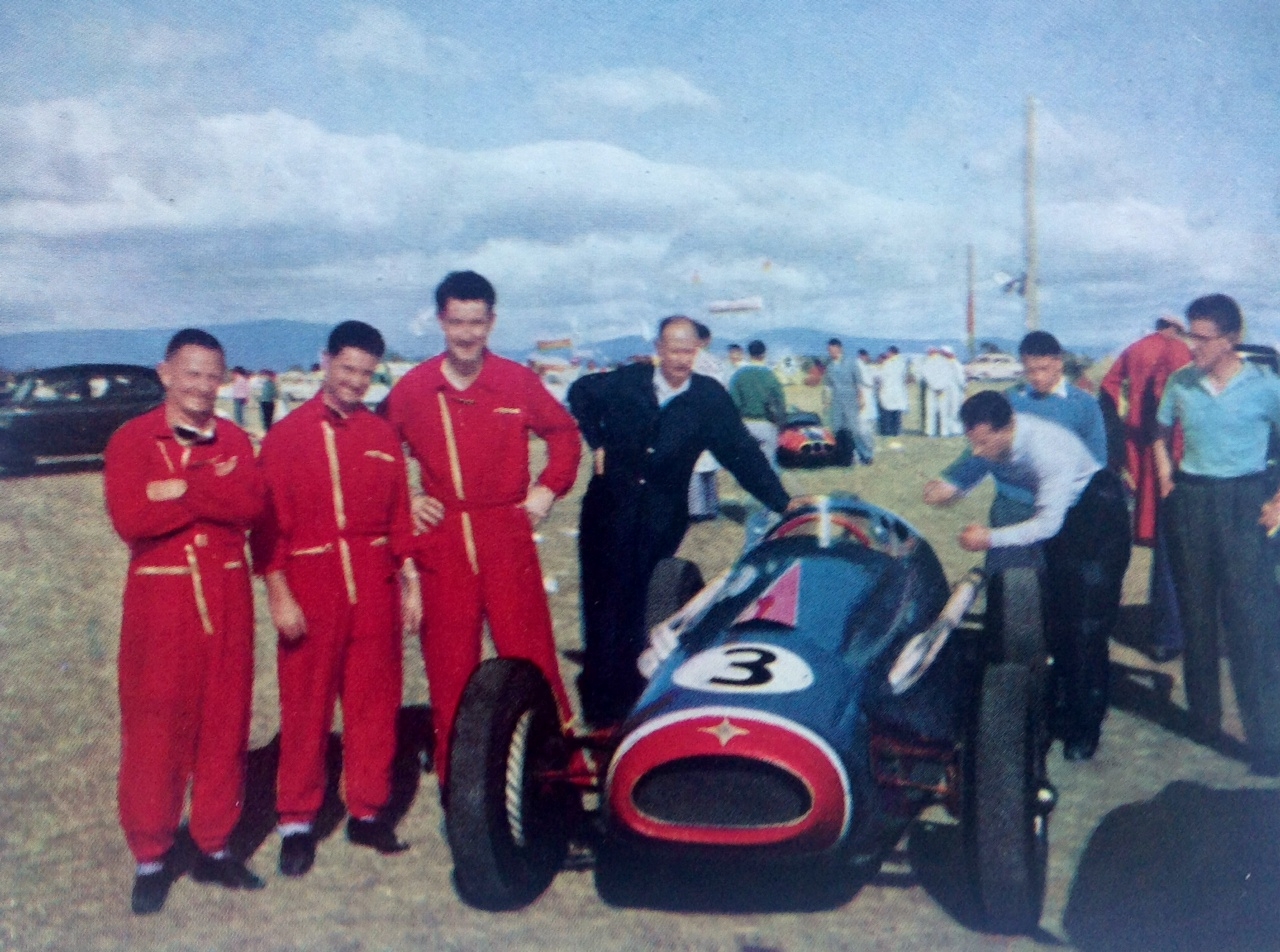
tornado crew

The Tornado 2 Chev crew in 1958, circuit unknown. L>R Ted Gray, Lou Abrahams and Bill Mayberry in red (AMS Annual 1958/9)

Bibliography…

Special thanks to Ian Mayberry for his recollections and David Rapley for his comments on the car in modern times.

John Blanden ‘Historic Racing Cars in Australia’, Stephen Dalton Collection, Australian Motor Sports July 1956, The Canberra Times 18 June 1958, John Medley ‘Bathurst: Cradle of Australian Motor Racing’ and ‘John Snow: Classic Motor Racer’, Australian Motor Sports 1958 and 1959 annuals, Graham Howard Ed ‘The History of The AGP’, Stephen Dalton Collection, James Gullan ‘As Long as It Has Wheels’

Photo Credits…

oldracephotos.com stunning archive, thanks to Lindsay Ross, Walkem Collection, vintagespeedway.com, Ian McKay Collection, Kevin Drage, Geoff Green, David Van Dal, Alan Stewart Collection, sergent.com, Ken Devine Collection, Historic Racing Car Club of Tasmania, Craig Sparks

Tailpiece: One of the greatest ever AGP’s, Bathurst October 1958. Jones 250F, Gray Tornado and Davison Fazz 500/625 at it ‘hammer and tongs’ on a circuit to test the skillful and the brave…

stan bathurst

(AMS Annual)

Finito…

pete

(The Cahier Archive)

Well, Mike Spence in any event. His ‘Parnell Racing’ Lotus 25 BRM is ‘in drag’ for filming of John Frankenheimer’s iconic racing film ‘Grand Prix’…

James Garner played Aron, the helmet design that of Chris Amon, Aron drove for the fictional, nascent Japanese ‘Yamura’ team after being booted out of the Jordan BRM team in a crash which took out his teammate ‘Scott Stoddard’.

In the race itself the great British ‘all-rounder’ Spence finished an excellent 5th behind Brabham, Hill, Clark and Stewart…

spence solvers

Mike Spence in his factory BRM P261 on the ‘BRDC Intl Trophy’ grid, Silverstone 29 April 1967. He was 6th in the race won by Mike Parkes’ Ferrari 312. ‘Gedda move on with the start’ seems to be the pose? (unattributed)

Photo Credit: The Cahier Archive

tarrant 2

(Algernon Darge/SLV)

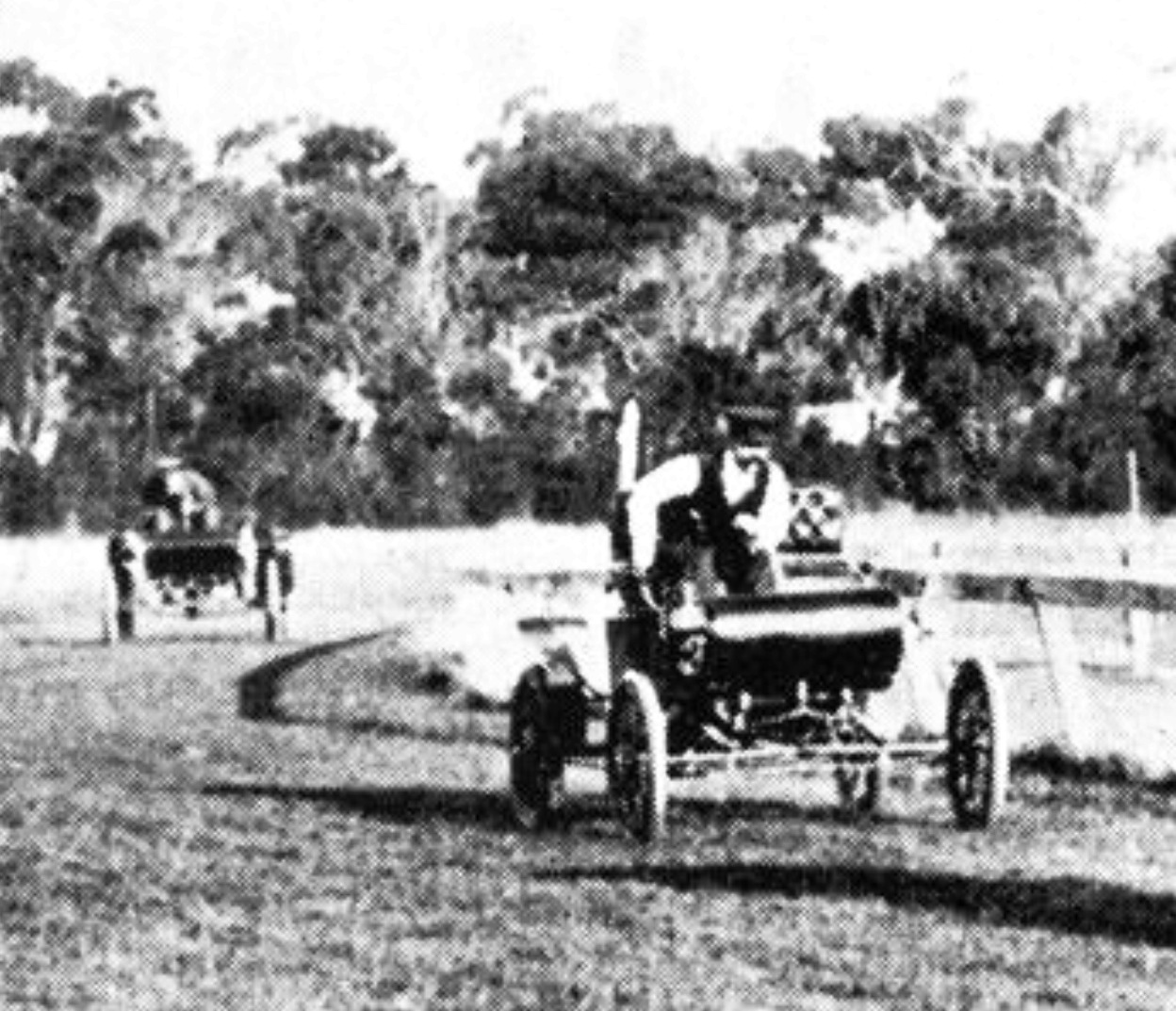
Harley Tarrant ‘tears’ down Sandown Racecourse’ back straight in his Argyll to win the 3 mile race ‘for heavy automobiles’ on 12 March 1904…

Runner-up of the event organised by The Automobile Club of Victoria was Tom Rand’s Decauville, Tarrant’s average speed, 26mph for the 3 miles in a time of 6 minutes 55 seconds.

tarrant

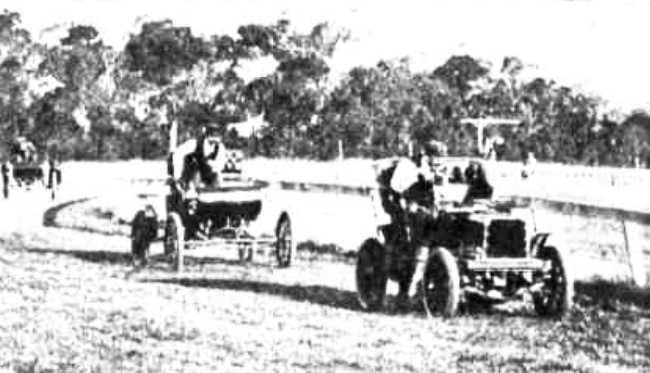
Harley Tarrant left, Argyll 10HP and Tom Rand Decauville 16HP 2nd. Sandown Racecourse, 12 March 1904 (Algernon Darge/SLV)

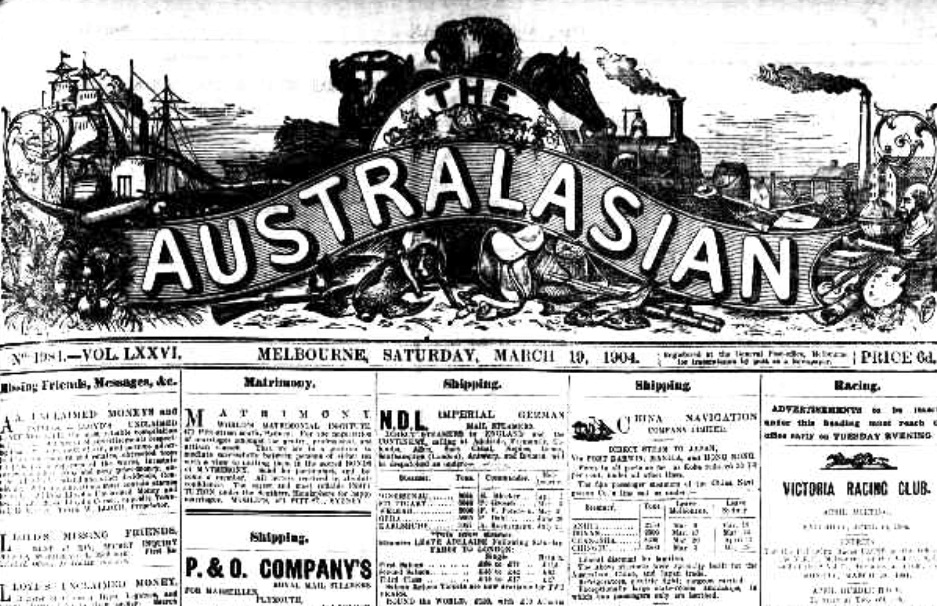
the ozzie

Three motor contests were run at the ‘Commercial Travellers Association’ annual picnic at Sandown Racecourse on 12 March 1904…

Melbourne weekly ‘The Australasian’ reported the event in its 19 March 1904 issue in the formal and amusing language of the day;

‘The Automobile Club of Victoria’ had another good turnout last Saturday in response to an invitation from the Commercial Travellers Association to be present at their annual picnic on the Sandown Park Racecourse’. Around 1400 people attended in total.

sandown blokes

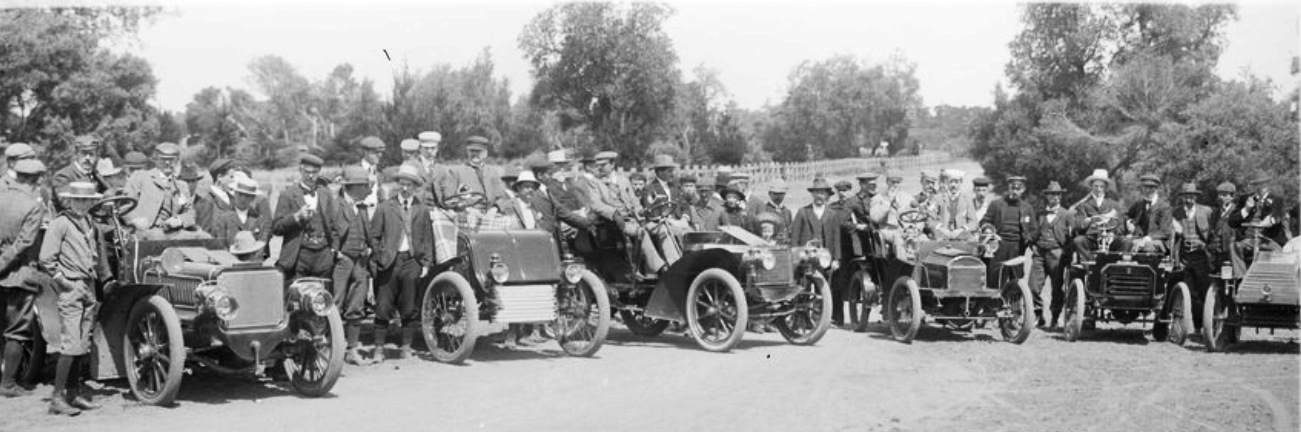
Sandown racecourse 1904. ‘Curved dash’ Oldsmobiles (Algernon Darge/SLV)

‘Upwards of 25 cars left Alexandra Avenue (South Yarra, a distance of about 25Km) and proceeded at a leisurely pace via St Kilda, Caulfield, Oakleigh and Springvale. During the afternoon the number of cars swelled to 85, while there were more motor cycles as well. The road was in a terribly dusty state.

At the course the conditions were more enjoyable. The three motor contests were watched with interest by the picnickers, the ladies especially evincing much enthusiasm.


sandown scene

Sandown Racecourse 1904. 1400 attended, most arrived by train, here alighting at Dandenong Station. Car make and model unknown (The Australasian)

The presence of a neat electric car in which were seated 2 ladies, one of whom handled the motor with the skill of an expert, aroused the admiration of the gentlemen and the envy of the ladies. It was indeed a novel sight and will go a long way to removing the impression existing that an automobile is difficult to manage.

It may now be confidently stated that automobilism has caught on, and it will be found that with such persistent and persevering advocates as women-folk can be when they desire anything, their gentlemen friends will capitulate and procure cars. (very delicately put, cars and anything else!)

After the races were over the cars were rushed by all the ladies; all wanted a ride around the course and the drivers had a busy time for an hour or more’

results

‘The Australasian’ does not report the order in which the contests were held, but ‘The Age’ does, it was as above so James Robert Crooke won the first four wheel motor contest/race in Victoria and Australia…

‘Nine out of 16 entries faced the starter in the Voiturette race. There was some delay owing to a false start but an interesting race resulted. Receiving a 500 yards start, Crooke was first in 3 min 55.5 seconds from Kellow from the 50 yard mark in 4 mins 2.5 seconds’.

jr crooke

James Crooke pictured in 1915. Winner of the first motor car race in Australia, 12 March 1904, Sandown Racecourse (hyperracer.com)

Crooke is a notable motoring and motor racing pioneer himself, he established the Aspendale Racecourse, the horse racing facility later modified to accomodate a Speedway.

The main threads of this article are the 1904 Sandown event, the early history of the car in Australia until The Great Depression and Harley Tarrant and his cars.

An article about Crooke the ‘bushranger, master marksman, champion jockey, race promoter, track owner and racing driver’ as his descendants website describe the man is a fascinating topic for another time!

crooke

J R Crooke leading the first car motor race in Australia, the Voiturette event, first of 3 races on the day, 12 March 1904 , Sandown racecourse (unattributed)

Unfortunately all of the published pictures of Crooke on the day are ‘ropey’ and hence i have not led with a shot of Crooke’s winning Locomobile, a 41/2 HP 2 cylinder steam engined conveyance built in Bridgeport, Connecticut. Second was the 5HP, single cylinder, petrol engined Humberette ‘raced’ by CB Kellow. Humber built these cars at a factory in Beeston, Nottingham, UK.

algy

Another shot of the Voiturette Race; looks like JR Crooke in the 2nd placed car here, but on his way forward in the short 1.5 mile race (The Australasian)

Some modern reports have it that Harley drove one of his own Tarrant’s but ‘The Australasian’ and ‘The Age’ results say the victorious car was an Argyll, a 10HP, 2 cylinder petrol engined car made in Bridgton, Glasgow, Scotland. It is one of the makes for which Tarrant’s business ‘Tarrant Motor and Engineering Co’ held the franchise, others included F.I.A.T, Sunbeam, FN and De Dion. Their premises were in Russell Street, Melbourne and later Queensbridge Street, South Melbourne.

download(1)

Colonel Tarrant in Argyll 10HP, winner of the first ‘Dunlop Reliability Trial’ between Melbourne and Sydney, February 1905. (Algernon Darge)

‘The Age’ reported that the times were ‘nothing sensational owing to the heavy nature of the going’, the ‘roadster motorcycle race excited the most sensational interest. The machines were sent around at terrific speed-over 30 miles an hour’, the winner C Mayman from HB James and AE Sutton, make of machines not disclosed!

mayman

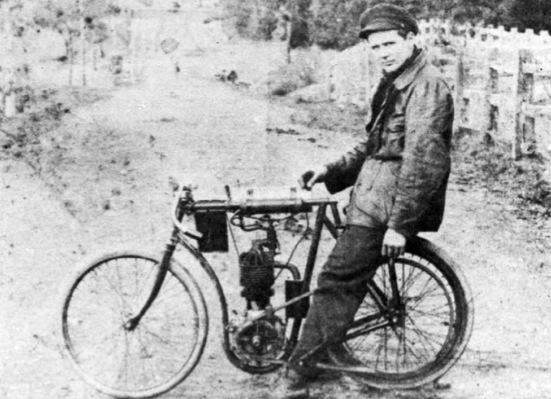
Charlie Mayman aboard his 7th ‘Beauchamp’ machine, the ‘Track Racer’ built in December 1902. ‘Motor built by Beauchamp’s a single of about 4HP, machine weighs 120Lb. 26 inch wheels and Dunlop tyres’ (Serpolettes Tricycle)

A little bit of research suggests that the first 2 bikes in the race of Charlie Mayman and Harry James were ‘Beauchamps’ built by Mayman at Edward Beauchamp’s cycle works in The Arcade, Chapel Street Prahran, an inner Melbourne suburb.

James was Dunlop’s Advertising Manager, Mayman built 2 bikes to James’ order for Dunlop. It may also be that Arthur Sutton’s machine, he was a friend of Mayman’s, was also a Beauchamp.

Mayman built 9 machines before his short life ended after a tyre blew on a machine he was riding at Eaglehawk’s Canterbury Park, near Bendigo in Victoria’s ‘Goldfields’ area on Boxing Day 1904. Just 24, he was an amazing engineer, he built himself a car in 1903/4 and a gifted rider with the world at his feet.

mayman

Charlie Mayman in the car he built himself, inclusive of engine. ‘Shows the prominent racing motorcyclist in his home manufactured car in St Kilda Road, Melbourne in 1903’ is the photographers note (Algernon Darge/SLV)

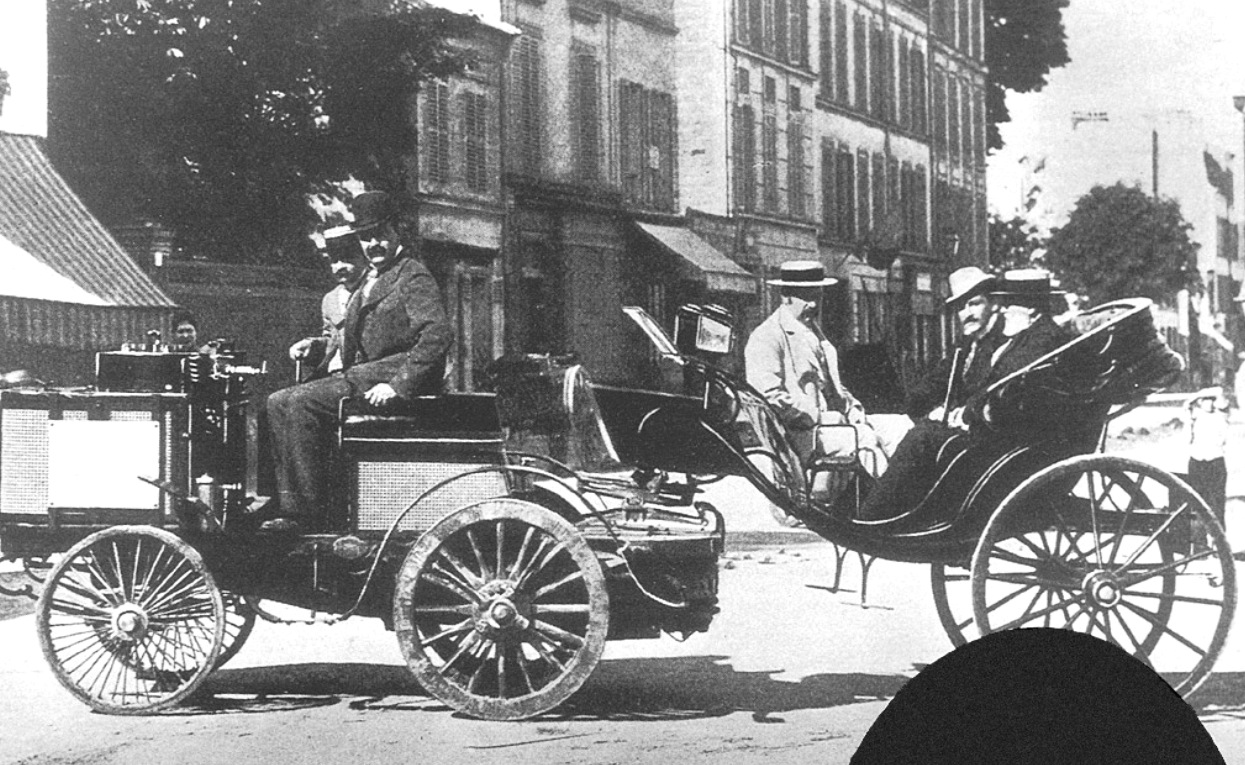
Motor racing started in France, the first ‘motoring contest’ took place on July 22, 1894. Organised by a Paris newspaper, the Paris-Rouen Rally was a 126 km journey. Count Jules Albert de Dion was first into Rouen in 6 hours 48 minutes, an average speed of 19 km/h (12 mph). The official winners were Peugeot and Panhard as cars were judged on their speed, handling and safety characteristics. De Dion’s steam car needed a stoker which the judges deemed to be outside their objectives…

rouen

Jules Albert, Count de Dion was first into Rouen in this team powered De Dion towing ‘une Caleche’. Among the passengers are Count de Dion, Baron Etienne van Zuylen van Nyevelt-Rothschild and write Emile Driant (unattributed)

And so commenced a period of racing unregulated cars on open roads between cities in Europe. This evolved after many deaths, from racing on open to closed road circuits. During the Paris-Madrid road race in 1903 a number of people, both drivers and pedestrians – including Marcel Renault were killed, the race was stopped by French authorities at Bordeaux.

Further road based events of this type were banned.

reanault

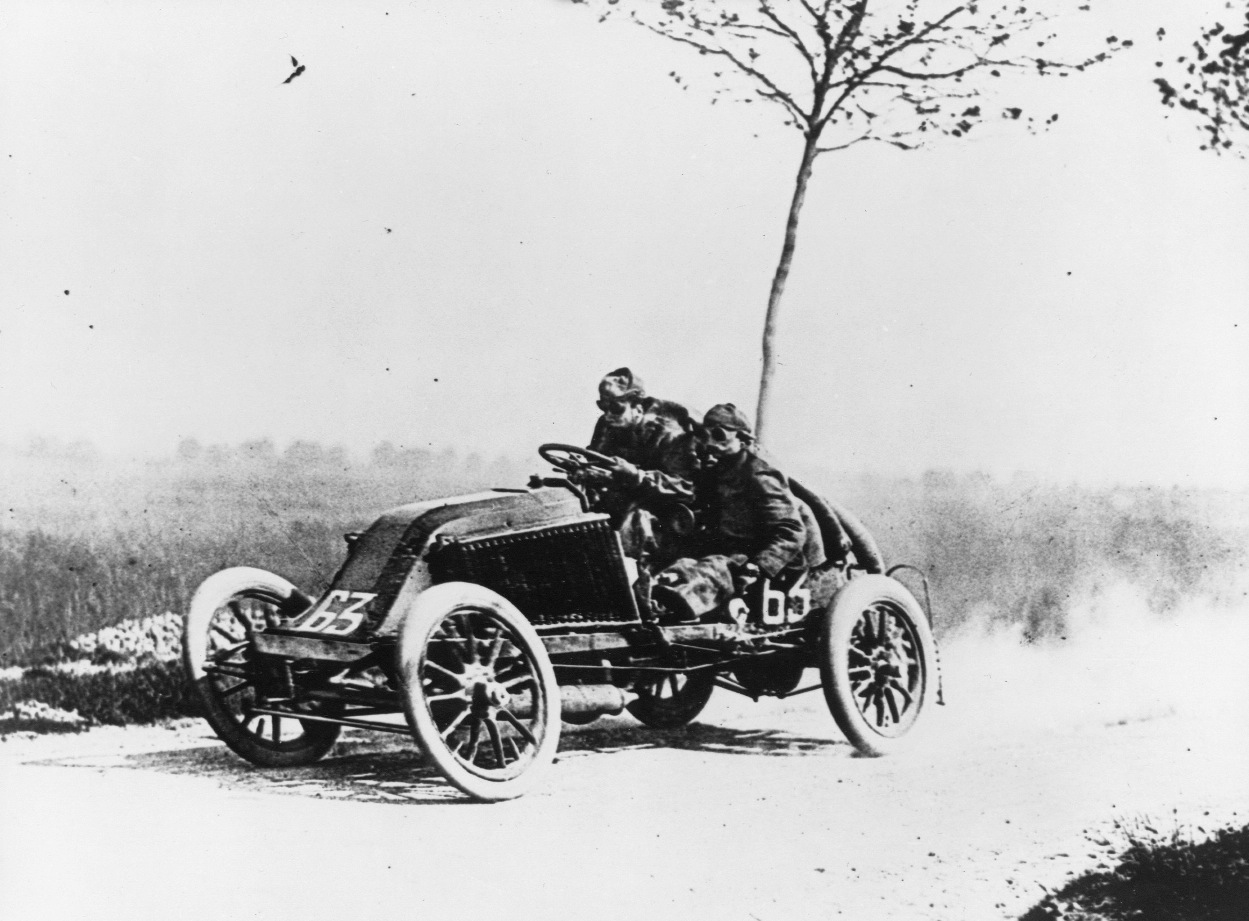
Marcel Renault, Renault, before his fatal accident on the 24 May 1903 ‘Paris-Madrid Trail’ . He crashed near the town of Couhe Verac and died 48 hours later without regaining consciousness . The event was won by Fernand Gabriel’s Mors from Louis Renault and Jacques Salleron in Renault and Mors respectively (unattributed)

By Sandown’s 1904 event motor racing was already 10 years old but the impact of the competition on the 1400 present to see the deeds of Melbourne’s pioneering motorists was significant and must be seen in the context of the time in Australia.

There were less than 300 cars in Victoria in 1904, the population of the state was 1.3 million people. The rarity, novelty value and impact of the noisy, fast by the standards of the time, technological wonders cannot be overstated.

There are now around 4.55 million cars and 5.9 million people in Victoria, 1 car for every 3300 people in 1904 compared with 1 car for every 1.23 people now.

Whilst motoring was in its pioneering years the car was getting plenty of press about its impact, expected benefits, as well as perceived negatives about changes to existing paradigms. The local papers were full of commentary about the draft British ‘Motor Car Bill’ to regulate the use of cars for the first time in the UK and Melbourne was ‘abuzz’ with the new technology.

sandown kids

Sandown Racecourse 1904 (SLV)

lunar

Astronaut James Irwin, Apollo 15 mission, 1 August 1971 with the ‘Lunar Roving Vehicle’ at Hadley-Apennine, The Moon (NASA)

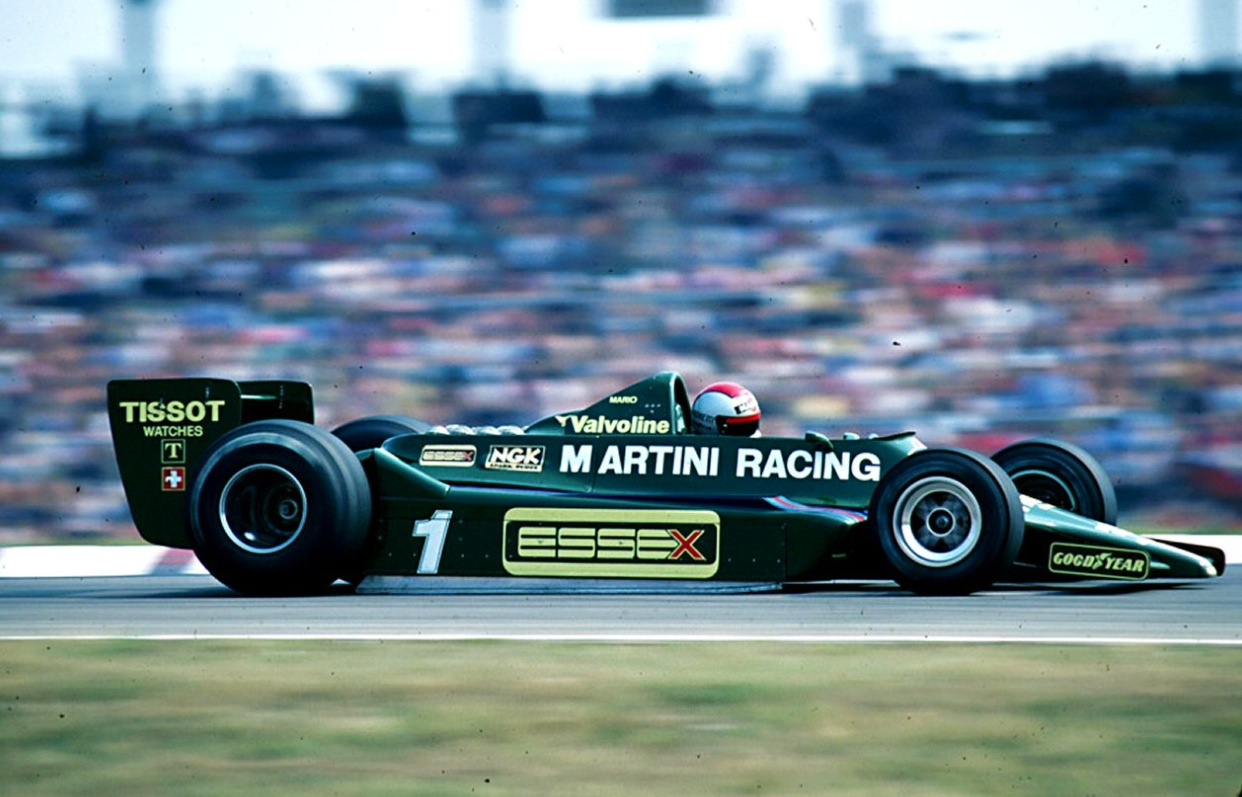
It is sobering and amazing to look at the 10 years olds in the Sandown picture above and imagine their reflections as 80 year olds looking at the Moon Vehicle during the 1971 Apollo 15 mission. Or as a 90 year old being blown away by the outrageous looks and speed of Mario Andretti’s ‘ground effect’ Lotus 79 in 1978. The Wright brothers first ‘heavier than air’ human flight took place only a few months before the Sandown meeting at Kill Devil Hills, North Carolina on 17 December 1903.

All in those childrens lifetimes.

The other worldly nature of the Moon Vehicle and Lotus 79 would have been as impactful at the end of the car enthusiasts lives as the Edwardian conveyances competing at Sandown all those years before were at the start of their time in an amazing century of technological progress if not peace on our planet…

1979

Andretti, Lotus 79 Ford, 1979 German GP, Hockenheim, car not as good in ’79 as ’78. It raced on when the ‘wingless Lotus 80 bombed that year (unattributed)

The Car in Australia; Early Years…

An Australian Government publication ‘Linking a Nation’ forms the basis of this summary of our early years of motoring.

The motor age began in Australia, as elsewhere in the world, at the beginning of the twentieth century. The first Australian experiments in car construction were in the late 1890s involving both steam and internal combustion engines, both of which were successful.

It soon became clear that for purposes such a cars, internal combustion had advantages over steam. Steam remained favoured for early buses, trucks and mobile machinery.

tmomson

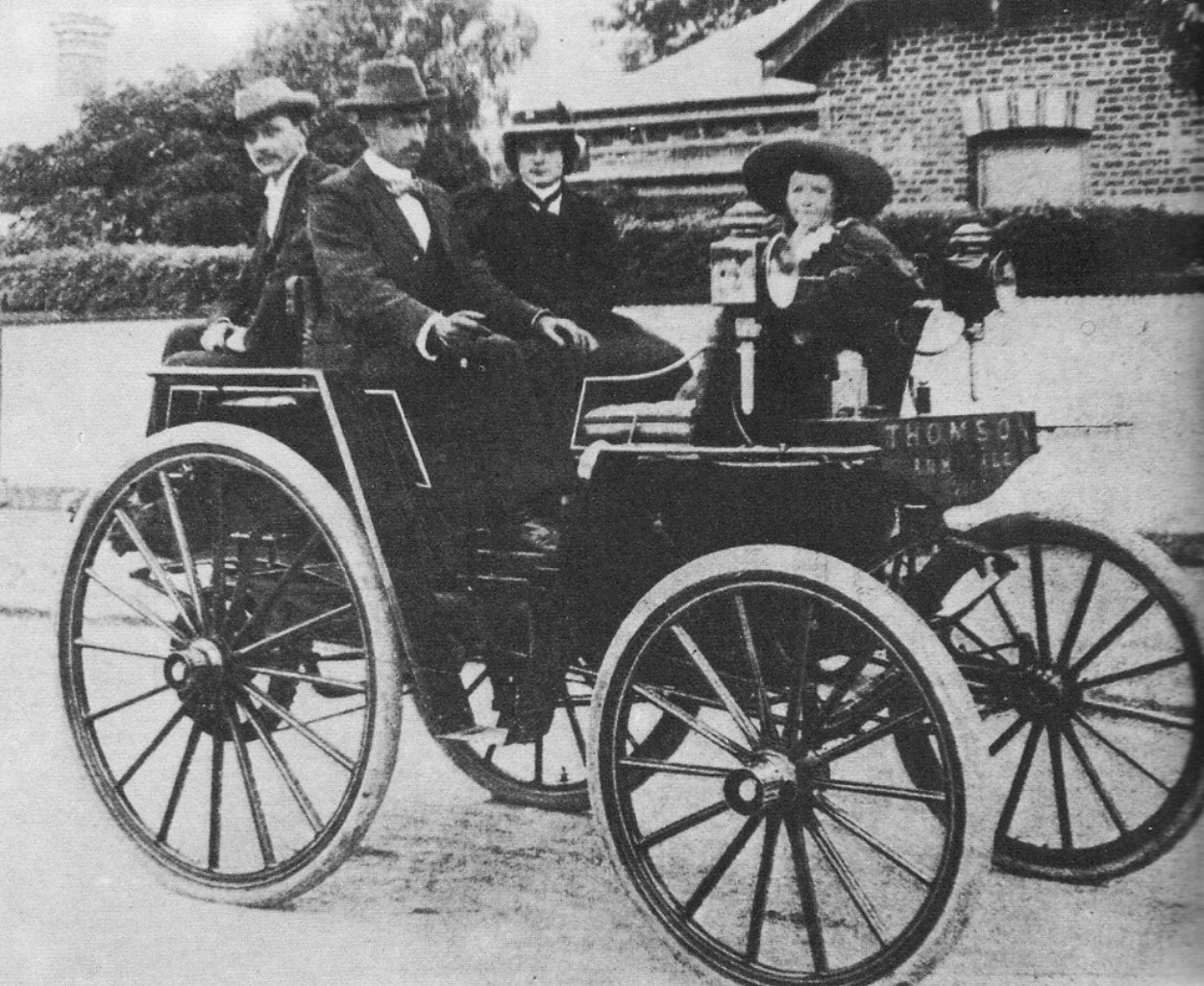
Thomson Motor Phaeton in 1900. Designed and built by Herbert Thomson and his cousin Edward Holmes in Armadale Victoria. They took the car to Sydney by boat for the 1900 Sydney Royal Easter Show and drove to Bathurst to the local show and then back to Melbourne on what passed for the roads of the day, getting frequently bogged. Trip took 10 days at 8.72 mph for the circa 500 mile journey. First car in Oz to be fitted with Dunlop pneumatic tyres, which were purpose built for it. Steam powered, 12 built, 1 exists today in the Museum of Victoria (unattributed)

Australia’s first petrol car (the first steam car was made by Herbert Thomson and made its debut at the Malvern Cricket Ground, Melbourne in June 1898) was made in Melbourne by Colonel Harry Tarrant in 1897. It was experimental but Tarrant learnt enough to begin production on a commercial basis in 1901. He was joined in the business by a Melbourne bicycle maker, Howard Lewis.

By 1909 Tarrant was a manufacturer, importer and distributor, building his own cars as well as acquiring the Ford franchise. This was the year Henry Ford began production of his famous T Model, the world’s first mass-produced car, so it was an astute business move on Tarrant’s part. Tarrant also had the Melbourne dealership for more exotic marques such as Rover, Sunbeam and Mercedes. A short biography of Tarrant and some photos of his cars is included at the end of this article.

perier

The Perier family; Albert at the tiller, Jessie, Pauline and Norman, prepare for an outing in 1903. Car the first de Dion Voiturette imported to NSW by WJC Elliott in 1900 (AJ Perier/SLNSW)

Public reaction to the car was far from universally favourable. Conservative people tended to dislike them. ‘Young men with money loved the speed and freedom it gave and of course were resented by other elements in society for their selfish pleasures’.

Doctors soon found cars superior to horses and their early extensive use of cars to make house calls did much to make cars respectable. ‘Doctors on duty could not be considered maniacs selfishly out on a spree frightening horses and old ladies’….

bike

Motor bikes, both solos and sidecars grew in number exponentially given the attractions of freedom and cost. Here an Indian sidecar at the Blue Lake, Mount Gambier, SA in 1914. Retention of the gents bowler hat at speed no doubt a challenge (SLSA)

Speed enabled people to lead more productive lives. The railway and the tram already had proved that, but since they were for public use, they seemed less self-indulgent than the car which was very much the preserve of the rich in its early years. The list of motoring attendees at the Sandown 1904 event is like an entry from the ‘society pages’ of the day.

Even though car numbers were low in the first decade of the twentieth century their impact was great.

The Australian Constitution (Australia as a country commenced on 1 January 1901, until then the colonies were separate) framed just before the motor age was silent on the topic of regulation so regulatory responsibility lay with the states.

The state with the most emphasis on moral improvement, South Australia first regulated the car in 1904. The South Australian parliament legislated for the registration of cars and speed limits in towns and cities varying between four and twelve miles per hour (6 and 19km/h). These reflected the rules under which trains travelled along Adelaide, ‘The City of Churchs’ streets.

adelaide

King William Street, Adelaide’s ‘main drag’ on 31 May1914, the last day the Adelaide-Glenelg train came into the city centre. Now a tram makes the same journey. Not a car to be seen (SLSA)

In other states initial regulation was by local councils which imposed a wide range of speed limits; Sydney 8mph, in Parramatta 6mph and in Hunter’s Hill 10mph.

Very early in motoring history, Australian police regularly fined motorists for excessive speed. The police tended to ignore the local limits and instead rely on an old common-law charge which applied to horse drawn vehicles of ‘furious driving’. This infuriated motorists as it was arbitrary.

In New South Wales, the Motor Traffic Act of 1909 removed these anomalies and laid the foundation for statewide regulation, licensing of drivers and registration of vehicles (for a fee), and standardised speed limits at 15mph within five miles of Sydney’s GPO.

The principles it enshrined remain the basis of traffic regulation in Australia today.

houdini

Symbolic of the relentless pace of technological progress at the time was Harry Houdini’s  flights in Australia. He made 3 flights at Diggers Rest, 35 Km north of Melbourne on 18 March 1910. Voisin bi-plane. He made the second or third powered flights in Oz, Colin Defries the first at Victoria Park Racecourse, Sydney on 9 December 1909 in a Wright Model A  (Marcel Poupe/SLNSW)

‘Seeing their pleasures threatened by moral improvers, motorists began to organise. Led by Sydney theatrical entrepreneur Harry Skinner, they established the Australian Motoring Association in 1903, later the Automobile Club of Australia and from 1920 the Royal Automobile Club of Australia. This was a national body from the beginning with New South Wales, Victorian and South Australian branches. The flashy Skinner was all too typical of early motorists and was just the kind of person moral improvers wanted kept in his place!’

vauxhall

Vauxhall ‘Prince Henry’ ‘possibly being prepared for an Adelaide-Melbourne record run in 1913’. Such ‘events’ not unusual or legal at the time (SLSA)

The new Commonwealth Parliament was soon aware of the importance new automotive technology and in 1902 imposed customs duties on imported motor bodies to encourage local manufacture.

At the time and until the introduction of the Ford Model T all cars were handmade and most motor bodies were built by firms which also built horse-drawn vehicles. This meant that carriage builders could easily adapt to the new technology which to them was not new. Only the means of traction and the details of design had changed. Most chassis continued to be imported.

This prompted a short-lived revival of the carriage-making trade which had gone into decline in the 1890s with the popularity of the ‘sulky’ which needed no body. In 1917 the government banned motor-body imports, a year later eased to a restriction of one import allowed per two local bodies built.

The following decade was the heyday of the medium-sized motor-body builder, mostly former horse carriage builders, or firms like Smith and Waddington in Sydney who also built timber trams and railway carriages.

Motor body production reached about 90,000 by 1926. Of these, some 36,171 were produced by one firm, Holden Motor Body Builders, founded in 1920 by the Adelaide carriage builders, Holden and Frost. They produced their first motor body in 1917 and by the mid 1920s dominated the Australian motor-body industry.

sydney

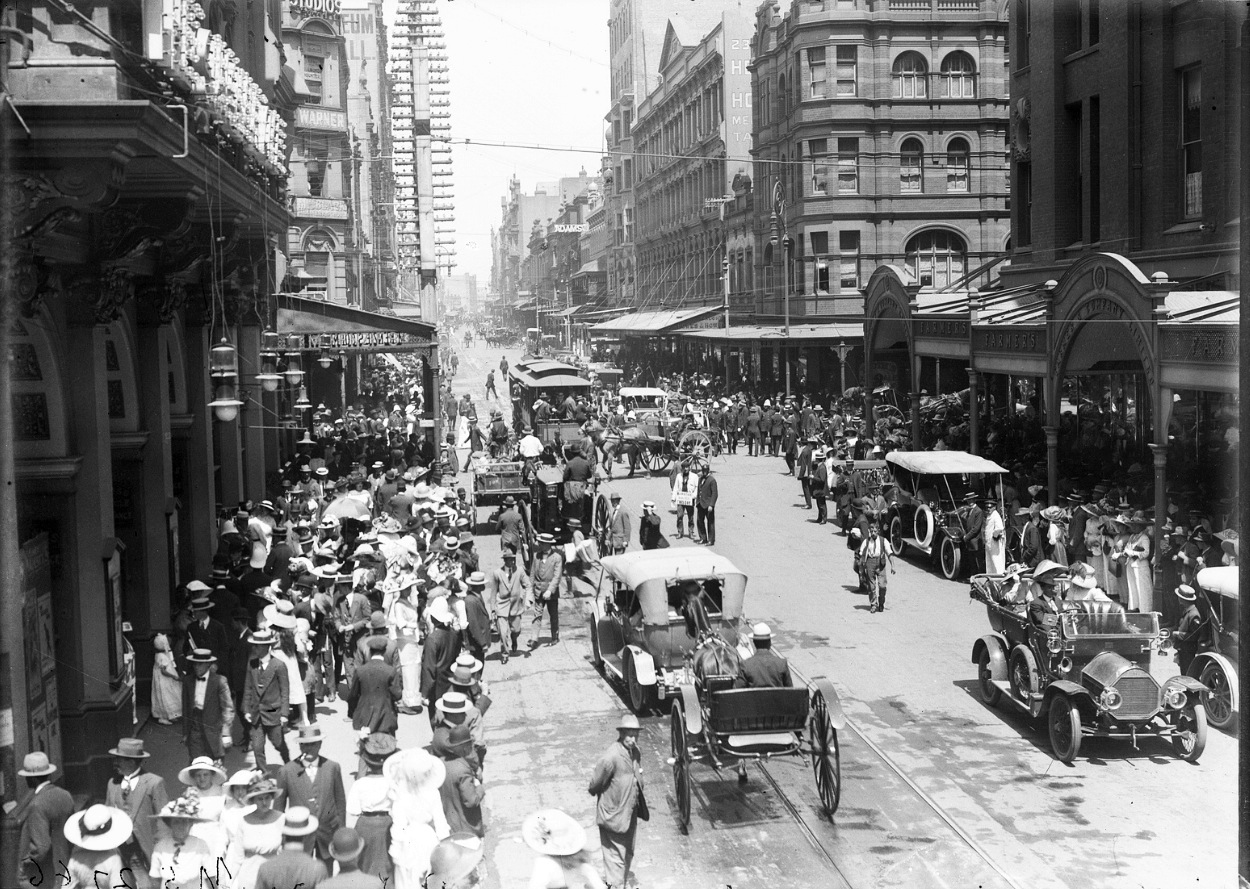
Its all happening in Pitt Street, Sydney 1915, as it still does. This is near the Market Street corner, in what is now the (pedestrian only) Pitt Street Mall. Cars, cabs, buggies, trams and still very much present, horse drawn transport (SLNSW)

Car numbers, though, remained small. There were only 3,978 motor vehicles in all of New South Wales as late as 1911, just as the flood of Model Ts began to surge. They quickly replaced the horse-drawn carriage as the preferred means of city transport of the urban elite. The saddle horse quickly disappeared from city streets. It had always been an affectation of the wealthy urban male, a car was an excellent substitute.

Horsepower remained preferred for deliveries and short-distance cabs. Hansom cabs remained part of the scene in Australian cities right up till the 1930s. In 1911 there were just three motor vans in Sydney, compared with 1,303 horse vans. A decade later horses still predominated, with 1,603 horse vans and just 376 motor vans. By 1927, though, these proportions were just about reversed, with 2,016 motor vans but only 379 horse vans. A survey of Sydney traffic in July 1923 revealed that 39.2 percent of vehicle movements were by horse-drawn vehicles, 33.8 percent by car and 27 percent by motor van or lorry.  On that day most people out and about in Sydney were travelling on trams.

model t

Ford Model T. Overland adventurer Francis Birtles and Rex ‘the Wonder Dog’ in the back seat did 5600 Km from the Gulf of Carpentaria in the Northern Territory to Port Phillip Bay in Victoria in 1913. They camped along the way, catching ‘bush tucker’ and using fuel left by Ford, who sponsored the adventure at special dumps along the route . Here outside Tarrant Motors in Melbourne circa 1910 (Powerhouse Museum/SLV)

The introduction of the Model T Ford and the rapid improvement of engine technology during World War I led to the explosion of  car use. From 1911 to 1916 motor vehicle numbers in Australia almost quadrupled. They then more than doubled in the next five years (when markets were interrupted by the War) and quadrupled again to 1926.

American imports dominated the market. In 1917, the very worse year of the War, there were 15,000 cars imported; 10,000 Model T Fords, 2,300 Dodges, 1,500 Buicks and 1,200 other makes.

The Model T was designed with US conditions in mind, these were not so different from Australia’s with muddy or dusty roads and long distances. The Model T had simple, robust components, an austere, sturdy body and high clearances ideal for rural conditions in both countries.

With the growth of the Australian car market, and given high duties on imports, big manufacturers decided to establish plants in Australia during the mid 1920s.

holdens

Holden motor body works, Woodville, SA 1928 (State Library of SA)

Ford set up a factory at Geelong in 1925. In 1926 General Motors also established itself in Victoria, at Fishermen’s Bend near Melbourne. General Motors made this a joint venture with Holden’s of Adelaide, thus establishing the distinctively Australian, long-lived marque of General Motors Holden (GMH).

Both Ford and GMH assembled imported chassis at the works and built local bodies to fit on them. Almost immediately, the old timber carriage-building tradition began to die out, as these factories had metal presses. Body designs changed rapidly as metal bodies requiring steel pressings became the norm. Timber was still used for some features but in 1937 the first all-steel car was produced, anticipating the shape of the post-war industry.

glenelg

Glenelg, a suburban Adelaide Beach, 1922. People came by tram, horse, buggy, bus or car. Suit de riguer, ‘Proclamation Day’ holiday. Driving your car onto the beach is still a weird SA thing to do on some Fleurieu Peninsula beaches (State Library of SA)

During the 1920s, the motor became a feature of everyday life for a large proportion of the population for the first time. In 1920 there was one car for every 55 people in Australia; by 1929 this had increased to one for every eleven people, compared with one car for about every four people in the 1970s and one for every two in 2015.

The figures indicate that in 1920 a car was a rare luxury, but that a decade later it had penetrated most middle class households and was quite widespread. By 1970, most people in Australia who wanted a car enough could have one, although a quarter of all households continued to choose not to have one.

During the crucial decade of the 1920s, car prices fell sharply while wages were rising. A new Chevrolet cost 545 pounds in 1920 but only 210 pounds in 1926. The cars were constantly getting better too; more comfortable and safer – with pneumatic tyres, all-wheel brakes and enclosed bodies making them far more convenient than early models which were only marginally more comfortable than a buggy.

wentworth

Wentworth Autodrome, Sydney November 1933. L>R #3 Don Shorten, Rajo Ford Spl, #4 Charlie Spurgeon, Fronty Ford Spl and Fred Braitling, Alvis (Ted Hood/State Library of NSW)

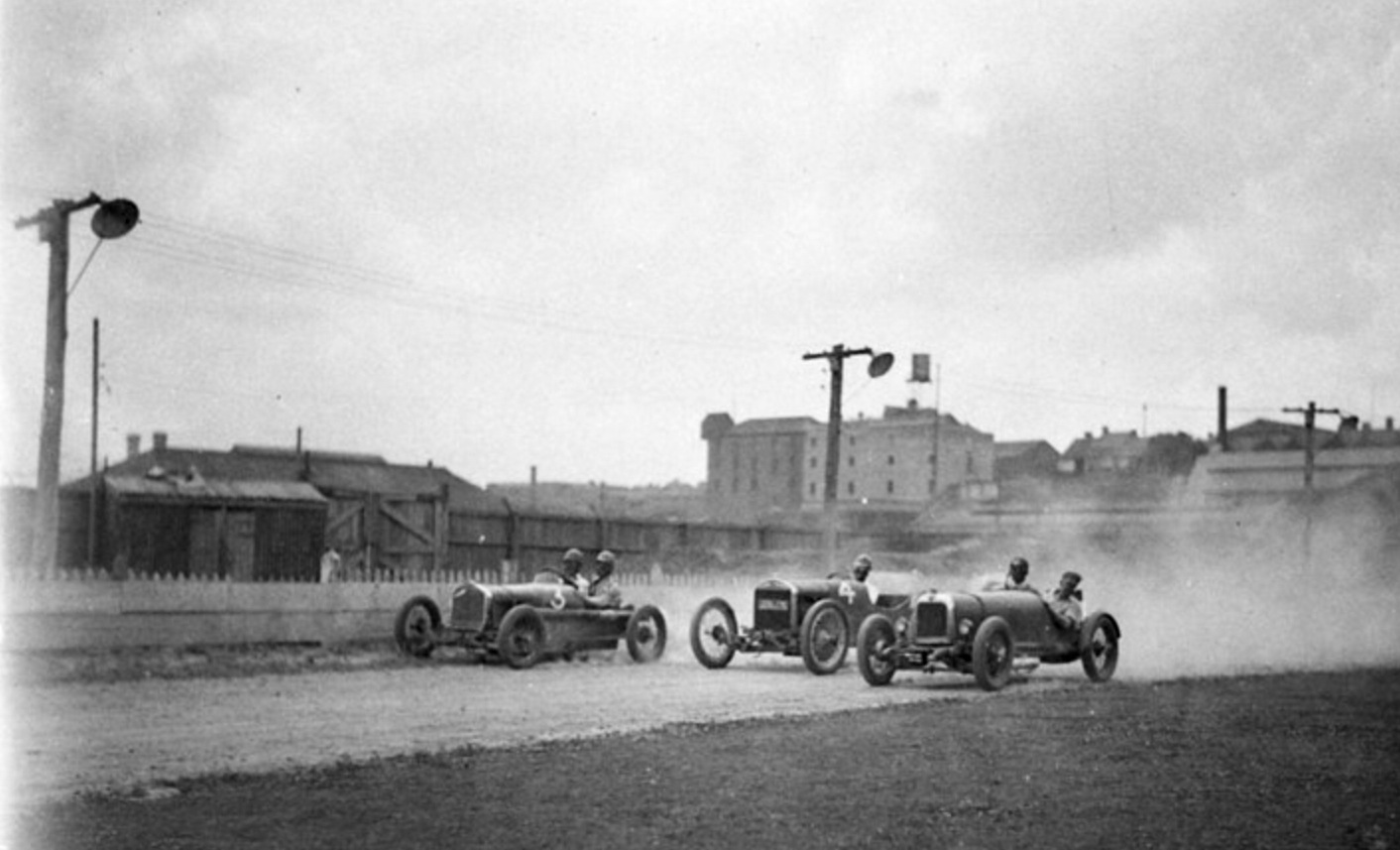
‘The twenties saw the growth of motor sport, with speedways mushrooming all over the country and motorists’ organisations running all sorts of bizarre races and trials including ‘top-gear’ trials, where the aim was to go as far as possible without changing out of top gear.

With these activities the car really was starting to replace the horse, not just for transport but in the imagination and human psyche as well. As with the horse (especially the saddle horse), car ownership was an opportunity to demonstrate taste and its absence, affluence and masculinity, while having the practical mobility advantage’.

agp

Photo-montage of the ‘100 Miles Road Race’, the second Australian Grand Prix at Phillip Island in March 1928. Winner Capt Arthur Waite in an Austin 7 s/c top left shot three wheeling, #25 Cyril Dickason’s Austin 12 3rd and the Bugatti in the middle the T40 of Arthur Terdich 4th. Bottom right is Bill Williamson’s Riley 9 12th (The Australasian)

This increased use of cars of course required improved roads. Early motorists were rich, influential and had political clout. It soon became clear that motor transport was more than a hobby but an effective means of transport and the roads of the day needed to cater for cars and motorbikes.

bool

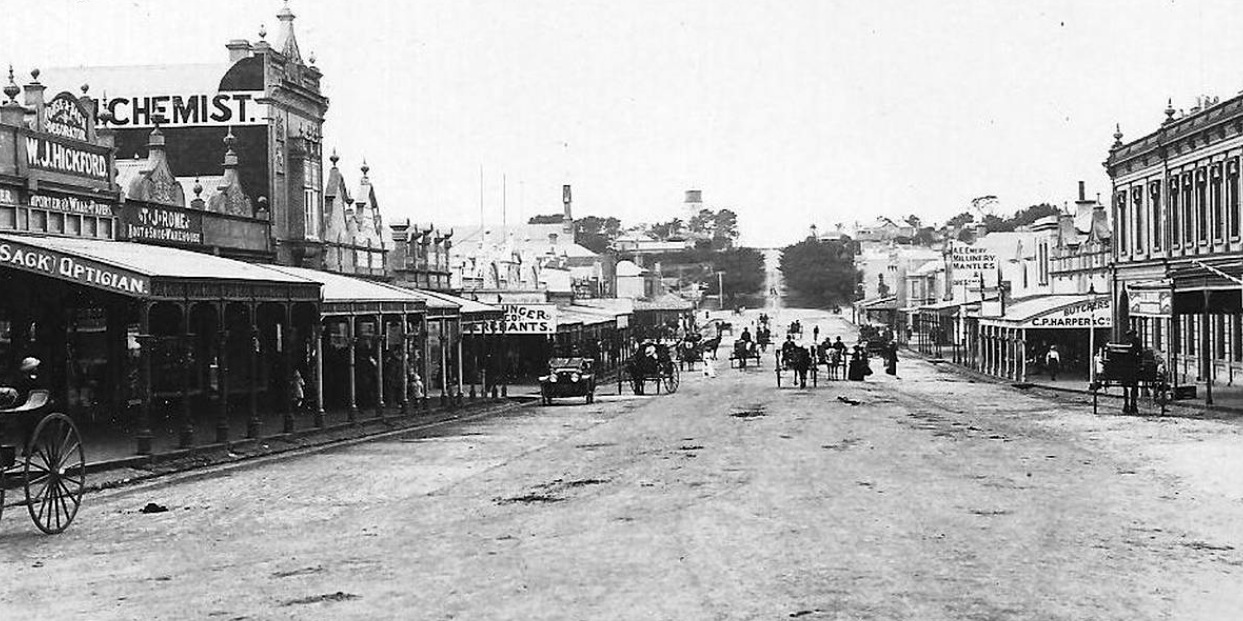
Country road, country town road anyway! Liebig Street, Warrnambool, Victoria 1910. (Warrnambool Historical Society)

Most of Australia’s rural roads were in poor shape in the early twentieth century. The best were in New South Wales but even there earthworks were limited and surfaces rough. Victoria, the richest state with the best railways had the worst roads relative to its population and wealth because so much had been invested in its railways. Rural roads’ main transport functions were confined to local needs such as taking produce to the nearest railway station or port.

The beginnings of the motor age changed all that dramatically.

The motor age itself was anticipated by a decade by a new form of transportation which had similar, but more modest requirements than the car. This was the bicycle, which came to Australia in the 1870s and was extremely popular from the 1890. Early bicycles were not cheap, although prices quickly reduced, but they were almost free to run and sufficiently simple for their owners to maintain.

These were big advantages compared to horses. In cities, a bike could be put in a shed needing none of the space, feed and attention required by a horse…

bikes

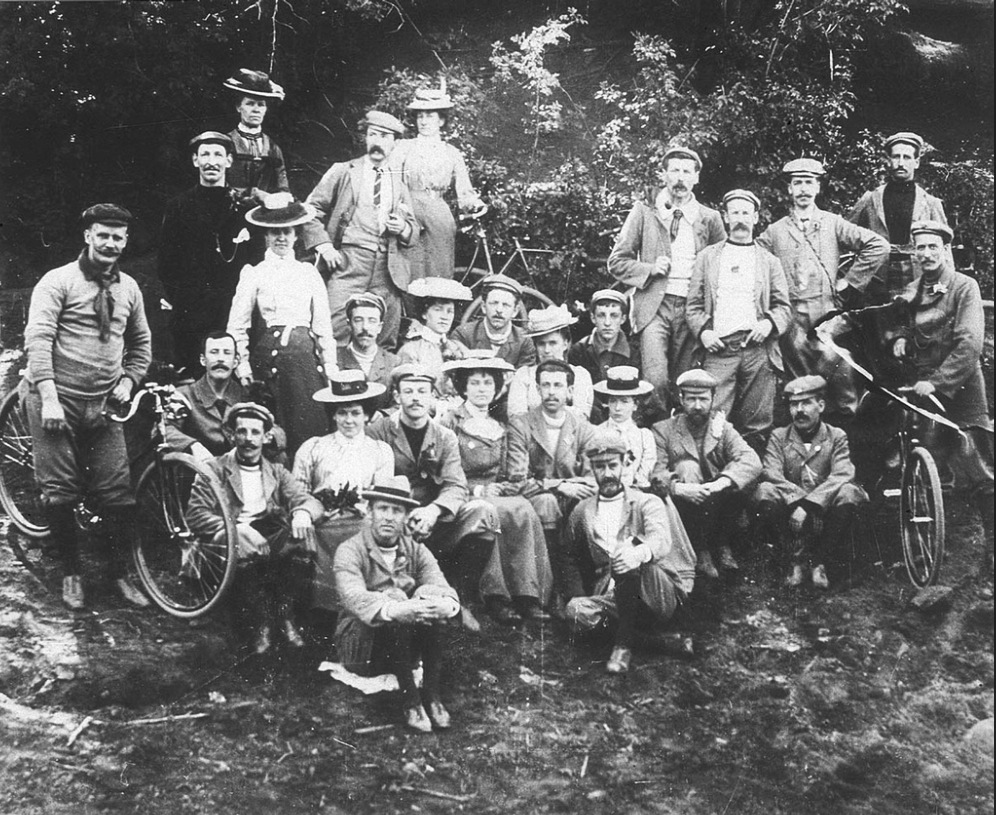
‘Waratah Rovers Bicycle Club’ in tour, Picton NSW October 1900 (SLNSW)

Bikes had two disadvantages over the horse; they demanded human effort and needed good, smooth roads. The human effort factor was and is an advantage. The popularity of cycling increased the pressure on councils to improve the quality of streets, especially in the suburbs where cycling was most popular. At that time, most suburban roads were as bad as rural roads. Most were dusty in dry weather and muddy in wet, many degenerating into quagmires in prolonged wet periods.

Early bikes were cumbersome ‘penny-farthings’, which were harder to mount and every bit as nasty as a horse from which to fall. The development of the safety cycle, essentially the modern design with equal-sized wheels and a chain drive, made cycling safer than riding a saddle horse and far more accessible to women.

‘Cyclists were numerous enough to have political clout and their demands for improved street paving were vociferous and hence the standard of roads especially in the suburbs began to improve’, the ‘Linking the Nation’ report said.

chamberlain

As the Great Depression approached some outrageous innovation was taking place in Australia. The Chamberlain ‘Beetle’ here in Indian engined original form circa 1932 was a spaceframe chassis, FWD, independent front and rear suspension, 2 stroke, 4 cylinder 8 piston supercharged racing car! I wrote about it a while back (Chamberlain Family)

The Great Depression, which seems a good time to end this truncated history of early motoring in Australia, and then World war II affected motoring as much as other activities in the economy. 

The fall in car registrations shows that the Australian middle class felt the impact of the Depression and had to cut back on luxuries, cars an example.

Car registrations in New South Wales fell from a pre-Depression 1929 peak of 170,039 to 144,749 in 1931. Thereafter they recovered, passing the 1929 level in 1935 and peaking again at 207,446 in 1940. Registrations fell again to 172,028 in 1942, and were still at only 188,412 in 1945.

Petrol rationing through the 1940s kept car demand low and as late as 1950 there were still only 269,250 cars on New South Wales roads, less than 100,000 more than the 1929 figure. So, for the twenty years after 1929, the impact of the motor car was actually quite limited’.

That would all change post 1950 as the shackles of the War Years were removed, our economy surged on booming global demand for our products and crops and the availability of consumer credit increased but that is a story for another time…

tarrant

First successful petrol driven Tarrant, built 1898, sold to DW Chandler in 1899. Top speed circa 30/35 mph. Picture in front of ‘first factory of the company, Bridge Road, South Melbourne’, no such address exists today. Only one of the 16 Tarrants built exists, owned by the Royal Automobile Club of Victoria (W Stuart Ross)

Harley Tarrant was one of the pioneers of the early Australian Motor Industry…

This summary of his life, slightly truncated, is from the ‘Australian Dictionary of Biography’.

Harley Tarrant (1860-1949), businessman, was born on 6 April 1860 at Clunes, Victoria, son of Joseph Tarrant, miner, and his wife Caroline, née Brownlow, both from Oxford, England. His father owned the Clunes Gazette and later the St Kilda Chronicle and Prahran Chronicle.

After attending Clunes Grammar School, Harley was articled to a firm of civil engineers; he worked as a surveyor on the Nullarbor Plain and from 1884 for the New South Wales Department of Lands. In 1888 he set up his own surveying business in Melbourne and undertook commissions for the Melbourne and Metropolitan Board of Works.

His interest in motoring began in this period. In 1897-98, basing his account primarily on overseas journals, he helped to publicize the new motor car in the cycling monthly Austral Wheel. His rural background and surveying experience had made him aware of its potential value in a country of immense distances and relatively few railway lines.

In August 1897 he patented an engine powered by kerosene, a fuel which he declared to be safe, cheap and readily available, whereas electric motors needed recharging stations and steam-driven machines were dangerous and ‘too heavy for rough country roads’. Although his first car was a failure, its kerosene motor proved suitable for such stationary work as pumping water to farm houses. By 1899 he sold his engines as far afield as Western Australia. With larger premises, he also imported cars, beginning in February 1900 with a Benz.

tarrant

Harley Tarrant at the wheel beside his daughter and wife at the rear. Tarrant 2cyl 8HP won the November 1905, second Melbourne-Sydney ‘Dunlop Reliability Trial’. Car priced at 375 pounds (W Stuart Ross)

Business boomed and the profits enabled Tarrant and his partner in Tarrant Motor & Engineering Co. WH Lewis, to build one of the earliest Australian-made, petrol-driven cars: completed in 1901, it had an imported Benz engine.

Two years later their next machine was 90 per cent locally made, including the engine, and became the prototype for at least eight others, all built—to suit Australian conditions—for endurance rather than speed.

Tarrant’s victory in the two Dunlop reliability trials of 1905 and the success of a Tarrant car in 1906 helped to develop confidence in local manufacturing, but he could not compete with imports produced in larger numbers for a bigger market, especially after Tarrant Motors Pty Ltd acquired the Victorian franchise for Ford in 1907.

tarrant 2

Sir Russell Grimwade’s Tarrant 4 cyl 16HP car pictured in the 1906 ‘Dunlop Reliability Trial’ held over 1000 miles in Victoria. Class winner (W Stuart Ross)

Nevertheless, the firm made three aero engines for the military in 1915 and continued to manufacture motor bodies which, being bulky, were expensive to import. During World War I the company began assembling chassis from imported components; by this time it also had a thriving spare parts, accessories and repair business.

Tarrant played an important role in local motoring affairs. He lobbied on behalf of the Motor Importers’ Association for better traffic regulations and served in 1906-10 on the governing committee of the Automobile Club of Victoria, helping to demonstrate the capabilities of the motor car by organizing and participating in the club’s competitions and tours. In 1904 he had won his event in the club’s first motor race meeting, averaging 26 miles (42 km) per hour.

In 1908 Tarrant had become first commanding officer of the Victorian branch of the part-time Australian Volunteer Automobile Corps and from September 1914, with the rank of colonel, was in charge of Commonwealth military motor transport. The magnitude and urgency of wartime needs made mistakes inevitable. A 1918 royal commission report charged his administration with inefficiency and waste, alleging that the public had been misled by the extent to which Tarrant Motors was favoured with repair contracts. Harley accepted responsibility by resigning, but in 1920 was appointed an M.B.E. (‘Member British Empire’, an order of the British Empire)

After the war Tarrant retired from the business, sufficiently wealthy not to need to work, he freely indulged his passion for camping and overseas travel. In 1932 he came out of retirement to take over production supervision at Ruskin Motor Bodies Pty Ltd, an affiliate of the Tarrant company.

A tall, dignified man with a bushy moustache, he had done much to pioneer and consolidate the first phase of the Australian motor industry. Tarrant died on 25 February 1949 at his Toorak home.

The company was sold in 1950 to the Austin Motor Co (British Motor Corporation).

Photo Credits…

Algernon Darge,  W Stuart Ross, State Library Archives of Victoria, New South Wales, and South Australia, NASA, Marcel Poupe, Ted Hood, hyperracer.com, Chamberlain Family, Serpolette’s Tricycle

Bibliography…

Australian Dictionary of Biography, ‘Linking a Nation: Australia’s Transport and Communications 1788-1970’ Australian Government Dept of the Environment, ‘The Age’ 14 March 1904, ‘The Argus’ 14 March 1904, ‘The Australasian’ 19 March 1904, 7 April 1928, Serpolette’s Tricycle

Tailpiece: Symbolic of the Technology and Progress of the time, Sydney Harbour Bridge nearing completion in 1930…

bridge plane

The 2 planes Charles Ulm’s ‘Southern Sun’ and a Gypsy Moth were added later (Edward Searl/SLNSW)

Finito…

hill 1

(Brian Watson)

Graham Hill having a squirt of  Jack’s Brabham BT26A Ford in British GP practice, Silverstone July 1969…

GH in a Brabham is not such a big deal; he raced F2 Brabhams with success for years as well as Tasman Formula ‘Intercontinental’ Brabhams in the mid-sixties. Later he was the pilot of Ron Tauranac’s intriguing ‘Lobster Claw’ BT34 in 1971 but he was a Lotus F1 driver in 1969, so ’twas a bit unusual  to practice an opponents car.

puke

Hill’s red Brabham BT11 Climax from Clark’s Lotus 32B and Aussie Lex Davison Brabham BT4, all Climax 2.5 FPF powered on the way to an NZGP win for Graham. Pukekohe, 9 January 1965. Hill also raced an earlier BT7A in the ’66 Tasman for David McKay’s Scuderia Veloce, the entrant of the car shown, he was familiar with Brabham ‘GP’ cars long before 1969! (unattributed)

Jack was still recovering from a testing accident at Silverstone in June when a Goodyear popped off a front rim, his car ploughed into an earth bank, his ‘equal worst accident’ with the Portuguese Grand Prix one in 1959. He lay trapped in the car with a badly broken ankle, Cossie V8 screaming at maximum revs until he punched the ignition cutout and extinguishers to minimise the chance of the pool of fuel in which he lay igniting. Eventually a touring car also on the quiet circuit mid week stopped and raised the alarm.

Jacky Ickx driving the other Brabham was late for Silverstone’s first session, all timed for grid positions in those days, so Tauranac had 2 cars idle.

Graham and teammate Jochen Rindt were peeved with Colin Chapman, to say the least, as the Lotus transporter was not in the paddock when the session got underway. Graham was ‘ready to rock’ all suited up but had no car to do so and was more than happy to put in a few laps for Tauranac. Rindt remained in his ‘civvies’ and fumed as the rest of the field practiced.

hill 2

Ron Tauranac giving Hill a few tips on his very quick, twice a GP winner in ’69, BT26. ‘Just don’t over rev the thing for chrissakes Graham, Jack will kill me if you do…’ Is that Ron Dennis at right? (unattributed)

1969 was the year of 4WD experimentation for Matra, McLaren, Lotus and Cosworth. Ultimately, very quickly in fact, 4WD was determined an F1 blind alley; the traction the engineers sought was more cost effectively provided by advances in tyre technology, Goodyear, Firestone and Dunlop were all slugging it out in F1 at the time, none of ‘yer control formula’ bullshit then. The effectiveness of the ‘low wings’ mandated from the ’69 Monaco GP also played its part in getting grip.

Chapman’s issue was pursuading his pilots to treat the Lotus 63 Ford, his 4WD design seriously, to test it with a view to developing it rather than to humor him. 4WD was successful at Indy; Chapmans ’68 Indy Lotus 56 ‘wedge’ was 4WD and came within an ace of winning the race, so was the ’69 Lotus 64, ignoring the misfortune surrounding both of these cars.

It was a challenge to get Rindt into the thing at all but he did finish 2nd in the August 1969 Oulton Park Gold Cup. The result meant nothing though, in front of him was Ickx’ Brabham BT26A but all the cars behind were F5000 and F2 cars not GP machines. Still, it was useful testing for Chapman if not for Rindt, his 4WD view was formed!

Chapman’s solution to his drivers recalcitrance was to sell 2 of his Lotus 49’s, one each to Jo Bonnier and Pete Lovely, leaving only one 49 in Team Lotus’ possession! A car you don’t have is a car you cannot drive. Said drivers were not best pleased.

graham 63

Hill, Lotus 63 Ford 4WD, British GP practice, Silverstone July 1969. ‘Turn in bitch!’, understeer and the inability of these cars to respond to delicate throttle inputs plus excessive weight were the main performance deficiency issues. As well as the absence of the electronic trickery which helped make 4WD work into the 80’s (Brian Watson)

When the showdown with Chapman occurred and the speed, or lack thereof, of the 63 was clear Col borrowed back the car he sold to Bonnier, GH raced that 49 and JoBo the 63. Chapman rescinded the contract with Lovely.

The ever restless Lotus chief didn’t give up on 4WD in Fl, the gas turbine powered Lotus 56 campaigned in some 1971 events had its moments and potentially a great day in the wet at Zandvoort until Dave Walker ‘beached it’.

The 49 raced on into 1970 and in ‘C’ spec famously won the Monaco GP in Rindt’s hands before the Lotus 72, Chapman’s new 2WD sensation, which made its debut at Jarama was competitive.

grham 49

Hill races his Lotus 49B to 7th place. Silverstone 1969 GP (unattributed)

At Silverstone Hill raced the 49B to 7th having qualified 12th and Bonnier retired the slow 63 with a popped engine. John Miles making his F1 debut raced the other Lotus 63 to 9th, the young, talented Lotus engineer stroked the car home from grid 14.

Stewart won a thrilling high speed dice on the former airfield with Rindt, only ruined when Jochen’s wing endplate chafed a rear Firestone, some say it was the greatest British GP ever, on the way to his world title in a Matra MS80 Ford.

It would be interesting to know Graham’s opinion of the Brabham BT26 compared to his 49, the competitiveness of which, especially in Rindt’s hands not at all in doubt despite the 49’s middle age, it was a little over 2 years old in 1969.

I am a huge Graham Hill fan, he was well past his F1 best by the time i became interested in motor racing in 1972 but he was still quick enough to take F2 and Le Mans wins then, he was my kinda bloke, sportsman and champion. A statesman for his sport and country.

joc and jack

Jochen and Jackie scrapping for the ’69 British GP lead, Jochen’s Lotus 49B with bulk, uncharacteristic understeer. Look closely and you can see the closeness of his LR wing endplate to Firestone tyre, the cause of a pitstop to rectify and then back into the fray only to run outta fuel, the 49 notorious for its incapacity to sometimes scavenge the last few gallons from its tanks. Stewart Matra MS80 Ford (unattributed)

1969 was as tough a year for Hill as 1968 was great.

Jim Clark’s April 1968 death impacted Hill deeply on a personal level, they had been friends for years and Lotus teammates since the ’67 Tasman Series. Colin Chapman and Clark were like brothers and whilst Colin struggled with his grief, Hill in a tour de force of character and leadership marshalled Team Lotus by their bootstraps and refocused them on the year ahead. The result, World Titles for Hill and Lotus by the seasons end.

graham and jim

Clark and Hill beside Graham’s Lotus 48 Ford FVA F2 car prior to the start of the Australian Grand Prix, Warwick Farm, 1967. Car behind is Kevin Bartlett’s Brabham BT11 Climax. Clark was 2nd in Lotus 33 Climax FWMV 2 litre, GH DNF with a gearbox failure. JYS won in BRM P261 2.1 litre (History of The AGP)

The Tasman Series in early 1969 showed just how tough a year Graham was going to have within Lotus. Rindt joined them from Brabham and whilst enjoying it, he had committed to Jack verbally to return to Brabham in 1970, landed in the team in the year the Repco 860 quad-cam engine failed consistently.

Jochen had been in GP racing since mid 1964, was a consistent winner in F2 and had taken the 1965 Le Mans classic with Masten Gregory in a Ferrari 250LM, was regarded as one of the fastest guys around, if not the fastest but had still not scored his first GP win. Graham was simply blown-off by a guy with it all to prove, Jochen finally got the breakthrough win at Watkins Glen, the last round of the season in which Graham had what could have been a career ending shunt.

He spun mid race, undid his belts to bump start the car and of course was unable to redo them unaided; he spun again on lap 91, this time the car overturned throwing him out and breaking both his legs badly.

What then followed was a winter of Hill’s familiar grit and determination to be on the South African GP grid in March 1970. He was and  finished 6th in Rob Walkers Lotus 49C Ford.

Quite a guy, G Hill.

graham and col

Team Lotus 1969. Hill, Chapman and Rindt. A tough season all round. With some reliability from his Lotus and mechanical sympathy to it from Rindt, there was a serious opportunity at the title that year, not to be (unattributed)

Etcetera: Lotus 63 Ford…

miles 1

John Miles races the Lotus 63 to 10th on his GP debut at Silverstone 1969. Rounding him up is Piers Courage’ Frank Williams owned Brabham BT26 Ford, he finished 5th at Silverstone in a ripper season in this year old chassis. He emerged as a true GP front runner in ’69 (unattributed)


63 1

Cutaway self explanatory for our Spanish friends! Key elements of 4WD system in blue; see front mounted Ferguson system diff, Ford Cosworth DFV and Hewland DG300 ‘box mounted ‘arse about’ with driveshafts on LHS of cockpit taking the drive fore and aft to respective diffs. Rear suspension top rocker and lower wishbone, coil spring/damper, brakes inboard (unattributed)


miles 2

John Miles, young Lotus engineer and F3 graduate ponders his mount. Lotus 63 Ford. He was later to say the 63 was not so bad, he did more miles in it than anyone else, until he first parked his butt in a conventional Lotus 49! which provided context. Note forward driving position for the time and sheet steel to stiffen the spaceframe chassis. Nice shot of disc, rocker assy and stub axle also (unattributed)


63 2

Fantastic front end detail shot of the Lotus 63. Spaceframe chassis, Lotus first since 1962, beefy front uprights, upper rocker actuating spring/shock, lower wishbone. Ferguson system front diff axle and driveshafts to wheels. Big ventilated inboard discs. Intricate steering linkage from angled rack to provide clearance required (unattributed)


Photo Credits…

Brian Watson…http://www.brianwatsonphoto.co.uk/FormulaOne/races/brit69.html#1, Vittorio Del Basso

Graham Howard ‘History of The Australian GP’

Tailpiece: Tauranac, Hill and the ‘Lobster Claw’ BT34 1971…

ronster

RT seeks feedback from GH during Italian GP practice Monza 1971. Hill Q14 and DNF with gearbox failure on lap 47. GH best results in 1971 5th in Austria and Q4 in France. Teammate Tim Schenken, in his first full F1 year generally quicker than GH in the year old, very good BT33, BT34 not RT’s best Brabham. No doubt RT missed Jack Brabham’s chassis development skills, Jack was on his Wagga Wagga farm from the start of 1971 (unattributed)

Finito…
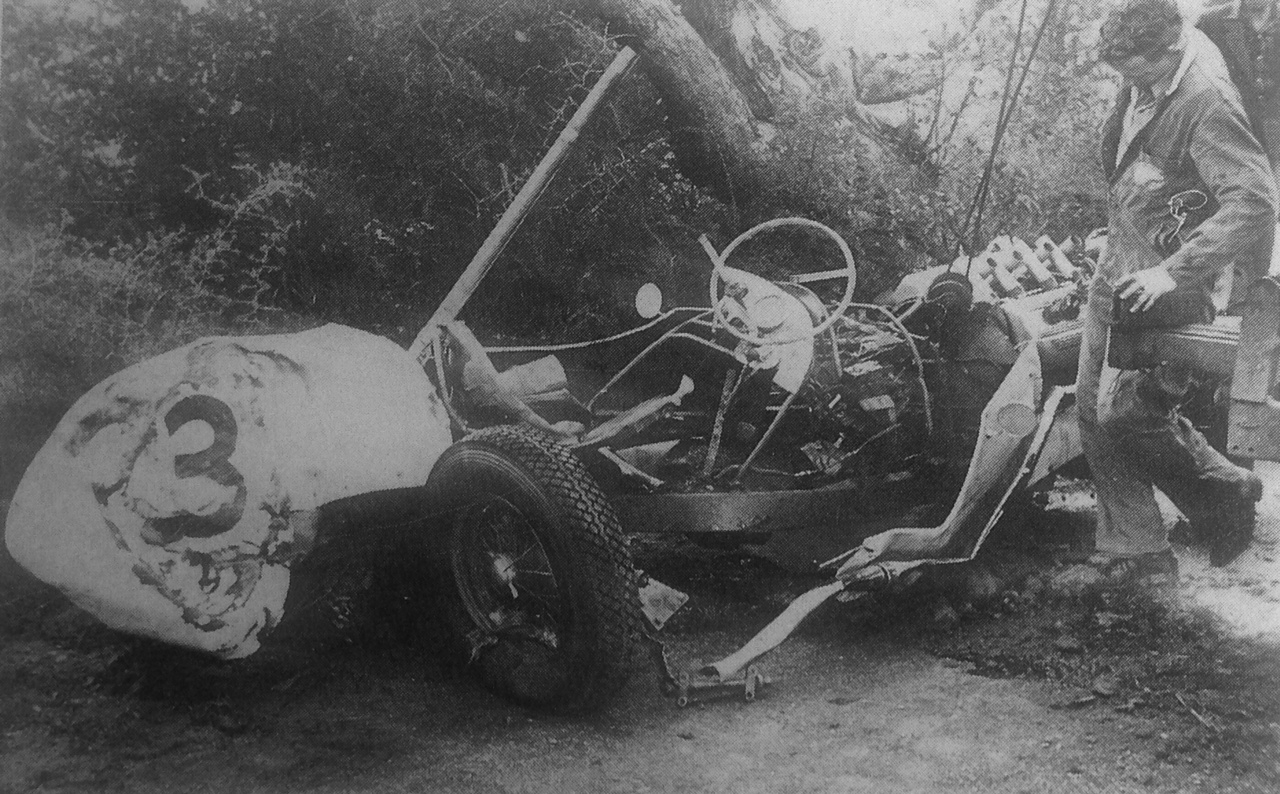
jack monaco

Jack Brabham starts the plunge from the Casino Square to Mirabeau in his factory Lotus 25 Climax ‘R3’ during the 1963 Monaco Grand Prix…

Brabham was joined at ‘Brabham Racing Organisation’ by Dan Gurney in 1963, the lanky Californian left Porsche at the end of their F1 program. In 1962 BRO ran a car for Jack only in the teams first F1 season.

For 1963 both were driving the latest Brabham BT7’s powered by short stroke, fuel injected Coventry Climax V8’s. In first Monaco practice Jack’s Climax munched a valve, Jack flew the engine back to the UK in his Cessna to have it rebuilt it in time for Sundays race. The F1 racer of 1963 was a DIY kinda guy, if his name was Brabham anyway!

gurney

Dan Gurney’s brand new Brabham BT7 Climax, Monaco 1963, he was mighty fast if lacking in reliability and luck in that car that year! Famously the driver Clark came to respect the most. (unattributed)

In final practice Gurney lost the head off a valve, as had Trintignants Lotus 24, Roy Billington gave Jack the sad news when The Guvnor returned with his rebuilt FWMV from Coventry.

Brabham decided to start Gurney and withdraw from the race. The following morning having heard of Jack’s predicament Colin Chapman sportingly offered Jack a drive in the Team Lotus spare, ‘R3’ fitted with last years Weber carb Coventry Climax V8. Clark did a 1:35:2 in this car ‘just for fun’ only 9/10 of a second slower than his pole time in his race chassis towards the end of qualifying.

Chapman knew Jack was well familiar with the handling characteristics of the car as Jack acquired a Lotus 24 in early 1962, the spaceframe variant of the epochal, monocoque 25 whilst Ron Tauranac completed the build of Jacks 1962 and first GP contender, the Brabham BT3.

And so it was that Jack had the opportunity to drive a car he had wondered a lot about since driving his own Lotus 24 Climax for much of 1962. ‘That was a great gesture by Colin and i was delighted not to miss the race, but i can’t say i liked his car. If i thought my tube chassis Lotus 24 had been cramped, this Lotus 25 redefined the term. Its German ZF gearbox had a weird ‘upside down’ change pattern, and whilst i thought Dans feet were big, Jimmy’s must have been microscopic! The 25 seemed to have terrific traction and cornered well, but the gearbox got stuck in 5th twice and i had to stop to have it fixed and finished way back’ said Jack in Doug Nye’s biography of him. Click here for an article on this race and the Lotus 25;

Lotus 25: Jim Clark: Monaco 1963…

monaco 1963

’63 Monaco GP lap 1, the field led by Hill’s BRM P57 1st and Clark’s Lotus 25 cl 8th exiting the Station Hairpin. Next is Ginthers BRM P57 2nd, Surtees’ Ferrari T56 4th, #7 is a flash of McLaren’s Cooper T66 Climax 3rd, #4 Gurney’s Brabham BT7 Climax DNF ‘box and the rest. (unattributed)

MRD, BRO and the 1962 Season…

Jack Brabham and Ron Tauranac formed ‘MRD’ Motor Racing Developments Ltd to build racing cars in 1961, their first car, the FJ MRD was raced by Aussie Gavin Youl that year.

The main games were both production racing cars and F1, ‘Motor Racing Developments’ jointly owned by Brabham and Tauranac built the cars and ‘Brabham Racing Organisation’ owned by Jack (at that stage) ran the F1 program; prepared and entered the cars and contracted commercial agreements to fund the program.

sandown

Brabham being pushed to the Sandown grid, March 1962. Brabham sold this Cooper T55 to John Youl who raced it very successfully over the next couple of years the car continually developed by engineer Geoff Smedley including fitment of a twin-plug 2.5 FPF built by Smedley, an interesting story in itself. (autopics.com.au)

Jack raced in the International Series of races in the Australasian summer in early 1962 in a Cooper T55 under his own ‘Ecurie Vitesse’ banner.

The car was his factory Cooper 1961 F1 chassis ‘F1-10-61’ the little 1.5 litre FPF used in GP events replaced by its big FPF brother, an ‘Indy’ 2.7 for the Antipodean F Libre races. He won at Levin in NZ and Lakeside Queensland, i reckon his last Cooper win was his victory in the ‘Sandown Park International’ on 12 March 1962 from Surtees and McLaren both Cooper T53 mounted.

jack caversham

Jack Brabham in his F1 BT3 derived BT4 ‘Intercontinental’ Formula Brabham powered by a Coventry Climax 2.7 litre FPF ‘Indy’ engine. BT4 used smaller tanks than BT3 and 15 inch wheels all round. Australian national F1 was F Libre at this time. AGP, Caversham, WA, November 1962. Bruce Mclaren won the race in a Cooper T62 Climax, Jack collided with another competitor. (Milton McCutcheon)

By the end of the year he was racing his own BT4, 2.7 FPF powered in the Australian Grand Prix at Caversham WA in November.

But first there was a season of Grand Prix racing to contest, BT3 wouldn’t be ready until mid year as the customer FJ program had priority; MRD built 11 BT2 FJ’s, BT3 and 3 BT4’s in 1962, not bad for a new concern!

‘Brabham Racing Organisation’ needed a car for Jack to race in both championship and non championship 1962 events in the interim.

Colin Chapman was more than happy to oblige, selling Jack Lotus 21 chassis ‘936’ and 24 ‘947’ to enable the Aussie to chase the prizemoney and championship points on offer.

The 21 was the factory 1961 F1 design, a beautiful chassis only let down by the lack of a suitable, modern engine, the old 1.5 litre Coventry Climax FPF even in updated Mk2 form was too long in the tooth to keep up with the Ferrari Dino V6’s in 1961. Mind you, the brilliance of Moss in Rob Walker’s Lotus 18 took two wins at Monaco and the Nurburgring and Innes Ireland one in his factory 21 at the season ending Watkins Glen round.

Chapman updated the Lotus 21 design into the 24 for 1962, adapting the chassis to take the new 1.5 litre V8 Coventry Climax FWMV engine and the suspension of his ‘experimental’ masterstroke, the Lotus 25, the first modern, monocoque single seater from which all such racing cars right through to the present owe their parental lineage.

24 chassis

Lotus 24 cutaway drawing. Multi-tubular spaceframe chassis, front suspension by top rocker and lower wishbones and coil spring/damper units. Rear suspension by reversed lower wishbone, single top link and 2 radius rods for lateral location, coil spring/damper units. Girling disc brakes. Wheelbase 91 inches, front track 51 1/2 and rear 51 3/4 inches. Weight 1036 lb dry. Fuel tank capacity 27 gallons. Engines Coventry Climax V8 or BRM V8, gear boxes 5 speed ZF or 5/6 speed Colotti Francis. A good Coventry Climax FWMV V8 developed around 181bhp@8200rpm in 1962. (unattributed)

Mind you, the customers of the 24 thought they were buying Cols latest design…

As is well known, the conceptual inspiration for the Lotus 25 was Chapman’s Elan road car and it’s backbone chassis; why not widen the ‘backbone’ to accommodate the driver, pop the fuel into the structure so created either side of him and get enhanced torsional rigidity for less weight, the primary objectives of the exercise?

Chapman sketched his ideas, the 25 was drawn by draftsman Alan Styman, the prototype ‘R1’ put together in the early months of 1962 in a partitioned part of Team Lotus workshop at Cheshunt by mechanics Dick Scammell and Ted Woodley working with Mike Costin, Lotus Engineering Director (and shortly the ‘Cos’ of Cosworth) and Chapman himself . Doug Nye; ‘Chapman suspected the concept might not work out, but would in fact revolutionise racing car design’

The 1961 Lotus 21 chassis frames torsional stiffness was only 700lb/ft per degree of deflection, the 24 frame was 10 pounds lighter bare weight (before brackets and aluminium fuel tanks) and had similar rigidity to the 21. The 25 weighed in at 65 pounds bare, ‘yet offered 1000 lb/ft per degree rigidity rising to what was at that time a staggering 2400 lb/ft per degree when the new Coventry Climax V8 was installed in its rear bay’ said Nye.

clrak tub

Clark all snuggled into his brand new Lotus 25 ‘R1’, Belgian GP 1962. Monocoque structure by rivetted D Shaped light alloy longerons with fabricated steel bulkheads to support suspension, steering and engine. Suspension, wheelbase and track as per Lotus 24. Engine Coventry Climax FWMV V8 and ZF 5 speed ‘box. Fuel capacity 32 gallons. Weight 990lb dry. (Yves Debraine)

Chapman justified the new type 24 customer design as against offering them the 25 saying ‘just in case the monocoque idea didn’t work out’. Many customers had ordered 24’s unsuspecting the works was going to be running something quite different and superior. From Chapman’s perspective it was simple; he could build and sell plenty of 24’s then, off the back of the speed of the 21 in 1961, the 25 was unproven and it would take months to fulfil the orders even if he could talk his customers into embracing what was a new concept. Better to ‘take the bird in hand’, Lotus Components could build the 24’s quickly allowing Chapman to focus on the new 25 and deal with the flack later!

Lotus 24 customers in 1962 included UDT Laystall 4 chassis, Rob Walker 2 chassis, Wolfgang Seidel, Team Lotus themselves and Brabham.

maurice

Maurice Trintignant in one of Rob Walkers Lotus 24 during the 1962 French GP. He was 7th and highest placed Lotus in the race won by Dan Gurney’s Porsche 804. (unattributed)

It’s interesting to reflect on Jack’s thoughts when the 25 was announced but he probably had more than a sneaking admiration for Chapmans ‘guile’, Jack and Chapman both ‘wheeler-dealers’ par excellence, one needed to get up pretty early in the day to get the better of them; if anyone ever did!

In any event, Jack was a racer, he needed to work with what he had knowing the BT3 was coming along later in the season and in any event the 25 might not work.

Jack’s 21 ‘936’ was first tested at Goodwood ‘I found one needed a shoehorn to fit into it-Colin Chapman seemed to build cars for midgets. But its ride was softer than any Cooper, its steering lighter and its handling good’ said Jack.

Only a few days later the car was destroyed in a workshop fire at the Repco facility in Surbiton where Tim Wall was preparing the car. Whilst fitting the battery a spanner shorted against one of the fuel tanks, making a small hole which then gushed burning fuel! Brabham and Wall ran out of fire extinguishers trying to control the fire and the fire brigade were unable to save the uninsured 21.

Chapman lent Jack the parts to build up another car which was ‘flung together’ in time for the Pau GP on 23 April. Jack qualified well in 4th but the car ran its bearings on lap 4.

The team rushed to make the ‘Aintree 200’, the following weekend but they missed practice, the car stripped its gears in the race which was won by Clark’s Lotus 24. Chapman and Clark let Jack drive the 24 for the first time in practice ‘Again i found it as tight as a sardine can’ quipped Brabham. Tight but fast!

By early May Jack’s 24 was ready, Roy Billington and Jacks team worked feverishly on the car to finish it at Lotus in Cheshunt in time for the ‘BRDC International Trophy’ at Silverstone on May 12. He was 13th on the grid and  finished 6th, the race won by Hill’s BRM P578. It was a good result, final chassis set-up was done by guesswork/the eye and the tacho drive failed.

dutch gp 1962

Brabham raced his Lotus 24 competitively in Holland before running into the spinning Rodriguez Ferrari 156. Q4, DNF on lap 4 upon Clark’s debut of the Lotus 25. (unattributed)

On 20 May the Lotus 25 made its race debut in Jim Clark’s hands at Zandvoort, Holland. The racing world drooled over ‘R1’ which Clark qualified 2nd and lead the race until clutch problems intervened.

clark zandvoort 25

Jim Clark debuts one of the most influential GP cars of all time; Lotus 25 Climax chassis ‘R1’ Zandvoort 1962. (unattributed)

24’s were entered for Trevor Taylor, Innes Ireland and Jack, the competitiveness of the chassis shown by Taylor’s 2nd place, Jack qualified very well 4th, but was punted out of the race by Ricardo Rodriguez’ Ferrari 156. The Mexican spun across his path as Jack lined him up for a fast downhill pass. The race was won by Hills BRM P57.

jack monaco

Jack blasts up Beau Rivage, Ste Devote in the background, Monaco 1962. Behind his Lotus 24 is Clark’s Lotus 25. Jim Q1 DNF with clutch dramas, Jack classified 8th. In the distance is one of the Ferrari 156’s. (Sutton Images)

At Monte Carlo Jack had ‘947’ flying, he qualified 6th and raced in 3rd until until a prang forced his withdrawal. He was classified 8th and quipped ‘I had a wishbone break-after i hit the barricade’ avoiding Phil Hill’s spun Ferrari 156 in Casino Square. Bruce McLaren won in a Cooper T60 Climax.

brabham 24 monaco

Brabham Lotus 24 Climax ‘947’ Monaco 1962. (unattributed)

Back in the UK a week later for the ‘International 200 Guineas’ at Mallory Park on June 11 he finished 2nd from 3rd on the grid and continued to get good experience of the new Climax V8 in the 24. Surtees was victorious in his Lola Mk4 Climax.

2000

Brabham, Lotus 24, ‘2000 Guineas’ Mallory Park. June 1962. (unattributed)

A week later at Spa on 17 June he qualified 15th having arrived late and had little practice but raced well finishing 6th. Clark took his and the 25’s first championship win.

There the handling of the Lotus ‘was simply evil-demanding the full road width at 150mph…the boys straightened out the bent chassis (damaged in the Monaco prang) in time for Reims’.

innes

Innes Ireland’s BRP/UDT Laystall Lotus 24 Climax being loaded at the 1962 French GP at Rouen. Innes Q8 DNF puncture on lap 1. Fine carefully faired rump on display, as is the rear suspension, typical layout of the day described in the text earlier. (unattributed)

At Reims for the non-championship GP he was 4th from grid 5 on 1 July, McLaren again winning in a T60 Cooper. Jack enjoyed a long high speed slip-streaming dice with Bruce and Graham Hill’s BRM and in the process forgot to switch to the reserve fuel tank late in the race.

Then a week later Jack contested the French Grand Prix at Rouen-Les Essarts qualifying 4th but failed to finish with a suspension breakage, a rear shocker mount had broken. Dan Gurney took a popular win in the Porsche 804 from Tony Maggs Cooper T60, a wonderful result for the young South African. Hill and Clark both had troubles.

jack aintree

Brabham firing up the Coventry Climax FMWV 1.5 litre V8 engine of his Brabham Racing Organisation Lotus 24 under the watchful eye of chief mechanic Roy Billington, Aintree, British GP paddock 1962. This shot shows the svelte lines of the car to good effect. (unattributed)

Back home for the British GP, that year held at Liverpool’s Aintree on 21 July he qualified 9th and raced to 5th. The new BT3 was nearly completed only difficulties finishing the complex ‘crossover’ exhaust system required by the early series Climax engines prevented its debut.

aintree 2

Brabham, Aintree British GP 1962. Lotus 24 Climax. (unattributed)

The BT3 ‘F1-1-62’ was completed the week after Aintree and run briefly at Goodwood before Coventry Climax dramas intervened…

The engine out of the 24 was slotted in and then tested at Brands ‘here at last was a modern F1 car into which i actually fitted. Its cockpit wasn’t too hot and most critically it handled beautifully. Ron really knew his stuff’ said Jack.

brands

Brands BT3 test in late July at Brands Hatch. Tauranac at left, Harry Speirs of Climax fettling the engine and Jack. (Jack Brabham Story)

The BT3 was taken straight to the Nurburgring for its GP debut.

jack umbrella

Brabham awaits the start of the very sodden German GP, the Nurburgring awash. He looks calm but it had been a fraught practice with the new car, the Climax V8 ran a bearing. (unattributed)

On the 5th of August BT3 finally made its GP debut at the Nurburgring, Jack was taking the new car gently but it still ran the bearings in his Climax engine.

The team built an engine from the bottom end of a Team Lotus unit and top end of the one in BT3, which was rough but allowed him to qualify. Jack’s spare was flown in that night to Cologne and fitted in the morning.

He qualified 24th but failed to finish with a throttle linkage which had been lashed up with extra springs to ensure it would close safely, throttle balance in the corners a real challenge, so he retired. This thrilling race in awful wet conditions, watched by over 350000 fans was won by Graham Hill, a supreme drive in his BRM P57 by 2.5 seconds from Surtees’ Lola Mk4 Climax and Gurney’s Porsche 804.

bt3 cutaway

Brabham BT3 cutaway. Muti-tubular spaceframe chassis. Front suspension by unequal length upper and lower wishbones with coil spring/Armstrong damper units. Rear by reversed top wishbones, wide based lower wishbones coil spring/Armstrong damper units. Girling disc brakes. Fuel capacity 26 gallons. Wheelbase, as for the Lotus 24 and 25 was 91 inches. Front track 52 and rear track 50 1/2 inches. Weight 1045 lb dry. Engine Coventry Climax FWMV V8 circa 180bhp@8600rpm, 6 speed Colotti-Francis gearbox. (unattributed)

brabham bt3 germany

Brabham’s first GP car, the BT3 Climax makes its debut at the Nurburgring 1963. (unattributed)

Whilst testing of BT3 continued Jack raced the Lotus 24 ‘947’ one last time in the 3rd Danish GP at Roskildering on 25 August winning all 3 heats in a real carve-up with Masten Gregory in a similar Lotus 24, and the event as a consequence.

jack portrait

Nice portrait of Brabham in his Lotus 24 Climax in the Aintree paddock 1962. Cars behind are the Lola Mk4 Climaxes of John Surtees and Roy Salvadori. (unattributed)

Back in the UK Jack contested the ‘9th Gold Cup’ at Oulton Park on 1 September, Clark won the race in his Lotus 25, he seemed to have more luck in the non-championship than title rounds in 1962, Jack was 3rd in BT3 having qualified 5th. The race was held over a full GP distance so provided valuable mileage for the new car.

A critical learning was that the brake pads had worn after only 40 laps of a total of 73, the discs were increased in size from 9 to 10.5 inches and spring rates stiffened, the body was also ‘tidied up’ post Oulton.

gold cup

Brabhams BT3, Oulton Park ‘Gold Cup’ September 1962. (unattributed)

Jack elected to miss the Italian Grand Prix on September 16 in order to better prepare for the ‘away races’ at the end of the season; the non-championship Mexican GP and final championship rounds at Watkins Glen and Kyalami. Graham Hill won at Monza from teammate Richie Ginthers BRM P57, Clark started from pole but this time gearbox dramas caused a lap 12 DNF.

jack US

Brabham BT3, US GP. (George Phillips)

The US Grand Prix was held at Watkins Glen on October 7, Clark won the race from Hill and in so doing kept his championship hopes alive, the title was decided in the final round in South Africa.

Jack had a competitive run finishing 4th, having a big dice with Gurney and McLaren, despite his Colotti box jumping out of gear and qualifying 5th, the ‘Automobile Year’ report stating Jack ‘created a sensation in qualifying’ with what was still a new car.

The non-championship Mexican Grand Prix was contested by many of the GP teams on 4 November as it was close to the US Grand Prix in both time and proximity. The event was a tragic one; Ferrari had not entered but local star Ricardo Rodriguez, a Ferrari driver that year was keen to strut his stuff in front of his home crowd at the Magdalena Mixhuca circuit at Mexico City.

He approached Rob Walker who entered the 20 year old in his Lotus 24 Climax.

Jack’s Lotus 24 ‘947’ was lent to John Surtees for this race and was a ‘bit player’ in the sequence of events which lead to Ricardos death.

Rodriguez had fastest time, which Surtees then pipped in ‘947’. Rodriguez kissed his father on the hand from the cockpit of the Lotus and went out to attempt to retake pole to keep the faith with the thousands of his countrymen who had turned up to see him.

ricardo

Poignant and sad shot. Ricardo Rodriguez kisses his fathers hand, youngest brother Alejandro looks on and drives the Rob Walker owned Lotus 24 Climax to his death. Mexico 1962. (unattributed)

The poor driver had a massive, fatal accident on the dauntingly fast Peraltada corner.

Some reports say their was a right rear suspension failure on the Lotus, others that he was simply going too fast in a car he wasn’t familiar with. Innes Ireland’s account in his autobiography of the differences in handling of the Lotus 24 and Ferrari 156, he raced both in 1962, is that they were considerably different. Its possible given his limited time in the Lotus that Rodriguez made an error as a result of the differences in handling characteristics of the different chassis’. Whatever the case the young driver was dead.

Clark and Trevor Taylor shared the winning Lotus 25 from Jack’s BT3 and Ireland’s Lotus 24.

mexico

Jacks BT3 2nd leads good mate Bruce McLaren’s Cooper T60 Climax DNF engine in the 1962 Mexican GP. 4 November. (Dave Friedman Collection)

John Surtees, in Jack’s Lotus 24 qualified 4th in front of Jack in 7th but had ignition failure in the race and failed to complete a lap. ‘947 was then sold to Syd van der Vyver in South Africa. It was subsequently destroyed in a workshop fire there, it and Jack’s Lotus 21 ‘936’ have been ‘reconstructed/rebuilt/rebirthed’ and run in Historic Events to this day.

At Kyalami on December 29 Jack had another competitive points winning run again finishing 4th, despite a gearbox jumping out of 3rd and 4th gears. Jack experimented with the first Hewland gearbox in BT7 in 1963 and in so doing ended the gearbox unreliability for the non-BRM British teams of the era, Mike Hewland’s transmissions amazingly robust.

All of the South African GP drama was centred on the battle for the championship between rivals and friends, Clark and Hill.

Clark led from pole and had the race ‘in the bag’ but as was so often the case in 1962, whilst the Lotus 25 was easily the fastest car it was not the most reliable. Races were lost due to engine, gearbox, clutch and other component failures, and so it was that Jim retired on lap 61 of the 82 lap event with an engine losing oil, a liquid which cannot be replenished during a race.

Hill took a popular race and drivers championship win, and BRM’s only one as a manufacturer.

solitude

Brabham races to victory in BT3, the first GP win for Brabham as a marque, at Solitude, Stuttgart 28 July 1963.  (unattributed)

BT3 raced on into 1963 and GP Success…

Ron Tauranac developed a new car for 1963, the BT7 which was a lighter and cleaned-up BT3, Gurneys car 2 inches longer in the wheelbase than Jack’s in an effort to keep the lanky Californian comfier than Jack had been in Chapman’s Lotus 24!

Jacks BT7 was not ready until later in the season, he ran BT3 at Monaco before the Climax engine failure, racing the Team Lotus 25 and at Spa before using BT7 in the championship events from the Dutch GP in June.

Fittingly BT3 won Brabham’s first GP as a manufacturer when Jack won the Solitude GP, near Stuttgart, Germany on 28 July 1963 from Peter Arundell’s works Lotus 25 and Innes Ireland’s BRP BRM. The circuit was majestic, 7.1 miles long with many fast corners through pine forests with average speeds of over 105 mph, it was a fitting place to take such a win.

solitude turner

Solitude GP 1963. Brabham’s #1 BT3 1st from #30 Jo Bonnier’s Cooper T60 Climax 9th, #16 Trevor Taylor’s Lotus 25 Climax ‘R3’ DNF, the car Jack drove at Monaco that May, the red nosed Lola T4A Climax of Chris Amon DNF #2 Innes Ireland BRP BRM 3rd, #17 Peter Arundell’s Lotus 25 Climax and the red Lotus 24 BRM of Jo Siffert DNF. (Michael Turner)

solitude article

‘Autosport’ 1963 Solitude GP report

Solitude was truly an amazing feat for a newish marque. Jack famously became the first man to win a championship GP in  a car of his own name and manufacture at the French GP in 1966, when BT19 Repco took the chequered flag.

BT3 was also used by Jack to win the Austrian GP at Zeltweg on 1 September from Tony Settember’s Scirocco BRM and Carel de Beaufort’s Porsche. Raced by Denny Hulme to 3rd in the Kanonloppet at Karlskoga, Sweden behind Clark and Taylor’s Lotus 25’s on 1 August, BT3 was retained as BRO spare car for the balance of 1963.

Sold to Ian Raby for the 1964 season and a life in British Hillclimbing after that before being restored by Tom Wheatcroft in 1971 and an exhibit of his fantastic Donington Museum. In more recent times BT3 has been sold and is ‘historic raced’ which seems fitting for a car so significant in laying the foundations of success for Tauranac and Brabham all those years ago…

goodwood

BT3 at the Goodwood Festival of Speed in 2012. (oldracingcars.com)

Team Lotus sorted the 25 over the ’62/3 winter into a more consistent, reliable package, Doug Nye credits Len Terry for his role in finessing and fettling the car and Coventry Climax also developed the engines further.

Not only was the Lotus 25 and its successor 33 the best package of the 1.5 Litre F1 but one of the ten most important GP designs ever…no doubt Ron Tauranac had a good, long, hard look at Jacks sister Lotus 24 as he finalised the design elements of BT3 in the early months of ’62.

ickx

Victorious spaceframe amongst the monocoques; #6 Jacky Ickx in his winning Brabham BT26A Ford, #7 Stewart Matra MS80 2nd, Rindt Lotus 49B DNF and Hulme McLaren M7C DNF, all Ford powered. German GP 1969. Tauranac evolved his Repco powered 1968 BT26 into the Cosworth powered BT26A for ’69, Ickx also won at Mosport, Canada. Ron was using aluminium to provide some additional structural stiffness to his multi-tubulat masterpieces by then. (unattributed)

One of the bits of history which amuses me, small things amuse small minds, granted! is that despite the undoubted technical advantages of a monocoque chassis over a good-ole spaceframe, Tauranac’s Brabhams won GP’s with spaceframes right to the end of the sixties; his 1968 design BT26, won 2 Grands Prix for Jacky Ickx in 1969, let alone the titles Ron and Jack took in ’66 and ’67! So theory and practice sometimes diverge.

Tauranac’s first monocoque GP Brabham, the 1970 BT33, a change forced by regulations demanding ‘bag’ fuel tanks (his 1968 BT25 Indycar was his first monocoque) was a ripper car, one of the seasons best, it should have won at least 3 GP’s (South Africa, Monaco and British) instead of the one it did and Jack with luck, could have taken a title in his final, 1970 F1 year.

clermont

Brabhams BT33 3rd ahead of Hulme’s McLaren M14D 4th and Peterson’s March 701DNF a Ferrari 312B in the distance. Rindt’s Lotus 72 Ford won. French GP, Clermont Ferrand 1970. BT33 took a win for Jack in South Africa in 1970, Tauranac’s first GP monocoque. (unattributed)

Back to the period at hand; 1962’s BT3 evolved into 1963’s BT7, a very competitive package in the hands of both Jack and particularly Dan Gurney who became the driver the era’s undoubted star, Jim Clark feared the most.

There would be Brabham wins in the 1963-65 period but not as many as there should have been with a series of problems/preparation errors and bad luck of the type Team Lotus experienced in 1962, a story for another time…

Etectera…

Lotus 24.

24 outline

Lotus 24 outline. (unattributed)

dutch

Brabham, Lotus 24 Climax, Dutch GP 1962. (Getty Images)

monaco 62

Jack Brabham Lotus 24 Climax Monaco 1962 (John Hendy)

Brabham BT3.

bt3 outline

Brabham BT3 outline. (unattributed)

The photos below by George Phillips were taken of BT3 on 29 July 1962 at MRD’s New Haw Lock factory beside the River Wey navigation canal adjacent to the old Brooklands circuit.

brabham 1

Profile of BT3 (George Phillips)

brabham 2

Cockpit shot of BT3 also shows the spaceframe chassis and unusual front suspension, beefy upper wishbone and single lower link (George Phillips)

brabham 3

BT3 Rear wishbone upper and lower suspension, Weber carbed Coventry Climax FWMV engine in 1962, Colotti-Francis 6 speed ‘box. (George Phillips)

brabham 4

BT3 CC FWMV engine layout, spaceframe chassis, vestigial roll bar!, 2 radius rods. (George Phillips)

brabham 5

BT3 butt shot. Nicely faired engine, inverted upper wishbones. (George Phillips)

brabham 6

BT3 front detail. Spaceframe of 18 guage steel construction, Smiths instruments, LH change for Colotti ‘box, front suspension detail including odd top wishbone. (George Phillips)

BT7 1963 Future.

jack nurburgring

Brabham’s own spaceframe 1963 vintage. Jack in the Nurburgring paddock in a BT7 Climax, an evolution of BT3, 1963. (unattributed)

Bibliography…

Doug Nye ‘History of The GP Car 1965-85’, ‘Automobile Year’ # 10 and 11, Doug Nye ‘The Jack Brabham Story’, silhouet.com, oldracingcars.com

Photo Credits…

The Cahier Archive, Dave Friedman Collection, Milton McCutcheon, Yves Debraine, John Hendy, George Phillips, autopics.com.au, Getty Images, Sutton Images

Tailpiece: Brabham debuts BT3 Nurburgring 1962…

What a sense of achievement and anticipation Brabham must have felt as he set off on his first laps of The ‘Ring in BT3, in his wildest dreams i doubt he would have imagined the success of the following years?!

jack ring

(The Jack Brabham Story)

Finito…
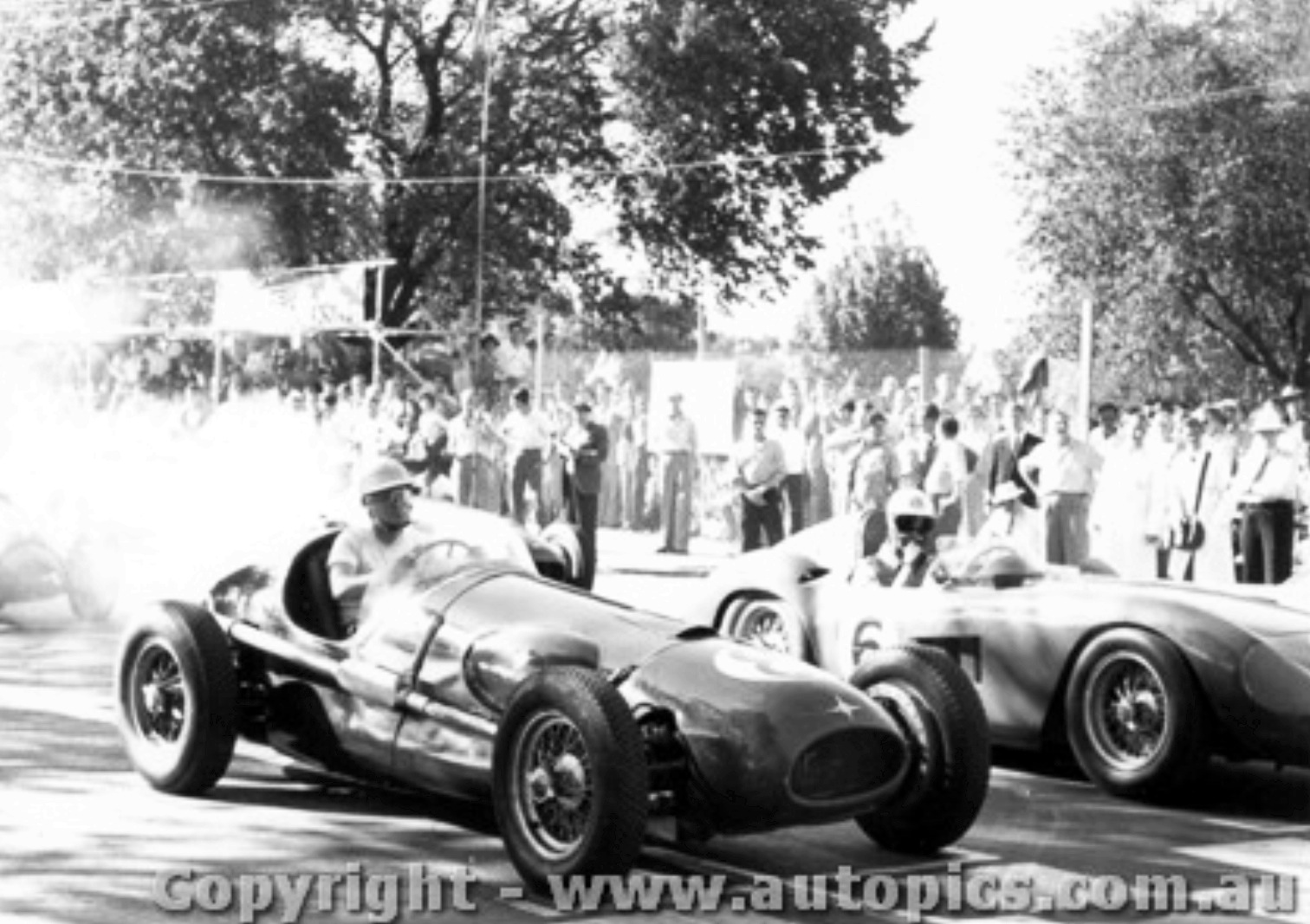
Fitch HWM 'The Racers'

John Fitch crashes his HWM into the straw bales during the filming of ‘The Racers’ in 1954…

Cameraman Frank Phillips catches the action as ‘Gino Bergesa’ played by Kirk Douglas crashes his privateer HWM. ‘The Racers’ was a Hollywood film based on the book ‘The Racer’ written by Hans Ruesch a successful pre-war Grand Prix driver.

This photograph by Erde is in ‘Automobile Year’, neither book nor film are familiar to me but both appear to be worth a look. John Fitch was a successful driver who drove the action sequences for Douglas, this one was filmed at Monaco.

This website and article about the film are interesting;

http://www.velocetoday.com/lifestyle/lifestyle_56.php

The Racers

Photo Credit…

Erde ‘Automobile Year’

stew m10b

Jackie Stewart tests AJ Foyt’s Mclaren M10B Chev F5000 during Questor GP qualifying, perhaps the only time the Scot drove an F5000 car?…

The Questor Grand Prix was an intensely interesting experiment, a shame the Ontario circuit didn’t repeat it in subsequent years.

The event took place in March 1971 at the newly completed Ontario Motor Speedway. Promoted as the ‘Battle of Two-Worlds’, the USA and its Formula A/5000 cars against the best of European F1.

In 1971 there were only 11 championship F1 events so it was relatively easy for the teams to fit the event in, it gave them an extra race test without championship points at stake early in the season, and the prize money was $US278K or in 2015 $ terms, $M1.6, so it was well worth the effort!

questor tickets

For the Ontario Speedway promoters it was an ideal way to promote their new venue, the owners had aspirations of having a second US GP there, running of an event successfully provided the essential credentials to advance that goal. The event was well promoted with over 65000 punters rocking up on raceday.

The course itself comprised the start/finish straight, the first banked corner of the oval layout and a twisty infield section.

questor promo

The Grid…

The American entry included Peter Revson’s Surtees TS8 Chev, Mark Donohue Lola T192 Chev, George Follmer Lotus 70B Ford, AJ Foyt in a McLaren M10B Chev, Bob Bondurant’s Lola T192 Chev and Al and Bobby Unser, both in Lola T190/2 Chevs, Swede Savage was Eagle Mk5 Plymouth mounted and Tony Adamowicz raced a Lola T192 Chev.

donohue

Mark Donohue’s Lola T192 Chev 14th, Derek Bell March 701 Ford 15th.

lola

Tony Adamowicz’ Lola T192 Chev 17th, Graham Hill.

3 litre GP entrants included Ferrari with 2 1970 spec 312B’s (Mario Andretti and Jackie Ickx), Lotus (Emerson Fittipaldi and Reine Wisell in 72 Ford’s), BRM (Jo Siffert and Pedro Rodriquez P160, Howden Ganley P153 V12), Brabham (Graham Hill BT34 Ford ‘Lobster Claw’ and Tim Schenken BT33), Matra (Chris Amon MS120B V12), March (711 for Ronnie Peterson), Tyrrell (Jackie Stewart in 001), McLaren (M19A’s for Denny Hulme and Peter Gethin), and two privateer March 701’s entered by Frank Williams (Henri Pescarolo and Derek Bell).

seppi

Siffert in his ‘brand spankers’ BRM P160, Reine Wisell and friend, McLaren’s Hulme & Gethin.

denny

Attractive young maiden and Hulme poring over the innards of his McLaren M19A.

We may never see such a star studded battle ever again.  All the heavy hitters from each side of the Atlantic were there.  A race fans dream which some saw as a repeat of Monza’s ‘Race of Two Worlds’ held in 1957 and 1958.

denny 2

Denny Hulme, McLaren M19A Ford 3rd and Ronnie Peterson, March 711 Ford 13th.

jys

L>R top to bottom. Hill in his Brabham, #29 Ron Grable Lola T190/2 Chev #8 Denny Hulme McLaren M19A Ford, #28 Stewart McLaren M10 B Chev, Peterson March 711 Ford, Howden Ganley BRM P153.

Racing…

stew grid

Stewart, Tyrrell 001 Ford, Siffert BRM P160 and Ickx Ferrari 312B on the grid. (unattributed)

The race was run in two 100-mile heats because the F5000’s didn’t have the fuel capacity for a 200 mile race, a GP’s normal duration.

Mario Andretti, having just taken his first GP win in the season opener at Kyalami, South Africa, had an accident in qualifying on Friday and missed most of the session.  He also had an Indy race on Saturday at the Phoenix Oval. He started in 12th place, standing on his Friday time.

With AJ Foyt racing at Phoenix Jackie Stewart did some laps in his McLaren M10B doing a time good enough for 11th on the grid. Foyt was uncomfortable with the Scots setup and reverted to his own.

Jackie Stewart was on pole in his Tyrrell from Amon, Ickx, Hulme, Rodriguez and Hill with Donohue’s Lola the best of the F5000’s, then Siffert, Fittipaldi and Follmer’s Lotus 70.

hill

Hill, Brabham BT34 Ford 26th, Siffert.

ickx

Hill and Ickx, Ferrari 312B 11th.

amon

L>R top to bottom. Fittipaldi, Andretti, Amon Matra MS120B 4th from Ickx Ferrari and Hulme’s McLaren M19A..

In the first heat Andretti worked his way to the front, caught and passed Jackie Stewart under braking for the first turn and won pulling away, much to the delight of the American crowd.

Initially Ickx used his Ferrari’s power to take the lead from Stewart, Amon, Hulme, Hill and Siffert . Spins for Siffert and Hulme dropped them back, while Stewart battled to get past Ickx, outbraking him and moving ahead. There was a high attrition rate, Foyt retired early with handling issues and Follmer with an oil fire in his Lotus, Hill was the first F1 car to drop out as he felt his Cosworth engine tighten, Savage crashed his Eagle heavily into a concrete wall off the infield section of the course suffering severe leg and head injuries. Their were other Chevrolet failures amongst the Formula A contenders, both the F1 and 5 litre cars engines were suffering as a consequence of the long straight and therefore long period at maximum revs.

hulme

Hulme on row 2 McLaren M19A, Ickx Ferrari 312B behind, nose in shot is the Brabham BT33 of Tim Schenken. (The Cahier Archive)

wisell

Reine Wisell, Lotus 72 Ford, ret’d.

Andretti was moving up, Donohue, defended strongly in his Lotus before Andretti passed him for third, which became second when Amon pitted with a puncture.

Together with three laps remaining, Andretti moved ahead to the delight of the crowd, taking the win from Stewart, Donohue was forced to pit from third with fuel injection dramas allowed Siffert into 3rd with his BRM.

Retirements included both Marchs; Pescarolo with a cracked chassis member and Peterson going off after a shock absorber failure, both Lotus 72s retired, Fittipaldi with an injection issue.

andretti

Mark Donohue’s FA Lola T192 Chev 14th ahead of Andetti’s Ferrari 312B 1st. (unattributed)

In the 2nd heat outside front row starter Jackie Stewart got the jump on Andretti and led.  Andretti stalked Stewart for a handful of laps then repeated his first turn, first heat overtaking manouevre on Stewart to take the lead and the win.

Twenty-two cars gridded for heat two 45-minutes after the first. Foyt was persuaded to venture out in his McLaren Chevy and Peterson rejoinined after repairs but only once a large part of the race had been run.

Andretti was on pole but lost out to Stewart on the opening lap. Behind, Siffert led Ickx, Hulme, Amon and Donohue, that order changed when Ickx tried to dive past Siffert at the end of one of the short straights, Ickx spun and took Siffert with him.  Whilst Seppi continued Ickx pitted with a puncture.

stew

Stewart, Tyrrell 001 Ford 2nd.

Luckless Donohue pitted from third with injection dramas after a fine run, easily the quickest of the Formula A’s in his Penske Lola T192, Amon took over third in his Matra.

At the front, Andretti was closing in again on Stewart, the Tyrrell suffering a broken rear anti-roll bar which was causing issues on the banking, Stewart elected to yield as Andretti made his move.

The tough nature of the circuit again took its toll. Even Andretti was impacted, his Ferrari not revving cleanly and puffing smoke. He held on to win though with Stewart second from Amon. Rodriguez benefited from Siffert slowing after losing a suspension bolt to take fourth ahead of Hulme, Schenken and Ron Grable the first FA car home in seventh.

cannon

John Cannon in an STP sponsored March 701 Ford 12th. (unattributed)

andretti

Andretti’s victorious Ferrari 312B in essentially 1970 spec. (The Cahier Archive)

In terms of overall results the complex points structure meant that a car with a high finish in one race could outscore a car that had finished both, gave Andretti the win he deserved, Stewart was second from Hulme, Amon and Grable heading the US-runners in seventh.

The race was popular with the crowd, the American racers felt their cars had been uncompetitive and the European’s, other than those who had extensive sportscar experience of Daytona, were not fond of the banking!

The Questor Group, builder/owners of the circuit encountered financial problems shortly after the event so it was not repeated, leaving it a ‘great might have been’.

Certainly as F5000’s became more sophisticated into the 1970’s, the Lola T330/2 famously as quick as many F1 cars at Mosport and Watkins Glen, circuits upon which they both raced, would have made such an event much closer, perhaps, than the Questor GP was in 1971?

Overall Results: 1 Andretti; 2 Stewart; 3 Hulme; 4 Amon; 5 Schenken; 6 Siffert; 7 Grable; 8 Gethin; 9 Ganley; 10 Rodriguez. Fastest Lap: Rodriguez, 1m42.777s (111.49mph).

winners

L>R top to bottom. Hill/Schenken/Peterson and friend, happy winner Andretti, Jo Siffert

Etcetera…

ickx

Ickx doing a few laps in Andretti’s chassis during practice, Ferrari 312B. (unattributed)

gethin

L>R top to bottom. #7 Gethin McLaren M19A Ford 8th, #14 Siffert BRM P160 6th, #2 Fittipaldi Lotus 72 Ford 21st, John Cannon March 701 Ford 12th.

tim

Tim Schenken Brabham BT33 Ford, 5th.

YouTube Footage…

Etecetera…

swede savage

Dan Gurney’s protege Swede Savage deserved a more competitive car than the ’69 Eagle Mk5 Plymouth, the oldest car in the race. He crashed heavily and didn’t return to racing for 6 months after severe leg injuries and a ‘bruise to his brain stem’. (unattributed)

al

Al Unser in his ‘Kastner Brophy Racing’ Lola T192 Chev, #38 behind in the colour shot is brother Bobby’s similar ‘Charlie Hayes Racing’ T192. (unattributed)

ontario

Ontario lap 1 Questor GP vista (unattributed)

ickx

Andretti’s Ferrari 312B, lines of that 1970/71 series of Ferrari’s about as good as it gets?, #18 Henri Pescarolo’s Frank Williams March 711 Ford (unattributed)

entry

1971 Questor GP entry (unattributed)

jys

Reine Wisell top left and Jackie Stewart, Foyt F5000 McLaren M10B mounted, engineeer familiarising JYS with the dash and rev limits ‘7500 not 10500 pleeease Jackie…’

Bibliography…

The Nostalgia Forum, oldracingcars.com, HistoricRacingNews.com

Photo Credits…

Getty Images-all images by Getty unless otherwise stated, The Cahier Archive

davo stobie pole

(State Library of South Australia)

At the daunting Barossa Valley Lobethal road circuit in January, 1948, Lex Davison, having borrowed the ‘Missus new MG TC had his first major crash. He went for the ‘wrong side’ to pass Gavin Sandford-Morgan’s MG and ran off the road, destroying this innocent ‘Stobie Pole’, the TC but fortunately not himself…

This is the story of Davisons MG TC Spl chassis #TC.0825 and more briefly the importance of MG as a marque to motor racing in Australia until the dawn of the sixties.

davo mg

Woodside 1949.Here the car is in its early supercharged form, suspension standard but for ‘Telecontrol’ shocks, finned brake drums and air scoops. (State Library of South Australia)

Diana Davison/Gaze recounts the story in Graham Howard’s biography of Lex…‘While he waited for the Alfa (Alfa Romeo P3/Tipo B Monoposto) to arrive, Lex entered the TC for the New Year’s meeting on the formidable 8.65 mile Lobethal public road circuit. He drove it over from Melbourne accompanied by Peter Ward and Lyndon Duckett in an old 6cylinder Vauxhall.

During practice they went off the road, slewed down the sloping grass verge, somersaulted, then hit a Stobie pole so hard the steel pole was bent into the shape of a question mark. The violence of the accident bent the MG’s chassis and tore off the driver’s door, the bonnet and the outer scuttle panelling. The alloy seat was bent, the rim of the steering wheel was broken away from the spokes, a front wheel smashed and its tyre gone. Lex had a chipped bone on one knee.

Naturally, I was dreadfully upset at losing the MG, as I had never owned a car before, but it had gradually disappeared from my hands. We had both driven it at Rob Roy, where Lex had coached me from the passenger’s seat, then Lex raced it at Nar Nar Goon grass track and I had competed at the final Killara Park Sprints – dashing back to the house between runs to check on baby Anthony, who usually travelled in the car in a wooden cradle fitted behind the seats.

I was just grateful that Lex wasn’t too badly injured’.

Chris Davison, Diana’s son recently recalled ‘ The story goes that mum was getting tired of being left out, so Lex bought her the MG to ensure she was part of the team. Motor racing then bacame a real family affair. Smart move Lex!! When my daughter Claire drove at RobRoy for the first time she took this photo to remind her of the family history at Rob Roy’.

diana davo

Diana Davison in the MG Spl at Rob Roy, year unknown. (Davison Family Collection)

The TC reappeared as a bare chassis for Rob Roy and Nar Nar Goon at the end of 1948, with Lex and Reg Nutt driving. DD; ‘By the following March the Head Brothers had created a narrow 2-seat shell with shapely cycle guards. It had nice upholstery and was painted red, and I think they christened it ‘Mum’s Racer,’ and they fitted it out with a small leather pocket for my compact and lipstick’.

‘Several times the car lowered the ladies’ record at Rob Roy, including once with the supercharger fitted, and that record stood for some time. Lex raced it widely and Bib Stillwell contested events at Woodside in 1949. Our last entry for the car was with Ian Mountain driving at the Grand Prix at Albert Park in 1953.’

DD

Here Diana Davison at Rob Roy in 1946, in what appears to be an Austin 7 Spl. Happy to take advice on the car. DD an immensely talented, popular and respected member of the Australian racing community for all of her life. ‘Australia’s First Lady of Motor Racing’. (George Thomas)

MG and Motor Racing in Australia…

I have written about Lex Davison’s cars on primotipo before, he was a winner of the Australian Grand Prix four times, winner of the inaugural Australian Drivers Championship, the ‘Gold Star’ in 1957 and was the father and grandfather of two generations of champion racers. His premature death in 1965 meant he never saw the achievements of his scions.

MG is surely the most significant marque in Australian Motor Racing before 1960?

The cars won the Australian Grand Prix four times; Les Murphy’s P Type at Phillip Island in 1935 and the famous 1937 race at Victor Harbour actually held in December 1936.  Alan Tomlinson’s legendary, clever and brave drive at Lobethal 1939 in his supercharged TA Spl and Bill Murray, TC Spl at Bathurst in 1947. MG were always contenders in the AGP as the race was run to Formula Libre rules and handicapped until the early fifties, so whilst not usually the quickest entries, the handicaps gave everyone a chance.

Mind you, in the right circumstances the cars were outright contenders, Frank Kleinig’s ‘Kleinig Hudson’ which used an MG Magna chassis started from scratch in the 1949 AGP at Leyburn, Queensland. In that race he was advantaged by the withdrawal of a swag of Victorian topliners who didn’t enter in a political protest, but the Kleinig Hudson was always an outright contender, albeit an unreliable one driven as it was by a mechanically talented if not entirely sympathetic driver.

In fact the last MG placing in an AGP, well into the mid-engined era appears to be Noel Barnes 10th place in his TC Spl in the 1960 event at Lowood, Queensland, the race won by Alec Mildren’s Cooper T51 Maserati. Three TC’s started the race, all from the back of the grid.

AGP wins is not the real contribution MG made though, that was more around ‘mass’ participation. The cars were affordable, accessible and ‘tunable’, a way to view them is the Formula Vee or Formula Ford of the period. The cars gave so many drivers a start, whether it was local hillclimbs and sprints, circuit racing or the elite levels of the sport, such as they were in Australia between the wars and through to 1960.

fishermans bend 1951 davison jp read

Lex Davison in the MG TC Spl Fishermans Bend 1949. (VHRR P Read)

Rebuild and Specifications of  ‘TC.0825’…

Back to Lex’ Spl. Davison gave the car to Reg Nut in Melbourne to rebuild the chassis which was largely standard but fitted with brake torque cables from the frame to the tops of the king pins, aluminium cooling fins on the brake drums and air scoops to the backing plates.

The 3 main bearing, cast iron, 4 cylinder, pushrod OHV, ubiquitous ‘XPAG’ engine was fitted with domed pistons giving a compression ratio of 12:1. The ports were opened, ports and combustion chambers polished. Valves were from a Jaguar, bigger than the biggest in the MG ‘catalogues’, cam followers and valve gear modified, lightened and polished as were the crank and rods.

Capacity was standard, wider bearings used by widening the crankshaft journals, a bigger 2 1/4 gallon sump was fitted and an aluminium oil cooler fitted underneath the radiator.

Bigger 1 1/2 inch SU carbs fed the thirsty little engine, spark was provided by a Lucas NV4 magneto, albeit the wiring for a coil and distributor setup was retained to allow changeover if required.

Head Brothers in Murrumbeena, a Southern Melbourne suburb, built an attractive sports car body with road equipment, the front and rear guards easily removed depending on the nature of the competition event.

Heads used a strong but light framework from square section seamless tubing, then covered it with pre-formed panels of light aluminium sheet, attached by wrapping their edges over the tube frame. The grille was hand made by light tubing, the one piece bonnet retained by leather straps.

The fuel tank Lex ‘knocked off’ from his newly acquired Cooper, the 10 gallon aluminium tank lives inside the MG’s low tail, it’s quick-action cap exposed outside the body.

The car was beautifully finished and trimmed. Instruments comprised Smiths tach, oil pressure and oil and water temperature gauges.

16 inch wheels were used, 5 inches wide at the front and 5.5 or 6 inches wide at the rear, shocks were ‘Telecontrols’. Gear ratios and ‘box were standard but a lower 4.875 rear axle ratio was used as the ‘best compromise’ for events contested.

mg front

Picture of the very neat, fast for its time, road/track sports racer. Here in unsupercharged form. Head Bros of Melbourne built the body, lights and guards easily removable front and rear. (AMS)

Davison TC Spl Competition Record…

The car contested it’s first Rob Roy Hillclimb in 1948, driven by Reg Nut, Lex then ran it at Nar-Nar-Goon in both events the car was successful.

It next raced, after the Heads’ body was fitted and a supercharger at Fishermans Bend in 1949. It raced at Woodside, SA later in the year before the supercharger was removed ‘as it’s bonnet hump was thought unsightly’. (Makes no sense to me as a reason to remove it but ’tis what the contemporary reports say).

The car then raced successfully throughout 1950 in unblown form and in 1951 the MG returned to South Australia, racing at both the Gawler Airstrip and Woodside road circuit. Diana Davison also raced the car very competitively in hillclimbs, retaining her Ladies Record at Rob Roy.

Lex’ racing focus was primarily his Alfa Romeo P3/Tipo B Monoposto, the 2.9 litre car arrived in Australia in early 1948, the MG wasn’t being used much, it’s last race when owned by the Davisons’ the 1953 Australian Grand Prix meeting when it was raced for them by Ian Mountain.

The car rapidly passed through the hands of several owners, it was rolled without causing much damage in 1960 at Phillip Island. Historic Events started in the sixties, the car used then by John Fitzpatrick and others. It was bought by Reg Bowran in 1970, but has appeared only occasionally since.

mg cockpit

Simple cockpit layout, array of Smiths instruments. (AMS)

The Davison TC had a major accident early in its life which resulted in it’s rebirth as a competition car but by the standards of Australian MG Specials this car, touted by the Davisons’ in the early Fifties as ‘the fastest unblown TC in Australia’ (David McKay would have contested this claim, his ex-Brydon ‘TC.3306’ the other contender for that title at the time, but the cars never decided the contest) has had a remarkably easy and little raced life!

More importantly it typifies the type of MG Spl which provided the backbone of Australian Motor Racing for decades…

mg tail

Butt shot, scan of an old magazine so a bit scratchy. (AMS)

Etcetera…

chris and claire

In a nice bit of Davison Family and Rob Roy symmetry Diana Davison’s granddaughter Claire, here pictured with father Chris Davison, won the ‘Diana Davison Gaze Trophy’ for Ladies FTD at Rob Roy in 2014. Car a Reynard Formula Ford. (Davison Family Collection)

Bibliography…
Australian Motor Sports Magazine April 1952 (AMS), ‘Historic Racing Cars in Australia’ John Blanden, ‘Lex Davison Larger Than Life’ Graham Howard, Chris Davison

Photo Credits…

State Library of South Australia, Davison Family Collection


bob 1

Bob Anderson blats his Brabham BT11 past the watching crowd, its little 1.5 litre Coventry Climax V8 echoing off the Monaco buildings on his way to a very good 9th place in his self-run car…

Anderson was born in Hendon, North London to a well-to-do family on 19 May 1931.

bob anderson portrait

Bob Anderson circa 1966. (MotorSport)

He made his name in the 1950s as a motorcycle racer, by 1959 he was a front running competitor in the 350cc World Championship against the stars of the day including John Surtees, Mike Hailwood and Geoff Duke. He nearly won the 1958 Swedish GP, finishing inches behind Duke but he never came so close to GP victory again.

ando bike mallory

Bob Anderson aboard his Manx Norton, Mallory Park, April 1957. May be 350/500cc (Bruce Anderson)

He switched to car racing aged 30 in 1961. Anderson raced a Jim Russell Lola Mk2 Ford in some early season UK Formula Junior races before doing some events in Europe in a Lotus 20 Ford entered by Henry Taylor. His results weren’t sensational but he moved to Lotus’ factory FJ team in 1962.

ando lotus nurburg

In the Team Lotus FJ Lotus 22 Ford during practice for the Eifelrennen, Nurburgring 28 April 1962. DNS in the race won by later Team Lotus Team Manager, Peter Warr Lotus 20 Ford (Bruce Anderson)

His best result that year was a second place in the 1962 Coupe de Salon at Monthlery behind teammate Peter Arundell, both in Lotus 22 Fords. He was also third in the 1962 Monaco FJ event also Lotus 22 Ford mounted, the race again won by Arundell. It was a first class result, on the grid that year were Mike Spence, Jo Schlesser, Alan Rees, Richard Attwood, Frank Gardner and John Love amongst dozens of other hopefuls!

Arundell pretty much won everything in FJ that year, rocketing into a Team Lotus, ’25’ GP car in 1963.

dutch gp 1966

‘DW Racing Enterprises’ was very DIY! Here Bob Anderson loads his Brabham BT11 Climax onto his Kombi for the long drive back to the UK. Dutch GP Zandvoort 1966. He qualified well given his equipment but DNF with suspension dramas. (unattributed)

Anderson felt it was time to progess, at the start of 1963 Bob he acquired an ex-Bowmaker Team F1 Lola Mk4 Climax. He began racing as a Formula 1 privateer ‘DW Racing Enterprises’, based at Haynes, Bedfordshire comprised Bob and his French wife Marie-Edmee! Close friends David Stanbridge and Alan Brodie were important to his success and most critically George Copeland, his fulltime mechanic.

In those far away days a living could be made, sort of, with some trade support, from start and prize money as part of the European F1 Circus participating in a mix of Championship and Non-Championship (NC) Grands Prix.

Bob’s aims in his first year were to ‘cut his GP teeth’ by mainly competing in NC events taking in some Championship GP’s later in the season.

In 1963 there were 14 NC meetings, 13 of them in UK/Europe. These events were well supported by factory teams so he had his chance to ‘strut his stuff’ in fields made up of folks like him as well as seasoned professionals.

ando lola

Anderson contesting the IX Kanonloppet at Karlskoga, 1 August 1963. The Lola was 8th on aggregate off grid 6. Jim Clark won in a Lotus 25 Climax (Bruce Anderson)

He did well in the Italian events in ’63; victory at the GP of Rome at Vallelunga, admittedly in not the strongest grid of the season, 3rd in the Imola GP, 4th at Syracuse and was 6th in the ‘II GP del Mediterraneo’ at Enna-Pergusa. He was also 8th at the Solitude GP in Stuttgart.

In addition the ex-factory Lola Mk4 ‘#BRGP43’ contested UK NC meetings at Snetterton and Oulton Park. He also travelled to France to race in the Pau GP on the northern edge of the Pyrenees and to Sweden to take the grid in in the ‘9th Kanonloppet’ at Karlskoga. His transporter did plenty of miles that year!

Checkout this short YouTube footage of the ’63 Rome GP Won by Anderson;

rome

Bob Anderson during his victorious Rome GP drive at Vallelunga in 1963. Lola Mk4 Climax. (British Pathe)

His Championship events were at home at Brands Hatch where he was 12th having qualified 16th of 23 and at Monza where he was again 12th having qualified 18th of 28 entries.

By any objective assessment it was a strong start to GP racing. The Lola was a good choice, maybe not the fastest ‘tool in the shed’ even in 1962, but John Surtees placed second twice in it in 1962.

For 1964 he was looking for a more competitive mount.

dutch

Anderson 6th in the Dutch GP at Zandvoort, 1964. Brabham BT11 Climax. (unattributed)

He switched to a Brabham BT11, again powered by the Coventry Climax FWMV 1.5 litre V8 for 1964, the years highlight third place behind Lorenzo Bandini and Richie Ginther at the Austrian Grand Prix at the Zeltweg airfield. Most of the fancied runners went out with mechanical trouble caused by the incredible bumps on the runways of the circuit, but it was a very strong performance all the same.

zeltweg 1964

Best championship result was his 3rd in the 1964 Austrian GP at the Zeltweg, ‘rough as guts’ airfield circuit. Brabham BT11 Climax.(unattributed)

Other strong 1964 races were 6th at the Dutch GP, 7th at both Monaco and British GP’s and 11th at Monza.

His best NC results were 3rd in the Rand GP in South Africa and 6th at Syracuse.

dutch hailwood

Bike racers dicing at Zandvoort 1964, Dutch GP. Anderson Brabham BT11 Climax ahead of Mike Hailwood’s Lotus 25 BRM, 6th and DNF in the race won by Clark’s Lotus 25 Climax. (unattributed)

ando brabham vw

‘DW Racing’ in South Africa, 1964/early ’65. VW ‘Ute’ and Brabham, how many miles must that Kombi have done!? They would have been slow trips too, at Uni i had a mate with one, it really didn’t have enough power to ‘pull ‘ole Granny off a piss-pot’!, let along with 450Kg of F1 car aboard (Bruce Anderson)

1965 Monaco GP and the the Brabham BT11 Climax…

anderson, gardner siffert

Battle of the privateer Brabham BT11’s Monaco 1965. Anderson (#9) 9th, Gardner DNF in his (red) BRM engined car and Siffert 6th also BRM engined. (unattributed)

The Ron Tauranac designed and built Brabham spaceframe customer cars of all formulae were popular with customers in the 1960’s. Perhaps, statistically the most successful customer single seaters of that decade.

It was therefore an easy choice for Anderson to make when he needed a more competitive mount to buy one of the five BT11’s built. Three were sold to customers and 2 retained for use by the factory ‘Brabham Racing Organisation’ team. The BT11 was an evolution of the BT7 with which Dan Gurney won 2 GP’s in 1963.

So Bob had a very competitive tool for the final year’s of the 1.5 litre formula. The Lotus 25/33 was the dominant car of 1964/5, Jim Clark took his second world title in it in 1965, but the BT11 was a good, fast, reliable, robust, easy to maintain customer car.

Gurney used his BT7 during 1965 with three 3rds and two seconds to finish the title in third place. Jack changed from his BT7 to a BT11 in Germany, it was not his best season, third at Watkins Glen his best result, better was to come for him in 1966!

bt 11 rear

Anderson BT11, Monaco pits 1965. (Dave Friedman)

Magnificent shot of a typical 1.5 litre F1 car of the 1961/5 period. Andersons BT11 ‘F1-5-64’. In this case a spaceframe chassis, Lotus ‘pioneered’ the monocoque with its type 25 in 1962. Mid-engined of course, the Coventry Climax FWMV V8 the most successful engine of the period in terms of race wins. Hewland HD5 gearbox and all independent, infinitely ‘tunable’ suspension.

bt11 front

Anderson BT11 Monaco pits 1965. (Dave Friedman)

In this front end shot you can see the oil reservoir in front of the pedal box and Lucas fuel injection pump mounted vertically in front of the radiator. The spaceframe chassis tubes are clear, as is the pendant pedal box, aluminium fuel tank and front suspension comprising upper and lower wishbones. Small rotors and Girling brake calipers, they were light cars after all!

bt 11 engine

Anderson BT11 Monaco pits 1965. (Dave Friedman)

Heart of the matter is the ubiquitous Coventry Climax FWMV 1496cc 90 degree V8 engine. In Mk4 spec the 2 valve, DOHC, Lucas fuel injected, all alloy motor produced circa 200bhp@9750rpm. Trick 32 valve engines available to some of the factory teams in 1965 developed more but the engine was an excellent customer choice.

The gearbox was Mike Hewlands HD5, 5 speed transaxle. The cars rear suspension, typical of the period comprised a single upper link, inverted lower wishbone, coil spring/damper unit and two radius rods providing fore and aft location. Adjustable roll bars were fitted front and rear.

silverstone 1

BRDC Int Trophy, Silverstone, 15 May 1965. Brabham BT11 Climax, Anderson 14th and many laps down with mechanical maladies. (Getty Images)

In 1965 Anderson’s Championship results had too many DNF’s. Highlights were qualifying 12th for the South African GP, finishing and qualifying 9th at Monaco and finishing 9th in the French GP at Clermont Ferrand.

In ’65 NC events he was 6th at Syracuse with again too many DNF’s; at Silverstone, Goodwood and Brands Hatch.

monaco 66

Denny Hulme Brabham BT22 Climax from Anderson’s Brabham BT11 Climax, Bruce McLaren’s white McLaren M2B Ford beside Jochen Rindt’s Cooper T81 Maserati, all DNF in the race won by Jackie Stewart’s BRM P261. (unattributed)

For 1966 Grand Prix racing had a new formula based around engines of no greater than 3 litres capacity, this presented a big problem for most entrants as Coventry Climax, suppliers of engines to the British teams since the late 1950’s withdrew from F1.

My detailed account of the 1966 season and related engine issues can be read by clicking on this link, rather than repeating it all again here;

Winning the 1966 World F1 Championships: Brabham BT19 Repco…
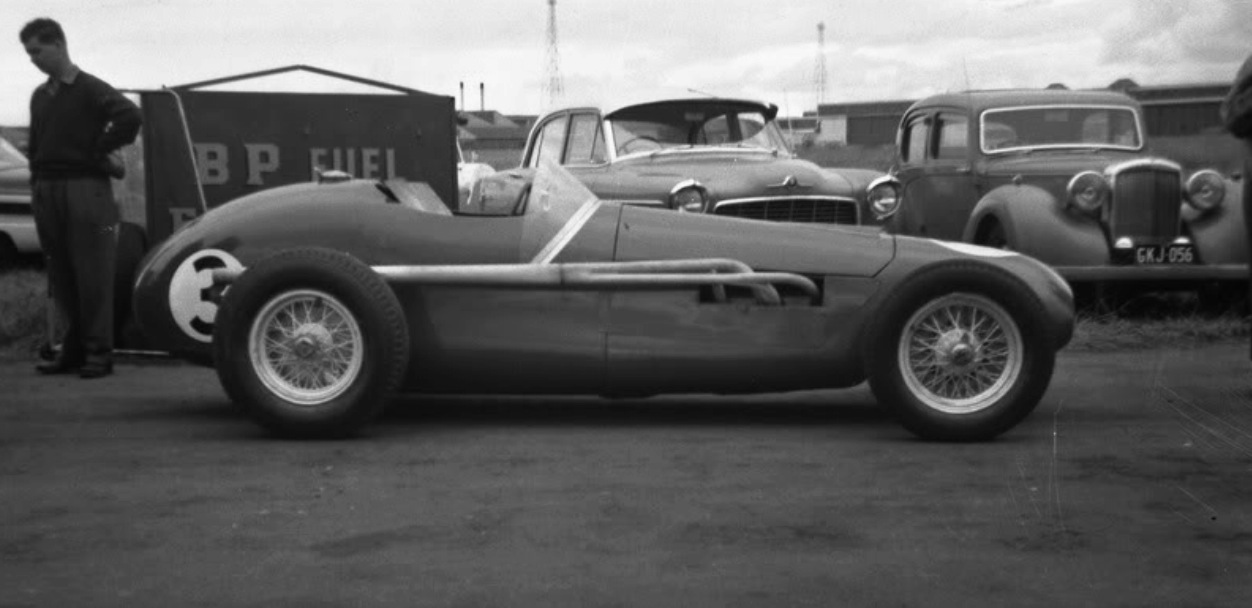
Anderson’s solution was to use the old Coventry Climax 4 cylinder FPF engine, dominant in the last years of the 2.5 GP formula in 1959 and 1960. This engine had ongoing use and development in Australasia where it was essentially the engine of choice in the Tasman Championship, an annual series of 8 races, 4 each in New Zealand and Australia in January and February.

Bob was in good company, Dan Gurney also used the 2.7 litre ‘Indy’ Climax FPF in his new for ’66, Eagle T1G until his Weslake built V12 engine was raceworthy, that engines first GP at Monza in September. In fact Anderson outqualified Dan at Reims in the ‘battle of the FPF’s, Gurney in front elsewhere the drivers met.

The conversion of his BT11 from Coventry Climax V8 to 4 cylinder FPF specification was relatively easy as Ron Tauranac built a variant of the BT11, you guessed it, the BT11A for Tasman use, selling 5 such cars in the Antipodes, competitive tools until late in the decade.

Given all of the foregoing, remember his car was already 2 years old at the start of the season, his results in this year of transition were impressive. He qualified 8th at Monaco for DNF, 10th at Brands for the British GP DNF, finished 6th at Monza having qualified 15th and qualified 14th on the Nurburgring, half way down the big grid in his little old car, again DNF.

anderson feedback

Bob Anderson getting stuck into the Yamaha RD05 during Dutch GP practice, Assen 1966. (classicyams.com)

Bob never fully left motor-cycle racing, he contested the Dutch 250 GP at Assen in June 1966, an interesting interlude in mid-season!

He was hired as a ‘safe pair of hands ‘ to provide feedback as an experienced rider to Yamaha who were developing their new 4 cylinder engined bike, the Yamaha RD05.

Anderson’s assistance was around the bikes handling, he rode to 5th, only Hailwood, Phil Read, Jim Redman and Derek Wood were head of him. Not bad for a current F1 driver and someone who had been away from bikes for a bit!

photo (18)

Bob Anderson aboard his Yamaha RD05 at Assen 1966. (classicyams.com)

read, anderson, ivy

Yamaha factory riders at Assen 1966. L>R Phil Read, Bob Anderson and Phil Ivy, lost in thought. (classicyams.com)

I wonder if he is the only driver/rider to race in F1 and motor-cycle GP’s in the same year? Not sure if John Surtees raced his MV and for Lotus in the same season?

dutch grand prix

Dutch GP, 24 July 1966. Anderson’s 2.7 litre Coventry Climax FPF engined Brabham BT11 with old FJ Lotus Teammate Peter Arundell on his outside in the factory Lotus 33 BRM 2 litre. Anderson qualified 14th, 1 slot ahead of Arundell, both struggling with engines well short of 3 litres. Both DNF in the race won by Jack Brabham’s Brabham BT19 Repco.

Anderson contested the French GP at Reims straight after Assen qualifing his old car 12th and finishing a fine 7th in the first race won by Jack Brabhams 3 litre Repco Brabham V8, on his way to the title that year.

In 1966 non-championship events he was 7th in the International Trophy at Silverstone and won the Rhodesian GP at Kumalo on December4.

Looked at objectively, his results deserved a factory drive, if not in F1 then certainly in sportscars. Perhaps one of you can explain why he seems to have been overlooked?

dutch gp 1967

Oopsie in the Dutch Dunes. Anderson spinning his BT11 during the ’67 Zandvoort event. He was 9th, Clark the winner on the Lotus 49 Ford debut. (Brian Watson)

He started 1967 well having left his Brabham in South Africa that summer. He was 2nd in the Cape South Easter GP on 1 January, John Love took the win in the Cooper T79 Climax he acquired from Bruce McLaren, that car having won the Australian GP at Longford in early 1965.

Even better was 5th place in the South African GP, that year a championship round. In April he was 8th at Silverstone’s International Trophy.

ginther and anderson

Richie Ginther appears to be yelling at himself to go faster. Here in his Eagle T1G Weslake ahead of Anderson’s Brabham at Monaco 1967. Both DNQ. (unattributed)

At Monaco he didn’t qualify which is not so much an indication of his speed but rather his aging car and the relative number of full 3 litre F1 cars now competing.

monaco 67

Bob giving his all to qualify at Monaco 1967, the old car not up to it. Brabham BT11Climax FPF. (unattributed)

In Holland he was 9th, 8th at Spa. He retired at Le Mans with ignition failure, the race held at the legendary track, or a shortened version thereof in ’67.

anderson and clark

Jim Clark Lotus 49 Ford, Bob Anderson Brabham Bt11 Climax, British GP, Silverstone 1967. (Bernard Cahier)

The shot above shows Bob Anderson’s old Brabham BT11 Climax beside F1’s state of the art; the new at Zandvoort, Lotus 49 powered by the 3 litre Ford Cosworth V8, Bobs Climax FPF was giving away around 150bhp to the 400bhp Cossie.

Sadly, Silverstone was the Brits last race, he qualified 17th and retired on lap 67 with engine failure, Clark won the GP in a dominant performance.

anderson, british

Anderson, Copse Corner, Silverstone, British GP 1967. BT11 Climax (Mike Hayward Collection)

Anderson missed the following German GP but was testing in the Brabham in the wet at Silverstone on 14 August prior to the Canadian Grand Prix. The car slid off the circuit and collided with a marshal’s post. He suffered serious chest and neck injuries and died later in Northampton General Hospital.

It was a sad end to a fine rider and driver with strong engineering/mechanical skills, somebody i was aware of but did not know much about. A driver who deserved a ride in a factory car methinks!?

Etcetera…

silverstone 2

Anderson ahead of Lorenzo Bandini’s Ferrari 1512, Silverstone, BRDC Int Trophy 1965. DNF and 7th. (unattributed)

ando rand gp

Contesting the 4 December 1965 Rand GP at Kyalami, DNF with oil pressure problems on lap 28, Jack Brabham won in another BT11 Climax (Michele Lupini)

monaco 2

Anderson fettling the Brabham, Monaco 1966. (unattributed)

monaco 1

Anderson, Monaco 1966. (unattributed)

monaco 3

Monaco ’66 again. Brabham BT11 Climax FPF. (unattributed)

Credits…
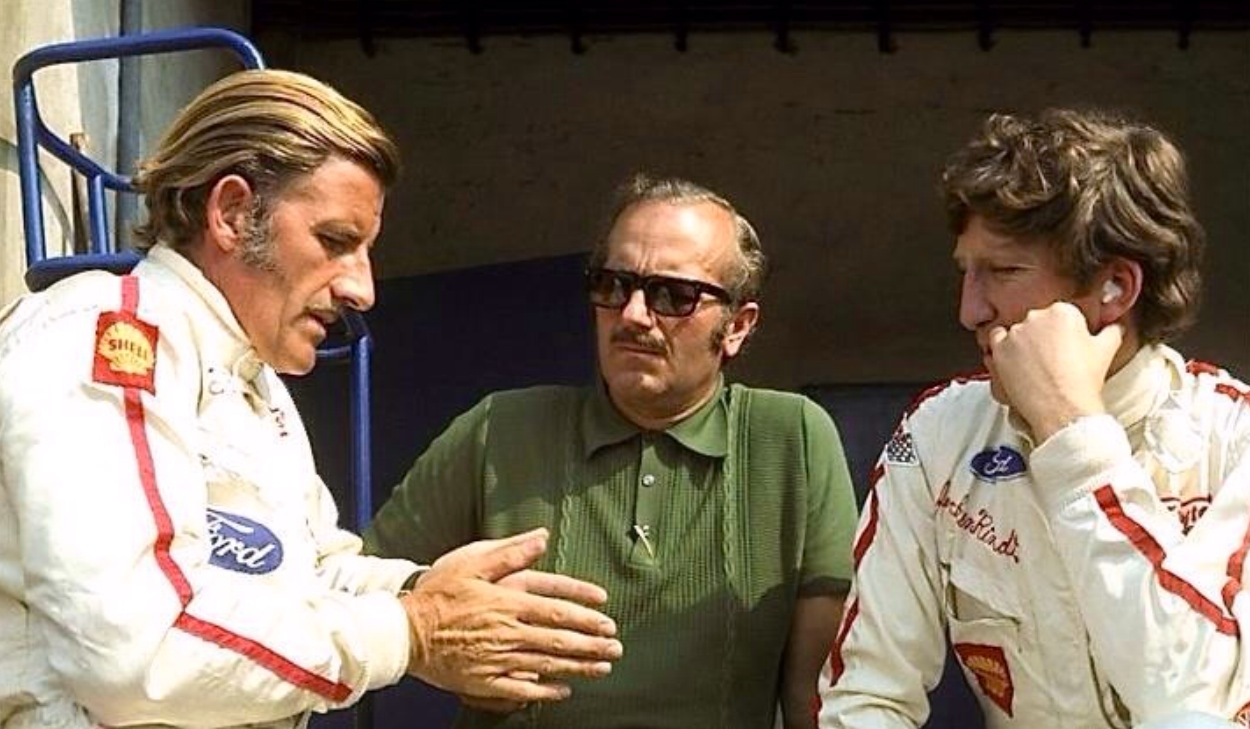
Dave Friedman, Bernard Cahier, Brian Watson, classicyams.com, Getty Images, Bruce Anderson, f2index, silhouet.com, Michele Lupini

Tailpiece: Bob and Dan Reims 1966…

bob and dan

Bob Anderson 7th left and Dan Gurney 5th attack the fast swoops of the Reims countryside on 3 July 1966. Brabham BT11 Climax and Eagle T1G Climax, Brabham won the French GP, the first driver to win a GP in a car of his own make/name. (The Cahier Archive)

Finito…