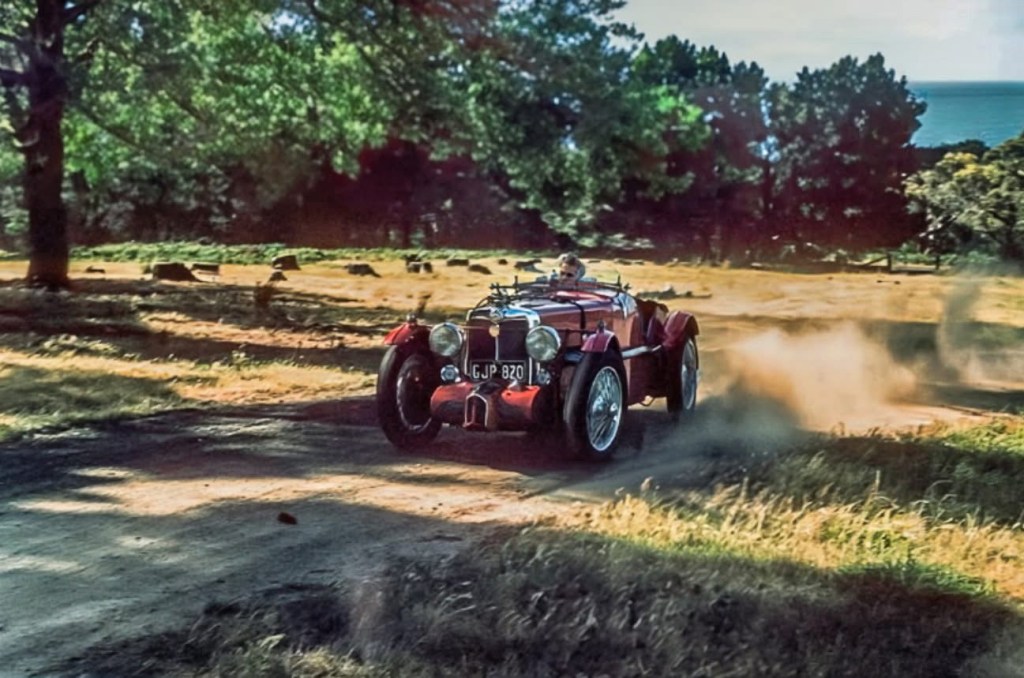
John Sawyer’s MG K3 #K3752 tail out on the Mount Martha Hillclimb, on Melbourne’s Mornington Peninsula, in November 1955.
Richard Millington wrote that ‘K3752 was the K3 prototype and was the recce car for MG’s attack on the 1933 Mille Miglia.’
Sawyer originally ‘did his time’ with Otto Stone, assisting in the preparation of Stan Jones’ Maserati 250F and other cars, ultimately becoming team manager of Bob Jane Racing in the glory years from the early 1960s, when it was Australia’s biggest and most diverse.
Some healthy exchanges on Bob Williamson’s Facebook page between Richard Millington, David Trunfull and Tony Johns, and then later between Tony, Bob King – who competed at the Mount Martha Hillclimb – and I determined that the event was at Mount Martha, near Balcombe rather than the Tuerong Valley Hillclimb, the other contender, ‘just down the road from Foxey’s Hangout, close to the corner of Tubbarubba and Balnarring Roads where the local farmers slung their dead foxes over the fence!’
(J Plowright)
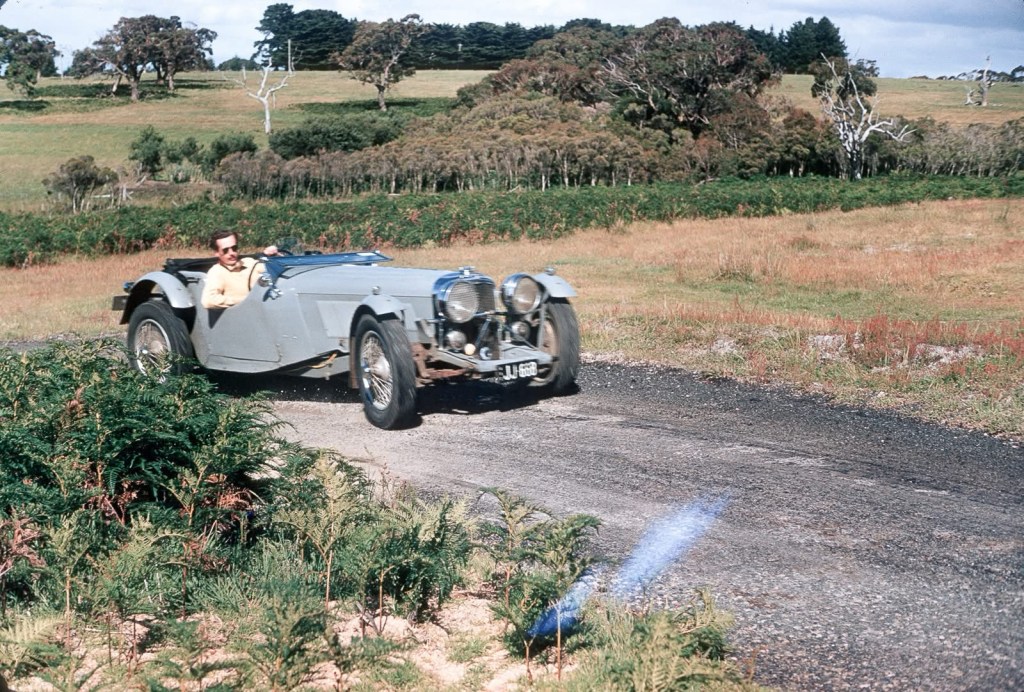
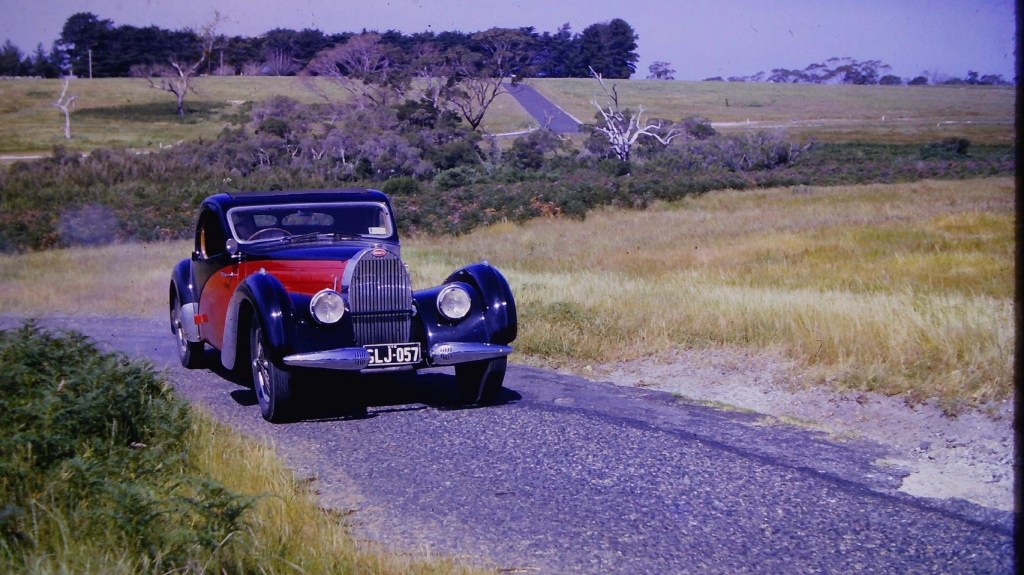
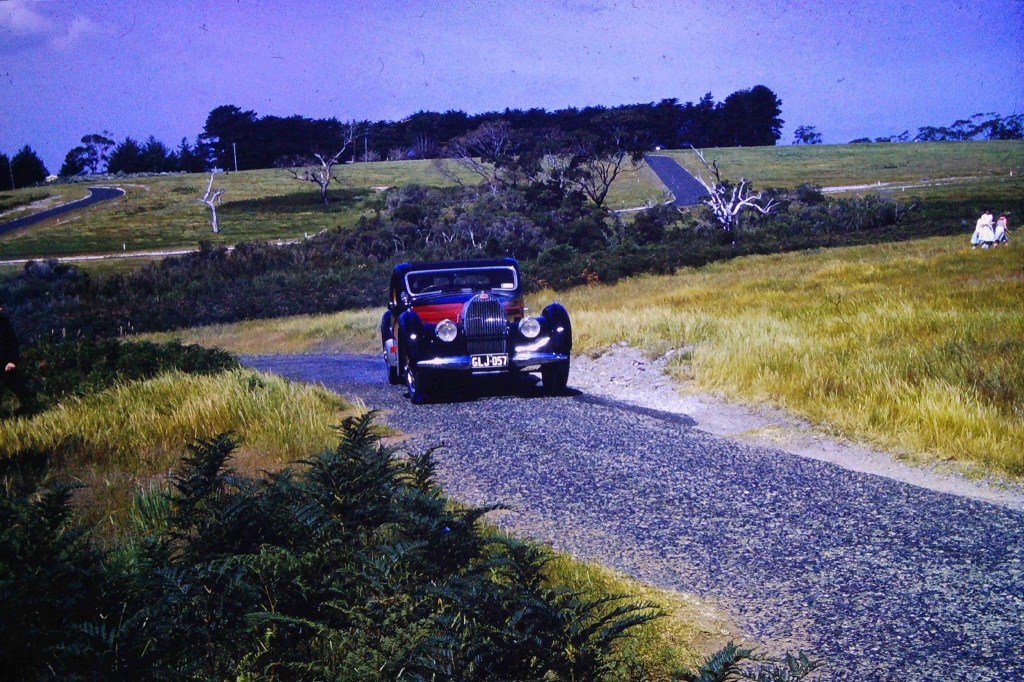
What is clear in these two shots: Laurie Rofe’s Jaguar SS100 in 1955 above, and Bob King’s Bugatti T57C below, on November 18, 1962, is the encroachment of suburbia upon Mount Martha in the intervening seven years.
(J Plowright)
Laurie Rofe’s Jaguar SS100, again in 1955.
Bob King giving his Bugatti Type 57C Atalante Coupe some wellie at the VSCC Mount Martha meeting in November 1962, not too long after the purchase of chassis #57788 from Henry and Peter Dale.
‘I set equal FTD with my great friend, Graeme Lowe’s Alfa Romeo 6C1750.’ Bob owned the car for only two years; the end of his exciting ownership came during a trip to Sydney to take in the Warwick Farm 100 Tasman Cup meeting over the February 16, 1964 weekend.
Overheating problems diverted the young Doctor’s attention from both Jack Brabham’s on-track performances and, more importantly, the attractive young lass who accompanied him north to Sin City. Salvation came over that weekend in the form of Eric Pengilley, who paid a good deal more for the car than the classy Frenchie owed Bob. The machine has been owned for decades by Stuart Murdoch.
(J Plowright)
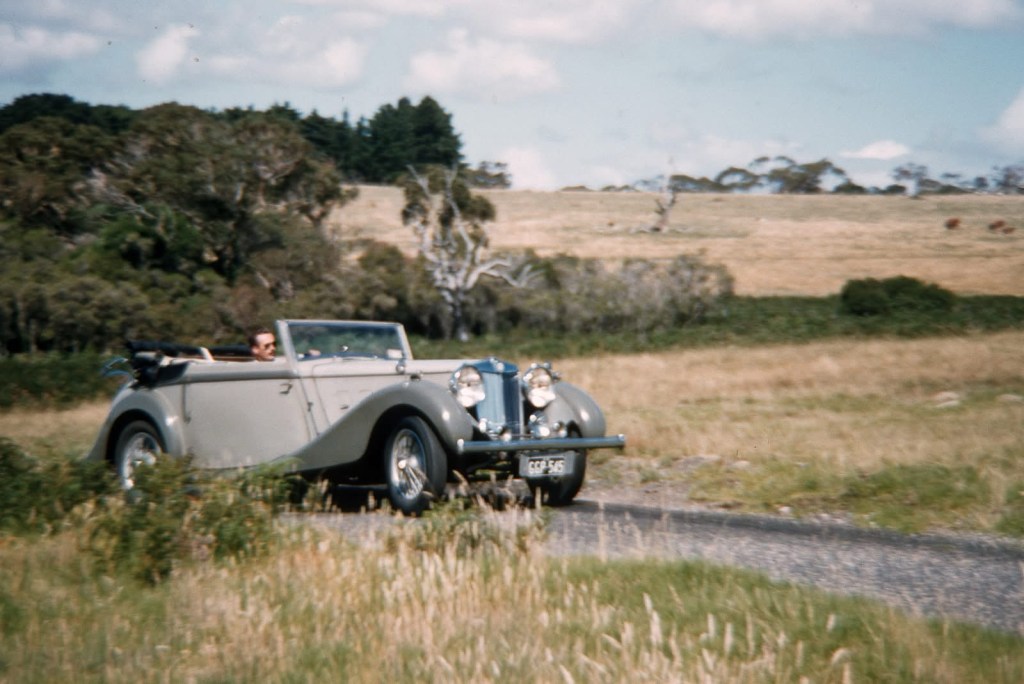
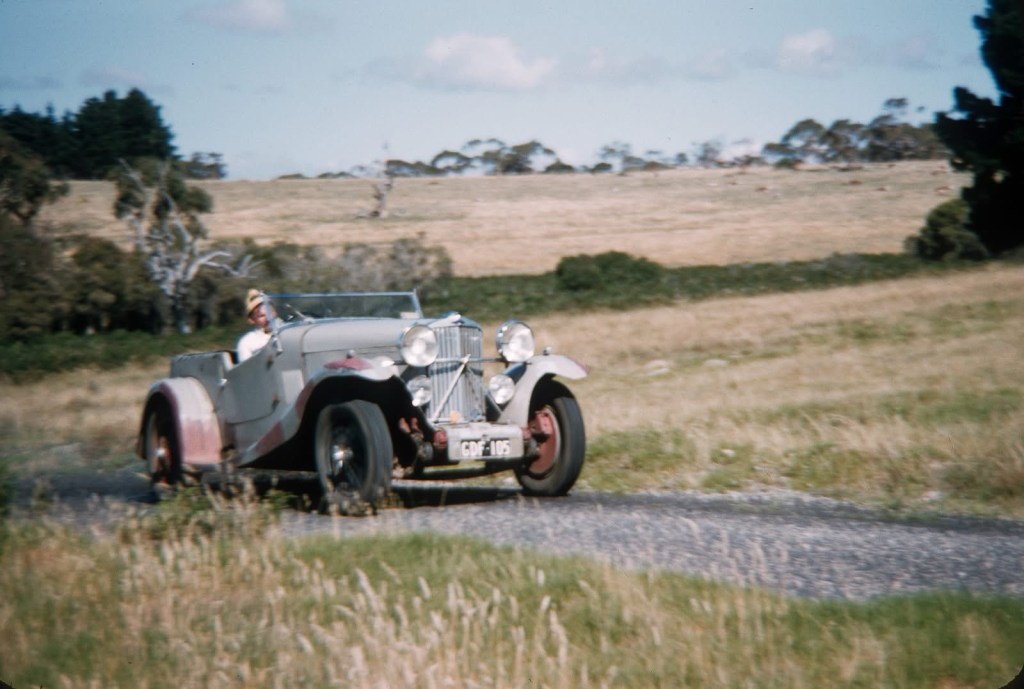
Laurie Rofe again in 1955, this time aboard an MG SA Coupe, and R Dowrick below in a Talbot 105.
(J Plowright)
More on the locational stuff from Tony Johns, who spectated at the 1962 event, and provided this excerpt from a Victorian Drivers Club magazine outlining one of the upcoming Sporting Motor Club’s Mount Martha events.
‘COMING EVENTS:
Hill Climb at Mt. Martha…This meeting is being organised by the Sporting Motor Club under a C.A.M.S. permit, and we are being invited as a club to take part. There will be a special category for Vintage Cars.
For those who can come in the morning, meet at the Mornington War Memorial at 11 a.m (then, I think, located on the intersection of Main Street and the Nepean Highway, Mornington). Entry fee £1. Unregistered vehicles 25/-. Prize: Pewter Tankard (Vintage Class). Fastest of several runs.
Hill climb not steep, and a picture-postcard atmosphere prevails. All food to be brought. Barbeque to be held after the finish of the climb. Any members without cars will be welcome to come in other members’ cars. If not, bring Pop’s Holden.
If members come later, drive down the Nepean Highway three miles past the War Memorial, turn right on the first road past the bridge at the School of Signals. Drive along the road one mile, then turn left a half mile, where the hill climb will be seen on the left.’
Credits…
Richard Millington, Jon Plowright, Don Ashton Archive via Tony Johns, Bob King Archive
Tailpiece…
(R King Arc)
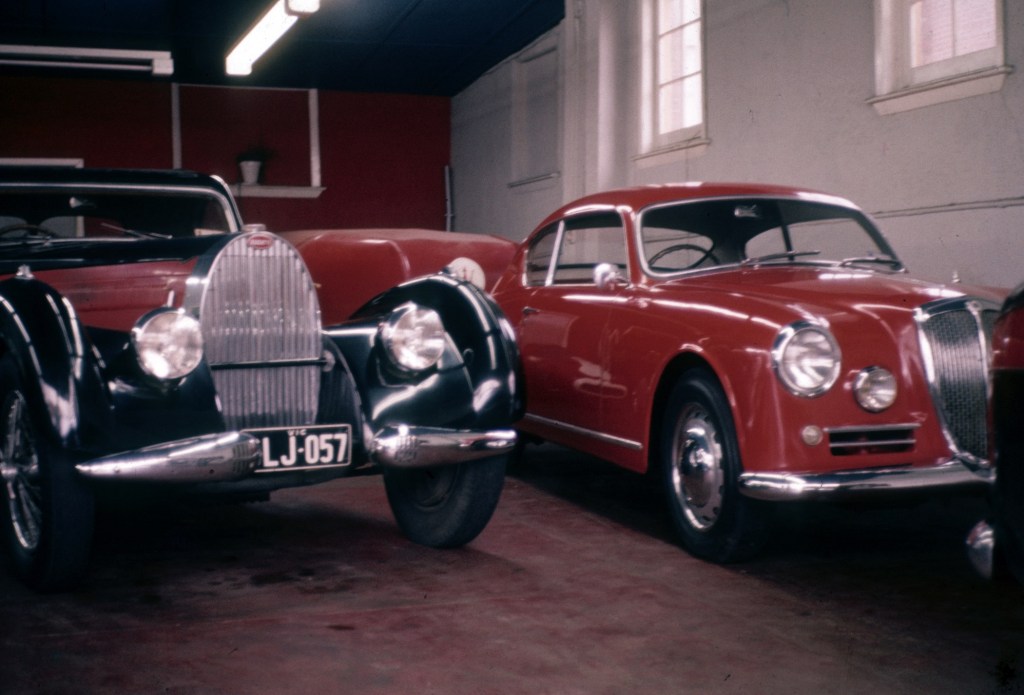
King’s Bugatti Type 57C, and friend, in Dicer Doug’s – Doug Whiteford Tuning Service – emporium of speed at number 5 Carlisle Street, St Kilda, in late 1961 or early 1962, not long before he bought it. Ring for an appointment on XJ1233…
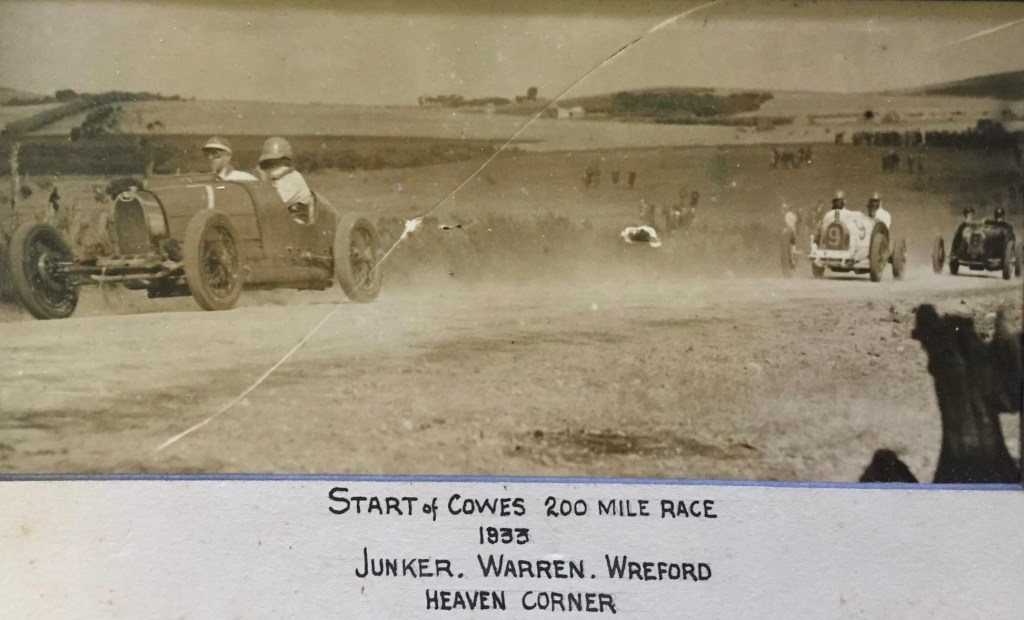
Melbourne racer/raconteur/engineer/mechanic Greg Smith put these three shots up on his ‘Pre-1960 Historic Racing in Australasia’ Facebook page – very highly recommended – a while back. He is the custodian of Cec Warren’s photo archive.
The 1933 200 Mile Race aka the Australian Grand Prix. EG Mackay Bugatti T39, Cec Warren, Bugatti T37 and Mert Wreford, Bugatti T39.
Two 1.5-litre straight-eight unsupercharged, three-valve, SOHC 80-90bhp Type 39s, sandwiching a 1.5-litre four cylinder, unsupercharged, three-valve SOHC 60bhp Type 37. The race was won by Bill Thompson’s Riley Brooklands.
Interestingly, perhaps, The Argus started its coverage of the race on March 24, 1933, with the headline, ‘Australian Grand Prix’, then went on to describe it as the Victorian Light Car Clubs 200-mile race – the Fourth Australian Grand Prix. They really weren’t too sure what to call the thing.
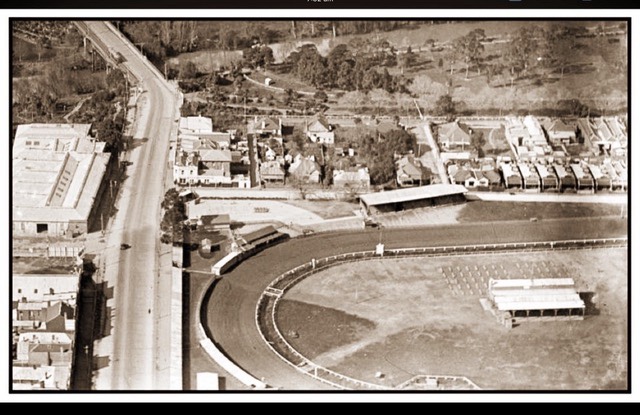
Cec Warren, Bugatti T37, on his way to winning the Invitation Handicap on the short-lived Richmond Racecourse Speedway, Melbourne track in 1932.
For you Melburnians, the track was primarily a horse racing facility owned by the ‘colourful legendary’ John Wren, which was located on land abutting a site near the Yarra River and abutting Bridge Road.
Etcetera…
(S King Archive)
Many thanks to Steven King for these photographs and advice as to the exact location of the Richmond Racecourse.
It will mean nothing other than to those familiar with Melbourne’s inner east, that’ll be me and a few others active on this site!
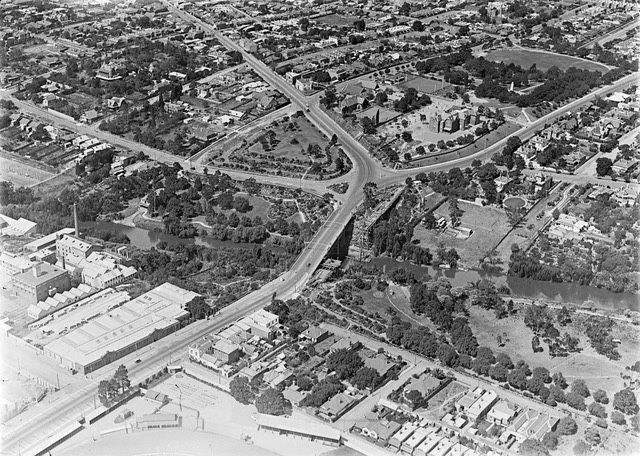
The bottom left of the top shot has just the north-eastern corner of the racecourse in shot. That’s Bridge Road in the bottom left corner, go up the page, and you are heading east. This side of the Yarra River is Richmond, with light industry – textiles, clothing and footwear back then – and workers. East of the river is Kew to the left and Hawthorn to the right, then, as now ‘stockbroker-belt’ suburbs. Church Street branches diagonally to the left heading north and all of the features are still there a century on: the parklands, and Hawthorn West Primary School at the intersection of Church Street, and Burwood Road, the main road that branches to the right heading east.
There is now, and has been forever, a rowing club on the east bank of the river, beside the bridge and the Melbourne Girls College on the west bank; the parklands alongside the bridge there fuses into sporting facilities, then the school.
(S King Archive)
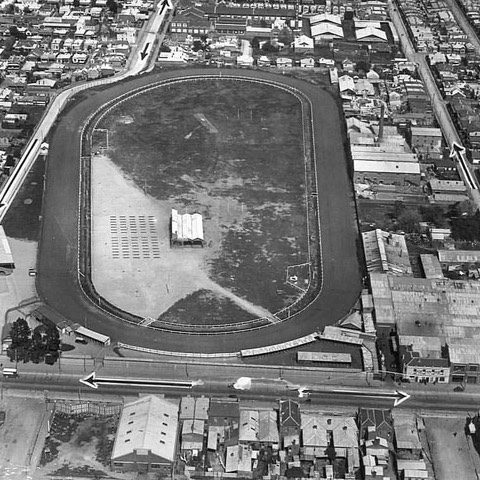
The shot above shows the north eastern corner of the I racecourse on the Bridge Road and Westbank Terrace corner, and the Bridge Hotel on that corner, which I highly recommend. The part of the course shown is now residential housing and ‘Officeworks.’
The shot below shows Bridge Road at the bottom, and Westbank Terrace to the left – heading up the photo is south – keep going and you hit Swan Street. The side road with the arrow on it to the right is Stawell Street.
(S King Archive)
This article in the Melbourne Argus published on January 14, 1941, answers the question on all of your lips: when did the race course site become housing?
‘RICHMOND RACECOURSE HOUSING PLAN
Erection of 138 working-men’s homes on the old Richmond racecourse will begin soon when contracts, tenders for which closed on Friday, are let by the Housing Commission.
In preparation for building, the commission has removed the high iron fence surrounding the racecourse and levelled the area. Streets and sites have been marked out.
The commission undertook the new housing plan on the suggestion of Richmond Council.
Many applications have already been made for the new houses. Tenants of dwellings condemned in Richmond are expected to receive preference.’
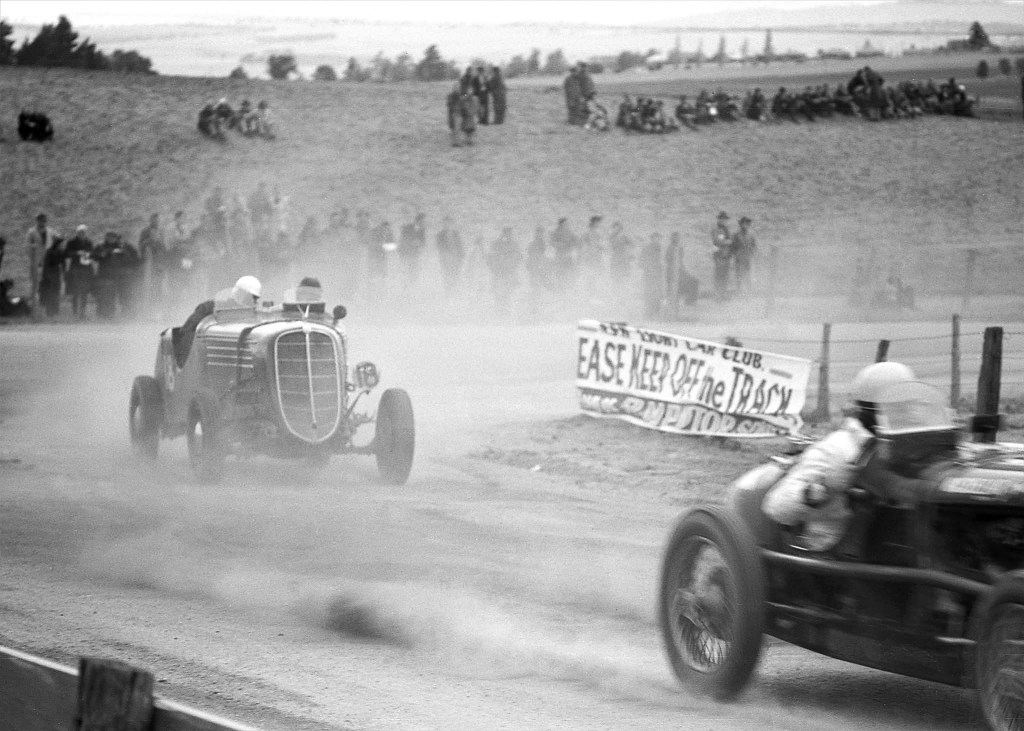
The perils of wandering about Mount Panorama during a race meeting are obvious enough, but were a potential problem throughout the first weekend of racing at Australia’s greatest cathedral of speed, hence the sage-like advice of the New South Wales Light Car Club.
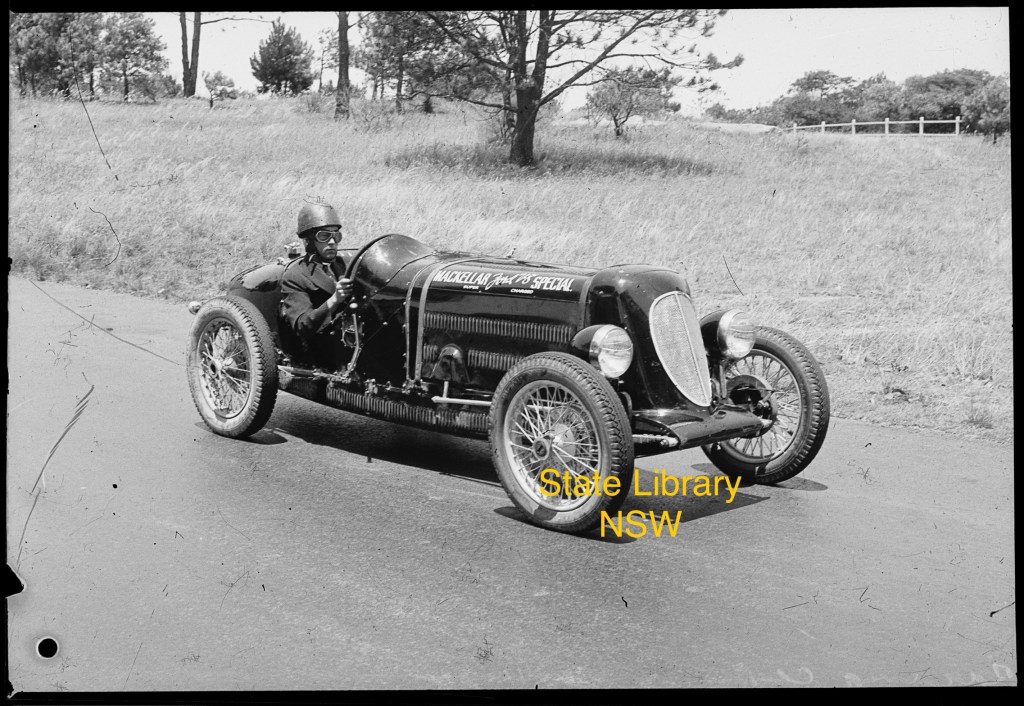
Tom Peters, MacKellar Ford V8 Spl aka the ex-Bill Thompson Bugatti T37A #37358, is snatching a look over his shoulder of Bob Lea Wright’s, Terraplane Spl during the April 18, 1938 Australian Grand Prix at Bathurst.
Here’s Ford dealer/racer Ron MacKellar on the debut of his comprehensive rebuild of the ex-Bill Thompson 1930/32 AGP-winning Bugatti Type 37A chassis 37358 at Centennial Park, Sydney in November 1937.
A McCullough supercharged flathead Ford V8 engine and gearbox and general fuglification of Ettore’s finest resulted in a faster car than before. It raced on all the way to 1952 when Bill McLachlan finished 13th in the AGP, at…Bathurst. See here for more about this T37A https://primotipo.com/2015/10/27/motorclassica-melbourne-23-25-october-2015/
To the current custodian, Michael Miller’s credit, his slow restoration/reclamation of 37358 is of the Oily Rag type, and with luck, the car may be finished in advance of Australian Grand Prix Centenary celebrations at Goulburn in January 2027. Keep an eye on the website, folks: https://goulburngrandprix.com.au/
Credits…
Bill Forsyth Collection, State Library of New South Wales, goulburngrandprix.com
The front row of the Victorian Trophy grid at Fishermans Bend on Sunday, October 4, 1953 comprises, from the left, Doug Whiteford’s Talbot-Lago T26C, Stan Jones’ Maybach 1, Cec Warren, Maserati 4CL and Lex Davison, Alfa Romeo P3.
Tony Johns notes, ‘My program has Lex Davison’s HWM Jaguar scratched, so he raced his back-up Alfa Romeo. Doug Whiteford retired the Talbot-Lago with broken gears in the transfer box. Stan Jones won the race with Davison second and George Pearse, Cooper Mk4 Vincent third.’
‘Reg Nutt driving Jack Day’s Talbot Darracq TD700 sheared the blower drive and for Sunday and fitted a TC manifold and carburettors.’ Wow!
(L Sims Archive)
Didn’t Stan jump outta the box! Whiteford at left, then George Pearse, Cooper Mk4 Vincent and then the distinctive, upright-stance of #14 the ex-Sinclair The Spook Alta 21S Ford with Ted Gray up.
While the Victorian Trophy was a scratch race, there was also a handicap section won by Silvio Massola’s HRG from Davison and Jones.
While researching 1953 I thought I’d make a similar determination but there seems to be only three potential qualifying rounds that year: the Australian Grand Prix held at Albert Park won by Doug Whiteford’s Talbot-Lago T26C on November 21, the Victorian Trophy on October 4, and the 100-mile New South Wales Grand Prix held at Gnoo Blas on October 5. Jack Robinson won the handicap race in his Jaguar XK120 Special while the ‘Grand Prix title (the scratch section of the race) was awarded to Jack Brabham’s Cooper T23 Bristol (below) who had set the fastest race time.’
You will appreciate the degree of difficulty for a competitor in contesting races in Orange and Melbourne on consecutive days.
Jack Robinson, Jaguar XK120 Special, Bathurst, October 1955 (I Arnold)Jack Brabham, Cooper T23 Bristol, NSW GP, Gnoo Blas 1953 (Wikipedia)
The Australian Sporting Car Club – hitherto the Bathurst promoter – organised that first race at Gnoo Blas as the ASCC was ‘splitting asunder’ and its relationships with the City of Bathurst and the local police were so poisonous that Bathurst’s blue-riband Easter and October long-weekends of racing – probable Gold Star rounds – didn’t take place in 1953. The ASCC couldn’t get a permit, whereas the Auto-Cycle Union did, running a two day Easter ‘bike meeting.
Those of you with John Medley’s Bathurst Bible should read chapter 17, it’s interesting to be reminded of the sequence of events that saw the Australian Racing Drivers Club take over from the ASCC as the promoter of car racing at Mount Panorama.
So, given all those circumstances, it doesn’t seem appropriate to calculate a ’53 Gold Star Faux Division winner…The historians amongst you may know that the 1978 and 1979 Gold Stars were held over three rounds, while the 1981 affair was contested over only two; all three were in F5000’s dying days. In 1987, the Gold Star was a one-race gig, so I have precedent on my side, but I’ll leave it alone, I think. One race and ‘two other rounds’, which were effectively mutually exclusive, seems as lame as the one race 1987 championship. The perfect world in 1953 would have been for Whiteford, Jones, and Brabham to have faced off in all three races, I would have had a couple of pounds on Dicer Doug coming out on top….
Doug Whiteford and Talbot-Lago T26C take the plaudits of the Albert Park crowd after winning the 1953 Australian Grand Prix, his third such victory (The Age)
Credits…
Arthur Gordon Fraser-State Library of Victoria, Tony Johns, Leon Sims Archive, Ian Arnold, Wikipedia, The Age
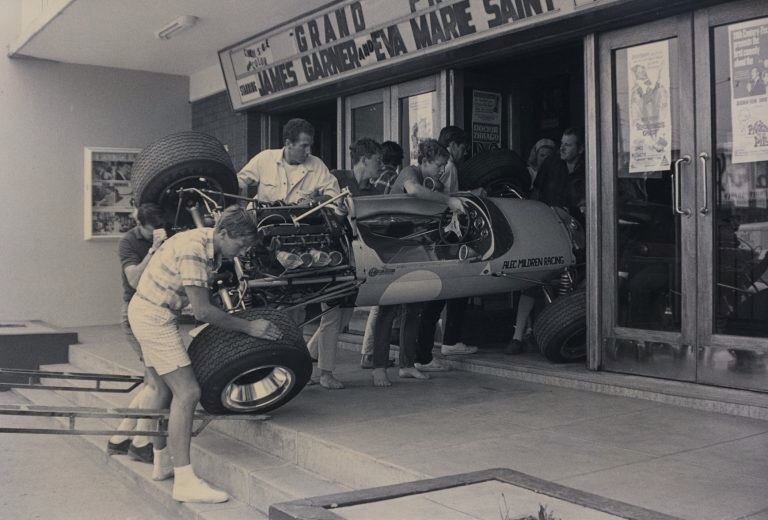
Just a little to the right fellas otherwise we’ll have to twist the chassis a smidge…
Alec Mildren Racing mechanics Bob Grange, in overalls, and Glenn Abbey partially obscured by the left front, manoeuvre their new Mildren (Rennmax) Alfa Romeo 1.6 F2 through the narrow front doors of the Avalon Cinema on Sydney’s Northern beaches.
Both Mildren and Abbey were locals so perhaps the deal to have the racer in situ during the screening of the film Grand Prix was hatched between the theatre owner and Mildren- a nice way to cross-promote his Alfa dealerships closeby and in the city.
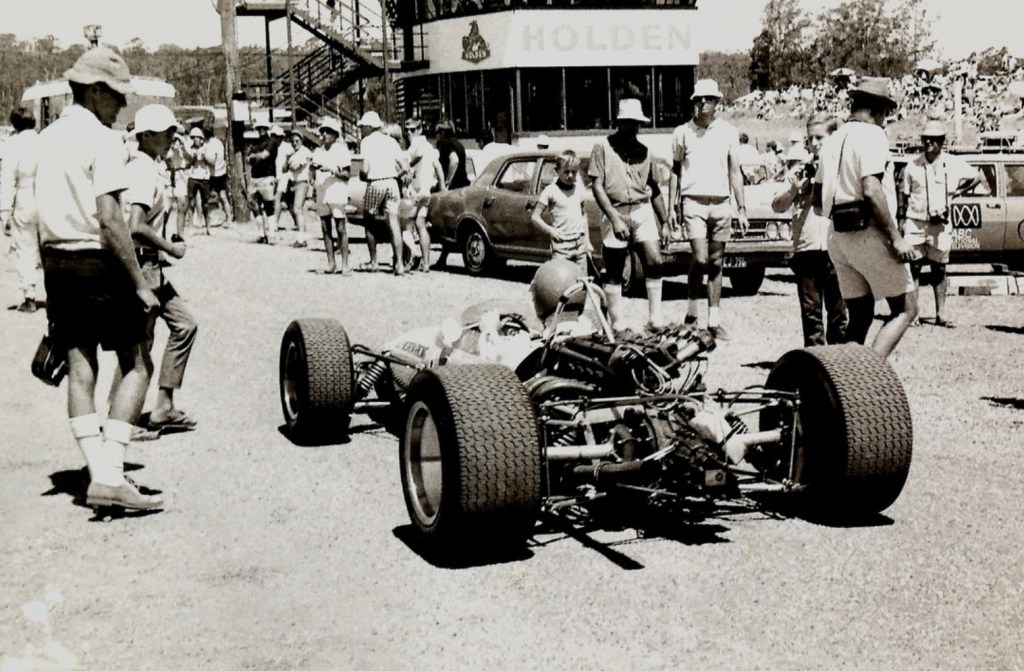
The date is the more interesting thing in an arcane kind of way. Grand Prix was released in Australia on July 14, 1967, this car wasn’t built then. It first raced at Warwick Farm on September 5, 1968 in Kevin Bartlett’s hands, and was raced for the first time with a 1.6-litre Waggott TC-4V engine at Symmons Plains in Max Stewart’s tender loving care on March 3, 1969.
So…given the shorts on the fella looking after the right rear Goodyear I’m guessing it’s a school holidays screening in The Summer of ’69, the only thing missing is Bryan Adams twangin’ his Fender Strat (or whatever).
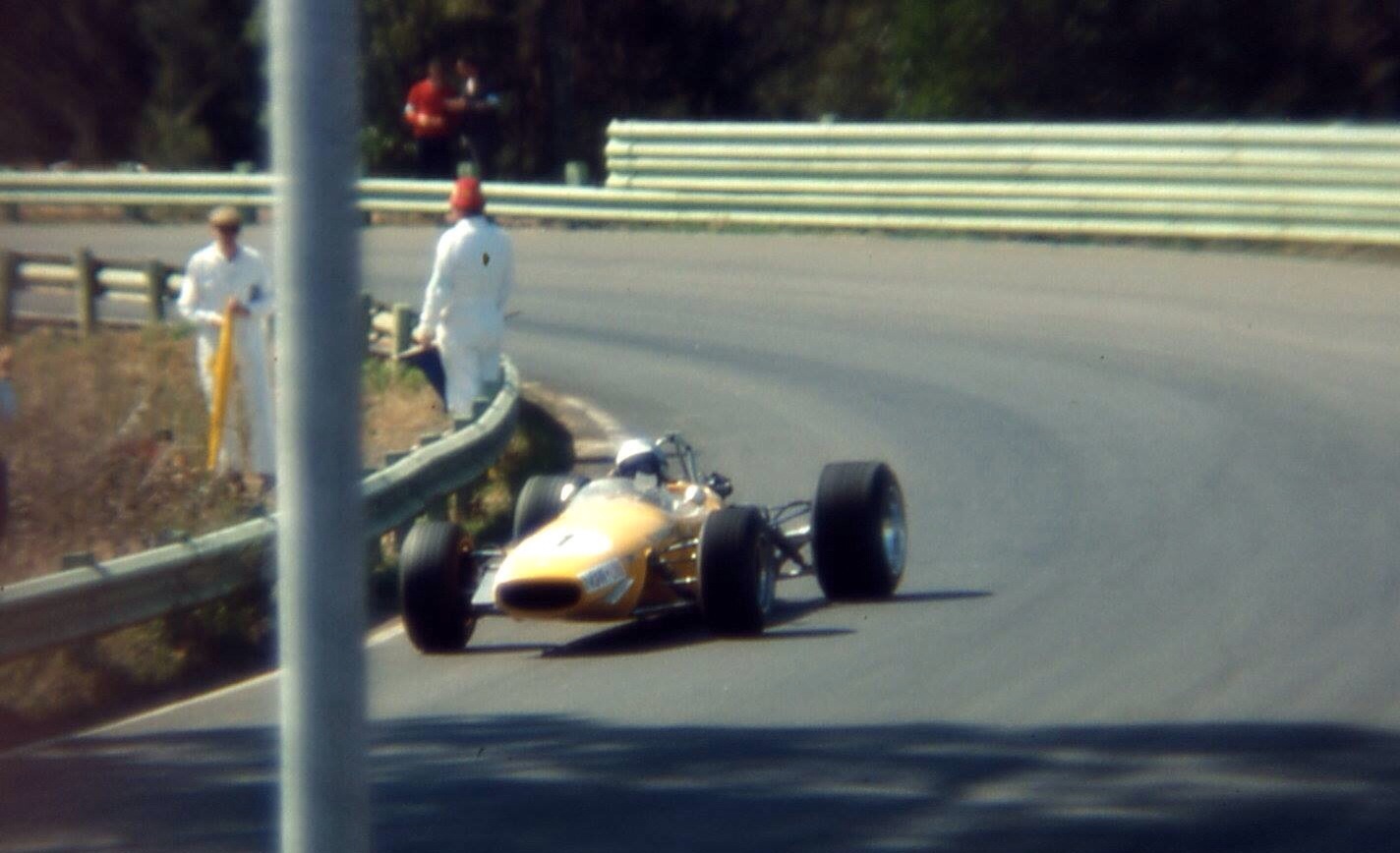
Kevin Bartlett slicing the new Mildren Alfa F2 through the Warwick Farm Esses, probably on the 8 September 1968 weekend of its race debut (D Harvey)Bartlett on the WF dummy grid on September 8, 1968. Mildren Alfa Romeo F2 Four-Valve race debut (B Henderson)
This little Beastie is an oh-so-famous car in Australia. It won a swag of races in Max Stewart’s hands including the 1971 Australian Gold Star Championship and the 1972 Singapore Grand Prix.
It had more engines than you and I have had hot dinners: the Alfa Romeo DOHC twin-plug, four-valve 1600cc F2 featured in this article, Waggott TC-4V DOHC four-valve 1600/1860/2000cc, Alfa Romeo DOHC twin-plug, two-valve, Alfa Romeo 2000cc GTAm and Lotus/Ford DOHC two-valve 1600cc motors.
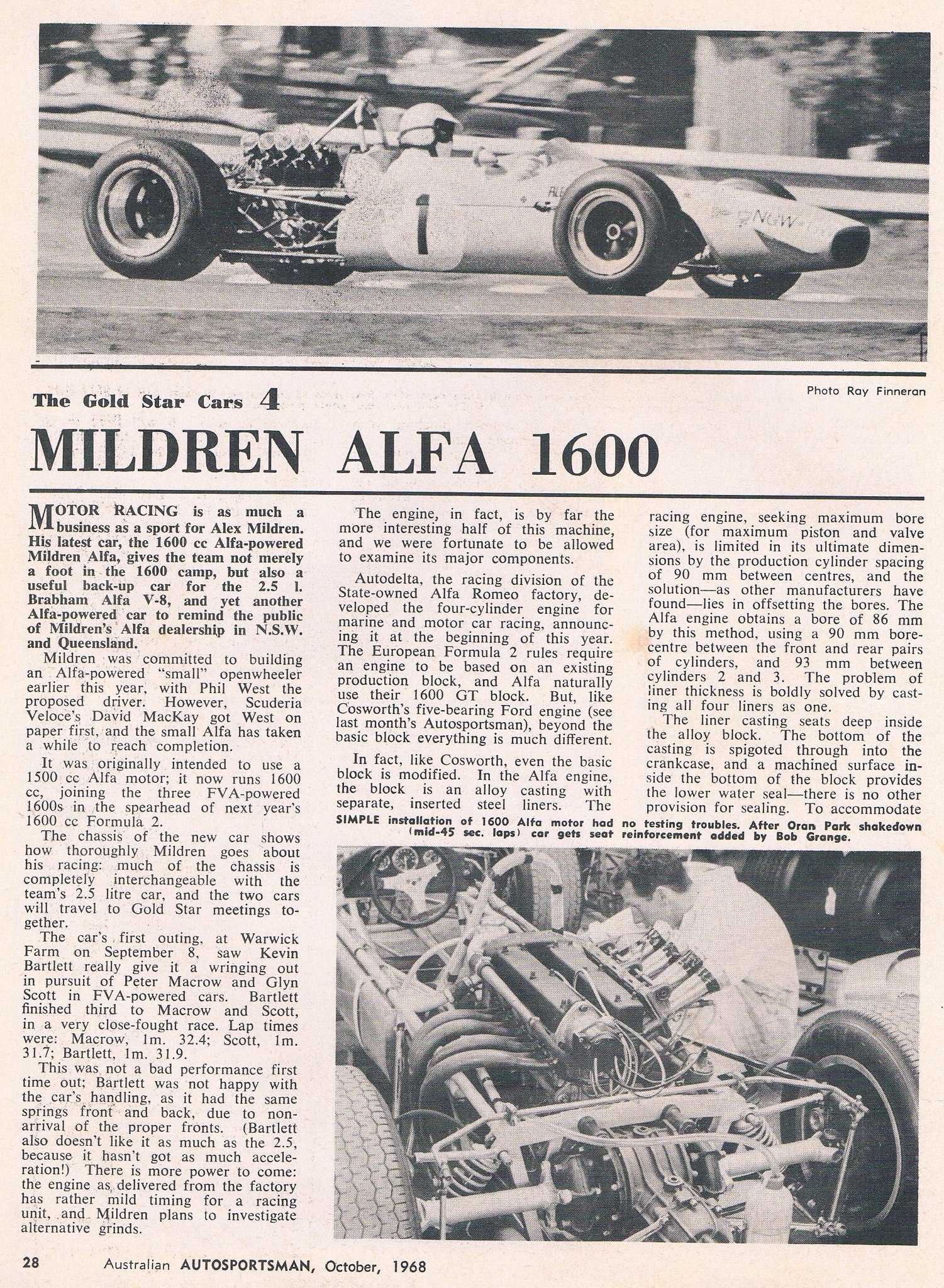
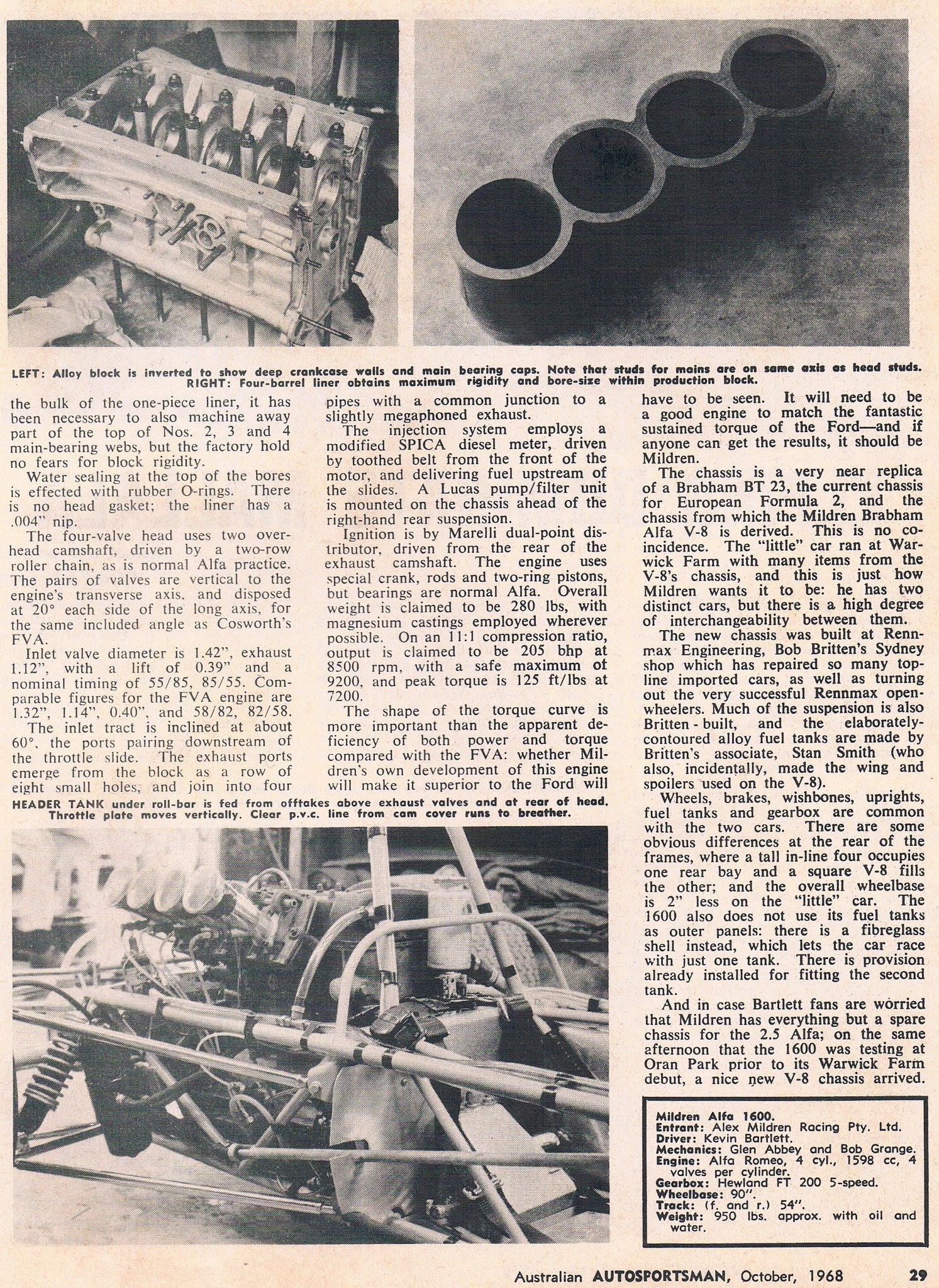
The article below on car and engine was published in the October 1968 issue of Australian Autosportsman and deals with the detail wonderfully well. I suspect it’s the best article on the planet on an extremely rare engine.
Kevin Bartlett commented on the performance of the engine in recent times on social media, “There was an issue with the piston ring to bore clearance which caused high oil use and lack of power, so the engine was returned to the maker. From that time the Waggott was born.”
So quickly out of love with the project had Alec Mildren become, that he advertised the car for sale in the November 1968 issue of Racing Car News.
But things moved quickly after that, Max Stewart was signed to join KB at Mildrens and Alec reached agreement with Merv Waggott to be the first to use his new Waggott TC-4V 1.6-litre Ford block engine.
Max made his race debut with Mildrens in the February 2, 1969 Australian Grand Prix at Lakeside where he was sixth in the Mildren Alfa, four laps adrift of the winner, Chris Amon’s Ferrari 246T.
After that, the Alfa Romeo/Autodelta engine was removed and in its place, the Waggott was installed, with Max taking his race debut with it in the first round of the 1969 Gold Star at Symmons Plains on March 3. Fuel metering unit problems ended his day early.
I’m not so sure the little four-valve engine left Australia either…
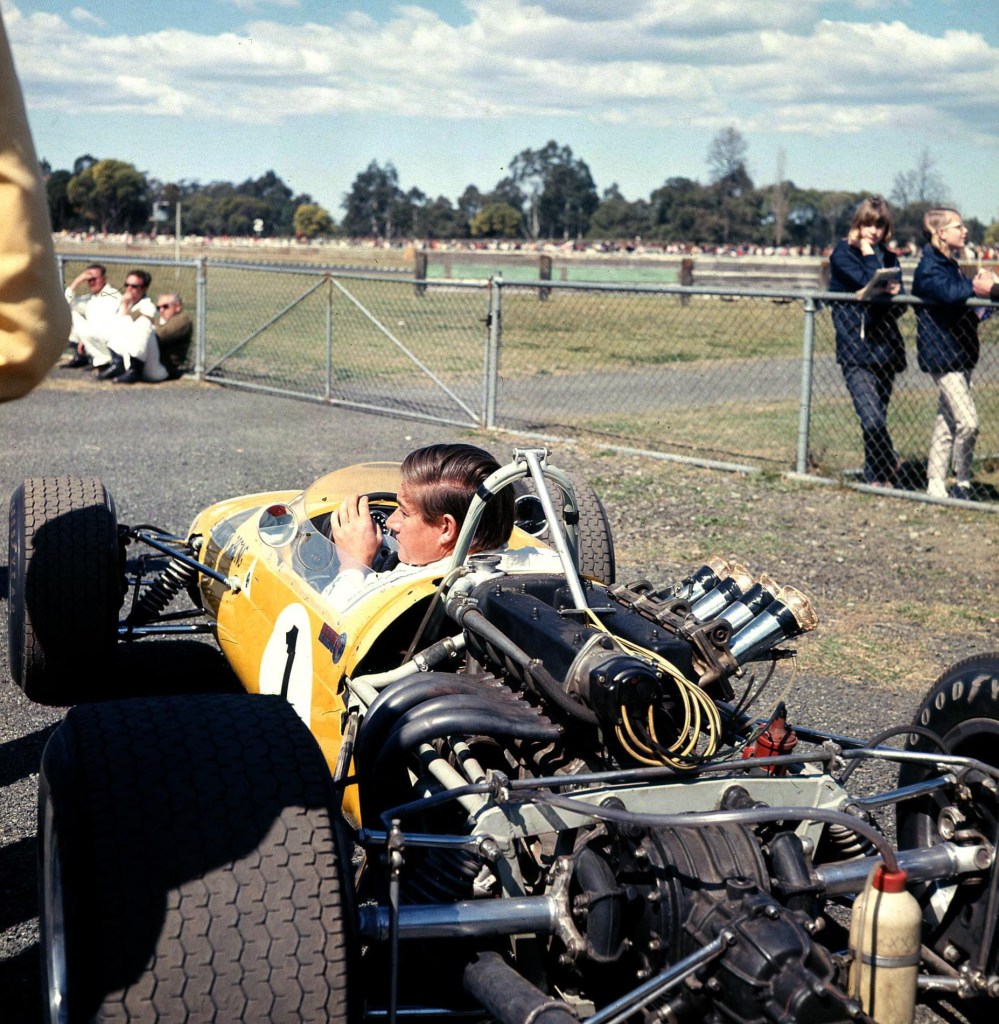
Max Stewart aboard the Mildren Alfa 1.6. The date of the shot is unknown but I wouldn’t mind betting that it is one of the very first shots of a car which was so kind to Max over the ensuing three or so seasons in Australia, Singapore and Japan (Central Western Daily)Stewart in the Lakeside AGP paddock in February 1969. Mildren Alfa F2 (M Tyler)
Group 2 and F2…
Upon further research it’s apparent just what a rare car the Mildren Alfa was for the short time of its existence. As indicated above, the Alfa Romeo F2 engine was replaced by Merv Waggott’s very first 1600 TC-4V engine for the first 1969 Gold Star round at Symmons Plains.
Autodelta’s primary racing programs at the time were the Tipo 33 sports-racers which contested the World Endurance Championship and its 105 Series Coupe Alfa GTA Group 2 program, and the more modified Group 5 categories.
The 1600 four-valve engine was first fitted to Lucien Bianchi’s GTA for the 1967 Giro di Corsica, however he was eliminated at the beginning of the race. ‘Another engine was installed in Nanni Galli’s Brabham F2. At the time the price for this splendid masterpiece was 3,500,000 lire. The engine was also available with a normal GTA cylinder head for use with Weber carburettors’, Tony Adriaensens wrote in Allegerita.
Indeed, it’s probably (make that definitely) due to Group 5 priorities that the four-valve injected engine was built rather than the needs of F2.
A careful review of the European F2 Championship results (1.6 litres from 1967 to 1971 inclusive) on the F2 Index site shows only a very small number of such races in which Alfa Romeo powered cars participated. Even then, the descriptions of the engines are such that it’s not possible to make calls as to whether two-valve GTA engines or the four-valve motors were fitted. It’s also fair to say that both engines may have been fitted to chassis raced in Italian national level events.
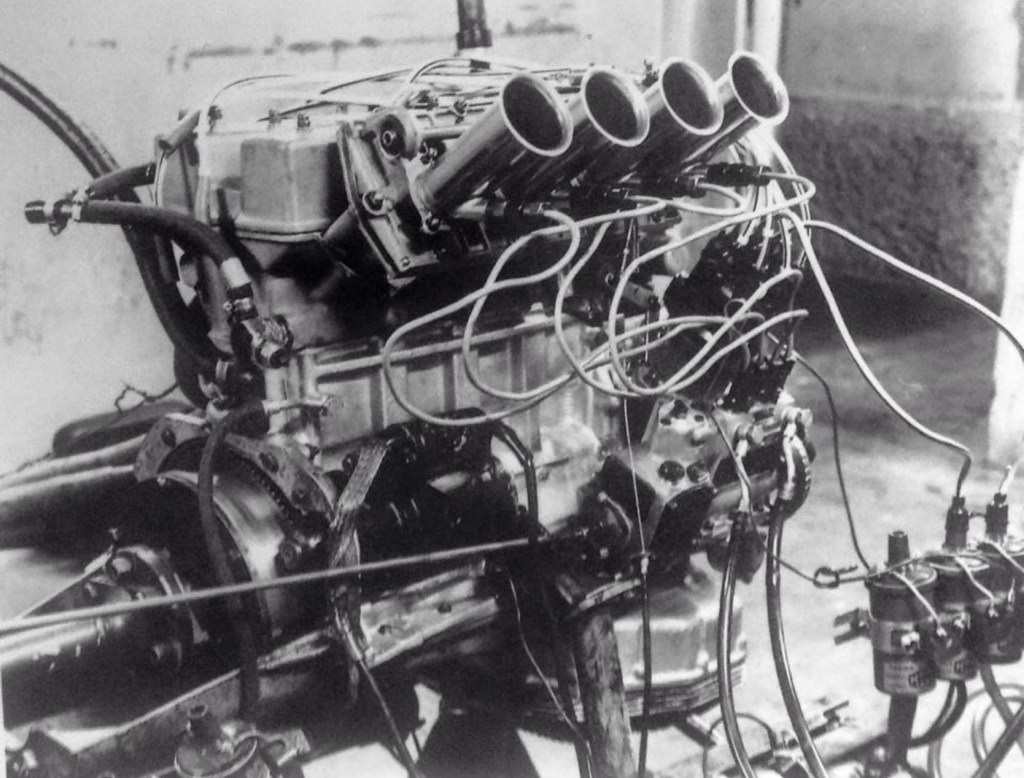
Alfa Romeo/Autodelta 1.6-litre four-valve F2 engine being dyno tested, details unknown but welcome (unattributed)
For the record, the Alfa Romeo engined European F2 Championship entries, of ‘a works type’ as against a tiny number of privateers in older cars, in the 1.6 litre formula years are as follows: 2/10/67 GP Rome at Vallelunga Nanni Galli Brabham BT23 Alfa GTA Q16 and NC, 28/4/68 GP de Madrid Jarama Nanni Galli Brabham BT23 Alfa GTA Q20/10th, 23/6/68 Lottery GP Monza Giorgio Pianta Brabham BT23 Alfa GTA/Autodelta DNQ. Brabham BT23-8 was used on all three occasions, the car was entered by the Monza based Scuderia Ala D’Oro. I am intrigued to know if these were effectively works-entries in which case it is plausible the engines deployed were four-valvers.
To state the obvious, there was never a serious works effort to race the four-valve engine in F2, the only Alfa Romeo engine which could seriously hope to challenge the absolute dominance of the Ford Cosworth FVA.
Brabham née Rennmax née Mildren Alfa…
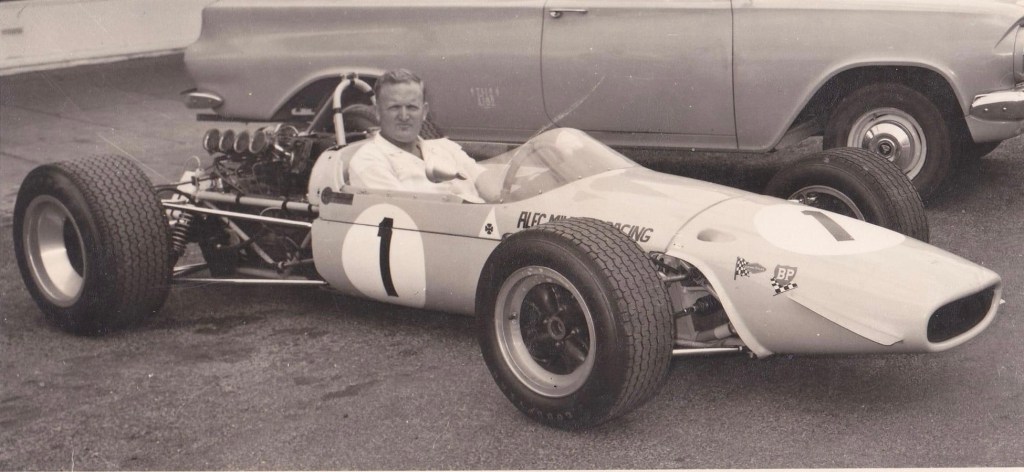
The reason Alec acquired the Alfa F2 engine was a business one, to promote his Alfa Romeo dealerships. Equally, the decision to go with Merv Waggott’s engines shortly thereafter, initially in 1600 cc capacity, later 1850cc and ultimately 2-litres was also a business one. That is, to put the best engines in his two cars: the Rennmax built Brabham BT23 replica which is the subject of this article, and the Len Bailey designed, Alan Mann Racing built monocoque Mildren ‘Yellow Submarine’ first raced by Gardner and then Bartlett with Alfa Tipo 33 2.5 V8’s and later 2-litre TC-4V Waggotts.
The potted, short form history of the car is as follows.
Rennmax Engineering’s Bob Britton created a Brabham BT23 jig from Brabham BT23-5 crashed by Denny Hulme during the 1968 Tasman Series. He built a number of cars on this jig as summarised by Allen Brown on oldracingcars.com here; http://www.oldracingcars.com/rennmax/bn3/
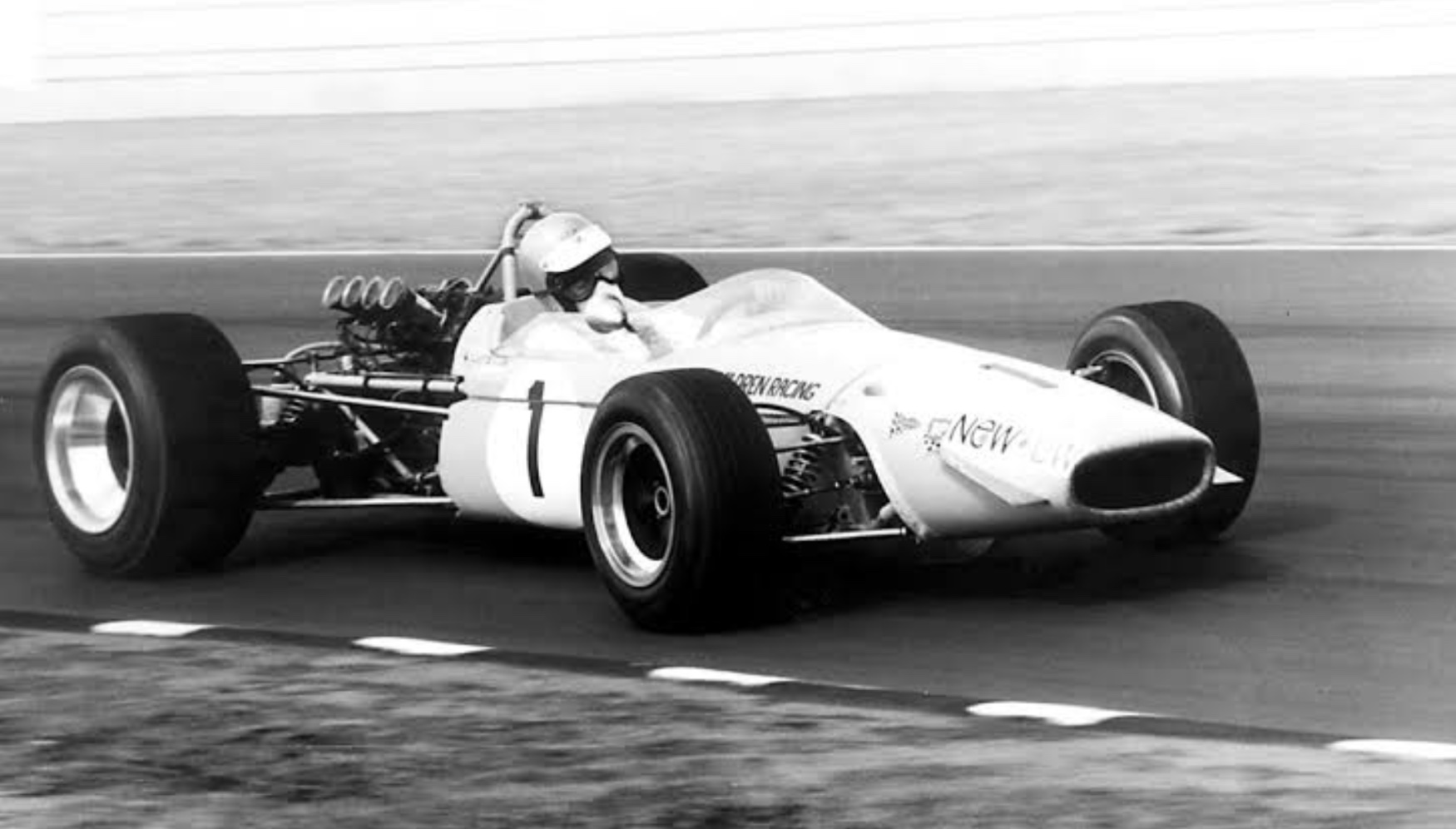
Fitted with an Autodelta Alfa Romeo 1.6-litre four-valve valve engine the car was first raced by Kevin Bartlett at Warwick Farm on September 8, 1968, it was then put to one side as the team focused on Bartlett’s successful Gold Star campaign in the Brabham BT23D Alfa.
Bartlett Mildren Alfa Romeo F2 Warwick Farm September 8, 1968 and below (R Watson)KB with a few bodywork problems on the move (R Watson)
The chassis became Max Stewart’s regular car when he joined the Mildren Team in 1969. He first raced it, as recorded above, at the 1969 Lakeside Tasman round to sixth. Then the car was fitted with a Waggott 1600cc engine, for the opening, March 1969 Symmons Plains Gold Star round, later in the season a Waggott 1860 was used.
Fitted with a Waggott 2-litre from the 1970 Tasman through the 1970 Gold Star, 1971 Australian Tasman rounds and Gold Star, Max won the 1971 Gold Star triumphing over rumbling 5-litre F5000s.
It raced in the April 1971 Singapore GP, probably powered by a 1600 Alfa Romeo GTA engine fitted with a GTAm 2-litre cylinder head. By the time of the 1971 Gold Star season Alec Mildren Racing had ceased, the car was Stewart’s but was still entered and called the Mildren Waggott.
It was raced by Melbourne’s Tony Stewart (no relation) with support from Paul England in the 1972 Australian Tasman rounds fitted with a 2-litre Waggott.
Max raced and won the April 1972 Singapore GP powered by a Paul England 1.6 litre Lotus/Ford twin-cam. With another engine change, it contested the May 1972 JAF Japanese Grand Prix Waggott 2-litre powered.
The car returned to Australia and contested some 1972 Gold Star rounds driven by Allan Grice, Paul England 1.6 litre twin-cam powered. Max retained ownership of the car during this period.
Raced in the 1973 Malaysian GP to fourth, and the Singapore GP to seventh by Max, the car was entered as a Rennmax, 1.6 England powered.
The car was sold circa 1974 by Max to English born Australian F2/F5000 driver Ken Shirvington. He later sold it to Max Coulter, who raced it for a while then offered it for sale in the February 1981 issue of Racing Car News, raconteur and vastly talented engineer, Greg Smith of East Brighton, Victoria was the purchaser. It was a complete car, chassis tagged ‘AMR003’ fitted with a 1.6 BRM twin-cam which was consistent with the ANF2 class in which the car last raced contemporarily.
Amongst the bits Smithy acquired were engine mounts for the Ford L-Block Waggott 1600/1860 engines as well as the Waggott bespoke, alloy block 2-litre. He also had the Japanese GP long-range fuel tanks. The car was beautifully restored by Smithy and fitted with a 234bhp Waggott 1860 FVA after an eight year search for an engine.
Smith sold the car to Queenslander Max Pearson circa 2008. He further cosmetically restored it inclusive of fitment of a Waggott 2-litre engine. Pearson sold the machine to Stewart Corner in 2022.
In February 2018, via Facebook posts of the photograph at this articles outset, it became clear that Ken Shirvington sold another chassis tagged ‘AMR03’ to Joe Farmer. Farmer believes the chassis may have been built after the 1969 Easter Bathurst collision between Niel Allen, McLaren M4A Ford FVA and Stewart, Mildren Waggott 1.6 TC-4V. Smith or Kevin Bartlett are the only two men alive who could identify when the spare frame was built by careful examination of the chassis in total, and the engine bay in particular.
KB WF September 1968 (unattributed)
Afterthoughts…
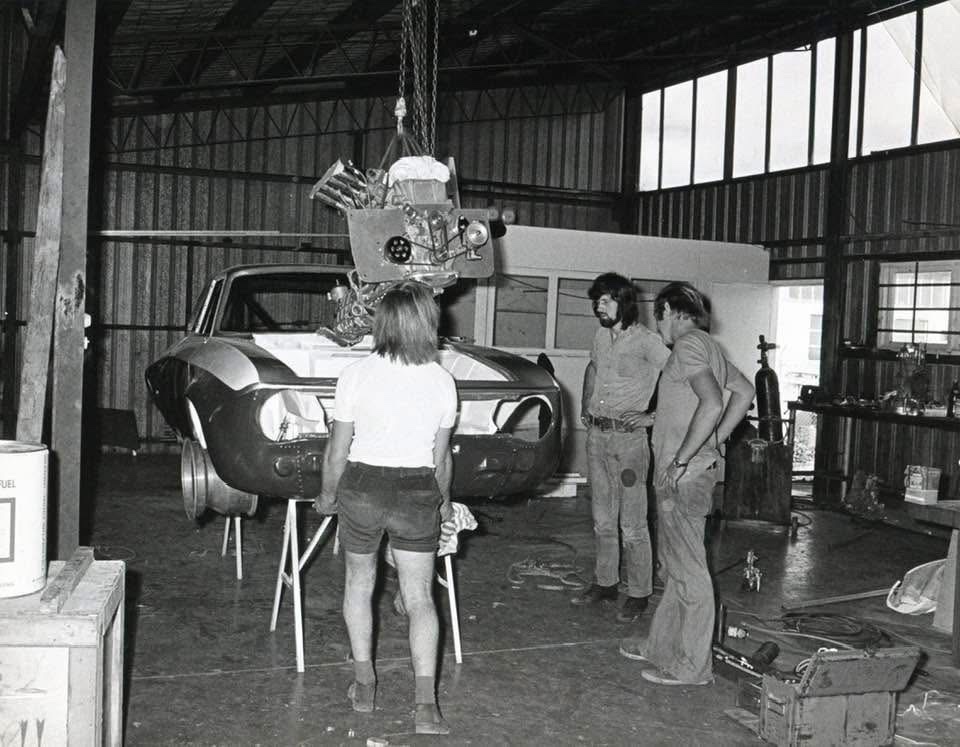
Given Vin Sharp’s responses – see them at the bottom of this piece – shown below is the Brian Foley owned ex-Mildren Racing/John French Alfa Romeo GTA #752561 being further lightened, strengthened and modified for its 1973 career as a ‘Sports Sedan’ in Bowin Designs’ Brookvale, Sydney factory in late 1972-early 1973.
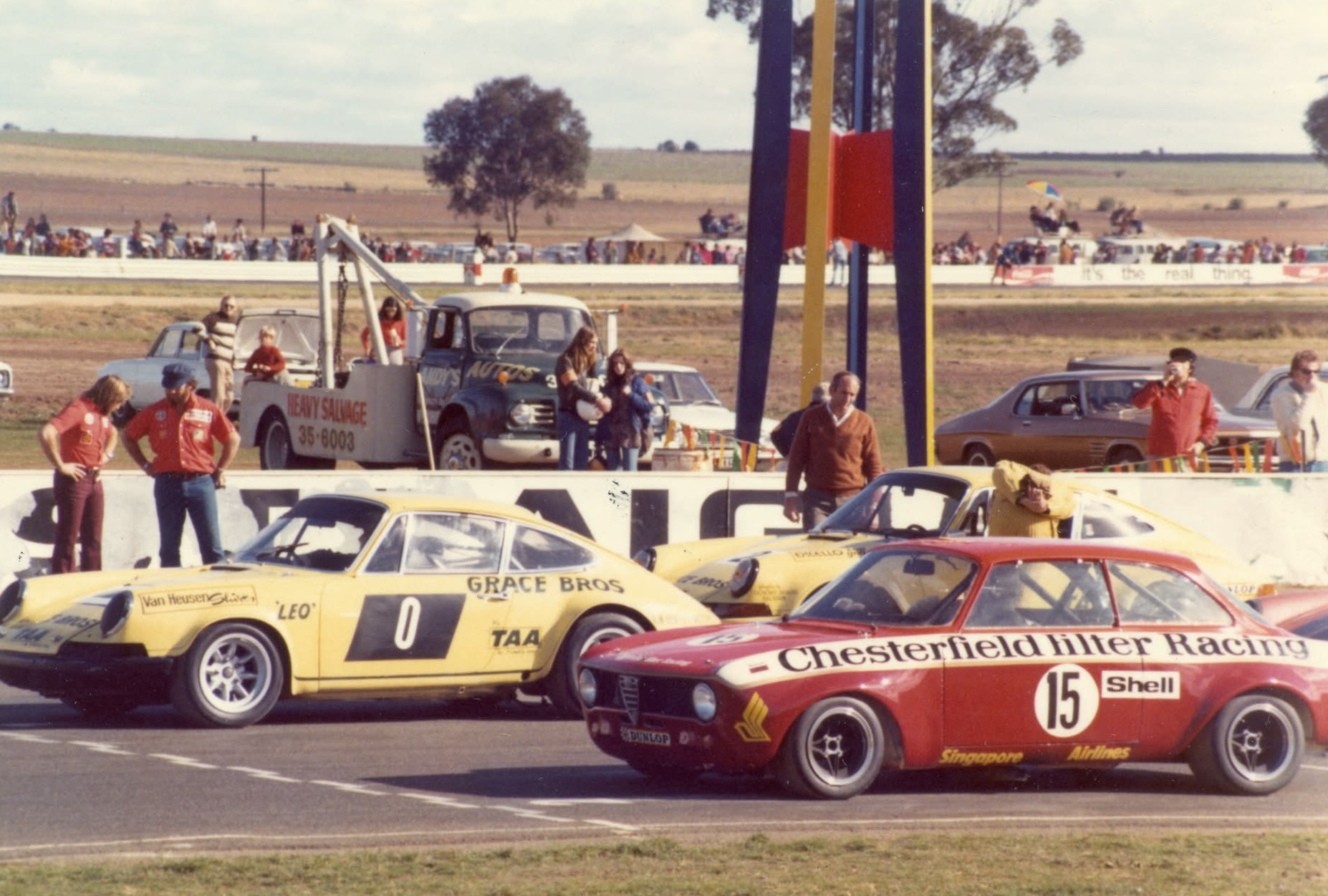
Brian Foley on the grid at Calder during 1973, the so-called GTA Lightweight #752561 after its surgery at Bowin Designs including fitment of Bowin wheels.
That’s Leo Geoghegan’s Porsche 911S alongside and I think, Bill Browns Carrera RS in the same Grace Bros yellow-hue.
Yes, the GTA Lightweight does look like Foley’s GTAm #1531068 but they are different – albeit similar at a distant glance – cars. See the article linked above for the detail, and this one on the GTAm: https://primotipo.com/2024/07/13/alfa-romeo-1750-gtam/
Credits/References…
Greg Smith and his Mildren and Waggott archives, Bryan Henderson, Avalon photo taken by Geoff Searl, Australian Autosportsman, Dale Harvey, Mike Tyler, Central Western Daily, Richard Watson, Vin Sharp, John Barnes, Glenn Moulds
Tailpiece…
(R Watson)
Two 1.6 litre Four-Valvers into Creek Corner, Peter Macrow plunges down the inside of KB in Tony Osborne’s McLaren M4A Ford FVA.
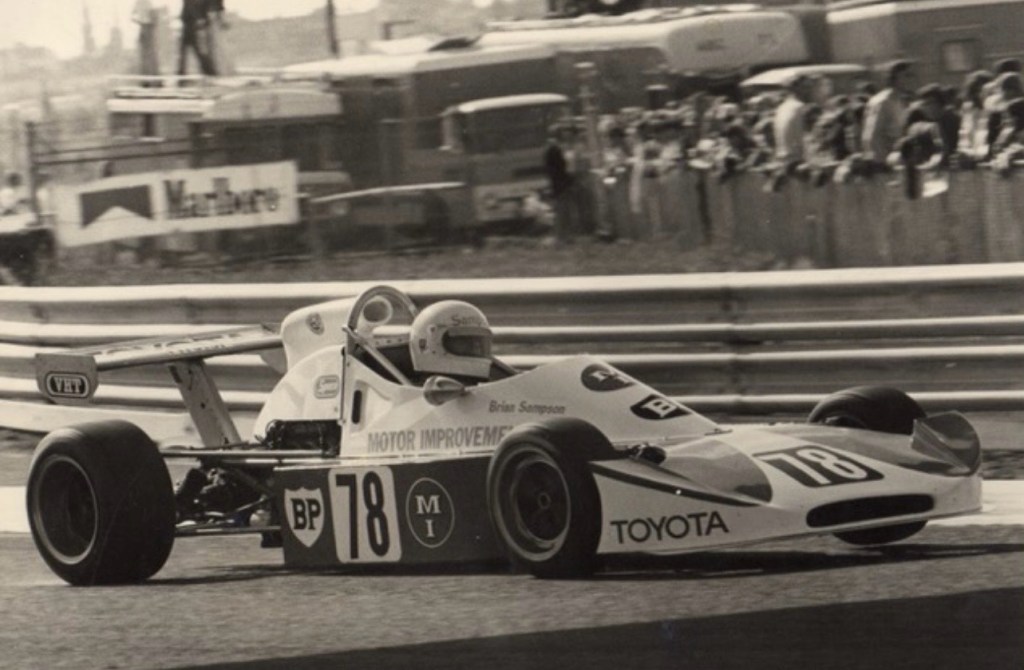
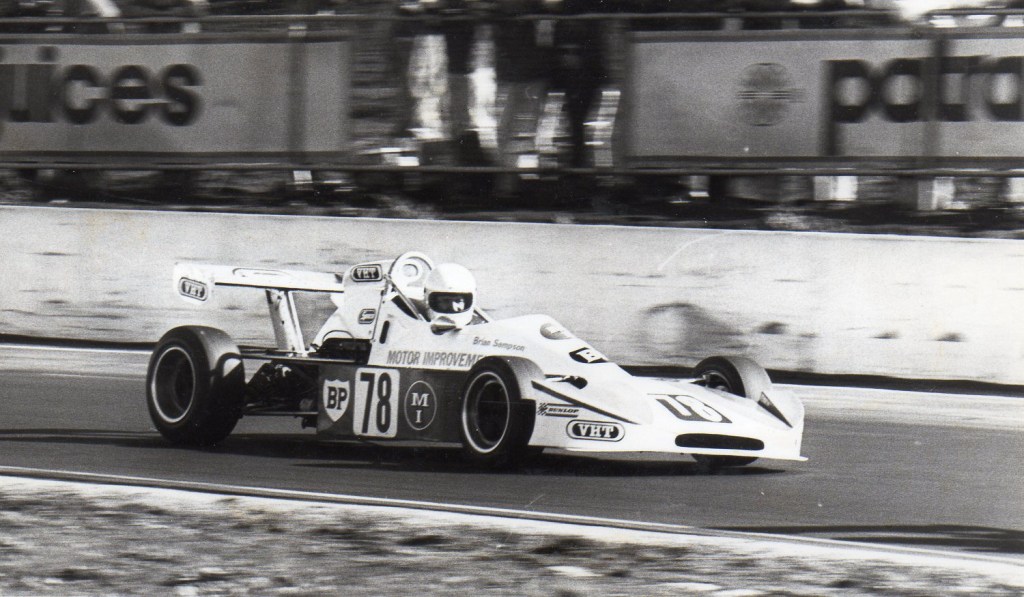
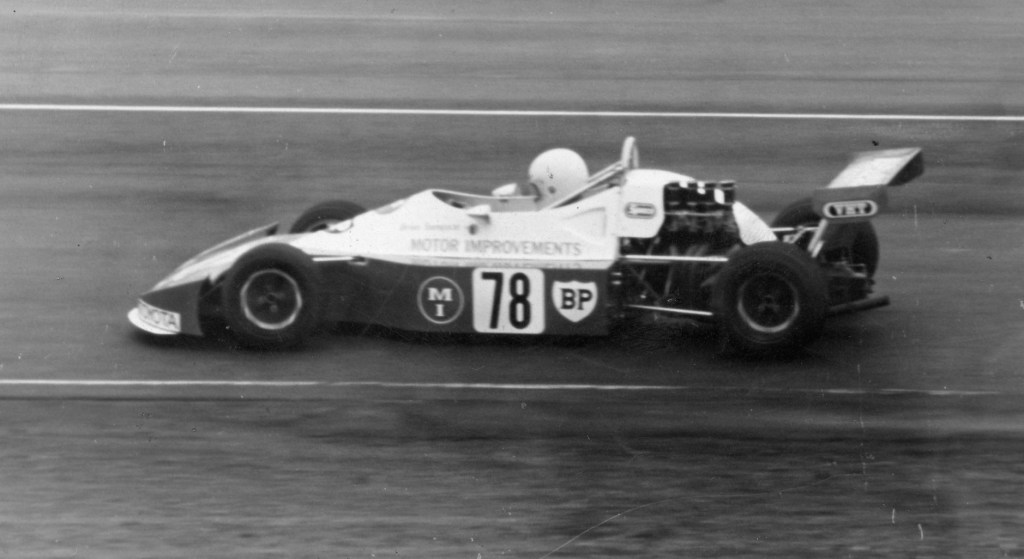
Would you believe Brian Sampson blasting his Cheetah Mk5 Chev through Shell corner at Sandown in 1973? Nup, me neither…
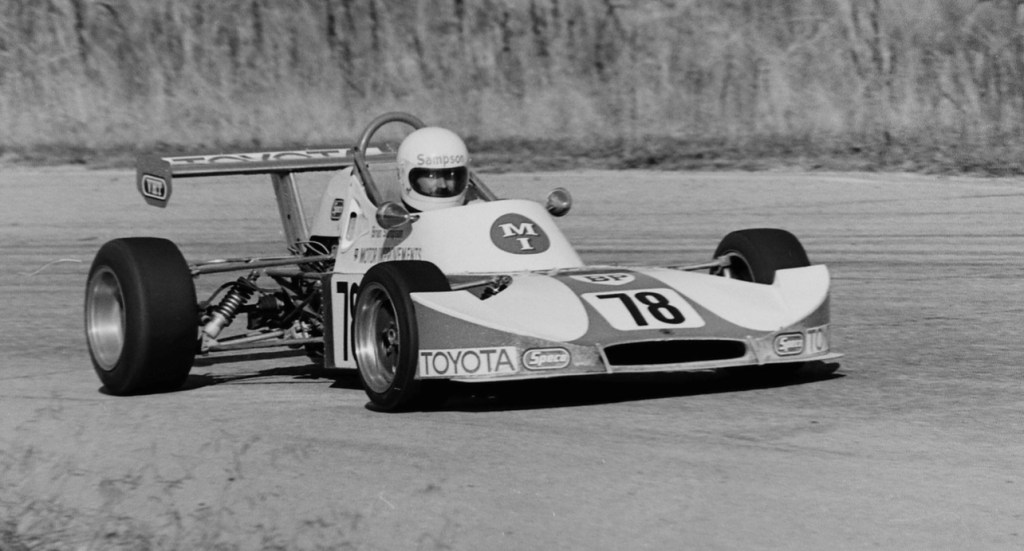
Clearly he was playing with downdraught Webers instead of the 40DCOE’s usually fitted to his works-Motor Improvements 1.3-litre Toyota Corolla based F3 engine, an experiment that didn’t cause him to change induction direction: the car is a Cheetah Mk5 Toyota.
Sambo in his Cheetah Mk5 Toyota at Hume Weir circa 1973 (M Bishop)
Great little motors, one was fitted to an ASP 340 Clubman car I owned. Lordy knows how many 1.3-litre ANF3 and Clubman races those engines won in mid-1970s in the hands of works-pilots Brian Shead, Brian Sampson and Peter Jones plus a swag of customers of whom Peter Macrow, Paul King and Dean Hosking readily spring to mind. There were plenty more.
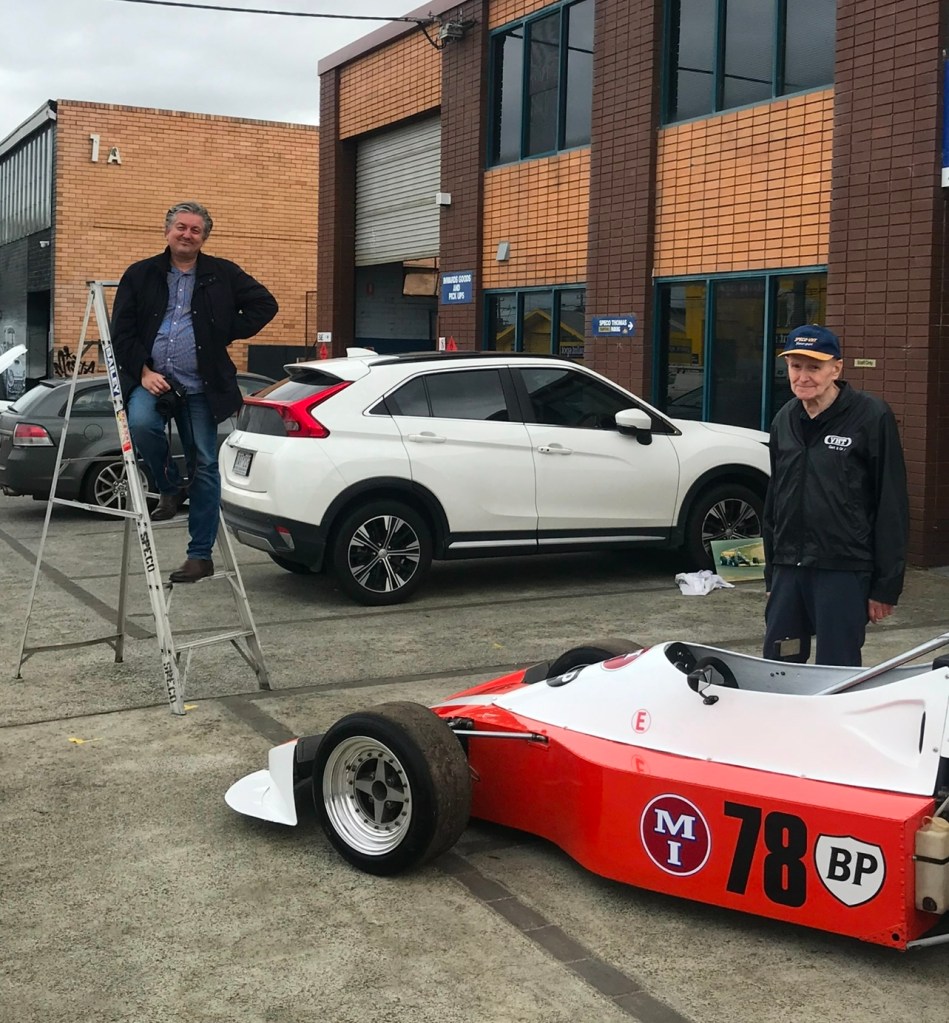
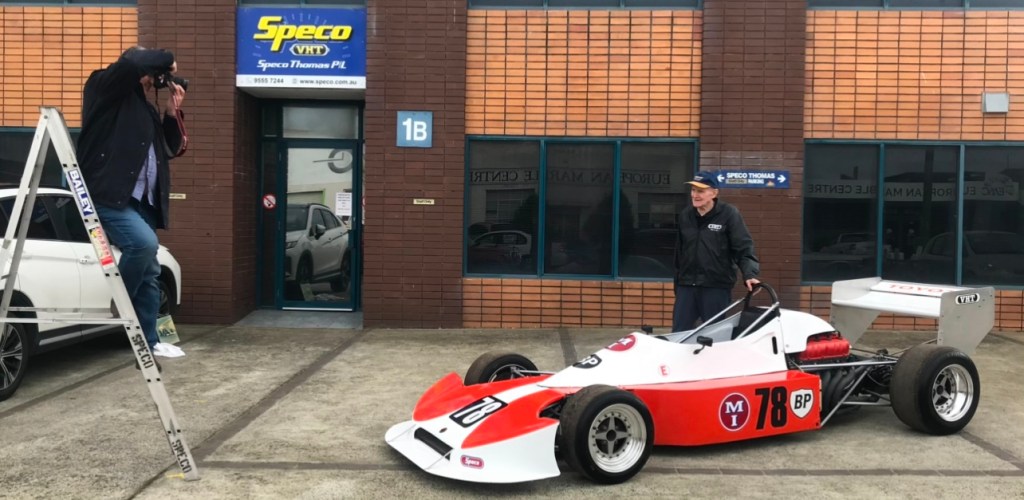
The Two Amigos, Bruce Williams and Brian Sampson, outside Brian’s Speco Thomas, Moorabbin warehouse on July 6, 2021. The car is Sambo’s Cheetah Mk6 Toyota Celica 1.6 ANF2 car (M Bisset)(M Bisset)
I got to know Brian later in his life via my friend and Auto Action publisher/owner Bruce Williams. I did a piece about the Cheetah Mk6 for Auto Action in July 2021 and spent the better part of a day talking to Brian and Brendan Jones while Sambo and Williams relentlessly and hilariously hung-shit on one another for the duration. They had known and worked together for the better part of 40 years.
We did a return bout not too long before Brian died (17 November 2023), I’ve never completed the planned two articles, but we taped the long three-way chat and one day will remove the too-naughty bits and pop it up on the A-A website. Such a talented driver, engineer and businessman, not forgetting the top-bloke factor.
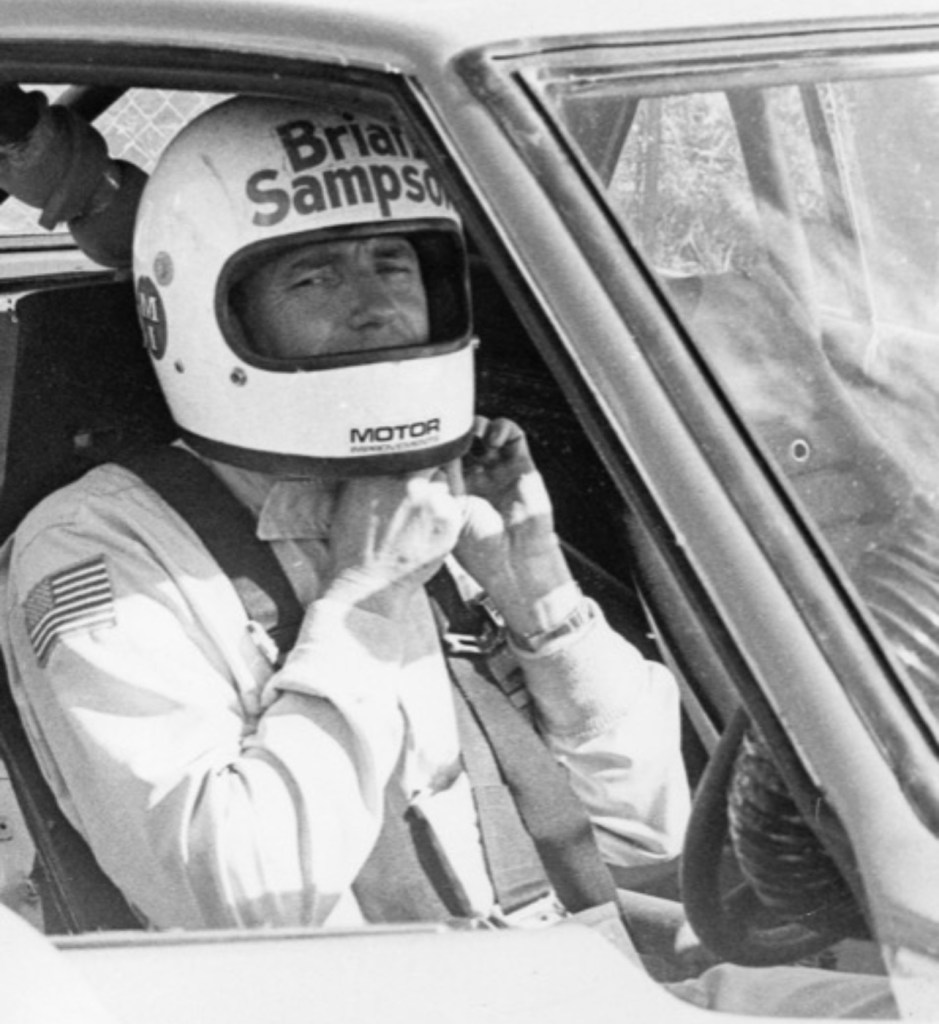
(Sampson Archive)
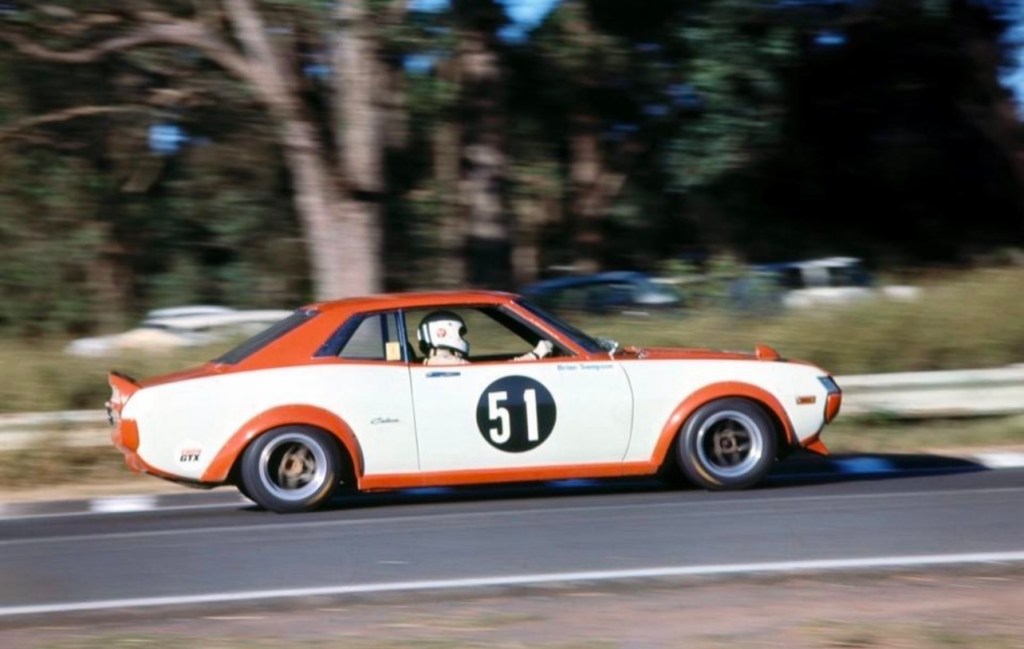
Brian buckles up, probably, but not definitely in the works-Toyota Celica sports-sedan which is shown below at Warwick Farm, perhaps in early 1973.
(Sampson Archive)
Etcetera…
(Sampson Archive)(Sampson Archive)
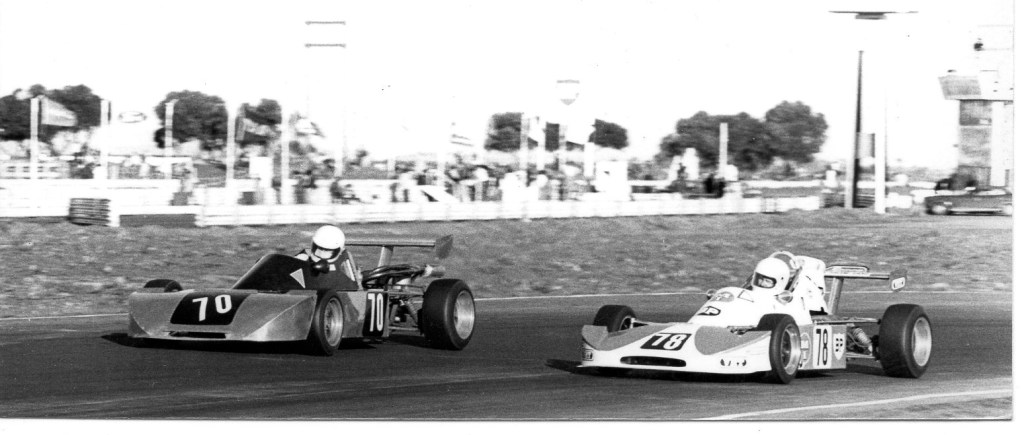
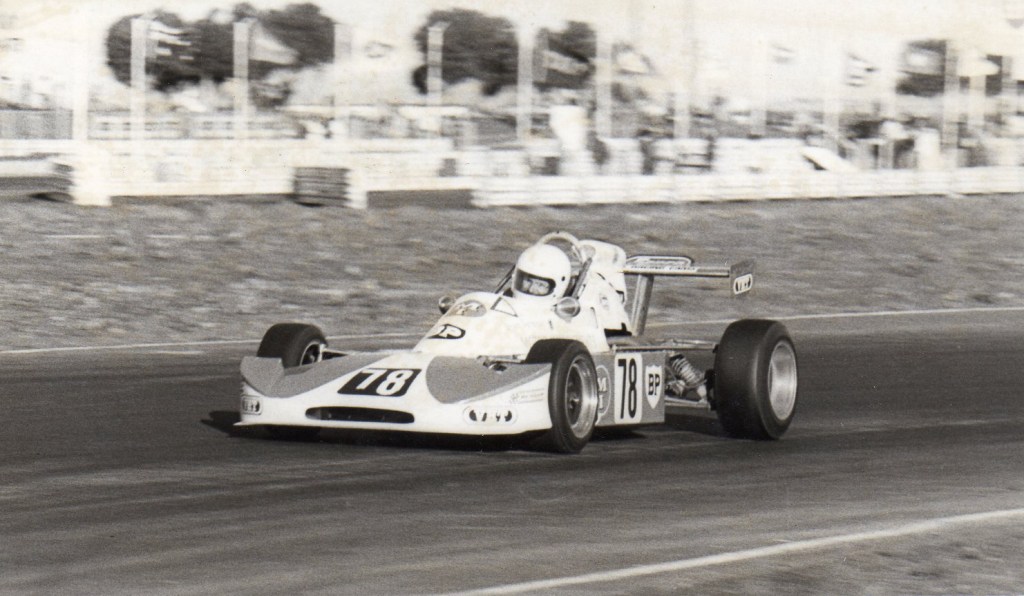
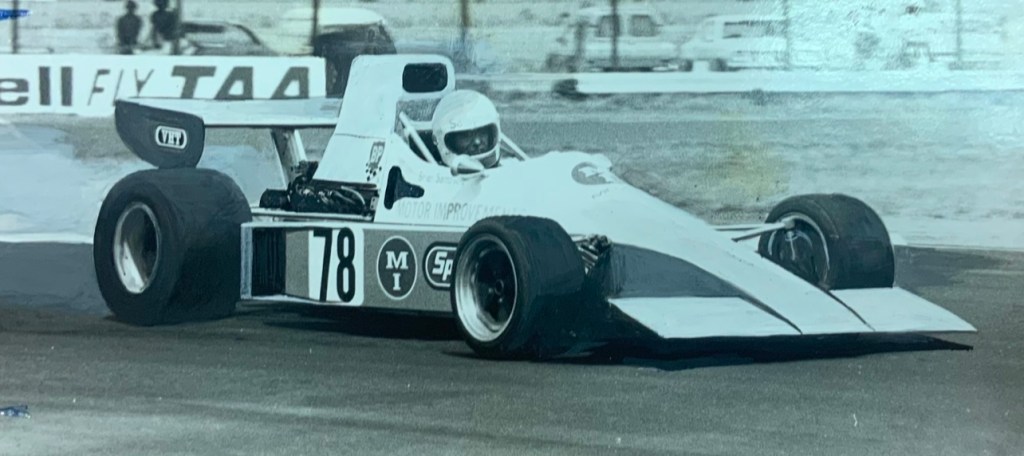
After the initial post, racer, Brendan Jones, Sampson’s stepson sent me some more shots of Brian racing with the downdraught setup. The two shots above are at Adelaide International?, the two below at Calder. That’s David Crabtree’s #70 self modified Cheetah MK 4 below, a car he still owns. Dates of the meetings would be a bonus too.
(Sampson Archive)(Sampson Archive)
Credits…
Brian Sampson Archive via Brendan Jones, Auto Action Archive-Greg Stanfield by courtesy of Bruce Williams, Mark Bishop
Tailpieces…
(Greg Stanfield)
Of course, Cheetah aficionados know that Brian Shead built an F5000 car – of sorts – the Cheetah Mk4 Oldsmobile 3.5-litre V8. Originally to Don Biggar’s order, it’s raced above by Ian Judd at Mount Leura, Camperdown in the mid-1970s. Judd won the Australian Hillclimb Championship with it at Morwell in 1977.
Of course there was a time when motor-noters speculated about Brian Shead building an F5000 Cheetah, in the mid-1970s.
Auto Action’s graphic designer has used a shot of Sambo aboard a Mk5 at Calder as the basis of his rendering of a potential ‘Cheetah Chev’ in issue #126, December 1975.
By 1957 Jack Brabham was getting the hang of this European racing caper, he was the winningest Formula 2 driver in in the winningest car that year.
Cooper’s Type 43 was powered by the brand-new 1475cc Coventry Climax twin-cam, two-valve FPF four-cylinder engine.
Coopers entered Jack in nine F2 races that year and he won five of them, most were blue-riband events too: the London Trophy at Crystal Palace, Prix de Paris, Montlhery, the Rochester Trophy at Brands and Oulton Park’s Gold Cup.
Motor Racing’s fantastic cover shot – very well-used down-the-decades and perhaps taken by Geoff Goddard – above was taken at Goodwood during the Woodcote Cup on September 28, where Jack’s teammate, Roy Salvadori triumphed in another works T43. Roy also won the BRDC International Trophy at Silverstone a fortnight before, other 1957 Cooper T43 winners were George Wicken and Tony Marsh.
The Haves in 1957 used a Cooper chassis and a Climax FPF engine, the rest made do with a Climax single-cam FWA or FWB engine and another chassis.
Funnily enough Lotus’ best ‘F2 result’ for the year was Tom Dickson’s victory at Snetterton on May 19 aboard a Lotus 11 FWA during a combined F2/sportscar race. The much vaunted, light, clever, gorgeous, front-engined, and fragile F2 Lotus 12 FPF (below) flattered to deceive: its best results were a second and a third placing for Cliff Allison in the Gold Cup, and Woodcote Cup respectively.
Lotus 12 Coventry Climax FPF to be precise
Other F2 winners in ’57 were Maurice Trintignant aboard a works Ferrari Dino 156 in the Coupe Internationale de Vitesse at Reims in July and Edgar Barth’s victory in the F2 race within a race, at the GermanGrand Prix at the Nurburgring in August aboard a Porsche 500RS.
That Dino spawned a series of V6 cars, race and rally engines that were still winning well into the mid-1970s.
By mid-1959 Brabham was looking a fairly complete professional…
Jack and (the works team) Cooper had just taken their first Grand Epreuve wins at Monaco on May 10, while Motor Racing’s cover above shows Jack on the way to victory in the BRDC International Trophy at Silverstone on May 2.
By then Brabham’s Cooper is a Type 51 and the engine a 2.5-litre FPF. The F2 youth of 1957 had grown into a dominant adult by 1959. It may have been a simple motor but it was oh-so-sweet.
Motor Racing magazine, as the covers note, was the official organ of the British Racing and Sports Car Club. It succeeded Iota and was published from January 1954 to February 1970…bloody good too!
Credits…
Motor Racing magazines – fantastic they are too – many thanks to Bob King
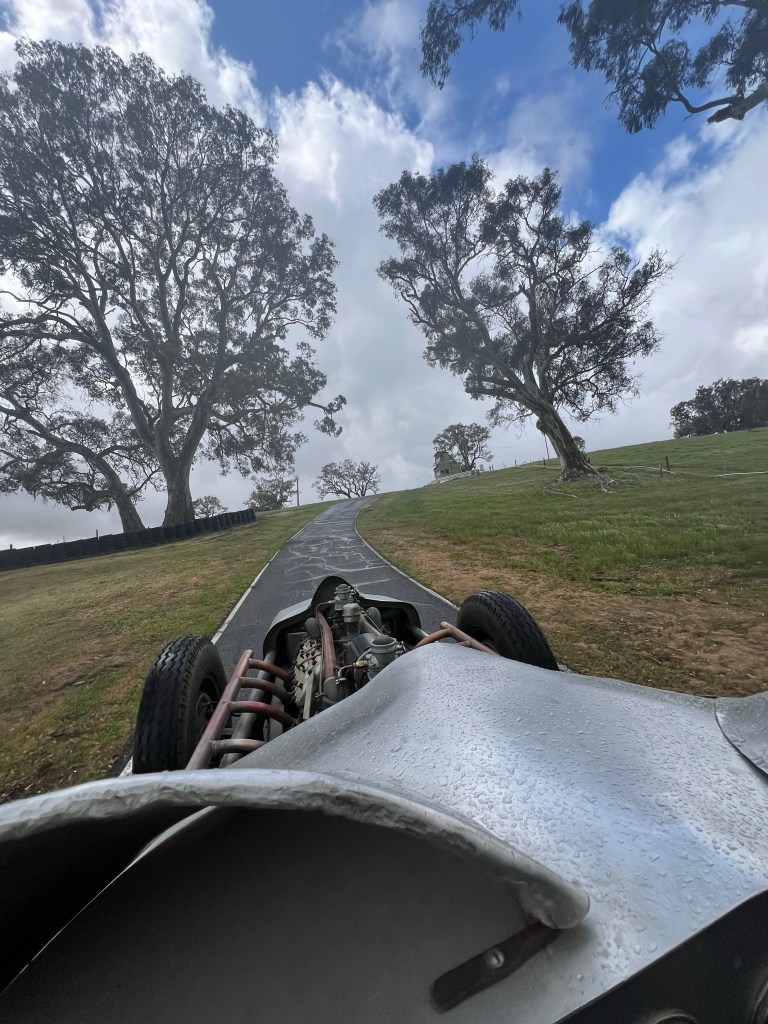
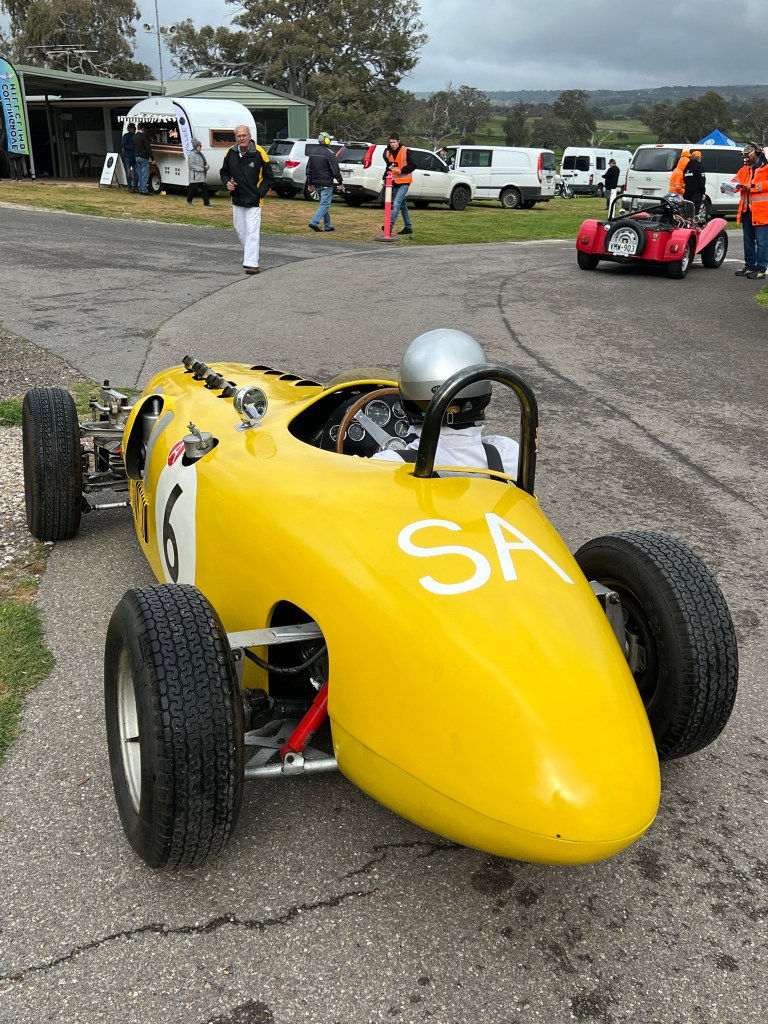
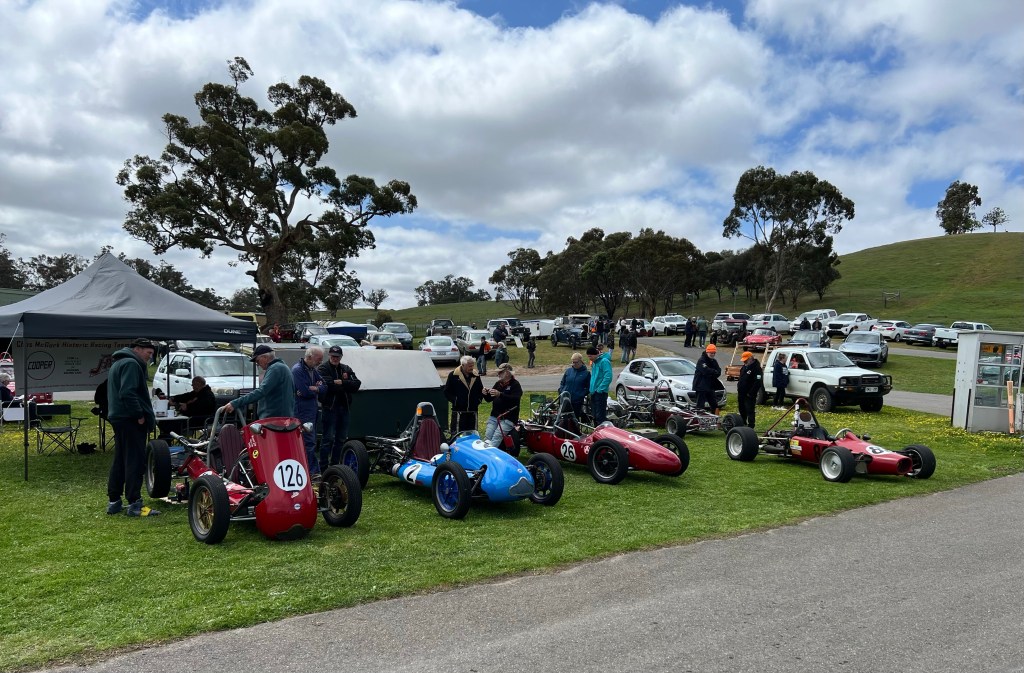
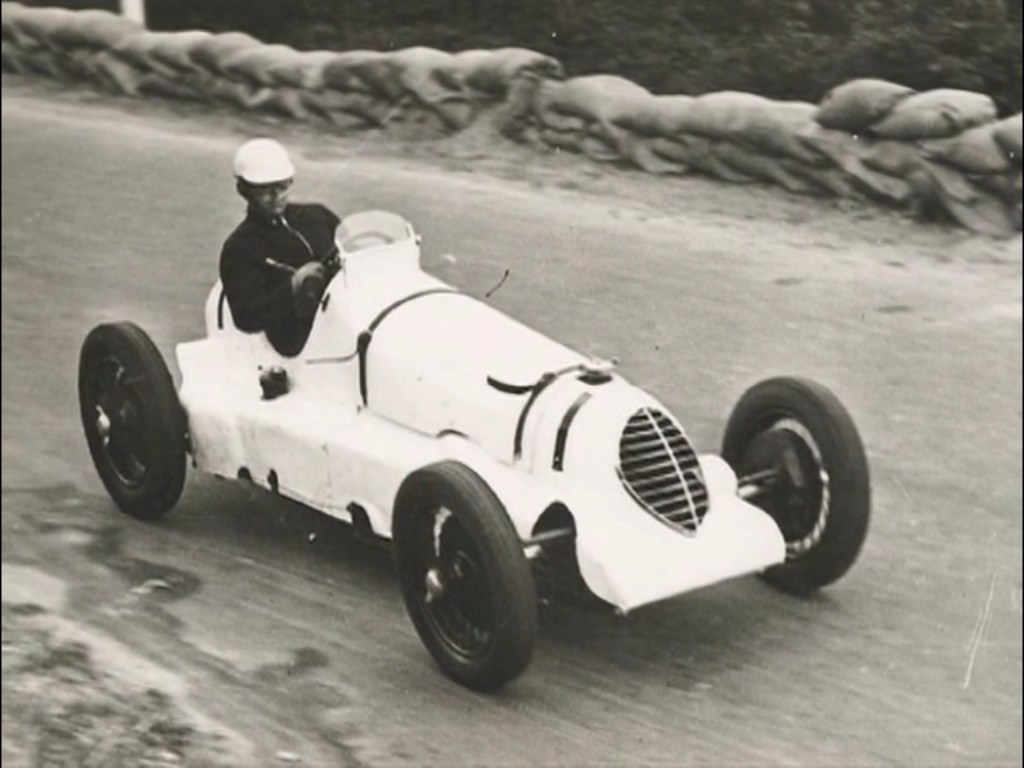
Darren Visser’s extraordinary Double Eight, a recreation of Eldred Norman’s 1947 and subsequent iterations racing car, pointing towards the first turn at Collingrove Hillclimb in South Australia’s Barossa Valley on Saturday October 5, 2024.
(M Bisset)
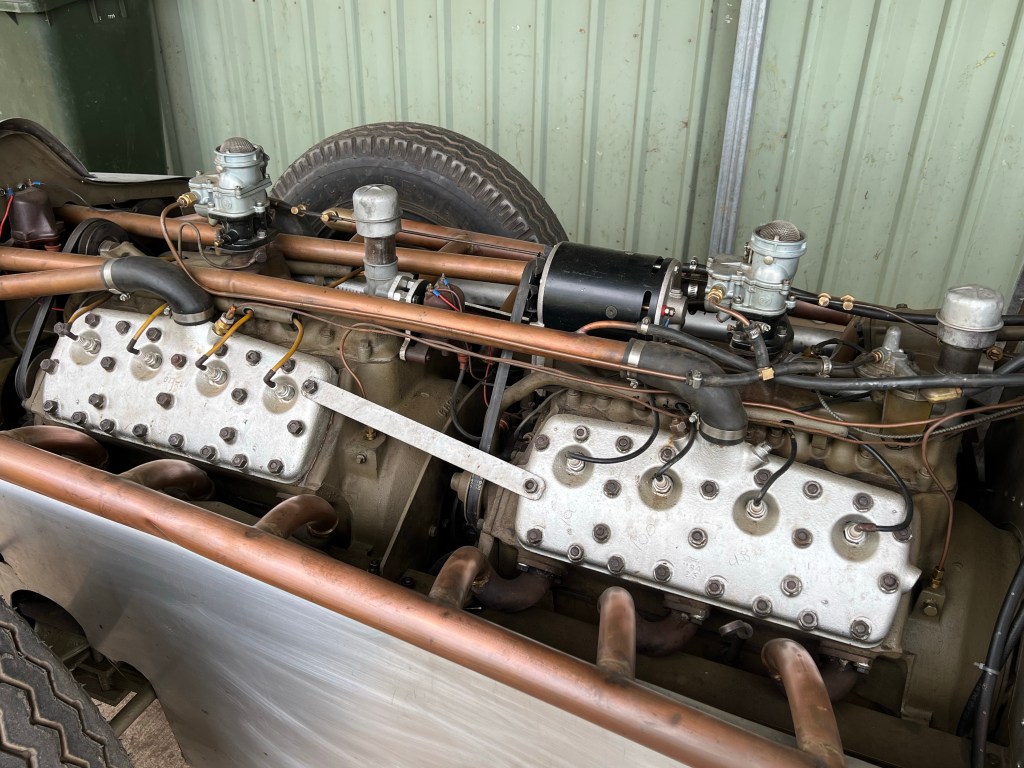
The key elements of this car comprise a WW2 Dodge Scout car chassis, two Ford Mercury 3.8-litre 110bhp V8s mounted one aft of the other, and a Ford truck four-speed gearbox feeding a Dodge rear axle and diff. Yep, they are truck wheel, tyres and brakes, and yes again, it’s quite a thrill to ride in it!
Ford Mercury V8s are fed each by a Stromberg 97 carb, but are otherwise rebuilt standard units; Darren reckons they are good for about 110bhp a pop (M Bisset)Chassis is Dodge Scout car, ‘box, a Ford truck four-speed unit. It all looks rough, very kosher actually, just as Eldred built and finished the original (M Bisset)
Eldred Norman lived in the Adelaide Hills where the car was connected. It was built at Norman’s 18 Halifax Street, Adelaide premises so the car was very much a local, feature article thereon coming very soon.
(M Bisset)
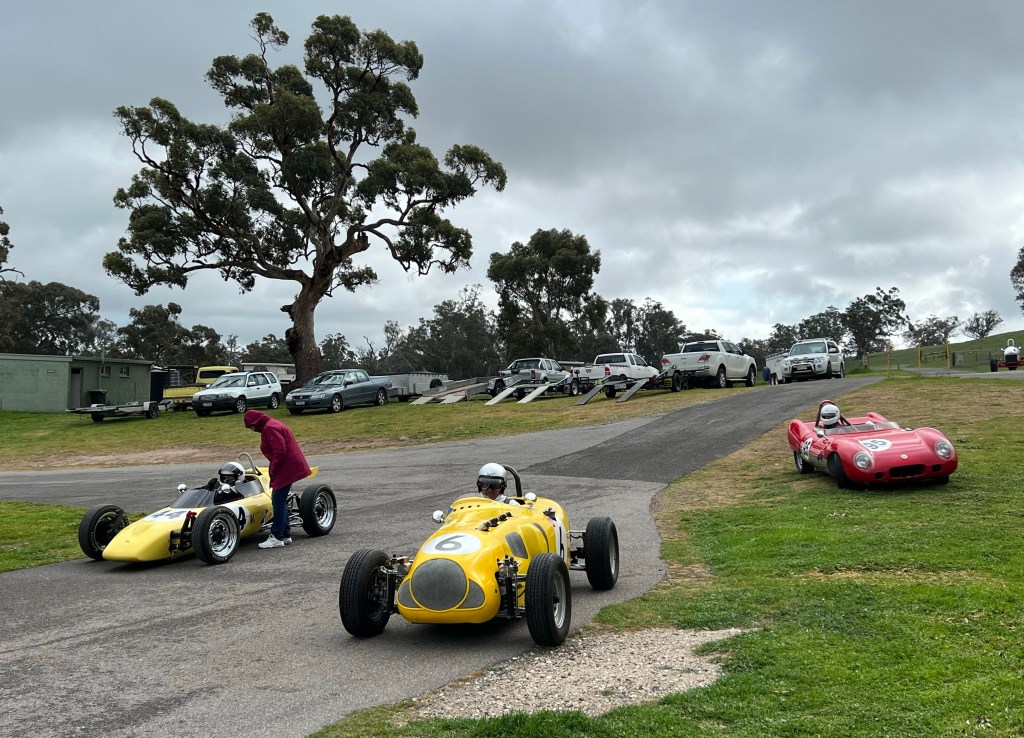
Sticking with the Eldred Norman theme, front and centre is Greg Snape, longtime custodian of Eldred’s Zephyr Special, in many ways just as revolutionary, if not as visually challenging as its older sibling.
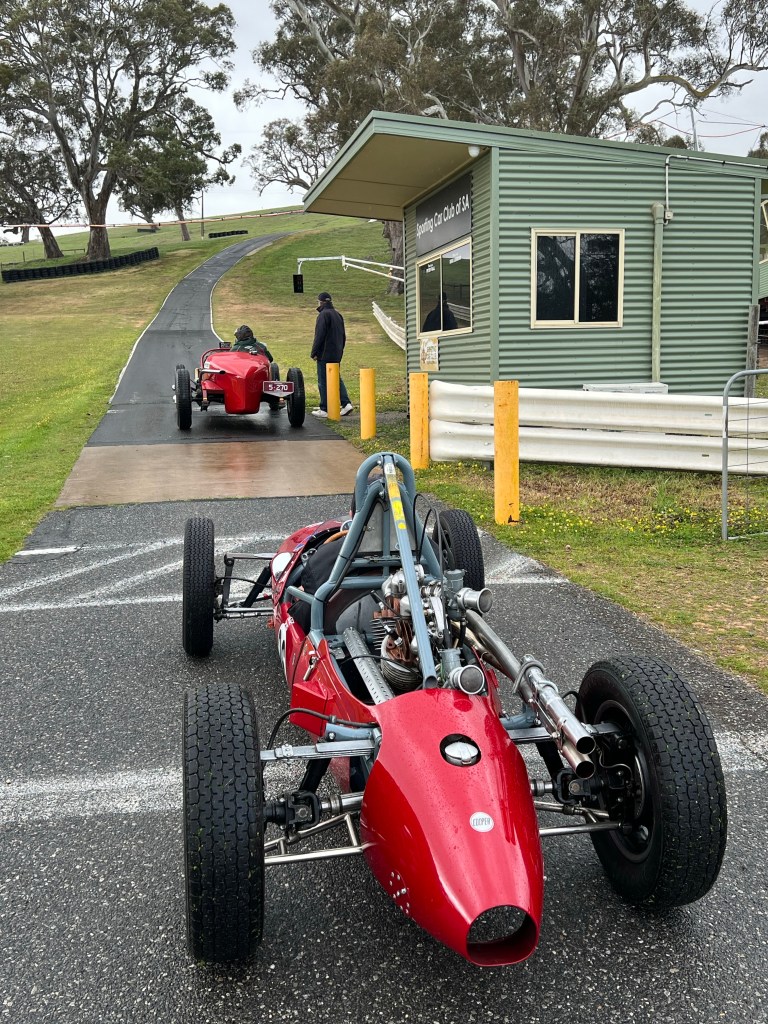
That’s Frank Chessel’s lovely Stag Formula Vee at left and Daniel Jeffries’ Elfin Streamliner at right, both Adelaide built cars.
(M Bisset)
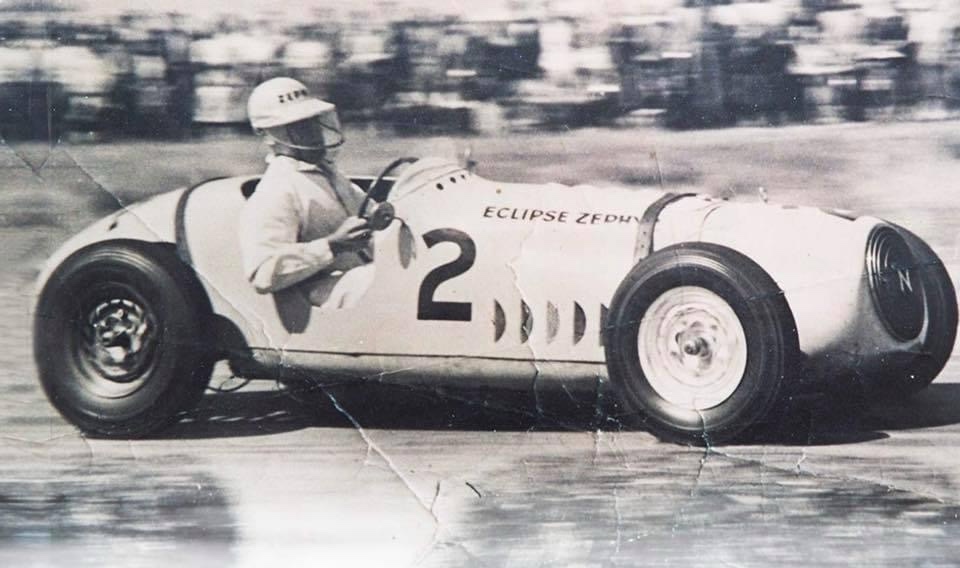
Eldred Norman during the 1955 Australian Grand Prix in the Eclipse Zephyr Special – Eclipse motors being a Ford dealer – at Port Wakefield, where he was eighth on debut.
Below is the semi-naked machine showing some of its secrets at Collingrove circa 1960.
The SU-fed, supercharged Ford Zephyr 2.3-litre overhead, two-valve straight-six – canted at 45 degrees from vertical – was a structural chassis element in that a piece of steel was milled to the shape of the engine’s timing cover and then a steel plate was welded to it that accepted the Holden FJ sourced independent front suspension crossmember assembly.
Norman borrowed from Vittorio Jano’s 1954-55 Lancia D50 playbook a decade before Mauro Forghieri did in 1964-65 (Ferrari 1512) and Colin Chapman in 1966-67 (Lotus 43 BRM and Lotus 49 Ford Cosworth DFV).
(S Jones)(S Jones)
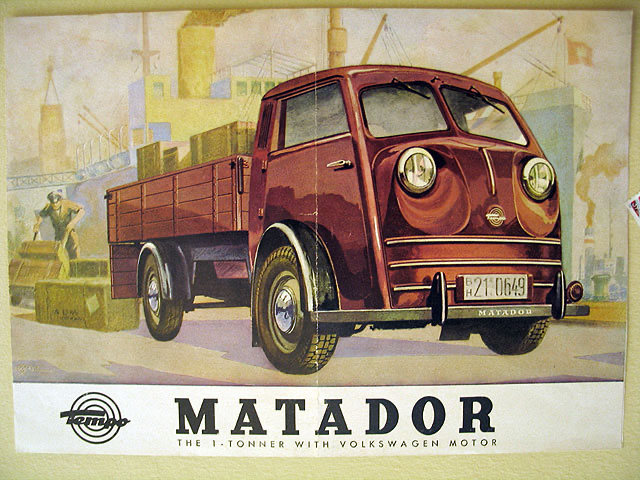
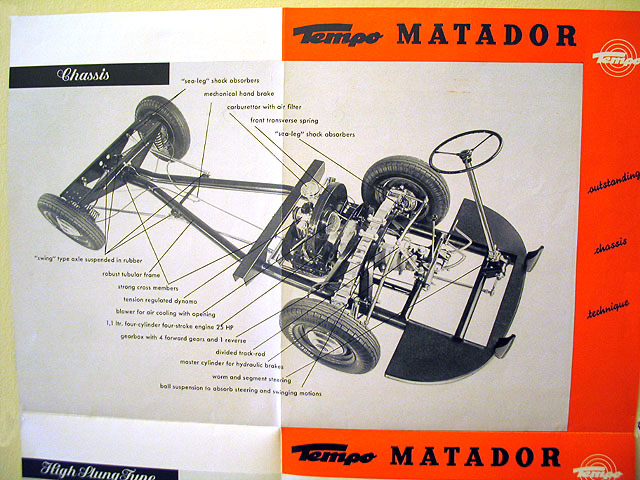
An eight or nine-inch diameter torque-tube connects the motor to a rear mounted clutch and Tempo Matador (VW powered truck) three speed transaxle, while the fabricated independent rear suspension was attached the transaxle with other major components such as the fuel tank, seat and body were bolted to the torque tube.
Yes, that is the petrol tank alongside the very fast Keith Rilstone in the shot above. The drum brakes are Holden with Vanguard internals to give twin leading-shoe operation.
(M Bisset)(M Bisset)
Fiona and Neill Murdoch’s Altas – two of the many visiting Victorians – created plenty of interest, that’s Fiona in the ex-Alan Sinclair/Ted Gray 1100cc s/c 21S above heading towards The Wall, and Neill in the 2-litre s/c 55S below.
(M Bisset)
Passengers were invitees during the Saturday track familiarisation session, so ‘everybody’ had a ride if they wanted.
(M Bisset)
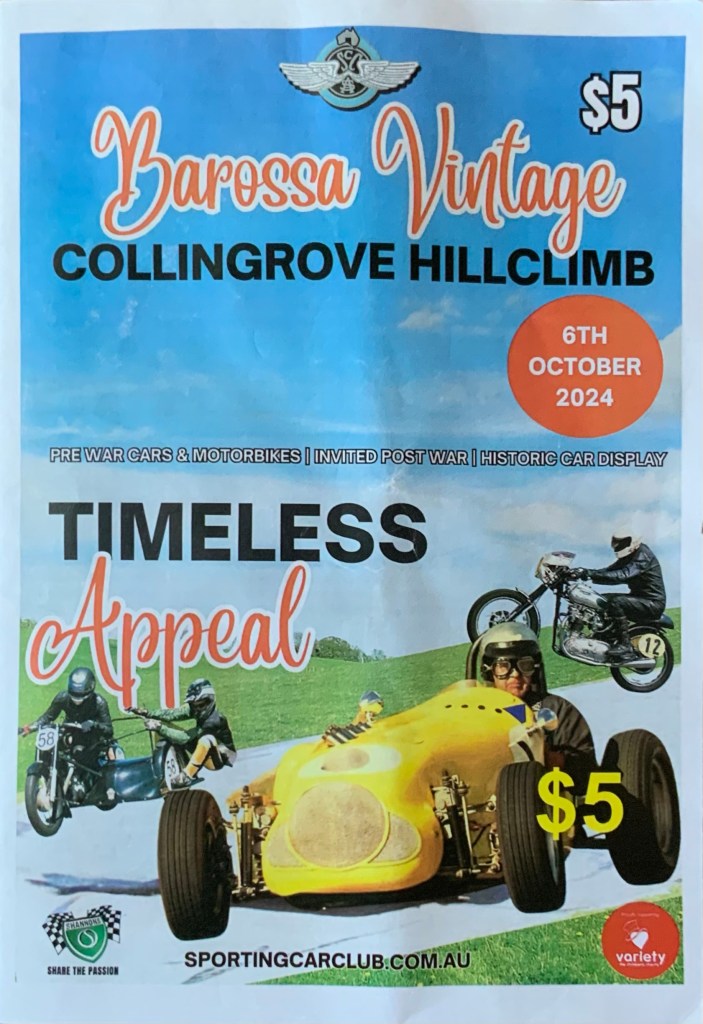
The October 5/6 Barossa Vintage Collingrove meeting was one of the Sporting Car Club of South Australia’s 90th birthday celebration events.
The SCCSA is THE blue-riband Oz car club having run and promoted fun and national championship events since 1934. I guess the 1936 South Australian Centenary Grand Prix – aka the 1936 Australian Grand Prix – was their first big national gig. They are an ‘efficiency with a friendly feel’ kinda mob which makes visits to their meetings at Collingrove, Mallala and their HQ in quite special.
Mark Alsop’s MG M-Type was deceptively quick for an 850cc sporty but appeared to be perfectly geared for the venue (M Bisset)
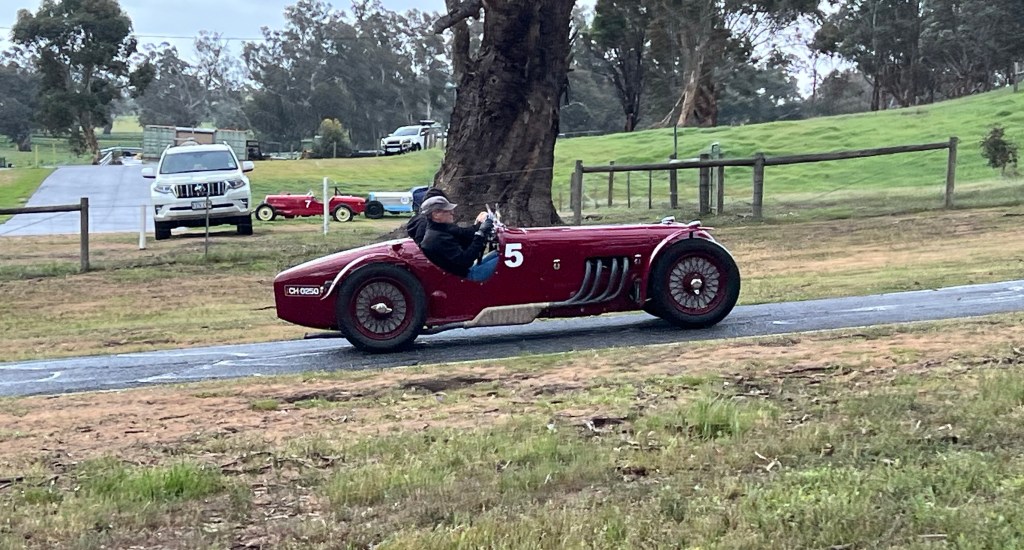
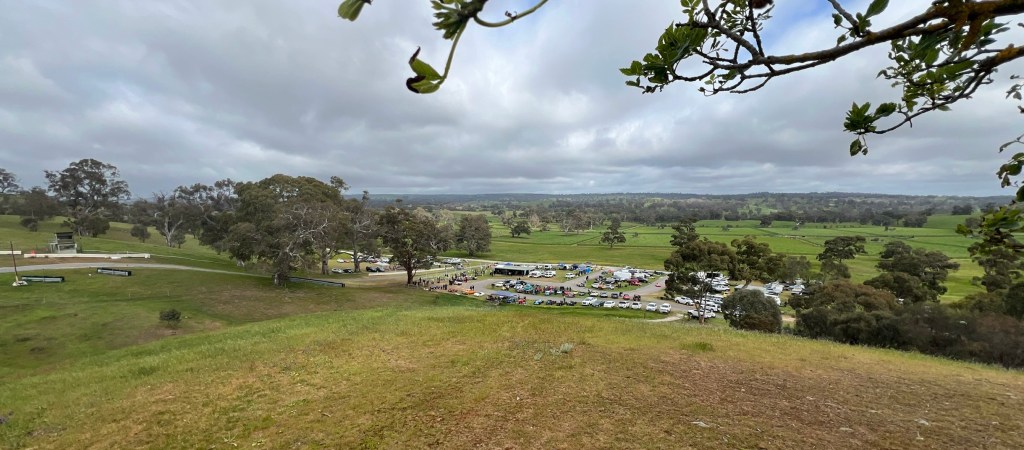
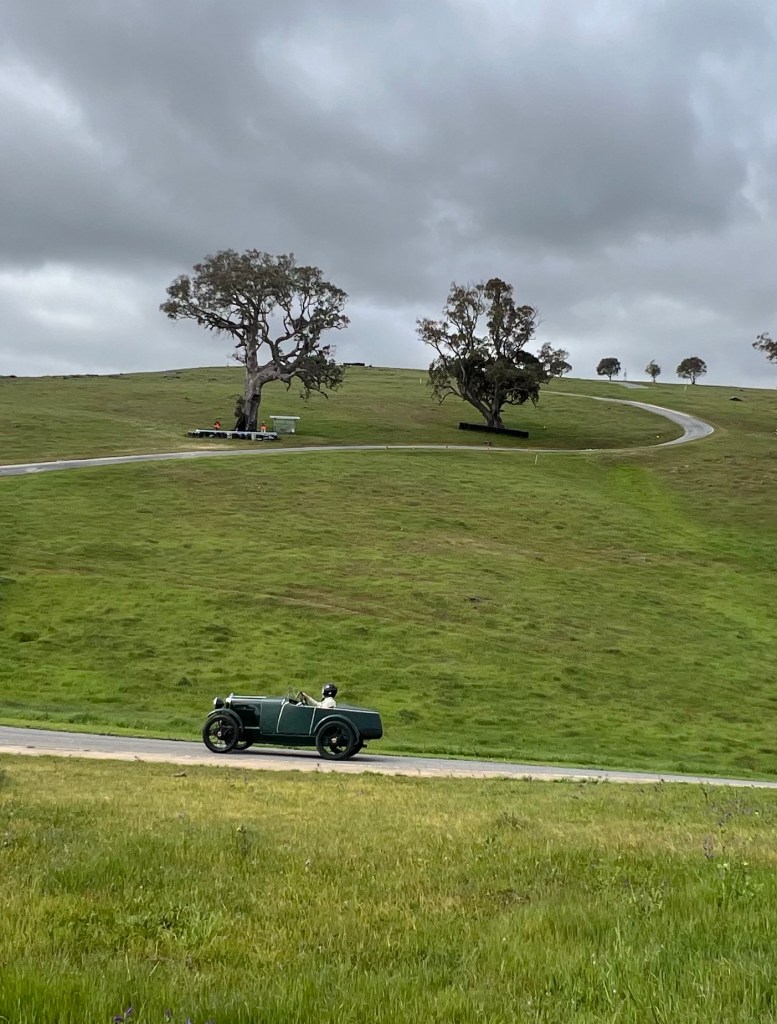
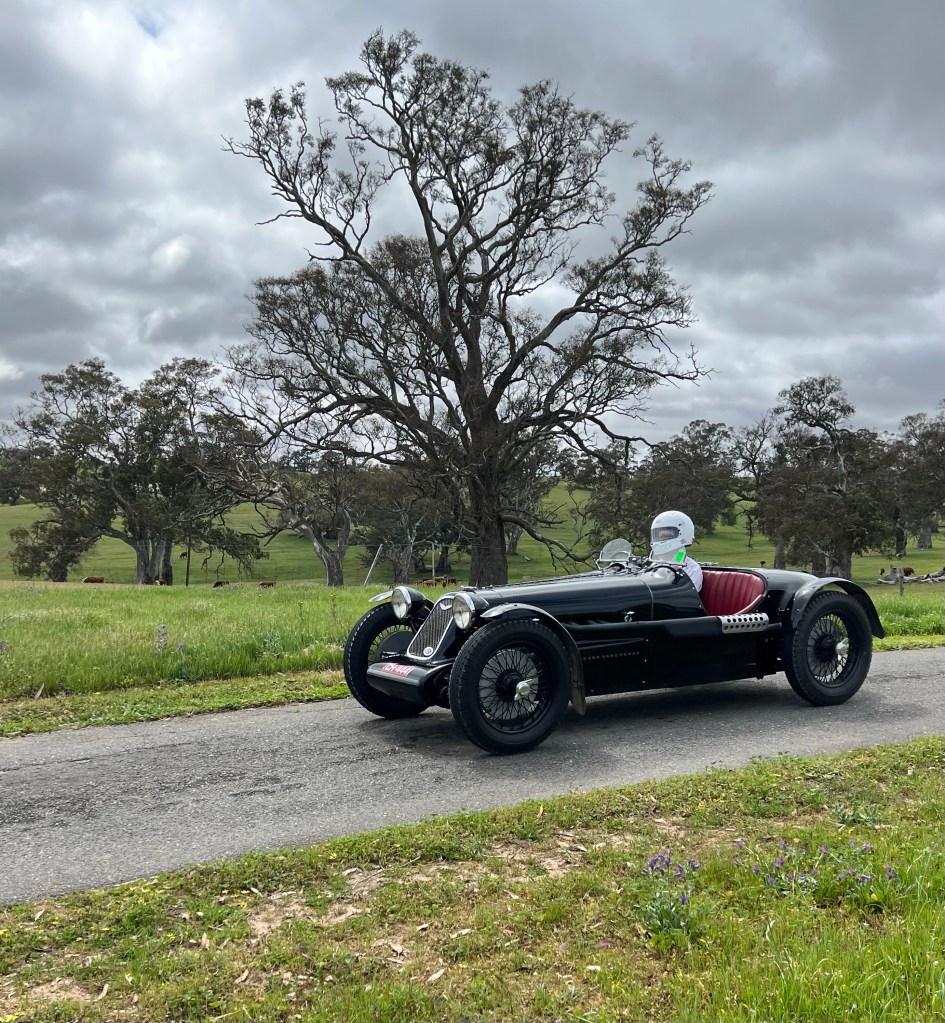
Collingrove is in the beautiful, leafy green, rolling hills of the Barossa Valley – Mount McKenzie to be precise – a notable wine growing region 80km north-east of Adelaide. First used in 1952, it’s 750 metres long, the climb is tight, up and down and has held the Australian hillclimb Championship 14 times in addition to rounds thereof when the title has been contested over more than one event.
(M Bisset)
A line up of air-cooled’s: Peter Fagan’s Cooper Mk6 JAP 1100, Stephen Denner’s Cooper MkV JAP 1100, Brian Simpson’s Cooper Mk9 JAP 1100 – yes please to that car – and Mark Atkinson’s Falkenberg Jinx.
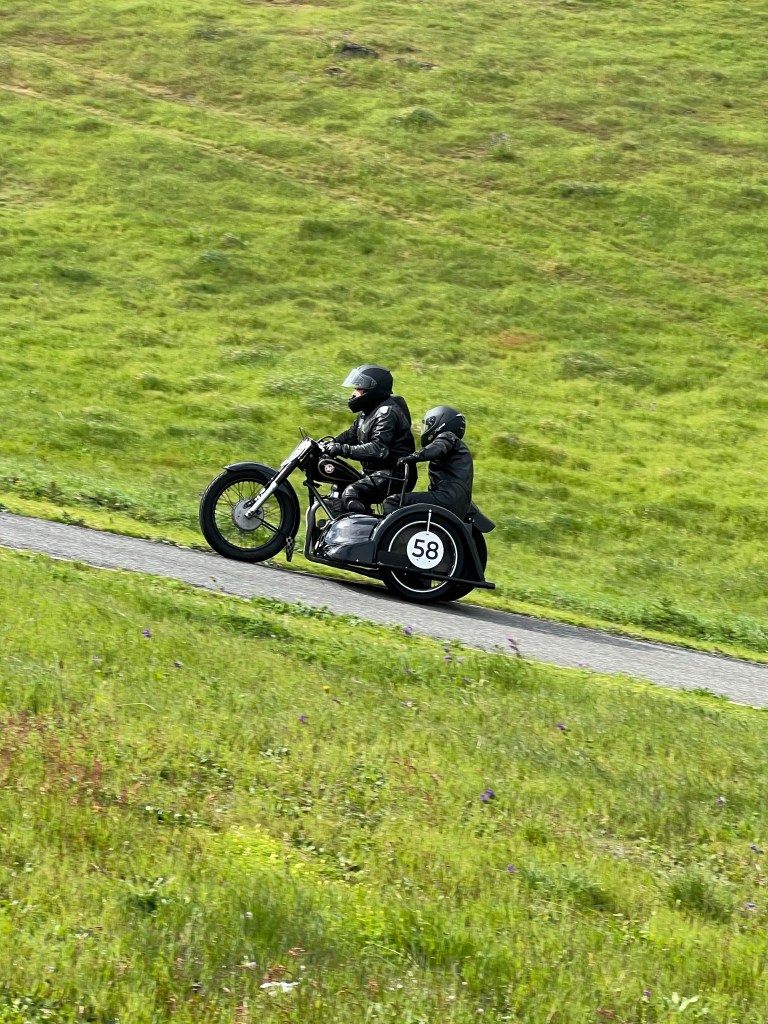
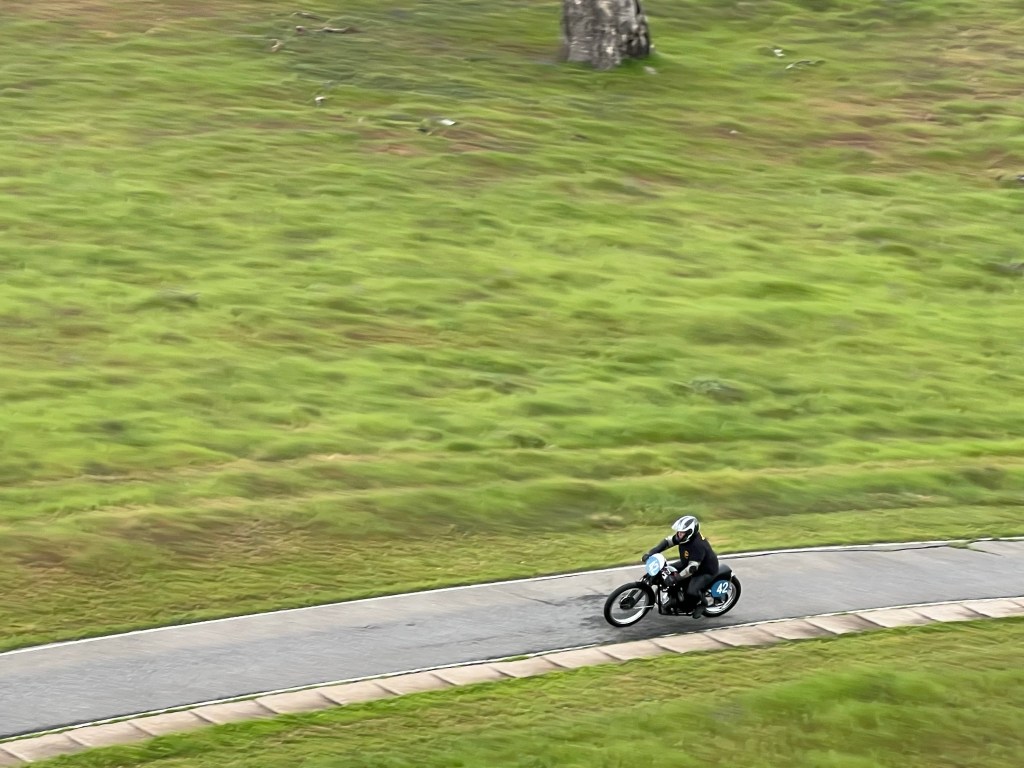
Speaking of air-cooled machines, ‘bikes were invited along too, about 15 of the 70 entries, and were spectacular to watch. It’s the first time I’ve seen motorcycles at a hillclimb, they were great.
Given the relatively small entry there was plenty of runs for all who wanted them.
The Bruce Davis/Emil Batar 1958 Matchless 600 outfit (M Bisset)Peter Walker and 1935 Velocette Mac (M Bisset)
I missed the best of the action, Bob King and I were given a guided tour of the Lobethal and Woodside road circuits, which are not too far from Collingrove, by Kent Patrick. A group of us did a Nuriootpa loop on Saturday morning as well, not to forget a (shambolic) lap or two of the Victor Harbor-Port Elliott track on Monday morning.
Fiona Murdoch in #21S coming down the access road back to the paddock.
(M Bisset)The Anderson family Bugatti Type 44 – in Michael’s care – and Alsop M-Type lead this paddock line up (M Bisset)(M Bisset)
Brian Simpson’s Cooper awaits its familiarisation run while Montgomery leaves the line in the Little Alfa. Brian’s cars have always been beautifully prepared and presented, the Cooper is no exception.
(M Bisset)
David Beaumont’s Alfa Romeo Giulietta Spyder 1600 was a picture. Angus Mitchell was quick in both the family Amilcar Grand Sport s/c, below, and in his ASP Toyota Clubman; busy too as one of the key organisers. That big-arse under cover behind belongs to the Double Eight; pert and perky it is not!
(M Bisset)(M Bisset)
Graeme Jarrett’s Elfin Streamliner looked the goods with head-piece and very racing-correct varying hues of red. A favourite car.
(M Bisset)
Alta 55S pointed in the right-racing-direction at Nuriootpa, with Fiona and Neill Murdoch and then 21S behind.
While 55S is an Australian-johnny-come-lately – in the 1980s – MI5 Spy, part-time motor dealer and occasional racing driver, Alan Sinclair, brought 21S here just prior to the South Australian Grand Prix at Lobethal in January 1938. The car has been here ever since.
Here is the little 1100cc minx in monoposto form with our spook at the wheel in that January 1938 Lobethal race below.
I don’t think the car competed again in South Australia despite a competition life in the hands of Bill Reynolds, Ron Edgerton, Ted Gray and others that stretched into the early 1950s, but I’d love to be proved wrong.
Legend has it that Eldred Norman first called the Zephyr Special the Norholfordor given it was derived form Ford, Holden and Tempo Matador parts, but he figured that was a bit of a mouthful…
(bry3500)
Nice tail shot of the VW transaxle above, top transverse leaf spring and tubular shocker.
With about 280bhp on hand, depending on gear ratios, the wild, somewhat twitchy little SWB rocket was good for about 90mph in first, 130 in second and somewhere north of 160mph in top. Plenty quick.
(bry3500)
The undated Mallala paddock shot above shows the sheet steel engine/suspension mounting plate, single SU carb, and rough as guts standard of finish epitomised by the second hand fuel tank! All go, no show.
Norman was an acknowledged supercharger expert, his tricks learned getting more performance from tye recalcitrant Maserati 6CM that succeeded the Double Eight.
(M Bisset)
Greg Snape looking very snug at Collingrove.
Credits…
Norman Howard, Steve Jones, bry3500
Tailpiece…
(M Bisset)
What’s that Queen song? Fat Bottomed Girls. She’s loud and proud and sassy rather than nuanced, and all the better for it. Wait until Darren gets the thing fully sorted and fits it with a pair of a Hotrod Harry spec engines…
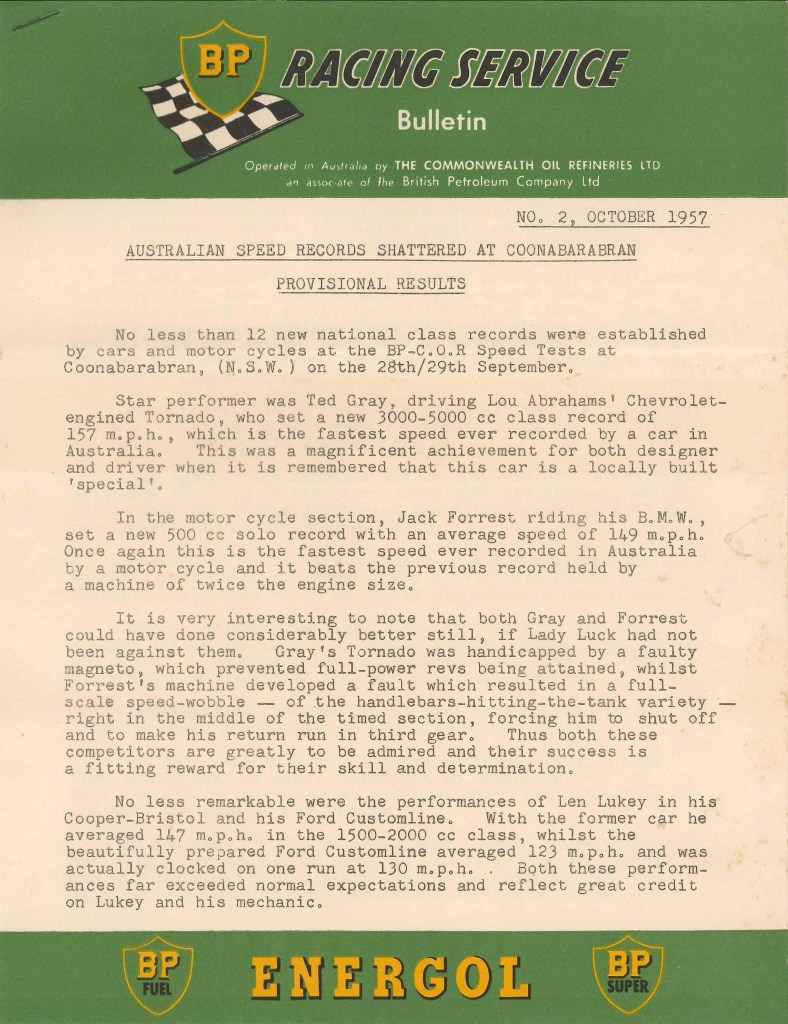
‘This BP Press Release was still in its original envelope with some pit pass tags’, Peter Button wrote of his late Uncle, Ron Button’s archive.
‘Ron didn’t talk about his time racing, it’s only on the passing of his son, Phil, that the extent of his motor racing history has become apparent. I’m piecing it together. I have his wooden helmet and Light Car Club of Australia badges, I’m sure he would be glad the racing community is getting something out of them,’ he wrote on Bob Williamson’s Old Motor Racing Photographs – Australia Facebook page, which continues to give…and give. My Lordy-me there is are good goings on, sharing of knowledge on this site and Smithy’s Pre-1960 Historic Racing in Australasia one.
(V Mills)
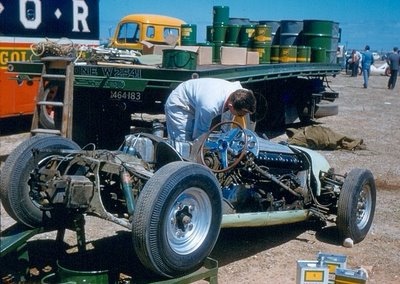
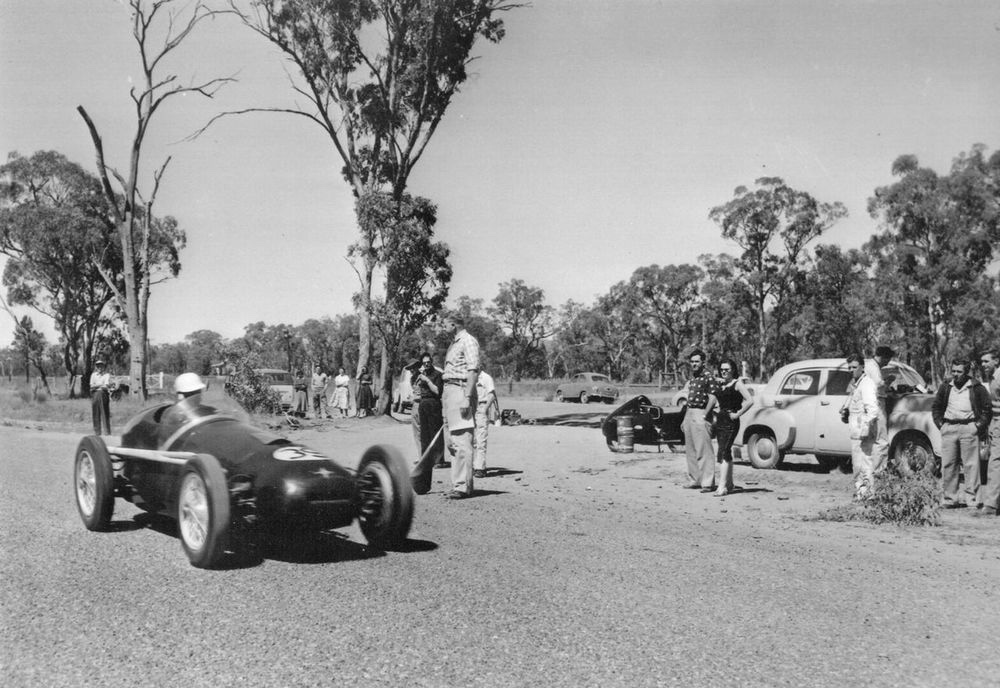
Star of the show was Ted Gray aboard Tornado 2, just fitted with its new, much modified fuel-injected Chev Corvette 283cid engine. Here he lines up for the start at Tipperary on September 28-29, 1957. It may look old but it sounded pretty much F5000 if some way short of the power of those 1970s roller-skates.
While BP’s spiel describes Tornado as a ‘locally built special’, by 1958 the Gray, Lou Abrahams and brothers Mayberry built Tornado was objectively the fastest Formula Libre road-racer in the country…if not the most reliable. It was quicker than Stan Jones’ 250F and Lex Davison’s Ferrari 500/625, Tiger Ted was no longer a spring-chookin’ by then either.
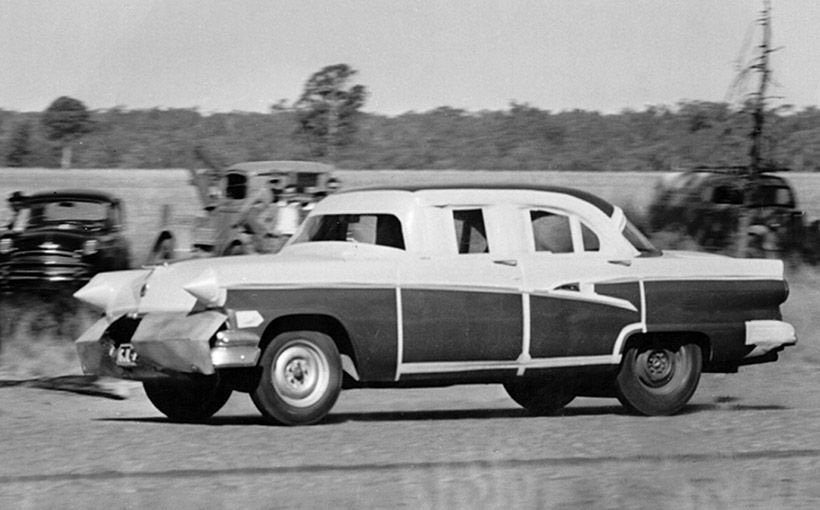
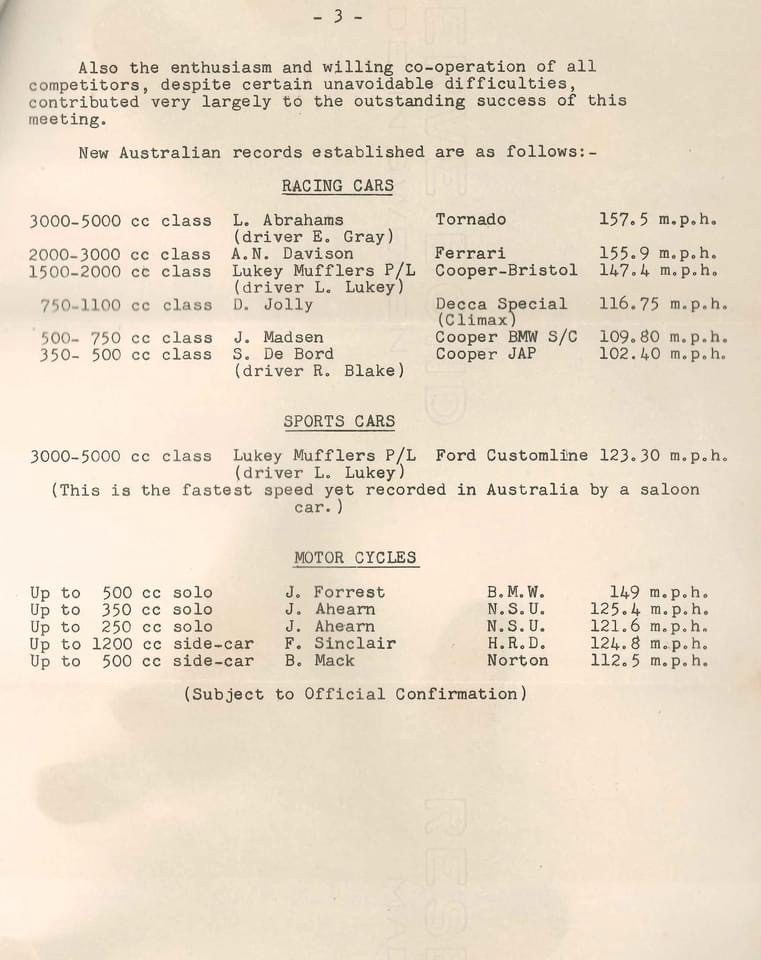
While Len Lukey’s home-made attempts to streamline his race Ford Customline may look a bit half-arsed, in fact NASA would have been proud of him, the big beast did a two-way average of 123.30mph.
(Chevron)
Back-story…
Prominent motorsport identity/engineer/racer/Australian Rally Champion navigator/CAMS administrator Graham Hoinville was tasked by his employer, BP to find a suitable site to stage some Australian Land Speed Record attempts in early 1956.
About 12 months later he selected from a shortlist, a dead-straight four-mile stretch of the Coonabarabran-Baradine road at Baradine, 535km north-west of Sydney. The road adjacent to the railway line between the two townships he assessed as suitable for some promotional record-breaking. The road ran past the gates of Tipperary Station (farm), locally the event became known as the Tipperary Flying Mile.
Drivers hand-picked to attend the 1957 BP-COR (Commonwealth Oil Refinery) Speed Trial were all BP contracted drivers and riders, including Davison, Ferrari 500/625 – soon to the first Gold Star Champion, the Australian Driver’s Championship – Gray racing Lou Abrahams’ Tornado 2 Chev, Lukey, Cooper T23 Bristol and Ford Customline V8, Derek Jolly, Decca Mk2 Coventry Climax sportscar, John McMillan, Ferrari 555 Super Squalo and Roy Blake’s Cooper JAP. Motorcyclist invitees included Jack Forrest, BMW 500 and Jack Ahearn, Norton Manx 350.
(R Button Archive)
Over 3,000 spectators rocked-up to watch the cars run over a flying kilometre, and the bikes’, a flying half mile. While the road had been resurfaced, it was only 18 feet wide and had a pronounced crown. Strong winds and bushfires in the area added to the challenge…
It was so blustery on the Saturday that the motorcycle attempts were postponed to Sunday when conditions were kinder. In accordance with FIA regs, a run in opposite directions had to be made within an hour, and timed to 1/100th of a second.
(V Mills)
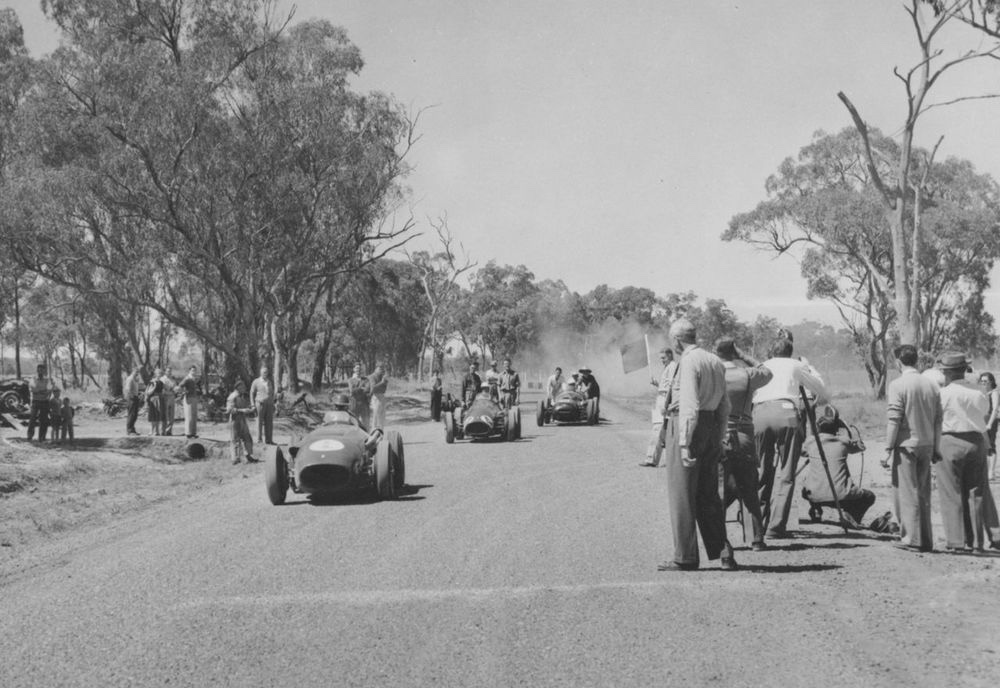
The group of ‘outright cars’ included John McMillan’s Ferrari 555 Super Squalo, Lex Davison’s Ferrari 500/625 3-litre and Ted Gray’s big, booming Tornado Chev, all three of which are heading for the start above.
It all looks suitably casual and bucolic, but some great work was done in what was the first mass attack on local land-speed-records. Almost every local record for cars and bikes was broken. Nationally, that Baradine region feat has never been toppled.
(R Button Archive)(oldbikemag.com.au)
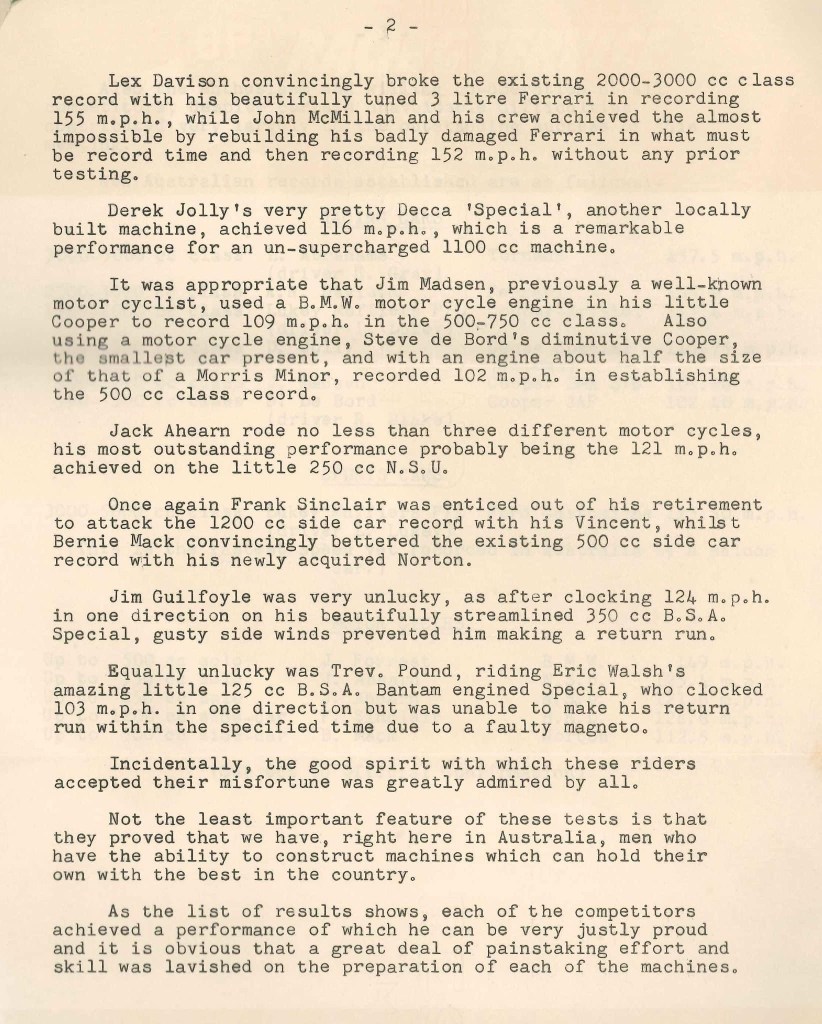
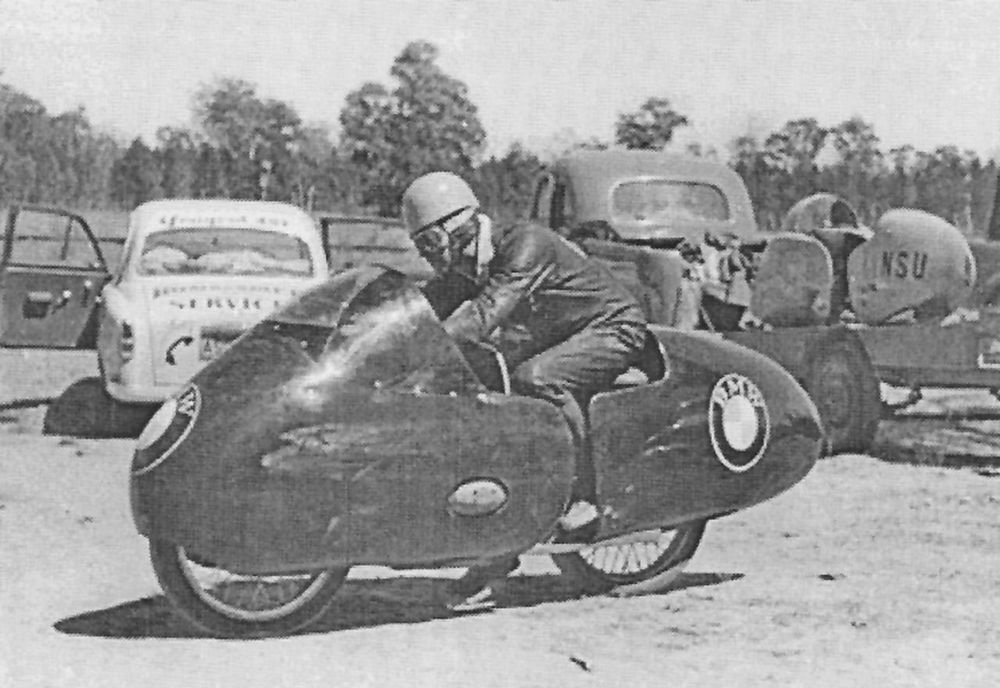
Jack Forrest set a new outright record of 149mph on his ex-works BMW Rennsport 500 despite a blistered rear tyre and an altercation with a flock of galahs, the damage inflicted by said birds obvious on the fairing. The NSU on the trailer is Jack Ahearn’s Sportmax.
It wasn’t all plain sailing…
Jim Johnson decided to give his MG TC Special a final test run before the off to ensure a misfire was sorted. With the roads still open to normal traffic, Johnson arrived at high speed on the Coonabarabran-Baradine road at the Tipperary Station farm gates at about 6.30am – listening hard to his engine but not necessarily watching fully in front of him – just as a fuel truck turned right into Tipperary. Johnson went straight under the truck, the unfortunate Leichhardt garage proprietor and father died instantly in gruesome fashion. The truck didn’t have external rear vision mirrors so the driver didn’t see him coming. It wasn’t a great start to the event, but the event hadn’t actually started for the day…
Credits…
Ron Button Archive, V Mills photographs in the Coonamble Times, Jim Scaysbrook’s Tipperary Flying Mile article on oldbikemag.com.au dated October 4, 2019, Chevron Publishing
Tailpiece…
(V Mills)
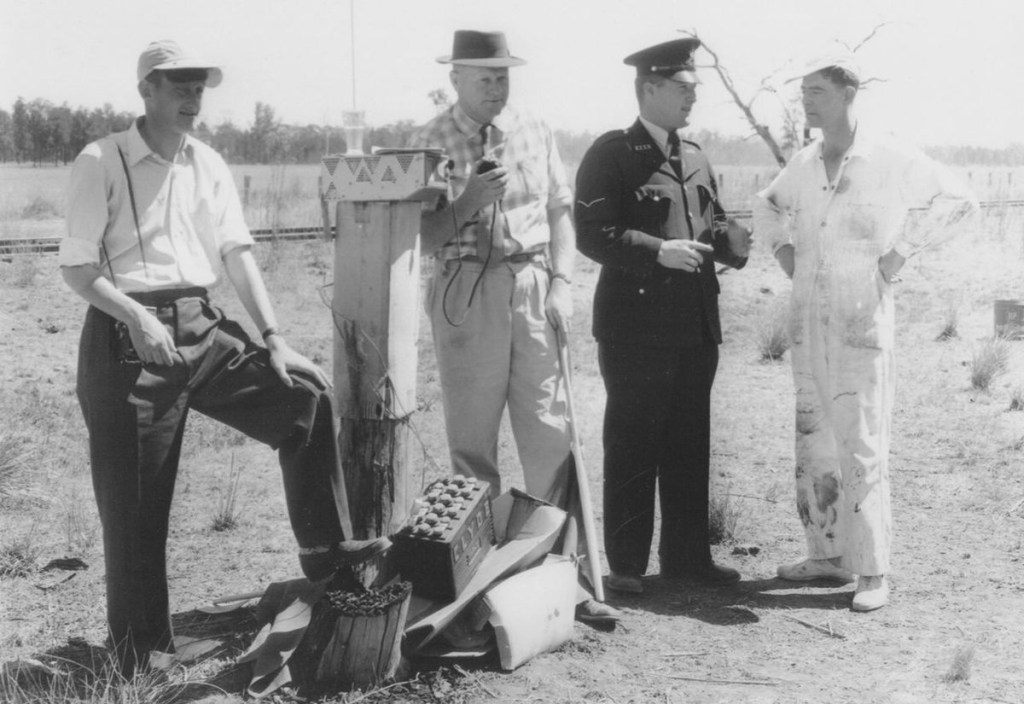
Officialdom ready for the off: the butcher, baker, candle-stick maker and copper. In the manner of the day, everybody pitched in. Note the lightweight battery…
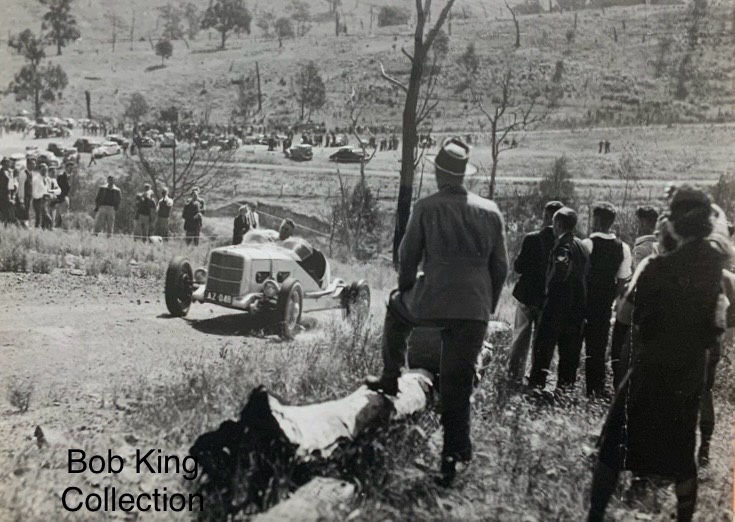
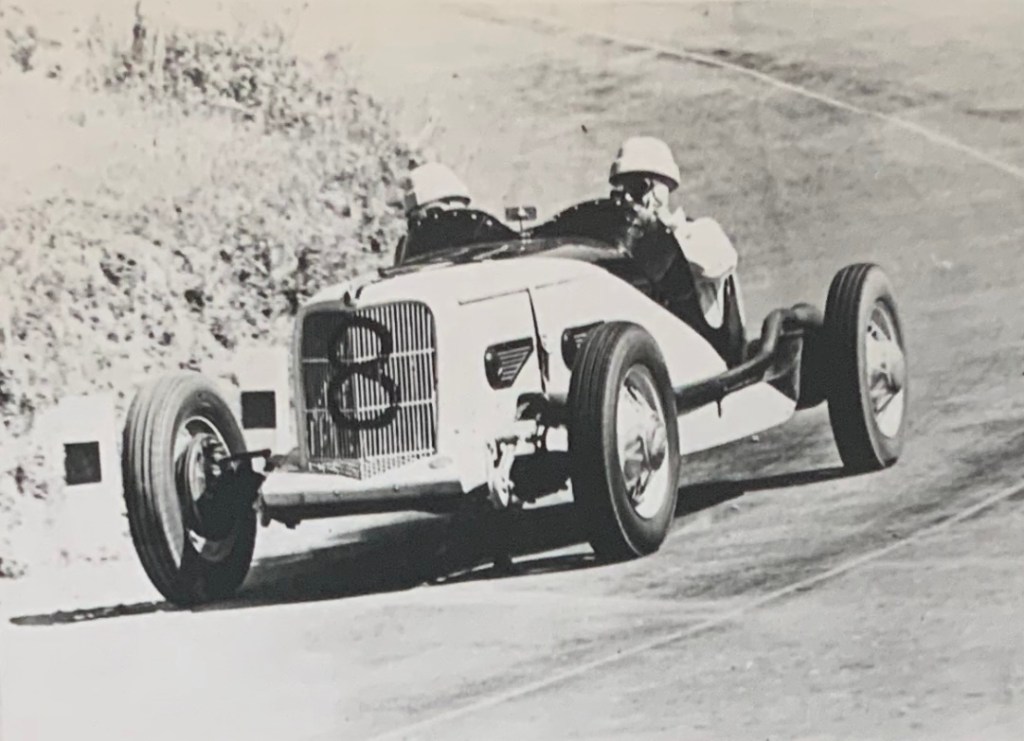
Evocative shot of Jack Phillips’ Ford V8 Special ascending Rob Roy hill in the Christmas Hills, 50km east of Melbourne
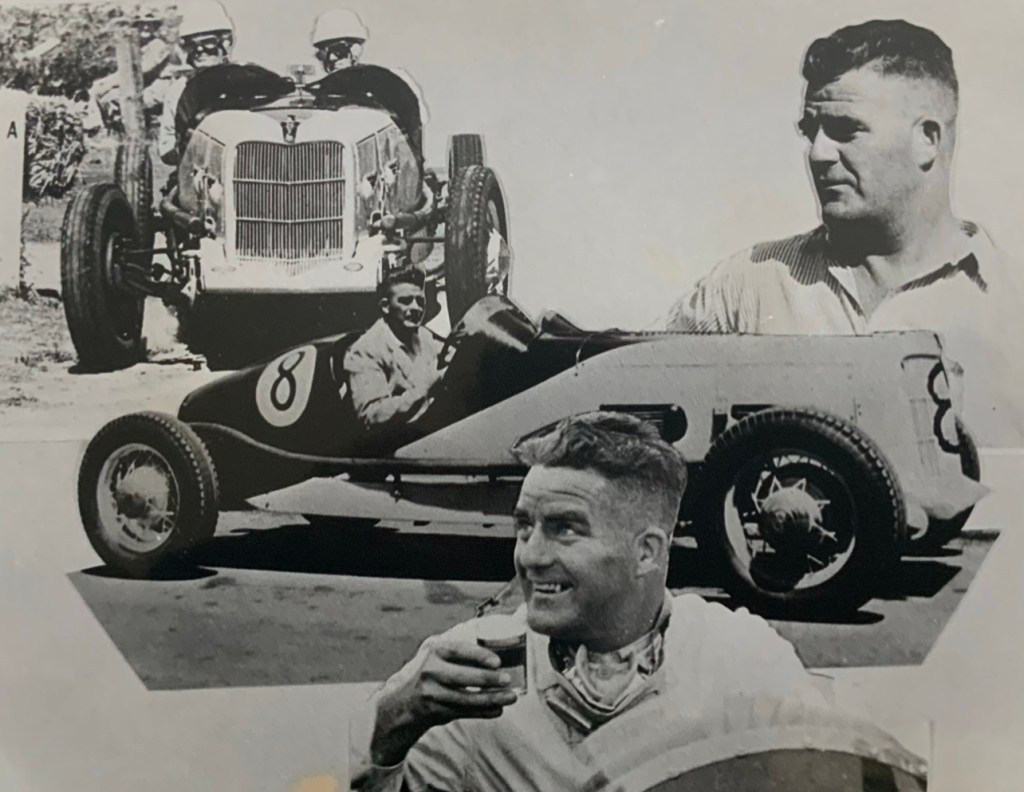
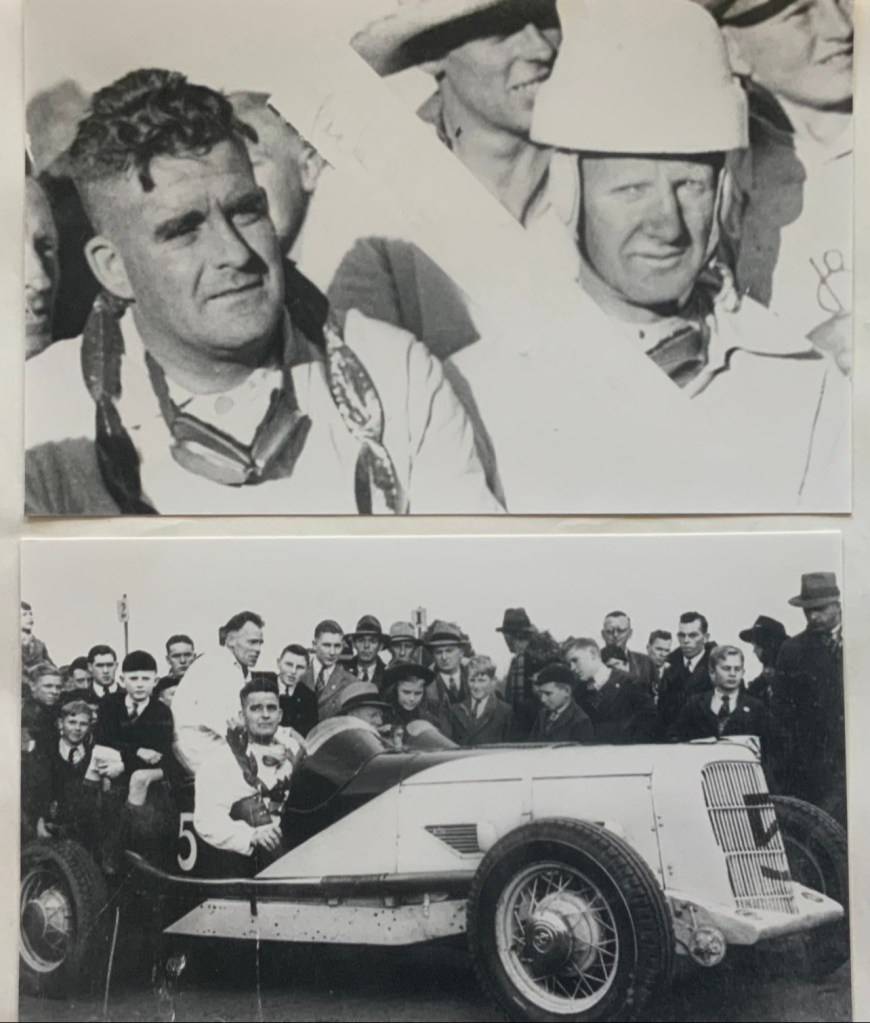
This car was one of the fastest and most successful racers in Australia – where handicap events then were standard fare – in the immediate pre and post-War period. Built by Phillips and Ted Parsons, his riding mechanic and partner in a Wangaratta Ford dealership, I’ve written about the combo before: https://primotipo.com/2023/03/07/jack-phillips-ted-parsons-ford-v8/
I’d love to know the date of the meeting and how Jack went? Before the January 13, 1939 Black Friday fires it seems?
(B King Collection)
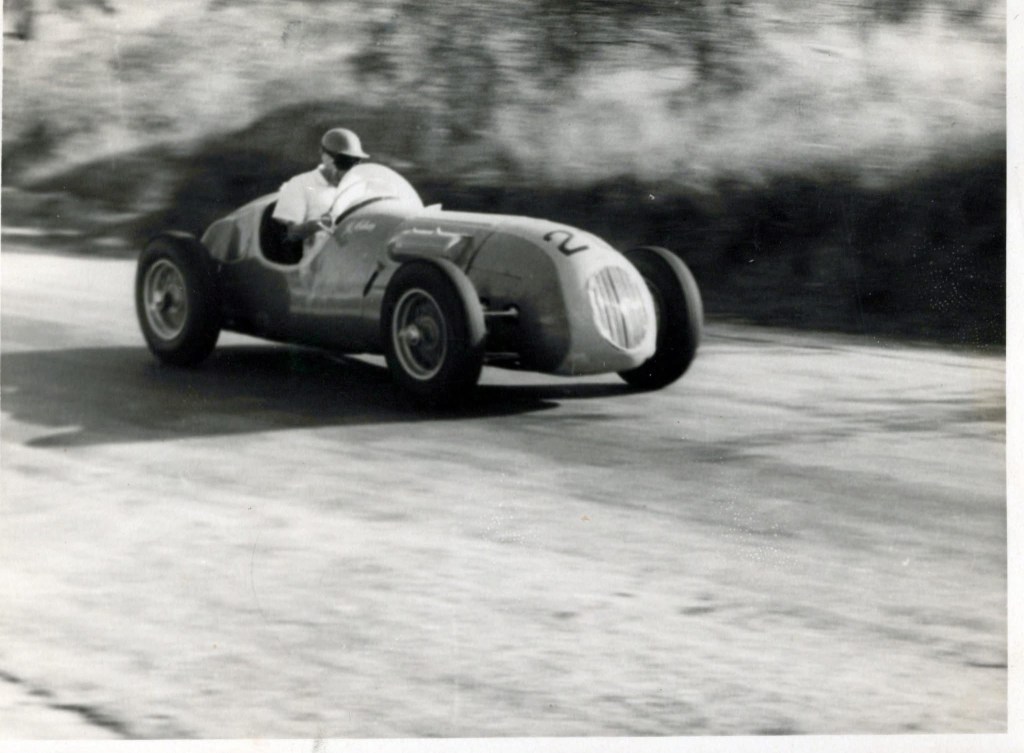
Phillips/Parsons (above and below) on the way to a win in the South Australian Hundred on formidable Lobethal in 1940.

























 primotipo...