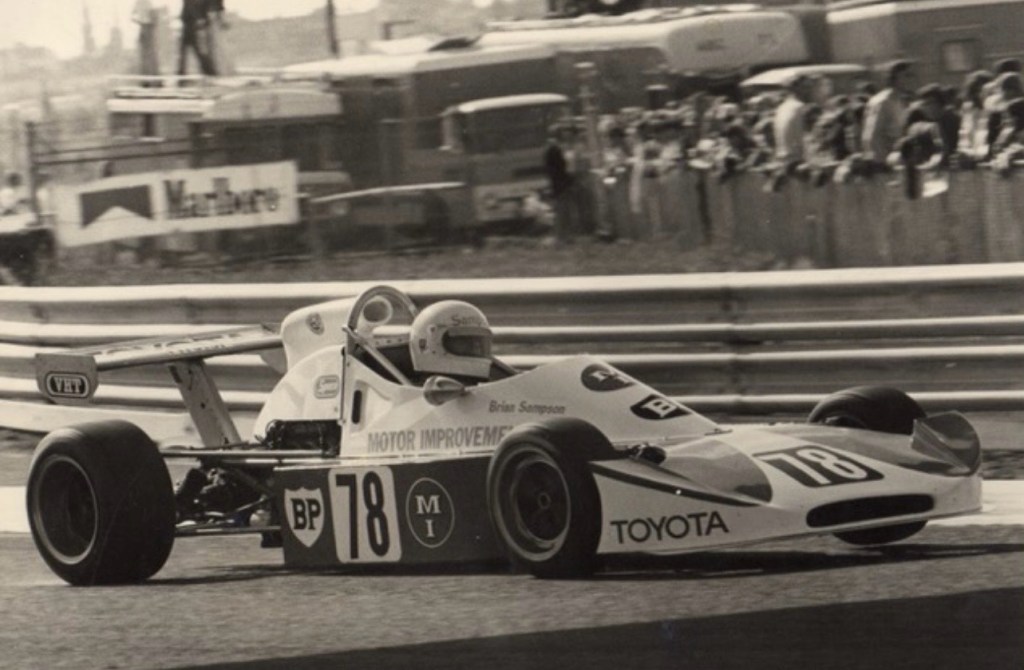
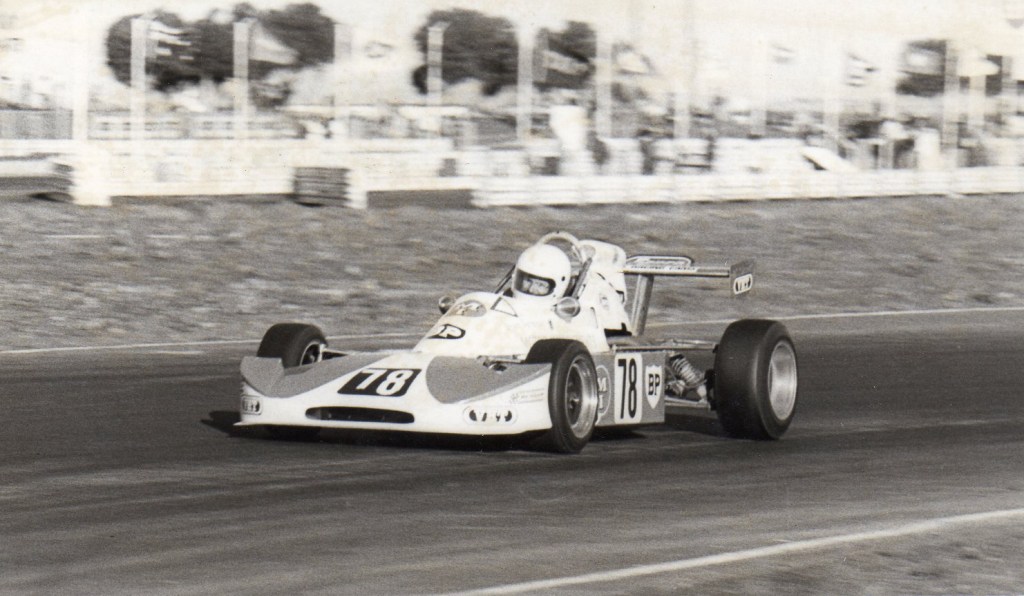
Would you believe Brian Sampson blasting his Cheetah Mk5 Chev through Shell corner at Sandown in 1973? Nup, me neither…
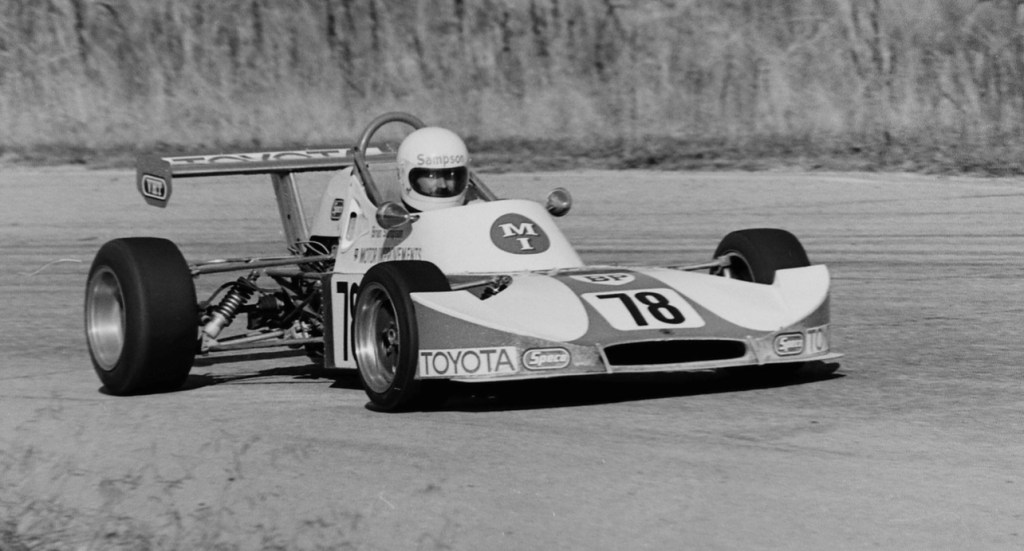
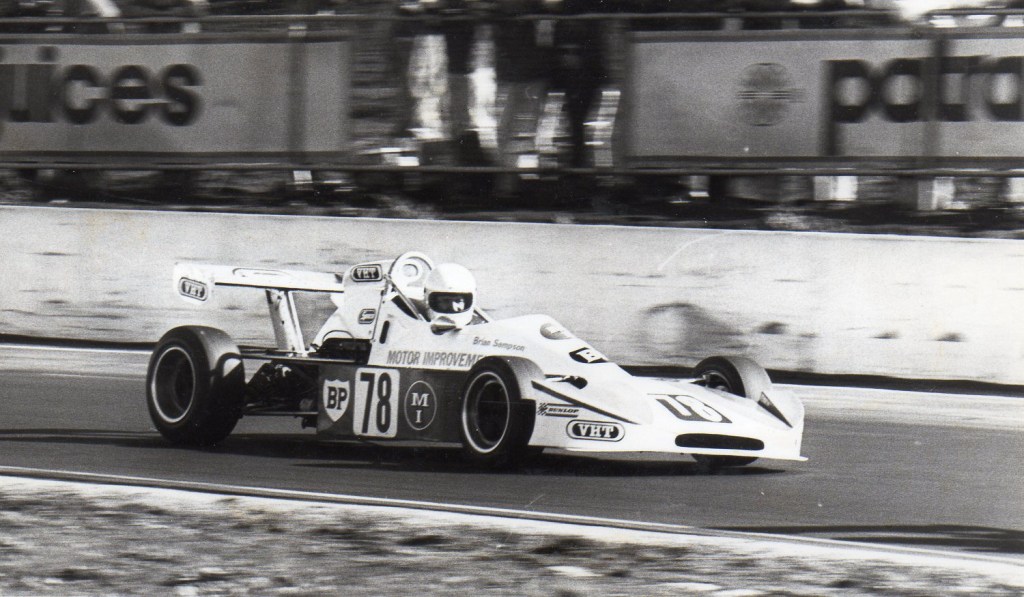
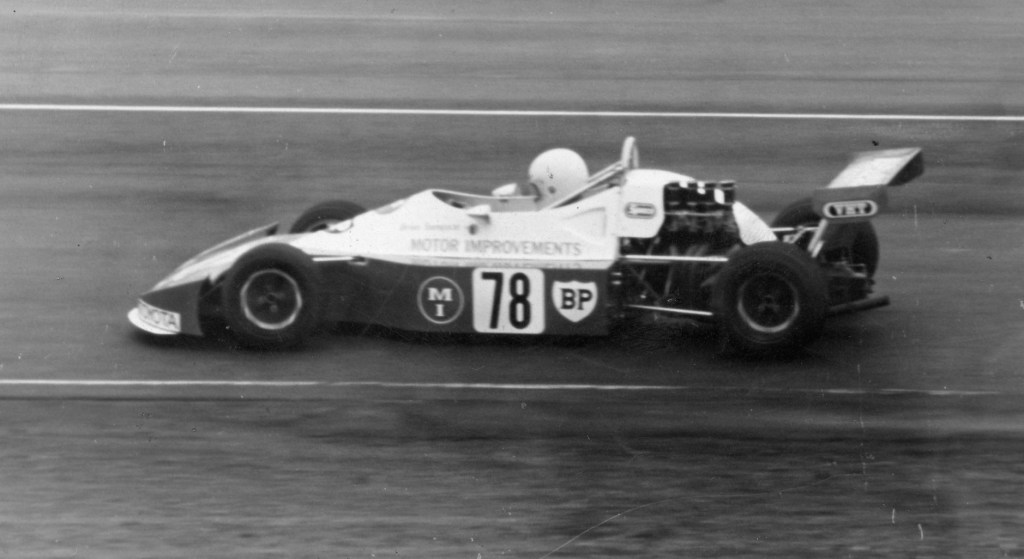
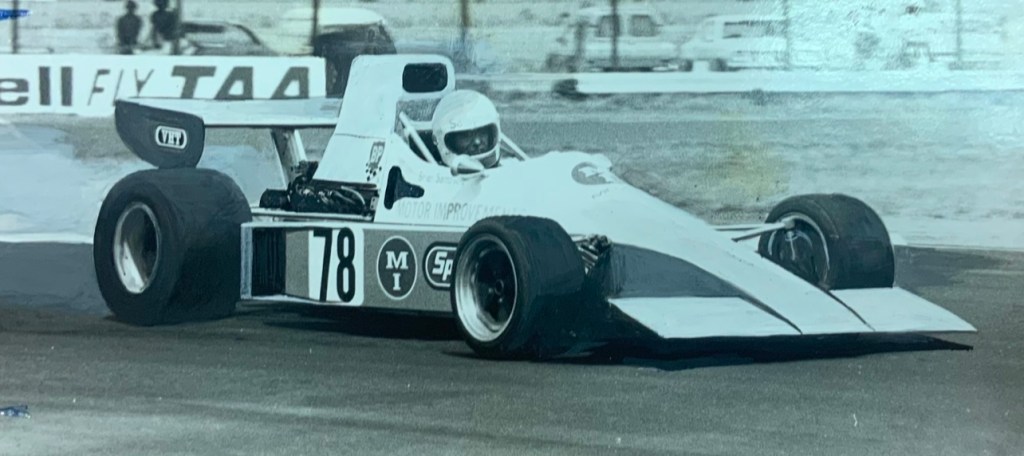
Clearly he was playing with downdraught Webers instead of the 40DCOE’s usually fitted to his works-Motor Improvements 1.3-litre Toyota Corolla based F3 engine, an experiment that didn’t cause him to change induction direction: the car is a Cheetah Mk5 Toyota.
Sambo in his Cheetah Mk5 Toyota at Hume Weir circa 1973 (M Bishop)
Great little motors, one was fitted to an ASP 340 Clubman car I owned. Lordy knows how many 1.3-litre ANF3 and Clubman races those engines won in mid-1970s in the hands of works-pilots Brian Shead, Brian Sampson and Peter Jones plus a swag of customers of whom Peter Macrow, Paul King and Dean Hosking readily spring to mind. There were plenty more.
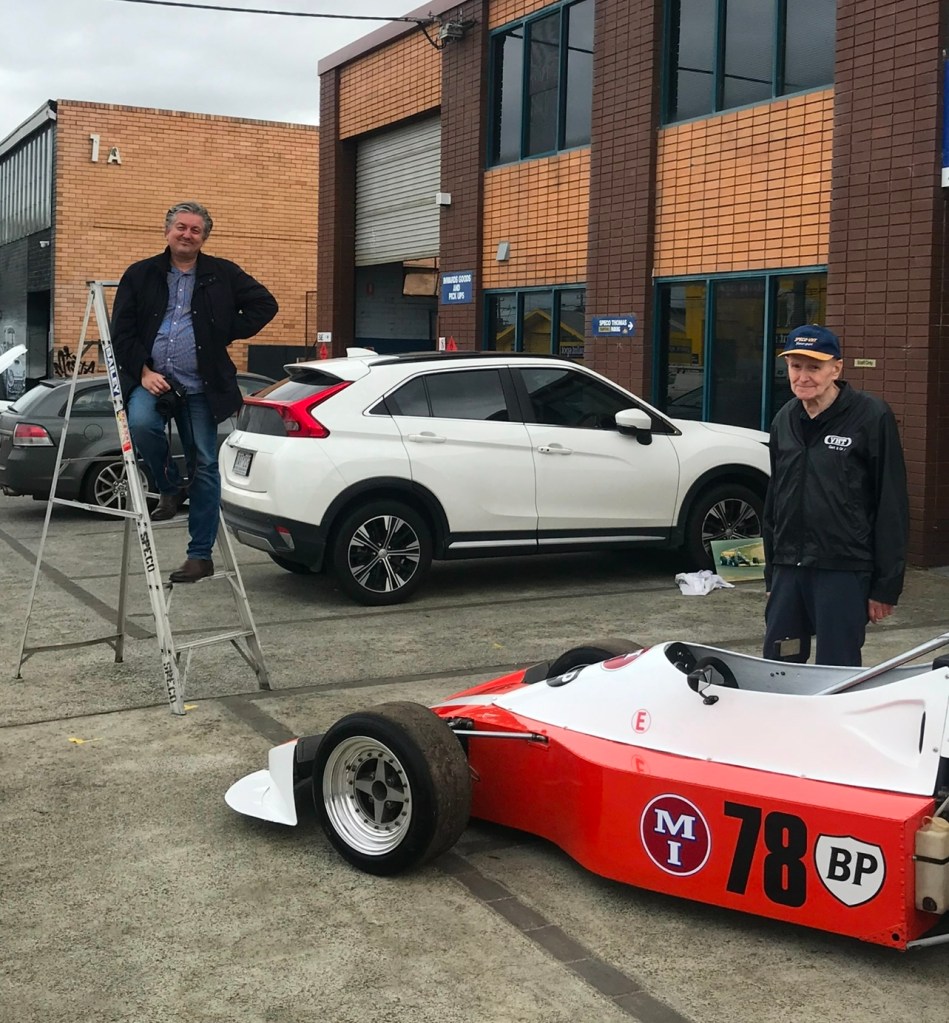
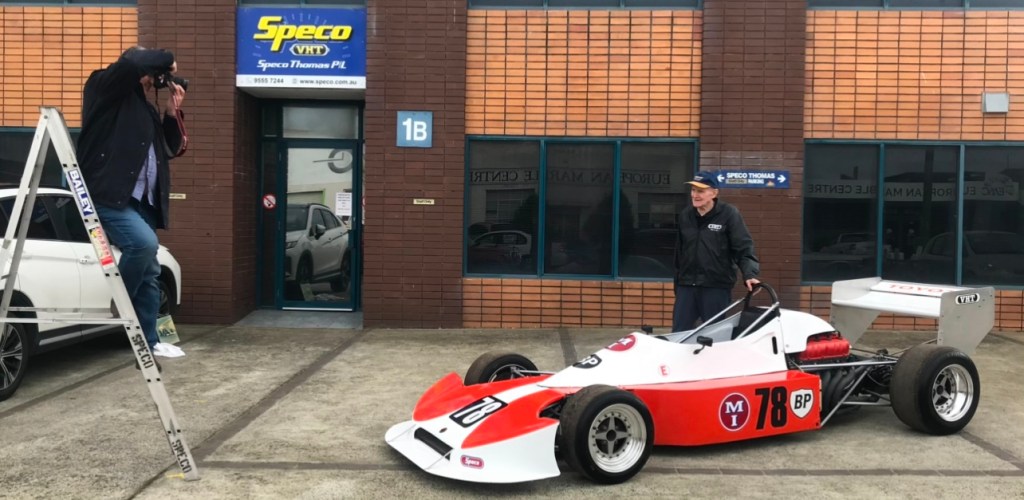
The Two Amigos, Bruce Williams and Brian Sampson, outside Brian’s Speco Thomas, Moorabbin warehouse on July 6, 2021. The car is Sambo’s Cheetah Mk6 Toyota Celica 1.6 ANF2 car (M Bisset)(M Bisset)
I got to know Brian later in his life via my friend and Auto Action publisher/owner Bruce Williams. I did a piece about the Cheetah Mk6 for Auto Action in July 2021 and spent the better part of a day talking to Brian and Brendan Jones while Sambo and Williams relentlessly and hilariously hung-shit on one another for the duration. They had known and worked together for the better part of 40 years.
We did a return bout not too long before Brian died (17 November 2023), I’ve never completed the planned two articles, but we taped the long three-way chat and one day will remove the too-naughty bits and pop it up on the A-A website. Such a talented driver, engineer and businessman, not forgetting the top-bloke factor.
(Sampson Archive)
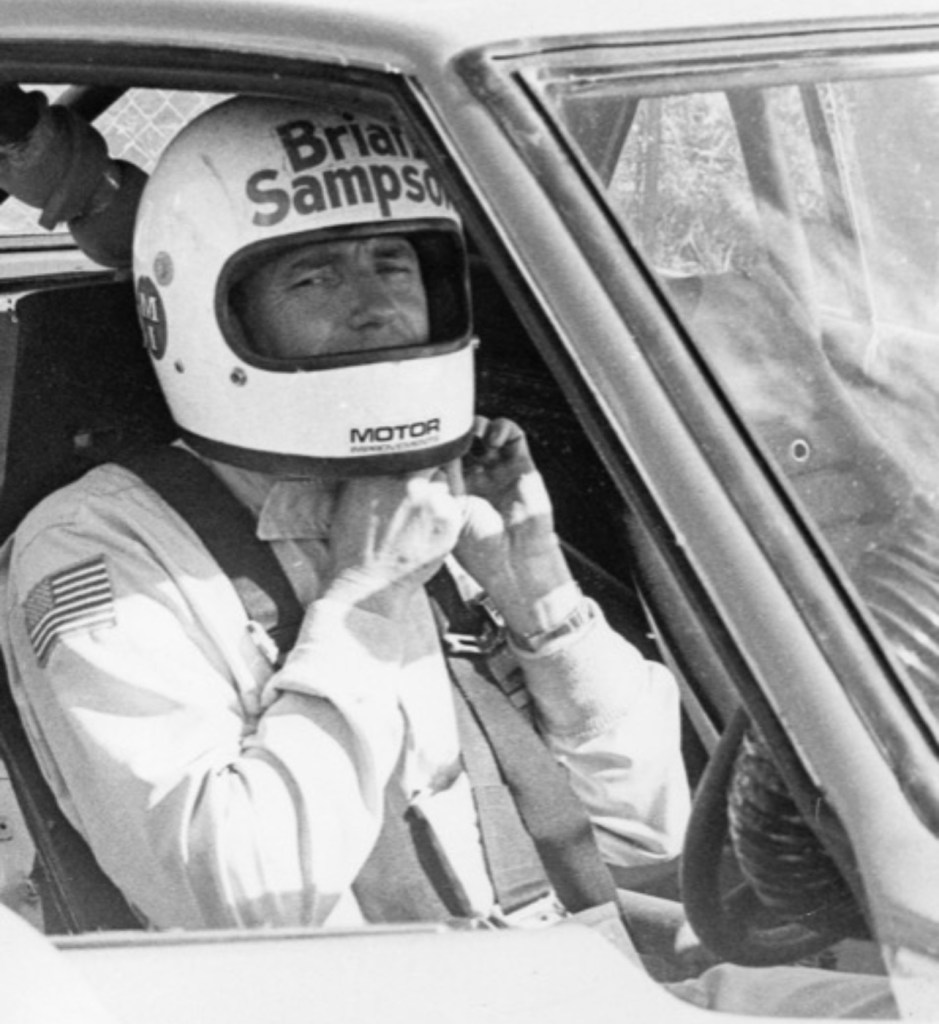
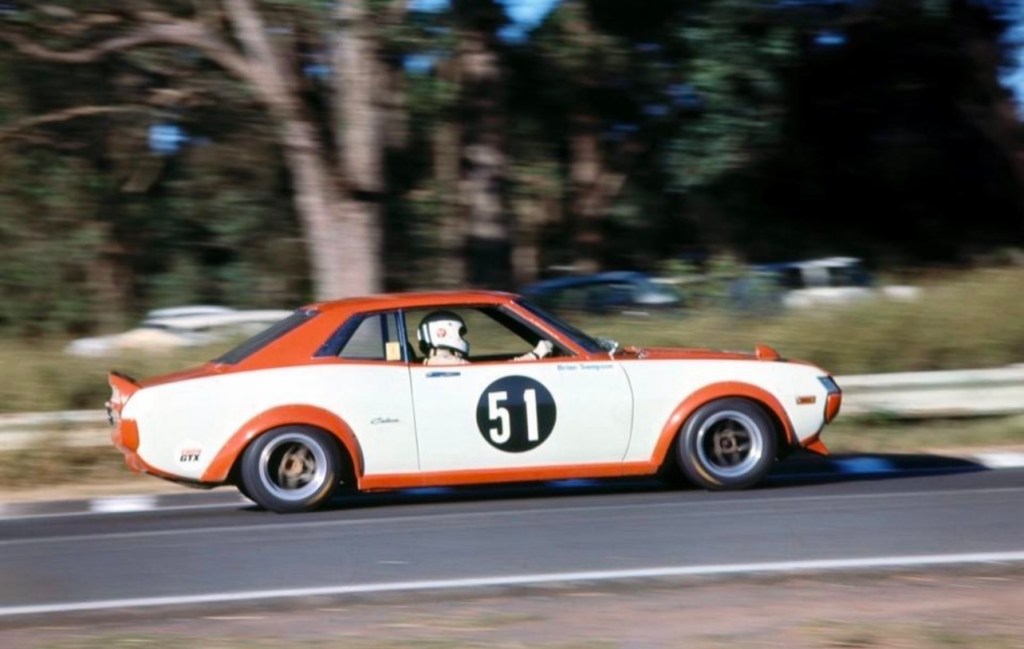
Brian buckles up, probably, but not definitely in the works-Toyota Celica sports-sedan which is shown below at Warwick Farm, perhaps in early 1973.
(Sampson Archive)
Etcetera…
(Sampson Archive)(Sampson Archive)
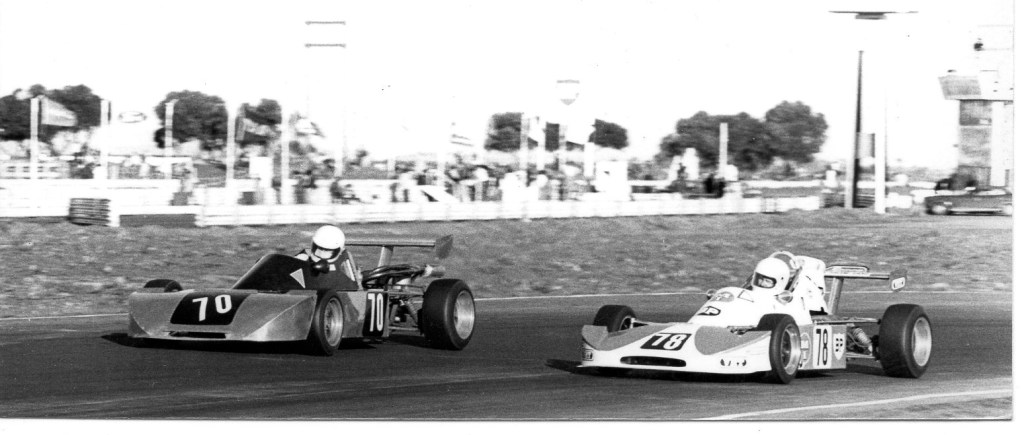
After the initial post, racer, Brendan Jones, Sampson’s stepson sent me some more shots of Brian racing with the downdraught setup. The two shots above are at Adelaide International?, the two below at Calder. That’s David Crabtree’s #70 self modified Cheetah MK 4 below, a car he still owns. Dates of the meetings would be a bonus too.
(Sampson Archive)(Sampson Archive)
Credits…
Brian Sampson Archive via Brendan Jones, Auto Action Archive-Greg Stanfield by courtesy of Bruce Williams, Mark Bishop
Tailpieces…
(Greg Stanfield)
Of course, Cheetah aficionados know that Brian Shead built an F5000 car – of sorts – the Cheetah Mk4 Oldsmobile 3.5-litre V8. Originally to Don Biggar’s order, it’s raced above by Ian Judd at Mount Leura, Camperdown in the mid-1970s. Judd won the Australian Hillclimb Championship with it at Morwell in 1977.
Of course there was a time when motor-noters speculated about Brian Shead building an F5000 Cheetah, in the mid-1970s.
Auto Action’s graphic designer has used a shot of Sambo aboard a Mk5 at Calder as the basis of his rendering of a potential ‘Cheetah Chev’ in issue #126, December 1975.
Bernie Bignell in his Lotus 23B Oldsmobile GT at Winton in 1976, that’s Alan Newton’s R&T Chev aka the ex-Frank Matich-Niel Allen Elfin 400 Chev behind, and a gaggle of Clubmans in the distance..
This remarkably ugly Lotus was bought by Dr Bernie from Willie Green in the UK in 1970. Motor Racing and Sportscar reported in January 1968 that Green, ‘a very rapid bra-strap manufacturer’ planned to turn Lotus 23 #23-S-70 into a GT car.
D &A Shells operating from the Bow flyover area of East London, in the region of Abbey and Livingstone Roads produced the Mercury GT ‘kit’. Quite a few were sold as the 23/23B approached middle-age and GT-racing grew.
The unfinished project, complete with Mercury body, Hewland HD5 transaxle and a bell-housing to suit an aluminium Oldsmobile/Buick V8 ended up in the hands of a dealer in Redditch from whom Bignell acquired the car.
Attractive enough at a distance! Bignell at Lakeland Hillclimb, east of Melbourne in 1972 (R Rodgers)
Bignell soon installed an 3.5-litre aluminium Oldsmobile V8 fed by four downdraught Webers, the thing was an arresting sight on-track and certainly sounded the goods. As a teenage spectator I remember it – how could you forget? – racing at Calder and Phillip Island, and perhaps Sandown.
Bernie enhanced the performance of the thing by lengthening the wheelbase by six inches, making changes to the suspension, adapting F5000 brakes and in a back-to-the-future moment returned the car back to open-sports spec. The result was a towering monument to supreme ugliness, ‘as the coupe was like a sauna even with the air-scoop’.
Bignell’s car at Calder in 1974. Gulf colours distract from a multitude of sins… (oldracephotos.com-Hammond)(G Stanfield via Marc Schagen)
Marc Schagen records that Bernie contested 32 race meetings until an engine failure sidelined it in 1978.
Master engineer/mechanic/team manager, the legendary John Sheppard – he has 13 national championships and two Bathurst 1000s to his name – bought the car and restored it to original Lotus Ford twin-cam specs circa 1981, it has passed through many hands since.
John Sheppard in the Lotus 23 at the Mangalore Airport sprints in 1993. Both the 23 and Lotus 22 Ford are in Geoghegan colours. Sheppo prepared their cars in period, the 22 is ex-Geoghegan, the 23 is not. Roy Williams in Sabrina awaits his turn (S Dalton)The RH Millar Lotus 23B Ford 1.6 Mercury GT, Llandow August 1968 (H Llewelyn)
Etcetera… Mr Sainswor wrote on the tentenths.com forum about the ‘Background on D&A and the Mercury GT. Founders Dennis Pollard and Alan Fowler, of D & A Shells, Ltd., started in London in 1962 to provide body kits and chassis for customers to convert their own cars (i.e. the Merlyn MK6 and Lotus 23) into closed GT cars.
In addition they produced a small number of space frames specifically to fit their fibreglass bodies. They continued to produce bodies and chassis for various frames and manufacturers until 1970 under the trade name Mercury.
The cars from D & A were period frames from various manufacturers fitted with the required body at D & A’s London site. The Mercury has a square tube frame originally thought to have been built by Chevron or Groopers of London and fitted with a Lotus 23 body, (note that the frame is four inches shorter than the Lotus 23). Because of it’s extremely light weight, rigid frame and semi-monocoque construction, it is much stronger than the Lotus 23.
I fell in love with these cars about 1965 when I saw one racing at the 750MC Relay at Snetterton entered by Mike Spence Racing (along with a Tojeiro EE ) – they were in the Scratch team. I know that George Silverwood raced one for some time (1300cc car?), and there was one that ran in the up to 2000cc class in the Motoring News GT Championship driven by Reg Skeels(?). The 2 litre car had cast magnesium MRE (Brabham) wheels – 7″ fronts and 9″ rears. I recall one well known Mercury GT had the registration number UWT2F (this might have been George Silverwood’s car – but can’t remember)’.
Credits…
Mark Bishop, Richard Rodgers, Lotus : The Historic Sports & Racing Cars of Australia’ Marc Schagen, The Nostalgia Forum, sainswor on tentenths.com, oldracephotos.com, Hugh Llewelyn via Wikipedia, Stephen Dalton
Elfin boss, Tony Edmondson, about to have a steer of his new Elfin FF84P on July 27, 1984 before handing the car over to Mark Poole in the centre. It’s a significant day in the history of Elfin Sports Cars.
Company founder, Garrie Cooper’s untimely death was on April 25, 1982. Garrie’s father, Cliff, kept the wheels on the wagon after dealing with his grief, building and selling six Elfin NG (New Generation) Formula Vees and continuing repair and restoration work. This car is the first built under the Don Elliott and Tony Edmondson ownership/management regime after the sale by the Coopers to them in 1983.
All enveloping body work, inboard rear suspension by upper and wide based lower wishbones. Vertically mounted spring-shock assy actuated by a pullrod with a separate link for toe adjustment (C Canon)
Reflecting on the early period of his Elfin ownership, Elliott said, ‘We thought, bugger it, there’s no-one building cars (in Australia), so we built a couple of Formula Fords. It started from there. We were flat out from that time building and repairing cars.’
FF84P #EP006 was designed by Jon Porter together with Edmondson, and built by that pair and legendary Elfin welder/fabricator Fulvio Mattiolo; Porter and Mattiolo stayed on after the sale of the business.
Mark Poole was the designated driver, he had been making name for himself in an Elfin NG and an old Elfin 623 VW ANF2 car. Poole’s father, Keith made the very first Elfin NG sing way back in 1976. Keith’s business, Volksrepair was Elfin Sports Cars neighbour at 3-7 Conmurra Ave, Edwardstown; Elfins were at 1 Conmurra. Mark Poole operates RSR Sports Cars, a Porsche race, service and restoration business from the same address today.
Poole contested local meetings (?), the 1984 Winton round of the Australian Formula Ford Driver to Europe Series finishing ninth, he took in the ’85 Oran Park round and was seventh. The car was sold to David Craig in 1986, he ran Russell Ingall in it in the ’87 FF race at the Australian GP carnival in Adelaide, finishing ninth. Clive Hill bought it in 1989.
Russell Ingall negotiates one of Adelaide’s chicanes during the 1987 AGP weekend aboard the FF84P (ETSS)Right hand shift for the four-speed Hewland Mk 9 transaxle (C Canon)
Tony Edmondson, ‘The Formula Ford was an in-house development funded entirely from the factory and the intention was always to be competitive in that car, then make multiple cars for customers.’
Only one customer car was sold, #EP009 was completed in 1985, and therefore called an FF85 and sold to David Duncombe.
‘With Formula Ford, the leaning was always for competitors to buy tried and proven cars from England. That was disappointing. That’s the sort of marketplace that we were dealing with all the time’, recalled Edmondson.
It’s the sort of marketplace Elfin, Bowin, Birrana, Cheetah, Rennmax and others have always faced, and in which they often prevailed.
If Edmondson and Elliott wanted to sell FFs in volume, the-go would have been to put Elfin Old-Boy Larry Perkins into the FF84P for two days of testing to get the basic settings right: springs, bars, camber, castor, toe, brake bias etc. Then plonk into it a seasoned FF campaigner, bringing a bit of a budget and win a few races. Ingall would have done quite nicely, not that he was a seasoned FF pilot at that stage; he won the Australian title/series aboard a Van Diemen RF90 in 1990 before heading to the UK and more FF success. His subsequent FF credentials are well covered here: https://en.wikipedia.org/wiki/Russell_Ingall
Lovely top-rocker actuating coil spring shocks, wide based lower wishbones (C Canon)
The standout FF designs in 1984-85 were Adrian Reynard’s Reynard FF83-84, and the Van Diemen RF85, these cars were inspired by David Bruns’ Swift DB1 in the United States, one of THE FF designs; none raced here in-period.
Edmondson mucks in. 1.6-litre Ford Cortina 711M overhead-two-valve, single twin-choke Weber fed engine gives about 110bhp (C Canon)
The slender chassis, needle nose, hip radiators, central fuel tank and inboard suspension front and rear are all absolutely state of the FF art at the time. It does make you wonder what the cars could have done with the right development…
Credits…
Steve McCawley, Colin Locke Canon via the Auto Action Archive courtesy of Bruce Williams, ‘ETSS’ ‘Elfin:The Spirit of Speed’ David Dowsey
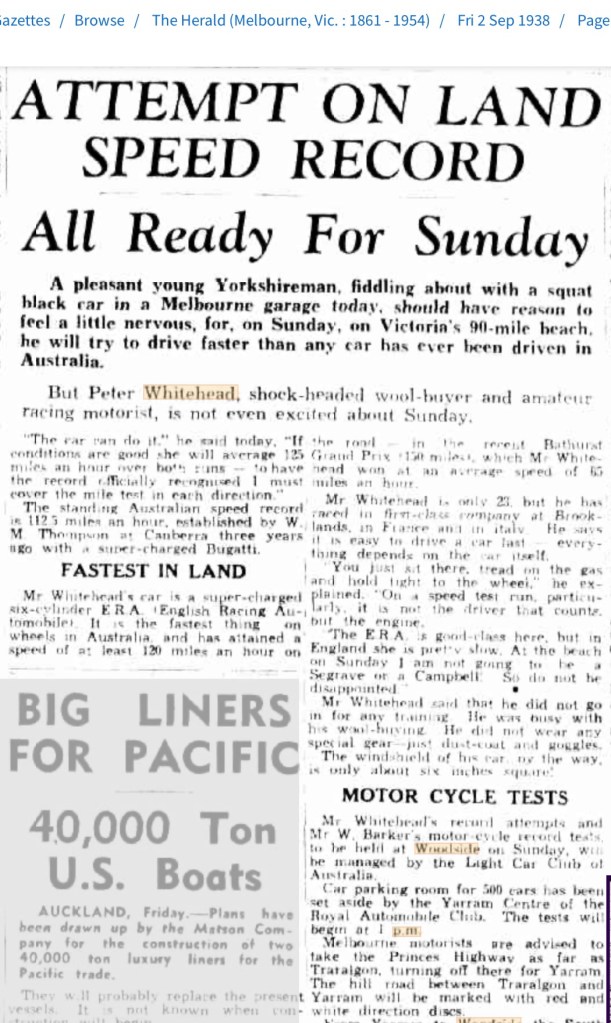
The Australian Land Speed Record session held at Woodside on the Ninety Mile Beach in Gippsland on September 4, 1938 was the first held in Victoria.
The Light Car Club of Australia promoted it, while the Yarram branch of the Royal Automobile Club of Victoria (RACV) ran the event which used you-beaut electrical timing apparatus accurate to one-hundredth of a second approved by the Australian Automobile Association.
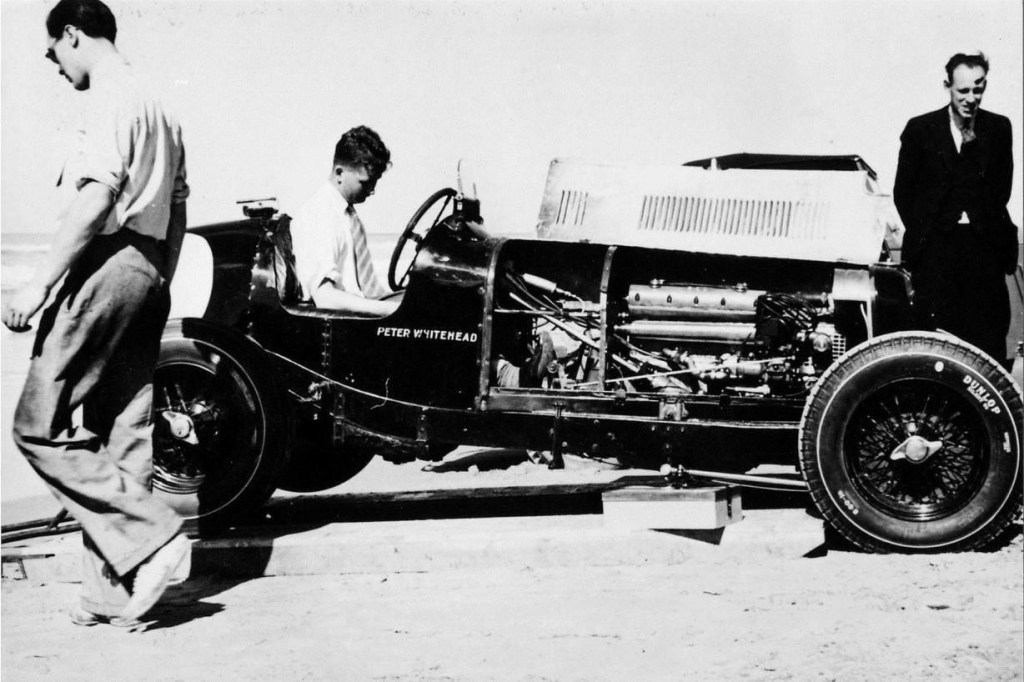
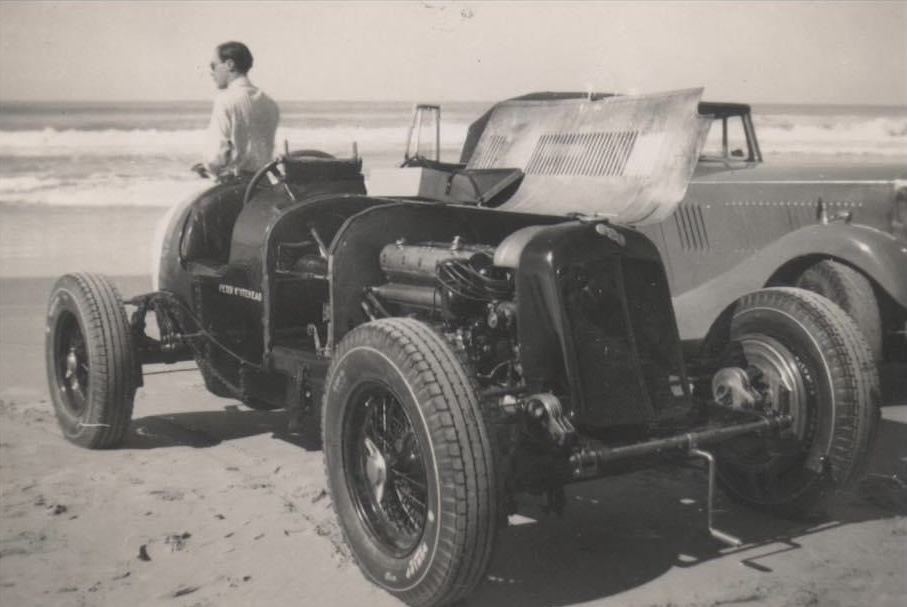
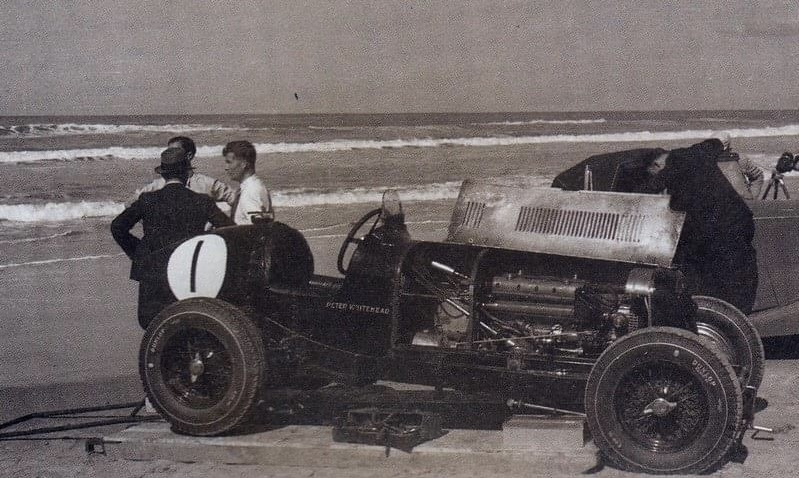
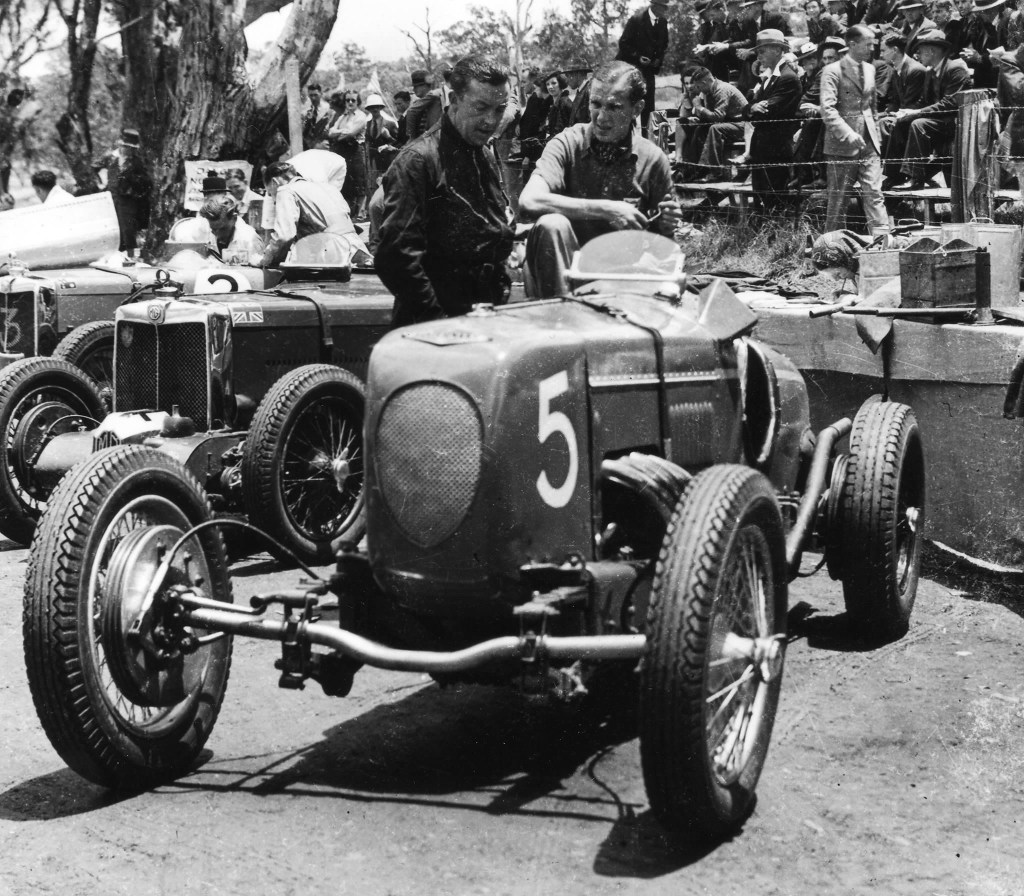
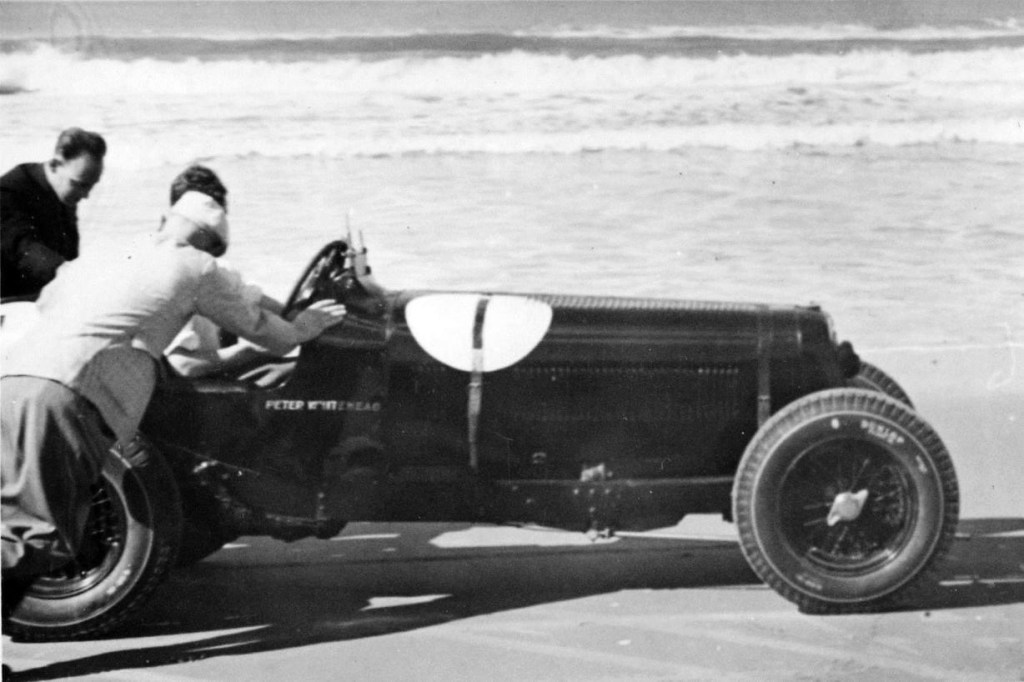
The drawcard was Peter Whitehead and his ERA B-Type R10B. The photograph above shows him warming the engine and transmission of the car at Woodside, collar, tie and all.
Other drivers granted permission to have a crack were the following: Class C 3-5-litres: RND Miller, Vauxhall 30-98 and AH Oliver, Lagonda Class D 1.5-2-litres: JN Derham, Vauxhall Class F 1-1.5-litres: JP ‘Jim’ Leech, Frazer Nash TT Replica and Class H 500-750cc: DM George MG J4 supercharged.
The stretch of beach chosen was four miles long and 60 feet wide, the existing outright record was held by three-times Australian Grand Prix winner Bill Thompson on a supercharged 1.5-litre Bugatti T37A.
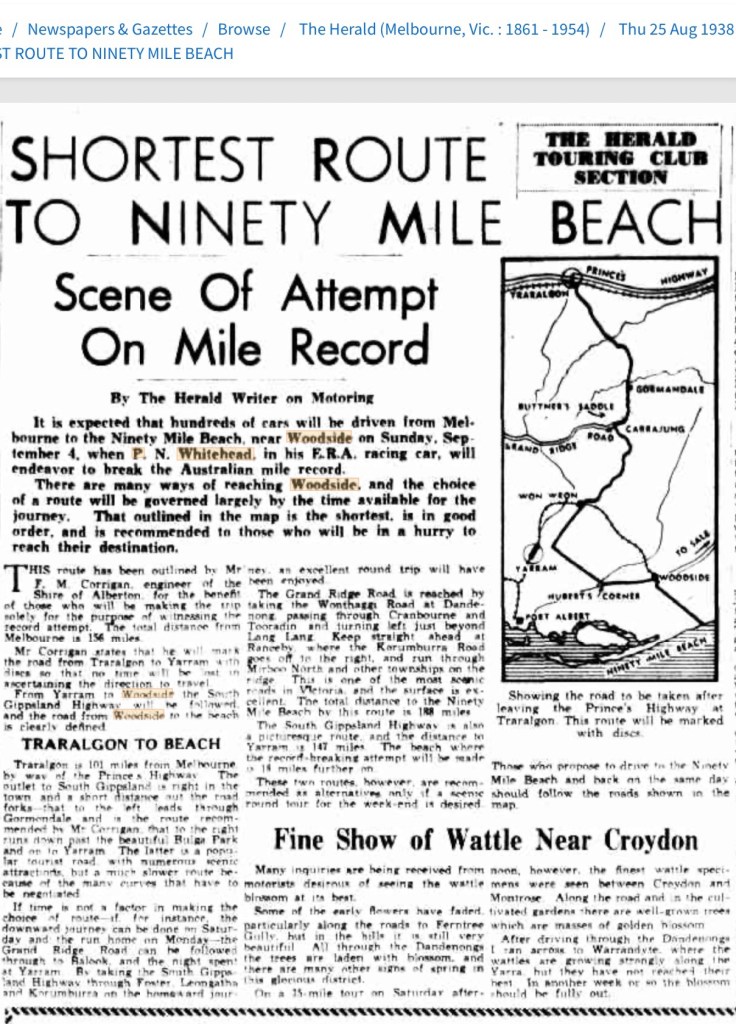
The 156 mile trip from Melbourne was quite a journey for the time. It’s amusing now to look at how much of the newspaper (the what?) coverage in the week before the event was devoted just to getting there, the three suggested routes were explored by the papers in some detail inclusive of maps. Different to the Google maps exercise on ‘yer iPhone today…
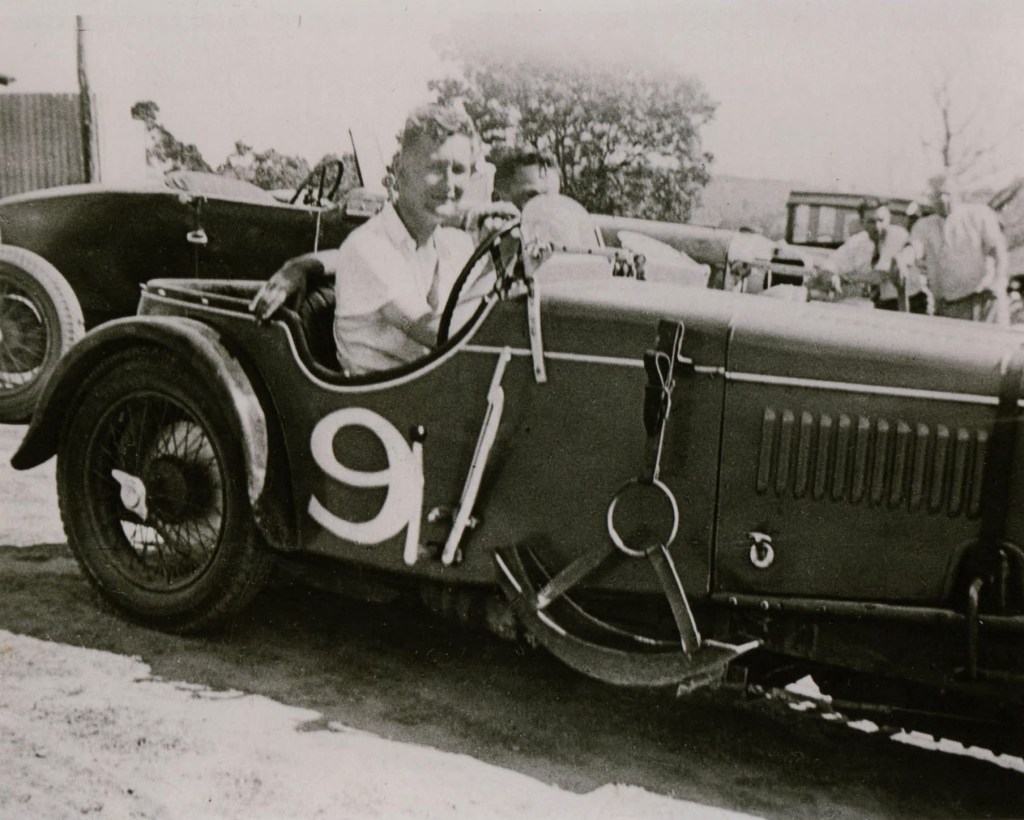
Peter Whitehead and Jim Leech aboard the latters Frazer Nash TT Rep #2134 at Rob Roy Hillclimb – where Peter had won the Australian Hillclimb Championship in R10B not long before – November 20, 1938. Whitehead did a 34.77 sec best (Davey Milne Archive)(unattributed)
Poor Jim Leech ran off the road on the way to the event in his Frazer Nash, but 6,000 others came from far and wide to see the spectacle before the fickle finger of weather fate ruined the day.
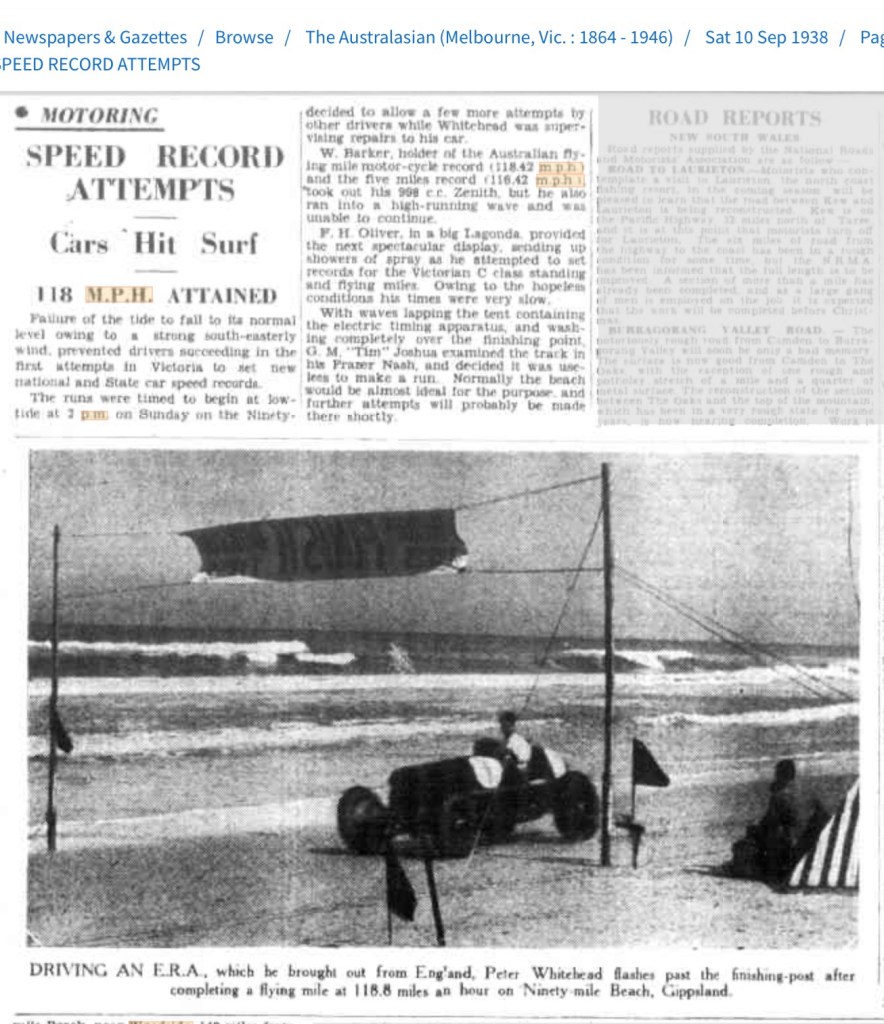
A strong south-easterly wind prevented the usual fall of the tide, ‘after the English driver Peter Whitehead had covered a flying-mile at an average of 118.8mph in his special 1500cc E.R.A. car the waves washed over the track and prevented any further serious attempts,’ recorded the Melbourne’s The Argus.
As Peter’s speed was set on one run, rather than the required each-way average of two, Thompson’s one-mile record of 112.5mph set in Canberra on May 11, 1935 still stood; Bugatti T37A.
No helmet for Whitehead, as at Bathurst when he won the AGP, proximity of Bass Straight clear and threatening (unattributed)
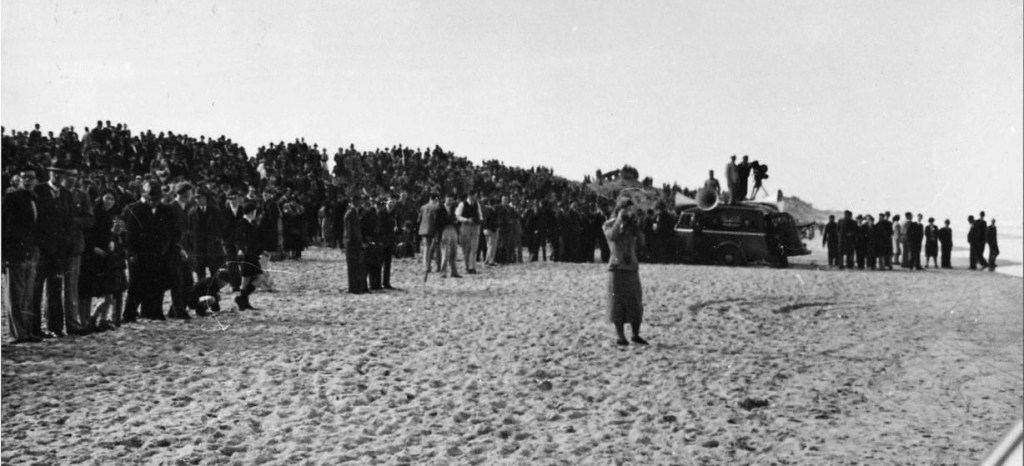
An estimated 2,000 cars conveyed the punters into the sand hummocks along the picturesque track many hours before the events were scheduled to begin.
‘Trials were impossible owing to the tide. With only a few yards of wet sand between the flags and the waves on the four mile course. Whitehead pluckily started up so as not to disappoint the crowd. He was obstructed by water on his first run, however, and although he averaged 118.8mph in his next run, his car plunged through the lip of a wave, tearing away apparatus for cooling the brakes, ripping off the oil filler cap, and partially flooding the crankcase with salt water.’
‘He maintained control, but it was evident that he had no chance of putting the record up to 135mph which was his hope.’
Derry George, MG J3 #3763 this shot and below (M Gallagher Collection)(unattributed)
The AAA, LCCA and RACV reps then met and decided to allow some attempts by other drivers while Whiethead and his crew effected repairs to R10B.
W Barker, holder of the flying-mile motorcycle record (118.42mph) and five miles record (116.42mph) took out his 998cc Zenith but he also clouted a wave and was unable to continue.
Next up was Big Bertha. F Oliver’s Lagonda provided a spectacular display sending up showers of spray in attempting to set Class C records but the conditions ensured his times were slow.
The AH Oliver Lagonda (M Gallagher Collection)Tim Joshua’s Frazer Nash Single Seater (what chassis number folks, ‘SS1’ is I think the chassis type, not the number?) at Lobethal during the 1938 South Australian GP weekend. Ron Edgerton at left, later owner of the FN, Joshua on the right alongside the MG K3s #3 Colin Dunne and #2 Lyster Jackson (Leon Sims Collection)
‘With waves lapping the tent containing the electric timing apparatus and washing completely over the finishing point, GM ‘Tim’ Joshua examined the track in his Frazer Nash and decided it was useless to make a run. Officials prevented any further attempts and there was a rush to get cars off the beach before the tide rose farther. The crowd had to lend willing hands to help several vehicles out of difficulties.’
‘Afterwards, the director of the trials, Mr JW Williamson, expressed supreme disappoint with the result. The crowd, who had enjoyed the outing in brilliant sunshine, took it in good part.’
‘It was the first attempt made in Victoria to set such records. Normally the beach would be almost ideal for the purpose, and further attempts will probably be made there shortly.’ The Argus concluded…
Not so, as it transpired.
(unattributed)
Etcetera…
(T Johns Collection)(T Johns Collection)
The Car was ‘the official organ of the Light Car Club of Australia’, so this is the way the organiser saw the day.
(T Johns Collection)
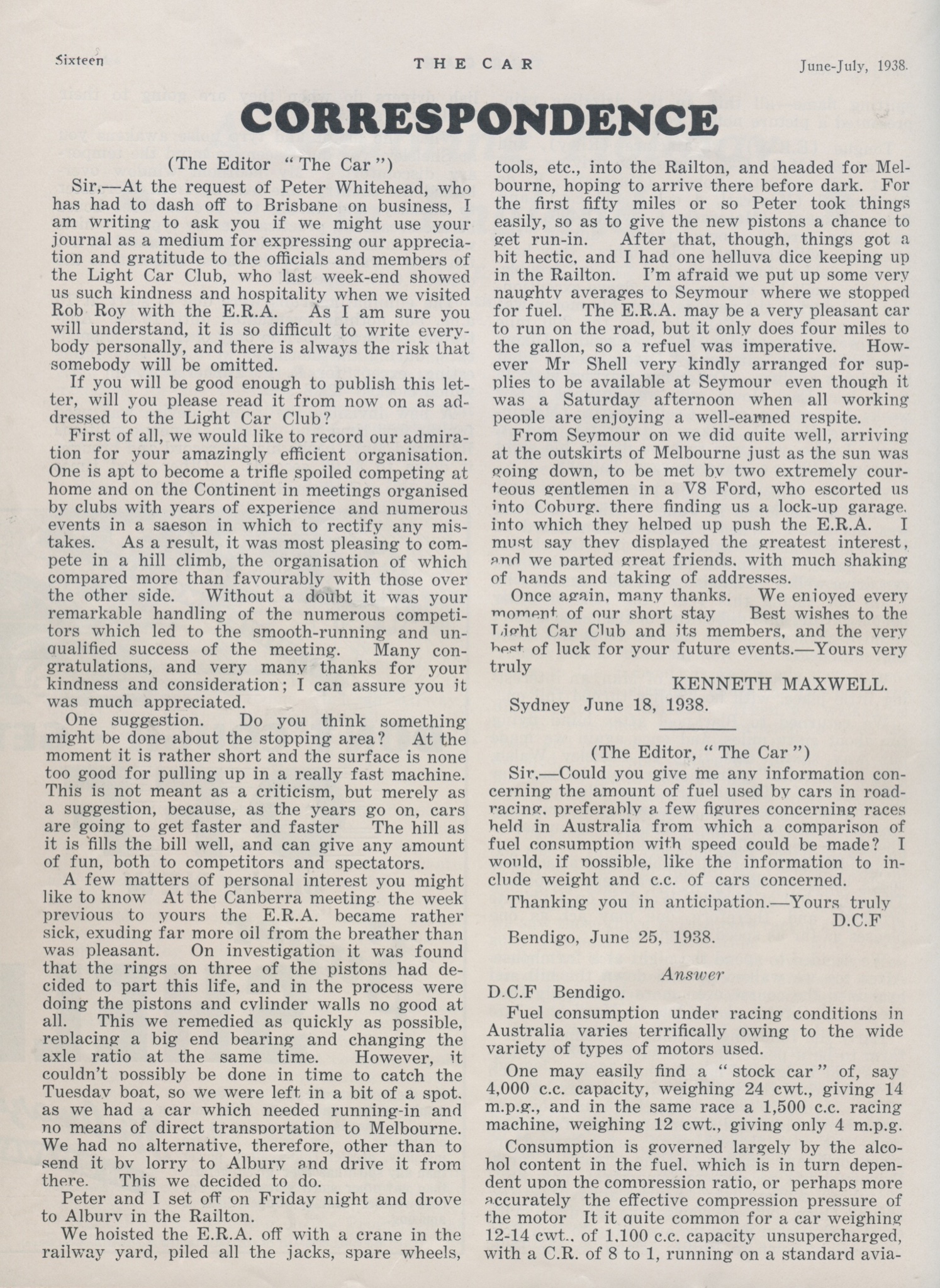
Kenneth Maxwell was a member of Whitehead’s ’38 Touring Party and wrote this letter to the editor of The Car about the equipe’s experiences early in the trip, published in the June-July issue.
The Car was the Light Car Club’s magazine, the trip to run-in the ERA between Albury and Melbourne sounds interesting!
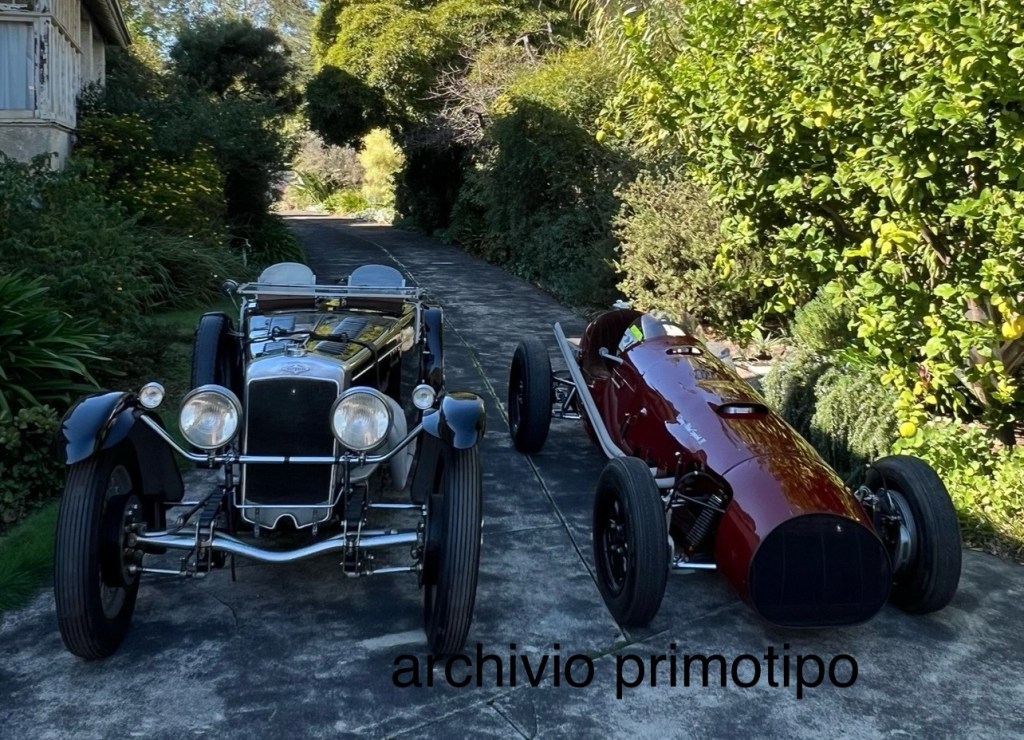
The Fraser Nash TT Rep and Single Seater, MG J3 and the ERA are still alive and well, all but the latter remain in Australia.
Coincidentally, both the J3 and TT Rep were brought to Australia and first raced by George Martin, the Melbourne based Cunard White Star Line representative who died on the way home from the 1938 AGP at Bathurst. He and his wife crashed the BMW 328 in which George had finished 15th near Wagga Wagga.
The shot above shows the Frazer Nash TT and ex-Brabham Cooper T23 Chev aka RedeX Special, at the Davey Milne home in April. The FN requires recommissioning but the Cooper is a runner, ask the neighbours!
Credits…
The Argus September 5, 1938, Martin Gallagher Collection, Davey Milne Archive, Leon Sims Collection, Tony Johns Collection
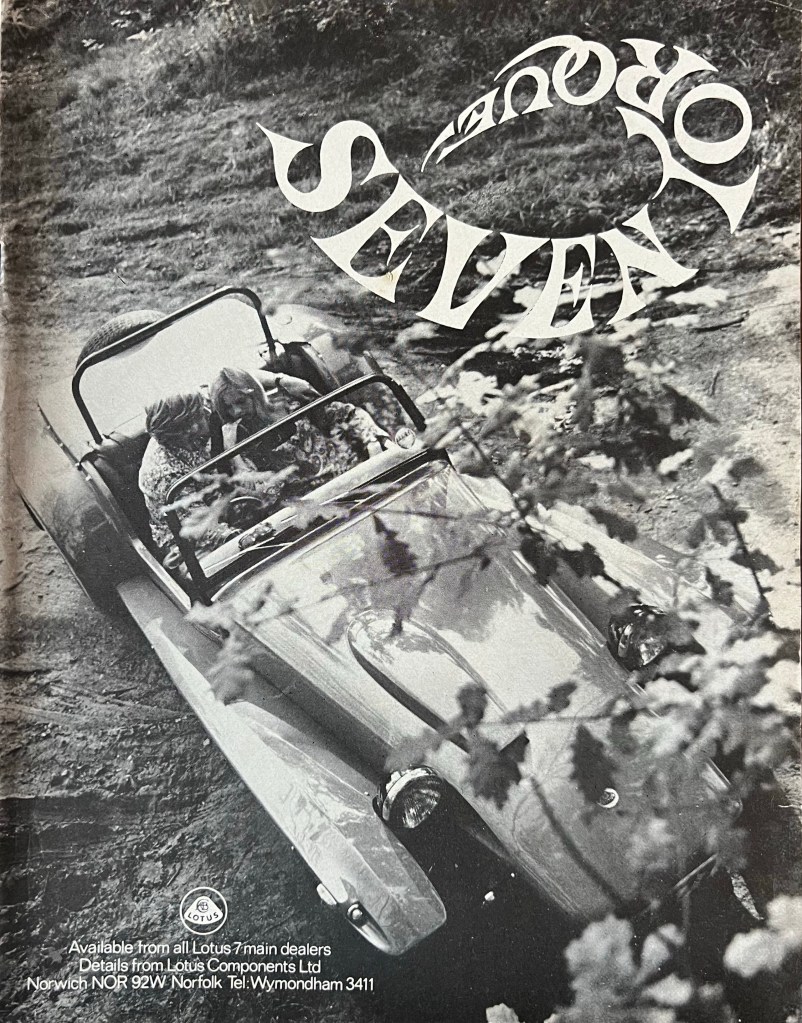
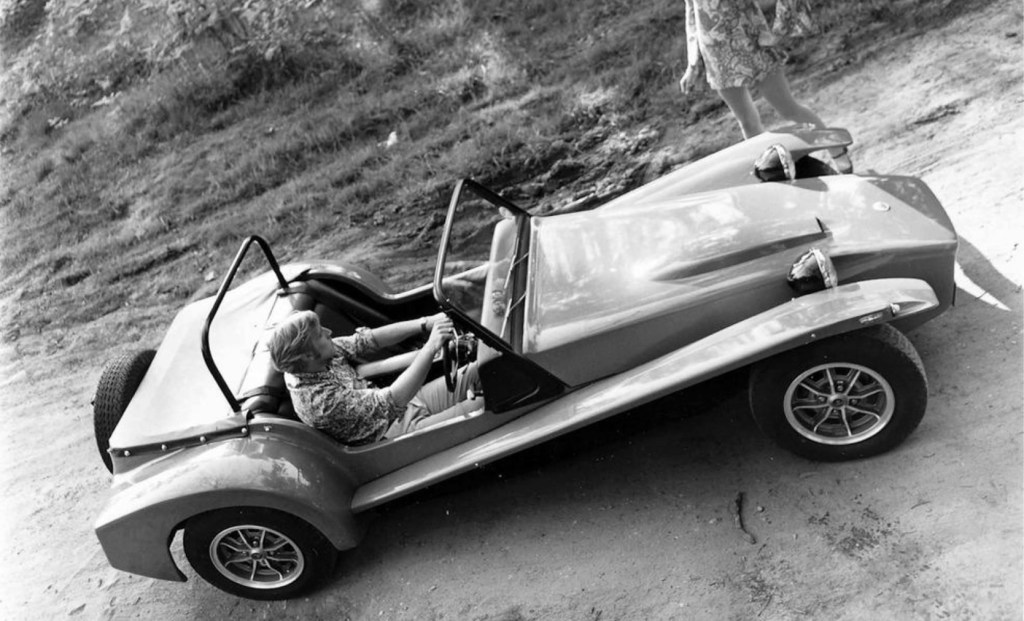
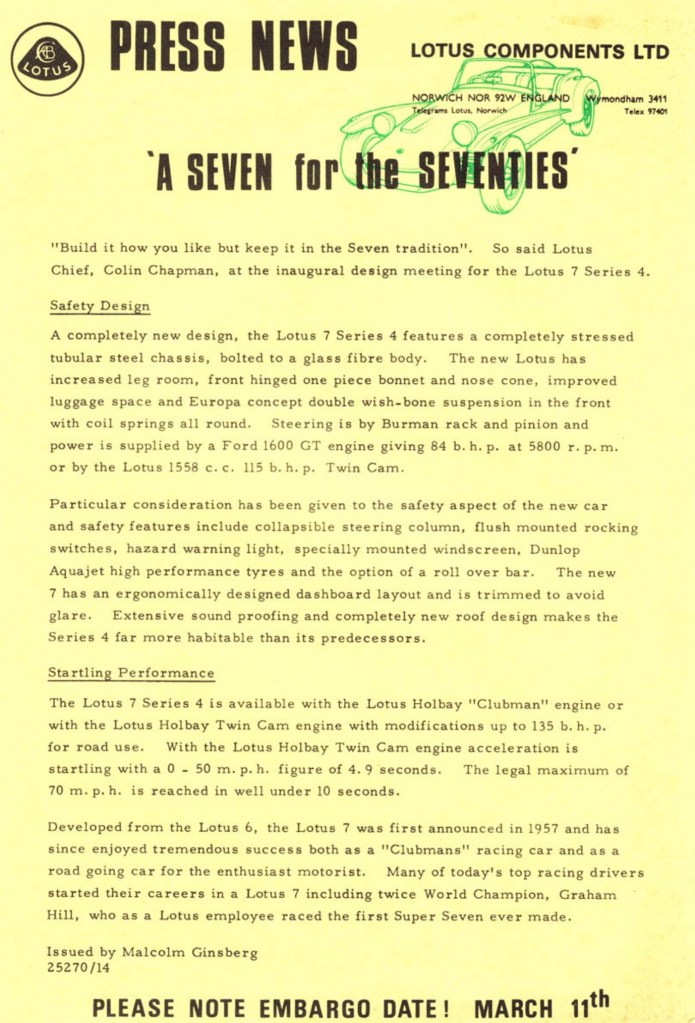
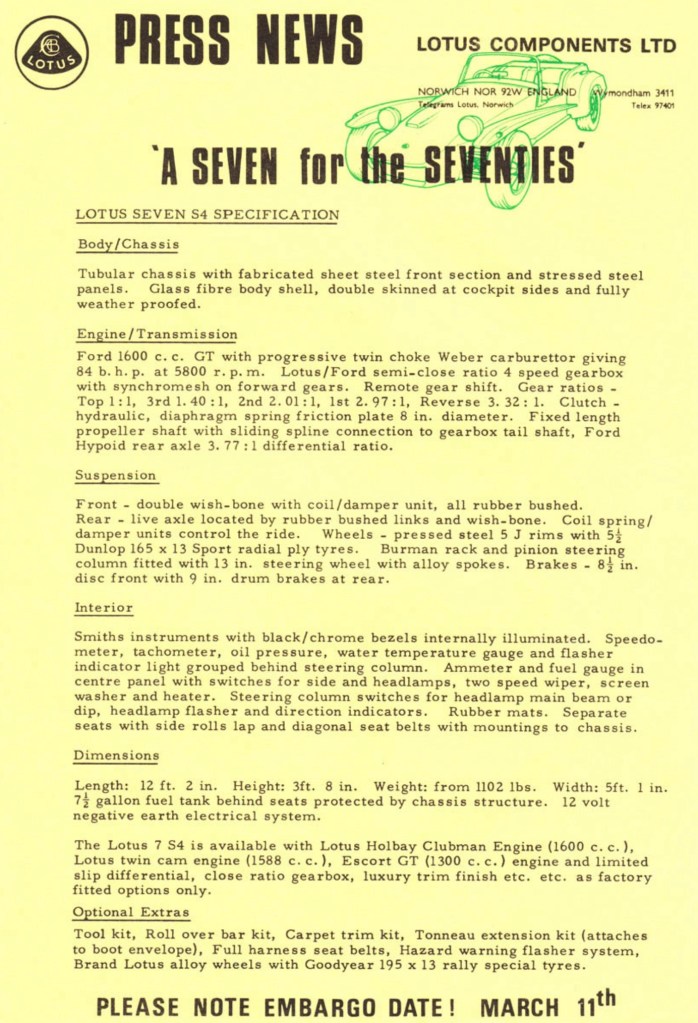
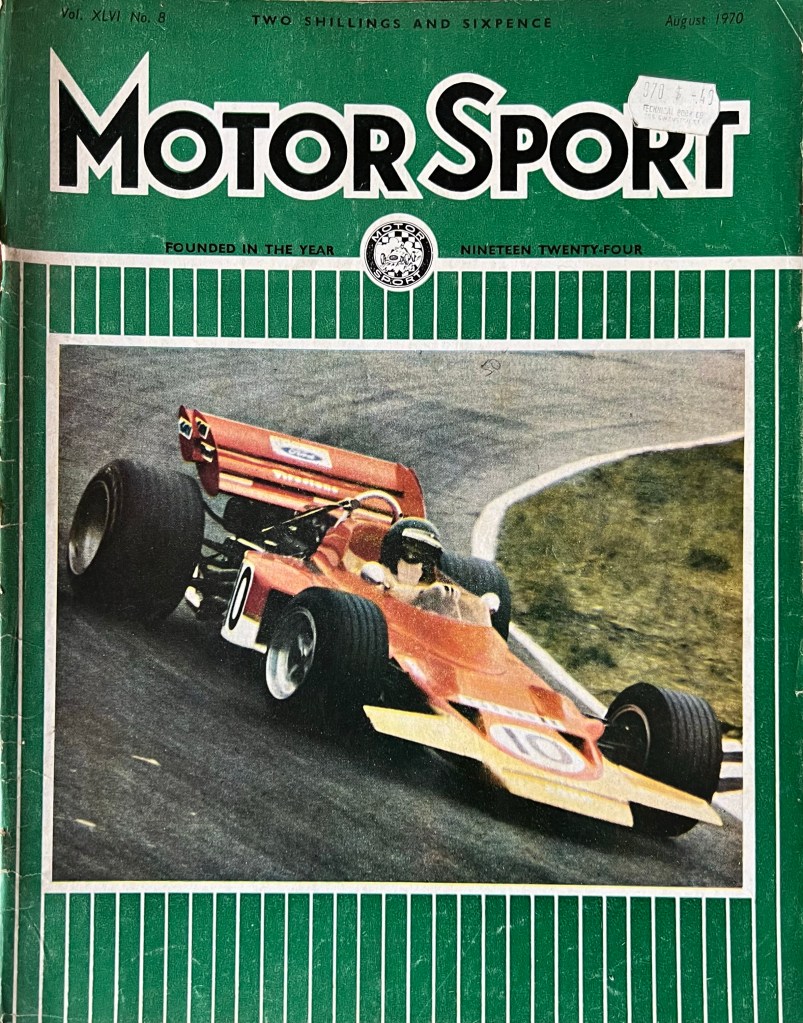
By 1970 Lotus Components’ advertising – in August 1970 MotorSport – of the new, but ageing, Lotus 7 Series 4 has a bit of hey-man, hip-cat, cool and groovy about it…
Our Col was always up to the minute after-all.
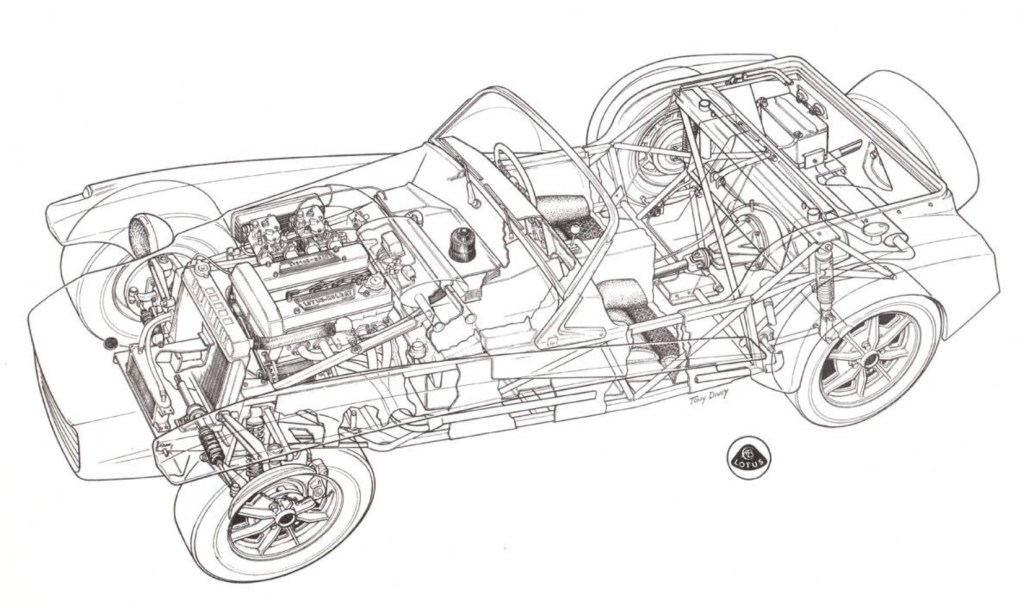
The Seven Series 4 – aka Lotus Type 60 – caused a stir given its new body styling when unveiled at the Geneva Show in March 1970; the original 7 was released in 1958, the S2 in 1960 and the S3 in 1968.
I guess they do have a touch of the beach buggy about them but I always liked the look, rare as the S4 is in Australia.
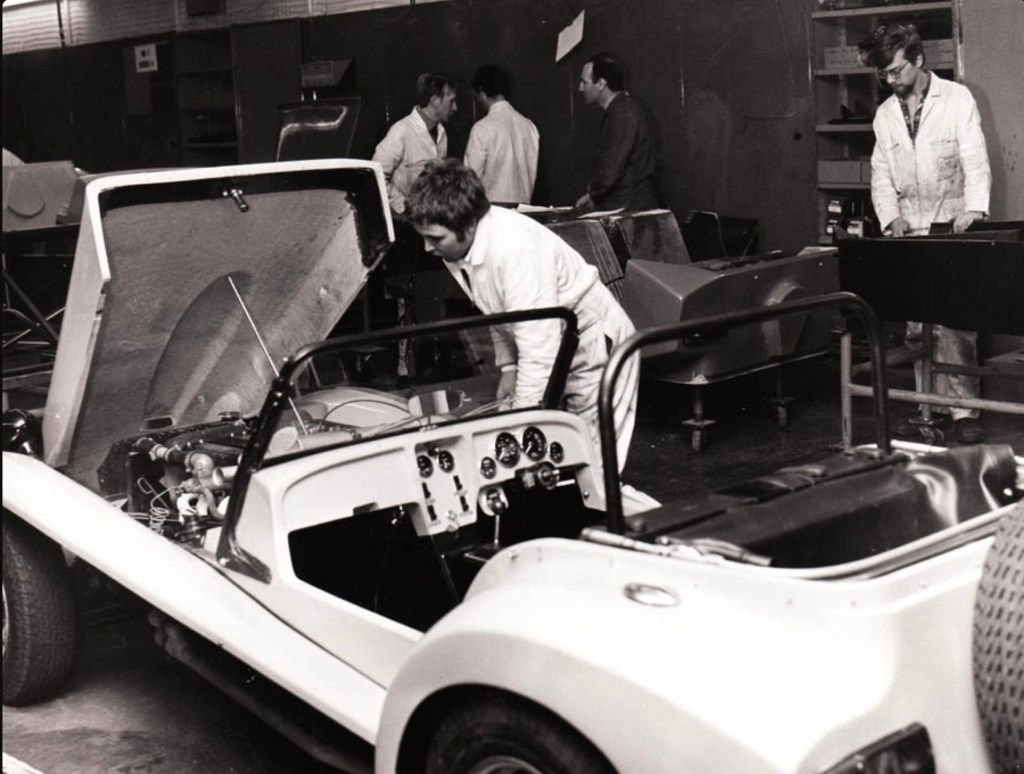
(Lotus Cars)(Lotus Cars)(J Robinson Collection)
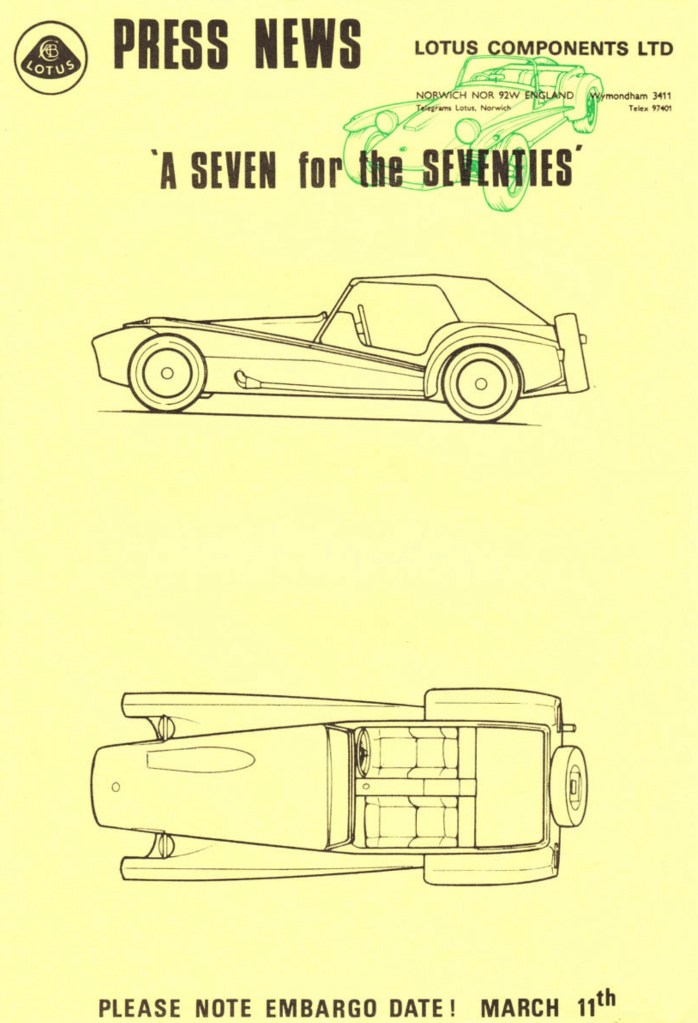
Check out this article about the evolution of the 7 from S3 to S4 spec written by John Robinson (above), one of the members of that small Lotus Components team way back in 1969. There are lots of other Lotus 7 articles there too. https://www.anglocanadianlotus7.ca/development-of-the-series-iv-seven/
These Lotus Components’ press releases are from the same article.
MotorSport’s caption rather put Team Lotus pace into context, ‘The Lotus 72 in the hands of Jochen Rindt has won three Grands Prix (Dutch, French, British) consecutively. Only the Dutch GP (here) proved him utterly superior, for elsewhere he has been conclusively led by 12-cylinder cars.’
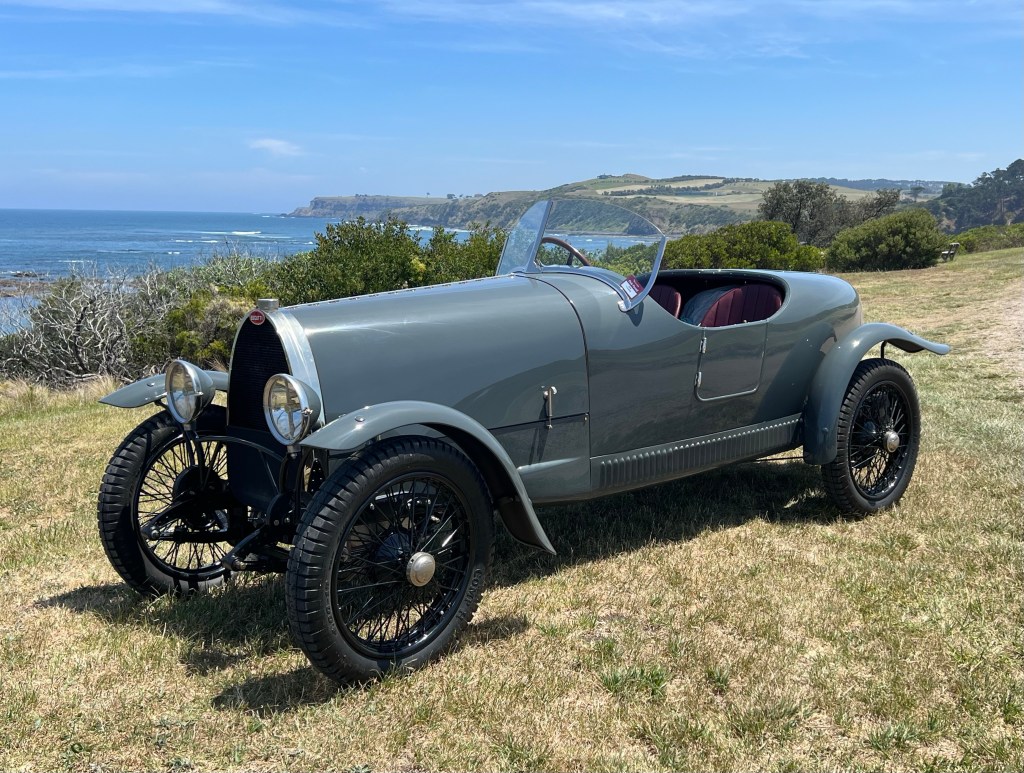
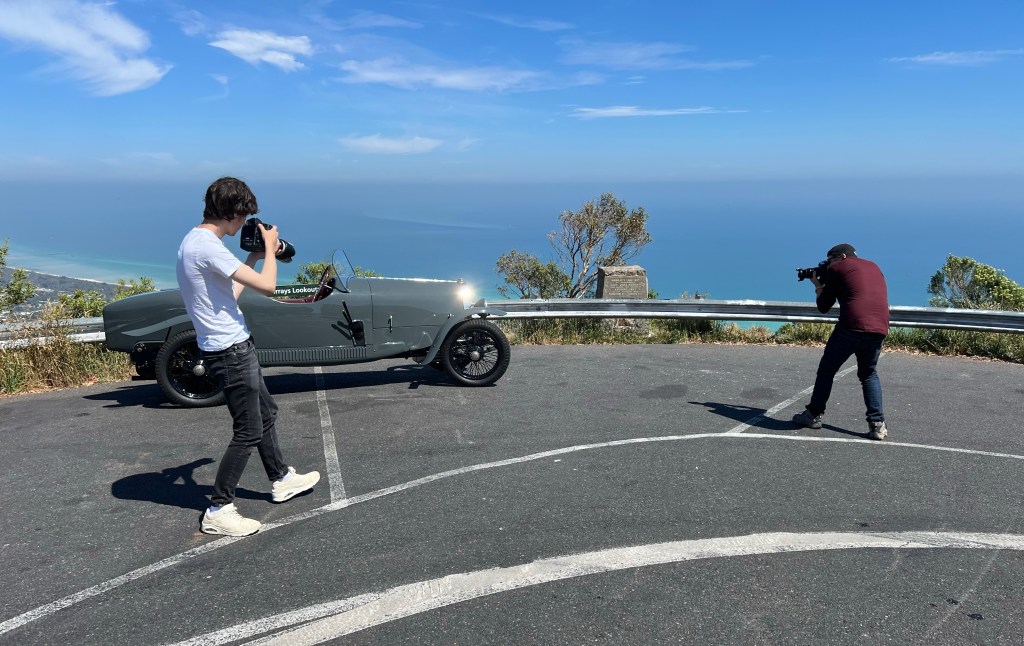
Have had a fun week or so with a few back to back events, the first of which was a drive and photo-shoot of Rob Alsop’s superb, just finished restoration of a Bugatti T23 Brescia.
The article is scheduled to appear in a February magazine, shall let you know when. We did the shoot between the bays – Westernport and Port Phillip – at Arthurs Seat, Flinders and Shoreham. The shot above was taken at Flinders Golf Club looking towards Cape Schanck, Phillip Island is to the left 10k or whatever away.
(M Bisset)
Andrew and Dave Hewison do their stuff at Arthurs Seat, there were lotsa rubber-necks from countries-to-our-north around even at 10am Thursday morning…
Clutch-throttle-brake pedals have their challenges as the daily driver of a manual car. So too the right-hand brake, which operates the two-wheel only, rear brakes. Bugatti gearboxes are fantastic, the lever is alongside the brake, the brake-downchange caper takes some thought and coordination.
T23-2063 turned 100 in May, a peppy 1.5-litre, SOHC, three-valve four cylinder engine is impressive for the day.
(R Alsop)(M Bisset)
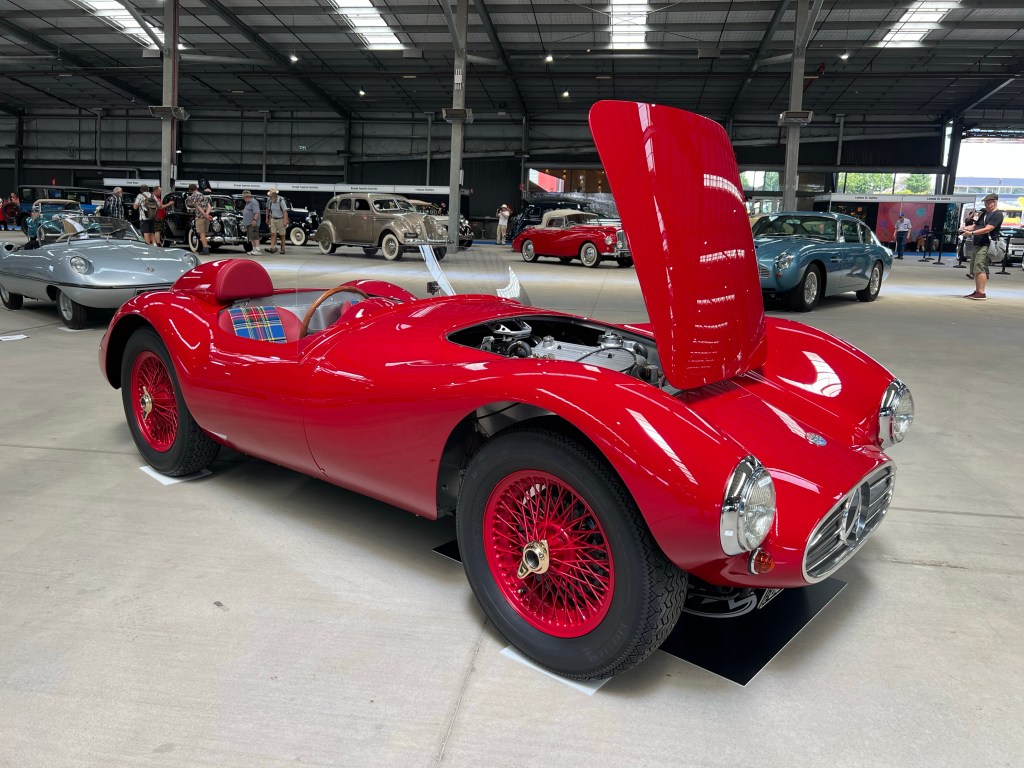
The Motors and Masterpieces car show held at the Melbourne Showgrounds last weekend is the successor to the much-admired and now dead Motorclassica.
The Showgrounds can never match the Royal Exhibition Buildings for grandeur, but critically the rent is much lower, so hopefully the thing makes a dollar and will therefore survive. We should be kissing owner/promoter Carlos Piteira on the arse with thanks for persisting but the usual array of whinging-do-fuck-all mob are railing from the sidelines, where of course they belong.
I’m not a big one for Shiny Car Shows – once every three years at Motorclassica – especially when they are largely devoid of racing cars, but thoroughly enjoyed it. Long may it continue…
(M Bisset)
The only two racing cars present were the ex-Brabham/Bob Jane-John Harvey 1968 Brabham BT23E Repco 830 2.5 V8, and ex-Tony Martin/Paul England-Peter Larner-Larry Perkins Chevron B39/45 Ford BDA 1.6. The Porsche is a tribute car.
(M Bisset)(M Bisset)
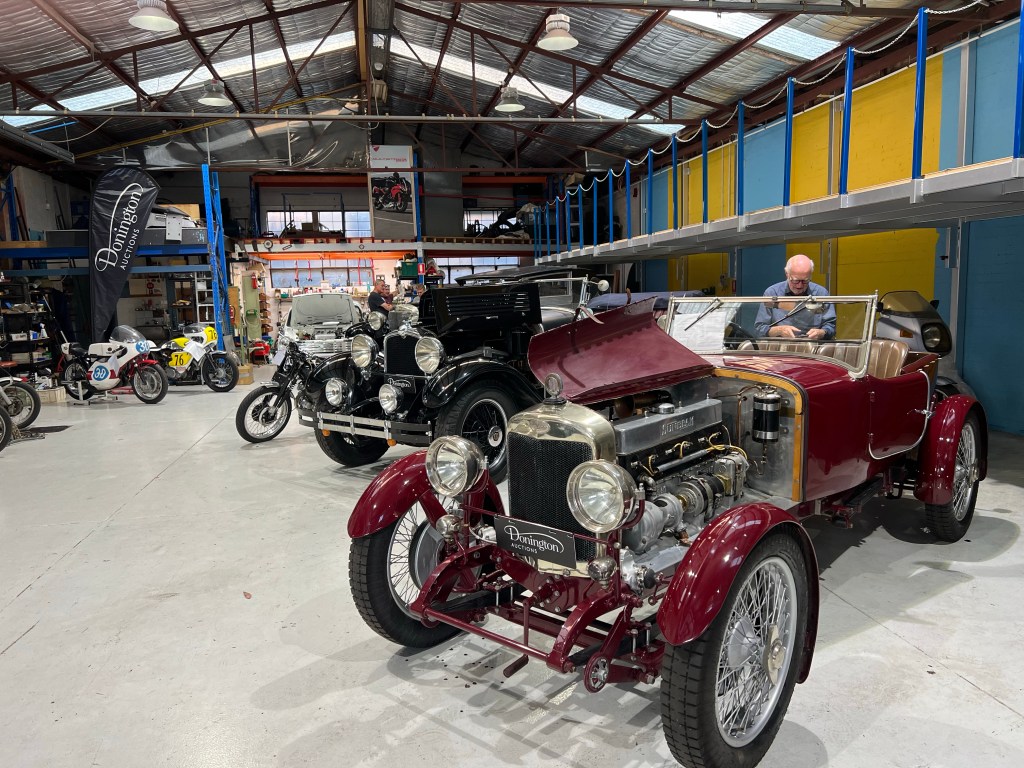
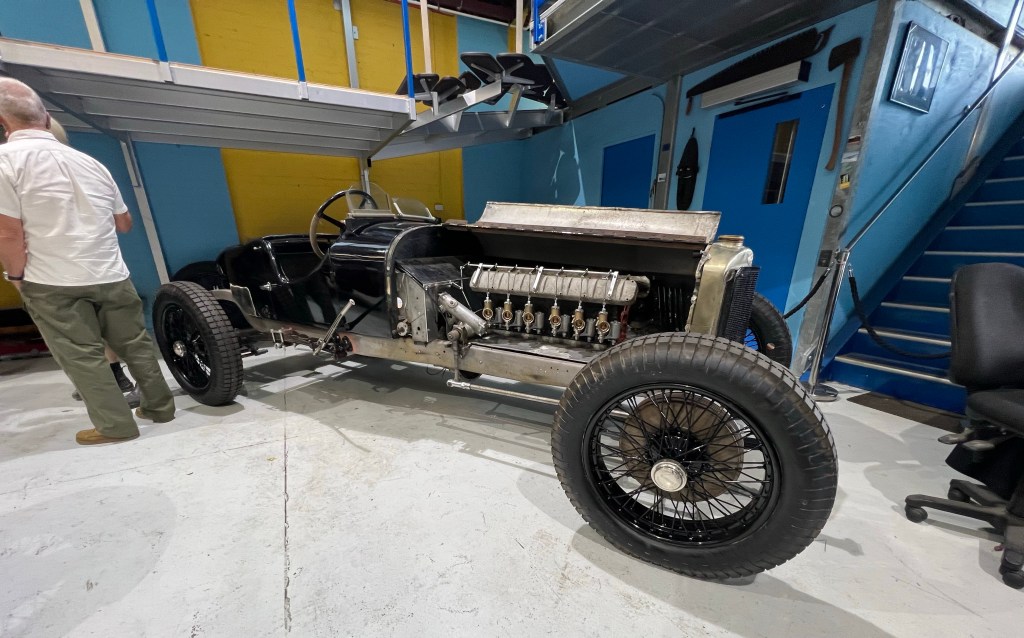
I ‘spose the ex-Rupert Steele Bentley qualifies as a racer too, see here for a piece about the car, which is coming up for sale in Donington Auction’s next sale: https://primotipo.com/2021/07/18/sir-ruperts-bentley/
(M Bisset)
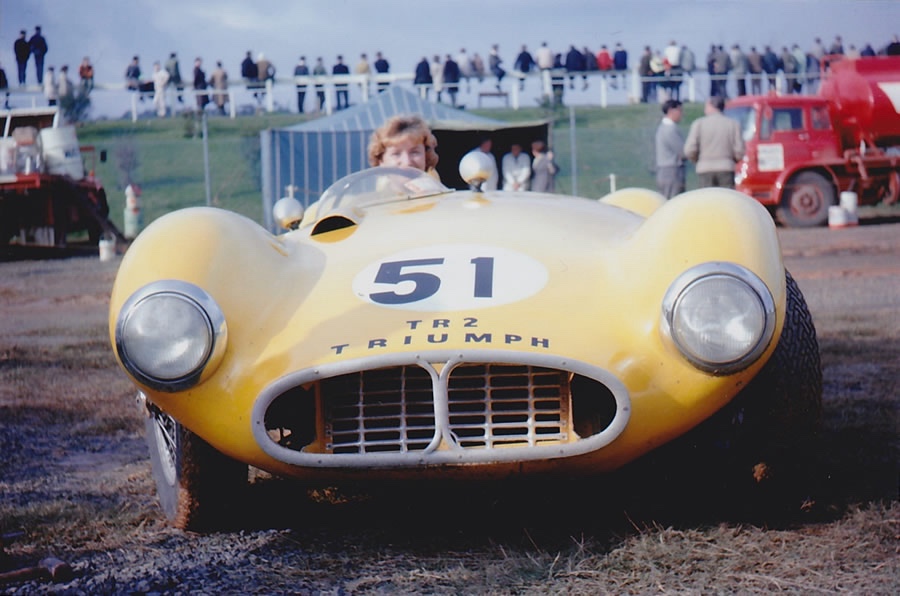
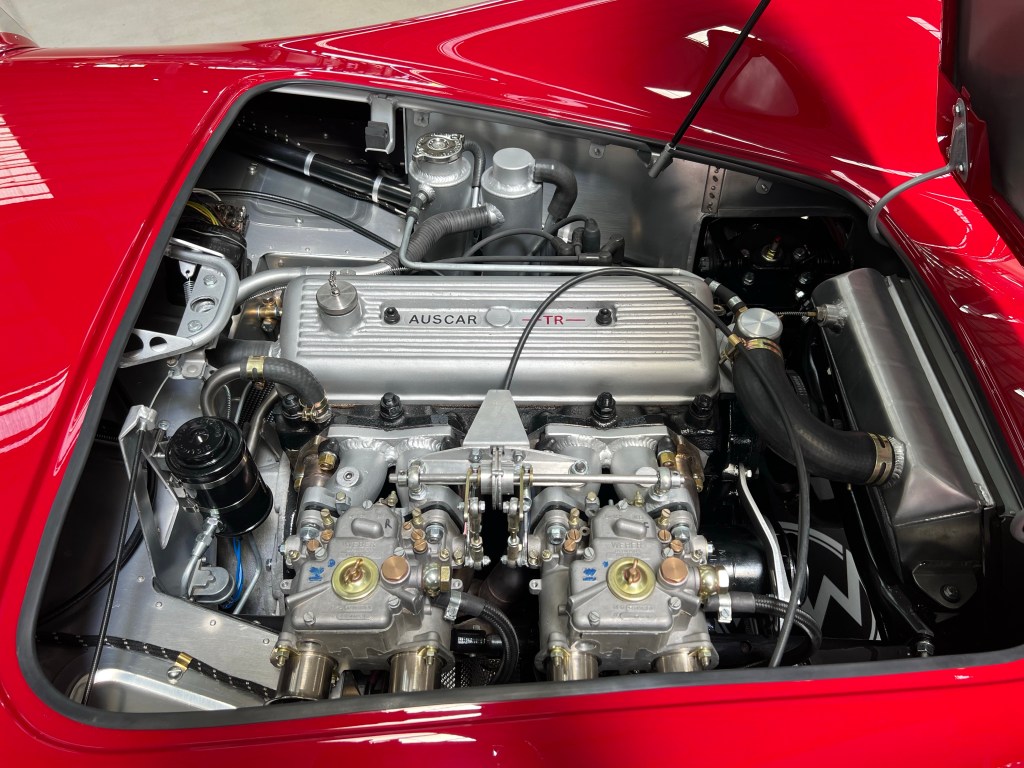
The Harry Firth built ex-Gavin Bailleu/Wes Nalder/Dianne Leighton et al Triumph TR2 Special aka Ausca Triumph never looked this good in period. Creative Custom Cars in Dromana and a generous budget have done an extraordinary job.
Apart from a decade or so sitting on display in the Country Club Hotel in Longford the car has had a hard racing life, a more sedentary existence seems entirely appropriate.
Dianne Leighton in the Sandown paddock 1962 (unattributed)oopsie, Ausca TR methinks (M Bisset)(Creative Custom Cars)(M Bisset)(M Bisset)
Fifty Shades of Grey. Ferrari 550 Maranello and Aston Martin DB2-4 (M Bisset)
The Pursang Rally is an annual one-dayer orgnised by the Ferrari and Bugatti clubs.
Held last Sunday, the start was at Snapper Point, Mornington – where these shots were taken – and then proceeded down the Mornington Peninsula to St Andrews via Arthurs Seat, Boneo, Red Hill, Shoreham, Flinders and loops thereof.
A great day was had by all, the rain stopped, it’s not the go to name the owners of these cars other, perhaps, than Joe Killeja whose ownership of this sensational AC Cobra #CSX2522 is in the public domain.
(M Bisset)
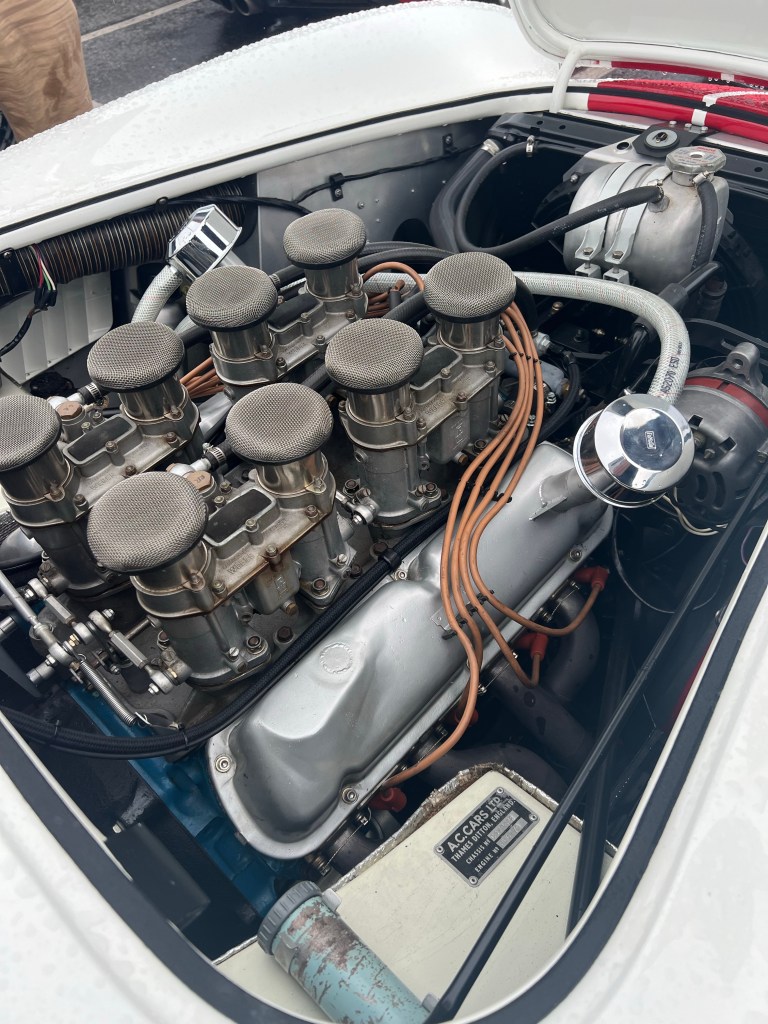
The car is one of two Slalom Special/Slalom Snakes built in 1964. As the names suggests, they were factory built club competition specials fitted with a swag of desirable goodies: front and rear roll bars, Konis, American brand mag-alloy rather than wire wheels, high performance Goodyears, brake and bonnet scoops, side exhausts and bumper bars deleted. Yes, I can see bumperettes in the pic above.
Jack Quinn, the lucky prick, had command of the car for the day, the AC had promotional filming duties in the afternoon for Jack’s upcoming Rippon Lea Concours, see here: https://ripponleaconcours.com/
(M Bisset)
Ford 289 small-block Windsor with four downdraught Weber IDA’s and lots of trick internals. Quoted at 385bhp ex-factory but this baby gives plenty more.
Delahaye 135M (M Bisset)Brescia by two (M Bisset)
The largesse rolled on with Mark Johnson and Jack Quinn’s X-Mas bash in North Melbourne and Donington’s pre-event viewing of the cars of the late Ric Begg in Brunswick. See here: https://www.doningtonauctions.com.au/ Not too many alcohol free days at all in the last 10 I’m afraid…
(M Bisset)
The owner of this car sold his Cameron Millar Maserati 250F and bought this Ferrari 250TR Replica, there won’t be too many of these in Portsea this summer.
(M Bisset)
This pair of Sunbeam Specials were impressive, mind you there is about $A200k to spend on the one below after you buy the car Grant Cowie reckons…
John Lemm’s fabulous portrait of five-star racer, engineer and industrialist Peter Holinger as he awaits a run at Collingrove Hillclimb in South Australia’s Barossa Valley during 1973. His machine is a self-built Holinger Repco RB620 4.4-litre V8.
Let’s not ponder fireproof racegear and six-point harnesses in Australian hillclimbing at the time…
Peter won the Australian Hillclimb Championship in 1976 at Bathurst, 1978 at Collingrove, 1979 at Mount Cotton, Queensland and finally, 1988, at Fairbairn Park, Canberra in another Repco V8 powered – 5-litre Repco 720 – Holinger Repco.
Holinger aboard the car below at Lakeland, Victoria in 1976.
When Peter’s great friend and Repco colleague, Rodway Wolfe, purchased Brabham BT31-1 Repco – Jack’s 1969 Tasman machine – from Repco in 1971, Holinger stored the car for Rod and took photographs and the dimensions of it with Wolfe’s blessing, the Holinger Repco was the result.
Peter in the Holinger Repco at Lakeland, Victoria in 1976 (Auto Action)(J Lemm)
Lemm’s perfectly focussed shot of Holinger at Collingrove ’73 with a ‘touch of the BRMs’ as the car was then configured. Lemm wrote that the single-rear-disc brake set up comprised a rotor and caliper donated by a Renault R8.
‘The 4.4-litre 620 series Repco had special camshafts made by Peter to give greater low end torque,’ wrote ex-Repco Brabham Engine Company engineer, Nigel Tait. ‘He started to make that engine not very long after we’d moved (Repco Brabham Engines) from Richmond to Maidstone. Apart from being a very clever guy, Peter was an absolutely delightful person,’ Nigel said. Everything you ever wanted to know about the RBE 620 V8: https://primotipo.com/2014/08/07/rb620-v8-building-the-1966-world-championship-winning-engine-rodways-repco-recollections-episode-2/
The very first firing of any Repco Ltd built complete engine, the 2.5-litre RB620 V8 E1 – use of the Oldsmobile F85 block in the 620 engines is duly noted – in cell four of the Repco Engine Laboratory Richmond, on its Heenan & Froude GB4 dyno, March 26, 1965. That’s Phil Irving at left with stereo-typical inch of ash on his ciggie, Bob Brown, the Repco Ltd director responsible for the Repco Engine Parts Manufacturing Group of which Repco Brabham Engines Pty Ltd was a part, Frank Hallam, RBE general manager, and Peter Holinger, then head machinist and technician. Those Webers were borrowed from Bib Stillwell up the road in Kew, the Lucas fuel injection system had not yet arrived. E1 was the only engine fitted with carbs, and not for long, all RBE V8s were Lucas injected…except an Indy Turbo R&D engine that never got closer to the track than the Maidstone dyno-house (Repco)
Holinger knew a thing or two about these engines having machined and assembled the very first 2.5-litre RB620-E1 V8 together with its designer, Phil Irving – Irving drew every single RBE620 design drawing – in February-March 1965. Indeed, Holinger was present in the Repco Engine Laboratory in Richmond when that engine was fired up for the very first time on March 26, 1965.
Peter was already hillclimbing another self built machine, the Holinger Vincent s/c during this period at Repco, and when he first went out on his own. The two shots below are both at Silverdale, NSW, in 1966 and 1969.
(K Power)(Australian Motor Racing Annual)
The ongoing evolution of the Holinger Vincent was also typical of Peter’s subsequent two hillclimbers, the shots below are of the Holinger Repco ‘BT31’ taken at the daunting, fast, Mount Tarrengower, Maldon, Victoria in 1978. The wings are the obvious change from the earlier shots, this car copped a 5-litre Repco 720 V8 at some point too.
(J Bowring)Rare colour shot of Peter and Holinger ‘BT31’ nose-up under power in second gear perhaps. Holden FB wagon in the background at the bottom of Tarrengower (G Williamson)
The good news is that the three Holinger hillclimbers are still with us. David Nash – a Repco colleague of Peter Holinger’s – wrote a while back that he was rebuilding engine E1 4.4 – the same engine built by Peter and Phil in 2.5-litre form in 1965 – to go back into the Holinger ‘BT31’.
The final Holinger Repco 5-litre (shots below) was rebuilt at Holinger Engineering after Peter’s death in 2009, and shifted to the premises of the Victorian Historic Racing Register in Box Hill, Melbourne, on long term display/loan in March 2017. It always warms the cockles of ‘me heart to see it…
Holinger aboard his final Holinger Repco 5-litre 720 at Morwell Hill, Victoria, circa 1988 (unattributed)(Holinger)(Holinger)
Etcetera…
(S Dalton Collection)
Holinger, very close to his Warrandyte home, on Templestowe hill, September 11, 1966 with Autosportsman reporting times of 54 and 53.9 seconds.
(D Willis)
Dick Willis’ amazing photograph of a posse of Australian Hillclimb Champions taken during the 1996 championship weekend, April 4-7 at Mount Panorama, Bathurst.
Left to right are Kym Rohrlach 1980/82/86/87, Stan Keen 1975/93, Peter Holinger 1976/78/79/88, Warren Brown 1984, Ivan Tighe 1964/85/91, John Davies 1992/95 and Roger Harrison 1983/94.
Arcane trivia is that – I think – the final in-period championship won by an RBE V8 anywhere in the world was Roger Harrison’s victory in the ’97 AHCC at Mount Leura, Camperdown, Victoria on October 16-19. His weapon was an ex-Alan Hamilton/Alf Costanzo Tiga FA83 Formula Pacific machine fitted with an RBE740 V8, capacity folks? Hamilton had Jim Hardman restore that car to RBE spec five or so years ago, it may have sold recently.
(Repco)
I love this Repco Brabham Engines family shot taken at the just-moved-into Maidstone premises in mid-late 1966. Back-Kevin Davies, Eric Gaynor, Tony Chamberlain, Fred Rudd, John Mepstead and Peter Holinger. Middle-Vic Mosby, Howard Ring and Norm Bence. Front-David Nash, Rod Wolfe and Don Butler.
Credits…
John Lemm, Auto Action, Repco Archive via Nigel Tait, Australian Motor Racing Annual 1970, Kerry Power, Geoff Williamson, John Bowring, Stephen Dalton
Following its successful early-1950s World Sportscar Championship front-running Lancia D24, Grand Prix racing Lancia D50, and 1960-70’s World Rally Championship campaigns with the Fulvia HF and stunning Stratos, Lancia reverted to international sportscar racing to build its brand in 1979. Lancia Corse/Martini Racing contested the Group 5 title from 1979-82 with the Lancia Beta Montecarlo Turbo.
The shot above shows Riccardo Patrese on the way to winning the Brands Hatch 6 Hour on March 16, 1980. He shared the car with Walter Rohrl, second was Eddie Cheever and Michele Alboreto in another Lancia Corse entry, with Alain De Cadenet and Desire Wilson third in De Cad’s De Cadenet Lola LM Ford. To reinforce the Lancia rout, the Jolly Club Montecarlo raced by Mario Finotto and Carlo Facetti was fourth.
Eddie Cheever, second, from Desire Wilson, De Cadenet Lola LM Ford, third at Paddock Bend during the 1980 Brands race (N Forsythe)Patrese in the cockpit of chassis #1002 before the off at Brands Hatch (N Forsythe)
Group 5 was a silhouette formula for modified production cars spilt into under and over 2-litre classes. Lancia’s weapon of war was an extensively modified version of the Beta Montecarlo Coupé.
While normally aspirated in road trim, Lancia Corse sporting director Ceasare Fiorio concluded that turbo-charging the 1,425cc four-cylinder engine would give sufficient power and torque to win the 2-litre class allied with wild chassis and body modifications. As it transpired, the machines were also outright contenders.
(unattributed)(unattributed)
Engineer, Gianni Tonti was in overall control of the project. Ex-Lamborghini designer Gianpaolo Dallara built the Group 5 Stratos that won the 1976 Giro d’Italia, Fiorio was impressed with his work and therefore engaged Dallara Automobili to design and build the chassis. Carrozzeria Pininfarina designed and built the bodies.
Group 5 permitted bulk modifications, so the roof and door centre monocoque section of the donor car was retained but it was sandwiched by bespoke tubular subframes to carry the front suspension, wishbones and coil springs, and rear suspension, McPherson Struts, wishbones and engine/gearbox and ancillary components.
Pininfarina’s striking fibreglass coachwork was designed to increase downforce and featured an aggressive chin spoiler, extended wheel-arches and big rear wing. Only the car’s centre section retained any resemblance to the production car, yet it weighed 300kg less than the road car at about 810kg.
The Patrese/Hans Heyer Lancia Beta Montecarlo Turbo during the Nurburgring 1000km, May 1980. Led then slipped to fourth outright in the final laps with overheating, won the 2-litre class (unattributed)Watkins Glen 6 Hour, July 1980 Lancia Beta Montecarlo Turbos. #33 Jolly Club Finotto/Ghinzani sixth, #32 Cheever/Alboreto second, and #31 Patrese/Heyer, first (D Balboni)
The engine development programme was supervised by Gianni Tonto at Abarth. With an engine naturally aspirated to turbo-charged capacity equivalency factor of 1.4 times, the Aurelio Lampredi designed, twin-cam, two-valve, Kugelfischer-Bosch injected engine had a capacity of 1425cc to pop in under the 2-litre limit.
Maximum output was boosted to 370bhp at 8,800rpm using a KKK-K27 turbo-charger and 1.2 bar of boost, a result slightly more than the 118bhp of the standard 2-litre Monte! The car was tested with up to 420bhp but the engines became grenades with 1.6 bar of boost.
The engine and five-speed transaxle was mounted transversely behind the driver as per the donor car and the regs. While the gearbox was cast using production moulds, the use of magnesium saved weight while Colotti internals provided a gearbox fit for purpose.
Michele Alboreto on the Daytona road course section. DNF dropped valve in the January 1981 24 Hours, the car was shared with Beppe Gabbiani and Piercarlo GhinzaniMichele Alboreto aboard the car he shared with Eddie Cheever and Carlo Facetti at Le Mans in 1981. Eighth outright and first in the 2-litre class (Getty Images)Riccardo Patrese on the way to a Brands Hatch 6 Hour class win in August 1979. Rohrl shared the car to fifth outright and first in class (unattributed)Launch of the Lancia Monte Carlo Turbo at the Pininfarina wind tunnel in December 1978 (Wiki)
Presented to the press at the Pininfarina factory in December 1978, the Montecarlo commenced testing in February 1979, initially with a 220bhp 2-litre Mirafiori normally aspirated rally engine until the 1.4-turbo was ready.
It first raced in the Silverstone 6 Hours in May (#51 below) having missed the Championship’s first two rounds. Finished in dramatic Zebra livery, Montecarlo chassis #1001 was driven by rising F1 racer Riccardo Patrese and ex-European Rally Champion and 1980/82 World Rally Champion Walter Rohrl, proving impressively quick in qualifying (seventh) but retired from the race after only four laps with a blown head gasket.
Despite continuing unreliability the team bagged sufficient points with class wins at Enna and Brands Hatch to take the World Championship of Makes Division 2 title in its debut season.
The Zebra Patrese/ Lancia Monte Carlo Turbo in the Silverstone 6-Hour pits in 1979. Q7 and DNF after 4-laps; head gasket failure after the radiator cap failed (unattributed)Lancia Corse pit action at Watkins Glen in July 1980 where the Monte Carlo Turbos finished first, second and sixth, vanquishing a squadron of Porsche 935s (French Speed Connection)
Lancia Corse made great advances with the five new cars which were built for 1980, the most significant developmental changes were in relation to tyres, suspension geometry, engine power, and weight.
Two extended sessions with Pirelli resulted in substantial changes despite the P7 Corsa radials being of the same construction and compounds. ‘Both the front and rear the overall diameter of the wheel-tyre assembly is unaltered, the front rims are now an inch smaller at 15 inches, and rears three inches larger at 19 ins. The new front tyre is narrower with a higher profile to provide a softer ride and better turn-in,’ Autosport reported. ‘The new rear is more significant, with a very low profile and greater width on the road, utilising all but 4mm of the maximum permitted 14ins of tread.’ Lancia made suspension changes to suit, with the drivers much happier with the overall balance of the car by the end of the sessions.
The engines were improved from the 380bhp delivered through a power band of 5500-8600rpm in 1979 to 410bhp arriving between 4500 and 9000rpm. In addition, a trip to the Jenny Craig Clinic reduced the ’80 cars weight to circa 770kg compared with circa 810kg of the early cars.
The Zebra livery continued but now with white/red and white/blue combinations. Although the team fared badly at Le Mans 24 – of three cars that started only the Finotto/Facetti machine finished in 19th – victories at Brands Hatch, Mugello and Watkins Glen brought the Lancia Montecarlo overall victory in the World Sportscar Championship. Patrese was the ‘winningest’ Lancia pilot, being the lead driver in each win.
The Cheever/Alboreto/Facetti car at Le Mans in 1981. Eighth outright and first in the 2-litre class with engines tuned to 400bhp spec (unattributed)Cockpit of one of the Monte Turbos at Le Mans in 1981 (R Schlegelmilch)
Having clinched victory by the penultimate Vallelunga round, Lancia missed the final event at Dijon in favour of the Giro d’Italia, in which the works cars appeared in the stunning, iconic Martini Rossi colours for the first time. First and second places ended a great year for the Montecarlo.
Lancia Corse raced with Martini livery from the start of 1981, that year the Montecarlo was equipped with twin turbo-chargers giving circa-450bhp. This was final year in which Lancia Corse used the Montecarlo as its frontline tool, they planned to enter Group C with the LC1 Barchetta in 1982. Despite that, the Monte proved good enough to secure its second World Championship with wins at the Nurburgring and Watkins Glen.
The works cars – 11 were built between 1979 and 1981 – were then sold, some were raced by privateers in 1982 in the last year of Group 5 but by then they were also-rans. See here for bulk detail: http://www.lanciabetamontecarlo.nl/Gp5/group%205+6.html
Watkins Glen pitstop for the Patrese seated, and Alboreto assisting, Lancia Beta Monte Carlo Turbo in 1981. Outright and 2-litre class winners (Belles Italiennes)
Etcetera…
(N Forsythe)
Shots of the launch function at the Pininfarina wind tunnel on December 19, 1978. Walter Rohrl is facing us at left with Cesare Florio further back.
(N Forsythe)(N Forsythe) Monte Group 5 chassis was a mix of standard’ish pressed steel monocoque and Dallara fabricated steel frames at each end (unattributed)(Pure Racing GT)
Fiorio achieved a promotional coup by signing Walter Rohrl and Gilles Villeneuve/Christian Geistdorfer to drive one of two Lancia Monte Carlo Turbos (Riccardo Patrese/Markku Alen/IIkka Kivimaki raced the other car to second place) entered in the 1979 Giro D’ Italia Automobilistico.
Both cars were set up to give about 360bhp with Villeneuve contesting only four of the races due to his Ferrari testing commitments. Rohrl/Villeneuve were first on the road aboard chassis #1002, but were later disqualified for using the motorway – failing to follow the route-book.
(unattributed)
Villeneuve ready to rock in these shots above and below, in his Ferrari overalls. Note the Momo steering wheel and stopwatches in the cockpit shot below.
(unattributed)(French Speed Connection)
The shot above shows the business end. You can see where the structural frame ends where the top of the strut mounts and the KKK-turbo is mounted. The lighter frame sections carry the other bits: oil tank, roll bar, exhaust etc.
The contemporary (Goodwood FOS) shot below completes the rear suspension picture by showing us the disc/hub/strut assembly which is located below by a barely visible boxed inverted wishbone.
Front of the Patrese/Cheever Monte Carlo during the 1981 Silverstone 6-Hour weekend. DNF crash after losing a wheel (A Fosh)(Bonhams)
The engine is shown above, it looks innocuous enough with the giant KKK-turbo out of picture. Camshafts are belt-driven, two-valves per cylinder. Fuel injection is Kugelfisher-Bosch.
(F Kraling)
Eddie Cheever about to climb aboard, and Michele Alboreto coming out of the car at Le Mans in 1981, eighth outright and first 2-litre car. This shot makes one feel as though you are there!
(rainmakerbell.com)
Kyalami 9 Hours, November 1981, Emanuelle Pirro and Michele Alboreto enroute to fourth place. The three cars in front were all Porsches, the winners, Jochen Mass and Reinhold Jost, raced a 936/80.
Credits…
Autosport, Anthony Fosh, Getty Images, Pure Racing GT, French Speed Connection, Nick Forsythe, Belles Italiennes, Bonhams, Dominic Balboni, Ferdi Kraling, rainmakerbell.com
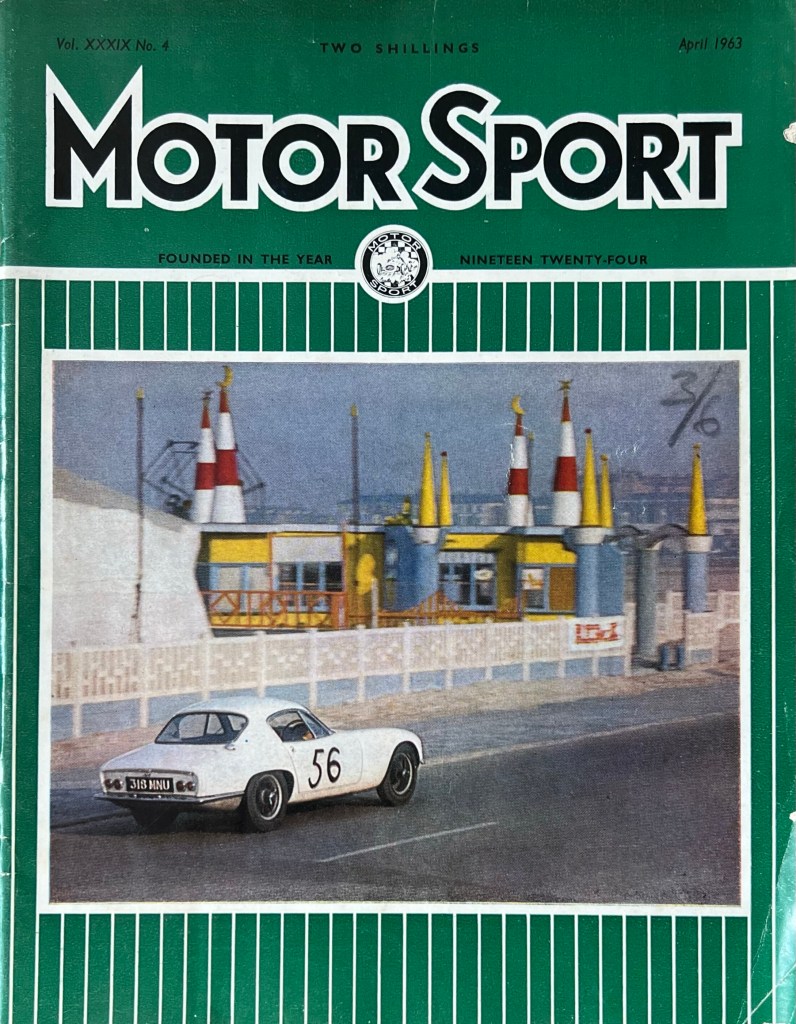
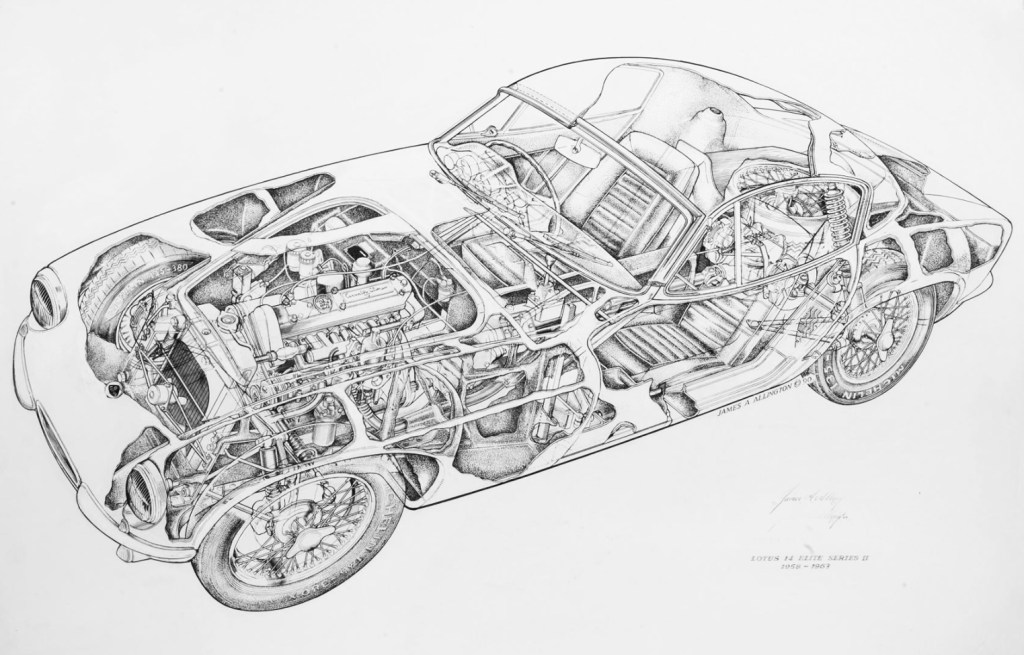
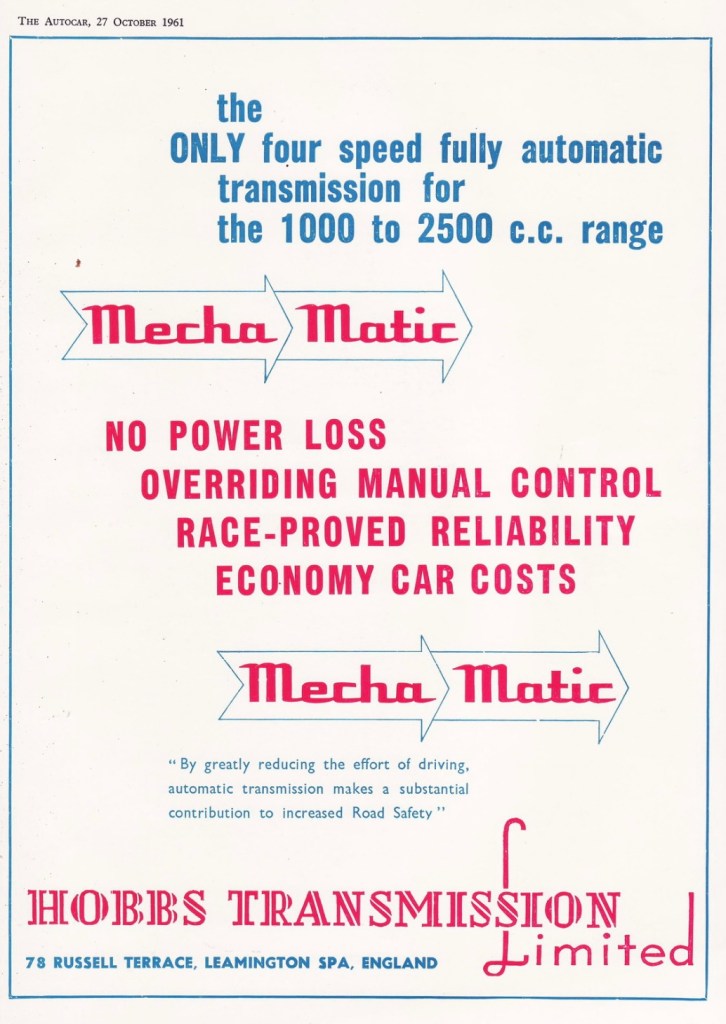
‘Cedric Brierley was well known in Club racing until a bad crash put him out of racing for some time, leaving him with a disability which precludes the use of a normal gearbox. He has had a Lotus Elite fitted with a 1.5-litre single-cam Coventry Climax engine and Hobbs automatic gearbox and at the Southport Speed Trials he proved to be nearly as quick as the E-Type Jaguars.’ MotorSport wrote.
It was the beauty of the shot that initially captured my attention, then you start to dig…I thought there was only one Elite fitted with a Hobbs Mecha-Matic gearbox – Howard Frederick Hobbs was an Adelaide born engineer – not so…
Rupert Lloyd Thomas wrote on The Nostalgia Forum, ‘Let us try and put the achievements of Howard Hobbs in context. He built the 1015 automatic transmission and fitted it to a Lotus Elite for the 1961 season.
In November 1960, David Hobbs, Howard’s son, acquired Lotus Elite, 5649 UE, from Chequered Flag, Chiswick, London, that was to launch his international racing career. The engine of the Elite was modified by Cosworth to Stage III tune producing 108 b.h.p. and a Hobbs Mecha-Matic gearbox was fitted, specially modified for racing. Hobbs said, “Chapman was not involved in the project, but our engine was blueprinted by some young tuner by the name of Keith Duckworth.”
The Hobbs Mecha-Matic gearbox high point came at the Nurburgring on May 28, 1961, when David Hobbs, and Bill Pinckney, two Midlands lads, defeated the might of Porsche in the 1600cc sports racing class in the Nurburgring 1000 kms with their automatic Lotus Elite. Bumped up to the 1600cc class by the organisers for their non-standard gearbox, after protests from fellow competitors, they faced much more powerful opposition from Porsche. After this remarkable achievement the future of the gearbox looked set fair. A long trip to Italy for Le Quattro Ore di Pescara on August 15 was less successful. The car dropped a valve early in the race, mechanic Ben Cox remembers worrying about taking the blame for what turned out to be a material failure.
Colin Chapman was sufficiently impressed to contact Hobbs in order that Jim Clark could drive the car in the 3 Hours of Daytona on 11 February 1962. As David Hobbs fought to establish himself as a professional racing driver he had also come to the attention of the Jaguar factory, and for 1962 he took over the privateer Peter Berry-entered E-Type from Bruce McLaren for the season. He was entered in the Jaguar, 3 BXV, for the inaugural Daytona 3 hours with the Lotus sitting idle. As Hobbs tells it, “Colin Chapman rang up and asked if he could borrow the Mecha-Matic Elite for Jim Clark to race at the same event.” Clark drove the Mecha-Matic in Florida, streaking away in the class lead but retiring after 60 laps with a failed starter motor and being classified 29th.
Jim Clark later had a road-going Elite, HSH 200, fitted with a Hobbs gearbox, as did Stirling Moss. Clark said in the book ‘Jim Clark at the Wheel’, “Those who scorn automatics take note!”
(J Allington)
The Mecha-Matic Elites…
Thomas again, ‘I have found three:
The road car of Jim Clark Reg # HSH 200. This plate would have been issued in 1961 by Berwick C.C. Chassis No: EB-1659, Engine No: FWE10233 – SUPER 95 Specification. Bristol Plate No: EB-1659. Originally yellow and silver. Subsequently sold in 1962 to a George V. Simpson, who painted it dark blue, Scottish racing colours.
The Cedric Brierley car, Reg # 318 MNU.
The Stirling Moss road car Reg # HRT 163D. Body/Chassis no.1789 and was fitted with a Twin-cam engine, make unknown. Colour yellow. This is a 1966 reg no. so car may have been re-registered that year on change of specification. Car thought to be in the USA, last known owner was a Richard Richardson.
So we have a story involving David Hobbs, Keith Duckworth, Colin Chapman, Jim Clark and Stirling Moss. Duckworth later put cash into developing the ideas of Howard Hobbs, Clark and Moss bought the cars.
An intriguing footnote. About the time Duckworth was taking up the VKD transmission for racing, Howard Hobbs was still battling his old nemesis Borg-Warner in the road car game: http://archive.comme…ly-transmission ‘
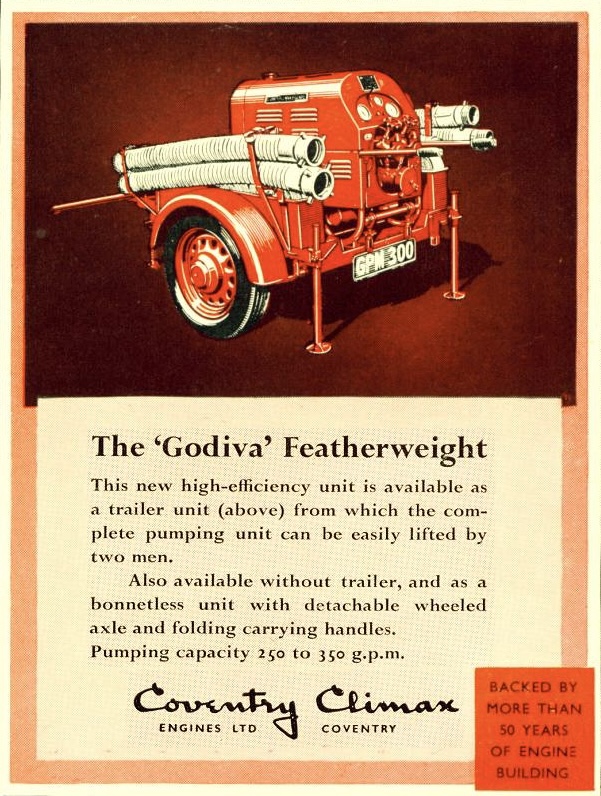
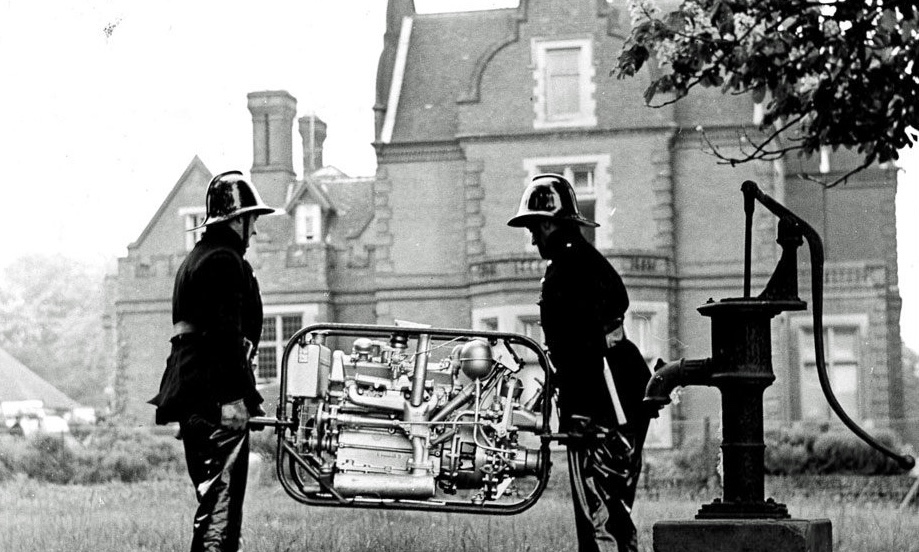
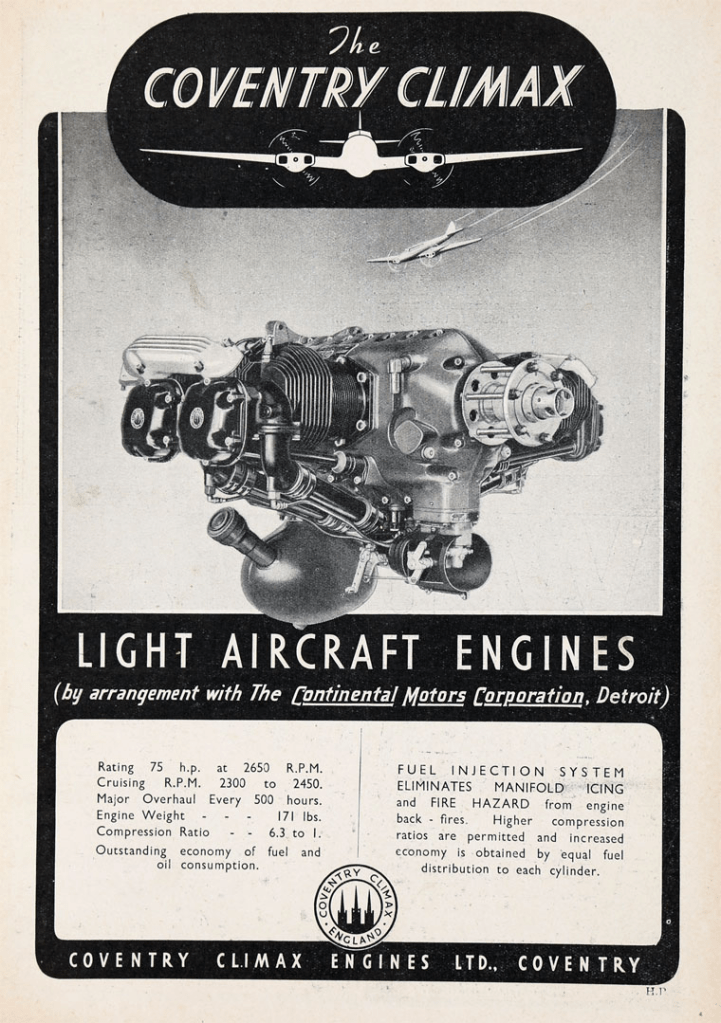
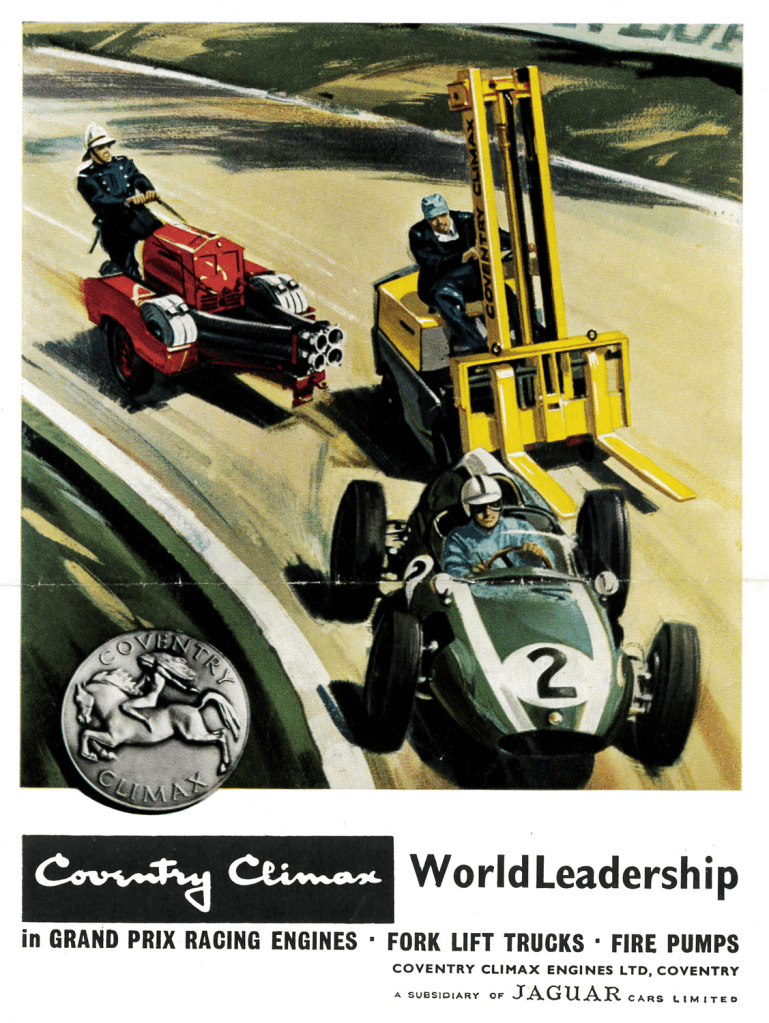
Coventry Climax’ mega racing successes were begat by the Godiva Featherweight engine as you all know. Here is a great Graces Guide summary of the corporate evolution of Coventry Climax, formed in 1917: https://www.gracesguide.co.uk/Coventry_Climax_Engines
(Godiva Ltd)
Etcetera…
1939
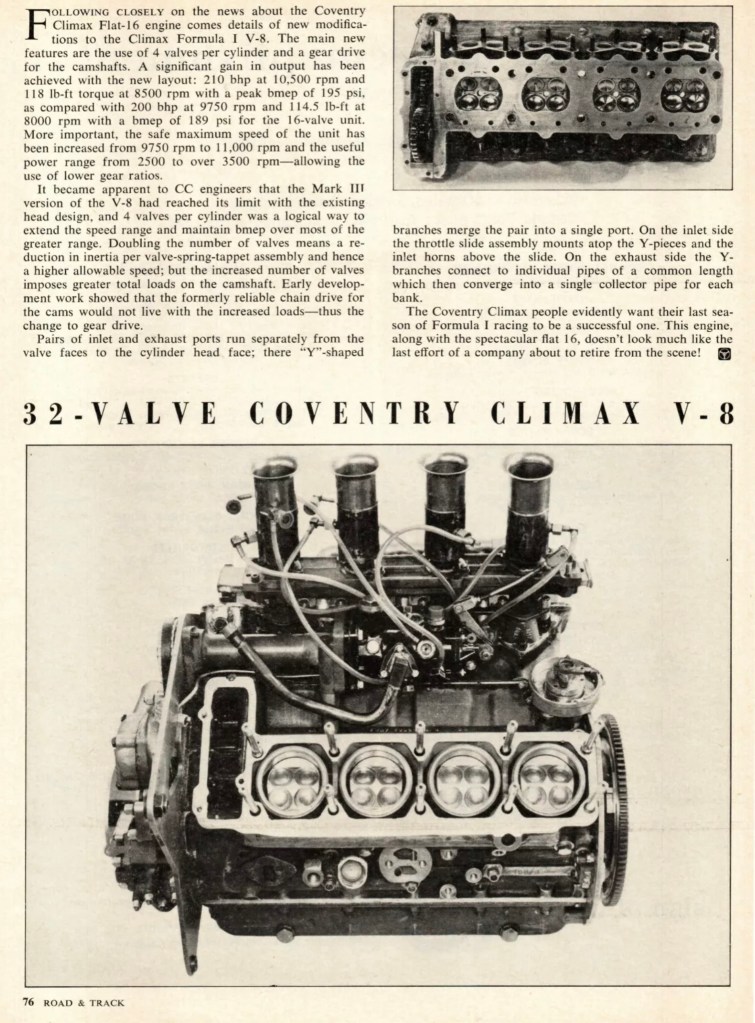
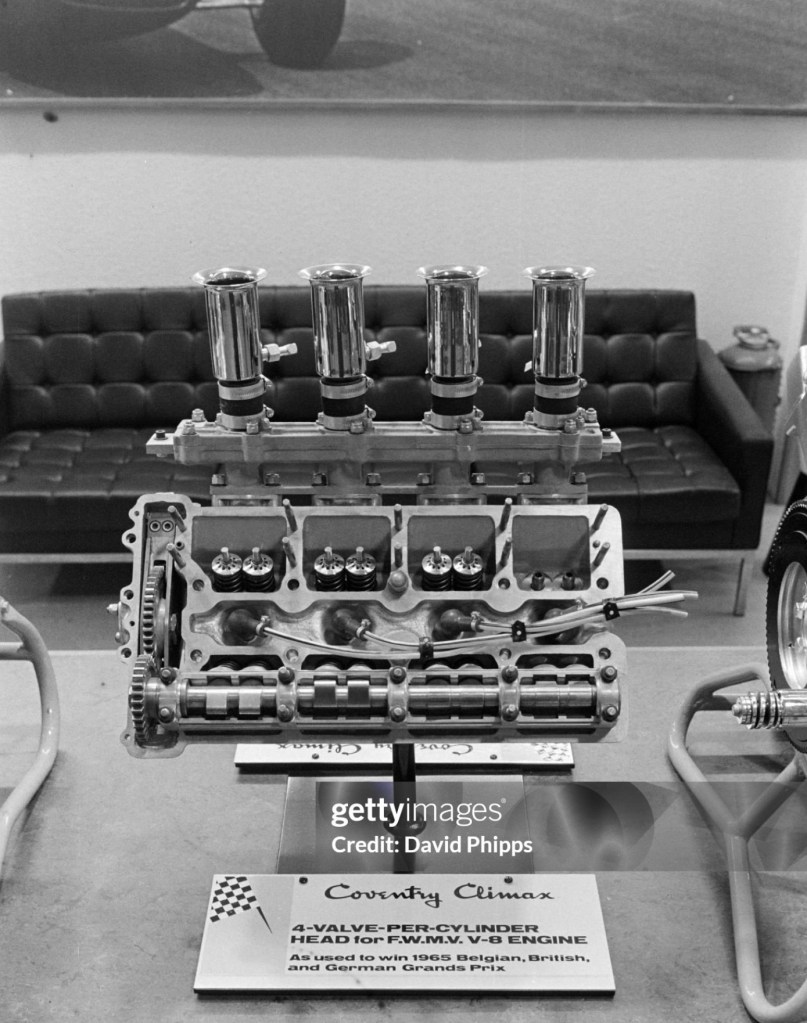
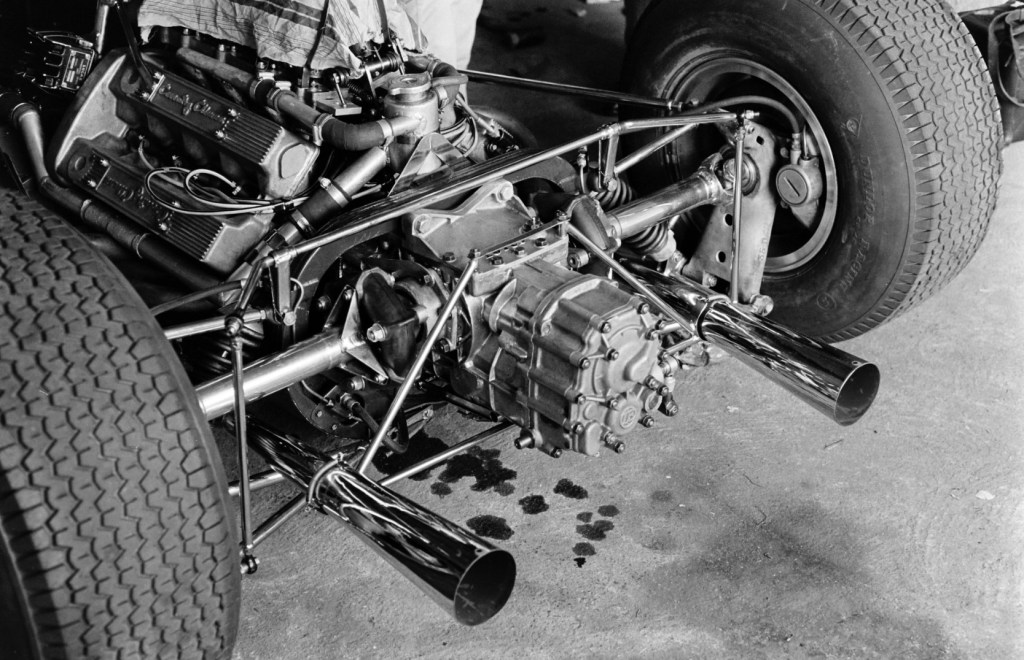
Irrelevant in the context of this article but it popped up in my Google search, so why not. Shots of the two (?) semi-undressed F1 Coventry Climax FWMV Mk 6 and Mk 7 1.5-litre four-valve V8s aren’t common.
The Cams were gear, rather than chain-driven as in the case of the earlier FWMVs, as David Phipps’ London Motor Show shot taken at Earls Court in October 1965 demonstrates.
The Mk6 FWMV Coventry Climax V8 (below) made for Lotus fitted to a 33 chassis in 1965, circuit unknown. Quick visual differentiators (below) from a two-valver are the ribbed cam-covers and, depending on the crank spec of the engine concerned, and ‘conventional’ rather than crossover exhausts. Aren’t the megaphones nice…212bhp @ 10,300rpm are the numbers I have. ZF five-speed transaxle.
(MotorSport)
Credits…
MotorSport April 1963, Rupert Lloyd Thomas, James Allington, Road & Track, MotorSport Images, Godiva Ltd, Getty Images-David Phipps
Alan Jones, Surtees TS19 Ford during the US GP West at Long Beach on March 28, 1976.
What caught my eye was John Surtees’ Franger-Mobile without the ads for Durex’ finest. Too much for American sensibilities or something? The BBC cracked-it too didn’t they, refused to cover F1 that season?
Anyway, having randomly lobbed on this photo, I kept going through the amazing Getty Images archive, this Jones homage is the result.
It seemed to me rather a cohesive design from the pens of Big John and Ken Sears, but its looks flattered to deceive a bit. Sadly.
Jones, Monaco Q19 and first lap collision, DNF
Jones’ best result in 16 races with the car was a brilliant second behind James Hunt’s McLaren M23 Ford in the non-championship Race of Champions at Brands Hatch in March. In Grands Prix he was fourth in the season-ending Japanese GP where Hunt won the title, and bagged a pair of fifths at Zolder and Brands Hatch.
After Alan decided he would rather race in the US than saddle up again with former World Champ Surtees, his countrymen, Larry Perkins and Vern Schuppan had a crack or two in TS19s in 1977 but they didn’t like the cars much either although.
Vittorio Brambilla’s best TS19 results in 1977 almost exactly matched Jones’ the year before, but by then Jones had returned to F1 with Shadow after the horrific death of Tom Pryce during the ’77 South African Grand Prix.
AJ found the Shadow DN8 Ford much more to his liking than the TS19, bagging points in six races including a first breakthrough F1 win at the Osterreichring, and third place at Monza.
TS19 in the pits at Long Beach in March 1976, where Alan was unclassified.
The pyramid type aluminium monocoque has more than a nod to Gordon Murray’s Brabham BT42-44s but has two angles to it. Front mounted radiators, pull-rod actuation of the front spring, fuel carried centrally aft of the driver, the usual Ford Cosworth DFV-Hewland FGA400 combo, rear springs are torsion bars (?), single top-links and wide based lower wishbones and one radius rod assisting fore-aft locational duties on each side. Interesting.
Race of Champions, Brands Hatch paddock in March 1976 where the Jones boy is catching up with what’s happening in Australia, Chequered Flag was a good publication at the time.
Jones, Lola T332 Chev ahead of Peter Gethin’s VDS Chevron B37 Chev on the run down to Dandenong Road during the February 1977 Sandown Park Cup. DNF for both, Max Stewart won in his Lola T400 Chev (I Smith)
He raced at home that summer for the first time since leaving for the UK circa-1968 – after the September 1968 Sandown Three Hour in which he co-drove a Holden Monaro HK GTS327 to second place – doing all four rounds of the February 1977 Rothmans International Series.
He brained everybody with his speed in the Sid Taylor/Theodore Racing Lola T332C Chev, taking one win, jumped the start of the AGP and got pinged at Oran Park, then boofed the car during practice at Surfers. Third place overall with his raw pace riveting to watch…
A couple of classic Nurburgring shots during the July 31, 1976 German GP weekend, above aviating at the Flugplatz and below the Karussel photograph shows the attractive lines of the TS19 to good effect.
AJ was tenth from Q14 of 26 on the disastrous weekend in which Niki Lauda came close to losing his life aboard a Ferrari 312 T2.
There is that double angle tub on display, doesn’t the bodywork enhance the flow of air onto the wing? Alternative front nose being tried during practice at the Nurburgring below.
Jones on the hop at Watkins Glen in October 1978, Williams FW06 Ford and looking on-it in the damp pitlane at the Osterreichring in August 1978 below.
When Jones joined Williams for a one-car attack in 1978 it didn’t necessarily look the best of moves, but Patrick Head’s first F1 car, the FW06 proved an excellent design which was well prepared as FW had an adequate budget for the very first time. Jones made the Saudi Airlines sponsored car fizz, finishing 9 of the 16 races he started with second, fourth and fifth his best results in the US, South Africa and France respectively.
With Frank Williams and the FW06 at Long Beach during the 1979 US GP West in October below.
‘The best’ of the non-ground effect cars in 1978, the FW06 was off the pace in 1979 amongst a more competitive grid, arguably, Jones would have won the 1979 title had the FW07 appeared earlier than it did; Woulda-coulda-shoulda…
(D Phipps)
Amongst the fastest ground-effect machines of the early 1980s was the Williams FW07 Ford in its various iterations, here with Jones in front one of one of the Renaults at the Osterreichring in August 1980 where he finished second in an FW07B.
Great shots of the fully extended sliding skirts of the FW07Bs of Carlos Reutemann #28 and Jones in the Watkins Glen paddock in October 1980, and below of the tunnel support structure at Hockenheim in 1979 where AJ won.
The FW07 was first raced at Jarama in April 1979 with Clay Regazzoni taking its first race win in the British Grand Prix at Silverstone in July, then Jones won four of the last six races that year as the FW07 hit its straps, and took the title in 1980 with victories in Argentina, France, Britain, Canada and the US.
Overhead shot at Monza in 1979 shows the critical elements of the car: inboard front suspension offering a clear flow of air into the ground-effect tunnels, the size of which is enhanced by a very slim aluminium honeycomb chassis, and centrally mounted fuel cell. Not to forget the 3-litre Ford Cosworth DFV engine.
Jones as snug as a bug in a rug at Brands Hatch in 1980.
I can’t quite read the FW07B chassis plate, but Allen Brown’s oldracingcars.com tells me he used FW07B/7 and FW07B/8 in practice, winning the race aboard FW07B/7.
Adelaide GP meeting in November 1991 aboard the BMW M3 Evolution he raced to fourth place in the Australian Touring Car Championship. Adelaide wasn’t part of the ATCC.
Credits…
Getty Images, Ian Smith
Tailpiece…
AJ during practice for the one and only Grand Prix Masters race at Kyalami on November 11-13 2005. His mount is a Reynard/Delta 2KI Cosworth XB.
The naturally aspirated 3.5-litre 80-degree V8s were built by Nicholson-McLaren and tuned to give 650bhp @10,400rpm and 320lb/ft of torque at 7,800rpm.
Jones practiced but didn’t start the race with neck soreness, Nigel Mansell won from Emerson Fittipaldi and Riccardo Patrese.
Sorta a great idea but there is a difference between old pro-golfers having a hit and old pro-racing drivers ‘having a hit’…the story is well told here: https://en.wikipedia.org/wiki/Grand_Prix_Masters















 primotipo...