image

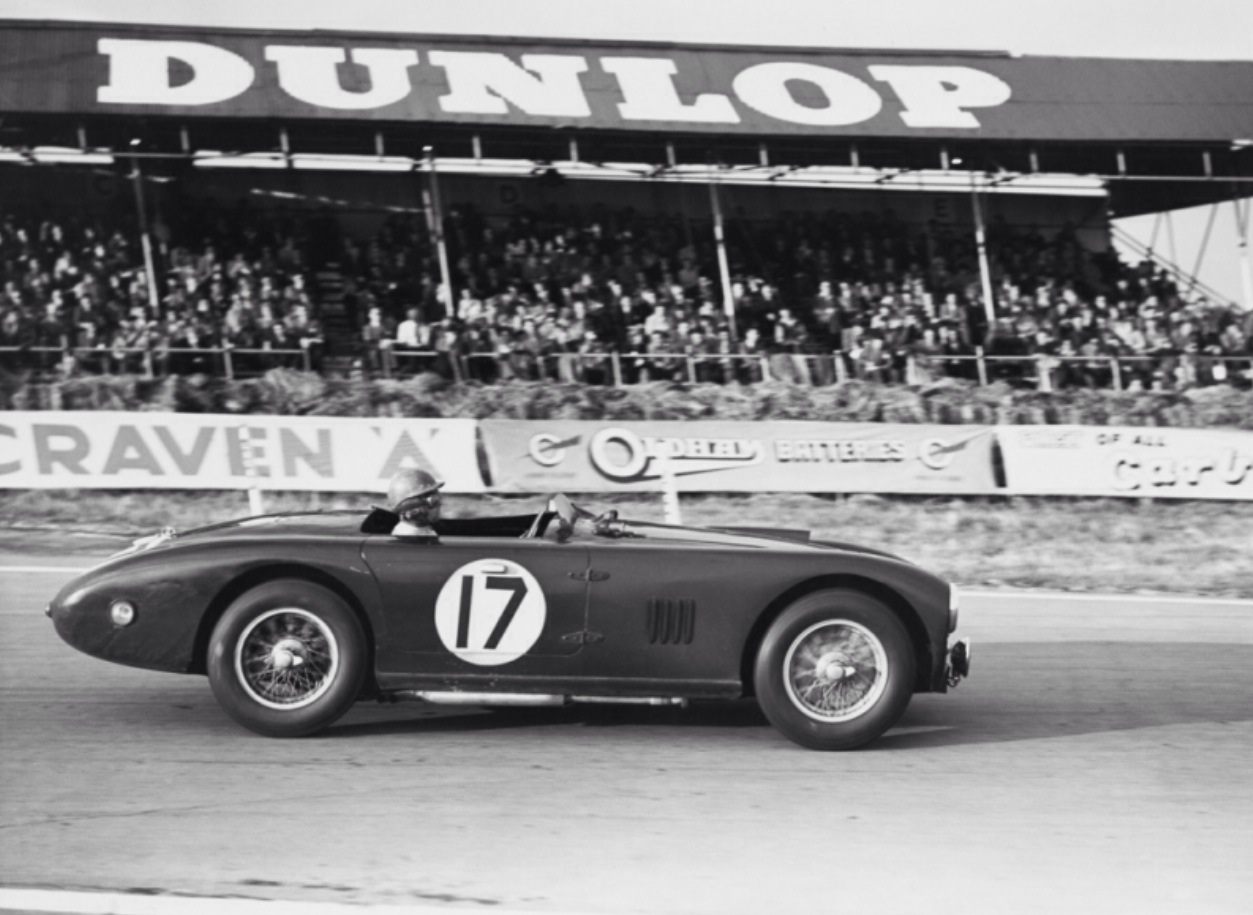
Stirling Moss guides his works Jaguar C-Type through Fordwater on his way to fifth place at Goodwood sharing with 1951 Le Mans winner Peter Walker…

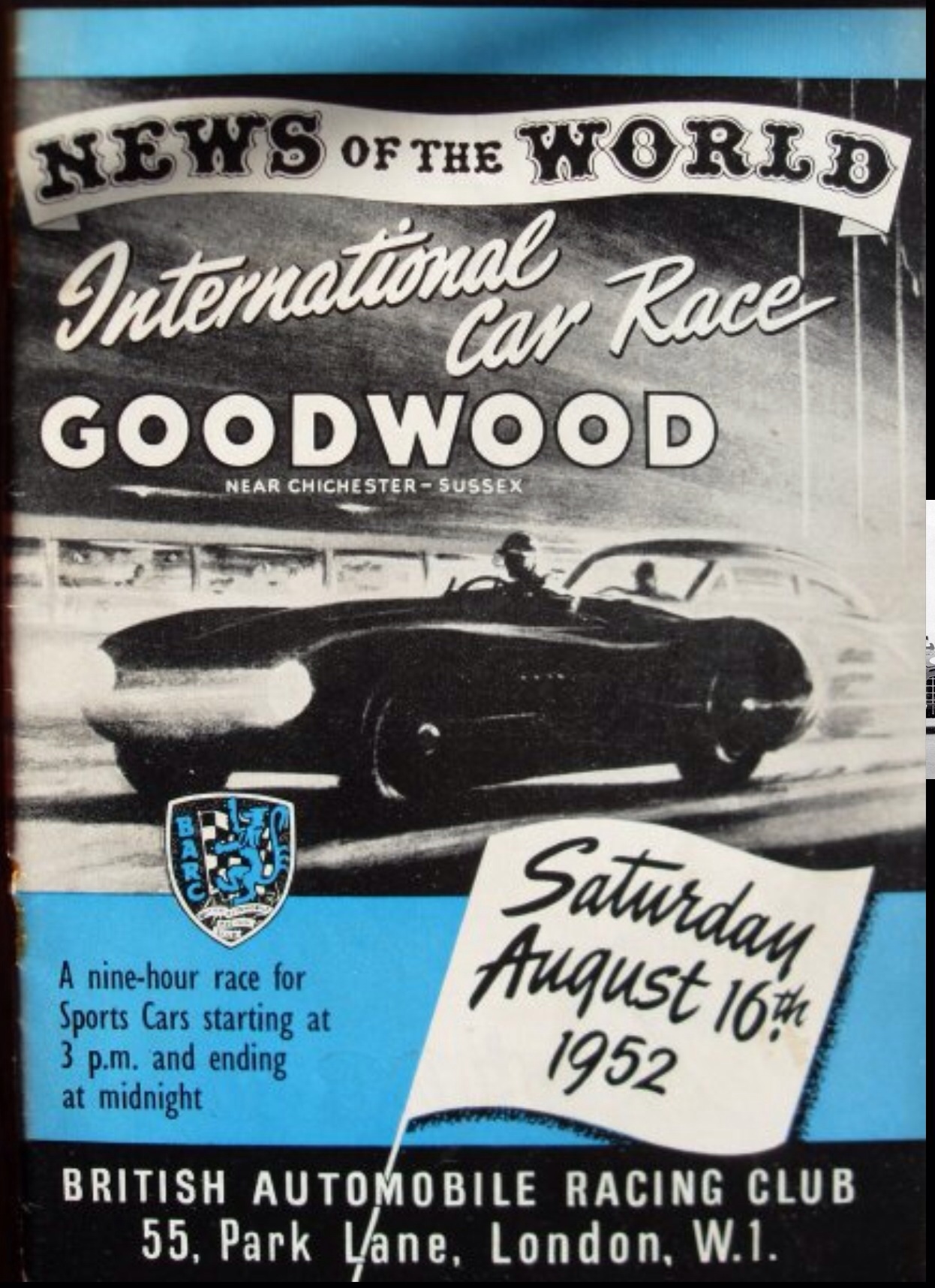
Britain’s first night race took take place at Goodwood on 16 August 1952. The British Automobile Racing Club hoped to emulate the commercial success of Le Mans, that classic a race of 24 hours duration of course.

The Goodwood enduro was a nine-hour event with a 3pm start to allow the spectators to see the cars in all their spectacular glory in the half-light and full darkness.

Modifications were made to the circuits infrastructure by fitting floodlights to illuminate the grandstands and pits, the kerbs were given a coat of luminous paint and a beer tent was laid on, although due to post-war licensing laws it had to stop serving grog before the race ended! Sponsorship and plenty of pre-event publicity was provided by ‘The News of The World’ newspaper inclusive of £2,500 in prize money which represented a powerful incentive for the ‘local’ works teams and privateers to enter in force.

Jaguar and Aston Martin entered three-car teams of C-types and DB3s in the field of 32 cars. Both teams had much to prove. The C-Types were quick at Le Mans in June, but all three cars retired with engine cooling-related issues. The new Ferrari 250S and Mercedes-Benz W194 had been faster than the Jags, victorious at Le Mans in 1951, at the Mille Miglia in May.

As a consequence, Jaguar had designed a more aerodynamic body with a slightly smaller radiator. Jag’s cooling problems became apparent in practice, despite hasty modifications; solutions were not found pre-race. Peter Whitehead/Ian Stewart retired with a failed head gasket during the second hour, Stirling Moss/Peter Walker with engine problems in the third, and the remaining Tony Rolt/Duncan Hamilton car with a head gasket failure in the fourth hour.

Le Mans 1952: #26 the Poore/Griffith Aston DB3 Spyder alongside the Parnell/Thompson DB3 Coupe, all three factory cars DNF (unattributed)

The new Aston DB3 ‘Spyders’ also failed to finish, Dennis Poore/Pat Griffith in the third hour with water pump failure and Lance Macklin/Peter Collins towards the finish with an accident in the twenty-second hour of the long, unforgiving race. The works DB3 Coupe driven by Parnell/Thompson retired in the second hour with gearbox dramas. The ’52 Le Mans was won by the Benz W194, Hermann Lang and Fritz Riess from the sister car of Theo Helfrich/Helmut Niedermayr.

The chance to make a good showing on home turf was therefore ‘manna from heaven’.

Jaguar used the same driver combinations they deployed in France, whilst Aston’s pairings were Reg Parnell/Eric Thompson, Peter Collins/Pat Griffith and George Abecassis/Dennis Poore.

Other strong entries included Pierre Levegh’s Talbot-Lago T26GS, famously for being so nearly the winner driving solo at Le Mans in 1952 before missing a gear very late in the race. Ferrari 225S’ were entered for Tom Cole/Graham Whitehead and Bobbie Baird/Roy Salvadori, a works Allard J2X for Anthony Hume and George Thomas plus a swag of Healey Silverstone, Frazer Nash Le Mans Rep, Jag XK120, Cooper T14 MG, HRG and HWM cars. In short, an interesting field that lacked only works Ferrari and Mercedes entries.

image

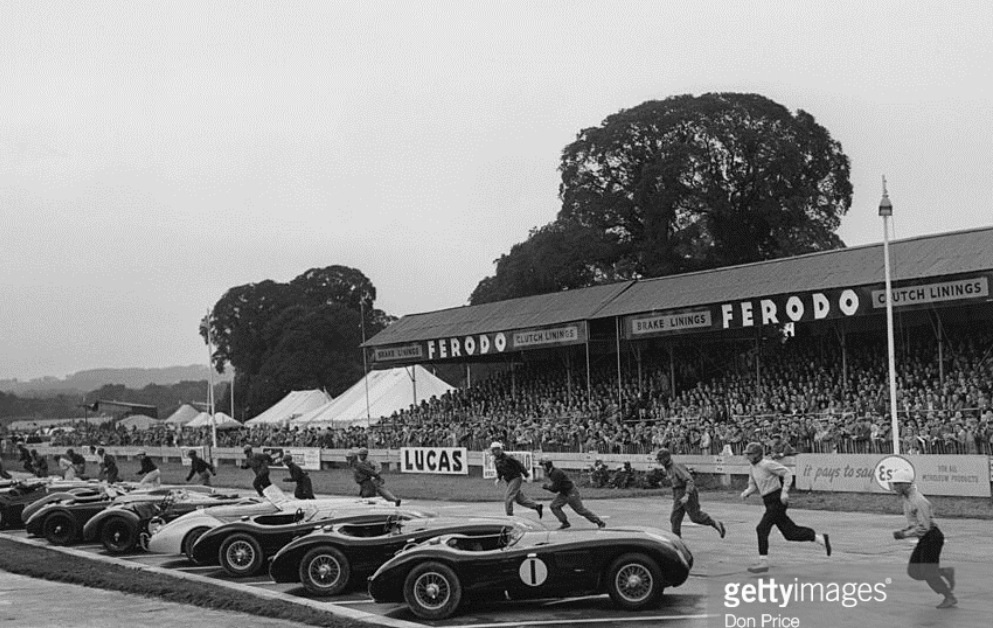
At the start, Moss, at right, as usual, won the sprint to his car, but Tony Rolt, to Moss’ right led on lap one, but he was soon overtaken by Parnell’s Aston…

At the end of the first hour the order was Parnell, Rolt, Abecassis, Moss and Baird, Ferrari 225S, then Whitehead.

Then the weather started to improve, and as the track dried, the Jaguar’s pace became apparent with both Rolt and Moss passing Parnell. So, Jag, Jag, Jag, Aston, but then Whitehead crashed his C-Type.

Disaster struck the Feltham team on lap 91 during a routine refuelling pit stop when Parnell’s car caught fire, burning two of the crew and team manager John Wyer. Parnell showed great leadership and strength of character, whilst his race drive was over he stood in for the injured Wyer to take over the critical team management role.

 At half distance the Moss/Walker Jaguar C Type led from the sister XKC of Rolt/Hamilton. The third C-type had crashed at Madgwick and retired whilst the DB3 of Abecassis/Poore had also dropped out of contention.

By 9pm, the drivers had switched their headlights on, the spectacle of racing at Goodwood at night was fantastic, but within half an hour, a half shaft broke on the Rolt/Hamilton C-Type, which allowed the remaining Aston of Collins/Griffith through; that car was then overtaken by the quick Ferrari 225S driven by Bobby Baird and Roy Salvadori.

Eric Thompson came into the pits 3 hours into the race with smoke pouring from the rear of the car. Wyer and mechanic Jack Sopp pulled up the seats to investigate whilst Fred Lowndes refuelled. Spilt fuel from the last churn went onto the tail of the car and ran down onto the undertray where it was ignited by hot oil from a leaking fuel seal- within seconds the car was engulfed in flames and smoke. Wyer and Sopp suffered bad burns, Lowndes not so much but all 3 were taken to hospital whereupon Reg Parnell took charge. Aston DB3/3 was destroyed- and later rebuilt, Parnell, drove it to 5th in the 1953 Mille Miglia (unattributed)

Half an hour later Jaguar’s collapse was complete when the leading Moss/Walker car entered the pits with a broken rear radius arm that would take nearly an hour to repair. It is said that Jaguar boss Sir William Lyons was blissfully ignorant of all of the dramas which befell his team as he had retired to Goodwood House from the pitlane to enjoy what appeared to be a certain win!

image
The doomed Parnell/Thompson Aston DB3/3 earlier in the race prior to its demise (Getty)

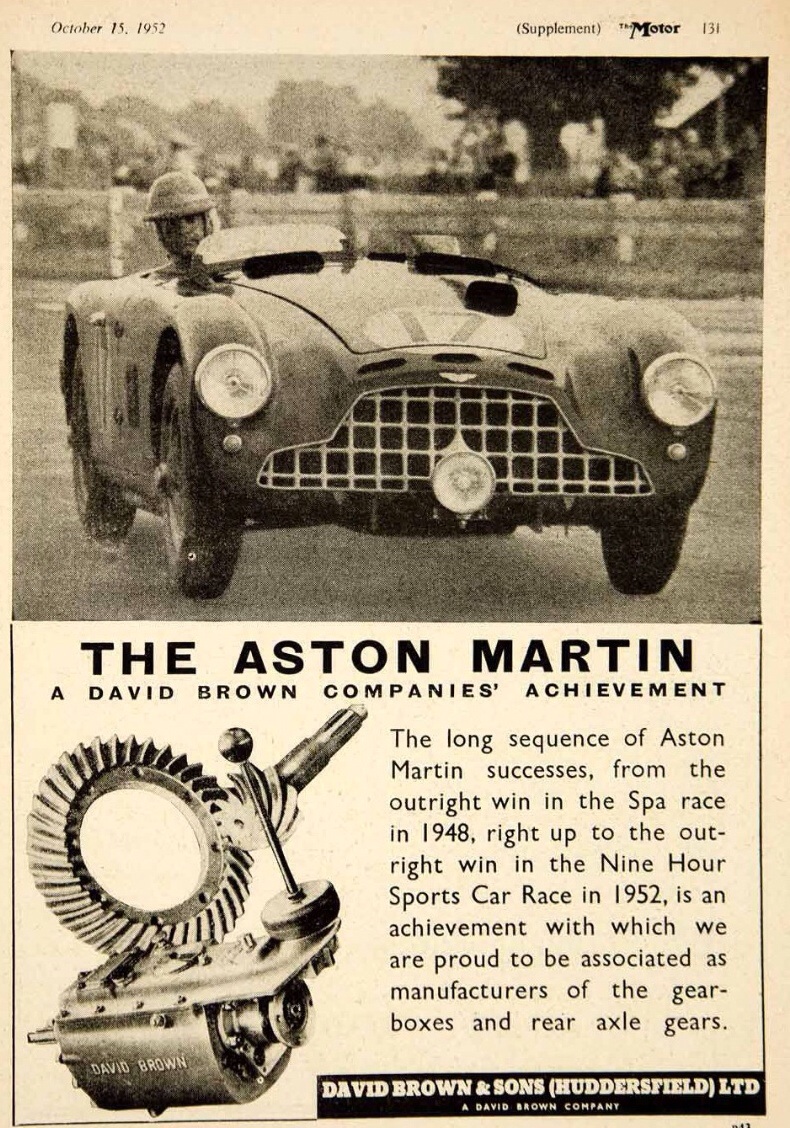
In a race of rapidly changing fortunes, the Baird/Salvadori Ferrari 225S had gone from fourth to first in little more than an hour. Still, in a final twist of fate, on its last pit stop, the jack intended to lift the car sank into the patch of tarmac, softened by the earlier Aston DB3 fire! The loss of time was sufficient to put the Collins/Griffith DB3 into the lead with just an hour of the race left. That pairing duly won despite an exhaust valve breaking an hour before the event’s end, from the two privateer Ferrari 225S’ driven by Cole/Whitehead and Baird/Salvadori.

Collins in the winning Aston DB3 early in the race (unattributed)

The Telegraph reported that ‘The Nine Hour had all the ingredients of a classic race; the changing weather, the drama of the pit fire and a dramatic fight for the lead, not to mention the fact that so many of the cars were competing on home soil. Yet the spectators were distinctly unmoved, many only arriving once the night racing began, and few staying for the duration. These were people who attended Goodwood for a grand day out – a nine-hour endurance race, where the leader wasn’t always obvious, was simply too long.’

‘When the Nine Hour race returned the following year it did so without any newspaper sponsorship to offer pre-event coverage. Spectators numbers fell as a result and with them the carnival atmosphere that made Le Mans such a success. Those who did go frequently left when it got dark, defeating the event’s raison d’être. It didn’t matter that the racing was first class (Aston would win again in ’53 and, after the race skipped a year, scored a third victory at what would be the last Nine Hour race in ’55) if nobody was there watching it. Perhaps the British will always see night racing as too good an excuse for a holiday abroad.’ the Telegraph concluded.

There was no World Sportscar or Manufacturers Championship in 1952, that competition started in 1953. However the classic race spoils went to Mercedes Benz W194/300SL at Le Mans and the Carrera Panamericana with a Ferrari 250S victorious at the Mille Miglia and a Lancia Aurelia B20 at the Targa Florio

Vaino Hollming Jag XK120 leads Pierre Levegh Talbot-Lago T26GS then the Lawrence Mitchell Frazer Nash High Speed, Goodwood 9 Hour (Getty)

Aston Martin DB3 Technical Specifications…

Ex-Auto Union design team member Robert Eberan-Eberhorst first worked for ERA when he come to the UK post-war. He was contracted for 3 years from November 1930 to design a sports-racer for Astons which was to use the AML LMB 2.6 litre 6 cylinder engine and a David Brown five-speed gearbox.

He chose a period typical ladder frame chassis design, the main members made from 16-gauge, four inch chrome-molybdenum tubes with substantial cross-bracing by three 14-gauge five-inch tubes.

Front suspension was similar to the DB2- trailing links, transverse torsion bars, piston type shocks and a roll bar. At the rear a more sophisticated De Dion rear axle was deployed. This was constructed from three steel sections welded together and was located by a Panhard Rod and parallel locating links. The upper links ran fore and aft, the lower links angled. Each of the lower links engaged by serrations with a transverse torsion bar. Armstrong double piston dampers were used. The car weighed circa 2165 pounds/980Kg with nine gallons of fuel.

RE Poulton for Autocar

Steering was by rack and pinion with two turns lock to lock, brakes were Al-fin drums, inboard at the rear. Spoked wire wheels were, of course, used with Rudge-Whitworth knock-off hubs.

The DB3 first raced in 2580cc form, with triple 35DCO Weber twin-choke carburettors. The alloy, DOHC, two valve head engine developed 133bhp @ 5500rpm. The gearbox was a DB S527, five-speed with overdrive top gear. From July 1952, a DB S430/63R four-speed box was used.

Into 1952 the engines ran Weber 36DCF carbs making 140bhp @ 5200rpm, still way too little. By the 1952 Monaco GP a 2922cc engine developed 147bhp @5000rpm but any increase in capacity of the LB6 engine was impossible as each pair of bores were siamesed.

163bhp was achieved from an engine with 35DCO twin-choke Webers and connecting rods with offset big ends at the Goodwood 9 Hour in 1952.

Bibliography…

Article by Chris Knapman in The Telegraph April 2011, ‘Aston Martin: The Racing Cars’ Anthony Pritchard

Photo Credits…

Getty Images, Klemantaski Archive, Don Price, Autocar

Tailpiece…

image

Finito…

(unattributed)

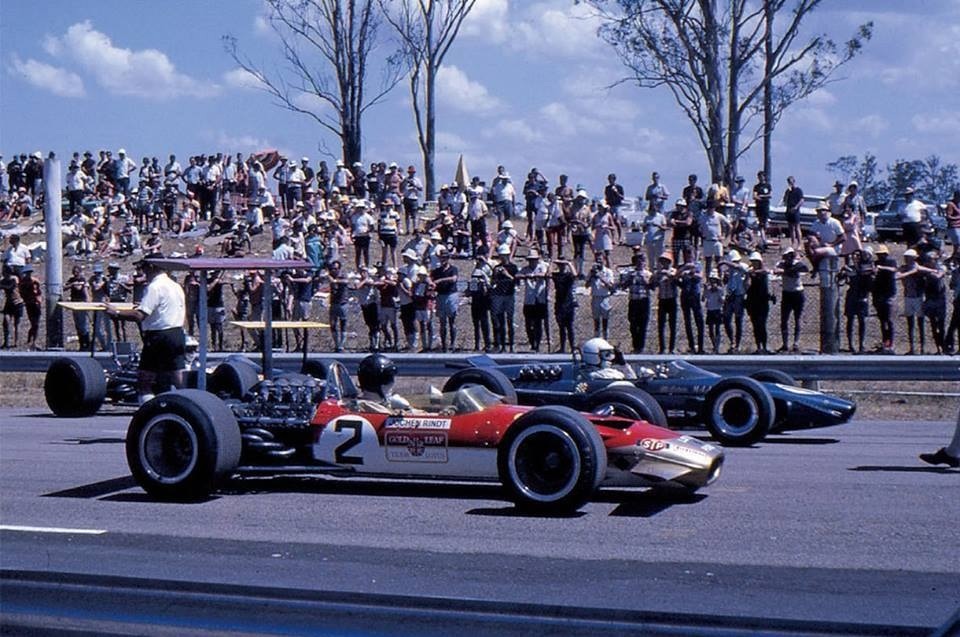
Jochen Rindt awaits the start of the Australian Grand Prix, Lakeside, Queensland on 2 February 1969…

Alongside the Austrian’s Lotus 49B is Australian Niel Allen’s ex-Courage McLaren M4A Ford FVA F2, the bi-winged device behind Jochen is the Piers Courage-Frank Williams owned Brabham BT24 Ford DFW.

Jochen switched his engine off as it tightened before it went ka-boom – having had problems in practice – on lap 43 whilst in third. Niel was fifth and Piers had an accident on lap five after a passing move on Graham Hill went pear-shaped at BMC bend. Chris Amon won aboard his works Ferrari 246T Dino.

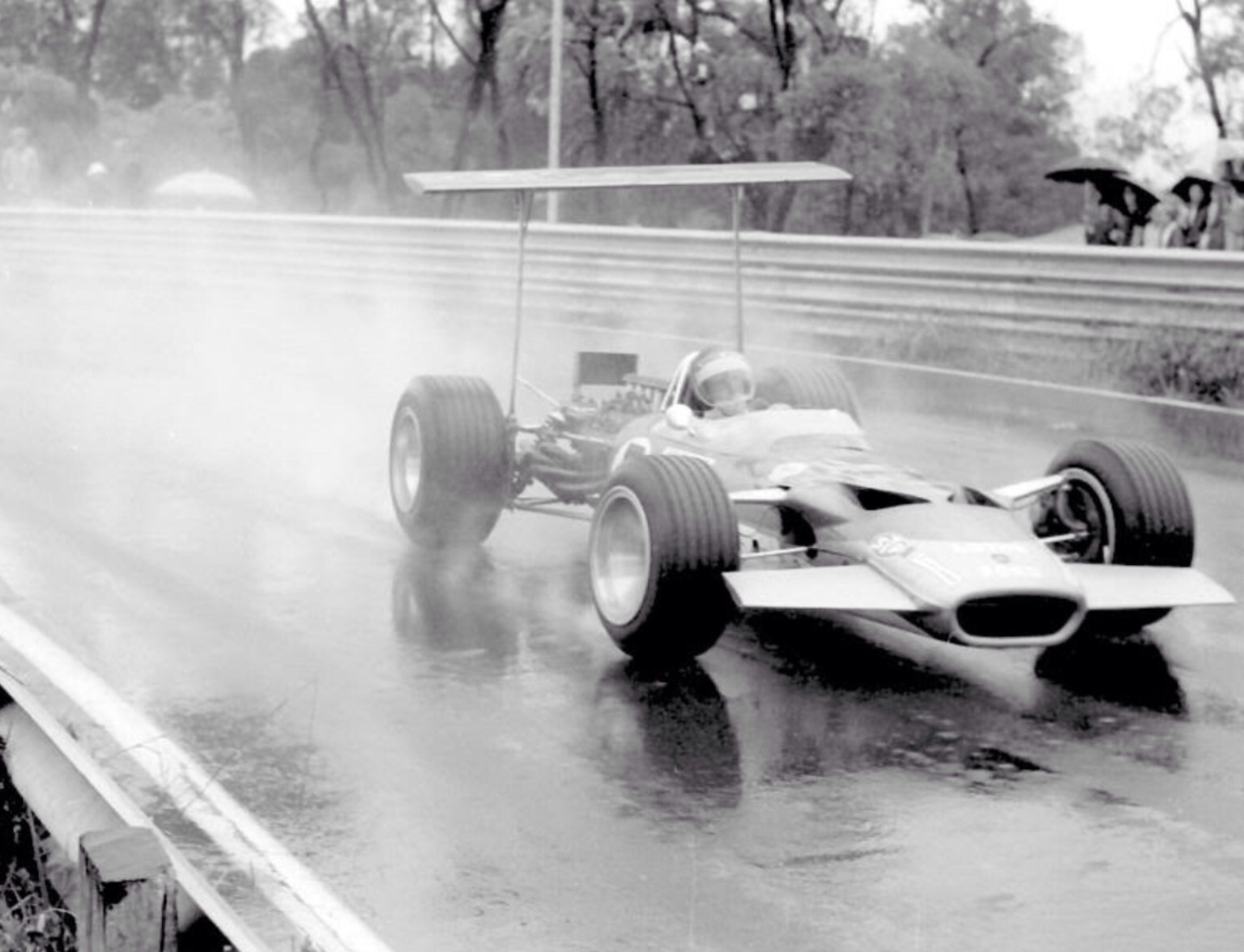
Rindt’s Lotus 49B during dry, Saturday practice at Warwick Farm. He and Chris Amon’s Ferrari 246T had an electrifying duel for pole, won by Jochen in the final minutes of qualifying (R MacKenzie)

Allen Brown’s summary of the 1969 Tasman Series is a great one, it says a lot in the minimum of words, I like that!

“Chris Amon was back for 1969 and taking it much more seriously with two Ferrari 246T/69s for himself and teammate Derek Bell and four 300 bhp 24-valve engines. Despite the loss of Jim Clark, Lotus were present with a two-car team of Lotus 49Bs for Graham Hill and new teammate Jochen Rindt. BRM did not enter so the only other overseas entry was Frank Williams who had a Brabham BT24 for Piers Courage.”

Rindt, Brabham, Amon, Hill and Courage on Sandown’s pit straight with Rindt hooking into Peters Corner for the run up the back straight. Lotus 49 Ford DFW, Brabham BT31 Repco, Ferrari 246T, Lotus 49B Ford DFW and Brabham BT24 Ford DFW. Sandown International 100, 16 February 1969. Amon won from Rindt, Brabham and Gardner (unattributed)

“Rindt proved to be Amon’s closest rival but spun away the lead at both Pukekohe and Levin, leaving Amon to win both races, before the Austrian took a comfortabe win at Wigram. A dominant victory at Lakeside’s Australian GP for Amon meant Rindt could no longer catch him and when Amon and Courage tangled at Warwick Farm, the Kiwi was champion.” Rindt had a stunning weekend in both practice and an amazing wet weather drive which blew the minds of the Sydney spectators and his rivals. “He (Amon) rounded off the season with victory at Sandown, his sixth in two seasons.”

Rindt mesmerised 16,000 soggy Sydney-siders with his raceday drive during the ’69 Warwick Farm 100 on 9 February. He ran away and hid after Amon and Piers Courage collided on the first lap (R MacKenzie)

Now that the visiting British teams were using F1 cars and then taking them home, there was no longer the annual influx of new machinery for the locals. Alec Mildren had the funding necessary to commission specials but the number of competitive 2.5-litre cars was definitely dropping. David McKay’s Scuderia Veloce was the nominal entrant of Amon’s Ferraris but no longer ran their own car. That season, Mildren had installed his Alfa V8s in a car designed for him by Len Bailey and constructed by Alan Mann Racing in England, the monocoque Mildren Alfa ‘Yellow Submarine’ in addition to his ’68 Tasman Special, the Brabham BT23D Alfa driven by Kevin Bartlett.

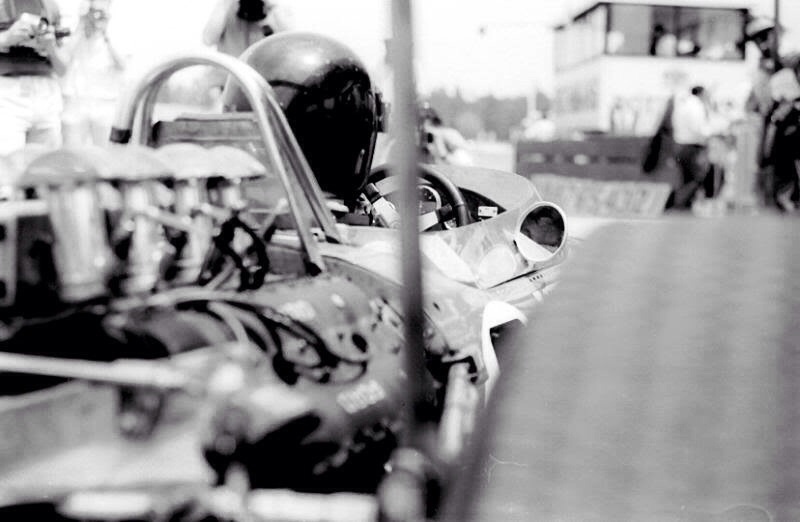
Jochen, dry practice on the Friday given the lack of punters, Warwick Farm (G Paine)

Bibliography & Photo Credits…

Allen Brown on oldracingcars.com, Rod MacKenzie, Glenn Paine

Tailpiece: Moody Rindt shot, Warwick Farm 1969- check the mirror folks…

(R MacKenzie)

Finito…

(J Lineham)

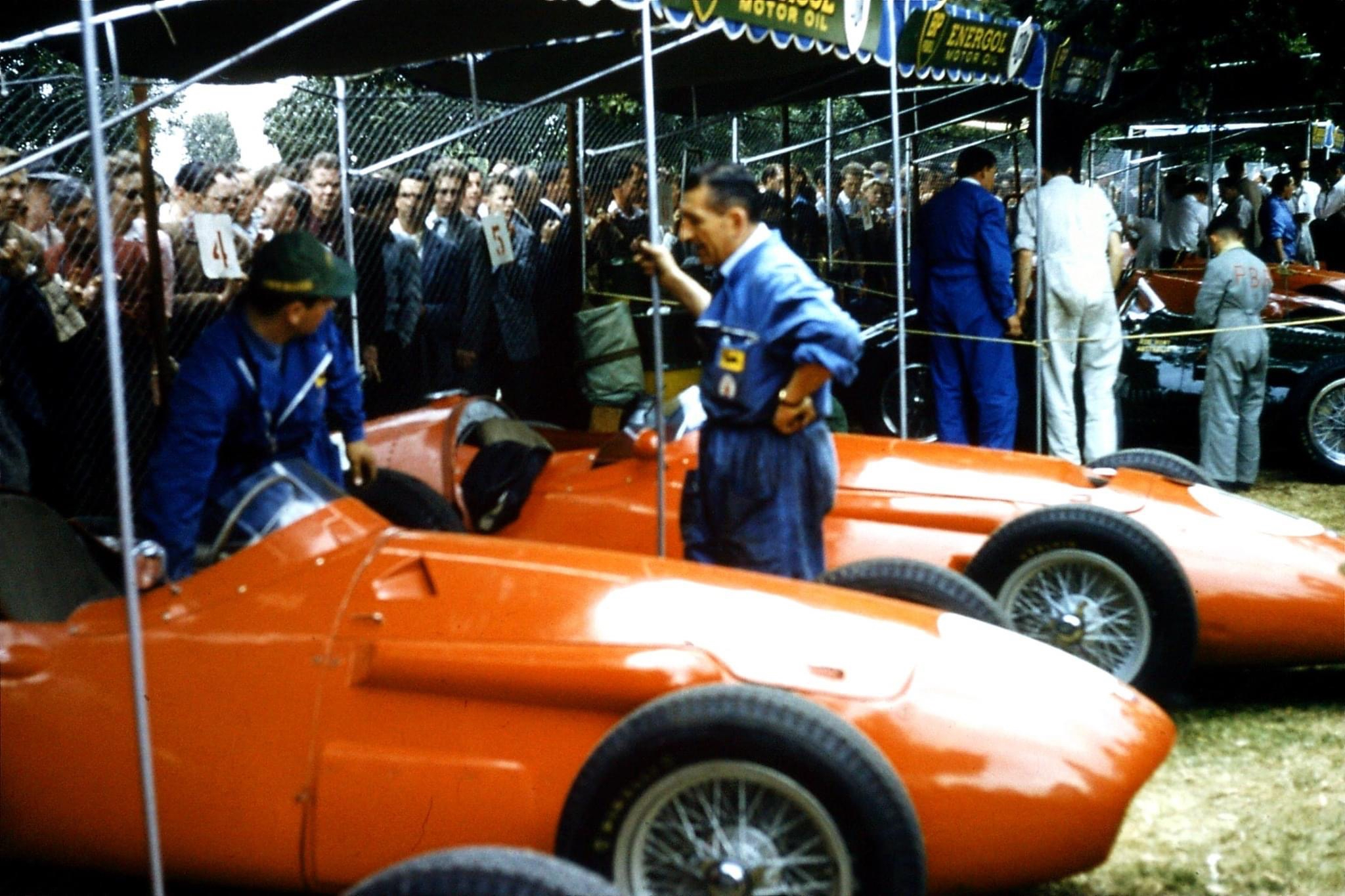
Reg Hunt #5 and Guerino Bertocchi #7 in Maserati 250Fs prior to Saturday practice, Albert Park, Australian Grand Prix, 1 December 1956…

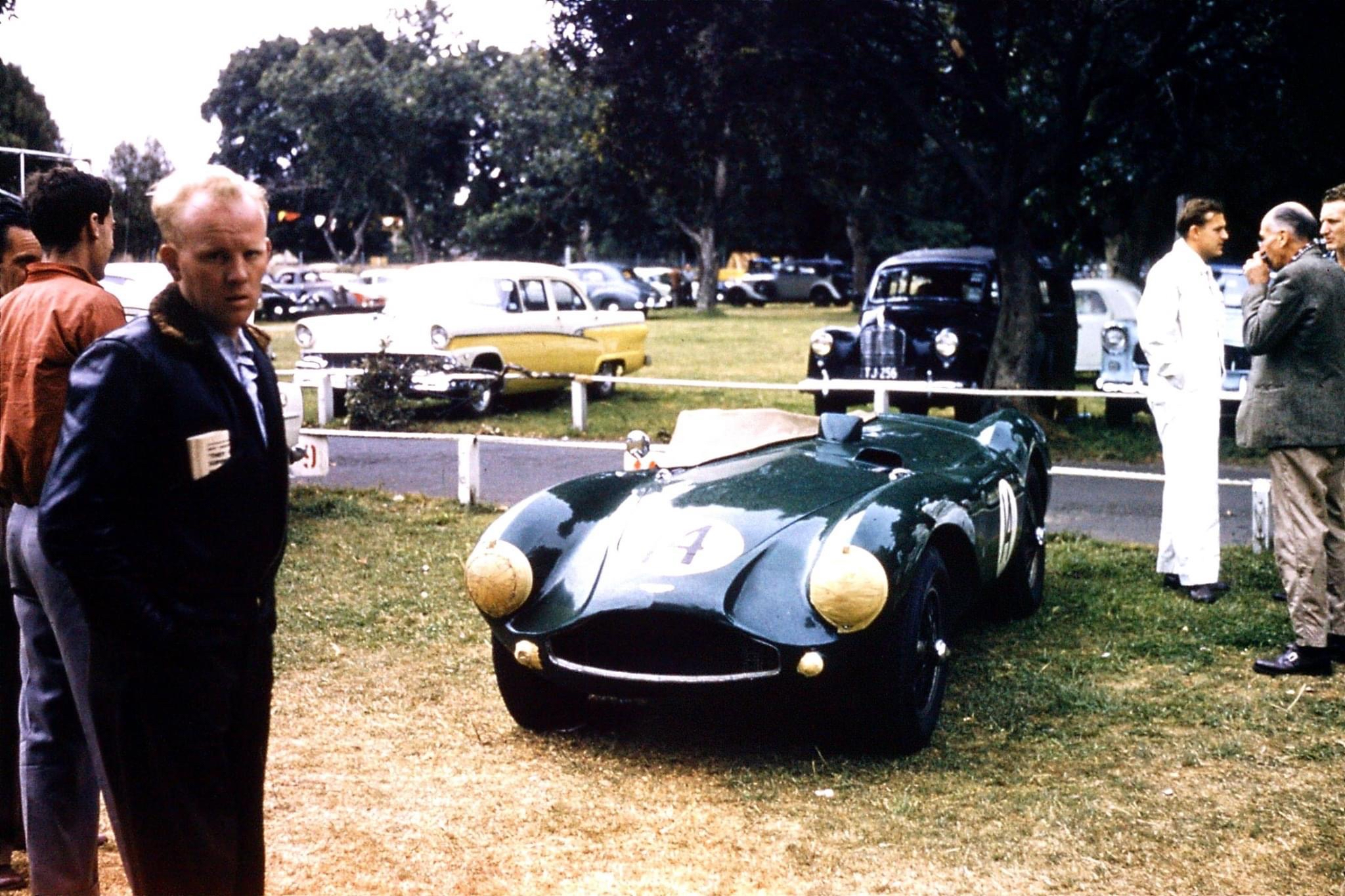
Hunt looks pretty happy with himself whilst Maserati’s legendary tester/mechanic Bertocchi wonders if everything is AOK with the Moss #2501. To the left of Hunt’s car is Tom Sulman’s Aston Martin DB3S.

James Lineham had a fantastic day at the ‘Park, the sun shone making it ideal for spectators, especially those with cameras. He used his expensive colour film wisely in the paddock, his camera wasn’t sophisticated, so best to take snaps of stationary or slow moving cars. Then he shot off some monochrome action work whilst he walked Albert Park’s huge expanse.

Bib Stillwell’s Jag XKD perhaps, on Lakeside Drive looking to the south of Albert Park Lake (J Lineham)
Paul England’s superb Ausca Holden-Repco, built after-hours by England at Repco Research (I Curwen-Walker)

James life spanned 1925 to 1997, he was a young enthusiast aged 31 when he attended this meeting. After his death his wife carefully went through all of his precious belongings, found these photographs and donated them to the State Library of Victoria for enthusiasts like you and I to see, in 2014.

Many thanks James and Catherine Lineham. Blurry though some of them are, they ooze atmosphere of a weekend spoken about in reverential terms by those fortunate enough to have attended. One of the journalists of the day, wrote of the weekend as ‘when Australian motor racing came of age’.

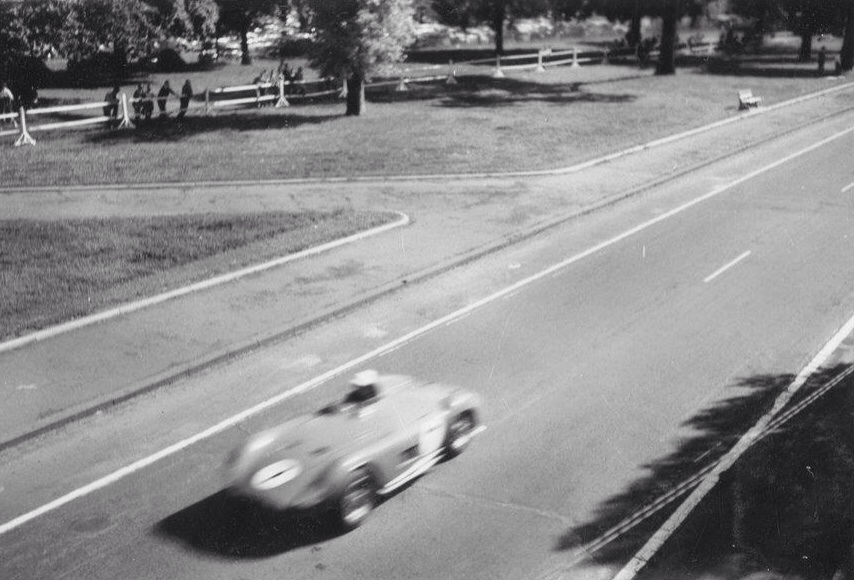
Moss or Behra Maser 300S on the pit or main straight, Aughtie Drive. Race direction these days the other direction, or clockwise (J Lineham)
Tom Sulman’s Aston Martin DB3S with Tom in the blazer at right (I Curwen-Walker)
Circuit map from the meeting program (G Dobie)

I’m obsessed with a few circuits in Australia in particular; Warwick Farm, Mount Panorama, Longford, Lobethal and Albert Park – Longford and the ‘Park especially. I live in Windsor 750 metres from Albert Park’s Austin Healey Corner/Turn 13, the Union Street/Queens Road second gear right-hander.

I run around it every other day, I think about the fellows who conquered it’s oh-so-quick unguarded challenges in the 1950s and do so in much more safety today. I feel its wonderful rhythm, vibe and sense of history all the time. These snaps gimme that vibe, Albert Park is a wonderful place to be even at 5.15am with only the park’s Daffy Ducks as company!

When originally posted, the article comprised James’ shots only, but the piece has grown over the years as other photographs have appeared online and I have plucked them from certain obscurity on FB.

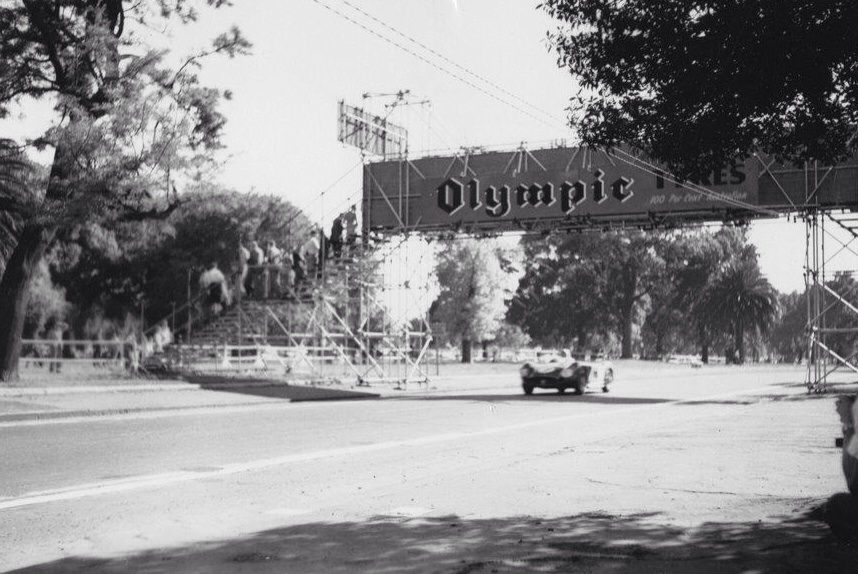
Vrrooom in a six-cylinder 3-litre, DOHC kinda-way. Moss Maser 300S. Aughtie Drive from the Olympic Tyres Bridge (J Lineham)
Reg Parnell’s Ferrari 555 Super Squalo with Peter Whitehead’s similar car at left (I Curwen-Walker)
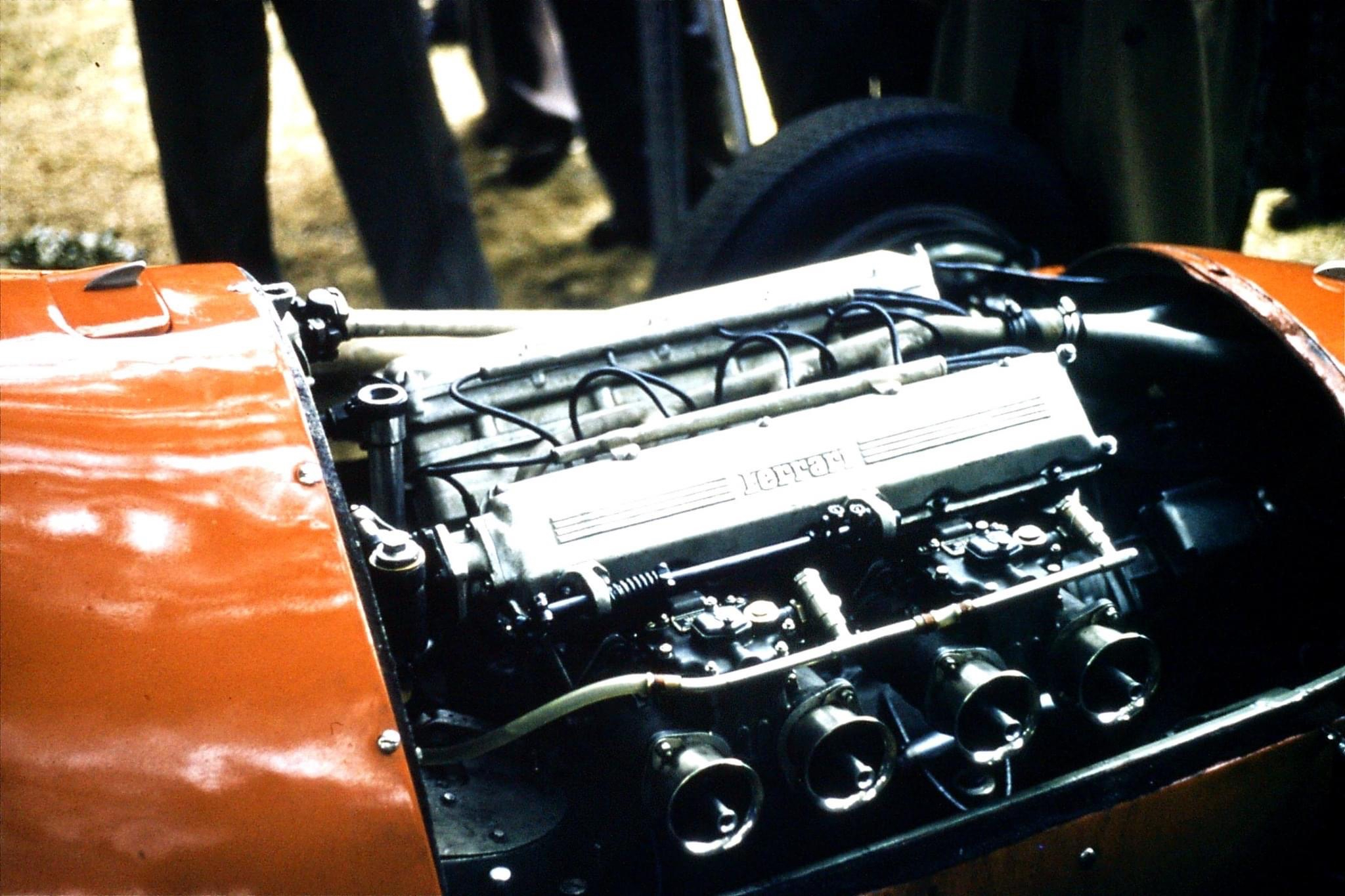
3.4-litre, DOHC, two-valve engine of Parnell’s car (I Curwen-Walker)

Attached are links to articles already written about this motor racing fortnight during the 1956 Melbourne Olympic Games which ‘put Melbourne, if not Australia on the map’.

In fact James had a big choice to make that day. He could have taken a vantage point on the men’s marathon course from Clayton to the Melbourne Cricket Ground. Algerian born Frenchman Alain Mimoun won it in 2:25.00 from Franjo Mihalic of Yugoslavia a minute and a half behind.

The Australian Tourist Trophy; https://primotipo.com/2016/01/29/1956-australian-tourist-trophy-albert-park/ and Australian Grand Prix; https://primotipo.com/2016/12/27/moss-at-albert-park/

Jean Behra, Maserati 250F (J Lineham)

The short story of the race is that Stirling Moss won the 80 lap, 250 mile event on 2 December 1956…

He did so by a lap from teammate Jean Behra, Peter Whitehead’s Ferrari 555 Super Squalo, Reg Hunt’s Maserati 250F and Stan Jones’ similar machine. It was a dominant display from the plucky Brit who was always, and still is immensely popular when he visits Australia.

International representation included the two works Officine Maserati drivers Moss and Behra (#1 above) who brought no less than five Masers with them. They shipped three 250Fs, two of the latest specification and an earlier chassis, and two 300S sportscars both of which remained in Australia post event. The cars were based at Reg Hunt’s Holden Dealership just up St Kilda Road on the Nepean Highway in Elsternwick a few kilometres from the circuit, the 300S’ being famously driven between workshop and racetrack.

Stirling Moss enroute to victory in his Maserati 250F (Melbourne Argus)
Prince Bira and Jean Behra in the Albert Park paddock (S Landrigan)

Jean didn’t have a great year, being comprehensively bested by one of the most gifted drivers in the world, but third places at Buenos Aires, Monaco, Reims, Silverstone and at the Nurburgring is hardly shabby. Over the two weekend Australian carnival it was Moss winning both the AGP and the Australian Tourist Trophy held the weekend before.

Moss raced #7 250F chassis number 2501 and Behra #1 2522. The spare car – 2507 – was driven by both Moss and Hunt during practice. At one point it was thought Jack Brabham may race it, not having an AGP ride that year, but it was not to be. A pity, by that stage Jack had two seasons of racing in Europe behind him so would have given all but Moss and Behra a good-go.

Two of the three Officine Maserati works 250Fs, chassis numbers as per text. #1 is Behra’s machine (I Curwen-Walker)

Scuderia Ambrosiana entered two Ferrari 555 Super Squalos powered by 3.4-litre 860 Monza four cylinder engines.

The AGP at this time was run to Formula Libre rules, the cars above were driven by #2 Reg Parnell, chassis number FL9002 and #3 Peter Whitehead, chassis FL9001. Whitehead was a regular visitor to Australia dealing with the family wool business and had won the Australian Grand Prix way back in 1938 aboard his ERA chassis R10B, when he was 24, in 1956 he was 42 years of age.

Whitehead started the carnival well winning the Bryson Industries Cup support event to the Australian Tourist Trophy the week before, ahead of Hunt and Kevin Neal, Maserati A6GCM.

Whitehead and Parnell were unlikely to be on the pace of the works Masers but would be good bets as best of the rest, as indeed they were, Peter was third and Reg sixth. The Parnell car remained in Australia, click here to read about it;

Car #9 in the background of the photo above is Lex Davison’s Ferrari 500/625, Alberto Ascari’s 1952/3 dual World F1 Championship winning chassis #0005, iconic in Australia and winner of the 1957 and 1958 AGP’s at Caversham and Bathurst respectively. The 3-litre car, which then carried chassis number #0480 was seventh, five laps behind Moss with various problems.

Behra and Moss at the driver’s briefing (S Landrigan)
(J Lineham)

Ken Wharton was a well credentialled Brit in both single-seaters and sportscars, but his ‘Ecurie Du Puy’ (John Du Puy was an American resident in Switzerland) silver Maserati 250F was said to be, and looked, tired.

Chassis #2521 had been Behra’s works machine – a new car that season – and raced in eight events earlier in the year before being sold to Du Puy. But it looked in-need-of-a-birthday before leaving Europe, it was the latest bit of kit, properly prepared the car was a top-three contender.

Ken retired the car on lap 19 and then journeyed on to race the Maserati and his Ferrari Monza in New Zealand that summer, unfortunately dying in a tragic accident aboard the Monza on 12 January 1957 at Ardmore during the NZ GP weekend.

The best prepared and equipped of the locals were the well-heeled Victorian motor dealers, Reg Hunt and Stan Jones in Maserati 250Fs of similar specification and cobbler Lex Davison, who owned a shoe manufacturing and distribution business.

Lex’ Ferrari was older than the 250Fs but was quick with its 3-litre four cylinder, DOHC engine and was beautifully prepared by Alan Ashton at AF Hollins motor engineers just up the road from the ‘Park in Armadale. In fact all three of these cars lived close to the circuit. Hunt was fourth, and best of the locals, Jones fifth and Davison seventh.

(J Lineham)

Doug Whiteford was another local – very – his dealership/workshop was in Carlisle Street St Kilda, a drop-kick from Albert Park.

Whiteford’s first Talbot-Lago T26C, chassis #110007 was an astute purchase, the robust, simple design was well suited to Australian events. It was beautifully prepared and driven by ‘Dicer Doug’ who won two of his three AGPs in it, at Bathurst in 1952 and at Albert Park in 1953. Click here for a piece on Doug’s TLs;

The purchase of the second T26C (photo above) wasn’t quite so smart though. An earlier chassis #110002 but later spec mechanically than #110007 sounded ok but the game in Oz had moved on. He needed something more modern and competitive.

Whiteford was a consistent third in the ’55 AGP at Port Wakefield behind Brabham and Hunt but by ’56 the old Talbot Lago was simply not on the pace. Still, his bankroll was more modest at the top level than most. A shame, as Doug, 42 then and as vastly experienced and tough as they come didn’t give a yard to any of the locals. Whiteford in a 250F or something of that performance envelope would have been worth travelling a few miles to see. It’s a shame he bought a 300S off Maserati after this meeting rather than a 250F.

The Whiteford Talbot Lago T26C in the paddock, and below being pushed by Doug and the crew towards the start (I Curwen-Walker)
(unattributed)
Kevin Neal, Maserati A6GCM 2.5-litre (J Lineham)

Reg Hunt made everybody take notice in his ‘Flying Bedstead’ Hunt JAP Spl in hillclimbs and on the circuits in the late 1940s/early 1950s and then refined his craft with a season racing a 500 F3 Cooper machine in the UK in 1954.

On his way back to Oz he acquired a superb Maserati 250F engined Maserati A6GCM chassis #2038 (above with Kevin Neal at the wheel) with which he belted the locals in 1955. Only mechanical failure kept him from the ’55 AGP won by Brabham’s Cooper T40 Bristol. Hunt ordered a 250F for ’56, he was allocated a rebuilt 1955 works machine chassis 2516 with Melbourne haulier Kevin Neal – who had also raced an ex-Hunt Cooper T53 Bristol – the purchaser of the A6GCM.

Neal had a shocker of an AGP, bending the car severely and injuring himself late in the race when he lost the car in the greasy conditions. I wrote a long feature about the A6GCM;

Stan Coffey’s Ferrari 750 Monza sportscar below. He raced the car in the Australian TT, DNF in the classic won by Moss from Behra and Ken Wharton’s Ferrari Monza.

It’s a rare, clear shot of the man, now whatever became of him? There is an obscure article topic, he raced a few interesting cars too, Cooper Bristol etc…

(J Lineham)

Entry List…

(B Moyle)

Etcetera…

(J Hunting)

The photograph above is in the AF Hollins Pty.Ltd workshop in 604 Hight Street, Armadale (the building still exists as a tyre fitter/retailer). Julian ‘Gib’ Barrett’s #19 Alta GP-2 1.5 s/c alongside Lex Davison’s Ferrari 500/625. Behind are the two Ferrari 555s, Reg Parnell’s partially obscured on the left and #3 Peter Whitehead on the right. The other car we can just see at far left is the Wharton silver Maserati 250F.

(Gray Family)

Reg Parnell’s Ferrari Super Squalo, Lex Davison’s Ferrari 500/625, looking smaller in comparison, and the dark coloured Kevin Neal Maserati A6GCM which did not look quite so pristine at the end of the weekend.

(I Curwen-Walker)

Quite what is going on here I’m not sure, it’s most certainly not the start of the touring car race!

(I Curwen-Walker)

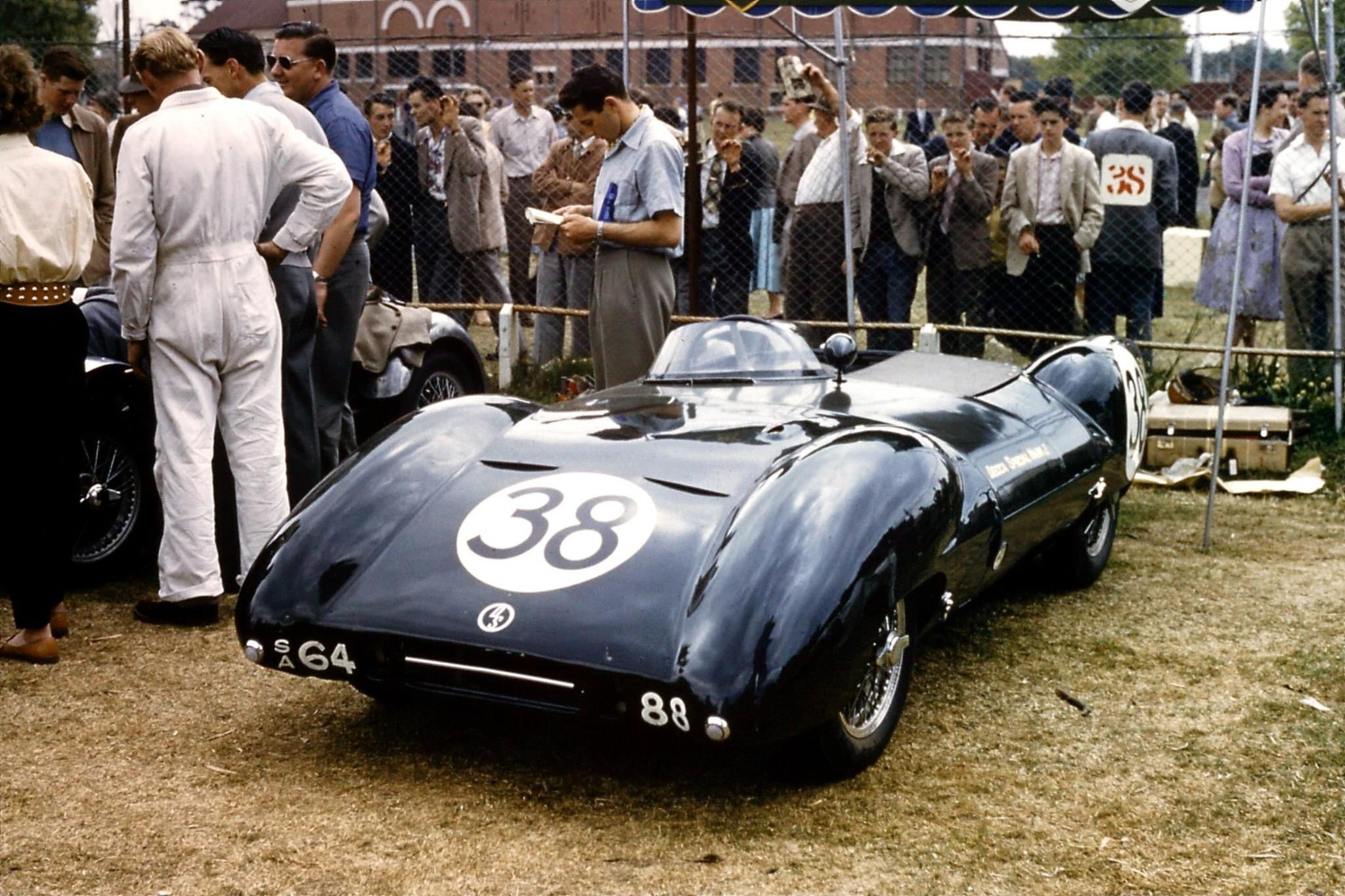
Derek Jolly’s very successful Lotus 11-esque Decca Mk2 Climax. 13th outright and first in class in the Australian Tourist Trophy won by the Moss Maserati 300S. See here for more on Derek and his cars; https://primotipo.com/2017/11/09/dereks-deccas-and-lotus-15s/

(R Jackson)

Otto Stone’s MG K3 looking very lonely in the seemingly deserted Albert Park paddock.

Stone was a legendary driver/engineer who fettled all manner of exotic machinery not least Stan Jones’ Maserati 250F during Stan’s glory years including his 1958 Gold Star and 1959 AGP Longford campaigns.

Stone placed second in the curtain raiser, opening event on the first weekend of the carnival, the 16 lap Argus Cup handicap for racing cars. Neil Charge won aboard the Charge brothers MG Special with the C Martyr Sunbeam third.

(R Jackson)

Our engineering oriented friend is taking a good, hard look at Jack Myers’ Cooper T20 Waggott-Holden aka WM Holden. The 2.4-litre Waggott twin-cam head, six-Amal fed Holden Grey six-cylinder engined Cooper placed 12th and last in the AGP. The story of the car and its amazing driver/engineer is here; https://primotipo.com/2015/02/10/stirling-moss-cumberland-park-speedway-sydney-cooper-t20-wm-holden-1956/

(O Plada)

Bibliography…

 8W.forix.com on Maserati 250F chassis numbers, oldracingcars.com

Photo Credits…

James Lineham, State Library of Victoria, Simon Landrigan, Brian Moyle Collection, Gordon Dobie Collection, Oscar Plada, John Hunting, Gray Family Collection, Ian Curwen-Walker, Melbourne Argus, Ron Jackson

Tailpiece…

(I Curwen-Walker)

The Maserati corner of the Albert Park paddock, how good would that have been! The factory spare and Behra’s race-car in shot with Kevin Neal’s 2.5-lite A6GCM behind being looked after by the short-arse mechanic.

Finito…


image

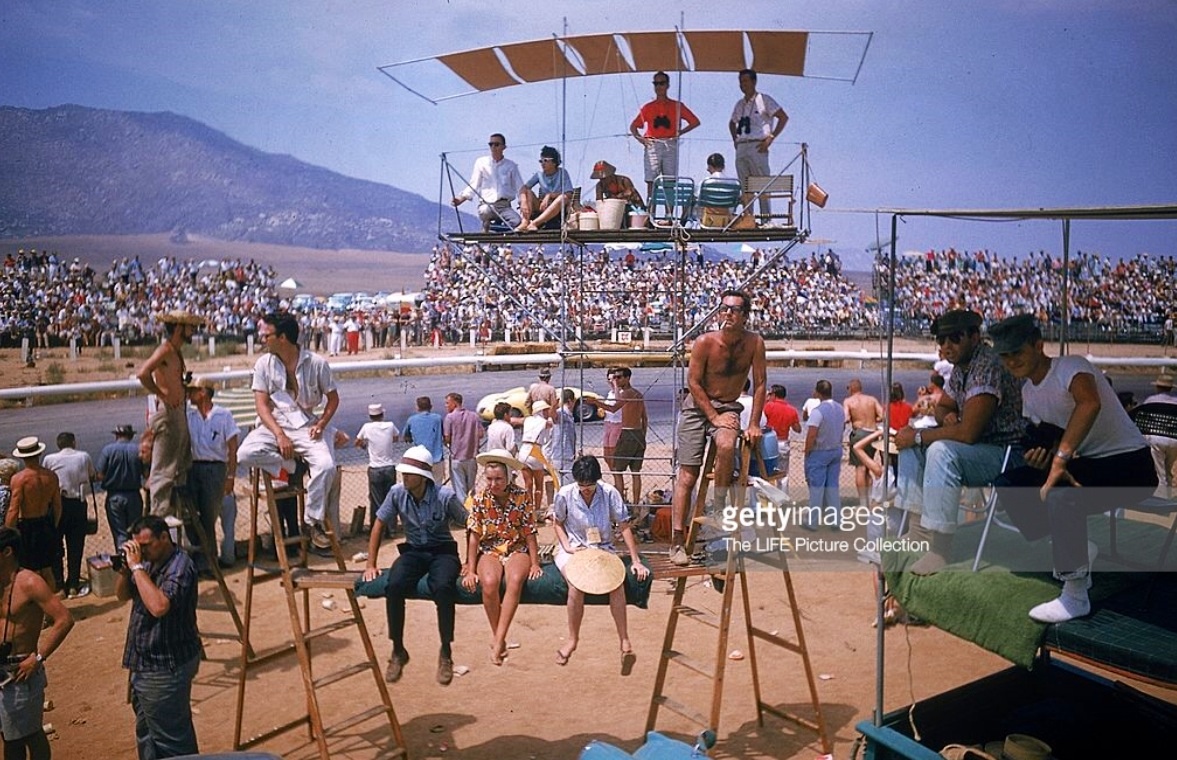
Amazing panorama of a hot, happy Riverside crowd in 1959, no details of date or race meeting, race in progress for sportscars…

These days with so much competition for our leisure dollars promoters globally find it hard to get such crowds. In the ‘immediate’ post war years there was pent up demand and plenty of money in a booming post war economy to draw a crowd to just about anything.

By the look of some of the grandstands, it would have been more dangerous as a spectator than as a racer…

Credit…

JR Eyerman


image

(T Watts Collection)

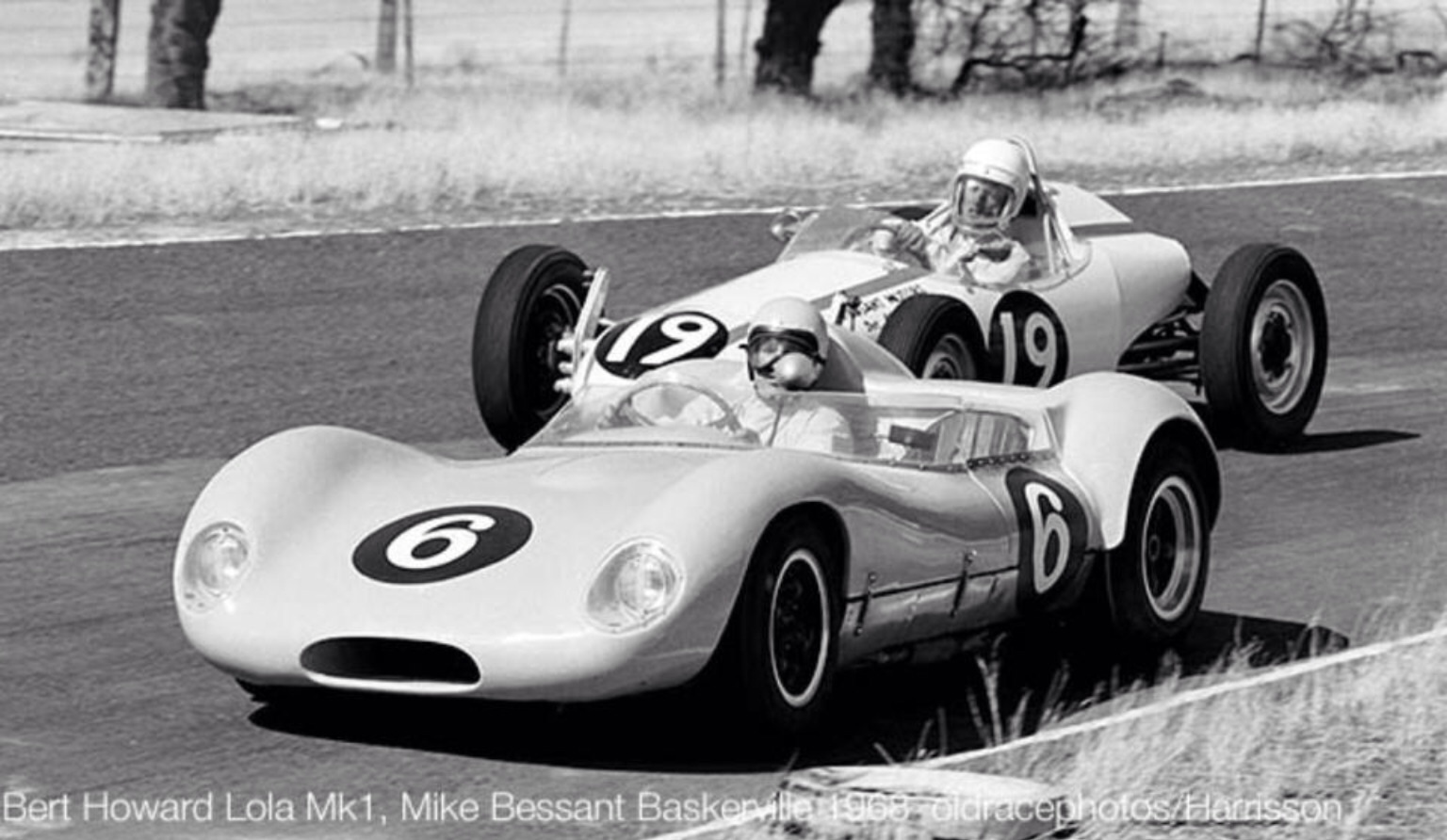
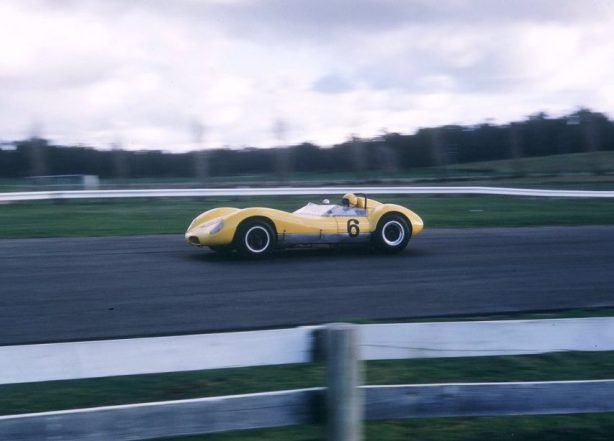
A favourite car, favourite marque, favourite colour. Bert Howard’s Lola Mk1 Climax at Symmons Plains, Tasmania in April 1968…

It’s a simple enough shot I suppose, a well executed pan with classic blurred background, but too good not to share.

The colour is so clear it could be 2017, but the low roll bar, helmet and background devoid of advertising hoardings gives it away a bit, its 1968. The small, lithe little machine looks like a ‘big banger’ doesn’t it?, but the 1098cc Coventry Climax FWA engined car is anything but that.

The Lola Mk1 was seminal in Eric Broadley’s early commercial success. The story of the car itself, it’s development and specifications is so well told on Lola Heritage, just click on the link here to read about these magic cars;

http://www.lolaheritage.co.uk/history/types/mk1/mk1.htm
Bert’s car, Lola Mk1 chassis ‘BR15’  first came to Australia to the order of ‘Scuderia Veloce’ supremo, David McKay in late 1960.

By the time David McKay landed the sporty and Formula Junior Lola Ford ‘BRJ18’ the former World War 2 veteran, racer and motoring journalist had already been competing since the late forties. He had second place in the 1955 Hyeres 12 Hours in southern France together with Tony Gaze aboard a ‘customer’ Aston DB3S and the 1958 Australian Tourist Trophy, Bathurst, victory as career highlights to that point, the latter aboard his ex-works Aston Martin DB3S, see here for that car(s); https://primotipo.com/2017/09/28/david-mckays-aston-martin-db3ss/

Most international readers would be by now familiar with McKay from various of my articles. He was a racer at elite level who founded ‘Scuderia Veloce’ to race his own cars circa 1959. The team very shortly thereafter morphed into an enterprise which entered cars for others including internationals, Chris Amon, Graham Hill and Jackie Stewart- and into a retail motor dealership on Sydney’s North Shore which sold Ferrari, later Volvo and from 1969 Porsche cars.

McKay also aided and abetted the careers of many drivers from the early days- most notably Amon, Spencer Martin, Greg Cusack and right through into the 1970’s Larry Perkins and open-wheeler Formula Pacific ace John Smith in the latter period.

Throughout this era of the mid-fifties to the mid-seventies McKay was the most influential Oz motoring journalist as motoring editor of Sydney’s Daily Telegraph and Sunday Telegraph newspapers. See here for more;

Pete Geoghegan: Ferrari 250LM ‘6321’: Bathurst Easter 1968…
image

David McKay, Lola Mk1 Climax, Forrests Elbow, Bathurst, Easter 1961. Won the 3 lap under 1500 scratch and was 4th outright and 1st in class in the 10 lap main sportscar event won by the Matich Lotus 15 Climax (J Ellacott)

A mate of McKay’s, dentist David Lewin based in London had written to the Sydneysider and extolled him of the virtues of both Lolas and McKay soon did a deal with Graham Broadley, Eric’s brother to acquire ‘BR15’, which was a works car raced by Peter Ashdown.

The FJ was a new car built for a category which was exploding globally. The shadows of the War by then had to a large extent diminished, globally the worlds economy was performing well and consumer credit was becoming more widely available- many young men could afford to go motor racing and FJ was very much a class of choice.

In Australia, finally some permanent venues were being built- Warwick Farm, Catalina Park, Lakeside, Sandown Park, Calder and others were all opened in the early years of the sixties. In fact McKay was keen to land both Lolas in time for the first Warwick Farm opening meeting in December 1960. ‘BR15’ was not available until the end of the British racing season however.

Between the purchase of the cars and their arrival in Australia the Australian Federal Government had increased sales tax on imported cars to 40%. Much to McKay’s chagrin the changes applied to both road cars AND racing cars including those ‘on the water’! His landed price having increased hugely, McKay quickly did a deal to relieve the financial pressure so created to sell the FJ to Sydney insurance broker Tom Corcoran who had been racing a Lotus 11. Corcoran raced the car under the SV banner thereby getting some support at race meetings and fuel and oil provided by Castrol who had about then done a deal with McKay. David of course raced the Mk1.
image

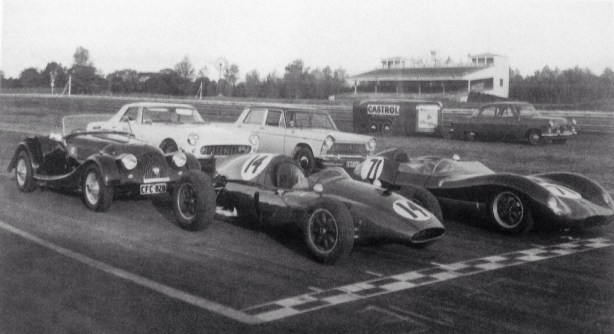
Scuderia Veloce on Warwick Farm’s pit straight in 1962. Morgan Distributors Morgan Plus 4, Tony Loxley’s Ferrari 250 GT, Fiat Importers Fiat 1800, ‘Old Nail’ Cooper T51 Climax, Lola Mk1 Climax (J Fullarton)

Scuderia Veloce at the time included the little Lola, a Nardi modified Fiat 1800 taken out to 2 litres owned by Fiat Australia which David raced in the burgeoning Appendix J touring car class and his Jaguar.

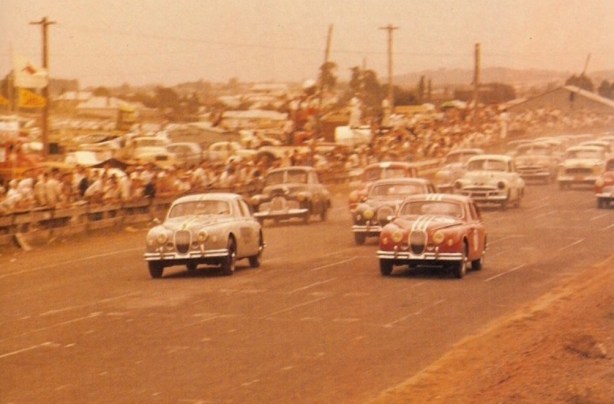
By early 1960 his first Jaguar Mk1 3.4 ‘Grey Pussy’, the dominant touring car in Australia at the time had been sold to Ron Hodgson. David bought a second Jag, a 3.4 litre Mk1, like the first built by the Jaguar Competition Department, which was co-owned with Australian Jaguar importer Bryson Industries. He won the very first Australian Touring Car Championship, a one race event, at Gnoo Blas, Orange in the red Jag in early 1960 beating Bill Pitt’s 3.4 litre Mk1 and Hodgson’s car which by then was 3.8 litres in capacity.

He also occasionally raced Sydney businessman/yachtsman Tony Loxley’s Ferrari 250GT coupe in GT races.

In single-seaters, for a short time in 1959 McKay raced a new (Victa Industries owned) Cooper T51 Climax FPF 1.9 and after the 1961 Australasian International season- the Victa owned car having been sold to Bib Stillwell he acquired a Cooper T51 Climax FPF 2.2 from Jack Brabham. McKay realised, approaching forty that his time at the top was limited and he ‘needed to get on with it’ in single-seaters!
image

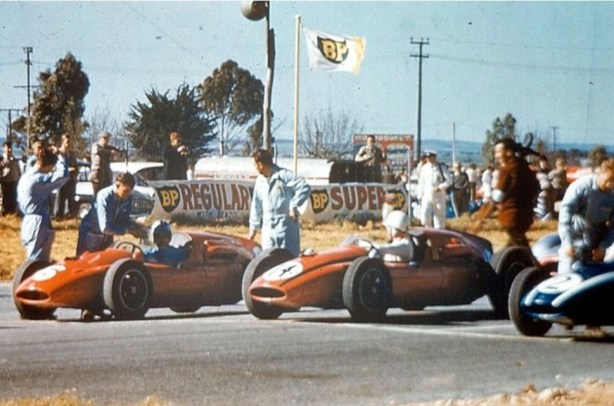
Mallala AGP weekend 1961, this will be a heat as Bill Patterson started from pole after acrimony over qualifying times and Stan Jones DNS the GP itself after mechanical mayhem intruded. #6 Bib Stillwell in his new Cooper T53 Climax, #14 McKay in ‘Old Nail’ Cooper T51 Climax and #2 Stan Jones Cooper T51 Climax. That’s Gerry Brown tending to Bib and Kevin Drage with his hand on the tail of the car (K Drage)

The ‘Old Nail’ Cooper Jack Brabham had for sale was raced by Ron Flockhart and Roy Salvadori that summer as part of ‘Jack’s team (‘Ecurie Vitesse’) was none other than Bruce McLaren’s ex-works machine (chassis number either ‘F2-5-57’ or ‘F2-7-59’), the chassis in which Bruce took his first world championship GP victory at Sebring in late 1959 and another win at Buenos Aires in February 1960.

It wasn’t in the full flush of youth as a ’59 (or was it 1957!?) car with transverse leaf, as against coil sprung rear end but was still a pretty good thing to go head to head with Cooper mounted Stan Jones, Bill Patterson, Lex Davison, (noting Lex’ interludes in Aston Martin DBR4’s) Bib Stillwell, (ditto!) Alec Mildren and the rest of the local heroes in Australia.

Indeed, the difference between an Australian Grand Prix ‘Old Nail’ win for McKay and 3rd place at Mallala in October 1961 was a jumped start and 60 second penalty in the opinion of the race stewards…but not in the opinion of many informed onlookers! A story for another time. Lex Davison won the ’61 AGP, his fourth and last AGP victory aboard a Cooper T51 borrowed from Bib Stillwell (the ex-Victa Industries car raced briefly by McKay) and Bibs later, quicker!, Cooper T53 with McKay’s T51 third. As I say, that meeting is very much a story in itself for another time.
image

Start of the Australian Touring Car Championship race at Gnoo Blas, Orange, NSW 1 February 1960. Ron Hodgson in Jag Mk1 3.8 ‘Grey Pussy’ at left, McKay in his new Mk1 3.4 right, Bill Pitt behind in another Mk1 3.4 then the Holdens led by Pete Geoghegan’s black 48-215. McKay won from Pitt and Hodgson (unattributed)

So, McKay was a busy boy and Lola was only one of his toys! McKay was well aware of the cars speed which was both demonstrated by the performance of the cars in the UK and Derek Jolly’s Coventry Climax FWA powered Decca’s which raced in Australia from the mid-fifties- and which McKay was well familiar with on-and off circuit.

The dominant sportscars in Australia at the time were Ron Phillips’ Cooper Jaguar, Doug Whiteford’s Maser 300S, Derek Jolly’s 2 litre FPF powered ex-works Lotus 15 and then Frank Matich’s Leaton Motors owned ex-works 2.5 litre FPF powered Lotus 15 from the time it arrived in Australia in 1960. Matich then transferred his raw pace to a Lotus 19 Climax which further accentuated his dominance (which segued to Lotus 19B, Elfin 400 Olds aka ‘Traco Olds’, Matich SR3 Repco and Matich SR4 Repco- a decade of sportscar wins for FM in Australia)

image

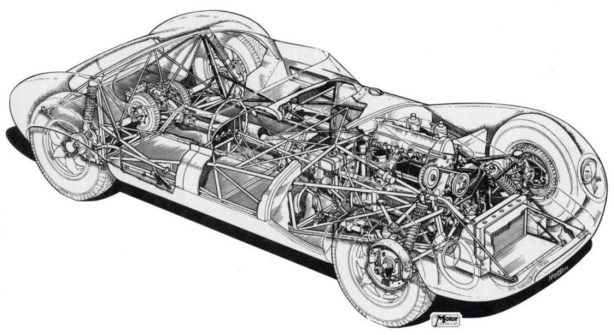
‘BR15’ at Symmons Plains 1968: spaceframe chassis, wishbone upper and lower front suspension with coil spring/shocks, 1098cc originally but by now probably 1220cc Coventry Climax Weber fed FWA engine and rubber bungee attached fuel tank all clear (oldracephotos.com)

The Lola was a famously light, beautiful handling car but it was not an outright contender toting only 1100cc so its place in the local order was to win the 1100 or under 1500 class and punch above its weight in outright competition.

McKay’s cars finally arrived from the UK in October 1960, their first outing a test day at Warwick Farm in October before the inaugural Warwick Farm open meeting on 18 December 1960. Bob Atkin had by then been engaged by McKay to look after the Lolas, Atkin formed a career with SV’s and was still Dealer Principal of Scuderia Veloce Motors when it was sold to Laurie Sutton a decade or so hence.

McKay won his class in the famously very wet meeting whilst finishing 2nd outright behind Matich’ Lotus 15 and ahead of Derek Jolly’s 15, Bob Jane’s Maser 300S, Doug Chivas’ Jag D Type and others. In a great day for McKay, he won the first race held at the Farm, a sportscar race in the Morgan Plus 4 (chassis  #4590 was one of the first two imported into the country owned by by Sydney jeweller Ron Coulsten), was fourth in the Appendix J touring car race in the Fiat and took fastest lap as well as winning the 1500 class in the Lola Mk1. A great day at the office!

Over the next 12 months the car was unbeatable in its class with successes at Ballarat Airfield, Hume Weir, Longford and Bathurst.
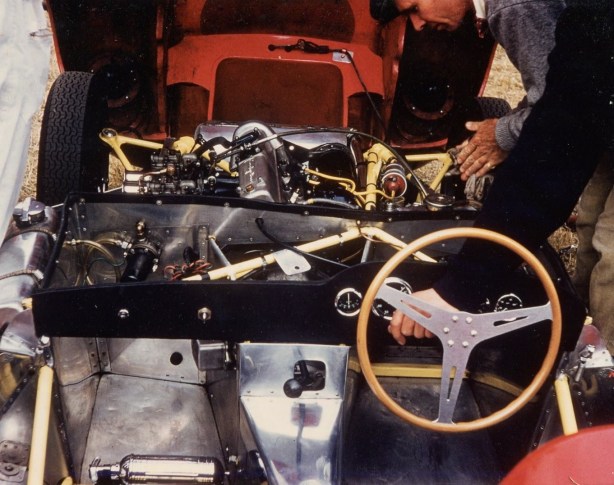
Business end of the Lola, Longford 1960 (G Richardson)
image

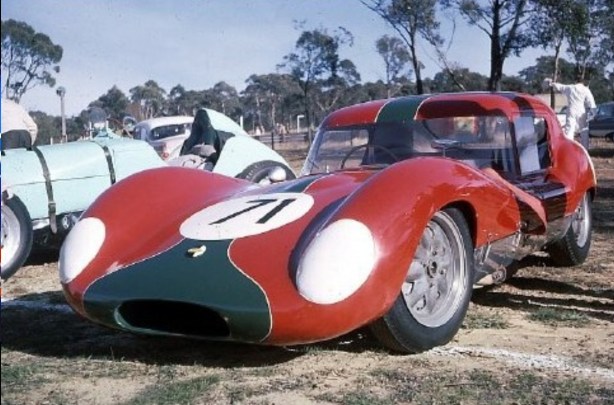
McKay’s Lola ‘BR15’ in very ugly Appendix K GT guise in 1961, circuit unknown. Gives new meaning to ‘slab sided’ ‘dunnit (M Schagen)

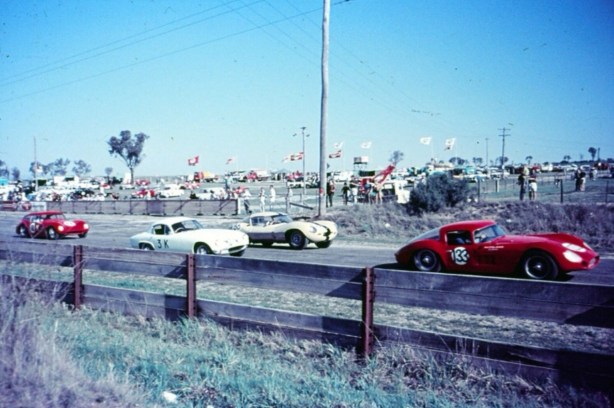
The Confederation of Australian Motor Sport adopted Appendix K for GT cars for the 1960 season which made sense in terms of attracting people to buy and race closed coupes such as the Lotus Elite and Porsche Carrera being sold at the time. It left large numbers of sportscars out on a limb in the sense that promoters now chose between running races for the two categories-that is between Appendix C Sportscars and Appendix K GT’s.

CAMS oddly, but sensibly allowed open cars to compete as long as they had ‘a lid’. As a consequence all manner of cars including such exotica as D Type Jags, Maser 300S…and McKay’s Lola Mk1 were ‘converted’ from open sportscars to closed coupes.

The conversions were usually as ugly as sin, Bob Jane’s Maser 300S arguably the exception, with David’s Lola definitely in the ‘fugly’ category as the photo above proves! The work was done by Clive Adams North Sydney panel shop, ‘ there a master of aluminium work, one Stan Brown, had a small corner where he worked his magic’ as McKay so eloquently put it. ‘That it turned out an ugly duckling there is no doubt’. To make matters worse the increase in weight of the car and ‘top heaviness’ ruined the beautiful balance of Broadley’s original design.
image

1961 GT Racing shot: Bob Jane, Maser 300S Coupe, Leo Geoghegan Lotus Elite, Frank Matich Jaguar D Type Hardtop and the red car is Keith Malcolm’s Skoden, Bathurst October 1961 (MK1220)

McKay in his autobiography describes the silver lining in the GT conversion work as the introduction to him of Spencer Martin, who worked at Adams shop and had started racing in a self built sportscar. Later they would achieve much together with Spencer driving both the SV Brabham BT11A Climax after Graham Hill had finished with it at the end of the 1964 Tasman Series and McKay’s famous, glorious ‘Red Lady’- his Ferrari 250LM.

The Lola ‘GT’ cannot have been too bad mind you, McKay was 2nd in the 50 mile, one race 1961 Australian GT Championship held at Warwick Farm in July 1961. Frank Matich won in a Jag XKD ‘GT’ from Brian Foley’s Austin Healey Sprite Hardtop and Bob Jane’s Maser 300S Coupe.

As McKay focused on other cars he sold the Lola to Greg Cusack, the young motor-trader and rally-driver from Canberra was a man on-the-rise. Cusack raced the car for the first time, still under the SV banner, at Warwick Farm in December 1961. He achieved the same levels of success with it in the following twelve months as McKay.

Cusack also had an occasional race in the ‘Old Nail’ Cooper T51 Climax during 1962 including a very solid 4th in the ‘Bathurst 100’ Gold Star event on demanding Mount Panorama.

McKay played an important role in Chris Amon’s nascent career, running the young Kiwi in the Australasian International season aboard his Cooper T53 Climax in 1963- it was during that summer that Reg Parnell spotted Chris’ talent and spirited him off to Europe.

Chris had a few drives of McKay’s Coopers (Old Nail T51 and T53) in Australia in the second half of 1962 at Sandown and Mallala during practice and at the Gold Star season ending round at Warwick Farm in mid-October where he raced the T51 to 3rd place in the Hordern Trophy behind Bib Stillwell and John Youl. The talented young Kiwi also raced the Lola Mk1 at Sandown in September to a class win in the Victorian Sportscar Championship.

The Lotus 23’s then beginning to appear gave the Lola a taste of competition for the first time. Cusack could see the writing on the wall so acquired two Elfins, a Catalina single-seater and Mallala mid-engined sportscar with which to take his career forward.

Cusack remained close to McKay, he would several years hence drive the teams Brabham BT23A Repco after Spencer Martin’s departure from Scuderia Veloce.

Lola was offered for sale and sold to to another very quick young driver, John Martin of Katoomba in Sydney’s Blue Mountains who had been competing in a Lotus 15. He first raced the car in January 1963 and achieved much success despite the more competitive grids in which the Lola now competed.
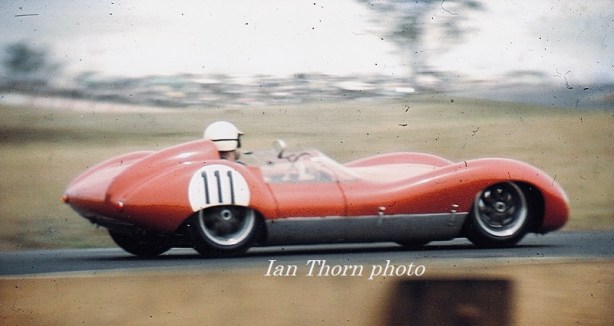
John Martin, Oran Park circa 1963
image

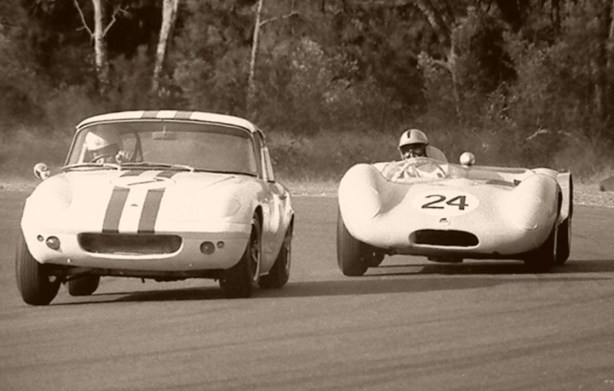
Pete Geoghegan in ‘BR15’ giving Niel Allen’s new Elan heaps at the ’66 Warwick Farm Tasman meeting in February. It was a very effective ‘demo’ of the little cars pace despite advancing years and race miles. Geoghegan was doing as many laps in little lithe Lotuses at the time as the Touring Cars for which he was famous- he would have found Lola very much to his liking I suspect (B Wells)

Frank Demuth, a Sydney accountant was the next owner having bought the car in early 1964. He gradually got the hang of it, as a newcomer to racing, but soon traded it in after 12 months on the Lotus 23B Ford raced by Pete Geoghegan, the Geoghegan brothers were Australia’s Lotus importers.

Rather than leave the car sitting on the Parramatta Road used car lot, Pete decided to have a run in it to remind everyone Lola was about and for sale. He had the car painted the wonderful shade of yellow and added 8-inch wheels to get a bit more grip. By now the car’s Climax FWA was said to be 1220cc in capacity.

Geoghegan entered it in the 1966 Warwick Farm Tasman meeting sportscar races and gave Niel Allen’s ex-Leo Geoghegan Lotus Élan 26R and Demuth plenty of curry in the 23 he has just acquired! Still, Pete was a rather handy steerer whatever the theoretical superiority of the 1.6-litre mid-engined, Lotus/Ford twin-cam powered Lotus 23! The feature race, for the record was won by Greg Cusack in a Lotus 23B from Demuth, Geoghegan and Bob Jane’s E Type Lwt.

It was at this point that Bert Howard responded to the Geoghegan’s March 1966 ‘Racing Car News’ advertisement, asking price $A3400- read it and weep! It was a long drive from Hobart to Sydney and back but no doubt Bert had a big smile as his car towed ‘BR15’ onto the ‘Princess of Tasmania’ at Port Melbourne for the final leg of the 1600 Km trip home.
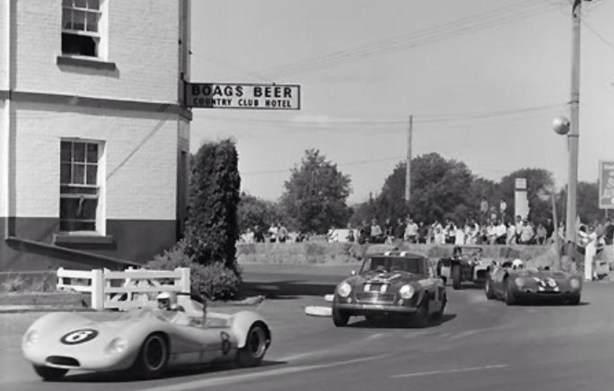
image

Longford 1968: Bert Howard’s Lola in front of Doug Whiteford, works Datsun Fairlady, John Roxburgh Lotus 23C Ford and Ian Maudsley, Lotus Super 7 (oldracephotos)

There the car was beautifully prepared and presented for years at Longford, Symmons Plains and Baskerville, if increasingly outdated as the mid-engined hordes grew exponentially throughout the 1960’s. In the smaller capacity classes these cars included the Lotus 23, various local 23 ‘clones’, the Elfin Mallala, Elfin 300 and others.

Bert sold the car in the early seventies to Kent Patrick who raced it in various historic events before selling it to Kerry Luckins, well known in motorsport as the General Manager of Paul England Engineering in Melbourne, a Light Car Club stalwart and the ‘on-circuit’ Sandown commentator.
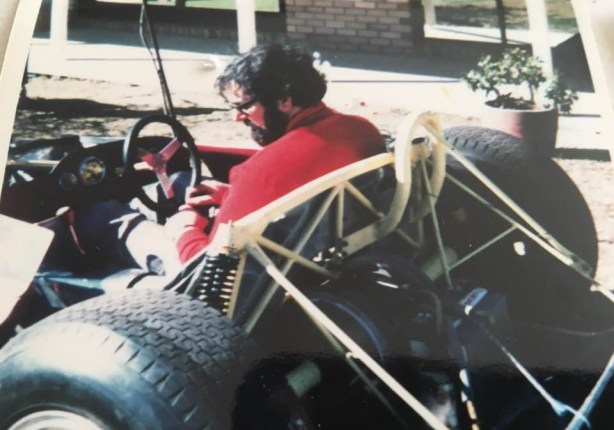
Proud new parent, Kerry Luckins picks up his new Lola from Kent Patrick’s, son Kurt observed ‘It still had the big rear tyres’. (Luckins Family_

Kerry stripped the car and rebuilt it fully with the assistance of  Jim Shepherd. It is in this period in the earlyish days of historic racing that I remember the Melbourne based car and later when raced by Ian and his son Nick McDonald, the car always looked ‘a million bucks’ and was very fast as the McDonald cars always are.

The car left Australia circa 2000 when sold to Tony Moy of Page and Moy, the specialist UK motor racing travel agency. Forty years had elapsed between the cars departure from and return to the UK- a great pity as the lovely little car had been an enduring and ever-present part of the Oz racing scene and a ‘belle of the ball’ wherever it appeared.

It never looked better than in its yellow phase in Bert Howard’s hands mind you…
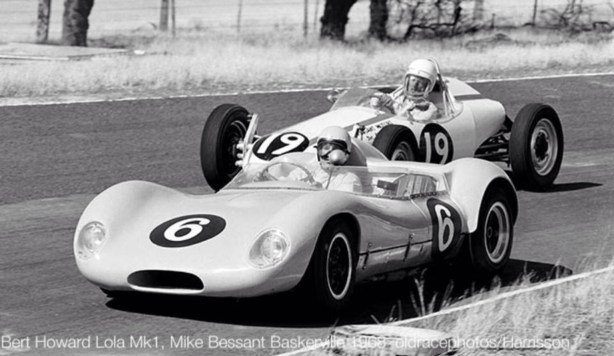
Etcetera: David, Graham and Friends…
image

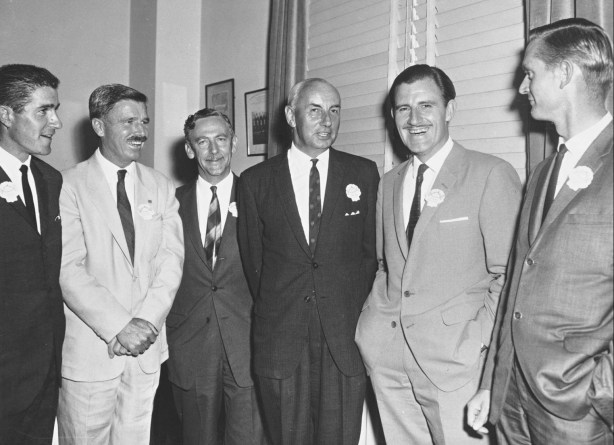
(Warwick Farm)

Warwick Farm function during the Tasman Series, perhaps 1964, the year Graham Hill drove McKay’s Brabham BT11A. Left to right- unknown, McKay, unknown, Geoff Sykes Warwick Farm promoter and manager, GH and Mike Kable, motoring journalist.
(Luckins Family)

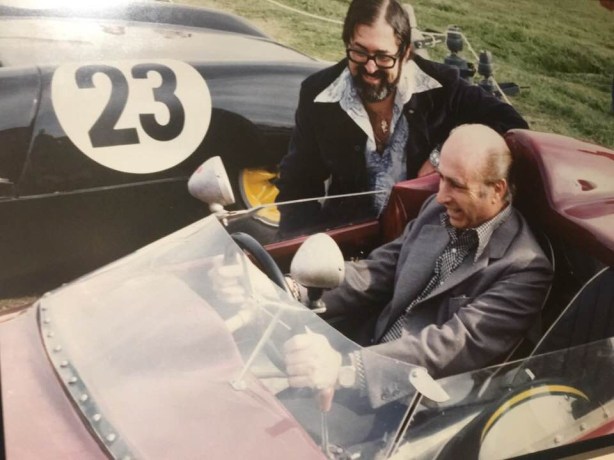
Kerry Luckins gets JM Fangio to try the seat of his Lola at Sandown during the 1978 ‘Tribute To Fangio’ meeting. Kerry was President of the organising club, the Light Car Club of Australia, see here for a piece on THAT Sandown which practically every racing enthusiast in the country attended from the Prime Minister of the day, Malcolm Fraser down;

Juan Manuel Fangio’s Sandown Park…

Kerry was a well known, respected figure in the day, I admired the way he steered the Light Car Club as a member, he came across well on the Telly as part of the Sandown broadcast team, I met him later in his life in retirement at Sorrento. I visited to buy a Smiths chronometric tach which I still have, and look at his Birrana 274 (ex-Allison 274-07) but it was way too far gone for my limited mechanical skills- not sure that car has re-surfaced yet?
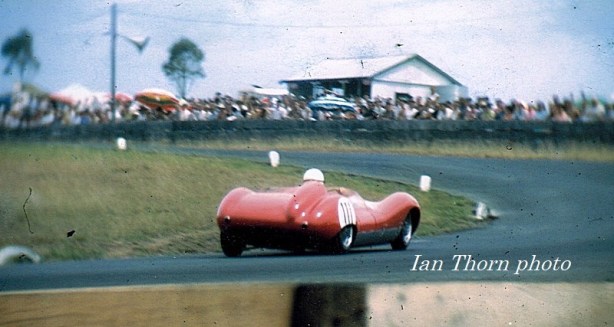
The very talented John Martin shows Lola’s delicate lines and pert little rump to very good effect at Oran Park circa 1963.

Bibliography…

‘David McKay’s Scuderia Veloce’ David McKay, ‘Historic Racing Cars in Australia’ John Blanden, Lola Heritage, oldracingcars.com, Terry Sullivan and Ray Bell on ‘The Roaring Season’, ‘Bathurst: Cradle of Australian Motor Racing’ John Medley

Photo Credits…

T Watts Collection via Historic Racing Car Club of Tasmania, Geoff Harrisson/oldracephotos.com, John Ellacott, Kevin Drage, Marc Schagen via Aussieroadracing, J Fullarton, MK1220, Bruce Wells/The Roaring Season, Greg Richardson, Ian Thorn, Kerry and Jennie Luckins Family Collection

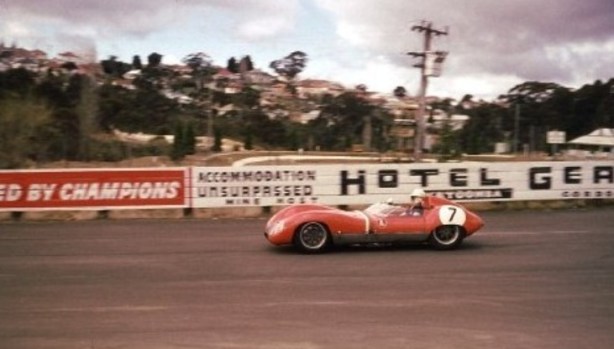
Tailpiece: David McKay at Catalina Park, Blue Mountains, NSW, Lola Mk1 Climax, date unknown, beautiful isn’t it…
image

(M Schagen)

Finito…

(B D’Olivo)

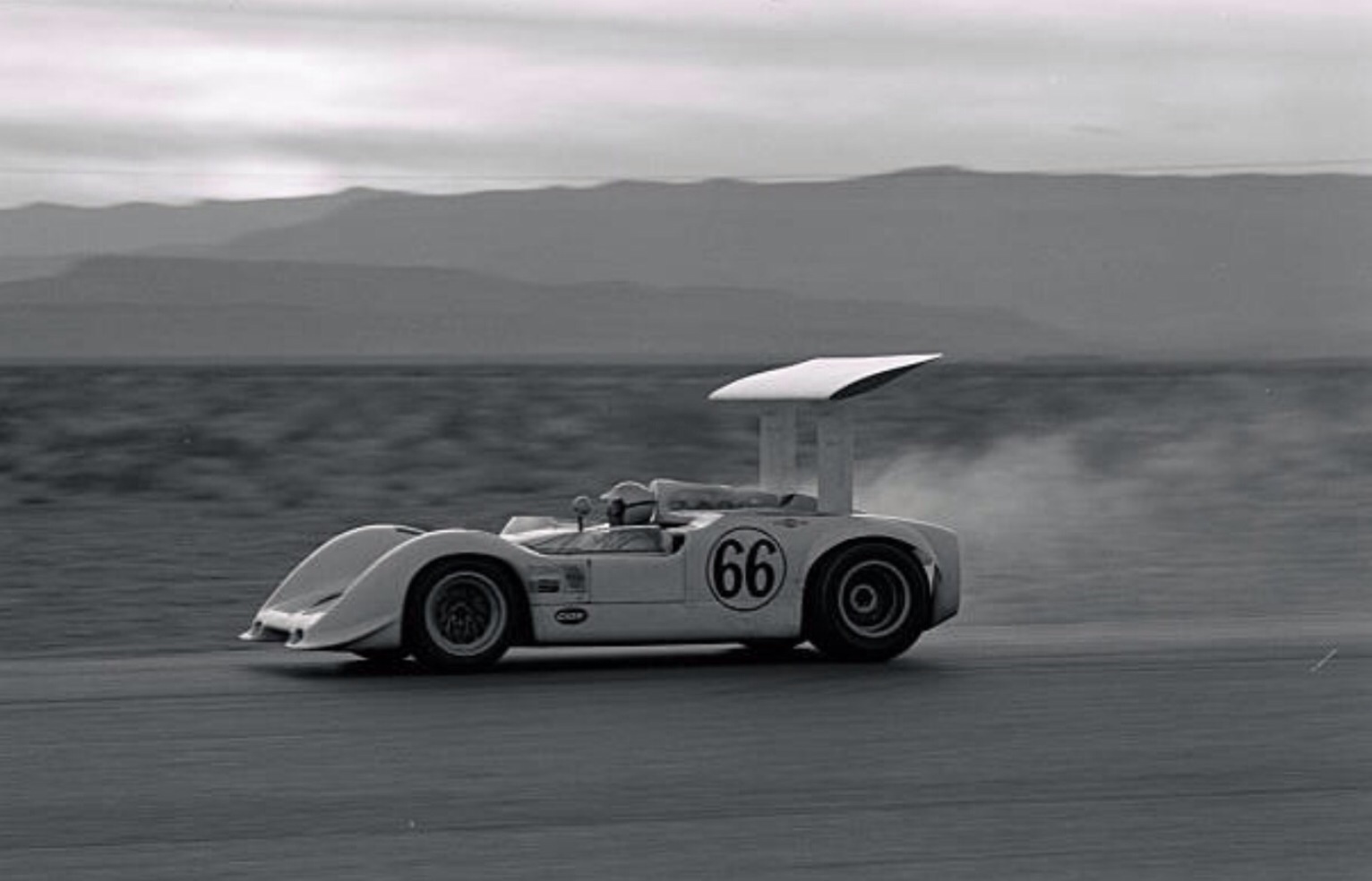
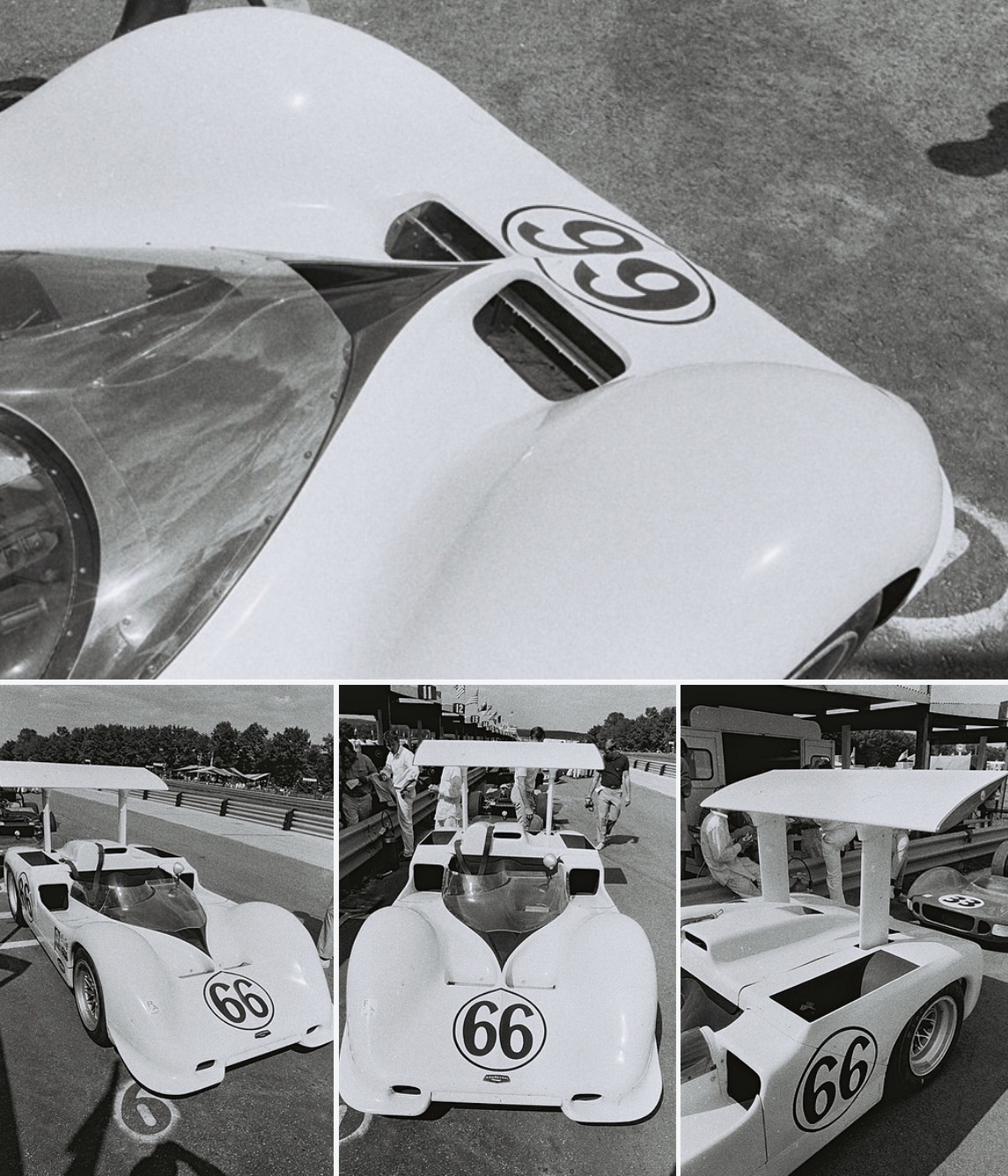
Jim Hall and his Chaparral 2G Chev look surreal juxtaposed against the Mojave Desert, Stardust GP, Las Vegas in November 1967…

Other worldly really, which of course they were. Like so many of us outside North America i missed the Can Am but have always been fascinated by it. One of THE great racing categories ever with some marvellous circuits, Bridghampton for me the most photogenic and Las Vegas the least. But not this monochrome, sundown shot by Bob D’Olivo which has a magic, eerie, feel to it. Hall failed to finish the race won by John Surtees’ Lola T70 Mk3B Chev.

Wings were well and truly a Chaparral paradigm by then, it wasn’t until 1968 they appeared in Grand Prix racing.

image

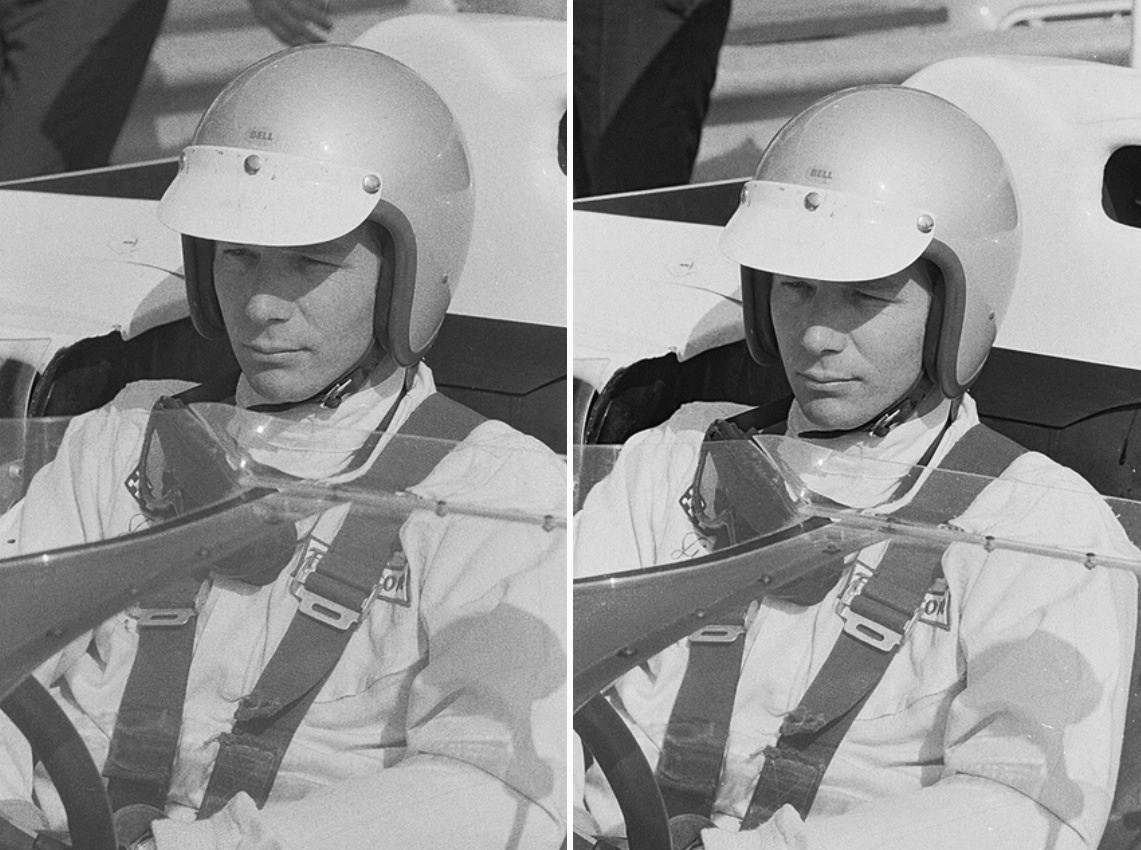
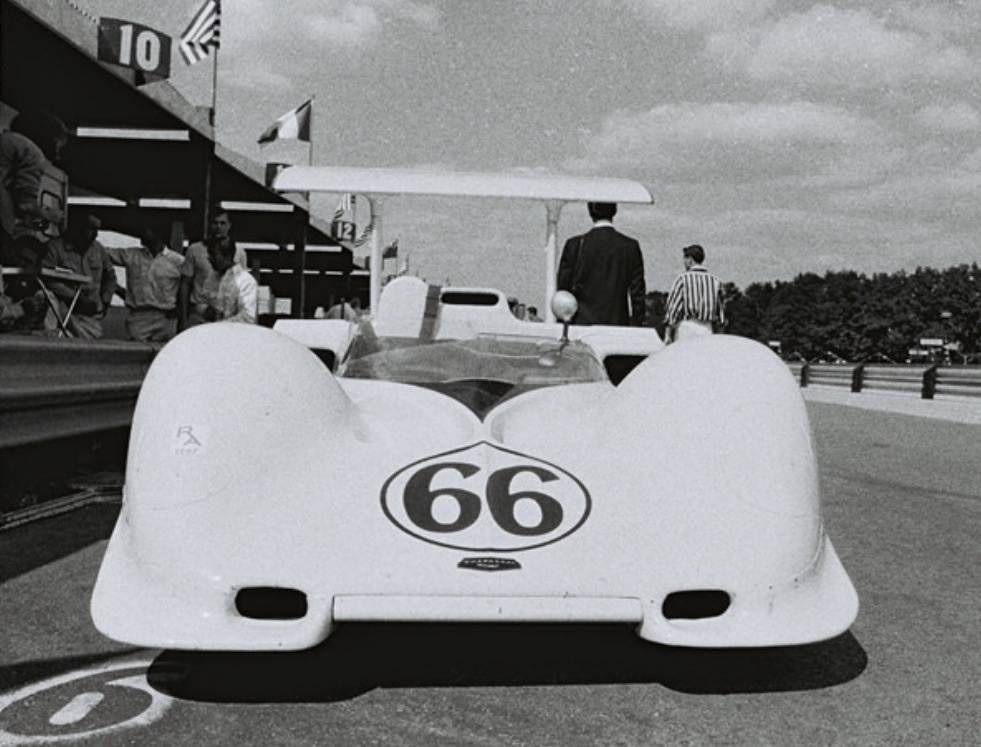
Chap 2G Chev, Road America pitlane September 1967. Jim Hall, Q7 and 4th in the race won by Denny Hulme’s McLaren M6A Chev. First race of the ’67 Can Am. The Papaya McLaren era is underway (D Friedman)

I wonder if the demonstrable pace of the winged 2F’s throughout Europe in 1967, campaigning in the World Manufacturers Championship effectively forced other designers to look at an area of aerodynamics they didn’t understand? That is, they could be ignored in the US as some sort of big car Can Am aberration, but the monthly sight of the things on ‘your own doorstep’ performing so well, if somewhat unreliably, forced a closer look. Check out my 2F article;

Chaparral 2F Chev…

And so it was that wings flourished unfettered in F1 during 1968. And were then reigned back in after CSI dictates over the 1969 Monaco GP weekend in response to some appalling engineering, make that under-engineering of said wing support structures.

image

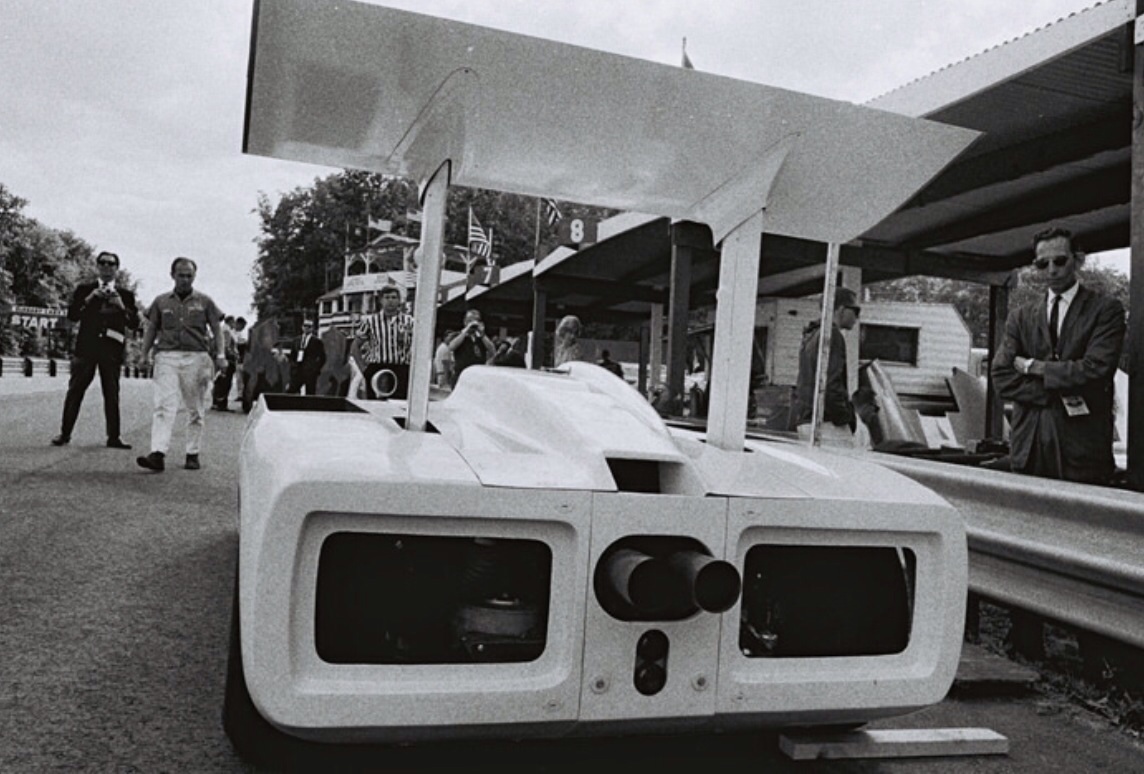
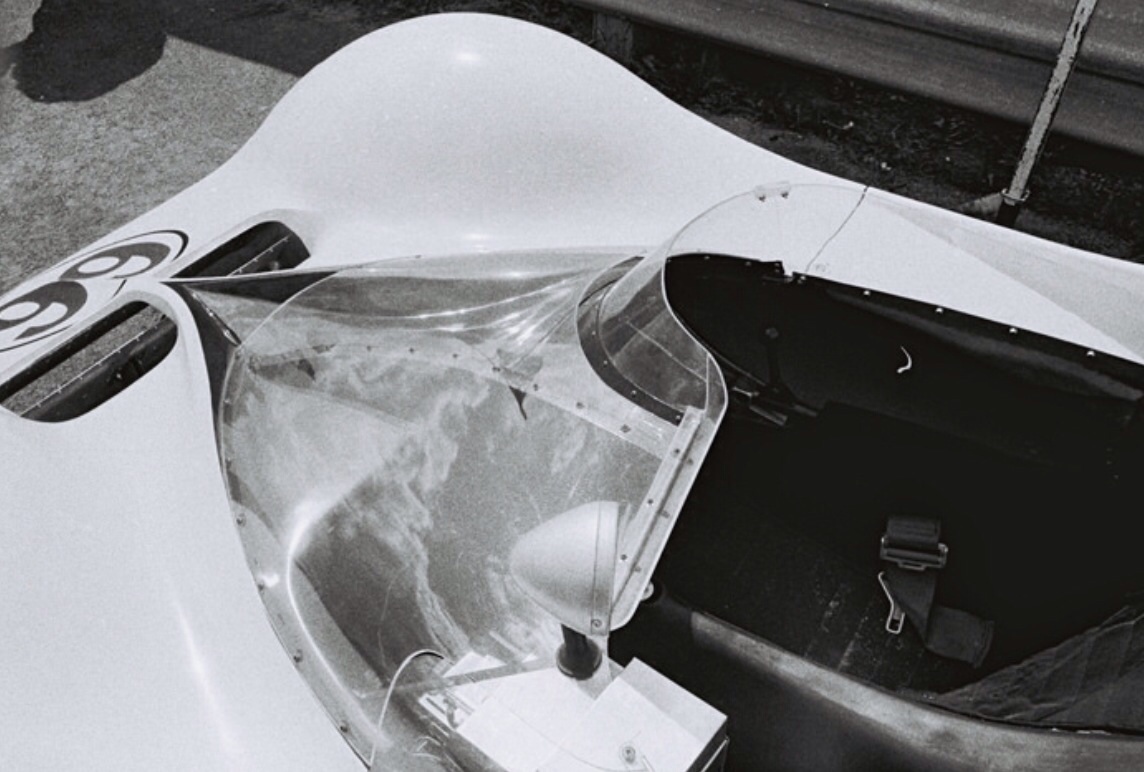
Series of body and aero shots of the Chap 2G at Road America (D Friedman)

Innovation is such an interesting thing. I mean that literally. Stuff being different to an existing paradigm makes it interesting because of its difference. Same, same, is boring doncha reckon?

We don’t get a lot of innovation in most of our motor racing classes these days, be it single-seaters, sportscars, or ‘taxis’. The rules either mitigate against it or mandate conformity of approach. Not least in F1. Often such rule changes or evolution has occurred to ‘contain costs’ and ‘ensure the drivers can compete on equal terms’. Who says that the latter is a good idea other than in the most junior of formulae where history tells us that uniformity of core package has worked well.

image

Jim Hall, Road America, September ’67 (D Friedman)

The funny thing about Jim Hall, Chaparral and innovation is that the powers that be were happy to allow their creativity to run free whilst the cars weren’t race winners. But when they were, or appeared to be, with the 1970 2J ‘Sucker’ it was legislated out of existence. So, in that sense we can be thankful that Jim, Hap, and Phil didn’t win more races or perhaps these wonderful cars may have been restricted by the intervention of vested interests of the paradigm much earlier!

God bless the innovators though, we need some. Now. And rules that allow differences of approach. Times are more complex than the sixties though. My polemic on F1 a while back supported innovation amongst other changes but how can it be afforded?

Halo’s Are A Brilliant F1 Idea. So too is to get rid of those dangerous, open exposed wheels…

image

Chap 2G looks as modern as tomorrow- as a reference point one needs to look at its sportscar and single-seater peers. Road Am ’67. Aluminium monocoque 2C based chassis. Engine aluminium 427 cid Chev 90 degree, pushrod OHV injected V8, circa 525 bhp @ 6000 rpm. Chaparral/GM 3 speed ‘automatic’ transaxle, circa 780 kg (D Friedman)

Jim’s wings, automatic gearboxes and fibreglass monocoques were relatively simple (but very clever) whereas innovation now, will probably involve ‘power units’ of massive complexity and cost akin to the current ones used in the highly restricted and complex F1. Which means major manufacture involvement and resultant ‘winners and losers’, ‘haves and have nots’ in terms of the approaches which are successful and those which are dogs. Teams ability to afford such equipment is an issue with potential impacts on grid size.

But that’s probably a good thing, smaller more interesting grids of different looking and sounding cars has to be preferable to the highly contrived, boring sameness we see now?

Anyway, here is to innovators, god bless em…

image

Exquisite detail wherever you look, 2G cockpit, Road Am ’67 (D Friedman)

Photo Credits…

Bob D’Olivo, Dave Friedman

Tailpiece: Truly wild in profile, Chaparral 2G Chev, Road America, 3 September 1967…

image

(D Friedman)


(L Richards)

A motorsport event in Kew, Melbourne even in 1954 is a new one on me?!…

Its a rather nice, leafy, green suburb through which the Yarra River flows 5 Km from Melbourne’s CBD- ‘stockbroker belt’ stuff with some of Melbourne’s ‘better’ private schools contained therein. There is plenty of wealth in the area, then and now. So how come the good citizens of Kew allowed a motor sport event to take place on their turf prey tell?!

Stan Jones’ Cooper Mk4 JAP and a motor-cyclist are about to ‘blast off’ along the Kew Boulevard at Studley Park by the look of it. The flag-man is Reg Robbins, long-time member of Stanley’s racing equipe.

It’s a stretch of road we have all done lap records upon before the long arm of the law toned things down somewhat. A ribbon of bitumen that commands respect as a fair proportion of it is open and high speed despite changes to slow things down.

I have it on good authority that the number of 911’s which go in backwards is not that much different now to the 1980’s when there were plenty of wallies with loads of money not reflected in commensurate levels of driving talent. Many an insurance tale of woe was born on this stretch of blacktop.

(L Richards)

In any event, what is going on here, some of you are Kew locals, we are all intrigued to know?

Stan has his ‘Maybach’ helmet on , it was a good year for him, he had just won the New Zealand Grand Prix at Ardmore in perhaps Australia’s most famous special, the Charlie Dean/Repco built and prepared Maybach on 9 January. No wonder he has a big smile upon his face.

For Jones it was an easy event logistically. He lived in Balwyn, an adjoining suburb and his ‘fettler’ Ern Seeliger’s garage was in Baker Street, Richmond, also a couple of kays from The Boulevard on the other side of the river.

I am intrigued. Do tell folks!?. Maybe its a promotion and i’m getting excited about absolutely nothing…

An idea of the Kew Boulevard in 1958- not much different now, leafy green and lots of curves. This is the finish of a ‘car trial’ treasure hunt social event (L Richards)

Photo Credits…

Laurie Richards, State Library of Victoria, David Zeunert

Tailpiece: Stan and Cooper JAP, Templestowe Hillclimb circa 1952…

(SLV)

Templestowe Hillclimb was not too far from Kew, where the shots above are taken, so here is a snap of the man in action there. I’ve no idea of the date in the event that one of you were there to sort that point. Jones hustled a car along, he was a physical, press on kinda driver who pushed hard, not lacking finesse mind you, but you could always see him trying to get the best from his mount.

Just as he is here, using all of the available road…

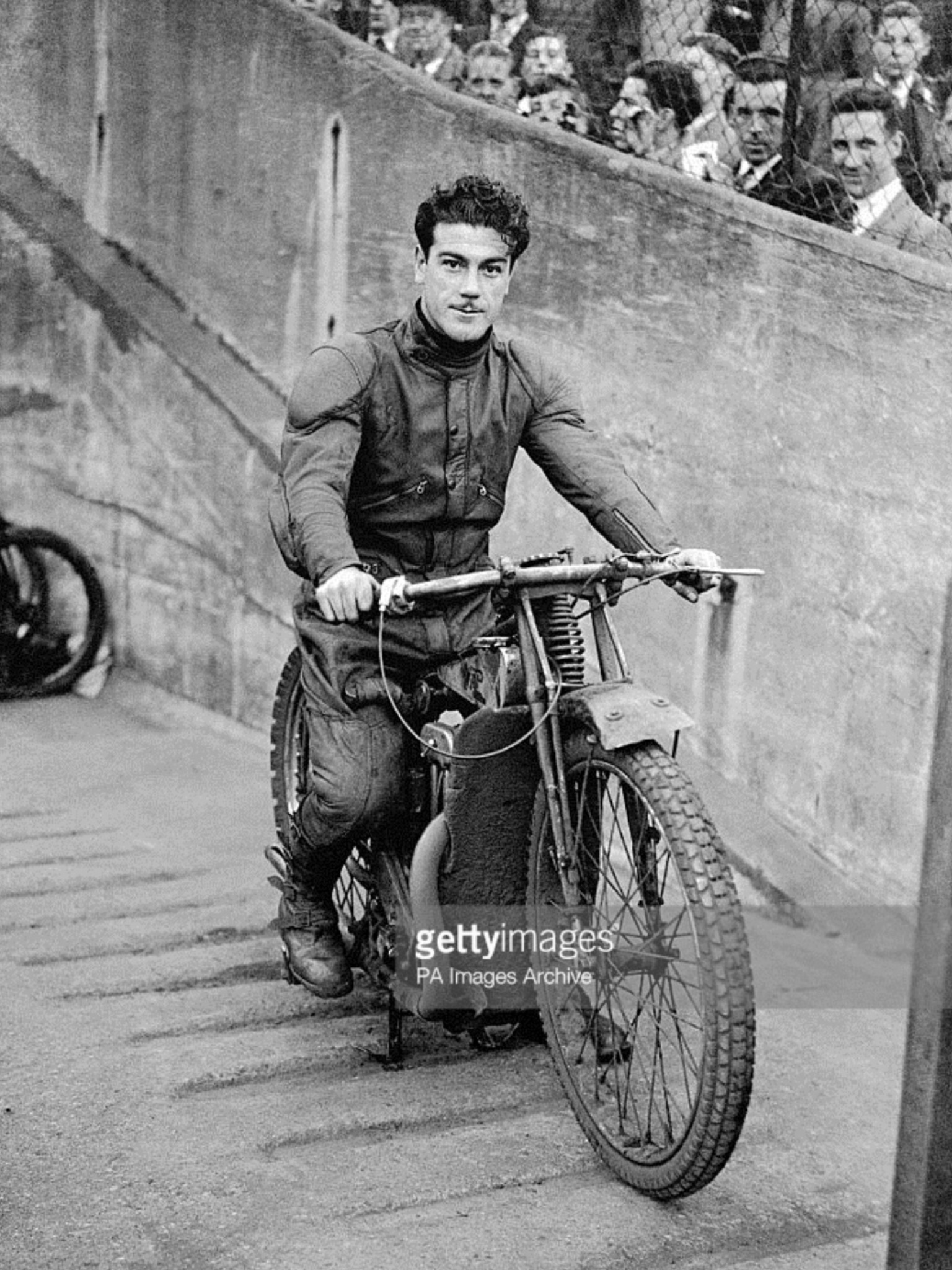
Lionel Van Praag, Wembley, London 10 September 1936…

Its amazing what you don’t know, in fact I’m never surprised at my own ignorance. I reckon I know a bit about my interest and hobby, but really I’m only scratching the surface of motor racing history in Australia.

Australian topics are hard too, the research that is- pre-War there was little in the way of local magazines, post war it becomes a bit more straight forward from the time of the publication of ‘Australian Motor Sports’ magazine and the relatively large number of publications which followed it. What is fascinating in the research adventure is the stuff you find looking for something else.

In this case it was randomly coming upon this image of Lionel Maurice Van Praag (1908-1987) after winning the inaugural World Speedway Championship at Wembley on 10 September 1936.

An Australian World Motor Racing champion pre-war, wow! And not without some controversy too. And I had never heard of the Redfern lad despite his admission to the Sport Australia Hall of Fame in recent times.

L>R- Charlie Spinks, Arthur Atkinson and Lionel Van Praag, First Test England/Australia at Belle Vue in 1938 (defunctspeedway.co.uk)

Graham Howard wrote that ‘Van Praag was a speedway rider and aviator, born on 17 December 1908 at Redfern, Sydney. The only child of Sydney-born Louis Van Praag, tram conductor, and Mozelle May. A bright student and an all-round athlete, he was educated at Cleveland Street Intermediate High and Redfern Junior Technical schools, both in inner Sydney. He was apprenticed as a typewriter mechanic, he had a natural feel for machinery that was useful all his life’.

image

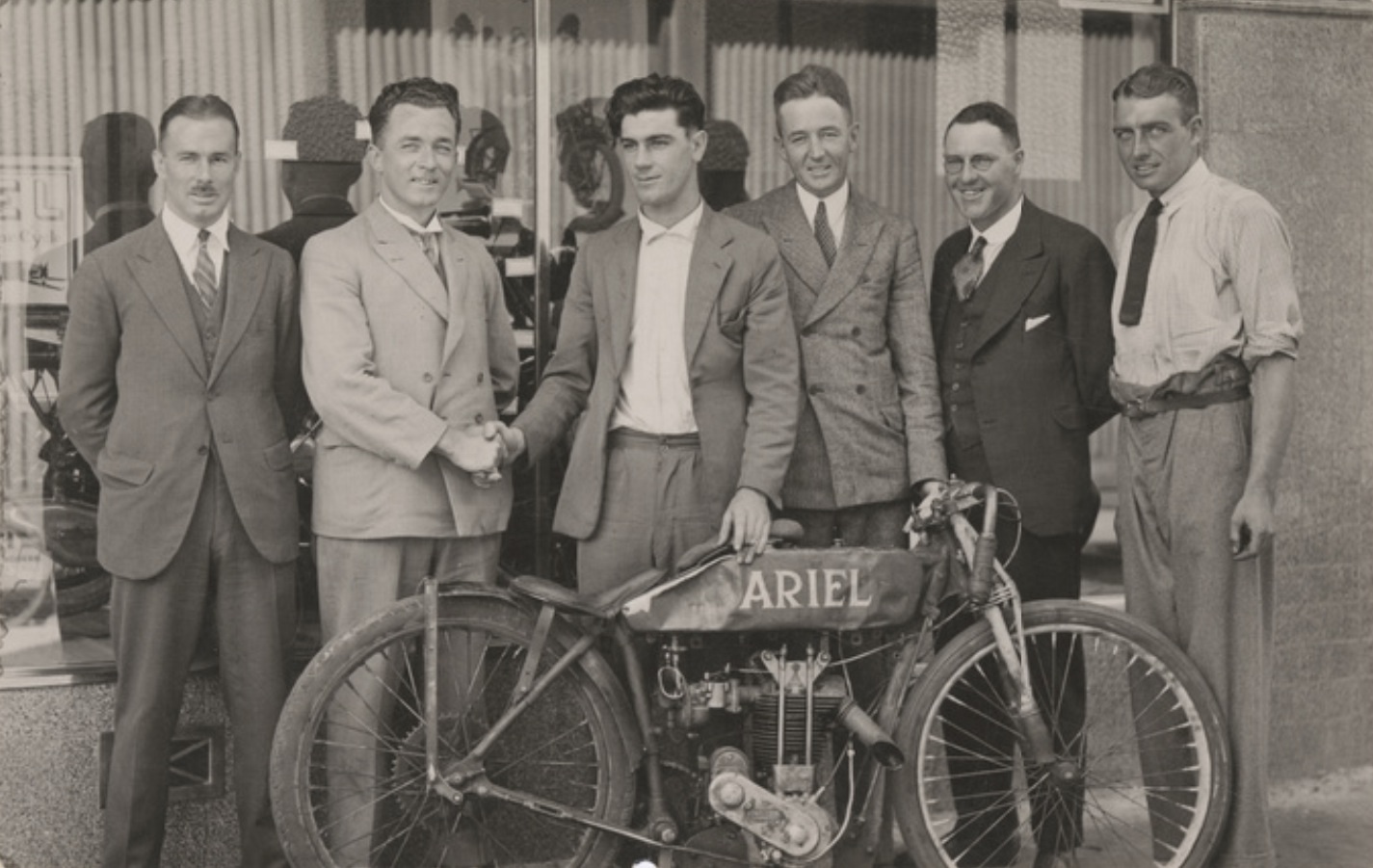
LVP, middle of shot at Speedway Royal, Wayville, Adelaide in 1928. Bike is an Ariel ‘3 and a half’ (M Gray)

Lionel began riding motorcycles at 15. After a number of novice races at the Olympia Speedway at Maroubra he concentrated on the Speedway Royal in Sydney from July 1926, almost instantly he became a senior competitor. He then had an outstanding 1926-27 season in Brisbane. He was successful in the eastern mainland Australian States and in New Zealand. In 1931 after years of rejecting offers, he followed other Australian riders who competed in England and joined the Wembley Team, riding in both the UK and Europe during the Australian off season.

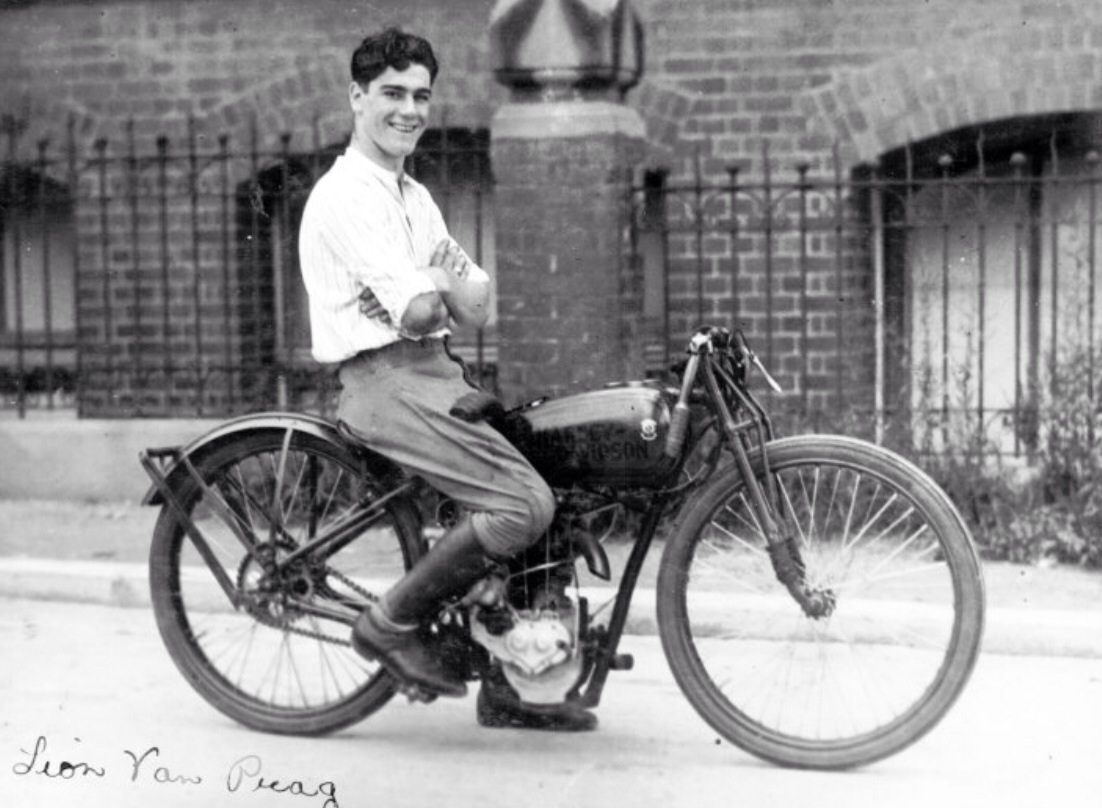
Lionel Van Praag aboard a Harley Davidson ‘Pea Shooter’ in 1927, 19 years old. Factory 1926  racer designed for US AMA races- devoid of brakes, clutch and transmission. Frame shortened, weight 215 pounds, 350cc OHV, circa 100mph (unattributed)

The first World Speedway Championship, at Wembley, London 1936…

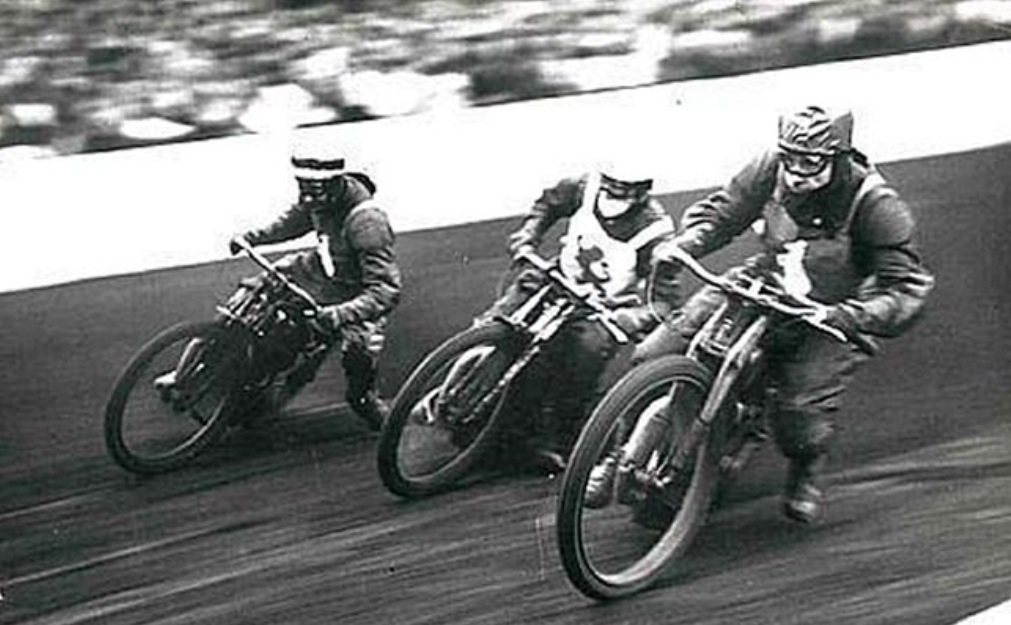
The event was a strange one as riders carried into the meeting a score of bonus points amassed in the qualifying rounds. It was possible that the rider who scored best on the night would still not be world champion because of his qualifying record- and such was the case.

‘Bluey’ Wilkinson scored a maximum but Langton had more bonus points than Van Praag. In a night of excitement and controversy, Eric Langton and Van Praag lined up for a match race but Eric broke the tapes. Van Praag declared he would not be champion by default and sportingly demanded a re-run! Langton gated ahead and led until the final bend when leaving the smallest of gaps and he was unable to hold the dashing Australian, the Hall of Fame entry says.

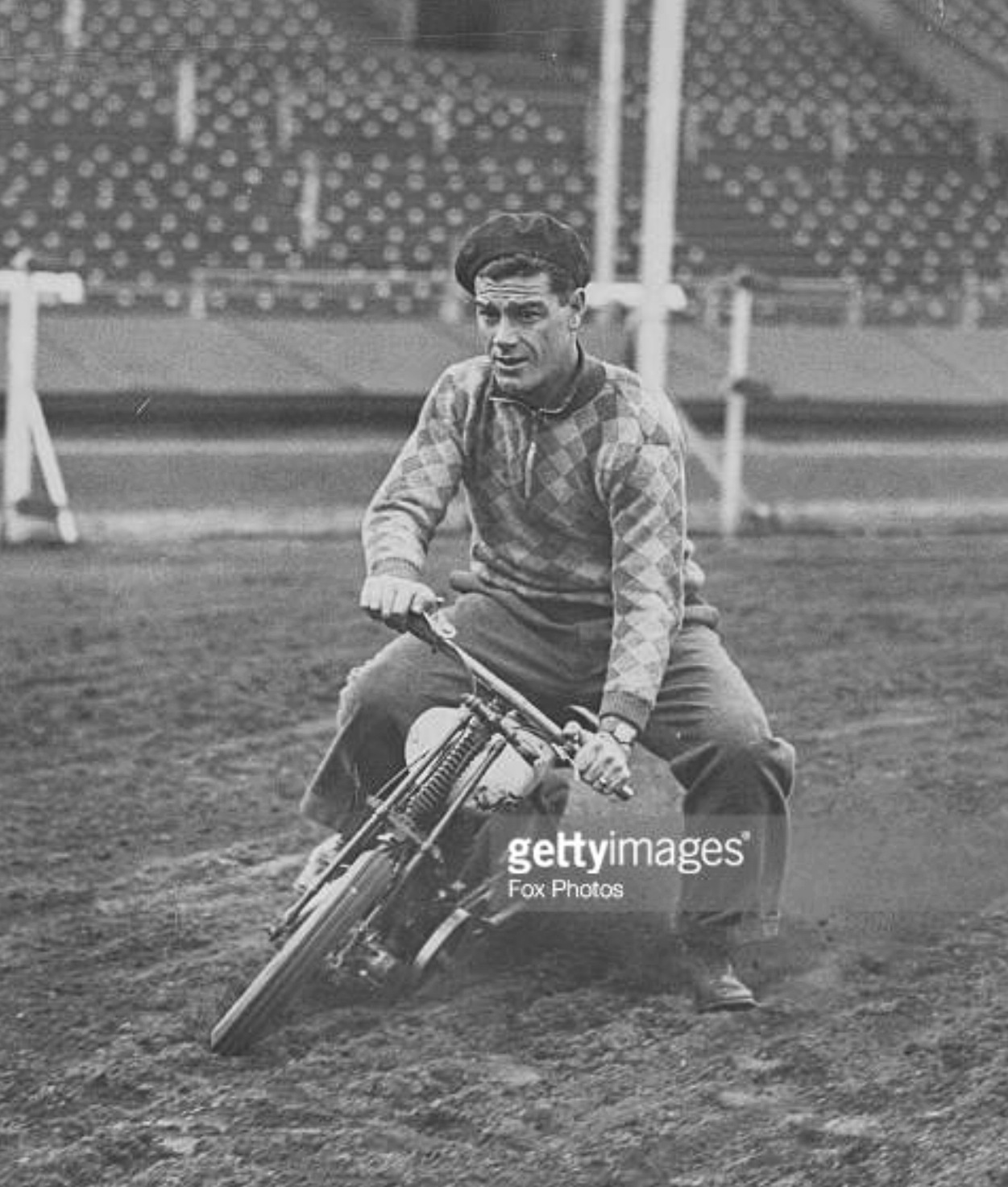
LVP on a mini-bike at Wembley in 1932 (Getty)

Further ‘Langton’s near miss …assumed a degree of controversy in later years. The deciding match race with ‘Praagy’ was ‘fixed’ between the pair according to sources close to the action. It was alleged that Eric and Lionel agreed that whoever got to the first corner in front would go on to win and they would split the prizemoney between them. It almost worked out, Langton was ahead until the final corner when he left a small gap which Van Praag couldn’t resist going for. The first ever world final was won by about a wheel width and the Australian took the title’.

Van Praag also qualified for the finals in 1937-7th, 1938-4th and 1939. In 1931-39, and again in 1947, he represented Australia in Tests against England.

He learned to fly in the UK at Broxbourne, Hertfordshire in 1931, it was a capability he put to good use throughout the rest of his life.

Graham Howard wrote that ‘Van Praag was a non-drinker and a heavy smoker, and he had a short temper if provoked. At around 5 ft 9 ins (175 cm) he was taller than most of his rivals; he was dashingly handsome, with dark curly hair and notable physical strength. He had a minor role in the British film Money for Speed (1933), but an envisaged cinema career did not materialise’.

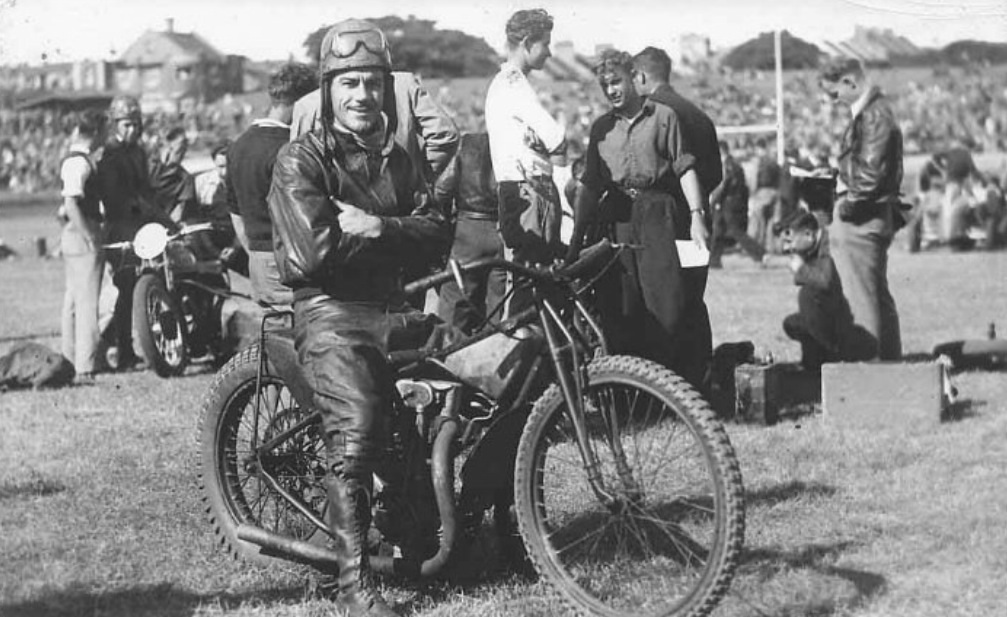
LVP on a 1930’s JAP, date and place unknown (defunctspeedway.co.uk)

On 11 August 1941 Van Praag enlisted in the Royal Australian Air Force and was appointed to No.2 Wireless Air Gunners School, Parkes, New South Wales with the rank of acting sergeant.

Engaged on flying duties, he was promoted to probationary pilot officer in October 1942 and flight lieutenant in October 1944.

In January 1942 the transport plane of which he was a co-pilot, an RAAF Douglas DC-2 A30-8, was shot down by a Japanese aircraft over the Sumba Strait, off Indonesia whilst on a flight from Surabaya, Java to Koepang/Kupang Timor. For thirty hours, whilst subject to shark attacks, he and his Captain, Flying Officer Noel Webster, supported the two crew-members, both non-swimmers and secured their survival, acts of bravery for which they were awarded the George Medal.

A full account of the incident appears in the book ‘And Far From Home’, written by John Balfe who flew with Lionel.

Balfe had this to say about Van Praag as a man ‘…in flying with Van I had perceived in his slight wiry form, a man of particular capacity and directness. He cared nothing for false values in anything or anyone and did not hide from the fact. I found him only a week out of hospital after the ditching (of the DC-2) but already back in a comprehensive engineering workshop he had behind his unpretentious home on Botany Bay’s (Sydney) north shore. He had plant and equipment there to wet the appetite of any metal engineer. One of the real Australians, Van had led a hard life racing motorcycles from early manhood and lived to standards he had not relaxed. He was moderate in thought and habit and held in quiet contempt those who were not. He valued his friendships above human faults, but chose his friends carefully and for the most part made them for life. His mind and memory remained sharp and retained an accuracy in detail that I had noted flying with him in 1943’.

After recuperating from the ditching, Lionel returned to flying C-47’s with No 36 Squadron out of Townsville, Far North Queensland. His RAAF appointment ended on 27 July 1945.

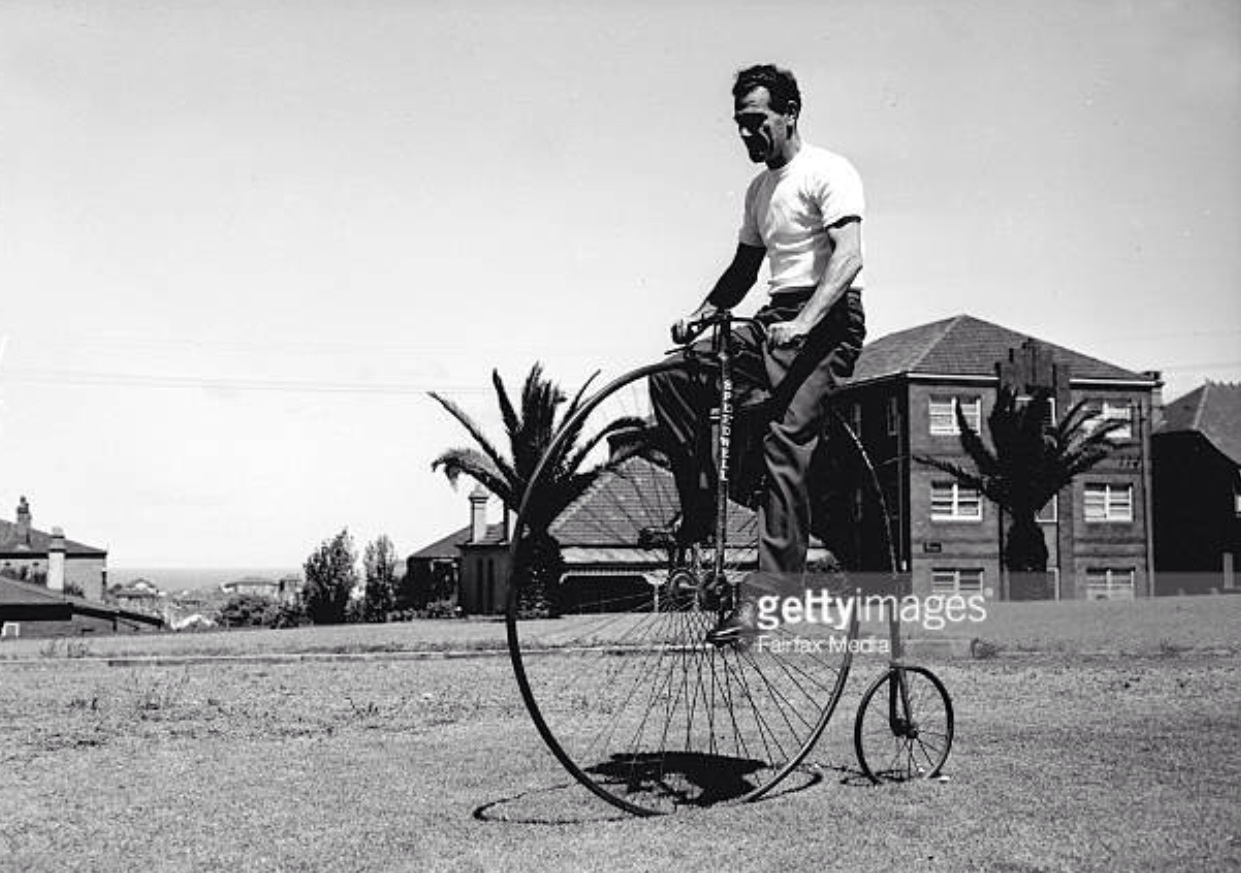
LVP aboard a Penny Farthing in 1951, interesting to know the occasion, and place! (Fairfax)

Post war Lionel resumed motorcycle racing and soon developed a career in aviation…

Van Praag headed a riders’ consortium that promoted speedway at the Sydney Sports Ground in 1945-48. He rode for the English team New Cross in 1947. After 1948 he effectively retired from racing, although in the early 1950s he briefly raced self-built small speedboats off Manly on Sydney Harbour.

In his new career as a commercial pilot in 1952 he combined his aviation and speedway interests by contracting with Empire Speedways to carry the Great Britain and Australian competitors, along with their bikes and equipment between the various Australian speedway venues in a Lockheed Lodestar.

He flew charter, and freight planes, did aerial top-dressing or crop-dusting in a Bristol Freighter, this plane was lost in December 1961 when it crashed at Wollongong after an engine failure on a freight flight. Lionel and the rest of the crew escaped injury. He later flew for an airline in Pakistan for a year before returning to Australia.

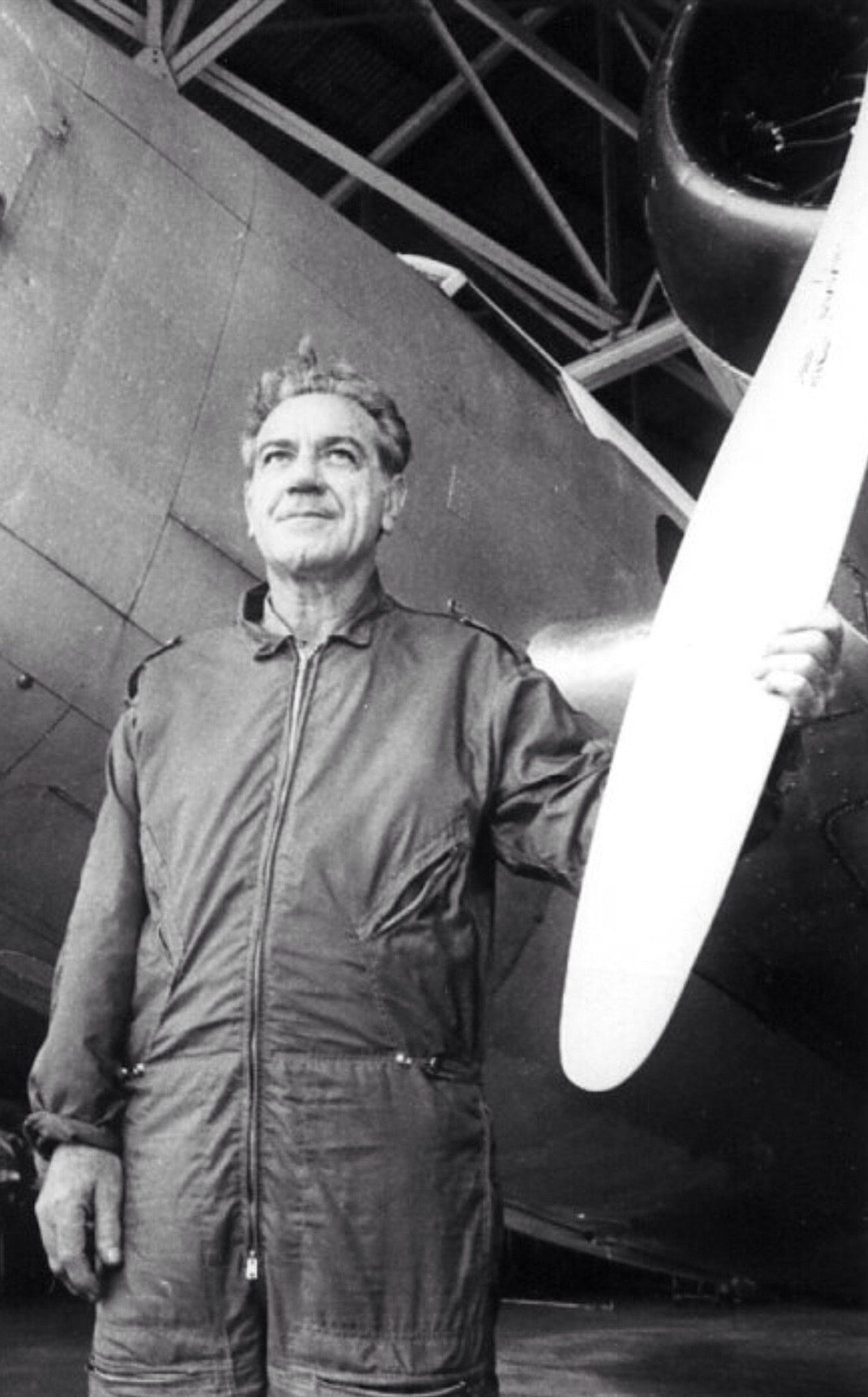
LVP in his later aviation years (adastron.com)

He joined Adastra Aerial Surveys, a company originally formed as a flying school in 1930 at Mascot, Sydney circa 1962 as a pilot and later became chief pilot. Although he had two well-publicised crashes, including the one described above, people who flew with him valued his informality and his resourceful flying ability.

In adult life, Van, as he was known, turned away from his Jewish upbringing. In 1929 at the district registrar’s office, Redfern, he married Elizabeth Margaret Pearl Cosgrove, a machinist, they divorced in April 1937. On 1 October that year at the register office, Hendon, England, he married Gwendoline Iris Hipkin, a dressmaker.

In 1968 he retired to his own Island, Temple Island, south of Mackay. In 1973, aged 65, he ferried a Hudson VH-AGJ from Sydney to Strathallan Museum in Scotland. Hudson’s were the primary survey aircraft used by Adastra.

He died on 19 May 1987 from emphysema, at Royal Brisbane Hospital. His wife, their daughter and two sons and the daughter of his first marriage survived him.

Post death recognition includes being inducted into the Sport Australia Hall of Fame in 1990. In addition, in 2000, the Government of the Australian Capital Territory decided to honour several Australian sportsmen with the naming of streets, including ‘Van Praag Place’ in the Canberra suburb of Gordon.

Three of my fathers uncles served in World War 2. As I became a teenager and understood, to an extent, what they endured in the Middle East and New Guinea I held these wonderful, private, kind, gentle but strong men in considerable awe. I always called them my ‘Boys Own Heros’ when I saw them at family events. Certainly Lionel Van Praag was a Boys Own Hero- in spades. Truly an amazing, full life of achievement.

Bibliography…

‘Australian Dictionary of Biography’ entry by Graham Howard, Australian Sports Hall of Fame, adastron.com

Photo Credits…

Getty Images, Fox Photos, PA Images, , Malcolm F Gray, State Library of South Australia, Fairfax, defunctspeedwaysuk.com

Tailpiece: LVP and friends at the Sydney Sportsground on 4 September 1945, first post-war meeting I wonder?…


(Jack Inwood)

Three-time Kiwi Gold Star champion Jim Palmer leads John Riley during the 1964 running of the ‘Renwick 50’ held each November in the township of Renwick…

Palmer’s car is the ex-Jack Brabham works 1964 Tasman Series  Brabham BT7A Climax FPF ‘IC-2-63’, Riley’s the ex-Tony Shelly Lotus 18/21 Climax FPF.

When I initially saw this shot I imagined the cars were returning to the paddock but in fact they are entering what was in effect a single car at a time part of the track, a right-hander, the course was essentially rectangular in layout through the roads of Renwick.

The Marlborough region is a stunning part of New Zealand, its the countries largest wine growing area, in the far north of the South Island and famous the world over for some marvellous Sauvignon Blanc whites.

Palmer’s ex-Clark Lotus 32B Climax during the January 1966 Levin Tasman round, he was 5th in the race won by Richard Attwood’s BRM P261. Jim Clark won the ’65 Tasman in this car, chassis ’32-FL-8′ with 4 wins and then sold it to the Palmer family. Superbly prepared and driven, Palmer won the 1965/6 NZ Gold Star in it and then finished 4th in the ’66 Tasman with a mix of speed and reliability- only Stewart, Hill and Clark were in front of the plucky Kiwi. The car then raced in Oz in the hands of Greg Cusack and Mel McEwin. Ultimately restored by John Dawson-Damer in Sydney and sold/part exchanged for a Lotus 79 to Classic Team Lotus 20 years ago. 2.5 CC FPF and ZF 5 speed box clear in shot as is very beefy rear chassis diaphragm (TRS)

Click here for an article about the Lotus 32B and the Levin International won by Jim Clark in 1965;

‘Levin International’ New Zealand 1965…

The Renwick event was run from 1960 to 1967. Frank Shuter won the first in his Ferrari 625, but it was  Palmer who had a bit of a mortgage on it.

He won in 1964, 1965 and 1966 in Cooper T53, Brabham BT7A and Lotus 32B, the latter the car Jim Clark won the Tasman Series with in 1965. All of these cars were powered by the venerable 2.5 litre Coventry Climax FPF 4 cylinder engine- the World Championship winning engine of 1959-60. Palmer won the New Zealand Gold Star, the NZ drivers championship in 1964/5, 1965/6 and 1967/8 in the Brabham, Lotus and a McLaren M4A Ford FVA F2 respectively.

Jim Palmer aboard the Scuderia Veloce Brabham BT11A Climax, not so long before vacated by Spencer Martin, at Bathurst, Easter 1966. The shot is taken near the crest at Reid Park Gate. Palmer drove well, albeit against no other 2.5 litre competition, to win the racing car feature Mt Panorama Gold Cup. It was about this time he failed his CAMS licence due to some vision issues, a great shame as the speedy Kiwi would have been a welcome addition to our Gold Star grids, skinny as they were (John Ellacott)

A top driver he retired too early in my book, partially due to being unable to get an Australian CAMS racing licence, he was long-sighted in one eye. He also married and decided to focus on his retail motor trade and property business interests which centred on Hamilton where he still lives.

Jim Palmer in the ex-Clark Lotus 32B Climax on the way to 6th place in the 1966 Warwick Farm 100 on 13 February. Clark won from Hill and Gardner (Bruce Wells)

The 1964 Renwick 50 was run over 20 laps of the 2.414 km course (three variants of Renwick roads were used over the years) on 14 November, a smidge under 50 km in total. Palmer won and took the lap record at 1: 17.0 with Morrie Stanton, Stanton Corvette 2nd and Red Dawson in a Cooper T53 Climax 3rd.

Check out this YouTube footage which shows the undulating, narrow nature of the circuit. Whilst the caption says 1965, the footage is from several of the Renwick meetings including 1964.

Bibliography…

sergent.com, ‘Bathurst: Cradle of Australian Motor Racing’ John Medley, oldracingcars.com

Photo Credits…

Jack Inwood/The Roaring Season, John Ellacott, Bruce Wells, Marlborough Car Club

Tailpiece: Chris Amon, Maser 250F, Renwick 50 November 1962…

Chris Amon, Maser 250F just ahead of Bob Eade’s similar car with John Histed’s Lola Mk2 Ford behind. Angus Hyslop Cooper T53 Climax won from Amon and Barry Cottle, Lola Mk1 Climax. This race on 10 November 1962 was Chris’ last race in the Maser (Marlborough Car Club)

Postscript: Next stage of Chris Amon’s career…

Click here for an article on the next critical months in Amon’s career after the Maserati was put to one side and Chris drove David McKay’s Cooper T53 Climax in the 1963 Australasian Internationals; https://primotipo.com/2017/09/06/chris-amon-cooper-t53-and-the-australian-grand-prix-1963/

Finito…

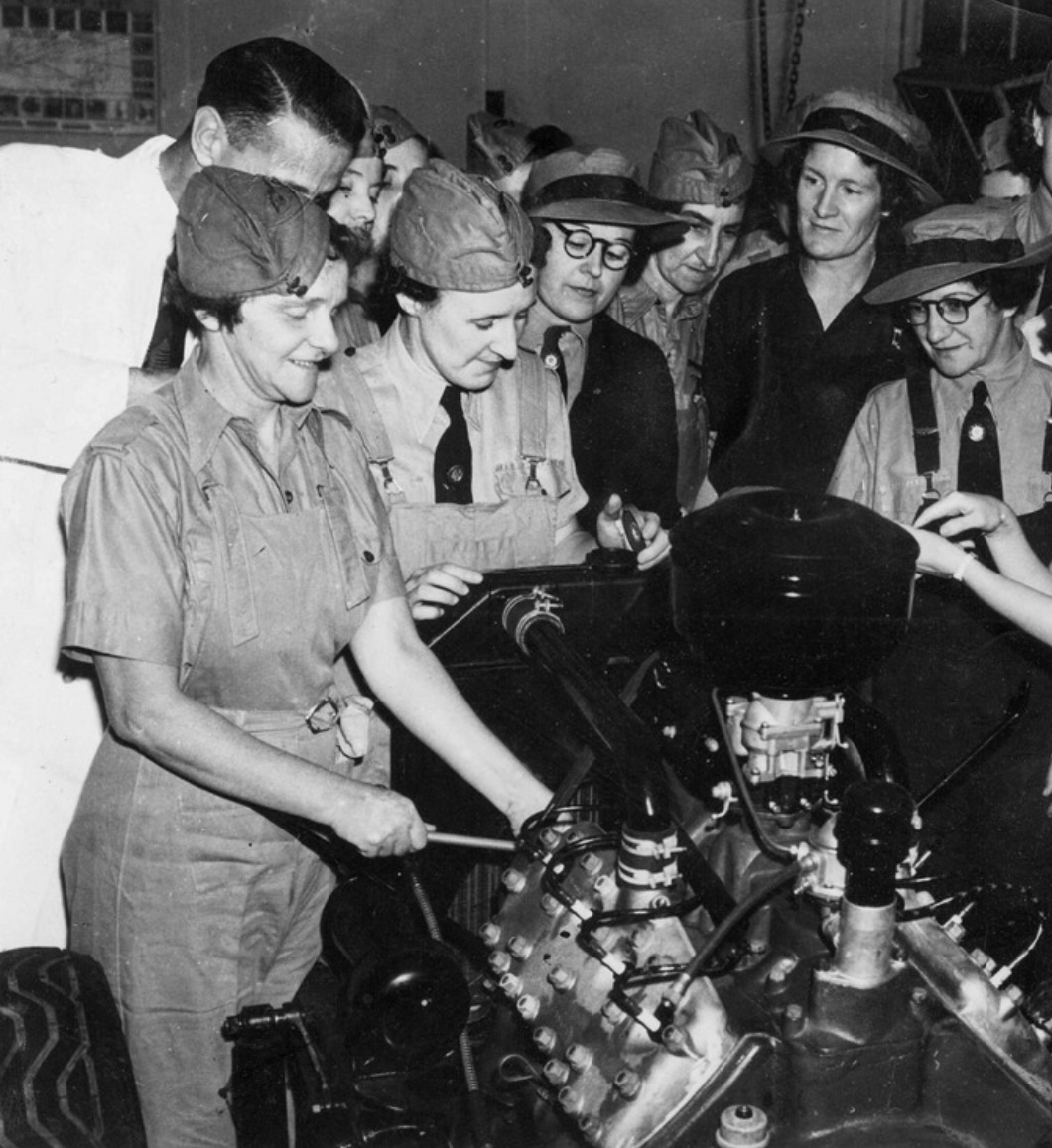
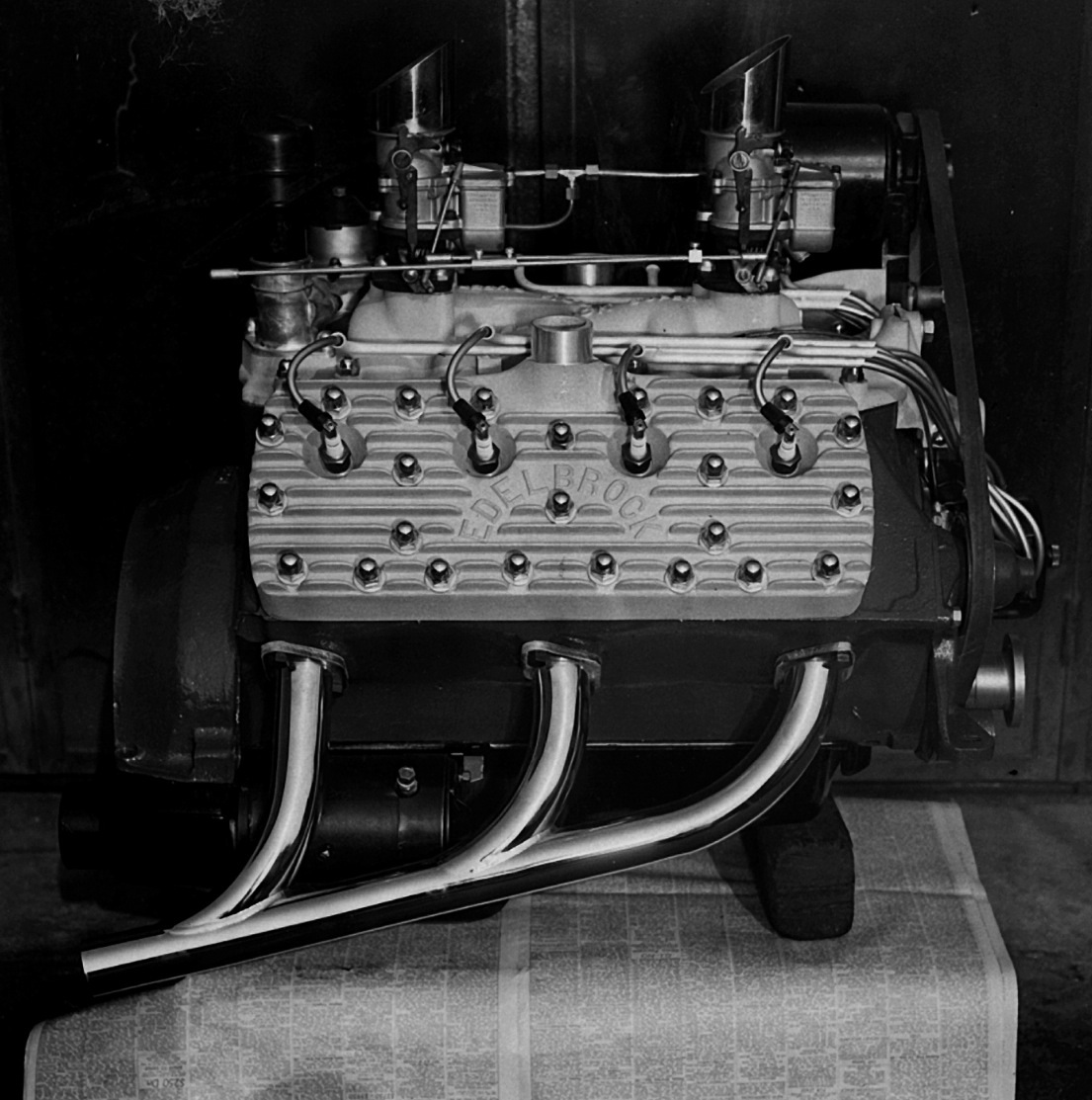
Don’t listen to him! Trust me girls, we can get 142 bhp @ 7,600 rpm out of this V8 ’60’ Flattie on methanol!…
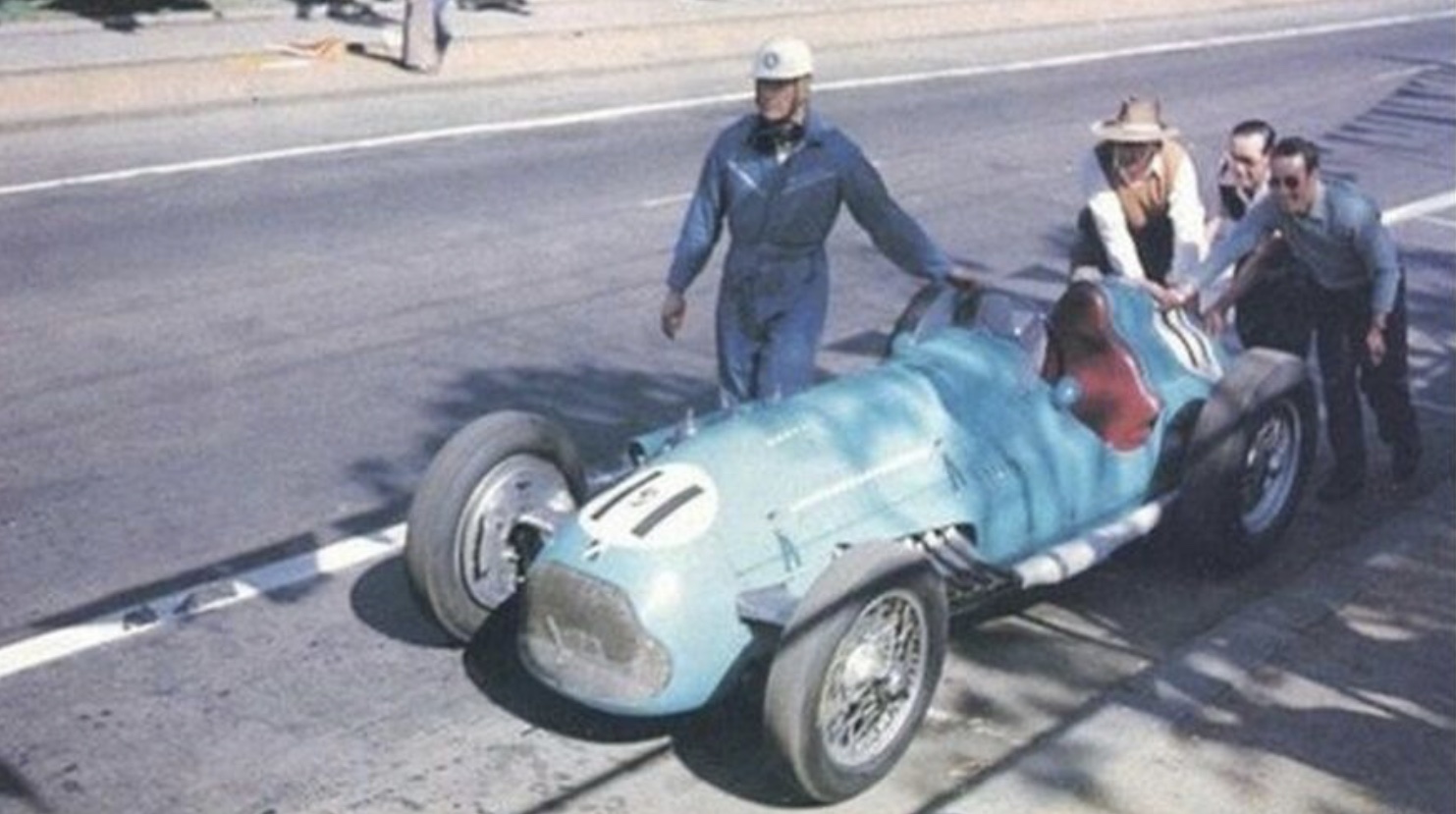
The chief mechanic trying to reassure her team she can take on Doug Whiteford’s Ford V8 Special ‘Black Bess’ post-war with a combination of Edelbrock manifold, two Stromberg 2-barrel carbs, Offy heads, Jahns pistons to suit the .030 overbore, a Claysmith crank and Isky cam. Not to forget the hand fabricated extractors.

The first shot was taken during World War 2 at Ford’s Geelong factory in Victoria, Australia. The ladies of the Womens Emergency League, VAD Transport Services and Red Cross are learning how to maintain a Ford V8.

I am interested to know exactly which variant of the venerable Ford Flathead V8 this is, and the car to which it is fitted!

Henry Ford and his ‘flathead’ V8 creation in 1932 (FoMoCo)

Credit…

State Libraries of Victoria/South Australia, FoMoCo

Tailpiece: Doug Whiteford’s ‘Black Bess’ leads the ‘Woodside Handicap’ at Woodside, South Australia on 10 October 1949…

(SLSA)

Click here for an article about Doug Whiteford’s 1950 Australian Grand Prix winning Ford V8 Spl ‘Black Bess’;

Doug Whiteford: ‘Black Bess’: Woodside, South Australia 1949…

Finito…