Posts Tagged ‘Denny Hulme’

(D Kneller)

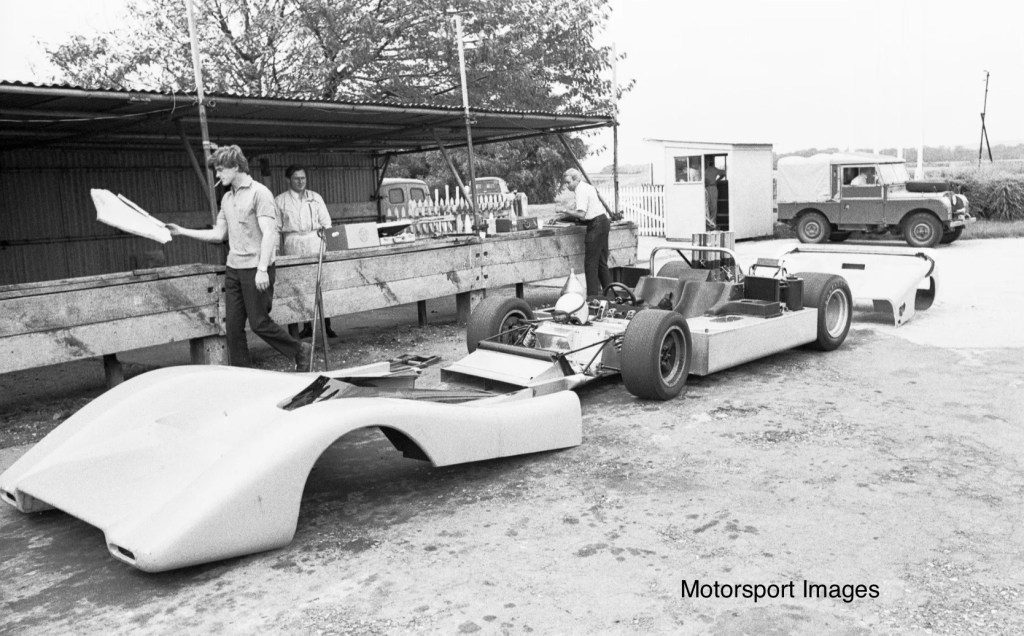
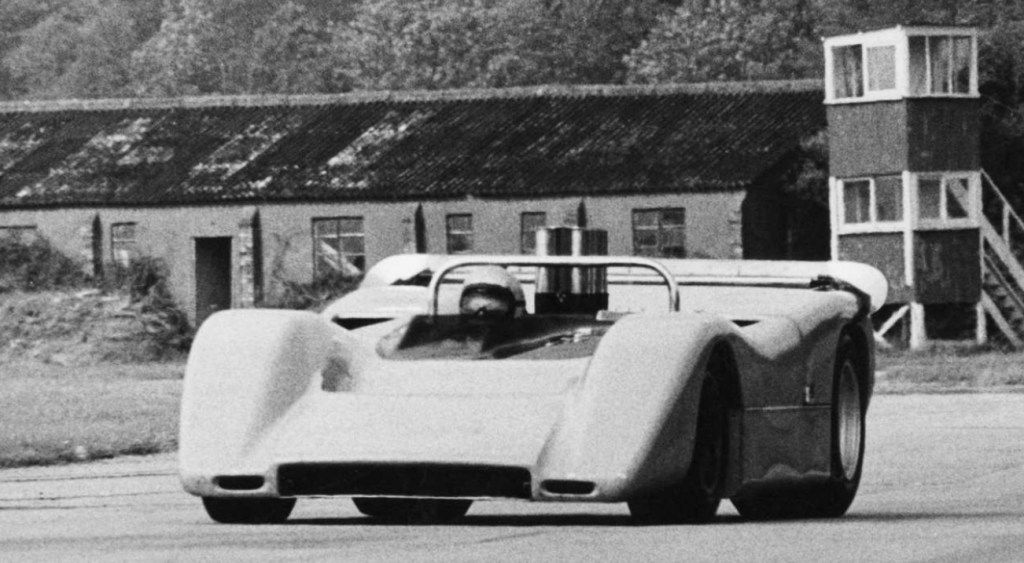
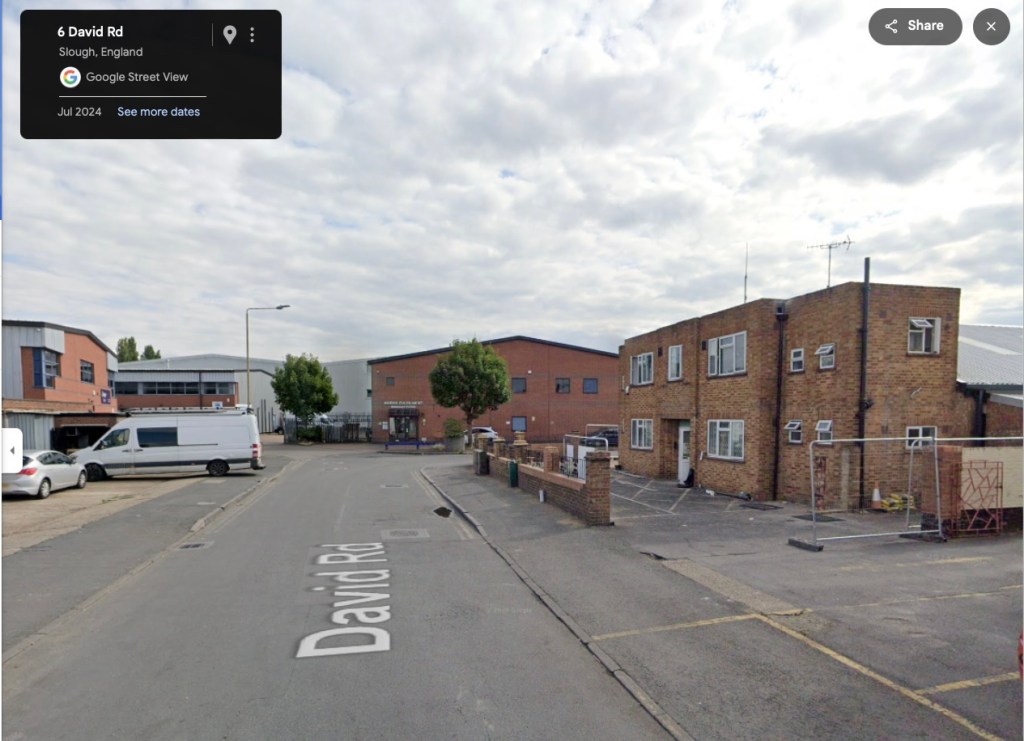
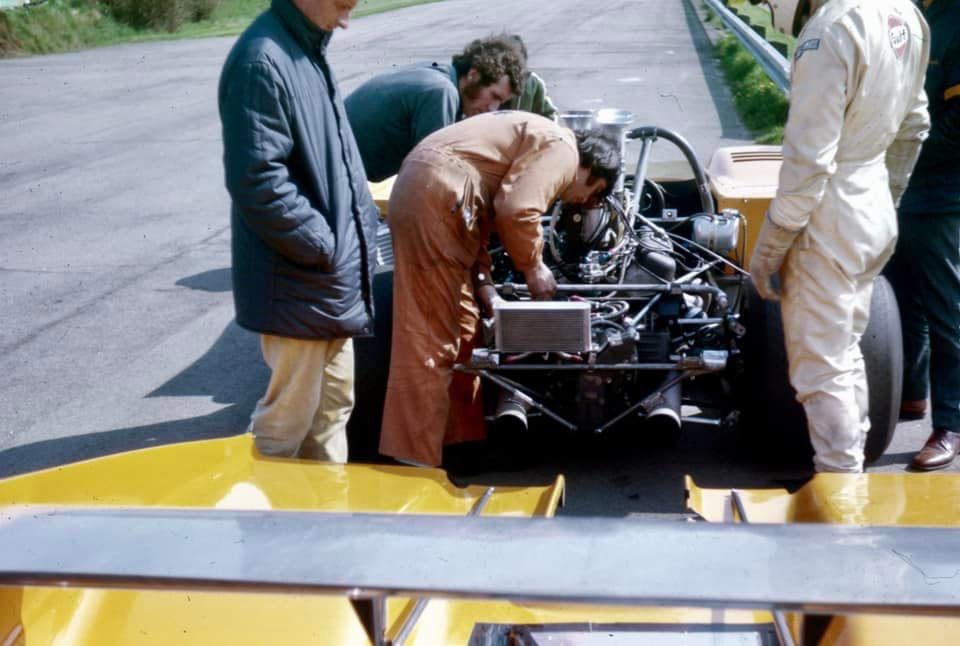
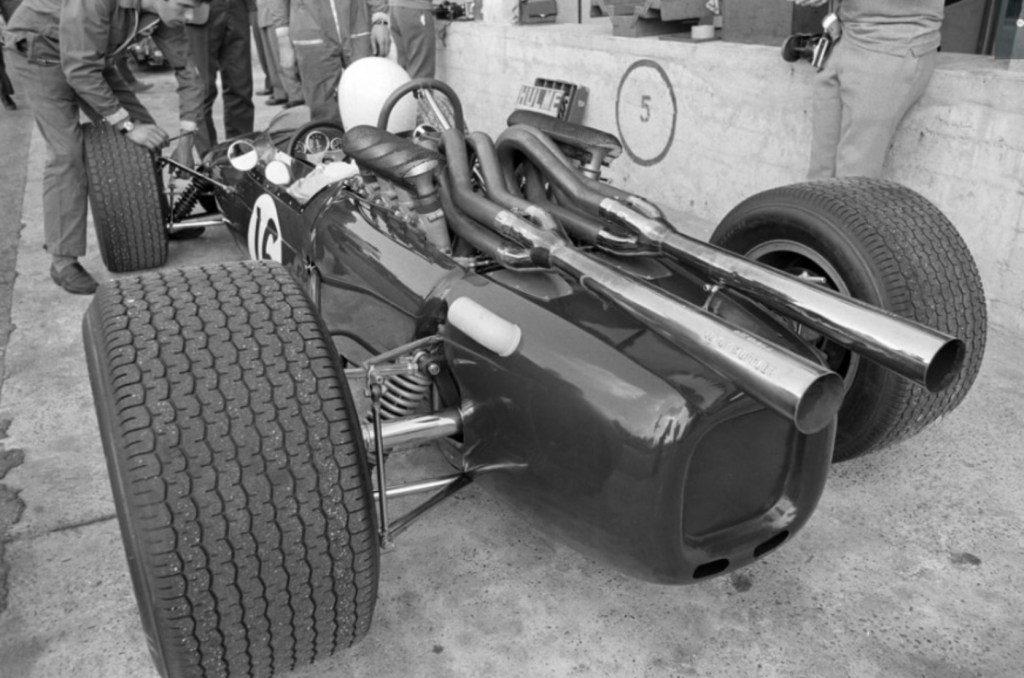
‘It’s the first McLaren M8A Chev outside McLaren’s David Road factory in Colnbrook,’ Derek Kneller recalled.

‘I was a fabricator working with Don Beresford, John Thompson and George Begg on the M8As. The shot was taken on my Polaroid camera when the first body was fitted.’

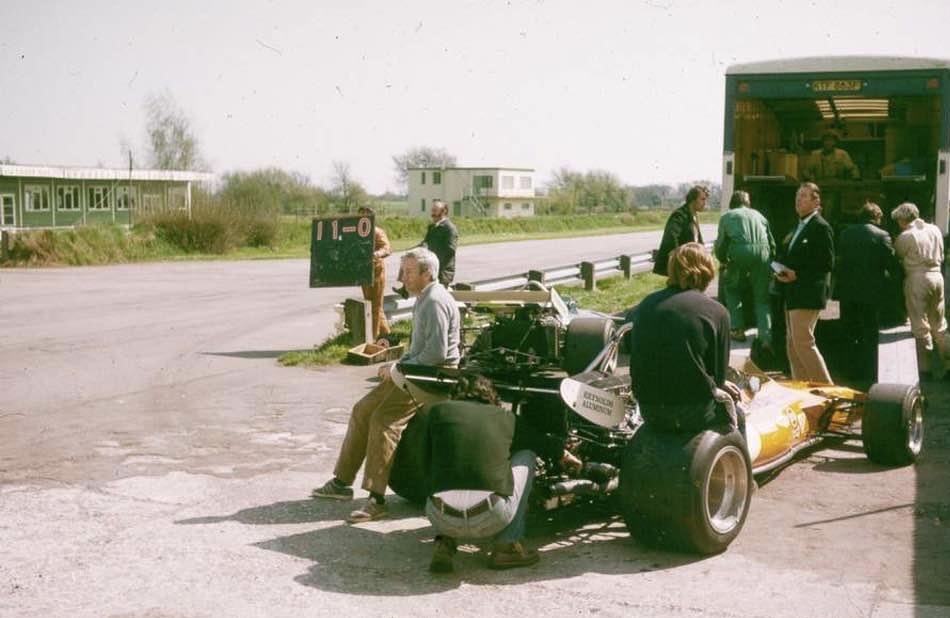
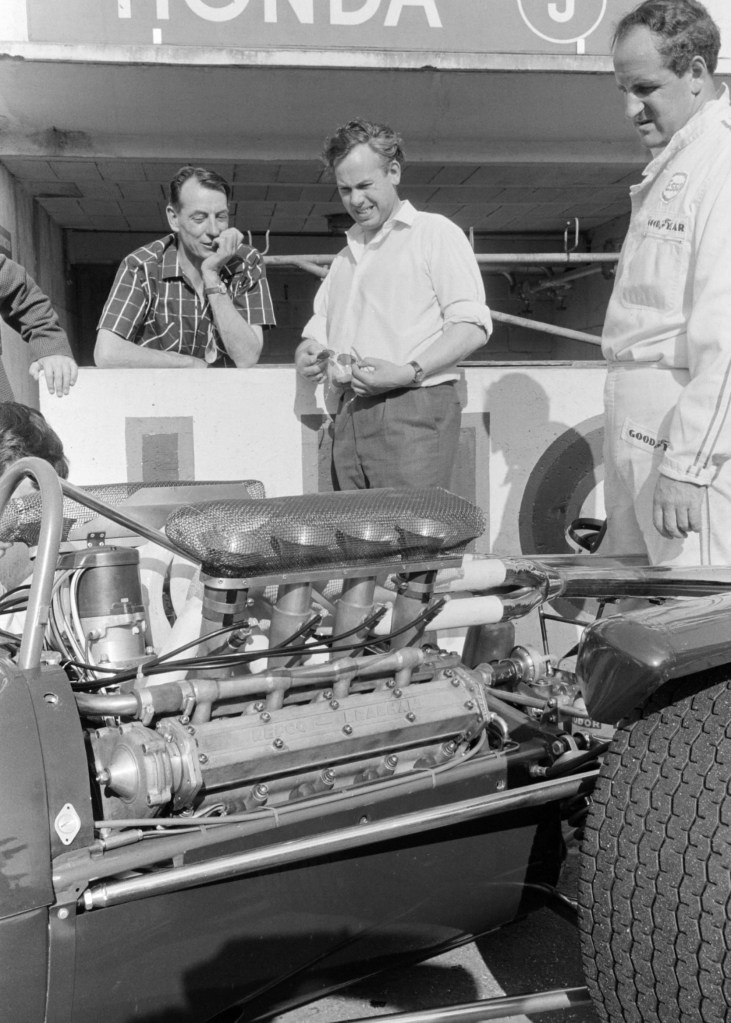
The shot below of Alistair Caldwell, Bruce McLaren and Teddy Mayer testing the car at Goodwood in July 1968 dates Derek’s shot. The car is still not fitted with mirrors, but does have a small spoiler on the rear bodywork, so perhaps a day #1 or day #2 test…

(goodwood.com.)

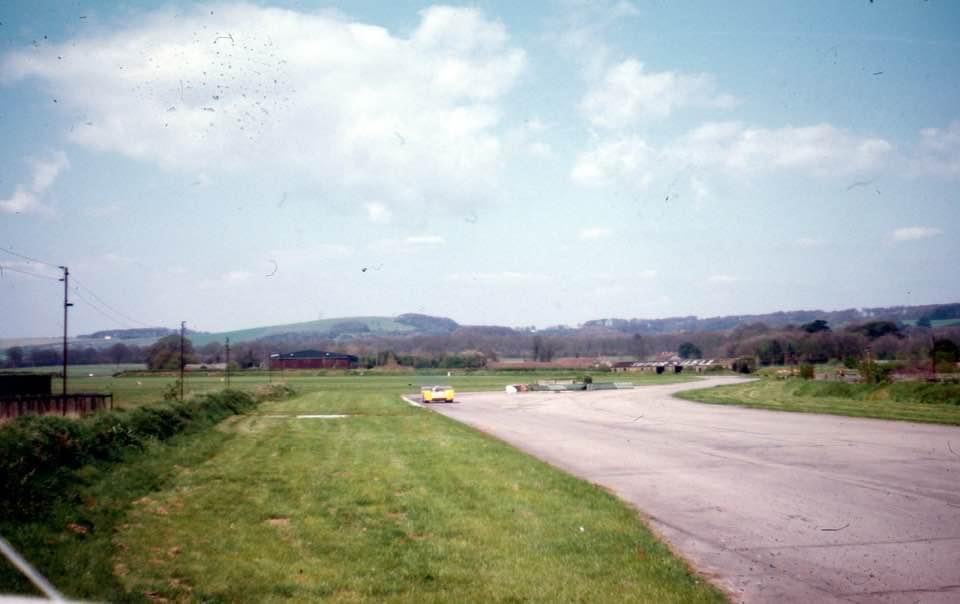
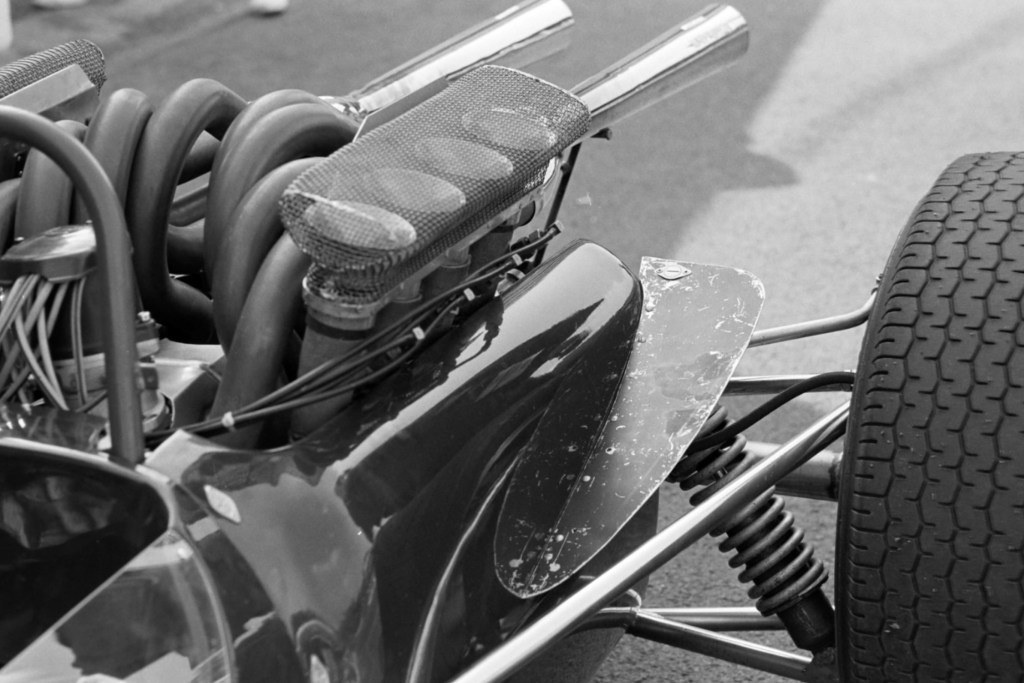
Bruce blasting past the Super Shell Building at Goodwood, what is that material going across the back of the car from wheel arch to wheel arch?

It wasn’t a bad season, McLarens won all six Can-Am Cup rounds: Denny Hulme took three, Bruce, Mark Donohue (M6A Chev) and John Cannon (M1B Chev) one apiece. Denny won the Canadian-American Challenge Cup from Bruce and Mark.

Etcetera…

As David Road is today courtesy of Andrew Hicks.

Credit…

Derek Kneller, Motorsport Images, Goodwood.com, Andrew Hicks

Finito…

(MotorSport)

Denny’s South African Office…

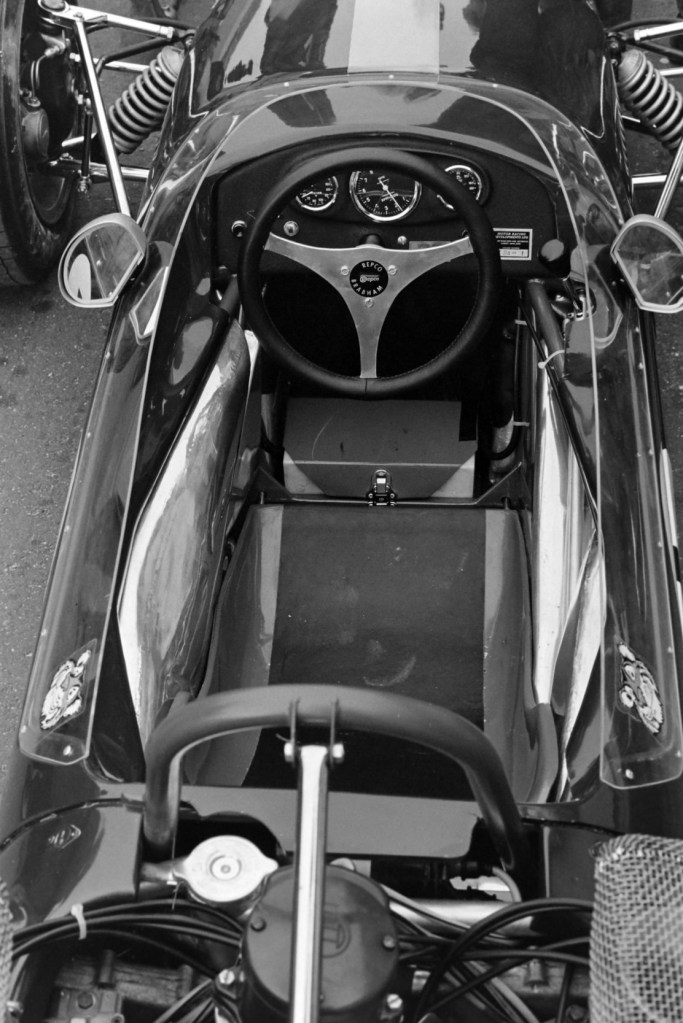
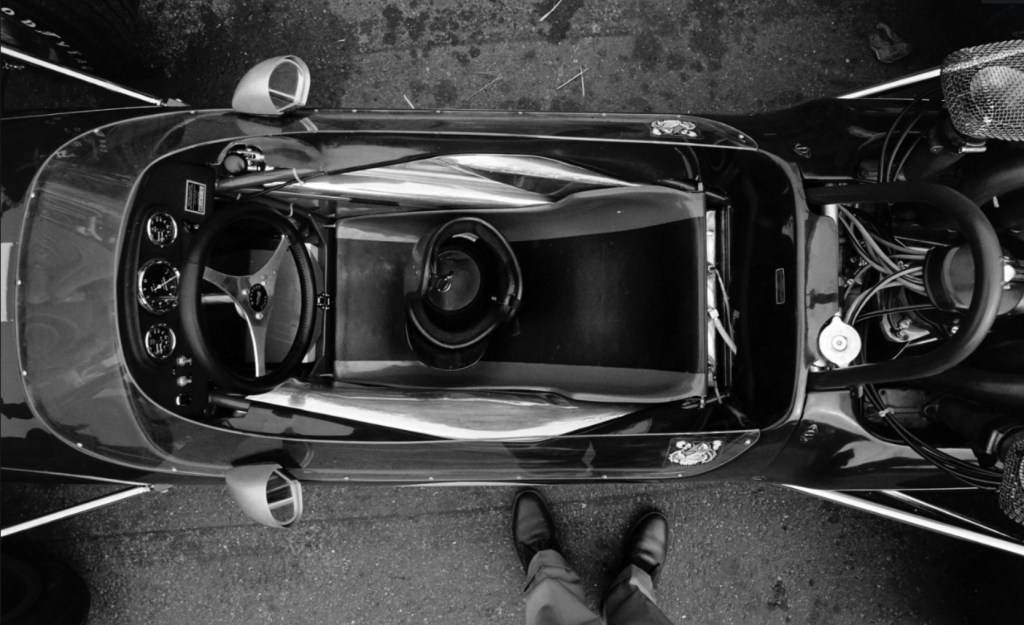
Cockpit shot of Denny Hulme’s second placed – Jack won in his Brabham BT33 – McLaren M14A Ford during the March 7, 1970 South African Grand Prix weekend at Kyalami.

Smiths instruments of course: the chronometric-tach telltale is on 10,100rpm, the DFV developed all of its punch from 8-10000. Oil pressure and temperature is the priority, fuel pressure and water temperature secondary and out of Hulme’s direct line of sight. Switches are for the rev limiter, ignition, electrical fuel pump (starting only) and the starter button. I’ve always liked a nice big ignition kill switch, but let’s not get picky.

Bruce and Denny M14As – with Jack out of focus – in the Brands paddock during the Race of Champions weekend in March 1970 (MotorSport)

The M14A was an evolution of Robin Herd and Bruce’s 1968 M7 design. A profitable Grand Prix winning design, not to forget the McLaren M10A and M10B F5000 cars which made McLaren and Trojan Cars plenty of dollars.

The cars had a few steerers in 1970: Bruce and Denny, then Dan Gurney after Bruce’s fatal Goodwood accident, and after that, Peter Gethin when conflicting oil company sponsorship contracts got in the way of Dan’s F1 and Can-Am McLaren drives.

Gurney’s qualifying best was a second adrift of Denny in the British GP, it would have been interesting to see if he could have got back his old Grand Prix race-pace had he finished the season with McLaren. He was right on-the-money in the Can-Am Cup mind you, winning the first two races at Mosport and St Joliet from pole in his M8D Chev – no doubt relishing the very first ultra competitive Can-Am car he had ever raced! – and qualified second on the grid at Watkins Glen, then faded with undisclosed dramas in his last race for the team.

Gurney’s M14A Ford, British GP July 1970 Brands Hatch (MotorSport)

There is no such thing as an ugly Papaya McLaren! Note the full monocoque aluminium chassis under that inspection hatch.

In a very tough year for the team, Bruce’s best was second place in the Spanish GP in M14A/1, and Dan’s best in three Grands Prix with that car, was sixth in the French at Clermont Ferrand.

Denny raced M14A/2 to second at Kyalami, and third in the Race of Champions at Brands Hatch and the German Grand Prix. He missed the Belgian and Dutch GPs after burning his hands at Indianapolis when an imperfectly secured quick-release cap on his McLaren M15 Offy leaked methanol and caught fire.

Peter Gethin then raced M14A/2, placing second in the Spring Trophy at Oulton Park and in the International Trophy at Silverstone.

Dan Gurney, McLaren M14A Ford, on the beautiful Clermont Ferrand road circuit, French GP 1970 (MotorSport)

M14A/3 became Peter Gethin’s car from the 1970 Italian GP until the Spanish in March 1971. In eight meetings his best was sixth in the Canadian GP at Mont Tremblant.

Ultimately the M14A fell a bit short in 1970, while noting again the mitigating factors. It was a rare GP season in which victories were spread far and wide amongst the Lotus 72 Ford, Ferrari 312B, Brabham BT33 Ford, BRM P153 and March 701 Ford! Jochen Rindt posthumously won the drivers title and Lotus the constructors.

Bruce in M7B Ford. Note the front wing support mounts directly to the upright, Race of Champions 1969 (MotorSport)

Hey you in the Big Banger…

No it’s not a single-seat M8 Can-Am car, in 1969 McLaren converted M7A/3 to ‘Lancia D50 spec’ by placing all the fuel centrally and low. By filling in the space between the wheels Bruce and Gordon Coppuck were also playing with the aerodynamics of the car; the car was then tagged M7B/3.

It didn’t work though, after racing the car on debut in the South African GP at Kyalami in January 1969, and then the Brands Hatch Race of Champions (above) the car was sold to Colin Crabbe, of Antique Automobiles, for Vic Elford to drive.

Vic was fifth in the French GP, then sixth in the British before crashing it at the Nurburgring in an accident not of his making. Mario Andretti crash-landed his Lotus 63 Ford 4WD and Vic collected one of its wheels, flipped and ploughed into the trees destroying the car and breaking his arm in three places. I guess the Ford DFV and Hewland DG300 gearbox from that car found their way into the new March 701 that Crabbe bought for Ronnie Peterson to race in 1970?

Vic Elford, McLaren M7B Ford, Nurburgring 1969 not long before his big, Mario inflicted crash (MotorSport)
Bruce McLaren, McLaren M7C Ford, British GP Silverstone 1969. Third, race won by Jackie Stewart’s Matra MS80 Ford (MotorSport)

Bruce drove a new car, M7C/1 for the rest of 1969. The major factor which enhanced this cars performance was the use of a full monocoque aluminium chassis derived from the M10A F5000 car, itself derived from the bathtub-monocoque M7A.

McLaren’s conventional 2WD cars didn’t get as much love as they otherwise would have in 1969 given the attention lavished upon their 4WD brother, the M9A. McLaren, together with Lotus, Matra and Cosworth pursued this blind-alley. Ultimately, very quickly, wings and the tyre company Polymer Chemists solved the ‘3-litre problem’ of too much power and too little grip far more cost-effectively than then complex mechanical 4WD mechanisms.

Derek Bell aboard – although he looks like he is trying to escape it – the McLaren M9A Ford 4WD during the 1969 British GP weekend at Silverstone. DNF suspension after five laps (MotorSport)

Bruce’s 1969 M7C – as we have seen, a lineal descendant of the 1968 M7A – begat the 1970 M14A. The major advances from M7C to M14A were inboard rear brakes, new front uprights and a smidge greater fuel capacity.

See Allen Brown’s Oldracingcars.com for more detail: here: https://www.oldracingcars.com/mclaren/m7a/ and here: https://www.oldracingcars.com/mclaren/m4a/ not to forget my own masterpiece on the M7A here: https://primotipo.com/2018/07/13/mclaren-m7a-ford-dfv/

Etcetera…

(MotorSport)

A few more shots of the wideboy McLaren M7B Ford during that March 16, Race of Champions weekend at Brands Hatch in 1969.

High wings were the rage but Lotuses ‘cavalier’ engineering of their wing supports and their repeated failures – the last straw the breakages of Rindt’s and Hill’s wings and resultant crashes of their Lotus 49s at Montjuïc – saw them banned during the Monaco GP weekend that year. More tightly controlled, they stayed.

The photographs in this article demonstrate the changes being made by the teams to adapt in a a period of about 12 months, not to forget the related 4WD adventures for the affected teams!

(MotorSport)
(MotorSport)

Credits…

MotorSport Images, oldracingcars.com

Tailpiece…

(MotorSport-Schlegelmilch)

Our pit-babe was at Clermont during the 1970 French GP weekend, the cars are Denny and Dan’s M14As and Andrea de Adamich’s M14D Alfa Romeo. Another of Rainer Schlegelmilch’s signature shots!

Finito…

(wfooshee)

It looks pretty good to me, not exactly Margaret River, but hey, what’s all this nonsense about the grim North Sea?

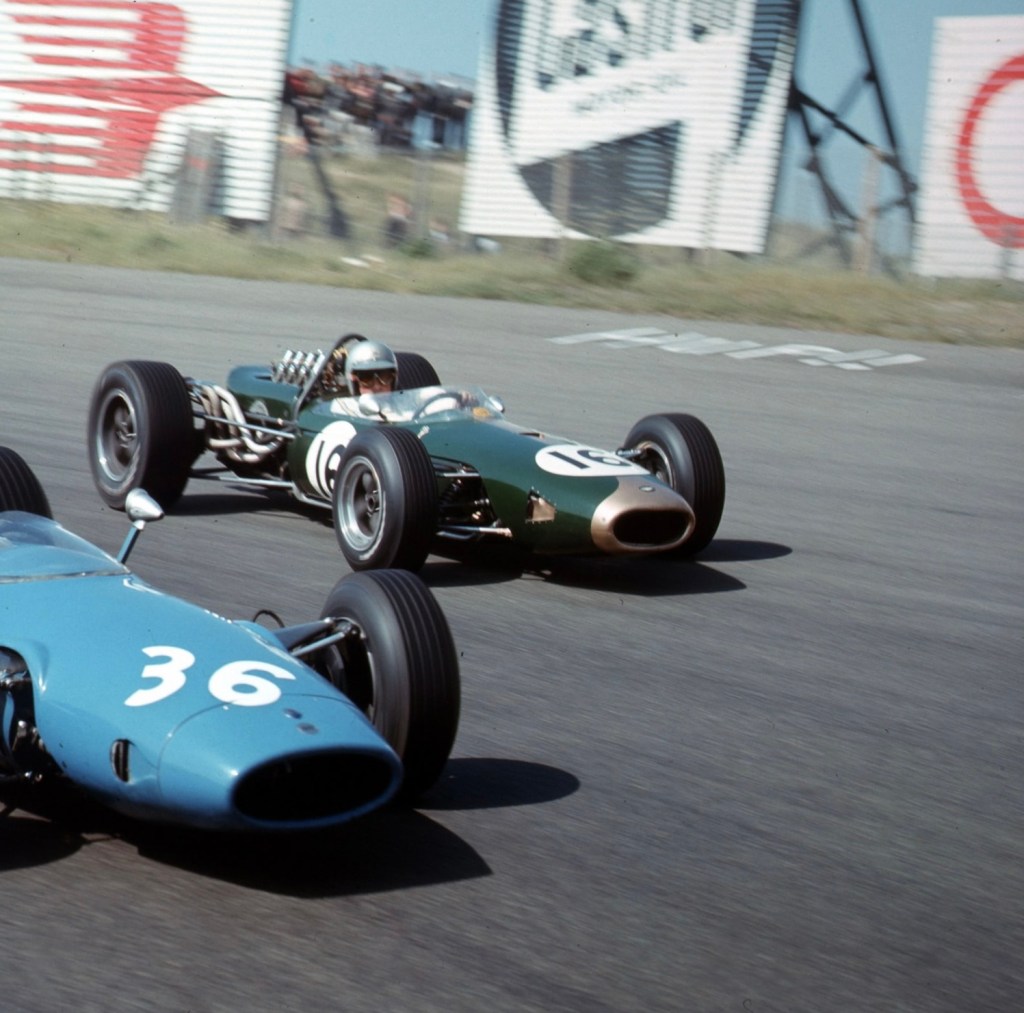
Jack Brabham was never the life of the party, seemingly, but he had a pretty good sense of humour, here making his way to the grid for the 1966 Dutch Grand Prix and addressing head-on media comments about his advancing years, complete with ‘walking stick’ and beard. He had turned 40 on April 2, like a fine wine he got better really, not too many of the over-40s won races in their final season, 1970 in Jack’s case. Ignoring the occasional touring car outings back in Australia.

(wfooshee)

He had the last laugh too, he had won the previous two Grands Prix in France and the UK and was on the-roll that delivered his third World Drivers Championship that year. He beat Graham Hill, BRM P261, and Jim Clark, Lotus 33 Climax to win at Zandvoort, then repeated the victorious dose at the Nurburgring a fortnight later. See here for a piece on his ’66 championship year; https://primotipo.com/2014/11/13/winning-the-1966-world-f1-championships-rodways-repco-recollections-episode-3/

Two 3-litres ahead of two 2-litres in the Dutch dunes. Brabham and Denny Hulme, Brabham BT19/ BT20 respectively from Jim Clark’s Lotus 33 Climax and Graham Hill’s BRM P261 (MotorSport)

BT19 F1-1-65 defines simplicity.

Spaceframe chassis, and a repurposed one at that, Alford and Alder (Triumph) front uprights and povvo Repco RB620 290-310bhp, SOHC two-valve, Lucas injected V8 with a block donated by an Oldsmobile roadie. Can’t be true, surely? It’s an unusual angle of Jack’s weapon of war for 95% of 1966 in Tasman 2.5 and F1 3-litre Repco guises, it raced on towards the end of ‘67 too, no rest for the wicked, World Champ or otherwise.

Credits…

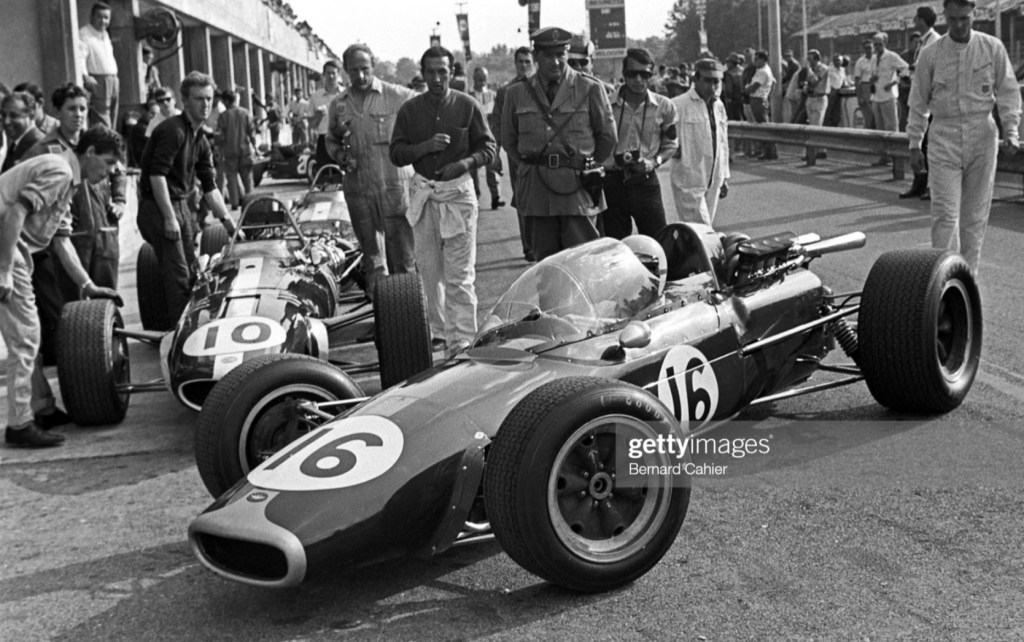
wfooshee, Bernard Cahier-Getty Images, MotorSport Images

(MotorSport)

Tailpiece…

Brabham rounding up Guy Ligier’s Cooper T81 Maserati V12, he was ninth and last, six laps adrift of the winner. At the end of the season Jack sold Guy one of BRO’s Brabham BT20 Repcos (Denny’s F1-2-66), so impressed was the rugby-international watching them go past at close quarters that season.

Finito…
image

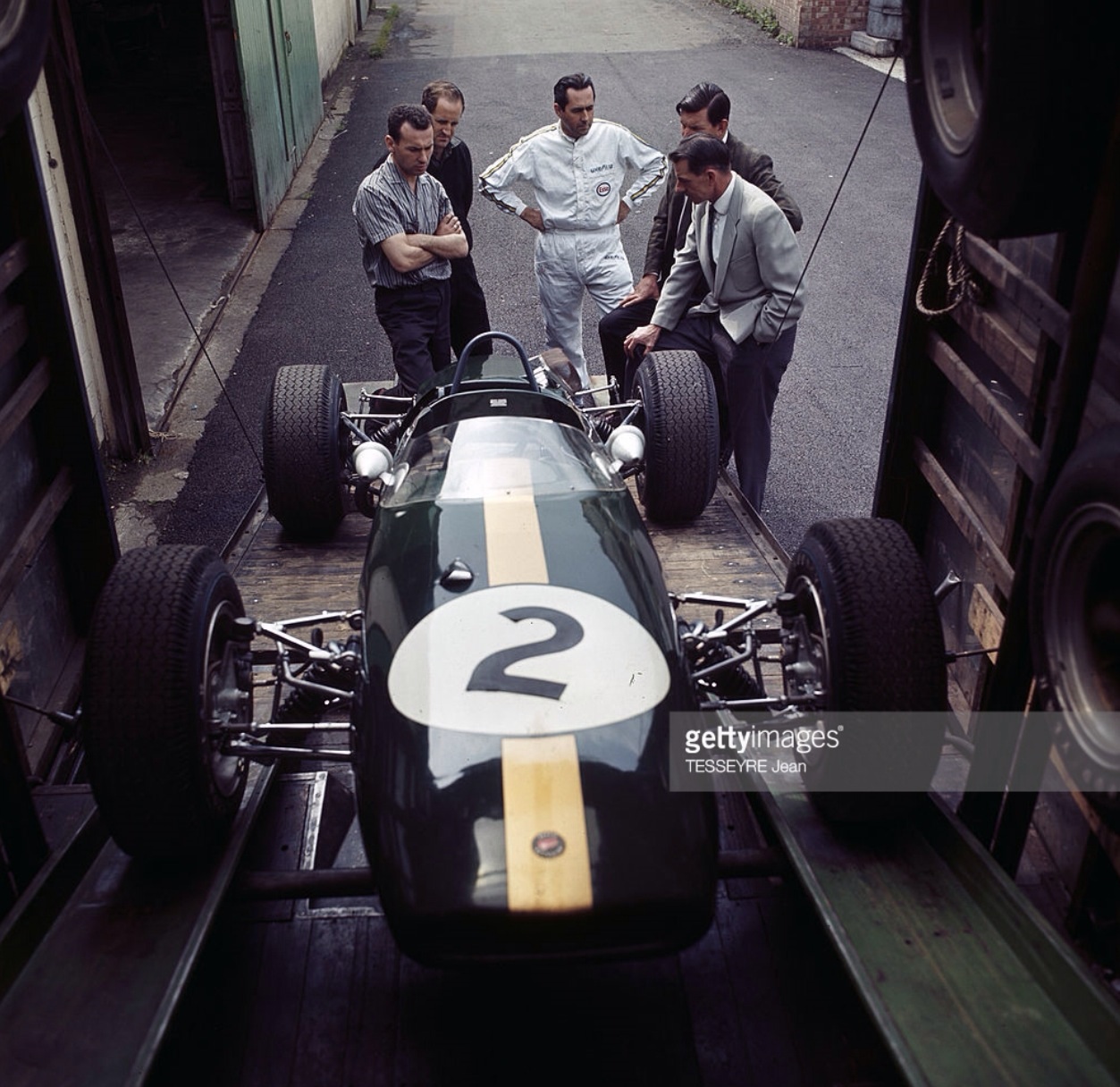
Jack Brabham with his F1 Brabham BT11 Climax, F2 BT16 Honda and one of Ron Tauranac’s bare spaceframes Jack has borrowed from Ron’s production line.

The photo isn’t dated but it’s between mid-June and mid-September 1965 – works Brabhams used number 14 at the Belgian, French, British, Dutch, and Italian Grands Prix.

In some ways it was a bit of an investment year for Brabham. It was their first year using Honda engines and Goodyear tyres, not to forget the Repco Brabham Engines V8s being developed in Melbourne. All of these initiatives paid off in spades the following year. Mind you, investment year or otherwise, Dan Gurney made the BT11 sing in F1 with a swag of top three results, albeit no wins in 1965.

Jack worked with Honda engineers to get more torque from their peaky but powerful 1-litre four cylinder engines. The team partnered with Goodyear from the January-March 1965 Tasman Cup. Lots of work on compounds and profiles helped the Brabham Racing Organisation win the 1966 F2 (Trophees de France) and F1 World championships with Honda and Repco-Brabham powered cars respectively.

image

The boys – Tauranac (or not?) in front of the partially obscured Denny Hulme and Jack – ponder a Brabham Honda as it’s loaded onto the transporter. See here for a feature on these jewels of cars, and engines; ‘XXXII Grand Prix de Reims’ F2 3 July 1966: 1 Litre Brabham Honda’s… | primotipo…

The photo requires detective work as the Getty Archive caption has it as a Lotus 33 Climax V8, which it most assuredly is not! The caption reads “Motor Sport Formula 1. In July 1965, during a report on Motor Sport and Formula 1, the Lotus 33 returning to the back of a truck, men and a driver discussing outside.”

While it’s not the French Grand Prix, that year held at Clermont Ferrand in June, it could be during the British Grand Prix weekend at Silverstone during July, a meeting the photographer, noted Paris Match regular Jean Tesseyre, may have attended.

Does it look like the Silverstone paddock to any of you Brits? There was no F2 race on the program but it is possible that Brabham did some test laps during the meeting and/or had the BT16 Honda on display. Perhaps the car is being loaded up at MRD or BRO in Surrey?

I love solving these mysteries if any of you can assist, attendee identification in full would be a bonus…

Credits…

Manuel Litran, Jean Tesseyre

Finito…

(B Hanna)

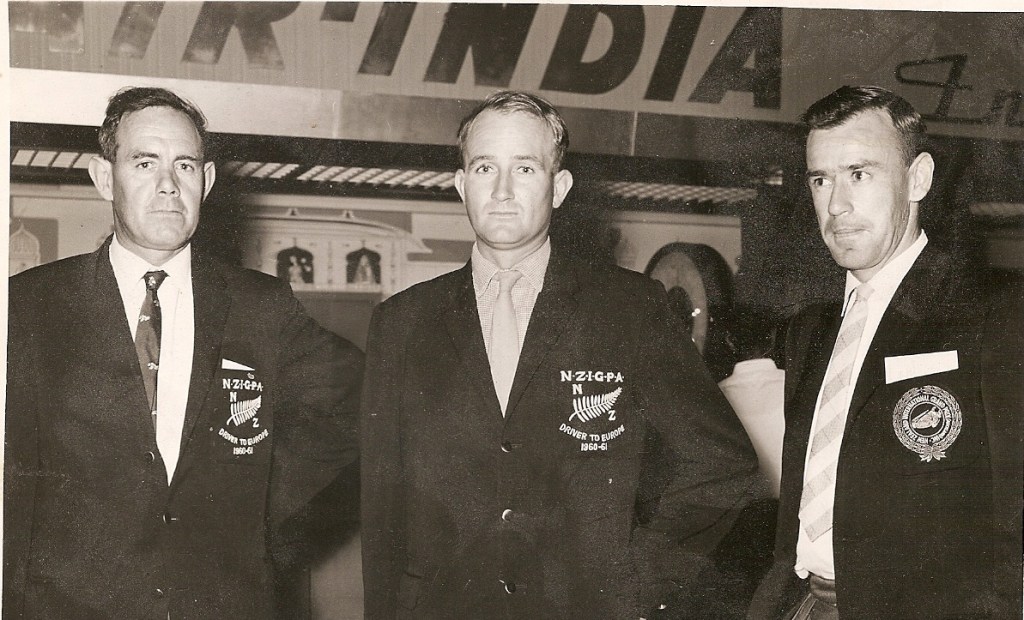
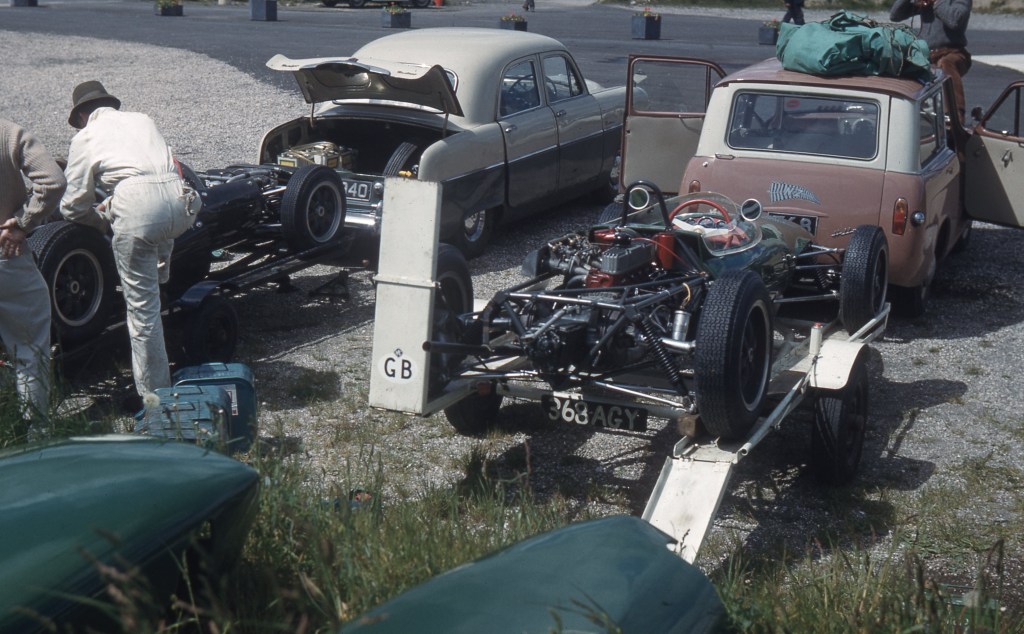
The New Zealand International Grand Prix Racing Team about to fly to London via Sydney, Singapore, Hong Kong and Bombay, arriving at the beginning of April 1961. Auckland Airport, from left is Bill Hanna, Angus Hyslop and Ross Pedersen. Don’t stress guys, it’ll be ok!

Once in the UK they meet up with Denny Hulme, basing themselves around the Kingston-upon-Thames area. As a Driver to Europe alumnus, Denny also drove under the NZIGP Team banner.

This is the second of three articles written by Alec Hagues around photographs taken by Bill Hanna, Alec’s father in law who was Angus Hyslop’s team manager/mechanic during 1961. The first instalment is here; Angus Hyslop, Kiwi Champion through Bill Hanna’s lens… | primotipo…

Enjoy the fabulous photographs and first hand account of elite level international Formula Junior from another age.

(B Hanna)

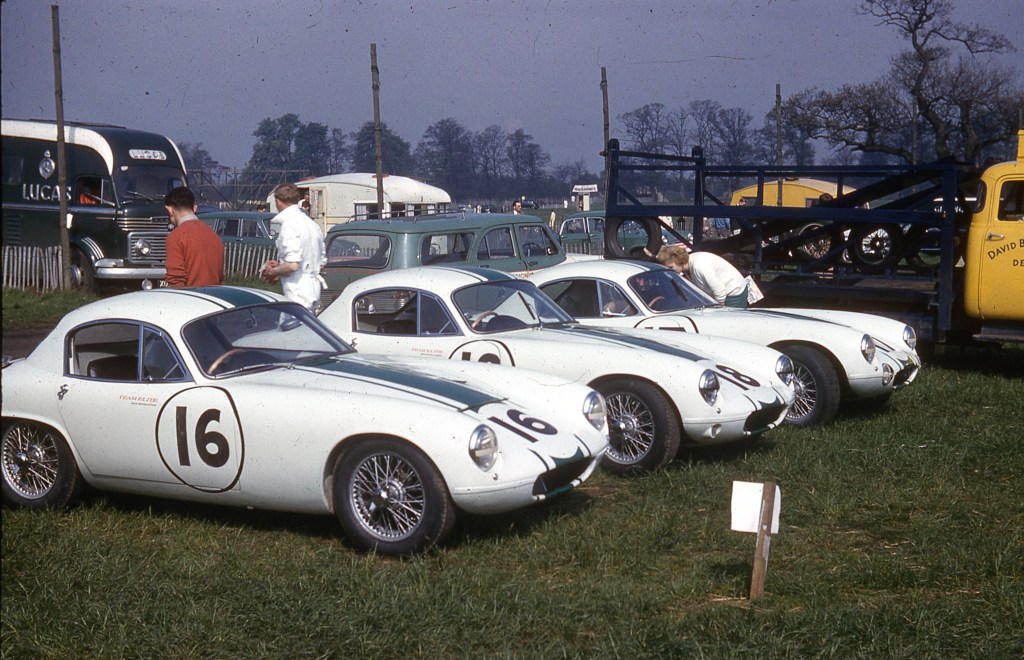
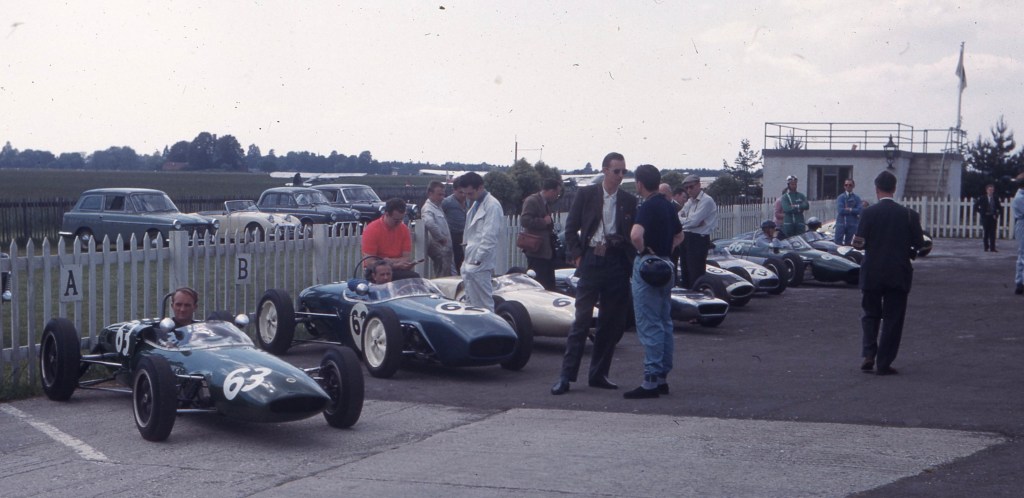
On 15 or 16 April 1961, before they started racing, the team visited Oulton Park in Cheshire for the GT Cars Trophy Race. Here above are the Lotus Elites of John Wagstaff #16, Bill Allen and Peter Arundell; there are some seven Elites in the race.

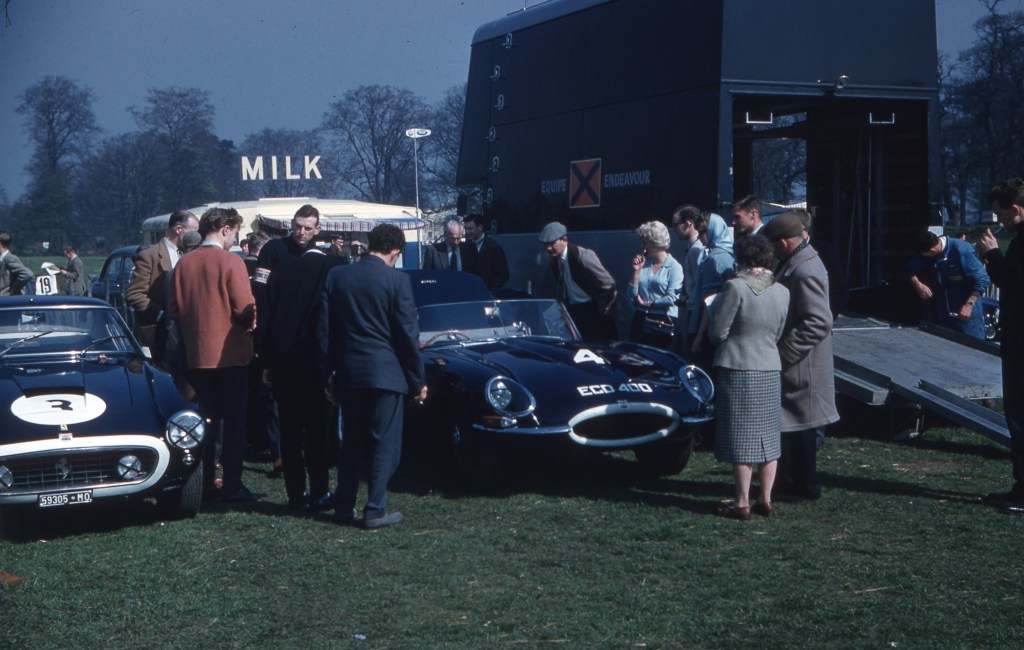
However, the big news was the debut of the Jaguar E-Type in racing, the first production example having rolled off the production line in Coventry only the month before. Note the group of admirers all-over Graham Hill’s Jag, shunning Jack Sears’ Ferrari!

(B Hanna)
(B Hanna)

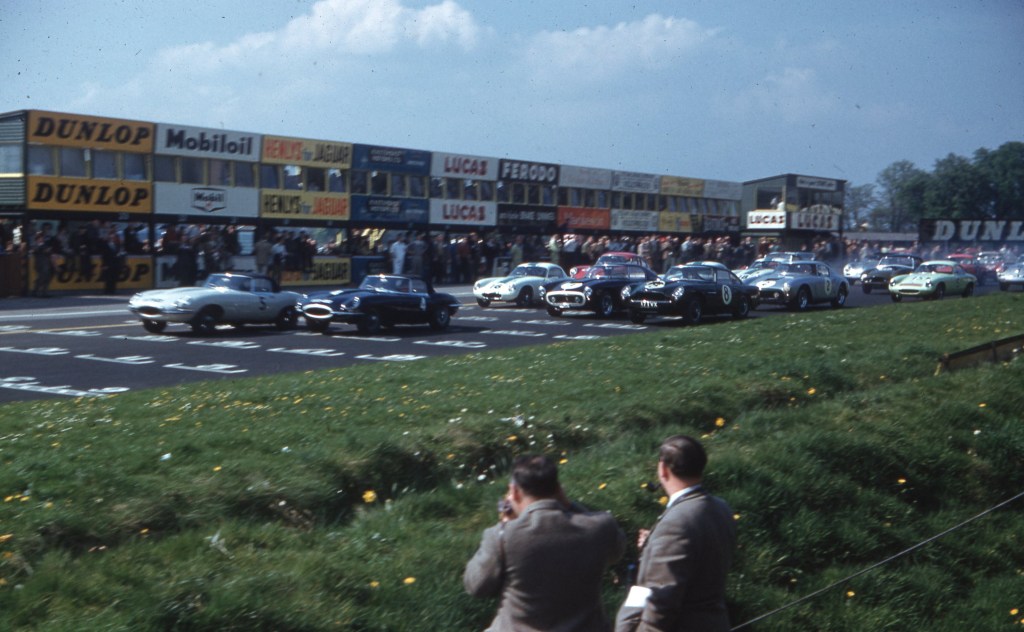
Roy Salvadori #5 above leads Graham Hill #4 off the grid, both driving E-Types. Just behind are John Wagstaff #16 (Lotus Elite Climax), Jack Sears #3 (Ferrari 250 GT Berlinetta) and Innes Ireland #8 (Aston Martin DB4).

(B Hanna)

The Cars

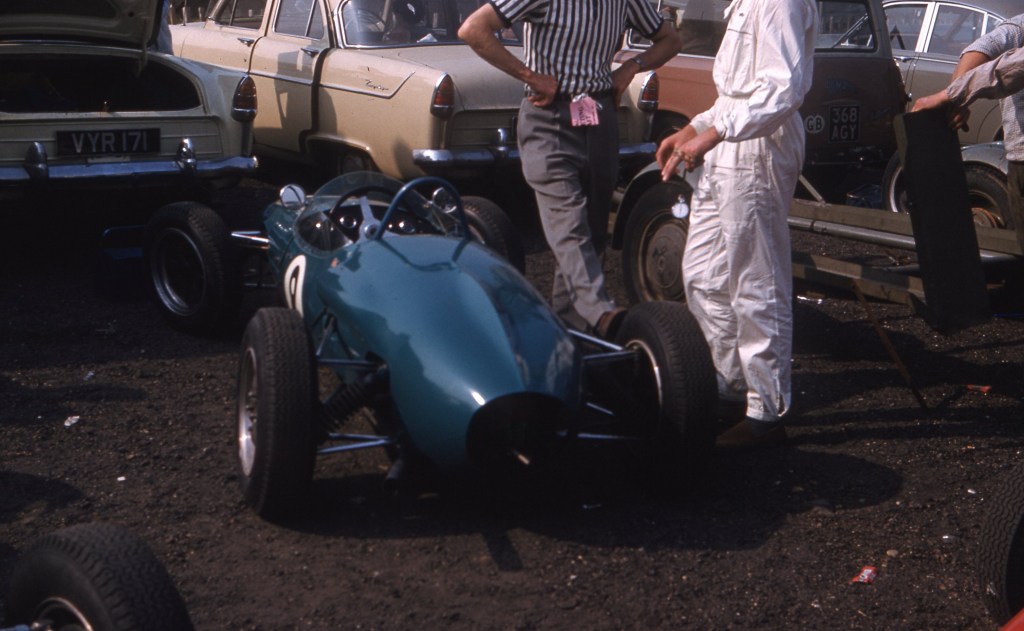
Angus’ Lotus 20-Ford/Martin in green, seen in the paddock at Goodwood above. A recap, Angus shipped his Cooper T43-Climax 1964cc over to the UK. We know this because it ‘comes back’ at the end of the season, at least as far as NZ Customs are concerned.

He is on the NZIGPA Driver To Europe scheme which is affiliated with Cooper Cars Ltd, and the team spend time at Cooper’s garage in Surbiton. Yet he drives a Lotus the whole time he is in Europe.

(B Hanna)

Denny’s Cooper T56-BMC (later Ford) in blue/silver, is seen here at Roskilde during practice for the Copenhagen Cup in May, he is ahead of Angus who later won the race, Denny placed seventh.

While Angus has Bill and Ross on his team, Denny enlists the help of journalist Eoin Young. With no disrespect to Eoin’s memory, it seems highly likely Bill gets involved with both cars!

The NZIGP Team drivers wear silver helmets with a maroon stripe.

(B Hanna)

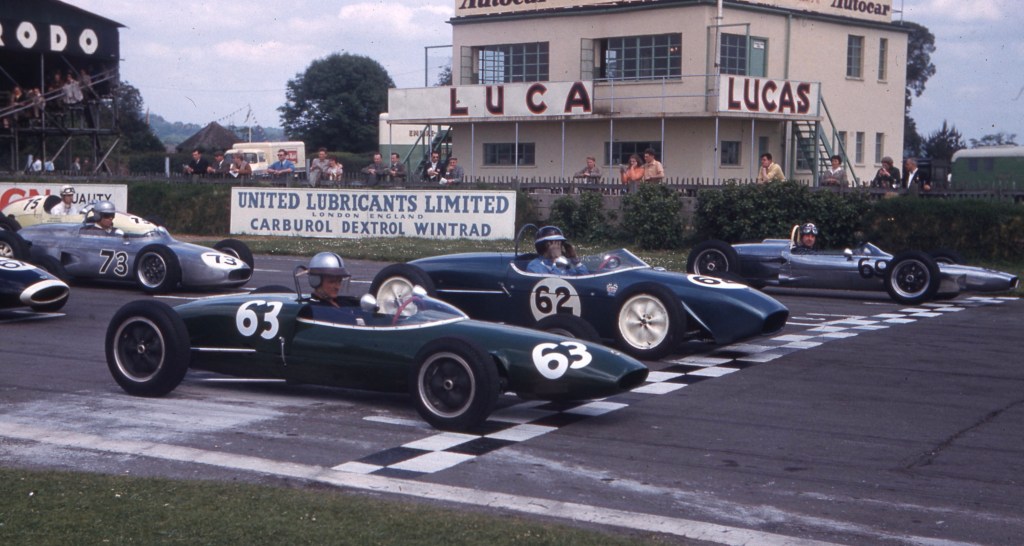
Angus’s first race in Europe (above) is the BARC Whit Monday Meeting at Goodwood, 22 May 1961. A number of sources report that he wins the race.

At the Roskilde, V Copenhagen Cup, 28 May 1961 Denny bravely returned to the track where his Kiwi team-mate George ‘Joe’ Lawton was killed the previous September.

As noted above, Angus won the race, David Piper was second in another Lotus 20 Ford.

Angus and Denny’s cars on their trailers in the paddock – the depot – at Roskilde.

(B Hanna)

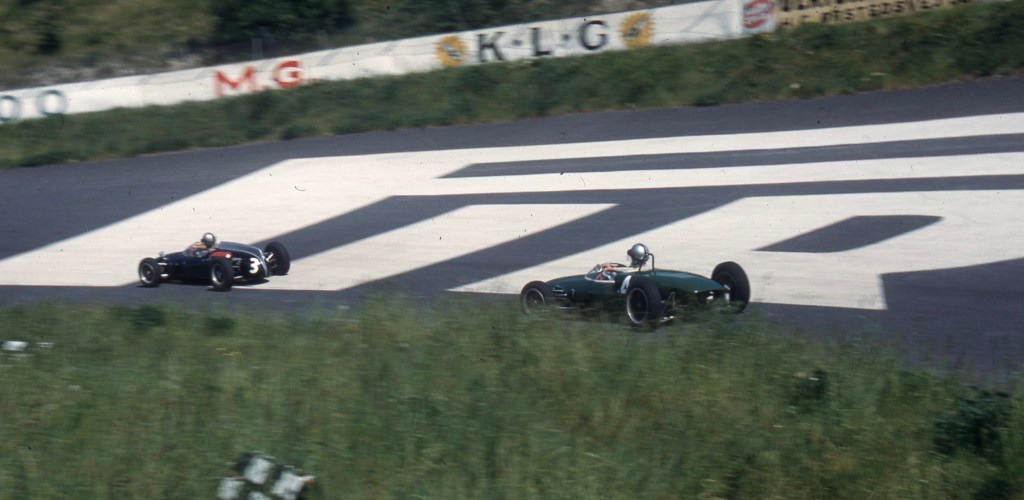
On 4 June 1961 in the IX Grand Prix de Rouen Junior at the Circuit de Rouen-les-Essarts, Angus takes 11th and Denny DNF with both suffering engine problems.

A picture containing outdoor, person, sky, ground

Description automatically generated
Who is the young businessman at Le Mans? Marvellous, atypical Denny portrait (B Hanna)

Le Mans 10-11 June 1961: XXIX Le Mans 24 Hour.

There are many pictures out there of the Abarth 850S co-driven by Angus and Denny so successfully in this race. So here’s a picture of Denny Hulme in a suit with a tanker and a theodolite.

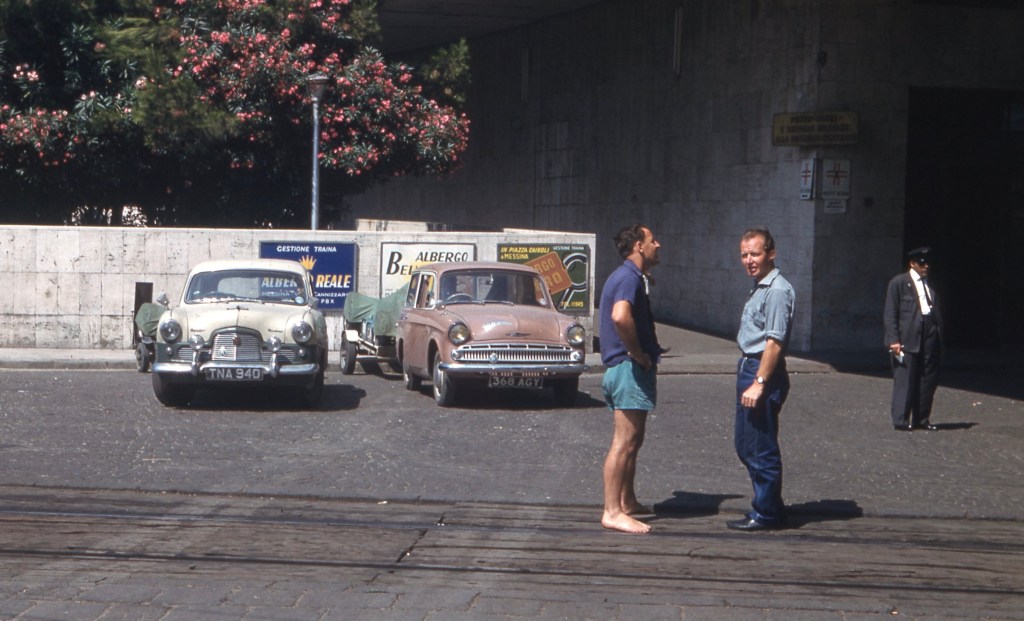
Having taken somewhat disappointing sixth and 18th spots respectively on 2 July 1961 in the V Coupe International de Vitesse des Formule Junior, Circuit de Reims-Gueux, Denny and Angus returned to the UK before embarking on the long trip towing their cars in convoy to Sicily.

Here are Denny (in classic barefoot pose) and Eoin with the convoy parked up, probably waiting to board the ferry at Villa San Giovanni (below).

A picture containing outdoor, road, tree, street

Description automatically generated
(B Hanna)
(B Hanna)

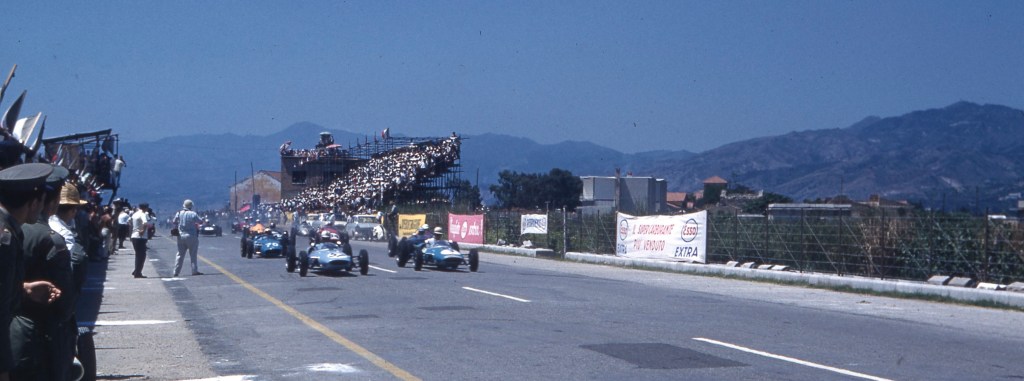
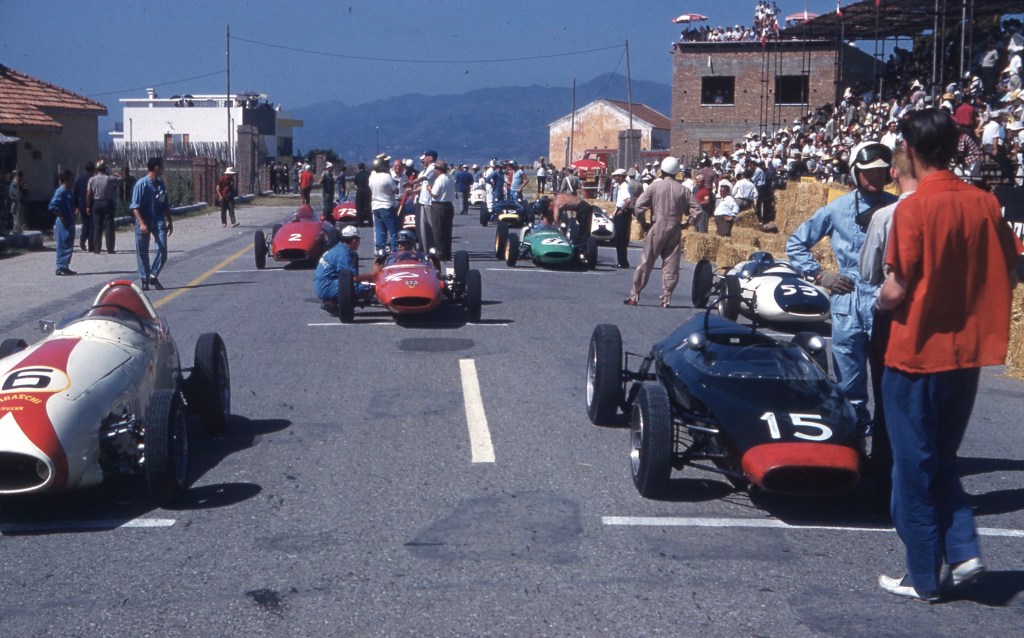
23 July 1961: III Gran Premio di Messina, at the Circuito Laghi di Ganzirri.

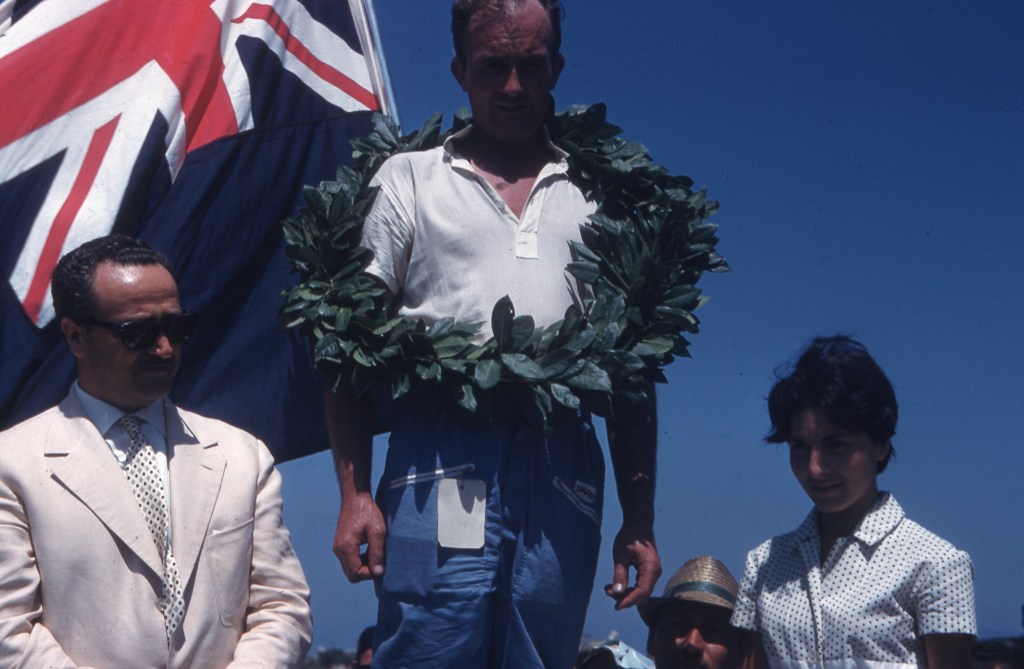
In their best joint performance of the summer, the Kiwi duo took first and second places with Angus edging Denny out of the top-spot.

(B Hanna)

The grid shot above is probably heat 1, Massimo Natili, Taraschi Fiat #6 on the grid alongside the Lola Mk3 Ford of Britain’s Bill McGowen #15 and Geki #42 Lotus 20 Ford. This heat was won by Lorenzo Bandini from Jo Siffert and Angus.

(B Hanna)

Above is probably the Lotus 20-Fords of Bandini #50 and Siffert #37 on the front row of the grid, with Angus’s similar car creeping into shot at left.

The stunning panorama below is probably heat 2, Bob Anderson’s Lotus 20-Ford and Colin Davis’ Lola Mk3 Ford leading, with Denny probably largely concealed behind them. Davis won the heat from Anerson and Hulme.

A picture containing sky, outdoor, road, day

Description automatically generated
(B Hanna)
A race track with cars on it

Description automatically generated with low confidence

Brands Hatch, 7 August 1961 a John Davy Trophy meeting. I think I see Angus and Denny in there, mid-grid. Hyslop was 12th and Hulme a DNF in the race won by Peter Arundell’s Team Lotus Lotus 20 Ford.

And below, on a typical grey English summer day at Goodwood, 19 August 1961 II BARC Formula Junior Championship, perhaps that’s Alan Rees leading in the Lotus.

Rees won from Gavin Youl’s MRD Ford and Dennis Taylor’s Lola Mk3 Ford with Angus fourth. Denny was in Sweden that weekend contesting the Kanonloppet, he too was fourth.

A group of people watching a race car go around a track

Description automatically generated with low confidence
(B Hanna)
(B Hanna)

Back at the Roskildering for the Danish Grand Prix weekend of 26-27 August 1961 above.

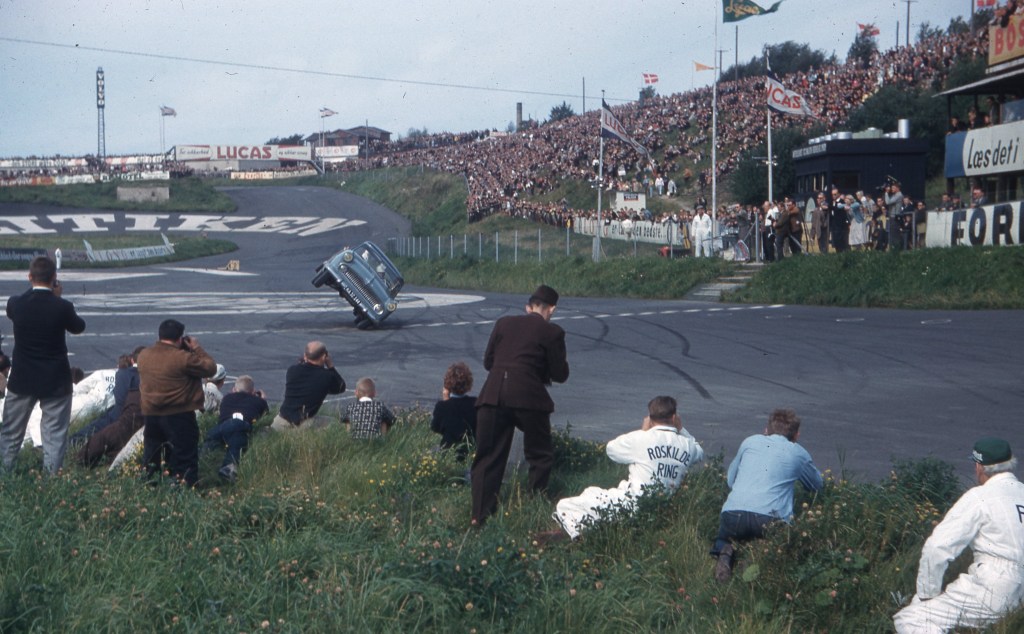
Aside from the Formula 1 Grand Prix (non-championship) feature race and Formula Junior (in which Angus and Denny were third and fourth respectively), and saloon car racing featuring John Whitmore in his Austin Mini Seven, the organisers put on this display of stunt driving.

You are seeing about half of the entire circuit in this one photo.

A picture containing road, outdoor, sky, transport

Description automatically generated
(B Hanna)

Angus’ final 1961 race seems to have been the September Trophy meeting at Crystal Palace on 2 September 1961.

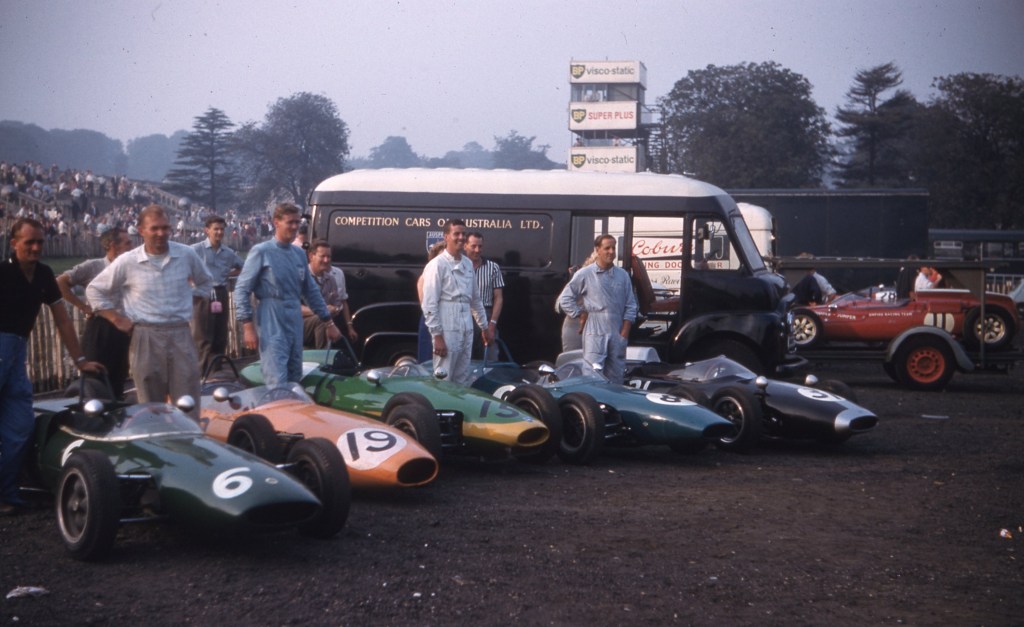
In the line up above we see Angus Hyslop #6, Eric Harris Alexis Mk3 Ford, Steve Ouvaroff with the #15 Competition Cars of Australia built Ausper T3 Ford, Gavin Youl in the first first Brabham, the MRD Ford #8 and Denny at far right in #31; an all-Australasian crew with the exception of Harris. In the background is Ian Raby’s Cooper T56 Ford.

Angus was seventh, while Denny DNQ, Trevor Taylor’s works Lotus 20 Ford won.

The butt shot below is of Youl’s MRD at the same meeting.

(B Hanna)

Angus and Bill returned safely to New Zealand and although Angus only drove two more seasons in racing cars, both enjoyed a lifelong passion for motor racing.

Meanwhile, the tale of how when Angus’s Cooper T45-Climax 1964cc arrived back in New Zealand a couple of months later it had become a T53 2495cc Lowline has been told elsewhere.

Part 3 soon…

Credits…

Photography by the the late Bill Hanna and words by Alec Hagues

Tailpiece…

(B Hanna)

Angus is putting on his helmet somewhere in the UK, one of our readers, Roger H has kindly identified the shot as probably the Snetterton meeting on 14 May, 1961.

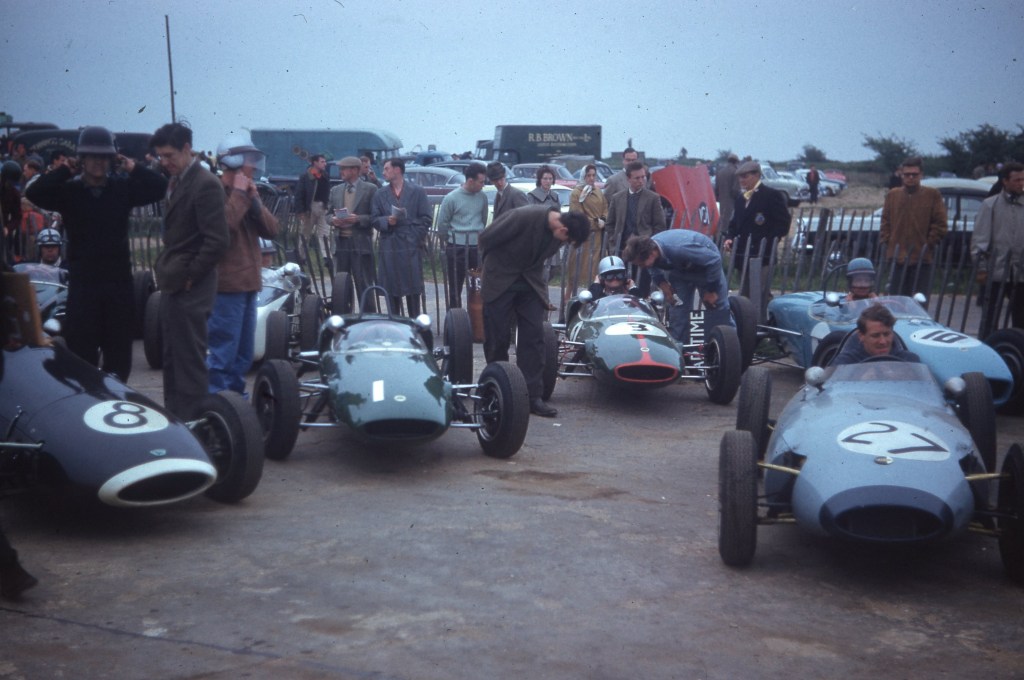
The Lola Mk2 front and centre is the Scuderia Light Blue machine of Hugh Dibley. It’s possibly Brian Hart in Len Terry’s Terrier #8, then Angus #1, Reg Brown in the Lotus 20 #3 and Bill Moss in Lotus 18 #10.

Many thanks!

Finito…
image

Denny Hulme delights the flaggies and ‘snappers and fries a set of Goodyears on entry to Warwick Farm’s Esses during the February 1967 Tasman round…

John Ellacott’s evocative shot at the ‘Farm catches Hulme in his Brabham BT22 Repco during practice, well cocked-up before the apex. He didn’t finish the Australian Grand Prix, his radiator hose came loose on Sunday, the race was won by Jackie Stewart’s BRM P261 from Jim Clark’s Lotus 33 Climax.

Click on this link to read my article about the ’67 Tasman Series won by Clark’s Lotus; https://primotipo.com/2014/11/24/1967-hulme-stewart-and-clark-levin-new-zealand-tasman-and-beyond/

Credit…

John Ellacott

Finito…
Denny Hulme, Gordon Coppuck and McLaren M8F Chev (A Bowler)

Adrian Bowler was a young medico back in 1971. He posted these marvellous words and photographs of his experiences as Team McLaren’s doctor during Goodwood test sessions that year. They are gold, too good to disappear into the bowels of FB without trace. So here they are for those who missed them.

Many thanks to Adrian and the Glory Days of Racing FB page, which is well worth sussing every few days for an incredible diversity of global racing photographs.

Tony Dowe, Barry Sullivan, Alastair Caldwell, Jim Stone and Tony Attard pushing Denny, M8F Chev (A Bowler)
McLaren M19 Ford Cosworth DFV, 1971-2 F1 car (A Bowler)

“1971, at the Goodwood motor racing circuit where Bruce McLaren had been tragically killed testing the Can-Am car (M8D Chev) the previous June.

Goodwood was a very primitive setup then, disused as a racing circuit for several years but utilised by several racing teams to test cars. Bruce lost control of his car apparently when the rear wing section separated from the body of the vehicle and it collided with a concrete marshall’s post on the Lavant Straight.

Following Bruce’s death, Teddy Mayer continued the Goodwood test sessions on the proviso that a physician be on standby at the track. As a young casualty doctor at St Richards in Chichester I was recruited by McLaren to fill the trackside Doctor role. It didn’t take much pursuasion, they paid 10 pounds which was about my weekly salary!

Denny winding it up in second gear (A Bowler)
Reynolds ally Chev 494cid, Lucas injected pushrod, two-valve V8. Circa 740bhp @ 6400rpm in 1971 (A Bowler)

I spent several days over the next six months sitting on the side of the track watching the proceedings and chatting with Denny Hulme, Teddy Mayer, Gordon Coppuck and several of the mechanics. I brought my camera with me on one occasion and these are some of the pictures.

I got to see the burn scars on Denny Hulme’s hands from a metanol fire practicing for the Indy 500 (McLaren M15 Offy in 1970). I learned lots about F1 and Can-Am cars which was mind-boggling for a lowly-ER doc!

On one occasion Pater Gethin was annoying the mechanics working on an F1 gearbox and they suggested he take me for a ride around the track in his Porsche 911, which he did! After the first lap he asked me if i wanted to go again…I declined. They let me drive my Ford Capri 2000GT around the circuit…very slowly.

(A Bowler)
Uncertain, Gordon Coppuck, Teddy Mayer in the grey hair at left listening to Denny, Alastair Caldwell leaning on the wing at right. (A Bowler)

On the day Denis Hulme was testing the M8F, as usual, the engine noise would gradually fade as he got to the back part of the track and then reappear with a vengeance as he accelerated down Lavant Straight. All was going well for several laps until on this particular lap the engine noise didn’t reappear. After maybe about 10 seconds the panic button was hit and everybody drove hell for leather around the track. There, at the top of the circuit, Denny had spun off and the windscreen was covered in blood. He was out of the car, standing by the side and when we arrived all he could say was ‘That fucking crow got in my way!’

It was 50 years ago, but was one of the most memorable times in my career.”

Alastair Caldwell comment; “Can-Am being warmed up, Denny, as normal, doing a visual check of the whole car, he would come up with some very acute observations at times. Ralph Bellamy behind (left), Designer of the M19 (1971 F1 car) rising rate suspension and later the F2 car (M21). Barry Sullivan leaning forward in front of Bellamy, Gordon Coppuck as well at right.” (A Bowler)
Massive bit of real estate, superb M8F, Chev engine and Hewland LG600 Mk2 transaxle (A Bowler)

Credits…

Adrian Bowler for the words and pictures, ‘Cars in Profile No 8 : McLaren M8’ David Hodges

Caption comments Alastair Caldwell, Hughie Absalom, Barry Sullivan, Steve Roby

Tailpiece…

Mayer sitting on the M19’s left-rear, Caldwell right-rear, while Barry Sullivan attacks the gearbox. Team Surtees truck and F1 TS9 behind the McLaren. Rob Walker is the well dressed gent, John Surtees in race overalls at far right (A Bowler)
(A Bowler)

Just another day in the office, Denny, M8F 1971.

I know it’s Denny but when I first glanced at Adrian’s shot I thought of Bruce 12 months before. RIP Bruce Leslie McLaren, 30/8/1937-2/6/1970.

Finito…
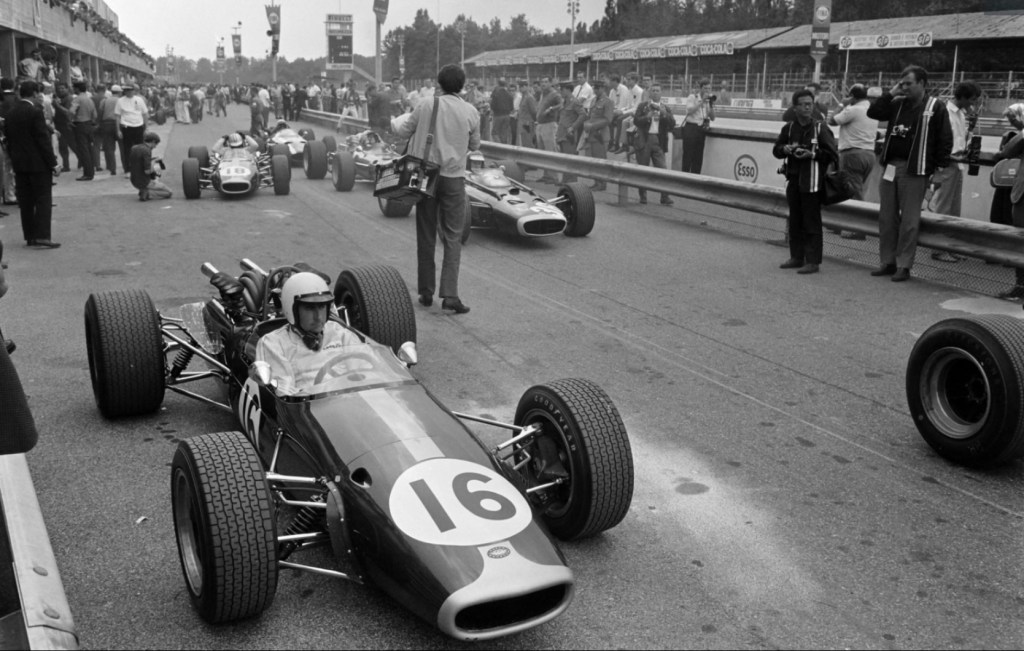
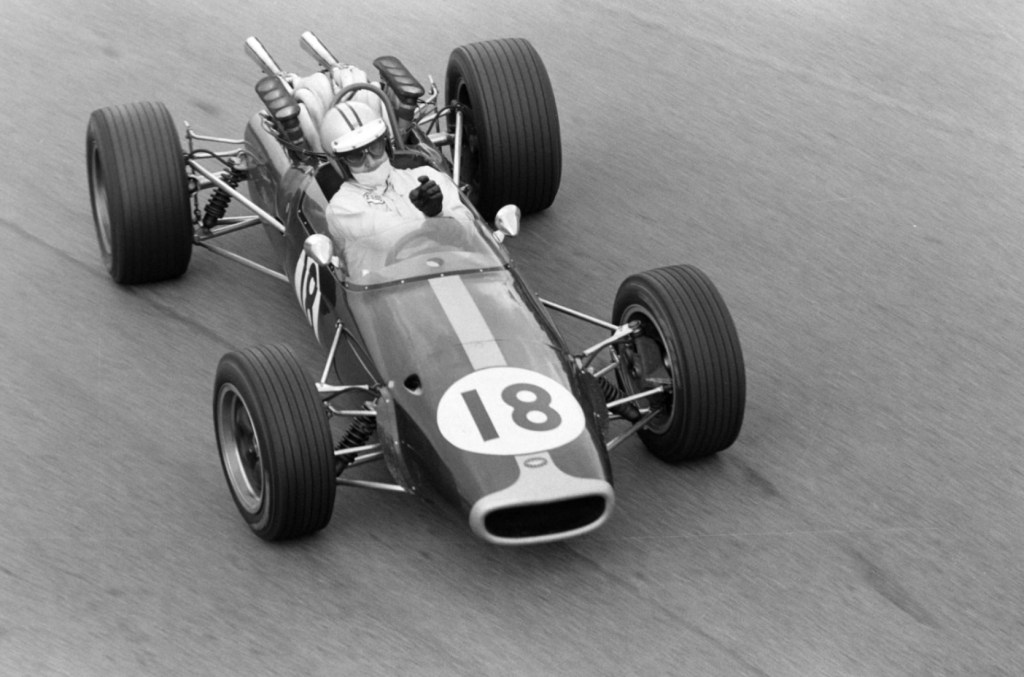
Jack Brabham aboard his Brabham BT24/1 Repco ‘Streamliner’ in the Monza pitlane during the September 10, 1967 weekend.

Lanky Dan Gurney is at right keeping an eye on his old-boss, while Jo Ramirez, in the white pants/dark top, and the All American Racers crew, tend to Dan’s erotic Eagle Mk1 Weslake #103.

Brabham, Ron Tauranac and Repco-Brabham Engines nicked the 1966 F1 World Drivers and Constructors titles from under the noses of those who were a smidge quicker, but not as well organised or reliable as the Brabham and Hulme driven Brabham BT19/20 Repco 620 V8s.

They did it again in 1967, not that it was a lucky win. Their 330hp Brabham BT24 740 Repco V8 was all new; chassis, engine and major suspension components. They got the cars running reliably el-pronto, aided and abetted by blooding the new exhaust-between-the-Vee cylinder heads during the Tasman Cup; both drivers used 2.5-litre RBE640 V8s throughout New Zealand and Australia.

Lotus ran them close of course. Colin Chapman’s Lotus 49 chassis – in truth little different to his 1966 Lotus 43 – was powered by the new 400bhp Ford Cosworth 3-litre V8, rather than the heavy, unreliable 3-litre BRM H16 engine fitted to the 43.

Driven by a couple of champs in Jim Clark and Graham Hill, they were mighty fine, quick cars, but not in 1967, reliable enough ones. That would come soon enough, of course…

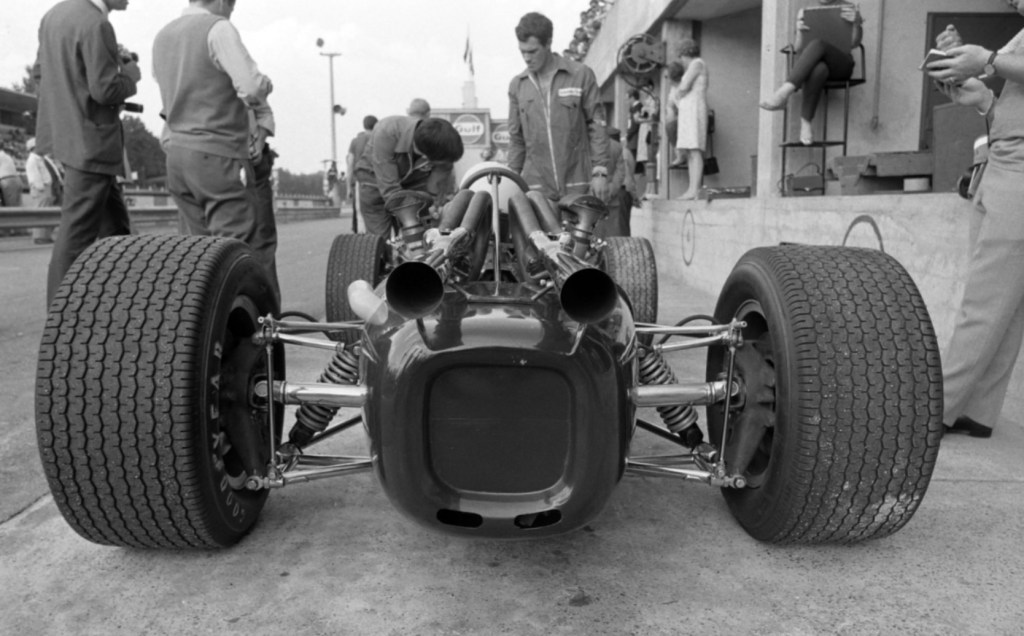
Brabham, all enveloping rear body section clear (MotorSport)
Ron Tauranac, Keith Duckworth and Denny Hulme swap notes. “Have you really only got 330bhp Ron?” (MotorSport)

As Lotus and Cosworth Engineering addressed engine reliability, Brabham and Tauranac tried to squeeze more speed from Ron’s small, light BT24.

There was only so much Repco Brabham Engines could do with the SOHC 740 Series V8, they were busy just keeping up with routine rebuilds for the two BRO cars. As the year progressed the Maidstone, Melbourne crew explored the 850 radial-valve V8 as their ’68 F1 engine, and then, having spent way too much time flogging that dead-horse, on the definitive, but way-too-late 860 DOHC, four-valve V8. Click here for a piece on the RBE740; ‘RB740’ Repco’s 1967 F1 Championship Winning V8… | primotipo…

The aerodynamics of the BT24 was another thing entirely of course. That was within Ron and Jack’s control. If MRD could just make the car a little bit more slippery through the air, maybe an extra 500revs or so would make the difference between race wins, and not.

By the time the team got to Monza on September 7, the cocktail of goodies tried on Jack’s BT24 included the all-enveloping windscreen used on an F2 BT23 earlier in the year, all-enveloping bodywork extending right back beyond the endplate of the Hewland DG300 transaxle, and spoilers which were tried either side of the car’s nose, and alongside the engine. Remember, the Chaparral inspired explosion of wings in F1 occurred in 1968.

Rear spoiler, Monza (MotorSport)
Note the winglets or spoilers, Jack’s nosecone at Spa in mid-June 1967 (MotorSport)

Jim Clark started from pole, with 1:28.5 secs, ahead of Jack on 1:28.8, then Bruce McLaren, Chris Amon and Dan Gurney in BRM, Ferrari and Weslake V12 engined cars, then Denny in the other BT24 on 1:29.46.

Jack could have won of course, but the equally foxey John Surtees out-fumbled him in the final corners, bagging a popular win for the Honda RA300 V12. Denny retired with over-heating so the championship – ultimately decided in his favour – was still alive, with races in the US and Mexico to come.

The office of BT24-1, Jack’s car. The Varley battery is in the aluminium box beneath the driver’s knees (MotorSport)

One of my favourite Grand Prix cars, the BT24, was just enough of everything, the sheer economy of the car always strikes me. See here for my last rave in relation thereto; Give Us a Cuddle Sweetie… | primotipo…

It was the first time Ron had designed an all-new F1 chassis since BT3 way back in 1962. Beautiful details abound, not least the new cast-magnesium front uprights first fitted to Jack’s BT23A Repco, his ‘67 2.5-litre Tasman Cup mount, in late 1966, the Alford & Alder/Triumph Herald uprights used hitherto were finally cast aside.

Hulme’s BT24/2 during the British GP weekend (MotorSport)
Feel the noise…Monza pit action. Brabham and Denny behind him in the distance. The queue by the Armco is headed by Mike Spence’ BRM P83 H16, Chris Amon’s Ferrari 312, perhaps then one of the Cooper Maseratis (MotorSport)

BT24/1 debuted at the same race meeting, Zandvoort 1967, as the Lotus 49 Ford DFV, albeit Jack raced BT19, his ’66 championship winning chassis. Jim Clark won famously on the debut of an engine which set the standard for a decade and a half, more if you include its many derivatives.

Denny’s BT24/2 was ready at Le Mans, when Brabham and Hulme delivered the old one-two, with The Boss in front. Clark won at Silverstone, before another BT24 one-two with Denny ahead of Jack. At Mosport Jack won from Denny. Hulme won at Monaco in May (his first championship GP win), so led the championship by nine points from Jack, with Jim further back. Clark dominated the balance of the season, winning at Watkins Glen and Mexico City, but Denny’s two third placings won him the drivers title and

Those with F2 knowledge will recall that Frank Costin’s Protos Ford FVA raced with a cockpit canopy akin to Brabham’s in 1967. BT24/1 here, again at Monza. Whatever the straight-line benefits, Jack simply couldn’t place the car as he wanted given the difficulty of seeing thru the canopy (MotorSport)
If I knew how to use Photoshop I’d get rid of ‘boots’, but I don’t…BT24/1, ain’t-she-sweet (MotorSport)

BRO sold the cars to South Africans, Basil van Rooyen (BT24/1) and Sam Tingle (BT24/2) after the end of the season. When it became clear that Jochen Rindt’s 1968 BT26 was running late, he raced BT24/3 – which first appeared at in practice, at Monza in September 1967, carrying #16T – in some of the early races of 1968. He raced BT24/2 at Kyalami (Q4 and third), and BT24/3 at Jarama (Q9 and DNF oil pressure) and Monaco (Q5 and DNF accident), before Dan Gurney had a steer at Zandvoort (Q12 and DNF throttle).

The final works-gallop of a BT24 was Jochen’s use of BT24/3 during practice over the British GP weekend at Brands Hatch in July. Before you pedants have a crack at me, for the sake of completion, German ace, Kurt Ahrens, raced the BRO tended, Caltex Racing Team entered, BT24/3 to Q17 and 12th place at the Nurburgring in 1968. Brabham BT24 chassis anoraks should click here; Brabham BT24 car-by-car histories | OldRacingCars.com

Threatening in an elegant kinda way. You can see what is being sought, ignoring the inherent streamlining difficulties of fully outboard suspension front and rear. Ron went to front inboard springs and rockers with the ’68 Indy BT25 Repco and ’70 F1 BT33 Ford (MotorSport)

Credits…

Magnificent MotorSport Images, Getty Images, Allen Brown’s oldracingcars.com

Tailpiece…

(MotorSport)

Easy-peasy, two hands are for schmucks!

Denis Clive Hulme shows us how it’s done at the Parabolica; Denny’s elegant, sublime prowess for all to see. BT24/2 Monza 1967, ‘standard’ bodywork.

Finito…
(S Van den Bergh )

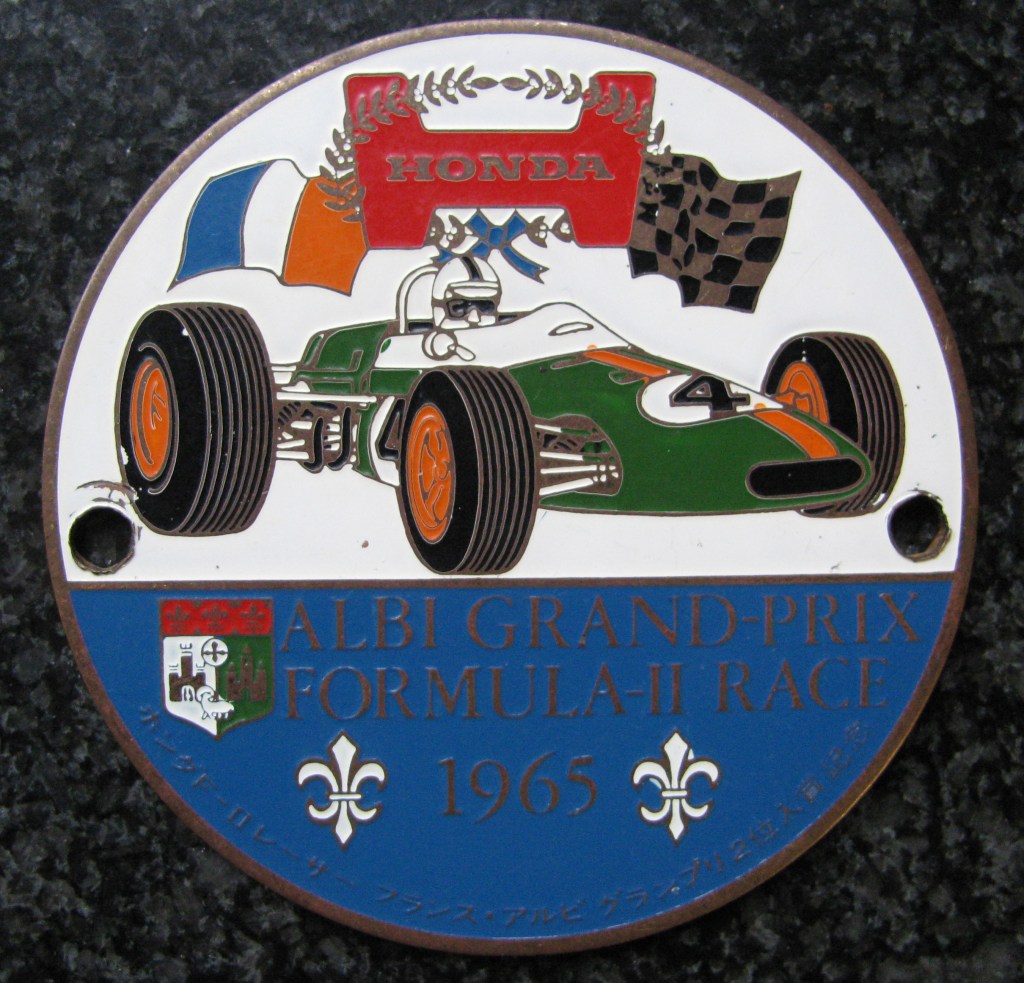
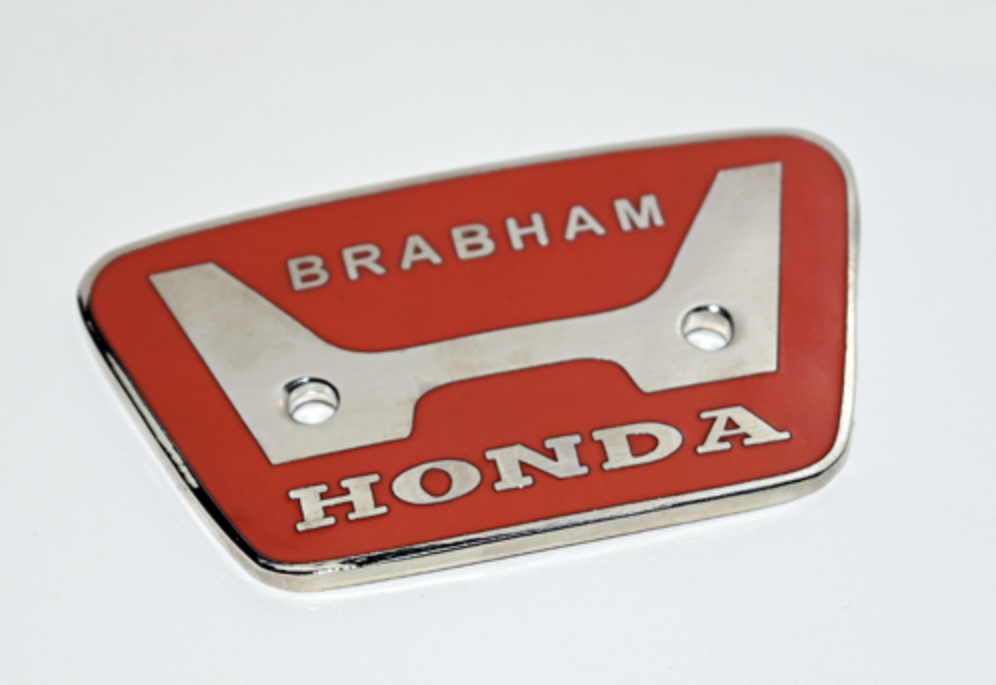
It’s an interesting car badge, don’t you reckon?

One of our friends in Belgium, Stef Van den Bergh, bought it recently and wants to know more about it. ” I am curious who made it. I suppose it was Honda since Brabham isn’t even mentioned on the badge. How many were made and were they sold, or given as a present?”

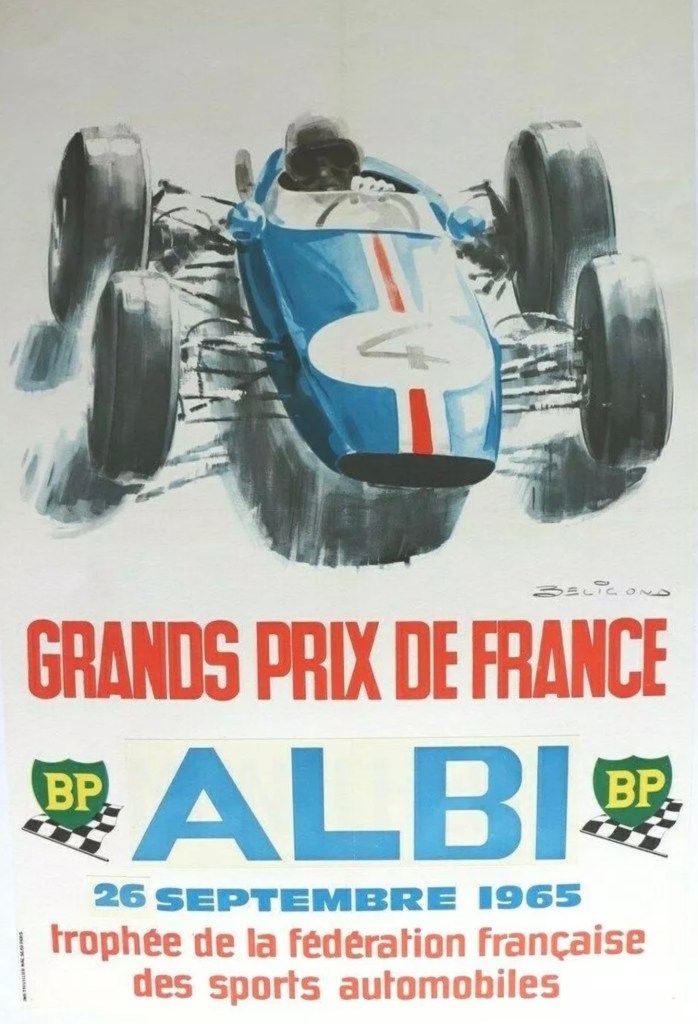
So there is the challenge folks. Was it made by Honda, the Albi GP organisers or their merchandise people, or perhaps a ‘renegade’ wanting to cash in on Honda’s presence in F2 as well as Grand Prix racing?

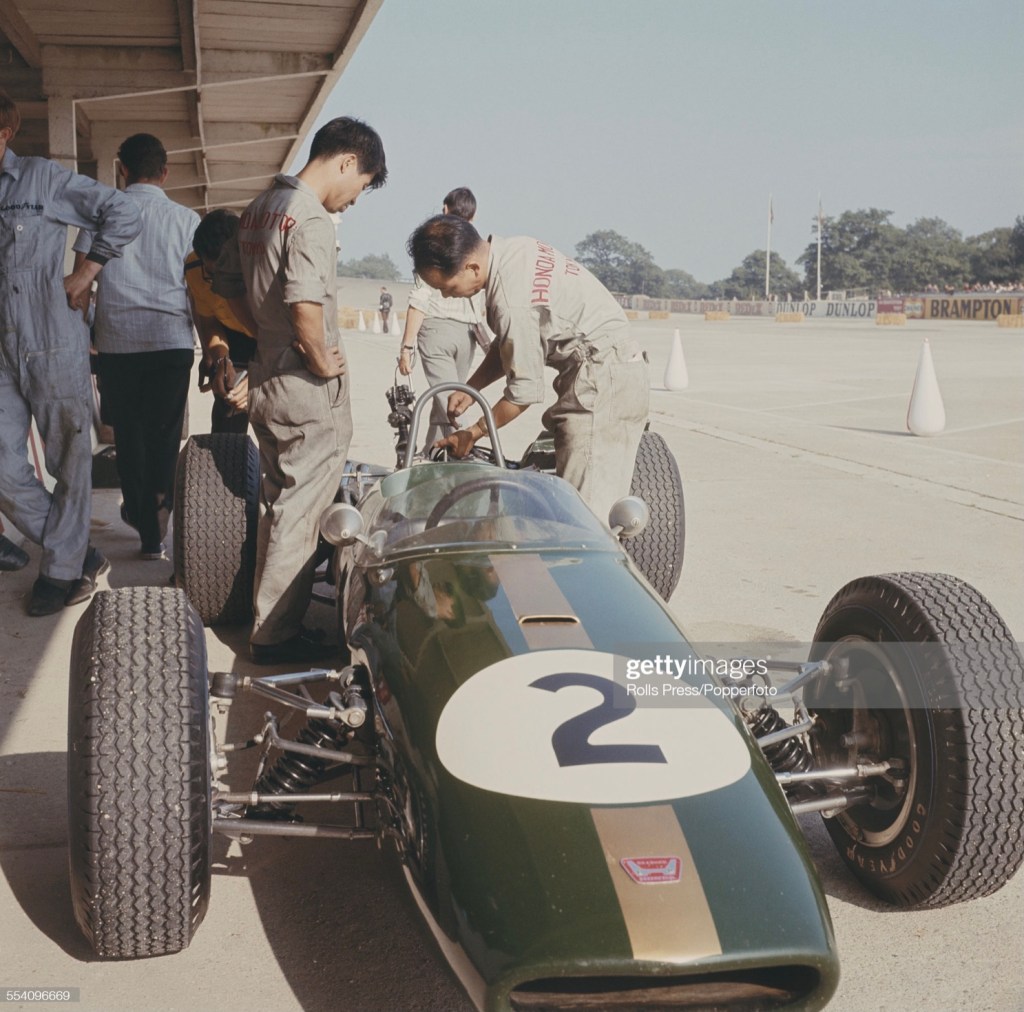
The real McCoy – and below fitted to the nose of Denny Hulme’s Brabham BT18 at Montlhery in September 1966. That weekend Jack Brabham won from Jim Clark’s Lotus 44 Cosworth SCA with Denny third, having started from pole. That season, many races were Brabham-Hulme one-two’s

When Richie Ginther won the 1965 season – and 1.5-litre formula – ending Mexican Grand Prix, Honda bagged it’s first of many F1 successes.

Honda entered F2 with Brabham that year, see here for an earlier piece I wrote about this topic; ‘XXXII Grand Prix de Reims’ F2 3 July 1966: 1 Litre Brabham Honda’s… | primotipo…
Brabham raced a BT16 powered by S800 Honda engines at four meetings in March and April 1965; Silverstone, Oulton Park, Snetterton and at Pau with poor results. Honda set to work to produce an engine which wasn’t so peaky from May to August, then Brabham reappeared at the Oulton Park Gold Cup and the GP Albi later in September. He retired with clutch dramas at Oulton but was right on the pace at Albi, finishing second to Clark’s Lotus 35 Cosworth SCA by six-tenths of a second after nearly two-hours, and 309km of racing…Honda were in town!

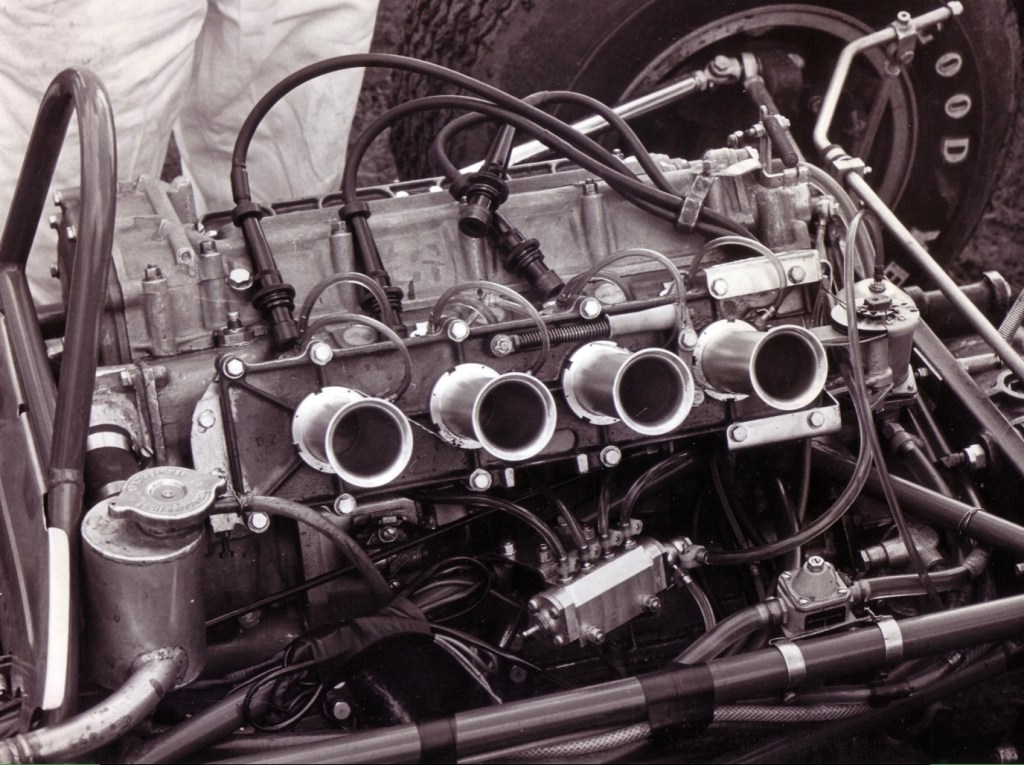
1965 Honda RA300E F2 engine in a Brabham BT16 chassis : 1-litre (72×61.2mm – 996cc) all alloy, DOHC, four-valve, fuel injected circa 135bhp @ 10000rpm (1965 RA302E 150bhp @ 11000rpm) four cylinder engine. Weight 145kg (Brabham Family Archive)
Jack from Denny at Goodwood during the Sunday Mirror Trophy on April 11, 1966. Brabham BT18 Hondas one-two (Honda Racing)

The calibre and depth of F2 grids then is shown by looking at the Albi field, in order of finishing (or not); Jim Clark, Jack Brabham, Denny Hulme, Jochen Rindt, Alan Rees, Mike Spence, Frank Gardner, Bob Bondurant, Jo Schlesser, Jean Vinatier, Brian Hart, Trevor Taylor, Silvio Moser, Guy Ligier, Mike Beckwith, Graham Hill, Geki Russo, Peter Revson, Henry Grandshire, Eric Offenstadt, Ludovico Scarfiotti, Paul Hawkins and Richard Attwood. Five world champs, a couple of Indy winners, three Le Mans victors and two Can-Am Cup champions.

Ron Tauranac and Jack Brabham had plenty of balls in the air during 1965, apart from the usual manufacture of production racing cars and the running of works teams (Motor Racing Developments and Brabham Racing Organisation) in F2 and F1. They had nascent engine programs with Honda (F2) and Repco Brabham Engines (Tasman and F1), and in addition were helping Goodyear develop tyres which were critical to Brabham, MRD, BRO and RBE’s two 1966 F1 championship wins; the manufacturers and drivers championships.

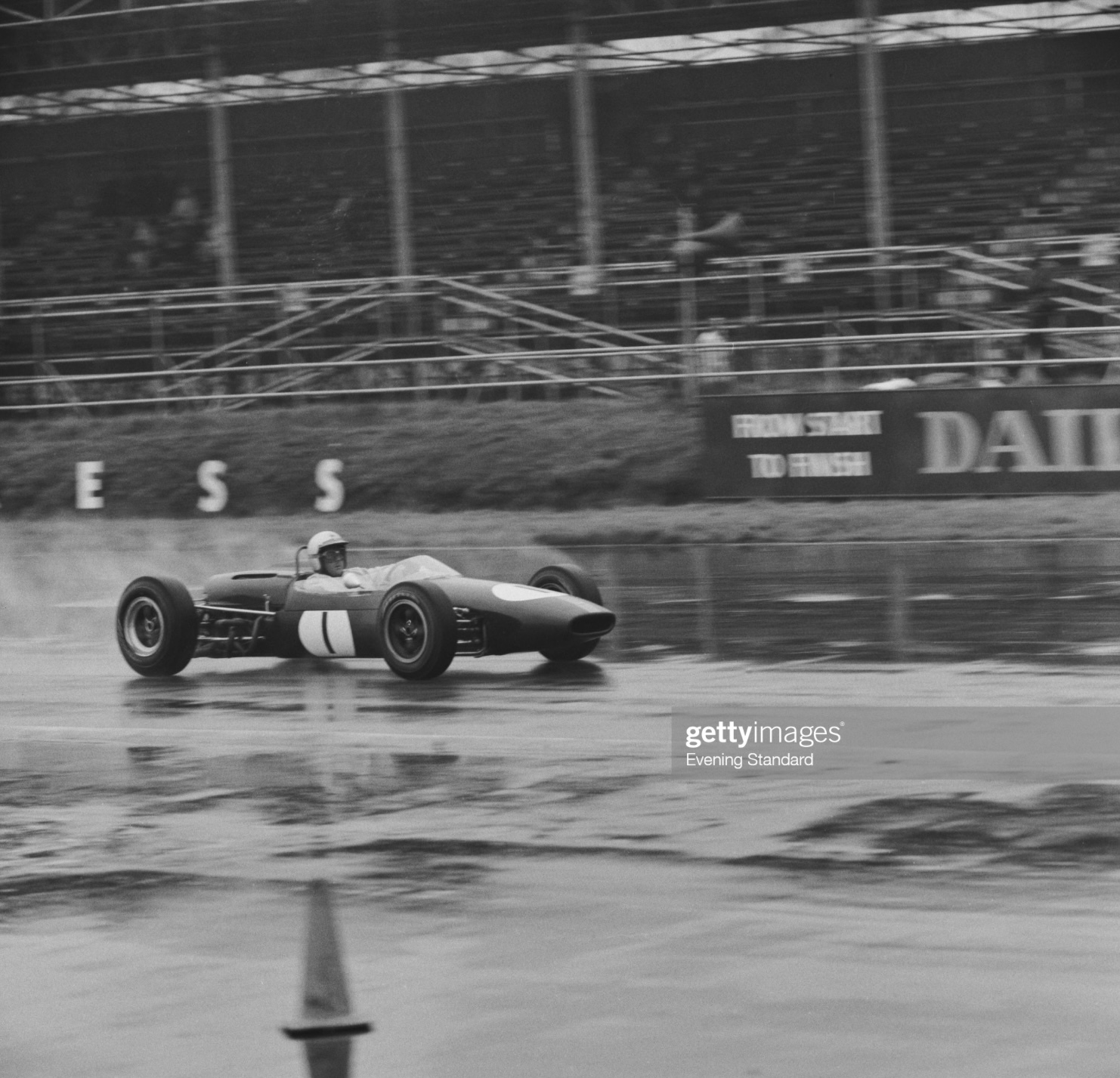
Jack Brabham, Brabham BT16 Honda during practice for the cancelled BARC Senior Service Trophy at Silverstone on March 20, 1965. The race was cancelled due to excessive amounts of water – visible – on the circuit
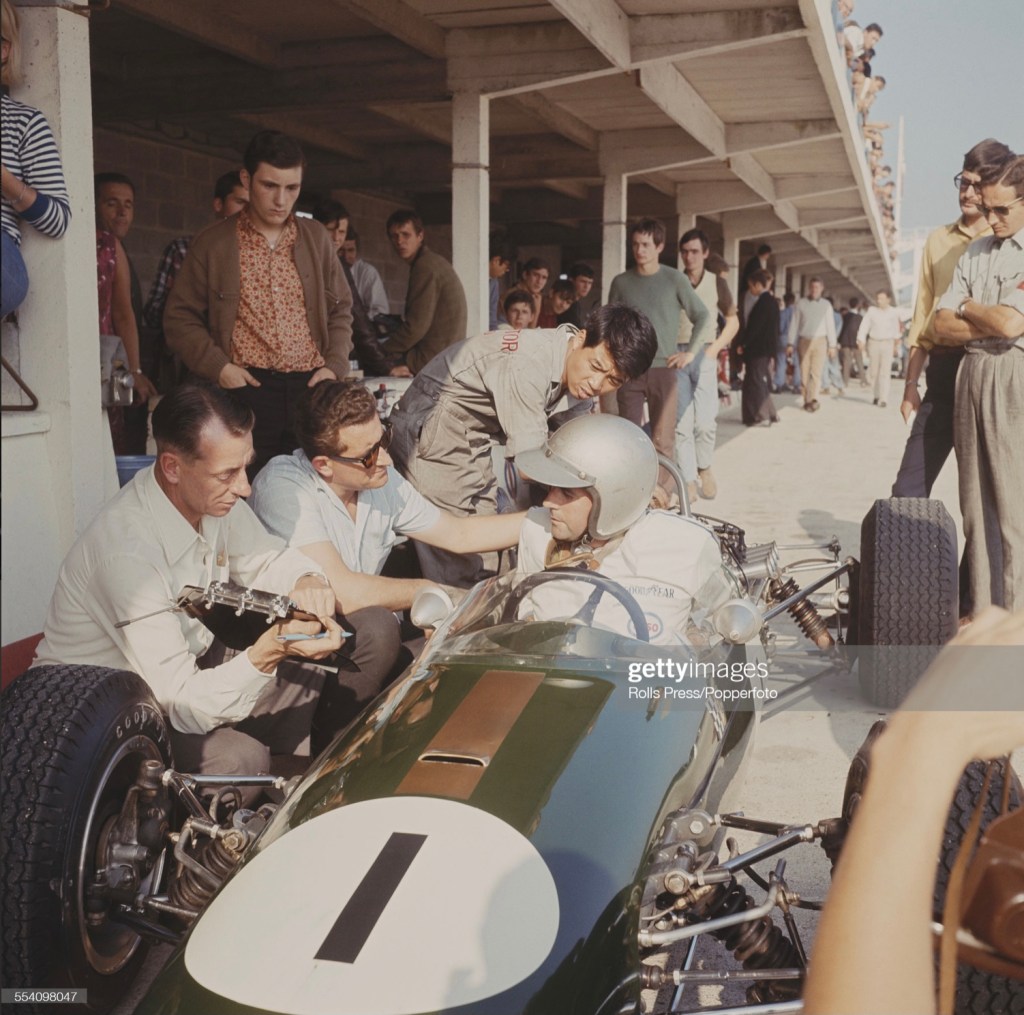
Ron Tauranac at left with stopwatch board, and Jack attend to changes during practice at Montlhery during the September 11, 1966 weekend. Brabham BT21 Honda. Brabham won by three seconds from Jim Clark’s Lotus 44 Ford SCA with Hulme two seconds behind Jim

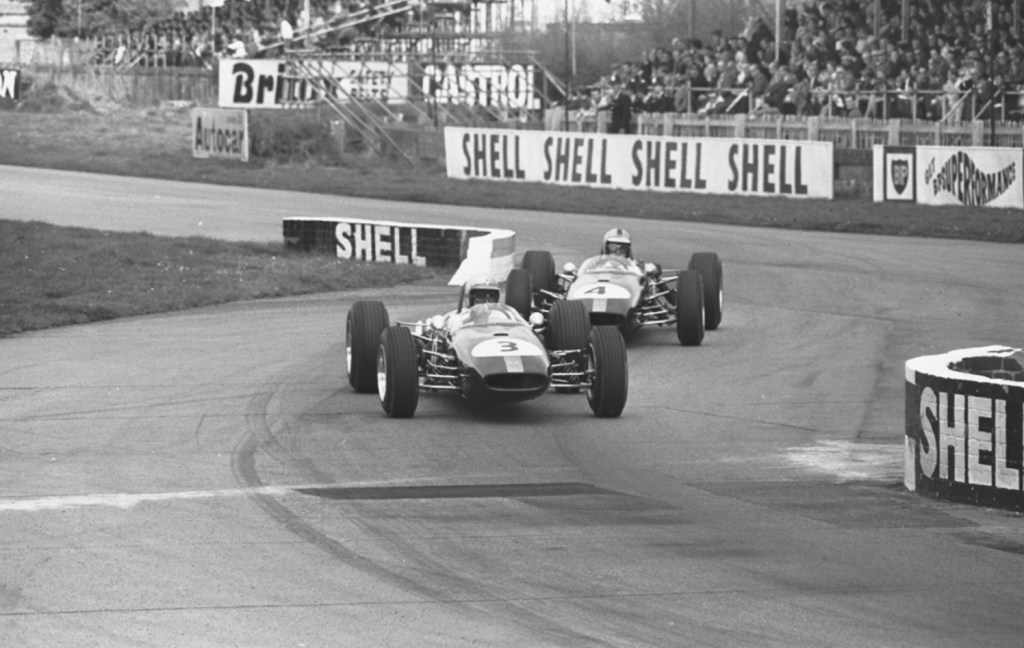
The European F2 Championship commenced in 1967, the first year of the 1.6-litre F2. Despite the lack of a title in 1966 (although Brabham won the six round French F2 Championship) Brabham Honda were absolutely dominant. Of 16 major races held in Europe, Brabham won 10; Goodwood, Pau GP, GP Barcelona, GP Limborg, the London Trophy at Crystal Palace, GP Reims, the Kanonloppet at Karlskoga, Finland GP, GP de L’ille France at Montlhery, and the GP Albi. Six of these events were Brabham Honda one-twos, with Denny bringing his car home behind his team-leader. Hulme won two races as well, the GP Rouen and Trophee Craven A on the Le Mans, Bugatti circuit.

Credits…
Stef Van den Bergh, F2 Index, Getty Images, Brabham Family Archive, Honda Racing, MotorSport

Tailpiece…

(MotorSport)

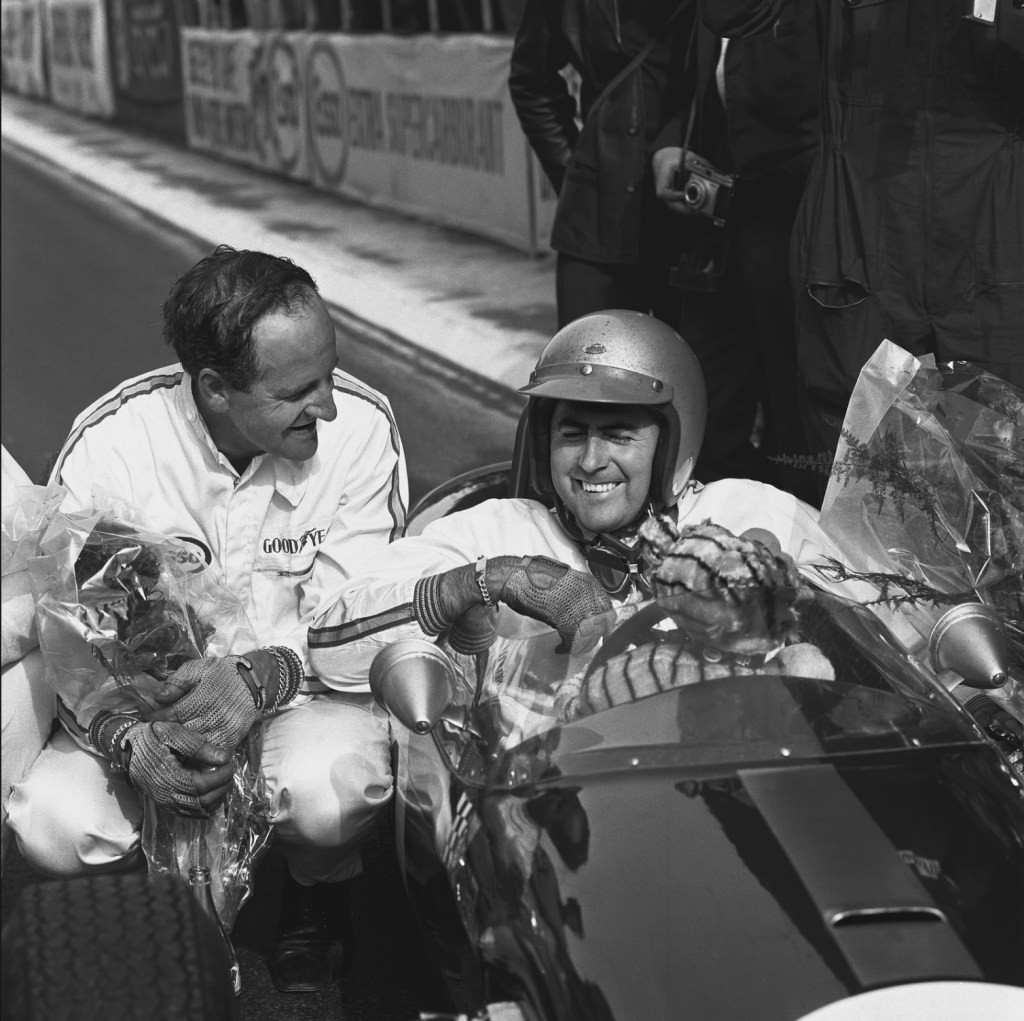
A couple of happy-chappies after the conclusion of the Pau GP on April 17, 1966. Jack and Denny finished in line astern aboard Brabham BT18 Hondas, with five-tenths of a second between them. Back in third, nearly 1 1/2 minutes adrift was Graham Hill in John Coombs’ Brabham BT16 BRM P80. Brabhams filled six of the top ten placings.

Finito…