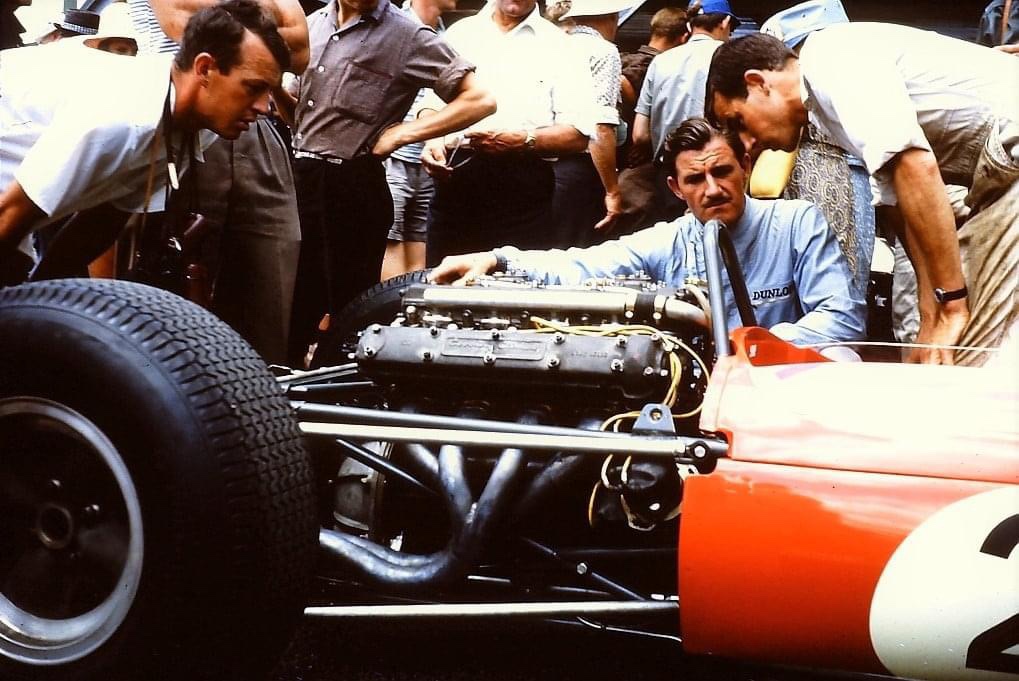
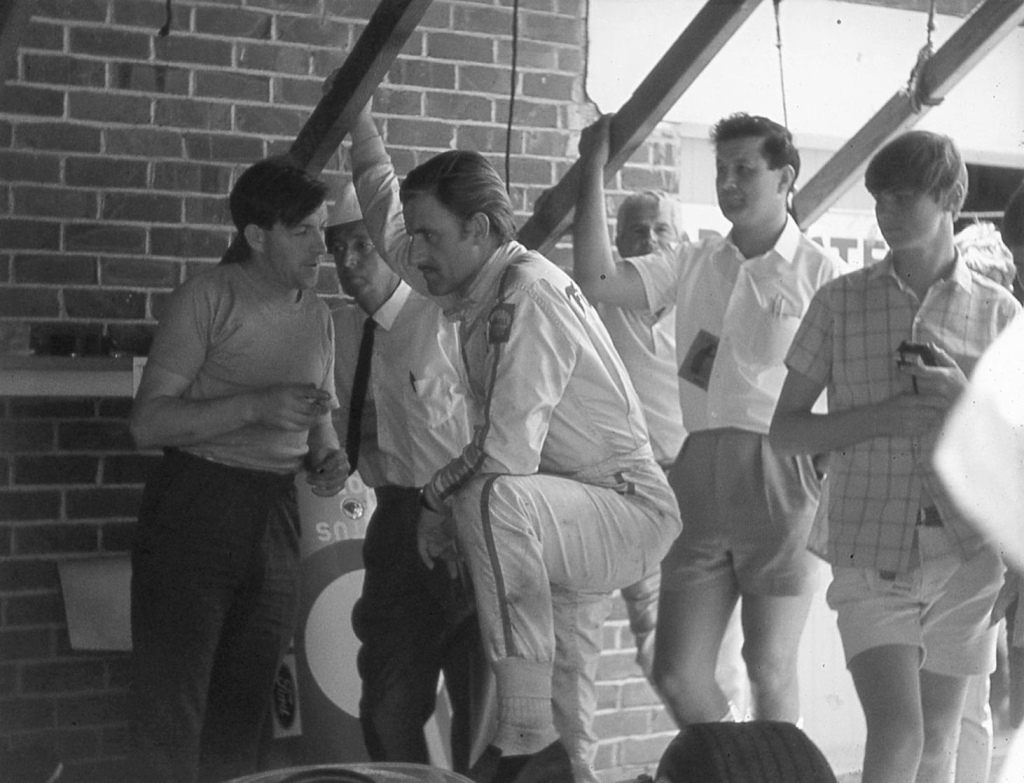
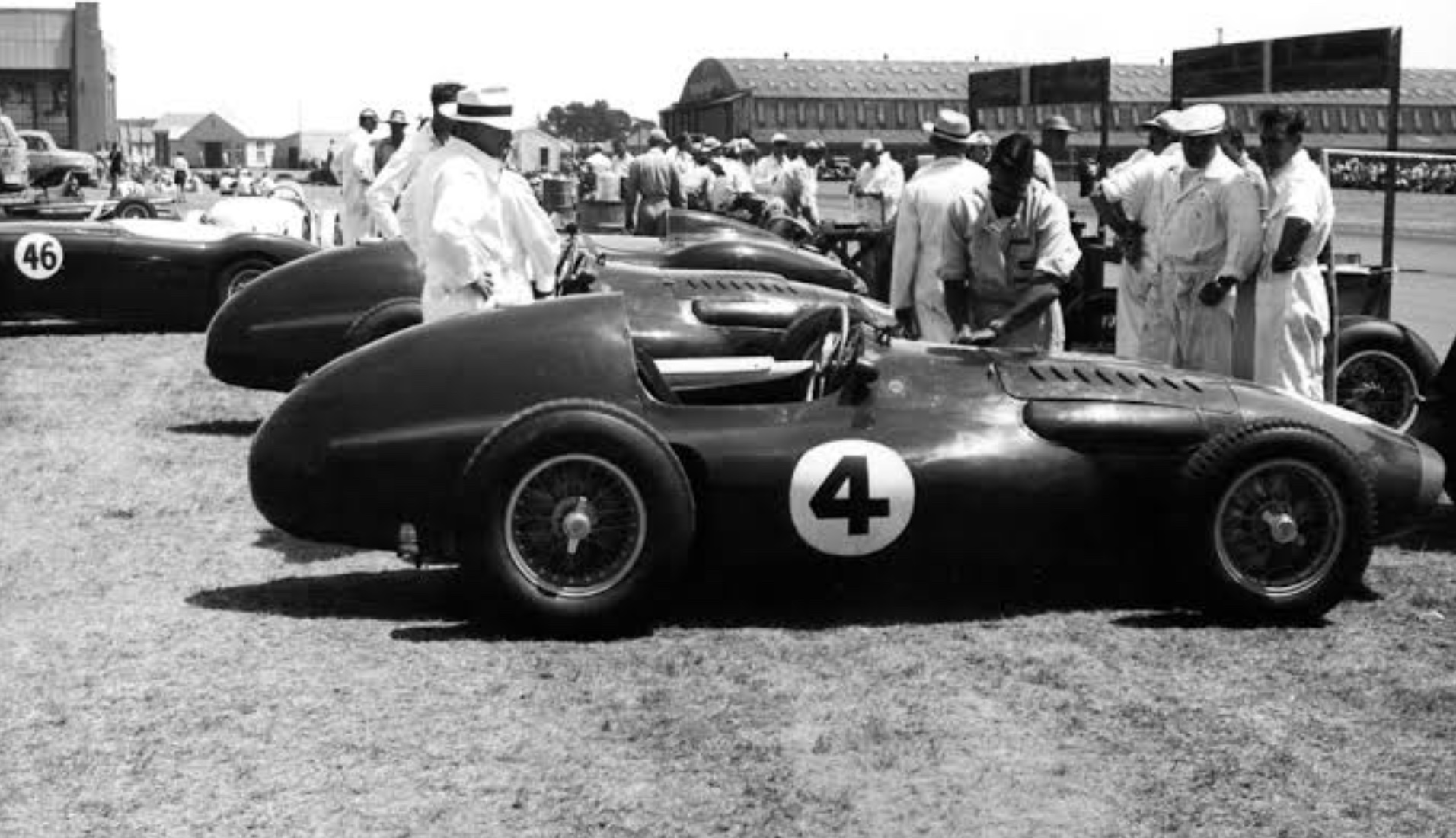
Graham Hill, Dan Gurney and the BRM mechanics await the start. Dan’s car is P48 #486 (D Jolly)
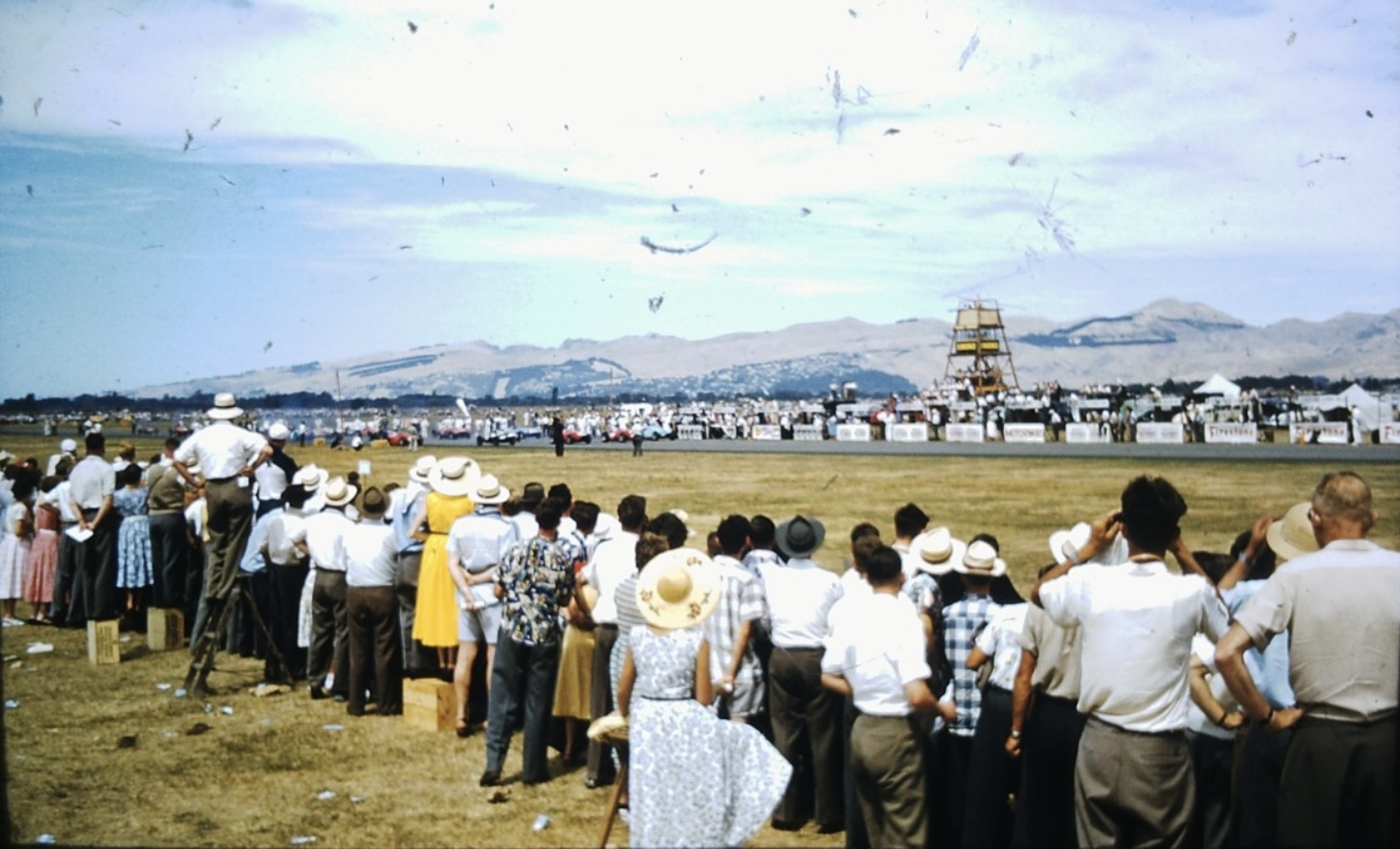
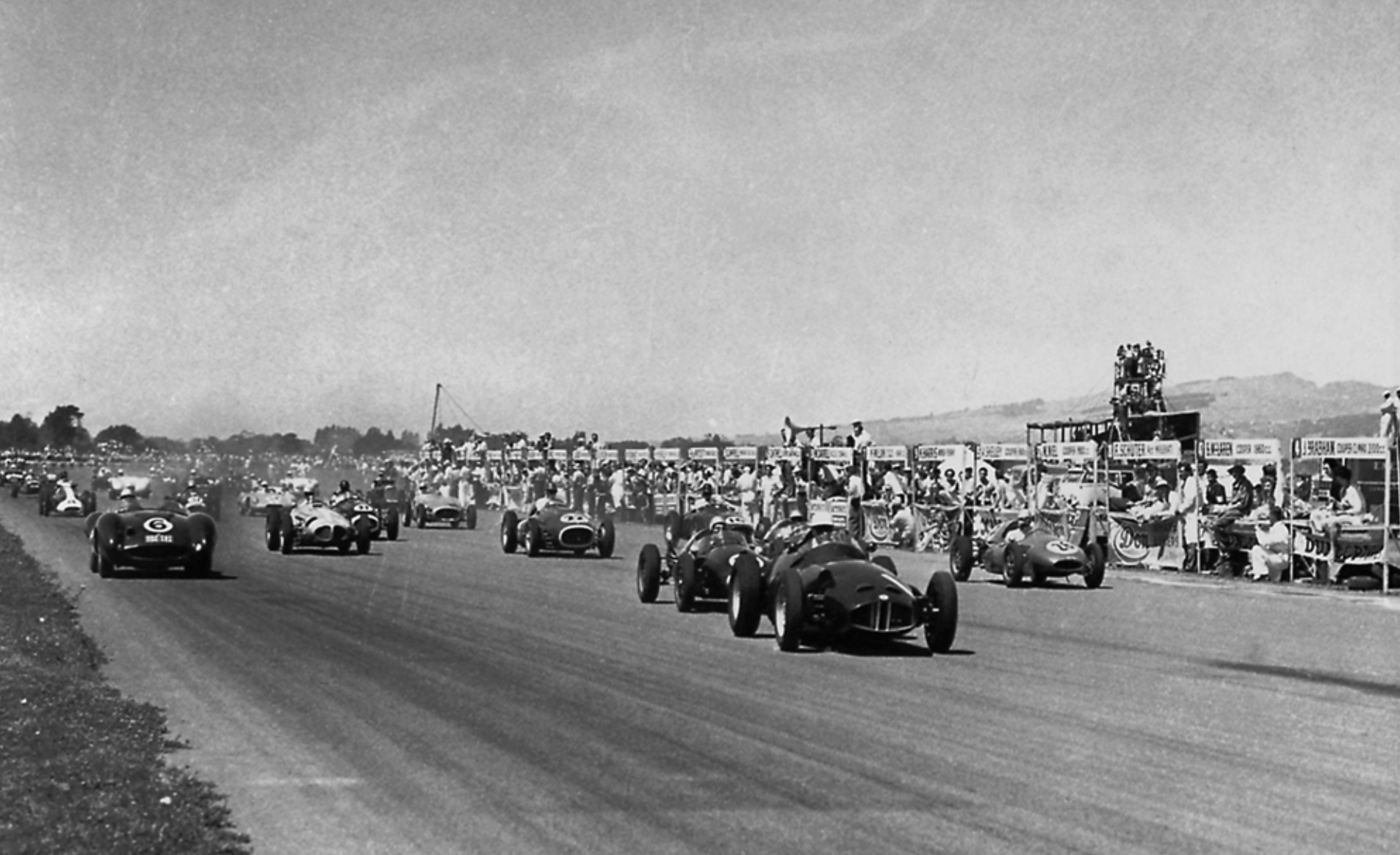
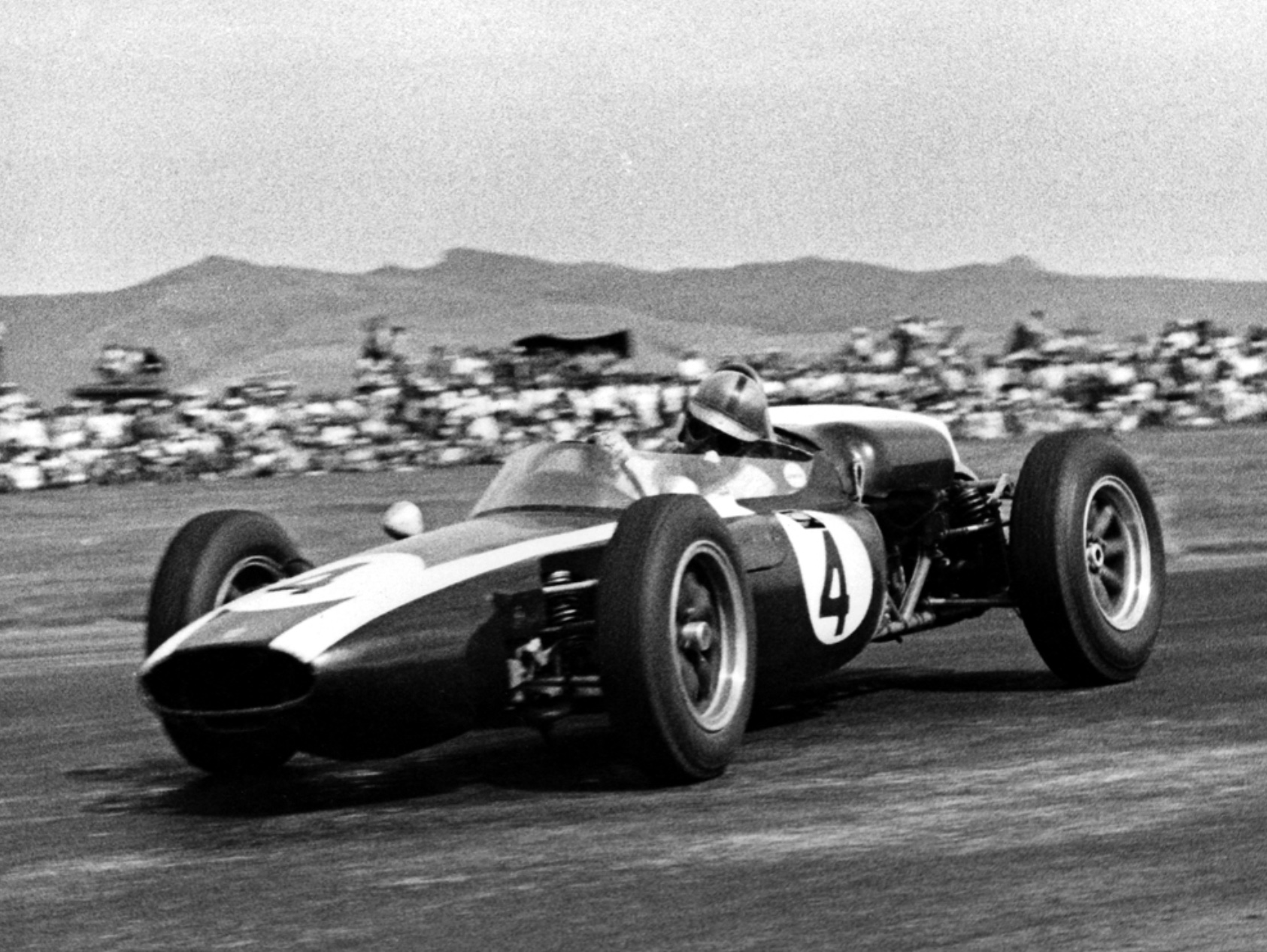
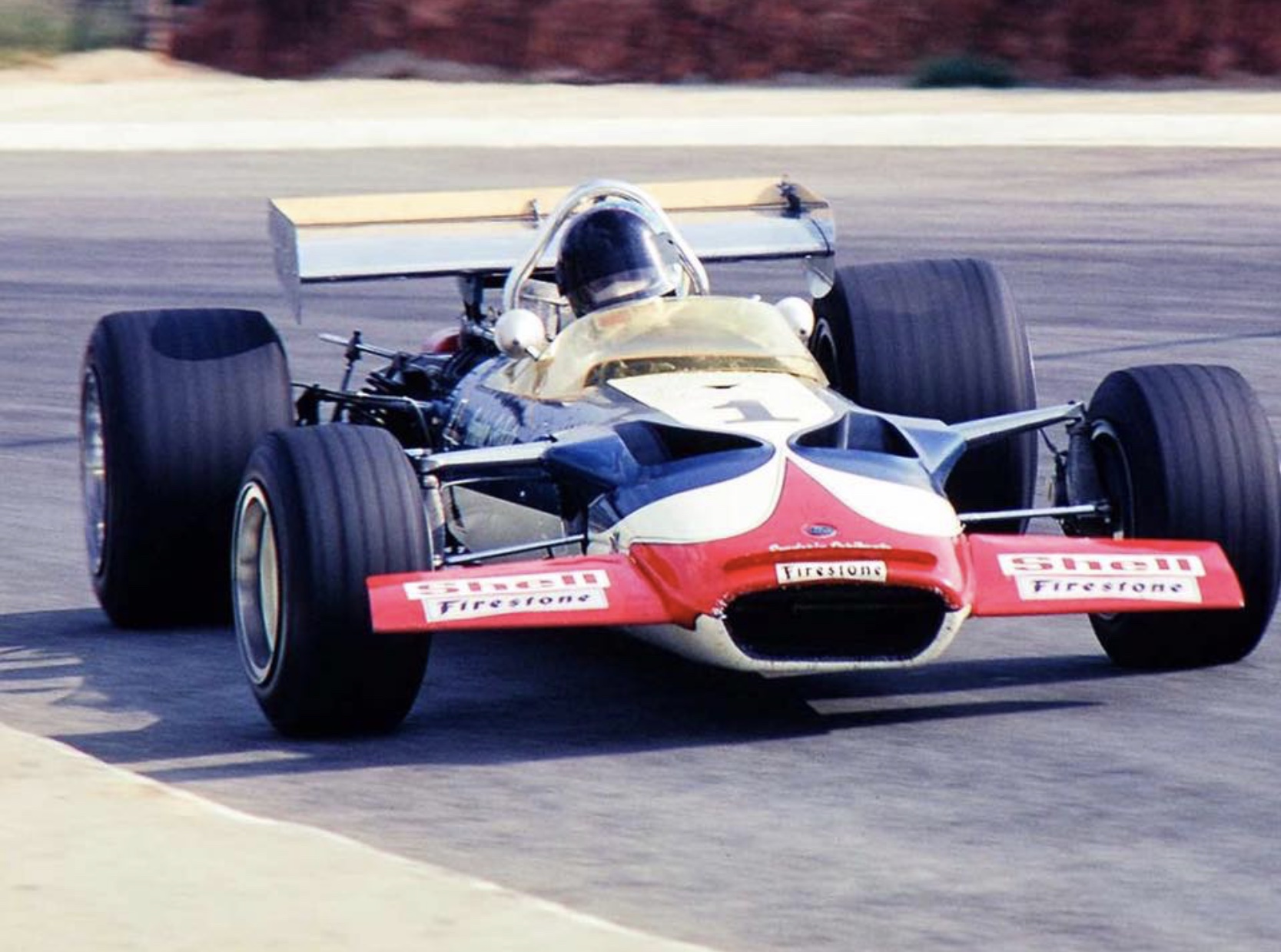
Make sure you buy the August 2024 issue of The Automobile, it contains a piece I wrote about Dan Gurney’s win at Ballarat Airfield in a BRM P48 on February 12, 1961.
That Victorian Trophy victory was the only international win for a P48 in Dan’s last drive for the Owen Racing Organisation.
There are some fantastic, never-seen-before colour shots taken by Australian Lotus ace/works-driver and Australian importer Derek Jolly at the meeting, courtesy of Lotus historian/restorer Mike Bennett.
Further ‘Australian content’ comes in the form of the cover car, Bugatti Type 35 chassis 4450. Better known to many of us as the Lyndon Duckett/Bob King Anzani Bugatti, the car is the subject of a long feature celebrating the centenary of the landmark T35. See here too: https://primotipo.com/2021/09/17/werrangourt-archive-9-lyndon-duckett-by-bob-king/
Towards the end of his 52 years of use on the road and in competition Bob restored the 4450 to its original, ex-factory specification. The same spec as that when it was delivered to first owner, George Pearson Glen Kidston in Molsheim on February 16, 1925. In a neat book-end of history Simon Kidston, Glen’s nephew, is the current custodian of #4450, not that it looks much like it did in Australia clad in its road-going garb.
Another fascinating article for proponents of Oily Rag Restoration, is a report on the Best in Show award going to an unrestored Alfa Romeo 8C2300 at May’s Concorso d’Elegance Ville d’Este.
It’s the first time the premier award in a ‘Grand Prix Concours’ has gone to a Preservation Class car. Great stuff, as Jörg Sierks ended his piece, ‘We can only hope that such appreciation of patina and preservation will be upheld and leave its mark on the future of Ville d’Este and other world-class concours events.’
The Automobile is in-store now in the UK, and two months away on the slow-boat to the Antipodes, other than to subscribers who should have it about now. Why not subscribe here: https://www.theautomobile.co.uk/subscribe/
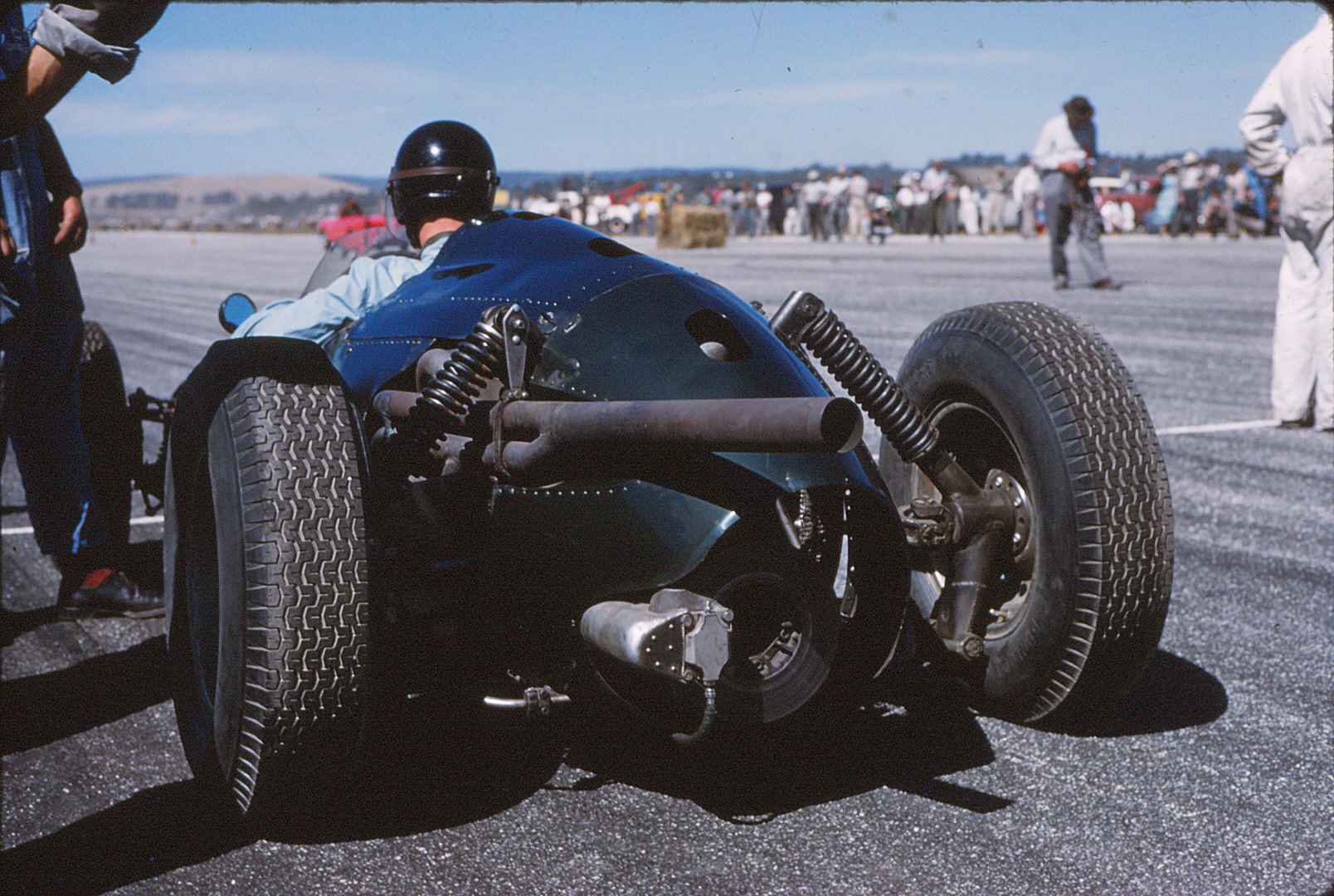
Rear of Dan’s P48. Macpherson strut, single lower wishbone and radius rod rear suspension, and famous Dunlop ‘bacon-slicer’ ventilated single rear disc brake mounted to the gearbox output shaft (D Jolly)
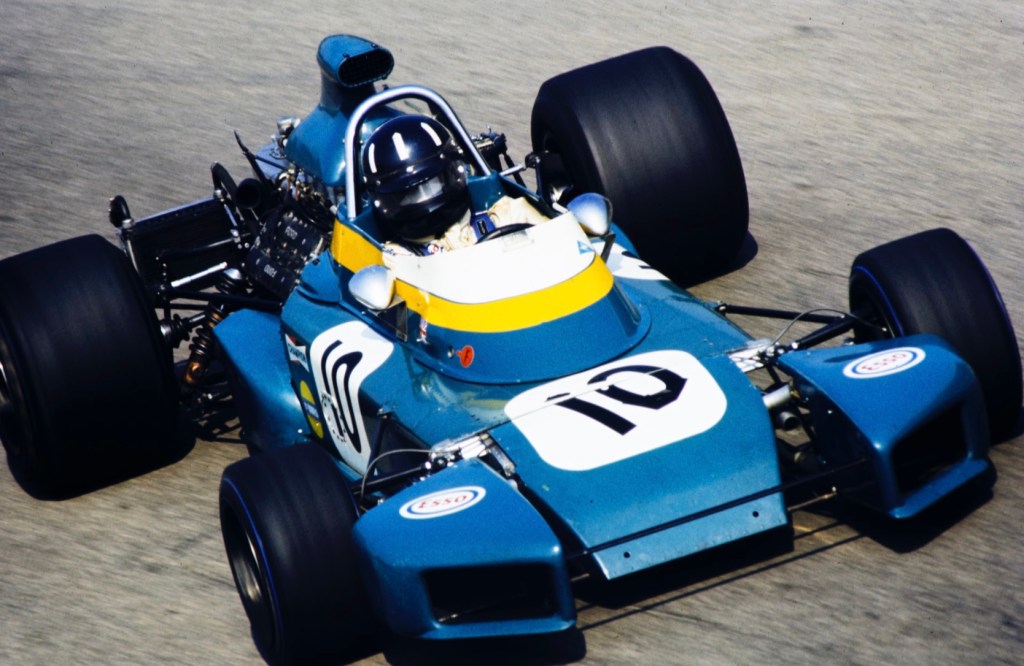
I’m a big fan of Ron Tauranac’s Brabham BT34 Ford ‘Lobster Claw’. The one and only BT34/1 raced throughout 1971 by Graham Hill isn’t at her Elle MacPherson best sans clothes, wings front and rear specifically. Italian Grand Prix practice, Monza, September 5 weekend in 1971.
I’ve almost finished a feature on BT34, but this shot got me thinking about which car(s) were the last to test or race at Monza without wings. It was the practice in the early-winged-era – 1968-71 at least – for much of the grid to test with and without wings to assess drag/grip/top speed tradeoffs in the quest for the optimum race setup. Does anybody know who was the last to do so, small things amuse small minds I know. More on the BT34/BT37 here: https://primotipo.com/2016/11/15/carlos-bt37-butt/
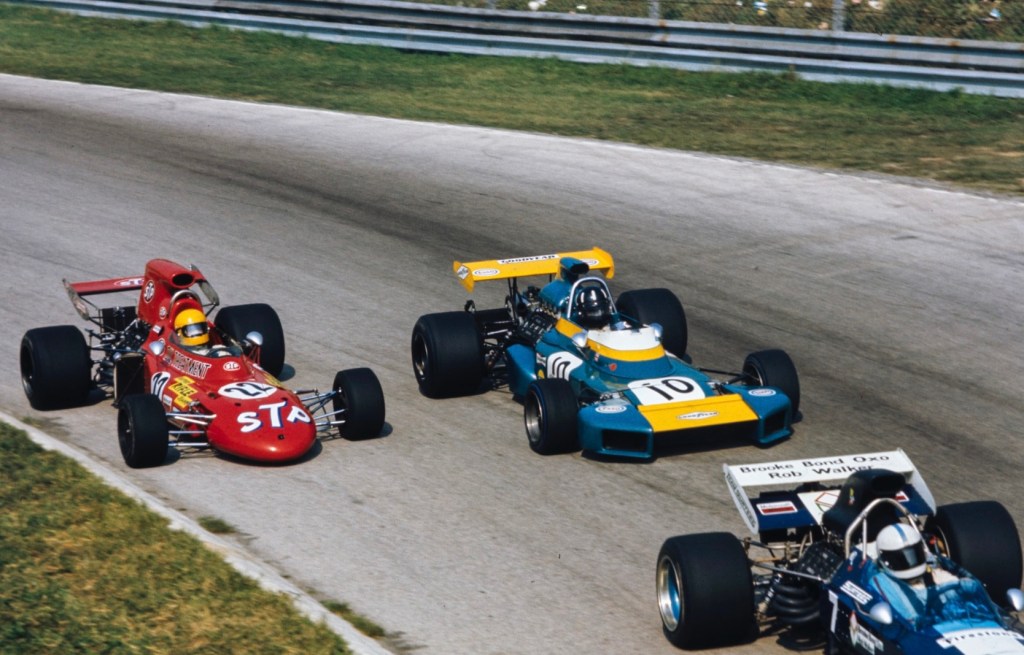
Graham raced winged, Q14 and DNF gearbox in one of the best ever F1 races won magnificently by Peter Gethin’s BRM P160 by a bees-dick from Ronnie Peterson’s March 711 Ford. Their official times were 1hr 18m 12.600sec and 1:18:12.610 respectively.
(MotorSport)
Graham early in the race – his BT34 aero-kit now fitted – with John Surtees, Surtees TS9B Ford (DNF engine) and Nanni Galli’s #22 March 711 Ford (DNF electrics).
BT34’s best results were in non-championship F1 races: Hill won the May 1971 BRDC International Trophy at Silverstone and Carlos Reutemann the March 1972 Brazilian GP.
By 1971 Graham was arguably past his F1-best. While Hill got the better of his team-mate, Tim Schenken – 1970 BT33 mounted – in the first half of ’71, the reverse was the case in the ‘back-nine’. It would have been interesting to see what Tim could have done with the car. Reutemann certainly showed its pace, not only did he win in Brazil but sensationally put the BT34 on pole on his championship GP debut in Argentina in late January.
Not that Graham was a spent force. He won the Thruxton Euro F2 round in a Rondel Racing Brabham BT36 Ford FVA from Ronnie Peterson’s March 712 in March 1971, and another, the GP della Lotteria di Monza on June 29, 1972 aboard a Brabham BT38 Ford BDA. Not to forget Le Mans that year of course, where Graham shared the winning Matra MS670 with Henri Pescarolo over the June 10-11 weekend. See here: https://primotipo.com/2023/09/19/matra-random/
Credits…
MotorSport Images, LAT, F2 Register
Tailpiece…
(LAT)
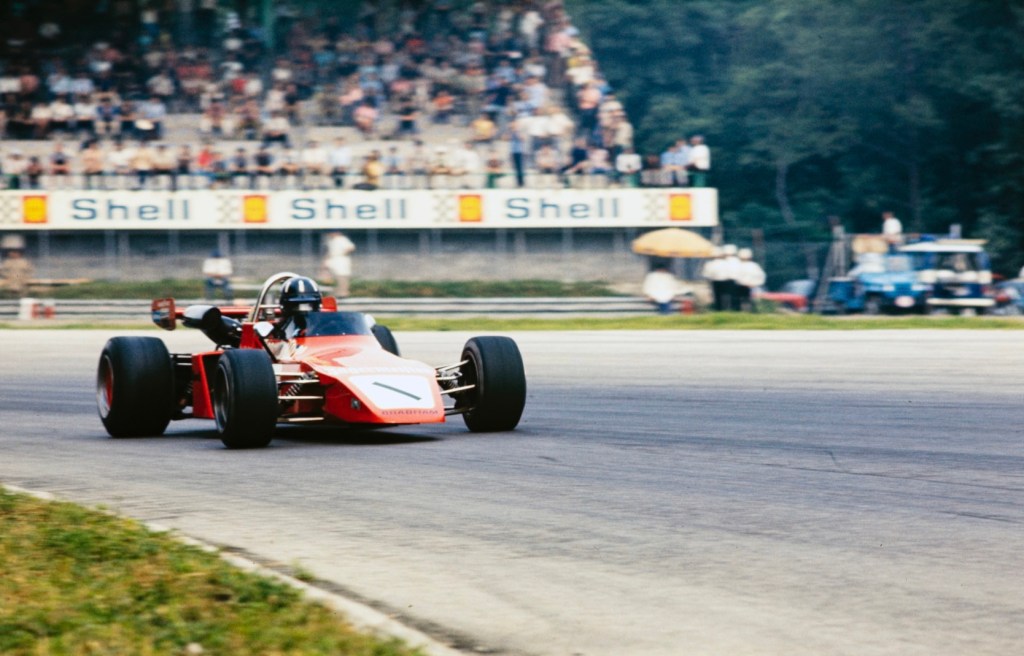
Hill (above) on the way to winning the 1972 Monza Lottery GP F2 race, still in search of the optimum low drag Monza setup on his Brabham BT38 Ford BDA: no front wings and a very shallow angle of incidence at the rear.
May as well finish with another question, this time for the Graham Hill experts. Was that Monza Lottery win – not a Euro F2 Championship round that year – on June 29, 1972 Graham’s final race win?
More BT34 soon. Oh yes, the Fugly Car Cup will be an occasional article.
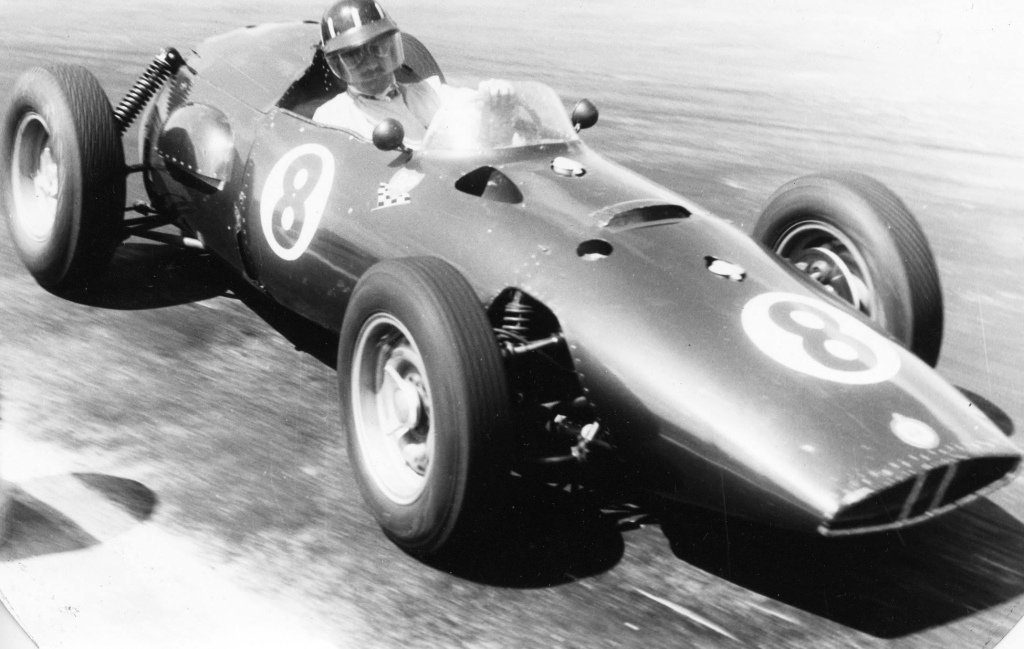
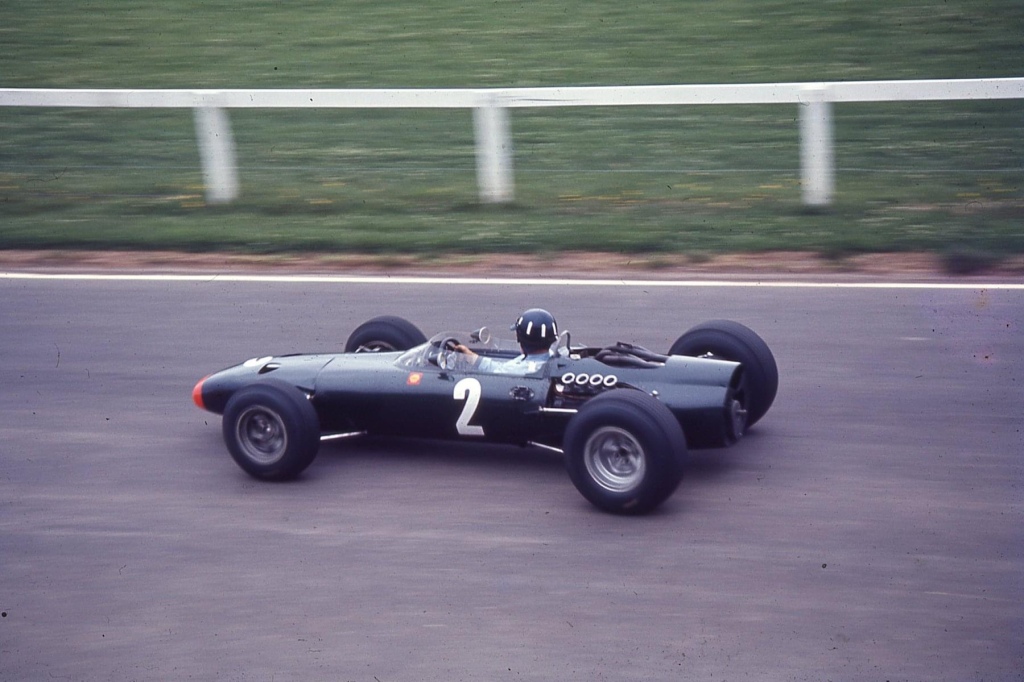
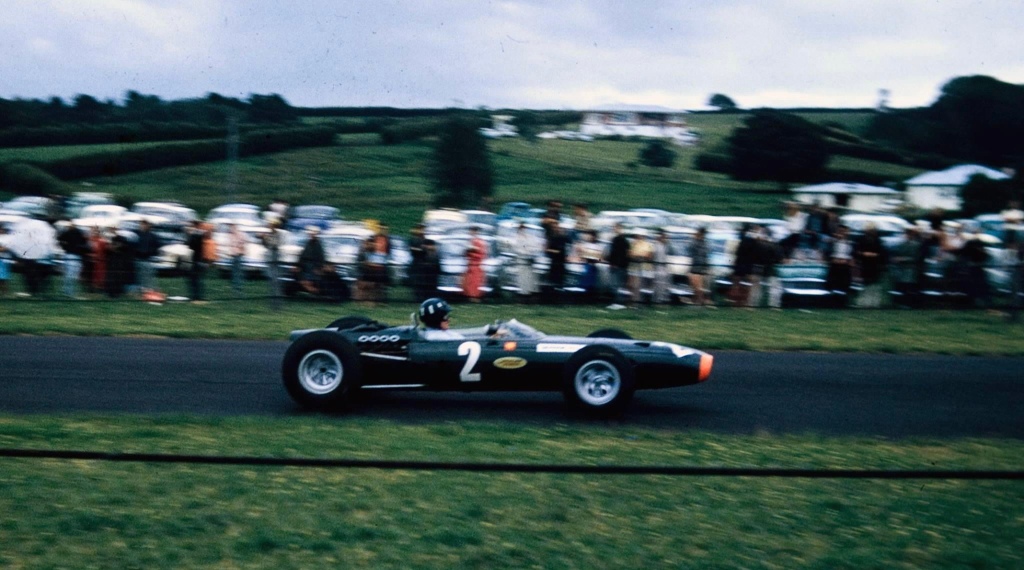
Graham Hill aboard his BRM P48 Grand Prix car in the first race of many races in New Zealand over the ensuing decade. Ardmore during the January 7, 1961 New Zealand Grand Prix.
65,000 Kiwis rocked up in searing Auckland heat to see 14 international drivers take on the locals. Hill finished third behind the two works Cooper T53 Climax 2.5s of Jack Brabham and Bruce McLaren.
The Bourne equipe were regular visitors to New Zealand, having first made the trip in 1954 when a single BRM P15 V16 driven by Ken Wharton blew the minds of Kiwis with its staggering performance and sound, if not its reliability. The Rubery Owen Group/Owen Organisation had subsidiaries in New Zealand and Australia so BRM made the long trip on many occasions to wave the flag, despite the protestations of Chief Engineer, Tony Rudd in some years when he would have preferred to prioritise development of his GP machines over the European winter.
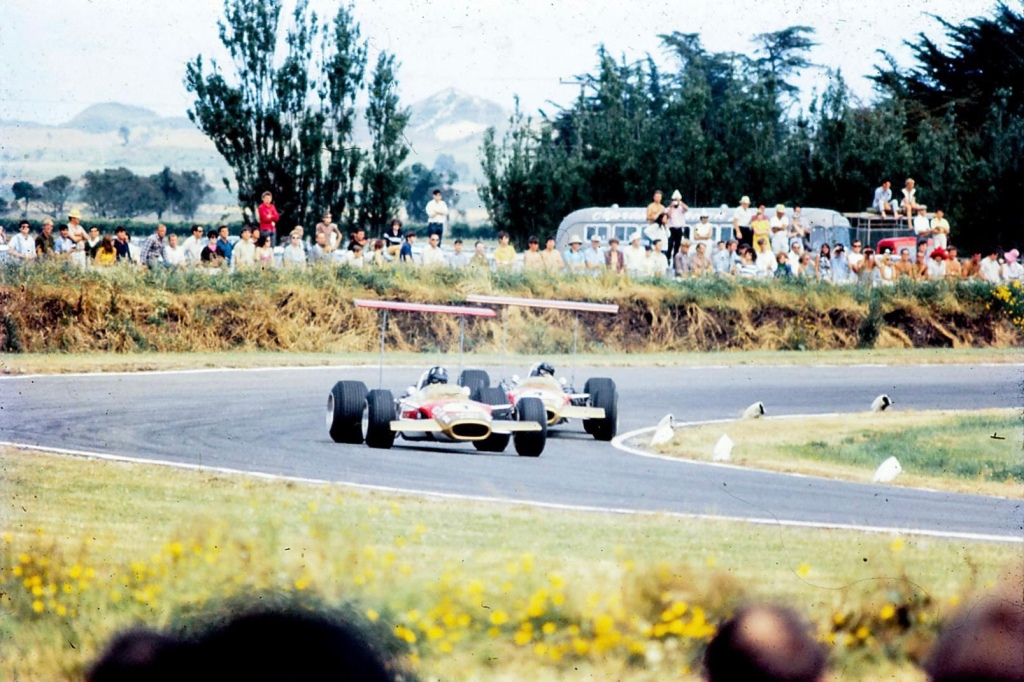
The BRM P48 – the marques first mid-engined car – took its swansong on this trip, and its only international win in the final meeting on the Ballarat Airfield in Victoria, albeit it was Hill’s team-mate, Dan Gurney who took the chequered flag that day. That year BRM didn’t contest the other Kiwi internationals, more on the BRM P48 here; https://primotipo.com/2018/03/16/bourne-to-ballarat-brm-p48-part-2/
(E Sarginson)
Hill missed 1962 but returned for the ’63 summer as World Champion albeit he raced the revolutionary Ferguson P99 Climax four-wheel-drive car down south rather than his championship winning BRM P57/578.
He was stiff to miss out on third place in the NZ GP (above) held at the new Pukekohe track outside Auckland, he lost his clutch at the start then the gearbox cried enough on the very last lap. Hill returned home for a break, before returning for the Australian rounds. Innes Ireland raced the car at Levin for Q5/third, Wigram last/DNF o/heating and Teretonga Q5/third.
Hill’s best in Australia was a win in a greasy preliminary at Lakeside where the car’s grip showed through. In those pre-Tasman Cup 2.5 days both New Zealand and Australia had Formula Libre as their national categories. Once Coventry Climax developed the 2.75-litre ‘Indy’ FPF for Cooper’s 1961 assault on the Indy 500 that engine became the power unit de jour in Australasian events. The FPFs fitted to the P99 were 2.5-litre units so Hill and Ireland were starting behind the eight-ball compared with Brabham, McLaren, John Surtees and Tony Maggs etc who had 2.7s. So fitted we may really have seen the potential of these exciting cars which were somewhat hamstrung when raced with 1.5-litre FPFs in F1 events, where they were less able to ‘carry the additional weight’ inherent in the additional, complex transmission and associated components. What might have been?
(B Ferrabee)
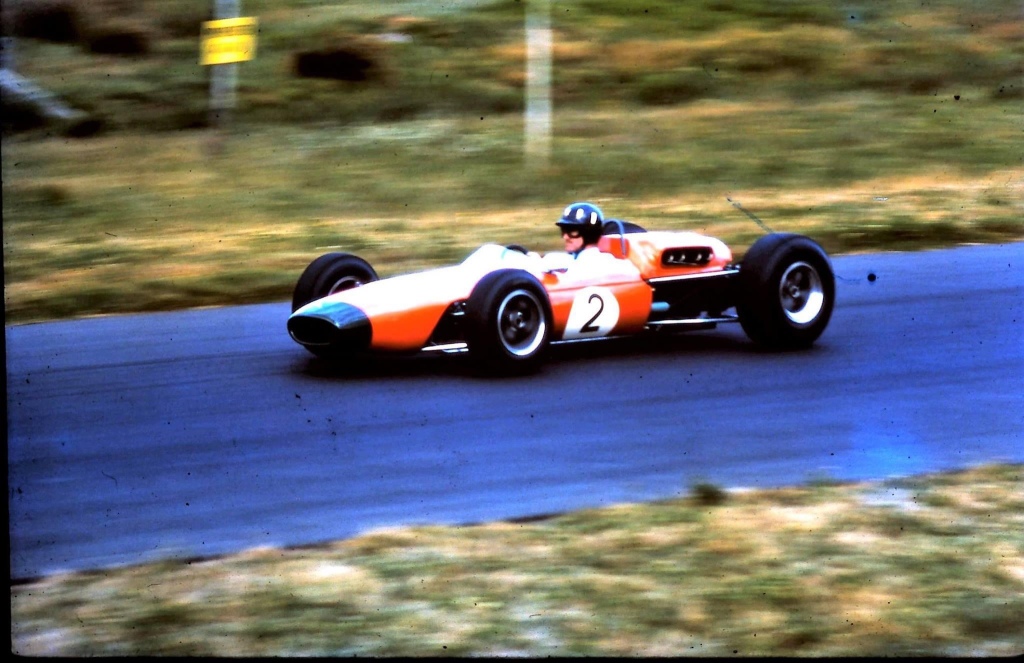
In 1964 Hill contested two rounds of the Tasman Cup in Australia aboard a Brabham BT4 Climax 2.5 run by the David McKay’s Scuderia Veloce. He was third at Warwick Farm and won the South Pacific Trophy at Longford, so he happily signed up again in 1965, racing a brand new Brabham BT11A Climax, Ron Tauranac’s latest Tasman challenger which was also used by Jack and Frank Gardner.
Graham opened his ’65 Tasman account as he closed 1964 with a win at Pukekohe, the NZ GP. Hill again, as became his norm, skipped the balance of the Kiwi races to have some family time, doing the Warwick Farm and Sandown Australian rounds for fifth and DNF. More about the ’65 Tasman here; https://primotipo.com/2017/11/02/levin-international-new-zealand-1965/
Hill was complimentary about the preparation of his car by Bob Atkin and Spencer Martin, Martin raced this same chassis to Australian Gold Star championship wins in 1966 and 1967.
Graham Hill and Spencer Martin swap notes at Pukekohe. By that stage Repco were the largest supplier of FPF parts in the world having had the commercial rights from circa 1962 (K Buckley)(M Fistonic)
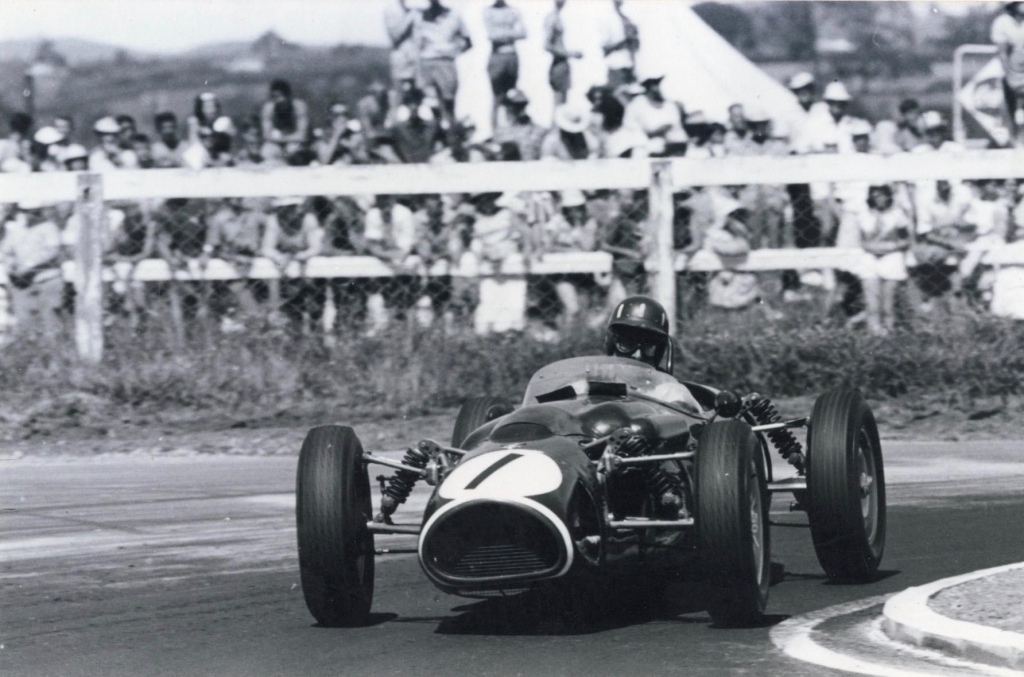
BRM returned to Australasia in 1966, figuring that their just obsolete F1 P261s, their P60 V8 engines bored from 1.5-1.9-litres would do the trick, and so it proved. Graham above at Pukekohe, where he won the NZ GP on the January 8 weekend.
In fact the series was a BRM rout, the team won seven of the eight rounds, Jackie Stewart – then an F1 newbee but with the 65′ Italian GP win under his belt – took four victories, Hill two, and Richard Attwood one at Levin, he stood in for Graham there and in the following race at Wigram. The BRM P261 Tasman story is contained here; https://primotipo.com/2020/02/22/1966-australian-grand-prix-lakeside/
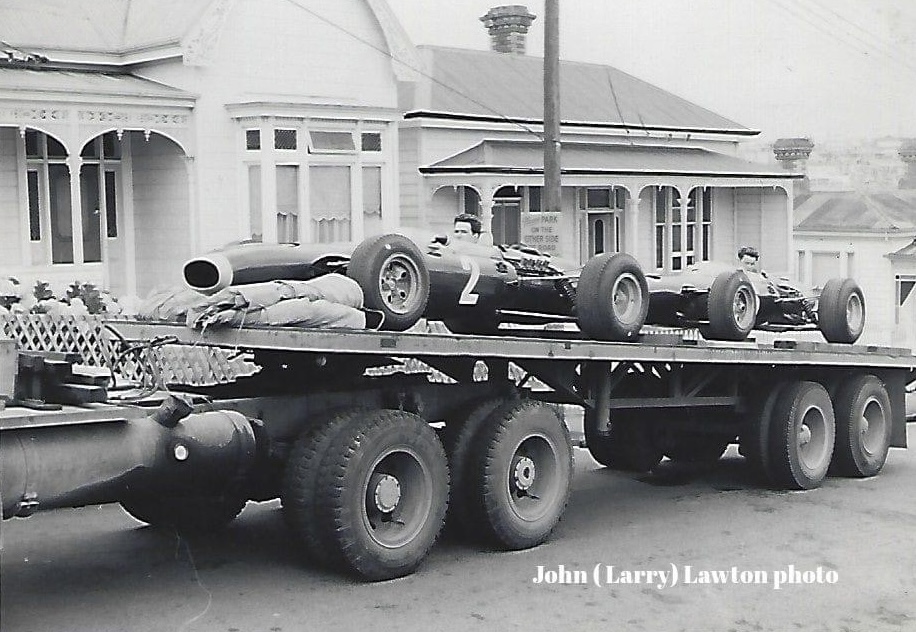
The interesting shot above shows the BRMs arriving for scrutineering before the series opener at Pukekohe in January 1966. It’s at Grey Lynn near the Auckland City car testing station
Hill in the superb BRM P261 at Pukekohe, perhaps this machine and the epochal Lotus 25-33 series of cars are the two best machines of the 1.5-litre 1961-65 F1 era, Ferrari 158 duly noted (B Kempthorne)
In 1967 and 1968 Graham missed the NZ Tasman rounds in their entirety. He decamped from BRM to Lotus at the end of 1966 in a timely move which neatly matched the arrival of the ’67 Lotus 49 Ford DFV V8, another machine which set the trend for a couple of decades.
While Jackie Stewart gave him a good run for his money at BRM, Graham jumped from the fat into the flames with Jim Clark as his Lotus teammate. Clark easily won the ’67 Tasman with a 2-litre Climax FWMV V8 powered Lotus 33 F1 chassis, and in 1968, his F1 Lotus 49 powered by the 2.5-litre Cosworth, the DFW. Graham did only the Warwick Farm Tasman round in ’67, where he raced a new Lotus 48 Ford FVA F2 car in an expensive exercise for the WF promoter, the Australian Automobile Racing Club. Again he enjoyed a holiday at home in early 1968, then did the four Australian rounds, with his bests, second to Clark at Surfers Paradise and Warwick Farm.
(LAT)
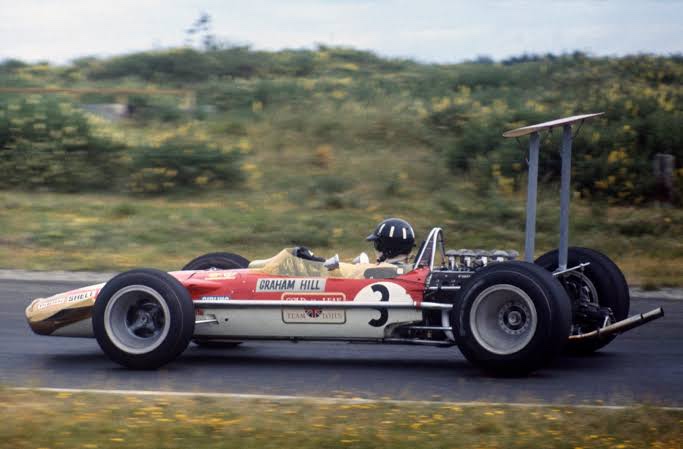
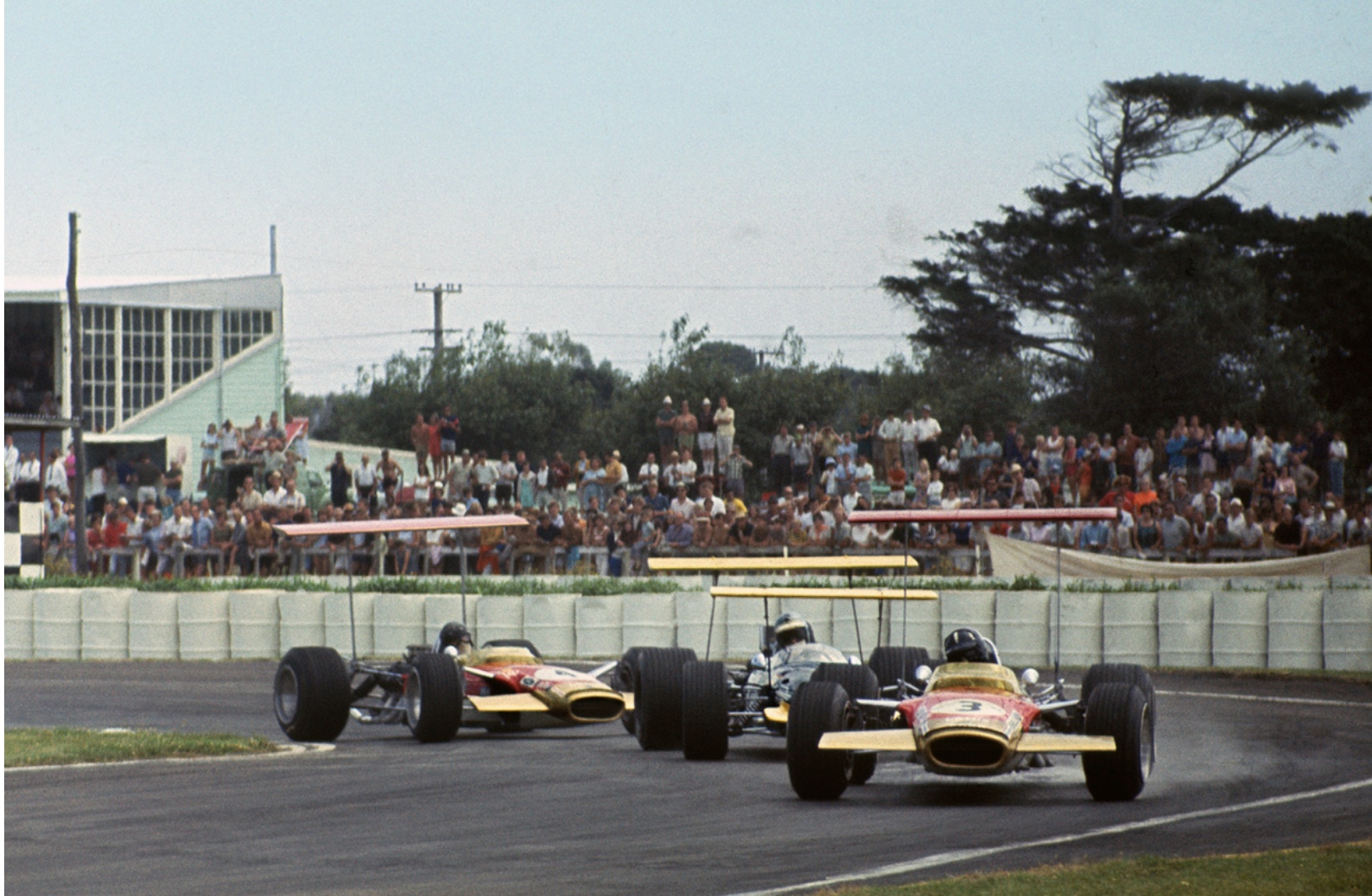
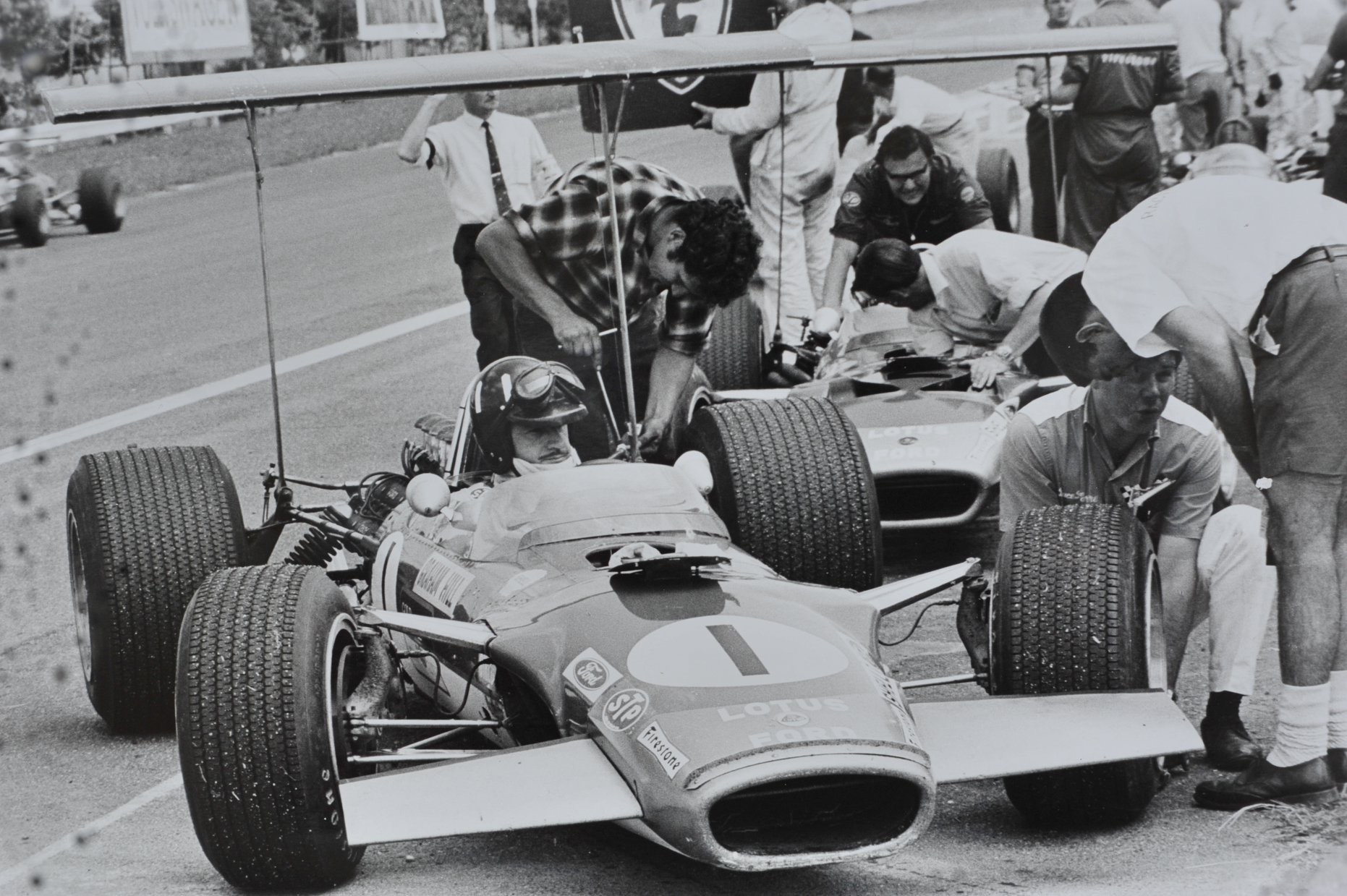
Hill aboard his Gold Leaf Team Lotus, Lotus 49B Ford DFW on his way to second place at Teretonga in 1969, and below in earnest conversation with a mechanic during the Puke first Tasman round.
(M Fistonic)
Hill arrived down south as the freshly minted World Champion after a season in which his brave leadership helped Team Lotus gather themselves together after the tragic death of Jim Clark in a Hockenheim F2 race on April 7.
It wasn’t to be a cushy summer though, Jochen Rindt was a man on a mission with a competitive F1 (and Tasman) car for the first time. His Lotus 49B Ford set the pace, winning two rounds to the four scored by Chris Amon in a title winning run of speed and consistency in a Ferrari Dino 246T.
Hill with Rindt chomping away at him, Cabbage Tree corner Levin 1969, where both Lotus 49B DFW DNF, Rindt with a big accident which required a replacement car to be sent from Hethel (B Spurr)
Graham didn’t take a victory that summer, his bests were second places to Rindt at Wigram and at Teretonga behind Piers Courage in Frank Williams’ Brabham BT24 Ford DFW. More about the Lotus 49Bs in Australasia that summer here; https://primotipo.com/2022/02/26/lotus-49b-ford-chassis-r8/
The change in Tasman formula to F5000 (1970-71 transition years noted) and the growing number of F1 races in a season put paid to trips by full-time F1 drivers for a couple of months after Christmas each year. It was awfully sweet while it lasted, with Hill G one of the most popular visitors of all with the punters.
Credits…
Euan Sarginson, LAT, Ken Buckley, Brian Ferrabee, Milan Fistonic, Bryn Kempthorne, Brian Spurr, Warner Collins, John Lawton
Tailpiece…
(W Collins)
Graham Hill preparing to load up at Wigram on January 18, 1969. Jochen won from Graham that day with local hero Chris Amon third, Piers Courage and Derek Bell fourth and fifth, demonstrating the typical depth of Tasman Cup fields.
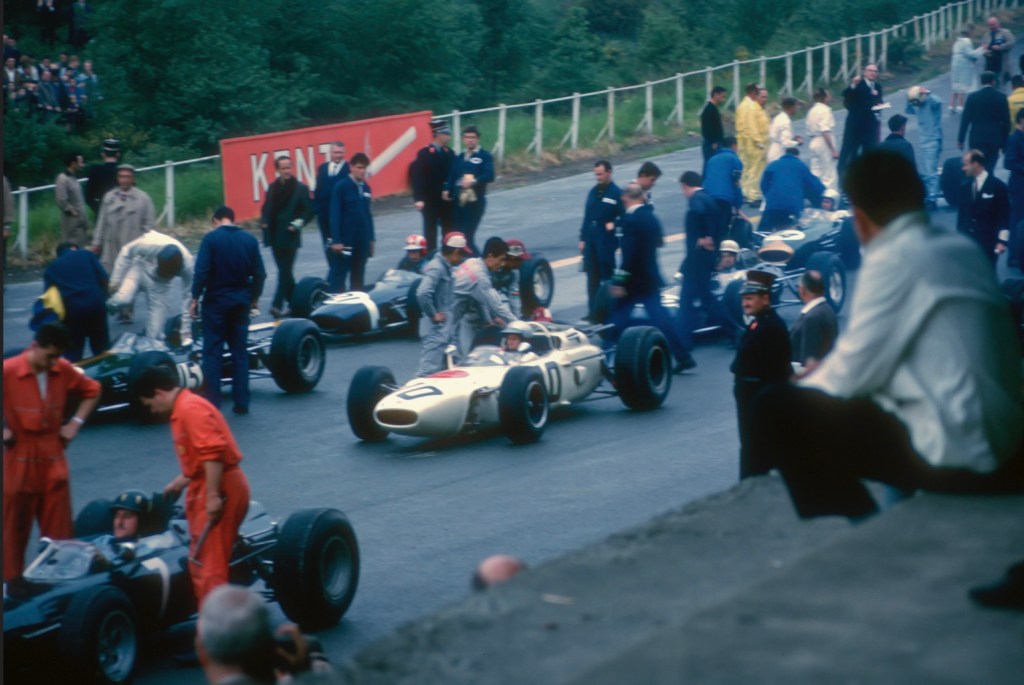
I just love pit or startline just-before-the-off shots. You can feel the tension, excitement and driver’s surge of adrenalin just before they pop their butts into the cockpits of their chariots. Here it’s the Belgian Grand Prix, Spa 1965.
Our black-snapper in some ways ruins the shot but he gives it intimacy and immediacy as well. The front row from left to right are Jackie Stewart, Jim Clark and a very obscured Graham Hill; BRM P261 by two and Lotus 33 Climax.
(wfooshee)
The only fellas I recognise are Messrs Stewart, Clark, Chapman and Hill. Can you do any better? The weather looks a bit grim, but such conditions are common in the Ardennes.
(wfooshee)
It’s a smidge out of focus but let’s not be too hard on our photographer Mr Fwooshee, I’d love to be able to credit him/her/it fully if anyone knows the correct name.
Every time I see a Honda RA271/272 I’m stunned by the audacity of a transversely mounted 1.5-litre V12, six-speed, monocoque chassis design in your first crack at a GP car; RA270 space frame prototype duly noted. Karma was Mr Honda’s originality being rewarded with that Mexican GP win several months hence, here Richie Ginther (RA272) was sixth. Graham Hill is in front, #15 is Dan Gurney’s Brabham BT11 Climax – everybody’s favourite Lanky-Yank is about to insert himself into that little Brabham – and behind him, Jo Siffert’s Rob Walker BT11 BRM. Jo Bonnier, Brabham BT7 Climax is behind the Honda, and further back the redoubtable Bob Anderson in his self-run #24 Brabham BT11 Climax. Brabhams galore, bless-em.
Who is the driver playing with his silver or white peakless helmet? Down the back, top-right there is a glimpse of Jean Stanley getting that tosspot ‘Lord Louis’ Stanley’s cravat nice and straight…
Oh yes, Jim Clark won from Jackie Stewart with Bruce McLaren’s Cooper T77 Climax in third place.
Credits…
fwooshee
(fwooshee)
Tailpiece…
Frank Gardner had an early afternoon, his John Willment Brabham BT11 BRM had ignition problems after completing only four laps. He started from grid slot 18 of 21, the best placed BT11 was the Guvnor’s works-car, Jack Brabham was fourth.
It looks pretty good to me, not exactly Margaret River, but hey, what’s all this nonsense about the grim North Sea?
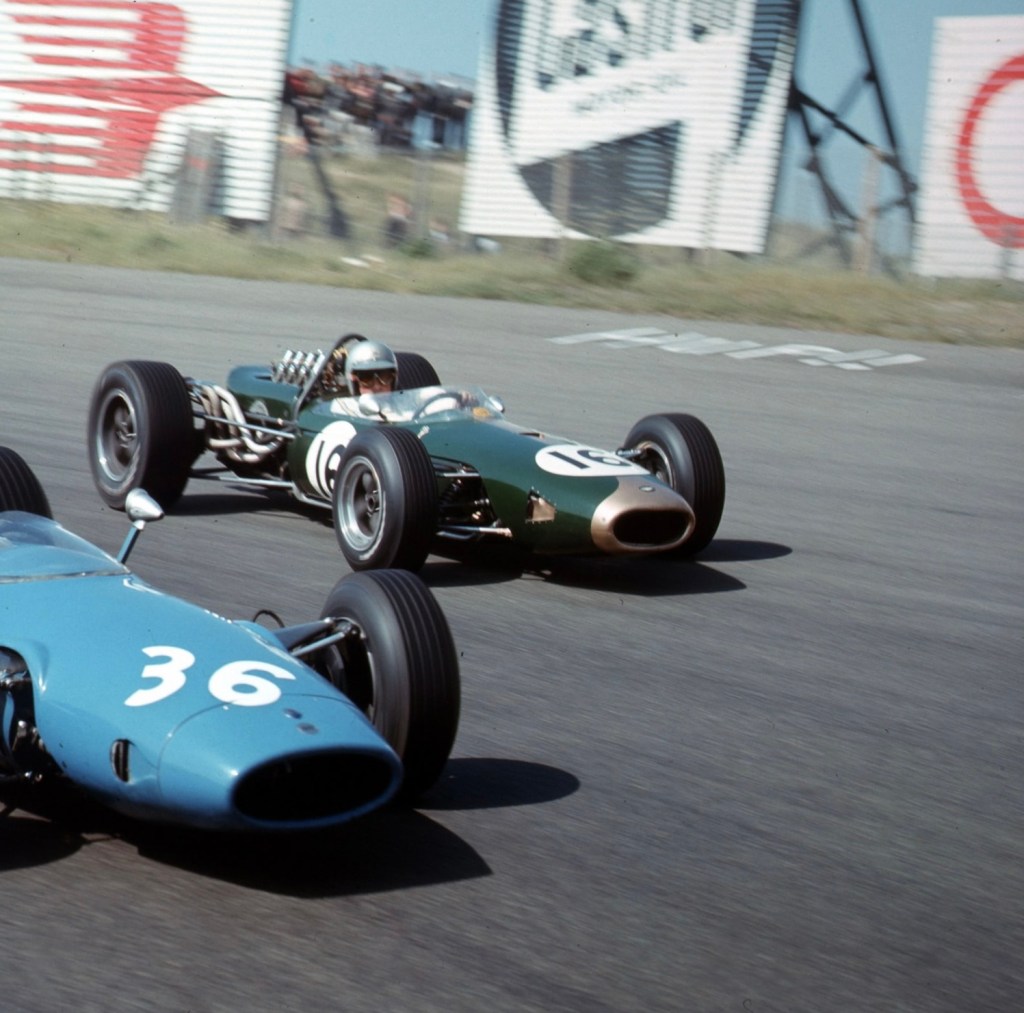
Jack Brabham was never the life of the party, seemingly, but he had a pretty good sense of humour, here making his way to the grid for the 1966 Dutch Grand Prix and addressing head-on media comments about his advancing years, complete with ‘walking stick’ and beard. He had turned 40 on April 2, like a fine wine he got better really, not too many of the over-40s won races in their final season, 1970 in Jack’s case. Ignoring the occasional touring car outings back in Australia.
(wfooshee)
He had the last laugh too, he had won the previous two Grands Prix in France and the UK and was on the-roll that delivered his third World Drivers Championship that year. He beat Graham Hill, BRM P261, and Jim Clark, Lotus 33 Climax to win at Zandvoort, then repeated the victorious dose at the Nurburgring a fortnight later. See here for a piece on his ’66 championship year; https://primotipo.com/2014/11/13/winning-the-1966-world-f1-championships-rodways-repco-recollections-episode-3/
Two 3-litres ahead of two 2-litres in the Dutch dunes. Brabham and Denny Hulme, Brabham BT19/ BT20 respectively from Jim Clark’s Lotus 33 Climax and Graham Hill’s BRM P261 (MotorSport)
BT19 F1-1-65 defines simplicity.
Spaceframe chassis, and a repurposed one at that, Alford and Alder (Triumph) front uprights and povvo Repco RB620 290-310bhp, SOHC two-valve, Lucas injected V8 with a block donated by an Oldsmobile roadie. Can’t be true, surely? It’s an unusual angle of Jack’s weapon of war for 95% of 1966 in Tasman 2.5 and F1 3-litre Repco guises, it raced on towards the end of ‘67 too, no rest for the wicked, World Champ or otherwise.
Credits…
wfooshee, Bernard Cahier-Getty Images, MotorSport Images
(MotorSport)
Tailpiece…
Brabham rounding up Guy Ligier’s Cooper T81 Maserati V12, he was ninth and last, six laps adrift of the winner. At the end of the season Jack sold Guy one of BRO’s Brabham BT20 Repcos (Denny’s F1-2-66), so impressed was the rugby-international watching them go past at close quarters that season.
John Harvey’s 2.5-litre Repco V8 powered Brabham BT11A shrieks it’s way around Warwick Farm on 18 February 1968…
Looks a treat doesn’t it? Nose up out of Leger Corner onto Pit Straight, it was first meeting for the car with its Repco engine.
By 1968 IC-4-64 was an old-girl, albeit a very successful one. It was raced by Graham Hill in the 1965 Tasman Series for David McKay’s Scuderia Veloce, winning the 1965 NZ GP at Pukekohe on its race debut.
Hill won the ’65 NZGP at Pukekohe on 9 January 1965 from Frank Gardner’s similar BT11A and Jim Palmer’s earlier model BT7A, all 2.5 Coventry Climax FPF powered (sergent.com)
The 2.5-litre Coventry Climax FPF four cylinder engine was struggling against the V8’s by then, so Bob bought a 740 Series Repco 2.5-litre V8 to plonk in the back of the BT11A.
John Harvey, Martin’s successor at Bob Jane Racing, contested the Australian rounds of the 1968 Tasman Series so powered. Jim Clark’s works Lotus 49 Ford DFW won the Tasman that year, it was the final championship he won before his untimely death at Hockenheim that April.
740 Series Repco 2.5 Tasman V8 engine. 700 Series Repco block and 40 Series ‘between the Vee’ heads’, the ’67 World Championship winning SOHC, two-valve engine in 2.5-litre Tasman spec as against its 3-litre F1 capacity. Repco claimed 275bhp @ 8,500rpm for the 2.5, and 330bhp @ 8,400 rpm for the 3-litre variant. Lucas injection trumpets, Bosch distributor and plenty of chrome and cadminium plating in shot (P Houston) Harvey in the BT11A Repco at Longford, 1968. The attention Bob Jane placed on the presentation of his cars is clear. Note the seatbelt, six-point? (oldracephotos.com-H Ellis)
Harves’ did three Australian rounds, only finishing the wet, final Longford event. By the start of the Gold Star series he slipped into Jane’s new Brabham BT23E which had been Jack’s 1968 Tasman mount.
Harvey raced the final round of the 1967 Gold Star Series in IC-4-64 after Martin announced his retirement. He was already well familiar with Repco power, the 740 Series Repco had been shoe-horned into his Ron Phillips owned BT14 F2 Brabham.
Third place at Sandown was his only finish in the car. John commented in a Facebook exchange about this car “…On handling, Peter Molloy and I were still developing the chassis setup, however in the Diamond Trophy race in 1967 (pictured below) at Oran Park I set a new outright record on the last lap”, so they were improving the car.
The engine and Hewland ‘box was removed from the BT14 which Jane acquired, and popped into the BT11A which it was figured would better cope with the power than the BT14 F2 frame and related hardware.
IC-4-64 is still alive and well, as part of the Bob Jane Estate, in FPF engined form.
Harvey in the WF pitlane, Tasman meeting ’68. The BT11A has a vestigial spoiler and a few ducts the it didn’t have when CC FPF powered. Jewels of things these ‘Intercontinental’ Brabhams, very successful ones at that (B Williamson) At the Warwick Farm Tasman meeting again (J Stanley) Competitor view of the BT11A and its luvverly Repco RB 740 2.5-litre 275 bhp V8 (P Houston)
Credits…
autopics.com.au-Richard Austin, John Stanley, Peter Houston, sergent.com, Bob Williamson, oldracephotos.com-Dick Simpson, Harold Ellis and Harrisson, oldracingcars.com, Stephen Dalton Collection
The shot of Harvey in the Ron Phillips owned Brabham referred to above, on the way to victory in the Diamond Trophy at Oran Park.
John made his name in speedway and transitioned into road racing in an Austin/Morris Cooper S, and then into open-wheelers in this ex-Bib Stillwell car. The Brabham received progressively bigger Lotus-Ford twin-cams, with Harvey going quicker and quicker, before the machine copped its Repco V8 Birthday between the 1967 Tasman and Gold Star Series. Rennmax’ Bob Britton performed the surgery to pop the Repco into the BT14 frame, creating a BT14 jig in the process.
It wasn’t that successful in Repco form; DNF/DNS at Lakeside, Surfers, Mallala and Symmons Plains, third place in the Sandown Gold Star round in September was the car’s best, behind Leo Geoghegan’s Lotus 39 Repco and Spencer Martin aboard BT11A IC-4-64.
Harvey during the Diamond Trophy meeting at Oran Park (oldracephotos.com-Dick Simpson)
Harvey’s Bob Jane drive commenced aboard IC-4-64 in the final Gold Star round, the Hordern Trophy, at Warwick Farm in December 1967.
So…Harvey in 12 or 14 months drove quite a few different Brabham/engine combinations! BT 14 Ford, BT14 Repco, BT11A Climax, BT11A Repco, and then BT23E Repco for the ’68 Gold Star Series. Mind you he missed the ’68 Gold Star.
The ‘noice new Brabham crashed after a rear suspension upright failed in practice for the opening Bathurst round. Harvey’s big accident and subsequent recovery kept him away from racing for the rest of the year.
Harvey aboard the Jane Racing Brabham BT23E Repco 830, during the Symmons Plains Gold Star round in March 1970, at the end of its competitive life. He won the race from Leo Geoghegan’s Lotus 39 Repco and Kevin Bartlett’s Mildren Waggott (oldracephotos.com-Harrisson)
Tailpiece…
(S Dalton Collection)
The July 1965 Oran Park meeting program shows Harvey’s Austin Cooper S ahead of George Garth’s Ford Cortina GT during the OP May 1965 meeting.
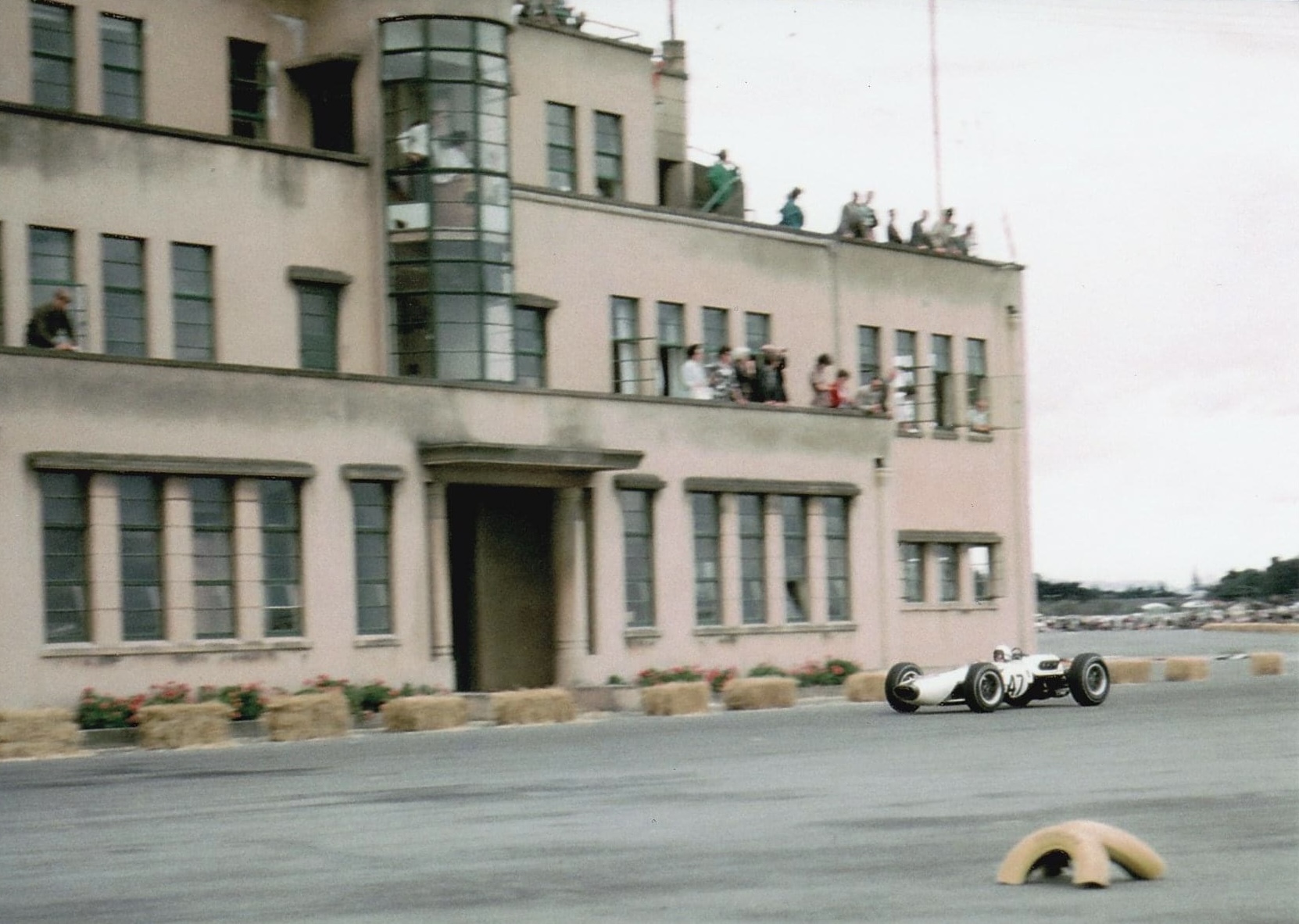
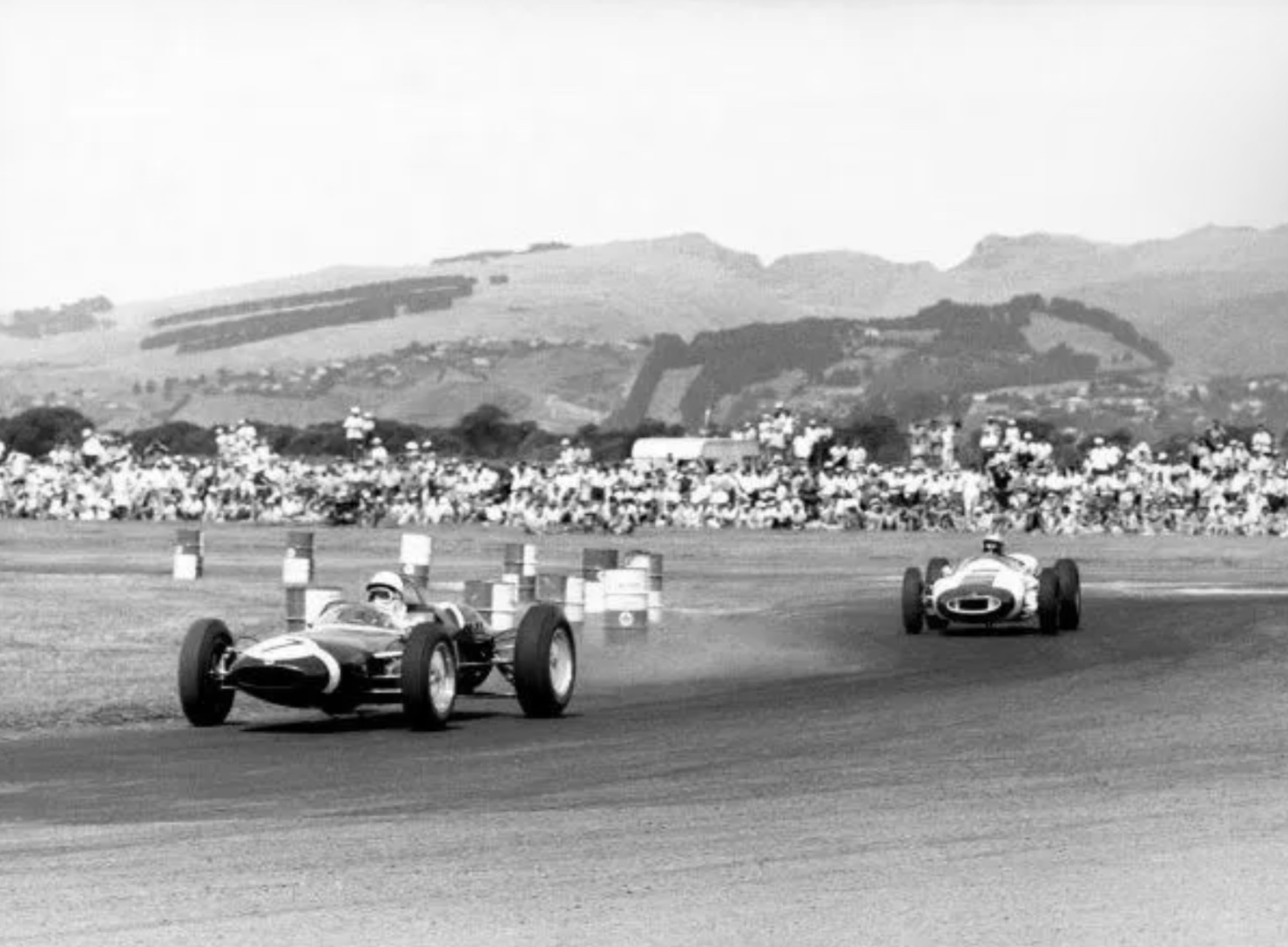
Bruce McLaren blasts past the Royal New Zealand Airforce control tower building during the 1965 Lady Wigram Trophy.
The reigning Tasman Cup champion finished second in his Cooper T79 Climax to Jim Clark’s Lotus 32B Climax with Jim Palmer’s Brabham BT7A Climax third. Clark won the title that summer with wins in four of the seven rounds.
Wigram Aerodrome was located in the Christchurch suburb of Sockburn, now named Wigram/Wigram Skies. It operated as an airfield from 1916, and as an RNZAF training base from 1923 to 1995.
Sir Henry Francis Wigram was a successful Christchurch businessman, politician and promoter of the fledgling aviation industry. He gifted land for the airfield to the Canterbury (NZ) Aviation Company (Sockburn Airport), later the land was re-gifted to the RNZAF.
The Lady Wigram Trophy was named in his wife’s honour.
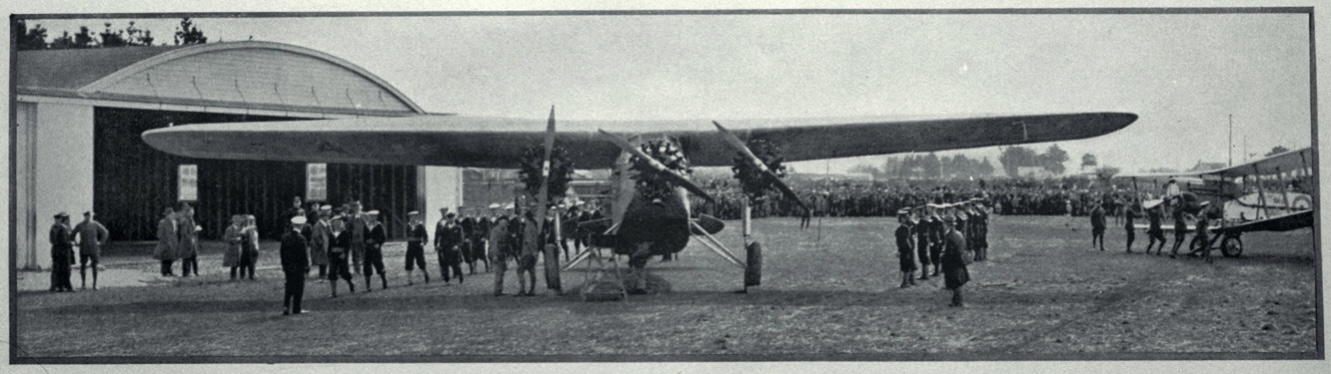
Charles Kingsford Smith’s Fokker F.VII Trimotor Southern Cross at Wigram having made the first Tasman flight from Sydney to Christchurch on September 10, 1928 (discoverywall.nz)
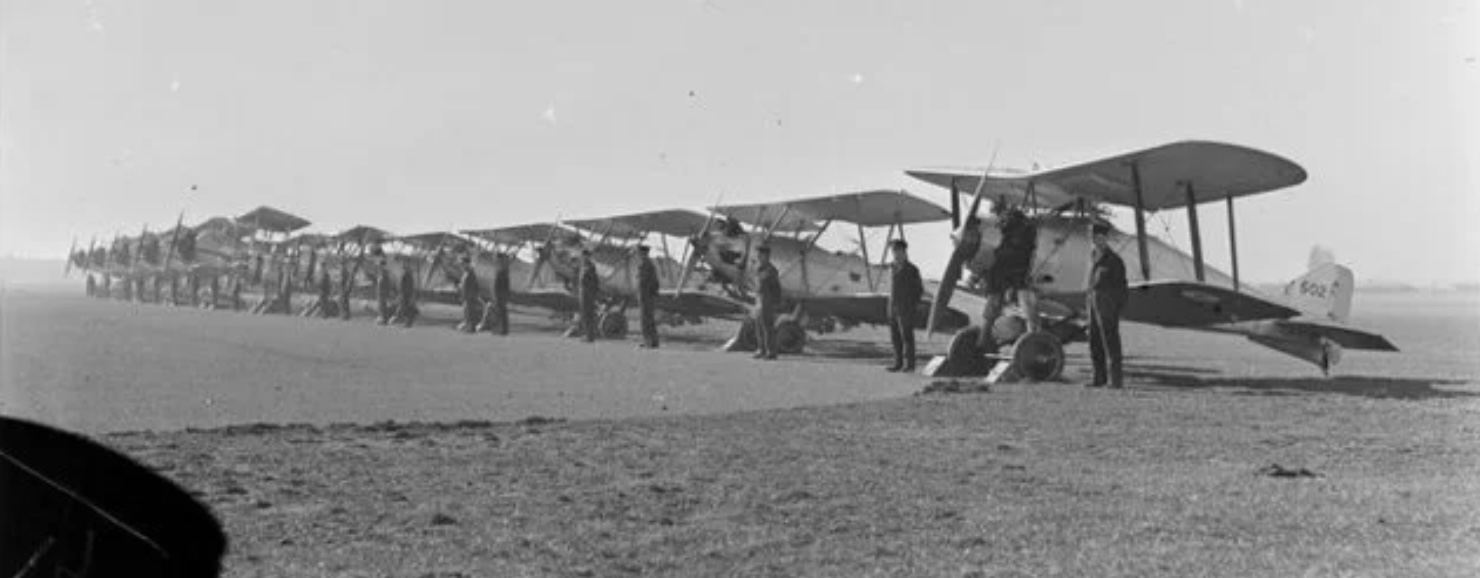
Wigram August 1937. The first aircraft is a Gloster Grebe, others include De Havilland Tiger Moths, with Vickers Vildebeests at the end. Happy to take your input/corrections (natlib.govt.nz)
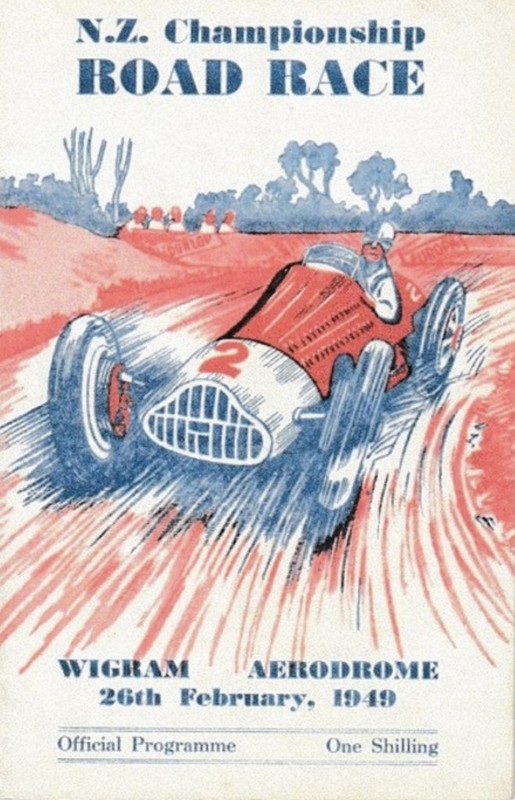
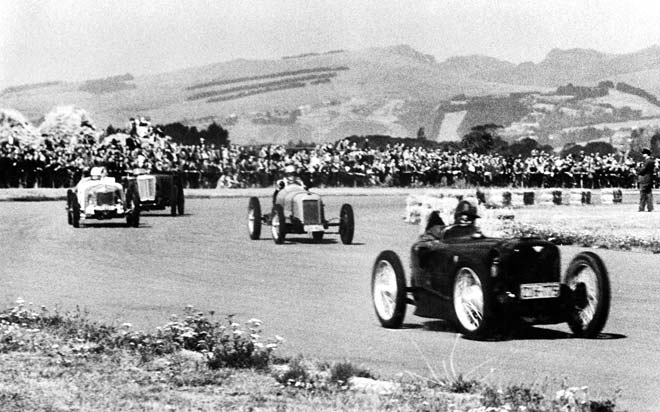
The first motor racing event took place at Wigram in 1949 when the Canterbury Car Club organised the NZ Championship Road Race meeting on February 26.
Winners of the Lady Wigram Trophy subsequently included many internationals such as Peter Whitehead, Archie Scott Brown, Ron Flockhart, Jack Brabham, Bruce McLaren, Stirling Moss, Jim Clark, Jackie Stewart and Jochen Rindt. Other F1 drivers who won around the hangars include Graham McRae, Larry Perkins and Roberto Moreno.
The 1949 feature, the NZ Championship Road Race was won by Morrie Proctor’s Riley 9 at the far left of this photograph.
The legendary Ron Roycroft leads in his ex-works/Sir Herbert Austin, Austin 7 Rubber-Duck s/c from Hec Green in a Wolseley Special with Bob Christie aboard an MG TA Spl at the tail of this group.
(teara.govt.nz)
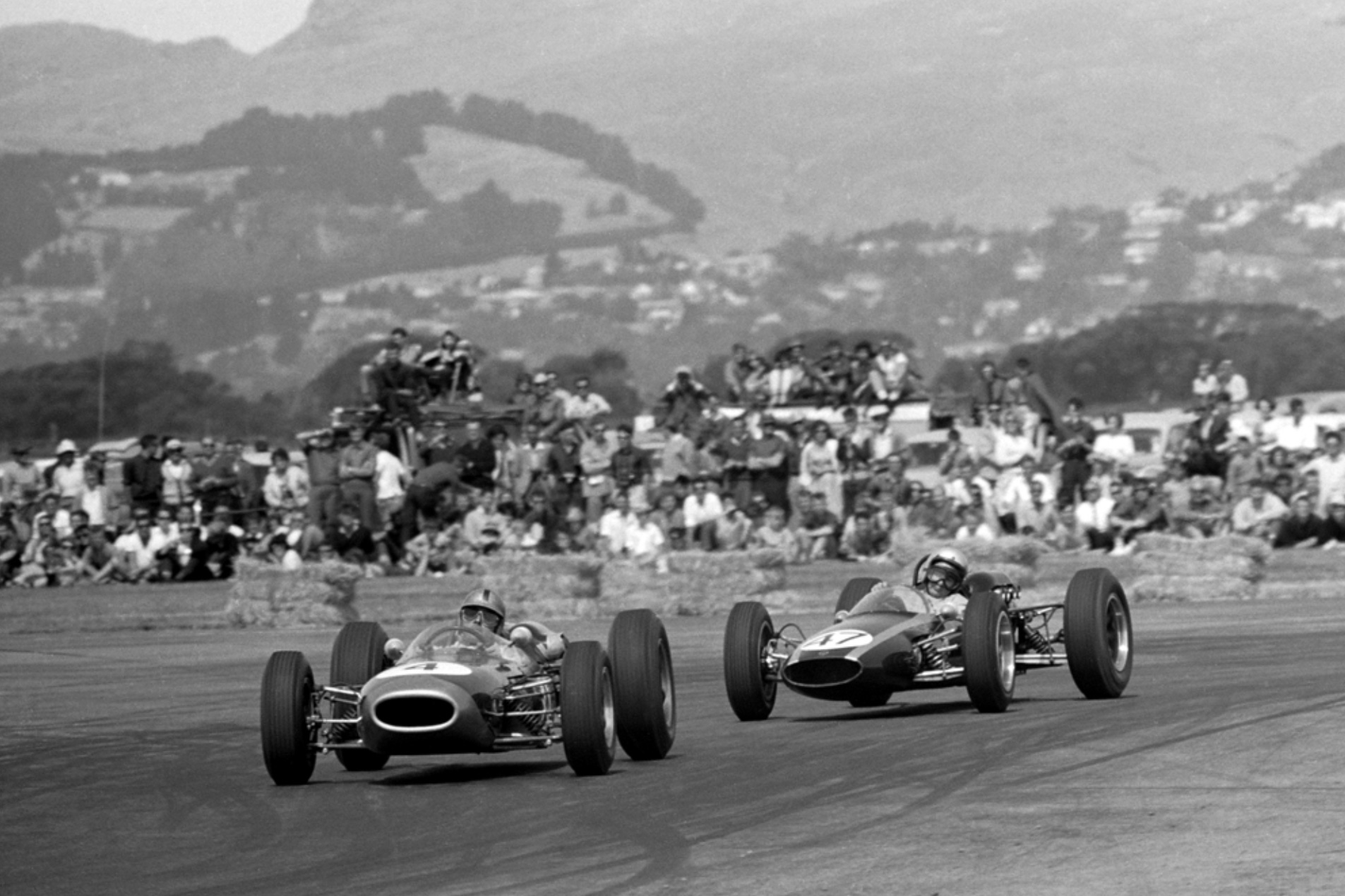
Jack Brabham leads Bruce McLaren, Brabham BT7A Climax and Cooper T70 Climax, at Wigram with the Port Hills forming a lovely backdrop in 1964.
Bruce won the 44 lap race from Jack with Denny Hulme’s works Brabham BT4 Climax third.
McLaren won the inaugural Tasman Series. His three wins in New Zealand matched Brabham’s in Australia, but Bruce’s 39 points haul trumped Jack’s 33.
Brabham was the dominant marque that summer, Graham Hill and Denny took a race win apiece aboard their BT4s giving Motor Racing Developments a total of five wins in the eight rounds.
Reg Parnell’s 3.5-litre Ferrari 555 Super Squalo alongside teammate Peter Whitehead’s similar car in the Wigram paddock – note the hangars – in 1957.
Whitehead took the win from Parnell with Horace Gould’s Maserati 250F third. See here for more these cars; Squalo Squadron… | primotipo…
1957 starting grid panorama (I Tweedy)
BRM’s Ron Flockhart won the 1959 race from pole in a convincing display, he gets the jump in the P25 here with the obscured Coopers of Brabham and McLaren immediately behind, and Syd Jensen’s at right.
Frank Cantwell’s Tojeiro Jaguar is on the left, then Ross Jensen’s light coloured sharknose Maserati 250F, then Tom Clark’s Ferrari 555 Super Squalo #22.
Jack Brabham crouched in the cockpit of his Cooper T55 in typical style during the 1962 running of the Wigram classic.
Stirling Moss won again in his final New Zealand victory, aboard a Rob Walker Lotus 21 Climax (below) from Brabham, with John Surtees third in a Cooper T53 Climax. Jack and John used 2.7-litre Indy FPFs, while Moss’ was a 2.5.
Moss motors away in Rob Walkers’ Lotus 21 Climax #935, who is aboard the chasing Cooper T53? (MotorSport)
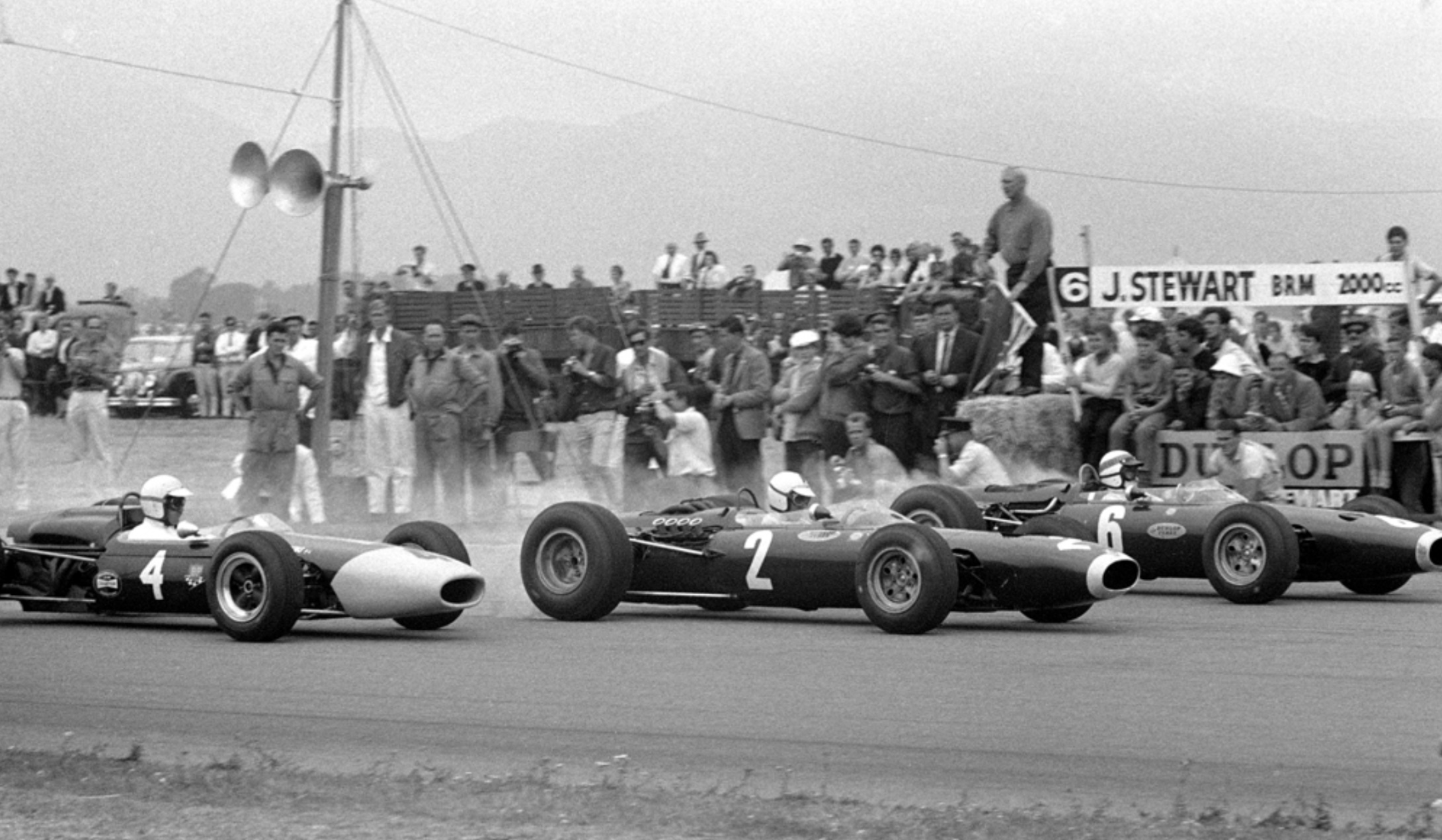
We have lift-off in 1967.
Frank Gardner’s four cylinder Coventry Climax FPF was going to struggle against the 2.1-litre BRM V8s of Dickie Attwood and Jackie Stewart on the right.
Frank finished a good fourth in a series of great speed and reliability, but up front at Wigram were three different V8s; Jim Clark’s 2-litre Lotus 33 Climax, Attwood’s BRM P261 and Denny Hulme’s 2.5-litre Brabham BT22 Repco.
Clark won the series with three wins from six championship rounds. Stewart won two and Jack Brabham, Brabham BT23A Repco one. The BRMs were quick, as they had been in 1966 – Stewart won the Tasman that year – but the transmissions wouldn’t take the additional punch of the V8s, which that year were bored out to 2.1-litres, rather than the 1.9-litre variant of the original 1.5-litre F1 V8 which did the trick the year before.
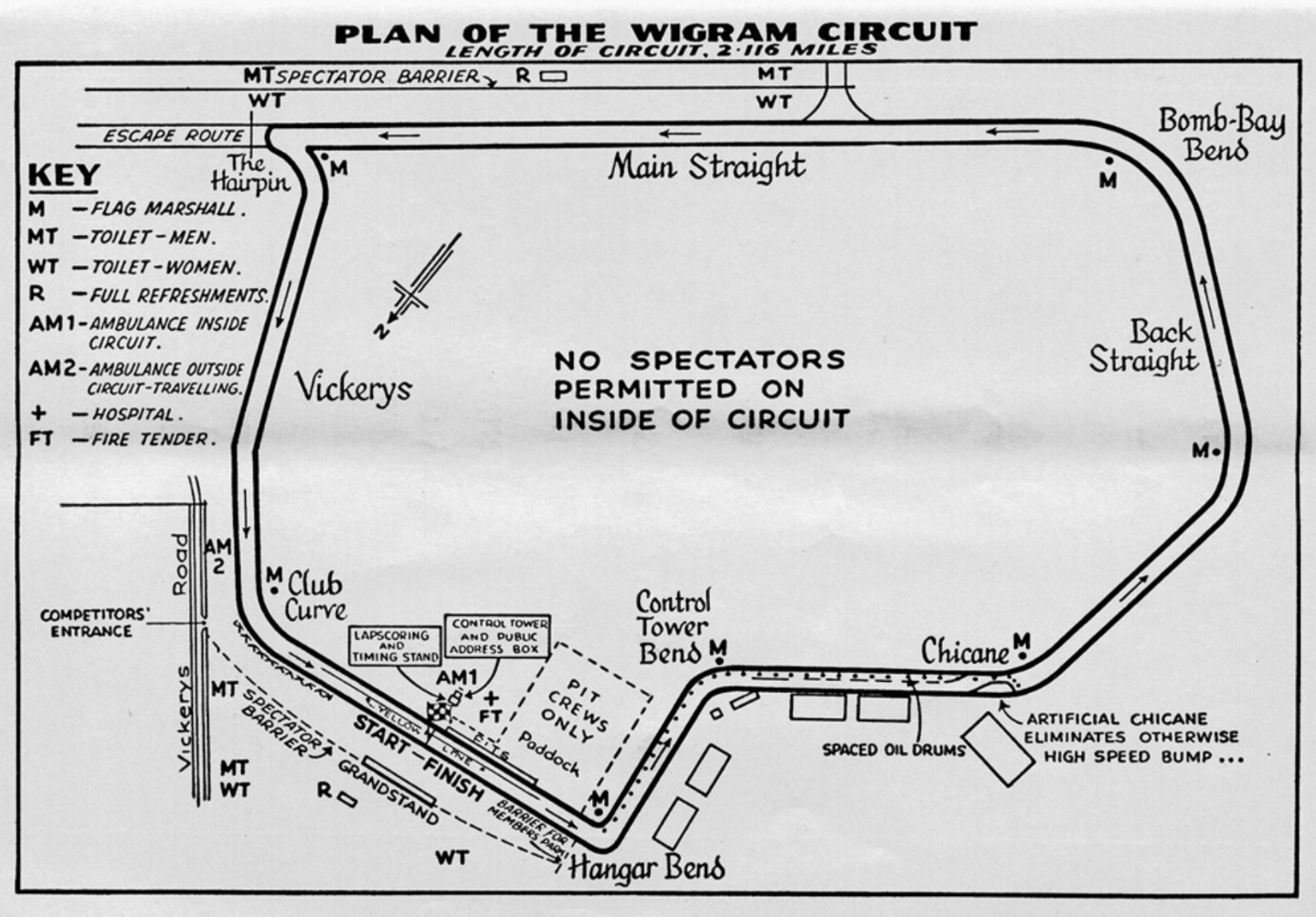
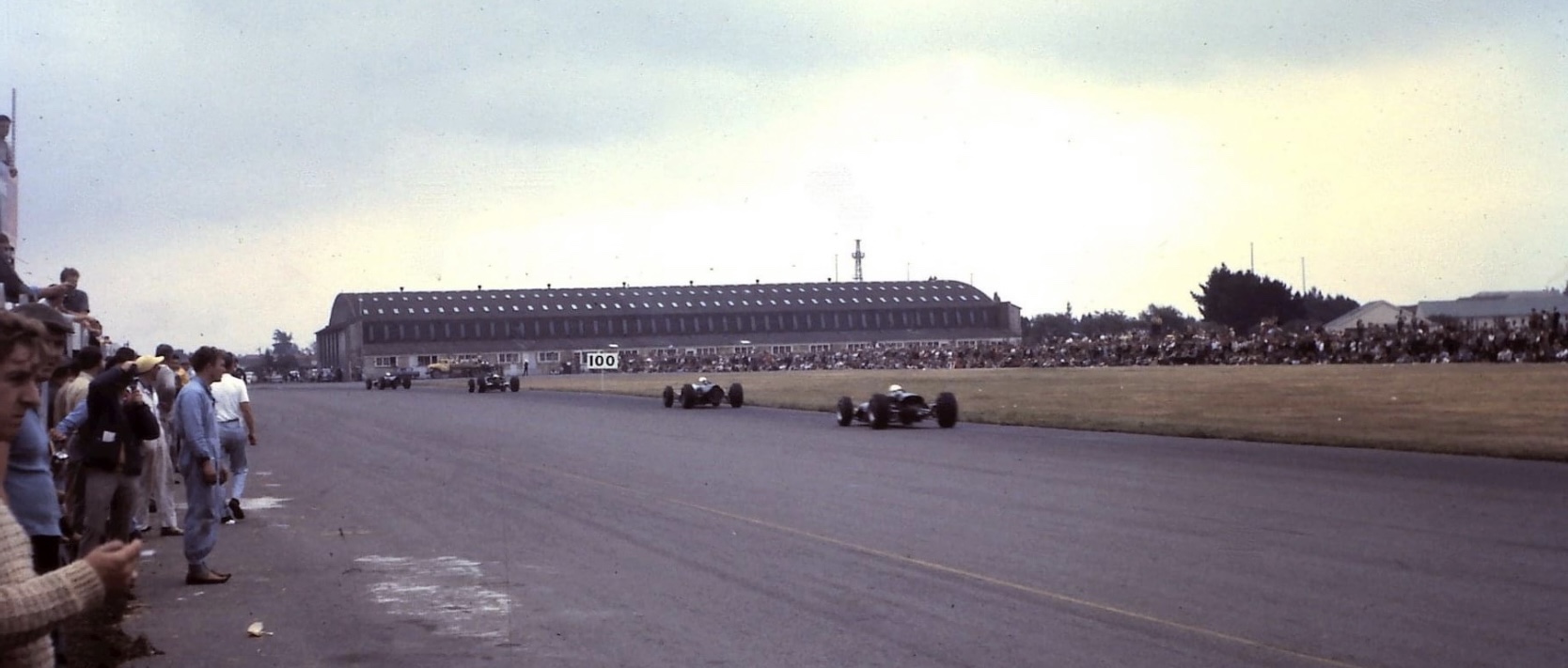
The cars are on the start-finish straight and lining up for Hangar Bend. Look closely, there are two BRM P261s in the mix so it’s probably 1966 or 1967, not 1968 I don’t think.
Christchurch enthusiast Geoff Walls remembers this era well, “It was the most fabulous fast circuit as those airfield situations can be, particularly rounding Bombay Bend onto the main straight/ runway at 100mph before really opening up for the length of the straight.”
“The Lady Wigram Trophy weekend was always in the Summer school holidays so on the Thursday, practice day, and again on Friday, some mates and I used to bike to the airfield, hide our bikes in the dry grass covered ditch parallel with the main runway, crawl through the wire fence and then sprint across the track at the right time and into the middle of the circuit where all the cars and drivers were for the day, great stuff!”
“In later years the Country Gentlemen’s Historic Racing and Sports Car Club used to hold a race weekend there with 250 entries and I was Clerk of the Course, also great occasions on the circuit. That was a great social occasion too and I do have photographic evidence!!”
(G Danvers)
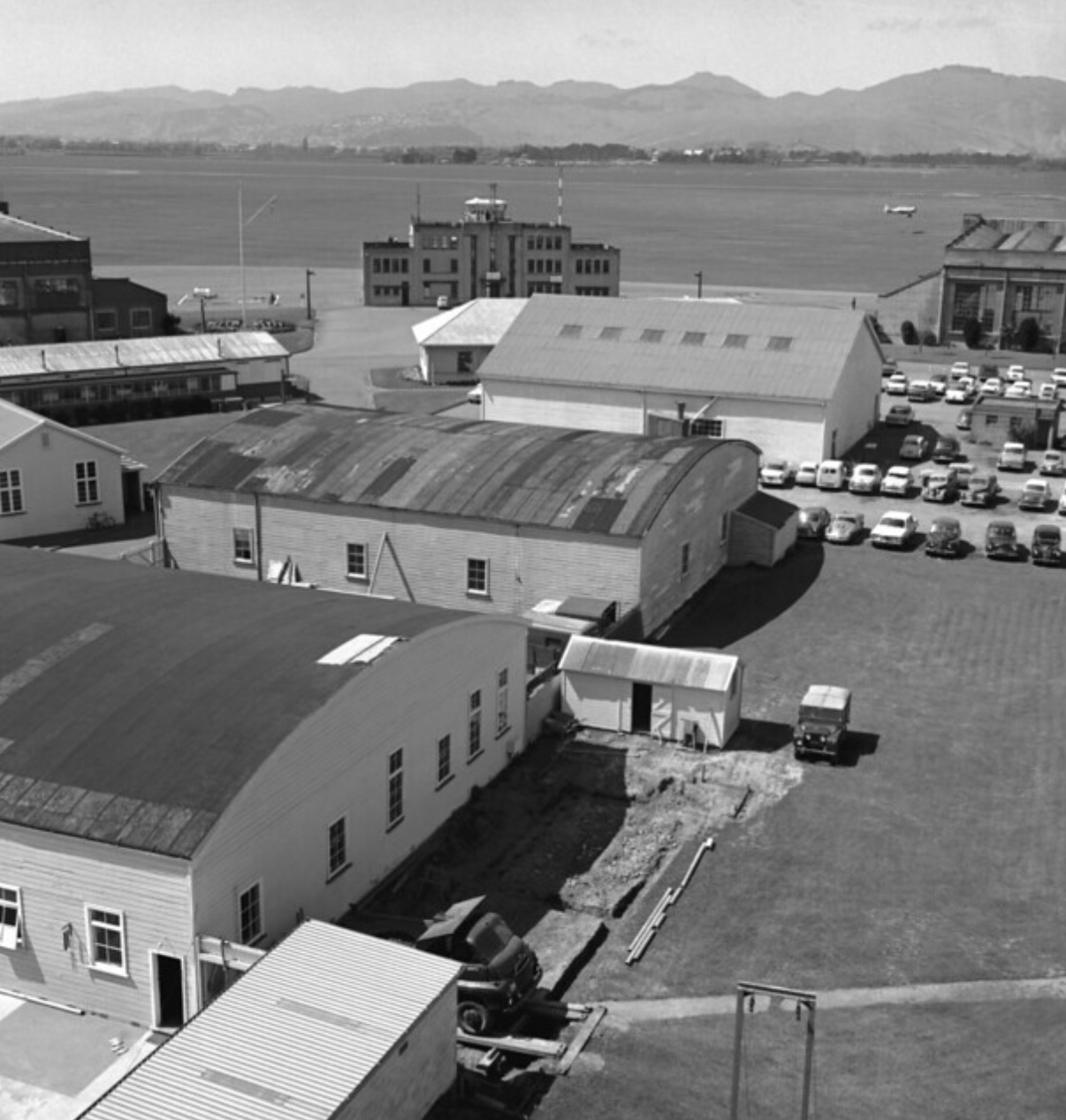
This photograph was taken in October 1968 from the top of the water tower, looking east towards the control tower. Don’t the hangars in the foreground make the control tower building which looms large over Bruce McLaren in our opening shot seem small!
(T Marshall)
Adelaide Ace John Walker – later 1979 Australia GP and Gold Star winner – with Repco-Holden F5000 V8 fuel injected thunder echoing off the hangar walls.
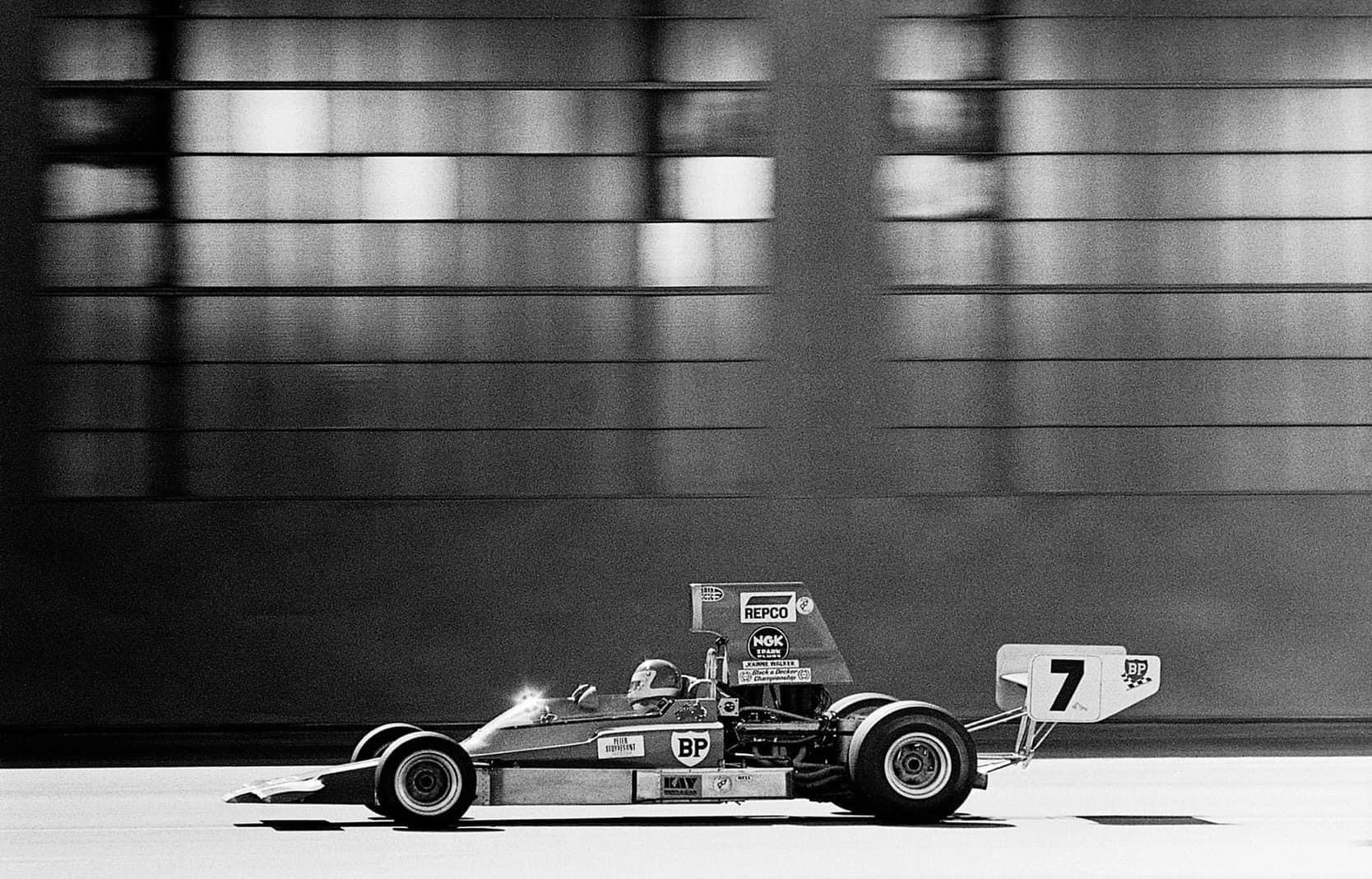
It’s the ’74 Tasman round, the tremendously talented Terry Marshall has captured the perfect profile of JW’s unique Repco-Holden powered Lola T330 with a perfect-pan. His DG300 Hewland was hors d’combat after 20 laps. John McCormack won in another Repco-Holden powered car, Mac’s Elfin MR5 was timed at 188mph on Wigram’s long straight, the two VDS Chevron B24 Chevs of Teddy Pilette and Peter Gethin were second and third.
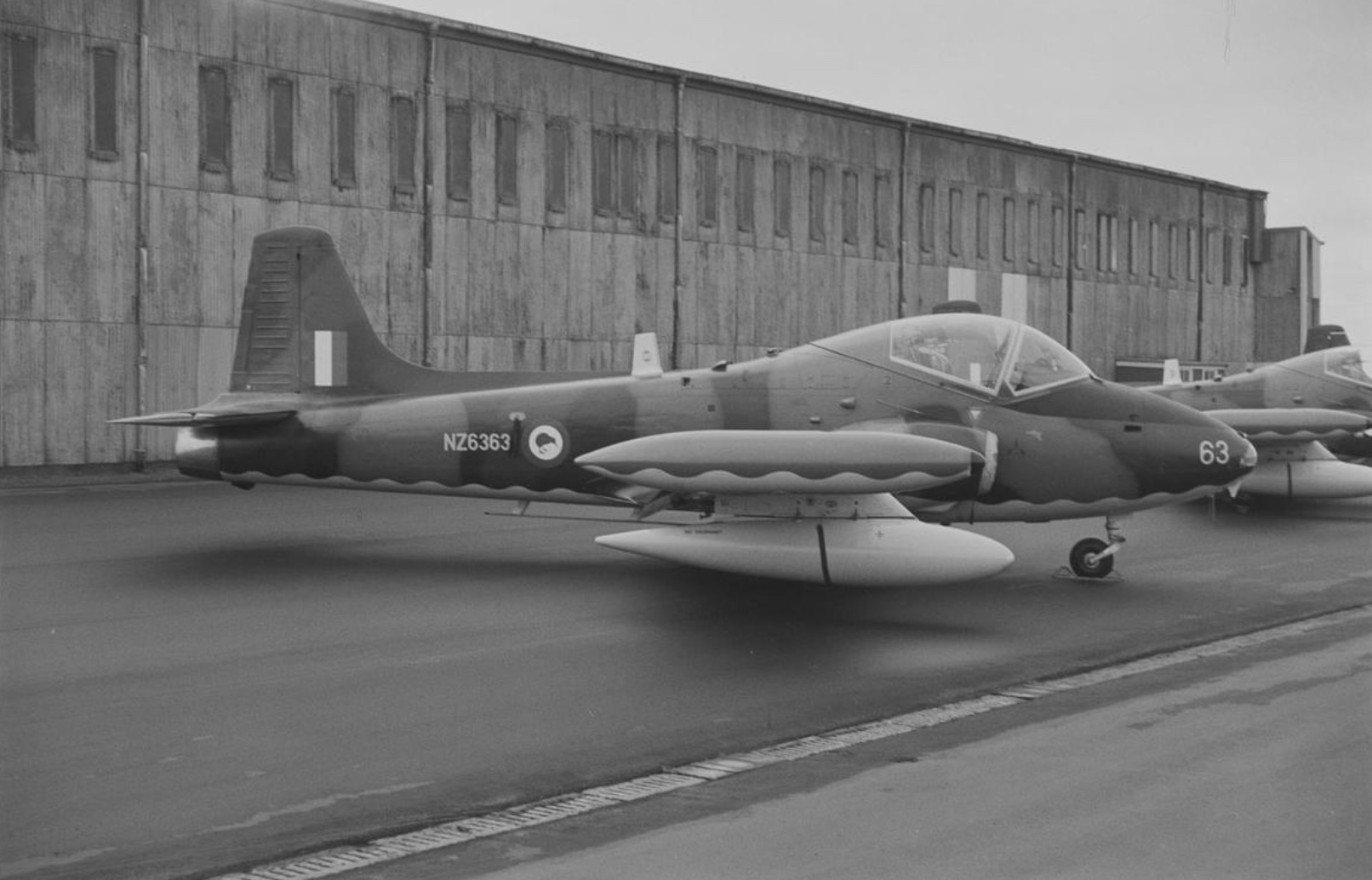
Six months earlier, closeby, this BAC 167 Strikemaster Mk88 was pictured in repose. The jet-powered trainer and light attack machine had bones dating back to the 1950 Percival Provost.
(John Page)
(T Marshall)
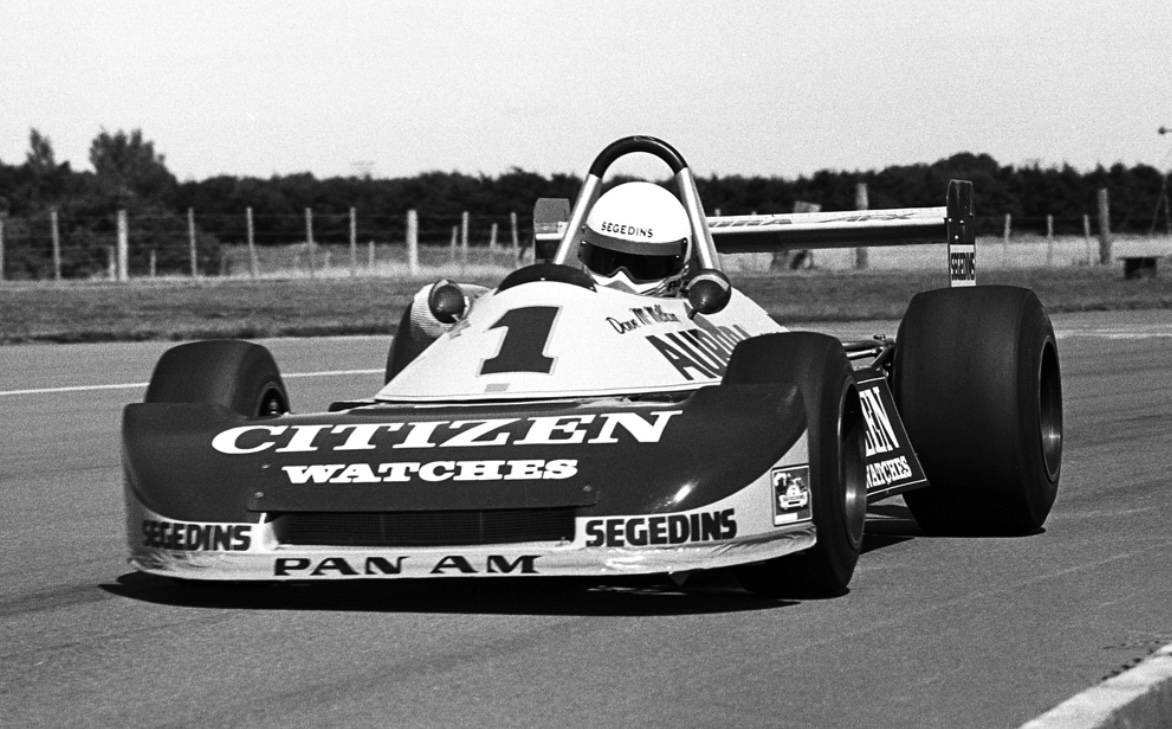
Dave McMillan won two Wigram Trophies on the trot in 1979 and 1980 aboard one of Ron Tauranac’s most successful designs, a Ralt RT1 Ford BDA Formula Atlantic/Pacific.
They were good wins against strong opposition too. He won both races in 1979, in front of Teo Fabi and Larry Perkins in one race, and Fabi and Brett Riley in the other. In 1980 he was in front of Steve Millen, second in both, and Ian Flux and David Oxton in third.
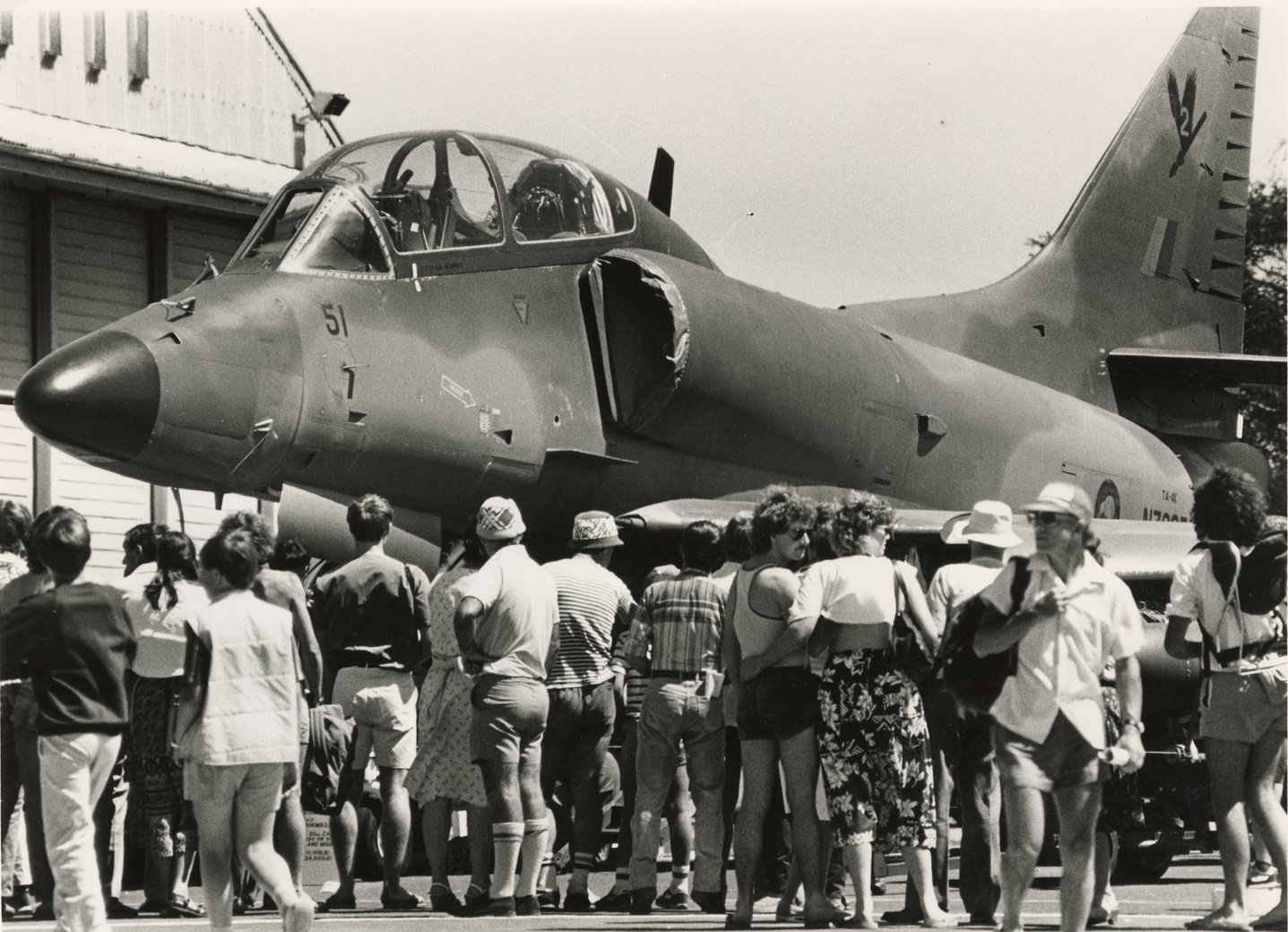
An RNZAF Douglas A-4 Skyhawk single-seat subsonic fighter on display during the Wigram Wings and Wheels Exhibition February 1986 weekend.
(canterburystories.nz)
Credits…
Classic Auto News. The talkmotorsport.co.nz website provided most of the photographs, I’d love to provide credits to the snappers concerned if any of you can oblige. Terry Marshall, John Page, canterburystories.nz, Isabel Tweedy, the Gary Danvers Collection, discoverywall.nz, teara.govt.nz
Tailpieces…
Piers Courage, Brabham BT24 Ford DFW alongside the similarly powered Lotus 49Bs of Graham Hill and Jochen Rindt at Wigram in January 1969.
Chris Amon’s Ferrari Dino 246T is behind Jochen, Frank Gardner, Mildren Alfa V8 behind him.
Perhaps the Tasman Cup high point was 1968 when the field included two works Lotus 49 Ford DFW V8s, Amon’s factory Dino V6, works BRM P261 V8 and P126 V12s, Jack Brabham’s Brabham BT23E Repco, and various other Repco V8 engined cars, Alec Mildren’s Brabham BT23D Alfa V8 and the rest.
Jochen Rindt won the 1969 LWT, it was the great Austrian’s first Team Lotus, ok, Gold Leaf Team Lotus, victory.
He won from Hill and Amon with Chris winning the Tasman that year with four wins in the seven rounds.
(G Danvers Collection)
RNZAF Wigram in 1992 complete with a Tiger Moth and 11 Airtrainers ready to boogie, the wonderful building is still with us, and as a Listed Heritage Place always will be.
The government rationalised their military properties in the 1990’s, in that process RNZAF Wigram was closed in September 1995. Wigram Aerodrome then operated until March 2009 when it was progressively redeveloped for housing. The aviation connection continues though, the Christchurch Air Force Museum is located on the northern side of the old aerodrome.
Bruce, Tyler Alexander and and Alastair Caldwell…a new set of Goodyears for McLaren’s M7A. He put them to good use, qualifying sixth on the fast swoops of Rouen…
I’m drawn to the papaya McLarens thanks to their visual splendour and absolute respect for Bruce the man, engineer, test driver, racer and motivator of men.
He was the full-enchilada with the lot as a package, as well rounded a racer as it’s possible to be.
Here Chris Amon is tootling past him in the pitlane, his fellow Kiwi no doubt hoping the Firestone shod Ferrari 312 will cope with the fast swoops of Rouen better than Bruce’ M7A, a mighty fine design which carried the Ford Cosworth DFV.
I’ve posted a piece on this race before so don’t want to dwell on the awful fiery accident which cost Jo Schlesser’s life early in the event. Jacky Ickx took his first GP win in a Ferrari 312 from John Surtees’ Honda RA301 and Jackie Stewart’s Matra MS10 Ford.
The shot below is Graham Hill’s Lotus 49B Ford in grid slot nine surrounded by other fellas. The flash of blue to his left is Jean Pierre-Beltoise’ V12 powered Matra MS11 (ninth), Surtees Honda, with the blue flash down his white helmet and Chris Amon’s Ferrari, see its distinctive, white, between the Vee exhausts.
1968 was the last time an F1 GP was held at the wonderful 6.542Km road course near Orival and Rouen. The track was used for European F2 Championship races until 1978 and French national events after that, economic forces resulted in its 1994 closure.
Graham Hill talks to the lads about his brand-spankers Lotus 49B, chassis R8 in the Pukekohe pitlane during the 1969 NZ GP weekend…
Maybe he is talking about his car, or perhaps the blistering pace of Jochen Rindt, his new teammate.
While it’s a brand new chassis, the car is fitted with a ZF gearbox rather than the Hewland DG300 which he had been using in his definitive spec F1 49B in late 1968. Both Hill’s R8 and Rindt’s R9 were concoctions of the original 49 and of the subsequent 49B. Type 49 features included the front-mounted oil tank, use of a combined oil/water radiator, original front rocker arms mounted at 90 degrees to the tub rather than swept forward, the ZF gearbox and old style rear suspension mounted to ‘fir-tree’ brackets bolted to the DFV.
The main 49B feature adopted was the use of cutouts in the lower rear part of the tub to locate the lower rear radius arms. The cars used high-wings mounted atop the uprights in the same style first used on Jackie Oliver’s R2, and used the wing-feathering mechanism pioneered in Mexico at the end of 1968.
There was enormous excitement in Australasia prior to the 1968 Tasman when the quickest cars of the 1967 F1 season, Lotus 49s powered by the 2.5-litre short stroke DFW variant of the F1 3-litre Ford Cosworth DFV were raced by Jim Clark and Graham Hill; chassis’ R2 and R1 respectively.
Jim Clark won the Tasman Cup, his last championship, and the Australian Grand Prix at Sandown, his last GP win before his untimely death at Hockenheim on April 7, 1968.
While there was huge enthusiasm for Graham Hill and Jochen Rindt, the absence of Clark tugged at the hearts of enthusiasts, Jim was such a popular visitor to our part of the world, his first tour was in 1962.
Rindt finally had a car with the speed and occasional reliability – he was hard on it mind you – to post the results he deserved. His first GP win came at Watkins Glen late in 1969, but he perished less than twelve months later at the wheel of a Lotus 72 during practice for the Italian Grand Prix.
Graham Hill did a sensational job in picking up Team Lotus lock-stock-and-barrel after Clark’s death. He filled the leadership void until Colin Chapman clicked back into gear after mourning Clark’s loss. Graham would have a tough season in 1969, Rindt’s pace was apparent from his first laps at Pukekohe and at Watkins Glen Hill he had the bad accident which hospitalised him for months.
Team Lotus built two new cars for the ’69 Tasman assault; 49Bs R8 – a new chassis – for Hill, and R9 – the prototype R1 rebuilt – for Rindt which were identical in specifications.
NZ GP Pukekohe 1969, the off. From left Amon with Bell right behind then Leo Geoghegan’s white Lotus 39 Repco, Hill’s Lotus a row back, then Jochen up front alongside Chris and Piers at right in the Williams Brabham BT24 Ford Gardner, Mildren ‘Yellow Submarine’ Alfa, Hill, Rindt in the Wigram dummy grid in 1969 (CAN)
Chris Amon mounted a very successful 1969 Tasman campaign using the learnings of the prior year. He had Bruce Wilson as lead mechanic again, and an additional car to be raced by Derek Bell with a strict rev limit given the small float of engines available between two cars. Logistics were taken care of by David McKay’s (Sydney) Scuderia Veloce outfit.
Chris opened his account with intent, he won the first two races at Pukekohe on January 4 and at Levin the week later. Jochen was second in the NZ GP whereas Graham had two DNFs, a front suspension ball-joint failed after completing 13 laps in the first race, and driveshaft failure at Levin, this time on lap 12 when running in third place from grid five.
Jochen came to grief at Levin, he spun on lap four whilst leading, and then repeated the mistake two laps later but in more costly fashion, rolling the car atop a safety embankment. Jochen was ok but R9 was rooted, too badly damaged to be repaired away from home base. 49B R10 was despatched to the colonies, much to Hill’s chagrin. It was the first of many Lotus accidents and component failures for the Austrian during the next twenty months, not that the cause of this shunt was the fault of the car.
The ferry trip to the South Island brought better fortune. Hill and R8 finished second in the Lady Wigram Trophy race on the Royal New Zealand Airforce Base outside Christchurch on January 18, but Jochen made good use of his new car from pole setting fastest lap and race time. Jochen was 34 seconds in front of Graham, with Chris Amon another four seconds behind Graham, then Piers Courage another six seconds back in Frank Williams’ Brabham BT24 Ford DFW.
The following weekend Graham was second again at Teretonga near Invercargill, the world’s most southerly racetrack, the winner this time was Courage. This time it was Jochen’s turn for driveshaft failure, interesting given the DFW gave circa 50bhp less than the DFV, with Chris Amon third and looking good for the title as the circus crossed the Tasman Sea for three Australian rounds.
Graham blasting through the Teretonga scrub country. Note the long exhausts of the 2.5 DFW, look how flimsy the wing supports look, and were- Chapman at his worst. Note – look hard – the Lotus aero-screen (LAT) Early laps at Levin. Piers Courage in a Lotus sandwich, Hill in front with Jochen aboard the ill-fated R9 in third (LAT) The off at Wigram. Courage, Brabham BT24 Ford and then Graham with Jochen on pole in Lotus 49Bs. Amon behind Jochen, the light coloured car behind Chris is Gardner’s Mildren Alfa V8 (T Marshall)
First stop was on February 2, 1969, at Lakeside, Brisbane, for the Australian Grand Prix.
Graham finished fourth in R8, while Jochen’s R10 had engine failure. Both cars had wing mount failures- Chapman’s In-God-We-Trust engineering of these things was cavalier for so long it is a joke. Only Jochen’s celebrated Come-To-Jesus (whilst I am on religious metaphors) letter after the collisions inflicted upon Rindt and Hill at Montjuic Parc in early 1969 gave Our Col pause to consider his desire to attend another driver funeral.
GLTL then headed south to Sydney for the Warwick Farm 100, basing themselves at the Brothers Geoghegan emporium of fine sportscars in Haberfield, a stones-throw from the Farm at Liverpool.
While practice was dry, Rindt massacred the lap record, then drove away from the field during the race in a mesmeric display of wet weather feel, bravado, pace and dominance winning at a reduced canter by 45 seconds from Derek Bell’s Dino and Frank Gardner’s Alec Mildren Mildren Alfa Romeo 2.5 V8.
Poor Graham’s R8 snap-crackle-‘n-popped its way around the technically demanding course with his ignition very much rain affected. Chris and Piers tangled early in the race which gave the Kiwi sufficient points to win the Tasman Cup.
Hill aboard R8 with Rindt in R10 in the Sandown pitlane, February 1969. Note the open bonnets, spoiler atop the nose of Graham’s (I Smith)
The final round of the Championship took place at Melbourne’s Sandown Park on February 16.
There Chris drove a wonderful race to win by seven seconds from Jochen with Jack Brabham third in the Brabham BT31 Repco 830 2.5 V8, in Jack’s one off 1969 Tasman race, with Gardner fourth, Bell fifth and then Graham sixth, three laps adrift of Amon.
Jochen’s R10 was airfreighted home to the UK, it was required in F1, whereas R8 returned by ship. In the Spanish Grand Prix both high-winged Lotus 49Bs of Rindt and Hill were very badly damaged in separate accidents triggered by rear wing strut failure over the same high-speed brow on Barcelona’s Montjuic Park circuit- as mentioned earlier. See article here; ‘Wings Clipped’: Lotus 49: Monaco Grand Prix 1969… | primotipo…
While Graham wasn’t hurt, Jochen was severely concussed and was unable to drive at on May 18. Team Lotus lacked a car to replace Rindt’s R9, the chassis of which was consigned to a rubbish skip at Hethel. As a consequence, R8 was rushed off the ship from Australia, fitted with a 3-litre DFV, 1969 roll-over hoop, and fire extinguisher system before being taken to Monte Carlo for substitute driver, Richard Attwood to race.
He had shone in a BRM P126 the year before, setting fastest lap and finishing a strong second behind Graham Hill’s winning Lotus 49B R5.
At Monaco driving R8 with minimal preparation after seven hard races in the Tasman Cup, Attwood finished a fine fourth and set fastest lap in the race again won by Hill aboard 49B R10. With Jo Siffert third in Rob Walker’s Lotus 49B (R7) three of these wonderful cars were in the top four, the only interloper was Piers Courage splendid second place aboard Frank Williams’ Brabham BT26 Ford.
Richard Attwood in h-winged R8 during Friday practice at Monaco in 1969- after the wing ban the car raced denuded of same (R Schlegelmilch) Attwood, Monaco, race day, fourth place- wonderful result having not parked his arse in the car before practice (unattributed)
Back at Hethel R8 was altered to latest 49B specifications and raced by Hill, nursing a sick neck to seventh in the 1969 British Grand Prix, at Silverstone on July 19.
Meanwhile, Colin Chapman’s four wheel drive Type 63, the proposed Type 49 replacement, struggled to find pace and the support of its drivers, as did the other 4WDs fielded by Matra, McLaren and Cosworth.
Given the choice, World Champion Hill, and Fastest Guy On The Planet Rindt, preferred the conventional rear-drive 49B. To prevent them having the choice Chapman decided to sell Team’s 49s, R8 went to Swedish journeyman owner/driver Joakim Bonnier.
He raced it in the German Grand Prix in August, DNF fuel leak. Jo crashed it after front suspension failure during practice for the non-championship Oulton Park Gold Cup on August 16. Out of love with the car, the damage was repaired at Hethel prior to sale to Dave Charlton for South African national F1 racing in 1970.
Jo Bonnier returning to terra firma, R8, Nurburgring 1969 German GP. (unattributed) Dave Charlton with R8, now in 49C specifications, during the 1971 Highfeld 100 (N Kelderman)
Charlton used R8 to win the first two of his six consecutive South African national Formula 1 Championship titles between 1970-75.
The car won nine rounds in 1970; the Highveld 100 at Kyalami, the Coronation 100 at Roy Hesketh, followed by the Natal Winter Trophy there, the Coupe Gouvernador Generale at Lourenco Marques, Rand Winter Trophy at Kyalami, False Bay 100 at Killarney, Rhodesian GP at Bulawayo, Rand Spring Trophy at Kyalami and the Goldfields 100 at Welkom.
In 1971 the Charlton/R8 combination won four events of six he contested before switching to a Lotus 72; the Highveld 100 at Kyalami, Coronation 100 at Hesketh, Bulawayo 100, and the South African Republic Festival race back at Kyalami.
R8 was then campaigned to the end of 1972 by South African drivers Piet de Klerk and Mayer Botha. Botha damaged the left side of the tub badly at Killarney in August. Sydney’s The Hon. John Dawson-Damer bought the damaged, dismantled car in late 1975, painstakingly restoring it with the assistance of Alan Standfield.
It was completed in 1982 and was a regular in Australian historic racing, driven by John, Colin Bond and John Smith, until DD’s sad death aboard his Lotus 63 Ford during the Goodwood Festival of Speed in 2000. Adrian Newey now owns it.
Dave Charlton in his Scuderia Scribante Lotus 49C Ford during the 1970 South African GP at Kyalami. DNF 73 laps, classified 12th (unattributed)
Credits…
Terry Marshall, LAT, MotorSport, Rainer Schlegelmilch, Nico Kelderman, Ian Smith, oldracingcars.com, ‘Lotus 49: The Story of a Legend’ Michael Oliver
Tailpiece…
(unattributed)
Graham Hill’s R8 butt at Warwick Farm on February 18.
The Brit contemplates a soggy, humid day in the office to be made worse by a misfiring engine and Rindt’s masterful brio behind the wheel of the other Lotus.
The car has the same pissant wing supports as it had at Pukekohe seven weeks before, but note the Hewland DG300 transaxle rather than the ZF unit used at the Tasman’s outset, a fitment which contradicts the history books…
I think the car Brockbank had in mind with this beauty is Graham Hill/Guy Edwards’ 1974 F1 Lola T370 Ford.
It wasn’t the only car that season to stretch the envelope in terms of airbox design. I’m not so sure about the aero advantages but the size of the mobile billboard is of course considerably advanced, that must have filled Embassy with joy, even if the race results did not.
Lola fetishests will know the F5000 T330/332 donated some of its DNA to its F1 brother while the look of the car is very much like the ‘75 F5000 T400 – with the long-lived T332 the pick of the bunch.
(Lola Heritage)
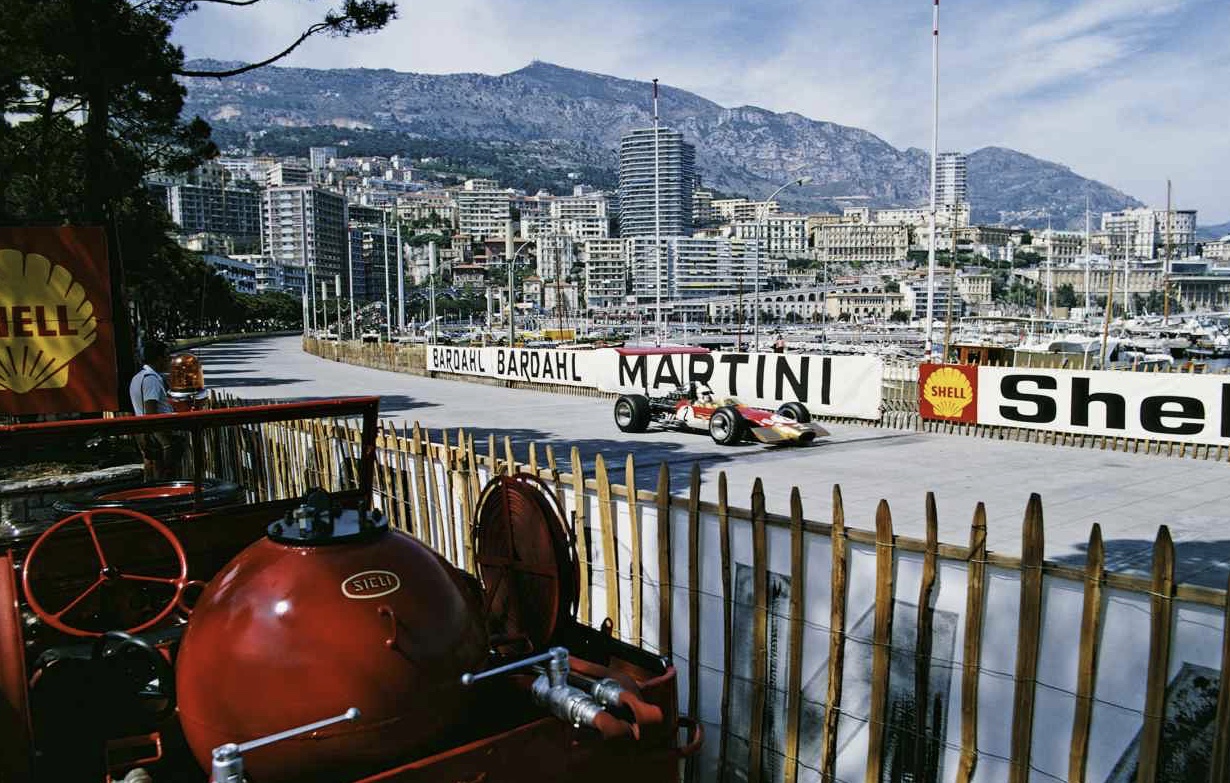
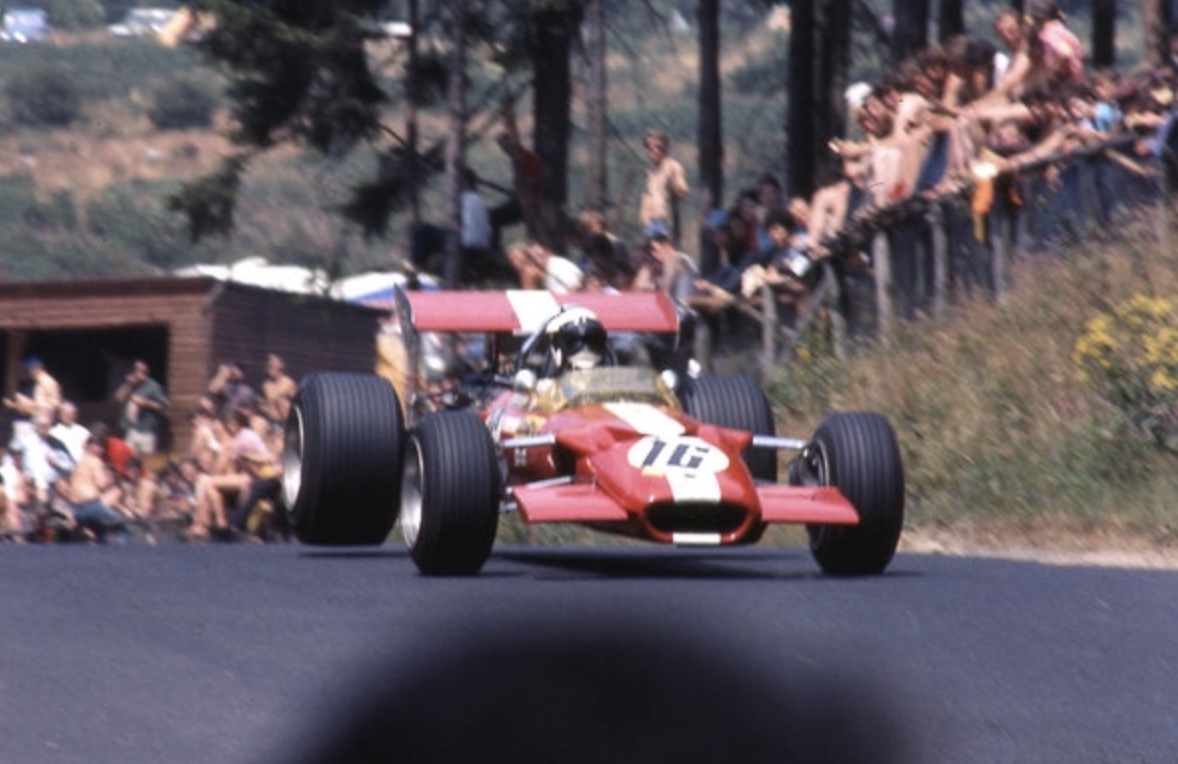
Checkout the details of the car in the Lola Heritage site – worth an extended visit; Lola Heritage These shots are all from that site, what is lacking are captions identifying the circuits…














 primotipo...