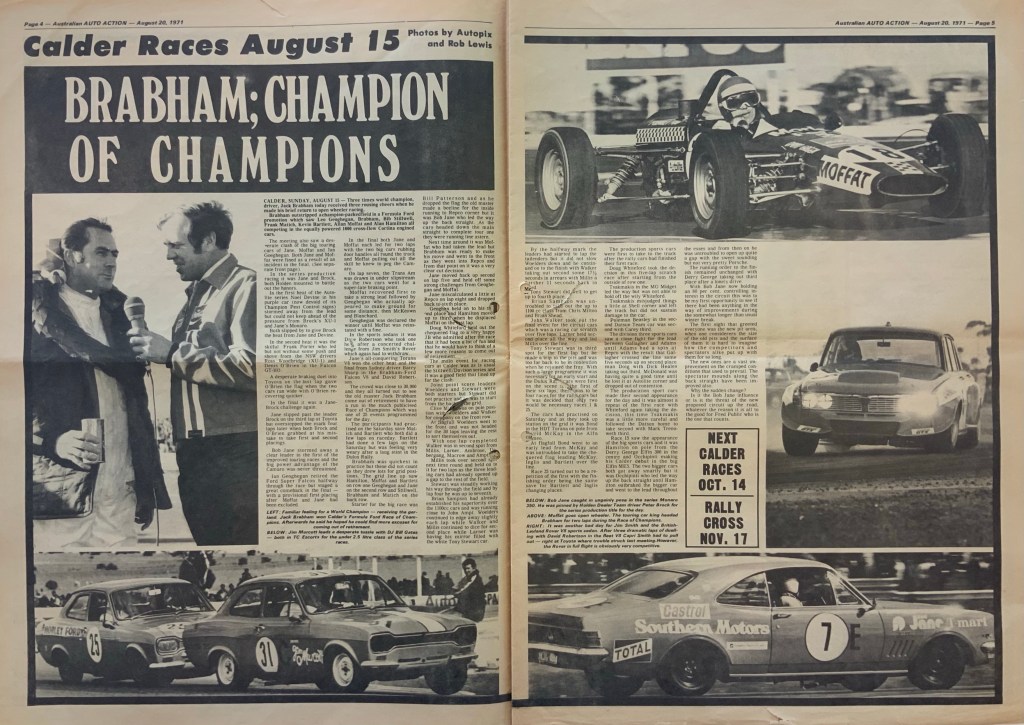
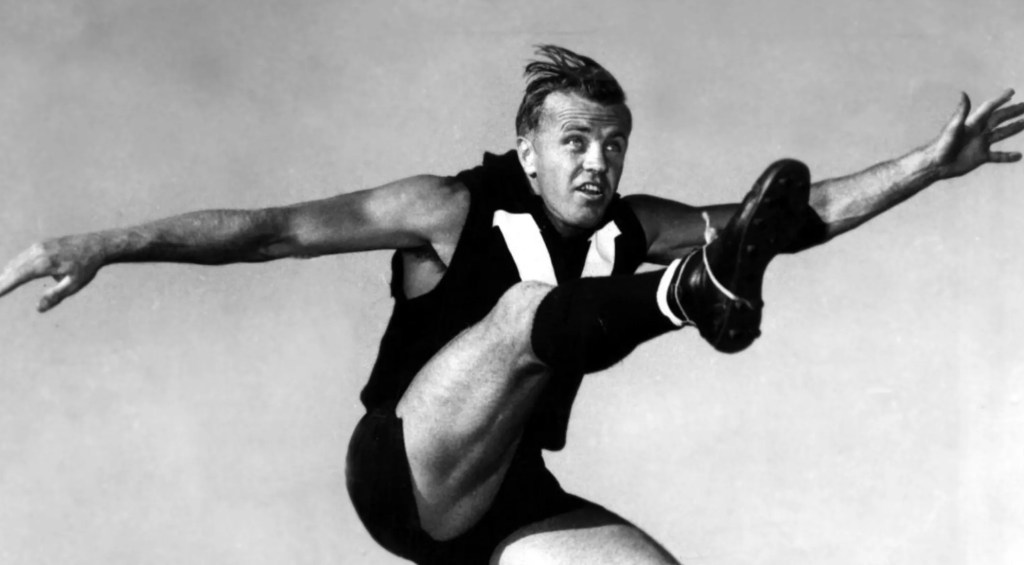
The sight of Teddy Whitten interviewing Black Jack on the victory dais gave me a chuckle. Whitten (RIP) is a legendary Melburnian, one of our most decorated of all VFL/AFL footballers. While he had the gift-of-the-gab, his motor racing knowledge could fit easily on a postage stamp so his banter with Jack for the punters at the circuit and on Channel Seven would have been amusing.
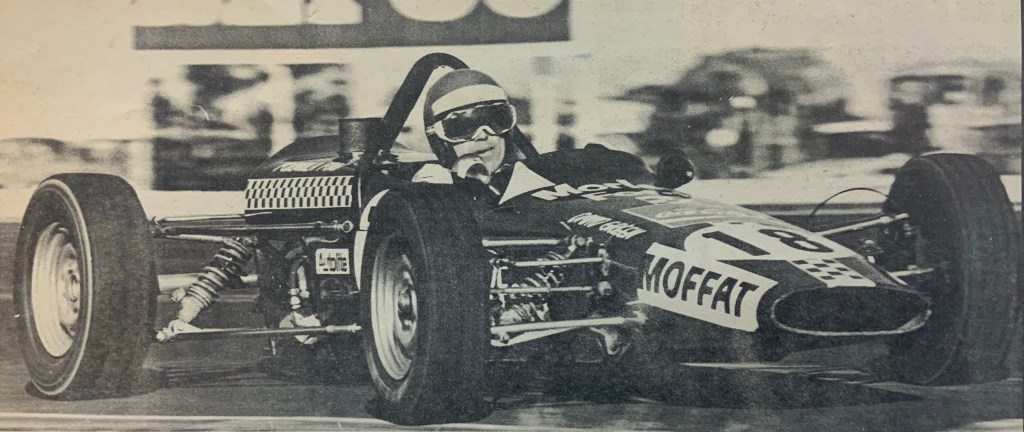
He enjoyed the Formula Ford foray, brief as it was, commenting in his Auto Action column; “My car – Morley Ford Wren went like a charm. I enjoyed the change in handling and the beautiful response you get. There’s no doubt that these cars teach you quickly and teach you well.”
“Sitting out there in the open with the front wheels bobbing a few inches away and the track disappearing alongside is a really thrilling experience. Formula Ford just has to be the way for the young drivers,” was great endorsement from Moff during FF’s second full season in Oz.
If those who would change FF fuck-off and leave things well alone we should have the category for another 50-years. When it ain’t broke don’t fix it.
Credits…
Auto Action, Sydney Morning Herald
Tailpiece…
(SMH)
The great EJ Whitten, wearing his beloved Big V, Victorian state side jumper, during training for a state carnival game in 1963.
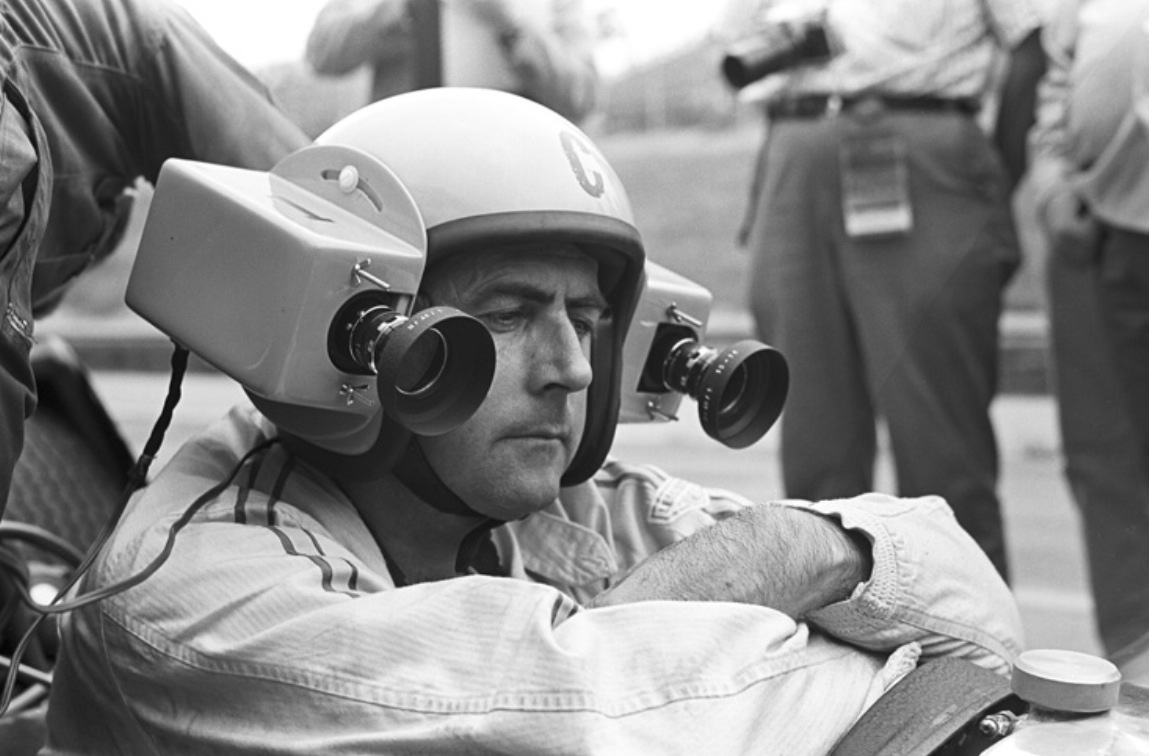
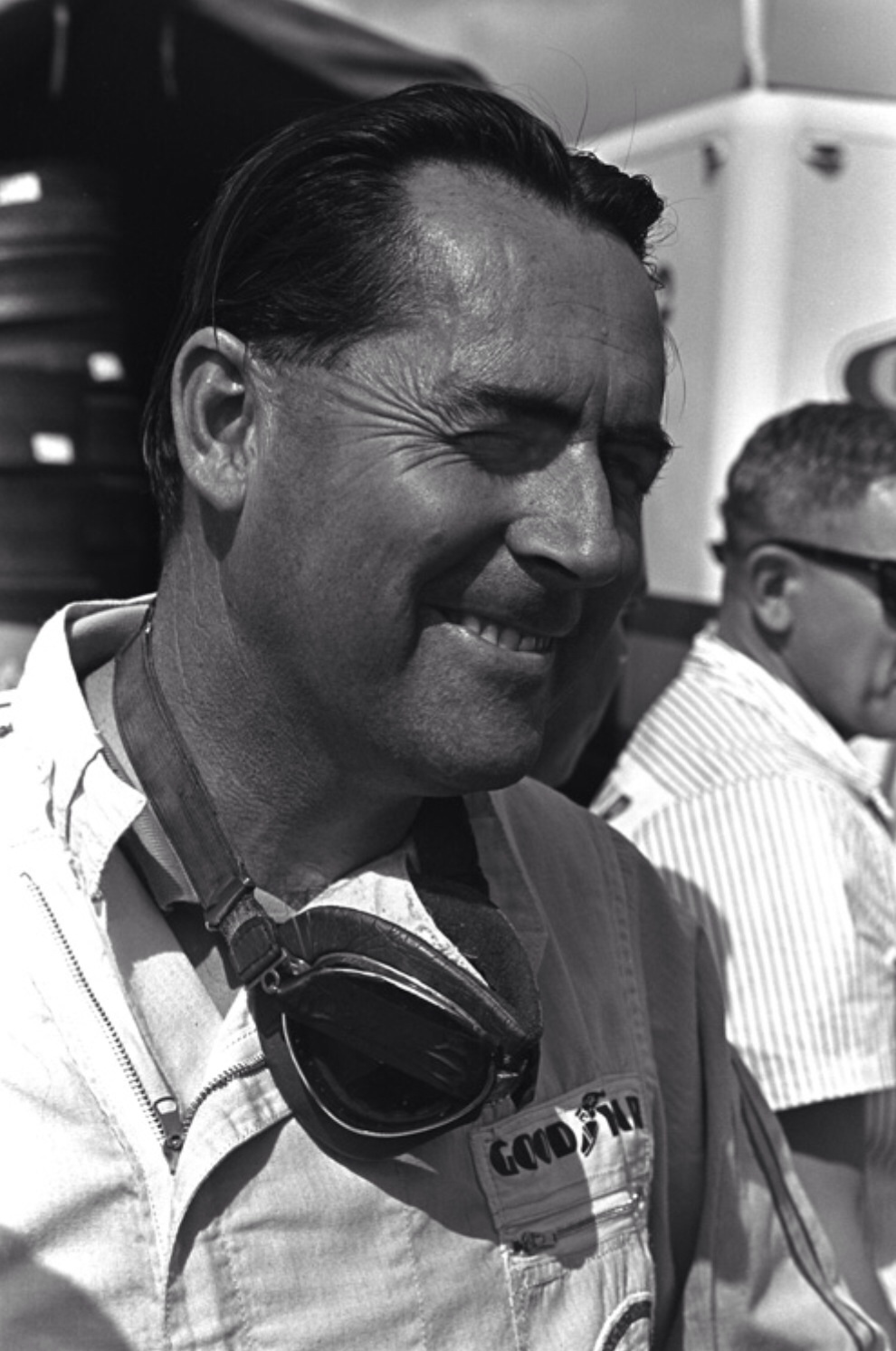
Ya gotta be kiddin’ blokes! This thing is rattling my teeth!
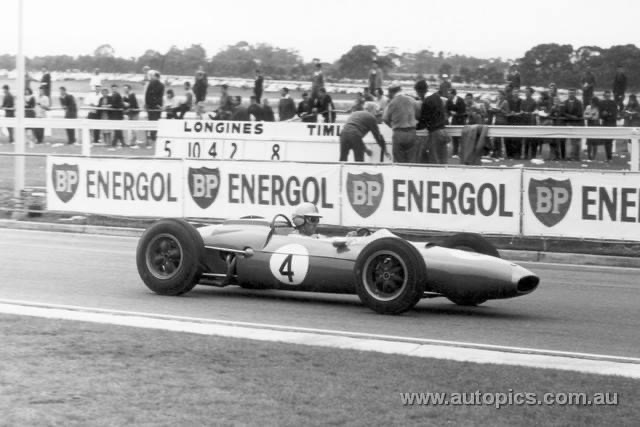
Is the look on Jack Brabham’s face aboard his Brabham BT24 Repco in the Mosport pitlane. By the end of the weekend he was a happy-chappy as winner of the first, soggy, 1967 F1 Canadian GP…
These days every Tom, Dick and Harold has a little, lightweight GoPro to capture their every move aboard their kart, board, bike, girlfriend or racer. It was a whole different ballgame in 1967, the state of the art was somewhat more cumbersome.
The interesting thing is where the footage ended up? Perhaps it was quickly consumed by the local TV news audience. I’ve had a fossick on that YouTube thingy but cannot find anything, do let us know the link if you discover its whereabouts.
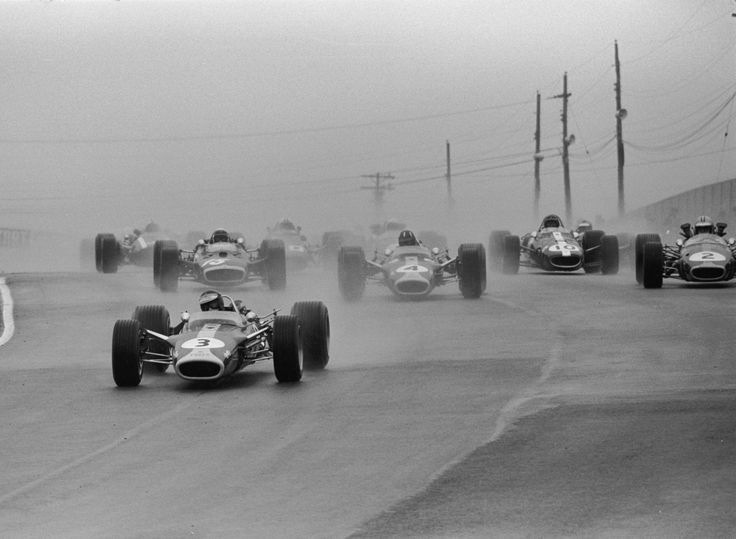
Jim Clark and Graham Hill were quickest in qualifying aboard Lotus 49 Fords from Chris Amon, Ferrari 312, Dan Gurney, Eagle Mk1 Weslake, Bruce McLaren, McLaren M5A BRM V12, Brabham’s BT24 Repco and Jochen Rindt, Cooper T81 Maserati.
Into the first turn at Mosport its Clark Lotus 49, from L>R Stewart BRM P83, Hill Lotus 49, Gurney Mk1 Eagle and Hulme Brabham BT24. That’s Rindt far left Cooper T81, Amon’s Ferrari 312 is in the murk behind Stewart’s left rear and the rest (unattributed)
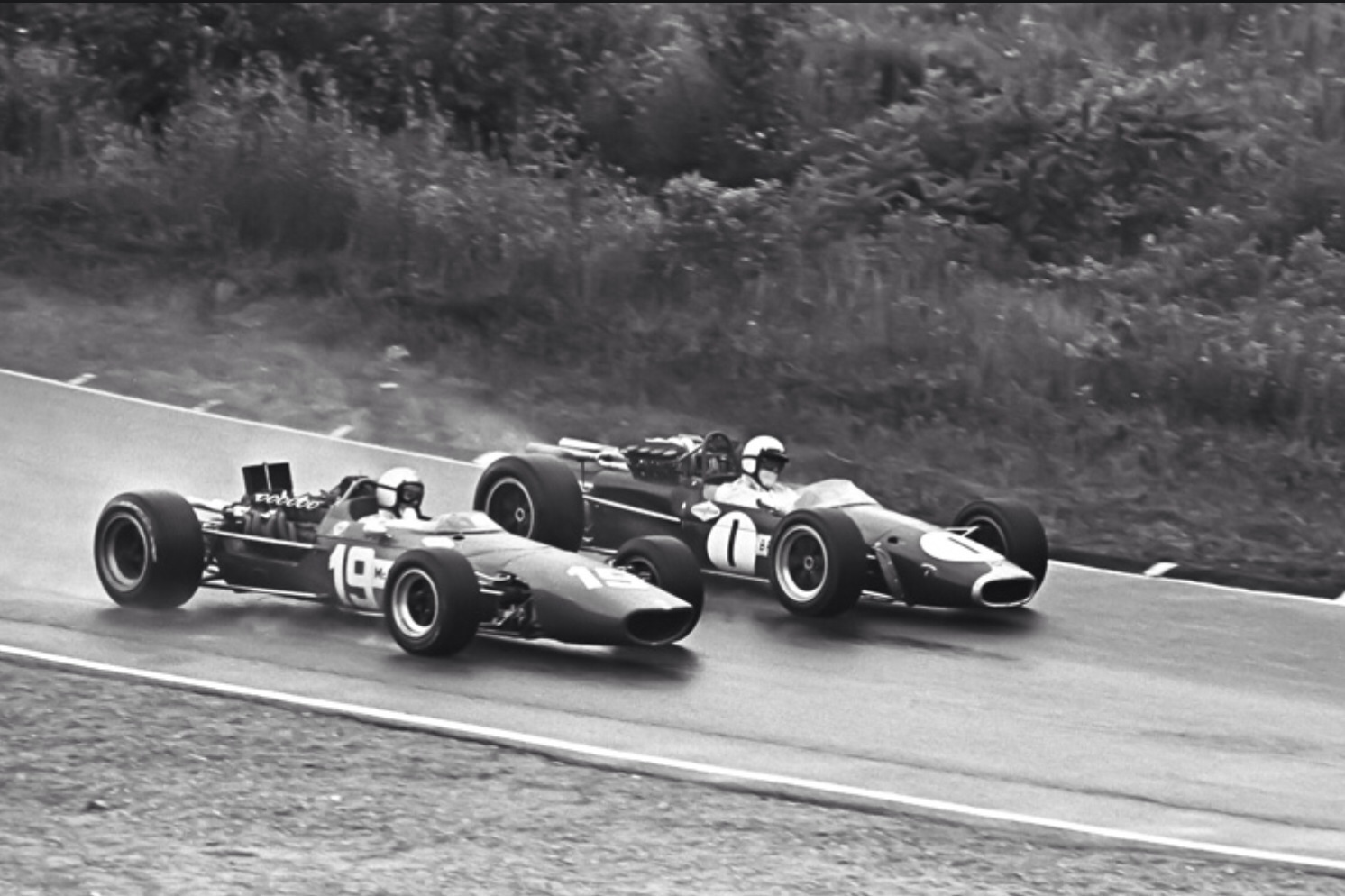
Rain fell before the race to make things interesting. Clark led from Hulme, who took the lead on lap four, with Jack passing Hill for third. I rather fancy driving the Brabham, with its nice flat, fat torque curve rather than the DFV engined Lotus with its very abrupt power delivery in its earliest days in these conditions.
Bruce McLaren worked his way up thrugh the field, taking Jacks third place, then on lap 22 he took Clark’s second too. Clearly the conditions suited the V12 BRM engined McLaren. As the track dried, Jim and Jack both passed Bruce. Denny was still happily in the lead but Clark’s Lotus was quicker in the dry conditions and soon led, it rained again. Clark kept the lead but then his DFV went kaput. Jack overtook Denny at about the same time and won from Hulme with Gurney a distant third.
At the end of the meeting Denny had a nine point lead in the drivers championship over Jack, but with three GP’s to go; Italy, the US and Mexico City it was well and truly game-on between the buddies and teammates.
Jack is on the drying line in BT24 so I think its him re-taking McLaren’s M5B third place, rather than Bruce taking Jack earlier on (R Laymon)
Jack was out-fumbled by John Surtees’ Honda RA300 on the last lap, last corner at Monza with Hulme retiring due to overheating early in the race. At Watkins Glen Clark’s Lotus 49 Ford won from Hill’s with Denny third and Jack a distant fourth. Denny then led the championship from Jack by five points before the final round. It was all down to Mexico where Clark won from Brabham and Hulme. Denny bagged the title from Jack – 51 points to 48 points and Jim third on 41.
The car of the year was undoubtedly the new Lotus 49 Ford in terms of outright speed, but the less powerful, not much slower and more reliable new Brabham BT24 chassis with its new Repco Brabham 740 Series V8 should never be forgotten in the shadow of the sexy Lotus 49, as it always is! It did win the Manufacturers Championship after all.
Credits…
Ron Laymon Photography
Tailpiece: Winners are Grinners and Jack had a smile which lit a room. Mosport 1967…
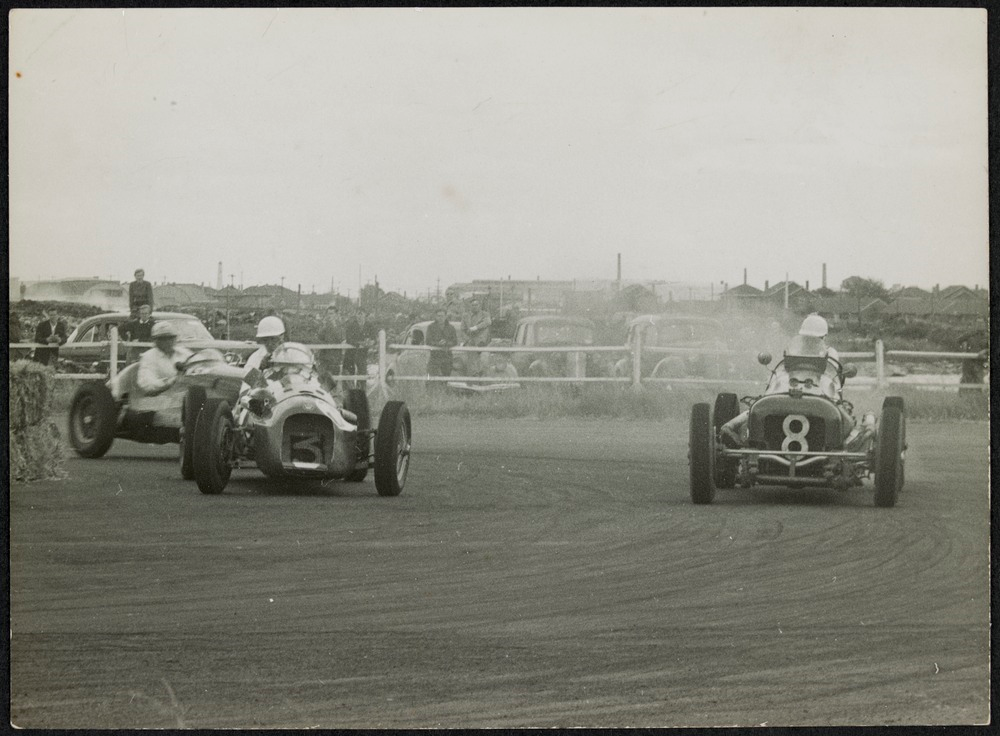
Stan Jones wins the 1954 Victoria Trophy at Fishermans Bend in his shortlived, brand new Maybach 2, 21 March 1954…
Regular readers may recall the feature on Stan, Alan’s dad and a champion in his own right a while back. There are not many photos of Maybach 2 as it was only raced briefly before Stanley comprehensively destroyed it after a chassis weld failure, at the ’54 AGP at Southport on Queensland’s Gold Coast.
Jones raced Maybach 2 at Easter Bathurst, then Altona, Victoria on May 2 and at Fishermans Bend in October before that fateful November weekend. Still, he was lucky not to lose his life in the high speed trip backwards through the Southport scrub and trees.
The beauty of these online blogs is that you can continually update them as you find new shots, this set are so good I thought it worth a fresh post.
Davison in his new HWM Jag (VHRR Archive)
Maybach wasn’t ready for the Victoria Trophy preliminary on Saturday, but contested the 64 mile feature eventon the airfield circuit in Melbourne’s inner west.
He took the lead from Lex Davison’s HWM Jaguar before the first corner. Davos’ original intention was to fit the HWM with the engine from his Alfa Romeo P3, the complexities of that undertaking with the straight-eight, supercharged engines central power take-off were immense! He therefore fitted the HWM with a Jaguar engine topped by a C-Type head, the car was victorious at Southport in November winning the first of Davison’s four AGPs.
It was Jones’ Victorian Trophy though, he lapped the field, leading Jack Brabham’s Cooper T23 Bristol over the line by three miles.
Davison #3 HWM Jag, Ted Gray #8 Alta Ford V8 and Brabham’s obscured Cooper T23 Bristol. Fishermans Bend 1954 (VHRR Archive)
Arthur Wylie in the Wylie Javelin ahead of Brabham’s Cooper Bristol. Victorian Trophy 1954 (VHRR Archive)
Silvio Massola’s HRG, Fishermans Bend 1954 (unattributed)
Etcetera…
(The Age)
Stan won in 1953 too.
Here he is, two happy chaps Ern Seeliger at left, again at Fishos, on this occasion Ern had prepared Maybach. But he was also a racer as well as an engineer, famously adapting Maybach 3 to accept a Chev V8 creating, you guessed it, Maybach 4.
A very talented man, little has been written about him and the products of his Richmond workshop, a great future topic.
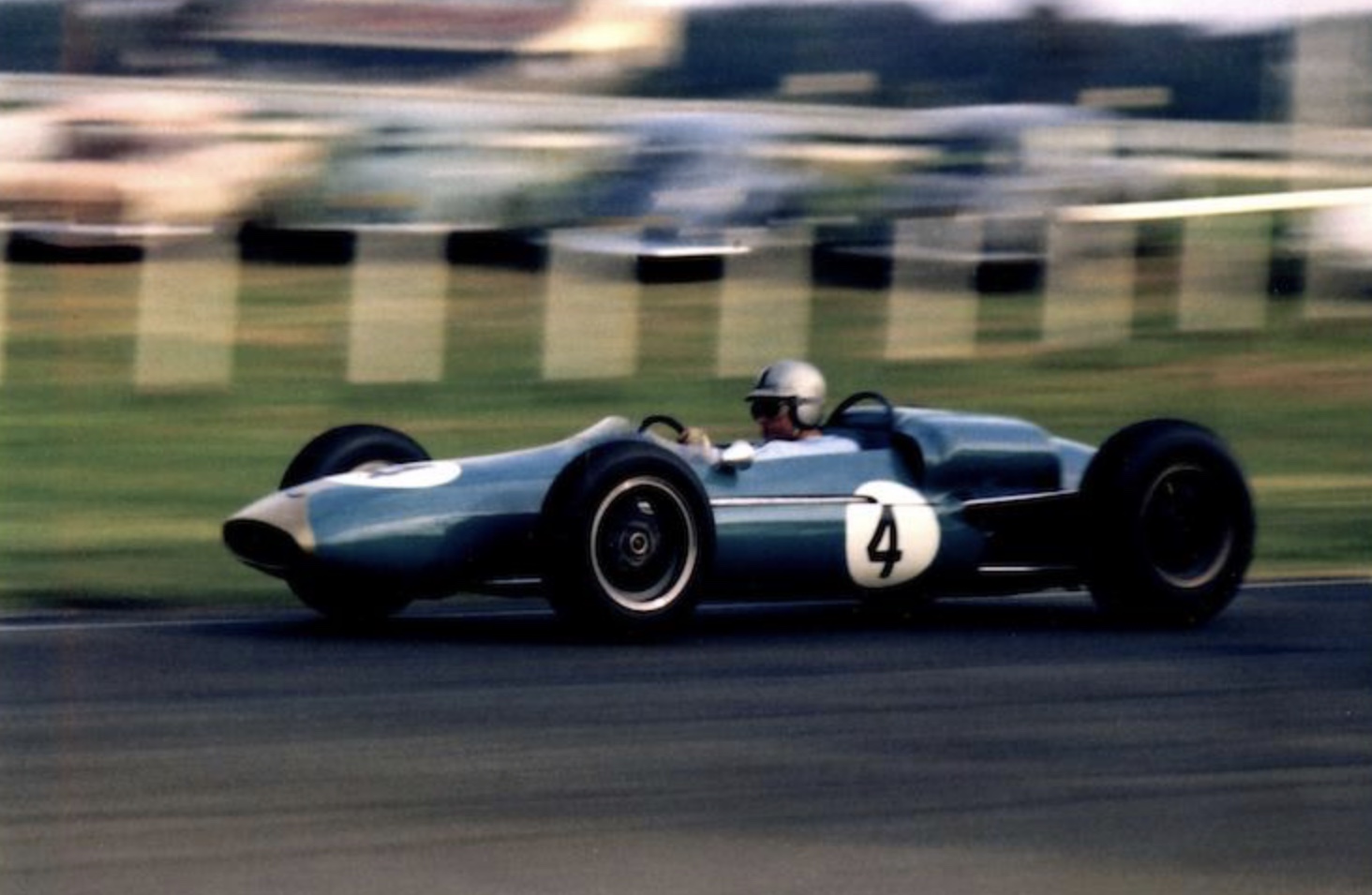
Jack Brabham, Brabham BT4 Climax, Warwick Farm 1963 (J Ellacott)
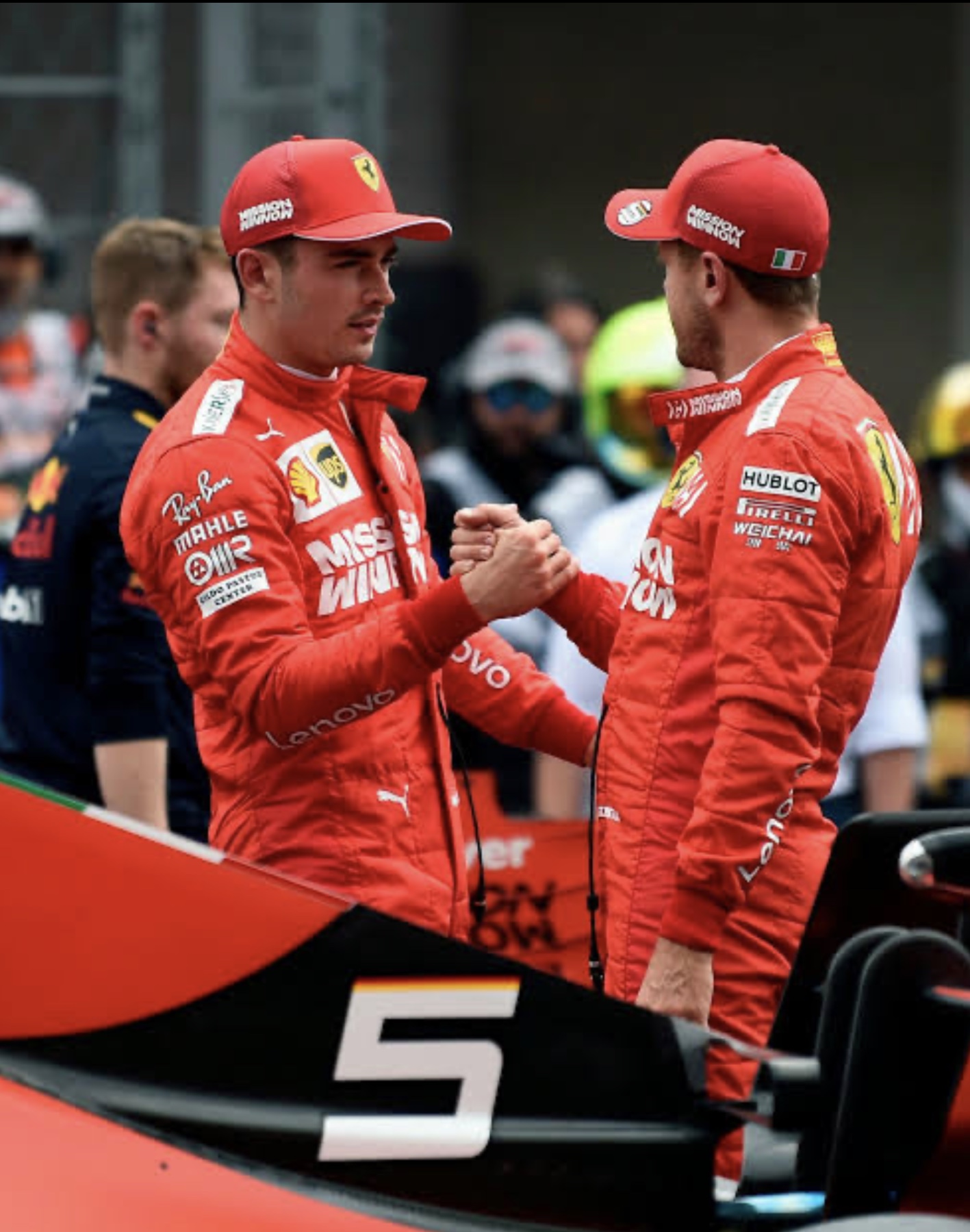
The airwaves were abuzz last year with the news of Sebastian Vettel’s departure from Ferrari.
It seems only yesterday he was the ‘enfant terrible’ giving Mark Webber plenty of stick, a decade or so later, the worm turned for him in the form of Monsieur de Clerc.
Still Seb has been on a motza for a decade or so, resort islands are cheap in the post Covid 19 world, back in ‘the good ole’ days’ the commerce of motor racing was a tad tougher.
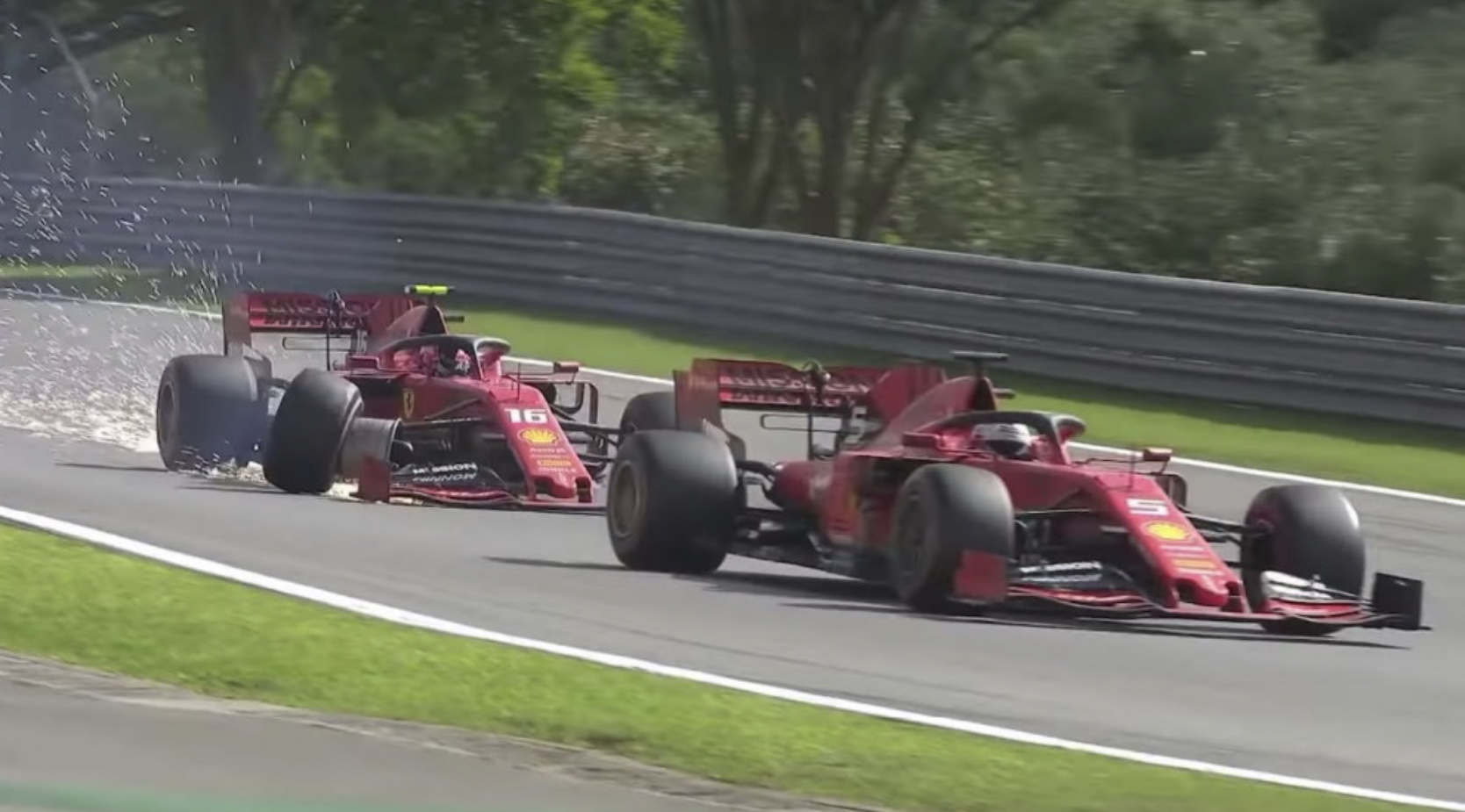
(New York Times) Vettel and Leclerc after a territorial dispute in Brazil 2019
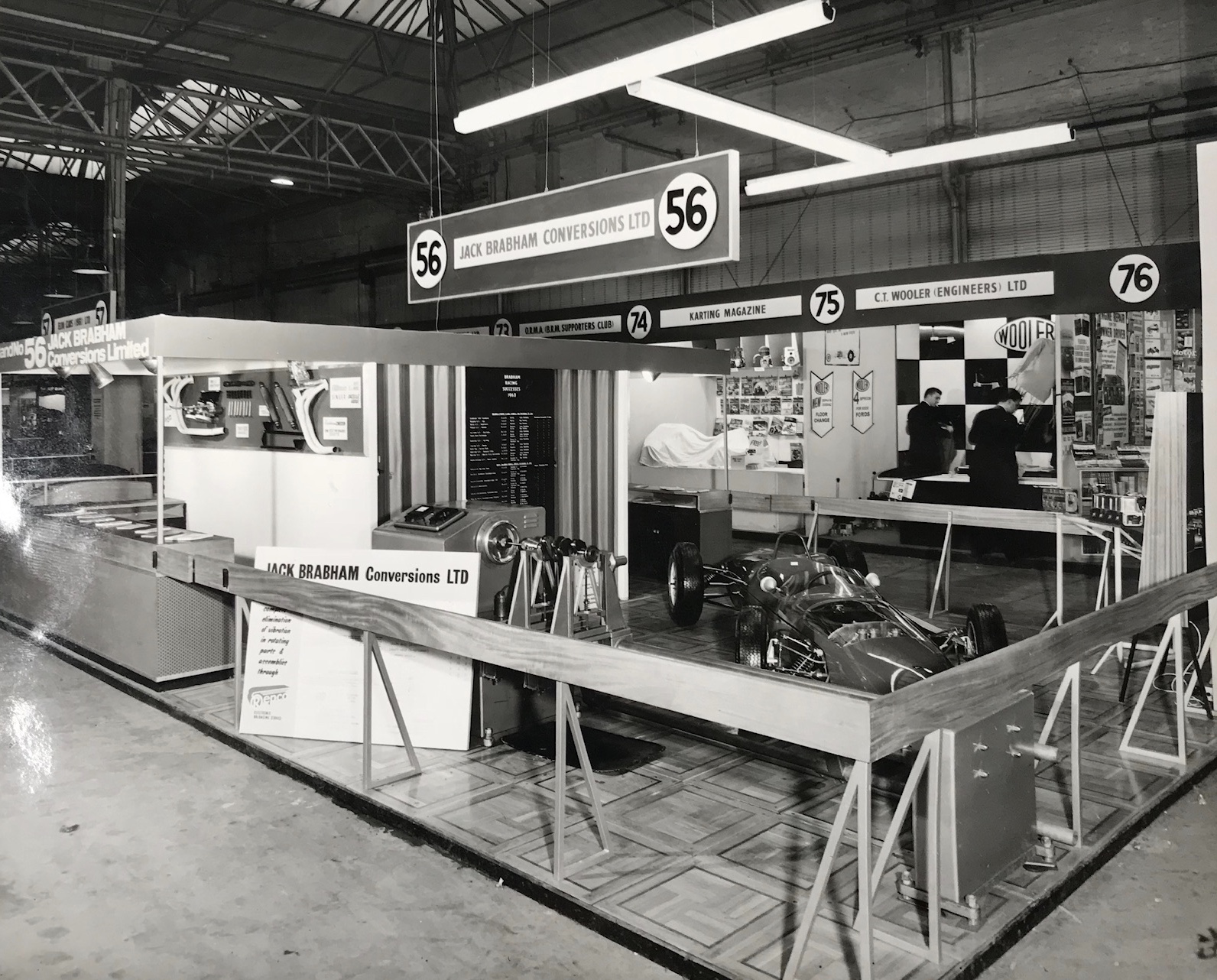
Jack Brabham worked all the angles; he built racing cars with Ron Tauranac, raced cars in F1 via his business Brabham Racing Organisation and raced Coopers for the works and via ‘Ecurie Vitesse’.
Not to forget modified cars via Jack Brabham conversions, columns in magazines which were ghosted for him and the sale of this years car to Australian racers at the end of each summer; the Cooper T40 Bristol in 1955, Cooper T39 Bobtail in 1956, Cooper T41 Climax FWB in 1957 and lordy knows how many T45/51/53s from 1958 onwards.
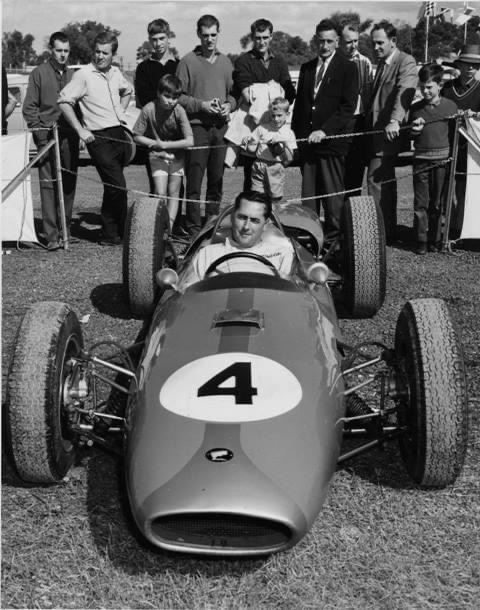
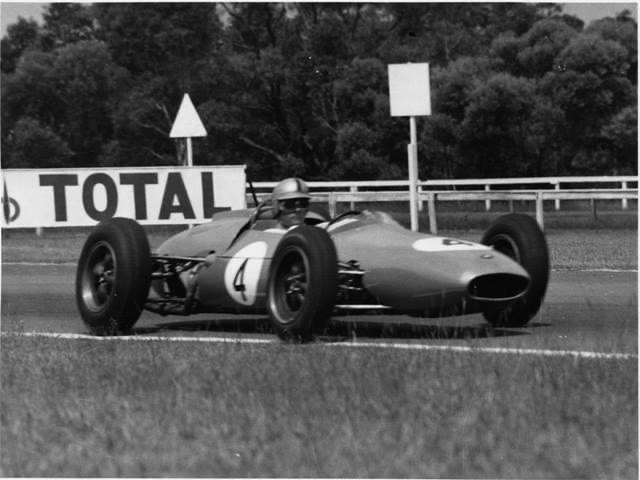
By the Australian summer of 1962/3, he and Tauranac had built and raced their first F1 Brabham, the BT3 Coventry Climax FWMV V8 from the middle ’62 season. They constructed a Coventry Climax FPF engined variant of that spaceframe design for ‘Intercontinental’ use designated the BT4.
Jack took the first of these machines to Australia for the 1962 AGP at Caversham, outside Perth. He was looking good for a win after a furious dice with Bruce McLaren’s Cooper T62 when he tangled with Arnold Glass’ BRM P25 Buick V8, Bruce bagged a nice win.
Not to worry, the car made a good impression on the local hotshots, many of whom had bought Coopers from him, or via him. There were the NZ Internationals to contest and several races in Australia in those immediate pre-Tasman Cup years.
Jack started from the front row of the NZ GP at Pukekohe but cooked a head gasket after only 12 laps- John Surtees’ Lola T4A Climax won. He won at Levin from Tony Maggs and Innes Ireland who were Lola T4 Climax and Ferguson P99 Climax mounted. On the Wigram FNZAF Airfield Bruce McLaren won in the Cooper T62, at Teretonga Bruce won again, with Jack fourth albeit he took the lap record- Maggs and Ireland were again second and third.
While the racing was going on so too was the commerce. David McKay purchased Jack’s BT4 after Teretonga, Bib Stillwell ordered one too which was entered at Warwick Farm. A replacement car was air-freighted to Jack for the Australian races, which in time honoured Brabham fashion he would sell to Lex Davison at the end of the summer.
The Australian Grand Prix was held at Warwick Farm that year on February 10. Brabham BT4s dominated the results sheet; Jack won in his new ‘IC-2-62’, David McKay was fourth in Jack’s ‘old’ ‘IC-1-61’ and Bib Stillwell was fifth in his new ‘IC-3-’62’. Interlopers were Surtees and McLaren – second and third in Lola Mk4A and Cooper T62 respectively.
It wasn’t an easy win for Jack mind you, the ship carrying the new car arrived late so it had to be flown from Melbourne to Sydney, finally arriving late on the Friday night.
As Jack recalled in Doug Nye’s book, instead of Tim Wall having days to prepare the car, he had ten hours. The car was at the Farm early, but lost the first of the early sessions with an electrical short. During second practice, Jack scrubbed in tyres and got the engine running properly, by the end of the day he was happy with the car despite starting from the rear of the grid.
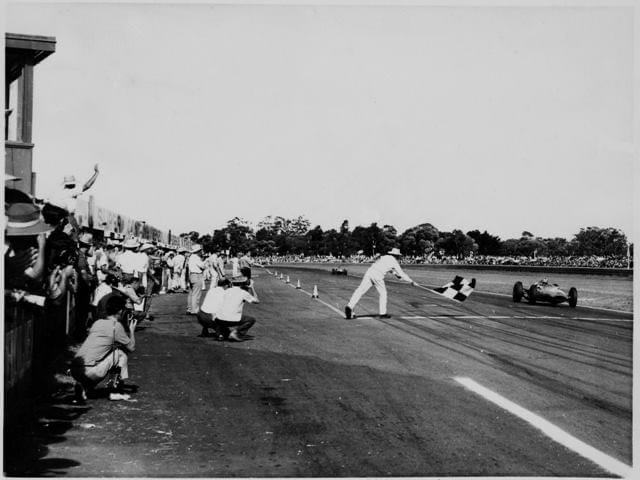
In the race Brabham ‘sliced clean through the field’, then Surtees spun out of the lead on lap 31 of 45, allowing Jack to close right in and slipstream past on Hume Straight into Creek Corner. The resident bugler did his thing and crowd went nuts! (two shots below)
From Sydney, the circus headed north to Brisbane’s Lakeside where Surtees won from Hill, Stillwell and Chris Amon in David McKay’s old Cooper T53. It was one of a series of great performances that summer which saw him scooped up by the Parnell team and taken to Europe.
The teams then had a two week break to prepare the cars and transport them to Melbourne and across Bass Straight for the South Pacific Championship held over the Labour Day long weekend in early March.
Bruce McLaren won from pole, equally impressive was Bib’s second place only a second adrift of the Kiwi international and then local boy John Youl third in his Cooper T55- both the guys in front of him ran 2.7 FPFs, Youl’s was a 2.5.
Then it was back across Bass Straight for the opening Sandown meeting (above). There Bruce was again on pole from Jack, and won from Maggs and McKay with Jack a DNF engine a lap before the finish.
While Jack did a roaring trade in Brabham BT4s there is little doubt that had there been a Tasman Cup in 1963 Bruce would have won it, a feat he managed in ‘the first McLaren’ – a Cooper T70 – Climax the following year.
Credits…
oldracingcars.com, autopics.com, Ken Devine Collection
Tailpiece…
(K Devine)
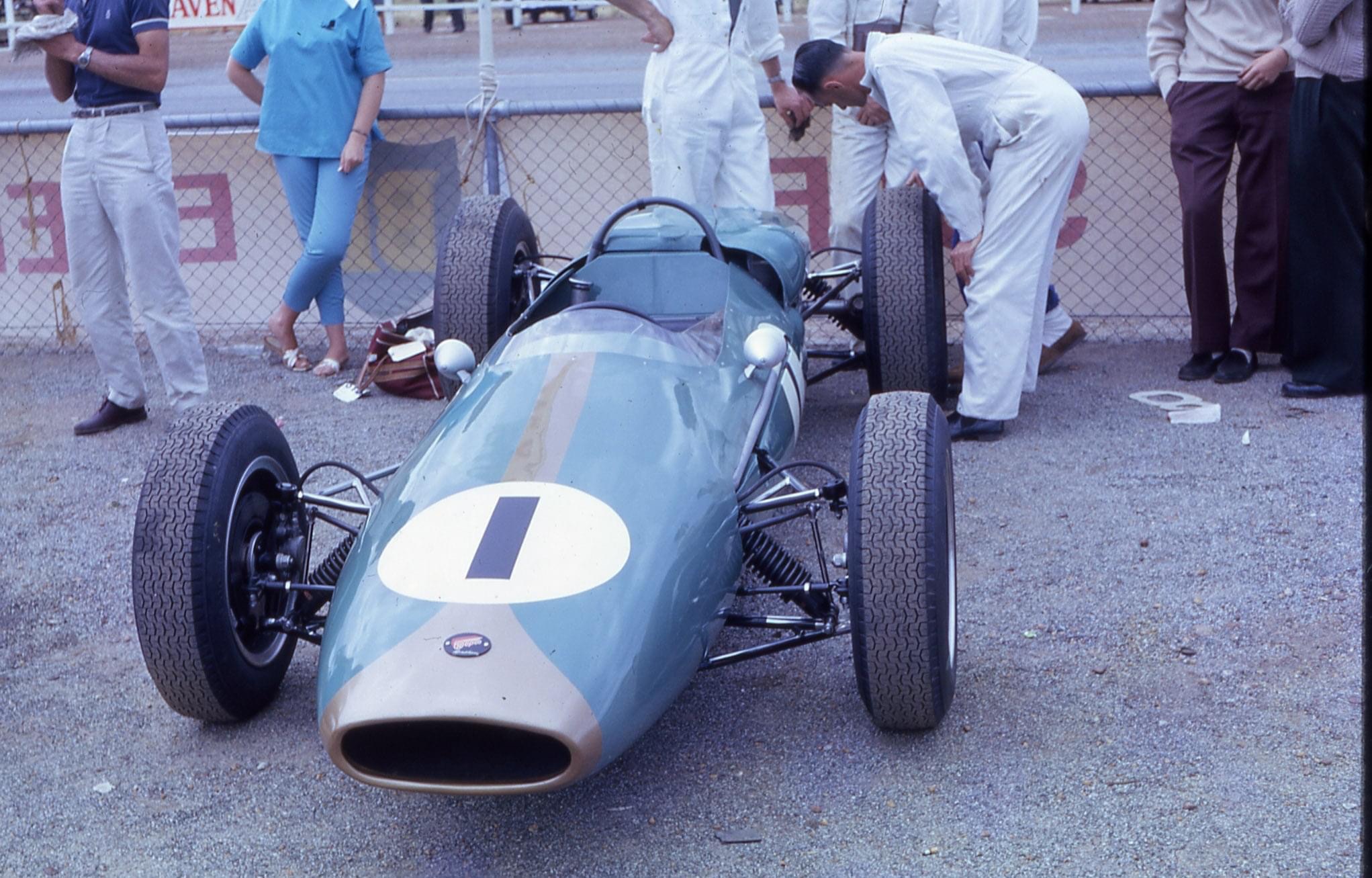
Brabham’s brand new BT4 Climax during the 1962 AGP weekend at Caversham, ain’t she sweet.
Jack Brabham and John Cooper’s attack on the 1961 Indianapolis 500 took place on May 30, 1961. Lordy, that’s 60 years ago this weekend.
The story of their initial testing sortie in October 1960 in a GP T53, and Brabham’s problem-plagued ninth place in the race has been well told, not least in my piece in this week’s Auto Action #1811 https://autoaction.com.au/issues/auto-action-1811
Noddy Grohman giving the car a birthday after its qualifying run. Note the Dunlop wheels and tyres, more substantial roll-bar than the F1 equivalent, and big fuel tank on the left side (De Lespinay Collection)David Friedman’s rare body-off shot shows the T54’s offset secrets- suspension, engine and gearbox, fuel tanks and driver. Transaxle is Cooper Knight C5S but with three, rather than the five speeds of the F1 spec ‘box (D Friedman)Cooper receiving some Bear service before qualifying in May (De Lespinay Collection)
After the race, the star of the show was shipped back to the UK for a demonstration run at Silverstone, and then back to the car-owner, Jim Kimberly in the US. The Kleenex heir funded Cooper’s 500 attack.
The T54 at an SCCA Divisional meeting, Hillsborough, US in June 11, 1962. “Just after Kjell Qvale purchased the car…the Kimberly Cooper Spl lettering has been removed…at tis point the car had no engine, gearbox or driveshafts…(R Spencer)
Kimberley ordered two cars from Mickey Thompson for his ’63 Indy campaign, Kimberley sold 61-S-01, which had been on display in the Indy Museum for a little while, to Kjell Qvale, operator of British Motors in San Francisco.
Joe Huffaker, prominent engineer, suggested fitment of an Offy 4.2-litre DOHC, four-cylinder engine to the T54, this combination was potentially a race winning one.
Qvale sold Aston Martin amongst the suite of marques his British Motor Cars Ltd sold in San Francisco. He substituted the big, long, heavy – and as it turned out reliable but not powerful enough – Aston DOHC-six for the far more compact and suitable Offy four.
Joe Huffaker and Kjell Qvale with Cooper T54 Aston Martin in 1963, it looks pretty sleek from this angle (De Lespinay Collection)Joe Huffaker contemplates the Aston Martin six, bulk, length and height. Chassis lengthened to accommodate it (De Lespinay Collection)Rodriguez, T54 and crew for the obligatory Indy portrait shot (IMS)
Initial test laps at Indy by Ralph Liguori showed the Dunlop wheel/Firestone tyres combination was too weak, so cast Halibrands fitted with Firestones were substituted.
Later despite the best efforts of fizzy, fast Pedro Rodriguez at the wheel, the ungainly-looking car failed to make the qualifying cut.
The Cooper was the fastest thing through the corners, besting even the Clark and Gurney (Dunlop wheels and tyres) Lotus 29 Fords. The AM engine simply lacked the puff the company had promoted, Rodriguez’ qualifying speed was only 2mph than Brabham’s two years before despite better tyres.
The engine was returned to Newport-Pagnell, while the T54 was sold to a San Jose, California club-racer.
The photograph below shows the largely unmodified chassis, albeit fitted with a beefy roll-cage and nerf-bars for sprintcar use on the paved tracks of the northwest.
(De Lespinay Collection)
By 1966 T54 had changed hands a number of times. It was raced with a Maserati engine at Trenton and Phoenix, then Buick, Ford and Chev V8s in quick succession.
By 1976 the Cooper had morphed into a bizarre Chev-powered mid-engined sprintcar raced by Darryl Lopeman.
Cooper T54 Chev (De Lespinay Collection)
Under that mountain of sinful-ugliness (ya gotta admire the guys’s innovation however), “are the original chassis and suspension, brakes, shock absorbers, pedal-cluster, radiator, oil tank, dashboard, seat and plenty of other bits” wrote Phillippe de Lespinay, saviour and restorer of the car.
The car was crashed through a wooden wall at Spanaway Raceway, Washington due to a stuck throttle. While Lopeman was ok, the nose and both rear, magnesium uprights were damaged.
(De Lespinay Collection)(De Lespinay Collection)
The T54 “reappeared in 1990 as a bad wreck” in Tacoma Washington, its main components were the basis of the rear-engined sprint car.
The remains of both (the wreck and sprint car) were bought by De Lespinay in partnership with Robert Arnold. The car was then rebuilt, including the original 2.7 Climax FPF, by De Lespinay, Thomas Beauchamp and Gene Crowe aided by detailed photographs taken in period, and provided by David Friedman, some of which are included within this article.
T54 parts acquired by De Lespinay (De Lespinay)Brabham with T54 chassis in 1991, ample hole in 2.7 FPF block clear (De Lespinay)
The chassis survived “inside another car”, the engine parts were tracked down in Texas and in Colarado. The block was welded by renowned Indy engineer Quincy Epperly, then rebuilt by Gene Crowe at Steve Jennings Race Engines in California.
As much as possible of the original car was used. An indication of this is shown by the shot of the machine during its rebuild in California during March 1991 – with Jack Brabham inspecting progress – it was ready for Brabham to drive at the Monterey Historics six-months later.
After the best part of a quarter-century of ownership Lespinay sold the car five years ago, many of you will have seen it demonstrated in the US, the UK or the Gold Coast.
Brabham and Cooper reunited at the Monterey Historics (De Lespinay)
Etcetera…
(De Lespinay Collection)
Smiles, and relief all round. Jack has made the cut, Cooper and Rodger Ward – who had cajoled and bullied, in a caring kinda way, Cooper and Brabham into doing the initial Indy test in October 1960 – all looking happy with a hard won time. Look at that crowd.
Front suspension detail, upper and lower wishbones each side – but offset to the left. Adjustable Armstrong shock and coil springs. Oil tank aft of radiator, Alford and Alder upright just visible, so too the Cooper steering rack and roll bar.
Note fuel filler cap, fuel tank above the drivers knees and big soft crash-pad attached to steering wheel hub.
Just don’t think too hard about a very high speed frontal collision…
(B Tronolone)
Charlie and John Cooper taking in the Indy vibe.
A decade before they were knocking out Cooper Type 15 and 16s as fast as they could build them. Ten years later they had a couple of World Championships in their pockets, and the rest.
Who knows, if the planets had been aligned, shod with Firestone tyres and a trouble-free run they may have bagged Indy in ’61 too.
Fortune favours the brave. That, they most certainly were.
Jim Kimberley leaning in at left, Cooper up. Pit stop practice (S Dalton Collection)
Beautiful portrait of Brabham and his F1 Cooper T53 Climax 2.5 FPF during the October 5-6 1960 initial test session at Indy.
Credits…
Phillippe de Lespinay’s tsrfcars.com website and Cooper T54 Facebook page
Time-Life, David Friedman, Roy Spencer, Bob Tronolone, Car and Driver, Stephen Dalton Collection, Grid
Tailpiece…
(Life)
What it was all about really.
Beating a great big car with a little itty-bitty-one. John Cooper in the T54 being pushed away from Rodger Ward’s Watson-Offy roadster after practicing some pitstops
Jochen on a charge, huntin’ his friend Jack Brabham down…
‘Twas a famous victory this one. Jochen wasn’t a happy camper. The brand-spankers Lotus 72 wasn’t fast out of the box. It made its race debut in Spain on April 19 and by Monaco was already in B-spec. Team Lotus got there soon enough mind you, Rindt won in Holland on June 21 in a 72C.
But he wasn’t happy at Monaco.
The Lotus 49 made its race debut at Zandvoort ’67 and even with a few 1970 tweaks; suspension geometry, 72 wings et al, it was an old beast so he started the race from grid 8 in a cruise-and-collect mindset having slept badly on a yacht shared with his manager, Bernie Ecclestone.
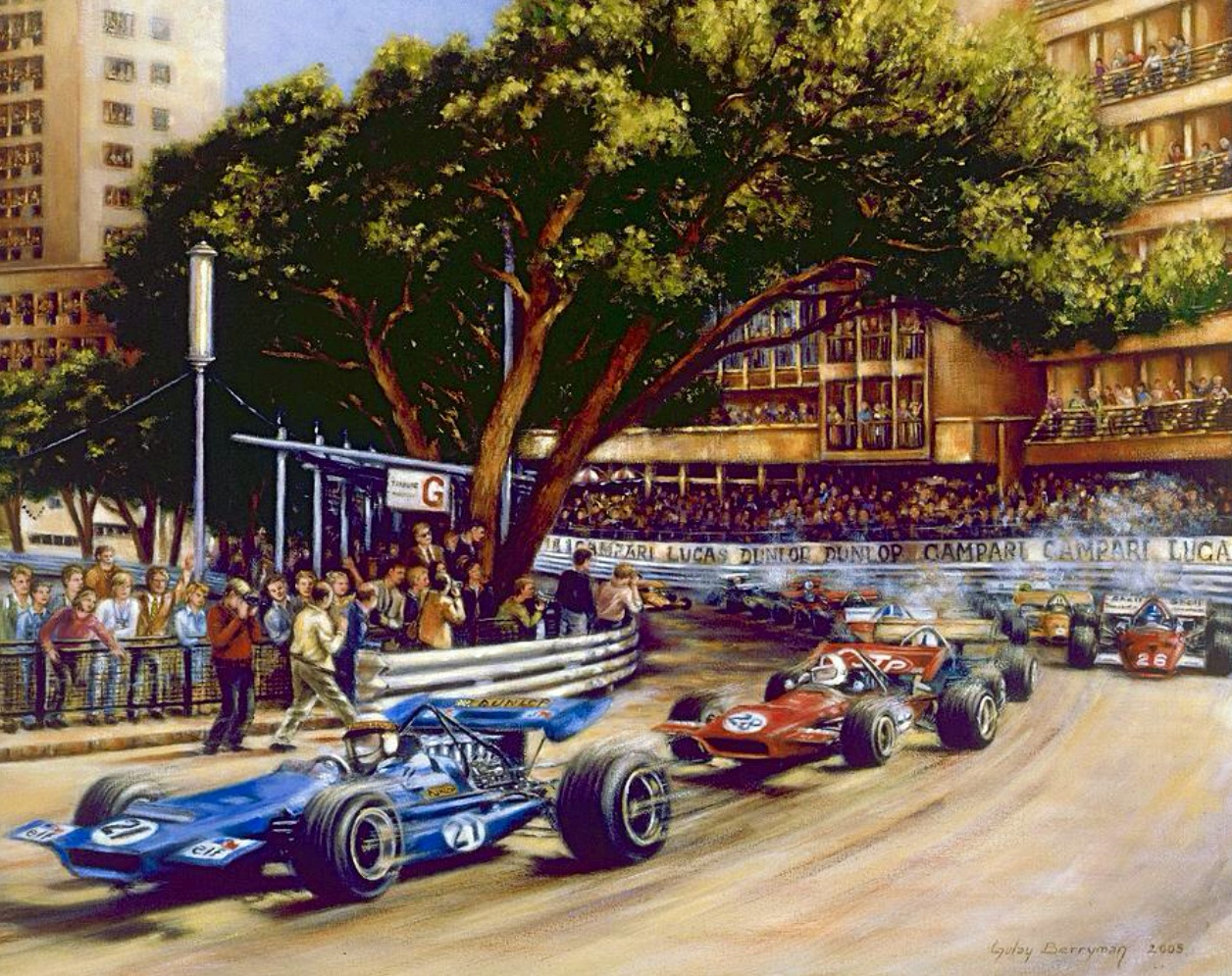
Stewart’s March 701 Ford leads Chris Amon’s similar car, Jacky Ickx’ Ferrari 312B and Denny Hulme’s yellow McLaren M14A Ford (Gulay Berryman)
Early in the race; Brabham’s BT33 from JPB’s Matra MS120, Ickx’ Ferrari 312B, Hulme’s McLaren M14A Ford, Rindt’s Lotus 49C Ford and Pescarolo’s Matra MS120 (Automobile Year 18)
Stewart led for the first third of the race, than retired with engine electronics problems, leaving Jack and Chris Amon in positions one and two. Jochen was seventh, but thanks to typical Monaco attrition he moved up the lap charts.
Ickx and Beltoise retired – then the Austrian fired up and passed Pescarolo and Hulme, leaving only Amon and Brabham up the road.
Rindt’s charge is underway. Here #3 Rindt is lining Denny Hulme’s McLaren M14A, behind is Pescarolo’s Matra MS120, Courage’ De Tomaso 505 Ford, Siffert’s March 701 Ford and in the distance Bruce McLaren, McLaren M14A Ford (The Cahier Archive)
Amon retired on lap 61 leaving only Brabham, not too traumatised even with four laps to go, with a lead of nine seconds.
On lap 77 Black-Jack was baulked by Siffert’s March 701, the Swiss was suffering from fuel feed dramas – losing five seconds – Jochen was lapping in 1:23s, Jack 1:24s.
At Tabac Brabham came upon three back-markers, and then into the hairpin on the last lap the struggling Piers Courage – in 1969 he was up-front in one of Tauranac’s BT26 Brabhams, in 1970 aboard the shitbox De Tomaso 505 – Brabham went off-line onto the marbles to pass Piers, applied the brakes and boofed the fence allowing Jochen, shaking his head in disbelief, to pass into the lead.
Brabham soon got his BT33 going to take second from Henri Pescarolo’s Matra MS120 in third.
Brabham with ‘bruised nose’ has recovered and drives to the line, retaining second place. Brabham BT33 Ford (unattributed)
For the first 40 laps of the race Rindt’s average lap time was 1:27, for the last 40 1:24.9, one-second quicker than he qualified.
Mind over matter and the sniff of victory.
(unattributed)
Brabham’s loss of the Monaco GP provided the base upon which Rindt built his 1970 World Championship, albeit tinged in absolute tragedy.
YouTube Last Laps…
Credits…
Gulay Berryman painting, Automobile Year 18, The Cahier Archive
Tailpiece: Even the wiliest and most experienced can have lapses of judgement. Brabham in BT33 Monaco 1970…
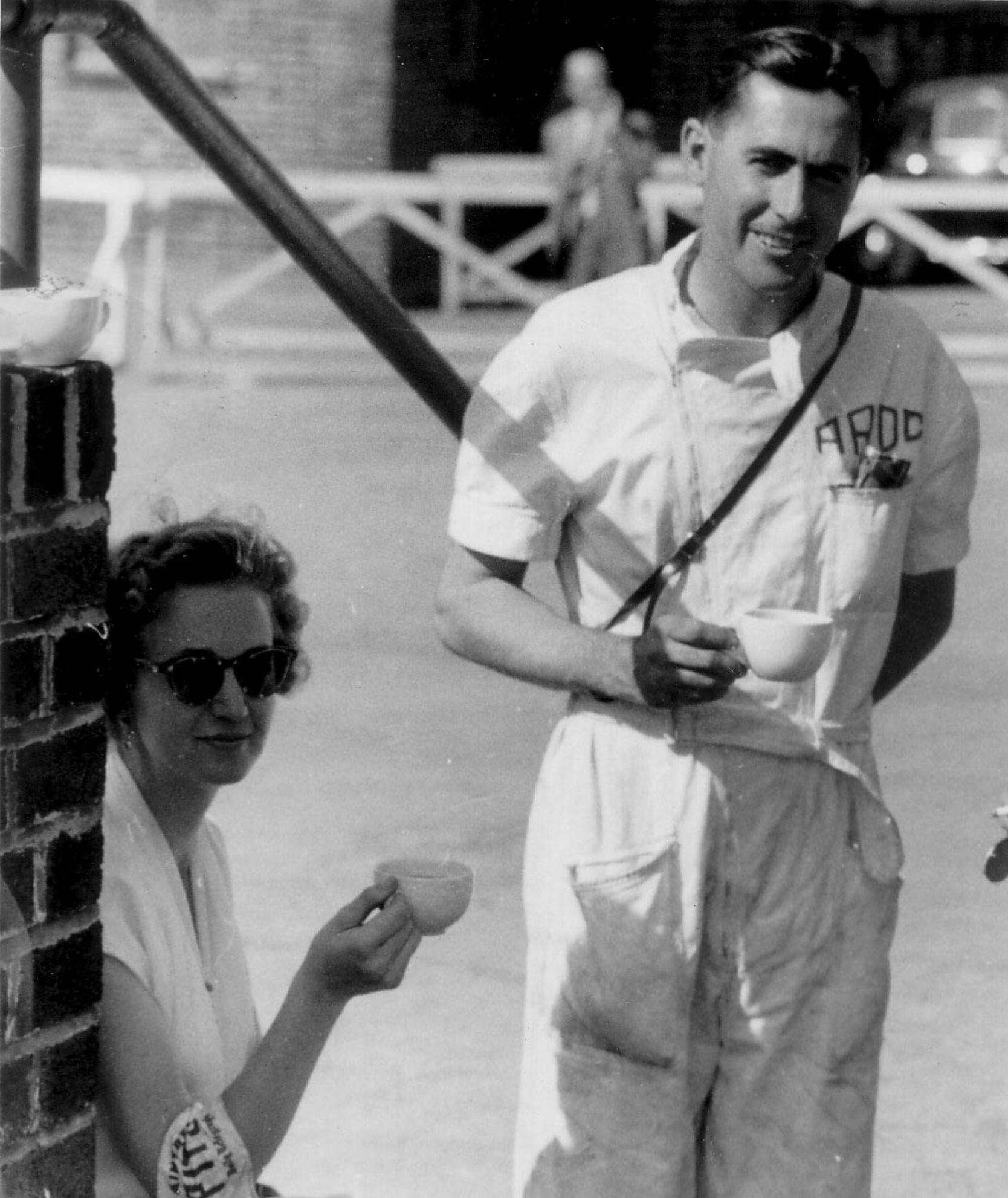
Jack and Betty Brabham chillin’ between sessions at Aintree during the July, 1955 British Grand Prix weekend.
Brabham is a very youthful 29, love the Australian Racing Drivers Club badge on his once lily-white overalls-how casual does it look?
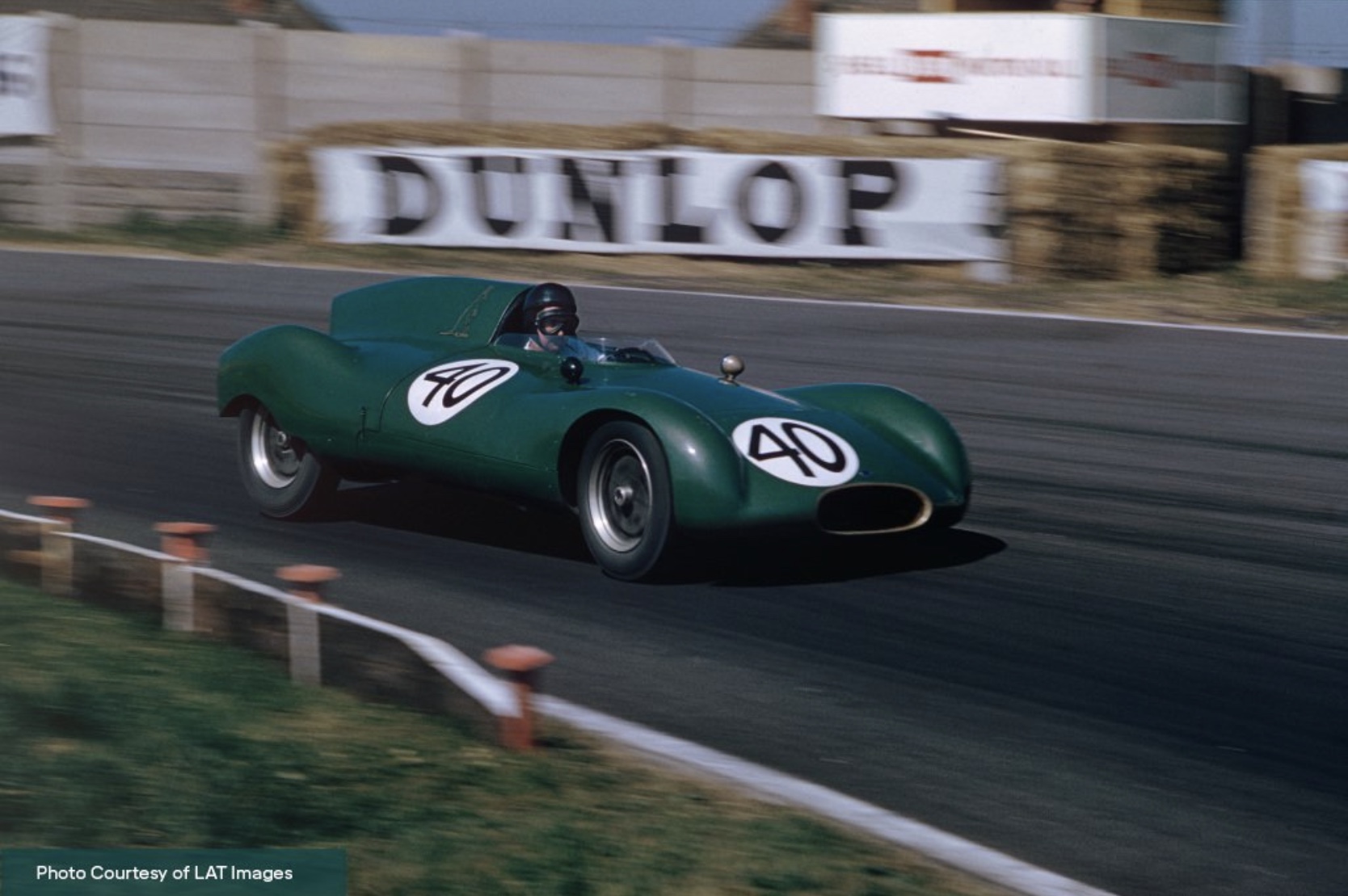
It was Jack’s championship debut in a car he built himself, a Cooper T40 Bristol. He qualified 25th and retired after 30 laps with engine trouble. The race was famously won by Stirling Moss’ Mercedes Benz W196.
(Cummins Archive)
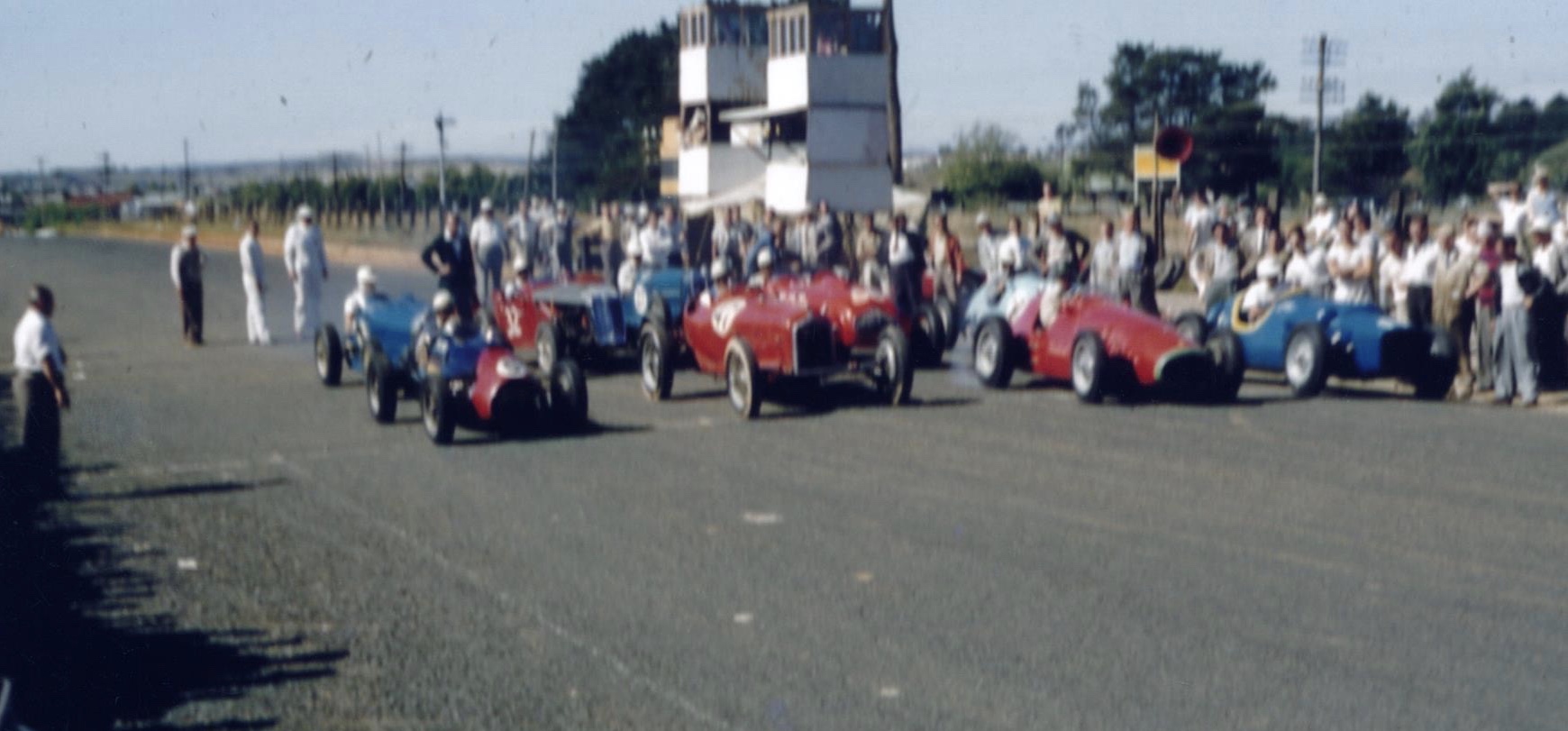
The car was shipped to Australia for what was to become Jack’s annual summer tour. He scored a lucky AGP win at Port Wakefield, South Australia when front runners Reg Hunt, Maserati A6GCM 2.5 and Stan Jones in Maybach 3, on the front row above, had mechanical dramas. Jack is on the second row alongside Doug Whiteford’s Talbot Lago T26C
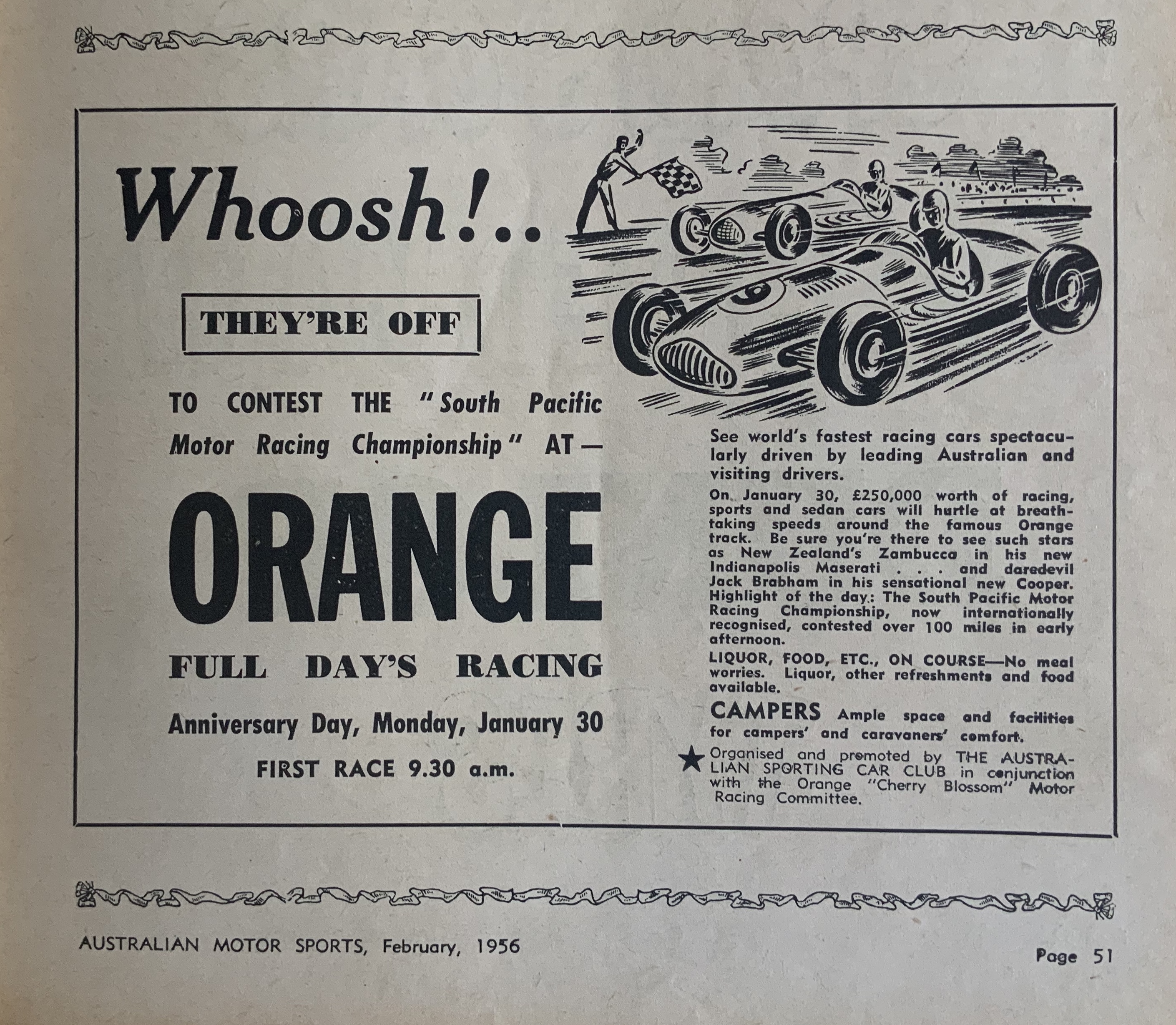
If the 1938 Australian Grand Prix at Bathurst was our first international event, by virtue of visiting Brits Peter Whitehead and his ERA B Type, and Alan Sinclair, Alta 1,100 s/c, our second international, and first of the modern era, was the South Pacific Championship at Gnoo Blas held in January 1955.
Peter Whitehead liked the place so much he came, saw, and conquered again, just as he did seventeen years before at Mount Panorama, albeit the 1955 field had a bit more depth that of 1938.
Peter and Tony Gaze raced Ferrari 500/625s, Bira a Maserati 250F with the better equipped locals Dick Cobden’s Ferrari 125 and Jack Brabham’s Cooper T23 Climax. Kiwi’s John McMillan and Fred Zambucka in Alfa Romeo Tipo B and Maserati 8CM respectively came across the ditch but both cars were too long in the tooth as was Tom Sulman’s Maserati
Non starters were Reg Hunt, short of parts for his new Maserati A6GCM, and Lex Davison’s HWM Jaguar
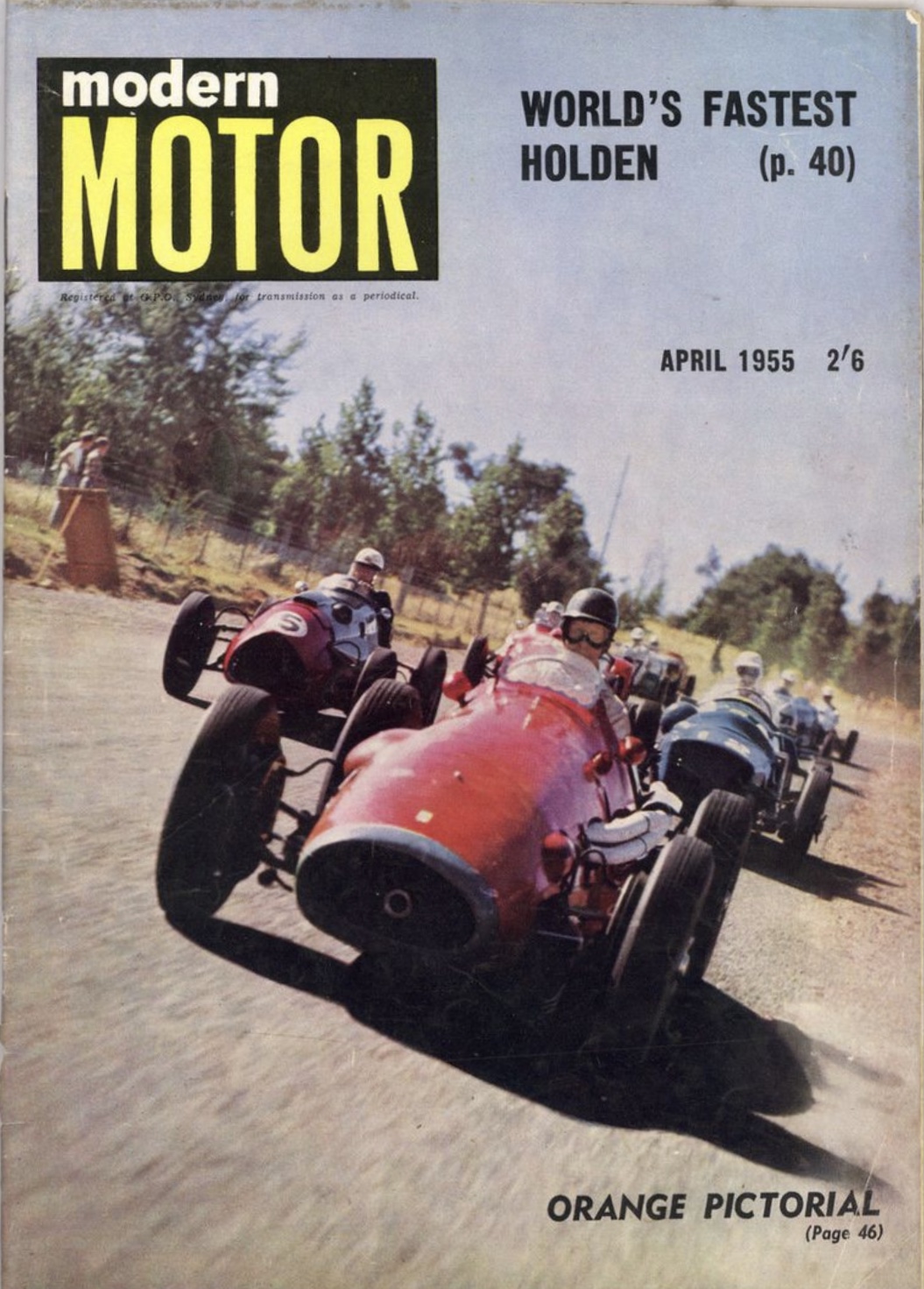
This shot isn’t kosher, it was staged for Modern Motor magazine but is still a cracker showing the Whitehead Ferrari, Brabham Cooper off to the left and Jack Robinson’s Jaguar Special aft of Peter. Further back is the unmistakable shape of a Bugatti, perhaps the John Hall Holden engined Type 37.
The grid on Huntley Road. From left, Jack Brabham, Cooper T23 Bristol, John McMillan, Alfa Romeo Tipo B, Peter Whitehead, Ferrari 500/625 and Jack Robinson, Jaguar Special (unattributed)
(unattributed)
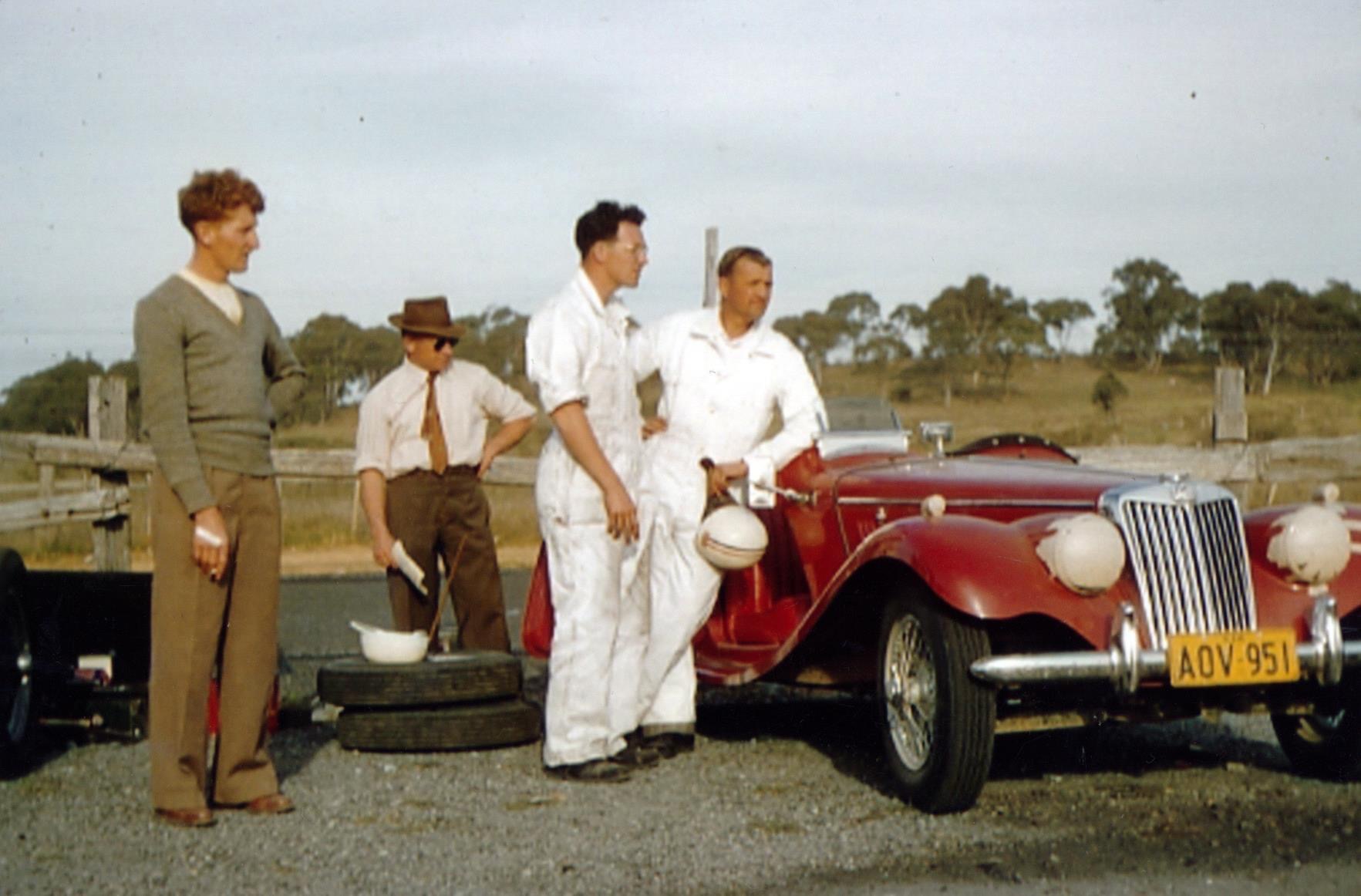
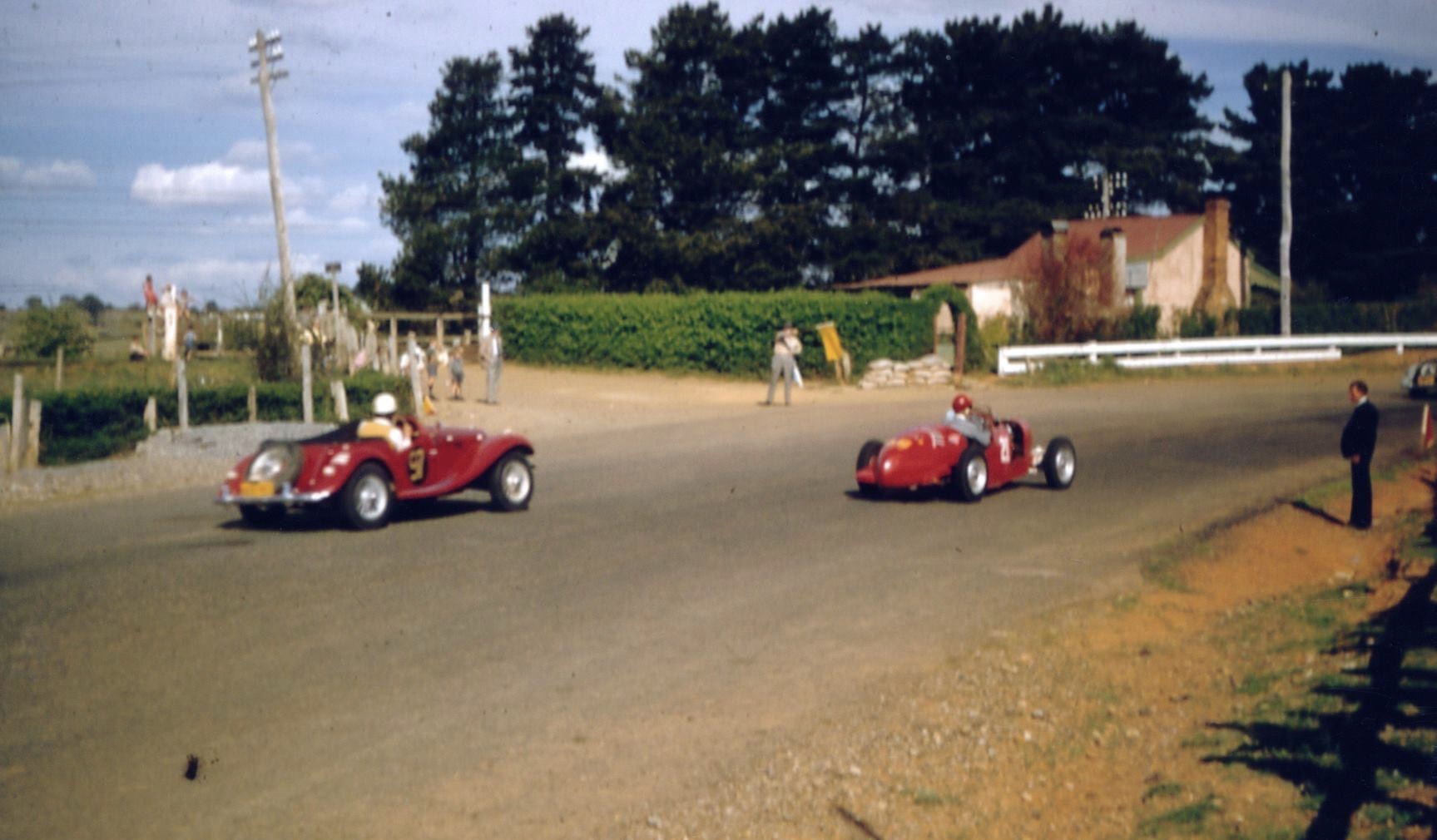
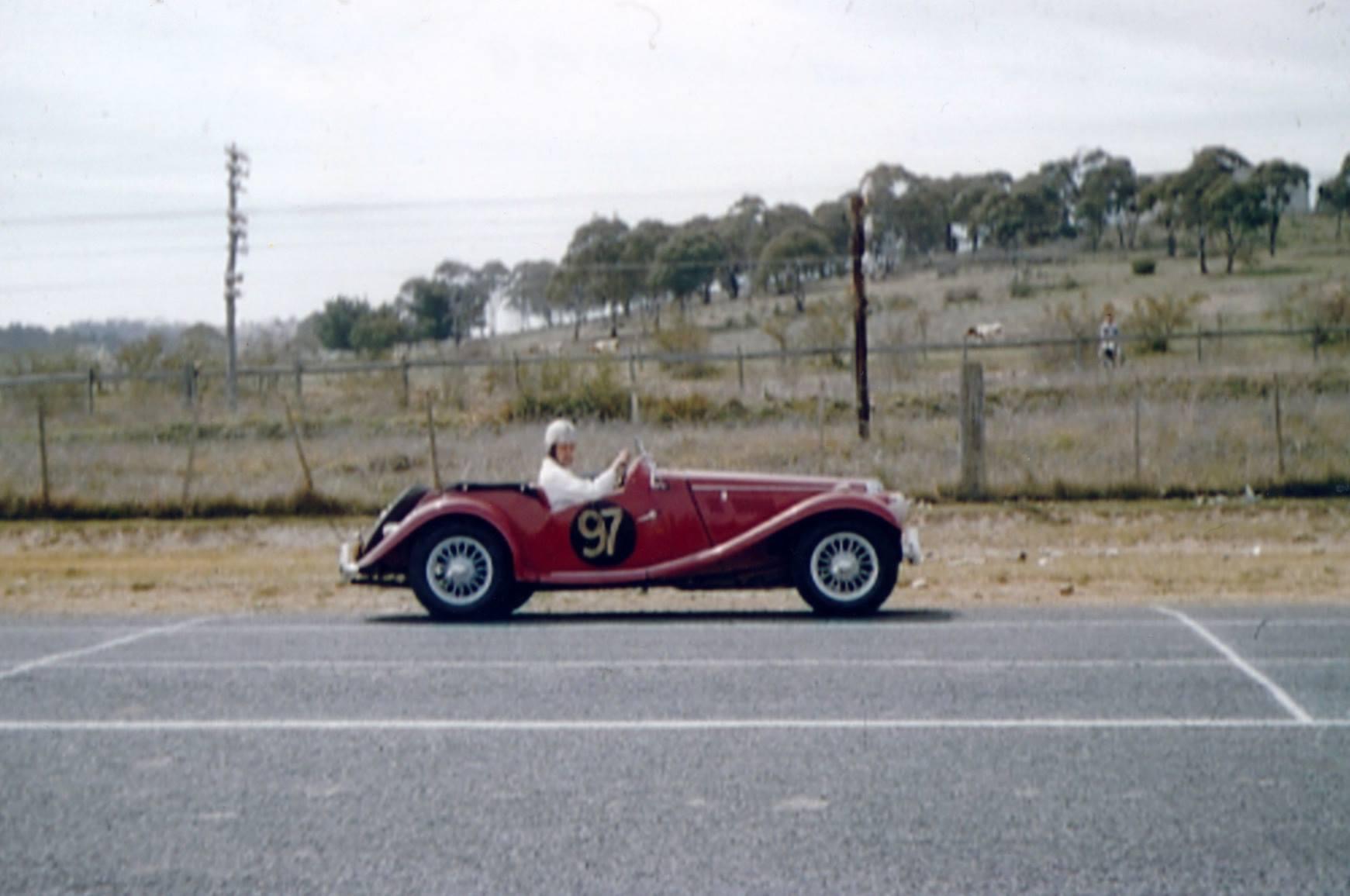
This group of wonderful colour photographs were taken by George Causbrook, an Orange electrician who worked at the time for Tom Barrett, owner/driver of the #97 MG TF.
Barretts Milk was a successful local business with a factory/depot including an airstrip. Causbrook’s family, the Beasleys, made available the shots to the Gnoo Blas Classic Car Club from whom I have shoplifted them, with thanks!
George had a fine eye, his colour shots of this challenging road course help us understand better its nature sixty years after the final Gnoo Blas meeting.
Ted Gray is shown below fussing over his brand new Lou Abrahams owned Tornado 1 Ford, just finished in Gray’s workshop in Melbourne.
By the October Bathurst meeting the team were starting to get the new beast sorted, but a huge accident in practice destroyed the car and came close to killing its plucky driver who took six months to recover from his injuries. See here for Tornado; https://primotipo.com/2015/11/27/the-longford-trophy-1958-the-tornados-ted-gray/
(unattributed)
(unattributed)
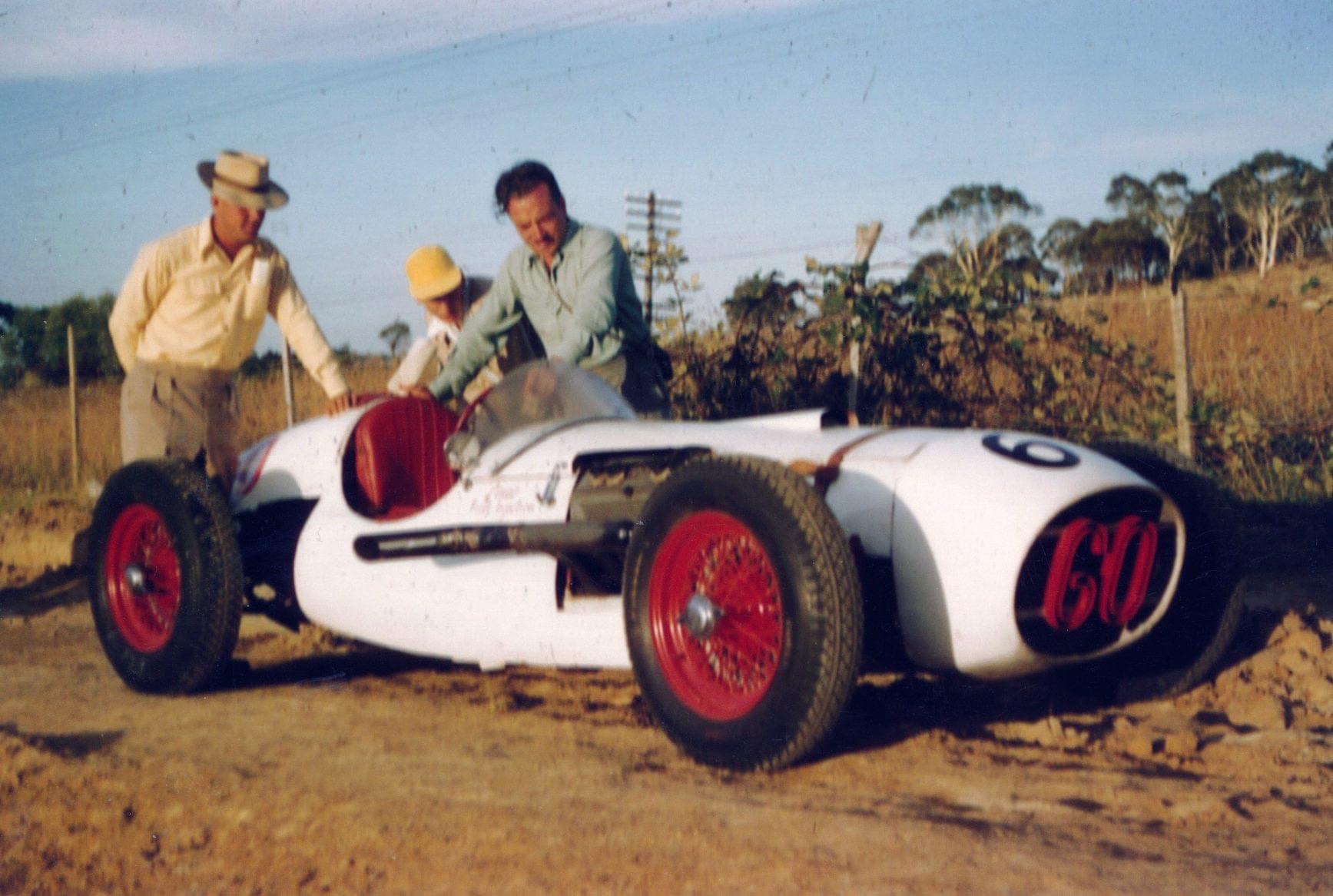
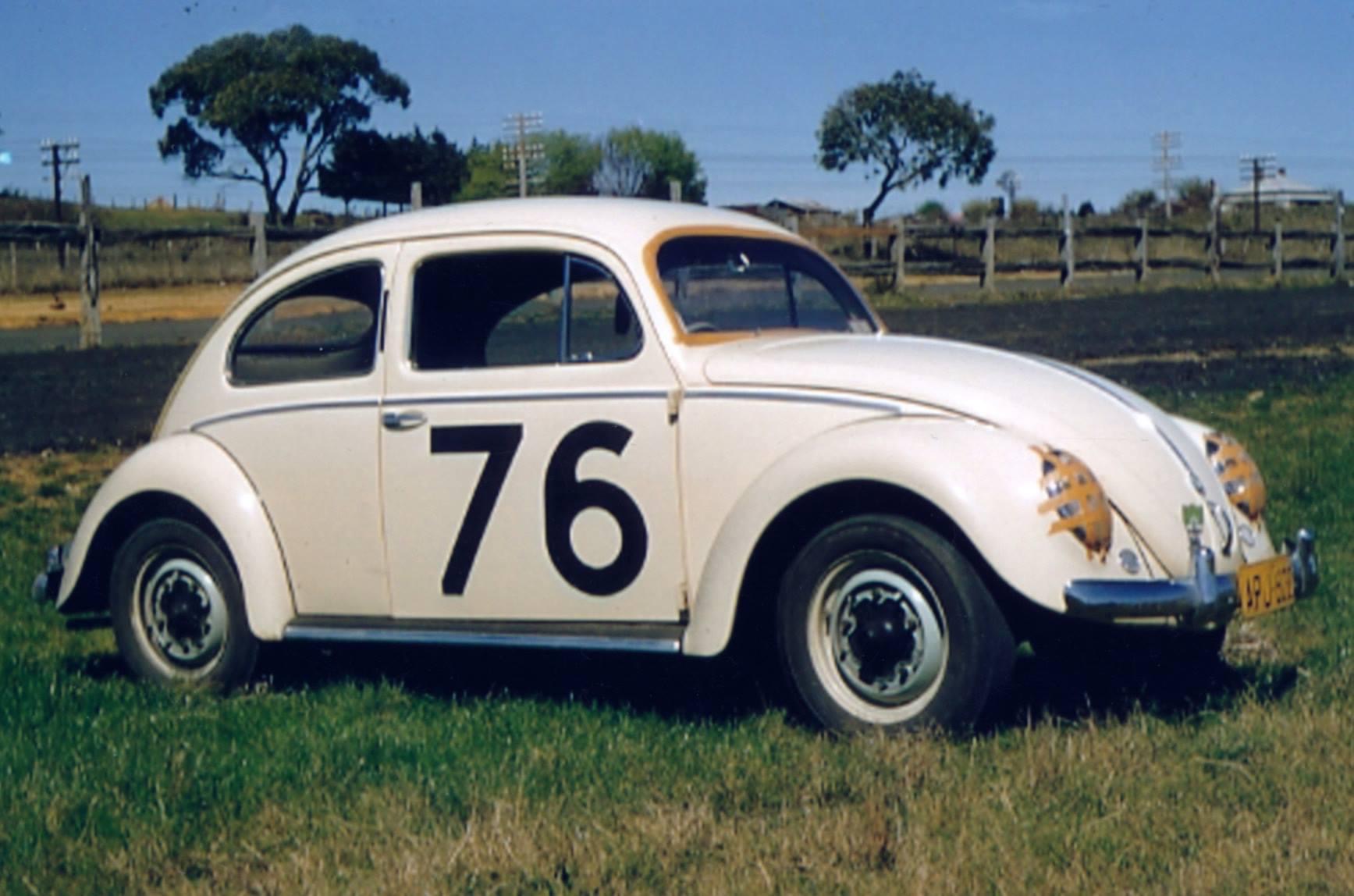
T Borrer’s VW Beetle entered in the production car race, October 1954 meeting.
The sportscar race grids (October ’54) seemed to be particularly well supported, with T Jordan’s 2.4-litre Riley-engined Healey Silverstone, Austin Healeys, #90 W Kelly and #104 Robert Page Jaguar XK120s in the shot below.
(unattributed)
(unattributed)
The ‘pretty boy’ with the Ray Bans in the XK120 is none other than local Cake Shop proprietor Bill Kelly, he would be as in fashion at an historic meeting in 2020 as he was in 1955!
Clearly there was plenty of money in pies and lamingtons in the fifties.
(unattributed)
The great Eldred Norman’s least favourite car was this 1937 Maserati 6CM 1.5-litre six cylinder Voiturette.
Chassis ‘1542’ was originally raced by Franco Cortese throughout 1937, but the going was tough against the dominant ERAs. The machine then made occasional appearances as part of Ciro Basadonna’s various teams both pre and post-war. It was imported to the UK for Gilbey Engineering in 1947, Colin Murray raced it in the UK throughout 1949 and 1950 then brought it to Australia to contest the Narrogin 1951 AGP before its sale to Norman.
When the engine blew shortly thereafter Norman fabricated a steel block and cast detachable bronze heads then cobbled together Fiat 1500 conrods and BSA pistons when Maserati originals were unavailable. Eldred raced it for a year or so before he sold it to Edward David ‘Ted’ McKinnon who finished fifteenth in the 1953 Albert Park AGP.
‘1542’ then passed to Eddie Thomas briefly, before Albury’s Seaton Brothers bought it in poor shape, they solved the engine reliability issues by fitting a Holden Grey six-cylinder unit. In this form Jack Seaton ran it and Ken Cox raced it on the country tracks of Victoria between 1957-1959.
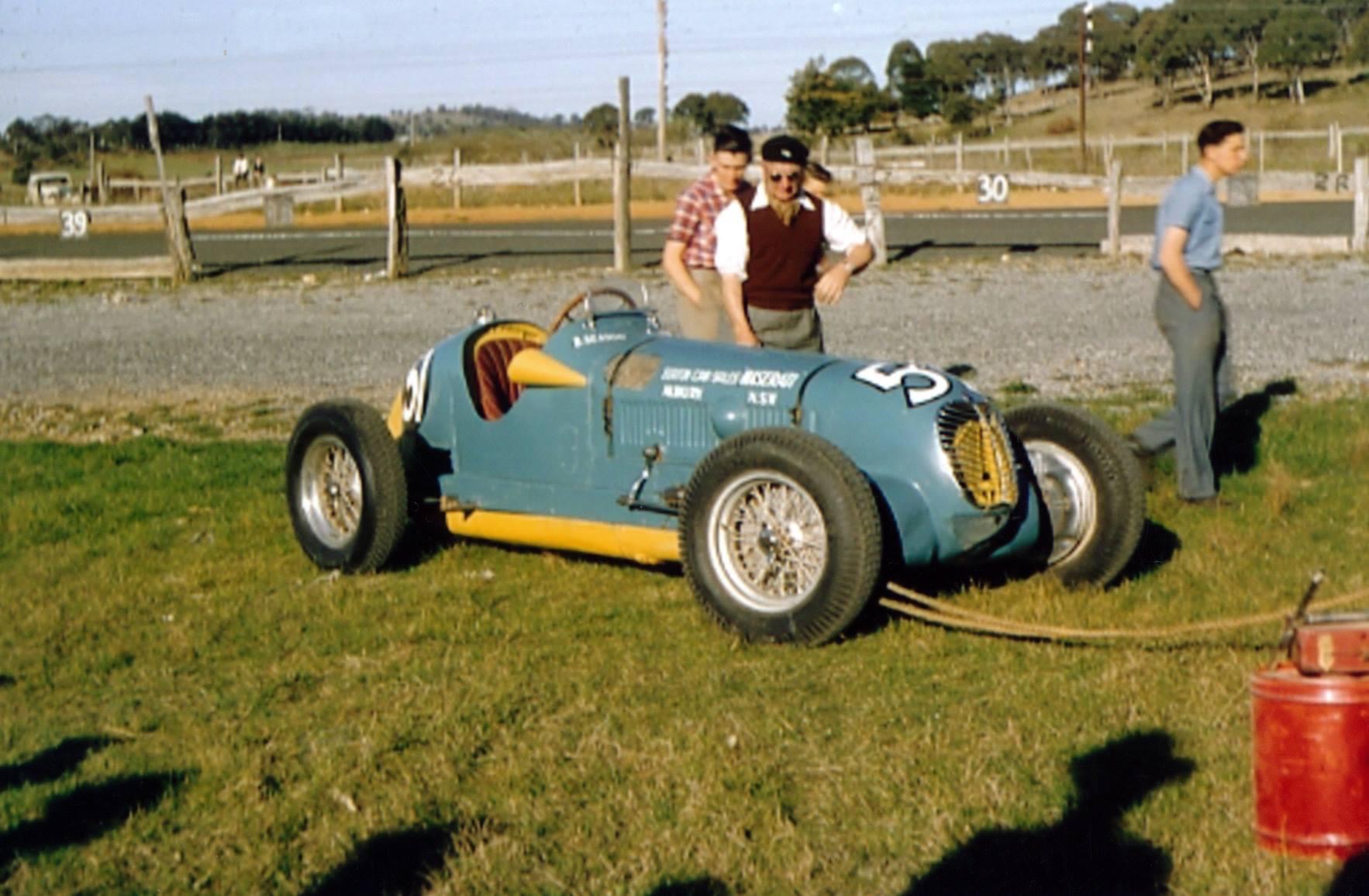
Stephen Dalton places the above shot as during the October 1954 Gnoo Blas meeting with Tom Sulman the driver. Ted Gray was entered but he has been crossed off Stephen’s program and Sulman substituted- well familiar with Maseratis.
The car went through a variety of hands before passing to Doug Jarvis, then some years later to Alf Blight, a talented engineer who did a great job over a decade with its restoration, it left Australia in the early eighties.
(unattributed)
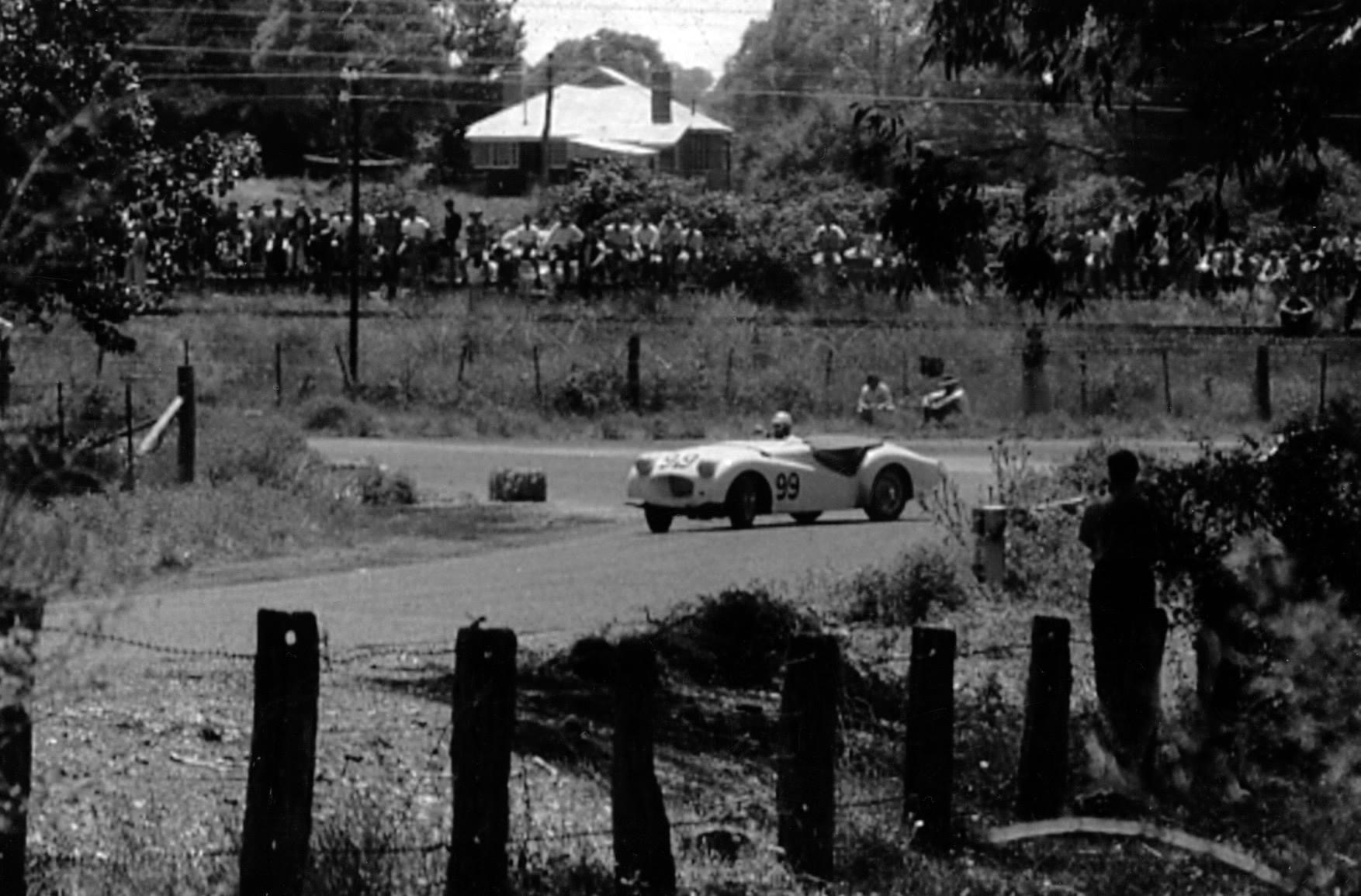
Tom Barrett, now racing a Triumph TR2 during the January 1956 meeting. I wonder if he caught it?
The fences to catch the wayward or unfortunate at ‘Mrs Muttons Corner’, the intersection of what is now Bloomfield and Huntley Roads, are clear and poignant in the context of Ian Mountain’s fatal accident during January 1955.
Stan Coffey, Cooper T20 Bristol, at Windsock Corner ‘due to the location of the old windsock when the Orange Aerodrome was in Jack Brabham Park during October ’54. The picture is looking towards Applebar/Pybar. The area that is now Leewood is in the background to the right, and in the middle of the background one can see what is now Blowes Road when it was dirt!’
Our friend Tom Barrett in the MG TF ‘at what is now the intersection of Huntley Road and Leewood Drive, where the level crossing now is’ and a special entering, the high speed Connaghans corner.
(unattributed)
Mr Barrett and MG TF.
Credits…
Modern Motor, Stephen Dalton
George Causbrook via Deidre and Brett Beasley and the Gnoo Blas Classic Car Club Facebook page
Warren Reid’s photographer father’s Sandown habits as a spectator were similar to my own. Prowl the paddock and watch the action from there – cars rounding Shell Corner and heading into Peters or Torana Corner.
The first one is Pedro Rodriguez about to head out in the Len Terry designed BRM P126 V12- we were lucky enough to see Bourne’s new GP car in 2.5-litre form before commencement of the GP season. The high point of their summer was Bruce McLaren’s Teretonga win. BRM P126 here; https://primotipo.com/2018/01/25/richard-attwood-brm-p126-longford-1968/
That’s Kevin Bartlett’s Mildren Racing Brabham BT11A Climax in the background.
(W Reid)
An overdressed Stirling Moss offers big Tim Parnell and one of the BRM mechanics some suggestions about coping with Australian heat.
There was nothing terribly wrong with this car that a Cosworth DFV couldn’t have fixed. BRM were in the wilderness from 1966 to 1969, finally hitting their straps again with Tony Southgate’s P153/P160 chassis and potent enough variants of their four-valve V12 in 1970-71. It was a long time coming for BRM fans.
(W Reid)
Car 12 is Richard Attwood’s P126 ‘02’. #11 is Pedro’s ‘01’.
(W Reid)
In many ways the stars of the show were the fastest GP cars on the planet at the time- the two Lotus 49 Fords of Graham Hill above in ‘R1’, and Jim Clark below in ‘R2’.
Clark and Chris Amon provided a thriller of a GP dice with Jim taking the flag by an official margin of one-hundredth of a second after an hour and three minutes of racing. Yet again Chris proved his talent and the potency of the Ferrari V6 relative to the 2.5-litre variant of the Ford Cosworth DFV 3-litre V8 dubbed DFW.
The 49 used a ZF five-speed transaxle initially, they were progressively replaced by the Hewland DG300 but at least one of the cars raced in the 1969 Tasman Cup was still ZF equipped.
Denny Hulme ran his own show in 1968. When the Kiwi won the 1967 World Championship and let Jack know he was off to McLaren, any chance of Brabham running another car for him went out the window. In the end Brabham only did two rounds anyway.
Hulme (in the dark shirt below) ran an F2 Brabham BT23 Ford FVA to keep faith with his Australasian fans. He used two cars actually. He boofed the first at Pukekohe in a bad accident with Lawrence Brownlie and had to bring out another from England. This is the second car, BT23-2. The first was BT23-5 which became the basis of Bob Britton’s Rennmax BN3 chassis jig, a story well ventilated here a number of times. Brabham BT23 and ’67 Euro F2; https://primotipo.com/2019/11/02/the-wills-barc-200-f2-silverstone-march-1967/
(W Reid)
(W Reid)
Above is Jack Brabham’s bespoke 1968 Tasman car, BT23E’1’ being pushed through the paddock on raceday.
That SOHC, crossflow RBE830 Repco 2.5 V8 is making its race debut. The team fitted the engine and a jury-rigged oil system- the strange structure sitting atop the Hewland FT200 gearbox overnight. Jack was quick in the two rounds he contested, but the yield was seventh at Warwick Farm and a DNF at Sandown.
While Repco-Brabham V8s were F1 Champions in 1966-7 they didn’t win a Tasman Cup despite the engine being originally designed for the Tasman. In five years of Tasman competition Repco won a single round – Jack at Longford in 1967 in a ‘640’ engined BT23A. Repco were pretty happy with the competition dividend of said engines mind you…
Chris Amon, what a mighty racing driver. Ferrari Dino 246 chassis ‘0004’, his 1969 Tasman winner was chassis ‘0008’, the same jigger Graeme Lawrence raced so well to victory in 1970.
Those in attendance that Sandown Sunday still speak in reverential terms about the fantastic dice up front. It was Jim’s last win in Australasia and the ‘68 Tasman Cup was his last championship before that awful day at Hockenheim in 1968. Dino 246T here; https://primotipo.com/2017/07/21/amons-tasman-dino/
Moss and friends.
(W Reid)
These gorgeous Ferraris were unsuccessful 1.6-litre F2 cars, the Cosworth FVA despatched on ongoing belting to them from 1967 to 1971. As Tasman Formula, 2.4-litre machines they were a brilliant bit of fast packaging- light, nimble and powerful. Perhaps with a full works effort in 1968 Ferrari would have carted away another Tasman Cup.
Credits…
Warren Reid Family Collection
Tailpiece…
(W Reid)
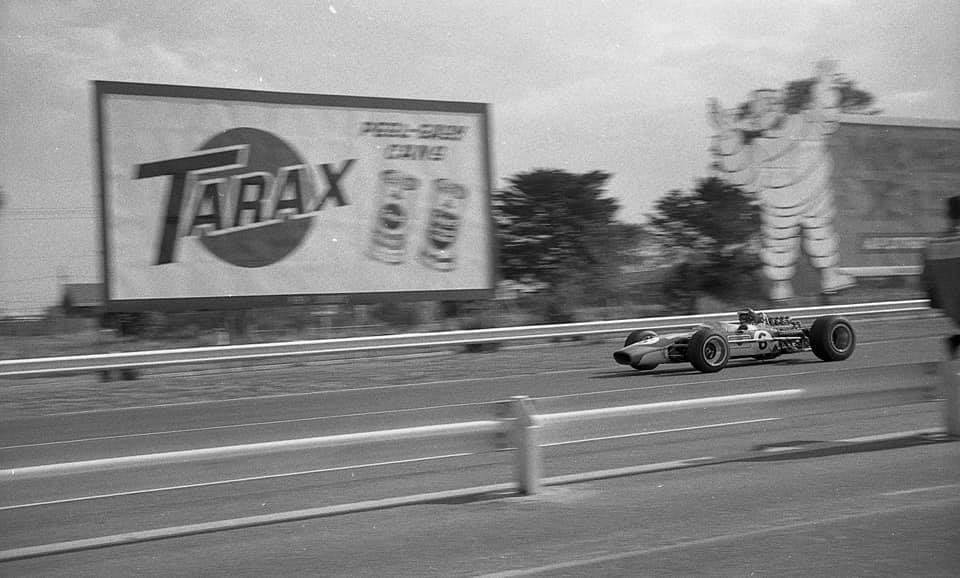
Jim Clark blasts his Lotus 49 ‘R2’ along Pit Straight, third gear in Jim’s ZF gearbox.
Tarax is a long-gone brand of soft-drinks, since then swallowed (sic) by a bigger rival.
I’ve written a feature In the current Auto Action #1803 on Dan Gurney’s win in the 1961 Victorian Trophy aboard his works BRM P48 at Ballarat Airfield.
He and Graham Hill raced at Ardmore, NZ, Warwick Farm and Ballarat that summer. Dan’s win was an interesting one in his last BRM drive- it was his first international victory and the only one for the P48 on the last occasion the machine was raced in works hands.
It’s a nice piece, but then I would say that.
For us historic nutters there is also the first in a two-part series on Tim Schenken written by Mark Fogarty. This issue covers his formative years to F1, the next one his Ferrari sportscar drives, Tiga period with Howden Ganley and beyond.
Other standout reads in the sixty page issue are five pages on F1, four on the year ahead for F1, Indycar, F2/3, Moto GP and Taxis, two pages on Oz international Scott Andrews with whom I was unfamiliar and coverage of the Monte, Dakar and the Symmons meeting I was lucky enough to attend a week ago. Plenty of maxi-taxis too of course.
If you haven’t read fifty-years-young Auto Action for a while give us a whirl.
Hopefully the Tasmanian Back to Back Double-Banger season openers at Symmons and Baskerville become a fixture- lets hope so. It makes so much sense on all levels, get you bums down there next year if you can.
The racing was great, imbibing Longford for a cuppla days was magic not to forget some great Tassie touring, sun on the sand and a shandy or three. It was heaven on a stick really.
(unattributed but very keen to know the ‘snapper)
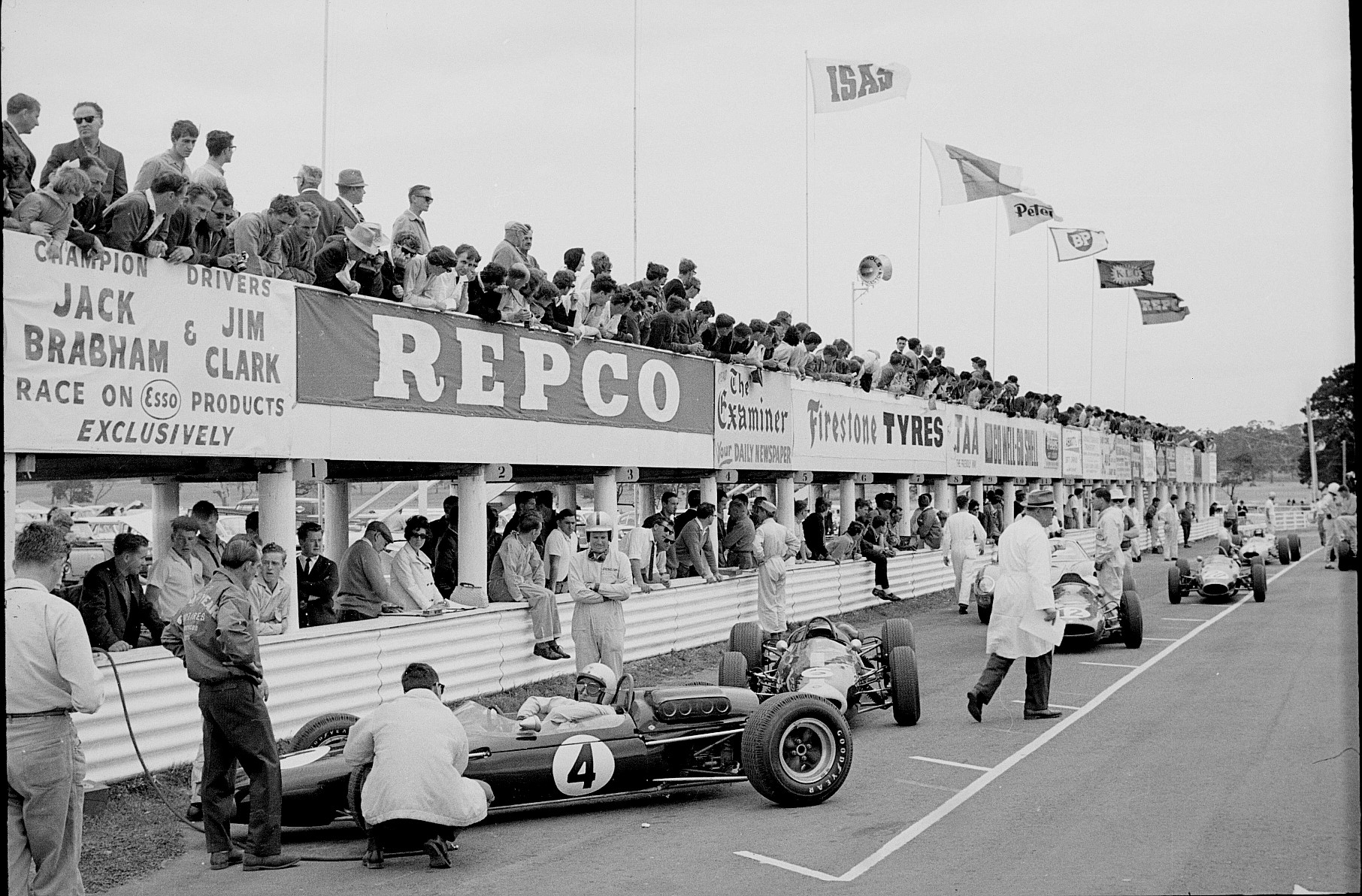
The more you look the more you see. All the fun of the fair. Longford AGP weekend March 1965.
Jack Brabham waits for the pressures in his Goodyears to be adjusted, Brabham BT11A Climax. That’s Roy Billington with hands on hips to the left and Bib Stillwell hovering- his new Brabham BT11A Climax is to the right. Next in line is the ill-fated #12 Ecurie Australie Cooper T62 Climax of Rocky Tresise.
Further along, obscured near the pit counter, is the Scuderia Veloce Ferrari 250LM with Lynn Archer’s #20 Elfin Catalina Ford 1.5 on the painted line. The light coloured car at the end of the queue is Frank Matich’ Brabham BT7A Climax.