I love Stewart Johnson’s moody, evocative shot of Alec Mildren’s Alfa Romeo TZ-2 taken during the 1966 Surfers Paradise 12-Hour run over the August 21 weekend.
These cars were built for endurance events, not the five or ten-lap screamers prevalent in Australia, so it was a chance for the team to contest a 12-hour event of the type for which Autodelta designed the car.
(J Crawford)
Jackie Stewart is best away at the start in the Scuderia Veloce Ferrari 250LM from the David Piper/Richard Attwood Ferrari 365 P2 #1, the Peter Sutcliffe/Frank Matich Ford GT40, the Bartlett/Chivas TZ2 and then the first of the Lotus 23B Lotus-Fords driven by Frank Demuth and John Harvey.
Below, the third-placed Bartlett/Chivas TZ-2 is ahead of the Piper/Attwood Ferrari 365 P2 DNF. Up front was the winning Stewart/Buchanan Ferrari 250LM, one lap ahead of the second-placed Sutcliffe/Matich Ford GT40.
(B Williamson Archive)Ain’t they sweet…Kevin Bartlett TZ-2 and Spencer Martin in Bob Jane’s Jaguar E-Type Lightweight on the front row of the Country Club GT Trophy grid at Warwick Farm on September 18, 1966 (R Kaleda)
Chassis AR10511-750112 was built on a modified TZ-1 chassis; number 750072 was a chassis, not a complete car, and had an aluminium body, ‘presumed to be the only all-aluminium car and to have been used as the mould for the fibreglass cars,’ wrote zagatocars.com.
Registered UD111834, the works Autodelta machine was first raced by Roberto Bussinello and Andrea de Adamich in the April 25, 1965 Monza 1000km – round five of the World Sportscar Championship – finishing first in class and seventh outright. The race was won by the Mike Parkes/Jean Guichet Ferrari 275 P2.
It was then off to the Targa Florio on May 5. This time Bussinello was paired with Nino Todaro, but they failed to finish after an accident on lap 6 of 10. Up the front was the Vaccarella/Bandini Ferrari 275 P2.
Suitably repaired, 750112 was prepared for the Nurburgring 1000km a fortnight later, May 23, with Bussinello again at the wheel, this time paired with Teodoro Zeccoli, where they were 30th with 36 laps completed compared to winners’ Surtees/Scarfiotti’s 44 laps aboard a Ferrari 330 P2.
750112 in the Le Mans pits 1965 (unattributed)Le Mans 1965. Zeccoli plans his attack on the Mulsanne sand dune while the works-Ford GT40 Mk2s of Ken Miles and Phil Hill – DNFs both – rumble past on their second lap (unattributed)
The car’s final European outing before its sale to Alec Mildren was at Le Mans on June 19-20 where Zeccoli shared it with Jose Rosinski. The weekend looked promising enough but it all came undone come raceday when Teodoro went off at the end of the Mulsanne into the sand trap from which he never escaped.
He didn’t give up, though. The spectators were treated to a gritty two-hour performance where Zeccoli tried to dig the car loose, the final element of which involved stripping down to his jocks to use his race suit under a rear wheel in an attempt to get more traction. Unsuccessfully, unfortunately.
(Alfa Romeo)(Alfa Romeo)
Mildren then imported 750112 to replace the second of his GTAs in mid-1966 with its regular pilot, Kevin Bartlett, seen below giving the now yellow car plenty at Warwick Farm in 1966.
(K Bartlett Arc)(K Crump via E Holly)
Amongst the sprinters. Frank Demuth’s Lotus 23B from Kevin Bartlett, Alfa Romeo TZ-2, Niel Allen, Lotus 23B, Lionel Ayers, MRC Lotus 23B and Greg Cusack’s Lotus 23B then the obscured Les Howard’s Lotus Super 7 and Spencer Martin’s Ferrari 250LM on June 15, 1966
And below, Bartlett chasing Ron Thorp’s AC Cobra, again at Warwick Farm
(G Dowdle)
750112’s ownership roll call in Australia is fairly long, although most of them didn’t race it.
From Mildrens the car went to Roy Compton, then Max Brunninghausen in 1967, Compton trading the TZ-2 on Brunninghausen’s TZ-1. Max raced it extensively, including a trip to the Macau Grand Prix in 1968, where he finished a splendid third in the sports car behind Jan Bussell’s winning Brabham Lotus-Ford and Hengkie Iriawan’s Elfin 600C Ford FVA.
The robust TZ-2 was ideally suited to the rough road circuit, although Max had his challenges after differential failure during practice. Divine Intervention came via Alec Mildren and the Australian Government, who shipped a spare diff from Sydney to Macau via a Diplomatic Bag!
Max Brunninghausen at Macau in 1968 (Z Drummer)(N Wong)
Another Sydneysider, Denis Cribbin followed in 1969, the cars contemporary racing history, including two or three decent hits along the way, was then over.
The trail of ownership then goes something like this. Les Miller bought it in 1971, followed by Messrs. Robertson, Hopkins, and Whiting in quick succession (is this correct? I’ve never heard of them in connection with this car), then Royce Fullard of Eltham, Victoria. Royce may have sold it to Nick Langford, who lived not far away in Mitcham.
When I saw the car in Langford’s restoration business at Castlemaine circa 1978, it was in a million bits. Langford – an Alfisti through and through – would have done a great job with the restoration, but its sale as a result of his matrimonial earthquake shook the car loose, and it left our shores for good circa-1980. Current custodian folks?
Denis Cribbin at Warwick Farm in September 1969 (L Hemer)
Etcetera…
(Marouf Collection)
The Bussinello/Todaro TZ-2 #750112 during the 1965 Targa Florio.
Denis Jenkinson wrote in MotorSport about the new car’s Targa appearance. ‘The special bodied orange Alfa Romeo GTZ of Autodelta, the factory team, came screaming into sight at the far end of the village street, and snarled as it slowed and changed down for the corner in the square.’
The secret of the car’s success was the careful evolution of the TZ-1 chassis and engine. Later in its competitive life in Australia, the capacity of the twin-plug twin-cam four-cylinder engine fitted to 750112 was circa-1.9-litres rather than the 1.6-litre unit first fitted.
To reduce weight, the TZ’s aluminum body was replaced with a lighter fibreglass one, with the exception of ‘our’ 750112. Designer Ercole Spada created an erotic, lower, leaner, more aggressive body. All of the improvements resulted in a car that sat 140 mm lower, produced 20 extra horsepower and weighed 40 kg less than the TZ-1.
(Alfa Romeo)
Alfa Romeo historian/author Ed McDonough wrote that, ‘Unfortunately, by the time the TZ-2s made their race debut at Monza in 1965, Alfa management had already told Carlo Chiti, Autodelta’s director, that his shop was to concentrate its efforts on developing the GTA and the Tipo 33.’
‘This was done at the TZ-2’s expense, and soon the cars were sold off to privateers. The TZ-2 raced successfully for another two seasons and scored class and sometimes even overall wins in a variety of events, including sprints, endurance races, and hillclimbs. The TZ2 extended the TZ-1’s victories with wins in the 1600 GT class at Sebring, the Targa Florio, the Nürburgring 1000 km, Monthlery, Spa and Monza.’
(B Reid)
Max Brunninghausen in the Warwick Farm form up area above, and in the Surfers Paradise pits in 1968 below.
(J Gray)
‘There are constant arguments as to how many TZ-2s were built, ‘ wrote Ed McDonough. ‘According to Alfa expert L. Fusi, twelve were made from chassis 750.114 to 750.121, obviously leaving some numbers out. Author David Styles says ten were built, while Hull and Slater say twelve, as does Belgian Tony Adrieansens. Adrieansens argues eight were made in 1965, and four of the 1965 TZ-2 chassis were built with TZ-1 chassis numbers. For example, 750.104 is a TZ-1 chassis number but is an early TZ-2. 750.1106 is the same and was one of the early test cars. Possibly 750.112 is the only aluminium-bodied car.’
‘All the nine Zagato-bodied racecars are accounted for and most are in racing condition. Since the running gear is production based, they are relatively inexpensive to run in vintage racing. However, you’ll first need more than a million dollars to buy one, as that’s what the last one sold for at auction.’
Credits…
Stewart Johnson, John Crawford, Ray Kaleda, Zito Drummer, Natalino Wong, Geoff Dowdle, Bill Reid, Ken Crump via Ed Holly Archive, Kevin Bartlett Achive, John Gray, Lynton Hemer, Geoff Medley, Alfa Romeo Archive, Marouf Collection, zagato-cars.com, ‘Colour and Noise:40 Years of the Macau Grand Prix’ by Phillip Newsome, Ed McDonough ‘Alfa Romeo TZ2-Delta Force’ article on supercars.net.
Just a little to the right fellas otherwise we’ll have to twist the chassis a smidge…
Alec Mildren Racing mechanics Bob Grange, in overalls, and Glenn Abbey partially obscured by the left front, manoeuvre their new Mildren (Rennmax) Alfa Romeo 1.6 F2 through the narrow front doors of the Avalon Cinema on Sydney’s Northern beaches.
Both Mildren and Abbey were locals so perhaps the deal to have the racer in situ during the screening of the film Grand Prix was hatched between the theatre owner and Mildren- a nice way to cross-promote his Alfa dealerships closeby and in the city.
The date is the more interesting thing in an arcane kind of way. Grand Prix was released in Australia on July 14, 1967, this car wasn’t built then. It first raced at Warwick Farm on September 5, 1968 in Kevin Bartlett’s hands, and was raced for the first time with a 1.6-litre Waggott TC-4V engine at Symmons Plains in Max Stewart’s tender loving care on March 3, 1969.
So…given the shorts on the fella looking after the right rear Goodyear I’m guessing it’s a school holidays screening in The Summer of ’69, the only thing missing is Bryan Adams twangin’ his Fender Strat (or whatever).
Kevin Bartlett slicing the new Mildren Alfa F2 through the Warwick Farm Esses, probably on the 8 September 1968 weekend of its race debut (D Harvey)Bartlett on the WF dummy grid on September 8, 1968. Mildren Alfa Romeo F2 Four-Valve race debut (B Henderson)
This little Beastie is an oh-so-famous car in Australia. It won a swag of races in Max Stewart’s hands including the 1971 Australian Gold Star Championship and the 1972 Singapore Grand Prix.
It had more engines than you and I have had hot dinners: the Alfa Romeo DOHC twin-plug, four-valve 1600cc F2 featured in this article, Waggott TC-4V DOHC four-valve 1600/1860/2000cc, Alfa Romeo DOHC twin-plug, two-valve, Alfa Romeo 2000cc GTAm and Lotus/Ford DOHC two-valve 1600cc motors.
The article below on car and engine was published in the October 1968 issue of Australian Autosportsman and deals with the detail wonderfully well. I suspect it’s the best article on the planet on an extremely rare engine.
Kevin Bartlett commented on the performance of the engine in recent times on social media, “There was an issue with the piston ring to bore clearance which caused high oil use and lack of power, so the engine was returned to the maker. From that time the Waggott was born.”
So quickly out of love with the project had Alec Mildren become, that he advertised the car for sale in the November 1968 issue of Racing Car News.
But things moved quickly after that, Max Stewart was signed to join KB at Mildrens and Alec reached agreement with Merv Waggott to be the first to use his new Waggott TC-4V 1.6-litre Ford block engine.
Max made his race debut with Mildrens in the February 2, 1969 Australian Grand Prix at Lakeside where he was sixth in the Mildren Alfa, four laps adrift of the winner, Chris Amon’s Ferrari 246T.
After that, the Alfa Romeo/Autodelta engine was removed and in its place, the Waggott was installed, with Max taking his race debut with it in the first round of the 1969 Gold Star at Symmons Plains on March 3. Fuel metering unit problems ended his day early.
I’m not so sure the little four-valve engine left Australia either…
Max Stewart aboard the Mildren Alfa 1.6. The date of the shot is unknown but I wouldn’t mind betting that it is one of the very first shots of a car which was so kind to Max over the ensuing three or so seasons in Australia, Singapore and Japan (Central Western Daily)Stewart in the Lakeside AGP paddock in February 1969. Mildren Alfa F2 (M Tyler)
Group 2 and F2…
Upon further research it’s apparent just what a rare car the Mildren Alfa was for the short time of its existence. As indicated above, the Alfa Romeo F2 engine was replaced by Merv Waggott’s very first 1600 TC-4V engine for the first 1969 Gold Star round at Symmons Plains.
Autodelta’s primary racing programs at the time were the Tipo 33 sports-racers which contested the World Endurance Championship and its 105 Series Coupe Alfa GTA Group 2 program, and the more modified Group 5 categories.
The 1600 four-valve engine was first fitted to Lucien Bianchi’s GTA for the 1967 Giro di Corsica, however he was eliminated at the beginning of the race. ‘Another engine was installed in Nanni Galli’s Brabham F2. At the time the price for this splendid masterpiece was 3,500,000 lire. The engine was also available with a normal GTA cylinder head for use with Weber carburettors’, Tony Adriaensens wrote in Allegerita.
Indeed, it’s probably (make that definitely) due to Group 5 priorities that the four-valve injected engine was built rather than the needs of F2.
A careful review of the European F2 Championship results (1.6 litres from 1967 to 1971 inclusive) on the F2 Index site shows only a very small number of such races in which Alfa Romeo powered cars participated. Even then, the descriptions of the engines are such that it’s not possible to make calls as to whether two-valve GTA engines or the four-valve motors were fitted. It’s also fair to say that both engines may have been fitted to chassis raced in Italian national level events.
Alfa Romeo/Autodelta 1.6-litre four-valve F2 engine being dyno tested, details unknown but welcome (unattributed)
For the record, the Alfa Romeo engined European F2 Championship entries, of ‘a works type’ as against a tiny number of privateers in older cars, in the 1.6 litre formula years are as follows: 2/10/67 GP Rome at Vallelunga Nanni Galli Brabham BT23 Alfa GTA Q16 and NC, 28/4/68 GP de Madrid Jarama Nanni Galli Brabham BT23 Alfa GTA Q20/10th, 23/6/68 Lottery GP Monza Giorgio Pianta Brabham BT23 Alfa GTA/Autodelta DNQ. Brabham BT23-8 was used on all three occasions, the car was entered by the Monza based Scuderia Ala D’Oro. I am intrigued to know if these were effectively works-entries in which case it is plausible the engines deployed were four-valvers.
To state the obvious, there was never a serious works effort to race the four-valve engine in F2, the only Alfa Romeo engine which could seriously hope to challenge the absolute dominance of the Ford Cosworth FVA.
Brabham née Rennmax née Mildren Alfa…
The reason Alec acquired the Alfa F2 engine was a business one, to promote his Alfa Romeo dealerships. Equally, the decision to go with Merv Waggott’s engines shortly thereafter, initially in 1600 cc capacity, later 1850cc and ultimately 2-litres was also a business one. That is, to put the best engines in his two cars: the Rennmax built Brabham BT23 replica which is the subject of this article, and the Len Bailey designed, Alan Mann Racing built monocoque Mildren ‘Yellow Submarine’ first raced by Gardner and then Bartlett with Alfa Tipo 33 2.5 V8’s and later 2-litre TC-4V Waggotts.
The potted, short form history of the car is as follows.
Rennmax Engineering’s Bob Britton created a Brabham BT23 jig from Brabham BT23-5 crashed by Denny Hulme during the 1968 Tasman Series. He built a number of cars on this jig as summarised by Allen Brown on oldracingcars.com here; http://www.oldracingcars.com/rennmax/bn3/
Fitted with an Autodelta Alfa Romeo 1.6-litre four-valve valve engine the car was first raced by Kevin Bartlett at Warwick Farm on September 8, 1968, it was then put to one side as the team focused on Bartlett’s successful Gold Star campaign in the Brabham BT23D Alfa.
Bartlett Mildren Alfa Romeo F2 Warwick Farm September 8, 1968 and below (R Watson)KB with a few bodywork problems on the move (R Watson)
The chassis became Max Stewart’s regular car when he joined the Mildren Team in 1969. He first raced it, as recorded above, at the 1969 Lakeside Tasman round to sixth. Then the car was fitted with a Waggott 1600cc engine, for the opening, March 1969 Symmons Plains Gold Star round, later in the season a Waggott 1860 was used.
Fitted with a Waggott 2-litre from the 1970 Tasman through the 1970 Gold Star, 1971 Australian Tasman rounds and Gold Star, Max won the 1971 Gold Star triumphing over rumbling 5-litre F5000s.
It raced in the April 1971 Singapore GP, probably powered by a 1600 Alfa Romeo GTA engine fitted with a GTAm 2-litre cylinder head. By the time of the 1971 Gold Star season Alec Mildren Racing had ceased, the car was Stewart’s but was still entered and called the Mildren Waggott.
It was raced by Melbourne’s Tony Stewart (no relation) with support from Paul England in the 1972 Australian Tasman rounds fitted with a 2-litre Waggott.
Max raced and won the April 1972 Singapore GP powered by a Paul England 1.6 litre Lotus/Ford twin-cam. With another engine change, it contested the May 1972 JAF Japanese Grand Prix Waggott 2-litre powered.
The car returned to Australia and contested some 1972 Gold Star rounds driven by Allan Grice, Paul England 1.6 litre twin-cam powered. Max retained ownership of the car during this period.
Raced in the 1973 Malaysian GP to fourth, and the Singapore GP to seventh by Max, the car was entered as a Rennmax, 1.6 England powered.
The car was sold circa 1974 by Max to English born Australian F2/F5000 driver Ken Shirvington. He later sold it to Max Coulter, who raced it for a while then offered it for sale in the February 1981 issue of Racing Car News, raconteur and vastly talented engineer, Greg Smith of East Brighton, Victoria was the purchaser. It was a complete car, chassis tagged ‘AMR003’ fitted with a 1.6 BRM twin-cam which was consistent with the ANF2 class in which the car last raced contemporarily.
Amongst the bits Smithy acquired were engine mounts for the Ford L-Block Waggott 1600/1860 engines as well as the Waggott bespoke, alloy block 2-litre. He also had the Japanese GP long-range fuel tanks. The car was beautifully restored by Smithy and fitted with a 234bhp Waggott 1860 FVA after an eight year search for an engine.
Smith sold the car to Queenslander Max Pearson circa 2008. He further cosmetically restored it inclusive of fitment of a Waggott 2-litre engine. Pearson sold the machine to Stewart Corner in 2022.
In February 2018, via Facebook posts of the photograph at this articles outset, it became clear that Ken Shirvington sold another chassis tagged ‘AMR03’ to Joe Farmer. Farmer believes the chassis may have been built after the 1969 Easter Bathurst collision between Niel Allen, McLaren M4A Ford FVA and Stewart, Mildren Waggott 1.6 TC-4V. Smith or Kevin Bartlett are the only two men alive who could identify when the spare frame was built by careful examination of the chassis in total, and the engine bay in particular.
KB WF September 1968 (unattributed)
Afterthoughts…
Given Vin Sharp’s responses – see them at the bottom of this piece – shown below is the Brian Foley owned ex-Mildren Racing/John French Alfa Romeo GTA #752561 being further lightened, strengthened and modified for its 1973 career as a ‘Sports Sedan’ in Bowin Designs’ Brookvale, Sydney factory in late 1972-early 1973.
Brian Foley on the grid at Calder during 1973, the so-called GTA Lightweight #752561 after its surgery at Bowin Designs including fitment of Bowin wheels.
That’s Leo Geoghegan’s Porsche 911S alongside and I think, Bill Browns Carrera RS in the same Grace Bros yellow-hue.
Yes, the GTA Lightweight does look like Foley’s GTAm #1531068 but they are different – albeit similar at a distant glance – cars. See the article linked above for the detail, and this one on the GTAm: https://primotipo.com/2024/07/13/alfa-romeo-1750-gtam/
Credits/References…
Greg Smith and his Mildren and Waggott archives, Bryan Henderson, Avalon photo taken by Geoff Searl, Australian Autosportsman, Dale Harvey, Mike Tyler, Central Western Daily, Richard Watson, Vin Sharp, John Barnes, Glenn Moulds
Tailpiece…
(R Watson)
Two 1.6 litre Four-Valvers into Creek Corner, Peter Macrow plunges down the inside of KB in Tony Osborne’s McLaren M4A Ford FVA.
Kevin Bartlett and Graeme Lawrence at the start, Mildren Mono Alfa V8 and Ferrari 246T (SNL)
1970 SINGAPORE GP: THE FERRARI FROM THE ORIENT
Why the Kiwis always get along with the Ferraris?…
The history of Scuderia Ferrari in F1 and F2 has always been marked by being a team that rarely gives its “official” equipment to third parties. Ferrari single-seaters have always been known to race only under the aegis of Scuderia Ferrari itself. Even in more turbulent times, such as in 1961, when Giancarlo Baghetti raced a Ferrari 156 for both FISA and Sant’Ambroeus teams, there was always an attentive team of Ferrari mechanics on hand to take care of the car. Another case was the N.A.R.T., in the years 1964, 1965 and 1969; they were nothing more than fancy names for Scuderia Ferrari itself and its squad of mechanics and engineers.
We can name rare occasions when the scarlet cars were given to third parties and took part in races by this way: one of them was the British Racing Partnership/UDT-Laystall Ferrari 156, driven by Innes Ireland, in the XIV BDRC International Trophy of 1962; another was Scuderia Everest (the forerunner of Minardi) in 1976, which with a Ferrari 312T competed in the Race of Champions and the International Trophy.
Giancarlo Baghetti, Ferrari 156 chases a BRM and Cooper on way to winning the April 1961 Syracuse GP (MotorSport)Giancarlo Martini, Ferrari 312T, 10th in the BRDC Intl Trophy, Silverstone April 1976 (MotorSport)
Moving on to categories below F1, we can highlight the Australian Scuderia Veloce. It was another one of those peculiar and picturesque stories that happened in motorsport in the 1960s and, who really stood out in the 1968/69 Tasman Series. Thereupon, stay tuned, because the real story of this text starts here.
But, as expected, without the support and protection of the Scuderia, most of these attempts ended in a resounding failure; we can credit this to the very complexity of the material, which required a team of technicians who knew how to put in motion an equipment as sophisticated as a Ferrari F1 car.
Perhaps one of the few successes reported by a single-seater Ferrari without being bankrolled by the Scuderia itself was due to the duo of Graeme Lawrence and his Ferrari 246T F2 Dino (the same Scuderia Veloce´s car from the beginning of the text – I’ve told you that the story started there). With successes in the main events of Southeast Asia in 1970, the pair proved to carry on the prestige of the Italian team.
The first example of the success of the partnership between the 246T and Lawrence came in the 1970 Tasman Series. This, which was the first edition in many years that did not feature the big European stars, opened the door for many smaller pilots and teams, mainly from the axis Australia-New Zealand, to have a chance to stand out.
And so it was with the New-Zealander, who, in the first race of the series, in Levin, already gave the first victory for the private Ferrari. And after a positive sequence of results in the next six races, the pilot would clinch the overall title of that season.
The next challenge would be the Singapore GP, which would take place at the end of March. The race, which was one of the most prestigious sport events in Asia-Oceania, always brought together the cream of the region’s pilots.
Graeme Lawrence, Ferrari 246T #008, during the 1970 Lady Wigram Trophy. DNF overheating in the race won by Frank Matich, McLaren M10A Chev (unattributed)(progcovers.com)
1970 Singapore GP…
Today, we always think about how F1 and F2 are almost interconnected categories, dependent on each other. Where one goes, the other’s circus usually follows. We also think about how F2 itself has gone beyond continental limits to become a global category – we have F2 races in Arabia, Australia, Azerbaijan – all of which form part of a unified international FIA Championship.
Well, the reality of the 60’s and 70’s was quite different. The F2 championships were as spread out as possible: there was one in Europe (which was considered “official”, in terms of historical classification); another two levels (of second tier single seater racing) in Oceania such as the Tasman Series and the Gold Star, which were a hybrid between the F1, F2 and, later, the F5000); several smaller tournaments in South America (such as the Argentine Temporada); and one in Asia.
The last one on this list was also one of the most peculiar: even though it was the most obscure, when it comes to the story itself, the racing season in Southeast Asia was made up of quite prestigious GPs, even for the time: for example, the Grand Prix of Malaysia, the Singapore Grand Prix and the internationally coveted Macau GP, were some of the races that made up the season.
For many pilots of Southeast Asia, this championship was the only opportunity that existed to compete in a real Grand Prix. Far from the magnitude and professionalism that took European motor racing by storm in the late 1960s, the GPs in Asia were almost a spectacular exercise in execution – but they were Grand Prixs, nonetheless.
Bartlett and Lawrence on the front row with John MacDonald, Brabham BT10 Ford FVA, Hengkie Iriawan, Elfin 600C Ford FVA and Albert Poon, Brabham BT30 Ford FVA #66 behind. Lawrence won from MacDonald and Poon (SNL)From the other side of the road (SNL)
The issue is that, even with the knowledge of the European teams about these races, there was no interest in sending representatives to compete in these GPs. Why? Well, we can draw some assumptions about it: first, to mention the commitment to European F2, which already drained a large part of the resources; the calendar, which conflicted with some of the big races in Europe; and, more obviously, the cost and logistical problems of keeping these complex cars in such precarious locations as those in Malaysia, Thailand or Singapore.
Therefore, it was up to the region’s drivers to fill the grids of these races. As varied as the origins, as there were drivers from Australia, New Zealand, Malaysia, Hong Kong, were the cars that made up these grids. Even though ‘theoretically’ qualified as non-championship F1 races, most of them took place under Formula Libre regulations. So it was common to see F2 cars, modified F3 chassis, F5000 and Tasman Specs competing with each other in the late 1960s and early 1970s.
Following this script, we set the stage to the 1970 Singapore GP. After the great balance of the Tasman Series, which ended just a month before, it was expected that a large contingent of drivers who participated in that series would also participate in what was one of the great automobile events of Southeast Asia. And a great show was promised, especially with the tone of revenge that was publicized by the press: would the runner-up of the Tasman Series, Frank Matich, give the payback on Graeme Lawrence?
And the lift-off over the Java Sea really happened. The main drivers to confirm their presence were Graeme Lawrence, Frank Matich, Kevin Bartlett and Albert Poon; in addition to them, another eighteen pilots were registered in the GP’s preliminary list.
The main attraction was, of course, the newly crowned Tasman Series champion (and also 1969 Singapore GP champion) Graeme Lawrence and his Ferrari Dino 246T Tasman. With chassis number 0008, this was the same car that was “lent” to Chris Amon to compete in the Tasman Series one year before.
By itself, this car already had a rather peculiar history. Scuderia Ferrari loaned two chassis to Chris Amon to compete in the 1969 season of the Tasman Series: the 0008 itself, in addition to the 0010. With this loan, conditions arrived: the first was to have another official Ferrari driver in the second car; and the chosen one was Derek Bell. Another point is that the car would not be officially managed by Maranello, but by Amon himself, for the duration of the championship – but the results achieved would be attributed to Ferrari. (The cars were entered by SEFAC Ferrari (oldracingcars.com), were managed on-the-ground by Amon and Scuderia Veloce and the cars tended by a mix of Scuderia Ferrari, Scuderia Veloce and Amon’s longtime friend and personal mechanic, Bruce Wilson.)
The cars themselves were basically the same as those that contested the 1968 European F2 season and the Argentine F2 Temporada later in the year, the biggest differences being the engine, modified to a 2.4 -liter Tasman, and the expanded power boost, up to 285 bhp. Even with these modifications, and the great results achieved by the car in the last races of 1968, Chris Amon had doubts if this would be enough in 1969. To his own surprise, it was, and Amon himself became champion of the 1969 Tasman Series.
After this victory, the car did not even return to Europe (I think it may have been rebuilt by the factory and returned to New Zealand-Mark). Amon handled the sale of chassis 0008 to Graeme Lawrence, who continued Ferrari’s legacy in Australia and New Zealand after the team announced that after the 1969 edition, it would not return to the Tasman Series next year.
Frank Matich and McLaren M10A Chev before the high speed accident (E Solomon Collection)Hengkie Iriawan, Elfin 600C Ford FVA ahead of Allan Bond, car unknown (SNL)
Lawrence’s biggest challenger was the Australian Frank Matich, who had been runner-up in the 1970 Tasman Series (the difference between Matich and Graeme was only 5 points). He would drive a McLaren M10A, a car built to Formula 5000 specifications. With chassis number 300-10, the car would use a new 5-liter Traco-Chevrolet V8 engine. With strong sponsorship from the Rothmans cigarettes, Matich was arguably the main threat to Lawrence’s victory.
Kevin Bartlett was also another standout in the 1970 Tasman Series and was one of the big favorites for the race. Driving an English-built Mildren-Mono (nicknamed Yellow Submarine), he had achieved a string of good results earlier in the year, culminating in victory at Warwick Farm.
The last of the highlights was Albert Poon, a well-known driver on the Southeast Asian GPs, mainly for his appearances in Macau. Poon had one of the most advanced cars on the grid: the Brabham BT30. This model, which was one of the most used in European F2 between 1969 and 1970, would now have the chance to demonstrate its potential in the lands of the East.
Specifically, Poon’s car was an ex-Frank Williams, having been driven by Piers Courage and Richard Attwood in several races in Europe during 1969. At the end of that same season, the car was sold to Albert Poon.
Poon, Brabham BT30 Ford FVA at the Hairpin (unattributed)
The drivers began arriving in Singapore on March 25th. Upon arrival, the first concern was not about present events, but future ones. As a rumor circulated that the race would not be held the following year, and an appeal was made by the pilots: for the creation of a Grand Prix of South East Asia or a fixed series of races that could attract international interest.
Some participants even gave their opinion on the subject, such as Kevin Bartlett: “Most of them (pilots and teams) are not keen to spend big sums of money just for one race. If you have four held in a row, they will certainly be attracted”.
Frank Matich even suggested a union between the Australian Championship and this possible series of races in the region: “If the idea of the Far East circuit failed, then Singapore should go ahead to arrange a series of three races with Malaysia. This could in time join the Tasman Series”.
But the great demonstration of what the cogitated South East Asian Grand Prix might be could only be given on the track; and on the 26th, activities began on the dreaded Thomson Road circuit. Right in the first track reconnaissance session, Graeme Lawrence made it clear that he would not give his opponents any chance. He pulverized the track record, set the previous year, lowering it by 1.8s, establishing a time of 1’57”8.
Iriawan leads Malcolm Ramsay, Elfin 600C Repco V8 and Poon along the Thomson Mile (SNL)
With less than a second difference and setting the second fastest time, came Kevin Bartlett and his Mildren Mono Alfa Romeo V8. And the dominance of the Tasman Series drivers did not end there, because Max Stewart, in a characteristic Mildren-Waggott 2-litre, managed to snatch the third position, closing a lap in 1’59”6 (same time as the 1969 record). With two drivers beating the track record and another equaling it, it was soon demonstrated that the 1970 edition would be one of the fastest in the history of the circuit.
And that speed almost proved fatal on the first day, when Frank Matich lost control of the car at more than 257 km/h and ended up in a tree, near a bus stop. According to what the pilot reported at the time, when leaving the first part of the Thomson Mile and going over the Hump, the car went out of control due to the track condition, which was extremely slippery as a result of a light drizzle that was falling on the circuit. Without being able to do anything, the driver simply became a passenger in his own car.
Fortunately, the pilot was completely unharmed from the accident; the same cannot be said of McLaren, which had the front almost ripped off due to the impact. At the time of the accident, the driver had the fifth best time, but the crash basically ended Matich’s chances of trying to duel with Graeme. It was now up to Rothmans’ team of mechanics to try to get the car in the best possible shape for the next day’s official time stamps.
The 27th arrived and with it, a phenomenon so common on the island of Singapore: the traditional tropical storms in the afternoon. Weather conditions became so adverse (even by local standards) that all activities on the circuit had to be cancelled.
Bartlett and Lawrence hard at it (SNL)
The one who was grateful for the downpour was undoubtedly Frank Matich, who had already accepted his fate of starting in the last position of the grid; but now, with one more day to prepare the car, the pilot believed that his mechanics could put the McLaren in conditions to dispute the victory again.
The 1970 Singapore GP would be held in 2 heats: the first, on Saturday (28), would be a more sprint race, with 20 laps. On the following day, Sunday, the other 40 laps would be carried out, making a total of 60. For the final result (and the title of Singapore GP winner), only the outcome of the second heat would be taken into account.
Some of the drivers were not very fond of this dispute format, mainly because it favored certain cars over others. For example, Albert Poon highlighted how his Brabham would have an advantage over the monstrous Australian engines, if the dispute was held in only one-full heat: “My car is specially fitted with a 21-gallon tank which is more than sufficient to last the race without refueling”.
Liking it or not, the riders lined up on the grid for the first heat. The starting order was defined by the times of the free sessions: therefore, Graeme Lawrence and Kevin Bartlett were the ones who opened the grid, followed by Stewart, Matich, MacDonald and Poon.
With the checkered flag lowered, the cars shoot off on the 4,865-metre circuit. It quickly became clear that the fight would be between the two Italian-made engines: Bartlett’s Alfa Tipo 33 2.5 V8 and Graeme’s Dino/Ferrari 2.4 V6.
But Graeme had a scare on the second lap, when the driver missed the braking point on the Range Harpin and ended up on a spin. Nothing to worry about, as both the car and the pilot emerged unscathed; so, Graeme resumed his hunt for Bartlett.
Ramsay presents an opportunity for Poon on the inside, Elfin 600C and Brabham BT30. The battle for third/fourth was won by Poon (SNL)
Right behind, a compact group was formed, involving Mike Heathcote (Singapore), John MacDonald (Hong Kong), Albert Poon (also from Hong Kong) and Hengky Iriawan (Thailand). On the second lap, these drivers would provide another one of the remarkable moments in the history of the Thomson Road circuit.
On the Thomson Mile (that’s right, almost in the same place as Matich’s accident), Mike Heathcote was trying to overtake Albert Poon. The Singapore driver, equipped with a 1.6-liter Brabham-Ford Twin Cam (Formula Libre), forced the overtake too much, skidding with the car and stopping only on trees that that dotted the sides of the circuit.
The car broke in two due to the collision, with the engine block disappearing in the middle of the dense forest that surrounded the track. Again, to the relief of the audience, the pilot left the accident almost unharmed.
As such accidents were common at the circuit, the race continued. Frank Matich, who owed a lot to the Rothmans team of mechanics, after the superhuman work of rebuilding the car in just two days, looked like he could get a reasonable finishing position in the Saturday heat race, to give all he could on Sunday. But that idea soon fell apart.
Bartlett with Lawrence right on his tail, then KB’s teammate, Max Stewart, Mildren Waggott, Iriawan, MacDonald and the rest (SNL)
On the third lap, the Australian faced his first problem, with a puncture. No big deal, this being quickly circumvented. But five laps later, a terminal problem spelled the end of any hope, as the engine gave its last breath and died.
Another one who was also struck by bad luck was Max Stewart: on the same lap that Matich made his tire change, Stewart’s Mildren-Waggott also refused to continue going forward, since his engine also had terminal problems. In the end, the pilot, who had scored the third best split time in mid-week practice session, had to abandon the race.
So with two of the top four drivers out of action, the battle for the victory would be decided between Bartlett and Graeme. Lap after lap, the duo pulled further away from the rest of the pack, with both lapping the rest of the grid.
With great skill, Bartlett used the power of the Mildren-Alfa V8 against the nimbler Ferrari. And so it was, managing to slowly open up an advantage, which reached nine seconds when the final checkered flag dropped. In addition to securing pole position for Sunday and relegating Ferrari to second place, Bartlett set a new track record: 1m55’8.
Iriawan in the Elfin 600C Ford FVA, car extant and currently being restored in Sydney (unattributed)
One lap behind, therefore, came the other classifieds: John MacDonald (Brabham-Cosworth FVA BT10/23C), Albert Poon (Brabham-Cosworth FVA BT30), Hengky Iriawan (Elfin-Ford Cosworth FVA 600C), Chong Boon Seng (Lotus-Cosworth 41) and Steven Kam (Lotus-Ford 23B Twin Cam).
But there was no time to celebrate and the next morning the cars lined up again on the starting line, for the race that would really define the winner of the 1970 Singapore GP.
The grid was slowly decimated by the fatigue of the long week that preceded this heat: among the drivers who did not show up on the decisive day, of the cars that were victims of accidents, mechanical problems and other failures, only 10 would start on Sunday. Even with this number much lower than expected, that did not stop the public from invading the Thomson Road circuit. According to some press reports at the time, there were about 100,000 people on the sidelines of the track on that Sunday morning.
Start, and the grid quickly pulverized into two small groups: Bartlett, Lawrence and Max Stewart (who had managed to fix his car overnight) took the lead, while MacDonald, Poon and the other drivers disputed the middle positions of the grid.
Bartlett led from the start and had a 3-sec lead from Lawrence when his Alfa V8 cried enough with 3 of the 40 laps to run (SNL)
In the first laps, Graeme Lawrence spun his car again. But, as if the script was repeating itself, it was nothing that affected the performance of the pilot. In less than five laps, the driver and his Ferrari had already reached the top two again; and on the tenth lap, Lawrence had already recovered the second position, when he overcame Max Stewart.
And Graeme’s momentum didn’t stop there. With the very strong race pace that was being set by Bartlett, the Ferrari became the only car that could catch the Mildren-Alfa. And so began the chase, which would last for most of the race.
Bartlett piled up faster and faster lap times, managing on the 27th lap to set a new track record: 1m55’5. Graeme answered, keeping close to the pilot of the Mildren.
Max Stewart sought to protect himself, accepting the third position – he didn’t have the car to compete with the leaders, but also, wasn’t threatened by the drivers that came further behind. But even going at a cruising pace doesn’t mean reaching the end of the race: during one of the laps, the pilot became distracted in the Long Loop, where lost control of the car and ended up in the middle of the trees. End of race and goodbye podium.
Graeme Lawrence on the way to another win in Ferrari 246T #008 (SNL)
So, the race was summed up between the Bartlett vs. Lawrence battle. And luck again laughed to the last. When the Ferrari driver had reduced the gap to less than 2 seconds, Lawrence saw when Bartlett had to pit, on the 37th lap. He didn’t know it, but the Australian’s Alfa engine had overheated, due to the sweltering conditions of the Singapore.
So, without competition and with only three laps to go, the driver had no trouble leading Ferrari to another victory (the second with him at the wheel, if you count his victory in Levin). Two laps behind came the drivers who would complete the podium: John MacDonald and Albert Poon, second and third, respectively.
Graeme Lawrence was crowned winner of the Singapore GP once again. The pilot had made a high stakes gamble on the race: according to what he told in an interview to The Straits Times a month later, he managed to take only one chassis and one engine to Singapore! Because of this, the pilot accepted second place in the first heat, and then waited for the opponent’s error (or car failure) in the second. We can say, apparently, that the strategy paid itself off in the end…
(SNL)To the victor the spoils, Graeme Lawrence (SNL)Jan Bussell’s Ferrari Monza leads the first Singapore GP in 1961. Giving chase are the Peter Cowling Cooper T51 Climax and Saw Kim Thiat’s Lotus 11 Climax. The nose of Ian Barnwell’s Aston Martin DB3S is at far left (E Solomon Collection)
Thomson Road : A distant memory in a forgotten past…
If the 1960s were marked by the technological development of competition single-seaters (mainly in F1, F2 and F3), we can say that the 1970s were marked by another transformation: the increase in concern about the safety of circuits.
Venues like Piccolo delle Madonie, Nurbürgring Nordschleife, Spa-Francochamps and many others would have a hard choice to make: adapt to the new times, or have to say goodbye to their racing times. While certain tracks did manage to make modifications that would guarantee a minimum of safety for pilots and spectators, others never reappeared. A major ‘purge’ ended up happening in the 1970s – nostalgic people can say that this was tragic for the history of motorsport; realists might say it had to be done, for the sake of the survival of the sport in a long-term.
If the blow was hard in Europe, where a large portion of the tracks had traditional events, with sponsors and captive audiences, one cannot even imagine how this was felt in the most peripheral parts of the racing world.
In this category is the Thomson Road circuit. Opened in 1961 for the Orient Year Grand Prix, it quickly became one of the most prestigious events in the Formula Libre racing series in Asia. When Singapore became independent, the venue gained even more prominence and importance, and in 1966 it was rebranded the Singapore Grand Prix.
Start of the 1966 race.eclectic mix of single seaters, sportscars and sedans including the pre-war ERA R2A (E Solomon Collection)Rodney Seow ahead of the rest of the 1964 grid, Merlyn Mk5/7 Ford. The race was red-flagged after 7 laps (E Solomon Collection)
The circuit, just under 5km long, gained fame for its winding, fast and extremely dangerous layout. The track started at the Thomson Road (a.k.a. the Murder Mile), which is one of the most important roads in Singapore. The Mile was spilt in two, by the Hump, a fast right uphill turn, with a false apex on its turn-in.
The second part of the Mile ended abruptly at an elbow, known as the Circus Harpin. After this turn, the drivers began a slight access, that led to the most sinuous part of the circuit: first the 4-sequence of bends known as The Snakes, then the Devil’s Bend curve; this was the entrance to another long radius turn, which was bound for the Long Loop and Peak Bend turns. After that, the pilot was almost at the entrance to the pits and at the end of the lap, which was outside the Range Harpin.
Racing at Thomson Road circuit lasted until the mid-1970s (the 1974 edition was canceled at the last minute), when it became clear that the track was woefully out-of-date compared to other venues in the region. In just 11 years of operation, 7 people died on the circuit – not mentioning so many other terrible accidents, in which pilots and spectators miraculously left unharmed or with only minor injuries.
Thomson Road was a victim of its time and circumstance, like so many circuits of the past. Only 35 years later, a GP for single-seater cars would be held again in Singapore. And it would take 40 years (1970 with Graeme Lawrence / 2010 with Fernando Alonso) for a Ferrari to return to the highest place on the podium in the Island-State.
Fernando Alonso on the way to 2010 victory in a Ferrari F10 (eurosport.com)
Acknowledgments…
The Straits Times (editions from 24 March to 20 April 1970), The Eastern Sun (editions of 29 and 30 March 1970), Singapore National Library / NLB for the Photos, OldRacingCars.com for some extra data, ‘Snakes & Devil’s: A History of the Singapore Grand Prix 1961-1973’ Eli Solomon, MotorSport Images, Eurosport.com
Max Stewart with John Walker at right, Calder 1972. Repco-Holden V8, then circa 490bhp powered Elfin MR5 and Matich A50 (S Gall)
During 1972, then Australian automotive parts manufacturing and retailing colossus, Repco Ltd celebrated its half century.
Yes folks, that means the now foreign owned 400 store retailer of automotive bits and pieces made by others is a centenarian in 2022! They have some exciting things planned for next year, I won’t rain on their parade by sharing the bits I’m aware of.
Time flies all too fast, as a young teenager I attended two of the five Repco Birthday Series F5000 championship meetings run at Calder between March and December ‘72 as part of those celebrations.
The man who was ‘sposed to win the Repco Birthday Series, F Matich Esq. Bi-winged Matich A50 Repco-Holden, Calder 1972 (S Gall)
At that stage Repco had been out of F1 for four years, the 3-litre V8 Repco Brabham Engines program had yielded two GP world constructors and drivers championships for Brabham Cars (Motor Racing Developments Ltd), Repco Brabham Engines Pty. Ltd, Jack Brabham and Denny Hulme in 1966-1967.
Repco’s cost effective means of maintaining a racing presence after pulling the F1 pin was a partnership with General Motors Holdens to build F5000 engines using GMH’ then ‘spankers 308 V8 as a base, from 1969 to 1974.
Phil Irving and Brian Heard did mighty fine jobs, their Repco-Holden V8 engine design won AGPs, NZ GPs, many Tasman rounds, several Gold Stars and countless sports-sedan and sportscar races.
The interloper: KB in his sinfully sexy and oh-so-fast Lola T300 Chev at Calder in 1972 (I Smith)
It was therefore a pain-in-the-tit when Kevin Bartlett’s Chev powered Lola T300 rained on Repco’s parade in their home state by winning a ‘72 championship the grand plan of which involved a Repco-Holden engined victory!
It wasn’t all bad, Frank Matich, in the Repco sponsored Matich A50 Repco-Holden won that years Gold Star, but KB’s two Birthday Series round wins gave him a nine point advantage over FM. Conversely, Bartlett was 12 points short of Matich in the Australian Drivers Championship, the Gold Star.
Repco’s race heritage goes all the way back. In 1935 they were sponsors of engineering substance, rather than just cash…not that cash is to be scoffed at (B King Collection)
In recent times Repco have returned to racing as series sponsors of the Bathurst maxi-taxis. In the forty years they were involved as OE and aftermarket suppliers to the motor industry, and constructors of cars (Maybachs, Repco Record), race engines, components and equipment from the mid-1930s to 1974 Repco’s involvement was supreme.
Still, the comparison is unfair. We once had an automotive industry in this country until it was sodomised to a standstill by a troika (sic) of incompetent, greedy fuckwits bereft of commonsense or a single-cell of vision; management, government and organised labour.
Gees he was a big, lanky prick wasn’t he? The capped Marvellous Maxwell Stewart partially obscured by mutton-chopped Bryan Thomson or Garrie Cooper (? who-izzit?) in the BP compound at Calder in 1972. Elfin MR5 Repco, not Max’ favourite car (S Gall)
Etcetera…
(T Johns Collection)
More on the use of Repco pistons and rings in 1935. This time fitted to Les Murphy’s MG P-Type during the ‘1935 Centenary 300’ held at Phillip Island in January.
(S Gall)
Warwick Brown proved he had the ability to handle these demanding 5-litre roller skates in 1972 having jumped out of a Cosworth FVC powered McLaren M4A – McLaren M10B Chev heading into Calder’s main straight in 1972.
(S Gall)
Graham ‘Lugsy’ Adams – then mechanic and later rather handy driver and F5000 constructor – does his best to focus on the Calder job at hand. Is that the future, and still current Mrs Brown looking thoroughly wonderful behind an M10B shortly to become Bryan Thomson’s Volksrolet?
Credits…
Stephen Gall, Bob King Collection, Ian Smith, Tony Johns Collection, Barry Edmunds
Tailpiece…
(B Edmunds)
John Harvey in one of the very few appearances of Bob Jane’s Bowin P8 Repco-Holden F5000 at Calder in 1972 – Surfers Paradise and Warwick Farm were the others as far as I can see.
Bowin bias hereby declared…here I go. Again.
This beautiful, small, light, compact, ingenious, variable-rate suspension F5000 never got the run it deserved. Supposedly Janey put it to one side because Castrol wanted him to focus on his taxis rather than his real cars.
Then Leffo bought it in mid-1974, sans Repco-Holden V8, to replace the P8 chassis he boofed at Amaroo and then stuffed up the installation of a Chev V8 into a chassis for which it was never designed, creating a car as stiff as a centenarians todger, with handling reflective thereof…
John Joyce’s P8 Repco design is a great Oz F5000 mighta-been, not that mighta-beens count for SFA in motor racing!
There is no such thing as too much Alec Mildren Racing; the man himself, the cars and their colour, drivers – the lot…
So, here we go again! I got a chuckle out of the first three photos which were uploaded onto social media within a couple of days of each other a while ago.
The wry amusement was about the car, Mildren’s Frank Gardner and Kevin Bartlett driven Brabham BT23D-1 Alfa Romeo Tipo 33 2.5 V8 – particularly its evolution from wingless beauty to appendaged warrior over the period of several months – between Easter and July 1968 to be precise.
The car arrived in Australia in late 1967, seven months before wings first appeared in F1. Ferrari and Brabham were arguably the first over the July 7, 1968 French GP weekend at Rouen. The performance dividend of wings cascaded across the single-seater world. Lets not forget Jim Hall ‘started it’ with his gorgeous Chaparral sports-racers, to give credit where it is due.
Dick Simpson’s ripper shot (above) is Kevin Bartlett traversing Hell Corner at Bathurst during the Easter ’68 Gold Star weekend, as is the one below at Forrests Elbow. The stationary shot is the car in its final 2.5-litre Tasman form during the Warwick Farm Tasman round in 1969 with KB at the wheel in the form-up area/dummy grid.
(P Maslen) (K Bartlett)
Treat this piece as a pictorial of BT23D-1’s short life as a front line tool. It was sold after the ’69 Tasman sans engine to Melbourne publisher/motor show promoter Jim Abbott to become his display F5000/hill-climb car. In this form it was fitted with an ex-Frank Matich Oldsmobile V8 and ZF five speed transaxle. Abbott was part of the push to adopt F5000 as the replacement for the Tasman 2.5 ANF1, the modified Brabham was a tool to advance that cause.
Hordern Trophy, Warwick Farm, December 1967…
Frank Gardner took a great win upon the cars debut at the December 3 Hordern Trophy Gold Star final round at Warwick Farm, from John Harvey’s Brabham BT11A Climax.
The car didn’t have the ultimate pace during the Tasman Cup of the works Lotus 49s or Chris Amon’s Ferrari 246T.
(AutoSportsman)
Warwick Farm 1968…
When Gardner headed back to Europe, Bartlett stepped into the car having raced Mildren’s Brabham BT11A Climax throughout 1966 and 1967.
In close hand-to-hand-combat with Spencer Martin’s Bob Jane Racing BT11A, KB ran Spencer close, but Martin took the Gold Star honours in those two years.
The shot above is at the Farm after The Esses exit during the July 14, 1968 weekend, BT23D’s last wingless meeting.
“Frank (Gardner) sent us a drawing of a rear-wing from Europe. Alan Stanfield fabricated it for us together with Glenn Abbey. We took the car out to Oran Park to test, it was so such more stabile and quick” Kevin Bartlett recalls.
“That was just before the Gold Star round at Lakeside in July. We raced the car there with the wing fitted and became the first local team to win a race with a rear wing fitted.” KB shared pole with Leo Geoghegan’s Lotus 39 Repco, and comfortably won from Phil West’s Brabham BT23A Repco and Peter Macrow’s McLaren M4A Ford FVA.
The shape of the wing – via Frank Gardner as noted above – was based on contemporary European practice. The vertical mounts locate on the chassis inner spring mounts. The triangular horizontal stays are simple bits of engineering Lotus chief, Colin Chapman should have had a gander at. Note the pivot atop the roll bar, and simple means of altering the wings angle of attack, or incidence.
Surfers Paradise, Gold Star, August 1968…
(P Maslen)
A month after Lakeside, the circus returned to (or stayed in) Queensland.
Bartlett won the race by over 20 seconds from Leo Geoghegan’s Lotus 39 Repco- it too was the was subject of much aero experimentation by John Sheppard and Geoghegan – and Glyn Scott’s Bowin P3 Ford FVA.
(Rod MacKenzie) (Rod MacKenzie)
Mallala, October 1968…
(Alexis Scott)
Leo has wings too – but not Phil West in the SV Brabham BT23A Repco – behind Geoghegan’s evergreen Lotus 39 Repco.
Leo out-qualified KB by a second and won from the Brabham and Glyn Scott’s Bowin P3 Ford FVA. The car alongside West (fifth) is John Walker, a Gold Star and AGP winner a decade and a bit later, in an Elfin Mono Ford, DNF. Glyn Scott is behind Bartlett at the off, he finished third.
Hordern Trophy, Warwick Farm, December 1968…
(Rod MacKenzie)
Bartlett won the Hordern Trophy and the Gold Star by 20 seconds from West and Fred Gibson in Niel Allen’s F2 McLaren M4A Ford FVA.
(D Harvey)
Warwick Farm Tasman February 1969…
(R Thorncraft)
Look closely and you can see that KB can’t- see that is. He has put aside, or more precisely pulled down his goggles away from his eyes in an endeavour too see where he is going.
Jochen Rindt won the race in famous fashion- it’s a drive remembered by all who attended that race weekend.
Sandown Park Cup, Tasman Series, February 1969…
(oldracephotos.com.au)
Bartlett’s last race in BT23D-1 was in the final round of the 1969 Tasman, with exhaust problems he was out after five laps in the race won by Chris Amon’s Ferrari Dino 246T.
Frank Gardner was fourth in the Mildren Alfa Romeo ‘Yellow Submarine’, a car KB would take over after Gardner returned to Europe. The aerodynamic experimentation continued in a car which KB raced to his second Gold Star, and the Macau Grand Prix, a story for another time.
Two hands are for beginners on the exit of Peters Corner, Sandown.
Credits…
Dick Simpson, Kevin Bartlett, Peter Maslen, Alexis Scott, Russell Thorncraft
Kevin Bartlett delicately slides his way around Lakeside’s Eastern Loop during the 13 February 1967 ‘Lakeside 99’ Tasman round, Brabham BT11A Climax 2.5 FPF…
KB posted it on his Facebook page and unsurprisingly cites it as one of his favourite photos of the Alec Mildren owned car which was particularly kind to him. You might say it was the chassis in which he made his name at the top level, if not the car which won him titles.
That weekend he was fifth, second of the Climax engined cars home, and first Australian resident behind his teammate Frank Gardner who raced an F2 based Brabham BT16 FPF to third. Jim Clark won from Jack Brabham in Lotus 33 Climax FWMV V8 2 litre and Brabham BT23A Repco V8 ‘640’ 2.5, with Denny Hulme fourth in another Repco engined Brabham, a BT22.
Clark and Stewart tussled early but both P261 BRM’s driven by the Scot, and Piers Courage were outted by transmission failures, the bete-noire of the BRMs that Tasman squeezed to 2.1-litres as the little V8’s were.
In part the beauty of the shot is the bucolic background, devoid as it is of signage and spectators or their cars- it’s practice no doubt.
Brier Thomas perhaps, none of us are sure. Bruce Wells, Warwick Farm Facebook page
Tailpiece…
(B Wells)
In similar fashion to the shot above but a week later at Warwick Farm’s Esses during the AGP weekend. Sixth in that race was a great result for the Sydneysider with a broken front roll bar and a gear-lever sans knob. Stewart’s BRM P261 won from Clark and Gardner.
Postscript: The Maestro didn’t always geddit right…
(WFFB)
Warwick Farm 1967 Tasman round practice- magic car and driver.
Kevin Bartlett, Lola T300 leads the Angus & Coote Trophy from John McCormack, Elfin MR5 Repco-Holden, Oran Park 1972…
Allan Horsley, the promoter of Oran Park Raceway in Sydney’s outer west, was an energetic, creative guy. Even though this event wasn’t a Gold Star Championship round, he attracted a good field of F5000s to drag in the punters, the Angus & Coote Trophy was provided by a retail chain of jewellers.
The 500bhp V8 roller-skates were spectacular at the (then) short circuit, with Lynton Hemer there to capture the action, his wonderful photos are the inspiration for this article.
Interesting bunch of three Elfin MR5 Repco shots, this one of John Walker with the just visible Max Stewart up his clacker and Garrie Cooper’s works MR5 at rear. Four MR5’s were built, the Ansett Team Elfin cars of Cooper and McCormack and customer cars for Walker and Stewart, all were built to identical specifications fitted with Repco Holden F5000 engines. Walker’s car has the aero as the cars were first built, the Cooper and McCormack (shot below) cars have the ‘Tyrrell nose’ first fitted from the ’72 Warwick Farm Tasman round. Garrie has an airbox fitted, Mac does not. JW, an Elfin man through and through didn’t race the MR5 for long though, he jumped into an A50 Matich which complied with the American regss – the Elfin did not- John did some L&M rounds in the A50. Walker, Matich, Muir, Stewart and Bartlett all competed in the US in 1973 (L Hemer)McCormack from Muir’s T300. J Mac got quicker and quicker didn’t he? Of the four MR5s, this chassis 5711 was the most successful- ’73 Gold Star and NZ GP win etc. It was a triumph of driving and Mac and Dale Koenneke’s development of what was not the most advanced F5000 design. Mac was further up the Repco queue once Matich retired (L Hemer)Walkers MR5 5724 note aero comments above. Blade front wing, Walker developed into a very fast F5000 pilot- ’79 AGP and Gold Star winner, the difference in him pre ’73 L&M and post was significant. Confidence is such a big thing! (L Hemer)
With the exception of Frank Matich and his Matich A50 Repco, Lynton has many fine, close-up shots of the Australian F5000 Class of 1972 – I wonder why FM wasn’t present, he was a Sydney boy after all? The answer is probably that he didn’t bother with this non-championship event on May 21, given the Belle Magazine Trophy Gold Star round was only a month hence, here in June.
By then he was on the way to comprehensively belting the Gold Star opposition – he won at Sandown, Oran Park, Surfers Paradise and Warwick Farm – with Kevin Bartlett winning at Adelaide International in his Lola T300, and John McCormack at Symmons Plains aboard his MR5. FM won the Gold Star with 36 points from Bartlett and McCormack on 24 and 20 points respectively.
John McCormack (above) led from the start of the 25-lap event from Kevin Bartlett and Gary Campbell in Lola T300 Chevs. KB’s was a new chassis (HU16) acquired after the Tasman Series, in which he raced his venerable ex-Niel Allen McLaren M10B.
Gary Campbell, ex-Gardner first production T300 HU1 (L Hemer)
Gary Campbell (above) stepped up from the Waggott 2-litre engined ANF2 Elfin 600B/E he raced in the Australian 1972 Tasman rounds into the T300 (HU1) Frank Gardner raced in the Tasman, Campbell took delivery from the final, Adelaide round.
Gardner had notionally retired from single-seater racing but did an event or two in the UK later in 1972 as he track tested the very first Lola T330 HU1, a car purchased by Max Stewart and oh-so-successful in his hands.
Interesting side profile shot of Bob Muir’s T300 accentuates the relative ride height of the T300 with the T330/2 which followed. The presentation of this car had to be seen to be believed. The T300s were always set up with plenty of ride height, as you can see here, Kevin Bartlett observed “It was to do with the wishbone angles, roll centre, etc. The cars were usually set up very soft as the old F2 tub flexed a lot into the bargain. You could feel the strain when the grip was at its best, which wasn’t too often” (L Hemer)
Bartlett passed McCormack for the lead on lap three, with Muir passing Campbell on the same lap.
Muir became a very fast exponent of F5000, perhaps his best work was in the ’73 L&M rather than at home. Bob’s Reg Papps & Sons prepared T300 – chassis HU4 ex-Niel Allen – after a practice crash ended Allen’s planned racing comeback, was easily one of the most beautifully presented and prepared racing cars in Australia, visually stunning, I waxed lyrical about it here; https://primotipo.com/2014/11/18/my-first-race-meeting-sandown-tasman-f5000-1972-bartlett-lola-and-raquel/
Muir and KB sluggin it out (L Hemer)
Muir passed Bartlett (above) and ran out the winner from Kevin, John Walker’s Elfin MR5 Repco and Gary Campbell with KB setting a new lap record of 40.2 seconds.
In many ways the story of Australian 1972 F5000 racing, the championship Gold Star Series and non-championship Calder based Repco Birthday Series (fiftieth birthday by the way) was FM’s absolute preparedness for the season.
His Matich A50, so named in honour of sponsor, Repco’s fiftieth, had won on debut at Warwick Farm’s November 1971 AGP, but then had a disappointing Tasman Series, which he lost to arch-rival Graham McRae’s Leda LT27/GM1 Chev, Graham took four wins to FM’s one.
Frank Matich, Matich A50 Repco from John McCormack’s Elfin MR5 Repco at Surfers Paradise during the 1972 Tasman round, 3rd and DNF in the race won by McRae’s Leda GM1 Chev. Matich won the ’72 Gold Star in the same chassis- A50 ‘001’ (unattributed)
However, Matich was well and truly ready-to-rock at the domestic season’s outset with a very well developed car. Bartlett and Muir were more than capable of giving their fellow Sydneysider a run for his money, but neither had their T300s early enough to have them honed to the fine pitch Matich had A50 ‘001’.
I suspect Matich did more test miles at Warwick Farm, paid for by Goodyear – he was both a contracted driver and their agent in Australia – than the rest of his fellow F5000 competitors added together. His 1972 results reflected just that.
( L Hemer)
I wonder why Max Stewart (above) raced ye-olde-faithful Mildren Waggott, his ’71 Gold Star winner rather than the Elfin MR5 Repco he had run since the ’72 Tasman?
Maybe the distinctive yellow MR5 wasn’t ready or ‘praps he wanted to give the Mildren Waggott a gallop to showcase its potential to would-be purchasers, Allan Grice bought it shortly thereafter. Maybe he was inspired to do so by Max’s performance at this meeting? In any event this amazing, popular machine was finally outpaced by the post-McLaren M10B series of smaller, lighter F5000’s despite the efforts of its oh-so-talented, lanky pilot.
Gardner on the way to Warwick Farm 100 Tasman victory on 14 February 1971. Lola T192 Chev ‘190/F1/6’ or ‘HU14’- note the winglets aside the cars chassis. WF Esses, car following probably the Matich M10B Repco, brave ‘snapper is Lance Ruting. Car stayed in Oz- sold to Colin Hyams, then to US in 1972 (J Ellacott)
There are so many shots of the utterly-luvverly Lola T300 in this article it seems smart to expand a bit upon this seminal F5000 machine…
The Lola T190 F5000 wasn’t Lola’s best design but Frank Gardner evolved it into the longer wheelbase, and modified in many other areas T192, and won plenty of races in it in Europe and Australasia.
The car was far from uncompetitive into 1971 too. FG won at Warwick Farm during the Tasman Series, and European F5000 championship races at Silverstone, Mondello Park and Castle Combe. The old racer ran with and beat youngsters such as Brian Redman, Mike Hailwood, McRae and Allan Rollinson.
But the laconic racer/engineer wanted something smaller and lighter to stay ahead of the chasing pack, including the new McLaren M18/22, Surtees TS8 and coming Leda GM1.
Snetterton, August 30, 1971 (J Ballantyne)
In a moment of wham-bam-thankyou-maam pragmatic inspiration, Gardner and Lola Engineer, Bob Marston, married the existing Lola T240 F2/Atlanic chassis with a 5-litre Chev and DG300 Hewland transaxle. The production variant of the prototype became the T300 we F5000 nut-bags know and love. After some testing, the prototype T242 made its race debut at Thruxton on August 1, 1971.
FG plonked it on pole and finished third behind McRae’s highly developed McLaren M10B, and Hailwood’s works Surtees TS8. It was a statement of intent, the cars performance and looks were the subject of all the paddock chatter that weekend. The queue at Huntingdon started the morning after.
T242 was renamed T300 from the following Silverstone round on August 14, Gardner was again behind Hailwood, this time in second position.
This chassis was destroyed in an argument over real-estate that very weekend between Gardner, and Redman’s M18 McLaren on lap eight. The T242/300 was badly damaged, rooted in fact. Sad as that particular Lola was a very significant one for the company and F5000 as a class.
(Pinterest
The key elements of the design, its overall size and packaging, hip-mounted radiators, wedge shape and aerodynamics are all clear despite the poor quality of the drawing.
Autosport proclaims Gardner/Lola’s ’71 Euro F5000 victory
Gardner raced his replacement car, the first production T300, chassis HU1, to its first win at Hockenheim on 12 September, in front of Emerson Fittipaldi’s F1 Lotus 56B Pratt & Whitney turbine and Teddy Pilette’s McLaren M10B Chev. He brought it to Australia late in the year where he boofed it in practice for the Warwick Farm AGP. Repaired, it then contested the ’72 Tasman before sale to Gary Campbell
I hope Eric Broadley paid those two fellas, Gardner and Marston a bonus in 1971 because they created, arguably, the first of the most successful and profitable family of production racing cars ever. Lola built ‘a million’ T300/330/332/332C/332CS/333 cars and spares, those machines won countless F5000 and single-seat Can-Am races in the hands of just as many champions, journeymen and amateur drivers for well over a decade.
(G Ruckert)
The photo above is the business end of Bartlett’s T300 HU16 at Surfers Paradise in 1972, that’s Bartlett’s red driving suit and John Harvey’s purple crutch alongside!
Key elements of the machine are the injected 5-litre 500bhp Chevy V8, note the magneto and fuel metering unit. The rear of the aluminium monocoque chassis is to the right, the car was designed as an F2, it was a bit floppy.
Torsional rigidity was improved with the T330/332 which followed, but these were not machines in which to have a front-in shunt, as Bartlett experienced at Pukekohe aboard his T330 in early 1974. He was an early member of the Lola Limpers Club joining fellow Australasians Graeme Lawrence and Warwick Brown who came to grief in T300’s.
The gearbox is of course the ubiquitous Hewland DG300. Originally designed for ‘effete’ F1 engines, the prodigious torque of 5-litre motors made the ‘box marginal. Sticking to maintenance and lifing cycles of gears, dog rings, crown wheel and pinions was critical to avoid DNFs. The Hewland in yer little namby-pamby Formula Ford (Mk9/LD200) or Formula Pacific (FT200) was set-and-forget to an extent, not so in one of these big, heavy muvvers.
The uprights are magnesium, disc brakes inboard at the rear and suspension period typical – single upper links and inverted lower wishbones, two radius rods – you can see one on the right threading the exhaust system. The adjustable rear roll bar is clear as is the engine oil tank to the right of the left exhaust outlet.
A superb, fast, race winning bit of kit in every respect but nowhere near as forgiving – if that is ever a word to be used in the same sentence as F5000 – as an McLaren M10B KB notes…
Bartlett, Harvey and T300 from the front. Not sure if this is the ’72 Glynn Scott or ’73 Tasman weekend (G Ruckert)
Etcetera: The T300 and it’s father before the 1971 AGP @ Warwick Farm…
This is a pre-race publicity shot by Fairfax media. The only trouble was Frank Gardner boofed HU1 in practice so did not start the race. He would have given Frank Matich a run for his money that day given the speed of the T300 in Europe. But ‘ya gotta be in it to win it’, and FG was not that weekend, despite a stellar record of prior success at the ‘Farm.
The car was rebuilt in Oz around a new tub freighted in from Huntingdon, and raced to an NZGP win at Pukekohe, and three second places during the 1972 Tasman before being sold to Campbell after the Sandown round.
(R Davies)
There’s More…
Speaking of chassis, Robert Davies has superbly captured this rare photo of a nude T300 Chev, it’s the Allen/Muir/Brown ‘HU4’ in the Sandown paddock during 1972.
I won’t repeat the technical summary from above, devoid of bodywork the small light aluminium monocoque and minimal front impact protection is abundantly clear. The only deformable part of a racing car of this period was the body of the driver…
(unattributed)
Far-canal, that really is a mess, it’s the same chassis HU4 shown above. If you thought about the physics involved in a Formula Ford shunt you probably wouldn’t do it, but Jesus the big single-seaters of this period, F1 and F5000 really were lethal devices. Balls of steel to race them springs to mind.
I don’t usually publish shots of rooted racers but this one had a happy ending, and adds some colour and reality to the glib Lola Limper line used earlier on.
Young Australian thruster Warwick Brown graduated from the McLaren M10B Chev with which he cut his F5000 racing teeth in 1972, to the ex-Allen/Muir Lola T300 prior to the 1973 Tasman. Third at Levin and second at Wigram showed his mettle and immediate pace in a competitive car, but it all came undone at Surfers, the first of the Australian Tasman rounds.
His car got away from him on the fast, demanding circuit spreading bits of aluminium and fibreglass over the grassy undulations of the Nerang countryside and broke both Warwick’s legs. He got wide onto the marbles on the entry to the flat-in-fifth right-hander under Dunlop Bridge, and bounced across the grass into the dirt embankment surrounding the circuit.
The light aluminium tub folded back, in the process doing horrible things to Warwick’s feet and lower limbs. He had a very long recovery, made somewhat easier by the promise of a new car from his near-neighbour-patron, mining millionaire Pat Burke. In that T332 – HU27 – he won the 1975 Tasman Series, becoming the only Australian ever to do so.
It’s a story for another time, but WB had another two Lola big-ones in the US in a T332C and T333. If there was a President for Life of the Lola Limpers Club I suspect it was Mr Brown.
The photo above is of WB at Levin only a couple of weeks prior to its Surfers demise. Terry Marshall has captured the Sydneysider nipping a right-front during the 13 January Levin International. Warwick was third behind McRae’s GM1 and Matich’s A50, two of the toughest F5000 nuts.
(unattributed)
Calder in 1972. Bob Jane had no Gold Star round that year but did promote the ‘Repco Birthday Series’ for F5000 and ANF2.
By the look of the clothes of the hardy Victorians it’s winter’ish, Calder in the winter is not a particularly pleasant place usually, I’m figuring the October 15 round with the assistance of oldracingcars.com though.
It looks as though Gary Campbell #4, has made a corker of a start and is seeking a way past KB #5 but then again maybe KB got off like a rocket and and Gary is giving him room as KB jinks right for a way past John McCormack’s Ansett Elfin MR5 Repco. Over by the aptly placed Repco sign is the Repco-Holden F5000 engined Matich A50 #25 of John Walker, perhaps some of you American readers saw JW race this car in several L&M rounds in 1973 so well?
Bartlett won this 30 lapper in a smidge under 21 minutes from Walker and McCormack, then came Stewart, Elfin MR5 Repco and Campbell. Bartlett also won this five round series from Matich and Muir.
L Hemer)
Who would have thought the T300 as a rally car? KB negotiates the Warwick Farm paddock during the famously wet 1973 Warwick Farm 100 Tasman round, Steve Thompson Chevron B24 Chev won that day.
(unattributed)
The angle on the dangle.
And they are all angles, just the wildest looking thing at the time, even the Lotus 72 looked conservative alongside one of these babies. Bartlett on the Calder grid alongside McCormack during the 15 Ocober meeting referred to above.
Photo Credits…
Lynton Hemer, John Ballantyne, oldracephotos.com.au, Graham Ruckert, Terry Marshall, Pinterest, John Ellacott, Fairfax Media
References…
oldracingcars.com, The Nostalgia Forum
Tailpiece: Double T300 Trouble – Muir from Bartlett, Oran Park 1972…
Alan Jones with his Teddy Yip Ralt RT1 Ford BDA, Macau 1977 (S Weaver)
Sue Weaver worked inside motor racing for decades. In the process she developed a friendship with Teddy Yip which yielded many fun times and trips to the Portuguese colony on China’s doorstep.
On each of those trips she took a swag of photographs. This article features some of them, an ‘Australian contingent mix’, with a focus on the November 20, 1977 weekend.
The Formula Atlantic race was won by young thruster, Riccardo Patrese in the Chevron B40 Ford later purchased and raced with success by Kiwi legend Ken Smith- later still Adelaide’s Peter Whelan restored it, historic-raced it for some years before its acquisition as a Macau Museum exhibit.
Riccardo Patrese during practice, Chevron B40 Ford BDA. It is in this part of the track that Jones spun and was hit by Riccardo during the raceTeddy Yip and Vern Schuppan, Macau. What year folks? Didn’t these fellas have some fun and success in F1, F5000, Indycars and F Atlantic/Pacific? The most important of the South Aussies patrons/sponsors, BRM leg-up duly noted (S Weaver)
That year Patrese and Alan Jones were Shadow F1 teammates. Riccardo was entered in Macau by Bob Harper, Jones by Teddy Yip, both these fellows were the region’s traditional monied entrant protagonists.
Jones ‘tore the place apart’ the year before in the Yip March 722 raced often by Vern Schuppan – he constantly broke the lap record after an early engine cut-out. Jones then fired the engine up, carved his way back through the field, only to have the engine again fail- Vern Schuppan won a Ralt RT1 Ford.
In 1977 Patrese popped his Chevron on pole by a couple of seconds from Jones with Vern Schuppan third in John McDonald’s Ralt RT1. Kiwis Steve Millen, Chevron B35, and Graeme Lawrence, March 76B were fourth and sixth on the grid, Masahiro Hasemi was fifth in a Chevron B40 Nissan, with Kevin Bartlett, March and Andrew Miedecke, March 763/76B seventh and eighth.
1977 Macau GP grid. Patrese, Chevron B40 left on pole, Jones, Ralt RT1 #2 then the nose of Schuppan’s Ralt RT1. #19 Millen, Chevron B35 and #5 Masahiro Hasemi, Chevron B40 Nissan. Row three Graeme Lawrence, March 76B with Bartlett’s red March (?), then Andrew Miedecke #4 March 763/76B. Car #23 is Albert Poon, Chevron B40, with Nakajima’s #7 Nova Honda alongside. And the rest, engines Ford BDA unless specified otherwise (unattributed)
The Jones boy blasted away from the front row, but his lead was short-lived after another engine cut-out resulted in his Ralt spinning into Patrese’s path.
Riccardo vaulted over the hapless Jones, damaging a rear wheel – he pulled into the pits for inspection and was sent on his way. Concerned officials popped out a black-flag, but this was withdrawn after entreaties from the Harper pit that the wheel, whilst bent a tad, would be AOK.
Graeme Lawrence, March 76B Ford BDA (Getty)Kevin Bartlett and Howden Ganley. Year folks? (S Weaver)
Hasemi then led from Schuppan, just as Vern seemed set to pass his fuel metering belt broke. Millen then led from Bartlett, the 1969 winner, and Lawrence, but Patrese was on a charge and led by lap 15. He drove off into the distance.
Millen, then Bartlett were second for a bit but, but Bartlett and Lawrence both retired with mechanical dramas – Millen was second, Miedecke third and future Lotus F1 driver, Satoru Nakajima fourth in an Nova Honda.
Satoru Nakajima, Nova Honda, ’77 Macau GPJones and one of the Yip crew, probably 1978 (S Weaver)
Etcetera…
(S Weaver)
KB tries to decipher the mandarin on the nose of Jones’ Yip March 782 Ford BDA during the 1978 race weekend. Bartlett raced a Chevron, what model KB?
Kevin Cogan’s Flying Tigers Ralt RT1 alongside? Who is the big unit talking to Jones? Yip at far right. Driver in front of the RT1 in the posh Linea-Sport overalls?
Jones started from pole and led until a spark-plug failed. Derek Daly then had a comfortable lead from Keke Rosberg and Patrese, but pitted for tyres, Patrese inherited a lead he kept to the end.
The Formula Pacific Macau GP era was marvellous…
(S Weaver)
Jones again during the ‘78 weekend above, with British broadcaster, Dickie Davies.
The shot below is during Schuppan’s Rothmans Porsche years, so early eighties- the West End beer logo should assist you detectives as to the year.
Teddy Yip mechanic/helper Ashok Vadgama at left, KB and Vern.
(S Weaver)(S Weaver)
AJ looks pretty well-nourished here, so perhaps it’s a tad after his single-seater days, with wife Bev and Yip.
And below, KB slightly peeved at Weaver interrupting his choice of main course.
(S Weaver)
Credits…
Susan Weaver, Getty Images, Riccardo Patrese web-page, ‘Colour and Noise: 40 Years of the Macau Grand Prix 1993’ Philip Newsome
Tailpiece…
(S Weaver)
Jones about to mount before the off in 1977, Ralt RT1 Ford BDA- John Chatterton at right, and Julian Randles leaning into the cockpit. Car #71 is the Ian Grey Chevron B20, the Rothmans car behind is Graeme Lawrence’ March 76B.
Warwick Brown was the star of the show but didn’t win the AGP thanks to the failure of a crankshaft torsional vibration damper in the Peter Molloy tweaked Chevy V8 of his Lola T332.
To a large extent I covered this meeting in an article about Lella Lombardi a couple of months ago but the release of these photographs by photographer/racer Bryan Henderson made it clear that a second bite of the cherry was a good idea. See the Lella piece here; https://primotipo.com/2020/09/07/tigress-of-frugarolo/
Brown was the ‘form driver’. He was the first Lola T332 customer, he raced ‘HU-27’ throughout the 1974 Tasman Cup, then did the first Gold Star round at Oran Park before heading to the US to take in three US F5000 Championship rounds in which the Lola/Molloy/Brown/Pat Burke combination were extremely competitive.
WB was Q7, second in heat and 11th overall at Ontario, Q12, fourth in his heat and fifth overall at Laguna Seca and then finished his tour with Q9, second in his heat and third overall at Riverside. It was not bad at all coming into their season ‘cold’ in the sense that four rounds had been contested by the time WB and Peter Molloy arrived. Brown came back to Australia razor sharp, those at the front in the US included Brian Redman, Mario Andretti, James Hunt, Al Unser and Bobby Unser, David Hobbs, Vern Schuppan and the rest.
Teddy Yip, WB and another in the OP paddock (B Henderson)
KB T332 from Max T330 (B Henderson)
Max Stewart was well prepared. His Lola T330, ‘HU1’, the very first development machine raced a couple of times in England by Frank Gardner in late 1972 before its sale to Max, gave nothing away to anybody. It was increasingly reliable to match the speed present from tits debut in Max’ hands at the start of the ’73 Tasman Cup.
Graeme Lawrence raced his T332 in the 1974 Tasman whereas Kevin Bartlett’s was a newer car, first raced at Oran Park. KB had a shocker of a Tasman. A crash at the Pukekohe NZ GP opening round broke the car and a leg and hip, but he would be on the pace having built up a car around a new Lola T332 tub.
Graeme Lawrence, Lola T332 Chev with a Birrana in the background (B Henderson)
The Elfin MR5s were now long in the tooth having first raced in mid-1971.
John McCormack was back in his given the unreliability and lack of power of the Repco-Leyland V8 fitted to the compact Elfin MR6. Mac, the reigning champion had a shocker of a 1974 Gold Star, an accident at Surfers due to a structural failure ensured he missed the Calder round while repairs were effected to the front bulkhead.
McCormack ‘re-possessed’ his MR5 for the AGP. 1973 Australian Sports Car Champion Phil Moore had driven the car throughout the Gold Star with good pace and reliability despite few test miles. In fact he was the best placed of the Ansett Team Elfin pilots that year, ending the season third despite missing the final two rounds at OP and Phillip Island.
Garrie Cooper was still racing his MR5 which was a mobile test-bed for the talented designers new ideas.
The MR6 became a competitive car when the Repco-Holden engine was fitted and the front suspension geometry revised. Whilst 50kg heavier than the aluminium Leyland, the Repco-Holden’s 520 bhp was not to be denied, Mc Cormack won the 1975 Gold Star racing this combination.
McCormack’s Elfin MR5, 1973 Gold Star Champion (B Henderson)
Jon Davison working his Matich A50 Repco-Holden hard- look at the distortion of those Goodyears. A man very much on the pace when he acquired a T332 (B Henderson)
Matich standard bearers were Jon Davison’s ex-John Walker A50 Repco, chassis ‘004’ was the car Walker raced in the 1973 L&M. John Goss raced Frank Matich’ 1974 Tasman car, chassis ‘007’ the very last Matich built. This A53 was a sensational device, A51/53 ‘005’ won the 1976 AGP in Goss’ hands at Sandown.
The A53 JG used to win at Sandown was the car raced by Lella Lombardi at Oran Park during this 1974 weekend. Then in A51 spec, it was one of the two chassis raced by Matich in the 1973 US L&M F5000 championship. The other, for the sake of completeness, ‘006’, was destroyed in a Warwick Farm testing accident in A52 spec with Bob Muir at the wheel in later 1973.
Lombardi had a big year of F5000 racing in Europe. Her primary campaign was aboard a Shellsport Lola T330 Chev. Late in the year she ran in the US and Australia when promoters could see the value in a ‘crowd-pulling chick’ amongst the fellas.
The ‘Tigress of Turin’ did not disappoint in Australia despite racing an unfamiliar car. Her crew included Frank Matich and later multiple Gold Star champion Alfie Costanzo as interpreter.
I don’t think anybody was going to beat WB at this meeting had he finished but I could easily see how Lella could have been on the podium especially if she were aboard her own T330, but it stayed in the UK.
Lombardi sitting on Matich tub ‘005’ during practice (B Henderson)
(B Henderson)
Gloomy faces all round in the Goss camp. The Repco engine has run a bearing, without a spare JG is out for the weekend. The dude in the white T-shirt is Repco’s, or perhaps ex-Repco by then, Don Halpin. The fella with his back to us is Grant O’Neill who moved across with the A53 from Matich to Goss as FM wound down his operation in Cremorne. Grant looked after Goss’ open-wheelers and Falcons for some years.
Warwick Brown was predictably quick in all sessions. After he did a 65.3, the team packed up and left the circuit but crafty Max bolted on a set of British Goodyears and nicked pole late in the final session with a 65.2. Bartlett was third on the grid with 65.9 with Lombardi fourth hampered by clutch failure. She finally did some decent laps stopping the Accusplits at 67.0 dead.
The grid was a very skinny nine cars. John Leffler made the cut with his gorgeous, very fast Bowin P8 Ford-Hart 416B ANF2 car. As mentioned above Goss lost an engine with bearing failure in the morning warm-up.
From left- Lombardi, Brown, Bartlett, Stewart and a glimpse of McCormack (HAGP)
From the off WB led convincingly all the way to his engine failure on lap 50. Lombardi got a great start and led the two amigos, Bartlett and Stewart but both passed the pint-sized Italian by the end of the first lap.
So it was Brown, Stewart, Bartlett with Lombardi and McCormack falling back, then Lawrence, Davison, Cooper and Leffler. After about 15 laps KB passed Max, aided by the Jolly Green Giant’s broken rear roll bar mount and stripped second gear- the latter damage was done at the start.
Leffo gave Garrie Cooper heaps in the little Bowin, well suited to Oran Parks new ‘twiddles’ with John well aware of the MR5’s strengths and areas of opportunity having done a few races in Max’s MR5 late in 1973. Lombardi caught Stewart but the big fella strenuously resisted her passing manoeuvres, then on lap 47 her oil pump failed causing the Holden engine to seize.
Bartlett from Stewart (B Henderson)
John Leffler, Bowin P6 Ford-Hart ANF2. Leffo did a million race miles in this car in 1974, all of the F2 championship rounds where he was amongst the class of the field headed by the Leo Geoghegan and Bob Muir Birrana 274/273, and the Gold Star rounds giving Grace Bros plenty of exposure and racegoers much pleasure given his brio behind the wheel (B Henderson)
Lombardi, Matich A51 Repco (B Henderson)
Two laps later WB’s harmonic balanced was hors ‘d combat which gave Kevin Bartlett the lead. For a while the Australian Triple Crown seemed possible- the Gold Star, Bathurst and an AGP. Then, on lap 58 of 61 laps KB’s Lola was starved of fuel, the T332’s pumps were not picking up the last 13 litres of juice!
Stewart took the lead, and despite his machine’s disabilities, won the race from McCormack’s, Elfin MR5, Graeme Lawrence’s T332, a lap down with an engine not at its best, then Jon Davison’s Matich A50 Repco and Garrie Cooper’s MR5 Repco- five finishers. There was no future in AGP’s being run other than during our summer internationals, whatever the formula, to get decent grids.
WB was ‘man of the match’ but lucked out, Lola T332 Chev (B Henderson)
Brown was the man of the meeting, getting back on the Lola horse which nearly killed him (a T300 Chev) at Surfers Paradise in 1973 was mighty impressive. WB carried the momentum forward, winning the 1975 Tasman Cup in this car, the only Australian to do so. He did get an Oran Park AGP win in 1977 too, on the day Alan Jones pumped the start bigtime.
It was a pity Lombardi didn’t return to Australasia for the 1975 Tasman but she had bigger fish to fry. Funding was in place so it was F1 in 1975 as a member of the March team together with Vittorio Brambilla.
Max Stewart takes the chequered flag, with barely a soul to see. What Covid 19 friendly meeting! Not really, just no spectators in that part of the world.
Stewart was like a fine wine wasn’t he, he got better and better with age? He was not exactly in the first flush of youth when he got the second Alec Mildren seat with Kevin Bartlett in late 1968. He won his first Gold Star in 1971 in the Mildren Waggott and then took to F5000 like a duck to water.
His Oran Park win was his fifth 1974 Gold Star victory in a row. It won him the title. Maybe he was lucky to win the AGP in the pissing rain at Surfers twelve months hence but those in front of him dropped out with drowned electrics. Max, who prepared his car together with Ian Gordon had electrics which functioned, that is, he made his own luck.
Etcetera…
(B Henderson)
Poor Susie Ransom (?) is trying to interview KB who is more interested in a glass of Pophry Pearl at the Leppington Inn after the meeting. Commonsense then prevailed with questions about tyre pressures, wing settings and roll-bar stiffness addressed.
(B Henderson)
(B Henderson)
Teddy Yip was omnipresent throughout the weekend. Here he is pointing out the Matich tacho-telltale in Mandarin. Lella’s English was not flash, I doubt Mandarin was effective so they probably settled with English.
Teddy was getting the lie of the land and perhaps starting to think about the deal which saw him bring a Lola T332 to Australia for our 1976 Rothmans International. Vern Schuppan raced a Yep/Sid Taylor Lola T332 to victory that summer.
(B Henderson)
Goss with his team bemoaning the bearing failure in his Repco-Holden engine, he knew a thing or two about that particular affliction didn’t he? Blazing the Falcon GT Hardtop Group C path in 1973 gave plenty of bottom end dramas which was eventually sorted with an engineering solution which met the good graces of the CAMS.
(B Henderson)
The Elfin MR5 is a bit maligned in some quarters. The most highly developed of the four cars built was John McCormack’s ‘works’ machine which won the 1973 Gold Star as well as the New Zealand Grands Prix in 1973 and 1974 despite Mac first racing it in later 1971.
(B Henderson)
(B Henderson)
So near but so far, Bartlett had the ‘Triple Crown’ of Australian motor racing chance but it was not quite to be!
He won a heat at Surfers and had the second in the bag until a front tyre deflated. In a season where he showed the Pukekohe accident had not cost him a tenth, he was second to Stewart at Calder and Sandown and then took victory at Phillip Island’s last round after a great dice with Stewart.
(B Henderson)
Lella ready to boogie.
Credits…
Bryan Henderson, many thanks for the fantastic photographs.
‘History of The Australian Grand Prix’ Graham Howard and Others, Getty Images, Fairfax Media
Tailpiece…
(B Henderson)
Graeme Lawrence in the ‘star car’ of F5000, the Lola T332. Engine troubles ruined his AGP weekend. The 1970 Tasman Cup champion was in a three way shootout several months later to win the 1975 Tasman together with Warwick Brown and John Walker in the Sandown final round but the cards fell Brown’s way.
Glyn Scott, Jaguar E-Type during the 1966 Surfers Paradise 12 Hours. The Queenslander shared the car with Shepparton’s finest, Bryan Thomson.
I popped this photo up on my primo FB page a couple of weeks ago and Bryan Thomson responded via our mutual friend, Stephen Dalton. ‘Yes Mark, this was my current road car in 1966. The first E-Type in Shepparton, purchased second-hand with 70,000 miles on the clock.’
‘We dropped the sump, fitted new big end and main bearing shells in preparation for the race and drove it up to Surfers. We won the production sportscar class and drove home again. And the nay-sayers claim that Jags aren’t reliable?!’
Inside the Roxburgh/Whiteford/Colwell Datsun Fairlady (B Thomas)
Thommo in the mid-sixties, doesn’t he look like a spring-chookin’? Circa 31 years old (S Dalton)
‘While we won the class there were some dramas. At about two-thirds distance Glyn was approaching the fast right-hander under Dunlop Bridge and on turn-in the steering came up (on the adjustment only), but Glyn thought the wheel had come off!! The E ran wide off the circuit and through a table-drain, damaging the outside rear wheel.’
‘We pitted, fitted the spare and pressed on. This meant we had no spare in case of further drama. I scurried up to the control tower and broadcast a request for a “loan-spare” if there was one among the spectator cars. Ten minutes later there were two on the way!!’ Motor-‘sport’ of the day.’ Thommo.
(Jag Magazine)
Credits…
Brier Thomas, Jaguar Magazine, Bryan Thomson, Stephen Dalton Collection
Tailpiece…
(Jag Magazine)
The Jag about to be swallowed by the third placed Bartlett/Chivas Mildren Racing Alfa Romeo TZ2.


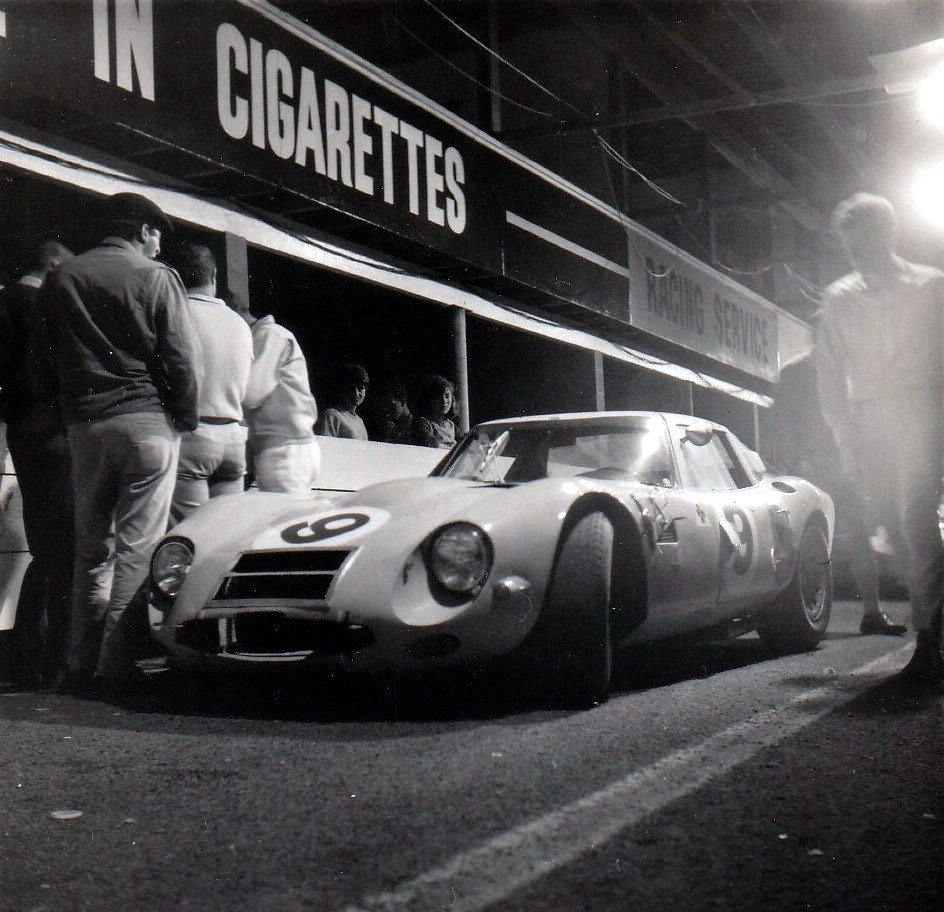
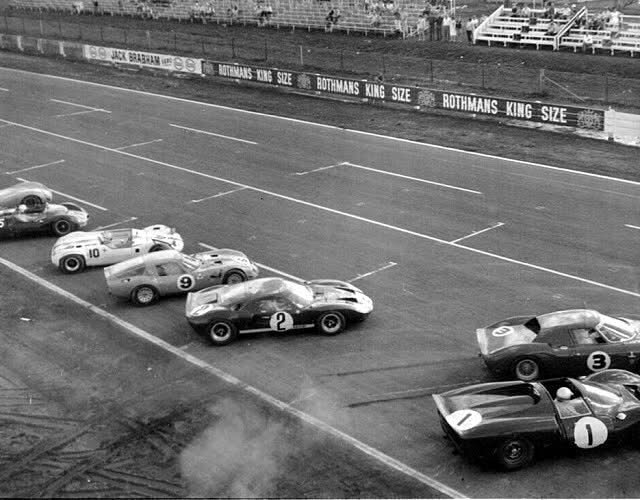
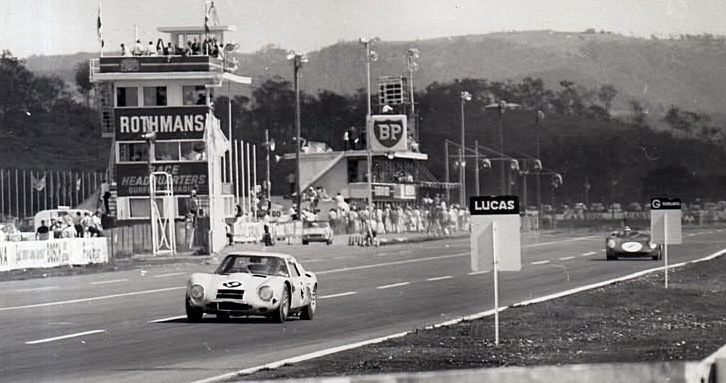
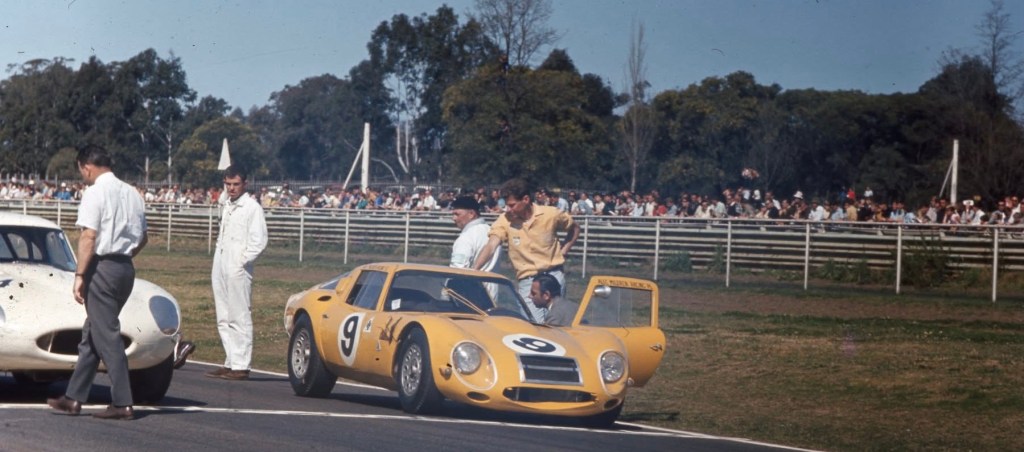
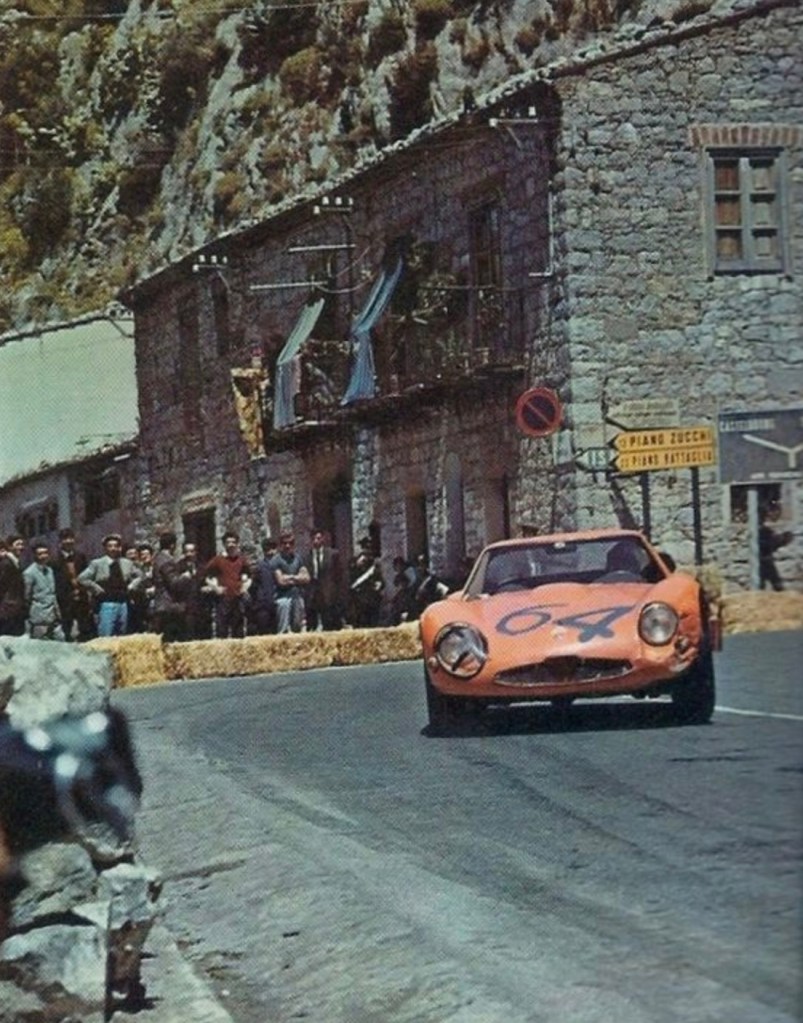
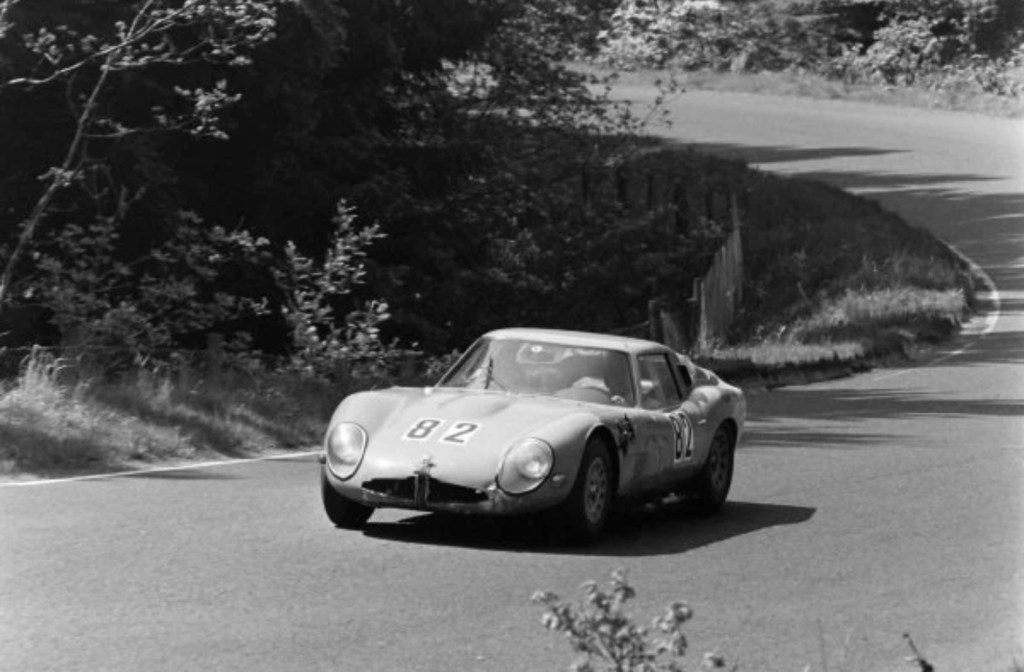
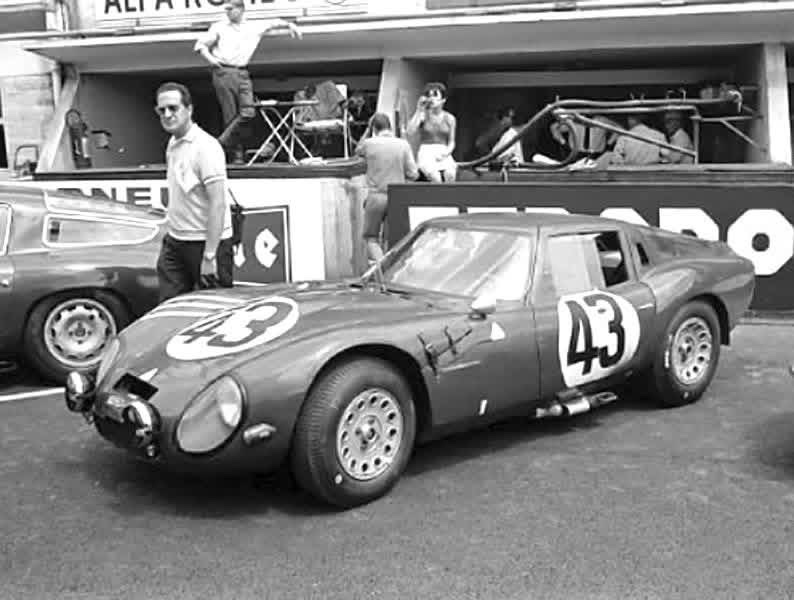
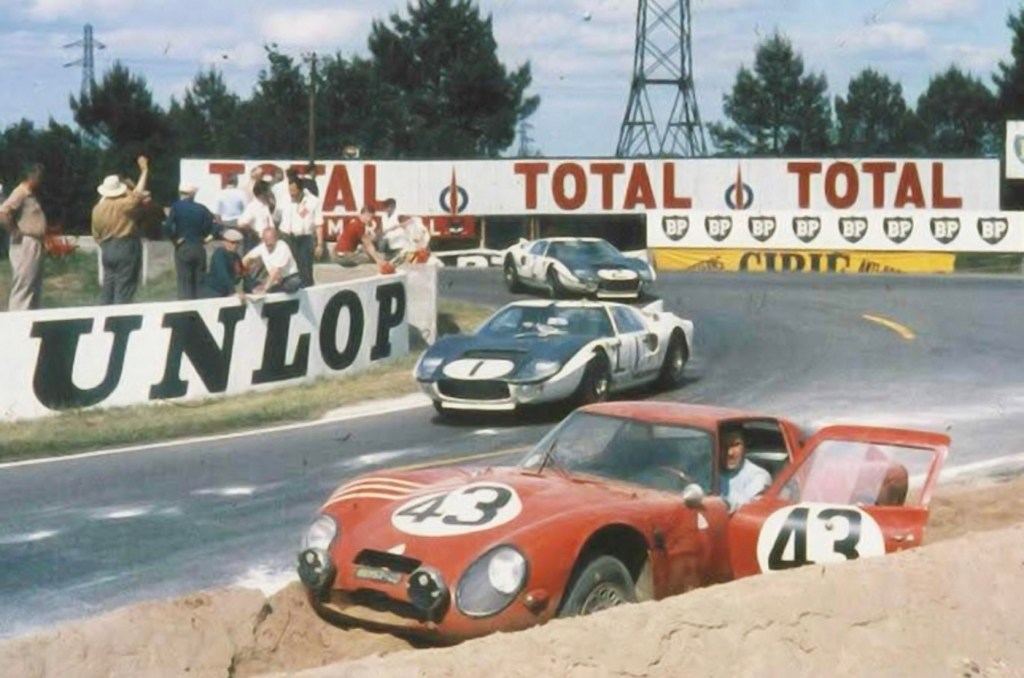
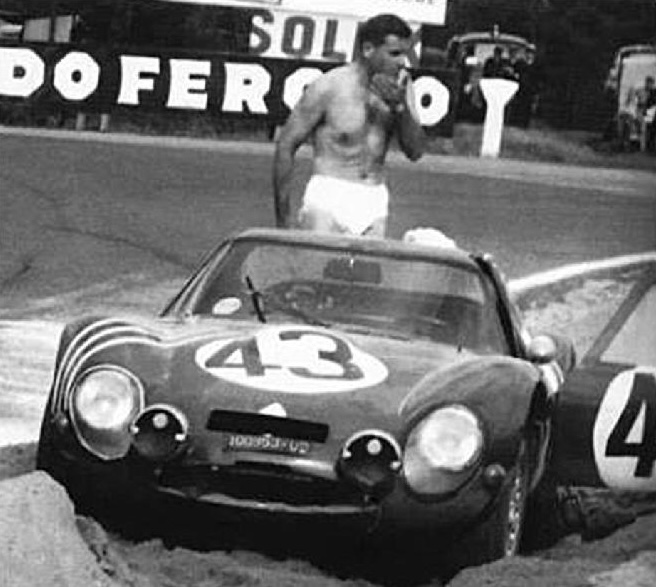
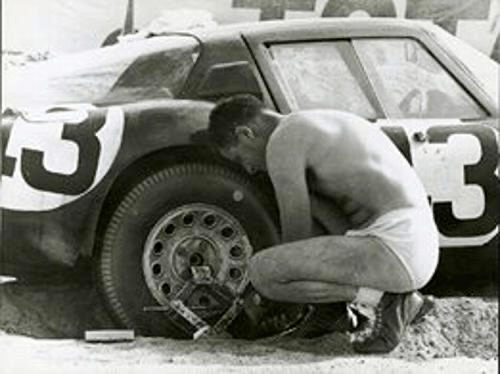
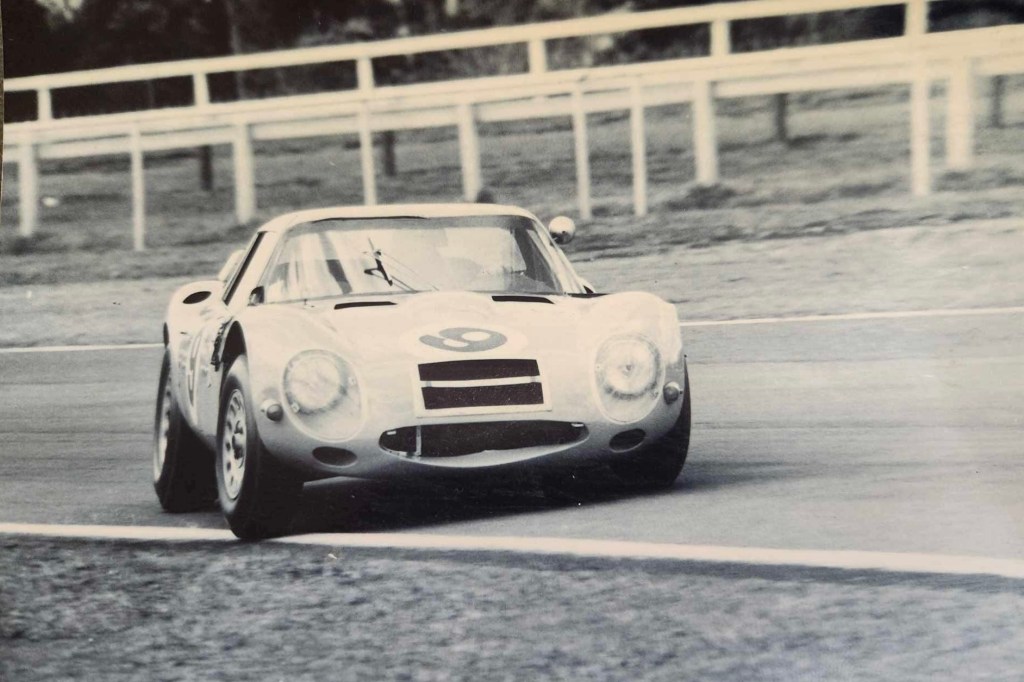
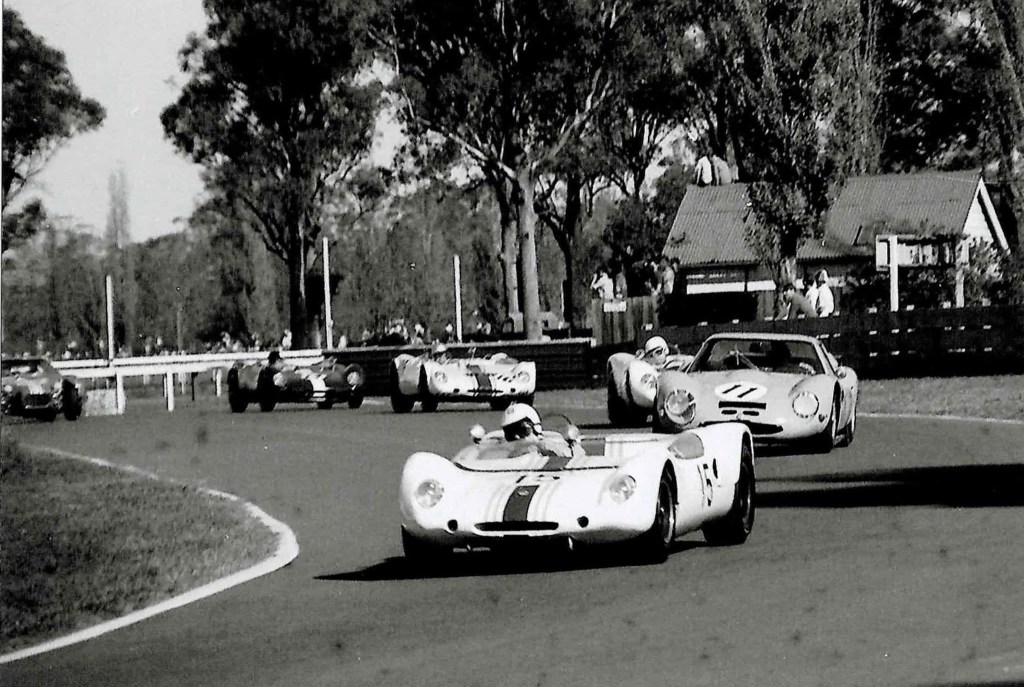
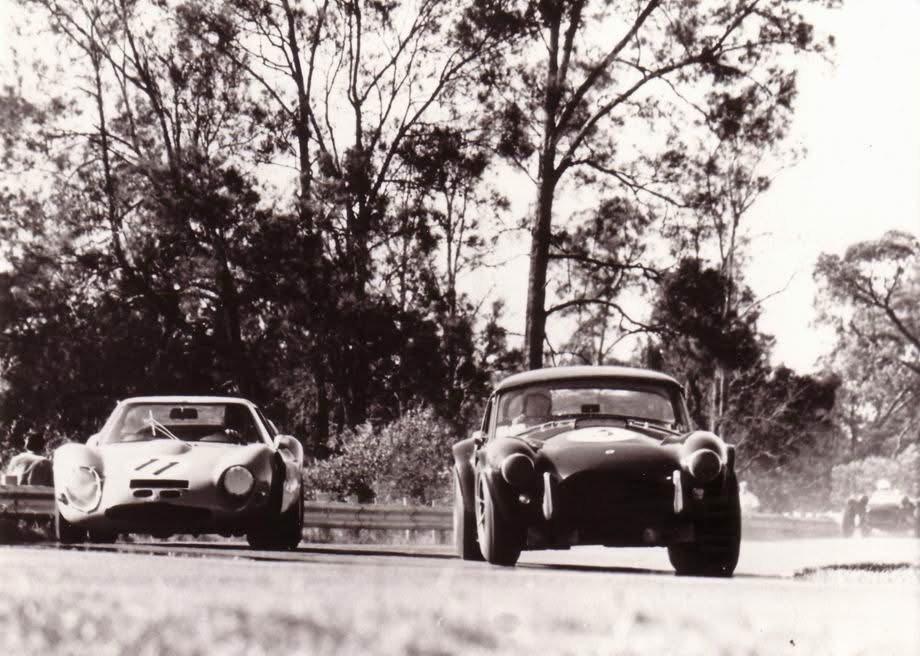
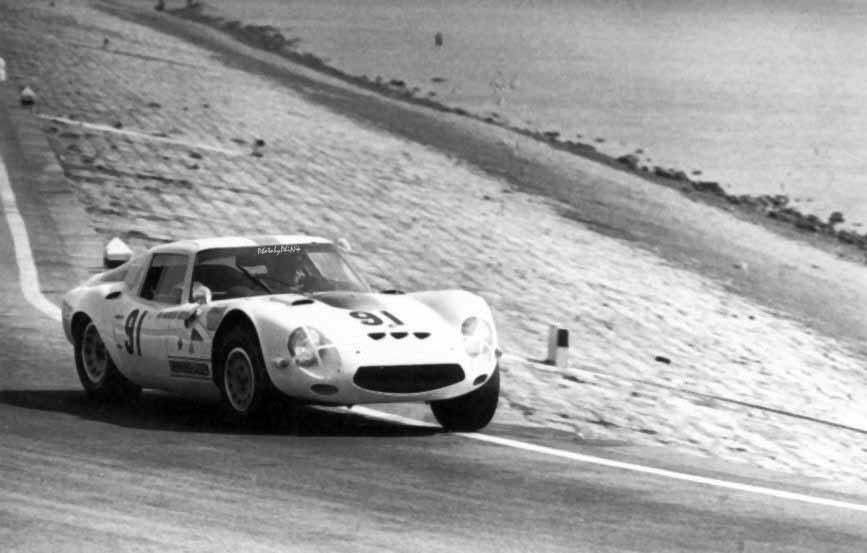
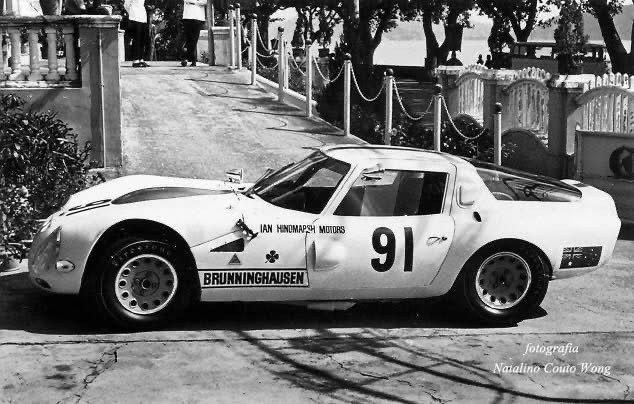
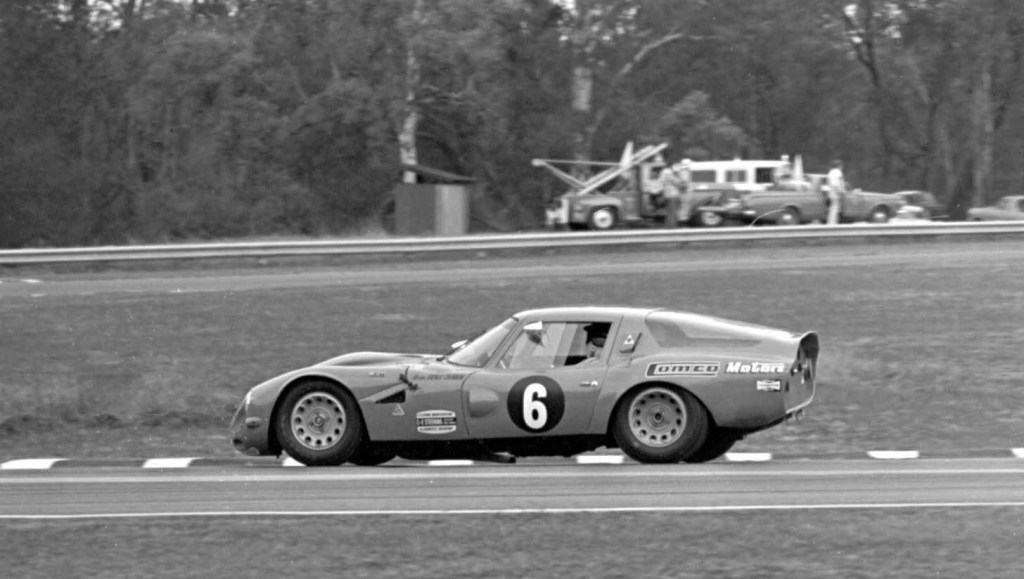
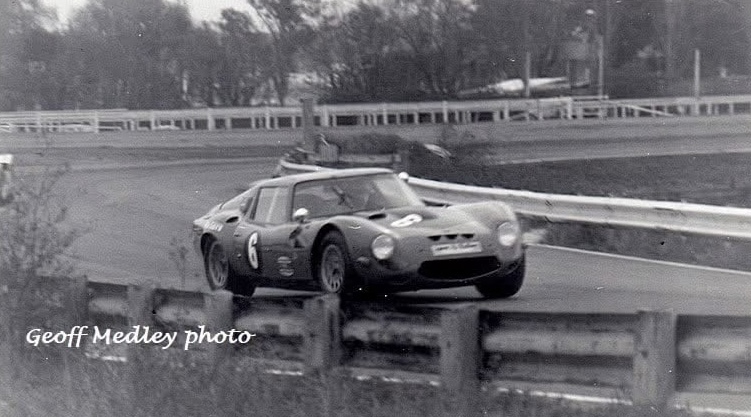
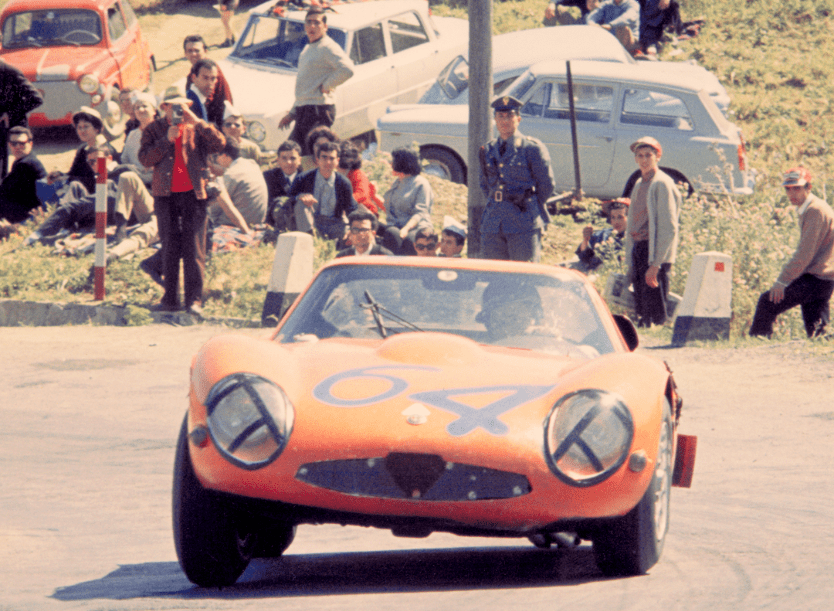
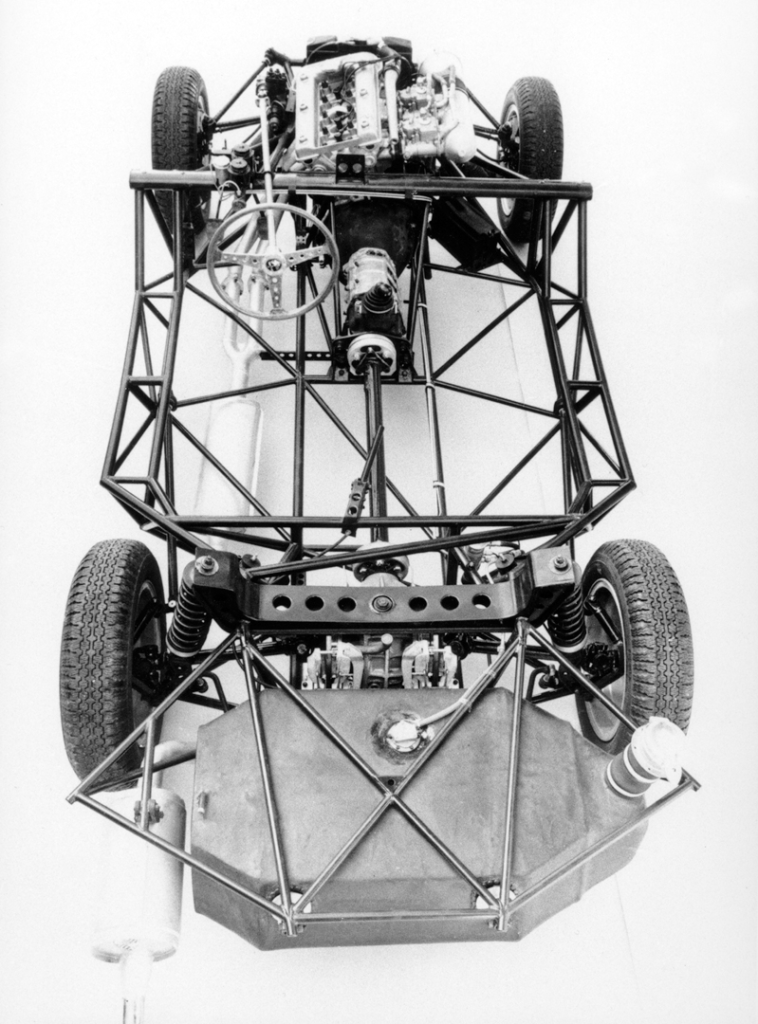
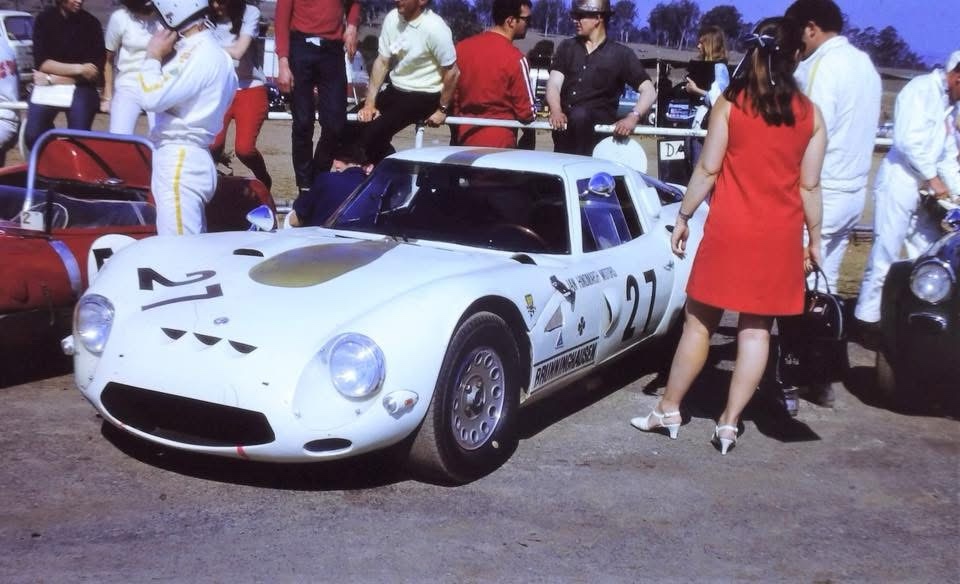
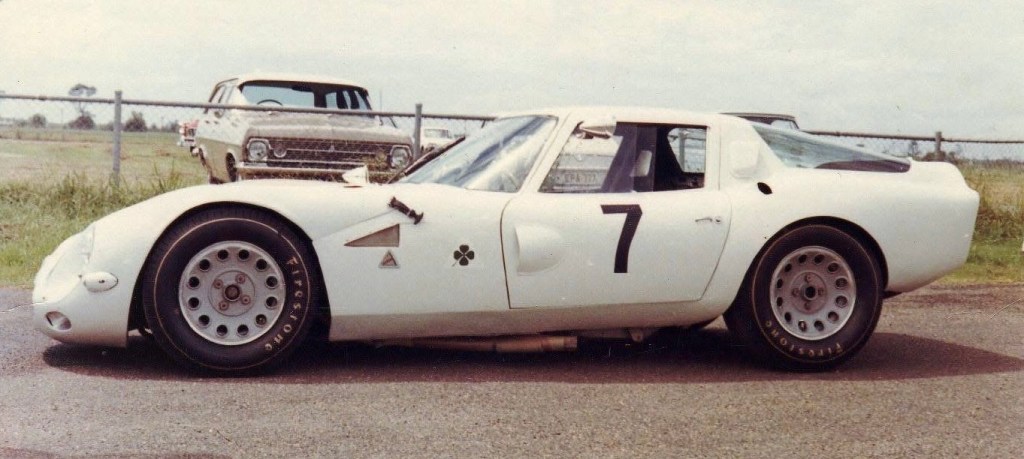
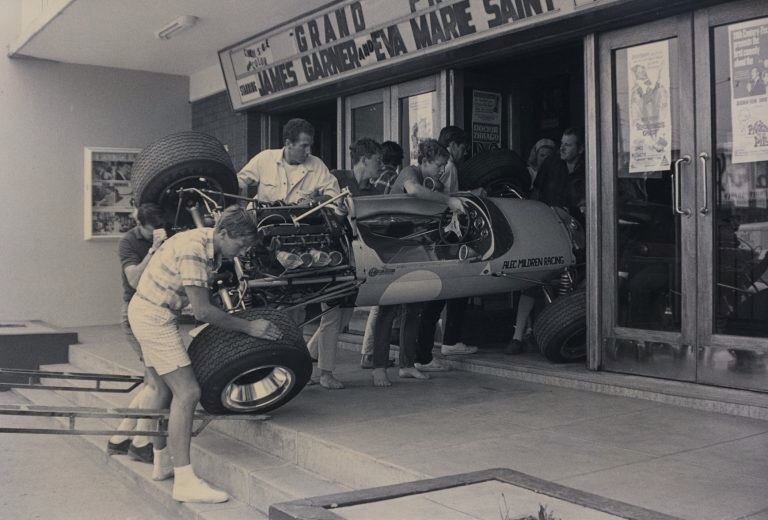
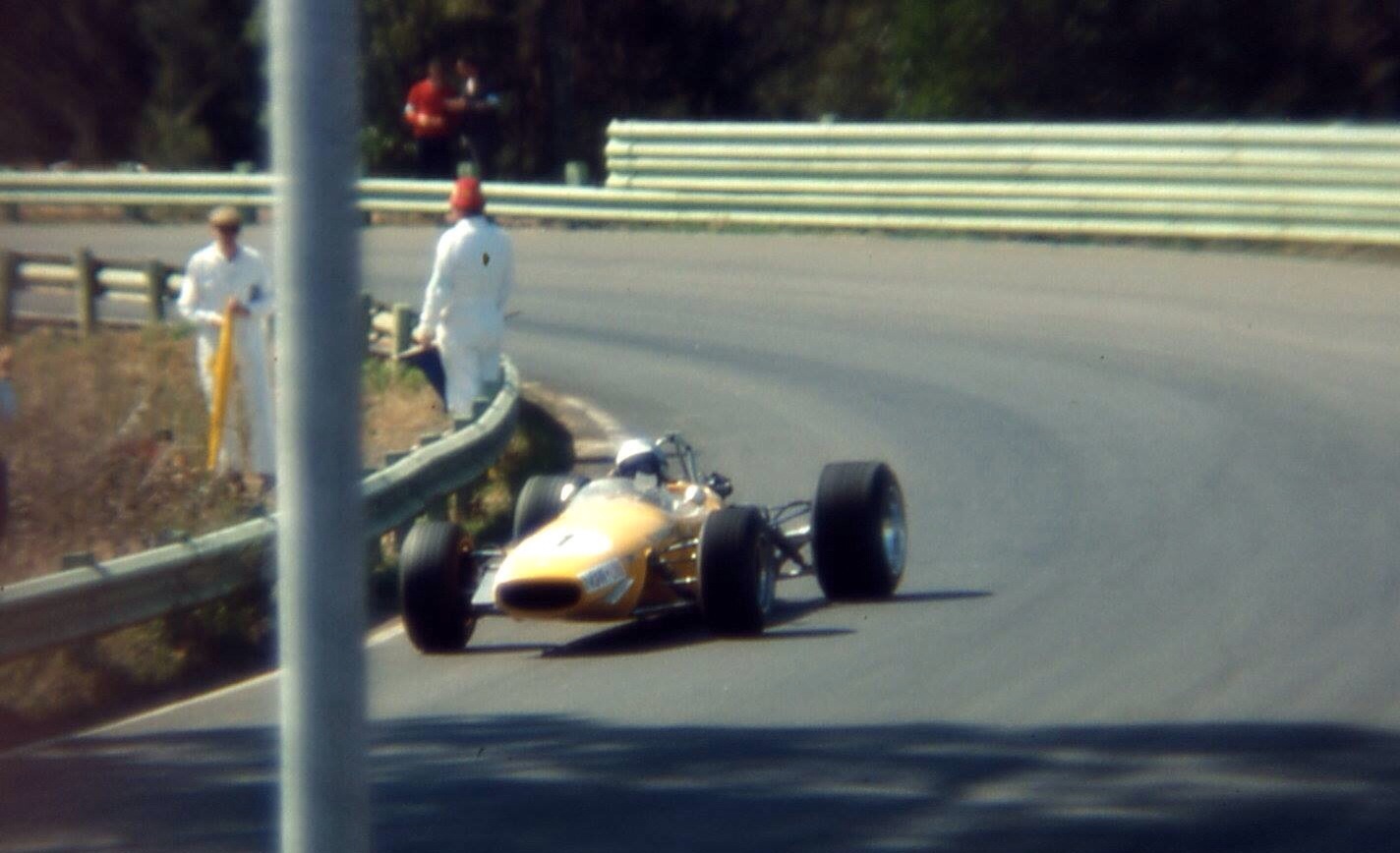
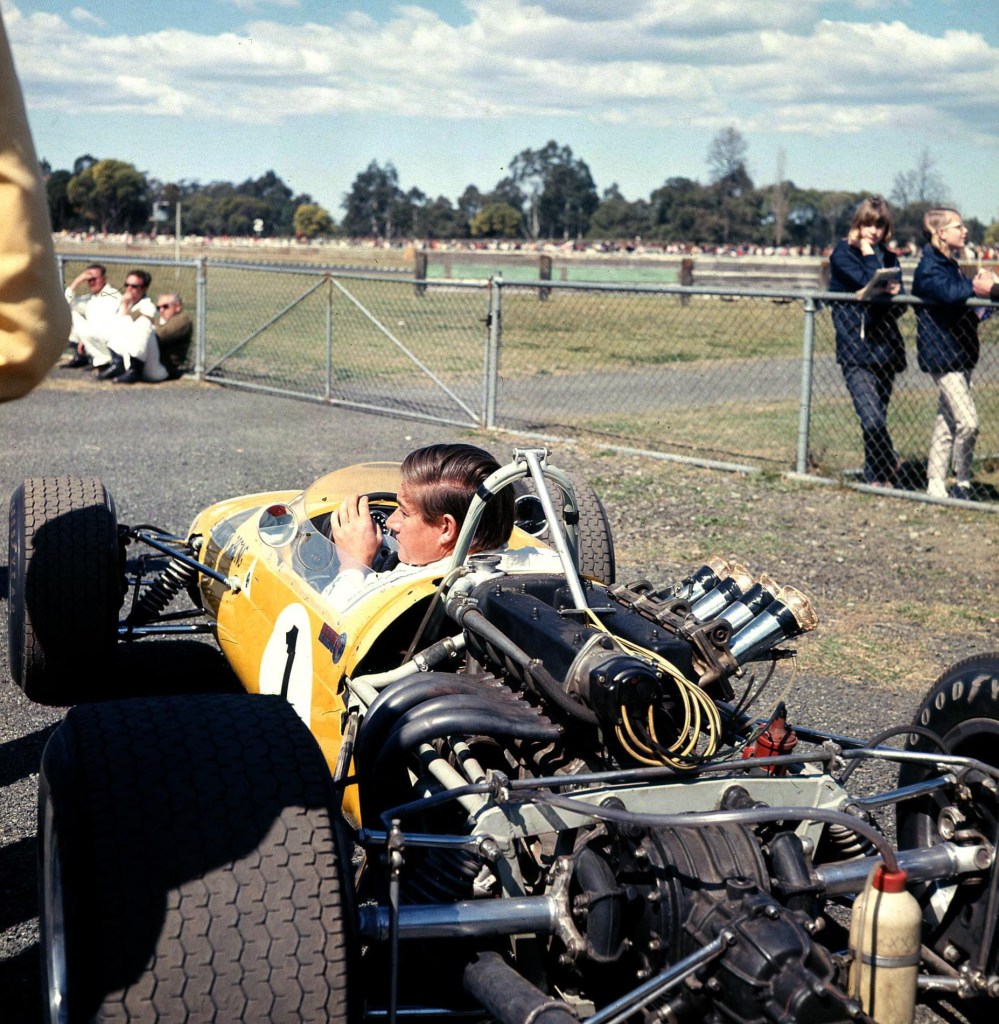
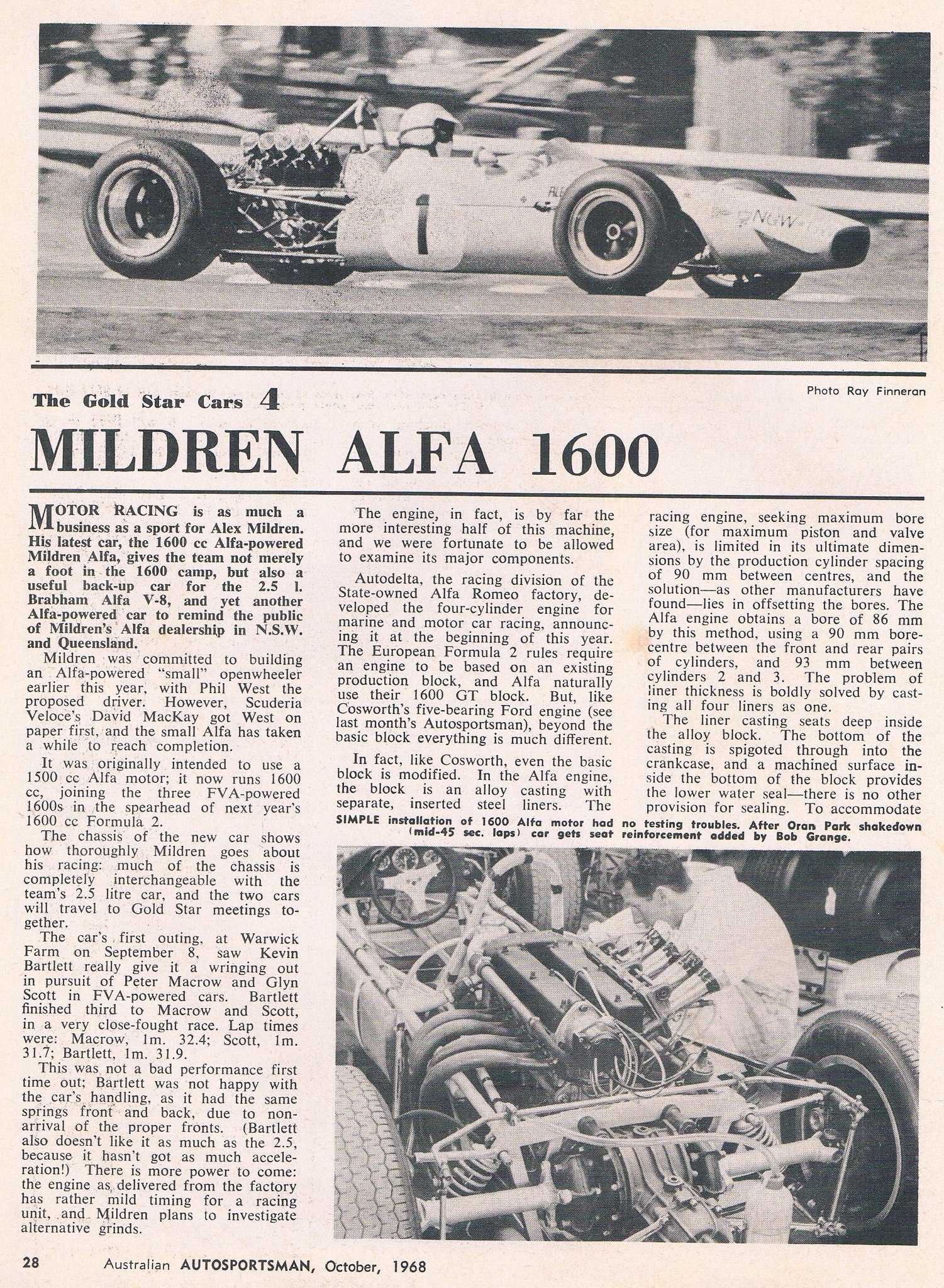
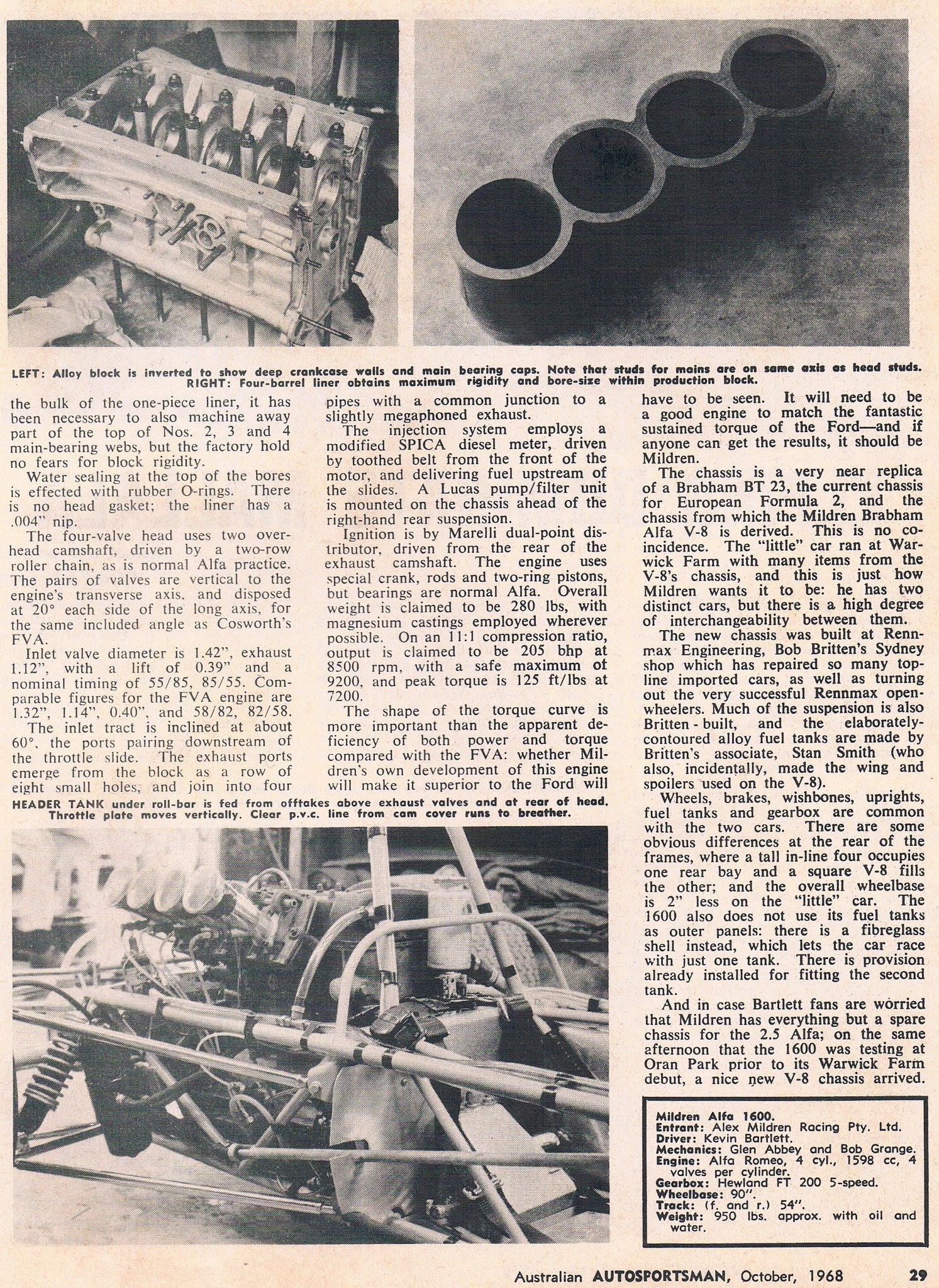
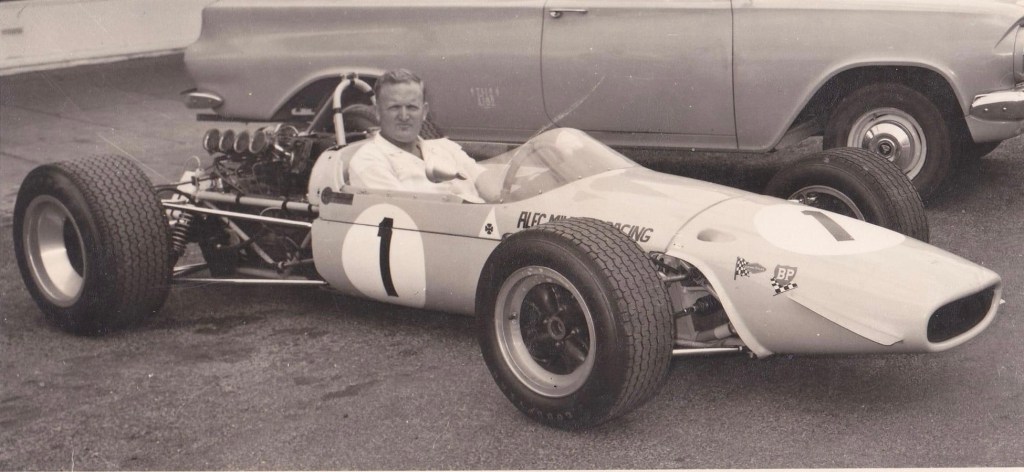
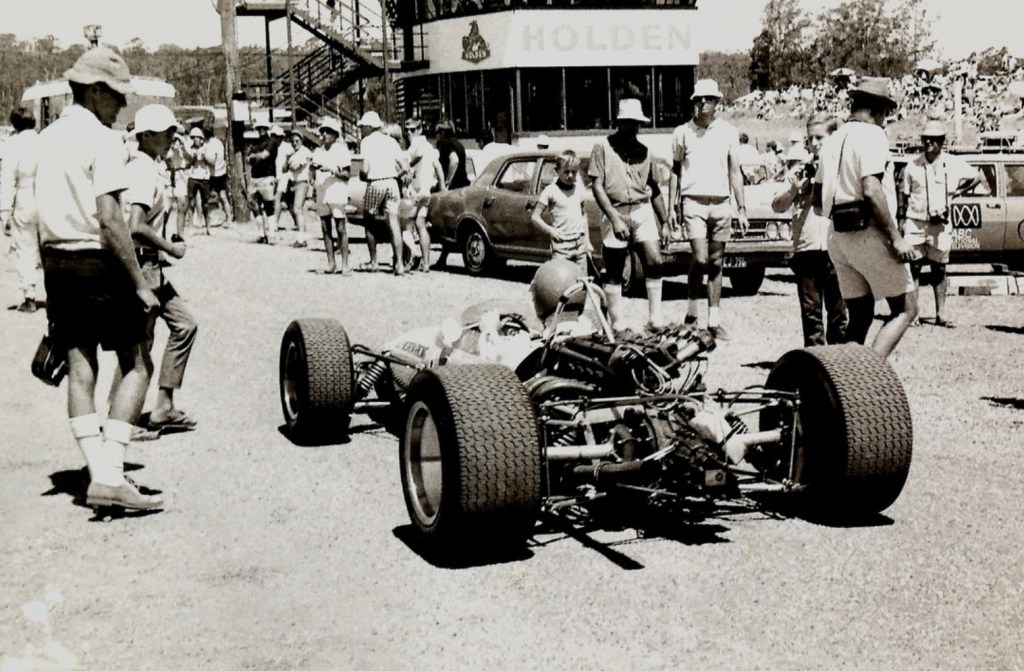
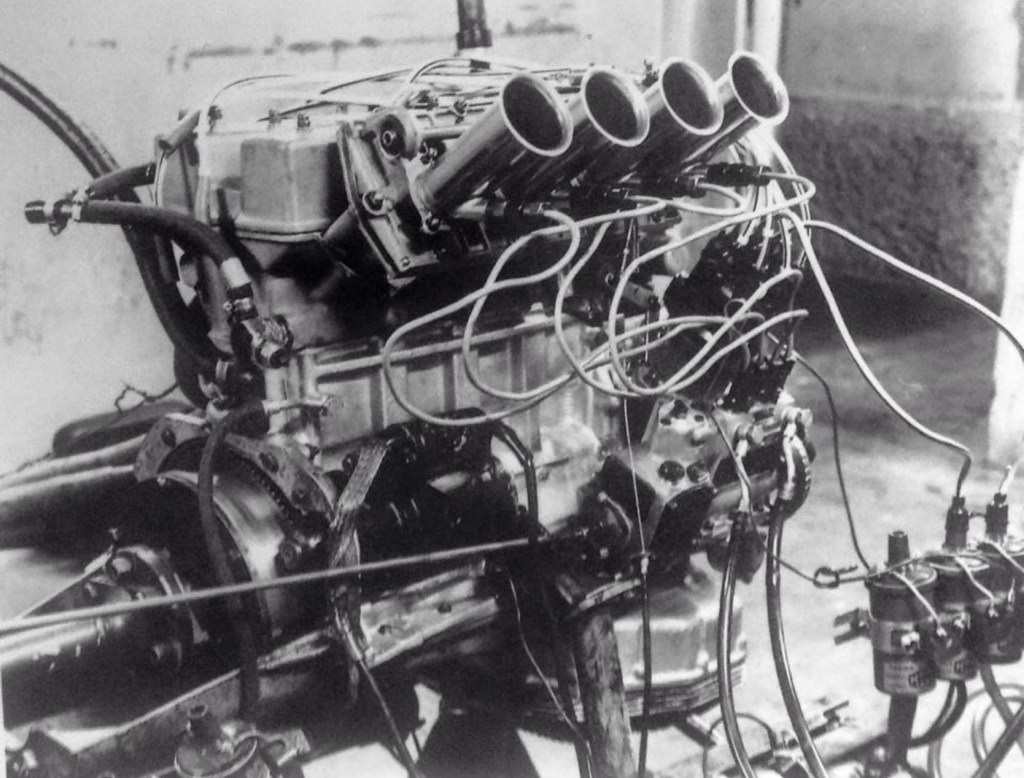


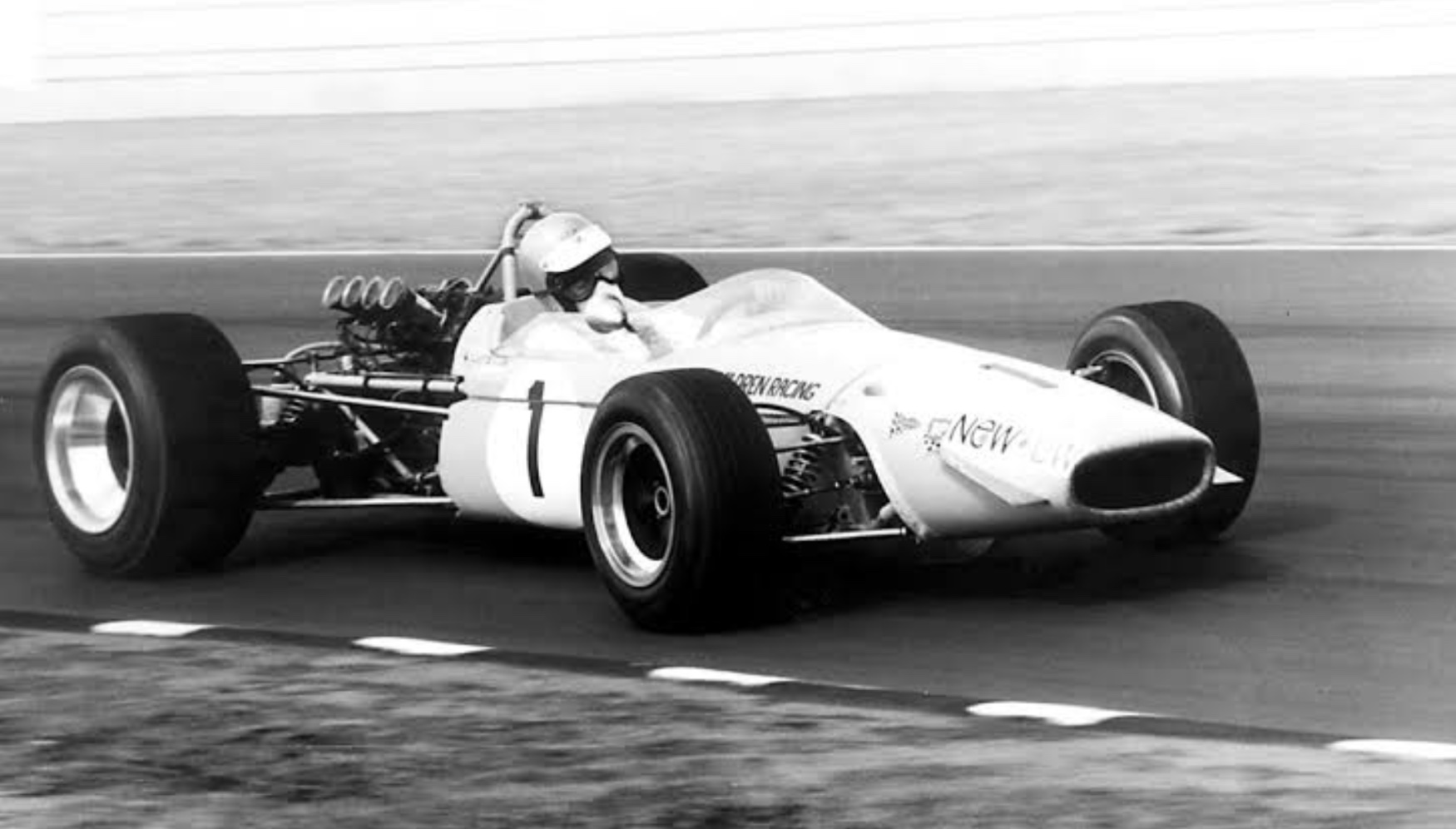
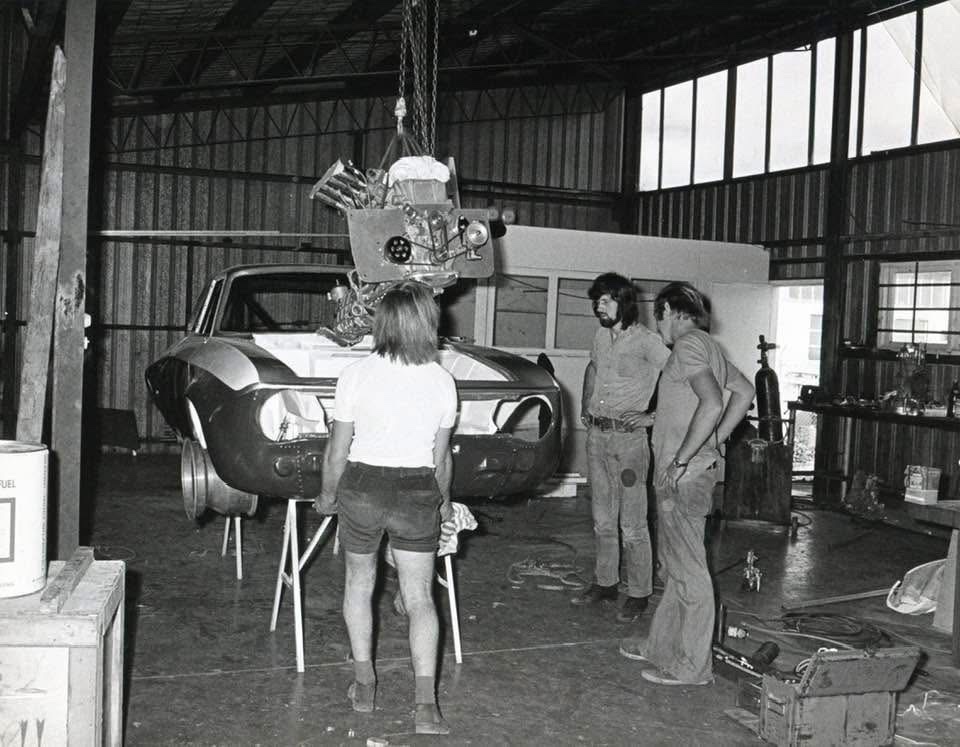
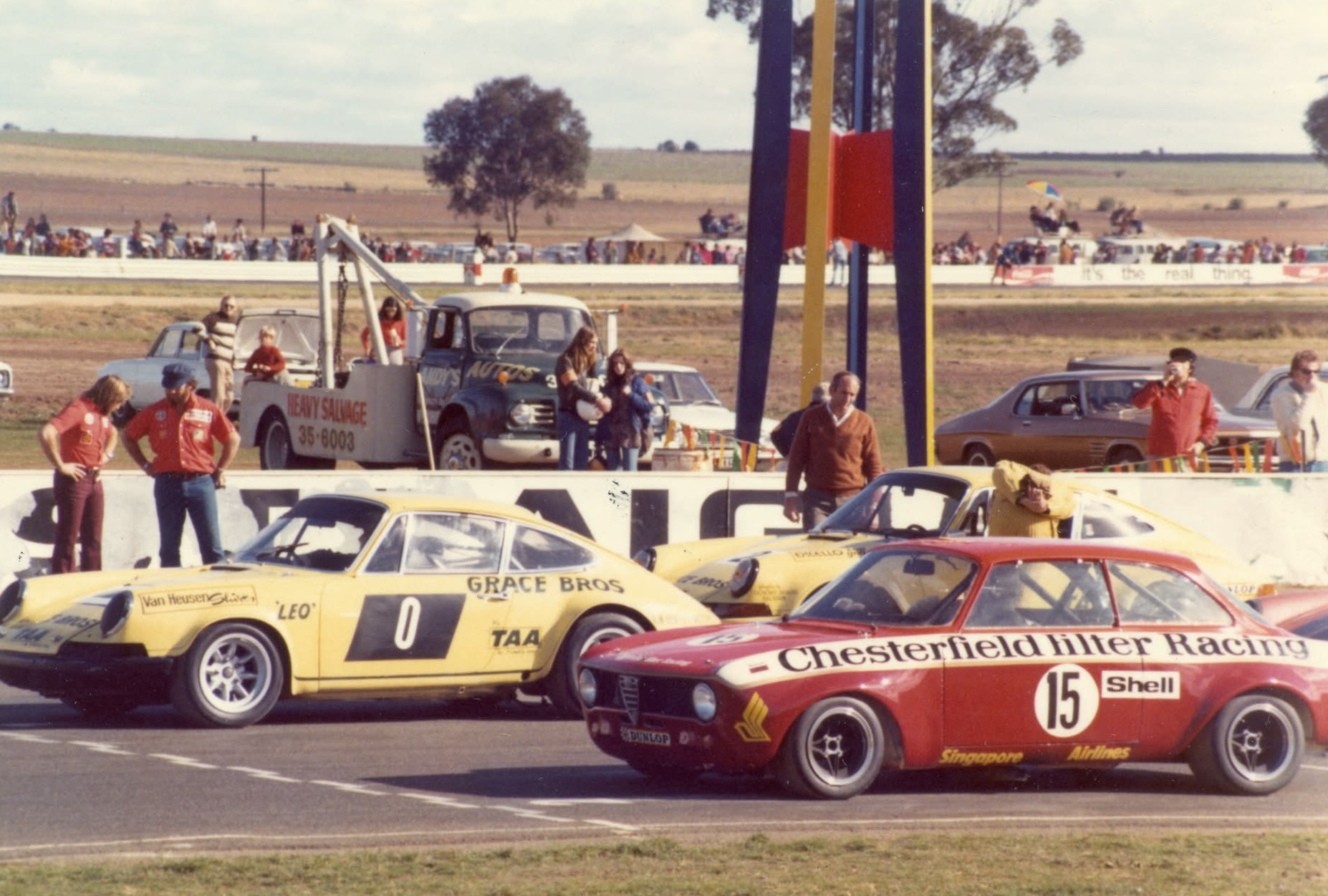
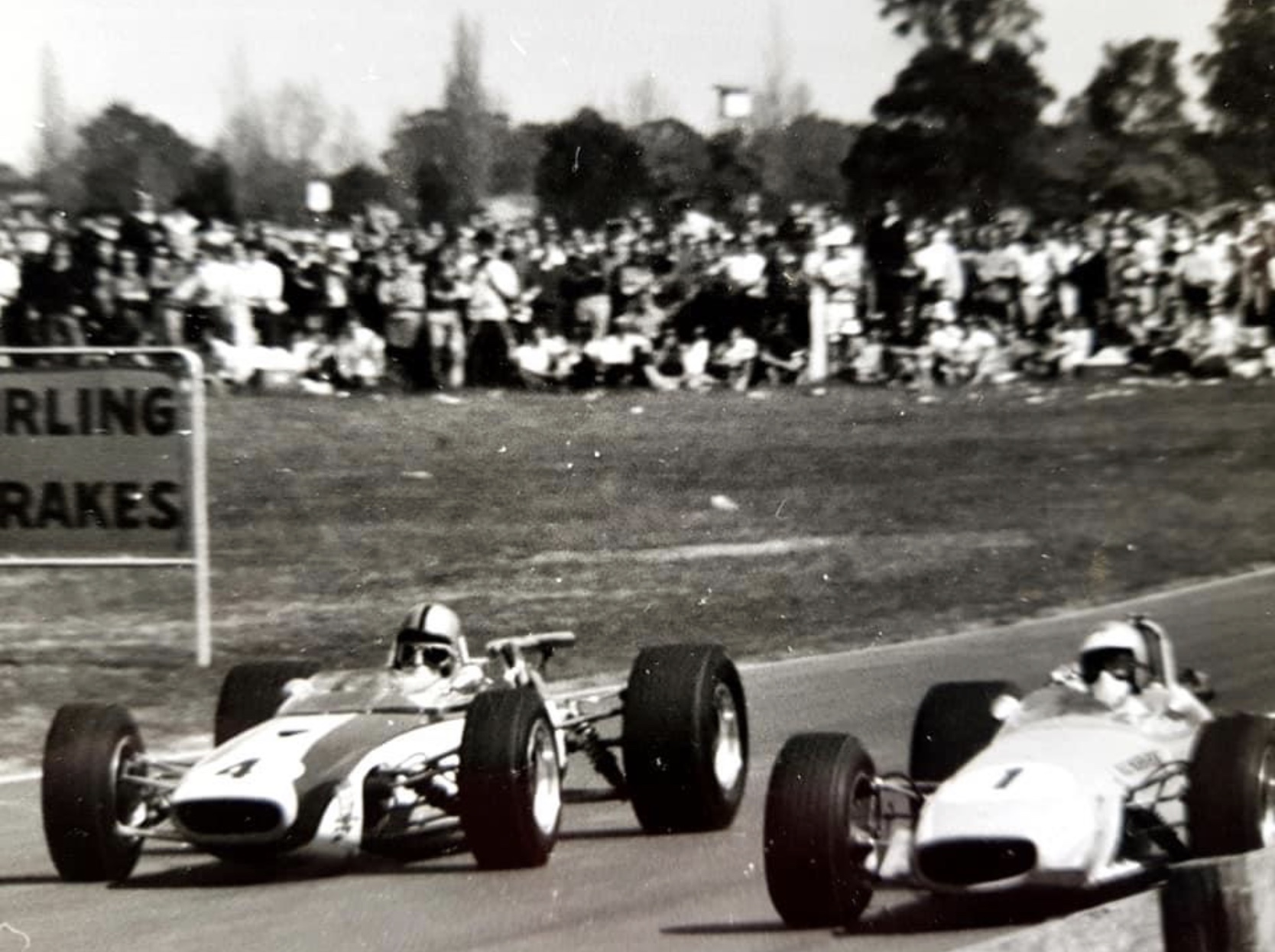
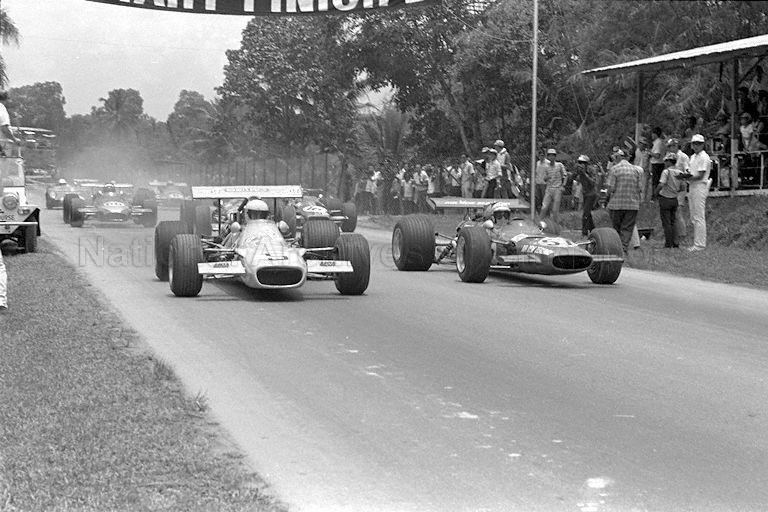
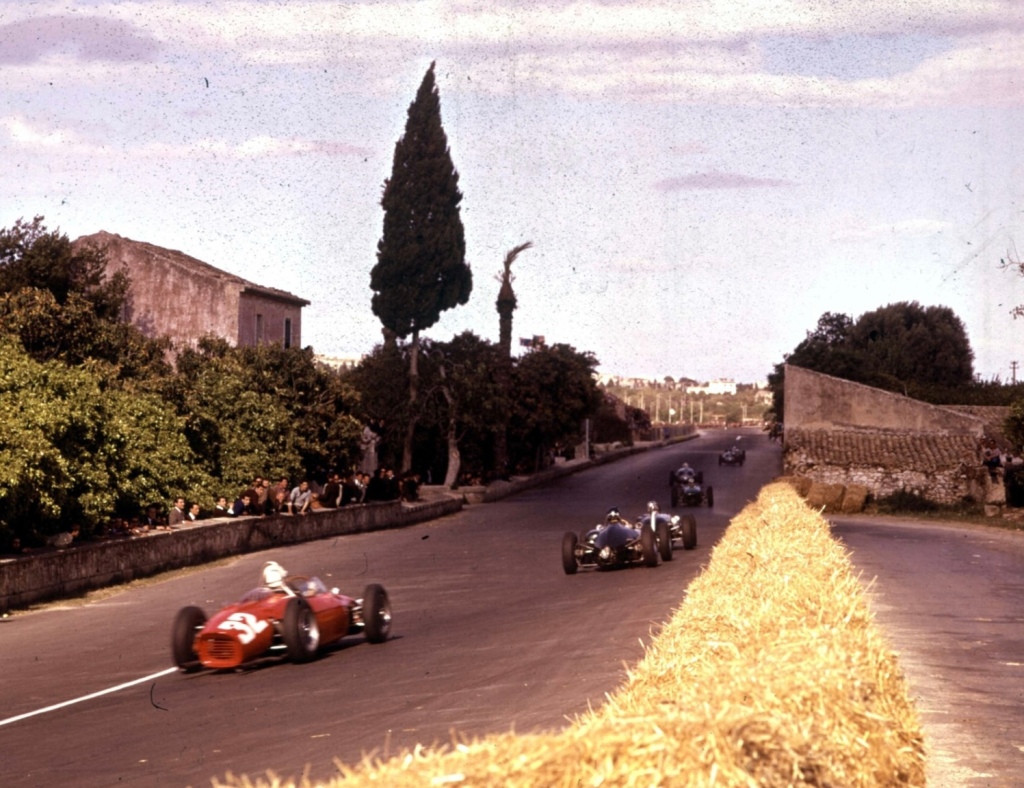
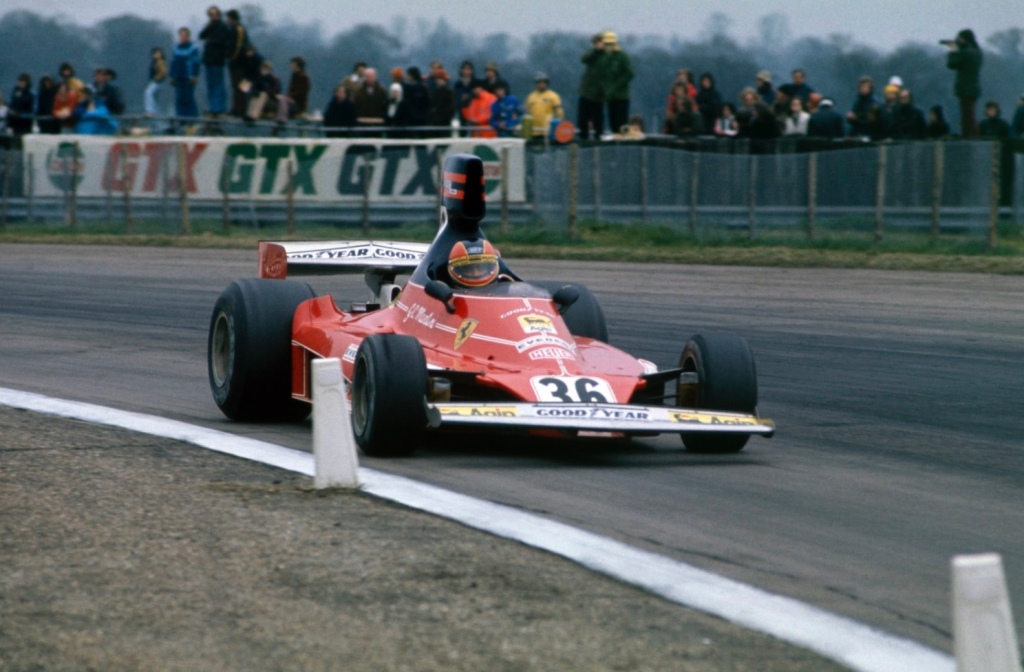
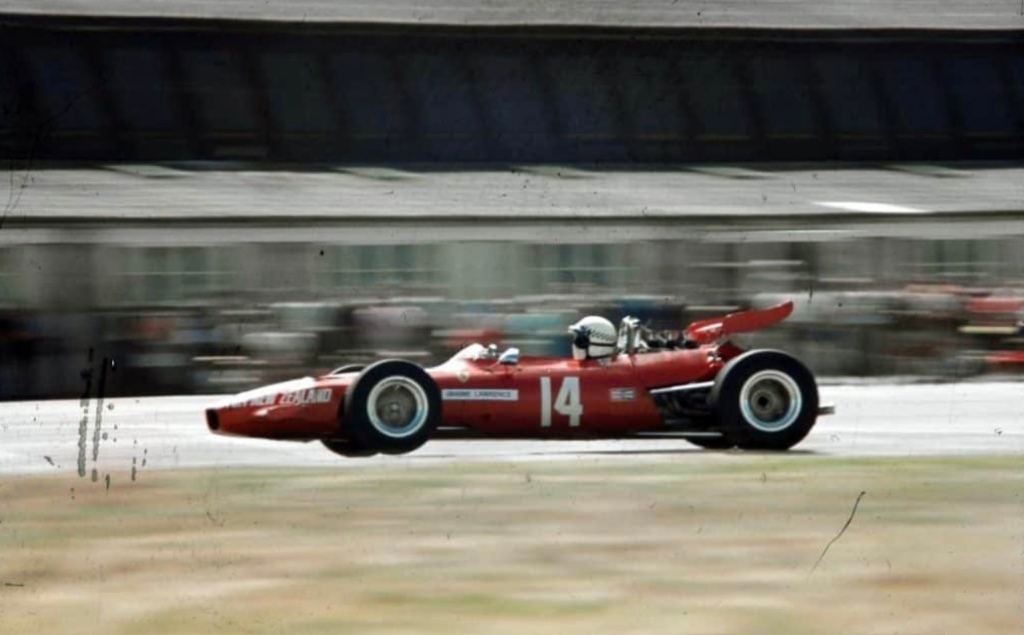
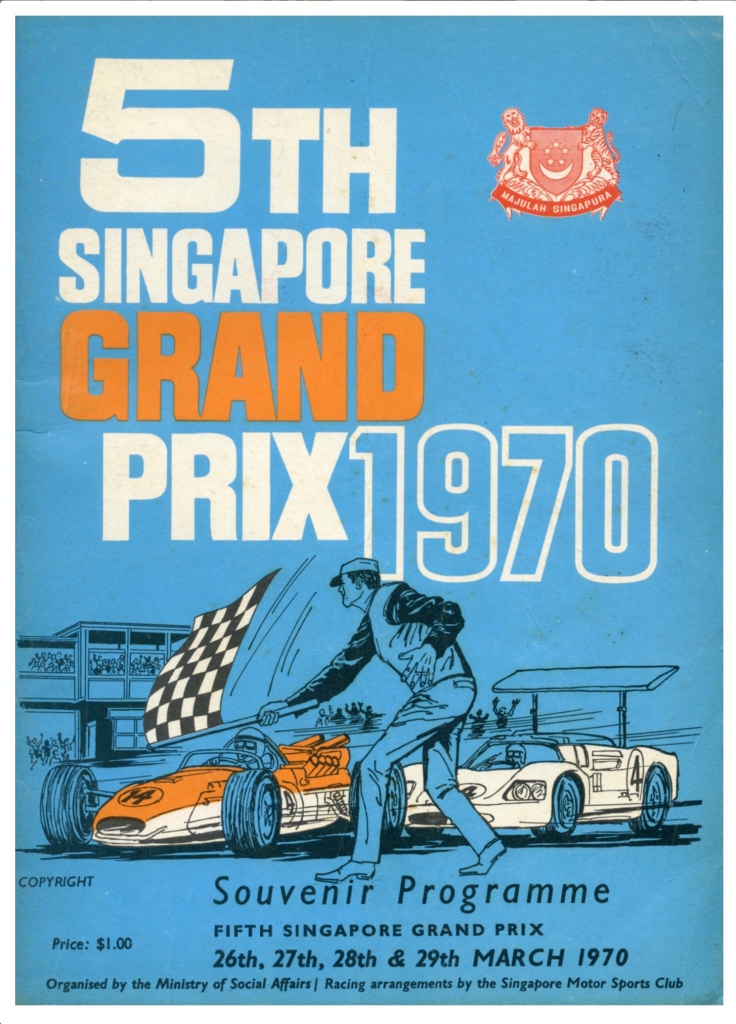
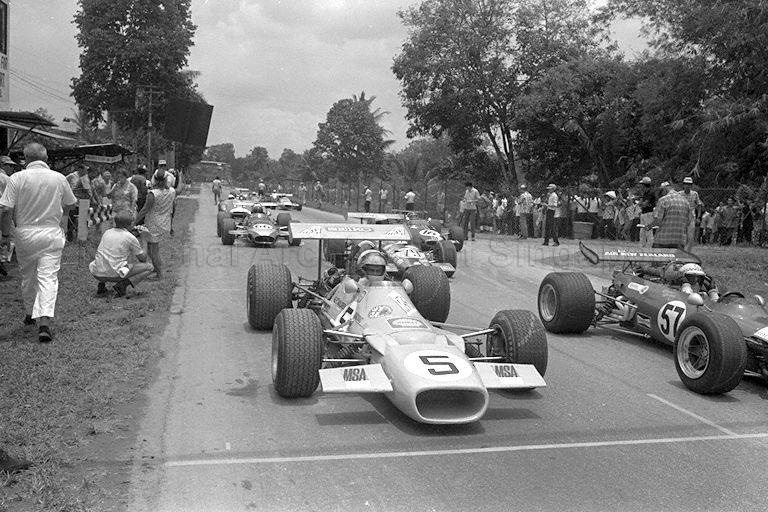
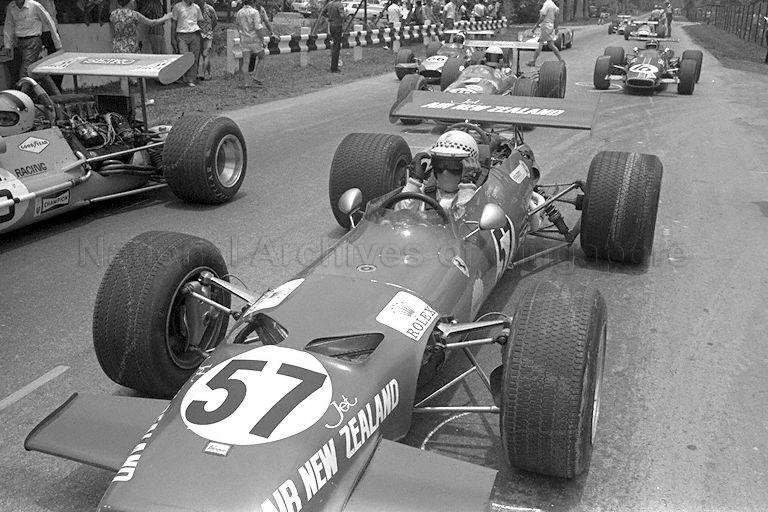
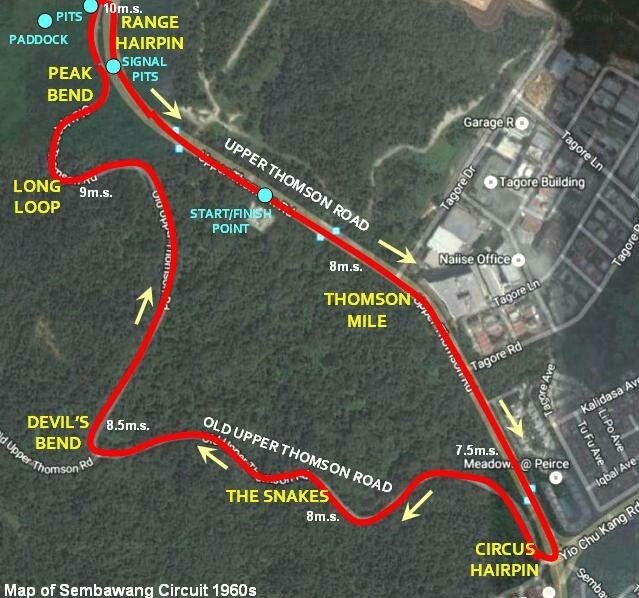
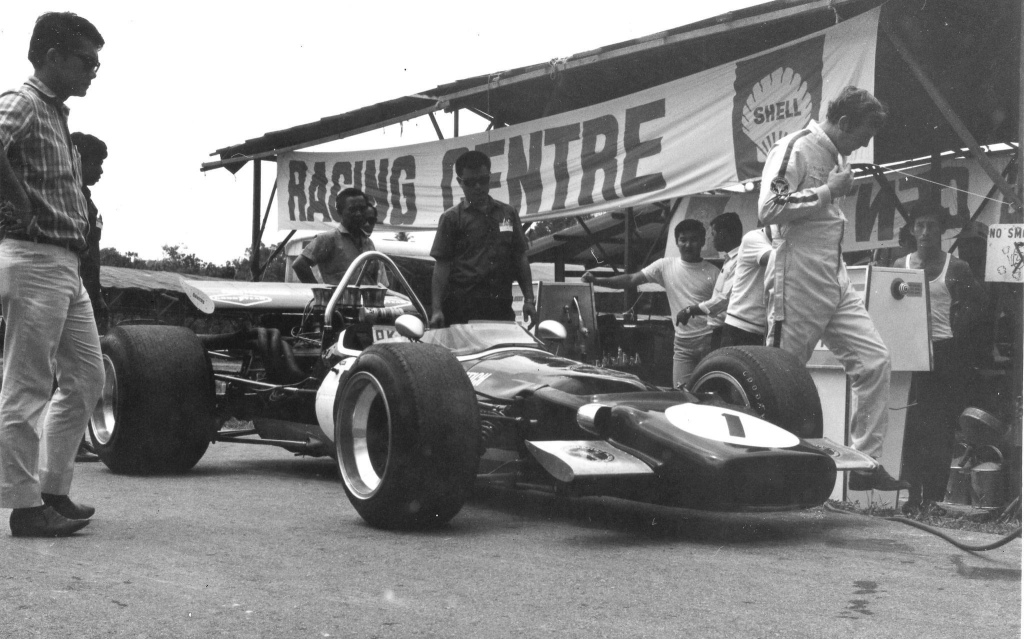
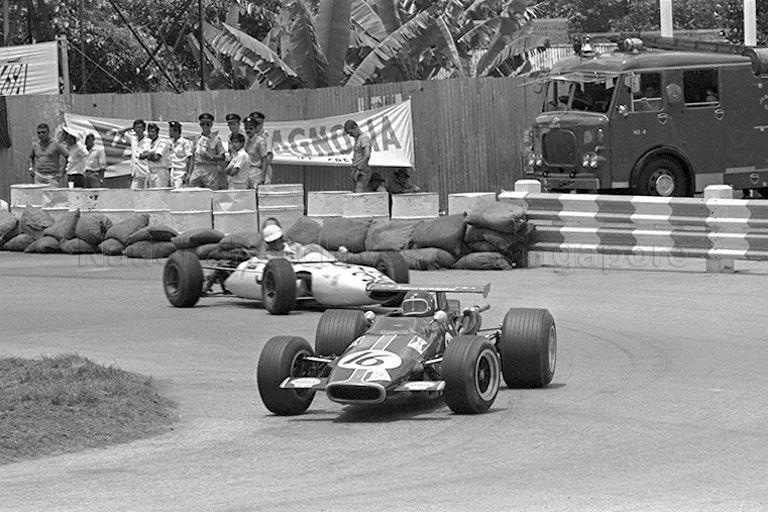
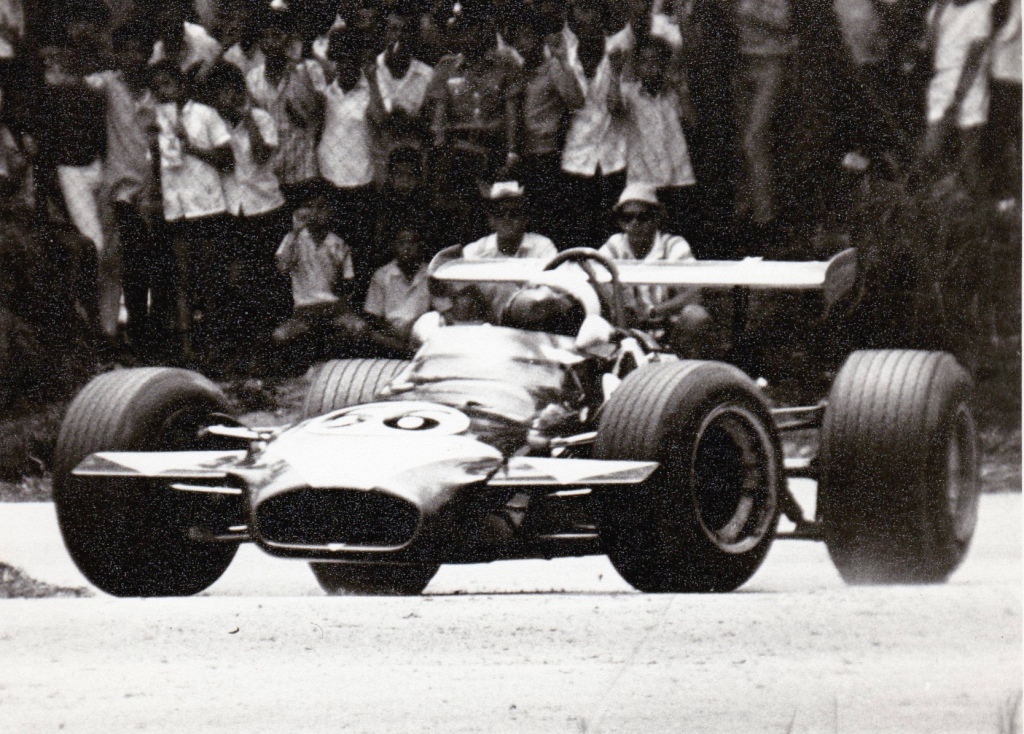
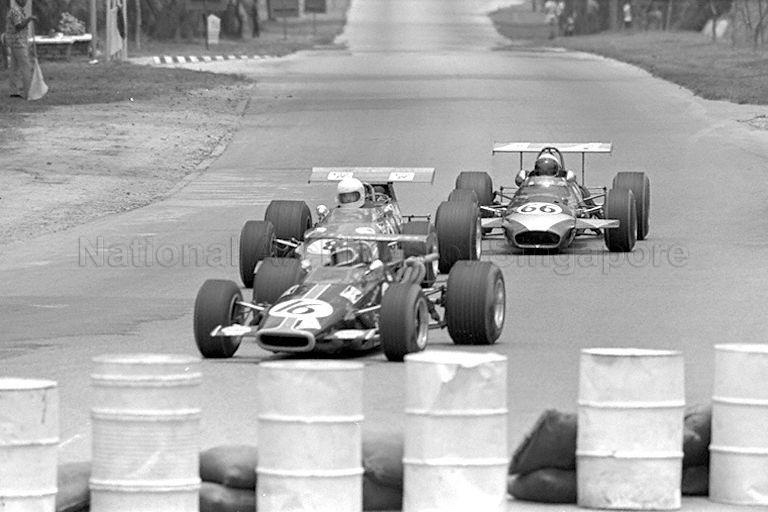
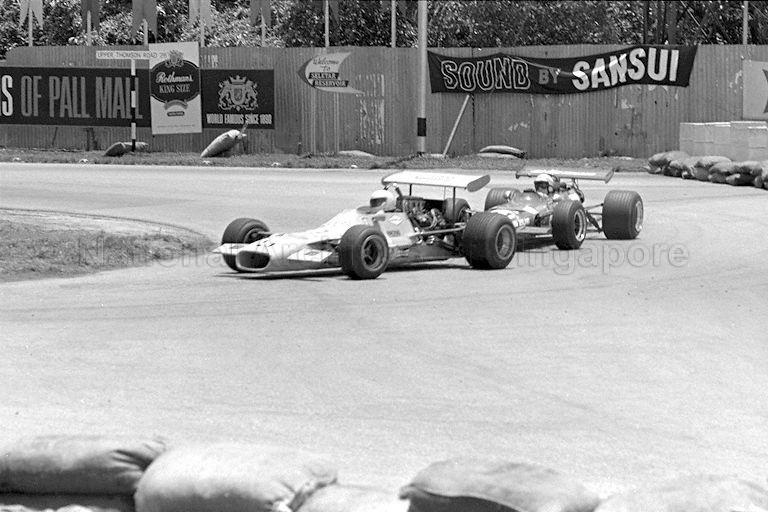
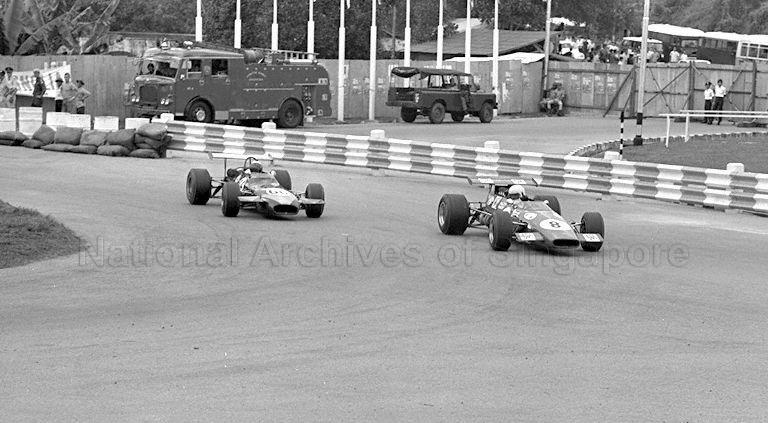
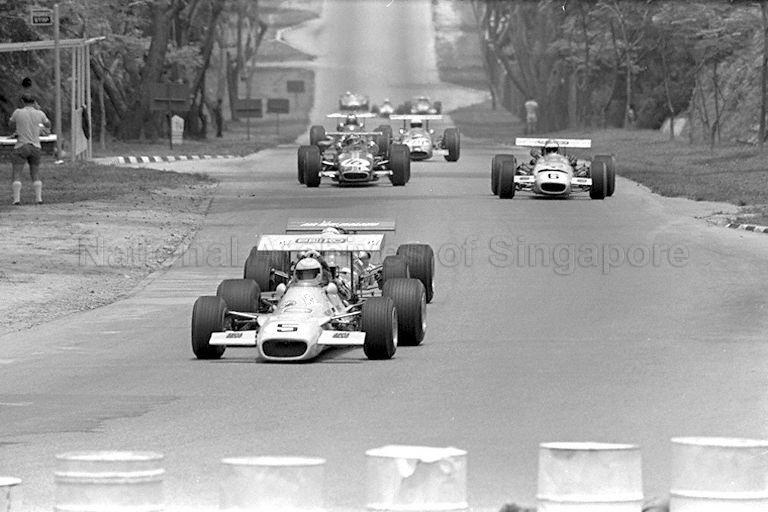
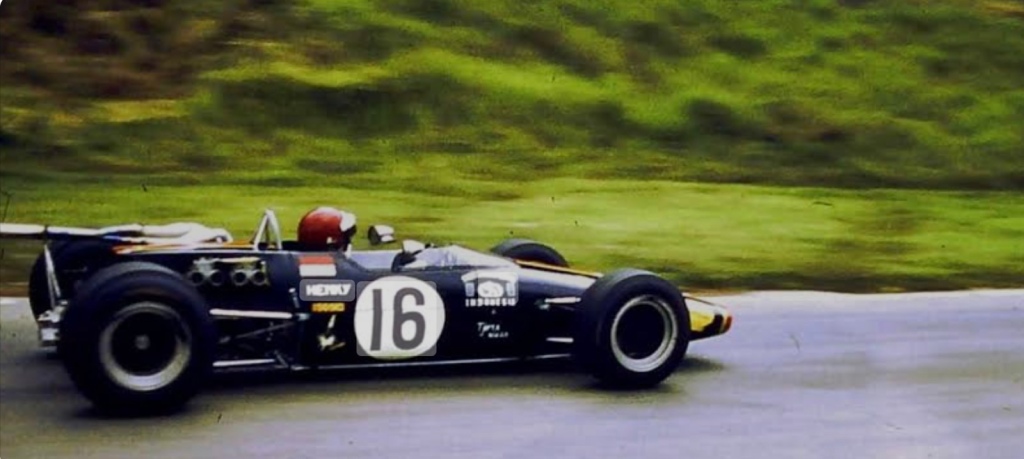
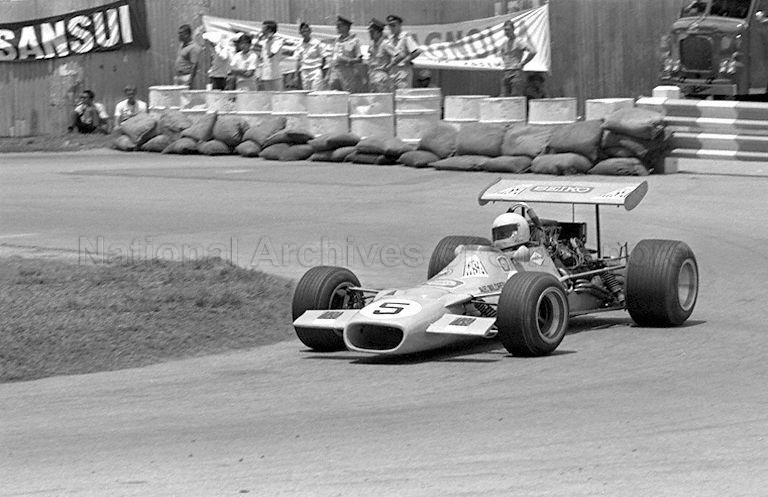
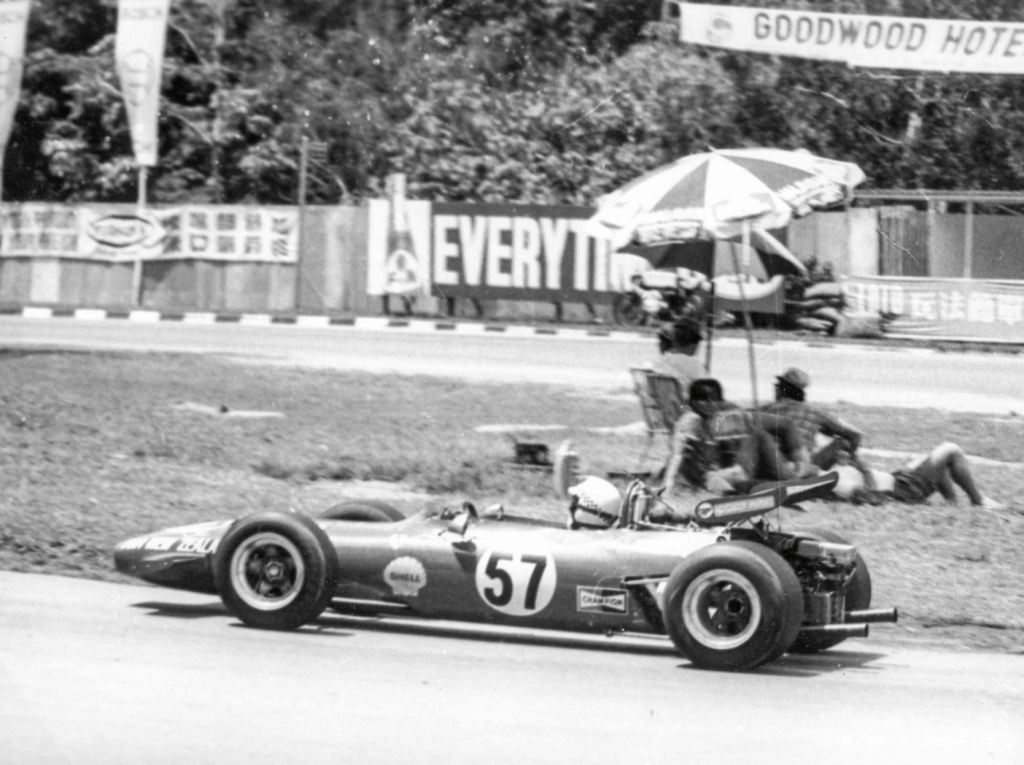
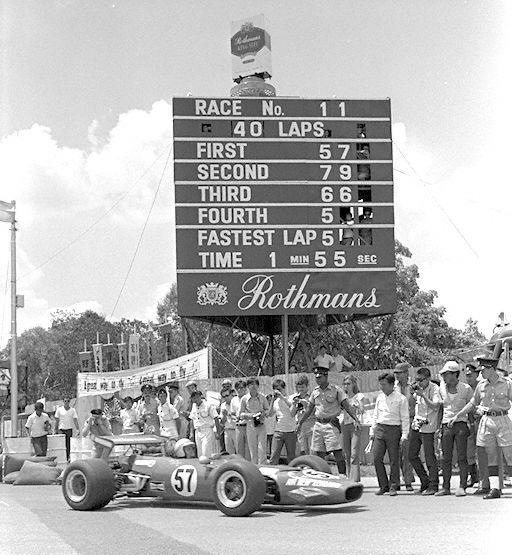
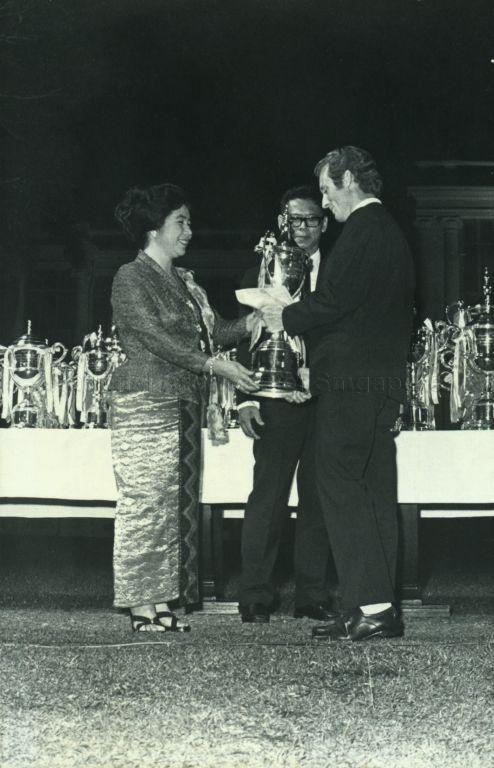
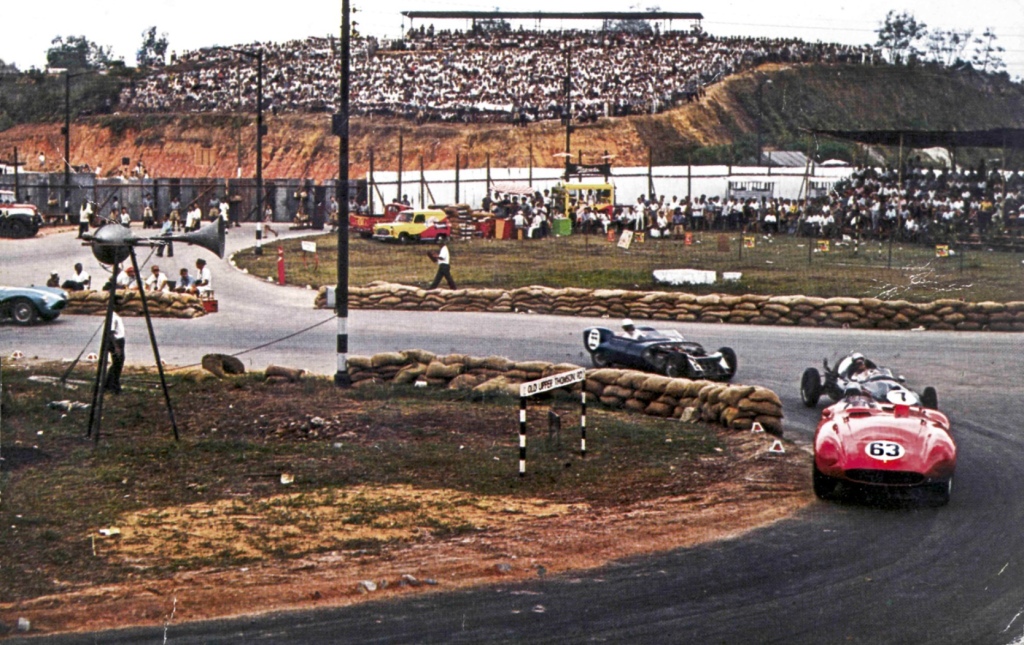
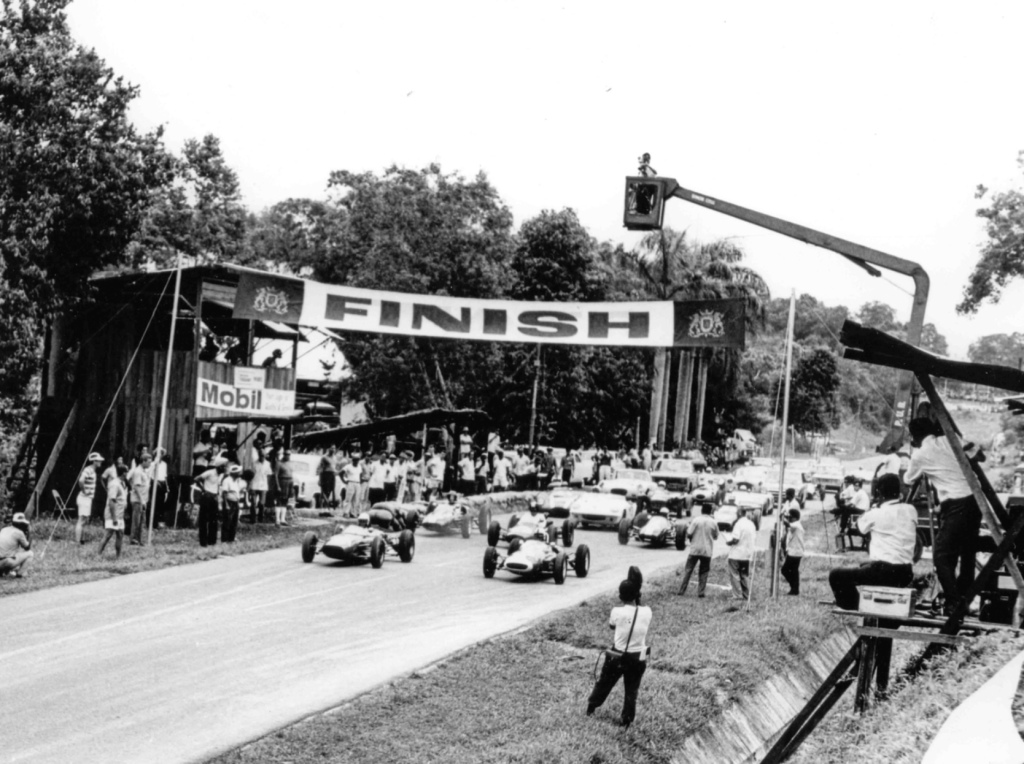
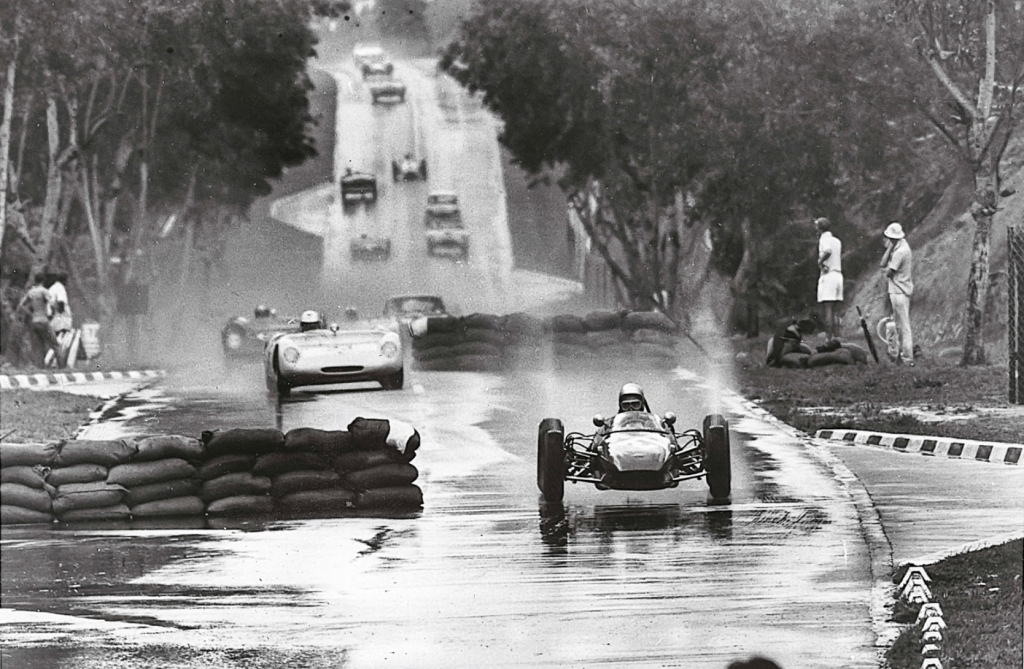
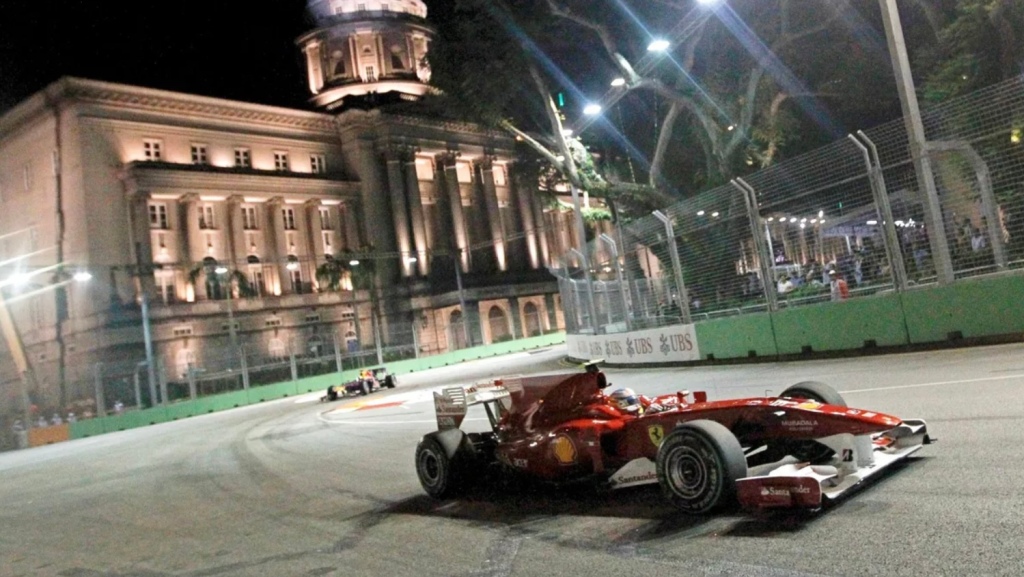
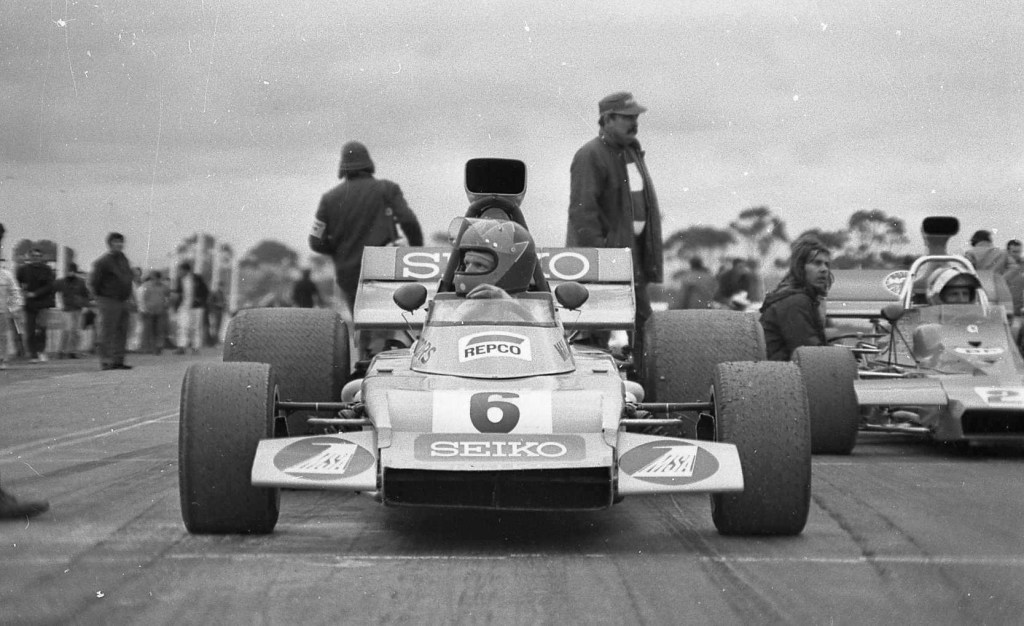
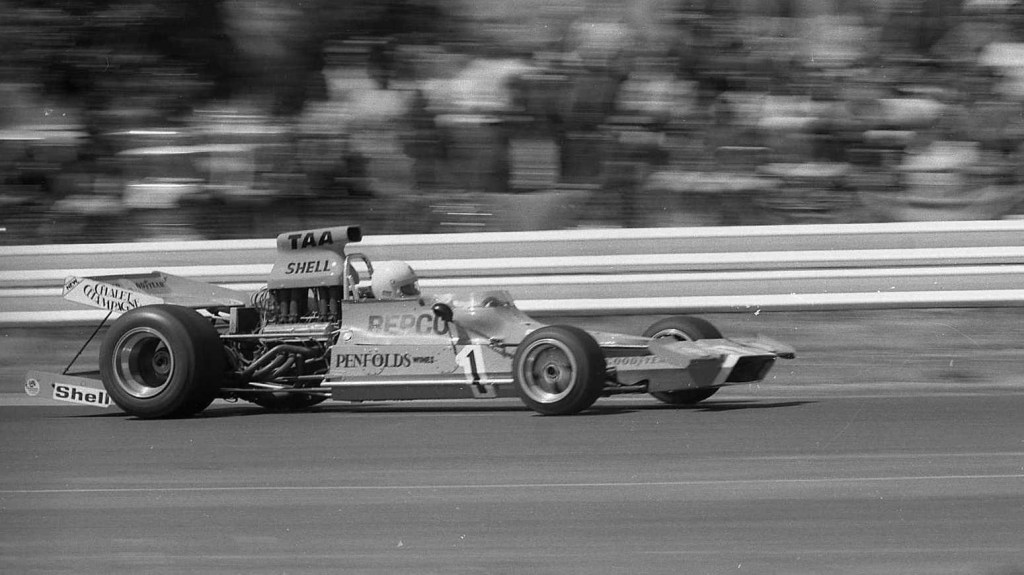
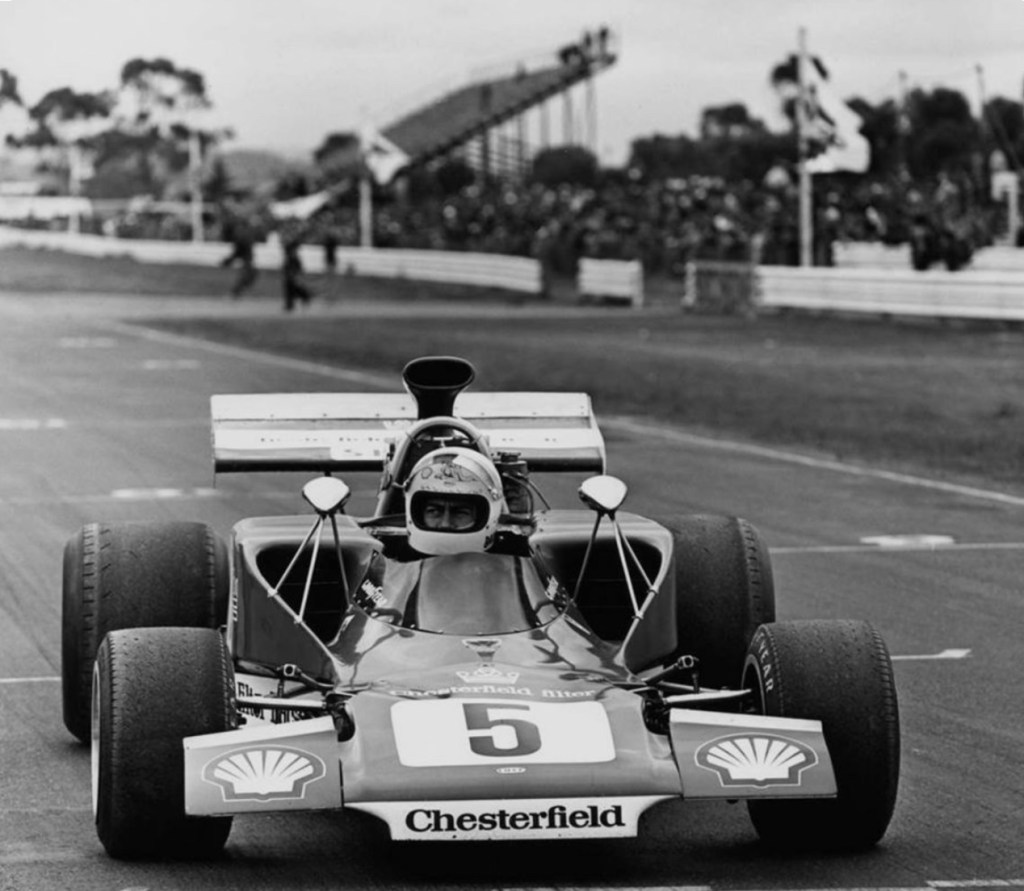

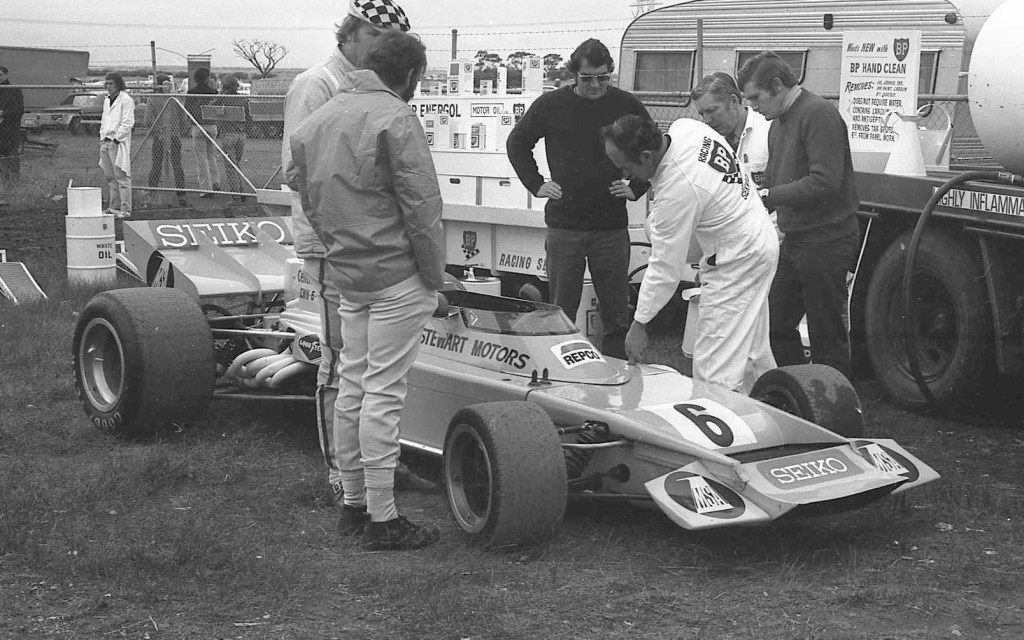
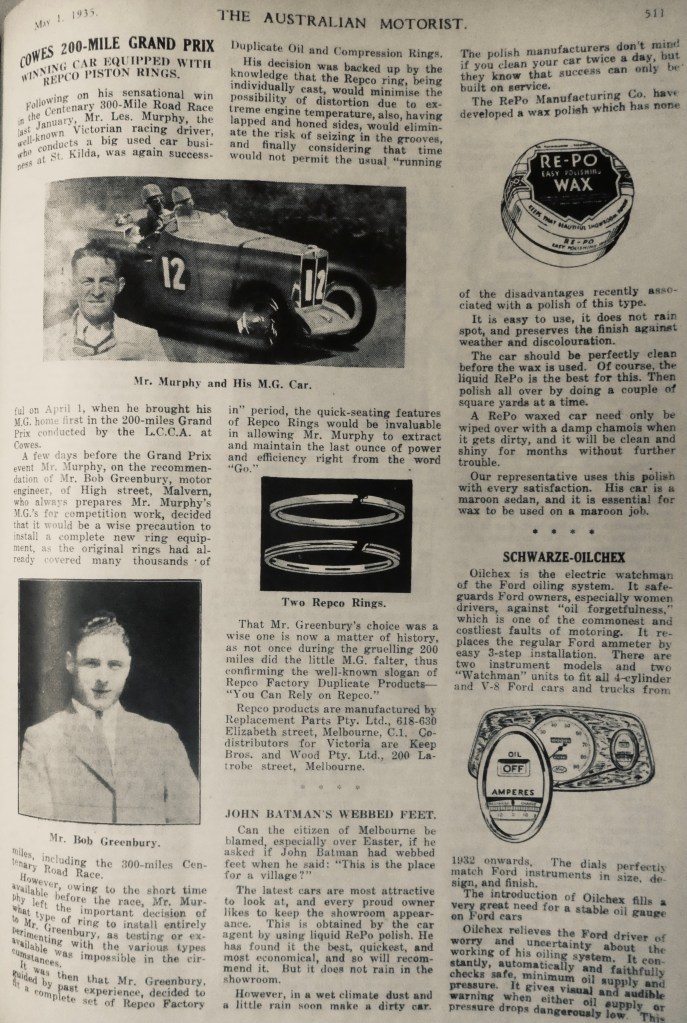
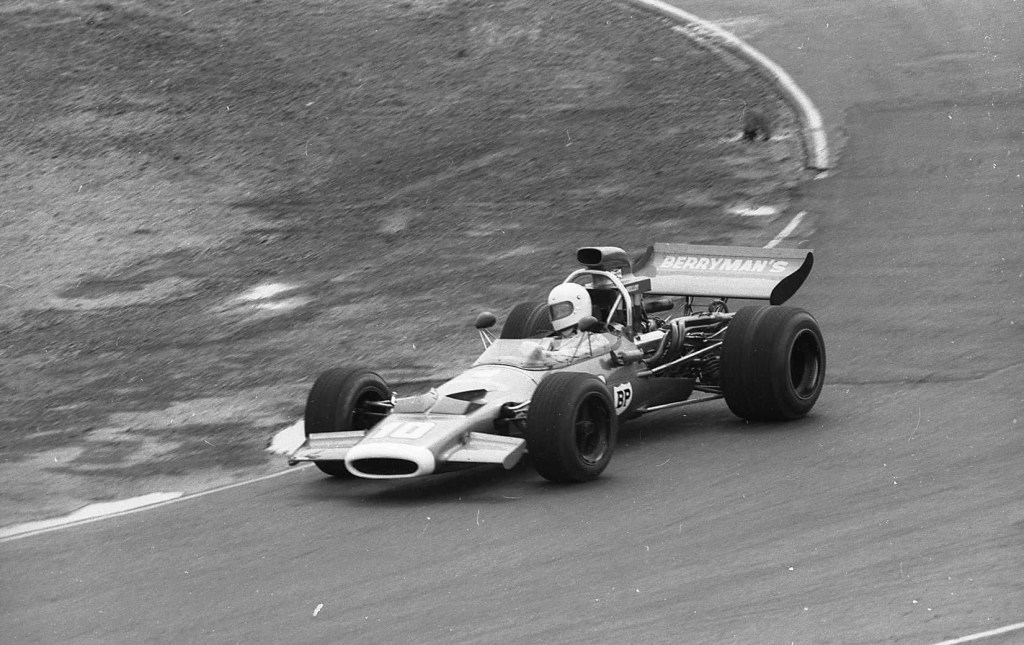
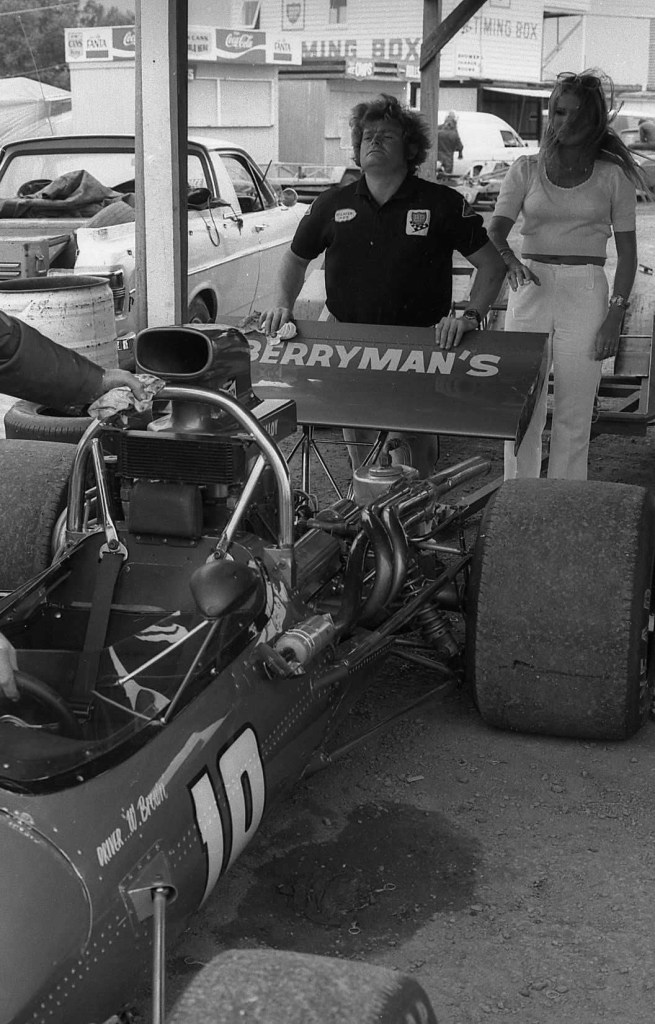
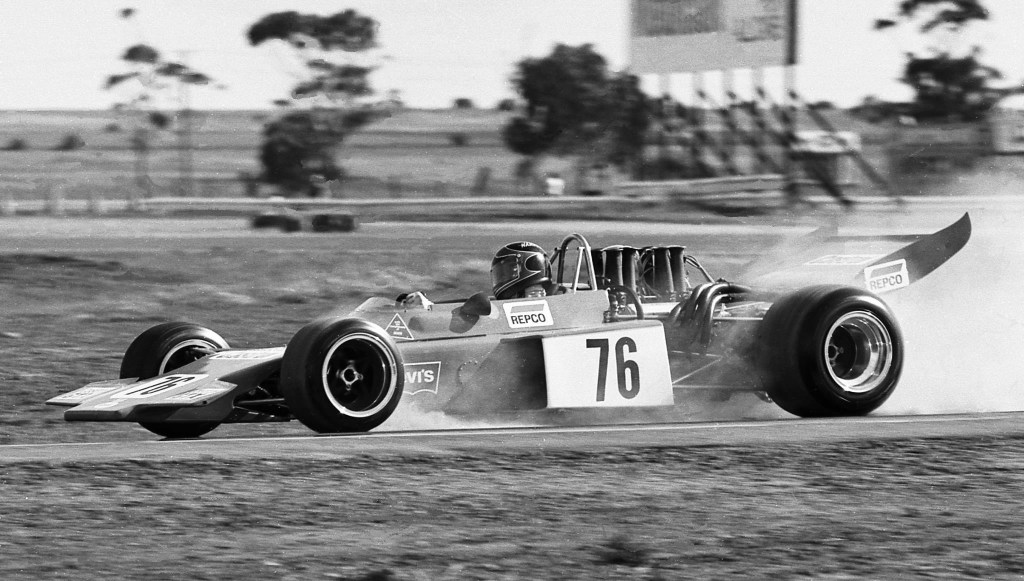

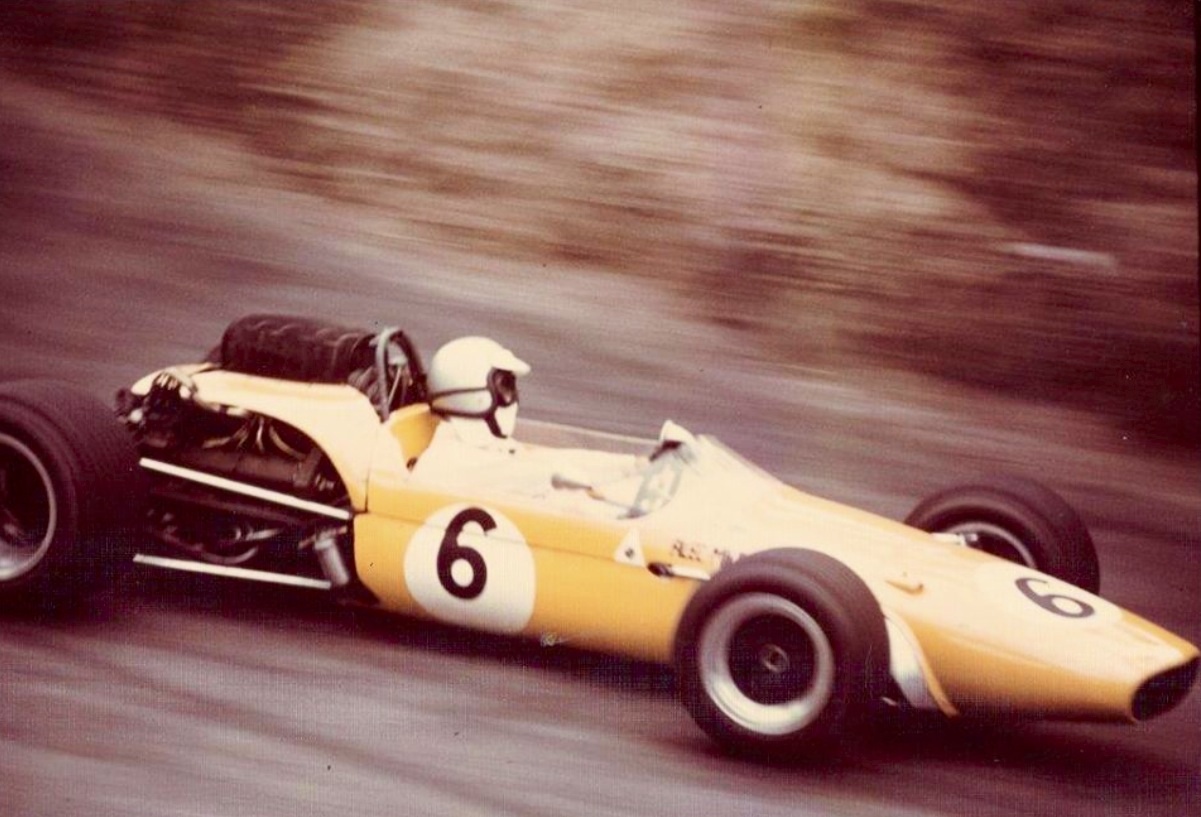

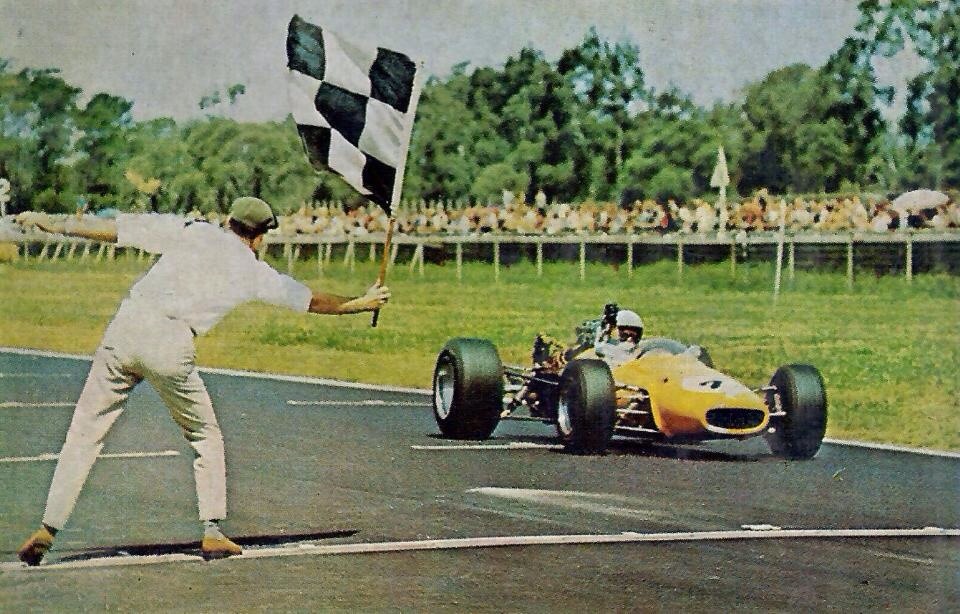

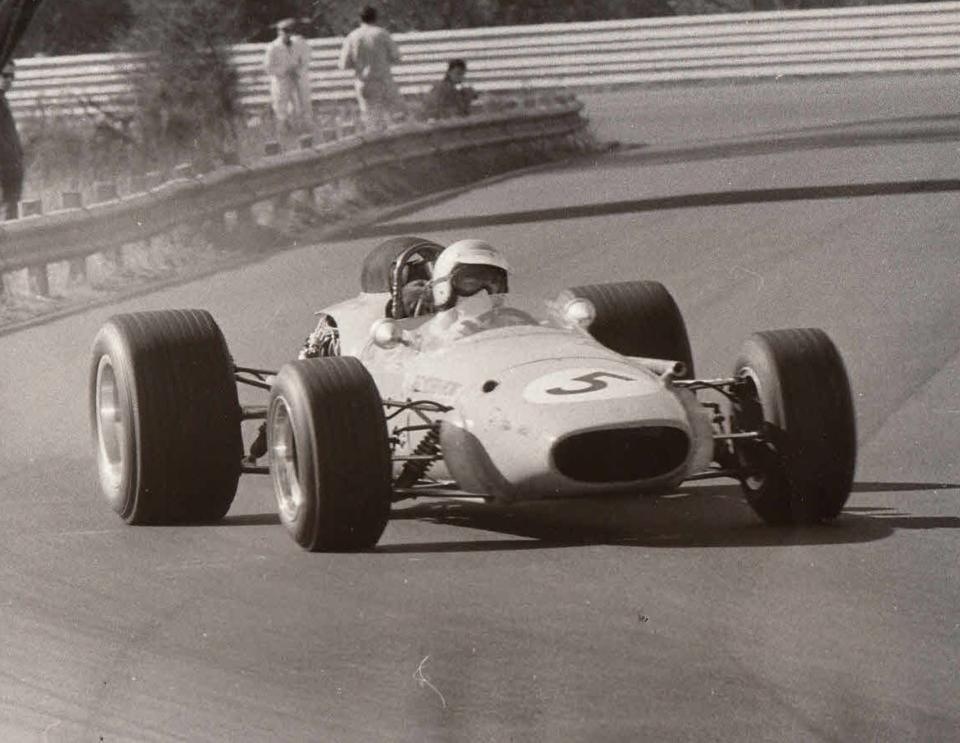

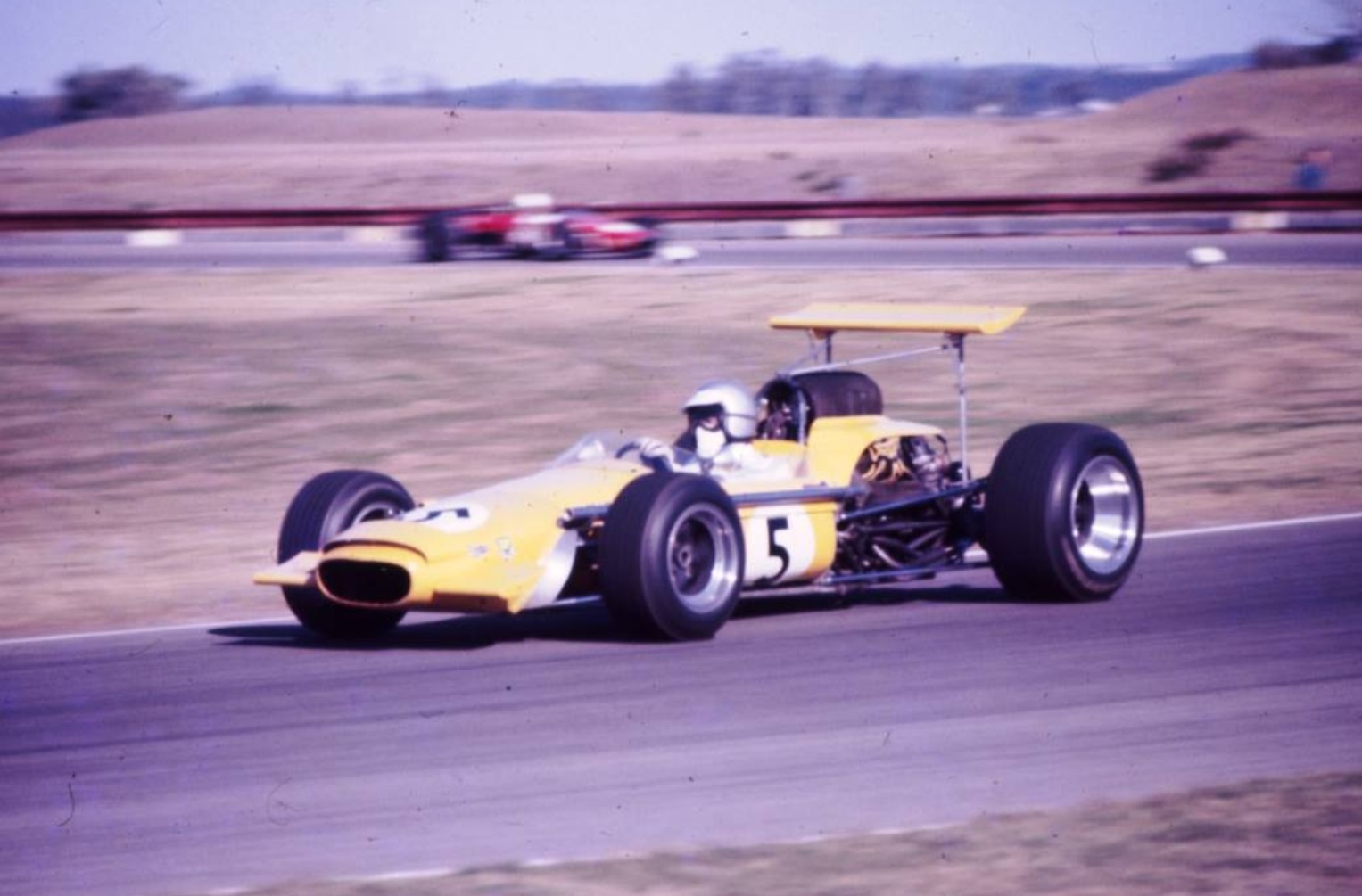
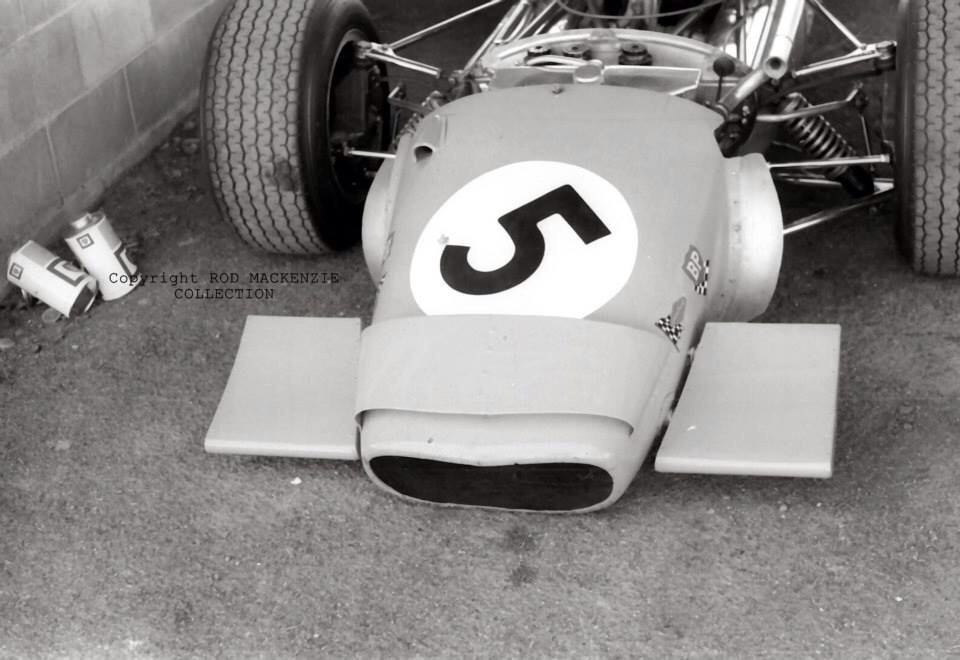

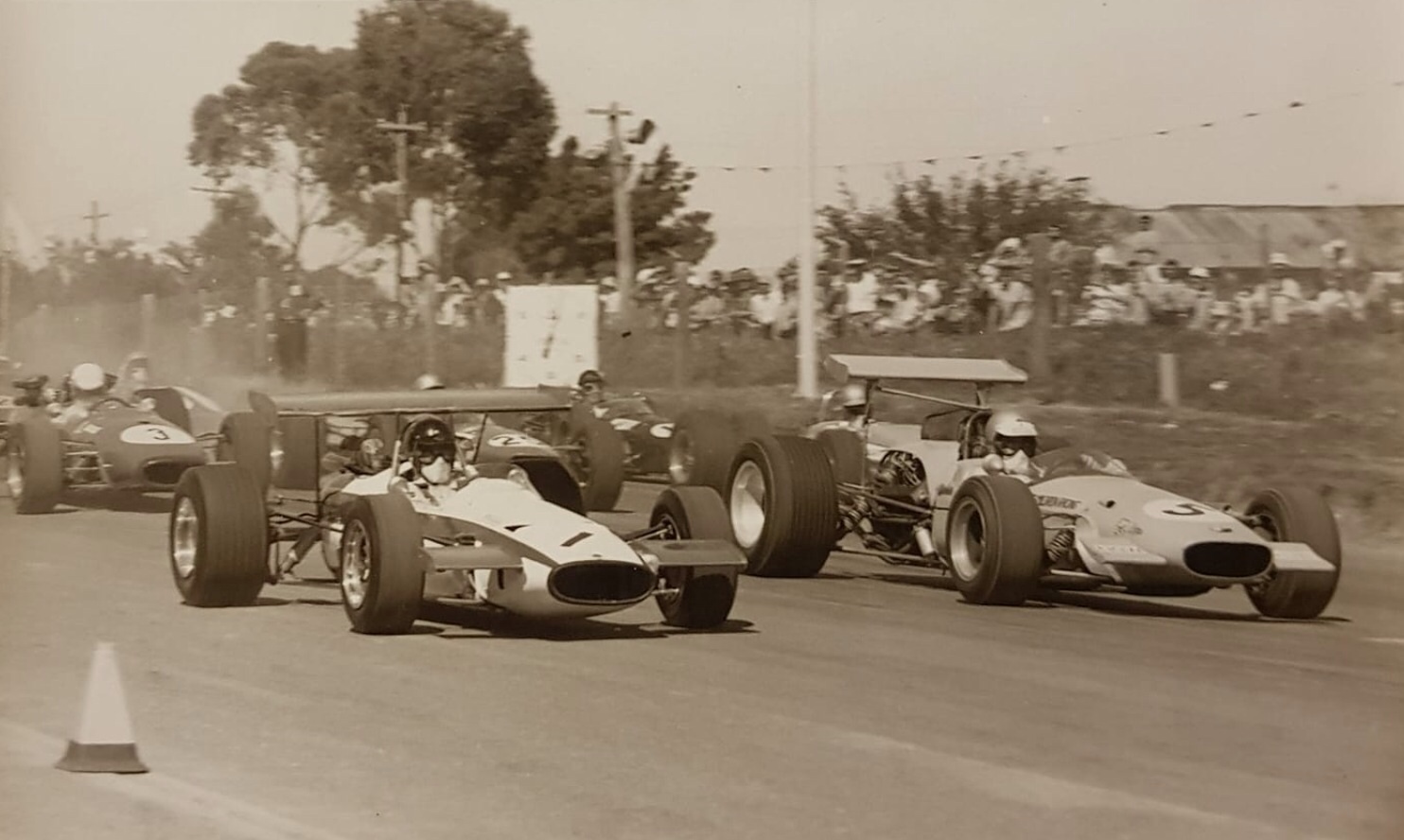
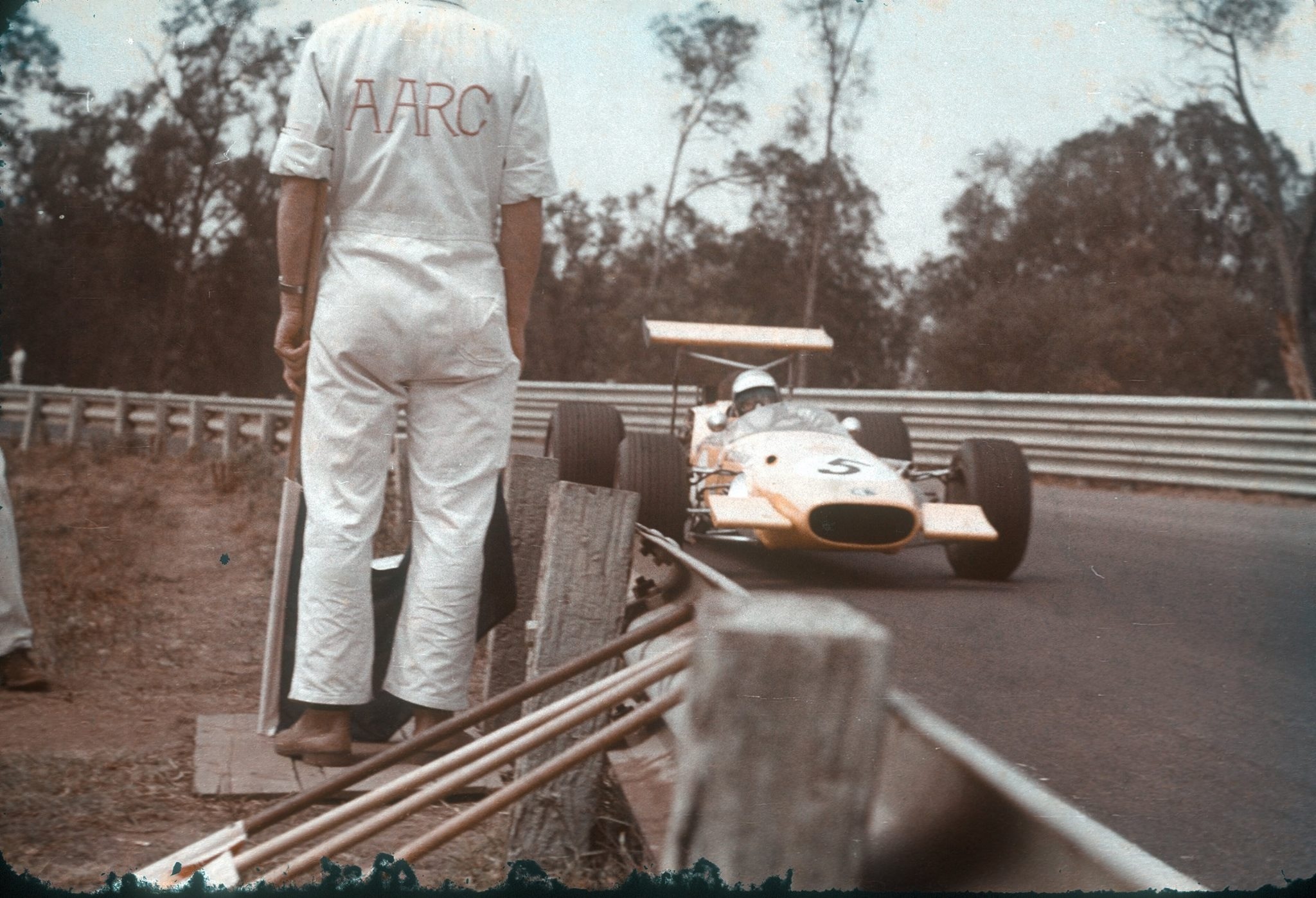
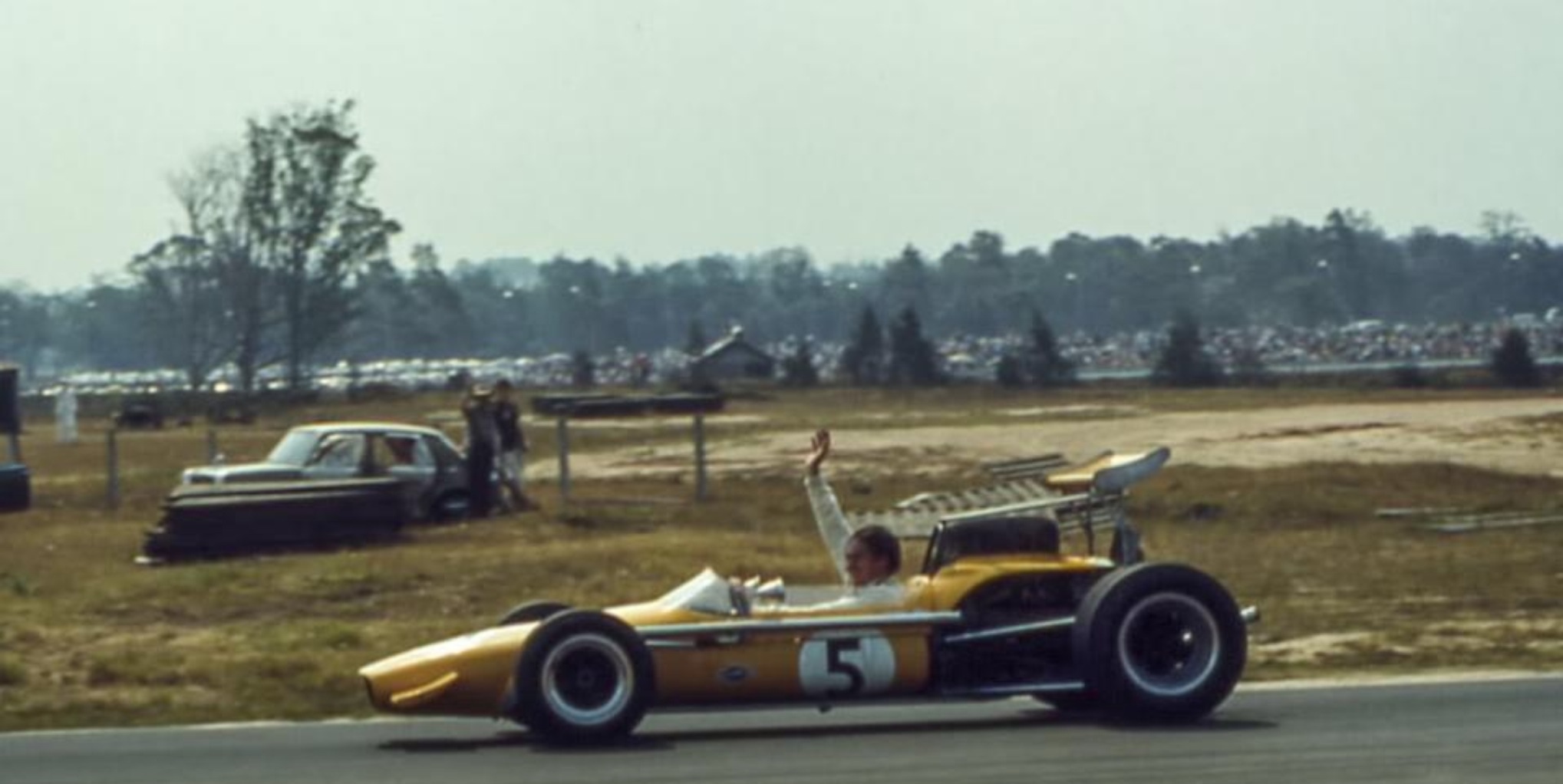
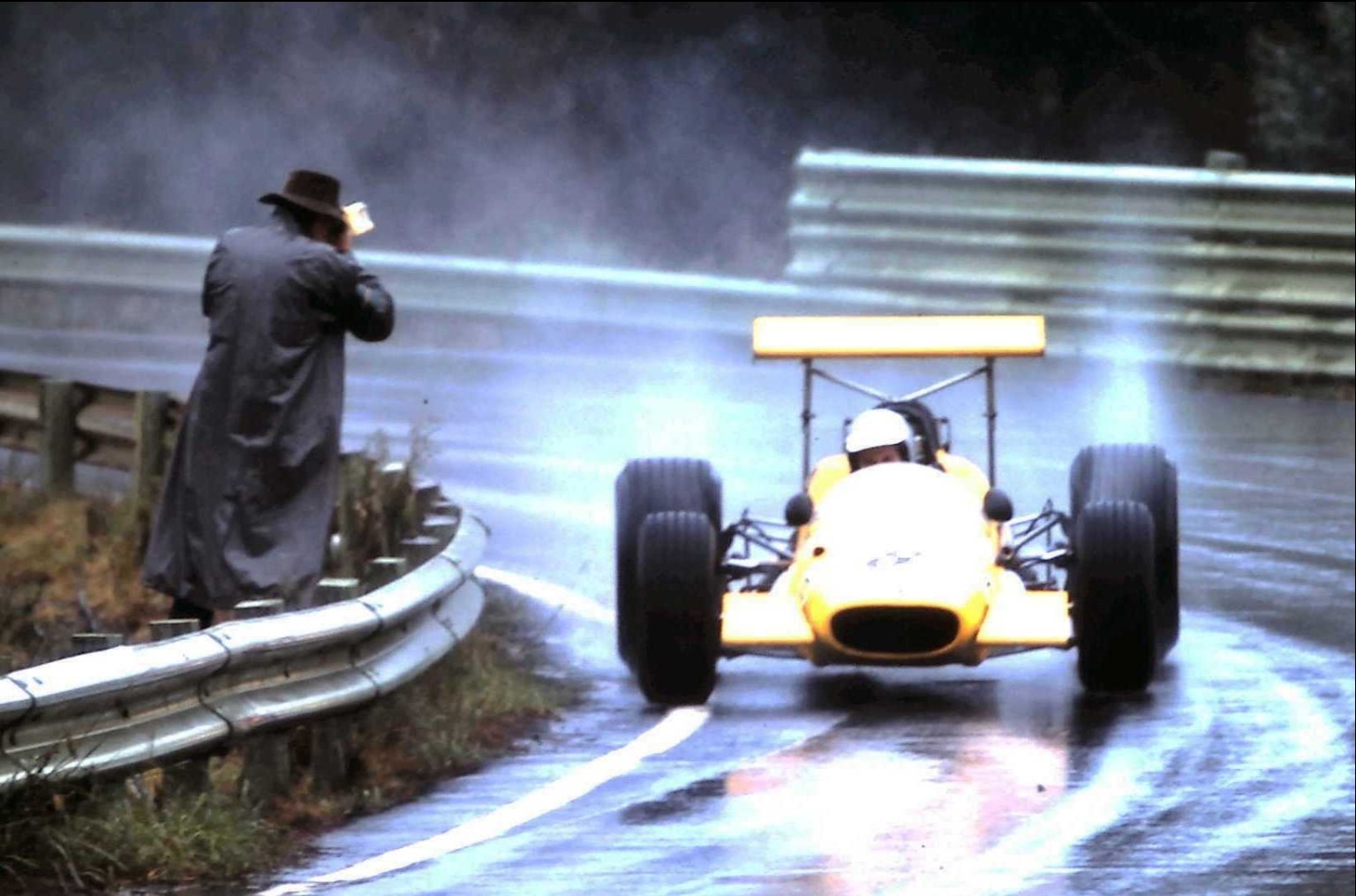
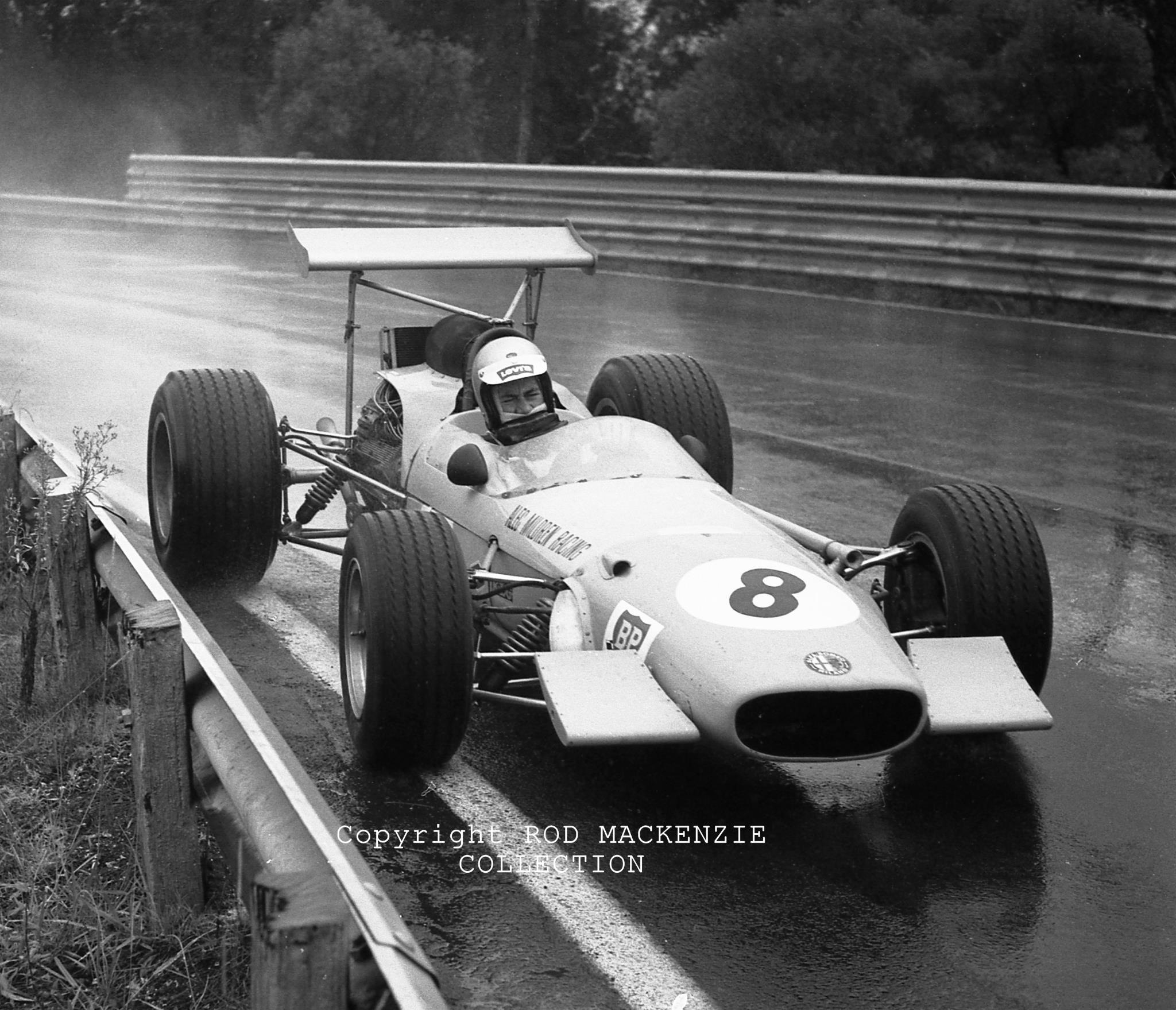
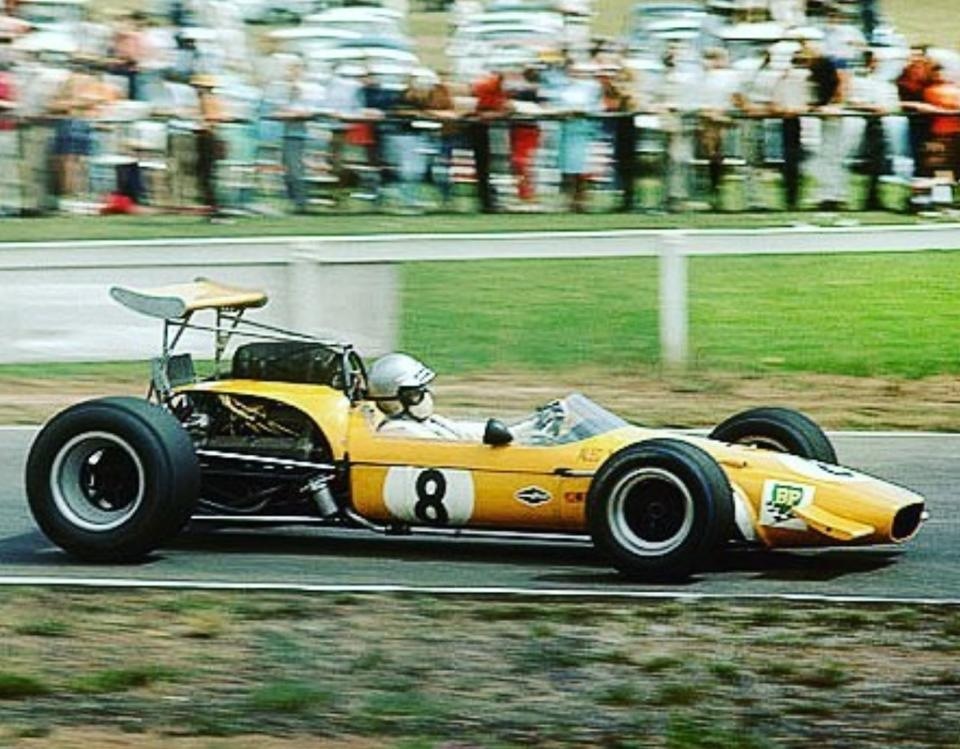
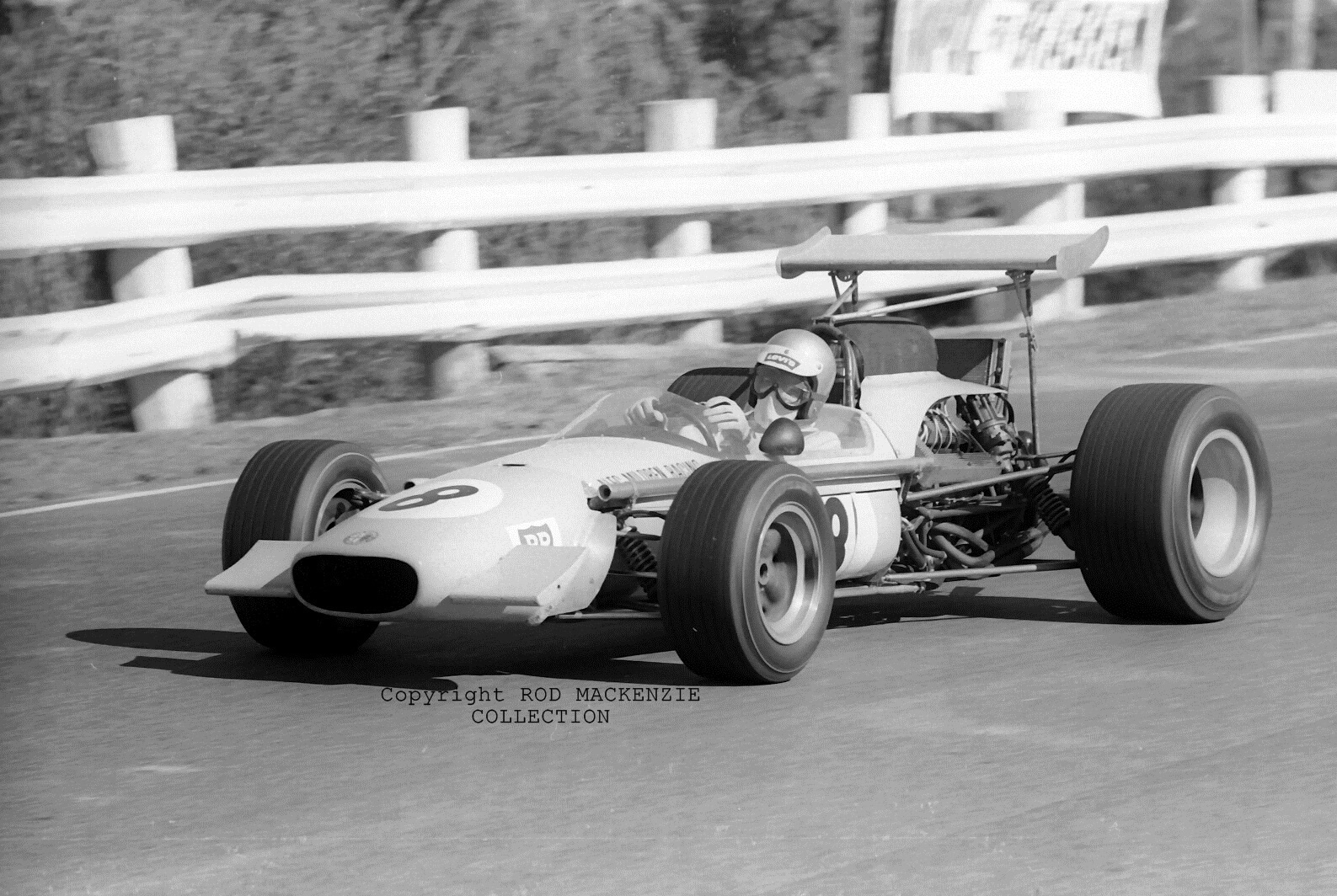
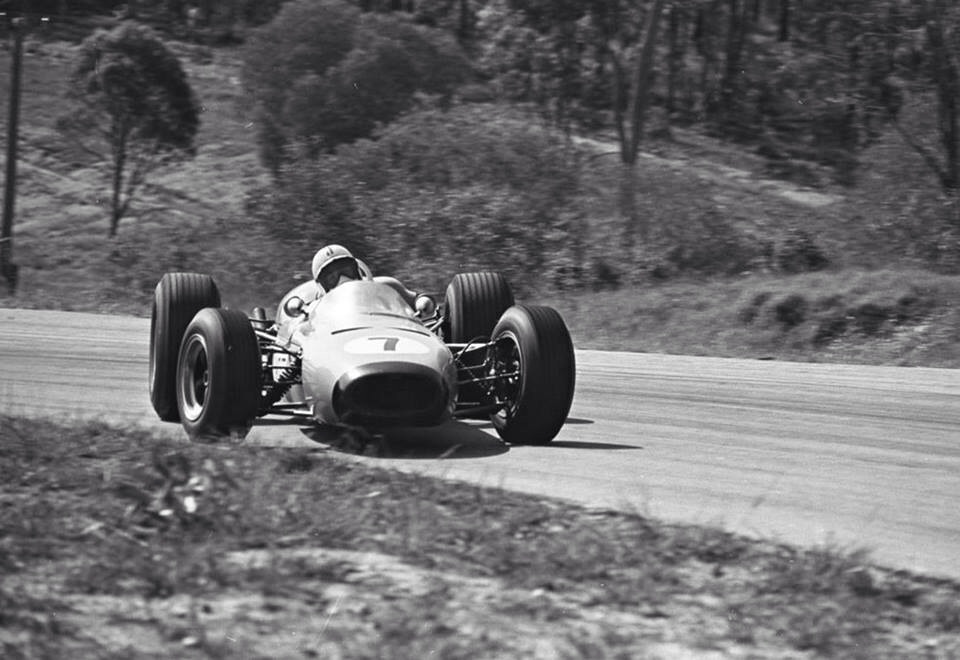
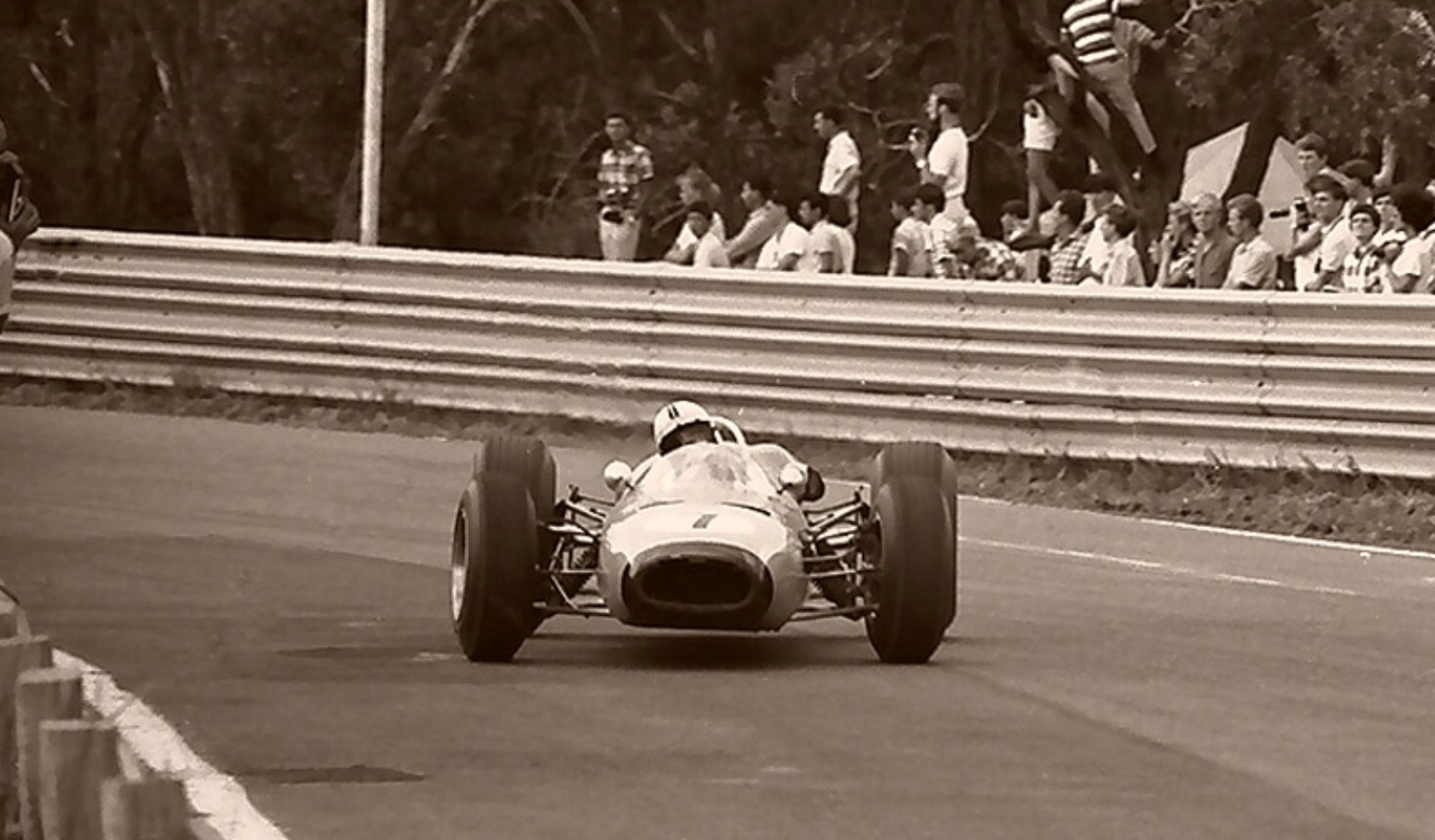
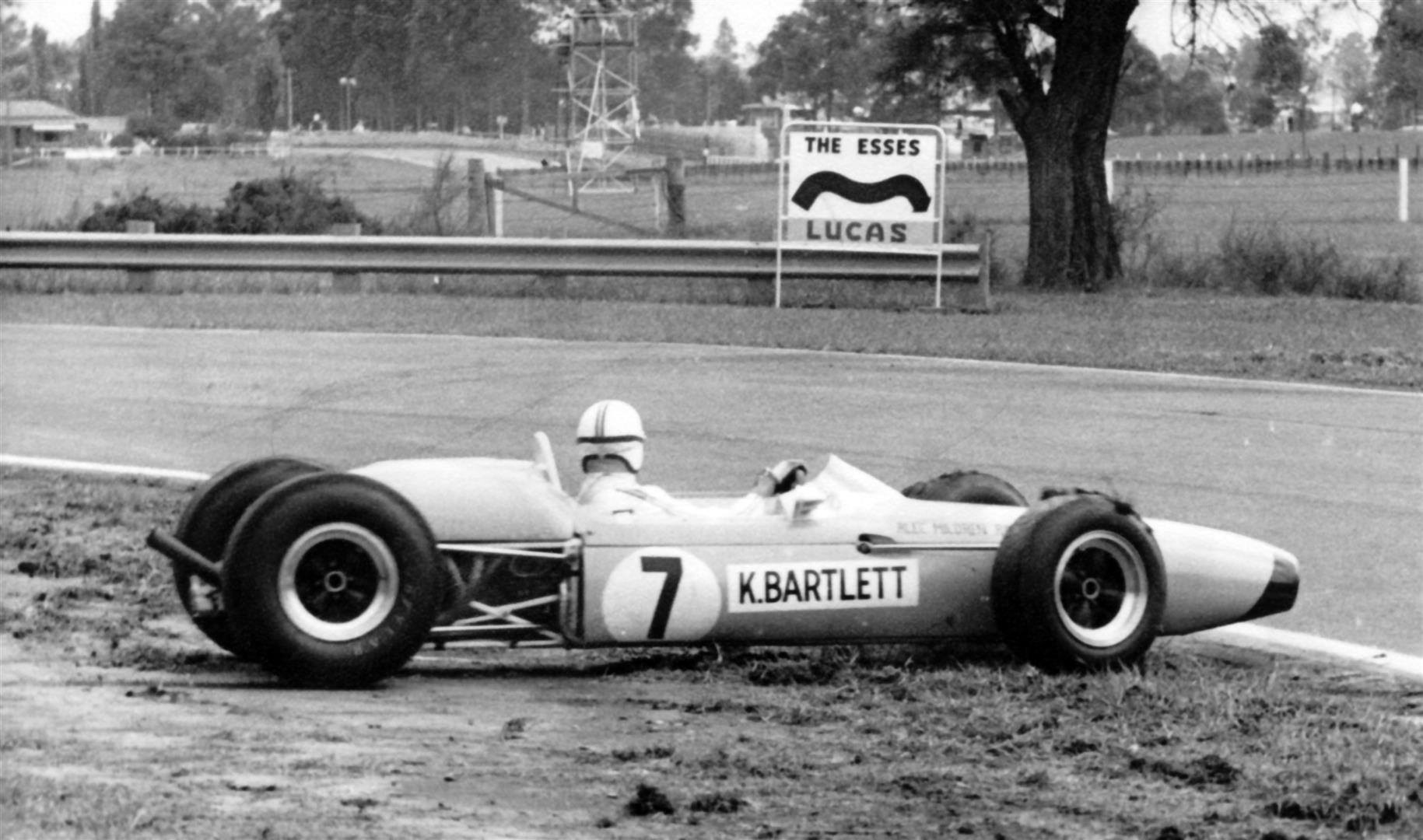


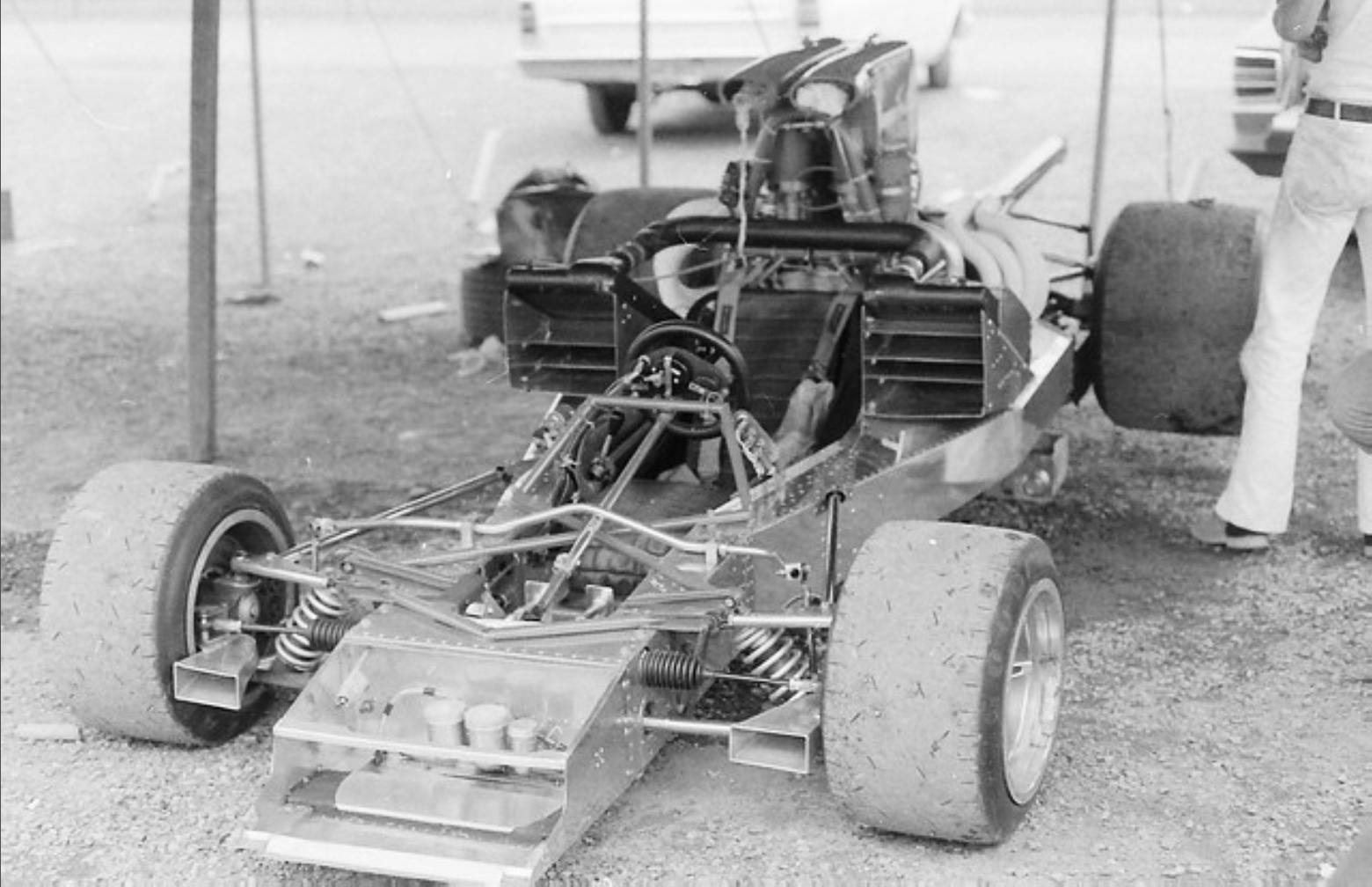
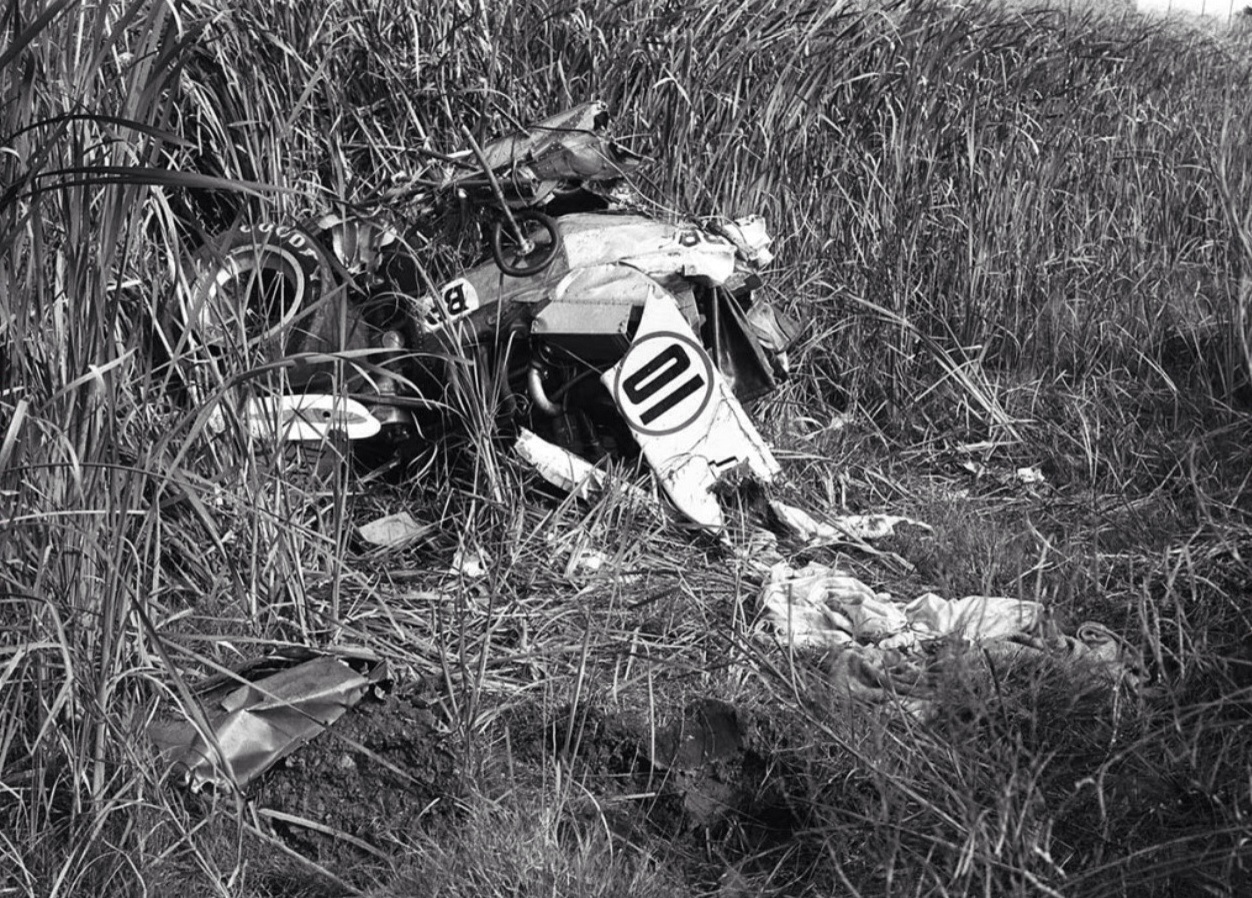

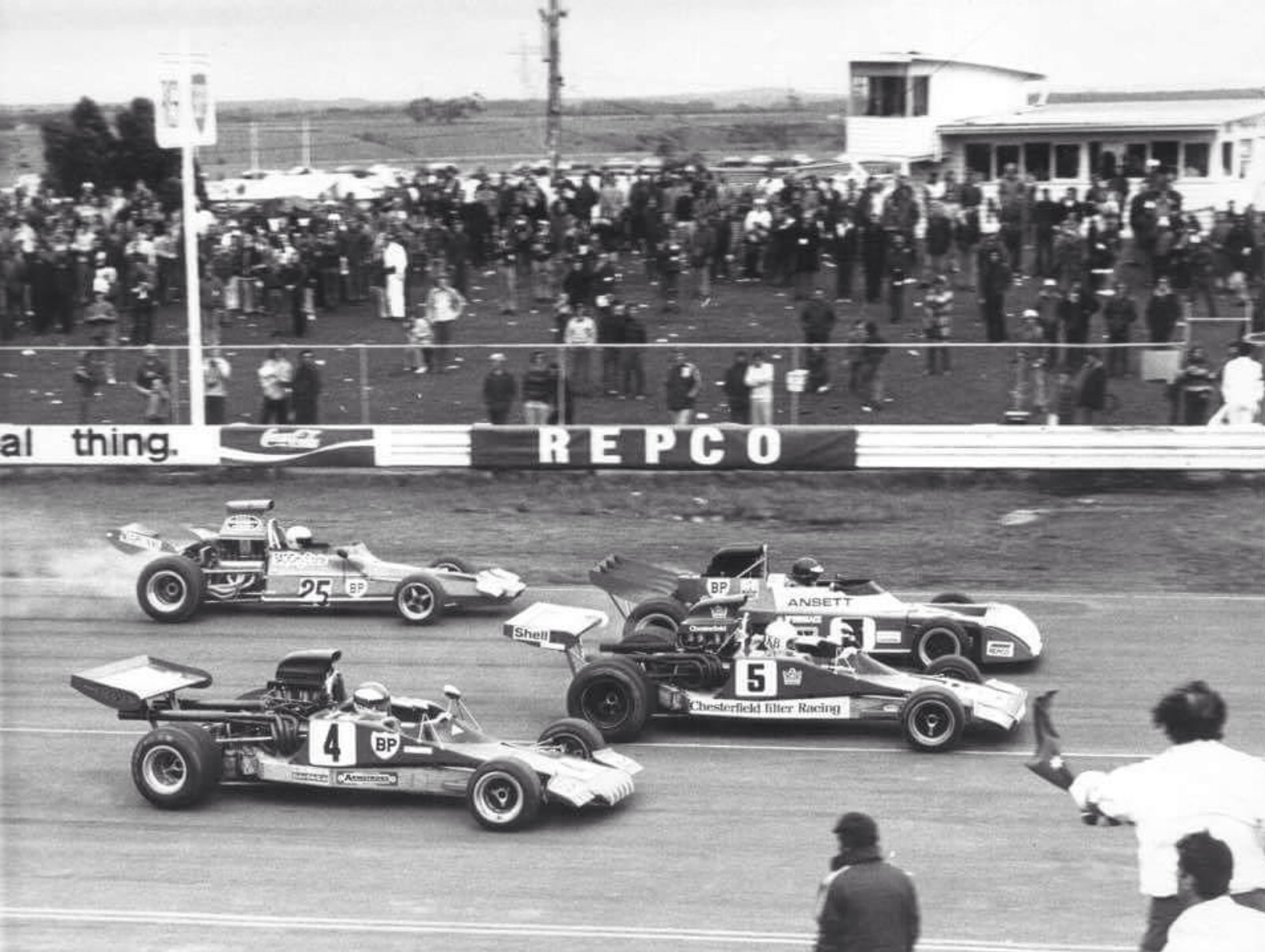

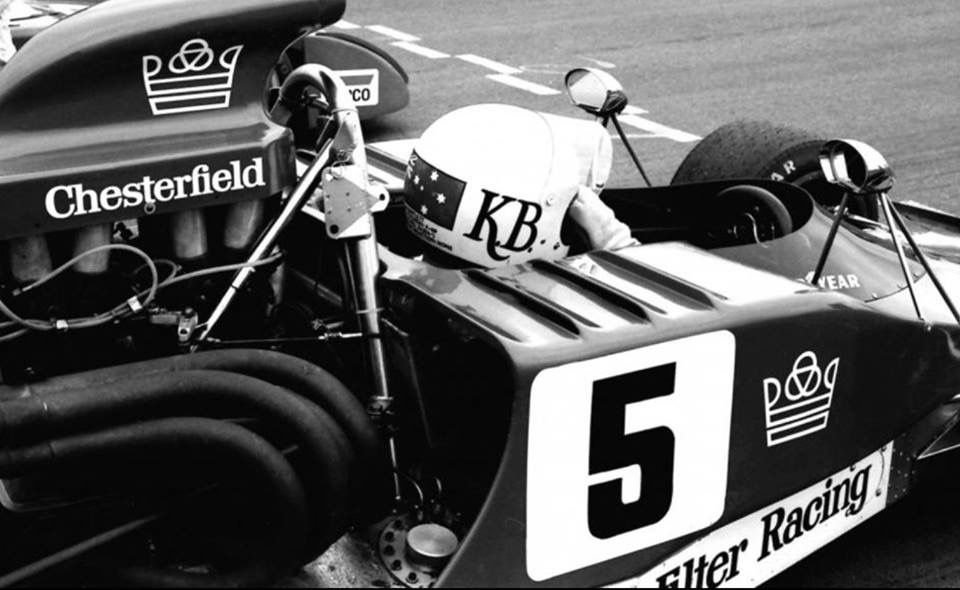


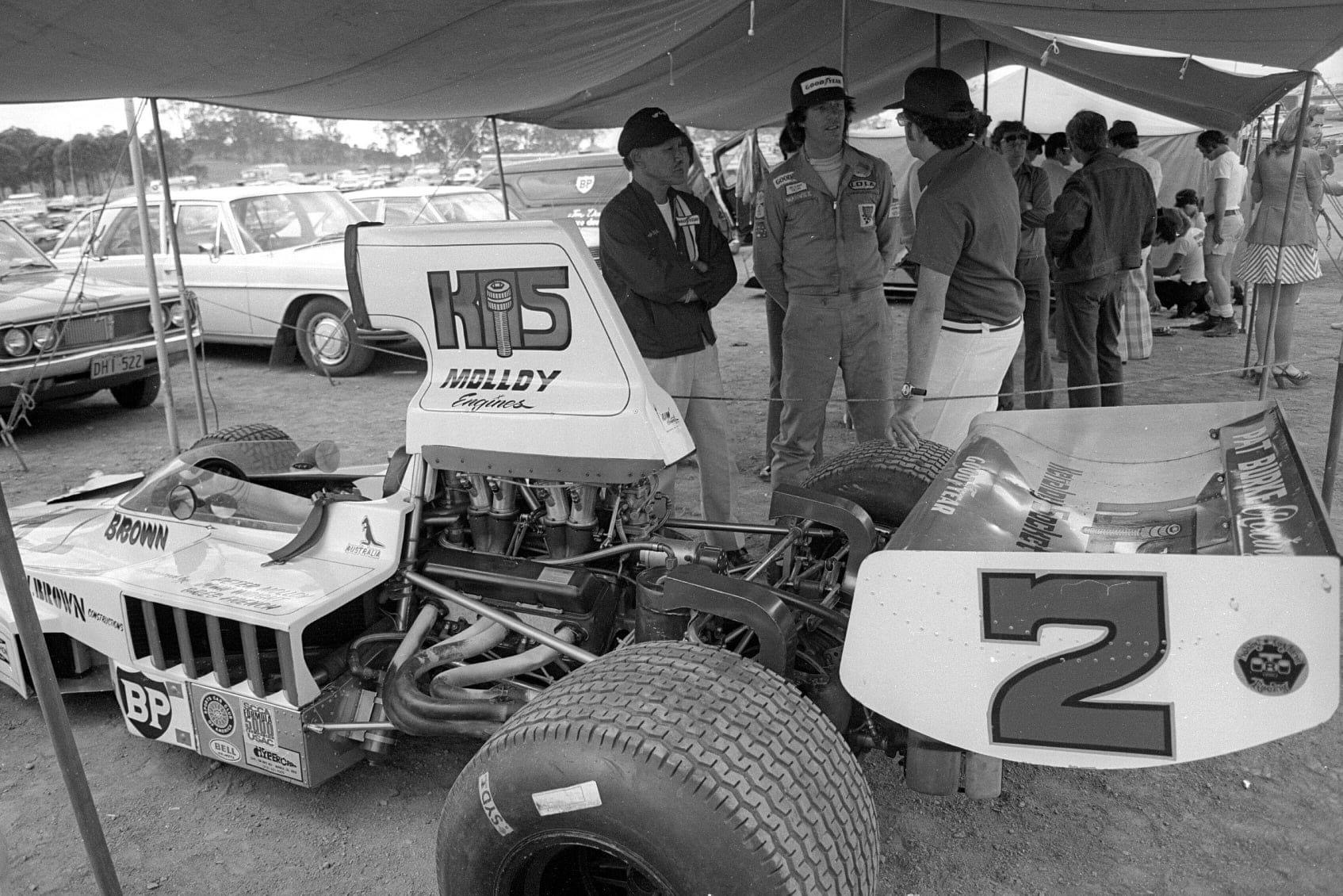
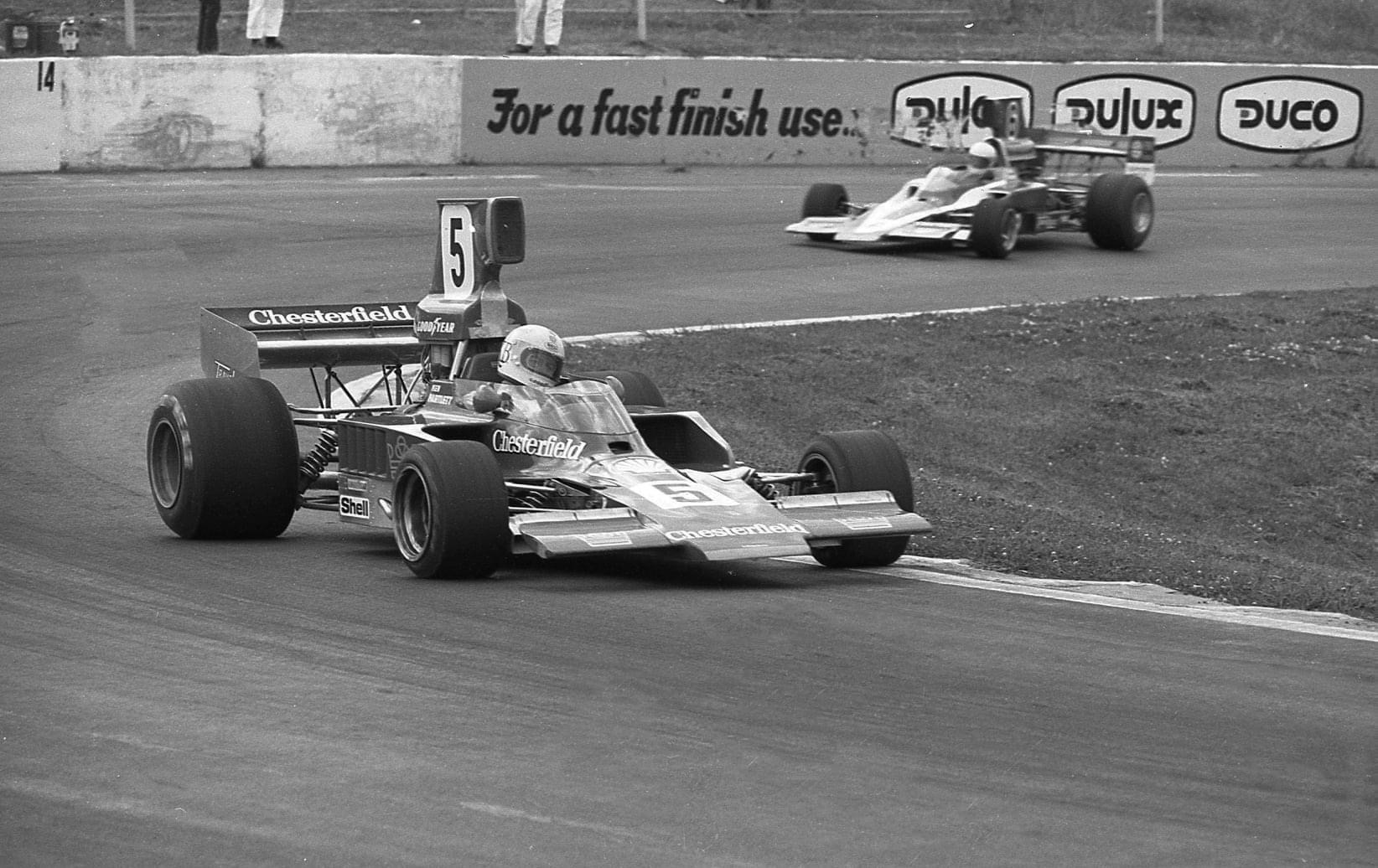
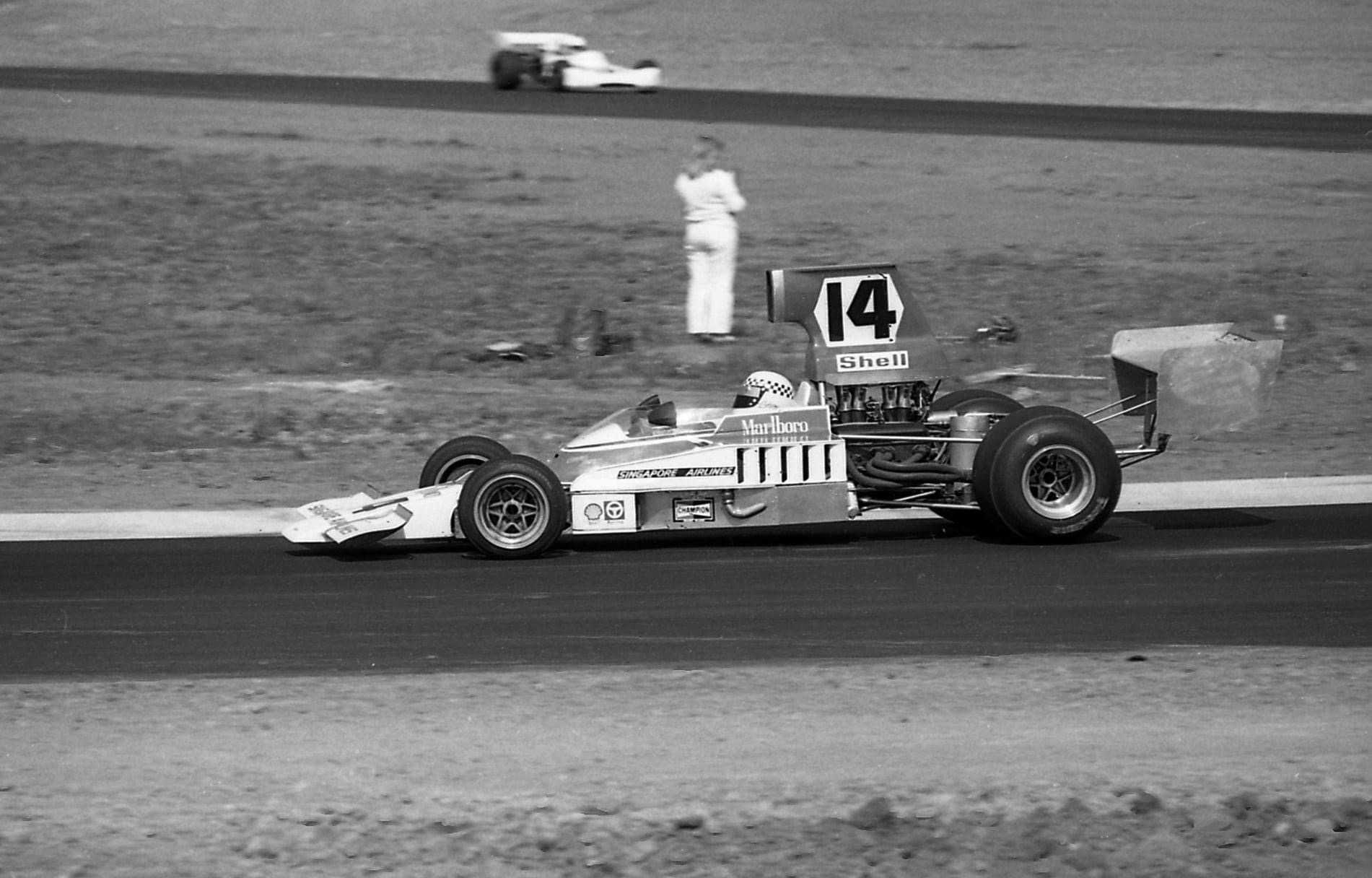


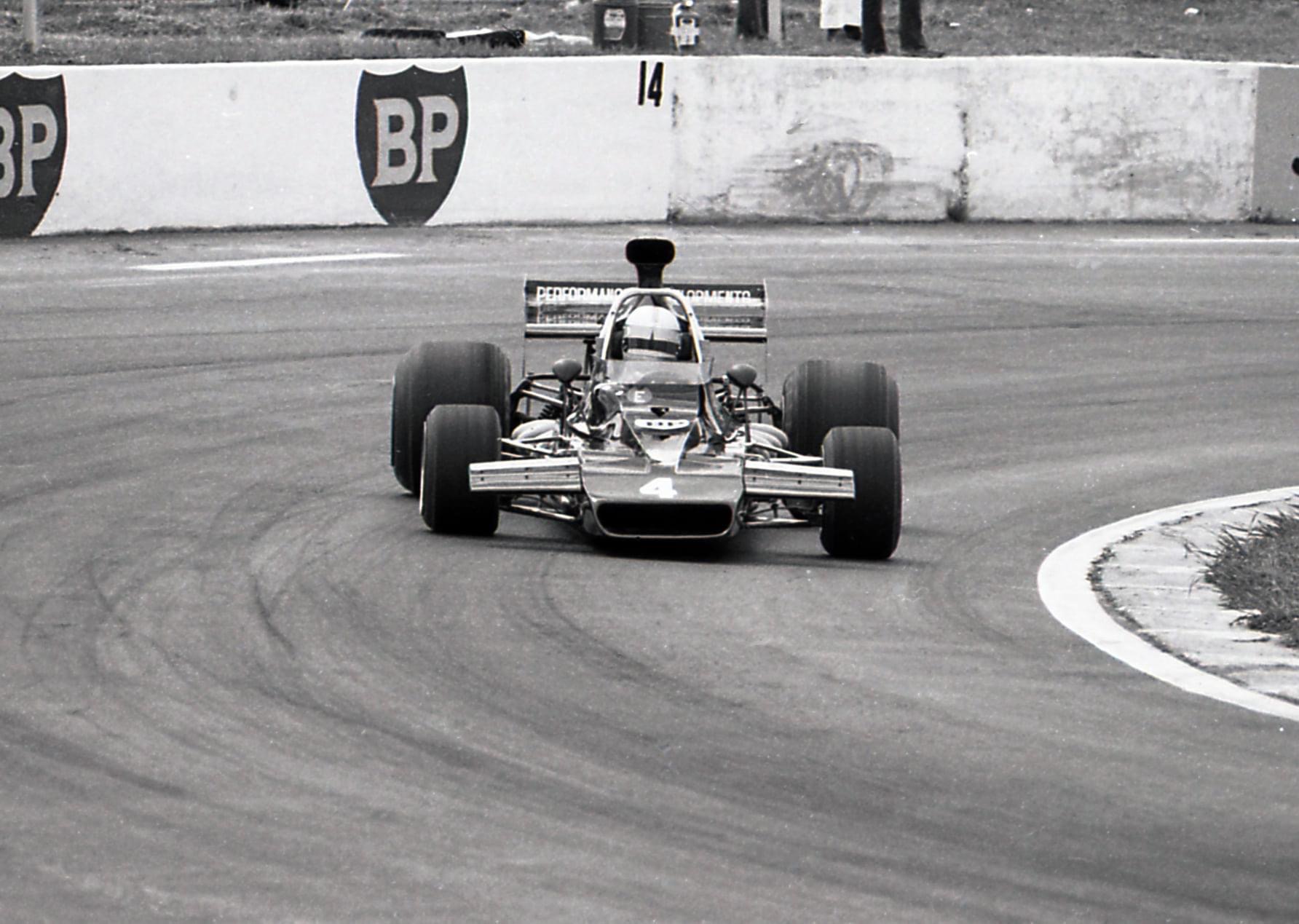
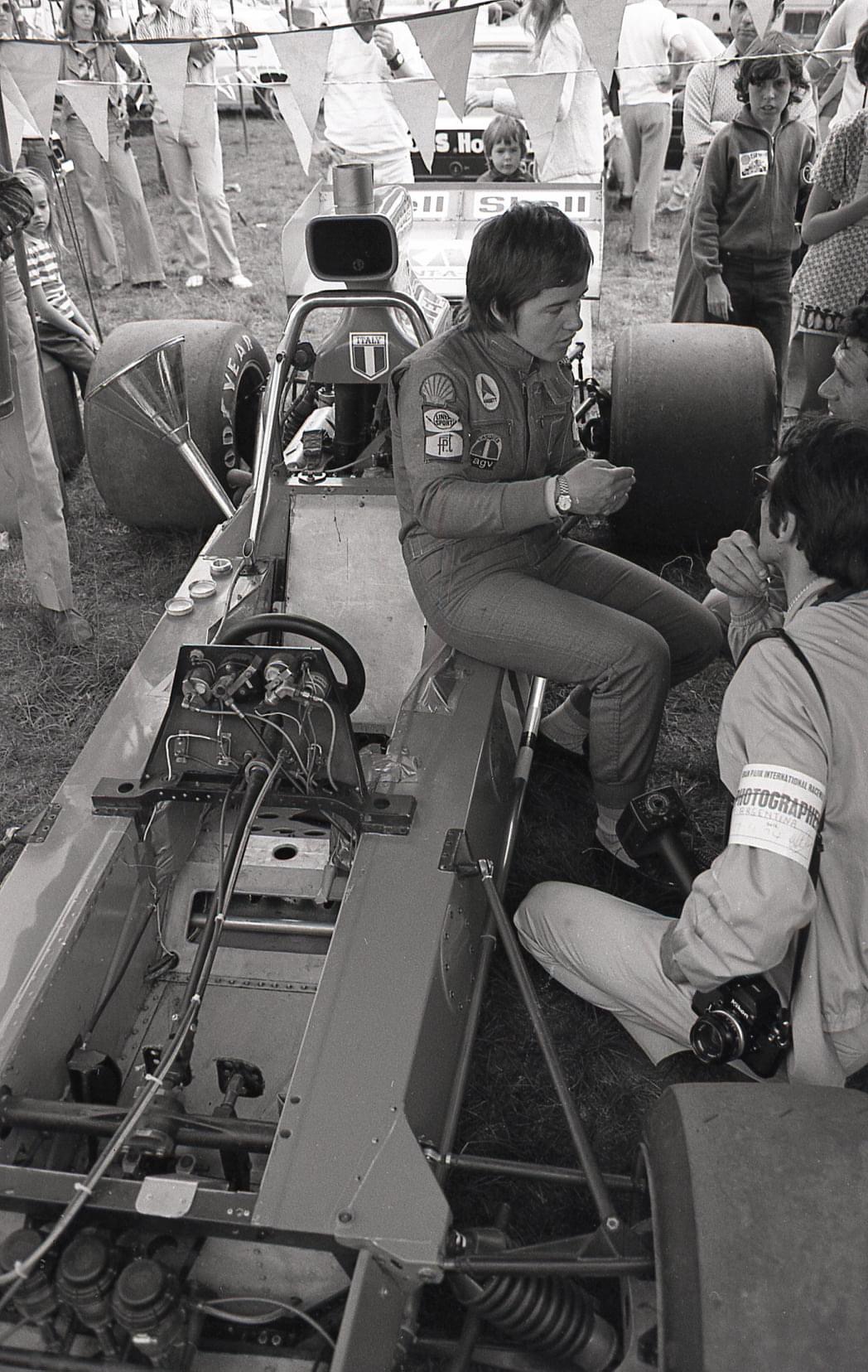


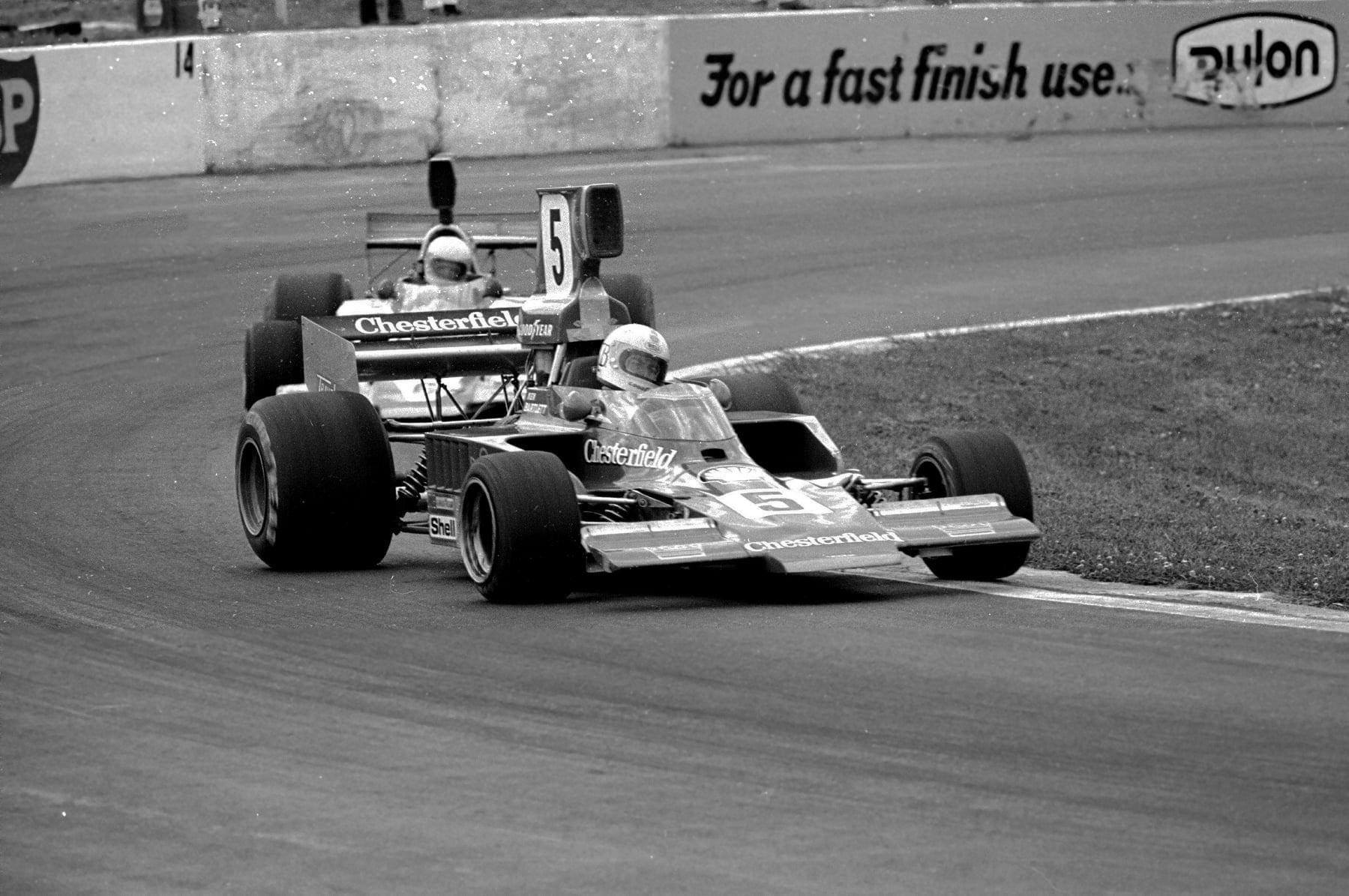
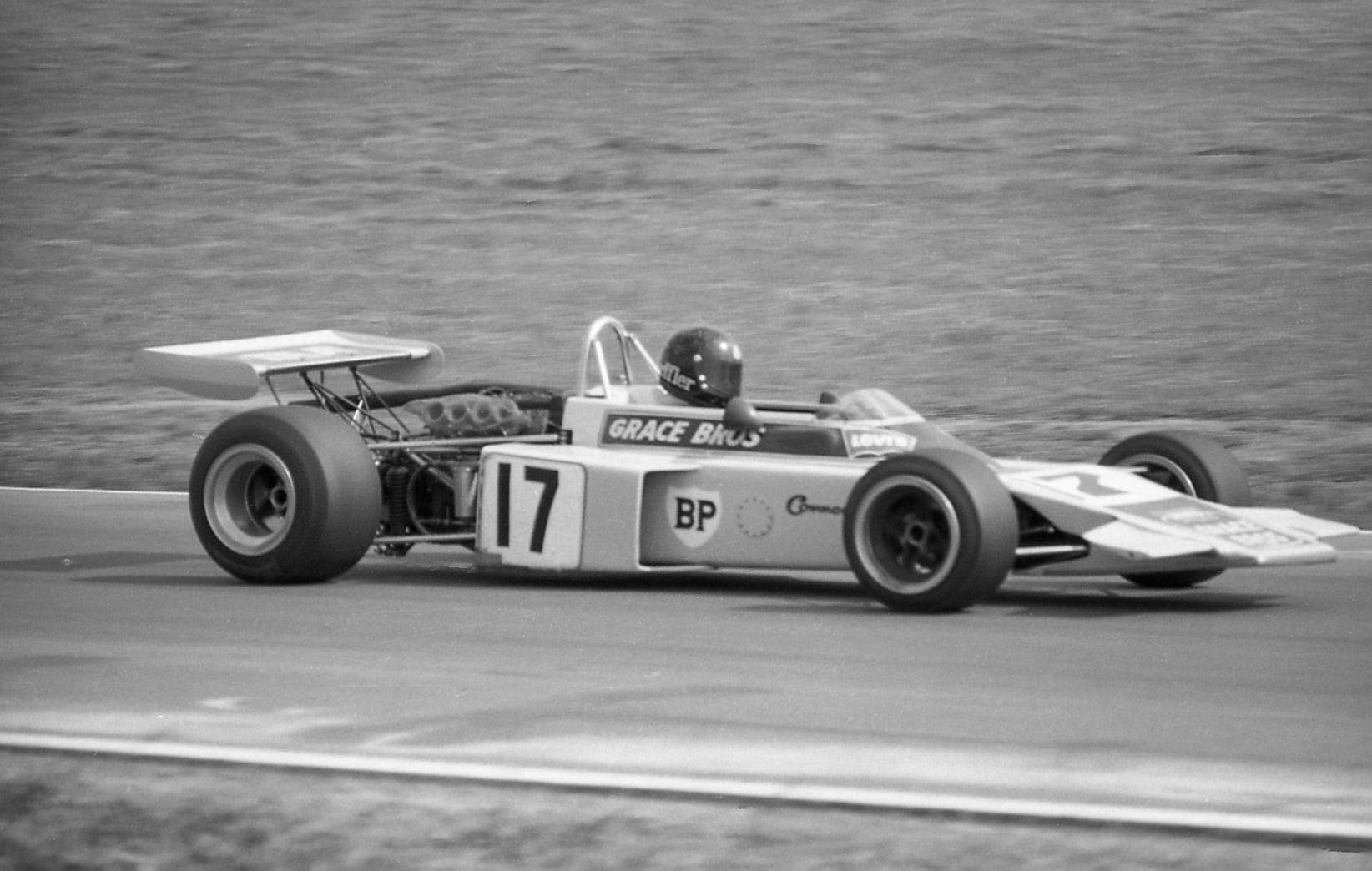
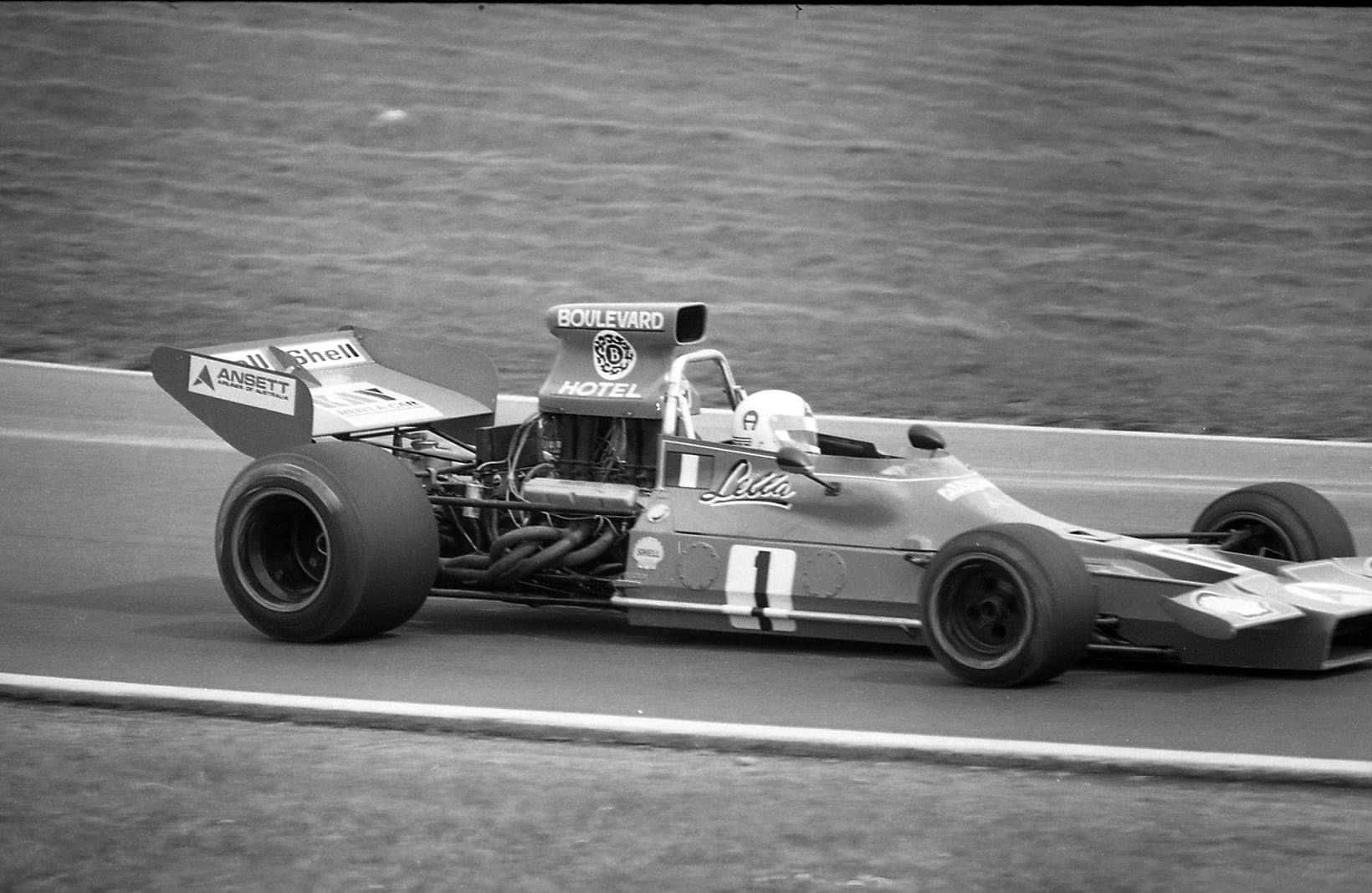
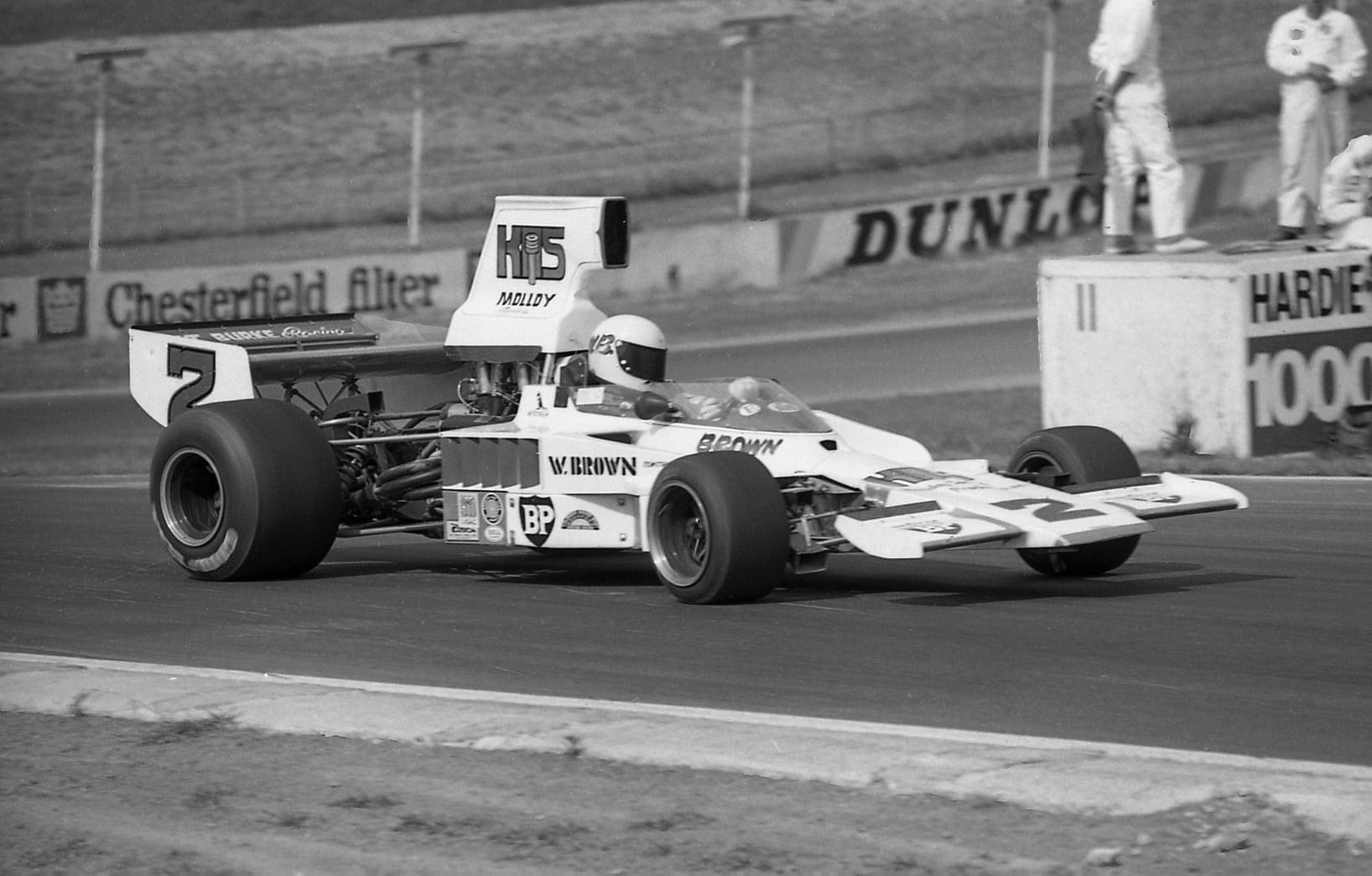
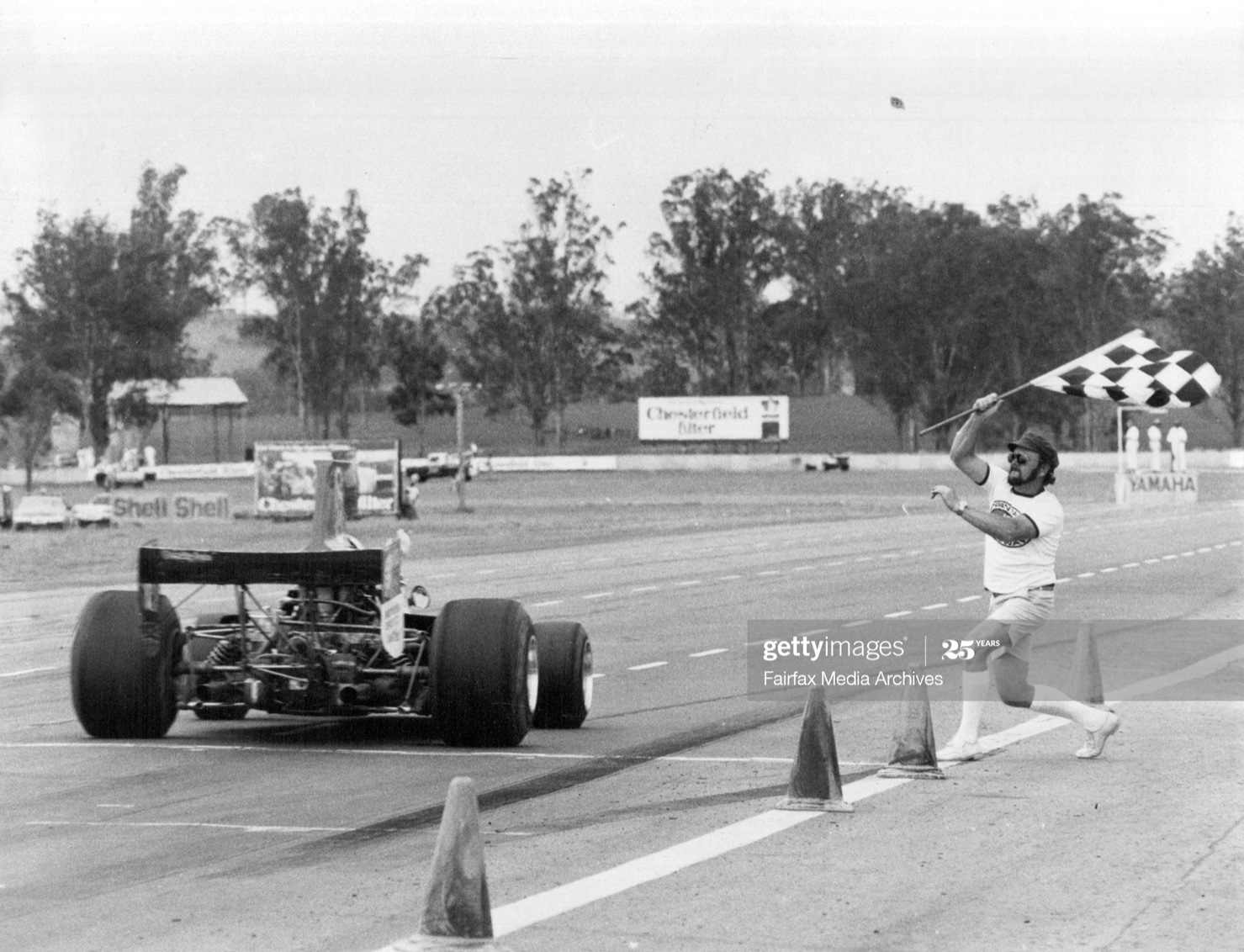
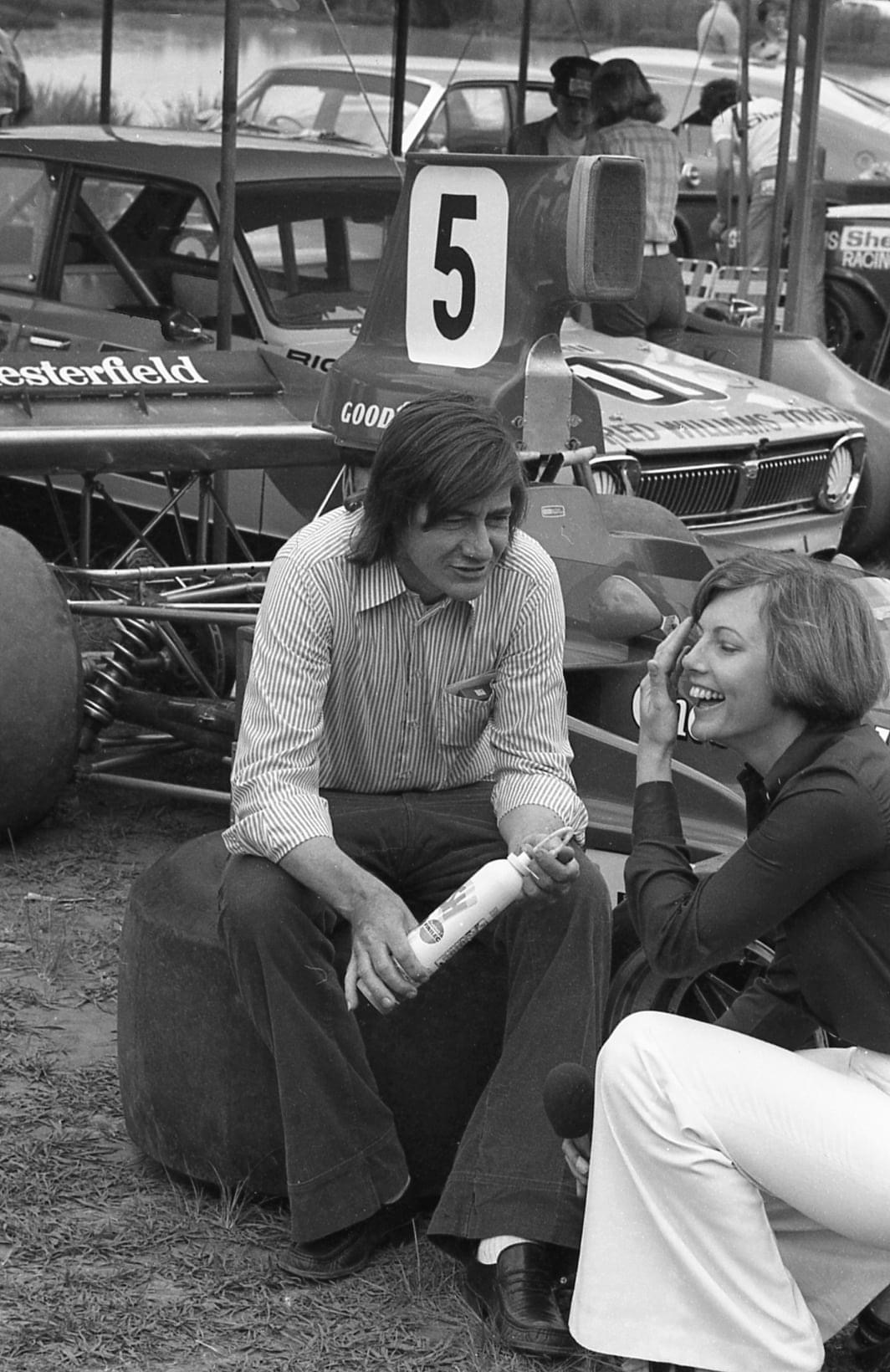
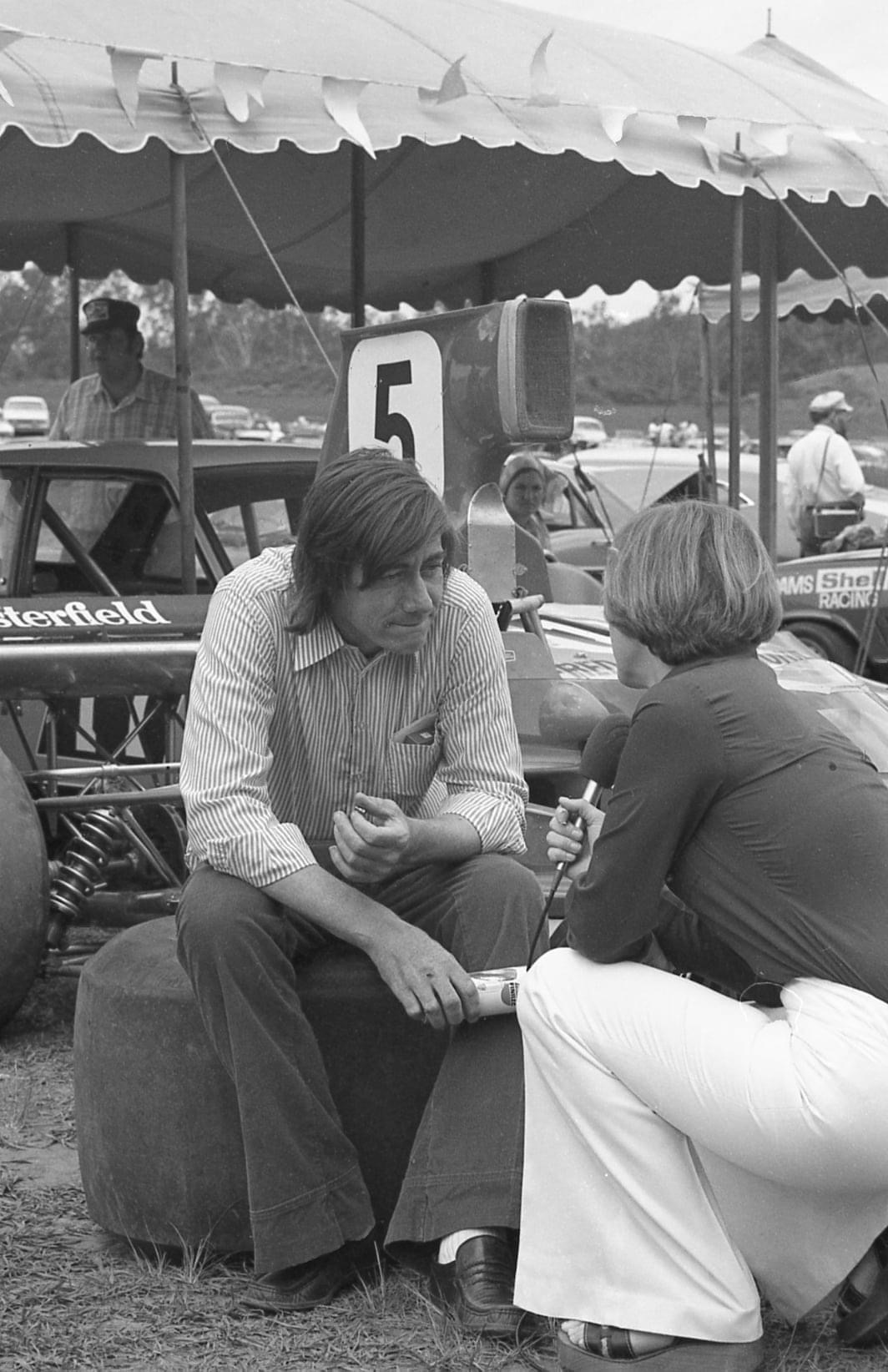

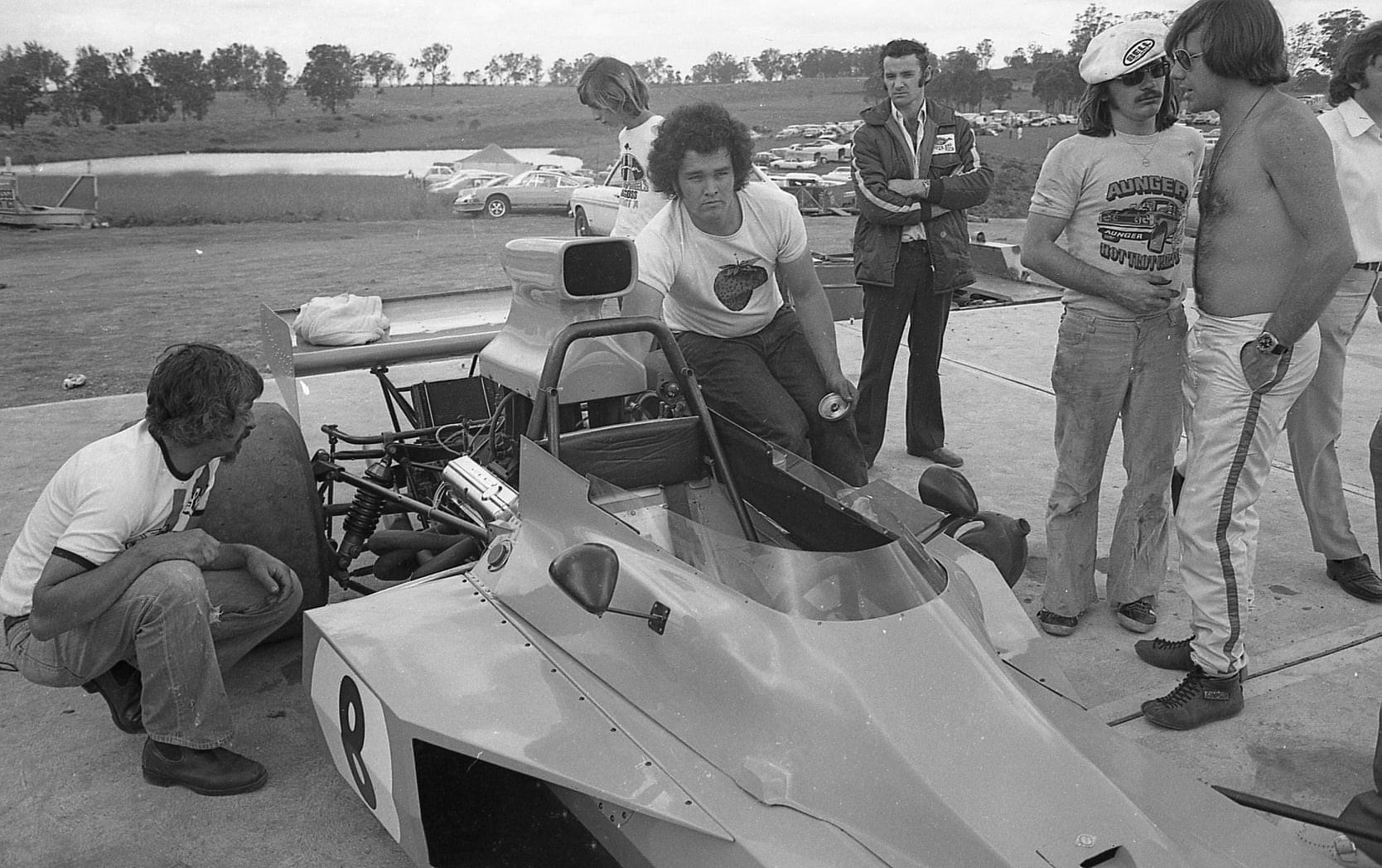


 primotipo...