Archive for 2016

image

The ‘Stackpipe’ 1.5-litre P56 BRM V8 nestled in one of Graham Hill’s BRM P57/578 chassis’ during his and BRM’s victorious 1962 season…

This series of engines was immensely successful being competitive throughout the 1961-5 1.5-litre F1 and was a bit stiff not to have won the title on multiple occasions. Later in its life it became, in 1.9 and 2.1-litre capacities an effective Tasman Series weapon. It was victorious at 2.1 litres against new 3-litre F1 cars too, winning the 1966 Monaco GP Jackie for Stewart that May. Surely it’s one of GP racing’s great engines?

This is the first in an occasional series of articles focussing on engines, mind you, as usual it’s longer than intended. As is the case with most of my stuff the article is a function of a great photo (above) inspiring the piece rather than me thinking strategically about the relative merits of one engine to another in a particular era, and has grown a bit like Topsy over time!

image
Graham Hill’s P56 engined Stackpipe BRM P57/578 on its way to victory at Zandvoort, Dutch GP 1962, the engine’s first championship GP win (B Cahier)

Background…

BRM commenced the new 1.5-litre F1 in 1961 by using a Coventry Climax FPF Mark 2 engine, it’s ‘Project 56’ 1.5-litre V8 started late and was running behind schedule.

The teams long serving but ‘too dilettante’ technical director Peter Berthon was ‘shunted sideways’, seconded to work at the Harry Weslake Research consultancy in Rye, 280km away leaving Tony Rudd, his assistant, in charge.

By the time this 1960 Dutch GP change was effected, Berthon, with the assistance of consultant engineer Charles Amherst Villiers, an old school friend of BRM founder Raymond Mays and a long term associate of Berthon’s too, was already laying down the conceptual design and detailing of P56. The Shell oil companies research boffins also contributed their knowledge via a project they were completing at the time on ‘combustion in high speed transport engines’.

image
The great Tony Rudd in glasses overseeing Graham Hill’s P56 engined BRM P57 (DNF) with Cyril Atkins beside him. Dutch GP, Zandvoort 1963. It’s Jack Brabham in the helmet about to board his BT7 Climax DNF. I wonder if the chap closest to camera is Keith Duckworth? The back of that BRM is all-breathers, engine and gearbox isn’t it? Clark won the race in his Lotus 25 Climax (GP Library)

A core conceptual design foundation was efficiency at extremely high rpm by the standards of the time, and, for the first time BRM was to offer the engine for customer sale in addition to its works-role. There was money to be made, as Coventry Climax had proved in recent years by flogging engines to those with the readies. On Sir Alfred Owen’s insistence BRM were to contest that customer market.

In keeping with the BRM charter of using British suppliers if at all possible, Lucas’ new fuel injection system was chosen. Several design features of the old V16 were used including its timing gear, camshaft drives and similar con-rods, higher inertia loads of heavier pistons (than the V16) involved different big-end bolt arrangements though.

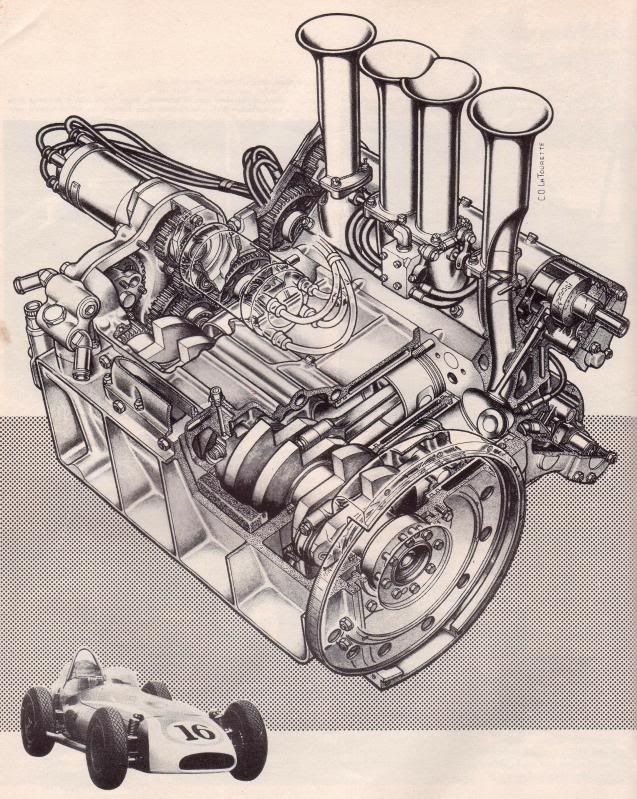
The engine was/is a 90 degree V8 with a bore and stroke of 68.1 x 50.88mm for a capacity of 1498cc, it’s heads and block cast in LM8 aluminium alloy. The sump was magnesium and the crank machined from nitrided EN40U alloy steel and ran in five Vandervell, 2.5 inch wide plain metal bearings. The cams, water pump and distributor for the transistorised ignition system were driven by gears off the crank’s nose.

image
P56 engine cross section showing gear train, ‘inverted cup tappets, which allowed cooling oil to reach valve springs. Exhaust valve guides in contact with water’. 90 degree V8, two valves per cylinder. First series cross-flow head engine shown (grandprixengines.co.uk)

Two ring die-cast pistons and forged con-rods were used initially but forged pistons with a different profile were experimented with later in the successful search for more power. Results justified Berthon’s original concept of minimising rotating and reciprocating mass with a very over-square bore/stroke ratio by the standards of the day to facilitate high rpm.

Up top the four cams ran in five roller bearings operating two inclined valves per cylinder via inverted tappets. Valve sizes were 1.5625 inch inlet, set at 45 degrees from the bore axis, and 1.20 inch exhaust, set at 30 degrees. Double valve springs were used and proved effective even at 11,000rpm, the valve-gear was designed for a maximum of 13,000rpm.

The new Lucas fuel injection system was of the port type, throttle slides were used after early butterfly throttles were tried and rejected. The compression ratio using mandated 100-octane fuel was 11.5:1. The fuel injected works engines claimed 10bhp more than the Weber carbed customer units in the first year. The metering unit was driven by a toothed rubber belt.

image
P56 V8 again 1962 first series cross-flow, two valve heads. two plane crank (grandprixengines.co.uk)

Lucas also provided the transistorised ignition system made necessary by 11,000 rpm. A conventional coil setup produced around 400 sparks per second, and a magneto 500 whereas the BRM needed 733 sparks per second at 11,000 rpm, a task the Lucas transistors achieved. Ignition timing was controlled by pole pieces mounted on the back of the flywheel in conjunction with a magnetic pick-up on the engine backplate. Current was provided by an alternator driven from the right-side inlet cam.

image
P56 in Trevor Taylor’s BRP Mk2 BRM, Belgian GP, Spa 1964. seventh in the race won by Clark’s Lotus 25 Climax (R Schlegelmilch)

The prototype P56 engine #5601 was assembled at Bourne in June 1961, without starter motor it weighed 251 pounds. On 12 July in the Folkingham Aerodrome test house it first burst into life.

A second engine was built and run at Monza, in practice only, in 1961. That engine, 5602, produced over 184bhp. During 1962 maximum power was 193bhp@10,250rpm, the engines dyno curves showed 110@6,000, 150@7,500, 173@9,000 and 190bhp@9,750rpm.

At Monza in 1962, Hills victorious P578’s P56 engine achieved 10.6 MPG. Graham Hill’s 1962 season is briefly covered in this article, click here for the link; https://primotipo.com/2014/10/12/graham-hill-brm-p57-german-gp-1962/

Initially the engines were fitted with separate individual megaphone exhausts raking back at near to vertical on each side but they fatigued during a race and progressively broke. A low level system made its debut at Spa in 1962 but by then the Stackpipe BRM label had stuck!

A cross-over exhaust and flat plane crankshaft liberated a bit more power as did new Shell low viscosity oils, by February 1963 the works engines gave 200bhp from 9,750-10,500rpm. Four valve heads were tried for 1964 but ‘flopped fearfully’. Reversed port two valve heads and between-the-Vee-exhausts at the Italian GP provided 208bhp @10,750rpm.

Eventually, by filling combustion chambers with weld and re-machining, trial and error stuff engine 5618 produced 220bhp@11,750rpm. This engine was used by Hill at the 1965 BRDC Trophy and became his regular engine thereafter, ‘maxxing’ at 222bhp.

For the sake of completeness the P56 engine family also includes the P60 used in various capacities for 2-litre sportscar, endurance, Tasman and hillclimbing competition as follows;
1965/6 1880cc, 1966 1916cc, 1966-7 1998cc and 1966-8 2070cc.

image
Jackie Stewart heads for the BRM P56 engine’s last championship GP win in his P261, 22 May 1966 in Monaco. He won from Lorenzo Bandini’s Ferrari Dino 246 and teammate Graham Hill’s P261. The BRM P261 was an exquisite, successful, long lived car. It was slippery and quick partially due to its power but also the small, beautifully packaged engine, its between-the-Vee-exhausts and compact ancillaries allowing the rear cowling which helped it slip thru the air (R Schlegelmilch)

Race Record…

The P56 and its big P60 brother was a remarkably long-lived engine at International level, let alone its national level wins.

The engines first International win was in the rear of Graham Hill’s BRM P57 in the 1962 Brussells GP on 1 April, its first Championship GP win the Dutch on 20 May 1962, its last Jackie Stewart’s 1966 Monaco GP victory in 1966 amongst the new 3-litre GP cars. Jackie Stewart also scored the engine’s last International win in taking the Australian GP at Warwick Farm on 19 February 1967 in his BRM P261.

image
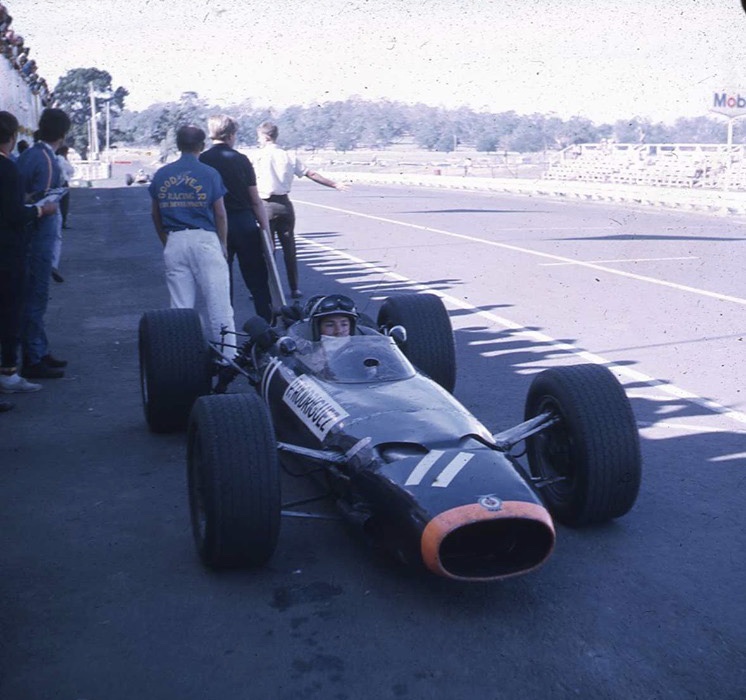
This is the butt of Jackie Stewart’s BRM P261 #2614 pictured in the Warwick Farm paddock on 19 February 1967, the engine’s last International win. JYS won the AGP from Clark’s Lotus 33 Climax FWMV V8 and Frank Gardner’s Brabham BT16 Climax FPF. P60 engine now at 2070cc, the weak link of the car by then was the transmission which was struggling with power and torque for which it was not originally designed in 1.5 litre GP spec (M Feisst)
Pedro Rodriguez in the Longford pitlane in 1968, P261’s final race as a works entry (D Cooper)

The engine’s final entry as a works engine was in the back of Pedro Rodriguez’ P261 at the Longford Tasman round in March 1968, he was second to Piers Courage’ McLaren M4A Ford FVA.

During that period the engine won the 1962 Drivers and Constructors titles with Hill. Hill/BRM were second in both the drivers and constructors titles in ’63 to Clark/Lotus, in ’64 to Surtees/Ferrari and in ’65 again to Clark/Lotus. The BRM P261 won the 1966 Tasman Championship for Jackie Stewart in a dominant display, BRM won seven of the eight rounds.

For the sake of completeness the wins for the engine. Note that i have not included heat wins in Non-Championship events, only Finals are as below. What comes through strongly is just how much Hill.G’s career was intertwined with this engine and how smart it was to sell them to all-comers.

1962;

Championship; Dutch, German and Italian GPs, all Hill in BRM P57 chassis

Non-Championship; GP Brussells, Glover Trophy Goodwood, Intl Trophy Silverstone all Hill BRM P57, Crystal Palace Trophy Innes Ireland Lotus 24 BRM, Kanonloppet Karlskoga Masten Gregory Lotus 24 BRM

image
Piers Courage, BRM P261, Teretonga International, the most southerly race circuit in the world perhaps. NZ Tasman 28 January 1967. Piers DNF engine in the race won by Clark’s Lotus 33 Climax, teammate Richard Attwood was second in the other BRM (I Peak)

1963;

Championship; South African, Monaco and US GPs all Hill BRM P57

Non-Championship; Int Trophy and Aintree 200 both Hill BRM P57, Glover Trophy Ireland Lotus 24 BRM, GP Siracuse Siffert Lotus 24 BRM

1964;

Championship; Monaco and US GPs both Hill in BRM P261

Non-Championship; Daily Mirror Trophy Ireland BRP BRM, GP Mediterraneo Enna Siffert Brabham BT11 BRM, Rand GP Natal Hill Brabham BT11 BRM

1965;

Championship; Monaco and US GPs Hill, Italian GP Stewart all BRM P261

Non-Championship; Int Trophy Stewart BRM P261, GP Mediterraneo Siffert Brabham BT11 BRM

1966;

Championship; Monaco GP Stewart BRM P261

Tasman; Pukekohe NZGP and Lakeside AGP Hill and Wigram, Teretonga, Sandown and Longford rounds, Stewart all in BRM P261

1967;

Tasman: Pukekohe NZGP and Warwick Farm AGP both Stewart in BRM P261

image
(E French)

Relaxed scene at Longford on the 5 March 1967 Tasman weekend. That’s JYS on the wheel of P261 2614, Clark’s Lotus 33 Climax is alongside. #9 is Spencer Martin’s Brabham BT11A Climax with his car owner Bob Jane the stocky little dude in the drivers suit beside Stewart. The nose of Chris Irwin’s P261 2616 is also clear. On raceday Jack Brabham’s BT23A Repco won the South Pacific Trophy from Clark and Irwin.

Etcetera…

image
(History of The AGP)

BRM P60 power at the Lakeside, Australian Grand Prix Tasman round on 20 February 1966. JYS and Graham lead in BRM P261s, Clark in Lotus 39 Climax, Gardner’s yellow nosed Brabham BT11A Climax, Jim Palmer’s Lotus 32B Climax, Spencer Martin’s red Brabham BT11A, Leo Geoghegan’s white Lotus 32 Ford 1.5 and the rest. Hill won from Gardner and Clark

hill 33
(Getty)

Graham Hill’s BRM P60 engined Lotus 33 at the 29 April 1967, BRDC Intl Trophy Silverstone. That’s Damon practicing in the cockpit! DNF but fastest lap, the race was won by Mike Parkes’ 3-litre Ferrari 312. Graham had just left BRM for Lotus for the ’67 season but not the P56/60 engine which gave him so much success! Lotus’ engine of choice for ’66 was the BRM H16 but Chapman used the V8s as a stopgap with the H16 running late. Chapman’s Lotus 33s comprised a 2-litre Climax engined chassis for Clark and 2070cc P60 BRM engined one for Graham

(J Saltinstall)

Bibliography…

The bibles on all things BRM are Doug Nye’s three books, hopefully Vol 4 is not too far away! This article is a précis of Nye’s article on the P56 engine in his seminal, sensational ‘History of the Grand Prix Car 1945-65’

Photo Credits…

Rainer Schlegelmilch, The GP Library, Cahier Archive, Ellis French, Mike Feisst Collection & Ian Peak Collection/The Roaring Season, G Howard and Ors ‘History of The Australian GP’, grandprixengines.co.uk, Dennis Cooper Collection, John Saltinstall Collection

Tailpiece: Top Fuel Dragster…

image
(R Schlegelmilch)

Trevor Taylor’s BRP Mk2 BRM and its P56 V8 at Spa in 1964. Taylor was seventh, the race was won by Clark’s Lotus 25 Climax. It’s interesting that the stackpipe exhausts were still being used by BRP this late when the low level exhausts were producing more power, budgets and all that no doubt…

Finito...

french gp 1967

As Jeremy Clarkson would say. The 3 litre Formula 1 ushered in another era when a surfeit of power over chassis grip made the cars spectacular to watch and a challenge to drive…

Here Graham Hill #7 gets off pole with a minimum of Firestone wheelspin, not so Jack Brabham #3 and Dan Gurney #9, Repco V8 and Gurney-Weslake V12 leaving behind plenty of ‘Goodyear’. The noses of the cars behind are Clark’s yellow striped Lotus and Bruce McLaren in Dan’s second Eagle, his own car being not quite yet ready.

french bruce

Bruce McLaren getting the feel of the Eagle T1G Weslake. Q5 and retired on lap 26 with ignition failure. He also raced the car at Silverstone and the Nurburgring (The Cahier Archive)

Dan was on top of his game, he won the Belgian Grand Prix a fortnight before in his Eagle T1G and Lotus the first race for the 49 and its Cosworth engine two weeks before that. But it was the ‘old stager’ Brabham who took the French Grand Prix win in his BT24 from teammate Denny Hulme and Jackie Stewart’s BRM P261.

french jack and dan

Brabham’s BT24 ahead of Dan Gurney’s Eagle T1G DNF fuel line. Circuit Bugatti 1967 (unattributed)

The Automobile Club de France laid out a ‘pissant’ circuit built for the racing school which also used the start-finish straight of the classic 24 hour circuit but the ‘Circuit Bugatti’ had none of the atmosphere, grandeur or challenge of Reims, Rouen or Clermont Ferrand the other options available to them!

The ‘punters’ reacted accordingly, only 20000 showed up, the race was held at Rouen the following year.

image

Grid ready to go, G Hill popping on the Nomex, Bruce McLaren in an Eagle T1G and to his right Jochen Rindt’s Cooper T81B Maserati DNF engine (Getty)


frencj barabhams

#4 Hulme’s Brabham BT24 Repco 2nd in front of Jack’s car, #16 is Guy Ligier’s Cooper T81 Maserati N/Class. Le Mans paddock 1967. How small, light and neat do those BT24’s look? Champions in ’67 of course with Hulme D (unattributed)

image

Superb shot of Chris Amon’s Ferrari 312. He qualified 7th and ran as high as 3rd before the throttle cable broke at half distance (Sutton)

Jack lookin’ pretty happy with a good days work in his BT24 Repco both before the race and after its successful conclusion…

image

(Getty)

Credits: The Cahier Archive, Getty Images, Sutton Images

Tailpiece: You can take the Racing Driver out of the Engineer…

mc laren le mans eagkle

Ever the engineer Bruce helps with a plug change on his Weslake V12. Le Mans 1967 (Getty Images)


image

All of the ‘hey man, hip cat, cool, groovy funky dude’ areas in any city I’ve visited globally share common attributes; inner city precincts filled with students, professionals and those of more limited means, ‘tree-huggers’, bohemians and artists with the restaurants and shops those types attract in areas which are architecturally interesting, a blend of the old and the edgy in terms of the built environment?!

Melbourne’s CBD in totality ‘cuts the mustard’ these days, do stay in the CBD if you visit for the Australian Grand Prix.

image

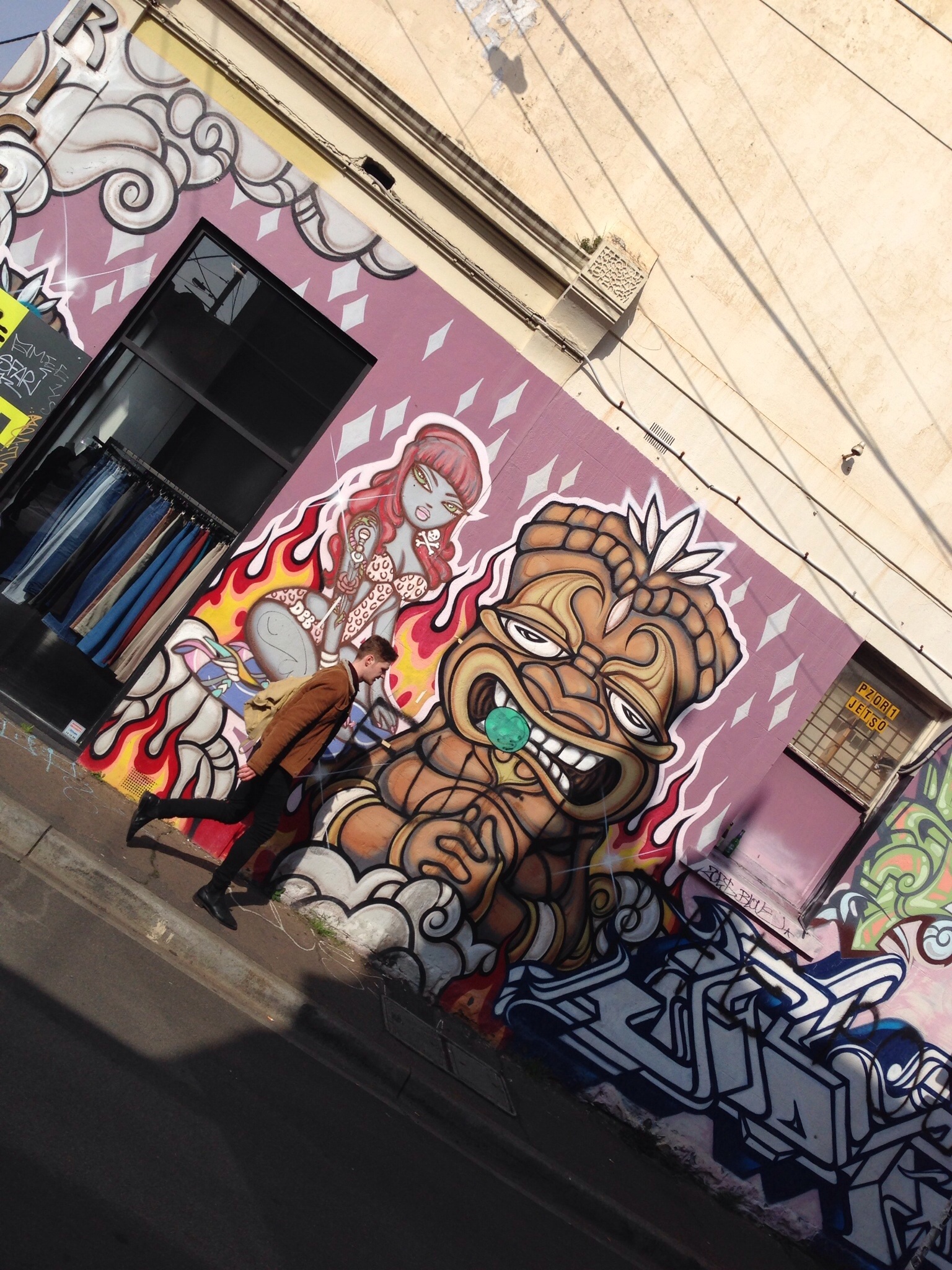
Smith Street urban art

Outside the city grid Melbourne has two precincts which meet said criteria, there are some pretenders which have fallen from grace in my book. These include Chapel Street and Toorak Road South Yarra, Lygon Street Carlton, Fitzroy and Acland Streets St Kilda and Greville Street in Prahran. A sure sign an area is about to lose its appeal is the arrival of major retail chains  despoiling the magic of  places which are about difference, not the formulaic sameness of da big guys.

So, my (and more importantly my 3 sons who are in the right age-group to judge such things!) two hey man etc precincts in Melbourne at present are the stretch of Chapel Street, Windsor from High Street to ‘Dandy’ Road and Smith and Gertrude Streets Collingwood/Fitzroy with that intersection the epicentre.

image

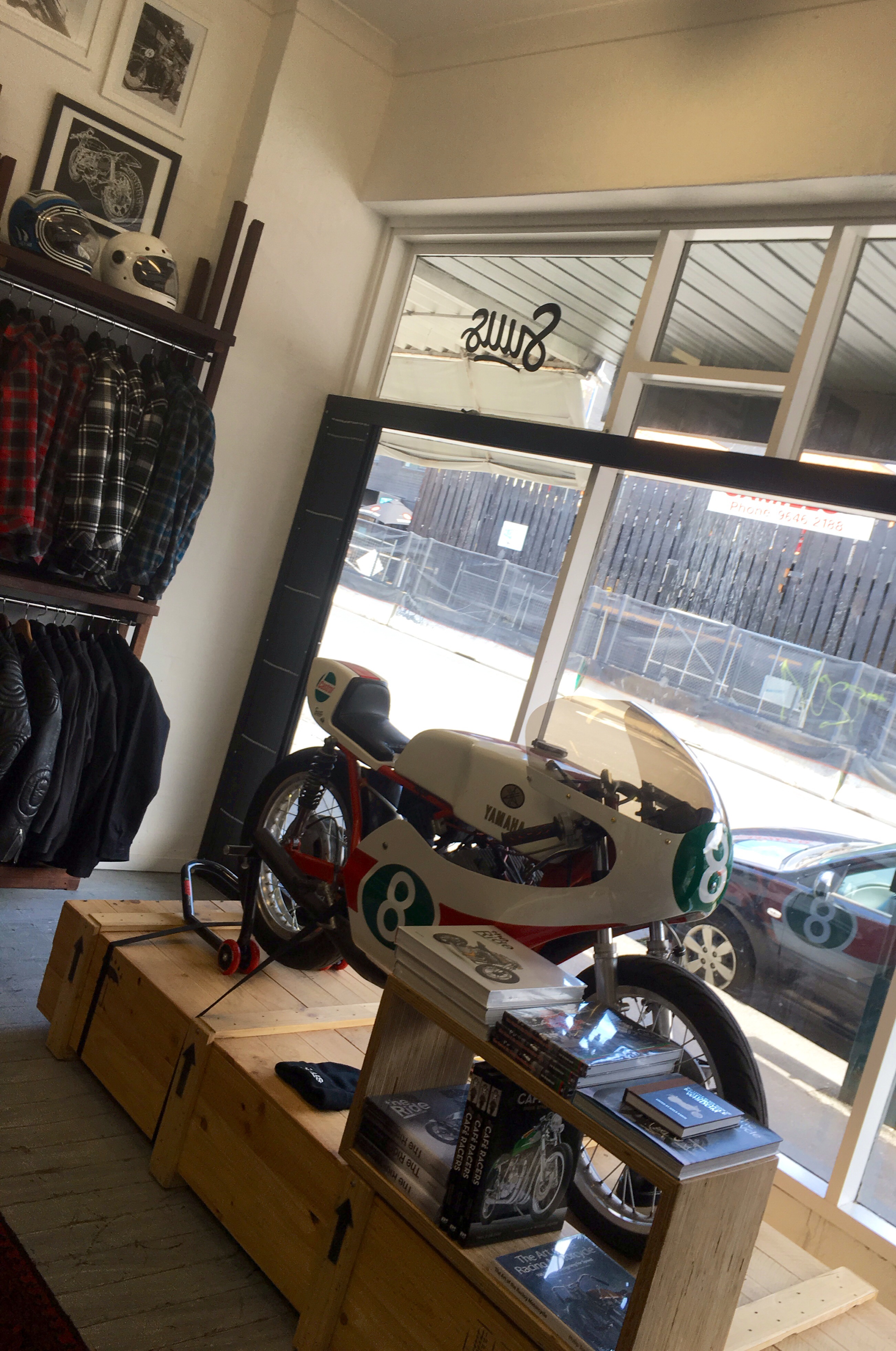
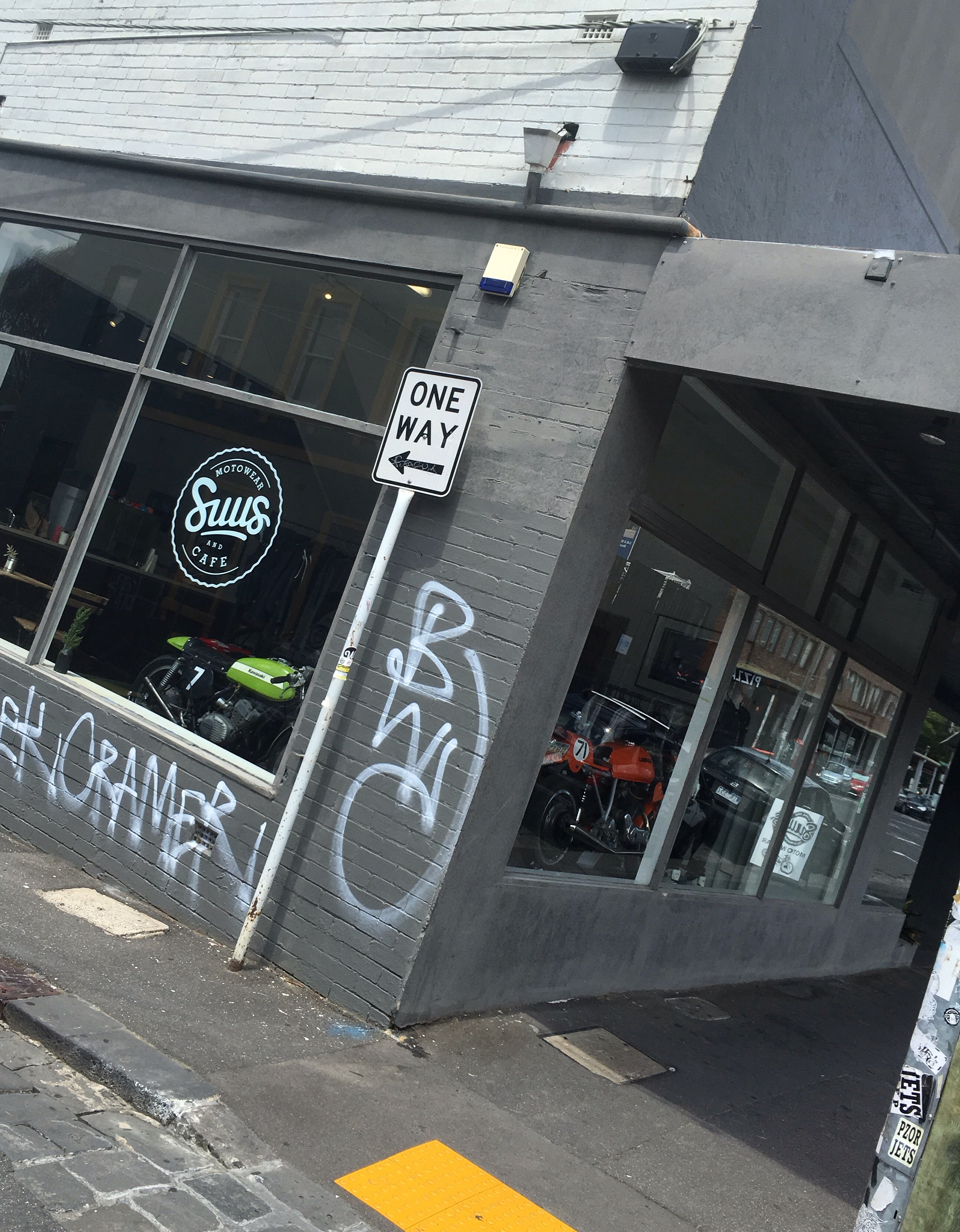
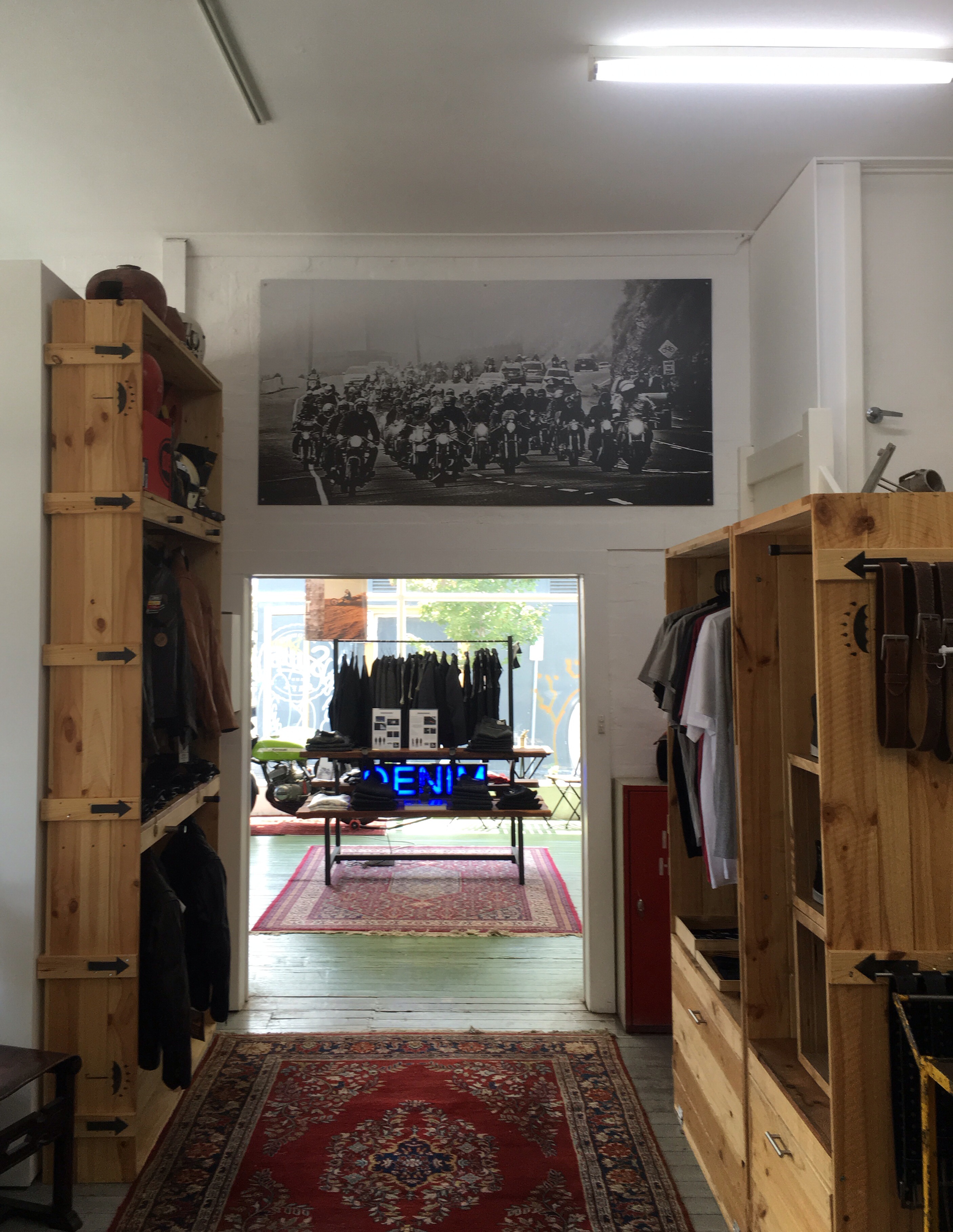
‘Suus’ is a motor-cycle emporium which has recently moved into Collingwood adding some coolness @ 12 Smith Street. The place is a blend of retail outlet, clothes and bikes, custom shop to build and modify ‘cafe-racers’ and most recently a coffee shop. I do mean coffee, just coffee.

http://suus.com.au/

I’ve no vested interest in the place at all other than the hope that a venue where bike and car guys can go and talk about salient gob-shite survives and thrives.

image

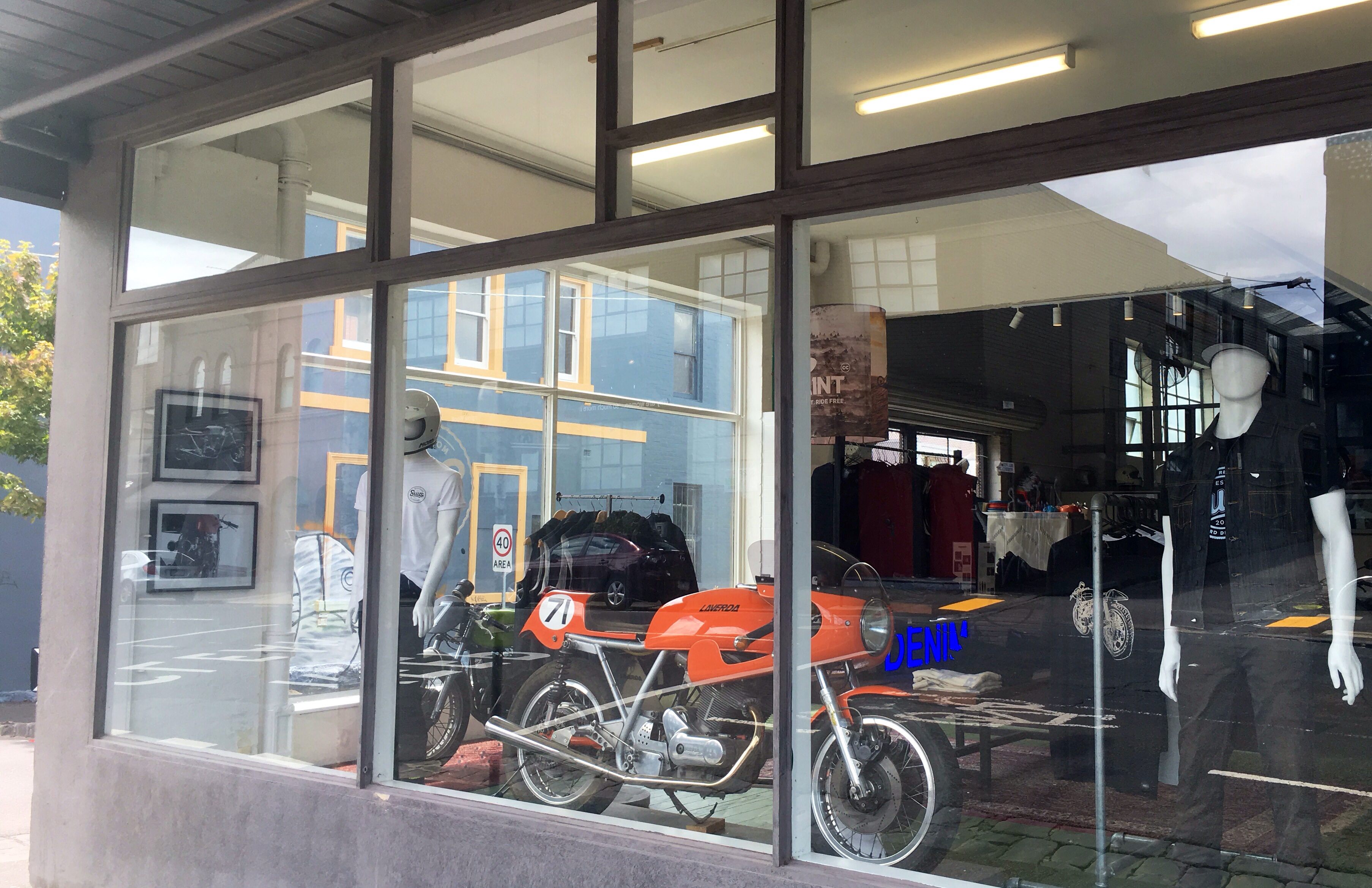
‘Suus’ nice Ducati 750SF in the window @ present

image

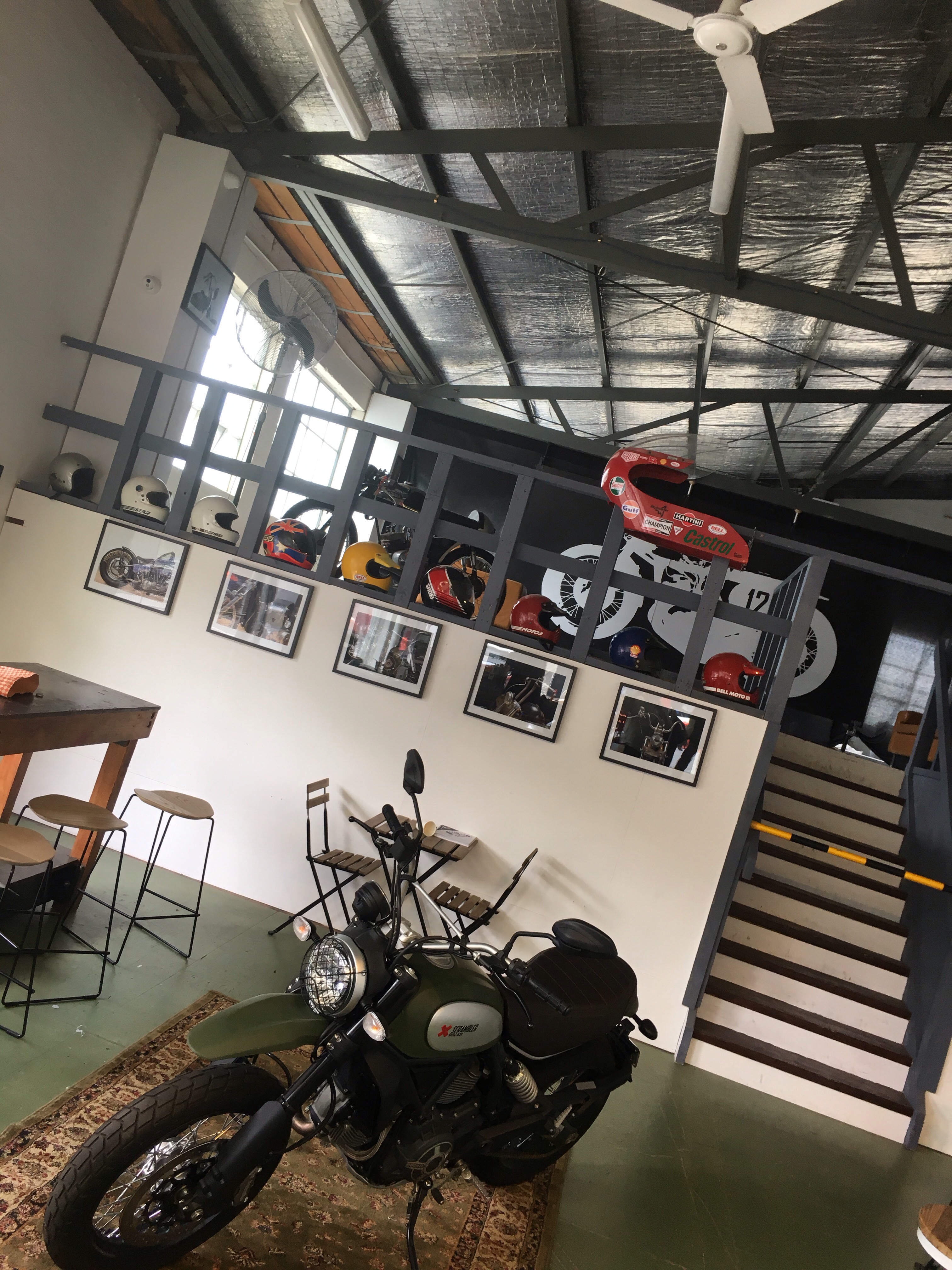
Coffee area, workshop out ze back

image

‘Bell’ stockist, ‘mood and vibe’ of the place tops

image

It’s a long time since automotive establishments where one could gather like the Light Car Club, Lou Molina’s ‘Anchor and Hope’ or more colloquially and appropriately the ‘Anchor and Grope’ hotel and more recently Jeff Duttons house of fine cars existed.

The latter was a global pioneer of the automotive retail/food/lifestyle cocktail in his Church Street, Richmond facility. ‘Duttons’ survives in a fashion but lost its soul when Jeff exited and is now in the bowels of Richmond way outta sight.

The point is we don’t have too many nice Melbourne ‘automotive’ environments so check ‘Suus’ out when next in the area. Better still take the other half, there are loads of ‘chick boutiques’, restaurants and bars close by so one can have a win for a change; keep yourself and ‘the chief” happy.

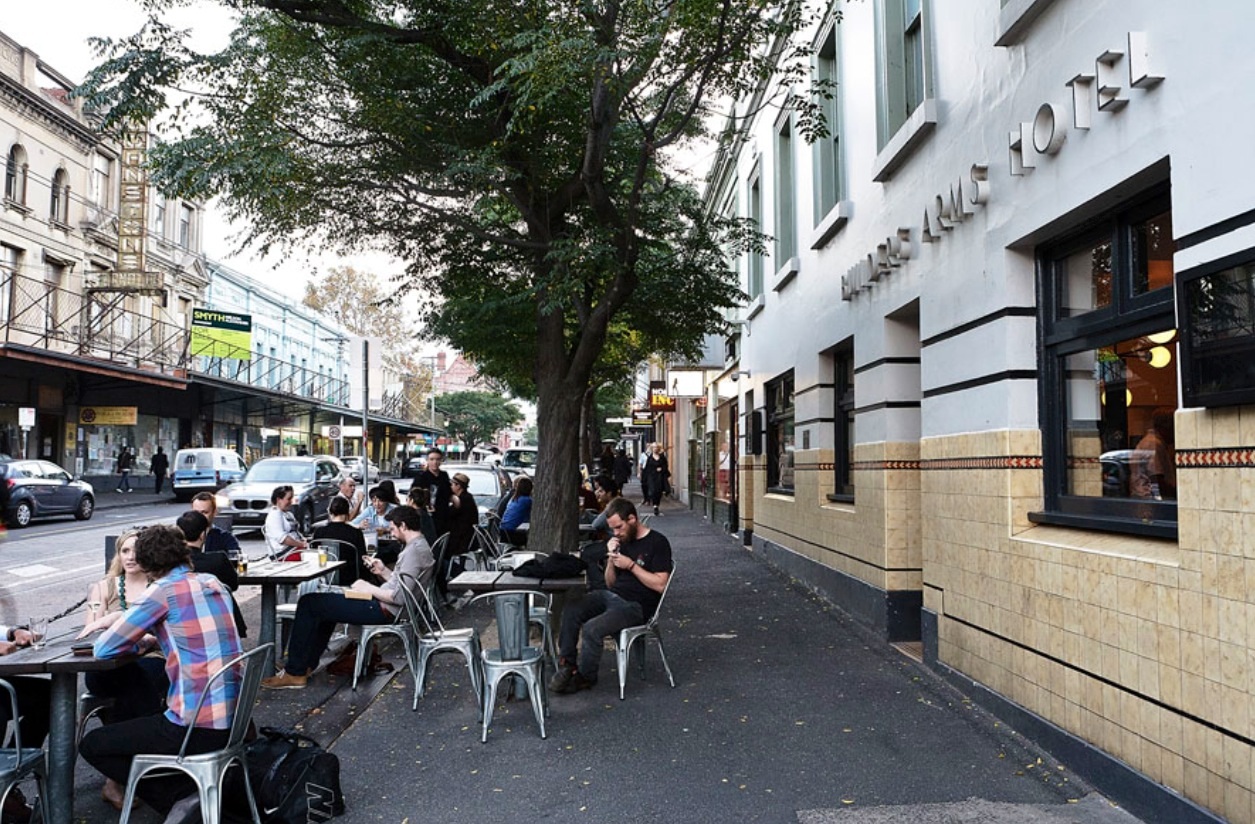
The pick of the local pubs is ‘The Builders Arms’ in nearby Gertude Street, order the fish-pie which is sensational and will sate the appetite of even the most corpulent. The bar is a place where fossils like me feel just as comfortable as the young and the pert. The outside area is tres-pleasant with trams rumbling gently past under brakes for the off-camber approach to the challenging Smith Street apex…

Etcetera…

image

‘Builders Arms Hotel’ one of Andrew McConnell’s joints so is consistent. As in good

image

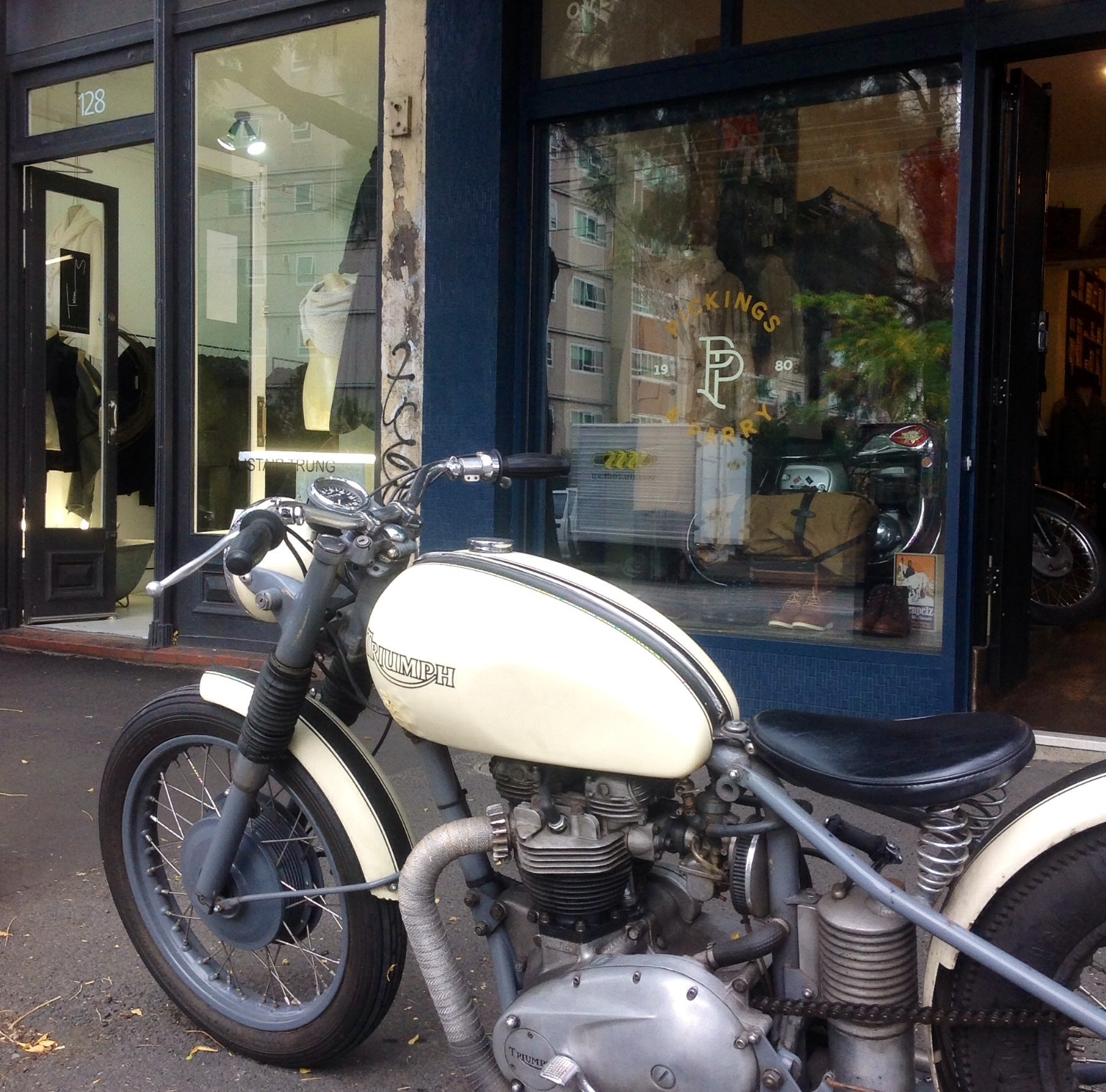
‘Pickings’ in Gertrude Street for hipster gear should you be so inclined

image

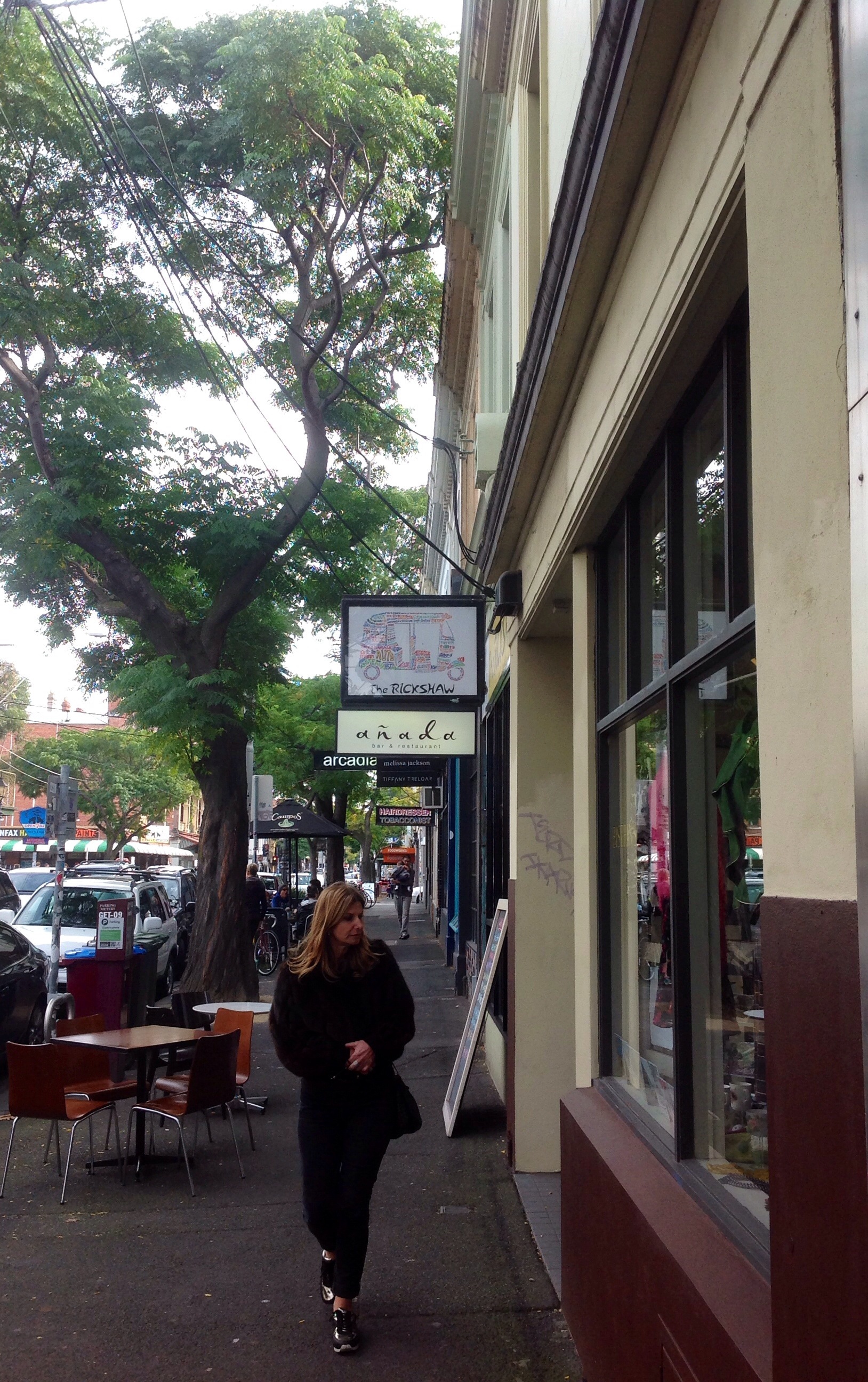
Gertrude Street looking west towards the city and Brunswick Street

image

Gertrude Street towards Smith Street, out front of ‘Ladro’ also good Italian grub

Credits…

Photos M Bisset

Tailpiece:’Suus’ showroom…

image

Shell Ad 1962…

Posted: January 31, 2016 in F1, Fotos
Tags:

shell

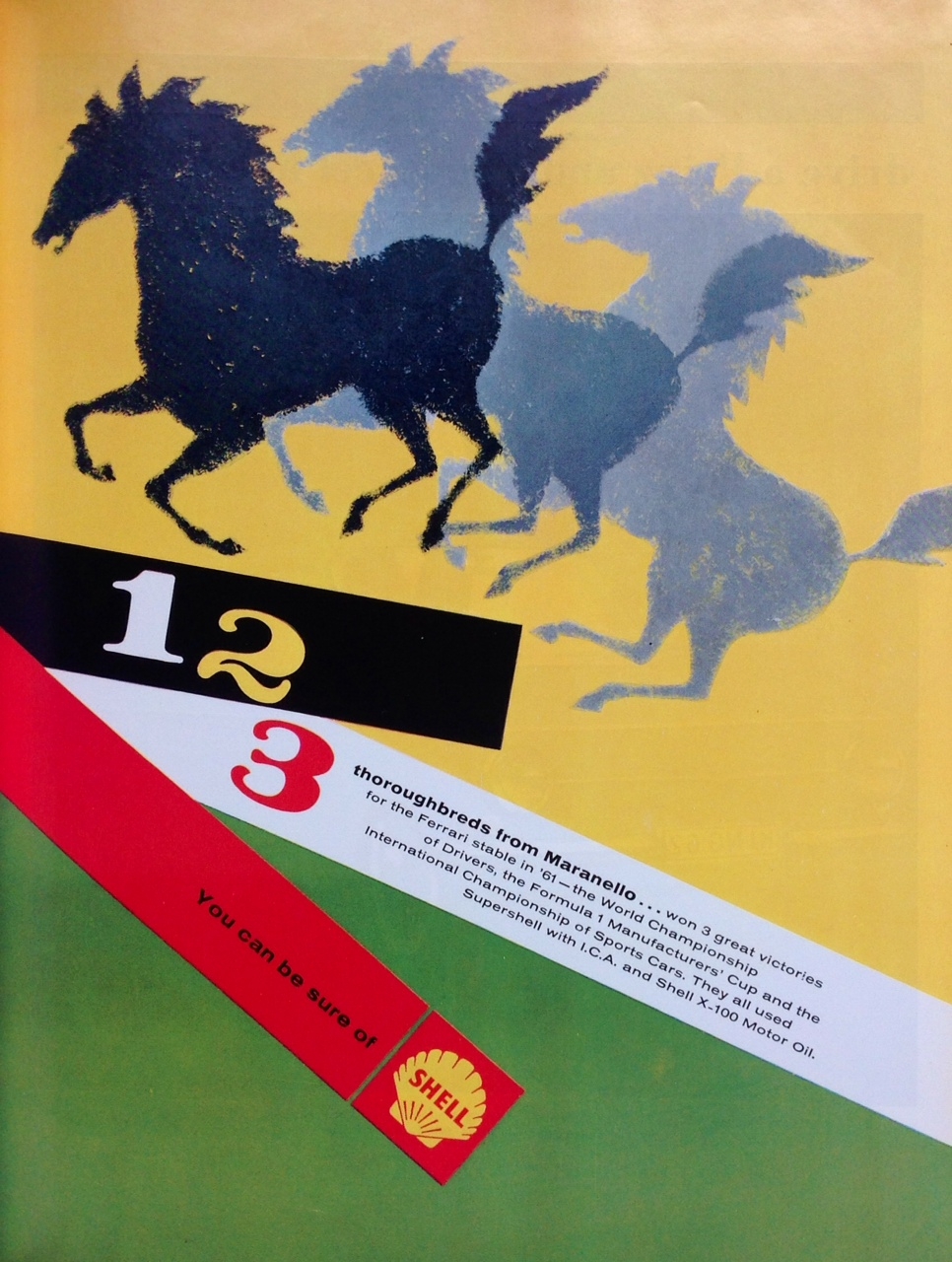
Often the more subtle ads are the most effective? From Automobile Year #10…

image

Stirling Moss cruises his works Maserati 300S chassis #3059 through the Albert Park paddock prior to winning the Australian Tourist Trophy on 25 November 1956, he repeated the dose in a 250F in the following weekends Australian Grand Prix…

One of the wonderful things about this internet thingy is the number of unseen photos of our sport which pop up from time to time giving people like me something to write about. And so it is that Sharaz Jek recently posted photos his father took as a paying-punter at the Australian Grand Prix carnival at Albert Park held during the Olympic Games.

It would have been more considerate had he posted them six months ago when i first wrote about the two Maser sportscars brought to Australia as part of a five car team by Officine Maserati!. But hey, it gives me a chance to write about the ATT specifically, click here to read the earlier article, i won’t repeat the background or destiny of the two 300S’ which stayed in Oz post event;

Bob Jane: Maserati 300S: Albert Park 1958…

image

Melbourne in 1956…

I wasn’t born in 1956 but its fair to say i was more than a twinkle in my parents eyes, so i didn’t attend the mid-fifties Albert Park meetings which older enthusiasts speak so fondly about. Running around the lake last weekend i reflected on how little Albert Park had changed but also how much Melbourne had, the skyline of the city a short 2 Km away.

In 1956 Melbourne’s population was circa 1.5 million people, now it’s 4.7 million, the war ended only a decade before and with it successive Australian Governments established an aggressive migration program which provided, and continues to provide us with the wonderful, peaceful mix of people and their cultures which makes this such a special country and city in which to live. Disgraceful offshore detention centres notwithstanding!

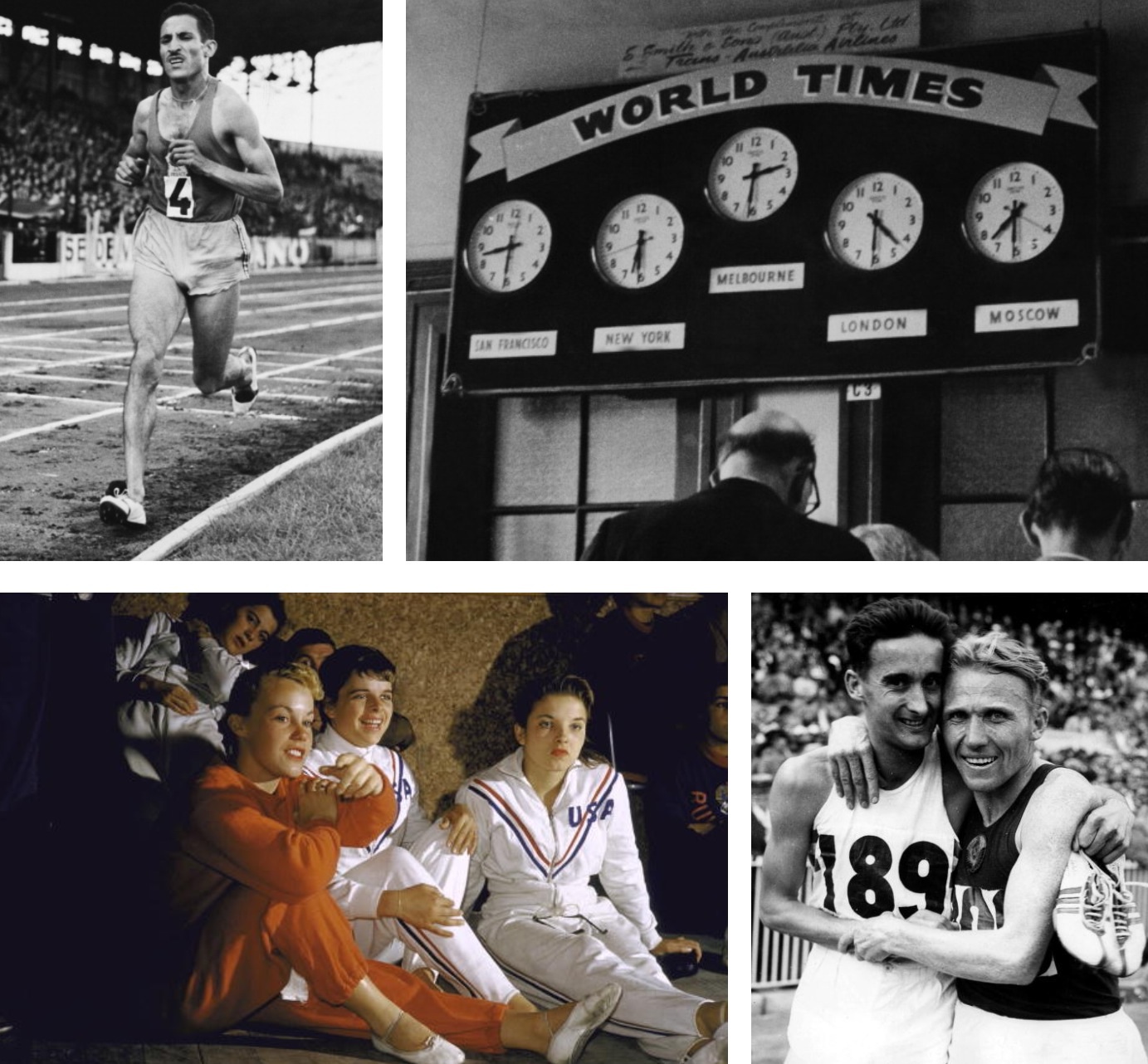
The ’56 Olympic Games, held from 22 November to 8 December was an important part of opening our society to other cultures and equally allowed us to showcase our country, city and capabilities to the world.

The same can be said about the 1956 Albert Park International race meetings and their impact on Australian motor-racing; Barry Green in his wonderful book ‘Albert Park: Glory Days’ said; ‘The weekend was the proverbial moment which changed the face of motor racing in this country. Here for the first time we had a current works sports car and F1 team and other leading international drivers in ex-factory cars; their presence prompting the best of the locals to upgrade their machinery, spend even more and charge harder. A world class field deserved a world class venue and world class crowd. And in the picturesque Albert Park and thousands of international visitors filling Melbourne to overflowing for the first Olympic Games to be held south of the equator, it had just that’.

image

So, to put you in the zone of the times before reading this piece I have added some photos of Melbourne in 1956 to give you the ‘feel of the joint’ and flavour of the times six decades ago, the racing stuff is after that if you wish to cut to the chase…

image
image
image
image
image
The ‘Eyetalians’ brought their weird steaming coffee making machines with ’em post-war, the local coffee obsession was underway, school below is Melbourne High in South Yarra
image
image
TV was introduced to Australia in the lead up to the games, here some locals are sussing the weird new contraption in the window of ‘Myers’ department store in Bourke Street
image
‘Sultry beauty Gunhild Larking, 20, Sweden’s entry for the high jump pensively awaiting her turn to compete’ is the caption. A post sporting career in modelling or TV awaits d’yer reckon!?
image
image
image
image

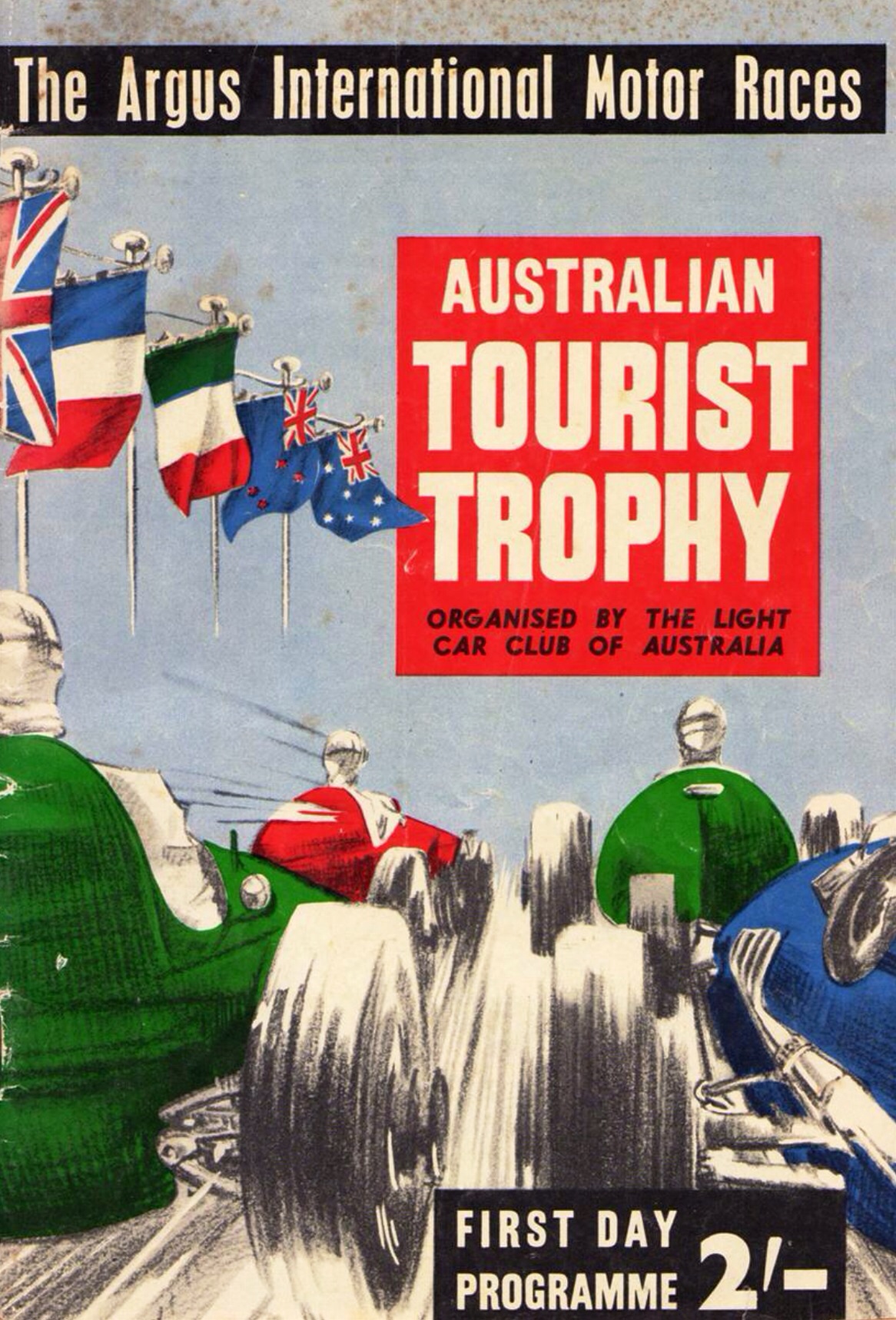
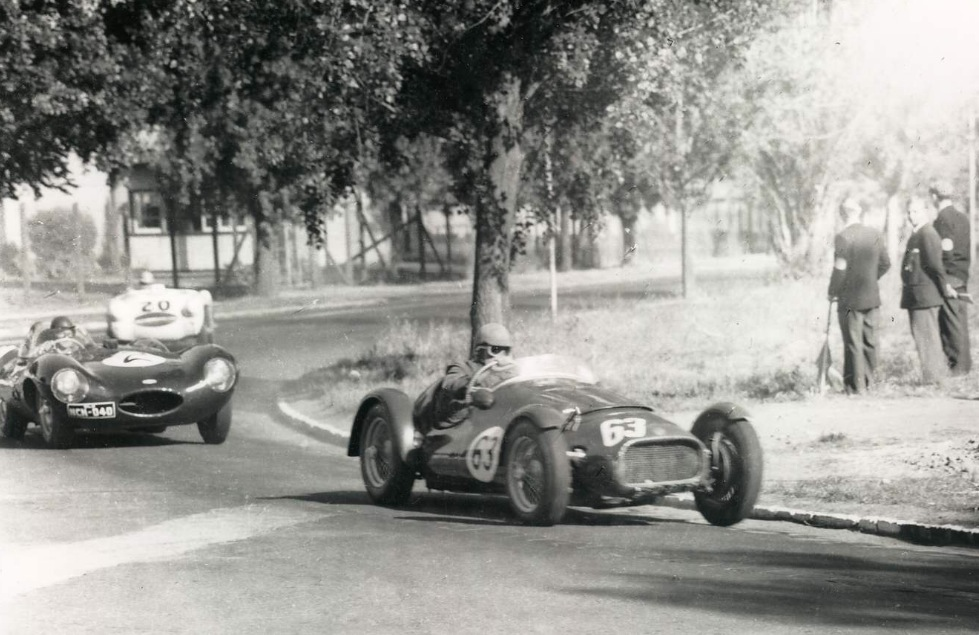
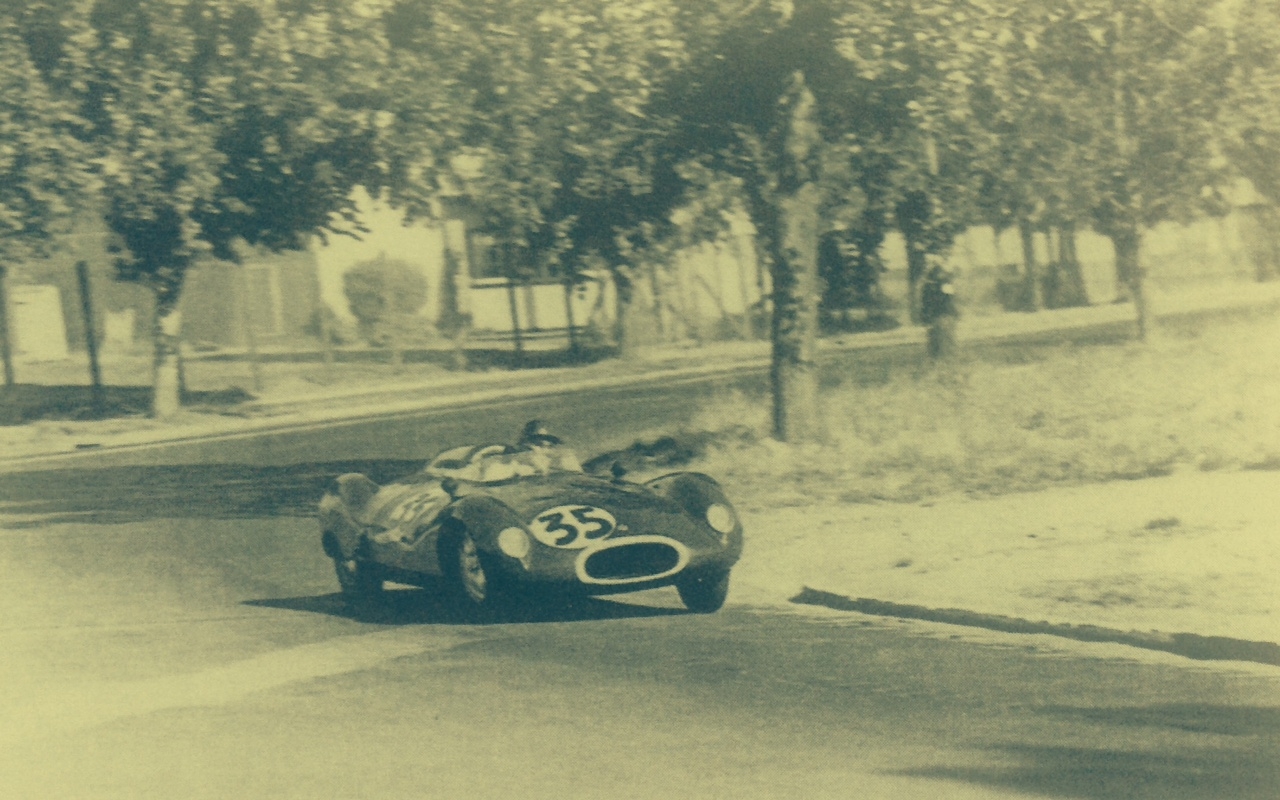
The first weekend of the two week AGP carnival comprised four events, the feature the Australian Tourist Trophy for Sports Cars was held on 25 November…

A convoy of Maserati mechanics drove the 250F and 300S, the 5km from Australian International and 250F driver Reg Hunt’s Elsternwick Holden Dealership, where the cars were maintained each day to Albert Park, on the Nepean Highway and St Kilda Road. Not too much of a problem then but guaranteed to boil a Maserati 300S sans radiator fan these days!

al behra
Behra and Moss @ Albert Park in 1956, the first and only time, sadly, Behra raced here but Moss was an annual, usually victorious visitor to Oz till the end of his career in the Masers, then Rob Walker entered Coopers and Loti (Graham Hoinville)

Most of the drivers stayed close by in the ‘Espy’, the Esplanade Hotel in St Kilda, it’s still there if you want a ‘bevvy’ during the AGP carnival and is well known to Australians as the home of the ‘RocKwiz’ music quiz show.

Fitzroy Street St Kilda felt exotic and buzzed with thousands of visitors from all over the world eager to explore the local delights of the bayside suburbs restaurants and bars. They were full of people including recent European migrants eager to get a touch of home for a few hours at least. The Espy and Tolarno’s were ‘chockers’ and no doubt the proprietors of the areas ‘red light’ precinct did good trade.

image
Guerino Bertocchi, Maserati chief mechanic and factory test driver and his helper start the 5 Km journey from Albert Park to Reg Hunt’s Elsternwick Holden dealership where the team were based (Arnold Terdich)
image
Maserati’s as far as the eye can see! Masers brought 5 cars to Oz, 3 250F’s (one unraced spare which at one stage looked as tho it may have been raced by Brabham but ’twas not to be) and 2 300S, Reg Hunt Motors, Nepean Highway, Elsternwick (Eileen Richards)

In ’57 the factory 300S’ were campaigned by Moss, Behra and Piero Taruffi taking wins at Silverstone, Nassau, the Nurburgring, Rouen and Buenos Aires; the works allocated # 3055 to Behra and # 3059, the ‘featured car’ here to Moss. Stirling was in sparkling form having won the Venezuelan Grand Prix in Caracas a fortnight before arriving in Melbourne, Behra also contested the race.

There was a strong entry for the ATT of around 36 cars; Peter Whitehead returned to Australia hoping to repeat the success of his 1938 tour which culminated in an ERA Bathurst Australian Grand Prix win for him.

His entry in the ATT was a Ferrari Monza, similar cars were entered by Brit Peter Wharton and local motor dealer Stan Coffey. The Whitehead and Wharton Ferrari’s were garaged at AP Hollins in Malvern where Lex Davison’s mechanic/engineer Alan Ashton, well familiar with 4 cylinder Ferrari’s (Davison raced the ex-Ascari Tipo 500/625) could keep a close eye on them.

Lex, already the winner of one of his four AGP’s in 1954, entered his HWM Jaguar, his Ferrari was raced in the AGP won by Moss’ 250F the following weekend.

al coffey
Stan Coffey’s Ferrari 750 Monza, of earlier vintage than those of Wharton and Whitehead but still quick if tricky to drive (John Blanden)

Jaguar D Types were entered for Kew motor dealer and later multiple Australian Gold Star champion Bib Stillwell and Queensland’s Bill Pitt driving the Mrs Anderson owned car.

Jack Brabham returned from Europe where he was establishing a strong reputation to drive a Cooper T39 ‘Bobtail’ Climax with future Gold Star Champion Bill Patterson, another Melbourne, Ringwood, Ford dealer in a similar car.

al brabham
Jack refuels the Cooper T39 in the Albert Park paddock. ‘COR’ is Commonwealth Oil Refineries soon to be BP (John Blanden)

Veteran Tom Sulman raced his ‘Kangaroo Stable’ Aston Martin DB3S, the quicker entries rounded out by Austin Healey 100S’ for multiple AGP winner Doug Whiteford and Ron Phillips.

image
Moss positions his Maser on the front row of the ATT grid, Behra started on pole. Such a sexy shape . Properties on Canterbury Road near the Mills Street corner in the distance (Sharaz Jek)
al start
Behra’s 300S gets the jump at the start, thats Whitehead’s Monza at left, Moss 300S slightly behind, the Jag is Stillwell’s D at left and the little car on the far right Brabham’s Cooper T39 (John Blanden)

A fantastic crowd of 150,000 people gathered to watch the days racing which was marred by the critical injury and subsequent death of Peter Catlin in the first race of the day after he lost control of his Bugatti at Melford corner.

This dominated the tabloids coverage of the race but ‘The Argus’ noted Moss’ lap record of 1:55.8 ‘set in a sportscar, the record previously held by a racing car’ and ‘one of the finest exhibitions of race driving seen in Melbourne’.

To the surprise of many Behra put his car on pole and lead from the start of the 100 mile race with Patterson flipping his Cooper at Melford Corner without too much damage to him or the car on the first lap.

al behra
Behra hard on the brakes in pursuit of Moss. Maser 300S (Philip Skelton)

Behra lead the other 35 competitors at the end of lap 1 from Moss, Stillwell’s D Type, the  two Monza’s of Wharton and Whitehead, Brabham’s Cooper T39, Bill Pitt’s D type and Paul England’s beautifully designed Ausca. The car was built by England in his spare time at Repco, was powered by the first Holden/Repco Hi-Power cylinder head engine.

al pitt
Pitt’s Jag D chasing Jim Leech’s MM Holden Spl with the Ron Phillips Austin Healey 100S behind (unattributed)

On lap 2 Moss gave his French teammate a blast on his Masers ‘Fiamms’ at Jaguar Corner to let him through, and an even bigger one when he did so, team orders not new in motor racing! At the front Wharton and Brabham slipped past Stillwell with Bill Pitt getting progressively quicker in his XKD and closer to the shapely tail of Whitehead’s Monza.

al brab coop
Brabham wringing the little Cooper T39’s Climax engine hard! (John Blanden)

Moss had a lead of 20 seconds from Behra, Stillwell spun giving Pitt ‘a sniff’ at him as Moss set fastest lap on the 27th tour, passing lots of slower traffic in the process.

By the race’s end only Jean Behra was on the same lap as Moss, the Brit took the flag from Behra, Wharton, Pitt a great 4th and first local home, Stillwell, Whitehead, Lex Davison’s HWM Jaguar and Kiwi Ross Jenson in an Austin Healey 100S and the rest.

al moss color
Moss exits Jaguar corner in his 300S complete with accumulated hay from bales disturbed by other errant competitors during the race’ 100 miles, in the cars inlet (Graham Hoinville)
image
‘Motori Porno’ innit!? Plug change, 12 of them for Moss’ twin plug #3059. Twin distributors, big Weber 45DCO3 carbs of the 2992cc circa 280 bhp 6 cylinder, DOHC 2 valve engine all clear (Sharaz Jek)

Other ATT Meeting Photos…

al scene 1
Albert Park vista #20 the Phillips Austin Healey 100S (unattributed)
al start 2
Another start shot, row 3 this time with the 2 D Types of Stillwell and Bill Pitt (right) in shot, thats Sulman’s Aston DB3S on the far right (unattributed)
al phillips
Phillip’s 8th placed pretty Austin Healey 100S, great run for the Melburnian in a model very popular in Oz, sadly most have now left our shores (unattributed)
al monza
Stan Coffey’s Ferrari 750 Monza behind its Holden FE towcar (Sharaz Jek)
al moss passing
Moss passing and thanking with a wave MG T driver Newman for his track etiquette (Arnold Terdich)
al wharton
Ken Wharton’s races his Ferrari 750 Monza to 3rd place. Southern Command Army buildings in the background. He raced this car in NZ that summer and sadly died in it at Ardmore on 12 January 1957 (John Blanden)
al still
Bib Stillwell’s ‘XKD520’, the seventh D Type Jag built appropriately going thru Jag Corner. An important step in the later Australian Champs rise thru the ranks, he raced it in ’56 to early ’57 , then progressed to Hunt’s 250F (autopics.com)
al vista
Another paddock vista which again has ‘COR’ Commonwealth Oil Refineries in shot, clearly the firms PR function was working well! the Phillips Healey 100S and a Porsche Speedster in shot (unattributed)

Etcetera…

image
Fifties circuit conceptually similar to but not identical to the contemporary one, direction of racing opposite to the present (Barry Green)

Bibliography…

Barry Green ‘Albert Park: Glory Years’

Photo Credits…

Sharaz Jek especially for the shots which inspired the article, Getty Images for all of the Melbourne ‘atmo’ 1956 shots, Arnold Terdich, Eileen Richards, John Blanden, Philip Skelton, Graham Hoinville, autopics.com

Tailpiece: She is MY daughter Stirl don’t even think about it!…

image
(Sharaz Jek)

Finito…

daigh ford

(Racing One)

Chuck Daigh rumbles his big Ford Thunderbird across Daytona Beach during the February 1956 Speed Trials…

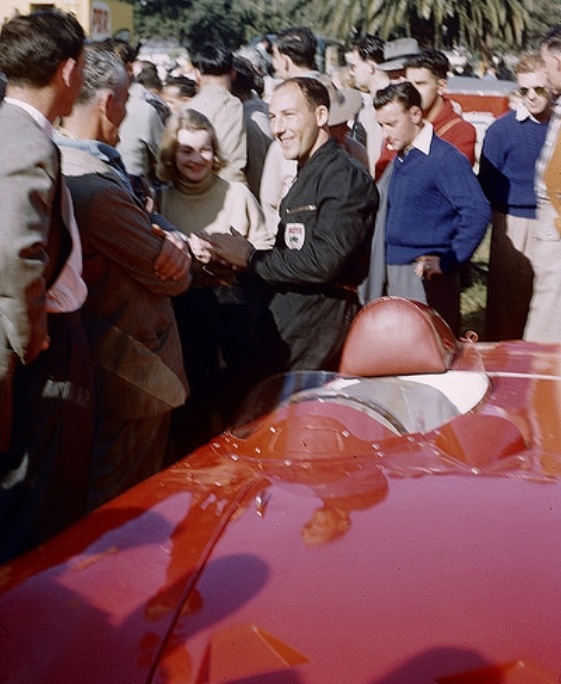
Born in Long Beach, California on 29 November 1923 he commenced fiddling with cars at his fathers garage business. Whilst still at High School, he ‘ran’ a Union Oil garage in Long Beach close to his home in Paramount. Both he and his older brother were typical ‘hot-rodders’, prior to WW II they ran at the Dry Lakes, one of the cars the marriage of an A-Model Ford chassis and Alfa Romeo engine.

Purple Heart Winner…

Prior to enlisting in the Army he worked for Morrison-Knudsen to build the Long Beach breakwater.

He served as a paratrooper in the ‘517th Regiment/82nd Airborne’ during WW II seeing action in France, Belgium and Germany, including fighting in ‘The Battle of the Bulge’ in the Ardennes Forest where he was later to race a Scarab at Spa-Francorchamps in 1960.

He was a remarkable leader and brave soldier awarded a Silver Star, Bronze Medal and a Purple Heart for heroic acts in 1944, he was shot in Luxembourg and ‘mustered out’ of the army in 1945.

image

Chuck Daigh in his Scarab F1 car during the teams fraught 1960 GP season, very wet! place and date unrecorded. Check out the ‘Reventlow Automobiles Inc’ logo on the cars scuttle (Popperfoto)

Post war he worked for Bill Stroppe preparing the Bob Estes entered Lincolns for the Carrera Panamerica Mexican road race. He was the co-driver on three occasions, in 1952 and 1953 with Walt Faulkner, finishing 8th in 1953, and with Chuck Stevenson in 1954 when they didn’t finish.

By this stage Daigh’s engineering capabilities were widely known and highly respected, Carroll Shelby remarked; ‘There are only two people i can think of who can sit down, take a welding torch, build their own chassis, go out and test it and then win races with it. They are Jack Brabham and Chuck Daigh. I put Chuck in the same category as Jack.’ Shelby was well placed to judge, he engaged Daigh as Shelby American’s carburetion expert on its ongoing Ford GT40 campaign in both North America and in Europe after Chuck’s driving days were over in the early-mid sixties.

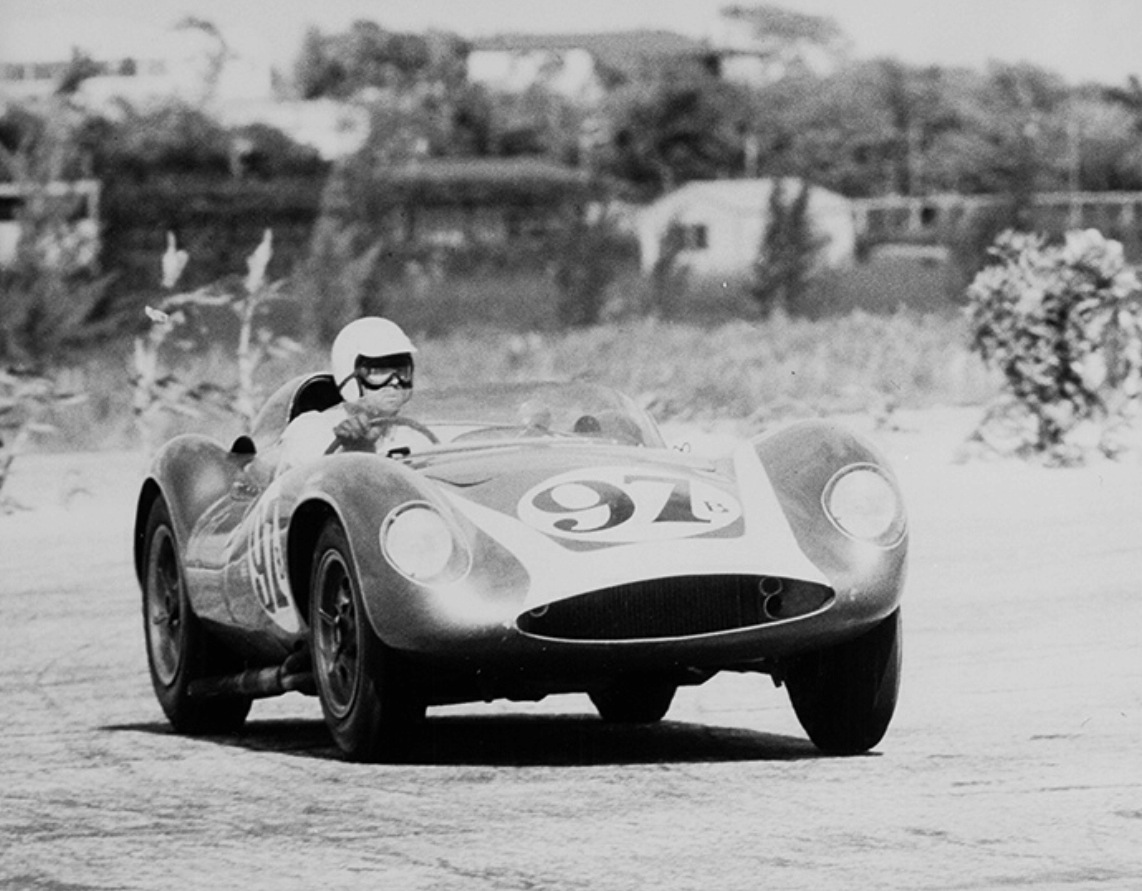
He started road racing in the mid-fifties, his first sportscar race was at Moffet Field, California in 1953 driving Jim Lowe’s Frazer Nash. He ran a modified Kurtis 500S Lincoln special owned by Frank Kurtis, winning the Willow Springs and Santa Barbara sports car races in 1954. He also won races at Paramount Ranch and Santa Barbara driving the Troutman-Barnes Ford powered sports car.

In the early SCCA days drivers were suspended for racing professionally. Chuck occasionally raced in USAC pro stock car events as ‘Charles George’ to avoid the SCCA’s wrath, setting a lap record in the USAC 250 Mile Stock Car Race in September 1957 on the Milwaukee Mile at 90.614 mph.

He joined Pete DePaolo Engineering, chosen in 1957 by Ford for an assault on the Daytona Beach Speed Week Trials in February. Chuck managed the works supported Ford stock car team and helped build the 4 special Thunderbirds nicknamed ‘Battlebirds’ achieving better than 200mph in one of the T-Birds, the first to do so.

sports

RAI’s race shop in Culver City, LA October 1958, 2 Scarab Mk2 Chevs being fettled. Note superb standard of workmanship. Spaceframe chassis and bracing from drivers back bulkhead via the roll bar to the rear unusual for the day, huge finned brake drums, front wishbone IFS, you can just see the end of the de Dion tube @ rear and its locating linkages. Beautiful, huge ally fuel tank. Angle of steering wheel naff! and uncomfortable no doubt. Halibrand alloy wheels on the floor (Bill Bridges)

Later he worked for the Rathmann Chevrolet NASCAR stock car team until its demise then joining Lance Reventlow, on the Scarab Sports Car and Formula One projects. Chuck was engaged as number 1 driver and chief mechanic/engineer.

The FIA announced a 3-litre limit for the World Sports Car Championship from the start of 1958 so the Chevrolet-engined sports car had to run in SCCA races rather than internationally as originally planned by Reventlow in 1957.

The Scarabs were all superbly built and prepared and dominated the opposition in ‘B Modified’. Daigh beat Phil Hill’s Ferrari at Riverside and also won the Governor’s Cup, beating Hansgen’s Lister, and the Nassau Trophy sharing the drive with Reventlow in 1958.

The purpose of this article is Daigh’s career not the fabulous Scarab’s of which Daigh played a key roll, albeit i get a bit carried away with the Scarab RE later in the article. The Scarab’s are topics for another time.

image

Daigh #5 and Reventlow #3 back to camera in blue helmet, ‘saddle up’ their Scarab Mk2 Chevs prior to Chucks 1958 Riverside LA Times GP win. Spaceframe chassis, Chev injected V8’s of varying capacities, wishbone front IFS and de Dion rear suspension with Watts linkage, huge finned drum brakes, Borg Warner 4 speed ‘box all clad in the sexiest body this side of Northern Italy (unattributed)

image

Daigh, Scarab Mk2 Chev, LA Times GP Riverside 1958, he looks lonely out there! (Dave Friedman)

image

Celebrating his 1958 Riverside LA Times US GP Sportscars win in October 1958 with his children. Guy at left is the promoter and famous entrant JC Agajanian (The Enthusiast Network)

nassau

Daigh in the Scarab Mk2 Chev during the Nassau Speedweek in early December 1958, Lance Reventlow had the luck at this meeting, but Chuck shared Lance’s car after his car, this one retired with driveshaft failure to win the ‘Nassau Trophy’. Superb lines of the car obvious, Scarab derivative of everything at the time in terms of its styling but individual with it (Dave Friedman)

In 1959 he co-drove the winning Ferrari 250 Testa Rossa/59 at Sebring sharing the factory car with Dan Gurney, Phil Hill and Olivier Gendebien. Gurney said of Daigh; ‘ Chuck was not only a good engineer, but he could also drive the wheels off a car. When i got into racing, i soon found out who the real heavyweights were, in those days Chuck was like a god to us.’

image

Gurney/P Hill/Gendebien/Daigh factory Ferrari 250TR winning the 1959 Sebring 12 Hour (Dave Friedman)

He also attempted to qualify for the the Indianapolis 500 in 1959, in fact he had three qualification attempts, never contesting the event with inferior equipment the problem. In July he drove a Maserati 250F at Lime Rock in July, finishing 2nd in the 60 lap final having posted two 3rd’s in the heats.

image

Nassau Speedweek 1958, Daigh facing this way, Reventlow left smiling and winning the ‘Governors Trophy’  and ‘Nassau Trophy’, the latter with Daigh sharing the drive in a Scarab Mk2 Chev. Carroll Shelby to the right of the fella with the hat, drove a Maser 450S in the ‘Nassau Trophy’ DNF. They all look fairly ‘chillaxed’! (Dave Friedman)

By the time the front-engined Scarab F1 car appeared at Monaco in 1960 it was obsolete, the first rear-engined Cooper Climax GP victory was in the 1958 Argentinian Grand Prix.

Quite why Reventlow thought a front-engined car was ‘the go’ by then is a topic to explore separately in some articles about the fabulous Scarabs themselves; Lance raced for most of 1957 in the UK including a number of F2 events in a Cooper T43 Climax so had a first-hand experience of the new generation of mid-engined single-seaters. The ‘writing was surely on the wall’ by the time the key decisions about the conceptual design of the Scarab GP car were determined…mind you no less than Colin Chapman built the front-engined Lotus 16 in 1959 i guess! Hindsight is a wonderful thing.

cooper

Reventlow racing a Cooper T43 Climax FWB at an F2 event at Crystal Palace, and signing a few autographs on 10 June 1957. 6th in the ‘London Trophy’ won by Brabham’s works T43 FPF. Having raced a mid-engined car how could you not build your F1 car in the same configuration?! (Ron Burton)

scarab brochure

Scarab GP; spaceframe chassis, IFS front by wishbones and coil spring/dampers, IFS rear suspension with wide based lower wishbone and coil spring/dampers, drum brakes all round, 4 cylinder DOHC, injected Offenhauser built engine, circa 220bhp@7500rpm, Borg Warner 4 speed ‘box (unattributed)

(B Thatcher)

Both Reventlow and Daigh struggled, the GP car was withdrawn before the seasons end but raced in the US GP at Riverside to keep the faith with local fans. Daigh drove the third works Cooper T51 at the British GP in 1960, having proved the quicker of he and Reventlow who also tested the car, qualifying 19th and retiring on lap 3 with an overheating engine.

Daigh showed enough promise in very difficult circumstances to have a decent GP drive in 1961, its a shame that did not occur.

image

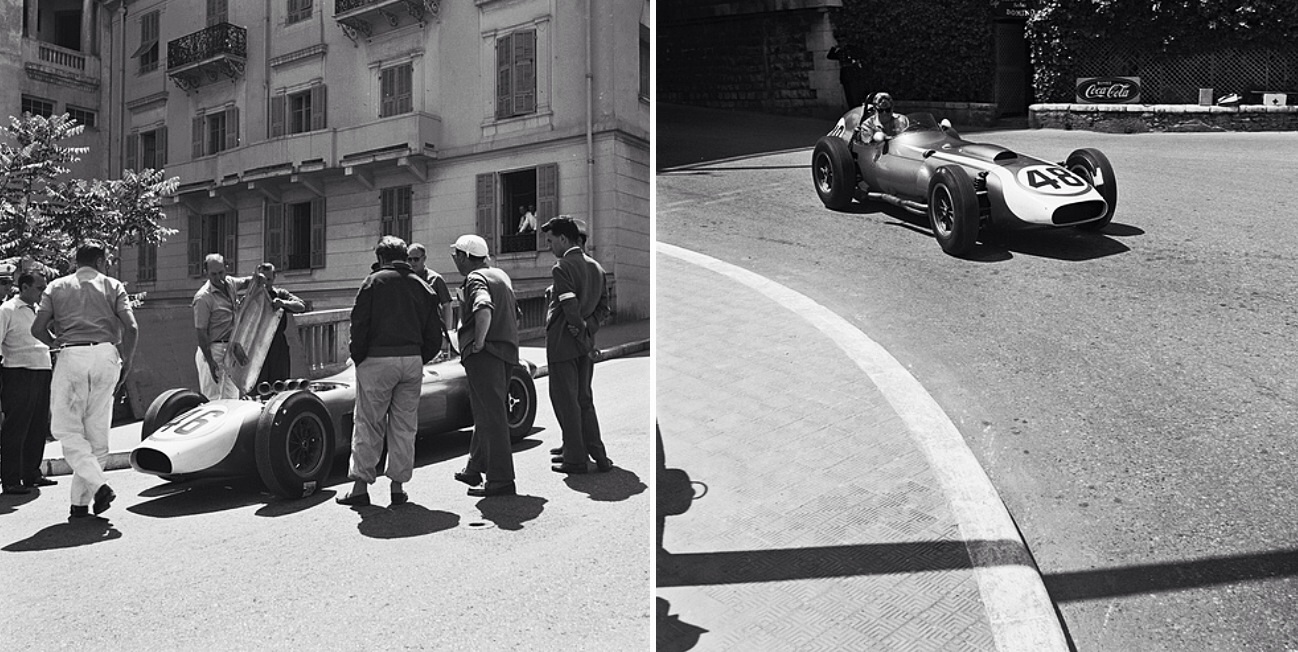
Monaco GP 1960, the Scarabs race debut. #46 Reventlow, #48 Daigh. The 2.5 litre DOHC, fuel injected 4 cylinder/spaceframe chassis cars impressed all with their build quality and finish if not their weight and speed. Indicative of the paradigm shift was Ferrari racing their first mid-engined car, the 246P at this meeting; even the most conservative of manufacturers were testing the waters with a view to change, the Scarab’s were at least 2 years too late  (Dave Friedman)

image

Daigh Monaco 1960. Both cars DNQ, Stirling Moss also did some laps of the Scarab in practice to give his opinions of the car. The difference between his light, nimble mid-engined Lotus 18 Climax and heavy front engined Scarab complete… (Dave Friedman)

image

Daigh at Monaco, nice profile shot of the big Scarab (Dave Friedman)

image

Zandvoort, Scarab Dutch GP 1960, Daigh here in practice. The Scarabs didn’t race after a squabble with the organisers over start money resulted in 4 cars electing not to take the grid (unattributed)

image

Richie Ginther and Daigh at Zandvoort (Dave Friedman)

image

Spa, Belgian GP 1960. Daigh Q17 and retired his Scarab on lap 16 with engine failure. RHF  wheel off the deck on this fast, daunting circuit (unattributed)

image

Riverside, November 1960 USGP. Daigh Q18, 10th in the cars only GP finish having missed the French, German, Italian and Portuguese GP’s. Reventlow quickly realised they were ‘on a hiding to nothing’, the paradigm had moved on but the car raced for the American fans in California, RAI’s base in Venice Beach, LA (unattributed)

In 1960 Daigh also raced Lucky Casner’s ‘Camoradi’ Maserati Tipo 61 ‘Streamliner’ at Le Mans with Masten Gregory. In practice the car topped 170 mph on the Mulsanne, 10 mph faster than the next quickest.

Gregory couldn’t get the car underway, finally departing in 24th place. By the end of the Mulsanne Straight he was in the lead! At the first driver change the starter motor failed, an hour later Chuck returned to the track. Over the next four hours they took two laps back from the leader but on lap 82 retired officially with ‘electrical problems’, although it appears that Gregory was driving when the engine failed. Olivier Gendebien and Phil Hill won the race in a Ferrari 250TR59/60.

image

Gregory/Daigh Maserati Tipo 61, Le Mans 1960 (Klemantaski)

In 1961 the Scarab F1 contested the European InterContinental Formula, a class created to allow the 2.5 litre GP cars to race, the class’ upper limit was 3 litres.

Chuck finished 8th at Goodwood in the Lavant Cup and 7th in the wet International Trophy Silverstone race. In practice for the British Empire Trophy at Silverstone he crashed sustaining a cracked pelvis in a bad accident. And that was that as far as the GP car was concerned, RAI raced it no more.

image

Chuck Daigh, Scarab,  Lavant Cup, Intercontinental Formula race, Goodwood 1961 (unattributed)

Daigh recovered from his Silverstone shunt and raced Jim Hall’s Chaparral 1 at Sebring in 1962, the Chev engined car strongly derivative of, and developed with the knowledge gained by the Troutman/Barnes duo on the earlier Scarab sportscar program. It was co-driven by Daigh, Hap Sharp, Ronnie Hissom and of course Jim Hall to 6th place, the race won by the Bonnier/Bianchi Ferrari 250TR/61.

image

The Sharp/Hall/Hissom/Daigh Chaparral 1 Chev at Sebring in 1962 (unattributed)

‘Formula 366’ was being explored as a single-seater class at the time and was a precursor to Formula A in proposing cars with a mix of stock-block 5 litre and 3 litre racing engines.

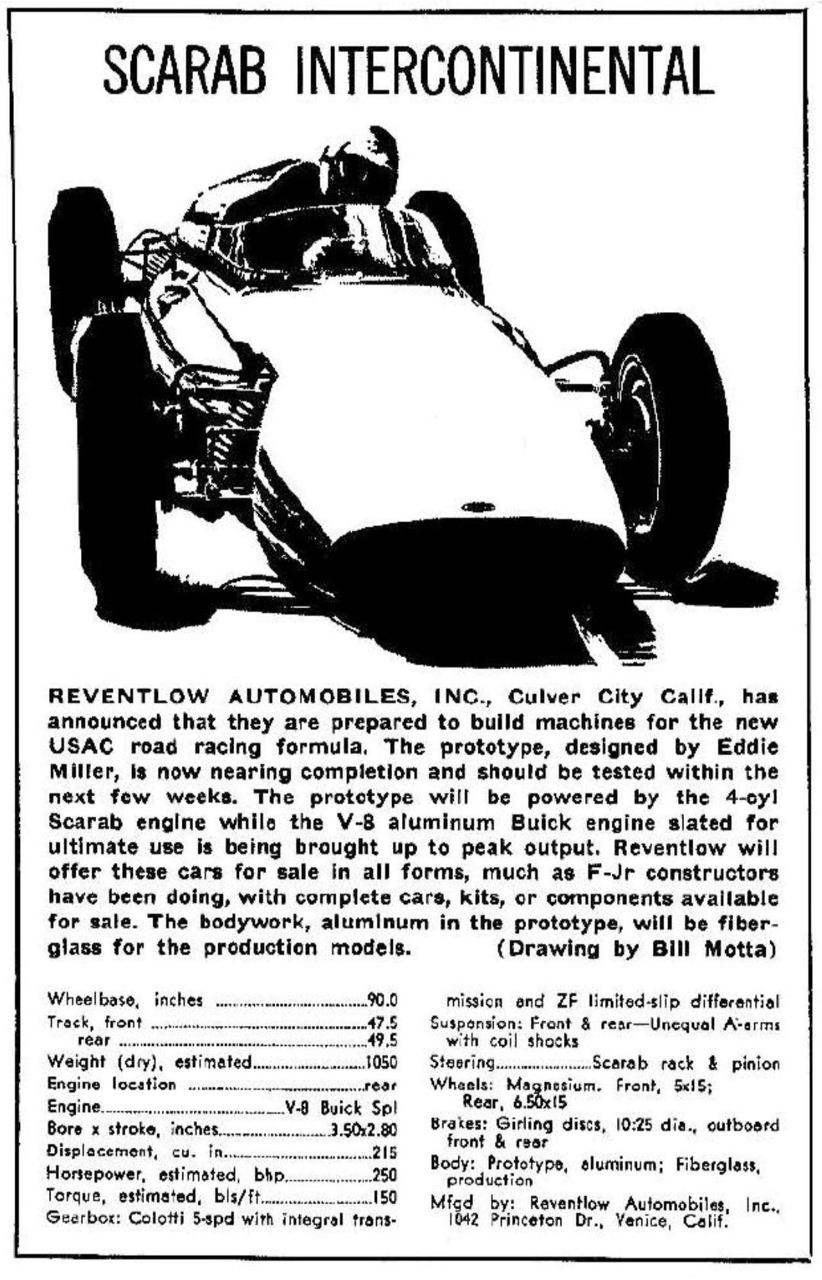
The proposed/possible class was well suited to Reventlow Automobiles knowledge of stock-block V8’s, so they built a spaceframe chassis, mid-engined car powered by the then new, light aluminium Buick V8, a Colotti 5 speed transaxle the other key component. The Scarab RE Buick with its Travers/Coons modified 3.9 litre V8 was shipped out of LA, RAI’s base at 1042 Princeton Drive, Venice on Culver City’s ‘Speed Alley’ and set off for Australia to race. Lance wanted to build cars commercially, to sell the cars he needed to demonstrate the strength of his product so a one-off race in far away Australia with Daigh strutting its stuff against a world class field made sense. He was punting on ‘Formula 366’ getting up but then again money was no object!

In those Pre-Tasman 2.5 litre formula days Australian National Formula 1 was Formula Libre. The promoters of brand new Sandown Park were happy to assist Lance Reventlow’s booming V8 Scarab to attend the circuits opening meeting in amongst the mainly 4-cylinder Coventry Climax engined hordes on 12 March 1962.

image001

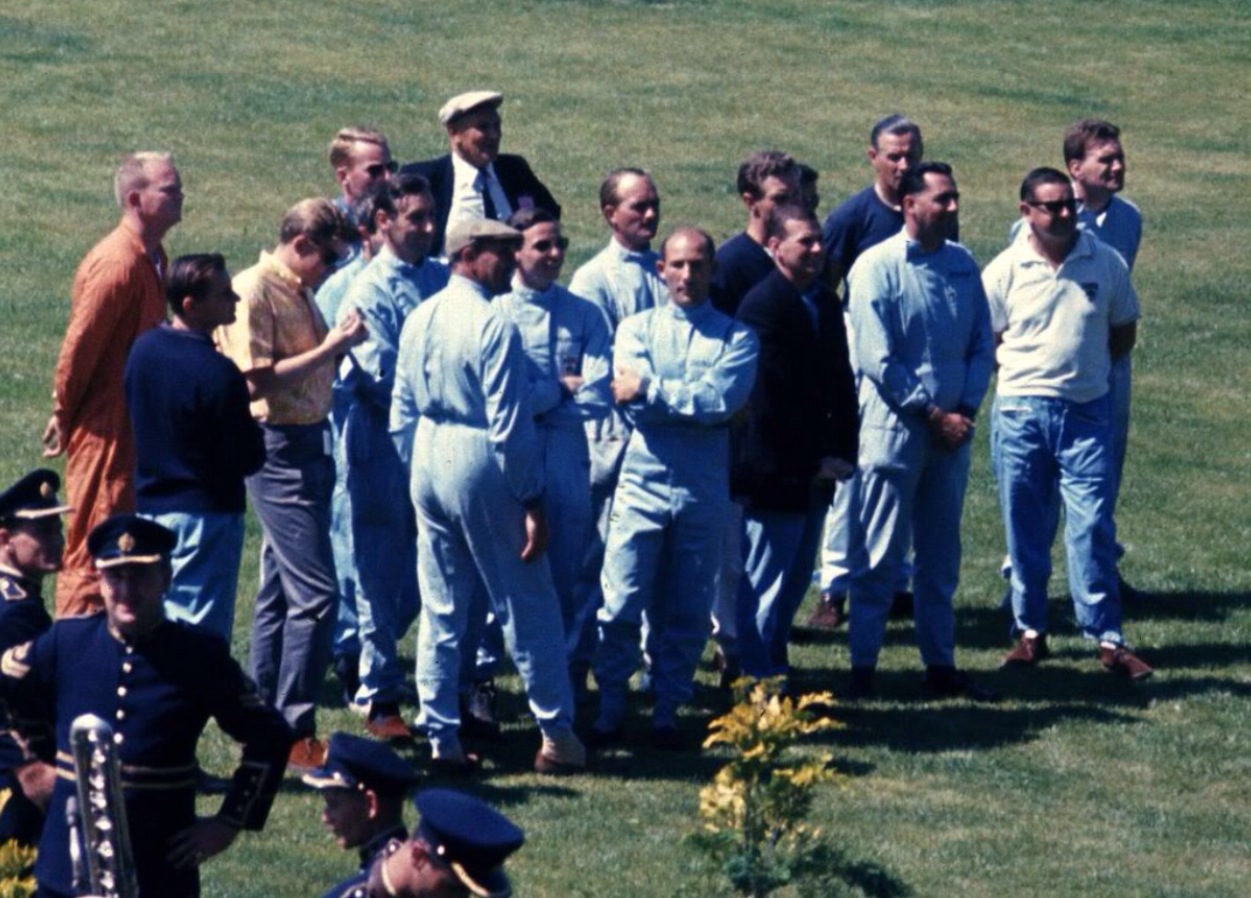
Drivers gather before the start of the 1962 ‘Sandown International’, the dudes in uniforms are members of the band. L>R; orange clad Daigh, dark blue jumpered McLaren, nattily dressed Reventlow, light haired John Youl at rear, with a flat-cap official type chap. Roy Salvadori in front of Youl, Lex Davison in the light colored flat-cap. To his right Jim Clark, a balding Angus Hyslop beside and behind Jimmy, the similarly hirsute Stirling Moss in front of Hyslop, obscured Ron Flockhart, (shortly thereafter in April to die 25Km away in the Dandenong Ranges when his Mustang P51 ex-fighter crashed shortly after take off on a record breaking attempt to Europe) sports-blazered Bib Stillwell, then Doug Whiteford behind Jack Brabham, Bill Patterson and far right Austin Miller (John Ellacott)

Other entrants included Jack Brabham, John Surtees, Bruce McLaren, Stirling Moss, Jim Clark, Roy Salvadori, Ron Flockhart and others.

Jill St John was Reventlow’s wife at the time, sleepy Melbourne was abuzz with the attendance of a Woolworth’s Heir and his glamorous actress wife to the suburban wilds of Sandown Park. The ‘Movie Star’ was all great stuff for the local tabloids so there were plenty of ‘bums on seats’ during the race weekend pleasing the Light Car Club of Australia, the promoters, no end.

image001

(John Ellacott)

Jack won the ‘Sandown Park International’ in a Cooper T55 from Surtees and McLaren in Cooper T53’s all three cars powered by 2.7 litre Coventry Climax ‘Indy’ 2.7 litre engines. Daigh gave a very good account of himself, the brand new car qualifying on the front-row of the grid alongside Brabham and John Surtees. The cars straight-line grunt was impressive and exhaust note despite running rudimentary mufflers outstanding, its performance under brakes, into and through corners was inferior to the well-developed Cooper hordes; Chuck was 4 th, with the cars potential clear.

photo (22)

Sandown International grid; Surtees on the outside (left), Daigh’s Scarab the meat in a Cooper sandwich, Jack on the inside on pole (autopics.com)

image001

#5 Daigh’s 3.9 litre V8 Scarab RE Buick at Sandown, attractive, effective first attempt at a mid-engined car. It looks long but isn’t, wheelbase at 91 inches 1 inch longer than a T51 Cooper. Yellow Cooper Austin Millers T51 Chev engined car DNF  and #9 Bill Patterson’s Cooper T51 Climax 7th (John Ellacott)

In the wider scheme of things in terms of the machinations of the CSI’s decisions making about future racing classes, Formula 366 didn’t eventuate, Sandown was the RE’s only race although the learnings of a mid-engined V8 racer were applied by RAI to its successful Mk4 Scarab Sportscar.

image001

‘Sports Car World’ clipping, date wrong. Daigh, ‘Sandown Park International’ 1962

image001

Historically significant photo; Jack Brabham is taking a close look at the Scarab RE’s 3.9 litre aluminium Buick V8, the first time he had seen one. The sister engine to this, the ‘Oldsmobile F85’ was the basis of Brabham’s Repco Brabham ‘RB620’ 1966 World Championship winning 3 Litre GP engine (Jack Brabham by Doug Nye)

Chuck worked for Frank Arciero in 1963. He rebuilt their Lotus 19’s Coventry Climax FPF engine and won the Player’s 200 at Mosport beating a class field including Graham Hill, Parnelli Jones and Roger Penske.

Outside racing…

Chuck married in 1950 and had two children, Denise and Daniel. His interests extended outside car motor-racing to offshore ocean boat racing having a successful career in ‘Thunderball’ and other powerful craft.

One of his last projects was construction of a Flat-Head Ford ‘Lakester’ to try to break the class land speed record. he didn’t complete it passing away at Hoag Hospital in Newport Beach, California after suffering a brief heart and respiratory illness, on 29 April 2008 at 84.

A remarkable man and World Class soldier, engineer and driver.

Etcetera: Scarab RE Buick ‘Intercontinental’ Sales Promotional Brochure…

image001

Bibliography/Photo Credits…

historicracing.com, racing.nimmo.com, Dave Friedman Archive, Getty Image, Bill Bridges, Popperfoto, The Enthusiast Network, Ron Burton, John Ellacot, Klemantaski Collection, autopics.com, B Thatcher

Tailpiece: Chuck Daigh cruisin’ the dusty Sandown Paddock in the Scarab RE Buick and its wonderful 3.9 litre Coons/Travers built V8…

image001

(John Ellacott)

Finito…

fernandez

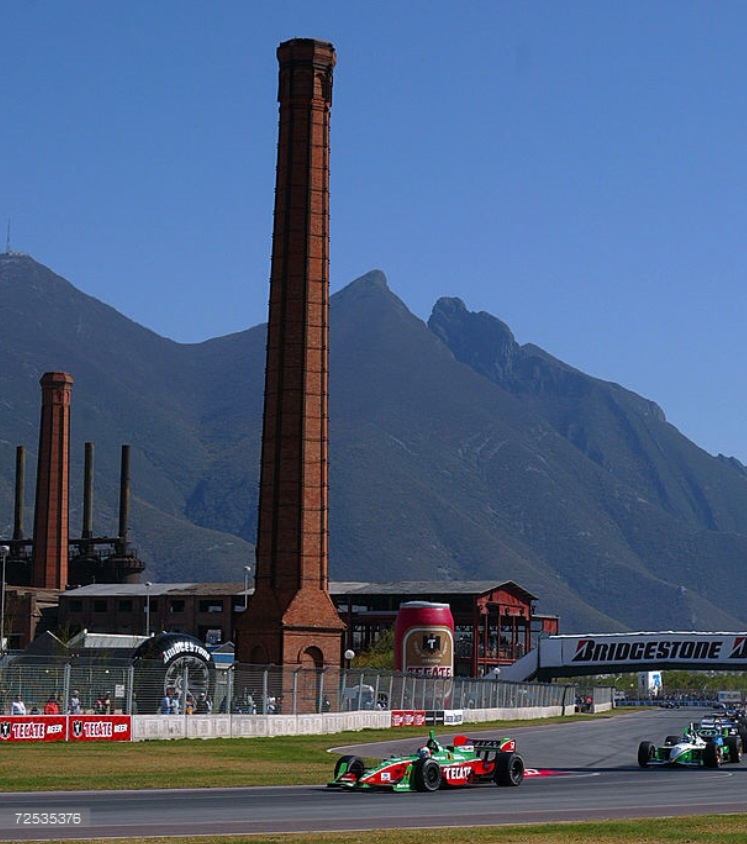
Adrian Fernandez slices his Lola B2/00 Honda into the lead of the Monterrey Grand Prix from pole, behind is Dario Franchitti’s Reynard 02i Honda the first round of the 2002 CART Series on 10 March…

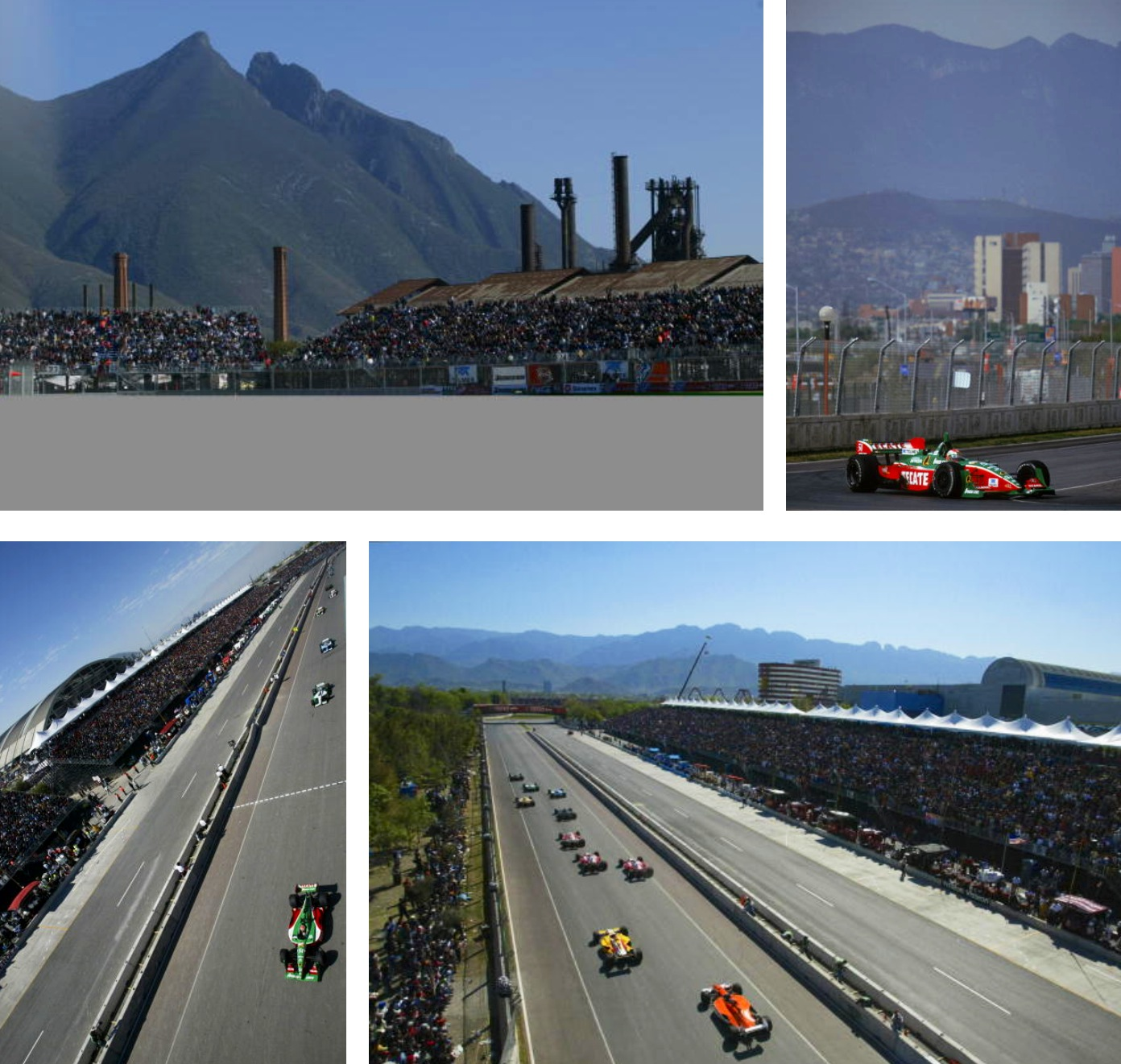
Such a picturesque location, the circuit used for this event between 2001 and 2006 was located at Fundidora Park, Monterrey the capital and largest city in the state of Nuevo León in the foothills of the Sierre Madre Oriental mountains, Mexico. The old buildings in shot are those of a disused steel mill which is both a nod to the past and indicator of the city as a current industrial centre.

fun pano

Fundidora Park panorama, Fernandez is the green/red Lola B2/00 Honda

2002 was ‘the start’ of the demise of CART, Penske Racing defected to the rival Indy Racing League at the end of 2001, starting a trend the net result of which was to weaken single seater racing in the US. A great shame as CART to me at the time was as interesting and exciting a category as F1 if not superior in its variety of circuits, circuit type (road, circuit, short and long speedways), chassis and engines. A story for another time.

The engine regs continued to mandate a 2.65 litre, single turbo-charged V8 for 2002, squabbling over the future engine specifications one of a myriad of issues causing the ‘stampede’ of teams and engine manufacturers from CART.

fun da matta

Christiano da Matta, Lola B2/00 Toyota

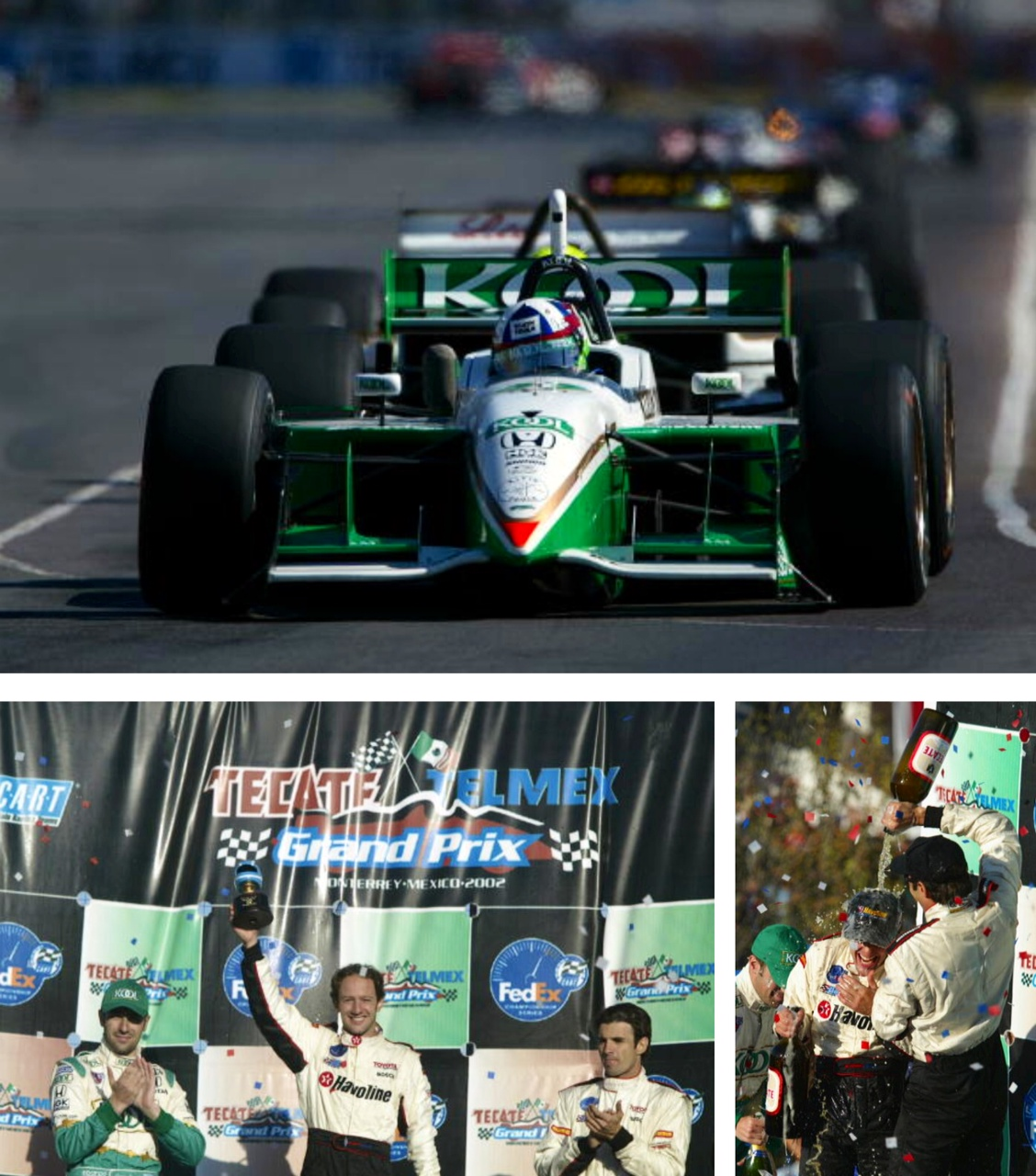
The 2002 CART championship was won by Christiano da Matta in a factory Newman/Haas Lola B2/00 Toyota, he also won this race. Fernandez finished 13th, Dario Franchitti was 2nd in a Reynard 02i Honda and Christan Fittipaldi 3rd in the other Newman/Haas Lola B2/00 Toyota.

fun da mat 2

da Matta Lola B2/00 Toyota, Monterrey 2002, he was on a journey which took him to F1 with Toyota

fun dario

Top shot Dario Franchitti’s Reynard 02i Honda. Podium ceremony L>R 2nd Franchitti, winner da Matta and 3rd Christian Fittipaldi

All Photo Credits…

Robert Laberge

Tailpiece…

fun pano 2


lex davo rob roy

This fine George Thomas shot of Lex Davisons’ Alfa Romeo P3 ‘50003’ is undated but is in the mid-fifties, its become exposed over time which adds to its patina and drama of the occasion…

This wonderful Grand Prix car had to ‘sing for its supper’ in Australia, events were few and far between in the early post-war years. Davison was a keen competitor who raced his cars far and wide in trials, rallies, circuit races and hillclimbs like this one at the ‘Christmas Hills’ in Melbourne’s outer east.

The venue is still used by the MG Car Club, perhaps one of their historians can help date the shot.

Photo Credit…

George Thomas

dep thruxton

Jean Redele’s Dieppe ‘Alpine’ workshops evolved into Renault’s competition arm from the early 1950’s and were absorbed by the Regie in 1973. The F3 A360 had a spaceframe chassis, Renault R16 based pushrod OHV engine giving circa 120-125 bhp breathing thru the mandatory F3 air restrictor. Gearbox 5 speed Hewland Mk8 (Mike Fairholme)

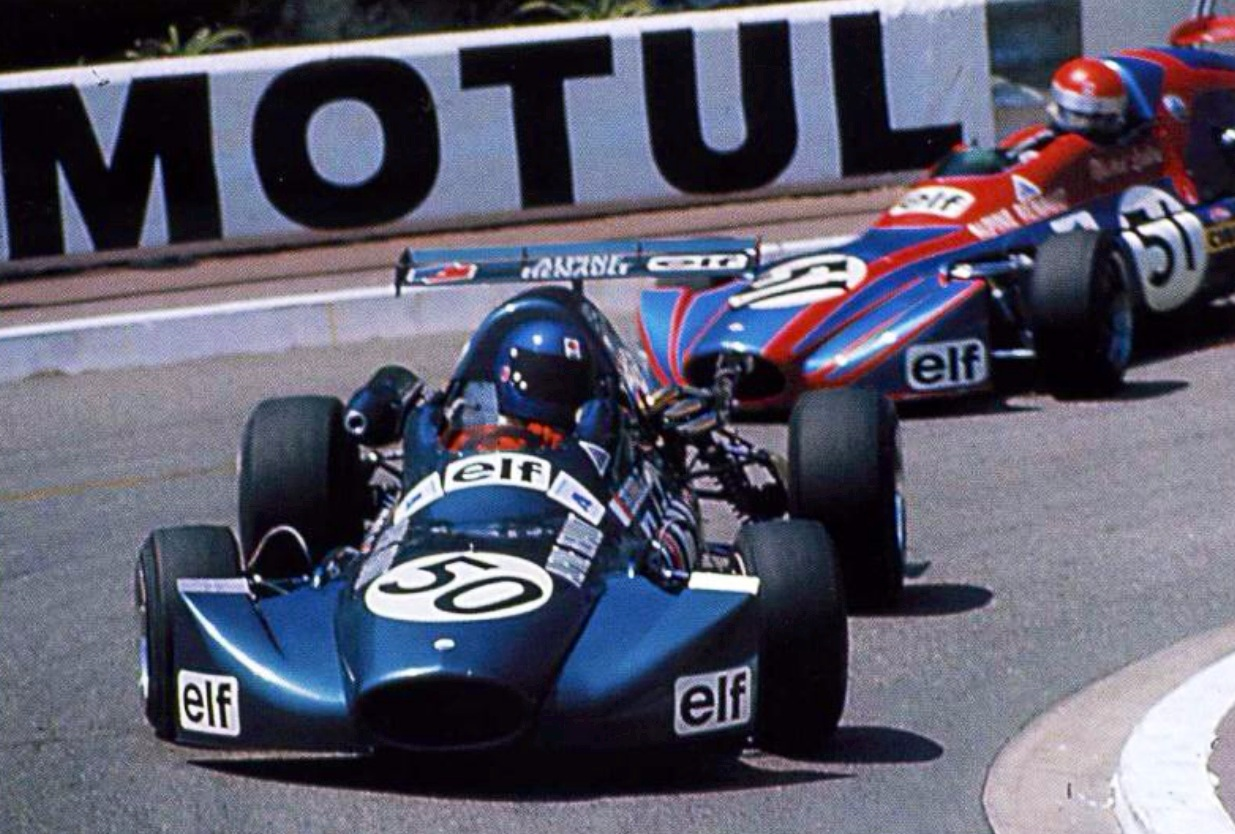
Patrick Depailler slices through the Thruxton chicane in his Alpine A360 Renault on 19 September 1971 during his victorious French F3 season…

At last really! He had been thrashing around in F3 since 1967; he was 5th in the ’67 French Championship won by Henri Pescarolo, 6th in the ’68 title won by Francois Cevert and 4th in ’69 when Francois Mazet won.

monaco 1

1968 Monaco GP winner Jean Pierrer Jaussaud smiles at camera before the off, he won in a Tecno 68 Ford, Depailler sits on the tyre of his Alpine A330 Renault (DNF crash) and Ronnie Peterson is in the yellow Tecno 68 Ford 3rd. # 57 is Charlie Lucas’ Titan Mk3 Ford DNF. Ronnie won the race in ’69 and PD in 1972. Jaussaud very fast in single seaters and victorious at Le Mans twice; in a Renault Alpine in ’78 with Didi Pironi and a Rondeau Ford with Jean Rondeau in 1980 (Schlegelmilch)

monaco 2

Monaco F3 GP 1968, Peterson’s Tecno in front of Depailler’s Alpine, chassis as per pic above (unattributed)

In 1970 Depailler did some F2 events in a Pygmee and Tecno and then stepped back to F3 in 1971 taking the French title from Jean-Pierre Jabouille also Alpine A360 mounted.

Just look at that roll call of French drivers at the time fuelled by a mix of the Volant Shell drivers program, Elf, Matra funding and talent!

pyg 1

European F2 championship1970, here at Rouen in Pygmee MDB15 Ford FVA, DNQ in the race won by Jo Siffert’s BMW 270 (unattributed)

pyg 2

F2 Pygmee MDB15 Ford with PD left of cockpit. Marius Dal Bo (MDB) built around 42 F3 and F2 cars from 1965 to 1973 in Annecy, France, initially to provide more competitive cars for his son Patrick. 4 MDB15 F2 cars were built in 1970, the cars  aluminium monocoques of the day using the circa 215bhp 1.6 Ford FVA engine and Hewland FT200 gearbox (unattributed)

The F3 event pictured at the articles outset is a team one ‘The European F3 Cup’ held at Thruxton won by a French Team comprising Pierre-Francois Rousselot, Jacques Coulon and Jean-Louis Lafosse. Depailler was in the second placed team along with Jean-Pierre Jabouille. Other future F1 drivers contesting the event representing their respective countries included Alan Jones, Vern Schuppan, James Hunt, Roger Williamson, Jochen Mass and Conny Andersson.

The individual finishing order of the talent filled Thruxton race was Rousselot in a Brabham BT35 Ford from Depailler with Brit Barrie Maskell third in a Chevron B18 Ford.

I tripped over the shot of PD researching an article on Dave Walker, an F3 contemporary of Patricks who took a similar length of time to break free from the F3 ruck, what a tough school of talent it then was. And has always been I guess.

Walker perhaps peaked in F3, noting the twice badly broken arm which impacted him from ’73 whereas perhaps PD never really peaked, he improved as time went on right until that fateful day at Hockenheim in 1981? James Hunt was another who was ‘thereabouts’ in F3 and peaked in F1. Conversely Jan Magnussen an example of unfulfilled F3 promise in F1 from a more recent era.

dep tecno

Depailler contested the Hockenheim, Thruxton, Pau and Nurburgring (here) rounds of the 1971 Euro F2 Championship in a Tecno TF71 Ford, he was classified 21st having retired with a loss of oil pressure, Francois Cevert won in another Tecno TF71. Ronnie Peterson took the title that year, the last of the 1.6 Litre F2 in a factory March 712M Ford FVA (Schlegelmilch)

dep monaco

PD on his way to winning the Monaco F3 GP in 1972, he is ahead of Michel Leclere (6th) here, both in Alpine A364 Renaults. (unattributed)

In 1972 Depailler contested the European F2 Championship finishing 3rd in a March 722 Ford, winning the Enna round. Mike Hailwood won that year in a Surtees TS10 Ford…but not completely done with F3 stepped back into an Alpine and won the Monaco F3 GP, the F3 race which matters beyond all others.

He also made his F1 debut with Tyrrell in the French Grand Prix at Clermont Ferrand in July.

He qualified the Tyrrell 004 16th of 24 starters and was non-classified with mechanical problems. It was a strong debut with Patrick invited to drive a third car for Tyrrell again at the season ending US GP at Watkins Glen, he finished 7th having qualified 11th with teammates Jackie Stewart and Francois Cevert 1st and 2nd in a great day for the team, the Tyrrell regulars in the later 005/006 chassis.

dep test

F1 Tyrrell oo4 Ford test for PD prior to French GP, circuit unknown, interested to know if anyone does (unattributed)

pau

Depailler contested the 1973 Euro F2 Championship in an Elf2/Alpine A367 Ford finishing 3rd in the title won by Jean-Pierre Jarier’s factory March 732 BMW. Here PD #9 on pole for the 5 May 1973 Pau GP, alongside is Tino Brambilla’s March 732 BMW, DNF. Winner Francois Cevert is behind PD in the other John Coombs entered Elf2/Alpine A367. Alongside Cevert is Roger Williamson’s white GRD 372 Ford 7th, the red car is Jarier’s 2nd placed STP March 732 BMW and the other orange Beta March 732 behind Jarier is Vittoria Brambilla, DNF (unattributed)

Patrick stepped up to F1 full time in 1974 together with Jody Scheckter joining Tyrrell taking the seats vacated by Jackie Stewart’s retirement and Francois Cevert’s sad death at Watkins Glen in late 1973. An article about his F1 career is for another time.

dep tyreell

Above and below photos, PD Tyrrell 004 Ford, French GP, Clermont Ferrand 2 July 1972. GP debut (Schlegelmilch)

dep sideways

As well as a full season of Grand Prix racing he scored one of the two prized works March F2 seats in 1974 having finished third in 1973 in an Elf 2/Alpine A367 Hart.

He and Hans Stuck in the other works March 742 BMW slugged it out all year with Hans taking the first two wins of the season and Patrick the better results from then on winning at Pau, Mugello, Karlskoga, Hockemheim, Vallelunga and with it the title.

dep rouen

PD March 742 BMW, Rouen Euro F2 round 30 June  1974, 7th in the race won by teammate Hans Stuck (unattributed)

Patrick Depailler was a personal favourite of the era; he was one of those guys who loved racing for its own sake, raced for the love of it, if championships came along then well and good but it was all about being a professional driver, racing and enjoying life with all of its elements.

Ken Tyrrell had this to say of the Frenchman;’ In a lot of ways Patrick was like a little boy all of his life. He was always wanting to go skiing or motorcycling or hang gliding. And he had this trusting belief in the end that everything would be alright; when he was driving for me full-time i had it written into his contract that he had to keep away from dangerous toys.’

A driver of another era perhaps, an incredibly talented and charismatic one at that…

dep in car

Depailler at Rouen in the cockpit of his March 742 BMW in June 1974. BMW engine guru, designer of the 2 litre, 4 valve 290 bhp M12 engine powering the March, Paul Rosche taking the notes (unattributed)

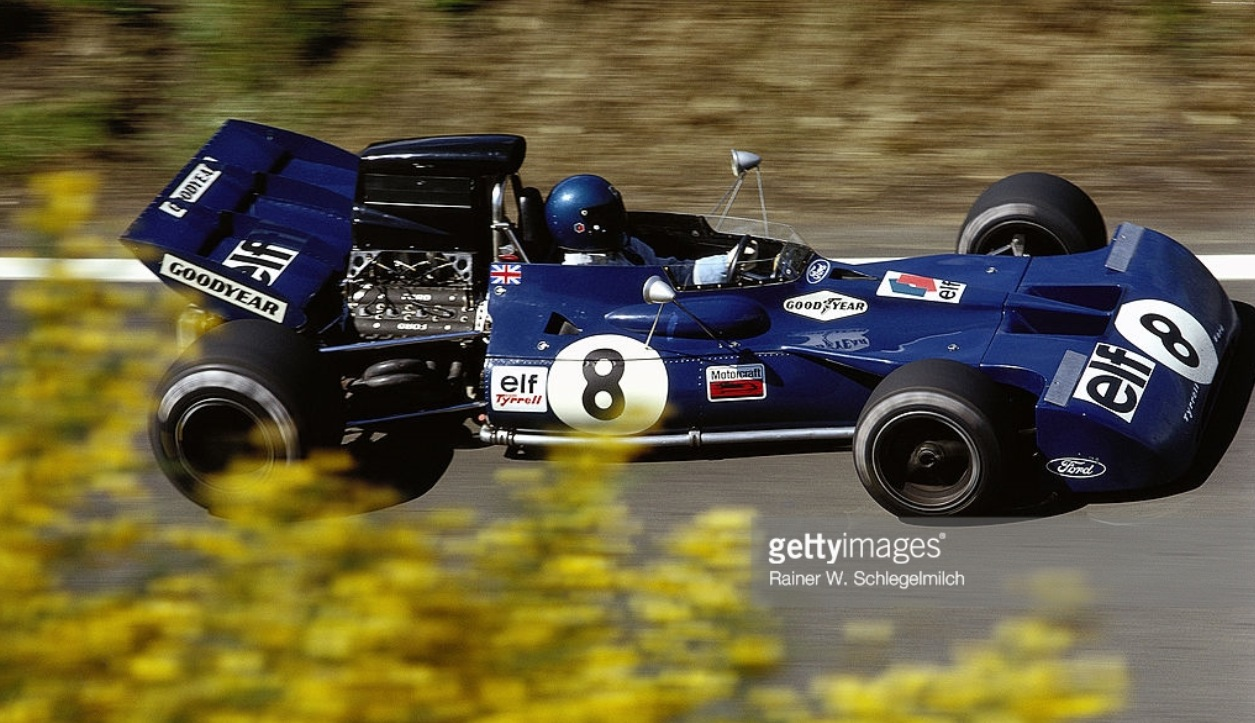
Etcetera: Tyrrell 007 Ford, Nurburgring 1976…

image

(Getty)

Credits…

Mike Fairholme, Rainer Schlegelmilch

Tailpiece: Renault Alpine Ad circa 1969

dep alpine ad


alfa 2900

Sue Steele Thomas sharing ‘her unique visions of nature and automobiles with the piece ‘Alfa Romeo Through the Shafta Daisies’ which views a 1938 Alfa Romeo 8C 2900B Speciale Le Mans Touring through a bright botanical overlay’…

Only one of these cars was built for Le Mans 1938; the car driven by Clemente Biondetti and Raymond Somner had the most commanding lead at La Sarthe ever, 11 laps/1 hour or 100 miles depending upon your way of expressing it.

alfa race

The stunning looking, very aerodynamic 8C2900B during its long run in the lead of its only race, Le Mans 1938 (unattributed)

A succession of mechanical maladies cost victory; a tyre blew on the Mulsanne, Sommner bringing the car to a halt but the tyre destroyed the mudguard. Biondetti went back out but the car retired shortly thereafter with either valve or gearbox failure.

alfa talbot

Le Mans 1938. Compare and contrast the aerodynamic treatment and styling of the winning, left, Chaboud/Tremoulet and 2nd placed Serraud/Cabantous Delahaye 135CS with the 8C2900B (unattributed)

The race was won by the Eugene Chaboud/Jean Tremoulet Delahaye 135CS from the similar car of Gaston Serraud and Yves Giraud-Cabantous with Jean Prenant and Andre Morel in a Talbot T150SS Coupe. The Alfa 8C 2900B completed 219 laps, more than the 4th placed car.

alfa retired

The leading Alfa after its valve or gearbox failure whilst well in the lead. The passing car is the Talbot T150SS of Jean Prenant/Andre Morel, 3rd (unattributed)

Five 8C 2900B chassis were modified for racing early in 1938, and whilst offered for customer sale the cars were road going versions of Alfa’s GP cars, very much in the best tradition of the Monza Series of cars. The cars were nearly identical to the 8C 2900A’s which won Le Mans in 1936 and 1937.

The 2.9 litre straight-8, boosted by two superchargers developed 220bhp in race trim and was the ultimate road going version of the 8C2300 originally built in 1931, click here for my article on the Alfa Monzas’ which covers the design detail of the cars;

Antonio Brivio: Targa Florio 1933: Alfa Romeo 8C2300 ‘Monza’…

Unlike the earlier Monza’s the cars gearbox was in unit with its differential shifting weight to the rear.

alfa pitstop

Routine pitstop during the 1938 Le Mans for the 8C2900B (unattributed)

Bodies of all five cars were built by Touring with open bodies for the Mille Miglia for which four cars were entered, the Alfas finishing 1-3 with Biondetti and Ado Stefani crewing the winning car from the Pintacuda/Mambelli and 8C 2300A of Dusio/Boninsegni.

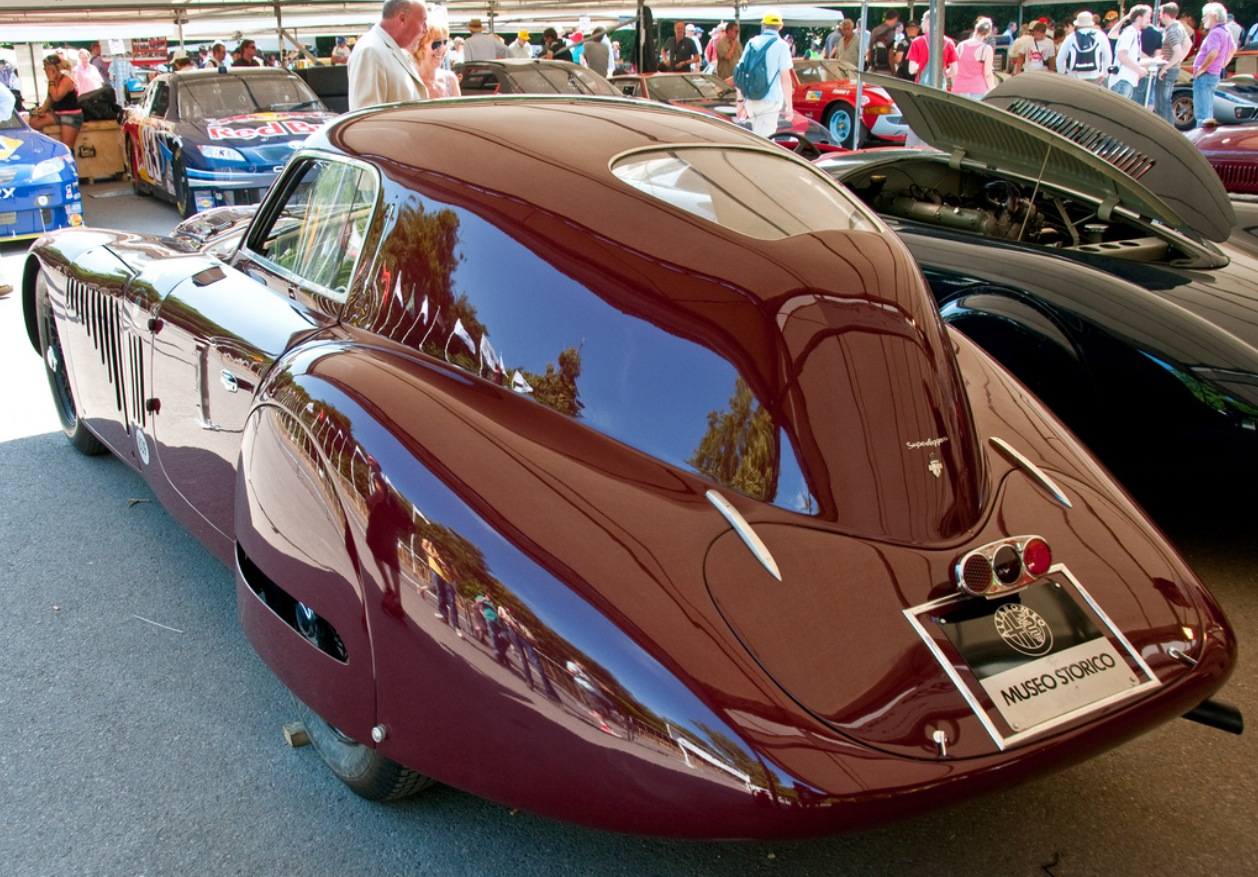
The Le Mans car, chassis #412033 had its Spider body removed to be replaced by a futuristic, slippery coupe designed by Touring’s Carlo Anderloni. The panels aft of the front wheels could be removed to allow access to Vittorio Jano’s mechanical marvels.

#412033 was repaired but not raced again, sold to a Roman it ‘disappeared’ but was found by collectors in the late sixties, passing through several hands before being re-acquired by Alfa where it is a popular exhibit at Museo Storico, and attractive to artists such as Sue Steele Thomas…

alfa chssis

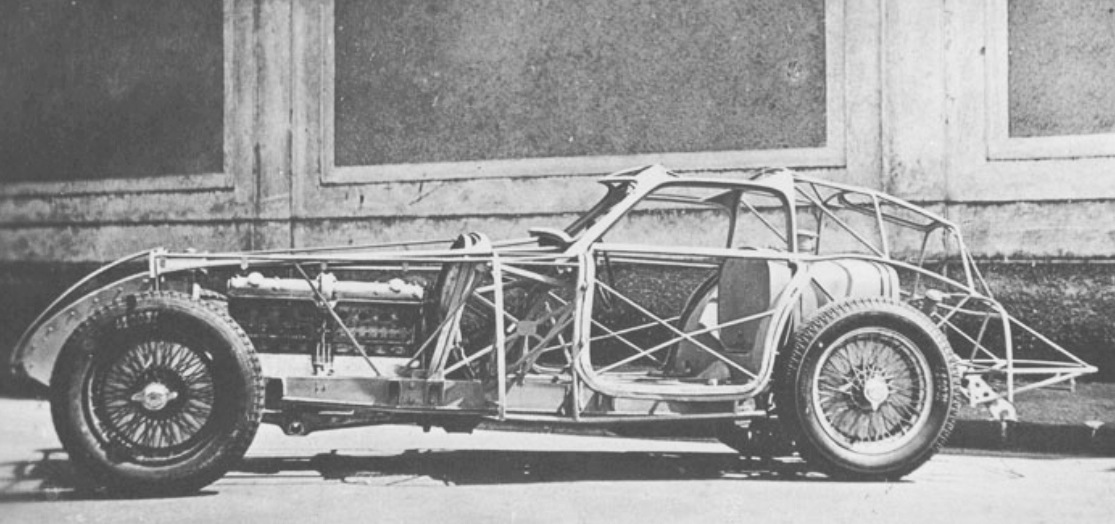
Car during its construction at Touring’s workshop. Typical boxed steel chassis, Jano’s engine clear as is light alloy tubing to accept the aluminium body. Big fuel tank prevents view of the rear mounted gearbox/diff unit (unattributed)

Specifications…

Chassis of light gauge box section steel. Front suspension; trailing arms coil spring/tubular shocks. Rear suspension; swing axles located by radius rods, semi-elliptic leaf springs and tubular shocks. Steering, worm and sector. Brakes drums all round. Weight circa 1100Kg.

Engine; DOHC, 2 valve, all alloy straight-8 of 2905cc, bore/stroke 68mm/100mm. Two Roots type superchargers fed by two Weber carbs giving circa 220bhp@5800rpm.

Gearbox 4 speed mounted at the rear in unit with differential

alfa studio

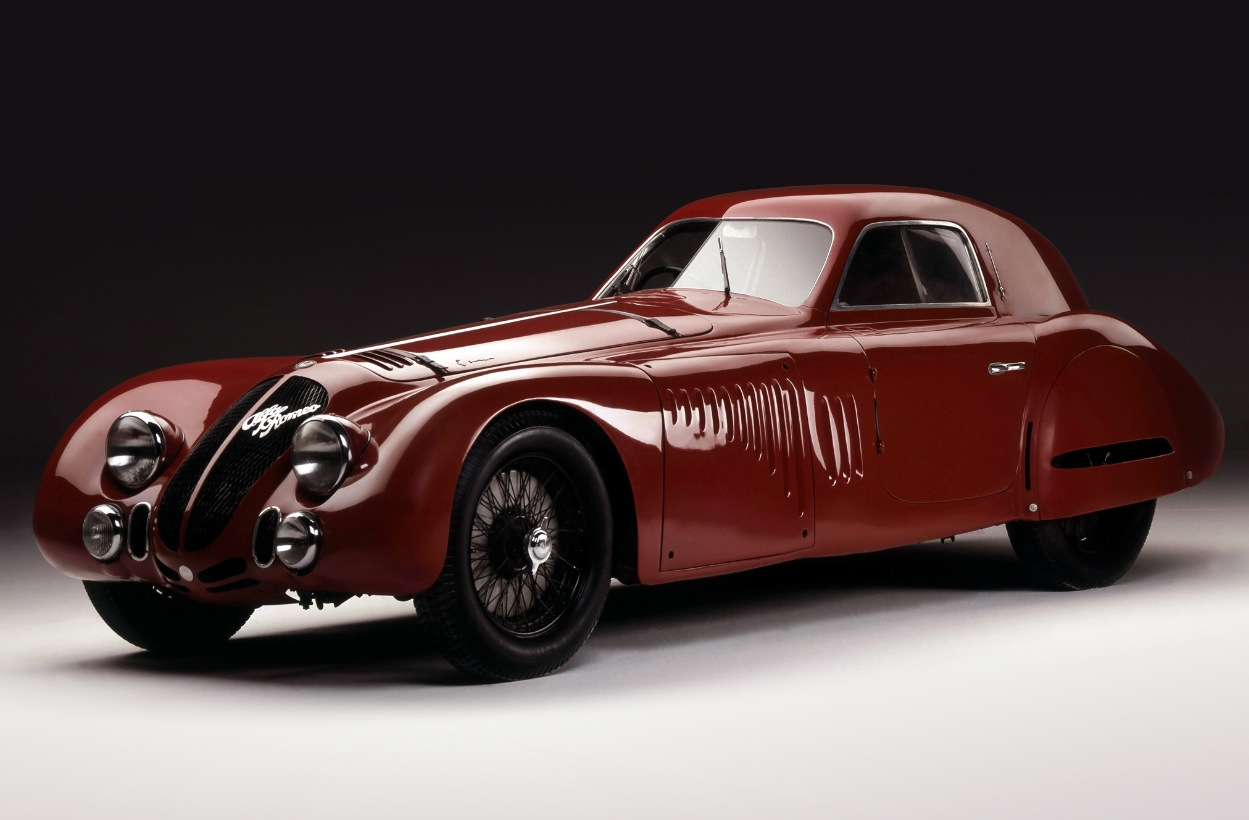
Stunning car for its time, stunning full stop! Studio shot of the 8C 2900B Le Mans after its restoration by Alfa Romeo. Side access panel referred to in the text clear, skilful aero treatment at a time when exposed guards the norm (unattributed)

Credit…

Sue Steele Thomas, conceptcarz.com

Tailpiece…

alfa butt

8C 2900B Le Mans butt shot at the Goodwood Festival of Speed in 2010 (unattributed)