Author Archive

image

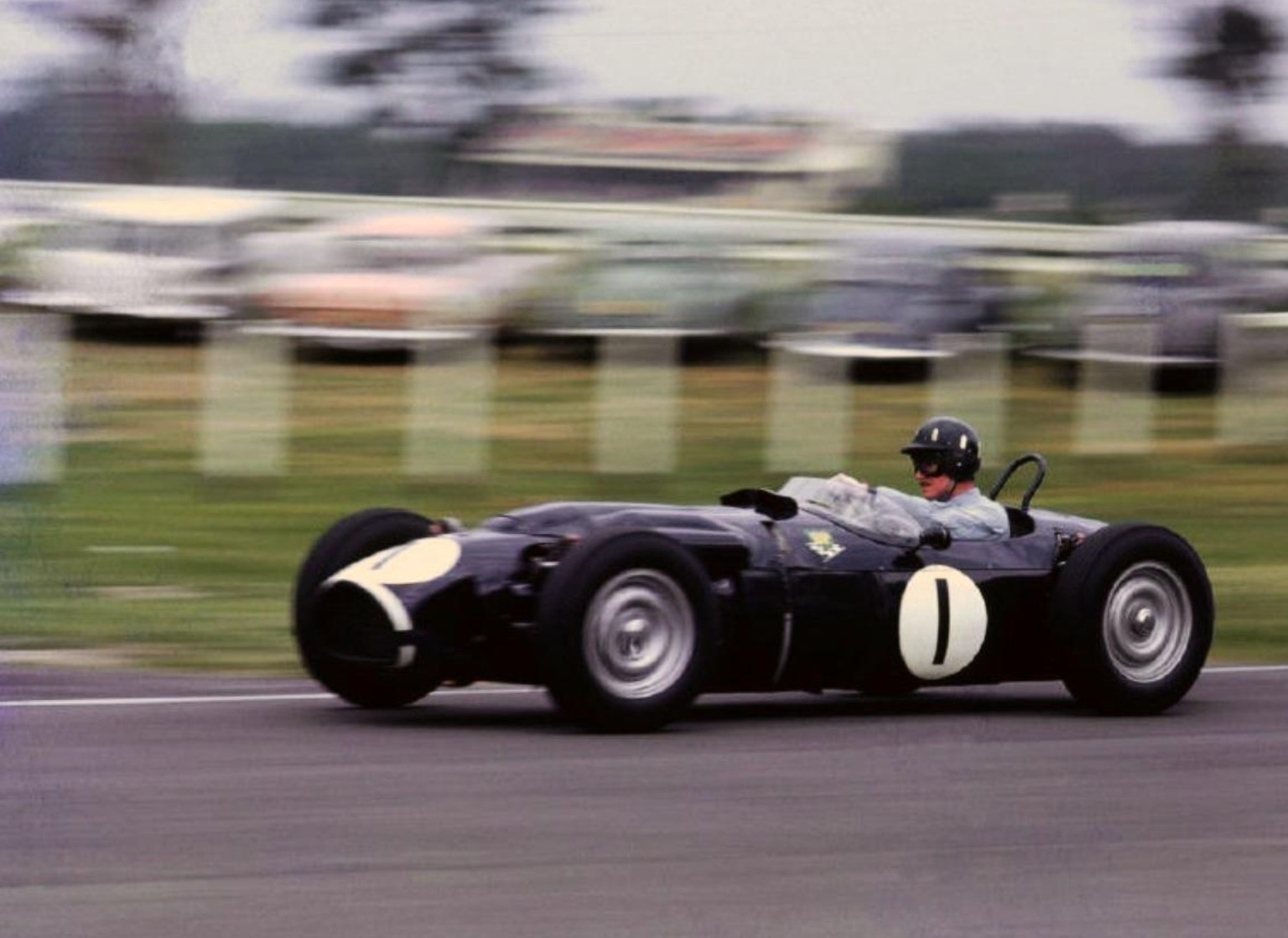
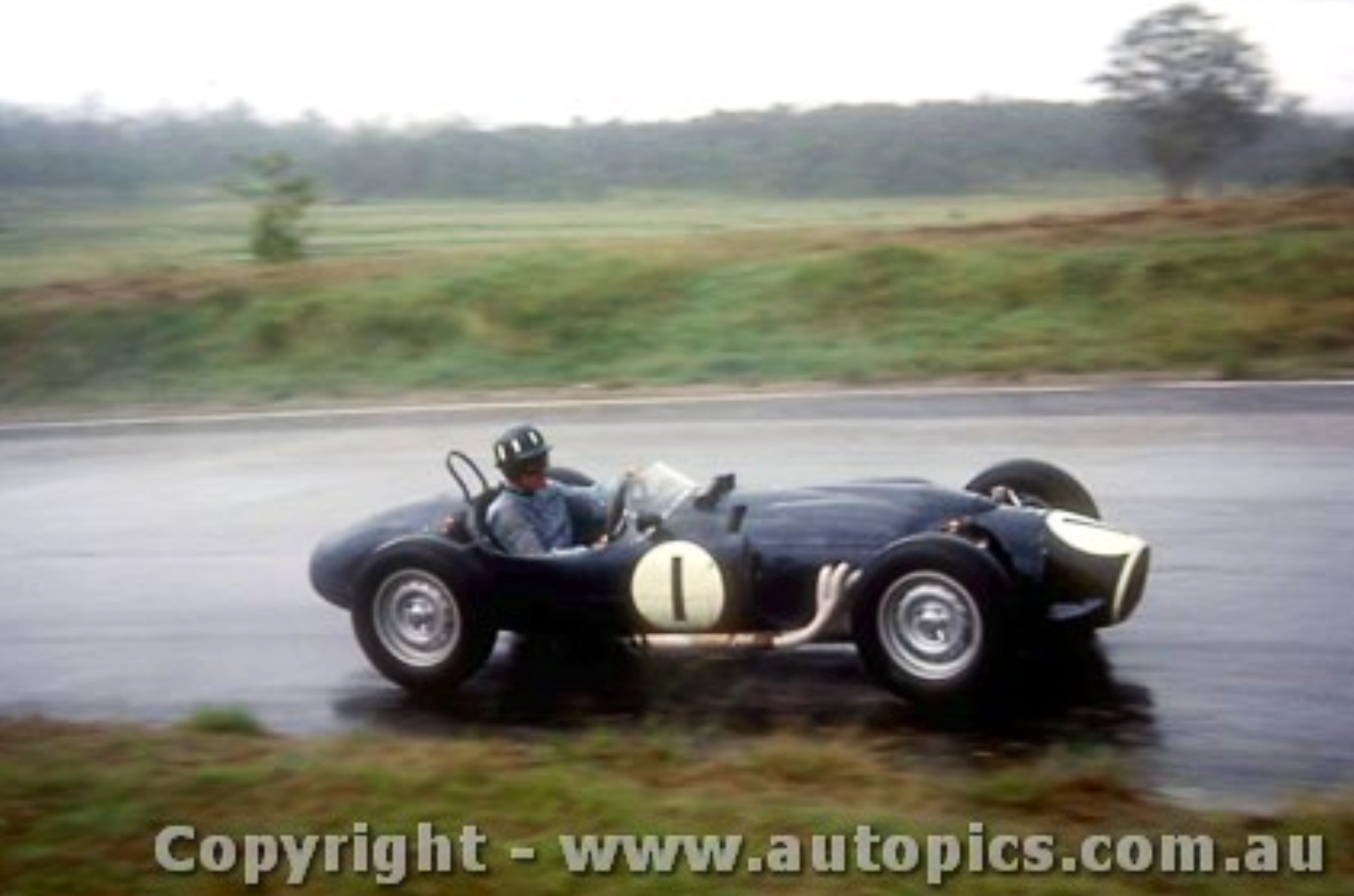
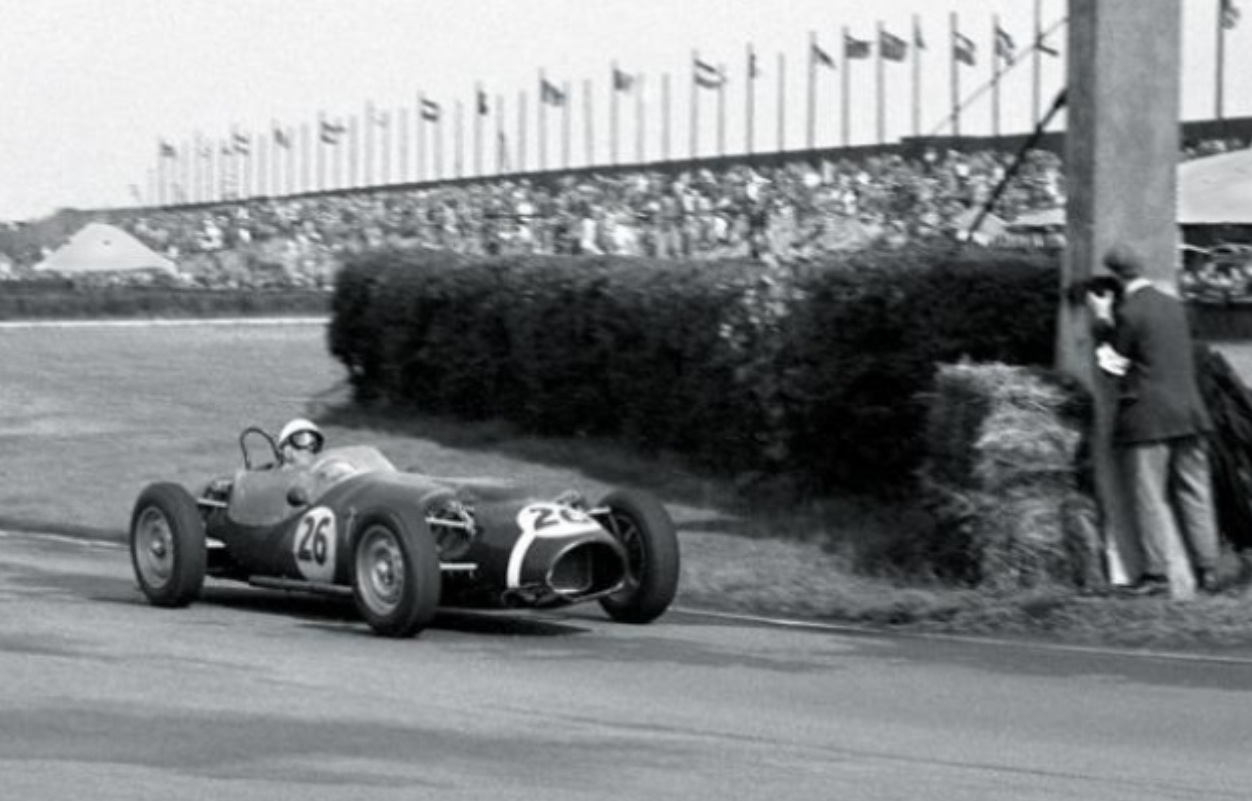
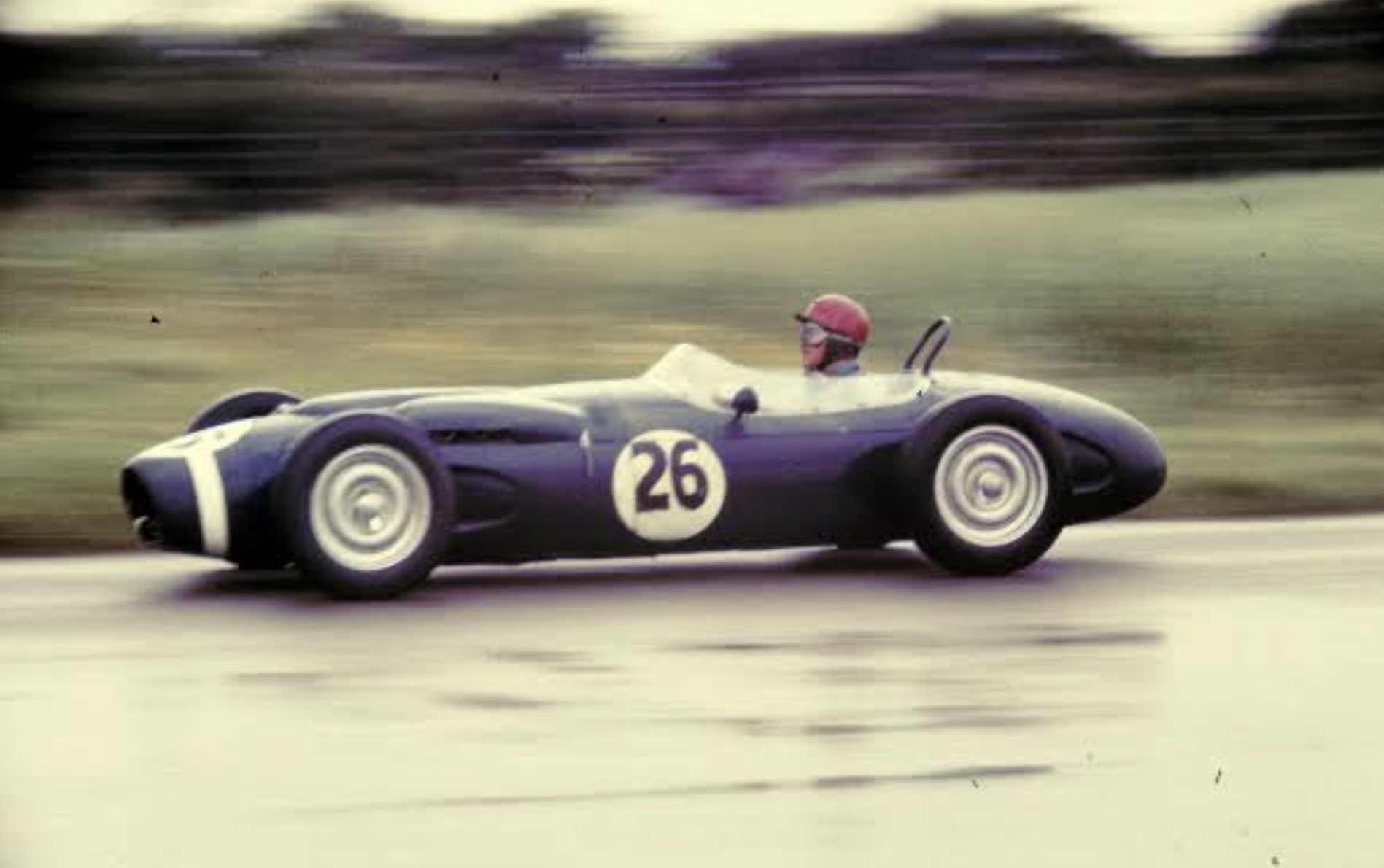
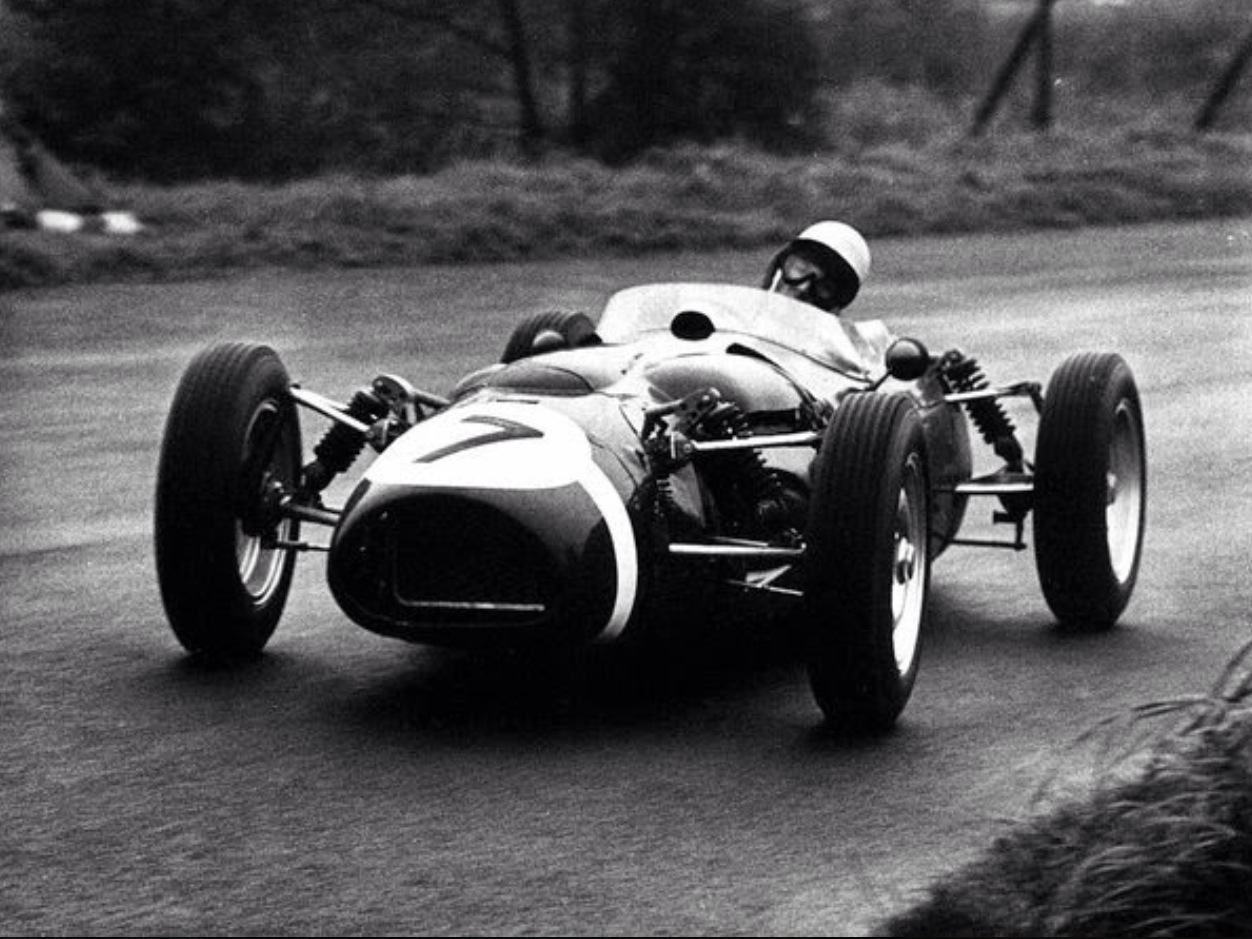
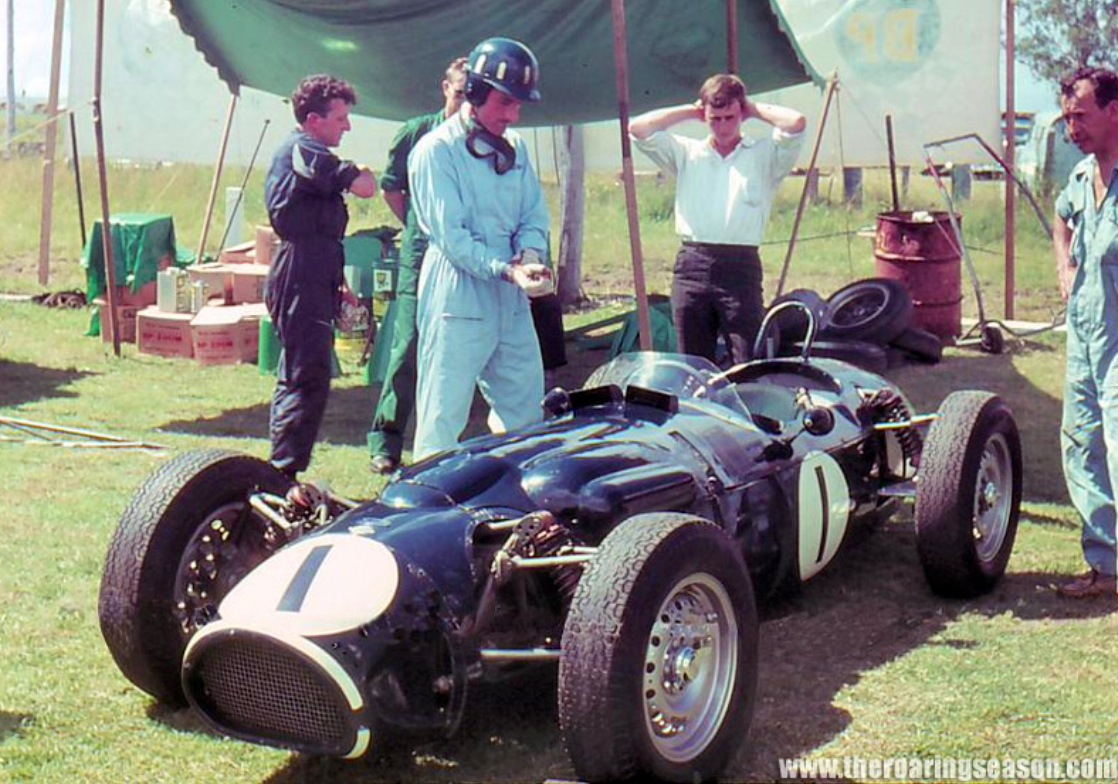
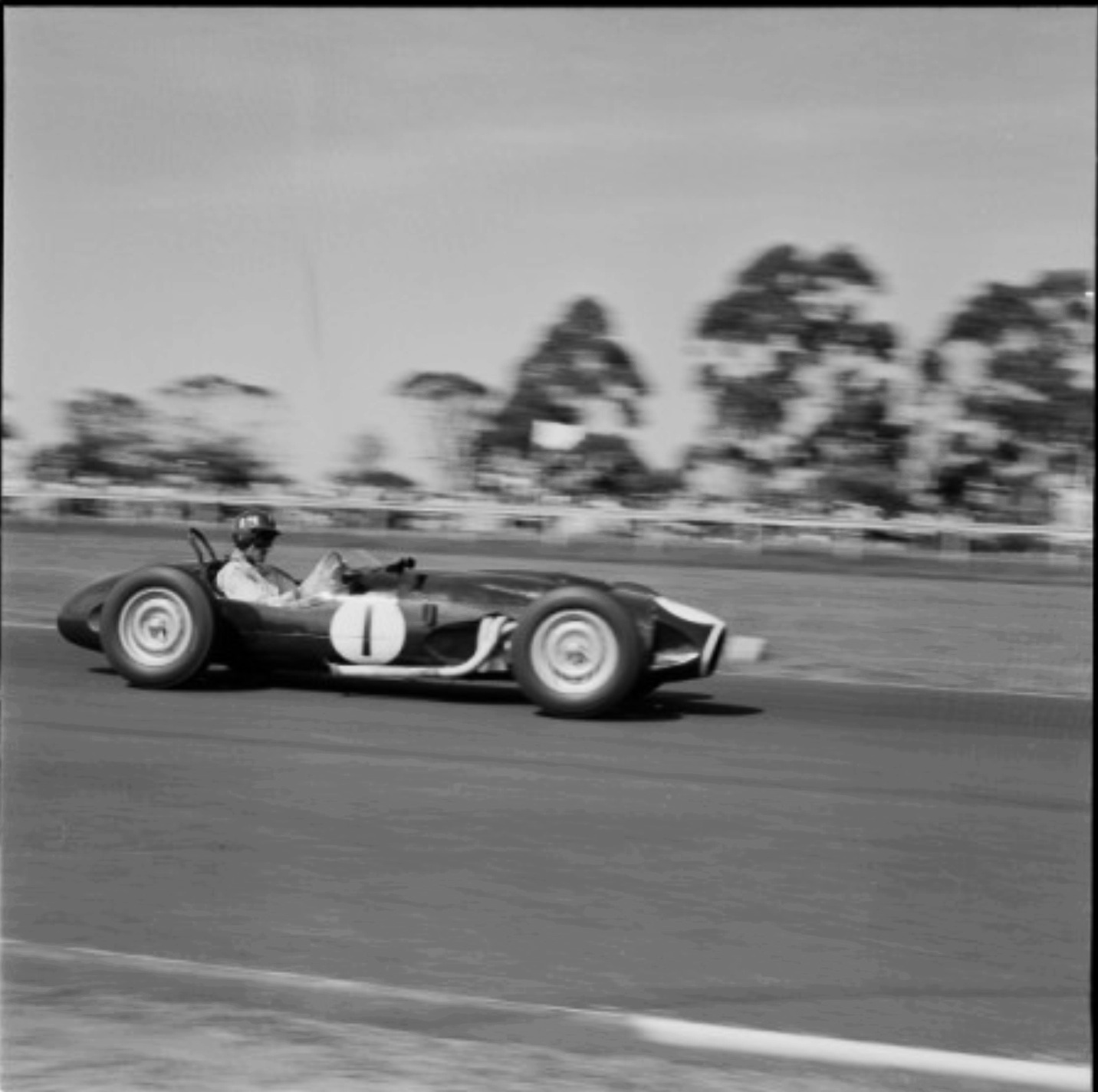
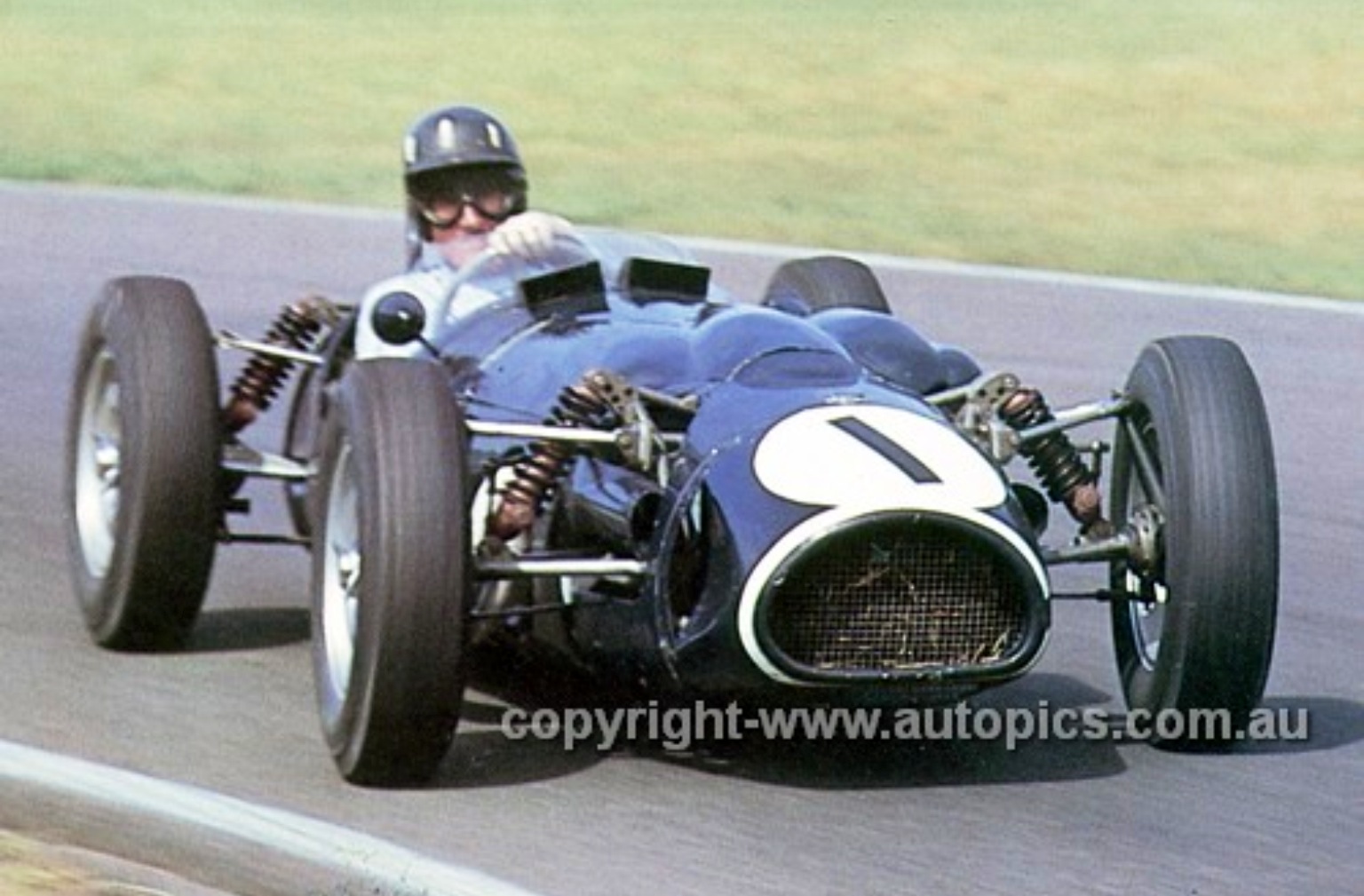
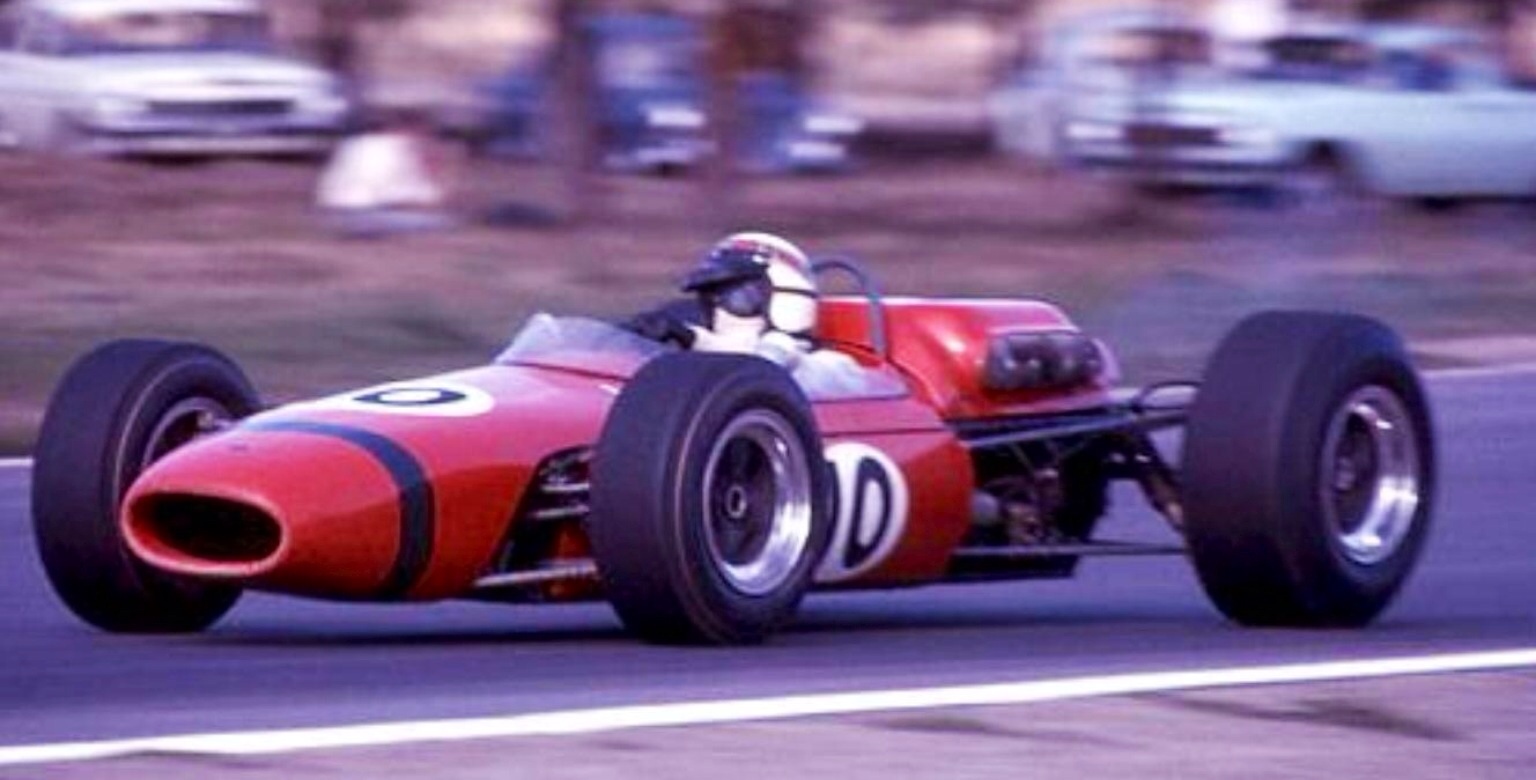
Jackie Stewart sets up his Brabham BT11A for ‘Castrol Corner’ the right hander leading onto Surfers main straight…Holdens in the background and his Climax engine puffing oil before his retirement due to oil loss (John Stanley)

Jackie Stewart in the ‘Scuderia Veloce’ Brabham BT11A Climax ‘Tasman Formula’ car during the Surfers Paradise ‘Gold Star’ Australian Drivers Championship Round on 14 August 1966…

Jackie squeezed in a visit to Australia to drive in both this event and the ‘Surfers 12 Hour’ a week later in between the German and Italian Grands Prix on 7th August and 4 September respectively.

The visit was a welcome respite from the World Championship that year, Jack Brabham dominating in his Repco engined Brabham BT19, with BRM for whom Stewart drove, struggling with their new uncompetitive, complex and heavy P83 ‘H16’.

Jackie won the Monaco Grand Prix in a ‘Tasman Spec’ BRM P261, his 1.5 litre F1 car squeezed to about 2.1 litres, well short of the 3 Litre capacity limit which applied in Grand Prix racing from that year, the nimble car producing the goods on this tight circuit.

monaco

Stewart wins the 1966 Monaco Grand Prix in the BRM P261 1.5 litre F1 car bored to circa 2.1 litres. This was the first Championship race of the new 3 litre F1, the first 4 cars all ‘big bore’ 1.5’s…no 3 litres finishing the race (Unattributed)

In the Belgian Grand Prix three weeks later he experienced an horrific accident on the first lap Spa race, conditions having changed from wet to torrential on this long track, leaving the circuit at high speed on the Masta Kink.

He was trapped upside down in the car, the monocoque twisted around him covering him with fuel with a broken shoulder, cracked rib and internal bruising whilst Graham Hill and Bob Bondurant, who had also crashed, freed him with tools borrowed from spectators. From that moment Stewart started his crusade for driver, car and circuit safety which are amongst his many racing legacies.

No doubt Jackie was looking forward to some racing and the recuperative powers of the Gold Coast sun and surf.

rooted

The rooted monocoque of Stewarts’ BRM P261 after the Masta Kink shunt. The shot clearly shows how the chassis twisted around his body trapping him…he was extremely lucky not to have been killed outright or ‘barbecued’ in a fire, he was liberally doused with petrol, the cars fuel tanks within the monocoque ruptured…no ‘bag tanks’ in those days. 8 drivers crashed without completing a lap…4 at Burnenville and 4 on the Masta Kink (Unattributed)

Keith Williams…

image

Keith Williams at ‘Surfers Paradise Gardens’ Carrara in the mid-1960’s

Jackie enjoyed his successful championship winning 1966 Tasman Season in our summer, campaigning a BRM P261, his 1.5 litre F1 car V8 engine bored to around 2.1 litres, as outlined above, so he was happy to return to Australia to race Jack Brabham and the locals in the ‘Gold Star’ round and Sports Car enduro which comprised Keith Williams ‘Speed Week’.

Williams was a remarkable entrepreneur, he left school at 13 to help supplement the family income pumping fuel at a local ‘Servo’, formed his first business making leather products three years later and soon employed fifty people manufacturing Disney licensed products.

He was an Australian Water Skiing Champion in the late 1950’s, via that sport both making industry products and forming ‘Surfers Paradise Water Ski Shows’ together with Jack Joel.

He built Surfers Paradise and Adelaide Raceways in 1966 and 1970 respectively. Williams was a leader in the tourism industry building ‘Sea World’ on the Gold Coast in 1971 and started the development of Hamilton Island as a global tourist destination in 1978. His remarkable life ended in 2011 after a series of strokes aged 82.

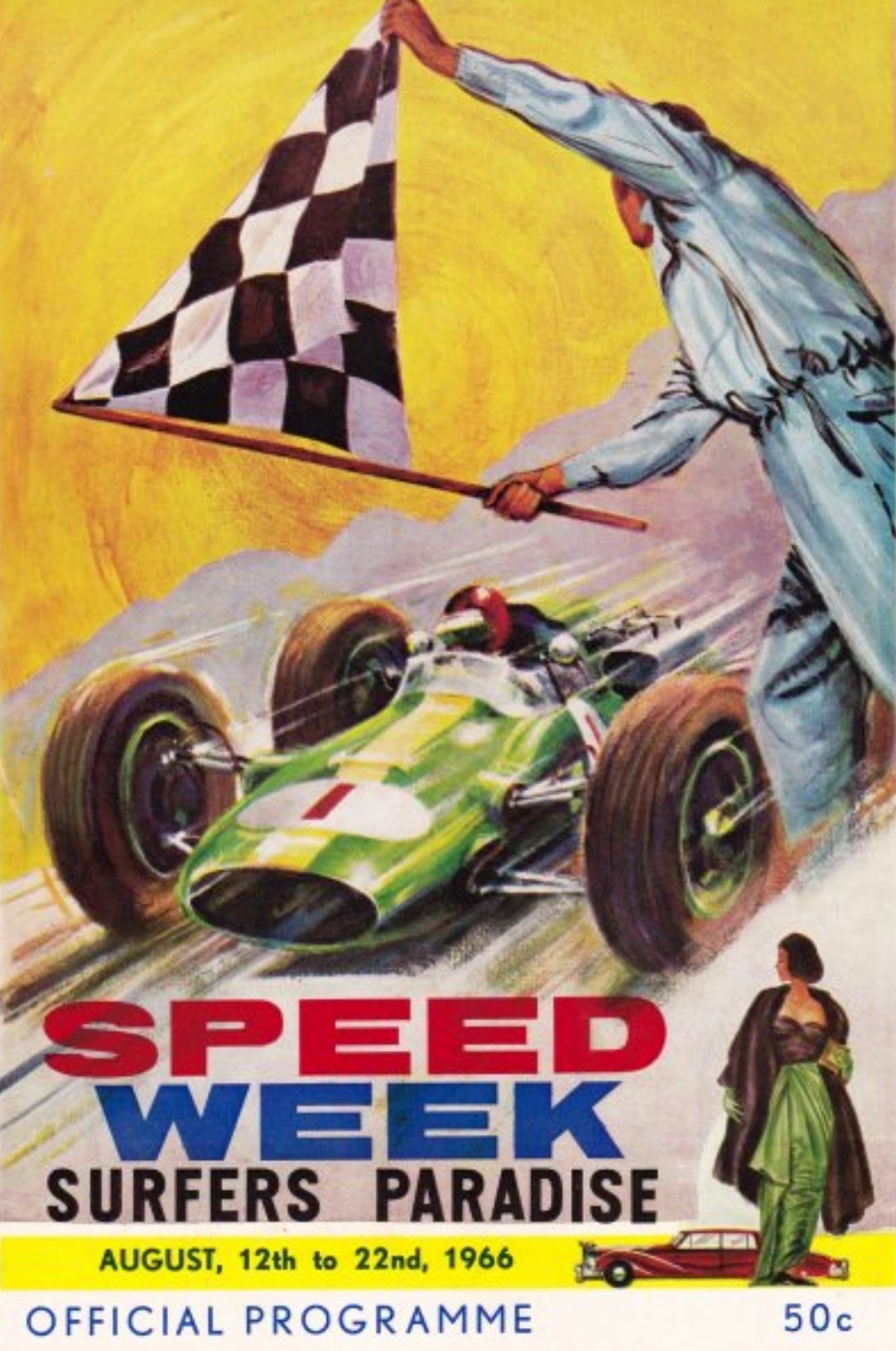
The Surfers circuit was finished in early 1966, the first meeting held on 22 May. The Grand Opening though was ‘Speed Week’ in August, the great promoter holding a number of events over ten days including two weekends of circuit racing described in this article, drag racing, Concours D’ Elegance, motor cycle and speedboat racing- the latter event held on the nearby Gold Coast Broadwater.

Surfers immediately became a drivers and crowd favourite, its fast flowing nature a challenge for drivers and their machines, the circuit facilities and viewing mounds providing a world class amenity at the time to we ‘punters’.

My only visit was as a spectator on a family holiday, i convinced my dad to deposit me at the circuit for the day of the ‘Glynn Scott Memorial Trophy’ in September 1973, the feature event a round of the ‘Gold Star’, the Australian Drivers Championship, contested by F5000 cars.

The sight and sound of these fabulous cars bellowing through the fast right hander under the Dunlop Bridge, a true test of ‘gonad dimensions’, ‘flat knacker’ at 7500RPM in fifth, unmuffled Chev and Repco V8’s roaring away into the distance, was truly a sight and sound to behold and feel!

Frank Matich was running away with the race in his brand new Matich A52, until the ‘flat plane crank’ experimental Repco V8 ‘shook the shitter’ out of the Varley battery, no spark, no go. John McCormack won the race in his Elfin MR5 and the Gold Star that year, the inherently dangerous nature of the track clear to anyone seeing Warwick Brown hobbling around on crutches that day. Brown joining the ‘Lola Limpers Club’ having comprehensively destroyed his T300 and his legs in the Surfers Tasman meeting earlier in the year.

But wow! What a circuit it was!

Williams sold it in 1984, the circuit closed in 1987 and is now part of the ‘Emerald Lakes’ canal estate, like so many of our circuits given over to advancing urban encroachment, but that was a long way away in 1966.

(A Favenchi)
image

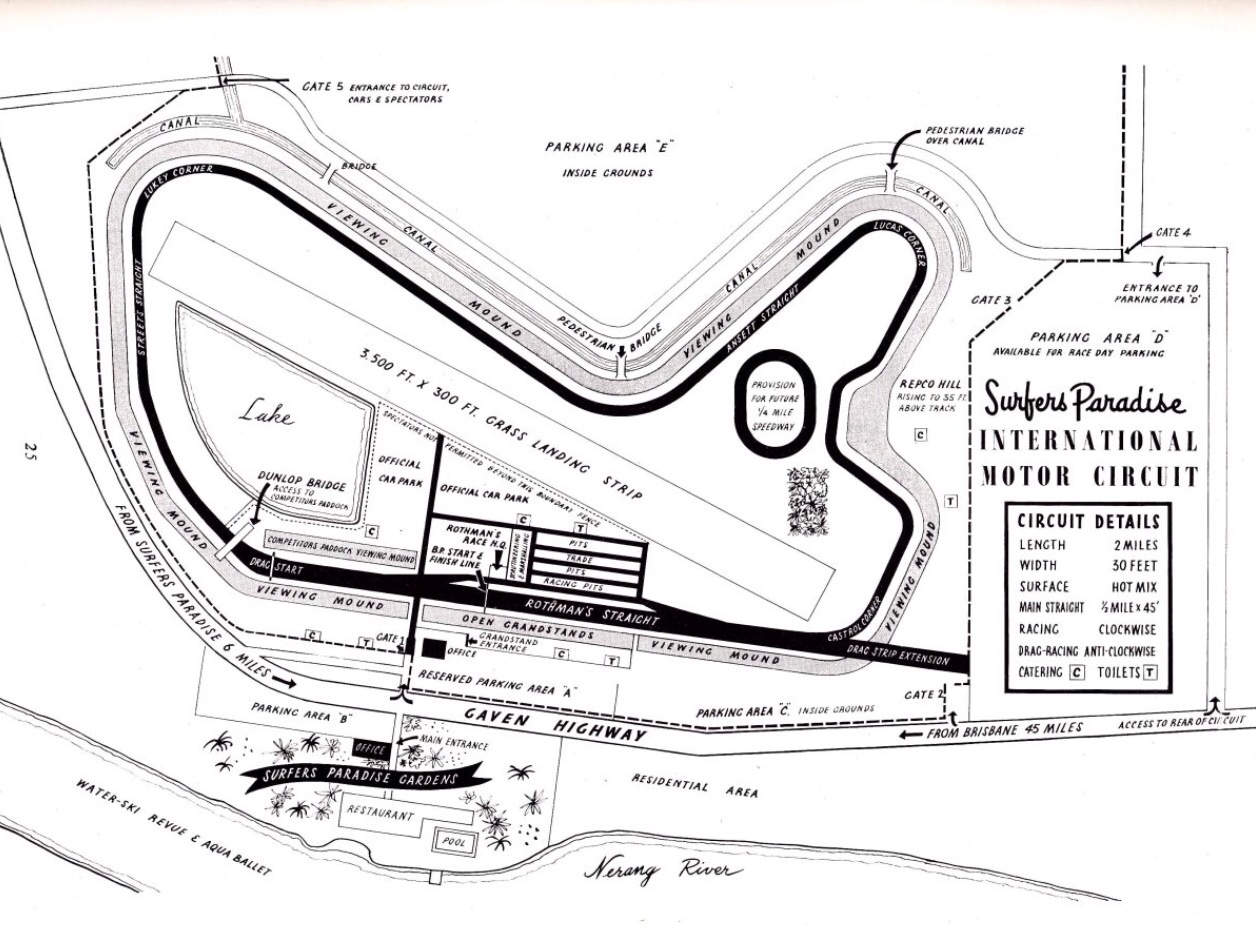
Wonderful aerial shot of the raceway and airstrip looking back to Surfers Paradise in 1977 (A Favenchi)

Gold Star Meeting…

Jackie had some idea about the local talent from his very successful Tasman Tour early in the year, he won the series in his P261 BRM taking four wins, but probably got more than he bargained for.

Kevin Bartlett had stepped up since the Tasman Series from the Mildren Teams Brabham Ford 1.5 Brabham BT11A 2.5 Spencer Martin also racing a Brabham BT11A Coventry Climax for Bob Jane.

Jack Brabham was there, in BT19, the chassis which carried him to victory in that years World Championship, fresh from his German GP win a week before, the car still fitted with its 3 litre ‘620 Series’ Repco V8.

Leo Geoghegan and Greg Cusack were entered in ex-Clark Lotus 39 and Lotus 32B respectively- both cars also Coventry Climax FPF 2.5 engined.

Jack Brabham Brabham BT19 Repco, Surfers Paradise 1966

In the middle of his successful 1966 F1 campaign, Jack brought BT19 to Oz for the opening of Surfers Paradise…Repco wanted the car there but all the same i expect Wlliams paid handsomely for Brabhams’ presence! Here surrounded by admirers in the Surfers paddock (Unattributed)
 

brabham surfers 1966

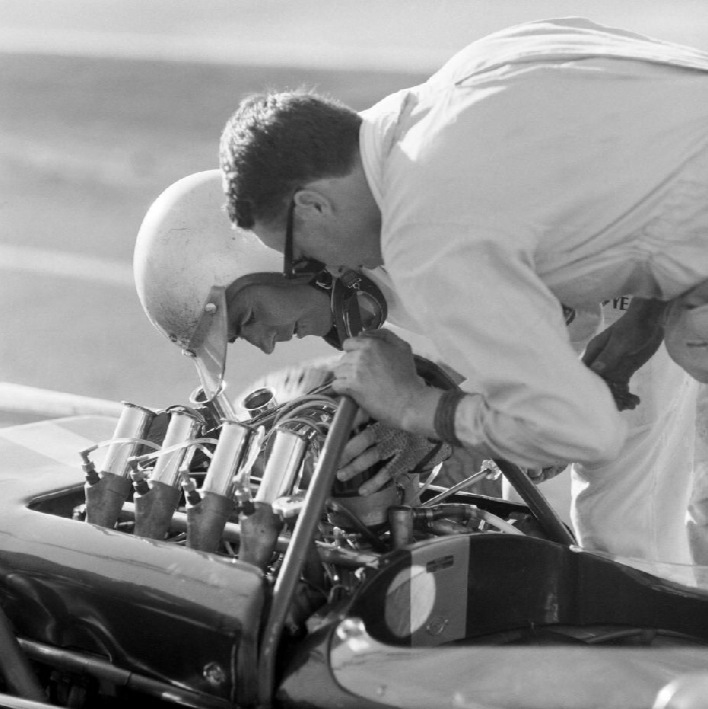
Jack here fettling his Brabham’s Repco ‘620’, rotor button the cause of his DNF (Unattributed)


(P Cadell)

Ray Bell, ‘Racing Car News’ magazine reporter at the time recalled the meeting on ‘The Nostalgia Forum’…

‘Jack had pole, from KB, JYS and Spencer Martin. KB led the way, this to be the drive that made everybody sit up and take notice, he’d not been long in 2.5’s and was leading a Grand Prix Winner and pretender to the World Championship throne.’

‘Brabham managed a lap and a half before the rotor button went and he dropped out…Stewart hounded KB for five laps before outbraking him at Lukey…Bartlett finishing two-tenths behind the Scot.’ (in an identical car)

‘With KB on pole for the main event, Stewart had something fail in the clutch mechanism and dragged away badly…Martin got the jump, leading KB for seven laps before Bartlett went past into Lukey, Stewart looming in a comeback drive all the while.’

‘On lap fourteen they set a new lap record of 1:13:0, a few laps later JYS passing KB under the bridge…KB coming back at the clutchless Brabham…there was more passing and re-passing until the magneto in Bartlett’s car failed. Stewart blew his engine giving Martin the win having shaken off Leo Geoghegan to do so.’

If there was any doubt, Kevin Bartlett ‘arrived’ as a Top-Liner that day…serving it up to a Grand Prix winner in absolutely equal cars.

Kevin Bartlett recalled recently…’The dices that weekend live in my mind forever. I knew him well before that meeting, his SV Brabham was the equal of mine. We both knew the cars capabilities, the dice was not out of the ordinary as far as we were concerned, the cars were very close but we gave one another room but if you got the line you would slipstream past. We respected each others abilities, we both DNF’d the feature race but laughed about it later. He had no ego.’
image

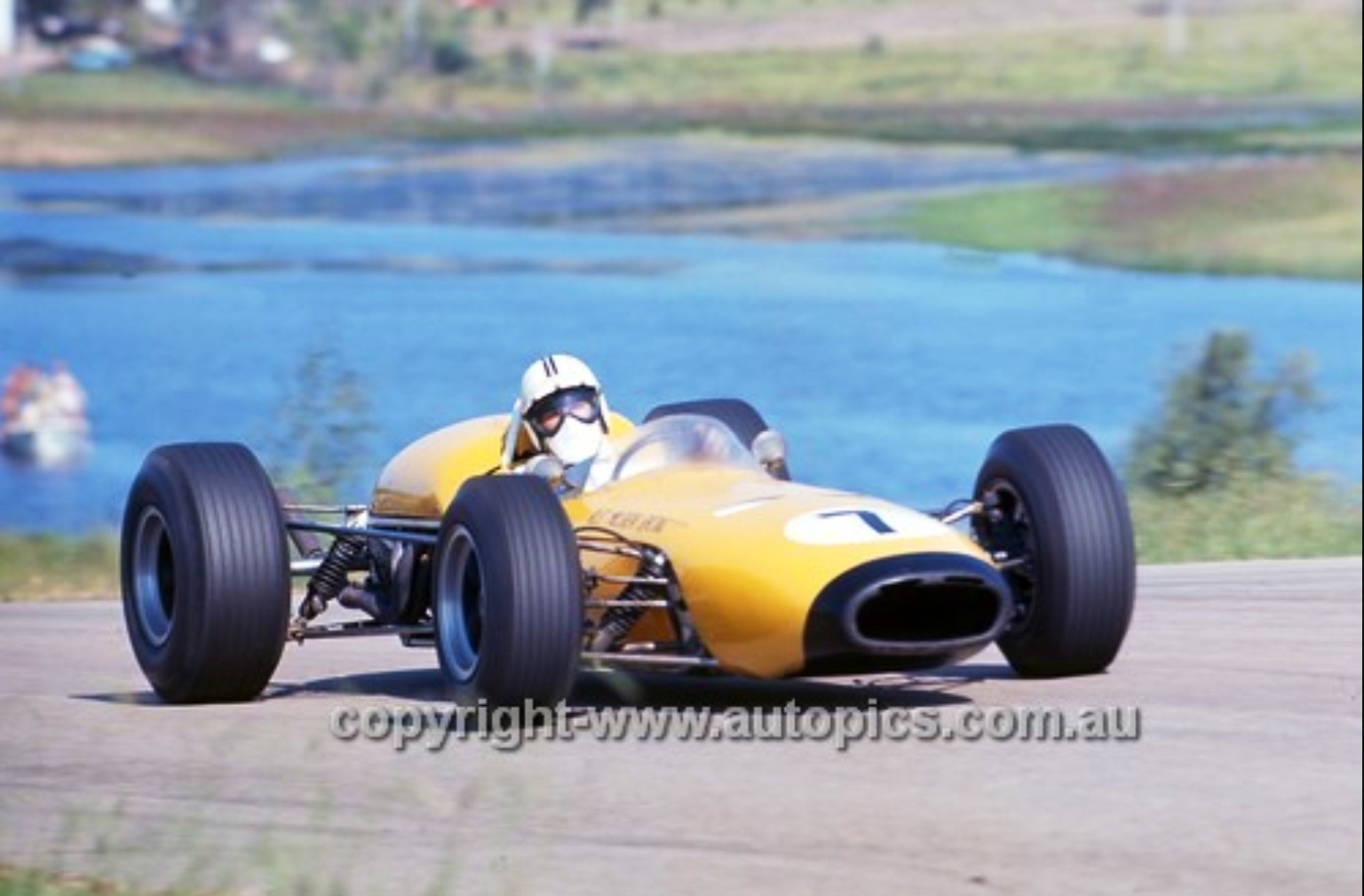
Kevin Bartlett shown in the Mildren Brabham BT11A in the ‘Lakeside 99’ Tasman round, February 1967. He placed fifth in a race won by Clarks Lotus 33 Climax. (autopics)

Surfers Paradise 12 Hour…

Stewart returned from the beach for the second weekend of Williams ‘double header’ to drive the Scuderia Veloce Ferrari 250LM with Kiwi Andy Buchanan, I wrote about this car a while back….https://primotipo.com/2014/07/03/pete-geoghegan-ferrari-250lm-6321-bathurst-easter-68/

The entry also included a Ford GT40 for Frank Matich and Peter Sutcliffe, another LM for Jackie Epstein and Aussie International Paul Hawkins, David Piper and  future Le Mans winner Richard Attwood raced Pipers’ ex-works Ferrari P2.

image

Peter Sutcliffes’ Ford GT40 ahead of the Jackie Epstein/ Paul Hawkins Ferrari 250LM (autopics.com)

Given the paucity of top-line sports cars in Australia of this type, the grid was bolstered by sprint sports cars such as Lotus 23’s, production sports cars and touring cars…including a Mini Moke entered by later Touring Car Ace ‘Bo’ Seton and Charlie Smith. The closing speed of Stewarts LM and the like would have been well over 80MPH!, the Moke having little power and the aerodynamic efficiency of a ‘dunny-door’.

image

Jackie Stewarts Ferrari 250 LM blasts past the Charlie Smith/ Bo Seton Mini Moke, the Fazz did 493 laps to win, the Moke 311…lapped just a few times. Speed differentials an issue not just at Le Mans! (autopics.com)

The chequered flag was shown to the Matich GT40, but Scuderia Veloce boss David McKay successfully protested the result giving the win to the Stewart/Buchanan LM.

It was not the first time a major event in Australia was clouded by lap-scoring disputes these things not uncommon in those far off, pre-digital days!

image

The winning Scuderia Veloce Ferrari 250LM ‘6321’driven by Jackie Stewart and Andy Buchanan, the car winning the race in 1966/67/68 (autopics.com)

Kevin Bartlett and Doug Chivas finished third in the Alec Mildren racing Alfa Romeo TZ2, Kevin Bartlett again recalls…

‘The 12 Hour was tough going for a little 1600, but Doug was on top of his game, a helluva driver who was kind to the car and did the times. It was a tactical race for us, Alec had worked out a plan and the times we needed to do, which we did consistently.’

’I drove a TZ1 years later at an AGP support event but the TZ2 was areodynamically better, it was quicker in a straight line and had a better track and wheelbase which got it out of corners better. The TZ1 handling was not as good, the tyre and wheel package wasn’t as good.’

image

Andy Buchanan, Jackie Stewart, dignitary, Frank Matich, Peter Sutcliffe, Kevin Bartlett, Doug Chivas. Matich and Sutcliffe happy at this stage but tears were not far away! KB and Chivas piloted the third place Mildren Team Alfa TZ2 (Kevin Bartlett)

Etcetera…

The front gate (D Strong)


(G Paine)


image

Bartlett/Chivas Alfa TZ2, ahead of the John Harvey/ Frank Demuth Lotus 23 and the Cooper T49 Monaco Olds of Tony Osborne/Murray Carter/Ray Gibbs (autopics)


(G Paine)


image

David Piper/Richard Attwood Ferrari P2 (autopics.com.au)


(G Paine)


image

Peter Sutcliffes’ Ford GT40 was a customer car owned by Sutcliffe, co-driven by Frank Matich, at the time the outstanding sports car driver in Australia, make that one of the the most outstanding drivers in Australia, his competitiveness in open-wheelers proven in the Tasman Series until he (sadly!) went down the sports car path, finally again seeing the light in the days of F5000…(autopics)


(G Paine)


image

Early pitstop for the Piper/Attwood Ferrari P2, only 45 laps completed (autopics)
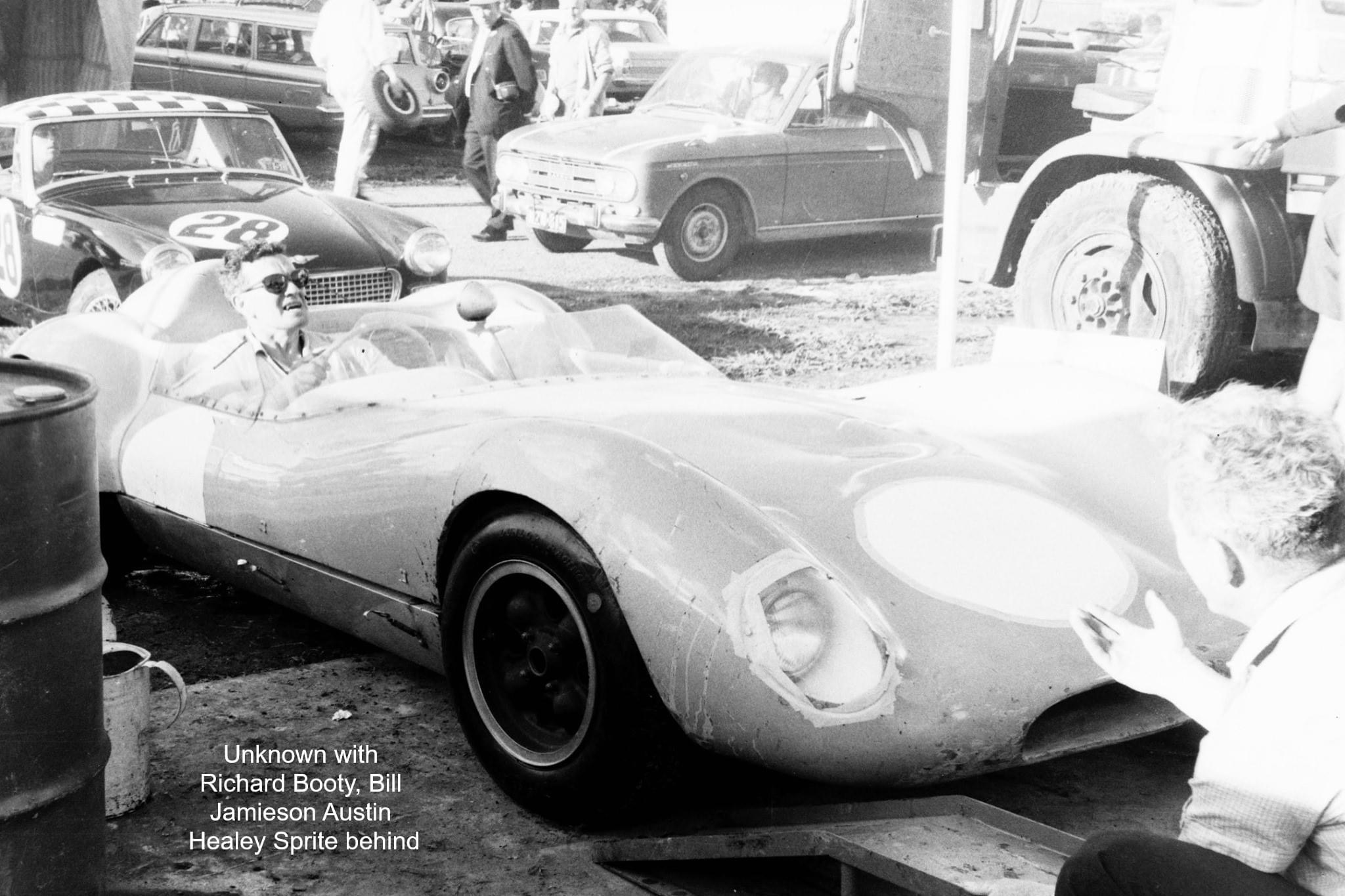
 

Don Gorringe/Dick Crawford Lola Mk1 Climax (G Paine)
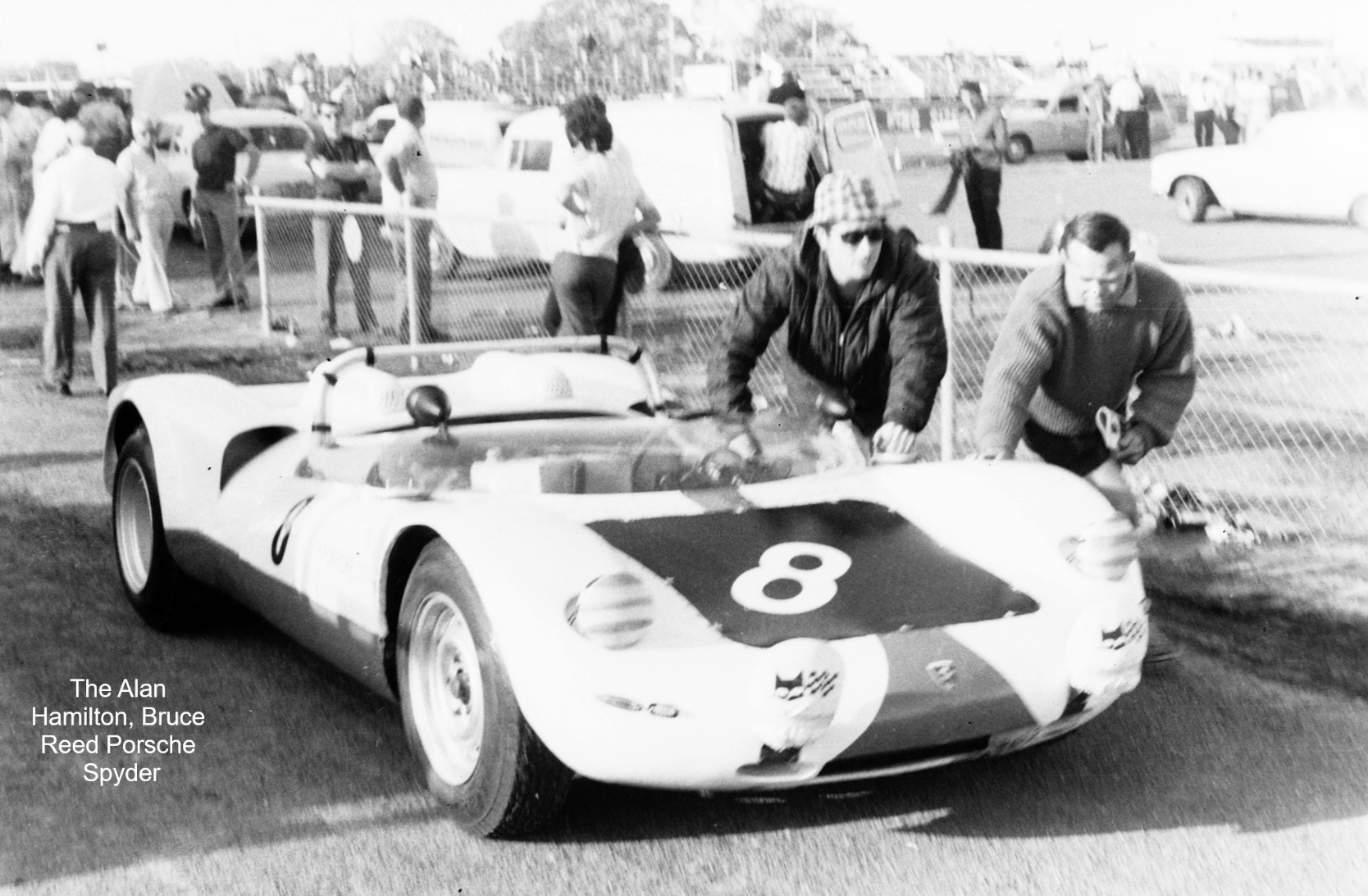
 

Alan Hamilton and Brian or ‘Brique’ Reed (G Paine)


Touring Car race circa 1966 (J Dwyer)


(G Paine)
 

image

Photo and Other Credits…

autopics.com.au, John Stanley Collection, Alexis Favenchi, Darren Strong, Peta Cadell, Glenn Paine

Many thanks to Kevin Bartlett for sharing his recollections of both events

Finito…
helen and jackie stewart 1970

Another evocative Jesse Alexander shot capturing Helen Stewart during a moment of reflection, circa 1972. Jackie at rear with Peter Gethin or George Follmer maybe?…

(Jesse Alexander Archive)

moss parramatta

Stirling Moss being briefed by Jack Myers about his Cooper/WM Holden before lapping Cumberland Park Speedway, Parramatta, Sydney, November 1956…

The WM Holden is the prototype ex-John Cooper/Mike Hawthorn/ Bernie Ecclestone/Stan Coffey Cooper T20 Bristol # CB/1/52 acquired damaged by Myers, rebuilt and fitted with a Holden six-cylinder ‘Grey Motor’. The standard OHV iron head was replaced by an alloy DOHC head developed by the incredibly talented Sydney engineer Merv Waggott, and then renamed WM (Waggott Myers) Holden.

Moss was in Australia to race factory Maseratis in the Australian Grand Prix carnival at Albert Park in Melbourne, a two week event during which Moss won the AGP in a 250F and the Australian Tourist Trophy in a 300S.

Quite how he came to drive Myers’ car at Cumberland Park in Sydney is a bit of a mystery but was perhaps part of a fuel company promotion, I am keen to hear from anyone who knows the story. Moss didn’t race the Cooper but did a number of demonstration laps around the quarter mile speedway on the outside of Cumberland Park, which was also used for cricket and rugby. Jack Myers also contested the Australian Grand Prix at Albert Park, the WM finished 12th and lapped several times by the Moss 250F.

moss on circuit parramaat
A tad too much understeer or neutral steer on the oval!? Moss Cumberland Park

WM is Waggott/Myers…

The cylinder head was initially fed by six Amal carbs but these were later replaced by 6 1 3/4inch SU’s. The engine developed around 197bhp at its peak making the car an outright contender in its day.

‘Grey Motor’ was the colloquial name of these engines which, painted grey, were first fitted to the 48-215 Holden, General Motors first Holden sedan built in Australia. Later iterations of the Holden OHV straight-six were Red Motors and Black Motors as the blocks were, you guessed it, painted red and black. The standard Grey displacement was 132.5 cubic inches or 2170cc, the 6 cylinder OHV, four main bearing, single Stromberg carb engine produced 60bhp in standard form.

The Waggott engine’s block, crankshaft and conrods were made by GMH (General Motors Holden) but the head, pistons, dry sump lubrication system and other components were made by Merv Waggotts’ business. Capacity was increased to 2440cc with the camshafts driven by chain from the crank.

Six or seven heads were built, the engine won the Australian GT Championship for Queenslander and later Bathurst winner John French in his Centaur in 1962. The market for the heads essentially dried up when the new touring car/sedan racing regulations of the day, Appendix J did not allow changes to cylinder heads other than modifications to standard heads. Waggott built modified Holden heads to these rules as well.

The WM/Cooper used an MG TC gearbox with specially cut gears, the differential was initially a Holden 48-215 unit but this was later replaced by a Ford V8 component. Suspension was standard Cooper, most of the damage to the car was to the body hoops and the body itself which was repaired by the talented Myers.

wm holden t druitt 1958
WM Holden engine bay, Mt Druitt May 1958, plug change. The neat alloy DOHC, chain driven head on display. Holden Grey Motor, a cast iron block, capacity 2440cc, circa 200bhp at its peak. Myers did a 15.01 second standing quarter that day (John Ellacott)
agp 56 jack myers
Doug Whiteford’s Talbot Lago passing Myers in the WM Holden during the 1956 AGP at Albert Park. They finished eighth and 12th respectively in the race won by Moss’ Maser 250F. This is the second of Dougs’ Lagos, the 12-plug-head-car which is still in Australia and owned by Ron Townley (Unattributed)

Jack Myers raced the car very successfully…

It reapppeared after repair and installation of the Holden engine at Bathurst in October 1956. In November he attacked the Australian Land Speed record setting a new mark for Class D at 25.46 seconds for the standing kilometre. Moss ran the car at Parramatta shortly thereafter and the week after that Myers finished 12th in the AGP. Moss and the car were reunited many years later.

Jack at Caversham during the 1957 AGP (K Devine)

The car overheated in the scorching hot 1957 AGP at Caversham WA, the chassis was replaced after an accident at Bathurst in 1957 when Jack bounced the car from bank to bank going into Forrest’s Elbow.

This time the car was rebuilt from scratch, the team constructed a new tubular frame to replace the original box-section chassis. John Blanden records that Myers had completed the rebuilds of the McMillan Ferrari Super Squalo and Jack Davey D-Type Jaguar chassis and incorporated some ideas from those experiences including lowering the engine by three inches. The suspension was re-designed but still used many Cooper parts, a quick change diff was built by Myers, and D-Type clutch incorporated.

The WM was immediately successful, going even faster still when fitted with disc brakes, it finally met its maker at Bathurst in October 1960 when Jack ended up in a ditch on the way into The Cutting escaping injuries, but the car’s chassis and suspension were badly damaged. The WM was split up and its core components sold.

wm holden bathurst 1959
1959 Bathurst 100 qualifying heat front row. Myers on the left in the distinctive yellow and black T-Shirt he always wore beside the WM, Stan Jones #1 Maser 250F and Kiwi Ross Jensen similarly mounted. Myers completed 24 of the 26 laps the race won by Jensen (Myer family)
wm holden bathurst
Jack Myers returns to the Bathurst paddock, AGP Meeting 1958. WM Holden (Kevin Drage)

Myers was sadly killed in a race at Catalina Park, Katoomba, in the Blue Moutains outside Sydney not long afterwards.

In 1962 Syd Fisher bought the remains of the car and fitted a Chev Corvette 283cid V8, Alvis gearbox, Halibrand type quick change rear axle to which a ZF limited slip diff was fitted, achieving seventh in the 1963 Victorian Road Racing Championship.

The car passed through others into the caring hands of John Emery, and then to Gavin Sandford-Morgan in 1972. There it was rebuilt by a dedicated team of volunteers at the Birdwood Mill Museum outside Adelaide to its Jack Myers spcification including the Waggott engine, the car making its debut at the 2000 Australian Grand Prix where it was driven by Stirling Moss, exactly as it was at Parramatta in 1956.

mildren sub and merv waggott
Merv Waggott fettling one of his jewel like aluminium 2-litre four-valve engines, here mounted in Kevin Bartlett’s Mildren Racing Mildren ‘Yellow Submarine’ Waggott. Engine produced circa 260bhp with a useable rev band of 6800-8750rpm and weighed circa 230lb. Wigram, NZ Tasman 1970 (The Roaring Season)

Merv Waggott developed his own 4 cylinder, DOHC four valve, fuel injected engine in the late 1960’s in capacities of 1.6, 1.85 and 2 litres, the smaller engines used Ford Cortina blocks, the 2-litre an aluminium bespoke crankcase and cast iron block developed by Waggotts.

These engines won many races and championships including the 1969, 1970 and 1971 Australian Drivers Championships – the Gold Star – for Kevin Bartlett, Leo Geoghegan and Max Stewart in the Mildren ‘Yellow Submarine’, Lotus 59B and Mildren Waggott chassis respectively. I will write about this engine in detail at some point.

Waggott Engineering still exists however Merv Waggott died in an ultralight plane accident in 1992.

Cooper T20 Bristol Chassis # CB/1/52…

coper bristol cutaway
Cooper T20 Bristol drawing. 1971cc Bristol/BMW six cylinder engine circa 130bhp and Bristol four speed ‘box. Steel box section chassis with tubular reinforcements, aluminium body. Lockheed hydraulic drum brakes. Suspension front and rear lower wishbones and upper transverse leaf springs with Armstrong shocks (Unattributed)

Doug Nye’s research for the book Cooper Cars found this car to be the prototype T20 which was shown to the press in January 1952. John Cooper drove it on its debut at Goodwood on 14 April 1952. It was also driven by Reg Parnell, Mike Hawthorn – whilst he awaited delivery of his own T20 – and Bernie Ecclestone before being sold to Fred Tuck, a Brit who raced the car in the New Zealand Grand Prix in 1954.

During that trip the car was sold to Sydney’s Stan Coffey who raced it as the ‘Dowidat Special’, in deference to his sponsors, a manufacturer of hand tools. Amongst Coffey’s competitors was Jack Brabham in the ‘Redex Special’, a Cooper T23 Bristol.

The Coffey ‘Dowidat Spl’ at Gnoo Blas Orange circa 1955 (K Devine)

Coffeys results were not startling but he finished eighth in the 1954 AGP at Southport, Queensland. He raced the car little in 1955 but contested the AGP at Port Wakefield, South Australia. Brabham won the race in the Cooper T40 Bristol Bobtail he had built in time for the 1955 British GP. Coffey rolled the car halfway through the race, the car left the track and tripped on the grass verge. Stan broke his nose but was otherwise uninjured, selling the car to Myers in as-is condition. The car was taken to Myers’, Maroubra, Sydney workshop where its rapid transformation to Waggott Holden power was completed.

The Cooper Bristols were built as 2-litre European F2 cars, the engine was the BMW 328 6 cylinder design which fell into Bristols’ hands as part of WW2 reparation compensation and was further developed post-war by BMW designer Fritz Fiedler. The 1971cc engine developed circa 127bhp @ 5800rpm.

myers maroubra workshop
Jack Myers working his magic on the WM in his Maroubra, Sydney Southern Beaches workshop. The Holden Grey block is at left, the long studs to retain the deep head. The cast aluminium engine/gearbox adaptor is still attached to the block. Diff was initially Holden but later Ford, uncertain of which here. MG-TC ‘box is in front of the bench. Standard T20 suspension, chassis box section can be seen in th shot as well as the body hoops.

Etcetera…

Cooper T20 Bristol-Stan Coffey

stan coffey cooper
Stan Coffey in the Cooper T20 Bristol ‘Dowidat Spanners Special’ at Mount Druitt, date unknown. The wind on Coffey’s large body must have been incredible and top speed limiting! (Ivy & Jack Carter)

WM Holden-Jack Myers

Both these shots were taken in 1957 at Caversham during the AGP weekend. The Holden engine installation was very neatly and professionally executed by Myers, whilst the machine was called the WM Holden, Cooper Holden was perhaps more indicative until the chassis was substantially changed by Jack and his team. Carbs on the engine are Amals at this point, six 1 3/4 inch SU’s later fitted.

wm in paddock
(MrFire)
waggott 6 engine in wm
(MrFire)
waggott 6 on SU's
Another shot of the engine bay and Waggott DOHC head, this time with six SU’s. Car here, above, at the Birdwood Mill Museum in SA, restored. (Unattributed)

WM Holden-Stirling Moss

moss from the outside parramatta
Scratchy unattributed shot of Moss circulating in the WM at Cumberland Park, fashions of the day to the fore!

Credits…

Myer Family Collection, John Ellacott, MrFire, Ivy & Jack Carter, The Roaring Season, Kevin Drage, Ken Devine Collection, John Ballantyne

John Blanden ‘Historic Racing Cars in Australia’, Doug Nye ‘Cooper Cars’, ‘Memories of Jack Myers’ aussieroadracing.homestead.com

Tailpiece: WM Holden by John Ballantyne, beautiful work…

Finito…

image

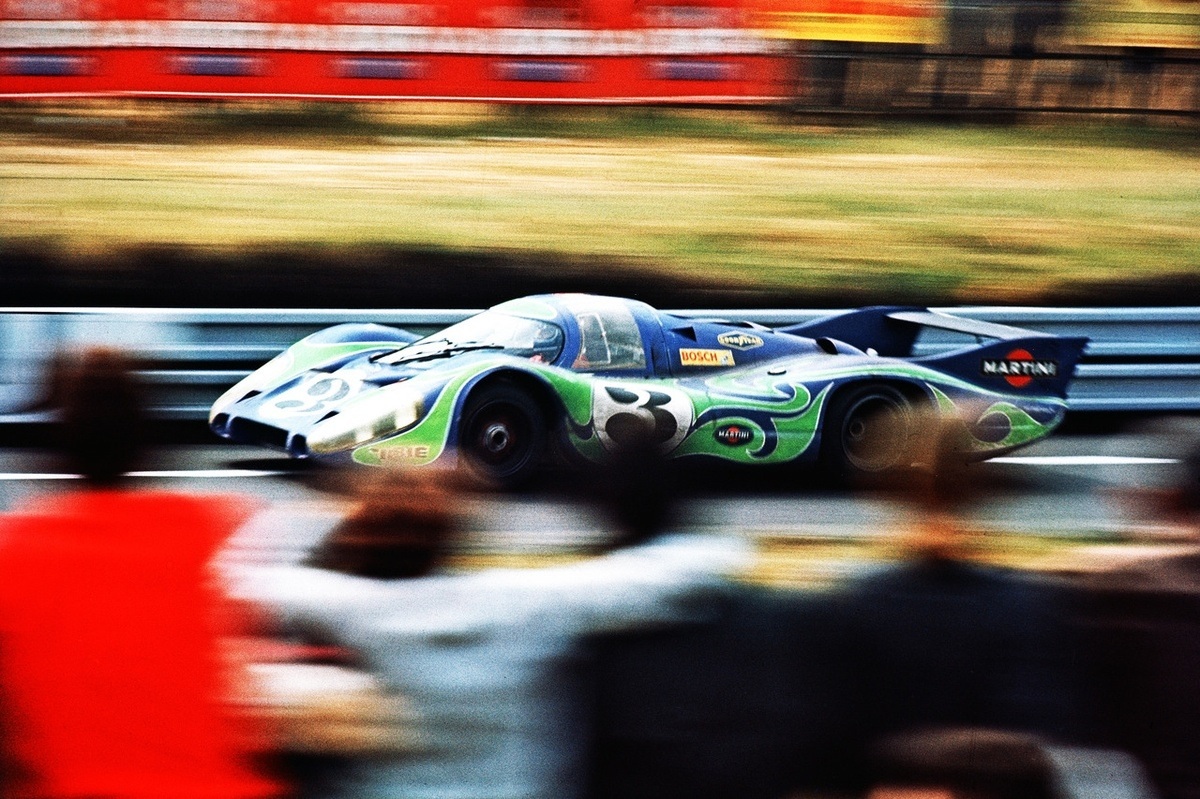
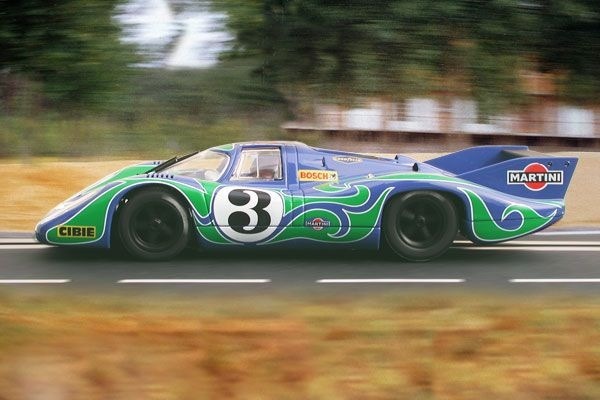
The 1970 Le Mans 24 hours was won by the Hans Hermann/Richard Attwood Porsche 917K , Kurtz, or short tail…

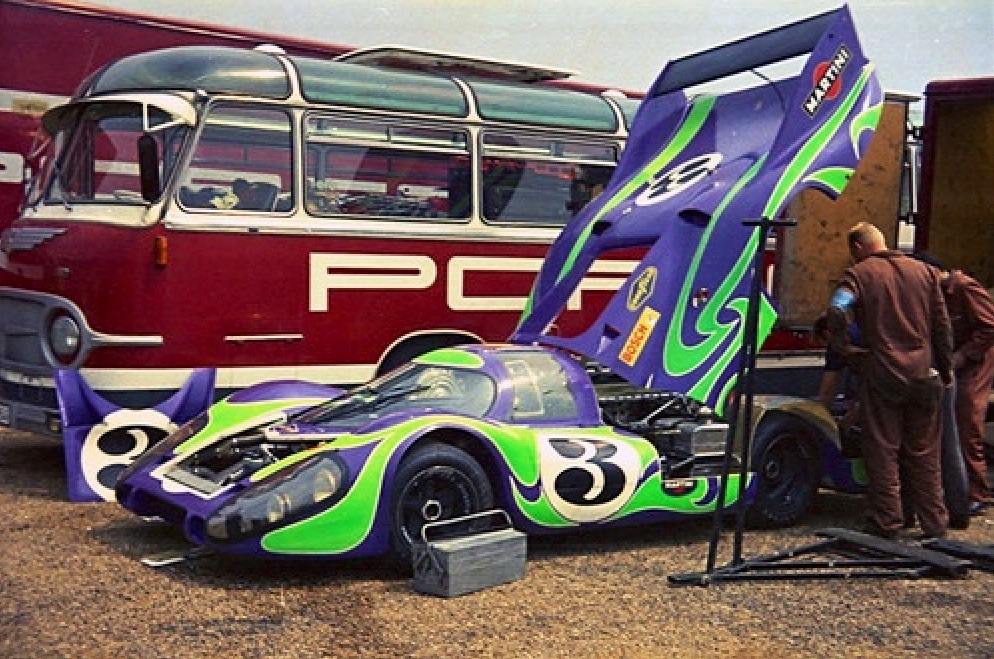
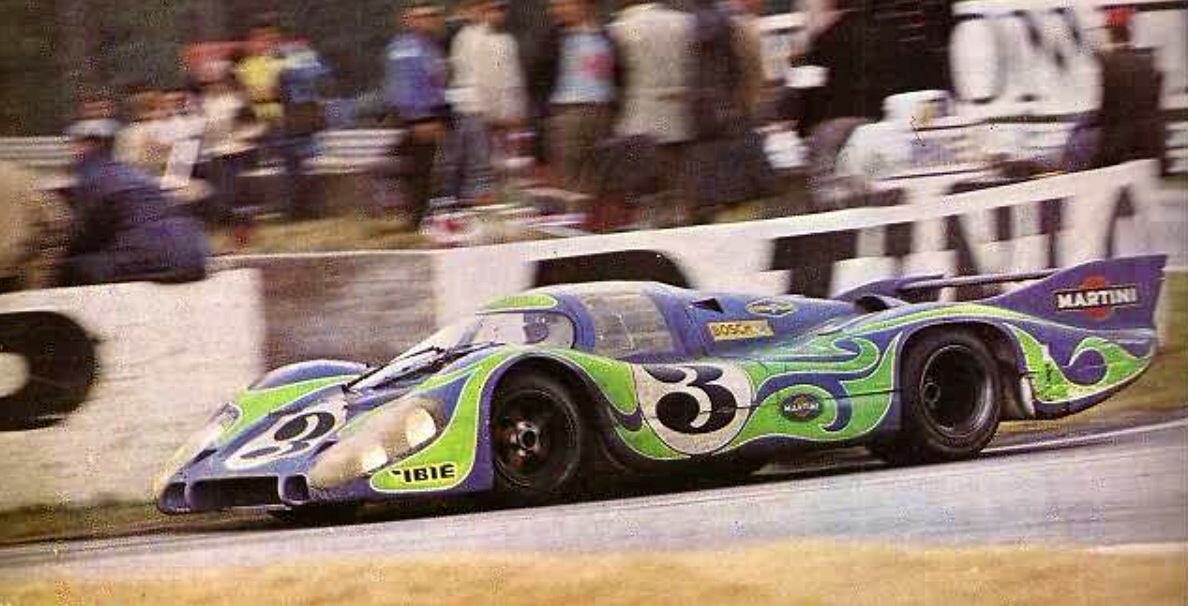
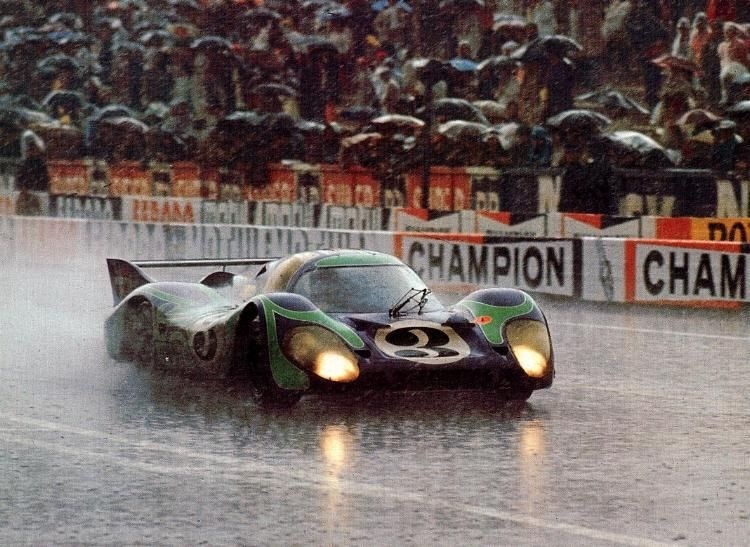
The win was Porsches’ first outright Le Mans victory. In second place, 5 laps behind was the so-called ‘Hippie Car’, the wildly painted Martini International 917LH, Langheck or long tail. The car was driven by Gerard Larrousse and Willi Kauhsen, starting a trend of cars with stunning finishes which continues today…

image

image

image

image

Technical Specifications…

917 Tech Specs

Photo Credits…Pinterest unattributed

andretti surfers 94 reynard

Michael Andretti aviating his Reynard 941 Ford over the Surfers Paradise kerbs. Andrettis’ victory in The Australian Indycar Grand Prix in March 1994 was just the fillip the American needed after his abortive McLaren F1 season the year before…

Nigel Mansell started ’94 where he left off, the Brit a winner in the 1993 ‘Indy championship in his Lola Ford, the season after his F1 World Championship victory for Williams in 1992. Nige was on pole with Andretti alongside in the brand new Malcolm Oastler designed Reynard 941 Ford, the marques first Indycar.

The race was restarted 3 times, first lap contretemps famous on the Surfers circuit. In the final restart Michael got the jump on Nigel and lead all 55 laps, the race shortened by 10 laps due to lack of light.

Michael won again in the Reynard later in the season at Toronto but the Penske PC23 was the best car of the season and the ‘Dream Team’ of Al Unser, Emerson Fittipaldi and Paul Tracy extracted all the car had to offer winning most rounds and Unser the drivers title.

By seasons end Mansell had returned to F1 albeit briefly, with Michael competitive again with 2 victories and 7 top 5 finishes in a year where the pickings were slim for all but Penske.

andretti surfers 94

Same car, driver and kerb but lower altitude…Reynard a lovely car and the first of many successful Indycars by the late, lamented marque. (Unattributed)

So what Went Wrong in F1 for Michael?…

Andretti came into racing via Karts, Formula Ford, Super Vee and Formula Atlantic. Before long he was an established Indycar Star and after a dominant season in CART 1991, on pole 8 times, winning the title and demonstrating his versatility with a Porsche drive at Daytona, he was looking to F1 as the next challenge.

Joining McLaren for 1993, alongside established team leader and candidate for the Greatest Grand Prix Driver ever was always going to be a tough ask, the Brazilian famous for taking no prisoners and intimidating his teammates in all ways possible.

Into 1992 things were looking a bit grim for McLaren…the teams performances were down, Honda were withdrawing from F1 and Ron couldn’t achieve the alternative factory engine deal he wanted. He attempted to buy Ligier to get the Renault engines, a deal vetoed by sponsors. The best he could achieve was Ford customer engines, one spec below those used by Benetton, who had the factory Ford deal, Michael Schumacher of course the driver.

Ayrton was watching all of this but couldn’t get a better drive, the best seat was with Williams, and engine supplier tipped Alain Prost into it rather than arch rival Senna.

andretti british gp 1993

Andretti, European GP Donington Park 1993. McLaren MP4/8 Ford. (Unattributed)

Ron needed a name driver in the event Senna decamped and signed Andretti…on paper a driver with potential albeit unfamiliar with both the cars and circuits. His announcement was made at the 1992 Italian Grand Prix to a bemused media.

The plot thickened somewhat with the signing of Mika Hakkinen, lately of Lotus, who was to be either test driver or race driver in 1993 depending upon what Senna decided, the Brazilian ultimately signing for the team again but on a race by race basis.

andretti kyalami

Michael optimistic early in the season at Kyalami, South African GP. (The Cahier Archive)

For Andretti things started badly with rule changes which limited testing…he badly needed seat time in both the car and on as many circuits as possible, the differences in characteristics between the relatively heavy single turbo 2.65 litre V8 Indycars, and 3.5 litre normally aspirated peaky, light, nimble and ‘very nervous’ Grand Prix cars immense.

The delivery of the Ford engine was late, only a month before the season opener at Kyalami, so was completion of the car and critical systems testing and checking which became clear with many failures particularly on Andrettis’ chassis during the year.

His season could be summarised as a series of own goals, accidents of his own making and mechanical or electrical failures which were entirely beyond his control.

Mixed in with that was his sheer pace which justified Andretti a second season in F1, at least.

F1 wisdom seems to be, including McLarens website, that the American didn’t really commit to F1. Indicative, in this view is continuing to live in the US, commuting by Concorde to the UK and the races as required. The theory is that living closeby to Woking, shootin’ the breeze with the Ronster and technicians would have helped.

It probably would have, as he would have done the testing miles Hakkinnen did but it’s too simplistic a view.

andretti helmet

Andretti started the season behind the eightball, noting he was ‘silly enough’ to sign for McLaren alongside Senna in a team ‘he owned’…

Jackie Stewart was smart to sign with BRM not Lotus for his debut F1 season in ’65, he had the choice but figured the lower pressure environment at BRM would be better for him, and allow him to come up to speed without the pressure of going head to head with Jim Clark, the standard by which all other drivers assessed themselves at the time. Noting that his BRM team leader, Graham Hill, the ’62 World Champ was at the top of his game at the time.

But these guys aren’t like you and I, they have towering self belief, why not go up against Senna in a great team, the chance may never come again? In that sense Andretti is be admired for putting his balls on the line, he was not the first or last Ace to be blown off by the Brazilians mesmeric other worldly skill.

On balance, looking from everyone’s viewpoint; McLarens’, Andrettis’ and the sponsors’, the deal made sense.

The McLaren MP4/8 Ford was a competitive car, Senna took victories at Monaco, Donington (one of his best) Brazil and Suzuka in the rain and in Adelaide, his last GP for McLaren and final victory.

During the rest of the season the Williams of Prost and Hill were the class of the field, Prost taking the title and retiring.

mclaren mp4 8 cutaway

McLaren MP4/8 Ford 1993. Neil Oatley designed Carbon fibre monocoque, suspension active with wishbones all around actuating coil springs and dampers. Carbon ceramic brakes. Ford HBE V8 ‘customer spec’ 3494cc circa 640bhp. McLaren 6 speed semi-automatic gearbox. 505kg. (Unattributed)

Let’s look at Andrettis’ year race by race…

andretti interlagos prang

Interlagos contretemps with Gerhard Bergers’ Ferrari. Could have been a lot worse. (Unattributed)

.Kyalami clutch failure on the line, fundamental preparation or lack of testing issue. He then ran into Derek Warwick on lap 4 trying to make up for lost time.

.In Brazil he goosed the start having muffed the 1-2 shift, qualified 5th (Senna 3rd), Wendlinger jigged one way, Michael the other collecting Bergers Ferrari initiating a spectacular shunt with the two cars cartwheeling thru the air.

.At Donington for the European GP. Q6 whilst Senna disappeared into the gloom in a sublime drive, from 5th to 1st in 10 corners and a lead of over 4 seconds at the end of lap 2. Andretti again took out Wendlinger  leaving the Sauber and McLaren beached in the Leicestershire mud.

european gp 1993 first lap

European GP, Donington Park 1993 lap1. Prost & Hill Williams, Wendlinger Sauber, Senna McLaren, Schumacher Benetton, Andretti McLaren, the Ferraris’ and the rest…Senna to the front and gone in 10 corners from Q4. (Unattributed)

.At Imola for the San Marino GP Q6 again, he completed 32 laps before spinning, whilst dicing for fourth with, you guessed it, Wendlinger. The spin was induced by a brake or suspension balance problem.

.In the Spanish GP Andretti finished fifth behind Prost, Senna, Schumacher and Patrese, the latter duo Benetton Fords with the factory engines.

. At Monaco Q9, his clutch did its own thing, up shifting early, losing revs and power, he was engulfed by the field, then hit Barbazzas’ Minardi up the chuff at Loews. He pitted to replace his front wing but then had a great run from last to 8th…but Senna won.

andretti mc laren monaco 93

Andretti Monaco 1993. (Unattributed)

.In Canada the car again ‘cacked itself’, this time a dead battery, he started the race 3 laps down and was classified 14th, Senna also had electrical gremlins that day, finishing 18th with alternator failure. Whilst in more recent times (2008) there have been claims by Marco Andretti that McLaren ‘sabotaged his fathers career’, the claims don’t hold water as Senna had as many gremlins as Michaels’ cars did. Hakkinen was ‘standing in the wings’ but McLaren had every commercial and sporting reason for Andretti to succeed not fail.

Andretti was the only American F1 driver at the time, their was no USGP either, the US is the largest global economy which McLaren was keen to tap into via the interest provided by their American driver…the conspiracy theory makes no sense to me at all and contradicts the facts.

.In France at Magny Cours the semi-automatic shift misbehaved resulting in Q16 but a strong showing, finishing 6th and getting valuable mileage.

.Michael looked forward to Silverstone as he had tested there pre-season, but his qualifying run was spoiled by rain, Q11. He started well but spun on lap 1 again going too hard too early.

.German GP, Hockenheim he qualified 12th after more mechanical dramas unrelated to him. But he thumped Berger on lap 4, DNF.

.At the Hungaroring, his fly-by-wire throttle failed in a run as high as 4th. Senna experiencing similar problems 2 laps later.

.Belgian classic, Spa. He had a long tyre change during which the engine stopped, Andretti 8th

.Monza, Italy. Andrettis’ final GP. He qualified 9th, Senna 4th. In the race both cars had brake balance problems, both spinning, Senna into retirement. Andretti continued after having grass removed from the radiators, fighting his way back through the pack from 20th to 3rd, a great run and his only podium finish, ironically in his last race, Michael being sacked, the drive going to Hakkinen.

andretti san marino

San Marino GP, Imola 1993. (Unattributed)

Andretti returned to Champcars successfully…he was competitive throughout his career but didn’t win another title and famously lead the Indy 500 for 431 laps in multiple 500’s the most of any driver without taking victory…

There are so many ‘Ifs, Buts and Maybes’ in life and racing…

If McLaren had done a better engine deal or installed the Ford earlier, maybe the glitches both drivers experienced all year would have been sorted in pre-season testing.
If the testing rules hadn’t changed Andretti would have driven the miles he needed in cars alien to him rather than doing his testing and familiarisations in the full glare of race weekends…and as worked so well for Villeneuve at Williams 2 years later who did a million miles in the car on all sorts of circuits.
If he had lived in the UK maybe his intent and commitment to McLaren would have been clearer.
Hakkinens’ signing added to the pressure on Michael, if he hadn’t been signed, the imminent potential replacement would not have been there.
If Andretti had started some of his races less agressively the DNF’s would have been reduced giving him the miles he needed and making him look less of a novice.

But, as the saying goes, ‘if yer Aunty had balls she’d be yer Uncle’ …

At the end of the day none of the above happened and it made more sense for McLaren to sign Hakkinen to partner Senna for 1994 albeit Senna went to Williams and Martin Brundle got to race the McLaren Peugeot in 1994, a combination which made the ’93 cars look like paragons of speed and reliability. In short had Andretti raced on with the team in 1994 he would not have had a car capable of running at the front.

Michael Andretti and F1 is still one of racings intriguing ‘mighta-beens’ all the same?

andretti in car close up 1993

Etcetera…

Short History of the Surfers Indycar Grand Prix

http://www.goldcoastbulletin.com.au/sport/special-features/look-back-the-indy-300-glory-years-to-v8s-at-gold-coast-600/story-fnpctu9f-1227096490438

McLaren MP4/8 Ford…

http://www.mclaren.com/formula1/heritage/cars/1993-formula-1-mclaren-mp4-8/

Adrian Reynard and Reynard Racing Cars…

http://www.adrianreynard.com/reynard_motorsport.htm

Credits…

The Cahier Archive

Finito…

Reims 1958

Jesse Alexanders’ great shot from the rear of the Reims grid, French Grand Prix July 1958…

Down ze back its the #24 Lotus 16 of Graham Hill to the left,  #30 Maser 250F of American Troy Ruttman to the right and at the rear the Lotus 12 Climax driven by Cliff Allison. The race was won by Mike Hawthorn in a Ferrari Dino 246 from Moss in a Vanwall and Von Trips in another Dino.

Very sadly this was the race in which Luigi Musso lost his life, chasing teammate and championship rival Hawthorn through the flat out Muizon corner he lost control at 150mph, crashed and died later from injuries sustained in the accident.

cliff allison french gp 1958 lotus 12

Allisons’ Lotus 12 amongst the Champagne-Ardenne fields, i wonder what that crop is!? The 12 was built as an F2 contender originally  but quickly evolved into a GP car, Lotus’ first, as the capacity of the Coventry Climax FPF engine progressively edged its way towards 2.5 litres. (Unattributed)


Reims 1958 panorama

Gerino Gerini Maser 250F 9th, Jean Behra BRM P25 DNF, Stirling Moss Vanwall, 2nd and Francisco Godia-Sales Maser 250F DNF French GP 1958. (unattributed)


Behra and Collins French GP 1958

Peter Collins Ferrari Dino 246 5th and Jean Behra BRM P25 DNF start of French GP 1958. (unattributed)


Ferrari Dinos' French GP 1958

Ferraris’ Dino 246 X 3 French GP 1958; #4 Hawthorn, ill fated #2 Musso and #6 Von Trips. (unattributed)


Fangio French GP 1958 Maser 250F

Juan Fangio finished 4th is his last grand prix in the ‘Piccolo’ lightweight Maserati 250F, car now past its prime. (unattributed)

Photo Credit…

Jesse Alexander Archive

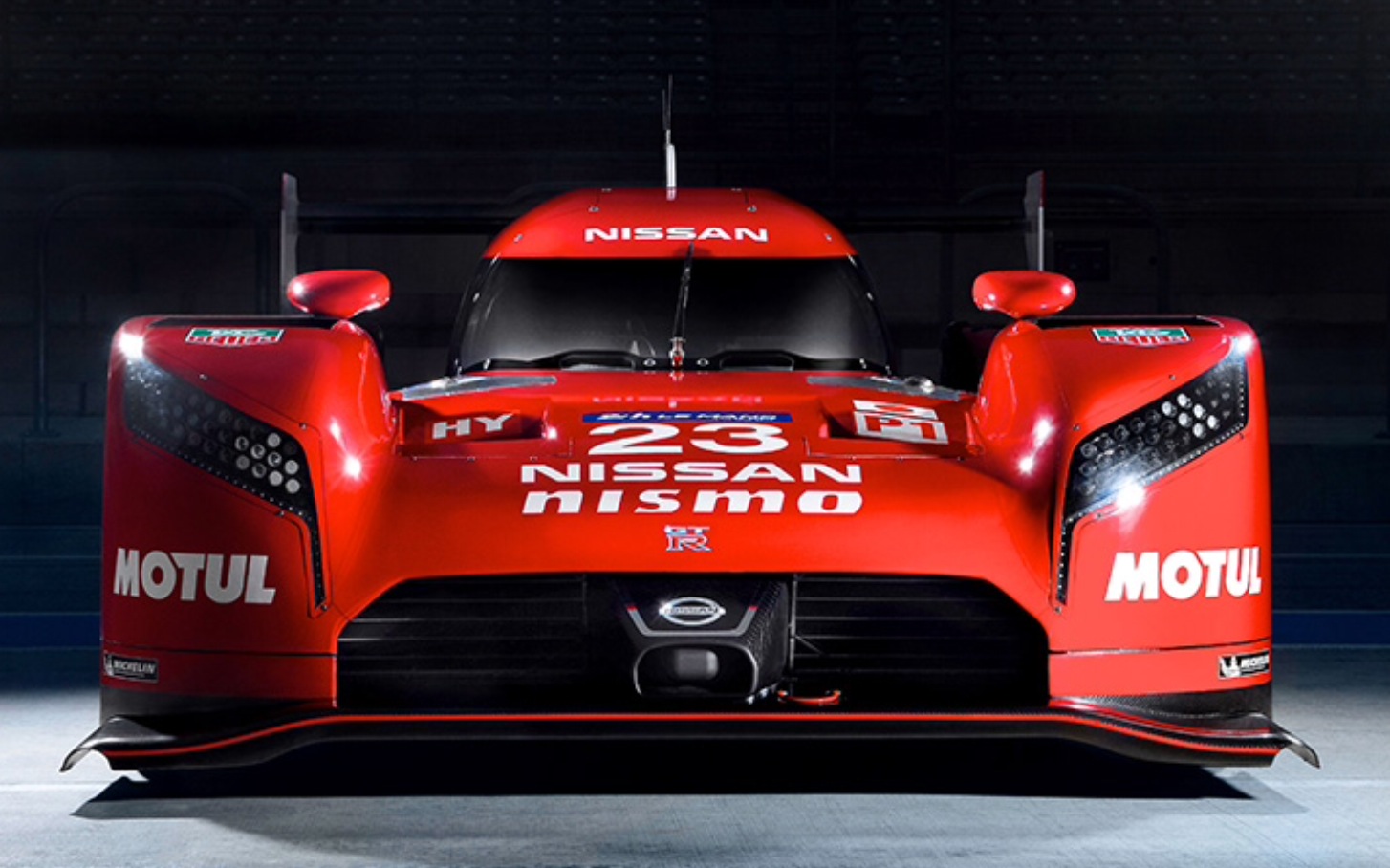
Nissan GT-R LM…

Posted: February 3, 2015 in Sports Racers
Tags:

nissan gtr lm

A car of the future for a change!

Nissans radical front mounted and front wheel drive 3 litre V6 twin turbo 2015 LMP1 Le Mans contender…sinfully ugly but audacious and gloriously different…yet again sports car racing shows how lacking in technical innovation F1 is…

http://www.motorsportmagazine.com/race/sports-cars/nissans-radical-le-mans-attack/


jim clark wf lotus 49 1968

Jim Clark enjoying the plaudits of the crowd after his Warwick Farm win, 18 February 1968…

Its a wonderful shot on his victory lap, the crowd wandering onto the track, absolute joy on Jims’ face after a stong win, a man at the top of his game, he still hadn’t peaked as a driver and only 31 years old…

He is at the wheel of his Lotus 49 Ford DFW, the DFW the 2.5 litre variant of Cosworths’ dominant DFV 3 litre GP engine. Clark won by 10 seconds from his teammate Graham Hill, he left our shores at the end of the Tasman Series 2 weeks later as the 1968 Champion and sadly never returned.

Clark was a regular and immensely popular visitor to Australasia, the gentlemanly Scot admired and respected by fellow competitors, the media, fans and the general public alike.

His final GP win was the 1968 season opening South African GP at Kyalami, he perished in a Lotus 48 F2 car, after a tyre failure at Hockenheim on April 7 1968.

Photo Credit…Wirra TNF

Graham Hill Ferguson P99

(John Ellacott)

Graham Hill working his radical four wheel drive Ferguson P99 Climax hard to stay in front of the mid-engined paradigm, Homestead Corner, Warwick Farm, Sydney…

Jack Brabham won the race from John Surtees and Bruce McLaren in Brabham BT4, LolaMk4A and Cooper  T62 respectively, all powered by Coventry Climax FPF 2.7 litre ‘Indy’ engines. Bored versions of Climax’ successful 2.5 litre F1 Championship winning motors. Hill finished 6th in his 2.5 litre FPF powered car. At the time Australian National F1 was Formula Libre, the ‘2.5 Tasman Formula’ commenced in 1964.

agp prizegivig 1963

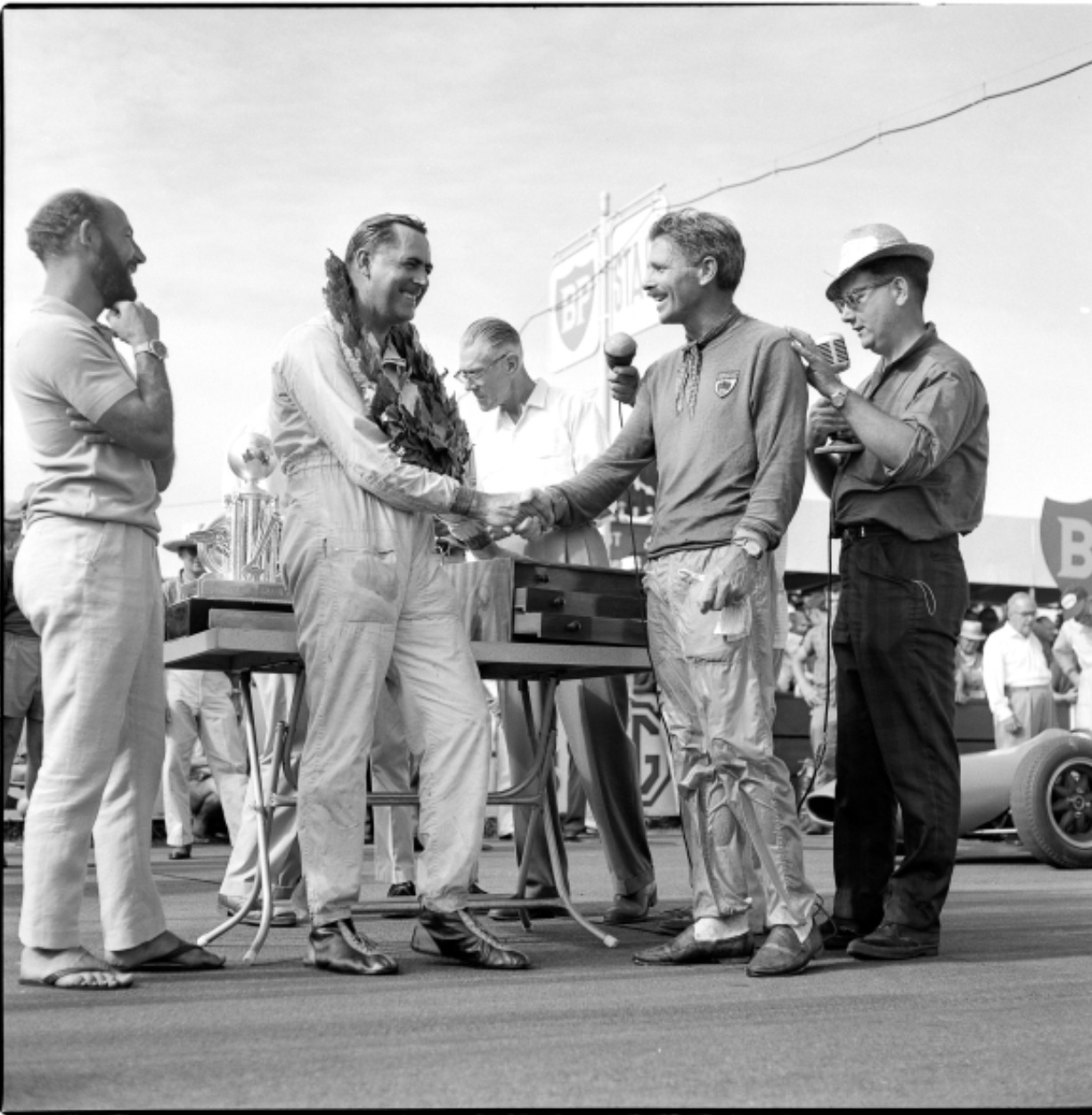
David Mckay congratulates Jack Brabham, Brabham victorious in his BT4. A very relaxed, bearded Stirling Moss wearing that great Australian footwear fashion icon, rubber ‘thongs’ looks on. Moss still recovering from his Easter Monday, 23 April 1962, near fatal and career ending Goodwood Lotus crash. Mckay a great Australian driver and ‘Scuderia Veloce’ team owner/patron. McKay finished 4th in the race also Brabham BT4 Climax mounted. (David Mist)

Hill also raced the Rob Walker entered, 2.5 litre FPF engined car at the ‘Lakeside International’, in Queensland the following weekend finishing second to Surtees on this very fast track, not necessarily the sort of circuit on which one might expect the car to shine. Hill was victorious in a wet preliminary race on the Saturday, the car excelling in the wet conditions.

hill lakeside p99 in the wet

Graham Hill in the wet Lakeside preliminary event he won in P99. Lakeside. (John Stanley)

P99’s ‘Summer Sunshine Tour’ started in New Zealand in January the car being campaigned by ‘newly minted’ World Champion Graham Hill, victorious in his BRM P57 in 1962, and Innes Ireland.

I posted this short article a while back about Hills’ 1962 Championship winning car; https://primotipo.com/2014/10/12/graham-hill-brm-p57-german-gp-1962/

Hill drove in the NZGP, held at the brand new Pukekohe circuit on January 5, DNF with gearbox dramas on the second last lap, Surtees won in his Lola.

nz gp 1963

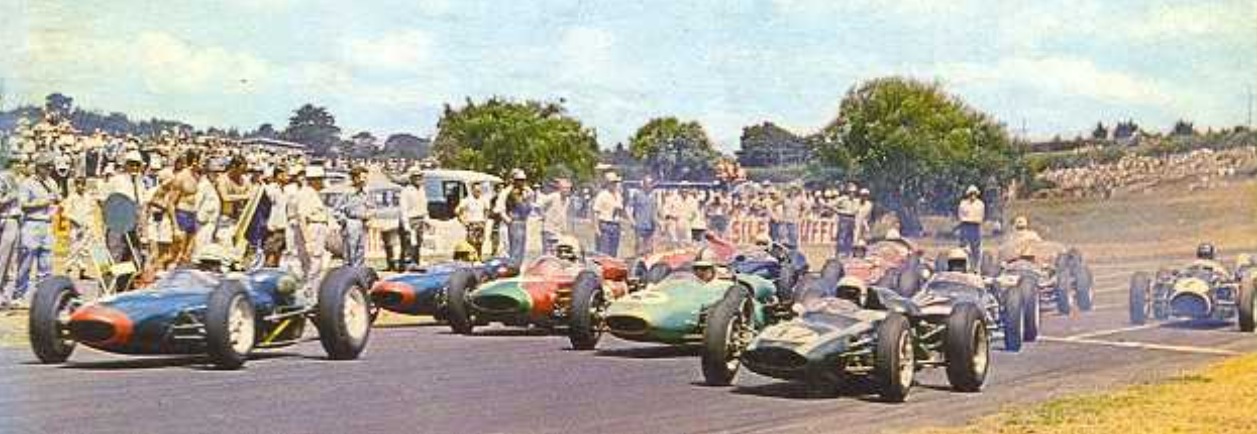
Start of the ’63 NZGP at Pukekohe. Surtees left and McLaren right LolaMk4a and Cooper T62 get the jump at the start. Hill is on the far right in P99. Beside Surtees and back is his teammate Tony Maggs LolaMk4a, the green nose of Amons’ Cooper T53 and Brabhams turquoise Brabham BT4…all Coventry Climax powered. (sergent.com)

Hill then returned to the UK, Ireland handling the car at Levin, Wigram and Teretonga on the 12th, 19th and 26th of January respectively. Innes was third at Wigram, victory going to Brabhams’ BT4, he retired with overheating at Wigram, the race won by Bruce McLarens’ Cooper T62 and was third at Teretonga, McLaren again victorious.

The car was then shipped to Sydney for the Warwick Farm AGP and finally north to Brisbane by road before returning to the UK.

lakeside on ute p99

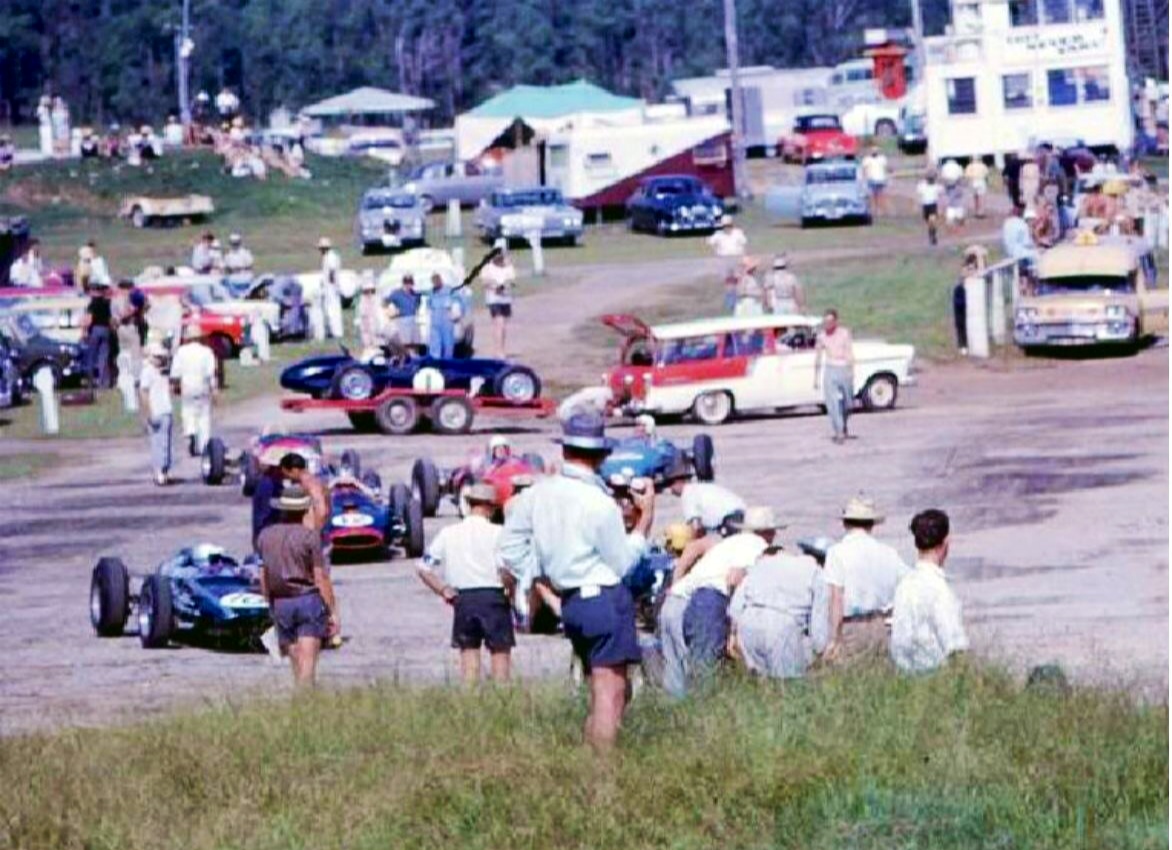
Lakeside Queensland paddock scene 1963. P99 middle of shot lashed onto an open trailer behind a Holden FC ‘Station Wagon’, as we call an ‘Estate’ in Oz. The car travelled the 950 Km from Warwick Farm on Sydneys’ outskirts to Lakeside, north of Brisbane. McLarens Cooper T62 is at the front of this group, and the red nose car is Maggs’ Lola Mk4a. (Ray Bell)


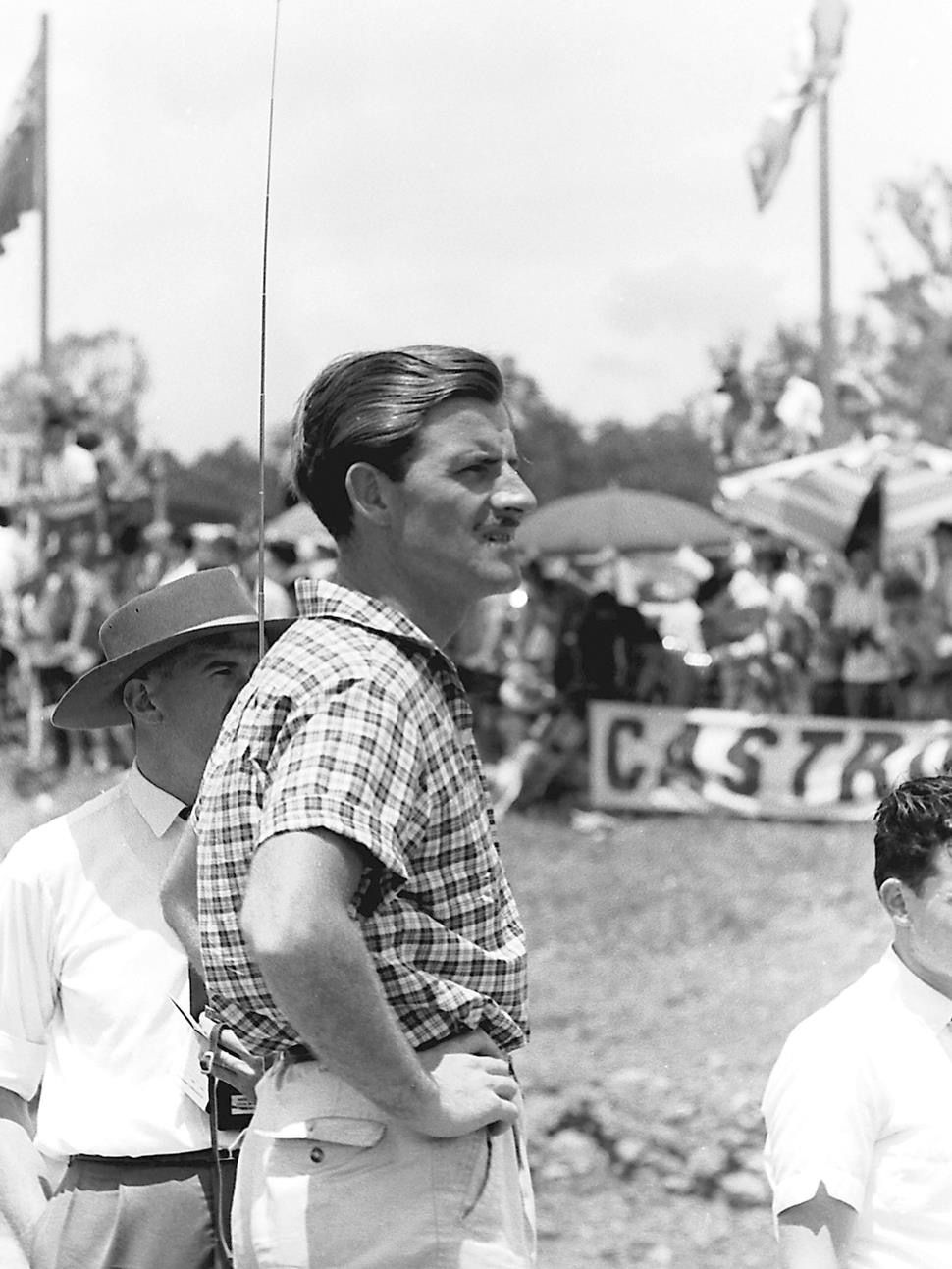
Graham Hill looking pretty relaxed at Lakeside in 1963 (J Psaros)

Ferguson Research…

The Ferguson Family Museum summarises the P99 as follows…’The creation of the Ferguson Formula four wheel drive system began shortly after World War II.

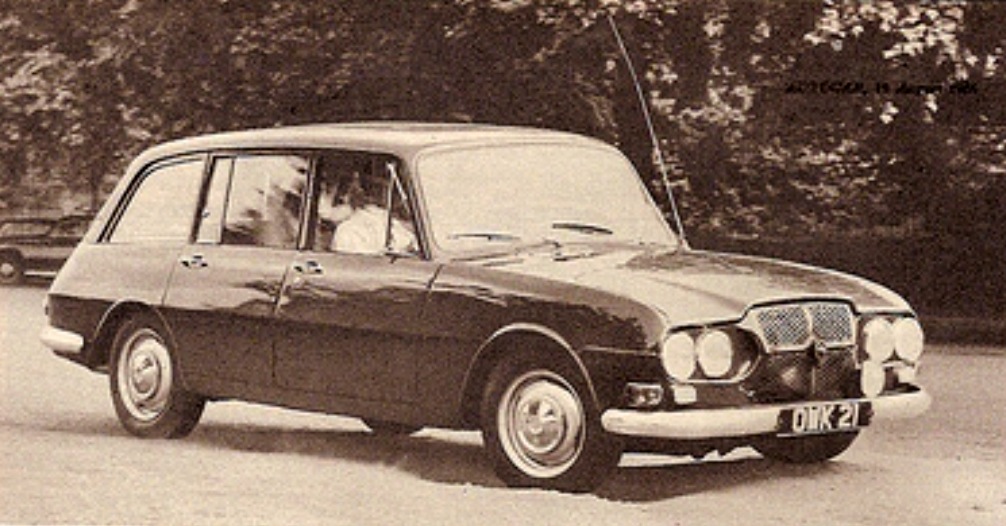
Harry Ferguson had always loved the world of motorsport and had a vision of creating a four wheel drive system with the purpose of improving road safety. The Ferguson car, ‘the R5’, was 40 years ahead of its time. It featured four wheel drive, anti-lock braking, electric windows, disc brakes and a hatchback design, it was the forerunner of the modern car.

ferguson r5

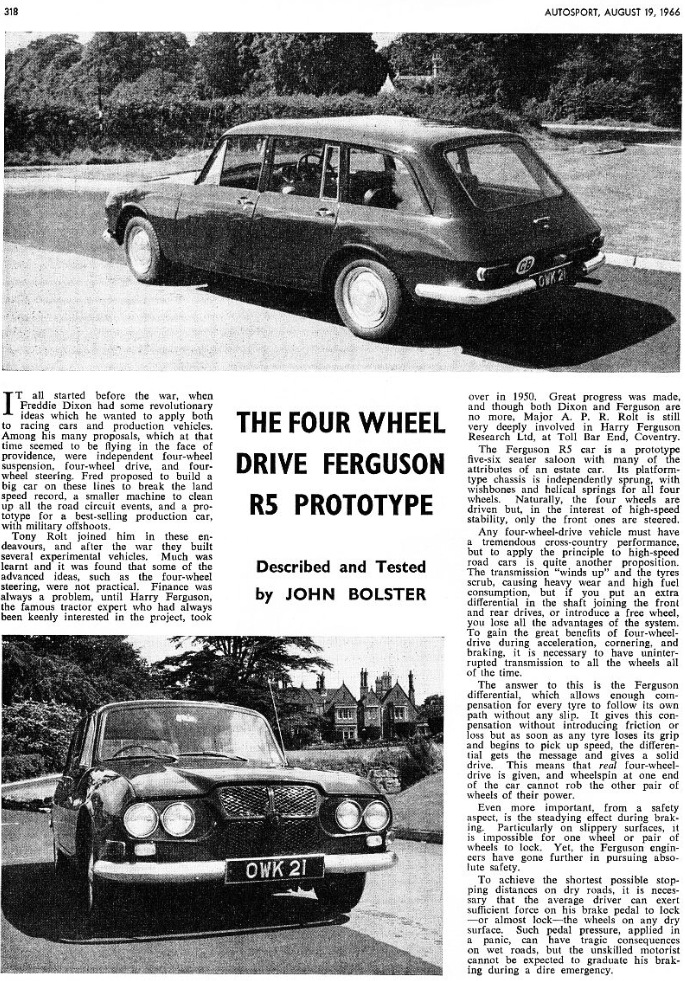
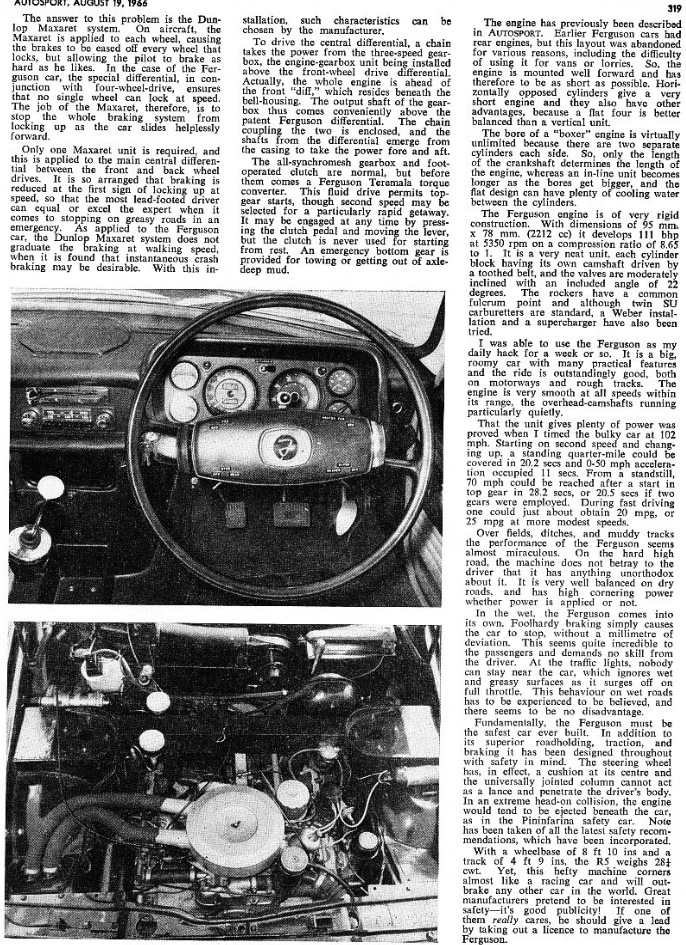
Not the prettiest of things but 4WD, powered by belt driven SOHC 2.2 litre engine, 4 wheel discs, ABS…all at the time of the Cortina Mk1. This car has escaped me, i have included John Bolsters’ Autosport road test of the prototype at the bottom of this post. (Autocar)

Harry Ferguson decided the best way to prove the importance of four wheel drive and anti-skid braking was to demonstrate it on a successful Formula 1 car.

In 1950 designer, Claude Hill, Brooklands Riley racer, Fred Dixon and Tony Rolt, a POW escapee and 24 hour Le Mans winner, teamed up with Harry Ferguson to start development on what was later to become the world’s only Formula 1 winning four wheel drive car – Project 99.

Later the Ferguson Formula four wheel drive system was widely adopted by rally cars and the motor industry worldwide in the form of the viscous coupling. Although designed as a racing car P99 was also a research vehicle intended to show the advantages and reliability of the four wheel drive system. What better way to generate public interest than to successfully race a car using the Ferguson Formula four wheel drive’.

p 99 fettled lakeside

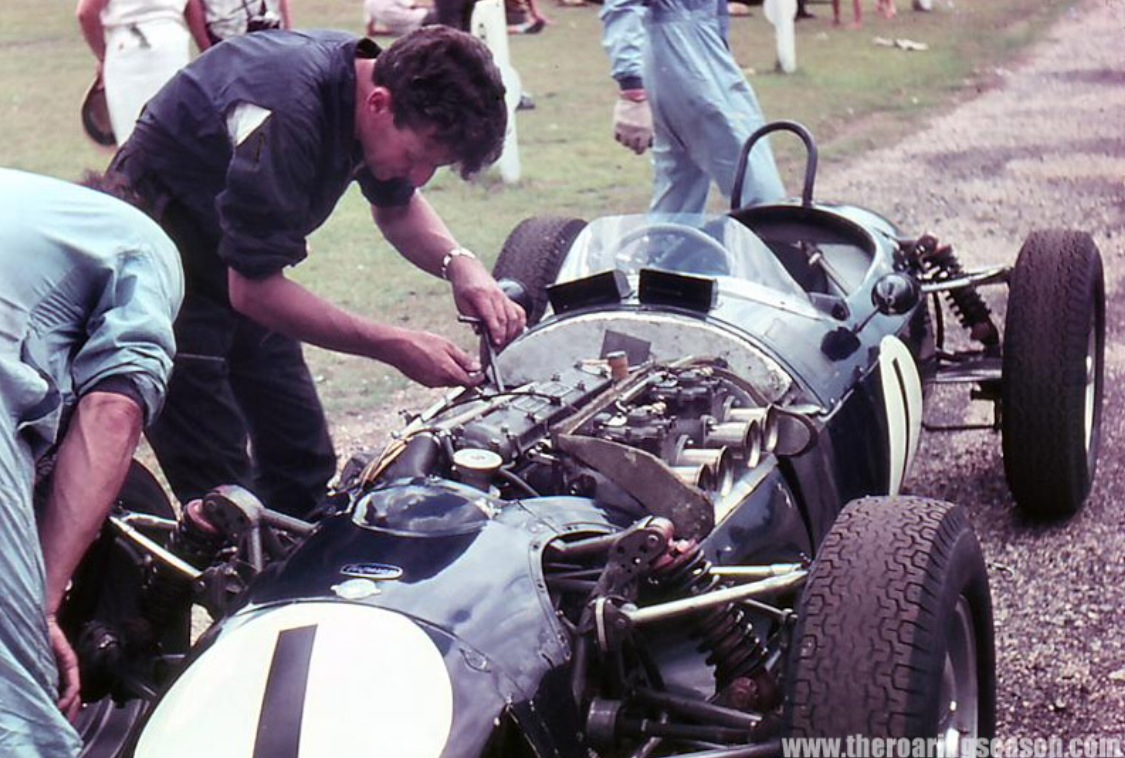
P99 being fettled by Rob Walkers team at Lakeside, February 1963. Thats’ G Hills legs in the driving suit at rear of the car. Lovely alloy body, Climax 2.5 FPF 4 pot engine, spaceframe chassis and upper and lower wishbone/ coil spring damper units, alloy Dunlop wheels,vestigial roll over bar all clear in this shot. (Peter Mellor)

P99 Design and Specifications…

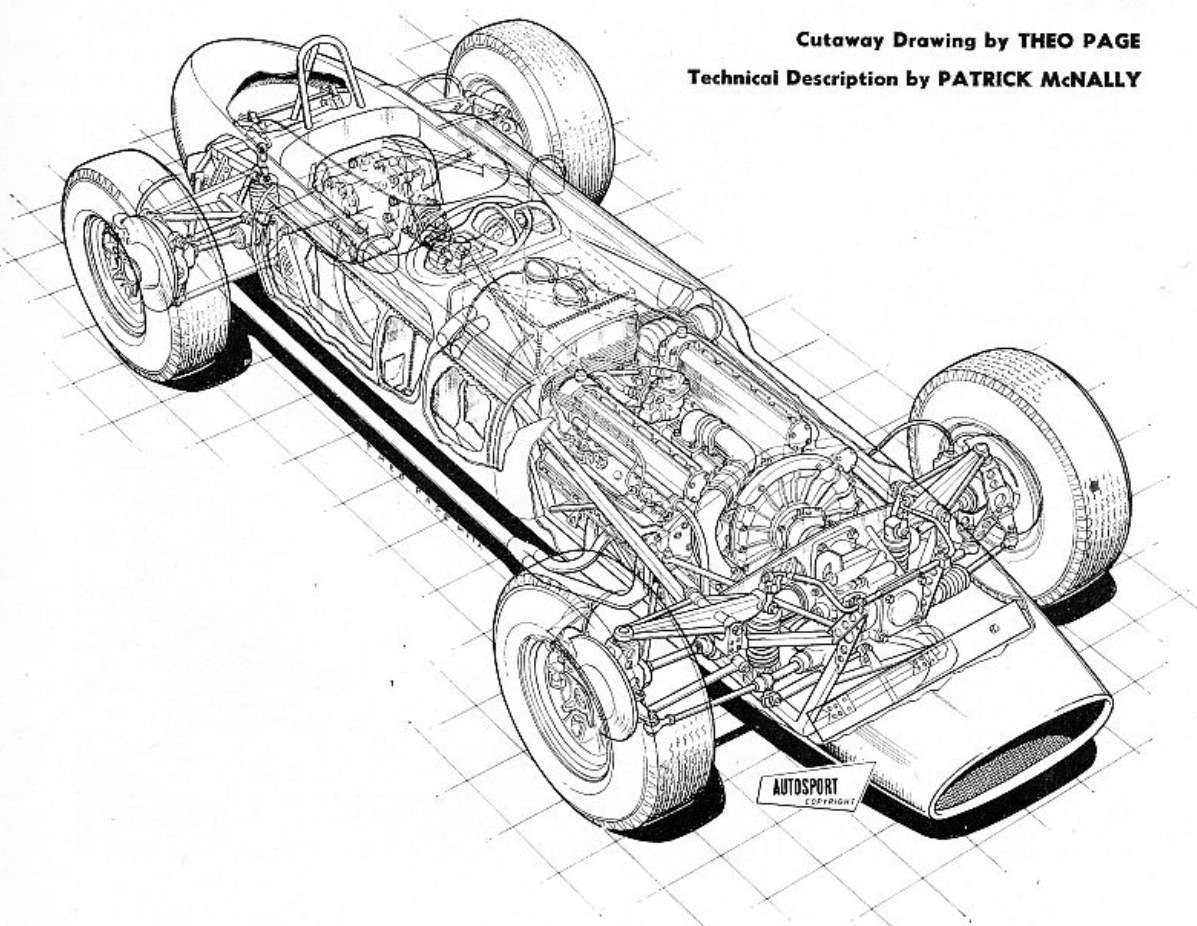
p 99 cutawy

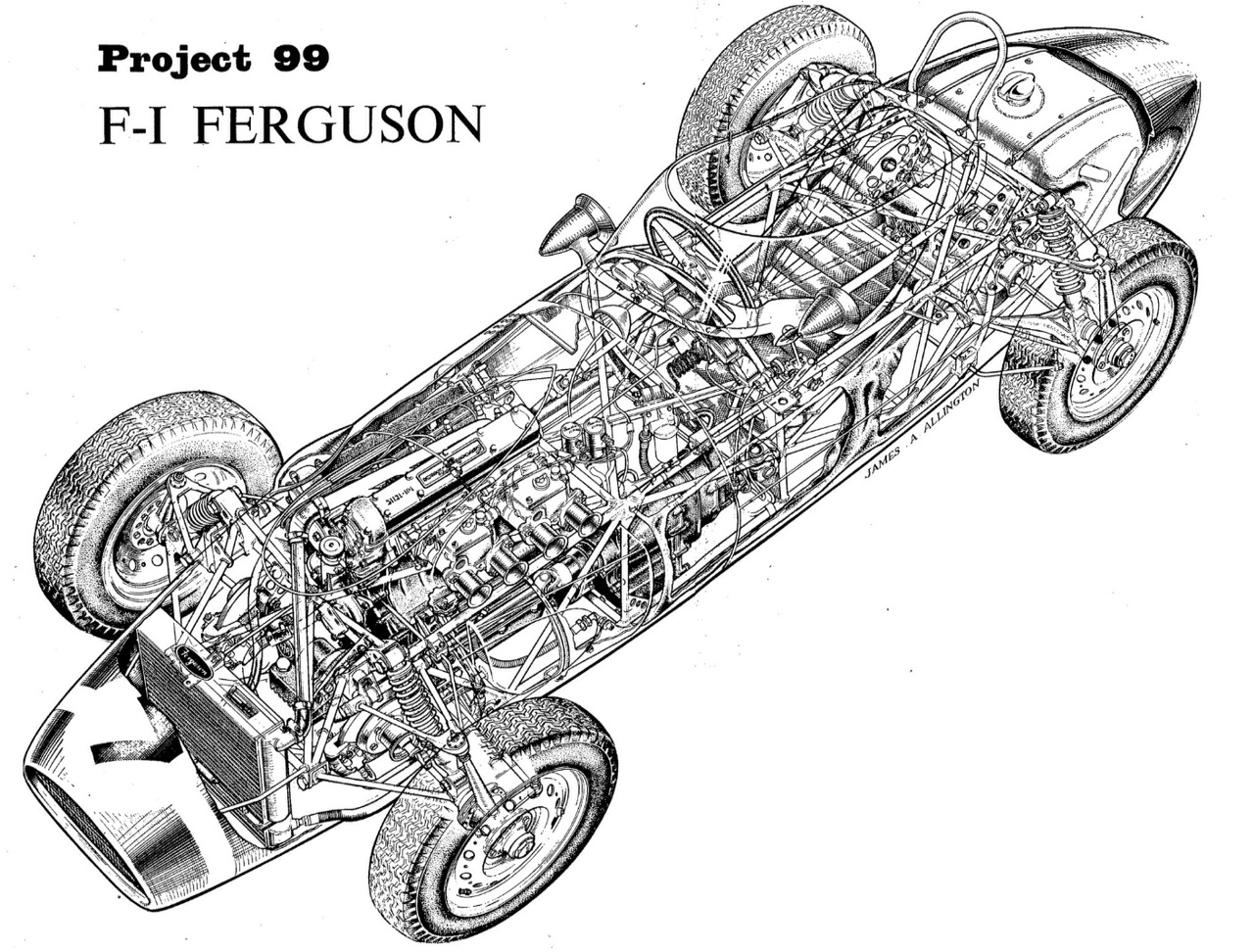
Spaceframe chassis, 2.5 litre Coventry Climax FPF 4 cylinder engine circa 235bhp. Suspension front and rear by upper and lower wishbones and coil spring/damper units. Rack and pinion steering. Dunlop disc brakes and alloy wheels. Ferguson 5 speed box and 4WD transfer case…(James Allington)

Ferguson hired Claude Hill from Aston Martin to design the car. He used a then ‘state of the art’ space-frame chassis, front and rear suspension comprising upper and lower wishbones and coil spring/Armstrong damper units and adjustable sway bars. Brakes were Dunlop anti-lock, which was tested but unraced.

Lightweight Dunlop alloy wheels were used, steering is rack and pinion.

The clever bit was of course the 4WD system. It comprised a transfer box bolted directly to the 5 speed gearbox. The Climax engine was installed at an angle to allow space for the driveshaft to the front differential. The rear driveshaft was installed on the left side of the chassis, the driving position slightly off centre to the right. Similar to the weight balance, the torque was evenly divided between the front and rear wheels.

P99 was planned for the 2.5-litre F1 utilising the championship winning Coventry Climax FPF 235bhp, DOHC, four-cylinder engine. The rules changed and Formula 1 was restricted to 1.5-litres from 1961, which meant the extra weight of the four-wheel-drive system was a handicap. The Intercontinental series was established for the old 2.5-litre engined F1’s, to be raced in 1962, the Ferguson was therefore built to accommodate both the Climax 1.5 (151bhp) and 2.5 litre (235bhp) FPF motors.

The whole project took less than a year.

There were to be no concessions in relation to tolerance. Perfection would only just be good enough. Dixon was right when he calculated that differentials, bearings, gears and other drivetrain parts could be lighter if the energy was dispersed to four wheels rather than two.

Ferguson’s central differential system, which would be the key to Peugeot’s and later Audi’s rally success in the 1980s, could balance out the delivery of that power to the wheels.

Ferguson were keen to try the Dunlop Maxaret anti-lock brake system, the whole assembly would eventually find its way into the automotive mainstream some 30 years later. Sadly, Harry Ferguson died before his dream took to the track and it was Rolt who eventually became the projects’ driving force.

P99 rear shot

P99 from aft. Rear suspension detail; upper and lower wishbone and adjustable Armstrong shock. You can just see the driveshaft below the upright. Beautiful ally bodywork of pretty car. Driving position offset to the right, gearchange for 5 speed box to drivers left, right side more conventional in a single seater. (Unattributed)

By 1961 Mid-Engined cars were de-rigeur the Front-Engine GP car obsolete, so the Ferguson P99 was a complete dark horse…

moss aintree

Stirling Moss, Aintree British GP 1961. On a charge and soon to be disqualified. The photograph below is of Jack Fairman earlier in the race before he pitted to allow Moss to take over the car (Unattributed)


(Simon Lewis Transport Books)

Launched at the 1961 British Empire Trophy at Silverstone, Jack Fairman drove the car which was entered by Rob Walker. The P99 had mechanical problems and didn’t finish.

Its next outing was at Aintree in the British Grand Prix. Rob Walker entered a Lotus 18 for Moss and the P99 for Jack Fairman, when the Lotus 18/21 brake pipe broke Moss took over the P99. The P99 was under investigation by the Stewards when Moss took it over because Fairman had a push start from the pits, which was not allowed by the rules- as a consequence the car was black-flagged on lap 57, his progress to that point had been swift…

For the September 1961 Oulton Park Gold Cup, Moss returned in the P99 and to his delight, it was a classically British summer’s day – 57 degrees, steady drizzle and a wet track! Moss won the race by 46 seconds from Jack Brabham’s Cooper T51 Climax, the only F1 race ever won by a four-wheel-drive car.

moss oulton gold cup

Moss wins the 1961 Oulton Park “Gold Cup’ in P99. The only GP win for a 4WD drive car, albeit Non-Championship F1 race. Greasy conditions tailor made for the fabulous, innovative car. (Unattributed)

The CSI then banned four-wheel-drive from F1.

Moss had the option of using the Dunlop Maxaret anti-lock brakes but preferred to turn them off and use his own judgment. They would reappear in 1967 on the Jensen FF- the Chrysler-power coupé that was a four-wheel-drive version of the Interceptor utilising both the Ferguson four-wheel-drive and anti-lock brakes.

The Ferguson P99 then raced in New Zealand and Australia in 1963 as outlined above fitted with a 2.5-litre engine in our 1963 F Libre International Series. It would have been interesting to see how the car would have performed with a 2.7 Litre FPF equivalent in capacity to the engines of the other front runners that summer.

hill lakeside p99 loading up

World Champ Graham Hill about to board P99. Lakeside, Queensland again. He was keen on the car, with his support BRM developed a 4WD variant of their P261/57 GP car, the BRM P67 1.5 V8 in 1964, using Ferguson technology, well ahead of the ‘1969 4WD pack’, comprising Lotus, Matra, McLaren and Cosworth. BRM P67 qualified in Richard Attwoods’ hands, second last on the British 1964 GP at Brands Hatch grid but was withdrawn from the race, circa 7 seconds off the pace. (Peter Mellor)

P99 returned to England and was lent to hillclimb racer Peter Westbury, who won the 1964 British championship with it, it also ran competitively in 1965 and 1966 and was retired in 1968.

p westbury p99

Peter Westbury, P99. Harewood Hillclimb 1964, he won the British Hillclimb Championship in the car that year. (Unattributed)

P99 also played a key role in the resurgence of 4WD at Indianapolis.

There had been a lot of activity both immediately pre and post war with Harry Miller’s 4WD specials. STP’s Andy Granatelli, on one of his trips to Europe was regaled by the recently retired Stirling Moss, his career ending accident was at Goodwood in 1962, about the dominance of his damp Oulton Park 1961 victory in P99.

Granatelli then approached Tony Rolt at Ferguson to try P99 at Indy, Jack Fairman shortly thereafter put in some impressive 140mph laps in the 2.5 litre car around the famous ‘Brickyard’.

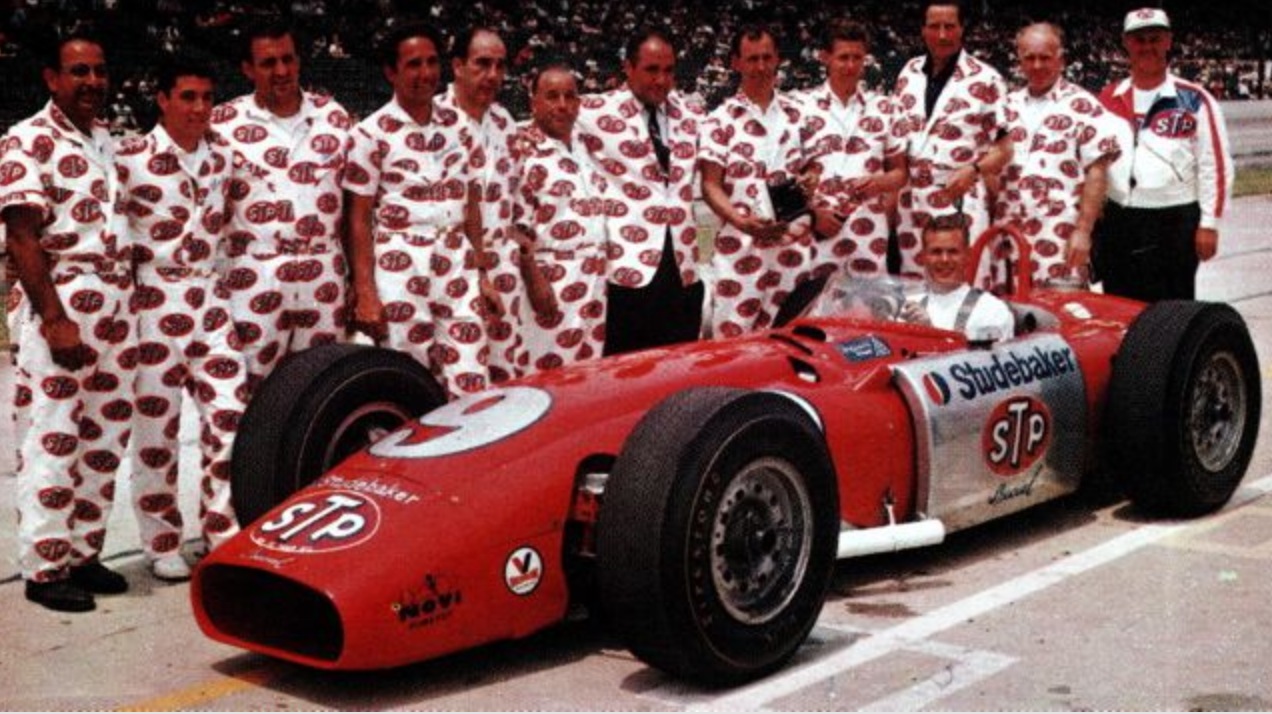
Andy was convinced and ordered a car from Ferguson powered by the Novi V8, the 4WD setup the same FF system as used on P99 but with the split being variable from 70/30 to 60/40 rear/front instead of the P99’s fixed 50/50 split.

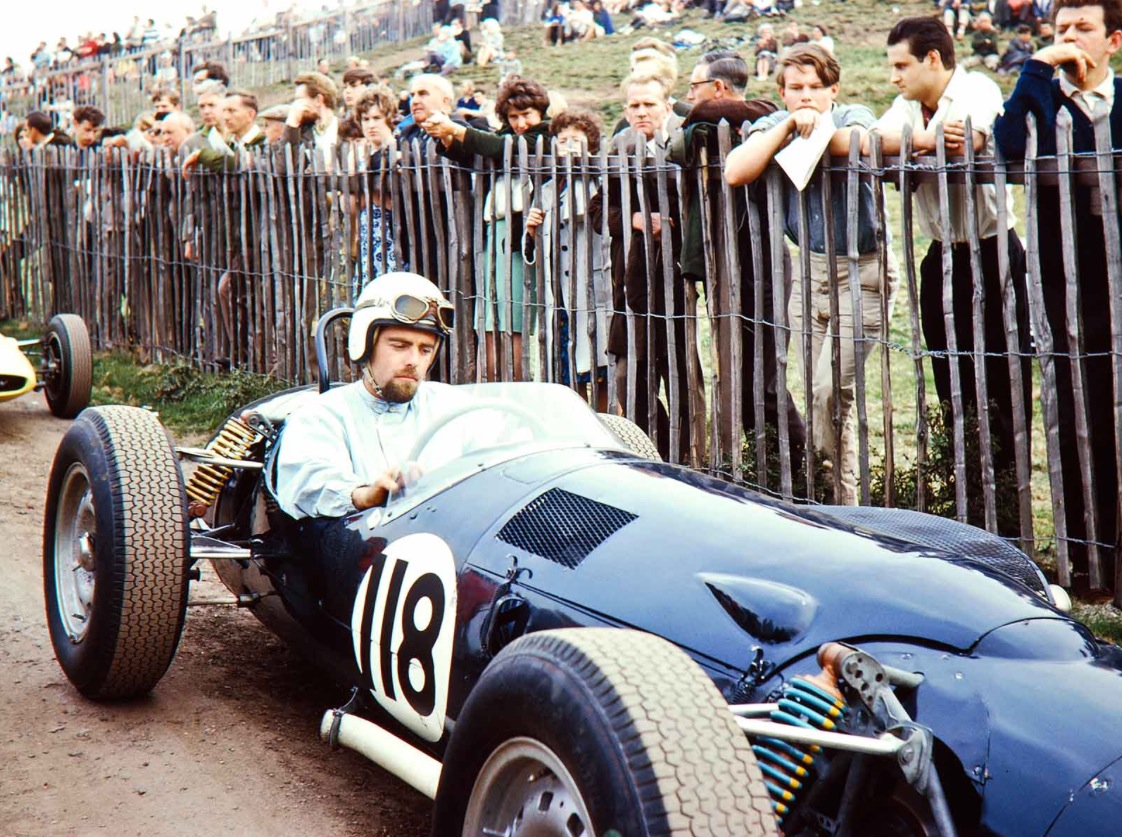
Bobby Unser qualified the car sixth at Indy 1964.

This is a tangent too far for this article (see ‘Etcetera below for a cutaway drawing and further details) but for those with an interest in 4WD in motor racing click on this link to a great forix.autosport article on the subject; http://8w.forix.com/4wd.html

novi studebaker 1964

Ferguson Novi ‘STP Studebaker’ with Bobby Unser at the wheel. Indy 1964. Q6, DNF after hitting the wall seeking to avoid the fatal McDonald/Sachs accident. (Unattributed)

Four-wheel drive made another appearance in Formula 1 in 1969…

As teams struggled for more traction- the Ford Cosworth engine was developing well in excess of 400bhp at this stage, putting the power down was key to improved performance.

At the time 4WD was being used successfully at Indianapolis, it was therefore a natural direction for the F1 teams to explore, particularly Lotus who had been racing at Indy since 1962 and using 4WD competitively, putting accidents to one side, in their 1968 and 1969 contenders, the Lotus 56 Pratt & Whitney gas turbine powered car, and Lotus 64 Ford, powered by a Turbo Ford engine.

Matra, Lotus and McLaren all tried the Ferguson system and Cosworth devised their own 4WD car. The introduction of wings, which could achieve the same traction outcomes without the weight penalty, and advances in race tyre technology and widths provided simpler cost-effective solutions than persevering with 4WD.

Overall, only eight four-wheel-drive F1 cars were ever built.

Robin Herd’s Cosworth 1968 4WD design (Bennet)

In 2004  following a period of 35-plus years in the Donington Collection…

The ‘one of a kind’- only 1 chassis was ever built Ferguson P99 was retrieved by the Ferguson family to the Ferguson Family Museum on the Isle of Wight and overhauled.

The car was stripped and was in remarkably good order, it was re-assembled using all of the original parts, including the extremely rare twin-choke Weber 58 DCO carburettors and re-fitted with the totally original bodywork which still wears original Rob Walker team paint and livery.

Sir Stirling Moss drove it at the 2005 Goodwood Revival and at the Monaco Historic Grand Prix in 2008. In 2006 Moss handed it over to Barry “Whizzo” Williams at Goodwood, who started 18th and had worked his way up to third before his brakes faded, he finished in that position.

P99 still appears regularly in suitable events, its historic significance enormous.

moss p 99 in recent times

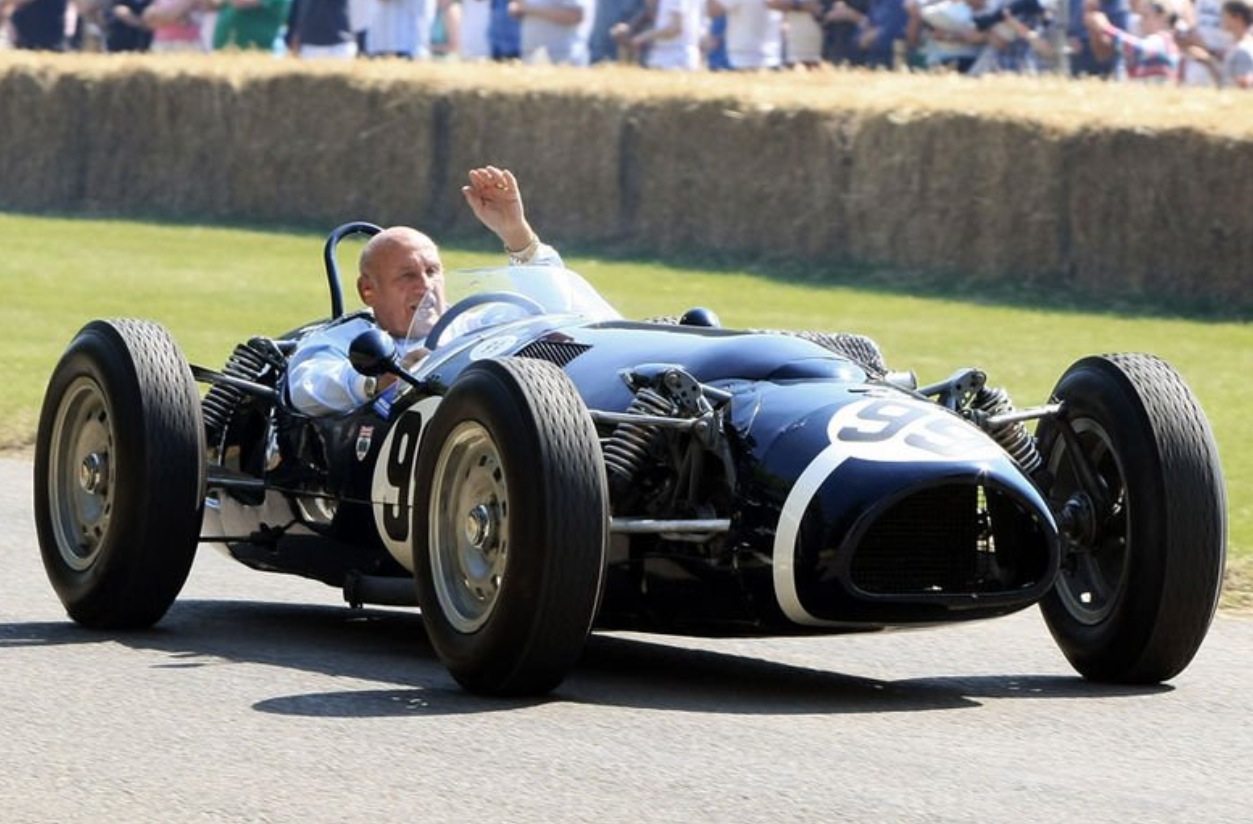
Stirling Moss in P99 at the Goodwood Festival of Speed. (Unattributed)

Etcetera…

P99

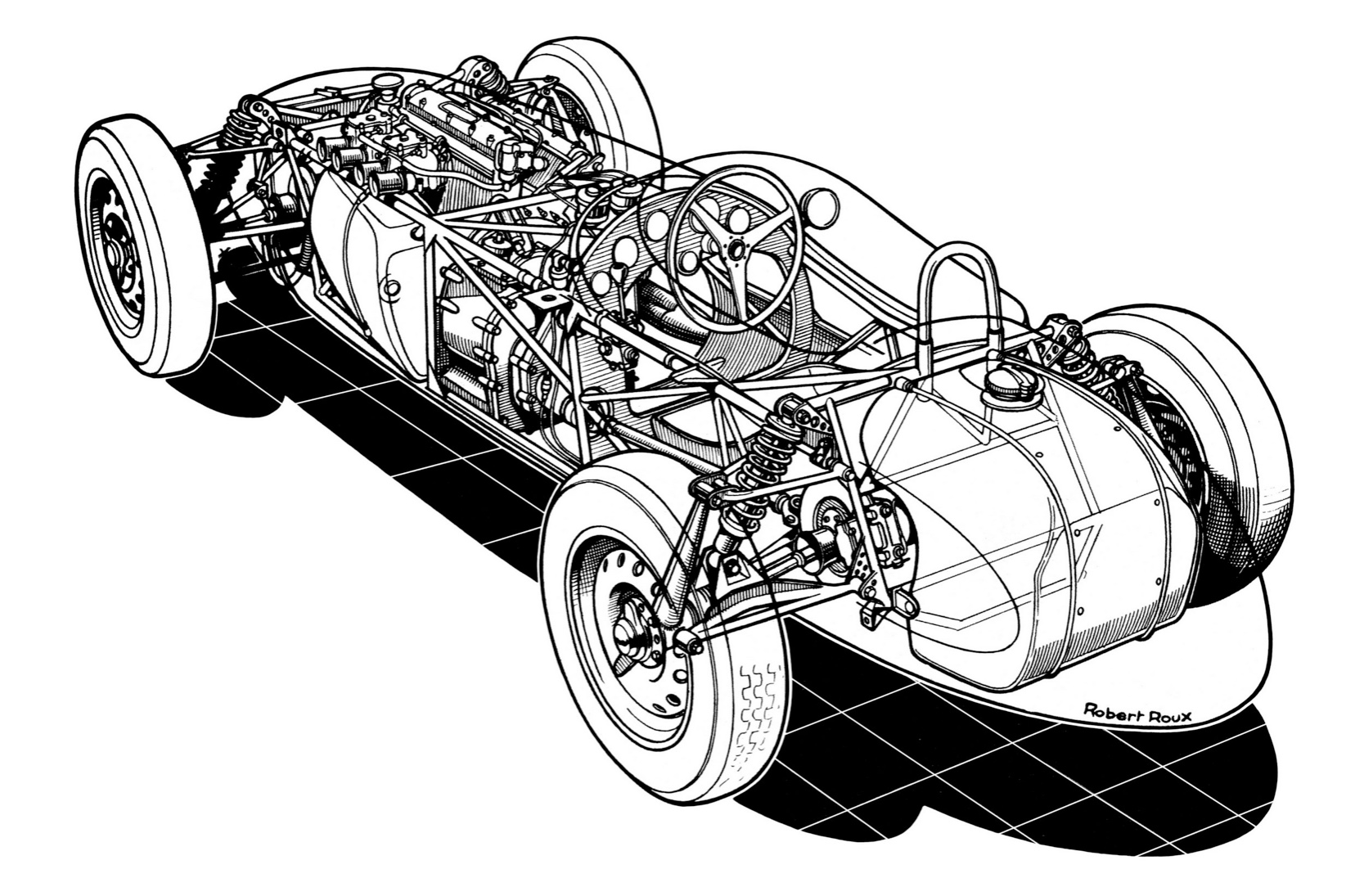
P99 (R Roux)


p99 british gp

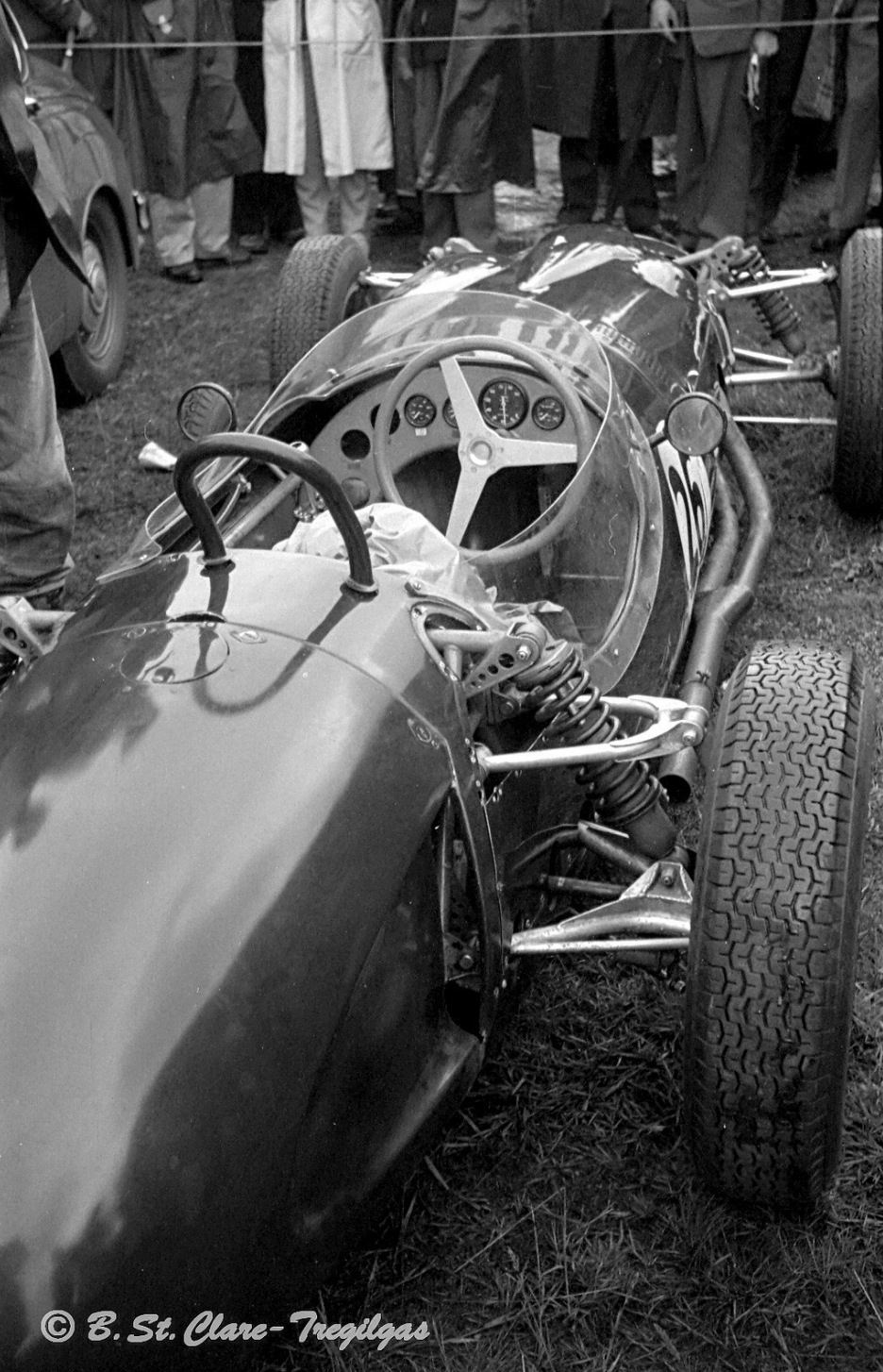
Cockpit shot British GP, Aintree 1961. Driving position offset to the right, gearchange for 5 speed box to the left. 1.5 litre FPF powered Climax engine in the last year of the 1.5 Litre Formula. (B St Clare-Tregilgas)


hill wf push start p99

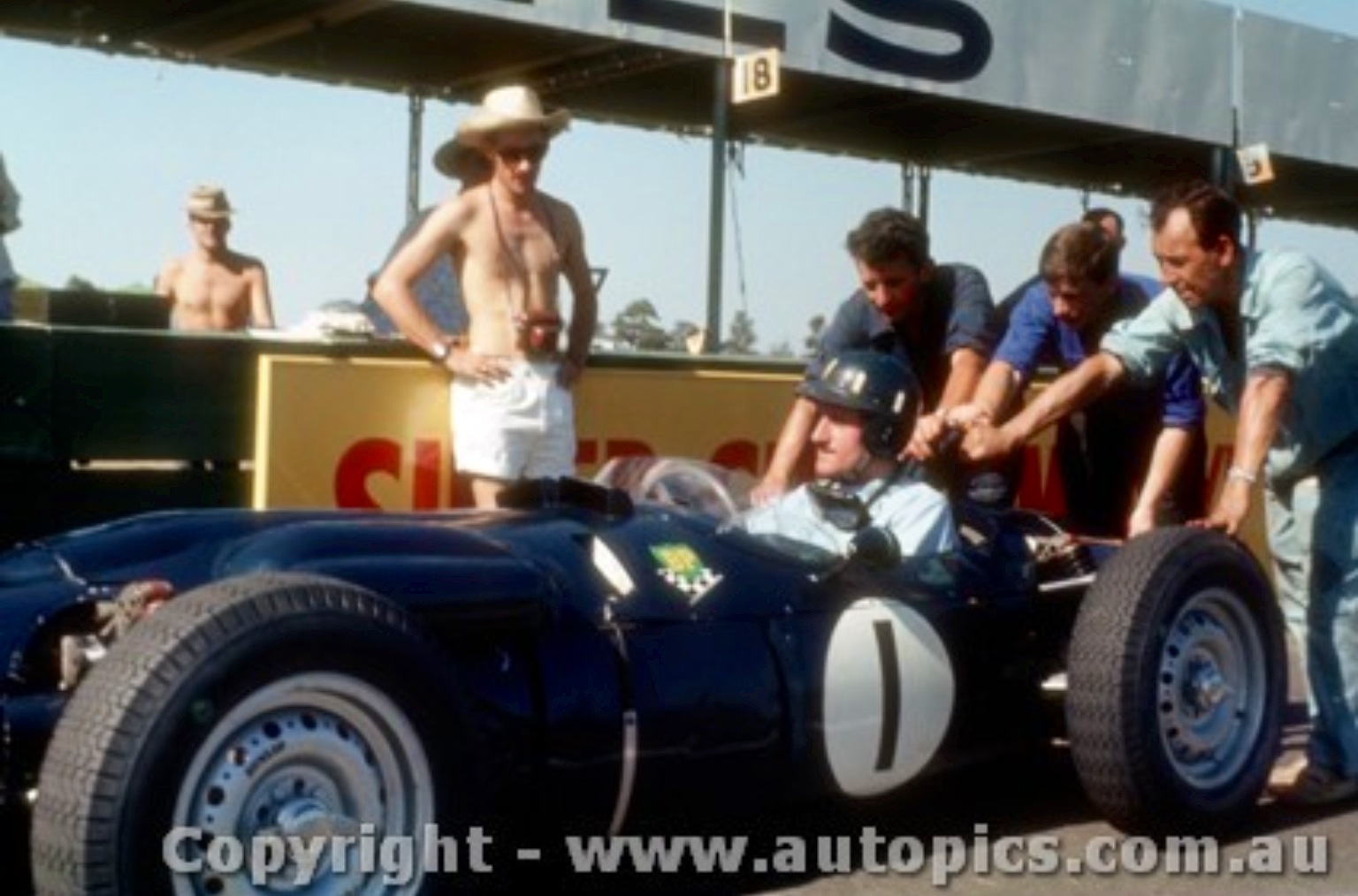
Push start for Hill from the Warwick Farm pit counter, P99. AGP meeting 1963. (autopics)


hill wf butt shot

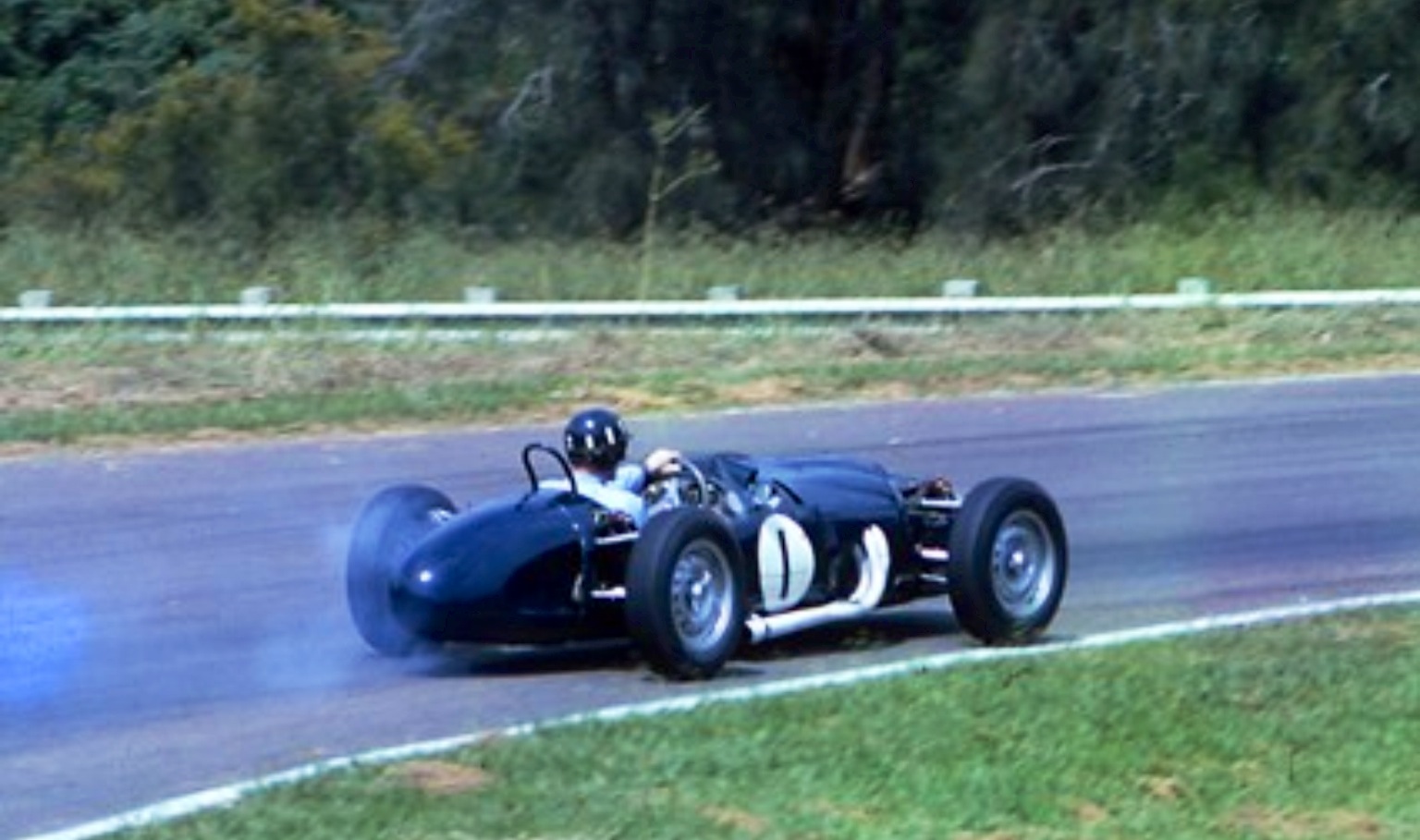
Hill at Warwick Farm trailing smoke from the rear. Probably practice as the car finished the race. (Adrian Schagen)


hill p99 wf mist

Evocative David Mist shot of Hill during the 1963 AGP Warwick Farm. P99. (David Mist)


p99 wf frontal rea

Hill again at Warwick Farm during the ’63 AGP, this shot showing the not inconsiderable frontal area of P99. Weight and width of car a function of ‘4WD hardware’. (autopics)


Ferguson Novi

ferguson novi page

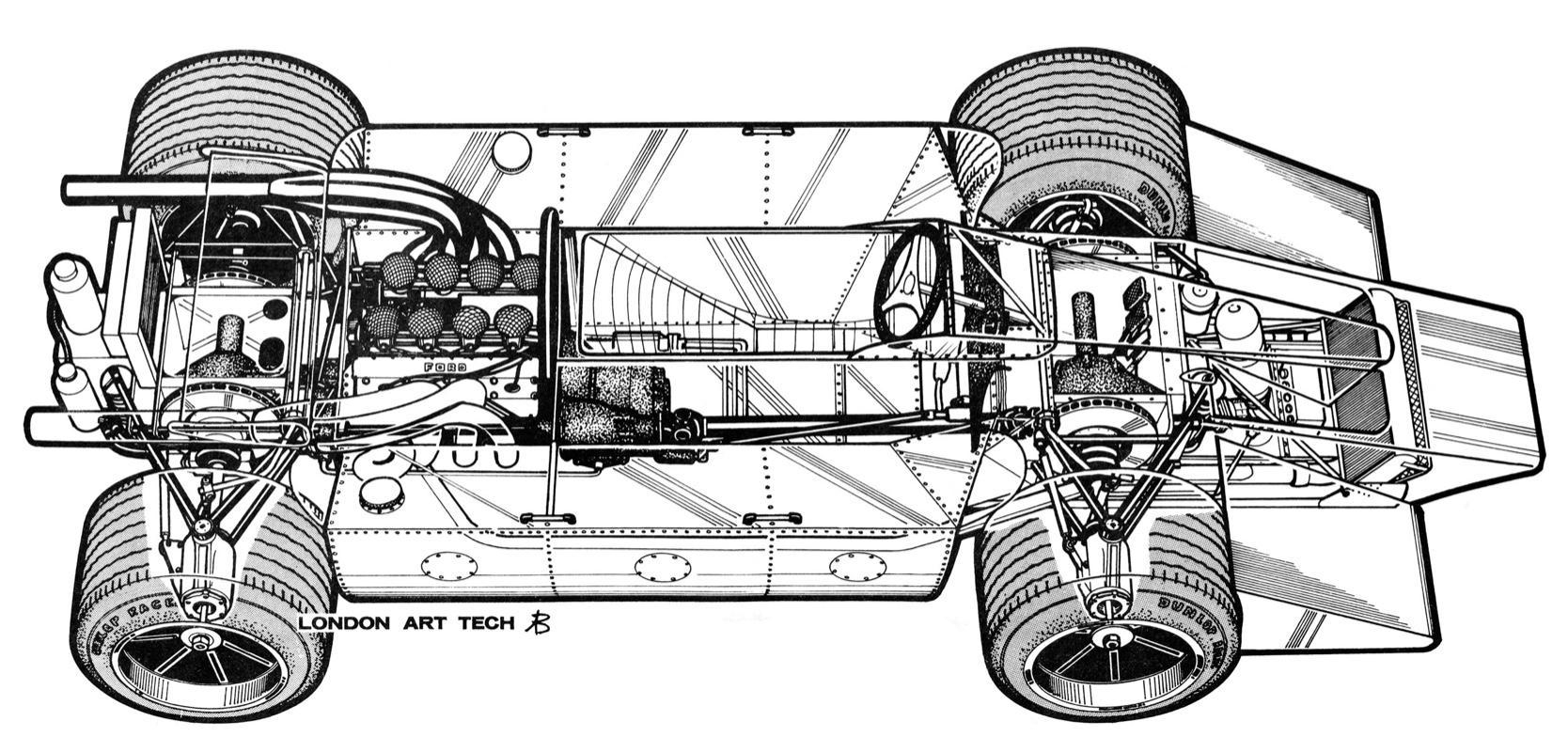
What a wild car this is! Conceptually similar to the P99, the chassis was a spaceframe with a monocoque centre section. As you can see the suspension is inboard with rockers actuating the spring/dampers, P99 is outboard. Contrary to common Indy practice then the suspension was not offest, but the engine and transmission were, a simpler solution. Novi used Dunlop 7X15 inch tyres fitted to alloy wheels and disc brakes using alloy calipers.

The Novi engine was designed pre-War by Bud Wingfield and Leo Goossen and built by Fred Offenhauser. It was a 90 degree, DOHC V8, 2741cc in capacity. Bendix fuel injected and using a Paxton 2 stage centrifugal blower power was circa 830bhp @ 8200rpm.

The engine never won Indy but the engine and its unique sound remain iconic to this day.

R5 Prototype

fergy road car 1

Ferguson R5 road car prototype. Autosport Road Test P1.


fergy road car

R5 Road Test P2.

Credits…

John Ellacott, Bruce Wells, B St Clare-Tregilgas, James Allington, Adrian Schagen, John Stanley, autopics.com, David Mist, Peter Mellor, theroaringseason.com, Theo Page, Robert Roux, Autocar, Autosport, Jock Psaros, Simon Lewis Transport Books

Finito…


image

Jim Hall and Innes Ireland chewing the fat, no doubt swapping notes on the setup of their British Racing Partnership Lotus 24 BRM’s…

The Texan took a sabbatical from his growing Chaparral Sports Car program program at home to sharpen his skills in Grand Prix racing, fortunately for motor racing innovation he decided to focus more on the engineering aspects of his programs than his driving, having said that he was a driver of absolute world class, perhaps losing his ultimate edge after his big CanAm shunt late in 1968.

Ireland, the more experienced driver and a Grand Prix winner qualified an excellent 5th, DNF after an accident, Hall qualified 13th and retired on lap 20 with gearbox failure.

Graham Hill won the first of his 5 Monaco victories after Clarks’ Lotus 25 Climax gearbox locked. Richie Ginther, Hills’ teammate was second in another BRM P57 with Bruce McLaren 3rd in a Cooper T66 Climax.

Jim Clark won the drivers championship in the Lotus 25 Climax in 1963, Halls’ best results a 5th and 6th in Germany and Britain respectively. For Ireland, 4ths in both Holland and Italy yielded 6 championship points, 3 in total for Hall.

Hall had the ability to continue in Grand Prix racing but committed to the Chaparral programs in the domestic US sports car series which would become the CanAm Championship, and two fabulous years when his innovative cars wowed fans globally in the World Sports Car Championship in 1966 and 1967.

image

Jim Hall cruising thru the Nurburgring paddock, German GP 1963. Lotus 24 BRM (unattributed)


jim hall mexico 1963

Jim Hall 8th in the 1963 Mexican GP, Lotus 24 BRM. Race won by Jim Clark, Lotus 25 Climax. (The Cahier Archive)

Credits…

The Cahier Archive