Archive for the ‘F1’ Category

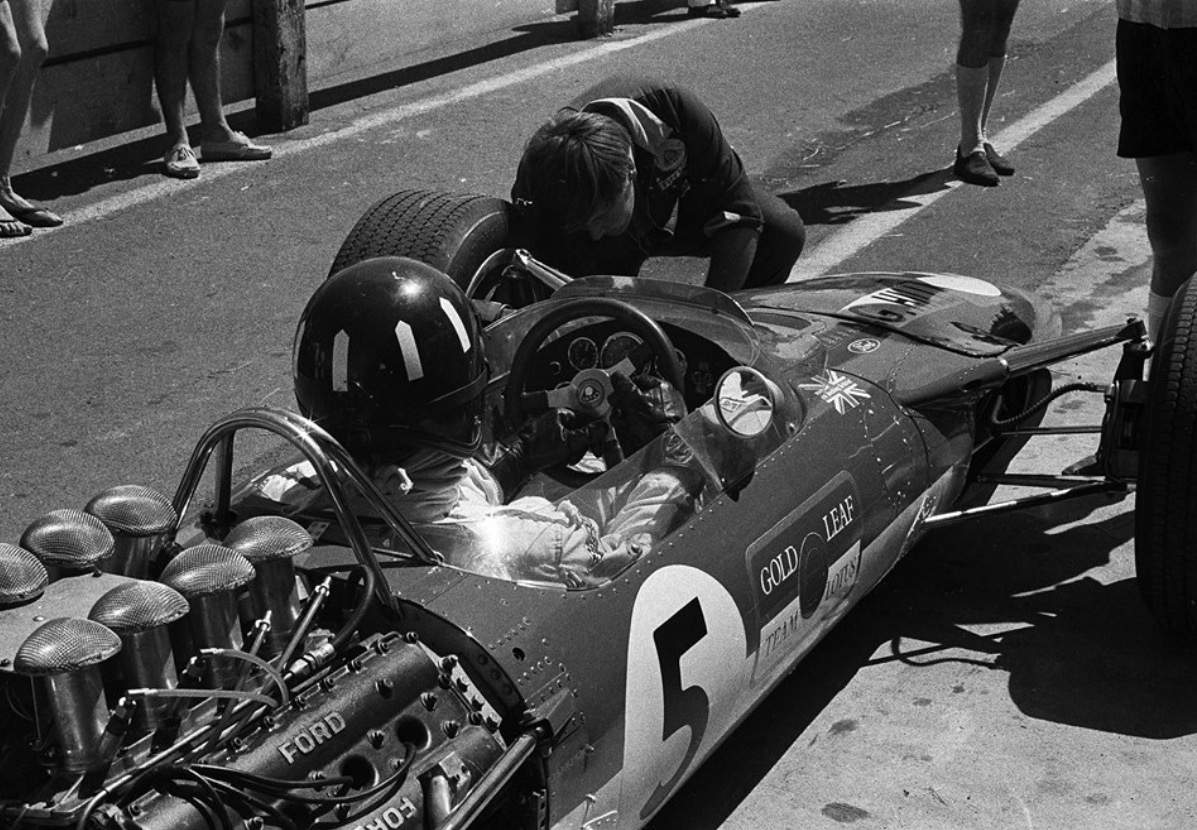
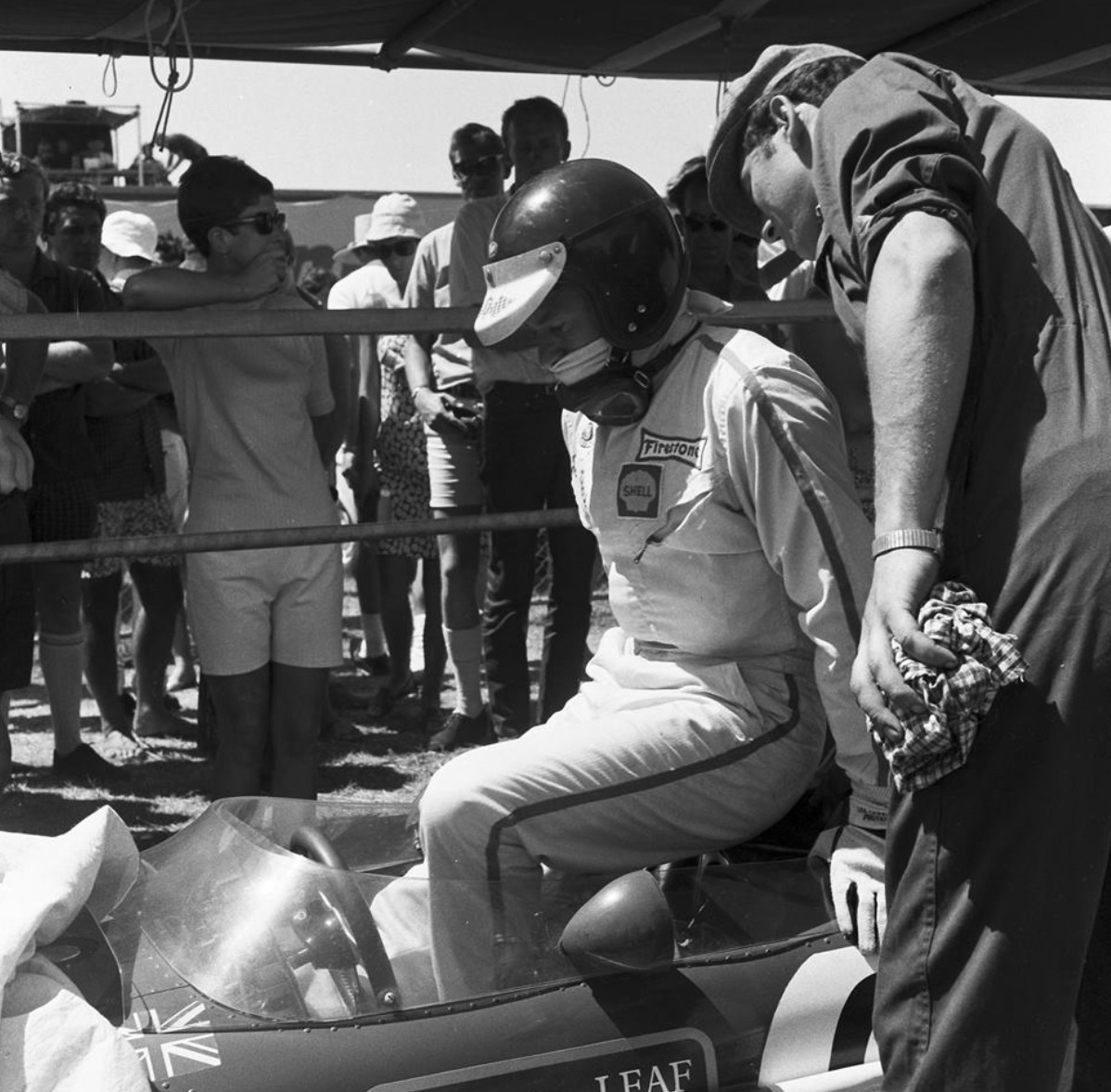
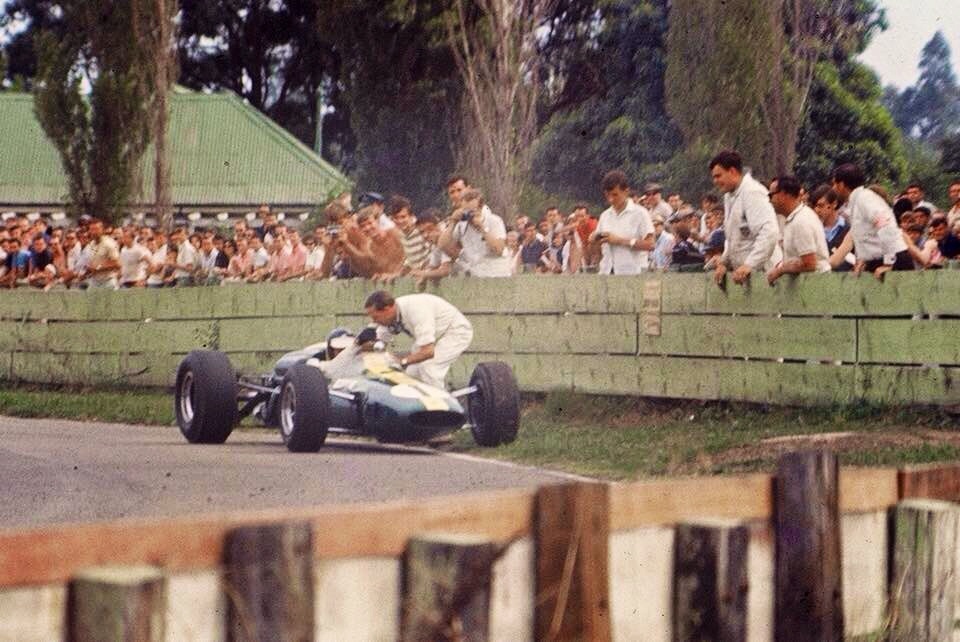
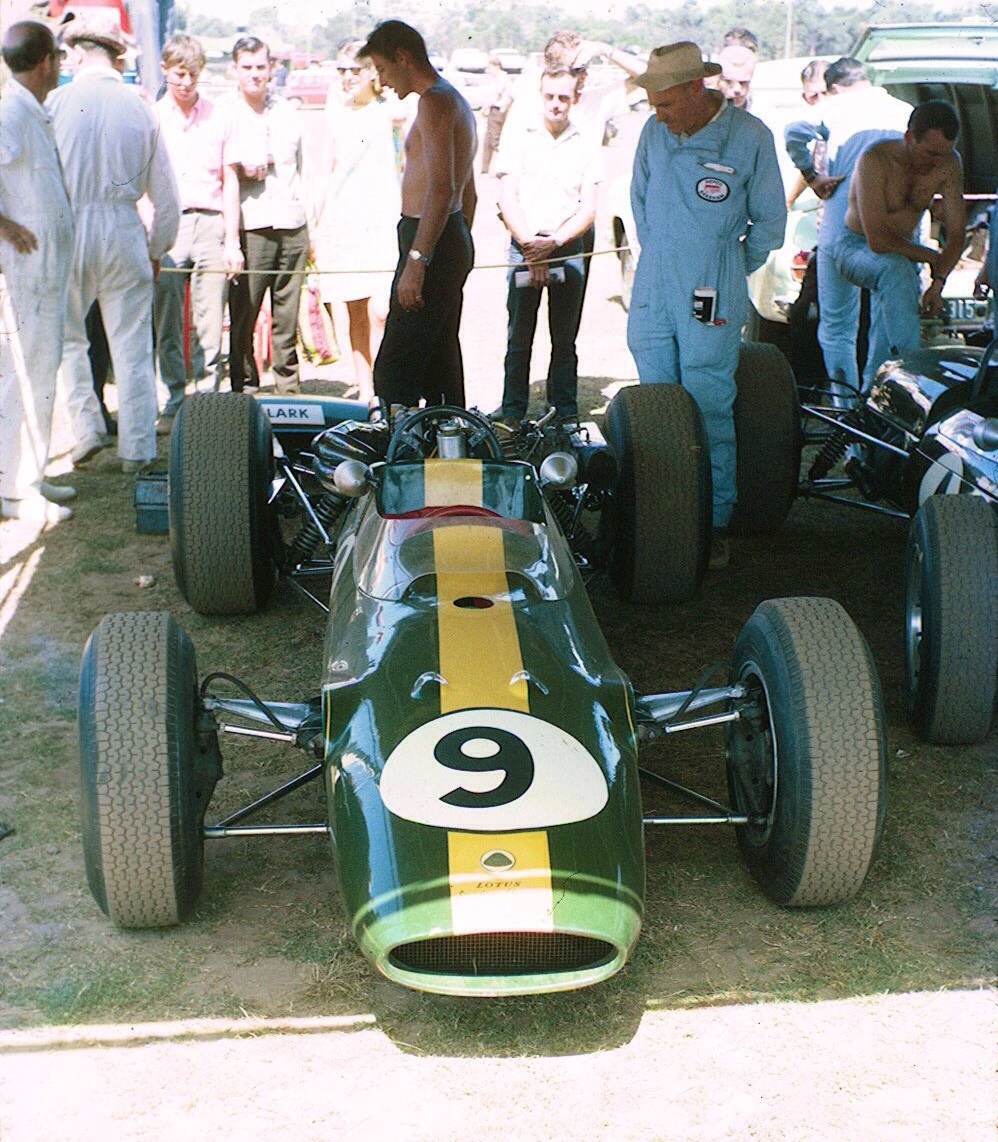
Graham Hill, works Gold Leaf Team Lotus 49 Ford 2.5 DFW in the Warwick Farm pitlane during the ‘Farm’s February 1968 Tasman Round weekend…

I’ve done the 1968 Tasman Series to death with a series of articles uploaded before including one on this particular weekend but this batch of ‘up close and personal’ photos by enthusiast Bryan Henderson are too good to ignore.

One of the reasons enthusiasts get misty eyed about that series is that both Clark and Hill had been regular, enormously popular visitors to Australasia from the dawn of the sixties pre-Tasman era, 1968 was the last we had the pair of them down south together.

Clark won the Tasman with the still very new Lotus 49 in dominant fashion and then returned to Europe after winning the series and the F1 season opening South African GP to his untimely death aboard a Lotus 48 Ford FVA during a Euro F2 round at Hockenheim. In the words of The Seekers popular song of the day ‘The Carnival Is Over’.

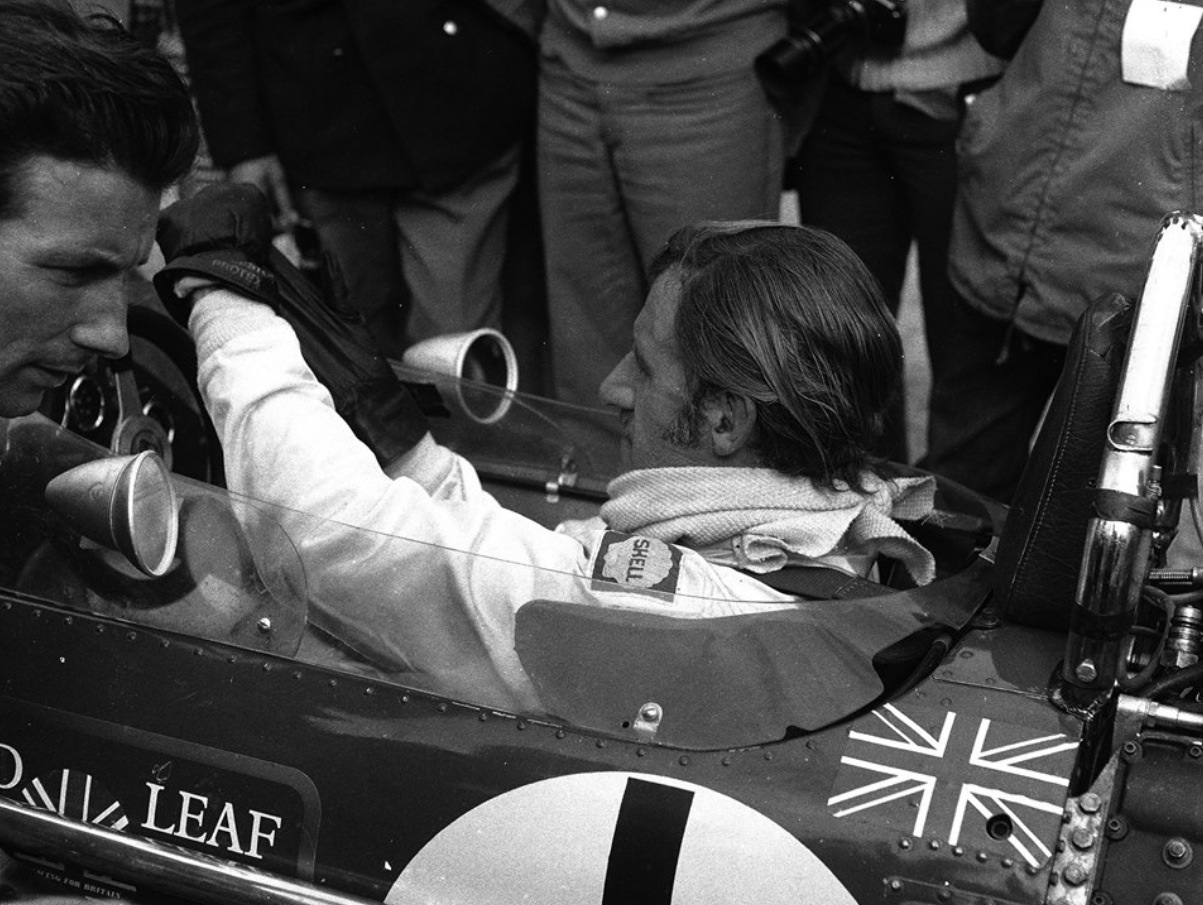
Hill, WF- this shot 1969


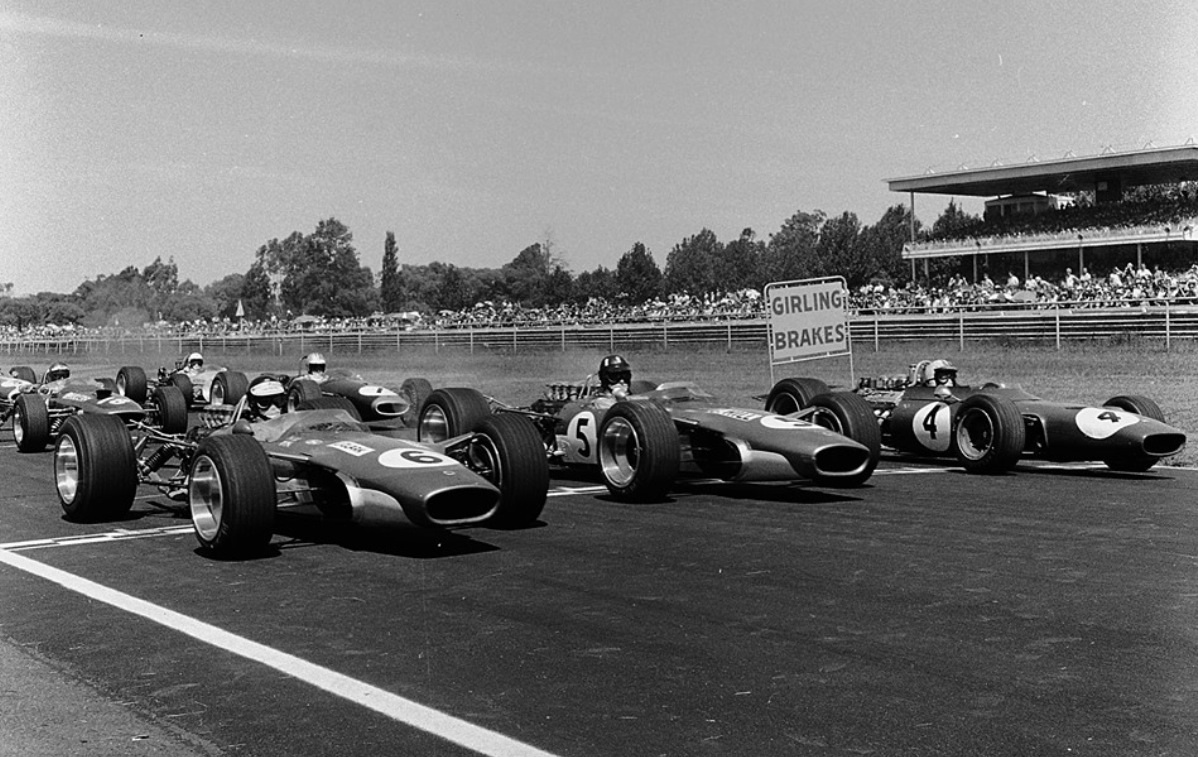
Clark and Hill, Lotus 49’s, Amon Ferrari Dino 246T, then Courage behind Clark, McLaren M4A FVA and Hulme, Brabham BT23 FVA with Gardner, Brabham BT23D Alfa  behind Denny

We all have our favourite seasons of course but arguably that summer of ’68 was the Tasman peak.

The variety of cars was truly stunning- BRM P261 V8 and P126 V12, Ferrari Dino V6, Brabham Alfa Romeo Tipo 33 V8, the Lotus 49 Ford V8’s, various Brabham Repco V8’s including Jack’s latest works BT23E Repco ‘740’ V8 and a swag of Coventry Climax FPF engined machines in the hands of locals. The driving pool included just annointed World Champ Denny Hulme, Jack Brabham, Jim Clark, Graham Hill, Chris Amon, Bruce McLaren, Richard Attwood, Chris Irwin, Frank Gardner, Piers Courage and local hotshoes Kevin Bartlett, Leo Geoghegan, John Harvey, Graeme Lawrence and others. An amazing variety of cars and depth of talent on the grid…

Etcetera…

(B Jackson)

Things go better with…

Graham and the boys bleed the Lotus’ brakes, note the use of a solid rotor rather than the vented discs used initially in 1967. Nice shot of the front bulkhead and inboard front suspension packaging.

Credits…

All photographs- Bryan Henderson, exceptions attributed on the shot

Tailpiece: To the victor the spoils…

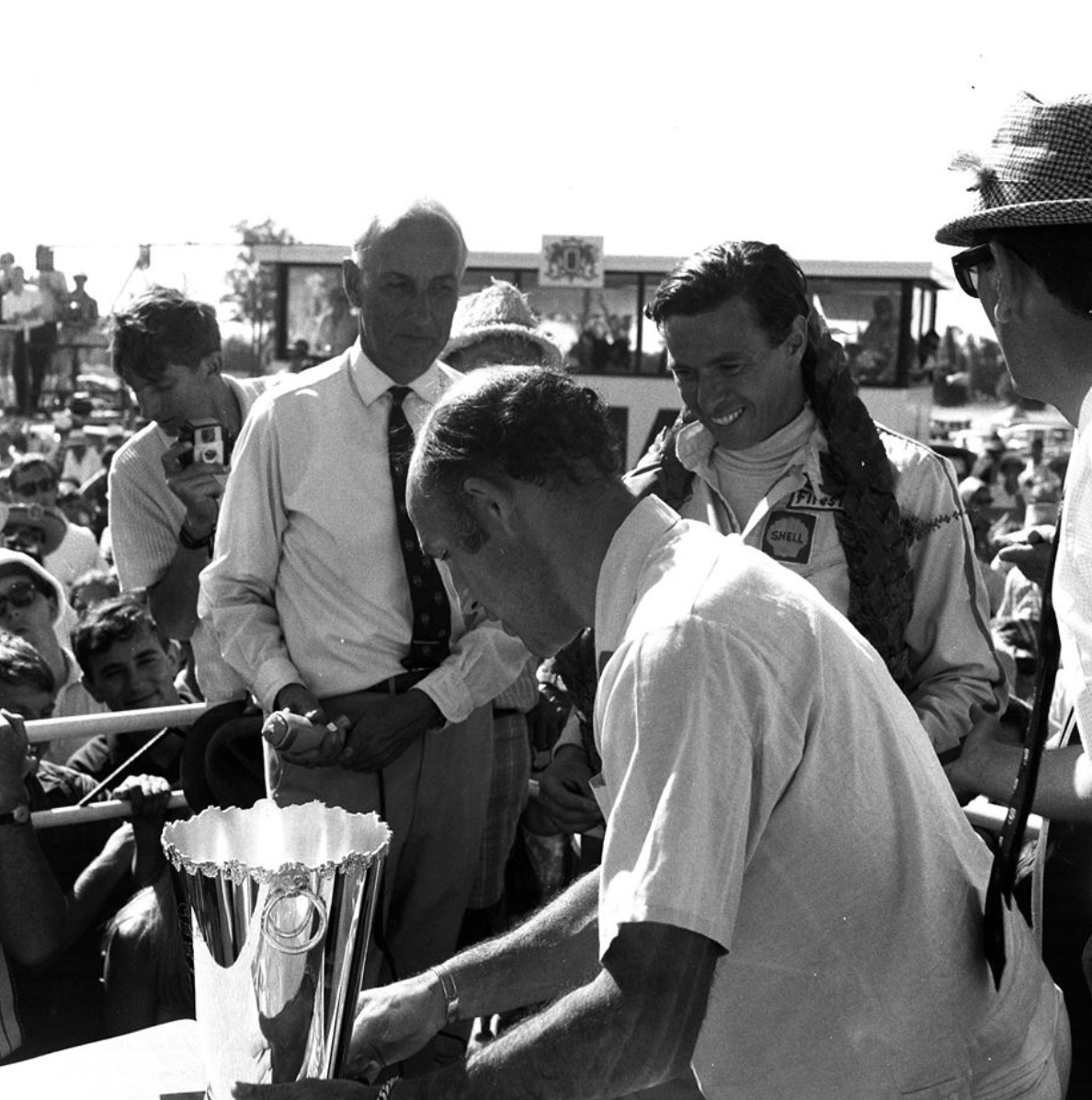
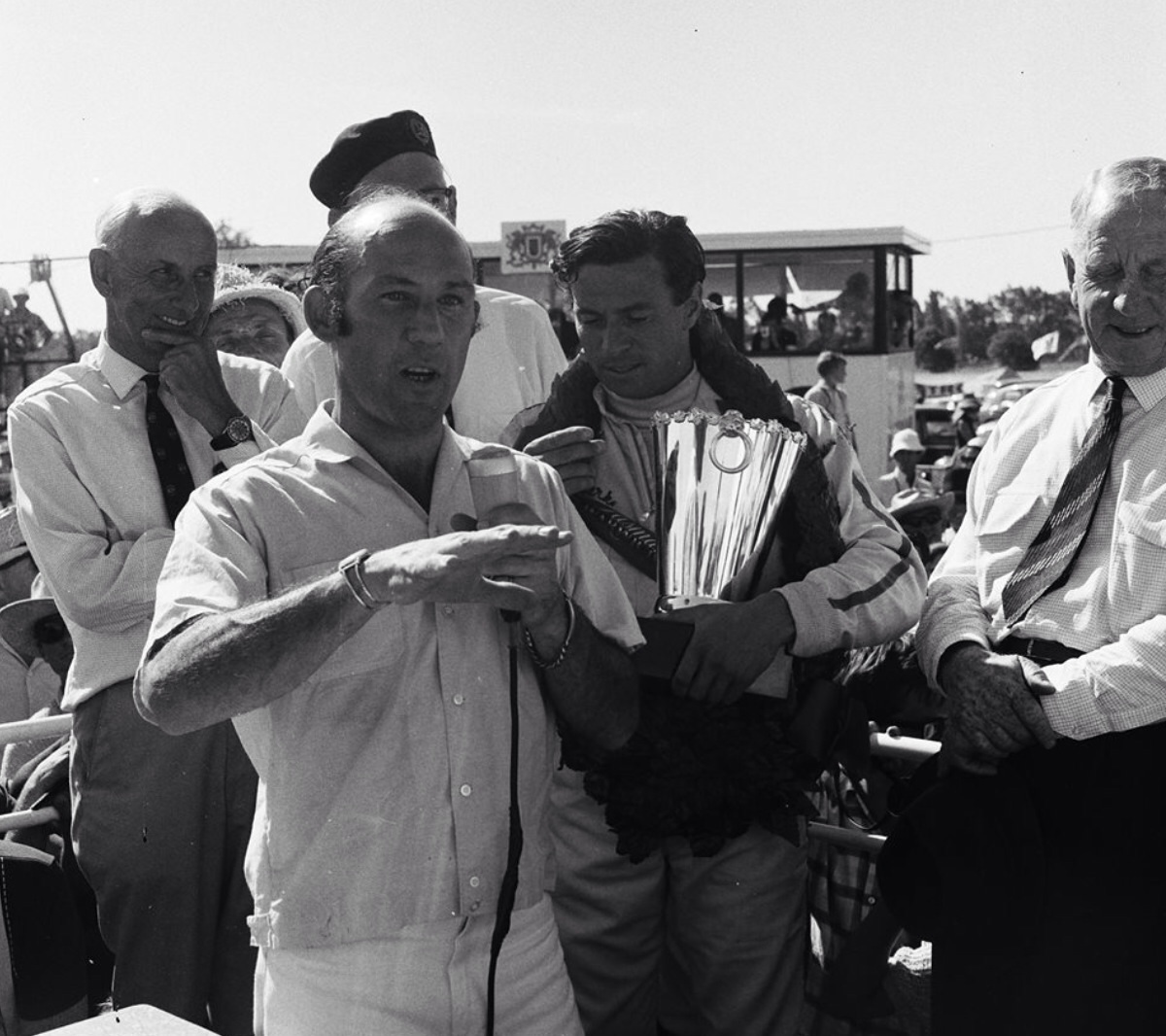
Stilrling Moss, long retired but looking disgustingly fit addresses the crowd in advance of presenting Jim Clark his trophy- he won from Graham and Piers Courage in an F2 McLaren M4A Ford FVA. The gent in the shirt and dark tie is the much respected Geoff Sykes, the AARC/Warwick Farm General Manager/Promoter.

Wonderful times…

Finito…

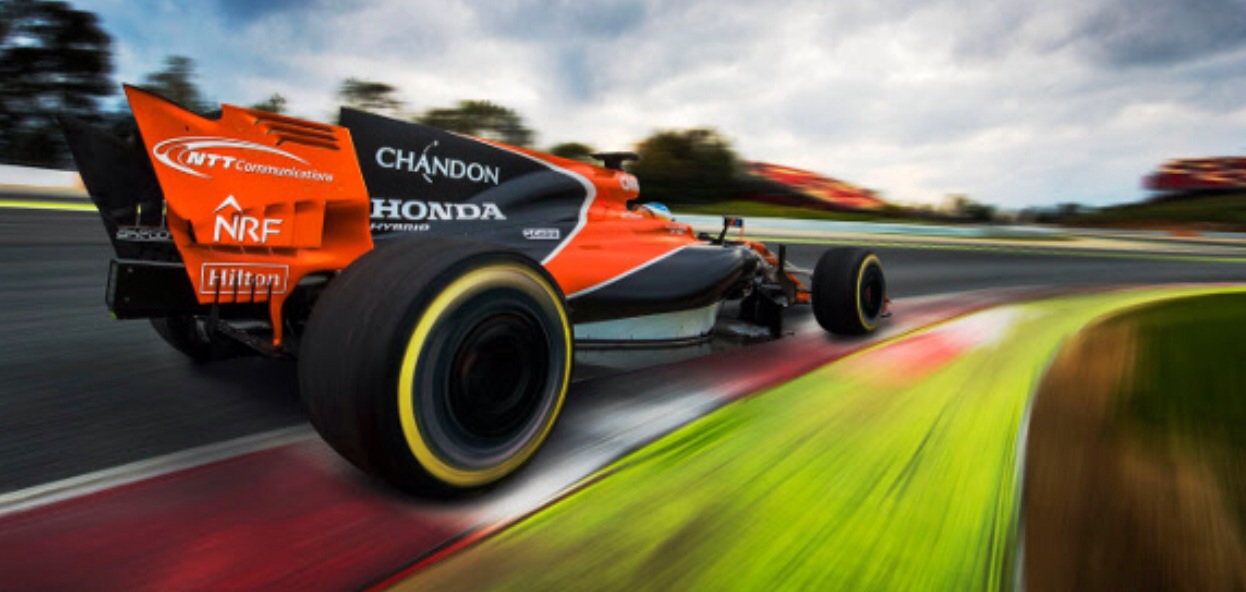
(Honda)

Modern Grand Prix photographers have a challenge their forebears did not, that is, generally uninteresting backgrounds by the standards of, say, pre-1970, whilst noting Monaco, Spa and Singapore as modern exceptions, not the only ones mind you…

My habit over the four year primotipo journey is making article research and writing choices based on inspiring or interesting photographs. This has taken me randomly into all manner of subjects, happily so, and further back in time than I figured at the outset. It’s been good for me as ‘my strengths’ such as they exist, are post 1960 but i’ve ended up writing articles on average about topics from much earlier periods. In part the photos which have taken my fancy are as much about the background as the car or driver and based on that are most often of the distant past. I must try harder in relation to the last twenty years or so!

So I guess whilst the photographers of today have far more sophisticated, digital, whoopy-doo, trick-schmick equipment- the act of taking a photograph is ‘easier’ than in ye olden days but they have their own creative challenges composing shots of interest to we punters on what all too often are bland circuits devoid of substantial differences from one another.

(McLaren)

Albert Park gives the ‘snappers something to work with despite its flatness- the lake, city background, crowd and trees are all neat props. So it’s with these thoughts I went looking for some interesting current shots, Albert Park 2017 in this case. 2018 with the ‘fuggin halos was just a step too far.

It’s interesting to look at the choices these photographers made in composition, panning and crop. I’ve no idea of the driver of each McLaren in shot, both helmet designs have a bit of colour on top and a bit of white below, either Fernando Alonso or Stoffel Vandoorne are good guesses! It wasn’t a great race for McLaren mind you, Alonso was out on lap 50 with a broken floor and Vandoorne finished 13th, two laps down on winner Seb Vettel’s Ferrari SF70H.

There is no such thing as a bad orange(ish) McLaren however much the MCL32 Honda was a dog. Better times are surely around the corner at the time of writing, July 2018…

Credits…

Honda, McLaren

Tailpiece…

(McLaren)

Finito…

image

Frank Matich, Brabham BT7A Climax tries to outbrake Bib Stillwell #6, Brabham BT4 Climax, December 1963…

Photographer John Ellacott upon posting this shot online described it as ‘the two great rivals on Hume Straight’…Matich braking down the outside on the run into the slow second gear ‘Creek Corner’. Frank’s car was brand new, just unpacked, it had only turned a wheel for the first time several days before the 1 December ‘Hordern Trophy’, the final round of that years Gold Star, the Australian Drivers Championship.

Frank’s car was fitted with 2.5-litre ‘Climax FPF, Bib’s older chassis had an ‘Indy’ 2.7- a fair duel, one guy with the edge in chassis perhaps and one with a bit more power?

Stillwell led from the start of the 34 lap race and then FM began to reel him in, finally catching the Victorian on lap 20, the pair tangling in The Esses. The collision was enough to put Matich out of the race but Stillwell finished fourth, the race was won by John Youl in his Cooper T55 Climax 2.5 from David McKay’s ex-Brabham BT4.

frank and bib wf discussion
Frank left and Bib – looking very natty is his BRDC blazer – developing his listening and empathy skills by the look of it after the Hordern Trophy. Great rivals with a lot of respect for one another’s abilities (Sports Car World)

In the 1964 Tasman Series which followed the month after this race Youl was the most successful of the locals. Stillwell only contested three Australian races gaining a strong second in the AGP at Sandown whilst Matich was prodigiously fast but had woeful reliability, we shall pick up the Tasman shortly.

I described the rivalry between Frank and Bib in a post about the Stillwell Cooper Monaco;

It’s fair to say Stillwell, born 31 July 1927 took a while to mature as a driver. He started racing MGs in the late 1940s and as his motor dealerships became more successful throughout the 1950s he acquired and raced some expensive, fast cars, D-Type Jag and Maser 250F included. By the time he commenced racing Coopers he had well over 15 years of experience and was ready to take on anybody, winning his first Gold Star in 1962 and the last in 1965, four on the trot.

Matich, born 25 January 1935 was a more precocious talent who first competed in an MG TC at Foley’s Hillclimb circa 1954 and raced seriously from later in the decade after selling his Austin Healey and purchasing the ex-Frank Gardner Jaguar XKC. He soon drove cars for Leaton Motors who employed him as Sales Manager. Bib was more the silver-spoon-special born on the right side of the tracks and funded into his first dealership with family money. Mind you, whatever Bib started with he multiplied many times over, he was an extremely successful businessman in Australia and then became an executive of global calibre inclusive of being President of the Gates Learjet Corporation in the US.

Frank, the young pro, was cut from totally different cloth. He was educated at De La Salle College, Marrickville in Sydney’s inner west and was apprenticed as a 15 year old Diesel Engineer at Sydney’s Kurnell Oil Refinery before progressing through Butlers Air Transport and in 1954 to Selected Sportscars where he first came into contact with the Englishman who owned the MG TC Frank prepared, and both men raced.

FM’s ability and gift of the gab attracted patrons and commercial support from very early on in his career, Matich too was shortly to do well out of the business of motor racing with Australian franchises for Firestone, and later Goodyear racing tyres, and Bell helmets, apart from the sale of some of the Matich sports and F5000 cars he built.

Matich and Stillwell were intensely competitive, driven, successful men, they had far more in common I suspect than not, especially in terms of mindset and will to win. The battles between the pair were absorbing, Matich very quickly got on the pace of the big 2.5 Climax Formula Libre cars (the 2.5 Tasman Formula started in 1964, Australia’s national F1 ANF1 was F Libre till then), having come out of powerful sportscars- Jags C and D Types, Lotus 15, 19, 19B and small bore single seaters, works-Elfin FJ Ford and Elfin Catalina Ford 1.5.

At the time, these 2.5/2.7 litre F Libre/Tasman cars were the fastest road racing cars in the world, F1 having changed from a 2.5 to 1.5 litre formula from 1 January 1961. Given his experience it was not a surprise when Frank was on the pace straight away as he jumped out of his Lotus 19B sporty and into the new Brabham acquired with the French Oil Company, Total’s, support.

Well before the Tasman Series commenced in 1964, we had a strong International Series of races in Australasia in January/February, with enough of the best in the world to test the locals in equal cars Matich was more than a match for any of them. So was Bib on his day.

matich wf private practice brabham
Matich mounted up and ready for his first test of the naked BT7A, devoid of all signwriting and in civvies at Warwick Farm the week before the Hordern Trophy above. Brian Darby, at the rear, picked the car up from the Port Melbourne wharves the week before, Bruce Richardson is the other mechanic in shot. Note reinforced wide based top front wishbone and rubber mounted ball joint, inverted wishbone at the top and single lower link in the rear suspension. The later BT11A had the opposite rear set up, single top link and inverted lower wishbone (John Ellacott)

Matich was very quick in the Brabham throughout that ’64 Tasman Series and the short period in which he raced the BT7A, its interesting to look back at his time in the car. The late 1963 pre-international events in New Zealand are covered in this article here;

The first 1964 international was at Levin, which Frank missed, at Pukekohe, the NZ GP on 11 January, he ran strongly behind Brabham, McLaren, Tim Mayer and Hulme. He passed Mayer for third only to pop his engine on lap 26, McLaren won the race in a Cooper T70. After Puke he shipped the car home to Australia and re-joined the circus at Sandown on February 9. There he ran ahead of the locals before suffering crown wheel and pinion failure on lap 4.

At the Farm, Matich’s home turf, he started from pole, followed Jack away, then passed him but muffed his braking at Creek and ran off the road. Off to Queensland, at Lakeside, he was driving away from everybody before the engine let go, a Weber ingested a stone and the expensive motor went ka-boom on lap 8. After the long tow to Tasmania he finished third in the race won by Graham Hill’s BT4 and was first of the locals despite a misfire, and a revolution amongst his mechanics who pushed the car onto the grid but left his employ after the race.

Ray Bell wrote that ‘He had a mixed bag of results in shorter races during the middle part of the year, taking a number of outright lap records, then came the Gold Star closing events. Lakeside…pole and the lead before an oil line came adrift; Mallala he didn’t turn up (Stillwell basically could not be beaten for the Gold Star by this stage) and he led the Hordern Trophy till half distance before yet another engine failure’.

The 1965 Tasman Series was won by Jim Clark’s Lotus 32B Climax. Despite not contesting the four Kiwi rounds Matich was right on the pace at Warwick Farm, the first Australian round, starting from pole and leading to Creek corner, he then raced with Brabham behind Hill and Clark up front. ‘Both Hill and Matich had troubles in this race with cement dust getting into the steering, Hill spinning on the last lap because of it and failing to finish. Matich was third behind Clark and Brabham’s BT11A, Stillwell (BT11A) was thirty seconds behind him’ wrote Bell.

matich bt7a lakeside 1964
Matich in his semi-nude BT7A in the hot 1964 Lakeside summer sun, puddle notwithstanding! He is trying to stay cool in the searing Queensland heat, lower side panels removed. Shot shows the proximity of the aluminium side fuel tanks containing lots of Avgas, no rubber bag tanks prior to circa 1970 (Peter Mellor)

Down south at Sandown he ran just behind the internationals ahead of Stillwell only to retire with ignition failure, a rotor button on lap 10. During the AGP at Longford he pitted with suspension problems on lap 5 whilst best of the locals having run in sixth place. At Lakeside he contested the non-championship Lakeside 99 and made it a real race dicing with Clark on this high speed, demanding circuit for most of the race. ‘They traded places many times, but Matich did have a pitstop and lost some laps before rejoining the battle’. It was a race FM rated as one of his best.

Into the domestic season Stillwell won the Victorian Road Racing Championship Gold Star round in April after a couple of Matich spins, albeit FM was second despite a failing engine, and started from pole a half-second clear of Bib.

That was all the racing he did in that car. At Lakeside’s Gold Star round in late July, he crashed his Lotus 19B Climax, he took the sportscar to the meeting to test it in advance of the Australian Tourist Trophy which was held at the circuit later in the year, was burned and hospitalised and in the aftermath Total took the decision to cease their racing program and sold the cars and parts.

The story of the next phase of Frank Matich’s career in sportscars, initially with the Elfin 400 aka ‘Traco Olds’ is told in links within this article.

Frank Matich was one of Australia’s many F1 mighta-beens, to me the most likely to succeed of all, but with a young family and business ties in Oz it never happened despite offers being made to him on more than one occasion to go to Europe. As noted, Matich didn’t race single seaters for long at this stage of his career, from 1963 to 1965, racing sports cars very successfully until 1969 when he came back to open wheelers with the advent of F5000 – where he was a star as both a driver and constructor. Click here for an article on this phase of his career;

It’s a shame he didn’t drive Tasman 2.5 cars throughout this golden-era of single-seater racing in Australasia, his battles against the internationals as well as the local hotshots in both Tasman races and domestic Gold Star competition would have been sensational. Matich mixing it with Bartlett, Martin, Geoghegan, Harvey and the rest would have added depth to Gold Star fields which were increasingly  skinny as the decade wore on.

Stillwell retired at the end of 1965, he was certainly as quick as anybody on his day and arguably had not quite peaked when he did retire. No less an observer of the local scene than journalist/racer/Scuderia Veloce owner David Mckay believed that by 1965 Stillwell had reached F1 standard, not least for his ability to drive fast without mistakes or destroy the equipment.

brabhams longford 1965
Intercontinental Brabhams at Longford, AGP 1965. Stillwell’s dark blue #6 BT11A (6th), Matich BT7A (DNF) and Frank Gardner in Alec Mildrens yellow BT11A (eighth), the race won by Bruce McLarens’ Cooper T79 from Brabhams’ BT11A (Kevin Drage)

The Intercontinental Brabhams…

brabham caversham bt4
The first of the Intercontinental Brabhams. Jack in BT4 ‘IC-1-62’ on its debut at the Australian Grand Prix, Caversham, WA on 18 November 1962. He retired after colliding with another car whilst lapping him, Bruce McLaren won in a Cooper T62 Climax (Milton McCutcheon)

When Jack started his climb to the top in Europe he returned and raced in Australia each summer, bringing a Cooper with him and racing it successfully, then selling the car to one of the locals before returning to Europe. It was a nice little earner and helped fund his way in Europe as he fought to gain a toehold in international competition.

Cooper sold a lot of cars in Australia, Jacks business brain was as sharp as his cockpit skills so it was natural that some of the earliest Brabham production racing cars were for Australasian Formula Libre and from 1964, the 2.5 Tasman Formula- which in effect meant cars built for Coventry Climax FPF ex-F1 engines- 2.5 litres but increasingly 2.7’s after Jacks successful Indy 500 run in 1961 in the Cooper T54 with its 2751cc FPF engine. The Tasman Formula mandated 2.5’s of course.

Soon Repco were making Climax parts and eventually building the engines in totality under licence in Australia. The bits were plentiful which was just as well as the level of competition was such that the long stroke donks were being pushed well beyond their limits with spectacular blow-ups fairly common.

stillwell lakeside 1963
Bib Stillwell in his BT4 Climax ‘Lakeside International’ 1963, 2.7 FPF powered. 3rd in the race won by John Surtees Lola Mk4A Climax 2.7 (Bruce Wells/The Roaring Season)

The first Intercontinental Brabham, i use that descriptor as that was the chassis prefix for each car (‘IC’), the design intended for the shortlived Intercontinental Formula created in response to the new 1.5 litre F1- was the BT4 based on the first Brabham GP machine, the 1.5 litre Coventry Climax FWMV V8 powered BT3.

The first Brabham, retrospectively referred to as ‘Brabham BT1’, was the MRD, an FJ machine first raced by Gavin Youl with the BT2 an evolution of the MRD/BT1. The Intercontinental cars which followed the BT4 were the BT7A in 1963 and BT11A in 1964, both F1 cars adapted for Climax FPF engines.

Some incredibly talented guys raced the ‘IC’ Brabhams- Internationals such as Brabham, Hulme, Gardner, Hill and Stewart as well as Australian champions including David McKay, Lex Davison, Stillwell, Matich, Spencer Martin, Kevin Bartlett, John Harvey, John McCormack and other drivers in New Zealand and South Africa.

Jack Brabham won Australian Grands’ Prix in a BT4 and BT7A in 1963 and 1964 respectively. The cars won the Australian Drivers Championship, the Gold Star for Stillwell in 1963 and 1964 aboard his BT4, in 1965 with a BT11A and for Spencer Martin, again BT11A mounted in 1966 and 1967.

hill and stillwell longford brabhams
Graham Hill ahead of Bib Stillwell, BT4 Climaxes, first and fourth. South Pacific Trophy, Longford March 1964 (Rod MacKenzie)
bib stillwell wf 1965 bt11
Bib Stillwell in his final and successful Gold Star year 1965. BT11A at Warwick Farm. His final year of racing, he had a top year in the car at WF, finishing fourth in the Tasman race albeit behind Matichs’ BT7A in third and first in the Hordern Trophy at the end of the year (John Partridge Collection)

The ‘Brabham IC Australian party’ ended in 1968 when Kevin Bartlett won the Gold Star in BT23D/1, a one off car built for Alec Mildren’s Team around Alfa Romeo Tipo 33 2.5 V8s he secured to add a bit of Italian flavour to the local scene, Mildren was an Alfa Romeo dealer.

The Intercontinental cars were typically fast Tauranac designs of the period. They had rugged spaceframe chassis, suspension by upper and lower wishbones at the front with Armstrong shocks and coil springs. At the rear there was a single upper link, inverted lower wishbone, twin radius rods and coil spring damper units with adjustable sway bars fitted front and rear. With Jack doing all of the initial chassis setup work the cars were quick and chuckable ‘straight out of the box’.

Hewland HD5 gearboxes were used in the main (Colotti in the BT4) and rack and pinion steering completed the package with the cars clad in a slippery fibreglass body.

brabham bt 4 from rear
Bib Stillwell’s Brabham BT4 Lakeside February 1963. 2.7 litre Indy 2751cc Coventry Climax FPF engine, 58mm Webers, Colotti T32 five-speed ‘box. Rear of the spaceframe chassis apparent. Suspension- inverted upper wishbone, single lower link and twin radius rods for location, coil spring damper units, no rear roll bar here. Stillwell’s cars famously immaculate in preparation and presentation (Peter Mellor/The Roaring Season)

After Repco’s 2.5 litre Tasman V8 engine made its debut in BT19, Jacks victorious 1966 F1 winning chassis, in 1966 the Tasman Brabhams were variants of the BT23 frame (BT23A and BT23E) with the exception of the very last BT31 for the 1969 series. See Rodway Wolfe’s article about BT31 which he owned for many years; https://primotipo.com/?s=brabham+bt31

Once the 1.5 litre F1 ended in 1965 BRM quickly realised a stretched variant of their P56 V8 in a P261 chassis would be a Tasman winner and ‘their endeth the locals’ in Climax engined cars taking on the Internationals similarly mounted on more or less equal terms.

The Repco Tasman V8’s provided a supply of competitive customer engines for locals so the Tasman Formula continued into 1970 with engines capable of matching the internationals when the ever expanding F1 season and more restrictive driver contracts made eight weeks in January/February in Australasia no longer a proposition for the best in the world. With it went a wonderful decade or so of intense but sporting summer global competition in our backyard.

Those Intercontinental Brabhams were gems though and gave both the international aces and local hot-shots very effective tools with which to strut their stuff, not least Messrs Stillwell and Matich…

matich longford grid 1964
The Matich BT7A being pushed onto the Tasman grid, Longford 1964. Steering is Graham Matich, looking down at the rear is Geoff Smedley. Matich finished third, just in front of Stillwell, Graham Hill won the race in a BT4 (oldracephotos.com)

Tailpiece: Wanna buy a car matey, or a plane?…

bib and jack and bedford
Stillwell and Brabham, rivals and friends in the Longford paddock 1965. They are sitting on Bibs’ Bedford truck, BT11A up above…I doubt Jack sold anyone more cars over the years than he did Bib?! Bib put them to very good use mind you (Kevin Drage)

Frank Matich on dealing with ‘Wily’ Jack Brabham…

http://www.motorsportmagazine.com/halloffame/jack-brabham/frank-matich-on-jack-brabham/

(P Stephenson)

As nice a posed portrait of Jack and his BT11A ‘IC-5-64’ as you will ever see. The combination are in the old Sandown pitlane in February 1965 before he went out and won the Sandown Cup from Jim Clark, Lotus 32B and Phil Hill, Cooper T70, all Coventry Climax 2.5 FPF powered of course.

Etcetera…

matich hordern trophy 1964
Matich in his BT7A contesting the ‘Hordern Trophy’ at Warwick Farm in 1964. DNF in the race won by Leo Geoghegan in a Lotus 32 Ford 1.5, a great win for Leo, he and his brother Sydney Lotus dealers, Leo graduated to the ex-Clark Lotus 39 Climax at the end of the 1966 Tasman series (John Ellacott)
matich bt7 longford 1965
The Matich BT7A sitting in the Longford paddock in 1965. DNF with suspension failure in the race won by McLarens’ Cooper T79 Climax. Rear suspension by this stage to BT11A spec (Kevin Drage)
matich magazine
Front page spread in ‘Australian Motor Sports’, no advertising allowed on racing cars in Australia in those days but the colors on the nose of Franks’ Brabham (Leo Geoghegan’s Lotus alongside) are those of ‘Total’ the French oil company who were prominent in Australia at the time, the spread no doubt a ‘cross promotion’ as the modern marketers would call it!
stillwell rcn
Racing Car News and Stillwell’s Gold Star win in 1964. Brabham BT4 Climax.

Photo and Other Credits…

John Ellacott, Milton McCutcheon, The Roaring Season/Peter Mellor/Bruce Wells, Kevin Drage, Rod MacKenzie, The Nostalgia Forum, Australian Motor Sports, Racing Car News, Peter Stephenson

theroaringseason.com, oldracephotos.com, Ray Bell on The Nostalgia Forum

Tailpiece: Matich, Brabham BT7A, and Graham Hill, red BT11A and Clark, Lotus 32B, Warwick Farm 100 1965…

(J Ellacott)

Finito…

Bruce McLaren awaits his crew making changes to the setup of his new McLaren M7A Ford, chassis M7A-1, Silverstone 25 April 1968…

Its a day or so before the BRDC International Trophy, one of three non-championship F1 races run in Europe that season. Bruce is to have another good weekend, off the back of his Brands Hatch ‘Race Of Champions’ win in March, his teammate and Kiwi buddy Denny Hulme won the prestigious Silverstone race in an emphatic demonstration of the quality of Bruce McLaren and Robin Herd’s F1 design and construction capabilities.

McLaren in the M7A, from pole, Brands Race of Champions in 1968- he won. Alongside is Mike Spence BRM P126, Jackie Stewart Matra MS10 Ford and on row 2 Chris Amon Ferrari 312 and Denny in his M7A. That’s Jo Bonnier in last years McLaren M5A BRM V12 with his hand up on the second last row. Bruce won from Pedro Rodriguez BRM P133 and Denny LAT)

That season Bruce McLaren famously became one of the very few to win a championship GP in a car of his own name and construction when he won the Belgian GP. Denny Hulme took another three GP victories and challenged for the 1968 World Championship ultimately won by Graham Hill’s Lotus 49B Ford, the car for which the Ford Cosworth DFV was designed.

At the end of 1967 Ford’s Walter Hayes implored Colin Chapman to allow him to offer the DFV to other teams ‘for the good of Grand Prix racing’ such was his fear of Team Lotus dominance. Chapman, to his credit, waived his contractual entitlement to exclusivity- Lotus, Matra and McLaren raced the Ford engine in GP events in 1968.

McLaren M7A Ford cutaway (Dick Ellis)

The duo concepted a car which typified the ‘Cosworth Kit Car’ era. A short monocoque chassis ended aft of the driver’s seat and consisted of three steel bulkheads- one at the back, one at the front, and one open bulkhead at the dashboard which was then skinned with aluminium panels to form a full monocoque over the driver’s legs. It was an immensely torsionally rigid and strong structure compared with the very best spaceframes of only a few years before.

The M7A used glued and riveted skins of L72 aluminium alloy, a British standard for the aviation industry in a thickness of 22 gauge and in a few places 20 guage magnesium sheet. 40 gallons of fuel were distributed between four rubber bag-tanks- one either side of the driver in the tub, another behind his seat and the fourth in the scuttle. The Cosworth DFV engine was bolted directly to the rear bulkhead and at that stage of its development produced circa 420 bhp @ 9500 rpm.

Early test of the M7A at Silverstone on 5 April 1968. Denny up, Bruce by front wheel. Notice the McLaren wheels, ‘nostril’ ducted radiator outlets and top and bottom front suspension radius rods which mount to the bulkhead in the dash area of the tub (R Dumont)

The suspension, of conventional outboard design was derived from the very successful 1967 Can-Am Championship winning M6A Chev. It comprised outboard coil spring/damper units at both ends and single lateral links and trailing arms at the front- and single lateral top links, reversed lower wishbones and twin radius rods at the rear. Uprights were cast magnesium with of course adjustable roll bars front and rear. Steering was McLaren rack and pinion, brakes Lockheed discs all round and the transmission the ubiquitous Hewland DG 300 transaxle five-speed.

The radiator was conventionally mounted at the front, with a sleek fibreglass body topping the whole visually arresting package- hot air vented McLaren style out of ‘nostrils’ in the nose with an oil radiator at the rear above the ‘box and clear in the opening shot.

‘Pop’ McLaren and Alastair Caldwell supervise the McLaren pit in the French GP paddock, Rouen 1968. Note general car layout as per text, suspension, rad duct in lower shot- quality of design, execution and presentation a treat. #8 Denny 5th, #10 Bruce 8th. Shocker of a wet race with Jo Schlesser dead on lap 2 in the experimental Honda RA302 (unattributed)

Allen Brown reports in oldracingcars.com of the M7A’s 1968 season; ‘The first two cars were finished in March 1968, and both debuted at the 1968 Race of Champions, where Bruce McLaren dominated the race, winning from pole position, with his new teammate Denny Hulme finishing third. At the next race, the Silverstone International Trophy, Hulme took pole position and won, with Bruce content to take second place. It was not quite so easy at the first GP, the Spanish, but the M7As were third and fourth on the grid and Hulme finished second.’

‘After a poor weekend in Monaco, Bruce McLaren took his team’s first GP victory in the Belgian GP at Spa in June after Jackie Stewart’s Matra MS10 retired on the last lap. Results were mixed over the next few races, but Hulme won in Italy and in Canada to equal Graham Hill’s score at the top of the World Championship standings. A crash at Watkins Glen and retirement in Mexico ended his challenge, but had been a wonderful season for McLaren’s F1 team’.

McLaren M7A from Pedro Rodriguez, BRM P133- 1st and 2nd, Spa 1968 (unattributed)

McLaren and M7A at Watkins Glen 1968. Note the mount and location of the rear wing in the context of the text below (A Upitis)

In terms of the ebbs and flows of the season, in ‘The Year of Wings’, Matra and Ferrari- on Firestone and Dunlop tyres respectively won races later in the season and Lotus set the aerodynamic standard with high-wings after their initial appearance on the Ferrari 312 and Brabham BT26 Repco at Spa. McLaren lost some of their edge- the cars wings were less effective than Lotuses, when they remained attached to their cars, mounted in the middle of the M7A on the cars sprung mass, rather than Lotus 49 style at the rear on the unsprung suspension uprights, and Goodyear too lost their edge. Remember when there was competition between the tyre manufacturers?!

Goodyear’s new G9 boots gave Denny the kicker he needed to win at Monza and then at St Jovite, Canada but Graham Hill and Lotus deserved the title in a year during which Hill held the team together and picked everybody up after Jim Clark’s tragic death at Hockenheim in April.

Looking at the M7 design from a commercial perspective, whilst McLaren by this stage were well funded by the standards of the day- the M7 design worked hard in contributing to the companies success by providing the basis of the M14 F1 car and the phenomenally successful M10A and M10B F5000 designs which were the ‘class standard’ from 1969-1971- constructed as they were under licence by Trojan Cars in Croydon.

Bruce, M7A Silverstone (V Blackman)

Lets get back to the photo which inspired this piece though, here is none other than DC Nye’s race report of the BRDC International Trophy, in full, from the June 1968 issue of MotorSport, the photographs are all my editorial selections…

‘For the 20th B.R.D.C. International Daily Express Trophy race at Silverstone, the Club amassed a small but fairly representative field of Formula One cars. Heading the entry were Hulme and McLaren in the two impeccably-prepared McLaren M7A-Cosworth V8s, which finished first and third in the Race of Champions, and Ferrari sent over two cars, one a new, slightly sleeker-chassised V12 with the engine lower-mounted than hitherto, and the other the car which Amon normally races. Drivers were the young Belgian, Ickx, and Amon, and though the New Zealander tried both cars he decided he preferred his own, and Ickx raced the new one.

Amon’s Ferrari 312’s, Ickx car in the foreground, Silverstone 1968. Amon Q5 and Ickx Q7 with Chris proving the pace of the Ferrari, despite the Cosworth onslaught with a fastest lap and 3rd place, Jacky 4th (unattributed)

Graham Hill had a solitary Lotus 49-Cosworth V8 which was entered by Gold Leaf Team Lotus, and B.R.M. were well represented with Rodriguez in the Bourne-built, Terry-designed P133 V12 and Spence in the similar, T.A.C.-built P126. Also in a P126 was Courage, having his first F1 race this season for Parnell, and Hobbs had Bernard White’s relatively unsorted Tasman 2-litre B.R.M. P261 chassis, specially lengthened by the works to accommodate the new V12 engine. Also B.R.M.-powered was the lone works Cooper T86B, with Gardner driving, as Scarfiotti was away practicing for the Targa Florio and Redman was reputedly testing F2 Dino Ferraris in Modena. Rob Walker had acquired a new Tasman Lotus 49 chassis to replace the one lost recently in a fire at his Dorking headquarters, Siffert driving as usual; Bonnier was in his 1967 McLaren M5A-B.R.M. V12, and the Swiss Moser had the ex-Hulme, ex-Ligier Brabham BT20-Repco V8. Lanfranchi completed the field in a 2.7-litre Climax 4-cylinder powered Brabham BT23.

Withdrawn entries included a second Parnell B.R.M. for Attwood and Sheppard’s Mallite McLaren fitted with a 3-litre version of the original Climax Godiva V8 for Taylor. Two works Brabhams were listed, but were not complete.

Last year’s G.P. practice record of 1 min. 25.3 sec. by Clark in the Lotus 49 looked a little sick compared with this year’s speeds, Hulme taking pole position with 1 min. 24.3 sec. to Spence’s 1 min. 24.9 sec., McLaren’s 1 min. 25.1 sec. and Rodriguez’s 1 min. 25.3 sec. Behind these four on the front row came Amon at 1 min. 25.5 sec., Hill 1 min. 25.6 sec., Ickx 1 min. 26.4 sec., and Siffert 1 min. 27.6 sec.

One minutes silence in memory of Jim Clark before the off. Hulme at far left on pole, then Spence BRM P126, McLaren M7A and the other BRM P133 of Pedro Rodriguez. Amon, Hill and Ickx on row 2 (Getty)

After a poignant silence in memory of the late Jim Clark, the field were given a maximum of three warming-up laps, and from the start McLaren took an immediate lead ahead of Spence, Hulme, Rodriguez, Ickx, Hill, Amon, Courage, Bonnier and Gardner. Lap 2 and the leading bunch were all scratching hard to draw out some sort of advantage; Courage was briefly ahead of Amon at Copse and Siffert and Gardner were both by Bonnier, who was being harried by Hobbs.

The leading McLarens, B.R.M.s, the lone Lotus and the two Ferraris soon towed each other away from the rest of the field, with Hulme slotting by Spence into second place on lap 4, then being repassed by the B.R.M. Lanfranchi had already stopped for a plug change on his 4-cylinder, and at the start of lap 6 Spence led McLaren into Copse, and was re-passed on the way out to Maggotts to remain the meat in an orange McLaren sandwich for a short distance before chopping by again and leading the bunch on lap 7 from Hulme, McLaren, Rodriguez and Hill, all nose-to-tail. Amon and Ickx had become slightly detached in the works Ferraris, but as they sped down Hangar Straight on that lap a stone was thrown up from Spence’s B.R.M., smashing Hulme’s goggles and giving him a nasty moment which dropped him back to seventh.

Hill and Amon in 3rd and 4th- Ferrari 312 and Lotus 49 Ford (LAT)

Almost immediately Rodriguez’s B.R.M. V12 began to misfire, an ignition lead dropping off, and he stopped before Maggotts, replaced the wire and drove on to the pits, where a more lasting repair was made. By lap 9, with Spence leading narrowly from McLaren, Hill was third in the lone Lotus, Amon was a close fourth and Hulme, whose eyes had stopped watering, was already on his tail and looking for a way by. Positions remained unchanged until lap 14, when the Lotus’ V8 engine died, and, seeing a lot of fluid resting in the vee, Hill thought the engine had suffered a serious breakage and had thrown water. In fact, a fuel pipe had split, and the fluid was petrol, but he was out anyway, and walked back to the pits. Hulme had nipped by Amon on this lap, and was going out after Spence, who had been re-passed by McLaren. lckx was falling back in fifth place with the very new and understeering Ferrari, with Siffert some distance behind, followed by Courage, Gardner, Hobbs, Moser, Lanfranchi and then an unhappy Rodriguez in the misfiring B.R.M., last.

Next lap Hulme was up into second place, and on lap 20 he passed McLaren after getting round in 1 min. 25.3 sec. to take the lead narrowly from his “number one”, Spence and Amon, and these four were still driving in very close company. But Lanfranchi had retired with bad oil surge, and Siffert’s sixth place evaporated on lap 26 when the clutch broke in the Tasman-chassised Lotus, and two laps previously Gardner had gone out in a trail of smoke and steam when the B.R.M. engine broke a liner.

Lap 28, and Spence slotted his slim B.R.M. past McLaren into second place, and as they lapped the tail-enders the leading group began to space out. But Amon closed on McLaren noticeably on lap 36 and was looking for a way by, but then lost time lapping Moser at Copse and dropped back, letting McLaren get away and latch on to Spence’s tail in second place. These two then drove very hard, entering corners side-by-side occasionally until lap 41 when the B.R.M.’s engine stopped suddenly at Club with a timing chain breakage, letting McLaren up into second place, but delaying him sufficiently to let Amon catch up in the Ferrari. Rodriguez had finally retired his sick B.R.M., Ickx was running a lonely fourth, with Courage fifth and about to be lapped, while the only other cars still running were Hobbs’ B.R.M. and Moser’s Brabham-Repco.

Hulme on his way to the first of four M7A wins in 1968, Silverstone, April 1968 (LAT)

Amon was trying hard to wrest second place from McLaren, setting a new outright circuit record on lap 44 of 1 min. 25.1 sec., 123.82 m.p.h., but Bruce was trying equally hard to stay ahead, doing 1 min. 25.2 sec. on the same lap, and, although the two of them were very close together on lap 45, Amon’s luck was running out and his goggles strap broke. Shielding his eyes from the airstream with one hand he drove for two laps before managing to haul his stand-by pair into position on his face, and this dropped him well back from McLaren, and although closing the gap slightly before the finish he came home in third place. Hulme was battered but triumphant, Bruce McLaren had a lot to smile about with his cars’ first one-two victory, and B.R.M. were well pleased with their turn of speed and not too worried about the frailty their cars had shown since they are still at an early stage in their development. The Ferraris had been rather outpaced from the start, but on a clear track and with McLaren as his target Amon had proved that he is one of the quickest drivers around.’—D. C. N.

Denny on his way to a win at St Jovite, Canadian GP 1968 (unattributed)

Etcetera: M7A Chassis by Chassis courtesy Allen Brown at oldracingcars.com…

‘The first two cars were finished in March 1968, and both debuted at the 1968 Race of Champions, where Bruce McLaren dominated the race, winning from pole position, with his new teammate Denny Hulme finishing third. At the next race, the Silverstone International Trophy, Hulme took pole position and won, with Bruce content to take second place. It was not quite so easy at the first GP, the Spanish, but the M7As were third and fourth on the grid and Hulme finished second. After a poor weekend in Monaco, Bruce McLaren took his team’s first GP victory in the Belgian GP at Spa in June after Jackie Stewart’s Matra MS10 retired on the last lap. Results were mixed over the next few races, but Hulme won in Italy and in Canada to equal Graham Hill’s score at the top of the World Championship standings. A crash at Watkins Glen and retirement in Mexico ended his challenge, but had been a wonderful season for McLaren’s F1 team

Bruce 8th, with Tyler Alexander and Alastair Caldwell and M7A at Rouen, Chris Amon 10th Ferrari 312 just heading out (unattributed)

Denny and Bruce at Jarama prior to the 1968 Spanish GP, M7A’s fitted with pannier side tanks. Denny 2nd and Bruce retired in the race won by Hill’s Lotus 49 Ford (unattributed)

Bruce on the way to that historic win aboard his M7A at Spa in 1968 (unattributed)

Hulme’s M7As was retained for 1969 for the Kiwi to drive, and the latest car, M7A/3, was modified to M7B specification with pannier tanks.  When that did not work, both the M7B and the prototype M7A were sold to privateers; both were crashed later in 1969 and both cars scrapped. Bruce drove a new McLaren M7C for the rest of 1969, and a huge amount of effort was wasted on the four-wheel-drive McLaren M9A. It didn’t help that Goodyear, McLaren’s tyre supplier, were well behind Firestone and Dunlop until the end of the season, when the latest rubber helped Hulme win the Mexican GP in his well-used sole surviving M7A. That last M7A was bought by Tony Dean for Formula 5000, and was then sold to a French Museum where it remains, the museum owners having turned down all McLaren International’s offers for the car.’

McLaren, Brands, M7A British GP 1968 (M Hayward)

More on the M7A’s…

Check out Allen Brown’s article which I have referenced and filched from extensively in this article

http://www.oldracingcars.com/mclaren/m7a/

Credits…

Getty Images, Victor Blackman, Ronald Dumont, Alvis Upitis, MotorSport June 1968 article by Doug Nye, Dick Ellis, LAT, Mike Hayward, Allen Brown-oldracingcars.com

Tailpiece…

Finito…

(N Tait)

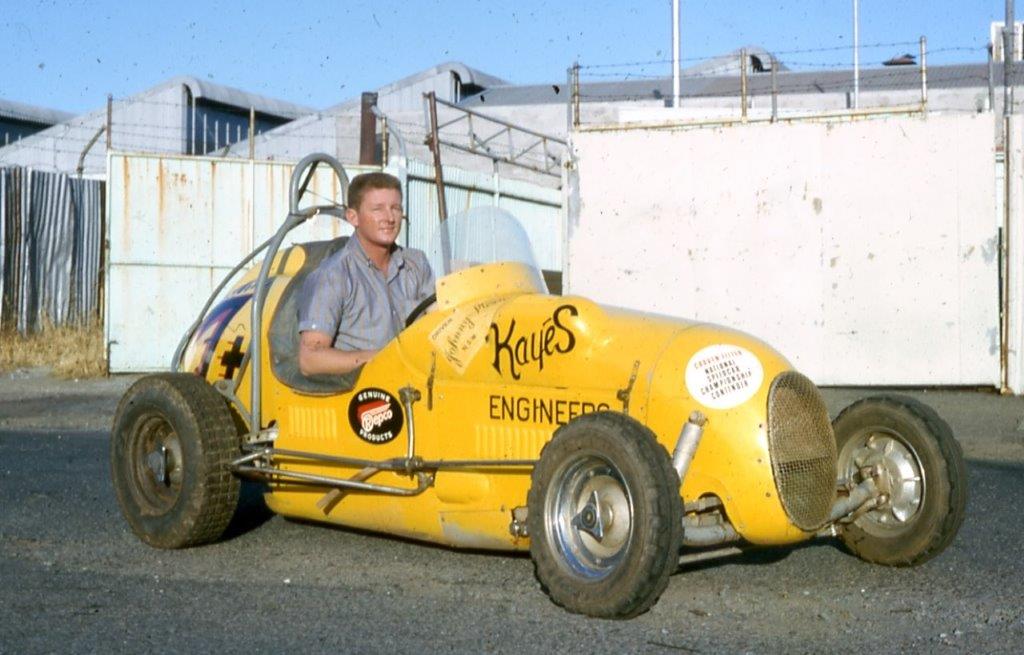
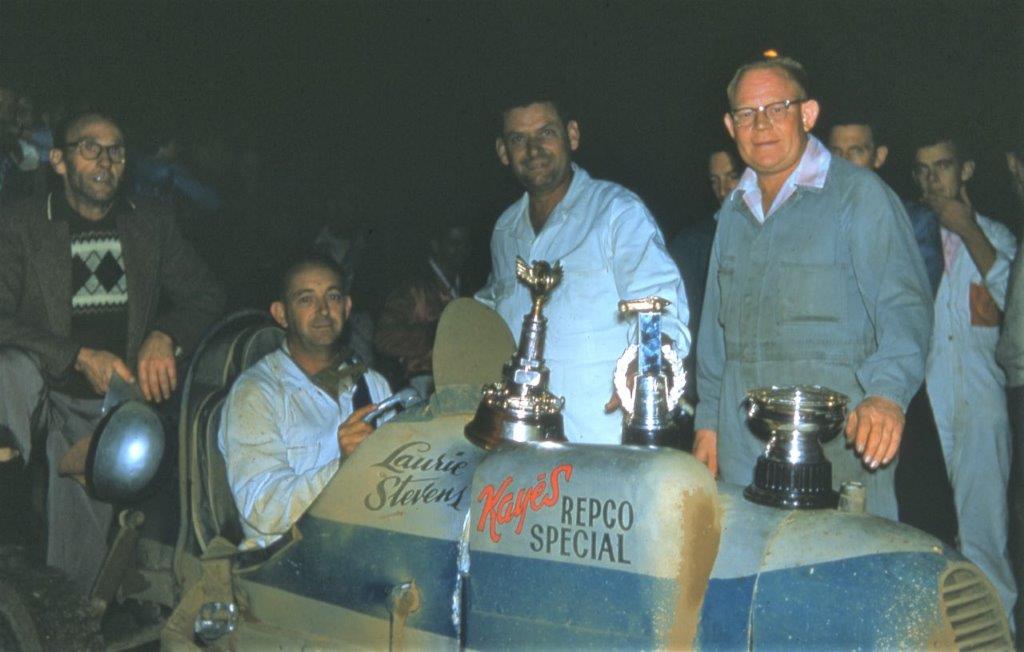
Jack Brabham and his ‘Repco Special’, Hay Street, Subiaco, Perth 1962…

With a bit of detective work from West Australians Ken Devine and Billy Hughes this photo from Nigel Tait’s Collection, which was originally thought to be of Jack Brabham in Sydney was taken during Jack’s 1962 trip to Perth for the Caversham Australian Grand Prix, won by Bruce McLaren’s Cooper T62 Climax. Click here for an article about that meeting; https://primotipo.com/2016/05/20/bruce-lex-and-rockys-cooper-t62-climax/

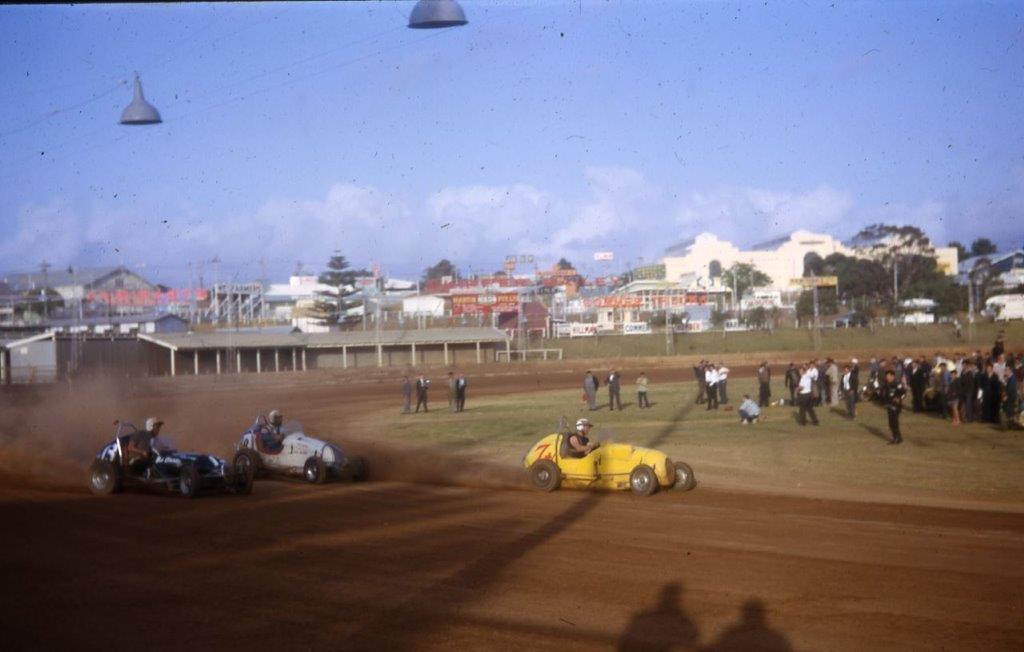
The speedway midget is ‘definitely Bill Kirkham’s WA7 Repco Special driven by Laurie Stevens…looks like Jack sitting in the car and shaking the proprietors hand’ Billy Hughes wrote, another Perth enthusiast/photographer Gary Russell-Brown agrees.

‘Kayes’ was a Repco aligned engine reconditioner in Hay Street Subiaco, an inner Perth suburb. Clearly Kayes’ owner Kirkham had enough ‘pull’ to entice Jack back into the cockpit of a speedway car from whence he came!

Jack’s very first race, a speedway event of course, was at Cumberland Oval, Parramatta on 5 December 1947, click on this ‘Loose Fillings’ link to an interesting article written by Terry Wright article on these formative, successful Brabham racing steps/successes; https://loosefillings.com/2017/07/15/its-amazing-whats-still-out-there-2/

Brabham, 22 years old, receives the Australian Championship tray at Kilburn Speedway, Adelaide, 25 February 1949.

(vintagespeedway.com.au)


Jack during his first raceday at Parramatta Speedway, December 1947 (Brabham Family)

Perth enthusiast, Gary Russell-Brown provides some more information on speedway racing in Western Australia and photographs of the Kirkham midget in particular.

‘Dirt track speedway racing started in Australia in the late 1930’s – solos initially then followed by sidecars and speedcars or ‘midgets’. Before its relocation to the Kwinana Motorsports complex circa 2002 Perth’s Claremont Speedway was recognised as the longest running speedway in Australia, it opened in 1927.’

‘At 641 yards it was longer than most- its long straights resulted in higher top speeds than most as well,this may have been the reason for the venues shocking mortality rate- seventeen over the years. Speedcars were ill equipped in terms of safety until recent times.’

(G Russell-Brown)

Claremont Speedway and panorama #7 Stevens in the Kayes Repco Spl then eastern staters R Clarke from NSW and Victorian D Maher, they were here for the WA round of the 1964-1965 Australian Speedcar Championship’ Gary recalls.

The shot below is of Johnny Stewart in the car, ‘He crashed his own car in Adelaide, the previous weekend in January 1965 and through a connection between Kim Bonython and Bill Kirkham it was arranged for Stewart to use 7+ which wasn’t racing at that stage, Laurie Stevens having retired.’

Claremont is a western suburb of Perth- ten kilometres from the CBD on the north bank of the Swan River.

(G Russell-Brown)

‘Visting internationals came to the track with the peak years of Australian speedway racing perhaps the fifties and sixties. Bill Kirkham was keen to get involved as speedcars gained in prominence, his Subiaco engineering business ‘Kayes Engineering’ acquired, owned and raced #7.’

‘Bills son Ross Kirkham worked for Repco, along the way he moved to Melbourne and became a key engineer on the Repco Brabham Engines F1/Tasman/Sportscar program in the early to later 1960s- he sent west one of the first Repco Hi-Power cylinder heads made which was fitted to the ‘Holden Grey’ six and made #7 very quick.’

‘Laurie Stevens drove the car very well in that era and had amazing success with it against the east-coasters and Americans including some Offy powered cars.’

(G Russell-Brown)

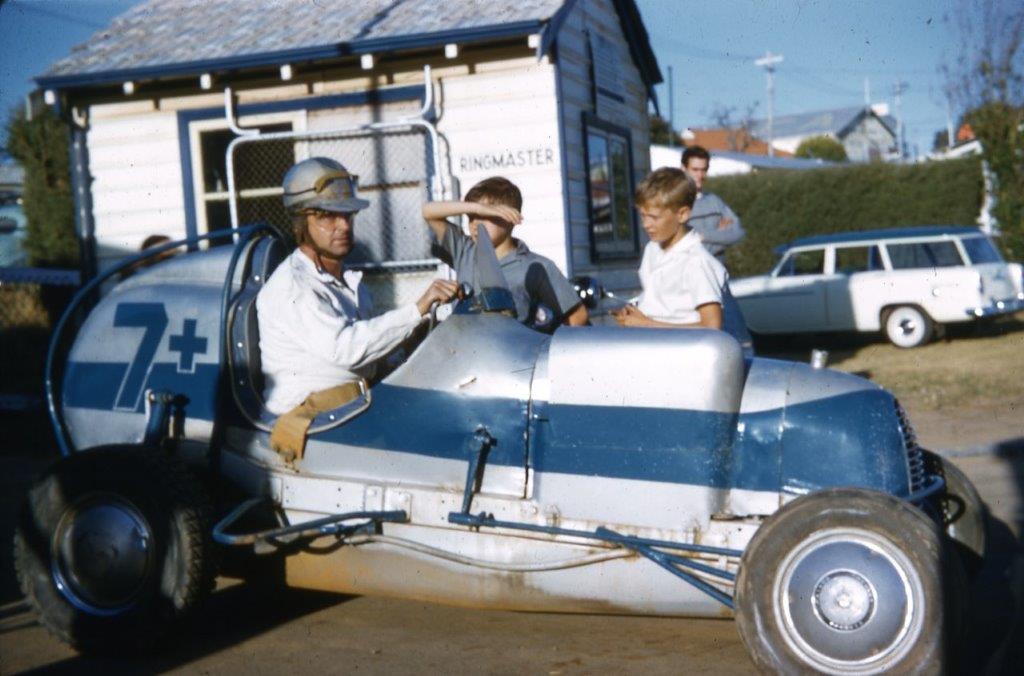
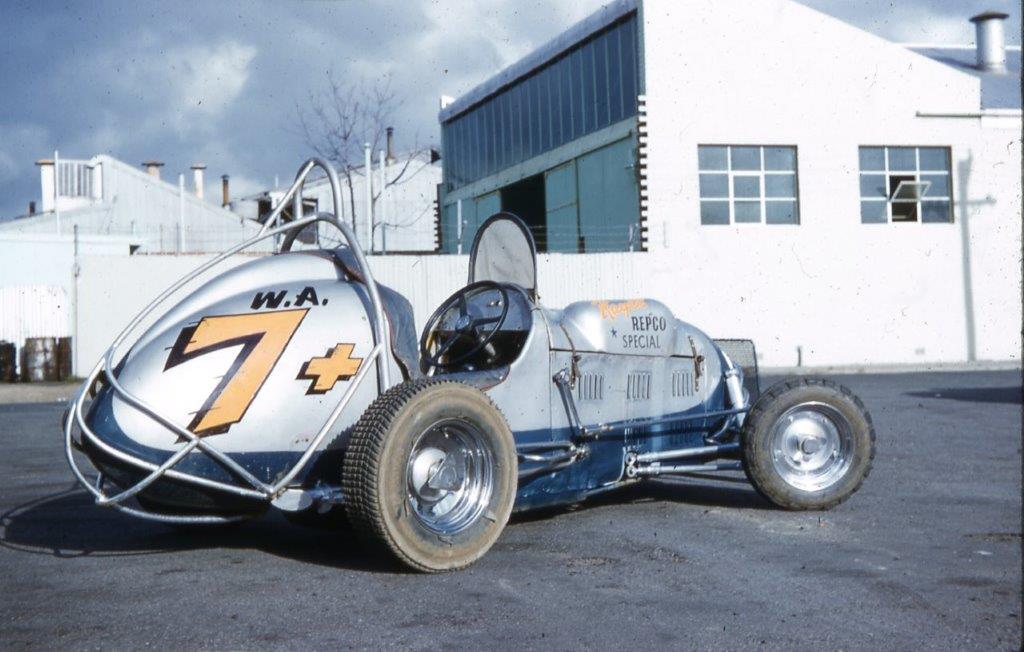
The car above is the original #7, which had the added ‘+” after its first outing with the Repco modifications in 1959.

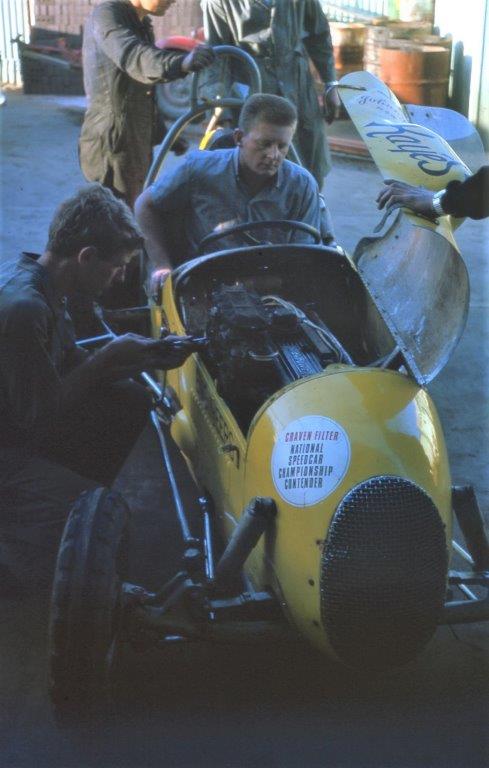
‘See above the distinctive, tuned exhaust system fitted to the Repco Hi-Power Holden six- it was an aluminium cross flow Phil Irving design, in this application fitted with twin-carburettors, Solexes, i think, which you can see in the shot below.’

‘Lynn Kirkham is fettling the car below with Johnny Stewart up in January 1965.’

‘The yellow version was a totally new car built, perhaps, for the 1961-1962 season

(G Russell-Brown)

Etcetera…

(G Russell-Brown)

A couple of Claremont fans looking for an autograph from Laurie Stevens- love the ‘Ringmasters’ office, these days the more grandiose ‘Circuit Manager’ title would be applied!

Bill Kirkham behind his car, Laurie Stevens at the wheel, chief mechanic George Williams and a Claremont official after Equipe Kirkham’s first state title.

(G Russell-Brown)


(Repco)

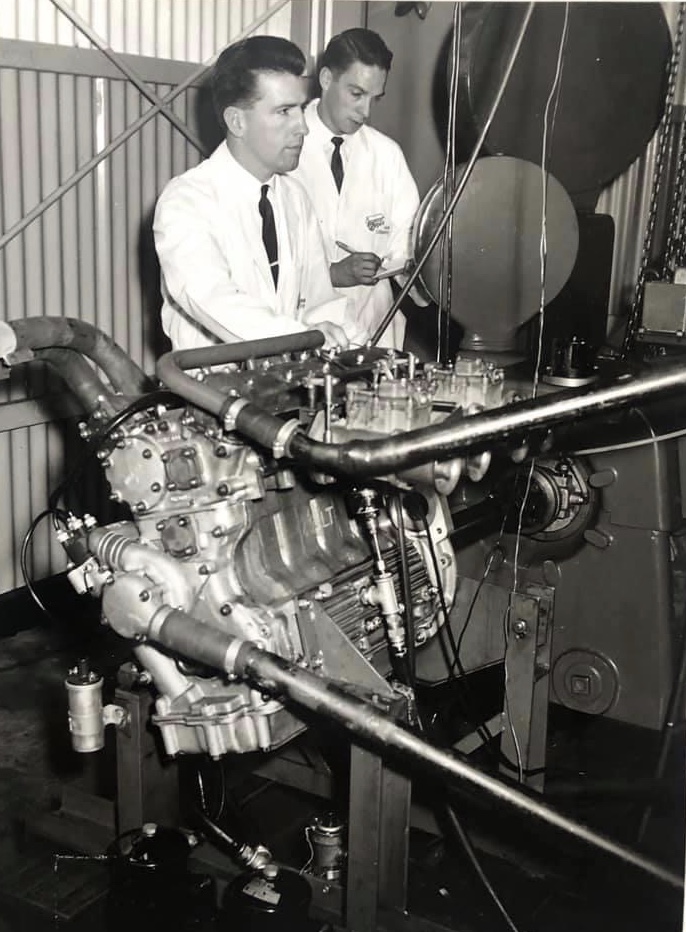
For the sake of completeness here is a photograph of Ross Kirkham manning the controls of a Repco Engine Lab dyno circa 1964- testing a Coventry Climax four-cylinder FPF race engine of 2.5 or 2.7 litres capacity.

Former Repco engineer/racer/restorer Nigel Tait recalled ‘Then Engine Laboratory Manager and Senior Product Development Engineer Ross Kirkham and Senior Technician Mchael Gasking. Ross was my boss when i started there as an Engineering Cadet- a very clever and terrific guy. The dynamometer is our Heenan and Froude GB4. It’s in a tin shed in an otherwise residential area (Richmond, Melbourne) and as you can see there was no sound insulation.’

‘Work on the RB620 V8 would have commenced by then…by 1965 the first 2.5 litre V8 would have been run on the same dyno- for sure Michael Gasking would have assenbled this one and all of the early engines.’

Photo Credits…

Nigel Tait Collection, Repco, vintagespeedway.com.au, Billy Hughes, Gary Russell-Brown

Tailpiece…

(G Russell-Brown)

#7+ Kirkham Repco Special tail shot for the tailpiece! Out back of the Kayes Engineering workshop in Subiaco.

Finito…


Who is pretty-boy then!? 21 years old James Hunt aboard his brand-new Merlyn Mk11A Formula Ford on 2 December 1968…

Gowrings of Reading have gone to some considerable expense to capitalise on their new signing for 1969- they had bought one of the best Formula Fords of the era and Hunt was to do it justice bigtime. A news brief in the 15 November issue of Autosport announced that Hunt would drive the new car pictured to be fitted with a ‘Gowrings tweaked unit’ with Gowrings able to ‘undertake all types of race preparation’.

James Hunt’s last 1967 race in his first racer, a Mini at Brands Hatch coincided with his appreciation of the potential of the new Formula Ford class for F1 aspirants like himself. Soon a new Russell Alexis Mk14 was acquired, largely funded by a 100 pound twenty-first birthday gift from his parents which helped a down-payment on the car financed on the ‘never-never’.

His speed throughout 1968 gradually increased as he grew in confidence and also ‘let himself off the leash’ keen as he was initially to avoid repair bills- a cost he could not afford. A monumental accident not of his making at Oulton Park later in the season resulted in the Alexis flying off the road after vaulting a car which had spun depositing car and driver into the lake- James separated from the racer mid-flight due to the lack of a budget to buy seat-belts which at the time weren’t mandatory.

Gowrings, a Reading Ford dealer, liked the cut of James jib and agreed to sponsor him for 1969 inclusive of the purchase of the Merlyn which replaced the drowned Alexis in the last few races of 1968- he achieved a third at Brands and a win at Lydden Hill which convinced Gowrings further of Hunts competitiveness.

Mallory Park March 1969, Hunt’s Merlyn is car no 11 on row 3. Two Lotus 61’s on the right first and second row, a Frank Williams car mid front row – happy to know the names of the other cars/drivers from 1969 FF fans! (unattributed)

During 1969 Hunt was one of the stars of Formula Ford with plenty of heat wins and top three finishes. Later in the season James stood in for one of the MRE (Motor Racing Enterprises) FF drivers at Lydden Hill winning the race- that team, having seen enough, gave him his first F3 start in their Brabham BT21 Ford. The car was a couple of years old but Hunt did well enough to win a Grovewood Award.

James impressed the right people thanks to an outstanding performance at Cadwell Park on 28 September. In a handful of full international F3 races in the UK in 1969 Hunt raced wheel to wheel with Ronnie Peterson- the Swede was shortly to break through into F1, in the prototype March 693 Ford…’Many observers, including the astute Max Mosley, took note when Hunt raced wheel to wheel with Peterson as they raced for third place, the brand new March edging the ancient Brabham by a whisker as they crossed the line side by side’ Maurice Hamilton wrote in his biography ‘James Hunt’.

JSW Hunt was on his way, the rest is history…

Credits…

Getty Images, ‘James Hunt’ Maurice Hamilton

Finito…

(B Hickson)

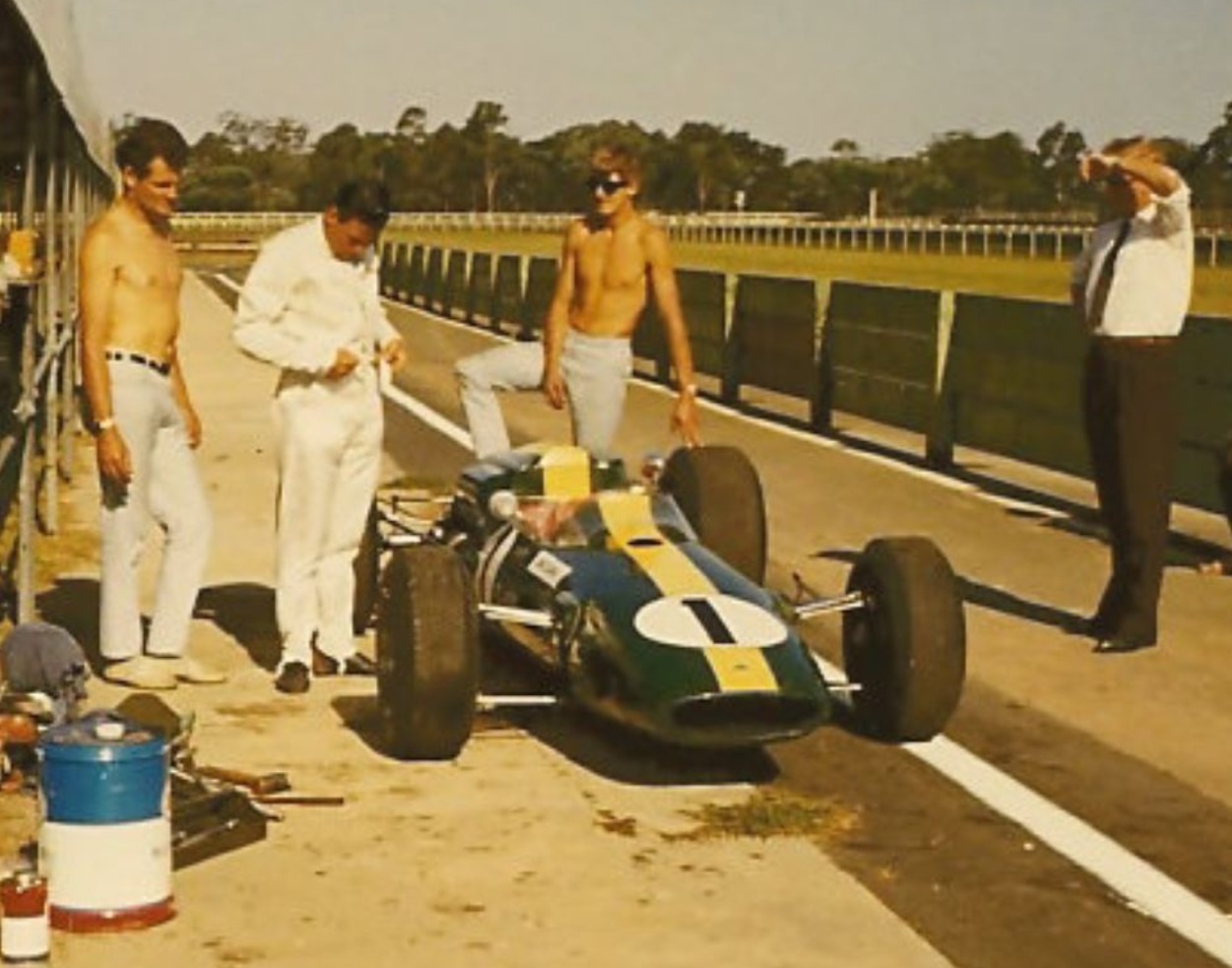
Jim Clark stops his Lotus 39 to collect a celebratory beer after winning the 13 February 1966 ‘Warwick Farm 100’ Tasman round…

Clark won the Tasman Series in 1965, 1967 and 1968. His 1966 mount, whilst a good car, the 2.5 litre Coventry Climax four-cylinder engine was outgunned by the ex-F1 BRM P261, the capacity of which had been stretched from 1.5 to 1.9 litres with Jackie Stewart winning the championship taking four victories from eight rounds.

I wrote a feature article about this one-of-a-kind Lotus 39 a while back; https://primotipo.com/2016/02/12/jim-clark-and-leo-geoghegans-lotus-39/

JC and the lads looking fairly relaxed for this Thursday or Friday WF test of the 39, WF pitlane 1966 (ABC)

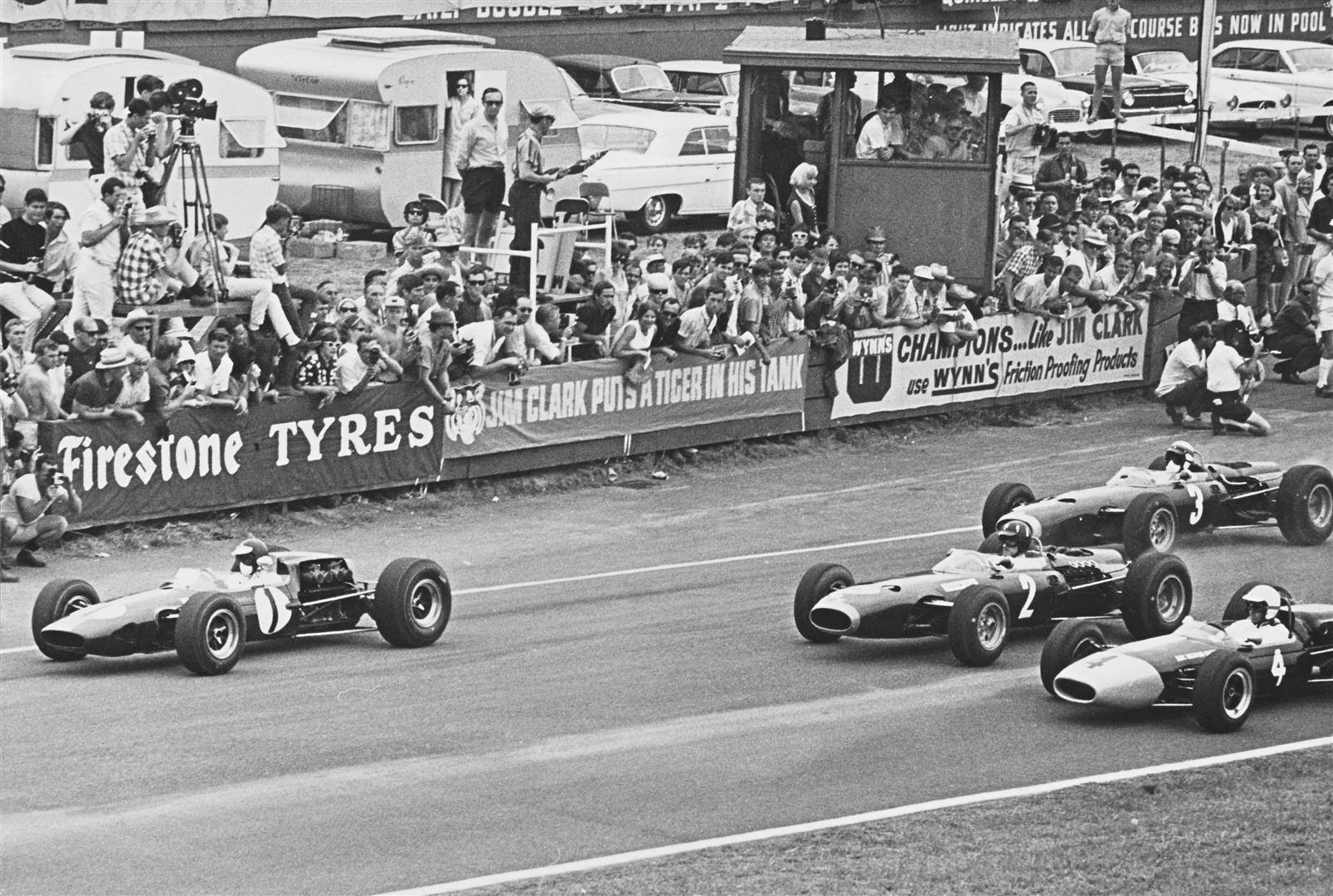
From the off at WF: Clark’s Lotus 39 scampers away from the Hill and Stewart BRM P261’s and Frank Gardner in Alec Mildren’s Brabham BT11A Climax #4 (WFFB)

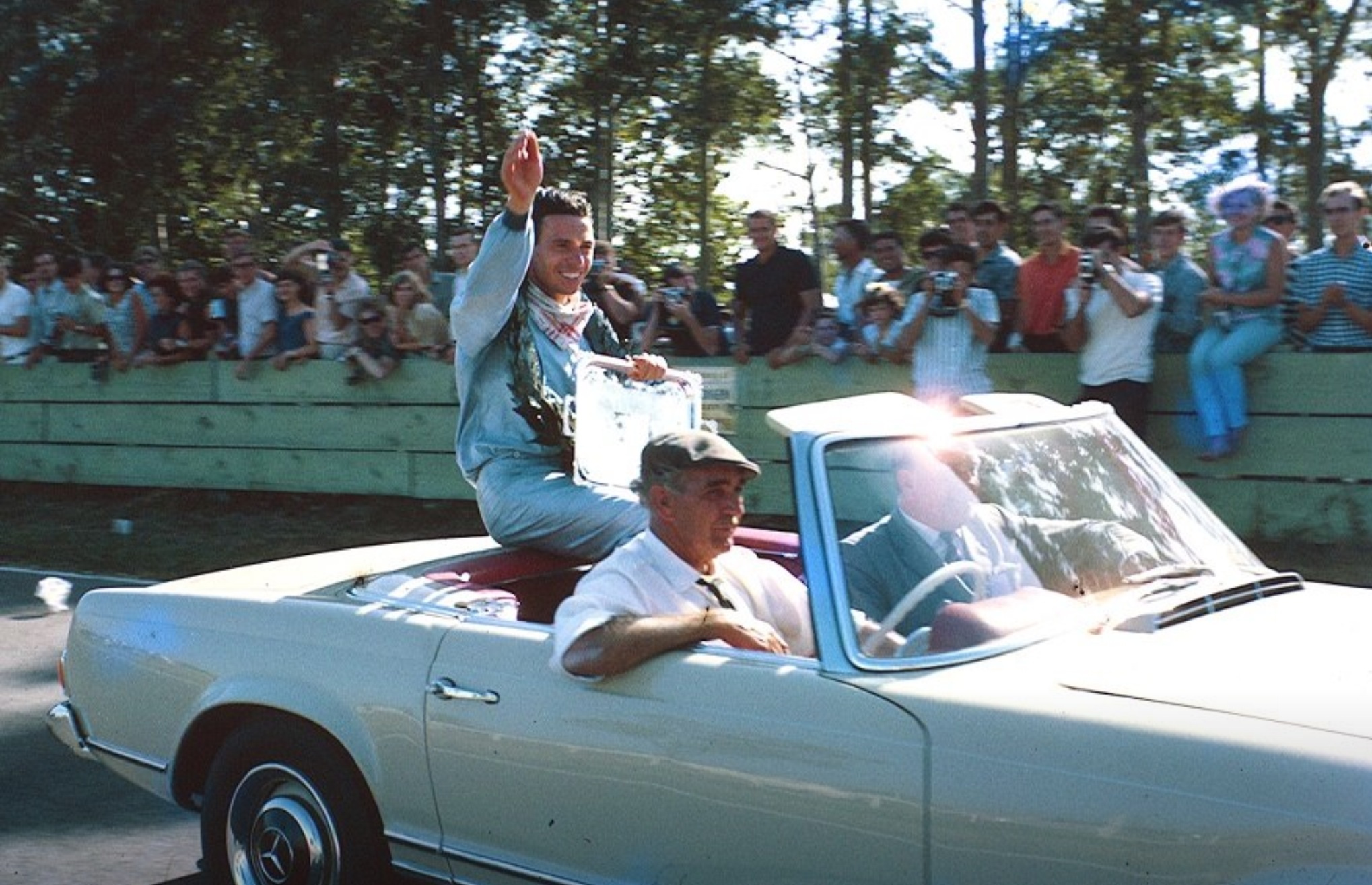
Jim’s only 1966 Tasman win was in Sydney- Barry Hickson took this photograph whilst a flag marshall at Homestead Corner recalled that Dick MacArthur Onslow, the Homestead Sector Marshall promised Jim a ‘cold one’ if he won, here in the opening photo, the great Scot has pulled up to collect the promised cool beverage from Dick!

Benz 230SL to Clark’s liking, Homestead Corner fans happy to have JC back after his stop a short time before (B Hickson)

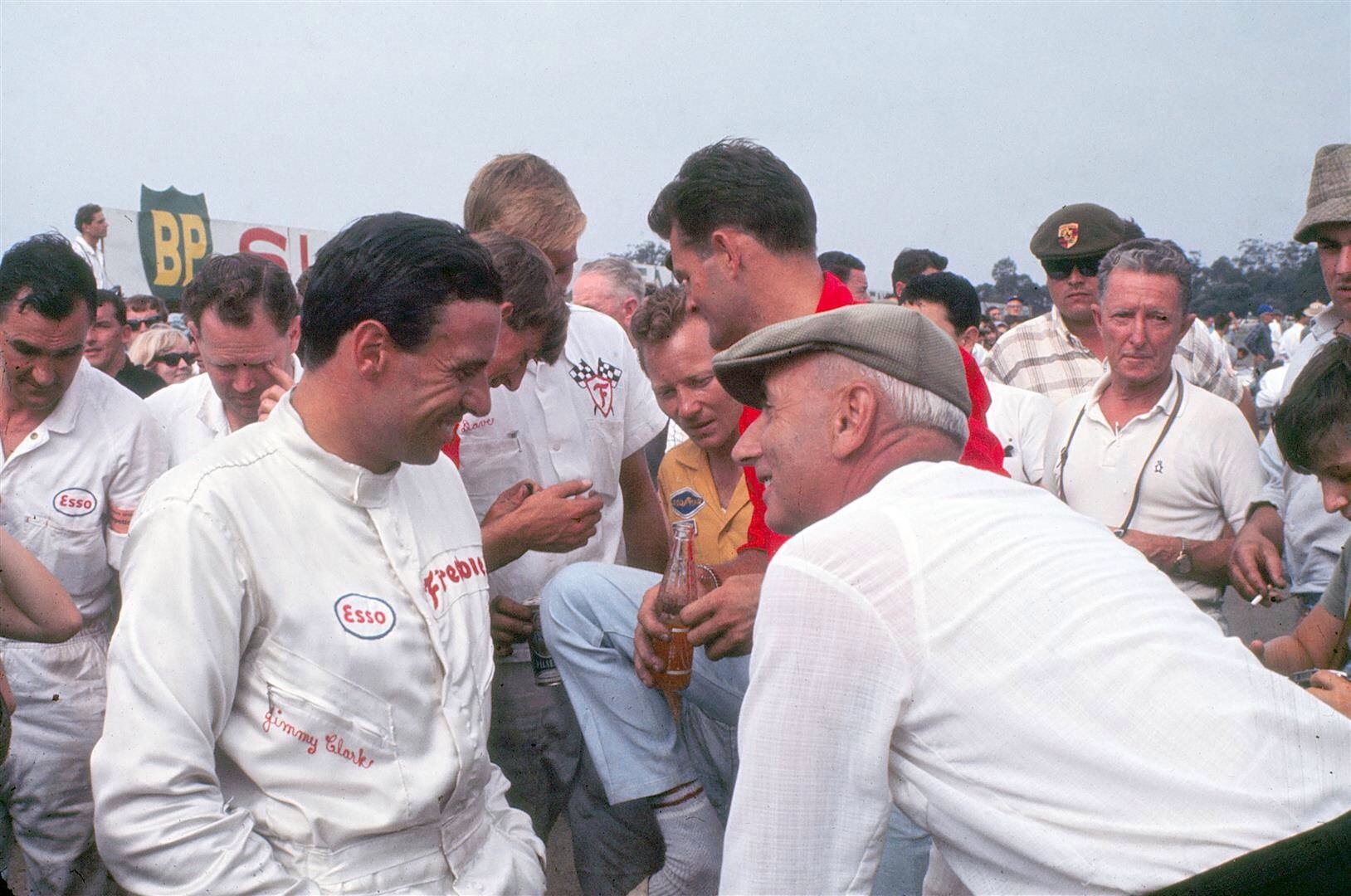
Clark and WF supremo Geoff Sykes swap notes after the 1966 win (WFFB)

Clark excelled at the technical, depending, outer Sydney track, he started from pole and won from Graham Hill, BRM P261 and Frank Gardner in Alec Mildren’s Brabham BT11A Climax with JYS fourth in the other P261.

In fact the ‘Farm was a very happy hunting ground for Jim, he raced there from 1965 to 1968 winning on three of his four visits aboard works Lotus machines- 1965 32B Climax FPF, 1966 39 FPF, and in 1968 aboard a 49 Ford DFW, the 2.5 litre variant of the 3 litre F1 Ford Cosworth DFV. In 1967 he fell short of the mark but not by much taking second to Jackie Stewart’s BRM P261, that Tasman Series the BRM V8’s were stretched to 2.1 litres in capacity. Jim’s 1967 car was an F1 Lotus 33 Coventry Climax FWMV 2 litre V8.

Victory for Clark at WF in 1966 aboard the Lotus 39- a car which would become iconic in Australia thereafter in Leo Geoghegan’s hands in both Coventry Climax and Repco V8 engined forms. And still resident in Oz (unattributed)

Credits…

Barry Hickson, Aust Broadcasting Corp, Warwick Farm Facebook page

Tailpiece: Clark on the way to his 1965 Warwick Farm 100 win, this time in his Lotus 32B Climax, Homestead Corner…

(B Hickson)

And the same 32B chassis in the WF paddock beside Jack Brabham’s Brabham BT11A Climax, with Roy Billington toiling on Jack’s car. Is that Ray Parsons behind the 32B? Who is the Repco clad bloke looking at Jim’s car who attended to Jack every year whilst he was in Oz?

(B Hickson)

Finito…

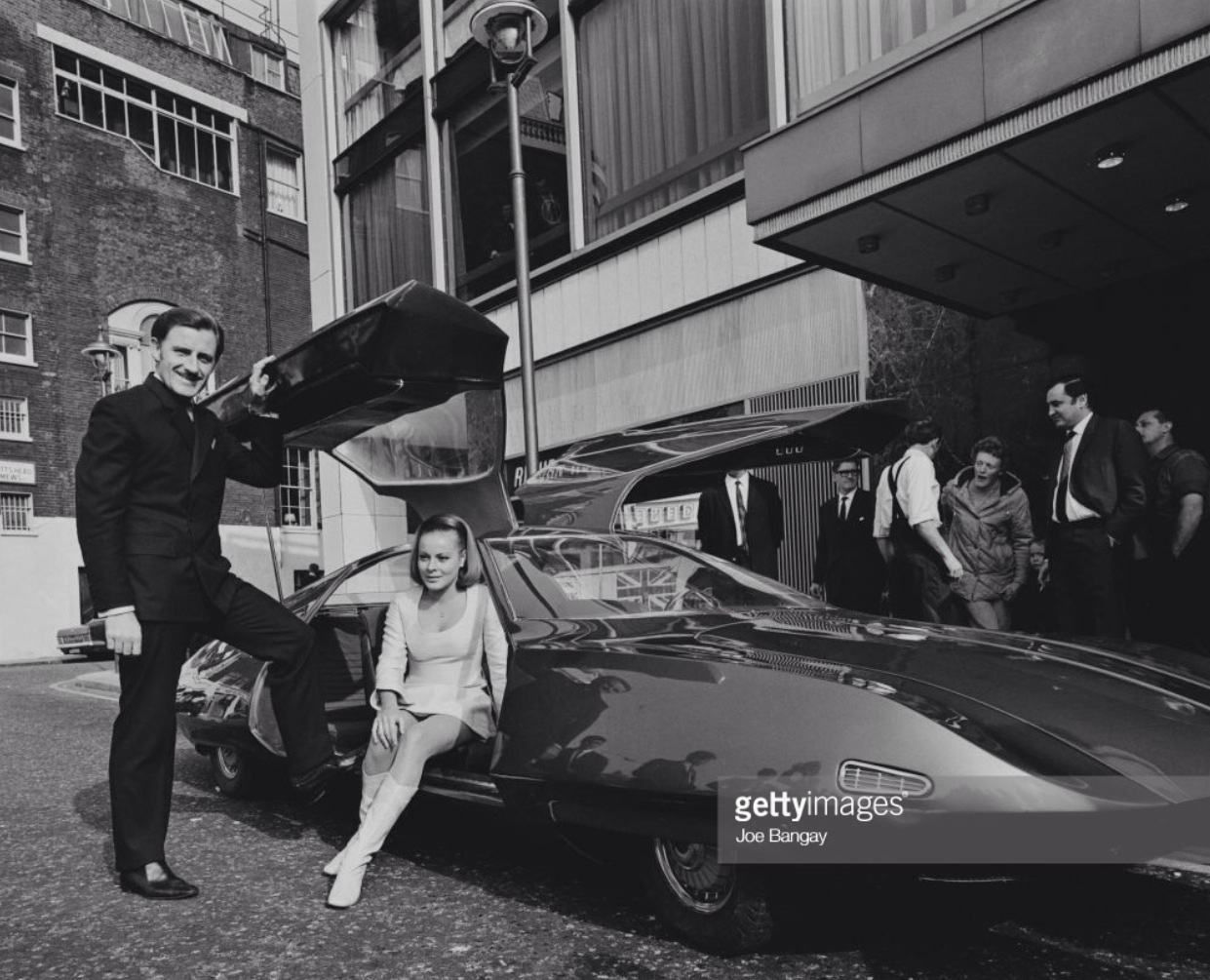
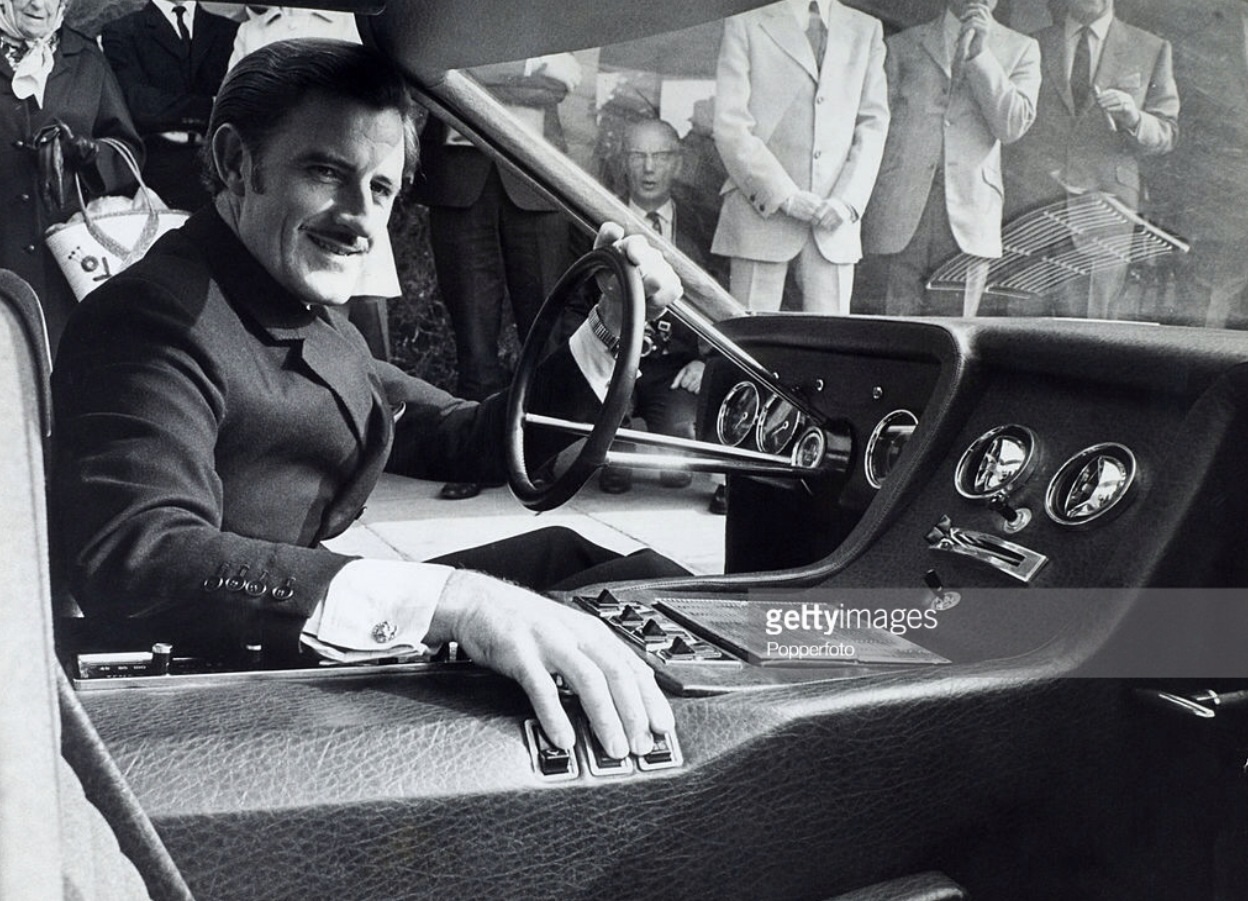
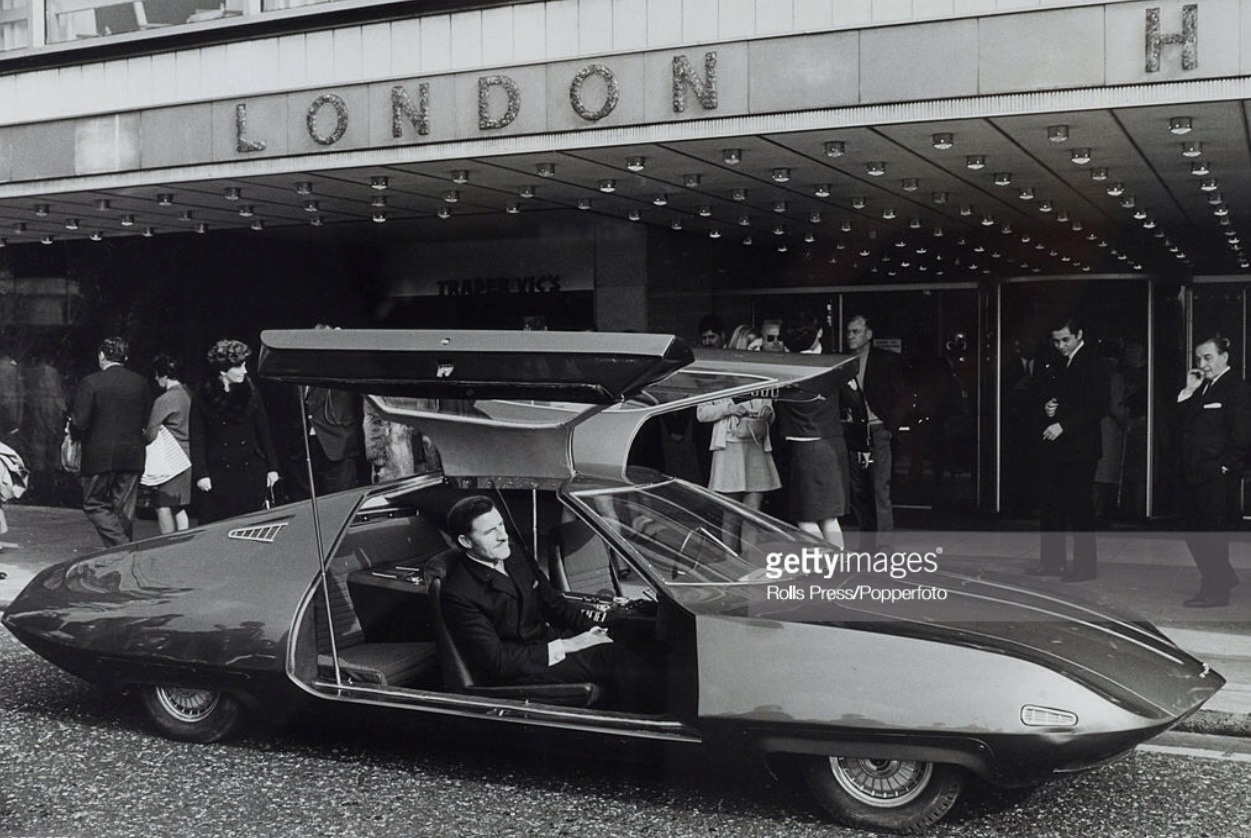
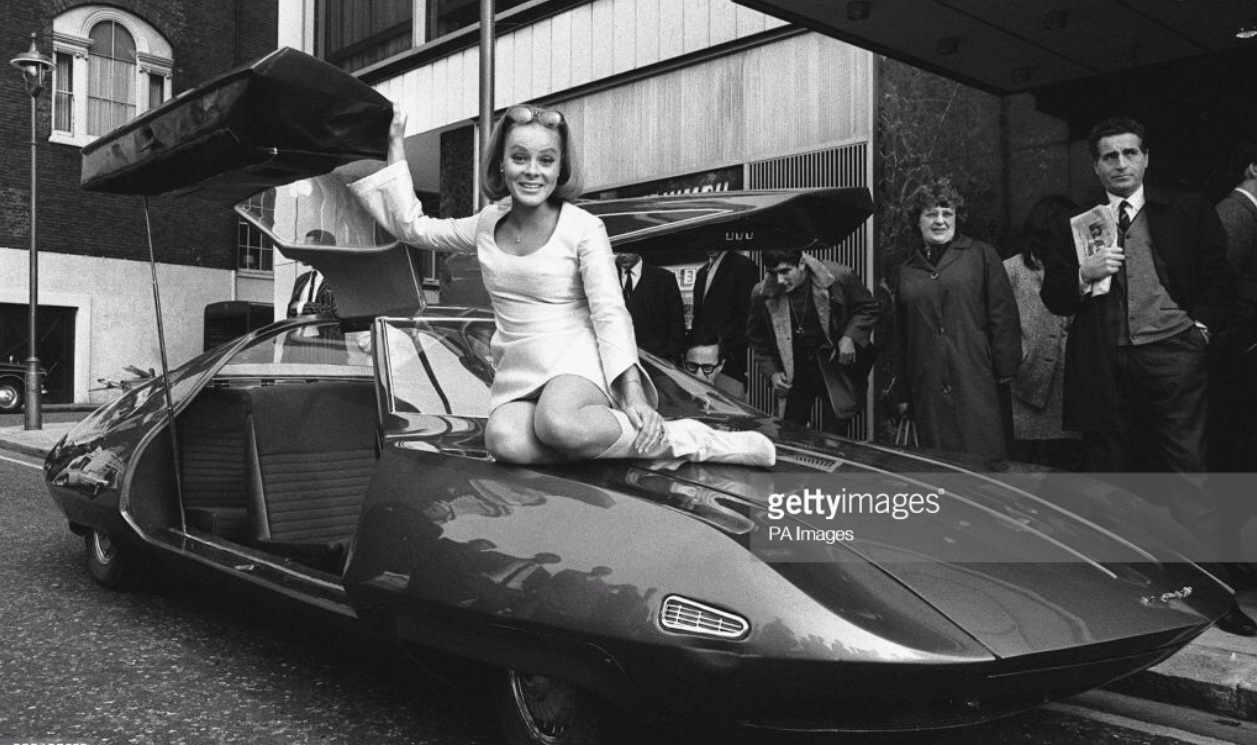
Graham Hill with his new Doppelganger, London, 10 October 1968…

With him is Austrian actress Loni Von Friedl who appeared in ‘Doppelganger’, a movie which is the subject of this promotion, an activity which seems quite agreeable to the great Brit. The car, also a movie-star was ‘designed and built by Alan Mann Racing, has a Ford engine and chassis, is 44 inches high and is capable of 144 mph’.

The film, also called ‘Journey To The Far Side Of The Sun’ in some countries has a screenplay written by Gerry and Sylivia Anderson of ‘Thunderbirds’ and other 1960’s ‘Supermarionation’ puppet TV series fame- well known to those of us of a particular generation.

Set one-hundred years into the future, the film is about a joint European-NASA mission to investigate a planet in a parallel position to Earth and ends in disaster with the death of one of the astronauts- his colleague discovers that the planet is a mirror image of earth. Click here for some more detailed information about the movie which first screened in 1969; https://www.imdb.com/title/tt0064519/

Who gives a rats about the movie for most of us! As to the car, I can find out a little bit, Alan Mann Racing has a great website but the car does not rate a mention there so I am intrigued to know more about the detailed design.

It seems the styling of the futuristic car (three were built for the film) was the work of Derek Meddings, the machines were ‘redressed slightly’ for a subsequent movie named ‘UFO’. The donor chassis was a Ford Zodiac Mk4 with the shapely aluminium body draped thereon. The gull-wing doors did not actually work, someone such as Hill G, or off camera during the movie was required to support a door.

‘The actors reported that the cars were very unpleasant to drive in, as there was not enough headroom, engine exhaust fumes spilled into the interior…and the cars were not fast, so many scenes were sped up to simulate a fast-moving vehicle’. The bones of the car still exist and will no doubt make an interesting curio at race/concours meetings when completed.

Photo and Other Credits…

PA Images/Joe Bangay Getty, projectswordtoys.BlogSpot.com

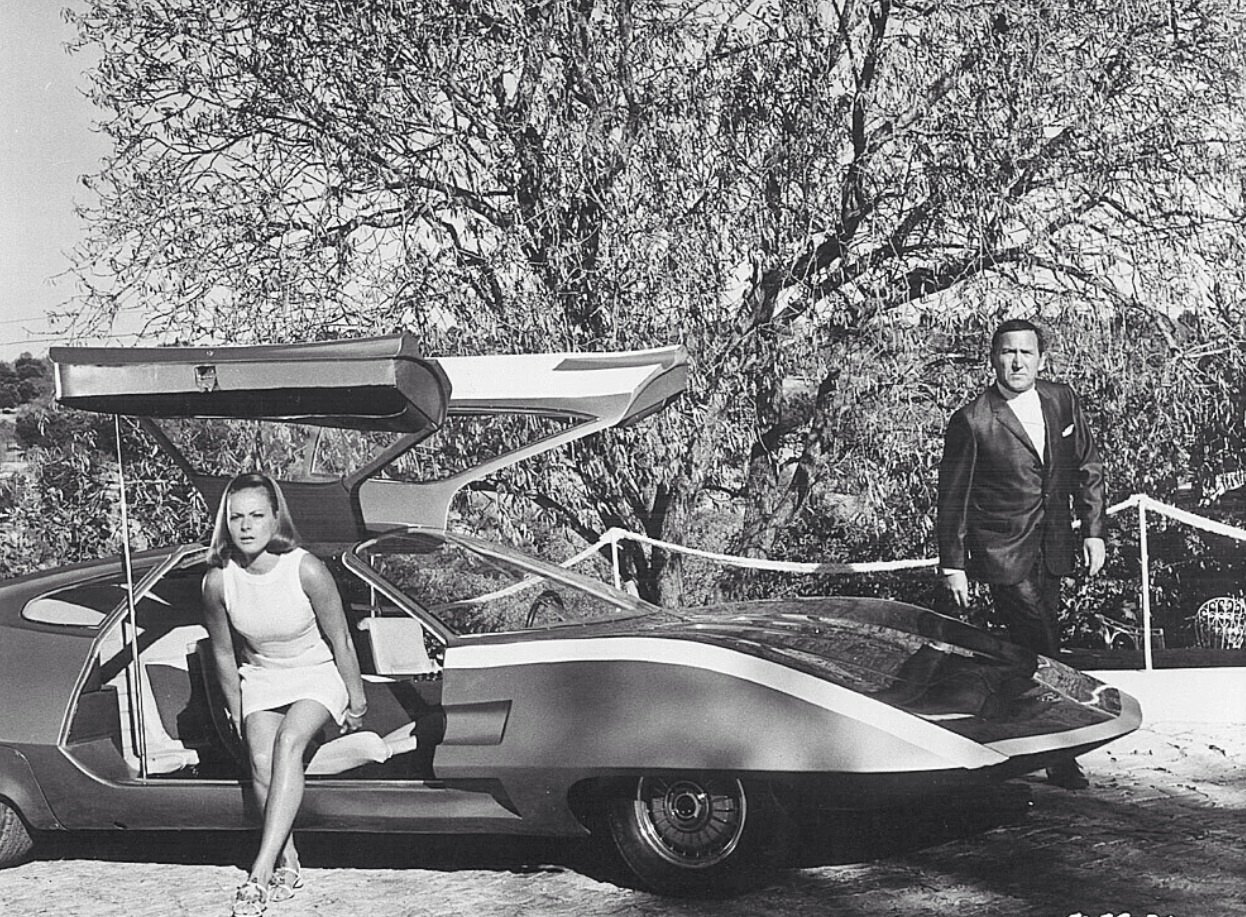
Tailpiece: Another of Doppelganger’s cars, Loni and a bloke…

Finito…

(TEN)

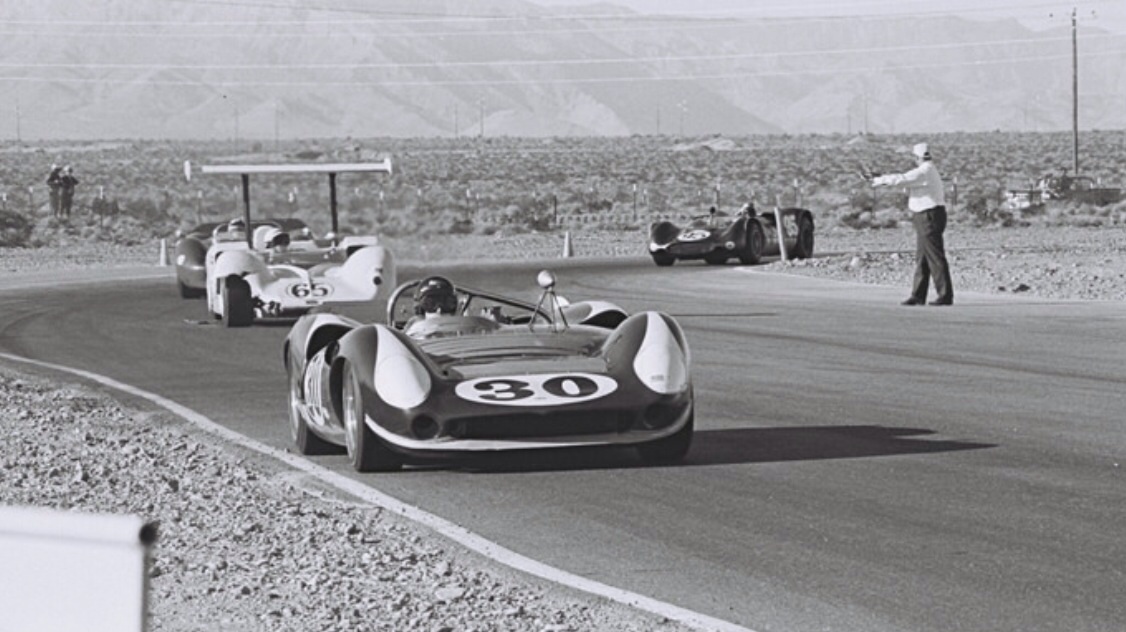
Dan Gurney’s Lola T70 Ford during the Stardust Grand Prix, Las Vegas Can-Am round, 13 November 1966…

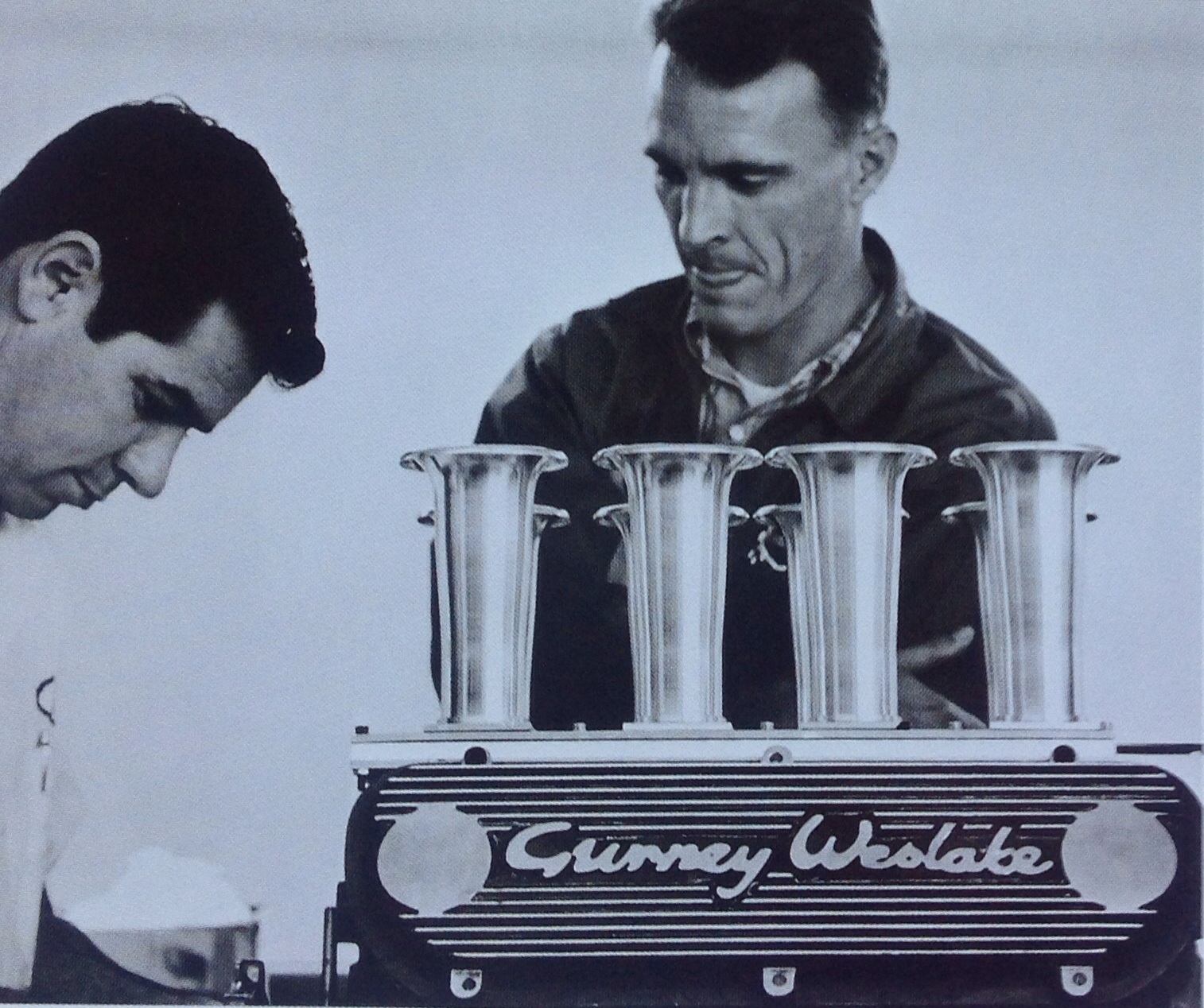
Gurney didn’t have a great weekend, the fuel injected Gurney Weslake aluminium headed Lola qualified eighth and failed to finish with a fuel tank breather problem. John Surtees won the race and the series in a Lola T70 Mk2 Chev. The photo got me thinkin’ about those cylinder heads…

AAR Lola T70 Gurney Weslake Ford V8, Las Vegas 1966 (D Friedman)
Dan from Phil Hill, Chaparral 2E Chev, Las Vegas 1966 (D Friedman)
As above, ditto Gurney below (D Friedman)

The Gurney-Weslake combination is best known for the Formula 1 60-degree, DOHC, four-valve, Lucas injected V12 which was fitted into the gorgeous Eagle Mk1 created by Len Terry and Dan in 1966. Initially fitted with a Coventry Climax 2.7-litre ‘Indy’ FPF four cylinder engine, the V12 finally raced at Monza in 1966 and won its only GP at Spa in mid 1967. The F1 project resulted from the relationship which arose from the development of special cylinder heads for the pushrod small-block Ford V8 a little earlier.

Gurney’s Belgian GP victory, Spa 1967. Surely one of the five best looking GP cars ever? Eagle Mk1 Weslake chassis ‘104’. The path to the F1 relationship between Dan and the Weslake concern was via the Ford V8 program which preceded it (unattributed)
Len Terry designed Eagle Mk1 powered by Gurney-Weslake V12, 1966. Cutaway by Bill Bennett

Gurney was keen to better exploit the performance potential of the small-block 289 cid Ford V8 with which he was so familiar from his AC Shelby Cobra, Ford GT40 and Can-Am experiences.

This engine family was the same as that which provided the first 255 cid pushrod engines used by Team Lotus at Indy in the rear of Lotus 29s raced by Dan and Jim Clark in 1963. Whilst Dan’s plan was initially to get more competitive engines for the Sports Car Club of America’s burgeoning sportscar races – which would of course become the Can-Am Championship from 1966 – the Gurney-Weslake V8 engines ultimately powered winning cars at Le Mans and in Group 7 sportscar, ‘Indycar’ single-seaters and beyond.

Dan had seen what Keith Duckworth had done with pushrod Ford engines in the UK; development of 100 bhp per litre, and figured the same approach could be successfully applied to the Ford V8.

‘I heard that Duckworth had modified a four-cylinder Ford Anglia cylinder head by boring an inlet tract hole straight at the port, so it was a more direct shot and I believe that was the first time that a little four-cylinder 1000cc pushrod engine made 100 horsepower. It seemed to me to be a pretty neat thing to accomplish and, naturally, being inquisitive, I wondered if the same idea could be applied to a Ford V8, since it looked to me as though we could do something similar to the 289-302 style engine’.

‘Actually we began our inquest with an extensive rework of the existing 271 bhp heads. At the peak of our testing with the 271 bhp cast iron heads on a 325 inch block, we were pulling as much as 448 hp on gasoline. It was about this time we figured a few improvements along the lines of a new head design might give us even more power, so we got after it’.

Dan sought out Weslake Engineering just outside Rye near the East Sussex coast of England and via Production Manager Michael Daniel engaged them to do some drawings after Gurney delivered some 289 heads to be inspected, analysed and sectioned.

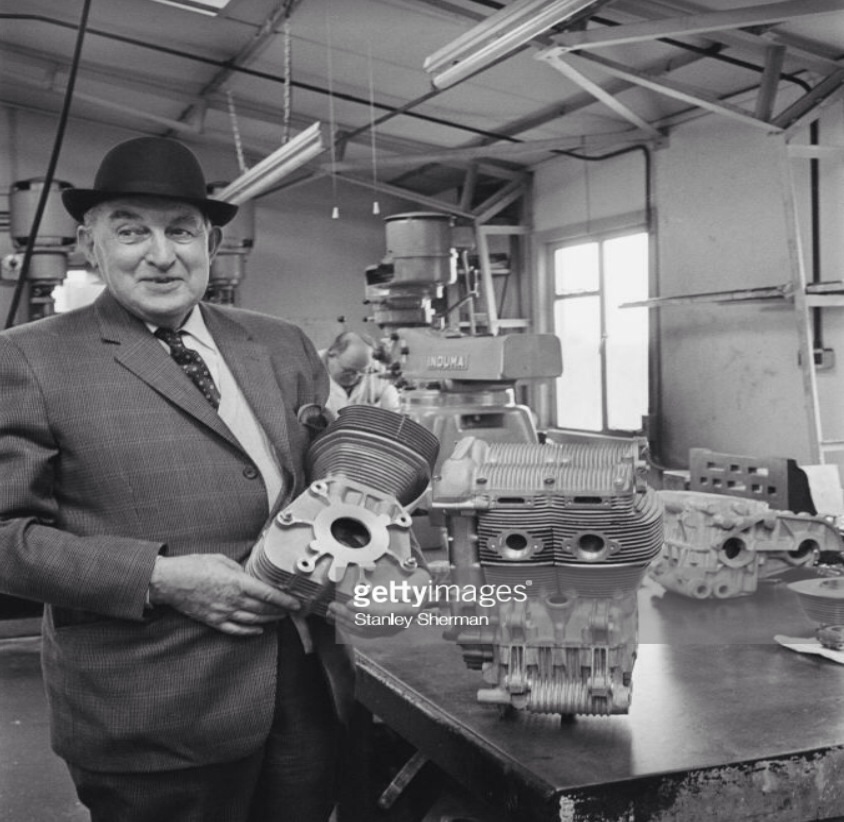
Harry Weslake in his factory in April 1968 with a Read-Weslake 500cc GP motorcycle engine (S Sherman)

Patterns were made and these first Mark 1 Gurney-Weslake heads were cast at Alcoa Aluminium’s foundry in Pennysylvania.

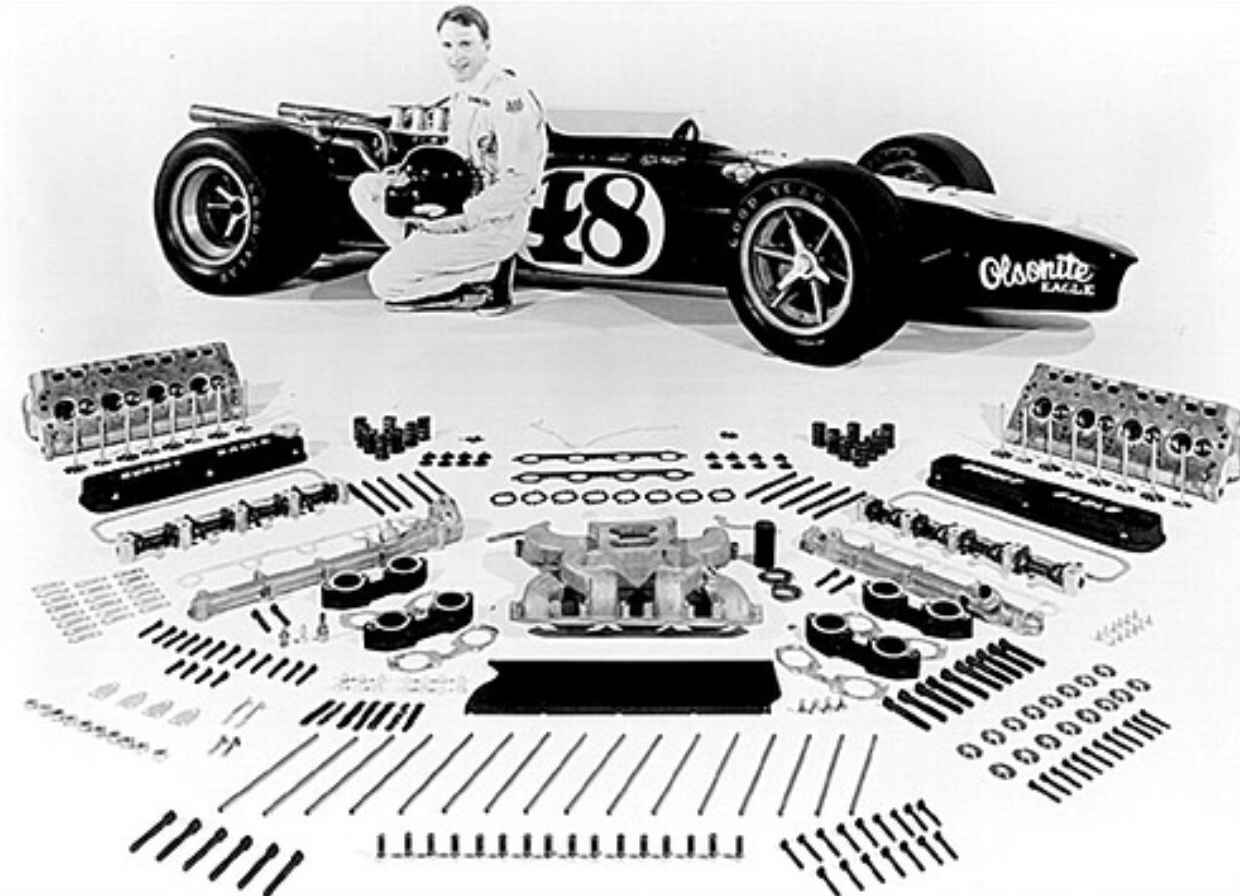
They featured circular inlet ports that provided a direct path from manifold interface to valve seat in order to get as much fuel-air mixture as possible into the combustion chambers. The valves were inclined at 9-degrees to the cylinder centreline instead of the 20-degree angle of the stock Ford heads. The valve guides were fitted with Perfect Circle teflon valve seals. Classic Weslake combustion chamber shapes were deployed: heart shaped with precision machined valve seat inserts – steel for the inlets and bronze for the exhausts – both press-fits into the heads.

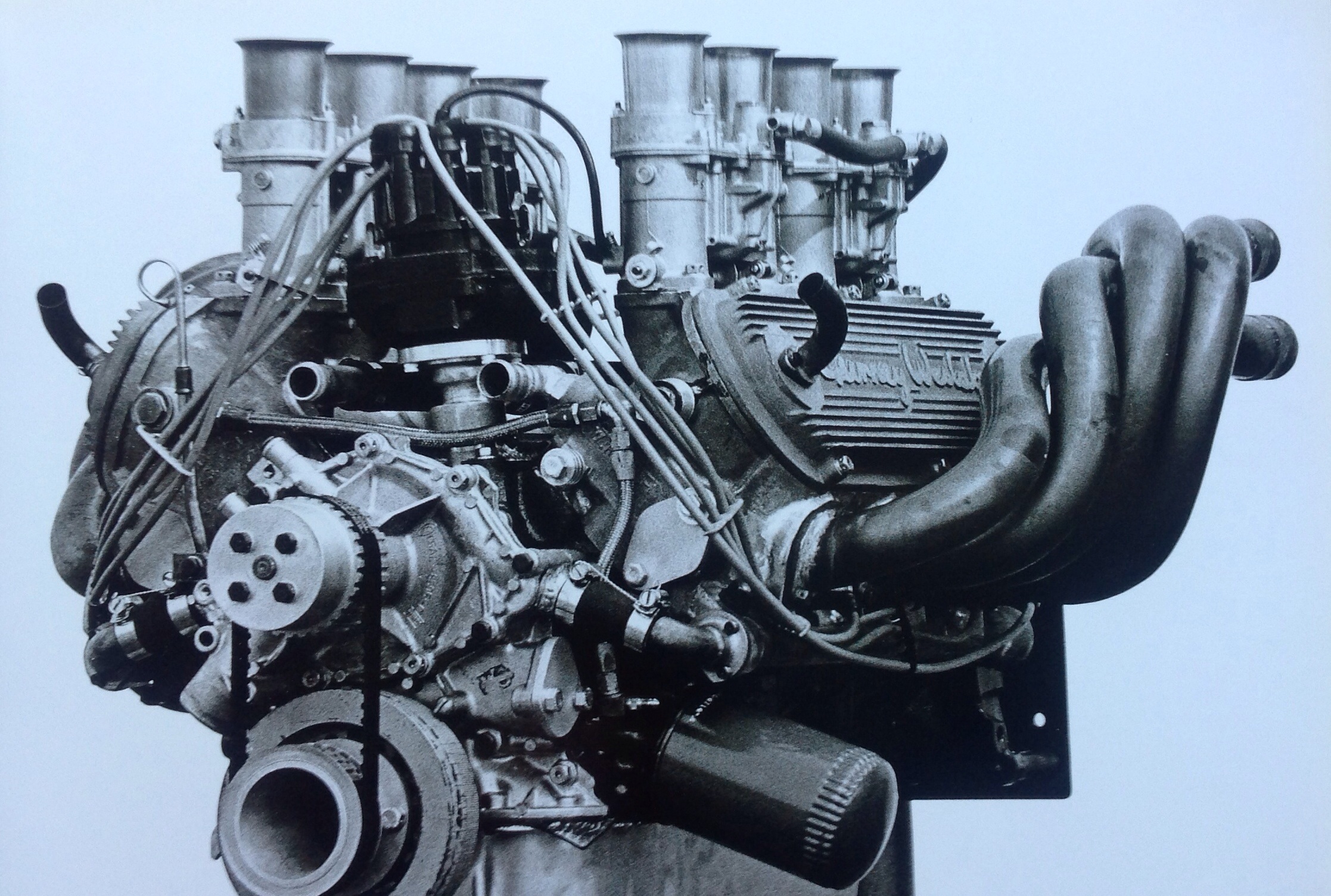
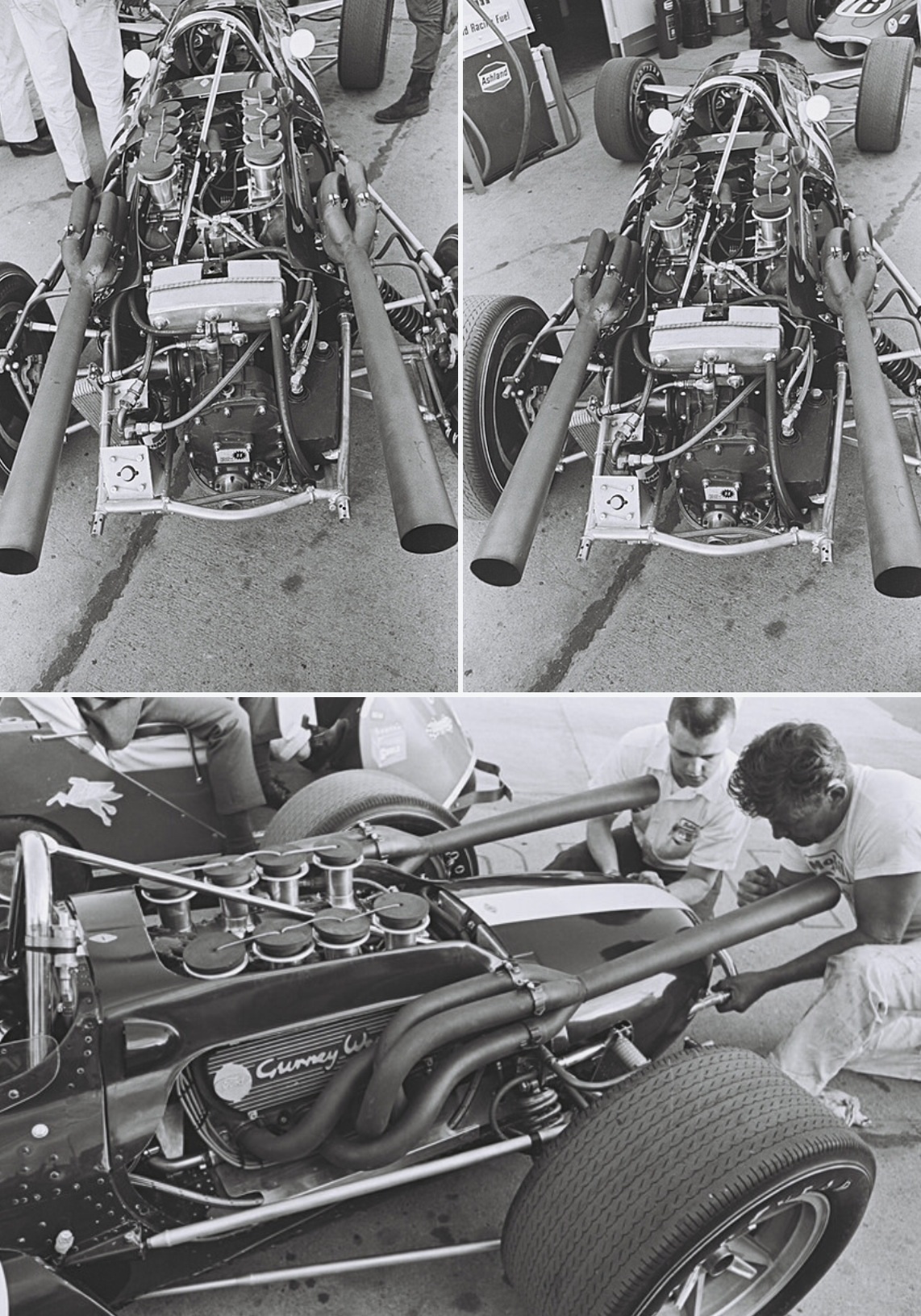
Early G-W Ford on 48 IDA Webers. ‘DG asked Weslake & Co to create a cylinder head…that provided a direct pathway for the fuel mixture from carburettor to inlet valve, as can be seen from this head-on view…’ (AAR)
Front view shows the ‘standard’ Ford block and drives, oil filter, distributor, 48 IDA downdraft two-barrel Webers, ally-heads (AAR)

An immediate improvement of 70-100 bhp was achieved over the standard 289-302 heads both through the mid to upper rpm ranges without losing smoothness down low. To cope with the increased loadings the bottom end also ‘had a birthday’ with bits and pieces provided by well known suppliers of US performance gear.

The Dearborn Crankshaft Corporation made a steel crank to AAR specifications which sat in bearings donated by the Ford DOHC Indy motor. Carrillo provided shot-peened conrods to which were attached Forged True pistons; compression ratios ranged from 10.5 to 11.6 to one. Jack Engle worked on cam grinds arriving at solutions which involved short lift and long duration with ‘rev springs’ fitted into the block’s oil galleries to assist the proper seating of the valves at high rpm. Ford’s stock high pressure oil pump was man enough for the job with stock oil pans baffled and main bearing girdles added to keep the whole lot stable.

Times GP Riverside, McLaren Elva Mk1 Ford G-W, 1965 (TEN)

The Gurney-Weslake heads were first used by Dan during the 200 mile LA Times Grand Prix sportscar race at Riverside in late October 1965 fitted to his McLaren Elva Mk1

In an all-star cast which included Jim Clark, Bruce McLaren, Chris Amon, Hap Sharp, John Cannon, Peter Revson, Chuck Parsons, Jerry Titus, David Hobbs, Bob Bondurant, Parnelli Jones, Richie Ginther, Graham Hill, Jerry Grant, Walt Hansgen, and Dan (wow!- was there ever a better ‘Can-Am’ field of depth). That race was won by Sharp’s Chaparral 2A Chev from Clark’s Lotus 40 Ford and McLaren’s McLaren Elva Mk2 Olds. Dan’s AAR McLaren was out with brake troubles on lap 24. By that stage of G-W development Mark 2 heads were fitted which incorporated improvements including removable rocker arm studs.

Monterey GP weekend, Laguna Seca October. 1966. DNF lap four with an undisclosed ailment, Lola T70 Ford with Mk 3 G-W heads – note still on 48 IDA Weber carbs (D Friedman)
Laguna 1966. By this meeting the G-W engine developed 520 bhp and 415 lb ft of torque @ 6300 rpm (D Friedman)
Hmmm, too short a race. Laguna 1966, Lola T70 Ford DNF after four laps from Q4- behind the first and second placed Chaparral 2E Chevs of Phil Hill and Jim Hall and third placed Bruce McLaren’s McLaren M1B Chev (D Friedman)

Mark 3 Gurney Weslake heads were developed in 1966 with alterations to make assembly and maintenance easier.

With this configuration AAR took their first GW head win in the May 1966 United States Road Racing Championship round at Bridghampton. Jerry Grant won in the AAR Lola T70 Ford from Lothar Motschenbacher’s McLaren Elva Mk2 Olds and Mike Goth in a McLaren Chev.

The same chassis was used by Dan to win the Long Island, Bridghampton Can-Am round in September 1966. In a splendid weekend for All American Racers Dan popped the Lola T70 Mk2 on pole and won from the works McLaren M1B Chevs of McLaren and Amon. Sadly, it was the only Can-Am win for a Ford powered car; 495 bhp @ 7800 rpm was claimed at the time, ‘The redline used to be 8000 rpm but I just found I could turn 8900’ Dan quipped after the race.

It’s interesting to look at the engine competition at the time. Pete Lyons in his bible ‘Can-Am’ writes that ‘Chevrolet’s small block was the typical T70 engine of 1966, and those offered by well respected Traco Engineering in Los Angeles can be considered definitive. The bore remained standard at 4.0in but a stroker crank of 3.625in gave a displacement of 364.4 cid. Breathing thorough a quartet of two-barrel 58mm Weber side-draft carburettors…such a package was rated at about 490bhp at 6800 rpm and 465 lb/ft of torque at 4500…it weighed about 540-560 lbs. Price was just under $US5000’.

Rindt’s Eagle Mk2 G-W Ford on the Indy weighbridge in May 1967, sex on wheels (D Friedman)
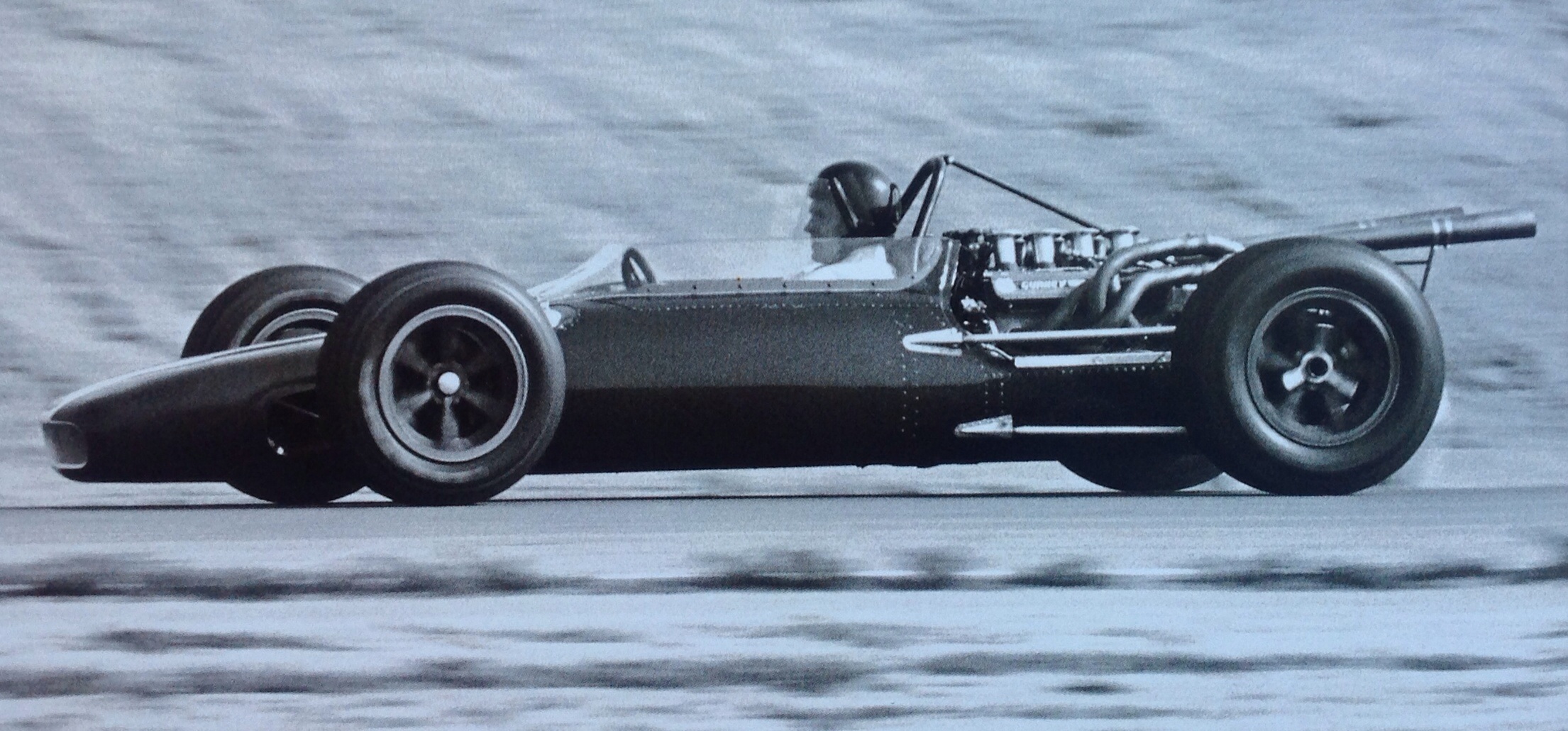
Len Terry’s Eagle Mk1 design was a bit of a pork-chop in F1, designed as it was for GP and USAC (Mk2 50 pounds heavier than its F1 brother) use. The design drew heavily on his previous Lotus work and is a beautiful, in every respect, expression of monocoque orthodoxy of the day in both chassis and suspension (D Friedman)

Towards the end of 1966 the engine was also fitted to the very first Eagle Indycar chassis – Mk2 ‘201’ which was raced by Dan in the ’66 Indy with a Ford 255cid DOHC motor. In fact Gurney didn’t complete a lap having been wiped out with eleven other cars in THAT famous collision.

In the re-engined Ford G-W 305 cid powered car Jochen Rindt contested the 1967 Indy 500, he qualified 32nd and retired after completing 108 of the 200 laps with valve trouble – classified 24th. His was the only 305 cid stock-block powered car in the field, the race was won by AJ Foyt, Coyote Ford from Al Unser and Joe Leonard in Ford engined Lola and Coyote respectively.

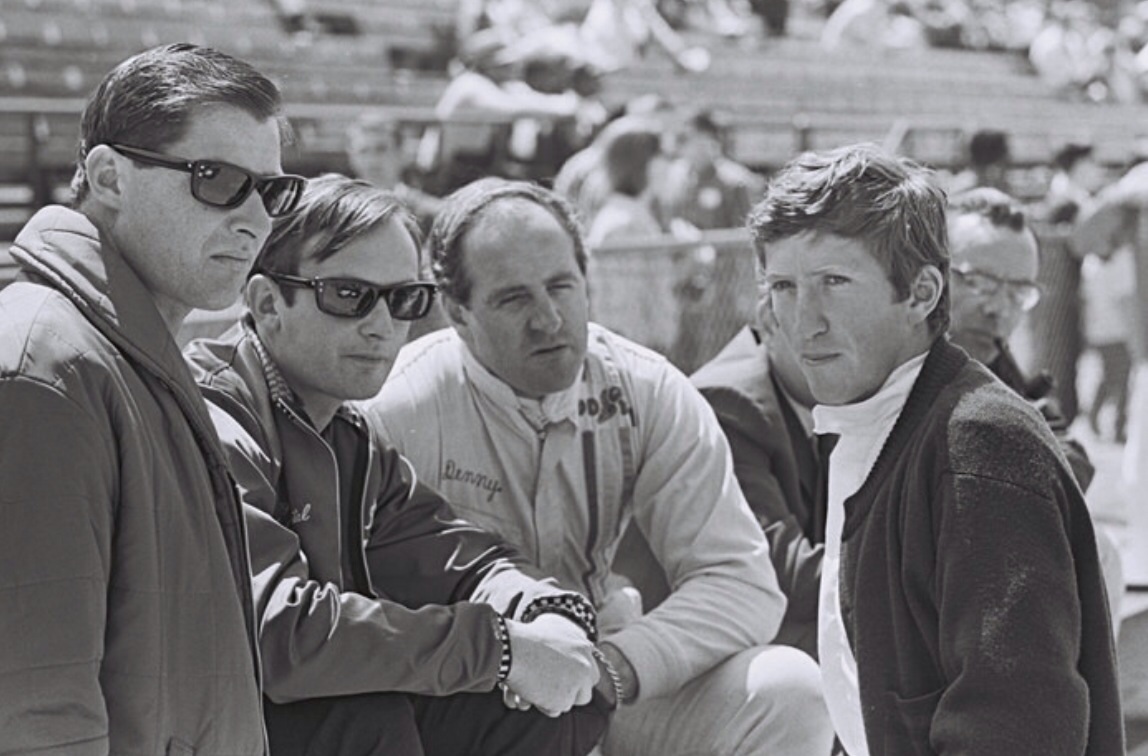
‘Chewin the fat – lots of downtime for drivers during the month of May at Indy. A youthful Amon, Hulme and Rindt in 1967. Dude on the left folks? (D Friedman)
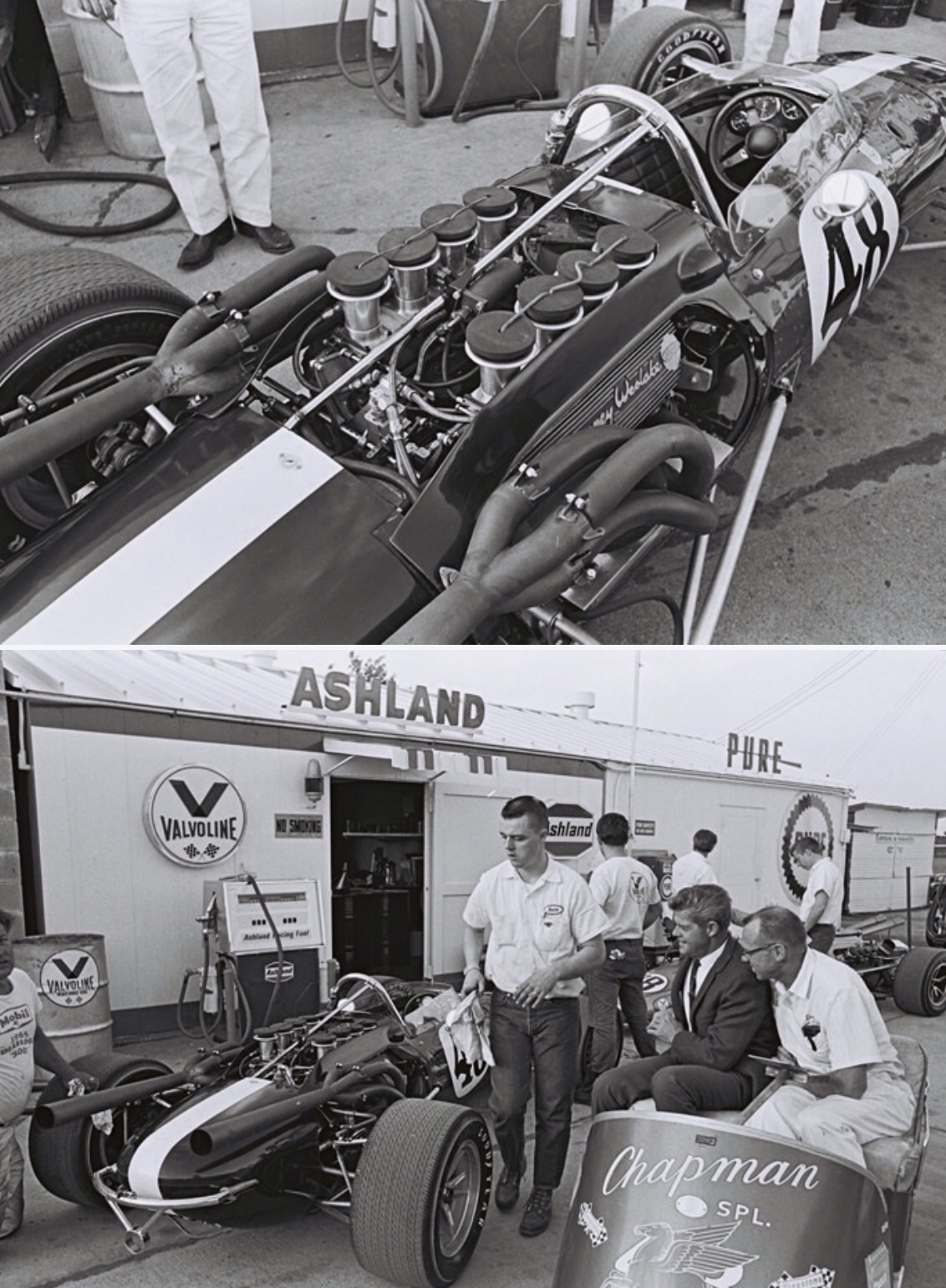
Eagle Mk2 ‘201’. Hilborn injected G-W V8, metering unit between body cowl and injection trumpets, quality of build and finish superb. Note beautiful body cowl and nerf bar (D Friedman)

Further development work resulted in the Mark 4 variant which was lighter in weight with narrower rocker covers and an intake manifold inclined towards the engine centreline.

Into 1967 AAR’s Can-Am engine was based on Ford’s new ‘mid-sized’ block stroked to 377cid. Dan’s Lola T70 was often the best of the ‘non-McLaren M6 Chev’ class in a year of dominance from the Kiwi’s with their beautiful papaya cars; pole at Riverside was a standout.

Fitted with a Mark 4 engine, but 318 cid, gave Dan and the G-W engine’s first USAC win in the Rex Mays 300 at Riverside in November 1967. His Eagle Mk3 won from pole from the Bobby Unser Eagle Mk3 Ford Indy V8 and Mario Andretti’s Brawner Ford on the challenging 2.6 mile California road course. Gurney achieved six more USAC Championship wins over the next two years and finished second twice on the trot at Indy in 1968 in a Mk3 and in 1969 in a Mk7 ‘Santa Ana’.

Changes to USAC rules for stock-block engines ultimately allowed the G-W motors to displace 318 cid. On methanol they were good for 560 bhp @ 7500 rpm in 1968 with circa 600 bhp in 1969. On petrol a sprint 289 was good for as much as 506 bhp @ 7800 rpm, and a good 305 520 hp.

DG testing his 1968 Tony Southgate designed USAC weapon, the Mk4 G-W V8 at Riverside; warm down lap without the goggles. Ho took three race wins and Bobby Unser three in a customer car including the Indy 500, Ford Indy DOHC V8 powered (AAR)
Eagle Mk4 Ford G-W front and rear – front and rear suspension utterly period typical – a very successful Southgate design (AAR)

For the 1968 Can-Am AAR acquired a McLaren M6B and in a ‘lightness and dash policy’ took over 100 pounds out of the car with a cocktail of small-block 325 cid Ford G-W and the smaller, lighter Hewland DG300 gearbox. The track dimensions were narrower, the body lighter with a lower, longer nosepiece and suspension arms, exhaust system, gear linkage and bracketry were re-made out of titanium. The car was renamed McLeagle! It wasn’t enough of course, the Bruce and Denny M8A Chev 427 alloy blocked cars rolled over the top of the McLeagle, Lola T160, Ferrari 612P and all else in their path. Denny was Can-Am champ that year.

In 1968 and 1969 the John Wyer entered, Gulf sponsored Ford GT40 chassis ‘1075’ won the Le Mans classic fitted with Gurney-Weslake Ford engines.

The honours were taken by Pedro Rodriguez and Lucien Bianchi in ’68 and Jacky Ickx and Jackie Oliver in ’69. In 1968-69 despite the Mk1 GT40 hardly being in the full flush of youth, the gorgeous, somewhat heavy G-W engined machines won many endurance classics against more modern Porsche, Alfa Romeo, Matra and Ferraris (in 1969): the 1968 Brands Hatch 6 Hour, Monza 1000 Km, Spa 1000 Km, Watkins Glen 6 Hour and 1969 Sebring 12 Hour and Spa 1000 Km.

In period the Le Mans winning engines gave circa 440 bhp @ 6800 rpm: 302 cid Ford V8, Gurney Weslake heads fed by four Weber 48IDA carbs.

Lucien Bianchi, Pedro and the boys after the ’68 Le Mans win – ‘1075’ one of the most famous of all Le Mans winners with two notches on its belt (unattributed)
John Wyer GT40 at the factory circa 1969. Note the Gurney Eagle rocker covers, FIA mandated luggage framework above the exhausts, engine and trasaxle radiators and Firestone tyres (unattributed)

In a busy 1968 for AAR, in a commercial approach to capitalise on the cylinder head designs, Gurney started to make modified versions of the heads cast in LM8 aluminium by the Aeroplane and Motor Foundry in England for road cars.

The racer’s Hilborn fuel injection was replaced with a four-barrel carb. Anticipating a large order from Ford, the heads had detuned combustion chambers and were of a budget design. They could be machined with different sized ports and/or valve sizes to the specification of the full racing heads despite some of the internal passageways being of differing sizes to the race heads.

When no manufacturer (Ford or Lincoln/Mercury) chose to fit the heads Dan was left with an enormous stockpile of them. ‘It didn’t’ happen because no-one big enough got behind it. If someone like Henry (Ford II) would have said “Hey guys, why don’t you do this?”, that would have been all it would have taken’ offered Gurney. A trial assembly run was arranged by Gar Laux, head of Lincoln-Mercury but perhaps the idea fell foul of the ‘not invented here’ notion.

Many of the surplus heads were converted to as near as racing specifications as the Gurney factory could make them and were fitted to Indy cars. None of these heads were fitted in-period to GT40’s. All GT40 heads were made at the William Mills foundry and were a higher grade casting with the full race combustion chambers, porting and passageways. The Airplane and Motor cast heads were usually branded as Gurney Eagle although some will over time have been retro-fitted with Gurney Weslake rocker covers.

This G-W Ford in Dan’s 1969 Eagle Mk7 ‘Santa Ana’ features Mk 4 heads with canted injectors. This close up shows the Hilborn slide injection, lots of ‘Aeroquip’ lines and AAR’s fine attention to engineering detail – checkout the fabrication of those extractors and rather critical throttle components (AAR)
Gurney, Eagle Mk4 Ford G-W 305 cid, Indy 1969 (D Friedman)

Into the 1969 Can-Am without the Ford factory support he hoped for, Dan raced the same McLeagle with a very special, aluminium 344 cid small-block Ford G-W.

Some of the Can-Am rounds conflicted with his USAC commitments, back at AAR the team toiled with a three-valve G-W variant to sit atop specially cast ally Ford blocks. After various development problems kept it off the tracks Dan bought a 7-litre Chev and popped it into the McLeagle, qualifying ninth at Michigan. That weekend he tasted a great Can-Am machine when he raced the spare McLaren M8B to third behind Bruce and Denny, having started from the rear of the grid.

Pete Lyons wrote ‘…from the back…he passed twelve cars on the first lap…Each lap Dan passed fewer cars but he passed them relentlessly. He gave the impression of being careful, feeling out the car, not risking breaking it, yet the big orange gun shot his black helmet along like a cannonball. When he caught Brabham, he went by so fast the two could hardly exchange glances…’Jack knew exactly how Dan felt as Brabham tested the same car during qualifying – and did a time in a limited number of laps good enough for row two of the grid!

The dark side, 7-litre Chev engined McLaren/McLeagle M6B at Michigan in 1969 (unattributed)

In tragic circumstances, after Bruce’s death at Goodwood, Dan raced a works McLaren M8D Chev with great speed and success until sponsorship conflicts intervened and stopped his campaign short. It was a great pity as a Hulme/Gurney battle for the 1970 Can-Am title would have been a beauty. It was a fascinating season in the short history of the series inclusive of the Chaparral 2J Chev ‘Sucker’ machine; to have finally seen Dan in a car truly worthy of him would have been something, albeit not G-W Ford powered…

(AAR)

Into 1970 the AAR USAC machine, the ‘7000’ designed by Len Terry – was both Offenhauser and Ford G-W powered – and achieved its final G-W stock-block win in Swede Savage’s hands at the season ending finale at Phoenix. The 1971 ‘7100’ was designed by Roman Slobodynski and built to suit the Drake Offy turbo-charged four cylinder engine only.

What a marvellous run the Gurney-Weslake small-block Ford V8s had…

Swede Savage in the 1970 Indy 150 at the Indianapolis Raceway Park all crossed up in the Eagle 7000 G-W Ford, classified eigth in the race won by Al Unser, Colt Ford Indy V8 (A Upitis)

Etcetera…

AAR Santa Ana workshops circa 1968/9 with 3-litre GW V12 in the foreground and FA/F5000 monocoques behind (T Mathiesen)
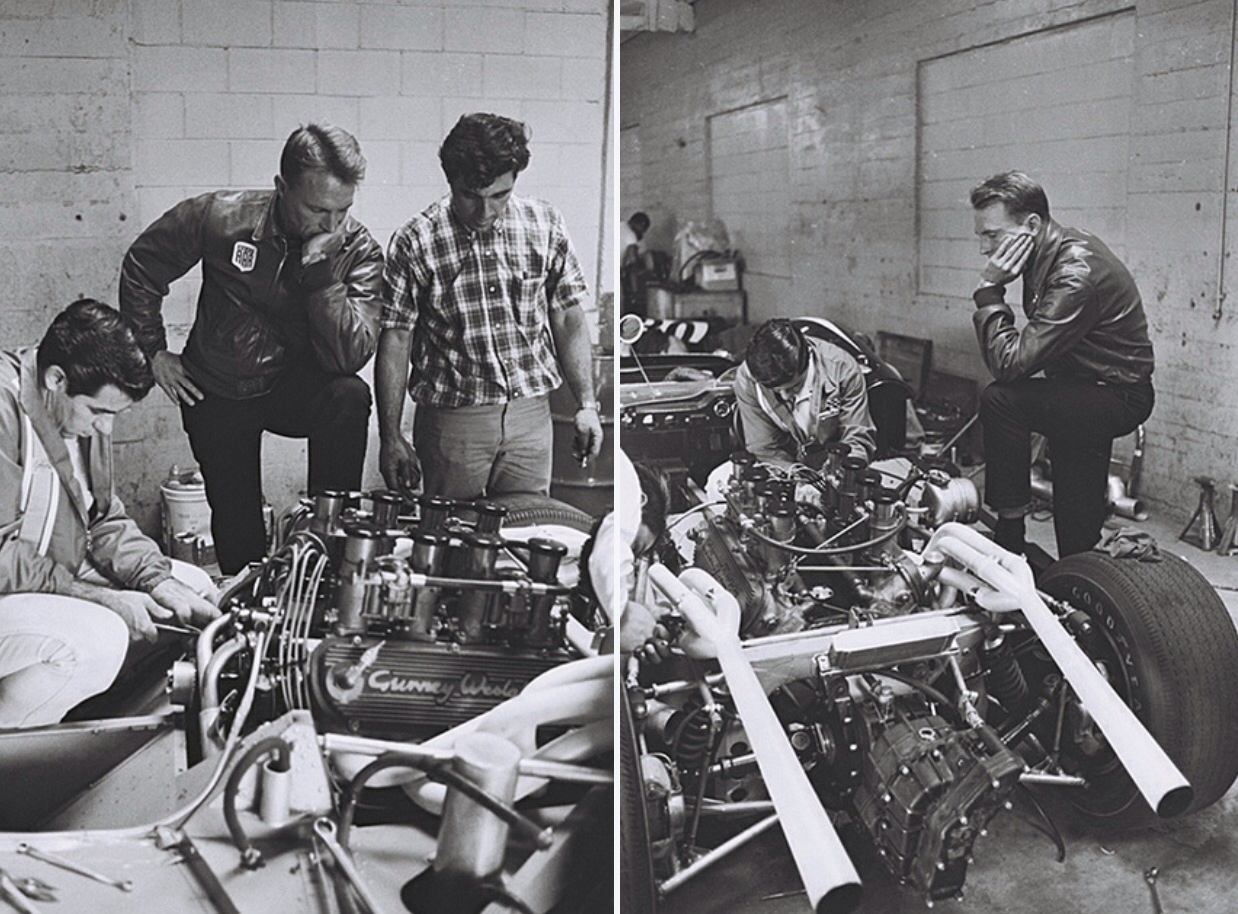
Dan with gun AAR engine man John Miller ‘Mandrake The Magician’ with G-W Hilborn injected V8 (AAR)

Bibliography…

‘Dan Gurney’s Eagle Racing Cars’ John Zimmerman, ‘Can-Am’ Pete Lyons, gurney-weslake.co.uk, phystutor.tripod.com

Credits…

The Enthusiast Network, Dave Friedman Collection, AAR Archive, Tim Mathiesen

Tailpiece…Dan aboard his second place Eagle Mk4 Ford G-W, Indy 1968…

(D Friedman)

Finito…

(R Schlegelmilch)

Vic Elford leans his machine gun on moustachioed teammate Lucien Bianchi’s, winged Cooper T86B BRM in search of a Messerschmitt BF109, Nurburgring 1968…
This is a pretty canny bit of impromptu PR by the Cooper boys at the height (sic) of the hi-wings explosion that summer in Grand Prix racing. That trend was all over pretty quickly due to the flimsy engineering of some of the appendages, that story covered by an article I wrote a while back; https://primotipo.com/2015/07/12/wings-clipped-lotus-49-monaco-grand-prix-1969/

Cooper’s built three T86B chassis for the 1968 season by adapting the 1967 Maserati V12 engined T86 design to accept BRM’s sportscar derived customer P101 V12 first used by Bruce McLaren during the later half of the 1967 season in the back of his McLaren M5A.

Cooper T86B- aluminium/electron monocoque chassis, front suspension by top rockers, lower wishbones and inboard mounted coil spring/dampers, rear suspension by single top link, inverted lower wishbones, twin radius rods and coil spring dampers, adjustable roll bars front and rear. Outboard disc brakes front and rear, Cooper steering rack. BRM P101 2998 cc DOHC, 2 valve, Lucas injected 60 degree circa 375 bhp V12, Hewland DG300 5 speed transaxle (Bill Bennett)

The heavy, relatively lower (a Cosworth DFV punched out about 410bhp at the time) powered machines were raced initially by Brian Redman and Ludovico Scarfiotti, who was tragically killed at Rossfeld Hillclimb over the June Spa weekend. He was replaced by Lucien Bianchi, who had an amazing year in sportscars, rally machines and in single-seaters. Click here for an article in part about Lucien; https://primotipo.com/2016/03/22/cowans-grunter/

Quick Vic got the steer after Brian Redman was badly injured at Spa when his suspension failed, the car then crashed into and over a concrete barrier, his progress arrested by a parked Ford Cortina- he escaped with a broken arm and minor burns but was out of racing for a bit. Johnny Servoz-Gavin and Robin Widdows had one-off drives. Best results for the cars were thirds for Redman in Spain and Bianchi at Monaco, whilst fourth places were scored by Scarfiotti in Spain and Monaco and by Elford in France.

German GP start, gloomy to say the least! Denny Hulme’s McLaren M7A Ford in shot, to his left and forward is John Surtees Honda RA302 with Elford’s Cooper to John’s front left. Up front are Ickx and Amon’s Ferrari 312’s, Hill is to Elford’s right in the hi-winged Lotus 49 and a slow starting Stewart, Matra MS10  in front of Hulme (PH Cahier)

Vic popped his Cooper on grid 5 at the Nurburgring but left the road on the first lap of the famously wet and treacherous race won by Jackie Stewart’s Dunlop shod Matra MS10 Ford. He won by four minutes from Graham Hill’s Firestone shod Lotus 49B Ford and Jochen Rindt’s Goodyear tyred Brabham BT26 Repco a further six seconds back. Stewart was magic that day aided by some schmick, trick Dunlop wets- one of his greatest drives in the minds of many including the great man himself.

JYS during his soggy, stunning run, Matra MS10 Ford (R Schlegelmilch)

Credits…

Rainer Schlegelmilch, PH Cahier, oldracingcars.com

Tailpiece…

(unattributed)

Finito…