Archive for the ‘F1’ Category

(B Pottinger)

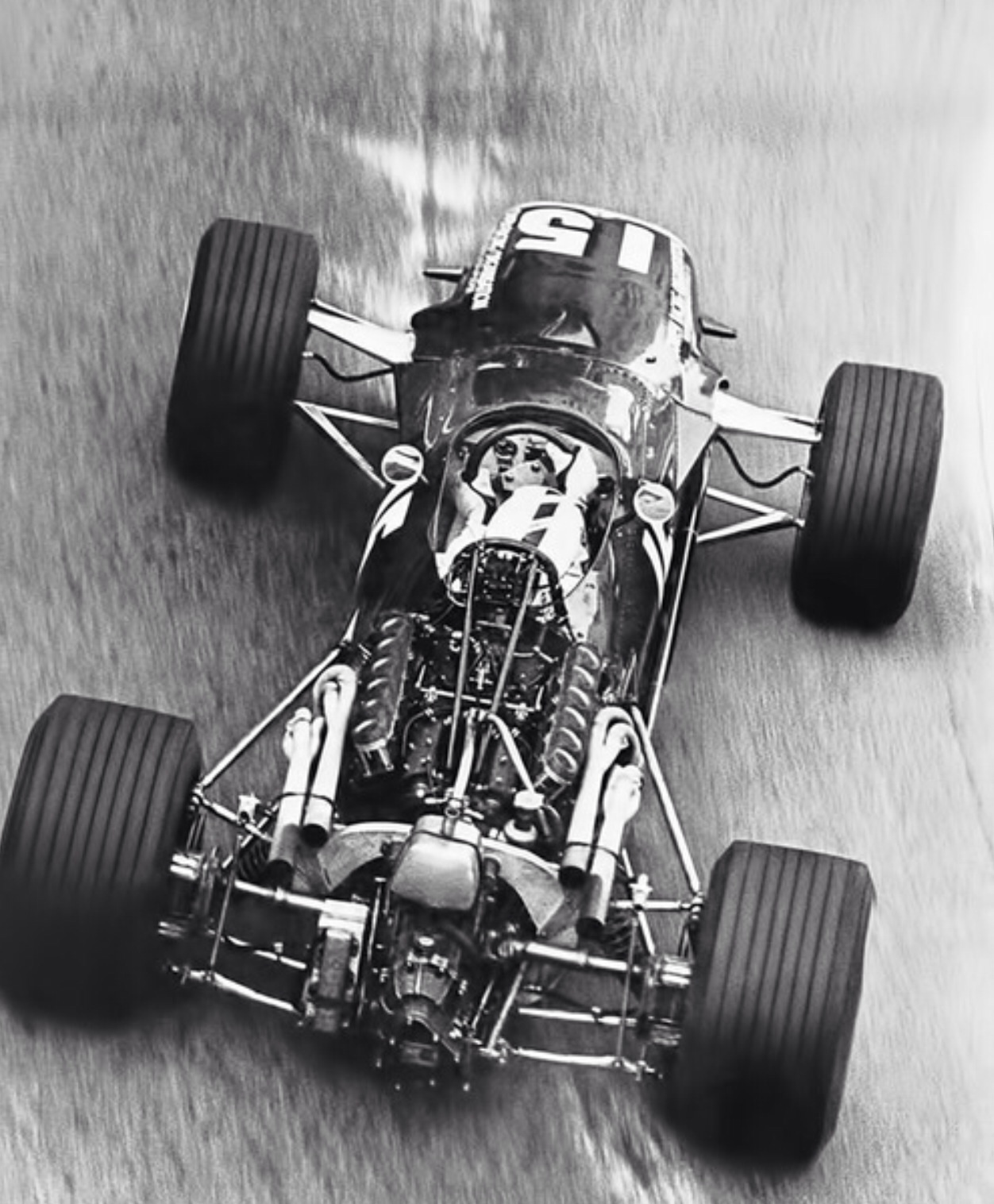
I wish I had the soundtrack of the howling 300 bhp 24 valve, injected Vee-Six to go with the visual…

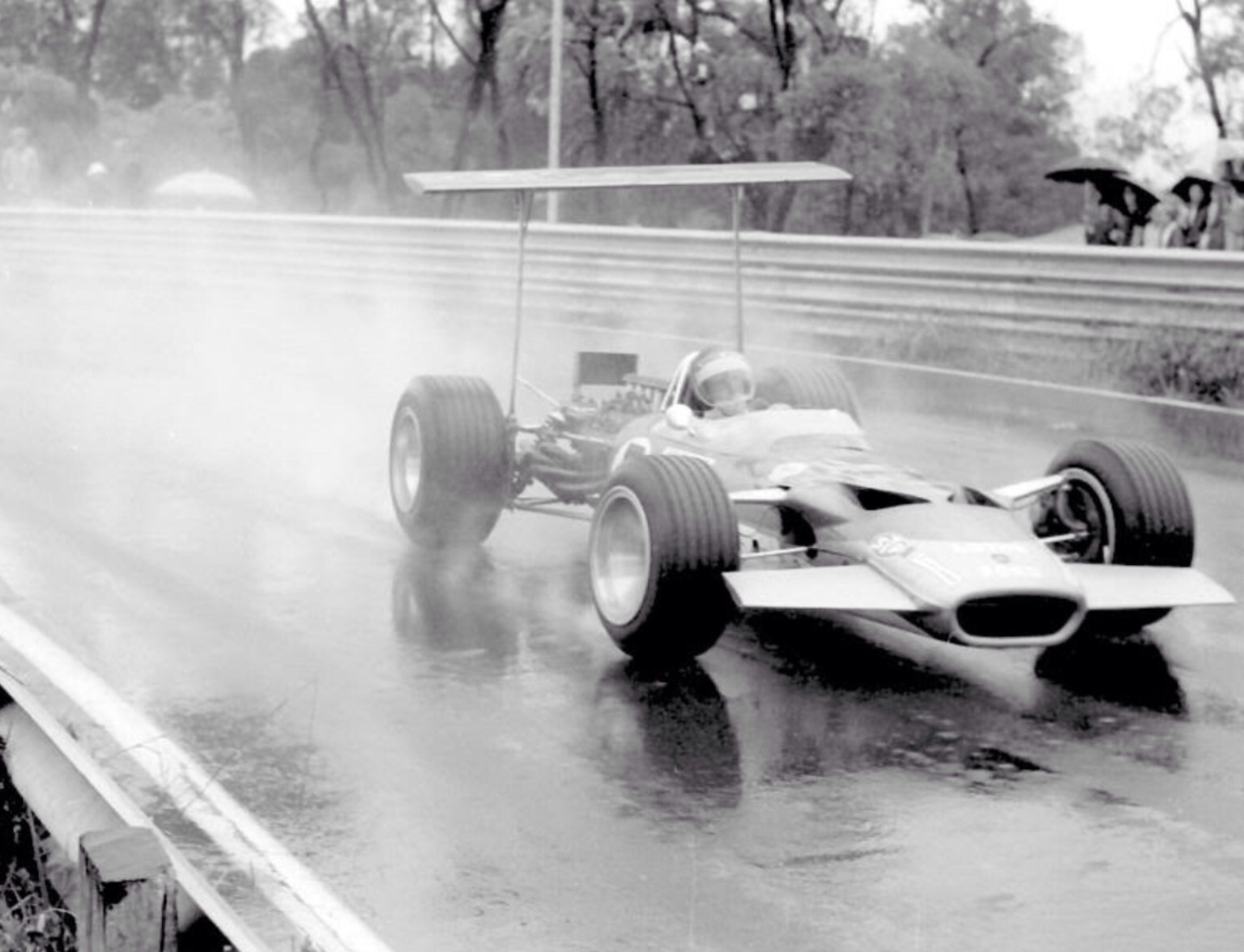
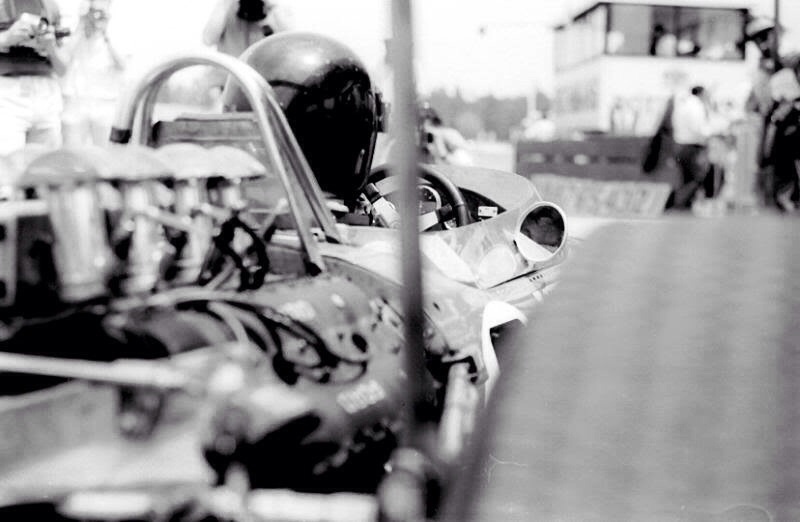
 Chris Amon’s Ferrari Dino 246T chassis # ‘0008’ being warmed up prior to the start of the Teretonga International on 25 January 1969.

 Chris was third in the race behind Piers Courage in Frank Williams Brabham BT24 Ford DFW and Graham Hill’s Gold Leaf TL Lotus 49 Ford DFW- and won the ’69 Series with wins at Pukekohe, Levin, Lakeside and Sandown.

 Just so ‘Ferrari in period’ this shot ‘innit?

 Veglia Borletti- Giri, Olio, Acqua and Benzina instruments and MoMo steering wheel- wouldn’t we all have loved to sit right here looking at this lot. Note the small fire extinguisher sitting above the dash and Lucas electrical fuel pump off-switch beside the fuel guage.

 I’ve done a few articles about Chris and the Dino, just pop the names into the primo site search engine on the home page for more ‘on topic’.

 Photo Credits…

 Bill Pottinger on ‘The Roaring Season’, LAT

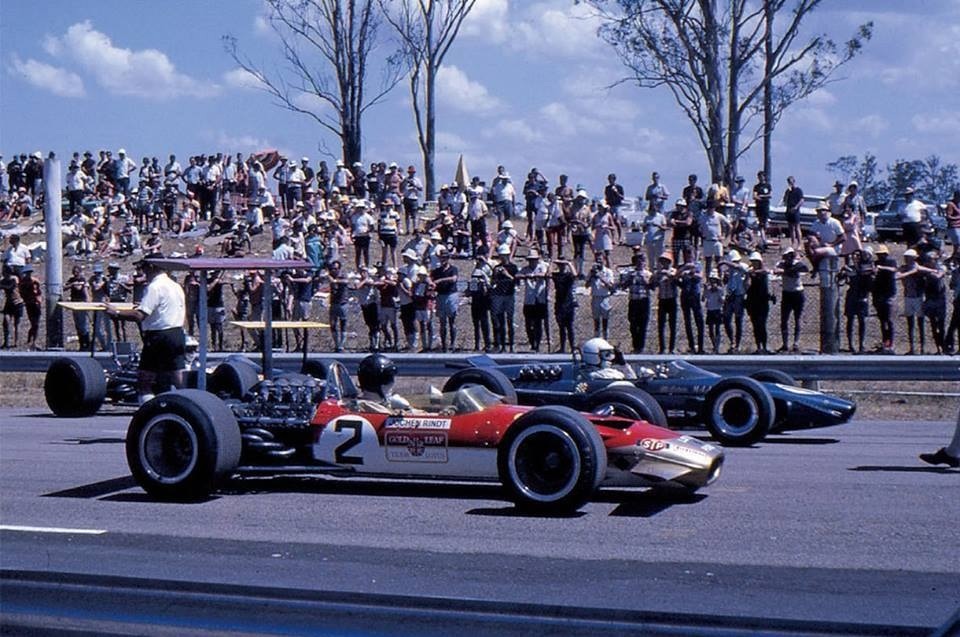
Tailpiece: Amon and Rindt on the front row, NZGP Pukekohe, 4 January 1969, Chris won from Jochen…

(LAT)

(J Richardson)

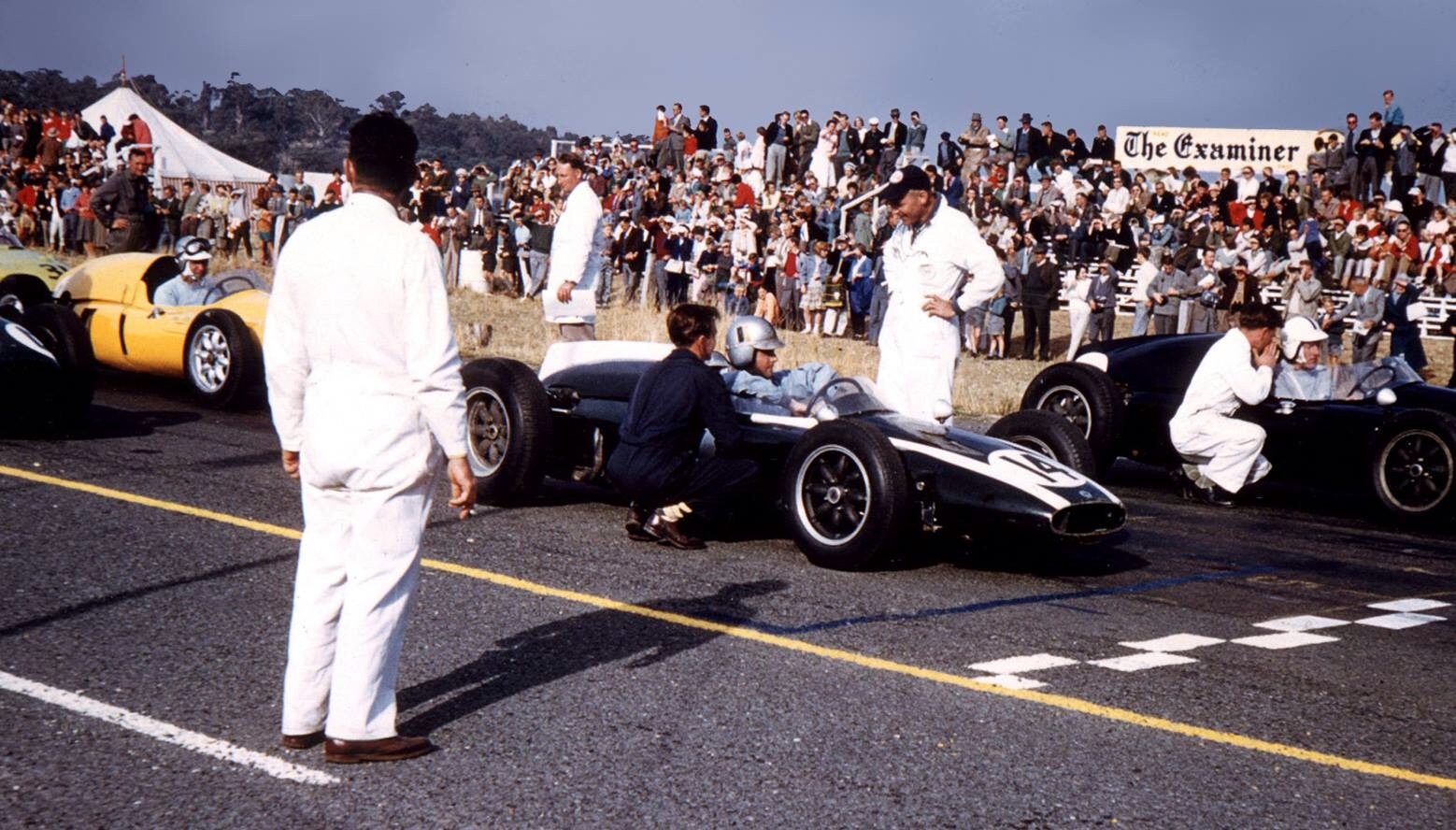
Roy Salvadori all set to go in the Longford paddock before winning the 5 March 1961 ‘Longford Trophy’ aboard his ‘Ecurie Vitesse’ (Jack Brabham) Cooper T51 Climax…

These wonderful photos at Longford during the long, languid, hot Tasmanian summer of 1961 were taken by John Richardson who was a Shell Representative for Northern Tasmania and therefore had the ability to prowl the pits and form-up area. His son Greg recalls the meeting ‘I was only 6 at the time and memories get a little hazy. But I will never forget sitting on a 44 gallon drum in the pits and that wonderful almondy smell of the racing fuel and the noise, it was pretty amazing stuff for a little kid’.

The sort of experience which hooks you on the sport for life…
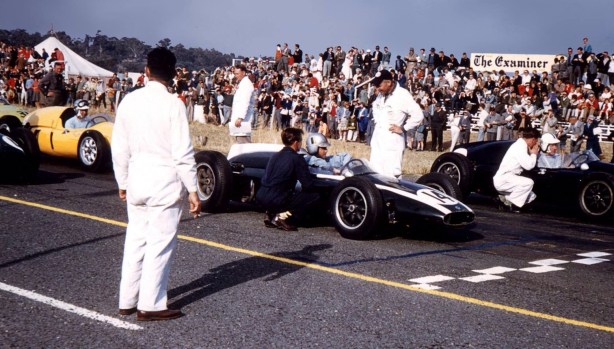
Jack on the front row beside John Youl, Coopers T53 and T51 Climax- behind is the unmistakeable yellow T51 of Austin Miller- alongside Aussies right-rear you can only just see a bit of Lex Davo’s Aston Martin DBR4 (J Richardson)
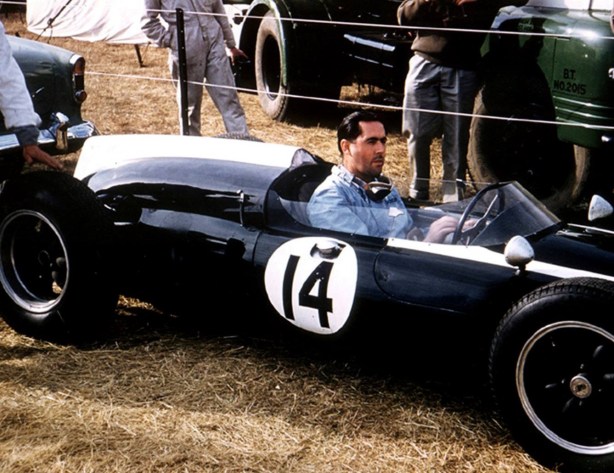
Very Black Jack- look at the ‘tache and beard- has not shaved for 24 hours. Cooper T53 ‘Lowline’ (J Richardson)

Roy had better luck in Australia than he did in New Zealand- there he raced a Yeoman Credit Lotus 18 Climax at Ardmore, Levin, Wigram and Teretonga, his best a second place at Teretonga. He had gearbox problems twice and a leaking radiator in the other events.

He then crossed the Tasman Sea to Australia and raced the Cooper used by Ron Flockhart that Australasian season- in Tasmania and two International races a day apart at the new Hume Weir circuit outside Albury on the New South Wales/Victoria border. He was fourth in one, DNF the other, both races were won by Brabham’s Cooper T53 ‘Lowline’, the car photographed above.

During my formative years of interest in motor racing, devouring all of the books we all did on the history of the sport Roy Salvadori was ominpresent in publications on the British scene- where he seemed to race anything which had wheels in multiple events at the same national meeting, and also competing in International events.
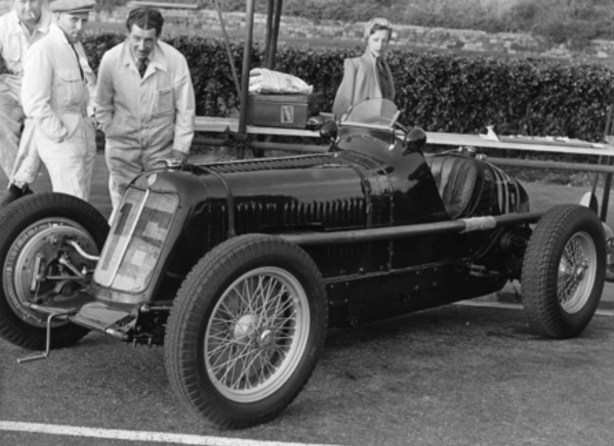
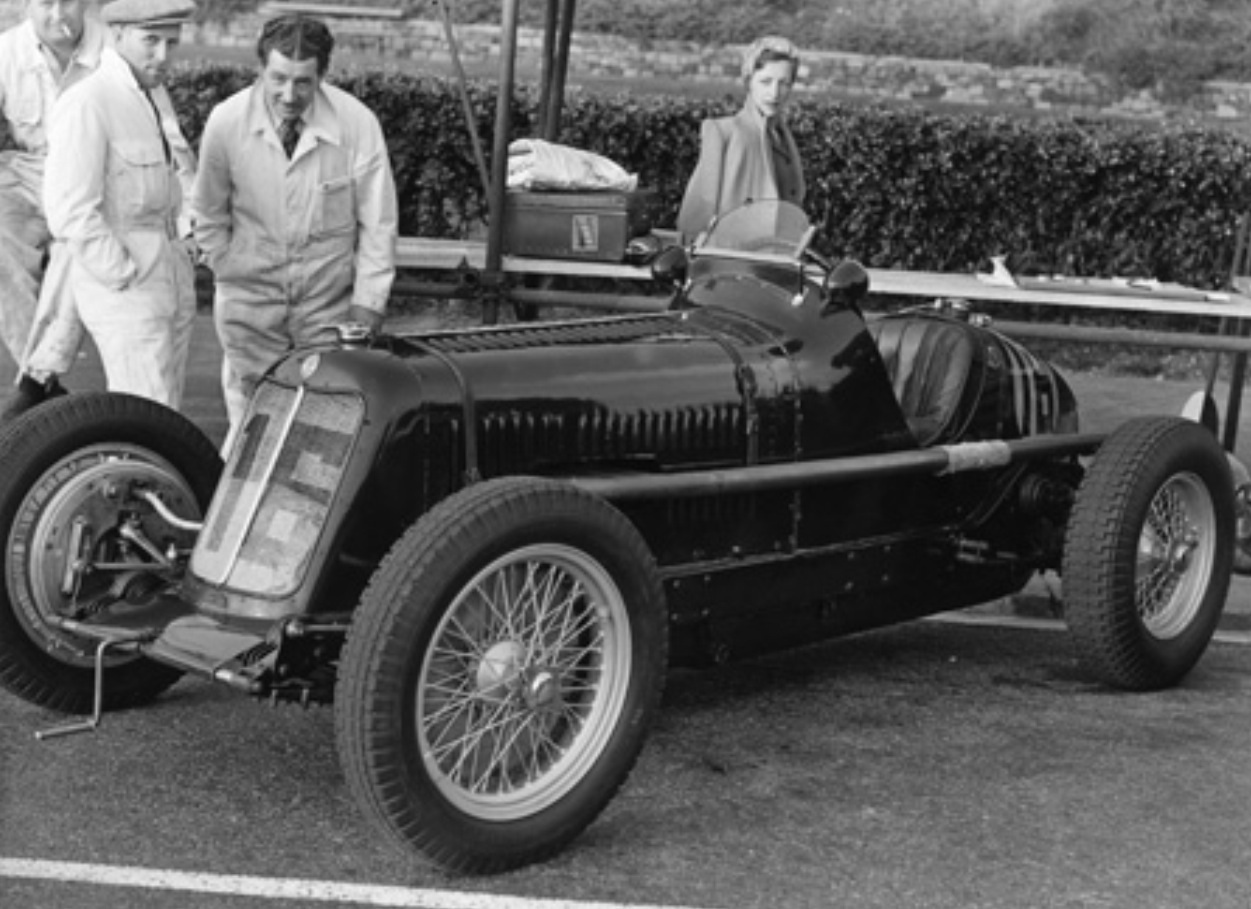
Maserati 4CM, Jersey 29 April 1948, 7th in the race won by Bob Gerard’s ERA B Type (unattributed)

Whilst his surname is decidedly Italian exotic Roy was very much a Brit, born in Essex of Italian parents…

Well known as the winner at Le Mans aboard an Aston DBR1 together with Carroll Shelby in 1959 he was also very handy aboard single-seaters and is rightfully on the list of those talented enough, but unfortunate not to win a championship Grand Prix.

The highly skilled all-rounders best F1 season was in 1958, when he was second in the German Grand Prix, third in the British and fourth in the drivers’ championship aboard a Cooper T45, the title won that year by another quintessential British driver of the fifties, Mike Hawthorn in Ferrari Dino 246’s. Cooper were not of course using Coventry Climax FPF engines of 2.5 litres that season, making the performance even more meritorious.

Roy Francesco Salvadori was born on 12 May 1922  in Dovercourt, Essex. After leaving school he joined his father’s refrigeration business before starting to trade in cars, running his own garage in Tolworth, Surrey by the age of seventeen. The War put paid to early plans to race but as soon as the war was over he responded to an advertisement for an MG sportscar only to find that the car in question was the R Type pre-war single-seater- a deal was quickly done.
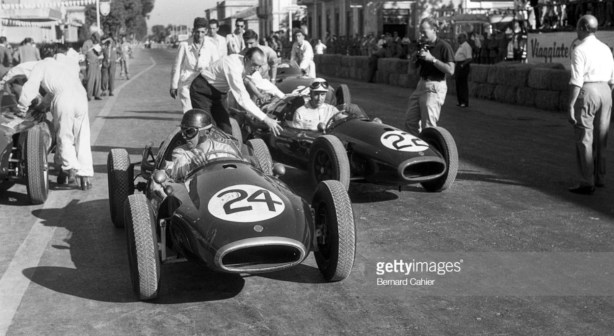
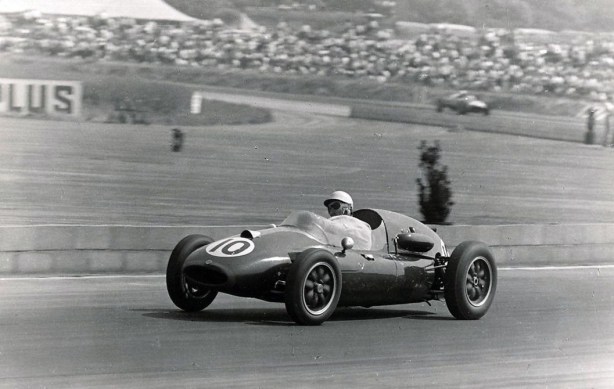
Jack #24 and Roy, Pescara GP 18 August 1957. Cooper T43 Climax, 7th and DNF in 2 litre cars in the race won by the Moss Vanwall VW57 (Cahier)

The R Type MG was entered in the very first race meeting post-war at RAF Gransden (Gransden Lodge) on 15 June 1946 with Roy the second of two finishers in a three car race! He progressed quickly to a Riley Special and then a 50% share in a 2.9 litre Alfa Romeo Tipo B/P3 said to have been owned by Tazio Nuvolari.

In May 1947 he entered it in the Grand Prix des Frontières at Chimay, Belgium, and, though the car was stuck in top gear from the first lap, finished fifth. Prince Bira won the race in a Maser 4CL.

He soon sold the P3 and bought a Maserati 4CM finishing 7th in the Jersey Road Race in April, contested the British Empire Trophy in May, DNF and later the 1948 British GP at Silverstone finishing 8th in the race won by Gigi Villoresi’s Maserati 4CLT.

In 1949, he again raced in the British GP, Q23, DNF . He was 5th in his heat and 17th in the final of the August International Trophy at Silverstone and wrote off a Maserati 4CL at the Curragh track in Ireland during the September Wakefield Trophy. 1950 was a year of rebuilding the finances and finding a competitive tool- the plucky motor-trader settled on a Frazer-Nash Le Mans sportscar.
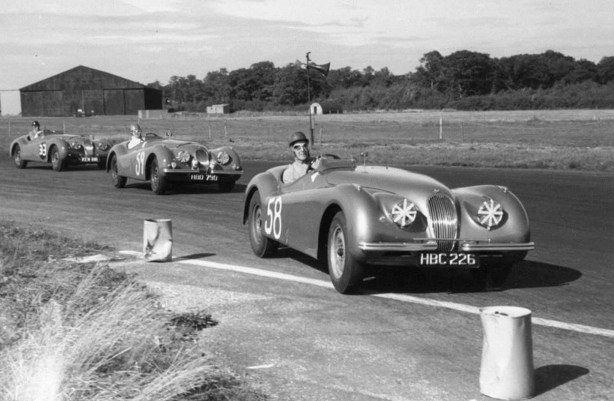
Roy ahead of a group of XK120’s, date and circuit unknown, 1951 probably (unattributed)

Salvadori’s first meeting in the ‘Nash was the Daily Express International meeting at Silverstone.

Interviewed in MotorSport in 2008 Salvadori said ‘I was leading, a big thing for me then, ahead of Bob Gerard, Tony Crook and the other Frazer-Nashes. So I was feeling pretty good about life…We came up to lap a group of slower cars which were having their own battle. I tried to overtake them all, but it couldn’t be done’. He ran wide, hit the marker barrels- oil filled drums and cartwheeled down the road, his foot was stuck in the steering wheel spokes, as a consequence he was flung about like a rag doll as the car overturned. Roy suffered a triple fracture of his head- wearing no helmet and had severe brain haemorrhaging. ‘At Northhampton Hospital they decided they could do nothing for me, and pushed me into a corner. They rang my parents and told them I was unlikely to be alive by the time they got there’. A priest was summoned and gave him the last rites.

Salvadori was back in a car three months later. His only permanent legacy of the monster shunt was deafness in one ear.

Roy acquired the 1950 model Jag XK120 (above) and first raced it at Boreham in August 1951. He had much success in the car over the next 12 months racing it against the similar machines of people like Duncan Hamilton and of course many other marques. A more serious machine was the Grand Prix Alta 1.5 s/c of H Webb with which he contested the Boreham Mail Trophy race in July for a DNF.
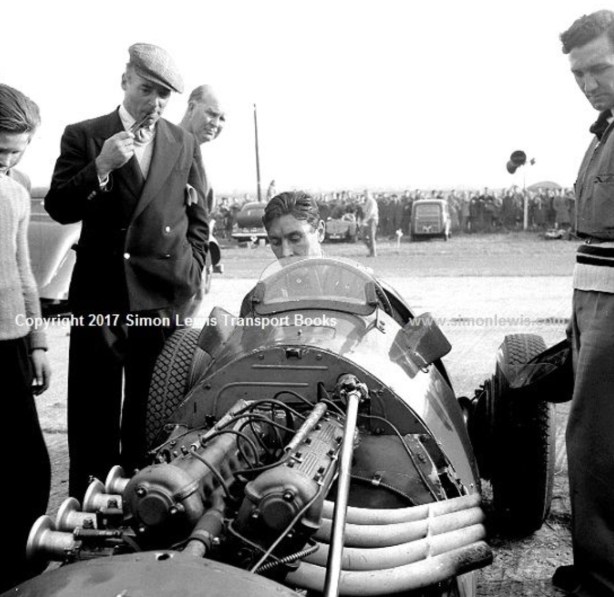
RS aboard Bobby Baird’s Ferrari 500 F2/GP machine at Castle Combe in 1952. Lampredi 4 cylinder, 2 valve, DOHC Weber fed dual World Championship winning engine front and centre (Simon Lewis)

With his speed and enthusiasm undiminished he was soon in demand to drive other peoples cars, he raced the Jag on into mid-1952 before selling it to Peter Blond. The Frazer-Nash was repaired and raced at Ibsley in April, the car again crashed.

A significant breakthrough were a series of drives in Irish press-baron heir Bobby Baird’s Ferrari 500 2 litre F2/GP car. In an impressive performance he was Q19 and 8th in a field of 31 cars at the Silverstone British GP.

In August he raced a Ferrari 166 (Baird’s?) in the Daily Mail Trophy at Boreham but withdrew after 21 laps. Back in the Ferrari 500, at  the Daily Graphic Goodwood Trophy in September, he was 6th and a month later he drove the car to victory in the Joe Fry Memorial Trophy at Castle Combe.

In mid September Roy contested the GP di Modena in a Cooper T20 Bristol, crashing the car in the race won by Villoresi’s Ferrari 500.

Salvo’s speed in a variety of cars- his versatility clear even then and ability to handle the demanding GP Ferrari lead to an invitation to join the Connaught team for 1953 to contest GP events in the Lea-Francis four-cylinder engined cars.
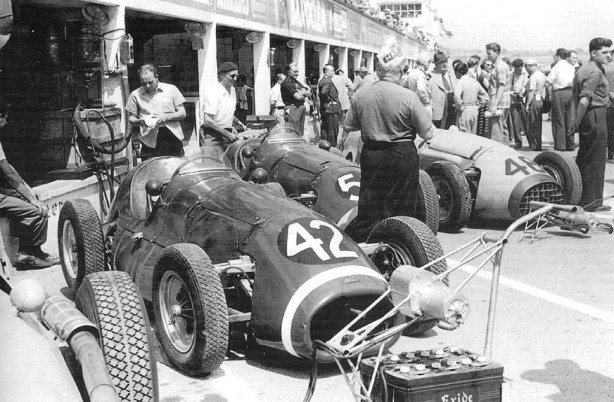
Camp Connaught, French GP Reims 1953. #42 Bira DNF diff, #50 Salvadori DNF ignition, #48 Johnny Claes 12th. Look carefully and you can see the Prince speaking to Alfred Neubauer in the background. Mike Hawthorn won this famous race after a titanic long dice with Fangio, Ferrari 500 and Maser A6GCM respectively (G Phillips)

The Connaught A Type was a very competitive tool in British national events, Roy’s best results second placings in the Lavant Cup Goodwood, BRDC International Trophy Silverstone, Crystal Palace Trophy and Newcastle Journal Trophy at Charterhall. In September he won the Madgwick Cup at Goodwood from Stirling Moss’ Cooper Alta.

In championship Grands Prix the pickings were much slimmer- he failed to finish all of the events he contested, the Dutch, French, British, German and Italian GP’s. The problem was the cars reliability not Roy’s speed- he qualified 11th, 13th and 14th at Zandvoort, the Nurburgring and Monza respectively for example.

In 1953 he joined Aston Martin in sportscars- although the focus of this article is single-seaters not his two-seater programs.

For 1954 he made the sensible decision to drive a Maserati 250F for Sid Greene’s Gilby Engineering team, the very best 2.5 litre customer GP car of the period. With it he won the Curtis Trophy at Snetterton, was second in the Lavant Cup, BARC F1 race and third in the Goodwood Trophy (all at Goodwood). The Gilby lads took the Maser across the channel to contest the French GP at Reims where Roy was Q10 but had a half-shaft failure. Back at Silverstone for the British GP he was a wonderful Q7 of 28 on a circuit at which he always excelled but had a transmission failure on lap 7.
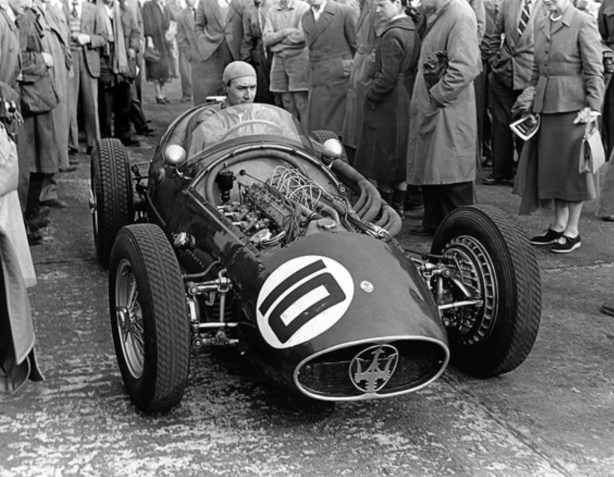
Roy aboard the Gilby Engineering Maser 250F ‘2507’ at Silverstone in 1954. Too funny finding this shot- when I first became interested in racing someone gave me this very shot as a postcard without identification. I knew enough to know it was a 250F- and the driver looked ‘Eyetalian’ but I could never work out who it was back then! (Tom March)

Still in the first flush of youth, he raced the Gilby Maser ‘2507’ on into 1955 with wins in the Glover Trophy and Curtis Trophy at Goodwood and Snetterton respectively. He qualified first and finished second behind the Collins 250F at the International Trophy, Silverstone.

The 11 April Goodwood meeting says everything about Salvadori’s speed, versatility and work ethic- he contested six of eight events! He won the Lavant Cup in a Connaught A Type, was second in the Chichester Cup, first in the Richmond Trophy and second in the Easter Handicap all in the 250F. He won the ‘B Sportscar’ race in an Aston DB3S and was fourth in the ‘C Sportscar’ race in a Cooper-Maserati. Wow!
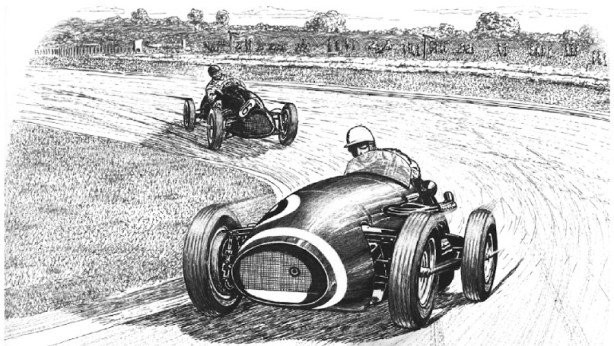
Lavant Cup Meeting Goodwood 11 April 1955. Roy on the way to winning the 7 lap F2 race at Madgwick. Connaught A Type and Cooper Bristol (P Redman)

The team again entered the British GP at Silverstone this time yielding Q20 and DNF due to a gearbox failure.

Into 1956 Roy again raced the Gilby 250F which was getting a little long in the tooth compared to the latest spec works-cars but was still a good thing in national events- he was first in the Vanwall Trophy and Sussex Trophy at Snetterton and Goodwood respectively. Moss won the Glover Trophy at Goodwood in a works 250F ‘2522’ with Roy behind him.

In International events the 250F was 3rd in the GP de Caen and had DNF’s at both Silverstone and the Nurburgring- the British and German GP’s but qualified 7 and 9 to remind everyone of his speed in the old jigger. He was Q14 and 11th- last at Monza.

Success also came in mid-engined F2 Cooper T41 Climaxes with wins in the British GP support event, at Brands in the Bank Holiday meeting and at Oulton in the International Gold Cup F2 race.
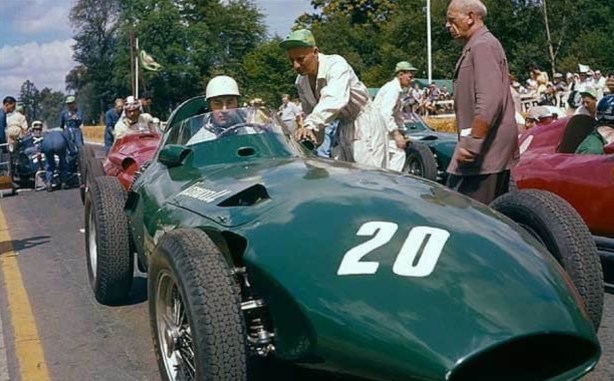
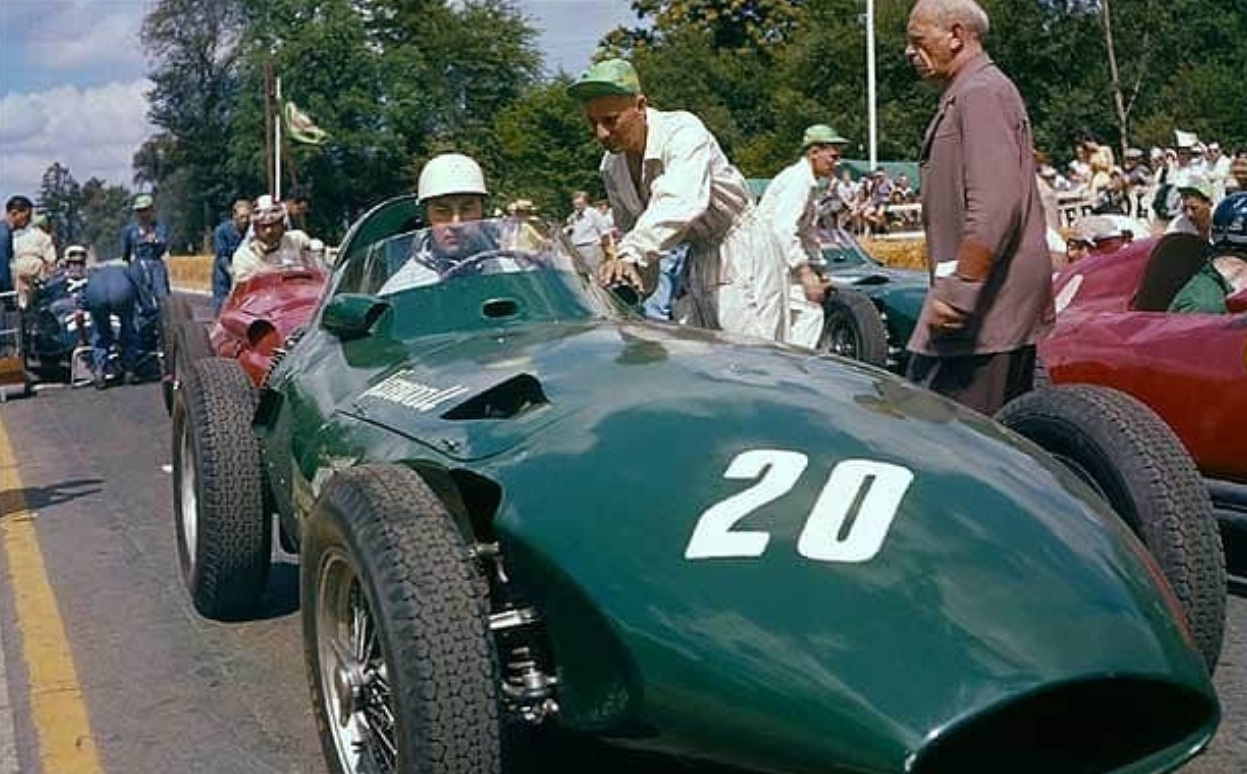
Roy awaits the off aboard a Vanwall VW57 before the start of the French GP @ Rouen in 1957. Q6, DNF engine on lap 25- and qualified well clear of the two BRM’s! (unattributed)

A man in demand he signed with BRM for 1957, but after his cars brakes locked solid, causing his retirement from his BRM debut race and then failing to qualify for the Monaco Grand Prix, he walked away from the team.

Raymond Mays failed to intervene satisfactorily to improve the P25’s notoriously poor brakes. The P25 became a race winner- it won BRM’s first GP in Jo Bonnier’s hands at Zandvoort in 1959 of course but in 1956/early 1957 it was a problem child. No less than Alex Moulton and Alec Issigonis, Colin Chapman and Piero Taruffi- the latter two track testing the car applied their talents to dealing with the racers many handling, roadholding and braking problems. Leaving BRM at the time was as good an F1 Salvadori decision as being part of Aston’s F1 program in 1959 was a bad one!

Roy continued racing Aston sportscars throughout 1957 and was invited by David Yorke to drive a Vanwall VW57 in the Reims GP in early July, for 5th and in the French GP at Rouen a week later- Q6 and DNF engine. Chapman had of course applied his magic touch in Acton too a year earlier!
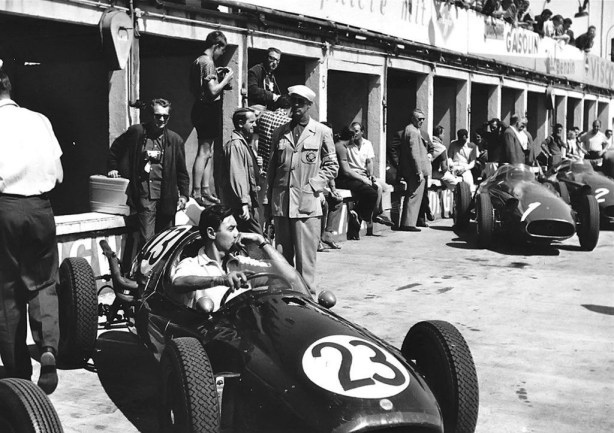
German GP paddock 1957: Yep, I can give these barges a run for their money! RS musing about the benefits of his nimble Cooper @ the Nurburgring if not its power. #1 & 2 Maser 250F’s of JMF and Jean Behra. Roys F2 Cooper T43 Climax Q15 and DNF engine in the famous ‘greatest GP of all time’ won by Fangio from the Lancia-Ferrari 801 twins Hawthorn and Collins (Getty)
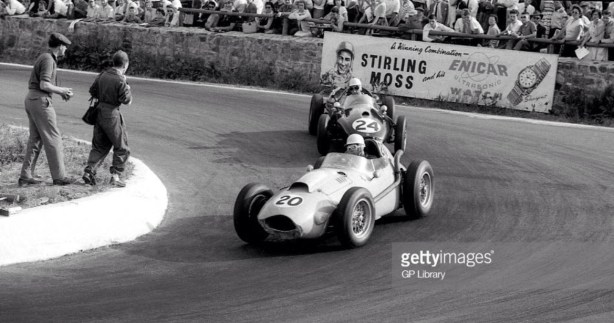
 

Salvadori chasing Olivier Gendebien’s Ferrari 246 Dino during the 1958 Belgian GP, the Belgian was 6th and Roy 8th in his Cooper T45 Climax. Stirlings’s watches look good! (GP Library)

For the balance of 1957 Roy joined Cooper beside Jack Brabham, the pair racing Cooper T43/45 Climaxes in F2/F1 events. Cooper ran Coventry Climax FPF’s of just under 2 litres in F1 that season, the class capacity limit 2.5 litres from 1954-1960 inclusive. He was 2nd in the GP de Caen and failed to finish the German GP having qualified 14th running a 1475cc FPF as an F2 car within the F1 grid.

Generally Jack did better than Roy in F2 but he won the Woodcote Cup at  Goodwood, and the F2 class of the Daily Express International Trophy, was 2nd in the London Trophy at Crystal Palace and 4th in the Coupe de Vitesse at Reims.

For 1958 Roy stayed with Coopers and had his best season in GP racing as detailed early in this article. In addition to Championship GP events he was also quick in British Internationals taking 2nd, 3rd, and 4th in the BRDC International Trophy at Silverstone, Glover Trophy at Goodwood and the BARC 200 at Aintree.
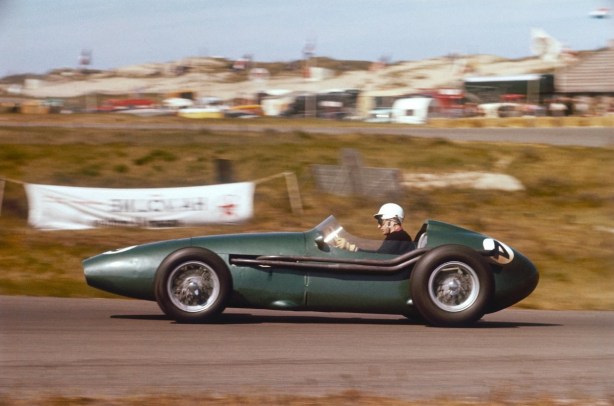
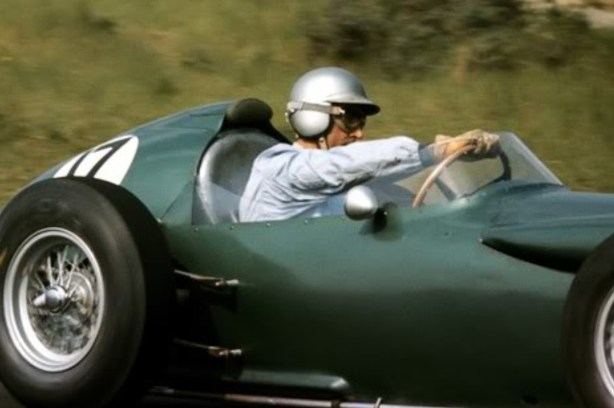
Beautiful shot (reader David Fox points out Getty have it ‘the wrong way around’) of Roy’s Aston DBR4/250 at Zandvoort in 1959. Q13 and DNF overheating in the race won by the more modern and developed front-engine BRM P25 of Jo Bonnier- first GP win for them both. The Aston was maybe a potentially winning car in 1957- too late she cried (Getty)

Aston Martin finally got their DBR4 race ready- it was to Roy’s credit that he felt bound to drive it and did so but his first steer of the front-engined bolide would have been enough to indicate that AM had missed the boat relative to the Coopers with which he was now very familiar and had done so well.

It was a backward step indeed. To stay with Coopers would have been the go in 1959 fitted as they were with Coventry Climax FPF’s of 2.5 litres- they won the drivers and constructors titles of course. Roy did more than enough to stay with Cooper in 1959- in ’58 the qualifying record was fairly evenly split between Jack and Roy with the Brit getting far better race results. Oh to have stayed put at Surbiton!

In a fullish GP season he raced Tommy Atkins Cooper T45 Maserati at Monaco and Reims and the Aston DBR4/250 at Zandvoort, Aintree, Monsanto Portugal and at Monza- his best placings 6th in the Monaco, British and Portuguese GP’s. Sixth at Monsanto was 3 laps behind the Moss winning Cooper to give some idea of the relative pace of the new and old paradigms.

In non-championship races he won the London Trophy, was 2nd in the Lavant Cup in a Cooper T43 Climax F2 and frustratingly got a good, long, hard look at the back of Brabham’s Cooper T51 Climax finishing 2nd behind him at Silverstone in the Daily Express International Trophy aboard the Aston.
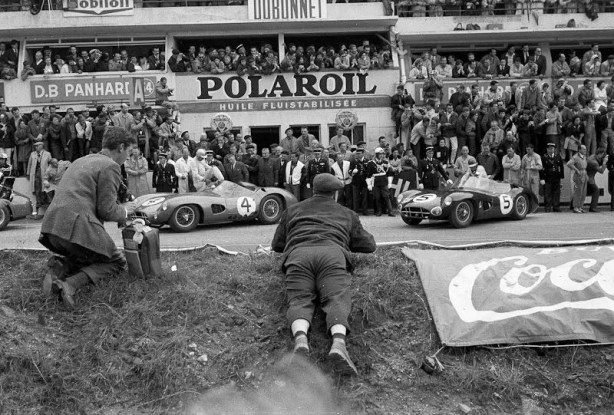
Roy gets into the Essex Racing Stable #4 Aston DBR1 he shared with Tony Maggs at Le Mans in 1961. The Border Reivers #5 the Jim Clark (jumping in) and Ron Flockhart DBR1 is alongside, both cars DNF (unattributed)

Following his 1959 success at Le Mans, in 1960 Salvadori returned to the 24 hour race in another Aston Martin DBR1 beside a very young Jim Clark, finishing a good 3rd behind two Ferraris.

His Grand Prix program in 1960 was limited to the Dutch and British GP’s in Astons for a DNS and DNF- and at Monaco and Riverside in an Atkins Cooper T51 Climax for a DNF and 8th. In Cooper mounted non-championship events he was 3rd in the Oulton Park Trophy and Lavant Cup at Goodwood and 4th in Snetterton’s Lombank Trophy. He won the Lancashire & Cheshire Car Club F2 race at Oulton Park.

After Aston’s withdrawal from GP racing he drove Reg Parnell’s Yeoman Credit Cooper T53 Climax FPF 1.5 litre engine cars in the first year of the new GP formula.

In a great mighta-been drive in the 1961 US GP at Watkins Glen he charged his Cooper T53 Climax FPF from eighth place up to second- closing on Innes Ireland’s leading works Lotus 18 when with five laps to go his engine failed. He was 6th at Aintree and Monza in a season dominated by the squadron of V6 Ferrari 156’s and notable for the brilliance of Stirling Moss in the under-powered Rob Walker Lotuses at Monaco and the Nurburgring.
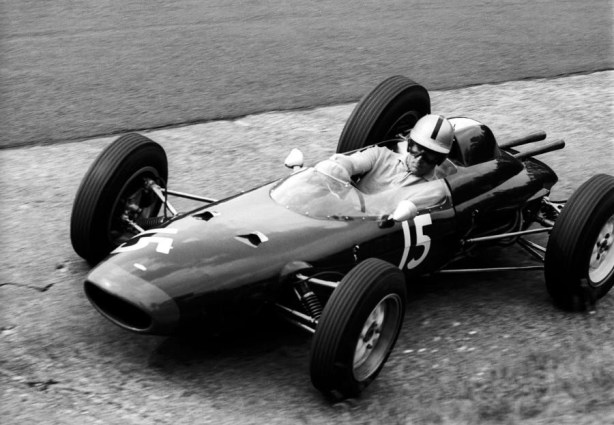
German GP, Nurburgring 1962. Q9 and DNF suspension in Lola Mk4 Climax V8, winner Hill’s BRM P57 (unattributed)

Roy commenced the 1962 season with a trip to Australasia to race a Bowmaker Cooper T53 Climax with ‘…our first two races cut short because of rain storms and I took a 4th in the NZ GP and 5th in the Hudson Memorial Trophy. In contrast the following weekends Lady Wigram Trophy was held in stiflingly hot conditions and i again finished 5th’ Roy recounts in his biography.

But his tour was cut short with a practice crash at over 130 mph during practice at Warwick Farm on 4 February, the first Australian leg of the tour.

‘At Warwick Farm we were using an improved Dunlop tyre and although Surtees and I had a set each for the race, we had to share a set in practice. Surtees came back into the pits near the end of practice and the mechanics had a frantic rush to transfer the wheels from his car…I charged off from the pits, joined the long (Hume) straight and was approaching the hairpin (Creek Corner) that followed very quickly. As to what happened next I have to rely on what I was told, as I remember nothing of the accident. As I braked for the hairpin the car turned sharp right into a flag marshalling area protected by the sleepers and hit this at about 100 mph. I suffered head injuries, a broken cheekbone and severe facial cuts, the car was a write-off and two marshalls were injured (with broken legs). I was unconscious until the following day…I was later flown back to the UK for further medical treatment…My theory as to the cause of the accident is that we failed to pump up the brakes (a procedure peculiar to the Cooper after a wheel change) and then as I pumped them up quickly for the corner, the right front brake locked’.
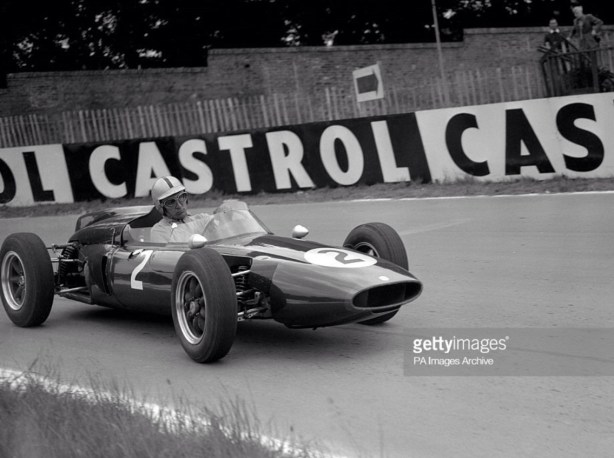
Roy in a CT Atkins Cooper T53P Climax at Crystal Palace during the 1961 London Trophy meeting- a race he won. It was a car of this type he crashed at Warwick Farm albeit 2.6 FPF rather than 1.5 FPF as powered here (PA Images)

Roy flew back to Australia for the Sandown Park Trophy on March 11/12- the circuits opening meeting and drove a Lex Davison Cooper, ‘I was far from fit and it was a very stupid thing to do, although it seemed like a good idea at the time! I was slow in practice and in the race retired because of mechanical trouble’.

Warwick Farm and its fallout was hardly a good start to what would be Roy’s final GP season with a Bowmaker Lola alongside John Surtees.

They drove Eric Broadley’s Lola Mk4 Coventry Climax FWMV V8’s with Surtees consistently outpacing the veteran Salvadori who was terribly cramped in the cockpit of the car more suited to the shorter ‘Big John’. He carried this off with dignity with Surtees remarking after Salvadori’s death ‘Roy had always been serious about his motor racing and in my view, never quite realised his full potential as a grand prix driver, mainly because he was waiting in the wings while Aston Martin were being so slow in developing their DBR4 in 1959’.

Roy had shocking luck with unreliability whereas Surtees had a much better time of it and seconds at Aintree and the Nurburgring. There was nothing too wrong with the basic design, Roy’s best qualifying performance was in Germany with Q9.
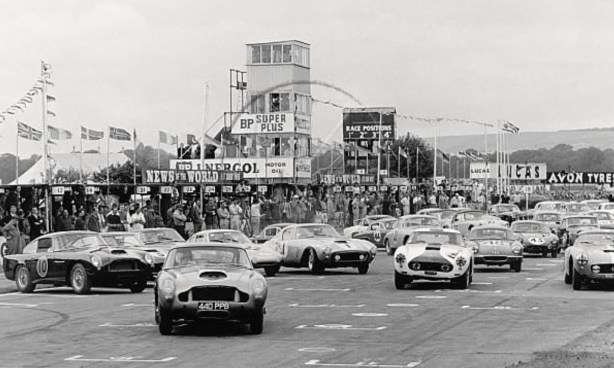
Roy blasts away from the Goodwood 1960 TT start, Aston DB4GT in pursuit of Stirling Moss who is already outta picture- and won the race in Ferrari 250SWB (LAT)

The time had come though, Roy was 40, it was right to retire from Formula 1 at the seasons end. But he continued to race sports and touring cars with great success, often for his lifelong friend, John Coombs until 1965, when he retired from racing but not before another couple of big accidents- flipping into the lake at Oulton Park after a puncture to his Jaguar Saloon and at Le Mans in 1963 when his E Type Lwt spun on oil dropped by Bruce McLaren’s Aston Martin. He crashed, then Bino Heins was burned to death in his Alpine, Bino  having sought to avoid Jean-Pierre Manzon who was unconscious in the middle of the track having also crashed after losing control on the oil.

Motor racing is and very much was dangerous!
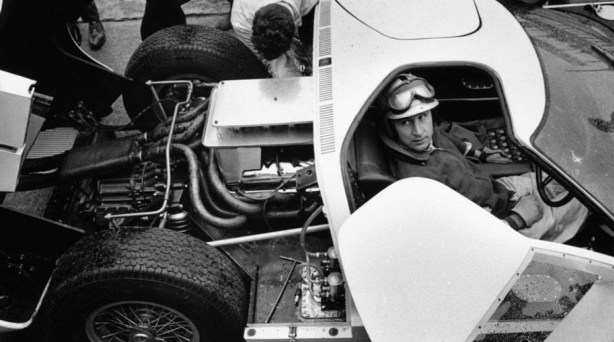
Testing a very early Ford GT40 at Le Mans in 1964- Colotti ‘box, wire wheels all in evidence (unattributed)

Salvadori was also involved in the original Ford GT40 campaign via John Wyer, his friend/Team Manager from Aston Martin. In fact his last race was in a GT40 at Goodwood in 1965 finishing second overall and winning his class.

In 1966 and 1967 he managed the Cooper F1 team, but was still not averse to a steer, doing some of the early test and development work on the new for ’66 3 litre V12 Cooper T81 Maserati at Goodwood. The driving strength included Pedro Rodriguez, John Surtees and Jochen Rindt.
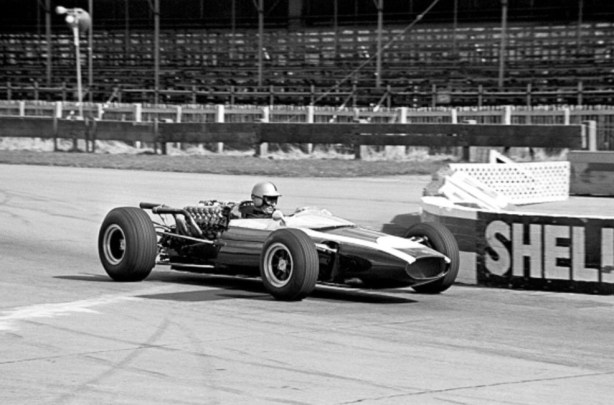
Testing the very first Cooper T81 Maserati in early 1966 at Goodwood. A race winning car and potentially the ’66 champion with an ace behind the wheel from the start of the season. Surtees joined mid-way thru the season after his spat with Ferrari- losing he and the Scuderia a probable championship to canny Jack (Getty)
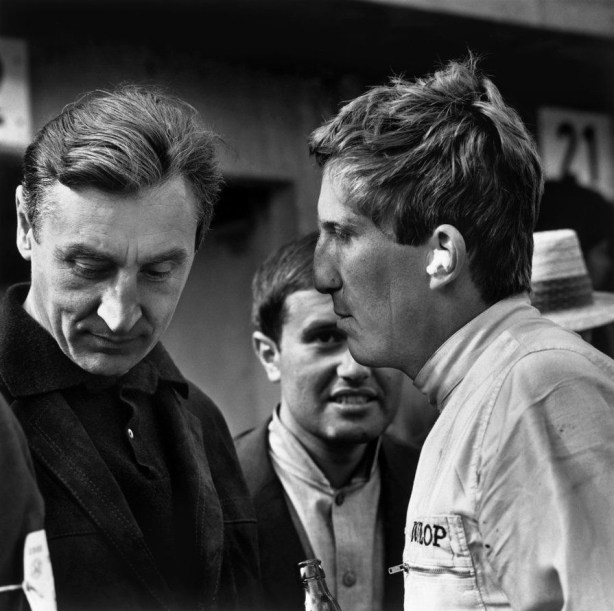
c’mon Roy, gimme Pedro’s car! Salvo and Jochen Rindt during 1967 (unattributed)

Meanwhile the garage business which funded his racing in the early days had flourished into major BMW and Alfa Romeo dealerships- they were sold to a public company providing the means and tax necessity perhaps for he and his wife Sue to move to Monaco.

His flat overlooking the Grand Prix finishing line became famous for its parties during GP weekends. He died on 3 June 2012 a familiar figure at historic racing gatherings down the decades.

Etcetera…

Wharton and Salvadori, BRM and Maser, Madgwick, Goodwood, Easter Monday 1954…
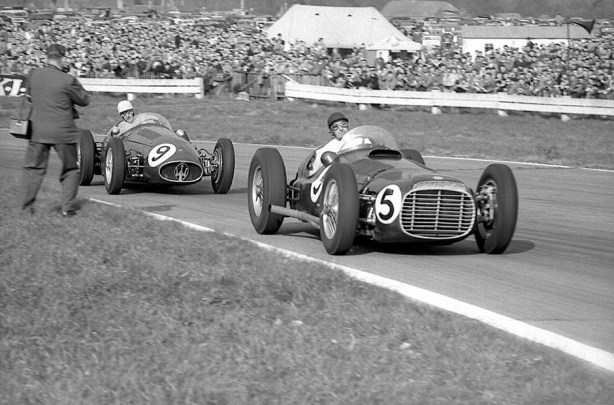
I was researching the photo above, its before an infamous high speed contretemps between the two Brits and found this piece Doug Nye wrote in his ‘Goodwood Road and Racing’ column in November 2016- here it is in all of its wonderful glory…

‘One of the great personal rivalries that used to be played out – in part – at Goodwood, was the personal antipathy between Roy Salvadori and Ken Wharton. Roy was a supremely self-confident, stylish, charming, debonair, soft-hearted, philanthropic south-London used-car dealer. His race driving philosophy was pretty much no holds barred, and he was always prepared to stick his elbows out and push and shove, or to position his car in such a way on track – as in a braking area or turn-in point for a corner – in which a close-quarters rival would be embarrassed (or intimidated) into giving way, fearing the consequences of contact – which in that period could be utterly horrendous.

Ken Wharton was evidently an almost equally charming, friendly kind of chap out of a racing car’s cockpit. But the Smethwick garage proprietor – who was in the 1950s one of the most versatile of all competition drivers – having been a front-runner in everything from mud-plugging trials to rallying and road racing in cars ranging from tin-top saloons to 500s, Grand Prix cars and the centrifugally-supercharged Formule 1 and Libre V16-cylinder BRMs, had a less armour-plated personality. He was never quite confident that he was really as good as he earnestly wanted, and tried, to be. In the car – especially at BRM when he found himself teamed with Fangio and Gonzalez (two hopes, no hope and Bob Hope) – he could only play second or third fiddle to the true stars of the day. But he plainly felt that Salvadori was not quite from the top drawer either – not a Moss, and most certainly no Fangio, nor Gonzalez. And so should Salvo attempt to assert himself on track against Ken Wharton, than Smethwick Ken would push back.

This became a pretty explosive situation in that era when drivers were not belted into the cockpits of their racing cars, when wire wheels were narrow and racing tyres slim, heavily treaded and easily intertwined should cars clash side-to-side. Competing cars were also quite tall, quite hefty, relatively unstable, and easy to overturn. On the back of the admission ticket or pass were printed the words ‘Motor racing is dangerous’ and in the ’50s that was absolutely and often painfully self-evident.
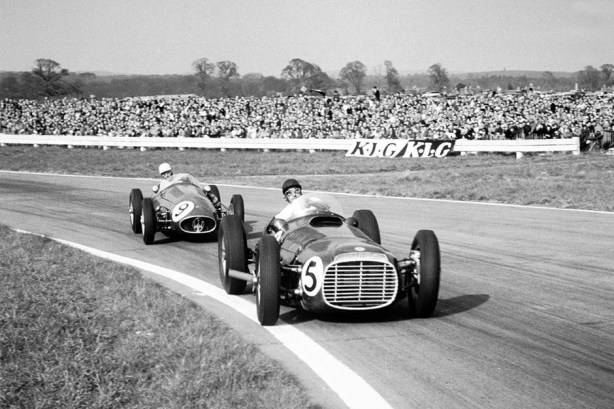
There was a history between Salvadori and Wharton before the Easter Monday Goodwood race meeting in 1954. The feature Glover Trophy race was run over 21 laps, for Formule Libre cars which set Roy Salvadori’s new Sid Greene-entered Maserati 250F against the V16 BRMs of Ron Flockhart – in the latest short-chassis Mark II variant – and Ken Wharton in the full Grand Prix-spec long-wheelbase V16 Mark I.

Roy squeezing all there was from the little Cooper T45 Climax during the 1958 British GP @ Silverstone. 3rd in the race won by Collins Ferrari Dino 246 (J Ross)
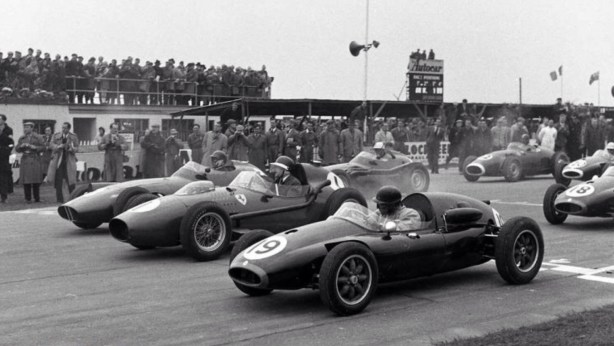
 

Roy alongside Mike Hawthorn and Jean Behra on the front row of the Glover Trophy at Goodwood, Easter 1958. Cooper T45 Climax, Ferrari Dino 246 and BRM P25. In the row behind is Scell’s BRM and Brabham’s #18 Cooper. Mike won from Jack and Roy (J Ross)
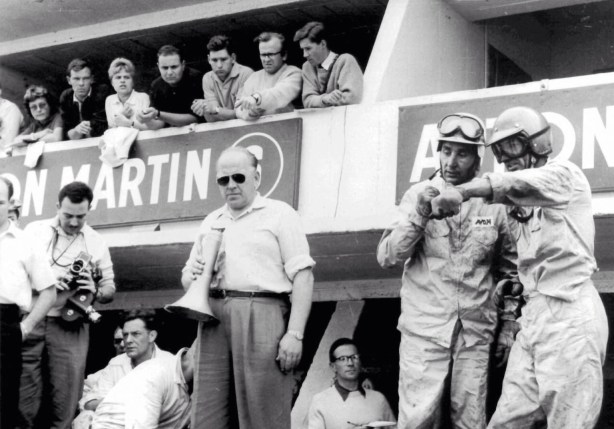
 

Reg Parnell, Roy and Carroll Shelby, Le Mans 1959 (unattributed)
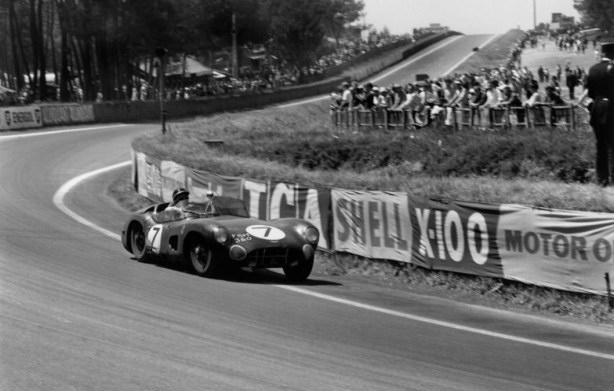
 

Roy shared this Aston DBR1 with Jim Clark @ Le Mans in 1960, the Border Reivers entered car was 3rd in the race won by the Ferrari 250TR of Paul Frere and Olivier Gendebien (unattributed)
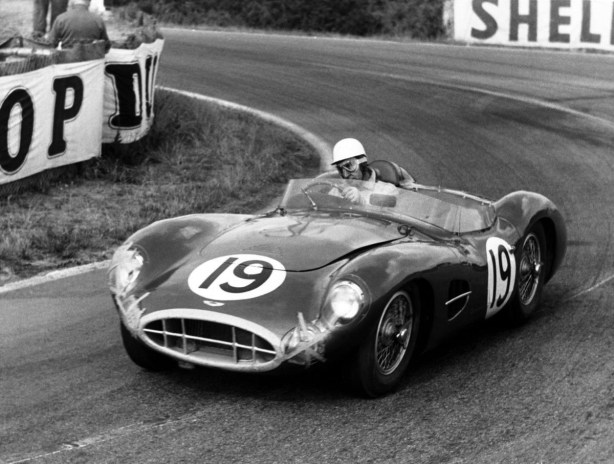
 

Roy and Les Leston shared this DBR1 @ Le Mans in 1957, DNF oil pipe. Ron Flockhart and Ivor Bueb won in a Jag D (unattributed)
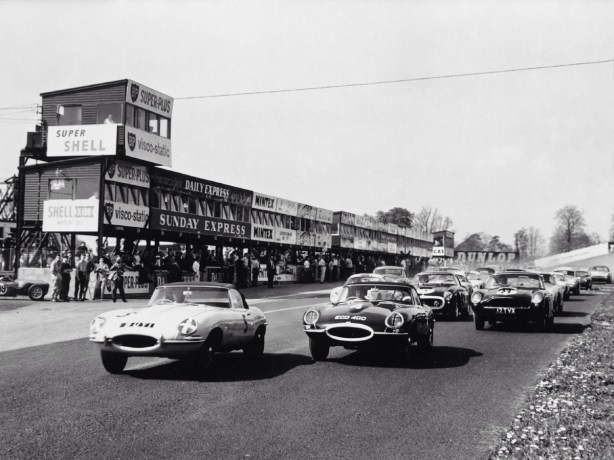
 

Roy from Graham Hill, Oulton Park GT race in 1961, Hill won with Roy 3rd (unattributed)
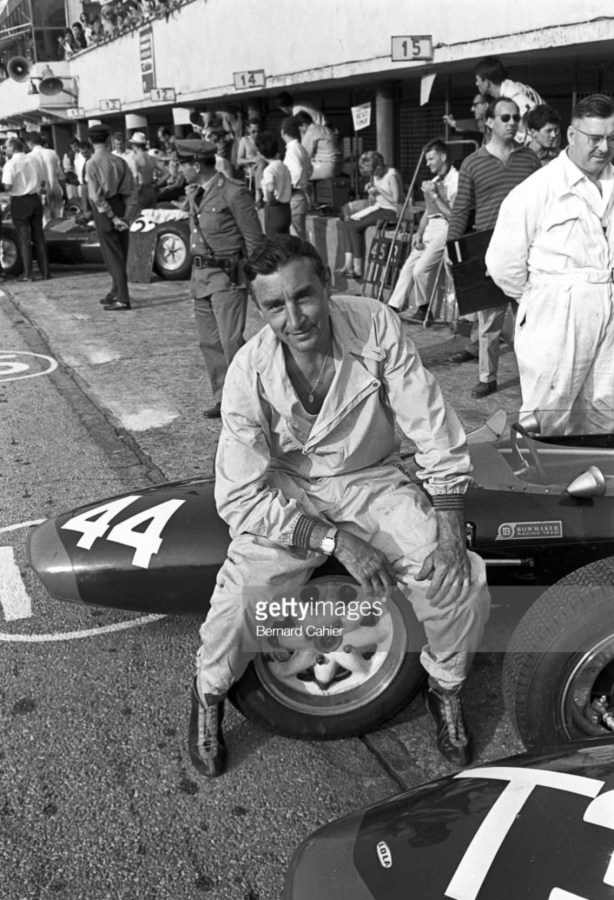
 

You can sense the mutual trust and respect between photographer Bernard Cahier and RS in this Monza 1962 shot. Lola Mk4 Climax, Q13 and DNF engine in the race won by Hill’s BRM P57. The Lotus 25 Climax behind is Trevor Taylor’s works machine  (B Cahier)


Bibliography…

MotorSport article by Simon Taylor in August 2012, ‘The Guardian’ obituary, ‘Goodwood Road and Racing’ column Doug Nye, ‘Goodwood Remembered’ Peter Redman, Stephen Dalton Collection, oldracingcars.com, ‘Roy Salvadori Racing Driver’  Roy Salvadori & Anthony Pritchard, David Fox

Photo Credits…

John Richardson, John Ross Motor Racing Archive, B Cahier, Getty Images- GP Library/PA Images, Pinterest, Simon Lewis Transport Books, LAT, Tom March, George Phillips

Tailpiece: Roy, Aston DBR4, Zandvoort 1959…
Finito…

mon 1

(Getty Images)

Felipe Massa blasts his Ferrari F138 through the Monaco streets oblivious to chassis’ above as exquisitively proportioned as Maranello’s latest…

’twasn’t a great 2013 race for the Brazilian, he had an accident on lap 28 at Ste Devote mirroring one he had on Saturday morning, locking a brake over a bump and boofing the barrier hard on the outside of the circuit.

massa 2

Felipe Massa Ferrari F138 on Saturday before his accident, Monaco 2013 (Ercole Colombo)

Nico Rosberg won in a Mercedes F1 W04 emulating father Keke’s 1983 win in a Williams FW08C Ford. Seb Vettel and Mark Webber were 2nd and 3rd in their Red Bull RB9 Renault’s.

mon 2

Nico Rosberg in the oh so complex 2013 Mercedes F1 W04, Monaco 2013. Carbon fibre chassis, 2.4 litre V8 & KERS energy storage system, 7 speed semi-automatic gearbox et al (unattributed)

mon 3

30 years earlier in 1983 Keke wins Monaco in the oh so simple Williams FW08C. 3 litre Ford Cosworth V8 powered, 6 speed manual Hewland gearbox #27 is Patrick Tambay’s slightly more complex 1.5 litre V6 twin turbo-charged Ferrari 126C3 (unattributed)

keke monaco 1983

Keke, Monaco ’83 (The Cahier Archive)

Photo Credits…

Getty Images, Ercole Colombo, The Cahier Archive

(I Smith)

James Hunt, Elfin MR8C Chevrolet F5000, ‘Rose City 10000’ November 1978…

James Hunt ran true to form whilst on a short sojurn to Australia after the end of his Marlboro Team McLaren season in 1978, he had a very good time and won the race! He was also the supreme professional as he went about mastering the circuit and a car unfamiliar to him. Winton short circuit ain’t exactly the Nurburgring mind you. Nor was the ’76 World Champion new to F5000’s- he had Eagle and Lola experience of these 500 bhp roller-skates ‘Stateside.

I’ve covered this meeting in an earlier article on Garrie Cooper’s MR8 design, these photos by Ian Smith were too good not to share, click here to read the article; https://primotipo.com/2014/10/15/james-hunt-rose-city-10000-winton-raceway-australia1978-elfin-mr8-chev/

No other Elfin model had so many world class drivers steer them- Hunt, Vern Schuppan, Didier Pironi, Larry Perkins and Bruce Allison is not a bad roll call…

(I Smith)

Credits…

Ian Smith

Tailpiece…

(I Smith)


(oldracephotos/Keep)

Richard Attwood hooking his big Grand Prix BRM P126 2.5 V12 into Longford’s Viaduct during the ‘South Pacific Trophy’ weekend, 4 March 1968…

He was fourth in the very soggy race, this shot is in the dry earlier in the meeting, won by Piers’ Courage McLaren M4A Ford FVA F2 car from Pedro Rodriguez’ BRM P261 2 litre V8 and Frank Gardner’s Alec Mildren owned Brabham BT23D Alfa Romeo Tipo 33 2.5 V8- a varied lot don’t you think?

I wrote a short article about this meeting a couple of years ago but have just ‘upgraded it’ to feature length due to the large number of photographs of this meeting released in more recent times by Lindsay Ross and Rod Mackenzie. Click on these links to check out their archives.

http://oldracephotos.com/content/home/ and http://www.rodmackenziecollection.com/

The photos really needed a nice home to make them accessible. So you can thank them for this extended piece! Click here to read it;

https://primotipo.com/2015/10/20/longford-tasman-south-pacific-trophy-4-march-1968-and-piers-courage/

The big BRM was far from the car of the series- the Lotus 49 Ford DFW was, but the championship was successful in giving the Bourne outfit valuable testing miles of their new ’68 F1 championship contender albeit in 2.5 litre form.

The BRM design and engineering team led by Tony Rudd were ‘up to their armpits in alligators’ after two fraught seasons in 1966/67 trying to get the BRM P83, or more particularly its complex, heavy, wonderful H16 engine to race fitness.

BRM chief Louis Stanley therefore briefed Len Terry, latterly of Eagle and Lotus to design and build a new F1 car. Three P126 chassis were constructed by Terry’s ‘Transatlantic Automotive Consultants’ concern powered by the brand new ‘sportscar customer’ P101, chain driven DOHC, 2 valve, Lucas injected 3 litre V12 which initially gave circa 370 bhp @ 9750 rpm, behind which was fitted a Hewland DG300 transaxle.

The Type 101 BRM engine- 60 degree all aluminium V12 with two chain driven overhead camshafts per cylinder bank operating two valves per cylinder. The compression ratio was 11.5:1, the bore and stroke 74.6mm/57.2mm, fed by Lucas fuel injection the power output during 1968 was initially 370 bhp rising to 390 bhp @ 9,500 rpm. The 2.5 litre variant was designated P121 and gave circa 340 bhp (unattributed)

Bruce McLaren had some good results with the first of the engines in late season 1967 F1 races bolted into the back of his M4B chassis. He was therefore more than happy to thrill his home crowds and assist the BRM lads testing and racing their new car in the New Zealand Tasman rounds before heading back to the UK and completing his own 1968 F1 machine, the Ford Cosworth DFV V8 powered M7A! When Bruce returned to the UK Attwood took over the car for the Australian rounds with Pedro Rodriguez racing P126/01.

In fact Bruce’s somewhat lucky win in P126/02, after Jim Clark’s late race excursion at Teretonga was the only race victory the P126/P133 (two cars designated P133 were built at Bourne to Len’s design) chassis ever had. But don’t discount this series of racers though.

Bruce McLaren on the way to Teretonga International victory on 27 January 1968. Clark’s Lotus 49 Ford DFW was 2nd and Frank Gardner’s Brabham BT23D Alfa was 3rd (I Peak/TRS)

Whilst the car’s Tasman Series was somewhat fraught, the best P126 results other than Bruce’s win were Dickie’s sixth in the Australian Grand Prix at Sandown and fourth at Longford- Pedro Rodriguez had the design leading two Grands Prix in 1968 and generally it was a front third of the field car, if lacking a bit in luck/reliability. These results included a front row start and leading the Spanish GP, second at Spa, third at Zandvoort, lead of the French GP and fourth in Mexico.

Lets not forget that sometime GeePee driver and 1970 Porsche 917 Le Mans winner Attwood took second place in the 1968 Monaco GP aboard a P126 too.

The late sixties BRM’s are often maligned but the P126/133’s results in 1968 F1 in a sea of Ford Cosworth V8’s (well five or six of them anyway in the hands of Lotus, McLaren and Ken Tyrell’s Matra International) were not too shabby at all, in part due to the learnings of the ’68 Tasman…

Attwood is attended to at Longford before another practice lap whilst John Harvey in Bob Jane’s Brabham BT11A Repco does the same thing behind (D Cooper)

Etcetera: Attwood, BRM P126 ’03’ Monaco 1968…

The ‘King of Monaco’, Graham Hill won in the principality as he often did in the sixties but Attwood was a very fine second in the third of the P126’s built, a chassis he raced at Spa, Zandvoort, Rouen, Brands and the Nurburgring that year.

(unattributed)

The high photos are beauties to show the key design elements of Len Terry’s car. The aluminium monocoque is a ‘full monocoque’ as against a ‘bathtub’, in common with his Lotus 38 and his Eagle T1G’s. Front suspension is period typical top rocker and lower wishbone with an inboard mounted coil spring/shock to get the mechanical gubbins outta the breeze.

See the spoiler on the nose- 1968 was the ‘Year of Wings’ with BRM being slow adopters and behind the eight-ball relative to other teams mid-season, but that is all to come. No seat belt yet for Dickie, which is interesting, six-point harnesses were not mandated until the start of 1972, but belts were common by Watkins Glen towards the 1968 seasons end.

(unattributed)

Love those mag-alloy wheels, brakes are Girling, engine is carried by the chassis and is not a stressed member as the predecessor P75 H16 engine was in the P83 BRM tub. The Type 101 V12 was originally developed as a customer motor for F1 and sportscar use so its fitment needed to be ‘universal’ in multiple applications.

(unattributed)

Beauty of a shot showing Attwood caressing his P126 through a delicate slide- it shows the effectiveness of the period typical rear suspension popping around 390 bhp to the tarmac. What was a leading Terry design trend are the parallel lower links which found their way into other designers lexicon circa 1971. The norm to that point was an inverted lower wishbone. Otherwise the coil spring/shocks, single top link, twin radius rods and adjustable roll bar are ‘the usual’.

A Varley battery is vertically mounted beside the Hewland DG300 5 speed transaxle- the P126 design is notable as the first BRM without a Bourne ‘box. It was a good choice, these tough old jiggers are still for sale and in use with 550bhp Chev V8’s tearing away at their internals.

The power of that lovely V12, as stated above, around 390 bhp at this stage of the engines long evolution into the four-valver V12 success stories of 1970-2.

Photo and Other Credits…

oldracephotos.com.au/D Keep, Ian Peak/The Roaring Season, Brian Jackson, oldracingcars.com- see Allen Brown’s piece on the P126; https://www.oldracingcars.com/brm/p126/ and P133; https://www.oldracingcars.com/brm/p133/

Tailpiece…

(B Jackson)

Pedro Rodriguez enters the old Sandown pitlane in P126-01 during the 1968 Australian Grand Prix meeting, DNF engine after 10 laps for the Mexican, Jim Clark won in a Lotus 49 Ford DFW.

Finito…


(unattributed)

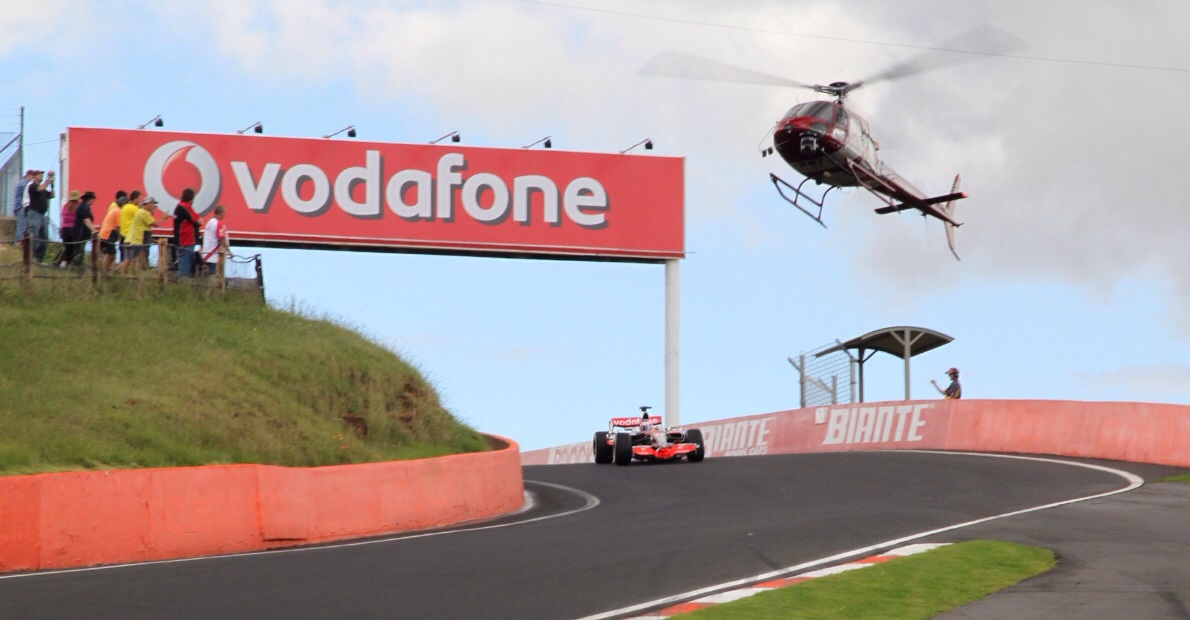
Craig Lowndes dropping into Mount Panorama’s Skyline/Esses, McLaren MP4/23 Mercedes V8, 22 March 2011…

Australian Formula Ford has been a factory for the creation of V8 Supercar Drivers for a couple of decades now. Every now and again one escapes to international racing success, Mark Webber, Will Power and Daniel Ricciardo spring to mind. I’ve not forgotten Larry Perkins I’m just referring to more recent times. But in the main V8 Supercars and to a lesser extent Porsche Cup racing has given local aces a place to ply their trade as well paid professionals.

The popularity and commercial success of Touring Car Racing in Australia relative to Single Seaters began circa 1960 and has continued unabated since. Even very popular single seater formulae such as the 2.5 Tasman and F5000 classes did not put a dent in the rise and rise of ‘Taxis’. Why? Its a topic for a whole series of articles but perhaps fundamentally the cars are easier for the average punter to understand and relate to, are spectacular to watch and have had a succession of ‘characters’ racing them. The absolute professionalism in the way V8 Supercars has been managed for so long now has widened the gulf further.

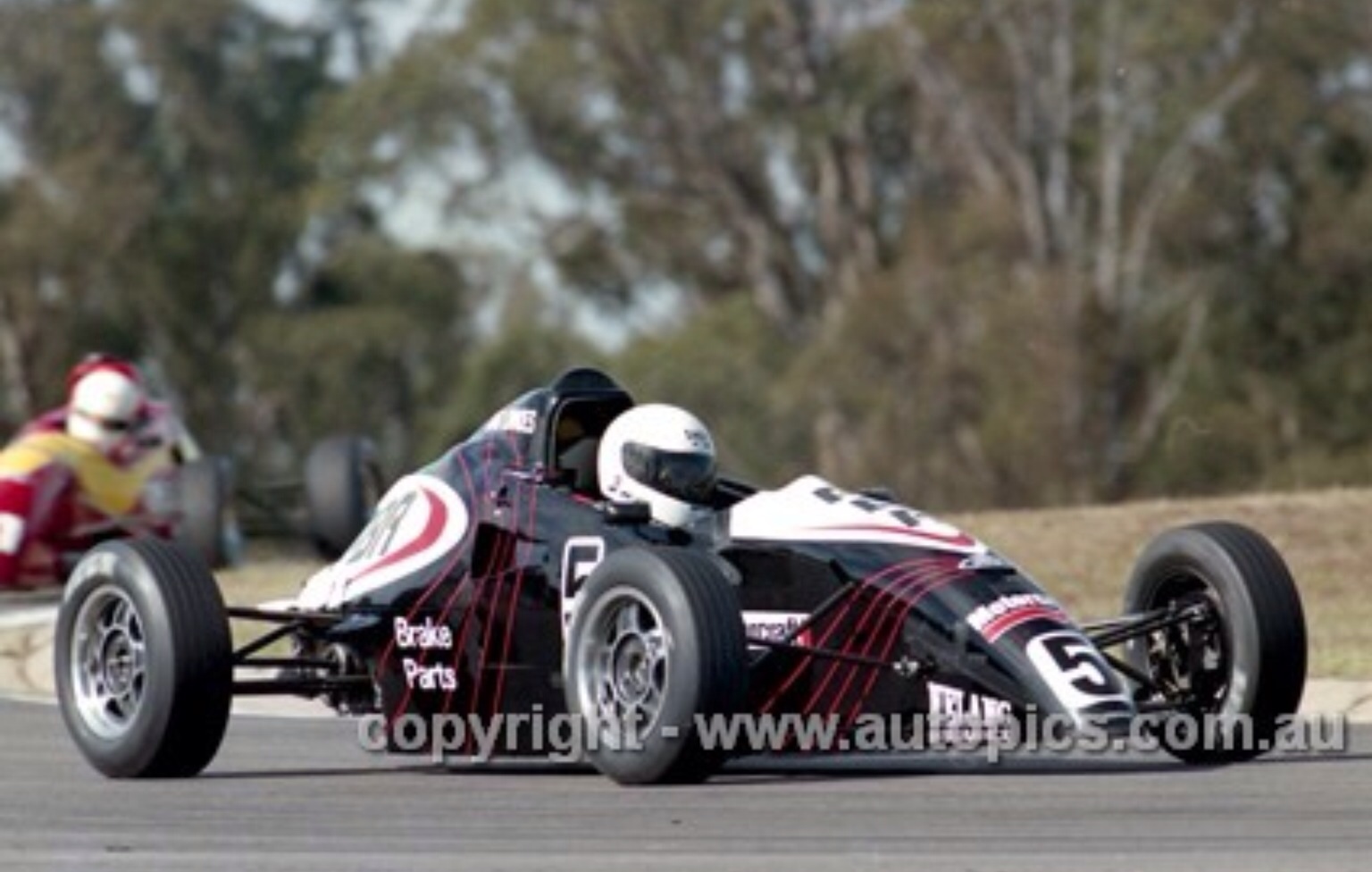
Lowndes, Van Dieman RF93 Formula Ford, Oran Park August 1993. Craig won 5 of the 8 ’93 rounds including OP (autopics)

Sponsors re-prioritised their spend over time away from the purer form of the sport to tourers. Drivers chase the dollars of course. So Taxis grew and grew. Its not that simple but its not much more complex either.

Back to the point of the article which is to discuss young talent and progression into the professional ranks.

It wasn’t always the case though, a career path into tourers. Often guys won the AFFC right into the nineties and none were picked up by professional touring car teams- the class was a bit of a closed shop with the young thrusters not especially welcome. Tomas Mezera is perhaps an exception but he ended up at HRT after he came back from his sojurn in Europe, so too did Russell Ingall make the transition after he returned from Europe.

Cameron McConville, the 1992 AFFC champ looked as though he may set a trend when Dick Johnson recruited him to race the second DJR machine at Bathurst in 1993 but then he boofed a fence and that was it for him, so it seemed. A 1996 win in the Australian GTP Championship in a Porsche 993 RS CS saw him brought back in from the cold- he beat Jim Richards in the Warwick Fabrics car that year, I remember being hugely impressed by his speed and professionalism.

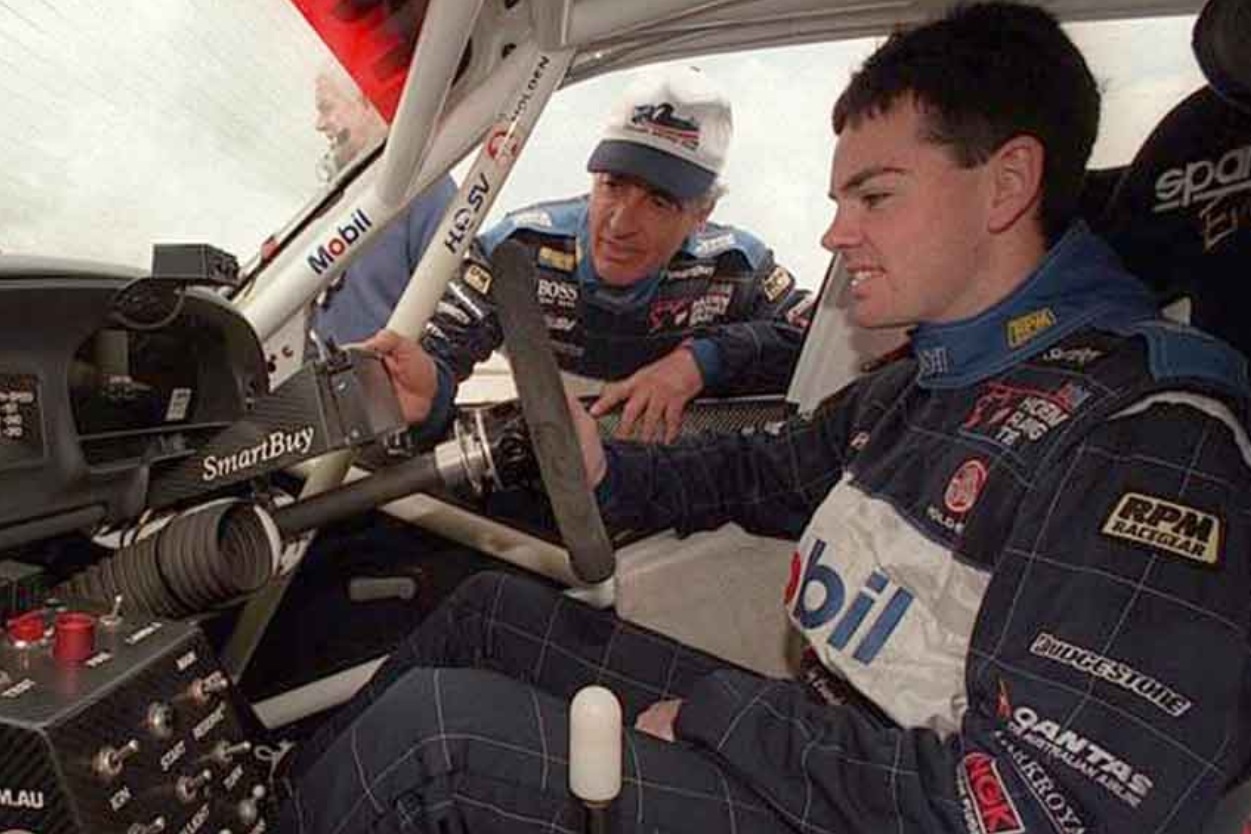
None of yer poofhouse single seater stuff in here matey! Peter Brock was a great mentor to Lowndes early on , this shot of an HRT Commodore circa 1996. Brocky had an all too brief sojurn into ANF2 circa 1973 with a Birrana 272 Ford (unattributed)

Lowndes was the one who really paved the way for the guys who followed- most of the V8 Supercar champs have been Karting and Formula Ford graduates since Craig showed the way.

Out of Karts of course, initially he raced an old RF85 Van Diemen Formula Ford in 1991 and then won the AFFC title aboard an RF93 in 1993. Longtime openwheeler racer and enthusiast (and 1975 Bathurst 1000 winner with Peter Brock) Brian Sampson threw him a lifeline by giving him some drives in his Cheetah Mk9 Holden Formula Holden in 1994. It wasn’t the latest bit of kit by any stretch, in fact it was and IS the very first FH built. But Craig made the thing sing, I recall some very good drives in the car against Greg Murphy in a much more recent Reynard.

Lowndes, a motor mechanic by trade, didn’t have much money but he had ability, a likable and engaging personality and ability to communicate and some contacts via his Dad, Frank Lowndes who had been in and around motor racing forever as a car/engine builder and scrutineer.

Holden Racing Team tested him and he was immediately quick, consistent, and easy on the equipment getting a drive in the 1994 Sandown 500. Soon he was team-leader and won the V8 Supercar title in 1996. He hadn’t lost the fire in the belly for open-wheeler success, and even though he had the local scene at his feet he negotiated a year in the European F3000 Championship via Tom Walkinshaw who by then owned HRT.

Lowndes, Lola T96/50 Zytec Judd F3000, Silverstone 1997 (LAT)

Lowndes had a shocker of a year being comprehensively blown off by Juan Pablo Montoya, his teammate at RSM Marko aboard the mandated Lola T96/50 Zytec. To be fair, he was coming back into single-seaters after an absence of some years into a group of the best F1 aspirants in the world straight out of F3 or doing a second or third year in F3000. Lowndes did not get a fair crack of the whip in the team with minimal testing, Marko ran Lowndes to settle a debt owed to Walkinshaw- and focussed, not unnaturally on the fellow who was winning races- Montoya.

What Lowndes needed was another season, but back to V8 Supercars he came and a couple of other titles, six Bathurst 1000’s and all the rest. Of course he is still racing at the top level too. It would have been interesting to see how far he could have progressed with another season in Europe.

(B Moxon)

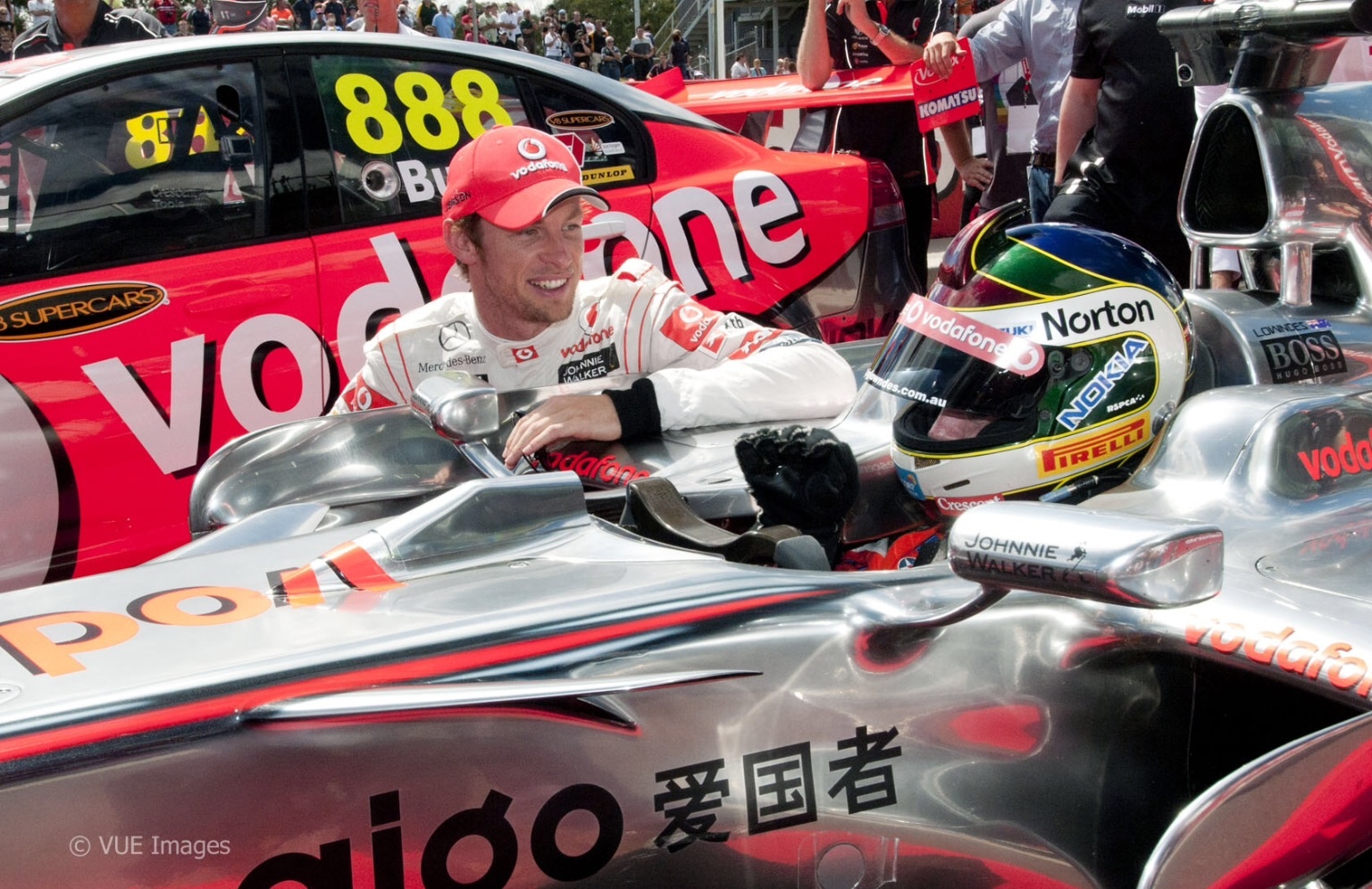
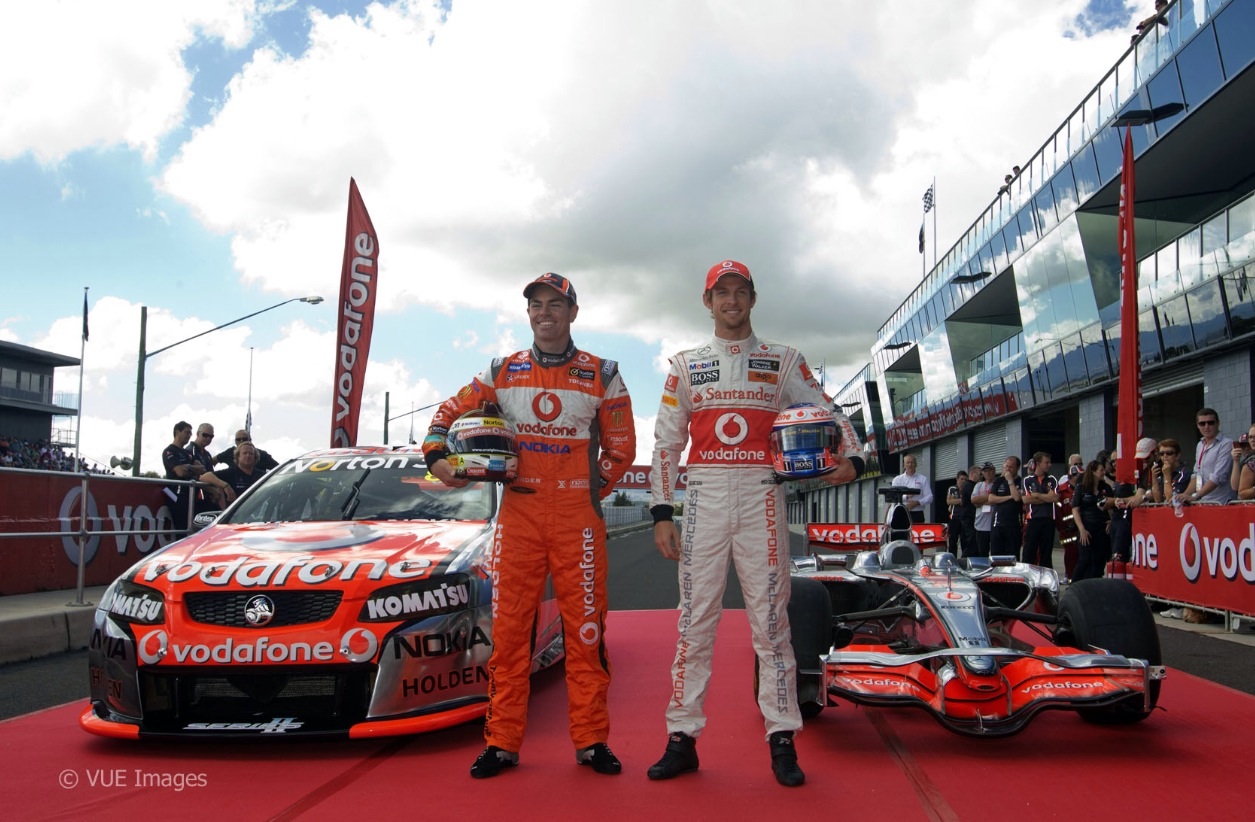
Jenson Button and Craig Lowndes, car a 2008 spec (champion that year in Lewis Hamilton’s hands) McLaren MP23/4 Mercedes 2.4 V8

Lowndes nipping a brake into Hell Corner (unattributed)

The opportunity to get to drive a contemporary F1 car was too good to be true and came about due to Vodaphones sponsorship of both McLaren and Triple Eight Racing who ran VE Holden Commodores that year. The day, just before the AGP at Albert Park involved closure of the Bathurst public roads- the circuit is just that, roads for most of the year with Lowndes and Jenson Button swapping seats between their respective F1 and V8 Supercar racers.

(unnatributed)

For misty eyed open-wheeler fans it was also an amazing ‘if only’, for Bathurst is indeed, in the words of Australian motor-racing historian John Medley ‘The Cradle of Australian Motor Racing’ and is where the Australian Grand Prix should be held. What a spectacle that would be! For that to occur the circuit would be destroyed to meet F1’s safety requirements, so of course it will never happen.

But for one day it was a reminder of what could be for enthusiasts and what might have been for Craig Lowndes had the racing cards been dealt or fallen a different way…

Comparo- F1 McLaren MP4/23 Mercedes Benz (2008) and V8 Supercar Holden ‘VE’ Commodore (2011)…

(Motor)

YouTube footage…

Credits…

Vue Images, LAT, Bruce Moxon, Motor

Tailpiece: Imagine 26 of them zipping past…

Finito…
 

Charles and John Cooper, Cooper Climax and Babe, late fifties…

I’m a big fan of the Getty Images archive, there are so many photographs there to inspire thousands of articles but Joisus the captions are usually pretty blardy useless. Good enough for the mum and dad recipients of the newspapers they were most often published in but lacking the detail anoraks demand!

This one is a case in point, it reads as follows: ‘Building Cooper Formula 2 racing cars for British racing. Charles Cooper (left) with a fitter at (sic) a Cooper Formula 2 car’, no date of course.

I’m not a Cooper expert but am keen to date the shot, identify the Cooper’s type and the name of the lissom young lass on the workshop wall!

Some hints: the Cooper has coil spring (when fitted) rather than transverse leaf front suspension. The Coventry Climax FPF engine is fitted with twin-SU rather than Weber carbs. The chassis is of no help to me in terms of distinctiveness, it’s the same ‘offensive to purists’ but ‘perfect in practice’ curvy Owen Maddock designed spaceframe which went into all Coopers of the period. Having said that an expert will see what I do not.

My guess, and its no more than that, is a 1958 Cooper T45 Climax. Mind you, that fuel tank is a biggie, matched by another on the other side- none fitted at the moment its more likely an F1 Cooper T51. Or maybe an F2 Cooper running in Gee Pee events as the T45 did with 2 litre FPF’s fitted in 1958.

But most importantly what is the name of blondie-locks, she really has the looks to lift the mood of even the snarliest mechanic on the coldest of Surbiton, winter mornings…

 Credit…

 PA Images


(unattributed)

Jochen Rindt awaits the start of the Australian Grand Prix, Lakeside, Queensland on 2 February 1969…

Alongside the Austrian’s Lotus 49B is Australian Niel Allen’s ex-Courage McLaren M4A Ford FVA F2, the bi-winged device behind Jochen is the Piers Courage-Frank Williams owned Brabham BT24 Ford DFW.

Jochen switched his engine off as it tightened before it went ka-boom – having had problems in practice – on lap 43 whilst in third. Niel was fifth and Piers had an accident on lap five after a passing move on Graham Hill went pear-shaped at BMC bend. Chris Amon won aboard his works Ferrari 246T Dino.

Rindt’s Lotus 49B during dry, Saturday practice at Warwick Farm. He and Chris Amon’s Ferrari 246T had an electrifying duel for pole, won by Jochen in the final minutes of qualifying (R MacKenzie)

Allen Brown’s summary of the 1969 Tasman Series is a great one, it says a lot in the minimum of words, I like that!

“Chris Amon was back for 1969 and taking it much more seriously with two Ferrari 246T/69s for himself and teammate Derek Bell and four 300 bhp 24-valve engines. Despite the loss of Jim Clark, Lotus were present with a two-car team of Lotus 49Bs for Graham Hill and new teammate Jochen Rindt. BRM did not enter so the only other overseas entry was Frank Williams who had a Brabham BT24 for Piers Courage.”

Rindt, Brabham, Amon, Hill and Courage on Sandown’s pit straight with Rindt hooking into Peters Corner for the run up the back straight. Lotus 49 Ford DFW, Brabham BT31 Repco, Ferrari 246T, Lotus 49B Ford DFW and Brabham BT24 Ford DFW. Sandown International 100, 16 February 1969. Amon won from Rindt, Brabham and Gardner (unattributed)

“Rindt proved to be Amon’s closest rival but spun away the lead at both Pukekohe and Levin, leaving Amon to win both races, before the Austrian took a comfortabe win at Wigram. A dominant victory at Lakeside’s Australian GP for Amon meant Rindt could no longer catch him and when Amon and Courage tangled at Warwick Farm, the Kiwi was champion.” Rindt had a stunning weekend in both practice and an amazing wet weather drive which blew the minds of the Sydney spectators and his rivals. “He (Amon) rounded off the season with victory at Sandown, his sixth in two seasons.”

Rindt mesmerised 16,000 soggy Sydney-siders with his raceday drive during the ’69 Warwick Farm 100 on 9 February. He ran away and hid after Amon and Piers Courage collided on the first lap (R MacKenzie)

Now that the visiting British teams were using F1 cars and then taking them home, there was no longer the annual influx of new machinery for the locals. Alec Mildren had the funding necessary to commission specials but the number of competitive 2.5-litre cars was definitely dropping. David McKay’s Scuderia Veloce was the nominal entrant of Amon’s Ferraris but no longer ran their own car. That season, Mildren had installed his Alfa V8s in a car designed for him by Len Bailey and constructed by Alan Mann Racing in England, the monocoque Mildren Alfa ‘Yellow Submarine’ in addition to his ’68 Tasman Special, the Brabham BT23D Alfa driven by Kevin Bartlett.

Jochen, dry practice on the Friday given the lack of punters, Warwick Farm (G Paine)

Bibliography & Photo Credits…

Allen Brown on oldracingcars.com, Rod MacKenzie, Glenn Paine

Tailpiece: Moody Rindt shot, Warwick Farm 1969- check the mirror folks…

(R MacKenzie)

Finito…
(J Lineham)

Reg Hunt #5 and Guerino Bertocchi #7 in Maserati 250Fs prior to Saturday practice, Albert Park, Australian Grand Prix, 1 December 1956…

Hunt looks pretty happy with himself whilst Maserati’s legendary tester/mechanic Bertocchi wonders if everything is AOK with the Moss #2501. To the left of Hunt’s car is Tom Sulman’s Aston Martin DB3S.

James Lineham had a fantastic day at the ‘Park, the sun shone making it ideal for spectators, especially those with cameras. He used his expensive colour film wisely in the paddock, his camera wasn’t sophisticated, so best to take snaps of stationary or slow moving cars. Then he shot off some monochrome action work whilst he walked Albert Park’s huge expanse.

Bib Stillwell’s Jag XKD perhaps, on Lakeside Drive looking to the south of Albert Park Lake (J Lineham)
Paul England’s superb Ausca Holden-Repco, built after-hours by England at Repco Research (I Curwen-Walker)

James life spanned 1925 to 1997, he was a young enthusiast aged 31 when he attended this meeting. After his death his wife carefully went through all of his precious belongings, found these photographs and donated them to the State Library of Victoria for enthusiasts like you and I to see, in 2014.

Many thanks James and Catherine Lineham. Blurry though some of them are, they ooze atmosphere of a weekend spoken about in reverential terms by those fortunate enough to have attended. One of the journalists of the day, wrote of the weekend as ‘when Australian motor racing came of age’.

Moss or Behra Maser 300S on the pit or main straight, Aughtie Drive. Race direction these days the other direction, or clockwise (J Lineham)
Tom Sulman’s Aston Martin DB3S with Tom in the blazer at right (I Curwen-Walker)
Circuit map from the meeting program (G Dobie)

I’m obsessed with a few circuits in Australia in particular; Warwick Farm, Mount Panorama, Longford, Lobethal and Albert Park – Longford and the ‘Park especially. I live in Windsor 750 metres from Albert Park’s Austin Healey Corner/Turn 13, the Union Street/Queens Road second gear right-hander.

I run around it every other day, I think about the fellows who conquered it’s oh-so-quick unguarded challenges in the 1950s and do so in much more safety today. I feel its wonderful rhythm, vibe and sense of history all the time. These snaps gimme that vibe, Albert Park is a wonderful place to be even at 5.15am with only the park’s Daffy Ducks as company!

When originally posted, the article comprised James’ shots only, but the piece has grown over the years as other photographs have appeared online and I have plucked them from certain obscurity on FB.

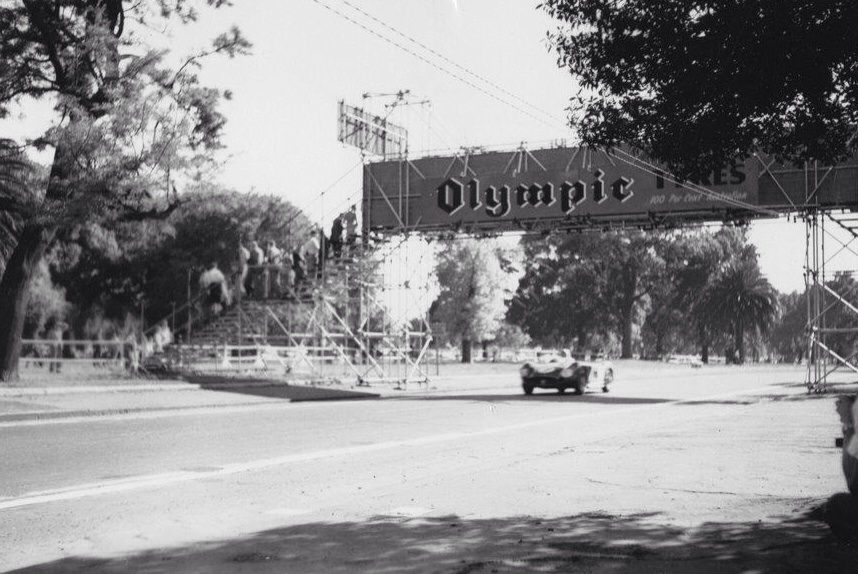
Vrrooom in a six-cylinder 3-litre, DOHC kinda-way. Moss Maser 300S. Aughtie Drive from the Olympic Tyres Bridge (J Lineham)
Reg Parnell’s Ferrari 555 Super Squalo with Peter Whitehead’s similar car at left (I Curwen-Walker)
3.4-litre, DOHC, two-valve engine of Parnell’s car (I Curwen-Walker)

Attached are links to articles already written about this motor racing fortnight during the 1956 Melbourne Olympic Games which ‘put Melbourne, if not Australia on the map’.

In fact James had a big choice to make that day. He could have taken a vantage point on the men’s marathon course from Clayton to the Melbourne Cricket Ground. Algerian born Frenchman Alain Mimoun won it in 2:25.00 from Franjo Mihalic of Yugoslavia a minute and a half behind.

The Australian Tourist Trophy; https://primotipo.com/2016/01/29/1956-australian-tourist-trophy-albert-park/ and Australian Grand Prix; https://primotipo.com/2016/12/27/moss-at-albert-park/

Jean Behra, Maserati 250F (J Lineham)

The short story of the race is that Stirling Moss won the 80 lap, 250 mile event on 2 December 1956…

He did so by a lap from teammate Jean Behra, Peter Whitehead’s Ferrari 555 Super Squalo, Reg Hunt’s Maserati 250F and Stan Jones’ similar machine. It was a dominant display from the plucky Brit who was always, and still is immensely popular when he visits Australia.

International representation included the two works Officine Maserati drivers Moss and Behra (#1 above) who brought no less than five Masers with them. They shipped three 250Fs, two of the latest specification and an earlier chassis, and two 300S sportscars both of which remained in Australia post event. The cars were based at Reg Hunt’s Holden Dealership just up St Kilda Road on the Nepean Highway in Elsternwick a few kilometres from the circuit, the 300S’ being famously driven between workshop and racetrack.

Stirling Moss enroute to victory in his Maserati 250F (Melbourne Argus)
Prince Bira and Jean Behra in the Albert Park paddock (S Landrigan)

Jean didn’t have a great year, being comprehensively bested by one of the most gifted drivers in the world, but third places at Buenos Aires, Monaco, Reims, Silverstone and at the Nurburgring is hardly shabby. Over the two weekend Australian carnival it was Moss winning both the AGP and the Australian Tourist Trophy held the weekend before.

Moss raced #7 250F chassis number 2501 and Behra #1 2522. The spare car – 2507 – was driven by both Moss and Hunt during practice. At one point it was thought Jack Brabham may race it, not having an AGP ride that year, but it was not to be. A pity, by that stage Jack had two seasons of racing in Europe behind him so would have given all but Moss and Behra a good-go.

Two of the three Officine Maserati works 250Fs, chassis numbers as per text. #1 is Behra’s machine (I Curwen-Walker)

Scuderia Ambrosiana entered two Ferrari 555 Super Squalos powered by 3.4-litre 860 Monza four cylinder engines.

The AGP at this time was run to Formula Libre rules, the cars above were driven by #2 Reg Parnell, chassis number FL9002 and #3 Peter Whitehead, chassis FL9001. Whitehead was a regular visitor to Australia dealing with the family wool business and had won the Australian Grand Prix way back in 1938 aboard his ERA chassis R10B, when he was 24, in 1956 he was 42 years of age.

Whitehead started the carnival well winning the Bryson Industries Cup support event to the Australian Tourist Trophy the week before, ahead of Hunt and Kevin Neal, Maserati A6GCM.

Whitehead and Parnell were unlikely to be on the pace of the works Masers but would be good bets as best of the rest, as indeed they were, Peter was third and Reg sixth. The Parnell car remained in Australia, click here to read about it;

Car #9 in the background of the photo above is Lex Davison’s Ferrari 500/625, Alberto Ascari’s 1952/3 dual World F1 Championship winning chassis #0005, iconic in Australia and winner of the 1957 and 1958 AGP’s at Caversham and Bathurst respectively. The 3-litre car, which then carried chassis number #0480 was seventh, five laps behind Moss with various problems.

Behra and Moss at the driver’s briefing (S Landrigan)
(J Lineham)

Ken Wharton was a well credentialled Brit in both single-seaters and sportscars, but his ‘Ecurie Du Puy’ (John Du Puy was an American resident in Switzerland) silver Maserati 250F was said to be, and looked, tired.

Chassis #2521 had been Behra’s works machine – a new car that season – and raced in eight events earlier in the year before being sold to Du Puy. But it looked in-need-of-a-birthday before leaving Europe, it was the latest bit of kit, properly prepared the car was a top-three contender.

Ken retired the car on lap 19 and then journeyed on to race the Maserati and his Ferrari Monza in New Zealand that summer, unfortunately dying in a tragic accident aboard the Monza on 12 January 1957 at Ardmore during the NZ GP weekend.

The best prepared and equipped of the locals were the well-heeled Victorian motor dealers, Reg Hunt and Stan Jones in Maserati 250Fs of similar specification and cobbler Lex Davison, who owned a shoe manufacturing and distribution business.

Lex’ Ferrari was older than the 250Fs but was quick with its 3-litre four cylinder, DOHC engine and was beautifully prepared by Alan Ashton at AF Hollins motor engineers just up the road from the ‘Park in Armadale. In fact all three of these cars lived close to the circuit. Hunt was fourth, and best of the locals, Jones fifth and Davison seventh.

(J Lineham)

Doug Whiteford was another local – very – his dealership/workshop was in Carlisle Street St Kilda, a drop-kick from Albert Park.

Whiteford’s first Talbot-Lago T26C, chassis #110007 was an astute purchase, the robust, simple design was well suited to Australian events. It was beautifully prepared and driven by ‘Dicer Doug’ who won two of his three AGPs in it, at Bathurst in 1952 and at Albert Park in 1953. Click here for a piece on Doug’s TLs;

The purchase of the second T26C (photo above) wasn’t quite so smart though. An earlier chassis #110002 but later spec mechanically than #110007 sounded ok but the game in Oz had moved on. He needed something more modern and competitive.

Whiteford was a consistent third in the ’55 AGP at Port Wakefield behind Brabham and Hunt but by ’56 the old Talbot Lago was simply not on the pace. Still, his bankroll was more modest at the top level than most. A shame, as Doug, 42 then and as vastly experienced and tough as they come didn’t give a yard to any of the locals. Whiteford in a 250F or something of that performance envelope would have been worth travelling a few miles to see. It’s a shame he bought a 300S off Maserati after this meeting rather than a 250F.

The Whiteford Talbot Lago T26C in the paddock, and below being pushed by Doug and the crew towards the start (I Curwen-Walker)
(unattributed)
Kevin Neal, Maserati A6GCM 2.5-litre (J Lineham)

Reg Hunt made everybody take notice in his ‘Flying Bedstead’ Hunt JAP Spl in hillclimbs and on the circuits in the late 1940s/early 1950s and then refined his craft with a season racing a 500 F3 Cooper machine in the UK in 1954.

On his way back to Oz he acquired a superb Maserati 250F engined Maserati A6GCM chassis #2038 (above with Kevin Neal at the wheel) with which he belted the locals in 1955. Only mechanical failure kept him from the ’55 AGP won by Brabham’s Cooper T40 Bristol. Hunt ordered a 250F for ’56, he was allocated a rebuilt 1955 works machine chassis 2516 with Melbourne haulier Kevin Neal – who had also raced an ex-Hunt Cooper T53 Bristol – the purchaser of the A6GCM.

Neal had a shocker of an AGP, bending the car severely and injuring himself late in the race when he lost the car in the greasy conditions. I wrote a long feature about the A6GCM;

Stan Coffey’s Ferrari 750 Monza sportscar below. He raced the car in the Australian TT, DNF in the classic won by Moss from Behra and Ken Wharton’s Ferrari Monza.

It’s a rare, clear shot of the man, now whatever became of him? There is an obscure article topic, he raced a few interesting cars too, Cooper Bristol etc…

(J Lineham)

Entry List…

(B Moyle)

Etcetera…

(J Hunting)

The photograph above is in the AF Hollins Pty.Ltd workshop in 604 Hight Street, Armadale (the building still exists as a tyre fitter/retailer). Julian ‘Gib’ Barrett’s #19 Alta GP-2 1.5 s/c alongside Lex Davison’s Ferrari 500/625. Behind are the two Ferrari 555s, Reg Parnell’s partially obscured on the left and #3 Peter Whitehead on the right. The other car we can just see at far left is the Wharton silver Maserati 250F.

(Gray Family)

Reg Parnell’s Ferrari Super Squalo, Lex Davison’s Ferrari 500/625, looking smaller in comparison, and the dark coloured Kevin Neal Maserati A6GCM which did not look quite so pristine at the end of the weekend.

(I Curwen-Walker)

Quite what is going on here I’m not sure, it’s most certainly not the start of the touring car race!

(I Curwen-Walker)

Derek Jolly’s very successful Lotus 11-esque Decca Mk2 Climax. 13th outright and first in class in the Australian Tourist Trophy won by the Moss Maserati 300S. See here for more on Derek and his cars; https://primotipo.com/2017/11/09/dereks-deccas-and-lotus-15s/

(R Jackson)

Otto Stone’s MG K3 looking very lonely in the seemingly deserted Albert Park paddock.

Stone was a legendary driver/engineer who fettled all manner of exotic machinery not least Stan Jones’ Maserati 250F during Stan’s glory years including his 1958 Gold Star and 1959 AGP Longford campaigns.

Stone placed second in the curtain raiser, opening event on the first weekend of the carnival, the 16 lap Argus Cup handicap for racing cars. Neil Charge won aboard the Charge brothers MG Special with the C Martyr Sunbeam third.

(R Jackson)

Our engineering oriented friend is taking a good, hard look at Jack Myers’ Cooper T20 Waggott-Holden aka WM Holden. The 2.4-litre Waggott twin-cam head, six-Amal fed Holden Grey six-cylinder engined Cooper placed 12th and last in the AGP. The story of the car and its amazing driver/engineer is here; https://primotipo.com/2015/02/10/stirling-moss-cumberland-park-speedway-sydney-cooper-t20-wm-holden-1956/

(O Plada)

Bibliography…

 8W.forix.com on Maserati 250F chassis numbers, oldracingcars.com

Photo Credits…

James Lineham, State Library of Victoria, Simon Landrigan, Brian Moyle Collection, Gordon Dobie Collection, Oscar Plada, John Hunting, Gray Family Collection, Ian Curwen-Walker, Melbourne Argus, Ron Jackson

Tailpiece…

(I Curwen-Walker)

The Maserati corner of the Albert Park paddock, how good would that have been! The factory spare and Behra’s race-car in shot with Kevin Neal’s 2.5-lite A6GCM behind being looked after by the short-arse mechanic.

Finito…
 

(Ron Laymon)

Denny Hulme caresses his Repco Brabham ‘RB740’ V8 in the Mosport pits during the Canadian GP weekend, August 1967…

As well he should too, it was this engine which powered his Brabham BT24 to victory in that years drivers championship. Mind, you that statement is not entirely correct as Denny used the ’66 engine, ‘RB620’ early in the season as Jack raced the 740, that engine was only used by the Kiwi after Jack deemed it available and raceworthy to him.

In the meantime Denny scored 4th in South Africa and won at Monaco using RB620 V8’s- those results won Denny the title really, Jack was 6th and failed to finish in the same two races. Denny’s 51 points took the title from Jack’s 46 points and Jim Clark with 41.

Clark from Hill during the 1967 British Grand Prix at Silverstone, Lotus 49 one-two for a while at least, GH retired with engine failure on lap 64 to end a dismal weekend, he crashed after suspension failure on Saturday. Clark won from Hulme’s BT24 and Chris Amon’s Ferrari 312 (Sutton)

Clark’s 4 wins shaded Jack and Denny with two apiece in the epochal Lotus 49 Ford Cosworth. Any design which is competitive over four seasons, inclusive of drivers and manufacturers title wins (Hill in 1968 and Rindt in 1970) is ‘up there’ in the pantheon of great GP cars. The 49’s first win was Clark’s victory at Zandvoort in ’67 upon the cars debut, its last the result of Jochen Rindt’s stunning tiger drive at Monaco in 1970- at his friend Jack Brabham’s expense, the great Aussie pressured into a famous last lap error by the storming Austrian.

Without doubt the Lotus 49 was the car of 1967, its always said it would have won the title with more reliability that it did not have as a brand new car.

But that simple analysis fails to give credit to the Aussies.

The Brabham BT24 was a ‘brand-spankers’ design as well. Tauranac says that it was only his second ‘clean sheet’ GP design, his first was the BT3 Climax which raced from mid-1962. The GeePee Brabhams which followed were evolutions of that design.


Love these close-up shots. Its Denny’s BT24 and RB740 engine the cam cover of which has been removed to give us a better look. The cars spaceframe chassis is clear- small car for the era. Based on Tauranac’s BT23 F2 design the engine was tightly proportioned and economical of fuel so the package around could also be tight. From the bottom you can see the distinctive ribs of the 700 block below the top suspension radius rod. To its right is an ally tank held in place by a rubber bungy cord, a fuel collector which picks up from the two, one each side, fuel tanks. SOHC, 2 valve V8, circa 330 bhp in period. Cams chain driven. Note the rail carrying coolant behind and above the camshaft. Fuel injection is the ubiquitous, excellent Lucas product, to the left is the top of the Bosch twin-point distributor. In the centre of the Vee is a hornets nest of carefully fabricated exhausts- wonderful examples of tube bending art. Ferrari fitted 12 within the Vee of its engine in a trend common at the time. The idea was to get the pipes outta the breeze and away from suspension members. What a wonderful bit of kit it is (Laymon)

The ‘RB740’ SOHC, 2 valve, ‘between the Vee’ exhaust engine was also a new design. Both the Repco designed, Commonwealth Aircraft Corporation cast ‘700 Series’ block and the ’40 Series’ heads (the heads were cast by Kevin Drage at Clisby Industries in Adelaide) were new. They were completely different to RB620, albeit the 700 block could and was bolted to 20 Series heads and ancillaries when 620’s were rebuilt and its modified Oldsmobile F85 block cast aside as no longer fit for purpose.

Jack and Repco ‘blooded’ or tested the head design in the early 1967 Tasman races but the block was not ready then- the 2.5 litre 1967 Tasman engines were ‘640 Series’, a combination of the ’67 heads and the 1966 modified by Repco, Olds F85 blocks. The first 700 blocks were used in F1, not the Tasman Series. In fact the early ’67 F1 engines used by Jack were 640’s as well. Denny used 620’s early on in ’67, as mentioned above just to add to the confusion!

My point is that the all new Brabham BT24 Repco won 4 races and took the ’67 drivers and manufacturers titles beating the all new Lotus 49 Ford which also won 4 GP’s- Graham Hill was winless in the other 49 that year. (I’ve ignored the 49’s guest drivers in this analysis)

BT24 sans Hewland DG300 during the German GP weekend. Elegant simplicity of the design laid bare. Spaceframe chassis, rear suspension comprising single top link, inverted lower wishbone, coil spring/damper, twin radius rods and an adjustable roll bar. Eagle eyed Aussies may note the ‘Lukey Muffler’ tipped exhausts (unattributed)

It could also be said that the 49 chassis design was not really all new- the 1966 Lotus 43 is identical in layout inclusive of suspension and using the BRM H16 engine as a stressed member, as the Ford DFV was.

So whaddam I saying?

That the spaceframe Brabham BT24 Repco combination was ‘newer’ than the monocoque Lotus 49 Ford which was really the 43 chassis design, suitably lightened and modified to carry the DFV, a much lighter and fuel efficient moteur than the sensational but corpulent, complex BRM engine. Let the correspondence begin! Here is a link to my Lotus 43 BRM article, form a view yourselves.

https://primotipo.com/2015/02/17/jim-clark-taking-a-deep-breath-lotus-43-brm/

Tell me in a conceptual sense how the 49 chassis and suspension differs from the 43? There was plenty of Ford funded PR hoopla around the Lotus 49, we have all seen the footage. It was hardly going to be the case that Chapman said of the Lotus 49 chassis ‘we needed a known platform to bolt the new engine to, so we used the BRM engined 43 chassis design with minor mods to suit the much lighter, smaller DFV’. Much better to tout the whole lot as ‘all new’- no drama in that, its all fair in a corporate bullshit sense, its just not quite true and largely a myth perpetuated by many over time. Time after time!

Lotus were not the first to use the engine as a stressed part of the car either, although that is widely attributed to Chapman. Jano did it with the D50 Lancia, Ferrari with the 1512 and BRM the P83 H16.

In any event, lets give the Brabham BT24 Repco ‘740’ V8 the respect it deserves but seldom gets.

Clark in the Mosport paddock 1967, his eyes well focused on the fashionably attired young Canadian missy, despite having just bagged pole. Lotus 49 Ford (unattributed)

Canadian GP Mosport- 27 August 1967…

This first Canadian F1 GP was in many ways an exemplar of the words above. Clark and Hill qualified 1-2 with Denny sharing the front row on Q3.

Clark led from the start to be passed by Hulme, Denny’s flat, fat Repco torque curve was more suited to the slippery wet conditions than the DFV which was notoriously abrupt in its power delivery early in its development. Bruce McLaren’s BRM V12 engined M5A was up to 3rd at one point. As the track dried Clark worked his way into the lead- which he kept after rain started again until lap 68 when the engine cut out. Jack won from Denny with Hill in the other 49 4th and Canadian driver Eppie Wietzes a DNF during a Lotus 49 guest drive with the same ignition dramas as Clark.

Maybe the truth is that the difference between the Lotus 49 and Brabham BT24 in 1967 was that Clark sat aboard a Lotus not a Brabham? For sure Jimmy would have been lightning fast in the light, chuckable BT24. Faster than Jack and Denny for sure.

Graham Hill quizzing Jack about the pace of his BT20 ‘640’ at the Silverstone BRDC International trophy in April 1967, Mike Parkes Ferrari 312 took the win from Jack. Red car is Bruce McLaren’s McLaren M4B BRM (Schlegelmilch)

A further point is around car preparation. The 1962/68 World Champion, Hill G, still at the peak of his powers was effectively neutered from the time the 49 appeared by the unreliability of the chassis he drove- of his 9 Lotus 49 starts he retired 7 times. Three of those were engine failures, the others due to driveshaft, suspension, gearbox and clutch problems. Clark retired 3 times in the same 9 races with ignition, suspension and ZF tranny dramas.

Brabham Racing Organisation prepared beautifully consistent cars in 1967 powered by very reliable Repco engines. Factory Brabhams took the championship F1 startline 22 times in 1967 for 4 DNF’s, all due to 740 Series engine failures- Jack’s broken rod at Monaco, both drivers at Spa and Denny’s overheating at Monza.

Clark was far and away the quicker of the two Lotus men- Jim started from pole in 6 of those 9 races, Hill from pole in 3 of them. As I have said before ‘if yer aunty had balls she’d be yer uncle’- but IF Hill had won a race or two that Clark did not, the manufacturers title would have been Lotuses not Brabhams. Because the lads from Hethel did not prepare two equally reliable cars the title was Brabham’s not Lotus’, surely a fair outcome?!

Denny Hulme in his ‘brand spankers’ Brabham BT24 Repco ahead of Chris Amon’s Ferrari 312 during the 1967 French Grand Prix, Bugatti Circuit, Le Mans. Jack won from Denny, Chris retired on lap 47 with a throttle linkage problem. The Ferrari 312 was a big car, the sheer ‘economy’ of the little, light, BT23 F2 derived BT24 shown to good effect in this shot. Note the air-scoop used to cool the fuel metering unit in the Tasman and some of the ‘hot’ races in the GP season (unattributed)

Denny’s 1967…

Didn’t he have a ripper season! In addition to the F1 drivers title he could easily have won the Can Am Series in Bruce McLarens M6A Chev, the first of the wonderful ‘papaya’ cars too. He went back to Mosport a month after the Canadian GP and won the Can Am race in addition to wins at Road America and Bridgehampton. Bruce just won the title with a smidge more reliability than his Kiwi buddy, 30 points to 27.

Denny didn’t have great reliability in the Tasman Series at 1967’s outset but then again the Brabham main game was engine development in advance of the GP season’s commencement. The cars were match fit for the World Championship partially due to development work done in Australasia by Jack, Denny and Repco in January and February whilst Tauranac beavered away on his new BT24 chassis design back in the UK- which is about where we came in!

Michael Gasking in grey coat and Roy Billington in shirtsleeves fitting a 2.5 litre RB640 V8 at Repco Maidstone during the 1967 Tasman. Cars raced in the ’67 Tasman were BT22 ‘F1-1-64’ for Denny and BT23A ‘1’ for Jack. The latter car is very much the F1 ‘BT24 prototype’ being a modified F2 BT23 frame to which the RB640 engine was adapted. Not sure which car is being fettled in this photo. It looks as tho they are about to fire her up- you can just see the end of a white ‘Varley’ battery by Roy’s foot and a red slave battery alongside. The motors Bosch distributor cap is missing but not a big deal to fit. The sound of those engines is oh-so-sweet! Not sure who the other two dudes in shot are, intrigued to know (Gasking)

Who Says Ron Tauranac designed the Brabham BT24?…

The BRO lads based themselves at Repco’s Maidstone headquarters in Melbourne’s western suburbs during the Tasman Series to fit engines before the Kiwi rounds and before/between the Sandown and Longford rounds in Melbourne and Tasmania each year. These two events were traditionally the season enders.

During these trips Jack, Denny, Roy Billington and others out from the UK operated from Maidstone both preparing the cars and spending time with the guys who built their engines. The Repco fellas all have incredibly strong, happy memories of these times.

The sketch below was made by Jack and Denny in the Maidstone lunch-room during a break in the days proceedings on the ‘1967 tour’.

Michael Gasking recalls that in between tea and bikkies the ‘guys were explaining to us what the ’67 F1 car would look like and its key dimensions’- so there you have it, Jack and Denny’s conceptual thoughts on the ’67 F1 car! The funny thing is, at that time, early March 1967 Ron Tauranac may not have been too far advanced with the ’67 chassis, the first didn’t appear until Jack raced BT24/1 at Spa on 18 June.

In the interim Ron was busy at Motor Racing Developments pushing F2 Brabham BT23’s out the door- far more profitable work than knocking together a few F1 cars for Brabham racing Organisation!

In any event, what a wonderful historical document! JB’s rendering of the RB740 engine is sub-optimal mind you, but its clear the guys have taken the time to carefully draw the car in pencil, and then add the dimensions in ink, or ‘biro’ I should say!

(Gasking)

Its hard to compare all of the BT24’s publicly reported dimensions with Jack’s sketches level of detail but the total height of the car at 34 inches tallies, whereas Ron’s final wheelbase was 94 inches rather than Jack’s 91.5 inches.

Re-engineering Jacks total width from tyre to tyre outside extremities at the rear of 69 inches- to a rear track dimension, using his 12 inch wide tyres, gives a rear track calculation of 57 inches for Jack whereas Ron’s was 55 inches.

The little air-ducts either side of the nose and in front of the driver didn’t make it, the steering wheel diameter agrees at 13 inches mind you these were trending down to what became the 10 inch norm. The outboard suspension layout all around is spot on of course, as is the use of a V8 engine…

At the end of the lunch, Michael scooped up the drawing which is now, 50 years later shared with us, many thanks Michael! Wonderful this internet thingy, isn’t it?

(Max Millar)

Related Articles…

On the Repco RB740 engine

https://primotipo.com/2016/08/05/rb740-repcos-1967-f1-championship-winning-v8/

The 1967 Repco Brabham season

https://primotipo.com/2015/09/03/life-magazine-the-big-wheels-of-car-racing-brabham-and-hulme-30-october-1967/

Hulmes 1967

https://primotipo.com/2014/11/24/1967-hulme-stewart-and-clark-levin-new-zealand-tasman-and-beyond/

Tailpiece: 1967 wasn’t all plain sailing, Brabham, Monaco…

(Getty)

Jack looking intently at the sight of his RB740’s Laystall, steel crankshaft. He can see it thru the side of the engines block, an errant connecting rod has punched a hole in its aluminium casing! Dennis Jenkinson’s MotorSport Monaco ’67 race report records that JB started the weekend with an RB640 engine fitted, and popped a new 740 in- which had circa 20bhp more, which he ran-in on Saturday and then qualified with, on pole.

Bandini got the jump at the start with the rod failing on the journey to Mirabeau, whereupon Jack spun on his own oil, travelling backwards all the way to the Station Hairpin, in the middle of the jostling pack. But the robust engine continued to run on 7 cylinders for the journey back to the pits, where this photo was taken, the great Aussie inadvertently trailing oil all the way around the course, the lubricant having an easy path out of the moteur via a not insignificant hole!

The rod problem was quickly fixed by Repco who fitted Carrillo’s- drama solved. The chassis is BT19, Jack’s ’66 Championship winning frame. Brabham first raced a BT24 at Spa on 18 June, Denny did not get his until Le Mans on 2 July. So you might accurately say the ’67 drivers and manufacturers titles were won with a mix of 1966 and 1967 chassis’ and engines!

Bibliography…

 ‘Brabham, Ralt, Honda: The Ron Tauranac Story’ Mike Lawrence, GP Encyclopaedia, Michael Gasking, ‘History of The GP Car’ Doug Nye, Garry Simkin

Photo Credits…
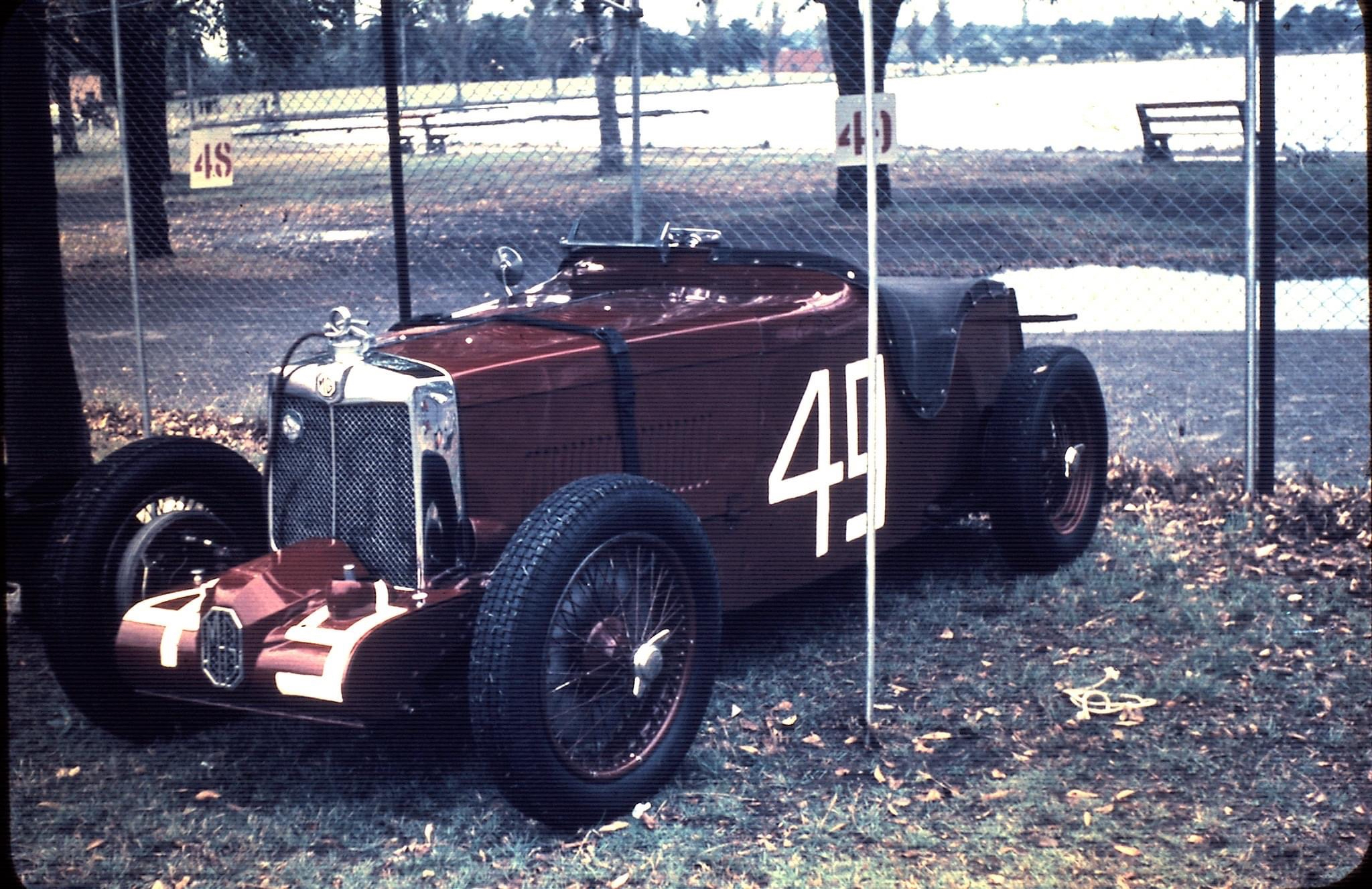
 Ron Laymon, Michael Gasking Collection, Sutton, Getty Images, Max Millar, Vittorio Del Basso

Postscript: Jochen Rindt driving the ring off the BT24 at Kyalami, South Africa on 1 January 1968- he was third behind a Clark, Hill Lotus 49 1-2. Clark’s last F1 win sadly…