Archive for the ‘Fotos’ Category

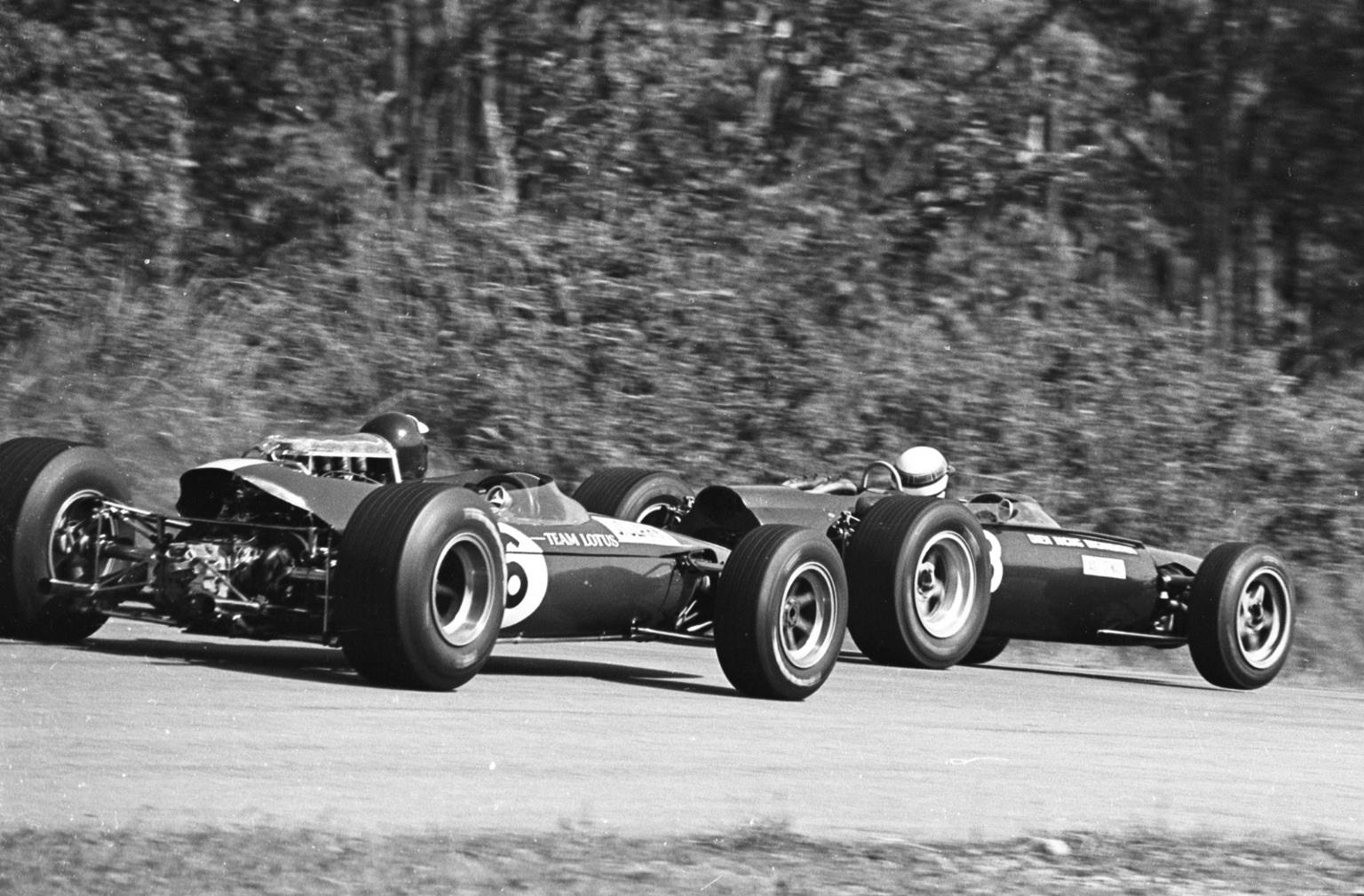
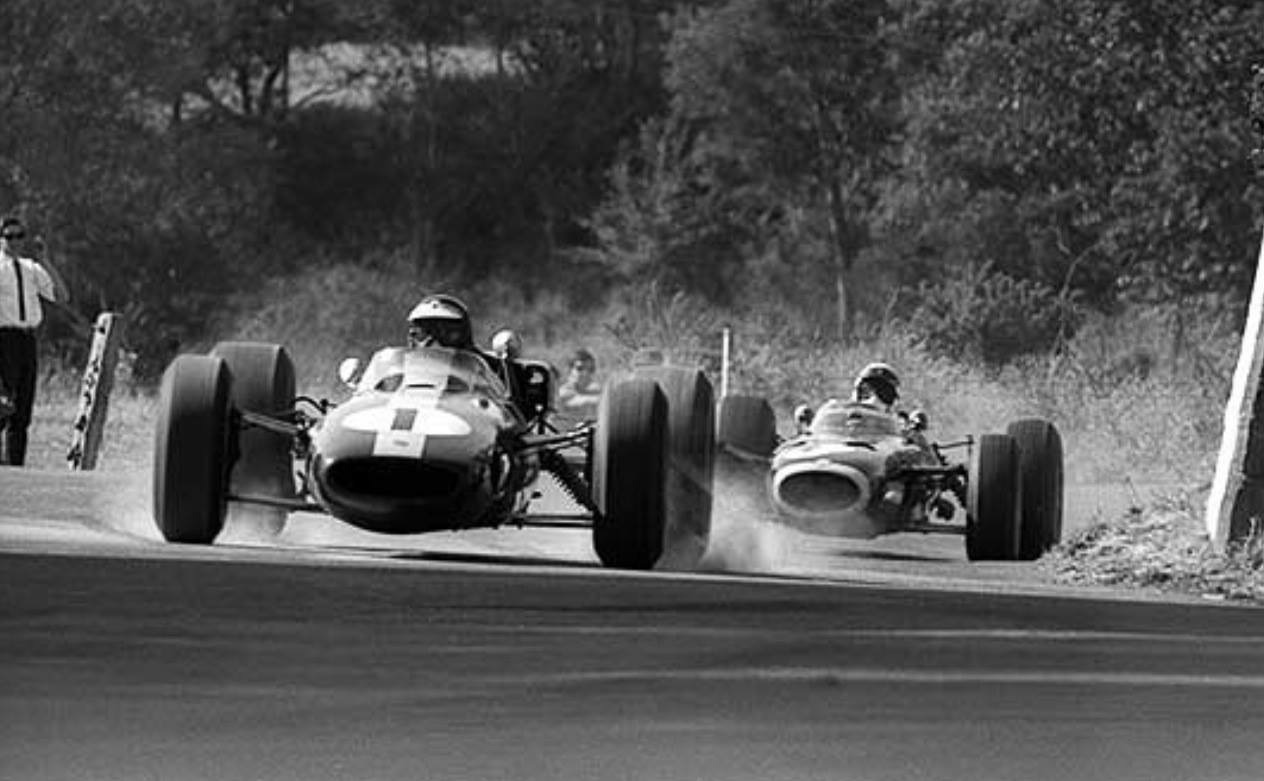
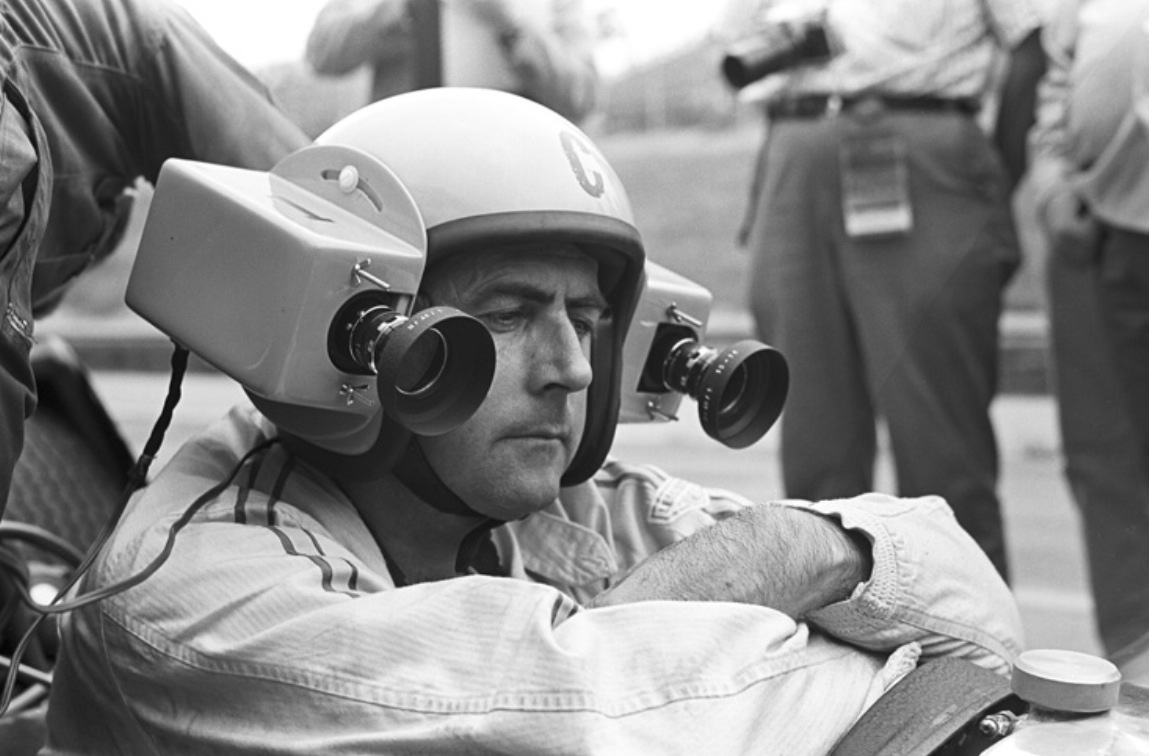
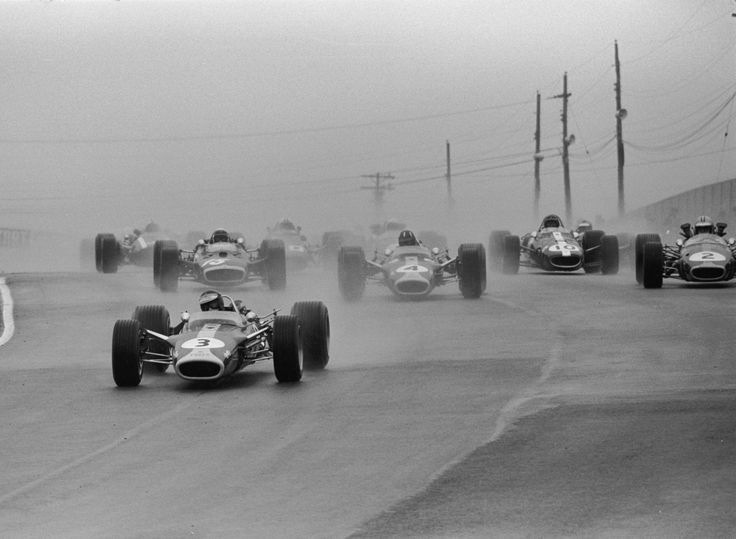
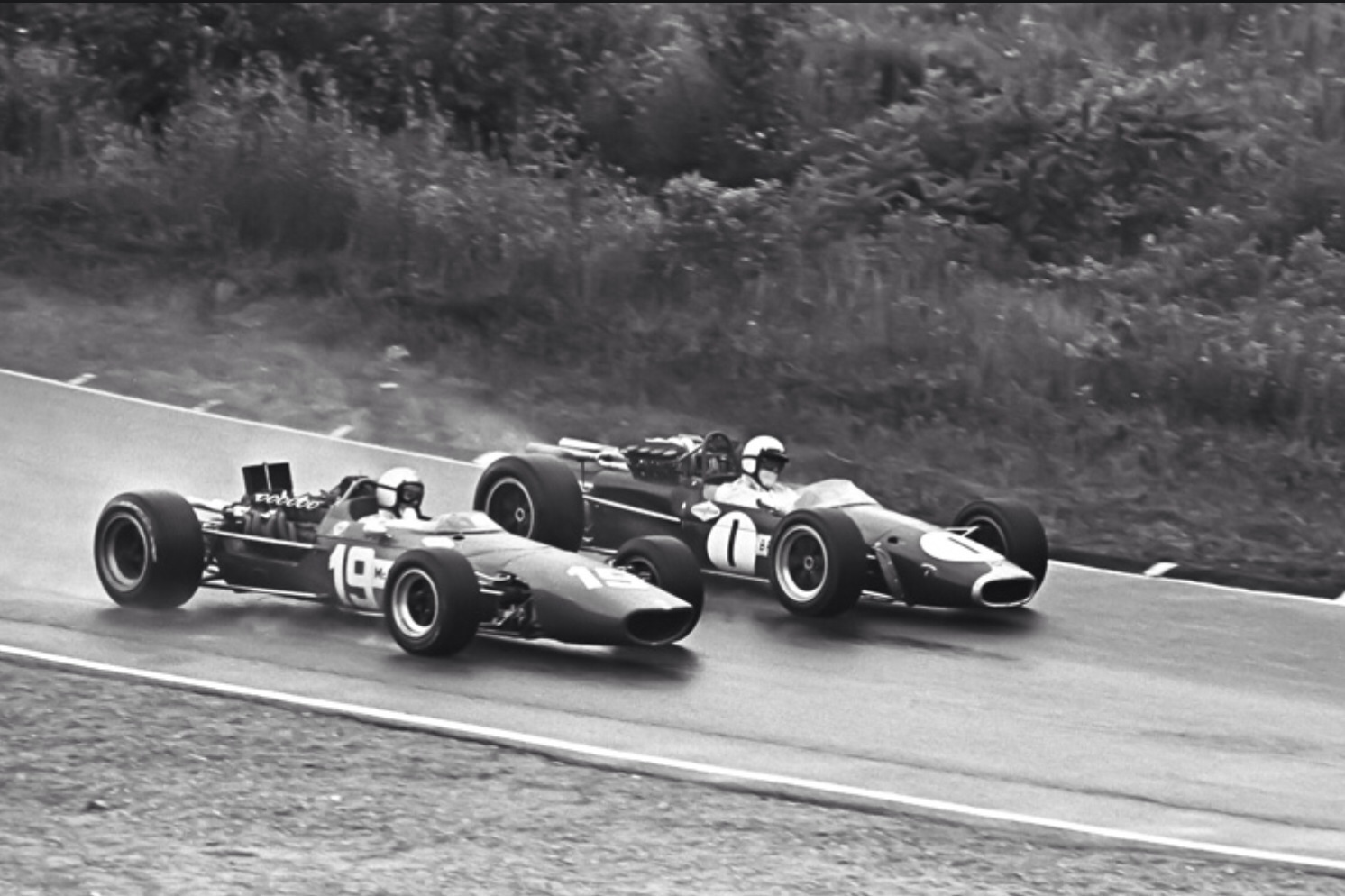
Jochen on a charge, huntin’ his friend Jack Brabham down…

‘Twas a famous victory this one. Jochen wasn’t a happy camper. The brand-spankers Lotus 72 wasn’t fast out of the box. It made its race debut in Spain on April 19 and by Monaco was already in B-spec. Team Lotus got there soon enough mind you, Rindt won in Holland on June 21 in a 72C.

But he wasn’t happy at Monaco.

The Lotus 49 made its race debut at Zandvoort ’67 and even with a few 1970 tweaks; suspension geometry, 72 wings et al, it was an old beast so he started the race from grid 8 in a cruise-and-collect mindset having slept badly on a yacht shared with his manager, Bernie Ecclestone.

monaco stewart

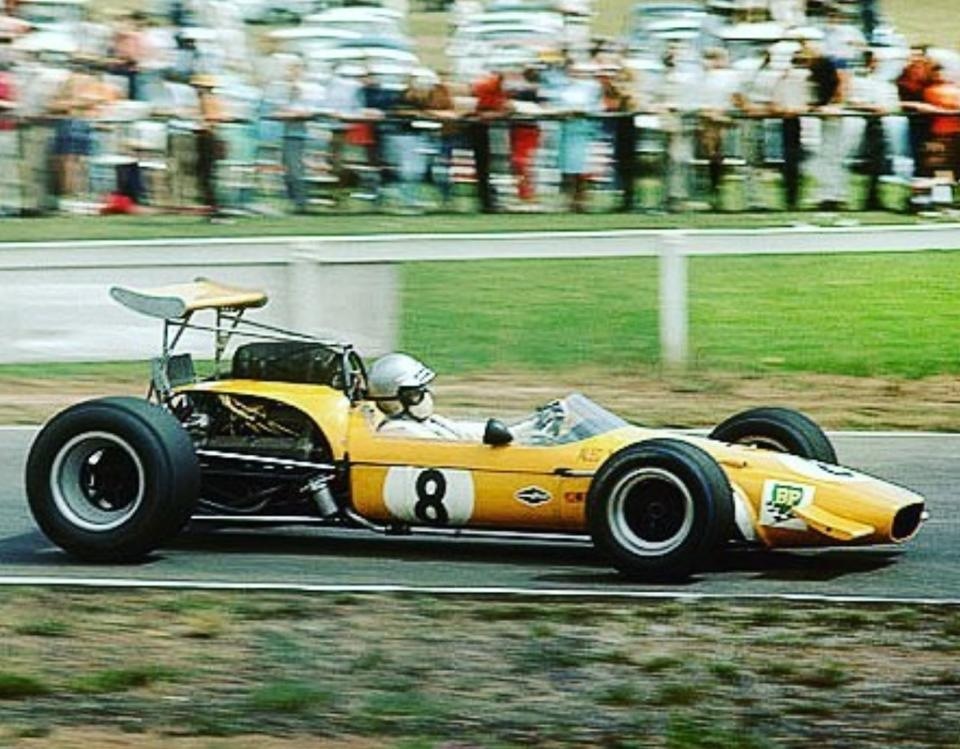
Stewart’s March 701 Ford leads Chris Amon’s similar car, Jacky Ickx’ Ferrari 312B and Denny Hulme’s yellow McLaren M14A Ford (Gulay Berryman)

monaco gaggle

Early in the race; Brabham’s BT33 from JPB’s Matra MS120, Ickx’ Ferrari 312B, Hulme’s McLaren M14A Ford, Rindt’s Lotus 49C Ford and Pescarolo’s Matra MS120 (Automobile Year 18)

Stewart led for the first third of the race, than retired with engine electronics problems, leaving Jack and Chris Amon in positions one and two. Jochen was seventh, but thanks to typical Monaco attrition he moved up the lap charts.

Ickx and Beltoise retired – then the Austrian fired up and passed Pescarolo and Hulme, leaving only Amon and Brabham up the road.

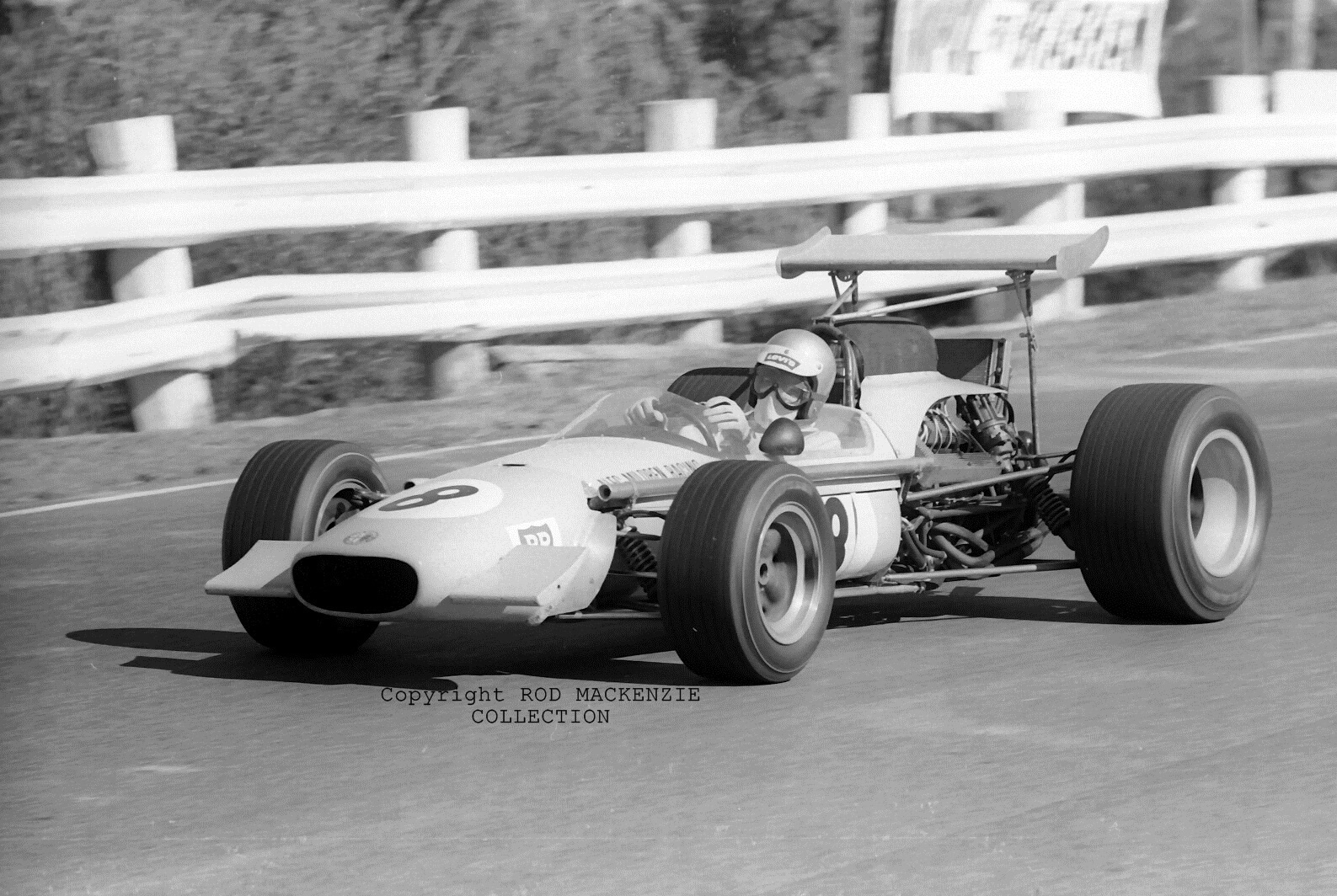
jochen on charge

Rindt’s charge is underway. Here #3 Rindt is lining Denny Hulme’s McLaren M14A, behind is Pescarolo’s Matra MS120, Courage’ De Tomaso 505 Ford, Siffert’s March 701 Ford and in the distance Bruce McLaren, McLaren M14A Ford (The Cahier Archive)

Amon retired on lap 61 leaving only Brabham, not too traumatised even with four laps to go, with a lead of nine seconds.

On lap 77 Black-Jack was baulked by Siffert’s March 701, the Swiss was suffering from fuel feed dramas – losing five seconds – Jochen was lapping in 1:23s, Jack 1:24s.

At Tabac Brabham came upon three back-markers, and then into the hairpin on the last lap the struggling Piers Courage – in 1969 he was up-front in one of Tauranac’s BT26 Brabhams, in 1970 aboard the shitbox De Tomaso 505 – Brabham went off-line onto the marbles to pass Piers, applied the brakes and boofed the fence allowing Jochen, shaking his head in disbelief, to pass into the lead.

Brabham soon got his BT33 going to take second from Henri Pescarolo’s Matra MS120 in third.

monaco boofed

Brabham with ‘bruised nose’ has recovered and drives to the line, retaining second place. Brabham BT33 Ford (unattributed)

For the first 40 laps of the race Rindt’s average lap time was 1:27, for the last 40 1:24.9, one-second quicker than he qualified.

Mind over matter and the sniff of victory.

jochen alone

(unattributed)

Brabham’s loss of the Monaco GP provided the base upon which Rindt built his 1970 World Championship, albeit tinged in absolute tragedy.

YouTube Last Laps…

Credits…

Gulay Berryman painting, Automobile Year 18, The Cahier Archive

Tailpiece: Even the wiliest and most experienced can have lapses of judgement. Brabham in BT33 Monaco 1970…

jack

Finito…

(B Jackson)

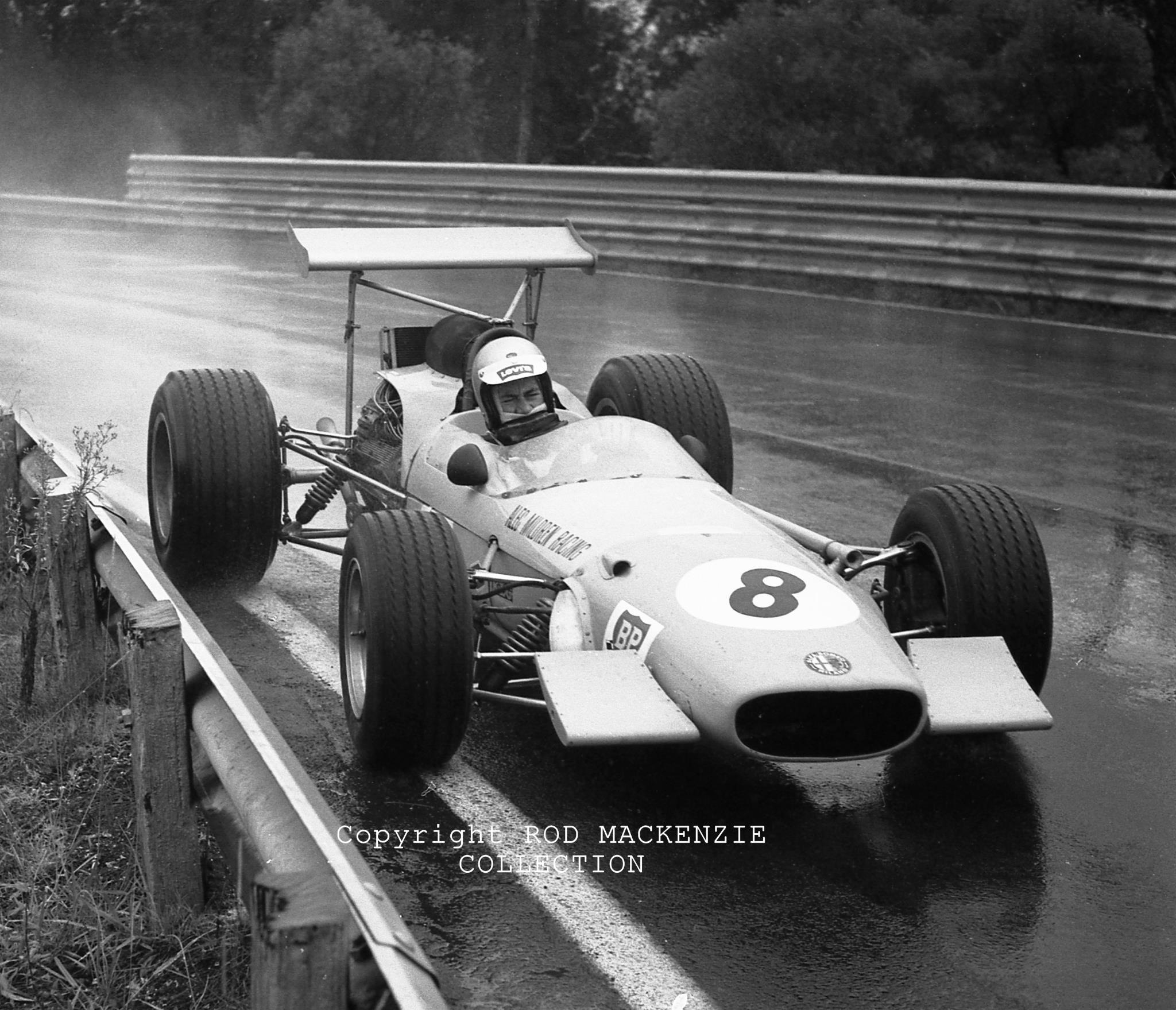
c’mon Alec won’t even notice, our helmets are much the same. Its gotta be quicker with that Eyetalian V8- lookout ‘yerv fried the left front though FG…

Denny Hulme trying to convince Frank Gardner to give him a few Warwick Farm laps in FG’s new Mildren Racing Brabham BT23D Alfa Romeo Tipo 33 V8.

The new World Champ raced a Brabham BT23 that summer too- albeit a Ford FVA powered F2 chassis which really didn’t cut the mustard amongst the 2.5s.

Denny was fifth in the 1968 Warwick Farm 100 won by Jim Clark’s Lotus 49 Ford DFW, while Gardner’s Italian motor busted a camshaft.

That Italian engine: Tipo 33 2.5-litre DOHC, two-valve, twin plug, injected all alloy V8

After Gardner returned to Europe Kevin Bartlett drove BT23D to victory in the 1968 Australian Gold Star Championship, and in winged-form, very competitively in the 1969 Australian Tasman rounds.

The perky rump of FG’s new Brabham (below) on the way to Hordern Trophy victory on the cars race debut in the Warwick Farm Gold Star round in December 1967.

Spencer Martin took the second of his two titles that year after a spirited contest between he and his Brabham BT11A Climax, and the similarly mounted Alec Mildren entry driven by Bartlett.

(unattributed)

Photo Credits…

Brian Jackson via Glenn Paine, The Roaring Season, John Ellacott

Tailpiece: Gardner, Brabham BT23D Alfa, Warwick Farm Tasman, February 1968…

(J Ellacott)

Finito…

James Golding during practice at the Phillip Island Gold Star round, Ligier JS F3-S5000 Ford, March 2021.

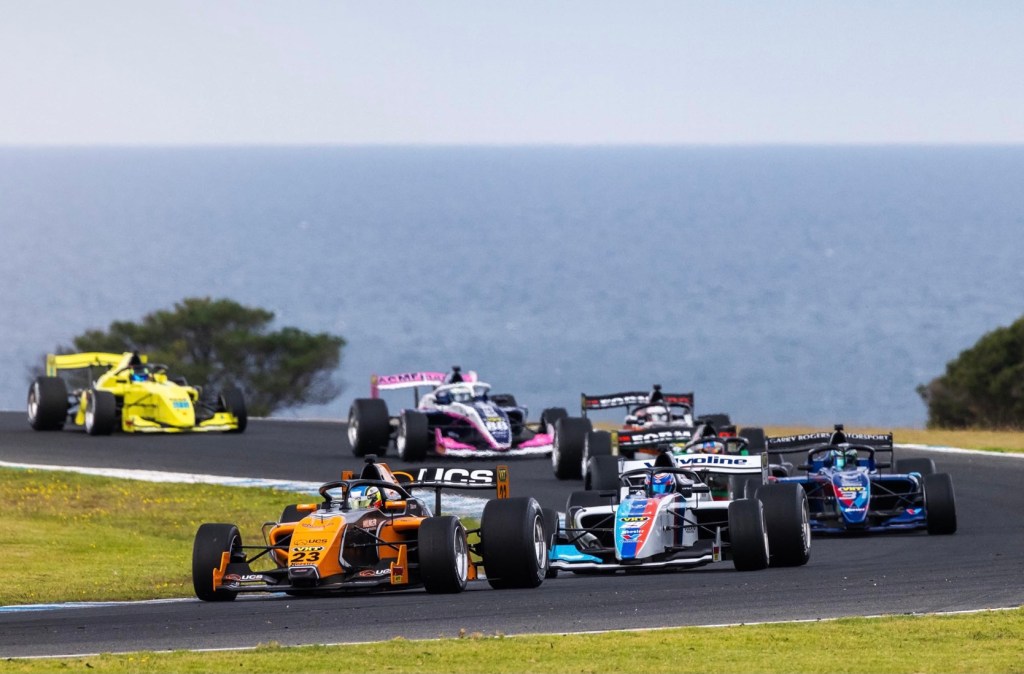
How sweet it is to see these marvellous bellowing beasties – islands in a sea of maxi-taxis. With one round to go at Eastern Creek, Joey Mawson leads Tim Macrow and Thomas Randle.

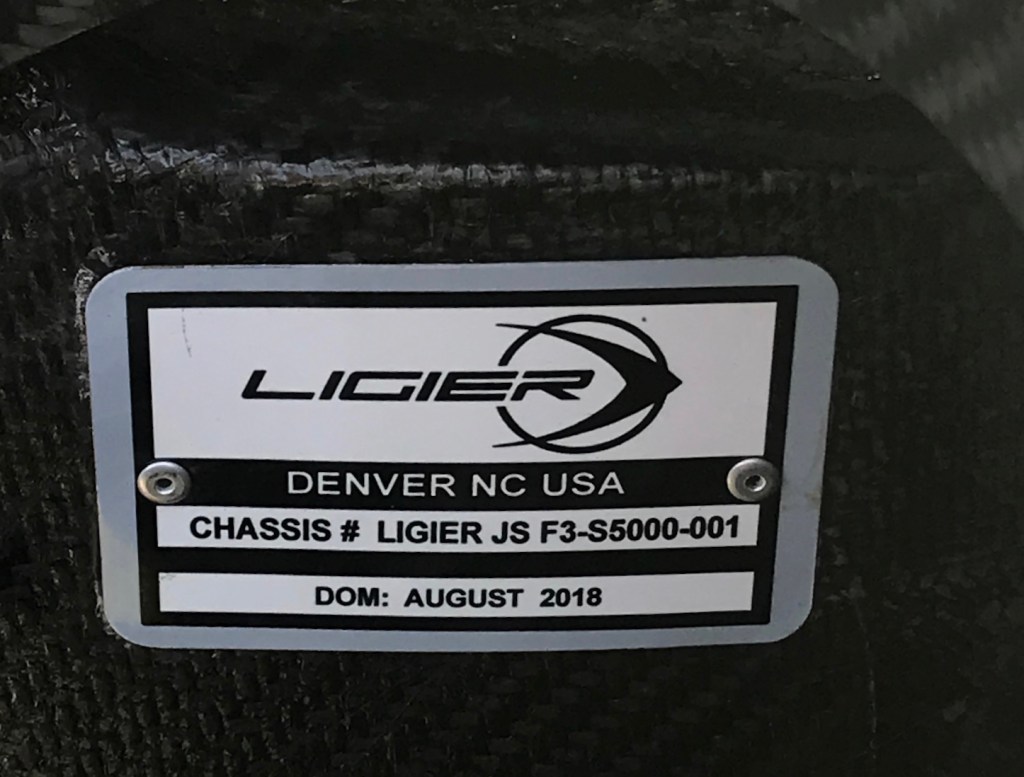
It’s great to see dual-Gold Star champ Macrow doing so well in Chris Lambden’s car, JS F3 S5000-001, the prototype developed by Borland Engineering, Macrow and Lambden before handover to Garry Rogers Motosport for assembly of subsequent cars.

Officialdom, the Australian Racing Group, the largest shareholder of which is Rogers Motorsport Events Pty Ltd, released a new name for the chassis’ which contest the championship in the last few days, they are Rogers AF01/V8s now apparently. What a load of fuckin’ crap. 

The chassis plates in the cars, affixed by their manufacturer, Onroak-Ligier, read Ligier JS F3-S5000, they are Ford engined. Correctly described, using the time honoured single-seater/sportscar naming convention of make/model/engine manufacturer they are Ligier JS F3-S5000 Fords.

All the mainstream media dickheads cut and polished (perhaps) their press-release and spat it out, without challenge, as usual. One pack of clowns, sydneynewstoday.com, couldn’t even manage to cut and paste the thing accurately, Chris Lambden has become Chris Ramden, perhaps he has become a citizen of Wuhan, tourist hot-spot that it is.

GRM are ‘garagiste’ as ole-man Enzo would have said. They assemble the cars using components made by others overseas and locally. Still they own the category, they can do what they like.

Ignore the GRM chassis plates in the wonderful car’s cockpits I say. See here for my piece on the machine’s development, ‘97.5%’ of which was substantively completed before GRM were selected/won the pitch to assemble the things two years ago; https://primotipo.com/2019/10/26/progress/

Three or thereabouts of the $A350,000 machines have been sold, the rest are owned by a Rogers entity.

I wonder what those owners (Messrs Lambden, Callegher and Wilmington) think of the name change? Perhaps they don’t give a rats, the main-game is commercial success after all. Maybe it’s only toss-pots like me who find the ego-trip offensive, and not reflective of the efforts of Lambden, Borland and his colleagues at Borland Engineering, and Macrow long before GRM sniffed a dollar in the breeze.

Don’t get me wrong, bless GRM for getting involved, no-one is a bigger fan of the Ligier JS F3-S5000 Fords than me…

David Finch’s Jaguar D Type, XKD520, circa 1960 anybody know the locale of the ex-Stillwell/Gardner car.

See here for a comprehensive piece on this car; https://primotipo.com/2020/04/17/stillwells-d-type/

Sensational car Jack! John Surtees gives Jack Brabham his perspective on the BT19 Repco Brabham drove to the F1 World Championship in 1966.

Big John is in the Sandown pitlane in 1982, the Honda V12 he was supposed to be driving misbehaved so Repco gave him a steer of BT19. Feature on this marvellous car here; https://primotipo.com/2014/11/13/winning-the-1966-world-f1-championships-rodways-repco-recollections-episode-3/

This time Jack aboard BT19 in-period at Longford in March 1966. Reg Thompson is at the ready with helmet.

It was the third race for the Repco RBE620 V8- the South African GP with 3-litre engine fitted was the first, and the Sandown Tasman round the weekend before, where a 2.5-litre engine was used preceded Longford.

At Kyalami the fuel injection metering unit drive failed, and at Sandown an oil pump. The car finished Longford but adrift of the BRM P261s of Jackie Stewart and Graham Hill.

Importantly, this valuable testing meant the engine was ready to boogie by the time the first championship F1 race of the year took place at Monaco in May.

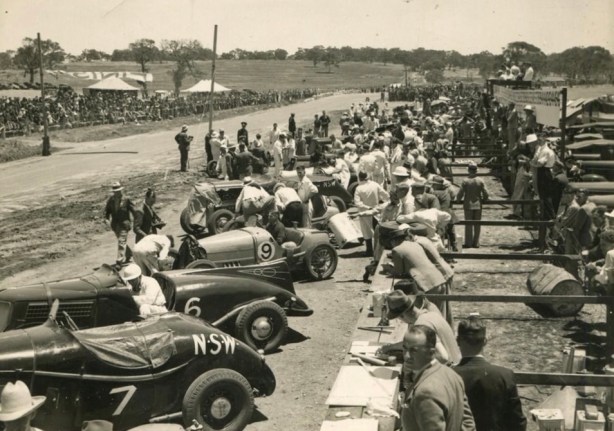
Alf Barrett’s Alfa Monza in the Mount Panorama pits during the 1947 weekend.

In the Bathurst 100 feature race, he was the scratch-marker and was outted with valve-insert troubles.

The shot is all about people. Alf Barrett is sitting behind his car in the bright, white open shirt. Checkout the white-suited car salesman with natty shoes at right, and interested spectators. See here; https://primotipo.com/2015/02/20/alf-barrett-the-maestro-alfa-romeo-8c2300-monza/

The grid before the start of the November 1983 AGP at Calder.

Alf Costanzo’s Tiga FA81 is an island in a sea of Formula Pacific Ralt RT4 Ford BDAs. #19 is race-winner Roberto Moreno, John Smith and obscured Alan Jones are on row two and Paul Radisich and Jacques Laffitte in the read car on row three. And the rest.

It was a heart-breaker of a race for Alfie and the crowd, he was leading, and looked to have the race under control when the diff in his Hewland Mk 9 gearbox failed after completing 25 laps. Moreno won from Smith, Laffitte and Geoff Brabham, all aboard Ralt RT4s.

David McKay’s Jaguar Mk1 3.4-litre completes another lap at Gnoo Blas in 1960.

He won the lap race from Bill Pitt’s Mk1 3.4 and Ron Hodgson’s Mk1 3.8 it was the second Australian Touring Car Championship, the first was won by Tom Brady’s Singer Bantam at Lobethal way back in January 1939. See here; https://primotipo.com/2014/08/05/gnoo-who-gnoo-blas-circuit-jaguar-xkc-type-xkc037/

Wally Willmott sets to work on a pair of 58DCO Webers during the 1965 Tasman Cup.

They belong to a Coventry Climax 2.5-litre FPF engine fitted to Bruce McLaren’s Cooper T79. See here; https://primotipo.com/2019/09/27/longford-1965/

Holdens pretty much as far as the eye can see – what was it? ‘football, meat pies, kangaroos and Holden cars’. The Paris end, as we Mexicans call it, of Collins Street, Melbourne in 1959.

That particular vista is much the same now, inclusive of parking dramas albeit the cars of course are more likely a mix of Asian buzz-boxes and top-end Europeans.

Le Mans start for the touring car feature race at Longford in 1965.

There was a twist on it in that the mechanics were doing the sprint and handing the keys to the driver. The smart boys, all of them no doubt, had spare keys…

Sir Gawaine Baillie up front in his 7-litre Ford Galaxie with Allan Moffat’s ex-works Lotus Cortina alongside. Who won folks?

Les Pound in a DFP pounding (sorry) up Wheelers Hill, at Mulgrave in Melbourne’s outer east circa 1928. He contested the 1928 AGP in this car at Phillip Island, finishing thirteenth and last.

Its funny how stuff happens sometimes.

Bob King and I were returning from a car club run on Sunday 22, March. Bob commented to me as we went up this road – or rather now dual lane 80kmh carriageway, that in the days of yore there was a hill-climb straight up this very hill. I’d heard of a climb at Mitcham, close-by but not Wheelers Hill. Then, bugger-me-ded if another of our mates, Tony Johns, circulated this photo on Monday 23, March!

Niel Allen’s E-Type in Warwick Farm’s Esses during Saturday practice over the June 6, 1964 weekend.

“First time out for Niel in the E at Warwick Farm. In practice he was second fastest with a lap of 1:57.7. On Sunday raceday in the wet he was sixth (last)! As the rain started to stop and the rack dried out he went from the first lap of 2:37.0 to a best time, and fastest race lap with 2:06.3 in the five lapper. He ran the E four more times at Warwick Farm in 1964/5 finishing third, three times, and second once with a best lap of 1:51.6” wrote Paul Cummins.

Frank Matich lines up Big Bertha before pulverising the opposition one more time in 1969.

His 4.8-litre SR4 V8 was designed for, and missed the 1968 Can-Am Cup, instead he used this sledgehammer to crush the nut which was the local sportscar scene at the time. See here for a feature on the car; https://primotipo.com/2016/07/15/matich-sr4-repco-by-nigel-tait-and-mark-bisset/

“Double, double, toil and trouble, fire burn and cauldron bubble”, the three supernatural witches in Macbeth chanted.

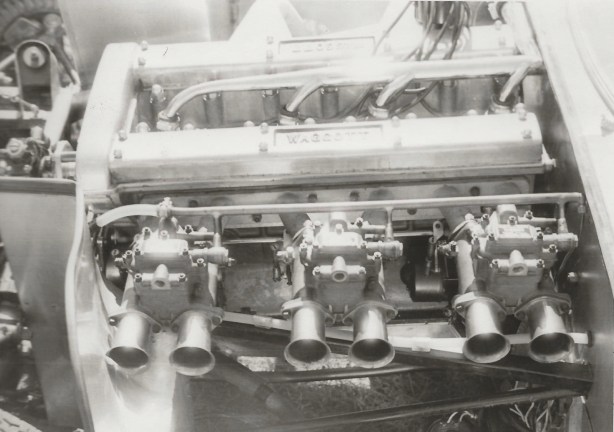
More Merlin the Magician, Merv Waggott at right, pours molten aluminium alloy into patterns for a batch of Waggott TC-4V 2-litre DOHC fuel injected engines circa 1970.

Pretty much all of these engines were made on-site in his little Greenacre, Sydney workshop. The small foundry was out the back. Do any of you have recollections of the build or racing of these championship winning engines? A bit about Merv here; https://primotipo.com/2018/05/03/repco-holden-f5000-v8/

I was snooping around the bowels of Duttons after a lunch a few weeks ago and came upon George Nakas’ car.

This Ligier JS P320 Nissan LMP3 is absolutely brand spankers, having completed only six delivery laps at Magny Cours before shipping to Port Melbourne.

The chassis and body are HP Composites carbon built. It’s 4605mm long, 1900mm wide and has a wheelbase of 2860mm, weight is 950Kg.

Suspension is double-wishbones front and rear with pushrods actuating coil spring/Ohlins TTX40 shocks, adjustable roll-bars are of course part of the mix.

Gearbox is a six-speed Xtrac 1152, it uses a Megaline semi-automatic pneumatic steering wheel paddle-shift.

The engine is a Nissan VK56 5.6-litre, limited to 460bhp V8, gearbox and engine control units are Magneti-Marelli. Brakes are Brembo six-piston calipers clamping 14-inch steel rotors.

I bumped into George Nakas at Duttons yesterday (Friday April 23), he and his team are testing the car for the first time at Tailem Bend over the next few days.

Brand new cars of a different sort.

Holden EJ sedans on the Dandenong, Melbourne production line having final quality checks in 1962.

Back when we had an industry before a troika of fuckwits destroyed it; politicians, management (sic) and organised (sic) labour.

Beautiful drawing of the Lobethal circuit, by Oscar ‘Ozpata’ who frequents a Nostalgia Forum thread.

See here for the lowdown on Lobe; https://primotipo.com/2018/11/08/the-spook-the-baron-and-the-1938-south-australian-gp-lobethal/

Here’s hoping for a win from Daniel Ricciardo this year.

Testing his new McLaren MCL35M Mercedes, a modified version of the 2020 car, at the season’s outset. Since drafting this, Lando Norris has been going very well…

img_4787

Love these two arty-farty shots from Lynton Hemer at Warwick Farm in 1971.

Alan Hamilton in his Porsche 906 Spyder during the Ninth RAC Trophy May 2, weekend, the race won by John Harvey in Bob Jane’s McLaren M6B Repco V8.

Click here for a feature on Hamilton’s racing Porsches; https://primotipo.com/2015/08/20/alan-hamilton-his-porsche-9048-and-two-906s/

The fantastic aspect spectators have at Baskerville, Tasmania is shown from this panoramic shot taken at the circuit’s first meeting on the February 9, 1958 meeting.

The shot below is Jim Lamont sitting aboard his 1949 Ford Anglia soft-top, with Greg and Harold Ellis in attendance.

img_4812
(S Lamont)

John Joyce’s Bowin Designs are best known for the fifty-six FF, F2 and F5000 open-wheelers built in Brookvale, Sydney between 1968 and 1975.

Such was the reputation of the outfit that Pete Geoghegan, Brian Foley and others sought Bowin’s design and fabrication capabilities to make their touring-cars go quicker.

Pete Geoghegan had extracted all on offer from his elderly Ford Mustang 302 by the end of 1971.

He then turned to his FoMoCo built GTHO 351 Super Falcon but knew it needed work to have any hope of giving chase during the final improved-tourer 1972 Australian Touring Car Championship.

img_4903
(Bowin)
img_4905

The car was lightened, stiffened by seam welding and addition of an integral roll-cage, and the suspension geometry improved front and rear. Bowin Design Project #7 design-drawings, on the Bowin Cars website, show you drawings of all of the work performed.

The car was good enough to win the ‘greatest ever Oz touring-car race’ at Mount Panorama over the Easter 1972 long-weekend when Pete triumphed over Allan Moffat’s Mustang Trans Am in a race-long duel. See here; https://primotipo.com/2015/10/15/greatest-ever-australian-touring-car-championship-race-bathurst-easter-1972/

Celebration of construction of the 500,000th Holden, delivered to the Royal Flying Doctor Service in 1958.

Credits…

s5000.com, Troy Davey-Milne, John Smith, National Archives of Australia, The Tasmanian Motorist, Tony Johns Collection, Lance Ruting, ozpata, McLaren, Ray Simpson-Cummins Archive, Nat French, Slim Lamont, Kelsey Collection

Tailpiece…

Missed by that much!

Thanks goodness the 911S was spared, and the paper-boy I guess. It’s all happening in Greville Street, Prahran, Melbourne, circa 1980.

Finito…

Alan Jones with his Teddy Yip Ralt RT1 Ford BDA, Macau 1977 (S Weaver)

Sue Weaver worked inside motor racing for decades. In the process she developed a friendship with Teddy Yip which yielded many fun times and trips to the Portuguese colony on China’s doorstep.

On each of those trips she took a swag of photographs. This article features some of them, an ‘Australian contingent mix’, with a focus on the November 20, 1977 weekend.

The Formula Atlantic race was won by young thruster, Riccardo Patrese in the Chevron B40 Ford later purchased and raced with success by Kiwi legend Ken Smith- later still Adelaide’s Peter Whelan restored it, historic-raced it for some years before its acquisition as a Macau Museum exhibit.

Riccardo Patrese during practice, Chevron B40 Ford BDA. It is in this part of the track that Jones spun and was hit by Riccardo during the race
Teddy Yip and Vern Schuppan, Macau. What year folks? Didn’t these fellas have some fun and success in F1, F5000, Indycars and F Atlantic/Pacific? The most important of the South Aussies patrons/sponsors, BRM leg-up duly noted (S Weaver)

That year Patrese and Alan Jones were Shadow F1 teammates. Riccardo was entered in Macau by Bob Harper, Jones by Teddy Yip, both these fellows were the region’s traditional monied entrant protagonists.

Jones ‘tore the place apart’ the year before in the Yip March 722 raced often by Vern Schuppan – he constantly broke the lap record after an early engine cut-out. Jones then fired the engine up, carved his way back through the field, only to have the engine again fail- Vern Schuppan won a Ralt RT1 Ford.

In 1977 Patrese popped his Chevron on pole by a couple of seconds from Jones with Vern Schuppan third in John McDonald’s Ralt RT1. Kiwis Steve Millen, Chevron B35, and Graeme Lawrence, March 76B were fourth and sixth on the grid, Masahiro Hasemi was fifth in a Chevron B40 Nissan, with Kevin Bartlett, March and Andrew Miedecke, March 763/76B seventh and eighth.

1977 Macau GP grid. Patrese, Chevron B40 left on pole, Jones, Ralt RT1 #2 then the nose of Schuppan’s Ralt RT1. #19 Millen, Chevron B35 and #5 Masahiro Hasemi, Chevron B40 Nissan. Row three Graeme Lawrence, March 76B with Bartlett’s red March (?), then Andrew Miedecke #4 March 763/76B. Car #23 is Albert Poon, Chevron B40, with Nakajima’s #7 Nova Honda alongside. And the rest, engines Ford BDA unless specified otherwise (unattributed)

The Jones boy blasted away from the front row, but his lead was short-lived after another engine cut-out resulted in his Ralt spinning into Patrese’s path.

Riccardo vaulted over the hapless Jones, damaging a rear wheel – he pulled into the pits for inspection and was sent on his way. Concerned officials popped out a black-flag, but this was withdrawn after entreaties from the Harper pit that the wheel, whilst bent a tad, would be AOK.

Graeme Lawrence, March 76B Ford BDA (Getty)
Kevin Bartlett and Howden Ganley. Year folks? (S Weaver)

Hasemi then led from Schuppan, just as Vern seemed set to pass his fuel metering belt broke. Millen then led from Bartlett, the 1969 winner, and Lawrence, but Patrese was on a charge and led by lap 15. He drove off into the distance.

Millen, then Bartlett were second for a bit but, but Bartlett and Lawrence both retired with mechanical dramas – Millen was second, Miedecke third and future Lotus F1 driver, Satoru Nakajima fourth in an Nova Honda.

Satoru Nakajima, Nova Honda, ’77 Macau GP
Jones and one of the Yip crew, probably 1978 (S Weaver)

Etcetera…

(S Weaver)

KB tries to decipher the mandarin on the nose of Jones’ Yip March 782 Ford BDA during the 1978 race weekend. Bartlett raced a Chevron, what model KB?

Kevin Cogan’s Flying Tigers Ralt RT1 alongside? Who is the big unit talking to Jones? Yip at far right. Driver in front of the RT1 in the posh Linea-Sport overalls?

Jones started from pole and led until a spark-plug failed. Derek Daly then had a comfortable lead from Keke Rosberg and Patrese, but pitted for tyres, Patrese inherited a lead he kept to the end.

The Formula Pacific Macau GP era was marvellous…

(S Weaver)

Jones again during the ‘78 weekend above, with British broadcaster, Dickie Davies.

The shot below is during Schuppan’s Rothmans Porsche years, so early eighties- the West End beer logo should assist you detectives as to the year.

Teddy Yip mechanic/helper Ashok Vadgama at left, KB and Vern.

(S Weaver)
(S Weaver)

AJ looks pretty well-nourished here, so perhaps it’s a tad after his single-seater days, with wife Bev and Yip.

And below, KB slightly peeved at Weaver interrupting his choice of main course.

(S Weaver)

Credits…

Susan Weaver, Getty Images, Riccardo Patrese web-page, ‘Colour and Noise: 40 Years of the Macau Grand Prix 1993’ Philip Newsome

Tailpiece…

(S Weaver)

Jones about to mount before the off in 1977, Ralt RT1 Ford BDA- John Chatterton at right, and Julian Randles leaning into the cockpit. Car #71 is the Ian Grey Chevron B20, the Rothmans car behind is Graeme Lawrence’ March 76B.

Finito…
Caterham CT03 Renault…

Posted: April 4, 2021 in F1, Fotos
Tags:

Wonder if I can get triple J on this radio?

The drivers have to be digital natives to drive these things. There are twenty-two gizmos to push or twist in addition to the gearchange paddles on the steering wheel or tiller.

The dingo-ugly school of F1 design reached new heights in 2012-2013. Usual F1 levels of stupidity were attained when the FIA accepted a proposal to allow hit-with-the-fugly-stick chassis ‘modesty panels’ to be added to minimise (sic) the high-speed visual atrocity impact.

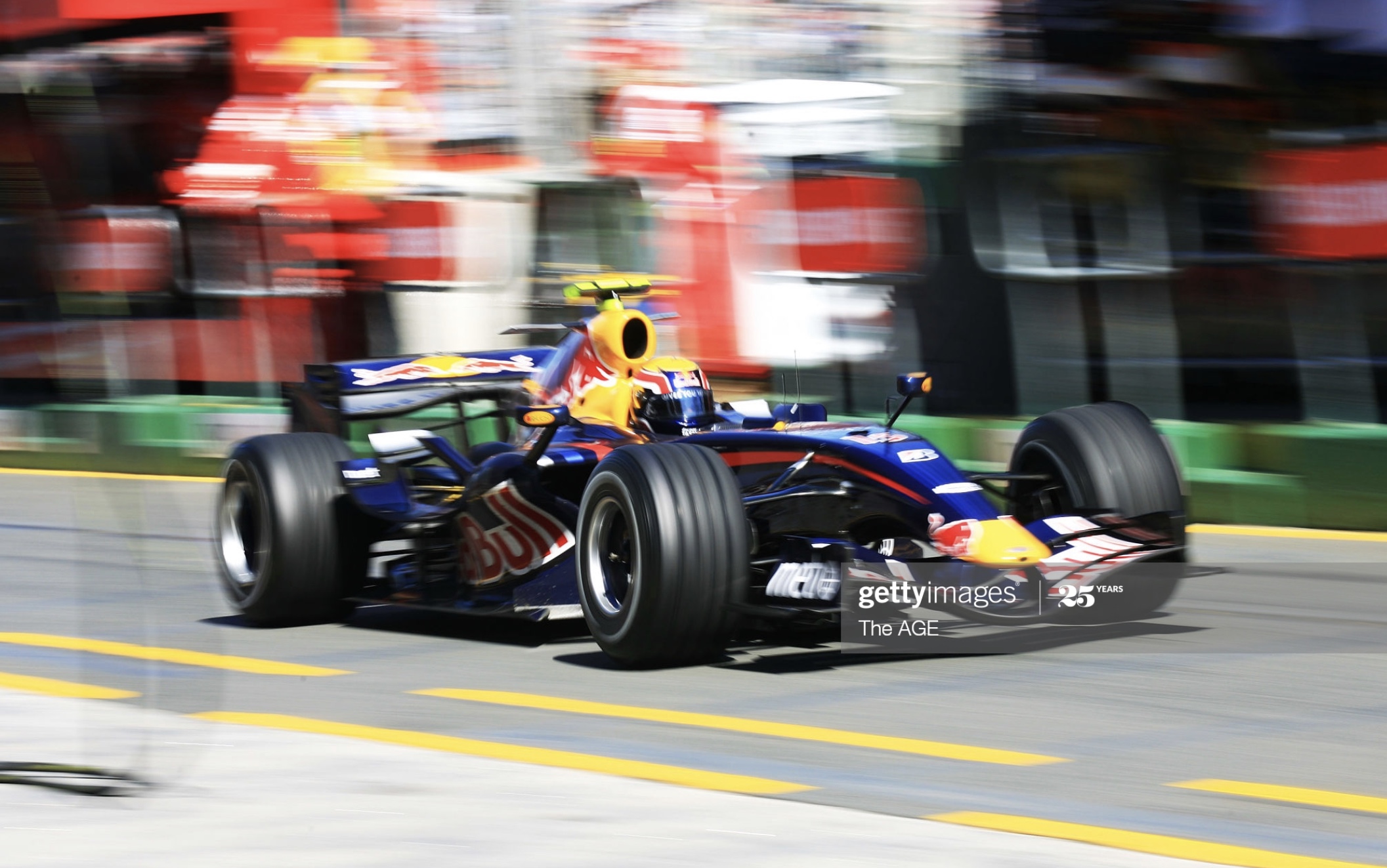
Charles Pic is the featured driver in all of the action shots, Van der Garde behind him here in first wet practice

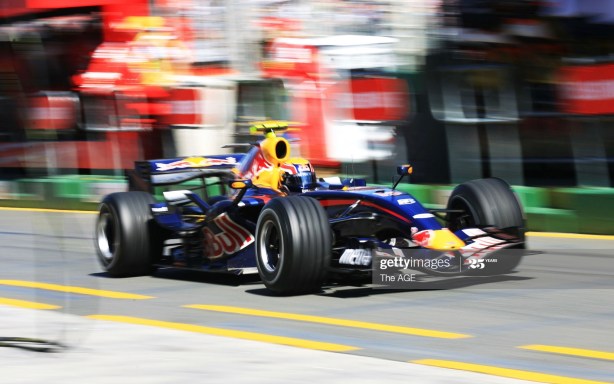
Kimi Raikkonen won the 2013 Australian Grand Prix aboard a Lotus E21 Renault. Down the other end of the grid Giedo van der Garde made the cut in his Mark Smith designed Caterham CT03 Renault RS27 2.4-litre V8, Charles Pic did not – but was allowed to start anyway. Both cars finished too, Pic was 16th, Van der Garde 18th and last, two laps adrift of the podium trio, Raikkonen, Alonso and Vettel.

It was a tough season for the team, 14th placings by Pic in Malaysia and Korea, and by Van der Garde in Hungary were the best results in Caterham’s last full season of GP competition.

Credits…

Getty Images- Robert Cianflone and Paul Crock, Australian GP Corporation

Tailpiece…

The Australian Grand Prix corporation always work hard on pre-event promotion of the event within Australia and overseas.

Their 2013 focus was in part some fantastic footage of, and from the 750bhp Minardi Asiatech V10 two-seater piloted by Cameron McConville, with Victoria’s Great Ocean Road near the Twelve Apostles, as the backdrop.

Finito…
The Easter Rabbit bounced past me early this year.

‘Me mates Stephen Dalton and Bob King each gave me an Australian Motor Racing Annual; the first 1951 edition and the fourth 1954 edition – who needs more chocolate anyway? Easter reading sorted, thanks muchly blokes!

Like way too much Oz pre-1960 racing publications, these little gems passed me by until a couple of years back but I’d never seen the gizzards of one before, chockers with information as they are.

The first edition covers the history of racing in Australia, a summary of the leading clubs, one-pagers on 80 of our contemporary racing cars, quickies on personalities, beautiful drawings of circuits, a tuning guide by Dicer Doug Whiteford and an article on The Modern Racing Car.

By 1954 the format had evolved to include a summary of the year’s major events and their results, more features while continuing the summary of contemporary racing cars. Great stuff indeed.

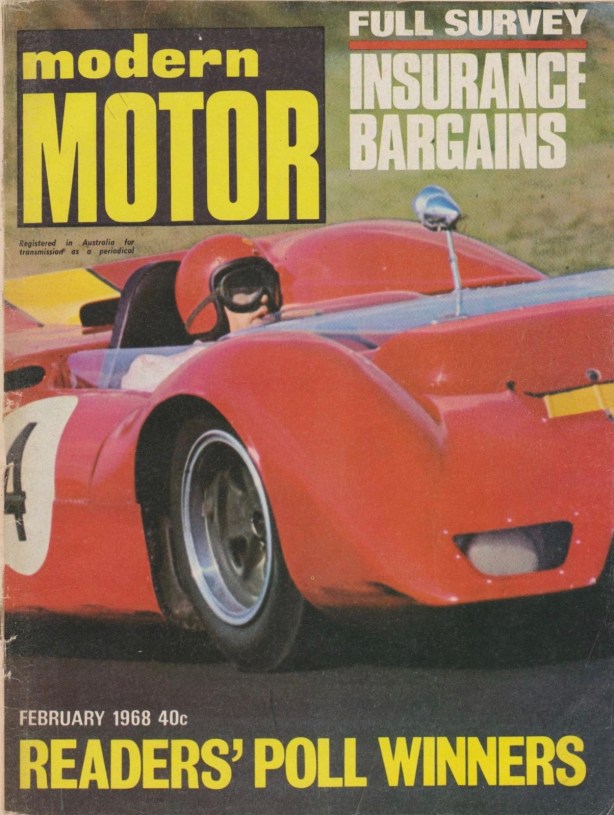
By the time I came down the magazine purchasing pike in 1971, Motor Manual, publishers of this summary, produced almost annually from 1951 to 1967, were a distant third in my personal rankings of road car magazines, behind Modern Motor and Wheels.

Mind you, once I discovered Sports Car World I didn’t touch M-M or Wheels for a couple of decades – SCW was the roadie bible of cars which mattered.

When Motor Manual stopped producing their racing annuals, the Australian Motor Racing Annual published by the SCW/Wheels/KG Murray Publishing mob took up the cudgels, this evolved into their sensational Australian Competition Yearbook, an Oz touch of Autocourse. This 200-pager covered each F1 GP and had a season summary, the same format was used for each of the ‘major’ Oz racing categories; F5000, F2, F3, FF, sportscars, rallying, and taxis. Other motorsport copped a couple of pages or so each; hill-climbing, motorkhanas, karting and perhaps the drags.

I still refer to these publications all the time for research purposes, or just coz I always have – sad little unit that I am.

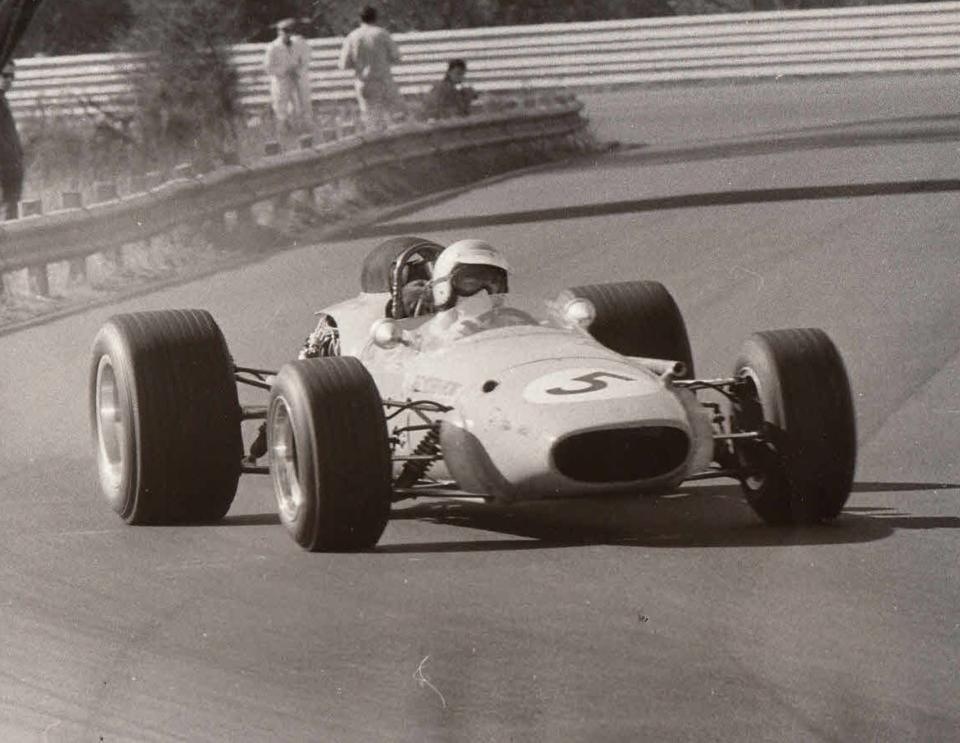
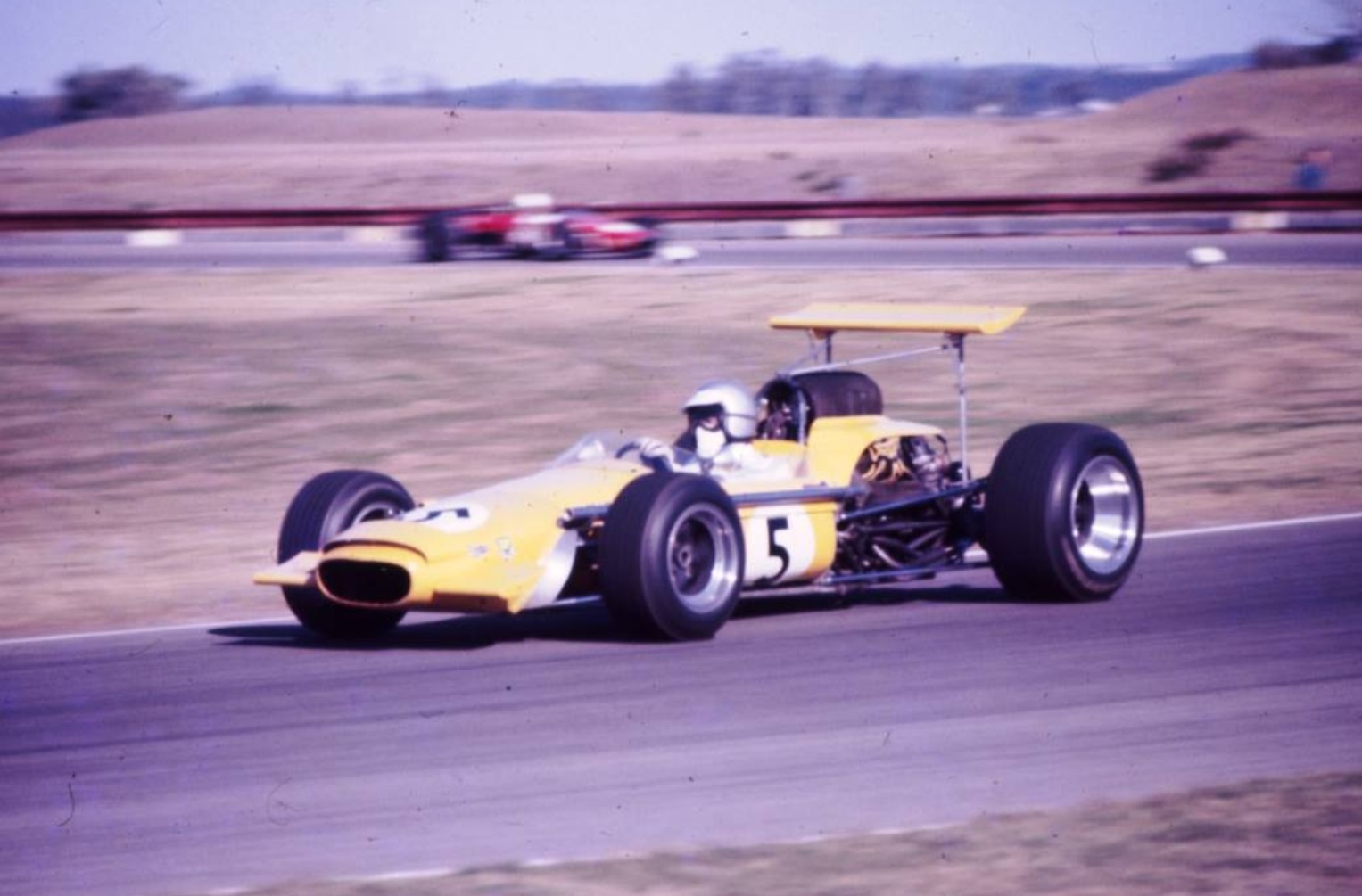
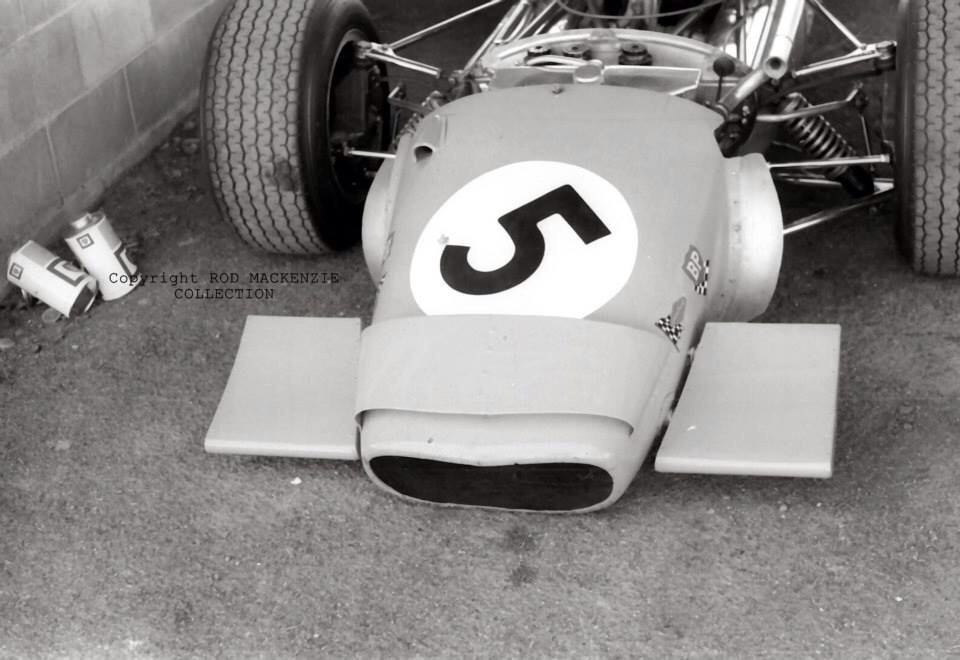
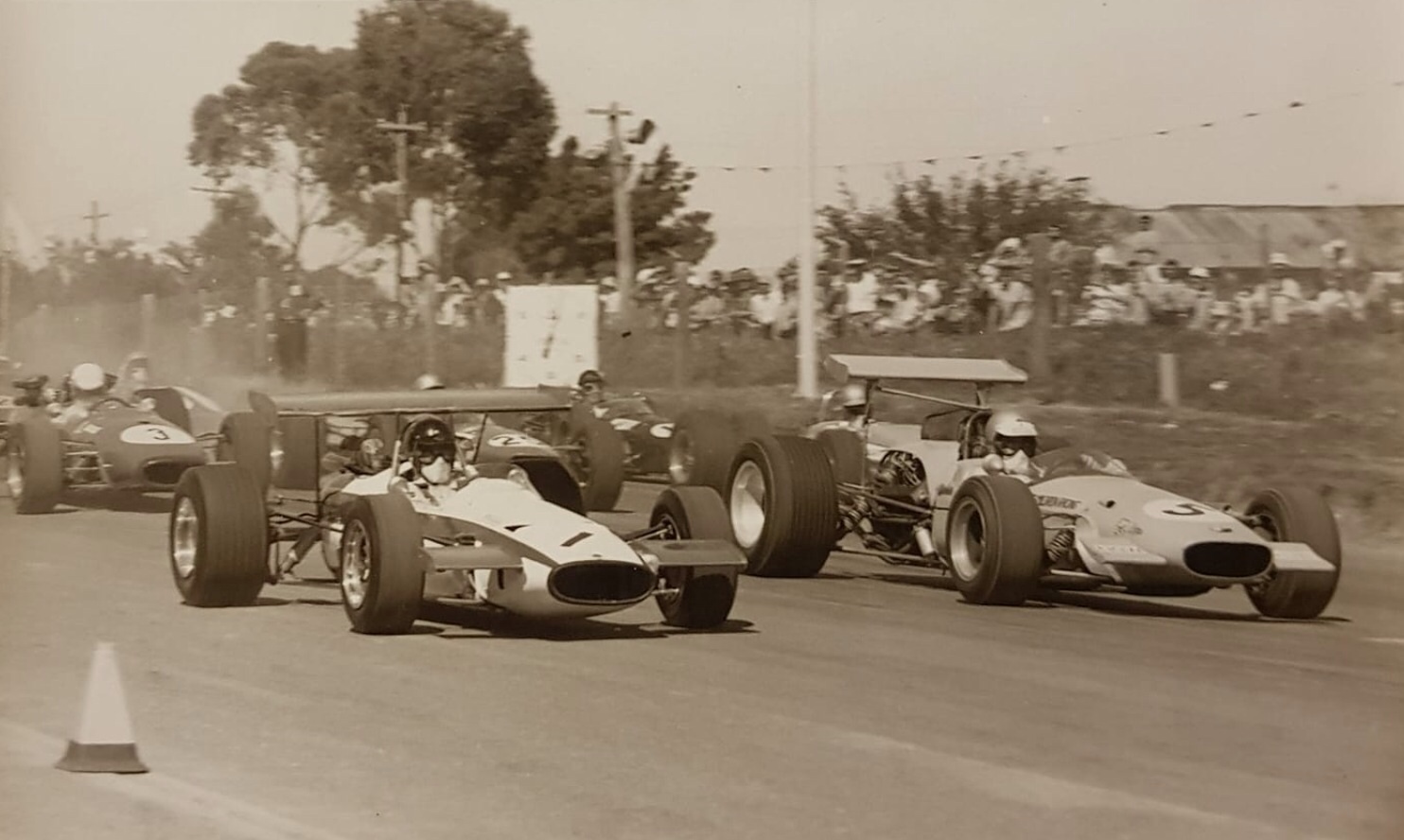
Stan The Man in Maybach 1, Jones suffering from uncharacteristic understeer. I can’t quite make out the artist’s name but would like to know who it is and credit appropriately
Stan Jones winning the New Zealand Grand Prix at Ardmore in 1954, Maybach 1
Jack Brabham, RedeX Special, Cooper T23 Bristol. The artist has the ‘Brabham Crouch’ nailed!

In the mid-2000s The Annual Australian Motorsport was fantastic. Perhaps publisher Grant Rowley should have had more steak ‘n chips maxi-taxis to have a sales smash – the 2005 edition devoted only 46 of 218 pages to the big swingin’ V8s while commendably giving all other categories a fair crack of the whip.

Since then no-one has been stupid enough to step up to the annual-summary plate, sadly.

Those Annual Australian Motorsport mags were $20 in 2007. I’d quite happily pay $40-50 for a 200-page annual now, even one with 100 pages of the big shit-fighters – there is the rub, it’s probably got to be that way to flog enough mags to hit break-even print numbers.

Auto Action are probably the only ones who could do it these days. Publisher/owner/editor/cook Bruce Williams is passionate enough, but whether he is that stupid is another thing.

Anyway, if you think an annual is a good idea email him on bruce@autoaction.com.au, he doesn’t believe a word I say. Don’t tell him I sent you, this is an un-sanctioned jolly of my own.

Maybe people-power can get us back something I still miss each January/February.

Tailpiece…

Finito…
(unattributed)

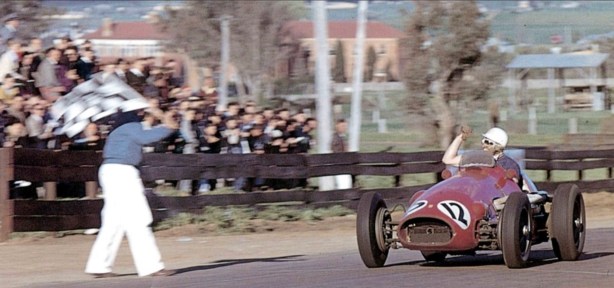
If the 1938 Australian Grand Prix at Bathurst was our first international event, by virtue of visiting Brits Peter Whitehead and his ERA B Type, and Alan Sinclair, Alta 1,100 s/c, our second international, and first of the modern era, was the South Pacific Championship at Gnoo Blas held in January 1955.

Peter Whitehead liked the place so much he came, saw, and conquered again, just as he did seventeen years before at Mount Panorama, albeit the 1955 field had a bit more depth that of 1938.

Peter and Tony Gaze raced Ferrari 500/625s, Bira a Maserati 250F with the better equipped locals Dick Cobden’s Ferrari 125 and Jack Brabham’s Cooper T23 Climax. Kiwi’s John McMillan and Fred Zambucka in Alfa Romeo Tipo B and Maserati 8CM respectively came across the ditch but both cars were too long in the tooth as was Tom Sulman’s Maserati

Non starters were Reg Hunt, short of parts for his new Maserati A6GCM, and Lex Davison’s HWM Jaguar

Whitehead won from Brabham and Gaze with Joe Murray, Allard Cadillac, Tom Sulman, Maserati 4CM and Curley Brydon, MG TC Spl in fourth to sixth places, I’ve written a feature in this race here; https://primotipo.com/2020/04/09/1955-south-pacific-championship-gnoo-blas/

(Modern Motor)

This shot isn’t kosher, it was staged for Modern Motor magazine but is still a cracker showing the Whitehead Ferrari, Brabham Cooper off to the left and Jack Robinson’s Jaguar Special aft of Peter. Further back is the unmistakable shape of a Bugatti, perhaps the John Hall Holden engined Type 37.

The grid on Huntley Road. From left, Jack Brabham, Cooper T23 Bristol, John McMillan, Alfa Romeo Tipo B, Peter Whitehead, Ferrari 500/625 and Jack Robinson, Jaguar Special (unattributed)


(unattributed)

This group of wonderful colour photographs were taken by George Causbrook, an Orange electrician who worked at the time for Tom Barrett, owner/driver of the #97 MG TF.

Barretts Milk was a successful local business with a factory/depot including an airstrip. Causbrook’s family, the Beasleys, made available the shots to the Gnoo Blas Classic Car Club from whom I have shoplifted them, with thanks!

George had a fine eye, his colour shots of this challenging road course help us understand better its nature sixty years after the final Gnoo Blas meeting.

Ted Gray is shown below fussing over his brand new Lou Abrahams owned Tornado 1 Ford, just finished in Gray’s workshop in Melbourne.

By the October Bathurst meeting the team were starting to get the new beast sorted, but a huge accident in practice destroyed the car and came close to killing its plucky driver who took six months to recover from his injuries. See here for Tornado; https://primotipo.com/2015/11/27/the-longford-trophy-1958-the-tornados-ted-gray/

(unattributed)


(unattributed)

T Borrer’s VW Beetle entered in the production car race, October 1954 meeting.

The sportscar race grids (October ’54) seemed to be particularly well supported, with T Jordan’s 2.4-litre Riley-engined Healey Silverstone, Austin Healeys, #90 W Kelly and #104 Robert Page Jaguar XK120s in the shot below.

(unattributed)


(unattributed)

The ‘pretty boy’ with the Ray Bans in the XK120 is none other than local Cake Shop proprietor Bill Kelly, he would be as in fashion at an historic meeting in 2020 as he was in 1955!

Clearly there was plenty of money in pies and lamingtons in the fifties.

(unattributed)

The great Eldred Norman’s least favourite car was this 1937 Maserati 6CM 1.5-litre six cylinder Voiturette.

Chassis ‘1542’ was originally raced by Franco Cortese throughout 1937, but the going was tough against the dominant ERAs. The machine then made occasional appearances as part of Ciro Basadonna’s various teams both pre and post-war. It was imported to the UK for Gilbey Engineering in 1947, Colin Murray raced it in the UK throughout 1949 and 1950 then brought it to Australia to contest the Narrogin 1951 AGP before its sale to Norman.

When the engine blew shortly thereafter Norman fabricated a steel block and cast detachable bronze heads then cobbled together Fiat 1500 conrods and BSA pistons when Maserati originals were unavailable. Eldred raced it for a year or so before he sold it to Edward David ‘Ted’ McKinnon who finished fifteenth in the 1953 Albert Park AGP.

‘1542’ then passed to Eddie Thomas briefly, before Albury’s Seaton Brothers bought it in poor shape, they solved the engine reliability issues by fitting a Holden Grey six-cylinder unit. In this form Jack Seaton ran it and Ken Cox raced it on the country tracks of Victoria between 1957-1959.

Stephen Dalton places the above shot as during the October 1954 Gnoo Blas meeting with Tom Sulman the driver. Ted Gray was entered but he has been crossed off Stephen’s program and Sulman substituted- well familiar with Maseratis.

The car went through a variety of hands before passing to Doug Jarvis, then some years later to Alf Blight, a talented engineer who did a great job over a decade with its restoration, it left Australia in the early eighties.

(unattributed)

Tom Barrett, now racing a Triumph TR2 during the January 1956 meeting. I wonder if he caught it?

The fences to catch the wayward or unfortunate at ‘Mrs Muttons Corner’, the intersection of what is now Bloomfield and Huntley Roads, are clear and poignant in the context of Ian Mountain’s fatal accident during January 1955.

Stan Coffey, Cooper T20 Bristol, at Windsock Corner ‘due to the location of the old windsock when the Orange Aerodrome was in Jack Brabham Park during October ’54. The picture is looking towards Applebar/Pybar. The area that is now Leewood is in the background to the right, and in the middle of the background one can see what is now Blowes Road when it was dirt!’

Our friend Tom Barrett in the MG TF ‘at what is now the intersection of Huntley Road and Leewood Drive, where the level crossing now is’ and a special entering, the high speed Connaghans corner.

(unattributed)

Mr Barrett and MG TF.

Credits…

Modern Motor, Stephen Dalton

George Causbrook via Deidre and Brett Beasley and the Gnoo Blas Classic Car Club Facebook page

Tailpiece…

Finito…
Reg Hay, Blackburn, on his way to victory in the 1925 unlimited championship, Longford (K Hay)

All too often we car blokes forget the trail blazed to create or use racetracks by our motor-bike racing buddies.

I knew it was the leather clad brigade who are responsible for the first Longford road-racing meeting in 1953 (and were a key part of the meetings until 1966). Bless them. I didn’t realise their Longford contribution dates back to the twenties- thad’ll be the 1920s folks.

Some of the earliest social runs organised by the Tasmanian Automobile Club (membership 50/50 cars/bikes) were from Launceston to the Blenheim Inn at Longford. Shortly thereafter, inevitably, members wanted to see ‘how fast she would go’. The long, straight road from Perth to Longford, starting at the Perth end was the chosen stretch for these one mile timed runs.

Fifty years later, the other end of that straight stretch (Pateena Road) formed Longford’s Flying Mile.

Quickest car during the first of these meetings was a Mr Heathcote’s Coventry Humber, a heady 72kmh, fastest bike was Percy Harrison’s Griffon, which did 83kmh.

Charles King and L Rosevears, Longford 1925 (K Hay)


While I’m getting all misty-eyed about Longford again. Tasmanian Govt Railways H3 crossing the South Esk River at Longford enroute to Devonport, April 17, 1965. Eight of these heavy-freight locos were built for the TGR by The Vulcan Foundry, Newton-Le-Willows, England, and delivered in October 1951. 6 of the 8 were preserved but not this one (G Oliver)


Starters before the 5 lap unlimited championship, Longford 1925. #4 Reg Hay won on his Blackburn (K Hay)

Into the twenties race meetings were held at the Longford horse racing track. Built in the 1840s, the thoroughbred track is one of the oldest in Australia, it is 3km from ‘Pub Corner’ in Longford village.

Even though the roll-on, roll-off ferry from Devonport to Port Melbourne only commenced in the late fifties plenty of riders from the North Island made the trip on the smaller ferry with their ‘bikes to race in these twenties meetings “where Victorian star Charles Disney had to fight for his victories against some very quick local first-timers.”

Reg Hay travelled the other way and did much winning on Victorian speedways in the summer, returning to Tassie to win other events including 24-Hour Trials in the cooler months. Later he moved to the UK just before the war to captain the Australian Speedway Team.

When he returned to Tasmania after the war he was the chief starter at Quorn Hall and Valleyfield and then later at Longford and Symmons Plains, I wonder if he ever did some practice laps on the Longford road course…

Rolling start for the 600s at Longford in 1924 (Weekly Courier)

Credits…

‘The Examiner’ Launceston, Kevin Hay, Geoffrey Oliver, Weekly Courier, Sydney Morning Herald

Tailpiece…

Rolling the Longford clock forward 35 years, Australian international Jack Ahearn, with Long Bridge in the background, lines his Norton up for the uphill Newry Corner during the March 1961 meeting.

The Bondi born veteran aces best result was second in the 1964 world 500 championship behind MV’s Mike Hailwood. See here for a piece on Ahearn; https://www.oldbikemag.com.au/jack-ahearn-man-reasons/

Finito…
(Cummins Archive)

Ferrari 555 Super Squalo ‘FL9002’ at Hall & Fowler’s forecourt during the early eighties.

I’ve done these Ferraris to death already, here; https://primotipo.com/2015/08/25/arnold-glass-ferrari-555-super-squalo-bathurst-1958/ and here; https://primotipo.com/2020/10/10/squalo-squadron/ . There’s more; https://primotipo.com/2020/03/31/555-super-squalo-555-2/

This car started life as a works machine ‘555/2’ raced throughout 1955, it then became a Formula Libre machine raced by Reg Parnell in a two car team together with Peter Whitehead throughout Australia, New Zealand and South America.

‘555/2’, renumbered ‘FL9002’ by Ferrari when rebuilt as an F Libre car, was eventually owned by the Gilltraps Motor Museum at Kirra on the Gold Coast before Ian Cummins bought it. ‘He took it to the UK when he was working for Tom Wheatcroft at the Donington Museum. They took the Squalo and one of Tom’s cars in the old BRM transporter to a few historic events in Europe, letting some of the old-guard drive it, Maurice Trintignant and Froilan Gonzales included’ Paul Cummins recalls.

Ian Cummins aboard the Squalo at Donington in 1987, Tom Wheatcroft in light blue (Cummins Archive)

‘That all stopped, when in a closed session at Donington it was put into a concrete safety barrier. Tom had gotten a few cars out for everyone to try. I think Denis Jenkinson was amongst the drivers, the Squalo was first off the rank. In exchange for a drive of a Bugatti Royale, Dad let the curator (I think of the Blackhawk Museum) drive it. Someone standing at the corner of the accident said they heard the throttle being lifted on entry and then in the corner it suddenly went full-throttle- obviously getting the pedals mixed up (central throttle). The car went straight into the barrier shortening the nose and breaking the guy’s legs.’

‘Dad completely rebuilt it with the help of Hall & Fowler where the above picture was taken. Dad was never compensated for the accident even though it was promised. The car briefly came back to Australia and was then sent to the USA, basically being swapped to get his old D Type back.’

Charlie Cooper added, ‘Noel Tuckey and George Gilltrap rebuilt the car and Noel drove it in historics (in Australia). It didn’t handle very well. They discovered the rear suspension wasn’t working properly, once fixed the car was good. It was carried from place to place on a single-axle trailer. I recall testing it down the road beside the museum at Kirra. George didn’t want to race it because of hearing loss so he ran the Hudson and then the Elford KM leaving the Squalo to Noel. Good people and times.’

Within the same week the modern shot of the 555 was posted by Paul, David Zeunert uploaded this photograph taken by Australian ace Reg Hunt of a Ferrari 500/625 in New Zealand, or perhaps Orange, Australia in early 1955.

A pair of these cars were raced by Peter Whitehead and Tony Gaze that southern-summer. See here; https://primotipo.com/2017/03/23/bunbury-flying-50-allan-tomlinson-ferrari-500-et-al/ and; https://primotipo.com/2019/06/24/1956-bathurst-100-lex-davison/

The two chassis shown are not the same model but they are related. The modern shot makes it easier to visualise what has been removed in what appears a major rebuild or repair far from base.

The key elements of both machines are clear; ladder-frame chassis and light members supporting bodywork and ancillary parts. Right-hand gearchange. Solid rear axle located by two forward facing radius-rods and central sliding pillar. Rear transverse leaf-spring under axle. Shocks and links. Big drum brakes. Means of retaining the big fuel and oil tanks.

The more you look the more you see.

(Cummins Archive)

‘Dad gave Froilan Gonzales a drive of the car at Bordeaux in 1987. Gonzales knew where everything was even after a gap of 32 years. He had a ball in the car and jumped out patting Dad on the head exclaiming “Gooda Motore! Gooda Motore!”

There is no higher praise!

Etcetera…

(Cummins Archive)

Bordeaux Retro GP after the celebrity race- Ian Cummins, Tom Wheatcroft and Froilan Gonzales, he won it. Thirty year celebration of the last GP held at Bordeaux.

(Cummins)

Maurice Trintignant signs autographs while Cummins looks on. Imola 1987.

Credits…

Paul Cummins-Cummins Family Collection, Reg Hunt via David Zeunert

Tailpiece…

(Cummins Archive)

Super Squalo being loaded into the ex-BRM transporter at Imola in 1987. Cummins at the wheel, Wheatcroft at right by ramp/door.

Finito…
(NAA)

Launceston artist, gallery owner and teacher, Mary Jolliffe, aboard her Gremlin Formula Vee in 1968.

The shot made me chuckle. I wish I had one of my grandmothers pose for a shot in my Venom Vee a decade later. My old man ‘useter say there were only two brands of the the new-fangled radial tyres to buy, Michelin X and Pirelli Cinturato- these are Cints.

Launceston boy, Pat Stride, ex-RAF pilot, by day an air-traffic controller, built a number of Gremlins during the mid-sixties to mid-seventies, both single-seaters and sportscars.

Jolliffe, one of Tasmania’s best known water colourists, opened the Mary Jolliffe Art Gallery- a gallery, studio and art school, at 118 St John Street, Launceston in 1965. A decade later she was an immensely popular teacher at the Kalori Marist Brothers College in Burnie.

One of Pat’s former work colleagues wrote this brief piece about him when he died in 2014. ‘Pat Stride arrived in Australia on November 1st, 1963, along with 21 other hopeful  ATC recruits  who were destined to become short term course 22, the first of many  Australian ATC courses comprising personnel  recruited overseas, mainly in the UK.  Pat was accompanied by his wife, Wendy, and three children under 10 years of age, Trish, Jeremy and Andrew. Prior to his emigration Pat had been a pilot in the RAF, flying  Vampires, Meteors and Sabres, mainly in Germany.’

Kings Bridge, Longford during the final, 1968 meeting. The only Vee race held at Longford was won by Pat, here in the Gremlin ahead of Lynn Archer in Brian Roberts’ Elfin 500 and Mike Bessant’s Scarab. For we Longford nutters it’s an interesting and unusual shot as it gives us a great view of the approach to Kings- in the distance, well behind the final car is the Viaduct (Stride Family)

‘Having passed the theoretical ATC training he commenced field training in Melbourne and completed this in Launceston where he went on to be rated in both aerodrome and approach control. Being of an entrepreneurial nature, when an opportunity arose to establish a caravan park situated at the Tasmanian terminal of the catamaran service from Welshpool in Victoria he and Wendy embraced it with enthusiasm.  After 9 successful years they were shattered to learn the catamaran service was about to be withdrawn and chose this time to retire.

Pat had one enduring passion, other than for his family, and that was for speed. He was an avid racing car driver, building and competing in his own cars with a significant degree of success. This continued well into his eighties and his last road car was a Mazda MX5 sports.’

The Australian Government’s Department of Immigration was after migrant success stories in sport, the arts and entertainment for PR purposes. It is in that context that Mary and Pat, both Brits, were sought, photographed and doubtless an article was written and published somewhere.

I quite randomly found other photographs of the same ilk of Bernie Haehnle; https://primotipo.com/2018/11/13/bernie-haehnle-rennmax-mk1-fv/ and Henk Woelders; https://primotipo.com/2018/12/30/henk-woelders/

How the connection between Mary and Pat was made, who knows, Launceston is a small place now let alone in the mid-sixties. Mary owned the car built and raced by Pat.

Credits…
National Archives of Australia, Stride Family, Stride tribute piece from Rob Tanner via Geoff Harris

Tailpiece…

(NAA)

Same locale as the opening shot, Pat’s home in suburban Lonny seems about it. Low res (bumma) shot of Pat at the wheel of ‘the Formula Vee Scarab Gremlin he designed, built and drove for Mary Jolliffe.’ I wonder what the correct name for the car is? Andrew and Jeremy Stride do the brmmm-brmmmmm thing with Dad.

Great stuff, a quintessential Oz outer-burbs sixties shot many of us can relate to!

In an earlier article I wrote ‘FV Historian John Fabiszewski notes that the first to race Vees (in Australia) were Pat Stride in his Scarab and George Geshopulous (later Geshos) in a Nota, in Formula Libre races in Tasmania (what circuit folks?) and Oran Park respectively on the same weekend in September 1965 (what date folks?).

Finito…