Archive for the ‘Fotos’ Category

(S Wills)

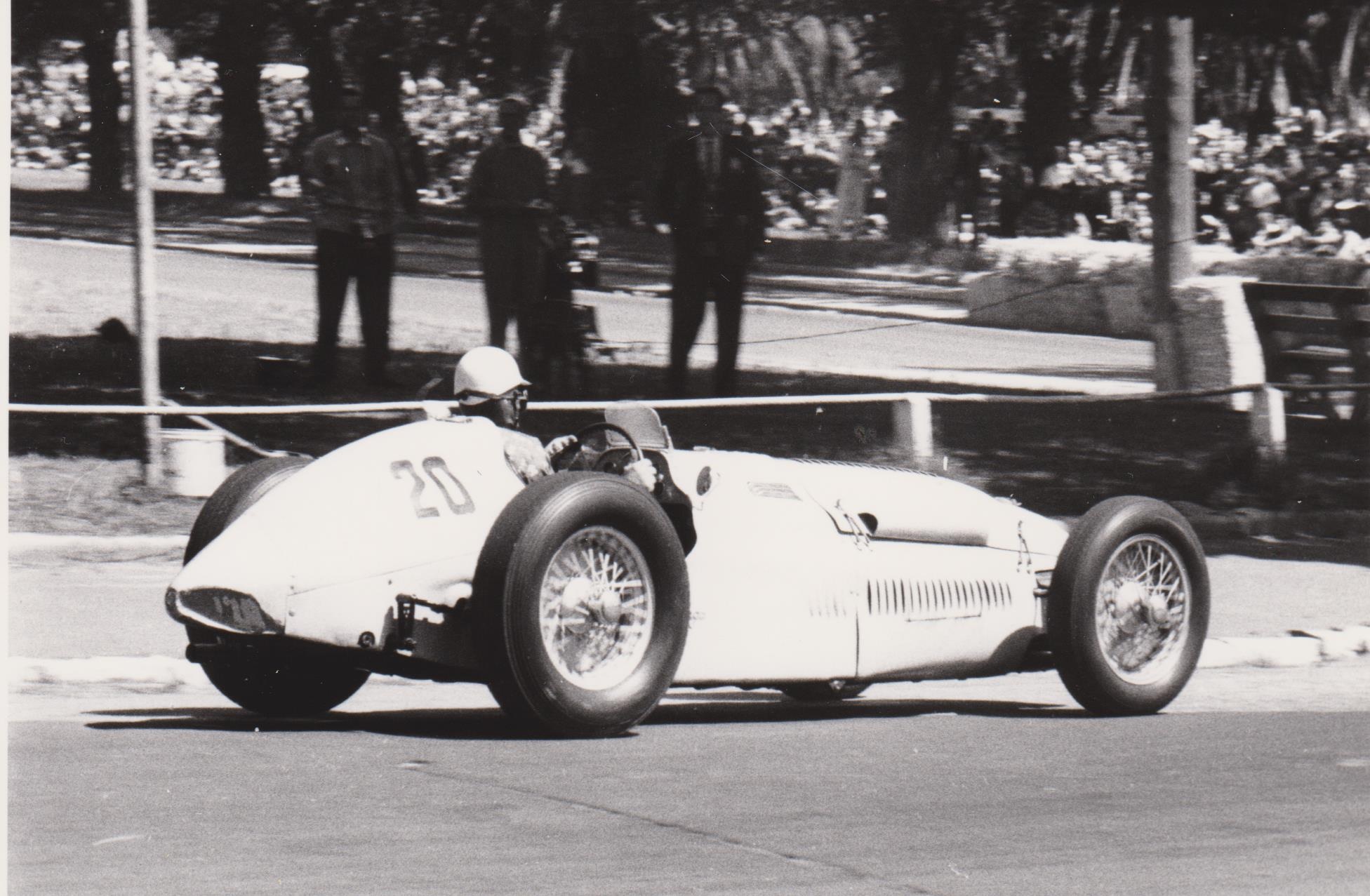
Stirling Moss was at his impeccable best in his works Maserati 250F in winning the 1956 Australian Grand Prix held over 250 miles at Albert Park, 2 December 1956…

With six laps remaining it suddenly rained and it was only then we saw what a true master Moss was- controlling his slipping and sliding car on the treacherous track with sublime skill.

Stirling is probably being interviewed by a journalist, or perhaps he is attending to an autograph? Known for his love of sleek cars, it is said he was not averse to sleek women. We think the young lady at right is his current friend. Does anyone have any clues as to her identity? What about the Moss wrist-watch, a distinctive part of his race apparel at the time- can any of you horologists advise us of make and model?

In the photograph below he may have been telling Reg Hunt, fourth and first local home in his 250F, how easy it was. Reg is already in street attire whilst Moss has not had a chance to change. We know the curly, dark headed boy is John Calligari, but who is the partially obscured driver on Reg’s left?

Look at all the boys, young and old, their eyes riveted on the man of the moment, or more particularly one of the two men of the era…

(S Wills)

Regular readers may recall the first of racer, restorer and author Bob King’s ‘Words from Werrangourt’ article a month ago. Bob has amassed an immense collection of photographs in sixty years of intense interest in motorsport which he is keen to share.

My traditional Sunday offering is a ‘quickie’- a few words and an image or two. This format will be used to gradually get the work of some wonderful photographers ‘out there’- fear not, there is enough to keep us going for a decade or so. And many thanks to Dr Bob!

Feature on the ’56 AGP…

Moss at Albert Park…

Credits…

Bob King Collection- photographer Spencer Wills

Finito…


image

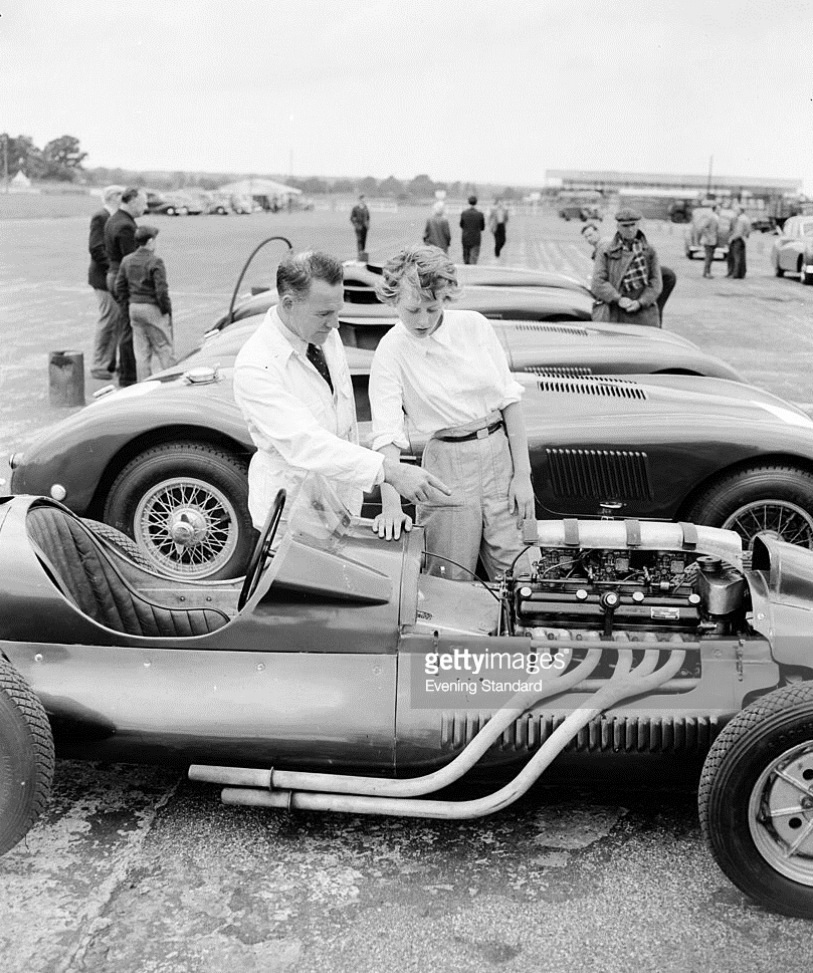
Wilkie Wilkinson points out the finer points of the Bristol 2 litre six to Marion Skevington at Silverstone, the photo is dated 1 January 1953…

‘twould be interesting to know the Cooper T20’s chassis number, driver and meeting date. Is that a lineup of ‘factory’ C Types behind?, Wilkinson was a works Jag mechanic amongst a varied career with BRM and others.

It looks like one of those ‘advertorial’ shots newspapers plonk on page 3 to help get bums on seats come raceday.

Credit…

Evening Standard

image

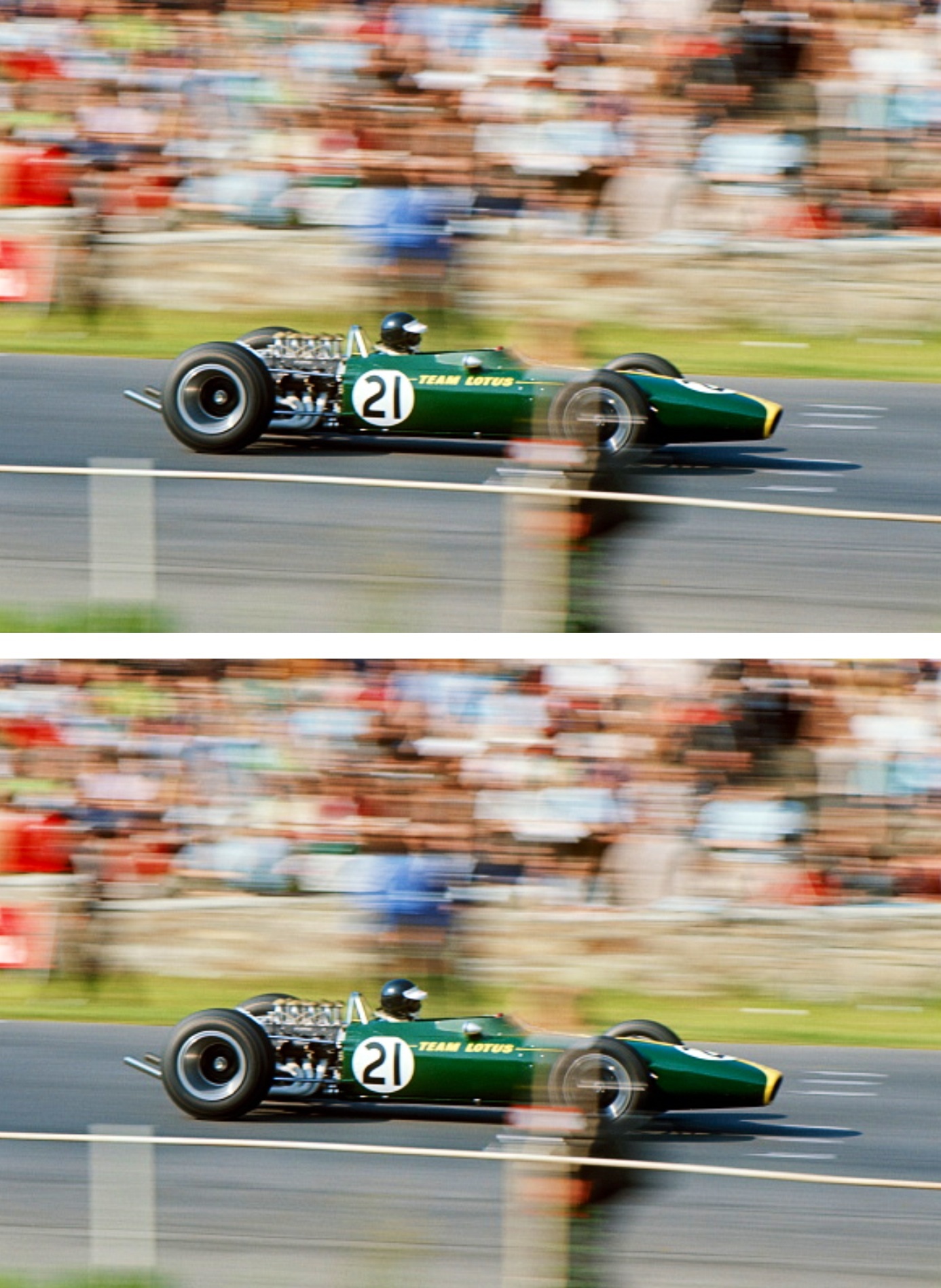
Jim Clark races his Lotus 49 Ford through the daunting dives and swoops of the Ardennes Forest in 1967…

He popped his dominant Lotus 49 on pole, then led until a stop to change plugs. Dan Gurney took a famous win in his Eagle Mk1 Weslake thereby joining the club of which he Jack Brabham and Bruce McLaren are the only members- drivers who won a championship Grands Prix in a car of their own manufacture.

Credit…

Rainer Schlegelmilch

(WFFB)

Despite being in the middle of built up Sydney, Warwick Farm had its bucolic elements…

And there is nothing more quintessentially country Australian than a windmill- here as a backdrop for Leo Geoghegan’s Lotus 59B Waggott prior to the 1971 Tasman round on 14 February.

Frank Gardner’s Lola T192 Chev was victorious that weekend, Leo succumbing to ignition problems. The Lotus was kind to him though, he won the 1970 Gold Star in it with wins here and at Mallala- with the F5000’s about in the Tasman rounds the competition was a bit tougher though.

Geoghegan’s 59B in the Oran Park paddock during the September 1970 Gold Star weekend which he won from Garrie Cooper’s Elfin 600D Repco and Bob Muir’s Rennmax BN3 Waggott. Love the knock on wheels, radiator nostrils and distinctive air exit ducts. Bob Holden’s Ford Escort Twin-Cam behind (K Hyndman)

Dave Baldwin designed the spaceframe 59 as Lotus Components’ 1969 F3 and F2/B customer racing cars, there were a few Formula Fords too. Guys such as Emerson Fittipaldi, Mo Nunn, Roy Pike, Dave Walker, John Miles, Max Mosley, Graham Hill and Jochen Rindt raced the cars with success.

Shades of the 1961/2 F1 Ferrari 156 of course (P Townsend)
As pretty (and effective) as it is possible to get in its Castrol livery, WF 1970. Note the tail of Leo’s works Valiant Pacer Series Prod car behind (P Townsend)

In Australia the Tasman 2.5 litre Formula 1 (ANF1) was being phased out and F5000 phased in over 1970-71 so Leo Geoghegan saw an opportunity to replace his long lived, much loved, ex-Jim Clark Repco V8 engined Lotus 39 with a 59B.

Geoghegan’s Sporty Cars were Australia’s Lotus importer- it would also have made sense for Leo to race a Lotus 70 F5000 machine, not that it was one of their greatest designs mind you. Leo astutely chose the 59B and installed one of Merv Waggott’s new ‘TC-4V’ 275 bhp, fuel injected, DOHC, 4-valve 2 litre engines into the space usually occupied by a 1.6 litre Ford FVA F2 engine.

In a year of consistency he finally won the national title he had been chasing for years in the 39 Repco.

Leo’s car, chassis ’59-FB-14′ is still in Australia, in the Holmes family collection.

Etcetera…

Hewland FT200 5 speed transaxle, big oil tank and hub mounted inboard discs (P Townsend)

Again at the Farm, 6 September 1970 (D Simpson)
(N Murphy)

Geoghegan at Bathurst, Easter 1970.

Photo Credits…

(WFFB) Warwick Farm Facebook page, oldracephotos.com.au, Ken Hyndman, Peter Townsend, Neil Murphy

Tailpiece…

(oldracephotos)

Geoghegan and Lotus 59B Waggott on Warwick Farm’s Pit Straight in 1971.

Finito…

fazz 1

(GP Library)

Brand spanking new Ferrari 156, the aluminium body still unpainted awaits its Modena test in early 1961…

fazz 2

(Klemantaski)

Its all happening in this shot.

Its the first track test in April 1961 of the new 120 degree 1.5 litre DOHC, 2 valve V6 which offered a lower centre of gravity to the dominant cars of that year. Phil Hill was crowned World Champion of course, in a year of tragedy for the team, ‘Taffy’ von Trips lost his life at Monza late in the season.

Bending over the car’s nose is Luigi Bazzi, Ferrari’s ‘Senior Technician’ of the time, the large fella to Bazzi’s left is famed ‘panel basher’ Medardo Fantuzzi who made the sexy bodies of these cars and many other Ferrari’s. Carlo Chiti, the cars designer, has his hand in the cockpit. Richie Ginther, ace racer/tester gets comfy before the off. In the hat behind Richie is Romulo Tavoni, Team Manager and leaning against Enzo’s Ferrari 250GT is the chief himself and Phil Hill.

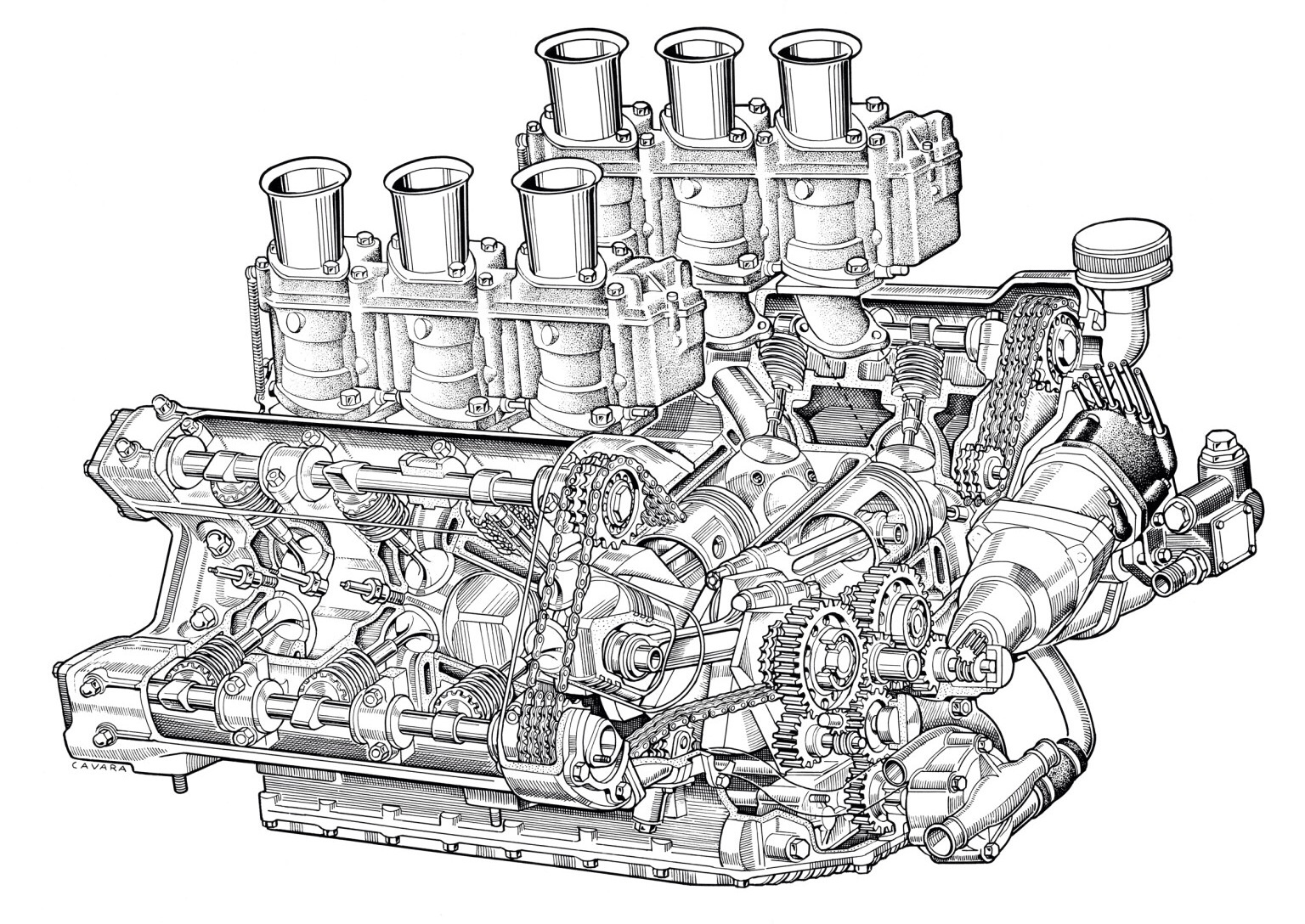
Superb G Cavara cutaway of the jewel like Ferrari 120 degree V6, the key elements of which are beautifully clear

Etcetera…

Rear suspension and bodywork detail at Zandvoort during the Dutch GP weekend in May 1961.

Upper and lower wishbones- the bottom one quite widely based, with coil spring/Koni shocks and an adjustable roll bar.

Cockpits of the day were minimalist- we are a year or so away from leather bound wheels in Ferrari cockpits.

Veglia tach and gauges probably displaying water temperature and oil temperature and pressure. Classic Ferrari ‘open gate’ change to the right which lasted all the way to the semi-automatic paddle-shift boxes pioneered by Ferrari in the 3.5 litre 640 V12 in 1989.

Ferrari 156 at the Nürburgring during the August 1962 German GP weekend, by this stage of things the dominant car of 1961 has been well and truly surpassed by the Lotus 25 Climax and BRM P57- Graham Hill won aboard the latter that weekend,.

65 degree V6 in this chassis, note the spaceframe chassis which looks a bit ‘wonky’ in the length above the cam covers of the engine- Doug Nye christened the Ferrari welders of the day ‘Mr Blobby’ given the finesse and finish displayed. They worked ok in 1961 mind you!

(B Cahier)

Four 156’s were entered at the Nürburgring in 1962, here is the World Champion, Phil Hill. He DNF with suspension failure after 15 laps, Ricardo Rodriguez was the best placed Ferrari driver in sixth, Giancarlo Baghetti was tenth and Lorenzo Bandini DNF after an accident on lap 5.

Credits…

GP Library, Louis Klemantaski Collection, G Cavara

Tailpiece…

enzo

(Klemantaski)

An earlier test than the one above, this chassis fitted with the 65 degree V6. Chiti is at left then the boss, another gent and copiously making notes is famous Ferrari engineer, Mauro Forghieri, then in his early days with the Scuderia. I’m intrigued to know who the mechanic is.

Its a stunning shot of the cars unbelievable lines, their purity complete with the Borrani’s off the car…

Finito…

Holden LJ Torana ad-shoot at Sandown Park circa 1972…

The Tommy Torana is of no interest other than that GMH are promoting a mid-spec Torana-Six rather than the huffin’ and puffin’ 202 GTR-XU1, surely one of Australia’s finest all-round touring-car racers on tarmac and dirt?

Two of Bob Jane’s cars form the backdrop- the Tasman Formula Brabham BT36 Waggott 2 litre and McLaren M6B Repco 5 litre ‘740’ V8 sports-racer. John Harvey raced the Brabham and both Harves and Jano shared the one of a kind, Repco powered McLaren- albeit it was with John at the wheel that the car won the 1971 and 1972 Australian Sportscar Championships.

John Harvey, McLaren M6B Repco, Warwick Farm Esses 1972 (oldracephotos)

Both cars are superb jiggers and still extant, the McLaren still in Australia and owned by Bob (ongoing family litigation duly noted). Jane’s taste in racing cars down the decades has been flawless, his machines included but are far from limited to a Maserati 300S, Jag XKD, Jag E Lwt, Elfin Type 100 ‘Mono’ Ford, Brabham BT11A Climax, Elfin 400 Repco, Brabham BT23E Repco, the Rennmax built Jane Repco, Bowin P8 Repco, Ralt RT4 Ford plus twenty or so touring cars/sports sedans the most mouth watering of which were the Shelby built Ford Mustang, John Sheppard built Holden Torana GTR-XU1 Repco and Holden Monaro GTS350 and Pat Purcell constructed Chevy Monza. Lets not forget the Porsche 956 tho it was a lease deal not a car he owned. I’ve lost touch with exactly which cars he retains but I think the scorecard includes the Brabham BT11A, Ralt RT4, McLaren, Monaro and a 635 CSI BMW rings a bell- be great to hear from those who know.

Many other fellas raced these cars other than Jane- the uber successful businessman put way more into racing than he ever extracted- the tabloid family stoushes of recent decades are a sad final chapter in a great mans life.

Sandown old-timers know this bit of real estate rather well. The racers are facing the wrong way in the pitlane, the models are standing more or less on the spot, depending upon your car, that brakes and a downshift or two into second gear would be considered for the ‘Peters’ or ‘Torana’ (depending upon your era) left-hander and then the blast up the back straight.

Harvey again, Brabham BT36 Waggott, into the WF Esses 1972 Tasman round (unattributed)

Etcetera: Bob Jane Racing brochure circa 1971 from Murray Thomas’ Collection…

Credits…

Greg Feltham Collection, Murray Thomas Collection

Tailpiece…

‘When You’re Hot- You’re Hot’ absolutely captured the performance variants of the Torana at the time- the GTR ‘poverty pack’ and ‘ducks-guts’ GTR-XU1. But, at fourteen years old at the time, overall I thought ‘Going Ford Was The Going Thing’! Fords ‘Total Performance’ approach to motor racing globally was intoxicating for a teenaged racing nut- this one anyway!

Finito…

(P Maslen)

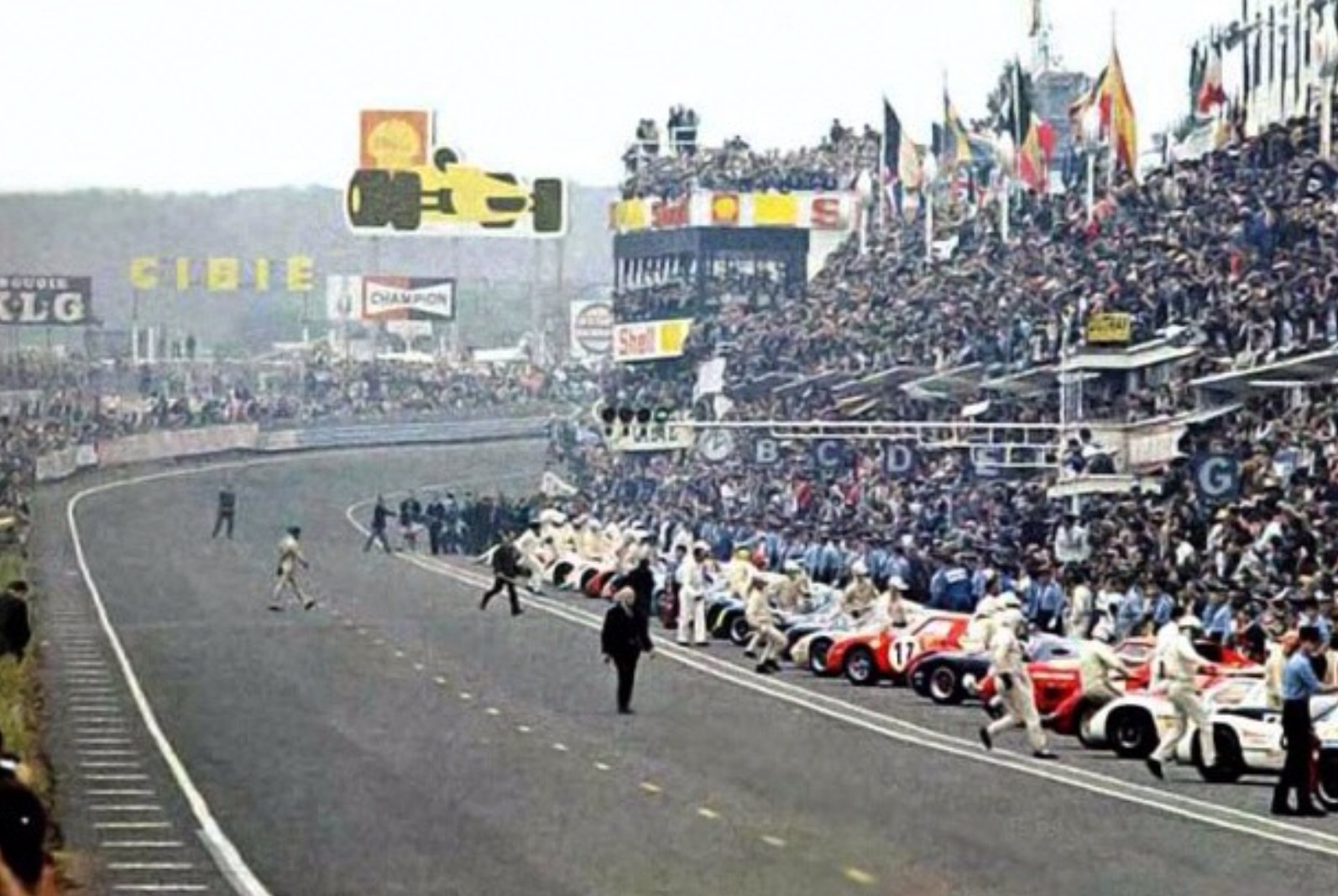
Paul Hawkins appears reasonably fleet of foot, first dude on the left…

And so he should too- the Australian international had far more experience than the locals at Le Mans run and jump starts. What great panoramic, colourful, atmospheric photographs these are.

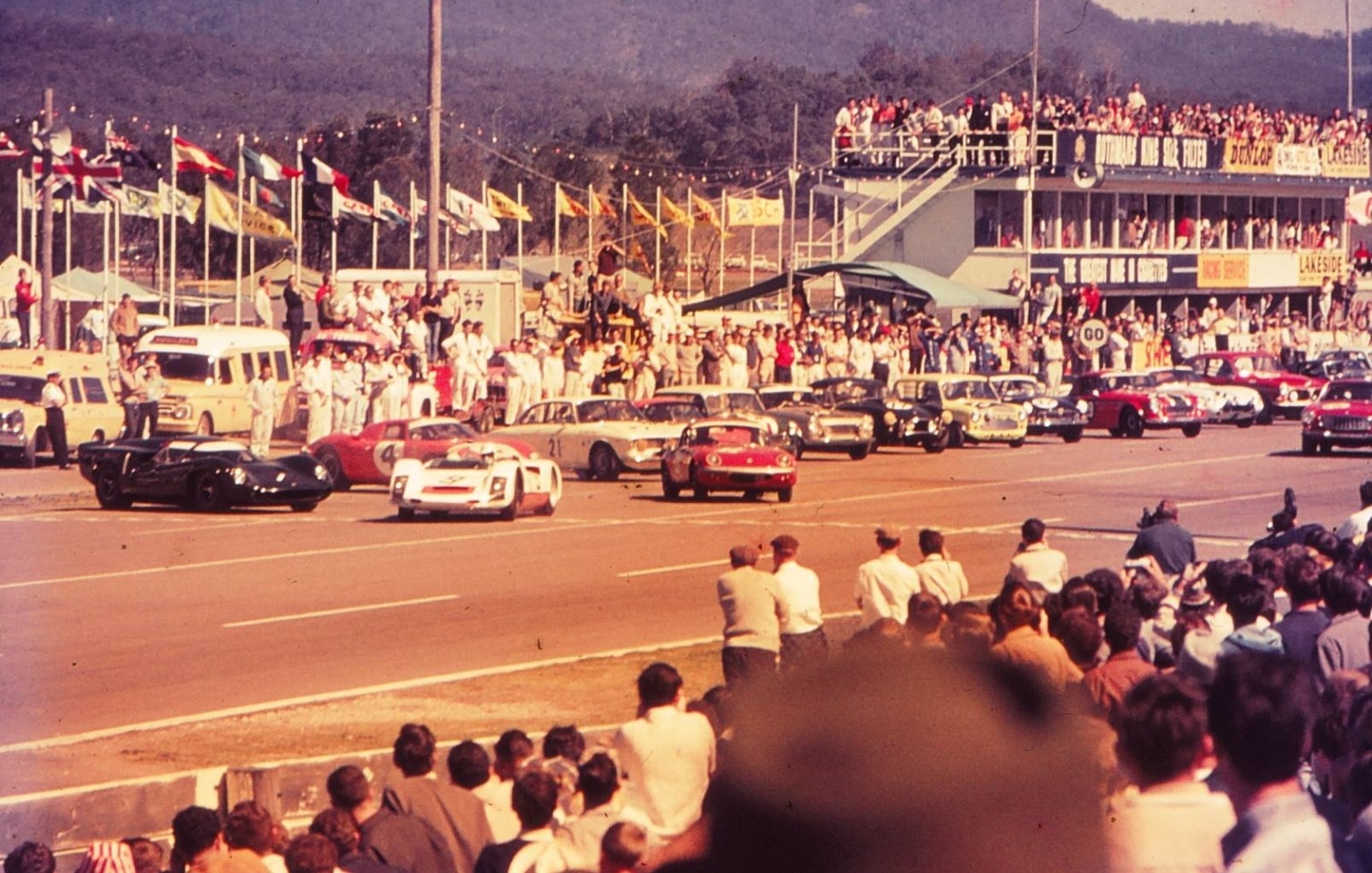
The first few cars lined up in the 3 September 1967 twelve hour enduro are the Hawkins/Jackie Epstein Lola Mk3 Chev, Alan Hamilton/Glynn Scott Porsche 906, Bill Brown/Greg Cusack Ferrari 250LM, Bill Gates/Jim Bertram Lotus Elan and then the white Kevin Bartlett/Doug Chivas Alfa Romeo GTA.

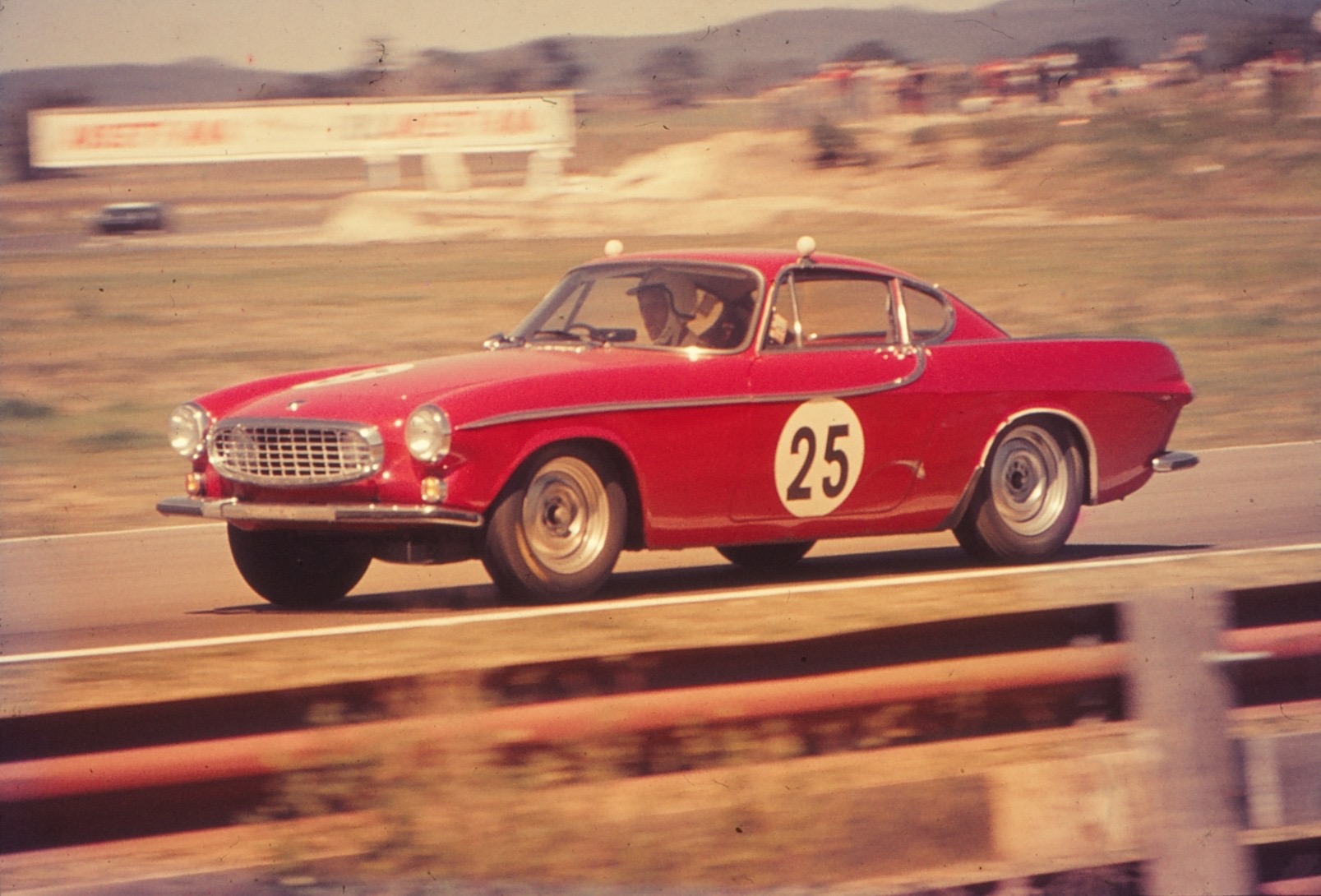
Whilst Paul was quick to the car, the task of affixing his Willans six-pointer was tricky when getting his Heavy Chevy started even in the calmness of a paddock, let alone with a schrieking 2 litre Porsche flat-6 blasting past and reinforcing his tardiness. Not that the notion of outrunning the Porsche over twelve hours should have been an issue- the Gates Lotus is also fast away whilst at far right is the red John Keran Volvo P1800S.

(P Maslen)


Hamilton from Hawkins, 5 litres of Chev V8 is hard to deny!, end of lap 1, he will grab the lead before the fast right hand swoop under Dunlop Bridge (P Maslen)

The last Le Mans 24 Hours with a running start was the 1969 event when Jacky Ickx famously walked to his John Wyer Ford GT40 before carefully fitting his belt- and winning the following day with Jackie Oliver.

The tragic irony of Ickx’ protest was that the ‘unbelted’ John Woolfe died in his Porsche 917 in a first lap accident- safety and seatbelts were the end of that bit of racing spectacle, fair enough too.

Lone ranger, Ickx, Le Mans 1969 (unattributed)

David McKay’s Scuderia Veloce 250LM was almost ‘rusted to this race’. It was never the fastest thing entered but it won in 1966- crewed by Jackie Stewart and Andy Buchanan, in 1967 with McKay’s regular team drivers of the day, Bill Brown and Greg Cusack at the wheel and in 1968 piloted by the brothers Geoghegan- Leo and Pete.

In second place behind the Brown/Cusack 250LM in 1967 was the Lola with 468 laps and third the Hamilton/Scott Porsche 906 with 460- the winners covered 490 laps of reliable, fast Ferrari motoring.

Surfers Paradise International Raceway was opened in 1966 with a bang- ‘Speed Week’ well and truly put Keith William’s circuit on the map in terms of both the motor racing community and the Queensland populace.

I wrote an article about that meeting a while back, check it out here; https://primotipo.com/2015/02/13/jackie-stewart-at-surfers-paradise-speed-week-1966-brabham-bt11a-climax-and-ferrari-250lm/

‘Speed Week’ in 1967 included the Gold Star race won by Spencer Martin from Paul Bolton, both aboard Brabham Climax’ the Sunday before, the Australian Motorcycle Grand Prix on Saturday 2 September and the Rothmans 12 Hour the following day- the race started at 10am, Des White’s ‘Racing Car News’ account of the race sets the scene, ‘Sunday dawned just perfect, sunshine, a cool breeze, and the circuit looked great after a massive clean up following Saturday’s AGP for Motor Cycles’.

‘The garbage trucks removed the rubbish, several ambulances had removed all the leather clad bodies that had been lying around under Dunlop Bridge, and some six police cars had removed many of the exuberant but unfriendly Ned Kelly types from Repco Hill.’ This article is for the most part a truncated variant of Des’ great work in the September 1967 issue of ‘Racing Car News’.

Thirty-seven cars entered the meeting with a somewhat disappointing nineteen fronting for practice- notable absentees were Australia’s large population of Lotus 23’s and local clones thereof, the three Elfin 400’s of Bob Jane, Noel Hurd and Niel Allen. Frank Matich was taking in some Can-Am rounds in his Matich SR3 Repco at the time- all of the cars mentioned were/are ‘sprinters’ rather than purpose built endurance machines so perhaps the lessons of the previous year in terms of the longevity required had been heeded and the driver/entrants therefore stayed away.

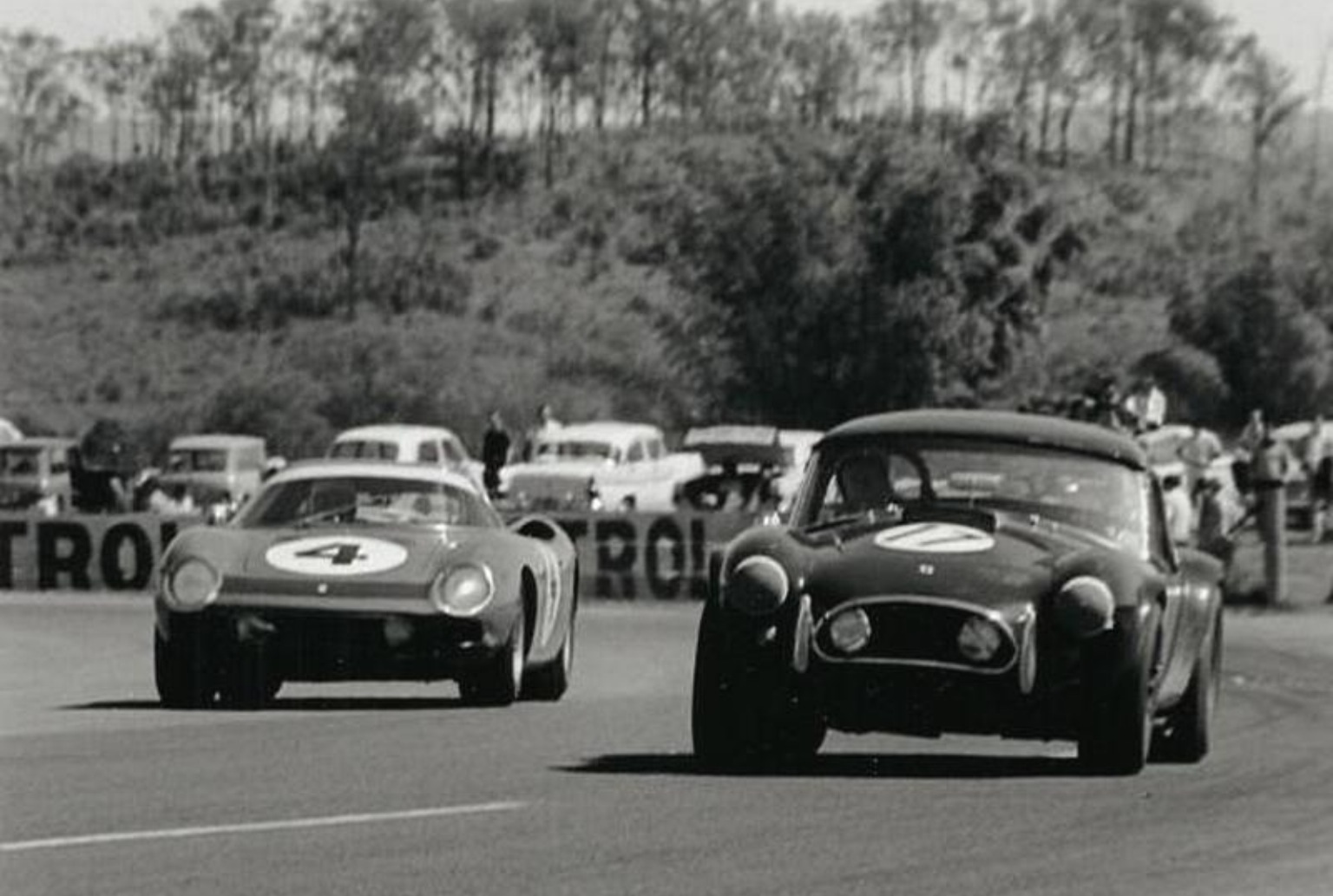
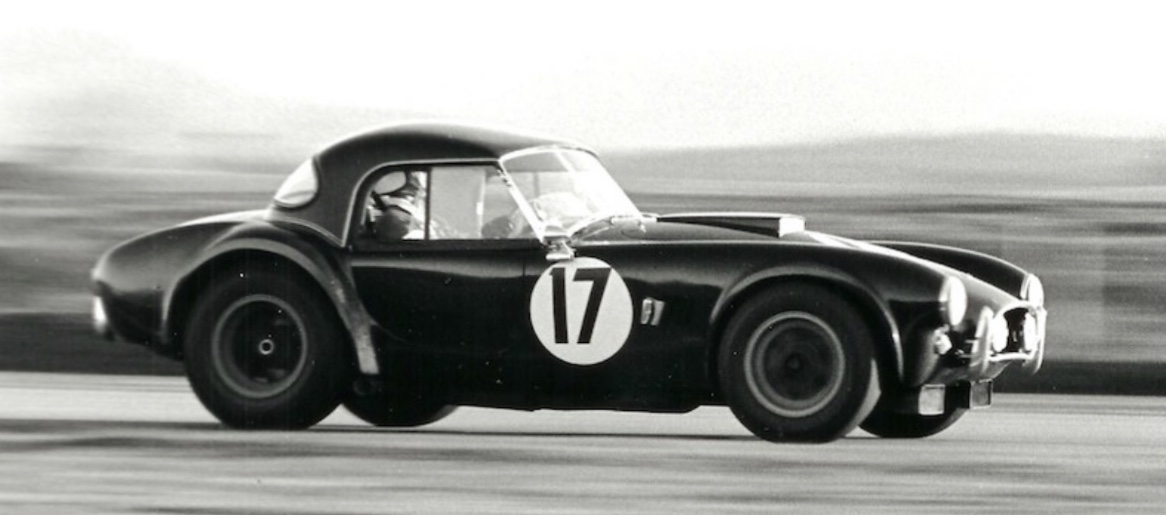
The ninth placed Ron Thorp/Ray Strong AC Cobra ahead of the Scuderia Veloce Greg Cusack/Bill Brown Ferrari 250LM, the pair completed 416 laps compared with the winners 490 (B Williamson)

In 1966 there were five ‘outright contenders’ entered- the Stewart/Buchanan and Epstein/Hawkins Ferrari 250LM, Piper/Attwood Ferrari 365P2, Sutcliffe/Matich Ford GT40 and Hamilton/Reed Porsche 906 whereas in 1967 there were only three, the Scuderia Veloce 250LM, Porsche Cars Australia 906 and Hawkins/Epstein Lola T70 Mk3 Chev- unfortunately the Scott-Davies/Harvey/Tuckey Lola T70 Chev Spyder failed to take the grid after terminal engine failure in practice. The car suffered piston and rod failure and after replacements flown in from the US were fitted on Saturday night the car dropped a valve during a practice session before the start ending a rather unpleasant weekend for the crew.

Fastest in practice was the Hawkins Lola T70 on 1:16.3 from the Hamilton 906, 1:18.7, then the SV 250LM on 1:20.6 before getting into the ‘class cars’- the Gates/Bertram Lotus Elan 1:27.0 then the Mildren Alfa GTA on 1:28.7 and Macarthur brothers Lotus Elan on 1:29.30- also under the 1:30 mark was the Bob Holden/Don Holland Cooper S Lwt on 1:29.7 seconds.

The Hawkins/Epstein Lola (chassis number SL73/112) had not long prior led the Reims 12 Hour for 3 1/2 hours but its Hewland LG500 gearbox cried ‘enough’ but not before setting a lap record on this very fast circuit of ‘147mph, done at 1 o’clock in the morning with full tanks, and included a speed of 200mph on the straight’ Des White observed. That race was won by the Guy Ligier/Jo Schlesser Ford GT Mk2B. The big Lola was clearly the quickest car in the Surfers race but over the ensuing years the success of these wonderful machines in endurance racing was hampered by the brittle nature of the Chev engines most entrants used and the Hewland box.

Scuderia Veloce Ferrari 250LM (C Anderson)


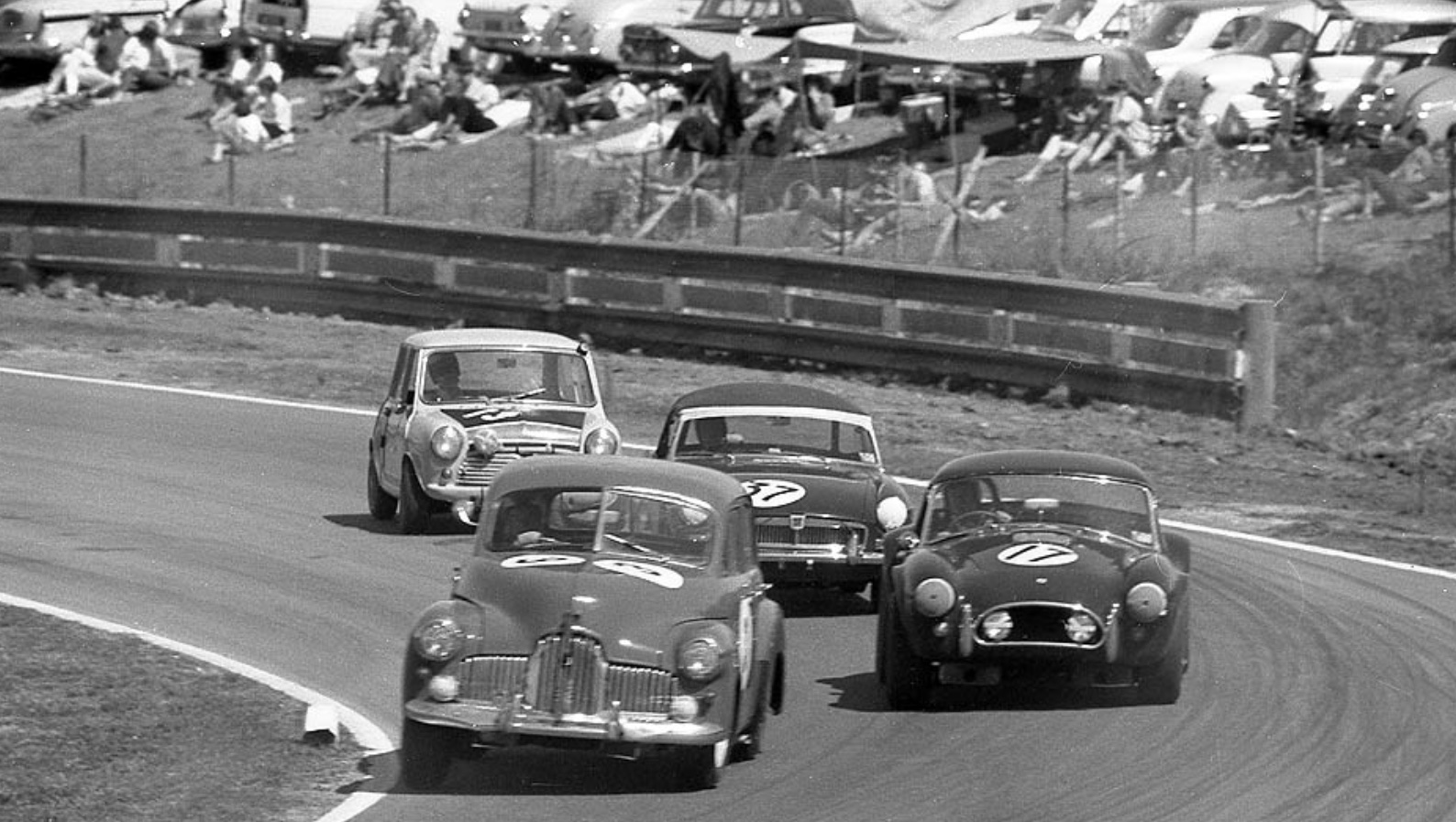
(Mixed bag here, again on the main straight- the #37 Charlie Smith/Noel Hall MGB, #18 Daimler SP250 shared by Peter Whitelaw/Ian Jenkins/Peter Ganderton and the only Holden entered- the Max de Jersey/Bill Birmingham 48-215 (P Maslen)


Its got a touch of Sebring about it in terms of variety: Calvert Holden 48-215, Ron Thorp AC Cobra, Charles Smith MGB and Phil Barnes, Morris Cooper S during the contests early laps (oldracephotos.com/Phillips)

Alan Hamilton made a great start at the flags drop- 10am, his 906 jumping sideways as he applied all of the 2 litre engines flat-6 power to the very abrasive Surfers tarmac- KB also got away well in the Mildren GTA as did the Gate’s Elan but the Porsche succumbed to the big Lola at the end of the first lap.

Bartlett slipped under Bill Gates as the 250LM eased into third place during lap 5, a dice developed between the John French driven BMC Australia MG Midget and the Elans whilst the Harry Gapps Renault 8 Gordini engine blew after 24 minutes of racing and was the first retirement.

At 10.30 the Lola led from the Porsche and Ferrari then Bartlett in the GTA, the Holden/Holland Mini Lwt and Doug Macarthur in the family’ Lotus Elan. The first of many pitstops for the Hawkins Lola took place at 10.45am when 3 pints of oil were sloshed into the oil tank- a poorly fitted rocker cover was leaking badly.

Hamilton’s leading Porsche had completed 43 laps in the first hour, a lap clear of the Cusack/SV Ferrari and Hawkins Lola on the same lap as the Italian V12. Bartlett was 4 laps back in fourth, then Holden on the same lap as KB with Ron Thorp’s AC Cobra a lap in arrears.

The T70 pitted again at 11.16am for 8 pints of oil and a replacement rocker cover gasket- the stop took 12 minutes 54 seconds. The Whitelaw Daimler SP250 pitted with lots of steam and leaking brakes whilst the class leading Thorp Cobra came in for a front end check.

(C Anderson)


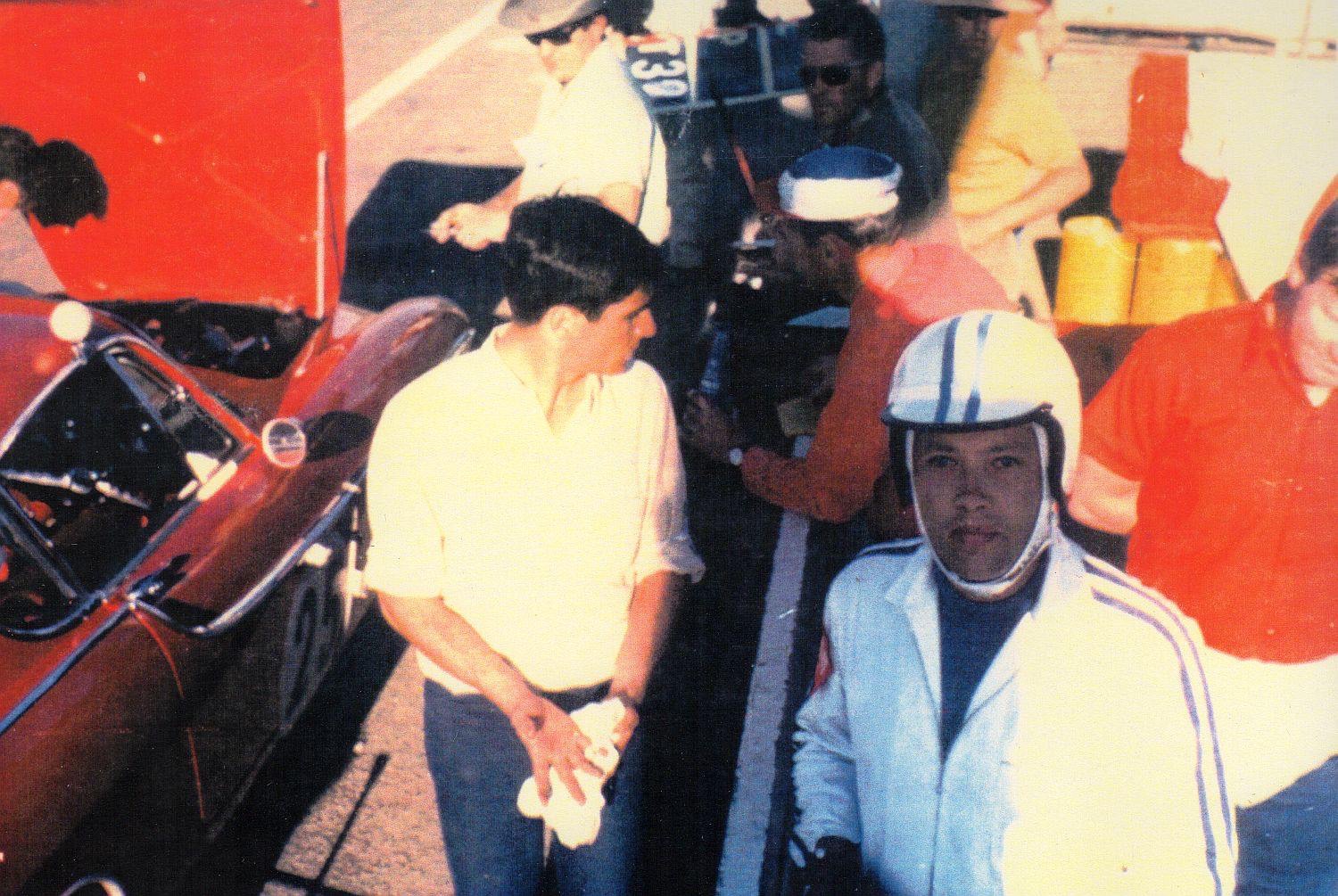
The batch of three photographs above and below are of the John Keran entered Volvo P1800S crewed by John, Colin Bond and Max Winkless. On circuit the car is driven by Keran- the two pitlane shots show John staring down the camera and he and Col Bond discussing the progress of the car.
The rally men, mind you Bond was racing on all kinds of surfaces then in tourers, sporties and his Rennmax Peugeot s/c single-seater, did well- fourth in the Improved Production under 2 litre class won by the Datsun Racing Team Datsun 1600 Sports with the Victorian pair of John Roxburgh and thrice Australian Grand Prix winner, Dog Whiteford behind the wheel (P Maslen)


(J Keran)


Keran, Bond and who is it in that Team Total shirt to the right? (J Keran)

At 11.30am the Hamilton Porsche led with 65 laps completed from the Ferrari and Bartlett Alfa GTA with the Holden Mini in fourth as the Lola hung around the pits. The John Roxburgh Datsun was in sixth on the same lap as the Thorp Cobra with the two Datsuns seemingly having a good grip on the 2 litre Improved Production class as the Barry Tapsall/Henk Woelders car headed John Keran’s Volvo P1800S.

At 11.45 Kevin Bartlett pitted for fuel and oil and handover to Doug Chivas but the little, lightweight Alfa would not answer the starter- pushed behind the pit counter for closer attention there the machine stayed, ‘the engine tighter than tight’.

Hamilton took his first pitstop bang on noon- four tyres went on and 22 gallons of fuel and Glynn Scott went in, the stop took 3 minutes 24 seconds, at that stage the 906 had done 87 laps, the Ferrari 86, then Bob Holden, Paul Hawkins, John French, John Roxburgh and Ron Thorp followed.

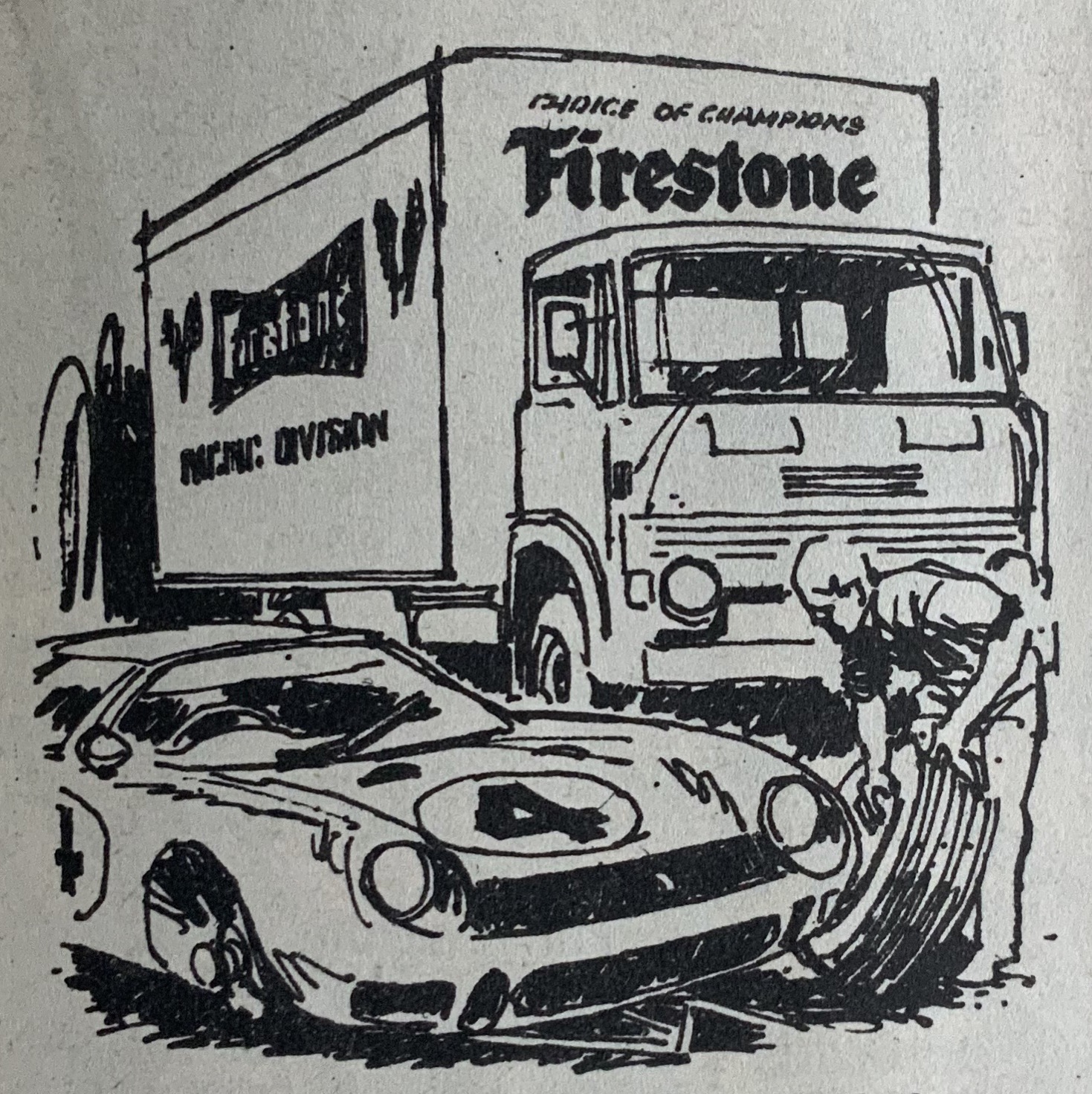
The Thorp Cobra pitted again with brake problems and at 12.16 Greg Cusack handed the SV 250LM over to Bill Brown after the Ferrari was filled with 32 gallons of fuel, 6 pints of oil and four, fresh Firestones, the slick stop taking two minutes.

Around the same time the Harry Cape Triumph GT6 pitted to have its rear light taped after a bingle and the Holden Mini Lwt had its rocker-post replaced- the Hindmarsh Elfin retired over at Firestone- the field was falling away whilst Doug Whiteford took over the class leading Datsun 1600 from John Roxburgh at 1pm together with 20 gallons of fuel and 4 tyres.

Barry Ferguson/Max Stahl ‘Racing Car News’ entered MGB, Max being the much loved racer/editor/proprietor of RCN (C Anderson)


Peter Maslen, the enthusiast who captured these wonderful images images wrote of the photograph above as ‘One of the finest drives I ever saw. When Alan Hamilton dropped the Porsche into a ditch around the back of the circuit, he was encouraged to recover it- Glynn Scott took over and they came in third. This picture now holds pride of place on my study wall’. It is a marvellous shot of the Porsche 906- he has managed to capture the determined set of Scott’s jaw, local open-wheeler and sportscar ace rather nicely (P Maslen)


I suspect its the first of the pit-stops for the Hawkins Lola with the 1:21.2 being given to Alan Hamilton in the now leading Porker 906 (oldracephotos.com/Phillips)

Des White records that the Lola T70’s first ‘scheduled’ stop was made just on 1pm when 45 gallons of avgas and 4 pints of oil were taken onboard in 3 minutes 15 seconds- Paul remained at the wheel and set off at undiminished pace after the Ferrari and Porsche which was about 10 laps in front up the road.

Glynn Scott took the Porsche 906 to a 3 lap lead after three hours of racing at 1pm having completed 129 laps- he was a lap ahead of the Ferrari and ten laps ahead of the Lola on 119 laps. The works MG Midget of John French and Brian Foley was fourth on 115 laps, and doing amazingly well given its recent build and therefore hasty preparation, 3 laps clear of the Volvo Coupe now just 1 lap clear of the Whiteford Datsun 1600 after its pitstop, the Macarthur Elan was still in the race and running well.

Epstein Enterprises Lola T70 Mk3 (C Anderson)


The Bartlett/Doug Chivas Alfa Romeo GTA ‘RHD’- the second of Alec Mildren’s two GTA’s (P Maslen)


Ross Bond’s legendary Austin Healey 3000 in its more formative specifications in a long, successful race career and the John Keran Volvo P1800S (oldracephotos.com/Phillips)

Alan Hamilton took over the 906 at 2.03pm for a top up of fluids and driver change, losing 3 minutes 10 seconds and in so doing allowed the Ferrari 250LM into the lead- then Bill Brown pitted the Ferrari to change over to Greg Cusack, that stop took 2 minutes 45 seconds, in the process re-entering the race a lap and a half behind Hamilton- both cars were well clear of the Lola which was in Jackie Epstein’s hands after a 7 minute stop.

Alan Hamilton niggled Cusack in the 250LM for several laps looking for a way past to increase his advantage finally getting alongside on the outside of Lukey- Greg held his line, the Porsche left the road, shot over a low mound and hit the Armco. The Victorian regained the circuit after 30 seconds but as the car entered Shell Straight the rear fibreglass body panel blew open and was ‘dragged along like some weird insect in the middle of a mating dance’ as White poetically put it!

The flustered pilot pulled off at Firestone, his race seemingly run but he was pursuaded to return the car to the pits for repairs- the team made good the rear panel with a combination of rivetted aluminium, race-tape and wire, they lost 17 minutes in the process with Glynn Scott determined to make up the lost time (in one of his photo captions White wrote that the 906 lost a total of 1 1/4 hours in the pits in total- not sure what is correct).

250LM at rest (C Anderson)


The Lotus Elan 26R crewed by disc-jockey Bill Gates and Jim Bertram (P Maslen)


Mroom-waaahhhrr. Scotty on the hop 906- where on circuit folks? (oldracephotos.com/Phillips)

By this stage the ever reliable ‘Old Red Lady’ as David McKay referred to his adored car was in a lead which was all but impossible to peg back.

By 3pm the LM had completed 212 laps and had a 22 lap lead over the French/Foley MG Midget which was in a stunning second place from the Hawkins/Epstein Lola- which had also been back to the pits during the 906 time standing still. The Roxburgh/Whiteford Datsun 1600 still led its class and was fifth outright at a time the Porsche was back in ninth after going back to the pits for a further 49 seconds of repairs.

The French/Foley Midget pitted near 4pm with a broken scavenge pump whereupon the crew worked to convert the gallant little car from a dry to wet sump- this marvellous effort was in vain when the oil pump shaft broke at 4.20pm.

Scott pushed the robust 906 along very quickly- lapping in the regular 1:20’s, by 5pm he was back in sixth with 251 laps on the board, he was in sparkling form no doubt buoyed by his victory in the NSW ANF1.5 Championship aboard his old Lotus 27 Ford at Catalina Park in mid-August over Max Stewart and Phil West amongst others- Tapsall’s Datsun had completed 253 laps and Keran’s Volvo 255. With five hours to run even the third placed Roxburgh Datsun 1600 Sports looked likely to be caught by the flying Porsche.

The Tapsall Datsun pitted at 5.10pm for fuel and tyres but refused to start and was taken behind the pit wall where the battery and starter motor were replaced. Hamilton jumped back into the 906 at 5.38 pm having taken on 20 gallons of fuel and was after the third placed car- now only 4 laps away- a quick, high speed spin under the Dunlop Bridge at 6.50pm did not diminish his intent.

Not too hard to tell which car was artist Colin Anderson’s favourite! The winning 250LM (C Anderson)


A routine fuel and tyre stop for the victorious 250LM and below that the rumbling Lola in the Repco Hill to Castol corner section of the circuit prior to ‘Rothmans Straight’- the main straight(P Maslen)


Hard to tell but I think its Doug Chivas in the Mildren Alfa GTA, therefore practice, perhaps KB can advise (oldracephotos.com/Phillips)

By 7 pm the Cusack/Brown Ferrari 250LM led the Hawkins/Epstein Lola T70 by over 25 laps having completed 374 circuits of the challenging Nerang layout- by then the speedy 906 was only a lap adrift of the leading Datsun and gaining fast. The Holden/Holland Cooper S Lwt followed on 326 laps, a lap clear of the Volvo.

Henk Woelder’s, later Australian F2 Champion aboard Bill Patterson’s Elfin 600E Ford, exited his Datsun after again replacing the car’s battery and starter motor- only fifteen cars remained in the battle at this point.

Glynn Scott took over the 906 again at 8pm after a 3 minute 49 seconds stop for fuel- his first flying lap in the dark was a 1:21.2, about 5 seconds quicker than the Ferrari and 10 seconds better than the big rumbling Lola- both of these machines being stroked along to the finish in ‘secure’ positions of course- Scotty had a big spin under Repco after 3 laps but kept on pushing all the same.

Woelders’ Datsun re-entered the fray but was black-flagged for running without rear tail-lights- Whiteford’s similar car (#28 rather than Woelders’ #29) was shown the flag- ‘a nasty scene was avoided’ as ‘Dicer Doug’ was not a man to be trifled with, and the Woelders machine was put away for the rest of the night.

MGB pitstop, probably Max Stahl (C Anderson)
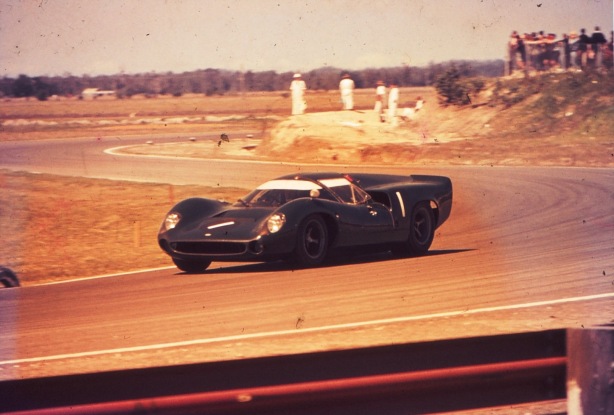
 

The rumbling Lola in the Repco Hill to Castol corner section of the circuit prior to ‘Rothmans Straight’- the main straight (P Maslen)


From right- #7 works, new French/Foley MG Midget which is extant, de Jersey/Birmingham Holden FJ, #14 Hallam/Pare Ford Anglia, #15 Lister/Seldon Volvo 122S, #28 Roxburgh/Whiteford Datsun 1600 Sports, #4 250LM, #8 Holden/Holland Morris Cooper S Lwt (oldracephotos.com/Phillips)

By 9 pm with one hour left to run the Ferrari had completed 448 laps, 20 laps ahead of Paul Hawkins who was at the wheel for the final stint, Glynn Scott was still lapping in the low 1 min 21’s in his series of inspiring stints and was by then up to third outright with 417 laps- 11 adrift of the curvaceous Lola.

Hawkins pitted for the last time at 9.25pm, the two and a bit minutes stop handed Glynn another 2 laps with Hawkins circulating in the 1:26’s to go easy on the car, Des White finished his wonderful article on the race with ‘The race finished in the cold dampness of 10pm and the Ferrari coasted into the presentation area, quickly joined by the Porsche which received and rightly deserved all the ovation it received followed by the big mean, green machine, the Lola.’

‘The results were just about what one must expect in an endurance event, the Ferrari taking out its second Rothmans 12 Hour, while both Hawkins and Hamilton vowed to be back next year with the same teams, for as Hawkins stated- ‘Its time we won this thing.’

Alan Hamilton was and is a tall fella so lopping the lid off Porsche 906 ‘007’ made sense especially in an Australian sprint racing context- the bulk of our sportscar races were short. Here looking all pristine in practice entering ze pits, she looked a bit more grungy and used post-event (oldracephotos.com/Phillips)


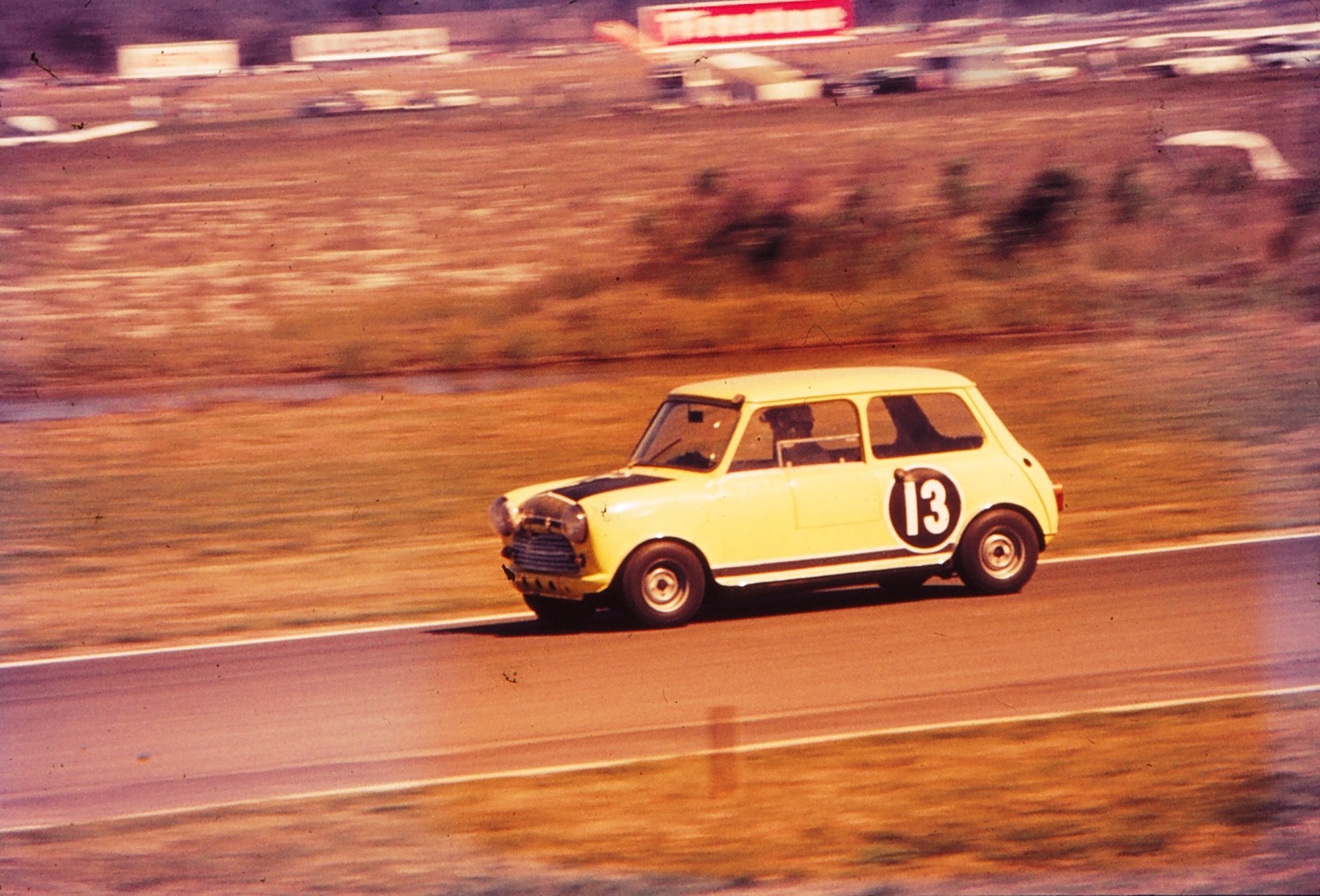
Three Minis were entered in the Sports Racing under 2 litre class, this one is the Phil Barnes/Jeff Leighton Morris Cooper S- they completed 238 laps and placed seventh in the class won by the Hamilton/Scott 906, the best placed Cooper S was the BMC works entry raced by Bob Holden and Don Holland to fifth with 437 laps completed (P Maslen)


250LM and 906 early in the contest, main straight (oldracephotos.com/Phillips)


(P Maslen)

The results of the race, to the first three finishers in each class are as follows; (source RCN)

Outright

Greg Cusack/Bill Brown Ferrari 250LM, Paul Hawkins/Jackie Epstein Lola T70 Mk3 Chev, Alan Hamilton/Glynn Scott Porsche 906

Sports Racing over 2 litres

250LM, T70, Max de Jersey/A Shaw Holden FJ

Sports Racing under 2 litres

906, Bob Holden/Don Holland Morris Cooper S Lwt, David Seldon/Gerry Lister Volvo 122S

Improved Production over 2 litres

Ron Thorp/Ray Strong AC Cobra, Peter Whitelaw/Kevan Woolf/P Ganderton Daimler SP250

Improved Production under 2 litres

John Roxburgh/Doug Whiteford Datsun 1600 Sports, Chris Smith/Noel Hall MGB, Ray Kearns/Brian Lawler/Col Wear Volvo 122S

Ron Thorp on the hop, AC Cobra (Bowden Collection)

Afterthoughts…

Surfers Paradise owner/promoter Keith Williams tried very hard to establish this race, first over twelve hours duration in 1966/7 and then six hours in 1968/9 as fixtures on the Australian racing calendar.

Forty cars raced in 1966, 27 in 1967, 29 in 1968 and 23 in 1969, in the latter years Australian ‘Pony’ cars swelled the numbers and of course endurance events in Australia quickly evolved as Series Production/Group E Touring Car events in the late sixties with huge entries. ‘Sports prototype or racing sportscar’ numbers in each of the SPIR events were 8, 3, 4 and 7 from 1966 to 1969, which I understand on one level in the sense that the local population of such cars in Australia were sprinters rather than endurance racers. Having said that one could have run your twin-cam or Olds or Chev with a softer cam and used less revs for this event- all of which assumes the funds to do so of course.

The entry of cars from Europe was problematic given the distance involved without payment of generous subsidies and why would the Americans bother given the size of the Can-Am purses?

Sportscar construction spiked a bit in Oz in 1970/71 with the release of 2.5 litre Repco Brabham V8’s as the Tasman 2.5 Formula ended but so engined Rennmax’ and Elfins were fitted with motors which struggled over 100 miles let alone six hours- and so it was that Williams’ valiant attempts withered on the vine.

A pity.

Credits and References…

Peter Maslen, oldracephotos.com/Phillips, John Keran Collection, Bowden Collection, September 1967 Racing Car News

Superb drawings by Colin Anderson scanned from RCN

Tailpieces: Paul Hawkins T70 Mk3 Chev, Surfers…

(oldracephotos.com/Phillips)

An all time Top Ten Racing Cars pick for me- been on the list for forty years too so its unlikely to slip off it. A big arsed but oh so curvaceous, busty, buxom, broad- it oozes sex if you get my drift.

Twiggy it ain’t.

(unattributed)

Funnily enough Paul had a sprint win in the car before leaving Australia.

He contested the 34 lap, 76 mile ‘Gallaher GT Trophy’ race at Warwick Farm the weekend after Surfers on 10 September and had a terrific weekend, winning the race and a couple of five lappers as well. Niel Allen’s Elfin 400 Chev was 3 seconds a lap quicker in practice than Paul- and Glynn Scott’s Lotus 23B Ford twin-cam was half a chance too but come raceday Allen lost a tooth off the crown wheel relinquishing the lead to happy Hawkins.

Paul shortly thereafter bought the Lola from Epstein and had some club successes in it back in the UK before having a very successful Springbok tour with it that November/December 1967.

At this stage of his career Hawkins was both a sportscar ace for hire- Porsche, Ferrari and John Wyer spring to mind, and did good business racing modified GT40’s and Lolas out of his own workshops in Finchley, North London.

As most of you will be aware the gifted Australian lost his life in a semi-works T70 Mk3B Chev whilst contesting the very wet Tourist Trophy at Oulton Park on 26 May 1969- he left the track and hit a tree at Island Bend.

Finito…

(R Goldfinch)

Denny Hulme acknowledges the plaudits of the crowd upon his retirement from the February 1967 Australian Grand Prix at Warwick Farm…

The ‘Creek Corner Mob’ were a notoriously loud, knowledgeable group of spectators, ‘the bugler’ in particular always comes up in conversations about the place with Sydney enthusiasts even now.

Denny’s Brabham BT22 Repco ‘640’ V8 retired on lap 41 of the 45 lap race with a burst radiator hose, the race was won by Jackie Stewart’s BRM P261 2.1 V8. In a troubled weekend the Brabham Repco lads started raceday further out west at Sydney’s Oran Park attempting to sort fuel injection and handling dramas before heading back to the ‘farm for the race. Jack was fourth aboard BT23A Repco ‘640’.

Love this Bruce Wells portrait of Denny on the ’67 WF grid. Note the ducting used in the hotter races of that year to get cool air into the centre of the 640 and 740 Repco’s- aimed at the fuel metering unit (B Wells/TRS)


Stewart, Clark, Hill- BRM P261, Lotus 33 Climax, Lotus 48 Ford FVA, then Jack and Leo Geoghegan- Brabham BT23A Repco and Lotus 39 Climax with Denny alongside the pit counter on the row behind, Brabham BT22 Repco (B Wells/TRS)

Its weird the way your brain works, or mine does anyway?!

The first thing which popped into my mind when I saw Denny’s salute was the famous post 200 metre Mexico ’68 Olympics medal award ceremony, brave ‘Black Power’ medal presentation dais salutes of gold and bronze medallists Tommie Smith and John Carlos.

It was ‘big news’ in Australia as Peter Norman, a great Australian athlete, was the silver medallist who bravely stood with, and in support of the Americans and their cause. Norman was punished for his actions by the Australian Olympic Committee’s ‘forces of conservative darkness’ for the rest of his life.

Denny’s pose and actions are in an entirely different context (to say the least) but its funny the stuff which sticks in a childs mind only to pop out fifty years later. The Olympics scene resonated with me at the time, no doubt meeting Norman at a school holidays athletics training camp in the early seventies added to the potency of the moment, times of great social upheaval and progress as they were.

Peter Norman’s obituary; https://www.theguardian.com/news/2006/oct/05/guardianobituaries.australia

Credits…

Roger Goldfinch, Bruce Wells/The Roaring Season

Tailpiece: Peter Norman, Tommie Smith and John Carlos, Mexico 1968…

Finito…

On South Wharf, Port Melbourne, January 1951. Type 35 Bugatti, GP Lago Talbot and 4CL Maserati (Bob King)

This whole online caper is interesting not least for the people you meet in the virtual world and as a consequence subsequently in the real one.

Greg Smith is one such fellow, he is a well known Melbourne racer/engineer/restorer who wrote an article for us a while back. We were discussing some arcane topic online the other week which led to an invitation to one of Smithy’s wonderful Wednesday night feasts in honour of the late Italian/Australian hotelier/racer/raconteur Lou Molina- who looks down on proceedings from the wall with approval at Greg’s execution of some of Lou’s Italian dishes.

There were some fine car/racing identities there on the night including Perth boy Rod Quinn, and locals Ron McCallum, David Ogg and Bob King. Since then Bob and I have joined the Automotive Historians Australia Inc (many of you would be interested in this several years old group, a topic for another time) and the two day AHA conference gave me the chance to twist Bob’s arm into contributing an occasional article or two.

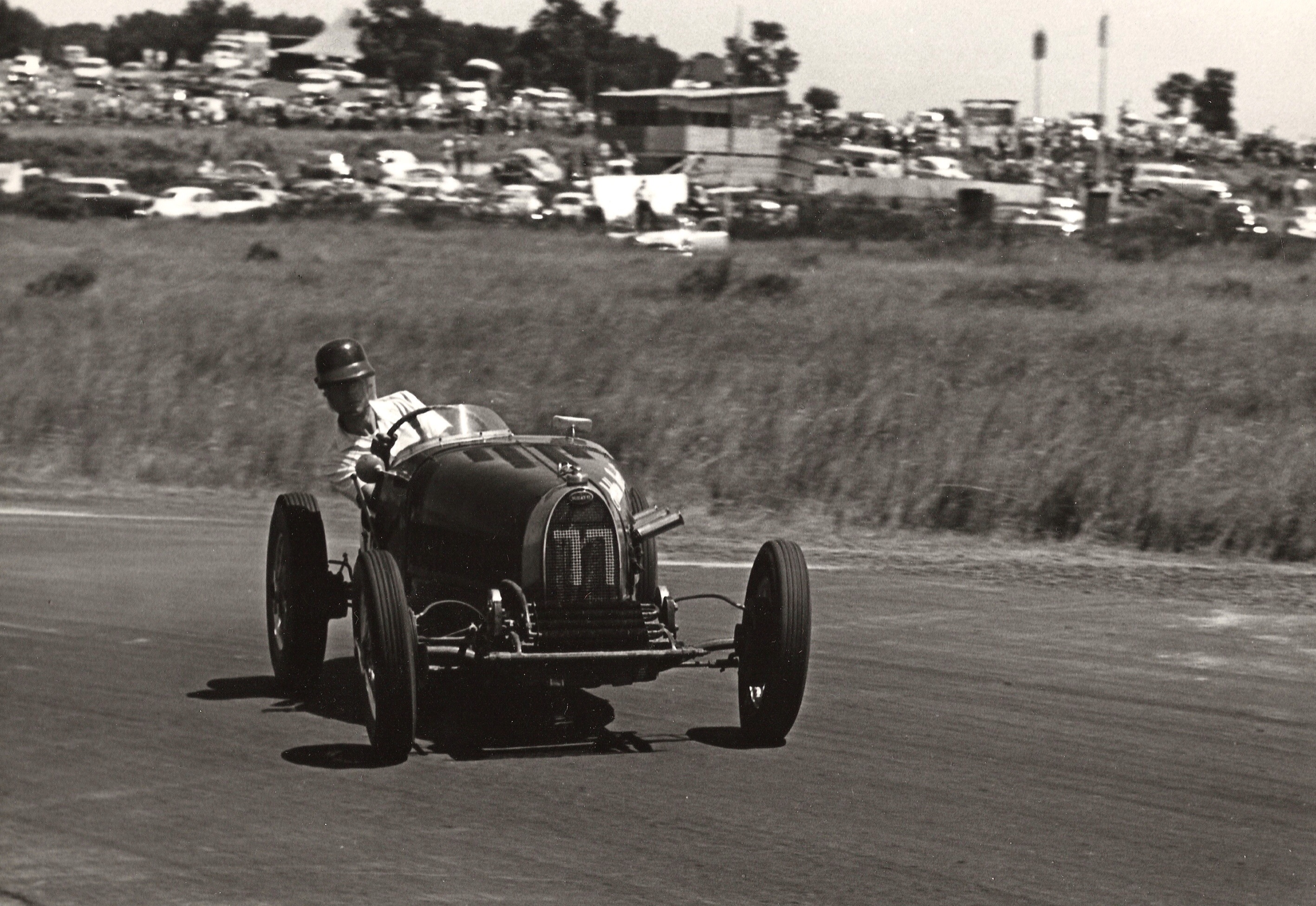
Bob King hustling the Anzani Bugatti around the Adelaide GP road circuit (Bob King)

He is a retired medical practitioner who has had a lifetime interest in vintage and racing cars and Bugattis- his particular passion. As well as racing and rallying these cars, he has maintained a deep interest in their history which culminated in the publication of three books on Australian (and New Zealand) Bugattis as well as one on the Brescia Bugatti. Bob has had historical articles published in many journals. He continues to enjoy restoring and driving his small collection of a Bebe Peugeot, Bugatti T35B and an AC Ace.

Bob is a wonderful, knowledgeable chap, its great to have him involved, his first ‘Words from Werrangourt’ piece is titled-

‘The Dale brothers, importers of important cars- Part 1’

Anyone who is fortunate enough to have old copies of Australian Motor Sport (January 1946 to April 1971) will be aware of wordy advertisements for exotic cars imported by the Dale brothers: Peter Durham Dale and Henry K H Dale. Their origins are something of a mystery, but it is thought they had some Egyptian ancestry mixed with more recent English blood – Henry may have been born in England.

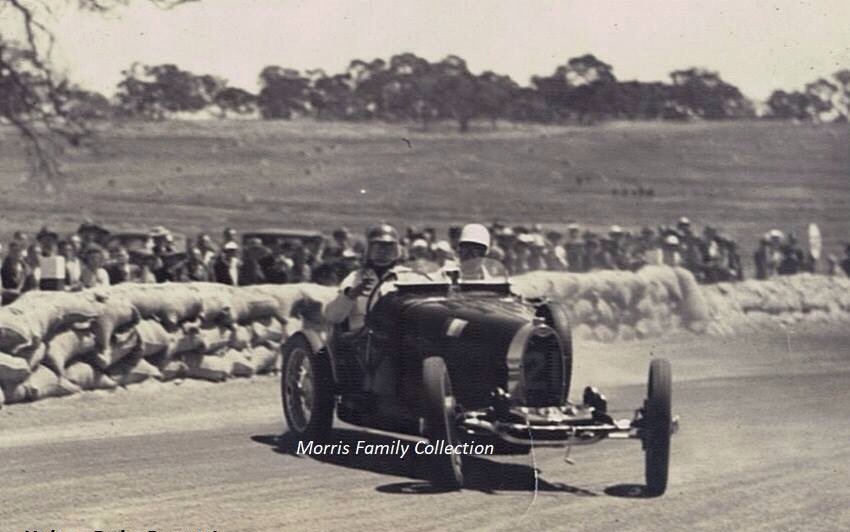
Dale brothers on the 1936 AGP grid at Victor Harbor in December 1936, Bugatti T37A. Henry driving, Peter alongside- DNF after 9 laps in the race won by the Les Murphy MG P Type (Bob King)

Dale boys during the Victor Harbor race, I wonder if he caught it! (Morris Family)

They are recalled as two rather pompous single men who lived the life of gentlemen in a terrace house in Williams Road, Toorak in Melbourne. Well remembered is a large round ‘coffee’ table in the drawing room on which was displayed the latest copy of every motoring magazine. The garage on the side street was opened to reveal the latest, newly acquired exotica. Peter, known as ‘Durham’ had some mundane job with an insurance company as well as being a journalist on the ‘Truth’ newspaper; he wrote a three part history of the pre-war Australian Grand Prix in AMS, which piqued the interest of the writer in these races. Henry, christened Hylton, was usually engaged in the wool trade in Egypt.

The writer’s earliest memory of Peter was at Fisherman’s Bend car races in the late 1950’s. A friend and I were gazing in awe at Miles Ryan’s 100mph Low Chassis Invicta. I commented to said friend that the radiator badge was not straight. We were addressed in a stentorious tone by one whom were later told was Peter Dale: “That is how you know it is handmade” – a lesson well learnt. We do not have a chronology of cars imported by the Dales, but let us start with three on a wharf.

Peter Dale in ‘37160’ with its unusual ‘Touriste’ body by Jarvis of Wimbledon (Bob King)

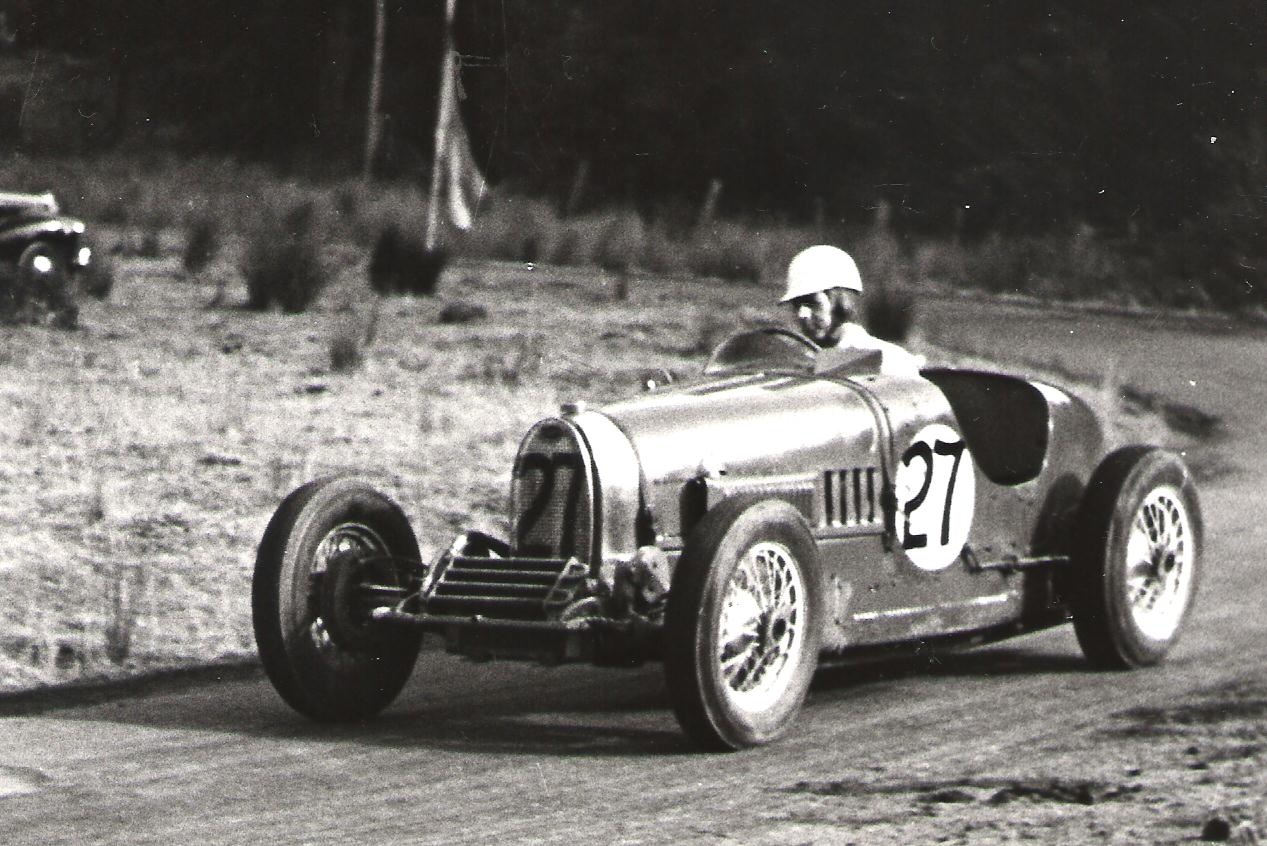
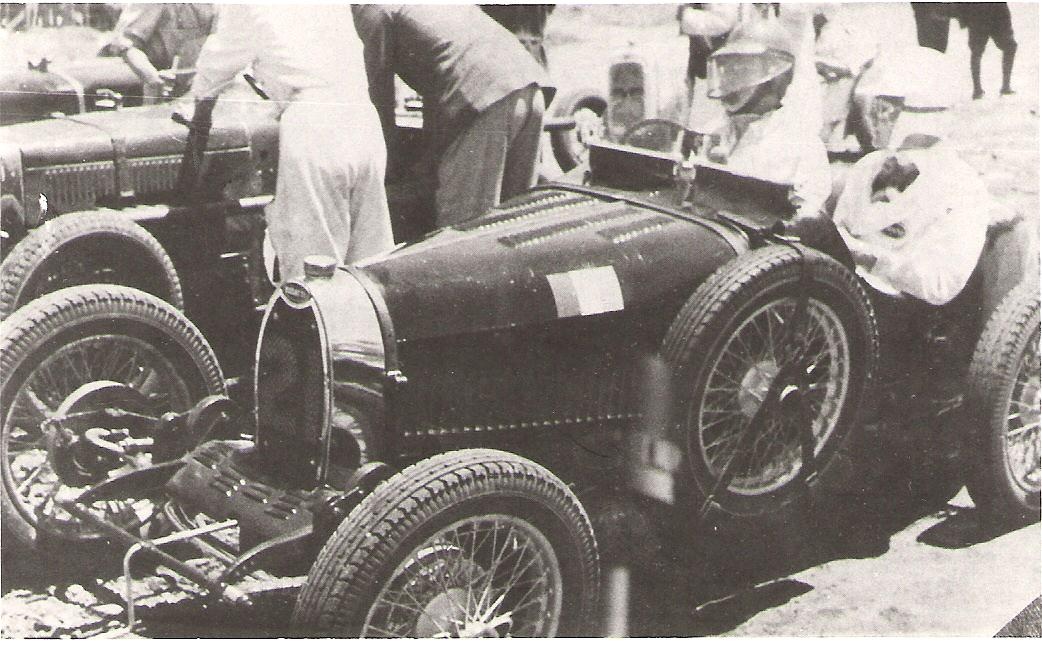
The Bugatti 35A is not an ‘A’, but a 1925 Molsheim works racing Type 35, chassis no. 4575.

It was Jules Goux’s 2 litre car for the French and Spanish Grands Prix of that year. The French GP was a 1000km race held in torrential rain over 9 1/2 hours. The Bugatti team finished intact with Goux in fifth place. What endurance.

Henry spotted its radiator in the back of a garage in Neuilly-Sur-Seine in about 1950 and bought it for about $150. Although it had not been run since before the war, he had the oil changed and then undertook a delightful Autumnal drive to Marseille, from where the car was shipped to Adelaide.

Fisherman’s Bend Races – don’t be fooled by the blower blow off hole in the bonnet, Herb Ford had swapped bonnets with his supercharged Type 37A, ‘37332’. (Dino Lanzi)

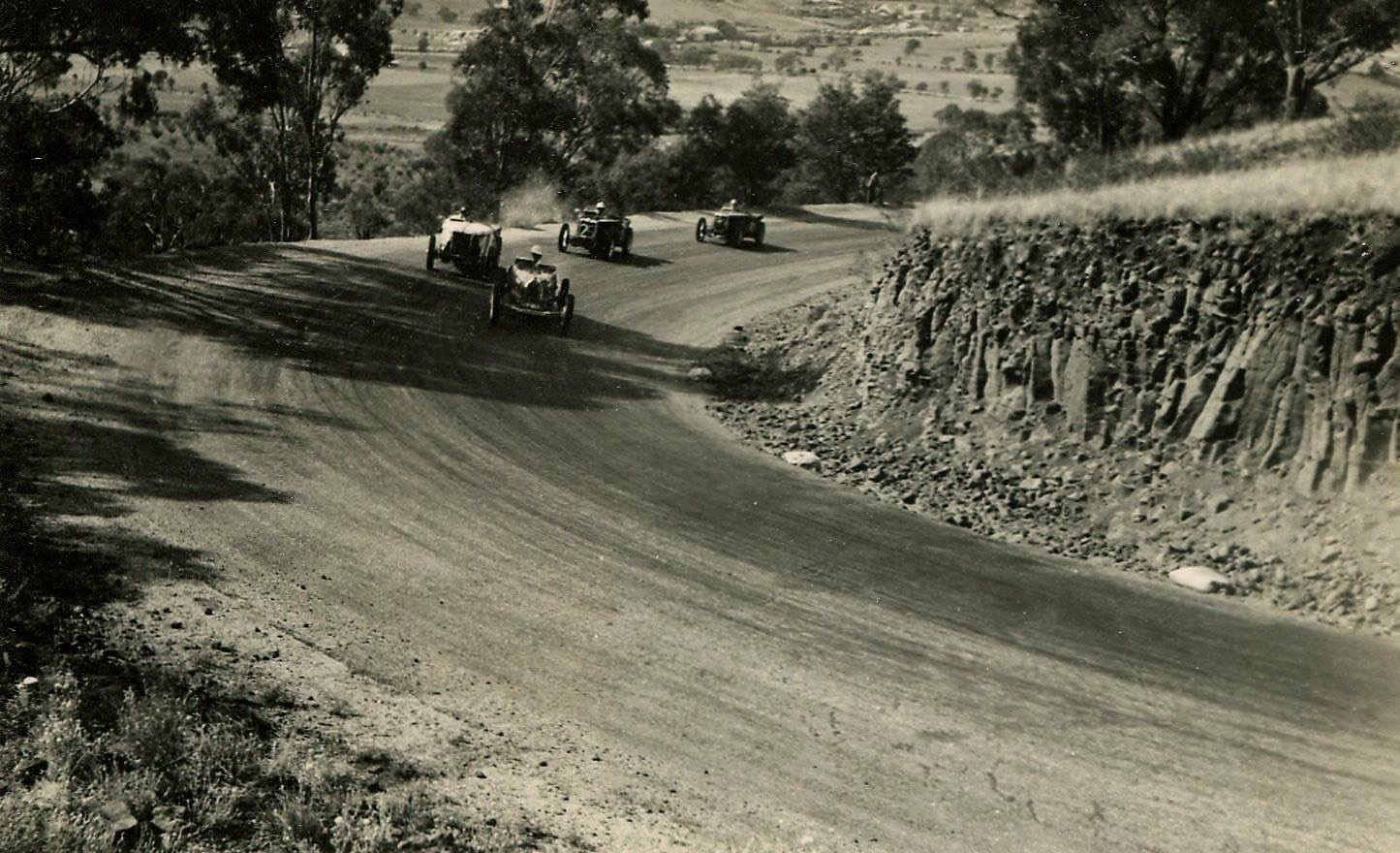
Peter collected it, had it registered by Bob Burnett-Read who actually substituted a Ford Prefect from his used car lot for the Bugatti – the weigh bridge man seemed satisfied with this. The car was driven by Peter to Melbourne and from there to Bathurst for the Easter races where it performed creditably in the hands of Lyndon Duckett and Peter Dale.

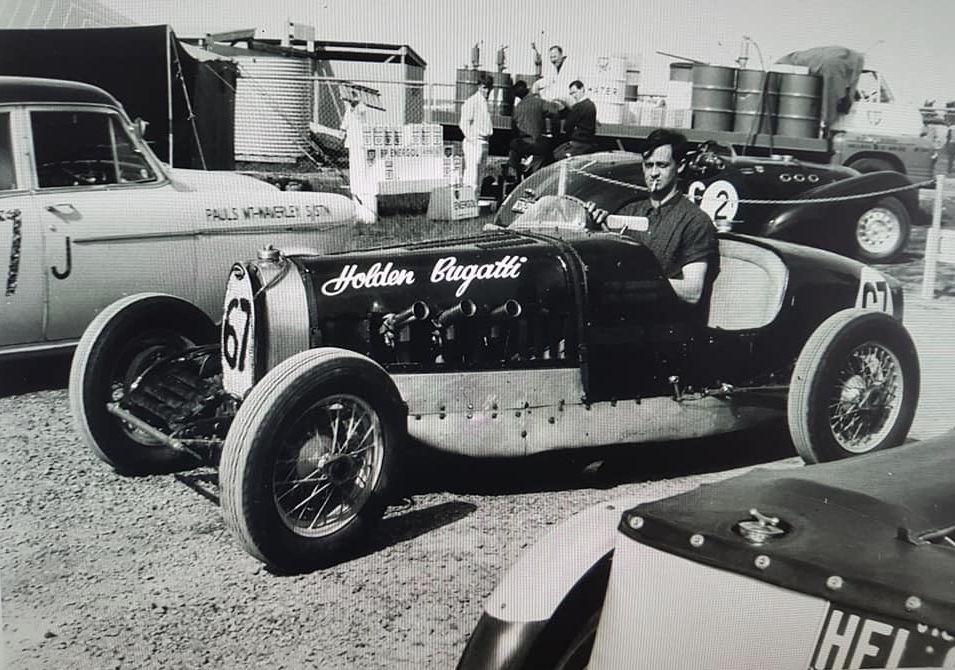
They had driven there in a convoy of 4 Bugattis – the Type 35, the Anzani Bugatti, a Type 51A and a Type 57C – Dales ‘Ecurie Pur Sang’. The next owner of the 35 was Bugatti enthusiast Herb Ford who sold it on when it emitted expensive noises from its roller bearing crankshaft. In the words of Peter, it was ‘a mass of fatigued stresses’.

Some more photos of Bugatti Type 35 ‘4575’…

(P-Y Laugier)

This photograph above is thought to be M Poret in the car pre-war, he was a Parisian owner.

(B Burnett-Read)

This photograph was taken shortly after arrival in Australia. Bob Burnett-Read has just had the car registered prior to Peter Dale’s drive from Adelaide to Melbourne.

(Bob King)

Herb Ford only used the car once or twice, including a sprint on or near the Geelong Road (accounts vary). It is said he made the fastest 1/4 mile time- finishing at astronomical revs in third, maybe this is why the engine was making unpleasant noises.

He sold the tired car to John Martin who did not keep it long enough to dismantle the complicated built-up roller bearing crank before passing it on to John Thomson. Here it is with Martin- note the ill-fitting bonnet from the 37A- when adding a supercharger to an unblown GP Bug, the steering box is moved up and back, to make space. Hence the steering drop arm being in the wrong place.

(unattributed)

The next owner, John Thomson had the good fortune to be friendly with Bugatti expert Peter Menere, at his Brighton ‘Pier Prestige Garage’.

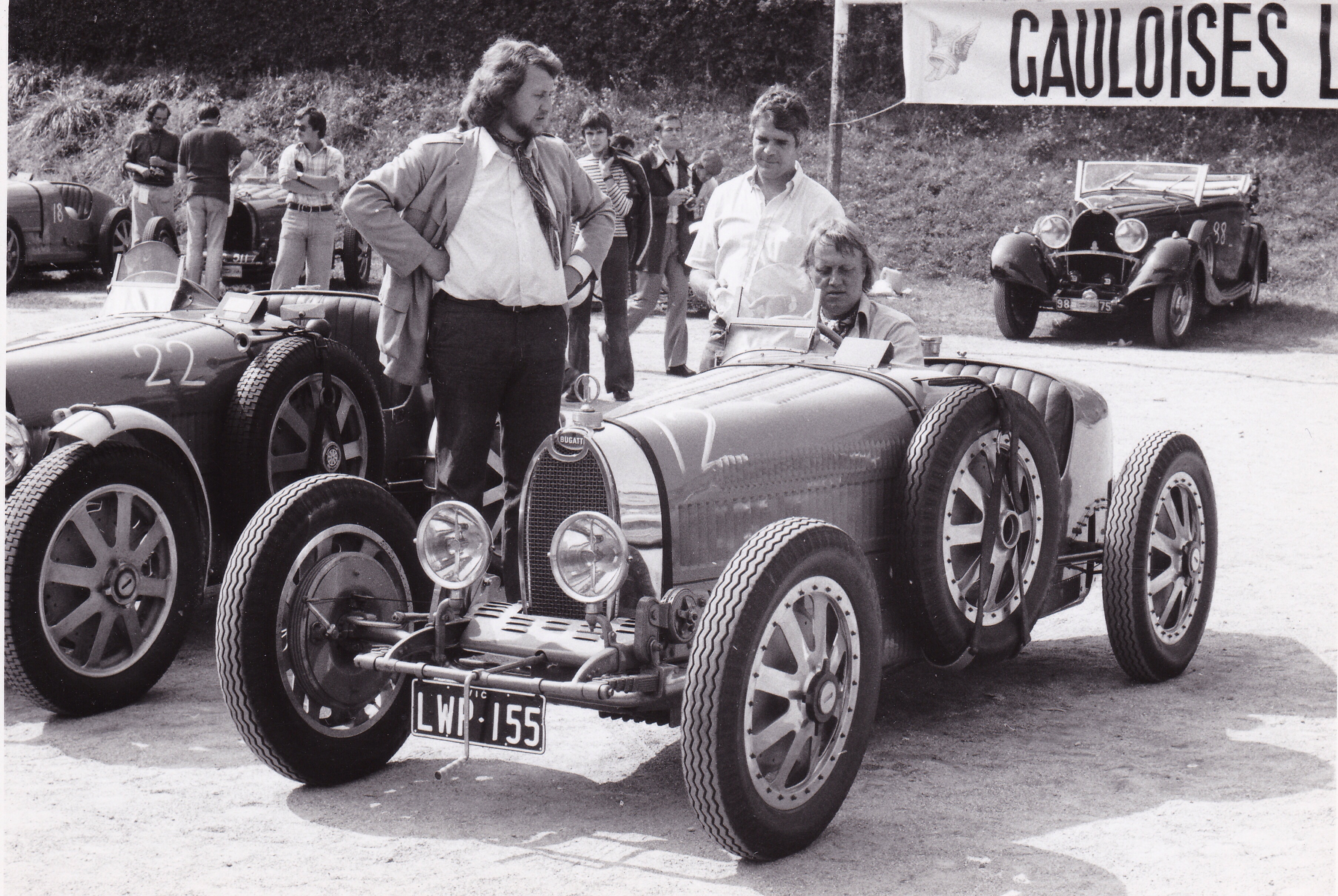
John was dead keen to have a GP Bug, and after prolonged and unsuccessful haggling with Ford, he eventually bought the dismantled car from Martin for an astromonical 870 pounds, the Brighton Buggattisti thought he was mad. After spending a further 700 pounds with Moore Hydraulics getting the crankshaft ground, and untold hours toiling over the rest of the car, he eventually had a going car- an original, unmolested factory racing car, no less. Not long after completing the car in the mid-sixties John moved to London, the car following him in 1972. In 1974 50 years of the Grand Prix Bugatti was celebrated in Lyon with an amazing turn-up of Grand Prix Bugattis. John is seen in the car on that occasion.

(unattributed)

On the starting line at Limonest Hillclimb, Lyon.

A great action shot of John on Prescott Hillclimb- the hillclimb owned and run by the Bugatti Owners Club (unattributed)

A well known photo of the Talbot-Lago ‘110007’ below but worth seeing again. Doug Whiteford AGP, Albert Park, 21 November 1953 – ‘Yes Doug, your tyre is missing’.

Lago Talbot GP chassis no. 110007 was the car with which Louis Chiron had won the 1949 French Grand Prix. Henry was contemplating purchasing Raymond Sommer’s Lago, but was advised by Chiron to speak to Paul Vallee, patron of Ecurie France, as he might sell Chiron’s car which was being prepared for the Barcelona Grand Prix. It was entrained to Marseille and thence to Adelaide.

Its first owner in Australia was Tom (Happy) Hawkes who only drove it once or twice. Its serious debut was at the 1951 Easter Bathurst meeting, 1951; Hawkes drove it to third in the Bathurst 100 and Whiteford was third in another scratch race, setting a new lap record of 3 minutes.

The ‘Maestro’ Whiteford won the 1952 GP at Bathurst and the 1953 race at Albert Park, in spite of the tyre issue.

Here the car is pictured below during the December 1956 Australian Grand Prix weekend at Albert Park, by then the ‘6 plug’ chassis ‘110007’ was owned by Owen Bailey, whose race was shortlived with axle failure on the line.

(S Wills)

AGP Albert Park paddock with the ‘6 plug’ Bailey ‘110007’ in front of the car Doug Whitford replaced it with- an earlier car, chassis ‘110002’ but to more advanced specification inclusive of more powerful ’12 plug’ 4.5 litre motor. Stirling Moss won the feature race aboard a Maserati 250F.

(S Wills)

Beautiful shot of ‘Dicer Doug’ Whiteford with Peter Dale during the 1956 AGP carnival. Car is Talbot-Lago ‘110002’. It would be interesting to know how many AGP’s in total the various cars the Dales imported over the years contested.

(S Wills)

Cockpit below is ’12 plug’, ‘110002’, Spencer Wills photograph again taken in the Albert Park paddock. Quadrant for the pre-selector gearbox clear.

(S Wills)

Photo below of Owen Bailey at Albert Park, am intrigued to know which meeting. It appears he has spun into a gutter, or been rammed from behind.- the shape of the dent suggests the former.

(S Wills)

Shot below is of Whiteford in the ’12 plug’ ‘110002’ at Fishermans Bend on 12 February 1956.

(S Wills)

(unattributed)

‘The Maserati 4CL, chassis No. 1579 is first recognised as Raymond Sommer’s 1946 Marseilles Grand Prix winning car.

In the photo above Sommer is being led by Tazio Nuvolari in another 4CL during the second heat. Sommer won both this 15 lap heat and 35 lap final, the great Mantuan failed to finish the preliminary and therefore did not qualify for the final run on the Marseille Prado Street circuit on 13 May.

It was painted blue for its French owner. Again it was Louis Chiron who suggested Henry should buy it from Sommer’s widow – Sommer had been the owner of one of Europe’s largest carpet manufacturers.

Via an advertisement in Australian Motor Sport, the car was soon in the hands of Victorian Peter Vennermark. He soon had trouble with the highly supercharged 1.5 litre engine, which had developed an appetite for cylinder blocks. Unlike the other two cars featured which have returned to Europe, this car remains in the caring hands of the Victorian owners.’

Bibliography…

‘Historic Racing Cars in Australia’ John Blanden, ‘Bugattis in Australia and New Zealand, 1920 to 2012’ Bob King and Peter McGann

Photo Credits…

Bob King Collection, Herald-Sun, G Griffiths, S Anderson, Morris Family, Spencer Wills, Bob Burnett-Read, Pierre-Yves Laugier

Finito…

image

…with the sweet sound of a 3 litre Ferrari V12, the prototype Testa Rossa negotiates the Sicilian Mountains…

Gino Munaron and Wofgang Seidel contested the 1958 Targa in the prototype 250TR, chassis #0666 failing to finish with engine dramas.

Scuderia Ferrari teammates Luigi Musso and Olivier Gendebien won the classic in another 3 litre TR in 10 hours 38 minutes from the factory Porsche 718 RSK Spyder of Jean Behra and Giorgio Scarlatti 6 minutes back with Taffy von Trips and Mike Hawthorn in another Ferrari 250TR third a minute more in arrears.

Credits…
Klemantaski Collection