Archive for the ‘Fotos’ Category

image

This amazing 1931 poster advertising the Fiat 514 caught my eye, as its designer intended…‘Its of ‘monumental style design’, the 514 likened to a statue on a plinth, beaming out light into the darkness’.

The 514 was built between 1929 and 1932 in sedan, cabriolet and spyder bodies. The engine was a 1438cc 4 cylinder sidevalve with power outputs ranging from 28-37bhp for the 514A/MM performance variant.

Although Fiat stopped racing in the early 1930s, concentrating on road cars in the twenties they produced cars of sporting intent. Its most successful design was the Tipo 509, which dominated the Italian small-car market. The 509 was powered by a four-cylinder 990cc OHC engine.

image

1932 Mille Miglia; the #9 37th place Fiat 514MM of ‘Frate Ignoto’-Arturo Mercanti/Francani ahead of the Bettinazi brothers 35th placed Fiat 514 CA Spider in the Montalcino/Radicofani area near Siena. the race was won by the Borzacchini/Bignami Alfa 8C2300 Spider Touring (Guerrini)

The 1929 514, its replacement was introduced into much tougher economic times and used a simpler 1.5-litre sidevalve four. The 514 was conventional; it had semi-elliptic springing all round, a 4 speed gearbox and 4 wheel mechanical brakes, adoption of hydraulic brakes part way through the cars production cycle being the models most important development.

Together with the standard cars Fiat introduced a trio of sporting roadsters; the 514S, 514MM and 514CA, ‘MM’ signifying Mille Miglia and ‘CA’ Coppa del Alpi (Alpine Cup). The 514S and 514CA used the standard (2,555mm) wheelbase whilst the MM used the longer (2,770mm) chassis shared with the 514 van. All used tuned engines; the 514S had 34.5bhp, the MM and CA had engines developing 37bhp. Top speed of these cars was circa 112km/h (70mph).

Credit…

Hutton Archive, Bruno Guerrini, Bonhams

Tailpiece: 1930 514 Roadster…

image


Kieft De Soto…

Posted: October 18, 2016 in Fotos, Sports Racers
Tags: ,
image

(Richard Taylor)

Terry Cornelius unleashing all of the Kieft De Soto’s 350 V8 horses, blasting the car he co-constructed along Eastern Creeks long main straight…

Regular readers may remember the article I wrote some months back about the Kieft De Soto… https://primotipo.com/2016/06/03/kieft-de-soto-v8/

A few days ago Terry Cornelius, builder of the cars curvaceous body got in touch with a photo and this anecdote, I’ve put it into the article, but wanted to share it as well rather than just ‘lose it’ in the archive.

Here tis…

‘I got to be part of the Goodwood Revival Team with the two cars (Kieft Coventry Climax GP car and Kieft De Soto Sportscar) and its something I’ll never forget!

Your article told how upon return from Goodwood, the Kieft De Soto raced in the Eastern Creek ‘Summer Historics’, and perhaps understandably did not mention that Victoria Morris very kindly put yours truly behind the wheel in the regularity events, with Greg Snape at the wheel in the races.

I had driven the car on the road, but this was a new experience in spite of having accomplished many years of motor racing, mostly in the Historic arena.

The start of Regularity events is a casual affair, and its ok to go as fast or slow as you choose, preferably regularly! I found myself, in the last of my events, at the rear of the field with a beautiful C Type Jaguar replica just in front. Well, I knew what I had to do, and I felt I had come to grips with the Kieft after the previous couple of events. At the end when the chequered flag eventually dropped, I had a substantial lead on the Jag.

So what? I hear you say. Well, let me explain…

When Bill Morris (the driver/engineer/entrepreneur who owned and reconstructed both Kiefts) was weighing up the pros and cons of the resurrection project of the Kieft sportscar, he took into consideration the method used by the English authorities to separate the various historic classifications. It seems that the Kieft, via its drum brakes, would fall into a category which was being dominated by the C Type Jags, also drum braked. Bill felt at the time, taking that booming V8 engine into consideration, he could well be on a sure winner. Little did he realise that he wouldn’t be around to enjoy his prophecy.

I think its only fair that I be allowed to feel that I had brought some poetic justice home in Bill’s memory’…

Credit…

Terry Cornelius, many thanks

Richard Taylor photo

image

(Gasking)

Repco workshop customer point of sale ‘take-away’ from 1962/3…

Given the sophistication of todays online marketing, driven as it is by complex algorithms using the reams of data we all hand over, unknowingly in our daily routines, it’s interesting to look at how it was once done, and still is to an extent I guess.

This quite eye-catching piece, with its complex die cut is sophisticated for its day and was no doubt scooped up in large numbers by the trade customers who frequented the various outlets of Repco’s burgeoning global empire. Repco’s retail outlets, well known to Aussies as a weekend DIY supply destination came later.

Former Repco engineer Michael Gasking has given me access to his extensive archive to share with you, this is the first of many more interesting Repco timepieces from Michael. Many thanks to him!

image

(Gasking)

It’s a few years before the Repco-Brabham ‘RB620’ V8 program but Ron and Jack’s cars were called and badged ‘Repco-Brabham’, the technical relationship was just extending to the maintenance and parts back up of the Coventry Climax FPF engine by whom Repco were licensed to make parts- pistons, rings and bearings amongst other components.

So the link between research and development, testing and racing is well travelled but neatly done I reckon, to see and hold this marketing timepiece is a joy so I thought it worth sharing.

image

(Repco/Gasking)

Brabham’s BT4 awaits a fresh Climax 2.7 engine during the 1963 Internationals in Australia.

The shot was taken at the Repco’s Doonside St ‘Repco Engine Laboratory’ in Richmond, an inner-Melbourne suburb.

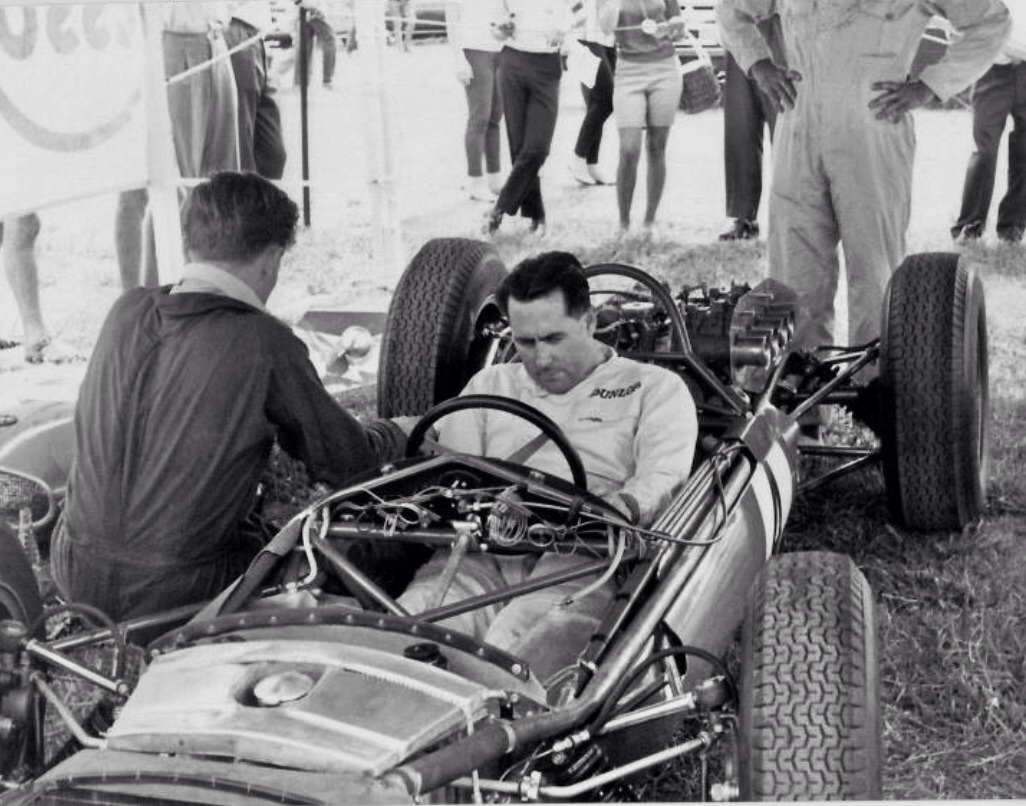
Its a nice ‘reveal’ of Ron Tauranac’s spaceframe chassis of the day- the BT4 is the Intercontinental variant of the 1962 F1 Coventry Climax FWMV V8 engined BT3

Brabham chassis ‘F1-3-62’…

Inevitably my eyes were drawn to the cars chassis number. Its to the left and under the steering wheel on the dash, its with this stuff where my anal side kicks in- I wonder which car it is, thought i…

Allen Brown’s oldracingcars.com is one of my favourite bibles for such important minutae. No joy there, there was only one BT3 built, Jack’s first MRD built F1 weapon and that’s chassis ‘F1-1-62’. The subsequent 1962 built BT4’s all have ‘IC’, Intercontinental in Brabham lore, chassis prefixes so it’s a bit of a mystery that I am sure one of you can solve.

image

Roy Billington and Jack Brabham fettle the 2.7 litre ‘Indy’ Coventry Climax FPF of Brabham’s BT4 ‘IC-2-62’ prior to the start of the 1963 AGP at Warwick Farm. He won from Surtees Lola Mk4A Climax and McLaren’s Cooper T62 Climax, all three of them using CC’s of 2.7 litres in capacity (SMH/Tait)

It doesn’t follow that the cockpit shot at the articles outset is one of Jack’s cars of course.

He sold three BT4’s in Australia to Messrs Davison, McKay and Stillwell.

Lex’s ex-Brabham 1962 AGP winning car and Bib’s were based in Melbourne’s Armadale and Kew, both pretty close to Repco’s HQ in St Kilda Road so seem likely subjects for their Public Relations Department or Advertising Agency’s photographers. But neither of the chassis numbers work, mind you Bib’s BT4 was ‘IC-3-62’, I wonder if a bit of sixties ‘photoshop’ made it ‘F1-3-62’.

Anyway, that’s a theory until one of you can blow it out of the water!…

image

(Aussie Homestead)

Jack Brabham, in another new Brabham BT4 Climax, Warwick Farm, 10 February 1963, en-route to winning the Australian Grand Prix in ‘IC-2-62’

Etcetera…

(K Devine Collection)

These two photographs were taken upon the first BT4’s debut- ‘IC-1-62’ debut at Caversham, Western Australia over the November 1962 Australian GP weekend.

The very first in the long line of ‘Intercontinental’ Brabhams was shipped brand new from the UK to Australia, a great dice between Jack and Bruce McLaren’s also new Cooper T62 Climax was resolved after a misunderstanding of car placement between Arnold Glass and Jack damaged the new BT4 putting him out of the race.

(K Devine Collection)

After Brabham raced the car in New Zealand in early 1963 the car was sold to David McKay for use in our internationals that summer- Jack raced a new car ‘IC-2-62’- this machine was sold to Lex Davison at the end of the Sandown meeting in March when Jack returned to the UK.

Another shot of Jack with BT4 2.7 FPF in the 1963 Warwick Farm paddock- ‘IC-2-62’ (C Galloway)


(C Galloway)

Team Shell at the Warwick Farm AGP meeting- David McKay, Brabham BT4 Climax, Tony Maggs, Lola Mk4 Climax, Graham Hill, Ferguson P99 Climax, John Surtees, Lola Mk4A Climax, Jim Palmer and Chris Amon who both raced Cooper T53 Climax’.

(HRCCTas)

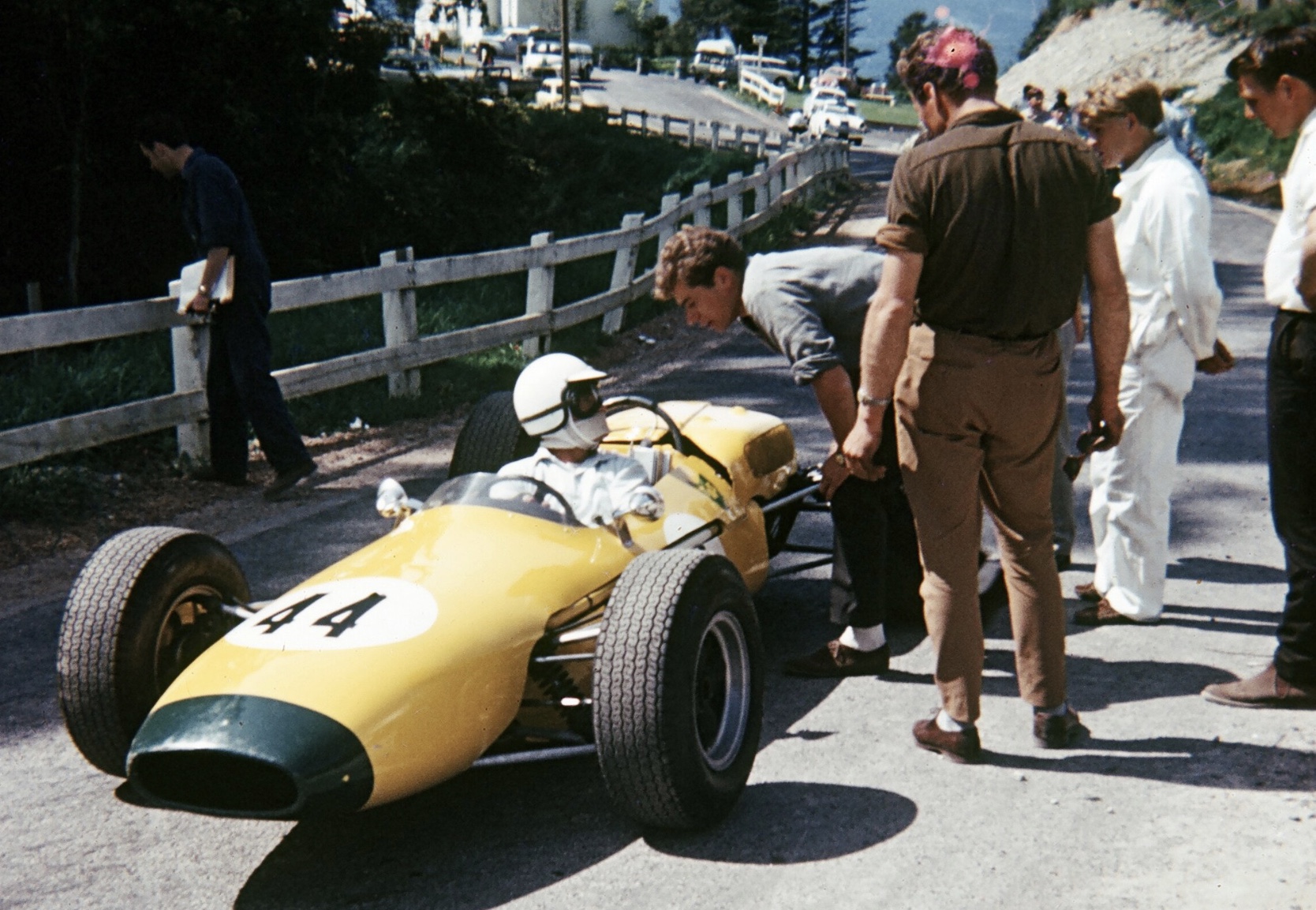
Brabham’s first BT4- the 1962 AGP car, ‘IC-1-62’ during a hillclimb event at Penguin, Tasmania in 1967.

John McCormack readies for the off, it was Mac’s performances in this car that encouraged him to ‘have a go’ at national competition, three Gold Stars and two NZ GPs were amongst his Formula 5000 successes to come in the seventies aboard Elfins and a McLaren M23 Repco-Leyland.

Credits…

Michael Gasking Collection, Nigel Tait Collection, Repco, Sydney Morning Herald, oldraingcars.com, Aussie Homestead, LAT, Colin Galloway, Ken Devine Collection, Historic Racing Car Club of Tasmania

Tailpiece: To the victor the 1963 AGP spoils, Stirling Moss, in the long process of recovering from his 1962 Lotus Goodwood accident was a hugely popular visitor to Australia that summer- and Jack…

(LAT)

Finito…

image

Who is the Coolest Cat?! 

Freddie Agabashian lookin’ a million bucks with his lean build, fag, Ray Bans and GI-Joe haircut. He is aboard his Kurtis Offy Champcar at the San Jose Fairgrounds Speedway, meeting date uncertain but the photo post is dated 1 January 1950…

Of more technical note is the Offy 255 or 270′ cid, four cylinder, DOHC, two-valve, twin side-draft Riley carbed 300-350bhp engine, hand brake and rear suspension of his Kurtis Kraft chassis.

Northern California Racing Association Champion in 1937, against drivers such as Duane Carter, Lynn Desister and Paul Swedberg. Post war Freddie took 3 Bay City Racing Association Midget titles from 1946-48 driving for Jack London and George Bignotti from 1947. He then turned his attention to Indycars.

image

Troy Ruttman left and Freddie at the California State Fairgrounds, Sacramento, in Kurtis Offy Champcars, October 30 1949. Aga won this AAA event with Troy third (Racing One)

Born in Modesto, California, Frederik was the son of a genious Armenian mathematician who began racing in his teens. He won in Champ cars and Stock cars as well which earned him a ride at Indianapolis for the 1947 race.

He competed at Indy from 1947-57 and is best remembered for his pole winning effort in 1952 in the unique Kurtis Kraft Cummins Diesel. Frank Kurtis’ revolutionary first Roadster chassis carried the equally innovative 400cid, alloy headed, magnesium sumped but still very heavy cast iron blocked 360 bhp turbo-diesel engine. The oil burner was tipped onto its side five-degrees from horizontal to lower the engine and as a consequence its bodywork and aerodynamic drag.

image

(Steve McKelvie)

Despite the cars bulk, it weighed over 3100 pounds Freddie and his team knew they had a fast car.

They ‘sandbagged’ in practice, never putting together a full quick lap in the month of May being fearful of the rulemakers changing the equivalence formula if the cars speed were clear. At the time the capacity limits were 6.6-litre diesels, 4.5-litre ‘petrol’ normally aspirated and 3-litre supercharged engines.

But come Pole Day at 5.45 with 15 minutes to go Agabashian gave the big heavy beast its head and popped it on pole! The race was not so happy, the turbo air intake became jammed with rubber and other track-borne ‘shite on lap 71 causing the interesting cars withdrawal, but the promotional aims for Cummins were well and truly achieved.

image

Agabashian and team during Indy practice, Kurtis Cummins 1952 (unattributed)

Freddie’s best finish at Indianapolis was in 1953 when he placed fourth in another KK roadster, this time a more conventional Offy powered 500B chassis.

After he retired from racing Freddie was an Indy special comments broadcaster, he died in 1979.

image

Agabashian at Daytona in 1978 during his broadcasting days (Racing One)

image

I like this close up shot which shows the build, fabrication, panel fit and finish quality of these Kurtis cars, Agajanian again in ’52. Cripes it’s big! (Racing One)

Check out this YouTube footage about the unique, pole winning, the only time a diesel engine did it, Kurtis Cummins 1952 car;

image

1952 Indy start; Agajanian in red from #4 Jack McGrath Kurtis Kraft 3000 Offy (Racing One )

image

Credit…

Racing One, Historic Racing, Steve McKelvie

Tailpiece: Just watch me go fellas! Freddie, Kurtis Cummins, Indy ’52…

image

(Racing One)

french ickx

(Rainer Schlegelmilch)

Jacky Ickx warms up his Bugatti T35B prior to the start of the 1969 French Grand Prix at Clermont Ferrand, 6 July 1969…

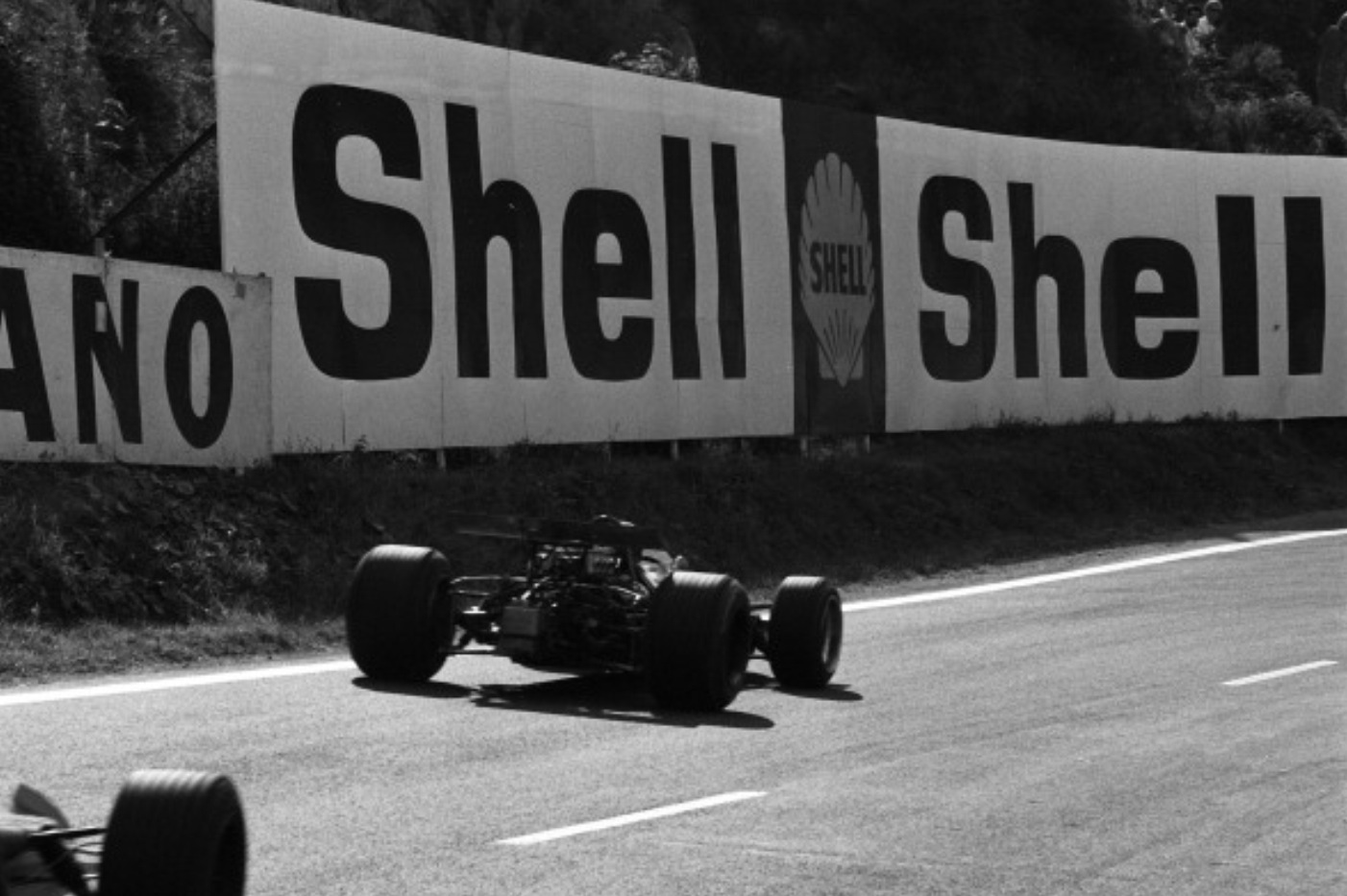
He qualified his Brabham BT26A Ford fourth (below) and finished third in the race won by Jackie Stewart’s Matra MS80 Ford. He had a good season with Brabham taking two wins; at the Nurburgring and Mosport but the lure of Ferrari was too great, he returned to the Maranello squad in 1970.

french brabham

(Rainer Schlegelmilch)

Credits…

Rainer Schlegelmilch

image

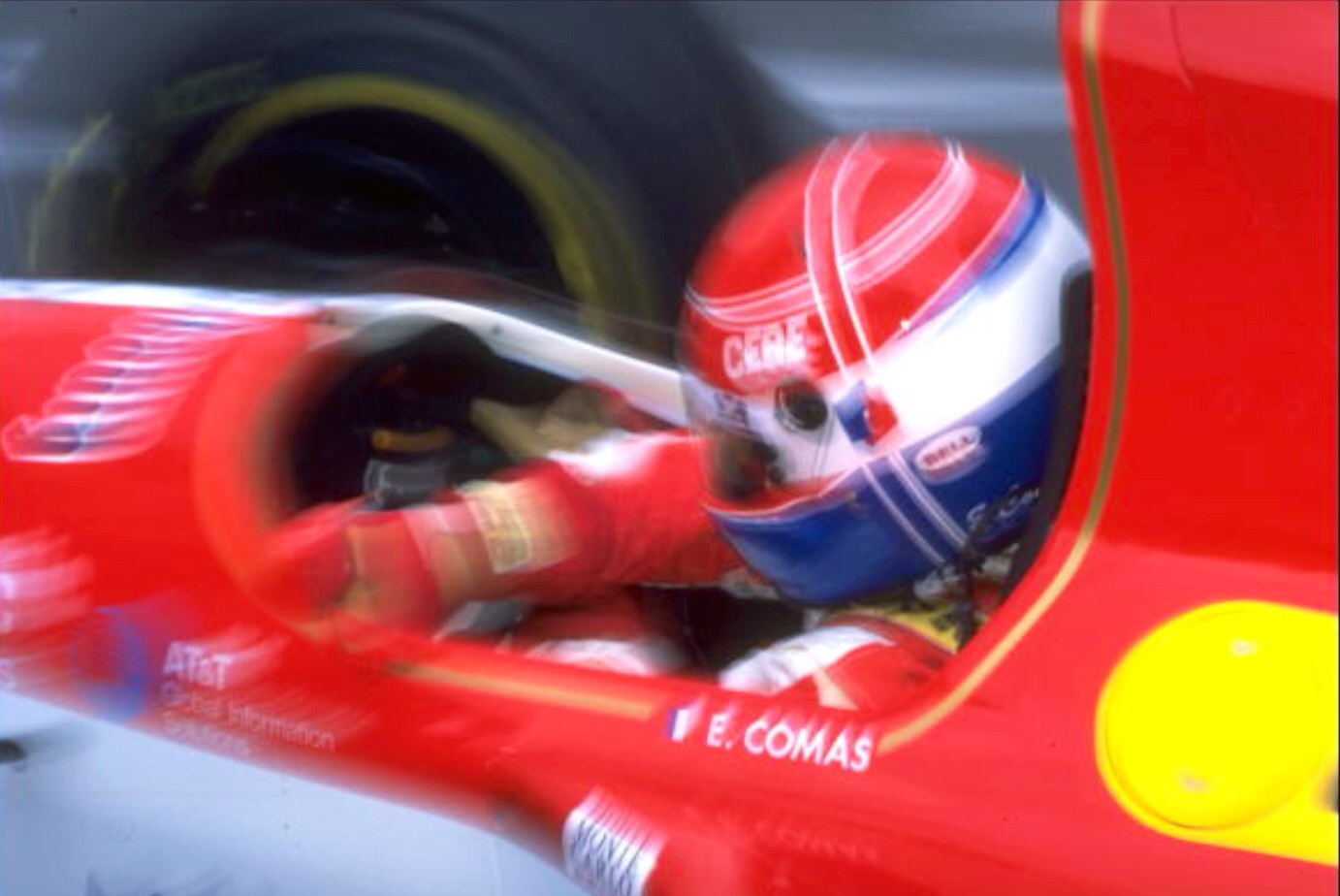
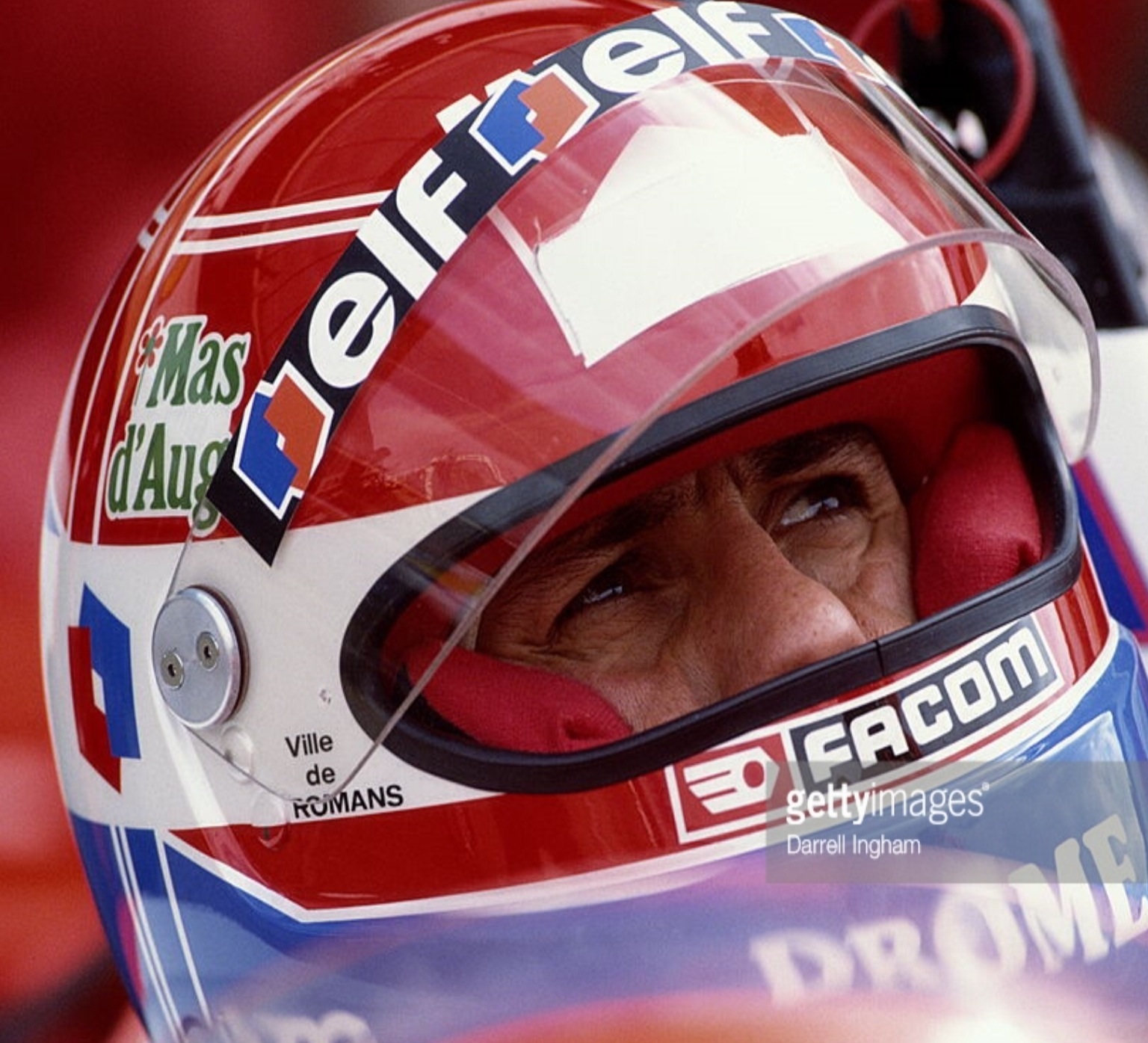
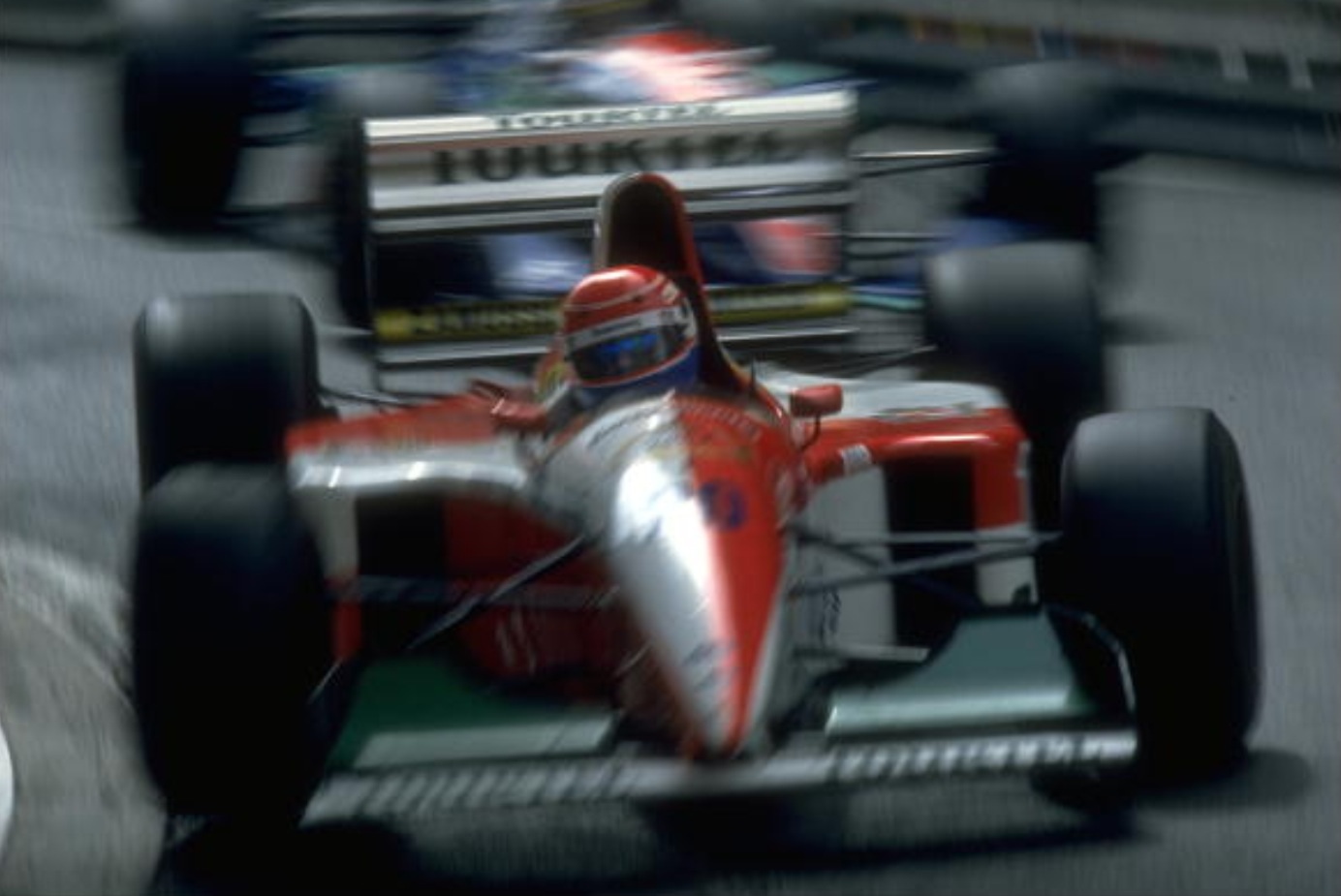
Eric Comas contesting the Monaco Grand Prix in his Larrousse LH94 Ford, 15 May 1994…

Comas qualified and raced this aging car and engine to 13/10th, good going in the tough F1 world of the mid-nineties. Up front, the race was won by Schumacher’s Benetton from Martin Brundle’s McLaren Peugeot.

image

Comas came to F1 in 1991 via French F3 and European F3000, he was champion in 1988 and 1990 respectively. He contested 63 Grands Prix making his debut at Phoenix, the USGP on 10 March 1991 for Ligier in a JS35 Lamborghini V12. He scored a total of 7 championship points racing a Ligier JS37 Renault, Larrousse LH93 Lamborghini and Larrousse LH94 Ford in 1992, 1993 and 1994 respectively. His last point in the 1994 German GP was also the last for Larrousse.

Post GP racing he moved to Japan to contest the All Japan Grand Touring Car Championship winning the GT500 title in 1998 and 1999 for Nissan racing a factory Nismo Skyline GT-R. He shifted to Toyota and continued his run of success and later raced privateer Nissans before creating Comas Racing Management to nurture the careers of young up and coming, mainly French, drivers

Comas has now effectively retired, running Comas Historic Racing, which provides paying customers rides in Alpine Renaults in historic rallies.

image

Comas in his Lola T90/50 Mugen F3000 car at Donington in April 1990 (Ingham)

Imola 1994…

A bizarre incident in the horrific ’94 Imola weekend involved Comas and his Larrousse’ departure from the pitlane during the red flag after Senna’s accident, click here to read about the incident and its poignant circumstances.

http://viewingperspectives.blogspot.com.au/2014/04/imola-at-20-why-did-erik-comas-stop-at.html

Credit…

Getty Images, Darrell Ingham

Tailpiece: Monaco 1994…

image


Mountain Women…

Posted: October 2, 2016 in Compound curvature, Fotos
Tags:

image

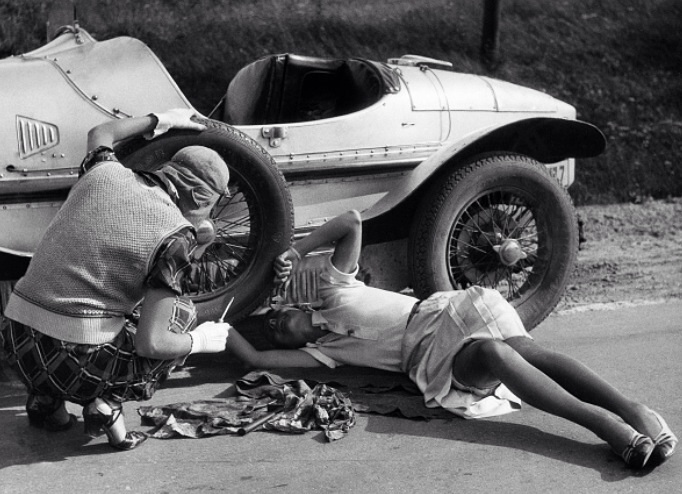
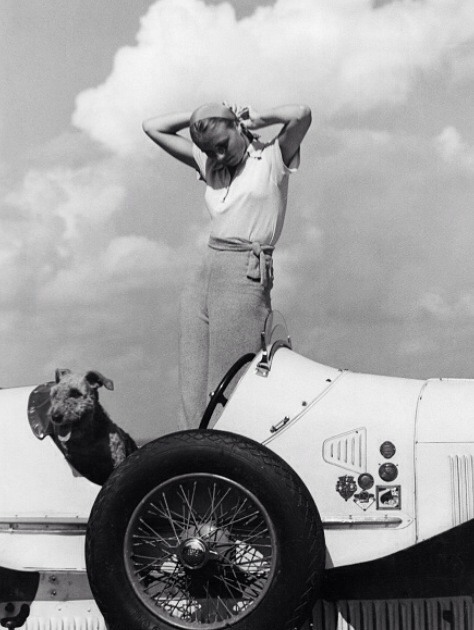
A couple of young fillies making good their Bugatti, at least I think it may be a Bug but it’s no more than a guess…

Another magazine shoot by Heinz von Perckhammer whose photographic speciality was mainly nudes, nice work it is too. Google away.

This series of photos was published in issue 14 of  ‘Sieben Tage’ in 1935. There are no caption details about date, place, car or models names sadly, all input in relation thereto gratefully received.

image

Credits…

Heinz von Perckhammer

Tailpiece…

image


image

Amazing Reims background as Nuvolari blasts his Scuderia Ferrari Alfa Tipo B/P3 to French GP victory on 14 July 1932…

What an endurance test, the race 5 hours in duration! Grands Prix have been 200 miles for so long its easy to forget what the ‘titans’ coped with nearly 100 years ago. Maserati didn’t race so it was a straight fight between Bugatti and Alfa Romeo with the Milan brigade winning comprehensively in their new 2.65 litre straight- 8 Vittorio Jano designed machines.

It was Nuvolari from Baconin Borzacchini and Rudy Caracciola in Alfa Corse entered cars, the best placed Bugatti T51 that of Louis Chiron in 4th.

This article is some words around some great shots of  Nuvolari from the Getty Images archives, treat it as the first in an occasional ‘at random’ series.

image

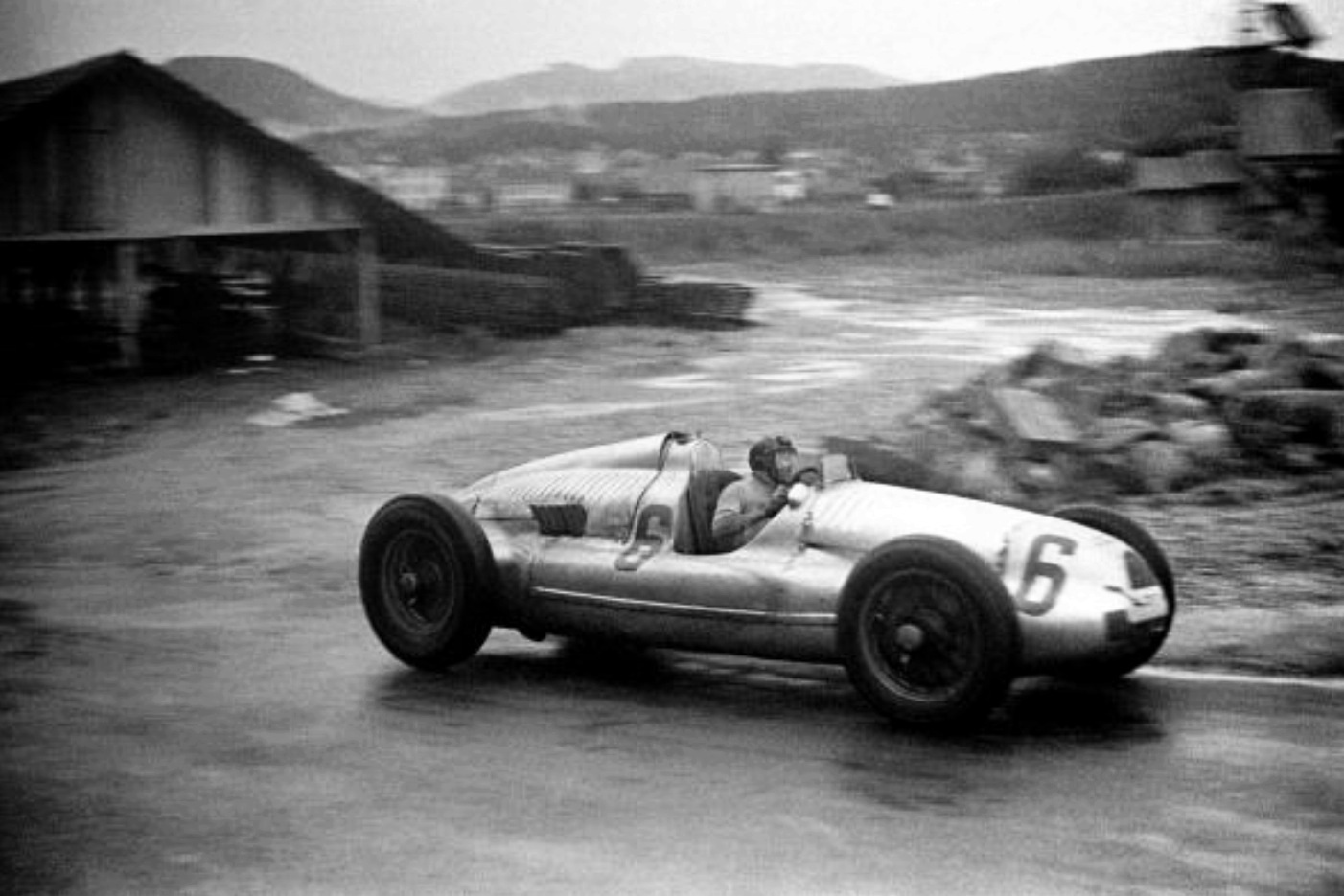
Tazio, Bremgarten, Swiss GP, Bern 21 August 1938 (Klemantaski Collection)

 Swiss GP, Bern 21 August 1938…

Tazio during the race held in awfully wet conditions. Seaman’s Mercedes lead from pole from teammates Stuck and Caracciola, he opened up a good lead but lost it after being boxed in by backmarkers allowing Rudy to sneak through.

Muller’s Auto Union raced well, Stuck spun and Tazio had undisclosed mechanical dramas in their mid-engined Type D’s. Mercedes 1-3 result was Caratch from Seaman and Manfred von Brauchitsch, all in W154’s.

image

Donington GP 1938

’38 Donington GP…

The winds  of change were blowing in Europe, the race date was changed due to the Munich crisis by three weeks, the race held on 22 October 1938. Nuvolari’s exciting weekend started in practice when his Auto Union Type D 3 litre V12 ran into a deer! But he lead the race from the start then ceded the lead to Herman Lang, pitting an additional time. The engine of Hansons Alta blew with Hasse spinning and crashing on the oil and Dick Seaman losing a lap. Tazio sneaked past Muller back into 2nd, then Herman slowed with a broken windscreen giving the plucky Mantuan the lead which he held to the end of the race. Lang was 2nd and Seaman 3rd both in 3 litre V12 Mercedes Benz W154

image

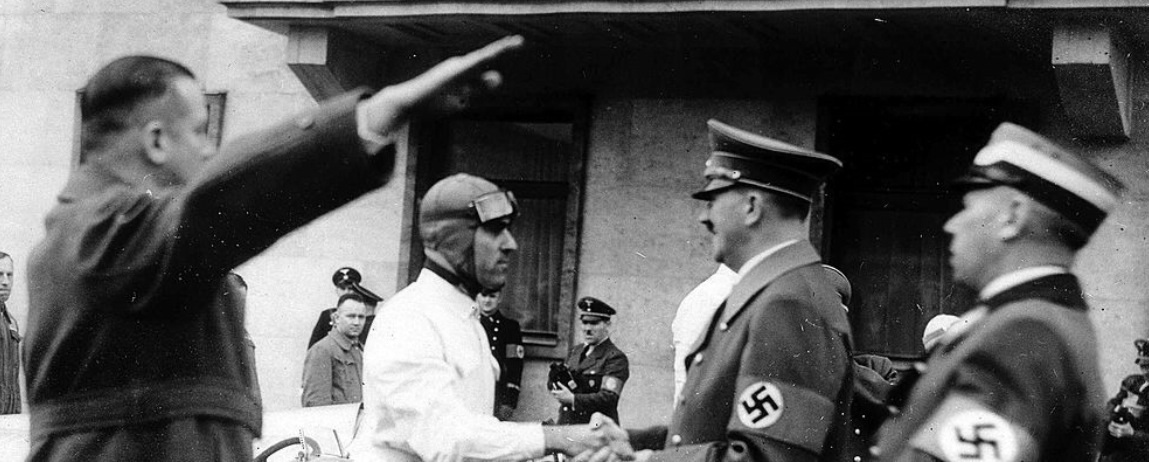
Tazio with some Nazi flunkies, ‘International Automobile and Motor Cycle Show’ 18 February 1939 Berlin. Hard to avoid these pricks racing for a German team at the time i guess (Popperfoto)

International Automobile & Mototcycle Show, 18 February 1939…

The first German automotive show was held in Berlin in 1897 with 8 cars, visitor numbers grew exponentially together with the growth of motoring itself, by 1939 825,000 people attended to see the new VW and other more sporting exhibits.

image

TN Jaguar XK 120, Intl Trophy Meeting, Silverstone 26 August 1950 (J Wilds)

Silverstone International Trophy Meeting 26 August 1950…

Tazio was entered in a red, standard, ex-demo factory XK120 Jaguar in the production sportscar race during this famous annual meeting.

The MotorSport report of the meeting records ‘It was splendid to see Nuvolari go round at 75.91 mph in a hard-used Jaguar demonstrator, using his gearbox where others trod on their brakes, but on Friday he was said to be ill from methanol fumes – odd, for the production cars were on petrol – and Whitehead drove for him’.

Nuvolari was quite ill by this stage and struggled, he did three slow laps on the first day of practice then Jaguar team manager Lofty England had the task of telling Tazio that he was too slow as a consequence of his fitness.

Doug Nye made this observation of the genius on ‘The Nostalgia Forum’; ‘In his final years Nuvolari was a variably sick man, varying from being in frail shape to being in terrible shape. I have been told by many who met the great man at that Silverstone meeting that he was, indeed, in terrible shape that weekend…and they were all greatly concerned for him…some even wondering if he might not survive the journey home…

Nuvolari had at least as a high a proportion of admirers amongst British racing enthusiasts as he had in his native Italy, and possibly higher, and for many it was like seeing a retired old thoroughbred racehorse, attemping one last gallop on grass, arthritic, blown, sway-backed, and broken down … for many present that weekend it was remembered as a terribly sad sight… particularly for those who recalled the sight of Nuvolari in his pomp at Donington Park, 1938’.

Nuvolari died on 11 August 1953 having suffered a stroke which partially paralysed him the year before, a second one killed him.

Credit…

Imagno, J Wilds, Getty Images

Tailpiece: Moss and Nuvolari at the International Trophy meeting, Silverstone 1950. Shot is symbolic of generational change but it’s also clear just how fragile the great man had become…

image


image

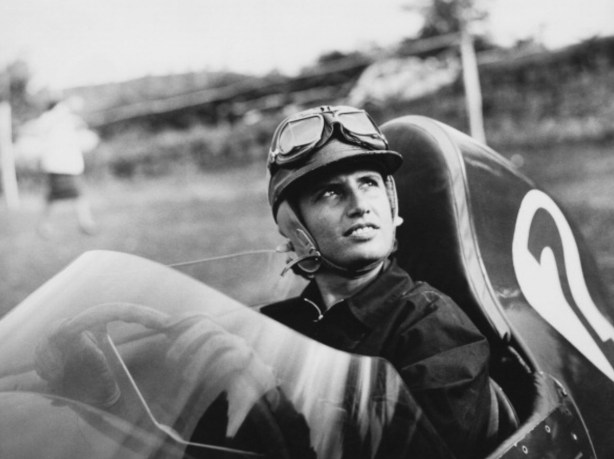
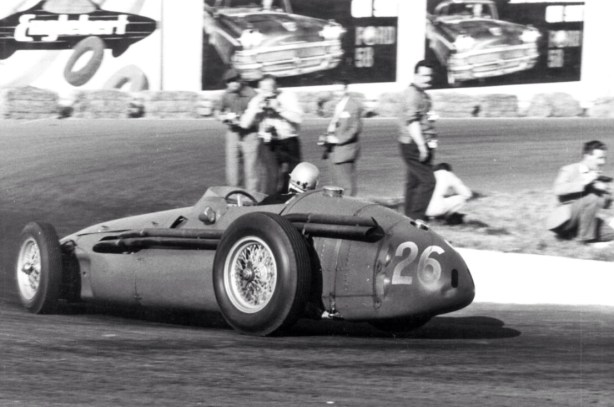
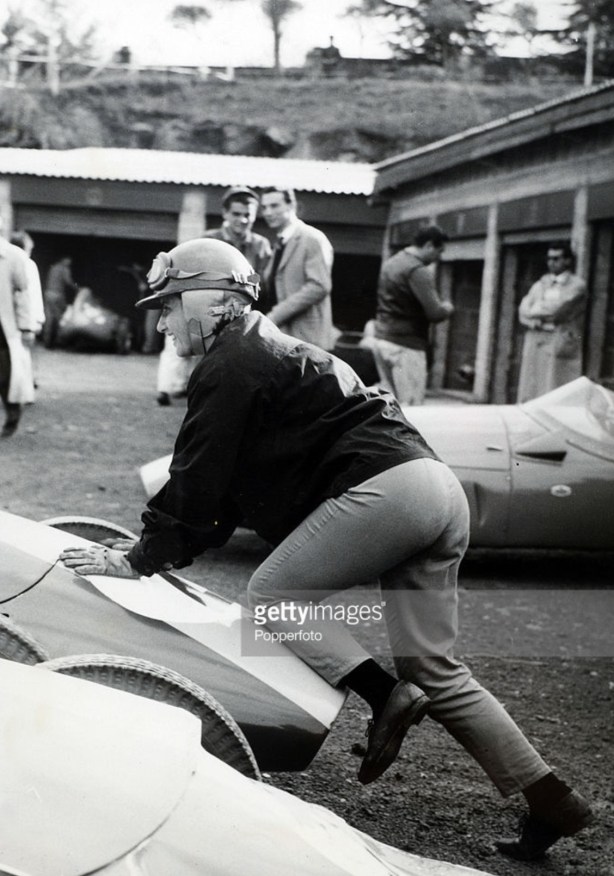
The trouble with so many shots of Maria Teresa de Filippis is that many were shot by non-racing photographers so are devoid of the detail we want!…

‘Maria Teresa with racing car’ is about as precise as it often gets, it gives we amateur historians a research challenge I guess. Having trawled through the ‘F2 Register’ Formula Junior Archive as best I can (although the listing for this event does not include competitor numbers) this is the ‘Confronto Nord-Sud’ contested at Vallelunga on 1 November 1958. Lucio de Sanctis won the final in his own de Santis Fiat with Maria Teresa 4th in the first heat and 6th in the final. I wrote a short article after de Filippis died last year, click here to read it;

Maria Teresa de Filippis…

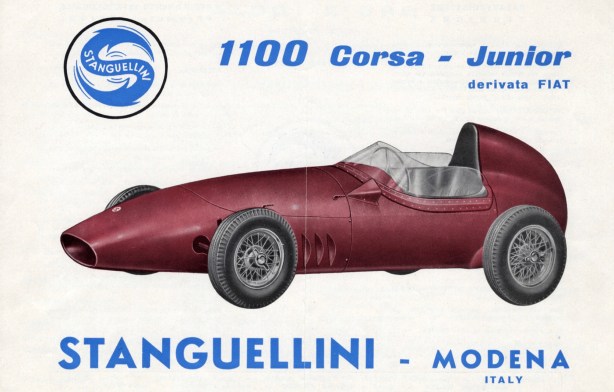
The car behind Maria Teresa is another Stanguellini, unfortunately the mid-engined car has been largely cropped out of the shot, ‘twould be interesting to know what it is if any of you FJ experts can identify the machine.
image

MTdF in her Stanguellini at Vallelunga in 1958 (Popperfoto)

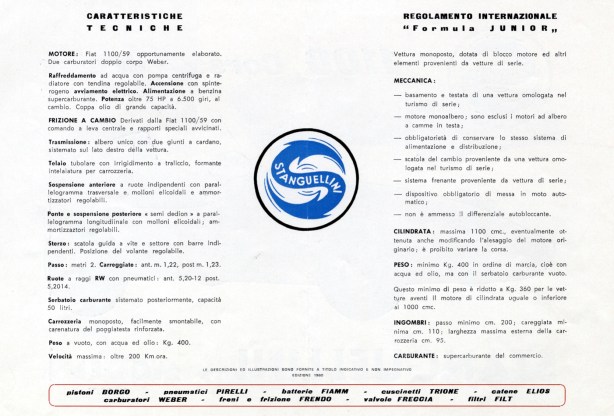
Formula Junior had 11 events in 1958, 9 of them in Italy, the category’s champion was Count Giovanni Lurani an Italian who saw the need for a relatively inexpensive entry-level single-seater class. The category was for cars with engines of 1100cc and a minimum weight of 440Kg (their was a 1000cc class as well with a lower weight limit) exploded in 1959 with meetings all over Europe, the UK from mid-year and a couple towards the end of the year in the US.
image

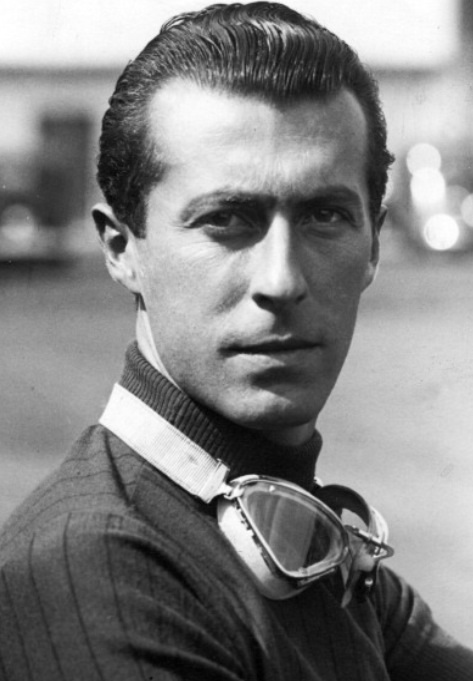
Count Giovanni ‘Johnny’ Lurani, here in the mid-30’s, was an Italian auto engineer, driver and journalist who raced Salmson, Derby, Alfa and Maserati’s after graduating in engineering at the Politecnico di Milano. He won his class in the Mille Miglia thrice and founded Scuderia Ambrosiana in 1937. Post WW2 he worked with the FIA, his credits include the creation of FJ in ’59 and the GT Class in ’49. He also designed record breaking motorcycles and was president of the FIM in a life of achievement (ISC Images)

The category was immensely successful largely due to a progressively more buoyant post-war global economy, improving personal incomes and the arrival of consumer credit which meant young aspirants to Fangio’s world crown could buy a car.

There was plenty of choice of weapon too as builders of chassis and related componentry popped up all over the joint from Australia to Russia. An article on FJ and its incredible growth is an interesting one for another time!
image

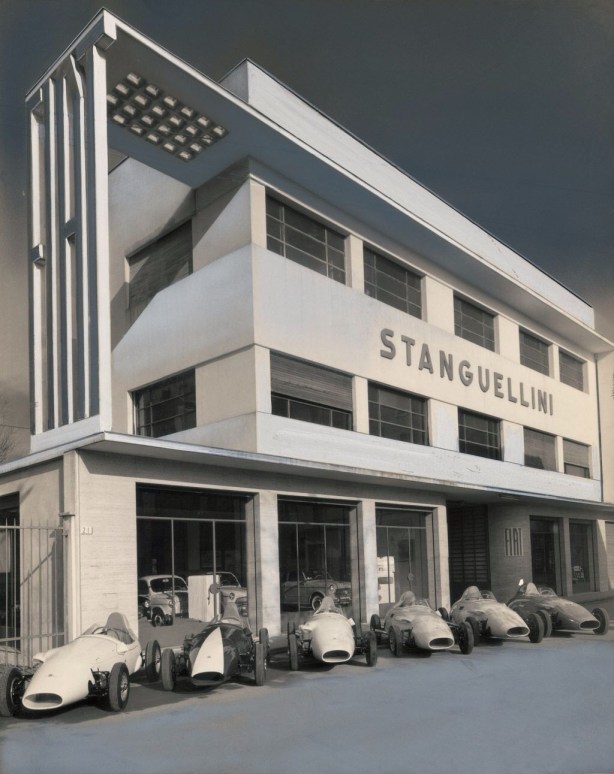
Stanguellini factory in Modena with a swag of FJ’s lines up out front in 1959 (stanguellini.it)

Stanguellini were beautifully placed to build cars for Formula Junior given their rich history of racers based on the Fiat parts bin…

That glib phrase does not do the heritage of this firm justice however, click on this link to the marques website which provides a great summary of their cars and engines since the 1930’s, the photographic archive is also rich, take the time to cruise through it; http://www.stanguellini.it/en/100-years-of-history-stanguellini-car/

The ‘Stang’ is often often said to be a mini-250F but its as much Vanwall or Lotus 16, either way those comparisons don’t do justice to a car which has a beauty all of its own.
image

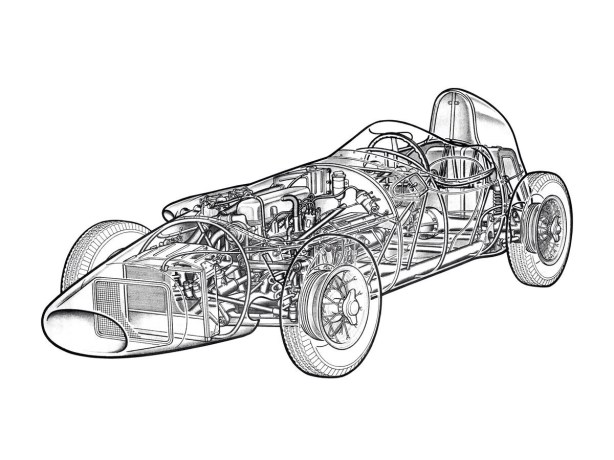
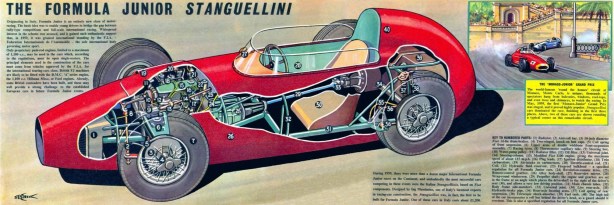
Stanguellini Fiat FJ cutaway drawing, all the key elements of the car clear and as described in the text (unattributed)

Vittorio Stanguellini engaged Alberto Massimino who was very clever in his design approach; its not innovative in terms of its ladder frame chassis, or choice of front-engined layout although the first cars appeared in late ’57 or ‘early ’58, the ‘Cooper Revolution’ wasn’t necessarily clear at that exact moment in time. A year later the mid-engined trend was, but the Stang with its circa 80bhp, twin Webered 1098cc pushrod engine was the most competitive thing around in 1958 and 1959.

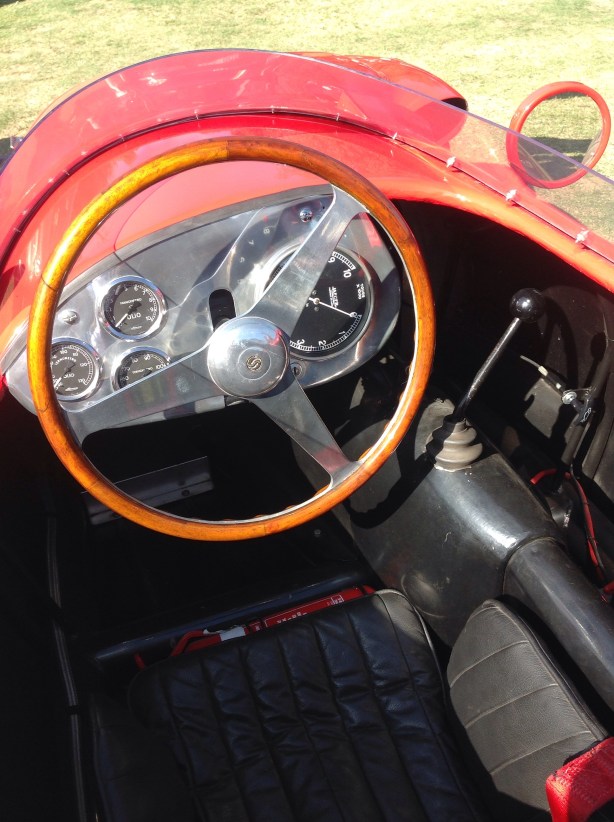
In part it was due to a clever layout which provided the driver a low driving position, getting the weight down by the use of an offset drive line, the Fiat 4 speed gearbox kinked to the right, the driver to the left. The cars had conventional upper and lower wishbone front suspension and a Fiat live axle nicely located with parallel trailing arms and sprung by coils, co-axial shocks were used front and rear. The ‘look’ was completed by the use of Borrani 12 inch wire-wheels, brakes were finned Fiat 9.8 inch drums front and rear. The wheelbase was 79 inches, front and rear track 48 inches.
image

Snug cockpit of Norm Falkiners Stanguellini FJ in late 2015, offset transmission to get the driver down nice and low clear . Engine and ‘box Fiat 4 speed (Bisset)

None of these Stanguellini’s raced in Australia ‘in period’ but Melbourne driver Norm Falkiner imported one a decade or so ago. I happened to be testing my Van Dieman RF86 Historic Formula Ford at Calder when its restoration was just completed by Jim Hardman, who still fettles it. These mixed track days are interesting to see how different cars do their stuff (or not!) up close, I can still recall how nice the thing put its power down and how much punch it seemed to have, I could hear the little Fiat engine buzzing to circa 7500rpm each time I ranged up near it. It was less impressive under brakes, but chances are they were still being sorted.

Maria-Teresa’s views on the ‘Stang relative to the GP machines she was piloting at the time would be interesting!
image

de Filippis in her 250F at Spa in 1958, 11th in the Belgian GP won by Tony Brooks Vanwall VW57 (unattributed)

Robert Lippi won the Italian Championship in 1958 and Michel May won both the ’59 Monaco FJ GP and ‘Auto Italiana International Championship for Drivers’ and Stanguellini the ‘Quattroroute International Championship of Makes’. The ‘Campionato Italiano’ went to Stanguellini driver Raffaele Cammarota.

In 1960 things got tougher. The Brits ran their first championships for the class, Chapman’s mid-engined Lotus 18 was just as quick with an 1100 Ford bolted into the back of it as a 2.5 litre Coventry Climax FPF. It and the Cooper T52 BMC made the pickings tougher for the ‘front-engined brigade the best of which that year was perhaps the Lola Mk2.
image

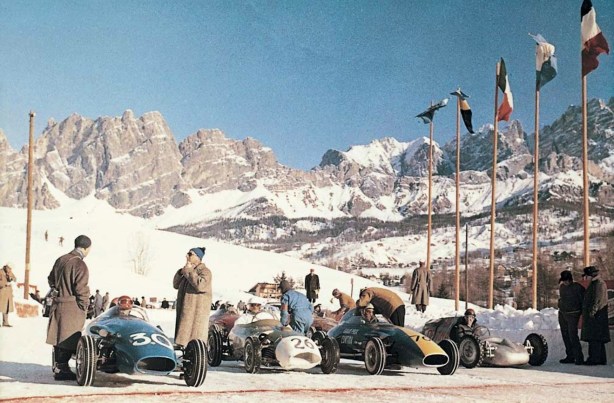
The GP Icecar, Cortina 17/18 January 1959. In Italy racing on ice was a novelty, circuit at Monti Pallidi, contestants line up for the first heat. L>R Stanguellini Fiat’s of Crivellari, Zanarotti and De Carli. At right the VW based Mathe VW of Otto Mathe. The final was won by Manfredini’s Wainer Fiat (Stangullini)

In 1960 Colin Davis Osca Fiat won the ‘Campionato A.N.P.E.C/ Auto Italiana d’ Europa’ from Jacques Cales Stanguellini Fiat, Denny Hulme in a Cooper T52 BMC and Lorenzo Bandini, Stang Fiat.
image

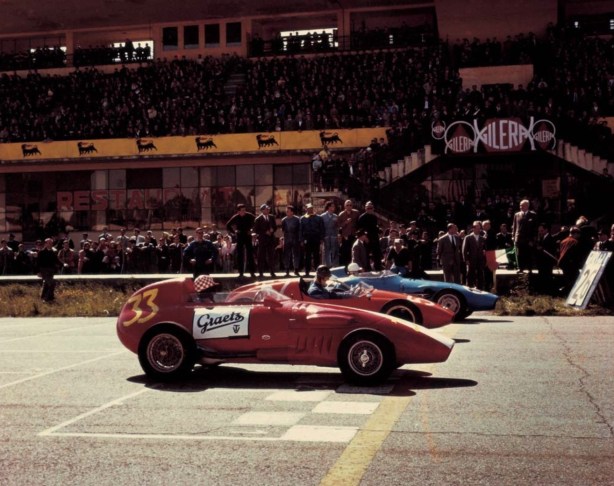
Beautiful period shot; Michel May lines up his #33 Stang Fiat FJ on the front row of the second heat of the Trofeo Vigorelli, Monza on 24 April 1960, which he won. 2nd in the ‘final 2’ . Car #57 alongside is Rob Slotemaker’s Cooper T52 DKW (stanguellini.it)

That FJ was nurturing drivers of great talent is shown by the fields of the 1960 championship which included Henry Taylor, Giancarlo Baghetti, John Love, Gerhard Mitter, ‘Geki’ Russo, Kurt Ahrens, Trevor Taylor, Jo Siffert, Peter Arundell, Ludovico Scarfiotti and Jim Clark, to name a diverse global few!

Clark won the ‘BRDC/Motor Racing’, ‘British FJ Championship’ and ‘John Davey British FJ Championship’ aboard his works Lotus 18 Ford and Peter Arundell the ‘BARC Championship’ in the other works 18.
image

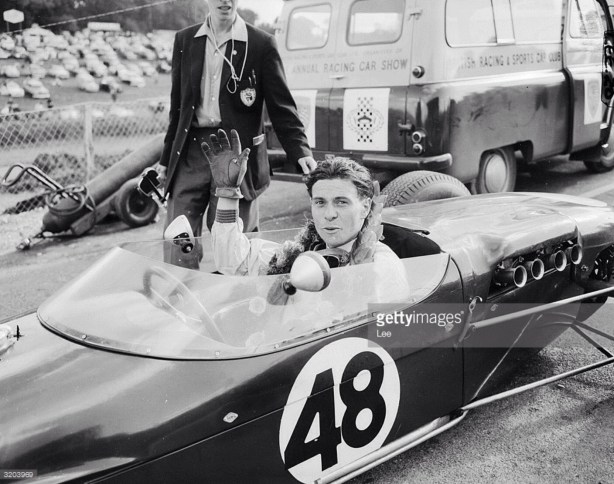
Jim Clark happy after winning the ‘Kentish 100 Trophy’ at Brands Hatch 27 August 1960, Lotus 18 Ford (Lee)
 

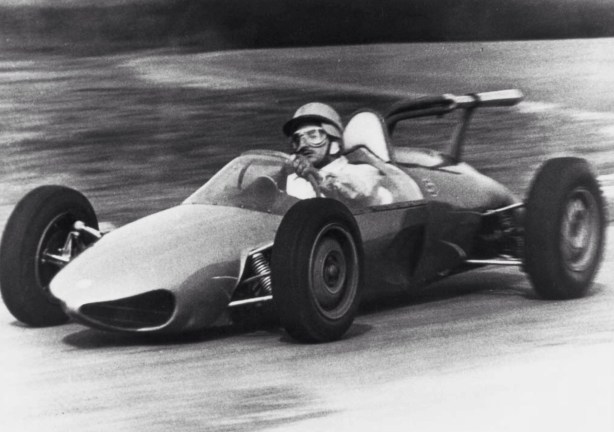
Stanguellini rose to the mid-engined challenge, building the multi-tubular chassis Delfino FJ. Again Fiat engined, but inclined at 45 degrees, it had a very distinctive high mounted exhaust. By 1962 Cosworth modified Ford engines were well out of the Fiat’s reach, the car had little success, with Stanguellini losing interest in the class.
image

Colin Davis testing the Stanguellini Delfino Fiat at Modena in winter 1962, distinctive exhaust system clear. ‘Sharknose’ styling modelled on Carlo Chiti’s 1961/2 Ferrari 156 F1 machine (stanguellini.it)
 

Credits…

Botti, Popperfoto, Lee, Stanguellini.it, F2 Register, ISC Images

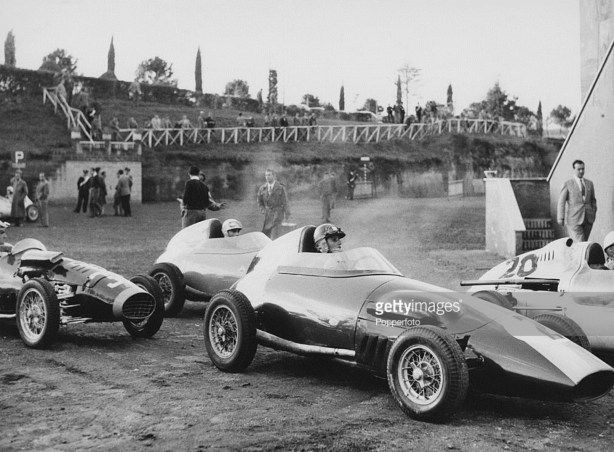
Tailpiece: Maria-Teresa helping get her Stanguellini into position at Vallelunga, car behind a 250F. I’ve a feeling the ‘ogling fans in the background are focused on the lines of the lady not her car…
image

(Popperfoto)


gethin 1

(Schlegelmilch)
Peter Gethin subbing for Denny Hulme in the tragic 21 June 1970 Dutch Grand Prix, McLaren M14A Ford…

1970 was a tragic season for driver deaths, Piers Courage perished in a gruesome fiery accident in his De Tomaso 505 Ford in this race.

Peter was drafted in the McLaren team after Bruce’s death at Goodwood on 2 June. To make matters worse Denny Hulme burned his hands at Indianapolis so McLaren were represented at Zandvoort by Dan Gurney, Gethin with Andrea de Adamich in an Alfa Romeo V8 engined M14A, the other team cars Ford Cosworth DFV powered.

What draws the eye to this shot is the helmet, Gethins and Jackie Olivers designs were so similar to Jim Clark’s at the time.

McLaren’s weekend was poor; Andrea DNQ and both Dan and Peter retired with a mechanical problem and accident respectively. John Surtees M7C was the best placed McLaren in 6th, the race won by Jochen Rindt’s Lotus 72 Ford, the iconic car scoring its first win. Surtees drove the ex-works 1969 car until his own Surtees TS7 made its debut later in the season.

Credit…

Rainer Schlegelmilch