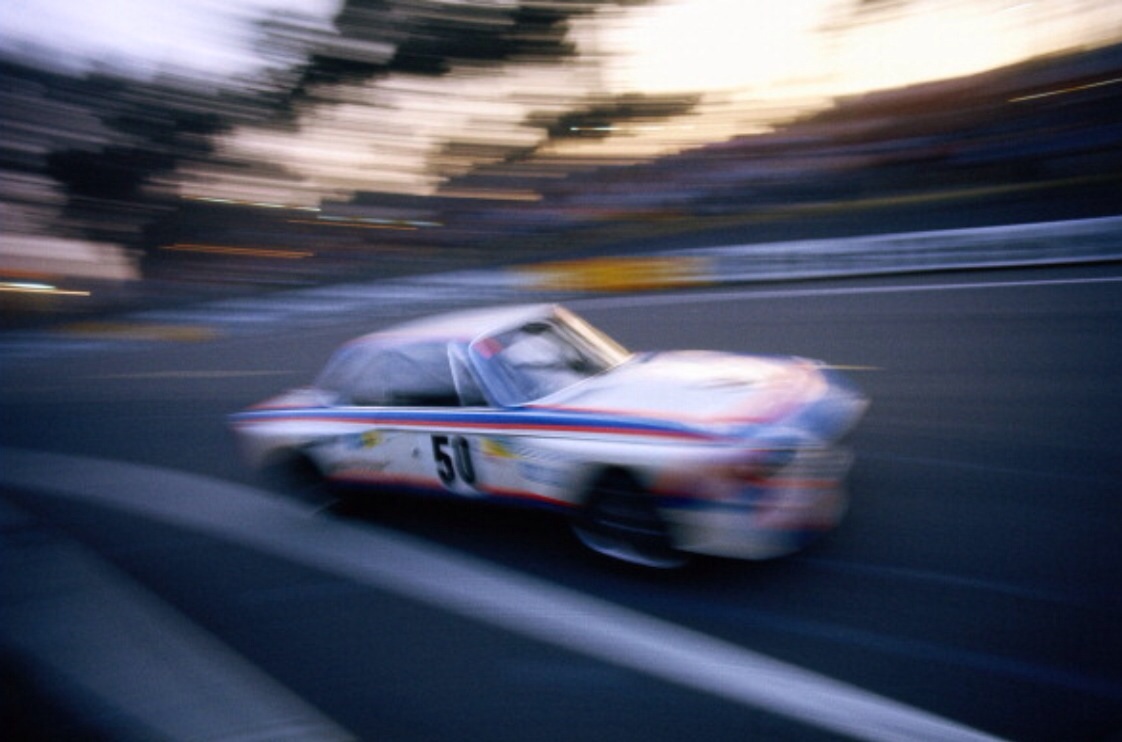
Pascal Rondeau is one of the more recent generation of photographers whose work I admire…
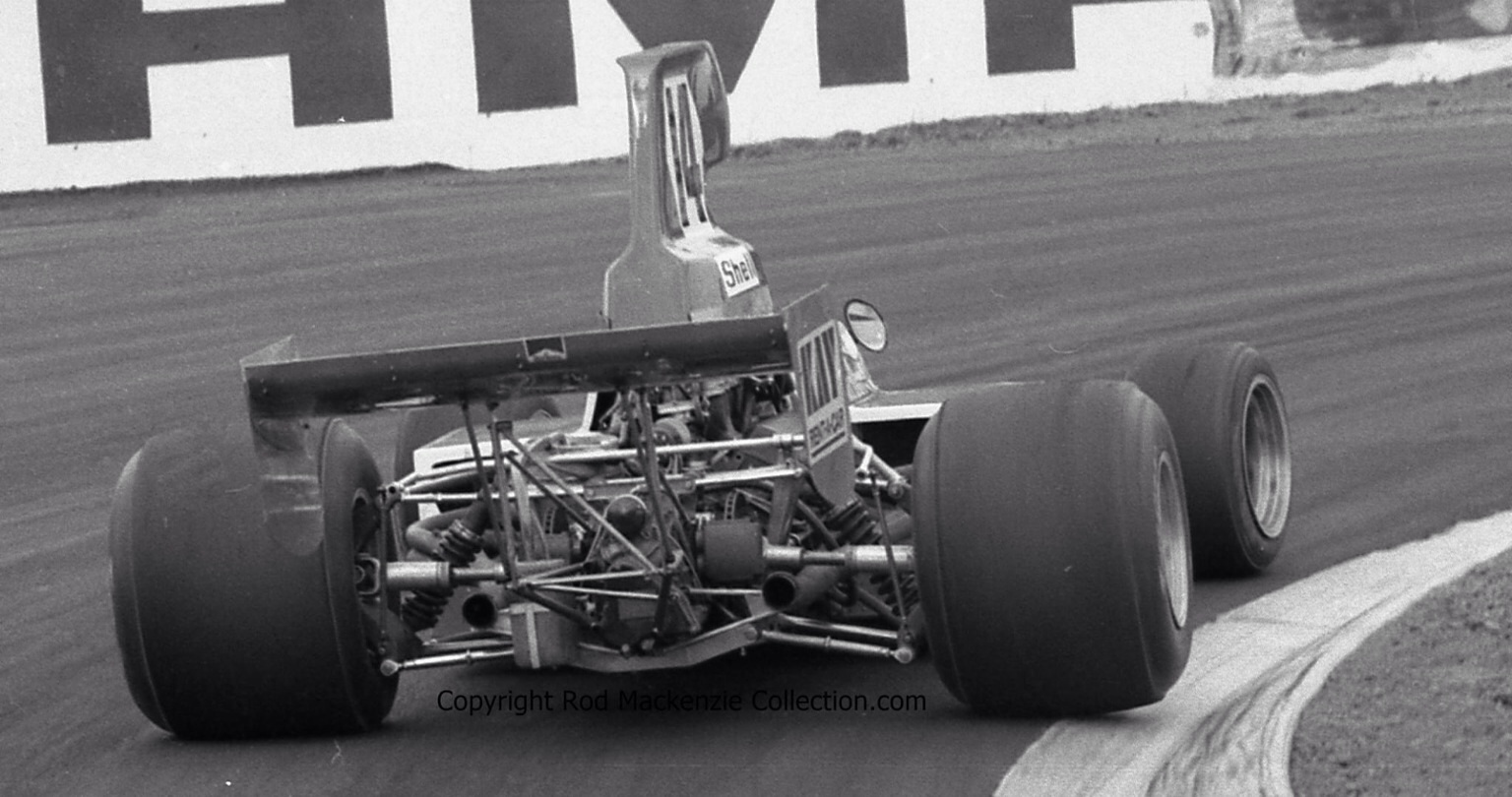
This shot is at the US Grand Prix in 1989 at Phoenix, Arizona. No details on which car it is, which is a bumma.
Credit…
Pascal Rondeau
The spectator is keen, his bravado enhanced by copious amounts of chianti during the long Sicilian afternoon…
The 13th placed #88 Eberhard Sindel/Dieter Benz Porsche 911S ahead of the similar #100 Dan Margulies/Robert Mackie car which was 20th. Oh to have been a privateer and raced an event like this, so relatively easily at the time, errant spectators notwithstanding!
The Mitter/Schutz 908/2 won the race from three other factory 908’s in a Porsche rout.
Credit…
Rainer Schlegelmilch
Tailpiece: The winning Porsche 908/2, not a bad panorama…
Cliff Allison releases his Lotus 12 Climax from the Monaco haybales on 18 May 1958, whilst teammate Graham Hill passes in the sister car…
It was a significant race for Lotus, their debut as Championship Grand Prix competitors, Allison was classified sixth and Hill’s race ended on lap 15 with engine dramas.
Coventry Climax had still not built a 2.5 litre version of their FPF 4 cylinder engine, so Lotus, like Cooper, were competing with engines of 1960cc, well below the 2.5 litre F1 capacity limit.
Times of change in racing are of immense interest to those of us with an historic bent. 1958/1959 is one of those eras with the growing influence of the ‘Green Cars’ a portent of the British dominance to come. And of course Cooper showing the mid-engined path still with us today.

Lotus 12 in all its naked glory at Zandvoort in 1958. It was about as small as a front engined GP car could get, ignoring the fact it was designed as an F2 car! In 1958 ’twas as modern as tomorrow and as passe as yesterday simultaneously (Cahier)

Note the twin dual-throat SU carbs and front roll bar double-tasking as a means of locating the upper suspension top link
Indicative of mid-engined growing superiority was the failure of all the Maserati 250F’s entered to qualify- driven by Godia-Sales, Kavanagh, Taramazzo, Gerini, de Fillipis, Testut, Gould and the great, but ageing Monegasque Louis Chiron. Lets not forget that only the year before, 1957, Juan Manuel Fangio won the race in a factory ‘Piccolo’ 250F. And Moss also won aboard a 250F in 1956 for that matter too.
Successful British motor-cycle dealer BC Ecclestone had acquired the GP Connaughts but Bernie, Paul Emery and Bruce Kessler all failed to qualify the cars too.

Bernie Ecclestone trying hard to qualify his Connaught Type B Alta, to no avail as was the case for his 2 teammates (unattributed)
Things were better for the Green Cars at the front of the grid with Brooks, Behra and Brabham in Vanwall VW57, BRM P25 and Cooper Climax T45 respectively. Salvadori and Trintignant were next up in Coopers, the quickest Ferrari, Mike Hawthorn, was sixth in his Dino.

# 18 Savadori Cooper T45 Climax, # 6 Behra BRM P25, #16 Brabham Cooper T45 Climax, # 30 Brooks Vanwall VW57, winner Trintignant partially obscured behind Brabham Cooper T45 Climax, # 32 Lewis-Evans Vanwall VW57…and the rest, turn one, lap1 (unattributed)
In a race of changing fortunes Behra, Hawthorn and Moss all led but suffered mechanical failures.
Trintignant won the race in Rob Walker’s Cooper T45 Climax from Musso and Collins in Dinos. Moss’ Argentina Cooper T43 win was no ‘flash in the pan’ by any stretch…

Moss, Hawthorn, Brabham and Trintignant. Ferrari Dino 246, Vanwall VW57 with Monaco ‘snub nose’ and Coopers T45 Climax x 2 (unattributed)
Graham Hill prepares for another practice lap whilst Cliff Allison looks on at left and Colin Chapman in the sunglasses at right.
The Lotus 12 was Chapman’s 1957 F2 contender powered by a Coventry Climax 1.5 litre FPF engine.
Whilst competitive the lithe, nimble, light front-engined cars took no F2 race wins that year, Allison’s second late in the season at the Oulton Park International Cup was the best result.
Fitted with 2 litre FPF’s, ‘F1’ 12’s contested the Non-Championship 1957 Glover Trophy and Lavant Cup at Goodwood and BRDC International Trophy, Silverstone as well as the 1958 Glover Trophy, BARC 200 at Aintree and the BRDC International Trophy before their Monaco Championship debut. Allison’s fourth in the 1958 Glover Trophy aboard chassis ‘357’- the same car he raced in Monaco was the best result. Graham Hill’s car was ‘353’ which has resided, beautifully restored, with Mike Bennett in Adelaide for many years.
Beautiful shots above and below by Bernard Cahier shows the minimalist nature of the Hill Lotus 12 to great effect. Greatness was to come later with Lotus of course- a championship in 1968 after a remarkable stint with BRM.
In some ways its surprising that Chapman, the great innovator, didn’t go the mid-engined route with the Lotus 16, the 12’s successor but he got the hang of the mid-engined thing rather well with the 18 which followed- a machine which was rather successful in FJ, F2 and F1 in 1960.
Etcetera…
Photo and other Credits…
Jesse Alexander, The Cahier Archive, John Ross Motor Racing Archive, John Marsden
Tailpiece: Allison made the Lotus 12 sing…
As here at Monza 1958.
He put the car fifth on the British GP grid, well in front of Hill in the new Lotus 16, finished sixth at Zandvoort, fourth in the Belgian GP at Spa and seventh at Monza. Such were his performances he was off to Ferrari in 1959 at Enzo’s invitation
Finito…
Achille Varzi’s Auto Union Type B pitstop during the 26 May Avus-Rennen, Berlin, 1935…
Note the onboard air-jacks, pretty schmick for 1935, I didn’t realise the technology went back that far, I wonder when they were first used in racing? It’s a nice shot also of the swing axle rear suspension, sprung by torsion bars in 1935 rather than the transverse leaf spring of the 1934 Type A.
Varzi was 3rd in his 4.9 litre V16 beastie, the race won by Luigi Fagioli’s Mercedes Benz W25. The race was a Formula Libre event so the German teams turned up with some streamliners including a Mercedes W25 for Hanns Geier, the cockpit cover of which could only be opened from the outside. No doubt Alfred Neubauer was happy to oblige at each pitstop.

Avus 1935 heat 1 start; #1 Stuck AU Type B 1st from #4 Rosemeyer AU Type A Streamliner DNF, the Mercedes is Fagioli’s W25 2nd, #9 is Nuvolari’s Alfa Bimotore 6th, #20 Farina’s Maserati 4C 5th, #16 Siena’s Maserati 8C DNF (unattributed)
Continuing the themes of commonsense and bravery!, the meeting was also notable for the first ever car race of German ‘bike ace Bernd Rosemeyer. He ‘blagged his way’ into the Auto Union team for whom he raced from then until his untimely death in early 1938 during a brave land speed record Auto Union run. Read anything about this fella and the word brave will be peppered throughout the article.
The car racer novice plonked the notoriously twitchy 375bhp mid-engined Type B on the front row for his heat on the fastest circuit in the world, the AU’s were seeing 326kmh along Avus’ long straights. He punctured a tyre during his 7 lap heat so didn’t make the final which comprised the first 4 placegetters in each of the heats, but he had well and truly ‘arrived’…
Check out Kolumbus F1’s ’35 Avus race report, this being my favourite Pre-War race results site, have a good poke around if you haven’t visited it before;
http://www.kolumbus.fi/leif.snellman/gp3503.htm#9
Credits…
Kolumbus F1, Ullstein Bild, Zoltan Glass
Tailpiece: Varzi’s Auto Union Type B 4.9 V16 and Rosemeyer’s AU Type A 4.3 V16 in the 1935 Avus paddock…
Shell’s ‘period’ ads are consistently good. I like this 1970 offering from Automobile Year 18 featuring some of my favourite cars, 917 Porker and 312B/512S Fazz…
The 1970 Le Mans classic was the year in which Porsche broke through to win outright with the 917. Hans Herrmann and Richard Attwood won in the #23 short-tail above by 5 laps from Gerard Larrousse and Willy Kauhsen in a long-tail with the 908 long-tail of Rudy Lins and Helmut Marko third. Just to reinforce their dominance the first two cars were powered by 4.5 litre variants of Zuffenhausen’s big flat-12, not the full 5 litres allowed by the regulations of the time.
The best placed of the Ferrari 512S’ was the NART car of Sam Posey and Ronnie Bucknum in 4th, 30 laps adrift of the winning 917.
Credits…
Automobile Year, Rainer Schlegelmilch
I like these photos which rather reminded me of impressionists work. A Shell promotional exercise but rather good all the same…
The F1 Ferrari’s are the 1951 375 4.5 litre V12 and 2015 V6 turbo-hybrid SF15-T.
The banking photo shoot was after qualifying on 5 September 2015 with Sebastian Vettel and Kimi Raikkonen in attendance. The race was won by the dominant 2015 combo, Lewis Hamilton and the Mercedes F1 W06 Hybrid , Sebastian was 2nd and Kimi 5th in the SF15-T.
Credits…
Bryn Lennon
Tailpiece…
Jim Gullan dealing with a delicate slide on turn-in to Kayannie Corner , Ballot Oldsmobile. He is on the way to winning the 12 lap 105 Mile Road Race on the fearsome, Lobethal, Adelaide Hills circuit…
The race was held on New Years Day, 1 January 1948, the Victorian won from Granton Harrison’s Phillips Ford V8 Spl and Ron Egerton’s MG TC Spl which is in shot behind Gullan above.
Amongst the 21 ‘South Australian 100’ entries were later champion drivers Tony Gaze, Bill Patterson, Doug Whiteford and Ern Seeliger as well as then current fast-man John Barraclough.
The limit man was D Howard’s MG PA with a handicap of 16.5 minutes, Jim Gullan’s Ballot was away at the 7.05 mark, Doug Whiteford off 2.5 minutes with the scratch car Denneston’s Itala Mercury Spl.
Whiteford stunned onlookers with an 85mph standing lap, Ern Seeliger was an early retirement after being badly baulked at over 110mph, assaulting two trees in the process. The car was destroyed, the owner presented the rooted chassis and body to a local farmer! Ernie suffered only a bruised wrist and severe shaking and lived to be a formidable engineer and competitor until late in the 1950’s.
By lap 4 the positions on handicap were the Harrison Ford Spl from Ron Edgerton’s MG TC and Whitefords Ford Spl, the latter on a path, at the speed he was going, to win the race before a rear tyre threw a tread. With no spare the Melbourne driver was out.
By lap 7 Gullan led from local driver Harrison in the ex-Phillips Ford V8 from Skinner in the Ballot Ford and Andrews Austin 6 in 4th. Barraclough withdrew due to low oil pressure on lap 9 and Bill Patterson was out of fuel on the same lap.
On the last lap Gullan still lead by several hundred metres from Harrison and Edgerton’s MG TC. Harrison did the races fastest time and Whiteford its fastest lap at 6 min 7 seconds, 88mph and won the Lobethal 50, the final event of the program.
Ballot Oldsmobile…
Jim Gullan replaced his Ballot Ford in 1944 with a 2 litre Ballot bought nearby to his families garage in South Melbourne, a chassis for the car was designed and built by Gullan styled on the ERA, the racer was fitted with an Oldsmobile engine and gearbox.
Noted journalist and historian Ray Bell; ‘Jim Gullan’s Ballot will always rank as one of those cars that looks the part of an Australian Special. The raked nose, the heavily drilled chassis, steering wheel close to the chest and mandatory straps over the bonnet, its wire wheels carried a car that mixed European and American as well as any other’.
Gullan’s book, ‘As Long As It Has Wheels,’ is a fascinating account of a drivers career which evolved from road racer pre-war, to racing an Alta in Europe after hostilities ceased, through being a pioneer of drag-racing in Oz in the 1960’s and finally as a club racer in his dotage living on Queensland’s Gold Coast. Amazing. Jims book covers the Ballot in detail.
Gullan’s Ford V8 powered Indianapolis Ballot, his new acquisition was a 2 litre with sohc engine and knock-on wire wheels, it had a poor body and as inspection proved, the chassis was in even worse shape.

Gullan, AGP, Nuriootpa 1950, 3rd place outright and 1st on handicap, Ballot Olds. Doug Whiteford won in his Ford V8 Spl, ‘Black Bess’ (unattributed)
Soon after buying it a workmate offered money for the engine, gearbox and radiator to fit into a Bugatti chassis. Said Gullan, ‘It seemed a dubious exercise but I suppose any engine was better than none.’ Having just the chassis left, he was reluctant to go for another Ford engine having had bad experiences with the V8, so an ad for an Oldsmobile unit and ‘box (unused spares purchased for a taxi) overcame his problems. It was to have triple Ford carbies and extractors.
A chassis was made styled on the ERA but lower in profile, and used nothing from the Ballot chassis such was its parlous condition. ‘By the time the Ballot Olds was completed, about the only parts left of the original Ballot were the wheel hubs. The only reason the Ballot name was retained was for (ease of) registration purposes’ wrote Gullan.
It new chassis was 760mm shorter and 230mm narrower than the Ballot, designed to be ‘strong in the middle,’ boxed and drilled liberally ‘as on the SSK’ for lightness. ‘To lower the car new, new springs and hangers were made to sit outside the chassis rails. To stop front axle movement and to assist steering geometry, the spring shackles were located at the front of the spring instead of at the rear, this also assisted the brake reaction cables to keep the axle from turning whilst braking. Wheels were built to suit the wider, smaller diameter, modern tyres.’
With new cross members the engine and gearbox were installed into the chassis and the body shape was outlined using welding rods and strands of string.
Bob Baker lived only a few doors away from Gullan and built the body round an angle iron frame, which was screwed to the chassis with small reject aircraft bolts. A deliberate effort was made to reduce frontal area, hence the car’s low appearance. Quick-fill petrol and radiator caps were fabricated by Jim and the instruments (like the carbies) came from army disposals.

Gullan at 16th Rob Roy, 2/5/1948 Ballot Olds. Superb looking body built by Bob Baker, the first of many racing cars he built bodies for. Gullan’s design was ingenious in its amalgam of parts and a consequence of his vast experience with previous cars (Thomas)
With Baker’s assistance a 3 carb inlet manifold and extractor exhaust system was made and a Ford radiator shell reworked to look like an ERA, the gorgeous little car was painted blue with silver wheels. Finned alloy drums off a spare 2-litre Ballot Jim bought and sold were the first of many modifications over the years.

Ballot Olds cockpit shot taken at the SA Grand Prix 70 year celebration at Lobethal in 2008 (Veloce)
The Ballot’s first meeting was at Greensborough Hillclimb in 1945 (see below), teething problems were limited to the throttle linkage bending and as a consequence full power could not be applied. The rear axle ratio was made taller, the drawings for the 3.5:1 ratio done by Gullan.
The first post-war race was at Ballarat at the beginning of 1947. Gullan had a good meeting including winning the Ballarat Cup, after this meeting the cars braking system was converted to hydraulic operation.
The next race was the Lobethal 100 covered at the articles outset, ‘The main reason for my quick times was my familiarity with the track. I had driven there in 1938 and 1939…in handicap racing it was our policy (Jim and his time-keeper wife Christine) and although the handicappers kept putting us up the field, we just made the car quicker’.
Gullan was a close friend of and in business with Doug Whiteford. When Doug imported an Edelbrock cam and heads (he’d melted a pair of alloy heads at Lobethal in 1940!) Bruce Rehn copied the cam profile and lift for the Olds.
By the time of the Point Cook AGP (1948) ‘…at a Dutch auction at the Light Car Club before the race, the Ballot was selected as the car most likely to win, a bad omen as far as i was concerned’, quipped Gullan.
For the AGP there was yet another higher lift cam lifting rpm’s to 6000 and special ratios in the gearbox. As a result of the intense heat at Point Cook, with the Olds running so cool and well, the engine was subsequently bored by 5mm and also fitted with an enlarged sump with cooling tubes. Gullan had tyre problems in practice, but retired the car in the extreme heat after 15 laps. ‘I finished up sitting next to Alf Barrett, in the back of a van getting cooling down treatment’.
At Fishermans Bends first meeting Gullan won the Victorian TT, but the stop-start nature of the airfield circuit made it clear the cars brakes needed development. Jack Pearce at Repco PBR supplied some light commercial brake drums and made appropriate shoes with aluminium backing plates. ‘…They were so powerful they were bending the chassis making the car almost unsteerable when braking on the rough roads. The only thing to do was to apply them gently’.
In the months leading up to the 1950 Australian Grand Prix at Nuriootpa the Ballot was run in various minor events to get it sorted. Jim started 21st of 43 starters. The race was billed as a handicap race, Gullan won the handicap but not the Grand Prix which was awarded to Doug Whiteford in Black Bess. Jim was not happy about the result and emphasis given to the ‘fastest time’ as against the ‘handicap winner’, the AGP having been run as a handicap since it’s start at Phillip Island.
‘Normally the car would run 130 miles on a tank of fuel, but with the car developing more power, it was decided that if i was far enough in the lead i would pull in for a quick stop to add 10 litres. This i did and drove over the line to win what i thought was the Australian Grand Prix. There were still 20 litres of fuel left in the tank at the end of the race’ and therefore he could have completed the race without a stop.
‘The Adelaide Advertiser ran a big headline ‘Big Car Handicap to J Gullan’, the article didn’t even mention that Doug Whiteford had finished in 5th place. At the presesntation i got the wreath, the trophy and the prize money, Doug received equal money for fastest time. Once again i had driven a copybook race, but was later disappointed it would not be recorded as a Grand Prix win. Sometimes i wish i had just gone for broke…’
A counterpoint to Gullan’s viewpoint is contained in ‘The History of The AGP’ which makes it clear, quoting the Australian Motor Sports contemporary magazine coverage of the race. It says, that consistent with the 1949 policy of the Australian Automobile Association, from 1949 the AGP would be a scratch title,’The Australian Grand Prix will be run as a handicap but the Grand Prix winner will be the competitor finishing with the fastest time for the race’, that is, Doug Whiteford in his Ford V8 Special Black Bess.
Gullan raced the car one last time at Fishermans Bend before selling it.
Interestingly the two great mates, Whiteford and Gullan who had developed their clever specials together drove one anothers cars one evening at Albert Park ‘Dougs impression of the Ballot; very smooth high revving engine, steering and brakes too sensitive, difficult to drive!’ wrote Gullan. Albert Park is a public park, it would have been interesting to be going for a post-dinner walk and seen two Grand Prix cars being driven at high speed around the sleepy confines of Albert Park, the first GP there was still several years away at the time!

Love this shot for its vibe, Fishermans Bend, October 1953. Greg McEwin HRG left, O’Donohue’s now red Ballot Oldsmobile and Otto Stone’s MG K3 (SLV)
It was now 1950, the Ballot had reached the end of its development, and Jim decided to race in Europe, an interesting story for another time. Alan Watson and John Cummins (the latter very sadly died only last weekend) bought the car for 850 pounds.
Ray Bell, a writer of the ‘History of The Australian Grand Prix’ puts Gullan’s wonderful car and his design and development skills in context ‘The car was Gullan’s expression of all he’d learned from observing racing and running his own Salmson, Wolseley, Austin and Ballot V8′.
‘Considering just how it came together – the bits that just happened to be there, the chance acquisitions – it worked very well. Gullan was a handicap specialist, with his wife Christine timekeeping and acting as strategist, and they beat the handicaps with monotonous regularity. He comments that he just had to keep on making the car quicker to keep on beating them, so it was well developed when sold to Alan Watson.’
‘He mentions getting airborne over the top of the hill approaching Lobethal at 110mph, touching 116mph on the straight and holding it flat all the way from Lobethal to within sight of the pits at that early stage of its development. By the time it won the handicap section of the 1950 AGP it must have been a fairly quick car’.
The car passed through many hands over the next 20 years, raced as late as 1963 at Calder, Victoria. It has been used since 1970 in historic events, and is still alive today in Frank Moore’s Collection of Australian Specials in Queensland.

Jim Gullan, Ballot Olds, Greensborough Hillclimb. Crowd control and safety barriers well to the fore! (Thomas)
Greensborough Hillclimb…
Its interesting this internet thingy, data and images are being uploaded all the time. When I wrote the article about the Lobethal AGP 1950 12 months or so ago some of the images in this article weren’t there, but information is being continually shared through this wonderful medium.
The shot above is of Jim’s car at the second Greensborough Hillclimb on 7 October 1945, an Australian Motorsport article describes the casual nature and speed at which a new venue could be created all those years ago!
The Australian Motor Sports Club sought the use of the LCCA’s Rob Roy Hillclimb to run its first post war event. When the LCCA refused the club permission they sought other venues. Every alternative ‘smooth enough and close to Melbourne’ failed until the club secretary George Beecham fluked on a market gardner, an ex-motorcycle rider…His property had a very stiff hill. It was decided at the club meeting on the Thursday night before the Sunday scheduled for the climb to hold it at Greensborough on the market gardners hill. The owner of the property Bill Halliburton, did everything in his power to knock the hill into shape for the club…to get the hill right in time’.
Try getting a hillclimb built and certified by the FIA/CAMS in two days today, different times weren’t they!
Jim Gullan recalls the event in his book, he was Vice President and Doug Whiteford President of the AMSC. The two great mates loaded up a utility filled with reject concrete slabs from the Hume Pipe Company, for whom they worked and set off for ‘Orchard Farm’ to lay out a starting grid, completing the exercise in pouring rain.

A couple of young-bloods take to the Greensborough Hill to get a better vantage point, marshalling/start area below. Public address system you can just see to the bottom left, crowd numbers would be interesting to know in immediate post war-starved of entertainment, Melbourne (Thomas)
So much rain fell on the Saturday the event looked to be a washout but the can-do attitude of the members, starved of competition during the war years prevailed and after the track dried competition took place with FTD going to Ern Seeliger’s Ford V8 Spl. (the car destroyed in the SA 100 event in 1948 described at this articles outset) It was the union of an Itala chassis, with large drum brakes, a 3:1 diff ratio powered by a modified ’38 Ford V8 modified with high compression heads and a Vertex magneto providing the spark. The engine was mounted low in the chassis, the car raced in chassis form devoid of body.
‘Greensborough No 2 was just as well organised and ran as smoothly as the No 1 event was bad. Everything seemed to go right, even the Melbourne weather! The hill had been prepared at some very substantial cost to the club and was as smooth as a table-a good table too’, you will note from the photographs that the surface was gravel.
The AMS report notes the pace got hotter as the day progressed with several cars leaving the track, notably an elderly Morris Spl, a Vauxhall, Stud Beasley’s Speedcar and Ted Gray’s Ford V8 powered Alfa Romeo 6C1750, Ted broke the diff of the car in the process.
Ken Wylie set fastest time of the day in his Speedcar but ‘in doing so rushed through a fence after he had completed his climb, cleaned up half a dozen push-bikes leaning against said fence, bowling over a gum tree and ended up in a ditch…’.
Gullan notes ‘…luckily we had plenty of money to be able to compensate the cycle owners…We were not prepared for the huge crowd that turned up. The narrow country road was blocked for kilometres, many never reached the entry gate. The entry fee was a ten shilling note, to get his share the farmer stood at the gate and stuffed his shirt full of banknotes (not much different to BC Ecclestone today really). By the time the hundreds of spectators had left, the place was in a shambles, the irate farmer said “never again”, but we figured a shirt full of banknotes more than made up for it!’
Doug Whiteford fitted dual rear wheels to his Ford V8 engined 1950 AGP winning special ‘Black Bess’ but struggled to get traction, as did Ern Seeliger’s car the AMS report noted. That report concludes by listing other competitors cars; Ken Hume’s 8/60 Buick engined Talbot, Tom Hollindrake’s MG s/c, Les Phillips Austin Spl. Gullan’s Ballot Olds only had two runs, as the event organiser he was preoccupied, Bob Chamberlain’s Chamberlain 8 and Stud Beasley’s Willys 77 Speedcar also competed.
What is interesting is the way a large number of hillclimbs relative to the population of Melbourne at the time, popped up in an arc on the cities outskirts from the north-east to the east of the city; Greensborough is 23 km from town, Templestowe 19, ‘Rob Roy’ at Christmas Hills 43Km and the two climbs at Lilydale, the Davisons ‘Killara Park’ property and Ern Abbott’s ‘Lakeland’ circa 45 Km from Melbourne. They weren’t all running concurrently mind you, some were. I suppose the reasons are availability of the right terrain and proximity to the city for competitors.

Frank Moore, who still owns the Ballot Olds, at the Lobethal carnival in 2008, lines of Gullan’s car still look great don’t they? The ERA influence clear (Veloce)
Bibliography…
‘As Long As It Has Wheels’ James Gullan, ‘History of The Australian GP’ G Howard and Ors
Ray Bell on The Nostalgia Forum, ‘Australian Motor Sports’ February 1946
Credits…
Adelaide Advertiser, George Thomas, Veloce Magazine, John Millard, Norman Howard
Tailpiece: Gullan and Ballot Olds, Geelong Road, Australian Motor Sports Club, sprints, 4 August 1946…
F C Gundlach is a celebrated German photographer, he took a series of shots of British Model Judy Dent at the Avus in 1962…
Gundlach is regarded as the German’s most important fashion photographer in the post war period. His work is highly rated for its craftsmanship, technical finesse and staging. For the technically minded photographers, he normally used a 28mm wide angle lens as it ‘allows closer proximity to the models, a sharper perspective and higher depth of field’.
Formula Junior XIV International Avusrennen 13 May 1962…
A little bit of fossicking aided by the ‘F2 Register’ shows, i think, these photos were taken at the Avus, Berlin in May 1962, a round of the German FJ Championship won that year by Kurt Ahrens Jnr. Jo Siffert won the Avus round in his Lotus 22 Ford.
The first shot below is, i think, the Lotus 22 Ford of Ahrens Jnr, he actually raced a Cooper T59 Ford, but he and his father raced both Cooper T59 and Lotus 22, so my guess is Kurt tested the Lotus but elected to race his trusty Cooper.
Judy Dent again in a lovely ‘Saga’ fur coat. Car below is the Cooper T56 Ford of Gunter Schramm, 7th in the aggregate of 2 races, and 4 th in the Championship.
The Ahrens Jnr Lotus 22 Ford again, below
Lotus 22 Ford of Kurt Ahrens Snr. He was 10th in the race on aggregate and finished 3rd in the Championship.
Photo Credit…F C Gundlach
The 1957 German Grand Prix is famous as one of the greatest ever; Fangio’s Maser 250F chase and defeat of Hawthorn and Collins in their Lancia Ferrari’s is the stuff of legend…
These two photos reminded me of that day and a car then in the Autumn of its long life as a front line tool. First raced in 1954, by the end of 1957 the 250F had finally won the world title it deserved albeit Fangio made it sing that year, not so sure the title would have been Maserati’s without the great Argentinian behind the wheel.
Behra’s 6th place at the Nurburgring is perhaps more indicative of the cars pace with a ‘mere mortal’ behind the wheel. Actually that’s not fair, the 250F was a top three or four car with a driver of Behra’s calibre in 1957, there was plenty of depth in the field though with the Vanwalls as well as the Lancia Ferrari 801’s.

German GP ’57 first lap; Hawthorn and Collins, then Fangio and Behra, works Lancia Ferrari and Maser 250F’s. Then Moss and Brooks in Vanwall VW57’s, look closely and you can just see the top of Musso’s helmet in the other Lanc Ferrari between the two Vanwalls then Gregory’s white Maser 250F and the rest (Klemantaski)
Have a read of my 250F article; https://primotipo.com/2014/08/21/stirling-moss-monaco-gp-1956-maserati-250f/
The opening shot I love, partially because of the time of change it heralds. The front-engined Maser with its wire wheels, knock on spinner cap, finned drum brakes and forged suspension components will shortly be supplanted by Cooper alloys, discs and fabricated wishbones. Moss won the Argentine GP in a Cooper T43 Climax 6 months later, the day of the front-engined GP car wasn’t over but it was on the approach.
The shot above is of Guerino Bertocchi, Maserati’s famous engineer/mechanic/tester trying to breathe some life into Behra’s 250F in the Nurburgring paddock also in ’57. Marvellous cars.
Checkout this Race Footage…
Credits…
Klemantaski Collection, Graham Gauld
Tailpiece: Bertocchi about to test Masten Gregory’s Centro Sud prepared, Scuderia Buell owned 250F #2534 at Modena in September prior to the 1958 Italian GP at Monza of course…
Masten raced #2533 at Monza, this car wasn’t handling well so he switched chassis.
World Champion in 1957, the Masers were make-weights in 1958, the best placed of the beasties that season in championship events were fourths; Fangio’s in Argentina and Reims, his very last GP start, and Masten’s car at Monza. For the record the best of the non-championship results was Jo Bonniers 2nd in the GP de Caen.
Finito…