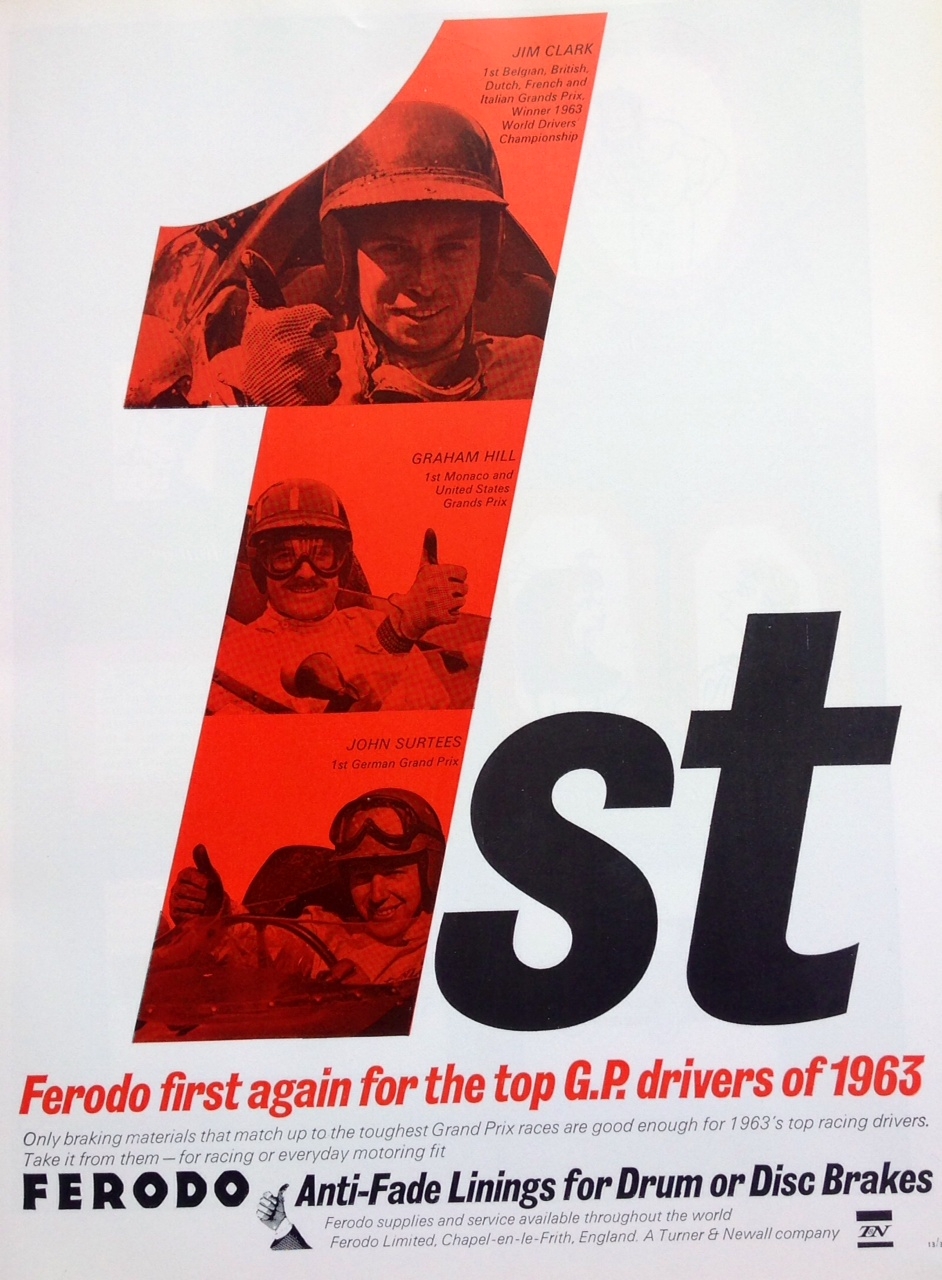
Ferodo advertisement from ‘Automobile Year’ proclaiming the company’s 1963 successes…
 | Laurie Shiney on West Australian Road Racing Ch… |
| West Australian Road… on Sinfully Sexy 600… | |
| West Australian Road… on Oran Park ‘Diamond Troph… | |
| West Australian Road… on Australian Racing Random … | |
 | duckcasually7c6e48f4… on Brabham BT31 Repco Take 3 by M… |
Ferodo advertisement from ‘Automobile Year’ proclaiming the company’s 1963 successes…

All drivers have a day of greatness, surely!? Jean Pierre-Beltoise’ was his great wet weather drive at Monaco in 1972 when he won the race in a drive of controlled speed and aggression in the toughest of conditions in his BRM P160B V12…
Even ‘Rainmaster’ Jacky Ickx finished second to the Frenchman in his Ferrari 312B2 that day with Emerson Fittipaldi’s Lotus 72D Ford in third.
JPB started from row 2, his task made a little easier on lap 5 when Clay Regazzoni went up the escape road at the chicane taking Fittipaldi and Ickx with him, they had been braking when Clay did…
But it was a great drive, JPB’s first and last GP win and BRM’s last, sadly.
Click here for an article on JPB i wrote a while back… https://primotipo.com/2015/01/15/r-i-p-jpb/

Beltoise with Chris Amon’s Matra MS120C alongside and Brian Redman’s McLaren M19A Ford chasing (Michael Turner)
Monaco GP ’72 footage…

Jacky Ickx and Gijs van Lennep won the race by 11 laps in their Porsche 936 from Jean-Louis Lafosse and Francois Migault in a Mirage GR8 Ford and British pair Chris Craft and Alain De Cadenet in the latters De Cadenet Lola T380 Ford…
The multi-tubular spaceframe chassis was based on the 908/3 and 917 designs with some of the running gear from the 917 program. The car used a 2 valve 2142cc single-turbocharged 540 bhp flat 6 engine variant of the roadgoing ‘930 Turbo’ the teething issues of which had been sorted the year before in the back of a 911 RSR.
Competing in Group 6, the derivation of the name 936 is clear, the engine was 2142cc to fit into the 3 litre class when the equivalency formula of ‘1.4 times’ was applied to turbocharged engines.
The cars were very successful winning Le Mans in 1976, ’77 and 1981 and the World Sportscar Championship in 1976.
Alpine Renault in their new turbo-charged DOHC 4 valve V6 engined A442 cars were favourites for the ’76 title but Porsche stole the series with their amazing ‘parts bin special’, winning the Monza 4 Hours, Imola 500Km, Le Mans, Enna 4 Hours, Dijon 500Km and the Salzburgring 200 Miles. The Alpines didn’t win a round despite a roster of mainly French GP drivers…
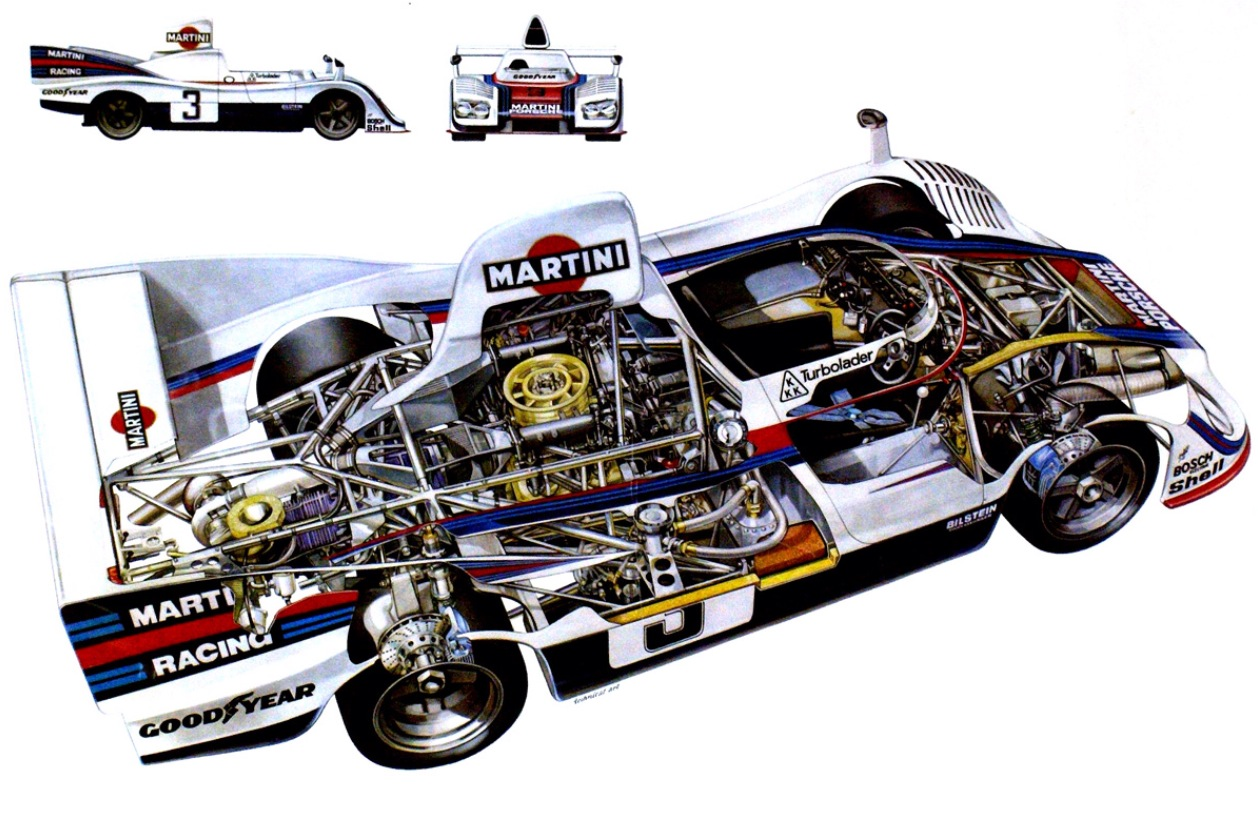
Multi tubular spaceframe chassis based on the 908/3 and 917 designs. Engine Type 935/73 B6 2142cc, 2 valve SOHC Bosch fuel injected, single KKK-turbo with intercooler, circa 540bhp@8000rpm in 1976. Gearbox Porsche 5 speed with LSD. Double wishbones and coil spring/dampers with adjustable roll bars front and rear. Ventilated steel disc brakes, rack and pinion steering, weight 700Kg. (unattributed)
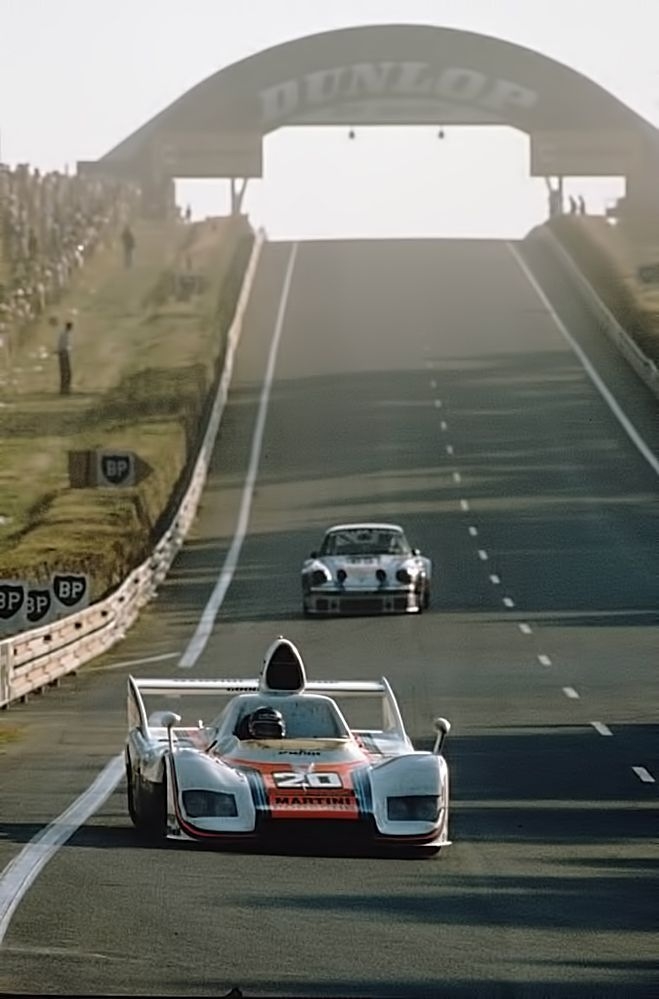
Jacky Ickx in the winning Porsche 936. Le Mans 1976. (unattributed)

Jacky Ickx again, Le Mans 1976. (Automobile Year)
Photo Credits…Automobile Year

Diana Dors displays her undoubted goodies and hangs on bloody tight during the classic car parade lap before the 1967 Sebring 12 Hours…
The actress’ movie career needed a publicity boost, this ride on ‘the bonnet’ of a Ford GT40 Mk2B deemed a good idea at the time, one wonders at the risks involved. The gorgeous 38/24/36 bombshell would have made a hell of a mess of a nice car had she parted company with it…
Photo…Tom Bigelow

Michael Schumacher’s Benetton Ford just in front of Nigel Mansell’s Williams Renault. He took his first GP win having made his Championship debut at Spa with Jordan 12 months before…
Schumacher’s 1991 Belgian Grand Prix debut was in a Jordan 191 Ford. His Sauber Mercedes sportscar performances didn’t make it clear that ‘The Next Superstar’ had arrived but he qualified 8th and ran 4th retiring his car with clutch dramas, his brief drive was enough to convince Flavio Briatore to sign him up on the spot.
Roberto Moreno lost his Benetton seat to the German, swapping across to Jordan, Schumacher took a 5th and two 6th placings by seasons end.
1992 would be a tough year for all but Williams.
‘Active suspension’ experiments which started at Lotus with Colin Chapman tasking his engineers to explore it as far back as 1981 with the Esprit road car and in F1 from 1987 met an ‘apex’ with the Williams FW14B/15C Renault’s in 1992/3.

Nigel Mansell, Williams FW14B Renault, the dominant car of 1992, here at Spa. (unattributed)
The Patrick Head/Adrian Newey designed cars were powered by a 3.5 litre Renault V10 considered to have around 760bhp, 30bhp more than the Honda V12 by seasons end.
But the key to the cars dominance; Nigel Mansell became the first driver to achieve 9 wins, and the title that year, was the cars carbon fibre chassis which incorporated active suspension. The advance of computer technology finally allowed the exploitation of suspension actuators to deploy the system effectively.
The Williams 6 speed gearbox incorporated traction control and was of the semi-automatic type pioneered by the Ferrari 640 in 1989. The car also incorporated anti-lock braking for a time. The promise shown later in 1991 was now converted into stunning, consistent race winning pace.
Benetton B192 Ford…

(Terry Collins)
The Benetton B192 was a conventional, well engineered, ‘chuckable’ chassis developed by Ross Brawn and Rory Byrne.
The chassis was carbon fibre, suspension by wishbones front and rear with coil spring/dampers actuated by pushrods. The gearbox was Benetton’s own transverse design 6 speed manual.
The Ford Cosworth HB 75 degree 3.5 litre V8 developed around 700bhp @ 130000rpm, well short of the Honda and Renault’s output but the car was consistently fast and ‘best of the rest’ after the dominant Williams and the McLaren with which Senna took 3 wins.

Jean Alesi, Ferrari F92A and Schumacher collide after an attempted Schumi pass on lap 12 of the 1992 Monaco GP. Jean’s car was damaged taking him out of the race, MS 4th in the race won by Senna’s McLaren. (unattributed)
Schumacher’s 1992 Season..

MS Benetton B192 Ford, Spa 1992. (unattributed)
Schumacher was 3rd in the drivers championship in a season of speed and consistency; he took 2nds in Spain, Canada and Australia and four 3rds, his breakthrough first win was at Spa, exactly 12 months after his GP debut.

THE classic Spa shot, MS La Source hairpin 1992. (unattributed)
In a race of changing fortunes and variable conditions good or lucky pit work put him on dry tyres at the right time; Mansell and Patrese in the other Williams chased him down but both had cracked exhausts which took the edge of their engines performance. Schumi took the win from Mansell, Patrese, his Benetton teammate Martin Brundle, Senna’s McLaren MP4/7A Honda and Mika Hakkinen’s Lotus 107 Ford.

Remember the skid plate sparks!? L>R; Hakkinens 6th placed Lotus 107 Ford, Schumacher and Alesi’s Ferrari F92AT, he spun on lap 7 so its early in the race. (unattributed)
The Schumacher/Benetton/Ford combination took the drivers (but not the manufacturers) title in a season of tragedy and controversy in 1994, the 1992 B192 was an important stepping stone in that evolution…
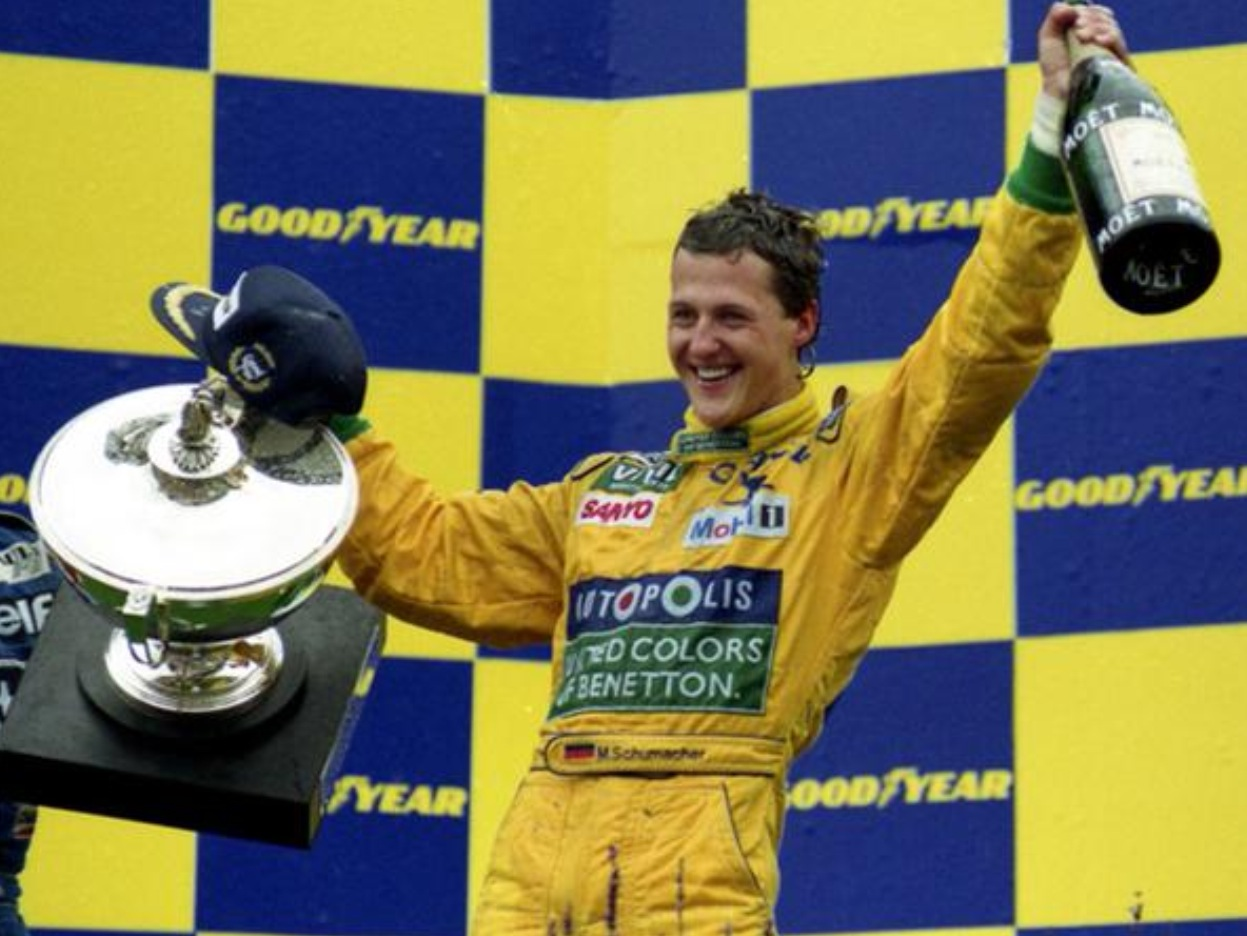
Spa 1992 victory dais; the first of 91 GP wins. (unattributed)
Credits…Terry Collins
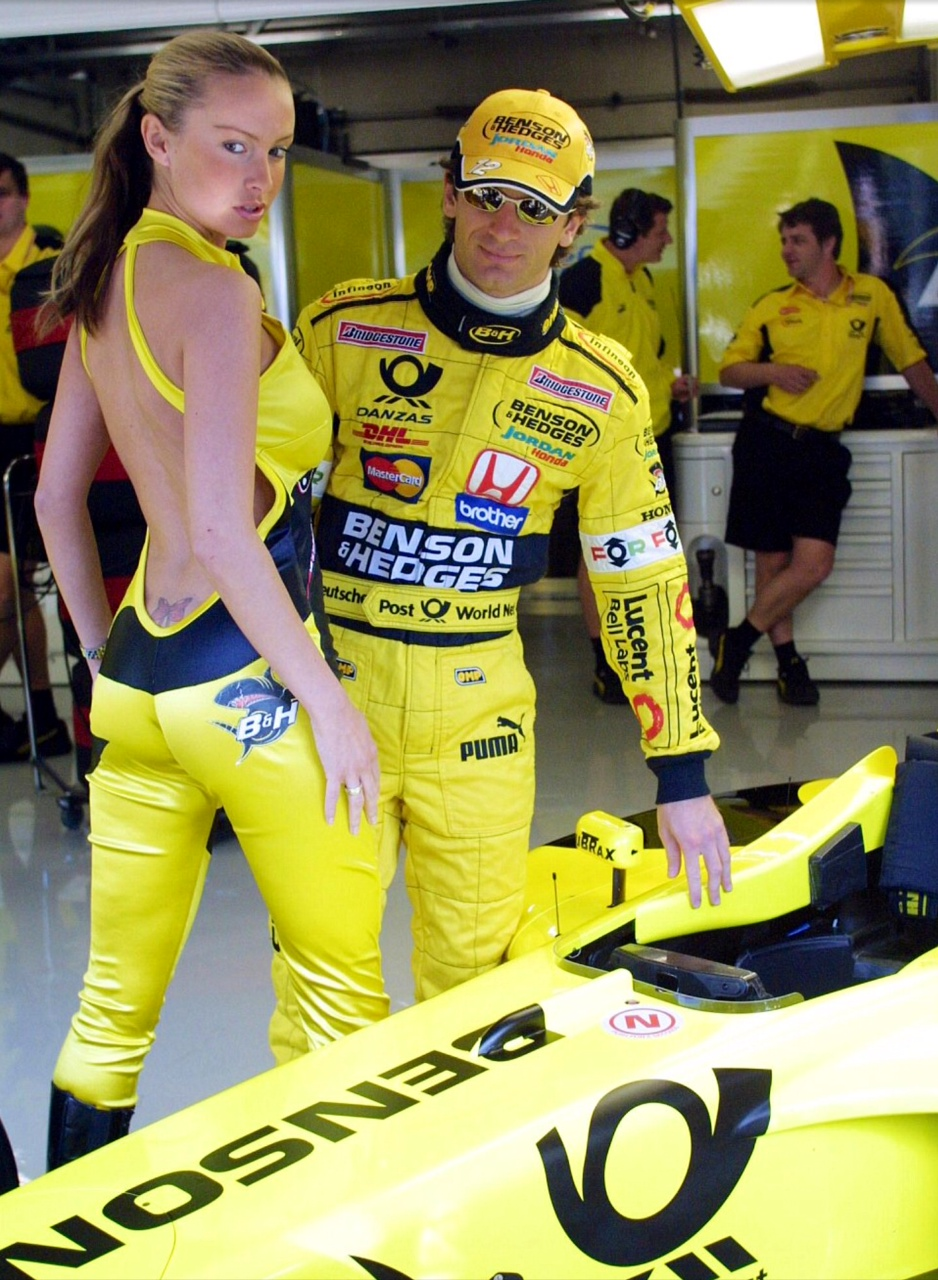
Jarno Trulli doing his best to focus on matters at hand during the Austrian Grand Prix weekend of 2001…
He qualified his Jordan EJ11 Honda very well in 5th, but a lapse of judgement on Sunday, he passed a red light whilst leaving the pitlane resulted in his disqualification, seems understandable in all the circumstances.
I struggle a bit with ‘the age of adornment’ one of my sons has a ‘sleeve’ which is suboptimal as a parent but i must confess to finding little to complain about in the discretely placed butterfly in this particular case!
Eddie Jordan really added a lot of ‘fizz’ to F1 in so many ways did he not!?

Michael Andretti’s McLaren MP4/8 Ford Silverstone lines being scrutinised from above…
Michael was in and out of Grand Prix racing far too quickly, in less than a season. His 1993 run of woe was made worse at Silverstone, he qualified back in the pack, rain ruined his qualifying run and then spun on the first lap, ending his race, he was going too hard too early.
Teammate Ayron Senna qualified 4th and lost 3rd when his car failed on the last lap, he was classified 4th. The race win was taken by Alain Prost in a Williams FW15C Renault.
Click on this link to the article i wrote about Andretti’s 1993 season; https://primotipo.com/2015/02/06/michael-andretti-and-f1/
Credit…reddit.com
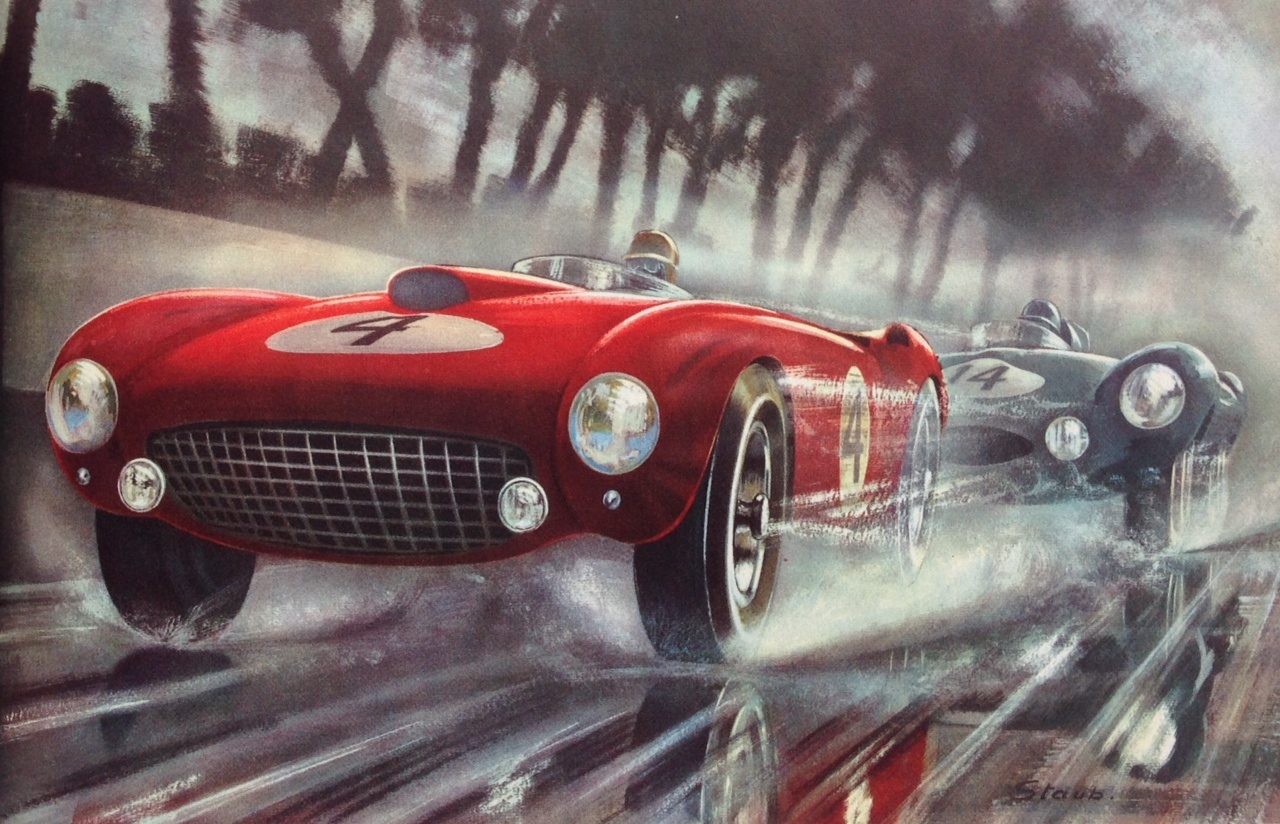
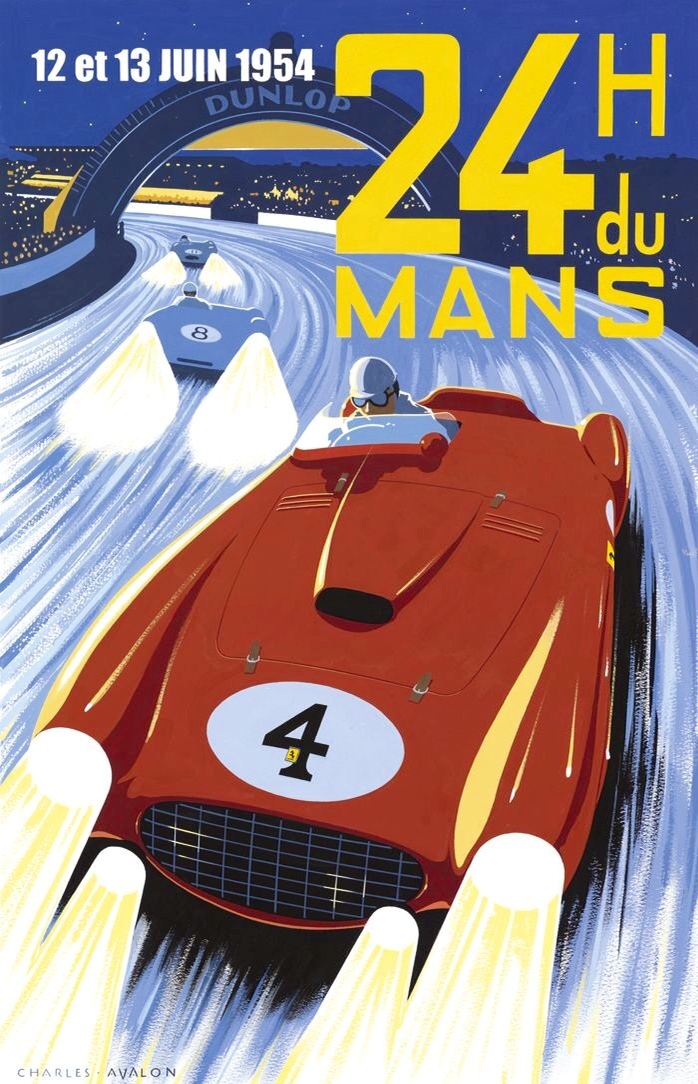
Max Staub’s painting depicts the battle between the first and second placed Ferrari 375 Plus and Jaguar D Type at Le Mans on 12/13 June 1954…
There was a lap between the cars at the end of the race, Froilan Gonzalez shared his Ferrari with fellow GP driver Maurice Trintignant and Duncan Hamilton the ‘D’ with Tony Rolt. The Brits won the race in an XK ‘C Type’ the year before.
In one of the most exciting events at Le Mans to that point the large lead of the Ferrari was diminished to about 1.5 minutes when the Fazz refused to fire at a pitstop with about 2 hours to go. Eventually a flooded magneto head was diagnosed and rectified, the Ferrari sped on to win a famous victory despite the efforts of Hamilton in the final stint.

Fantastic shot taken at about 9pm in the evening, at that time on Saturday night competitors lights had to be turned on and remain operational all night. (Yves Debraine)
Here is a longer 1950’s Le Mans Article with a Ron Flockhart twist for those with an interest in this period…
Le Mans 1957 ‘D Type Jaguar’ Rout: Ron Flockhart Racer and Aviator…
Credits…Max Staub, Yves Debraine, Charles Avalon

(unattributed)
The ‘Old Majestic circuits’ still afford talented photographers a great canvas on which to display their talent…
Spa is one of them. Sure the backgrounds aren’t as good; trees are more distant, stone walls, chateaux and so on lacking but then driver safety is paramount. The ‘snappers’ can’t get as close either, again this is a good thing as occasionally, i remember a poor bloke at Albert Park, photographers have been killed as well.
Daniel Ricciardo won this race, his third and last win in a year in which he comprehensively blew-off Sebastian Vettel. Daniel extracted the most from the complex new generation cars with their energy recovery systems incorporated in the 1.6 litre turbo-V6 mix. Petite Prix rather than Grand Prix cars?…

Daniel Riccardo, Red Bull RB10, Spa 2014.
Photo Credit…Getty Images
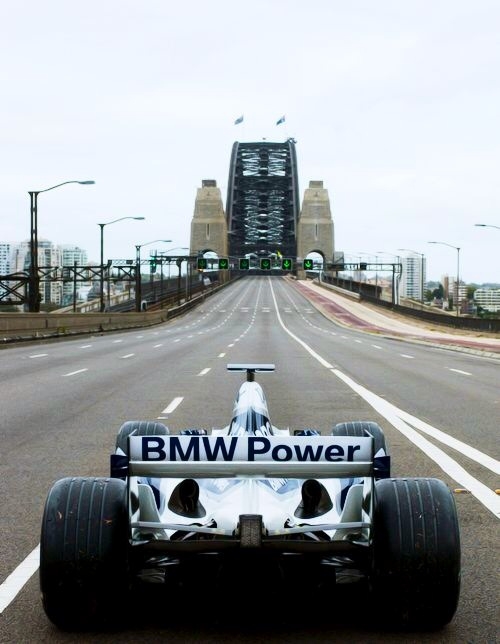
On 27 February 2005 Mark Webber did ’10 laps’ of Sydney Harbour Bridge in his Williams FW26B BMW F1 car…
Webber had just joined Williams from Jaguar and much was expected of his shift to a top team. The Harbour Bridge run promotion was part of the build up to that years AGP held at Albert Park on 6 March.
The Bridge, a critical part of Sydney’s traffic flow was closed for 5 hours for the sortie which itself took only 10 minutes, he was flagged away by New South Wales Premier, Bob Carr.
The 2004 spec, V10 engined car was based at the City end of the Bridge and went backwards and forwards between the CBD and Kirribilli, Mark flicking the car to make the ‘tight u turns’ required. The FW26, a race winning car in Juan Pablo-Montoya’s hands in 2004, was fitted with wets in deference to Sydney’s ‘moody weather’ on the day.
Webber’s two seasons with Williams were not especially successful ones although 2005, 10th in the Drivers Championship, 3rd place at Monaco his best was better than 2006 when he was 14th in the standings. The move to the nascent Red Bull team the following year was the critical move to get into an ultimately race-winning team/car. And some celebrated duels with ‘enfant-terrible’ teammate Sebastian Vettel!
Giancarlo Fisichella won the 2005 AGP, confirming the renaissance of Renault as a team, teammate Fernando Alonso won the first of his World Championships in 2005 in the 3 litre V10 Renault R25. Mark Webber qualified 3rd and finished 5th at Albert Park in a good start to the season.
YouTube Footage…
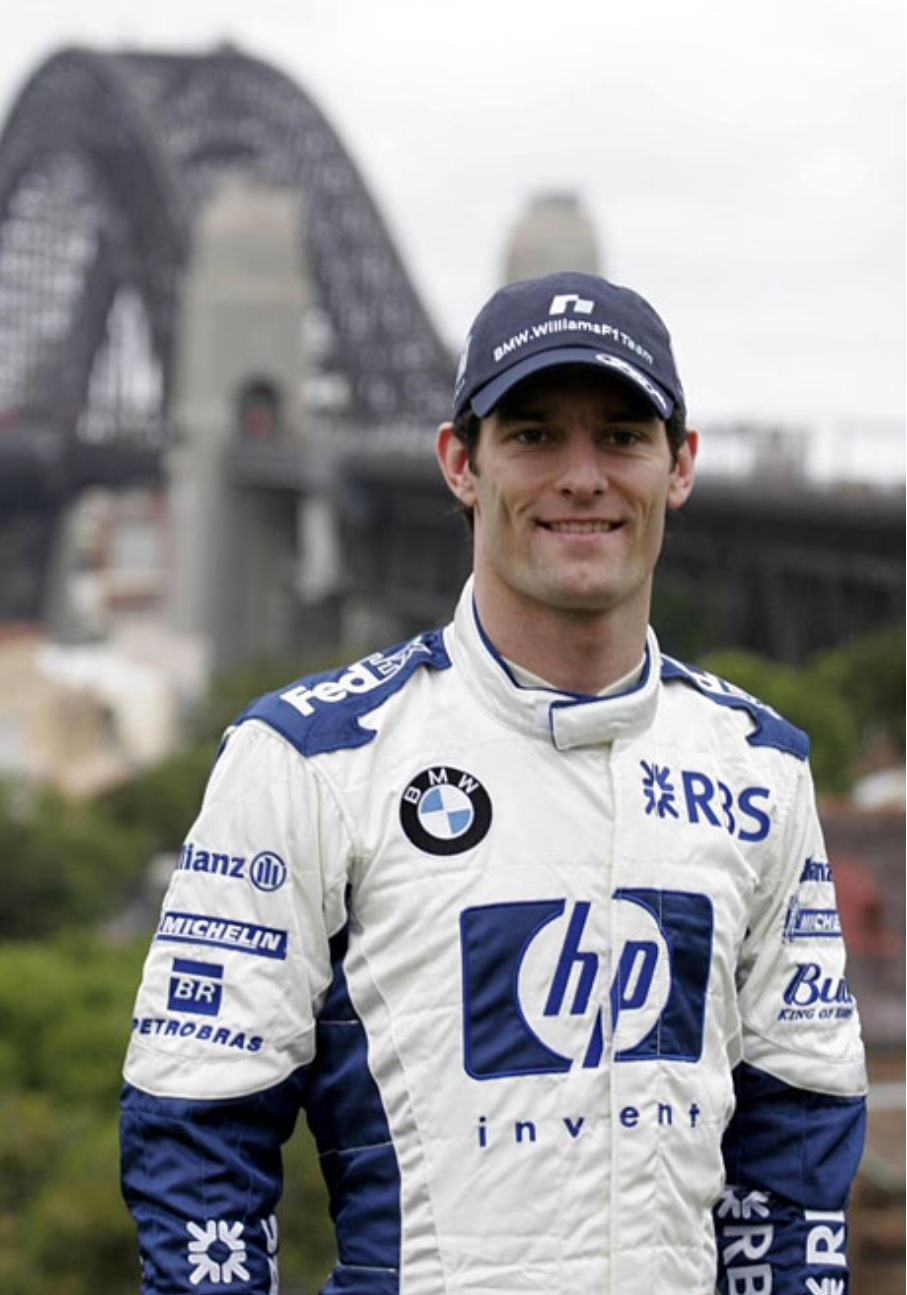
Happy chappy prior to the start of the 2005 season. I always thought Williams and Webber could have and should have achieved more, the problem was the team not MW, Williams having a fall-off in competitiveness at the time. A pity. Sydneysiders may know this spot, photo taken from the Rotunda at Observatory Hill Park looking North. Webbo would have had to elbow aside a couple of wedding groups which are booked solidly back to back for ‘happy snaps’ in the warmer months. Its my old neighbourhood, i lived there for 9 years,.The Rocks, Millers Point, Barangaroo, Observatory Hill and Sydney Observatory itself all worth a good look on foot.
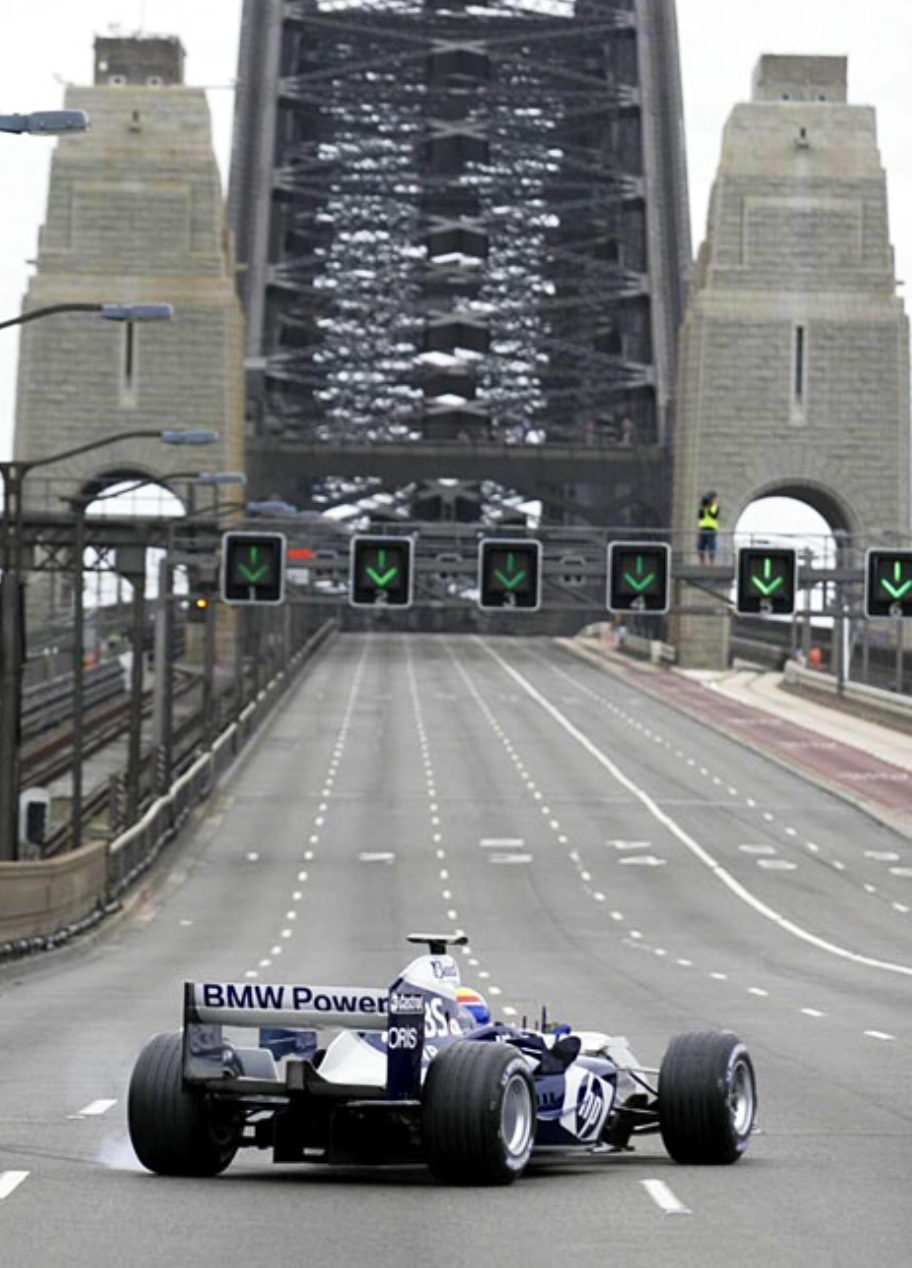
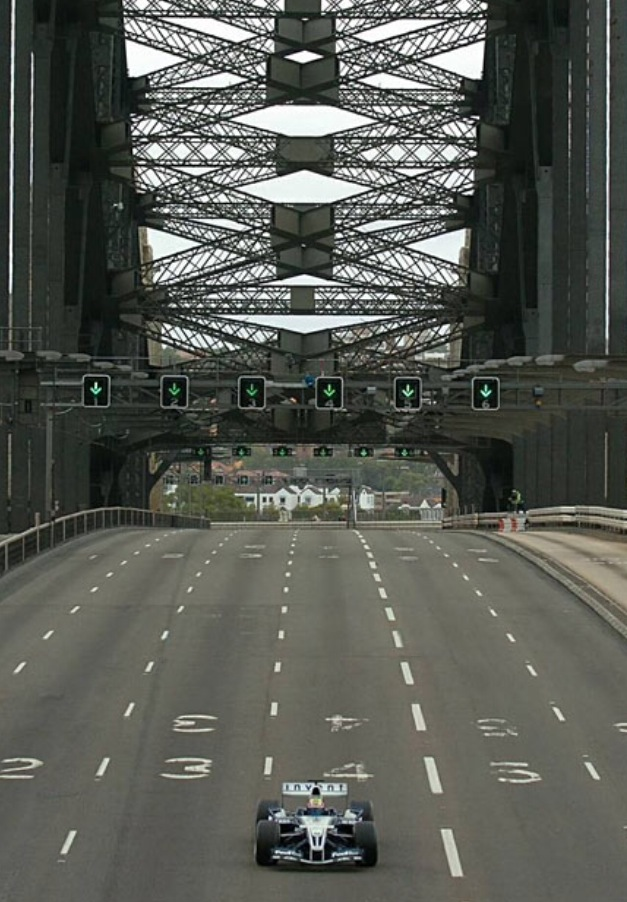
Photo Credits…fullboost.com
 primotipo...