Archive for the ‘Fotos’ Category

image

A warm but gloomy Autumn day greeted the entrants of the Ferrari Owners Club annual concourse in Melbourne this morning…

Racing Ferraris’ are fairly thin on the ground in Australia so the cars were predominantly road cars with a bias towards later models of the last 15 years.

The most interesting entries for me were both replicas; one in the style of a Ferrari Dino 246 Sports Spider and the other a Maserati 450S, both racers of the late 1950’s. Some of the latter cars donor parts were from a Quattroporte road car of the 60’s by the look of the ‘Tipo 107’ plate on the dash.

Neither car is allowed to race in Historic Racing in Oz given our strict period compliance rules but both would be mighty fine and fast track day and road cars…

image

Ferrari Dino 246 Sport Spider replica

image

image

image

Maserati 450S replica

image

Workmanship of 450S replica evident. Both cars built by Vintage and Historic Restorations in suburban Melbourne.

image

Replica Ferrari Dino on the left and Maser on the right.

image

image

image

image

image


zasada 911

‘Polish rally ace Sobieslaw Zasada gave it all he had on the Numeralla to Hindmarsh Station stage, and the Porsche responded with the characteristic wail of its air cooled flat six engine. He improved from 9th to 5th place on this stage and ultimately took 4th place in the Marathon.’

The London-Sydney Marathon was run between 24 November and 17 December 1968. A field of 98 cars set out on a route covering 10,000 miles (16,000 kilometres) across Europe and Asia to Bombay, then from Perth to Sydney in Australia. It was the first in a series of epic transcontinental car rallies held in subsequent years, and possibly the most memorable of all. The event was sponsored by the London Daily Express and the Sydney Daily Telegraph and captured the imagination of the world, as the respective newspaper proprietors had hoped.

I was fortunate to be able to witness and photograph the final competitive stage of the event, over rough, unmade roads between Numeralla and Hindmarsh Station in southeastern New South Wales. This stage was designed to be a final, extreme test in order to find a clear winner.’

(Numeralla is a tiny little hamlet in sub-Alpine country not far from Cooma, between the national capital, Canberra and the NSW snowfields areas of Thredbo/Perisher Valley. The final run to Sydney was circa 420Km)

bianchi

‘The Bianchi/Ogier Citroen was a clear leader on this final competitive stage from Numeralla to Hindmarsh Station. There were only easy transport stages then until the finish in Sydney. The Citroen had excelled on the rough, outback roads of Australia as other competitors, including Roger Clark in a very fast Cortina Lotus, succumbed to mechanical problems.

As it happened, the result was determined on the subsequent, easy transport stage when the leading car, the Citroen DS21 of Lucien Bianchi and Jean Claude Ogier, was put out of the event in a crash with an out of control spectator car. Andrew Cowan/Coyle/Malkin in a Hillman Hunter unexpectedly inherited the lead and won the Marathon. A total of 56 cars reached the finish line in Sydney.’

cowan london sydney

‘The Hillman Hunter seemed an unlikely contender, but Andrew Cowan had this low budget, works car in second place to Bianchi by the end of the Numeralla to Hindmarsh Station stage. He then simply inherited the lead when Bianchi’s Citroen was cruelly eliminated when it was hit by an out of control spectator car on the following transport stage’.

zasada 911 2

‘The mighty Zasada/Wachowski Porsche waits to leave at Hindmarsh Station. It finished in 4th place. Its interesting ‘kangaroo catcher’ was never tested.’

Check out Bruce Thomas’ photographs of the rest of the Numeralla to Hindmarsh Stage…

https://www.flickr.com/photos/96982658@N05/sets/72157644193948282/comments/

Nowra Stage and Sydney Finish…

The first part of this article above was uploaded in April 2015.

In September 2018 Rod MacKenzie, a professional photographer whose work I have used many times offered to share the following photographs he took of the Cowan Hillman, crashed Bianchi Citroen and destroyed spectator’s Mini during the Nowra stage.


(R MacKenzie)


(R MacKenzie)


(R MacKenzie)


(R MacKenzie)


(R MacKenzie)


(R MacKenzie)


The final series of photographs are of scenes at the finish in Hyde Park, Sydney.

This is a very familiar place for many Australians- I lived in the CBD very close to this spot for 9 years, it is thrilling to think of the end of the Marathon all those years ago, the excitement of the crowd, the colour, noise. Wonderful evocative shots.


(R MacKenzie)


The Cowan/Coyle/Malkin Hunter above and the crew imbibing some of a sponsors product below- a well earned drop no doubt!


(R MacKenzie)


(R MacKenzie)

Australian Leg of the Marathon Map…

london to syd map

(Stephen Dalton Collection)


Etcetera…


(M Thomas)

The Zasada and Yannachas Porsche 911s at rest in Perth.

Resting place for the public to check out the cars was Gloucester Park trotting track.


(M Thomas)


(M Thomas)


(M Thomas)


(M Thomas)


(L Manton)

British Leyland press photographs…

This series of shots are from the collection of Luke Manton.

The first photo is on the start ramp at Wembley, Graham Hill just to the right of the flag.

(L Manton)

Evan Green, Jack Murray, did Miss World accompany them perhaps?

(L Manton)


(L Manton)

Cooper S and Austin 1800s in build at Abingdon.

(L Manton)

Credits..

Bruce Thomas photos and writing, Rod MacKenzie photos and Stephen Dalton Collection for the maps. Murray Thomas Collection, Luke Manton

Finito…
 

image

Phil Hill, Ferrari Dino 246, Italian GP Monza 1958. His debut GP for Ferrari

Phil Hill looking fairly relaxed on the occasion of his Ferrari Grand Prix debut…

Hill had been part of Ferraris’ sports car squad since 1955 and ‘shamed’ the chief into promoting him by making his Grand Prix debut in the French GP in Jo Bonniers’ Maserati 250F.

He justified Ferrari’s faith in him placing 3rd in his Dino 246. Tony Brooks Vanwall won the race.

Love Hill’s natty race safety attire! Check, short sleeved blue shirt his first line of defence against fire, mind you the prevailing wisdom of the day was to be thrown clear of the car in the event of a ‘big one’.

It’s interesting to reflect on how far safety advanced in the following ten years- in cars advances included monocoque chassis, roll bars, six-point harnesses and fire extinguishers. In terms of driver safety ‘Nomex’ fire retardant ‘suits with Bell introducing the first ‘Star’ full face helmet in 1968 spring to mind.

Mind you the cars were far faster over that decade, the GP field was ‘winged by the end of 1968 with another leap in performance as a consequence. The circuits hadn’t kept pace though, the Jackie Stewart led Grand Prix Drivers Association crusade to improve circuit standards and safety was just underway, he was a pariah in the views of some traditionalists but many drivers lives were saved as a result.

We lost some of the visual splendour of classic circuits and Phils’ striped blue shirts…

enzo

Enzo Ferrari & Phil Hill Monza 1958- ‘just do as i say and you will be fine…'(Jesse Alexander)


italian

1958 Italian GP Start…# 28 Tony Brooks & # 30 Stuart Lewis-Evans, both in Vanwall VW57’s & Mike Hawthorns’ Ferrari Dino 246. Brooks the winner of the race from Hawthorn & Hill. Lewis-Evans DNF. (Unattributed)


phil 2

Phil Hill Ferrari Dino 246 Italian GP Monza 1958- that steering wheel is so ‘period’! (Jesse Alexander)

Etcetera…

Phil looking very youthful, 25 years of age, at Torrey Pines, California in July 1952, car is a Ferrari 212 Export- a win it seems!

Photo Credit…

Jesse Alexander

Finito…

vettel malaysia

Sebastian Vettel, Ferrari SF-15T. Malaysian GP 2015. (MotorSport)

Mark Hughes in his usual insightful way explains why Ferrari gave us a welcome change of colour at the chequered flag…

http://www.motorsportmagazine.com/f1/reports/2015-malaysian-grand-prix-report/

hammo

Lewis Hamilton, Mercedes F1-W06, Malaysian GP 2015 (MotorSport)


geoff and jack

‘Cmon Dad £1 a week isn’t much…you know i’m saving for a racing car!? Let’s cut a deal and then you can go back to qualifying ok?…’

I doubt he did the deal, Jack was a notoriously tough negotiator and parsimonious, but Geoff did get his first racer, a Bowin P6F Formula Ford in 1974 and did rather well from there, Jack doing his bit along the way!

jack and geoff
Geoff’s first racing car drive? Jack clicking the watches at Oran Park, Sydney 16 August 1972. Car is the Jack Brabham Ford owned Bowin P4X normally raced by Bob Beasley, and in a bit of trivia, the car in which  Jack won his last single-seater race at Calder in 1971 in the ‘Race of Champions’ which pitted current and past stars against each other in FF’s (Getty Images)
brabham bowin p6f
Geoff Brabham in his Bowin P6F FF during his 1974 national campaign, F1 driver, Larry’s brother, Terry Perkins won that year in an Elfin 620 (Bob Jane Heritage)

Brabham had done a few races in 1973 in an Elfin 620 FF but mounted a serious camapign for the Australian National Formula Ford title in 1974…

He raced John Leffler’s championship winning car from 1973. These Bowins were very advanced for their day having a wedge shape, hip radiators and rising rate suspension front and rear, this in a car first built in 1972- so advanced were the cars that later Reynard designer, Malcolm Oastler was still winning in a P6F in 1983: http://www.bowincars.org/mediawiki-1.6.12/index.php?title=Bowin_P6

Geoff progressed to Australian F2 in 1975 winning the title in a Birrana 274 Ford, ANF2 then was a 1.6 litre, DOHC two-valve formula, effectively mandating the Lotus Ford twin cam engine, the ‘ducks guts’ variant, the Hart 416B produced circa 205bhp.

This wings and slicks experience was important for Brabham in his UK F3 and US Super Vee racing in various Ralt RT1s over the next three years.

brabham amaroo
Brabham, Birrana 274 leads the F2 field at Amaroo Park, Sydney in 1975. He won the title. Ray Winter Mildren ‘Yellow Submarine’ in second and Andrew Miedecke Rennmax BN7 third, all Hart Ford powered. Birranas were jewels of cars built by Malcolm Ramsay and Tony Alcock in Adelaide between 1971 and 1974, around 21 were built: FF,F3,F2. Unable to make a $ in Oz they ceased construction, Alcock moved back to the UK joining Graham Hill and was on That Fateful Flight… (Unattributed)
gb raltrt1
GB BP British F3 Championship 1977. Brands Hatch 11 September. Ralt RT1 Toyota DNF in a race won by Derek Daly’s Chevron B38 Toyota. (David Lawson)

Brabham contested the British F3 Championships in 1976 and 1977 racing a Ralt RT1 Toyota, products of father Jack’s former business partner, Ron Tauranac of course.

He then moved to the United States in late 1978 and won the US Super Vee Championship aboard a Ralt RT1 in 1979. Critically, he broke into ‘big cars’ late that year with a single seat Can-Am 5-litre Hogan HR001 Chev.

image
Who said spaceframes were a thing of the past in the elite categories by 1979? GB in his Hogan HR001 Chev, Riverside GP, fourth. Jacky Ickx heading out to practice behind in his Lola T333CS Chev, Jacky won the CanAm title that year. Al Holbert raced the Hogan for most of the year, but it wasn’t quick or reliable, GB drove it in the last two rounds. (Chris Nally)
brabham vds
VDS001 Chev, GB won the Can-Am in this car in 1981. VDS raced the Lola T530 in the previous two years, this Trevor Harris designed car used the centre of a Lola T530 monocoque; the fuel cell, roll bar and engine mountings. Front suspension was T530 derived but the rest of the car, inclusive of Tony Cicale designed body, was built at VDS California workshop. (Unattributed)

Over the following years he mixed Indycars and Can-Am machines…

He won the 1981 Can-Am Championship in Count Rudy Van der Straaten’s VDS Teams self built car, VDS001 having been quicker than teammate and 1980 Champion Patrick Tambay in identical Lola T530 Chevs in the second half of the season.

He raced Indycars from 1981 to 1987, and then periodically in the early 90s, in the last four years just competing at Indianapolis, his best Indy finish was fourth in a VDS entered Penske PC10 Ford in 1983.

brabham indy car
VDS Racing Penske PC10 Ford, Q 26th finished fourth at Indy in 1983, his best result. (Unattributed)

In sports cars he was an ace…

Brabham won four IMSA GT Championships with various of Nissans sports cars run by Kas Kastner in the US.

He competed at Le Mans with Nissan in 1989 and 1990 and was a logical choice for Renault as a safe, experienced, fast driver as part of the 1993 Peugeot Team to repeat the success of the year before, the 3.5-litre V10 905 Evo 1 a very quick car, in essence a two seat GP car. He won the race partnered by Eric Helary and Christophe Bouchot, taking a race win that Jack didn’t, JB wasn’t a LeMans regular but did compete with Matra in 1970, his final season in Europe. https://primotipo.com/2014/09/01/easter-bathurst-1969-jack-brabham-1970-et-al/

Jack settled the family in rural Wagga Wagga in New South Wales in 1971, well away from motor racing but it was not long before the pleasures of bucolic life, whatever they may be, were overwhelmed by the Brabham boys ‘need for speed’, all graduating from Australian Formula Ford to F3 in the UK in turn!

image
Peugeot 905 Evo 1 Le Mans 1993. GB won the race partnered by Eric Helary and Christophe Bouchot. Jean Todt popped him into the car for the final stint. (Unattributed)
brabham in bmw
Mid 90’s in Australia in one of his BMW 2 litre ‘Super Tourers’. (Unattributed)

Geoff Brabham returned to Australia in the early 1990’s racing both 2-litre Super Tourers and V8 Supercars. He was runner up in both the 1995 and 1997 Super Touring Championship and won the 1997 Bathurst 1000 Super Touring race partnered by his brother David.

GB had a remarkably diverse career, as versatile in his time as Jack was in his, and a career of achievement especially if comparisons with his father, such a difficult act to follow, are put to one side!

The Brabham Racing Dynasty continues with Geoff’s son Matthew finishing fourth in the 2014 Indy Lights Championship driving a Dallara Nissan for Andretti Motorsport. http://matthewbrabham.com/ David Brabhams’ son Sam is also competing and hoping to make the Le Mans grid this year…

Etcetera…

GB and supporters with his Ralt RT1 Super Vee at Pocono in 1979, the year he won the US FSV championship (Matt Brabham)
image
Another angle of the wild VDS001 Chev in 1981. GB Used both this car and Lola T530 Chev to win the Can-Am title that year, circuit unknown. (D Hodgdon)
brabham ralt rt4
GB contested a few of our Formula Pacific Australian Grands Prix at Calder. Here Ralt RT4 mounted in 1983, he finished fourth in the race won by Roberto Moreno, also, inevitably in a Ralt! Alan Jones, Jacques Laffitte also contested the race. (John Brewer Collection)
brabham road america
GB at Road America IMSa 1992. Nissan NP91C third behind two Eagle Mk3 Toyotas. (Mark Windecker)
905 drawing
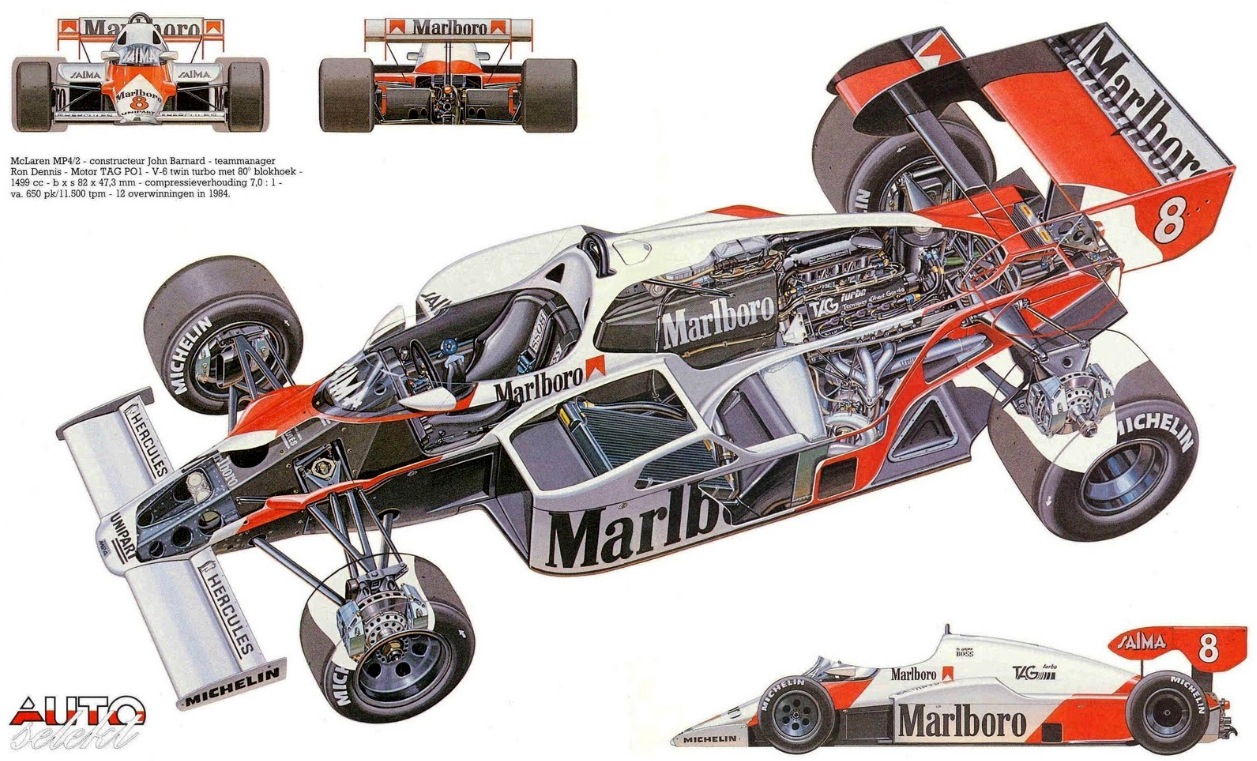
1992/3 Peugeot 905 Evo 1. Carbon fibre chassis weighing 750Kg. ‘SA35’ 80 degree 3499cc DOHC four- valve fuel injected V10. 670bhp@12500rpm. 6 speed ‘box.

Tailpiece…

geoff and jack moulton

Photo Credits…

Bernard Cahier, Chris Nally, Mark Windecker, RIAM Photo Archive, John Brewer Collection, David Lawson, Bob Jane Collection, Getty Images, Don Hodgdon

Finito…
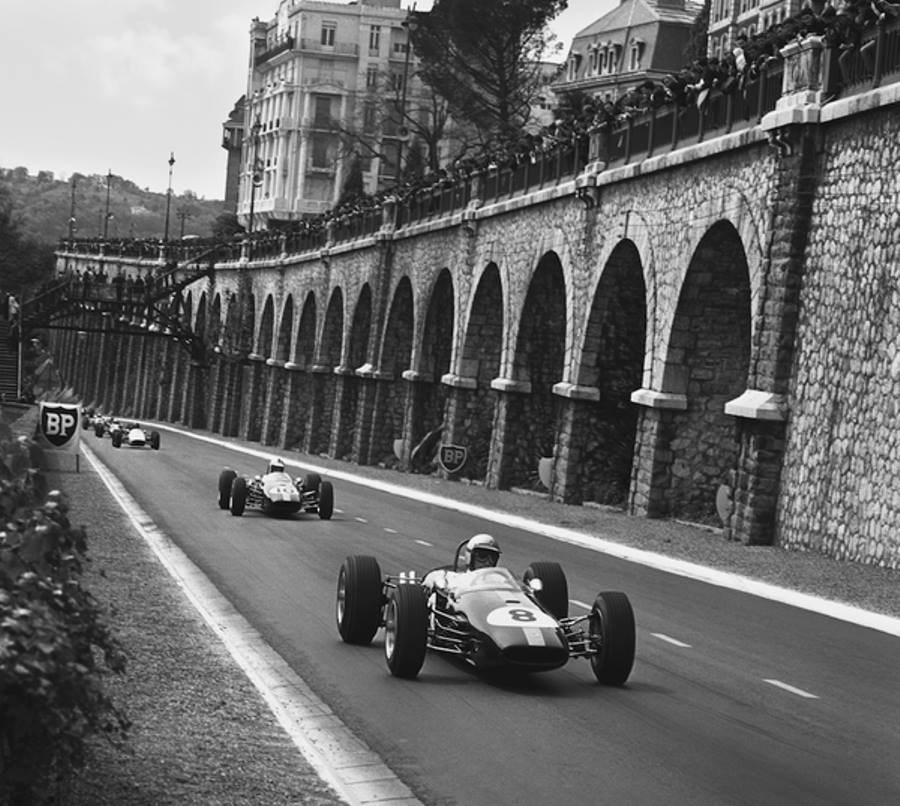
sprite 1958 alpine rally (Yves Debraine)

The Ray Brookes/Rob Wells-West Austin Healey Sprite zips through the Alps on is competition debut. Sprites finished first, second and third in their class…

The iconic Bugeye was released to the press on 20 May 1958 just prior to the Monaco Grand Prix. The cars competition debut was shortly thereafter, in the July Coupe des Alpes, John Sprinzel and Willy Cave leading home a 1-2-3 in class and finishing 15th overall. Tommy Wisdom drove the second placed Sprite and Ray Brookes the third. The event was won by the Consten/de La Geneste Alfa Romeo Giulietta.

The first of many Sprite International and Club competition successes cars which continue to give pleasure to their owners 60 years after release. See this Shell film of the 1958 event;

ah sprite 1958 alpine rally Ray Brookes and Rob Wells-West at Monaco during the 1958 Coupe des Alpes (unattributed)

Sprites were all about fun, modification and competition.

They begged for it and were responsive to it. I flirted with one for 18 months or so when i first got my licence, my younger brother couldn’t afford a car so i part funded/owned his Bugeye which had been fitted with a Skoda! engine and gearbox in its past.

It sounds naff but the all alloy engine fed by a 45DCOE Weber and breathing through bigger valves and extractors made good power, the engine also considerably lighter than the good ole A-Series, so handling was enhanced as the road testers would say.

I was busy fiddling with open wheelers at the time, so it was never used competitively but it was a quick, nimble, pointy, fun road car…as they were and are.

austin-healey_sprite_1958_page (Theo Page)

The chassis is of unitary construction, 948cc BMC A-Series OHV four cylinder 43bhp engine fed by twin 1 1/8 inch SU carbs, four speed gearbox. Front suspension coils and wishbones with the lever arm shock as the top links. Rear solid axle sprung by quarter-elliptic springs again with lever arm shocks. Drum brakes front and rear.

1958-Austin-Healey-Sprite-Hambro-All-Part-Of-The-Fun-ad[1]

(C Youde Collection)

Etcetera…
In March 2022, Caroline Youde, Rob Wells-West’s niece got in touch, below are her recollections of her uncle. Many thanks Caroline!
“Hi Mark,
Happy to share memories! Circa 1996 I took my boyfriend (now husband) to meet my uncle and aunt.  Rob was a pilot in the war captured over enemy territory when the glider he was travelling in was downed (they had taken to the air for a bit of fun!) – my husband was ex-RAF.
They got chatting about cars, another shared passion and he talked of his family owning a successful garage.  This allowed him to get into racing and it was only during their meeting did I finally get to hear his stories (he was a true gentleman, the war was never normally discussed and never liked to brag about his achievements).
His illness had taken hold so his recollections were a little muddled, but when my aunt produced an old suitcase full of his racing photos etc, he talked of the rally and the excitement of the race. Many of his photos from other races he could not recall when or where they were taken. But he spoke of Stirling Moss’s sister Pat Moss, and others, racing in full skirts!
I’ve enclosed a picture of memorabilia from the rally (above) that I had framed for my husband; it hangs with pride in the dining room and is often the topic of conversation with visitors.
They didn’t have any children so I asked if I could have his racing collection when he died.  It’s still kept in the same suitcase, with the exception of the cup and framed pieces. Mary (my aunt) and I are in touch regularly, she’s naturally very proud.  They met before the rally and his racing was a large part of their courtship, before eventually marrying.
Rob settled into a civil servant role, but his sense of adventure led them to travel the world by train, plane and automobile their whole married life (and often by iconic means, e.g. Concorde).
He inspired my husband to buy and fully restore our own Frog Eye, which we had sprayed British Racing Green in tribute to him.  Thankfully he lived to see it finished.
Kind Regards
Caroline”

Credits…

Yves Debraine, Theo Page cutaway

Many thanks to Caroline Youde, Martin Ingall, John Sprinzel, Steve Nash  and David Scothorn for assistance in identifying the driver/co-driver of 487CKP. For those with an interest in competition Sprites check out this wonderful site; http://www.sebringsprite.com/

Finito…

pedro spa

Rodriguez victorious at Spa in the 1970 Belgian Grand Prix in his BRM P153, the narrowest of wins from Chris Amons’ March 701 Ford on a circuit made for the Mexican’s skill and bravery…

pedro & ricardo 1962

(Unattributed)

Pedro and brother Ricardo Rodriguez (right) in 1962.

Ricardo died at the wheel of a Lotus 24 Climax in the Mexican Grand Prix 1962, the Rob Walker Racing entered machine’s rear suspension failed, the resultant collision killed him instantly at 20 years old.

pedro in sebring

(Unattributed)

Pedro cruising through the Bridghampton paddock in his ‘NART’ Ferrari 250P- 1963 ‘Double 500’.

pedro cooper

(Bernard Cahier)

1967 Monaco Grand Prix, Cooper T81 Maserati- the eyes have it. Tragic race of course, Lorenzo Bandini lost his life in a Ferrari 312 in the latter stages of the race.

spa 1971 rod oli winner

(Unattributed)

Spa 1000Km 1971, victory with Jackie Oliver in a John Wyer Porsche 917K, Siffert/Bell behind and finished second, the marshal gets maximum points for stupidity.

pedro

(M Le Grand)

Lotus 33 Climax, Mexico City 1966.

Team Lotus entered an ‘old nail’ for Pedro, a 2 litre BRM V8 engined 33 in a two off drive (Watkins Glen too), he qualified the Ron Harris run car eleventh but DNF with transmission failure after 49 laps. John Surtees won in a Cooper T81.

pedro and jo spa 1970

(unattributed)

Pedro #25 and Jo Siffert #24 , Porsche 917K, lap 1 of the Spa 1000Km 1970.

Friends and rivals in the JW Automotive Team, Rodriguez was ultimately the better driver. A gaggle of 917’s and 512’s behind. Siffert/Brian Redman won the race whilst Pedro/Leo Kinnunen DNF with gearbox failure on lap 44.

Rodriguez, Monaco 1967, Coopet T81 Maserati

(M Le Grand)

Rodriguez delicately caressing the big Cooper T81 Maserati V12 around Monaco in 1967. He was fifth, four laps adrift,  in the race won by Denny Hulme’s light, nimble Brabham BT20 Repco V8.

Rodriguez , Porsche 917, Brands 1000Km 1970

(Unattributed)

Pedro put in a stunning, famous drive to win the Brands Hatch 1000Km in his ‘JW Automotive’ Porsche 917K, partnered by Leo Kinnunen in 1970.

He is #10 here ‘hunting down’ the rival ‘Porsche Salzburg’ #11 917K of Elford/Hulme/Ahrens. Oh to have been there!

pedro portrait

(Automobile Year 18)

Pedro portrait 1970. I remember first seeing this photograph in the Camberwell Grammar School copy of Automobile Year 18- the review of the 1970 season, and  thinking ‘Wow!’, as I did so often in relation to the photography of that publication in that era…

MHC0177-1024x819fit

(Mike Hayward Collection)

BRM P153 at rest, British GP, Brands Hatch 1970. Rindt won in a Lotus 72 Ford, Pedro DNF, prang on lap 58.

pedro 3

Porsche 908/3 Nürburgring 1000km 1970 (Unattributed)

Rodriguez was one of those drivers who loved racing for its own sake, he competed whenever he could and was killed in an ‘Interserie’ (European Can-Am or Group 7) race at the Norisring, Germany in July 1971.

He had started the season well, lightning fast in both his BRM P160 F1 car and Porsche 917 and was pointlessly killed in a race of no importance when a slower car edged his Ferrari 512M into the wall, the car erupted into flames and one of the ‘aces’ of the era died shortly thereafter.

Photo Credits…

Bernard Cahier, Automobile Year, Mike Hayward Collection https://www.mikehaywardcollection.com/ , Max Le Grand

Finito…
mini paddo

The Mini photographed in the year of its launch, 1959, at Paddington Station by Henry Manney of ‘Road & Track’ fame…
The Mini was launched to the press in April 1959, this photo taken by Henry Manney at Paddington Station. Maybe one of our British readers can tell us if this is the site of the cars launch?

Leonard Lord, the head of British Motor Corporation, laid down the design parameters for a small fuel efficient car during the Suez Crisis, which spiked the price of oil and caused its rationing in the UK. Alec Issigonis and his small team at Morris created a design icon which was voted the second most influential car of the last century after Henry Fords Model T.

The Cheltenham Spa Express or ‘Cheltenham Flyer’ is a train service from Paddington to Cheltenham Spa in Gloucestershire. Rivalry between railway companies in the 1920’s increased speeds, the ‘Cheltenham Flyer’ so named as trains on this route were the fastest in the world at various times…Train Driver Harry Rudduck, the Tazio Nuvolari of steam ! pushed his ‘Castle Class 5006 Treganna’ train to a record of an 81.6 mph average for the 77 mile trip in 1932.

Steam hasn’t survived nor has the ‘A Series’ powered Mini but it’s comforting that both forms of transport are as contemporary now as they were in 1959…

(Henry Manney)

image

The 1970 Le Mans 24 hours was won by the Hans Hermann/Richard Attwood Porsche 917K , Kurtz, or short tail…

The win was Porsches’ first outright Le Mans victory. In second place, 5 laps behind was the so-called ‘Hippie Car’, the wildly painted Martini International 917LH, Langheck or long tail. The car was driven by Gerard Larrousse and Willi Kauhsen, starting a trend of cars with stunning finishes which continues today…

image

image

image

image

Technical Specifications…

917 Tech Specs

Photo Credits…Pinterest unattributed

jim clark wf lotus 49 1968

Jim Clark enjoying the plaudits of the crowd after his Warwick Farm win, 18 February 1968…

Its a wonderful shot on his victory lap, the crowd wandering onto the track, absolute joy on Jims’ face after a stong win, a man at the top of his game, he still hadn’t peaked as a driver and only 31 years old…

He is at the wheel of his Lotus 49 Ford DFW, the DFW the 2.5 litre variant of Cosworths’ dominant DFV 3 litre GP engine. Clark won by 10 seconds from his teammate Graham Hill, he left our shores at the end of the Tasman Series 2 weeks later as the 1968 Champion and sadly never returned.

Clark was a regular and immensely popular visitor to Australasia, the gentlemanly Scot admired and respected by fellow competitors, the media, fans and the general public alike.

His final GP win was the 1968 season opening South African GP at Kyalami, he perished in a Lotus 48 F2 car, after a tyre failure at Hockenheim on April 7 1968.

Photo Credit…Wirra TNF