Archive for the ‘Fotos’ Category

irvine monaco 1998

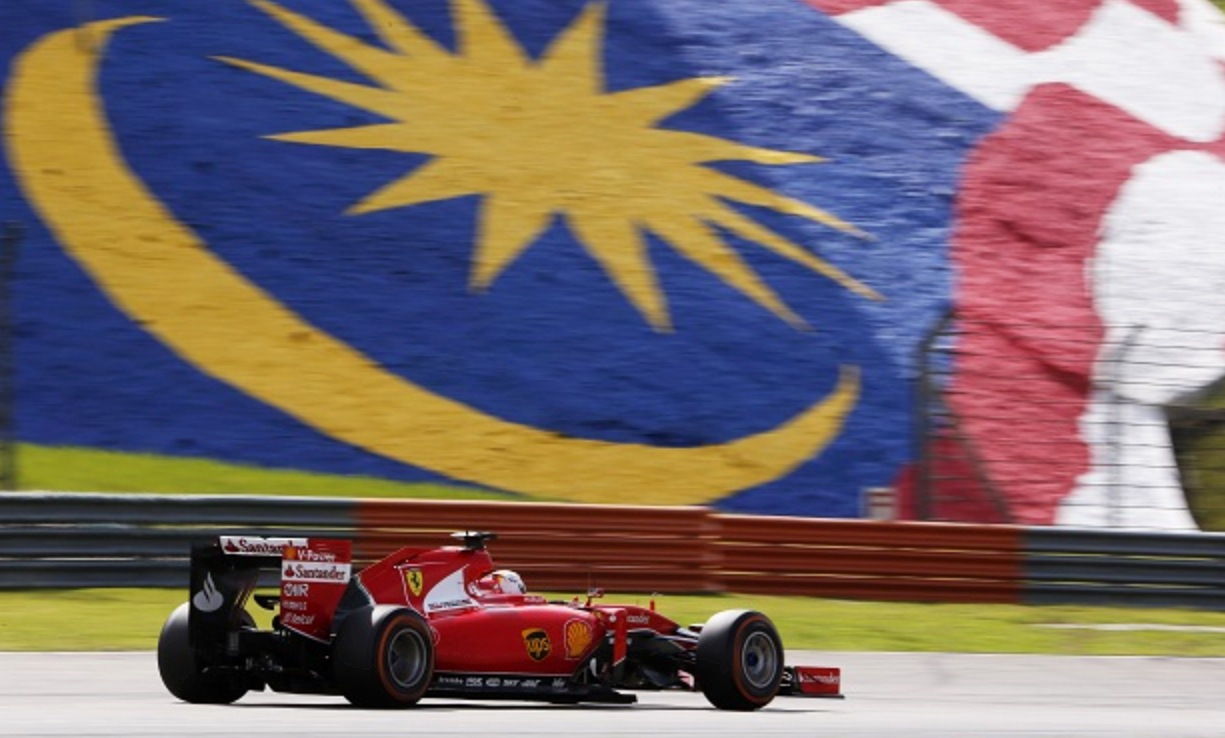
Eddie Irvines Ferrari F300 nicely juxtaposed with the topography of a Monaco Apartment…

He is on the way to 3rd place in the race won by Mika Hakkinens’ McLaren MP4/13 Mercedes, Mika also winning the title that year. Eddie didn’t take a win but was on the podium eight times finishing 4th in the drivers championship behind Hakkinen, his teammate Schumacher and Coulthard in the other McLaren.

F300 Specifications…

f300 drawing

The F300 was designed by Rory Byrne to the narrower track regulations mandated by the FIA that year. The chassis was of course carbon fibre honeycomb, suspension comprising upper and lower wishbones front and rear with pushrod actuated coil spring/damper units. Brakes are ventilated carbon fibre discs. Weight 600kg with driver.

The engine was Ferrari Tipo 047, a 2997cc normally aspirated 80 degree, 40 valve V10 delivering circa 700bhp. Transmission is a longitudinally mounted semi-automatic sequential 7 speed transaxle incorporating a ‘slippery’ diff.

irvine monaco f300

Paul Henry Cahiers’ shot of Irvine at Monaco during the race…F300 considered aerodynamically inferior  to the McLaren MP4/13 but Schumacher won 6 races the car setting up the dominance of Ferrari in the decade to come. Ferrari 2nd to McLaren in the constructors championship in ’98.

f300 cutaway

Rear end detail here…upper wishbones and push-rods, springs and shocks. Car pioneered ‘periscope’ exhausts up thru the bodywork to get exhaust pipe lengths right for optimum power. Aussie Willem Toet Ferrari aerodynamicst at the time said the ‘periscopes’ were ‘not the best solution aerodynamically as the side exits, but benefits flowed from tighter rear bodywork’.

Extensive use of heat reflective materials, gearbox and driveshafts, carbon fibre undertray and V10 all clear. The cars are not necessarily pretty to look at but the engineering detail is exquisite.

cockpit f300

90’s Momo wheel of the F300. Circuit map just in case Eddie gets lost at home! (Cahier Archive)

Tony Matthews’ superb F300 cutawayshowing honeycomb carbon fibre monocoque, pedals, 7 speed semi-auto box remember. Pedal detail including master cylinders, roll bar link for adjustment. Upper and lower wishbones, pushrod and top of the spring. Front upright, disc, caliper, Goodyear tyre on 13 inch BBS wheel…tis all there!

matthes f300 cutaway

irvine top shot f300 monaco

Photo/Credits…

Automobile Year, The Cahier Archive, Tony Matthews

Finito…
 

image John Surtees clipping the apex in Mexico in his North American Racing Team ‘NART’, factory, Ferrari 158. Ferrari was in dispute with the Italian national automobile club over its refusal to homologate his 250LM sportscar into Group 5 despite having not built the minimum number of cars to do so…the hissy-fit reflected in the cars being entered in the blue/white of Luigi Chinettis’ American NART rather than Italian national red…(Bernard Cahier)

John Surtees pilots his ‘NART’ Ferrari 158 to second place in the 1964 Mexican Grand Prix, clinching the drivers World Championship for him and the Constructors Championship for Ferrari…

On the day that Lewis Hamilton won the 2014 Championship i was flicking through some old magazines and reflected on the remarkably diverse career and achievements of Surtees.

In similar fashion to 2014 the 1964 title was also decided at the last race, in Mexico that year.

Graham Hill, Jim Clark and Surtees were all winners depending upon who finished where. In a race of changing fortunes Clark lead from the start, and was on track for the race win and his second title when his Climax engine started to lose oil and seized seven laps from the end. Surtees’ engine misfired early but sorted itself, teammate Bandini allowed him into second and the points he needed to defeat Hill, who had been given a ‘tap up the chuff’ by Bandini earlier in the race, causing a pitstop and damaged exhausts ruining his chance.

Mexico 1964, Surtees and Bandini Surtees in his Fazz 158 ahead of teammate Bandini in the flat-12 1512 early in the Mexican GP (unattributed)

Dan Gurney won the race in his Brabham BT7 Climax and Surtees the title. He was to win only six Championship GP’s throughout his long career, 1960-1972, not reflective of his talent but indicative of team choice, he wasn’t always in the right place at the right time.

Drivers Mexico 1964 Gurney, Clark, Surtees, pensive as always and Phil Hill prior to the ’64 Mexican GP. Looks like Brabhams’ haircut behind Clark? (Bernard Cahier)

Famously the only driver to win World Championships on two wheels and four…

He was born into a motor-cycling family and progressed from his fathers’ sidecar to solos and many Norton victories, before too long signed by Count Agusta to MV.

image Surtees bump starts his MV350 prior to the start of his run around the daunting Isle of Man, Senior TT 1957 (unattributed)

The departure of Gilera and Moto Guzzi allowed Surtees and MV to dominate the bigger classes, he won 350cc titles in 1958/9/60 and 500cc championships in 1956/8/9/60.

Before too long he wanted to race cars, making his GP debut for Team Lotus at Monaco in 1960, he mixed cars and bikes that year his best result second in the British GP.

Surtees on the road Riverside 1960 Surtees being blown off by a Ford Fairlane…on the way back from Riverside, USGP practice 1960. Lotus 18 Climax. 2.5 FPF Climax an incredibly tractable engine! (Bernard Cahier)
Surtees Portuguese GP 1960 Surtees made his F1 debut with Lotus at Monaco 1960, mixing a season of F1 with winning the 350 & 500 titles on bikes…here at Oporto in the Portuguese GP, he retired on lap 36 having qualified on pole on this challenging road course. Lotus 18 Climax (Bernard Cahier)

He drove a Reg Parnell/Bowmaker racing Cooper in 1961 and a Parnell/Bowmaker Lola in 1962 commencing a relationship with Eric Broadley’s marque which continued for most of his career in categories outside F1…although the F1 Honda of 1967 was famously a ‘Hondola’, being the marriage of in essence the Lola T80/90 chassis with the big, powerful 3 litre Honda V12.

Surtees AGP WF 1963 John in the Lola Mk4A Climax enroute to 2nd behind Jack Brabhams’ Brabham BT4, both 2.7 Coventry Climax FPF powered. Australian GP, Warwick Farm, Sydney 1963 (John Ellacott)

The most productive phase of his career was with Ferrari from 1963 to mid 1966, winning in both sports cars and in F1…

The Palace Coup and Purge of key Ferrari staff in late 1962 gave Surtees his Ferrari chance, joining them in early 1963. Arguably he was a good bet for the 1966 Championship won by Jack Brabham but inept, political management by team-manager Eugenio Dragoni resulted in his departure from the team mid season, his talents rewarded with two wins for Cooper that season, he then moved to Honda.

Its ironic that Ferrari intrigue gave him his Ferrari chance, and Ferrari intigue got the better of his sense of fairness in the end, read the MotorSport article below for Surtees’ own version of these events.

Surtees and Hill Monaco 1963 Surtees (4th) leads Graham Hill (1st) at Monaco 1963, Ferrari T56 and BRM P57 respectively (unattributed)
Forghieri and Surtees Ferrari 1512 Surtees looks typically concerned, there are not too many smiley shots of ‘Big John’, this was a serious business and all too often he was far from happy with his mount! Mauro Forghieri adjusts his ‘wedding tackle’. Ferrari 1512 1965, Nurburgring…look at all those coils trying to spark the high revving 1.5 litre flat 12. Technically interesting car with the 180 degree flat-12 used as a stressed member, years before the much touted Lotus 43/49 deployed the technique in 1966/7 respectively. Look closely and you can see the engine attachment point to the cast rear chassis bulkhead. Chassis still semi-monocoque tho. And lovely V12 still a 2 valve engine, rev limit and higher-frictional losses of the 12 and power developed  did not outweigh its complexity and higher fuel consumption relative to the 158 V8 in 1964. By the end of 1965 Surtees considered the car to have a decisive advantage over any other car but time had run out…Ferrari expected the 1.5 F1 to continue on, this engine needed to peak 12 months earlier than it did. Ferrari won no GP’s in 1965, Lotus and BRM had the edge that year. (unattributed)
Ferrari 158 cutaway Surtees 1964 championship winning Ferrari 158. Chassis semi-monocoque, aluminium panels welded to tubular steel frame. IFS front by top rocker, lower wishbone and coil/spring shock unit. Rear by single top link, inverted lower wishbone, twin radius rods and coil spring/damper units.Adjustable roll-bars front and rear. Dunlop disc brakes , 468 Kg total. Engine ‘Tipo 205B’ 1489cc 90 degree all alloy V8. Chain driven DOHC, 2 valves per cylinder. Twin plugs fired by Marelli coils (4) and distributor. Bosch direct fuel injection, 10.5:1 compression ratio, circa 220bhp @ 11000rpm. 5 speed transaxle with ratios to choice,’slippery diff’ (Bruno Betti)
Surtees Spa 1966 John avoided the multiple spins and accidents caused by the lap 1 deluge of the Belgian GP at Spa in 1966, winning the race. He was shortly to walk out of the team and with that action ended his, and Ferraris’ hopes of a World Championship that year. Camera crew handily placed on the Eau Rouge apex… (unattributed)
Surtees Ferrari 312 Monza 1966 Happy JS testing his F1 Ferrari 312 at Monza in 1966 before the Monza 1000Km race. Cars behind are Ferraris’; Dino 206S and P3. The event was in April ’66, Surtees had a win in a P3 partnered by Mike Parkes…Bandini in the drivers overalls and brown sweater ? (unattributed)

1966 was capped with a dominant win in the first CanAm Championship in his self-run Team Surtees Lola T70Mk2 Chev, defeating Mark Donohue in a similar car and Bruce McLarens’ own M1B Chev, the McLaren CanAm steamroller commenced the following year.

Las Vegas Can Am 1966 John Surtees in his Lola T70 Mk2 Chev leads the field into turn 1 at ‘Stardust International Raceway’, Las Vegas 1966. The hi-winged Chaparral 2E Chev’s of Jim Hall and Phil Hill stand out. #98 is Parnelli Jones, #18 behind Hill George Follmer, #43 Jackie Stewart and #6 Mark Donohue are all in Lola T70 Chevs. #4, 5 , 88 are McLaren, Amon and Masten Gregory all driving McLaren M1B Chevs…Surtees victorious that year in a field of great depth (unattributed)

The Honda RA273 was a big heavy car, the marriage of Lola chassis and Honda engine, the RA300, was more competitive winning Surtees his sixth and final Championship Grand Prix victory at Monza in 1967, just pipping Jack Brabham in a last corner tactical battle/sprint to the line.

Surtees South Africa 1967 Surtees in his Honda RA300, the big V12 ahead of Graham Hills’ Lotus 49 Ford. Clarks’ Lotus 49 won the race, his last GP victory. Surtees 8th, Hill 2nd Kyalami , South Africa 1968 (unattributed)

Honda withdrew from F1 to reappear in the 1980’s, Surtees F1 season with BRM in 1969 was a poor one, the Tony Southgate designed BRM P153/180 were competitive cars but John was a season too early, his timing again was not quite right.

Surtees BRM 1969 Spanish GP JS 5th in the 1969 Spanish GP but 6 laps behind winner Stewarts’ Matra Ford in a debacle of a race when Rindt/Hill Lotus 49’s lost their rear wings…hi-wings banned at Monaco several weeks later. BRM P138. (unattributed)
Chaparral 2H Laguna 1969 The truly wild Chaparral 2H Chev 1969, Surtees wrestling with the beast at Laguna Seca. An article in itself deserved on this car, composite chassis, low, low driving position, raised at Surtees insistence, De Dion rear suspension and more…here in search of downforce with what, even by Jim Halls’ standards, is a BIG WING! (unattributed)

His 1969 Chapparral CanAm season was even worse.

Jim Halls 2H Chev was an extraordinary car of immense innovation, but was totally uncompetitive, despite the best efforts of development of both Hall and Surtees. The 2J ‘ground effect sucker car’ of 1970 was even more avant garde and competitive but Jim Hall and Surtees was not ‘a marriage made in heaven’, a second season was not going to happen.

Jim Hall and Surtees Can Am 1969 Communication breakdown…Jim Hall and Surtees, Edmonton Can Am 1969, John in the seat of the recalcitrant, avant garde Chaparral 2H Chev. Franz Weis looks on (unattributed)
Surteees Nurburgring 1970 Ferrari 512S All is forgiven…back in Scuderia Ferrari in the 1970 512S squad…here at the Nurburgring in front of the much more nimble and victorious Porsche 908/3 of  Elford/Ahrens. John was teamed with Niño Vaccarella, they finished 3rd. (unattributed)

It was time to control his own destiny, build his own cars which he started to do with the Len Terry designed TS5 F5000 car in 1969…the Surtees TS7 Ford F1 machine made its debut in Johns’ hands in 1970.

Surtees Cars won the European F2 Championship with the works TS10 Ford driven by Mike Hailwood and the 1972 British/European F5000 Championship, Gijs van Lennep driving a TS11 Chev.

john surtess Surtees in his own TS8 Chev F5000 car Australian GP 1971, Warwick Farm. He was running second behind Frank Matich’ winning Matich A50 Repco, then had a puncture DNF. Here he is leading Max Stewart’s 2 litre Mildren Waggott DNF engine. (Dick Simpson)

In F1 the cars were competitive over the years, the TS19 ‘Durex franger’ sponsored chassis of 1976-7 perhaps the pick of them albeit results were still not great, John finally gave up due to the difficulty in funding in 1978.

Surtees retired from F1 as a driver after the Italian GP, Monza 1972, fitting as it was the scene of his final championship F1 victory in 1967.

He was competitive to the end winning two F2 races in his Surtees TS10 Ford that year. He continued to test the F1 cars, much to the annoyance of some of his drivers who would have preferred the ‘seat time’ themselves…

He is now 80 years old, happy in retirement and still a respected commentator on the current scene…

Surtees Italian GP 1972 John Surtees contesting his final GP, Monza 1972 is his TS14 Ford. He retired on lap 7 with fuel vaporisation problems, teammate and fellow ex-motor cycle champion Mike Hailwood finished second in his Surtees TS9B Ford..his and the marques best ever championship result. Emerson Fittipaldi won the race and the Championship in his Lotus 72 Ford (unattributed)

Etcetera…

Motor Sport

Read this fantastic article, John Surtees on working with the ‘Italian Racing Aristocrats’, Count Agusta and Commendatore Ferrari…

http://www.motorsportmagazine.com/archive/article/august-2009/46/count-and-commendatore

Read this fantastic article on the Surtees Racing Car marque…

http://www.motorsportmagazine.com/halloffame/john-surtees/keeping-the-name-alive/

Surtees and Count Agusta Signing on the dotted line for MV, a very youthful JS, 22 years old, with Count Agusta 1956 (unattributed)
Surtees Longford Winning the ‘South Pacific International’, Longford, Tasmania, Australia March 1962. The ‘Yeoman Credit’ Cooper T53 Climax 2.7 is exiting the Viaduct. He beat Jack Brabham and Bib Stillwell also in Coopers (Keverell Thompson)
Enzo, Surtees and Ferrari 158 Modena Enzo Ferrari, John Surtees with crossed arms in the driving suit behind him. Surtees grumpy, perhaps early tests of the 158 at Modena are not going well…(Bernard Cahier)
Surtees and Bandini Monaco 1965 Love this shot of Surtees in his Ferrari 158 chasing teammate Bandini in a 1512 in the 1965 Monaco GP. Bandini 2nd, Surtees 4th and out of fuel, Hill victorious in his BRM P261 (Rainer Schlegelmilch)
Surtees pits Can Am 1966 Team Surtees 1966 CanAm Champions…the way it was. Racer, truck, mechanics, driver, ‘works car’ and a series win! Surtees supervising @ rear, circuit anyone? (unattributed)
Surtees and McLaren Can Am 1966 John Surtees ahead of Bruce McLaren, Lola T70 Mk 2 and McLaren M1B, both Chev powered. St Jovite Can Am Canada 1966 (unattributed)
Lola T100 Surtees Testing ! the Lola T100 Ford FVA F2 car at the Nurburgring, 1967 (Alexandre Willerding)
Surtees TS7 Ford cutaway drawing Surtees TS7 Ford, JS 1970 & 1971 F1 contender. A well executed ‘Cosworth kit car’ of the period, general layout by JS, detail design by Peter Connew and Shabab Ahmed. Aluminium monocoque chassis, Ford Cosworth DFV 3 litre V8, circa 430bhp @ 10200rpm in 1970. Hewland DG 300 5 speed ‘box. IFS front by top rocker, lower wishbone and coil spring/ damper units and rear by single top link, single top radius rod, twin parallel lower links and coil spring/damper units, F5000 TS8 of the time a variant of this chassis. The car won some championship points and the Non-Championship Oulton Park Gold Cup in 1970 (cutaway by Bill Bennett)

Photo and Other Credits…

The Cahier Archive, Alexandre Willerding, Keverell Thompson Collection, John Ellacott, Dick Simpson, Bruno Betti, Bill Bennett, Rainer Schlegelmilch

Finito…


masten

Masten Gregory settles down in his fifth grid spot, works Cooper T51 Climax. Incredibly evocative period shot…

Gregory finished seventh in the race won by his team leader Jack Brabham with Bruce McLaren third in the last of the Cooper team T51’s, Moss splitting them in his BRM P25.

These amazing shots are from the ‘John Ross Motor Racing Archive’ http://www.johnrossmotorracingarchive.co.uk/index.php

grd

Carroll Shelby in the Aston DBR4, Hill in #28 Lotus 16 Cliamx, #22 Ian Burgess Cooper T51 Climax, #30 Innes Ireland Lotus 16 Climax, #42 Ron Flockhart BRM P25, #36 Brian Taylor JBW Maserati…9 Cooper T51’s and 2 T45’s started the race…where Maserati 250F’s provided the bulk of the field 2 years before Cooper now filled that role! (John Ross)

trintignant

Fireman at rest..whilst Trintignants Rob Walker Cooper T51 Climax passes…he finished 8th (John Ross)

hill lotus 16

Graham Hill’s Lotus 16 Climax, 9th (GP Library/Getty)

aintree crossing

Peter Ashdown, Cooper T45 Climax, from Graham Hill, Lotus 16 Climax and Roy Salvadori, Aston Martin DBR4…12th, 9th, and 6th respectively (John Ross)

masten

Masten Gregory, undated and unattributed but circa 1959…(pinterest)

Etcetera…

aintree layout

Aintree Circuit is located in Merseyside, Liverpool it is still used for motor sport in a limited manner, it last hosted the British GP in 1962

cooper

Cooper T 51 Coventry Climax, World Champion in 1959. Spaceframe chassis, 4 wheel disc brakes, IFS front by upper and lowere wishbones and coil spring/damper units. IFS rear by upper and lower wishbones and transverse leaf spring. 5 speed ‘box and DOHC, Weber carbed Coventry Climax FPF 2.5 litre 4 cylinder engine developing around 230bhp

Credit…

John Ross Motor Racing Archive, GP Library/Getty

Finito…

forg

Mauro Forghieri asks Jacky Ickx about his wonderful creation on the Belgian GP grid, Spa 1970. Inboard front suspension, top rocker actuating a spring/shock, lower wishbone. Twin radius rods at rear in evidence. Single top link, and lower wishbone also used at rear. Well protected Lucas fuel injection trumpets, and low nature of engine clear (R Schlegelmilch)

Jacky Ickx awaits the start of the Belgian Grand Prix, he finished eighth amongst a fantastic battle between Pedro Rodriguez and Chris Amon on this spectacular, fast and oh-so-dangerous classic circuit in the Ardennes…

Amon left Ferrari at the end of 1969 , a team he adored and had raced for since 1967. He had been very competitive throughout in F1, Sports Prototypes, and the Tasman Series, but the Championship F1 victory he sought had eluded him.

spa 1970

Spa vista 1970 (Bruce Thomas)

Mauro Forghieri designed the all-new 312B for 1970…

The core of the design was a horizontally opposed 12 cylinder engine utilising only 4 main bearings to minimise power-sapping frictional losses. The ‘Boxer’ engine layout allowed a very low centre of gravity and cleaner airflow for the rear wing amongst other benefits.

boxer

Engine ‘Type 001’. 180 degree, DOHC, four valve, Lucas fuel injected ‘Flat 12’. Distributor, coil and Dinoplx electronic ignition. Very oversquare at 78.5×51.5 Bore/Stroke, 2991cc. 11.8:1 compression ratio, circa 460BHP at 12000RPM in 1970, rising to over 525BHP throughout the 70’s (unattributed)

Chris tested the car late in 1969, several massive engine failures convinced him to leave the team to drive a competitive car powered by the dominant, powerful and reliable Ford Cosworth DFV V8. And so it was that his Cosworth DFV powered March was beaten throughout the season by the 312B’s and in Belgium by the BRM P153 V12 of Rodriguez.

Chris’ Ferrari departure proved to be another of Amon’s poor timing decisions, his capacity for being in the ‘right place at the wrong time’ was legendary. Forghieri’s design was both reliable and fast in 1970, Ickx won three races and newcomer Clay Regazzoni one- Ferrari narrowly missed the drivers and constructors titles to Jochen Rindt, posthumously, and Lotus.

In fact the engine was brilliant, one of the greatest in F1, powering cars which took Niki Lauda (1975 and 1977), and Jody Scheckter (1979) to world titles, and in endurance form winning all the classic endurance events but the two 24 Hour races at Le Mans and Daytona. In its early form the DOHC, four valve, Lucas injected, 2991cc engine developed around 460BHP at a time the DFV developed circa 435BHP.

The chassis of the 312B was also new and whilst not a ‘full-monocoque’, the combination of aluminium reinforced space-frame tubing was very effective and forgiving to drive.

Newcomer Ignazio Giunti was the best placed Belgian GP 312B in fourth, Ickx having a variety of problems. The race was won by Rodriguez by a second from Amon with Jean Pierre Beltoise third, a further 1.43 minutes adrift, such was the pace of Pedro and Chris.

Amon set a new lap record in his chase of Rodriguez at 152MPH, but Pedro was ‘Spa fit’ having set a 160MPH lap in a 4.5 litre flat 12 Porsche 917 the week before…oh to have seen either race!

There was a chicane at Malmedy for the Grand Prix which was unused during the 1000 Km classic but all the same, 160MPH was the fastest ever lap-time of a road circuit anywhere in the world at the time.

312 b cutaway

(W Buhrer)


312 b spa

Jacky Ickx, Ferrari 312B, La Source hairpin, Spa 1970 (R Schlegelmilch)


312 b cockpit

The very cosy, comfy cockpit of Ickx’ Ferrai 312B. Lockout for reverse gear in the gated 5 speed ‘box plain to see , Momo steering wheel, Veglia instruments, just luvverly in every way (R Schlegelmilch)

Etcetera…

dfv

An all Ford DFV powered front row at the races start: Jochen Rindt’s Lotus 49 wedged by Amon’s March 701 on the nearside and Stewart’s similar pole winner on the outside…Ickx the best of the 12’s on this ultimate power circuit on the second row (unattributed)


rindt

Out into the Ardennes Forest …Rindt from Ickx, Beltoise, Brabham in the distance and the yellow speck Peterson…Lotus 49 DFV, Ferrari 312B, Matra MS120 V12, Brabham BT33 DFV, and March 701 DFV (unattributed)


pedro spa

But Pedro Rodriguez won the day in the BRM P153 V12…over the years there have been rumours the BRM engine was ‘fat’ that day, but these have been scotched by Doug Nye amongst others. Also, Pedro was supreme at Spa and Tony Southgates’ P153 and ’71 P160 BRM’s were fast, if not always reliable race-winners (unattributed)

Photo and other Credits…

Bruce Thomas, Rainer Schlegelmilch, Illustrations by Werner Buhrer

Checkout Allan Brown’s great oldracingcars.com description of the cars and chassis by chassis history; https://www.oldracingcars.com/ferrari/312b/

Finito…

stewartr

Fantastic shot of JYS on his way to victory throwing around the ‘twitchy’ , low ‘polar moment of inertia’ Tyrrell 006…

 The win was Stewarts 25th, equalling the number of Championship wins achieved by his friend and compatriot Jim Clark.

Stewart started the season in his trusty 005 but raced 006 from the International Trophy at Silverstone , the car carrying him to 5 victories and the world title that year.

Whilst Stewart won the drivers title the manufacturers championship went to Lotus, reigning champion Emerson Fittipaldi and teammate Ronnie Petersen scrapping and taking wins between them , which, in the absence of team orders , stopped Fittipaldi winning a pair of titles ‘on the trot’…team orders, and some times their absence are not new in F1!

Lotus were not the only team with 2 ‘number ones’ that season.

Stewart had Francois Cevert as his Tyrrell teammate again ,they were close friends as well as competitors with the master freely acknowledging Cevert had his speed , and then some , that season. But Francois was a team player and knew his turn , and time would come.

Sadly, it didn’t with his death in an horrific accident in practice at Watkins Glen, the final GP of ’73.

Stewart did a couple of laps in 006/2 in the final session to try and work out what happened to Francois, pitted his car and walked away from F1, as a driver , as he had planned earlier in the season , for good.

Jackie retired with 27 championship wins from 99 races, Cevert perished not knowing he would have been Tyrrells team leader in 1974…

stewart & cevert

Jackie Stewart leads Francois Cevert, Monaco 1973. First and fourth respectively. (Pinterest)


stewart 7 cevert 2

Francois Cevert & Jackie Stewart in 1973 (Pinterest)


tyrrell 006 cutaway

Werner Buhrer cutaway drawing

Checkout Allen Browns great piece on his oldracingcars site on ‘006’ inclusive of chassis by chassis histories here;

https://www.oldracingcars.com/tyrrell/005/006/

stewart

Photo Credits…

Werner Buhrer, Michael Turner

Tailpiece…

image

(Michael Turner)

Finito…


pryce nurburgring

Tom Pryce, Karussell, Nurburgring, German GP 1975. Shadow DN3A Ford. Sixth in the race won by Cay Regazzoni’s Ferrari 312B3 (Pinterest)

These great shots are of Tom Pryce in his Shadow DN3A Ford during 1974…
Pryce was one of ‘The Lost Generation’ of young Britsh F1 drivers killed in their prime, all of a similar age, at about the same time. The other two drivers featured in David Tremaynes’ book of that name are Roger Williamson and Tony Brise.

I’d add Gerry Birrell, an F2 pilot and Ford factory Capri RS2600 driver to the list, i was following his career as a teenager at the time.

All were products of the ‘British Racing Driver Production Line’ of the day starting in small sedans or Formula Vee and progressing through Formula Ford, F3 and eventually getting their Formula 1 break.

All were F3 stars and showed F1 promise, in Birrells case he was one of the drivers spoken of as Jackie Stewarts’ replacement at Tyrrell for 1974.

All died grisly deaths in racing cars except Brise who perished in the plane piloted by Graham Hill which crashed and killed the key members of his team upon return from a test session in France to the UK to Elstree Airport in November 1975.

Deaths in racing cars were all too common until the ‘carbon-fibre era’ which commenced with the first Mclaren MP4 in 1981. Arguably designer John Barnard’s pioneering use of the material in racing cars has saved more lives than any other initiative down the decades?

Shadow DN3 Ford…

The Shadow, an English car and team funded by American Don Nichols United Oil Products, could be said to the ‘standard English kit car’ of the 1970’s.

It featured an aluminium monocoque, ubiquitous Ford Cosworh DFV engine, so reliable one wag described it as ‘the spacer between the driver and gearbox!, albeit a 500BHP spacer. The also ubiquitous Hewland FGA400 gearbox was a part of the package but Designer Tony Southgate, knew what he was about and put all of the knowledge gained at BRM from his successful P153/160 and P180 cars into the design, drivers Pryce and Jean-Pierre Jarier providng the other essential element.

Pryce won the 1975 non-championship ‘British Race of Champions’at Brands Hatch a DN5 beating Scheckter, Watson, Petersen, Ickx, Fittipaldi, Jarier and Donohue. He was a driver ‘on the up’ perhaps staying at Shadow too long. In a team with a competitive car he was a grand prix winner if not a potential World Champion.

He died in the 1977 South African Grand Prix, colliding with a marshall running across the track to put out a fire. The marshall was unsighted by Pryce, closely following another car. Both were killed in the very tragic accident.

tom pryce sweden 1975

Tom Pryce, Swedish GP, Anderstorp 1975. DNF, spun. Lauda won in a Ferraari 312T on his way to his first World Championship (Pinterest)

pryce 4

Tom Pryce looking very English for a Welshman, British GP 1974 (Pinterest)

Ecetera…

roger

Roger Williamson and a March engineer share a joke, British GP 1973. It apperas to be about a covered up sponsors logo on his race suit…no captions of value on Pinterest so who knows!

dutch

Roger Williamson ahead of David Purley, both in March 731 Fords, early in the 1973 Dutch Grand Prix. Williamson crashed after a suspected tyre failure and died of asphyxiation after Purleys valiant and heroic attempts to right the overturned car failed (Pinterest)

hill

Graham Hill, for whom he drove in 1974/5, and Tony Brise. (Pinterest)

french

Tony Brise leads a gaggle of cars in the 1975 French GP, Hill GH1 Ford, he finished 7th in the race won by the Lauda Ferrari312T. Mario Andretti Parnelli VPJ4 Ford, Brambillas’ obscured March 751 Ford… the black car is the Ickx Lotus 72E Ford, the white car is Alan Jones in the other Hill, last in shot the nose of, i think, Donohues’ Penske PC1 Ford (Pinterest)

gerry

Jody Scheckter & Gerry Birrell, Brands Hatch ‘Rothmans 50000’ 1972. McLaren M21 and March 722 F2 drivers that year. (Pinterest)

capri

Gerry Birrell in the factory Ford RS2600, ETCC 6 Hour Nurburgring july 1972. Birrell was both race and a test driver for this very successful program (Rainer Schlegelmilch)

Photo Credits…

Pinterest, Rainer Schlegelmilch


bt 24

BT24/1 was Brabhams’ car for the ’67 Grand Prix season, the title won by his Kiwi teammate Denny Hulme that year…

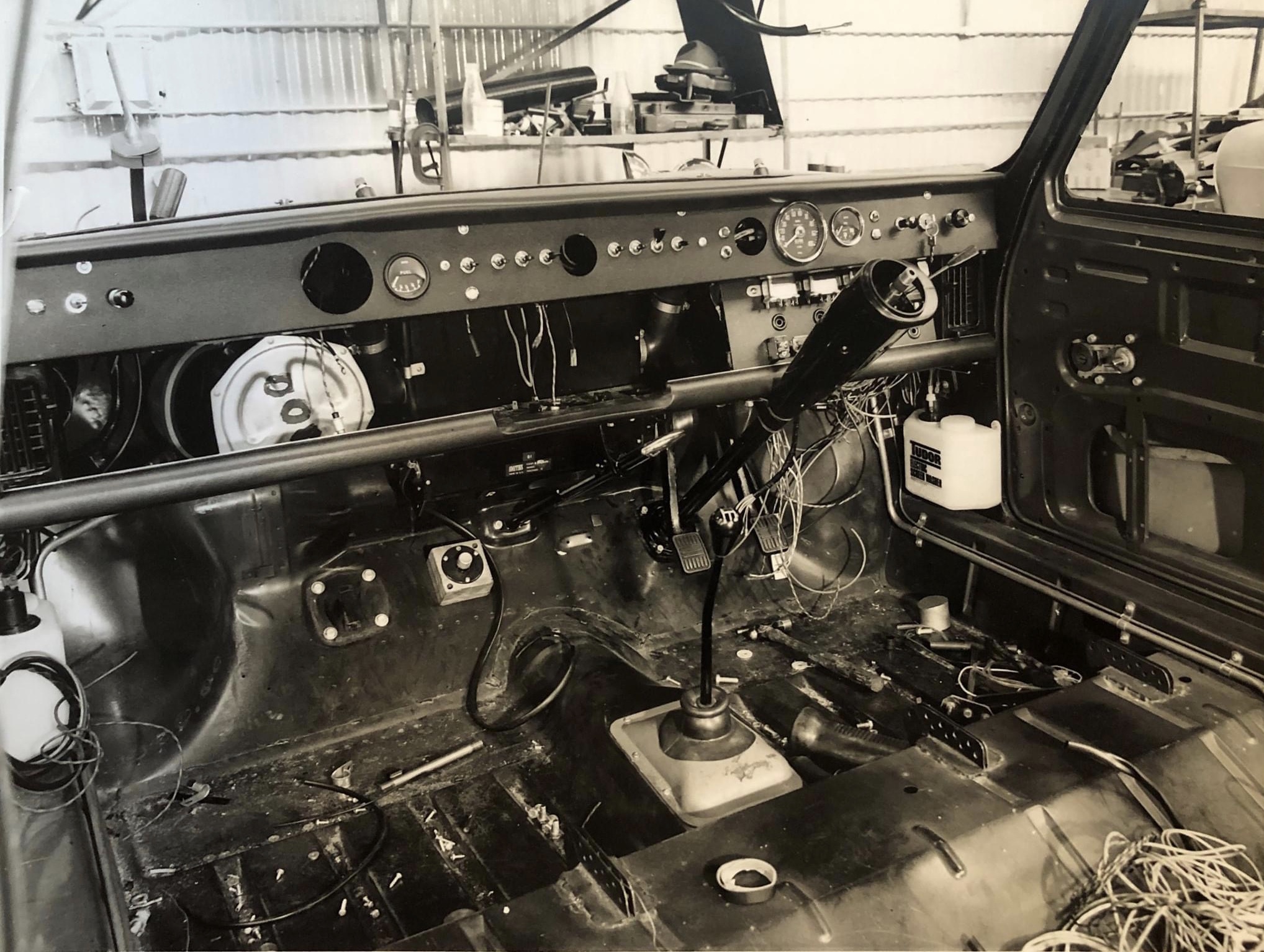
Looks comfy in there; no belts, they arrived in GP racing in’68, Smiths chronometric tach, ‘tell-tale’ showing 8600 RPM, leather bound steering wheel, aluminium fuel tanks by your hips on each side, no ‘bag tanks’ till 1970 so fire risk in the event of an accident enormous.

Bandinis’ horrific ’67 Monaco Ferrari crash a case in point.

‘Varley’ lightweight battery is under the cover over which your legs will stretch. Grey ‘stove enamelled’ chassis rails of the ‘space frames’ used by Brabham F1 cars till the end of ’69 under the shift lever, who needs those new-fangled monocoques anyway?! Fibre-glass body apparent on all sides.

Right hand shift controls a ubiquitous and reliable 5 speed Hewland DG300 gearbox. Its attached to a Repco ‘740’ Series SOHC 2 valve V8, being gently warmed up at 3400RPM. The engine gave circa 340BHP, far less than the new Cosworth DFV but enough to do the trick in ’67!

Oh! The little red plaque riveted to the dash says ‘Speed Should Not Exceed 170MPH’!

Brabham Racing Organisation always saw the lighter side of life under the surface of intense competitiveness and success.

Oh so period, just luvverly…

image

Brabham in BT24-1 at Silverstone , British GP ’67, he finished 4th. Trusting photographer on the inside of Woodcote Corner (Mike Hayward)

Photo Credits…

‘Jack Brabham with Doug Nye’, Mike Hayward

ronnie & col

Colin Chapman and Ronnie Peterson ‘chewing the fat’ on the French GP grid, Clermont Ferrand 1972. Car is a March 721G Ford, Peterson finished 4th in the race won by Jackie Stewart (Pinterest)

‘C’mon Ronnie, its time to move to Hethel?! Other than Bernard Charles Ecclestone there were few people with Lotus boss Colin Chapmans’ charm, and powers of  pursuation when it suited him…

I doubt the weather was the topic of conversation! Ronnie learn’t his F1 stuff with March, starting with a quasi-works 701 in 1970, but the 721G, on which he is leaning, was an F2 car onto which a Ford Cosworth engine was grafted after the failure of its 721X and not as quick as the Lotus 72 Chapman is talking to Ronie about!

Ronnie replaced Aussie Dave Walker at Lotus in 1973, Peterson proving quicker than Emerson Fittipaldi, the 1972 World Champion. As is usually the case, these ‘Dream Teams’ usually end in tears.

Chapman refused to apply team orders later in the season, costing Fittipladi, the better placed driver, his second title, Lotus did pick up the Manufacturers Championship however.

Fittipaldi decamped to McLaren at the years end and a second title in ’74, Ronnie and Jacky Ickx were quick in the Lotus 72 in ’74 but it was getting long in the tooth and Lotus missed Emerson’s testing and development skills, neither of which were Petersons’ forte…

berger 1

Pole position and a win after waving teammate & champion elect AyrtonSenna into the lead…and having the favour returned late in the race giving Berger his first McLaren win…

Even though it was ‘only’ built in the ’60’s this Honda owned track must be one of todays classics, by any measure? Even though ‘130R’ has been ‘softened’ the track is still a formidable test of man and machine and on my circuit ‘bucket-list’. Its a non-‘Tilke Template’ track which is a positive.

Honda’s first V12 since the Surtees ‘Hondola’ Era…

Neil Oatley’s new chassis carried the Honda ‘RA121E’ 3.5 litre V12, replacing the previous very successful V10’s. The chassis was longer to accomodate a larger fuel cell for the thirstier V12 but still torsionally stiffer than its predecessor.Early testing by Berger and Ayrton Senna was not promising, they were unconvinced of the engines superiority over the V10… but the car still won its first 4 races in Senna’s hands.

engine honda

Honda ‘RA121-E’ ,3493cc, circa 720BHP @ 13000 rpm. McLaren MP4/6 Monaco 1991(Pinterest)

Williams FW14 & Mansell…

Williams FW14 then found mid season form and reliabilty. Adrian Newey , recruited from March where he created some stunning cars on small budgets was now deploying far greater resources well! He designed a superb car, the Williams Renault had a semi-automatic, 7 speed gearbox following the trail blazed by the Ferrari 640 the year before. It was regarded as a more advanced car, technically and aerodynamically than MP4/6, albeit the McLaren was more reliable and consistent.

senna

Monaco 1991, Ayrton Senna 1st. McLaren MP4/6

Ongoing Development…

Honda focused on improving the engine management system and  frictional losses, introducing new heads, cams and rods, Honda’s ongoing development legendary! Oatley evolved aspects of the car as well incuding its sidepods and wings. Linked rocker arms to reduce roll, as well as a cockpit operated ride height adjustment meachanism were also created. All of the foregoing, as well as some reliability issues and misfortunes at Williams turned the tide back in McLaren’s favor, the car winning 8 Grands’ Prix and 10 poles.

McLaren took their fourth straight Constructors title and Senna his third, and last, Drivers Championship.

Demise of Manual ‘boxes & V12’s…

MP4/6was  the last Grand Prix car car with either a conventional manual ‘box or V12 engine to win a World Title…Oh, now,  for both manual ‘boxes and the mix of skill required, and punishment of mistakes made, and the race interest thus produced… let alone the sweet scream of V12 engines in the current F1!

front suspensio

MP4/6 Monaco…linked rocker arms were used later in the season to reduce roll and a cockpit activated ride height system…sheer artisrty isnt it?


mansell

Hold your breath…and remember these duels! Mansell & Senna , Williams FW14 Renault & McLren MP4/6, the 2 dominant cars of ’91. Mansell takes Senna for second…and later wins the race, Senna 5th. Spain, Catalunya, Barcelona sept ’91.

 The Previous Generation of Honda V12’s…

surtees

The previous generation of Honda V12’s…John Surtees in the Honda RA300, Mexican GP ’67, 4th. This car won the ’67 Italian GP in a last corner pass and dash to the flag, Surtees beating Jack’s Brabham BT24 Repco. The chassis was built by Lola , the T130, based on the successful Indy winning T90, hence the appelation at the time ‘Hondola’, Surtees having an enduring close association with Lola’s Eric Broadley.The ‘RA273’ engine was a 48 valve , 3 litre V12 producing circa 400 bhp. Honda’s 5 speed transaxle was also fitted. (The Cahier Archive)


suzuka

Credits…

mclaren.com, Pinterest,The Cahier Archive

san juan

The spectacular backdrop of the Andes lost on Regazoni, Rees, Pescarolo, and Courage…San Juan Circuit Argentina (Andrew Marriott)

Argentinian Temporada F2 Series : San Juan 1968…

Sensational panorama of the San Juan circuit with the Andes as a backdrop.

This race was won by the De Adamich Ferrari Dino 166. The cars in shot, all Ford Cosworth powered are Clay Regazzoni Tecno 68, Allan Rees Brabham BT23C, Henry Pescarolo Matra MS7 and Piers Courage Brabham BT23C.

de adamich

The Ferrari Dino 166 F2 struggled in Europe against the Ford FVA powered hordes but the 1.6 litre V6 engined cars driven by DeAdamich and fellow Italian Tino Brambilla were competitive in Argentina, Andrea winning in front of ‘F2 King’ Jochen Rindt’s Brabham (Andrew Marriott)

F2 was a 1.6 litre formula at the time using production blocks, the Ford FVA 4 cylinder engine, the dominant engine, producing around 225 BHP at 9000 rpm. It was based on the Ford Cortina ‘116E’ block, Cosworth’s Keith Duckworth famously applying the design concepts intended for the Ford Cosworth DFV engine, Grand Prix racing’s most succssful engine. The FVA and DFV were part of the same Ford contract the FVA being built first…

The Ferrari engine was based on a block Fiat used in its Fiat Dino Coupe, and of course later in the Ferrari Dino 246, one of my favourite road cars. The engines evolved from 3 to 4 valve heads between 1967 and ’68 finally finding form in the ’68 European season ending round at Vallelunga, Brambilla winning the day from DeAdamich. A 2.4 litre 285BHP variant of the engine was developed for the Tasman series in Australasia, that car designated the 246T. Amon won the title in 1969 and Graeme Lawrence in 1970…but that is another story to tell in detail.

The Temporada series was held late in the year attracting the best of Europes cars and talent, the Championship in ’68 won by De Adamich, victorious in 2 rounds,  from Jochen Rindt and Piers Courage.

tino

DeAdamich # 14 and Tino Brambilla on the Buenos Aires grid 1968. The Ferrari’s are powered by a 1596cc, 4 valve per cylinder, fuel injected, V6 producing 210BHP @ 10500 rpm…they clearly enjoyed the altitudes of the Andes better than the Cosworths and took their end of European Season form to South America winning 3 of the 4 rounds (Pinterest)


166

Ferrari Dino 166 F2 Drawing

circuit

Photo Credits…

Andrew Marriott, Pinterest unattributed

Finito…