Arthurs Seat. Port Phillip Bay at right, Bass Straight in the distance, next stop King Island then Tasmania (N French)
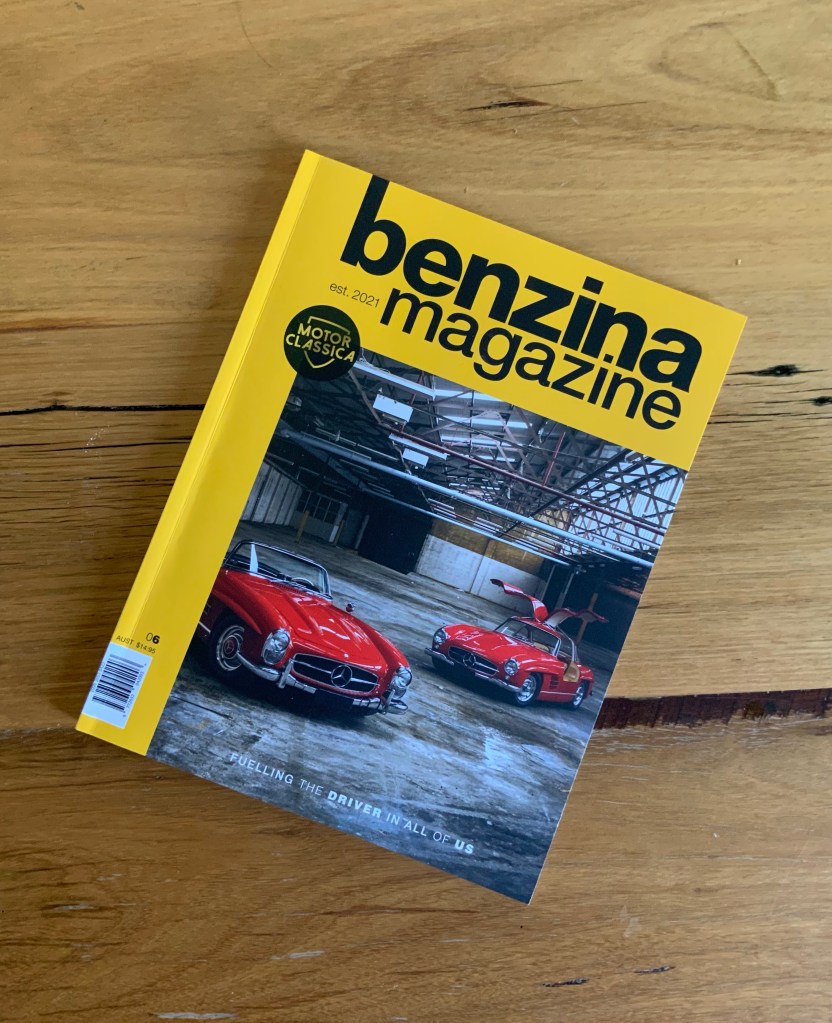
I’ve taken a step sideways from my motor racing core and have started contributing to Benzina Magazine, a quarterly classic-car mag.
It’s the brainchild of Australian classic motoring and historic motorsport entrepreneur Jack Quinn. We have just put away issue #6, it’s published in Australia and the UK, so you Pommies should be able to find a copy too.
What was it Frank Gardner and Jim Hardman taught me at Calder in 1975? Very comfy in here all day, steering heavy, ‘box devine (N French)Test of the toupee near Flinders, the exhaust note at speed is six-cylinder sonorous. Victorian B-roads at present are shit, they must have Covid, but the independent suspension front and rear is well up the challenge though. Hang on Dr King, purple will not catch on by the way (N French)
My feature in this issue (#6) is an historic treatise and driving impressions on the AC Ace Bristol, the first and best of the breed. I co-wrote a piece on the late Australian racer/businessman Reg Hunt too. #5 on back-issue was an article on the Lou Abrahams and Ted Gray Tornado V8s.
Check the mag out, we’re still locking down the ‘standard mix of articles’ so do give me your impressions on the good, the bad and the ugly. https://benzinamagazine.com/
Nico French is the photographer, a talented, fun guy to work with, a Lotus driver so say no more. The venues in-shot are Arthurs Seat, Shoreham and Flinders on Victoria’s Mornington Peninsula. The car is Bob King’s 1960 Ace, a machine delivered to its original Australian military-man owner in Europe but otherwise always resident here.
(N French)
The 2-litre BMW derived, two-OHV, Bristol triple-Solex fed straight-six is good for circa 135bhp in this tune, more than enough for the 1960 light, spaceframe chassis car. These magnificent machines have racing-roots, it shows in every aspect of their performance.
Photo Credits…
Nico French
Shoreham looking at Point Leo (N French)
Nothing beats a pert, perky, two-handful rump. No fat, no frills and no baubles. Perfetto…
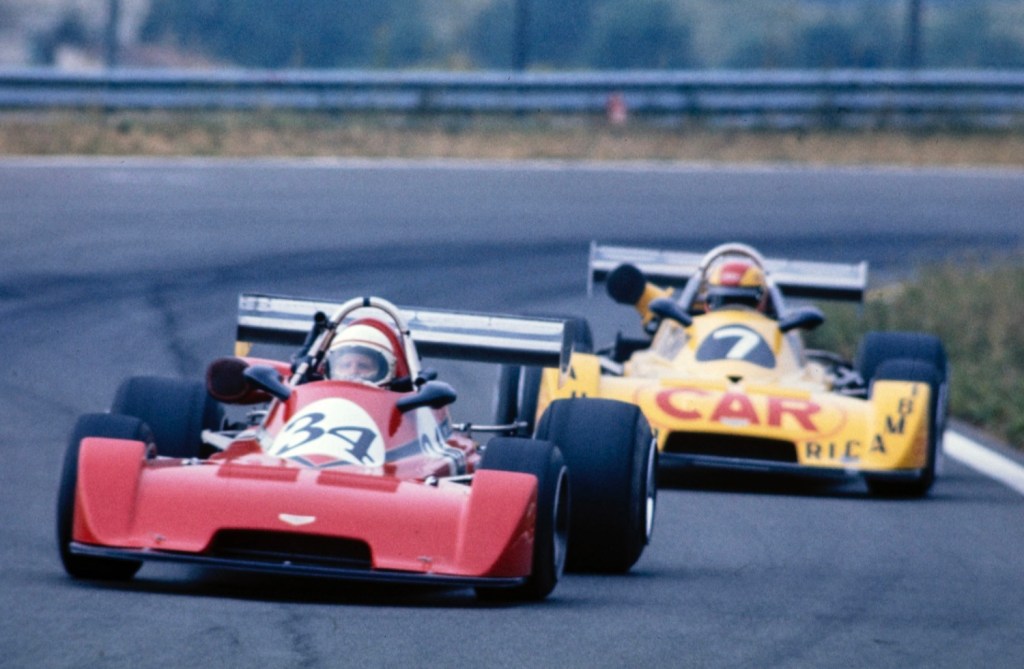
Everything you need to know about 37 year-old Bob Muir’s skill behind the wheel is demonstrated in this shot of the grid at the start of the III Gran Premio di Mugello Euro F2 round in July 1976.
The red spec on the front row is Muiro’s Derek Kneller prepared Chevron B35 Ford BDA. Such are the dimensions of his wedding-tackle and blinding, god-given speed he has plonked a privateer Chevron with Ford BDA engine ahead of almost all the factory cars, the four Renault-Gordini V6 powered Elf 2Js (Jean-Pierre Jabouille alongside him on pole, and Michel Leclere) and Martini Mk19s (Rene Arnoux and Patrick Tambay). Then the works-March BMWs (Maurizio Flammini and Alex Ribeiro) and the rest including future/current GP drivers, Keke Rosberg, Vittorio Brambilla, Giancarlo Martini, Hans Binder, Ingo Hoffman and Harald Ertl. Bob’s Ford BDA was the pick of the engines in 1972 but the pecking order on this grid was Renault-Gordini V6, BMW M12/7, Hart 420R then the BDA. Jabouille won from Arnoux and Tambay. Muir was 16th.
In a different time, after tumbling out of the right womb, the likes of Bob Muir would have been funded through Karts by Daddy, funded through Formula Ford and F3 by Daddy, then picked up by one of the F1 Feeder Capital Vulture outfits (still part funded by Daddy, investment to this point circa $A6-8million) and into Grand Prix racing. And yes, I know he is not alone.
But Bob was old school, his formative years, indeed most of his years, were self funded by his motor dealership, so his appearances were usually sporadic and subject to availability of the-readies. I suspect his first real paid drive was with Bob and Marj Brown, in Australian F2 in 1974 and British Formula Atlantic in 1975 with a pair of Birrana 273s. The Browns funded this short Chevron campaign too, then it was back to Australia, where taxis beckoned.
Griffin helmeted Muir in front of Giorgio Francia’s Chevron B35 BMW. Bob had never raced at Mugello before, let alone visited Italy. It seems he rather liked the place (MotorSport)Meet the fam. Bob and Judy Muir, with Jason and Danielle at Mascot Airport, Sydney in April 1972 with third place booty from the Singapore Grand Prix. Australians 1-3 in this race; Max Stewart, Mildren Ford, Vern Schuppan, March 722 Ford and then Bob’s borrowed or leased Rennmax BN3 FordBob early in the year, 1973 US L&M Championship campaign at Riverside. Legendary engineer/mechanic/driver mentor Peter Molloy at left, John Wright in the middle? Lola T330 Chev (Muir Family Collection)
R.I.P Bob Muir, November 29, 1939-February 12, 2023, thanks so much for some wonderful memories, what a steerer…
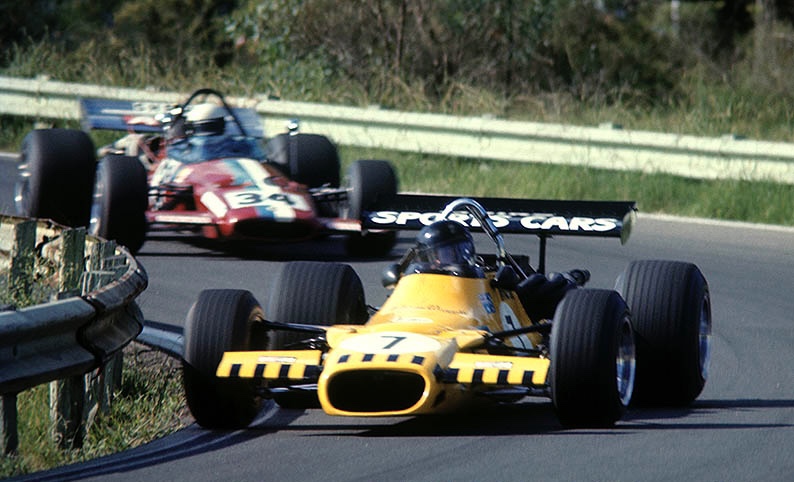
The Muirs Sports Cars entry ahead of Teddy Pilette during the 1971 Tasman Cup Warwick Farm 100, Mildren ‘Yellow Submarine’ Waggott 2-litre TC-4V from McLaren M10B Chev. This is the battle for fifth place, resolved in Teddy’s favour. Frank Gardner won in a works-Lola T192 Chev from Chris Amon, Lotus 70 Ford and Kevin Bartlett, Mildren Chev (oldracephotos.com/D Simpson)
Credits…
MotorSport Images, Getty Images, oldracephotos.com/Dick Simpson, Muir Family Collection, Tony Glenn, oldracingcars.com, Alan Cox, Derek Kneller, oldracingcars.com
Bob about to take to Oran Park for the first time in the brand new Matich A53 Repco-Holden, Saturday February 2, 1974 (D Kneller)
Etcetera…
As is so often the case the article grows like topsy after the initial posting, in this case thanks to a long discussion with legendary engineer/mechanic Derek Kneller in the UK this morning, February 15.
“Bob was a bloody good driver, really good, he could sort a car too. He went very well in the Lola T330 Chev that he ran in the 1973 L &M (US F5000 Championship). I was over there that season running Frank’s two Matich A51 Repcos. Peter Molloy was over there for a while when Bob first arrived, and he soon hooked up with Jerry Eisert and Chuck Jones. The car was always well prepared but as the season went on they were cobbling together engines. They had a really smart rig but the engines weren’t too good, I remember Bob finishing a heat at Watkins Glen second with the thing running on only seven-cylinders.”
In an amazing run of raw pace despite the tight budget, Bob qualified fourth at Michigan International on May 20 for third in his heat and DNF final. Off to Mid Ohio for Q3 and DNS heat and final, and then to the demanding Watkins Glen, a circuit on which he hadn’t competed before. Q2 behind Jody Scheckter and ahead of Brett Lunger, Brian Redman, Peter Gethin, Mark Donohue, Tony Adamowicz, David Hobbs, Kevin Bartlett, John Walker, Vern Schuppan and Frank Matich was really something. He was fifth in his heat at Road America after qualifying poorly, DNF in the final then missed the last few rounds, out of money. While 23 year old Jody Scheckter was the L&M young star of the series, the older find was 34 years young Bob Muir.
“Bob was unlucky to destroy the A52 (Matich A52 Repco-Holden F5000 car) in later 1973 at Warwick Farm in testing, but there was no question of who we were going to turn to when Frank decided he couldn’t do the race distance at Oran Park.”
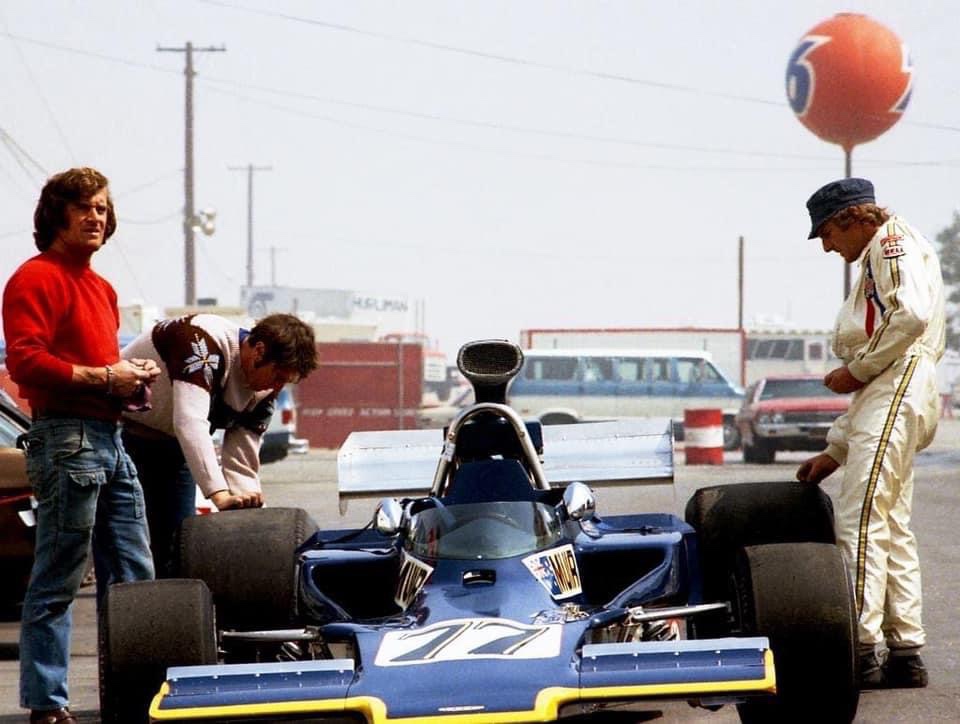
“What’s it doing Bob?” Muir and crew in the Oran Park paddock, Matich A53 Repco-Holden (D Kneller)
“The car (Matich A53 Repco-Holden) was brand new, Frank had done a few sessions and we’d attended to a few things, then Bob did three or so laps to get the feel of the thing but the oil pump drive-belt came off and that damaged the engine. We had that changed by late evening and were allowed to do some laps at about 8pm, Bob was quickly down to times in the low 40s but had to start the race from the back of the grid as he hadn’t done a flyer before the oil pump problem.”
“In the race he was soon up to eighth or ninth, doing fast, consistent times before getting stuck behind Gethin or Oxton, then the fuel pump overheated so he was out. Repco had relocated the fuel pump and we hadn’t done enough testing laps to know it needed a heat-shield. Bob did some practice laps at Surfers but FM felt he was ok to do that race, and the final two at Sandown and Adelaide International.”
“I went back to the UK in late 1974 after we had wound down Frank’s (Matich) racing business in Sydney when he retired, then worked outside racing, I didn’t realise Bob contested the British Formula Atlantic Championship in 1975.”
After some fast drives in a borrowed Rennmax early in the 1974 Australian F2 Championship, Muir was engaged by Adelaide couple, Bob and Marj Brown to drive their pair of Birrana 273 Hart-Ford 416-B 1.6-litre cars. Bob finished second in a very tight, thrilling title-chase with works-Birrana driver Leo Geoghegan who raced their latest 274 model.
Muir, Birrana 273-009 Ford BDA, Mallory Park August 24, 1975, DNF fuel surge. Jim Crawford’s Chevron B29 won
The Browns decided to expand their specialist glass-making business to the UK in 1975. Taking the Birranas with them to contest the British Formula Atlantic Championship would be an ideal way to create interest in the new venture. Bob was the driver with his family of four relocating to Bishop Auckland (in Durham, the very north of England not too far from the border with Scotland) where the equipe was based. Dean Hosking, a young Adelaide driver who had raced a Formula 3 Birrana 374 Toyota for John Blander in 1974 and did very well also went along to drive one of the cars. Importantly, Tony Alcock, the design-partner in Birrana Cars, came along to engineer the cars, he was at a loose-end when Tony and Malcolm Ramsay, his business partner, decided to cease volume production of Birranas in Adelaide at the end of 1974.
Dean picks up the threads, “Bob’s business had developed the technology to make the type of glass that enabled one to see inside hot domestic ovens. He sold the company to Pilkington Glass and was subject to the usual ten year non-compete clause. So he approached the UK Government with the idea of setting up over there, that’s why the factory was in Bishop Auckland, the incentives were provided there in an area employment opportunities were needed.”
British Formula Atlantic was at its peak then, grids of 20 cars fought for two championships in 1975, the John Player British Formula Atlantic Championship and the Southern Organs British Formula Atlantic Championship. Tony Brise and Gunnar Nilsson went head to head, Brise won the former and Ted Wenz the latter with Nilsson second. Other big hitters that year included Brian Henton, Danny Sullivan, Jim Crawford, John Nicholson, Ray Mallock and Brett Riley.
Bob Muir and Tony Alcock entered 14 of the 21 rounds with the two year old Birrana for bests a pair of third placings at Silverstone and Oulton Park. In an impressive first UK season, Muir’s raw speed was again demonstrated with six top-five qualifying performances, two on the front row, one alongside Jim Crawford’s Chevron B29 at Mallory in August, and another beside the similarly mounted Gunnar Nilsson at Oulton in October. “He led a race at Mallory until the subframe broke (June 15), that was pretty impressive,” recalls Dean. While he was fifth in his first outing at Mallory Park in March, generally the little equipe got better results from late May after they had dialled the car in to the circuits and tyres.
“The deals were that Tony and I were paid, not a lot in my case, but enough to live on, to prepare the cars and me to have an occasional drive. Bob traded in cars of course! He had some friends in the London motor trade, that’s how he supported his family while he was over there.”
Muir, Minos Ford BDA at Thruxton during the 1976 BARC 200. DNF in the race won by Maurizio Flammini’s works-March 762 BMW (MotorSport)
“The first time I drove one of the cars was at Silverstone (April 13). I could certainly feel the extra 70bhp of the BDA compared with the 135bhp Corolla motor in the 374 but soon got used to that after a few laps. In fact I got to the far side of the circuit and was pondering what was the right gear for that corner and somebody went past me – Zot – clearly it wasn’t third!” Dean quipped. Bob qualified 15th that weekend in 273-009, and Dean 18th in 273-006, both cars retired, so not a good weekend.
“Tony Brise was head and shoulders above everybody else, I was convinced he would be the next British world champion. I thought Richard Morgan was impressive up close too. Ted Wenz not so much. But we held our own in cars that were two years old. I wouldn’t have missed the experience for the world, but I wasn’t getting the drives I expected, money was perhaps a little tighter than Bob Brown may have hoped.”
It appears that Dean’s final race was at Snetterton on June 29. “Bob was great to be with, easy-going, a typical Sydney good-time guy! There was no prima-donna stuff, one one occasion we swopped cars as mine had the setup he was after. I came back and drove both contemporary cars for John Blanden, an ASP 340C Clubman, and some of his historic cars. I’ve always remained close to the scene with my involvement in the Sporting Car Club of South Australia and so on.”
At the end of 1975 Alcock took the fateful decision to join Hill Grand Prix, “I knew Tony well, he was with Matich for a while and came with us to the US when we did a couple of L&M races in the McLaren M10C Repco-Holden in early 1971. We lived close together in Sydney and saw one another quite a lot socially, both wives were Brits.” Kneller recalled affectionately.
“When Bob got in touch with me to help finish off the Minos Ford F2 car after Tony left – in essence it was a 273 rebodied and fitted with 295bhp Cosworth Ford BDX engine – it required assembly and finishing off, the hard stuff had already been done by Tony and Bob. I moved up to Bishop Auckland in this period and lived with Bob and Judy.”
“We took the car behind our little van to Thruxton (April 19) for the second round of the European F2 Championship. Bob was doing quite well in practice despite the fact that the car hadn’t turned a wheel before, 15th quickest time or thereabouts, but he only completed a lap in the race before the distributor drive failed.”
“We next set off for France to run in the Pau Grand Prix (June 7). What became clear in practice was that the Minos was flexing a lot when forced to change direction quickly, a problem not apparent at Thruxton. The Birranas had a chassis comprising an aluminium monocoque front and centre section and a tubular steel A-frame to which the engine was attached. It was built for 200bhp twin-cams not a 295bhp 2-litre BDX, the thing was twisting in the middle with the greater forces applied to it. I got some bits and pieces to brace the frame to the tub, including some radius rods Ron Dennis offered, but time ran out and we didn’t qualify.”
Derek Kneller’s shot of the Brown’s new Chevron B35 Ford (#35-76-10) after he had completed its assembly at Bolton in June 1976. B35 alongside’s owner? Chassis number of the half finished car please…? (D Kneller)
“The next thing I knew was Bob Muir asking me to go down to Bolton to assemble a new Chevron B35! Bob and Marj thought, stuff-it we need a new car.”
Derek Bennett himself helped me get the thing together, then off we set for Rouen (June 27). What should have been a good weekend quickly turned to tears, every time Bob applied the brakes at the bottom of the hill the car’s front wheels wanted to come off. The car assembly process at Chevrons involved going to the spares department to get the bits and pieces as you needed to attach to the chassis. The front suspension corners were complete sub-assemblies, all I had to do was bolt the wishbones, already attached to the upright assembly to the chassis. But left-hand hubs had gone onto right hand uprights, and vice-versa, so the wheels were trying to come undone under braking loads. What should have been an easy fix couldn’t be done in the paddock as none of the Chevron runners had the necessary parts.”
“We got the bits we needed out from England, then headed straight for Mugello which was held a fortnight later (July 11). We had heaps of time so Bob finally did lots of laps, getting himself and the car really dialled in. Don’t forget that when he got to the UK he didn’t know the circuits and the same applied in Europe of course. We had problems with the metering units of two engines, they weren’t getting the lubrication they needed from the Avgas we used.”
“We had great support from Swindons as we were the only ones running Ford engines. We needed another engine for the race so Bob Brown hired a plane, and he flew down with a Swindon works engine and one of their mechanics to look after it. When Bob put the car on the front row alongside Jabouille it was unbelievable. Our little team against the might of France complete with factory 320bhp Renault-Gordini V6s. Incredible really.”
Dicing with Alex Ribeiro’s fourth placed works-March 762 BMW early in the Mugello GP, Chevron B35 Ford BDX (MotorSport)
“Muiro led from the start of the 30 car grid, for about two laps our immaculate – Muir was fanatical about presentation – little red car led the field then he fell back a bit with clutch problems. The Aeroquip hydraulics line from stores was a fraction too short and vibrated loose, but he still ran sixth for a long while without a clutch, then slipped to ninth and eventually finished sixteenth. It was such a shame, without that who knows where he would have come.”
“And that was it. The Browns decided they had had enough and sold the Chevron. I’m not sure what became of the Minos, we sold it to a bloke from Scotland who ran it in the British Group 8 series for a while. Bob and Judy returned to Australia, I kept in touch with both of them, Judy too after they divorced, I last saw her at Frank’s (Matich) funeral in 2015. We kept in touch with Tony Alcock’s wife as well. After the plane crash (that killed most of Graham Hill’s team) she lived with her mother in Sussex for a while, she is still alive. The funny thing is, that light plane ride that Bob Brown took with the BDX from Bristol to Florence whetted his interest in flying, he and Marj took that up as another expensive hobby after they were finished with car racing!”
Three fabulous Muir Family Mugello happy-snaps, probably taken by Bob Brown as Derek Kneller is pushing the car in one shot and shirtless in another. Chevron B35 Ford BDX, the car on pole is Jean-Pierre Jabouille’s Elf 2J Renault
Tailpiece…
(T Glenn)
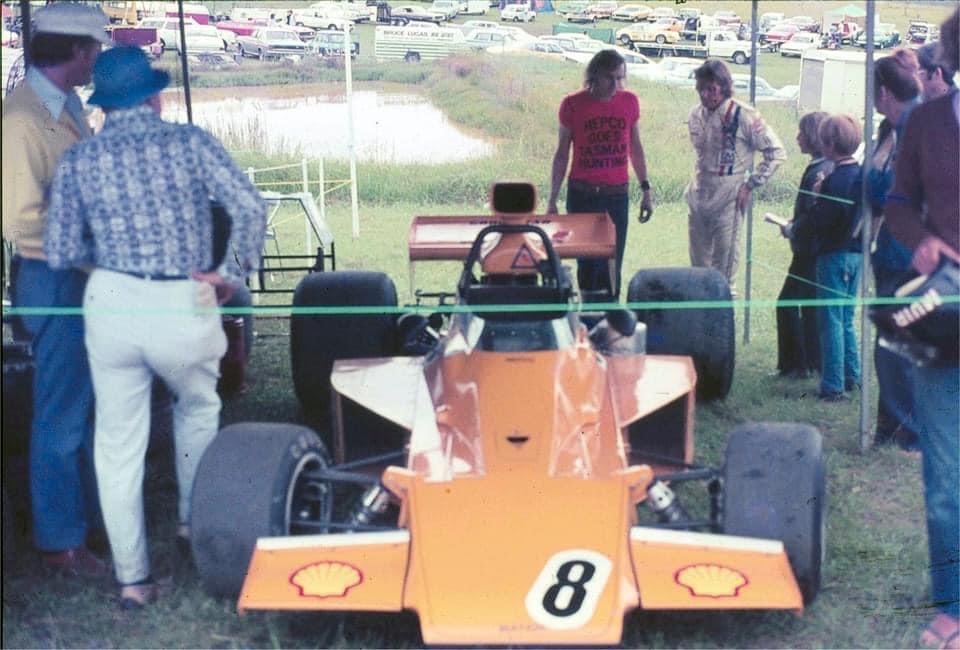
Super-sub. Bob Muir settles himself into Frank Matich’s brand new Matich A53 Repco-Holden at Oran Park just prior to the Tasman Cup round that in February 1974.
Matich had electrocuted himself in a near-fatal boating accident days before, FM ‘threw the keys’ to Bob after practicing the car and realising he wasn’t sufficiently well for the OP round, Q15/DNF. Frank was well enough to contest the remaining three Australian races – in which he was, as usual, very fast – his final races as events transpired.
The roll call is Peter Hughes in the white T-shirt, Lugsy Adams in yellow, then Grant O’Neill with the builders-cleavage, his woolly head obscuring Derek Kneller who is working on the left-front, all members of Frank Matich Racing. These are the machinists/fabricators/welders/mechanics who built A53-007, the very best of the Matich F5000 breed.
When I first posted an article incorporating this shot four years ago I captioned it on the basis that the fully-optioned, rather attractive young lady tending to Bob’s black helmet was his wife, a reasonable guess I thought. Not too long after, Bob’s ex-wife commented on social media that the blonde in question wasn’t her at all. There ya-go, my case rests, Muir met another of the tests of an elite level driver, the occasional away-game on the home front…’jokin of course.
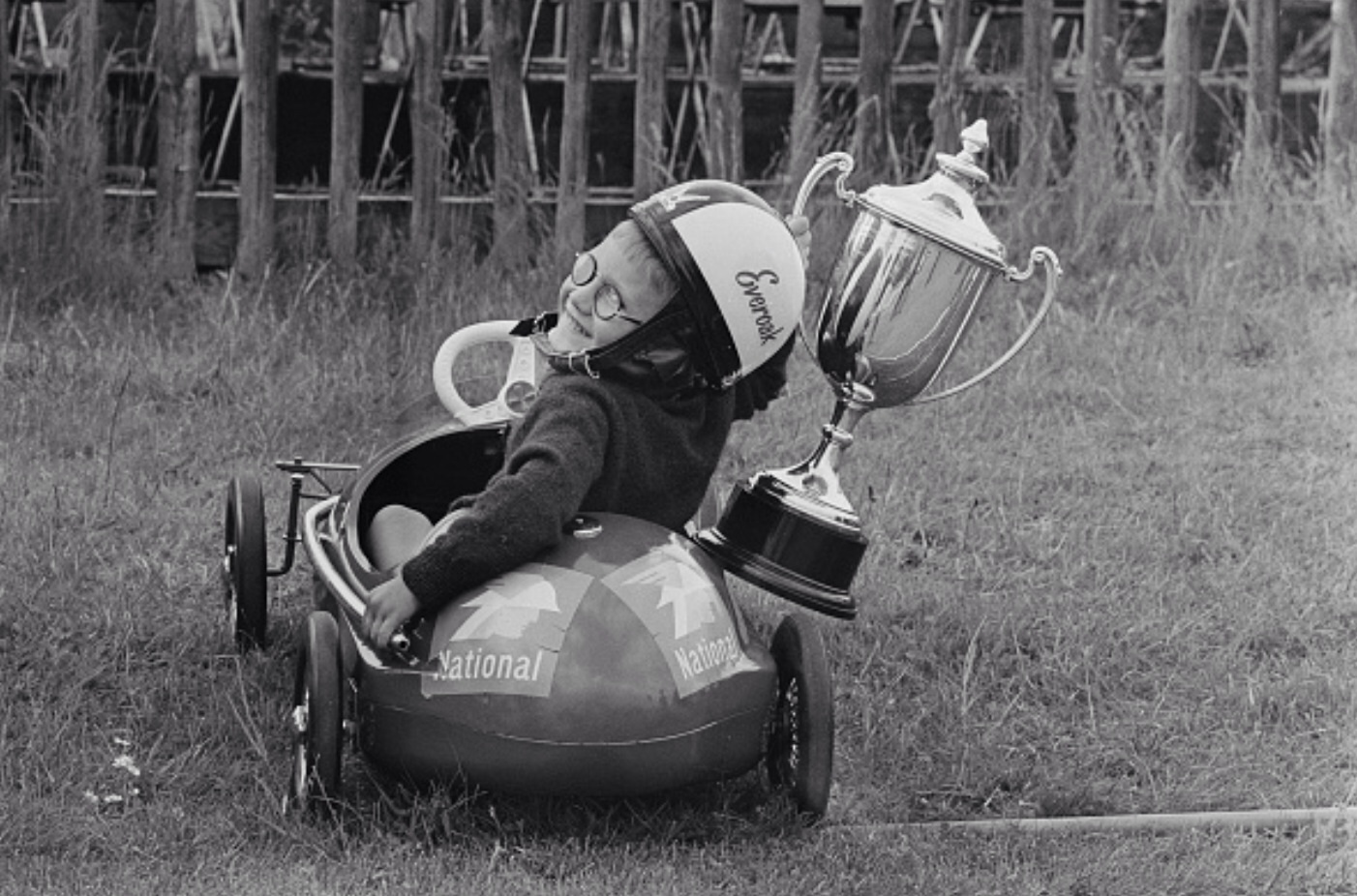
RAC Officials hold aloft Andrew Coombe, winner of the Junior Pedal Car GP at Crystal Palace in June 1967…
With specs like that the little fella probably didn’t have a successful racing career?! Are you out there Andrew, he would be about the right age to be reading about historic motorsport if he did get the bug?
Credit…
Peter Keegan
Tailpiece: Legend…
Done well too, it looks like Andrew had the capability to bring a race-budget to a team. I wonder what goods or services ‘National’ provided?
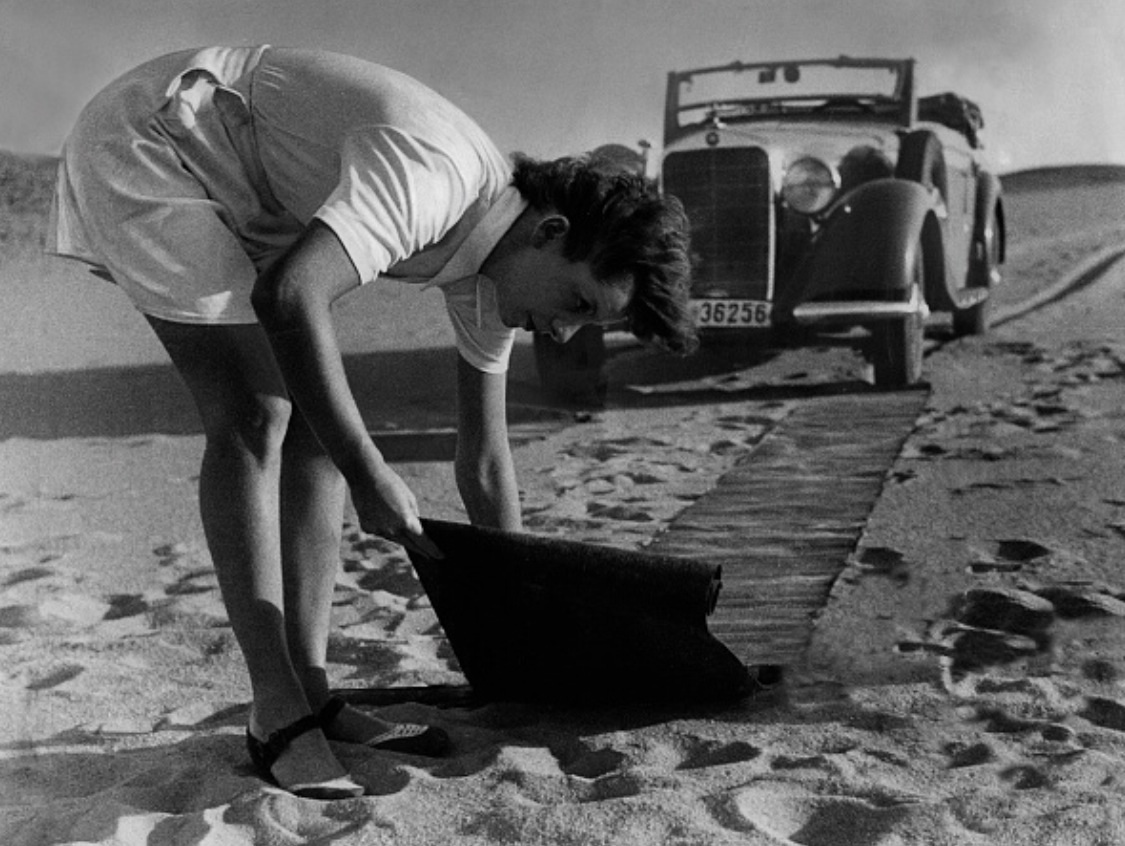
Google translate is pretty good but it choked on the German-English translation of this unusual scene…
Published in 1937, it’s probably a Benz magazine advertorial piece of some sort. I wonder what model it is – the car? Explanatory input welcome, I don’t think Mercedes were building ML’s back then.
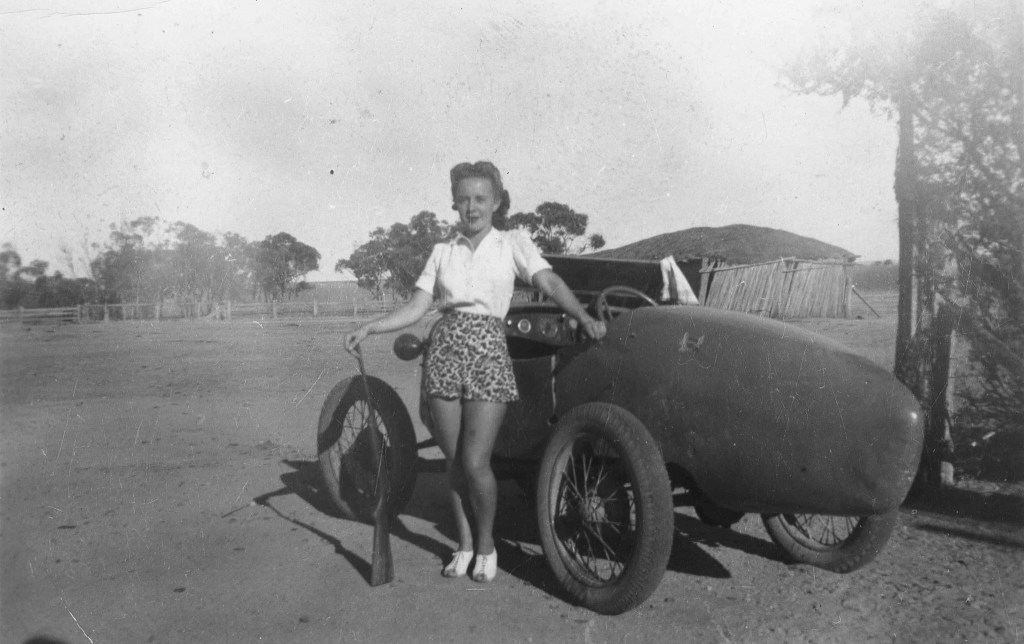
The thoroughly delightful Eunice Fidock is shown beside an Austin 7 Special at Dowerin, Western Australia circa 1935.
Dowerin is a wheatbelt community 160km north-east of Perth. It had two pre-war racing venues, the Lake Koombekine one mile, dirt, circular speedway, and the Dowerin Showgrounds speedway in town. I’m not sure which of the two this is, but I’m happy to take advice.
My friend Tony Johns, Austin racer/historian is on the job as to chassis type and number, albeit he suspects a Perth built body on a standard or Super Sports chassis.
Eunice hails from Cottesloe, an inner Perth beachside suburb. Looking like that she would have cut quite a dash at Cotts’ Indiana Teahouse. Resplendent in leopard-skin shorts, she is showing lots of bumpy-curvy bits for the times and is therefore well armed to keep the more amorous of Dowerin suitors at bay. I’ll leave the make of weapon to you NRA members.
Credits…
Lake Perkolilli Revival Facebook page, State Library of Western Australia
Tailpiece…
(SLWA)
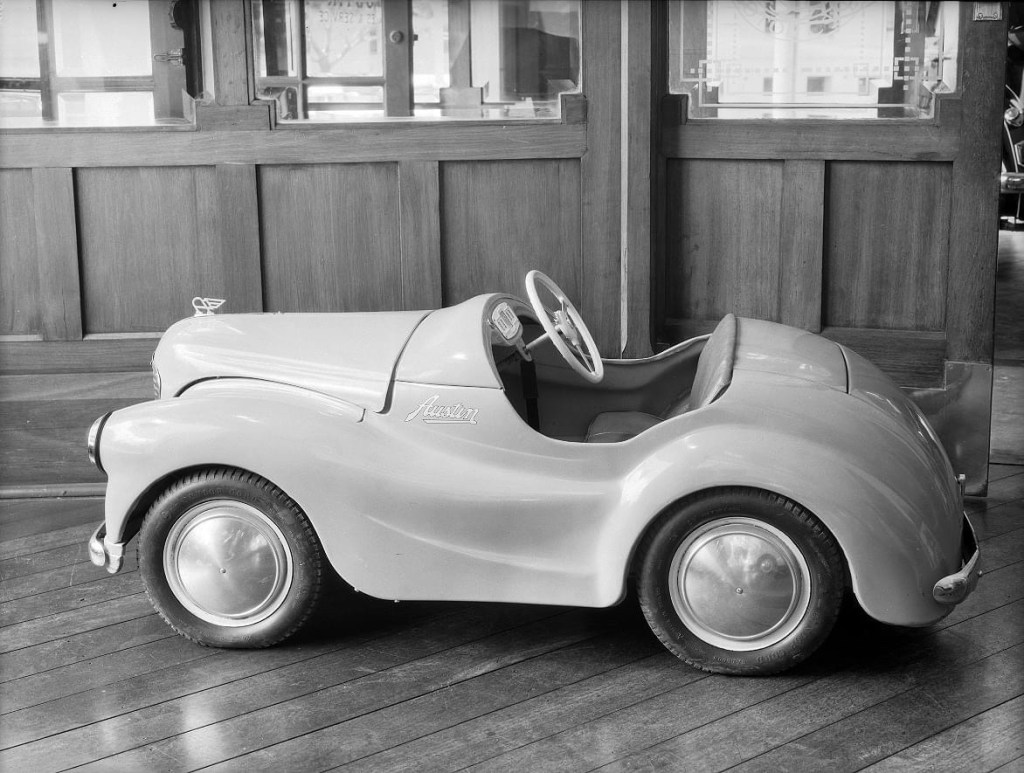
A slightly later model Austin – an Austin Junior Forty – shown in a Perth dealership circa 1951.
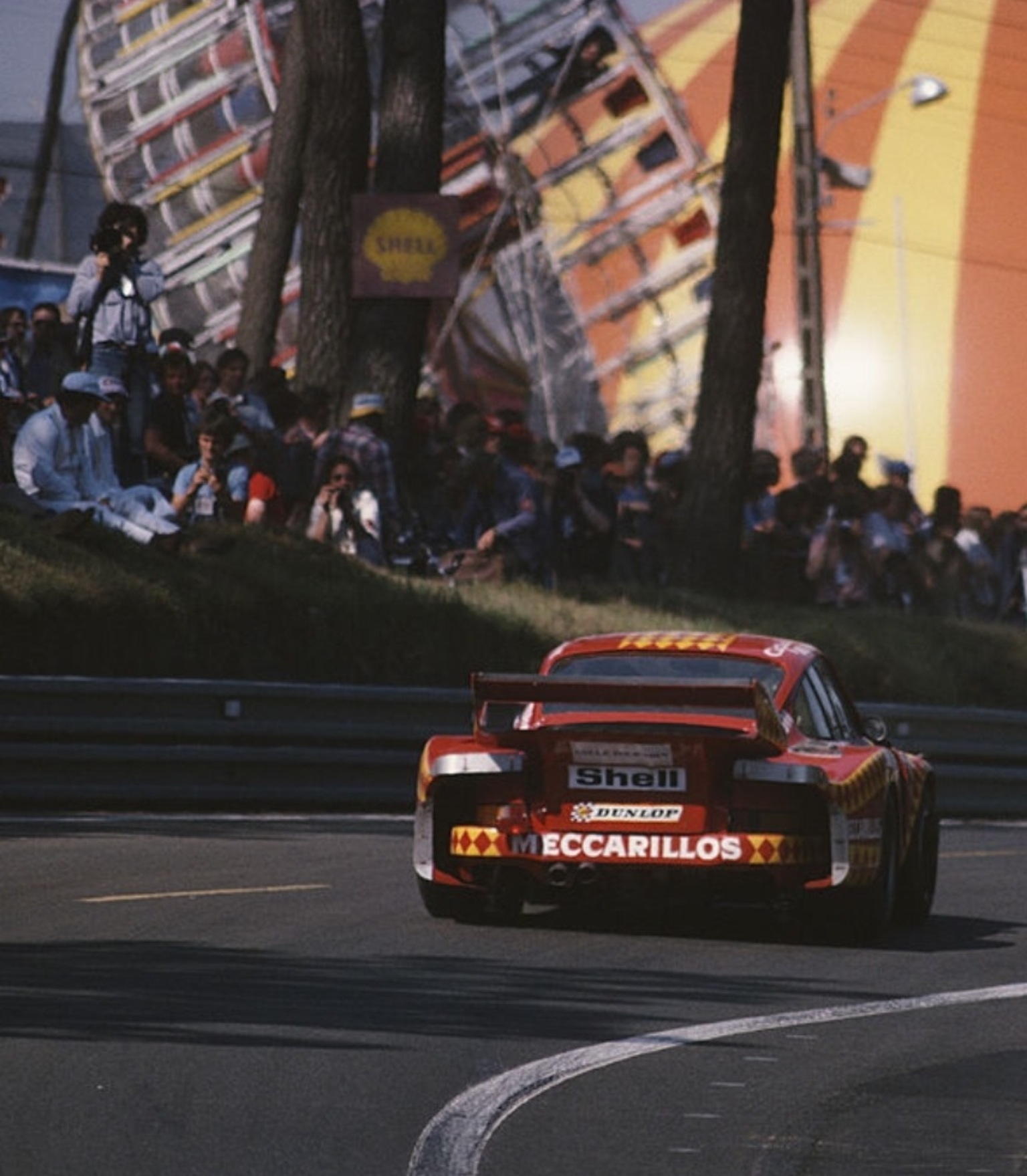
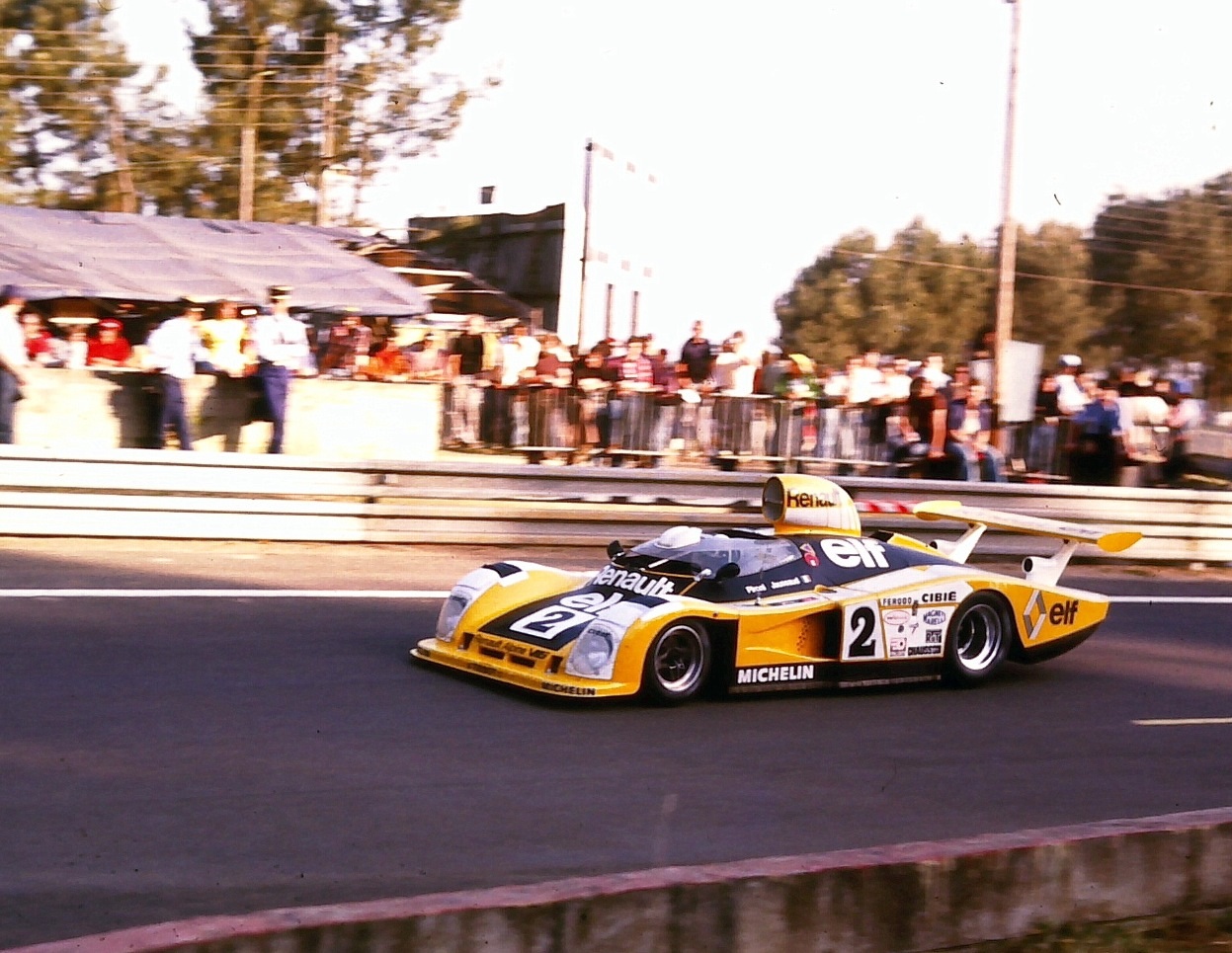
The Herbie Muller/Claude Haldi/Nick McGranger Porsche 935 during practice at Le Mans in June 1978…
It’s such a wonderful image evocative of a fun weekend in rural France. They failed to finish with a broken gearbox casing after 140 laps, during the 14th hour.
The Group 5 class was won by the Kremer Porsche 935 crewed by Jim Busby/Chris Cord/Rick Knoop, while the outright winner was the Alpine Renault A442B of Didier Pironi and Jean-Pierre Jaussaud. The 2-litre turbo-charged V6 prototype prevailed over the 2.1-litre flat-six turbo-charged Porsche 936/78 of Bob Wollek, Jurgen Barth and Jacky Ickx by five laps in an historic win for the French team.
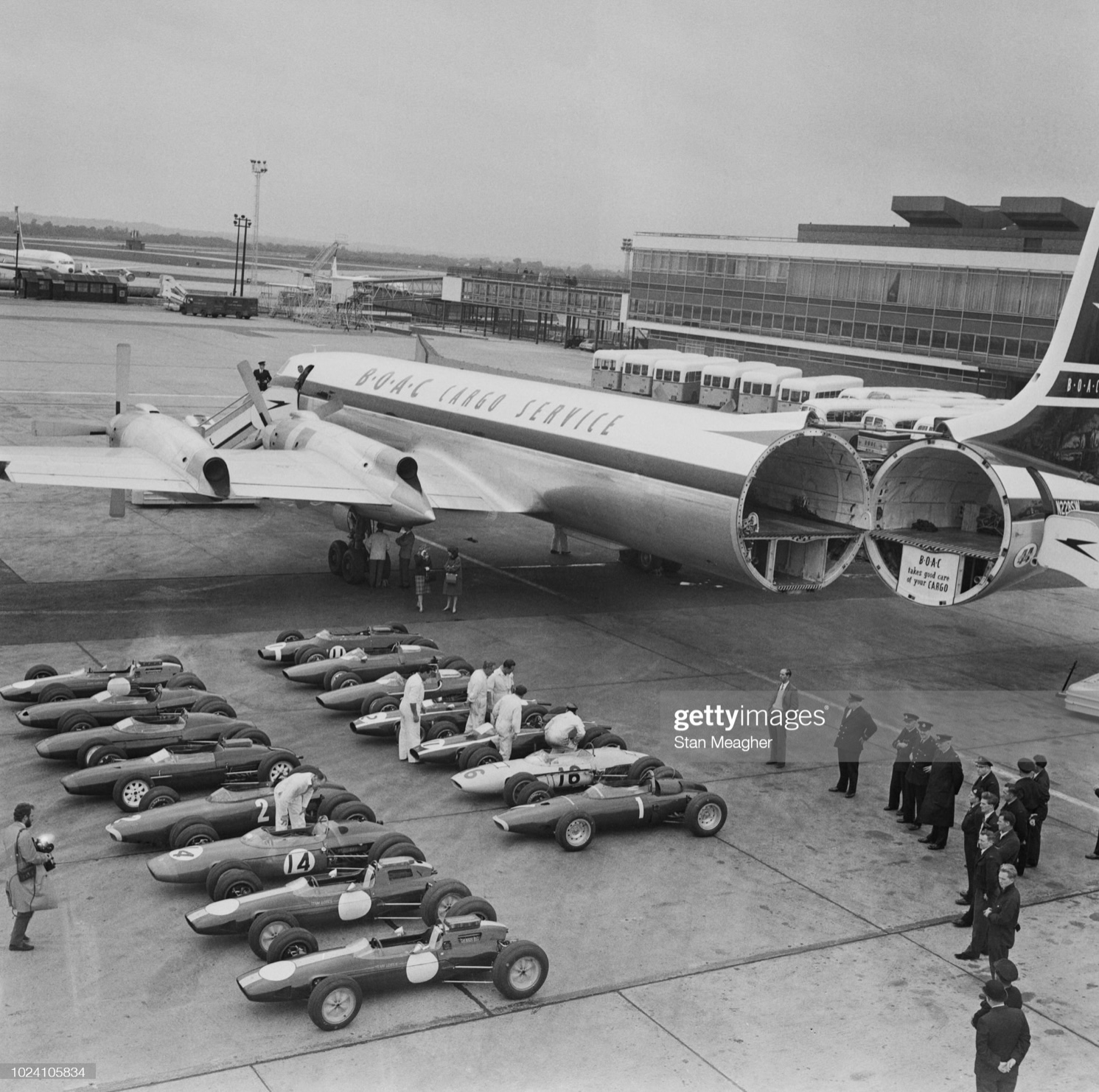
A BOAC Bristol Britannia ‘Whispering Giant’ (actually a Britannia based Canadair CL-44D4-1 – thanks Jon Farrelly!) awaits its precious cargo before departure from Heathrow to the fly-away, end of season United States and Mexican Grands Prix, October 1963…
The cars in the foreground are the factory Lotus 25 Climaxes of Jim Clark, victorious at Mexico City, and Trevor Taylor. #1 and 2 are the reigning World Champion BRM P57’s of Graham Hill and Richie Ginther, they finished first and second at Watkins Glen.
#16 is Jim Hall’s Lotus 24 BRM and #14 is Jo Siffert’s similar car. #11 and 12 are Jo Bonnier and Bruce McLaren’s Cooper T66 Climaxes, note that Bruce raced carrying #3 in both events.
For the aircraft buffs amongst us here is a link to a period BOAC documentary about the Bristol Britannia
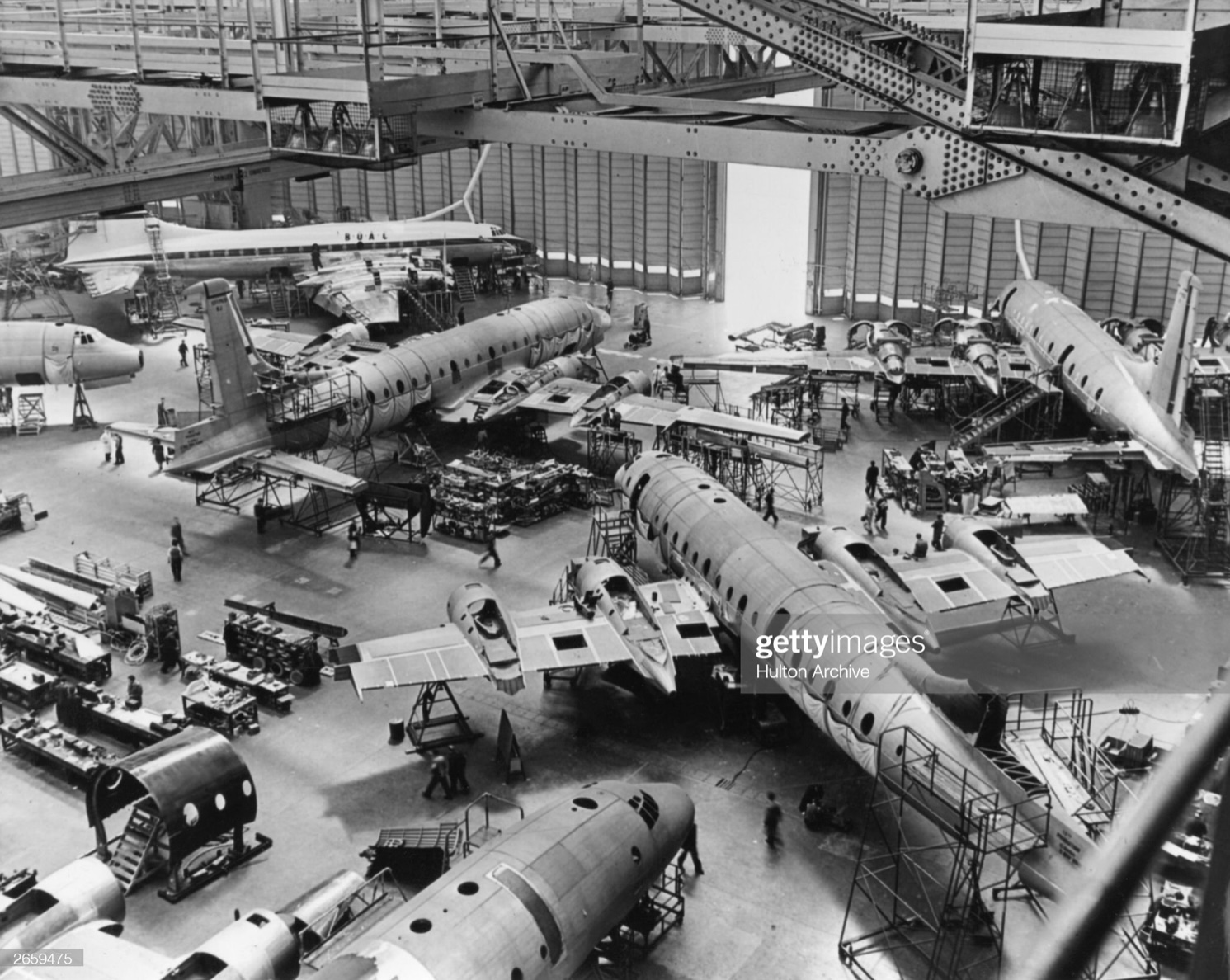
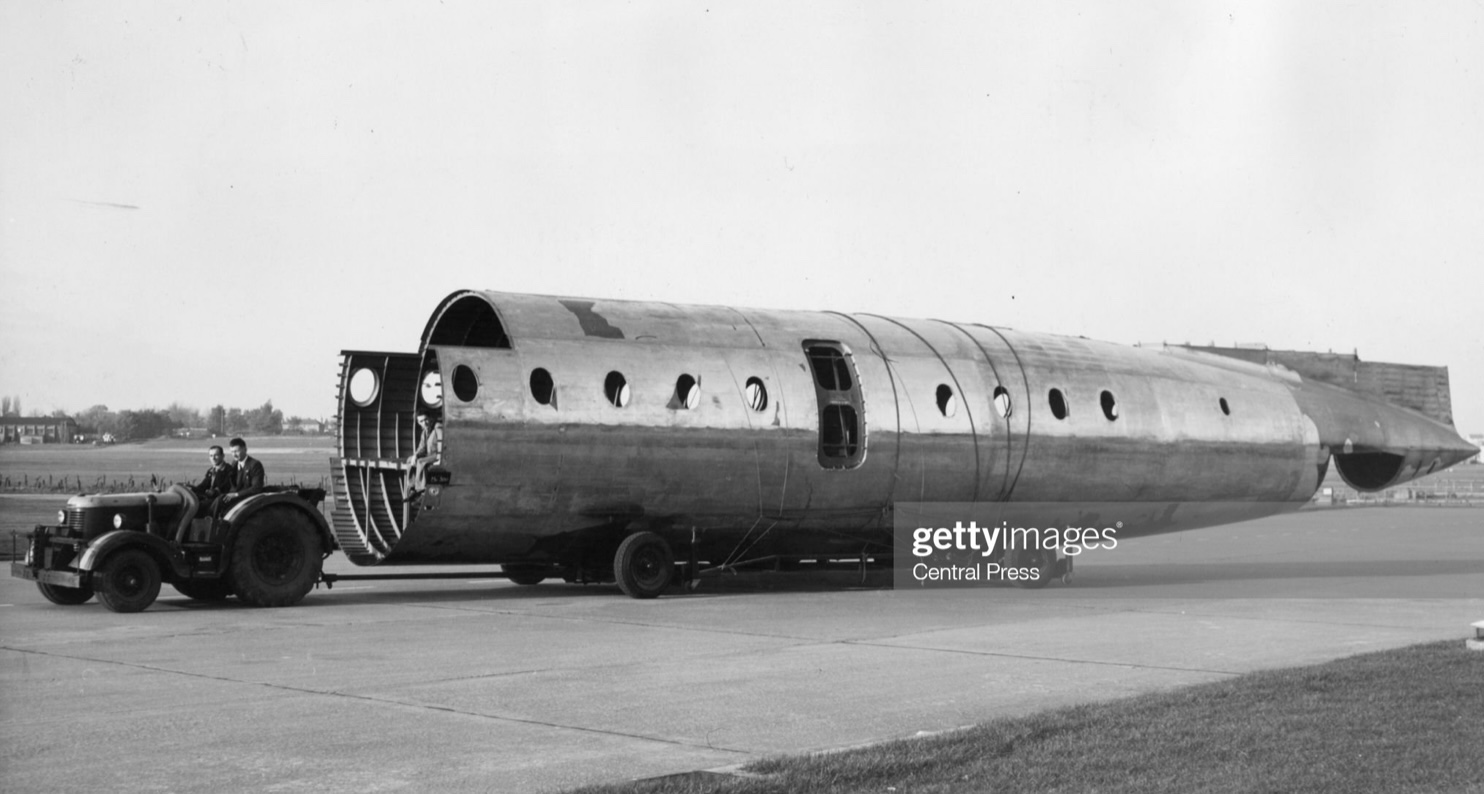
I love these two photographs of construction of Bristols in the mid-1950s.
The first shows Britannia 100s being completed in Bristol’s Assembly Hall at their Filton, South Gloucestershire aerodrome/manufacturing facility about four miles north of Bristol, in January 1956.
The second, dated a year earlier, may well have been the inspiration for Colin Chapman’s monocoque Lotus 25! (that was a joke). It’s such a powerful shot showing the conceptual simplicity and strength of such (highly sophisticated) structures.
In 1959 Bristol Aircraft merged with several other companies to form the British Aircraft Corporation, which in turn became a founding piece of British Aerospace, now BAE Systems. BAE Systems, Airbus, Rolls Royce, MBDA and GKN still have a presence on this Filton site. More Bristol Aircraft reading here; https://www.baesystems.com/en/heritage/filton–bristol
Malcom Ramsay and Tony Alcock built a swag of championship/race winning Formula Ford, F3, F2 and Formula Atlantic single-seaters from 1971 to 1978.
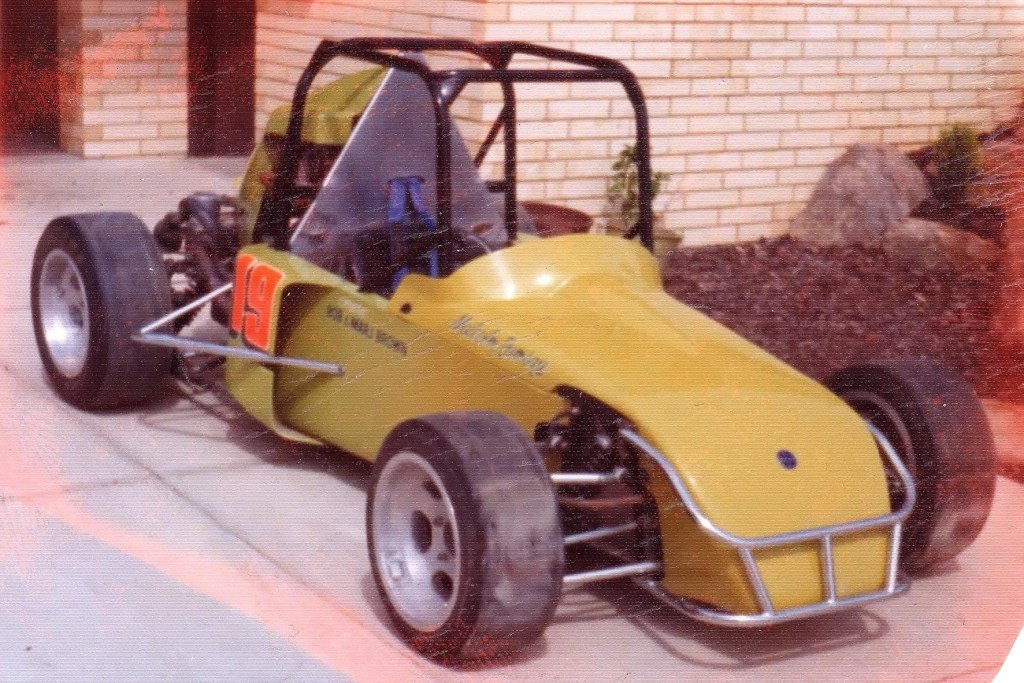
And this mid-engined, supercharged VW powered speedcar.
The project was funded by Bob and Marj Brown, a successful Adelaide business-couple who aided and abetted the careers of Birrana pilots Enno Buesselmann and Bob Muir from 1973-76.
Alcock’s revolutionary spaceframe design was tested by Ramsay on the dirt at Rowley Park, and at Adelaide International’s half-mile, banked, bitumen oval in 1974, it was immediately quick.
It was a step way too far for the conservative controlling body who suggested that “You circuit racing wally-woofdas can take your changes elsewhere!” Or as Ann-Maree Ramsay put it more delicately, the car “was banned due to perceived different handling characteristics compared with the front-engined Sesco and Offy cars of the time.”
The VW engine was a supercharged 1.6-litre flat-four mated to a Holinger modified VW transaxle.
By 1975 the Browns were in England chasing Formula Atlantic fame together with Muir and a pair of modified Birrana 273s.
Ramsay advertised the car in Auto Action, outlining that the S74 was the only car of its type “permitted to race for 18-months on a bitumen-oval, in this very restricted form of the sport.”
Yes, I know it’s a shit-photo, but it seems to be the only one there is, let’s record our history anyway. If you have a better one, please send it to me. The shot is out front of the Ramsay home in Adelaide. If memory serves, it now resides in the Holmes Collection in Brisbane.
Leo Geoghegan and Enno Buesselmann in Birrana 273 Hart-Fords during the 1973 ANF2 Adelaide International round
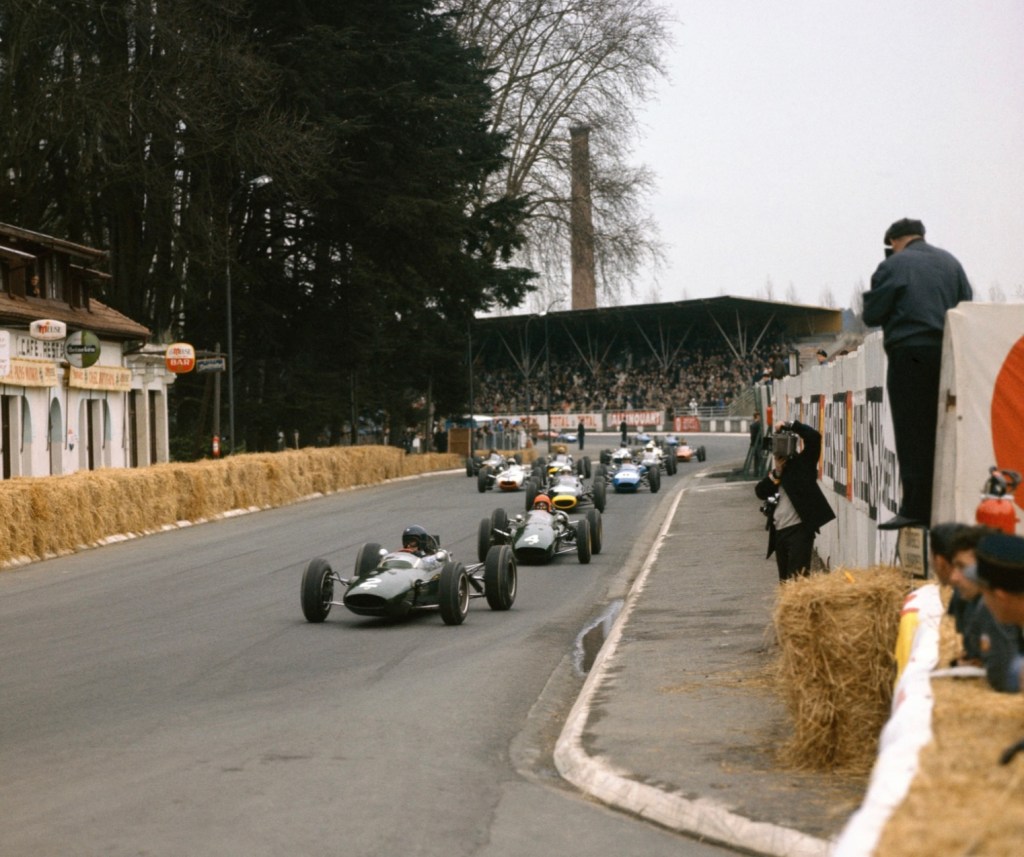
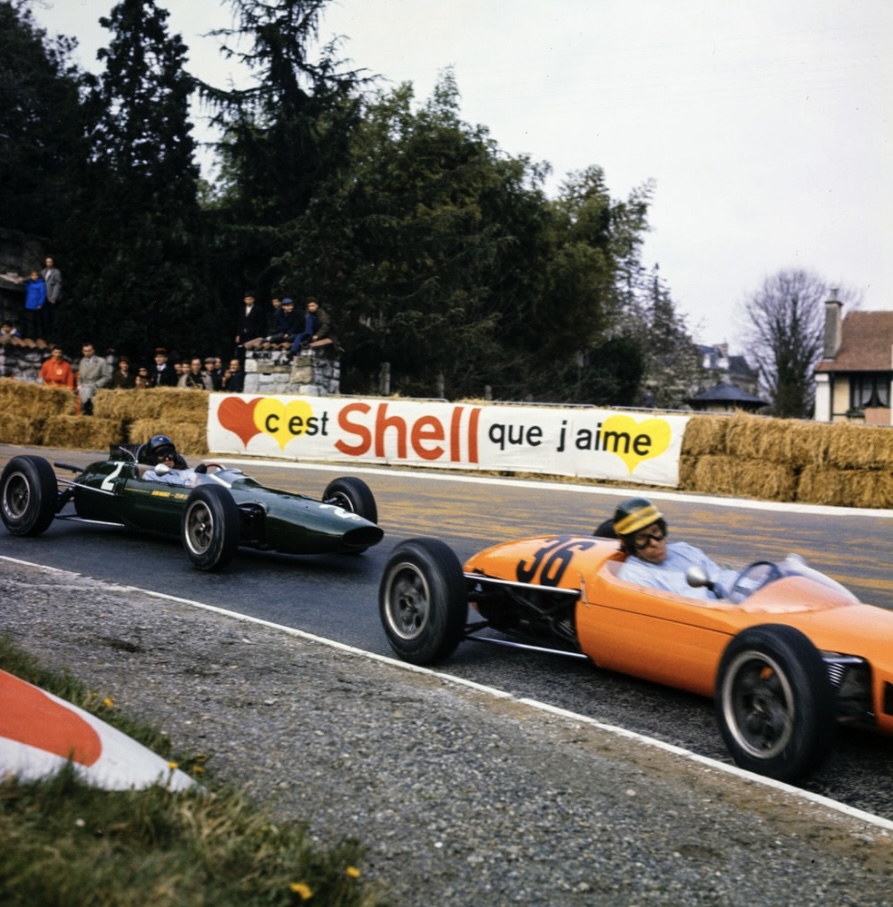
What a magic Pau Grand Prix vista on April 5, 1964.
Jim Clark’s one-litre Formula 2 Lotus 32 Cosworth SCA leads Peter Arundell’s F3 Lotus 27 Ford Cosworth MAE during the 80 lap, 220km race held around the streets of the Pyrenees-Atlantiques city in France’s southwest.
The yellow nose car in third is Richard Attwood’s Lola T54 SCA. Clark won from Attwood and Arundell in a stellar field which included Paul Hawkins, Tony Maggs, Frank Gardner, Jean-Pierre Beltoise, Maurice Trintignant and Denny Hulme.
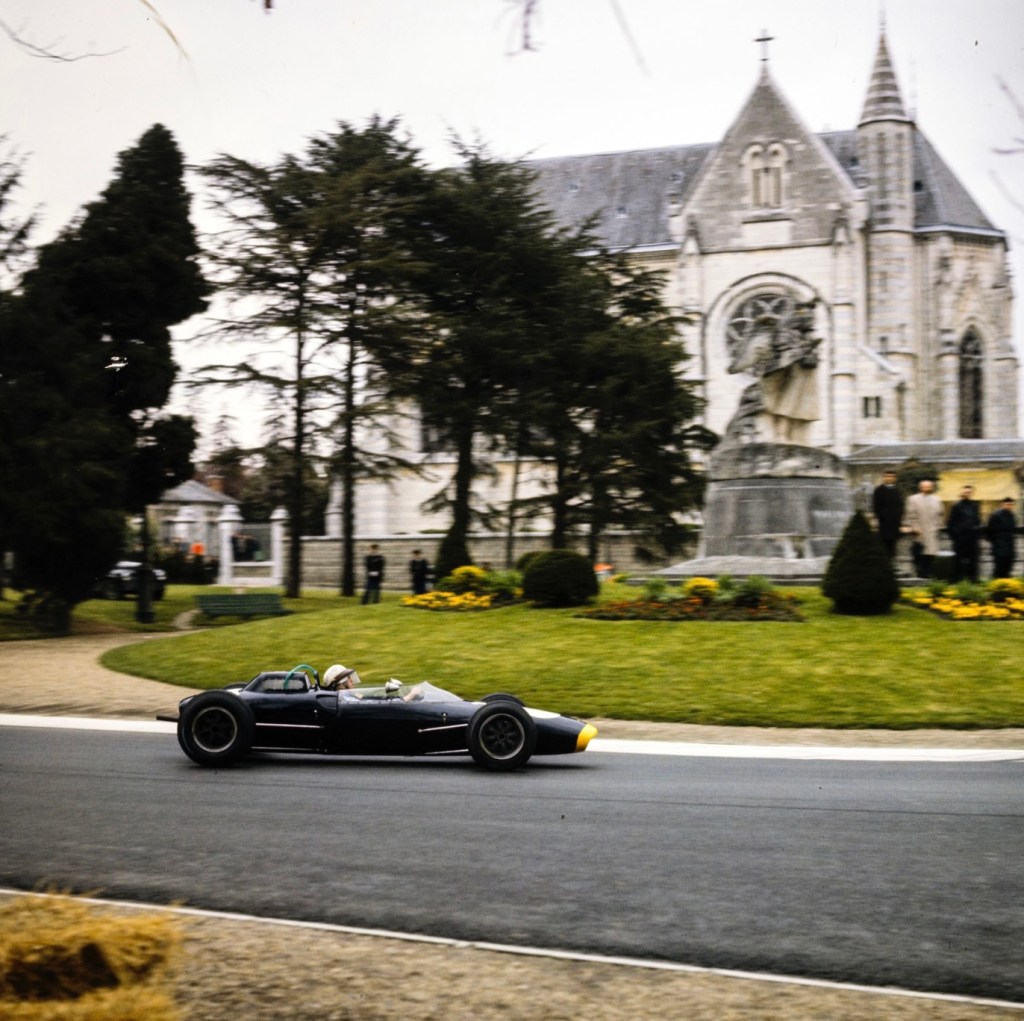
Jim Clark right up Paul Hawkins’ clacker during the 1964 GP. Hawkeye was seventh aboard John Willment’s F3 Alexis Mk4 Ford Cosworth MAE. There were nine or ten Ford Cosworth MAE, and Renault Gordini engined F3 cars in the F2 race, doubtless to keep numbers up in the first year of the new 1-litre F3 and F2 (LAT) Dickie Attwood during the ’64 F2 race, Midland Racing Partnership Lola T54 Cosworth SCA. Past Saint Martin Church perhaps, help please Frenchies? (LAT)
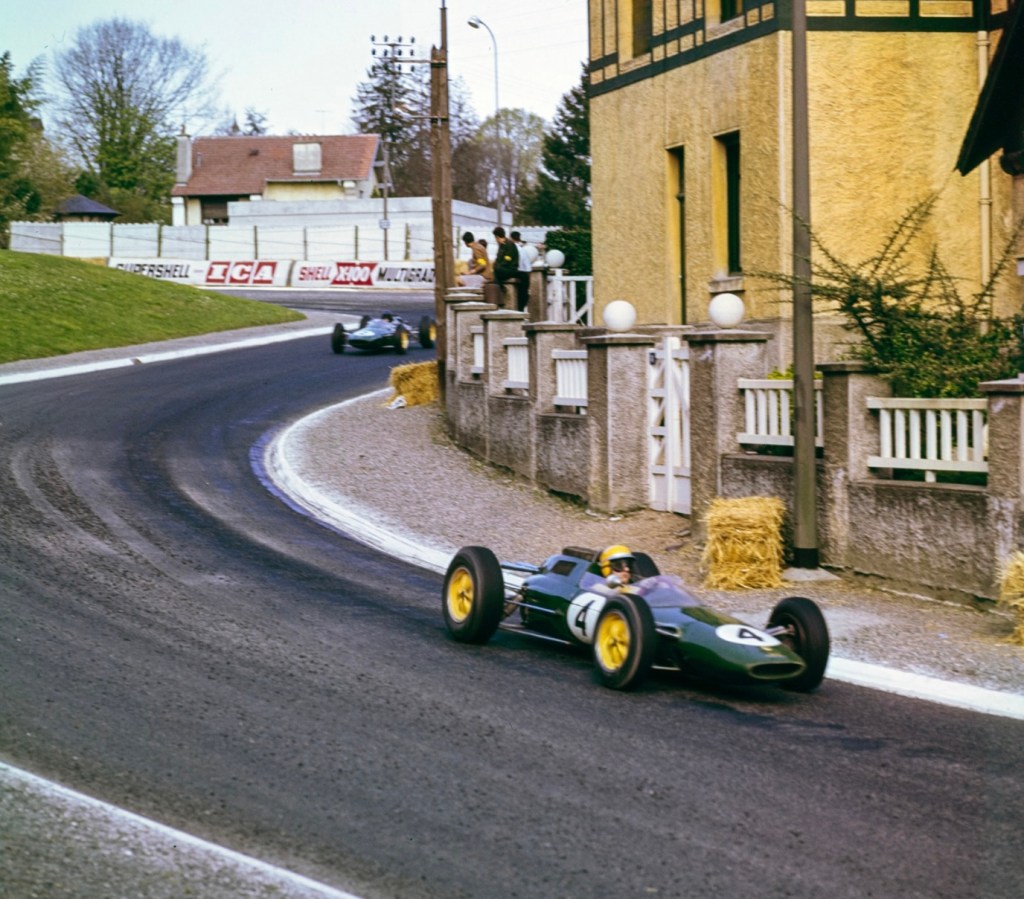
It amused me, flicking through some Pau GP photographs that numbers two and four also loomed large the year before, in 1963, when the F1 Lotus 25 Climax V8s of Clark and #4 Trevor Taylor (below) finished one-two from Heinz Schiller’s Porsche 718.
(LAT)
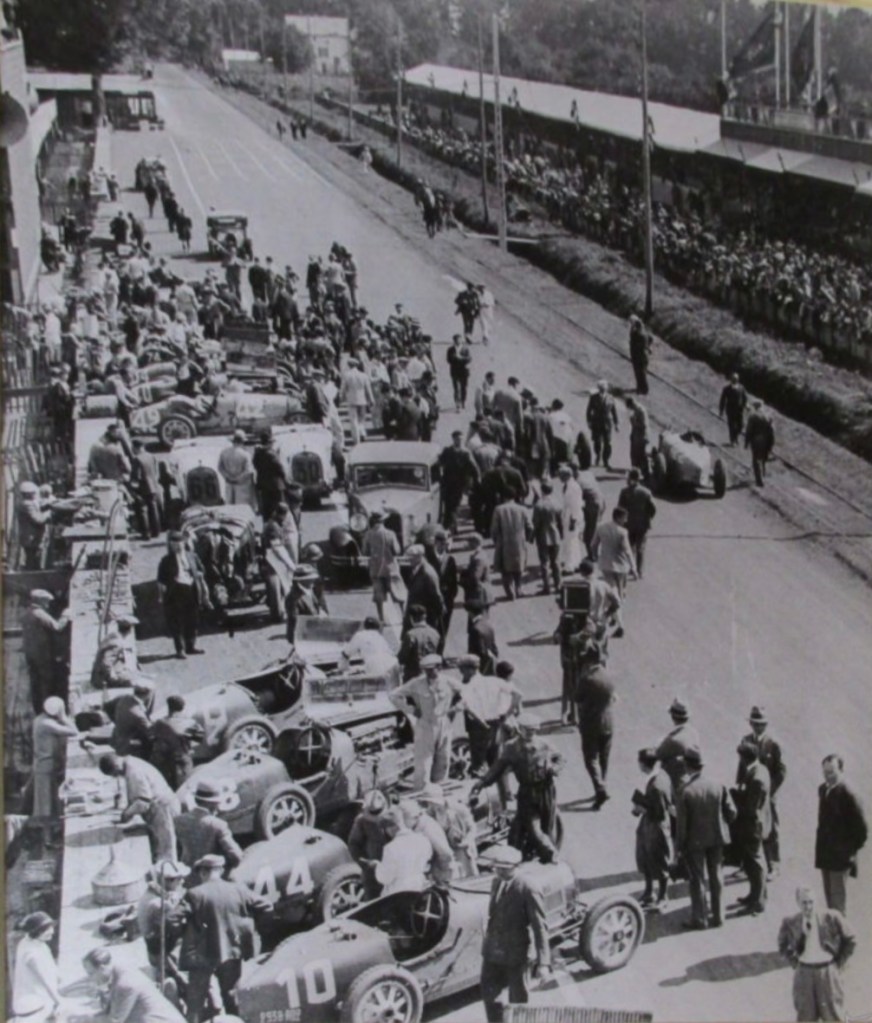
The 1930 French Grand Prix was held on a triangular 15.8km road circuit at Pau. It was won by Philippe Etancelin’s Bugatti T35C, this toe-in-the-water for the town led to the Pau GP’s inauguration as an annual event in 1933.
Marcel Lehoux’ Bugatti T51 won that snowy February race from Guy Moll’s similar car.
The 1930 grid including #10 Lehoux Bug T35B, #44 the winning Etancelin Bug T35C, the #28 or 38 Bugatti of De Maleplane or De L’espee, while towards the top is the #42 Daniel T35B. 25 cars started this race (unattributed)
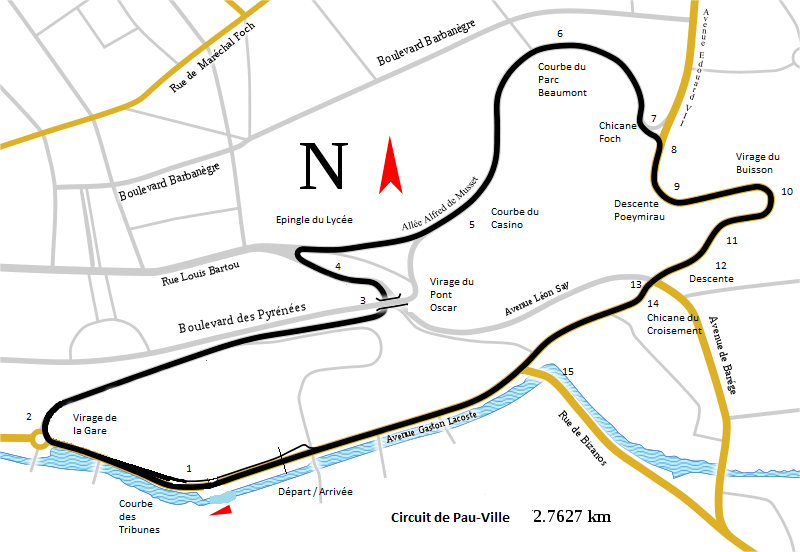
Happily, the race is still held around the 2.769km Circuit de Pau de Ville.
The Pau GP is up-there in a list of global continuous events. Down the decades it’s been held for GP cars until 1963. It then morphed thru F2 (1964-1984), F3000 (1985-1998), F3 (1999-2006), World Touring Car Championship cars – an unfortunate aberration – (2007-2009) then back to F3 (2012-2012), Formula Renault (2013), then F3 again (2014-2019) until this year (2022) when Vladislav Lomko, a Russian (oh dear, how very passé and politically incorrect) won the May race aboard a Dallara 320 Euroformula (F3 variant) machine.
Far-canal I HATE all the global one-make shit, it’s so fuggin boring. I don’t want to sound like a silly old tugger, but it is boring isn’t it, the lack of variety? And don’t give me the economics lesson, I just don’t give a shit…
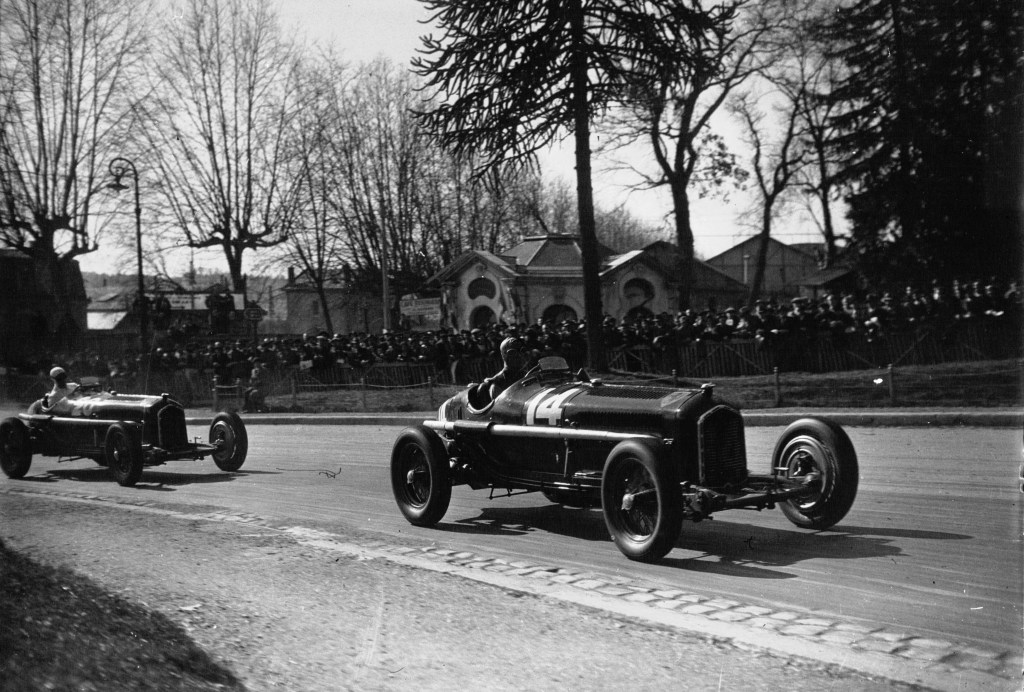
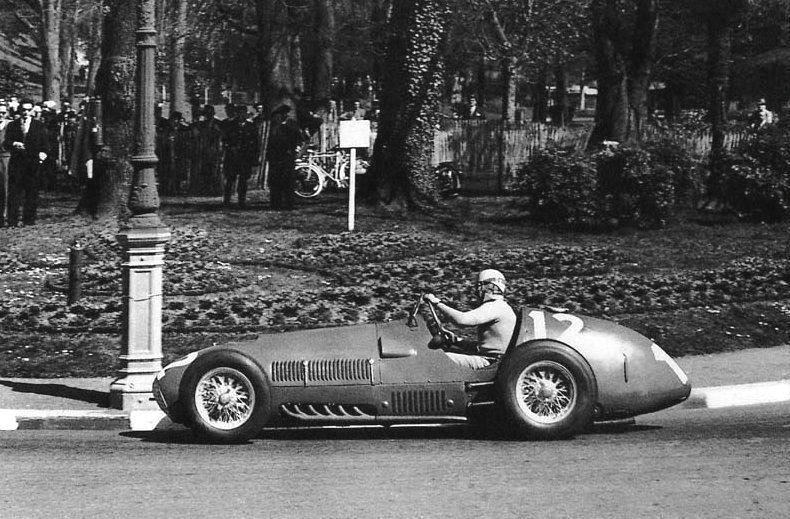
Tazio Nuvolari on the way to victory at Pau in February 1935, he is closely followed by Rene Dreyfus, both driving Scuderia Ferrari Alfa Romeo Tipo P3s (unattributed)Alberto Ascari in the fabulous Ferrari 375 during the ‘51 Pau GP, DNF transmission from Q2. His teammate, Gigi Villoresi, won from pole in another 375. Ascari won in 1952-53 aboard Ferrari 500s (unattributed)
The list of drivers who have won around the demanding track includes many of the gods; Tazio Nuvolari, Jackie Stewart and Lewis Hamilton won once, while JM Fangio, Alberto Ascari and Jack Brabham were victorious twice, Jochen Rindt won thrice during his King of F2 reign, with Jim Clark a four-time winner.
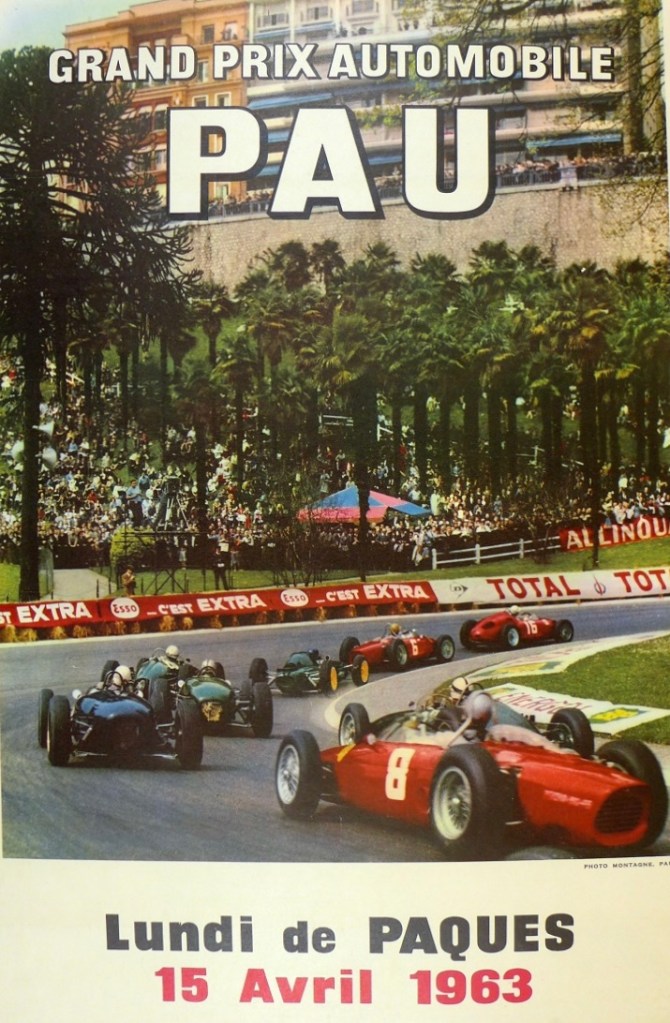
This wonderful poster for the 1963 event shows 1962 first lap action. Jo Bonnier’s Porsche 718 leads Ricardo Rodriguez’ Ferrari 156 and Jim Clark’s Lotus 24 Climax, #8 is Lorenzo Bandini’s 156. Maurice Trintignant’s Lotus 18/21 Climax won from Rodriguez, and Jack Lewis’ BRM P48/57
Throughout motor racing history France has held god knows how many car races on road circuits. It would be a great idea to tour France and tick a few off, for me Pau and Clermont Ferrand are top of the list. Doubtless that’s a function of my age, ten years older perhaps the top-two would be Reims and Rouen…
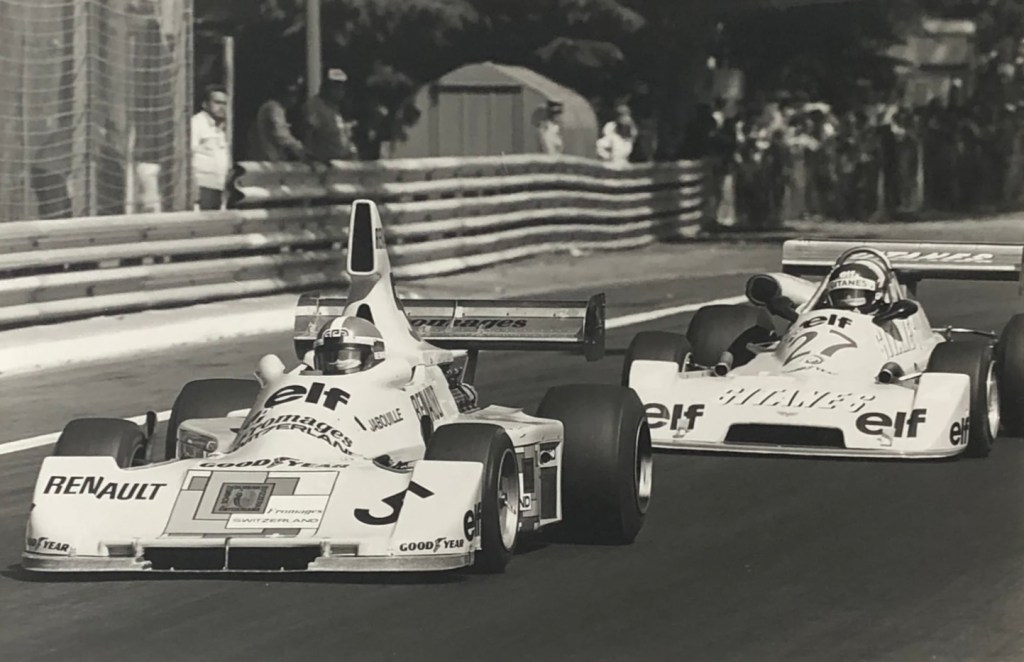
Jean-Pierre Jabouille aboard his self constructed Elf 2J (nee Jabouille 2J) Renault 2-litre F2 car, from Jacques Laffitte, Chevron B35 BMW during the height of the F2 era in 1976. First to fourth were Frenchmen; Rene Arnoux, Martini Mk19 Renault, Laffitte, Jabouille and Jean-Pierre Jarier, Chevron B35 BMW (DPPI)
The 2-litre F2 and F3000 period of incredibly quick, spectacular racing cars stretched from 1972-1998, any of you who saw the race during that period had a special treat.
Every winner of the Pau classic in that period raced in F1 with the exception of Jorg Muller, who was a test driver for Arrows, Sauber and Williams but never quite got a race-steer.
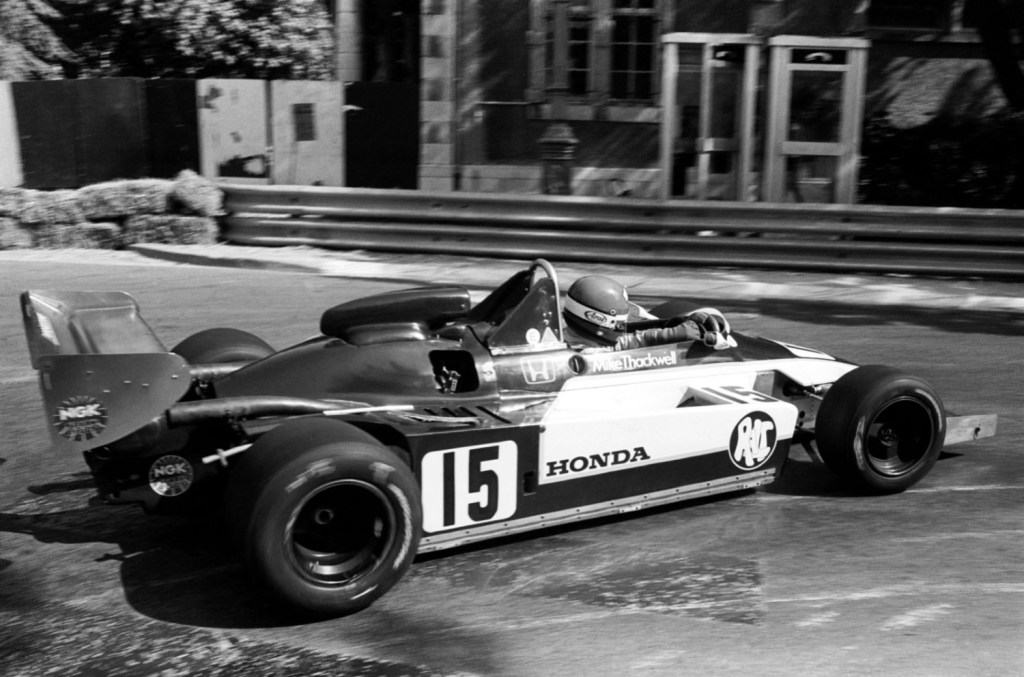
Mike Thackwell’s Ralt RH6/81 Honda during the June 1981 race won by his teammate, Geoff Lees, Thackwell was sixth (MotorSport)
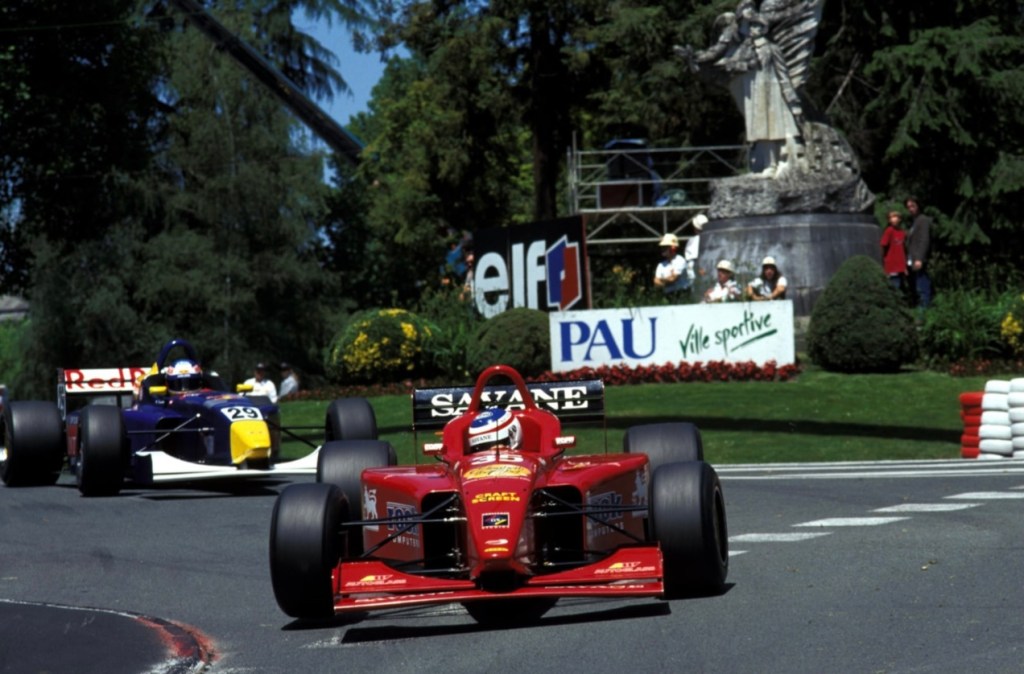
Red Bull Supremo, Christian Horner raced at elite level including F3000. He is shown below at Pau in 1997 aboard his Lola T96/50 Zyrtec-Judd leading Marcus Friesacher.
It was after following Juan Pablo Montoya for a few laps the following year that Horner realised his future was better devoted to racing outside the cockpit! Still, his management capabilities are enhanced by the knowledge of exactly what his drivers are dealing with.
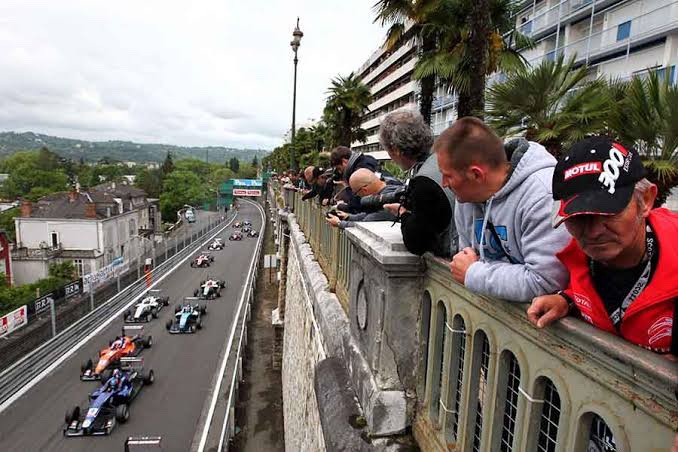
(MotorSport)Pau modern era F3 race (unattributed)
Etcetera: 1952 Pau GP…
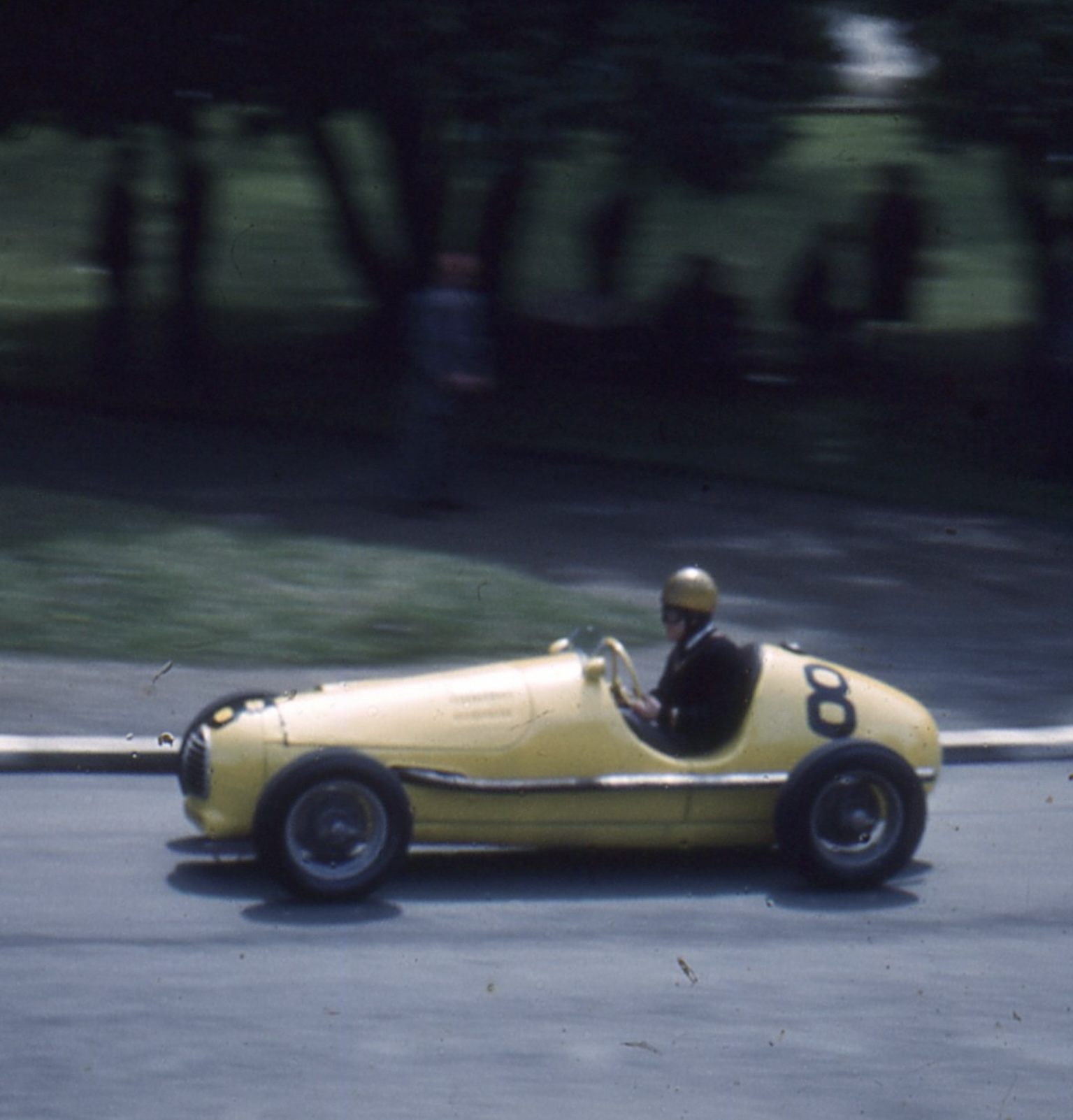
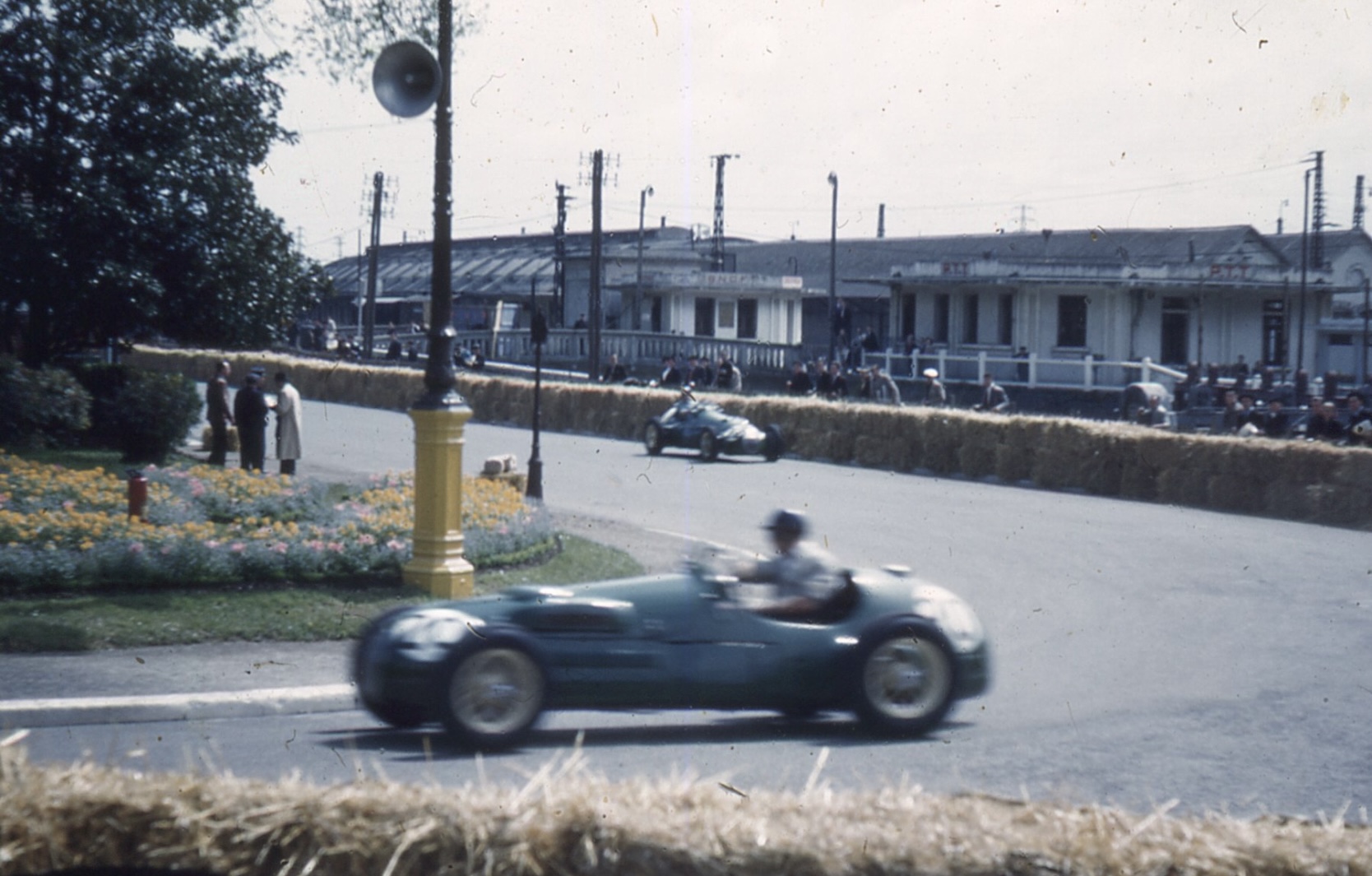
A couple of days after publication, Australian enthusiast/restorer/vintagent Chester McKaige got in touch and provided these wonderful colour images taken during the 1952 race by his father, George McKaige.
George was doing what we Colonials have always done, the Grand European Tour enroute to the UK. There he worked for the de Havilland Aircraft Company for a couple of years, on his weekends and holidays he attended many British and European racing events taking along his trusty camera.
Twenty years ago Chester printed two volumes of George’s photography in Europe and Australia, my copies of ‘Beyond The Lens’ are among my favourites of that golden-age.
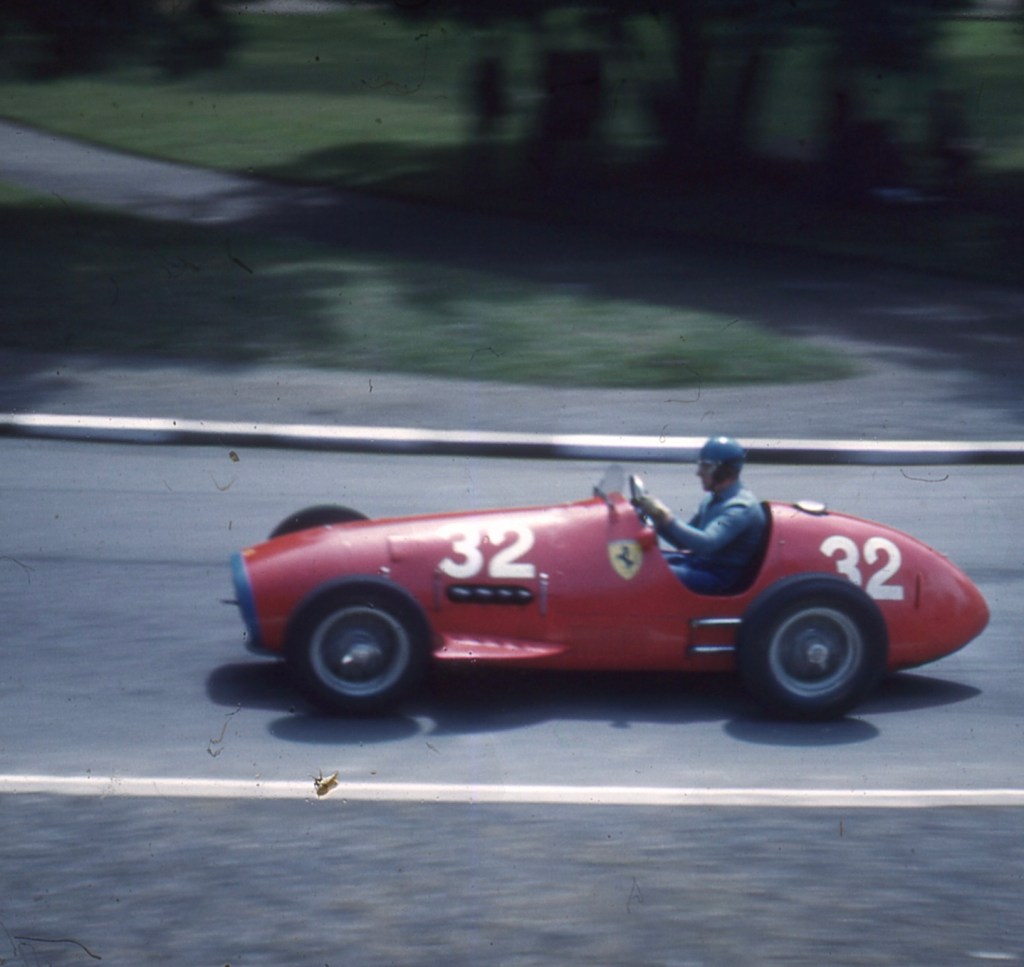
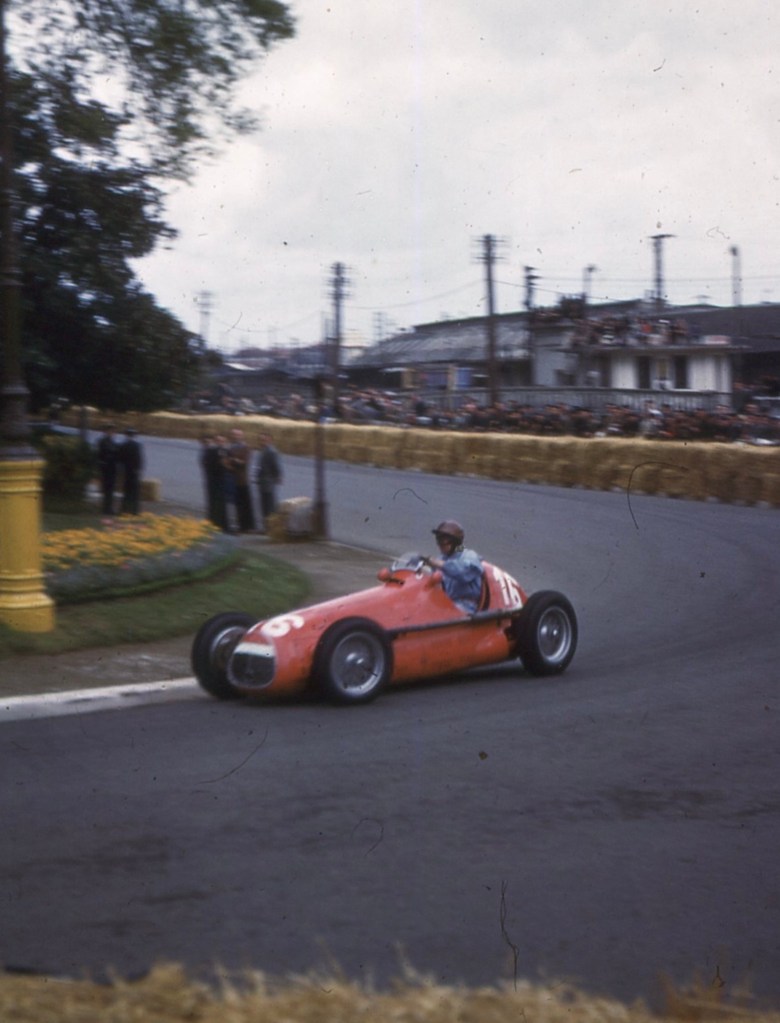
Alberto Ascari in typical race attire, and Ferrari 500 in 1952. Note the stub exhausts fitted at this stage (G McKaige)Toulo de Graffenried, Plate Maserati 4CLT-48, sixth and final car classified, Pau 1952 (G McKaige)
The XIII Grand Prix de Pau – also the first round of the Grands Prix de France F2 Championship – was won convincingly from pole by Alberto Ascari in a Ferrari 500, chassis #0003 it seems, not #0005, the car in which he won so many races in 1952-53 before passing into the hands of Australians Tony Gaze and Lex Davison.
Sharing the front row with him were Gigi Villoresi’s similar works car, and Lance Macklin’s HWM Alta. Second and third placings in the three hour, 280km race were Louis Rosier’s Ferrari 500 and Jean Behra Simca Gordini T11.
By that early stage of the season Ascari had also won the GP di Siracusa. In a year of complete dominance he was also victorious in the GP de Marseille, a heat of the GP di Monza, the GP de Comminges, the GP de la Baule plus the championship Grands’ Prix of Belgium, France, Britain, Germany, Holland and Italy; not to forget the drivers World Championship!
Lance Macklin, HWM Alta, running at the end but unclassified, Pau 1952 (G McKaige)
Credits…
MotorSport Images, LAT, Jean Philippe Gionnet, DPPI, F2 Index, George and Chester McKaige
Tailpiece…
(JP Gionnet)
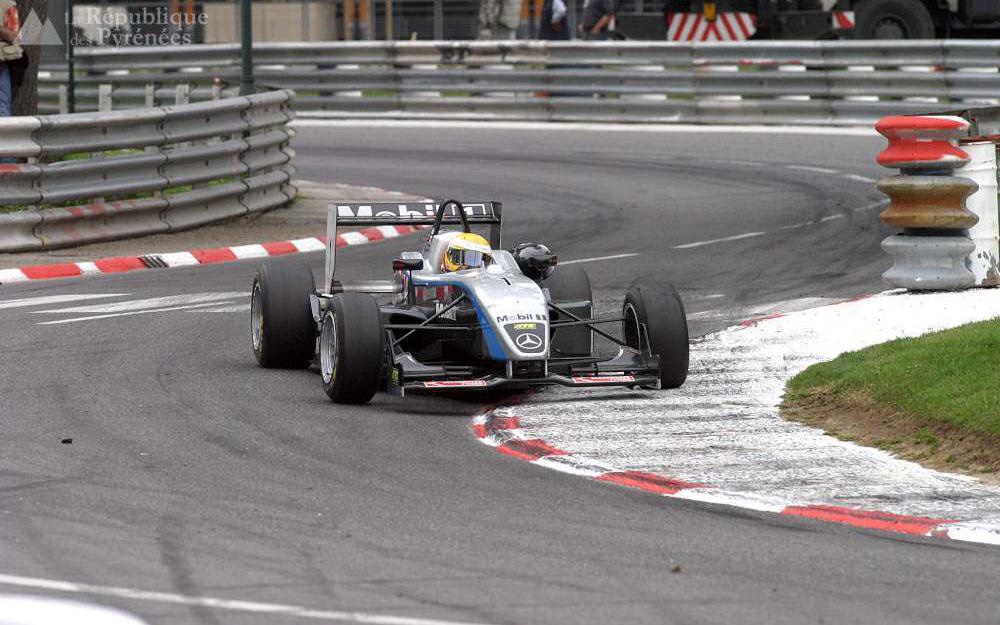
Lewis Hamilton pinging his F3 Dallara F305 Mercedes through the Esses in May 2005.
He had the perfect weekend, two poles, wins and fastest laps early in the season on the way to winning the F3 Euro Series with victories in 15 of the 20 races – and F1 beyond.
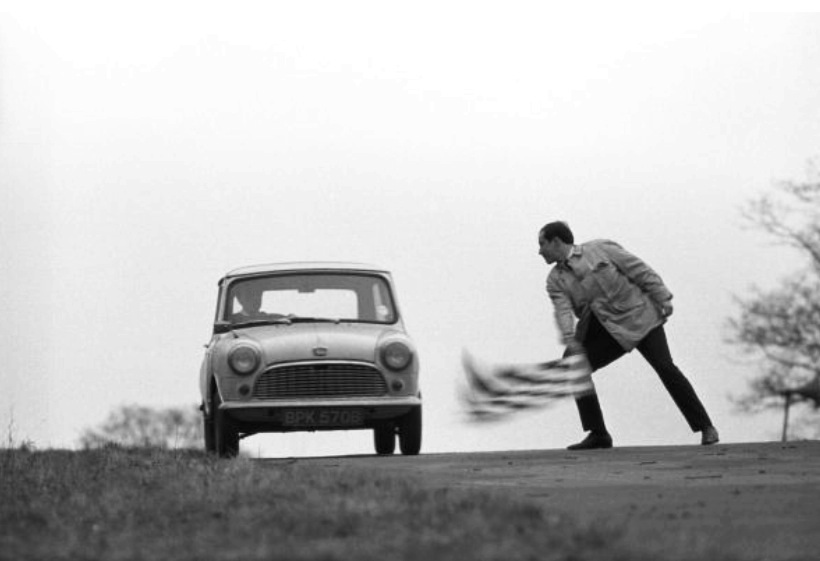
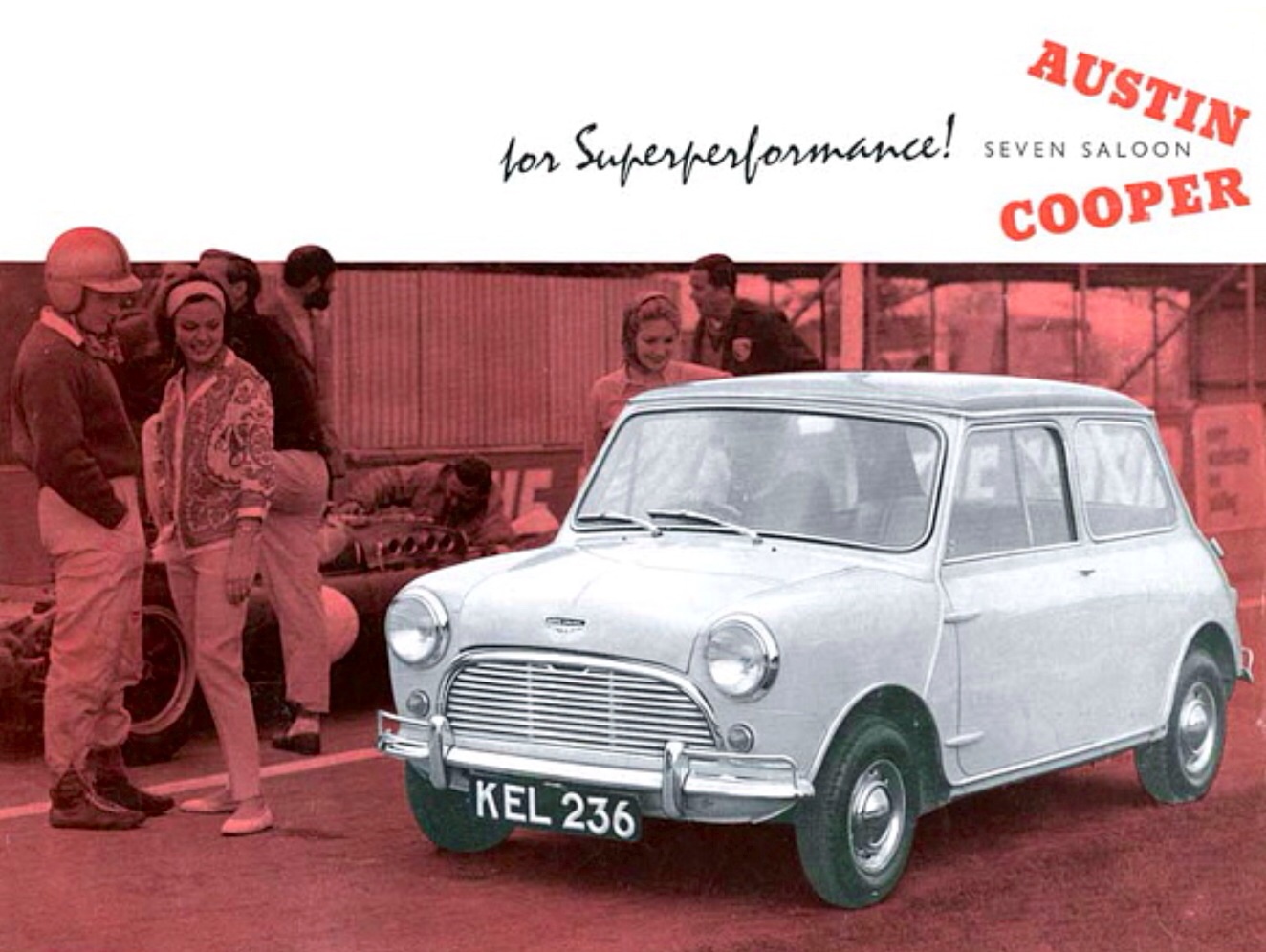
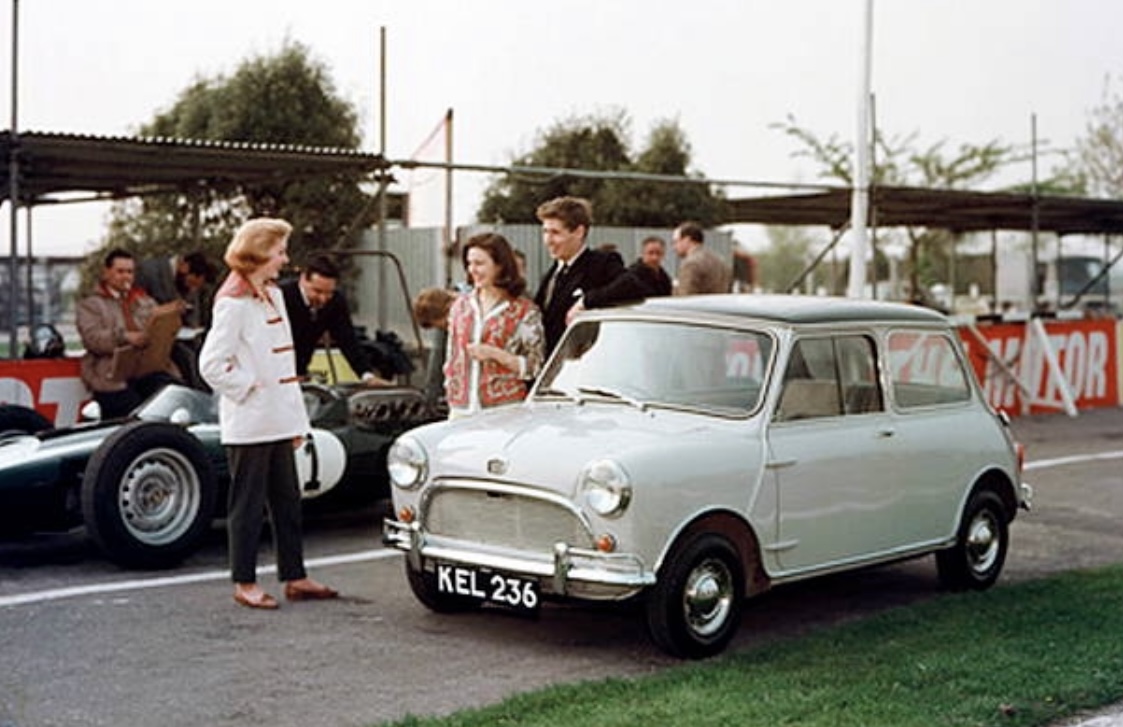
Sales promotion of the Mini Cooper early-sixties style…
The shot above is by Bert Hardy, the extraordinary photographer of the UK’s Picture Post by then plying his trade in advertising. See here for more about Hardy; 1947 JCC Jersey Road Race… | primotipo… The photos below are via other agencies working on the BMC account.
It’s a decade before my time but are very much of the time aren’t they?
The caption for the opening shot, ‘Mini Rally at Brands Hatch’ is dated January 6, 1965. Touring car racing was never quite the same again when the Minis joined in on the fun, the magic little cars punched above their weight, as often as not being outright contenders in addition to inevitable class wins.
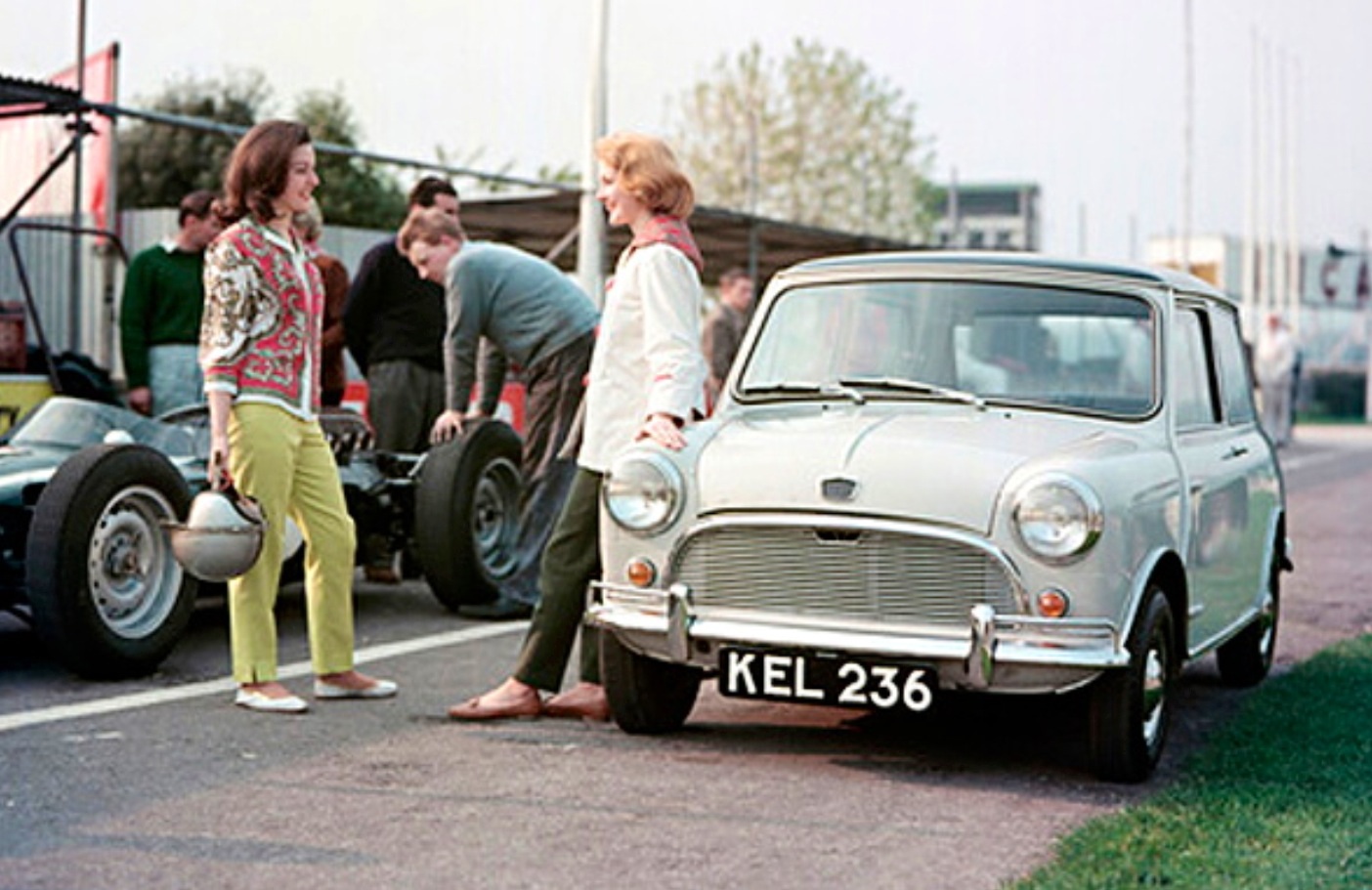
Bruce McLaren is at left in the shot above, taken at Goodwood in 1961, and again at far left in the one below..
Partially hidden behind the attractive babes (I don’t spose I’m allowed to make that kind of factual, complimentary observation these days) is, my friend and Cooper Historian Stephen Dalton tells me Jack Brabham’s 1961 Indy 500 spare car, a Cooper T53 Climax 2.7 FPF. See here for a feature on Coper’s Indy adventure; Jack’s Indy Cooper T54 Climax… | primotipo…
It is it a real-test day, John Cooper is tending to the engine in the similar shot above, “they tested a Cooper T55 that day too.”
Stephen comments further, “KEL 236 is a numberplate borrowed from a motorbike and fitted to the 997 Cooper prototype. The brochure cover image has the grille and bonnet badge touched in by a graphic artist.”
“It’s totally different to the colour shots, as they were still developing stuff for the car when these April 1961 photos were taken. No production 997s existed until July 1961.”
“They also did Austin Healey Sprite Mk2 press photos in similar scenes to this on the same day, neither BMC car was officially released at the time.”