Archive for the ‘Obscurities’ Category

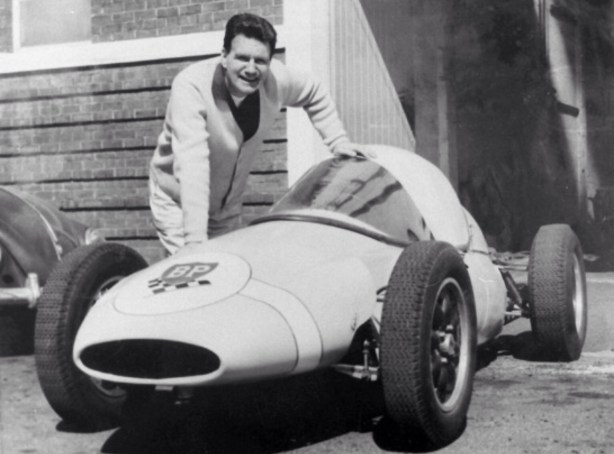
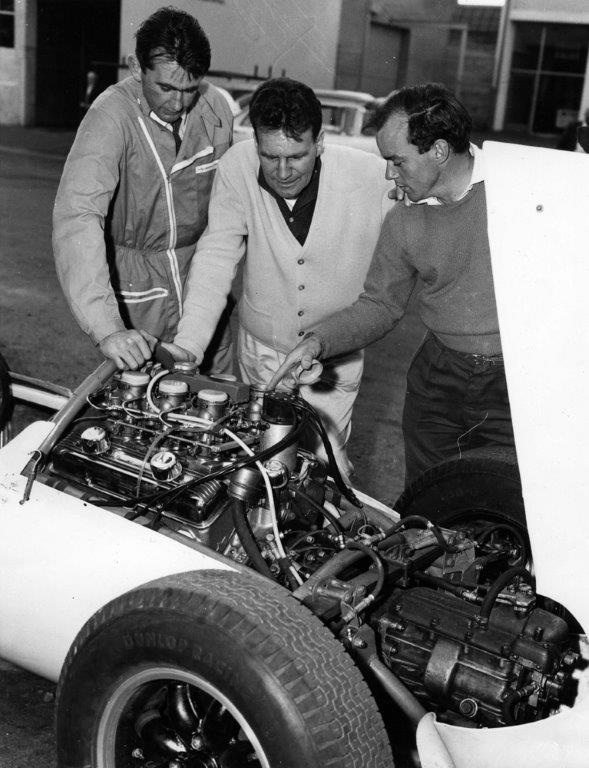
Rodney Clarke’s Connaught J3 Coventry Climax FPE V8 2.5, as concepted in 1954…

In anticipation of Climax’s forthcoming 2.5 litre ‘Godiva’ or FPE F1 V8 the amazing Clarke laid down a concept which ‘would have featured a stressed-skin monocoque section built up a round a geodetic latticed internal frame similar to the Barnes-Wallis originated structure of the R-100 airship and Vickers Wellesley and Wellington bombers of the 1930’s’ Doug Nye wrote.

This J3 (sometimes referred to as J5 or D Type) ‘tub’ would have supported a separate subframe which would have carried the FPE V8 and a bespoke Connaught transaxle and de Dion rear suspension with inboard mounted disc brakes.

’The transaxle was to be an epicyclic affair with its actual gearbox section overhung beyond the back axle line. One of these transaxles was actually completed, plus parts for another five, and was used in Paul Emeryson’s Cooper-Connaught’ Doug wrote.

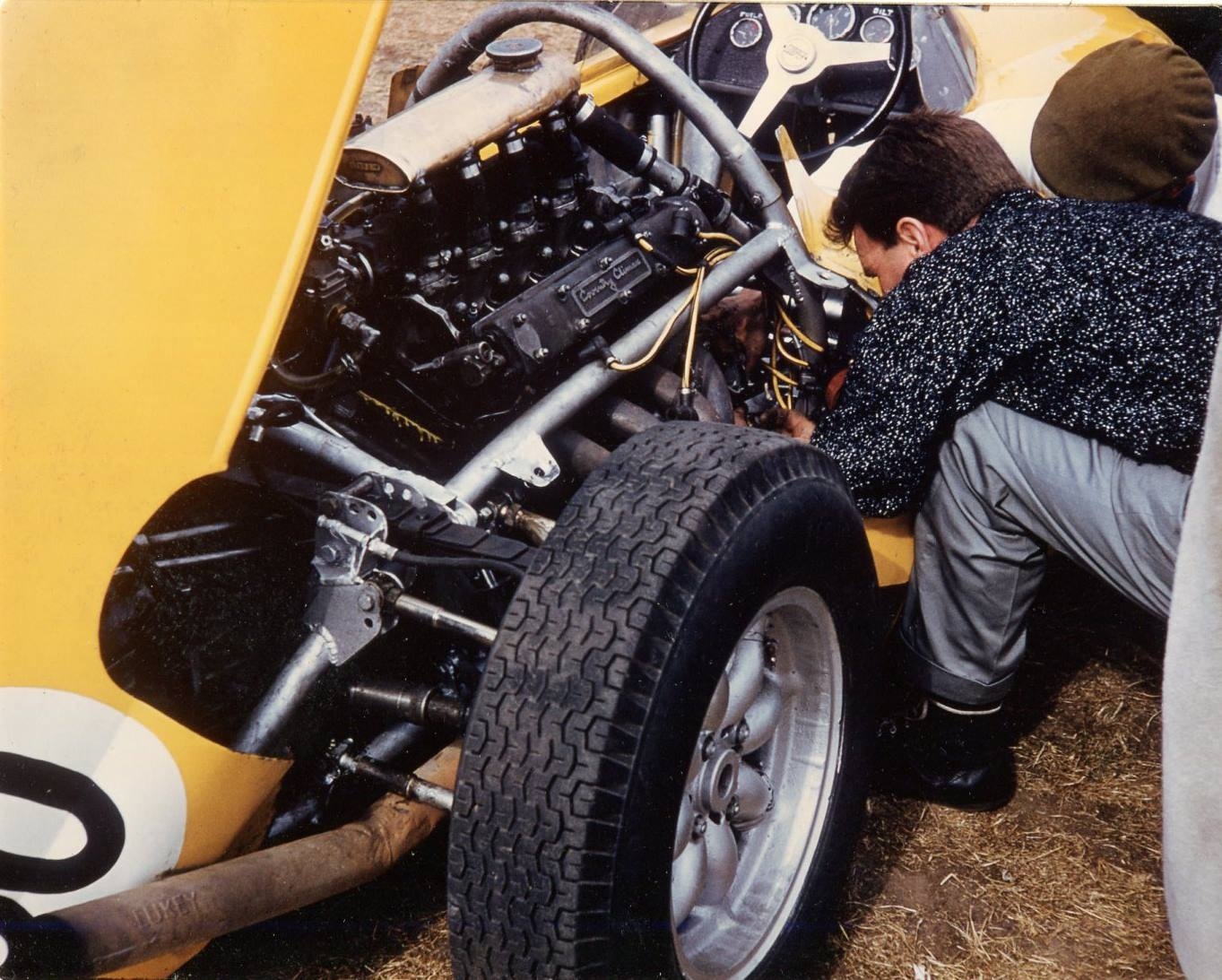
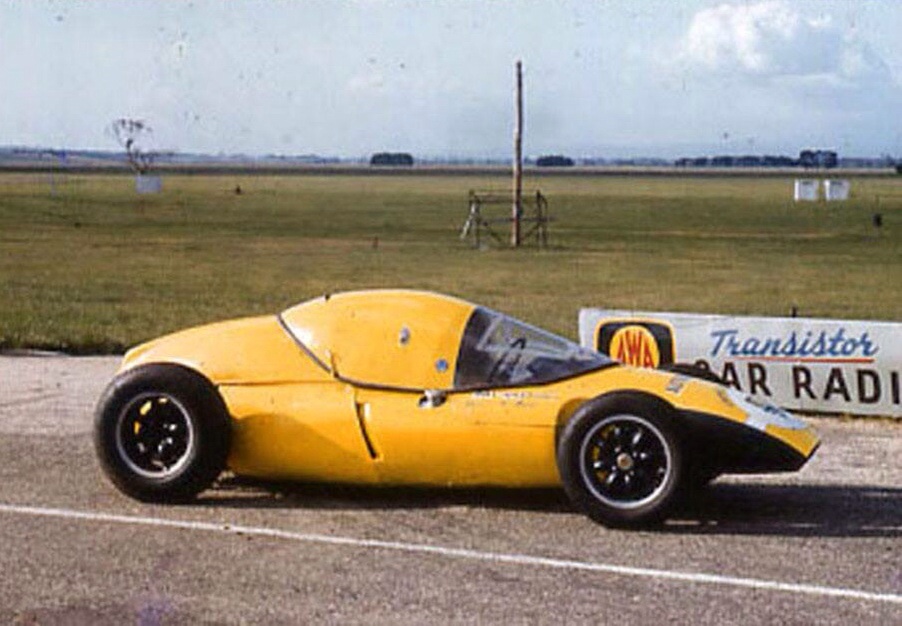
As is well known the Coventry Climax lads felt ’emasculated’ by the claimed power outputs published by the continentals and the FPE was unraced in period, only one of the cars concepted around the wonderful V8 was eventually built, the Kieft, click here to read about it; https://primotipo.com/2016/06/03/kieft-de-soto-v8/

Cars were also planned by Climax customers Cooper and HWM as well as Connaught and Kieft. All was not lost at Climax, the learnings from development of the V8 were applied rather effectively to the all conquering family of FPF fours

Imagine the J3 racing in 1955 with a development budget to sort it…

Geodetic Airframe…

First i’ve ever heard of it. ‘It makes use of a spaceframe formed from a spirally crossing basket-weave of load bearing members. The principle is that two geodesic arcs (a curve representing the shortest distance between two points) can be drawn to intersect on a curving surface (the fuselage) in a manner that the torsional load on each cancels out that on the other’ says Wikipedia.

Credits…

Getty Images, ‘The History of The Grand Prix Car’ Doug Nye, Theo Page

Tailpiece: Kieft F1 Coventry Climax…

Finito…

de ad dutch flowers
(Rainer Schlegelmilch)

Andrea de Adamich hustles his McLaren M14D Alfa through the Zandvoort sand dunes and flowers, Dutch GP practice June 1970…

This is yet another of my nutso articles in terms of flow.

It started as a quickie around some of Rainer’s (Schlegelmilch is a favourite of mine as you may have guessed) shots of the McLaren Alfa. Then I got interested in Andrea’s career, so off I went that way.

Then I thought ‘the F1 program really started in Tasman Formula single-seaters here in Australia’ – that is Alec Mildren’s Brabham BT23D and Mildren ‘Yellow Submarine’ with the engines Autodelta-Alfa Romeo T33 2.5 V8’s – but I didn’t want to go too far with that as I want to do the topics justice, with Kevin Bartlett’s intimate knowledge of both the program and cars. So that aspect of this article is no more than a teaser. Anyway, here ’tis, a bit weird, and with the ‘full job’ on the Alfa engined Mildren Brabham and Sub still to come…

The McLaren/Alfa Romeo partnership started reasonably well at Montjuic Parc in Barcelona but the grid had ten places reserved for seeded drivers and only six for the other twelve competitive cars, Andrea’s thirteenth quickest was just 0.05 seconds too slow to make the cut. Same problem at 1970 Monaco with the same system, again he was thirteenth fastest overall but this time he fell short by 0.1 seconds.

de ad dutch
Andrea, Dutch GP practice June 1970. M14D Alfa DNQ (Rainer Schlegelmilch)

The team missed the Belgian Grand Prix on June 7, McLaren took the time to adapt the Alfa Romeo V8 to its latest M14 chassis, which they designated ‘M14D’, unfortunately again failing to qualify for the Dutch GP at Zandvoort by 0.01 seconds where most of these shots were taken.

Peter Gethin was the quickest of the Cosworth engined McLarens with Denny Hulme missing the meeting due to hands burned at Indianapolis. Gethin’s car qualified eleventh but retired on lap 18 after an accident, writing off Denny’s M14 in the process so the M14D was quickly converted back to Cosworth spec to give Denny a competitive car when his hands recovered.

Back in the older chassis, de Adamich qualified his M7D at Clermont-Ferrand sixteenth, a good effort but only completing 29 laps retiring after a water pipe came adrift and he lost 9 laps in the pits. He qualified eighteenth at Brands Hatch, again in the M7D but was a non-starter with a leaking bag fuel tank.

de ad dutch exiting car
The bespectacled Italian lowers his lanky frame into the McLaren M14 monocoque, Dutch GP 1970 (Rainer Schlegelmilch)
de ad mcl group of cars
George Eaton’s BRM P153 passes the #21 de Adamich McLaren M14D Alfa and #20 Hulme McLaren M14A Ford, Zandvoort pitlane, Dutch GP practice June 1970 (Rainer Schlegelmilch)

The 1970 German GP was held at the fast Hockenheim circuit which places an emphasis on power/top speed, the Alfa engine lacked sufficient punch, Andrea again failing to qualify, he had complained about handling and the engine not pulling properly. The speed of the chassis was thereabouts though, Hulme finished third in a Cosworth DFV powered M14.

de ad donna
#20 de Adamich McLaren Alfa Hockenheim, German GP practice 2 August 1970 and Donatella de Adamich in the Zeltweg pits 18 August 1970 (Rainer Schlegelmilch)

Zeltweg’s 6Km layout places a similar premium on power and high speed handling too, the car qualified well in fifteenth for the Austrian GP, finishing twelfth, the decision to change the engine before the race went awry when the replacement pulled 1000rpm short of the engine used in practice giving Andrea a long race labouring down the back.

Allen Brown wrote that a lot of work was done by Autodelta in the lead up to the team’s home race at Monza with emphasis on the sumps- which had been identified as the main problem. Andrea qualified twelfth and finished eighth having run well for the first few laps in the race won by Regazzoni’s Ferrari 312B albeit seven laps in arrears. It was Regga’s first GP win. Nanni Galli, another Autodelta racer had a go in the M7D but did not qualify having experienced camshaft trouble.

In Canada Andrea again qualified twelfth of twenty, starting really well and ran as high as ninth, but he hadn’t started with full tanks knowing he had to stop for fuel but diddn’t get to that point, pitting with low oil pressure from eighth position after completing 69 laps. At Watkins Glen he failed to qualify after big dramas gave him limited circuit time, first a fuel leak and then a behind dash fire, perhaps as a consequence the team didn’t take the Alfa powered chassis to the season ending race in Mexico City on 25 October.

McLaren had no incentive to continue with development of the Alfa engined car given the competitiveness of its Ford Cosworth DFV engined machines, a purpose built F1 engine. Alfa’s engine started life as a more robust, long distance unit, and was never, without the commitment of sufficient money and engineering resources, going to approach or eclipse the dominant DFV.

andrea portrait
de Adamich at the wheel of his Alfa 33TT3, Targa 1972. He was third in the car shared with Toine Hezemans (velocetoday.com)

Andrea de Adamich…

Tall, scholastic and patrician, the bespectacled Italian began racing whilst still a law student, making his name driving a works Autodelta Alfa Romeo in the European Touring Car Championship, which he won in 1966 at the wheel of a GTA.

andrea ti super
Andrea de Adamich corners the Alfa Ti Super he shared with Carlo Scarambone in the Tour de France 20 September 1964 . Nouveau Monde Hairpin, Rouen (Rainer Schlegelmilch)

He attracted Ferrari’s attention with some promising runs in Alfa T33 sports cars (which he continued to race whilst pursuing a single-seater career) and was recruited to the Scuderia for the non-championship 1967 Spanish GP, at Jarama north of Madrid.

de ad targe
Traga 1967 in the 2 litre Alfa T33. DNF suspension failure in the car shared with Jean Rolland. Race won by the Hawkins/Maglioli Porsche 910 (Getty)

In 1968 Andrea was scheduled to drive full-time for Ferrari alongside Chris Amon and Jacky Ickx, but he crashed during practice for the Brands Hatch Race of Champions and suffered neck injuries which took a long time to heal fully.

He returned to racing, winning the Argentine Temporada series the following winter with the powerful F2 works Ferrari Dino 166. De Adamich’s Ferrari 166 F2 Season is covered in this article; https://primotipo.com/2014/07/09/temporada-f2-series-argentina-san-juan-1968/

andrea dino
de Adamich’s Ferrari 166 winning in front of F2 king Jochen Rindt’s Brabham BT23 Ford FVA, San Juan Argentina, Temporada Series 1968 (Andrew Marriott)

‘In 1970 McLaren was offered the opportunity of experimenting with an Alfa V8, a possibly tempting alternative to the then-ubiquitous Cosworth DFV, and one of the Italian engines was installed first in an M7D chassis and latterly an M14D for de Adamich to drive’, wrote McLaren.

‘To say this technical combo achieved modest results would be a dramatic understatement. The McLaren Alfa generally failed to qualify and when it did, could only muster twelfth in the Austrian GP followed by a distant eighth place in front of the Alfa top brass at Monza. McLaren, still reeling from Bruce’s death that summer, reckoned that the Anglo-Italian alliance was all a bit of a waste of effort and called time on the partnership at the end of the season’.

de ad targa
de Adamich at the wheel of the T33/3 he shared with Gijs van Lennep in the 1971 Targa, second to teammates Vaccarella/Hezemans (Rainer Schlegelmilch)

De Adamich took his Alfa engines off to March in 1971, with no significant improvement in their performance. Andrea was thirteenth at Kyalami and eleventh at Watkins Glen whilst Nanni Galli was fifth in the non-championship Jochen Rindt Trophy at Hockenheim in July gaining the best ever F1 result for these engines.

Nanni was eleventh, twelfth and twelfth at Silverstone, the Nürburgring and the Osterreichring in a good run of finishes at least in July/August, but then had three downers to end his season at Monza, Mosport and the Glen. The engine was again unreliable with DNF’s for Andrea at Montjuic, Paul Ricard, the Nurburgring and Monza. He was unclassified at Silverstone.

image
De Adamich, March 711 Alfa, German GP Nurburgring Q20 DNF  fuel injection lap 2. Stewart won in a Tyrrell 003 Ford (unattributed)
The business end of the De Adamich March 711 Alfa in the 1971 Nürburgring paddock

March team leader, and one of the fastest guys on the planet at the time, Ronnie Peterson used the Alfa engines in chassis 711-6 at Hockenheim, Zandvoort and at Paul Ricard, where he raced that chassis from grid 12. He only lasted 19 laps before engine failure, Andrea started from grid 20 which provides some measure of how much more improved the performance of the car/engine could have been with an ace behind the wheel, whilst putting reliability to one side

The Italian driver switched to Team Surtees in 1972 which got him back behind the wheel of a Cosworth-engined car, a step in the right direction.

de ad surtess
French GP, Clermont Ferrand July 1972. de Adamich Surtees TS9B Ford Q12 P14, ahead of Derek Bell who was a race non-starter in his Tecno PA123 V12. Jackie Stewart won the race in Tyrrell 003 Ford.  (Rainer Schlegelmilch)

For 1973 de Adamich switched to the Bernie Ecclestone owned Brabham team after driving for Surtees in the season opener at Kyalami. His Brabham BT42 fell victim to Jody Scheckter’s first lap McLaren M23 Ford multiple car shunt at the end of the opening lap of the British GP at Silverstone, Andrea suffered serious injuries which brought an end to his career.

In more recent times he has built an impressive business career. In 1990 he bought the circuit at Varano and created a highly specialised  driving school for the owners of Ferrari, Maserati, Alfa Romeo and Abarth cars. He also puts on special days for Philip Morris, a legacy of his longstanding relationship dating back to the days when he and Giacomo Agostini were the first Italian contracted Marlboro drivers/riders.

Kevin Bartlett setting off to test the Mildren Brabham BT23D Alfa Romeo just vacated by Frank Gardner after the 1968 Tasman Series at Oran Park before the Gold Star series- she grew wings as the year progressed. Bob Grange at right (P Garrad)

The 1960s Alfa Romeo Engined Single Seater V8’s…

Alfa’s Tipo 33 V8 was first used in elite single seater racing by Australia’s Alec Mildren Racing Team.

Mildren, a Sydney Alfa Romeo dealer, former Australian Gold Star Champion and AGP winner ran one of the most professional teams in Australia. He had impeccable Alfa Romeo/Autodelta connections having acquired and raced two GTA’s and a TZ2 in the early to mid-sixties and in the process ‘polished’ Alfa’s Australian brand, one of the greatest of the Grand Marques but then relatively new to the ‘Oz market.

Click on this link for an article about the Mildren Autodelta Alfa’s;

The Master of Opposite Lock: Kevin Bartlett: Alfa Romeo GTA…

and on Alec Mildren; https://primotipo.com/2018/06/08/mildrens-unfair-advantage/

Mildren’s 2.5 litre Coventry Climax FPF engined Tasman Brabhams were being given a very hard time by the Repco Brabham and BRM V8’s amongst others circa 1966, so he sought an appropriate response, a sprint variant of the Tipo 33 engine was the obvious choice given his Alfa connections.

Mildren ordered three 2.5 Tipo 33 V8s which were initially fitted to a bespoke Brabham BT23D chassis, a variant of Ron Tauranac’s new for 1967 Ford FVA powered BT23 F2 car.  The machine was first raced in the 1967 Hordern Trophy Gold Star round at Warwick Farm, Frank Gardner won, which was a portent of the cars 1968 Tasman Series speed- he was fourth in the championship against stiff opposition including two works Lotus 49 Ford DFW’s in the hands of Messrs Clark and Hill, Chris Amons Ferrari Dino 246T, works BRM’s and the rest.

The engines were then fitted to the Mildren ‘Yellow Submarine’, a monocoque car built for the team by Alan Mann Racing, designed by Len Bailey, for the 1969 Tasman Series where again Frank was ‘best of the rest’ behind the Lotuses, Ferraris and Piers Courage in a Frank Williams Brabham BT24 Ford.

After both cars were raced by Frank Gardner in the Tasman they were ‘handed over’ to Kevin Bartlett for the Gold Star Championship when Gardner returned to the UK at the end of each Australasian summer. Bartlett won the Gold Star in 1968 and 1969 with each chassis respectively, for the sake of completness, in 1969 the ‘Sub’ was also powered by Merv Waggotts’s TC-4V 2-litre, DOHC four-valve 275bhp engine for part of the season, and into 1970 and beyond.

image
(Ian Peak/The Roaring Season)

The 2.5-litre, two-valve, four-cam, Lucas fuel injected, twin-plug Alfa Tipo 33 V8 installed in Alec Mildren’s Gardner driven Brabham BT23D at Teretonga (above) during the 1968 Tasman. Gardner was equal fourth with Graham Hill in the series behind Clark, Amon and Courage in Lotus 49 Ford DFW, Ferrari Dino 246T and F2 McLaren M4A Ford FVA respectively.

image
(Dick Simpson)

What a beautifully integrated bit of kit the Mildren Brabham BT23D Alfa was?

Here just before it progressively grew wings. Kevin Bartlett drove the wheels off the thing, here at Hell Corner Bathurst during the 1968 Easter Gold Star round. KB was on pole by 9! seconds but DNF with a broken rear upright, Phil West took the win in David McKay’s ex-JB Brabham BT23A Repco. Bartlett won the 1968 Gold Star in this car and was equal ninth in the 1969 Tasman in winged form.

image
(Wirra)

Frank Gardner in the Mildren Alfa ‘Yellow Submarine’ in the Warwich Farm pitlane during the ’69 Tasman round on 9 February. The Aussie international was third behind Rindt’s Lotus 49 DFW and Derek Bell’s Ferrari Dino 246T. Gardner was sixth in the 1969 Tasman behind Amon, Rindt, Courage, Bell and Hill in Ferrari Dino 246, Lotus 49B DFW, Brabham BT24 DFW, Ferrari Dino 246 and Lotus 49B DFW respectively.

Kevin Bartlett had this to say about the Alfa Romeo 2.5 litre Tasman V8 and Waggott DOHC 4 valve engines. ‘My memory tells me the Alfa had around 350lbs (of torque) and the Waggott about 230lbs. Usable power range was quite different with the Alfa workable between 4500-8800 rpm and Waggott 6800-8750rpm. Not perfectly accurate as i work from  memory but around that kind of difference’.

‘The driving difference was the main change, as the power to weight felt little different behind the wheel, mainly due i suppose to the fact full throttle was used much sooner with the 4-cyl 2000cc Waggott. The turn in changed to a marked degree with the lighter power plant (Waggott) having less moment of inertia allowing the car to be literally flung into a turn. As it happens i am the only driver to experience both configurations.’ (Gardner having raced only the Alfa variant).

‘Len Bailey was the (Mildren’s) designer of the tub, which flexed a little at the rear with the Alfa’s torque, less so when the Waggott went in, with suspension being a (Brabham designer) Ron Tauranac adaption’.

Alfa Romeo claimed 315bhp at 8800 rpm for the 2.5 litre variant of the V8 engine. Click here for a short piece on the Sub; https://www.oldracingcars.com/mclaren/m14d/

Bartlett doing his thing aboard the Mildren ‘Sub’ Alfa at Oran Park. Its an interesting photo in that this car was winged by the end of the 1969 Tasman – and KB is driving it after that – perhaps a day of back to back testing? The car, like all such machines globally, lost its big wings after the 1969 Monaco GP weekend where such aero was banned. Superb machine superbly driven by KB, Oz Gold Star and Macau GP winner in 1969 (D Simpson)
mac engine
Alfa Romeo 3-litre four-valve F1 engine in a McLaren chassis in 1970 (unattributed)

A similar 3-litre four-valve per cylinder, 32 valve engine – the Mildren V8s were all chain driven two-valvers – was developed for Cooper in F1 but wasn’t used before the team’s demise.

Lucien Bianchi tested an Alfa Romeo engined T86C (T86C-F1-3-68) once but was unimpressed given its lack of power. Two further, more powerful motors were built but didn’t survive the bench tests, Alfa then withdrew their engines from that proposed program.

The 1970 variant of the engine was all aluminium with a bore/stroke of 86mm x 64.4mm for a total of 2998cc. Five main and camshaft bearings were used. The four-valves were inclined at 30 degrees, the inlets were 32mm and exhausts 27mm in size, Alfa claimed an output of 400bhp @ 9000rpm in sportscar form.

With gear driven cams for F1 use Autodelta claimed 430bhp @ 10500 rpm at a time the Ford Cosworth DFV gave circa 440, the Matra V12 445-450 and Flat-12 Ferrari 460bhp @ 12000 rpm. It wasn’t enough really but Alfa had put their toes back into F1 water and would return soon with works Brabhams, as they had started with a Mildren Brabham a decade before…

Cutaway of the first 2-litre variant of the Tipo 33 V8 with detailed specifications as per text but chain driven DOHC, two valve, twin plug and Lucas fuel injected with engine a non-load bearing member of the car.

Etcetera…

The seven or eight race Tasman Cup was conducted over eight or nine weeks with a ‘hop across the ditch’- the Tasman Sea between New Zealand and Australia, put great pressure on team logistics and repaid a mixture of speed and, critically, reliability and consistency. Major chassis damage and engine unreliability were severely punished and it was the latter which meant that Mildren/Gardner’s campaigns in the Brabham BT23D and Mildren did not fare better, FG only finished half the races in each year.

Both cars were mighty fine machines but the Lotus 49 was the F1 car of the era and the F2 based Ferrari Dino 246 was far from shabby. In addition, Frank, whilst the equal of most on his best days, was not of the same level as Clark, Rindt, Hill, Amon, Brabham, McLaren or Rodriguez, to rattle off some of the Tasman competition in 1968 and 1969.

Was the Mildren Yellow Submarine a race winner in 1969? – yes, if the planets were aligned – and it was ‘winged’ from the start of the series. Quite how FG, having had a front row seat racing in Europe in ‘the year of the wing’ in 1968, arrived in Australia without said appendages on the Sub is an interesting question.

By Lakeside – at the halfway mark of the series the car was winged – they grew again at Warwick Farm as below where FG is leading Graeme Lawrence’s McLaren M4A Ford FVA, but it was all a bit late. They were third and eighth in the sodden race won by the dominant Jochen Rindt’s Lotus 49B Ford DFW. Derek Bell’s Dino 246 was second.

And in any event the reliability wasn’t there…Would, say, Rindt have made the Sub sing? Absolutely, but he didn’t have Frank’s mechanical sympathy so he would rarely have finished I suspect. So, perhaps the Alfa Romeo engined cars under-delivered in the Tasman Cup but Bartlett’s 1968 and 1969 Australian Gold Star wins were glorious and enhanced the Alfa Romeo brand for a generation of impressionable youth, me included…

(B McInerney)

Photo and other credits…

Rainer Schlegelmilch, velocetoday.com, mclaren.com, Doug Nye ‘History of The GP Car’, Dick Simpson, Wirra, Kevin Bartlett, Peter Garrad, LAT, Brian McInerney

oldracingcars.com. See Allen Brown’s M7D and M14D detailed chassis records;

https://www.oldracingcars.com/mclaren/m7d/  and https://www.oldracingcars.com/mclaren/m14d/

Tailpiece…

andrea targa
de Adamich/Vaccarella  Targa 4 May 1969. DNF lap six with engine failure. Alfa T33 2.5 V8 Spider (Schlegelmilch)

Finito…

(L Richards)

David McKay, babe and Aston Martin DB3S, Chevron Hotel, St Kilda Road, Melbourne 1958…

The event is the ‘Smiths Motor Convention’ which by the look of it is a motor industry jolly aimed at the trade rather than retail punters. Those amongst you who were attendees can fill us in.

This is the first of McKay’s two Aston DB3S’, the story of which is told here, rather than repeat myself; https://primotipo.com/2017/09/28/david-mckays-aston-martin-db3ss/

David McKay was noted throughout his long career as a racer, entrant and journalist for his dapper appearance- one can only assume therefore that the ‘bombay bloomer’ trouser suit was the de-rigueur clobber for the man-about-town of the day.

A good time was had by all by the look- and yes, the bones of the ‘Chevvy’, a favourite night spot of Melbourne revellers for generations are still in St Kilda Road albeit, inevitably, the building is essentially an apartment complex these days.

(L Richards)

A Zephyr, an old beast an interviewer and a couple of lovelies, must be the prize giving part of proceedings I guess…

Photo Credits…

Laurie Richards Studio

Finito…
 

(B King)

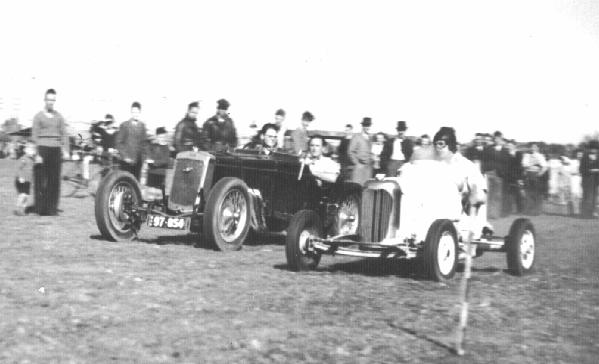
Yes, there is such a place, and a good deal of carnage seems to have befallen this Nar Nar Goon race competitor…

It is a small hamlet of a little over one thousand people 65km east of Melbourne in Gippsland- the name is an Aboriginal expression meaning ‘native bear’ or ‘water rat’ the degree of certainty implied is hardly reassuring on a government website!

The Light Car Club ‘ran a surprisingly successful race meeting on a nine furlong grass track at Nar Nar Goon, 40 miles from Melbourne on Sunday 23 November 1947’ MotorSport reported in its February 1948 issue. It covered both this meeting and the 1947 Australian Hillclimb Championship won by Arthur Wylie’s Ford A Model Special ‘Wyliecar’ at Rob Roy, 75km from Nar Nar Goon on 2 November.

Arthur Wylie in his Ford A Spl, ‘Wyliecar’ at Rob Roy, whether these two shots are during the 1947 Oz Title meeting I’m not sure (L Sims)


(L Sims)

Owing to doubtful weather, practically no publicity was given to the Nar Nar Goon meeting, but about 3000 spectators turned up to see thirty competitors. At that time, the local population would have been tiny in an area focussed on timber growing, felling and milling. Ideal for motor racing really- out of harms way and the scrutiny of officialdom!

I’m not suggesting the LCCA were ‘hackers’ in any way at all- they were for decades, lets say 70 or so years, one of the continuously premier motor racing clubs in Australia. At one time or other they owned or operated venues such as Rob Roy, Albert Park, Sandown, Balcombe, Ballarat Airfield and others, including the little known Nar Nar Goon.

It isn’t clear to me how many meetings were run at the villages racecourse but cursory research shows LCCA/Junior Car Club/Light Junior Car Club competitions dated back to at least April 1932 when it appears the owner of the course, a Mr Coombes, first gave consent for cars to use his horse racing facility. By November 1933 a range of cars from the pedestrian to Brescia Bugatti’s were being put to the test.

On the wet grass many of the 1947 entrants had incidents during the time trials which preceded the races, ‘spinning with great abandon on one corner in particular’. No damage occurred and by race-time the track had dried out.

Arthur Wylie, racer and founder of Australian Motor Sports magazine at Nar Nar Goon in a Bugatti T37 ‘#37145’. Easter 1934 meeting (A Wylie via L Sims)

‘It was decided to run (love the organisation on the fly, can you imagine that today?) four handicaps, each of two or three heats and a final. At first four competitors were on track at a time, but it was found six was safe, so some events were run with six starters. Finishes were close and spectators were treated to eighteen 5 lap events.

‘The LCCA prides itself on organisation, at this meeting the average period between finishing one race and starting the next was less than five minutes’. Happy days indeed.

The LCCA should rightly be proud of its history of race organisation, I can attest to it as a competitor and spectator during the ‘glory years’ which all came crashing down as a consequence of the financially crippling burden of the two World Endurance Championship events the club ran very unsuccessfully in 1984 and 1985.

Sandown lived on of course thanks to the tenacity and entrepreneurship of racer Jon Davison but the LCCA sadly, was no more. A story for another time, not one I really want to tell when I think about it!

‘Racing Ron’ Edgerton in his ex-Charlie East/Advanx Tyres Bugatti T37 ‘#37104’ at Nar Nar Goon (B King)

Etcetera…

(JO Sherwood)

The car above is Les Jenning’s MG Magna L-Type contesting a handicap during the Easter Monday meeting in 1934- 1087cc six, four speed non-synchro box, less than 600 built in 1933 and 1934.

He achieved some great results with this car in the Australian GP- finishing third outright and setting fastest time behind Bill Thompson’s Riley and Harold Drake-Richmond’s Bugatti in the 1933 AGP at Phillip Island. The following year he was fourth outright and set second fastest time behind Thompson’s MG K3 and in 1935 he was third outright and again set second fastest time to Thompson’s MG K3.

Before he raced the MG he ran a Morris Cowley in the 1928 race supported by his employers, Lanes Motors (who were still Morris dealers in the sixties, my Dads Morris 1100 was supplied by them) but he failed to finish as he did also in 1930 and 1931 in Morrises.

‘The Car’ 16 April 1934 issue covered the meeting above and brings the flavour of the times to life, ‘Houdaille’ wrote that ‘The track was in excellent condition for cornering, albeit exceedingly dusty. The great rolling clouds must have been a nightmare to following drivers, but it thrilled the spectators tremendously.

The sight of the leader hurling his car into a corner and tearing up a walloping cloud of multi-coloured dust brought acclamation from the men and shrieks from the ladies. These gurgles and shrieks grew or decreased in intensity according to the ferocity with which other begrimed and determined pilots flung their machines at the leader.’

‘ How those racing behind managed to see the corners through the soupy pall astonished everyone. Their guiding sense must be naturally developed, for surely their eyes could have been of little use. Their were no accidents, which proves the ability of the drivers, to fly blind.’

‘It is not the intention of the article to detail events but rather give some impression of an enjoyable programme. The test trials were pursued with remarkable vigour, for it be known that no man shall exceed his test time by more than ten-percent lest he incur the displeasure of the organising committee which could mean disqualification should he win a race.’

‘Competitors drove all manner of makes, powers and vintages of cars. Posh MG’s sang around. Bugattis, some quite venerable in years, boomed along at high speeds. George Pocket, of course, brought the deceptive Ford A of his. That very long, very snaky and most odouriferous Ballot of Fred Bray’s did the fifteenth-shall act many times…’

And so the report went on- a good time was had by all. The article pronounced the end of Victorian Junior Car Club meetings at the venue but clearly satisfactory arrangements were entered into by them or other club(s) later.


(The Car 16 April 1934)


Bibliography…

MotorSport magazine February 1948, Trove, Leon Sims Collection, Bob King Collection, Arthur Wylie Collection, ‘Half a Century of Speed’ Barry Lake, John O Sherwood Collection, ‘The Car’ 16 April 1934 via Bob King

Tailpiece…

Competitor names and cars folks? The leading car is the one which come to grief in the opening shot.

Finito…
 

(D Simpson)

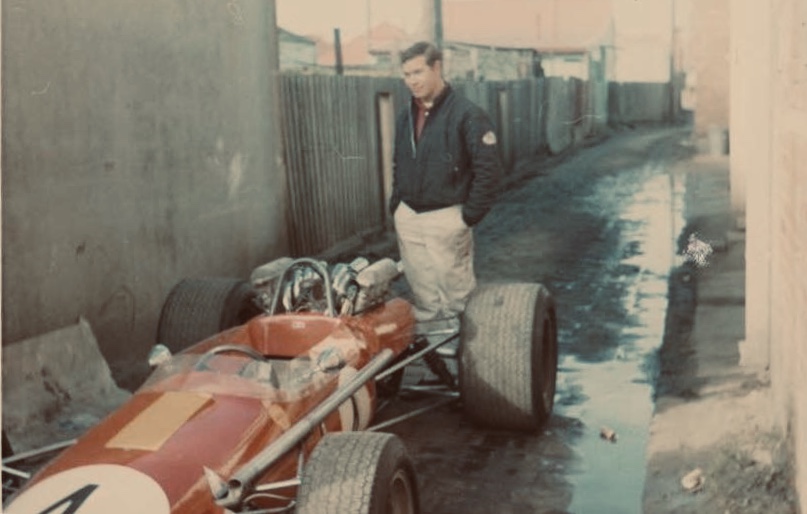
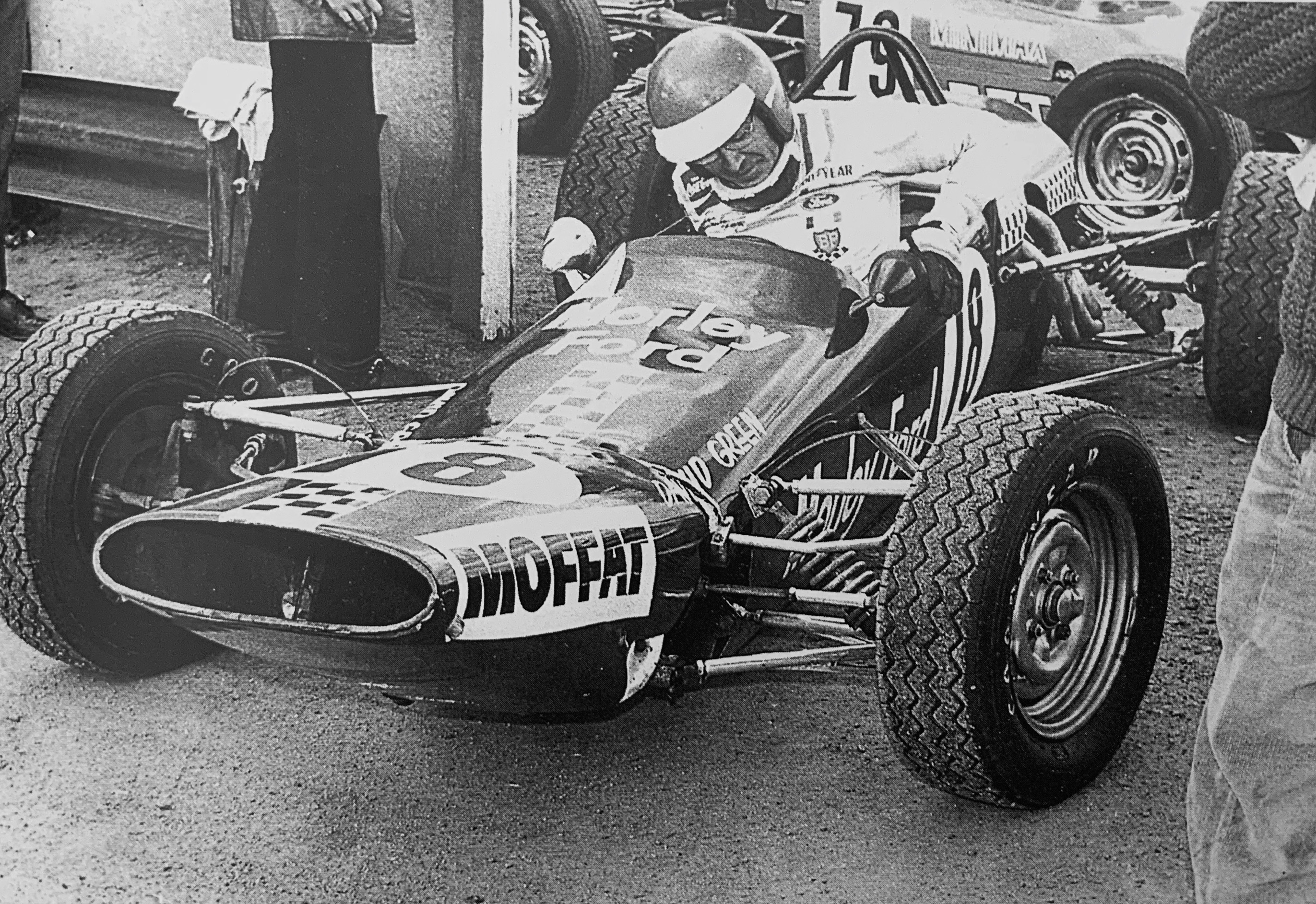
Ken Cox’ Cooper T53 Ford at Hume Weir’s ‘New Year’ meeting on 29 December 1968…

The wise owls of The Nostalgia Forum have determined this Cooper ‘Lowline’ as either #F1-4-61, the ex Yeoman Credit/Reg Parnell Racing 1961 Intercontinental Formula car raced by John Surtees and then Roy Salvadori in Australasia, or #F1-7-61 the ex-Rob Walker car raced by Stirling Moss in F1 and the Australasian Internationals in 1962. Perhaps the latter is more likely Allen Brown surmises on his excellent oldracingcars.com, see the link at the end of this piece. The car still exists in the hands of the Banister Family in Sydney.

Whatever the case isn’t it a fantastic looking car? Dick Simpson has captured it and Ken’s style marvellously!

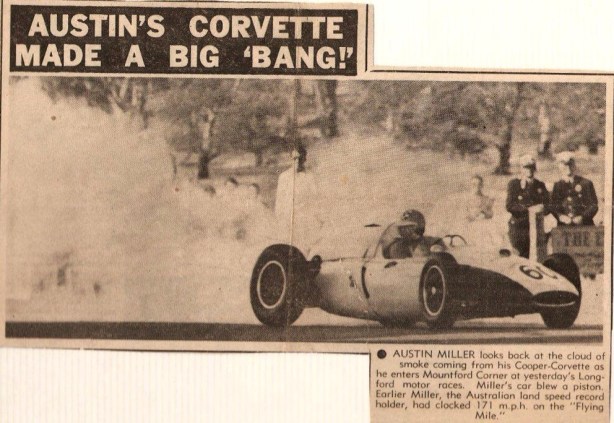
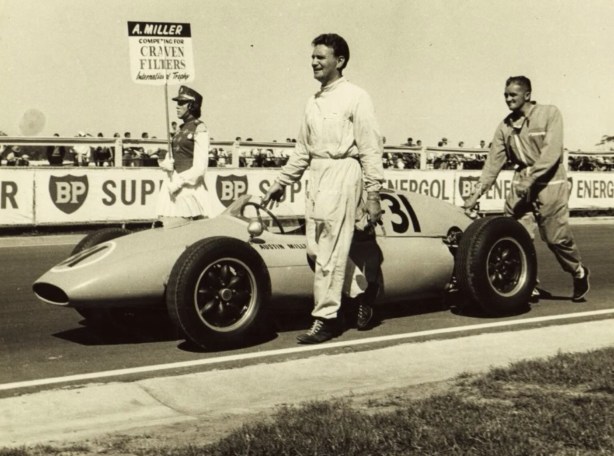
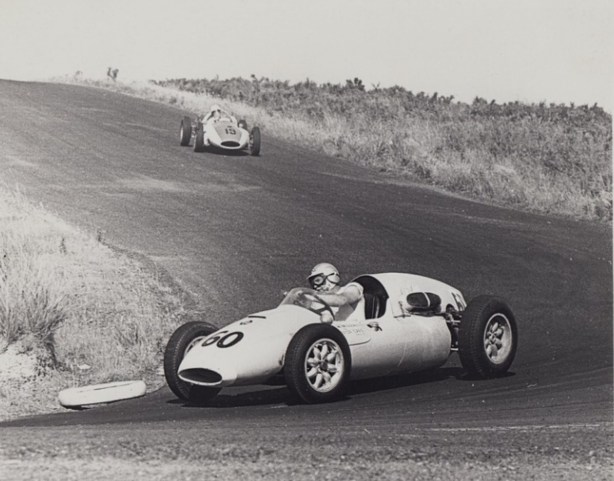
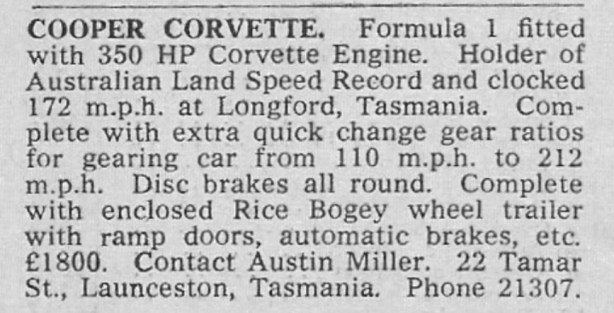
I can feel and hear the rumble of the 289 Ford small-block bent-eight. Its not Australia’s ‘first F5000’ mind you, that honour goes to Austin Miller’s Geoff Smedley built Cooper T51 Chev which set an Australian Land Speed Record at Bakers Beach in Tasmania in 1961 at 163.94mph or thereabouts.

Cox from Bob Minogue, Elfin Mono Ford, Hume Weir circa 1969 (C Baron)
And again out of Scrub- who and what is the third car I wonder (C Baron)

The essentials of the Cox Cooper are as follows, sourced from a ‘Motor Racing Australia’ story written by Ray Bell in September 2001.

Cox raced anything and everything- speedway, dirt tracks and bitumen from the forties onwards. One of his main supporters was a timber-cutter named John Cierpicki, he acquired the Cooper in a sale of Stan Jones’ assets after Stan got into terrible strife off the back of the 1961 Australian recession- the car was extricated from an old chook-shed in Camberwell, Melbourne circa 1966. As a former long time Camberwell resident I am fascinated to know the whereabouts of said chook-shed…

Norm Beechey’s engine man, Claude Morton with assistance from Kerry Luckins at Paul England Engineering in Moonee Ponds soon had a 179 Holden six-cylinder ‘Red Motor’ race-prepped and inserted into the rear of the T53. It’s said only one frame tube had to be removed in this process, the tube was returned when the Ford engine went in.

The car raced with the Holden engine for a few years, the Colotti gearbox was rebuilt by Claude Morton and adapted to the Holden-six with a bell-housing made by someone long since forgotten. The 289 had modified heads and a cam, it was fed by a four-barrel carb with ‘the exhausts made by Alan King’s Panel Shop over a dozen VB’s’. Later a 302 bottom end went in and a mismatched installation of 351 heads.

The car first raced in V8 engined form at Hume Weir on the 30 November- 1 December 1968 weekend which makes this meeting surely its second outing? The machine raced at the Weir, Winton, Calder and Phillip Island and ‘took on some minor kind of prominence at a time when the argument was raging about whether or not Australia should adopt F5000,’ Bell observes.

Bryan Thomson raced the car at Winton in 1970, Bob Minogue owned it for a bit, then Des Lascelles with the car even contesting an F5000 race – the Motor Show Trophy meeting at Warwick Farm in September 1972 – it no doubt looked a bit out of place in amongst the T300 Lolas, Elfin MR5s and McLaren M10s…

Click here for Allen Browns piece on Cooper T53’s- all you wanted to know but were afraid to ask;

https://www.oldracingcars.com/cooper/t53

(C Baron)
(C Baron)

Doesn’t it look like a great, race long dice between the nimble, light Elfin and big, booming Cooper- Minogue was that impressed, or needing the challenge he bought the car.

Credits…

Dick Simpson, oldracingcars.com, The Nostalgia Forum, Ray Bell, Charles Baron

Finito…
(CAN)

Nup. But Leslie Marr’s Connaught B Type Jaguar at the Dunedin Wharves, New Zealand during the ‘Fourth Dunedin Road Race’ meeting on 28 January 1956…

Marr is now 97 years old, (born 14 August 1922), I wonder if this image could make its way to his door the artist would paint this scene? Perfect world is an impressionist work without the fellas in front of the car and with the cranes at full height.

Isn’t it an extraordinary photo? Drink it all in.

You just cannot compare the race photography of today with, say, pre-1970. The topography in which we race and therefore the environment in which the ‘snappers have to work is just so different; a statement of the obvious, one of my strengths.

I wrote about this meeting in the context of an article on Aston Martin DP155 and the growth of Kiwi racing post-war not so long ago, so lets not go over old ground; https://primotipo.com/2019/09/05/the-gp-aston-martin-dp155/

The car alongside is Peter Whitehead’s Ferrari 500/750S, his buddy Tony Gaze won in his identical car from Reg Parnell, Aston Martin DP155 and Syd Jensen’s Cooper Mk9 Norton. Leslie ‘cracked the shits’ over the nature of the course, especially the 100 metres or so gravel section, so he did a lap to collect his start money and retired thereafter- a pity as he performed so well on that tour.

Love the ‘hatted’ gent aft of the Connaught. The bloke at far right looks like a driver but I have no idea who, the dude in black with his back to us could be Leslie?, just guessing. Do get in touch if you can fill us in a bit more Kiwis. Unbelievable.

(GP Library)

Connaught B-Type…

Leslie enters the Goodwood paddock in ‘B3’ during 1955, I can’t see a race entry for him at Goodwood so perhaps he is testing prior to the July British GP meeting, Q19 and DNF brakes in the race won by Stirling Moss, Mercedes W196. This chassis is in normal Alta engined specification at this stage.

Connaught B-Type cockpit during 1955 British GP weekend. It looks like Ken McAlpine’s car fitted with ‘slipper’ or ‘Syracuse’ body.

The standard of presentation and finish of these cars is outstanding, ‘tool room’ quality in the vernacular of the day. Big array of instruments, pre-selector change quadrant and natty tartan seat cushion grab the eye.

B Type Connaught laid bare (J Ross)

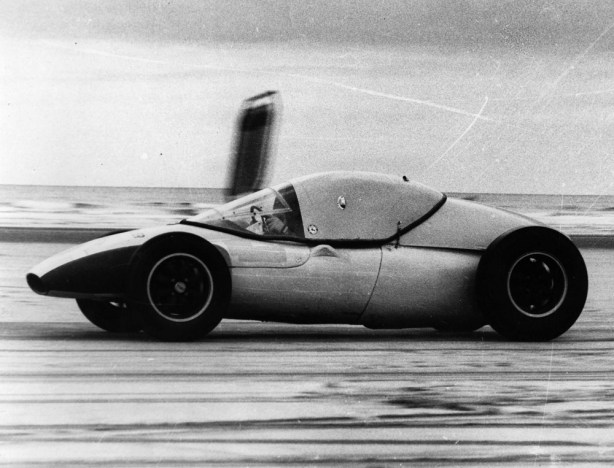
Rodney Clarke and one of his mechanics prove both the bulk and light weight of the aluminium Streamliner body. I wonder what the difference in top speed of the cars so equipped was relative to the normal open-wheel configuration?

This amazing body was the result of studies in Connaught’s own wind tunnel- this Ford V8 powered facility was the very first owned by an F1 Team. Visually, light-weight Dunlop wheels set off a very attractive, edgy looking machine.

The Alta DOHC, twin-cam, two-valve 2470cc engine was good for about 240bhp @ 6400rpm as prepared by Mike Oliver at Connaughts Send HQ, but not reliably so. The engine variously used SU and Connaught fuel injection, both were problematic, in the end Webers were the solution.

The chassis of the B Type was a simple twin-tube arrangement with twin wishbones and coil springs up front and de Dion rear located by a radius rod on each side, a compound lateral linkage with torsion bars provided the spring mechanism. A Wilson type five speed pre-selector box, also used in the A Type was fitted.

’B1’ made its debut at Goodwood on Easter Monday 1955 with Tony Rolt at the wheel- this chassis’ most famous victory was in young Tony Brooks hands, he won the Syracuse GP in front of the works Maserati 250F’s of Musso, Schell and Villoresi, on home turf in October 1955. It was the first all British GP win since Segrave’s San Sebastián Sunbeam win in 1924.

Seven Type B’s were built, what a lovely thing to own.

Alta engine as per text (J Ross)
(J Ross)

Leslie Marr, admirers, and his Connaught, then with its normal body, during the 1954 Aintree 200 meeting.

Etcetera…

(T Adams)

A couple of photographs of Marr during the Lady Wigram Trophy weekend on the airfield circuit. The colour photograph truly is Rocking Horse Shit in terms of rarity whereas the Godfrey Paape shot is the best action shot of the car I’ve seen. Leslie was out of grid slot 2 and finished third behind the Peter Whitehead and Tony Gaze Ferrari 500/625 3 litre machines, 21 January 1956.

(G Paape)
Cockpit shot with floor, seat and exhaust secondaries and pipes removed. Access difficulty given the body obvious

Marr’s Streamliner clearly caught the eye of the Australia Motor Sports Editor at Ardmore, here on the cover of the February 1956 issue of the much respected magazine.

Credits…

Classic Auto News, LC Cresswell, Theo Page, John Ross Archive, Godfrey Paape, Tony Adams

Tailpiece…

B Type cutaway, car shown fitted with ‘slipper’ body (T Page)

Finito…
Catchy name for a martini?

The cutaway is a conceptual illustration of the 1958 Russian Kharkov Type 6…

The car was positioned as a potential F1 competitor, in the specification above it would have been an evolution of the Type 6 record-breaker shown below.

As depicted the machine is of ‘advanced paradigm specification’ for the day- powered by a DOHC, twin plug, fuel injected six with rear mounted transaxle in unit with de Dion, coil spring/shock rear suspension and twin wishbones up the front. The body is a nod at the Mercedes W196 Streamliner, the chassis is advanced too- two solid lower longitudinal members but multi-tubular spaceframe in design. Drum brakes were to be used by the look of it.

The car broke cover as shown in the article and photograph below published in ‘Sports Illustrated’ and other newspapers in early 1958.

The ‘1956 Type 6 Monoposto Record Car’ was driven in land speed record attempts by the cars designer/builder Vladimir Nikitin, also variously first-named Konstantin and Vassili.

The cars specification incorporated a Pobeda Agregate (a large Russian car of the forties to seventies) four cylinder, two-valve, single and later two-stage ‘Popieda M20’ supercharged 1970cc (79x100mm bore/stroke) engine which produced circa 200bhp @ 6000rpm. Fitted with a three speed gearbox, all up weight was about 1000kg.

The potent little package achieved a two-way average top speed of 280.156 km/h on 10 December 1953 using the Simpheropol-Djankoy public road in Crimea.

Sports Illustrated February 1958


Nikitin centre-stage on this page of the Khadi34 website

Vladimir Konstantinovich Nikitin (1911-1992) was an engineer who developed the successful Kharkov 3 record breaker, the ‘6’ was a development of the earlier car- these were only two of an amazing man’s many creations.

In 1953 Nikitin was one of the founders of the Laboratory of High Speed Automobiles (LSA KhADI), its purpose was to ‘create the fastest cars in the world’. It appears the Kharkov 6 was developed outside this enterprise which begs the question of where it was built- probably the Kharkov Road Engineering Institute. Click here for the achievements of LSA KhADI; http://khadi34.blogspot.com/search?q=nikitin

There was some talk of an F1 car in 1958 but whether that was Russian hype or newspaper ‘puff’ is unclear- nonetheless ‘The Daily Express’ brought the President of the Moscow Automobile Club to the 1958 Silverstone International Trophy meeting- i wonder what the man thought of the racing?

Nikitin’s take on an F1 car would have been interesting, and to a large extent his perspective was a very informed one.

The story of thirteen of Auto Union’s racers making their way from Zwickau to Russia during the autumn of 1945 is reasonably well known. They ended up at the ‘NAMI’ Central Scientific Research Automobile and Automotive Engines Institute, with most then ‘spread to the winds’ to factories and institutions for further research.

During the 1980’s and 1990’s when Russian Americans Paul and Barbara Karassik were pursuing the missing AU’s in Russia- they were ultimately successful in acquiring the remains of several cars, who should they meet via a chain of coincidences (or brilliant patient detective work) but Nikitin.

He explained that two or three of the Auto Unions had been through his hands at a Technical Institute in Kharkov. Eventually, having won Nikitin’s trust over a number of visits the engineer told them about the two or three Auto Unions he had become familiar with at the Kharkov Institute. Several visits later he admitted he knew where there was another car- in the corner of an old brickworks was an unsalvageable body but a complete chassis, engine, gearbox and many suspension parts all of which the Karassiks acquired via a convoluted process.

Nikitin featured in a Russian film about ‘young people captured by speed and Russia’s oldest racing driver’. Check it out here, my Russian is not too flash but I still enjoyed it..https://www.net-film.eu/film-7575/

One might have thought that Nikitin, with his public success may have been lauded in mother Russia but what the Karassic’s came upon was a man much decorated for his achievements but living in penury…


Kharkov Type 6

Etcetera…

Nikitin, khADI 7 in 1967 (Getty)


Credits…

The Nostalgia Forum especially contributors Tom West, ‘Flicker’, Marc Ceulemans, Mike Lawrence

Tailpieces…

(Khadi34)

Nikitin and colleagues around KhADI 7, a helicopter engined machine which exceeded 400km/h in an airport close to Kharkiv in 1968- his next project upped the ante by the use of an aircraft engine from a MIG 19, the only limiting factor was the lack of tyres and a track in the USSR long enough, invitations from the US to run there were unsuccessful…

I have no idea at all but it does have a touch of the Auto Unions about it does it not?!

Finito…

(J Wright)

Competitors assemble for a Queensland Motor Sport Club Currumbin Hillclimb, Monday 12 June 1961…

Most east coasters have holidayed on Queensland’s Gold Coast, visited the Currumbin Bird/Wildlife Sanctuary and no doubt had a surf on the beach close by. Currumbin is 20km from Surfers Paradise and a dropkick from Tweed Heads – the Queensland/New South Wales border.

This photograph has proved a bit of a mystery though.

I popped up an article on Lakeside circuit up last week but was uncertain about the photograph above given the wise owls of The Nostalgia Forum could not reach a consensus on where it was, a very rare occurrence I might add. I then uploaded the photograph onto the primotipo and Old Australian Motor Racing Photographs – Australia Facebook pages, the Lakeside article is here; https://primotipo.com/2019/09/23/lakeside-early-days/

After four or five days and 8,027 FB hits/views Quentin Miles is the winner with photographic evidence to back up his nomination of place – Currumbin.

Porsche 356 on full assault. Note the corner marshal in safety overalls and the sea in the distance (B Miles)
(B Miles)

Racer/restorer Dick Willis believes the roads used were created for a housing estate and that the Gold Coast club got some events in before the influx of residents precluded further motorsport use. Brian Lear’s records show events were run in December 1958, 1960 and 1962. Stephen Dalton’s discoveries indicate the strip of bitumen used was 750 yards in length with Ivan Tighe the record-holder in 1959, he did a time of 47.5 seconds in his Vincent Special.

In Quentin’s case his father Bill attended a meeting and took these shots, its not the first time I have used the late Bill’s great material.

Several folks have identified the red Rice-trailer in the opening shot as Autoland – one of Bob Jane’s enterprises – contained therein is Bob’s voluptuous Maserati 300S. It’s a long way from Melbourne to Currumbin to contest a club ‘climb though. My theory is that Bob would have been racing not too far away, at Lowood and did the Currumbin event whilst in the ‘hood.

Roll forward to June 2020 and Andrew Lake, a Queensland MG Car Club member emailed to advise the meeting was the 12 June 1961 Queensland Hillclimb Championship. ‘As identified it is Bob Jane’s trailer…he competed in the event in his Maserati 300S and also his Jaguar sedan…Stan Jones did FTD with a time of 45.22 seconds in his Cooper T51 Climax.’

Some further work by Stephen Dalton established that Stan contested the Lowood Gold Star round – the Queensland Road Racing Championship – the day before, Bill Patterson won from Alec Mildren and then Stan, all driving Cooper T51s.

Roll forward again, this time to January 2024, and the bunch of photos taken by Peter Button’s grandfather shown below. Pauline Burrows Booth recalled, “I remember the climb well, going to watch the hillclimbs was very exciting. The hill was Currumbin Hill, on the east side that wasn’t allowed to be built on as it was a dangerous slip area.”

‘The street was on the crest, Crest Drive – it wound around the top of Currumbin Hill to the Shell Museum corner corner to Millars Drive – winding down to Millars Drive and past the now Currumbin Wildlife Hospital. The other side of the hill, Alpha Drive, we used to ride down with our go carts-billy carts

Anyway, many thanks to Quentin and his late father Bill, Stephen, Dick, Brian, Terry, Andrew, Peter Buttons and those who responded to his FB post, a team effort indeed!

Etcetera…

(T McGrath)

Terry McGrath tells us there was a hillclimb closeby on the Gold Coast at Burleigh Heads or Waters held on a short stretch of road with times of between 50 and 56 seconds recorded. The Dick Hamilton Jaguar XK120 is shown in full flight on 30 December 1956.

(P Button)

This bunch of shots at the ‘Currumbin Heights Hill Climb’ were spotted by Doug Grant on the Old Gold Coast Facebook page in January 2024.

They were posted by Peter Button whose “Grandad was a keen amateur racer at the time.”

(P Button Collection)

Dick Willis, “The Glynn Scott (Cooper T23 replica) Repco Holden driver by Roy Morris, now raced by Victorian, Nick McDonald.”

(P Button)

The shots above and below are of Glynn Scott’s ex-Alec Mildren Cooper T43 Climax.

(B James)
(P Button)

“Crest Drive looking across Miller’s Drive to where the wildlife hospital is now and the park across the road with the old water pipe running through it. Blamey Drive is running up and over the hill…” Glenn Bycroft.

(P Button)

Ivan Tighe, perhaps, on his Vincent Formula 500.

(P Button)

Andrew Lake advises hillclimbs were held on the Gold Coast as follows;

Burleigh Heads

01/01/1956, 22/04/1956, 17/06/1956, 30/12/1956, 21/04/1957

Terranora

29/12/1957

Currumbin

28/12/1958, 15/11/1959, 27/12/1959, 14/08/1960, 26/12/1960, 12/06/1961

Credits…

Quentin Miles and the late Bill Miles, John Wright, Stephen Dalton, Dick Willis, Brian Lear, The Nostalgia Forum, Terry McGrath, Andrew Lake, Peter Button Collection, Bruce James

Tailpiece…

Wolseley 1500 attacking the downhill right-hander, tyres mark the apex (B Miles)

Finito…

Dunedin 1956 (T Selfe)

The Aston Martin DP155 single seater is surely one of the great marques lesser known models, here at Dunedin, New Zealand in February 1956…

It is significant too as one of the seminal steps in AM’s occasional quest to get into Grand Prix racing. The DBR4/250 cars were tested later in 1957 although not actually raced by Roy Salvadori and Carroll Shelby until 1959 by which time the mid-engine revolution was underway and by the seasons end ‘complete’. The Cooper T51 Climax delivered bigtime on the earlier promise of its predecessors.

I chuckled when I first saw Tony Selfe’s wonderful photo as the most successful individual GP chassis of all time- Tony Gaze’s ex-Alberto Ascari Ferrari 500 chassis ‘5’ is alongside its stablemate Peter Whitehead’s car and one of the least known GP cars of all time in far-away New Zealand! Not that its fair to call DP155 anything more than the test hack it most assuredly was.

There are not a huge number of photos of DP155 extant, whilst not super sharp the shot is useful to be able to further appreciate Frank Feeley’s body design within the constraints of the wide DB3S sportscar chassis upon which it was based and way up high seating position atop the driveshaft.

But lets go back to the start.

The project dates to the early 1950s when Aston Martin Lagonda Ltd first contemplated construction of a Grand Prix car, the first step was intended to be an F2 machine.

The intention was to mate a variant of the 2.6 litre LB6 engine with a DB3 sportscar chassis. An early prototype was assembled in the winter of 1951/2 using a mildly-tuned 2-litre version of the engine, however, Technical Director Prof Dr Robert Eberan von Eberhorst rejected the idea and the car was quickly dismantled and forgotten.

HWM’s John Heath showed interest in the ‘tuned down’ engine for his F2 cars but David Brown knocked that notion on its head.

The CSI announced a new 2.5 litre Formula 1 to which World Championship Grands Prix would be run from January 1 1954- a replacement for the 2 litre ‘F2’ formula of 1952-1953 during which the Ferrari 500’s in works and privateer hands had been dominant.

In Autumn 1953 Aston Martin contemplated F1 once more, but as a low priority, busy as they were with their sportscar programs which made great sense from product development and marketing perspectives.

The project was given the classification ‘DP155’, the car, allocated chassis number DP155-1, comprised a DB3S chassis frame ‘in narrower single seat form’ powered by a 2493cc (83×76.mm) version of the Willie Watson-designed 2.9-litre Aston Martin engine. Doug Nye cites works mechanics John King and Richard Green amongst those involved in the build, whilst Aston Martin’s legendary stylist, Frank Feeley, designed the bodywork.

John Wyer estimated an engine output of circa 180 bhp on alcohol fuel at the time- well short of the Tipo 625 Ferrari and Maserati 250F which developed at least 200 bhp in early 1954.

The twin-plug DB3S engines of 1955/6 developed about 210/215 bhp but by this time the F1 opposition were at 240/250 bhp so ‘it seemed a futile exercise for Aston Martin, whose sports-racing cars were notoriously and persistently underpowered, to contemplate building a Formula 1 car powered by a derivative of these engines’ wrote Anthony Pritchard.

The car was put to one side in the workshop as sportscar programs were prioritised. Click here for articles on the DB3S; https://primotipo.com/2017/09/28/david-mckays-aston-martin-db3ss/, and; https://primotipo.com/2017/10/31/yes-frank-i-love-it-magnificent-in-fact/

Reg Parnell testing DP155 at Silverstone (or is it Chalgrove?) fitted with 3 litre supercharged engine (RAC2)

The DP155 2.5 litre engine was subsequently installed in works Aston Martin DB3S sports-racing car chassis ‘5’, which Reg Parnell drove to good effect in that year’s British Empire Trophy race at Oulton Park- he was third behind Archie Scott-Brown’s Lister Bristol and Ken McAlpine’s Connaught ALSR.

This prompted contemporary rumours that Aston Martin was considering an entry into Grand Prix competition. Such stories were denied but the belief that this was the case intensified when Aston Martin confirmed that Reg Parnell would race a DB3S-based single-seater car in New Zealand during the first months of 1956.

Reg had identified far-away New Zealand races as offering very useful motor racing earnings during the northern hemisphere winter, perhaps in conversation with Peter Whitehead and Tony Gaze who were ‘veterans’ of the trip south to the Land of The Long White Cloud having raced there the two years before in their matched Ferrari 500’s.

The prototype DP155 was dusted off with its original drum-braked 1953 chassis and  fitted with the supercharged 3-litre engine Parnell had used with co-driver Roy Salvadori at Le Mans in 1954.

The supercharged engine then exploded while being tested by Reg at Chalgrove so DP155 was shipped ‘down under’ with a normally aspirated 2493cc engine ‘fitted with special camshafts, connecting rods and pistons’.

The British contingent to New Zealand comprised Stirling Moss, Maserati 250F, the two-amigos Peter Whitehead and Tony Gaze with their Ferrari 750S engined Ferrari 500’s, Leslie Marr’s Connaught B Type Jaguar and Parnell’s Aston Martin.

Sir Leslie Marr (still alive at 97 years of age) is a landscape painter of some considerable note, it was in the formative stages of his evolution as a painter- an interest and capability he explored whilst an RAF Technician during the war, that he also raced cars, contesting amongst other events the 1954 and 1955 British Grands Prix.

Kids Jist Wanna Have Fun. In the Wellington backstreets, just unloaded off a ship and about to be sent by rail to Auckland, Ardmore. L>R Gaze HWM Jag, Whitehead Cooper Jag, McKay Aston DB3S and Moss Maserati 250F (CAN)

The first race of the tour was the Third New Zealand International Grand Prix at Ardmore Airfield, 25 km south-east of Auckland, in the north of NZ’s North Island.

Senior Kiwi motoring journalist Allan Dick wrote a very concise, interesting piece on the development of racing in NZ post-war in his ‘Classic Auto News’, i am going to use elements of that into this article as the history and most of the venues will be unfamiliar to many.

‘As far as can be ascertained, prewar “racing” had been confined to beaches with only one “circuit” race- the 1932 Prosperity Grand Prix run on a road circuit in the Auckland suburb of Orakei- very much a one off.’

‘While there had been motorsport and car clubs before WW2, it was when peace returned that the sport got organised…It had its roots in Dunedin, when, in 1947, Percy and Sybil Lupp and Harry Hedges formed the Otago Sports Car Club…then Harry went south and was one of the prime movers in creation of the Southland Car Club.’

‘With new clubs joining with the old it was decided to form a national umbrella body, which became the Association of New Zealand Car Clubs- the ANZCC…now MotorSport NZ.’

Allan continues, ‘With the new structure, getting circuit racing going became a priority…with no permanent racing circuit in NZ. In 1948 the Canterbury Car Club was determined to hold a race meeting…on the outskirts of Christchurch. The authorities would not approve the road closure…a deputation including Pat Hoare approached the government and approval was given for the use of Wigram Air Force base…it became a regular annual feature for decades.’

‘Inspired by this, the Manuwatu Car Club got the use of the Ohakea Air Force base and staged the first NZ GP there in 1950. In 1951 public roads were closed in Christchurch for the running of a meeting at Mairehau…so…proper circuit motor racing was now well and truly established, but these were temporary airfield or road circuits.’

‘For 1953, Mairehau, Wigram and Ohakea were joined by a fourth- a genuine inner city, “round the houses” meeting near the wharves in Dunedin.’

‘…any “international” aspect to these meetings had come from Australia, but in 1954 the whole motor racing scene shifted up several gears with the first truly international race meeting- the New Zealand International Grand Prix on the air force base at Ardmore…Now we had five race meetings annually- three airfield and two road circuits. Two in the North Island and three in the South.’

The 1954 meeting (and season) contestants included Ken Wharton’s BRM P15 V16, Peter Whitehead, Ferrari 125, Tony Gaze, HWM Alta and a swag of Australians including Stan Jones in Maybach 1, Jack Brabham, Cooper T23 Bristol, Lex Davison’s, ex-Moss/Gaze HWM but fitted with a Jaguar XK engine instead of the F2 Alta unit and others in addition to locals.

Wigram Trophy 1954. Ken Wharton in the extraordinary BRM P15 on pole beside Peter Whitehead, Ferrari 125, Tony Gaze, HWM Alta and Fred Zambucka, Maserati 8CM. Whitehead won from Gaze and Wharton (LibNZ)

The first NZ GP at Ohakea was won by John McMillan, Jackson Ford V8 Spl in 1950, the other two events prior to 1956 were at Ardmore in 1954 and 1955 and won by Stan Jones, Maybach 1 and Bira, Maserati 250F

And so it was that our 1956 visitors looked forward to a summer of great racing with the Moss Maserati a huge drawcard and NZ GP race favourite off the back of Bira’s 250F win twelve months before.

Shipping problems with the Moss car, the two Ferrari’s and Marr’s Connaught- which were sent to Wellington rather than Auckland did not get things off to a good start. The Connaught was deep in its ships hold and had to be flown to Auckland on the eve of the race, hurriedly assembled and run without being properly prepared.

For the other visitors it was missing spares and wheels that were the issues but all was made good by the time of the race.

Moss, Whitehead and Parnell all took 2 seconds off Ken Wharton’s two year old BRM T15 V16 lap record in practice with Moss taking pole from Whitehead, Gaze, Brabham, Cooper T40 Bristol (the car in which he started his championship career during the 1955 British GP- and in which he won the Australian GP at Port Wakefield later in 1955), Ron Roycroft, Bugatti T35A Jaguar and Parnell.

Ardmore 1956 grid. Moss, Whitehead and Gaze #4 up front. Row 2 is the Roycroft Bugatti T35A Jaguar, #6 Parnell, Cooper T38 Jag, Syd Jensen, Cooper Mk9 Norton and Tom Clark, Maserati 8CM on the outside. Frank Kleinig is in the light coloured Norman Hamilton owned Porsche 550 Spyder and probably David McKay’s Aston Martin DB3S beside Kleinig and perhaps Alec Mildren’s Cooper T23 Bristol this side of the Aston (unattributed)
Tony Gaze Ferrari 500 chasing Leslie Marr Connaught B Type Jaguar at Ardmore during the 1956 NZ GP (Ardmore)

Reg had a fraught start to his weekend in that DP155 threw a connecting rod during the second day of practice. He was well and truly up the creek sans paddle without a spare engine but via the good graces of Peter Whitehead raced his Cooper T38 Jaguar in the race, a most sporting gesture (and the car Stan Jones acquired that summer). Click here to read about the car; https://primotipo.com/2019/03/05/mount-tarrengower-hillclimb/

Gaze led for some of the first lap but then Moss romped away for the balance of the 200 mile journey- he had lapped the field by the end of his thirty-third tour. Some late race excitement was provided when a broken fuel lead sprayed fuel into his cockpit but even after a pitstop to top up the cars fuel he won by three-quarters of a minute from Gaze, Whitehead, Marr and Parnell. Brabham didn’t start with gearbox failure- it split as he was warming it up in the paddock.

All the fun of the fair, 1957 Wigram start. The splash of colour on the front row is Ron Roycroft’s blue Ferrari 375 and the red Ferrari 555’s of Peter Whitehead, who won, and Reg Parnell. The green car on the front row left is Brabham’s Cooper T41 Climax (unattributed)
Reg Parnell, DP155 at Wigram (RAC1)

The circus then gathered at Christchurch in the north-east of the South Island for ‘The Lady Wigram Trophy’ held at the RNZAF Airbase 7km from the city on 21 January 1956.

The crew in Feltham ensured a new 2922cc engine was flown out to allow installation in DP155 in time for practice.

Moss had returned to Europe after Ardmore but his 250F was put to good use by Ross Jensen and later John Mansel for the ensuing five years or so.

NZ was to be a happy hunting ground for the Brit who won the countries premier race in 1956, 1959 aboard a Cooper T45 Climax and again in 1962 in Rob Walker’s Lotus 21 Climax not too long before his career ending Goodwood accident.

DP155 finished a distant fourth in the 71 lap Trophy race- up front Peter Whitehead was over 5 minutes ahead of the Aston hybrid- he won from pole ahead of Tony Gaze and Marr. Leslie was 1m 35secs adrift of the winning Ferrari with Syd Jensen the first NZ’er home in his Cooper Mk9 Norton 530cc.

Gaze Ferrari at the Dunedin Wharves- David McKay’s Aston DB3S at left (CAN)
Dunedin heat start- Gaze Ferrari left, the Arnold Stafford Cooper Mk9 Norton in the middle on pole and Roycroft’s Bugatti T35A Jag at right on the second row (unattributed)
Vroom-vroooom-vrooooooom. I can hear the sharp, staccato bark of the 3 litre four as Tony Gaze warms up 500/5 at Dunedin- then the Parnell Aston DP155 and an Aston DB3S (unattributed)
Syd Jensen, Cooper Mk9 Norton on pole for the feature race alongside Gaze’ Ferrari 500 (TA Thompson)

From there the circus travelled south, still on the South Island to the Otago Harbour city of Dunedin for the ‘NZ Championship Road Race’ on 28 January.

The event of 120 km was 44 laps of 2.74 km around the Dunedin ‘Wharf’ Circuit. Not everyone liked the place as the surface was rough and tough and included a section with a gravel surface.

Syd Jensen’s nimble, fast, Cooper Mk9 Norton started from pole with Gaze and Arnold Stafford in a similar Cooper on the outside of the front row. Marr, Parnell and Whitehead were back on row 3- Kiwis Ron Roycroft Bugatti T35A Jaguar 3442cc, Ron Frost, Cooper Mk9 Norton and Tom Clark, Maserati 8CM were on row 2.

Jensen set the crowd afire in the little Cooper harrying the bigger cars finishing third overall and setting the fastest lap of the race.

Gaze won from Parnell, Jensen, Whitehead and Tom Clark. Marr started the race, did one lap to get his staring money and then retired, not impressed with the place at all, with the other overseas drivers complaining that they were unused to driving on a metalled surface where some sections of the track were unsealed.

Parnell head down, bum up whilst Peter and Tony contemplate a post loading cool bevvy. Aston DP155/1 in all of its glory nicely juxtaposed by the industrial surrounds (T Selfe)

Immediately after the Dunedin race these amazing photographs were taken by Tony Selfe of Parnell, Whitehead and Gaze loading their exotic racers onto a low-load railway truck for transport to the next round they were to contest at Ryal Bush, 20 km north of Invercargill, at the very south of the South Island.

Parnell is still ‘suited up’ in his racing kit, the intrepid competitors in the DIY style of the day have helped Tony sip the victory champagne or beer and then taken their machines straight to the adjoining railyards for the Dunedin-Invercargill trip. That chain looks a very butch way to attach the light, alloy Ferrari to the flat rail-car.

Next up is Whitehead’s Ferrari- Peter steering, Tony rear left and Reg at right (T Selfe)

The visitors missed the 4 February South Island Championship at Mairehau but were at Ryal Bush the week later, 4 February for the First ‘Southland Road Race’, a 240 km race- 41 laps of a 5.87 km road course.

Back to Allan Dick’s history lesson on the evolution of NZ circuits.

‘To the farthest south, Invercargill motor racing enthusiasts looked north, and, as one of the founding members of the ANZCC felt it was their duty to join the motor racing scene and they eyed a vacant bit of land on the outskirts of Invercargill on which to build a permanent circuit, but they lacked funds.’

‘But 1956 was Southland’s Centennial Year so it was decided to hold a race meeting on a road circuit to get the sport established and help raise funds. Unlike their Dunedin cousins, the Southlanders opted for a country circuit rather than a city one after plans to close roads around Queens Park failed…they moved into the country and closed three roads around the small settlement of Ryal Bush which included a section of the main road to Queenstown.’

Whitehead was on pole from Marr, Gaze, Clark and John Horton in an HWM Alta 1960cc s/c (ex-works/Gaze) whilst Reg was back on row 3 in the Aston on the stretch of road being used for racing for the first time.

Dick describes the place as ‘…the Reims of NZ- three long straights with three tight corners and high speeds…But unlike Reims, Ryal Bush was narrow and lined with lamp-posts, hedges, ditches, drains and fences. Average speeds were around 150km/h, making it the fastest circuit in New Zealand.’

Given the vast European experience of Whitehead, Gaze and Parnell they should have felt right at home!

(CAN)

Allan writes of the photo above, ‘Photographs of this era are rare. Photographs from Ryal Bush are even more rare. The starters flag has just dropped and the cars are away with a very clear indication of just how narrow the roads were…take your time and drink in the details.’

‘Car #3 is the Ferrari of Peter Whitehead and the Streamliner is Leslie Marr’s Connaught. Car #4 on the second row is Tony Gaze and the antique looking car is Tom Clark in the pre-war Maserati 8CM. Clark had picked and chosen his races this season. Behind Clark is John Horton in the HWM Alta and alongside him is Frank Shuter in the Edelbrock Special.’

‘Also in the photograph can be seen the white Austin Healey 100S of Ross Jensen, the black 100S of Bernie Gillier and the Bugatti Jaguar of Ron Roycroft.’

‘I think it may well have been the start of a heat as there were several other cars entered that aren’t there- including Parnell in the Aston Martin, the Australian Aston Martins (Tom Sulman and David McKay), Pat Hoare’s 4CLT Maserati, Bill Crosbie’s local special and Bruce Monk in the advanced JBM Ford.’

Peter Whitehead won in 1 hour 35 minutes from Gaze, Parnell, Roycroft and Frank Shuter, Cadillac Spl V8 5200cc. Marr retired after an accident on the first lap.

The meeting was a huge success with plenty of money made, preliminary work began on what became Teretonga, its first meeting was in November 1957.

Peter Whitehead, perhaps, in front of Leslie Marr, Connaught at Ryal Bush in 1956- note the row of haybales in front of the wire farm fence and extensive crowd (Southland Times)
Parnell in NZ 1956, Aston DP155 circuit unknown (S Dalton)
Ryal Bush entry list

Peter Whitehead was complimentary about the meeting in an interview with ‘The Southland Times’, quipping ‘We’ll be back next year- if they will have us’- he was too, he won the race in his Ferrari 555 from Parnell’s similar machine.

Peter had some suggestions about how to improve things, these extended to shifting the pits to a slower section of road and that the corners be concreted, apart from that he ‘spoke highly of the race, its organisation and the favourable report he was going to give to the Royal Automobile Club in London.’

The visitors missed the season ending Ohakea Trophy at the airfield of the same name on 3 March, shipping their cars back to Europe- not so Tony Gaze mind you, he sold both the HWM Jaguar sports and the Ferrari 500 to Lex Davison who would also do rather well in the years to come with the ex-Ascari chassis- the 1957 and 1958 Australian Grands Prix amongst its many victories.

Before leaving New Zealand the visitors indulged in some deep sea fishing out of The Bay of Islands for a week before heading home. ‘Whitehead is headed for South Africa, and two important international races, including the South African Grand Prix at Johannesburg- he won the event last year (he won the 24 March Rand GP in March 1956 too aboard the Ferrari 500). Mr Parnell’s next important engagement is the 12 Hour Sebring race in the United States’ the report concluded.

Parnell continued as a works-Aston Martin driver. DP155/1 was put in a corner of the Feltham race shop until it was sold to ‘inveterate specials builder’ and entrant of the RRA (Richardson Racing Automobiles) Specials, Geoff Richardson, who fitted it with a 2.5 litre single-plug engine.

Richardson told Anthony Pritchard ‘I paid about 900 pounds for it and it proved a great source of annoyance to me because John Wyer guaranteed when I bought it that it gave 190bhp. I put the engine on my test bed and got 145/146bhp- Wyer had a twin-plug engine but he wouldn’t sell it to me, I never spoke to him again. I made up a 2483cc Jaguar XK engine for it and got nearly 200bhp on pump fuel.’

Geoff Richardson in DP155/RRA Spl at Snetterton in 1957 (Autosport)
DP155/RRA Special circa 1961 at left and in the early 1970’s at right. Note RRA badge on grille at left, wider wheels and tyres at right (AMOC Register/HAR)

Richardson only raced the car twice before buying an ex-works Connaught B Type and therefore decided to sell it. At the request of David Gossage, the new owner, Richardson rebuilt it in 1957 as a sportscar fitted with the body from the Lord O’Neill DB3S/105- modified at the front with a simple oval radiator intake, it was registered UK ‘UUY504’.

Gossage sold it to a hotelier, Greville Edwards, who had a bad accident in it in which his girlfriend was killed.

Richardson then re-acquired the car and built a replacement chassis using ‘main tubes supplied by Aston Martin’ said Geoff- and further modified it in the rebuild by replacing the torsion bar rear suspension with coil/spring damper units and fitted the de Dion axle with a Watts linkage in place of the sliding guide, also fitted was a Salisbury ‘slippery diff. He modified the nose to make the machine more aerodynamic and finessed a 3 litre crank into a 2.4 litre Jag XK block to give a capacity of about 3.2 litres.

Geoff and his wife ran it in a few sprints and on the road before its sale in 1973. Richard Bell restored the car to original DB3S shape and built a twin-plug engine of correct spec, then the car passed through a couple of sets of hands before being modified to 1955 team car configuration by Roos Engineering in Berne.

The last reported owner is in Tennessee…whilst the line of provenance is clearish the car in the US is quite different to the one Parnell, Gaze and Whitehead loaded onto a train on that gloomy Dunedin evening in February 1956!

DP155 via RRA via DB3S/105 body in 1988 and referred to as chassis 131-DB135 registered UUY504

Etcetera…

Reg Parnell in Peter Whitehead’s Cooper T38 Jaguar at Ardmore during the 1956 NZ GP (sergent.com)

Ryal Bush program signed by Whitehead, Marr, Gaze and Parnell.

Gaze’s Ferrari 500 in the Dunedin railyards 1956 (T Selfe)
Tom Clark’s Maserati 8CM, Dunedin 1956 (CAN)

Photo and Reference Credits…

Tony Selfe, ‘Aston Martin: A Racing History’ Anthony Pritchard, Allan Dick and ‘Classic Auto News’ July 2016 post on Ryal Bush, ‘Hissing Cobra’ by Mattijs Diepraam and Felix Muelas on 8WForix, ‘The History of The Grand Prix Car’ Doug Nye, sergent.com, Aston Martin DP155 thread on ‘The Nostalgia Forum’, Stephen Dalton Collection, Aston Martin Owners Club, The Southland Times, TA Thompson, astonuts.free.fr, Graham Woods Collection

Tailpieces…

(T Selfe)

A crop of the opening shot, Aston Martin DP155 being washed at Dunedin in February 1956, maybe one of you proficient in Photoshop can sharpen it up a bit.

Its just a footnote in motor racing history, but quite an interesting one all the same. It is a shame it lost its single-seater identity, what interest it would create had it survived in ‘original’ specification today.

And below, Reg at Wigram.

(unattributed)

Finito…
(CAN)

Lionel Bulcraig, Aston Martin DBR4/250 3 litre, eighth and last runner in the ‘Waimate 50’ New Zealand Gold Star round on 21 February 1963…
I popped this image up on Facebook a while back and was never satisfied that the car or driver was correctly identified. I strayed onto Allan Dick’s ‘Classic Auto News’ page and got the answer. He wrote, ‘Having made very good sportscars and won Le Mans (in 1959 with the DBR1), Aston Martin toyed with the idea of getting into Formula 1- but they arrived late in the 2.5 litre formula and were swamped by the rear-engined revolution of 1959.’

Aston Martin pulled the plug on the works F1 program but happily sold cars to Lex Davison and Bib Stillwell in Australia- as i wrote a while back Lex came within a car length of winning the 1960 Australian Grand Prix at Lowood, Queensland in his- Alec Mildren’s Cooper T51 Maserati just got home in front after a titanic race long arm wrestle.

See here for that encounter; https://primotipo.com/2018/06/08/mildrens-unfair-advantage/ and this one about Lex and Bib’s Aston passion; https://primotipo.com/2015/09/22/aston-martin-db4gt-zagato-2vev-lex-davison-and-bib-stillwell/

‘Stillwell brought his (chassis number DBR4/250 ‘3’) to New Zealand in 1962 for the last GP at Ardmore then sold it to Kawakawa Car Sales owner Lionel Bulcraig. He raced the car infrequently, this is him at Waimate in 1963 where he was the last running finisher in eighth. Its a rare photograph of a rare car’ Allan concludes.

Indeed it is, mystery solved!

(Ardmore)

Bib Stillwell above in the Aston DBR4/250 during the 1962 NZ GP at Ardmore on the occasion of Stirling Moss’ wet-weather Lotus 21 Climax 2.5 racing masterclass.

He lapped the field in the shortened 50 lap race- John Surtees did unlap himself on the penultimate lap with soggy Bib tenth, six laps in arrears and no doubt wishing he was aboard one of his Coopers.

Click here for an article on Moss’s Lotus 21; https://primotipo.com/2016/04/08/ole-935/

(CAN)

Waimate is a town on the east coast of the South Island 45 km from Timaru, the street circuit was in the local town precinct and 2.25 Km in length.

During that summer of 1963 Bulcraig contested the NZ GP at Pukekohe for Q12 of 17 and DNF in the race won by John Surtees’ Lola Mk4 Climax 2.7 FPF. He DNF at Wigram from mid-grid after colliding with Jim Palmer’s Lotus 20B Ford. He missed the next, Teretonga, round but raced at Waimate for eighth having started from row 2- Palmer won that day.

(CAN)

Several other shots of the 1963 Waimate 50 below.

Tony Shelly, Cooper T45 Climax 2 litre, #27 Ken Sager Lotus 20 Ford, behind him in #20 is John Histed, Lola Mk2 Ford with Arthur Moffat in the Lotus 15 Climax. #44 is Doug Lawrence, Lola Mk1 Ford, #1 is David Young, Cooper T65 Ford FJ.

Allan Dick advises further back is #2 Frank Turpie, Lotus 20 Ford with Barry Cottle’s Lola Mk1 Climax. Cooper T51 Climax #9 is Bill Thomasen, whilst the red car at the rear is Bulcraig’s Aston Martin.

Missing from this wonderful shot is the front row- Jim Palmer, Lotus 20B Ford- the winner, Roly Levis, Cooper T52 Ford and Maurice Stanton, Stanton-Corvette V8.

(CAN)

Tony Shelly has run out of road below, Cooper T45 Climax.

He overshot the corner into the short leg of the main straight. The hay-bales and water-filled drums separated the cars ‘coming and going’ up and down the main street.

(CAN)

Another section of the track with N Cleland’s unidentified mount ahead of WR Baker in a Cooper Norton- it looks like a lot of fun if somewhat perilous!

(CAN)

Credits…

Allan Dick- CAN- ‘Classic Auto News’, Ardmore, NZ Classic Driver

Tailpiece: Len Gilbert, Cooper Bristol, Waimate 1960…

(NZ Classic Driver)

Love this shot of Gilbert’s Cooper Mk 2 Bristol ‘sports’ which rather captures the spirit of the time and place rather well. Len is coming out of Queen Street during the February 1960 meeting.

He was sixth in the race won by John Mansel’s Maserati 250F.

Finito…