Archive for the ‘Obscurities’ Category

(M Feisst)

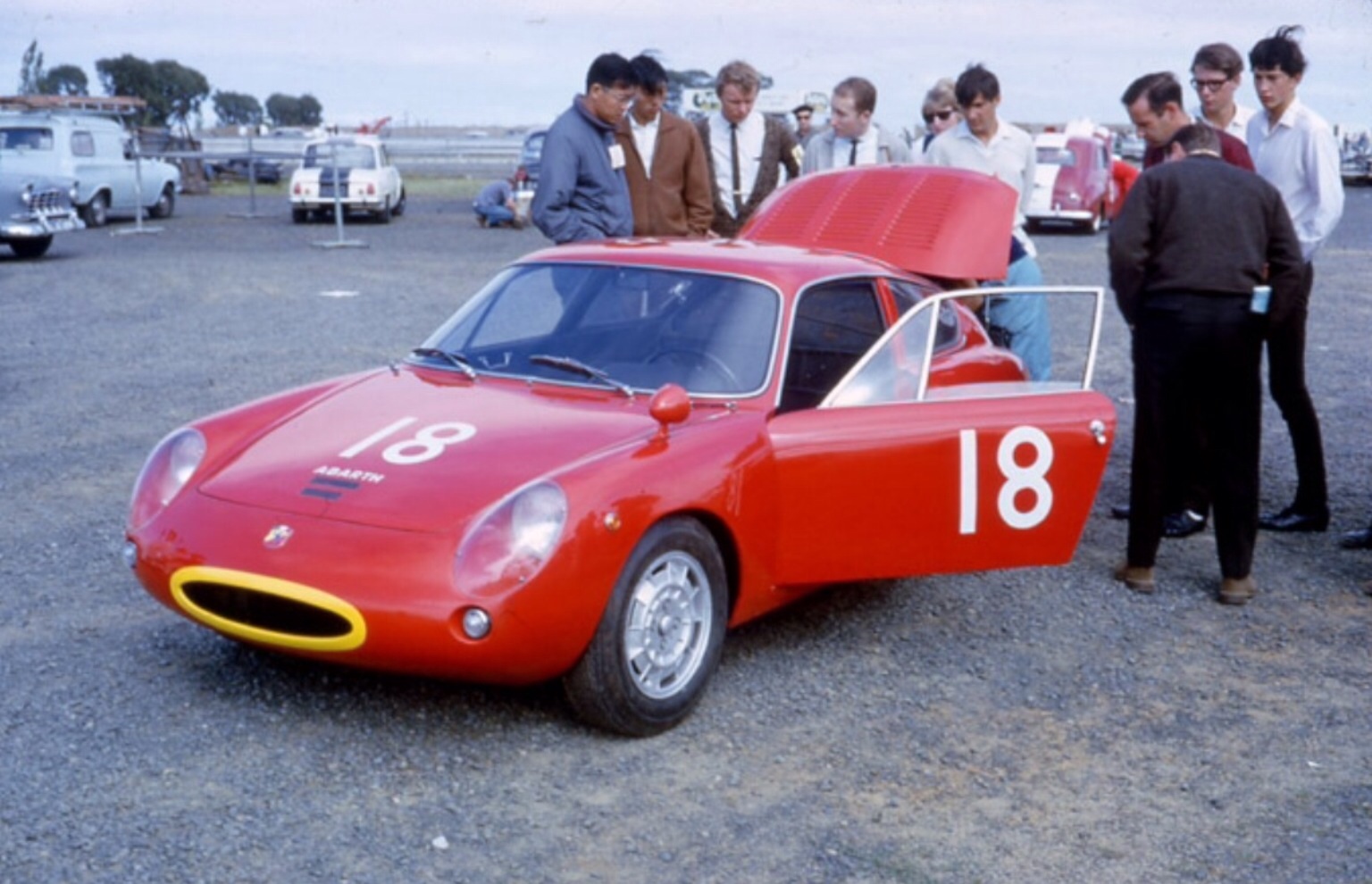
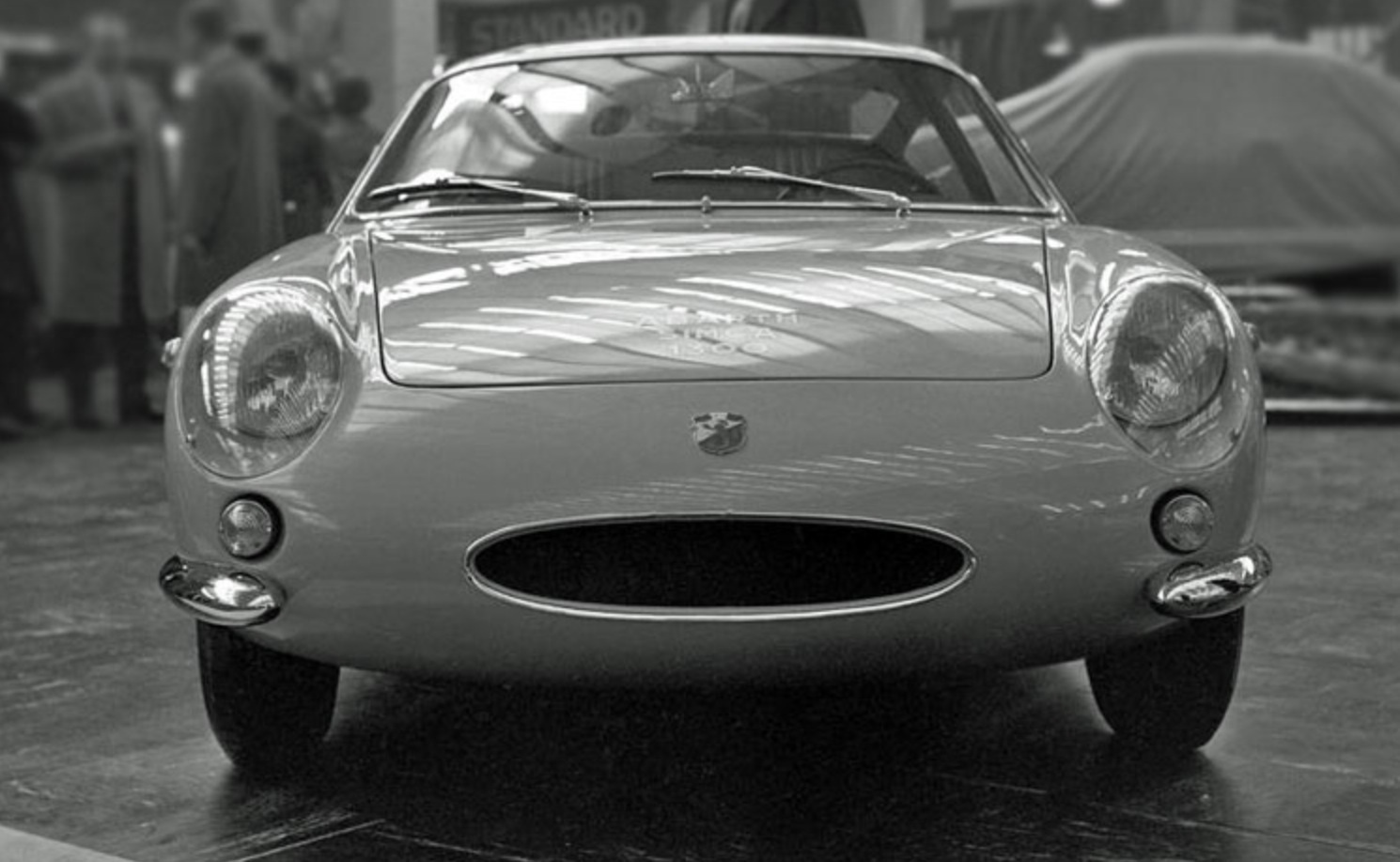
Gay Cesario gives the engine of his Abarth Simca GT 1300 a final tweak with an admiring crowd checking out the lines of the car at the Sandown Tasman round in February 1967…

Australia is a country of immigrants, even the Aboriginals, our indigenous people arrived here some 25,000 to 40,000 years ago.

As a ‘Skip’ (Anglo Australian) the travails of migrants are not something I ever thought much about. But having gone out with three post-war sixties/seventies migrant kids in the last decade – a (crazy) Croatian, Scot and an Italian – I am now highly aware of the guts it takes to jump onto a ship staking your entire future on a faraway land they knew bugger-all about in those pre-internet times. The reason most of them have so much zip is that they left with nothing and arrived with lots of drive and ambition, their legs spinning at 100mph well before their disembarkation at Station Pier. Look out ‘Skips, we are coming through, you lazy buggers!

The Italian Cesarios were one such family. Gay Cesario packed his family of five into the little Abarth Simca 1300 for the trip from Rome to Naples and embarkation from there before the long voyage to Melbourne, where they arrived in the mid-sixties.

Lucio Cesario recalls, “Dad bought the car just out of Rome at a hillclimb on-the-spot and drove it straight home that day. Some time later he decided to ship the family and car to Australia so we drove from Rome to Naples, a four or five hour drive. There was my mum, dad, brother, sister, me and all our belongings crammed into the racecar, including some spares as we were shipping it out from Naples on the same ship. Boy I wish I knew where the little car is today!?”

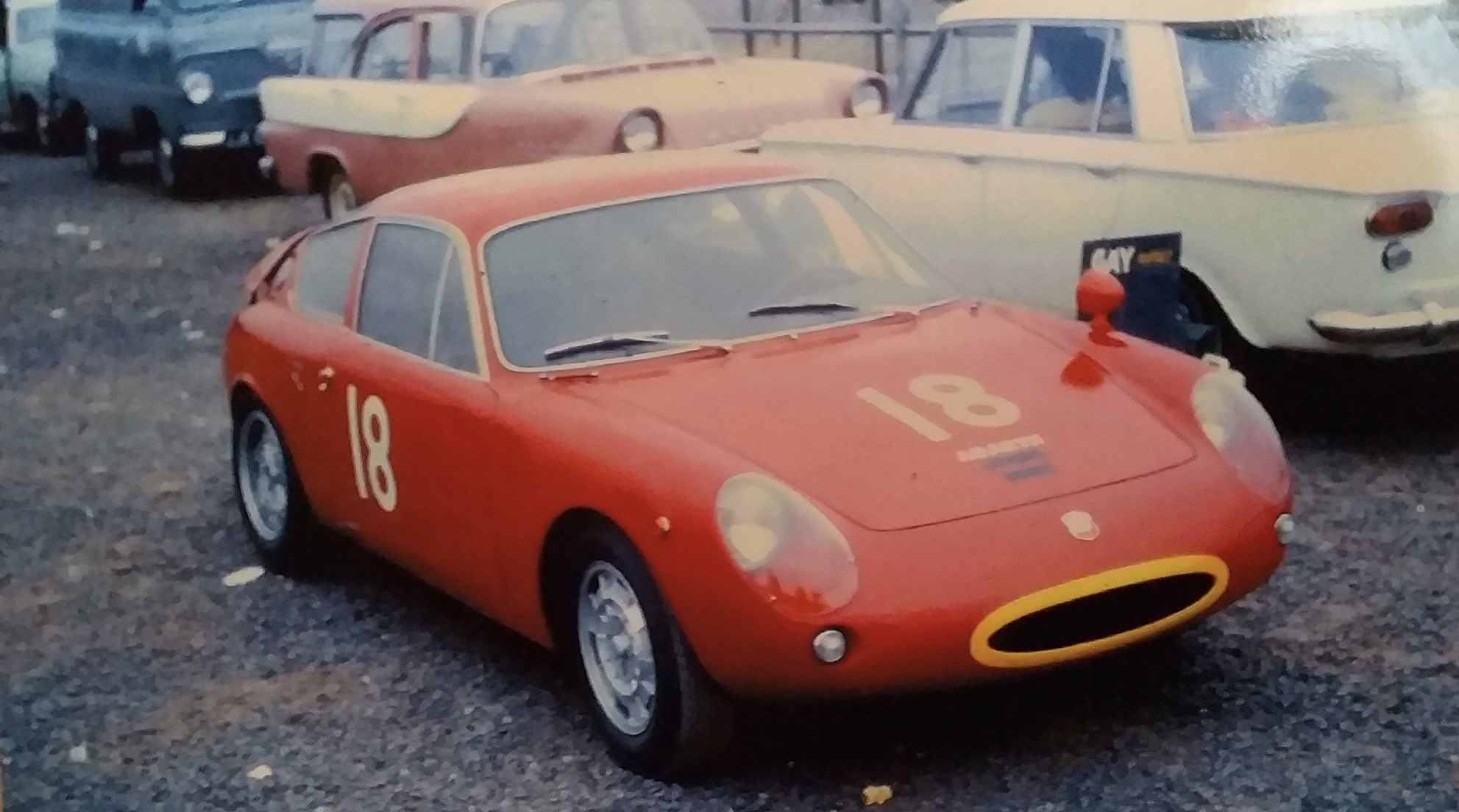
Gay Cesario raced the car in Australia, its whereabouts as you can see from Lucio’s comment above unknown. Gay raced on, I can well remember him running a Fiat 124 Abarth in Victorian production sportscar races well into the mid-seventies at least. Lucio was a well known racer during Australia’s Formula Pacific era, he parlayed immense Ralt RT4 speed into a season or so with the works Lancia Team during the Group C era, that is an interesting story for another time.

(automobile sportive)

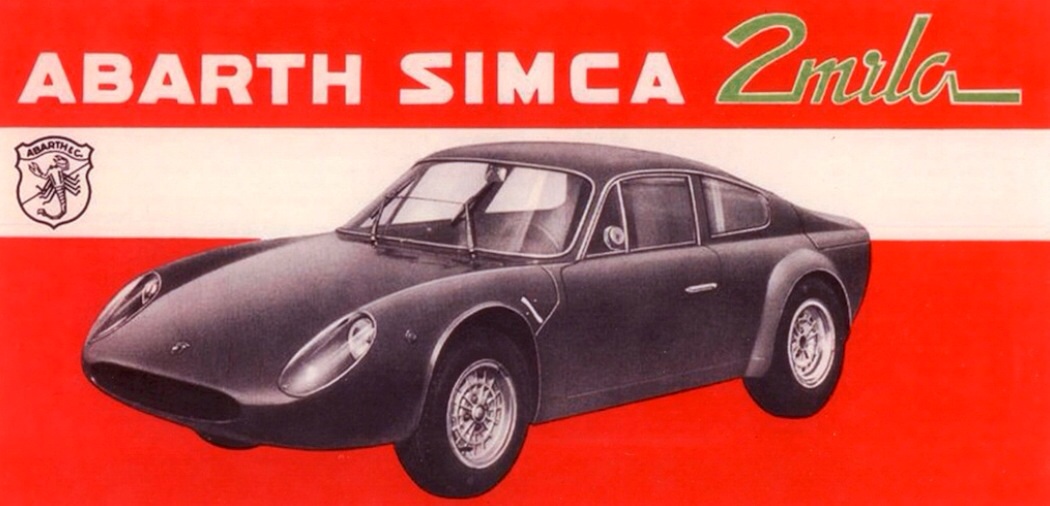
Abarth Simca 1300 GT…

Simca was founded by Italian entrepreneur Enrico Teodoro Pigozzi in 1935 to build Fiat’s for the French market. After WW2 Simca continued to produce the cars but they were given more unique character by fitment of different grilles and engines. In 1961 the company launched its most successful model, the Simca 1000. It was the concern’s first rear-engined car, a neat four-door saloon powered by a Fiat 600 derived 944cc four-cylinder engine giving circa 35bhp in standard form.

Carlo Abarth’s old Viennese sparring partner, Rudi Hruska, became a technical consultant to Simca and regularly brought Abarth’s successes with its Fiat-based cars to the company hierachy’ attention. The idea of competition success appealed to help build the brand so Abarth were invited and engaged to produce a GT car using Simca 1000 components. The Simca-Abarth or Abarth-Simca names are interchangeable, the 1300 GT was the result.

Abarth designed a new engine using the tried and tested broad architecture of the 1961 1000 Bialbero of 1288cc, with the new car’s floorpan, transmission, steering and suspension from the Simca 1000, while the body was of the latest Fiat-Abarth Coupe configuration.

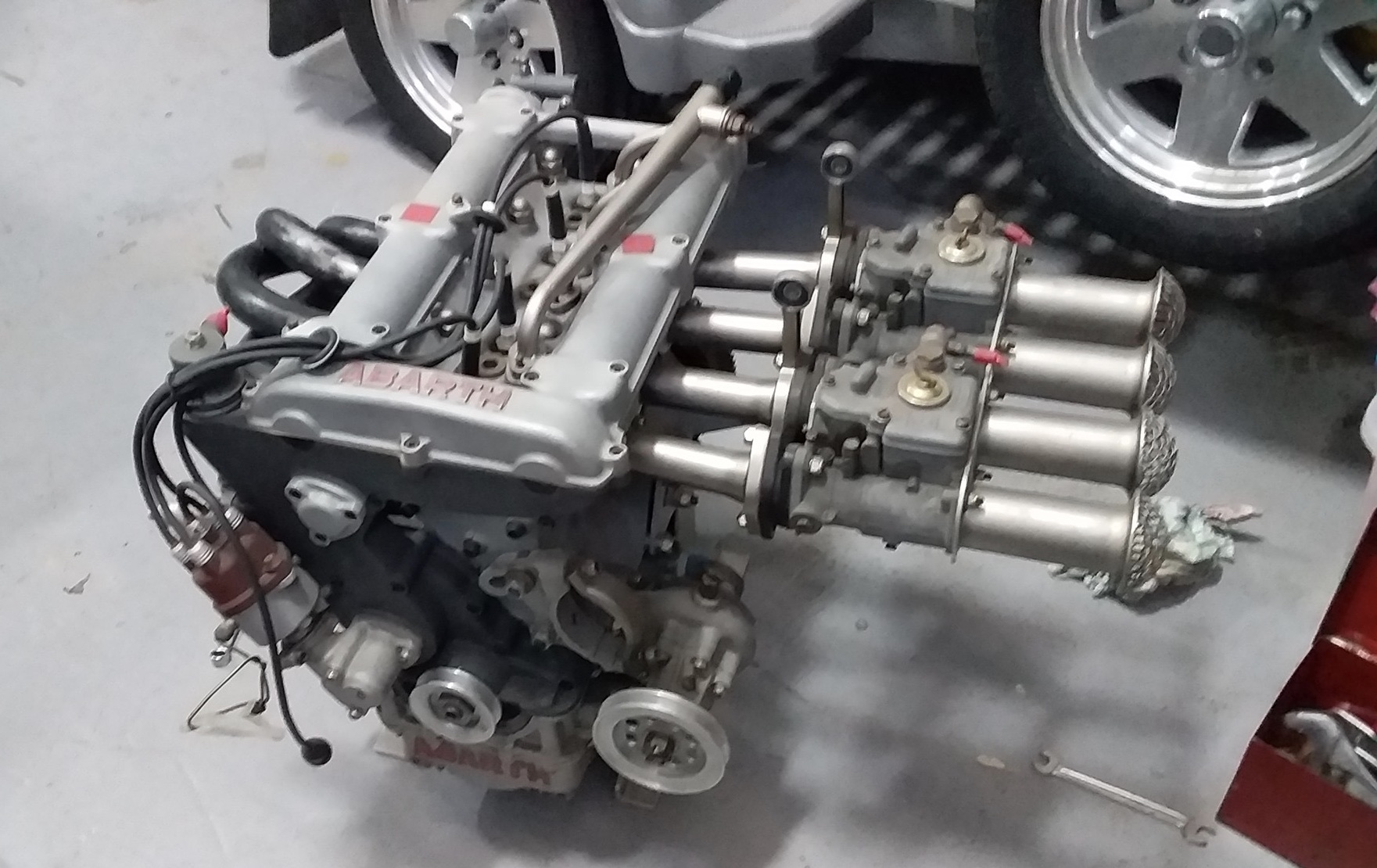
The Simca Abarth 1300 was launched in February 1962. The 1288cc, DOHC, twin 45 DCOE Weber fed four- cylinder engine produced over 90 bhp @ 6,000 rpm. The cars proved capable of running rings around rival Alfa Romeo Giuliettas during 1962. The two valve engine specification included dry-sump lubrication, a rev limit of 7,200rpm and a claimed power output of 125bhp at 6,000rpm – more like 90 – but certainly more than enough. The little car weighed 630kg/1388lbs and did 142 mph. The subsequent 1600 – 138bhp at 7,800rpm – variant stopped by Girling discs all round was capable of 240km/h – 149mph, fast cars indeed.

Abarth’s 1963 racing record is said to have achieved a staggering 535 victories, 90 of which were agged by the Simca Abarth 1300s.

The body design of the GT Coupe – influenced by the latest small capacity GTs – was styled in-house by Mario Colucci at Abarth’s famous Corso Marche factory, and was built ‘just around the corner’ by Odoardo Beccari’s specialist carrozzeria.

Credits…

Mike Feisst/The Roaring Season, Lucio Cesario/Thunder 427 on The Roaring Season, Bonhams, Ultimate Cars, Automobile Sportive, Robert Davies

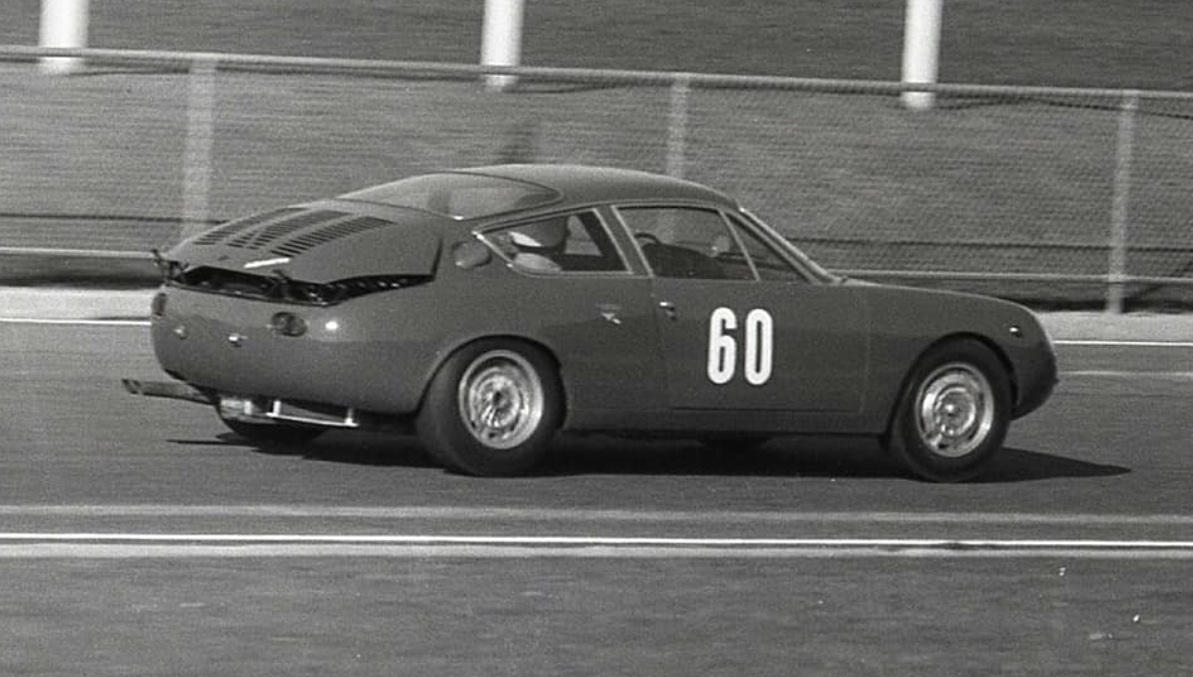
Tailpiece: Cesario, Sandown 4 May 1969…

(R Davies)

Photographer Robert Davies recalls this as the Sandown weekend that Allan Moffatt’s Trans Am Mustang made its race debut. Lucio Cesario, eight years old also remembers that day, his Dad won the Toby Lee Trophy (family still have it) in the wet with Peter Brock starting the race from pole his famous Austin A30 Holden.

Sandown 1967 (Cesario)

Postcript…

Its back in the family, the car that is!

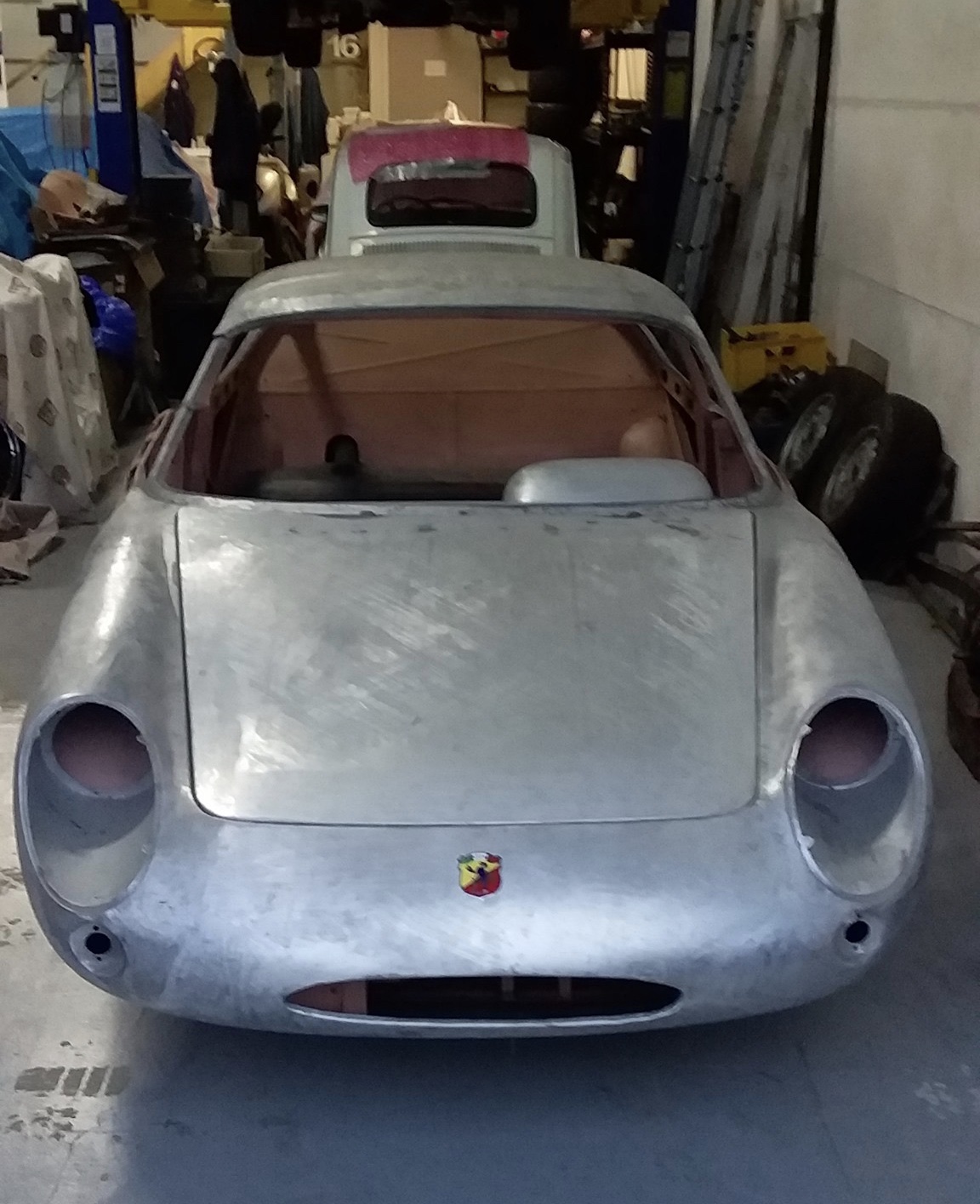
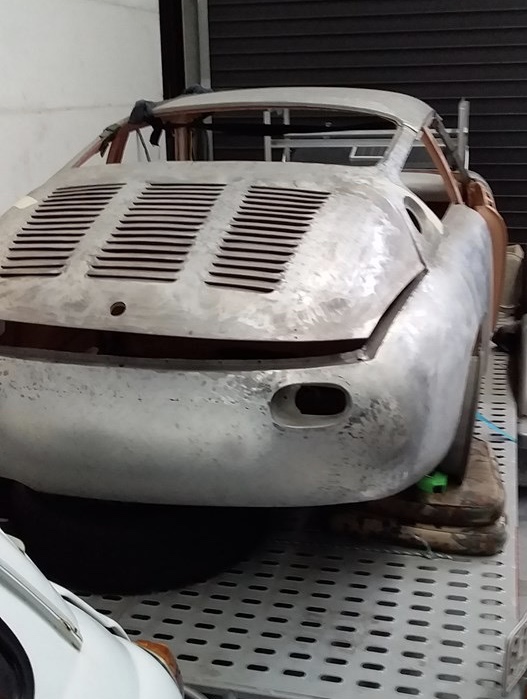
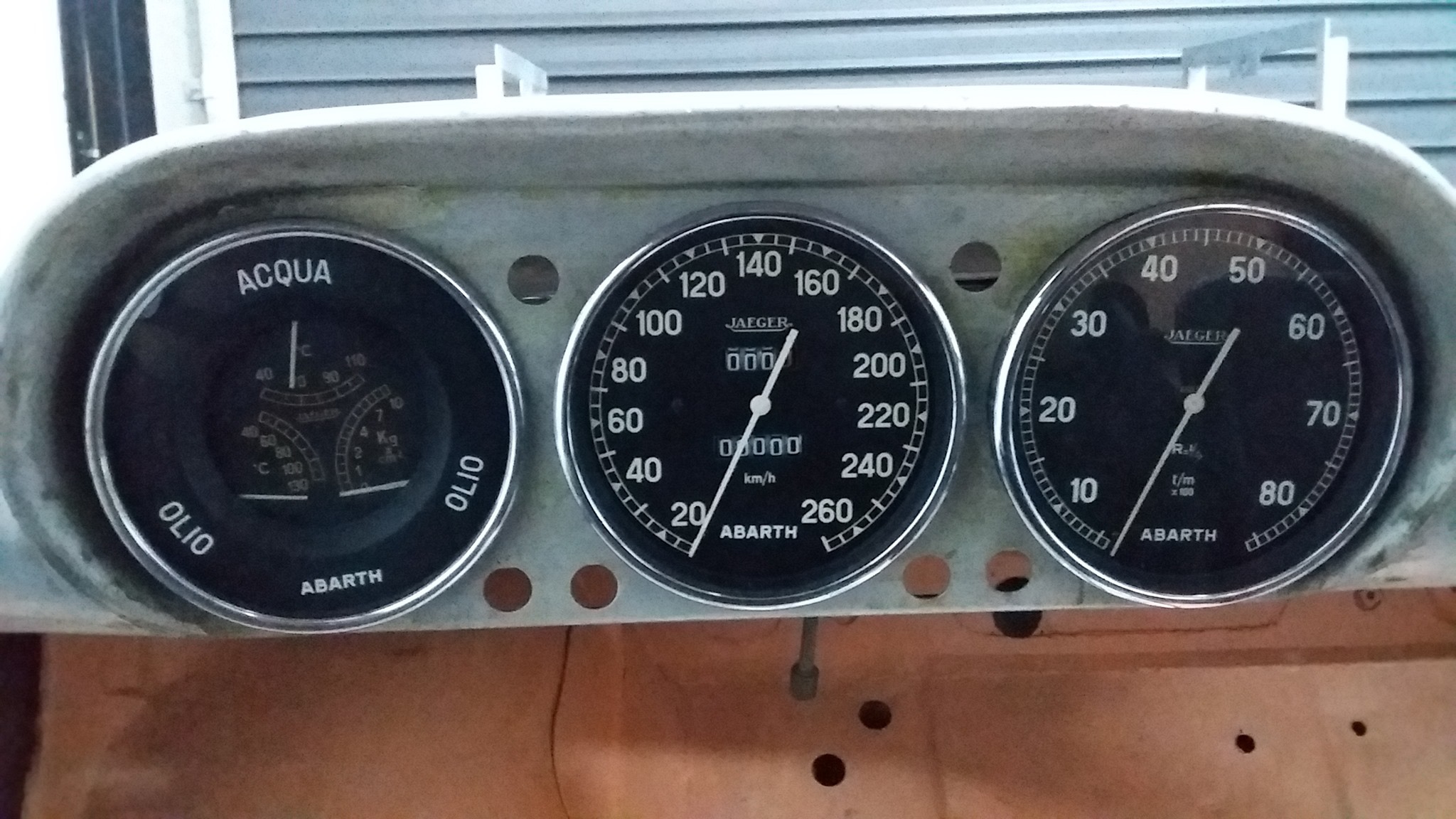
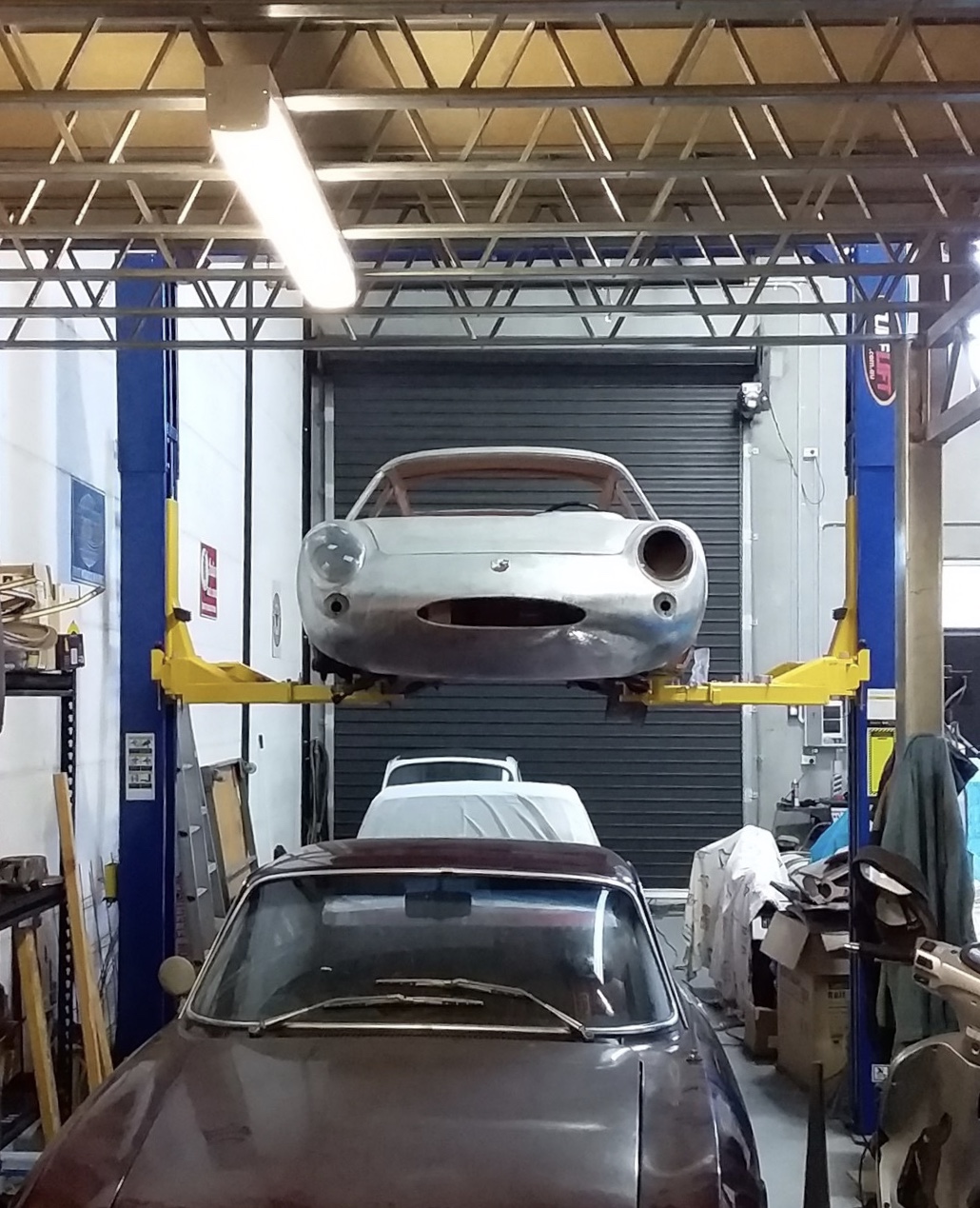
In early July 2019 I had a meal with Lucio and a few other racing coves via ‘me mate, historic racer Andrew McCarthy. During the course of a good chat Lucio told us he had negotiated to buy his Dad’s old car, paid the dollars and was off to collect it the following weekend, checkout the photos of the car tucked up in his Melbourne workshop. Doesn’t it look wonderful?

(Cesario)
(Cesario)

Lucio had been talking to the long-time Sydney owner of the car (he acquired it in 1974) on and off for decades but they had never been able to agree a price. “Your article got me going though, I felt I needed to buy the thing quickly as I was fearful your piece on it would stir up interest and send others off on a search for the car, rare as it is,” he said.

Happy to be of assistance my friend!

We will get together soon to document Lucio’s racing career and I will post updates as the Abarth’s restoration progresses. Unfortunately Gay Cesario, Lucio’s Dad, “he sold an apartment at one stage to help me progress my racing career y’know,” died some years back but his Mum is happily still with us, no doubt a tear or two was shed when the car returned back where it belonged…

(Cesario)
(Cesario)
(Cesario)

Finito…

RH Michell’s Citroen Special dates from 1938, the young constructor built it in Woodville, Adelaide…

And that’s about all I know of this little racer.

Did Michell survive the war, did it ever race, if so was it a quick car?

Woodville was the site of some ‘bike and car racing through its streets after the War- I wonder if the car contested an event or two at the place of its birth. It didn’t race in any of the Australian Grands Prix held in South Australia around this time- Victor Harbour in 1936, Lobethal in 1939 nor Nuriootpa in 1950. Mind you, it may have contested a support event.

Intrigued to know anything about this car i tripped over by happenstance…

Photo Credit…

State Library of South Australia

(Getty)

Juxtaposition!

The wild ‘Mana La’ solar car contrasted by the utilitarian functionality of a cement mixer. Stuart Highway, Northern Territory 1 November 1987…

The John Paul Mitchell sponsored car designed by Jonathon Tennyson is heading for Adelaide, 3005 Km away, sadly the brilliant vehicle DNF’d the race won by GM’s ‘Sunraycer’.

The genesis of this first Darwin to Adelaide ‘World Solar Challenge’ was critics telling adventurer Hans Tholstrup that Australia could not be crossed by a solar powered vehicle.

In 1982, together with Australian F1 driver Larry Perkins and his brother Gary, Tholstrup developed a car in which he became the first person to drive across Australia. The 4,000 Km journey in ‘The Quiet Achiever’ took him 20 days.

The Perkins Engineering- Larry and Gary Perkins built 1982 ‘The Quiet Achiever’ or ‘BP Solar Trek’ car. Rudimentary design which is deceptively clever and a precursor to the much more sophisticated, mega-buck cars which followed (NM)

Criticism of the car sparked what became the first World Solar Challenge five years later. In 1987 23 teams from Europe, the US, Asia and Australia entered the event with over 40 taking part in 2017.

The Danish born Australian’s desire to develop solar energy came after years of being a self-confessed fuel guzzler. ‘I was doing my penance…because I flew around the world, rode in race cars and powerboats, I did everything that used finite fossil fuel’ quipped Tholstrup in a recently ABC interview. He noted that solar panels are half the size they were in 1987 with the cars doing the same speeds.

One of the ‘big buck’ entries won the inaugural challenge, the Paul MacCready designed and built General Motors ‘Sunraycer’ was victorious in 44.90 hours at an average speed of 66.90 km/h.

At the wheel was ever-versatile Australian champion racing driver John Harvey who was also involved in testing the car at the GM Proving Ground in Arizona. Second into Adelaide two days later was the Ford Australia entry and the Ingenieurschule, Biel vehicle third.

The GM Sunraycer on day 3 of the 1987 challenge, 3rd November. Car is on the Stuart Highway 100 Km south of the Devils Marbles. Car took 5.5 days to complete the 3000 Km journey (P Menzel)

In some ways the most radical entry, the John Paul Mitchell Systems car ‘stole the show’, visually at least, albeit the car was out of the race way too soon.

Jonathan Tennyson designed and built the car funded by John Paul Mitchell Systems. With the help of James Amick, the inventor of the ’Windmobile’ Tennyson developed a vertical wing design to exploit the wind to help mobilise the car in addition to its primary source of power- solar energy. By covering the resulting arched wing of the ‘Mana La’ (power of the sun in Hawaiian) in solar panels the idea was to be able to expose the panels to the sun at all times of the day.

The radical machine is 19′ long, 6 1/2′ wide and 6 1/2′ tall. Its built from urethane foam, carbon fibre and vinyl ester resin weighing circa 250 Kg. An onboard computer distributed power to ‘NASA-grade storage batteries’.

(Petersen)

The visually arresting arch is covered by 140 solar panels. Sixty-four silver-zinc batteries retained the power collected and fed a pair of 2-horsepower, brushless direct-current motors. Each engine utilised two windings, one for lower speeds and higher torque, and another for higher speeds at lower torque.

Nicknamed ‘the hair dryer’ given its sponsor, the US$250,000 Mana La qualified second starting behind Sunraycer on ‘pole’. By 4 pm on the first day of the event, the car was out of the race. The crew ran too hard through the hills trying to catch the Sunraycer, exhausting their batteries in the process and were never able to harness the wind the car was designed to exploit. Their battery specialist estimated it would take 40 hours in the sun to recharge…what a great mighta been this quite stunning machine is.

In 2010 the car was donated to the Petersen Museum in Los Angeles.

Bibliography…

Australian Broadcasting Corporation, paulmitchell.com

Photo Credits…

Getty Images, Australian National Museum, Petersen Museum, Peter Menzel

(unattributed)

Craig Lowndes dropping into Mount Panorama’s Skyline/Esses, McLaren MP4/23 Mercedes V8, 22 March 2011…

Australian Formula Ford has been a factory for the creation of V8 Supercar Drivers for a couple of decades now. Every now and again one escapes to international racing success, Mark Webber, Will Power and Daniel Ricciardo spring to mind. I’ve not forgotten Larry Perkins I’m just referring to more recent times. But in the main V8 Supercars and to a lesser extent Porsche Cup racing has given local aces a place to ply their trade as well paid professionals.

The popularity and commercial success of Touring Car Racing in Australia relative to Single Seaters began circa 1960 and has continued unabated since. Even very popular single seater formulae such as the 2.5 Tasman and F5000 classes did not put a dent in the rise and rise of ‘Taxis’. Why? Its a topic for a whole series of articles but perhaps fundamentally the cars are easier for the average punter to understand and relate to, are spectacular to watch and have had a succession of ‘characters’ racing them. The absolute professionalism in the way V8 Supercars has been managed for so long now has widened the gulf further.

Lowndes, Van Dieman RF93 Formula Ford, Oran Park August 1993. Craig won 5 of the 8 ’93 rounds including OP (autopics)

Sponsors re-prioritised their spend over time away from the purer form of the sport to tourers. Drivers chase the dollars of course. So Taxis grew and grew. Its not that simple but its not much more complex either.

Back to the point of the article which is to discuss young talent and progression into the professional ranks.

It wasn’t always the case though, a career path into tourers. Often guys won the AFFC right into the nineties and none were picked up by professional touring car teams- the class was a bit of a closed shop with the young thrusters not especially welcome. Tomas Mezera is perhaps an exception but he ended up at HRT after he came back from his sojurn in Europe, so too did Russell Ingall make the transition after he returned from Europe.

Cameron McConville, the 1992 AFFC champ looked as though he may set a trend when Dick Johnson recruited him to race the second DJR machine at Bathurst in 1993 but then he boofed a fence and that was it for him, so it seemed. A 1996 win in the Australian GTP Championship in a Porsche 993 RS CS saw him brought back in from the cold- he beat Jim Richards in the Warwick Fabrics car that year, I remember being hugely impressed by his speed and professionalism.

None of yer poofhouse single seater stuff in here matey! Peter Brock was a great mentor to Lowndes early on , this shot of an HRT Commodore circa 1996. Brocky had an all too brief sojurn into ANF2 circa 1973 with a Birrana 272 Ford (unattributed)

Lowndes was the one who really paved the way for the guys who followed- most of the V8 Supercar champs have been Karting and Formula Ford graduates since Craig showed the way.

Out of Karts of course, initially he raced an old RF85 Van Diemen Formula Ford in 1991 and then won the AFFC title aboard an RF93 in 1993. Longtime openwheeler racer and enthusiast (and 1975 Bathurst 1000 winner with Peter Brock) Brian Sampson threw him a lifeline by giving him some drives in his Cheetah Mk9 Holden Formula Holden in 1994. It wasn’t the latest bit of kit by any stretch, in fact it was and IS the very first FH built. But Craig made the thing sing, I recall some very good drives in the car against Greg Murphy in a much more recent Reynard.

Lowndes, a motor mechanic by trade, didn’t have much money but he had ability, a likable and engaging personality and ability to communicate and some contacts via his Dad, Frank Lowndes who had been in and around motor racing forever as a car/engine builder and scrutineer.

Holden Racing Team tested him and he was immediately quick, consistent, and easy on the equipment getting a drive in the 1994 Sandown 500. Soon he was team-leader and won the V8 Supercar title in 1996. He hadn’t lost the fire in the belly for open-wheeler success, and even though he had the local scene at his feet he negotiated a year in the European F3000 Championship via Tom Walkinshaw who by then owned HRT.

Lowndes, Lola T96/50 Zytec Judd F3000, Silverstone 1997 (LAT)

Lowndes had a shocker of a year being comprehensively blown off by Juan Pablo Montoya, his teammate at RSM Marko aboard the mandated Lola T96/50 Zytec. To be fair, he was coming back into single-seaters after an absence of some years into a group of the best F1 aspirants in the world straight out of F3 or doing a second or third year in F3000. Lowndes did not get a fair crack of the whip in the team with minimal testing, Marko ran Lowndes to settle a debt owed to Walkinshaw- and focussed, not unnaturally on the fellow who was winning races- Montoya.

What Lowndes needed was another season, but back to V8 Supercars he came and a couple of other titles, six Bathurst 1000’s and all the rest. Of course he is still racing at the top level too. It would have been interesting to see how far he could have progressed with another season in Europe.

(B Moxon)

Jenson Button and Craig Lowndes, car a 2008 spec (champion that year in Lewis Hamilton’s hands) McLaren MP23/4 Mercedes 2.4 V8

Lowndes nipping a brake into Hell Corner (unattributed)

The opportunity to get to drive a contemporary F1 car was too good to be true and came about due to Vodaphones sponsorship of both McLaren and Triple Eight Racing who ran VE Holden Commodores that year. The day, just before the AGP at Albert Park involved closure of the Bathurst public roads- the circuit is just that, roads for most of the year with Lowndes and Jenson Button swapping seats between their respective F1 and V8 Supercar racers.

(unnatributed)

For misty eyed open-wheeler fans it was also an amazing ‘if only’, for Bathurst is indeed, in the words of Australian motor-racing historian John Medley ‘The Cradle of Australian Motor Racing’ and is where the Australian Grand Prix should be held. What a spectacle that would be! For that to occur the circuit would be destroyed to meet F1’s safety requirements, so of course it will never happen.

But for one day it was a reminder of what could be for enthusiasts and what might have been for Craig Lowndes had the racing cards been dealt or fallen a different way…

Comparo- F1 McLaren MP4/23 Mercedes Benz (2008) and V8 Supercar Holden ‘VE’ Commodore (2011)…

(Motor)

YouTube footage…

Credits…

Vue Images, LAT, Bruce Moxon, Motor

Tailpiece: Imagine 26 of them zipping past…

Finito…


(L Richards)

A motorsport event in Kew, Melbourne even in 1954 is a new one on me?!…

Its a rather nice, leafy, green suburb through which the Yarra River flows 5 Km from Melbourne’s CBD- ‘stockbroker belt’ stuff with some of Melbourne’s ‘better’ private schools contained therein. There is plenty of wealth in the area, then and now. So how come the good citizens of Kew allowed a motor sport event to take place on their turf prey tell?!

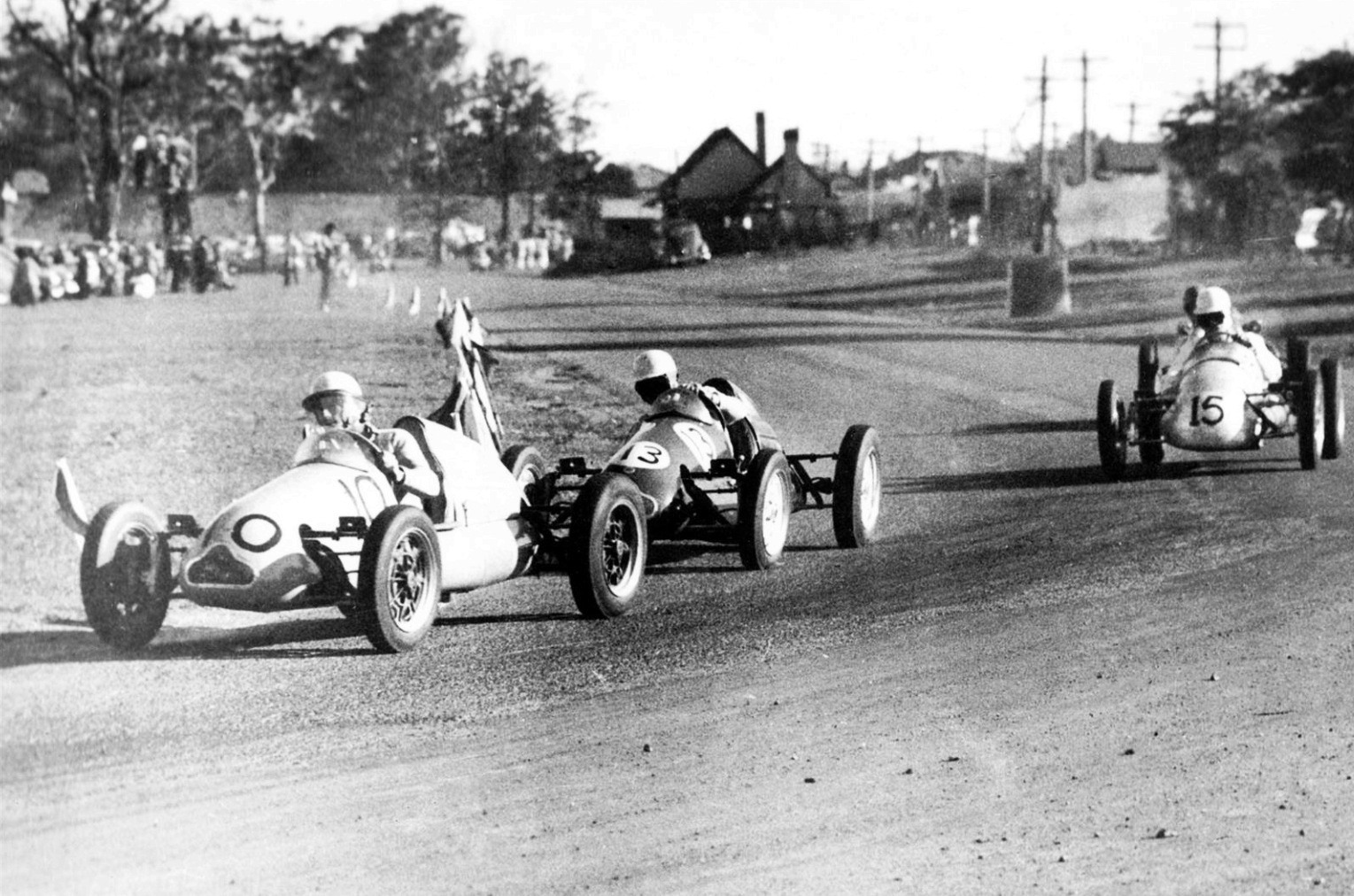
Stan Jones’ Cooper Mk4 JAP and a motor-cyclist are about to ‘blast off’ along the Kew Boulevard at Studley Park by the look of it. The flag-man is Reg Robbins, long-time member of Stanley’s racing equipe.

It’s a stretch of road we have all done lap records upon before the long arm of the law toned things down somewhat. A ribbon of bitumen that commands respect as a fair proportion of it is open and high speed despite changes to slow things down.

I have it on good authority that the number of 911’s which go in backwards is not that much different now to the 1980’s when there were plenty of wallies with loads of money not reflected in commensurate levels of driving talent. Many an insurance tale of woe was born on this stretch of blacktop.

(L Richards)

In any event, what is going on here, some of you are Kew locals, we are all intrigued to know?

Stan has his ‘Maybach’ helmet on , it was a good year for him, he had just won the New Zealand Grand Prix at Ardmore in perhaps Australia’s most famous special, the Charlie Dean/Repco built and prepared Maybach on 9 January. No wonder he has a big smile upon his face.

For Jones it was an easy event logistically. He lived in Balwyn, an adjoining suburb and his ‘fettler’ Ern Seeliger’s garage was in Baker Street, Richmond, also a couple of kays from The Boulevard on the other side of the river.

I am intrigued. Do tell folks!?. Maybe its a promotion and i’m getting excited about absolutely nothing…

An idea of the Kew Boulevard in 1958- not much different now, leafy green and lots of curves. This is the finish of a ‘car trial’ treasure hunt social event (L Richards)

Photo Credits…

Laurie Richards, State Library of Victoria, David Zeunert

Tailpiece: Stan and Cooper JAP, Templestowe Hillclimb circa 1952…

(SLV)

Templestowe Hillclimb was not too far from Kew, where the shots above are taken, so here is a snap of the man in action there. I’ve no idea of the date in the event that one of you were there to sort that point. Jones hustled a car along, he was a physical, press on kinda driver who pushed hard, not lacking finesse mind you, but you could always see him trying to get the best from his mount.

Just as he is here, using all of the available road…

Lionel Van Praag, Wembley, London 10 September 1936…

Its amazing what you don’t know, in fact I’m never surprised at my own ignorance. I reckon I know a bit about my interest and hobby, but really I’m only scratching the surface of motor racing history in Australia.

Australian topics are hard too, the research that is- pre-War there was little in the way of local magazines, post war it becomes a bit more straight forward from the time of the publication of ‘Australian Motor Sports’ magazine and the relatively large number of publications which followed it. What is fascinating in the research adventure is the stuff you find looking for something else.

In this case it was randomly coming upon this image of Lionel Maurice Van Praag (1908-1987) after winning the inaugural World Speedway Championship at Wembley on 10 September 1936.

An Australian World Motor Racing champion pre-war, wow! And not without some controversy too. And I had never heard of the Redfern lad despite his admission to the Sport Australia Hall of Fame in recent times.

L>R- Charlie Spinks, Arthur Atkinson and Lionel Van Praag, First Test England/Australia at Belle Vue in 1938 (defunctspeedway.co.uk)

Graham Howard wrote that ‘Van Praag was a speedway rider and aviator, born on 17 December 1908 at Redfern, Sydney. The only child of Sydney-born Louis Van Praag, tram conductor, and Mozelle May. A bright student and an all-round athlete, he was educated at Cleveland Street Intermediate High and Redfern Junior Technical schools, both in inner Sydney. He was apprenticed as a typewriter mechanic, he had a natural feel for machinery that was useful all his life’.

image

LVP, middle of shot at Speedway Royal, Wayville, Adelaide in 1928. Bike is an Ariel ‘3 and a half’ (M Gray)

Lionel began riding motorcycles at 15. After a number of novice races at the Olympia Speedway at Maroubra he concentrated on the Speedway Royal in Sydney from July 1926, almost instantly he became a senior competitor. He then had an outstanding 1926-27 season in Brisbane. He was successful in the eastern mainland Australian States and in New Zealand. In 1931 after years of rejecting offers, he followed other Australian riders who competed in England and joined the Wembley Team, riding in both the UK and Europe during the Australian off season.

Lionel Van Praag aboard a Harley Davidson ‘Pea Shooter’ in 1927, 19 years old. Factory 1926  racer designed for US AMA races- devoid of brakes, clutch and transmission. Frame shortened, weight 215 pounds, 350cc OHV, circa 100mph (unattributed)

The first World Speedway Championship, at Wembley, London 1936…

The event was a strange one as riders carried into the meeting a score of bonus points amassed in the qualifying rounds. It was possible that the rider who scored best on the night would still not be world champion because of his qualifying record- and such was the case.

‘Bluey’ Wilkinson scored a maximum but Langton had more bonus points than Van Praag. In a night of excitement and controversy, Eric Langton and Van Praag lined up for a match race but Eric broke the tapes. Van Praag declared he would not be champion by default and sportingly demanded a re-run! Langton gated ahead and led until the final bend when leaving the smallest of gaps and he was unable to hold the dashing Australian, the Hall of Fame entry says.

LVP on a mini-bike at Wembley in 1932 (Getty)

Further ‘Langton’s near miss …assumed a degree of controversy in later years. The deciding match race with ‘Praagy’ was ‘fixed’ between the pair according to sources close to the action. It was alleged that Eric and Lionel agreed that whoever got to the first corner in front would go on to win and they would split the prizemoney between them. It almost worked out, Langton was ahead until the final corner when he left a small gap which Van Praag couldn’t resist going for. The first ever world final was won by about a wheel width and the Australian took the title’.

Van Praag also qualified for the finals in 1937-7th, 1938-4th and 1939. In 1931-39, and again in 1947, he represented Australia in Tests against England.

He learned to fly in the UK at Broxbourne, Hertfordshire in 1931, it was a capability he put to good use throughout the rest of his life.

Graham Howard wrote that ‘Van Praag was a non-drinker and a heavy smoker, and he had a short temper if provoked. At around 5 ft 9 ins (175 cm) he was taller than most of his rivals; he was dashingly handsome, with dark curly hair and notable physical strength. He had a minor role in the British film Money for Speed (1933), but an envisaged cinema career did not materialise’.

LVP on a 1930’s JAP, date and place unknown (defunctspeedway.co.uk)

On 11 August 1941 Van Praag enlisted in the Royal Australian Air Force and was appointed to No.2 Wireless Air Gunners School, Parkes, New South Wales with the rank of acting sergeant.

Engaged on flying duties, he was promoted to probationary pilot officer in October 1942 and flight lieutenant in October 1944.

In January 1942 the transport plane of which he was a co-pilot, an RAAF Douglas DC-2 A30-8, was shot down by a Japanese aircraft over the Sumba Strait, off Indonesia whilst on a flight from Surabaya, Java to Koepang/Kupang Timor. For thirty hours, whilst subject to shark attacks, he and his Captain, Flying Officer Noel Webster, supported the two crew-members, both non-swimmers and secured their survival, acts of bravery for which they were awarded the George Medal.

A full account of the incident appears in the book ‘And Far From Home’, written by John Balfe who flew with Lionel.

Balfe had this to say about Van Praag as a man ‘…in flying with Van I had perceived in his slight wiry form, a man of particular capacity and directness. He cared nothing for false values in anything or anyone and did not hide from the fact. I found him only a week out of hospital after the ditching (of the DC-2) but already back in a comprehensive engineering workshop he had behind his unpretentious home on Botany Bay’s (Sydney) north shore. He had plant and equipment there to wet the appetite of any metal engineer. One of the real Australians, Van had led a hard life racing motorcycles from early manhood and lived to standards he had not relaxed. He was moderate in thought and habit and held in quiet contempt those who were not. He valued his friendships above human faults, but chose his friends carefully and for the most part made them for life. His mind and memory remained sharp and retained an accuracy in detail that I had noted flying with him in 1943’.

After recuperating from the ditching, Lionel returned to flying C-47’s with No 36 Squadron out of Townsville, Far North Queensland. His RAAF appointment ended on 27 July 1945.

LVP aboard a Penny Farthing in 1951, interesting to know the occasion, and place! (Fairfax)

Post war Lionel resumed motorcycle racing and soon developed a career in aviation…

Van Praag headed a riders’ consortium that promoted speedway at the Sydney Sports Ground in 1945-48. He rode for the English team New Cross in 1947. After 1948 he effectively retired from racing, although in the early 1950s he briefly raced self-built small speedboats off Manly on Sydney Harbour.

In his new career as a commercial pilot in 1952 he combined his aviation and speedway interests by contracting with Empire Speedways to carry the Great Britain and Australian competitors, along with their bikes and equipment between the various Australian speedway venues in a Lockheed Lodestar.

He flew charter, and freight planes, did aerial top-dressing or crop-dusting in a Bristol Freighter, this plane was lost in December 1961 when it crashed at Wollongong after an engine failure on a freight flight. Lionel and the rest of the crew escaped injury. He later flew for an airline in Pakistan for a year before returning to Australia.

LVP in his later aviation years (adastron.com)

He joined Adastra Aerial Surveys, a company originally formed as a flying school in 1930 at Mascot, Sydney circa 1962 as a pilot and later became chief pilot. Although he had two well-publicised crashes, including the one described above, people who flew with him valued his informality and his resourceful flying ability.

In adult life, Van, as he was known, turned away from his Jewish upbringing. In 1929 at the district registrar’s office, Redfern, he married Elizabeth Margaret Pearl Cosgrove, a machinist, they divorced in April 1937. On 1 October that year at the register office, Hendon, England, he married Gwendoline Iris Hipkin, a dressmaker.

In 1968 he retired to his own Island, Temple Island, south of Mackay. In 1973, aged 65, he ferried a Hudson VH-AGJ from Sydney to Strathallan Museum in Scotland. Hudson’s were the primary survey aircraft used by Adastra.

He died on 19 May 1987 from emphysema, at Royal Brisbane Hospital. His wife, their daughter and two sons and the daughter of his first marriage survived him.

Post death recognition includes being inducted into the Sport Australia Hall of Fame in 1990. In addition, in 2000, the Government of the Australian Capital Territory decided to honour several Australian sportsmen with the naming of streets, including ‘Van Praag Place’ in the Canberra suburb of Gordon.

Three of my fathers uncles served in World War 2. As I became a teenager and understood, to an extent, what they endured in the Middle East and New Guinea I held these wonderful, private, kind, gentle but strong men in considerable awe. I always called them my ‘Boys Own Heros’ when I saw them at family events. Certainly Lionel Van Praag was a Boys Own Hero- in spades. Truly an amazing, full life of achievement.

Bibliography…

‘Australian Dictionary of Biography’ entry by Graham Howard, Australian Sports Hall of Fame, adastron.com

Photo Credits…

Getty Images, Fox Photos, PA Images, , Malcolm F Gray, State Library of South Australia, Fairfax, defunctspeedwaysuk.com

Tailpiece: LVP and friends at the Sydney Sportsground on 4 September 1945, first post-war meeting I wonder?…


(Jack Inwood)

Three-time Kiwi Gold Star champion Jim Palmer leads John Riley during the 1964 running of the ‘Renwick 50’ held each November in the township of Renwick…

Palmer’s car is the ex-Jack Brabham works 1964 Tasman Series  Brabham BT7A Climax FPF ‘IC-2-63’, Riley’s the ex-Tony Shelly Lotus 18/21 Climax FPF.

When I initially saw this shot I imagined the cars were returning to the paddock but in fact they are entering what was in effect a single car at a time part of the track, a right-hander, the course was essentially rectangular in layout through the roads of Renwick.

The Marlborough region is a stunning part of New Zealand, its the countries largest wine growing area, in the far north of the South Island and famous the world over for some marvellous Sauvignon Blanc whites.

Palmer’s ex-Clark Lotus 32B Climax during the January 1966 Levin Tasman round, he was 5th in the race won by Richard Attwood’s BRM P261. Jim Clark won the ’65 Tasman in this car, chassis ’32-FL-8′ with 4 wins and then sold it to the Palmer family. Superbly prepared and driven, Palmer won the 1965/6 NZ Gold Star in it and then finished 4th in the ’66 Tasman with a mix of speed and reliability- only Stewart, Hill and Clark were in front of the plucky Kiwi. The car then raced in Oz in the hands of Greg Cusack and Mel McEwin. Ultimately restored by John Dawson-Damer in Sydney and sold/part exchanged for a Lotus 79 to Classic Team Lotus 20 years ago. 2.5 CC FPF and ZF 5 speed box clear in shot as is very beefy rear chassis diaphragm (TRS)

Click here for an article about the Lotus 32B and the Levin International won by Jim Clark in 1965;

‘Levin International’ New Zealand 1965…

The Renwick event was run from 1960 to 1967. Frank Shuter won the first in his Ferrari 625, but it was  Palmer who had a bit of a mortgage on it.

He won in 1964, 1965 and 1966 in Cooper T53, Brabham BT7A and Lotus 32B, the latter the car Jim Clark won the Tasman Series with in 1965. All of these cars were powered by the venerable 2.5 litre Coventry Climax FPF 4 cylinder engine- the World Championship winning engine of 1959-60. Palmer won the New Zealand Gold Star, the NZ drivers championship in 1964/5, 1965/6 and 1967/8 in the Brabham, Lotus and a McLaren M4A Ford FVA F2 respectively.

Jim Palmer aboard the Scuderia Veloce Brabham BT11A Climax, not so long before vacated by Spencer Martin, at Bathurst, Easter 1966. The shot is taken near the crest at Reid Park Gate. Palmer drove well, albeit against no other 2.5 litre competition, to win the racing car feature Mt Panorama Gold Cup. It was about this time he failed his CAMS licence due to some vision issues, a great shame as the speedy Kiwi would have been a welcome addition to our Gold Star grids, skinny as they were (John Ellacott)

A top driver he retired too early in my book, partially due to being unable to get an Australian CAMS racing licence, he was long-sighted in one eye. He also married and decided to focus on his retail motor trade and property business interests which centred on Hamilton where he still lives.

Jim Palmer in the ex-Clark Lotus 32B Climax on the way to 6th place in the 1966 Warwick Farm 100 on 13 February. Clark won from Hill and Gardner (Bruce Wells)

The 1964 Renwick 50 was run over 20 laps of the 2.414 km course (three variants of Renwick roads were used over the years) on 14 November, a smidge under 50 km in total. Palmer won and took the lap record at 1: 17.0 with Morrie Stanton, Stanton Corvette 2nd and Red Dawson in a Cooper T53 Climax 3rd.

Check out this YouTube footage which shows the undulating, narrow nature of the circuit. Whilst the caption says 1965, the footage is from several of the Renwick meetings including 1964.

Bibliography…

sergent.com, ‘Bathurst: Cradle of Australian Motor Racing’ John Medley, oldracingcars.com

Photo Credits…

Jack Inwood/The Roaring Season, John Ellacott, Bruce Wells, Marlborough Car Club

Tailpiece: Chris Amon, Maser 250F, Renwick 50 November 1962…

Chris Amon, Maser 250F just ahead of Bob Eade’s similar car with John Histed’s Lola Mk2 Ford behind. Angus Hyslop Cooper T53 Climax won from Amon and Barry Cottle, Lola Mk1 Climax. This race on 10 November 1962 was Chris’ last race in the Maser (Marlborough Car Club)

Postscript: Next stage of Chris Amon’s career…

Click here for an article on the next critical months in Amon’s career after the Maserati was put to one side and Chris drove David McKay’s Cooper T53 Climax in the 1963 Australasian Internationals; https://primotipo.com/2017/09/06/chris-amon-cooper-t53-and-the-australian-grand-prix-1963/

Finito…

Don’t listen to him! Trust me girls, we can get 142 bhp @ 7,600 rpm out of this V8 ’60’ Flattie on methanol!…

The chief mechanic trying to reassure her team she can take on Doug Whiteford’s Ford V8 Special ‘Black Bess’ post-war with a combination of Edelbrock manifold, two Stromberg 2-barrel carbs, Offy heads, Jahns pistons to suit the .030 overbore, a Claysmith crank and Isky cam. Not to forget the hand fabricated extractors.

The first shot was taken during World War 2 at Ford’s Geelong factory in Victoria, Australia. The ladies of the Womens Emergency League, VAD Transport Services and Red Cross are learning how to maintain a Ford V8.

I am interested to know exactly which variant of the venerable Ford Flathead V8 this is, and the car to which it is fitted!

Henry Ford and his ‘flathead’ V8 creation in 1932 (FoMoCo)

Credit…

State Libraries of Victoria/South Australia, FoMoCo

Tailpiece: Doug Whiteford’s ‘Black Bess’ leads the ‘Woodside Handicap’ at Woodside, South Australia on 10 October 1949…

(SLSA)

Click here for an article about Doug Whiteford’s 1950 Australian Grand Prix winning Ford V8 Spl ‘Black Bess’;

Doug Whiteford: ‘Black Bess’: Woodside, South Australia 1949…

Finito…

WJ Phipps and J Seery drove this 7 hp Citroen Type C from Fremantle, Western Australia to Adelaide, South Australia, Melbourne, Victoria in May 1923, and on to Sydney New South Wales, a  journey of about 3,180 miles…

The West Australian pair left Freo in the 856cc, 4 cylinder, 3 speed small car on 1 May. Phipps originally intended to make the trip on a motor cycle and sidecar but received an offer from the Citroen agents to use the small car instead, he then invited Seery to accompany him. In various reports described as a planned as an attempt on the Fremantle-Sydney transcontinental record, or to prove a small light car could make the challenging journey, the trip became a ‘more leisurely touring drive’ after the loss of four days due to hub damage.

Phipps quipped that ‘When we left Perth we were the laughing stock of all motorists because no-one dreamed we would be able to get through’. Even the cars agents were somewhat dubious about their prospects. The intrepid adventurers travelled all day and night, one sleeping whilst the other drove.

The route chosen took them from Fremantle to Kalgoorlie (WA) Port Augusta to Adelaide (SA) Melbourne and then on to Sydney (Victoria and NSW respectively).

The Perth ‘Daily News’ reported that ‘Despite the fact the whole outfit with luggage weighed 18 cwt, (including 23 gallons of petroleum benzine and 8 gallons of water) the little car had no difficulty in negotiating this heavy route’. For hundreds of miles, the pair followed the transcontinental railway line as much as possible, there was no track at all, with large limestone boulders having to be moved before they could proceed.

The car was delayed by four days near Naretha, 180 miles from Kalgoorlie on the transcontinental railway line, ‘owing to one of the wheels crashing into an obscured stump’ the Citroens hub was broken necessitating a spare to be delivered by rail from Perth. Apart from that mishap they ‘never had a spanner on the car’.

The most challenging part of the trip were the Yardu Sandhills in central WA where the Citroen got through unaided, taking five hours to go 12 miles. Other heavier cars on previous trips having to be hauled through by bullock teams.

Adelaide was reached in 157 driving hours on 11 May, this section of the trip was 1,769 miles. Behrens and Marshall (another report says Maugham-Thiem Motor Works) were the Citroen agents in Adelaide, the photograph of the car is out front of their Flinders Street showrooms.

The car then set off for the 571 miles to Melbourne at 2pm that afternoon 11 May. The other most difficult leg of the trip was the section near Kurow Lake, there, instead of being axle deep in sand, they were axle deep in mud. They arrived in Melbourne at 8 am on 14 May.

After a days rest Phipps and Seery then set of for the 594 mile Sydney leg at 10.45 pm on 16 May via the Hume Highway route. They stopped for a night in Gundagai, wet and cold from exposure and set off again on Saturday arriving that evening, 19 May ‘…in Martin Place with West Australian air’ a quip referring to the fact that the tyres had not been pumped up at any time on the journey. The car was shod with Dunlop ‘Railroad’ tyres, averaged 38-44 miles per gallon, used 1.5 gallons of lubricant with the average speed for the entire trip 16.5 mph.

In a parting shot Phipps said ‘We are on a holiday trip…we will return in the car…we intend on the way back to the West to have some dingo shooting on the Nullarbor Plain’.

I wonder if this significant Citroen survived?

Credits…

WS Smith/State Library of South Australia. ‘The Daily News Perth’ 2 June 1923, ‘Perth Sunday Times’ 20 May 1923, ‘The Express’ Adelaide 11 May 1923

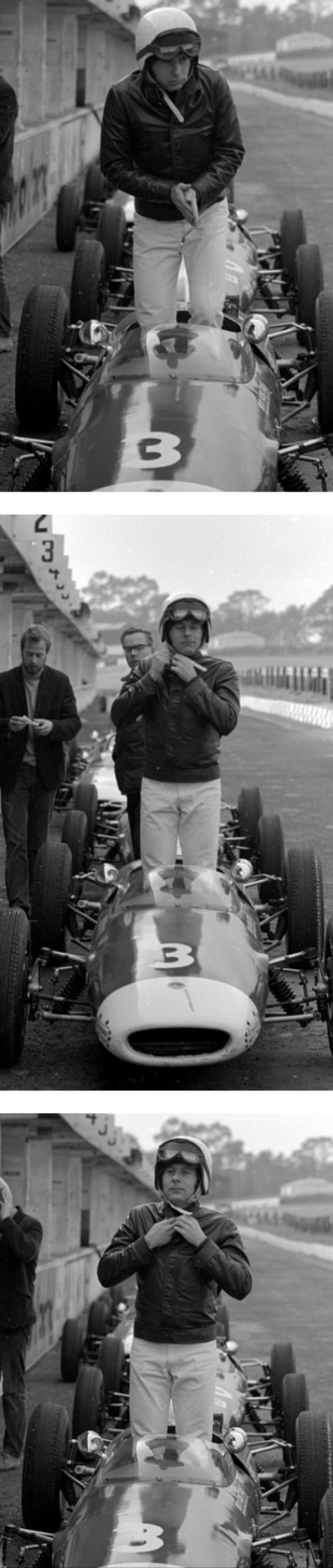
James Garner is fitted to a Jim Russell Racing Drivers School Formula 3 car on 14 April 1966…

Jim Russell supervises ‘Pete Aron’s’ preparation for some laps at Snetterton. I wonder exactly what make and model it is?!

The business end of the iconic film ‘Grand Prix’ is about to get underway, the race scenes were filmed, famously, during the 1966 Grand Prix season.

Garner is sharpening his driving skills to cope with the in-car rigours of his role as Peter Aron. Of course he rather enjoyed it all didn’t he, becoming a racer and an entrant of some note.

Garner’s ‘American International Racing’ Lola T70 Mk3B Chev finished second in the 1969 Sebring 12 Hour driven by Ed Leslie and Lothar Motschenbacher behind the winning Penske T70 of Mark Donohue and Chuck Parsons.

By the time these shots were taken in the UK Garner had already done quite a lot of driving under the tutelage of Bob Bondurant in the US, but I wonder if the JRRDS laps were his first in single-seaters?

The ‘Tailpiece’ workshop shot below is on-location at the Cooper, Surbiton, Surrey factory. ‘Pete’ is sitting aboard his Japanese Yamura car which looks rather suspiciously like a Lotus 25 Coventry Climax, the cam-covers of the little 1.5 litre FWMV V8 are removed.

What a film! I wrote a short piece about it ages ago, click here if you’ve not read it, its focus is on Francoise Hardy;

https://primotipo.com/2014/10/17/francoise-hardy-on-the-set-of-grand-prix-1966/

Photo Credits…

Jim Gray, Evening Standard, J Wilds

Tailpiece: Pete being fitted to his Yamura F1 car, July 1966…

The on-circuit shots of the Yamura were of Bruce McLarens 1966 F1 contender, the McLaren M2B that year fitted with Ford, Serennissima and BRM engines. The contract was a nice little earner in the team’s first year in Gee Pee racing. Aron’s helmet design was Chris Amon’s sans the Kiwi logo. Checkout this really interesting article about McLaren’s involvement in the film on mclaren.com;

http://www.mclaren.com/formula1/heritage/action-mclaren-at-the-movies-6114785/