Archive for the ‘Obscurities’ Category

image

Image from a 1939 promotional brochure to sell the car, not much has changed in the positioning of luxury high performance cars over the years, it’s just that online media is more important than print…

I’ve no idea what the seaplane is but am intrigued to know if any of you aircraft enthusiasts can pick it.

406 of these cars were built between 1934 and 1940. Powered by a 5.4 litre supercharged, 180bhp straight-eight, these elegant 2600Kg beasts topped 105mph and did a standing quarter in around 16.5 seconds.

image


The car above is the ‘ducks guts’ 540K Spezial Roadster of which only 25 were built, the brand association with the Hindenburg LZ-129 airship ended up rather a sub-optimal choice!

Credit…

Heritage Images, unattributed

Tailpiece…

image


image

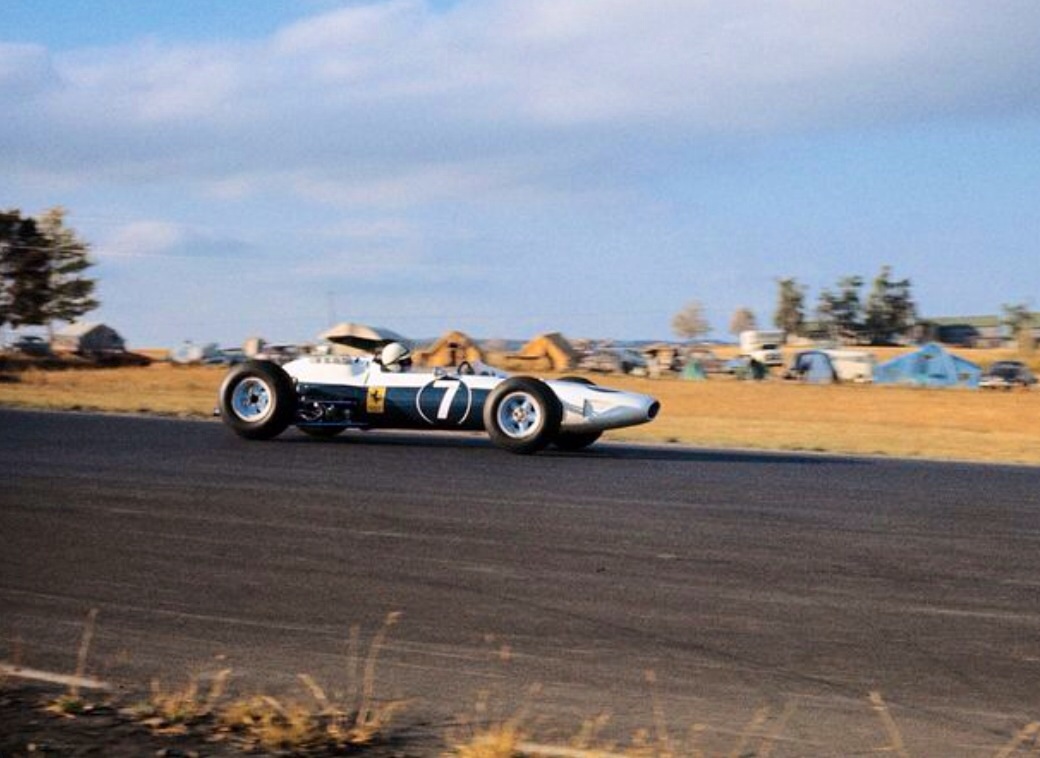
John Surtees races his North American Racing Team Ferrari 158 to second place at Watkins Glen on October 4, keeping alive his ultimately successful 1964 title chances…

Enzo Ferrari was in a spat with the Italian governing body at the time over its refusal, Ferrari having failed to build the minimum number of cars, to homologate the sports/racer Ferrari 250LM as a Sportscar. The result of which forced entrants to race it as a Prototype, a category in which it was not competitive and not designed for; putting aside the lucky, outright 250LM Le Mans win for Masten Gregory and Jochen Rindt in 1965!

image

Test session for the Ferrari 158’s, one of which is in NART colors, on 15 September 1964. John Surtees in drivers overalls, Technical Director Mauro Forghieri to his left, mechanic Giulio Borsari in the white cap. Modena Autodrome (GP Photo)

Not that the Italian autocrat was going to let principle, as he saw it, get in the way of practicality.

There were Grand Prix World Championships to win so rather than race in traditional racing red he ‘relinquished his entrants licence’, the cars, works cars in every way, shape and form being entered by Ferrari’s concessionaire in the US, Luigi Chinetti’s N.A.R.T at both the final two 1964 championship rounds at Watkins Glen, New York State and in Mexico City.

Surtees second placings in both races gave him the Drivers title and Ferrari the Manufacturers from Graham Hill’s BRM P261 by 9 points.

‘Honour’ and title won, the Ferrari’s raced on in Italian Racing Red and the 250LM as a prototype, much to its private entrants chagrin.

image

Surtees ready for the off, Modena 15 September 1964 (GP Photo)


The Vic Berris cutaway above is terrific in showing the semi-monocoque ‘aero’ construction Ferrari used for years whereby aluminium sheet was riveted and glued to a frame, let’s call it a spaceframe underneath.

image

Etcetera…

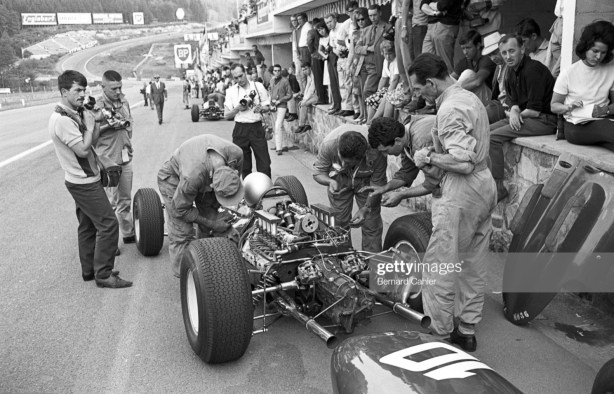
Lorenzo Bandini being attended to in the Spa pits during the June 1964 Belgian Grand Prix weekend.

Great shot of the engine and gearbox and bulkhead in between- note also inboard rear discs and calipers. #10 is the nose of the Surtees 158.

It wasn’t a great weekend for the Ferrari boys, both retired with engine dramas, John in the lead after completing only three laps and Lorenzo after eleven- Jim Clark won in a Lotus 25 Climax.

Photo Credits…

For all shots ‘Grand Prix Photo’ except Vic Berris cutaway drawing

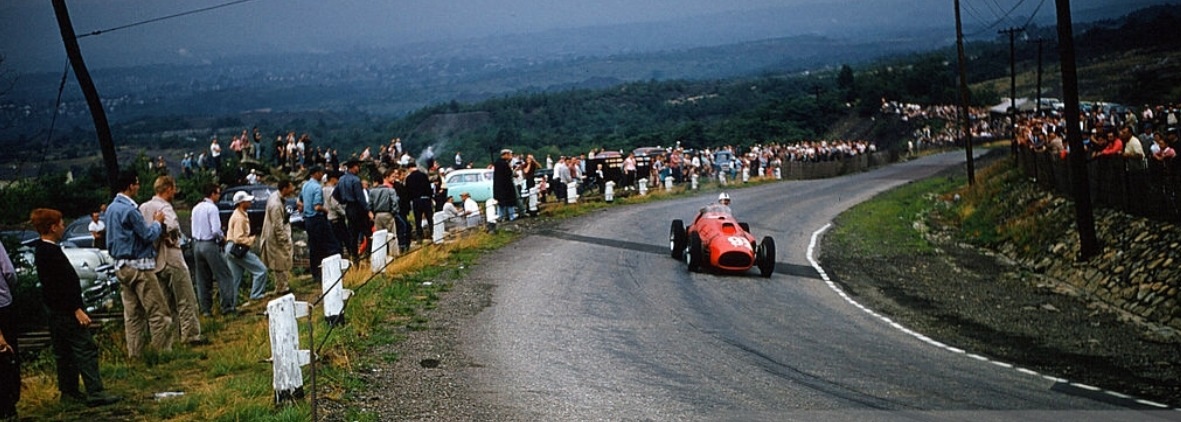
Tailpiece: Camper’s delight as Surtees Fazz speeds past, Watkins Glen ’64…

image

(unattributed)

Finito…
image

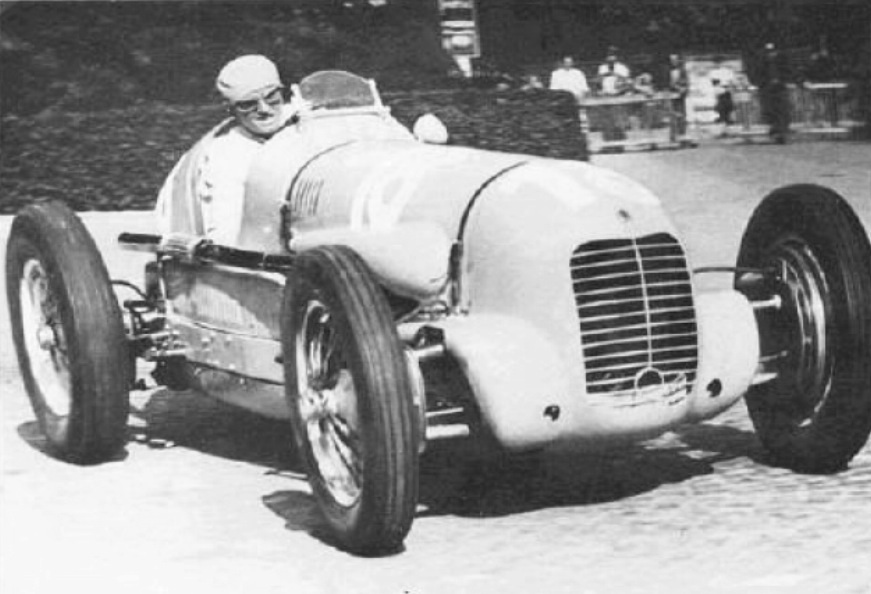
Deacon Litz lines up his Maser V8 RI for practice prior to the 1937 George Vanderbilt Cup at Roosevelt Raceway, Long Island, New York on 5 July 1937…

All four of these 4788cc, supercharged 320bhp V8 racers ended up in the US having proved totally uncompetitive against the Mercedes Benz W25 and Auto Union V16 challenge in 1935/6.

This car chassis ‘4501’ practiced but didnt’t start the Vanderbilt Cup, at that stage it was owned by the Bradley-Martin brothers who owned horse racing stables under the name ‘Balmacaan’, it was in this name the car was entered.

The Mercedes, Auto Unions and latest Alfa’s weren’t available ex-factory so the latest Masers on paper were appealing but in reality second-hand Bugatti Type 59 or various Alfa’s would have been better bets.

‘4501’ remained in the ‘States, failing to qualify for the Indy 500 on every occasion it fronted up; in 1939, 1946, 1947, 1948 and 1949 finally being ‘pensioned off’ at this point for SCCA racing…

Credit…

Archive Photos

Tailpiece: Philippe Etancelin winning the 1935 Pau GP in a Maser V8 RI…

image


babe and alfa 1

Alba, Italy (Rainer Schlegelmilch)

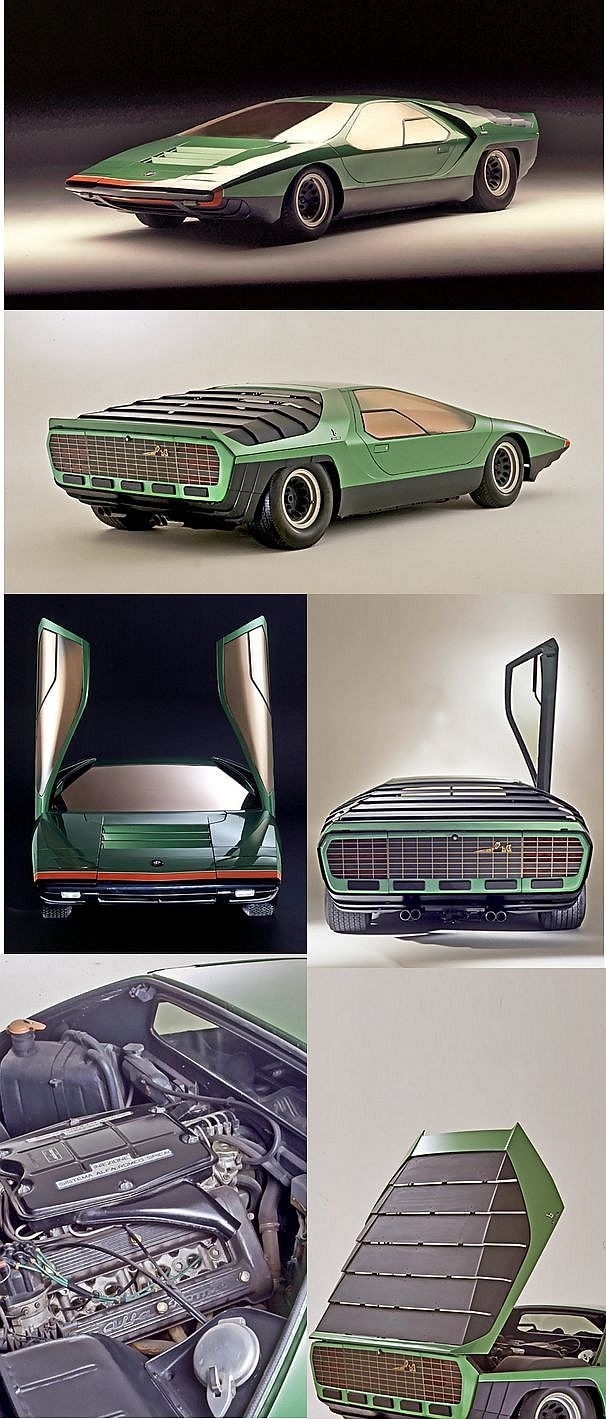
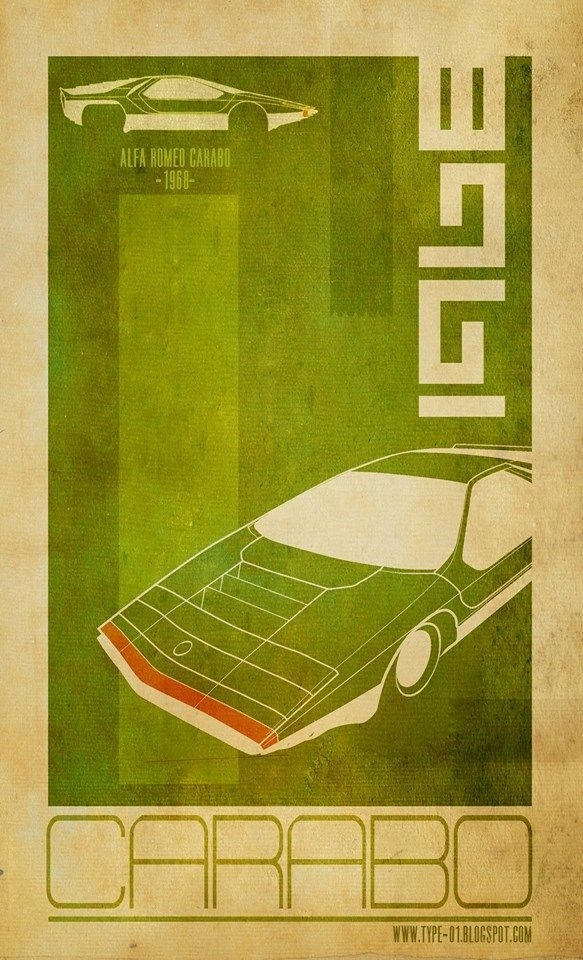
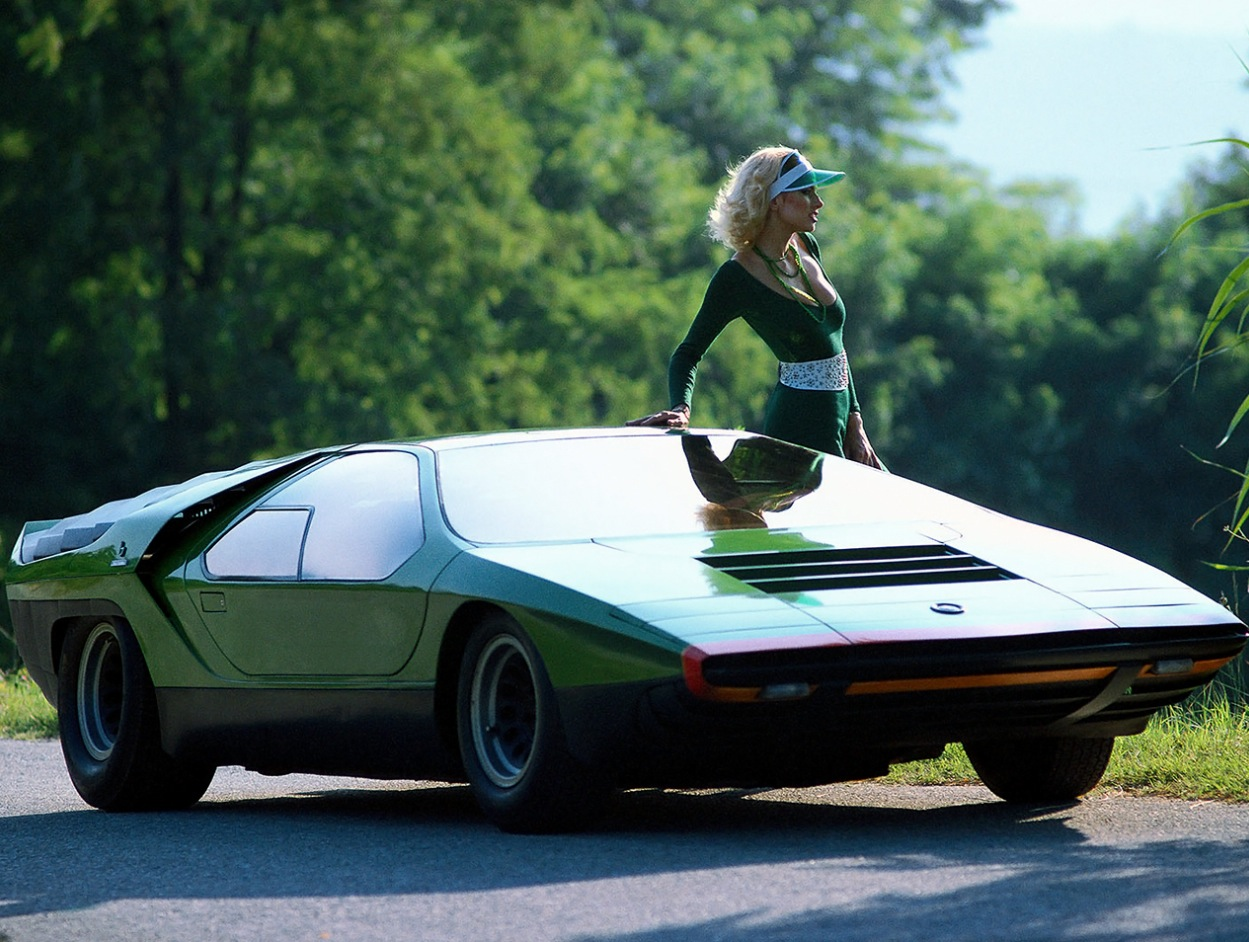
I wrote about the Alfa T33 a while back, this fantastic prototype racer, specifically Stradale chassis number # 75033.109 donated its mechanicals to one of the most iconic show cars of the twentieth century, Bertone’s Carabo…

The project was a collaboration between Alfa Romeo and Bertone, a partnership that dates back to the 2000 Sportiva and BAT concepts of the mid-fifties. Sensational road car that the thinly disguised racer Stradale was, Alfa struggled to sell the cars. So five chassis were passed to Italian carozzerie for concept use. Pininfarina designed the 33.2 and Cuneo, Italdesign the Iguana, the two to Bertone yielded the Carabo and Navajo.

car clay

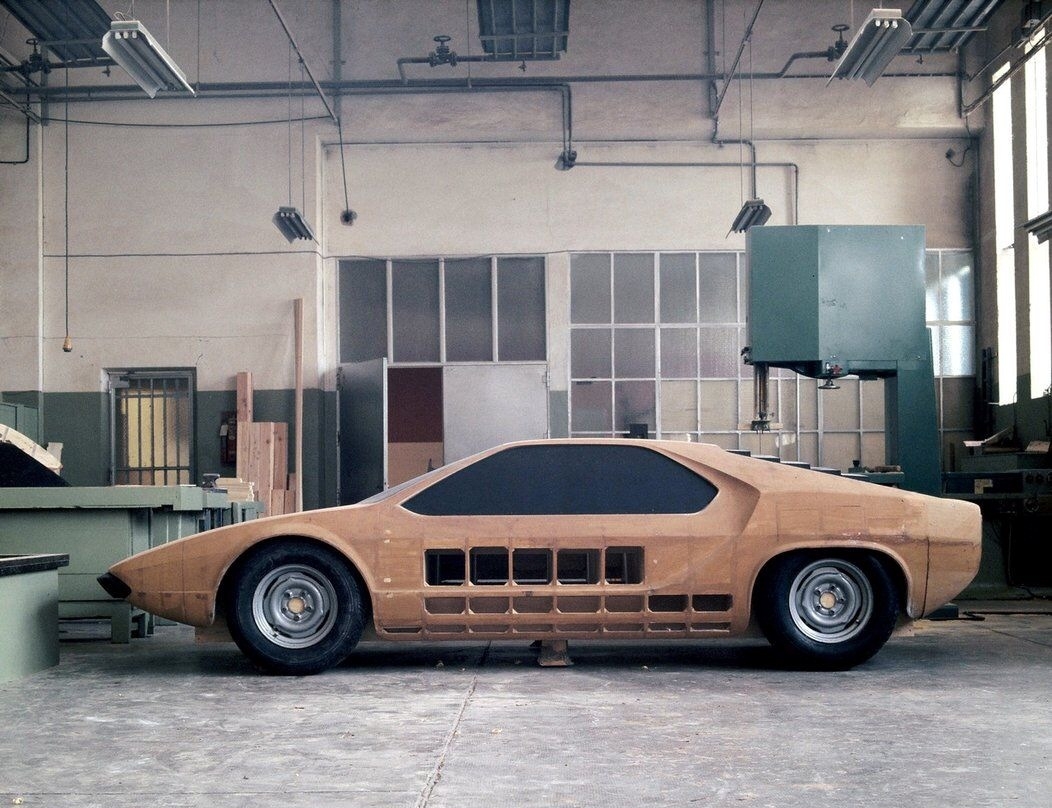
Full size clay rendition of Carabo at Bertone (unattributed)

Key mechanical elements of the car were covered in the earlier article; an H-section tubular chassis and 1995cc, DOHC, chain-driven, 2 valve, fuel injected all alloy V8 producing circa 230bhp @ 10000rpm, slightly detuned from the racers 250-270bhp. The gearbox was a Colotti synchro 6 speed, the car did 160mph despite or because of its stunning looks and aerodynamic efficiency! Click here for the Alfa T33 Periscopica article;

https://primotipo.com/2015/06/23/alfa-romeo-tipo-33-periscopica-mugello-19/

car summ

Marcelo Gandini created a car which had a revolutionary impact on the motor industry because of the trends it set, such design elements a function of the mid-engined architecture of the donor chassis; Carabo’s wedge nose, ground hugging stance, extreme lowness and squared off ‘butt’ inspired many wedge-shaped designs of the 70’s and 80’s. The cars name is derived from ‘Carabidae’ a family of green and gold colored ground-beetles.

Gandini used the wedge shape to address aerodynamic lift issues of the Lambo Miura P400 he also designed. He hid headlights beneath active flaps, Carabo was also the first car to use the front-hinged wing doors the great Italian maestro later used on his Countach. The car also gave styling cues to the Lancia Stratos Zero concept and the ‘closer to production’ Stratos HF.

car broc

If subsequent adoption of trends set is the yardstick by which show and concept cars are judged Bertone’s Alfa Romeo Carabo is one of the automotive industry’s greatest…
Alfa Romeo Museum link…

https://www.museoalfaromeo.com/en-us/collezione/Pages/Carabo.aspx

car nuc

Nuccio Bertone with one of his studio’s most influential designs (unattributed)

Credits…

Classic Car magazine, Alfa Romeo Museo Storica, Hull & Slater ‘Alfa Romeo’

Rainer Schlegelmilch

Tailpiece…

car babe

(Schlegelmilch)


girl

(GP Library)

The little girl seems lost amongst the flurry of pre-race preparation in JW Automotive’s workshop near Le Mans 0n 29 September 1968…

It was not to be a happy race for the pictured car #11, chassis ‘1076’ driven by Aussie Touring Car and Sportscar star Brian Muir and Jackie Oliver. Brian tipped the car into the ‘kitty litter’ on lap 1, and managed to dig himself out but in the process fried the cars clutch, causing its retirement after completing 15 laps.

muir

Teddy Pilette watches Muir digging his Ford out of the sand, the VDS entered Alfa T33/2 failed to finish with driveshaft failure on lap 104 (unattributed)

JW Automotive entered three GT40’s; ‘1074’ for Paul Hawkins and David Hobbs, ‘1075’ for Pedro Rodriguez and Lucien Bianchi and the aforementioned ill-fated ‘1076’…

It was to be a great race for the team despite the poor start, Rodriguez/Bianchi won the classic by 5 laps from the Porsche 907 of Rico Steinemann and Dieter Spoerry. The Hawkins/Hobbs car retired on lap 107 with engine failure.

le amns gulf line up

JW 1968 Le Mans lineup; #9 the winning ‘1075’ of Rodriguez/Bianchi, #10 Hawkins/Hobbs and #11 Muir/Ickx (unattributed)

le amns start

Brian Muir gets away closest to the pits in GT40 #11 determined to make up lost ground…#14 Masten Gregory/Charlie Kolb Ferrari 250LM DNF , this NART entered chassis the car in which Masten won in 1965 co-driving with Jochen Rindt, #30 Andre de Cortanze/Jean Vinatier Alpine A220 Renault 8th, #3 Henry Greder/Umberto Maglioli Chev Corvette DNF and #60 Willy Meier/Jean de Mortemart Porsche 911T DNF (Schlegelmilch)

la mans start

le mans feeris wheel

All the fun of the fair, Le Mans 1968 (Getty)

le amns color

(Getty)

le mans pommes frite

Plenty of pommes frites (Getty)

Lucien Bianchi (below) in the victorious Ford GT40 ‘1075’ this chassis became one of the greats of the event winning it again in 1969 driven by Jackie Ickx and Jaclie Oliver who had rather better luck than the year before!

In 1968 JW also won the Brands 6 Hour, Spa 1000Km  (Ickx/Oliver in ‘1075’), Monza 1000Km (Hawkins/Hobbs in ‘1074’ and Watkins Glen 6 Hour (Ickx/Bianchi in ‘1075’) in addition to Le Mans winning for Ford the Manufacturers Championship.

At the 1969 years end the wonderful Ford GT’s from a ‘factory perspective’ competed no more having won Le Mans from 1966 to 1969, fitting results from one of the all time sports/racer greats.

le mans rodrig

Bianchi in the winning Ford GT (Schlegelmilch)

le mans pits @ end

A Porsche 907 chasing 2 Alfa T33/2’s and below Rogriguez/Bianch aboard the winning JW GT40 (Getty)

le mand s podium

Rodriguez, Bianchi and well earned Moet (Getty)

Etcetera…

le mans jw

John Wyer (left) confers with his timekeeper during the race (Getty)

image


le mans gendermes

The gendarmes start to prepare for the traditional 4 pm finish (Getty)

le amns poster

Credits…

GP Library, Rainer Schlegelmilch

Tailpiece: ‘More friggin’ sand than Bondi Beach, Sydneysider Brian Muir is thinkin’ to himself?…

le amns digging

image

Carroll Shelby delicately guides his Ferrari 375 up the slippery Wilkes-Barre, Pennyslvania, Hillclimb setting a course record of 58.768 seconds for the on 20 July 1956…

Later Grand Prix driver and ’59 Le Mans winner, Shelby’s Ferrari was one of four 375’s sent to the US to race at the ’52 Indy 500, the car raced by Alberto Ascari was the only car to qualify, i wrote about the 375 a while back;

VI Gran Premio del Valentino, April 1952: Ferrari 375…

The 375 then was owned by John Edgar, Shelby raced it for him at three ‘climbs in 1956; ‘Mt Washington’ on 15 July, the following week at ‘Giants Despair’ and finally ‘Breakneck Hillclimb’ on August 5th. No doubt the 4.4 litre, 380bhp F1/Indy car was quite a challenge on the tight hillclimb courses!

Historian Michael Lynch noted; ‘…the body had been modified since the car ran at Indy. The cars original serial number was simply no 1. That was then changed to #0388 in Ferrari’s normal sportscar numbering series, probably when the bodywork was modified’.

image

‘Giants Despair’ was first used in 1906, the event is one of the oldest continuing motorsport venues in the world, held over a 1 mile course and the hill rises 650 feet with grades of 20% over its 6 turns.

The hill starts with a long gently rising straight of 1/4 mile long which leads into a fast left-hander, then onto a short chute and then ‘Devils Elbow’ a sharp rising hairpin. Then their are series of 90 degree turns connected by short straights. Finally comes the ‘The Incline’ a 1/4 mile stretch which rises a little over 20 degrees to the finish.

The best time in 1906 was 2 minutes 11.2 seconds, by Hugh Harding’s Daimler. The record is currently held by John Bourke, 38.024 seconds in a ’97 Reynard Indycar, click on the link for his record run in 2014.

Credits…

Both photos, Michael Ochs Archives

image

image

Walt Hansgen hustles his Scarab Mk4 Chev around Riverside Raceway during the 1964 LA Times Grand Prix…

Parnelli Jones won in a Cooper ‘King Cobra’ Ford, the event run on 11 October 1964. Roger Penske was 2nd in a Chaparral 2A Chev and Jim Clark 3rd in a Lotus 30 Ford. Walt didn’t finish the race with an oil leak but the speed of the car was proven with 2nd grid slot, McLaren’s McLaren Elva Mk1 Olds was on pole, Bruce also DNF with a loose water hose.

This was the last of the Scarabs, i will get around to an article on the sports-Scarabs soon.

Credit…

The Enthusiast Network

jochen skis

(Imago)

Jochen Rindt showing good form in his ‘Kneissl’s’ in early 1968…

Love this PR shot, its useless from a skiers perspective tho as the caption includes no information as to the resort, Austria is as precise as it comes!

Jochen joined Brabham for 1968 from Cooper, it wasn’t a great season for the team as the Repco ‘860 Series’ DOHC, 32 valve 3 litre V8 was as unreliable as its forebears in 1966 and 1967 were paragons of dependability, in the main at least, drivers and manufacturers titles won for Brabham and Hulme in 1966/67 respectively.

jochen color

Rindt BT24 Repco, Monaco 1968 (Getty)

Until the ’68 Brabham BT26 was ‘ready’ Jochen raced the 1967 BT24 in South Africa, Spain and Monaco, the cars speed demonstrated by Q4 and 5 at Kyalami and Monaco. These shots are all of the ’68 Monaco GP race won by Graham Hill’s Lotus 49 Ford, Jochen qualified 5th and boofed the car in the race.

Detailed stories about the 1967 and 1968 Brabham Repco seasons i will write soon.

jochen butt

The ’67 BT24 ‘760 Series’ 2 cam/2 valve Repco beside its ’68 BT26 ‘860 Series’ DOHC/4 cam sibling and Jochen happy despite a character-building season. Despite the difficulties Jochen enjoyed his year with Brabham and likewise Brabham and Tauranac working with him. ‘Twas a close run thing that he didn’t rejoin the team for 1970. He had committed to Jack who waived the verbal agreement when Chapman offered Rindt a ‘deal he could not refuse’, so off to Lotus he went… (Getty)

image

Monaco; 68 lap 1 down the hill past Rosies Bar and into Mirabeau; Rindt BT24 from Hulme’s McLaren M8 Ford, the BRM’s of Attwood (not in shot) then Rodriguez P133 and the rest (Schlegelmilch)

jochen profile

Rindt, again at Monaco 1968, the elegant simplicity of the ’67 Championship winning Brabham BT24 Repco clear (Getty)

Credit…

Imago, Getty Images, Rainer Schlegelmilch

jochen tailpiece

Eyes on the apex! Rindt, Monaco 1968 (Getty)

Tailpiece…

image

The 1968 Repco ‘RB 860 Series’ engine may have lacked reliability but not poke! Rindt put it on pole twice in ’68, here at Rouen and at Mosport, Canada. In France Jochen picked up a puncture from the debris of Jo Schlesser’s horrific Honda RA302 accident and had a fuel tank leak later in the race, DNF . Here he is in the cockpit of his BT26 during practice. French GP 1968 (Schlegelmilch)


Hot Wheels…

Posted: April 21, 2016 in Fotos, Obscurities
Tags:

image


The Museum of Urban Art, Sau Paulo, Brazil…

My partner tripped over this on Instagram, luvvit, but she has no idea who the artist is. I’d like to know as it reminds me of my ‘Dinky’ childhood, ‘Hot Wheels’ the toy cars of the generations after mine!

Hot Wheels are still made, here are the top 50 of their cars, just in case you wanted to know!;

http://au.complex.com/sports/2013/02/the-50-best-hot-wheels-of-all-time/

Credit…

Museum of Urban Art, Brazil

Tom Phillis…

Posted: April 18, 2016 in Fotos, Obscurities
Tags: ,

image

Phillis takes his Honda 350/4 for a practice lap at The Isle Of Man on June 4 1962…

Sadly, the young Australian World Champion and GP winner was killed on lap 2 of the 350cc event on 6 June aged 28.

Born in Marrickville in Sydney’s inner west on April 9, 1934, Phillis was a trend-setting international motorcycle racer as the first rider to win a World Championship Grand Prix on a Japanese machine. Aboard a Honda 125 he won the 1961 Spanish 125GP at Montjuic Park, Barcelona on 23 April.

He was the first Aussie to achieve a ‘Grand Prix Double’, (Clermont Ferrand France 21 May 1961 aboard Honda’s 125 and 500cc) the first man to lap the Isle of Man at 100mph on a push-rod bike and was Australia’s second World Motorcycle Champion. (Keith Campbell, the first, won the 1957 350 World Championship aboard a Moto Guzzi) His record of six GP wins in the ’61 season wasn’t improved upon by another Australian rider until Gregg Hansford did so in 1978).

Phillis clinched a drama-filled World 1961 125 Championship in the last round on October 15 in Argentina, whilst Mike Hailwood won the World 250 Championship on a machine supplied by the British Honda agent.

image

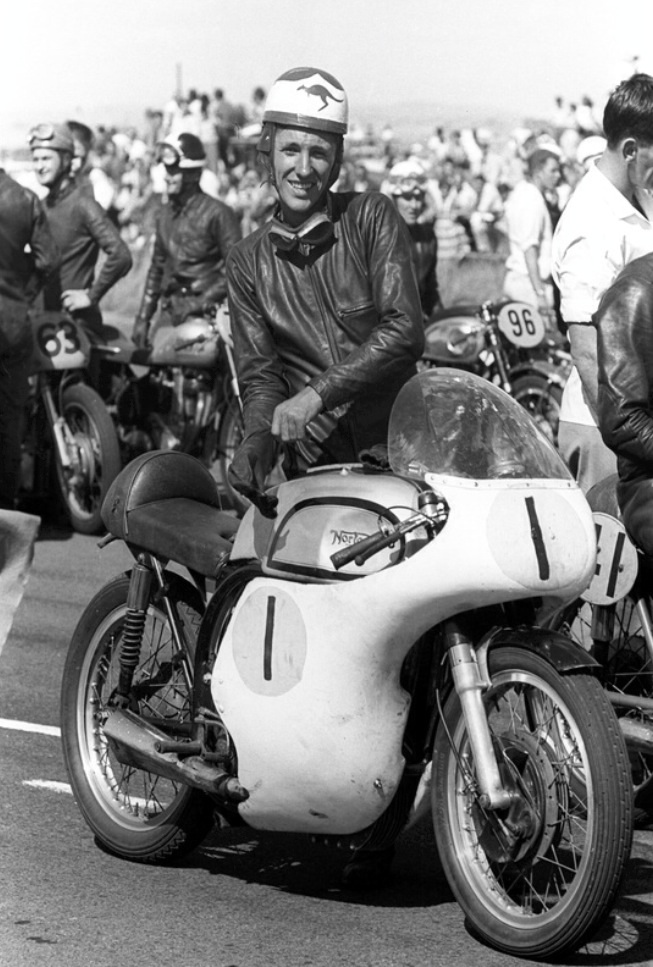
Phillis aboard a Norton on the Fishermans Bend, Melbourne grid in February 1959 (Charles Rice)

Tom Phillis’ daughter Debra has created an interesting website about her fathers racing exploits, click here for an interesting read and array of photographs of this great rider;

http://www.tomphillis.com/

Credit…

Central Press, MotorsportRetro.com

Tailpiece: Tom Phillis takes Honda’s first ever championship GP win at Montjuic Park, Barcelona, Spanish 125cc GP on 23 April 1961…

image

(unattributed)