Archive for the ‘Who,What,Where & When…?’ Category

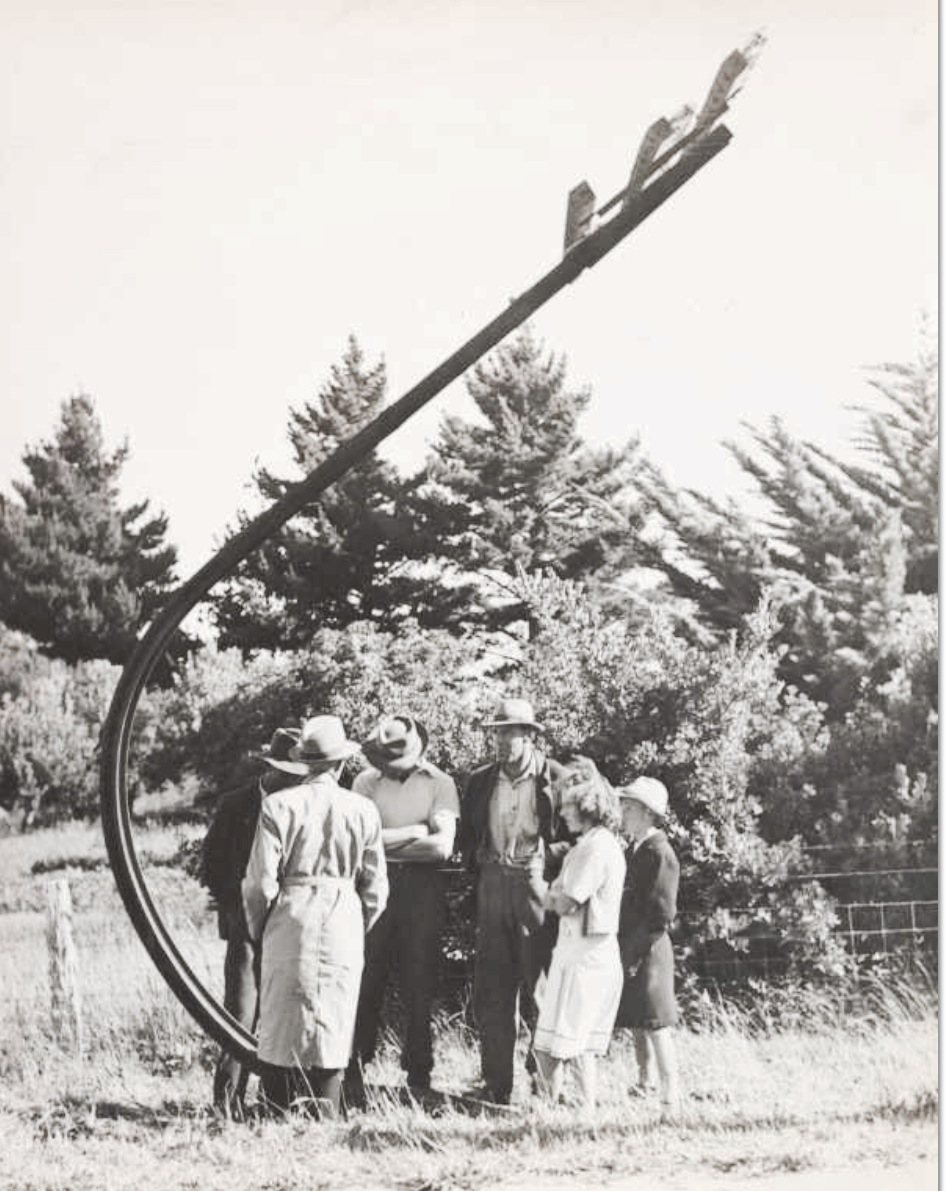
davo stobie pole

(State Library of South Australia)

At the daunting Barossa Valley Lobethal road circuit in January, 1948, Lex Davison, having borrowed the ‘Missus new MG TC had his first major crash. He went for the ‘wrong side’ to pass Gavin Sandford-Morgan’s MG and ran off the road, destroying this innocent ‘Stobie Pole’, the TC but fortunately not himself…

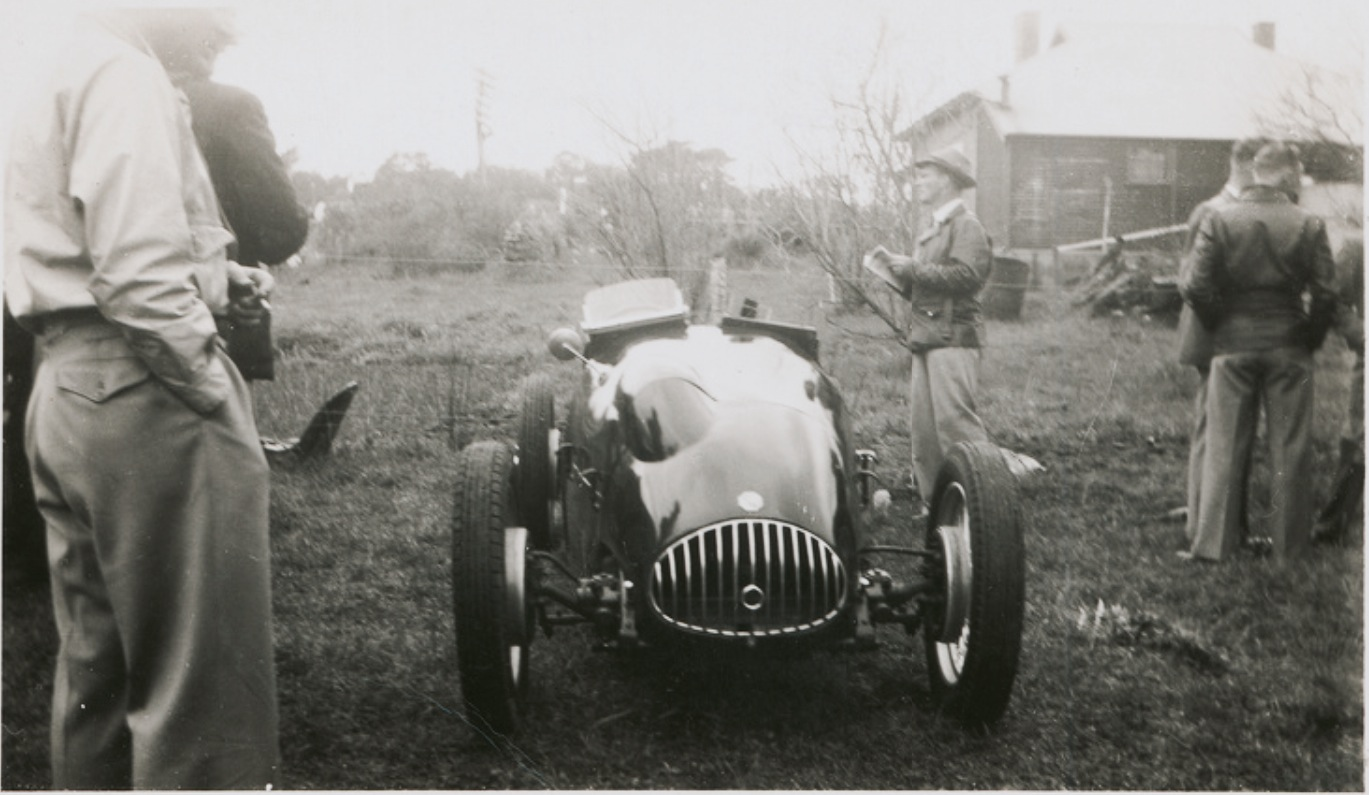
This is the story of Davisons MG TC Spl chassis #TC.0825 and more briefly the importance of MG as a marque to motor racing in Australia until the dawn of the sixties.

davo mg

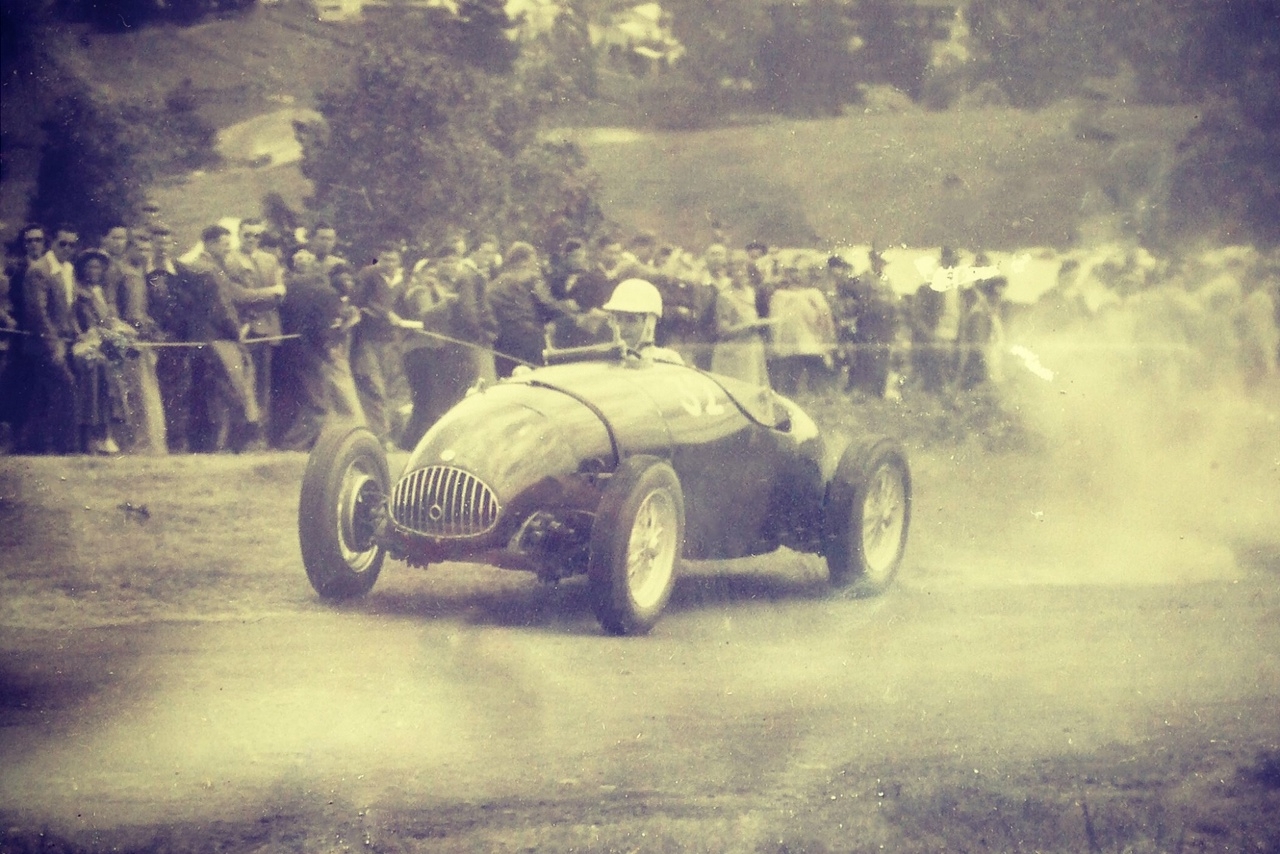
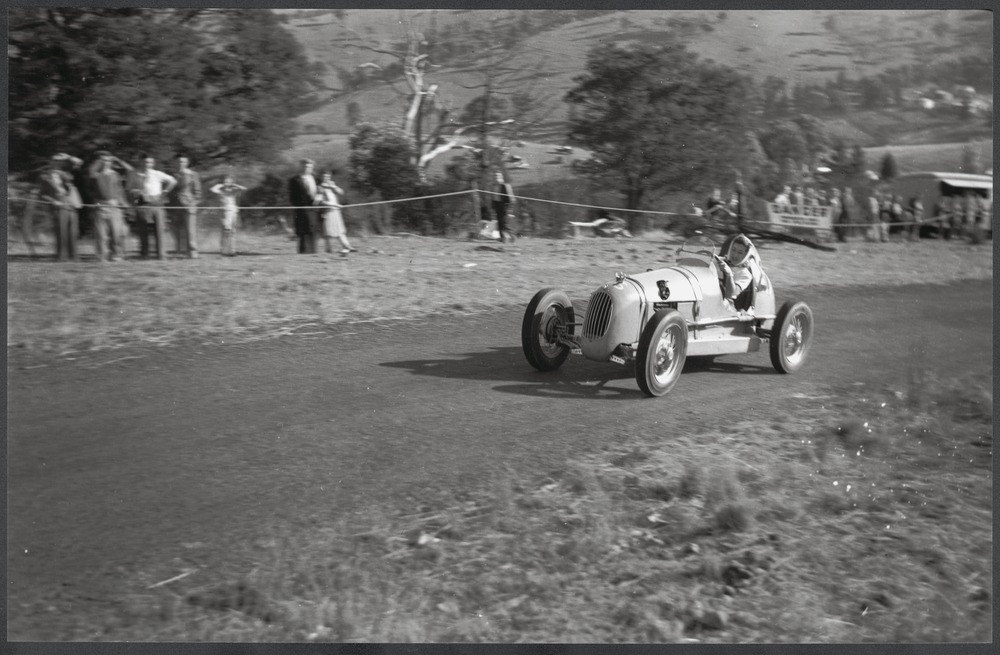
Woodside 1949.Here the car is in its early supercharged form, suspension standard but for ‘Telecontrol’ shocks, finned brake drums and air scoops. (State Library of South Australia)

Diana Davison/Gaze recounts the story in Graham Howard’s biography of Lex…‘While he waited for the Alfa (Alfa Romeo P3/Tipo B Monoposto) to arrive, Lex entered the TC for the New Year’s meeting on the formidable 8.65 mile Lobethal public road circuit. He drove it over from Melbourne accompanied by Peter Ward and Lyndon Duckett in an old 6cylinder Vauxhall.

During practice they went off the road, slewed down the sloping grass verge, somersaulted, then hit a Stobie pole so hard the steel pole was bent into the shape of a question mark. The violence of the accident bent the MG’s chassis and tore off the driver’s door, the bonnet and the outer scuttle panelling. The alloy seat was bent, the rim of the steering wheel was broken away from the spokes, a front wheel smashed and its tyre gone. Lex had a chipped bone on one knee.

Naturally, I was dreadfully upset at losing the MG, as I had never owned a car before, but it had gradually disappeared from my hands. We had both driven it at Rob Roy, where Lex had coached me from the passenger’s seat, then Lex raced it at Nar Nar Goon grass track and I had competed at the final Killara Park Sprints – dashing back to the house between runs to check on baby Anthony, who usually travelled in the car in a wooden cradle fitted behind the seats.

I was just grateful that Lex wasn’t too badly injured’.

Chris Davison, Diana’s son recently recalled ‘ The story goes that mum was getting tired of being left out, so Lex bought her the MG to ensure she was part of the team. Motor racing then bacame a real family affair. Smart move Lex!! When my daughter Claire drove at RobRoy for the first time she took this photo to remind her of the family history at Rob Roy’.

diana davo

Diana Davison in the MG Spl at Rob Roy, year unknown. (Davison Family Collection)

The TC reappeared as a bare chassis for Rob Roy and Nar Nar Goon at the end of 1948, with Lex and Reg Nutt driving. DD; ‘By the following March the Head Brothers had created a narrow 2-seat shell with shapely cycle guards. It had nice upholstery and was painted red, and I think they christened it ‘Mum’s Racer,’ and they fitted it out with a small leather pocket for my compact and lipstick’.

‘Several times the car lowered the ladies’ record at Rob Roy, including once with the supercharger fitted, and that record stood for some time. Lex raced it widely and Bib Stillwell contested events at Woodside in 1949. Our last entry for the car was with Ian Mountain driving at the Grand Prix at Albert Park in 1953.’

DD

Here Diana Davison at Rob Roy in 1946, in what appears to be an Austin 7 Spl. Happy to take advice on the car. DD an immensely talented, popular and respected member of the Australian racing community for all of her life. ‘Australia’s First Lady of Motor Racing’. (George Thomas)

MG and Motor Racing in Australia…

I have written about Lex Davison’s cars on primotipo before, he was a winner of the Australian Grand Prix four times, winner of the inaugural Australian Drivers Championship, the ‘Gold Star’ in 1957 and was the father and grandfather of two generations of champion racers. His premature death in 1965 meant he never saw the achievements of his scions.

MG is surely the most significant marque in Australian Motor Racing before 1960?

The cars won the Australian Grand Prix four times; Les Murphy’s P Type at Phillip Island in 1935 and the famous 1937 race at Victor Harbour actually held in December 1936.  Alan Tomlinson’s legendary, clever and brave drive at Lobethal 1939 in his supercharged TA Spl and Bill Murray, TC Spl at Bathurst in 1947. MG were always contenders in the AGP as the race was run to Formula Libre rules and handicapped until the early fifties, so whilst not usually the quickest entries, the handicaps gave everyone a chance.

Mind you, in the right circumstances the cars were outright contenders, Frank Kleinig’s ‘Kleinig Hudson’ which used an MG Magna chassis started from scratch in the 1949 AGP at Leyburn, Queensland. In that race he was advantaged by the withdrawal of a swag of Victorian topliners who didn’t enter in a political protest, but the Kleinig Hudson was always an outright contender, albeit an unreliable one driven as it was by a mechanically talented if not entirely sympathetic driver.

In fact the last MG placing in an AGP, well into the mid-engined era appears to be Noel Barnes 10th place in his TC Spl in the 1960 event at Lowood, Queensland, the race won by Alec Mildren’s Cooper T51 Maserati. Three TC’s started the race, all from the back of the grid.

AGP wins is not the real contribution MG made though, that was more around ‘mass’ participation. The cars were affordable, accessible and ‘tunable’, a way to view them is the Formula Vee or Formula Ford of the period. The cars gave so many drivers a start, whether it was local hillclimbs and sprints, circuit racing or the elite levels of the sport, such as they were in Australia between the wars and through to 1960.

fishermans bend 1951 davison jp read

Lex Davison in the MG TC Spl Fishermans Bend 1949. (VHRR P Read)

Rebuild and Specifications of  ‘TC.0825’…

Back to Lex’ Spl. Davison gave the car to Reg Nut in Melbourne to rebuild the chassis which was largely standard but fitted with brake torque cables from the frame to the tops of the king pins, aluminium cooling fins on the brake drums and air scoops to the backing plates.

The 3 main bearing, cast iron, 4 cylinder, pushrod OHV, ubiquitous ‘XPAG’ engine was fitted with domed pistons giving a compression ratio of 12:1. The ports were opened, ports and combustion chambers polished. Valves were from a Jaguar, bigger than the biggest in the MG ‘catalogues’, cam followers and valve gear modified, lightened and polished as were the crank and rods.

Capacity was standard, wider bearings used by widening the crankshaft journals, a bigger 2 1/4 gallon sump was fitted and an aluminium oil cooler fitted underneath the radiator.

Bigger 1 1/2 inch SU carbs fed the thirsty little engine, spark was provided by a Lucas NV4 magneto, albeit the wiring for a coil and distributor setup was retained to allow changeover if required.

Head Brothers in Murrumbeena, a Southern Melbourne suburb, built an attractive sports car body with road equipment, the front and rear guards easily removed depending on the nature of the competition event.

Heads used a strong but light framework from square section seamless tubing, then covered it with pre-formed panels of light aluminium sheet, attached by wrapping their edges over the tube frame. The grille was hand made by light tubing, the one piece bonnet retained by leather straps.

The fuel tank Lex ‘knocked off’ from his newly acquired Cooper, the 10 gallon aluminium tank lives inside the MG’s low tail, it’s quick-action cap exposed outside the body.

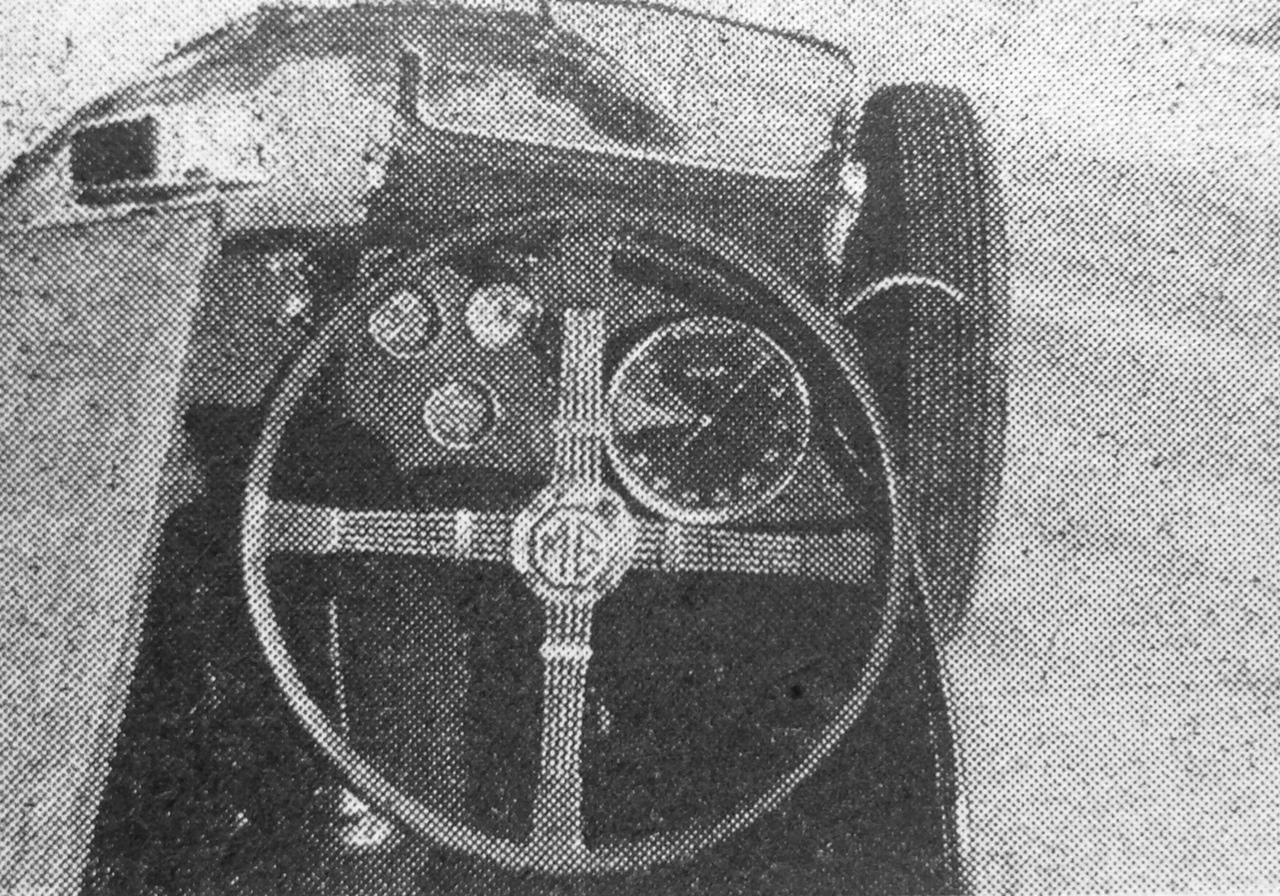
The car was beautifully finished and trimmed. Instruments comprised Smiths tach, oil pressure and oil and water temperature gauges.

16 inch wheels were used, 5 inches wide at the front and 5.5 or 6 inches wide at the rear, shocks were ‘Telecontrols’. Gear ratios and ‘box were standard but a lower 4.875 rear axle ratio was used as the ‘best compromise’ for events contested.

mg front

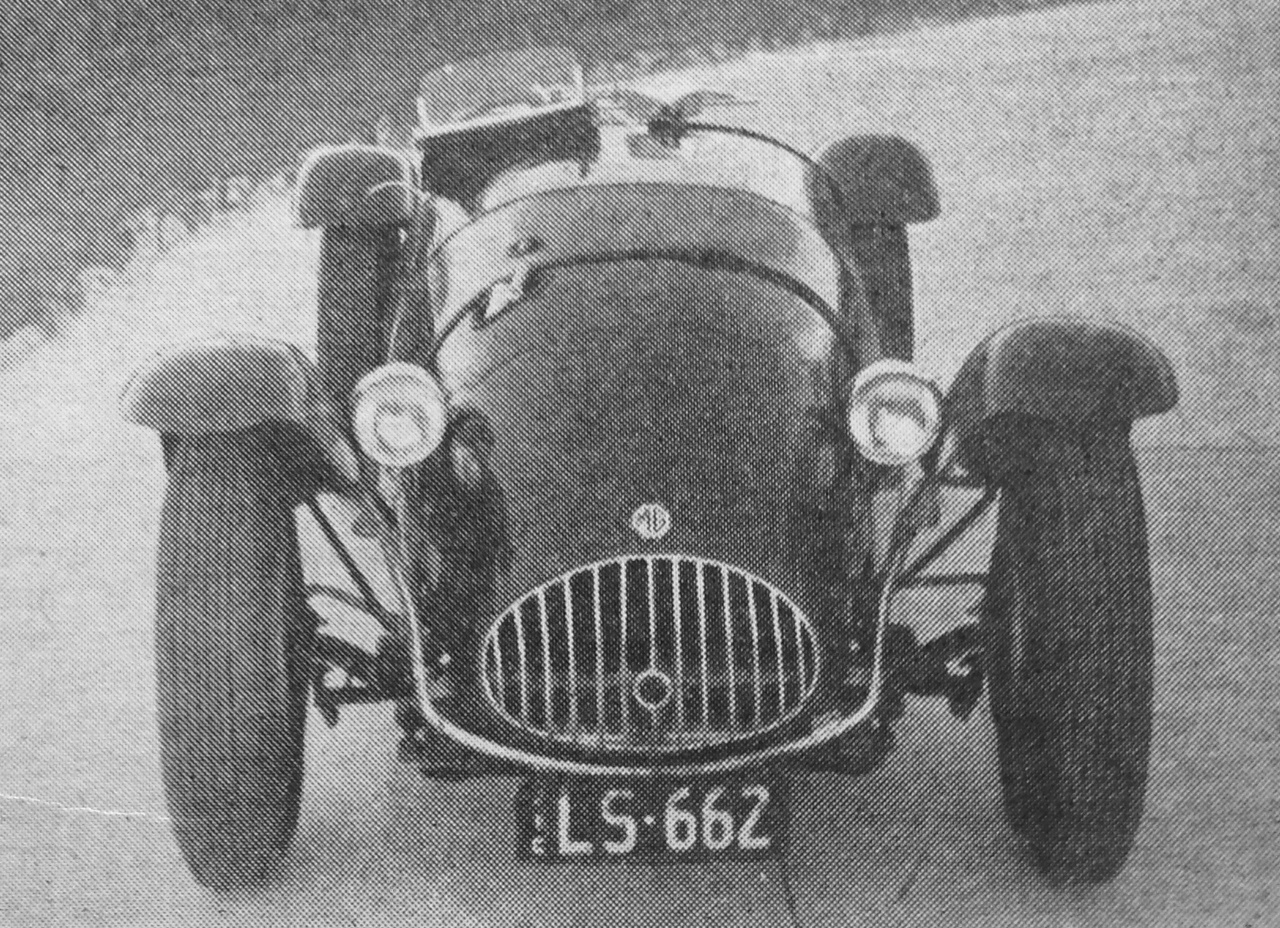
Picture of the very neat, fast for its time, road/track sports racer. Here in unsupercharged form. Head Bros of Melbourne built the body, lights and guards easily removable front and rear. (AMS)

Davison TC Spl Competition Record…

The car contested it’s first Rob Roy Hillclimb in 1948, driven by Reg Nut, Lex then ran it at Nar-Nar-Goon in both events the car was successful.

It next raced, after the Heads’ body was fitted and a supercharger at Fishermans Bend in 1949. It raced at Woodside, SA later in the year before the supercharger was removed ‘as it’s bonnet hump was thought unsightly’. (Makes no sense to me as a reason to remove it but ’tis what the contemporary reports say).

The car then raced successfully throughout 1950 in unblown form and in 1951 the MG returned to South Australia, racing at both the Gawler Airstrip and Woodside road circuit. Diana Davison also raced the car very competitively in hillclimbs, retaining her Ladies Record at Rob Roy.

Lex’ racing focus was primarily his Alfa Romeo P3/Tipo B Monoposto, the 2.9 litre car arrived in Australia in early 1948, the MG wasn’t being used much, it’s last race when owned by the Davisons’ the 1953 Australian Grand Prix meeting when it was raced for them by Ian Mountain.

The car rapidly passed through the hands of several owners, it was rolled without causing much damage in 1960 at Phillip Island. Historic Events started in the sixties, the car used then by John Fitzpatrick and others. It was bought by Reg Bowran in 1970, but has appeared only occasionally since.

mg cockpit

Simple cockpit layout, array of Smiths instruments. (AMS)

The Davison TC had a major accident early in its life which resulted in it’s rebirth as a competition car but by the standards of Australian MG Specials this car, touted by the Davisons’ in the early Fifties as ‘the fastest unblown TC in Australia’ (David McKay would have contested this claim, his ex-Brydon ‘TC.3306’ the other contender for that title at the time, but the cars never decided the contest) has had a remarkably easy and little raced life!

More importantly it typifies the type of MG Spl which provided the backbone of Australian Motor Racing for decades…

mg tail

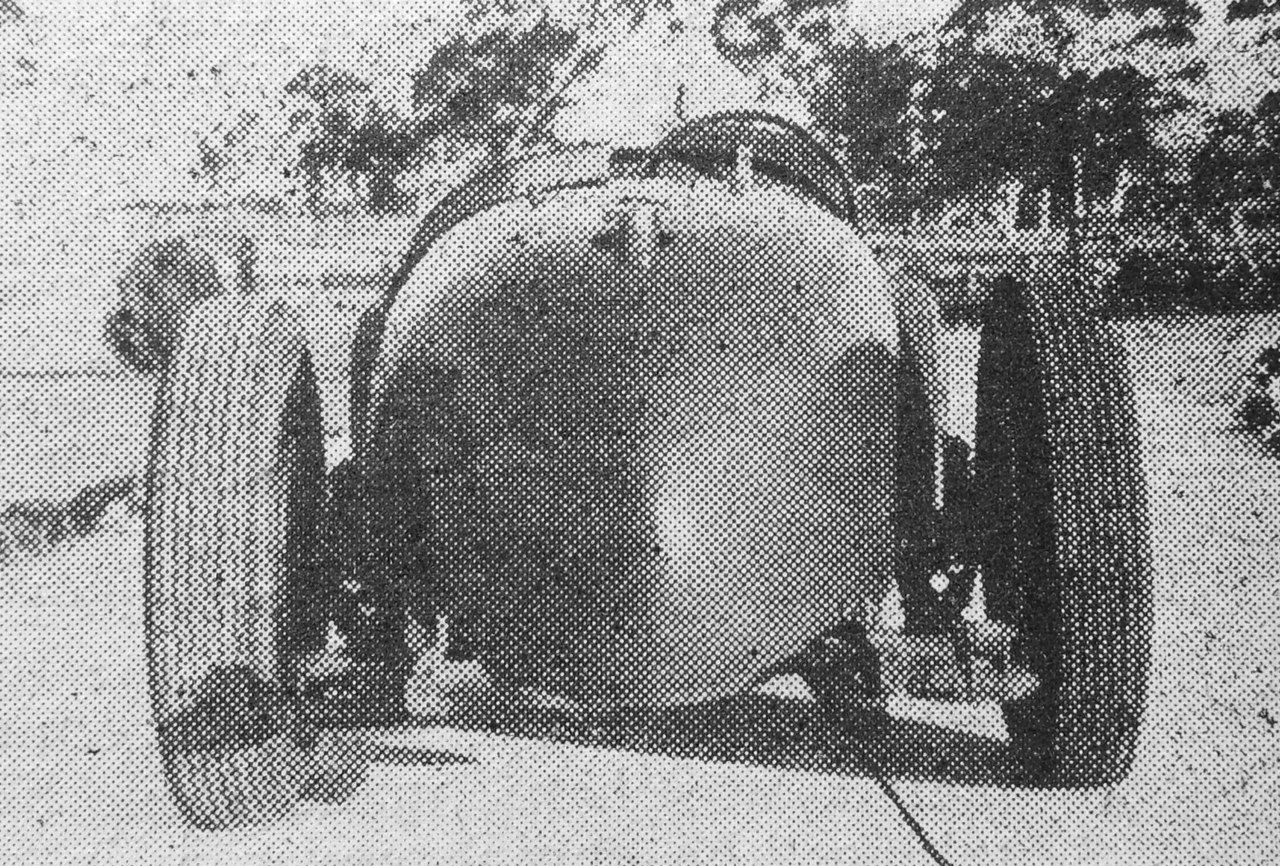
Butt shot, scan of an old magazine so a bit scratchy. (AMS)

Etcetera…

chris and claire

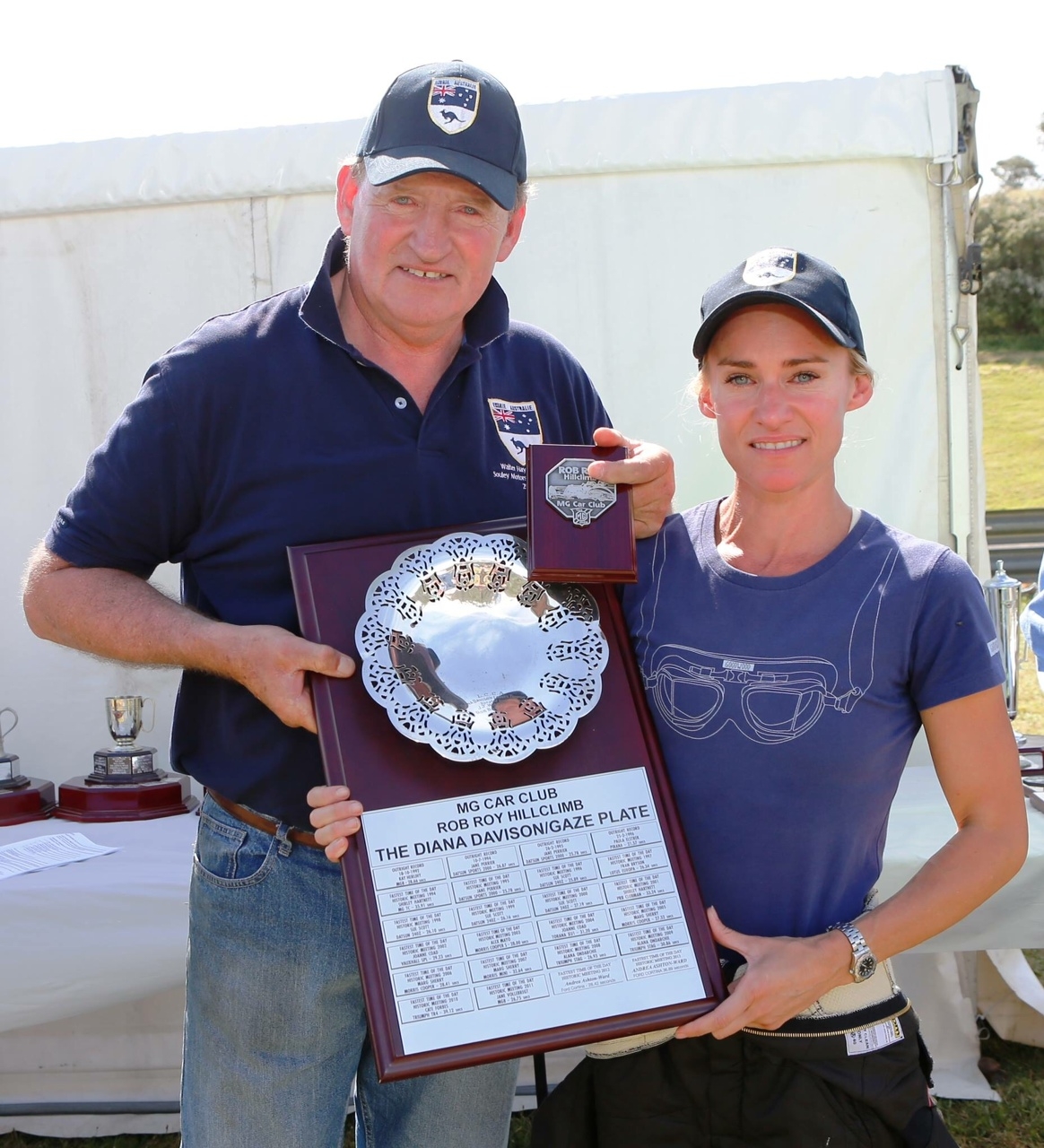
In a nice bit of Davison Family and Rob Roy symmetry Diana Davison’s granddaughter Claire, here pictured with father Chris Davison, won the ‘Diana Davison Gaze Trophy’ for Ladies FTD at Rob Roy in 2014. Car a Reynard Formula Ford. (Davison Family Collection)

Bibliography…
Australian Motor Sports Magazine April 1952 (AMS), ‘Historic Racing Cars in Australia’ John Blanden, ‘Lex Davison Larger Than Life’ Graham Howard, Chris Davison

Photo Credits…

State Library of South Australia, Davison Family Collection


lex aintree

2VEV Chassis # 0183/R…

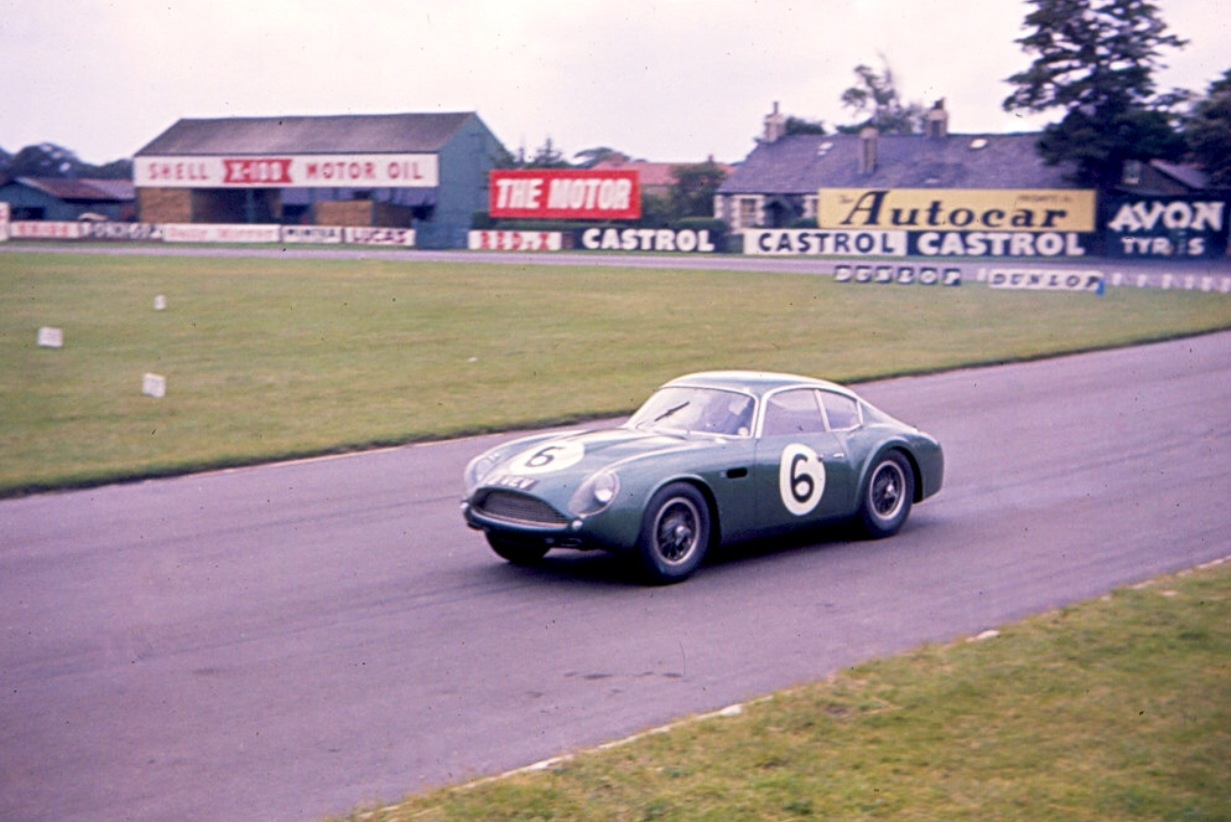
Lex Davison aboard 2 VEV at Aintree in July 1961. He won the 51 mile GT race after a battle with Jack Sears’ Jaguar E-Type. He took the lead on the last lap, perhaps recording the car’s only race win in-period.

2 VEV chassis #0183/R was registered to John Ogier’s Essex Wire Racing Team on 19 May 1961. One of 19 Aston Martin DB4GT Zagato’s, this most famous car was raced by Aussies Lex Davison and Bib Stillwell at Le Mans in 1961 alongside 1 VEV, driven by Jack Fairman and Bernard Consten.

The cars had factory support but the race was a disaster. Both failed to finish due to head studs which had been insufficiently tightened/torqued, they ran as high as 15th and 17th behind the open Aston DBR1s before withdrawal from the 24-Hour classic.

le mans start Le Mans 1961 start;#1 Dewez/Kerguen DB4Z , #2 Fairman/Consten DB4Z, #3 Davison/Stillwell DB4Z, #4 Salvadori/Maggs Aston DBR1, #5 Clark/Flockhart Aston DBR1 all DNF. The race was won by the Gendebien/Phil Hill Ferrari 250TR (unattributed)

Davison had only 25 laps under his belt when the head gasket failed at Le Mans (MotorSport)

Davison and Stillwell, Australian multiple champions both, had immaculate Aston Martin connections, having raced Grand Prix Aston DBR4s in Australia, see here; Lex’ Aston Martin DBR4/250’s… | primotipo…

Indeed, Lex came within feet of winning the 1960 Australian GP at Lowood, Queensland. He was pipped on the line by Alec Mildren’s Cooper T51 Maserati after a thrilling, race long dice.

It was the closest any of these wonderful but outdated cars came to Grand Prix win. Lex also contested a few 1962 Intercontinental Formula races in the UK aboard a DBR4.

davo Lex Davison contesting an Intercontinental Formula race at Brands Hatch in his bruised Aston DBR4/250 #4 in 1961. The car was then 3-litre DBR1 powered (unattributed)

Back to the GT Zagato, Lex won at Aintree in July after the battle with Jack Sears’ Jag E-Type. Motor magazine reported that Davison “looked like the prosperous middle aged businessman that he is, rather than a dashing man about town”. In fact he was a champion middle-aged racing driver, a four time winner of the Australian Grand Prix no less!

Jim Clark contested the 1961 RAC Tourist Trophy in it at Goodwood in August, but the SWB Ferrari 250s were too quick, Salvadori and Clark took third and fourth respectively in VEV1 and 2.

2 VEV was loaned to Equipe National Belge to race in the 1962 GP of Spa for GT cars. Lucien Bianchi led the race before losing the car and totalling it. In five weeks the it was rebuilt by the factory around a new chassis to DP209 ultimate lightweight specifications The machine emerged with a lower, flatter roofline, longer nose and tail, and wider rear wheel arches than a standard DB4Z.

clarc Oh-so-famous shot of Jim Clark in Aston DB4GT Zagato 2 VEV, 1962 Goodwood RAC TT (unattributed)

Clark raced the car again in the 1962 Tourist Trophy at Goodwood that August. Having just pitted, and on coolish tyres, he lost control as the car settled after traversing the 120mph Madgwick Hump, he spun into the path of John Surtees’ leading Ferrari 250 GTO, taking then both out of the race. More works surgery to 2 VEV was required. The car raced again in Clark’s hands in the Paris 1000km, but failed while in co-driver Sir John Whitmore’s hands.

calrk and surtees Surtees Ferrari 250 GTO and Clark’s Aston DB4 Zagato at Goodwood ’62. Clark spun taking Surtees out on lap 62 of 100. The race was won by Innes Ireland’s UDT-Laystall Ferrari 250 GTO (unattributed)

The car then ran in minor events in John Ogier’s ownership until 1964, racing on into the late 1960s and historic racing after that. 2 VEV was damaged in a road accident in 1993 and was restored/rebuilt to its 1962 specifications, the poor old darlin’ had by that point, ‘more hits than Elvis’ as the saying goes…

goodwood start 1962 Goodwood RAC TT start; Clark is the bolter in his DB4Z. #15 is the winning Ireland 250 GTO, #6 Surtees’ ill fated GTO, #5 Mike Parkes GTO, #8 David Piper GTO, #25 Trevor Taylor/Gil Baird Lotus Elite (unattributed)
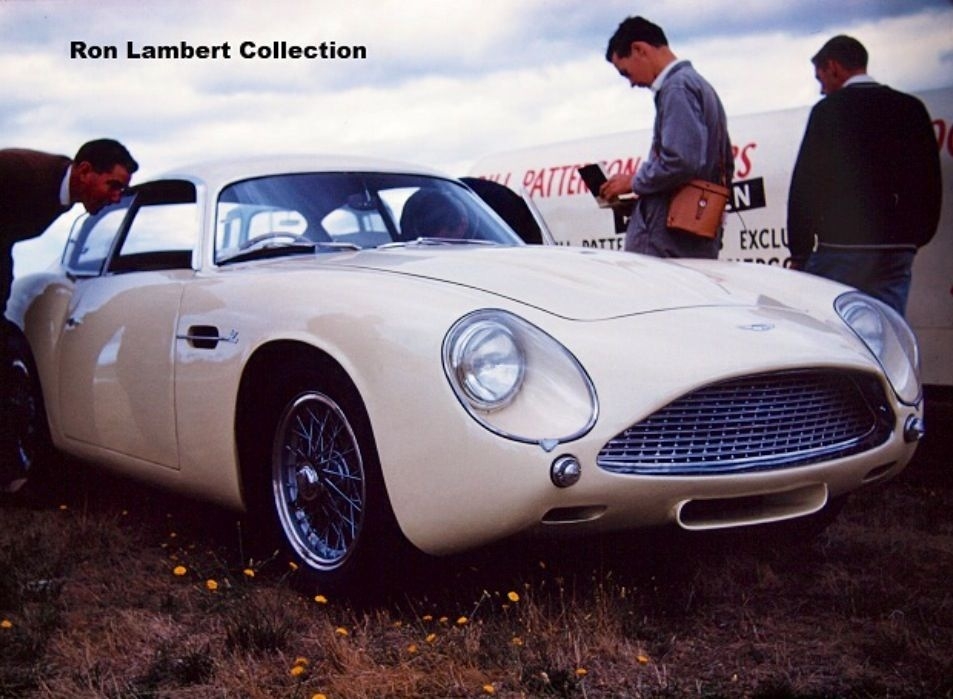
longford Australia’s only DB4Z, #DB4GT/0186/R, the fourteenth built, was owned by Sydney’s Laurie O’Neill. Here it’s pictured in the Longford paddock in March 1962. It was raced in a support event by thrice AGP winner Doug Whiteford (Ron Lambert Collection)

The DB4GT Zagato…

The Aston Martin DB4GT Zagato was introduced to the world at the London Motor Show in October 1960.

It was effectively a DB4 GT improved by Carrozzeria Zagato, Ercole Spada is the designer credited with the work. Smaller, more aerodynamic and about 100 pounds lighter than the DB4 GT, the Zagato’s twin-cam, two-valve, 45DCOE Weber fed 3670cc engine produced 314bhp @ 6,000rpm, 12 more than the DB4 GT giving it a top speed of 154mph.

Initially the factory planned 25 cars, but demand wasn’t strong enough so only 19 were completed, albeit 23 chassis numbers had been allocated. Four modern Sanction 2 Coupes were built on DB4 rolling chassis completed by Richard Williams (RSW) to the order of Aston Martin using the unused chassis numbers from 1987-91.

Ex-Zagato employee Mario Galbiatti (with Zagato’s approval) built the bodies using Williams’ own dismantled Zagato as a template. Completed and launched in July 1991, in 1993 Williams completed two more Aston Martin Lagonda approved Sanction 3 cars using left over Sanction 2 bits. Not to forget AML’s own 19 April 2019 Continuation Series DB4GTZs…

The first competition outing of a DB4 GT Zagato was during Goodwood’s 1961 Easter meeting. Driven by Stirling Moss, it finished third behind an Aston Martin DB4 GT and the winning Ferrari 250 GT.

motor show 1960 London Motor Show launch for the DB4GT Zagato.

Etcetera…

le mans paddock John Ogier’s two Aston DB4 Zagatos in the Le Mans paddock, 1961. #3 Davison/Stillwell, #2 Fairman/Consten (unattributed)
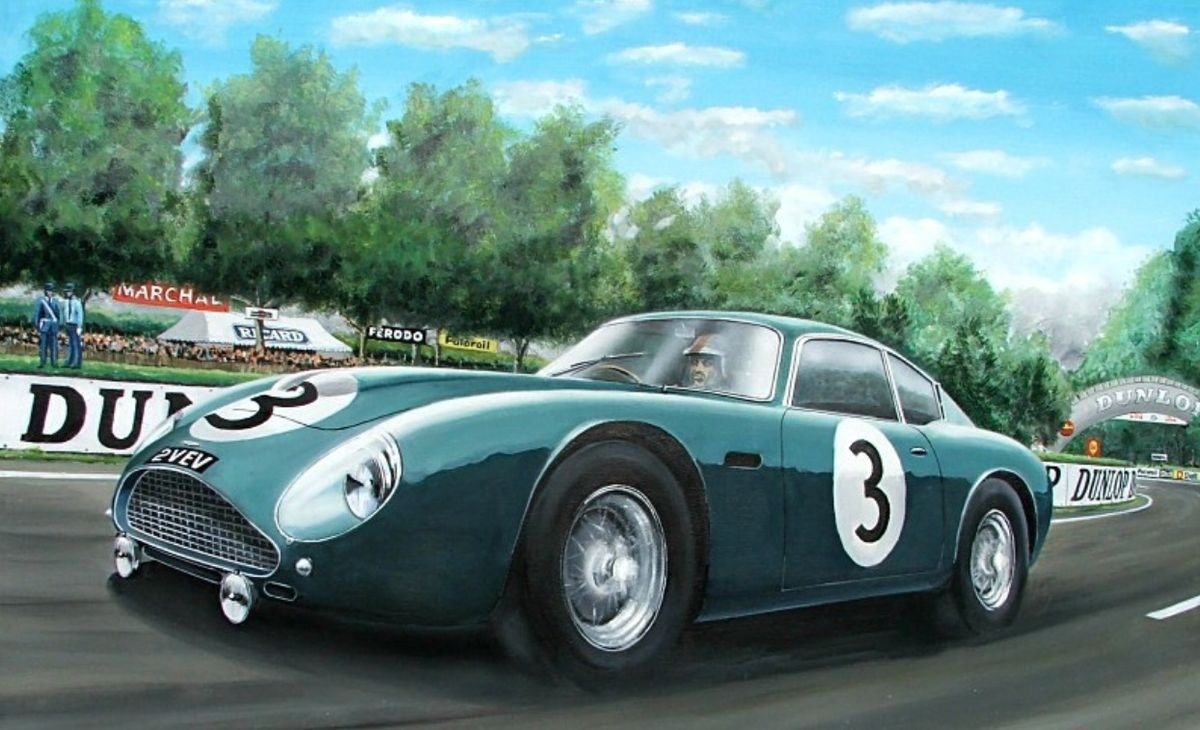
bernard reeves Painting of the Davison/Stillwell DB4Z, Le Mans 1961 (Bernard Reeves)

Credits…

Ron Bert Collection, Bernard Reeves, Jim McKeown Collection

Tailpiece…

(J McKeown)

Doug Whiteford in Laurie O’Neill’s Zagato with Jim McKeown, Jewitt Holden and George Spanos, Elfin Streamliner Ford on the front row of the grid. Longford GT race in 1962 won by Whiteford from McKeown.

Finito…

martini and rossi

Nice ad featuring the winning and second placed Ferrari 250 Testa Rossa’s of #14 Phil Hill/Olivier Gendebien and #15 Giancarlo Baghetti/Willy Mairesse/Richie Ginther/Taffy Von Trips at Sebring in 1961…

image

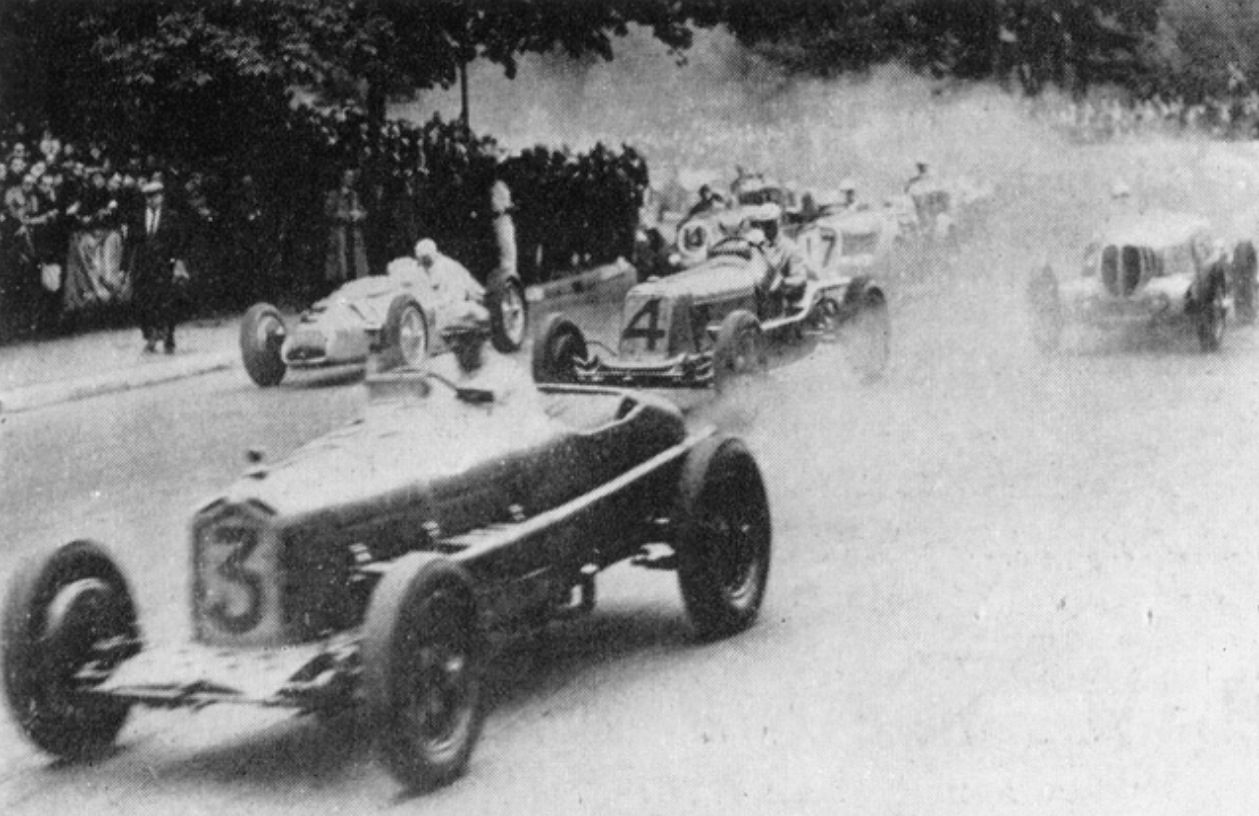
Start of Coupe de Robert Benoist. #2 Amedee Gordini, Gordini, #17 Creuchet Bugatti, in between them the Ferry Riley, #5 Brunot Riley, #3 Cayeux Simca Gordini, #14 Boucard Salmson and #9 Pozzoli Lombard at the rear. (unattributed)

The horror of World War 2 ended, the first post-war race meeting in Europe was in Paris 70 years ago on a circuit which passed in front of the Porte Dauphine, went off into the Bois de Boulogne and around the Lake…

The guns fell silent in Europe on 8 May 1945 but not until 2 September in the Pacific, the efforts of the ‘AGACI’ an independent club for racing drivers and it’s president Maurice Mestivier in running the event on September 9 in the context of the times is amazing.

It was a time of immense devastation and mourning, industry was having trouble restarting and ‘coupons’ were required to get basic foodstuffs let alone fuel, metals and tyres.

With the agreement of the acting government of France, the American authorities provided fuel, and Major Rogers, the area commander a group of MP’s to assist local gendarmes with crowd control.

There were two and four wheeler races, the car events comprised the ‘Coupe Robert Benoist’ in memory of the Pre-War GP driver and Le Mans winner who had joined The Resistance and been executed by the Nazis, the ‘Coupe de la Liberation’ and ‘Coupe des Prisonniers’.

Competing cars were a mixture of ‘Specials’ and Bugatti, Maserati, Alfa Romeo, Delage, Delahaye and Talbot cars.

The big event was the ‘Coupe des Prisonniers’ for over 3 litre racing cars, the race a short one of 75 miles given materials shortages with Jean-Pierre Wimille victorious in his Bugatti T59/50B 4.7 litre supercharged car ahead of Raymond Sommer in the Talbot T26 ‘Monoplace’.

Racing on an international scale did not really begin until the spring of 1946 but the Bois de Boulogne was deeply symbolic of change and renewal…

coupe des prissoniers start

‘Coupe des Prisoniers’ start with the #3 Philipe Etancelin Alfa Monza 8C2300, #4 Louis Gerard Maserati 8CM to the left Raymond Somners’ Talbot Lago T26 ‘Monoplace’ and #17 Roger Wormser Delahaye 135S in shot. (Unattributed)

wimille coupe des prissoniers

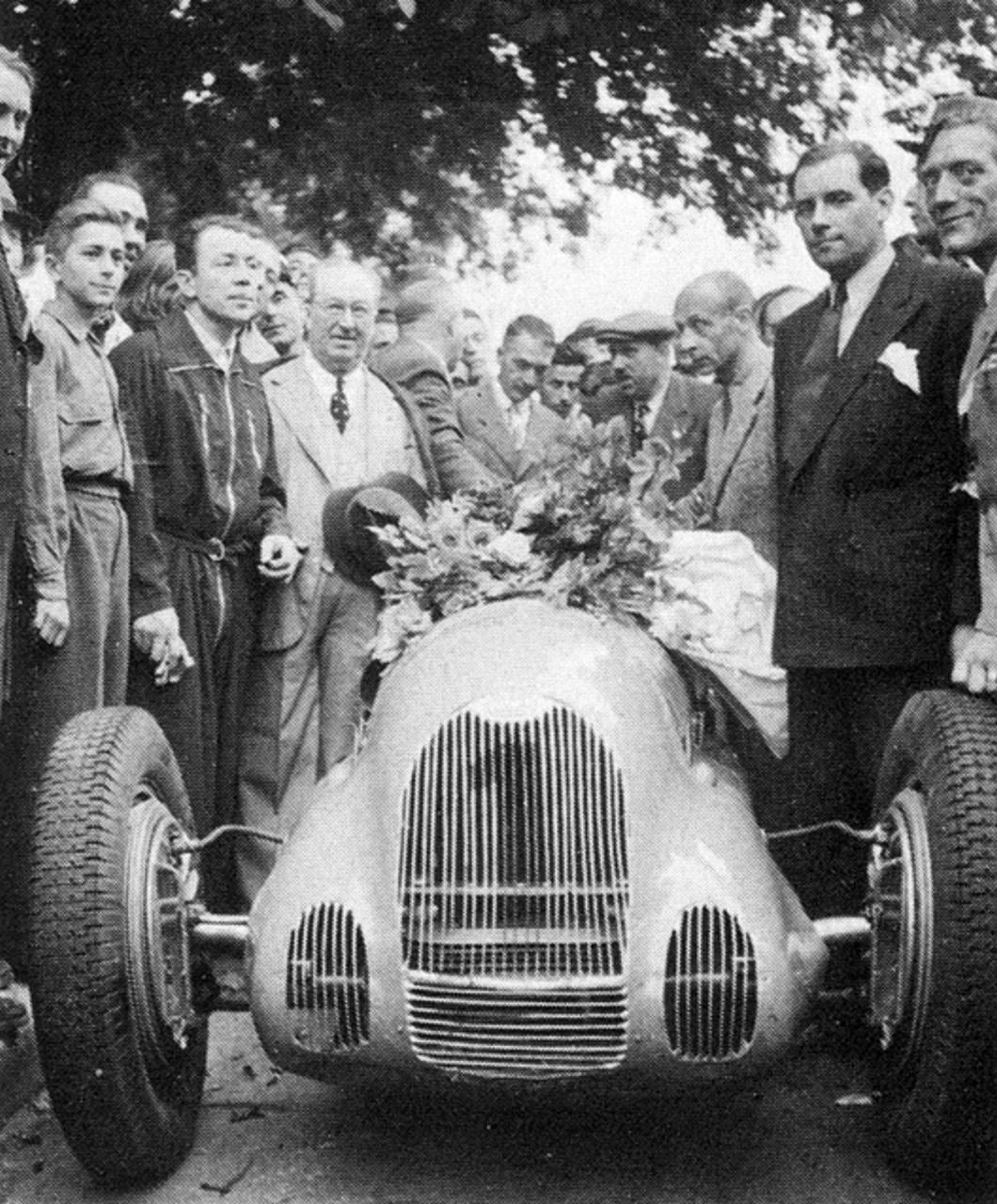
Jean Pierre Wimille, at left in the dark driving suit and Ettore Bugatti in light colored suit holding hat, beside his victorious Bugatti T59/50B, Coupe des Prissoniers 1945. (Unattributed)

Bibliography…

Automobile Year 44


paper

THE BIGGEST CROWD ever to attend an Australian road race saw the Centenary Grand Prix won by Les Murphy (Victoria) over the Victor Harbor Port Elliot circuit this afternoon.

From the Special Staff of Adelaide’s ‘The Mail’ Writers at the Course…as they saw the race in the beautiful, descriptive language of the day, Saturday 26 December 1936.

victor
‘Aerial view of Victor Harbour and Port Elliott for the South Australian Centenary Road Race’. Victor is in the lower right corner, Port Elliott is the smaller hamlet, the headland sticking out, above it. Using the diagram/map of the circuit below,taking the coast and the 2 settlements as reference points, you can see the roads used during the race. (State Library of SA)


victor circuit

Event Background…

It was the first AGP held outside Victoria and has been known over time as the 1937 AGP despite being held on Saturday 26 December 1936 and named then as the ‘South Australian Centenary Grand Prix’. It seems this ‘corruption of history’ as historian John Medley called it, commenced in the 1950’s, whence it originated nobody seems to know.

The Sporting Car Club of South Australia was formed in 1934 and played an active part in the celebration of 100 Years of European settlement of South Australia, the piece de resistance of the organising committee of the South Australian Centenary Committee was SA’s first real road race held 50 miles from Adelaide on the Fleurieu Peninsula, only a few miles from the mouth of the mighty Murray River on public roads between Port Elliott and Victor Harbor, then as now a summer playground. The event was run over 32 laps, 240 miles in total.

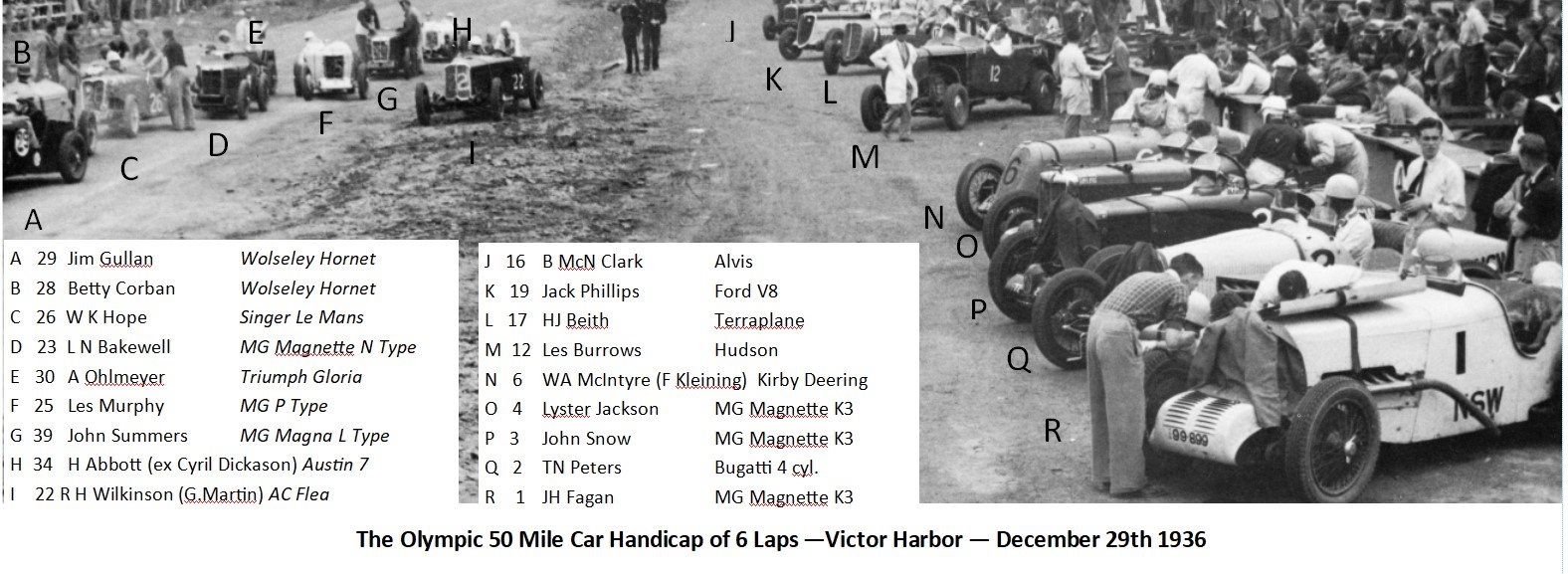
The race attracted the best cars and drivers from all around Australia, the limit men of the handicap race drove MG K3’s and Bugatti Types 37 and 43 and over 50000 paying customers came to an event then a long way from Adelaide.

paddock
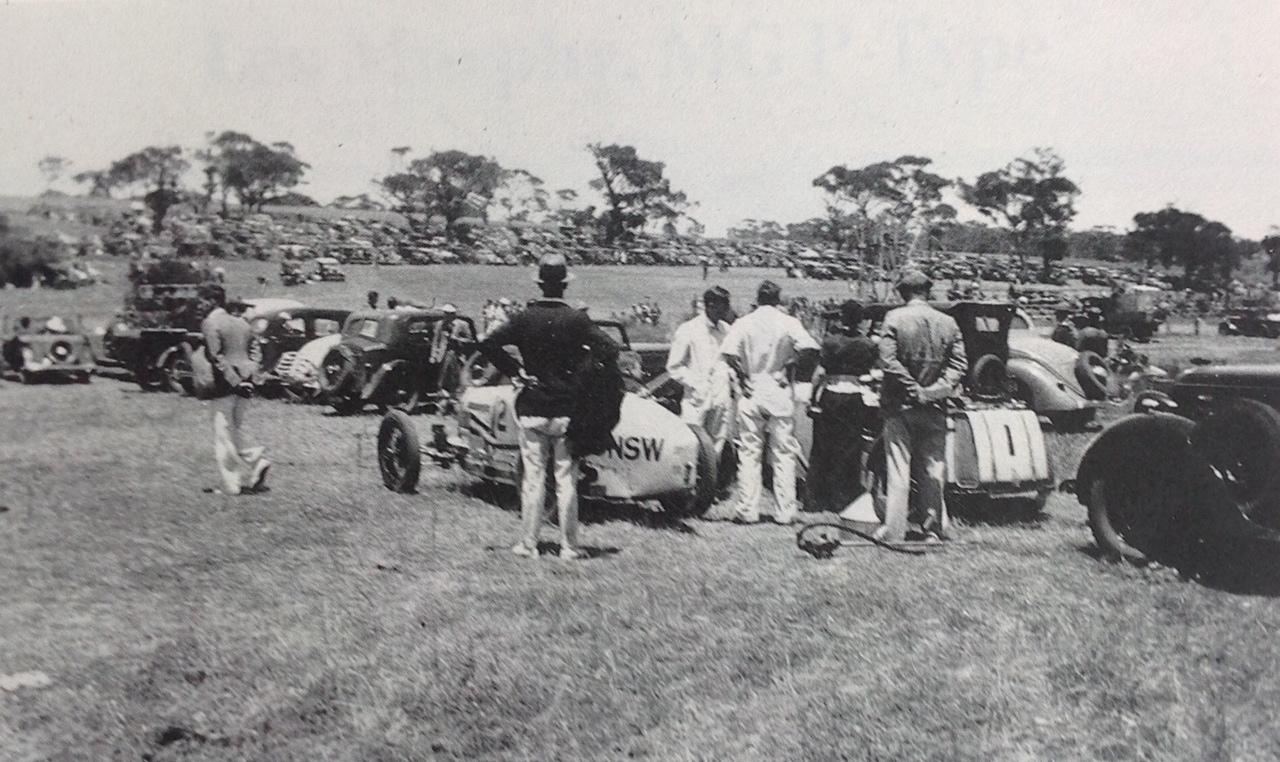
Victor paddock. #1 is the Fagan MG K3, #2 the Peters Bugatti T37. (Norman Howard)

‘VICTOR HARBOR, Saturday 26 December 1936. ‘The Mails’ contemporary report of the event…

Before the biggest crowd ever seen at an Australian road race, the South Australian centenary Grand Prix and sidecar tourist trophy races on the Port Elliot-Victor Harbor racing circuit filled the quiet country air with a thunder of power. Les Murphy, winner of the ‘Victorian Centenary 300′ in 1934, the Australian Grand Prix at Cowes, (Vic) in 1935, and one of the best known motor speed men in Australia, ran away with the Grand Prix after 250 miles of supremely consistent driving, while opponents in faster cars failed when the final test of endurance was applied. He averaged 68 1/2 miles an hour to win the first prize of £200 and a £50 gold cup.

image
Formally dressed crowd cruise the Victor paddock (SLSA)

The first of the long stream of cars, charabancs, motor cycles, and bicycles which conveyed the invading army of 45,000 to 50,000 spectators to the course left Adelaide at dawn, (Victor Harbor is 85 Km from Adelaide) and long before the start of the sidecar tourist trophy, vantage points on each of the five corners of the circuit were taken up. The crowd seethed with excitement from the moment when the 12 riders in the opening race roared away in a massed start to the fall of the checkered flag until the winner of the Grand Prix flashed past the finishing line. Paling into comparative insignificance when seen against the sustained thrill of the motor event, the motor cycles prepared the onlookers for the motor racing spectacle...There were no serious accidents, but many narrow escapes in the Grand Prix kept the crowd on its toes throughout the day. At several points the efforts of police and race officials were unavailing when the spectators broke through the barriers to watch the cars flash past.’

victor 2
This State Library of SA shot does not record the competitors but shows the dirt/gravel road and the flat, scrubby terrain between Victor Harbor and Port Elliott. Popular summer playgrounds not far from Adelaide then as now. (RP Nicholas/State Library of SA)

‘Narrow Escapes’

‘A thousand people at the Grandstand Bend had their hearts in their mouths when the Bugatti of Hylton Dale (Vic) went into the corner too fast, skidded wildly round with screaming tyres, and regained its course with the driver fighting for control. Nearly an hour elapsed between the starting times of the limit men, E. M. Winter (SA) and R. S. Uffindel (SA) and the virtual scratch men Lyster Jackson (Vic), Jim Fagan (NSW). T. Peters and Lord Waleran. To make up this leeway the fast men attained speeds of more than 100 m.p.h. on the straights and made unbelievable speeds on corners.’

‘The demand for speed sapped the strength of the motors in the fastest cars, however, and it was a middle marker who took the honors of the day. Each of the virtual scratch men struck trouble while the excitement was at fever pitch, but Peters had established the lap record of 81 miles an hour before he dropped out of the running.’

There were plenty of thrills but no serious mishaps at the most difficult of corners. Hell Bend. Many drivers had narrow escapes, but only one, Jack Phillips, came to grief there. Taking the turn at too great a speed, he ran into an embankment and badly buckled the rear off wheel of his car.’

image
Harry Beith calls into the pits after crashing thru a fence at Seaview Bend, Terraplane Spl, he finished 9th (SLSA)

‘The crowd became out of hand at Hell Bend, and it was fortunate that the drivers showed such skill in regaining control of their skidding machines. Nearing the end of his race A. Barrett almost turned round just past the corner, but he managed to switch his car away from the crowd. The thousands of spectators at the bend spent an exciting afternoon. All eyes turned towards the Chilton Straight, when roaring engines warned of the approach of cars. As they quickly neared the bend the crowd was on tip-toes. Engines were throttled down, and the cars skidded and screamed round the corner, sweeping across the road, and sending up clouds of dust from the base of the embankment. Then engines roared again, and with a deafening noise the machines disappeared. Often spectators scampered for safety as the cars skidded out of control.’

Jack McDonald, Amilcar Grand Sport (R Fewster)

Determined efforts were made by the police to keep the corners clear, but soon the crowds took charge, and they swarmed everywhere, even over the grounds of a private residence. Nangawooka Hairpin, which was expected to provide many thrills, was surprisingly uneventful. The crowd at the corner was raised to heights of expectancy several times as the snarl of hard applied brakes and screaming tyres told of the drivers’ fight to get their cars round the corners safely. But apart from the unfortunate skid by G. C. Martin’s AC, which put him out of the race when in a handy position, and two or three cars which took the escape road, the bend was singularly free from incident.

lea wright
Bob Lea-Wright’s Terraplane Spl takes Nangawooka Hairpin. Victor Harbor 1936. (State Library of SA)

The day of speed was remarkable for the precision and orderliness with which the arrangements for the drivers’ safety and the convenience and comfort of spectators were carried out. 

The huge crowd was handled well by the large contingent of police and special constables who were on duty at the course. With the cars careering into corners to the very limit of safe speed, and often just a little more, the highlights of the day were seen by those who had secured corner positions.

Martin had bad lack when he skidded at the Nangawooka Hairpin, while challenging Murphy for the lead in the concluding laps. He was driving with the throttle flat on the floor, but on this corner he skidded and straddled the sandbag safety bank. Immediately dozens of spectators prepared to go to his help, but officials called them back, warning them that Martin would be disqualified if he received any help.

After several attempts to free his car, Martin gave up and two men helped him away. The spectators cheered sympathetically as he left. 

Crowd at Victor Biggest in History.

Although in peak times the estimated floating population of Victor Harbor was about 40,000, never in the history of the town has there been such a crowd as there was tonight. Motor cars were parked everywhere, even down side lanes and blind alleys. Nevertheless, no accidents were reported to the police. Streets were gay tonight and many of the buildings had colored lights.’

victor race coverage

Race Report…’The Mail’ then published a full account of the race in its Sports Section…

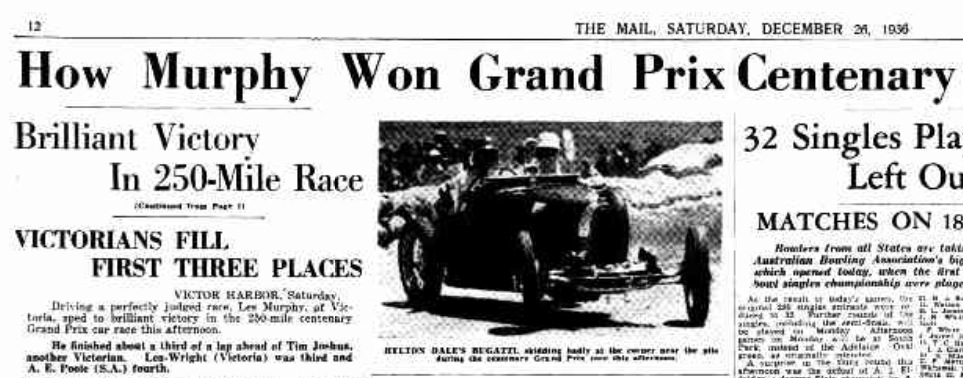
How Murphy Won Grand Prix: Brilliant Victory In 250-Mile Race.VICTORIANS FILL FIRST THREE PLACES VICTOR HARBOR. Saturday.

Driving a perfectly judged race, Les Murphy, of Victoria, sped to brilliant victory in the 250-mile Centenary Grand Prix car race this afternoon. He finished about a third of a lap ahead of Tim Joshua, another Victorian. Lea-Wright (Victoria) was third and A. E. Poole (SA) fourth.

START OF GRAND PRIX.

Uffindell (Austin) and Winter (Vauxhall) were first away off the limit mark in the Grand Prix. McDonald (Amilcar), who crashed in the practice trials this week, was a last-minute starter. It had been thought that the damage to his car would not be repaired in time. He went off 8 min. later. The next away were Gullan (Hornet Special), Anderson (Morris), and Tim Joshua (MG). Then followed at intervals Summers (MG), Moulden (Sunbeam), Dutton (MG), Barrett (Lombard), and Dale (Bugatti). The machines away were by this time well warmed, and the lap speeds began to soar. The next batch away comprised Poole (Oldsmobile), Lea-Wright (Terraplane), Beith (Terraplane). Anderson pulled into the pits with water streaming from his radiator and Barrett followed with his Lombard to change a wheel.

At this time 13 competitors were still at the pits waiting to get away on their handicaps. One by one the machines roared down the Brick Kiln Straight until the back markers ; Fagan (MG Magnette), Jackson (MG Magnette), Snow (MG Magnette) and Peters (Bugatti) were on their way. Churning the dirt from the calcium chloride treated track, Peters scattered it all over the spectators as this batch of expert drivers thundered down the straight Peters had a slight advantage.

barrett
Practice or parade lap prior to the race. L>R Lyster Jackson MG K3, winner Les Murphy MG P Type #29 and Alf Barrett Lombard #22. (Alan Griffin Collection)

CARBURETTOR TROUBLE.

Uffindell had covered eight laps, while the scratch men had completed only two laps of the circuit. There had been no retirements up to this stage. Winter howled his Vauxhall round the course at a good average speed. At 1.28 Dale drove bis Bugatti into the pit with carburettor trouble. The defect was remedied in three minutes. Trouble began frequently. McDonald had to pull up opposite the grandstand to adjust his goggles. It only took him a minute, and the car bounded off again. Minor mechanical troubles stalked abroad, and the men at the pits worked feverishly to correct them without serious loss of time.

The pace was now on, but with so many laps ahead for the competitors, spectators were unable to anticipate the winner. After several rounds Fagan (MG Magnette) lapped the circuit at 78 mph, while Burrows went round with his Terraplane in 6 min. 15 sec., which was equal to 74 mph Jackson, driving a MG Magnette, went round in the same time. Hylton Dale, driving a Bugatti, tore round the grandstand bend and went wide. His throttle jamming, he swung round and ricochetted into the pit with a side sweep. Diagnosed, his trouble was described as ‘plug.’

Les Burrows, in his flaming Terraplane, had to pull in because of plug trouble. Barney Dentry in his Riley, who has completed many thousands of miles in his little car, also pulled in for a mechanical adjustment. G. C. Smith (NSW) retired. He said that he had been under the impression that the track was smooth, but it was very rough in his opinion. Anderson (Morris Special) had to pull in several times for water. The last time he came into the pit the water belched from the radiator high into the air as the mechanics lifted the radiator cap. Abbott was making good progress in his supercharged Austin. He came into the pit with a loose distributor which was adjusted in three minutes. Gullan (Hornet Special) lost three minutes while he stopped to adjust his helmet.

murphy
Les Murphy on his way to victory, here on West Straight heading to Hell Bend. MG P Type. Additional fuel tank gave him a range of 300 miles per tanks.(Norman Howard)

DRIVERS WITHDRAW.

Halfway through the race Joshua was in a strong position. He was driving his MG K3 brilliantly. The Victorian driver Murphy was in second position, but Martin was giving a real fireworks display, lapping at 71 mph He was gradually overhauling Murphy. The South Australian representative, Uffindell, was still maintaining a good speed, and was not far behind, while Phillips, at the wheel of his Ford, was going at 74 mph. There had been no serious accidents up to this stage. Abbott experienced plug trouble, and a few minutes later Barrett and then Lord Waleran came into the pit with similar trouble. Mclntyre retired with his Hudson at 3.05 p.m., and Smith withdrew his Hudson a minute later. Frank Kleinig, who was driving Mclntyre’s entry, was forced to retire because of a broken radiator. Kleinig was one of the most popular and most spectacular drivers during practices.

Lord Waleran, who had relieved J. Snow at the wheel of the K3 Magnette, took Hell Bend too wide in the seventeenth lap. Handling his car skilfully, he headed his car down the Escape road, and a few minutes later joined in the fray again.   With eight laps to go Murphy had taken the lead with Martin, lapping at 73 miles an hour second and Tim Joshua third. Phillips, driving his Ford, crashed into the embankment at Hell Bend through attempting to take the turn too fast, the off rear wheel was bent almost underneath the car. Neither Phillips nor his passenger was hurt. At 3.45 20 cars were left in the race. Shortly before 4 o’clock Murphy (Vic) was leading by six minutes.

poole
Nangawooka hairpin. A Poole Oldsmobile. (State Library of SA)

PETERS’ FAST LAP.

Martin set out to catch Murphy with six laps to go and he was reducing the gap at the rate of several miles an hour. There was now only four and a half minutes’ difference between the two speedmen. With an hour’s racing remaining the fastest lap record was put up by Peters, who covered the circuit at 81 mph. Then the whole aspect of the race changed.

Martin broadsided, and saddled the sandbags at Hairpin Bend. There he tried to shift his car without success. Martin made desperate efforts but the rear was protruding across the track, to the danger of other competitors. Driving a perfectly judged race, Murphy, the Victorian driver, who was on a 40 minute handicap, maintained the lead and finished about a third of a lap ahead of Tim Joshua, another Victorian, who was driving A. Barrett’s M.G. Lea-Wright (Terraplane) was third, and A. E. Poole (SA) was fourth.

The winner’s time was 3 hr. 39 min. 6 sec. Poole’s actual time was 3 hr. 37 min. 59 sec., and he thus wins the £25 presented by ‘The News’ and ‘The Mail’ for the fastest time for any South Australian competitor. Dentry was fifth and then followed Cranston, Uffindell, Summers, Beith and Dutton. Others to finish were Terdich and Martin. The following competitors retired; Fagan, Peters, Kleinig, Smith, Burrows, Phillips, Dale, Barrett, Gullan, Winter. Fastest time was set up by Cranston of Western Australia, who covered the distance in 3 hr. 20 min. 17 sec. T. Joshua’s time was 3 hr. 56 min. 10 sec., and Lea-Wright’s 3 hr. 26 min. 40 sec. Fastest lap was secured by T. Peters (NSW Bugatti), who went round in 5 min. 47 sec., equal to 81 miles an hour.

olympic ad
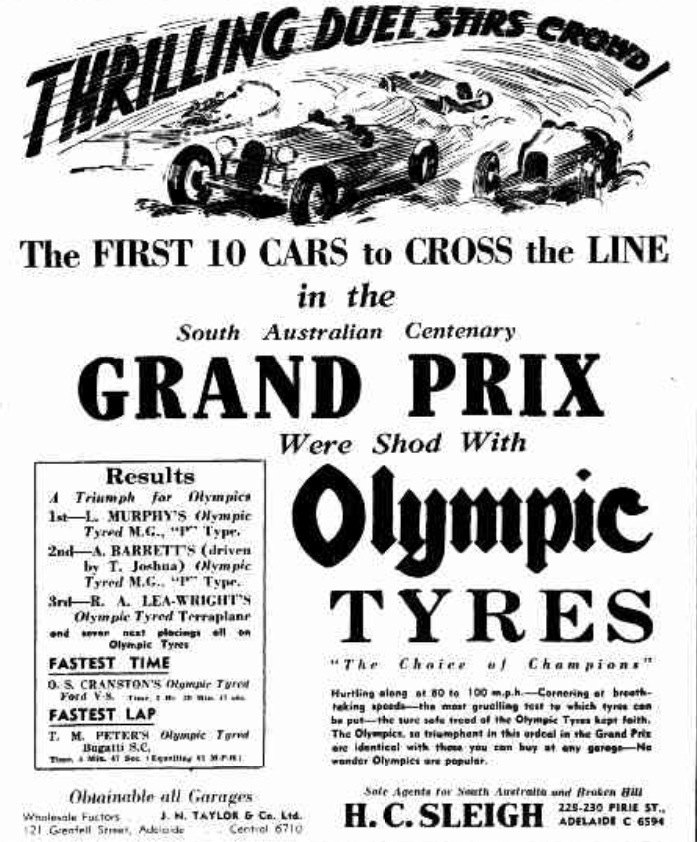
‘Win on Sunday, Sell on Monday’ adage started a long time ago! ‘The Mail’ ad the day after the GP.

Circuit Aerial Photographs…

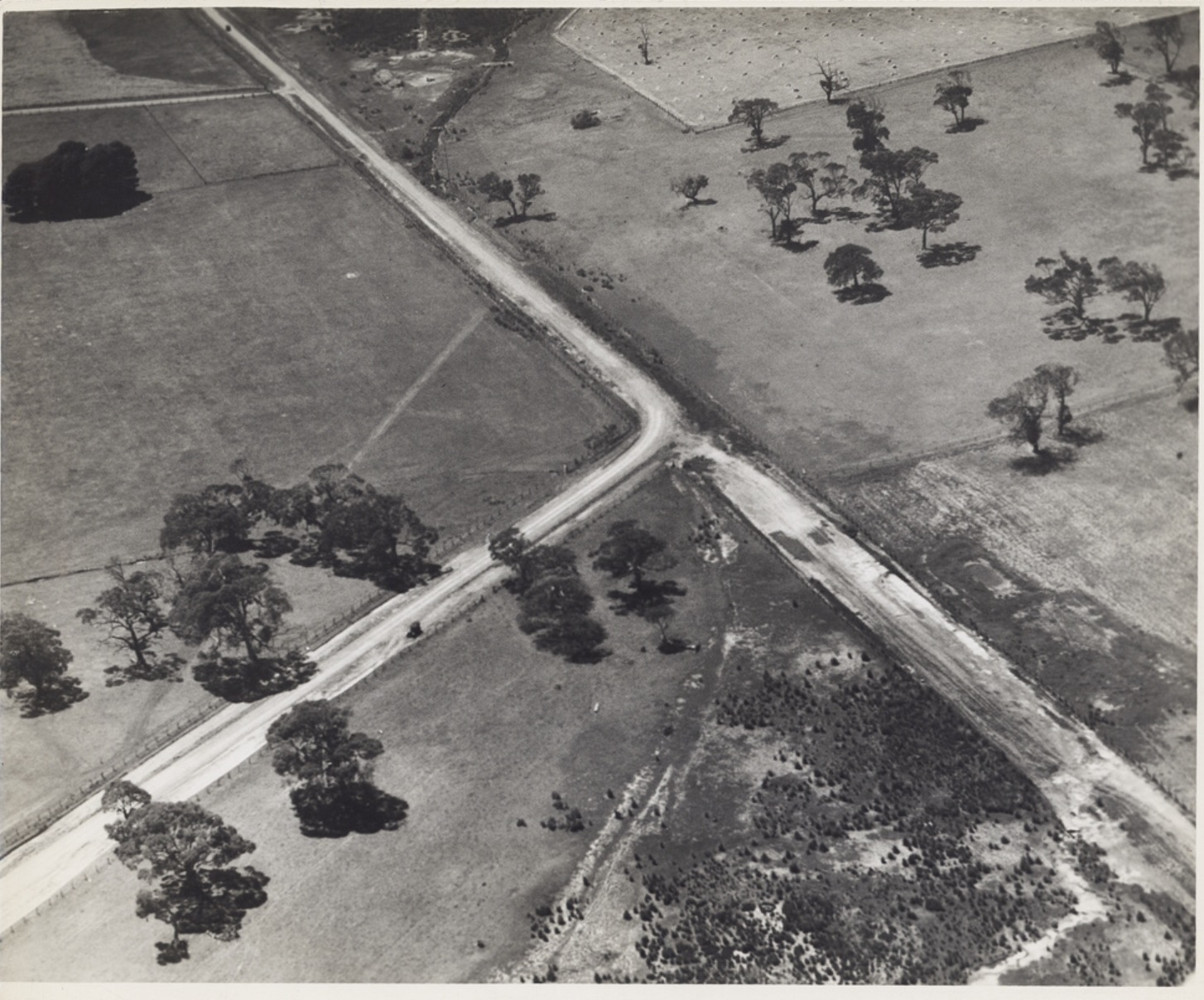
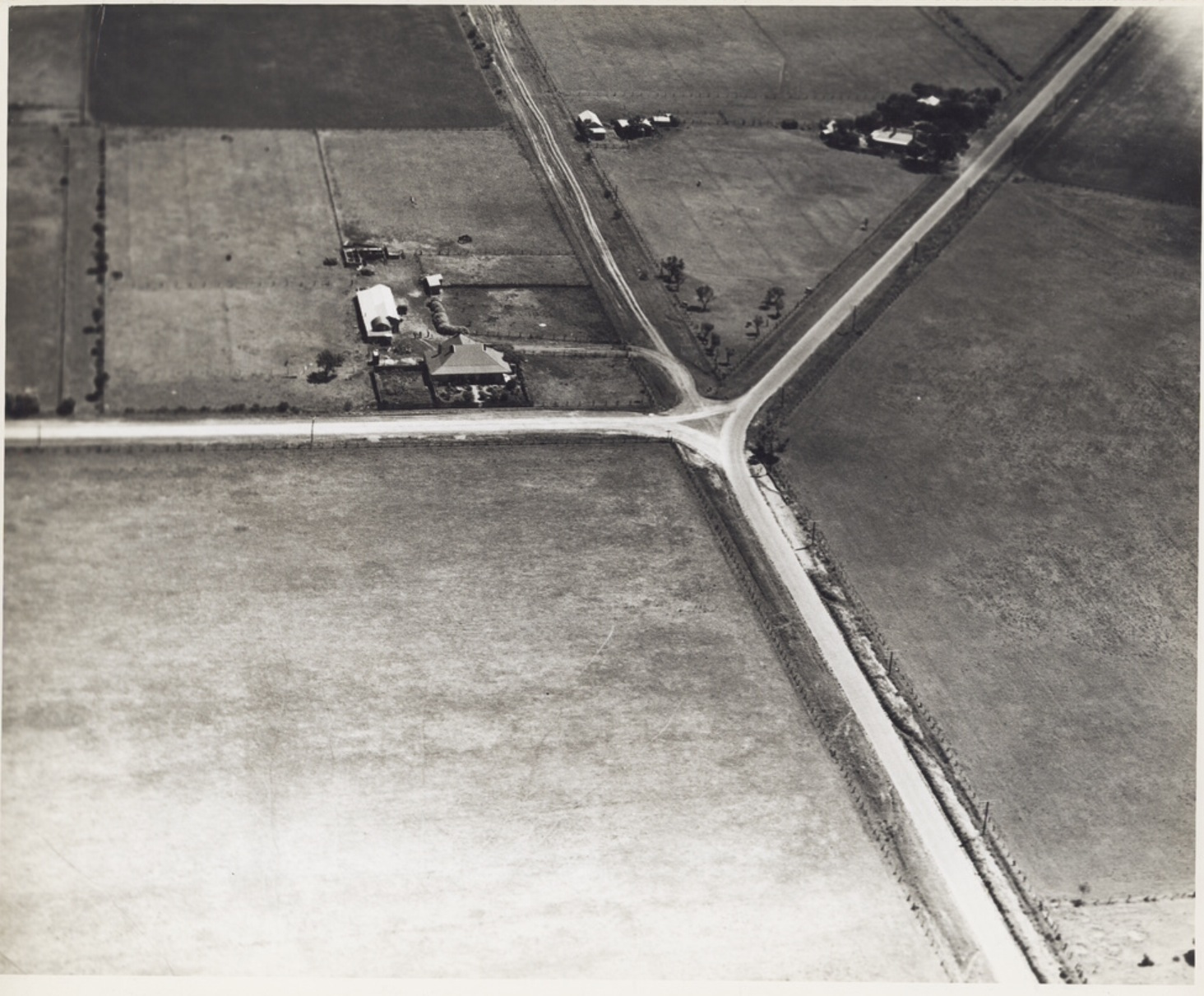
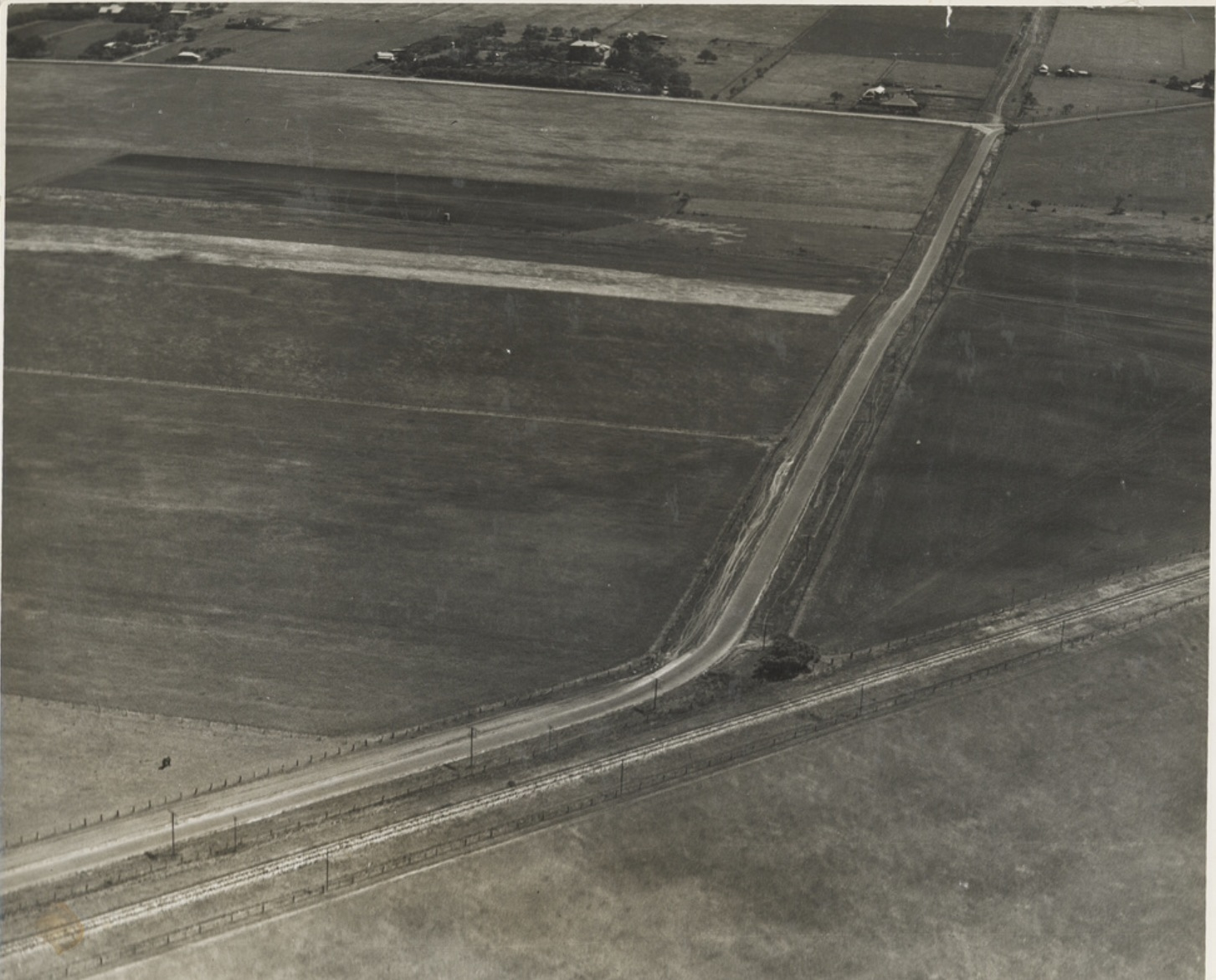
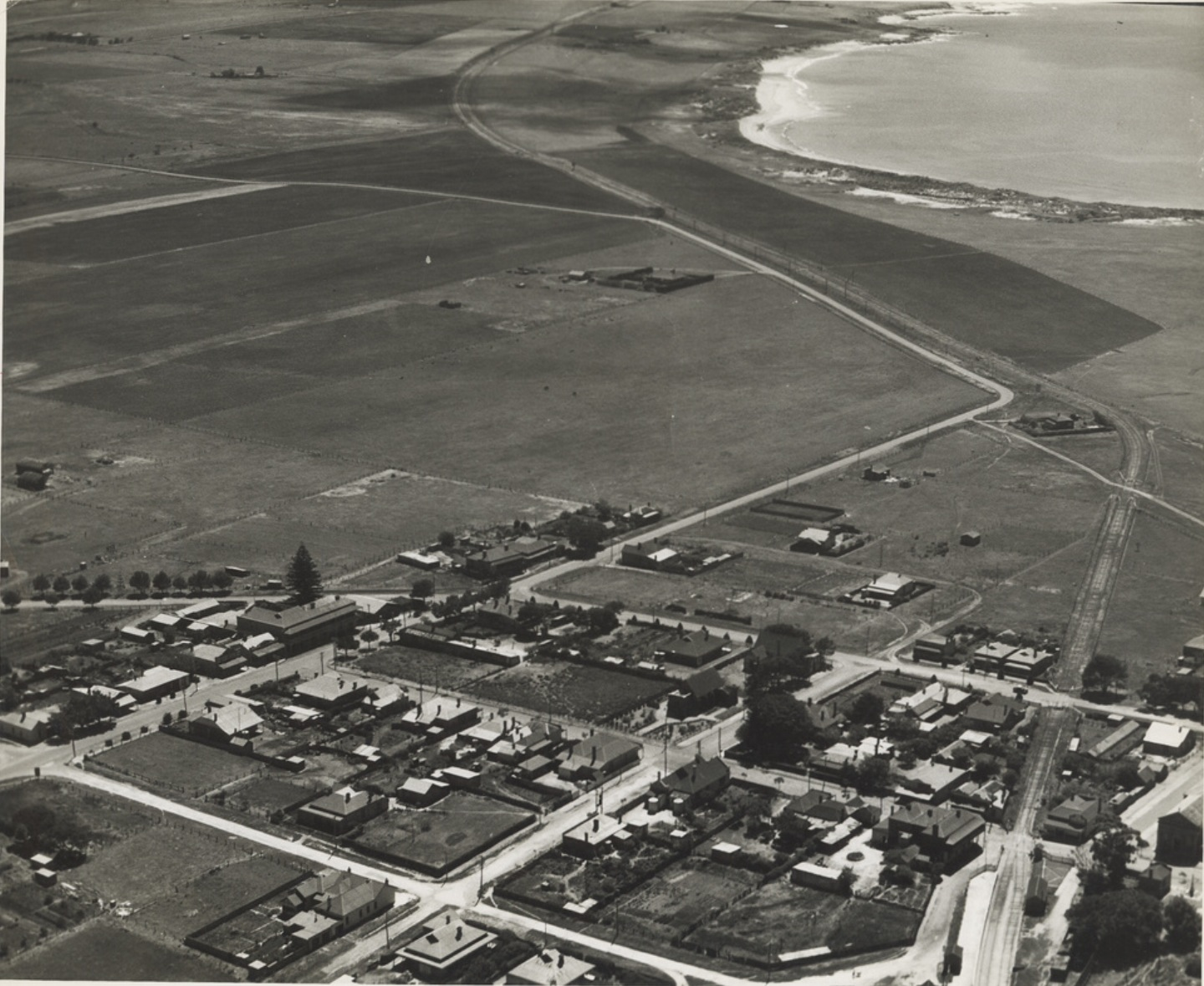
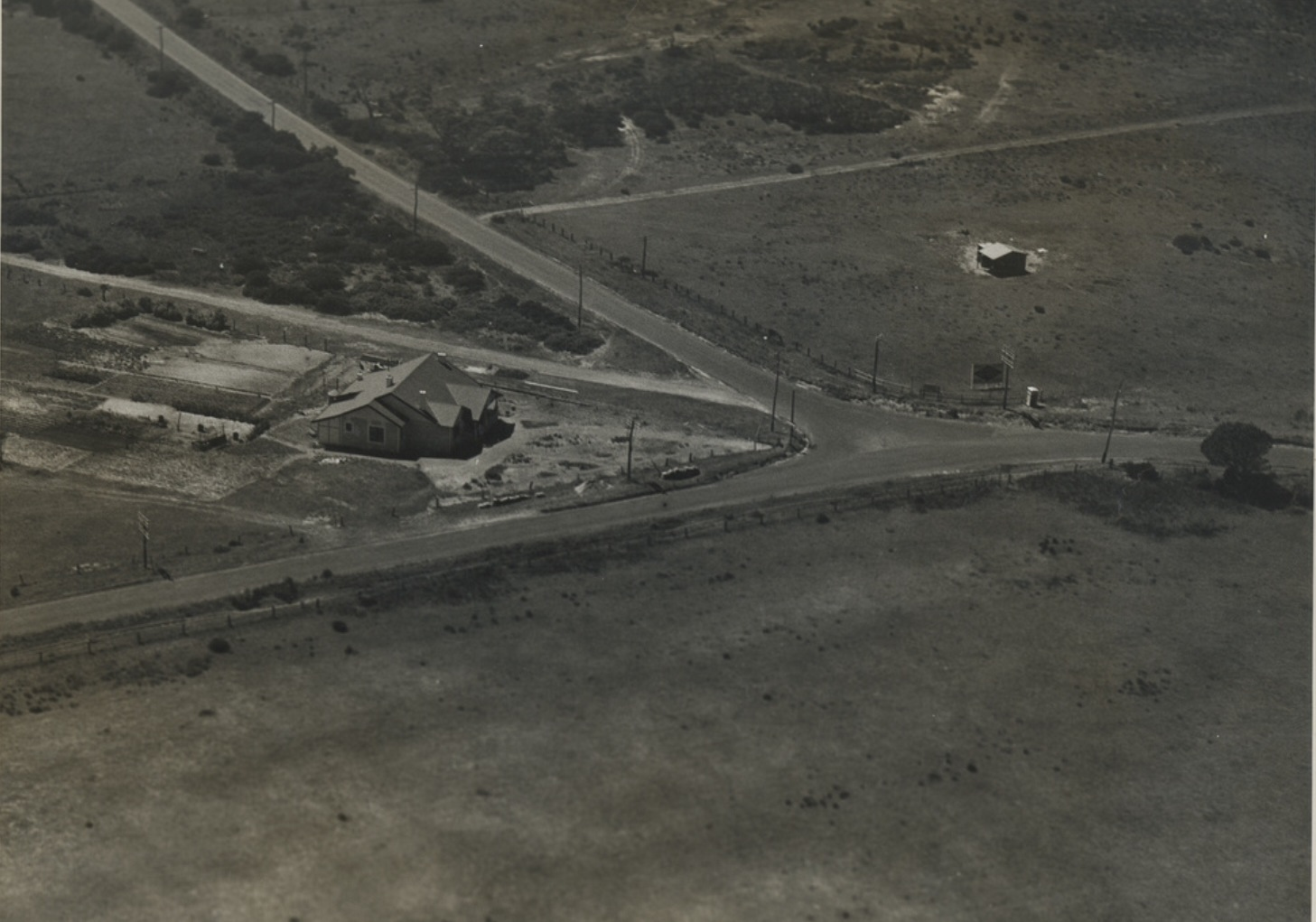
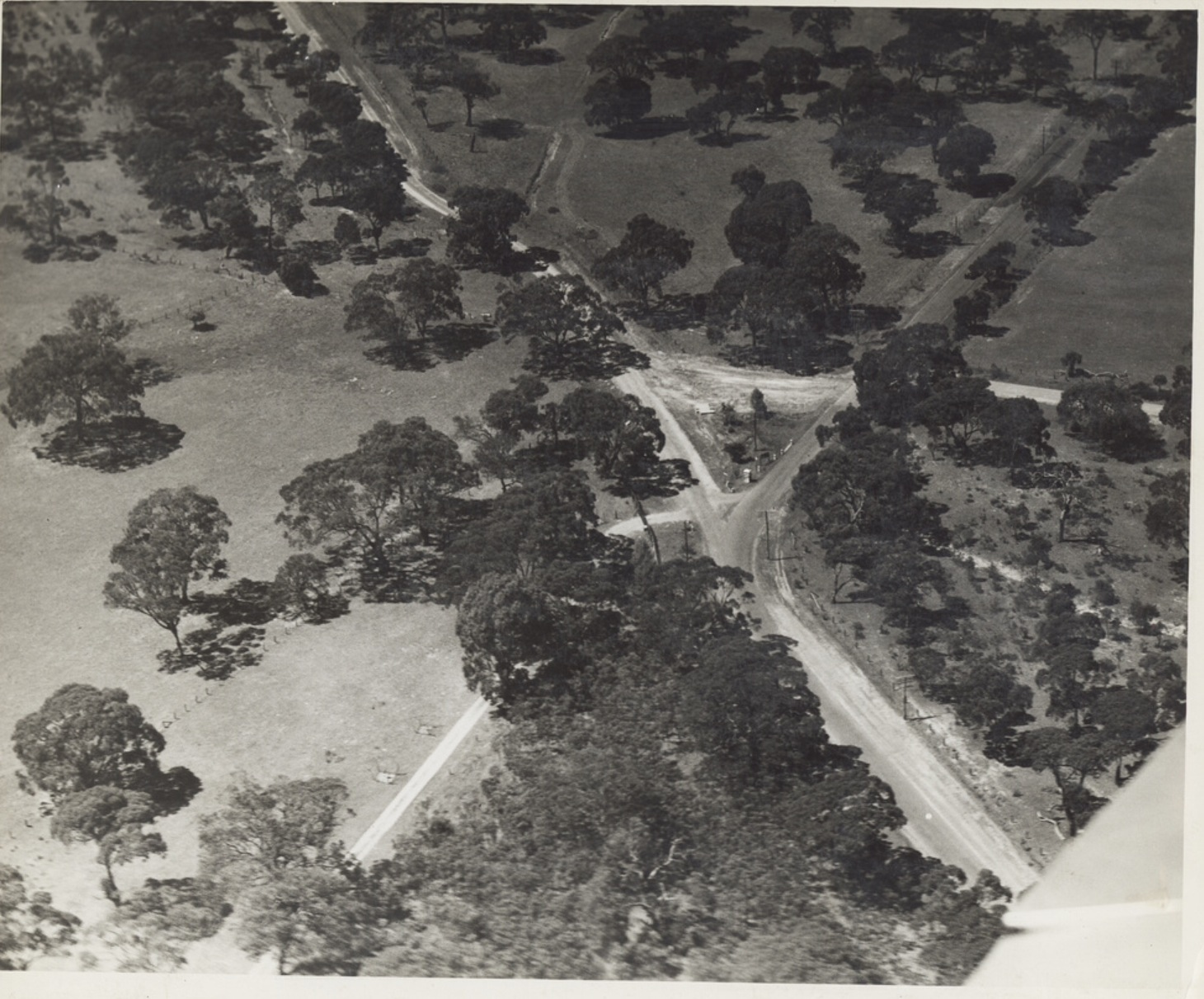
The State Library of SA (attribution of shots in all cases below) have a series of aerial photographs taken during the meeting, unfortunately not during the racing! They are reproduced below in the sequence, by image number published, which may or may not be corners in their order of a lap, there are no captions to assist the historian. I have included fthen for the sake of completeness.

They clearly show the loose nature of the gravel, the dust the drivers and spectators had to contend with as a consequence, the flattish nature of the area and the open, fast corners.

victor
‘Aerial view of Victor Harbor and Port Elliott for the South Australian Centenary race’ is the caption on this series of shots. (State Library of SA)


victor circuit

vic 1
(State Library of SA)


vic 2
Perhaps; the fast LH kink after exiting ‘Nangawooka Hairpin’. The cars heading from top to bottom of this shot. (State Library of SA)


vic 3
Perhaps; The cars race from top left to right, along ‘Brick Kiln Straight’ then the RH tight corner ‘Sea View Corner’, then the RH kink towards the bottom of the photo is the fast RH taking the cars into Port Elliott.(State Library of SA)


vic 4
Port Elliott. The cars raced clockwise, so from left to right. Into the right hander at top left, then the right hand kink depicted in the previous photo,(the point of the track closest to the water)  then another right hander and down ‘Chilton Straight’, thru the town and back towards Victor. (State Library of SA)


vic 5
Perhaps; ‘Hell Bend’, the RH tight corner at the end of ‘Chilton Straight’ which then heads in the direction of the L/R series of corners towards ‘Nangawooka Hairpin’. (State Library of SA)


vic 6
Perhaps; the L/R combination which leads to ‘Nangawooka Hairpin’. Looked at from top to bottom.(State Library of SA)

Etcetera: Motorcycle Events…

image
R Badger, Ariel Square Four winning the Sidecar TT. There were 12 competitors in a massed start, he gave a ‘brilliant exhibition’ to win the 56 mile race from Bill Barker, Levis and A Griffiths Morgan 3 Wheeler. Average speed 71 mph (SLSA)


image
A Griffiths and passenger aboard their 3rd placed Morgan 3 Wheeler during the Sidecar TT (SLSA)


image
Irish Champion Stanley Woods with some competitors and a fan during the Victor weekend. By then he had 4 successive Irish TT’s and the 1935 Junior and Senior IOM TT’s to his credit- and much more. Woods won the Junior TT on a Velocette by a half a lap in 58 minutes. He led the Senior TT, also Velocette but was slowed by clutch problems after a fuel stop, a South Aussie by the name of Foster won on a Norton (SLSA)

Bibliography…

‘The Mail’ 26 December 1936, John Medleys chapter on ‘The 1937 Australian Grand Prix’ aka ‘1936 South Australian Centenary Grand Prix’ on 26 December 1936 in Graham Howard’s ‘History of The Australian Grand Prix’

Photo Credits…

State Library of South Australia, ‘History of the AGP’ as above, Norman Howard, RP Nicholas, Russell Garth, Richard Fewster

Tailpieces: The paddock…

(R Garth)


(R Garth)

Finito…

glass

(Heinz Federbusch)


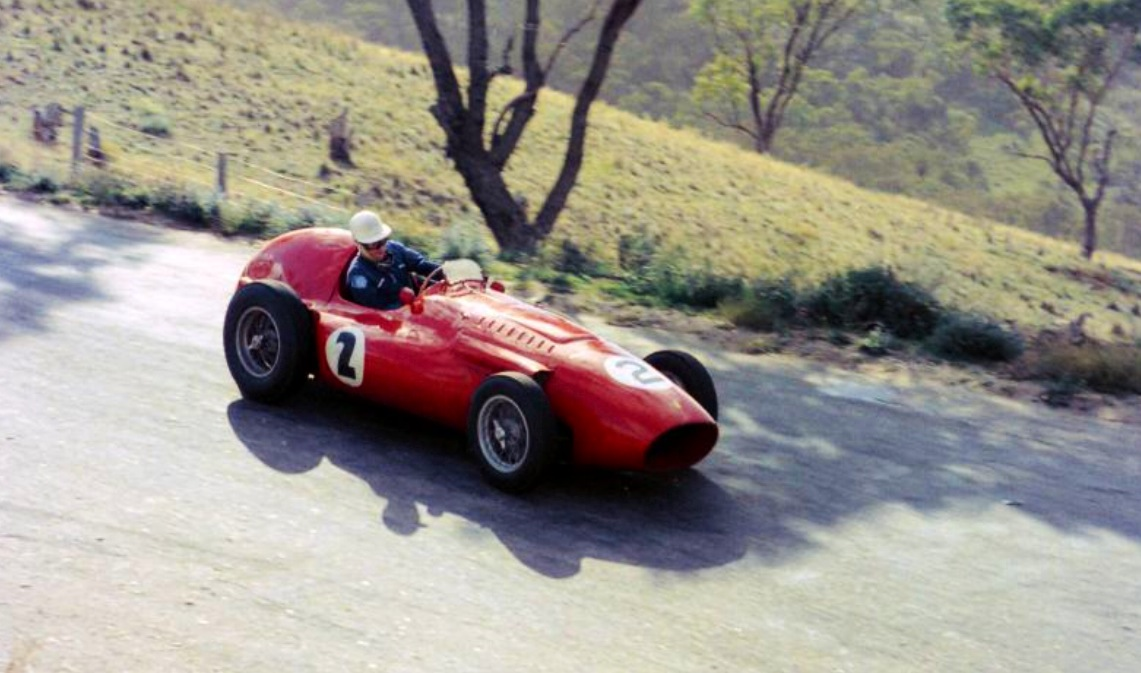
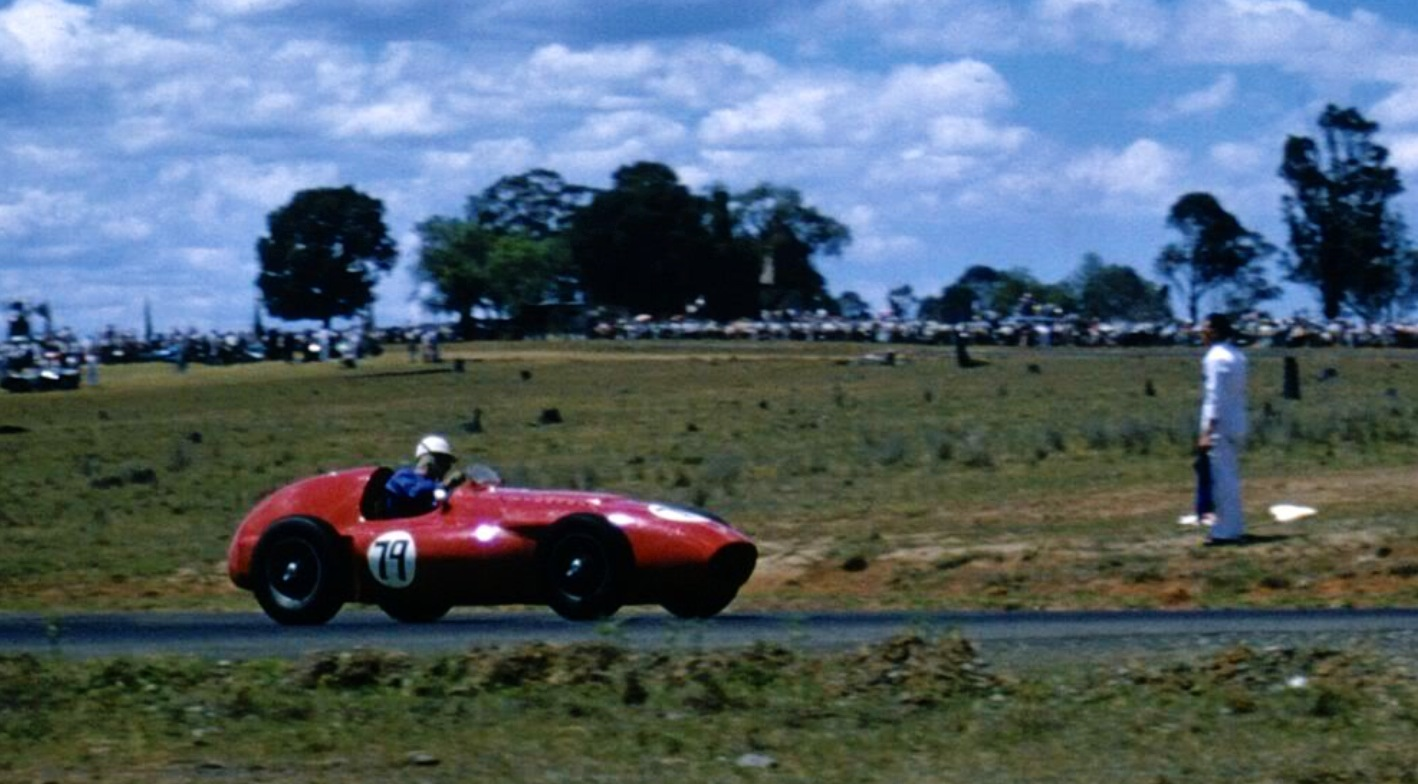
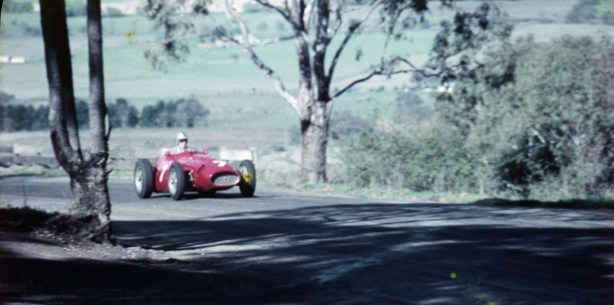
Arnold Glass eases his Ferrari 555 Super Squalo into Mount Panorama’s tricky Esses as he starts the plunge down the mountain, Easter 1958…

Glass raced this car with success from November 1957- here he is contesting the Formula Libre ‘Bathurst 100′ on 7 April 1958, the race was won by Doug Whiteford’s equally exotic Maserati 300S. Glass drove a great race ahead of the vastly more experienced, multiple AGP winning Whiteford. The Fazz’ engine blew within sight of the finishing line but the Sydneysider was able to roll over the line in front of third placed Bill Pitt’s Jaguar D Type.

The engine was sent to Maranello for repair, but there were no 3.4 litre Monza spares available so a 2.5 litre 1956 GP engine was sent back to Sydney that November, factory information about the car and specifications of both engines are included at the end of this article.

Glass became disenchanted with the car, it needed the 3.4 litre Monza engine to be competitive at the pointy end of the field and replaced it with the ex-Hunt/Stillwell Maserati 250F when Bib bought his first Cooper- Arnold had plenty of success with the forgiving, fast Maserati in 1959 and 1960.

glass albert park

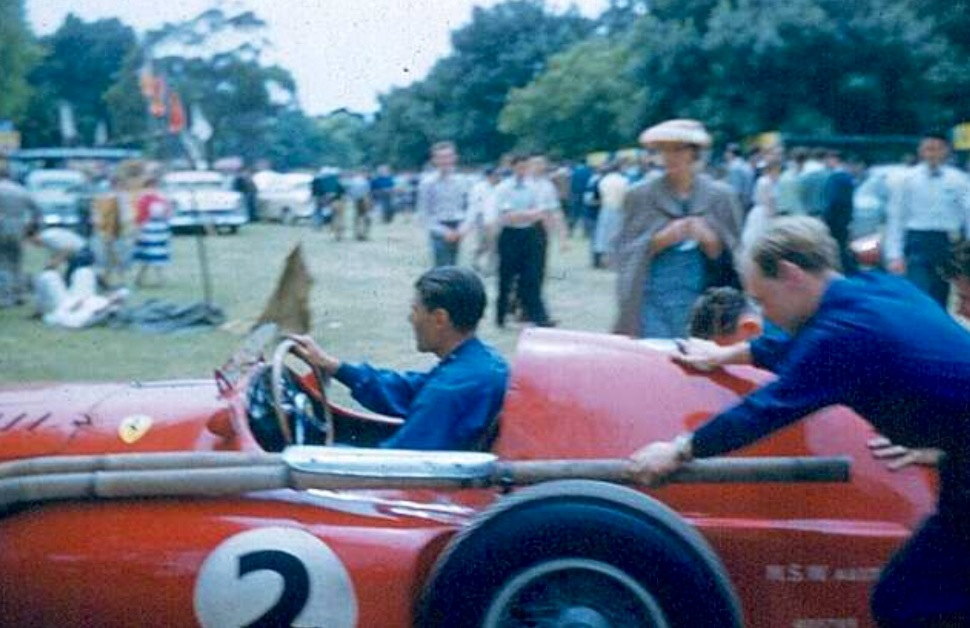
The Glass Super Squalo being pushed thru the leafy surrounds of Albert Park during the Melbourne GP/Victorian Tourist Trophy meetings in November 1958. First meeting with the cars new 2.5 litre engine. (Kevin Drage)

The Ferrari was brought to Australia by Reg Parnell…

He and Peter Whitehead ran identical cars in the New Zealand International races that summer after racing their ex-works 1955 chassis’ in the Formula Libre 1956 Australian ‘Olympic’ Grand Prix at Albert Park- Stirling Moss won in a Maserati 250F whilst Whitehead was third and Parnell sixth.

The car was later sold to John McMillan, who rolled it at Mount Druitt, damaging it badly, before being repaired by local artisans including racers Tom Sulman and Jack Myers it was then sold to Glass.

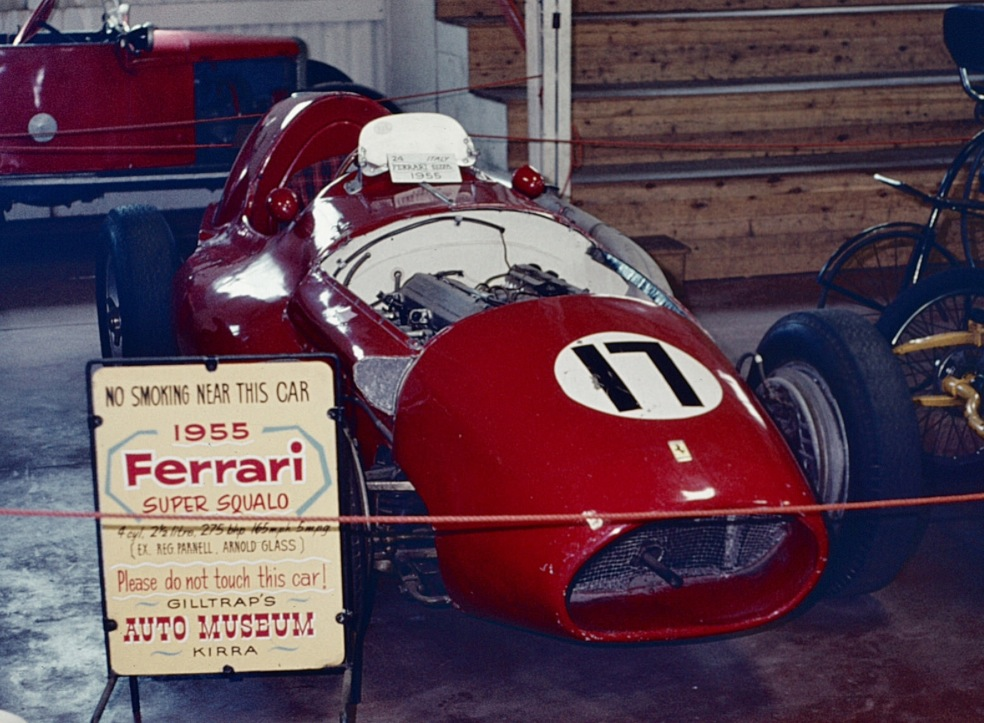
I remember seeing the racer at Gilltraps Motor Museum, Kirra, on Queenslands Gold Coast on a family holiday in 1973- ‘twas sensational to look at the first fabulous ‘front engined red Grand Prix car’ i had seen and it is therefore forever etched in my memory!

Gilltraps added it to their collection as a static exhibit in 1963 at the end of the cars ‘front line’ career which was in the hands of Arthur Griffiths and speedway star Des Kelly.

Chassis #’555/2’, re-numbered ‘FL9002’ when rebuilt by the factory as an F Libre machine, was restored by Noel Tuckey and a team of enthusiasts in 1975/6 and then competed at various Australian historic events before sale to Ian Cummins and then the car was Hoovered up by US dealer in the 1980’s- these days it is part of Bernie Ecclestone’s collection.

glass fazz

The Squalo at Gilltrap’s in the early ’70’s, a star amongst the other exhibits! (Sharaz Jek)
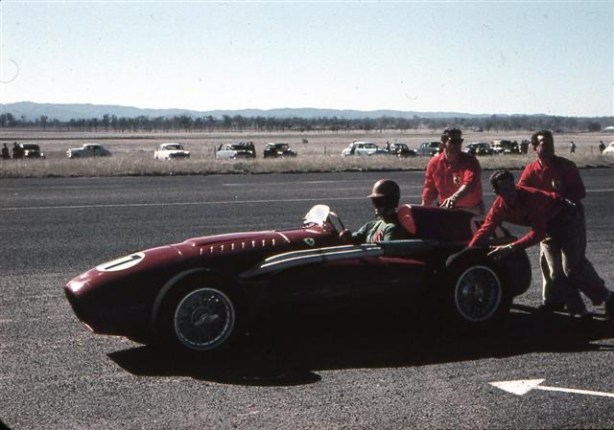
 

Des Kelly eases his magnificent machine forward onto the Lowood grid in 1961, Super Squalo still looks the goods despite its obsolescence as a front line Gold Star tool by then, the Cooper takeover was complete. Meeting date and result folks?(unattributed)

Ferrari had ruled the roost in Grand Prix racing in 1952, 1953, its Aurelio Lampredi designed 2 litre, four cylinder Tipo 500 had won two World Championships on the trot for Alberto Ascari.

They raced into the new F1 of 1954 with 2.5 litre versions of the 500, named 625- as well as a new design, the 553. It was fitted with a 2.5 litre engine which owed few parts to the 2 litre unit and a new chassis which whilst still comprised of two main longitudinal members was reinforced with welded on superstructure framework- certainly not a ‘spaceframe’ in a definitional sense but structurally better than what went before.

Suspension was similar to the 500/625 in having independent front suspension by wishbones and a transverse leaf spring and a de Dion rear axle similarly suspended. With its fuel low and centralised the car was squat, broad and low giving rise to its ‘Squalo’ or ‘Shark’ nick-name- three 553s were built.

In 1954 the 625 was the better performing car of the two designs despite Ascari first racing the Ferrari 500 at Modena in late 1951- he won. Doug Nye wrote that Ferrari built six, or maybe seven 500’s for their own use and ‘at least five cars either as new or from spare and cannibalised parts for sale to private entrants.’ All of these cars but one was converted from a 2 litre ‘500’ to a 2.5 litre ‘625’ for F1 use that year and beyond.

Ferrari 555 Super Squalo cutaway (G Cavara)


Paul Frere in the Ferrari 555 Super Squalo ‘555-2’ he raced at Monaco in 1955, Piero Taruffi started the car, Frere took over during the race- Nino Farina behind his #42 625 (Klemantaski)

Ferrari designed and built the 555 ‘Super Squalo’ for 1955 to address the shortcomings of the 553 starting with the chassis, which was of similar construction to the 553 but had larger diameter base tubes than its older brother.

The suspension was modified along the lines of changes made to the 553 chassis in which Mike Hawthorn was victorious at the Barcelona, Spanish Grand Prix in late 1954- the weekend Vittorio Jano’s Lancia D50 first raced and piled further competitive pressures upon Scuderia Ferrari who were already hard-pushed by the Maserati 250F and- from the French Grand Prix, Mercedes Benz W196. Front suspension used coil springs and revised geometry was deployed at both front, and to the rear de Dion. The three 553s were converted to this specification inclusive of bodywork changes, in addition to the four new 555s built.

The 625s were also developed along similar 555 lines- double wishbone and coil spring front suspension and de Dion suspension amended with the transverse leaf spring moved from above the differential unit, from its original site below it.

Maurice Trintignant won the 1955 Monaco GP in one of these cars to give the 625 its greatest success. Note that the two 500/625 cars acquired by Peter Whitehead and Tony Gaze (later acquired and raced with great success by Lex Davison in Australia) to race in Australasia and South Africa in 1955 were ‘original form 1954 works cars’ which had ‘Tipo 750 Monza 3 litre sportscar engines installed for Formula Libre racing.’

The fundamental problem of the 555 Super Squalo design from the start was excessive understeer- the best result of the year, on a high speed circuit which suited them was in the Belgian Grand Prix at Spa where they were quick and finished 3-4-6- Farina from Trintignant and Frere. Regarded as a ‘fast circuit car’ the machines were not used again until Monza.

Note that the formal handover of the Lancia D50 ‘assets’ from the in desperately financially troubled Lancia to the desperately in need of a competitive car and haven’t got the budget to do so Ferrari, occurred on 26 July 1955, ‘saving Ferrari’s bacon’ and totally changing the Scuderia’s  developmental priorities away from the four cylinder cars to Jano’s V8 gems.

The Super Squalo’s were returned to Maranello and ‘lay in store there, while the totally obsolescent 553s had apparently long since been broken up…’Nye wrote.

The cars acquired by Parnell and Whitehead, chassis ‘555-2’ and ‘555-1’ were ‘presumably the least altered 555s, having their frames extended by four inches and 3.5 litre Tipo 860 Monza engines installed for Tasman racing…’

John Blanden records the Scuderia Ferrari 1955 race record of ‘555-2’ as sixth in the Monaco Grand Prix, the car shared by Piero Taruffi and Paul Frere with the balance of its outings with Maurice Trintignant at the wheel- Bordeaux GP DNF engine, Belgian- Spa sixth, Dutch- Zandvoort DNF gearbox and finally the Italian GP at Monza where he was eighth.

Arnold Glass in ‘555-2’ at Lowood circa 1958. Compare the bodywork of the car with its big, tall 860 Monza engine and the much shallower nose of the chassis in original F1 specs (B Thomas)

Arnold Glass is an immensely interesting character…

From a humble background, trained originally as a fitter and turner he made his first small fortune trading and repairing motor cycles. He was a racer and later an immensely successful businessman via his Sydney ‘Capitol Motors’ Datsun empire.

The following obituary was written by Malcolm Brown and published in the Sydney Morning Herald in January 2009- Glass was born on 11 December 1926 and died on 16 January 2009.

‘As a boy, Arnold Glass was directed by his father, a music teacher, to play the violin. But Arnold’s eye was firmly fixed on Popular Mechanics, a magazine for rev-heads, which he read from cover to cover, dreaming of owning a motorcycle.

Arnold’s father relented and bought him How To Be A Motor Mechanic. The boy who would become a dynamo in the Australian motor industry, a multimillionaire, sportsman and playboy, had his course in life set.

Arnold Glass, who has died at 82, was born in Newcastle and grew up in Marrickville. He left school at 14 to earn money for his family, which included three brothers and a sister. He became an apprentice mechanic and, at 16, left home and bought an old Douglas motorcycle for £3/15/-.

glass mt druitt

Glass racing the 555 Super Squalo at Mount Druitt, Sydney on 10 November 1957. Bulbous rather than beautiful? Stunning regardless, if not the most successful of GP Ferrari’s. The Lancia D50 saved Ferrari’s bacon when ‘gifted’ to them in the deal brokered later in 1955. (John Ellacott)


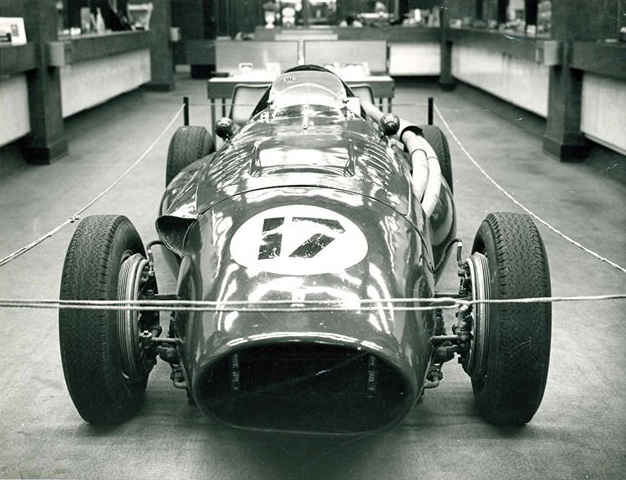
Not working quite so hard in a display in a bank chamber, date and place unknown (B Thomas)

While working in engineering plants, Glass studied at technical college to become a fitter and turner. He worked on Avro Anson aircraft engines at Butler Air Transport and saved to buy motor cycles, which he restored and sold. In 1946, at 19, he went into partnership with Julian St John to run a motorcycle business. Operating out of a tin shed in Marrickville, they scoured back alleys seeking to buy motorcyles.

In 1947, Glass acquired a Tiger Moth, learnt to fly and developed an absorbing interest in war-vintage piston-driven aircraft.

In 1949, he and St John bought an old Chinese grocery shop in Campbell Street, opposite the Capitol Theatre, and converted it into a motorcycle shop, naming their business after the theatre. Used motorcycle and car salesmen depended on newspaper advertisements to find out what cars were for sale and would pounce on the first editions at 3am. But Glass paid a young Herald employee £2 a time to throw a copy from a toilet window at midnight.

The arrangement was risky. The businessmen had a setback when they bought a stolen motorbike. Yet Glass wasn’t one to recoil from risk. In partnership with Bill Duffy, he bought an unfancied racehorse called Johnny Zero, which won consistently, earning the owners £30,000.

He bought used cars in Singapore and aircraft in England, selling them to rural customers in Australia. In 1951, he and St John converted a pet shop in Campbell Street into a car yard. The next year he bought out St John and, in 1953, bought land for another car yard in the Haymarket, selling Chryslers, Simcas, Renaults and Porsches-by then he was selling 1000 vehicles a year.

Glass tried punting but stopped when he was losing heavily. “I found something that could beat me,” he recalled. He married a model, Norma Geneave, in 1955, acquired a car yard at Lidcombe in 1957 and won the Bathurst 100 motor race. A daughter named Amanda was born in 1958.

In 1961, he bought a car yard at Artarmon and made the critical decision to invest in Japanese cars, then rarely seen in Australia. Moving into William Street, he took over a Datsun franchise, soon the cars captured the public’s imagination his wealth assured.

He bought a home in Cremorne, in so-called ‘Millionaires’ Row’, with its own wharf, but his marriage failed in 1963. ‘I’m not a family man’, he said later. ‘I didn’t have a lot of time or patience for a family type life. I put so much into my business, none was left over.’
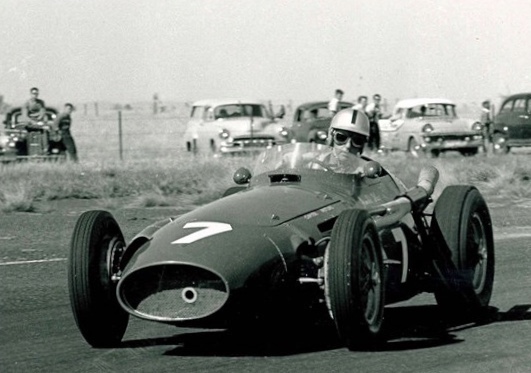
Maserati 250F circa 1959/60 at Lowood, Queensland (B Thomas)


Glass contesting the 1962 Australian Grand Prix in a BRM P48 Buick V8, 5th in the race won by McLaren’s Cooper T62 Climax (K Devine)

Glass raced many different cars, including Ferraris and Jaguars. He raced boats in Australia and the United States and competed successfully in marathon waterski events. He flew aircraft, buying a Mustang and British-made Vampires and travelled to Czechoslovakia and Poland to fly MiG-21s. His restless energy took him spear-fishing with the Prime Minister Harold Holt.

In 1961, Glass slammed his BRM P48 into a tree at 100 kmh at Mallala, after which he required plastic surgery. Bouncing back, he bought a seven-hectare site on Parramatta Road, Auburn, and turned it into the biggest car dealership in NSW, as the distributor for Nissan and BMW.

He established his own finance and insurance company, dealt in aircraft and boats and ventured into show business. Transporting himself in his Lear jet, he stalked and killed buffalo and lions in South Africa, crocodiles in Zimbabwe and bears in Alaska. His powerboat racing wins included the 1975 Sydney-Newcastle BP Ocean Classic.

By 1976, Capitol Motors was selling 23,000 Datsuns a year. In 1977, Australian National Industries bought the company for $28.43 million. With his 49 per cent shareholding, Glass took away $13.87 million while joining the ANI board as deputy chairman.

He spent much of his time in Monaco, although he returned in 1983 to sack three ANI executives. He had demonstrated his toughness years earlier by sacking car salesmen who failed to reach quotas. Retiring to Monaco in 1984, he returned from time to time to see his daughter and her family. He died in Sydney.

Arnold Glass is survived by his partner of 37 years, Jennifer Hole, his daughter, Amanda Sorensen, and grandchildren Ryan, Tegan and Kirsty’.

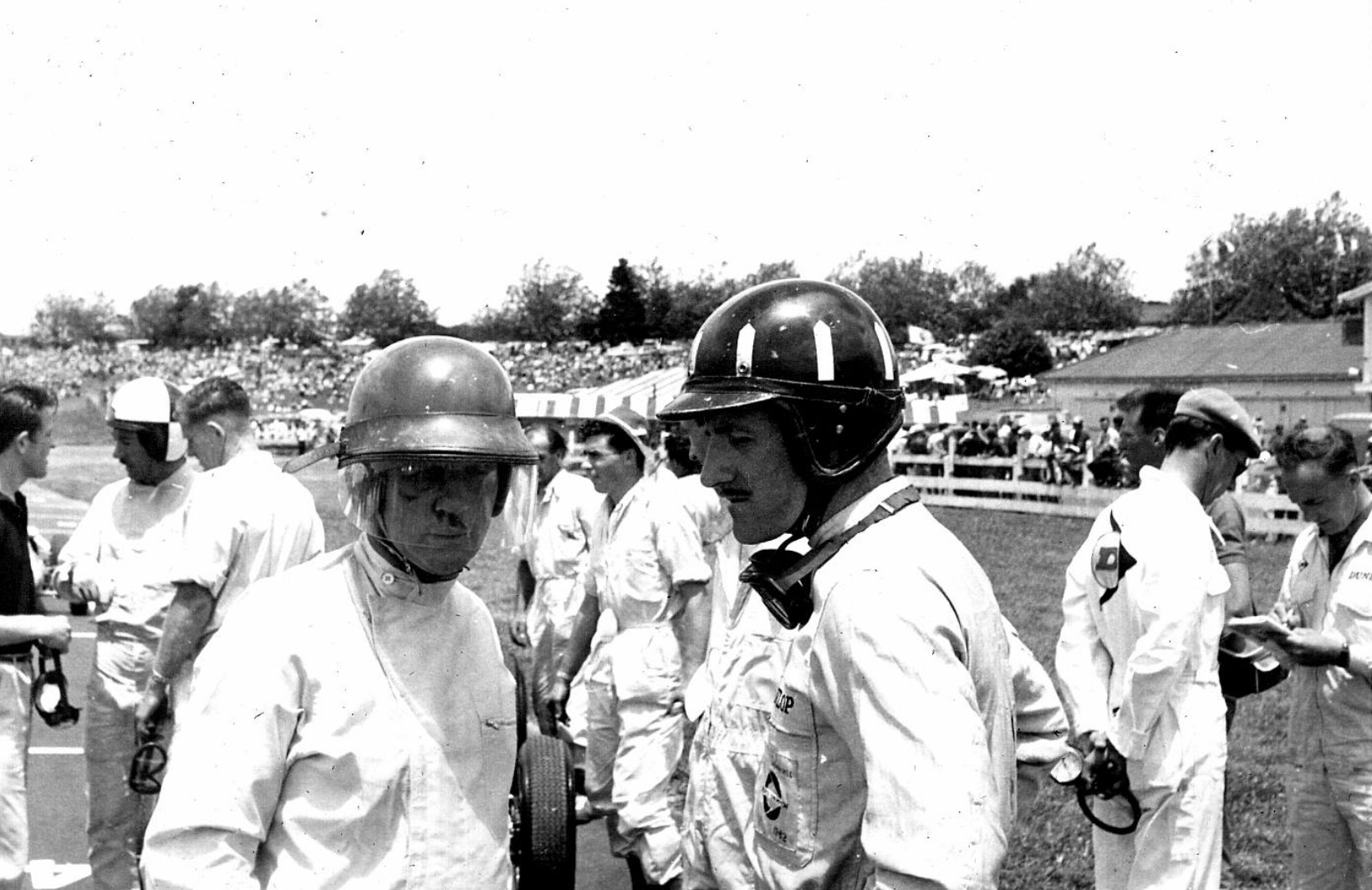
Arnold, his face showing the signs of a practice accident, with Graham Hill prior to the start of the 1965 NZ GP at Pukekohe. Hill won in the Scuderia Veloce Brabham BT11A Climax whilst Glass retired after 3 laps in his Cooper T55 Climax with mechanical dramas (CAN)

Etcetera…
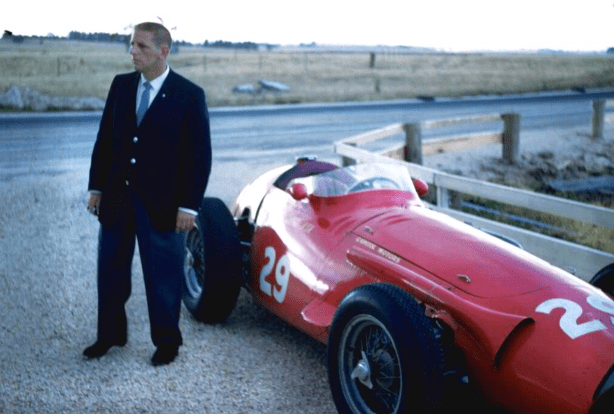
glass and 250f

(John Ellacott)

I love this portrait of Glass by John Ellacott, looking every inch the successful man he was- its taken at Symmons Plains, Tasmania in March 1960.

The car is the Maserati 250F referred to above, chassis #2516, the ex-works Moss/Behra/Hunt/Stillwell car which Arnold raced very competitively from 1959 to 1961- the car with which he achieved most success i think.

I wrote an article about this Maser a while back, click here to read it; https://primotipo.com/2014/07/19/reg-hunt-australian-ace-of-the-1950s/

Arnold testing the Maserati 250F at Symmons Plains in March 1960 with Mick Watt’s MG Holden Spl in the foreground (J Barnes)

Gilltraps..

Gilltrap catalogue

(Stephen Dalton Collection)

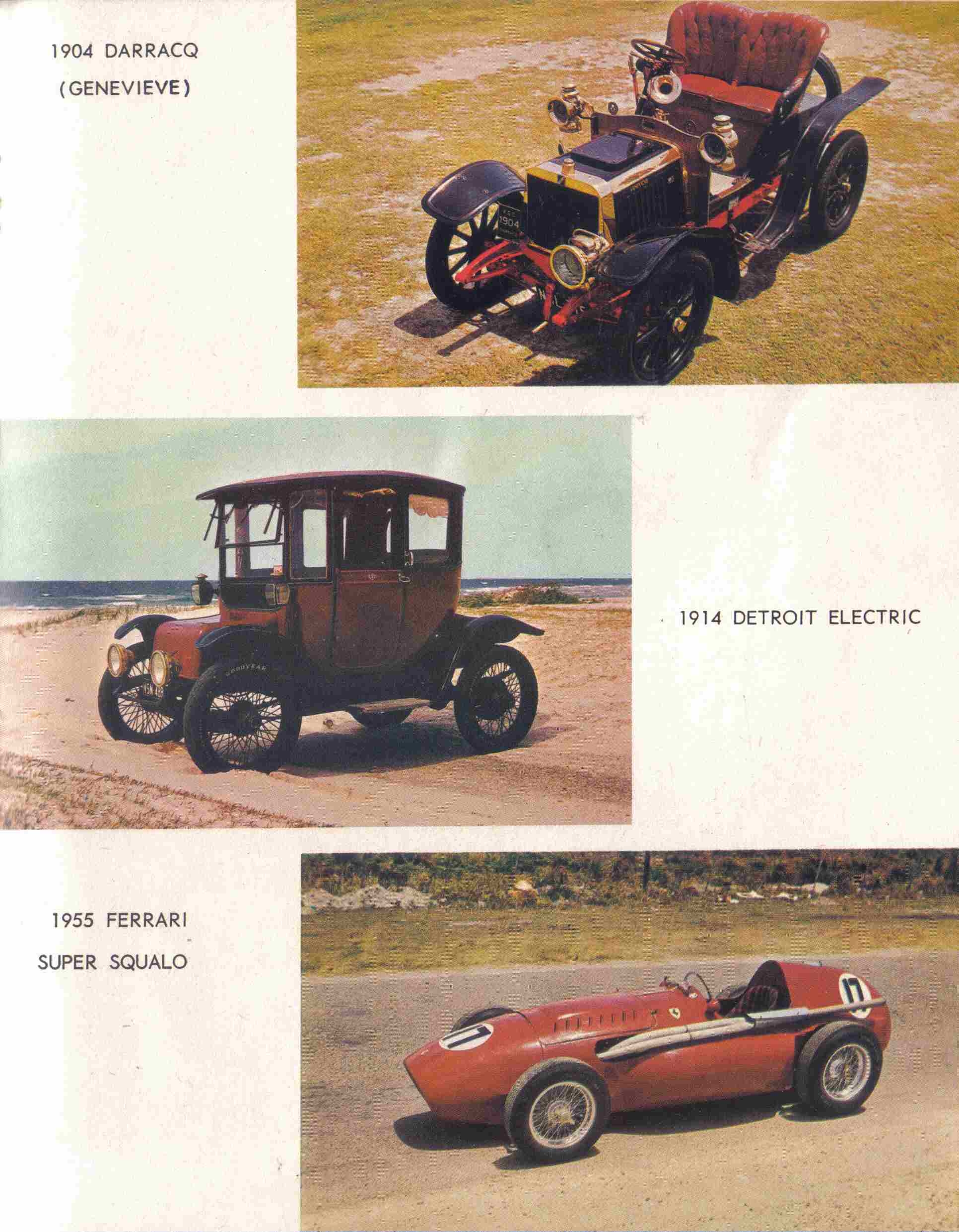
From the Gilltraps catalogue of display cars circa 1967, the Ferrari Super Squalo is at bottom, at the top is ‘Genevieve’, the Darracq which starred in the 1953 British film of the same name.


(D Zeunert)

A bit of gold dust from Melbourne enthusiast/historian David Zeunert’s files.

‘A newspaper advertising clipping from my files of the Gilltrap Ferrari Super Squalo dated August 1986. Oh they were the  days, I have an extensive newspaper advertising collection of all of the cars that interested me. I used to comb the Age Motoring Ad section and clip out the ones I dreamed of owning one day. Its great to scan them 40 years later.’

I see Reg Purnell raced the car, the ad does nothing to provide me clarity about whether its ‘Gilltraps’ or ‘Giltraps’ either- there are all variations on the internet.

Ferrari works material on ‘FL9002’..

(R Croston)

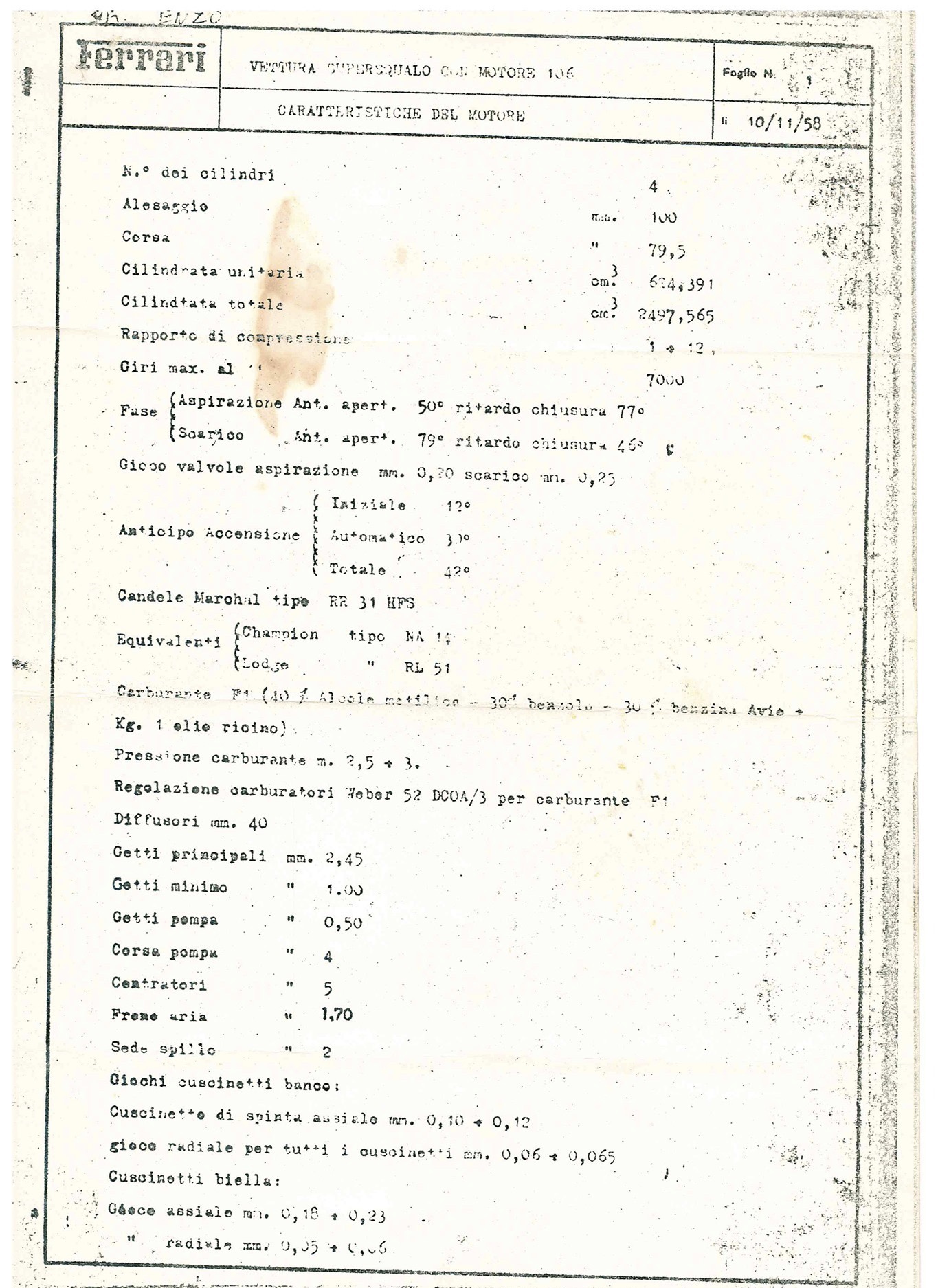
Enthusiast, Richard Croston has a copy of this information on the general specifications of ‘FL9002’ and the detailed specifications of both the 3.5 litre engine the car was fitted with when raced by Parnell and the 2.5 litre unit the factory fitted when sent back to Italy by Arnold Glass.

Dated 10 November 1958, the document is from the time Glass owned the car and appears to be a letter and information in response to a request from Arnold.

You can piece it together yourselves but the gist of it seems to be they cannot be clear about providing more information about the car whereas in modern times the parentage of the car is quite clear.

The 3.5 litre engine ‘Tipo 129’ four cylinder, DOHC, two valve engine had a bore and stroke of 102x105mm and developed 281bhp @ 6000rpm, the gearbox was mounted at the rear and had four speeds.

(R Croston)

The 2.5 litre ‘Tipo 106’ four cylinder, DOHC, two valve engine was oversquare, having a bore and stroke of 100×79.5mm for a capacity of 2498cc and a rev limit of 7000rpm- no power output is quoted but other sources quote 260bhp. Carbs are two Weber 52DCOA/3.

(R Croston)


(R Croston)

Credits/References…

Heinz Federbusch and John Ellacott photos, John Blanden ‘Historic Racing Cars in Australia’, ‘History of The Grand Prix Car’ Doug Nye, Kevin Drage, Stephen Dalton Collection, Sharaz Jek, Ken Devine Collection, Obituary by Malcolm Brown- Sydney Morning Herald, Quentin Miles, Classic Auto News, Brier Thomas, Louis Klemantaski, Richard Croston Collection, David Zeunert Collection

Tailpiece: Glass, Maserati 250F, Bathurst circa 1960…
(Q Miles)

Finito…

duck

(Jesse Alexander)

Alfonso de Portago practices his Ferrari 625 prior to the 1955 Pau Grand Prix, a race won by Jean Behra’s factory Maser 250F…

These superb images are from the Jesse Alexander Archive. The factory Maserati’s of #14 Behra, #16 Roberto Mieres and #18 Luigi Musso are in line astern in the Pau paddock, Saturday 10 April 1955.

pau

(Jesse Alexander)

Jean won the race from Eugenio Castellotti in a Lancia D50 and teammate Roberto Mieres in third. de Portago was 8th and the best placed Ferrari, no factory cars were entered by the Scuderia after a poor showing at Turin a fortnight before.

Ascari had the race in hand after a great dice with Behra early but with 20 laps to go had braking problems, the Lancia mechanics did a work around which gave him brakes on the front and allowed him to finish, Jean taking a lucky win.

castellotti

Eugenio’s Lancia being warmed up by the team, you can feel the staccato-blast of that lovely basso-profundo 2.5 litre V8!? (Jesse Alexander)

de 50 front

The nose of Lancia Team Leader Alberto Ascari’s Lancia D50. Pau 1955, he was 5th. Alberto died only 6weeks later at Monza in a tragic testing accident. (Jesse Alexander)

pau_1

(Jesse Alexander)

No sign of the admiring duck this time but again its de Portago in his Ferrari, not sure who it is behind, factory Ferrari GP drives would come his way in time.

Sensational shots of a great track, and thankfully still in use.

Photo Credits…

Jesse Alexander Archive, http://www.jessealexander.com


12 th rob roy 1947

Its a very English car but not so the background, the year is 1947, driver a winner of the Australian Grand Prix…

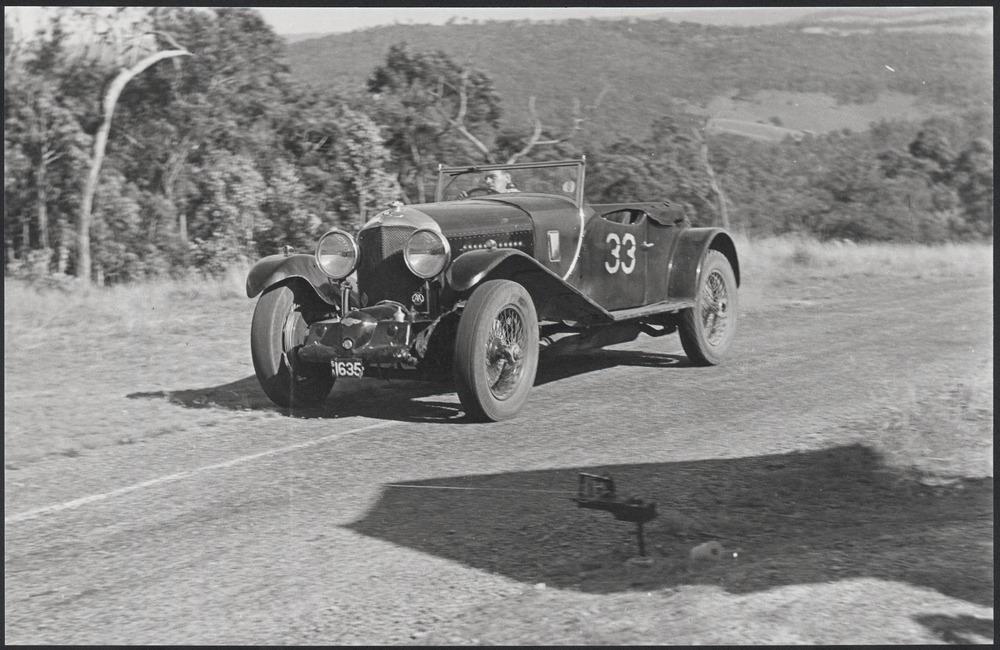
Many thanks to contributor Stephen Dalton for correctly identifying the car and driver as Lex Davison and Bentley 4.5 litre s/c as the car, a big conveyance for that hill despite its open, fast flowing nature!

Lex entered the Bentley in the 12th Rob Roy Hillclimb in 1947. This picturesque venue, in the outer east of Melbourne in the Christmas Hills is still in use by the MG Car Club.

The stretch of main road which goes past Rob Roy’s location off Clintons Road a regular stretch for ‘early morning runs’ by car and bike enthusiasts heading into the Yarra Valley where drivers roads, wineries and fine food are plentiful.

davison 4.5 bentley 12th rob roy

image

Start of the race won by Jack Brabham’s dominant Brabham BT18 Honda, the little 1 litre car was the winner of the F2 Championship that year…

Jack won the title, ‘Trophee de France’ 1966, awarded for results in six championship rounds, from teammate Denny Hulme, similarly mounted with Alan Rees third in another BT18 powered by the Ford Cosworth SCA engine.

Brabham won the 3 July, 307 km ‘XXXII Grand Prix de Reims’ F2 in a little over an hour and a half from Alan Rees BT18 and Jean-Pierre Beltoise’ works Matra MS5 Cosworth SCA.

In a pretty good weekend for Jack, he also won the 400 km French Grand Prix on the same day in BT19 Repco, and of course in so doing became the first man to win a GP in a car with his own name and manufacture- together, Brabham and Ron Tauranac were partners in Motor Racing Developments, the manufacturers of Brabham cars.

image

Brabham’s BT18 Honda takes the Reims chequered flag from Toto Roche (unattributed)

Jack’s business acumen is demonstrated by his ability to form engine partnerships with Honda in F2 and Repco for his F1 and Tasman engines simultaneously, victorious in both F2 and Grands Prix racing in 1966…

Brabham and Ron Tauranac collaborated very successfully with the Japanese engineers, Honda learning much about engine installation and the need for torque as well as top end power during the first season of the partnership in 1965.

The little ‘S800’ 4 cylinder, fuel injected 1 litre engine developed around 150bhp @ 10000 rpm at the time the Ford block Cosworth SCA developed circa 138bhp and comprehensively blew off the opposition that year. 150bhp per litre for a normally aspirated engine was about as good as it got at the time, apart from Honda’s motor cycle engines anyway!

Honda acquired a Brabham F2 chassis in 1964, so Jack was well aware of Honda’s F2 plans, he first tested the car at Honda’s request late in 1964 at Suzuka and again in January 1965 at the conclusion of the Tasman Series.

He reported his impressions of the car in his ‘Motor Racing’ magazine column.

‘The Honda F2 is an all-alloy 4 cylinder DOHC, 4 valve engine with fuel injection…alongside an F2 Cosworth SCA , it is quite a big looking unit and there are some difficulties getting it into the frame…Since then modifications have been made to the unit so it can be mated to a Hewland 6 speed gearbox and sit in its proper position in the chassis’.

honda engine

Honda 1 litre DOHC, 4 valve fuel injected 150bhp ‘S800’ engine. Jack’s Brabham BT16, Pau GP 1965, DNF in the race won by Clark’s Lotus 35 Cosworth SCA. Electronic ignition take off of exhaust camshaft clear, large size of engine, neat installation and Goodyear tyres suggests 1966. Hewland ratio change in progress, lots of this with the peaky little engine! (Ian Gordon)

‘It runs smoothly and sounds very impressive, makes twice as much noise as the average F2 engine..there is useful power from 6000-9500 rpm, which is a nice wide band and makes the car comparatively easy to drive…Honda agreed to send two of their mechanics to be responsible for maintaining the engines during the coming season’. (1965)

In fact 1965 was a learning year for the new partners with Jack impressing upon the Japanese engineers the need for a wider band of power and torque, gearing of the car in 1965 was particularly critical.

Jack stepped out of the Honda powered chassis in June, forsaking it for Cosworth SCA power as the engine was developed. He returned to it at Albi in September- Jack took pole, set the fastest lap and finished second to Jim Clark’s Lotus 35 Cosworth SCA by less than a second after 85 laps…the lessons were well learned by Honda for success, make that domination in 1966.

image

Ron Tauranac and Jack Brabham discussing setup changes to Jacks BT21 Honda, #2 Hulme’s sister car, Monthlery 9 September 1966 (Popperfoto)


image

Jack Brabham with the victors garland, Monthlery 1966. Brabham BT21 Honda. Thats Clark’s 2nd place #3 Lotus 44 Cosworth SCA behind, Denny Hulme was third in the other Honda engined Brabham BT18. Note the Honda badge on the nose of Jack’s car. (unattributed)

The FIA introduced a new 1.6 Litre F2 class for 1967…

Honda were focussed on F1 in 1967 and 1968 before their withdrawal from top level single seater racing, they did not build an engine for the new European F2 Championship, but returned with Ralt to 2 litre F2 in 1980- the partnership of Honda and their old friend and collaborator Ron Tauranac was rekindled after all those years.

They were successful again too, winning the European F2 Championship in 1981/3/4, the Ralt Honda’s driven by Geoff Lees, Jonathon Palmer and Mike Thackwell to the title respectively before they returned to F1 with Spirit in 1983. That formative partnership was replaced with a longer term commitment to Williams in 1984 and the rest as they say is history.

Ralt%20honda%20team%201982

(unattributed)

Modern Ron Tauranac/ Honda Partnership…

The successful Ralt Honda Team in 1981. They were victorious with the Ralt RH6 in the Euro F2 Championship, Geoff Lees won the title, he is to the right of teammate- the black-clad Mike Thackwell is on crutches thanks to a big testing accident before the 20 April Thruxton Euro F2 round, showing true grit he returned to the fray at Mugello on May 24.

Lees won the title with three wins, Thackwell took one, the season opener at Silverstone.

Ralt RH6/81- the aluminium monocoque ground effect car of the period used the Honda RA261E, 2 litre (1996cc) DOHC, 4 valve , fuel injected normally aspirated V6 engine as a stressed member, which developed circa 310bhp @ 10500rpm.

Ron Tauranc leaning on the wing of a Ralt at Silverstone during the obviously hot! British Grand Prix on 18 July 1981.

There was no F2 duties that weekend but rather an important F3 race to attend to- customer Ralt RT3 Toyota’s filled the first four slots in the race- Thierry Tassin won from Raul Boesel and Jonathon Palmer, the latter graduated to the works Ralt-Honda F2 squad. To underline the dominance of the RT3’s, they filled thirteen of the top fifteen places.

Ralt RH6 Honda (T Jufuku)

Etcetera…

jb brabham honda 65

Jack not looking quite so happy with the car in its formative 1965 year with the new Honda engine. Here at Oulton Park for the F2 ‘Gold Cup’ in September. He qualified his BT16 with the peaky unit well, 6th, but clutch trouble meant a DNS in the race won by John Surtees Lola T60 Cosworth SCA. (Eddie Whitham)


jack and ron

Another Oulton shot, Geoff Brabham in the green jacket far left looking on, Ron Tauranac, Jack and the small team of Honda mechanics. (Eddie Whitham)


honda big exhaust

In the early stages much experimentation took place to get the power/torque mix right including exhaust lengths… 1965, paddock place and date unknown. (unattributed)


jack oulton

Jack preparing for the off in the Oulton paddock, 1965 Gold Cup. (Eddie Whitham)


jap techs b honda

Another unattributed paddock shot of the Brabham Honda. Roy Billington down the back. Conventional rear suspension and Hewland ‘box. Single top link, inverted lower wishbone, coil spring/damper unit, adjustable roll bar and rubber donut all in shot. (unattributed)


Brabham_Hulme BT18 Honda (F2) Pau GP 1966

Denny ahead of Jack at the Pau GP on April 17 1966. The tables were turned at the events conclusion, Jack and Denny in Brabham BT 18 Honda’s, Graham Hill 3rd in another Brabham, a BT16 BRM. The Brabham Honda 1/2 was achieved at Goodwood, Pau, Zolder, Crystal Palace, Karlskoga and Keimola, Finland that year. (unattributed)


image

Brabham victorious in the car at Pau with Graham Hill and Denny Hulme joining in the fun (INA)

Tailpiece…

reims f 2

‘Where’d they go?!’ Tailenders on the Reims ’66 F2 grid. (unattributed)

Credits…

Eddie Whitham, Popperfoto , Stephen Dalton and Leigh McMullen for research assistance, ‘Motor Racing’ magazine May/June 1965, Ian Gordon, Takashi Jufuku

Finito…


image

(wirra)

Allan Moffat’s Mustang on Warwick Farms ‘Northern Crossing’, 30 April 1972…

In a country obsessed with touring cars this is one of, if not the most revered of all, even though it never won the Australian Touring Car Championship.

A rare beast, it is one of only seven ‘factory’ Kar-Kraft built cars for the 1969 Trans-Am Championship Moffat commenced racing in Australia at Sandown on 5 May 1969.

I am not a ‘taxi racing’ guy but this car is on my ‘ten racing cars I would love to own’ list, its still in Australia thank goodness, in the tender loving hands of David Bowden. This excellent article was written for ‘Australian Muscle Car’ magazine by Mark Oastler and is ‘definitive’, the best i have read on this great car.

Allan Moffat’s 1969 Trans-Am Mustang

moffat wf

(lyntonh)

Moffat in search of an apex, one he has well and truly nailed! Warwick Farm, Sydney, 9 July 1972.

Etcetera…

Moffat Sandown

One of the more significant days in Australian touring car racing was the first race appearance of the machine which was at the Sandown Park ‘Southern 60’ meeting, Melbourne on 4 May 1969.

The first photograph is on the main straight as I suspect is the second.


(SS Memorabilia)

Here is the car ‘mid-career’, again at Sandown and ahead of arch-rival Bob Jane’s 7 litre Chev Camaro ZL1, very much as trick a device complete with aluminium big-block V8 as Moffat’s 1969 Kar-Kraft/Bud Moore 5 litre Trans-Am. Dandenong Road corner during the 1971 February Tasman Series meeting.

(AMC)

Moffat Calder

The cars twilight years were raced in 1973-1975 as a Sports Sedan, to Allan’s eternal credit he didn’t butcher the thing but rather replaced it in 1976 with the Ford ‘Cologne Capri’ RS3100 Cosworth when the years finally caught up with her.

The shot below is of Moff tickling the car into a beautiful third-gear slide through Sandown’s Shell Corner on the entry to the old Pit Straight, 1974, marvellous, even in Brut-33 livery!

(I Smith)

Credits…

wirra, lyntonh both via The Nostalgia Forum, Stephen Dalton Collection, SS Memorabilia, Neville Starr Collection, Allan Moffat Collection, Ian Smith

Tailpiece…

(N Starr)

That gorgeous red paint must have been ‘Dulon’- the Trans-Am even made the cover of a panel beating industry journal, the photo was taken at that initial meeting in May 1969.

Finito…