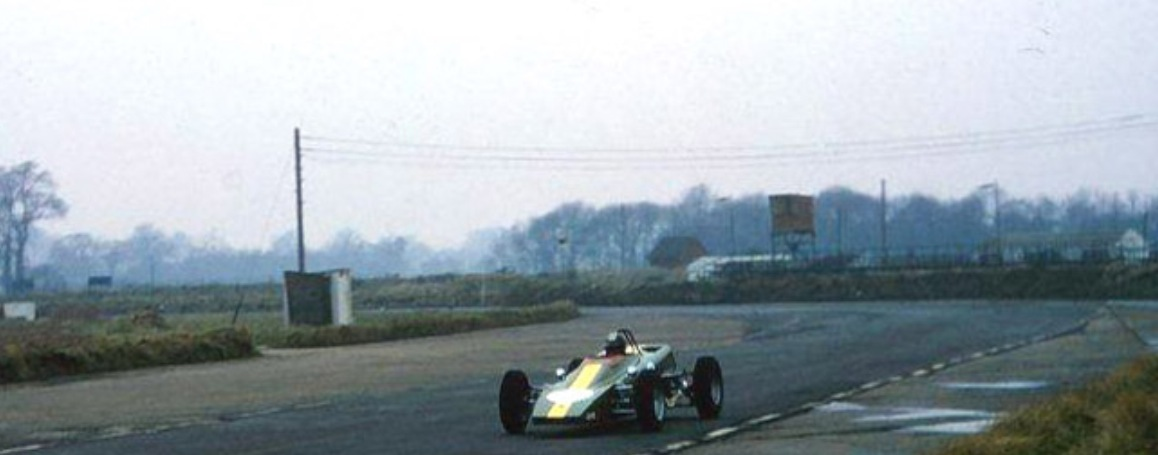
Graham Hill and jockey Lester Piggott test the Lotus 61 Formula Ford at an incredibly frigid Hethel Airfield 20 March 1969…
How many times he spun the car at Lotus HQ is unrecorded! The event appears to be a promotion to boost the sales of Lotus Components latest Formula Ford. And a very competitive car it was, in fact all the Lotus FF’s were; 51, 61, 59 and 69, it’s a great pity Chapman took the marque up-market and left its enthusiast/grass roots racing background behind.
Graham Nearn did rather well with the Lotus 7 Series 3 too, proving there was life in the old beast yet, the 7 being the other product of Lotus Components in addition to the production racing cars, Chapman sold the rights of the 7 in 1971.
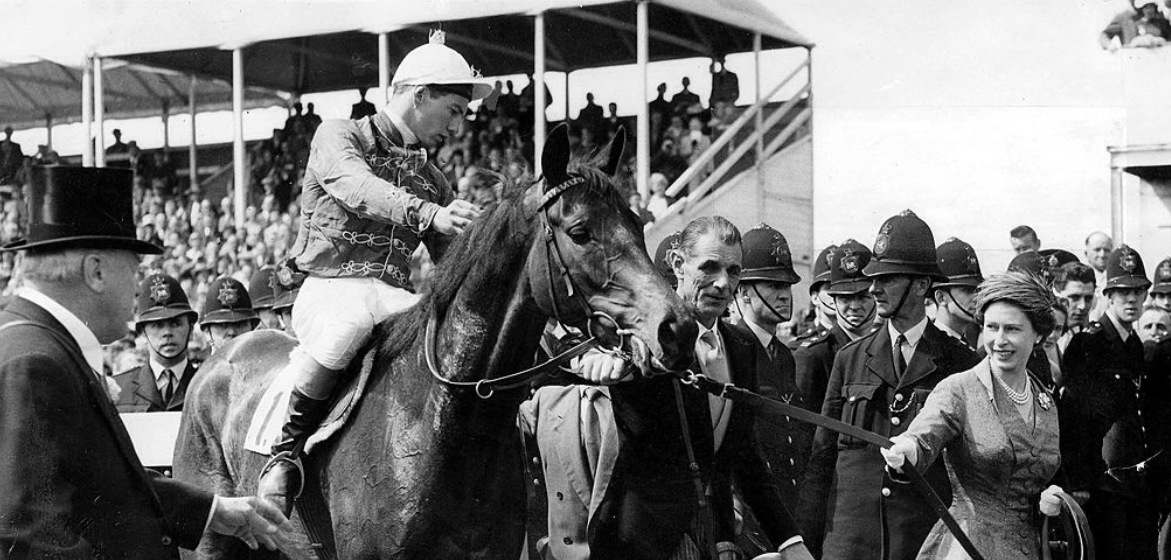
On a more familiar type of mount; Lester Piggott takes the Queens horse ‘Carrozza’ back to scale having won ‘The Oaks’ at Epsom, Surrey on 7 June 1957. Queen Elizabeth leads (Popperfoto)
Credit…
Victor Blackman, Richard Styles
Tailpiece: Dave’s Lotus 61…
Later Lotus GP driver, Aussie Dave Walker tests his JRRDS Lotus 61 at Snetterton prior to the start of his successful 1969 season. He won the British Les Leston FF Championship in this car in 1969 (Richard Styles)
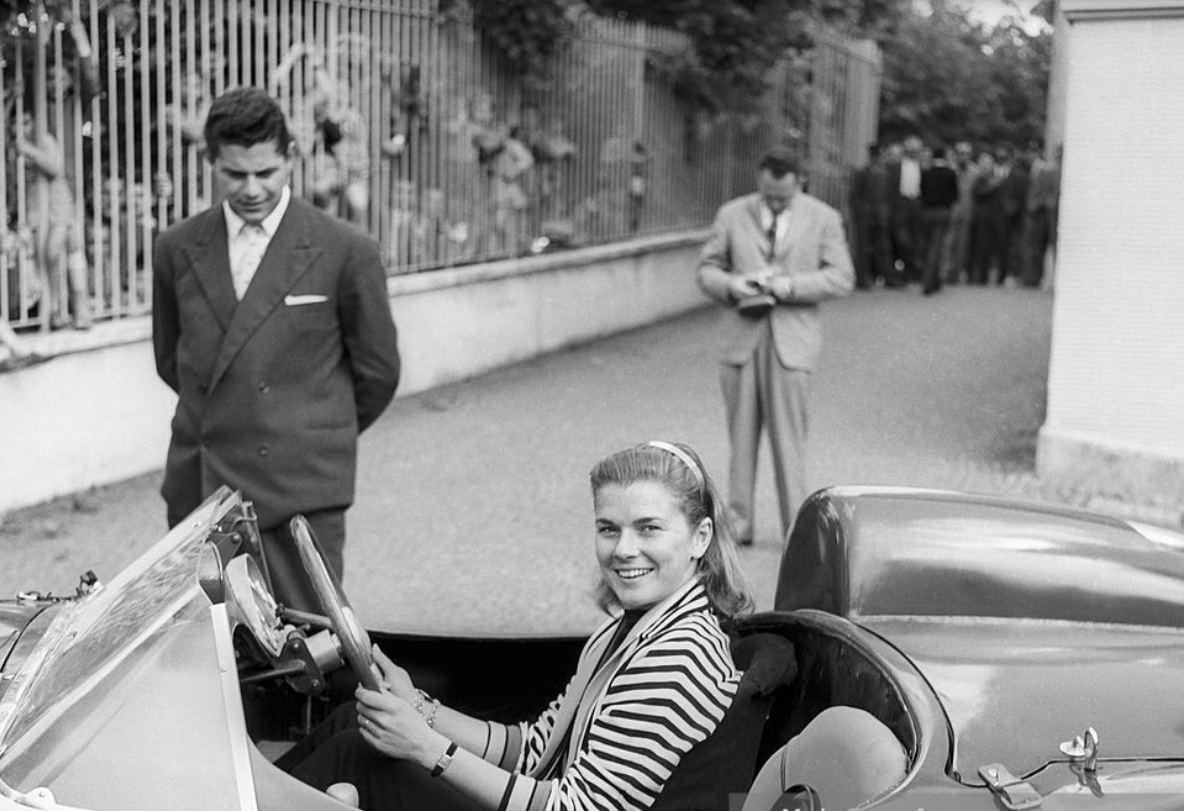
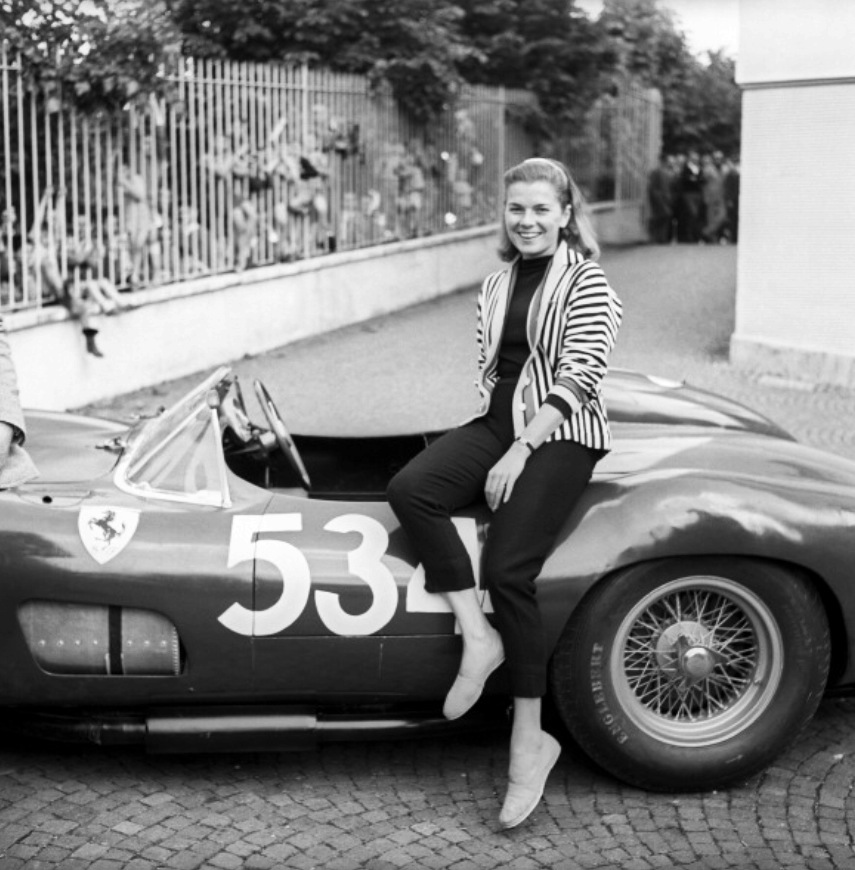
Louise Collins susses husband Peter’s fabulous Ferrari 335S in advance of the start of the ’57 Mille Miglia…
It was a victorious race for Ferrari but otherwise disastrous on every level given ‘Fon de Portago’s accident and it’s consequences, click here for an article about both this race and the big Ferrari;
Stan muscling his big Maserati 250F around Longford in 1959 en-route to his one and only Australian Grand Prix win…
The win was timely, he was monstered all the way by Len Lukey’s Cooper T43 2-litre, the way of the future of course. ‘Twas the last AGP win for a front engined car, mind you Lex Davison came within metres of winning in an Aston Martin DBR4 at Lowood, Queensland in 1960.
Jones at the wheel of his Maser, 1956 AGP Albert Park. Lovely portrait of the guy and looking quite the pro driver he was! (unattributed)
Jones gave his Gold Star defence a red hot go in 1959 having won the title in 1958, he raced four cars in his quest.
He didn’t race in the season opening event in Orange, NSW. Jack Brabham won in a Cooper T51, but he wheeled out his Maybach for Fishermans Bend’s Victoria Trophy on 22 February. He finished second to Alec Mildren’s Cooper T43.
Stan hadn’t raced the Maybach for years but had retained it. His friend and fellow racer Ern Seeliger evolved the car by replacing the Maybach engines which had been at the core of Maybach’s 1-3 with a Chev Corvette 283cid V8. The car also had a de Dion rear end and other clever modifications.
He swapped back into the Maser, winning the AGP at Longford on 2 March.
Stan in the big, now blue Maybach 4 Chev beside Alec Mildren’s Cooper T43 Climax at fairly desolate Port Wakefield, SA, March 1959 (Kevin Drage)
He switched back to the Maybach for the SA Trophy at Port Wakefield on March 28, winning the race. Crazily, the next round of the title was at Bathurst on 30 March, two days later. Very hard for contestants to make that trip from SA to Central NSW now, let alone with the road system of 1959!
Stan flew to Bathurst to drive the Maser. Whilst he won his heat he had engine dramas in the final and failed to finish, victory was taken by Kiwi Ross Jensen in another Maserati 250F.
He used the Maybach again at Lowood on June 14, he was third, then swapped back to the Maser for the next round, again at Lowood on 30 August, hitting a strawbale and failed to finish.
The reasons for the choice of car at each meeting would be interesting to know but are probably a function of vehicle availability and suitability. Which was the primary and which was the secondary factor meeting to meeting no doubt varies…
Mid-engined inevitability was clear though despite none of the Australian Cooper exponents being able to secure a full 2.5-litre FPF Coventry Climax engine…yet. The ‘mechanical mice’, as Lex Davison christened the Coopers, were only going to get quicker.
Whilst his fellow competitors were back at Port Wakefield for the 12 October meeting Stan was doing a deal with Bib Stillwell to buy his Cooper T51 2.2 FPF, chassis ‘F2-20-59’, the first of several T51’s Stan raced.
Stan Jones, Cooper T51 Climax, Caversham, WA October 24, 1959 (Dave Sullivan Album)
He soon got the hang of the car, after all he had been an air-cooled Cooper exponent earlier in the decade, finishing second to Len Lukey’s Cooper at Caversham, WA.
The Jones #3 Cooper T51 beside Len Lukey’s earlier model T43, Caversham August 1959. Lukey was the Gold Star winner in 1959 driving both Cooper T43 and T23 Bristol (Dave Sullivan Album)
The final rounds of Australia’s longest ever Gold Star series were Phillip Island’s Westernport Cup and Phillip Island Trophy races on 22 November and 13 December respectively.
Jones brought his ‘roster of cars’ to four for the year when he drove Ern Tadgell’s Sabakat (Lotus 12 Climax) after damaging his Cooper in a collision with Lukey. The Cooper was too badly damaged to start, as was Lukey’s, but Stan, very sportingly was lent the Sabakat by Tadgell.
Lukey won the 1959 title from Alec Mildren by two points with Jones a distant third. Mildren’s time would come in 1960 with fabulous AGP and Gold Star wins in a new Cooper T51 Maserati he and his team built over the summer.
Sadly it was the last full-blown Gold Star campaign for Jones, economic pressures from 1960 meant he did a few title rounds but was not a serious title contender, although still a tough competitor in any individual race he entered.
Stan settles into his Cooper T51 at Caversham (Dave Sullivan Album)
Equipe Jones at Albert Park during the 1956 AGP won by Moss’ 250F. International truck and the Rice Trailer, were the ‘ducks guts’, still a few of these around and highly prized (unattributed)
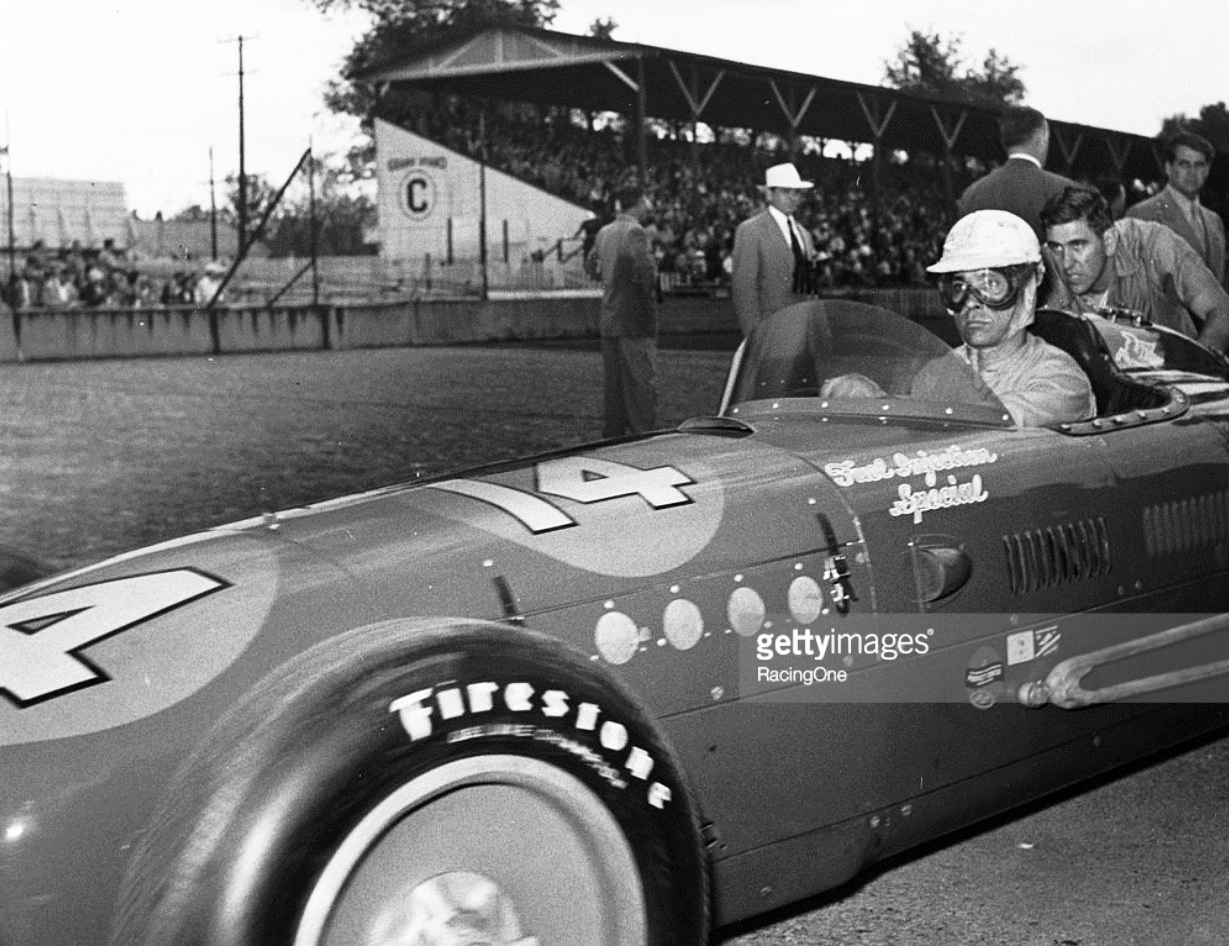
Billy Vukovich leading the Indy 500 in his Kurtis Kraft Offy, he won the race from the similar cars of Art Cross and Sam Hanks…
Vukovich dipped out on victory in 1952 with a steering gear failure several laps from the end, in ’53 he led from lap 1 and 195 of the 200 laps in total. The event was run in searing heat which required the use of 16 relief drivers, Billy drove the race himself in a tough, gritty display.
32 of the starters used the DOHC 4 cylinder Meyer-Drake ‘Offy’, the other engine the famous Novi V8, finally Kurtis Kraft supplied 22 of the 33 chassis which contested the race.
Credits…
Max Staub, Racing One
Vukovich rejoins the race after a pitstop, Kurtis Kraft, Indy 1953 (Racing One)
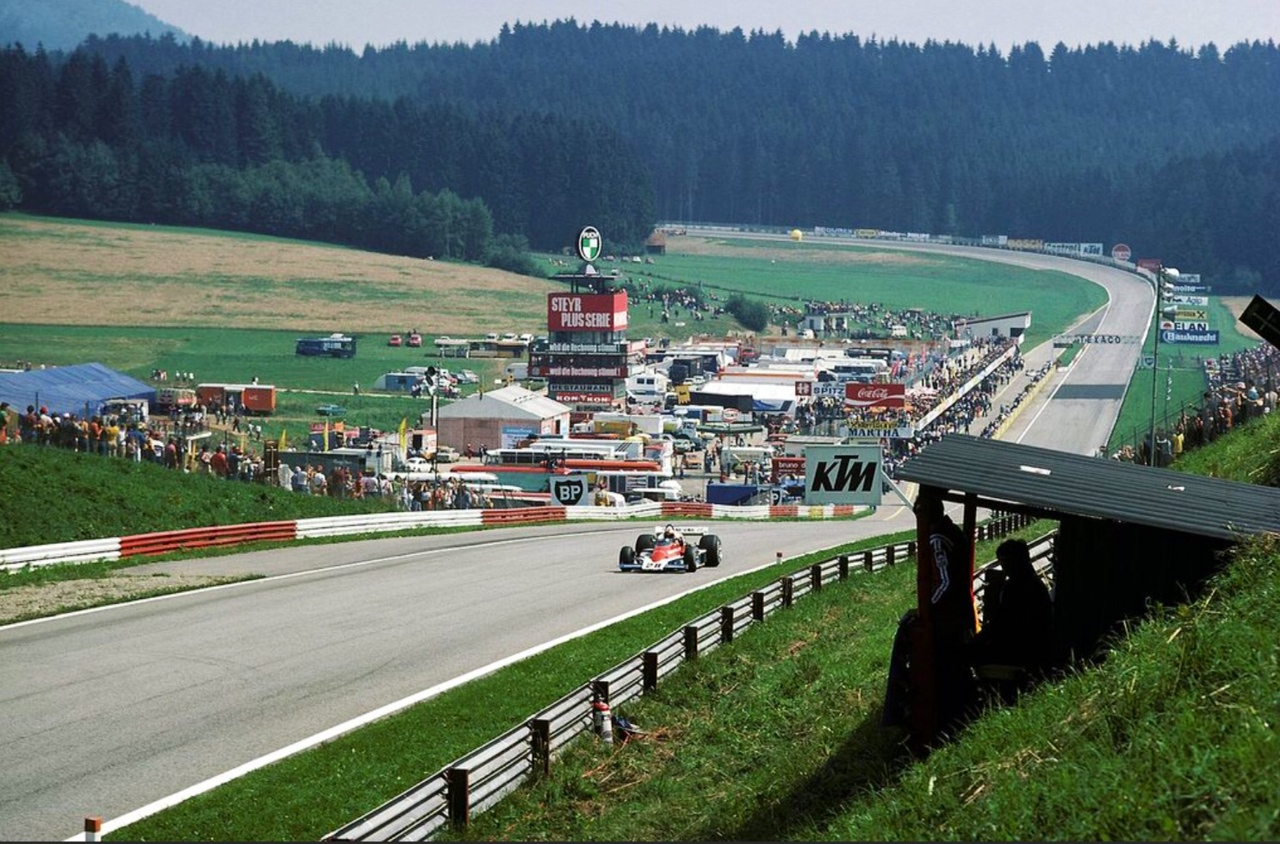
John Watson, Penske PC4 Ford, Austrian GP August 1976. Watson and Penske’s first GP wins.
Given the junk ‘Tilke Tele Circuits’ on which the circus races too much these days the old tracks, not that the ‘Red Bull Ring’, goes back as far as Monza or Spa, are important for their own sake as great ‘theatres’ but also to remind us of the heritage for which we are all responsible.
I’m not suggesting F1’s Venture Capital Fund owners, CVC give a ‘Rats Toss’ about heritage mind you.
Pastor Maldonado, Lotus E23 Mercedes, Austrian GP June 2015. Pastor was 7th in the race won by Nico Rosberg’s Mercedes F1 W06. (reddit.com)
Etcetera…
It was Tilke’s work to shorten the fast, long Osterreichring, used for the Austrian GP from 1970-1987 to the shorter A1-Ring used for the race from 1997-2003 aka Red Bull Ring now. The Styrian Mountains setting to start with was so good even he couldn’t bugger the thing up completely in its transformation to the modern age…
That Brian Redman had replaced Peter Revson for the Monaco ’72 weekend didn’t seem to make much difference to the presence of the fairer sex in the McLaren Team’s pit…
Revvie was contesting the Indy 500, Redman did a great job in the unfamiliar M19A Ford qualifying it 10th and finishing 5th, Jean-Pierre Beltoise took the win in his BRM in streaming wet conditions.
Revson’s Indy started well, he qualified 2nd but only lasted 23 laps before gearbox failure, Mark Donohue won in Roger Penske’s McLaren M16B Offy, so not an altogether bad weekend for McLaren.
Redman during dry practice on Saturday. McLaren M19A Ford, rising rate suspension front linkages clear (Brian Watson)
Credits…
Rainer Schlegelmilch, Brian Watson
Tailpiece: ‘I could get used to this F1 caper?!’ In fact its not what BR wanted at all…
I re-read Mark Donohue’s excellent biography not so long ago. He refers to his Lola F5000 as a ‘little car’ which made me laugh!
I’ve never seen F5000s as anything other than big-cars but I ‘spose it’s all relative. When your frames of reference include McLaren M16 Offy Indycars and Porsche 917/30 Can-Am racers they are…
The ‘brand spankers’ M8A out front of McLaren’s salubrious David Road, Colnbrook facilities in early 1968. A contrast with the opulence of Woking today (unattributed)
There is nothing small and subtle about Can-Am cars, everything is BIIIGG!
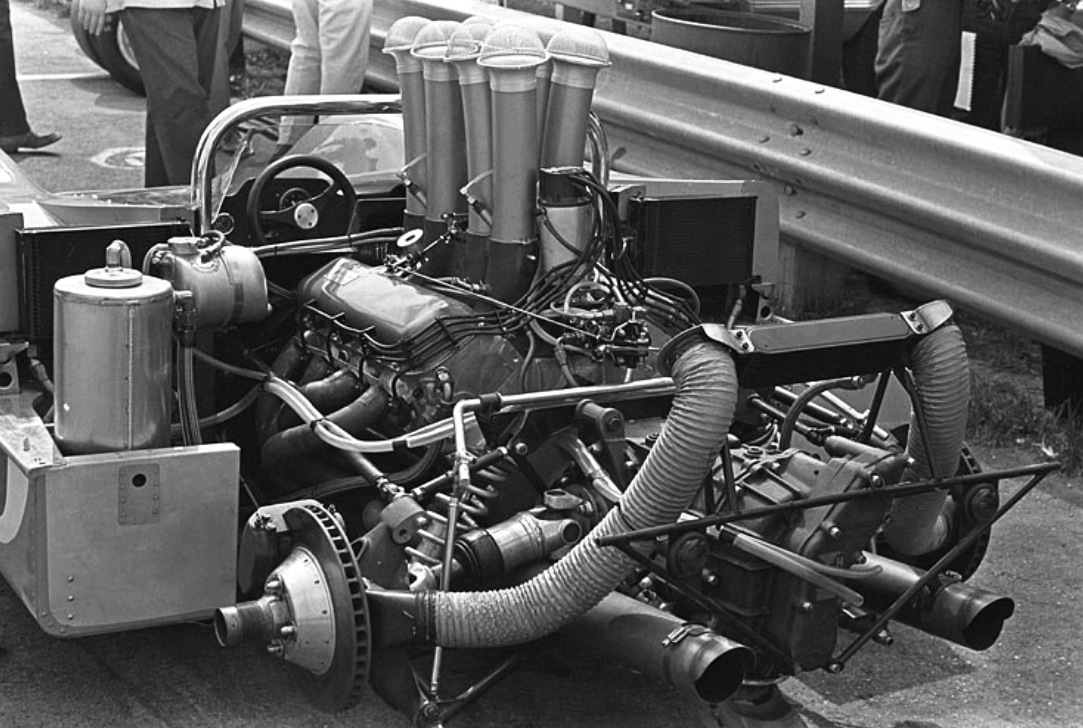
They were built for 200 mile races, GP distance. The engines, 7-litres and up, the chassis had to be big and strong to carry the engine and its fuel, they used a lotta fuel! The dimensions were unrestricted, with bodies large to provide downforce. Big engines, lots of power and torque needs a big gearbox and driveshafts, the shot above of a 1968 McLaren M8A in all its naked glory illustrates the point.
Denny Hulme took the 1968 Can-Am Cup from teammate McLaren with three wins to Bruce’s one in six races.
The team, Tyler Alexander left and Gary Knutson, sorting an M8A engine drama at Bridghampton 1968. The car ran a bearing in the race while Denny’s broke a rod, Donohue won in an M6B Chev. Bruce patiently awaits. Few racing drivers as intelligent, analytical and thoughtful. Or quick (Pete Lyons)
M8A’ s vital statistics…
7-litre/427 cid McLaren modified aluminium block Chev ZL-1 engine. Bore and stroke 108mm x 95mm, pushrod OHV, Vertex magneto, Lucas fuel injection with the package giving circa 620bhp @ 7000rpm. Hewland LG500 four speed transaxle.
Monocoque chassis of rivetted and bonded aluminium with fabricated steel bulkheads. The Chev engine was a stressed member of the chassis. Wheelbase 94 inches, front and rear tracks 57.5 and 54.5 inches, length 153 inches and height to the top of the roll bar 36 inches. Weight circa 1350 pounds.
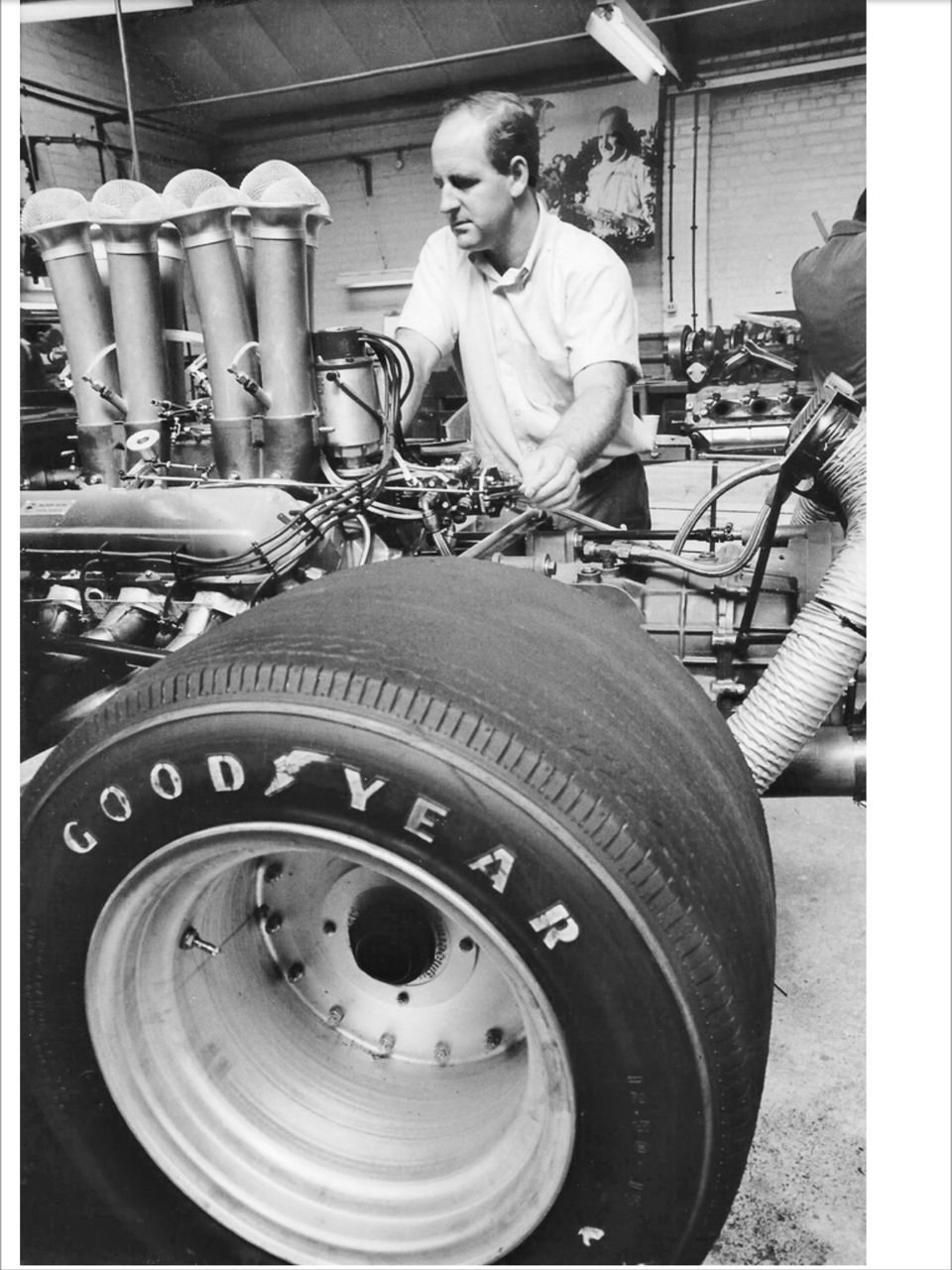
Hulme in the workshop prior to the M8A’s departure to the ‘States. Engine extractors, Lucas injection trumpets, (horizontal) fuel metering unit and (vertical) Vertex magneto, Hewland gearbox casing and brake ventilation ducts all clear. The rear wheels are fabricated magnesium, McLaren had two attempts at making these work and both failed. It’s a top shot, Denny spent a lot of time in the workshop when not racing (Jabby Crombac)
Rear suspension comprised single top link, reversed lower wishbones, twin radius rods, coil spring/damper units and adjustable roll-bars. Front was by unequal length wishbones, coil spring/damper units, adjustable roll-bars.
Brakes are Lockheed calipers outboard front and rear, McLaren cast magnesium wheels of 15 inches diameter and up to 11 inches wide and 15 inches and up to 16 inches wide at the rear…Big, like everything else!…
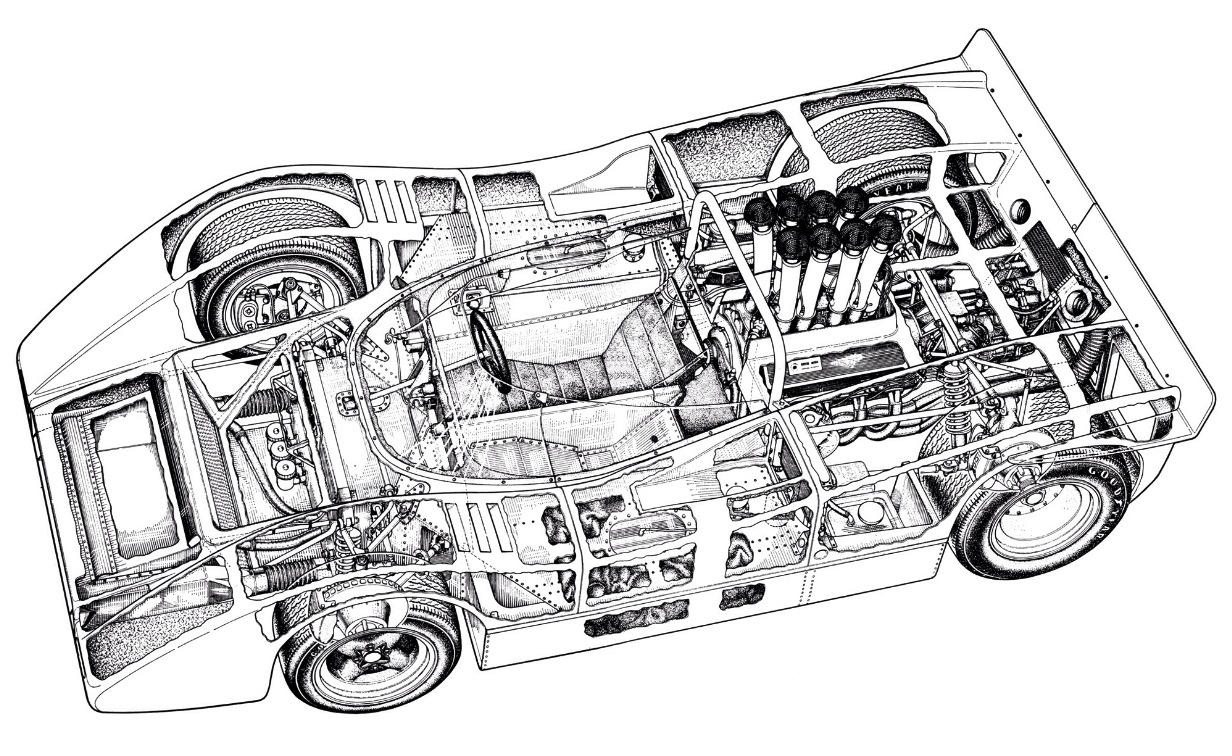
McLaren M8A Chev cutaway drawing. An incredible successful series of cars, the M8 family: M8A, M8B, M8D and M8F won the Can-Am title in 1968-71 respectively (M Palk)All hands on deck to load the cars for shipment to the US. Teddy Mayer on the trailer with Bruce’s car, note the standard four spoke cast wheels on the front of Hulme’s car and experimental fabricated ones on the rear (N Beresford Collection)Denny Hulme, M8A Laguna Seca practice 1968. John Cannon won this race, famously held in very wet conditions when so many fell off the Island. Cannon’s old McLaren M1B Chev won from Hulme and George Eaton’s McLaren M1C Ford (tamsoldracecarsite.net)
Credits…
‘Cars in Profile No8 McLaren M8 Series’ by David Hodges, Pete Lyons, Jabby Crombac and Nigel Beresford Collection via ‘kayemod’ TNF, tamsoldracecarsite.net
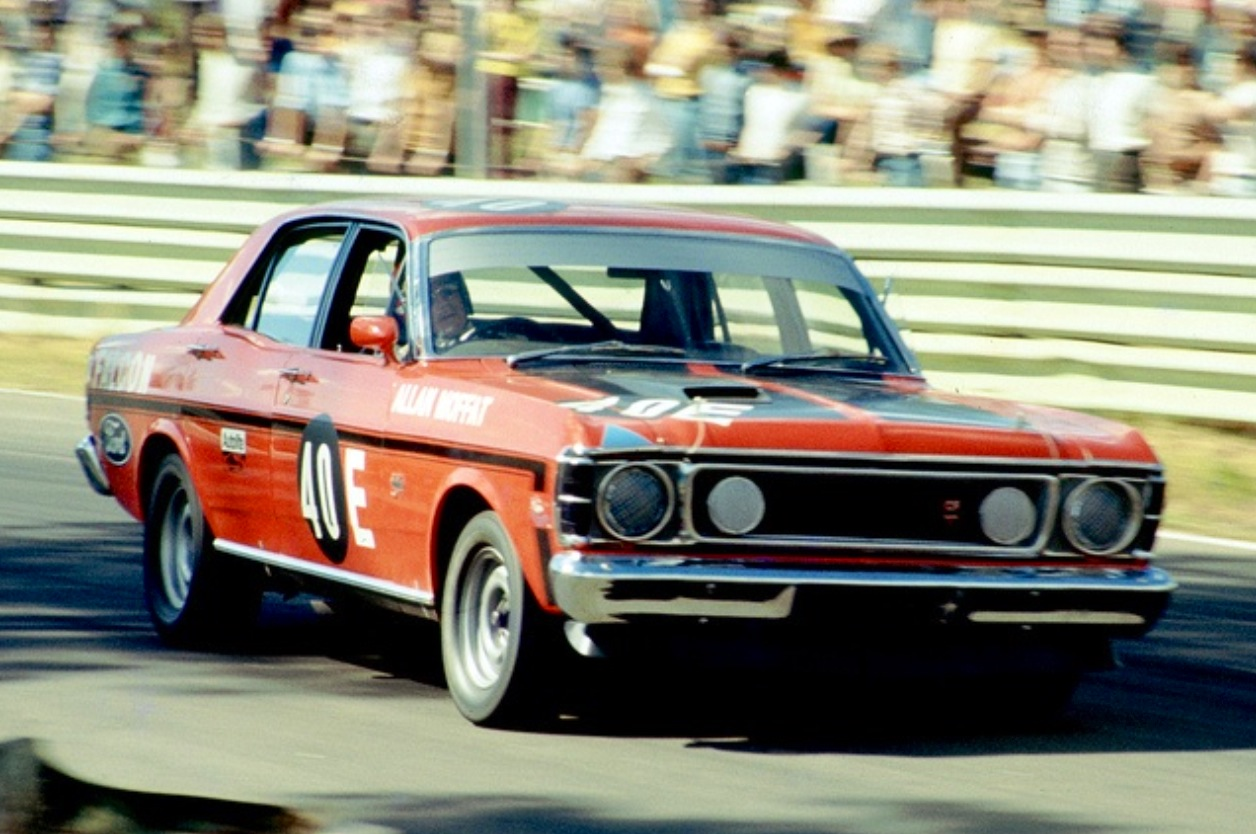
Alan Moffat finesses his big, powerful ‘works’ HO Falcon around the tight, technically demanding confines of Sydney’s Warwick Farm February 15 1970…
This will be a support race for the ‘Warwick Farm 100’ F5000 Tasman series round, am intrigued to know who won this ‘Series Production’ encounter. Perhaps a Holden Torana GTR-XU1, WF more suited to the nimble but powerful 3 litre/186cid Holden 6 than the 5.7 litre/351 cid V8 ‘Big Henry’?
Moffat won the ‘South Pacific Touring Car Championship’ series conducted over the four Australian Tasman events but i wonder if he won this round?
Teammates Rudi Caracciola and Manfred von Brauchitsch #10 battle for the lead roaring by the ‘Hotel Beau Rivage’ in their Mercedes Benz W125…
This image is Alan Fearnley’s ‘Battle of Beau Rivage’ from his book ‘The Classic Car Paintings’ and ‘depicts a dramatic battle amidst the architectural wonderment of the principality pre-war’, von Brauchitsch won the race against team orders. Caratch won the European title in 1937, both he and Bernd Rosemeyer, Auto Union mounted, won 4 races apiece but Rudi had the larger points haul.
Manfred’s nickname was ‘The Unlucky Bird’, when he had this chance for a race victory he was not going to let it slip away. He said later in life that Alfred Neubauer, Mercedes famous team manager did not have much to do with him afterwards for the rest of his career. It was one of the few races Caracciola lost to another Mercedes that year.
The Mercedes W125 was Fearnley’s favourite machine ‘it seems to embody all the visual impact that a Grand Prix car should have’, his painting is a superb, dramatic work.
Lotus stand at the ’69 Racing Car Show, sports-racer Type 47 and F3 Type 59 to the fore…
Both models are Loti i always had a hankering for, there were several 47’s which raced for years in Australia in a variety of classes and a 59 won the Australian Drivers Championship, the ‘Gold Star’ in 1970.
Emerson Fittipaldi contesting the 1969 Guards Int Trophy at Brands Hatch on 1 Sept 1969. His Jim Russell Lotus 59 Ford was 3rd to Reine Wisell Chevron B15 Ford and Tim Schenken BT28 Ford, all racing in F1 in 1971- Emerson and Reine for GLT Lotus, Tim for Brabham (unattributed)
Back to the UK in 1969, the works ‘Gold Leaf Team Lotus’ 59’s were raced by American Roy Pike and Brit Mo Nunn (later Ensign F1 designer/supremo) with Aussie Dave Walker in a ‘Lotus Components’ entry (the constructor of Lotus customer racing cars).
Emerson Fittipaldi raced a Jim Russell Lotus 59 entry winning the 1969 British championship and making his GP debut at Brands Hatch in 1970.
Dave Walker in the GLTL Lotus 59 during the 1970 Monaco F3 GP, 9 May. He is threading his 8th placed car thru typical Monaco carnage. Tony Trimmer won in a Brabham BT28 Ford, Walker dominated F3 in 1971 including a GLTL Lotus 69 Ford Monaco F3 GP win (Simon Lewis)
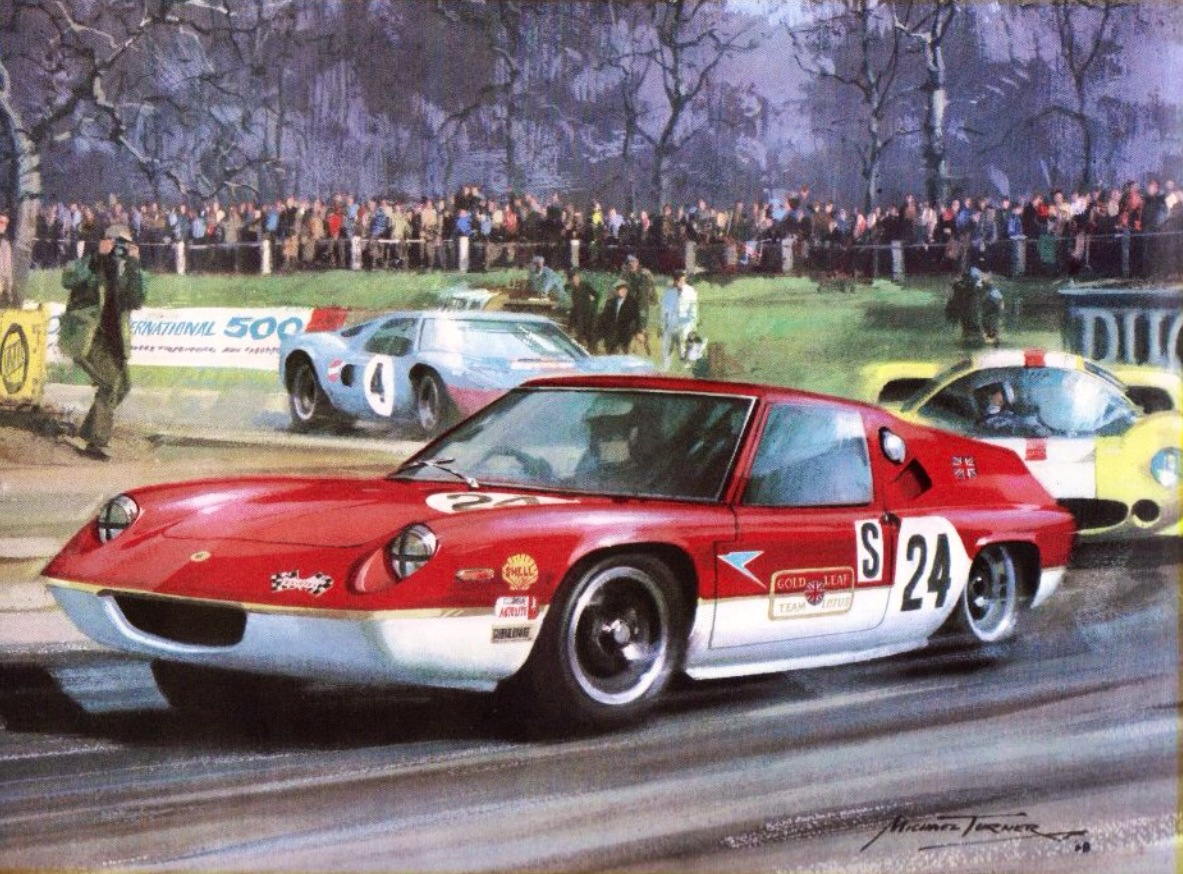
The Oliver/Miles GLTL Lotus 47 is depicted ahead of the Bonnier/Sten Axelsson Lola T70 Mk3 Chev 6th and winning Ickx/Redman Ford GT40, Brands 6 Hour, 7 April 1968, the day of Jim Clark’s death (Michael Turner)
The 47 was raced in the 1968 Brands Hatch 6 Hours in GLTL colorsby Jackie Oliver and John Miles finishing in tenth place in the race won by the Ickx/Redman Ford GT40.
In 1969 the works team raced the Lotus 62 with the GM derived Vauxhall/Lotus LV220 DOHC 4 valve engine, the 47 powered by the venerable Ford/Lotus twin-cam, a Hewland FT200 gearbox used in place of the standard Renault unit.
Whilst the 62 looked a bit like the 47 it shared a few body panels only; its spaceframe chassis was bespoke (2 built) and engines as noted above totally different.
John Miles Lotus 47. ‘Silverstone Players Trophy’ meeting 27 April 1968 (Simon Lewis)
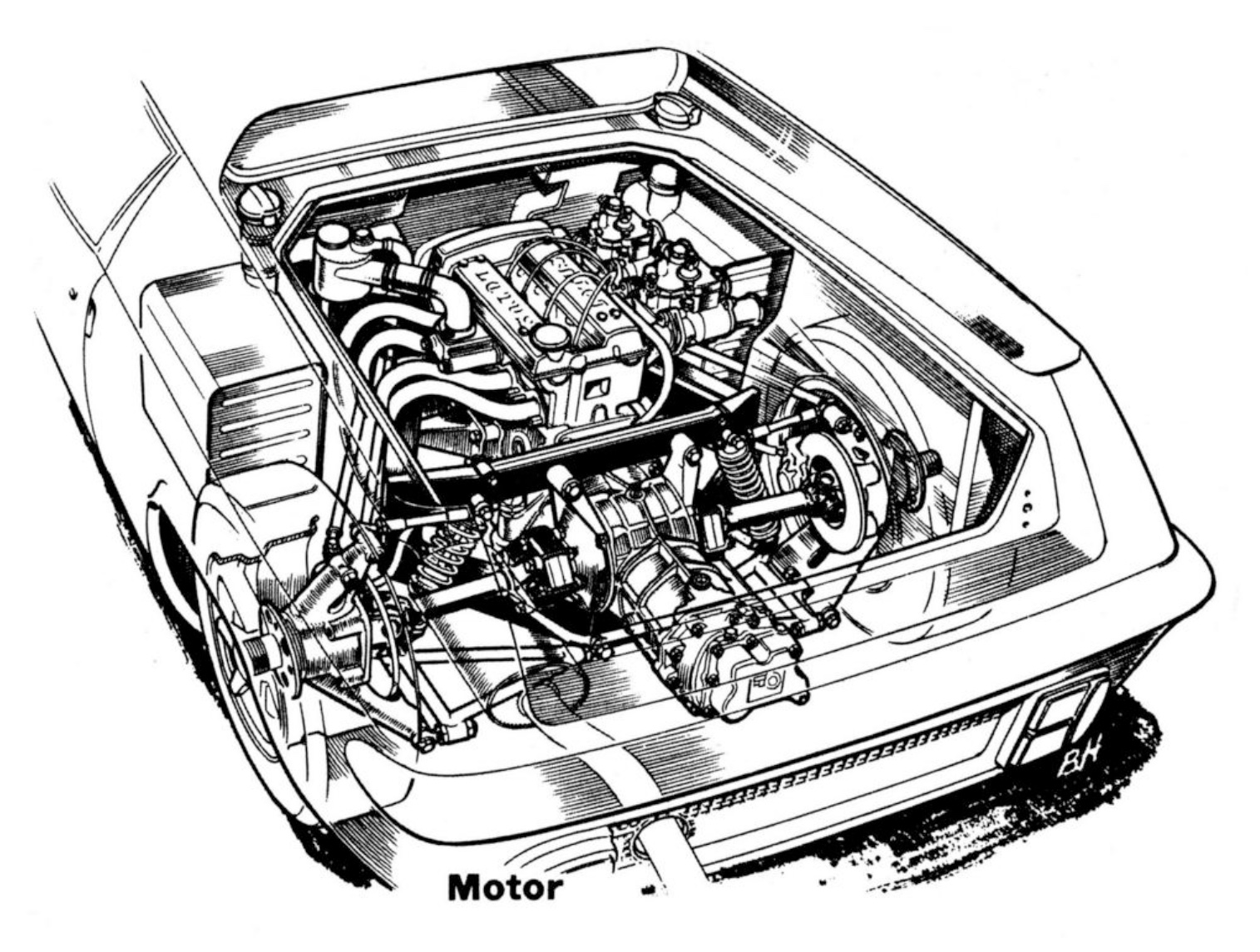
Lotus 47 cutaway; backbone chassis, front suspension upper and lower wishbones and coil spring/damper units. Rear suspension top link, lower wishbone and radius rods. Engine Ford/Lotus twin cam 2 valve, power depending on spec from 160-190bhp. Gearbox Hewland FT200 5 speed , Brakes ventilated disc all round (unattributed)
Lotus 47 engine, gearbox and suspension detail (B Hayton)
Geoghegan’s Sporty Cars 47…
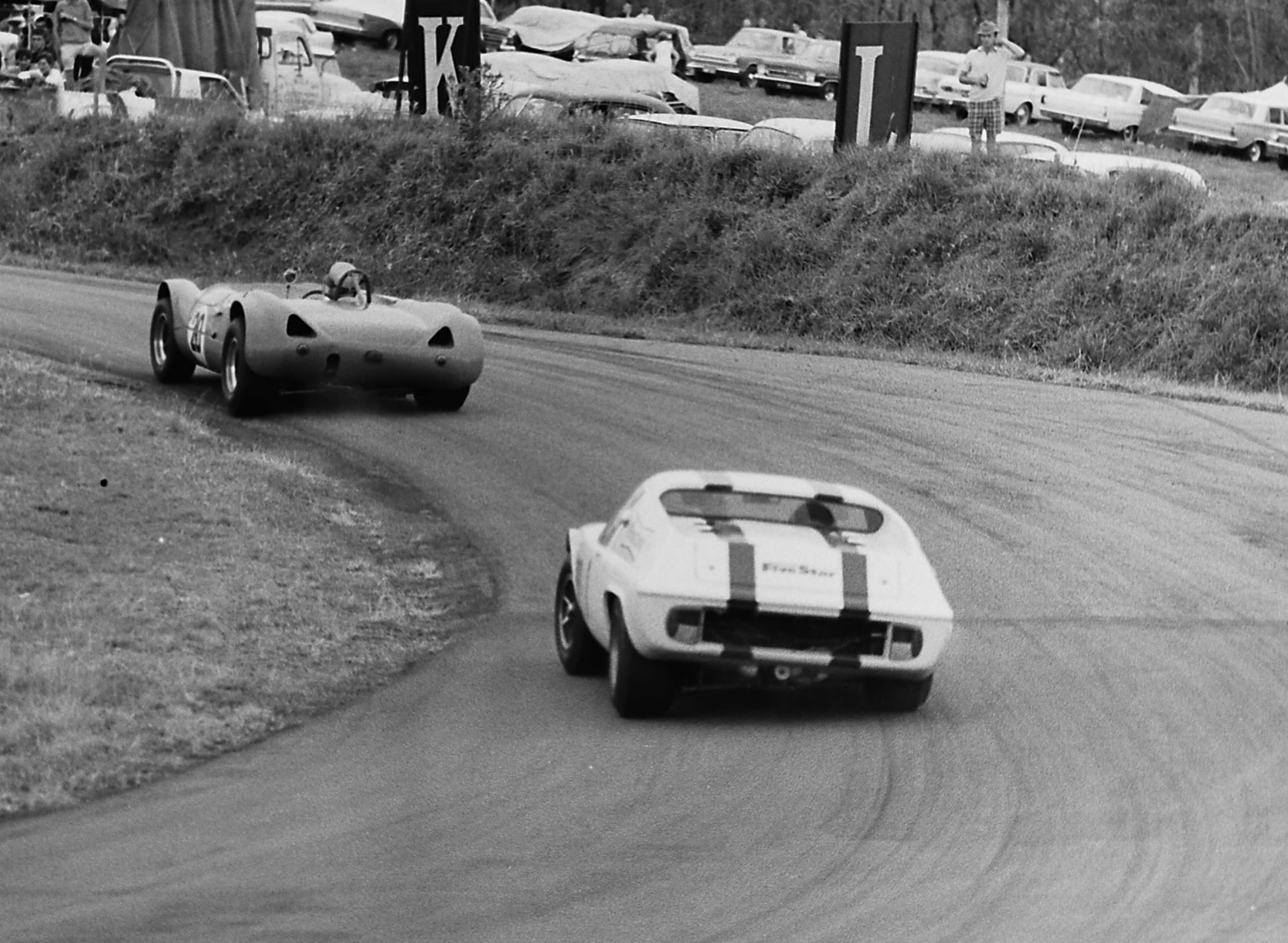
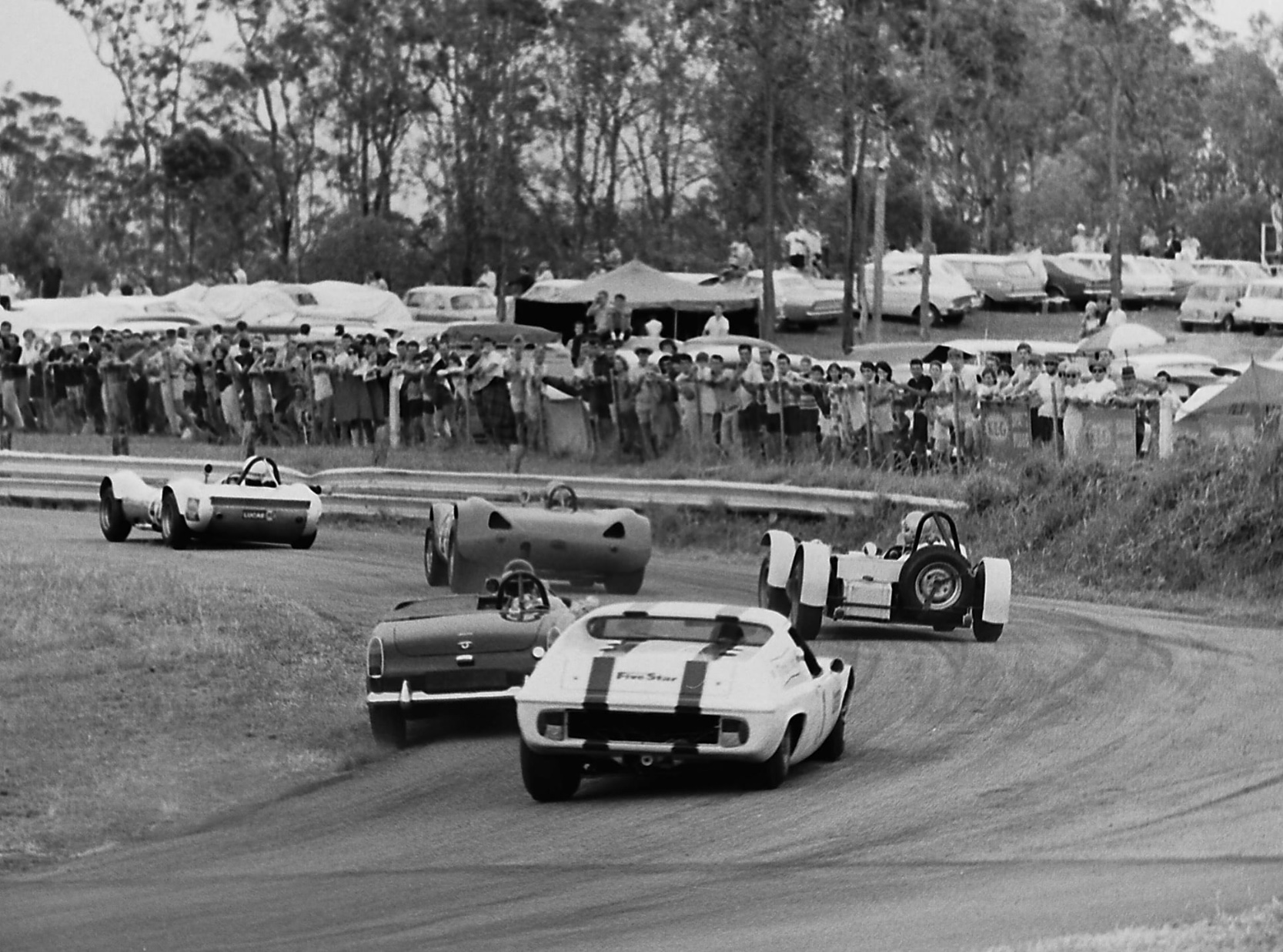
It was inevitable that the Geoghegan brothers would import a Lotus 47 to Australia albeit the cars didn’t fit neatly into our sportscar class structure where the majority of races were short sprints rather than the longer events for which the cars were really designed.
(C Haigh)
The point is illustrated by Leo’s challenge in keeping up with the Lotus 23B Ford at Lakeside above circa 1968, whilst the gorgeous silhouette of the car is shown in the shot below at Hell Corner, Bathurst where he is trying to hold off his old Elan 26R being driven by Niel Allen.
(C Haigh)
(C Haigh)
The last two shots are at Lakeside, the one above is Leo and the 23B lapping slower machines- get in touch if you can identify the cars/drivers.
















 primotipo...