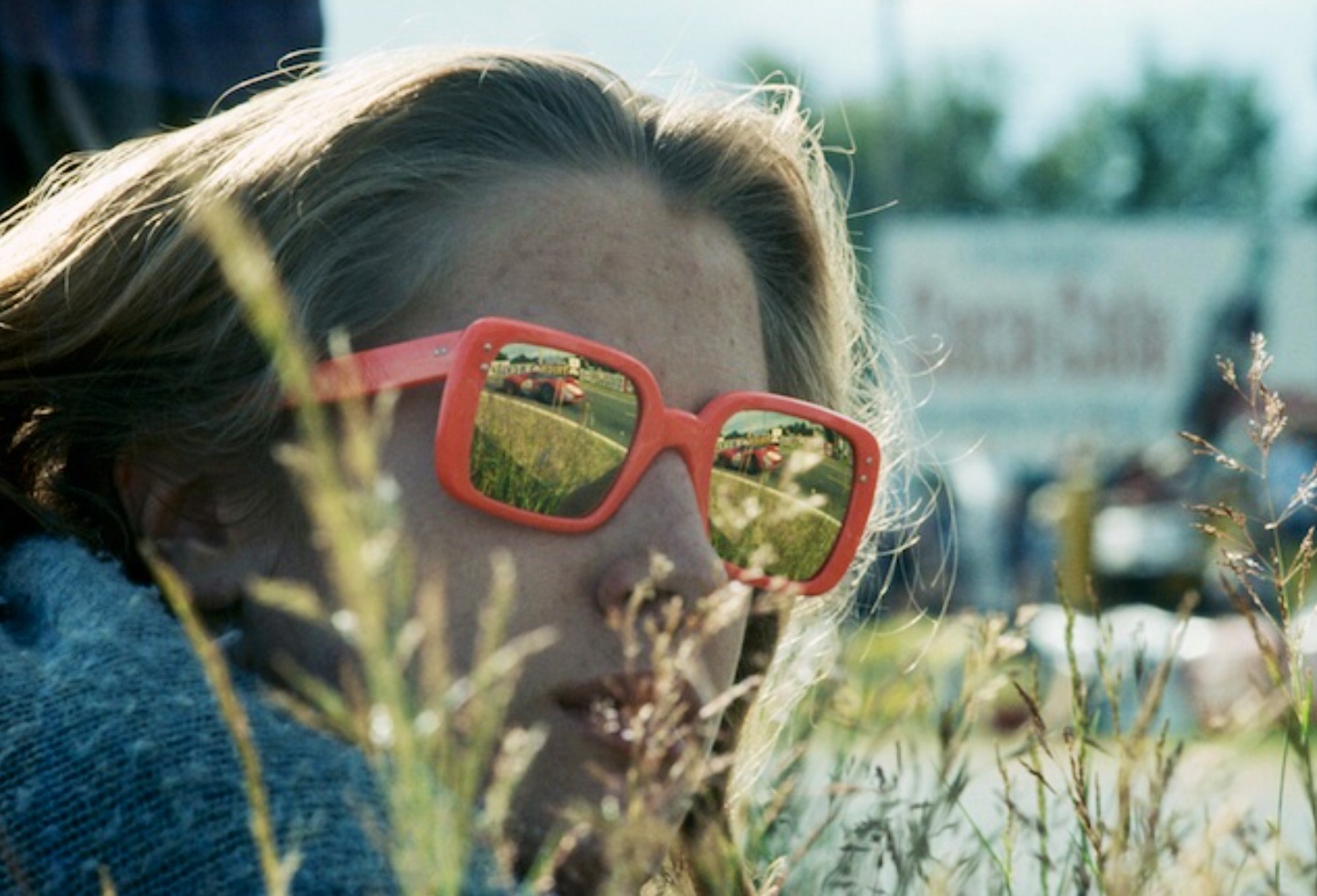
The artistry of Jesse Alexander, but where and when?
It appears to be a sixties Ferrari reflected in her ‘glasses, she will be a granny by now!
(Jesse Alexander Archive)
 | Greg Moss on Repco Boardroom… |
 | peterfinlay07 on Likely Lads and Catalina Park,… |
 | markbisset on Likely Lads and Catalina Park,… |
 | daleharvey96 on Likely Lads and Catalina Park,… |
| peterfinlay07 on Likely Lads and Catalina Park,… |
The artistry of Jesse Alexander, but where and when?
It appears to be a sixties Ferrari reflected in her ‘glasses, she will be a granny by now!
(Jesse Alexander Archive)
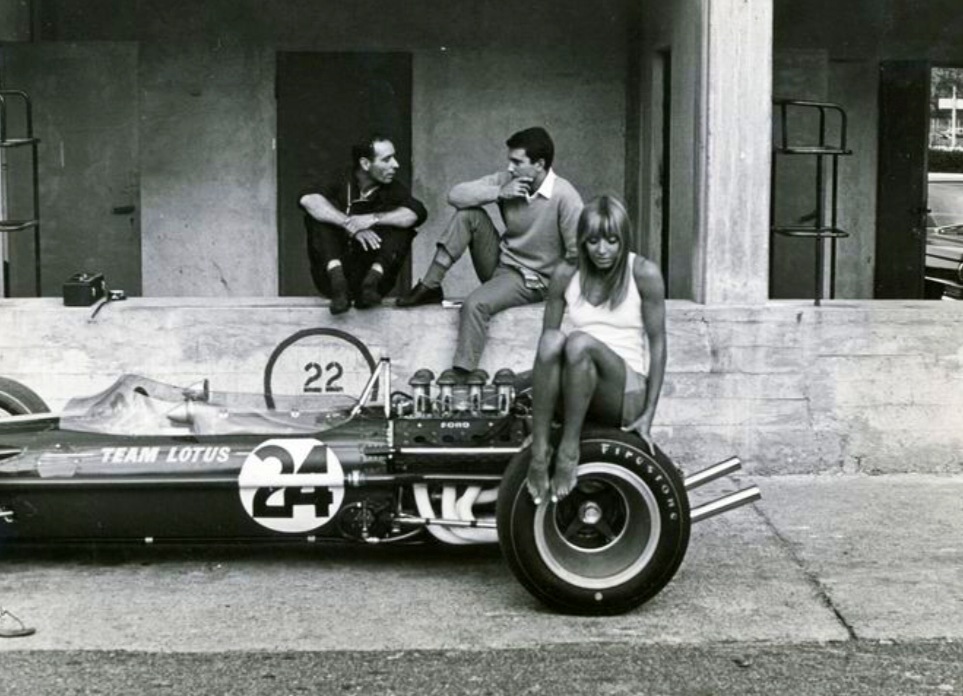
Giancarlo Baghetti relaxes during the Italian Grand Prix weekend, he had a ‘one off’ drive of the Team Lotus spare ’49, backing up Jim Clark and Graham Hill…
He qualified well back on the grid, 17th, and retired on lap 50 whilst running 6th with an engine failure. John Surtees took a fabulous last corner win from Jack Brabham, winning Hondas’ first Grand Prix since Ginthers’ victory in the last race of the 1.5 Litre Formula in Mexico, 1965.
Baghettis’ career started with immense promise, famously winning his first championship Grand Prix, the French in a great dice with Dan Gurney (Porsche) in a Ferrari 156 in 1961….
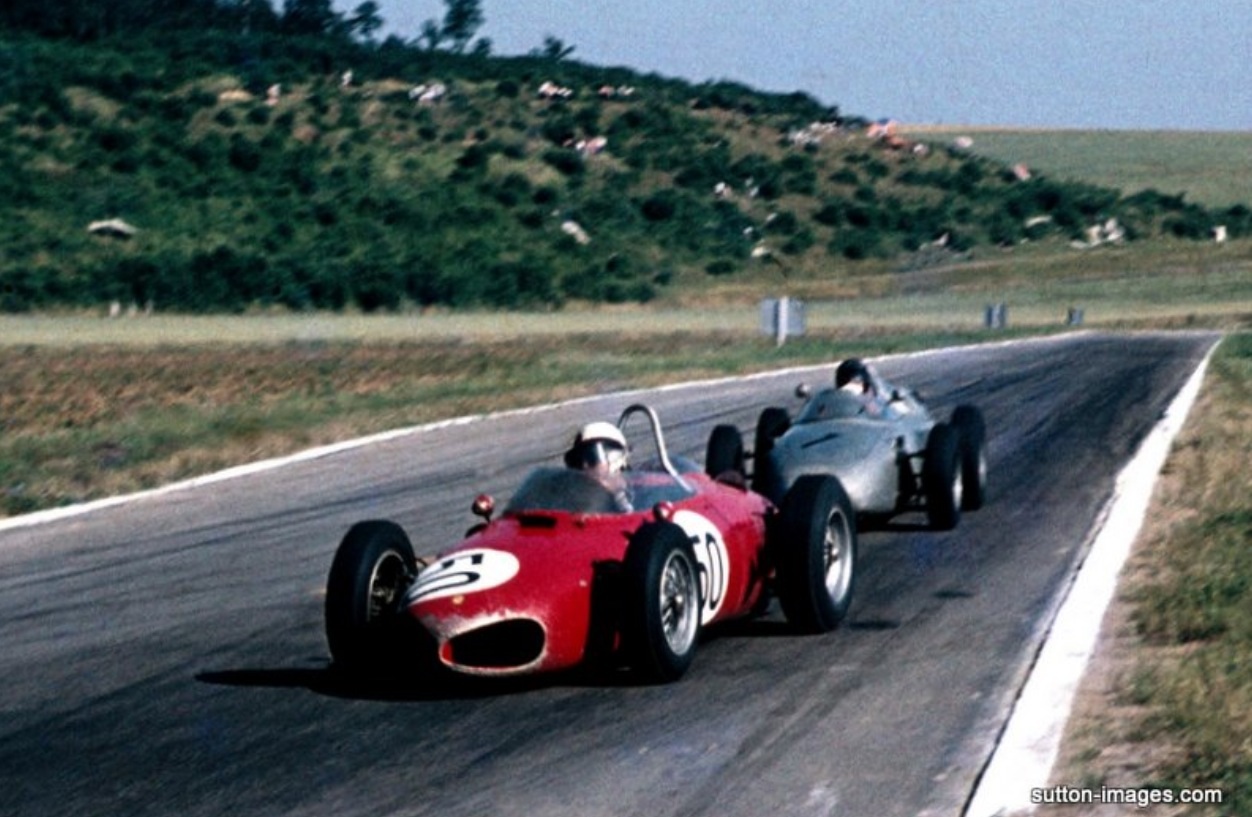
The stone chips on the nose of Baghettis’ 156 bear witness to the closeness of the race, third place went to Jim Clarks’ Lotus 21 Climax. (sutton images)

Toto Roche waves the chequered flag for Baghetti, winning a famous victory over Dan Gurneys’ Porsche 718, French GP Reims 1961, his championship race debut. (Unattributed)
Baghetti started racing in 1956 in an Alfa Romeo 1900Ti and built a solid reputation as he moved into Formula Junior in 1959. In early 1961 he was selected to drive for the Italian FISA team, an organization formed to promote young Italian drivers by entering them in Non-Championship Grands’ Prix.
FISA struck a deal with Scuderia Ferrari to run a 1960 F2 Ferrari Dino 156 (in effect the prototype of the 1961 F1 car) in the first non-championship races of 1961. The results were amazing, Baghetti, not necessarily the best credentialled candidate won on his GP debut in Syracuse in front of Gurney, Surtees, G Hill, Brabham, Moss, Salvadori, Ireland and Bandini.
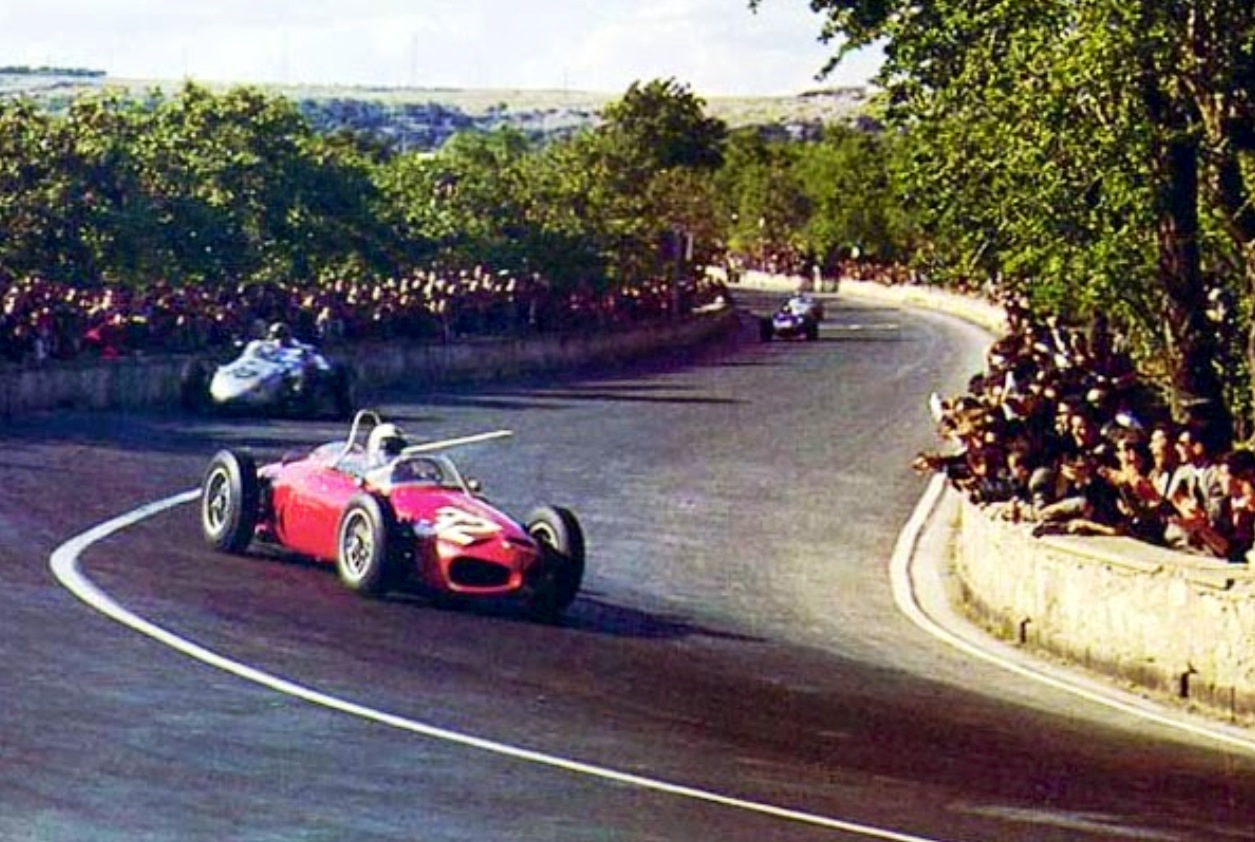
Giancarlo Baghetti ahead of Dan Gurney Syracuse GP April 1961. Ferrari Dino 156 from Porsche 718. The first of Giancarlos’ wins against stong opposition. (Unattributed)
He followed up with another win in the Napoli GP in May beating Ashmore, Lotus 18 Climax and Bandini Cooper T53 Maserati 2nd and 3rd as well as Roy Salvadori, Andre Pilette and Tim Parnell.
FISA persuaded Ferrari to hire them a 1961 ‘Shark Nose’ for their driver to make his championship GP debut at Reims, he was allocated the car which was to be driven by Equipe National Belge driver Olivier Gendebien, the car quickly repainted from yellow to red.
Phil Hill took pole from Ferrari teammates Von Trips and Ginther, Baghetti 12th fastest. The 3 works Ferrari’s disappeared at the start, only Moss managed to stay near them. Even a quick spin by Ginther dropped him behind the Lotus, but he was soon able to re-pass Moss such was the Ferraris’ power advantage.
Baghetti had made his way to the front of the chasing pack. When Moss was forced to pit with brake problems, the four Ferrari’s lead, this didn’t last as Von Trip’s engine died in the heat.
Hill spun on the melting road surface. The American lost over 2 laps as he tried to restart his hot engine. This left Ginther in the lead with Baghetti fighting the Porsches of Dan Gurney and Jo Bonnier to hold on to second place, a battle that became even more significant a couple of laps later as Ginther pulled off the track with no oil pressure.
Baghetti recounts the last laps …’It was a very hard race. It was hot. The asphalt was melting, the radiator was blocking up and I saw the temperature starting to soar. Luckily I was behind the two Porsches of Gurney and Bonnier and relied on getting a tow along the straights. What you must remember is that this was my first Grand Prix and both Gurney and Bonnier were trying to frighten me by running on either side of me, but I thought that if they could do things like that and get away with it, then I could do it too.
Three laps from the end Gurney and I were fighting for the lead and I realized that to finish first I needed to be in the perfect position to slipstream. Going into the last corner I was right behind Gurney so that as we came out I was on his tail. He sat right in the middle of the track because he obviously knew what I was going to try to do. I waited and when I saw him glance in his mirror when I was on his left, I quickly switched to the right and got past him to win the race.’
Giancarlo Baghetti became the first man in history to win his debut World Championship Grand Prix.
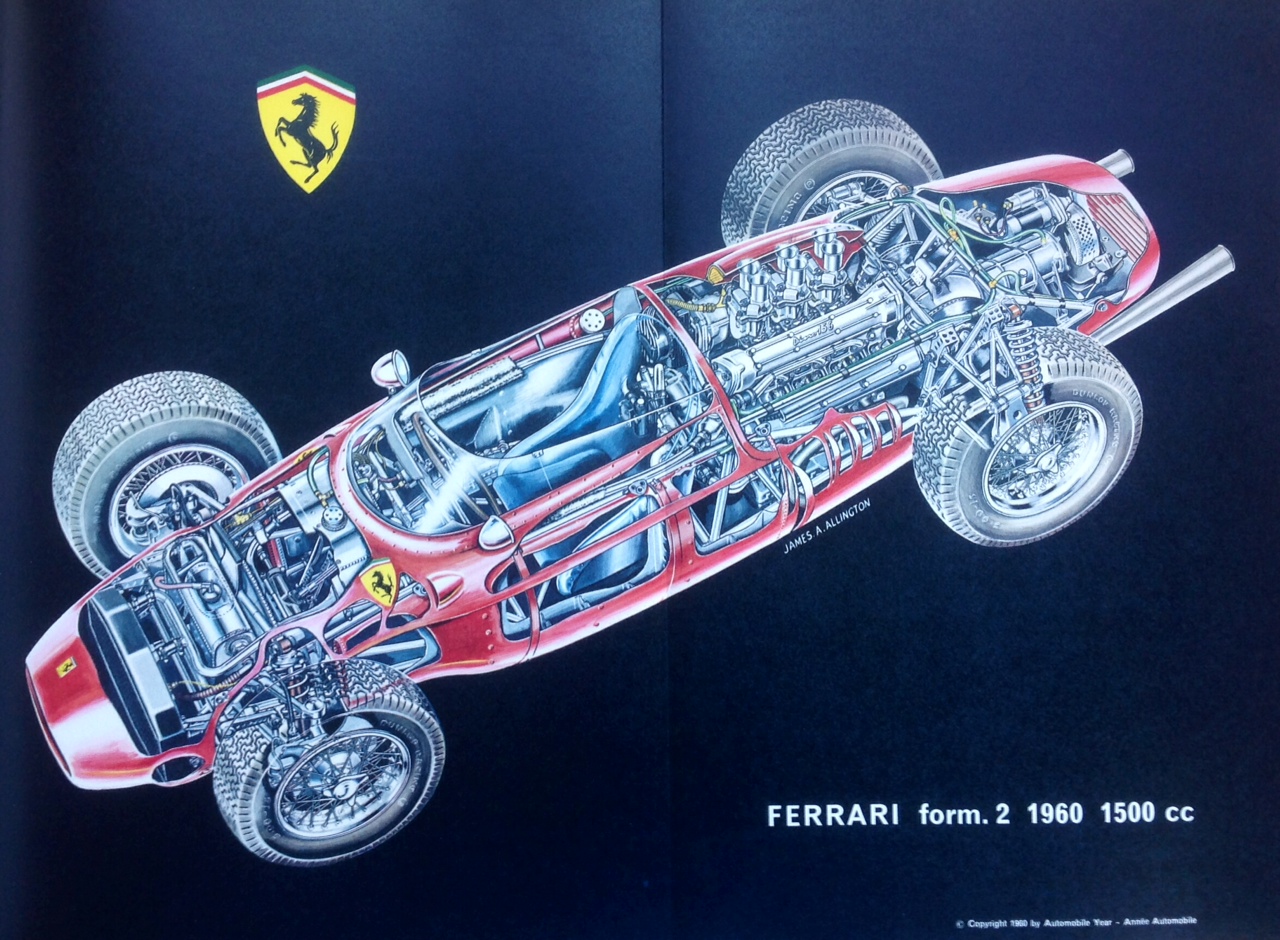
James Allingtons’ cutaway drawing of the 1960 Ferrari 156 F2 car, chassis ‘008’ the car used by Baghetti at Syracuse and Naples was the prototype 1960 car fitted with ’61 ‘Sharknose’ body. Multi-tubular spaceframe chassis, suspension by upper and lower wishbones front and rear. 1476cc 65 degree DOHC 2 valve Weber carbed V6, 185bhp@9200rpm. 5 speed ‘box. Later spec ’61 cars had the 120 degree V6 190bhp@9500rpm. (James Allington)
Baghetti qualified mid-grid for the British GP, spinning off the wet Aintree circuit during the race. For his home GP at Monza he qualified 6th, the other four Ferrari’s were faster. This was the day that von Trips was expected to win the world title, but it was not to be, ‘Taffy’ crashed to his death after contact with Clarks’ Lotus 21, the car flew into the crowd killing 11 spectators on lap two. Baghetti raced at the front until his engine blew on lap 14 and Phil Hill won the race to seal the first World Championship for an American driver. Giancarlo set the fastest lap.
His season ended with his 4th and last GP win, he took victory in a little known event to decide the ‘Prima Coppa Italia’ (Italian Championship for Drivers) at Vallelunga, Baghetti won the 2 heats in a Porsche 718 when his Ferrari was not available for the event. Lorenzo Bandini and Baghetti were tied for the Championship , this event was organised to decide the winner.
What a debut GP season!
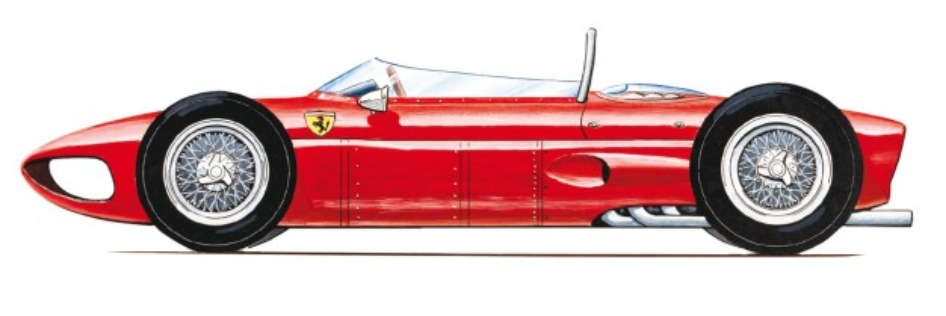
1961 spec Ferrari 156. (Scuderia Ferrari)
For 1962 Baghetti joined Phil Hill, the ’61 champion in the works Ferrari team (Rodriguez driving a third car occasionally). Enzo rested on his laurels thinking that the 156’s didn’t require evolution to continue their dominance but the Brits had caught up.
BRM, Lotus and Cooper produced cars to beat the Ferrari’s. Lotus debuted the epochal monocoque chassis Lotus 25 at Zandvoort and Coventry Climax produced their FWMV 1.5 V8 in quantities, the BRM team also built a V8, the Type 56 available to customers as well as the ‘works’ BRM P57’s. The British teams shortcomings in 1961 were their engines, the relatively old 1.5 litre variant of the Climax FPF not ‘man enough’ for Ferrari’s powerful V6. It was different in 1962 when their engine power was equivalent to their chassis mastery…
Baghetti scored points at Zandvoort and Monza, but Ferrari was in total turmoil and for 1963 he joined Hill in the mass exodus to Carlo Chiti’s ATS team, an unmitigated disaster for all involved, it effectively destroyed his F1 career. Baghetti drove Centro Sud’s old BRM P57 in 1964, he returned to race in F2, F3 and sports and touring cars, also making an annual apperance at the Italian GP, his last in the Lotus 49 in 1967.
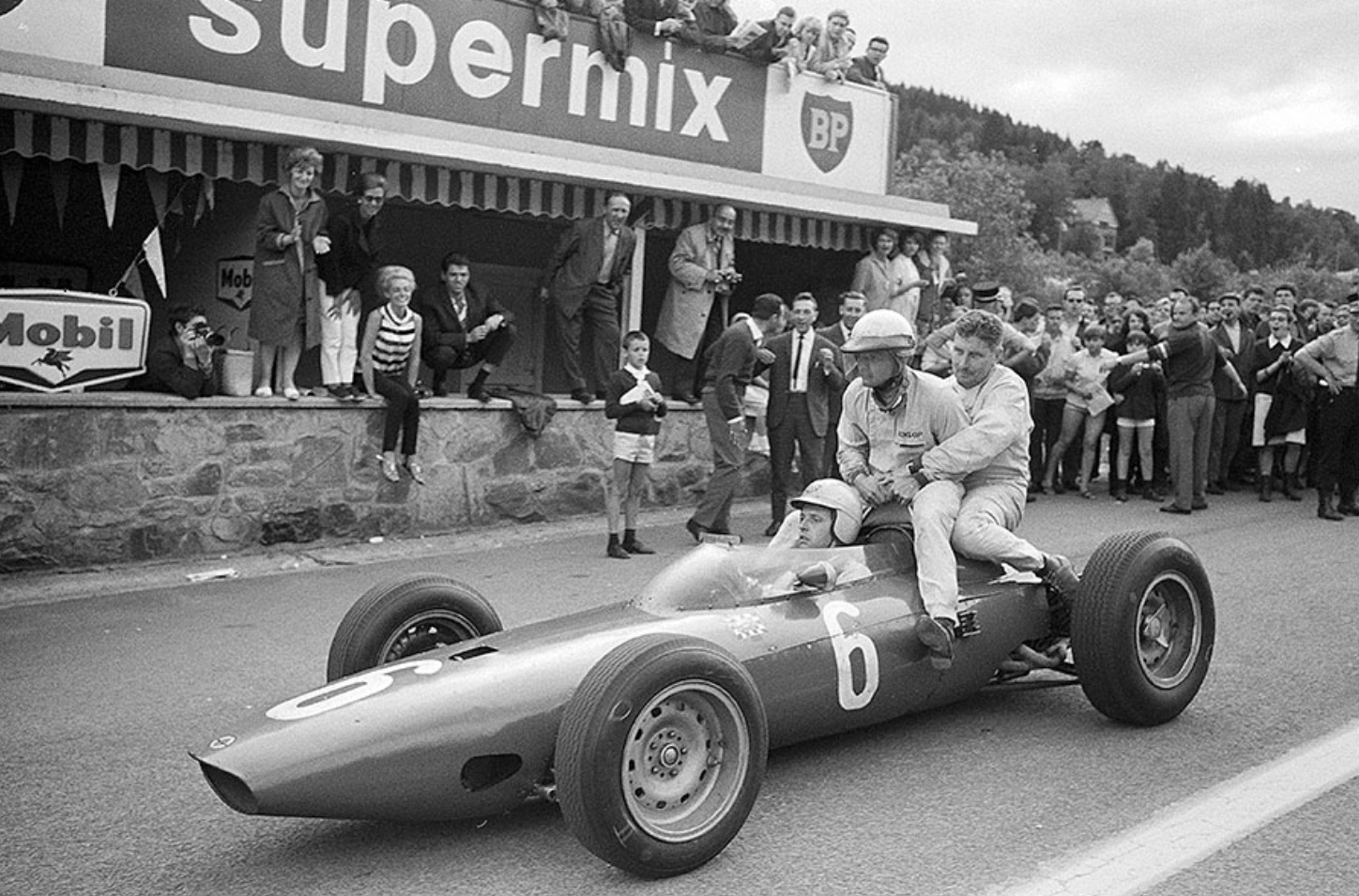
‘Hitchin a ride’: Baghettis’ BRM P57 gives Phil Hill and Bob Anderson a lift at the end of the 1964 Belgian GP, Spa. Giancarlo was 8th in the race won by Clarks’ Lotus 25 Climax. Hill raced a Cooper T73 Climax and Anderson a Brabham BT11 Climax (G Clayton)
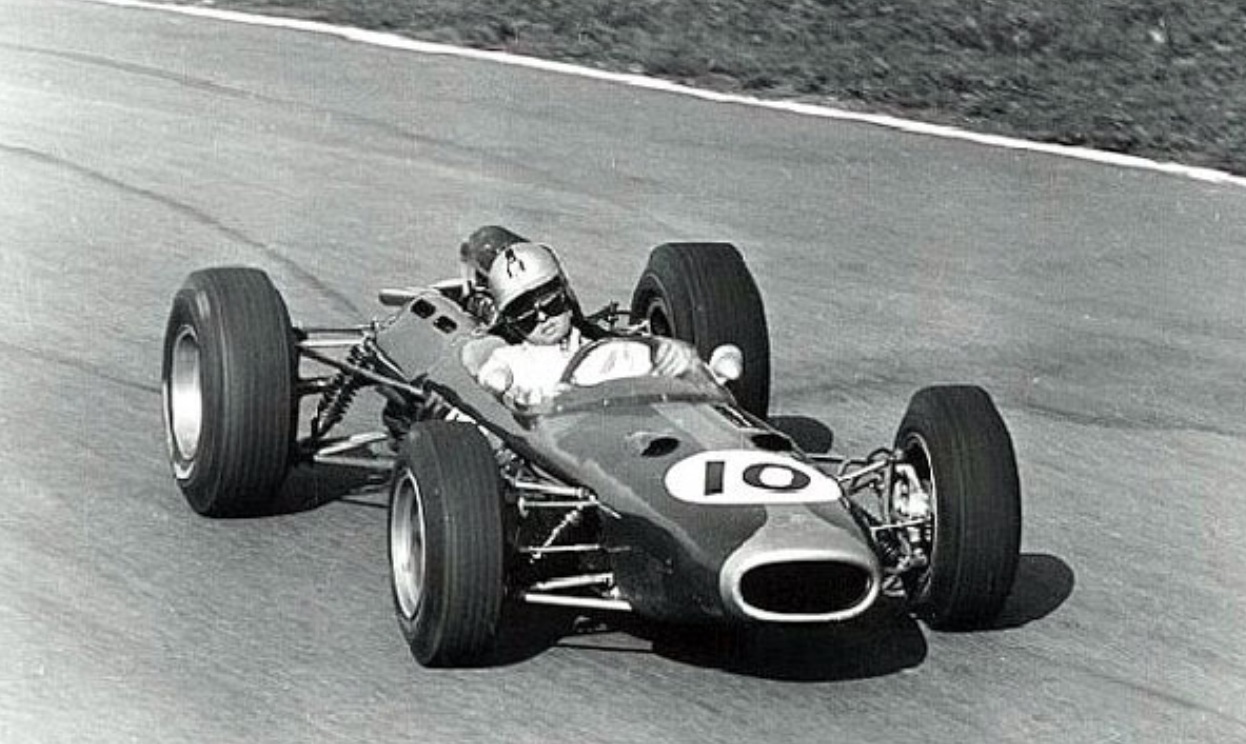
Brabham entered a third car for Giancarlo at the 1965 Italian GP. He qualified the BT7 Climax poorly in 19th, the engine failed on lap 12 in the race won by Stewarts’ BRM P261. (Unattributed)
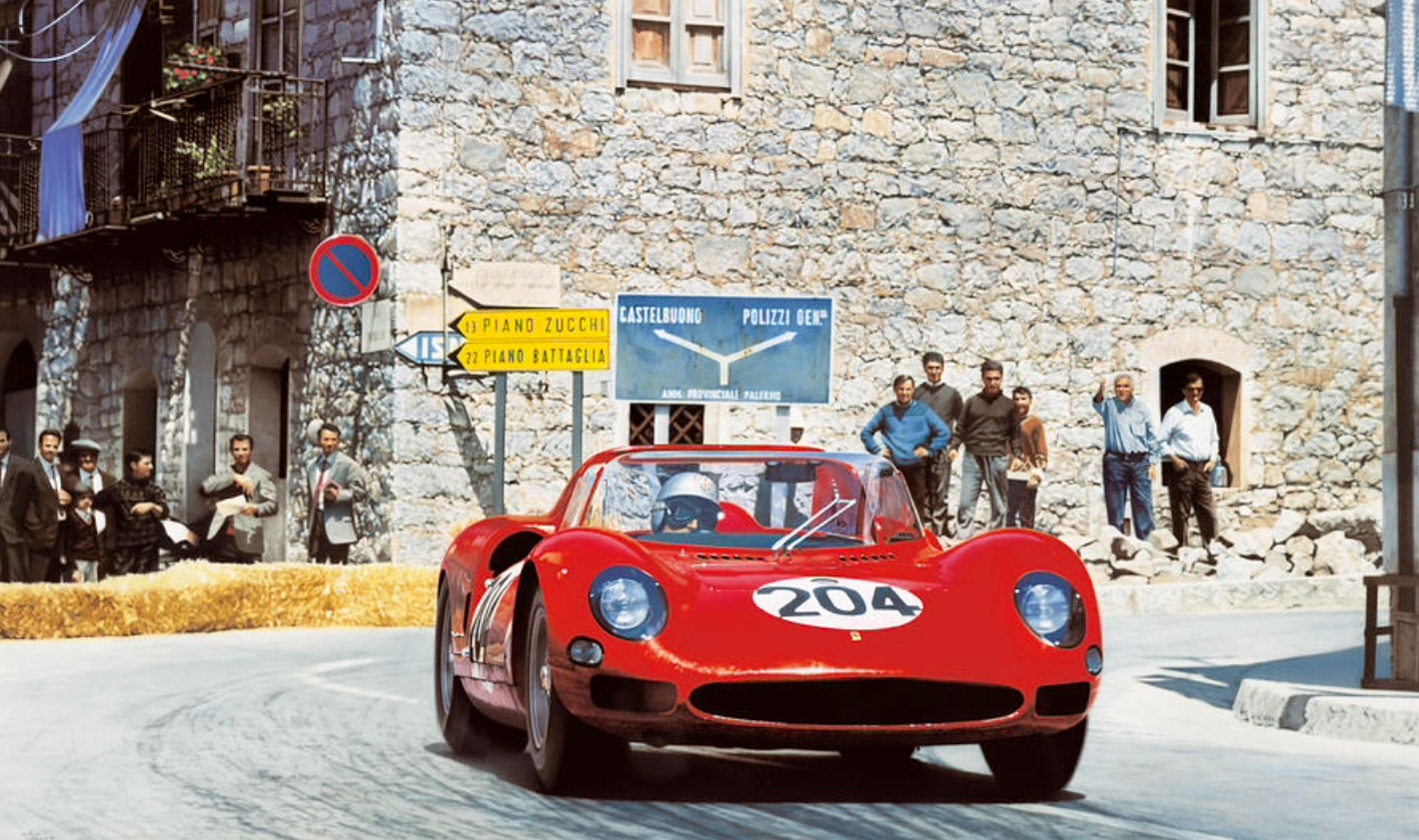
Baghetti at the wheel of a factory Ferrari 275 P2 during Targa 1965, DNF with Jean Guichet. (Unattributed)
After a huge accident at Monza in a Ferrari Dino 166 F2 car in the ‘Monza Lottery GP’ in June 1968 he retired from driving, working as journalist and photographer. He succumbed to cancer in 1995 age 60.
No-one has ever repeated the feat…a quasi factory Ferrari drive on the results of a ‘journeyman’, won his first 3 GP’s, 4 for the year, one of them a championship event and then so rapidly disappeared from sight…

Baghetti at the wheel of a Ferrari Dino 246, Monza, Italian GP 1966. Q16, raced Spences’ Lotus for 5th until the car failed in the race won by Scarfiottis’ Ferrari 312. Car was lent to him by Scuderia after his Parnell Lotus BRM failed in practice. (Unattributed)
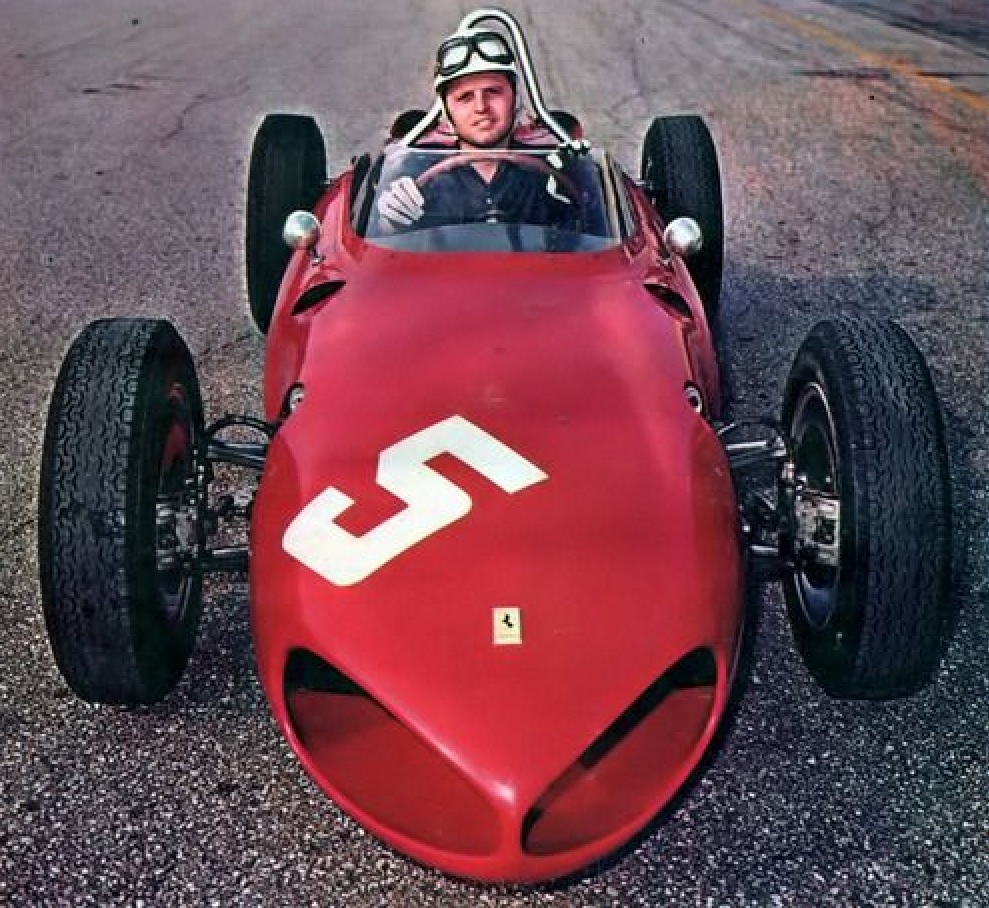
Giancarlo Baghetti, Ferrari 156 1962. The class of the field in 1961 were at best also-rans in 1962. He is smiling so it must be at the seasons commencement… (Unattributed)
Photo and other Credits…
Mel Turbutt, motorsportretro.com, Sutton Images, James Allington, Scuderia Ferrari, The Auto Channel
Finito…
 (State Library of South Australia)
Doug Whiteford’s Ford V8 Spl ‘Black Bess’ leads the MG T Specials of I. Jackson and J. Martin in the Woodside Handicap on the Woodside, Adelaide Hills road circuit on 10 October 1949…
Whiteford commenced his racing career on motor bikes and prepared cars for others. He decided to convert an ex-Victorian Forestry Commission Ford ute which he bought for £67. Based entirely on parts salvaged from the utility, it was carefully rebuilt in an Albert Park, Melbourne back yard utilising sophisticated building materials including bed iron frames and panelling from the Footscray tip!, with the chassis lowered and a 2 seat body made.
A coat of black paint provided its name.
John Blanden reported that Bess ran for the first time at Albert Park on 15 December 1939, it’s first meeting was at Lobethal, SA on New Years Day 1940. The car popped an engine at Wirlinga, Albury, having boiled at Lobethal as well and was placed into storage during the War, Doug enlisted.
When Whiteford returned from service a Mercury engine was fitted, initially standard, it was progressively modified, benefitting from US Hot Rod experience. From 1946-52 the car was one of the fastest in the country as it was continually developed, winning 29 races from 40 starts, the statistics vary with the source, inclusive of the 1950 AGP win at Nuriootpa.
 Doug Whiteford and Bess at Rob Roy Hillclimb in Melbourne’s Christmas Hills, early 1950’s SLV)
Graham Howard wrote in his summary of Bess in his ‘History of The Australian Grand Prix’…’Whitefords’ successes with Black Bess came as a direct result of his fanatical devotion to preparing, modifying and maintaining the car, which was complemented by his outstanding driving ability. Progressively, Whiteford changed the braking system of the race car from mechanical to hydraulic operation, added telescopic shock absorbers, bored out the engine, fitted twin carburettors, a Scintilla Vertex magneto and high compression cylinder heads. A modified camshaft was imported from America, the cooling system was improved to stop overheating, brake fade was reduced by fabricating special air scoops and the steering gear was reworked to provide a faster response for racing.
Clocked at Bathurst exceeding 210kmh Black Bess was now a formidable and reliable race car, nobody was really surprised when Whiteford won the 1950 AGP at Nuriootpa…’
 Ford Mercury V8; 84.1 bore X 95.2 mm stroke, 4236cc. Sidevalves, 2 vp cylinder, 95 Kw@4500rpm. Ford 3 speed gearbox. (G Howard ‘History of The AGP’)
As imported racing cars appeared in greater numbers Bess became steadily obsolete, Doug started to drive a Lago Talbot T26C owned by Geelongs’ Tom Hawkes in 1951 eventually buying the car and winning the 1952 Bathurst and 1953 Albert Park AGP’s in it.
Whiteford retained the car, it appeared occasionally in his hands and sometimes others, having sold the Lago he drove it in the 1954 AGP at Southport on Queenslands’ Gold Coast. ‘Bess’ raced in 3rd for many laps, amazing given its age and the improved quality of the field, engine maladies eventually caused its retirement in the race won by Lex Davisons’ HWM Jaguar.
‘Bess was sold to Granton Harrison who raced it in both Victoria and South Australia and then passed through many hands deteriorating progressively. After many years in the wilderness, ‘Bess’ was tracked down by Greg Veitch and sold to the very same Granton Harrison who raced it years before…and was restored before her debut in the 1977 ‘City Of Sydney Trophy.’
The car is still very much a part of the local historic racing scene.
 ‘Bess’ in the Woodside paddock, the formal fashion of the day in evidence. Bolt on wire wheels, 1934 Ford mechanical brakes converted to hydraulic operation. Weight 991kg. (State Library of SA)
‘Woodside Handicap’…
Woodside is a village 40 kilometres from Adelaide. The race, as so many in Australia were at the time, was a handicap, 12 laps, 36 miles in total. In this day and age of a lot of ‘one make racing’, diversity of cars and their differential performance and the need for handicaps to ‘make a race of it’ seems odd. But in the immediate post-war years when money was tight and racing cars scarce across a big continent, it was necessarily the approach.
‘Australian Motor Sports’ report of the event has Whiteford lapping very fast as one of the limit men, finishing 2nd, and Jackson, the car behind Whiteford above ‘…lost his brakes at the Pines and had to extricate his car from the strawbales costing him a lap’. The race was won by the MGTC of W Smith, Whiteford 2nd and D Harvey in another MGTC 3rd…MG’s and MG Spl’s the lifeblood of Australian racing for so long and a good future story in itself.
Of some interest for those who read my article on Stan Jones a while back. https://primotipo.com/2014/12/26/stan-jones-australian-and-new-zealand-grand-prix-and-gold-star-winner/ . Stanley made his road racing course (as against circuit) debut in his new HRG ‘Bathurst’ 1500 at this meeting, this car perhaps convincing Jones he had the makings of a future champion…Stan, relatively inexperienced diced with Tony Gaze’ similar HRG for much of the race. Gaze was 4th, Stan DNF with steering dramas.
 (State Library of SA)
Whiteford Ford V8 Spl, ‘Black Bess’.
Derived from a Ford Ute or Utility, simple beam front axle suspension located by trailing radius rods, transverse leaf spring and telescopic shock absorbers. Rear suspension comprised a live rear axle located by leading radius rods and torque tube, transverse leaf spring and telescopic shock absorbers.
Doug was a talented driver and fettler, the car continually evolved over a decade or so and was indecently fast beyond the sum of its parts- it gave many more exotic imports a hard time. Whiteford raced this car to a 1950 AGP win and then the more aristocratic Talbot-Lago T26C for his 1952 and 1953 AGP wins at Bathurst and Albert Park respectively.
 ‘Bess’ restored cockpit. (G Howard ‘History of The AGP’)
 Black Bess at a recent Australian GP at Albert Park. Car a regular historic event attendee. (Falcadore)
Etcetera…
 (T Johns Collection)
Advertisement for Whiteford’s businesses published in the Australian Motor Sports Review 1958-1959.
The photograph is Doug in his Maserati 300S leading Len Lukey, Cooper T23 Bristol under the Viaduct at Longford during the March 1958 Gold Star round won by Ted Gray’s Tornado 2 Chev.
Photo and Other Credits…
State Library of South Australia/Victoria, John Blanden ‘Historic Racing Cars in Australia’, Graham Howard ‘History of The Australian GP’, Falcadore, Lobethal Museum, Tony Johns Collection
Stephen Dalton for the research and AMS article
Tailpiece: Bess at Rest…
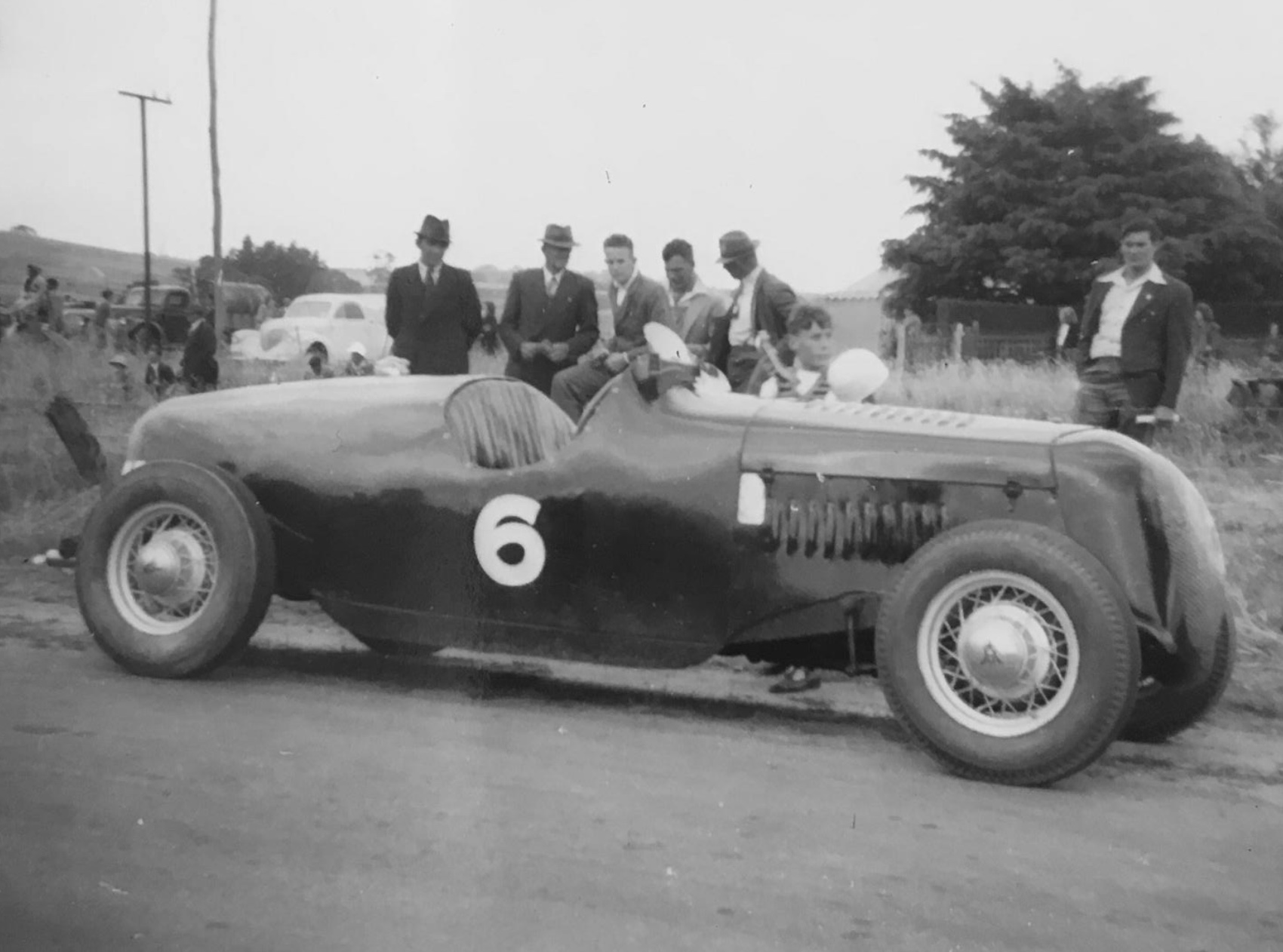 (Lobethal Museum)
Black Bess at roadside during the 1948 ‘South Australian 100’ meeting at Lobethal.
After setting the pace Whitefoed was out after completing three laps, the race won by fellow Victorian, Jim Gullan’s Ballot Oldsmobile.
Finito…

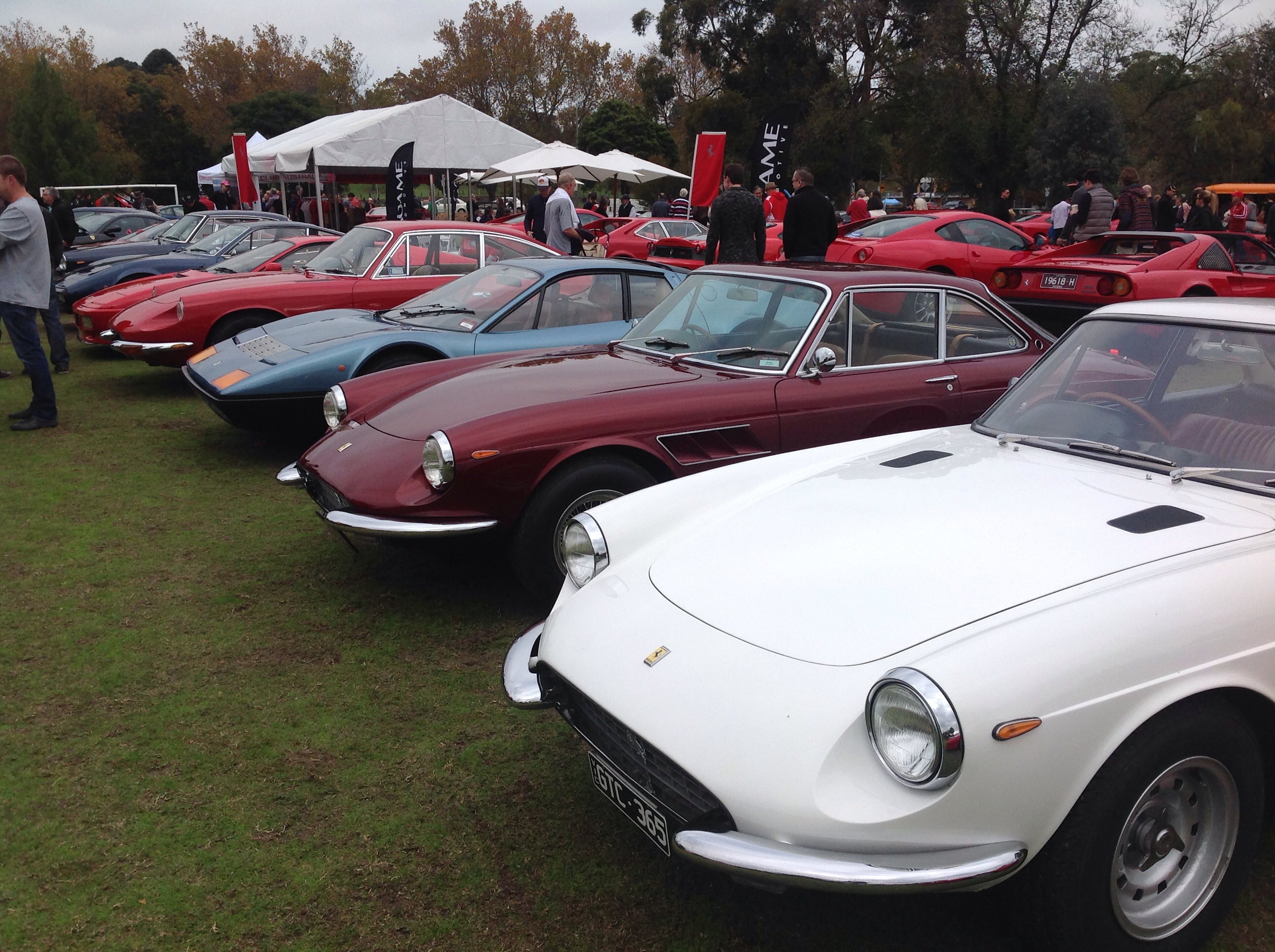
A warm but gloomy Autumn day greeted the entrants of the Ferrari Owners Club annual concourse in Melbourne this morning…
Racing Ferraris’ are fairly thin on the ground in Australia so the cars were predominantly road cars with a bias towards later models of the last 15 years.
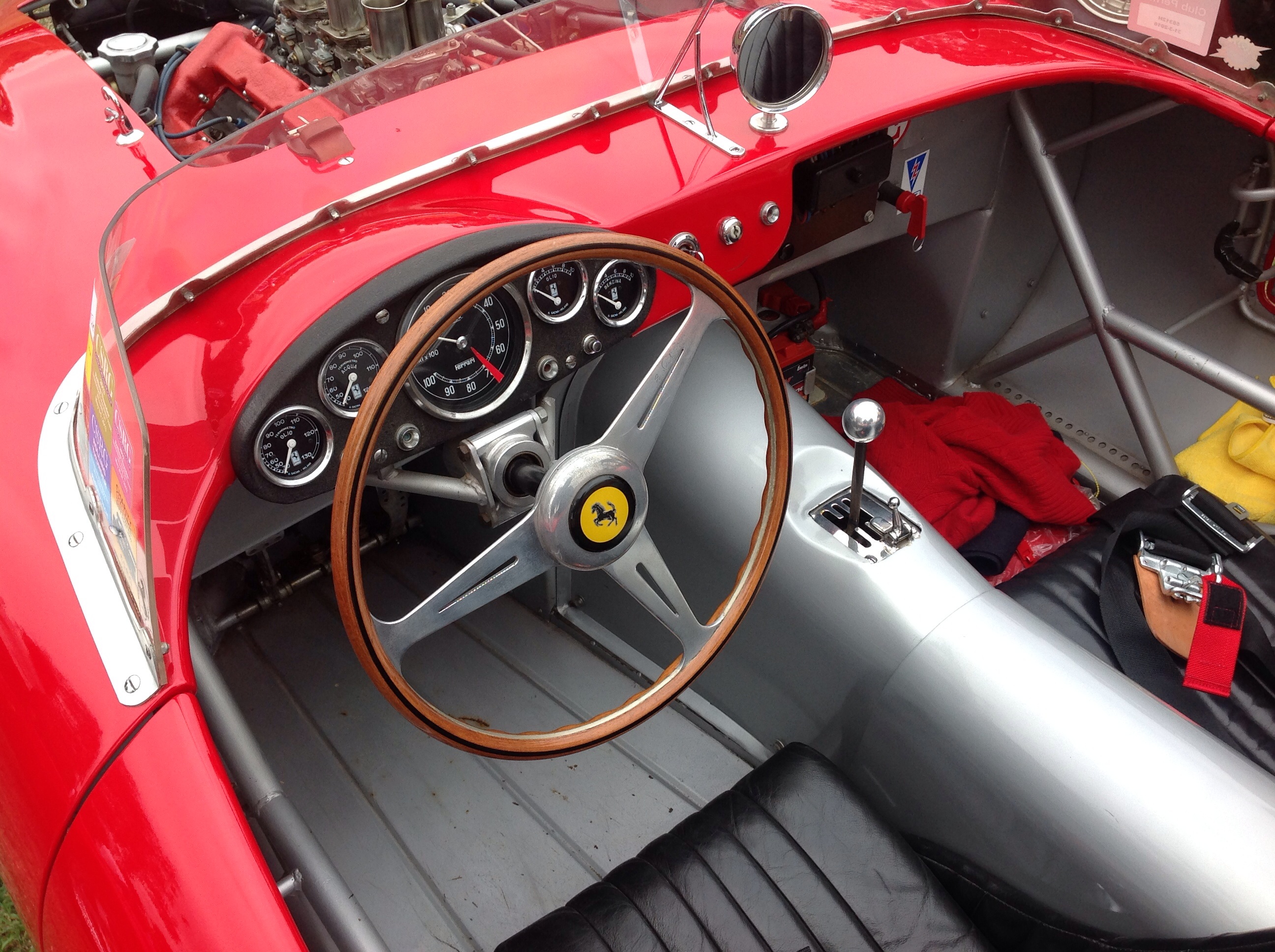
The most interesting entries for me were both replicas; one in the style of a Ferrari Dino 246 Sports Spider and the other a Maserati 450S, both racers of the late 1950’s. Some of the latter cars donor parts were from a Quattroporte road car of the 60’s by the look of the ‘Tipo 107’ plate on the dash.
Neither car is allowed to race in Historic Racing in Oz given our strict period compliance rules but both would be mighty fine and fast track day and road cars…
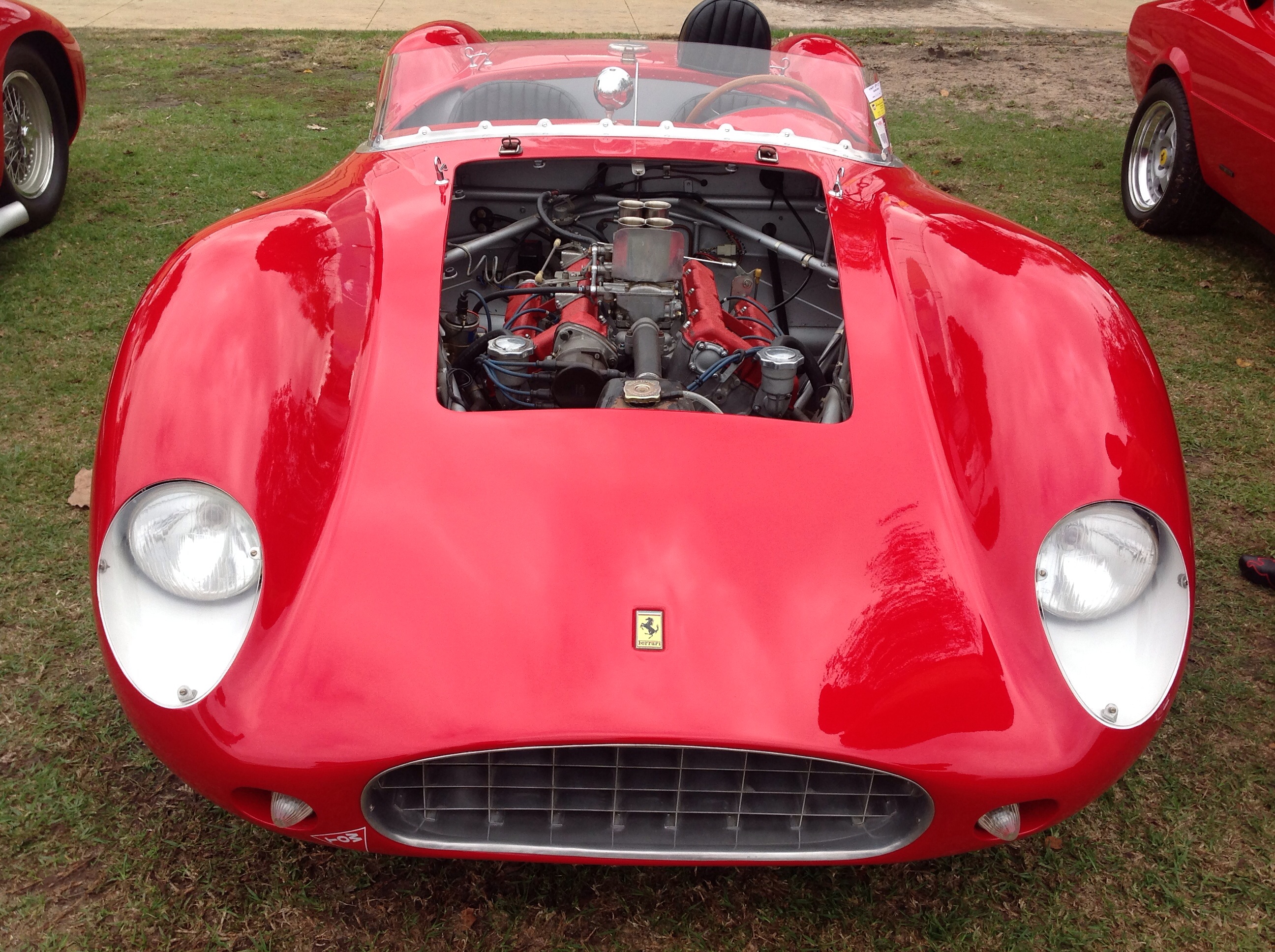
Ferrari Dino 246 Sport Spider replica

Maserati 450S replica
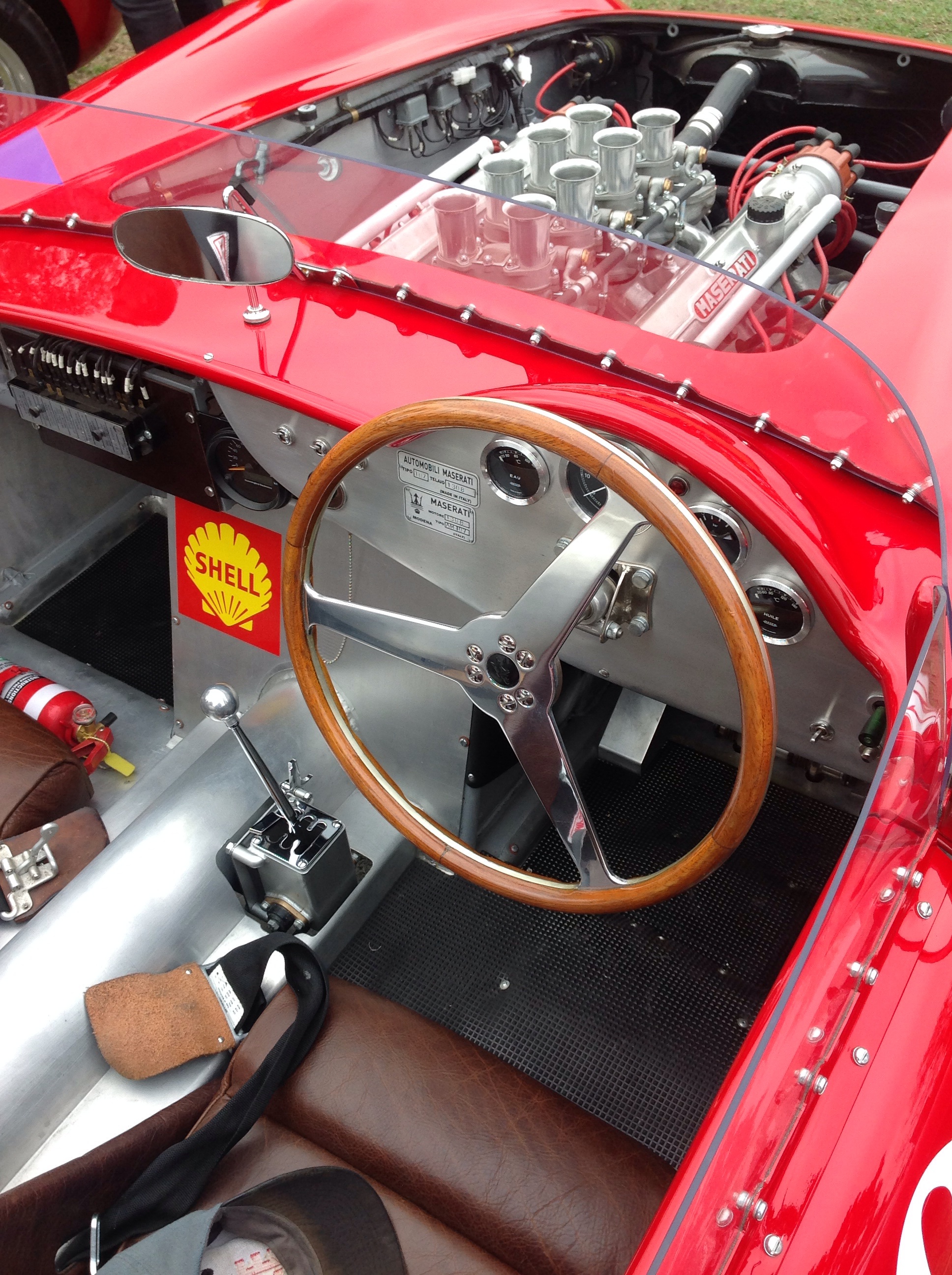
Workmanship of 450S replica evident. Both cars built by Vintage and Historic Restorations in suburban Melbourne.

Replica Ferrari Dino on the left and Maser on the right.


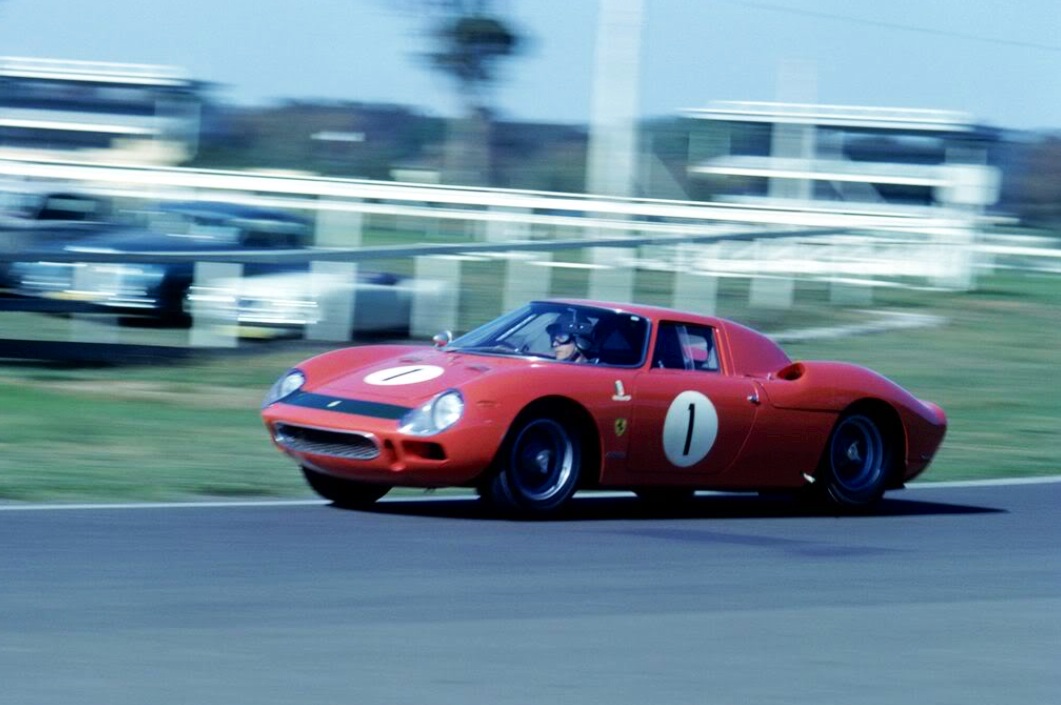
Spencer Martin tips his Ferrari 250LM into the fast Homestead Corner at Warwick Farm before unleashing the cars 3.3-litre V12 on the long Hume Straight, what a sound it must have made! August 1965…
Spencer Martin was one of Australia’s champion drivers of the 1960’s winning the Gold Star, the Australian Drivers Championship in 1966 and 1967 in a Brabham BT11A Climax.
His career could be summarised thus; he saw, he came, he conquered from 1960-1966, retired to marry and have a family, focus on business and then returned many years later…

I don’t cover Spencer’s career in detail but rather introduce an interesting article i discovered in a rally guide for an event held in memory of David McKay. Martin outlines his experiences as a driver/mechanic with McKay and Scuderia Veloce, if not the first, then certainly one of the first of Australia’s professional racing teams formed in 1959…
A brief background of McKay and SV is contained in these articles i posted a while back. One is predominantly about McKay’s Ferrari 250LM, one of the most evocative cars ever raced in Australia, https://primotipo.com/2014/07/03/pete-geoghegan-ferrari-250lm-6321-bathurst-easter-68/ , the other about his Ferrari P4/Can Am 350, an equally stunning car https://primotipo.com/2015/04/02/ferrari-p4canam-350-0858/ .
Martin commenced racing at Gnoo Blas, Orange NSW in 1960 in a Nota, he built from a kit himself, then progressed through the Prad Holden, a very successful sportscar and into ‘Appendix J’ sedans. He beat some of the heroes of the day in his ’48-215′ or FX Holden and was approached by McKay to join SV. Martin picks up the story…
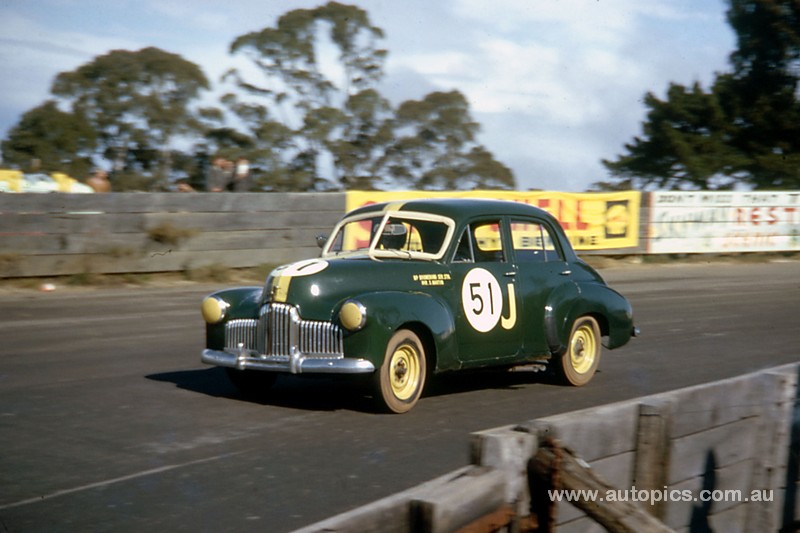
‘Work on the racing cars was carried out in a garage at the rear of his (McKay) house in Wahroonga on Sydney’s upper North Shore. We later moved to new premises beneath the Shell Service Station on the Pacific Highway at Wahroonga.
At this time I was driving the ‘Boomerang Service Station Holden’ for Joel Wakely and was keeping Norm Beechey very busy around Catalina Park, Warwick Farm and Sandown Park. In 1963 David brought Brian Muir back from the UK to drive in the Hardie Ferodo at Bathurst and I was to be Brian’s co-driver. Brian had been driving a Ford Galaxie in the UK and had won the British Touring Car Championship
David was, thankfully very impressed by my driving with Brian and told me he was about to retire and would I like to take over driving his Brabham. (Ex Jack Brabham BT4 Climax) Well you may imagine how I felt getting out of an EH Holden into an F1 Repco Brabham! We took the car to the short circuit at Warwick Farm for a few familiarisation laps where I was shocked by how much power the car had, especially how the far the nose lifted when you put the ‘pedal to the metal’.
It was not long before David entered the car at Bathurst. It was now 2.7 litres and running on methanol. He told me to keep it under 4500rpm down the straight for a few laps and be careful over the hump. I ‘pulled the string’ on the third lap and was doing 172mph over the hump. The car became completely airborne with a very much nose up attitude. I was wearing a Les Leston helmet with a small peaked visor to help keep the sun out of your eyes. Well the wind at this speed would catch under the visor which gave the effect of lifting you out of the car. It didn’t take long for me to remove the peak!’


‘The biggest difference in driving the cars of David’s and my time was the safety aspect.
No seat belts, no fuel cells, no on-board fire extinguishers, no roll cages, no fireproof clothing. I was driving the Tasman Series in New Zealand and was wearing a polo-shirt made of nylon. When Jim Clark saw me in this he explained how dangerous nylon was in the event of a fire. Jim gave me a pair of his Dunlop Racing overalls. Boy, did I think I was smart wearing these and they were fireproof so I could go faster! Actually they gave you about 5 extra seconds in the event of a fire. They were made of cotton and soaked in a fire retardant. Rather different from today’s suits.
Another extremely dangerous factor was the aluminium fuel tanks which were placed either side of the drivers seat. We needed to have over 18 gallons of Avgas for a long race, so we packed dry ice around the tank prior to the race on hot days.’


‘Graham Hill was driving our new Brabham (BT11A Climax) at Warwick Farm in 1965. When we fuelled the car, an hour before the race, one tank was leaking through a crack in its top edge. I went into panic mode, Graham, however, asked me to go to the toilet and bring him back a bar of soap. He made this into a putty mixture and plastered it into the crack. As he explained, the leak was on the top of the tank, so after a few laps the fuel would be below the problem area. I used this fix a few times over the years. Can you imagine this sort of thing happening to an F1 Ferrari or McLaren?!
One of the biggest events to materialise at SV was when David talked Archie White, the Shell Racing Manager, into buying the 250LM Ferrari. I was not allowed to go to the wharf to bring it home as I had work to do on the Brabham. However I’ll never forget seeing it for the first time and David saying it was mine to drive!’
‘David was the best motoring journalist at this time. Not only was he able to write about cars, he could also drive them.
David was at the front of the grid for the 1963 Australian Grand Prix at Warwick Farm alongside Surtees and McLaren. He was the first Aussie home and all this on a 40 degrees Celsius day when many of the younger drivers stopped due to heat exhaustion. The temperature inside his car was measured at over 50 degrees.

David, in his motoring column, was very critical of the cars which Ford, GMH and Chrysler were building at that time. Sir Frank Packer allowed David to continue his reports in the Sydney Telegraph because his column was selling newspapers. When News Ltd took over the Tele, they would not allow him such a full hand as they explained they needed the advertisers money from the motoring industry so David left.’


‘The first race for the 250LM was the Sandown Park Tasman round sports car race in February 1965…
Graham Hill was to drive the Brabham in the Tasman race, however he put it on David to allow him to also drive the LM. David kept his word to me and told Graham that ‘the boy’ was going to drive it. Well, Frank Matich was leading (in Elfin 400/ Traco Olds) then suddenly we did a ‘Stephen Bradbury’ as Matich blew up and we went on to win it’s very first race. In reality it was no match for the more powerful Elfins and Lola’s. It did however win every long distance race in which it was entered.
The ‘Old Red Lady’ as David affectionately called the LM, was a fantastic car to race. With the V12 very low slung in the engine bay behind the driver, and with 8000rpm, the noise inside and out was certainly something to remember for driver and spectator alike.
David was a vary hard taskmaster. He expected me to work on customer road cars during the day and maintain the Brabham and Ferrari after hours. I was made an offer by Bob Jane which I decided was better for my future so I moved on. Years later David wrote me a letter saying he was sorry for being so hard on me. This lead to a rekindled friendship where we travelled overseas together to many of the F1 races.
I really miss ‘The Old Man’. He was a true Ferrari-ist, and gave us all the true pleasure of seeing the two best cars ever to race in this country, the 250LM and P4 Ferraris!’

David McKay had this to say about Spencers’ departure and career in his wonderful autobiography, ‘David McKays Scuderia Veloce’…
’I was both surprised and disappointed but in retrospect I had expected too much and had been too hard on the young man. I had treated him as I would a son and no doubt Martin thought ‘the son’ had had a lucky escape. Sadly I had planned to take Martin to Maranello where I was sure Mike Parkes would have got him a drive at Le Mans and he would eventually have graduated to F1.
However, instead of telling me he’d been waiting for this chance and had his bags packed, Martin said he didn’t fancy Le Mans with its dangerous mix of cars and drivers and thank you but no thanks. I still consider to this day Martin would have achieved a successful career with Ferrari and we have often joked about what might have been. Martin argues that he has all his arms and legs in place and that his successive Australian Championships in 1966 and 1967 fulfilled his motor racing ambitions. It was twelve years before we were to speak again and it was the LM which brought us together’.

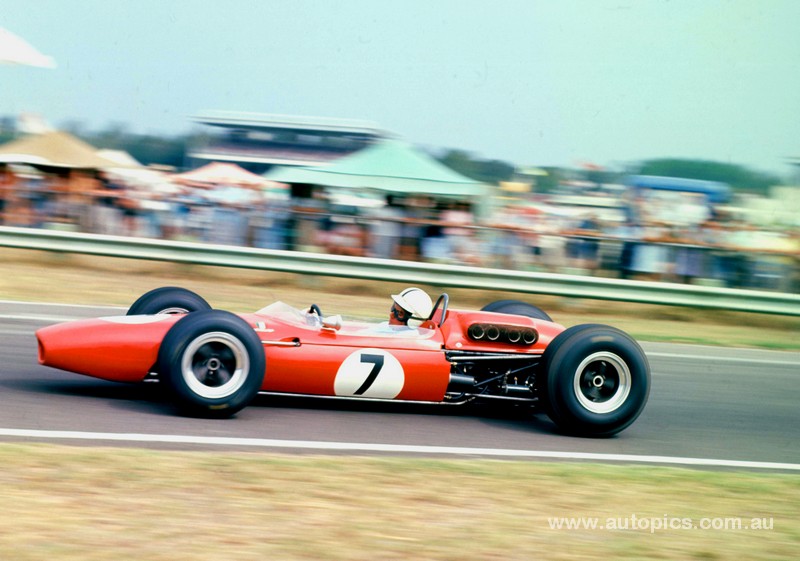
As Spencer says he left SV and Sydney to join Bob Jane Racing in Melbourne, both Shell sponsored teams at the time and a controversial move albeit a very successful one for both driver and team…
Jane acquired the Brabham BT11A Climax Spencer had been racing for SV, it was this car in which he won the Gold Star in 1966 and 1967. His toughest competitor was Kevin Bartlett in a similar car entered by Alec Mildren, the pair having many close dices with Bartlett famously setting the first over 100mph lap of Bathurst during their Gold Star encounter at Mt Panorama in 1967.

In 1967 Repco’s 2.5 litre Tasman ‘740 Series’ V8’s powered the cars of Greg Cusack (SV Brabham BT23A), Leo Geoghegan (Lotus 39) and John Harvey (Brabham BT14 ) even though these cars were all competitive they lacked the consistent reliability which prevented Repco ever achieving a Gold Star Series win…Martins’ Climax engined Brabham won 2 rounds, winning his second title by 7 points from Cusack, his replacement at Scuderia Veloce and promptly retired.
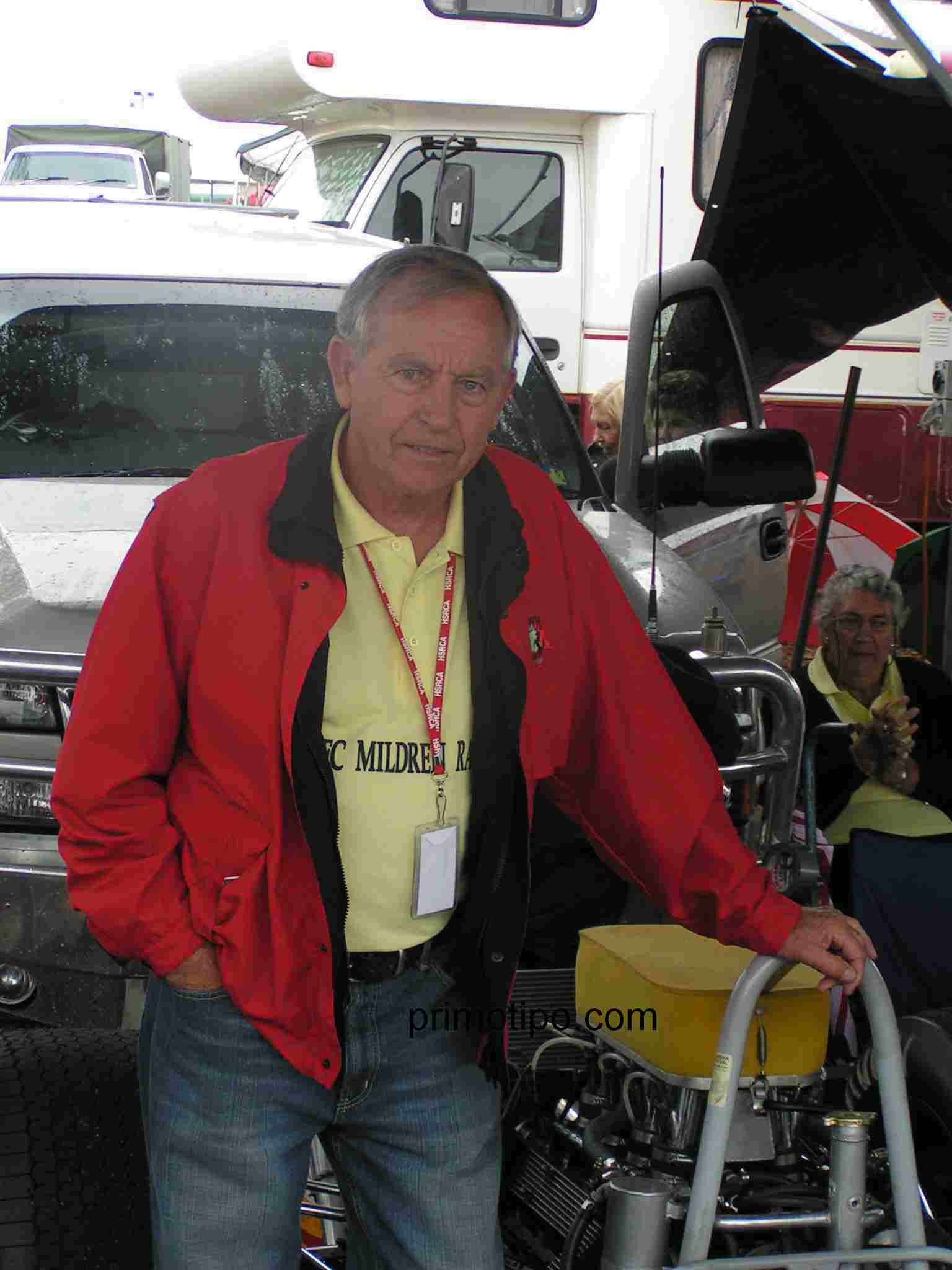
Years later he re-established his relationship with McKay as he outlined above, he owned a share in McKays’ LM for a while and raced a range of exotic racing cars in historic racing in both the US and Europe. He still lives in Australia and is in happy retirement with a large extended family to keep him busy…and the occasional competition drive.
Etcetera…

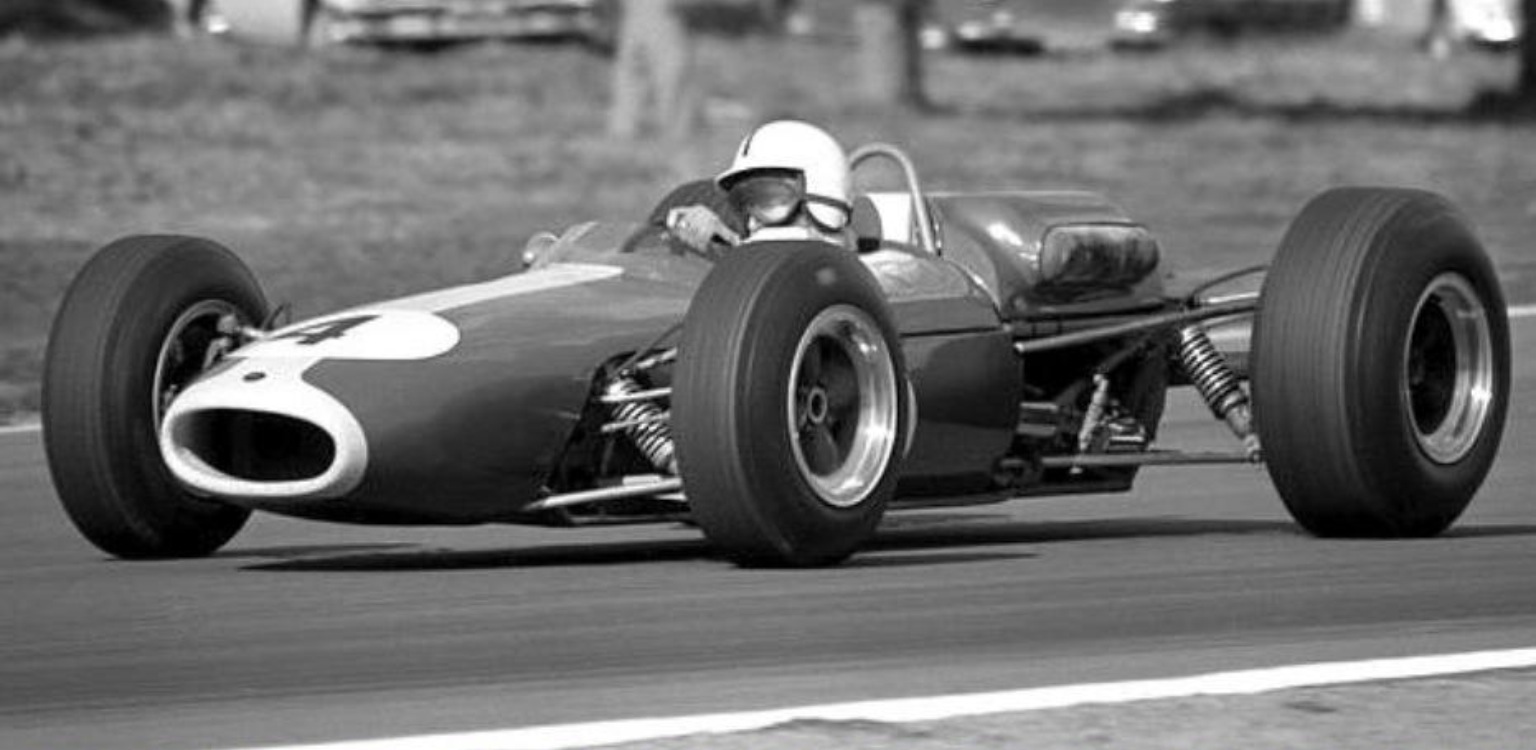
Jackie Stewart contested the above, Surfers’ Gold Star 1966 race, this article may be of interest to some in his ‘one-off’ Brabham BT11A Climax drive…https://primotipo.com/2015/02/13/jackie-stewart-at-surfers-paradise-speed-week-1966-brabham-bt11a-climax-and-ferrari-250lm/



Bibliography…
‘David McKay Memorial Rally 2012: Rally Guide’, ‘ David McKays’ Scuderia Veloce’ David McKay, The Nostalgia Forum
Photo and Other Credits…
John Ellacott, Bruce Wells, autopics/Richard Austin, The Roaring Season, Chris Haigh Collection, Racing Car News, Heinz Federbusch, Ellis French, John Stanley, Racing Car News, Chris Haigh
Lindsay Ross of Oldracephotos http://www.oldracephotos.com/content/home/ for the use of the shots by David Keep
David Blanch of Autopics Collection http://autopics.com.au/
Stephen Dalton Collection, Spencer Lambert Collection
Tailpiece…

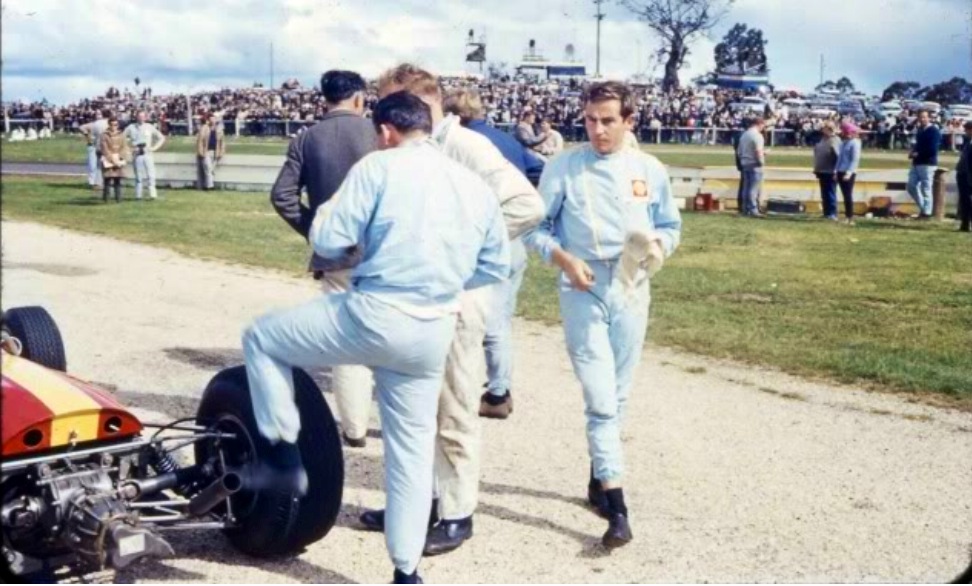
Spencer alights from the Jane Brabham BT11A in the Longford pits 1967.
John Sawyer standing at left with two Firestone guys in attendance. It looks serious but in a relaxed kinda way doesn’t it?
Finito…

French Racing Blue… Lago Talbot – just like Aussie, Doug Whiteford used for 2 AGP wins.
A little Merit – the era of Farina, Fangio, Moss, Hawthorn & Salvadori in miniature. Or closer to home Davison, Stillwell, McKay, Walton & Whiteford…
Many an enthusiast reading can possibly relate to a misspent youth building model kits. Referring to the instructions, cutting pieces from the sprues, filing, sanding, detail painting & gluing all the pieces together to create a plastic masterpiece. Hopefully with no spares left over!
The Merit brand from North London, UK-based toymaker, J & R Randall Ltd was an early player in the model kit industry. Racing Cars weren’t their only focus, ships, planes and even a Model T Ford played a part too. But here at primotipo.com the racing cars are really the only ones that matter.

Two times BRM Type 25. The one on the left is pretty much how Merit intended, the other has had a master modelmaker, Alistair Brookman makeover
The whole series cover many of the great racing cars of the late 1940’s through to the mid 50s and although they’re not in the later highly detailed Tamiya level, they make for a well proportioned 1/24 scale rendition of the actual racing car.
Fourteen kits make up a full set – covering the best of Italy, France, Germany and the UK industry.
Alfa Romeo 158
Maserati 4CLT/48
Maserati 250F
Lancia-Ferrari D50
Mercedes Benz W196
BRM Type 25
Connaught B Type
Cooper MkIX
Vanwall
Lago Talbot
Simca Gordini
Lotus 11
Jaguar D Type
Aston Martin DB3S
The kits made their way around the globe, with the Australian distributor being the father of a well known (just retired) Melbourne motoring book dealer. Finding them now is a little harder, but not impossible. The well known internet auction site might be your best friend for a search. As with many collectors items they’re worth more boxed and unbuilt. They are also popular for slot car conversion.

I see red… the Italian Merits – #2 Alfa Romeo, #17 Lancia-Ferrari, #15 Maserati 250F & #7 Maserati 4CLT/48.
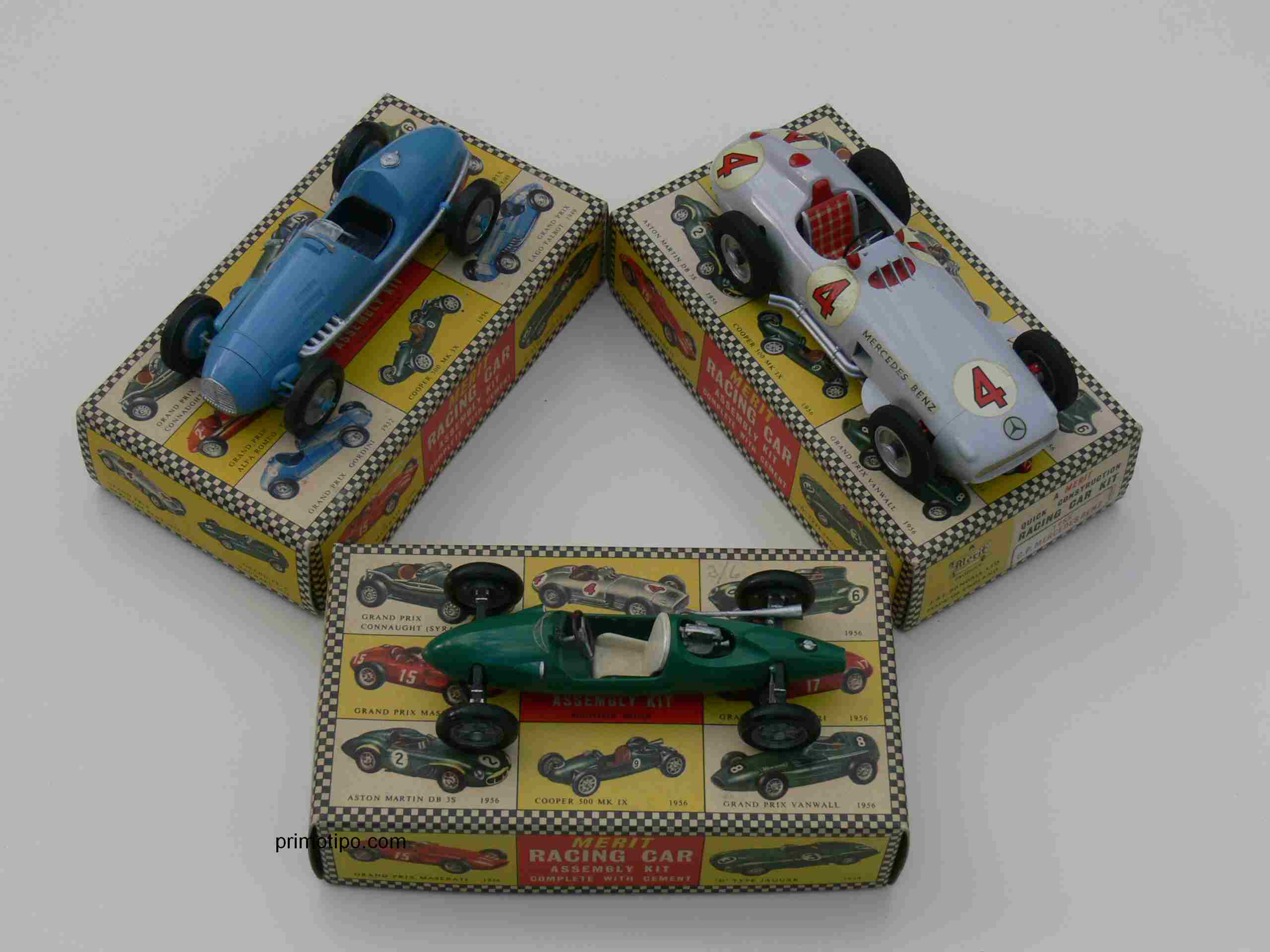
More FRB with the Simca-Gordini F2, some German supremacy with the W196 Benz that Fangio and Moss dominated long before Hamilton and Rosberg got their gigs. The other car being the Cooper MkIX, these could be fitted with all sorts of Norton, JAP, Vincent or other motorcycle engines.

The British sporties… #2 Aston Martin DB3S, #6 Chapman’s Lotus XI and a Jaguar D Type (that one only part built).

The GP cars that helped towards Britain gaining on the Italians. #8 Vanwall, #22 Connaught B Type & #4 BRM Type 25.

A bit of Vanwall history and the written instructions to assemble the Vanwall kit.
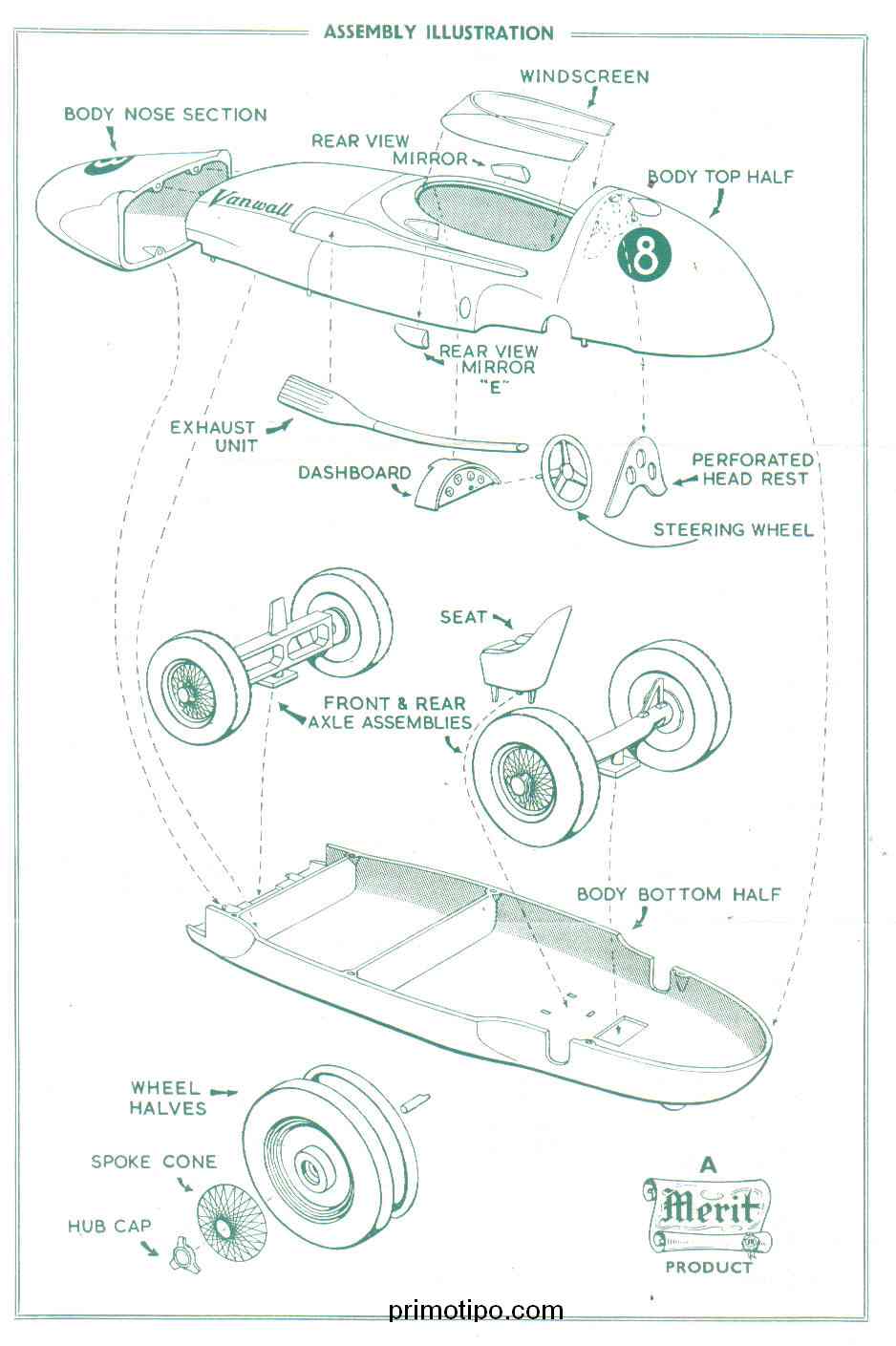
The other side… Vanwall illustrated instructions
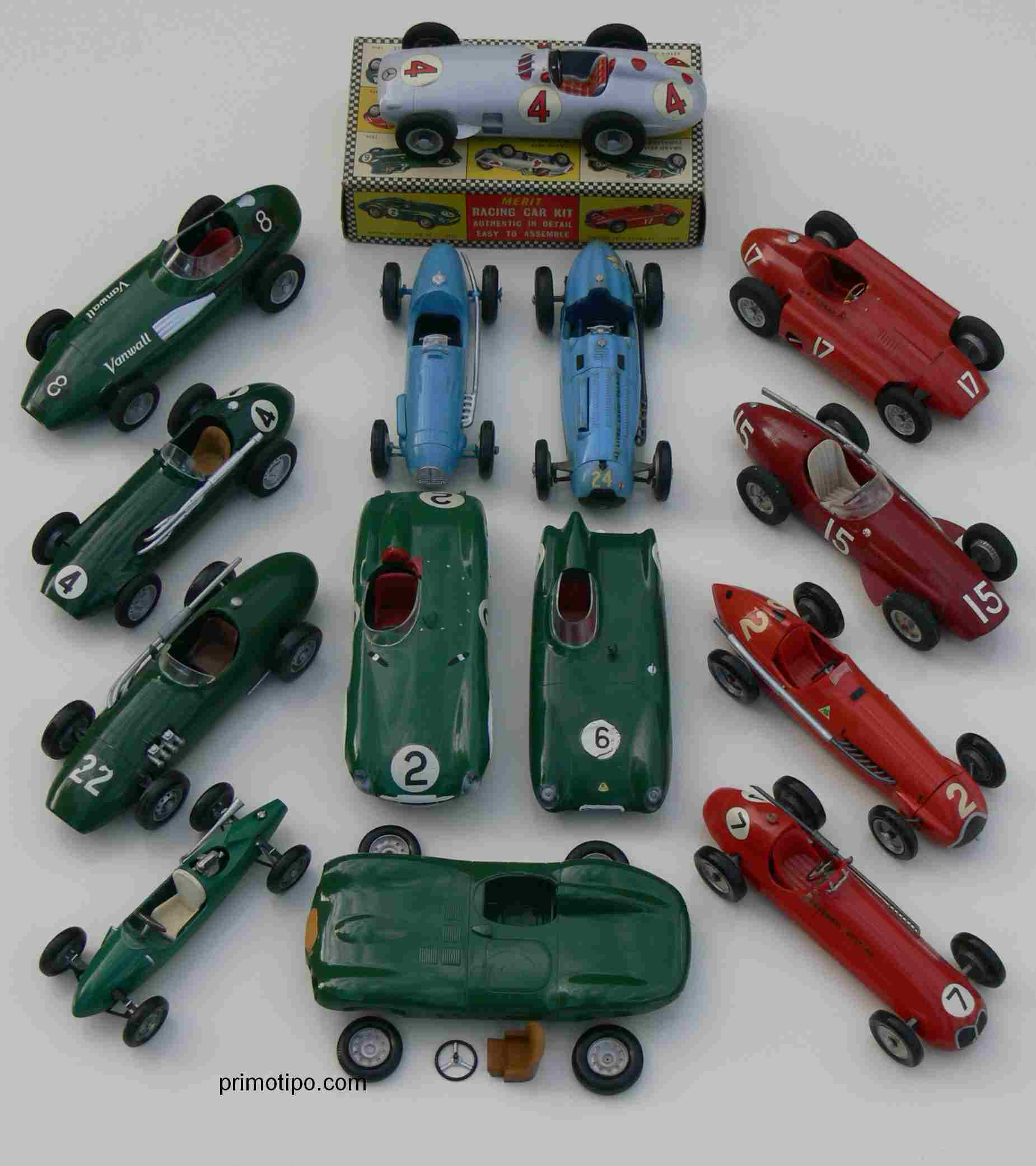
This should be all the Merit racing car collection.
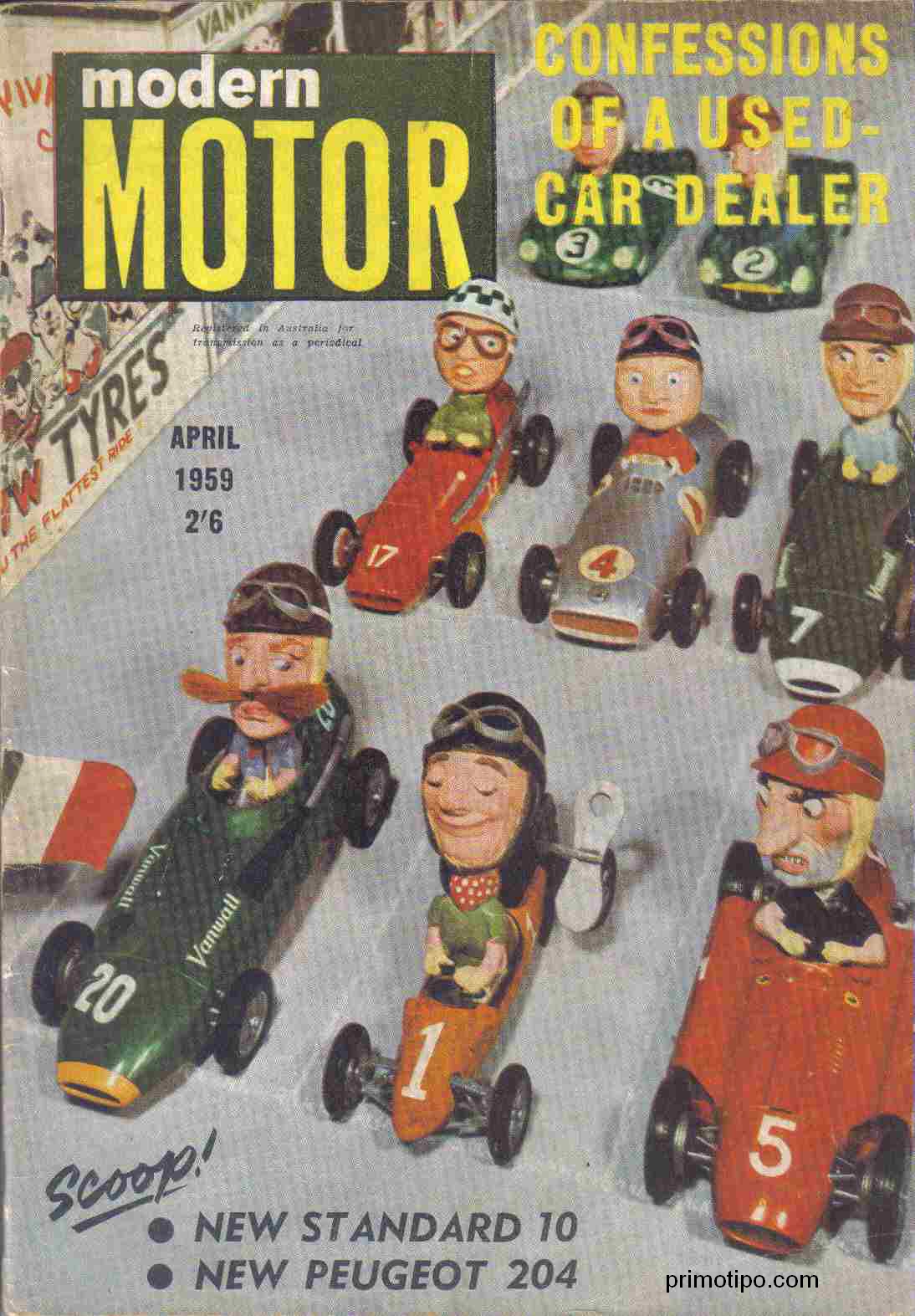
Aussie car magazine, Modern Motor depicted these Merits in a race for April Fools Day 1959. Their cartoonist/artist, Terry Trowel added the drivers.
Etcetera…

Side 1 of the Merit brochure. Note that not all the racing cars came out at once and that during 1958 the BRM, Maserati 4CLT/48 & Simca-Gordini would be added
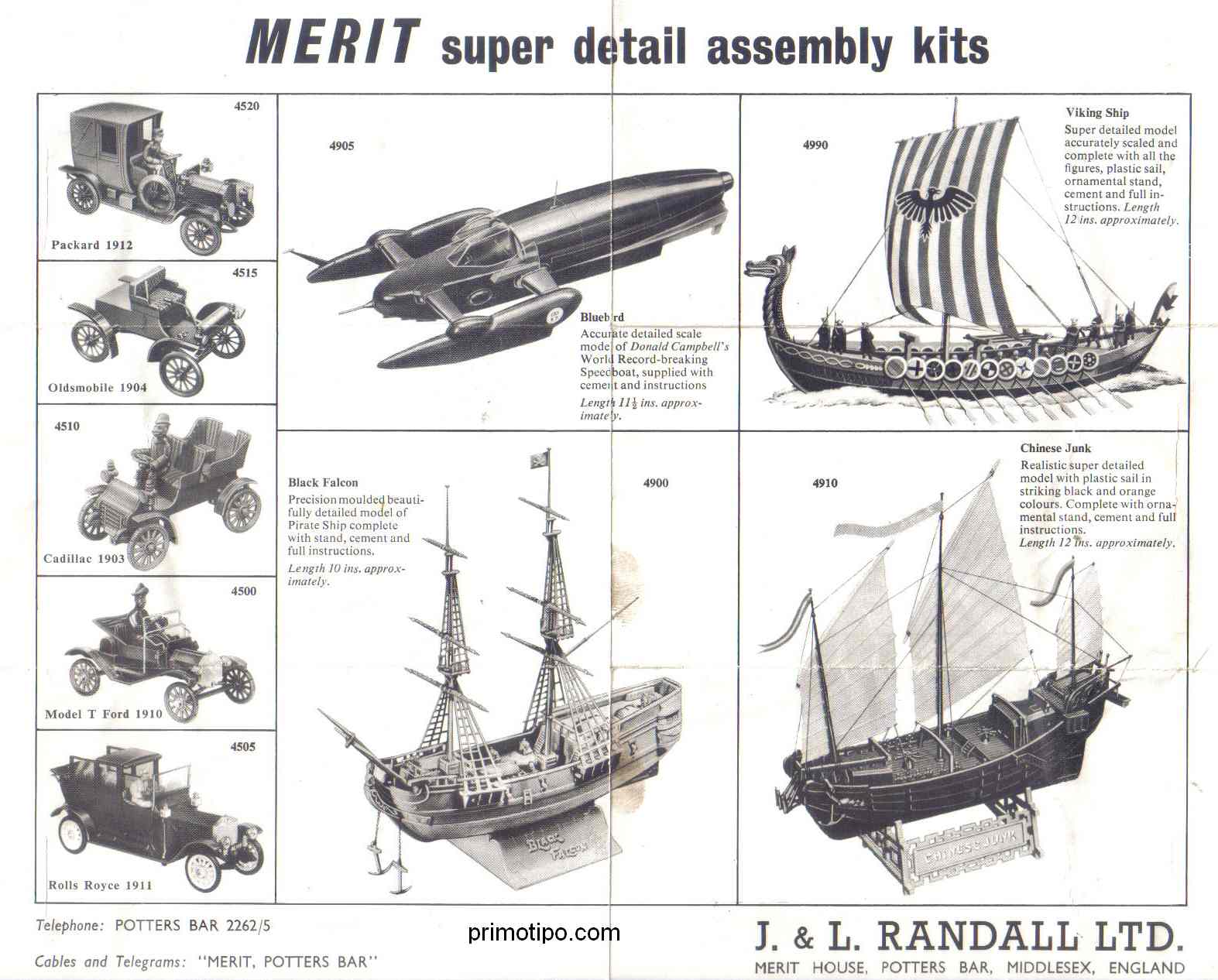
Side 2 of the Merit brochure – note Donald Campbell’s Bluebird kit.
Bibliography…
Sept 55 (MS Archive 18/4/15) “J & L Randall Ltd have introduced a Merit Outfit plastic assembly kit which makes up into a 1912- model-T Ford two-seater complete with driver. Their address is Potters Bar, Middelsex.” p43
Modern Motor
Words and Merit Model Collection: Stephen Dalton…

(The Roaring Season/Gearbox Grinder)
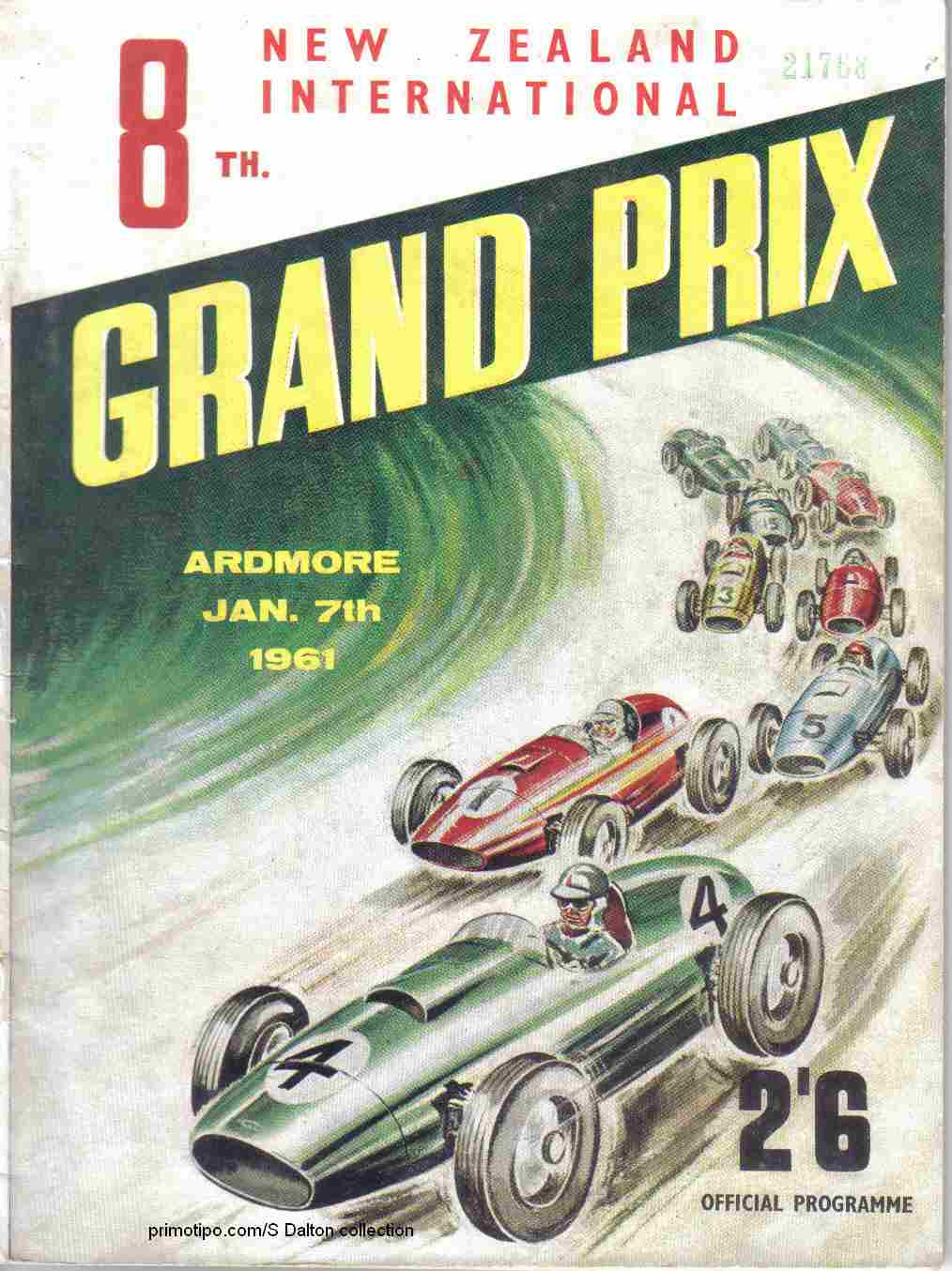
Pat Hoares’ Ferrari 246/256 V12 being towed into Ardmore for the 1961 New Zealand Grand Prix, open trailer towed by an ‘FB’ Holden…
I blew my tiny mind when sent through this post of another time and place on ‘The Roaring Season’, check it out! One of the wonderful things about blogs and websites is how amateur shots which would never see the light of day like this ‘cache’ can now be shared for all to see.
The Ferrari is a 1958 works F1 Dino ‘0007’…
It was raced by Gendebien, Von Trips, Gurney and Phil Hill who won the 1960 Italian GP in it.
It was converted at Maranello to 3 litre V12 ‘Testa Rossa’ power, re numbered ‘0788’ and raced successfully in NZ amongst the ‘mid-engined hordes’ and ultimately restored to its original specs by Crosthwaite and Gardiner many years ago.

(Gearbox Grinder/The Roaring Season)
1961 NZ GP start, Ardmore January 1961. Jack Brabham won from Bruce McLaren and Graham Hill in works Cooper T53 Climax x 2 and BRM P48.

(The Roaring Season/Gearbox Grinder)
Pat Hoare on his way to seventh and first of the front engined cars in the ’61 NZGP. Ferrari 246/256.
In an interesting sign of the times ten front engined cars failed to qualify, the first six finishers were mid engined, other front engined finishers were ninth placed Malcolm Gill in the amazing aero-engined Lycoming Spl, eleventh Frank Shuter Ferrari 625 and twelfth Bib Stillwell Aston Martin DBR4-300. Three Maser 250F’s DNF’d.
Credits…
The Roaring Season/Gearbox Grinder, Barchetta, Stephen Dalton Collection
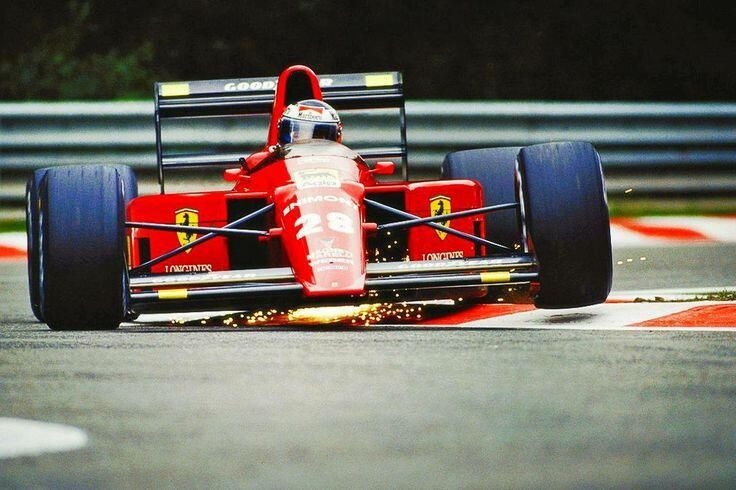
Gerhard Berger pings his Ferrari 640 through the ‘Bus-Stop’ chicane, Spa 1989…
He spun off on lap 9, the race won by Ayrton Senna from teammate Alain Prost in McLaren MP/5 Hondas’ and Nigel Mansell in the other Ferrari 640.
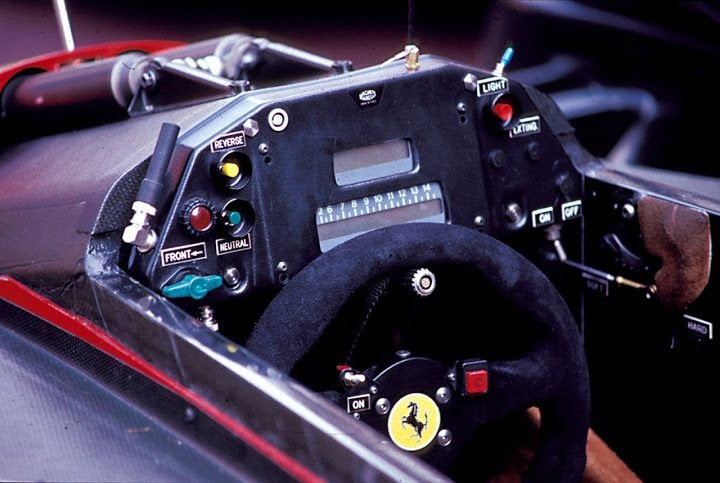
The nub of the cars innovation, its electro-hydraulic 7 speed gearbox and steering wheel mounted operation; faster gearchanges, greater reliability by eliminating ‘muffed’ up and especially downchanges, two hands on the wheel at all times giving greater control and speed. (Unattributed)
Ferrari 640 and Innovation…
The new single-seater was known colloquially as the 640 after its design number, but was officially F1-89.
Nigel Mansell joined the team, Gerhard Berger was his teammate. Ferrari took three wins and was third in the Constructors’ Championship with 59 points.
The F1-89 hailed the return of the normally aspirated 12-cylinder engine and in a major first for Formula 1, also had a gear change bar mounted behind the steering wheel.
Ferrari have never been noted for innovation but this was a ‘game changer’ which all other teams and formulae followed.
Nigel Mansell won his debut race at Interlagos and then headed the pack across the line again at Budapest. The Scuderia’s third season win came from Gerhard Berger at Estoril. McLaren took both titles that year with Alain Prost winning the Drivers’ Title for them.
The semi-automatic gearbox was Barnard’s solution to the problem of the long manual actuation mechanism. Barnard interviwed by ‘MotorSport’ in 2005 said ‘The project started because I wanted to make the monocoque really narrow. In those days we had to fit a gearshift run through the monocoque alongside the engine and back to the gearbox. It was a real pain to find a route for this and make room in the cockpit for the selector and the driver’s hand. I thought, ‘Surely, instead of a gear lever, I can have a switch.’ So it was a packaging imperative. The gear linkage affected lots of things, and of course the driver was taking his hand off the wheel during changes. The time-saving advantage came afterwards. Vittorio Ghidella, running Ferrari post-Enzo, was terrified of the ‘box failing and had a manual version built; Mansell tested it and said ‘forget it’. But the effort was a danger to the project.’
Originally intended to appear in ’88 on the 639, the electrohydraulic ‘box and normally aspirated V12 were held back until the following season once it was clear that the equivalency rules for ’88 made it vital to run a turbo to be competitive. When it did at last race in ’89 the new transmission was initially unreliable but it eventually became clear to everyone in the pitlane that here was a technology they would all have to copy.
Ferrari say that ‘the new gearbox and communications difficulties with Barnard who was working from England dragged out the car’s development’. However, when it finally did emerge, it was seen by the other constructors as a shining example of superb engineering and aerodynamics, the latter thanks to its extremely clean-looking form’
Boy, it was and is a stunning looking car, perhaps the last really sexy F1 car?

Technical Specifications…
With the banning of turbo-charged engines from the end of 1988, as stated above, Ferrari returned to a normally aspirated 65° V12 Bore/stroke 84 x 52.6 mm displacing 3497.96 cc. The block was cast iron as a result of Barnard driving Ferrari hard on engine length and to get the crank as low as possible. He also influenced the 4 bolt pick ups for the engine, which differed from the way Ferrari hung their engines from the tub before.
Compression ratio was 11.5 : 1, maximum power 441 kW (600 hp) at 12,500 rpm. Valve actuation was DOHC per bank, five valves per cylinder, Fuel feed by Weber-Marelli electronic indirect injection, Ignition electronic, single spark plug per cylinder, lubrication dry sump. Clutch multi-plate with a 7 speed electro-hydraulic gearbox.
The chassis was designed by Barnard and his team at Ferraris’ Guildford Technical Office in the UK. When Barnard joined the team Ferrari had not won a race since 1985 so he was able to name his terms, inclusive of not working at the factory in Maranello! Ferrari agreed to the establishment of a design office near Barnards’ home in the UK.
The chassis was typical of the period, a Kevlar and carbon-fibre composite monocoque, its distinctive pannier shape a function of the large volumes of fuel, 220-230 litres carried at the time..
Barnard commented about the cars suspension ‘The 639 had conventional spring/damper units on top of the chassis, but because the 640 monocoque was so narrow I drew up a torsion-bar arrangement instead which started the short-torsion-bar fashion that continues today. It kept the installation as compact as possible and also I didn’t like coil-over dampers. The springs were never well enough made to avoid side loads on the damper rods and consequently added friction. I designed a lower friction package with the torsion bar, which ran on ball bearings. It was a really good solution’.
Front suspension comprised independent push-rod, torsion bar springs, telescopic shock absorbers and anti-roll bar. Rear suspension independent push-rod, twin wishbones, coil springs over horizontally-mounted telescopic shock absorbers. Brakes were steel discs. Steering rack-and-pinion. Fuel tank capacity 192 litres and Front tyres 25.0-10.0-13 and Rear tyres 26.0-15.0-13.
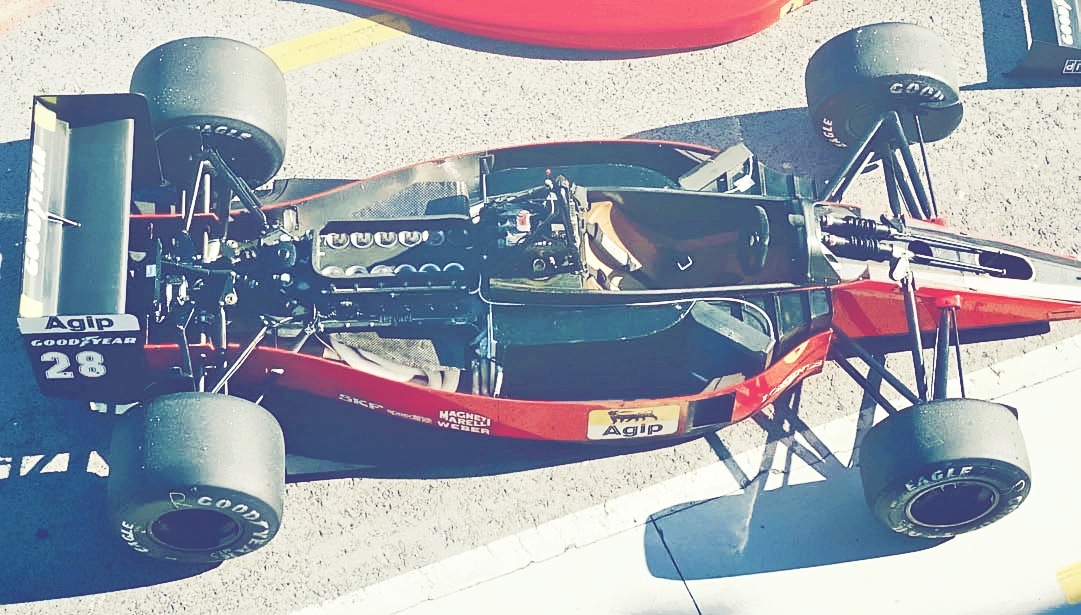
The beautiful symmetry and packaging of the car, a Barnard strength is seen to good effect in this shot from above. (Unattributed)
Apart from Mansells debut win at Interlagos in Brazil the gearbox gave early season troubles, both drivers having DNF’s in all subsequent races until the French GP, the ‘box the cause of many of them.
John Barnard again comments and sets the record straight ‘The semi-auto gearbox was slagged off early on for being unreliable, but that was unwarranted. A lot of the retirements in early 1989 listed as gearbox failures weren’t at all, they were due to loss of power to the ‘box. The alternator was driven by a belt from the crank and this kept falling off. It took a long time to find out why, using high-speed photography on the dyno. At this time the V12 only had a four-bearing crank which started to whip at certain revs, causing the front pulley to shed the belt. The alternator would stop and so would the gearbox electronics. We didn’t have any fundamental problems with the ‘box itself. It was pretty reliable. It was mostly standard inside and the hydraulic system was simple and robust.’
After these problems were sorted the advantages of the gearbox were clear…Barnard had instigated the second technical innovation of his career, the first the carbon-composite chassis…
Check out this article on John Barnards’ McLaren MP4/1 Ford…
McLaren MP4 Ford: 1981 The first Carbon-Composite Car…John Barnards’ Brilliance
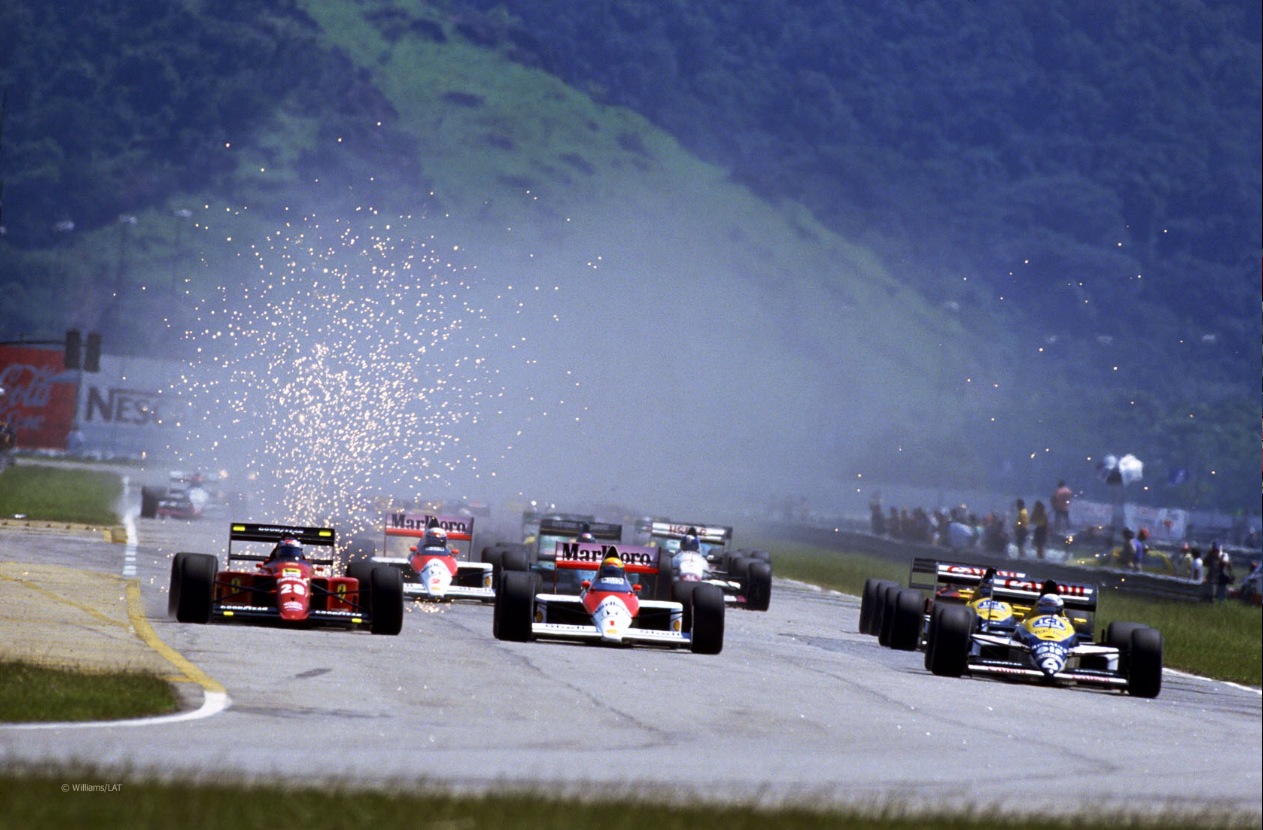
Start of the 1989 Brazilian GP with L>R Berger, Prost, Senna, Patrese and Boutsen behind him…Ferrari 640, McLaren MP4/5 Honda x2 and Williams FW12C Renault x2. Winner Mansell is not to be seen, he won from Prost and Mauricio Gugelmins’ March CG891 Judd. (Unattributed)
Etcetera…

Nigel Mansell at Monaco in his 640 1989. He retired with gearbox failure, Senna won in his McLaren. (Unattributed)
Credits…
Scuderia Ferrari, MotorSport June 2005

Bonnier/Abate Porsche 718GTR in the Sicilian Hills. (Yves Debraine)
Jo Bonnier victorious in the Porsche 718GTR together with Carlo Abate…
The 718 Porsche was a development of the earlier, successful 550A/RS61, the GTR coupe the ultimate expression of the 718 was developed for the 1961 Le Mans classic. It was fitted with either the earlier 1.5 litre 4 cylinder or as here, a 2 litre variant of Porsches’ flat 8, quad cam F1 engine developing around 210bhp all of which hit the road through a 5 speed gearbox. Disc brakes were used, torsion bar suspension, the car very light at circa 570Kg.
The 904 followed the 718 as Porsches’ next racer hence the family resemblance…
Very successful, 718 variants won Targa in 1959/60/63 and the Sebring 12 Hour enduro in 1960.
The Bandini/Scarfiotti/Mairesse Ferrari Dino 196SP looked a certain winner until Willy lost the car on the last lap, he recovered but fell short of victory by 12 seconds.
It wasn’t Willy Mairesse’ race, he had started in a 250P 3 litre 12 cylinder Ferrari co-driven by Ludovico Scarfiotti and managed to hit a bump which flattened a fuel line, ultimately putting the car out of the race.
John Surtees then blotted his copybook, chucking the leading 250P co driven by Mike Parkes into the bushes leaving Lorenzo Bandini to uphold Ferrari honours with the 2 litre V6 Dino.
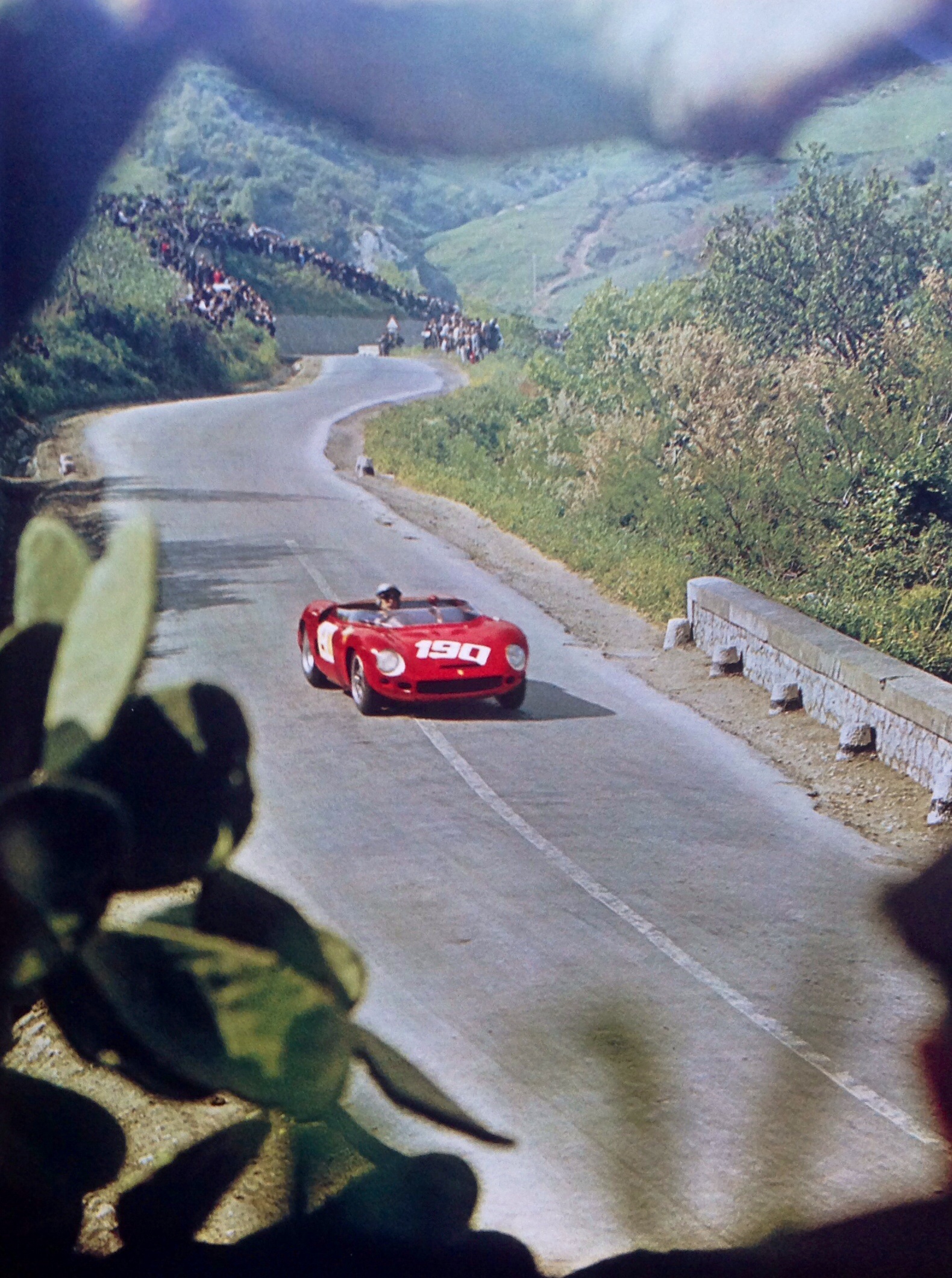
Scarfiotti/Bandini/Mairesse Ferrari Dino 196SP. Nowhere quite surpasses the rugged majesty of this place? (Yves Debraine)
Scarfiotti was enlisted to assist in the Dino to uphold Maranellos’ honour, the Bonnier Porsche very competitive in the cool, experienced and fast hands of the Swede.
Abate wasn’t as quick as Bonnier, slowly the Ferrari gained the lead, Ferrari team-manager Eugenio Dragoni putting Mairesse into the car as a fresh driver for the last two laps. A fresh driver but perhaps not the most ‘calm’!
The Sicilian weather deteriorated, rain began to fall and poor Mairesse goofed under brakes as he approached the finishing straight and off the road he went. He gathered up the car, dragging the engine cover along the ground as Bonnier looked on, the Ferrari just falling short of Bonniers time by 12 seconds…

The Ferrari boys watch their clocks! Bonnier has finished, it’s all down to Willy Mairesse as the weather deteriorates. Bandini in the pale blazer beside the ‘Wallopers’ and Scarfiotti to the left of Lorenzo. (Bernard Cahier)

Mairesse finishes the race dragging the engine cover of his Ferrari behind …(Bernard Cahier)

Ferrari Dino 196SP: multi-tubular spaceframe chassis, 690Kg, 1983cc 60 degree V6, SOHC per bank, 3 Weber carbs. 210bhp @ 7500rpm, 5 speed transaxle. (Unattributed)

‘Ludovico Scarfiotti shakes the quiet Sicilian village of Campofelice in his 3 litre Ferrari 250P’, the first of 2 Ferraris’ crashed by Willy Mairesse, this one on on lap 4… (Stephen Dalton Collection)
Bibliography…
Automobile Year 11, Yves Debraine, Bernard Cahier, Stephen Dalton Collection
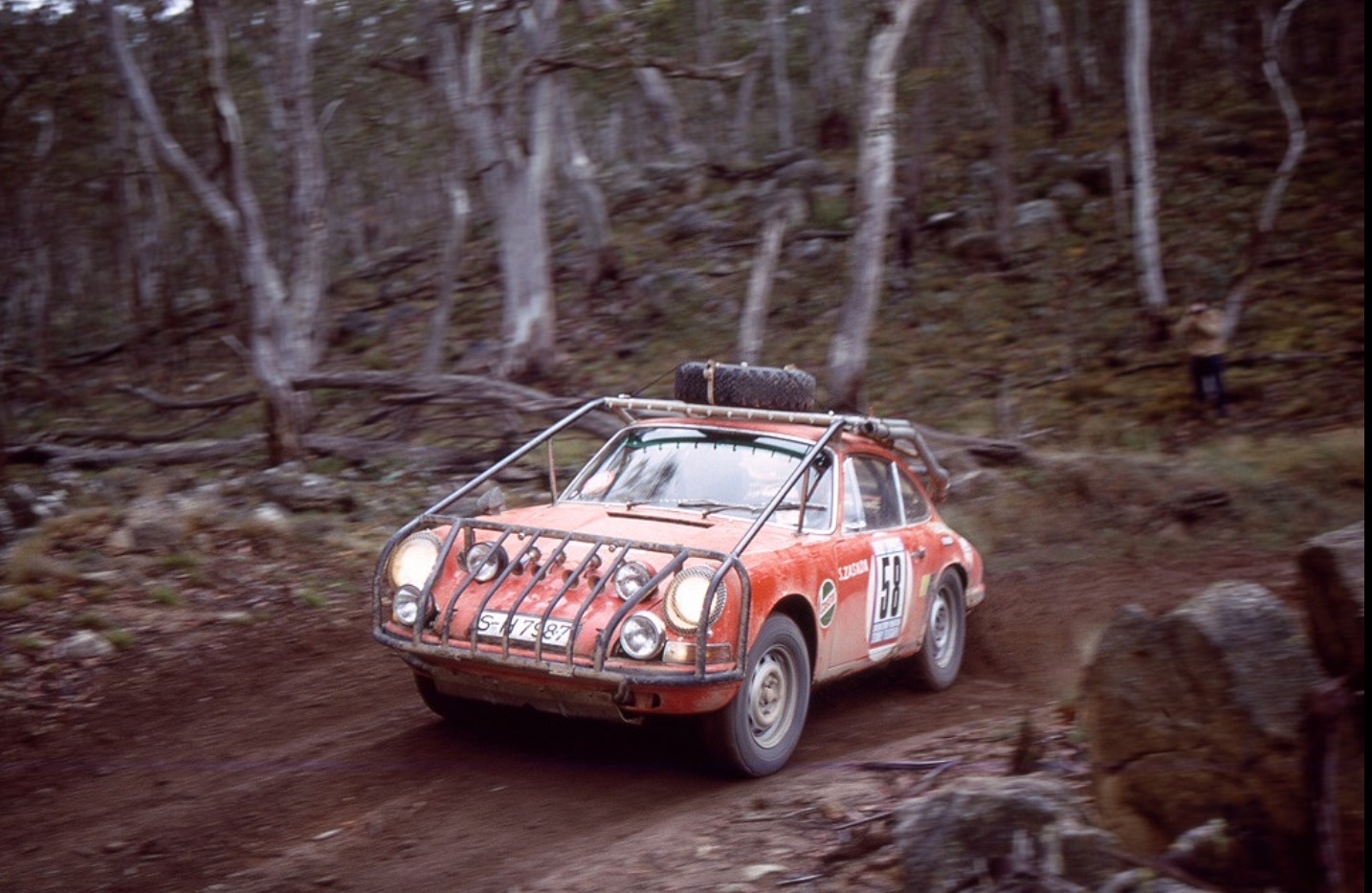
‘Polish rally ace Sobieslaw Zasada gave it all he had on the Numeralla to Hindmarsh Station stage, and the Porsche responded with the characteristic wail of its air cooled flat six engine. He improved from 9th to 5th place on this stage and ultimately took 4th place in the Marathon.’
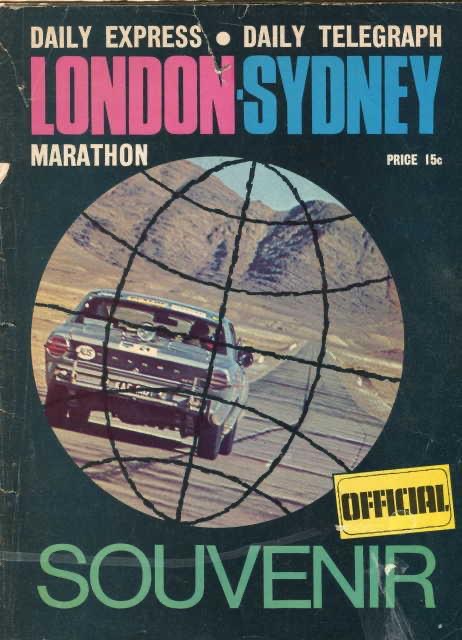
The London-Sydney Marathon was run between 24 November and 17 December 1968. A field of 98 cars set out on a route covering 10,000 miles (16,000 kilometres) across Europe and Asia to Bombay, then from Perth to Sydney in Australia. It was the first in a series of epic transcontinental car rallies held in subsequent years, and possibly the most memorable of all. The event was sponsored by the London Daily Express and the Sydney Daily Telegraph and captured the imagination of the world, as the respective newspaper proprietors had hoped.
I was fortunate to be able to witness and photograph the final competitive stage of the event, over rough, unmade roads between Numeralla and Hindmarsh Station in southeastern New South Wales. This stage was designed to be a final, extreme test in order to find a clear winner.’
(Numeralla is a tiny little hamlet in sub-Alpine country not far from Cooma, between the national capital, Canberra and the NSW snowfields areas of Thredbo/Perisher Valley. The final run to Sydney was circa 420Km)
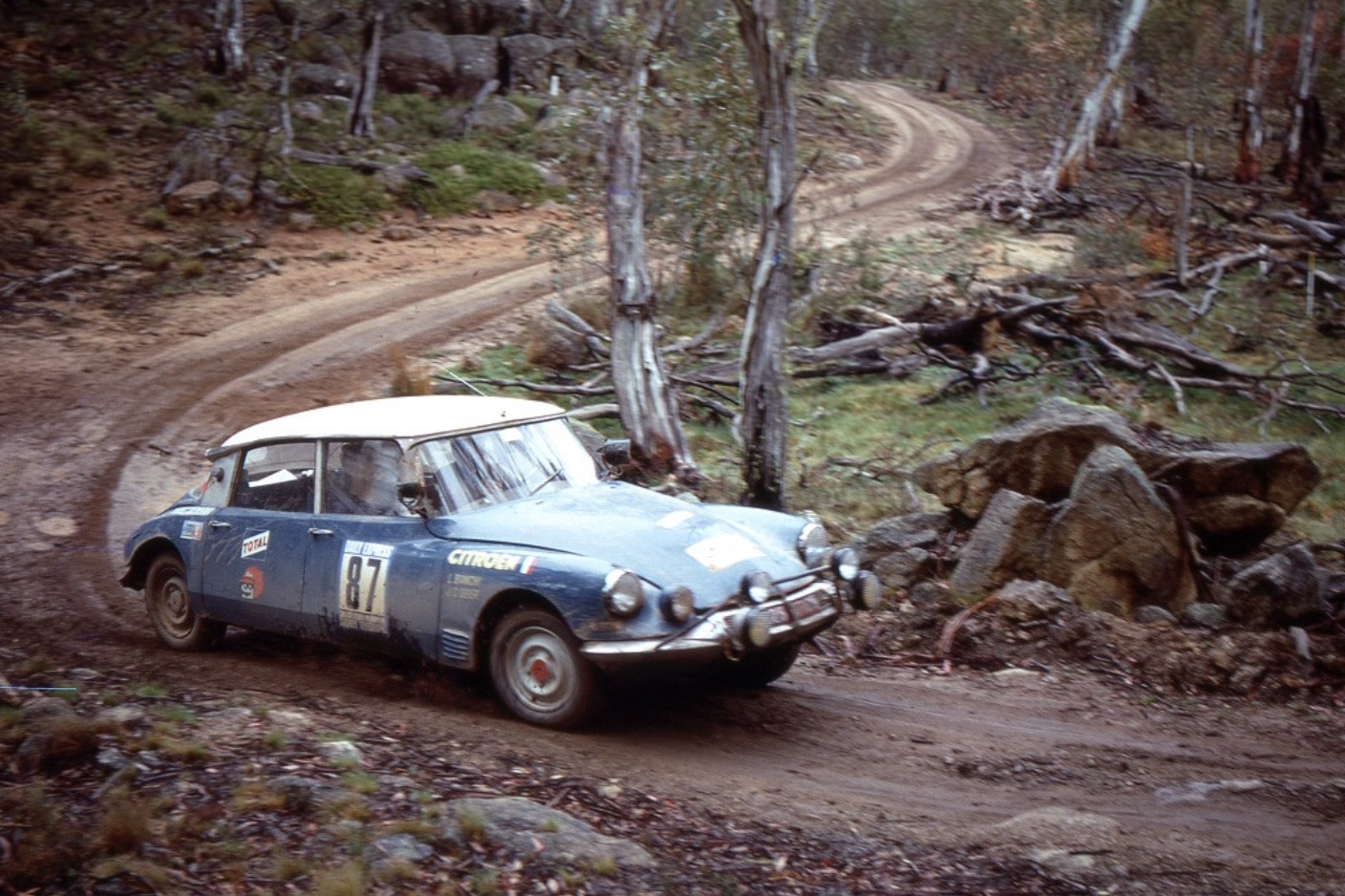
‘The Bianchi/Ogier Citroen was a clear leader on this final competitive stage from Numeralla to Hindmarsh Station. There were only easy transport stages then until the finish in Sydney. The Citroen had excelled on the rough, outback roads of Australia as other competitors, including Roger Clark in a very fast Cortina Lotus, succumbed to mechanical problems.
As it happened, the result was determined on the subsequent, easy transport stage when the leading car, the Citroen DS21 of Lucien Bianchi and Jean Claude Ogier, was put out of the event in a crash with an out of control spectator car. Andrew Cowan/Coyle/Malkin in a Hillman Hunter unexpectedly inherited the lead and won the Marathon. A total of 56 cars reached the finish line in Sydney.’
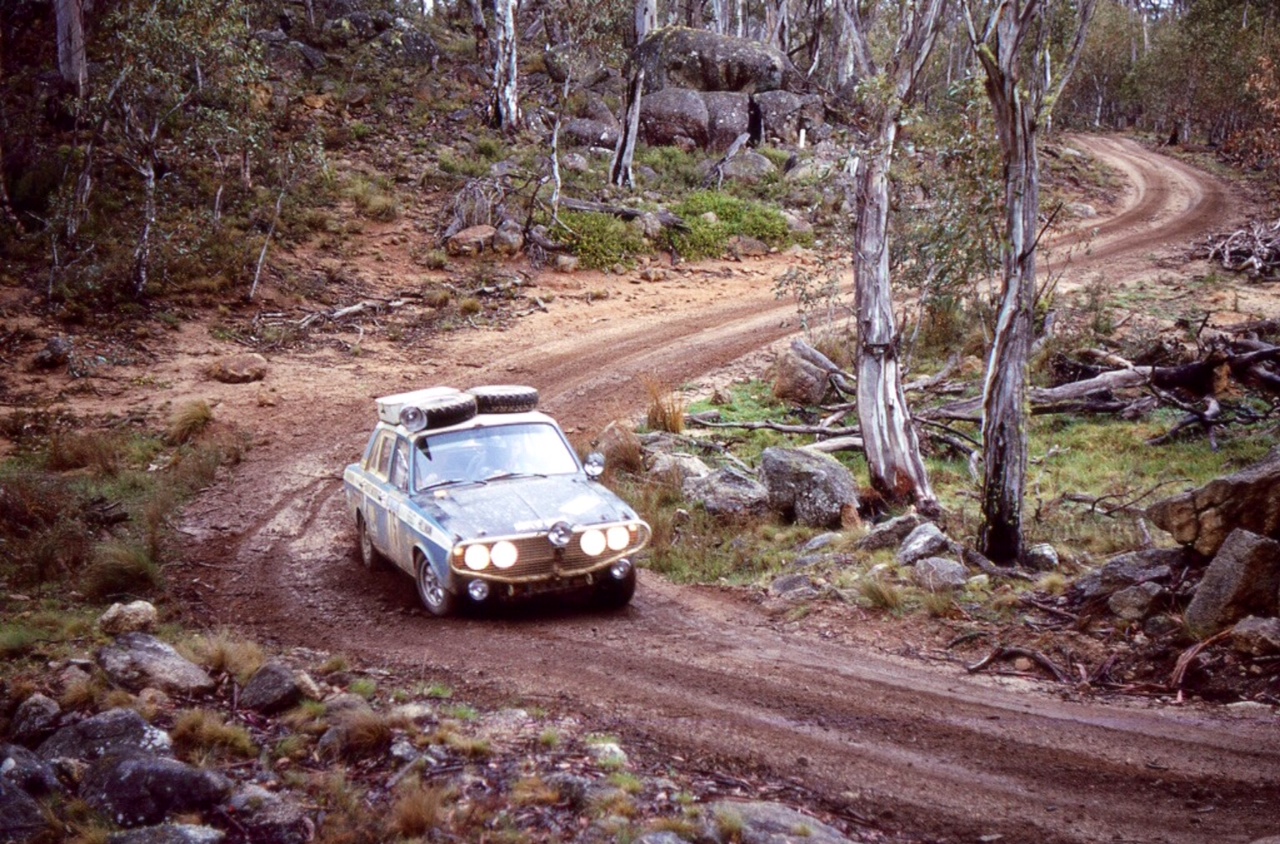
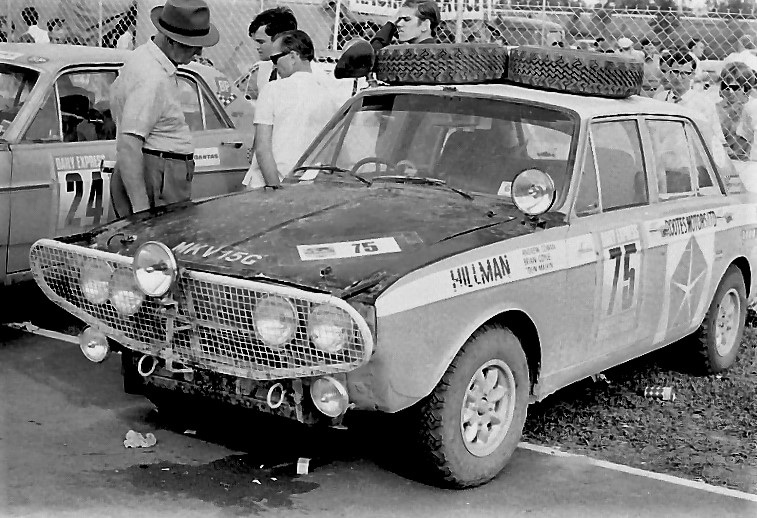
‘The Hillman Hunter seemed an unlikely contender, but Andrew Cowan had this low budget, works car in second place to Bianchi by the end of the Numeralla to Hindmarsh Station stage. He then simply inherited the lead when Bianchi’s Citroen was cruelly eliminated when it was hit by an out of control spectator car on the following transport stage’.
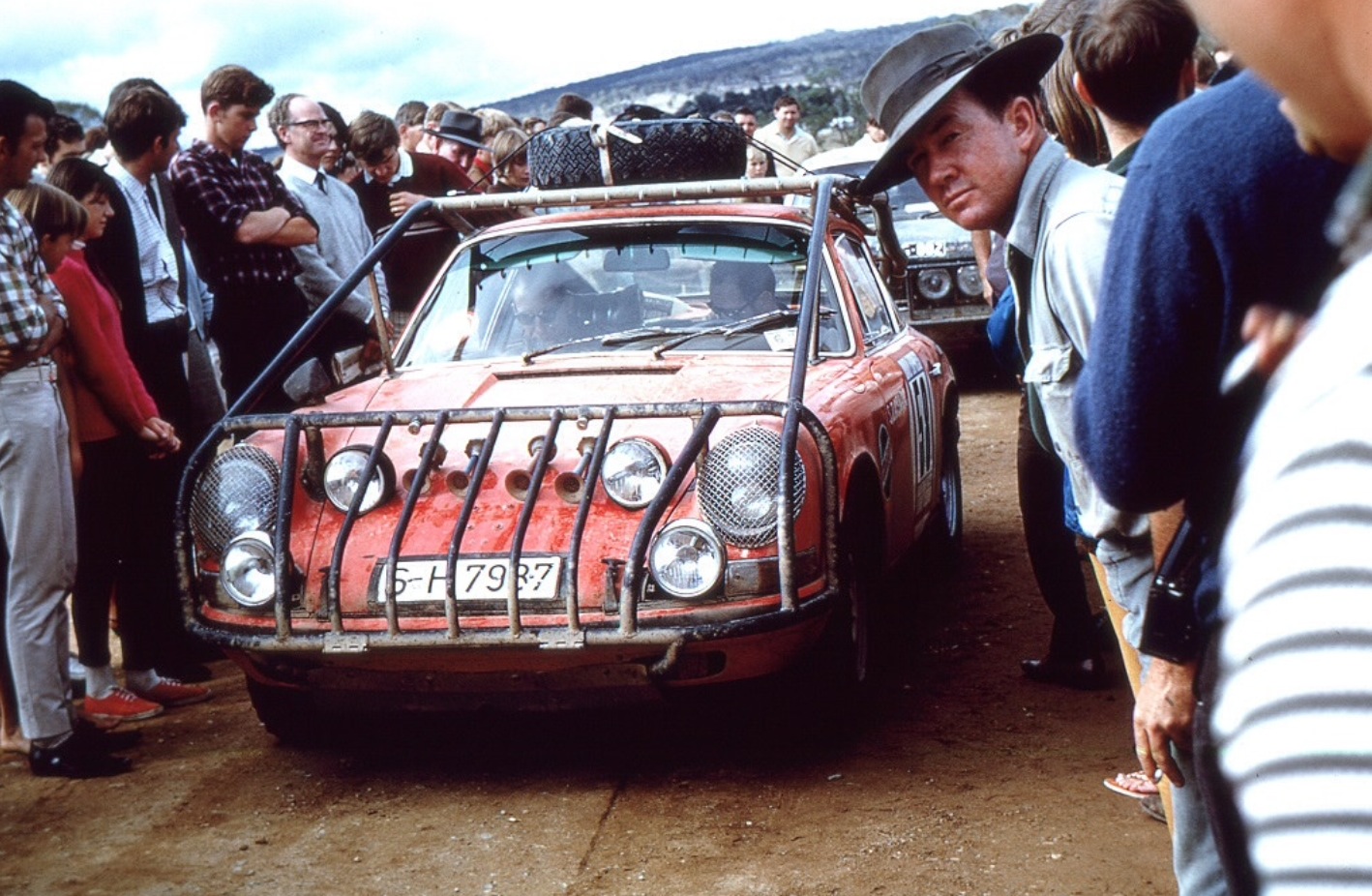
‘The mighty Zasada/Wachowski Porsche waits to leave at Hindmarsh Station. It finished in 4th place. Its interesting ‘kangaroo catcher’ was never tested.’
Check out Bruce Thomas’ photographs of the rest of the Numeralla to Hindmarsh Stage…
https://www.flickr.com/photos/96982658@N05/sets/72157644193948282/comments/
Nowra Stage and Sydney Finish…
The first part of this article above was uploaded in April 2015.
In September 2018 Rod MacKenzie, a professional photographer whose work I have used many times offered to share the following photographs he took of the Cowan Hillman, crashed Bianchi Citroen and destroyed spectator’s Mini during the Nowra stage.
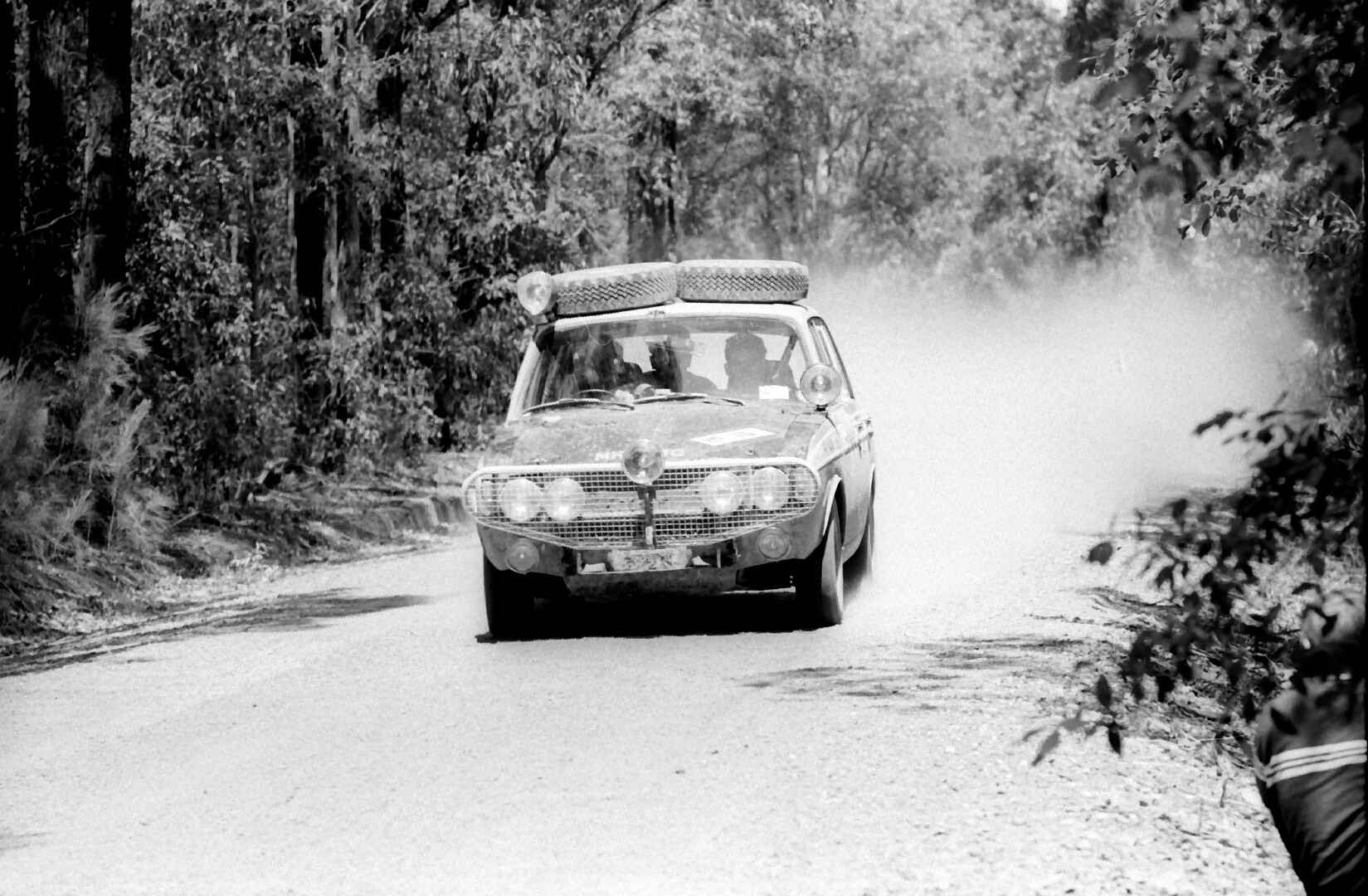
(R MacKenzie)
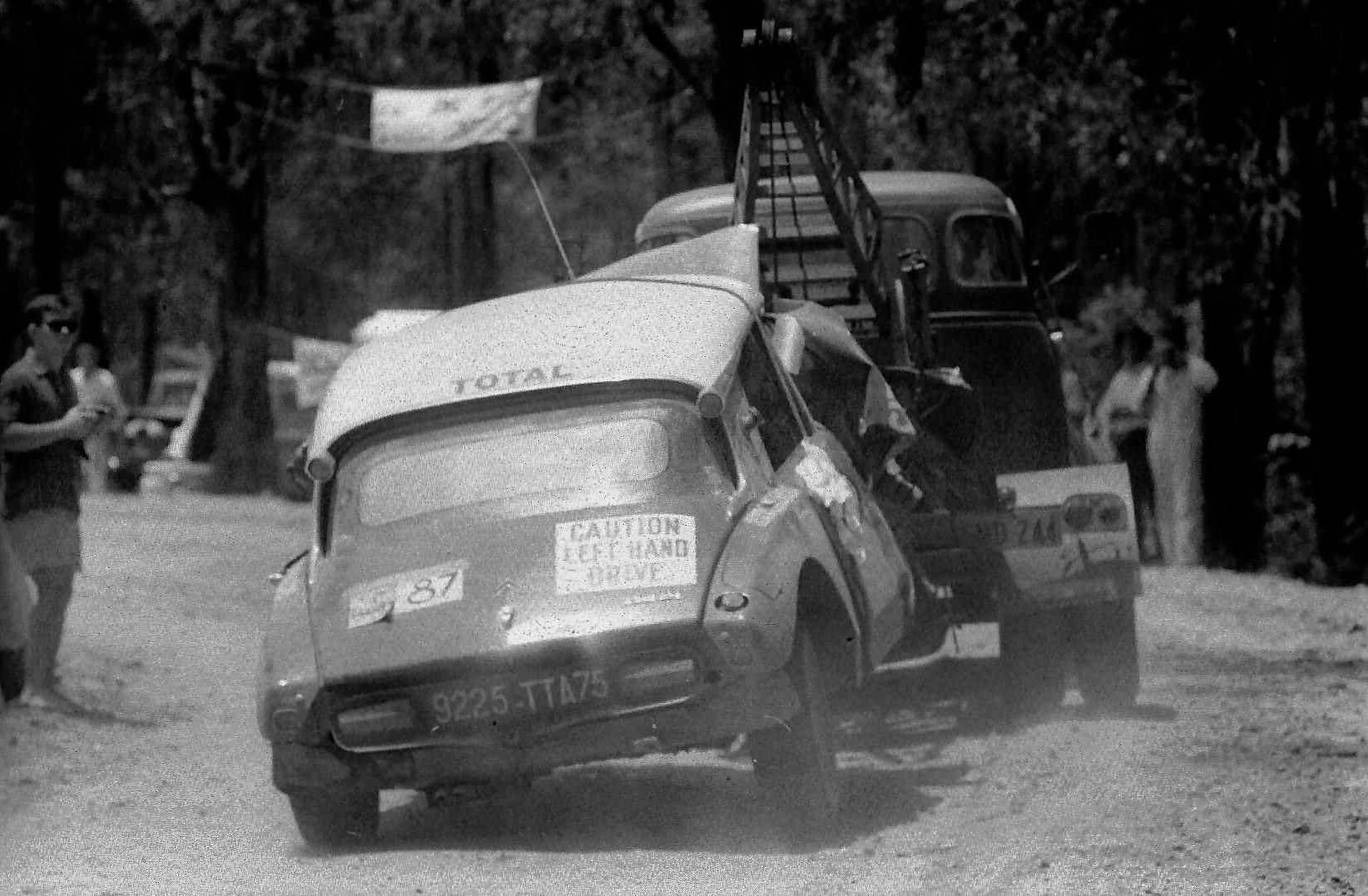
(R MacKenzie)
(R MacKenzie)
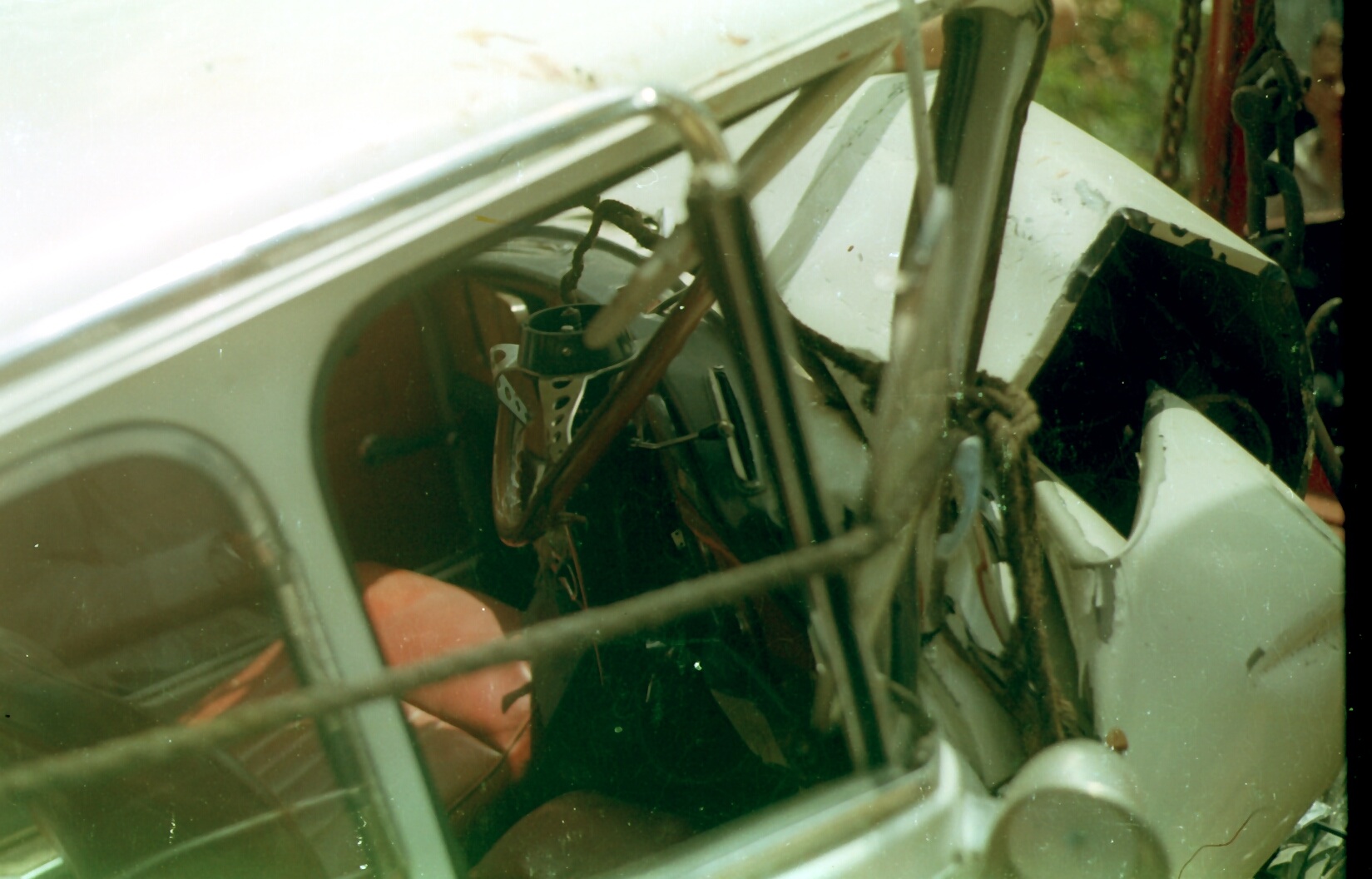
(R MacKenzie)

(R MacKenzie)
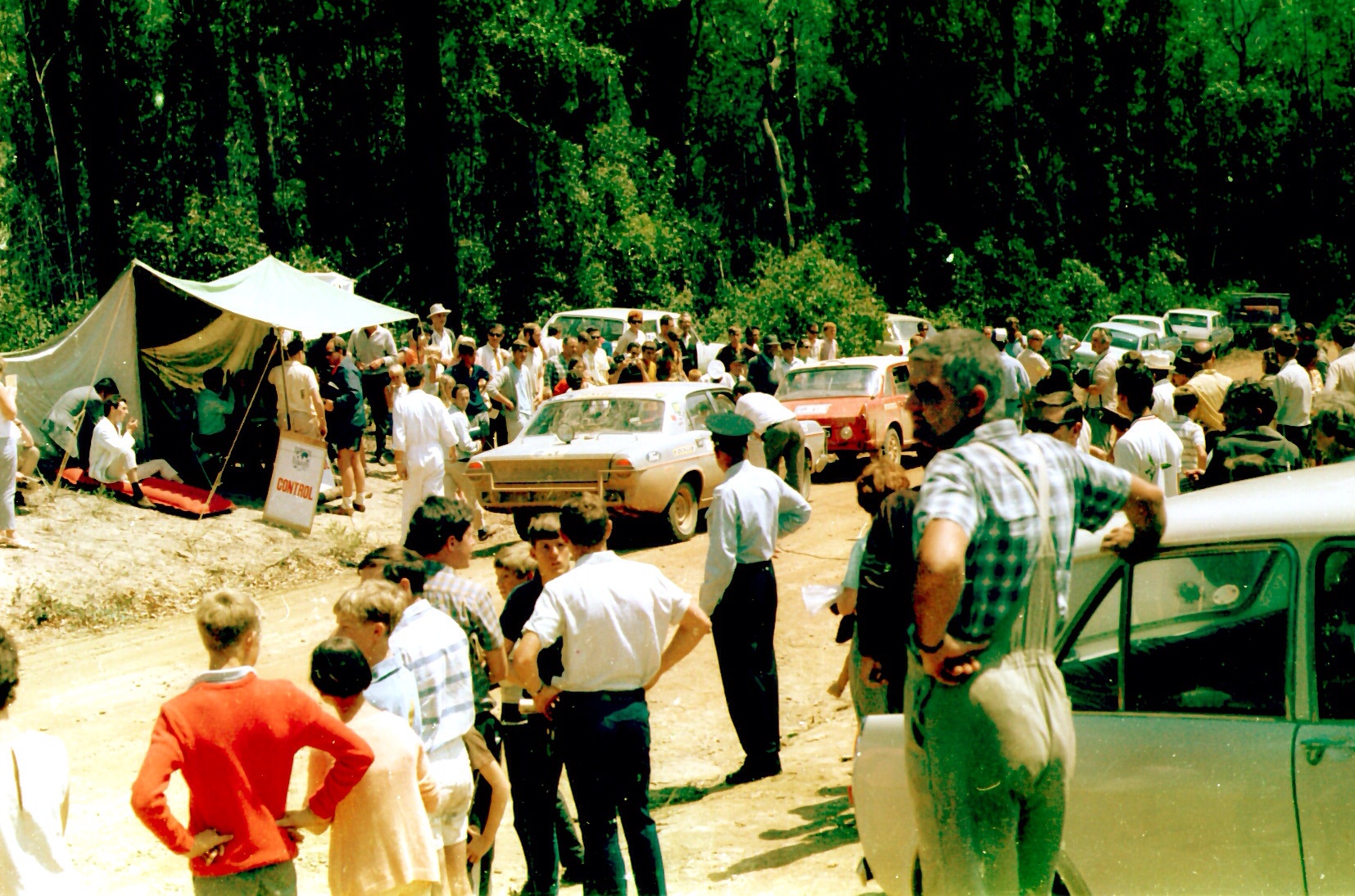
(R MacKenzie)
The final series of photographs are of scenes at the finish in Hyde Park, Sydney.
This is a very familiar place for many Australians- I lived in the CBD very close to this spot for 9 years, it is thrilling to think of the end of the Marathon all those years ago, the excitement of the crowd, the colour, noise. Wonderful evocative shots.
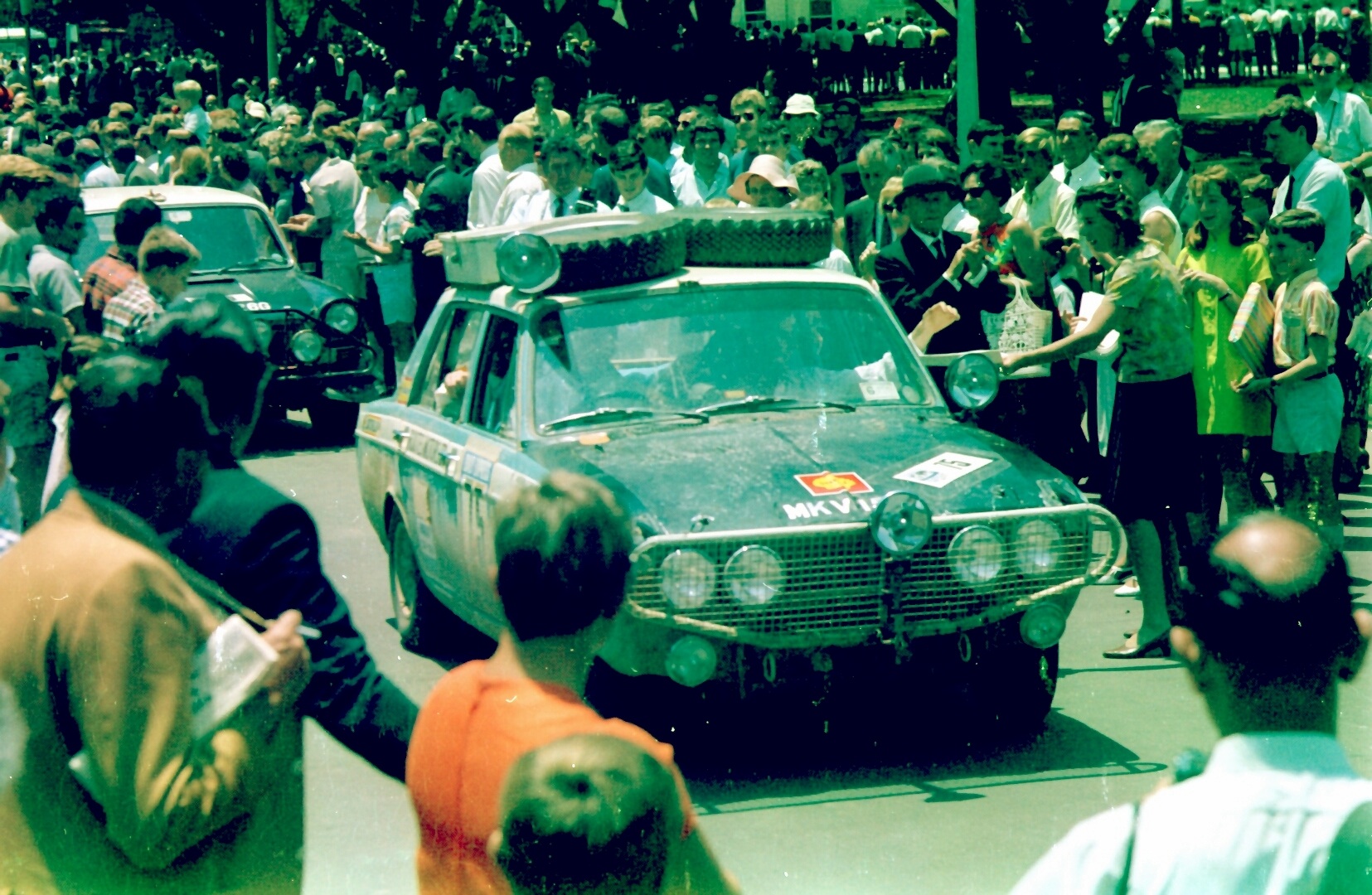
(R MacKenzie)
The Cowan/Coyle/Malkin Hunter above and the crew imbibing some of a sponsors product below- a well earned drop no doubt!

(R MacKenzie)
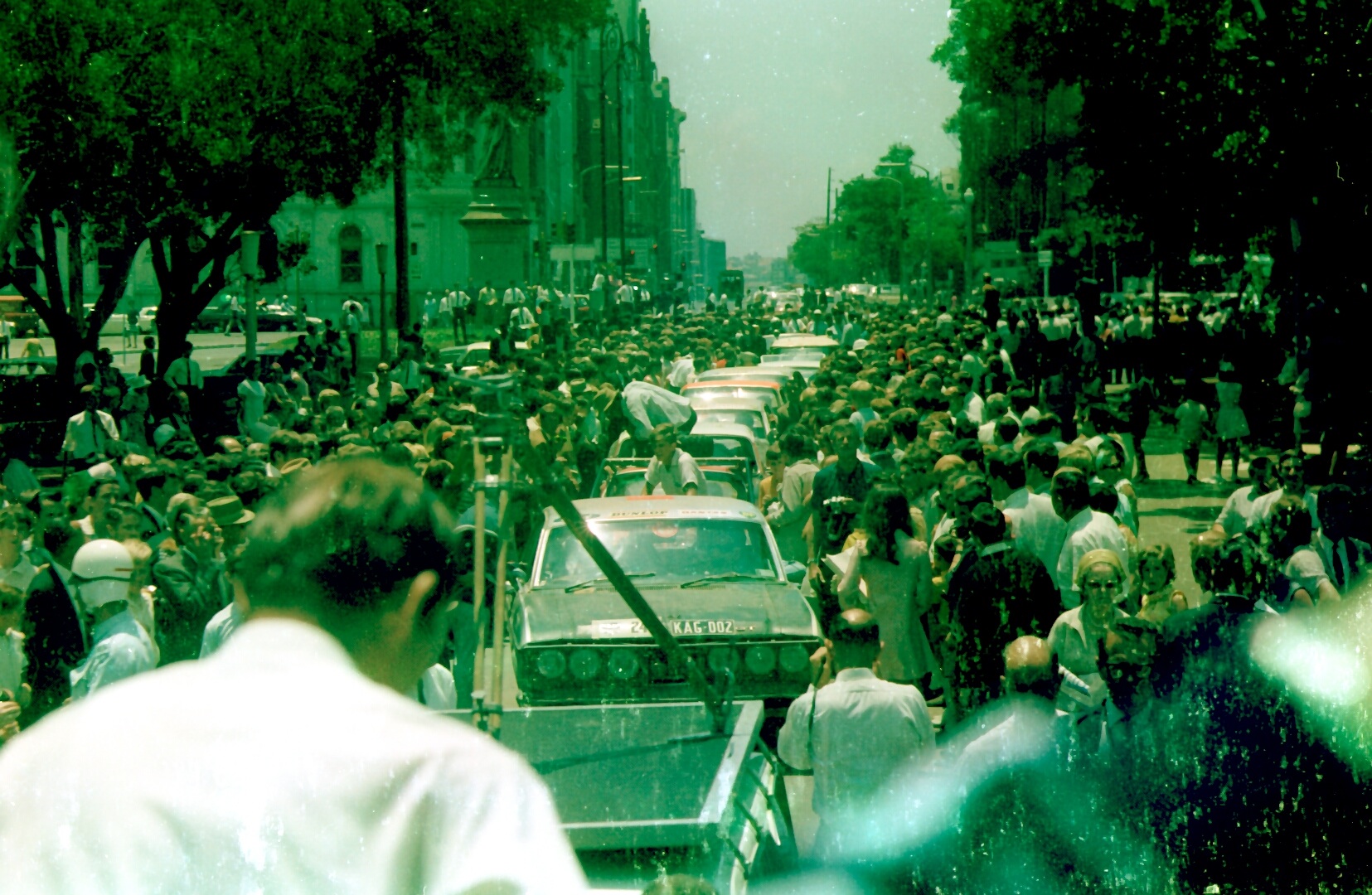
(R MacKenzie)
Australian Leg of the Marathon Map…
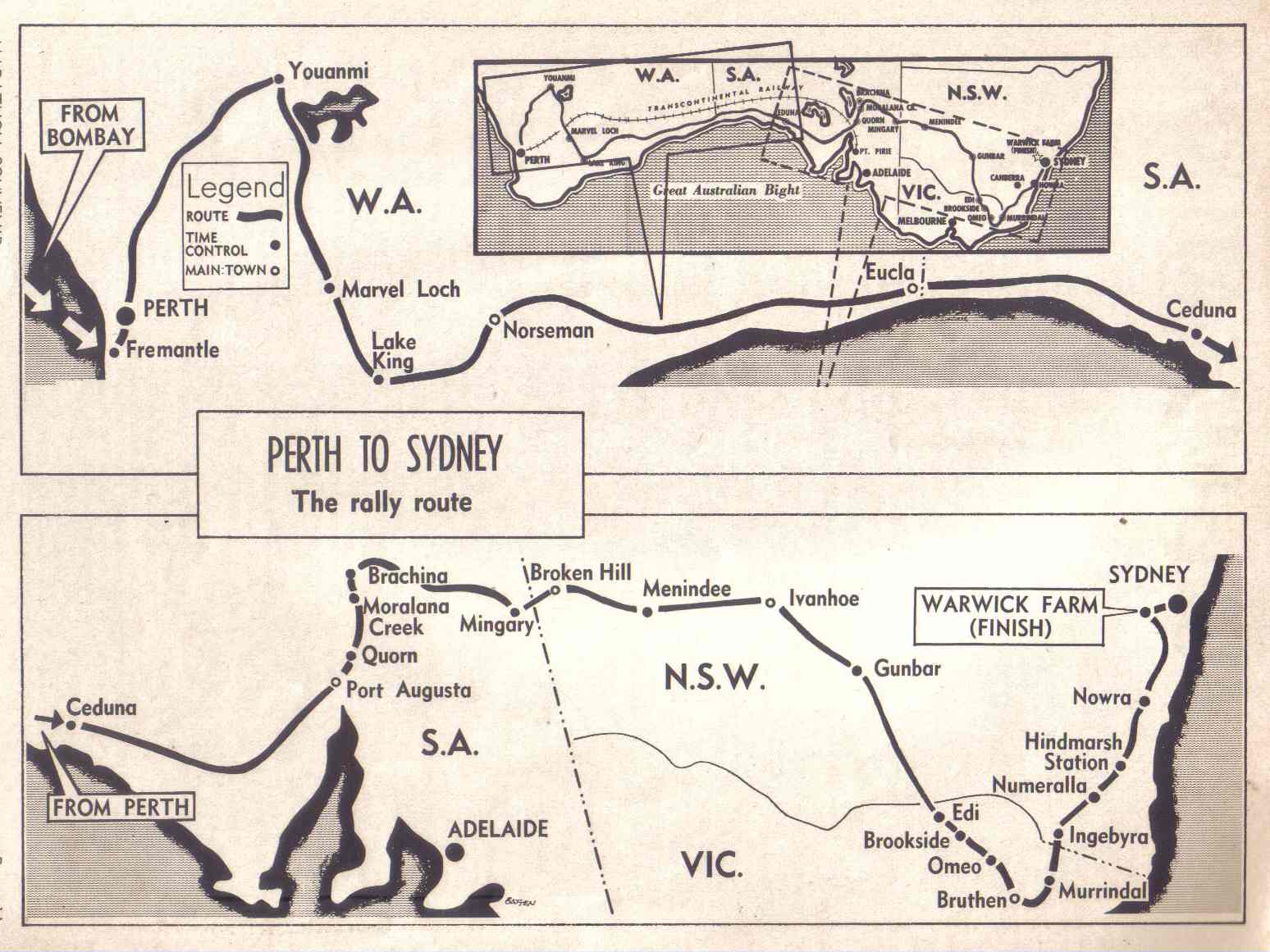
(Stephen Dalton Collection)
Etcetera…

(M Thomas)
The Zasada and Yannachas Porsche 911s at rest in Perth.
Resting place for the public to check out the cars was Gloucester Park trotting track.

(M Thomas)
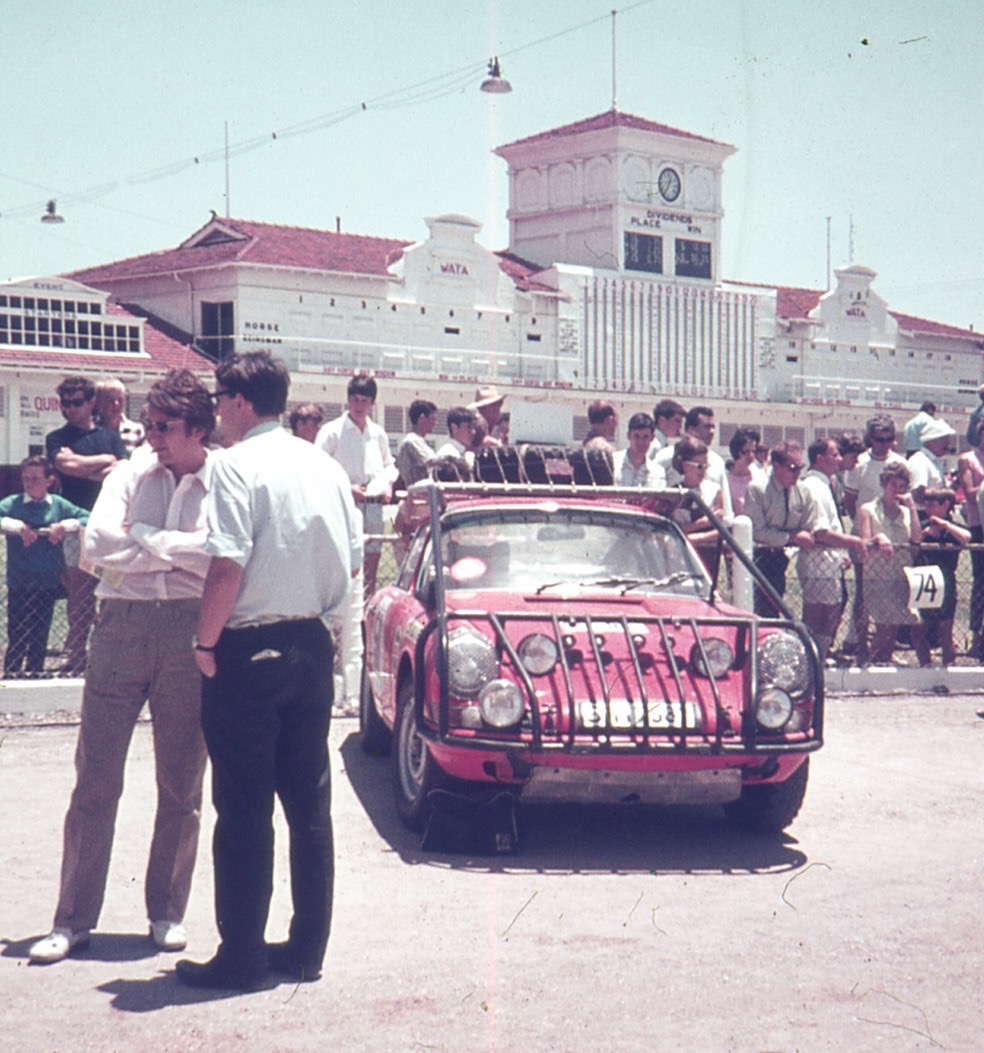
(M Thomas)
(M Thomas)
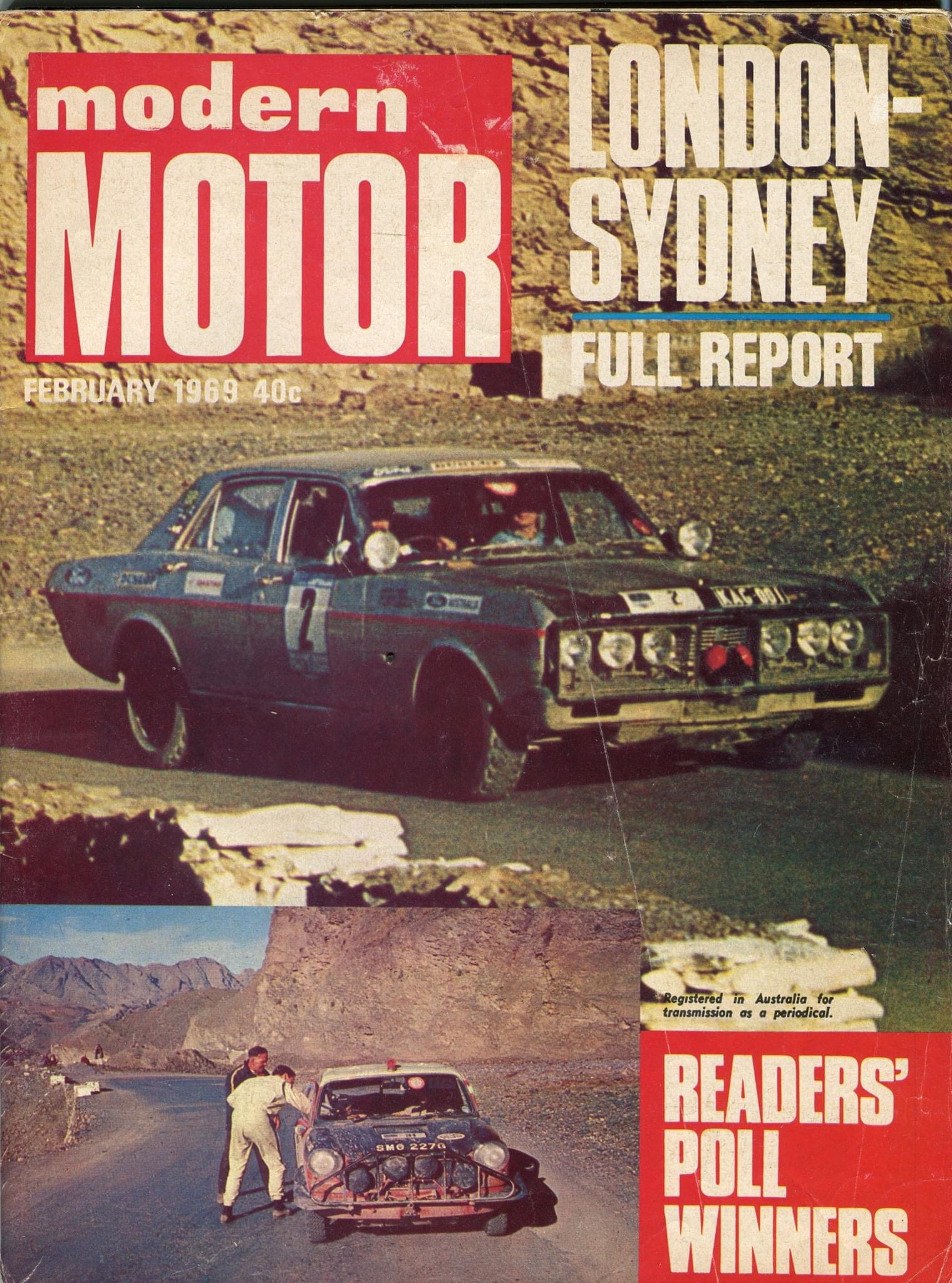
(M Thomas)
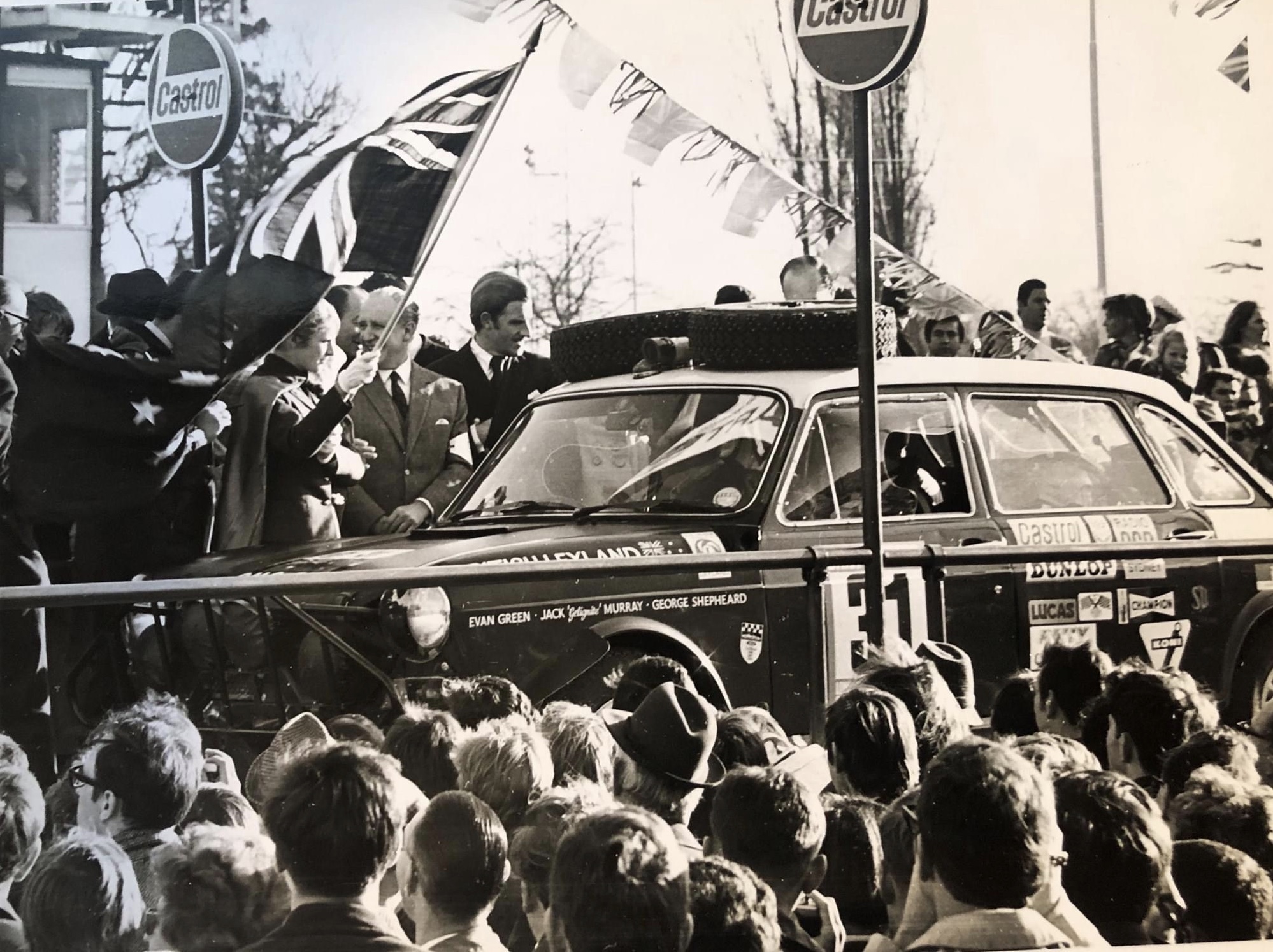
(L Manton)
British Leyland press photographs…
This series of shots are from the collection of Luke Manton.
The first photo is on the start ramp at Wembley, Graham Hill just to the right of the flag.

(L Manton)
Evan Green, Jack Murray, did Miss World accompany them perhaps?

(L Manton)

(L Manton)
Cooper S and Austin 1800s in build at Abingdon.
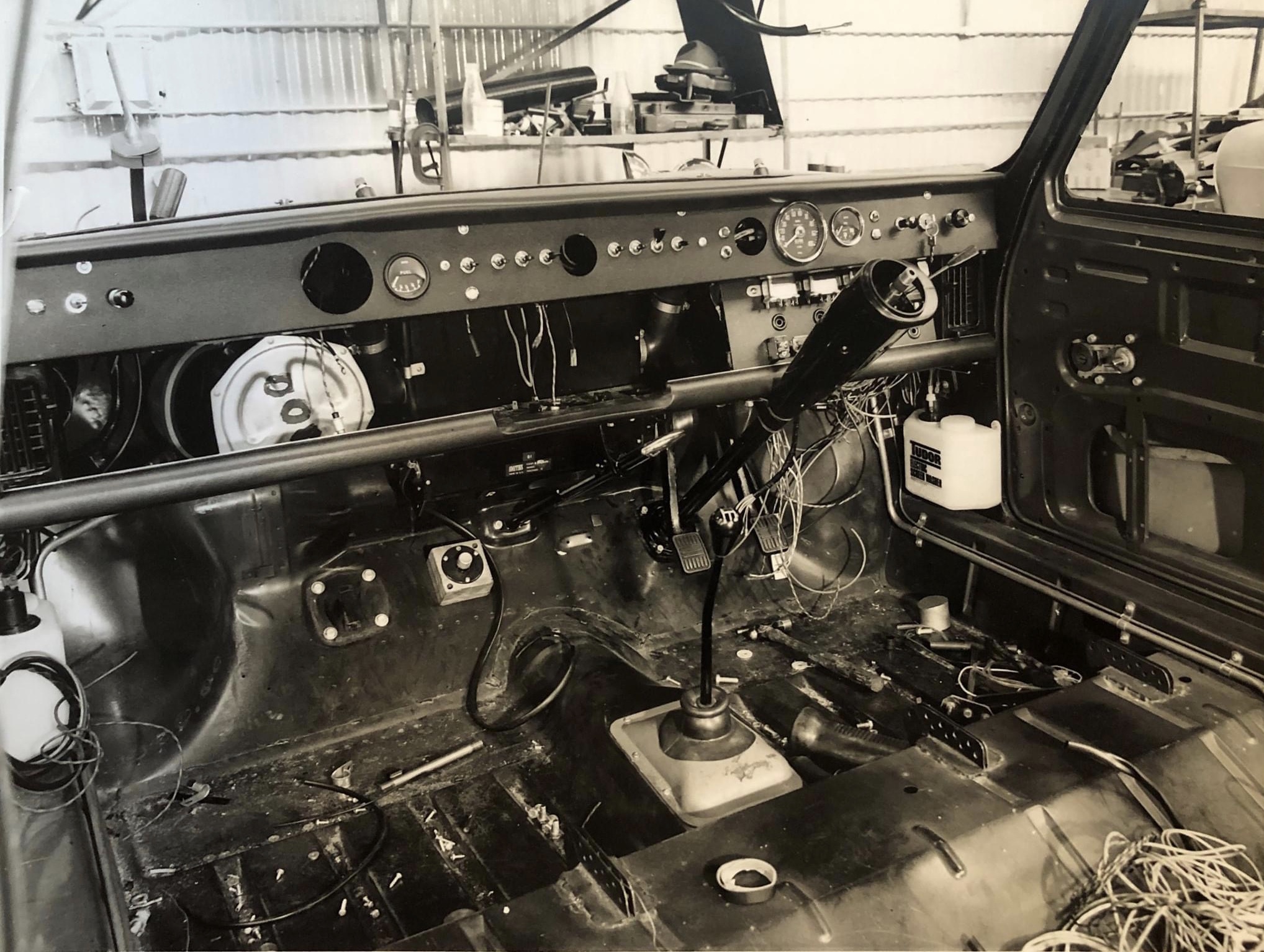
(L Manton)
Credits..
Bruce Thomas photos and writing, Rod MacKenzie photos and Stephen Dalton Collection for the maps. Murray Thomas Collection, Luke Manton
Finito…
 primotipo...