image

Reg Hunt, Kevin Neal and Lex Davison launch their ‘Italian Stallions’ off the line at the start of  Albert Parks’ 150 mile ‘Argus Trophy’…

Hunts’ #2 Maserati 250F won the race from Davisons’ #4 Tipo 500 Ferrari with Neal #3 third in Hunts’ old Maser A6GCM. Thats Tom Hawkes in the ex-Brabham ‘Redex Special’ #7 Cooper Holden Repco making its debut with that engine at this meeting. Arthur Griffiths in the ex-Davison 1954 AGP winning #5 HWM Jaguar is on row two. Further back is Bill Wilcox in the ex-Jeff Scorer, ex-works/Gaze #9 Alta and Bill Craigs’ ex-Whitehead, Holden engined and rebodied # 11 Alta.

There were two racing carnivals at Albert Park in 1956. This ‘Moomba’ Meeting (Moomba is still a marvellous annual Melbourne late Summer festival) in March and the Australian Grand Prix meetings after the Melbourne Olympic Games in the last weekend of November and the first in December. Similarly, the ‘Moomba’ meeting was held over two weekends, race days were Sunday 11 and 18 March 1956.

In  many ways the image symbolises an era of single seater racing just underway in Australia, the dominance of the current ‘Red Cars’ from Italy ending a period when the Australian Special, and older ex-works European cars held sway.

Racing at Albert Park…

Barry Green in his wonderful book ‘Glory Days’, writes that their was a strong push to race at Albert Park in 1934. The Light Car Club of Australia, (LCCA) the promoter of race meetings at Phillip Island were aware of the ‘Islands growing unsuitability with its loose gravel surface as speeds increased. Extensive negotiations secured Albert Park as the venue for a race meeting to celebrate the Centenary of Victoria in 1935.

The ‘Sun News Pictorial’ one of the Melbourne daily tabloids, and then as now a good thing in which to wrap ones fish n’ chips, announced the event on June 4 1934.

In doing so the ‘paper lit the fuse of naysayers who brought about the events cancellation, but not before racers Arthur Terdich, Bill Lowe, Barney Dentry, and Cyril Dickason in Bugatti, Lombard, and Austins respectively, lapped the track with mufflers fitted to prove noise wasn’t the issue…

Post war things were a little different and a partnership between the LCCA, the Army who had a facility at Albert Park, and Victorian Labor Senator Pat Kennelly were more successful.

The three provided the combination of race organisation and promotional ability, logistical capability, the Army being able to ‘man’ Albert Park, a site of some 570 acres, and political power and influence.

For all three groups the ability to raise funds in the aftermath of World War 2 was important. For the army funding for war widows and orphans, for Kennelly the ability to finance much needed improvements to the park to improve the local amenity for the working class community, and for the LCCA, the improvement of motor racing.

And so, the 1953 Australian Grand Prix held at Albert Park over 64 laps, 200 miles in total was won by Doug Whiteford in a Lago-Talbot, the last AGP win for French Racing Blue…

1953 was the commencement of Albert Parks ‘first phase’ as a race track lasting five short years until November 1958 when the naysayers again held sway…until 1996 when again the political pendulum swung in the sports and business’ favour, Victorian Liberal Premier Jeff Kennett ‘snatching’ the race from Adelaide…

image

Lex Davison #3 HWM Jag, Stan Jones #2 Maybach, and Doug Whiteford in the winning Lago-Talbot at the start of the 1953 Australian Grand Prix at Albert Park, the venues first race meeting on November 21. Cec Warren #6 Maserati 4CLT, Frank Kleinig #7 Kleinig Hudson 8, W Hayes #10 Ford V8 Spl, and a badly smoking  Ted Gray #11 Alta Ford V8 (AGP website)

The Big Red Italian Cars…

I wrote about Reg Hunt a while back, https://primotipo.com/2014/07/19/reg-hunt-australian-ace-of-the-1950s/ .He was an Englishman with a family background in the motor-trade, who came to Australia in 1949. By 1953 his ealerships were doing well enough to return to the UK for a season of F3, in a 500cc  Cooper Norton Mk8 in 1954. He did well against the best and arrived back in Oz, razor sharp and with a big, red, modern, ex-works Italian car…

His ex-Gonzalez Maserati A6GCM started life as 1953 2 litre chassis # 2041 but was renumbered # 2503 after a 250F engine was fitted for the new 2.5 litre F1 which commenced in 1954. Sold to Harry Schell for that season it arrived in Australia late in the year and was first tested by Hunt at Fishermans Bend before being raced at Ardmore for the 1955 NZGP where he popped it on the front row along with Prince Biras’ 250F. Bira lead the race from start to finish, Hunt fifth in a field which included the Whitehead and Gaze Ferrari 500/625’s.

Hunt was stiff not to win the 1955 Australian Grand Prix in the A6GCM at Port Wakefield, a broken cam-follower slowing him and handing victory to Jack Brabhams Cooper Bobtail.

Not to be outdone, and needing to remain competitive, Lex Davison, the 1954 AGP winner acquired his good friend Tony Gazes’ Ferrari 500/625, the car fitted with a 625 engine enlarged to 3 litres. These Lampredi designed, big-bore 4 cylinder DOHC engines a mainstay of Ferrari single-seaters and sports cars throughout the 50’s.

In recent years, having passed into the ownership of the ‘Wheatcroft Collection’ in the early 60’s, the car has been identified as Tipo 500#5, Alberto Ascaris’ 1952 and 1953 World Championship winning chassis, the ‘winningest’ chassis of all time with at least ten Grands’ Prix victories…but at the time Davo had just acquired a competitive car which would be very kind to him in years to come.

It was Lexs’ first meeting in the car, a change in gearing a mistake in set-up which blunted the cars performance, but the promise of the combination was undeniable.

Having made such an impression with the A6GCM Hunt had no trouble convincing Maserati to part with a more recent mount, securing Jean Behra’s 1955 factory 250F, chassis #2516, the car winning non-championship Grands’ Prix in Pau and Bordeaux in that year.

Hunt won both the feature racing car events of the Moomba meeting. Davison second in both and Neal third in one, DNF in another, in the car the Melbourne transport business man was to buy from Hunt.

Before long Stan Jones also acquired a 250F, a more recent spec car than Hunts’.

The mid-engined F1 Coopers were not far away, but for the moment, a wonderful era of modern ‘Big Front Engined Red Racing Cars’ had arrived in Australia…ending with the 1959 Australian Grand Prix, but we will come to that !

al park

Reg Hunt leads Lex Davison , Maserati 250F and Ferrari Tipo 500, Albert Park ‘Moomba Races’ March 1956. Check out the trees, kerbs, and very thick chain wire fence on these everyday suburban roads within the park! Crowd of over 70,000 in attendance (museumvictoria.com.au)

park map

Albert Park Road Circuit 1950’s. Length 3.13 miles, direction of travel the opposite to the modern circuit which is true to, if not identical to the spirit of this fabulous, historic venue. Barry Green ‘Glory Days’

british gp

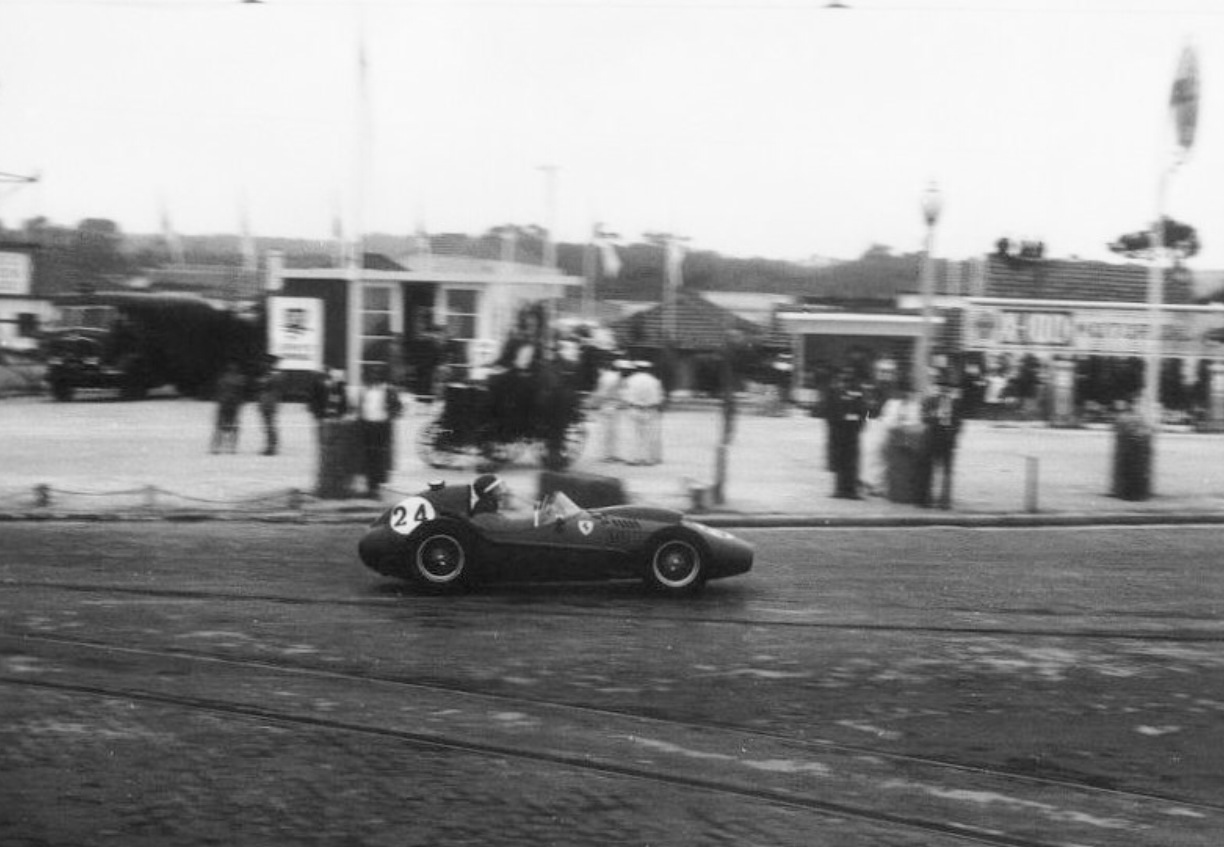
Alberto Ascari #5 in the Gaze/Davison Ferrari Tipo 500/5, alongside Froilan Gonzalez #24 in the Hunt/Neal Maserati A6GCM/2041/2503 at the start of the 1953 British GP at Silverstone which Ascari won. #8 is Mike Hawthorn, behind him #7 Luigi Villoresi both in Ferrari Tipo 500’s. The wheel on the far right is Fangio in a Maser A6GCM. The blue car beside Hawthorn is Onofre Marimon also in a Maser A6GCM. The green car behind Villoresi is Tony Rolts Connaught Lea Francis , and beside him the green car with white noseband is Ken Whartons’ Cooper Bristol. (Mirror Archive)

Credits…

‘Glory Days’ by Barry Green; oldracephotos.com, museumvictoria.com.au, AGP Website, Mirror Archive

Finito…
clark

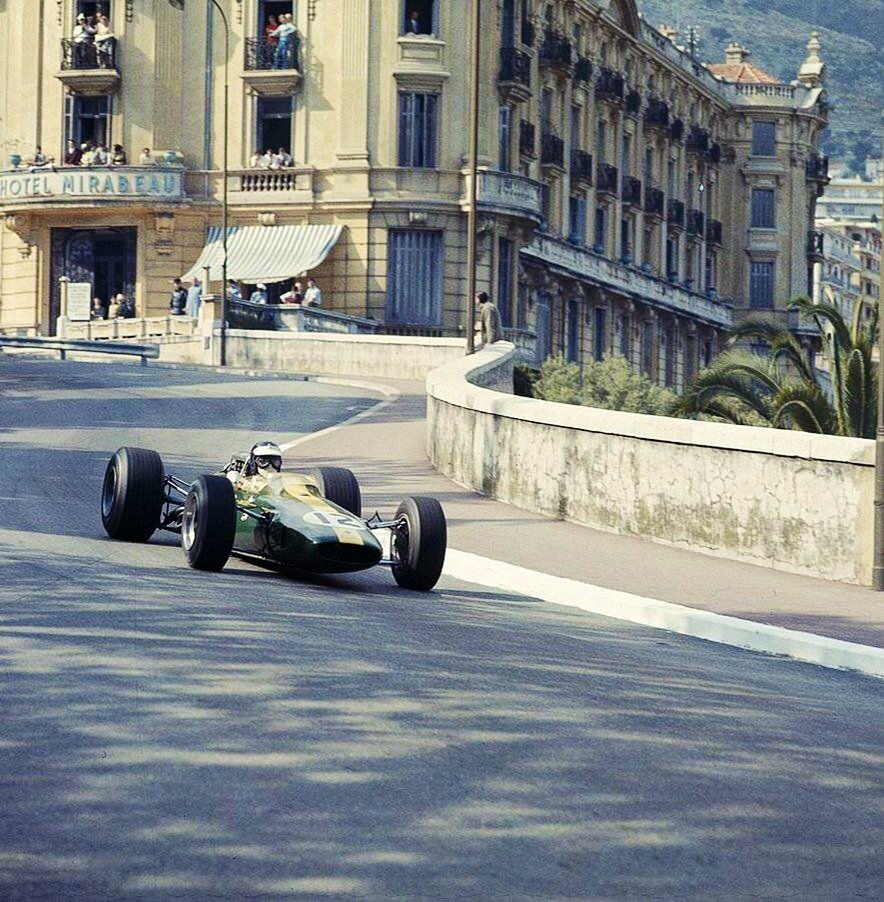
Jim Clark in his last Championship drive of a Lotus 33…

Colin Chapmans’ revolutionary family of cars, the Lotus 25/33 had been kind to Jim, World Championships in 1963 and 1965 in his symbiotic relationship with Chapman, his Team, his Cars.

The ’25’, introduced at Zandvoort in 1962 was not the first ‘monocoque’ chassis but it was the first ‘modern one’, all Grand Prix cars, indeed most racing cars can trace their parentage back to the 25 and the trends it set.

The good ‘ole multi-tubular spaceframe wasn’t dead mind you, Brabham were still winning Grands’ Prix in 1969 with their BT26, but even Brabham changed to aluminium sheet ‘tubs’ in 1970 as the use of ‘bag’ safety fuel tanks effectively precluded spaceframes.

At Zandvoort in 1967, the following race Chapmans’ Lotus 49, and its Ford Cosworth engine again set a standard all others followed, much as the ’25’ did in 1962, the ’72’ did in 1970 and the ’78’ did in 1977…

clark 2

Clark qualified his 2 litre Lotus on the third row amongst the 3 litre cars, spun on lap 2, battled his way up to fourth from fourteenth, his race ending on lap 43 with a duff shocker. This tragic race claimed the life of Lorenzo Bandini who died when his Ferrari caught fire after an accident with the straw bales on the outside of the corner where Clark is pictured. Denny Hulme won the race in a Brabham BT 20 Repco. (Pinterest)

hill

Graham Hill in the other Lotus 33, BRM powered did better than Clark, finishing second, always a happy hunting ground for Hill who won the race 5 times. Amazing shot, he looks a bit wide! (Cahier Archive)

lotus 33

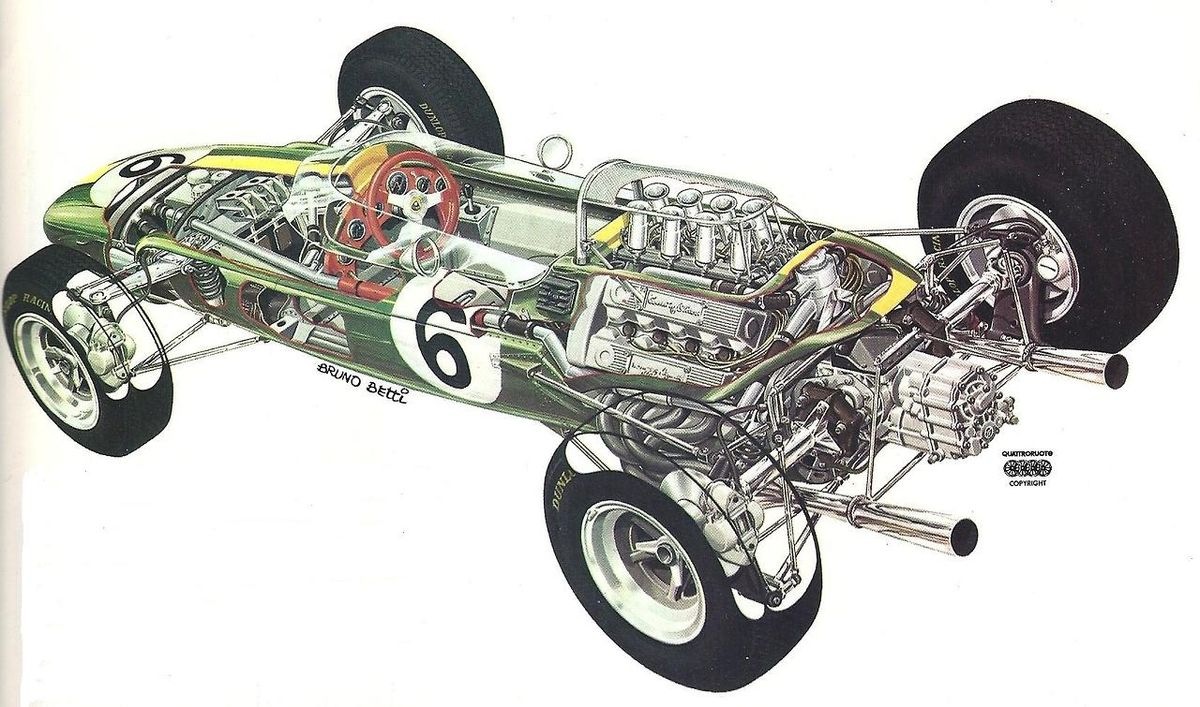
Lotus 33 : aluminium monocoque or stressed skin chassis, inboard suspension at front by top rocker and lower wishbone, coil spring damper unit within the tub. Rear suspension outboard by single top link, inverted lower wishbone, 2 parallel radius rods and coil spring/ damper unit. Coventry Climax 2 litre, by this stage, DOHC, 4 valve V8, 5 speed ZF gearbox, just a lovely, successful bit of kit…! (Bruno Betti)

Photo Credits…

Pinterest, Bruno Betti cutaway drawing, Cahier Archive

Tailpiece: You don’t often see the super smooth Clark with so much attitude on a car. Here he is giving the 33 plenty of welly ahead of Dan Gurney’s Eagle T1G V12, Dan’s car out on lap 4 with fuel pump problems so ’tis early in the ’67 race…

jim

(unattributed)


porto

Stirling Moss, Vanwall VW10 correcting a delicate slide on the cobblestones of the Boavista Circuit, Portuguese Grand Prix 1958 (LAT Archive)

The Perils of Grand Prix Racing in the days of Yore…

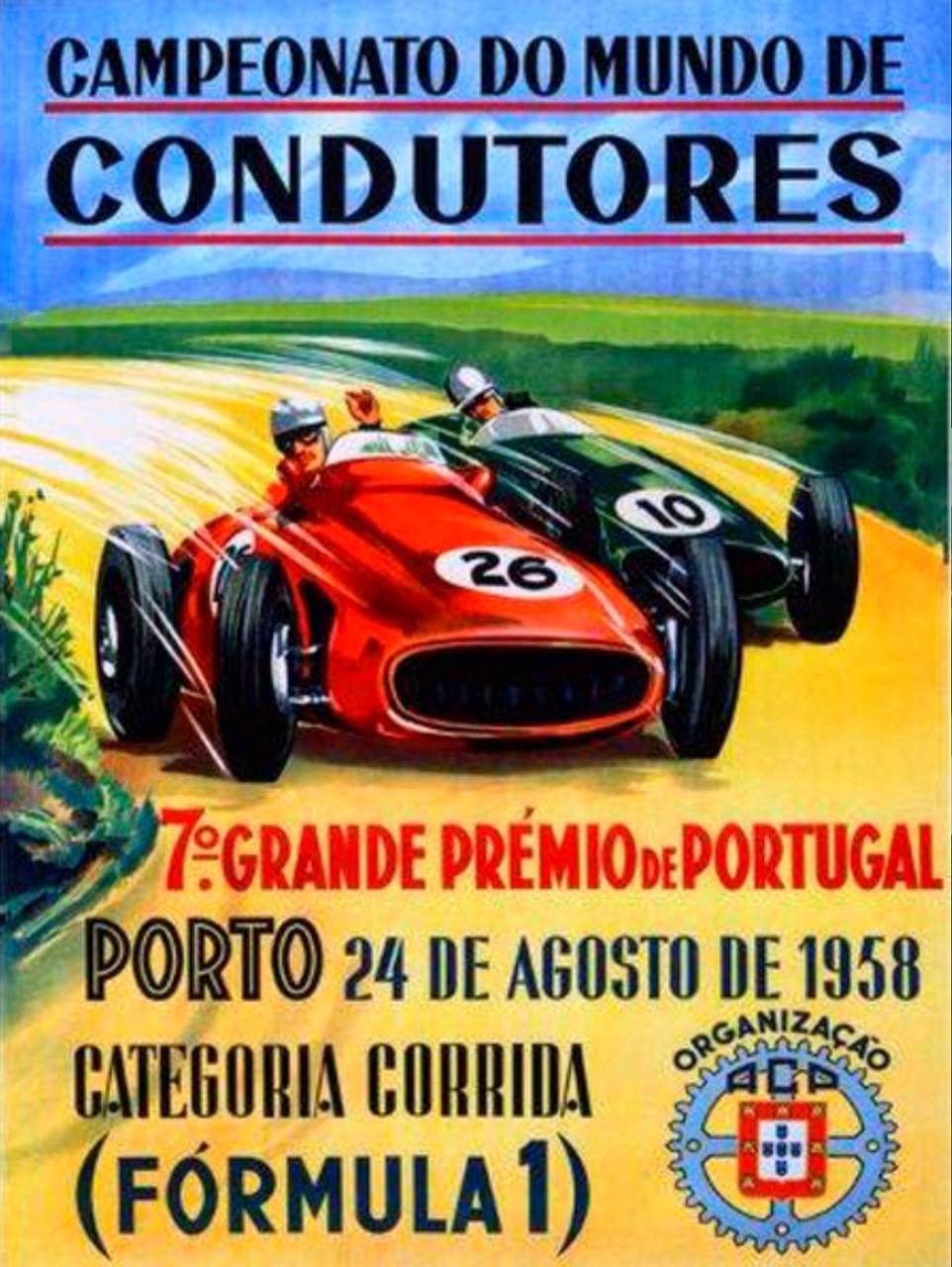
Casually placed haybales the only barrier between the cobblestoned road surface, tramlines and decorative telephone poles, Sunday 24 August 1958. This was a very dangerous circuit even by the standards of the day.

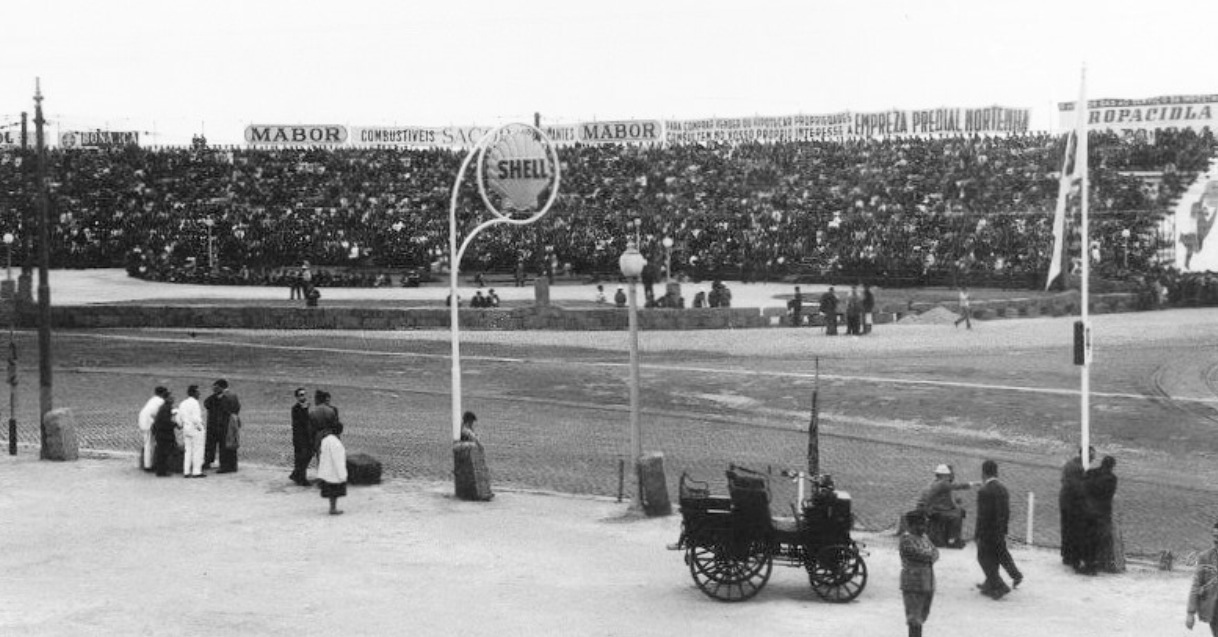
The circuit was in Oporto, it began on the harbour front esplanade, continued onto the ‘Avenida da Boavista’, then through small neighbourhoods and back to the start/finish line. It was also used for the GP in 1960.

moss 1

Moss’ Vanwall leads Hawthorns’ Ferrari Dino , Behras’ BRM P 25 on the inside, then 2 more Vanwalls of Brooks and Lewis-Evans and the other Dino of  Von Trips..challenges of the circuit apparent (‘restos’)

50000 people attended the event held in treacherous conditions, the track damp after earlier rain.

It had been a tough couple of months for the motor racing world as Luigi Musso and Peter Collins died in Ferrari Dino’s in the French and German Grands’ Prix respectively.

hill

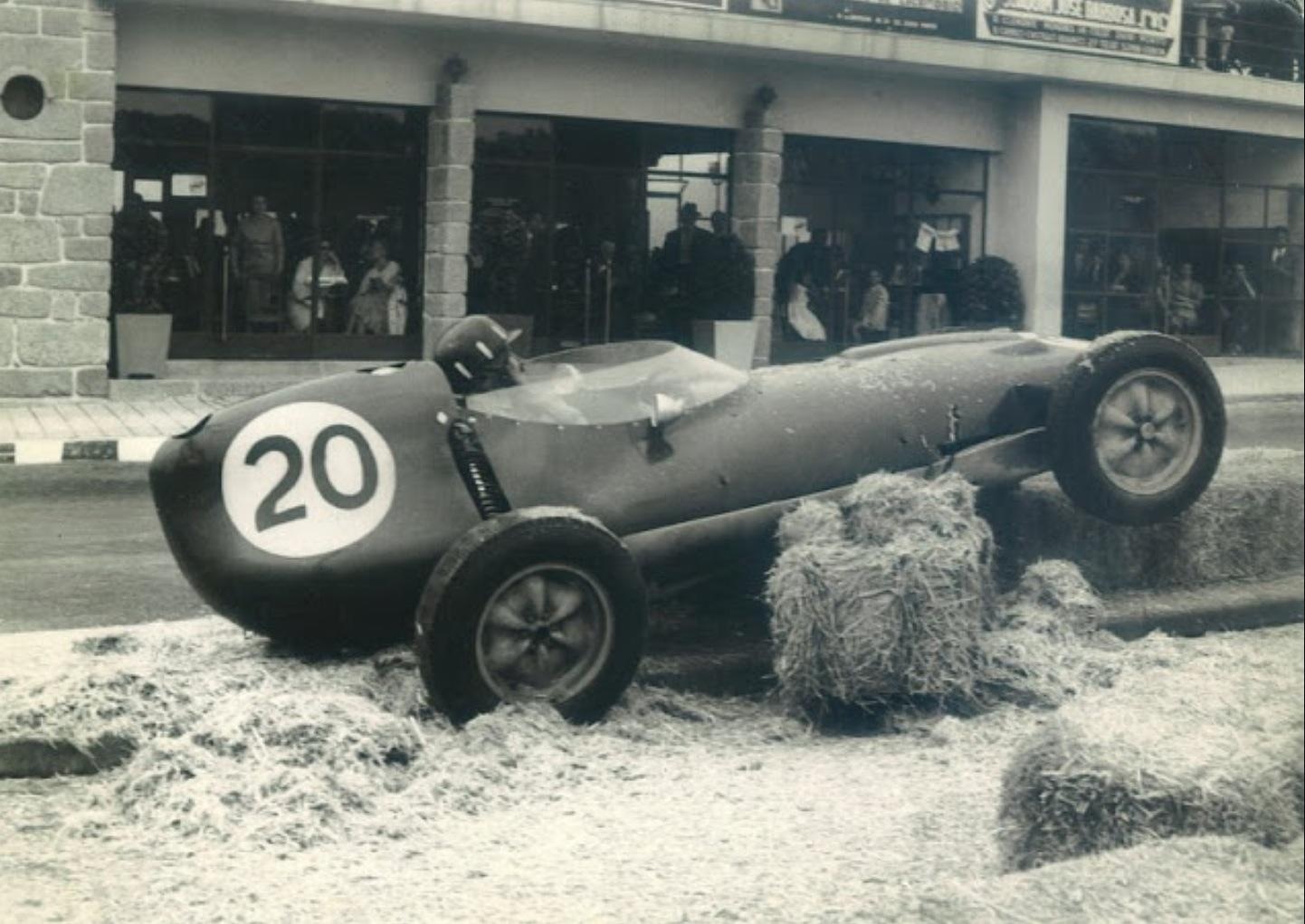
Graham Hill, Lotus 16 Climax, lands atop the haybales after a spin on lap 25, DNF. Hill made his Grand Prix debut in a Lotus 12 at Monaco that May, starting a long, wonderful, successful, ‘Triple Crown Winning’ career. His final GP was also at Monaco in 1975, unfortunately not qualifying (Pinterest)

hill 2

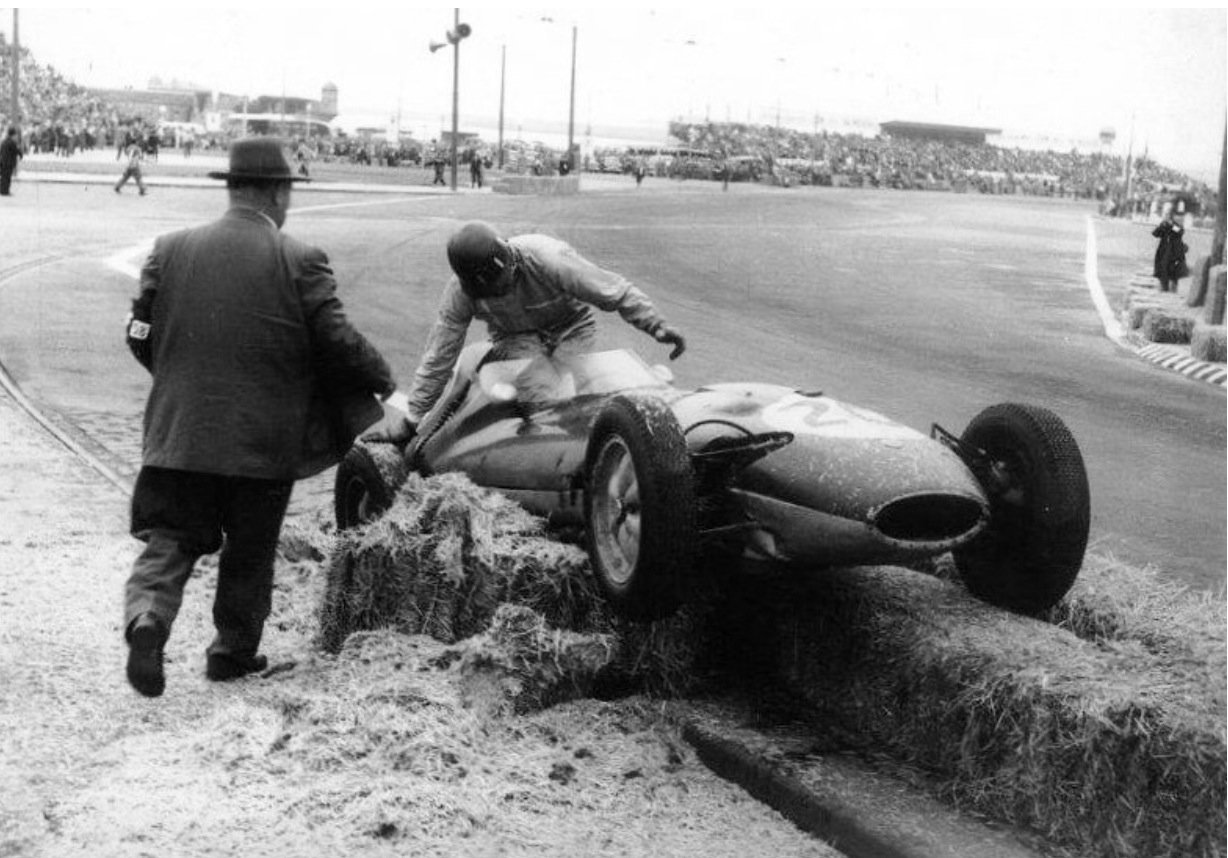
Gee Hill beached from either angle!

In a fantastic display of sportsmanship Stirling Moss intervened in a post race protest against Mike Hawthorn, who it was alleged had driven a short distance in the wrong direction on-circuit, having restarted his car. Moss advised the stewards Mike was on the footpath at the time, therefore not breaching the rules and keeping the points which ultimately won him the 1958 Drivers Championship by 1 point…from Moss.

moss 2

All the fun of the fair…Moss leads teammate Stuart Lewis-Evans through the Oporto suburbs. Moss won with Hawthorns Ferrari Dino 246 second and Lewis-Evans third (Pinterest)

brooks

Tony Brooks and Stirling Moss swap notes during practice, note Brooks’ ‘kidney belt’ to cope with the rigors of the rough circuit(s) (‘restos’)

circuit

Circuit of Boavista panorama…(‘restos’)

hawt

This shot of Hawthorn amongst the tramlines shows the delicacy of car control required on that day given the combination of rain, cobblestones, slippery steel tram lines and the hard, narrow race tyres of the day! (‘restos’)

moss

Moss’ Vanwall leads Hawthorns Ferrari Dino 246 early in the race…Moss post race intervention in a protest about Hawthorns’ diqualification critial to him holding second place and the points which ultimately won him the 1958 Drivers Title from Moss (Pinterest)

vitor

Moss victorious in Vanwall VW10 (Pinterest)

victors

Vanwall Team lap of honour…L>R Vandervell, waving Moss and Lewis-Evans (‘restos’)

Photo Credits…

LAT Archive, Pinterest

Many of theses shots are from a blog: restosdecoleccao.blogspot.com .Well worth a look even if your Spanish is not flash!

Etcetera…

roy

Roy Salvadori ponders the 2 litre Coventry Climax FPF engine of his ‘works’ Cooper T45, Roy was ninth, and last, Jack Brabham in the sister car seventh (‘restos’)

start

Start from the rear this time. #14 Brabham Cooper T45 Climax, # 4 Brooks Vanwall, # 10 Schell BRM P25, # 8 Behra BRM P25. Up front its Moss Vanwall, then Hawthorn Ferrari to the left of Moss, Lewis-Evans Vanwall outside on the right, and Von Trips Ferrari also right behind Lewis-Evans…the nose just appearing in shot is one of the Maser 250F’s entered…Shelby, Bonnier or Maria de Filippis (‘restos’)

behra

Jean Behra BRM P25 ahead of Jack Brabhams’ Cooper T45 Climax, now at 2.2 litres capacity, and tiny in comparison to the BRM. Fourth and seventh respectively, a Vanwall, Brooks perhaps, following (Pinterest)

hawthorn oporto

Mike Hawthorn enroute to second place in his Ferrari Dino 246 (Pinterest)

moss 3

Moss’ Vanwall nose up under acceleration (Pinterest)

poster

Finito…

enzo 2

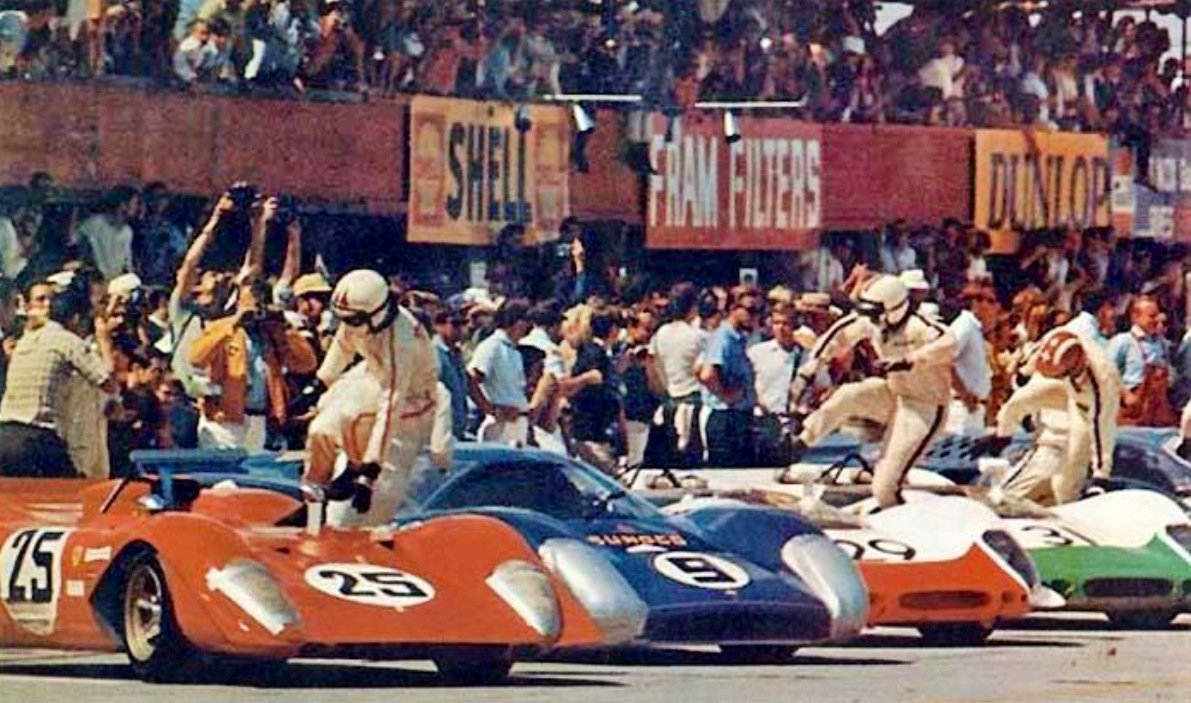
Enzo Ferrari at the launch of his 1969 endurance contender the 312P…

Motorsports governing body introduced new sports car rules for 1968; Group 4 Sports Cars with a capacity limit of 5 litres and a minimum production of 50 cars, and Group 6 Prototypes with a maximum of 3 litres. In effect the CSI were making obsolete the ‘unlimited cars’ being built by Ford and Ferrari, ( the 7 litre ‘pushrod’ Ford MkIV, 4 litre ‘racing engine’ Ferrari P4)  which they considered were getting too fast for the circuits of the time.

Ferrari, in time honored fashion didn’t race in 1968 in protest at this sudden rule change but returned in 1969 with the Group 6 312P, again in time honored fashion using many parts he had ‘on the shelf ‘ from other cars.

The chassis used was a downsized version of their 1968 Can Am challenger the 612P…It was a semi-monocoque, a spacefarme reinforced by aluminium sheet. The first cars were built with high downforce Spyder bodywork, but later cars were built or re-bodied for Le Mans as stunning low drag Coupes.

312p

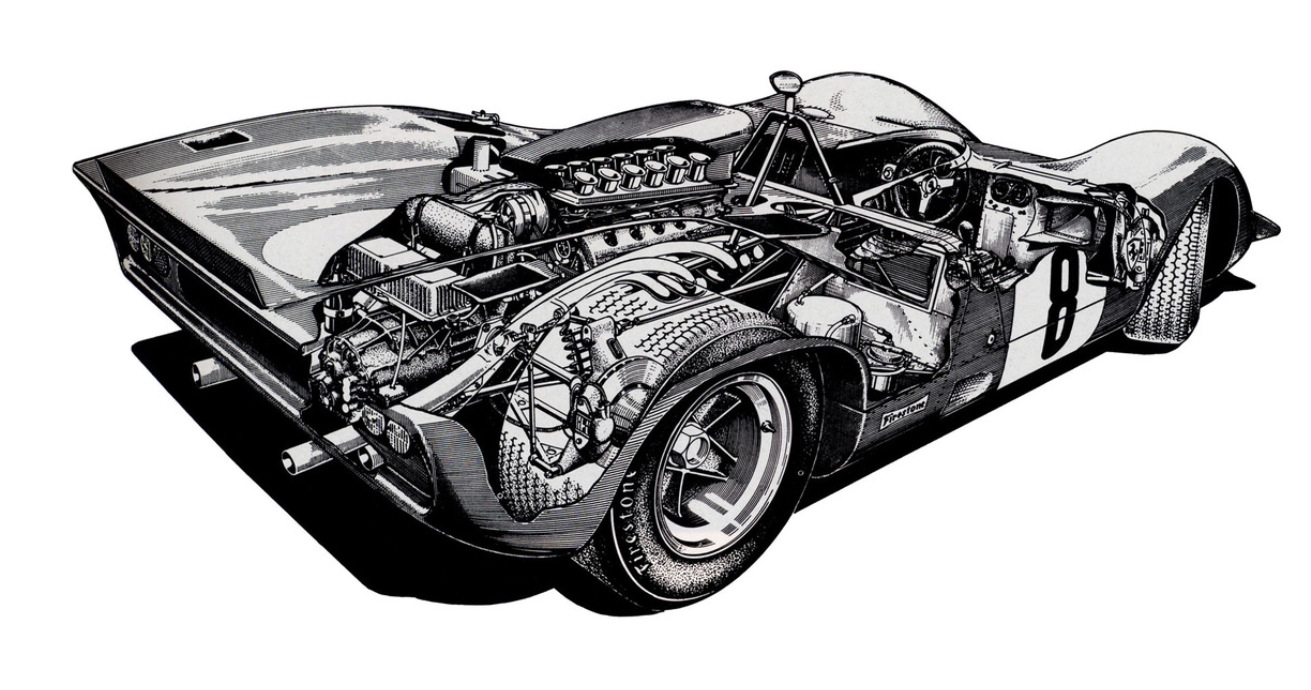
Aluminium semi-monocoque chassis. Double wisbones, coil springs, Koni shocks at front. Single top link, lower inverted wishbone, twin radius rods, coil springs and Koni shocks at rear. Adjustable sway bars front and rear. Rack & pinion steering. Ventilated discs all round. 680 Kg.

The 3 litre V12 was based on the highly successful old sports car engine albeit with 4 valve heads and Lucas fuel injection…Ferrari claimed 420 BHP, all of which hit the road through a 5 speed transaxle.

donk

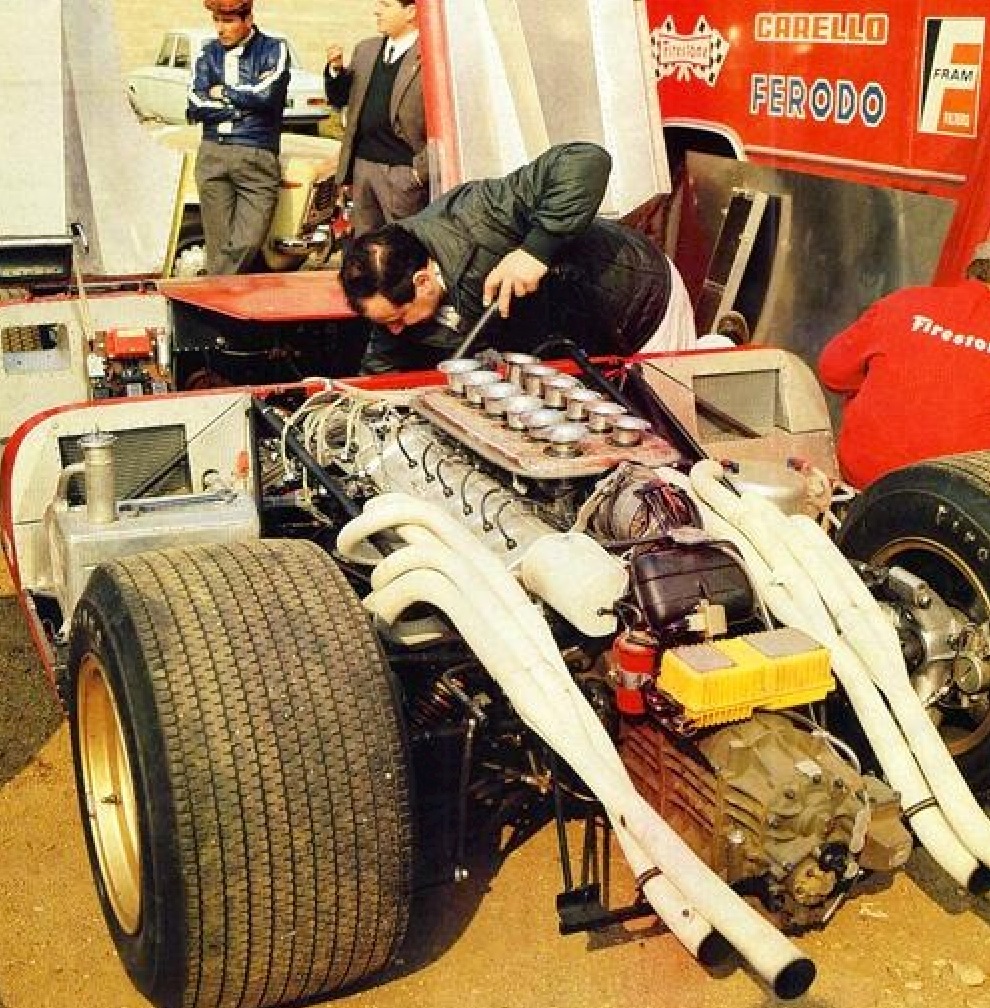
312P engine, 5 speed gearbox and rear suspension. 60 degree V12, 2.99 litres. 77X53.5mm bore/stroke. 11:1 compression ratio. 4 valves per cylinder , DOHC, Lucas fuel injection and circa 420BHP @ 9800RPM. (Tony Adamowicz)

Chassis ‘0868’ was shown to the public at the Hotel Fini in Modena in December 1968, which is probably where this unattributed shot of Enzo Ferrari with the car was taken.

From the outset Ferraris’ sports car plans in 1969 were limited as the development of the 3 litre ‘Flat 12′ engine for F1 in 1970 was Technical Director, Mauro Forghieris’ main project.

The first car was damaged in testing, but repaired and put on pole at Sebring by Mario Andretti, the car finishing second co-driven by Chris Amon despite overheating after a collision with a slower car.

amon

Chris Amon leaps aboard the 312P he shared with Mario Andretti at Sebring 1969.

amon sebring

Smoky Amon. Ferrari 312P, Sebring 1969. Second outright and first in class with Mario Andretti (Nigel Smuckatelli)

The car was very fast at Brands Hatch, but the Le Mans testing weekend revealed the need for slippery coupe bodies on the Mulsanne. The bigger issue was the appearance of the Porsche 917, 25 examples of which had been built by the Germans to comply with the CSI’s new Group 4 rules, not what the rule makers intended at all…

The 312P’s were fast at Monza filling the first 2 grid positions but failed to finish with tyre problems, the Firestones not coping with the rigours of the Monza banking.

pedro 5

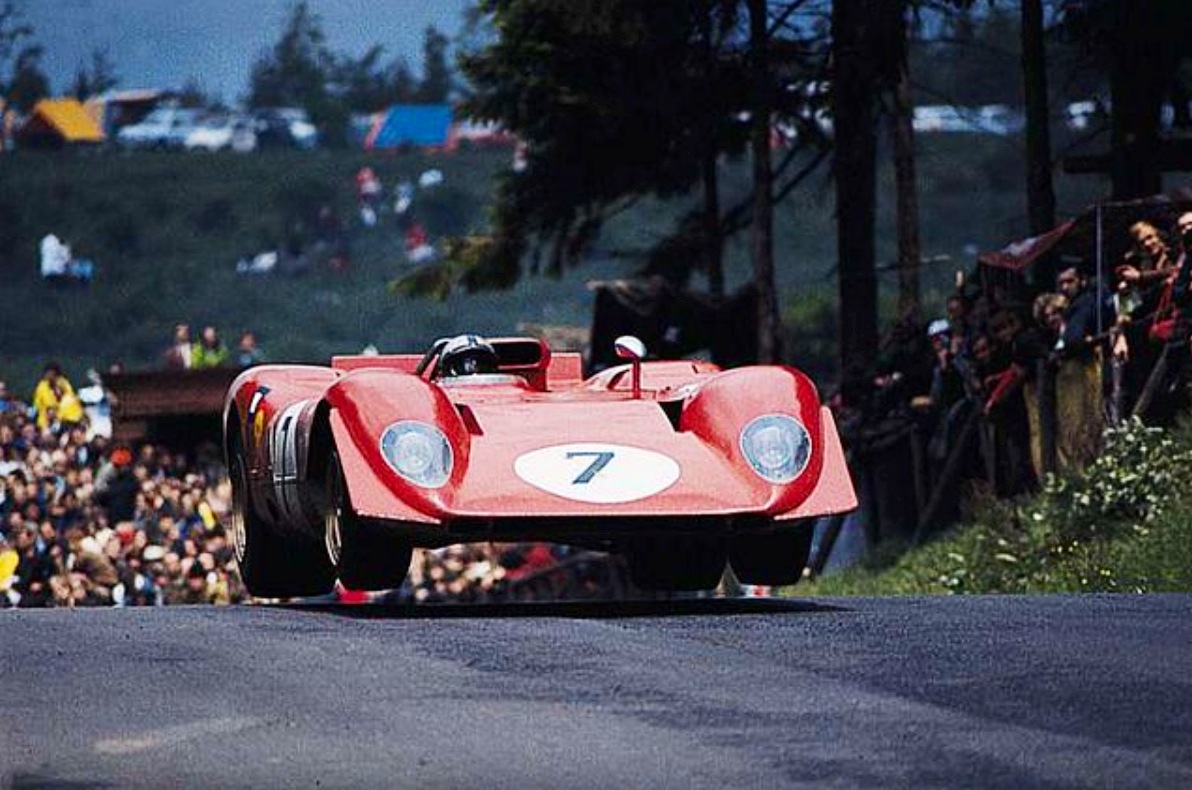
Pedro Rodriguez, Nurburgring 1000Km 1969.

The 917 was on pole at Spa, but Amon proved the 312P’s competitiveness again, he broke the lap record at The Nurburgring. At Le Mans the two cars entered were fitted with gorgeous Coupe bodies formed around shortened 206SP Dino windscreens.

The 917 was on the Le Mans pole… but few believed they would last the distance, Amons 312P was damaged by debris from the fatal accident which befell the John Woolfe 917 on lap 1, the other car suffering gearbox failure after a retaining nut vibrated loose several times. Jacky Ickx and  Jackie Oliver won the race in Ford GT40 ‘1075’ the same chassis victorious the year before.

le mans

Chris Amon behind the 312P, now with Coupe body, at Le Mans 1969 with Peter Schetty. The car was out on lap 1, running over debris from the John Woolfe 917 accident (Pinterest)

The arrival of the 917 was  a game changer, Ferrari responded with some of the Lire invested in his business by Fiat, in building 25 512S 5 litre cars to go head to head with Porsche in what many say was the greatest 2 years of sports car racing ever, 1970 and 1971.

The two remaining 312P’s were sold to Luigi Chinetti’s North American Racing Team at the end of 1969, the cars scoring class victories in major races such as Daytona, and Sebring and also racing at Le Mans in 1970 where Tony Adamowicz, and Chuck Parsons were non-classified but tenth. The other car was taken as a spare and unraced.

312 p le mans 1970

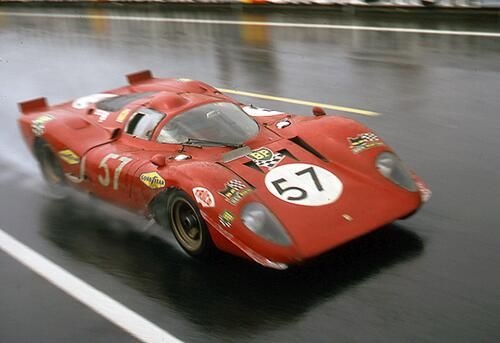
Wet weather 1970 Le Mans shot of the NART 312P. (Bruce Thomas)

1970

NART Adamowicz/ Parsons 312P Le Mans 1970 , tenth in the race won by the Herrman/ Attwood Porsche 917K (Pinterest)

The 312P has only a small part in Ferrari racing history but the factory learned valuable lessons from the program when it next raced a prototype, the 3 litre 312PB in 1971, this car using a variant of the F1 ‘boxer’ engine, the 312PB the dominant and championship winning sports car of 1972.

Etcetera…

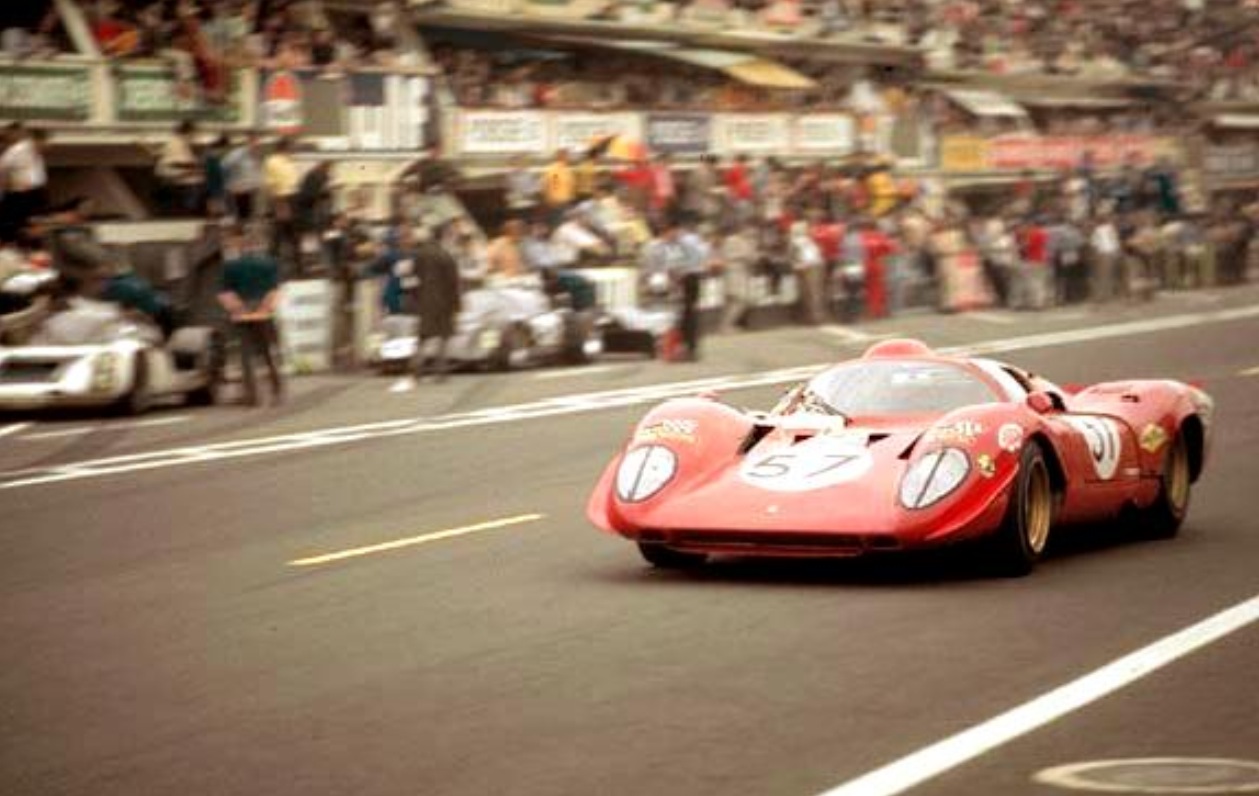
pits

Amon/Schetty Ferrari 312P Le Mans pits 1969.(Pinterest)

image

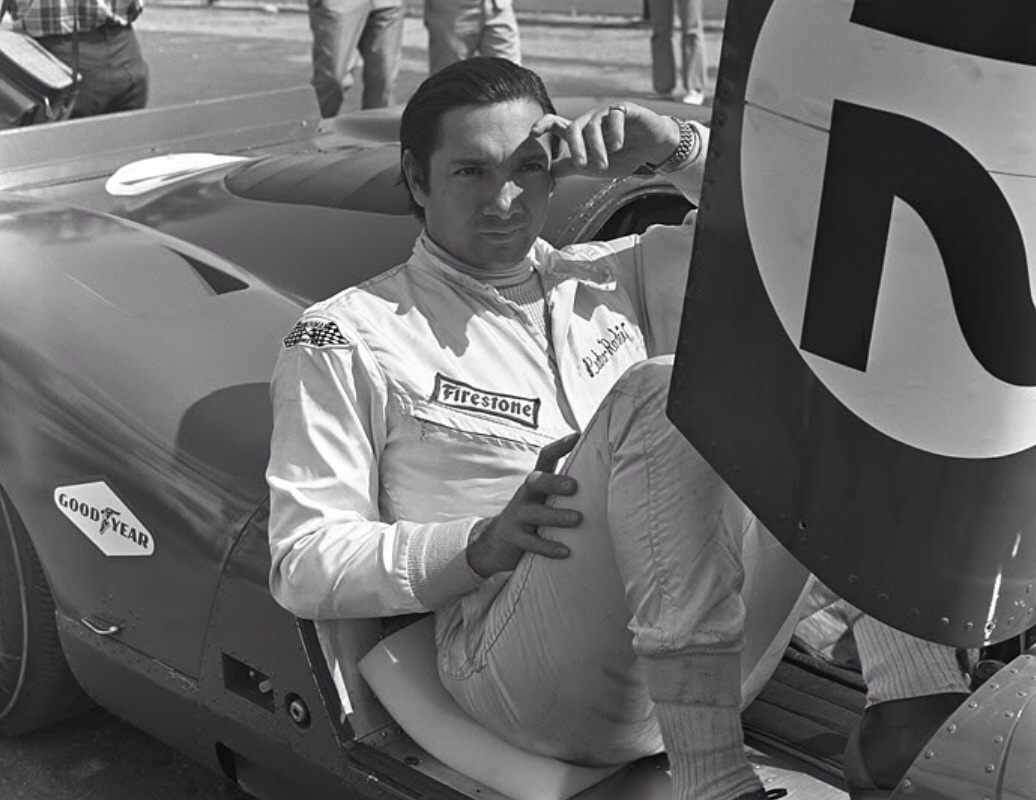
Pedro relaxes before the off, Bridghampton CanAm 1969. (Dogfight.com)


image

‘0870’ in the 1969 Bridghampton  CanAm pitlane. Rodriguez was 5th in the heavy relatively low powered 3 litre car, Hulme and McLaren 1st and 2nd in McLaren M8B Chevs. (Dogfight.com)

parkes

Mike Parkes in the NART 312P , Daytona 1970. Tall man, and bubble as a consequence (Pinterest)

le mans 8

Another shot of the Adamowicz/ Parsons 312P during Le Mans 1970 (Yves Debraine)

drawing

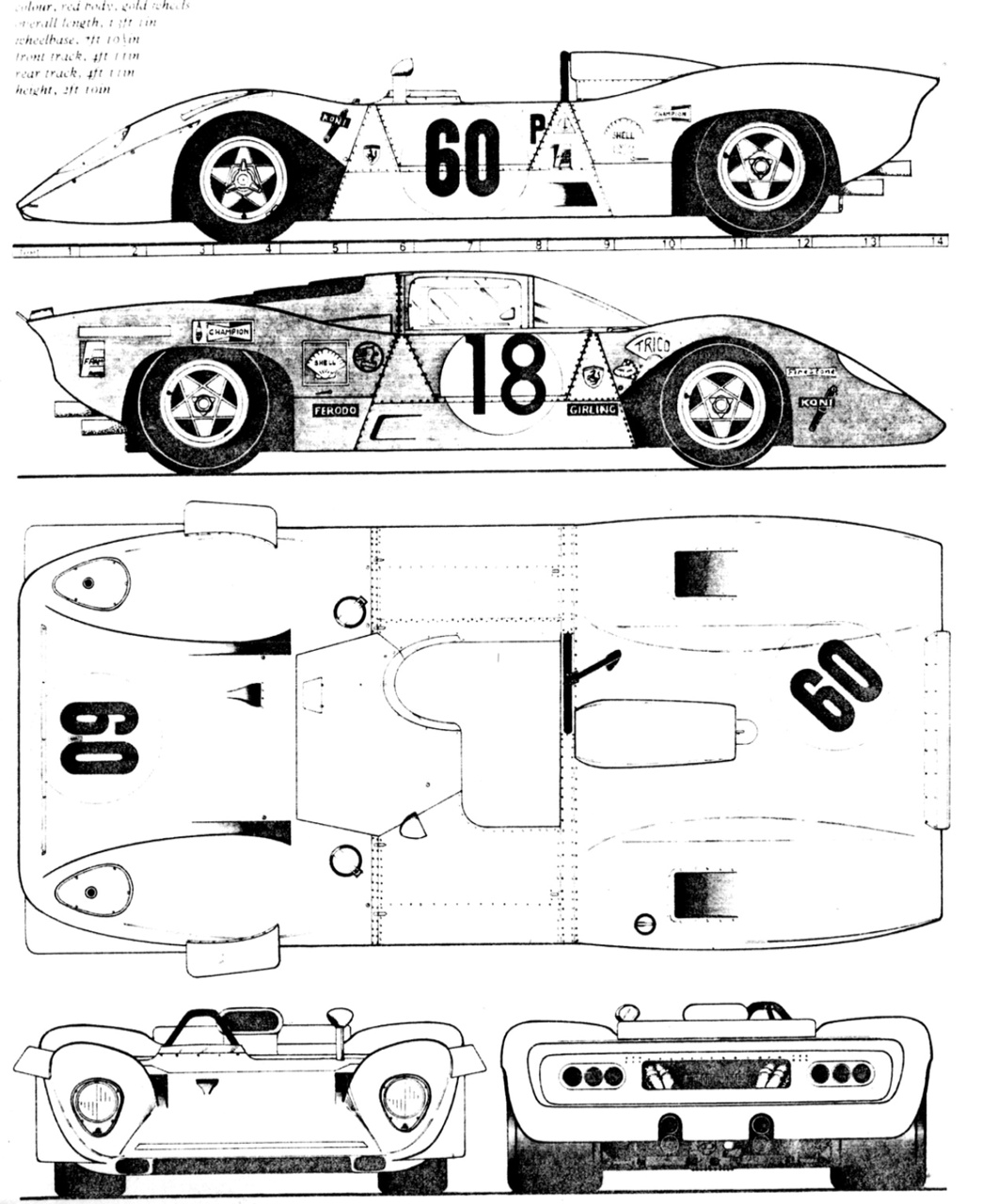
Interesting drawing showing the differences in dimensions of the Spyder and Coupe versions of the 312P (Pinterest)

Photo Credits…

Pinterest, Tony Adamowicz, Nigel Smuckatelli, Yves Debraine, Bruce Thomas

Finito…
steve

Steve McQueen (or is it John Whitmore) at the wheel of a Lotus 30 shooting some of the million feet of unused footage for this cancelled movie…

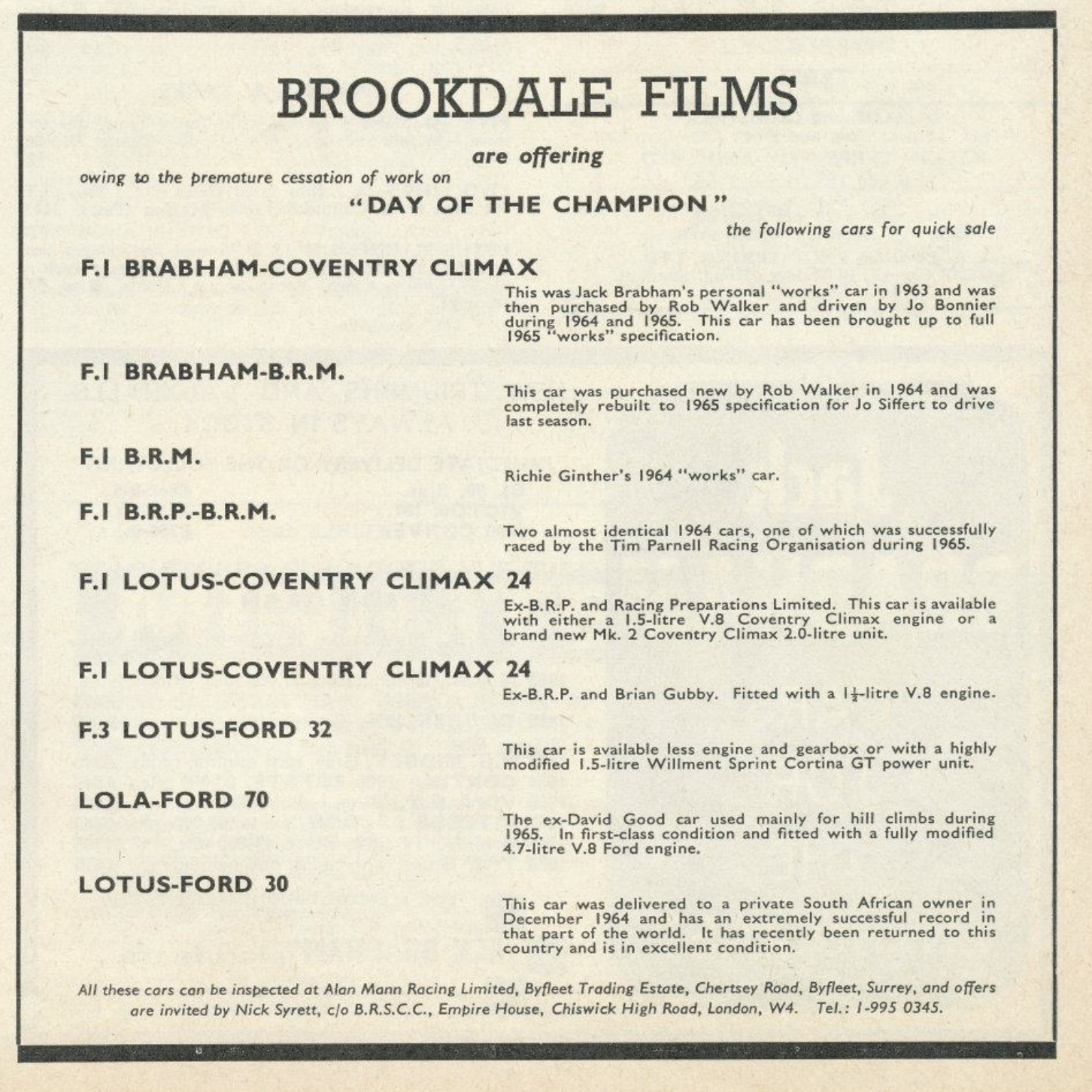
John Frankenheimer and MGM were in a race with Steve McQueen and Warner Bros to make a movie with Grand Prix racing as its theme.

John Sturges was the Director of Day of The Champion, filming of footage, using many cars specifically acquired for the purpose commenced in 1965.

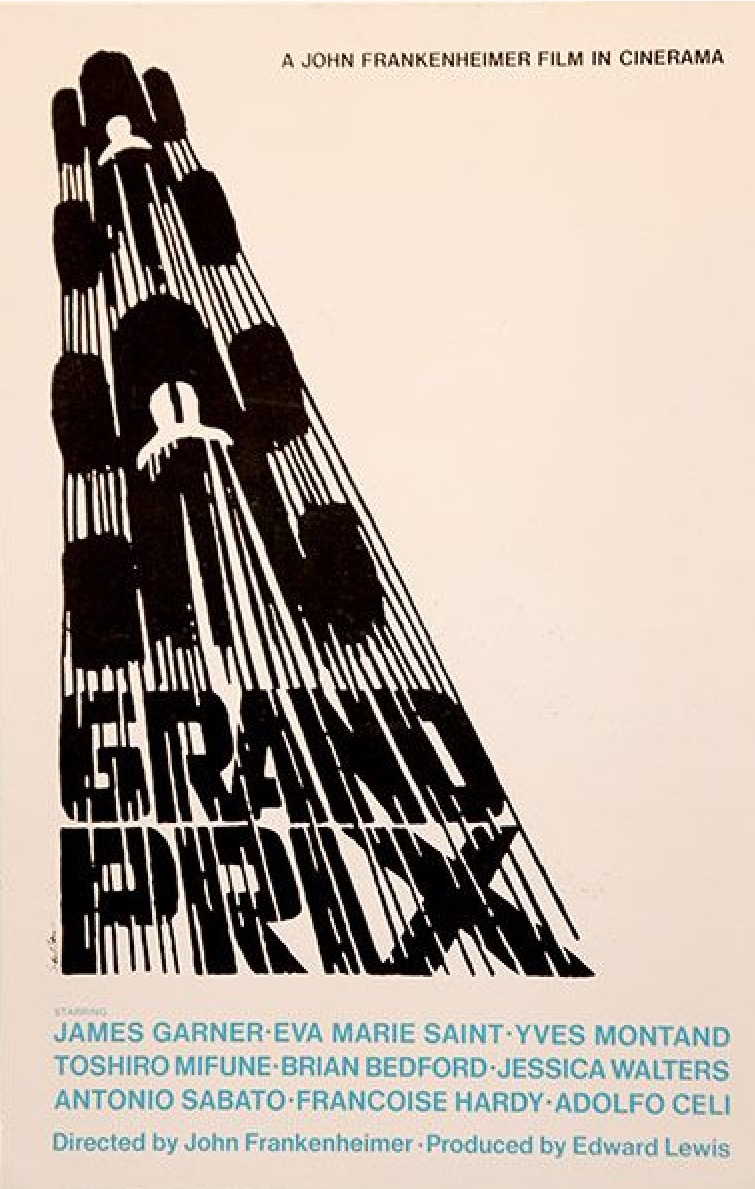
‘The Sand Pebbles’ in which McQueen starred, and for which he received his only Academy Award Nomination ran over time, delaying the production of ‘Day of The Champion’, his Hollywood neighbour James Garner played the lead role in ‘Grand Prix’, the iconic 1966 F1 movie and a huge commercial success, beating ‘Day of a Champion’ into the cinemas.

The pin was pulled on the “Day of The Champion’, there was no value in two similar movies appearing at about the same time.

McQueen didn’t speak to Garner for over two years…but came back with a vengeance in ‘Le Mans’, not much of a story, a commercial flop but a sensational racing movie!

John Sturges famously quit ‘Le Mans’ after arguments with McQueen who wanted a documentary style ‘slice of racing life’ film, Sturges equally adamant that a strong story line was essential for commercial success…’I’m too old and rich to put up with this shit’ was his parting line.

‘Le Mans’ was completed, after running hopelessly over budget, but only after Steve tipped his acting fee and forfeited his gross in the films takings to fund it…

But what a movie!

dotc

‘Day of The Champion’ production teaser (Pinterest)

surplus

Getting rid of cars now surplus to stock…(Pinterest)

steve 2

‘Day of The Champion’ morphed into ‘Le Mans’ several years later, a commercial flop but a triumph as McQueens creative tribute to motor racing (Pinterest)

pete

‘Pete Arron’ ready to race… James Garner proved himself a dab hand at the wheel during the filming of ‘Grand Prix’ (Pinterest)

gp

‘Grand Prix’ cut it creatively, commercially, and as a racing movie. Iconic to this day, and one of the top ten grossing films of 1966 (Pinterest)

Photo Credits…

Pinterest

jean

Jean Alesi, Tyrrell 019 Ford DFR , French GP 1990 (Pinterest)

Tyrrell were an amazingly innovative small team.

Jean Alesi here in the 1990 French Grand Prix driving Designer Harvey Postlethwaite’s ground breaking and trend-setting ‘highnose’ Tyrrell 019 Ford DFR…

There were three distinct design regimes at Tyrrell. The first was from 1970-1977- the Derek Gardner era, then from 1978-1988 when Maurice Phillippe was at the helm and finally, from 1989-1998 when Harvey Postlethwaite led the design team until Tyrrells’ sale, the long established, family owned outfit morphing into ‘British American Racing’.

The Gardner and Postlethwaite periods were particularly aerodynamically innovative.

In 1971 Gardner introduced two important innovations to his Tyrrell 003.

The first was the high airbox, which debuted at the Dutch Grand Prix, Matra similarly equipped. Chris Amon’s MS120 V12 also having a ‘snorkel’.

cevert

Francois Cevert in Tyrrell 002 Ford showing the original aero treatment of that series of cars…Stewart ‘debut’ the Tyrrell Sports Car nose in this race the French GP 1971…Stewart first, Cevert second. ‘Pregnant-belly’ aero/fuel tank treatment apparent (L Harmegnies/motorsport.com)

The primary effect was mild ‘supercharging’ of the incoming fuel/air mix, the secondary one was aerodynamic- the simple snorkel quickly evolving into carefully sculptured rear bodywork which included the snorkel and smoothed airflow to the rear wing, aiding downforce and allowing a marginally flatter wing setting to be used. In essence, less drag for the same downforce.

In the French Grand Prix, Stewarts’ 003′ raced with a sports-car type nose, Gardner’s idea was to partially mask and aid airflow around and over the front of the car, the wheels/tyres being aerodynamically the least efficient part of an open-wheeler.

003

Derek Gardners Tyrrell 003 Ford , Jackie Stewarts primary, championship winning mount of 1971. Engine ‘Snorkel and bluff ‘Tyrrell nose’ innovations of that year are clearly shown

The Lotus 56 and 72 set a trend with their wedge shaped, side radiator design- the 72 appearing in 1970. The other alternative aero approach at the time, ‘Pre-Tyrrell Nose’ was the ‘pregnant-belly front radiator approach’ of the BRM P153/160, McLaren M14, Tyrrells 001-003 and others.

Gardner set the alternative aero trend of the 1970’s, until the advent of the Ground Effect Era, with his bluff sportscar type nose.

Look at the results of the two alternatives over that period from 1971 to 1979 when the needs of ground effect tunnels favoured the ‘chisel front wing and side radiator approach’ as against the ‘Tyrrell nose, front radiator approach’. Cars of both designs were successful, perhaps the former ‘wedge/side rads’ were the more successful.

Examples of winning ‘chisel/side radiator’ cars are the Lotus 72, McLaren M23, Ferrari 312T’s and of the ‘Tyrrell nose/front rad’ cars the Tyrrell 003-006 and Brabham BT42/44.


lotus

Colin Chapmans’ Lotus 72 Ford, 1970-1975

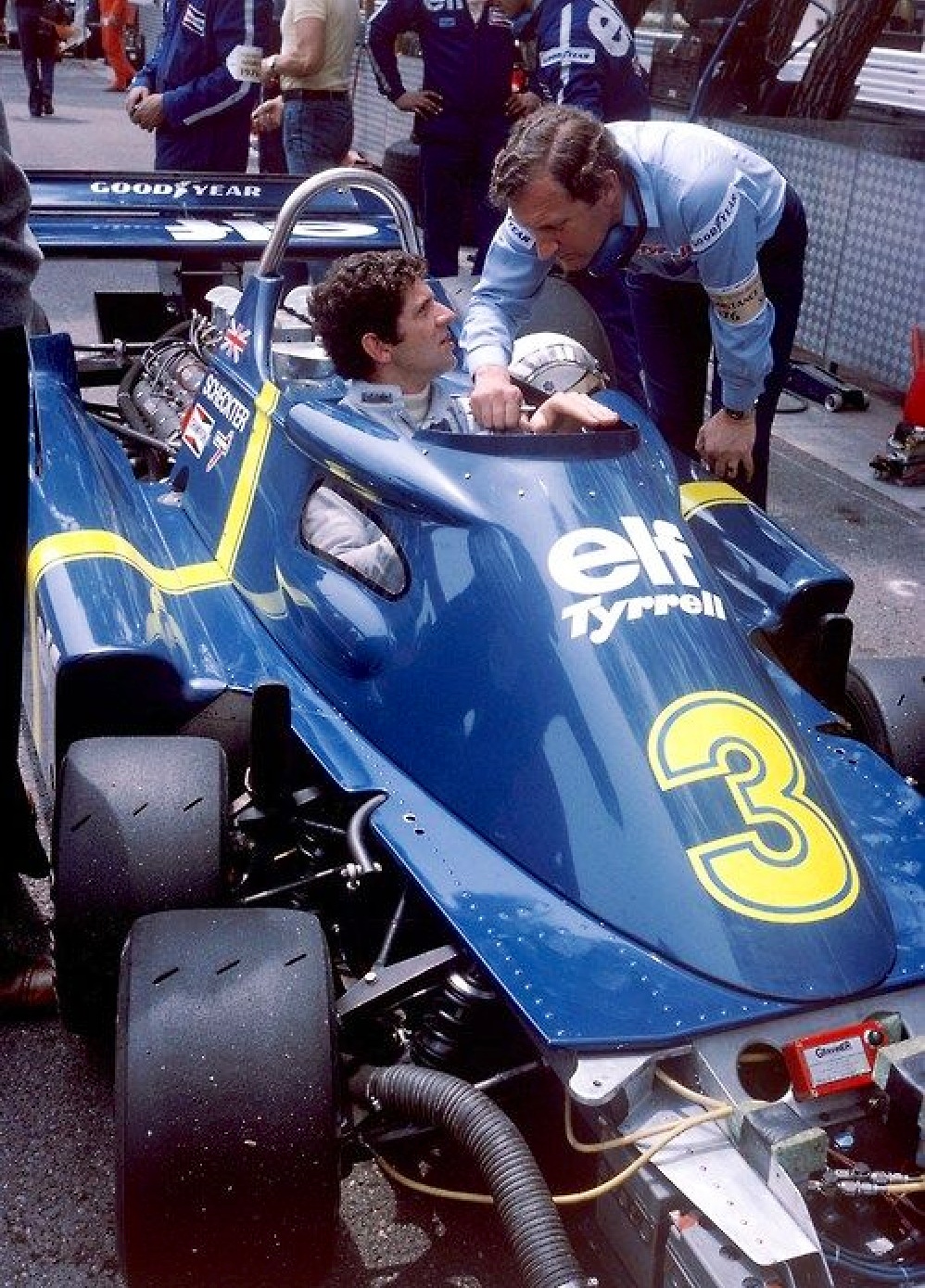
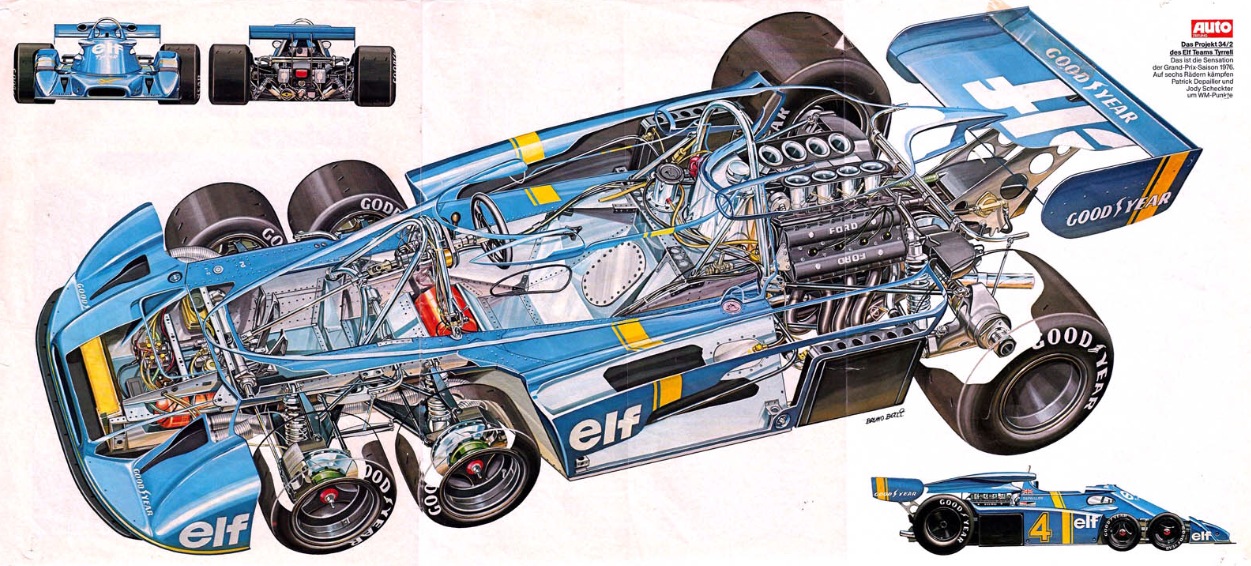
Gardner himself went to ‘chisel/side radiators’ with the 1974/5 Tyrrell 007 driven by Jody Scheckter and Patrick Depailler- and then back to the ‘Tyrrell nose’ for his stunning, outrageous P34 six-wheeler…

Both models were Grand Prix winners, the P34 once only, in Scheckter’s hands in Sweden in 1976.

Gardner was recruited by Tyrrell from Ferguson Research where he worked on advanced four wheel-drive systems used on the  Matra MS84 Ford four wheel drive F1 car of 1969- that car used Ferguson componentry. The Matra, as were the other 4WD cars developed by Cosworth, McLaren and Lotus were unsuccessful as wings and tyre polymer chemistry provided  grip more simply than 4WD technology of the day could.

But Ken Tyrrell was impressed and recruited Gardner to build the first Tyrrell 001, secretly in 1970.

derek and jody 1976

Jody Scheckter and Derek Gardner with P34 in 1976…Jody was not a fan despite his Swedish GP win and left the team for Wolf Racing for 1977, and a conventional, successful car, the Wolf WR1 Ford designed by Harvey Postlethwaite (Pinterest)

By the mid-seventies the challenge of the aluminium monocoque/Ford Cosworth DFV/Hewland FG400 gearbox brigade, ‘The Garagistes’, in Enzo Ferraris’ words, was how to beat the similarly equipped opposition?

Gardners audacious approach was aerodynamic in having four small front wheels which could be faired behind his Tyrrell nose, creating greater straight line speed whilst losing no mechanical grip from the tiny, Goodyear shod wheels.

The increased braking area provided by the four small discs was a further advantage.

There were mechanical challenges making the package work but the cars were competitive in both Jody Scheckter and Patrick Depailler’s hands in 1976, but less so in 1977 when Goodyear were not so interested in developing special tyres for just one team.

p34

Derek Gardners outrageous, successful Tyrrell Ford P34 six-wheeler of 1976/7

Then the FIA banned 6 wheelers and that was that, March and Williams had been toying with four rear wheels…

Scheckter jumped ship to Walter Wolf’s new team in 1977 and was a race-winner in the Harvey Postlethwaite designed cars.

Harvey, a Doctor of Engineering, had his motor racing start with March, modifying Lord Hesketh’s, James Hunt driven customer March 731. He then designed the Hesketh 308 in which James Hunt won his first GP and came to Tyrrell in 1988 after two stints at Ferrari including design of the 1982 and 1983 Constructors Championship winning 126C2.

Postlethwaite was joined at Tyrrell by aerodynamicist Jean Claude Migeot, together they evolved their competitive 1989 018 into the ground-breaking 019, the car which set the aerodynamic trend until the present.

The car was conventional in using a carbon-fibre monocoque chassis, wishbone and pushrod suspension front and rear, and Ford Cosworth 3.5 litre DFR V8 / Hewland six-speed transmission but utterly radical in its aero approach.

harves

Dr Harvey Postlethwaite during his very successful Ferrari period (L’Unita)

Contemporaray practice was to use a flat, steppped chassis undertray with a large diffuser producing downforce through the generation of low pressure under the car.

‘P and M’ realised this approach was compromised by the low nose at the front of the car, the wings diverted air sideways and upwards reducing the amount of air passing under the car. The generation of low pressure relies on increasing the speed of the air passing under the car in relation to the air passing over and around it.

In simple terms , the more air that can be drawn under the car, the faster the air will have to be moving, and the faster the air is moving the lower the pressure and greater the downforce.

By raising the nose-cone Postlethwaite increased the volume of air that was able to pass under the car…whilst keeping the wings themselves close to the ground where they work best with the distinctive, inverted V, anhedral front profile.

wing

The car was not that successful in terms of 1990 results, Alesi achieved sixth at San Marino and second in Monaco but a trend was set which most teams followed quickly- and principles which prevail today.

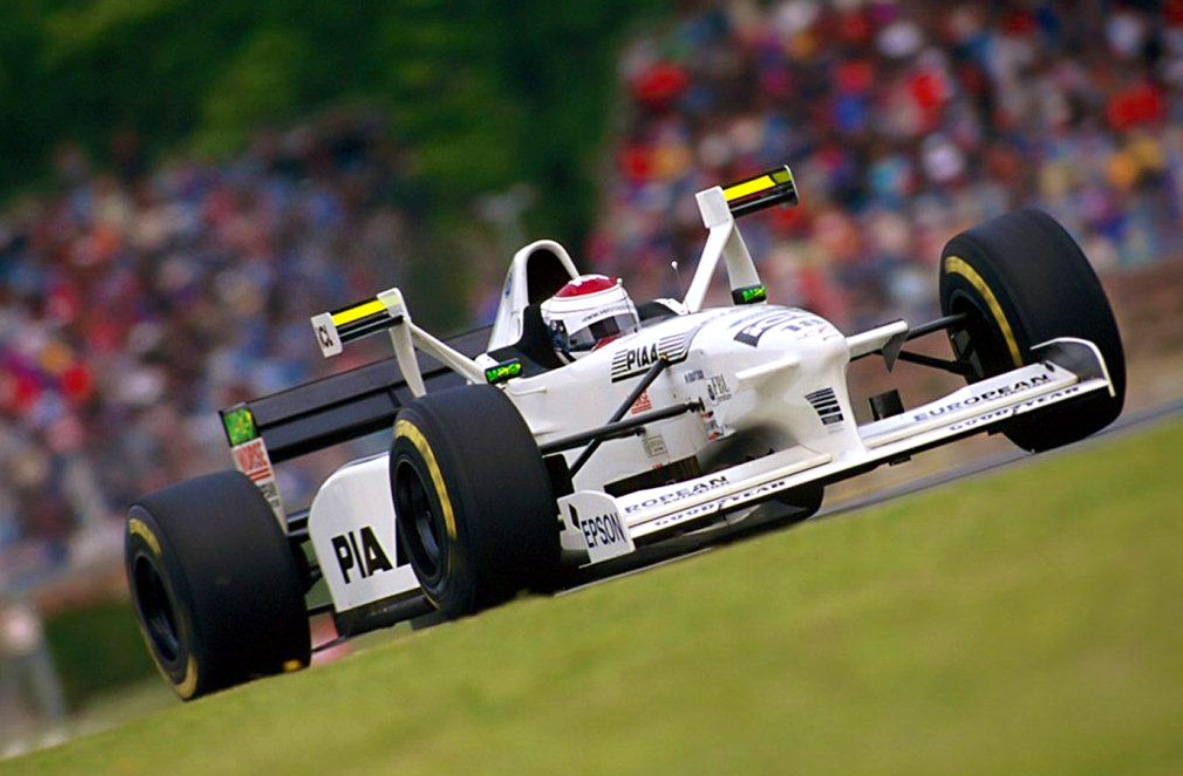
Tyrrell innovation continued with aerodynamically shaped wishbones in 1996, and the ugly but effective ‘X-Wings’ in 1997- on fast circuits two additional wings were installed either side of the cockpit.

Postlethwaite stayed with the team until it was sold by Ken Tyrrell to British American Tobacco at the end of 1997 and died suddenly of a heart attack whilst testing the Postlethwaite designed, Dallara built, in house Honda at Catalunya in April 1999- he was aged 55.

Ken Tyrrell died in August 2001, and Derek Gardner in January 2011, his post Tyrrell career was as Director of Engineering and Research at the Borg Warner clutch company.


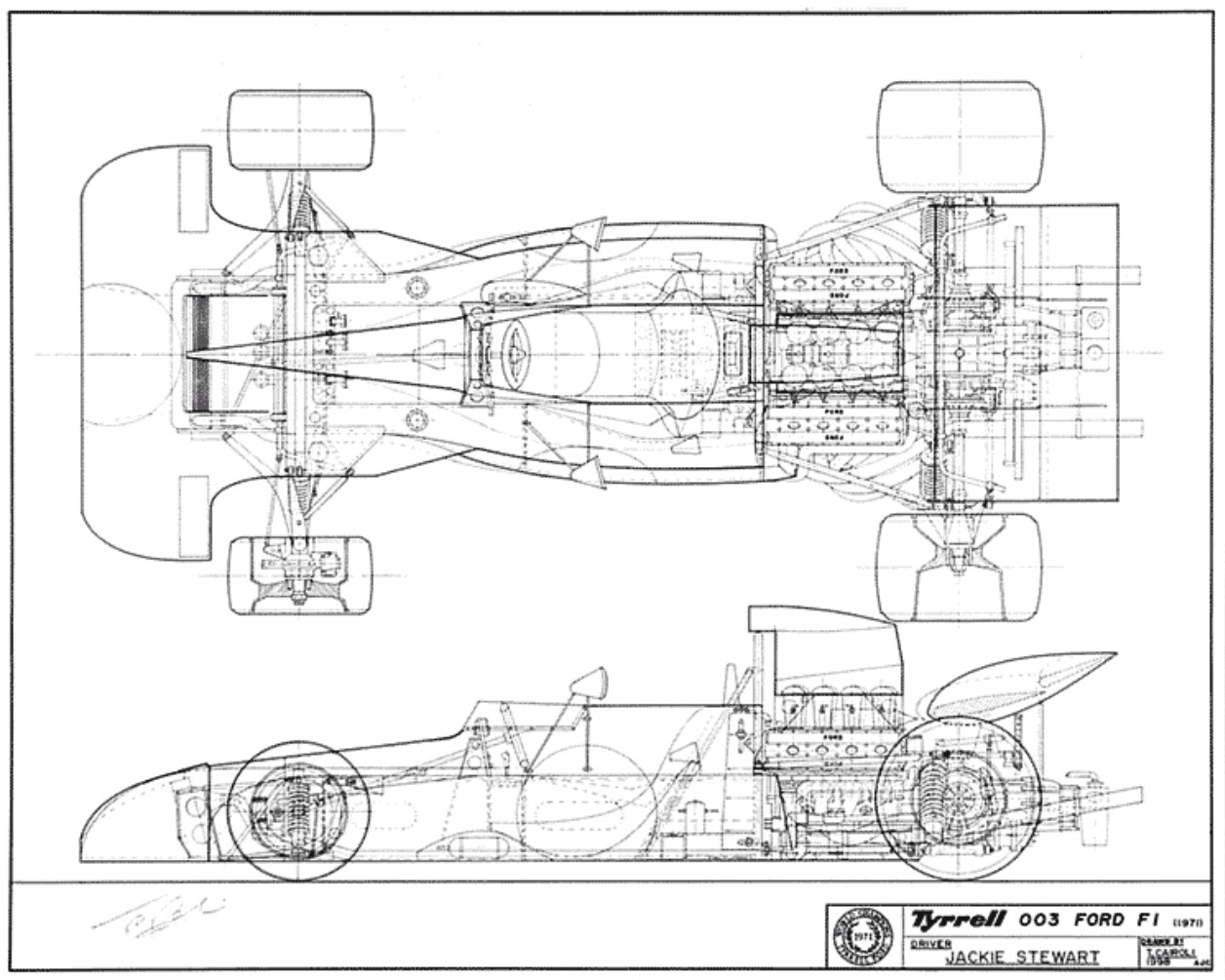
Etcetera…Tyrrell 003 1971/2

oo3 cutaway

(Tyrrell)


stew

Jackie Stewart, German GP, Nurburgring 1972. Tyrrell 003 Ford. Stewart collided with Clay Regazzoni in this race won by the Ickx Ferrari 312B2, so DNF (Pinterest)


tyrel 003 cutaway

Etcetera…Tyrrell P34 1976/7

schematic

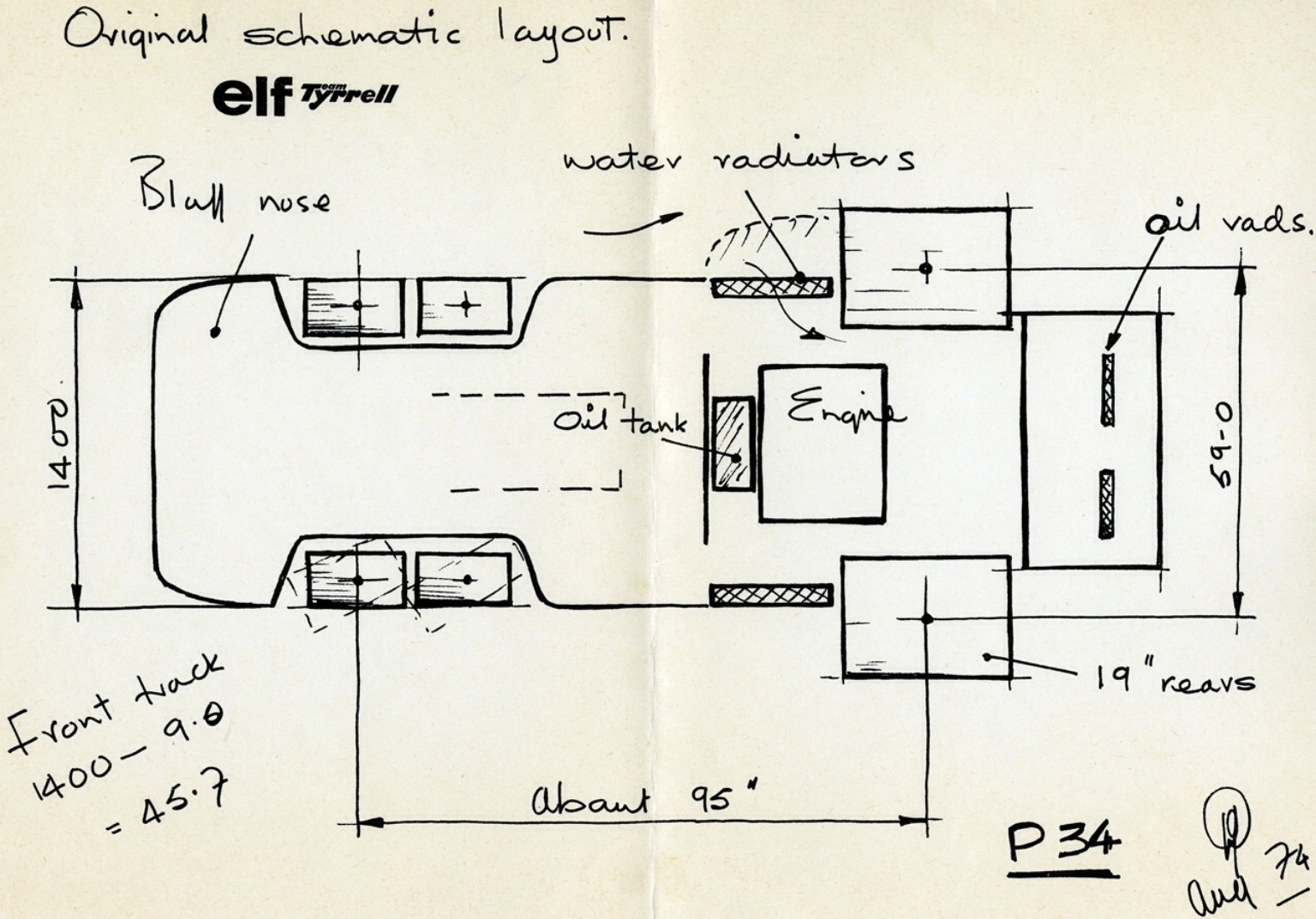
Derek Gardners original schematic of the essential elements of the Project 34 dated August 1974. Dimensions of the car as raced very close to this drawing


dep

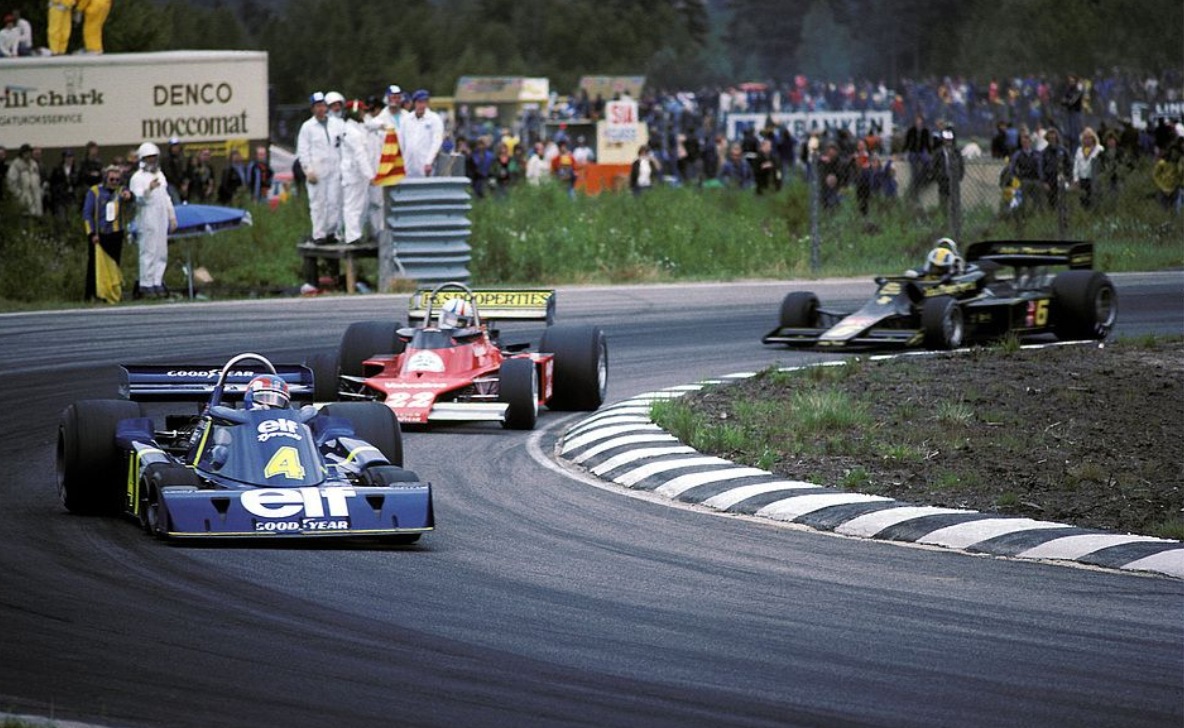
Patrick Depailler (2nd) in the P34 ahead of Chris Amon (DNF) and Gunnar Nilsson (DNF), Ensign N176 Ford and Lotus 77 Ford respectively. Scheckter won this race, the 1976 Swedish GP in the sister P34. The shot is a ‘compare and contrast’ with conventional (aluminium monocoque/Ford DFV/Hewland gearbox) cars of the day. Note how well faired the small 10 inch wheels are by the ‘Tyrrell Nose’ (Sutton)


p 34 cutaway

(B Betti)


monaco

Scheckter second around the twists and turns of Monaco in 1976, the Lauda Ferrari 312T victorious. Depailler third in the sister car…plenty of ‘turn in’ and strong brakes on this demanding course (Pinterest)

Etcetera…Tyrrell 019 1990

adelaide

Wonderful 1990 Adelaide East Terrace shot of Jean Alesis’ Tyrrell 019 shows off its aerodynamic secrets…eighth in the AGP race won by Nelson Piquets Benetton Ford (Stupix)


019 cutaway

(unattributed)


jean and gerhard

Jean Alesi (3rd) and Gerhard Berger (5th)Monaco 1990, the high-nose Tyrrell 019 a contrast with the orthodoxy of the day, McLaren MP4/5B Honda. Ayrton Senna won the race in the other McLaren (Pinterest)

Etcetera…Tyrrell Ford 025 1997

jos

Jos Verstappen in Postlethwaites 1997 ‘X-Wing’ Tyrrell Ford ED4 3.5 V8 025. San Marino GP 1997…evolution of Harveys ‘high-nose’ over 7 years clear…Jos was tenth in the race won by Heinz-Harald Frentzens’ Williams Renault (Pinterest)

Photo Credits…

Pinterest, Sutton Archive, Bruno Betti P34 cutaway, Stupix, L ‘Unita, Lucien Harmegnies, motorsport.com

Finito…

dan 1

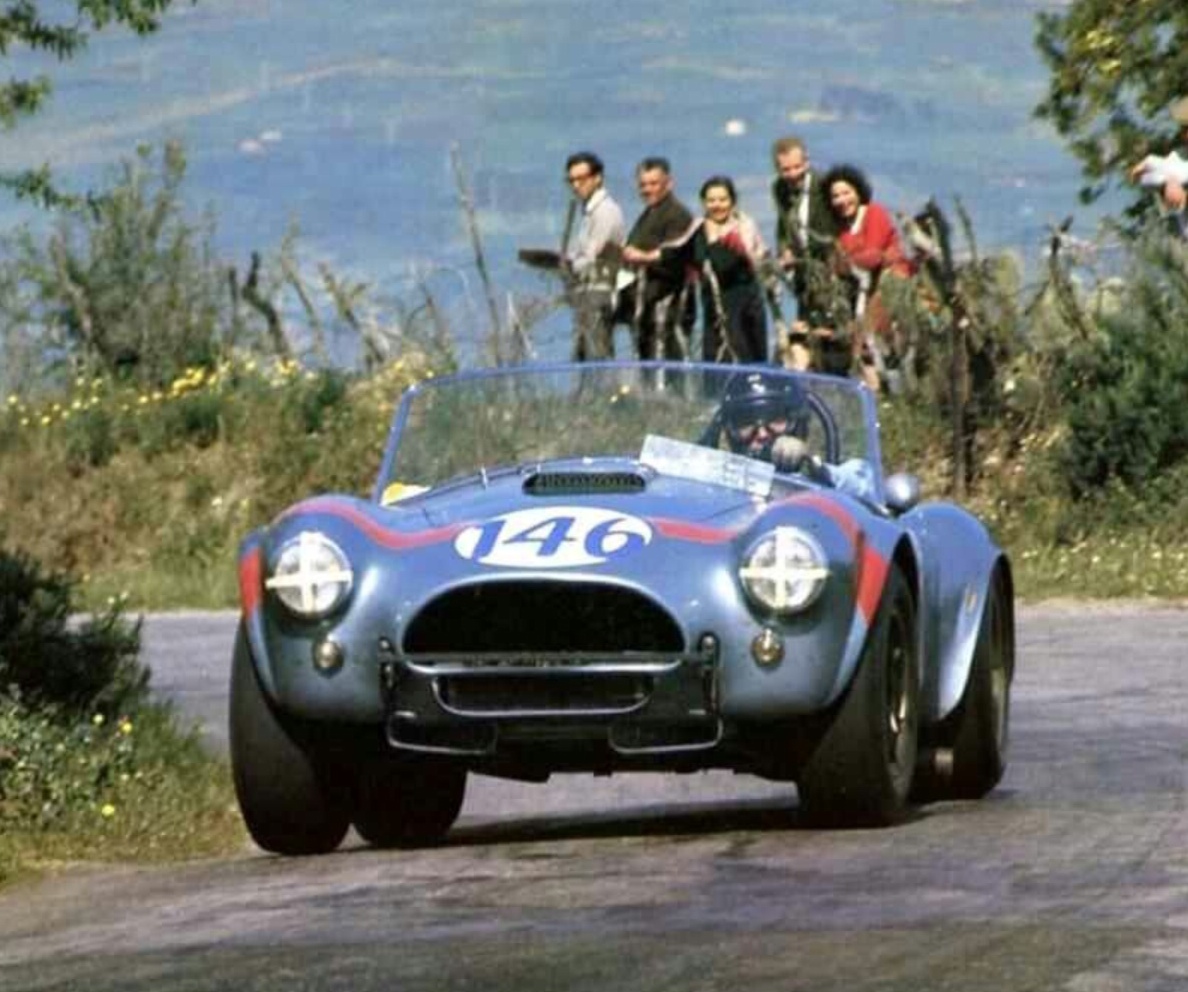
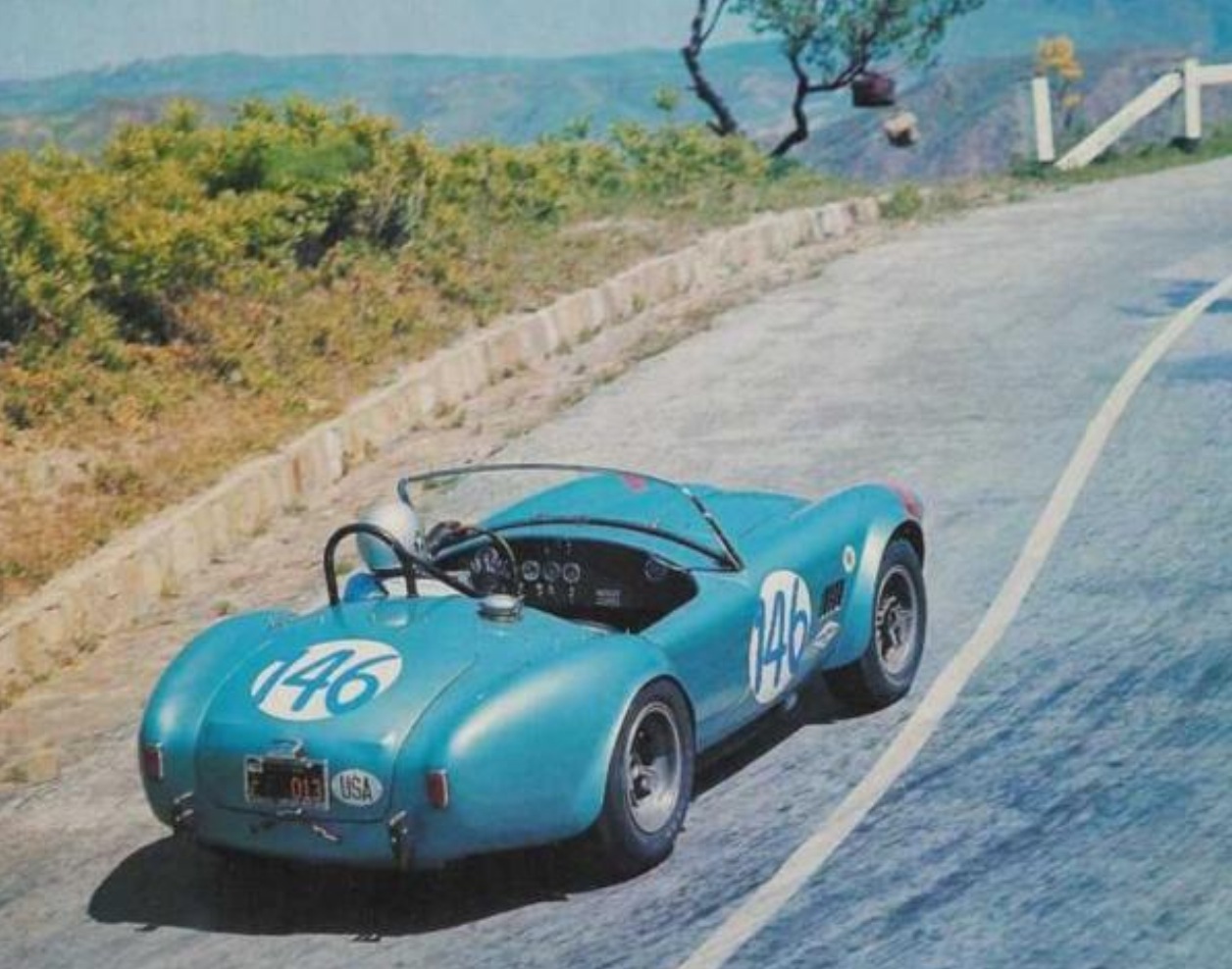
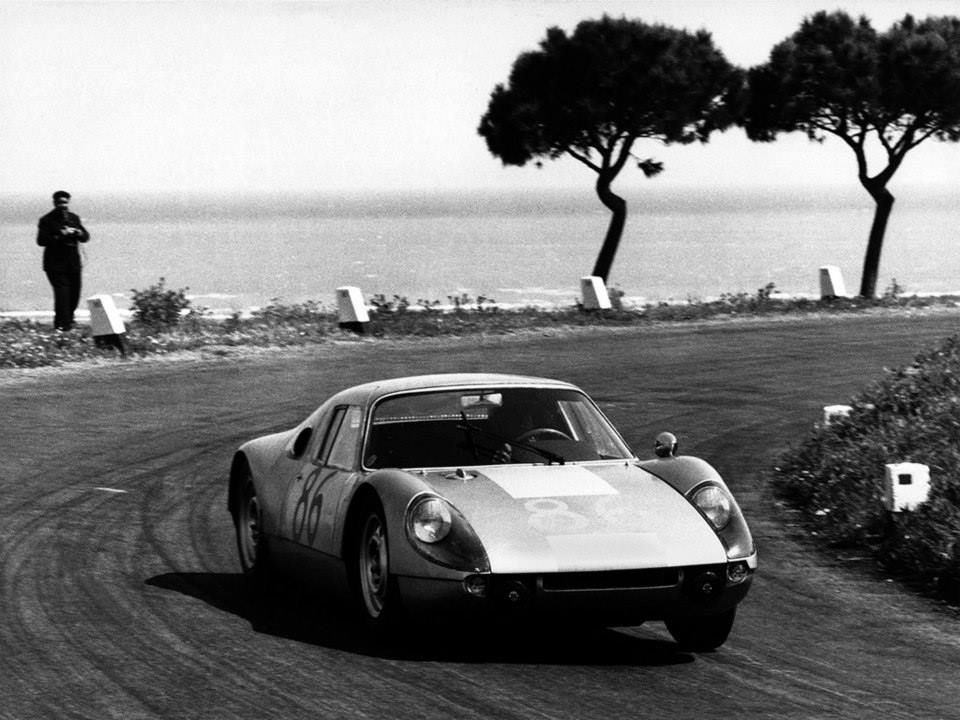
One of my Top 10 Motor Racing Shots of all time, Dan Gurney AC Shelby Cobra, Targa Florio 1964…

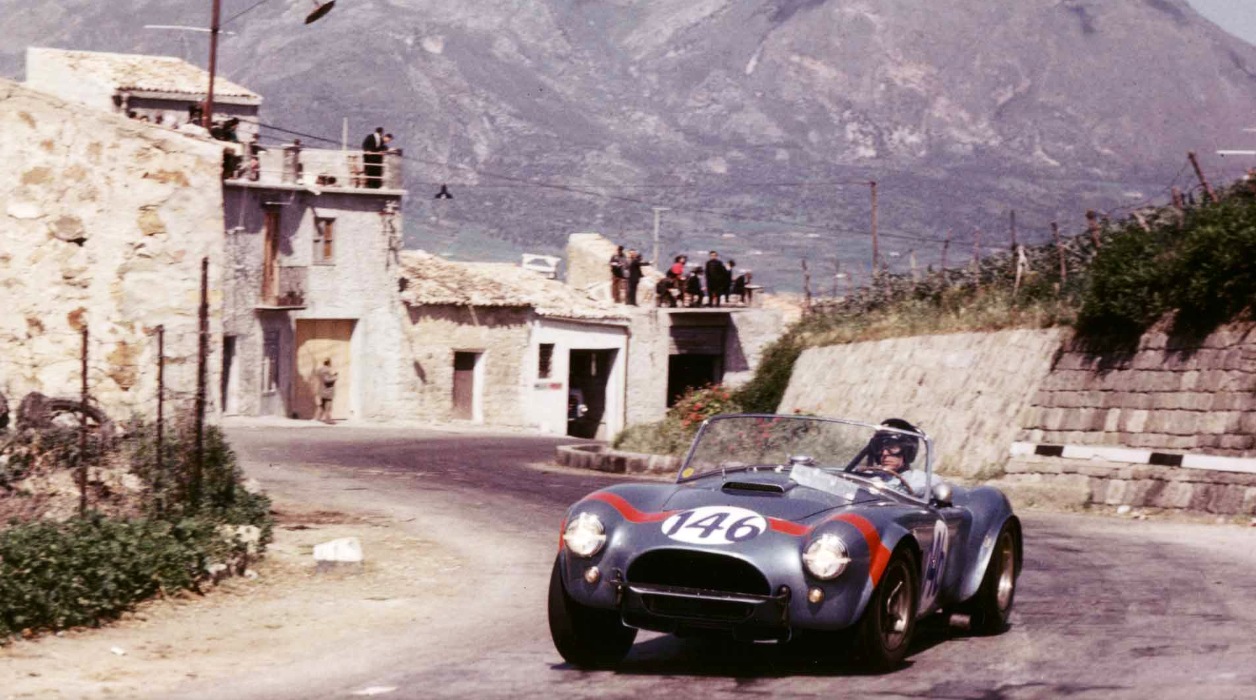
The photo is by Ami Guichard, he put it on the cover of his acclaimed Automobile Year # 12. It captures everything which was great about this fantastic and oh so Italian event. Dan Gurney and Jerry Grant finished eighth outright and first in class in the event won by the much more suitable Porsche 904 GTS of Colin Davis and Antonio Pucci.

The 1964 GT Manufacturers Championship was won by Ferrari with Shelby Cobra second. The advent of the Cobra Daytona Coupes ensured Ferrari would get more of a run for their money in 1965!

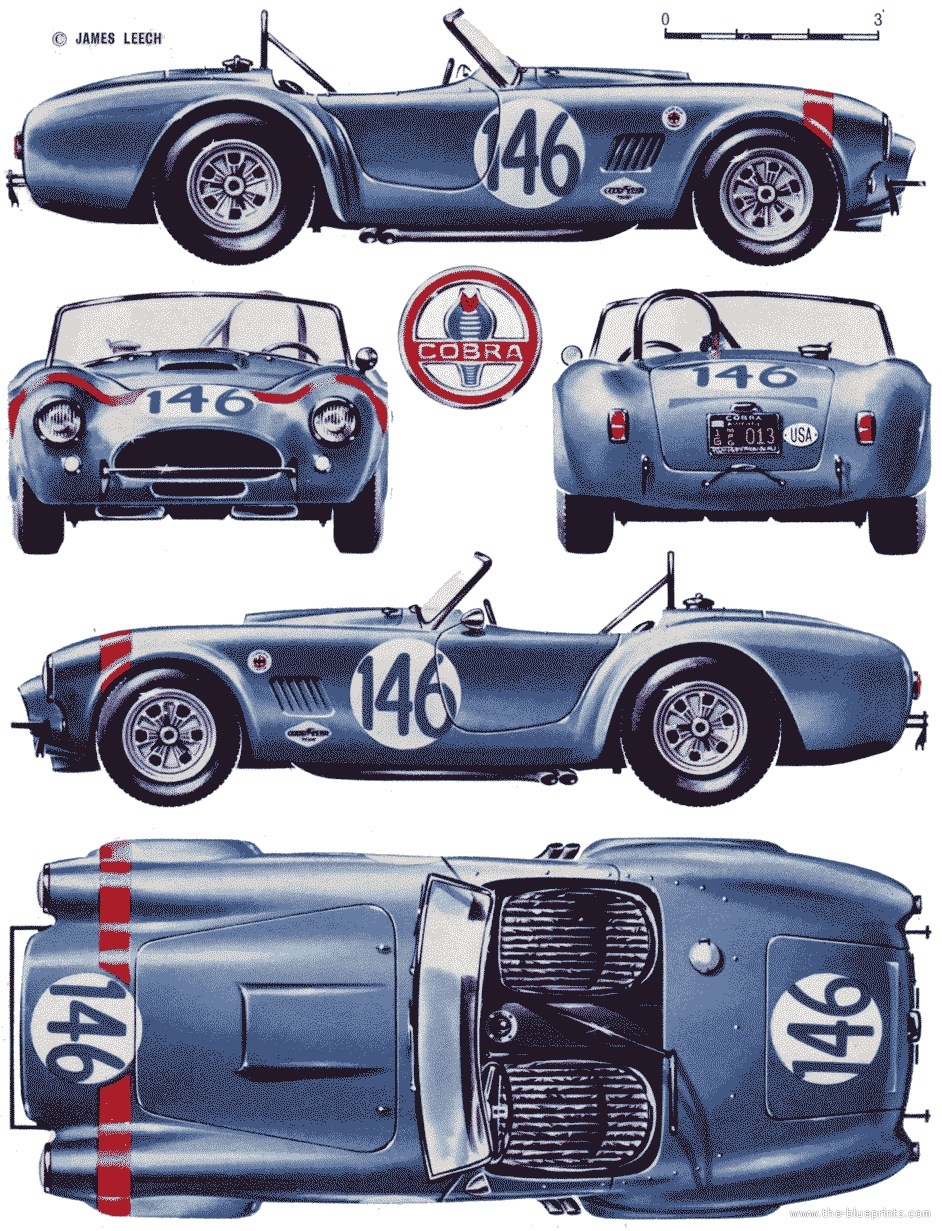
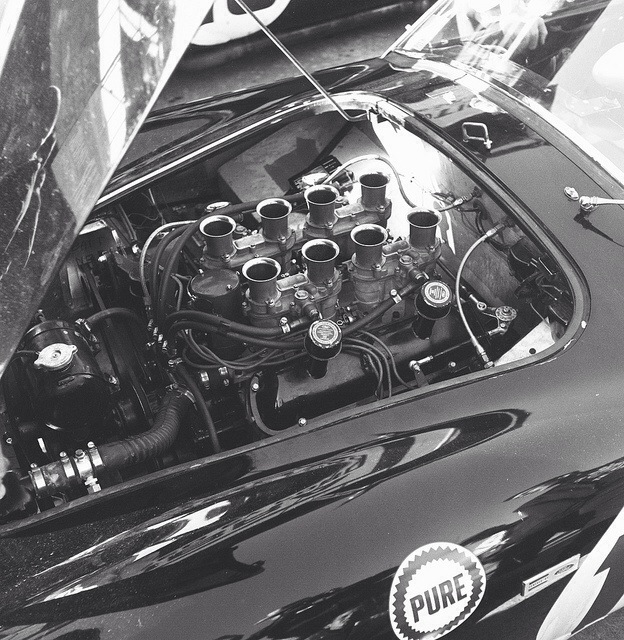
Specifications of the FIA Roadster cars in 1964 included Ford’s pushrod OHV 4.7-litre or 289 V8 fitted with four 48IDA Weber carburettors giving circa 400bhp. Borg Warner four speed gearbox, four wheel disc brakes and independent suspension using transverse leaf springs. 140-litre fuel tank, six-spoke cast alloy wheels. These cars were the ultimate development of the original small-block Cobra.

an at rest
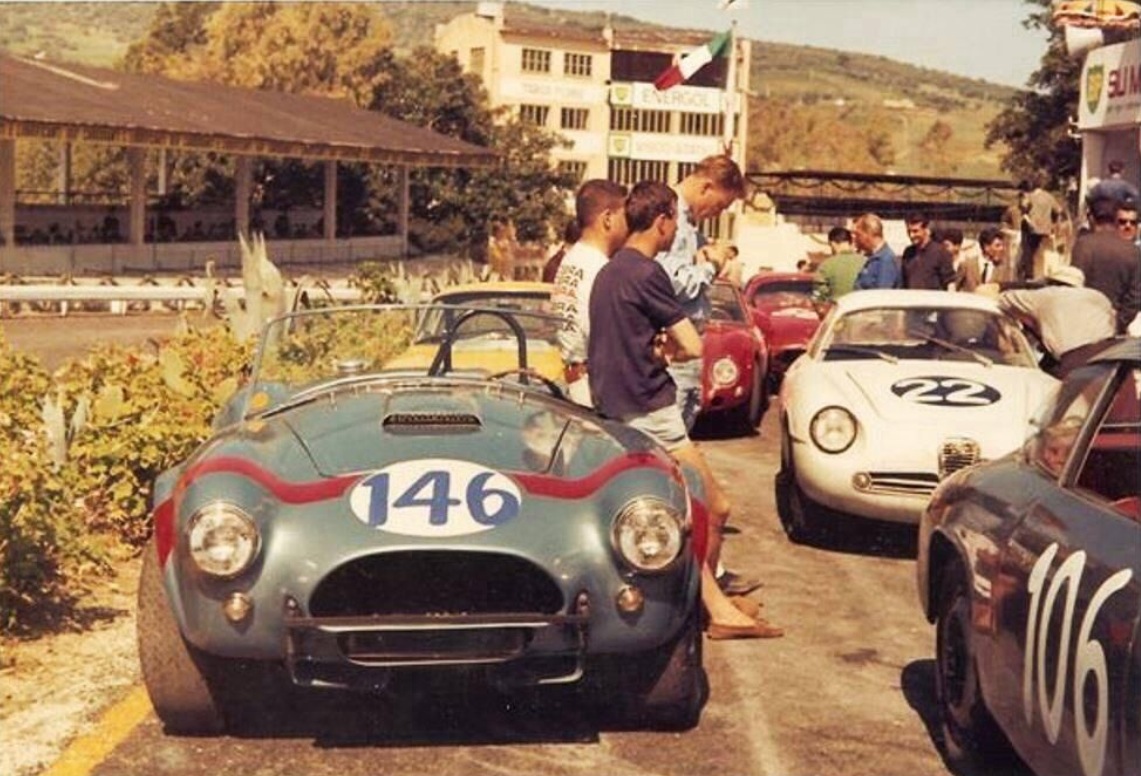
Before the off at Cerda, Targa ’64, Gurney with Shelby team mechanics. AC Cobra # 106 a Lancia Flaminia DNF and # 22 Alfa Giulietta SZ, 19th (Pinterest)
jerry
Jerry Grant in the Cobra shared with Dan Gurney, Targa 1964 (Pinterest)
dan 2
Gurney through the Sicilian countryside, Targa Florio 1964. In addition to the Ford sportscar program he raced for Brabham in Grand Prix Racing winning the team’s first championship race that year (Pinterest)

Etcetera…

leech
cob
Engine of Hill’s Cobra, Sebring 1963
davis
The 1964 Targa winning Porsche 904 GTS of Colin Davis and Antonio Pucci (unattributed)

Photo Credits…

James Leech drawing, Ami Guichard Automobile Year 12

Finito…

image

Fantastic shot of Max Stewart in his Rennmax BN2, Hell Corner, Bathurst Easter 1968 (raSimmo TNF)

Max Stewart enroute to second place in his little Rennmax 1.5 against the big 2.5 ‘Tasman Cars’, Easter Bathurst Gold Star round, April 1968…

Phil West won the race of attrition in a Brabham BT23A Repco, many of the 2.5’s sidelined by one drama or another. But it was a wonderful result all the same.

At the time Australia’s ‘F2’ was ‘ANF 1.5’ and our premier class ‘ANF1’ was the 2.5 litre ‘Tasman’ category.

Many of us think of Max Stewart as an F5000 star, winning the ‘Gold Star’, then our most prestigious driving honour in 1971 and 1974 and the Australian Grand Prix in 1974 and 1975. But his career started in ‘small-bore’ single seaters, his tall, lanky frame always poking out of the cockpit of the cars he raced..

Rennmax BN2 Ford…

Bob Britton, built many great cars in the 60’s and 70’s, and named them Rennmax.

This car was built from a jig he created when converting John Harvey’s Brabham BT14 from Ford Lotus 1.5, to Repco 2.5 V8 power. Stewart also bought Harvey’s engine and gearbox for the Rennmax, winning his second ANF 1.5 Championships in it in 1968. (a joint win together with Garrie Cooper in an Elfin Mono)

A motor-dealer living in Orange, in the Central West of NSW, not too far from Mount Panorama, Maxs’ performances in this car resulted in his recruitment by former Australian Gold Star Champion/Australian Grand Prix winner/Motor-dealer and prominent team owner, Alec Mildren to join a 2 car assault on Australasias’ premier class together with Kevin Bartlett in the following years.

The success of Bartlett and Stewart over that time is another story but Max was incredibly competitive in the ‘Mildren Waggott’, another car built by Bob Britton, this time on a jig created when repairing a Brabham BT23 destroyed by Denny Hulme during the 1967 Tasman Series. This series of cars are the BN3 Rennmax models.

Stewart won the Gold Star Series in 1971 in the Mildren Waggott, with a series of performances against the then relatively new F5000 cars, similar to his efforts at Bathurst in a small car against the ‘big guys’ in April 1968…

wf

MS self preps the Rennmax in early 1968…12 months later he was a member of Alec Mildren Racing, with a bit more support!, still driving a Rennmax nee Mildren (Bob Williamson Collection)

calder

Stewart races the BN2 at Calder later in 1968, still half out of the cockpit but ‘full harness’ fitted by this stage .

rennmax

Short Outline of Rennmax…

http://www.oldracingcars.com/rennmax/

http://www.rennmax.com/

Photo Credits…

raSimmo, The Nostalgia Forum, Autopics, Bob Williamson Collection

rstored

The first two instalments of Peters’ restoration of the Lola were about its history, acquisition and journey from the US to Australia, and last month the commencement of the restoration of the tub, suspension, gearbox, suspension etcetera…

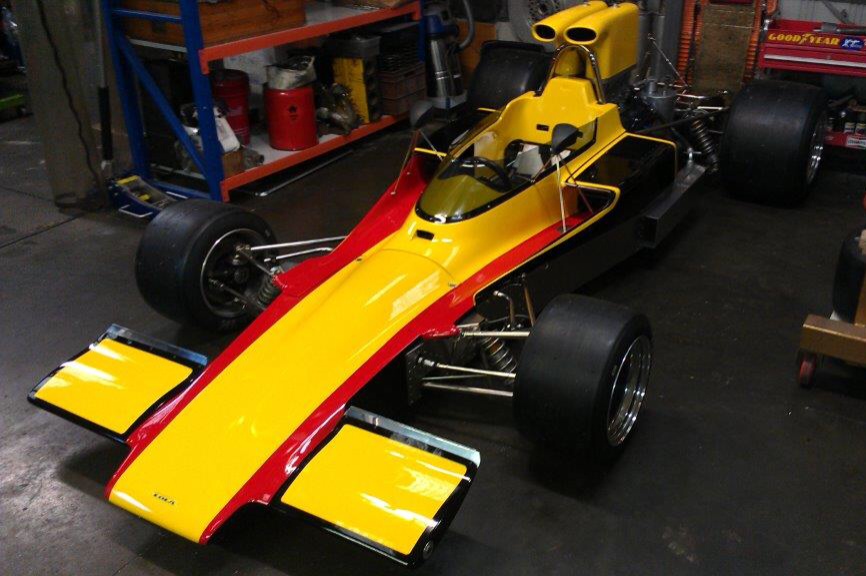
As you can see from the shot of the car at ‘Racers Retreat’, HU18 is now complete and ready for its first track test, very fast progress given the starting point of the project in August 2013!

How great does it look!

Monocoque…

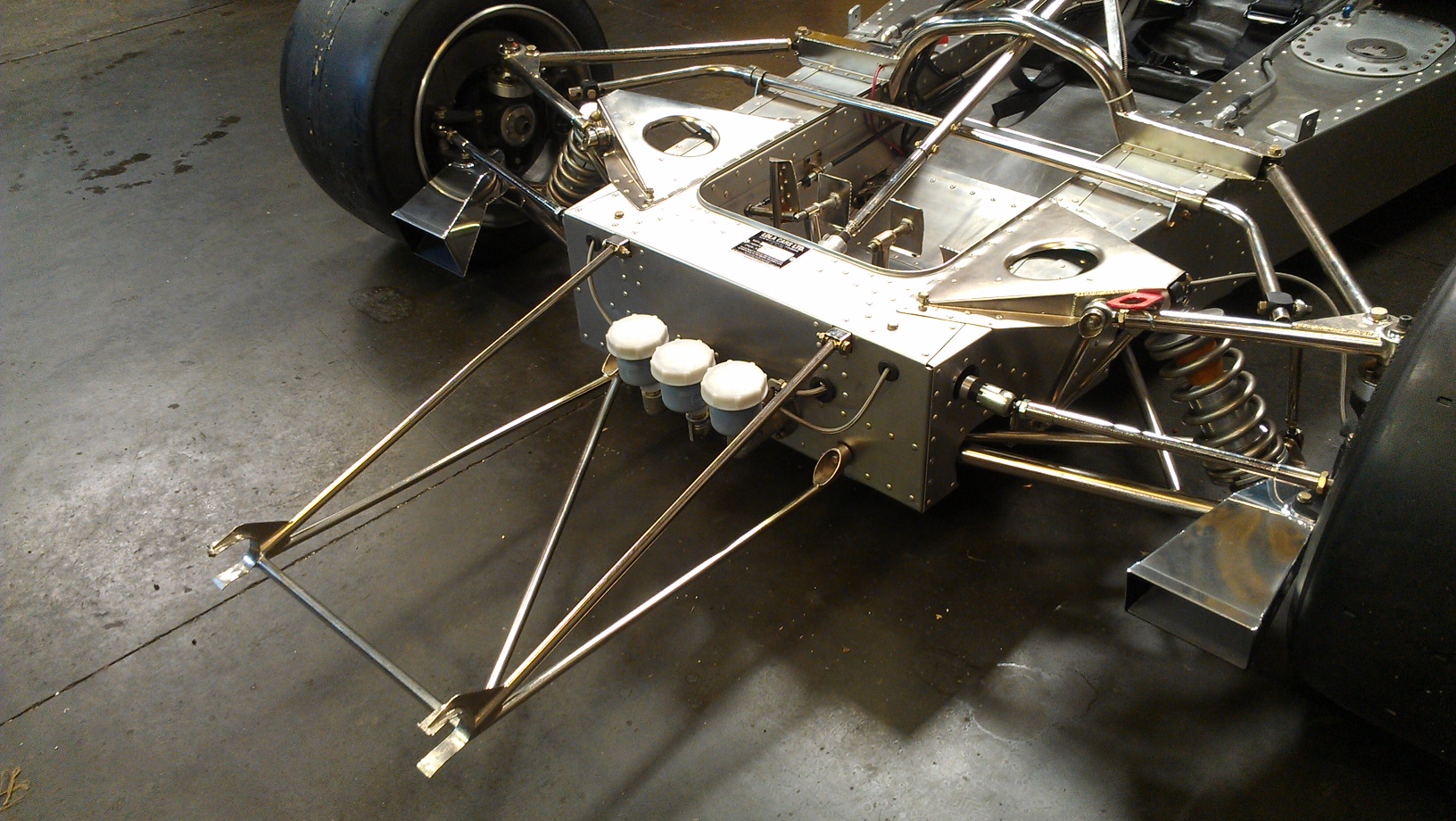
You may recall that Borland Engineering in Mordialloc, Victoria were commissioned to rebuild the tub with assistance from Peter.

lola2

‘The tub is all solid riveted as aircraft were made during World War 2. You need a driver of the gun and someone to back the rivet. Putting the tub together involved three solid weeks of riveting, your head and shoulders aching every night, exactly as the crews putting the ‘planes together did’.

lola 3

‘Each morning we had to plan out the assembly procedure, one mistake, drill out the rivets and start again…’

riveting

chassis 1

The chassis is superb, the workmanship and commitment to the task fantastic. Mike Borland on the left and fabricator Dean on right.

tub mike

Bodywork…

‘I didn’t get any panels with the bits from the US so bought the lot, new off ‘Motorsport Solutions’ in New Zealand, there was little effort to adjust for fit, the quality of the workmanship was very good. I had the body painted by ‘ReFace Autos’ in Melbourne’.

body 1

body 2

painted

Instruments…

lola

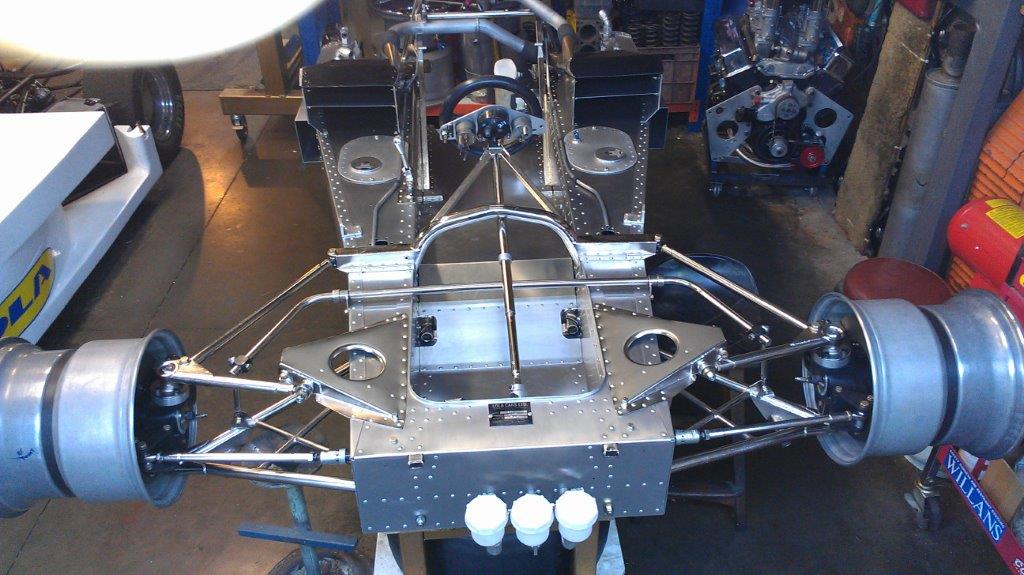
Chassis re-assembly now underway at Peters’ home workshop. ‘Smiths’ chronometric tach and guages all exactly as they were ex-Huntingdon. Front suspension fitted, brakes, steering column, pedals, plumbing for the engine…Nickel plating throughout as Lola utilised.

Engine, ‘Old Midnight’…

engine

Nice black and white PB shot of ‘Old Midnight’ from above…4 X 48 IDA Webers, Vertex magneto, lovely linkages…

‘Some years ago i was looking for a Chev to finish the restoration of my Elfin 400 (the ex-Matich ‘Traco Olds’), Mary and Peter Middleton owned the ex-Cooper/Perkins Elfin MR8 and offered me this engine which was originally built by Max Stewart as his spare. Its nickname was ‘Old Midnight’ as the motor was usually slipped into his Lola after midnight when the race engine was cactus for the weekend!

Anyway, there was something great about reuniting Max’ old engine with a Lola T33o chassis. I bought it as a ‘long motor’ less injection. The block was shaved, of all uneccesary production lugs and lightened as much as possible.

It has Bow-Tie heads, TRW pistons, Carillo rods, a Crane ‘574’ roller cam, Z28 crank, Vertex magneto, and like most of Max’ engines is on Weber 48IDA carbs

In the early 70’s a good race Chev had 535BHP, this engine has 505BHP @ 7500RPM, which should be enough to keep me busy’

old

‘Old Midnight’ doing its thing on Peters dyno recently…Ex Max Stewart ‘spare’ good for 505 BHP on Webers

Re-Assembly…

After the tub was completed Peter took it back to ‘Racers Retreat’, his home workshop where the various componentry covered in Episode # 2 was fitted to the car…suspension, wheels, gearbox, fuel-cell etc.

reassembly

Still fettling the bodywork, mirrors period correct

front

Fabrication a work of art…note brake ducts

reassembly 1

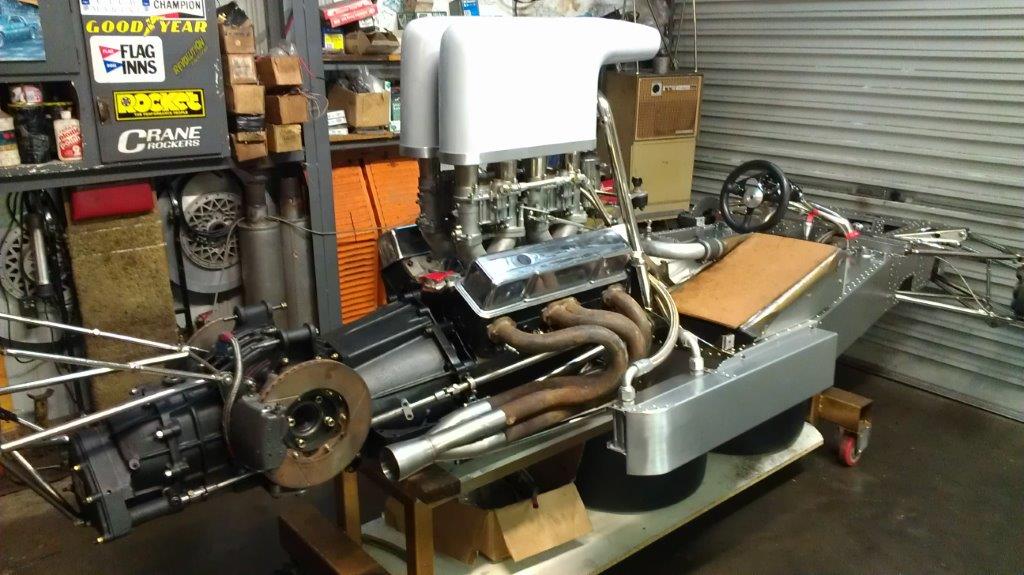
That long bellhousing so Broadley got the weight where he wanted it and the longer wheelbase which made such a difference in 1973. Rear suspension and driveshafts to come..look at the rear bias of the wing, eventually FIA rule changes addressed this trend in all single-seater formulae. This shot shows the sheer ‘bulk’ of a Chev relative to a DFV, all that weight, 250Kg of Chev sits high!

wheels

New wheels made in Melbourne by ‘Whithorse Industries’, ‘Old Midnight’ to the right awaiting installation. Thats a Lola S2000 to the left

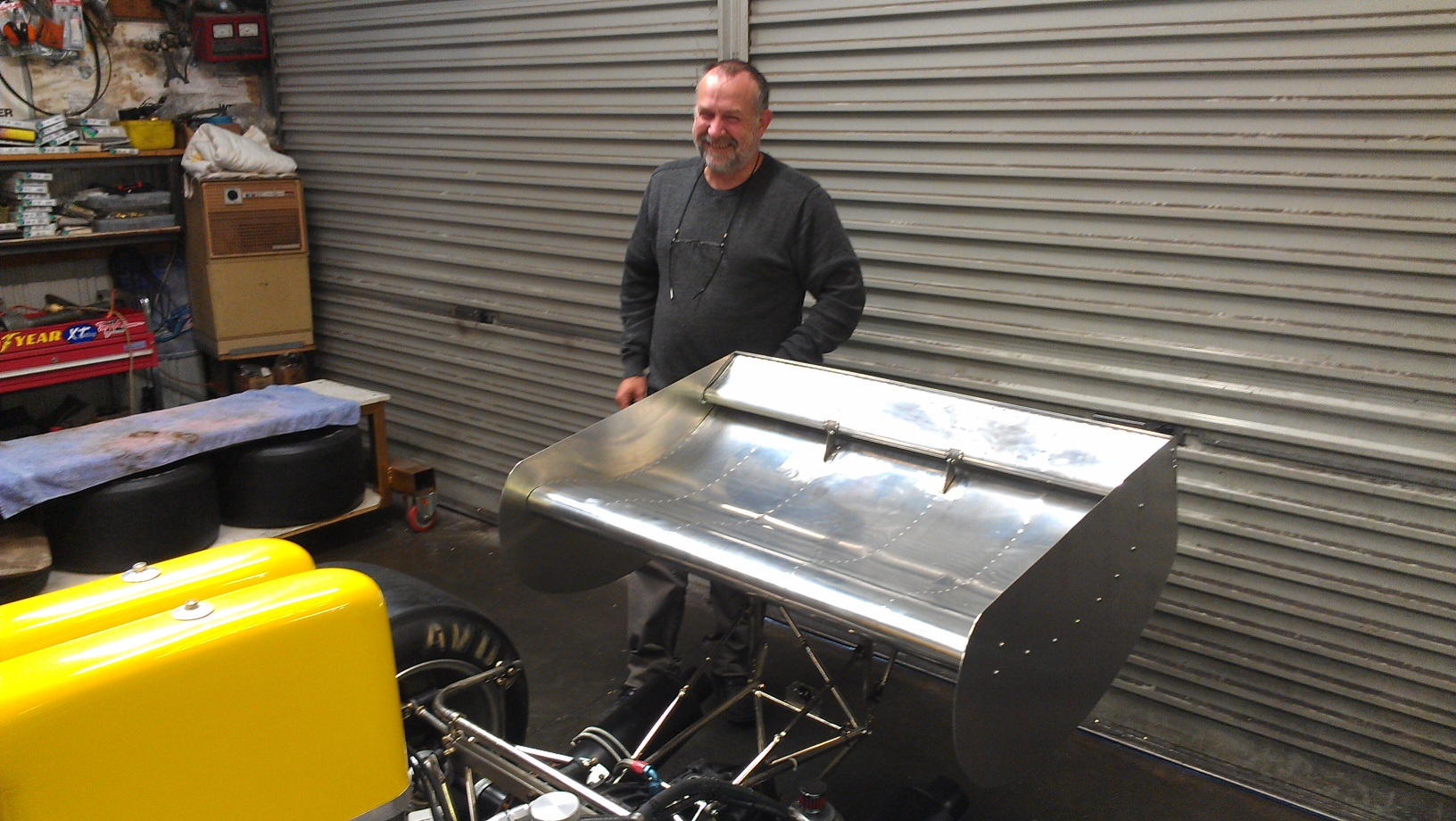
‘My good mate and fellow T332 racer , Jay Bondini made the rear wing, he did a beautiful job, and it was a much bigger project than he thought! The ‘spiders-web’ far aft wing support bracket is period correct for 1973. We are re-profiling the wing endplates to reflect the car  in that year as well, i can’t thank him enough, he did a great job’.

jay

Smile Jay Bondini, beautiful fabrication of rear wing

snorkel

T330 1973 spec attention to detail superb, very few 330’s were not converted to T332 spec in period, as such the car a welcome and different addition to Historic F5000 grids. Snorkels hide 4 48IDA Weber carbs, still common in Europe at that time and ‘standard spec’ on Swiss ‘Morand’ and Pommie ‘Alan Smith’ prepped Chevs

tub

From this to this…August 2013 to July 2014.

rstored

The transformation of the ‘car’ in such a short period of time is great testimony to the skill of all involved especially Peter himself. All being well the car will make its debut at Historic Sandown in November, it last raced in 1975…I think Jackie Epstein and Lella Lombardi would be mighty impressed with their old car?

Next Episode…

Will cover Peters’ test of his new car…

Photo Credits…

Peter Brennan

lotus 72

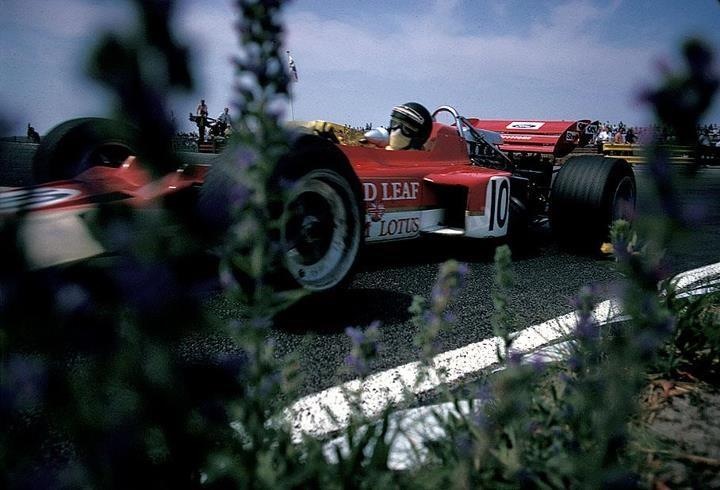
Amazing composition, Jochen Rindt en route to the 72’s first victory, the car was still competitive in Peterson’s hands, winning four Grands Prix in 1974…

The car made its championship debut at Jarama in April 1970 and was already in ‘C’ spec by Monaco, major changes centred around taking out the anti-dive and anti-squat geometry of the front and rear suspension respectively. Easy to say but it involved ‘unpicking’ the tub to do so.

Their was no joy in the Zandvoort win for Jochen as his good friend Piers Courage perished in his De Tomaso 505 Ford during the race.

Chapman showed his hand with the wedge shaped, Pratt & Whitney turbine powered Lotus 56 at Indy in 1968, but the 72 with its wedge shape, hip radiators, torsion bar suspension and inboard front brakes, lowered unsprung weight and putting a distinct rear weight bias set a new F1 design benchmark and aerodynamic direction, as Colin Chapman was want to do every few years!

Few cars are as competitive for so long, the venerable 72 was pushed into service long after it’s useby date as a consequence of its successor, the Lotus 76’s failure to produce the goods in 1975.

Another of my top 10 racing cars ever! Click here for a feature article about this car; https://primotipo.com/2018/05/24/jochens-bt33-trumped-by-chunkys-72/

image

(Pinterest unattributed)

Rindt ahead of the Jacky Ickx Ferrari 312B, he placed third- Jochen scored the Lotus 72’s first victory.

monaco 70

(Pinterest)

The passing of the baton from the Lotus 49C to the Lotus 72 at Monaco 1970.

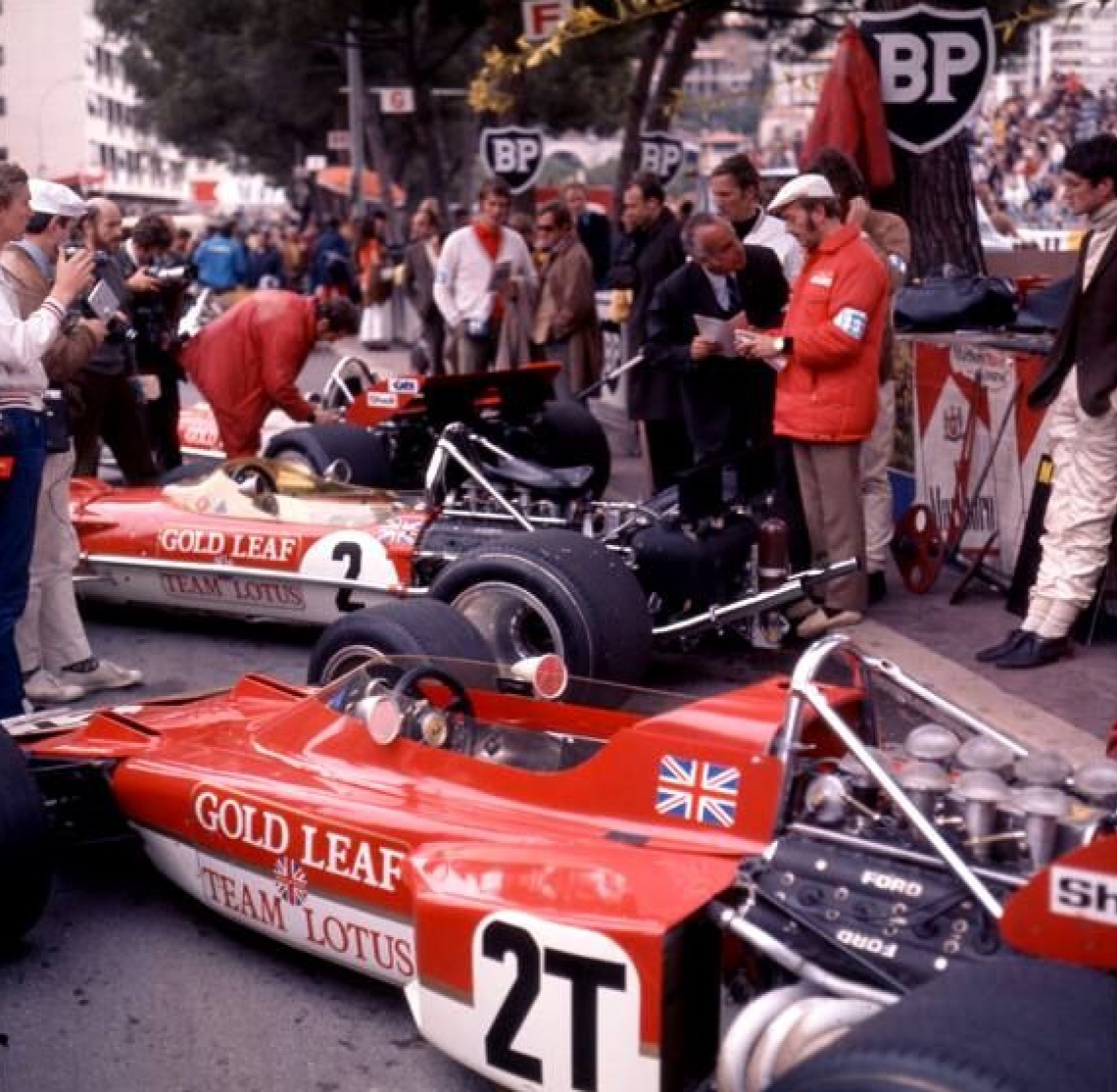
The 72 was not race-worthy, so Rindt elected to race a 49 and won its last Championship GP. Car # 2 is John Miles’ Lotus 72 he is leaning against the pit counter this side of Chapman in the red Gold Leaf Team Lotus jacket. Rindt’s winning 49C is behind or beyond car # 2.

John will be a bit grumpy. Chapman wanted him to stick with the 72 to get some race miles under its belt whereas John would rather race the tried and true- and predictable 49 around this most unforgiving of circuits. He missed the cut and did not race.

lotus 1

(Autosport)

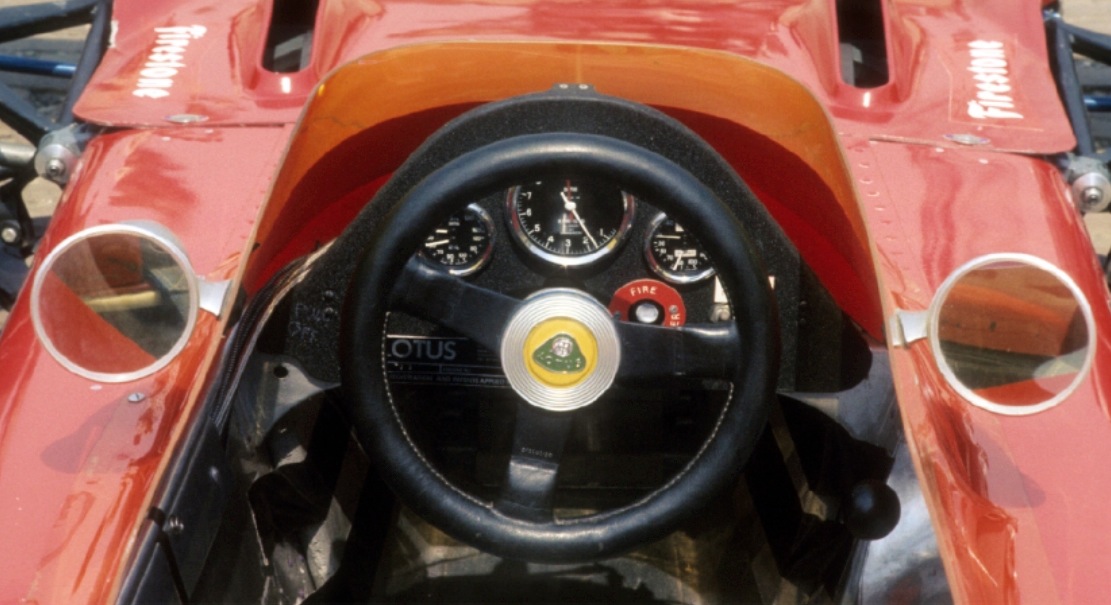
Cockpit of Rindt’s Lotus 72 at Zandvoort in 1970, as luxurious as the Elan of the day!

Mota-Lita steering wheel, Smiths chronometric tach and subsidiary instruments, ‘tell-tale’ is at about 10,000rpm. ‘Fire-bomb’ button surrounded by red, chassis plate under the left hand side of dash gauge, fibreglass bodywork, aluminium monocoque chassis, ducts for inboard discs all there.

image

(unattributed)

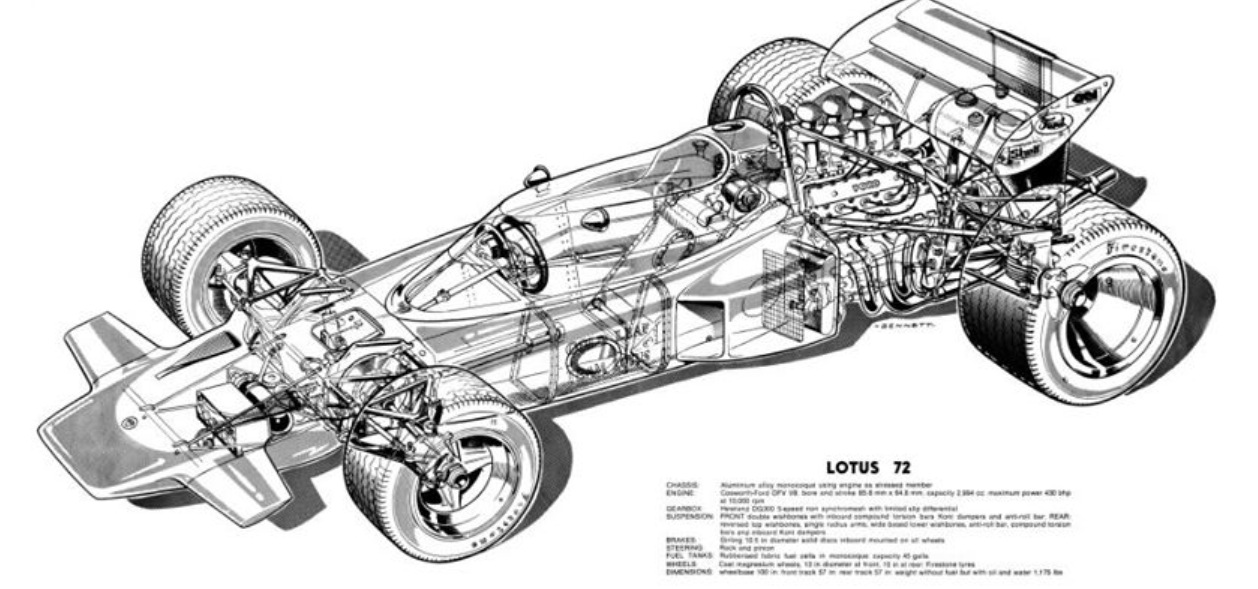
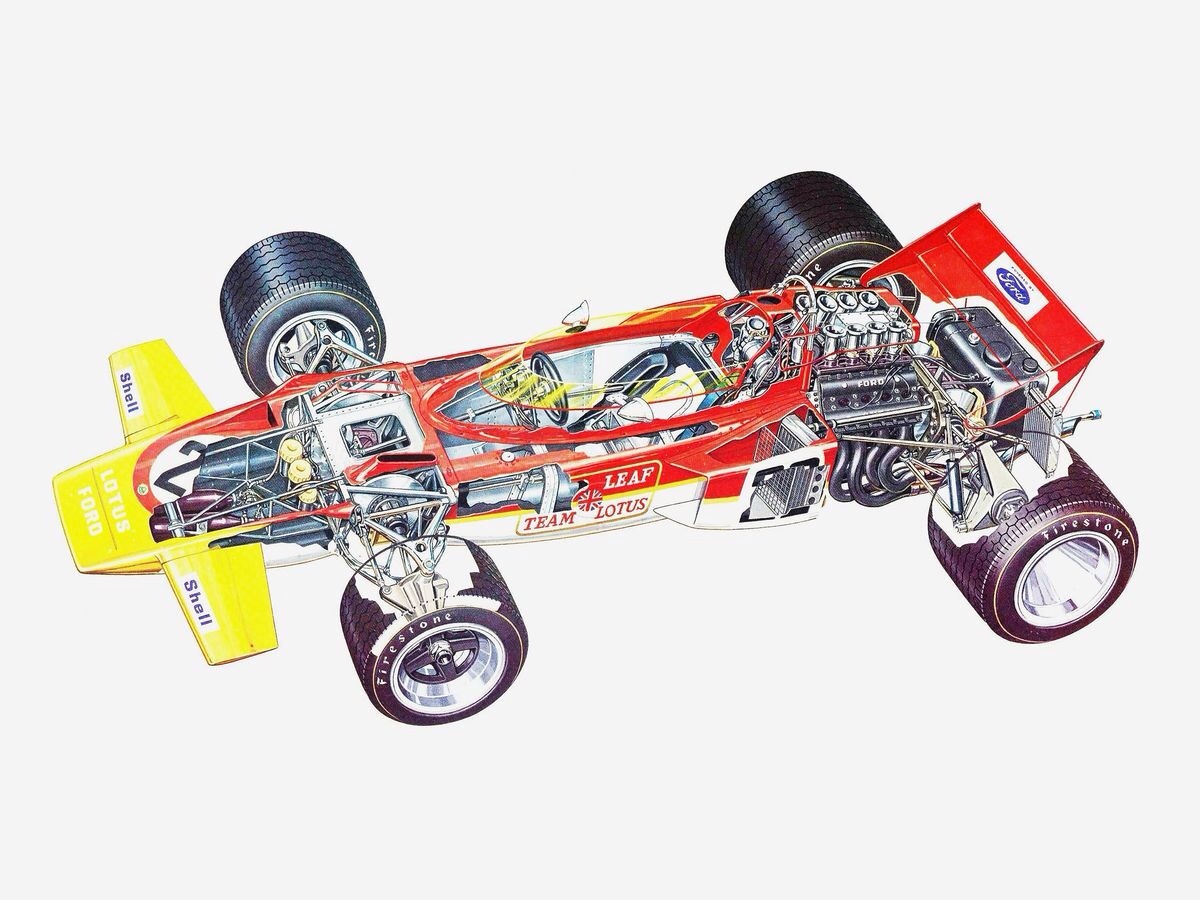
Cutaway drawing showing the essential elements of another of Chapman’s masterpieces.

Aluminium monocoque, wedge shape, hip radiators, Ford Cosworth DFV V8 which gave about 420bhp in 1970, Hewland FG400 transaxle, torsion bar springs, inboard front and rear brakes.

image

(Pinterest)

This is somewhat of a poignant shot in the context of Jochen’s tragic Monza 1970 death.

Jochen famously refused to wear the crutch straps of his six-point Willans harness, only the shoulder and waist straps. The absence of the usual coil spring/shocks aids front aerodynamics of the car, whilst the fire extinguisher (far right of photograph) is mounted legally it has been done so pointlessly given a minor frontal impact would remove it from its mountings. The inboard discs and driveshafts, one of which failed causing Rindt’s accident are clearly shown.

rindt british gp

(Pinterest)

In this case the photographers toes mark the apex- Druids Hill, British GP, Brands Hatch 1970. A win for Jochen after Jack Brabham’s Brabham BT33 Ford ran low on fuel on the last lap, poor Jack managed to coast home in second but it was a lucky one for the Austrian on a day his old boss had the edge in speed.

image

(The Cahier Archive)

Wonderful Bernard Cahier portrait of Jochen in his Lotus 72 Ford, 1970.

Photo Credits…

Autosport, Pinterest, The Cahier Archive

Finito…