bathurst

Max Stewart, Niel Allen & Leo Geoghegan (L>R) , Easter Bathurst, 1969 (Wayne McKay)

Start of the ‘Gold Star’ race Mount Panorama, Easter 1969…

In the Good ‘Ole Days there used to be two meetings a year at Mount Panorama- Easter when the Gold Star race was the feature and of course the ‘Taxi’ classic later in the year.

Then the Gold Star, the Australian Drivers Championship meant something. A lot in fact, it was won down the decades by some great, world class drivers including Lex Davison, Stan Jones, Bib Stillwell, Spencer Martin, Kevin Bartlett, Frank Matich, John McCormack, Max Stewart, Alfredo Costanzo and many others. These days it does not have the same cachet and tourers dominate in Australia. Sadly.

This photo was posted on Facebook by Wayne McKay and shows the grid of the 1969 Gold Star event.

Leo Geoghegan is on pole in his evergreen, white, ex-Clark Lotus 39 Repco…

Alongside is Niel Allen in his ex-Piers Courage McLaren M4A Ford FVA (European F2 car) Max Stewart, having joined Alec Mildren’s team that year, is at the wheel of the yellow Mildren Waggott TC-4V in which he would have so much success over the following 3 years. The Mildren was a car built by Rennmax’ Bob Britton on his Brabham BT23 jig.

The red car on the second row is John Harvey in Bob Jane’s Brabham BT23E Repco, repaired after his huge Bathurst prang the year before caused by upright failure. The light blue car is Queenslander Glynn Scott in a Bowin P3 Ford FVA, a wonderful monocoque chassis car, one of three P3’s, built by John Joyce in Sydney- Joyce not long before having returned from a longish stint as an engineer at Lotus.

The red car towards the rear of the grid, on the fence side of the track is Jack Brabham in his Brabham BT31 Repco- the last of the ‘Tasman’ Brabhams. Jack was making a rare Gold Star appearance in the F3 based car built for his 1969 Tasman Series campaign, but which could not be unloaded from the ship from the UK due to a ‘Wharfies’ strike- and therefore only raced in the final Sandown Tasman round- the Australian Grand Prix won in fine style by Tasman Champion Chris Amon in a Ferrari 246T.

The BT31 was the lowest mileage Brabham ever built, it raced at Sandown and then Bathurst ‘in period’. The 2.5 litre ANF1 was in its dying days, Repco were unable to sell it. Years later, after being a Repco display car Rodway Wolfe acquired it, eventually it commenced its second career as an historic racer in William Marshall, and then in Bib Stillwell’s capable hands.

jack

Jack Brabham Brabham BT31 Repco , Bathurst Easter 1969 between ‘Skyline’ and ‘The Dipper’. He tried the car both bi-winged and with rear wing only during practice, racing the car as shown. BT31 a one off car based on the F3 BT28. Repco 2.5 litre ‘830 Series’ SOHC, 2 valve V8, circa 295 BHP @ 9000 RPM (D Simpson)

The Tasman 2.5 Formula…

The Mount Panorama grid shows just how poor our domestic fields had become as the 2.5 litre formula came towards its end.

The Tasman 2.5 litre Formula commenced in 1964 in Australia and New Zealand. The Tasman Series, eight events initially- four in both Australia and NZ over two months in the southern Summer was well attended by works or semi-works cars from BRM, Lotus and Ferrari running 2.5 litre variants (bored versions of their 1.5 litre F1 engines out to about 2 or 2.1 litres, or ‘de-stroked’ versions of their 3 litre F1 engines) of their F1 engines.

Local competitors could, on more or less equal terms, compete with the internationals using cars in the early Tasman years powered by the Coventry Climax 4 cylinder FPF engine, dominant in the final years of the 2.5 Litre F1, and later on, from 1967, Repco’s Tasman V8’s which were available to anyone with the cash.

As the sixties went on it became harder to attract the European teams to the Tasman as the F1 season became longer and local competitors, other than a small number of teams, struggled with budgets to run a Repco.

Mind you, support in open-wheeler racing in Australia, whatever the era had always been a problem. It was time, in all the circumstances to consider a new ANF1.

CAMS were vacillated between 2 litre F2, to commence in Europe in 1972 and Formula A or Formula 5000, which used ‘stock block’ American V8’s which commenced in the US, but had ‘taken off’ in the UK in 1969.

CAMS announced the change to 2 Litres, which made sense as Merv Waggott’s engine had already proved competitive. Under pressure from Ford, Holden and Repco, all of whom had commercial interests in the V8’s introduced into Australian road cars in preceding years- ultimately and controversially in some quarters, F5000 became the new ANF1 from 1971, with the 2.5 Litre cars legal in the 1970 Tasman, F5000’s first Tasman season.

Jack came to Australia over Easter 1969 to fulfil his final series of commitments to Repco, as a non-resident he was ineligible for Gold Star points, either way he was a welcome addition to the thinning Gold Star grid.

He was a busy boy in April and May too.

He was at Bathurst in April, raced in the Spanish and Monaco Grands’ Prix in Barcelona and Monte Carlo on May 4 and 18, also practising, qualifying and then racing at Indianapolis on May 30. Indianapolis itself occupied a big chunk of May.

indy

Jacks car for the Indianapolis 500 in 1969 was the BT25 built the year before. In 1968 they (3 cars built by MRD) were raced throughout the season by Jack, Jochen Rindt and Masten Gregory. Repco ‘760 Series’ 4.2 litre normally aspirated, alcohol fuelled V8, circa 500BHP @ 8500RPM. Hewland GB300 gearbox, chassis using sheet aluminium as a stressed member for the first time in a Brabham.

Jack engaged Peter Revson to drive the other BT25, the cars were powered by big 4.2 litre normally aspirated, alcohol fuelled ‘760 series’ Repco V8’s, close cousins of the F1 ‘860 Series’ engines which had given so much grief in 1968.

AJ Foyt was on pole at 170.568 MPH, with Jack on 163.875MPH, Revvie squeaking into the field as slowest qualifier at 160.851MPH. Revson showed his class in the race won by Andretti’s Hawk Ford, finishing fifth whilst Jack had ignition failure.

The cars were competitive that season Revson winning a race at Indianapolis Raceway Park later in the season.

jack and pete

Jack Brabham and Peter Revson at Indianapolis 1969

High Wings…

Looking at the Bathurst cars the high-wings stand out, pun intended.

They had grown larger and higher over the previous 12 months, developments in F1 emulating the wings used first by Chaparral on their Can-Am and World Sports Car Championship cars.

Things were about to change though after numerous failures to wings and their mounts- Jochen Rindt and Graham Hill both experienced near catastrophic failures of the wing mounts on their Lotus 49’s in Barcelona on May 4. The FIA acted decisively at Monaco, banning high wings in all classes globally after Monaco GP practice. There on Saturday, gone on Sunday.

Jack experimented with bi-wings in Bathurst practice, but had fuel feed problems problems so he qualified well back He settled for a wing on the rear, and went sans aero-assistance on the front for the race.

The fuel delivery problems were alleviated with the installation of the electric fuel pump from Repco Director, Charlie Dean’s Lancia and an on/off switch to avoid flattening the cars battery.

wings

Rodway Wolfe’s shot of Jack in practice, here with both front and rear high-wings, Mount Panorama, Easter 1969 (Rodway Wolfe)

The skinny grid looked even thinner by the time the cars appeared out of ‘Murrays’ and onto pit straight at the end of lap 1- Max Stewart and Niel Allen had a territorial dispute going into the Dipper tangling and neatly parking nose to nose high above the Bathurst Plains below.

maxxy

Niel Allen #2 and Max Stewart neatly parked high on the mount…’The Dipper’. McLaren M4A and Mildren Waggott respectively, Max extricating all 6’4” from the Mildren. Superb shot shows both the height and elevation of Mount Panorama (John Arkwright)

Jack cantered way and won the Bathurst Gold Star race, his last win in Australia, but one?…

Brabham retired from F1 at the end of 1970, but let’s come back to that in a little bit.

In 1971 Bob Jane promoted a Formula Ford ‘Race of Champions’ at Calder in August pitting some of the stars of the past and present against each other.

Kevin Bartlett, Frank Matich, Bib Stillwell, Alan Hamilton and Alan Moffat were amongst the drivers who took on Jack in his Bowin P4x. Jack Brabham Ford sponsored Bob Beasley who raced ‘Jacks’ car in the ‘Driver to Europe Series’, the Australian Formula Ford Championship that year. Brabham took the car to victory to much public acclaim…no way were one of the locals going to beat him having just retired!

So that little known FF event, I think, was JB’s last ever race win?

stillwell

Formula Ford ‘Race of Champions’. Calder August 15 1971. # 6 Bib Stillwell Elfin 600, in his old helmet!, #1 Jack Brabham Bowin P4x, # 7 Unknown Elfin 600, and the obscured car alongside Jack is Frank Matich in an Aztec. Trivia is that car # 6 is the Elfin 600 raced by Larry Perkins to win the FF Championship in 1971, Mike Stillwell raced the sister BS Stillwell Ford # 7 entry in the same Championship (Unattributed)

Jack ‘came back’ and did some touring car events in the mid- seventies including the Bathurst 1000 several times and even shared a Porsche 956 in the World Sports Car Championship race at Sandown in 1984, but I reckon that FF win was his last.

l34

In a promotional coup, Jack Brabham and Stirling Moss shared a Holden Torana L34 in the 1976 Bathurst 1000. Unfortunately the car had a driveline failure and was hit up the ar$e badly damaging the car. Patched together, the pair put on a show for the crowd but the car did not finish (autopics)


porker

# 56 Porsche 956 driven by Jack Brabham and Johnny Dumfries in the Sandown 1000 round of the World Endurance Championship in 1984. The car was a camera vehicle, and again a promotional coup but still competing, although suffered rear suspension failure so was a DNF. Brabham and Alan Jones careers did not overlap in F1 but both Australian World Champs competed in this race, Jones sharing another Rothmans Porsche with Vern Schuppan, also DNF. It was Jack’s first experience of a ground effect car, at 58, quite different to the last ‘serious car’ he drove, the Brabham BT33 Ford in which he finished the Mexican GP in 1970, he acquitted himself well (Pinterest)


jack 1

Whats it like out there Jack? It was a hot weekend, the challenge of the powerful ground-effects Porsche must have been considerable but Jack drove for over 2 hours in total, the car eventually failing. Whilst in works Rothmans colours it was a Richard Lloyd Racing 956

F1 in 1970…

These days F1 is all about youth, drivers start in Karts, some are in F1 before the age of 20. Jack was 44 when he commenced his last season and was incredibly competitive at an age F1 drivers these days are long since retired. It was to be a very full season for Jb in a large number of categories.

He won the season opening South African GP, made a last lap mistake at Monaco under pressure from Jochen Rindt whilst leading and came second.

He also finished second to Rindt in the British GP at Brands Hatch as well having passed him and was pulling away before running short of fuel on the last lap.

monaco

Brabham leading a gaggle of cars early in the Monaco GP 1970. Brabham BT33 Ford, Jean-Pierre Beltoise Matra MS120, Jacky Ickx Ferrari 312B, Denny Hulme McLaren M14A and one of the Lotuses…Jack led the race but Rindt gave the Lotus 49 its last victory in a phenomenal chase of Brabham, pressuring him into a last lap error into second place. Had Rindt re-joined Brabham for 1970, he enjoyed 1968 with them despite the foibles of the Repco ‘860 Series’ DOHC V8, instead of staying at Lotus Jack would have retired at the end of ’69 and Rindt, who knows? (Pinterest)

Brabham could have won the World Title in 1970 with a little more luck.

Mind you luck was in short supply that year, friends and former teammates, Bruce McLaren and Jochen Rindt as well as Piers Courage perished in 1970.

Grand Prix racing is the pinnacle and 1970 was a year of great depth. The grid comprised the established aces- Stewart, Rindt, Hill, Ickx, Hulme and Rodriguez, as well as young chargers in their first F1 year including Regazzoni, Peterson, Fittipaldi and our own Tim Schenken. Ferrari, Lotus, BRM, Brabham and March all won races in 1970 as well.

Ron Tauranac designed Jack a ‘pearler’ of a car for 1970. The team had been successful with space-frame chassis’ since it was formed. Chapman popularised the monocoque with his 1962 Lotus 25 but Brabham won championships in all formulae with their simple, user-friendly, easy to repair and forgiving cars. The latter was both a design feature and a function of Jack doing the final chassis settings before ‘sign-off’.

For 1970 monocoques had effectively been mandated by the FIA, new regulations demanded bag fuel tanks to improve the safety of the cars.

Tauranac’s first stressed-skin chassis was the BT25 ‘Indycar’ pictured earlier above. The BT33 could be said to be standard ‘Cosworth powered kit-car’- an aluminium monocoque, Ford DFV engine and Hewland gearbox were its essential elements, but it was a very good one, and was still very competitive in Tim Schenken’s hands in 1971.

bt33

This shot is at Hockenheim 1970, Stommelen’s car in front (5th), Jacks (DNF) at rear. Essential elements are the ‘bathtub’ aluminium monocoque chassis. Front suspension by top rocker and lower wishbone operating inboard mounted coil spring/damper unit. Gearbox and rear suspension ass’y rolls away for the engine change minimising time spent especially on time consuming wheel alignment in the field..mechanics will still align the car mind you, but not as big a job! The more you look, the more you see (Pinterest)

Matra…1970

Jack had decided to retire due to family pressure at the end of 1969 when he had agreed terms verbally with Jochen Rindt to rejoin the team for 1970.

Jochen enjoyed his Brabham season in 1968 despite the problems with the ‘860 Repco’ engine but ultimately asked Jack to release him from his undertaking as a consequence of an offer from Lotus which was too good to refuse. Had that Brabham Racing Organisation course of events transpired history would of course been quite different- Rindt died at the wheel of a Lotus 72 at Monza and won the 1970 World Championship posthumously.

Jack told his wife Betty he would compete for one more year, putting everything into that last season, and not just F1.

He participated in the World Sports Car Championship for Matra competing at Le Mans in an MS650, a spaceframed car using an endurance version of the companies F1 3 litre, 48 valve V12. He shared the car at Le Mans with Francois Cevert, but did not finish with engine failure.

He also did the lead up events to Le Mans including Daytona, tenth with Francois Cevert, Cevert breaking into F1 that year. He shared a car with Jean-Pierre Beltoise at Brands and Monza finishing twelfth and fifth respectively.

1970 and 1971 were the years of the ‘5 litre monsters’ the Porsche 917 and Ferrari 512S, it was tough for 3 litre prototypes, Matra steadily evolved their cars to be the class of the field in 1973/4/5, but Jack enjoyed the season and having to simply to drive the car, not do literally everything else.

brands

In search of downforce…Brabham in the Matra MS650, Brands Hatch 1000Km, April 1970, 12th sharing the car with Beltiose (Pinterest)

And Indy…1970

Ron Tauranac adapted a BT25 monocoque car for the race using  a 2.65 litre turbo-charged 4 cylinder ‘Offy’ engine and Weissman gearbox.

Jack was classified thirteenth in the BT32 but had piston failure which carved the block in half. The race was won that year by Al Unser in a Colt Offy ‘Johnny Lightning Special’.

bt32

Formula 2 in a Brabham BT30…1970

pau

Pau GP 1970 front row L>R : Jochen Rindt on pole Lotus 69, Francois Mazet & Jack Brabham both in Brabham BT30’s. Green helmet in the second row is Henri Pescarolo in another Brabham BT30 and alongside Clay Regazzoni, Tecno 69. All Ford FVA powered. Rindt won from Pescarolo and Tim Schenken, also in a BT30 (DPPI)

John ‘Nuggett’ Coombs was a longtime privateer entrant running Brabhams and in 1970 had a ‘dream team’ of Jackie Stewart and Jack sharing a Brabham BT30.

Jack competed at Pau, Rouen and Tulln-Langenlebarn (Vienna), his best result second in the latter meeting to the Ickx BMW 270.

jack

Brabham ahead of Jochen Rindt at Pau, France 1970. Jack DNF, Rindt winning the race in his Lotus 69 Ford FVA. The European F2 Championship was won in 1970 by Clay Regazzoni in a Tecno Ford FVA. Brabham is driving a Brabham BT30 FVA owned by John Coombs (Pinterest)

Tasman Series 1970 and Retirement…

The only series Brabham didn’t contest that he usually did was the Tasman Series in our Summer, his Matra campaign commenced on January 31 at Daytona. It was the first year of the F5000 Tasman series, albeit the 2.5 Litre cars were still eligible- maybe he figured it wasn’t worth the effort as MRD didn’t build an F5000 car at the time? Either way he spent February in Australia and kept the peace on the home front with Betty, sort of.

Graham Lawrence won the Tasman series that year with his ex-Amon Ferrari 246T, consistently running with and beating the more powerful but less nimble F5000’s.

If only Jack had dusted off the BT31 which won at Bathurst the previous April, fitted current tyres and wings maybe he would have won the Tasman Series, a cup missing from his mantelpiece?

Jack said in later years that he felt he had another three or four competitive years in him. He recounts to Doug Nye in his biography that his father, who had always been his strongest supporter within the family, and reinforced his decisions to continue racing, advised him not to reconsider his retirement during 1970 given the deaths which occurred that season.

At the end of 1970 Jack returned to Australia to a farm near Wagga, his Jack Brabham Ford dealership in Sydney and his aviation interests at Bankstown in addition to investments in the UK.

What can you say about this remarkable Australian which hasn’t already been said?

To my way of thinking he is Australia’s greatest sportsman ever. No other individual performed at the same level for so long, was as innovative as he was, and took on the best in the world and won, both in terms of his driving and in the deployment of Australian technology.

RIP Jack Brabham, thank goodness you did retire at the end of 1970- at the top, alive and in one piece.

bt 31

Jack Brabham, sans wings, Sandown Tasman practice 1969…BT31 ‘830’ surely a competitive mount in Tasman 1970 had he entered? (Flickr)


jacks

Deep in set-up thought. Jack in his BT33 F1 car during Manaco 1970. ‘Jet Jackson’ fighter pilot helmet that he, Jackie Stewart and Piers Courage tried that year. Skiers goggles. No nomex gloves, leather, nice Rolex watch. Lovely shot which captures the essence of the guy i think!? (Getty Images)

Etcetera: Bathurst 1969…

bathurst

Jack Brabham , Bathurst practice Easter 1969. Brabham BT31 Repco ‘bi-winged’ in practice (Facebook)


bathurst 3

Brabham in the race which he won, sans front wing. Bathurst Easter 1969. (Facebook)

Etcetera: Calder FF Race 1971…

calder


calder

Brabham takes the spoils of victory…’Race of Champions’ Calder, Australia August 1971. Car is a Formula Ford Bowin P4X (Facebook)

Etcetera: F1 1970 and Brabham BT33…

bt 33 cutaway

Drawing of Ron Tauranacs’ 1970 Brabham BT33 Ford, Motor Racing Developments first ‘real’ monocoque chassis car


spain

Jarama, Spanish GP 1970. Avoiding the fire as a result of the Ickx/Oliver collision, both the Ferrari and BRM were destroyed but the drivers escaped an accident caused by a stub axle failure of the BRM (Pinterest)


monaco

Jack Brabham, Monaco 1970 . BT33 from above, wet Saturday practice (Pinterest)


rolf

Jack trying teammate Rolf Stommelens BT33 in Spain practice, both DNF in the race won by the March 701 Ford of Jackie Stewart (Pinterest)

Etcetera Matra…

daytona

daytona

Jack Brabham, Matra MS 650, Daytona 1970 (Nigel Smuckatelli)

Photo and Other Credits…

oldracingcars.com, Pinterest, Getty Images, ‘Jack Brabham with Doug Nye’, Nigel Smuckatelli, Dick Simpson, Wayne McKay, John Arkwright, Rodway Wolfe

Finito…

image

Mark Webber third in his Red Bull in the race won by Fernando Alonso’s Ferrari…

RB6… was the fourth car for Red Bull by modern design guru Adrian Newey, in the pantheon of design greats such as Jano, Porsche, Chapman, Barnard and others. The RB5 was the class of the back half of 2009, winning six times and placing second in the constructors championship. RB6 was an evolution of that car, and one of his best designs, up there with the Williams FW14B and McLaren MP4-13.

Red Bull attenpted to get Mercedes engines for 2010, the engine the perceived shortcoming of the package. They were unsuccessful, so the Renault RS27 was used again. This 2400cc, 90 degree, 32 valve V8 developed circa 750BHP at a rev-limited 18000RPM.

The fuel tank was larger than RB5, this change driving a host of detail changes. The chassis was a full carbon fibre and honeycomb monocoque carrying the engine as a fully stressed member, gearbox a 7 speed semi-automatic, incorporating ‘seamless shift’.

Front and rear suspension used aluminium uprights, carbon composite double wishbones, with coil springs and anti-roll bar. Pushrod (pullrod at rear) actuated multi-matic dampers.

Brembo provided the brake componentry, calipers and discs being carbon fibre, and Oz the wheels. The car weighed 620 Kg with either Sebastian Vettel or Mark Webber aboard, RB drivers unchanged from the previous year.

The car was immediately the class of the 2010 field, qualifying particularly well. Other teams had suspicions around a claimed ride-height lowering device, none were found. Later in the season the teams front wing was seen to be ‘dipping’ to produce extra downforce. The FIA then increased the loads imposed on the chassis test to eliminate this possibility, but this seemed to lessen not eradicate the suspicious ‘flexing’ of the front wing assembly. In terms of aerodynamic innovation, 2010 was the year of the ‘F-Duct’, McLarens’ clever device to stall airflow over the rear wing on straights and thereby increase top speed. Like most other teams Red Bull adopted their own solution which was effective enough to maintain the advantage their overall package had.

The cars reliability was wanting at times, Vettel in particular lost wins in Melbourne and Korea as a consequence.

Looking at the car objectively… the overall package was great, with the aerodynamic component, as is always the case with Newey cars, and the pull-rod rear suspension which endowed the car with outstanding traction, the aspects which particularly stood out.

The team would have slaughtered the opposition but for greater reliability and inter-team rivalry, the team officially at least not favouring one driver, ‘bullshit’ according to Webber and most knowledgeable pundits. Still, in my view RB are to commended for allowing the drivers to race, albeit some of the pit-to-car directions on engine and other settings favoured Vettel, not Webber, so whether they were racing on equal terms is a moot point.

It is a long time, if ever, ‘The Marquis of Queensberry’ attended a GP…and if i were a Team Owner i would definitely be imposing my will to optimise the teams’ result and ferk the drivers, and punters for that matter!

All a question of which hat one chooses to wear in these matters!

cutays

Cutaway drawing of RB6 (Haynes)

By the time the drivers arrived in Singapore… Vettel had 2 wins and Webber 4, but Vettel came home strongly winning 3 of the final 4 rounds and with it his first World Drivers Championship from Alonso and Webber. Not the result we Aussies wanted at all. Red Bull also won the Constructors Championship.

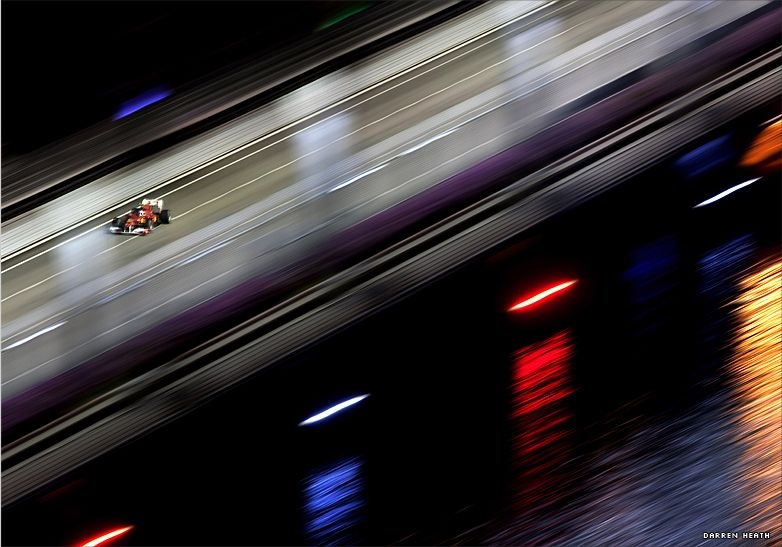
I’ve been to Singapore many times, but not for the Grand Prix, sadly. The main images which drove this short article capture its key elements and ‘nightime nature’.

These cars have been hit with the ‘fugly’ stick to my mind but are veritable beauties compared with this years offerings.

Still the Lancia D50 had a similar inpact in 1954 so i guess controversial design in F1 is far from new, mind you the whole field looking and sounding like dogs is!

alonso

Fernando Alonso, Ferrari F10, winner Singapore GP 2010 (Darren Heath)

monaco

Mark Webber, winner in RB6 Monaco 2010 (Pinterest)

top

Mark Webber, Monaco 2010 Red Bull RB6 Renault (Pinterest)

pool

The sheer joy of a Monaco victory for Mark Webber and the Red Bull team, his diving form developed in Queanbeyan…(Pinterest)

haynes 1

chassis

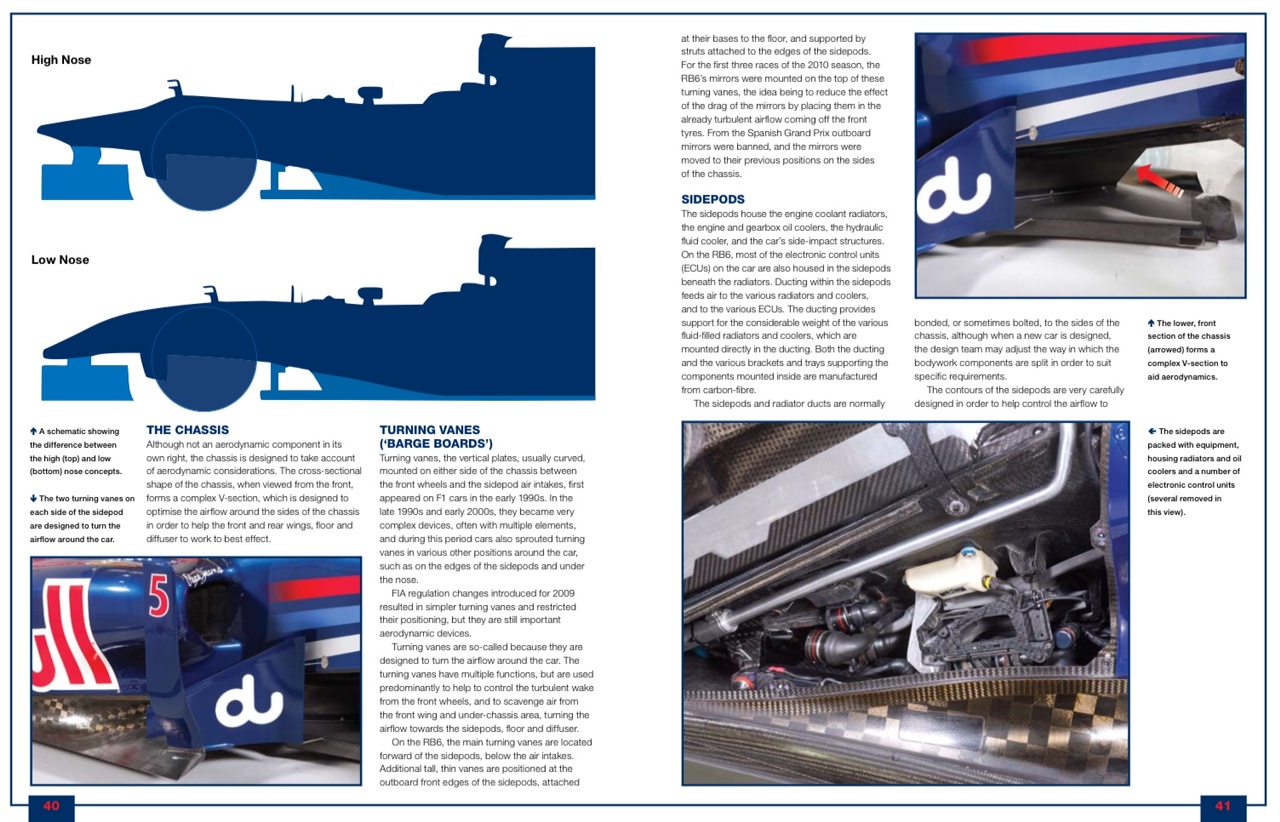
Aerodynamic elements of chassis, barge boards, and sidepods. Red Bull RB6 (Haynes)

suspension

Suspension elements (Haynes)

gearbox

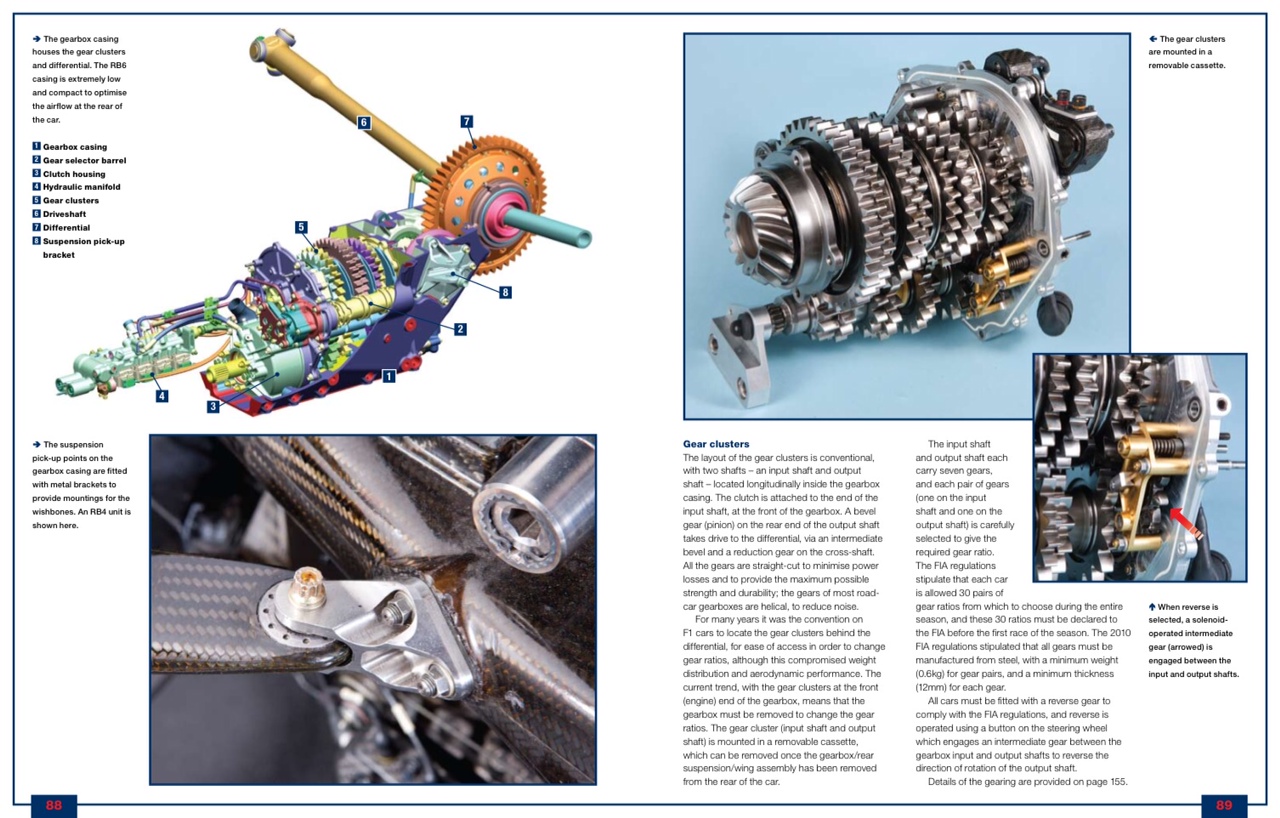
Gear clusters (Haynes)

For those with an interest in the Technical Elements of Modern F1…

scarbsF1.com

Photo and Other Credits…

Pinterest, Darren Heath

ScarbsF1, ‘Red Bull Racing F1 Car’ Haynes

The End…


imageimage


Everyone in Victoria particularly, if you see or hear anything about Rohans car or componentry; chassis, Golf race engine, Mk9 Hewland etc please get in touch with me, many thanks, mark…

stewartr

Fantastic shot of JYS on his way to victory throwing around the ‘twitchy’ , low ‘polar moment of inertia’ Tyrrell 006…

 The win was Stewarts 25th, equalling the number of Championship wins achieved by his friend and compatriot Jim Clark.

Stewart started the season in his trusty 005 but raced 006 from the International Trophy at Silverstone , the car carrying him to 5 victories and the world title that year.

Whilst Stewart won the drivers title the manufacturers championship went to Lotus, reigning champion Emerson Fittipaldi and teammate Ronnie Petersen scrapping and taking wins between them , which, in the absence of team orders , stopped Fittipaldi winning a pair of titles ‘on the trot’…team orders, and some times their absence are not new in F1!

Lotus were not the only team with 2 ‘number ones’ that season.

Stewart had Francois Cevert as his Tyrrell teammate again ,they were close friends as well as competitors with the master freely acknowledging Cevert had his speed , and then some , that season. But Francois was a team player and knew his turn , and time would come.

Sadly, it didn’t with his death in an horrific accident in practice at Watkins Glen, the final GP of ’73.

Stewart did a couple of laps in 006/2 in the final session to try and work out what happened to Francois, pitted his car and walked away from F1, as a driver , as he had planned earlier in the season , for good.

Jackie retired with 27 championship wins from 99 races, Cevert perished not knowing he would have been Tyrrells team leader in 1974…

stewart & cevert

Jackie Stewart leads Francois Cevert, Monaco 1973. First and fourth respectively. (Pinterest)


stewart 7 cevert 2

Francois Cevert & Jackie Stewart in 1973 (Pinterest)


tyrrell 006 cutaway

Werner Buhrer cutaway drawing

Checkout Allen Browns great piece on his oldracingcars site on ‘006’ inclusive of chassis by chassis histories here;

https://www.oldracingcars.com/tyrrell/005/006/

stewart

Photo Credits…

Werner Buhrer, Michael Turner

Tailpiece…

image

(Michael Turner)

Finito…


moss

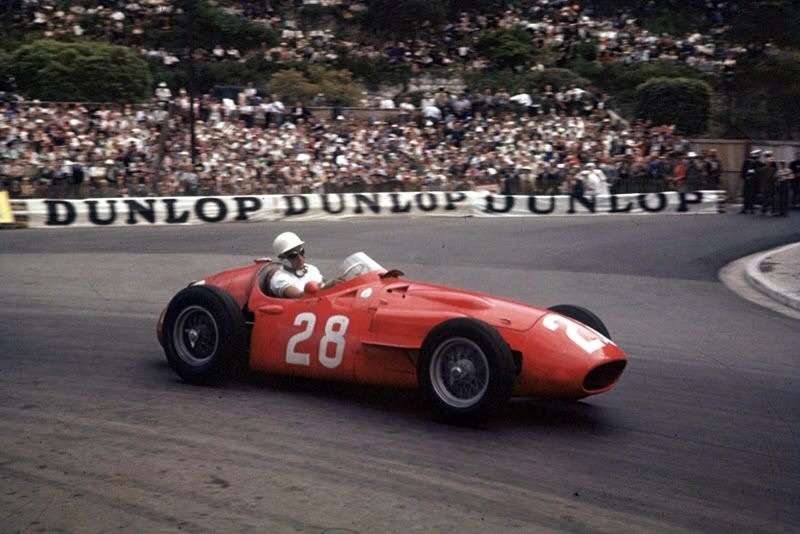
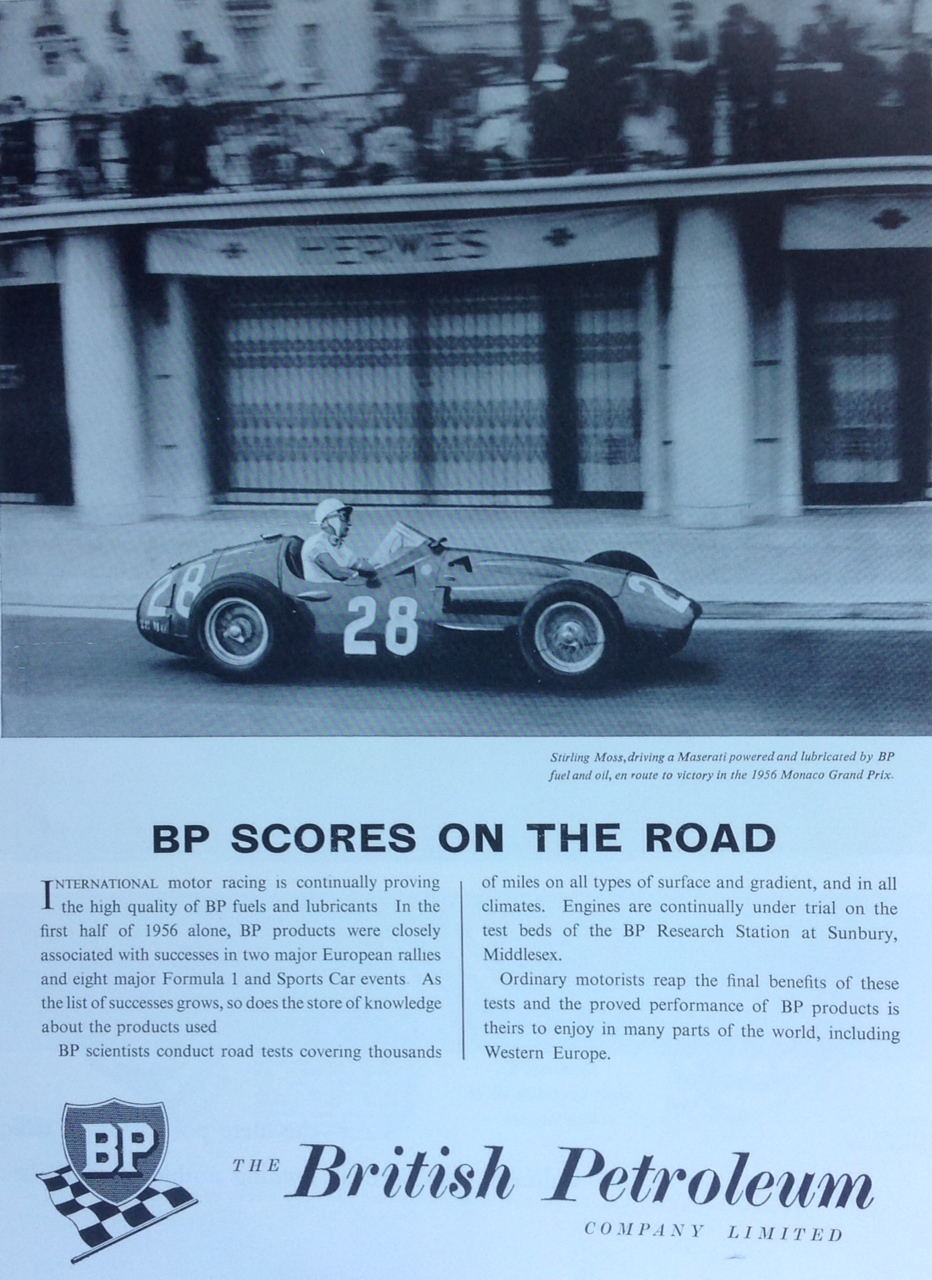
How is your beaujolais cherie? Moss victorious in his Maserati 250F , chassis ‘2522’ from Peter Collins and Juan Fangio in a shared Lancia Ferrari D50, Jean Behra was third in another 250F ‘2521’…

In fact Fangio finished equal second sharing Peter Collins D50…and equal fourth in ‘his’ D50 sharing it with Eugenio Castellotti. He also won his fourth World Championship that year. His final was won in 1957 in a 250F, giving the marque the success it well deserved, and in the nick of time too, the 250F, long lived and carefully developed as it was had peaked, the mid engined Coopers showing the future path.

Customer Grand Prix Cars for All…

Moss started his post HWM/Connaught grand prix aspirations with the family purchase of a 250F in 1954. He was scooped up by Mercedes Benz as a result of his performances in the car to drive their W196 and SLR Grand Prix and Sports Cars alongside Fangio in 1954/5, returning to the Maserati in 1956.

The fact that Maserati made available the 250F to all comers with ‘the readies’ made a big difference to grids in the mid ’50’ as competitive cars were available for the first time in relatively large numbers. The growth of Non-Championship Grands’ Prix on the Continent was in part due to the availability of the Maser and therefore grids of depth and quality.

Many drivers cut their Grand Prix teeth in the cars, the last 250F graduate grand prix driver retiree was Chris Amon, who departed F1 in 1976!

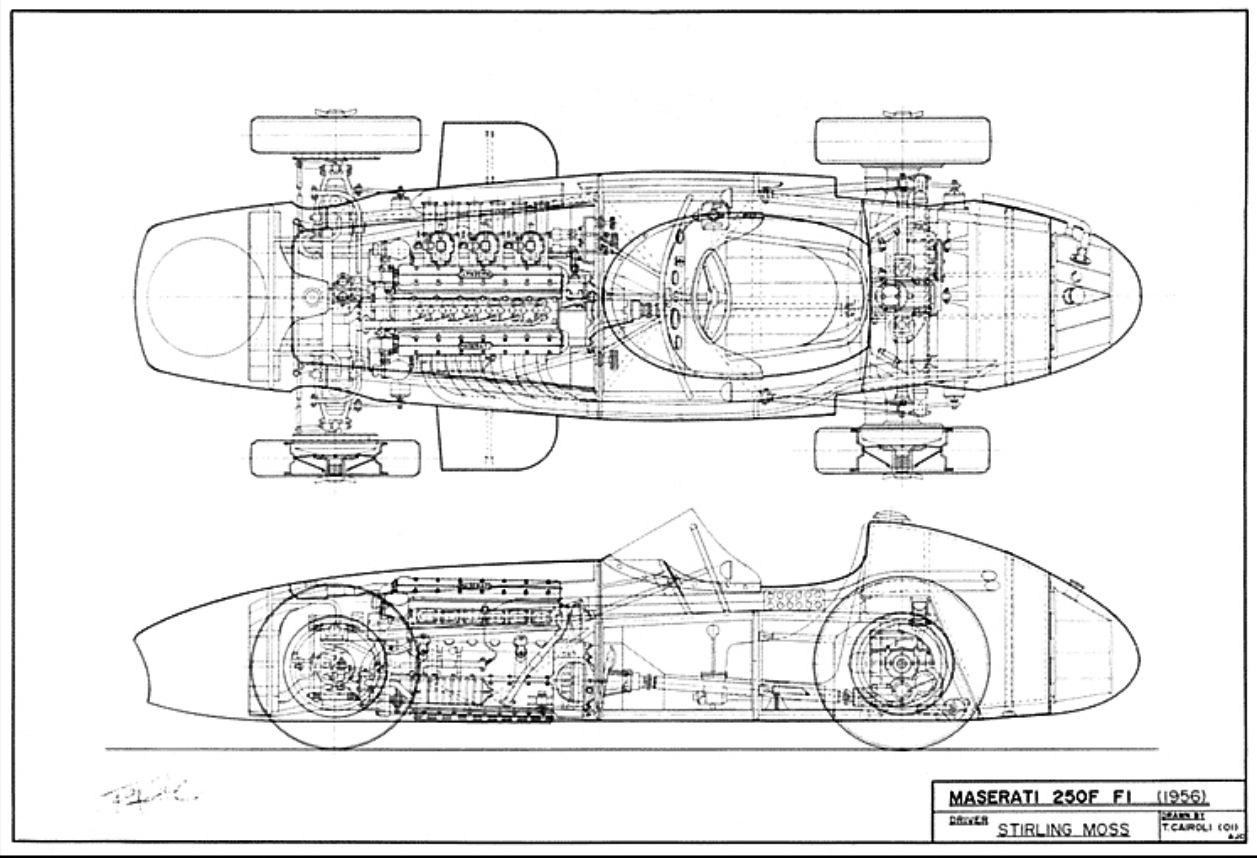
250 f drawing

Mid 1950’s State of The Art…

Amons 500BHP Ford Cosworth powered, winged ,’slicked’, monocoque Ensign N176 was somewhat different to the front engined, tube-framed, skinny tyred, 240 BHP Maserati in which he started his GP career in New Zealand.

The 250F was the ‘state of the art’ in the mid ’50’s. Not as avant garde as its contemporaries the Mercedes W196 and Lancia D50, but state of the art all the same.

Clothed in bodywork worthy of the finest Italian courtiers, to me it is the best looking front engined grand prix car of all. It epitomises everything that was, and is great about Italian design, engineering, styling and construction.

The cars performance matched its looks, it made its debut in the 1954 Argentinian Grand Prix winning the race in Fangio’s hands. The 250F won eight Championship Grands’ Prix in total and countless Non-Championship events in the hands of dozens of drivers through to 1960.

Twenty-six cars were built but of course many more than that exist today…

maser cutaway

Design and Build…

The car was designed by Gioacchino Colombo, formerly Ferrari’s Chief Designer, and Valerio Colotti and evolved from Maserati’s A6GCM 2 Litre F1 car.

The 250F featured a multi-tubular space-frame chassis of small diameter chrome molybdenum tubing. De Dion rear suspension was used, the De Dion tube was mounted in front of the transaxle to move weight forward within the wheelbase, lowering the cars ‘polar moment of inertia’ or in simple terms its ability to change direction. The gearbox was transversely mounted in unit with the ZF ‘slippery’ differential, and was initially 4 speed, but later became a 5 speed from 1955.

Conventional double wishbone front suspension was used. Brakes were 13.6 inch finned alloy drums, the fuel tank mounted at the rear contained 200 litres.

The engine was a superb, torquey straight-six, DOHC 2 valve per cylinder, twin plug unit displacing 2494cc. It was fed by 3 twin choke Weber DCO3 carburettors, twin Marelli magnetos providing the spark. The engine initially developed 240BHP, later circa 275BHP @ 8000RPM in 1957. Maserati produced a 2.5 litre V12 for the 250F in 1957, the car was tested extensively and raced once by Behra, 9 years later it won Grands’ Prix in Cooper chassis with a capacity of 3 litres.

The car weighed 650Kg, distributed 48/52% front to rear. It was 4050 mm in length, had a wheelbase of 2280mm, and a width of 1980mm.

Wheels were Borrani aluminium alloy, wire spoked with centre-lock hubs, sizes were 15×4.5 inches circumference/width front, and rear- 16/5.5. Pirelli tyres were used by the works cars.

image

Its All About Balance…

The 250F may not have been the fastest or most powerful car of its day but it was the best balanced, allowing the driver to fully exploit its potential.

Stirling Moss observed that ‘It steered beautifully and inclined towards stable oversteer which one could exploit by balancing it against power and steering in long, sustained drifts through corners. It rode well on the normal type of relatively smooth surfaced course, although its small coil spring and leaf spring rear end would use up available suspension movement over the bumps at the ‘Ring’.

image

Historic Context…

Even though the car was not the fastest for most of this period it was still competitive every year, and raced in large numbers, it sort of ‘underachieved’ really. But a lot changed from 1954 to 1957, lets call those the 250F ‘sweet-spot’ years and those circumstances had a lot to do with its results.

In 1954 the Mercedes Benz W196 appeared and re-wrote the record book. The fuel injected, desmodromic valve actuated straight-eight, space frame chassis and ‘tool-room’ quality of its design and construction put everything else into perspective. Mind you, its advantage in 1954 was maybe more to do with Fangio’s driving than the car itself.

Maserati had Fangio for the first few Grands Prix, he won with the 250F in Argentina. When Fangio went off to Benz Maserati did not have a ‘number one’ of sufficient calibre. My contention is that had Fangio driven the 250F in 1954 Maserati would have won the title. Fangio was ‘the depth’ in Mercedes team that year.

Into 1955 the Benz hit its straps, Vittorio Jano’s fabulous Lancia D50 finally appeared in Spain. It was in many ways the equal of the W196, bristling with innovation as well- V8 engine, with the motor a stressed member, very light, pannier tanks to centralise the fuel load equally throughout the race, and of superb build quality.

Moss had finished 1954 as a quasi-works Maserati driver, they needed him in 1955 but he joined Mercedes.

Ascari, Lancia’s star was killed at Monza testing Musso’s Ferrari. Shortly thereafter the sensational ‘shot-gun’ marriage of convenience was consumnated between Ferrari and Lancia when the cash-strapped Lancia, unable to fund its race program, gave its Lancia D50 cars, spares and designer Jano to Ferrari, bereft of a competitive car having stuck with its 4 cylinder F2 derived cars for way too long, and being short of cash to fund a new car in any event.

Maser had Jean Behra as their lead driver in 1955, but they needed somone quicker. In 1955 Maserati was not going to beat the Benzes, even if Moss had stayed with them.

Further change occurred when Mercedes Benz withdrew from racing as a consequence of the 1955 Le Mans disaster when one of their 300SLR sports cars driven by Pierre Levegh collided with Lance Macklin’s Austin Healey. The war was not long ago over, 80 people had been killed, Benz had achieved their short-term aims so it seemed prudent to withdraw.

Moss and Behra led Maserati in 1956, had Moss a car which was more reliable maybe he would have won the title. Mind you, ’tis said he was hard on cars. The Lancia-Ferrari D50 was progressively bastardised by Ferrari who had a strong team of Fangio, Collins, Musso, and Castelotti. Fangio got the best out of the car, and aided by some generous sportsmanship by Peter Collins at Monza, allowing the maestro to use his car, won the title for the fourth time. Maserati were competitive throughout, the title with more luck could have been won by Moss.

In 1957 Fangio won Maserati the title they deserved despite stiff opposition from Moss in the Vanwall, now reliable and with a Colin Chapman designed chassis and Frank Costin body- very fast.

By 1958 the 250F was finally passe as a competitive mount.

As has always been the case teams need to have the best drivers, Maserati’s budget was perhaps the obstacle to achieving that.

My thesis is that they should have won the title in 1954 with the right driver, in 1956 with more luck/reliability and in 1957 finally won it, Fangio doing for Maserati what he had done for Mercedes in 1954/5 and Ferrari in 1956- bringing that little bit of magic, speed, intelligence and mechanical sympathy which separates the gods from the mere mortals.

turner

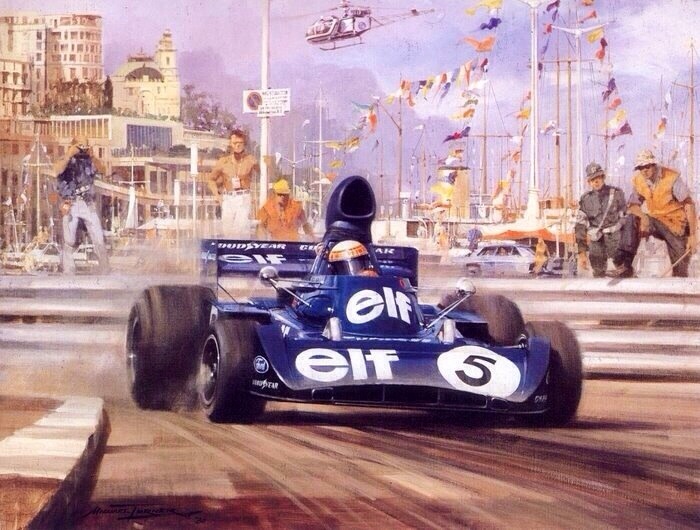
Superb Michael Turner painting of Moss, Monaco 1956

Finito…

Moss won the opening, Argentinian round of the 1958 season in Rob Walker’s Cooper Climax, the mid-engined revolution had begun. Mike Hawthorn’s Ferrari Dino 246 was the last front engined car to win a World Championship that year, Fangio had retired, and Maserati, drowning with cash-flow difficulties, were placed into ‘Controlled Administration’ by the Italian Government.

It was all over, other than privateers achieving success in Non-Championship events, the car, for a while longer serving the same purpose to privateers as it had back in 1954…

Fangio’s 250F Virtuosity, Modena Circuit, 1957…

Etcetera…

moss cahier

Superb 1956 Bernard Cahier shot of Moss on the Monaco Quayside, late series 250F lines shown to good effect the ‘Piccolo’ of ’57 even prettier


start

Monaco GP start ’56. Front row L to R : Fangio, Moss, Eugenio Castellotti. Lancia D50, Maser 250F, Lancia D50. # 30 is Jean Behra 250F, # 16 Harry Schell Vanwall VW55, # 24 Luigi Musso D50. # 32 is Cesare Perdisa 250F, # 14 Maurice Trintignant Vanwall, the blue cars are Gordini’s


maser monaco 1956

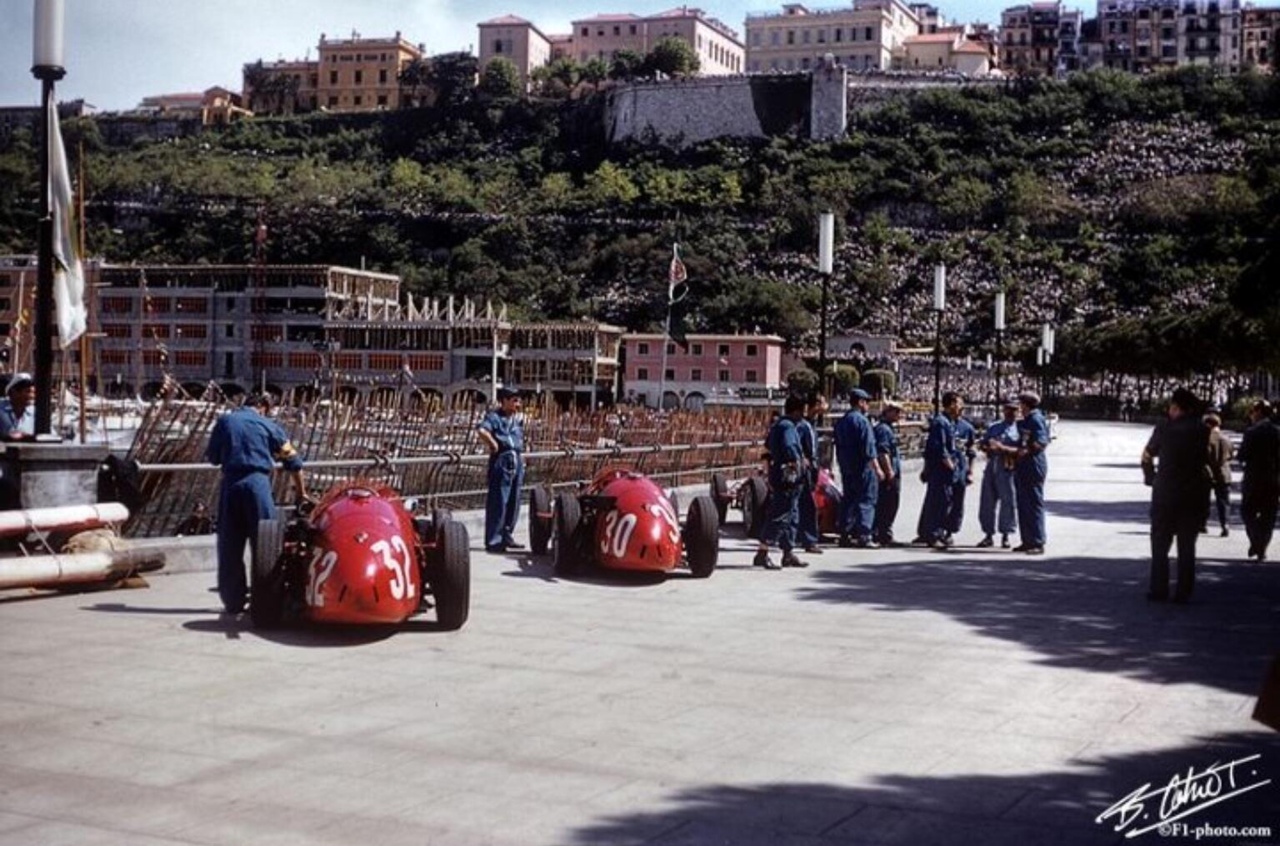
Maserati team prior to the start of the 1956 race: # 32 Cesare Perdisa, seventh, and # 30 Jean Behra, third. Moss’ car is surrounded by mechanics (The Cahier Archive)


BP 250F ad


poster

Sources and Photos…

The Cahier Archive, David Kimble cutaway drawing, Michael Turner painting, blueprints T Caroli

‘The History of The Grand Prix Car’ Doug Nye, ‘The History of The World Championship’ Alan Henry, H. Donald Capps and Trevor Lister

Tailpiece: 250F’s in build, January 1956…

Technical specifications as per text- what a wonderful and rare photograph by Bernard Cahier of three cars in build taken on his visit to the factory in January 1956- which cars I wonder?

I am guessing, and its no more than that aided by a staggering, so far unpublished work by H. Donald Capps and Trevor Lister titled ‘Identity and the Maserati 250F’ that the cars may be works chassis ‘2516’ fitted with engine ‘2516’- later sold to Australian Reg Hunt, Luigi Piotti’s chassis ‘2519’ fitted with engine ‘2511’ and works car ‘2520’ fitted with engine ‘2520’ later sold to Stan Jones. I say that as all these cars were raced early in 1956, so a January production run makes sense.

In terms of other 1956 build cars, the works ‘2521’ didn’t appear till May, Jean Behra drove it to third in the Monaco race featured above, whilst Moss’s Monaco winner ‘2522’ didn’t run until the April ‘Glover Trophy’ Goodwood meeting. The Godia-Sales ‘2524’ first raced at Spa later in the year too- he didn’t have a good day in the Ardennes with an accident on lap 1 in the wet conditions.

‘Cahier’s three cars are not the 1956 ‘canted engine’ chassis machines ‘2525’ or ‘2526’ which were first raced by Moss and Behra at Monza either, Stirling won on that hot September day in ‘2525’ by the way, so lets stick with the ‘likelies’ as ‘2516’, ‘2519’ and ‘2520’!

Finito…


targa

Local boy Nino Vaccarella wrestled his big Ferrari into third place around the ‘Piccolo Madonie’ circuit in 1970…

Sensational Rainer Schlegelmilch shot captures the very essence of Targa, its geography and contrast of tradition and contemporary technology.

Porsche had ‘the game covered’ in 1970/71, they had the nimble, light 908/3 for Targa and the Nurburgring and the legendary 917 for power circuits such as Le Mans, Daytona and Monza. Brian Redman and Jo Siffert won the race in a 908/3 from Pedro Rodriguez and Leo Kinnunen in the other JW Automotive Porsche.

Ferrari only entered one factory car, Vaccarella partnered by compatriot Ignazio Giunti, a promising driver who made his F1 debut with Ferrari in 1970. He perished in a tragic accident in Argentina in 1971 when his Ferrari 312P (sports car) ran into the back of Jean Pierre Beltiose’ Matra 660 which he was pushing along the track, having run out of fuel.

Nino Vaccarella was a good bet for the win though, a local, he grew up in Palermo and knew the circuit ‘like the back of his hand’. He started the season well winning the Sebring 12 Hour with Giunti, and Mario Andretti. He won Targa thrice; in 1965 in a Ferrari 275 P2 and in 1971 in an Alfa T33/3. His final win was in an Alfa TT12 after Targa became a National Italian event, Targa losing its championship status after 1973 when the cars simply became too quick for the circuit on Sicilian open roads…not too quick for an Italian event however!

Vaccarella also had some Grand Prix experience, his best GP result ninth in the 1962 Italian Grand Prix in a privately entered Lotus 24 Climax. Predominantly a sportscar driver, he also won the 1964 Le Mans 24 Hour classic sharing a Ferrari 275 P with Jean Guichet and the Nurburgring 1000Km with Ludovico Scarfiotti in another 275P. He is still alive and well living in Sicily.

carda
Stunning shot and an epic vantage point for the boys, Collesano. Vaccarella/ Giunti Ferrari 512S Spyder in shot (Pinterest)
country
Vaccarella in the Sicilian countryside, the unique challenges of the circuit and driving a 5 litre 550 BHP V12 Ferrari 512S apparent (Pinterest)
close up
Vaccarella in the car he shared with Ignazio Giunti, Targa 1970 . A second Ferrari 512S was entered by Scuderia Fillipinetti driven by Herbie Muller and Mike Parkes finishing sixth (Pinterest)
cerda
Vaccarella finishes his 11th lap, the event which started and finished in Cerda. The lap record for the course was set by Helmut Marko in an Alfa 33TT3 in 1972 at an average speed of 128.253 KmH for the 72Km course on Sicilian open roads. (Pinterest)
cutaway
Cutaway of the Ferrari 512S. Space-frame chassis, 5 litre, DOHC V12, circa 550BHP. 5 speed gearbox, independent suspension by wishbones at front with coil spring/dampers (Koni), and single top link, inverted wishbone, radius rods and coil spring/damper units at the rear. A superb car if never as successful as the Porsche 917, its direct rival. (Pinterest)

Etcetera…

nono
Nino Vaccarella, Targa 1970 (The Cahier Archive)
italian gp
Vaccarella competed for Ferrari in the 1965 Italian GP in a 158. His engine failed in the race won by Jackie Stewarts’ BRM P261, the first of his 27 Grand Prix victories. (Pinterest)
seppi
Jo Siffert in the 1970 Targa Florio winning Porsche 908/3 he shared with Brian Redman (Pinterest)

Photo Credits…

Rainer Schlegelmilch, The Cahier Archive, Pinterest

Finito…

mikka

Mika Hakkinen under moonlight, British GP Silverstone 1994…

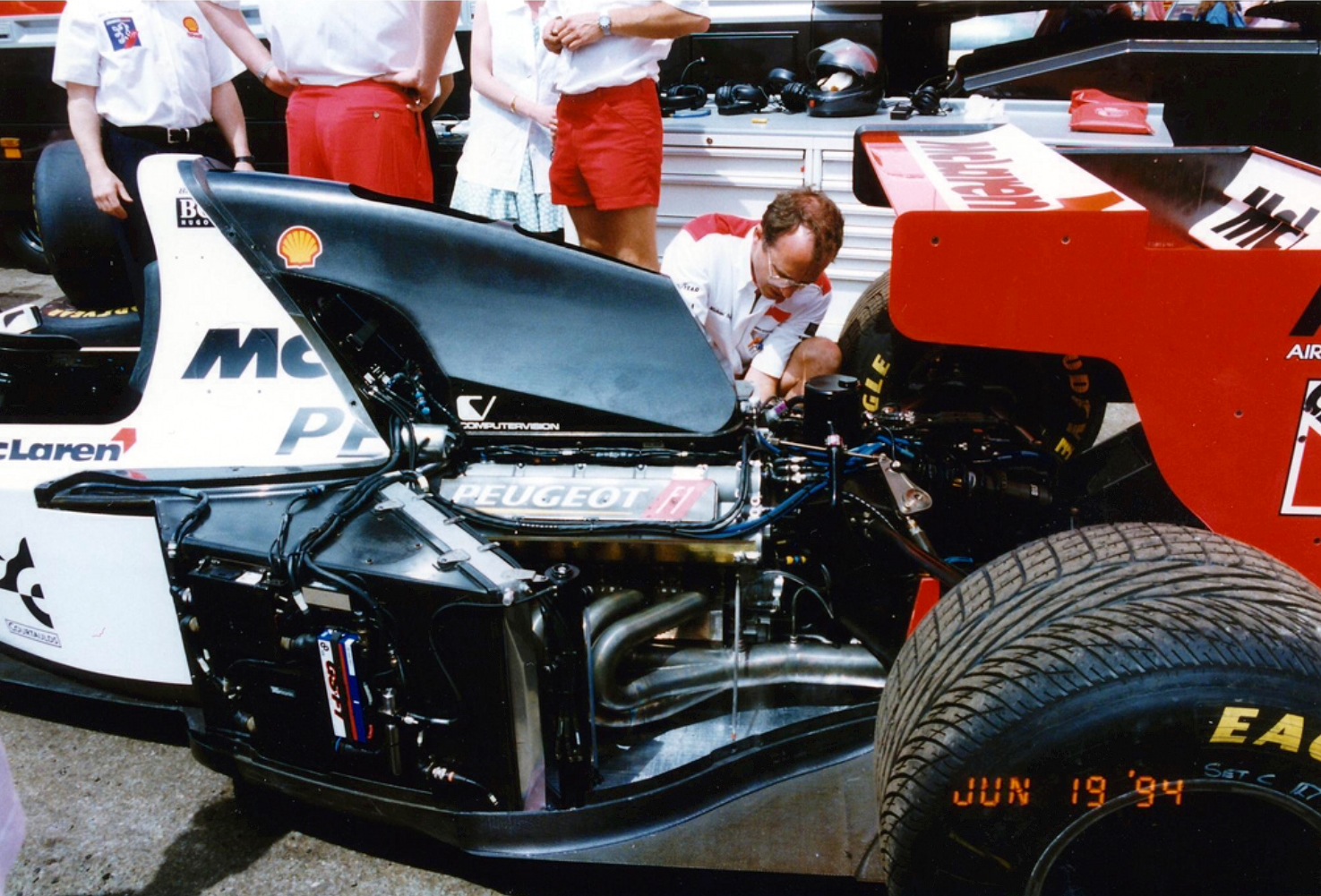
On the face of it the Peugeot V10 made sense, it had won LeMans in the French company’s 905 sportscar twice, and McLaren wanted a long term contract with a major manufacturer of the type it had with Honda, and would start with Mercedes in 1995…

Hakkinen and Martin Brundle struggled with the cars, Nigel Oatleys chassis was fine but the Peugeots were ‘hand grenades’ often exploding with fundamental structural engine failures.

Ron Dennis had had enough by mid year, a deal was brokered which saw Jordan using the engines, and later Prost…all failing to achieve the points haul McLaren did in ’94, still Peugeot have achieved a good ‘bang for their buck’ in rallying , who needs F1?!…

pug

Peugeot A4/A6 3.5 litre V10, 3499cc circa 700-760BHP. McLaren TAG 6 speed, transverse semi-automatic gearbox (Anthony Fosh)

Photo Credits…

Anthony Fosh, Pinterest unattributed

pryce nurburgring

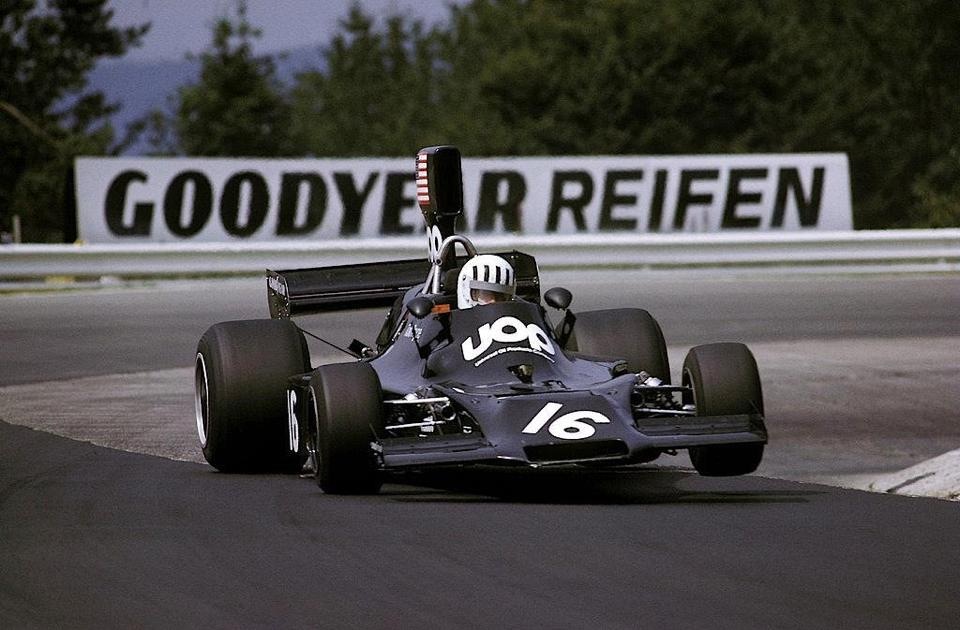
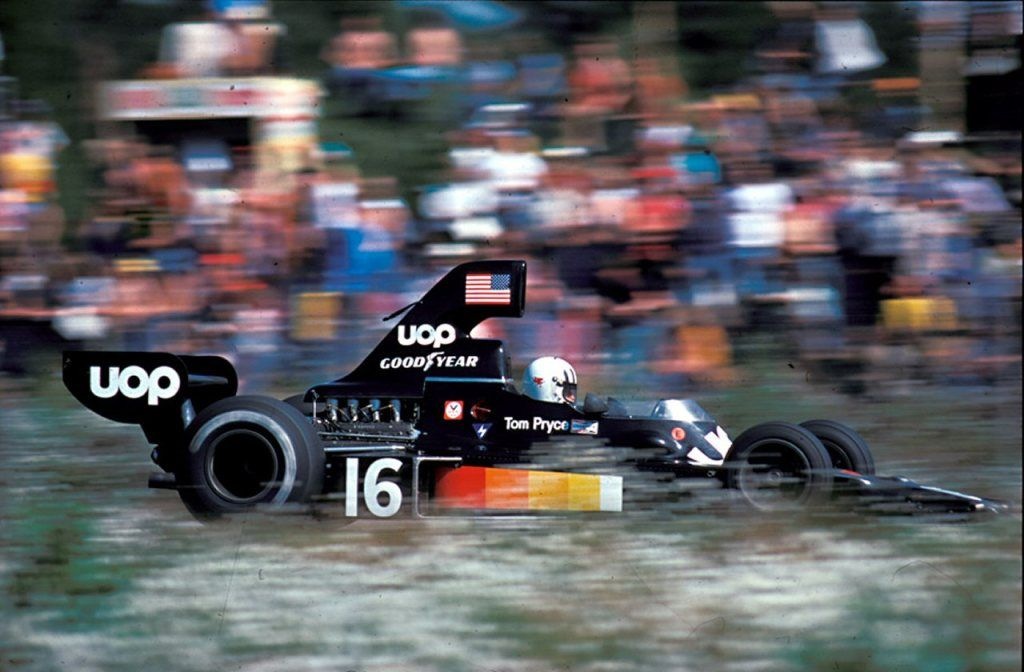
Tom Pryce, Karussell, Nurburgring, German GP 1975. Shadow DN3A Ford. Sixth in the race won by Cay Regazzoni’s Ferrari 312B3 (Pinterest)

These great shots are of Tom Pryce in his Shadow DN3A Ford during 1974…

Pryce was one of ‘The Lost Generation’ of young Britsh F1 drivers killed in their prime, all of a similar age, at about the same time. The other two drivers featured in David Tremaynes’ book of that name are Roger Williamson and Tony Brise.

I’d add Gerry Birrell, an F2 pilot and Ford factory Capri RS2600 driver to the list, i was following his career as a teenager at the time.

All were products of the ‘British Racing Driver Production Line’ of the day starting in small sedans or Formula Vee and progressing through Formula Ford, F3 and eventually getting their Formula 1 break.

All were F3 stars and showed F1 promise, in Birrells case he was one of the drivers spoken of as Jackie Stewarts’ replacement at Tyrrell for 1974.

All died grisly deaths in racing cars except Brise who perished in the plane piloted by Graham Hill which crashed and killed the key members of his team upon return from a test session in France to the UK to Elstree Airport in November 1975.

Deaths in racing cars were all too common until the ‘carbon-fibre era’ which commenced with the first Mclaren MP4 in 1981. Arguably designer John Barnard’s pioneering use of the material in racing cars has saved more lives than any other initiative down the decades?

Shadow DN3 Ford…

The Shadow, an English car and team funded by American Don Nichols United Oil Products, could be said to the ‘standard English kit car’ of the 1970’s.

It featured an aluminium monocoque, ubiquitous Ford Cosworh DFV engine, so reliable one wag described it as ‘the spacer between the driver and gearbox!, albeit a 500BHP spacer. The also ubiquitous Hewland FGA400 gearbox was a part of the package but Designer Tony Southgate, knew what he was about and put all of the knowledge gained at BRM from his successful P153/160 and P180 cars into the design, drivers Pryce and Jean-Pierre Jarier providng the other essential element.

Pryce won the 1975 non-championship ‘British Race of Champions’at Brands Hatch a DN5 beating Scheckter, Watson, Petersen, Ickx, Fittipaldi, Jarier and Donohue. He was a driver ‘on the up’ perhaps staying at Shadow too long. In a team with a competitive car he was a grand prix winner if not a potential World Champion.

He died in the 1977 South African Grand Prix, colliding with a marshall running across the track to put out a fire. The marshall was unsighted by Pryce, closely following another car. Both were killed in the very tragic accident.

tom pryce sweden 1975

Tom Pryce, Swedish GP, Anderstorp 1975. DNF, spun. Lauda won in a Ferraari 312T on his way to his first World Championship (Pinterest)

pryce 4

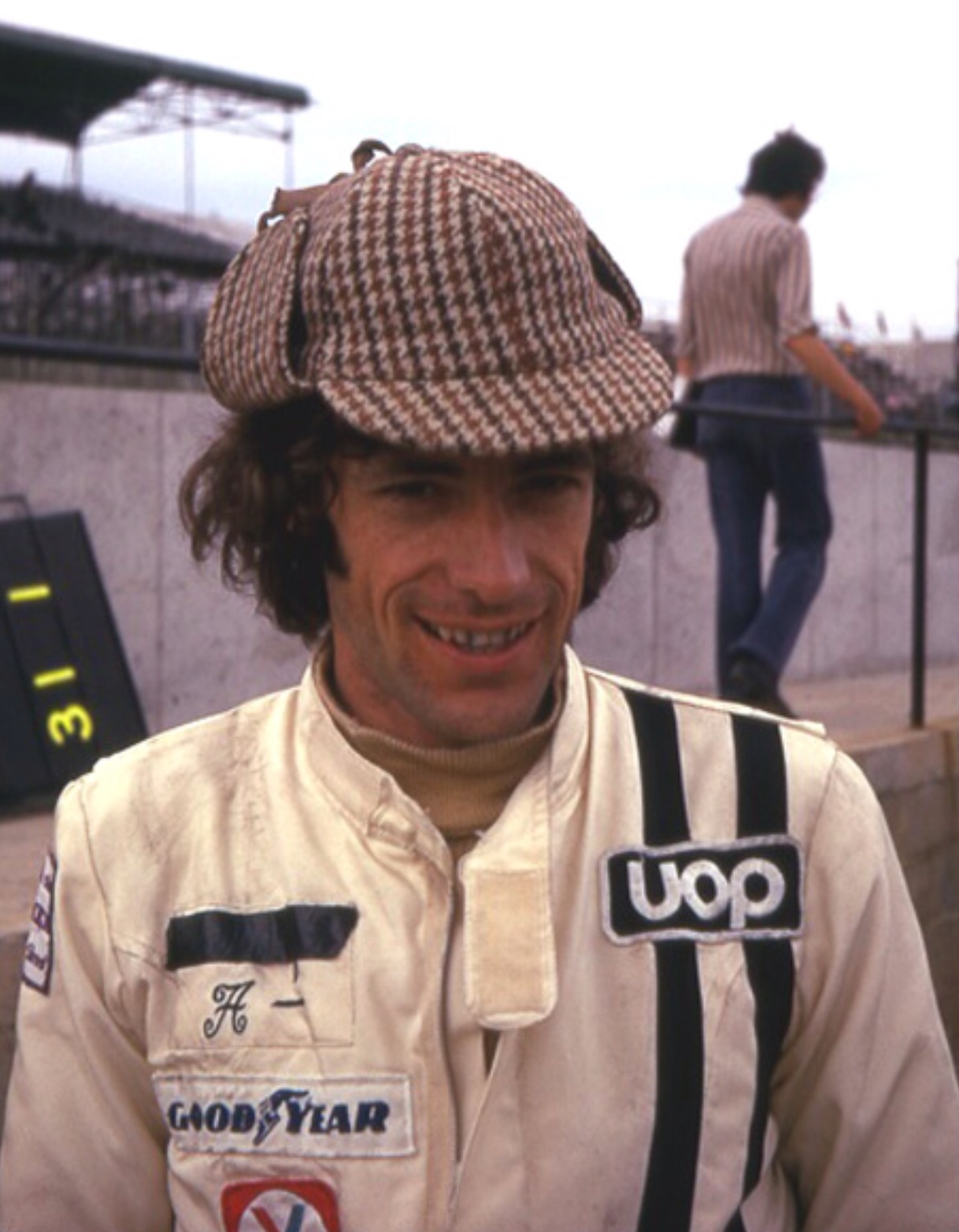
Tom Pryce looking very English for a Welshman, British GP 1974 (Pinterest)

Ecetera…

roger

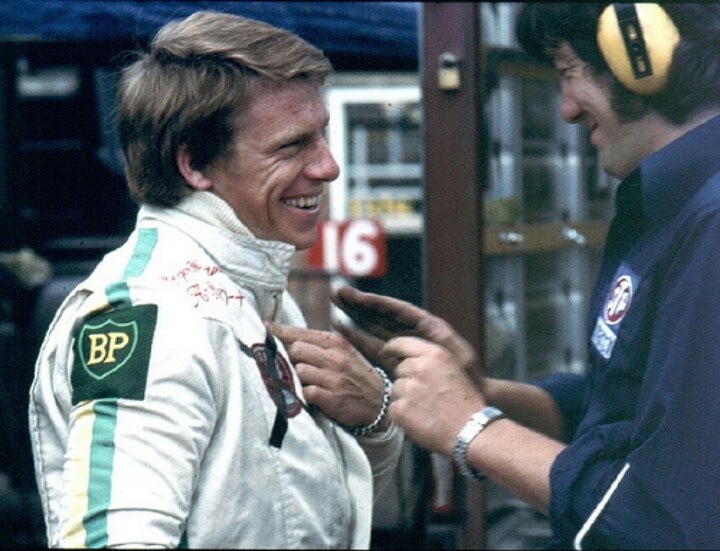
Roger Williamson and a March engineer share a joke, British GP 1973. It apperas to be about a covered up sponsors logo on his race suit…no captions of value on Pinterest so who knows!

dutch

Roger Williamson ahead of David Purley, both in March 731 Fords, early in the 1973 Dutch Grand Prix. Williamson crashed after a suspected tyre failure and died of asphyxiation after Purleys valiant and heroic attempts to right the overturned car failed (Pinterest)

hill

Graham Hill, for whom he drove in 1974/5, and Tony Brise. (Pinterest)

french

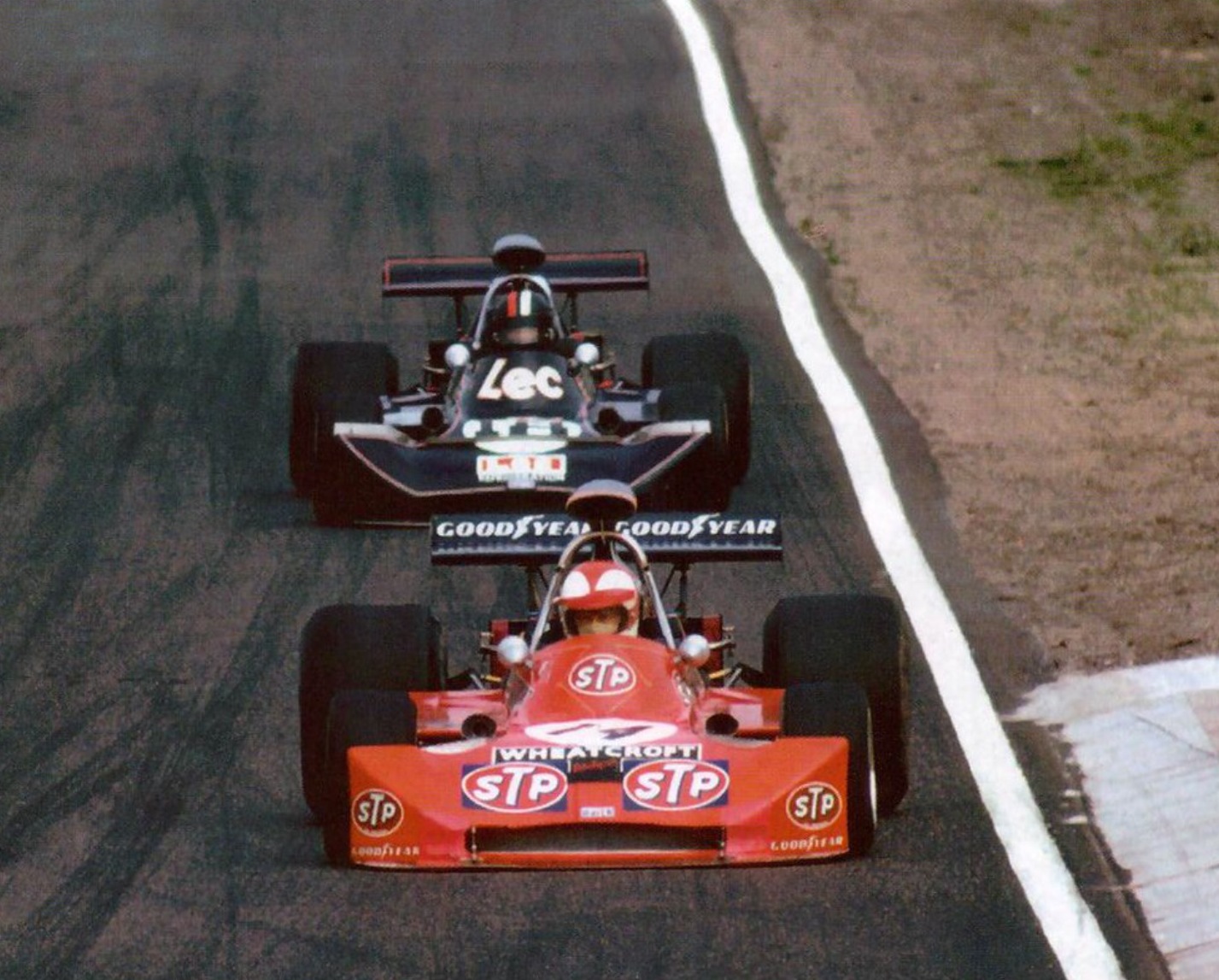
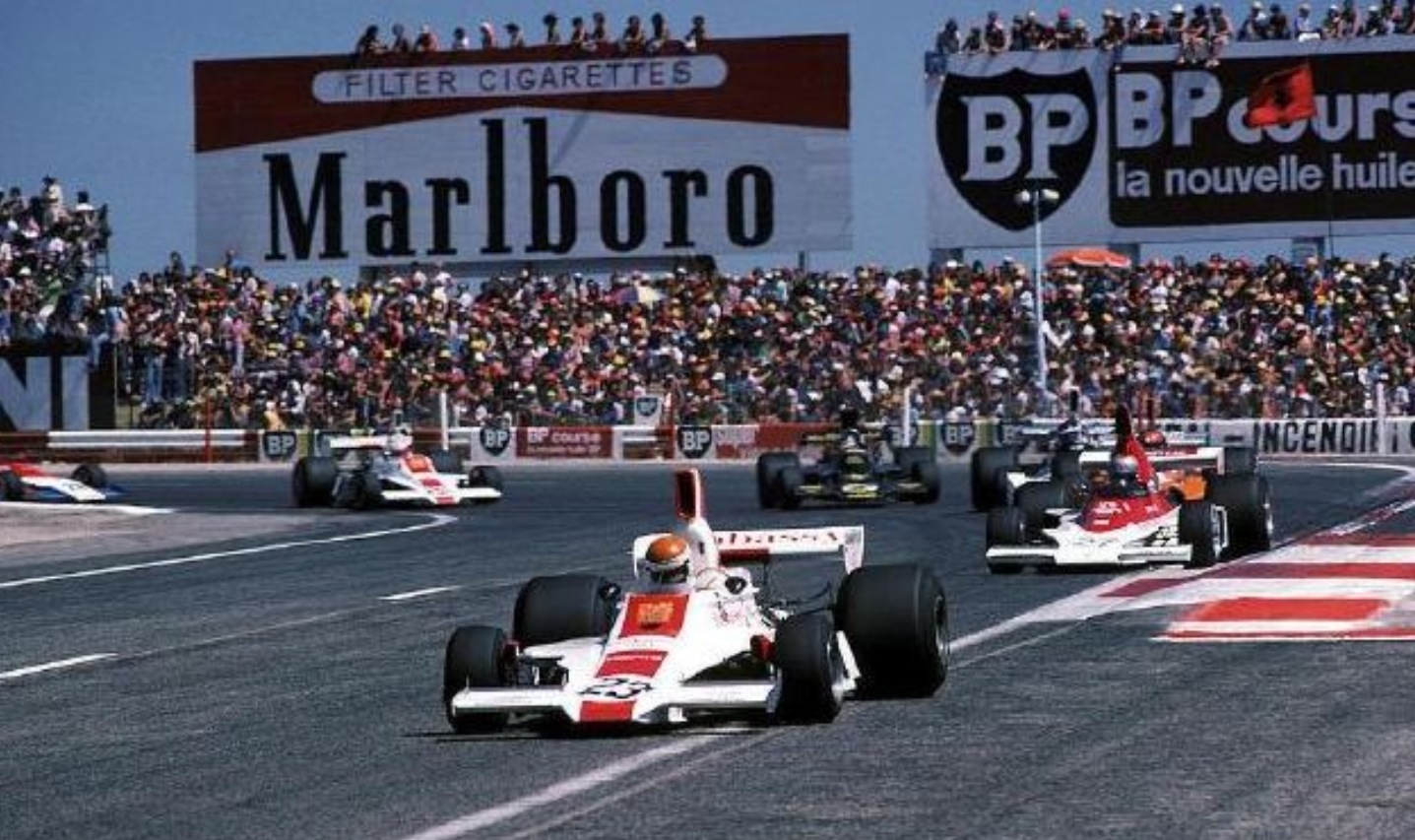
Tony Brise leads a gaggle of cars in the 1975 French GP, Hill GH1 Ford, he finished 7th in the race won by the Lauda Ferrari312T. Mario Andretti Parnelli VPJ4 Ford, Brambillas’ obscured March 751 Ford… the black car is the Ickx Lotus 72E Ford, the white car is Alan Jones in the other Hill, last in shot the nose of, i think, Donohues’ Penske PC1 Ford (Pinterest)

gerry

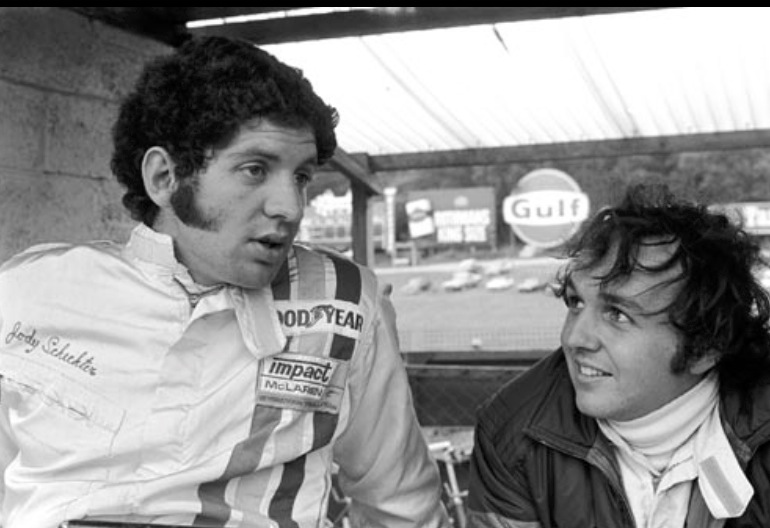
Jody Scheckter & Gerry Birrell, Brands Hatch ‘Rothmans 50000’ 1972. McLaren M21 and March 722 F2 drivers that year. (Pinterest)

capri

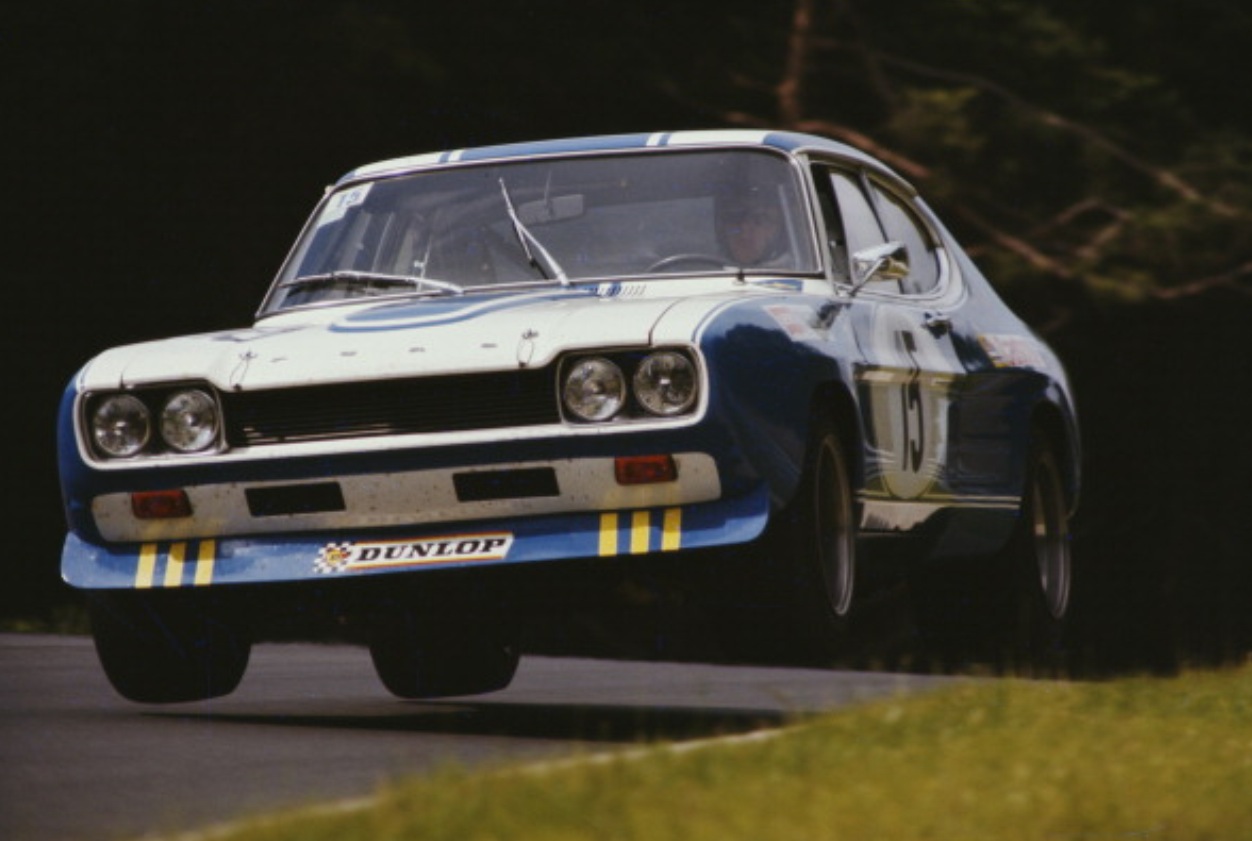
Gerry Birrell in the factory Ford RS2600, ETCC 6 Hour Nurburgring july 1972. Birrell was both race and a test driver for this very successful program (Rainer Schlegelmilch)

Photo Credits…

Pinterest, Rainer Schlegelmilch


image

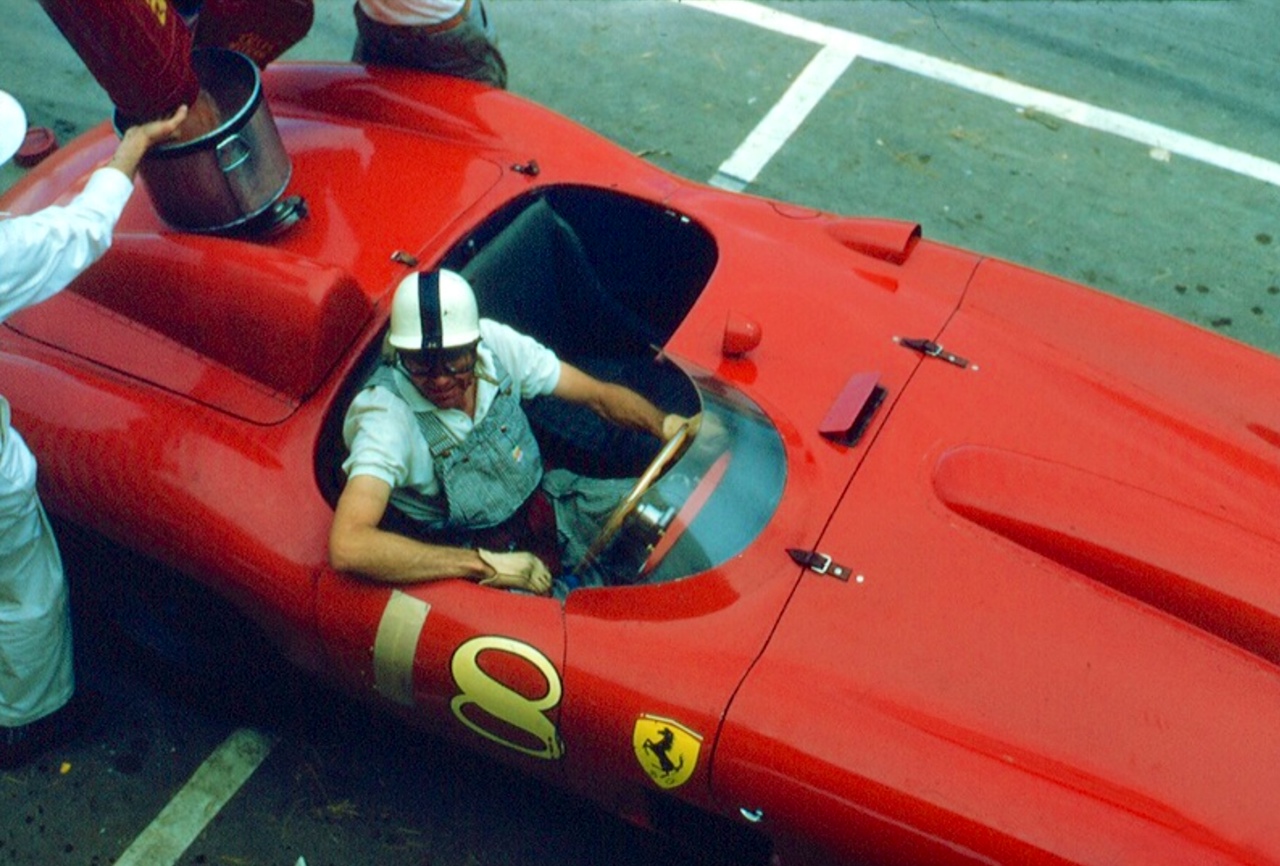
Despite its sculptured Scaglietti flanks, never has an 860 Monza looked quite so good…actress Linda Christian adorns Fon de Portago’s Ferrari

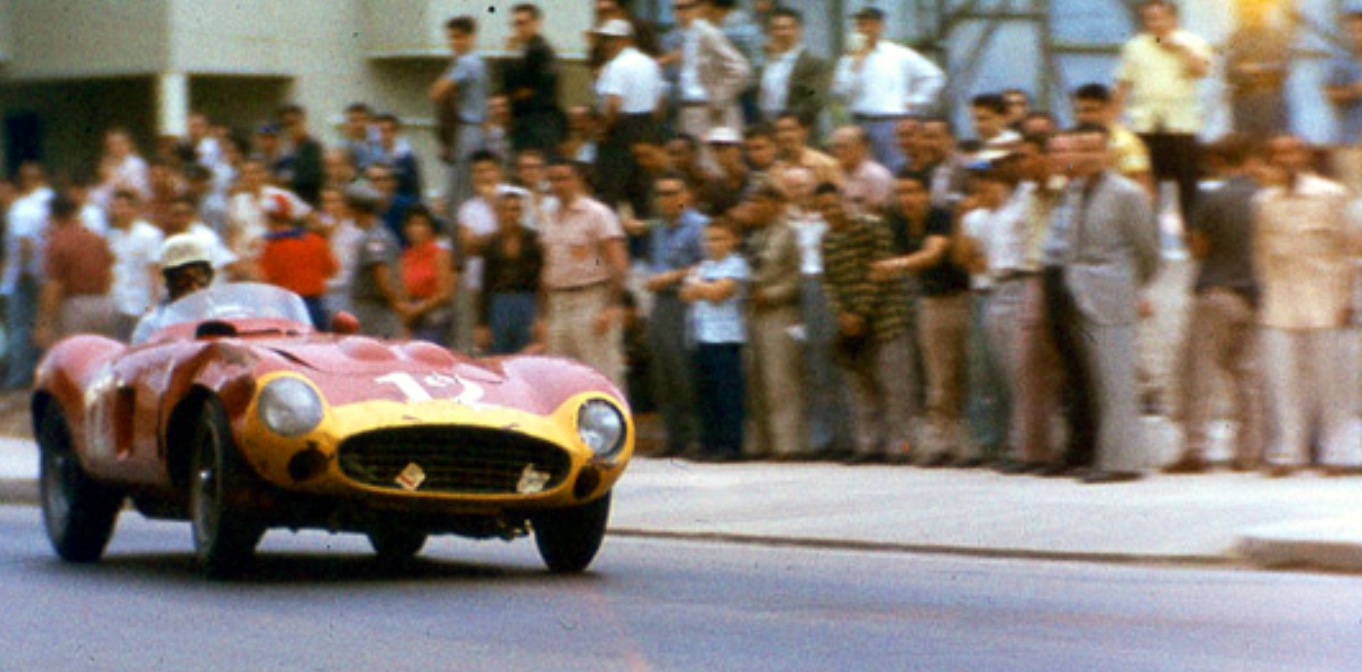
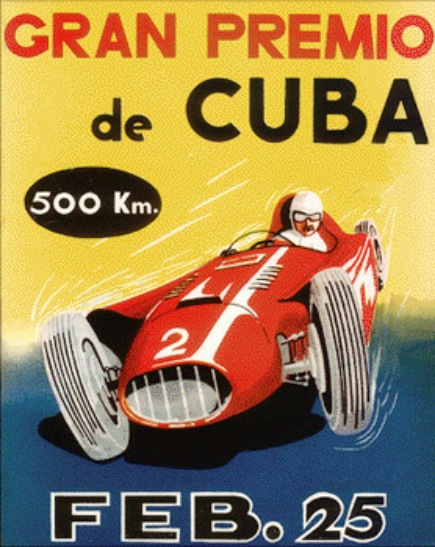
The Marquis Alfonso De Portago, Spanish nobleman and journey-man driver was accompanied by Linda Christian at the 1957 Cuban Grand Prix sports car event.

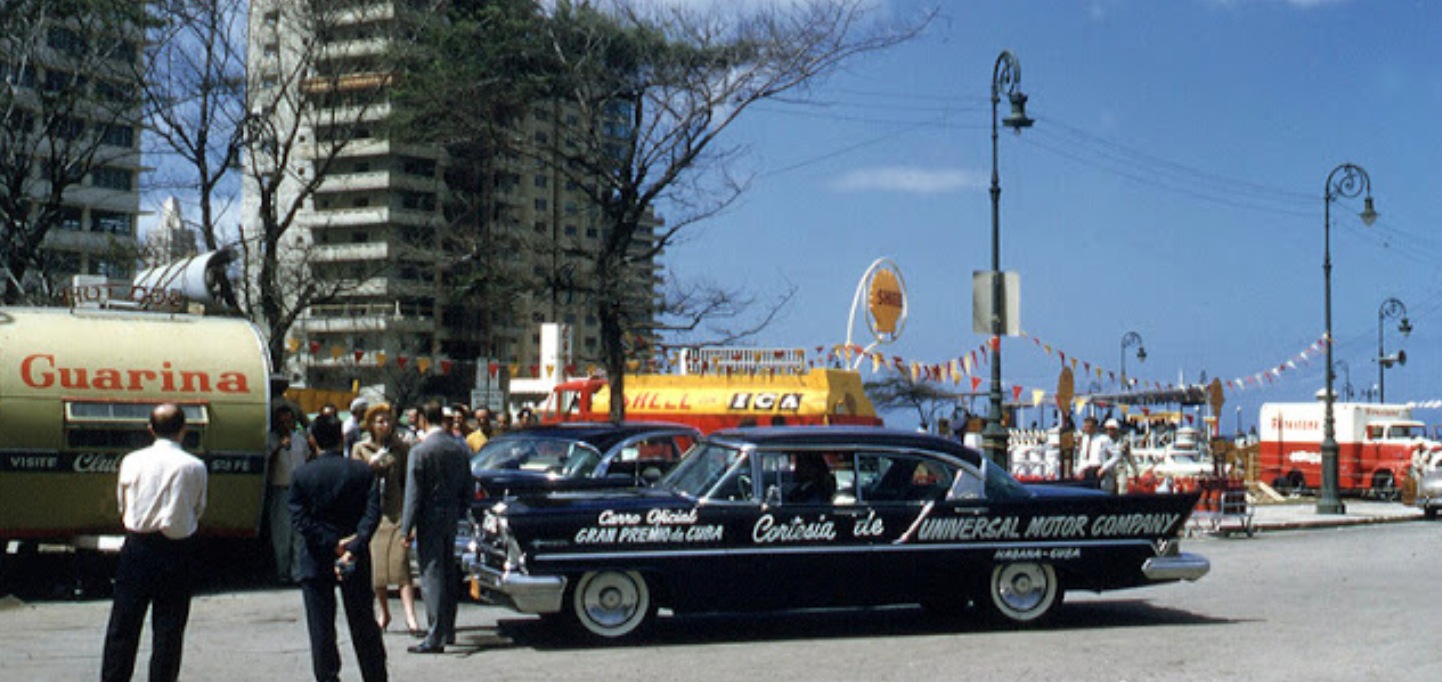
Fidel Castro’s insurgents were on the move in the countryside but for the Batista’s’ life went on. Keen to attract wealthy American tourists to the country to pump much needed funds into their moribund economy, an annual motor race was part of a plan to raise Cuba’s profile and provide an event to attract the punters.

malecon
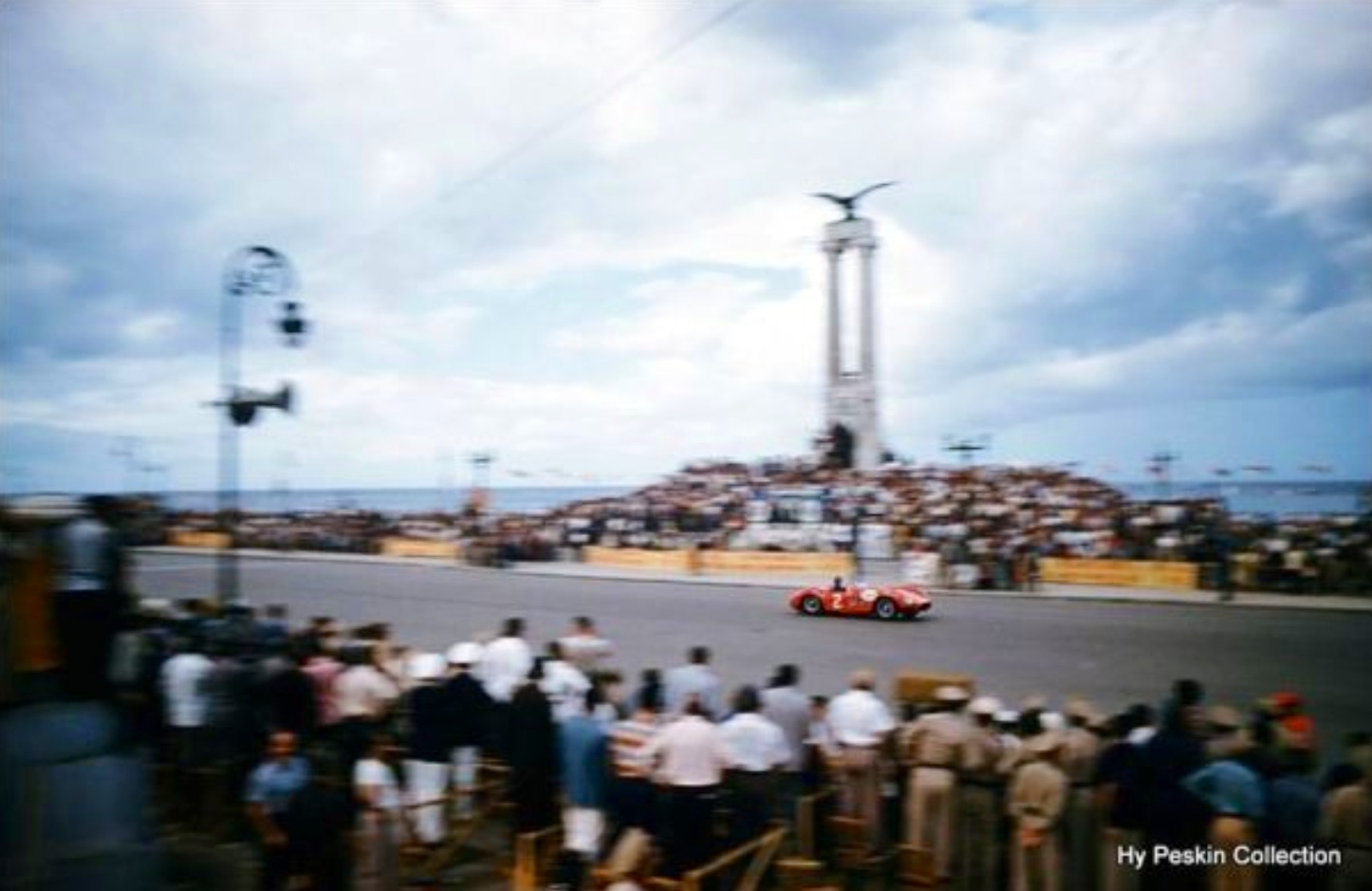
Out of focus and slightly surreal as a result…Fangio in his Maserati 300S, Malecon Boulevard, Havana, 1957 (Hy Peskin Collection)
cuba 2
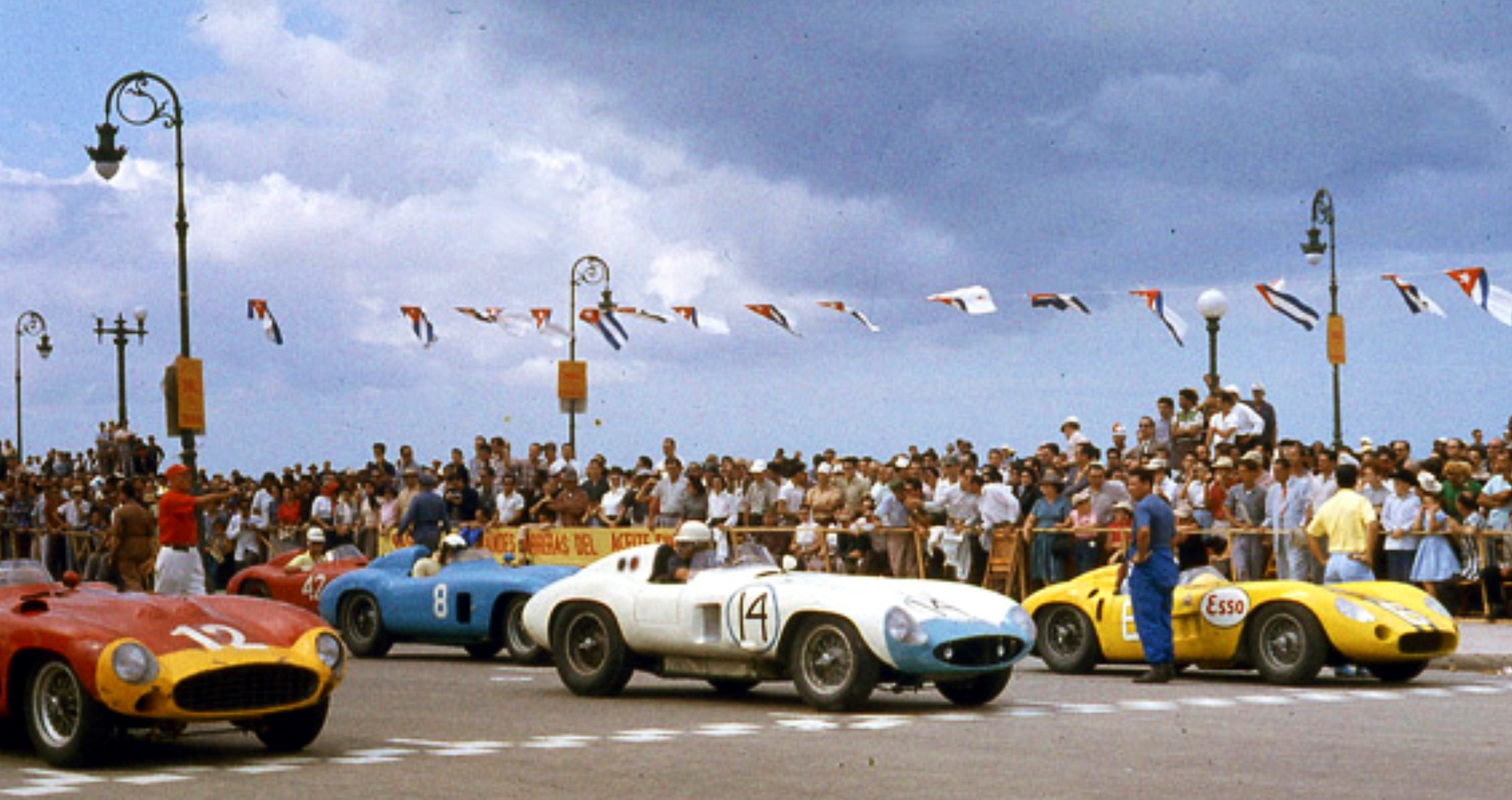
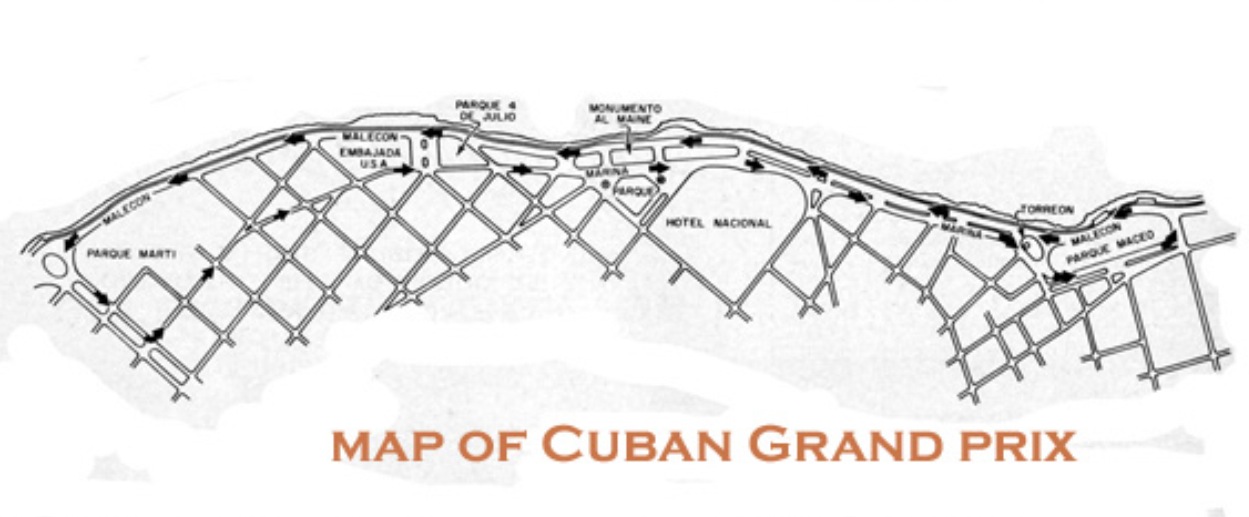
Wonderful panorama of Havanas Malecon circuit. 14 is the Phil Hill Ferrari 857S, De Portago’s Monza behind it with Linda Christian alighting. #16 also a Ferrari, driver unknown (Pinterest)

Ferrari 860 Monza…

port
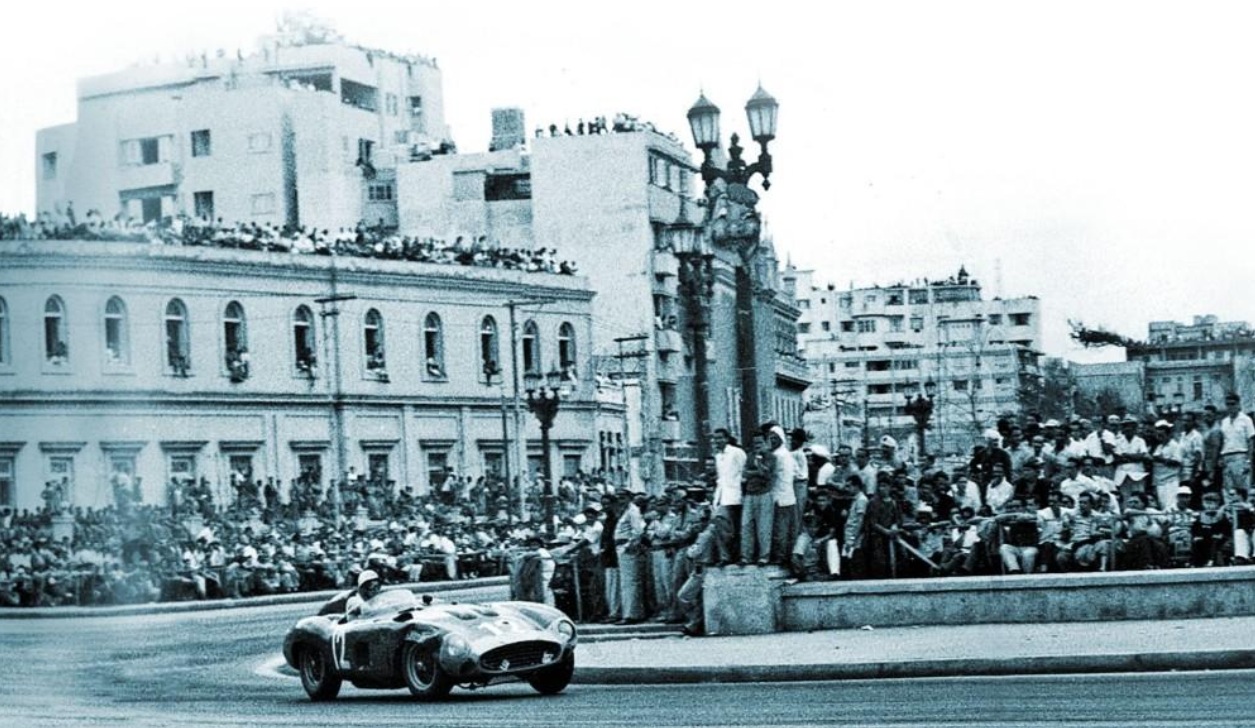
‘Fon De Portago Ferrari 860 Monza, unprotected nature of the circuit clear, seven spectators were killed in the 1958 event (Pinterest)

The 860 Monza was Ferrari’s front line sports car weapon, together with the V12 290MM in 1956.

It was part of the family of sports cars built over much of the ’50’s based on the Lampredi designed DOHC, two valve, Weber carbed four cylinder engine which first found success in the Tipo 500 F2/F1 cars. Ascari won the World Drivers Championship in 1952 and 1953 in the Tipo 500.

The engine gave circa 310bhp from its 3431cc, gearbox was four speed. The usual Ferrari ladder frame of the period was used, drum brakes all round stopped the relatively light car which tipped the scales at 860kg. The cars curvaceous body was built by Scaglietti.

Independent front suspension by wishbones and coil springs was new for the 860, and effective. A De Dion rear axle was at the rear, sprung by a transverse leaf spring.

 Three cars were built, the model’s most notable victories were at the ’56 Sebring 12 Hours and the Rouen GP.

port 3
The field before lining up pre grid on Malecon Avenue, Havana

The Race and Aftermath…

grid
On the front row, De Portago Ferrari Monza, Phil Hill Fazz 857S Monza and Schell in the yellow Maser 300S, all the fun of the fair, over 100,000 spectators (Pinterest)

De Portago fought a race long battle with Fangio’s 300S and Carroll Shelby’s Ferrari 410, finishing third on the Havana waterfront street circuit.

The public relations opportunities for Batista evaporated when the Presidential motorcade, enroute to his palace, was confronted by a relatively small group of ‘natives’ seeking favours from the President. Armed escorts beat them with unbelievable ferocity and brutality. This fueled the flames of the resistance movement further .

port 4
Start of the race, Moss Maserati 300S, D Type Jag #24 of local driver Alfonso Gomez-Mena (Pinterest)
fang
Fangio #2 passes De Portago who is slowing a bit on lap 69 in Parque Mart. Maserati 300S and Ferrari Monza (Pinterest)

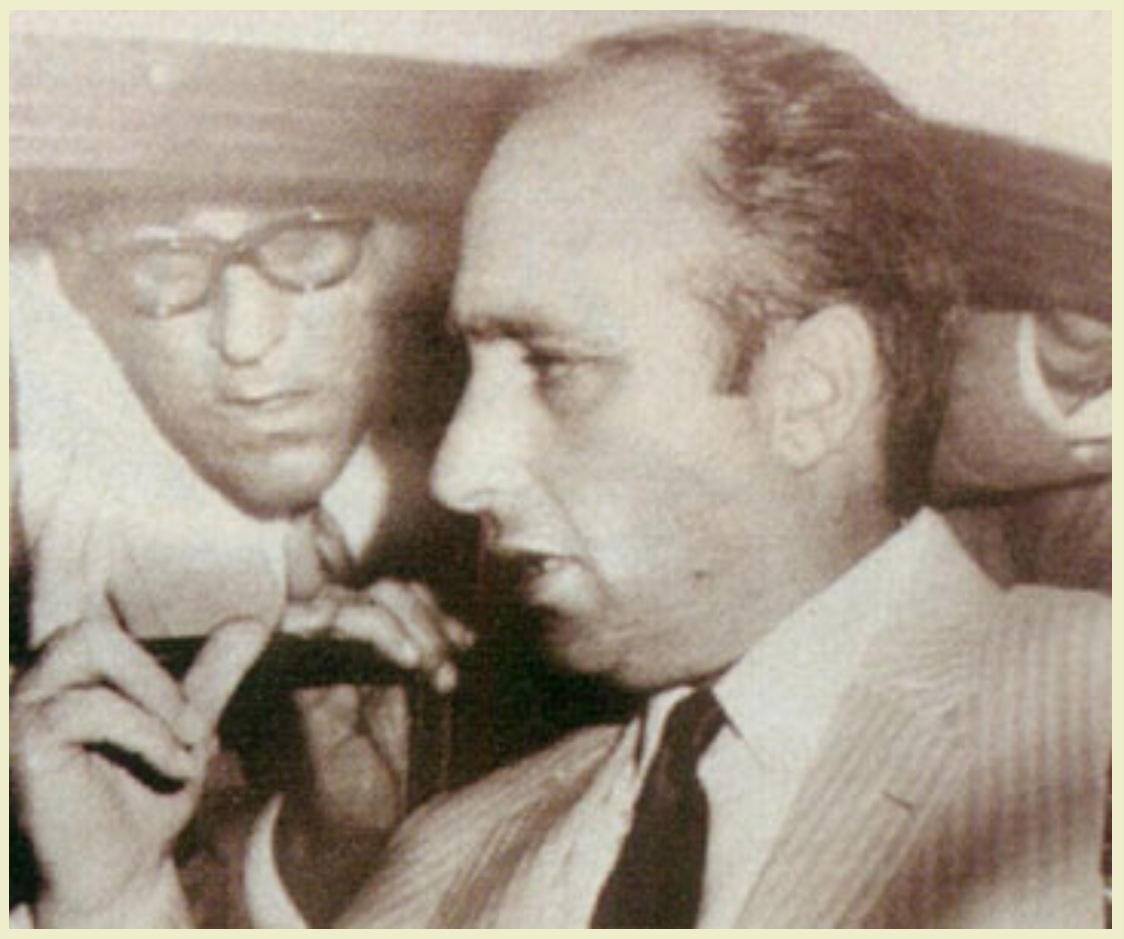
Jumping forward a year Fangio was kidnapped at gunpoint from his hotel the evening before the race by the rebels. He was returned to the Argentinian Embassy after the abortive event in which 40 spectators were injured and seven died after local driver Armando Cifuentes lost control of his Ferrari and ploughed into the unprotected crowd.

The race lasted 15 minutes or six laps, Stirling Moss was declared the winner in his Maserati 300S.

Fangio was later to say he was never concerned for his safety, he was held in a comfortably appointed apartment, was fed well, given a radio to listen to the race, and was personally apologised to by Castro’s second in command.

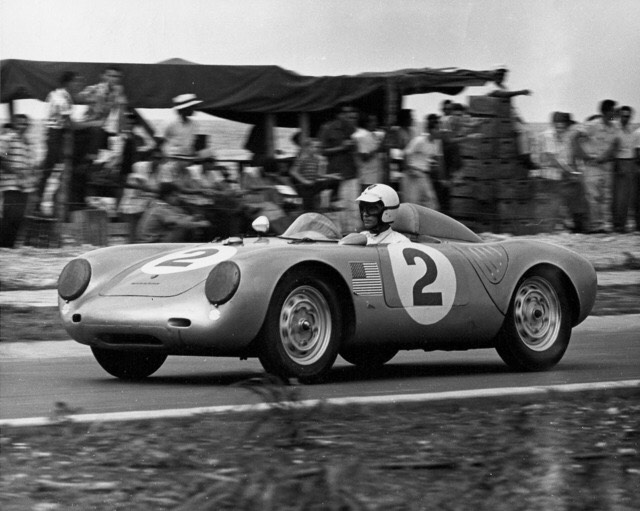
Joe Sheppard races to victory at Ala-Mar in 1959 aboard Porsche 550RS #550A-0144 (J Shea Collection)

In 1959 a four hour race held around a 2.8-mile course at Ala-Mar, a Havana suburb, was won by ‘The Tampa Hotshoe’, Joe Sheppard and Fritz Schiedel in a Porsche 550RS. It was Sheppard’s first race in his new car – very familiar though he was with 550s – so it was quite a debut! Schiedel was Sheppard’s mechanic.

With Castro’s revolution in its final stages, in 1960 he had power, anxious to create a sense of normality, the race proceeded, albeit on a circuit at army Camp Freedom, Moss was the winner in a Maserati Birdcage.

Such grubby bourgeois activities as motor racing ceased and Camp Freedom was used to house the sort of people who attended such events…

city
The beauty of the city and enthusiasm of the crowd, and its size come thru in all these shots! De Portago, Ferrari Monza 860 (Pinterest)

Linda Christian and De Portago…

Linda Christian was a successful Mexican/ American actor who starred in the first TV adaptation of the Bond novel Casino Royale and in Tarzan, amongst many others. She was with De Portago during that fateful Mille Miglia weekend later in 1957.

De Portago kissed Christian, jumped into his Ferrari 335S, and 70km before Brescia the car blew a tyre, ploughed into the crowd killing Portago, co-driver Ed Nelson, nine spectators and the Mille Miglia.

portage
De Portago and Phil Hill before the race, Havana 1957 (Pinterest)

Etcetera…

pits
Hill/O’Shea Ferrari 857S Monza, Malecon Circuit pits, Cuba 1957 (Pinterest)
image
The Castellotti Ferrari 290MM, V12 engined compared with the Monza four cylinder engine, both were Ferrari works 1956 Sports Car Championship entries. Castellotti in yellow polo shirt (Pinterest)
shelby
‘Chicken-plucker’ Carroll Shelby in trademark farmers overalls in the third place Ferrari 410, 1957 would be a great year for him (Pinterest)
start
Military very much to the fore. Fangio Maserati 300S #2 and Castellotti Ferrari 290MM #10 (Pinterest)
fang 2
Juan Manuel Fangio beside his Maserati 300S in Cuba at the start of his final full season of racing in 1957. He drove for Maserati in both Sports and Grand Prix events, winning his fifth F1 World Title in the fabulous, and by that time evergreen Maserati 250F; that car finally getting the title it long deserved (Pinterest)
moss
Moss Maserati 300S beside the John Edgar owned #78 Ferrari 4.9 driven by Carini (Pinterest)
hill
Hill/O’Shea Ferrari 857S Monza, Cuba 1957. Paul O’Shea checking out the engine (Pinterest)
building
malecon 4
malecon 3
image
Fangio after the 1958 Cuban Grand Prix and release by his Castro captors…(Pinterest)
che
It is not recorded if Che and Fidel attended one of Cuba’s Grands Prix…
Entry list for the 1960 event at Camp Freedom (J Shea Collection)
circuit
poter

Photo and Other Credits…

Pinterest, Havana May Blogspot, Hy Peskin Collection, John Shea

Finito…


bt 24

BT24/1 was Brabhams’ car for the ’67 Grand Prix season, the title won by his Kiwi teammate Denny Hulme that year…

Looks comfy in there; no belts, they arrived in GP racing in’68, Smiths chronometric tach, ‘tell-tale’ showing 8600 RPM, leather bound steering wheel, aluminium fuel tanks by your hips on each side, no ‘bag tanks’ till 1970 so fire risk in the event of an accident enormous.

Bandinis’ horrific ’67 Monaco Ferrari crash a case in point.

‘Varley’ lightweight battery is under the cover over which your legs will stretch. Grey ‘stove enamelled’ chassis rails of the ‘space frames’ used by Brabham F1 cars till the end of ’69 under the shift lever, who needs those new-fangled monocoques anyway?! Fibre-glass body apparent on all sides.

Right hand shift controls a ubiquitous and reliable 5 speed Hewland DG300 gearbox. Its attached to a Repco ‘740’ Series SOHC 2 valve V8, being gently warmed up at 3400RPM. The engine gave circa 340BHP, far less than the new Cosworth DFV but enough to do the trick in ’67!

Oh! The little red plaque riveted to the dash says ‘Speed Should Not Exceed 170MPH’!

Brabham Racing Organisation always saw the lighter side of life under the surface of intense competitiveness and success.

Oh so period, just luvverly…

image

Brabham in BT24-1 at Silverstone , British GP ’67, he finished 4th. Trusting photographer on the inside of Woodcote Corner (Mike Hayward)

Photo Credits…

‘Jack Brabham with Doug Nye’, Mike Hayward