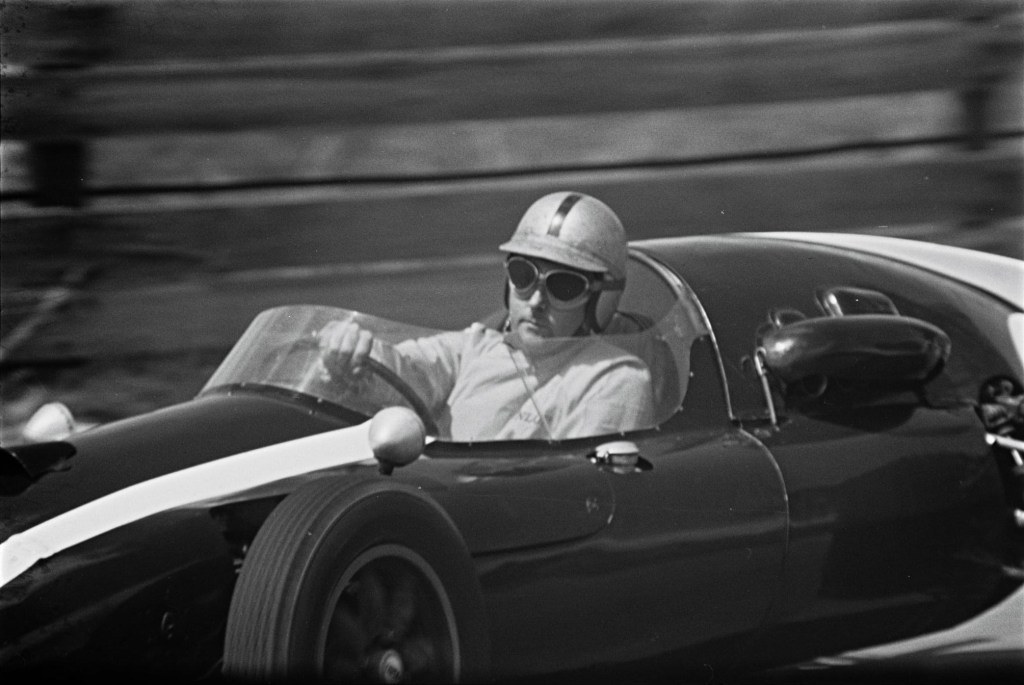
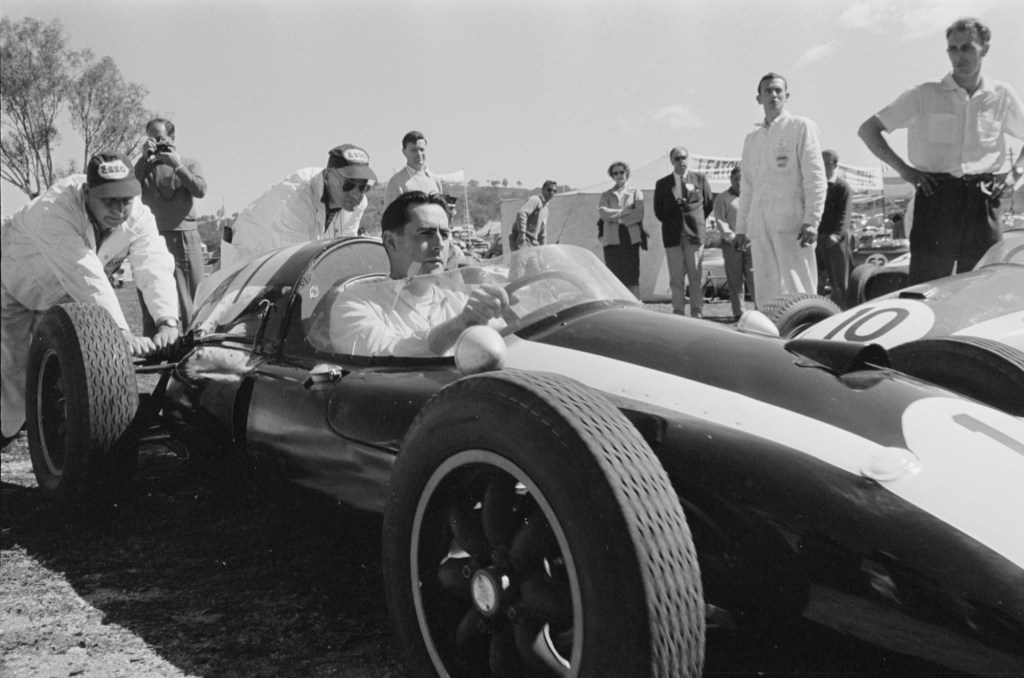
After Jack Brabham won his second World Championship on-the-trot at Boavista, Portugal in late August 1960 he returned to Australia between the Italian and US Grands Prix (Riverside that year) to contest the Craven A International, a one-off race sponsored by a cigarette company, at Mount Panorama on October 2.
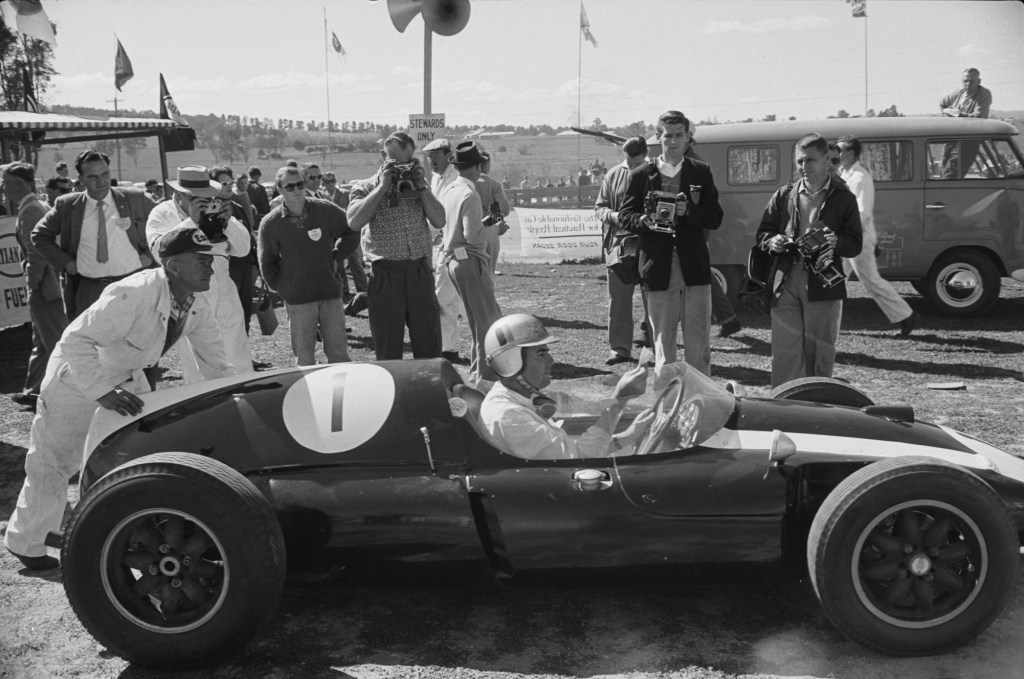
The great one raced a Cooper T51 Climax 2.5 (perhaps chassis #F2-4-59) to a convincing win from the similar cars of Bill Patterson and Bib Stillwell, albeit their cars were powered by 2.4-litre and 2.2-litre Climaxes respectively.
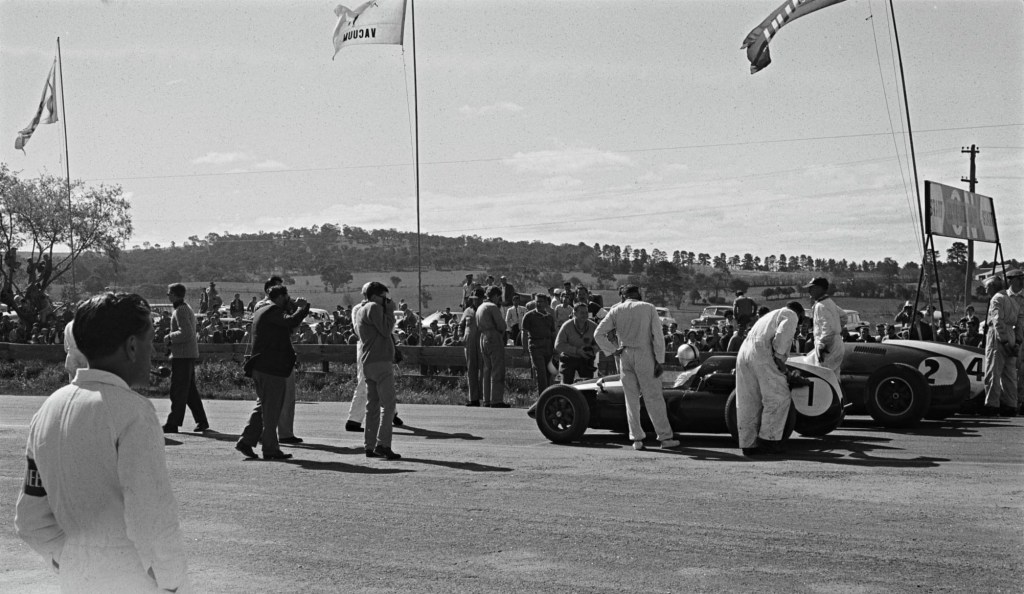
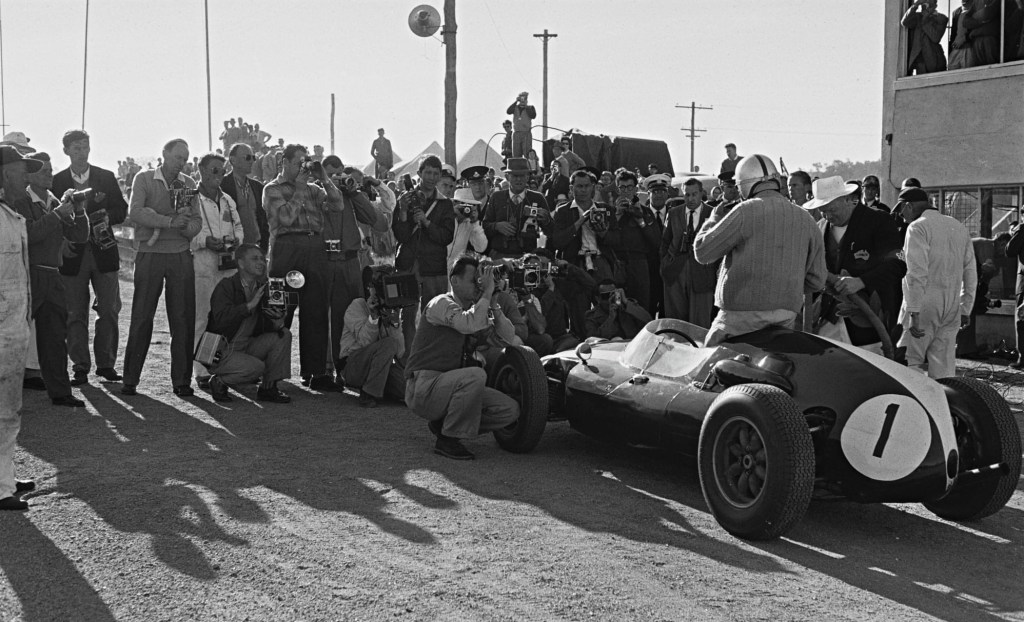
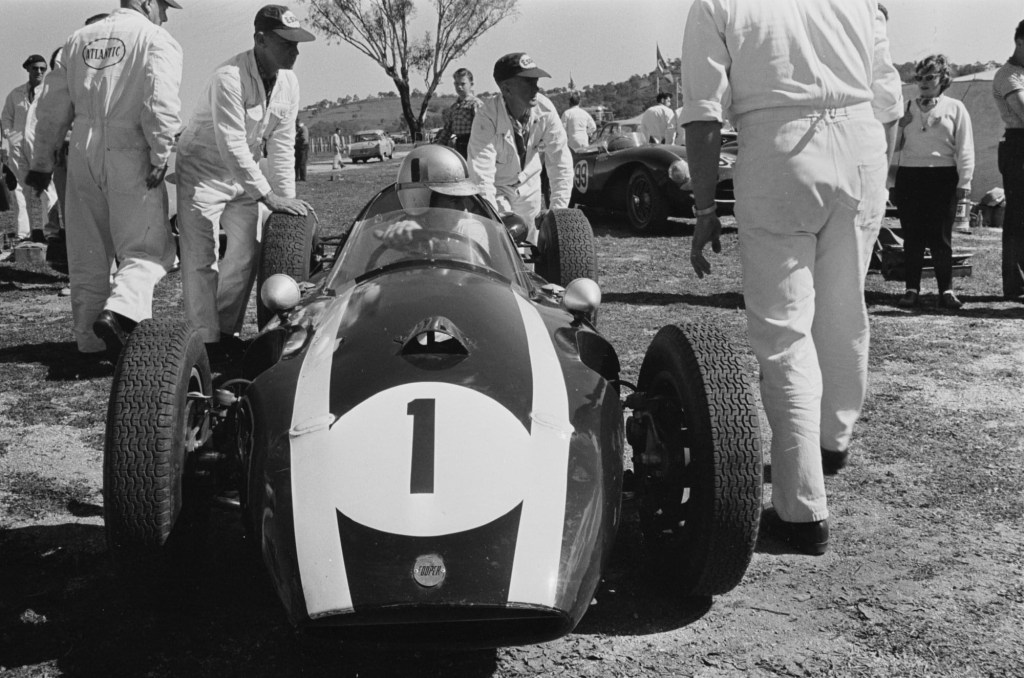
Jack takes his slot on the dummy grid, car #10 is John Roxburgh’s Cooper T45 Climax, DNF accident (L Stringer)Brabham in Cooper T51 #1, #2 is Mildren’s Maserati engined T51 and #4 is Stan Jones’ T51 Climax, DNF accident (L Stringer)
Brabham started from pole and won by 36 seconds. Coopers occupied the first five places of nine finishers in a field which included such pre-War ancients as Tom Sulman’s Maserati 4CM and Frank Elkins Holden engined Bugatti Type 37.
Australian motor racing was still in transition – very quickly – to the modern mid-engined era.
(L Stringer)Brabham takes the plaudits of the crowd and ‘snappers. Jumper, or perhaps a cardigan over the top of his overalls indicates a chilly Spring Bathurst day! (L Stringer)
These photographs posted by Leigh Stringer on social media this week beautifully capture the vibe and feel of that long ago weekend at Bathurst.
The Gold Star (Australian Drivers Championship) had been won by Alec Mildren’s Cooper T51 Maserati that year, he won four of the seven championship rounds. This Bathurst event wasn’t a title round, but it didn’t stop 28 cars starting the race, and even more entering it, such was the attraction of racing on the same grid as our Champ!
Credits…
Leigh Stringer, oldracingcars.com
Tailpiece…
(L Stringer)
No shortage of Esso capped assistance for Brabham, perhaps Tom Sulman’s Aston Martin DB3S behind? Where is John Medley’s Bathurst Bible when you need it, not here with me in the UK at the moment?!
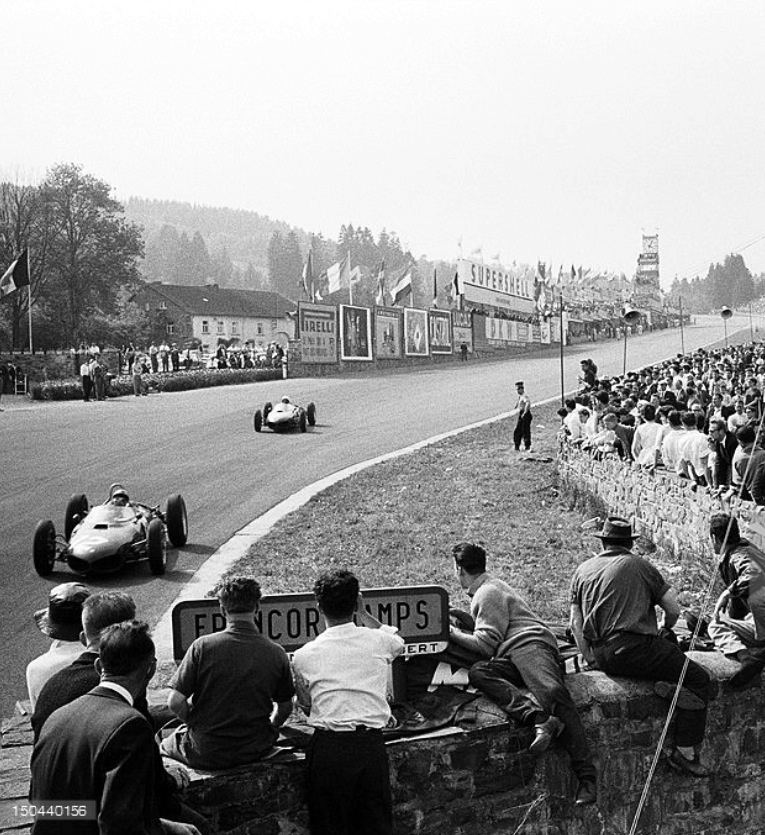
Phil Hill leads teammate Ricardo Rodriguez, both aboard Ferrari 156s, Belgian GP, 17 June 1962.
There was plenty of colour photography around by 1962 but monochrome is still rather powerful and evocative. The troops look more relaxed than the Ferrari pilots on the oh-so-fast turn into Eau Rouge, it always was and is an ultimate test of testicular girth.
Not a great season for Scuderia Ferrari in 1962 of course, the engine which kept the cars in front the season before – despite chassis deficiencies relative to the British cars – was no help in ’62 when said Brits had better Coventry Climax and BRM V8s than the Italian V6s and vastly superior chassis.
Here, Hill and Rodriguez are scrapping for third place in a season when the reigning 1961 World Champion, Hill P didn’t take a win, ceding the title to Hill G’s BRM.
Bruce, Tyler Alexander and and Alastair Caldwell…a new set of Goodyears for McLaren’s M7A. He put them to good use, qualifying sixth on the fast swoops of Rouen…
I’m drawn to the papaya McLarens thanks to their visual splendour and absolute respect for Bruce the man, engineer, test driver, racer and motivator of men.
He was the full-enchilada with the lot as a package, as well rounded a racer as it’s possible to be.
Here Chris Amon is tootling past him in the pitlane, his fellow Kiwi no doubt hoping the Firestone shod Ferrari 312 will cope with the fast swoops of Rouen better than Bruce’ M7A, a mighty fine design which carried the Ford Cosworth DFV.
I’ve posted a piece on this race before so don’t want to dwell on the awful fiery accident which cost Jo Schlesser’s life early in the event. Jacky Ickx took his first GP win in a Ferrari 312 from John Surtees’ Honda RA301 and Jackie Stewart’s Matra MS10 Ford.
The shot below is Graham Hill’s Lotus 49B Ford in grid slot nine surrounded by other fellas. The flash of blue to his left is Jean Pierre-Beltoise’ V12 powered Matra MS11 (ninth), Surtees Honda, with the blue flash down his white helmet and Chris Amon’s Ferrari, see its distinctive, white, between the Vee exhausts.
1968 was the last time an F1 GP was held at the wonderful 6.542Km road course near Orival and Rouen. The track was used for European F2 Championship races until 1978 and French national events after that, economic forces resulted in its 1994 closure.
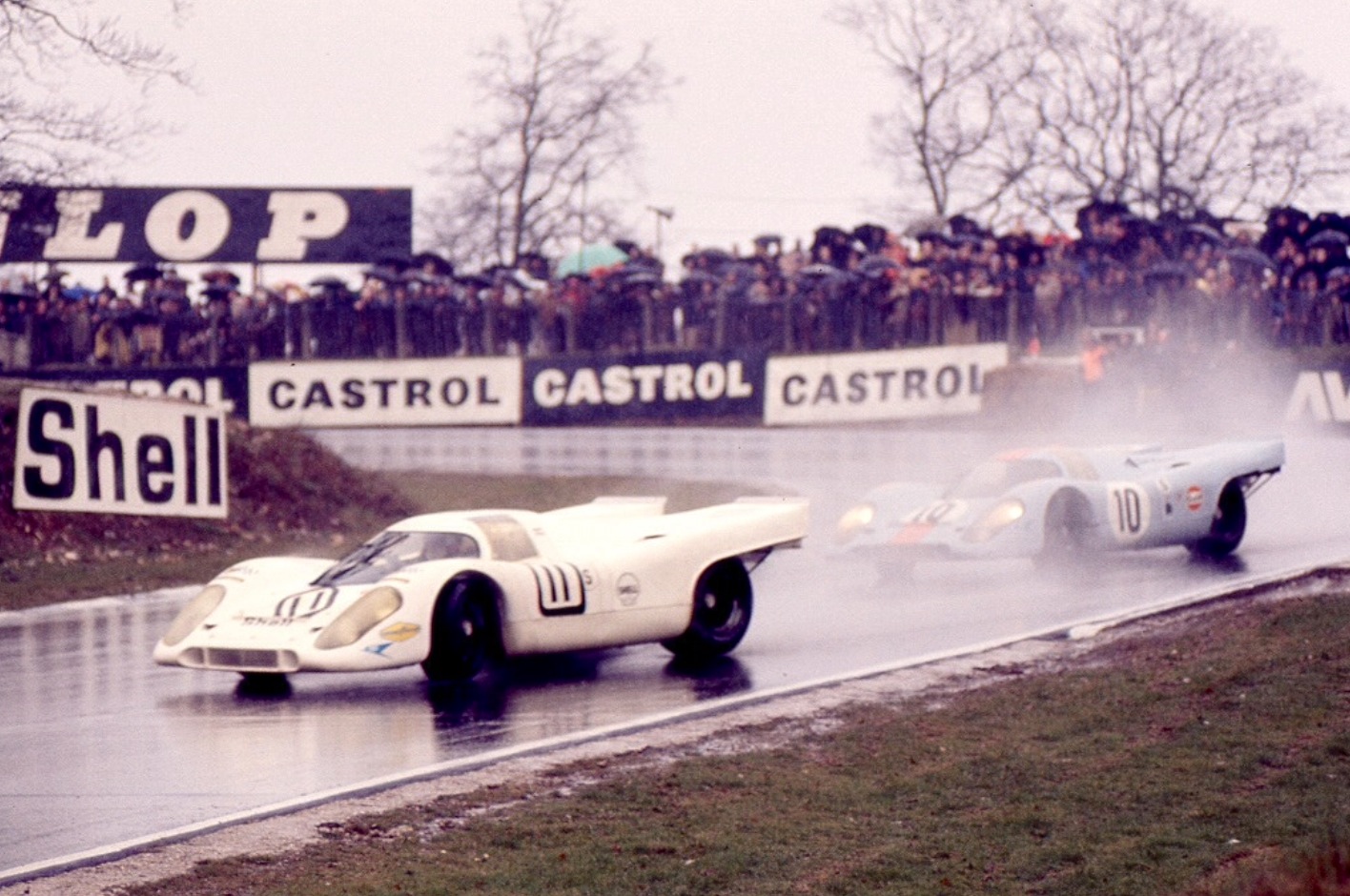
There are drives which are spoken of in reverential terms down the decades, Pedro Rodriguez’ victory in the Brands Hatch 1000km in 1970 is one of those…
Here #10, the John Wyer entry is set to pounce on #11 Vic Elford out of Druids in another factory (Porsche Salzburg) Porsche 917K, the Brit was of course no slouch on slippery surfaces himself. He was European Rally Champion aboard a Porsche 911 in 1967 and Monte winner similarly mounted in 1968 before going circuit racing.
Acknowledged wet weather ace Jackie Ickx raced a factory Ferrari 512S in a Brands Hatch field full of F1 drivers who in those days also contested the sportscar endurance classics. But Pedro was in a class of his own on that sodden Kent afternoon finishing five laps ahead of the second placed 917K of Elford and Denny Hulme, and eight laps ahead of another 917K driven by soon to be 1970 Le Mans winners Hans Hermann and Richard Attwood, both in similar equipment to Pedro…
Stirling Moss’ Aston Martin DB3S heads down Silverstone’s straight on the approach to Copse, Silverstone, 5 May 1956…
Another factory Aston DB3S of Roy Salvadori won the race, The Daily Express Trophy meeting sports car event, with Bob Berry third in a Jag D-Type from Moss, he is behind Stirling in this shot. Roy Salvadori had a good meeting also winning the under 1500cc sportscar event in a Cooper T39 Climax.
Moss won the feature F1 event, the BRDC International Trophy over 60 laps/175 miles in Vanwall VW2 from the Connaught B-Types of Archie Scott-Brown and Desmond Titterington.
(unattributed)
Moss in Vanwall VW2 chases teammate Harry Schell in VW1 during the International Trophy, Moss won while Harry suffered a DNF with a broken fuel pipe.
I’m on tour at the moment in Italy and then England, back in Australia on July 5, my posts until then will be predominantly quickies.
Bill Downie, HRG, Caversham, Western Australia circa 1960 (K Devine)
Ignorance is bliss! Until now I’d assumed Brabham’s 1966-1968 Repco F1 V8 engine rebuilds/freshen-ups were done back at RBE’s Maidstone, Melbourne base, but that’s not the case
“When we started to use the Repco Brabham V8s (the very first race for the new engine was the January 1, 1966, non-championship South African Grand Prix) it was clear to Jack that sending them back to Melbourne for rebuilds wasn’t going to work given the time it would have taken,” recalls Bob Ilich.
The Australian mechanic/technician worked for Jack Brabham Conversions, Motor Racing Developments (MRD-constructors of Brabham cars) and the Brabham Racing Organisation (BRO-Jack’s race team) during the 1965-1967 glory years.
“There just wasn’t the time between race meetings to fly engines backwards and forwards between England and Australia, the logistics just didn’t work.”
In 1966 BRO contested nine championship GPs and four non-championship events (remember those!), and in 1967 11 championship GPs and five non-championship races; Race of Champions at Brands, Spring Cup and International Gold Cup at Oulton Park, the BRDC International Trophy at Silverstone and the Spanish GP. This intense program yielded world drivers championships for Brabham and Hulme, and manufacturers titles for MRD/Brabham Repco in 1966-67.
In short, the season was very full from early January until the Mexican GP in late October.
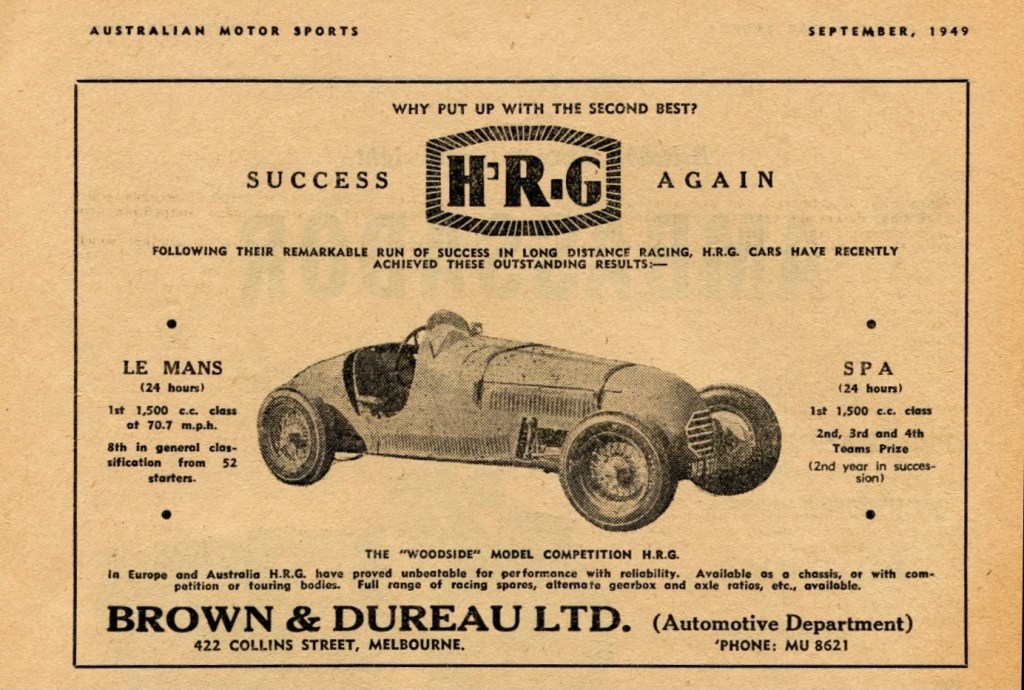
Jack had a ready-made machining solution when the H.R.G. Engineering Co Ltd – founded by Major Edward Halford, Guy Robins and Henry Ronald Godfrey in 1935 – ceased trading in 1966.
HRG built 241 sports and racing cars in addition to their core general engineering work. In 1956 they stopped building cars, their engineering clients included Cooper, and later Brabham.
“When Jack moved BRO from the Canal Yard, Byfleet Road, New Haw Surrey premises (which had been shared with Motor Racing Developments) to Guildford in early 1966, ex-HRG machinist Ron Cousins and his equipment, lathe, milling machines etc were already there doing work for Jack Brabham Conversions which operated from an Esso Service Station in Woking.”
“Conversions did general service and tuning work, fitted Coventry Climax engines to Triumphs and Austin Healeys, made performance modifications, and later did the development work on the Brabham Vauxhall Viva/Torana.”
“The Guildford premises had administration offices upstairs including a drawing office for John Judd, who was back at BRO after his stint with RBE in Maidstone. He was in constant touch liasing with Norman Wilson, RBE’s Chief Engineer in Melbourne.”
“Downstairs was the Brabham Conversions Parts Department, a large workshop where the racing cars were prepared and the transporter parked, Ron Cousins’ machine shop and an engine rebuilding workshop for Jack and myself,” Bob recalled.
“After the first couple of runs in South Africa and testing in England, the engines had oil leaks Jack said we needed to fix. The first rebuilds were to address this, over time of course we did freshen-ups as required.”
Bob Ilich with gasket kit at BRO, New Haw circa March-April 1966. Brabham BT17 sportscar coming together behind him and Holden EH abroad (unattributed)
“All the components we needed were sent from Australia including the new for 1967 700 Series blocks. I remember replacing three 600 Series blocks with the much stronger Repco 700 block, the three Olds F85 based blocks were still in a corner of the workshop when I left. If anything needed machining, Ron Cousins did it,” Bob recalls.
“By the end of the 1967 racing season the only thing we hadn’t mastered was the timing chain cover which still leaked a bit, but those 740 engines were otherwise bullet proof.”
“None of the engines were ever sent back to us for rebuilds,” confirms Michael Gasking, long-time RBE, Maidstone, Melbourne engine fitter and chief dyno test pilot.
“We sent engines and components over as they were needed, Jack and Frank (Hallam, RBE General Manager) were on the ‘phone all the time discussing updates and problems discovered at the track we needed to fix or enhance.”
So, there you have it, a little tidbit of RBE history not in Repco press releases or the history books.
Thanks Bob Ilich, I’m not sure quite how it popped into our conversation, but very much appreciated!
Etcetera…
HRG
Among HRG’s products/enterprises were the original UK import rights for Weber carburettors, twin-cam HRG (Singer) engines, the Stuart Proctor designed crossflow cylinder head, inlet manifolds and rocker covers for BMC B-Series engines (usually marketed by VW Derrington rather than HRG themselves) and overhead-cam Ford 105E conversions.
HRG originally operated from Tolworth, Surrey and later Oakcroft Road, Chessington, also located in Surrey.
The then HRG director/shareholders, having reached retirement age closed their solvent, profitable business in 1966. Derringtons took over the drawings, patterns and moulds to manufacture cylinder heads and Jack Brabham acquired or absorbed the machine shop equipment and Ron Cousin into his group…
The main-man out front of Jack Brabham Motors, Hook Road, Chessington (unattributed)
Brabham Premises
There is plenty of interest in Brabham, Jack Brabham, Ron Tauranac and Repco Brabham Engines at quite a granular level.
With an imminent trip to the UK, I’ve a couple of Brabham Sacred Sites at which I’m going to pay homage, with that in mind here is a list fellow Brabham Tourists may find of interest.
Please treat it as work in progress, I’m keen to hear from any of you with additional information to add, or corrections which should be made to this list.
Established circa 1959, ESSO garage, Rootes Group dealership. Phil Kerr ran the business, until his departure to McLaren. Ron Tauranac lived in a Bed-Sit in these premises when he first arrived from Australia and built the MRD (the first Brabham Formula Junior machine ) in a lock-up downstairs.
.Repco UK : Victoria Road, Surbiton, Surrey.
Circa 1957 at the Earls Court motor show. Repco’s marketing division and warehousing facility which sold garage and wheel balancing equipment, and later engine rebuilding, reconditioning and balancing equipment etc.
Space was sub-let to MRD to build Brabhams. The MRD, and Brabhams until when?, were constructed at these premises.
.Motor Racing Developments Ltd(MRD) : Canal Yard, Byfleet Road, New Haw, Weybridge, Surrey.
Circa 1962, manufacturer of Brabham cars and later Ralt cars
Shop floor at Motor Racing Developments circa 1966 (Repco)Brabham Racing Organisation in 1970, Guildford. Jack’s F1 Brabham BT33 Ford being prepared (D Phipps/MotorSport)
ESSO service station, modifications to Sunbeam Rapiers and other cars inclusive of fitment of Coventry Climax FWE engines to Triumph Herald, Austin Healey Sprites etc
.Brabham Racing Organisation Ltd (BRO) :
Initially co-located with MRD.
In early 1966 BRO moved to Weyford House, Woodbridge Meadows, Guildford, Surrey as outlined in this article.
High Performance Exhaust Systems Ltd (Directors Len Lukey and Brabham) sold and fitted Lukey Mufflers for cars, trucks and tractors from this location
BRO moved – partially – back to New Haw (MRD) circa 1968. Allan Ould recalls building the BT25 Indycars in the BRO workshop at MRD that year.
The F1 car prep and machining ‘shops remained at Guildford.
Jack Brabham (Worster Park) Ltd : 33-51 Central Road, Worster Park, London.
Vauxhall dealership in the-day, redeveloped in more recent times as the residential ‘Brabham Court’.
Jack Brabham Ltd : 23 Stoneleigh Broadway, Epsom, Surrey.
Circa 1965. Appears to have been the site of another car dealership?
Engine Developments Ltd (Judd Power) : Leigh Road, Swift Valley, Rugby.
Partnership of John Judd and Jack Brabham which commenced in 1971.
.Brabham family home.
3 Ashcombe Avenue, Surbiton, Surrey, from 1965 Greater London, below.
(P Stockden)Repco Brabham Engines, Mitchell Street, Maidstone premises early 1967 during the Tasman Series (Repco)
Australia
Repco Brabham Engines Pty. Ltd.
This entity was the Repco subsidiary incorporated circa 1965 to design and construct the Repco Brabham race engines
A small team was initially located in a small part (the engine laboratory) of Russell Manufacturing Pty Ltd at 85-91 Burney Street, and 26-34 Doonside Street, Richmond. The first V8s were built there.
Nigel Tait picks up the story, “The engine lab that was at the back of Russell Manufacturing (Doonside Street, Richmond) was to service the then current Repco factories producing engine parts.”
“Once the Repco Brabham project started to outgrow that small lab, a decision was made to relocate it over to the Maidstone site that had been purchased from the original Automotive Components Limited company some years earlier. One of the four or five factories on that site was cleaned out and early in 1966 the manufacture and assembly of the RB engines was progressively transferred from Richmond.”
“The new company, Repco Brabham Engines Pty Ltd was incorporated, the Repco Ltd (parent company) Director responsible was Bob Brown, the General Manager was Frank Hallam.”
“Eventually a new test centre was built out the back, it was very sophisticated and state of the art with two dynamometers compared to what we had in Richmond.”
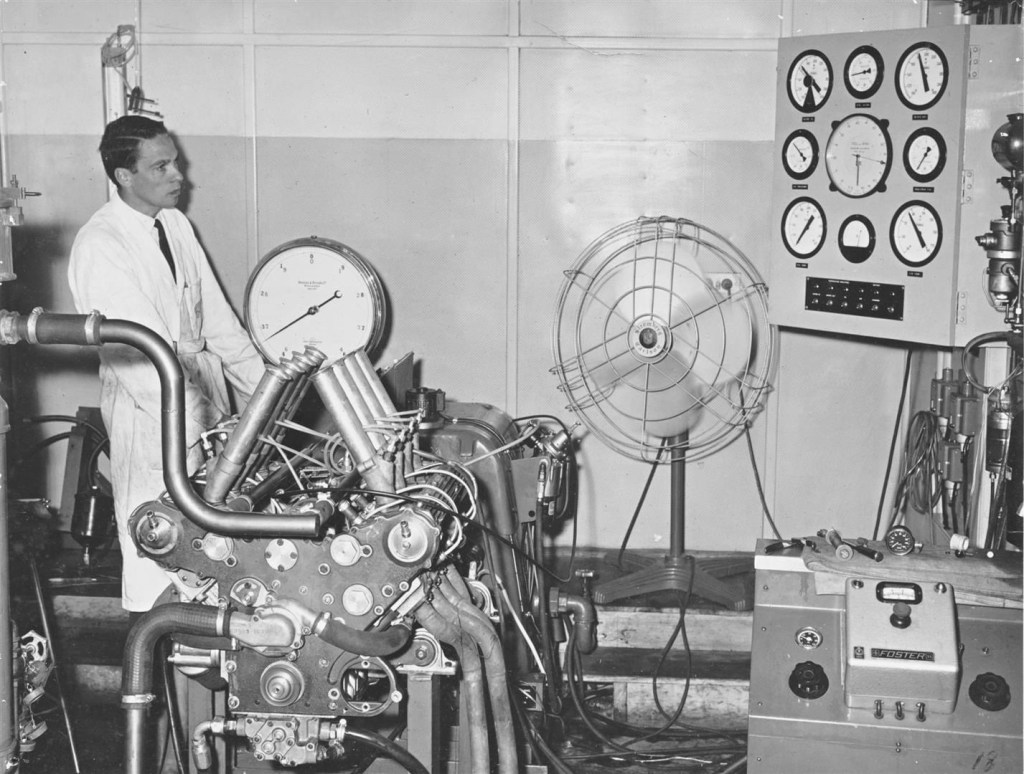
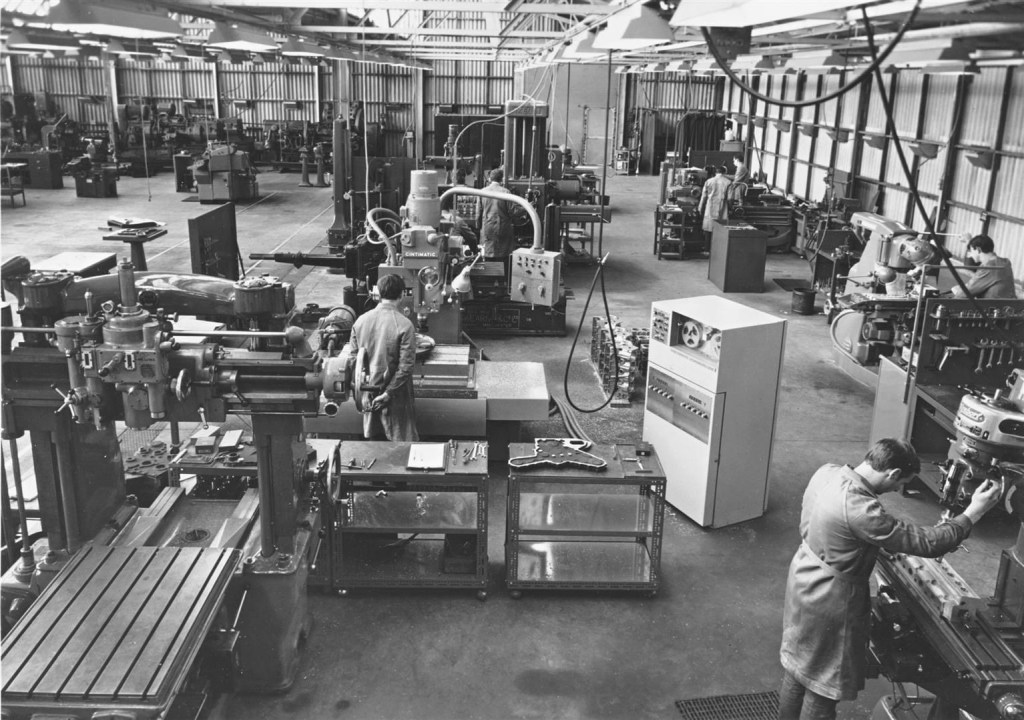
Michael Gasking testing RBE620-E2 2.5 V8 on the Heenan & Froude GB4 dyno in the old Myers garage – corrugated iron tin-shed – Doonside Street Richmond Engine Lab. The distinctive long-inlet trumpets allows easy identification of this engine as that used by Jack at the 1966 Sandown and Longford Tasman rounds. Mike is testing it either before the Sandown round, or immediately after it. The engine suffered oil pump failure and had to be quickly rebuilt before being sent to Longford…so it’s either mid-February or 28-29 February 1966 (Repco)More sumptuous surrounds at Maidstone circa 1967. Very well equipped, RBE were set up to build engines with great precision in numbers. That two axis Cincinatti Vertical Acramatic milling machine (in the middle of the photo) is claimed by the man who sold it to Repco to be the first numerically controlled machine tool sold in Australia. The timing cover case lying flat this side of the vertical tape reader (the light coloured cabinet) was made on this machine (Repco)
“So, from about mid to late 1966 (the move started during the Xmas summer break of 1965-66) the whole of the racing engine project was at Maidstone and the engine lab in Richmond continued to service the Repco engine division.”
“Later, the same dynamometer set up was used for the (1969-1974) Repco Holden F5000 project.”
“In the meantime Repco started to move some of the piston and ring manufacturing plant over to the Maidstone site and for a while both sites operated as Repco Engine Parts – Richmond Plant and Maidstone Plant.”
“Then in 1986 Repco sold off the Engine Division to a management buyout and the same products continued to be made at the two plants though eventually all were consolidated at the Maidstone site, Richmond having been sold.”
“The management buyout company didn’t have a name and Repco kindly allowed it to be called Automotive Components Limited (ACL), so the wheel turned full circle,” Nigel Tait recalled.
The Richmond (art deco) buildings are extant, Maidstone became a housing estate close to a decade ago, below.
(N Tait Collection)(N Tait Collection)
“The memorial at Maidstone was the brainchild and project of a local councillor about 2015. We had Michael Gasking and (now the late) Don Halpin (above) to cut the cake at the unveiling ceremony,” Tait recalled.
“Michael was at Richmond when I joined Repco as a cadet engineer, and I was assigned to work with him as his assistant on Repco Brabham with engine assembly and running the engines on our dynamometer (Heenan and Froude GB4).”
“Michael was (is) a good man, very skilled, a good teacher and very thorough. The engines he built won the 1966 championship and probably half of 1967 (Denny) as well.”
“Don, sadly now gone, was an amazing engine builder, worked in my team after Repco Brabham and the F5000 Repco Holden days on alternative fuel projects for the government, and post retirement built customer racing engines until the end. I miss Don…” recalls Nigel of his colleagues and friends.
Credits…
Bob Ilich, Nigel Tait, Ken Devine Collection, Paul Stockden
Tailpiece…
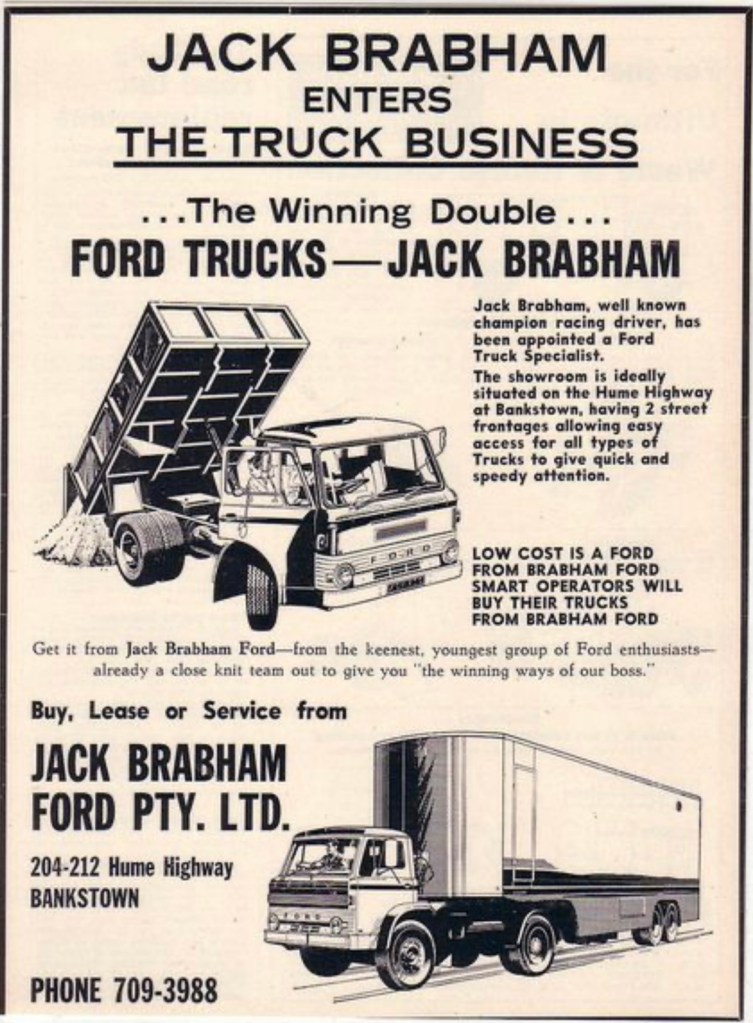
Yeah, yeah, yeah, of course there are Jack’s businesses in Australia too (both before he went to the UK and after he left to return home) in the automotive, aviation and rural sectors but my focus is just those of the Repco-Period.
If we widened the lens we would be going for weeks I suspect…
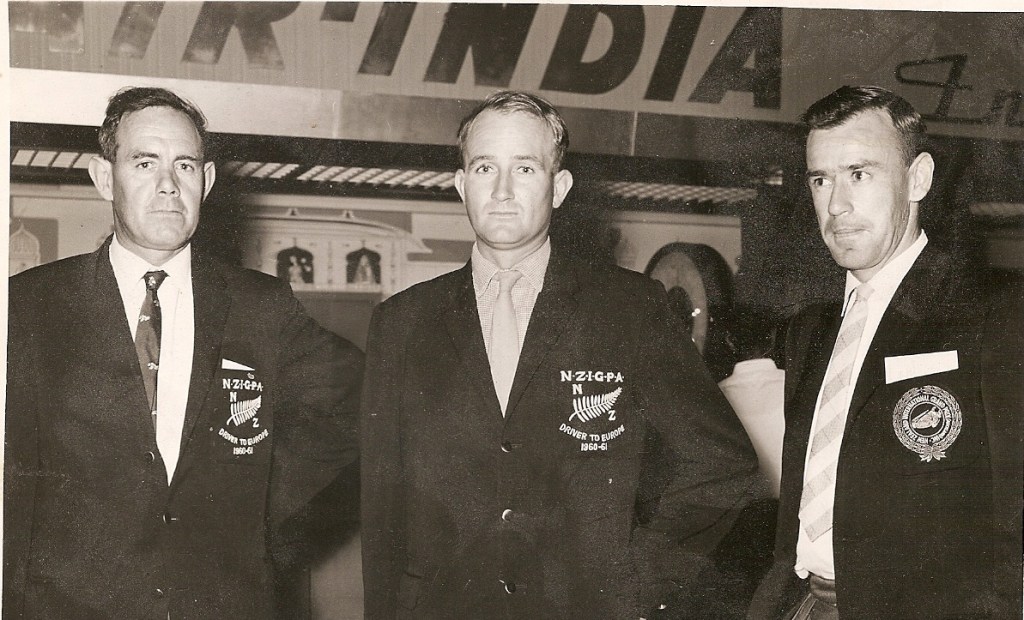
The New Zealand International Grand Prix Racing Team about to fly to London via Sydney, Singapore, Hong Kong and Bombay, arriving at the beginning of April 1961. Auckland Airport, from left is Bill Hanna, Angus Hyslop and Ross Pedersen. Don’t stress guys, it’ll be ok!
Once in the UK they meet up with Denny Hulme, basing themselves around the Kingston-upon-Thames area. As a Driver to Europe alumnus, Denny also drove under the NZIGP Team banner.
This is the second of three articles written by Alec Hagues around photographs taken by Bill Hanna, Alec’s father in law who was Angus Hyslop’s team manager/mechanic during 1961. The first instalment is here; Angus Hyslop, Kiwi Champion through Bill Hanna’s lens… | primotipo…
Enjoy the fabulous photographs and first hand account of elite level international Formula Junior from another age.
(B Hanna)
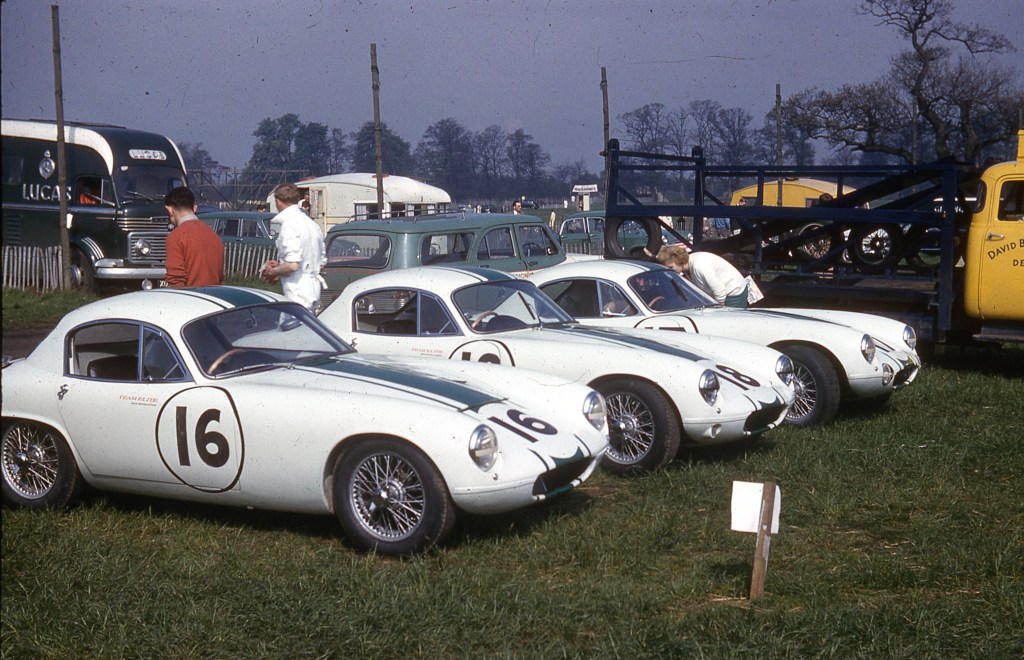
On 15 or 16 April 1961, before they started racing, the team visited Oulton Park in Cheshire for the GT Cars Trophy Race. Here above are the Lotus Elites of John Wagstaff #16, Bill Allen and Peter Arundell; there are some seven Elites in the race.
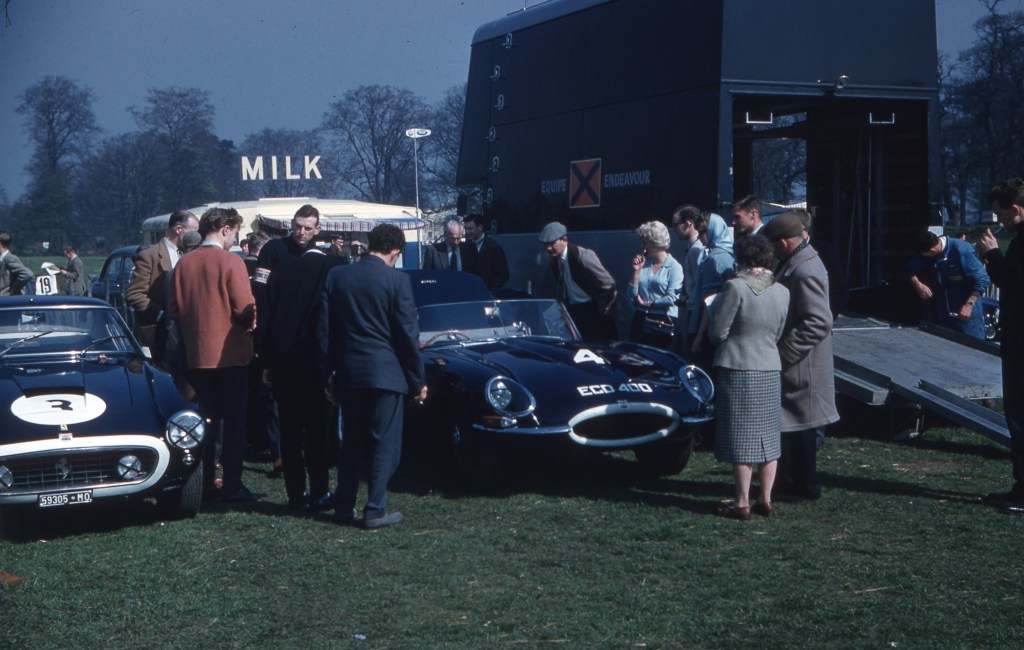
However, the big news was the debut of the Jaguar E-Type in racing, the first production example having rolled off the production line in Coventry only the month before. Note the group of admirers all-over Graham Hill’s Jag, shunning Jack Sears’ Ferrari!
(B Hanna)(B Hanna)
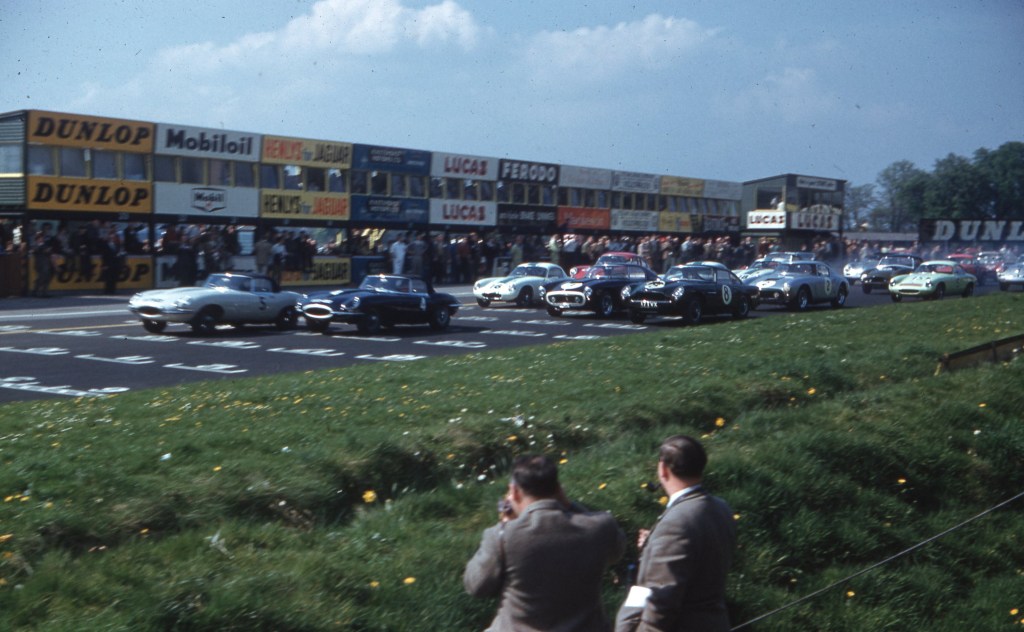
Roy Salvadori #5 above leads Graham Hill #4 off the grid, both driving E-Types. Just behind are John Wagstaff #16 (Lotus Elite Climax), Jack Sears #3 (Ferrari 250 GT Berlinetta) and Innes Ireland #8 (Aston Martin DB4).
(B Hanna)
The Cars
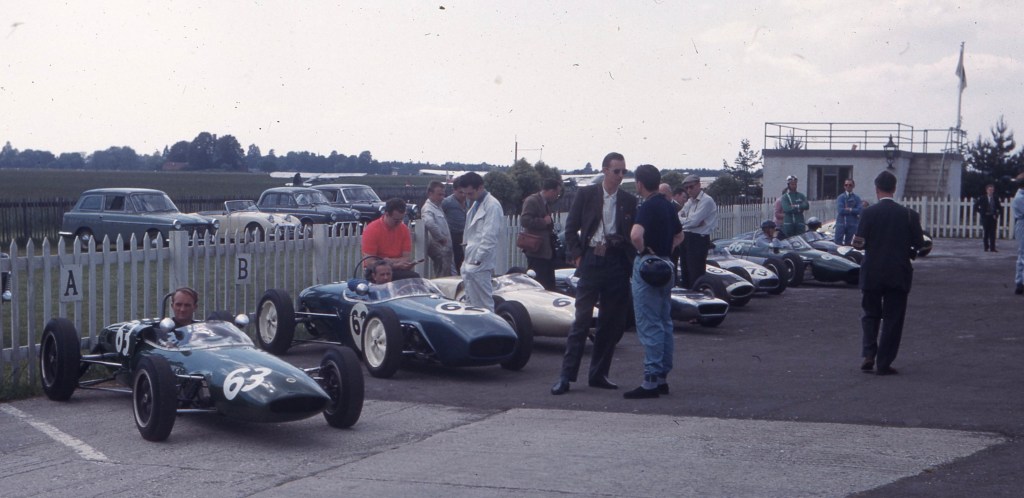
Angus’ Lotus 20-Ford/Martin in green, seen in the paddock at Goodwood above. A recap, Angus shipped his Cooper T43-Climax 1964cc over to the UK. We know this because it ‘comes back’ at the end of the season, at least as far as NZ Customs are concerned.
He is on the NZIGPA Driver To Europe scheme which is affiliated with Cooper Cars Ltd, and the team spend time at Cooper’s garage in Surbiton. Yet he drives a Lotus the whole time he is in Europe.
(B Hanna)
Denny’s Cooper T56-BMC (later Ford) in blue/silver, is seen here at Roskilde during practice for the Copenhagen Cup in May, he is ahead of Angus who later won the race, Denny placed seventh.
While Angus has Bill and Ross on his team, Denny enlists the help of journalist Eoin Young. With no disrespect to Eoin’s memory, it seems highly likely Bill gets involved with both cars!
The NZIGP Team drivers wear silver helmets with a maroon stripe.
(B Hanna)
Angus’s first race in Europe (above) is the BARC Whit Monday Meeting at Goodwood, 22 May 1961. A number of sources report that he wins the race.
At the Roskilde, V Copenhagen Cup, 28 May 1961 Denny bravely returned to the track where his Kiwi team-mate George ‘Joe’ Lawton was killed the previous September.
As noted above, Angus won the race, David Piper was second in another Lotus 20 Ford.
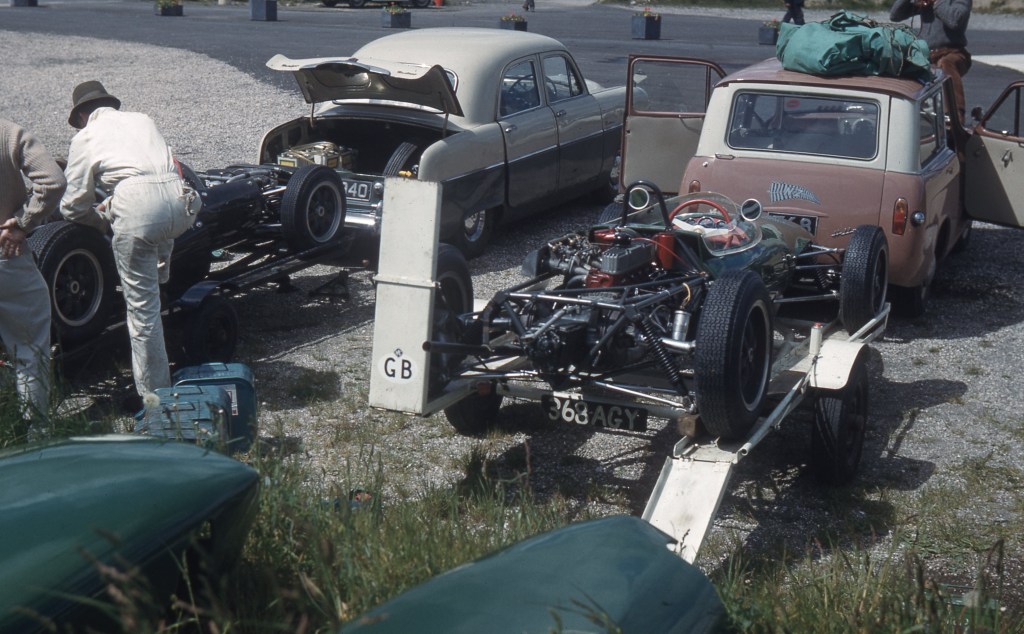
Angus and Denny’s cars on their trailers in the paddock – the depot – at Roskilde.
(B Hanna)
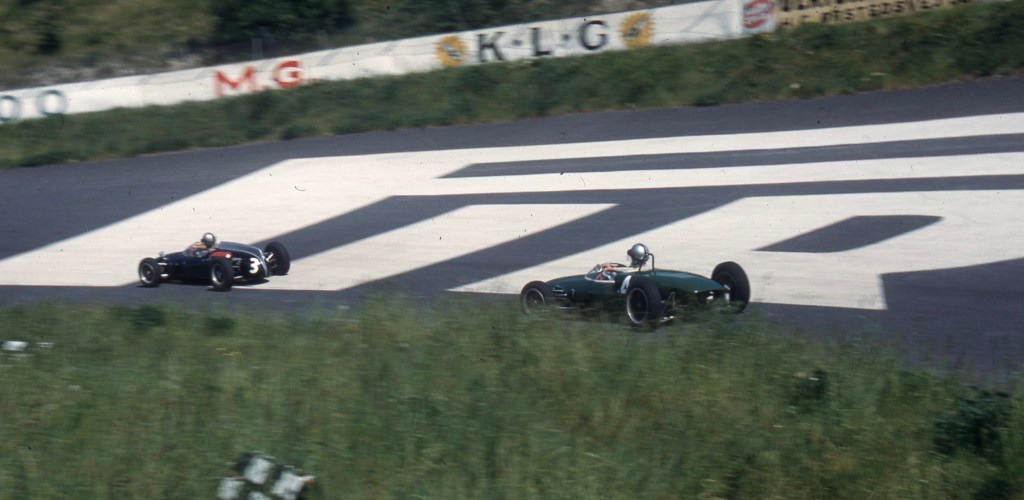
On 4 June 1961 in the IX Grand Prix de Rouen Junior at the Circuit de Rouen-les-Essarts, Angus takes 11th and Denny DNF with both suffering engine problems.
Who is the young businessman at Le Mans? Marvellous, atypical Denny portrait (B Hanna)
Le Mans 10-11 June 1961: XXIX Le Mans 24 Hour.
There are many pictures out there of the Abarth 850S co-driven by Angus and Denny so successfully in this race. So here’s a picture of Denny Hulme in a suit with a tanker and a theodolite.
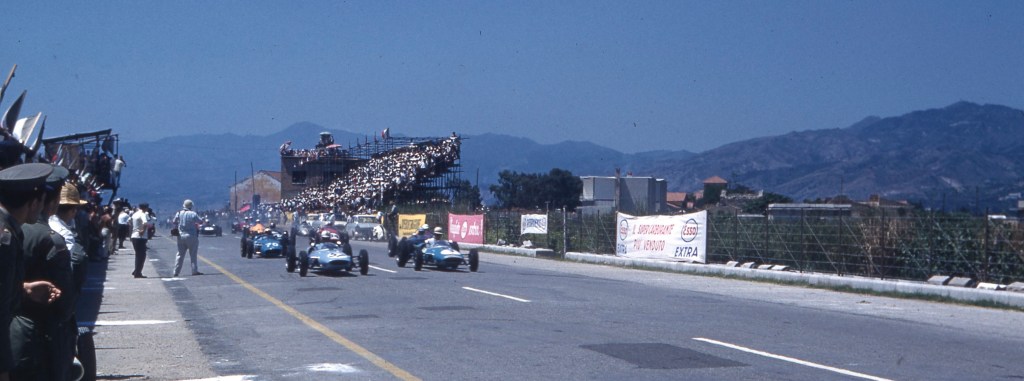
Having taken somewhat disappointing sixth and 18th spots respectively on 2 July 1961 in the V Coupe International de Vitesse des Formule Junior, Circuit de Reims-Gueux, Denny and Angus returned to the UK before embarking on the long trip towing their cars in convoy to Sicily.
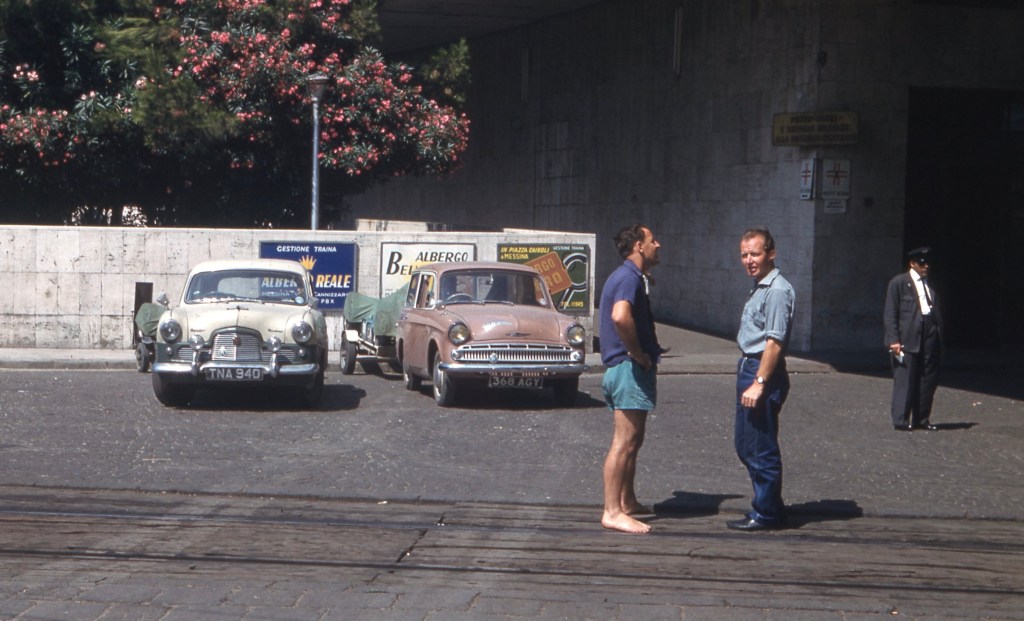
Here are Denny (in classic barefoot pose) and Eoin with the convoy parked up, probably waiting to board the ferry at Villa San Giovanni (below).
(B Hanna)(B Hanna)
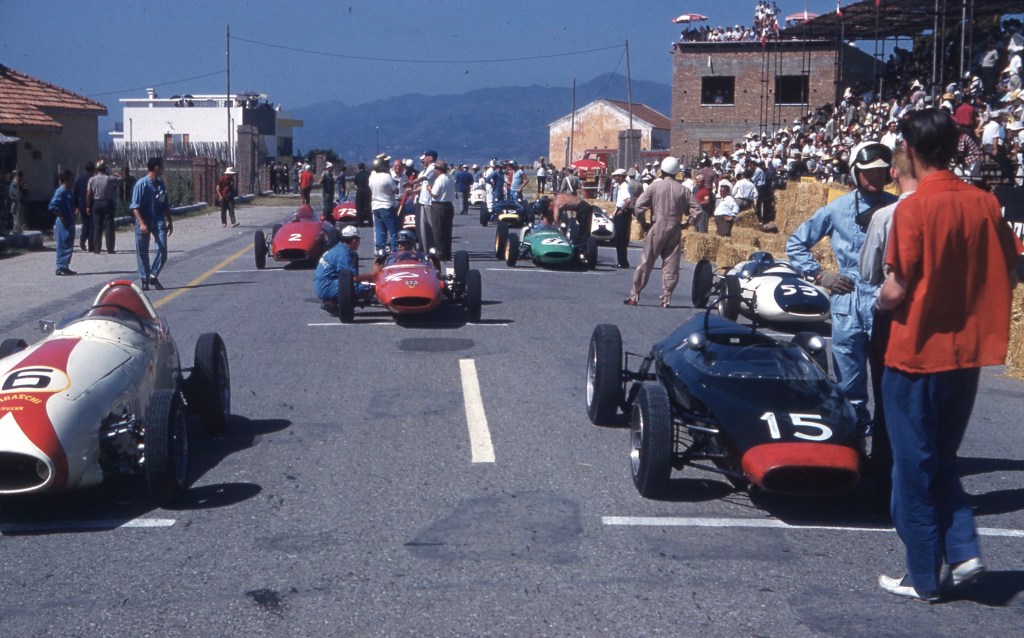
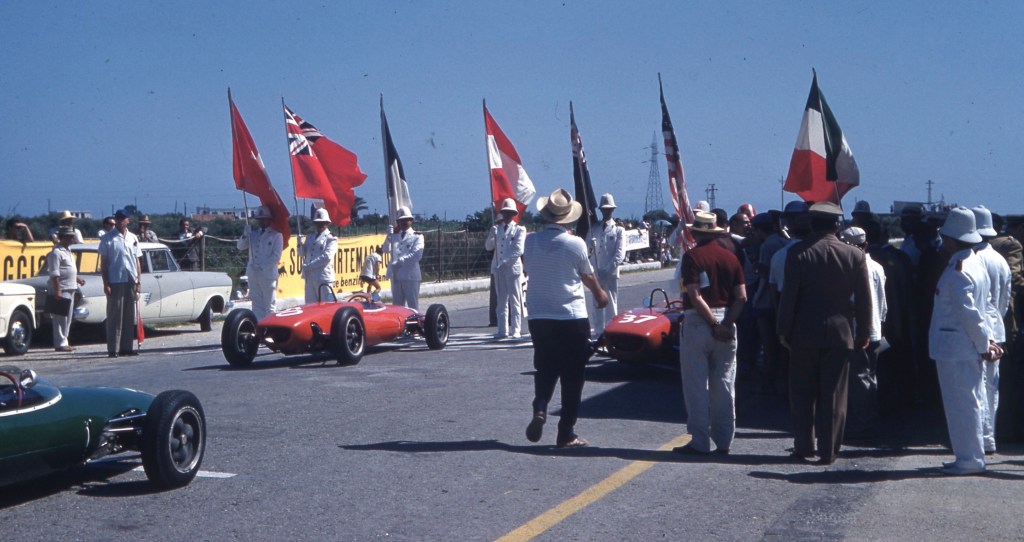
23 July 1961: III Gran Premio di Messina, at the Circuito Laghi di Ganzirri.
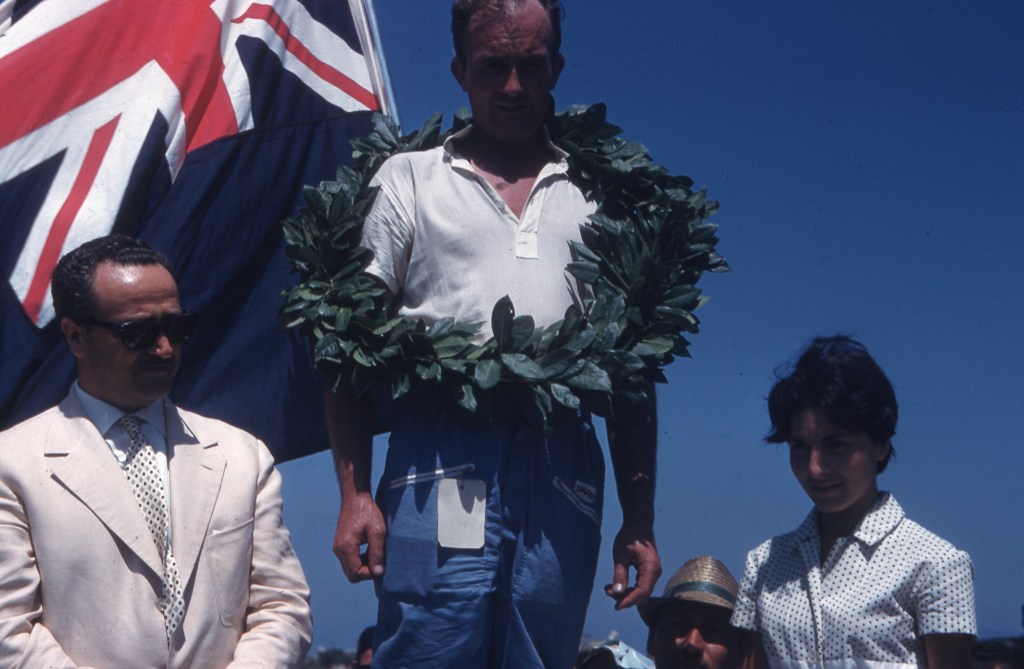
In their best joint performance of the summer, the Kiwi duo took first and second places with Angus edging Denny out of the top-spot.
(B Hanna)
The grid shot above is probably heat 1, Massimo Natili, Taraschi Fiat #6 on the grid alongside the Lola Mk3 Ford of Britain’s Bill McGowen #15 and Geki #42 Lotus 20 Ford. This heat was won by Lorenzo Bandini from Jo Siffert and Angus.
(B Hanna)
Above is probably the Lotus 20-Fords of Bandini #50 and Siffert #37 on the front row of the grid, with Angus’s similar car creeping into shot at left.
The stunning panorama below is probably heat 2, Bob Anderson’s Lotus 20-Ford and Colin Davis’ Lola Mk3 Ford leading, with Denny probably largely concealed behind them. Davis won the heat from Anerson and Hulme.
(B Hanna)
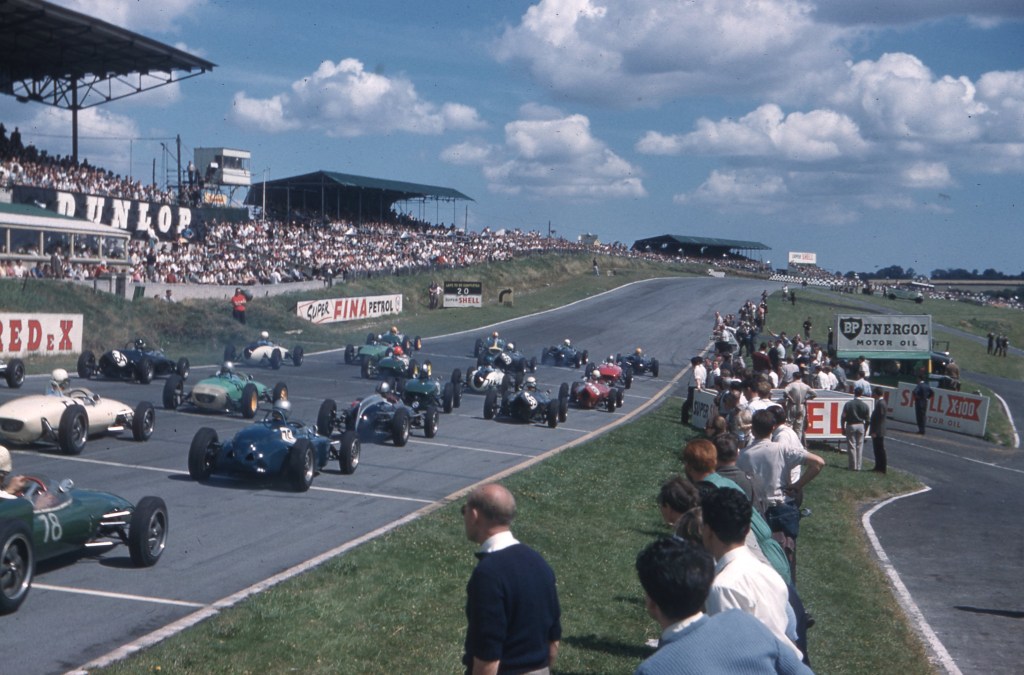
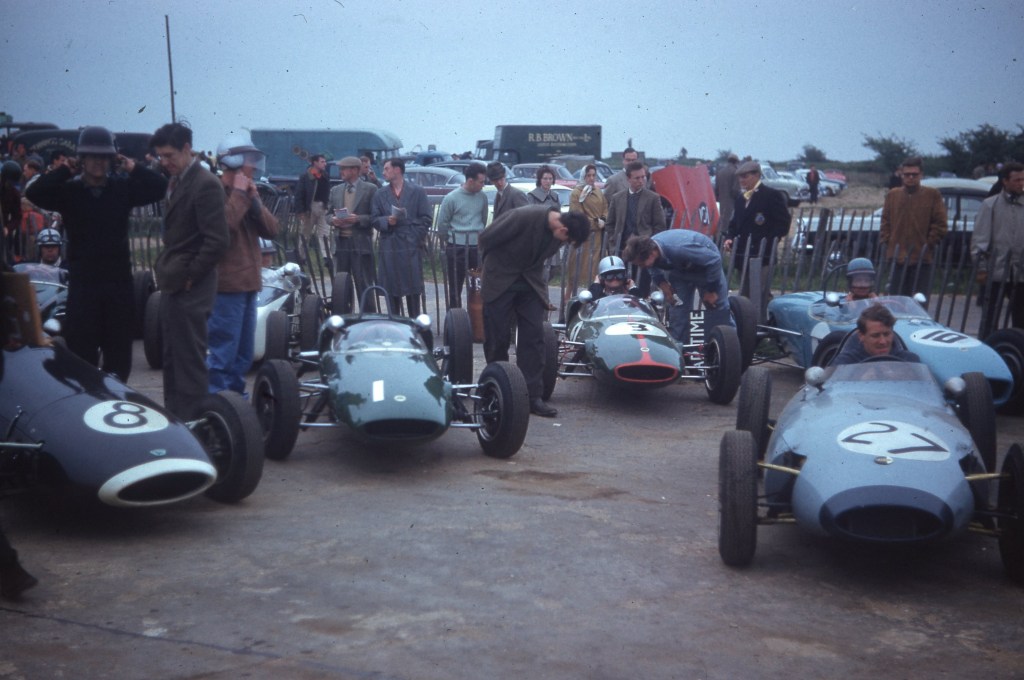
Brands Hatch, 7 August 1961 a John Davy Trophy meeting. I think I see Angus and Denny in there, mid-grid. Hyslop was 12th and Hulme a DNF in the race won by Peter Arundell’s Team Lotus Lotus 20 Ford.
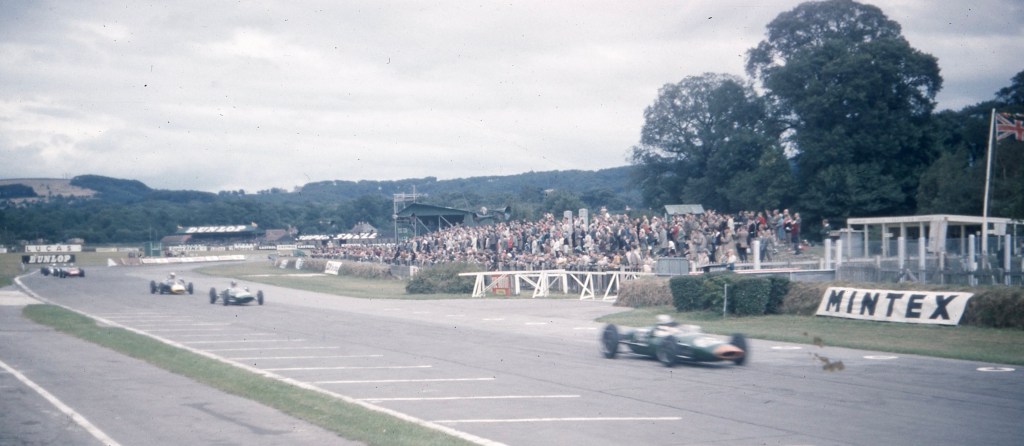
And below, on a typical grey English summer day at Goodwood, 19 August 1961 II BARC Formula Junior Championship, perhaps that’s Alan Rees leading in the Lotus.
Rees won from Gavin Youl’s MRD Ford and Dennis Taylor’s Lola Mk3 Ford with Angus fourth. Denny was in Sweden that weekend contesting the Kanonloppet, he too was fourth.
(B Hanna)(B Hanna)
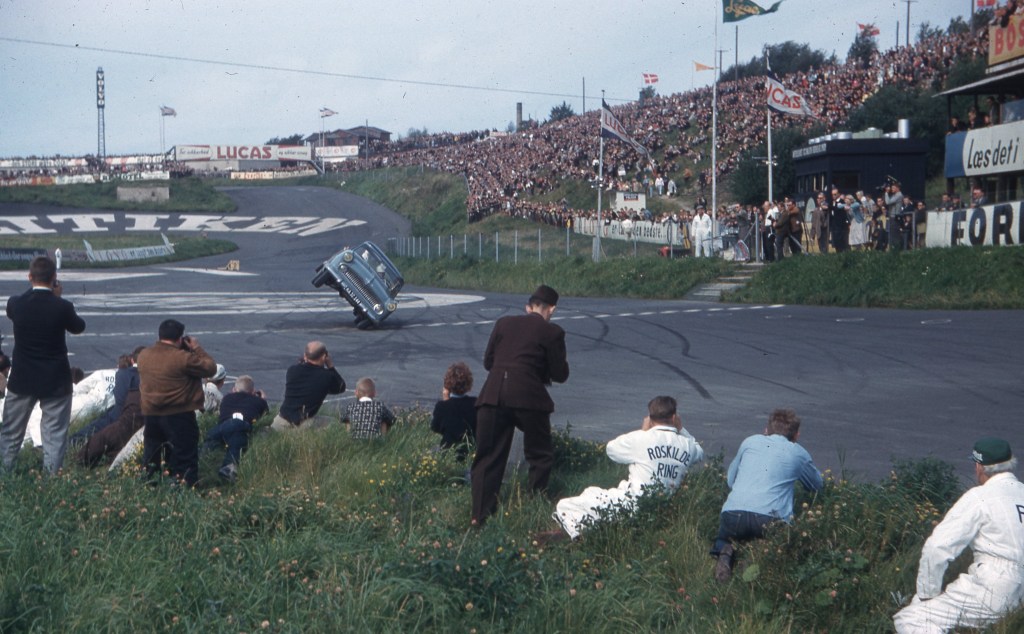
Back at the Roskildering for the Danish Grand Prix weekend of 26-27 August 1961 above.
Aside from the Formula 1 Grand Prix (non-championship) feature race and Formula Junior (in which Angus and Denny were third and fourth respectively), and saloon car racing featuring John Whitmore in his Austin Mini Seven, the organisers put on this display of stunt driving.
You are seeing about half of the entire circuit in this one photo.
(B Hanna)
Angus’ final 1961 race seems to have been the September Trophy meeting at Crystal Palace on 2 September 1961.
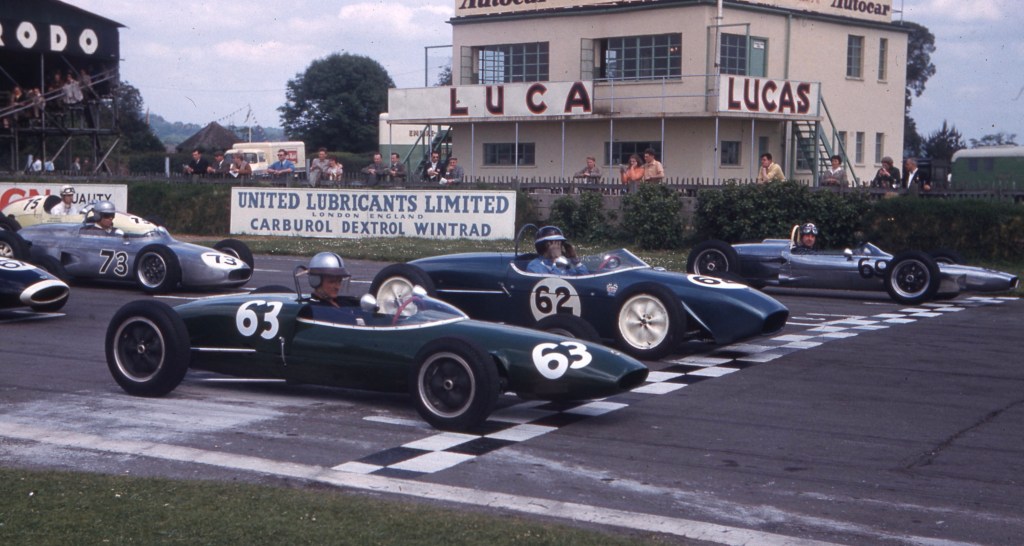
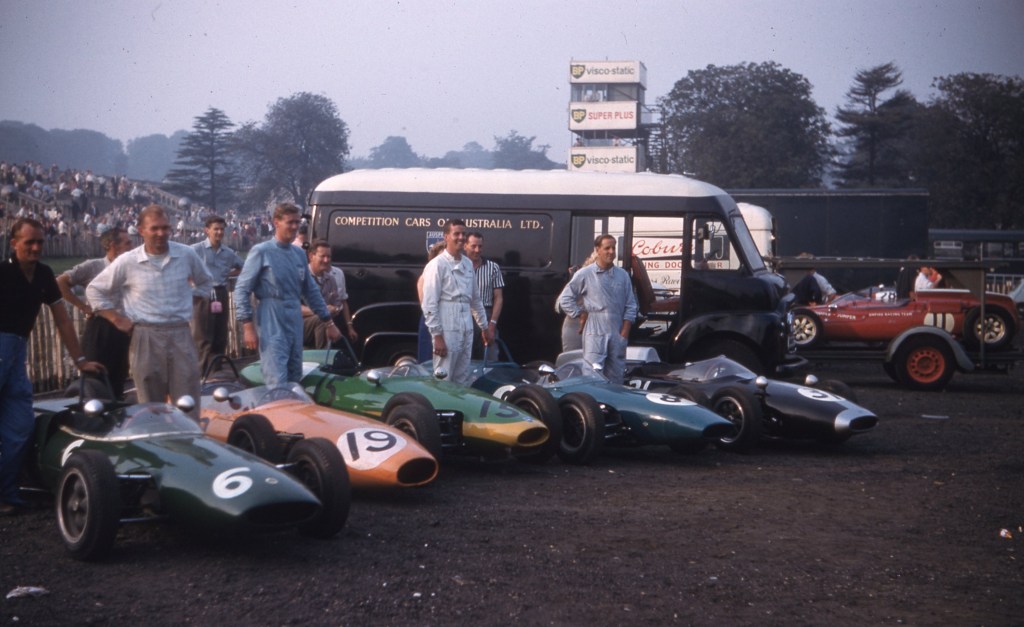
In the line up above we see Angus Hyslop #6, Eric Harris Alexis Mk3 Ford, Steve Ouvaroff with the #15 Competition Cars of Australia built Ausper T3 Ford, Gavin Youl in the first first Brabham, the MRD Ford #8 and Denny at far right in #31; an all-Australasian crew with the exception of Harris. In the background is Ian Raby’s Cooper T56 Ford.
Angus was seventh, while Denny DNQ, Trevor Taylor’s works Lotus 20 Ford won.
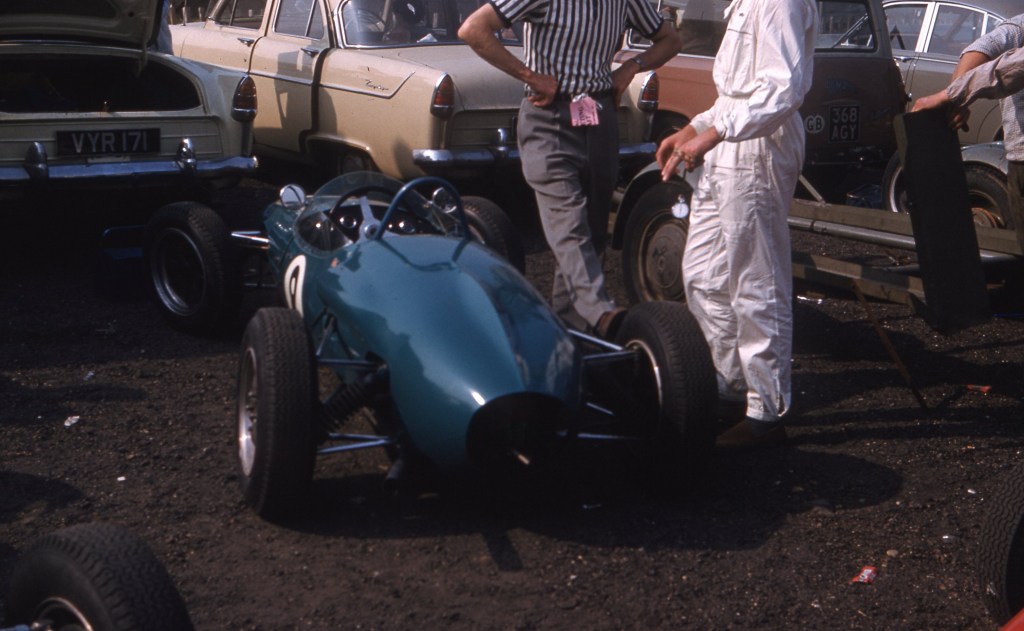
The butt shot below is of Youl’s MRD at the same meeting.
(B Hanna)
Angus and Bill returned safely to New Zealand and although Angus only drove two more seasons in racing cars, both enjoyed a lifelong passion for motor racing.
Meanwhile, the tale of how when Angus’s Cooper T45-Climax 1964cc arrived back in New Zealand a couple of months later it had become a T53 2495cc Lowline has been told elsewhere.
Part 3 soon…
Credits…
Photography by the the late Bill Hanna and words by Alec Hagues
Tailpiece…
(B Hanna)
Angus is putting on his helmet somewhere in the UK, one of our readers, Roger H has kindly identified the shot as probably the Snetterton meeting on 14 May, 1961.
The Lola Mk2 front and centre is the Scuderia Light Blue machine of Hugh Dibley. It’s possibly Brian Hart in Len Terry’s Terrier #8, then Angus #1, Reg Brown in the Lotus 20 #3 and Bill Moss in Lotus 18 #10.
GV Wolf WD1 Chev, Trois Rivieres 1977 (MotorSport)
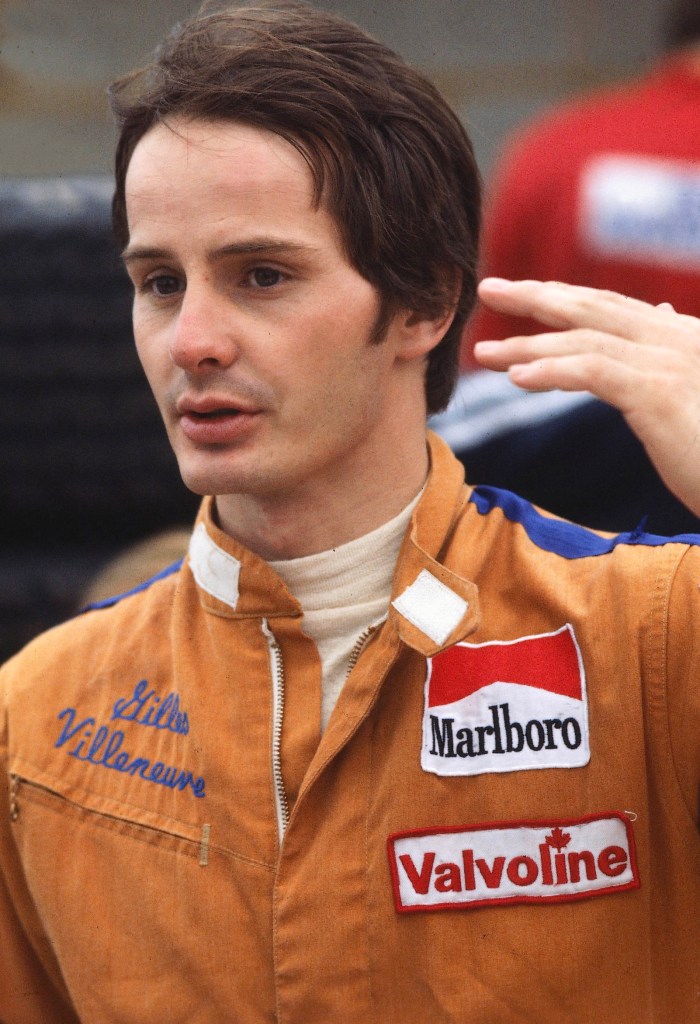
1997 F1 World Champion Jacques Villeneuve’s dad doesn’t have awe inspiring race-statistics, so why is he revered by generations of F1 fans born long after he died? Mark Bisset looks back at the French-Canadian legend 40 years after that tragic May 8, 1982 Belgian GP weekend at Zolder
Before the carbon-fibre era few of motor racing’s supreme automotive acrobats died quietly in their beds.
Bernd Rosemeyer, Jochen Rindt, Ronnie Peterson, Ayrton Senna, Stefan Bellof, Gilles Villeneuve and their ilk had God-given skills which awed fellow competitors and spectators alike.
Spectacular car control, seemingly impossible passes and flagrant disregard for their own safety were their modus operandi, performed without the many ‘safety nets’ of modern F1.
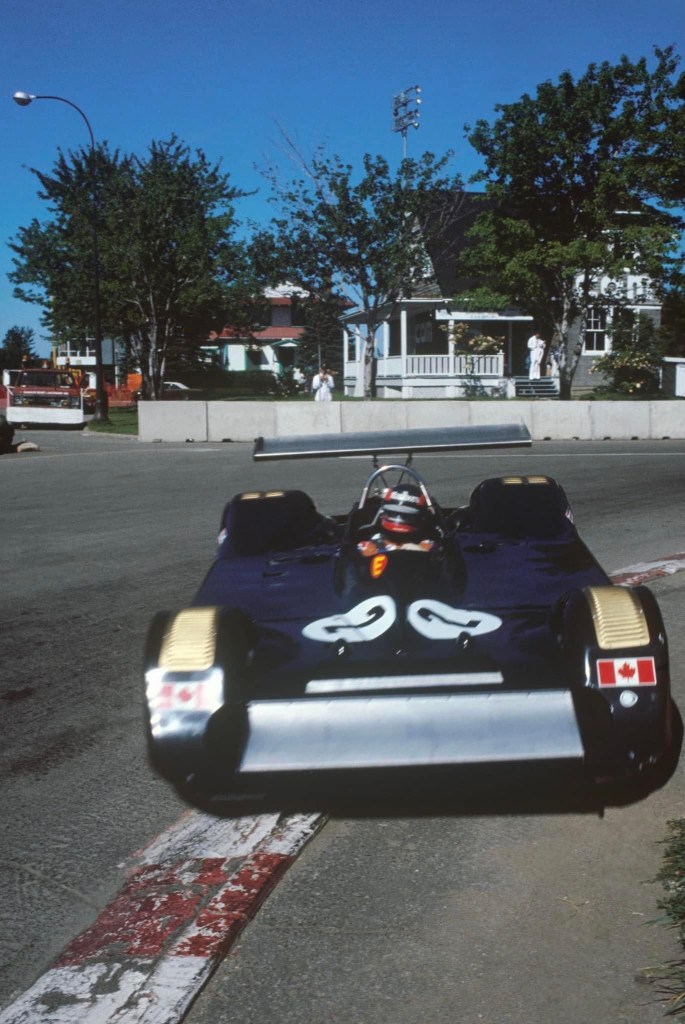
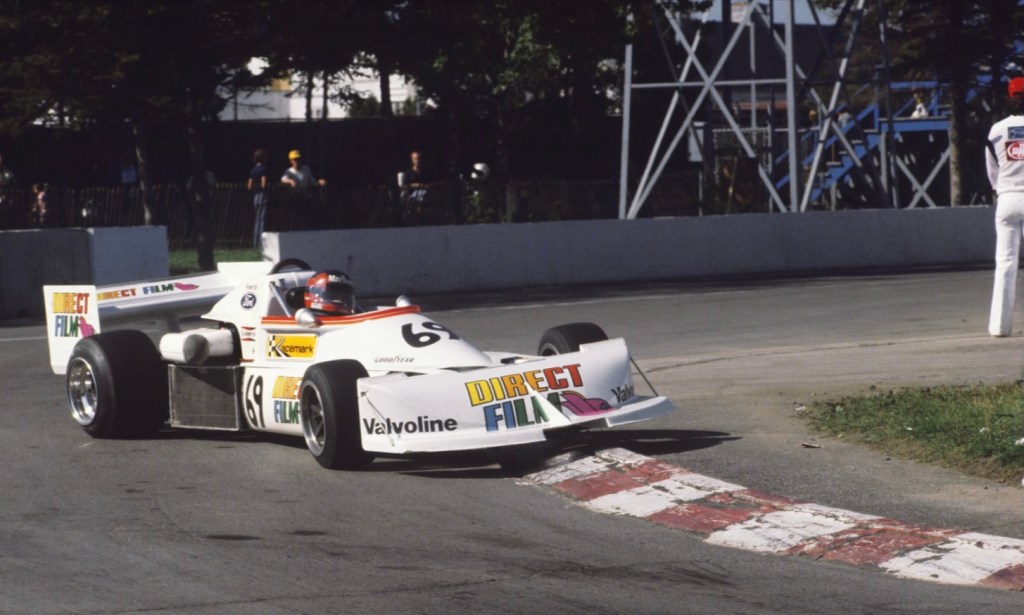
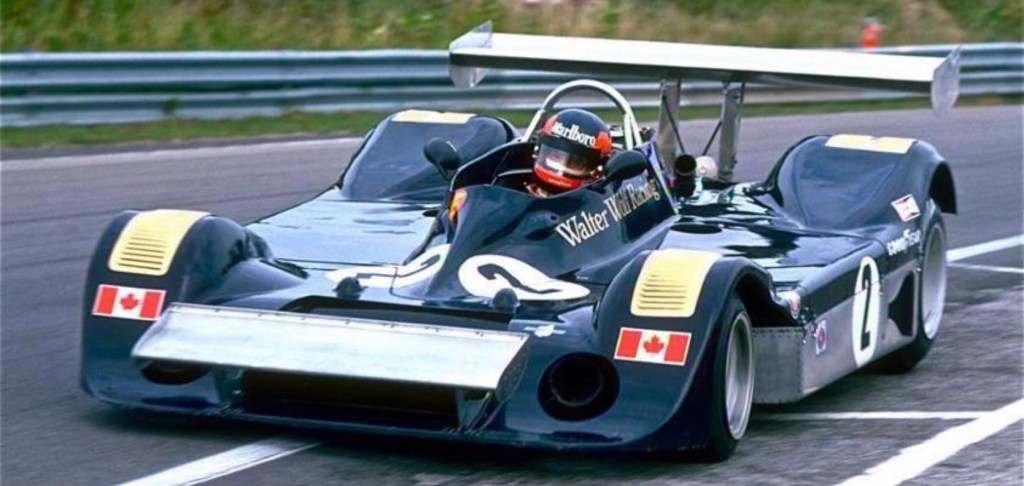
Attack! GV during the September 1977 GP de Trois Rivieres, Canada weekend. Q3 and 14th with engine problems aboard Walter Wolf’s Wolf WD1 Chev. Patrick Tambay took the win, Lola T333CS Chev (MotorSport)Gilles during the 1977 British GP weekend at Silverstone, F1 newbie (LAT)
Joseph Gilles Henri Villeneuve (18/1/1950-8/5/1982) was one of the most spectacular practitioners of his art, he wanted – needed – to be the quickest racer out there in every session. To his ultimate cost.
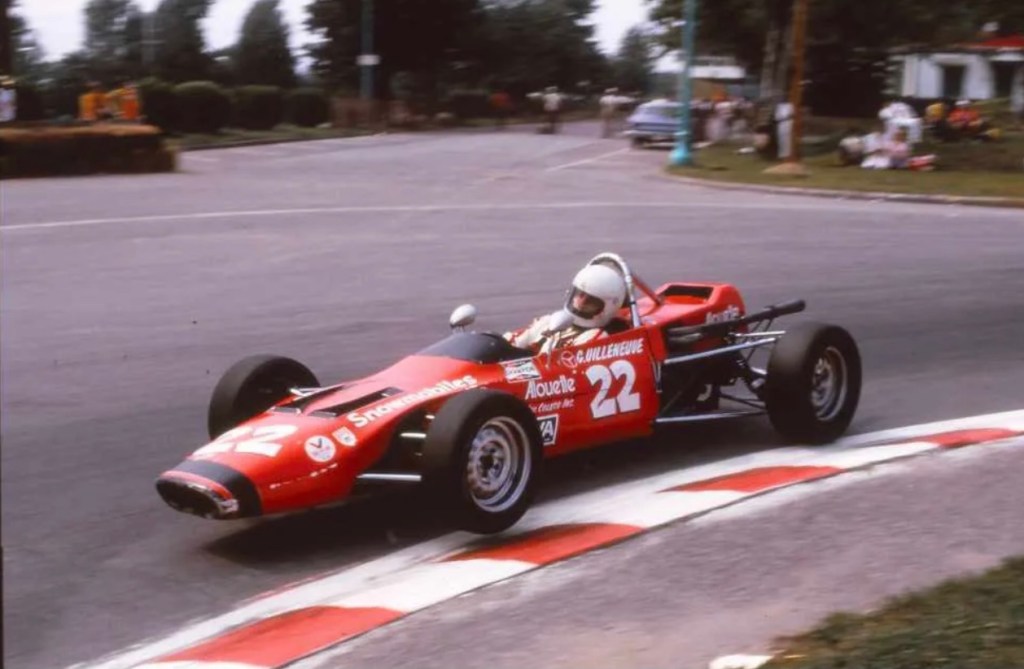
Seville Villeneuve whetted his son’s competitive juices by giving him a snowmobile, by 1972 Gilles was a pro-driver with Skiroule, in 1974 he won the World Championship Snowmobile Derby at Eagle River, Wisconsin.
Villeneuve mounts his Alouette 650 single-track, all set to win at Eagle River in 1974 (CJ Ramstad)
Seville nurtured Gilles’ early interest in cars too. Villeneuve took a Jim Russell course at Mont Tremblant, then demonstrated the same mastery of machine on bitumen as on snow aboard a Magnum Formula Ford, winning a regional Quebec championship in 1973.
Villeneuve later said of snowmobiling “Every winter you could reckon on three or four big over 100mph spills. They slide a lot, which taught me about control. Unless you were in the lead you could see nothing with all the snow blowing about, it was good for the reactions and stopped me worrying about racing in the rain.”
GV, Magnum Formula Ford in 1973 Trois Rivieres? (MGV)March 77B Ford BDA, Trois Rivieres 1977. Fourth from pole, Price Cobb won in another 77B (MotorSport)
Villeneuve progressed and was immediately quick in an Ecurie Canada March 74B Formula Atlantic (FA) in 1974 until the wild-man broke his leg at Mosport mid-season.
Fully committed, Gilles sold his home to fund a privately run March 75B the following year, travelling to the races with wife Joann and his children Melanie and Jacques in a motorhome. His breakthrough win came in the wet at Gimli, then he stunned visiting GP drivers by putting the March third on the grid at Quebec’s GP de Trois Rivieres street race.
Racing for the top-gun Ecurie Canada equipe again in 1976, he won Canadian and US (IMSA) FA Championships then popped the icing on the cake by winning Trois Rivieres from pole ahead of Alan Jones, James Hunt, Vittorio Brambilla, Bobby Rahal and Patrick Tambay.
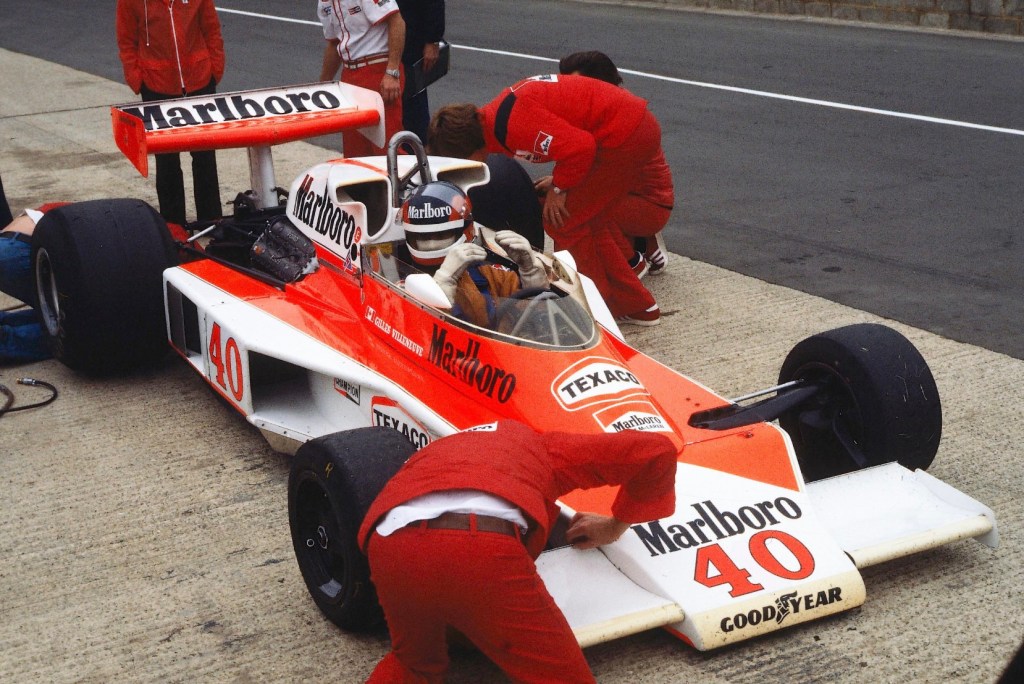
Teddy Mayer tasked Leo Wybrott, Stevie Bun and John Hornby to look after Gilles’ McLaren M23/8. “He was communicating with me so well, and we started to change the set-up of the car and he went faster and faster. We were fourth or fifth quickest, eventually qualifying ninth. We didn’t qualify higher because we didn’t have access to the soft Goodyears” Wybrott recalled. (MotorSport)Villeneuve lapping Silverstone in ’77. His first race outside North America was in the 1976 Pau GP for Ron Dennis’ Project Four outfit, Q10 and DNF in a year old March 752 Hart impressed the F2 regulars (LAT)
The international racing world was abuzz with the other-worldly-skills of the pint-sized Canadian magician. No less an admirer than James Hunt pressed his cause with McLaren’s Teddy Mayer who ran a car for Gilles at the 1977 British GP.
Villeneuve explored the limits of his M23, spinning on most of Silverstone’s corners as he worked out the car’s limits, outqualifying his vastly more experienced teammate, Jochen Mass. He finished 11th despite a pitstop for what turned out to be a broken water temperature gauge.
Further impressive Formula Atlantic drives and pace aboard Walter Wolf’s wilful Wolf WD1 Chev Can-Am car established his big-car credentials.
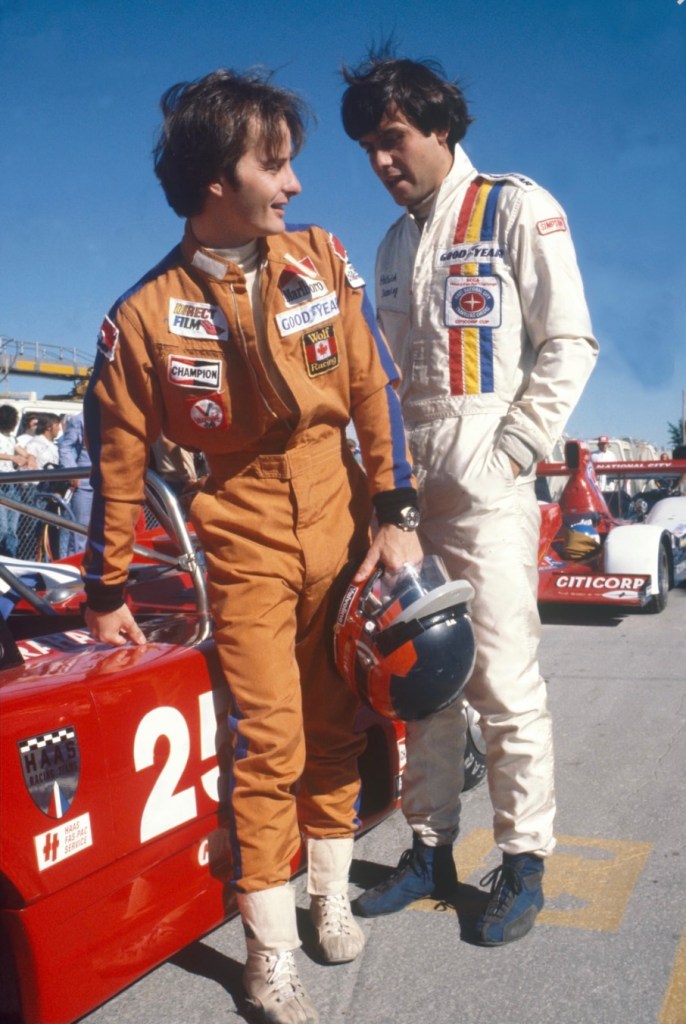
Villeneuve in the Wolf WD1 Chev, circuit unknown, 1977. The Canadian was immediately quick in this challenging car vacated by Chris Amon upon his retirement from racing (unattributed)GV and Patrick Tambay at Trois Rivieres in September 1977. Tambay won the race (and the series overall) in the Carl Haas’ Lola T333CS Chev behind him, GV DNF engine from Q3. #25 is Bobby Rahal’s Lola T296 Ford BDX (LAT)
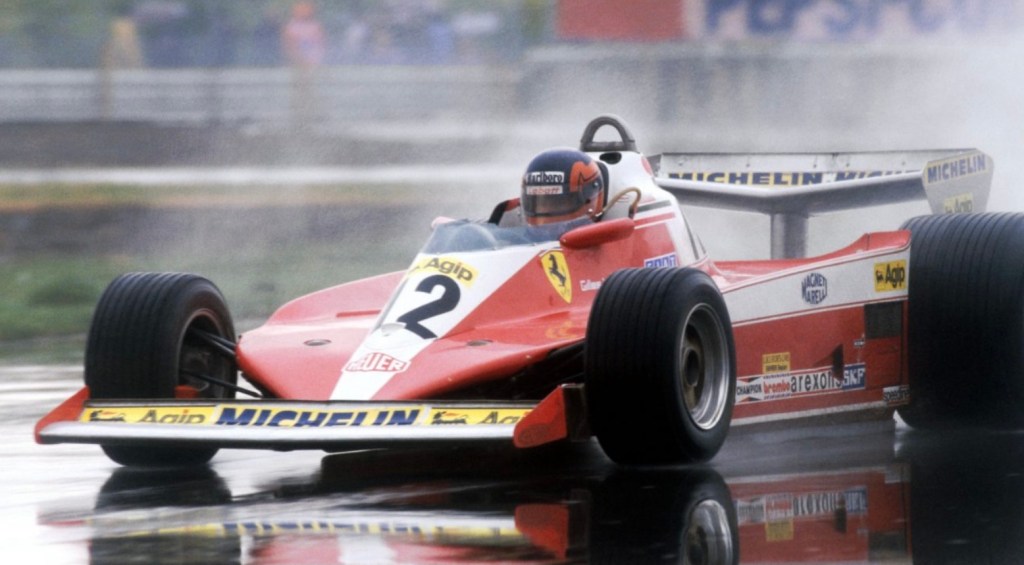
When Mayer signed Patrick Tambay to replace Mass in 1978, Enzo Ferrari bagged Villeneuve. Gilles remained a Ferrari driver – surely ordained at his birth – for the balance of his way-too-short career.
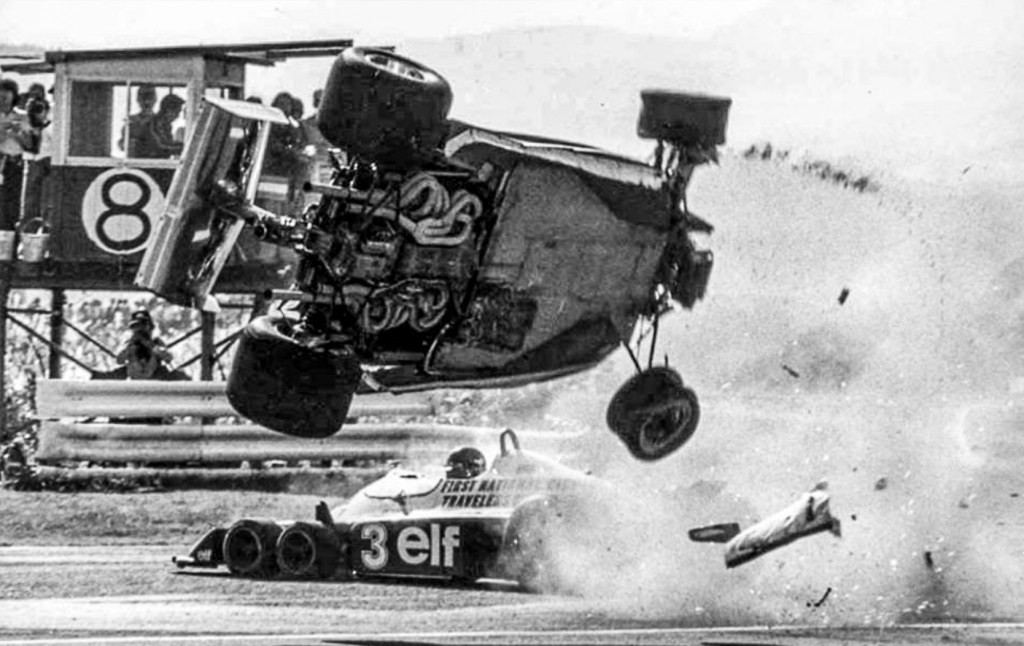
His first 1977 start at Mosport ended with a DNF, tragedy followed at Fuji a fortnight later. Gilles challenged Ronnie Peterson’s Tyrrell P34 six-wheeler under brakes, the pair collided causing the Canadian’s Ferrari to vault the armco into a restricted area where it killed a spectator and a marshall. Despite a no-fault finding his year couldn’t have ended on a worse note.
Villeneuve mid-flight at Fuji with the fatal consequences imminent. Peterson’s Tyrrell P34 rear damage ‘clear’. Rare shot of the underside of a 312T2 Ferrari inclusive of the pipe-bender’s artistry (unattributed)GV on the way to his first GP win at home in October 1978, Montreal, Ferrari 312T3. His future teammate, Scheckter was second in a Wolf WR6 Ford and present teammate Reutemann was third (unattributed)
1978 was character building. Villeneuve was unsurprisingly bested by his seasoned Ferrari teammate Carlos Reutemann who won three Grands Prix in the year of the dominant ground-effect Lotus 79, Mario Andretti and Ronnie Peterson.
After a series of early season DNFs and accidents the Italian press were baying for his blood, twelve months later they wanted him anointed a Saint.
Better performances in later ’78 were capped by a season-ending Mosport home win. His emotions at the year’s conclusion were the complete reverse of those twelve months before.
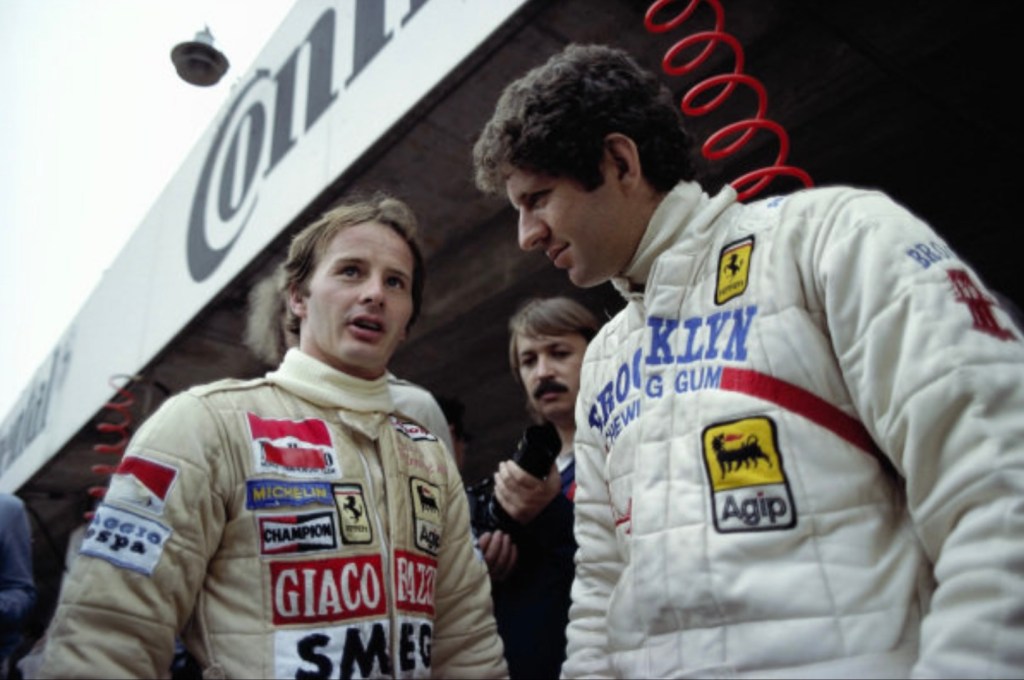
Gilles and Jody at Hockenheim in July1979. Alan Jones started his late season run of wins that weekend in his Williams FW07 Ford. Sceckter was fourth and Villeneuve eighth (unattributed)
Enzo Ferrari’s pairing of F1’s 1973 and 1978 enfants terrible, Jody Scheckter and Villeneuve in 1979 seemed a volatile Molotov Cocktail to many pit-pundits, but the kindred spirits gelled.
They extracted all Mauro Forghieri’s ground effect Ferrari 312T4 had. Gilles had the edge in outright pace – both won three Grands Prix – but Jody’s better placings, and Gilles preparedness to keep to team instructions, in a line-ball season edged out the Canadian by four points.
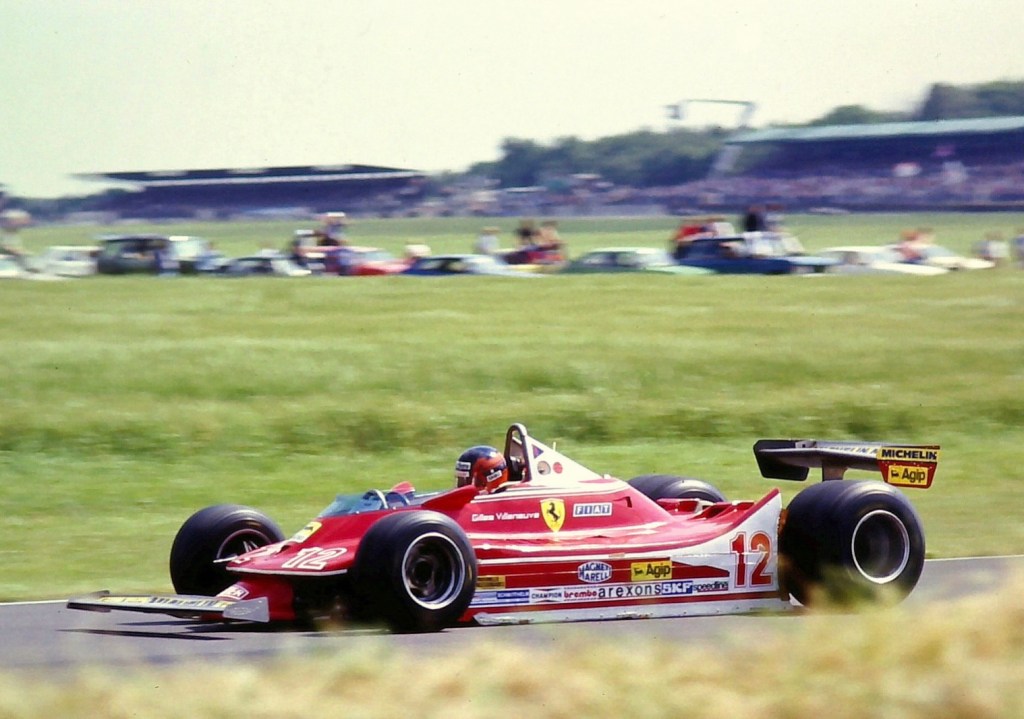
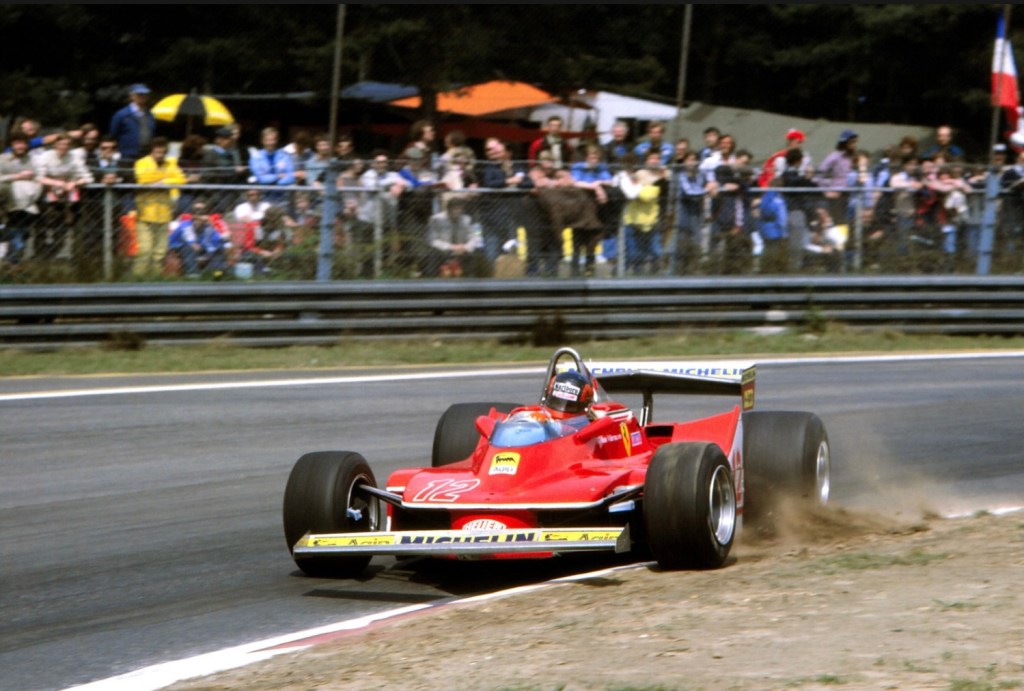
British GP, Silverstone 1979. Ferrari 312T4 14th on the day Clay Regazzoni i took a famous first win for Williams – FW07 Ford (M Lee)It may not always have been the quickest way around a racetrack, but GV’s style sure was entertaining! Zolder, May 1979, 7th, Scheckter won (MotorSport)
Two races which partially forged the Villeneuve legend were at Dijon and Zandvoort.
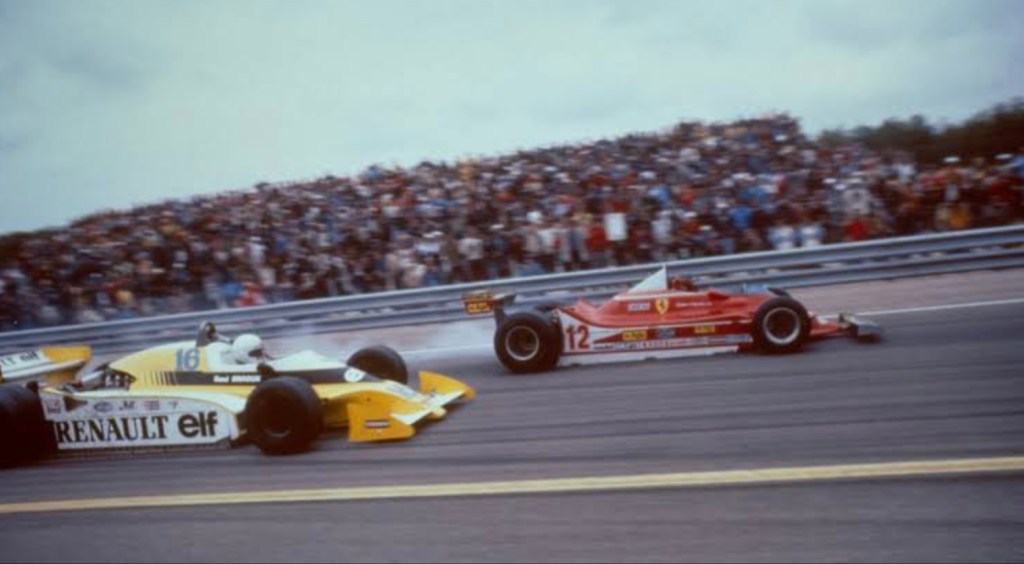
Two-mad-little-Froggies, Auvergne’s Rene Arnoux and Quebec’s Gilles Villeneuve went at it hammer and tongs in the French GP’s final laps in an epic, breath taking, wheel to wheel-tapping battle between Renault RE10 and Ferrari 312T4 for second place.
In a magnum-opus of car control the pair waged a dice the likes of which GP racing hasn’t seen since. The duo gave each other just enough room – centimetres – to carry off a balletic-opera rather than tragic-comedy which concluded in Gilles’ favour.
So all-consuming was this dice that Renault and Jean Pierre Jabouille’s first turbo-car, and first GP win (Renault RE10) were almost forgotten!
During the Dutch GP’s closing laps Villeneuve’s left-rear tyre exploded. Undeterred, and desperate for points he reversed back onto the track and headed for the distant pits shredding the tyre, wheel and left-side suspension assembly. Gilles devotees saw it as his passionate will to win while his detractors offered the display as further evidence that he was absolutely bonkers…
Crazy last laps at Dijon in 1979: Villeneuve 312T4 and Rene Arnoux, Renault RE10 (MotorSport)Ferrari 126CK, Dijon DNF French GP 1981 (MotorSport)
1980 was a Ferrari disaster as more advanced ground effect cars bested the 312T5, limited as it was by the width of its 180-degree V12 (or Flat-12 if you wish) which impinged on critical sidepod/tunnel size.
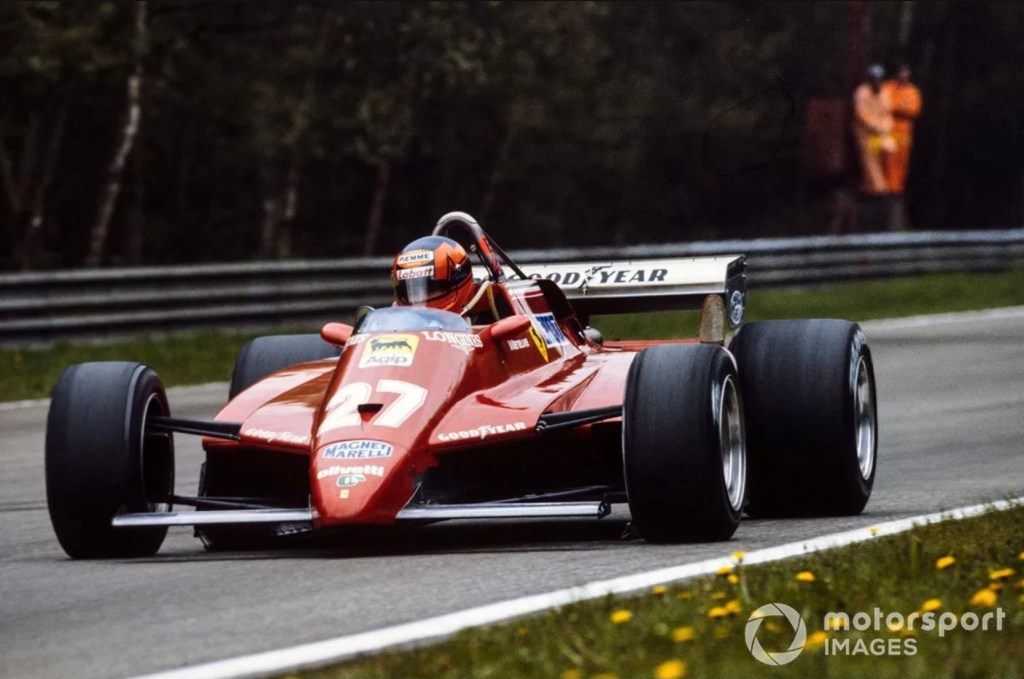
Ferrari joined the turbo-age in 1981 with the 550-600bhp 1.5-litre 126CK. Its combination of tricky power delivery mixed with chassis and aerodynamic shortcomings created a machine in which Gilles comprehensively blew-off new teammate, Didier Pironi after Scheckter retired (Villeneuve outqualified Pironi 10-5 that year).
Villeneuve showed plenty of controlled aggression, winning at Monaco after keeping the tricky car on the island as others crashed or had mechanical misfortune.
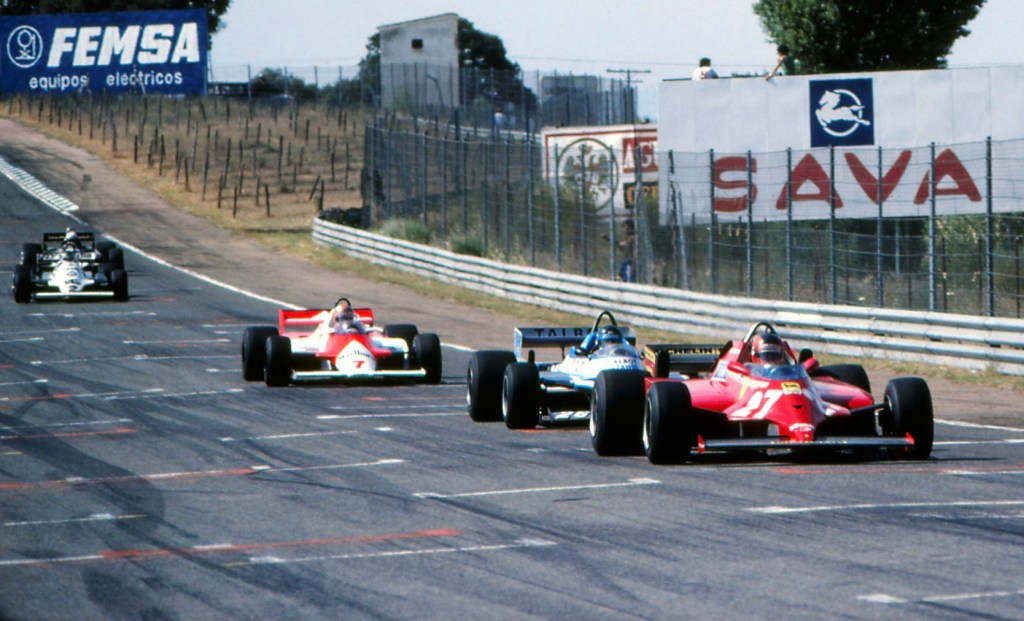
Three weeks later at Jarama, Gilles took the Spanish GP lead on lap 14 then fronted a high-speed freight train of Jacques Laffite, John Watson, Carlos Reutemann and Elio De Angelis, nose-to-tail for 18 laps in a classic battle of a more powerful but ill-handling car holding off four better handling cars. The top-5 were separated by 1.5 seconds at the finish of a thriller in which Gilles put not a foot wrong.
On the way to winning the 1981 Monaco GP, Ferrari 126CK. Jones second in his Williams FW07C Ford and Laffitte third in Ligier JS17 Matra (unattributed)Here we go with 2 laps to run, Imola 1982 (unattributed)
And so, to the Final Act.
1982 started as ‘81 finished, Gilles outqualified his friend Pironi – they were mates let’s not forget – four nil aboard the improved 126C2 at Kyalami, Rio, Long Beach and Imola.
Pironi was feeling the pressure, why would Ferrari keep him if he couldn’t deliver the goods? The consistent gap between he and Gilles was marked.
The San Marino Grand Prix grid was decimated by the ongoing FOCA/FISA turf/sporting/commercial battle, ten of the FOCA teams didn’t enter. After the retirement of the leading Renaults, Villeneuve led Pironi (as usual).
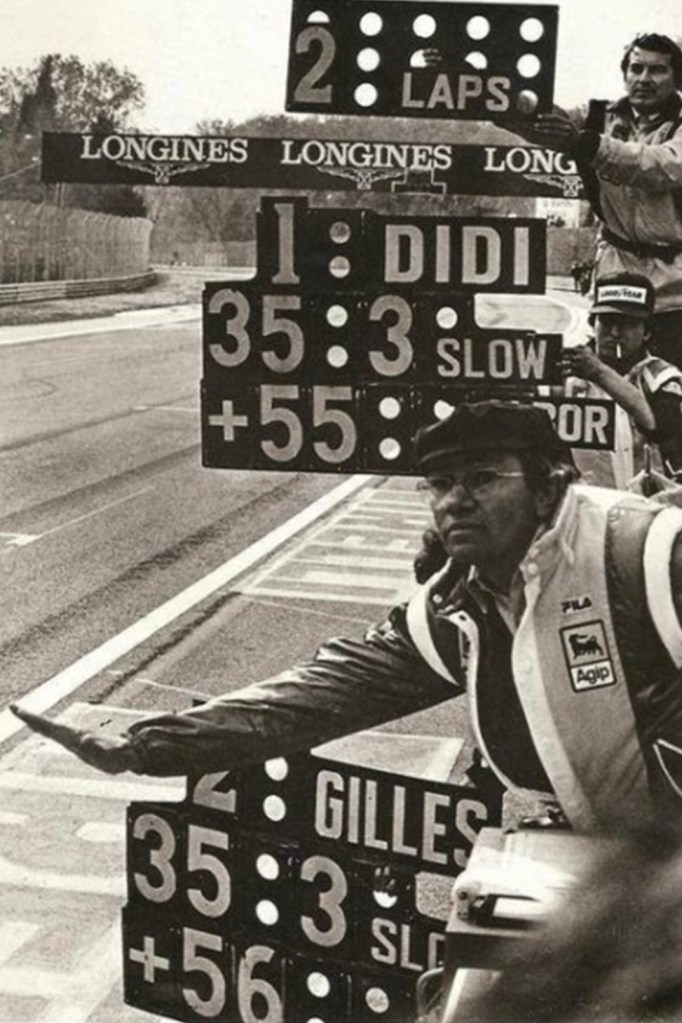
Ferrari’s ‘slow’ pitboard was interpreted as slow and hold position by Gilles. Pironi passed Villeneuve, Villeneuve re-took the lead three times, and then slowed thrice. Despite this – Villeneuve’s superiority over the Frenchman crystal clear to all over the previous 15-months – Pironi passed again and took the chequered flag having interpreted the signal differently. Or took a win he badly needed and hadn’t achieved mano et mano in fair combat.
Gilles burned with fury, setting up the tragedy which unfolded at Zolder a fortnight later on May 8, 1982.
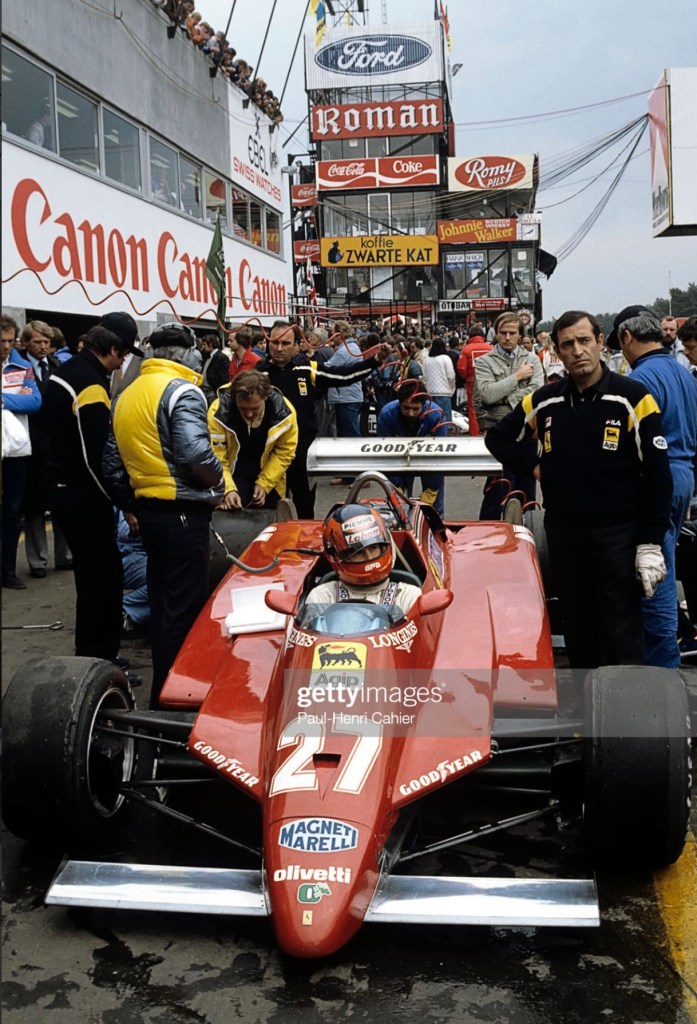
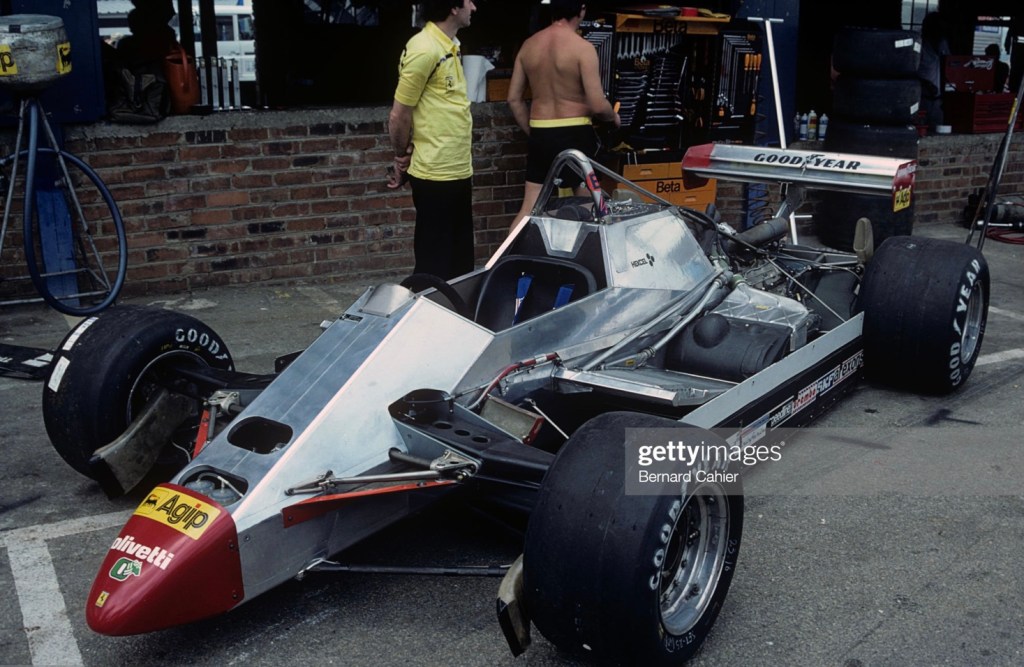
Zolder pits, May 8, 1982. GV ready for the off, Ferrari 126C2 chassis #056GV 126C2 #055 at Kyalami in January 1982. The monocoque chassis was a composite structure made of Hexcel carbon fibre and aluminium honeycomb, a far cry from the strength of the high speed carbon fibre dodgem-F1s of today
Fuelled by anger and determined to beat Pironi’s better qualifying time, Villeneuve set off on those final laps, fell short, then collided with Jochen Mass’ March at 120-140mph as both cars changed direction before Terlamenbocht – Mass moved his March, in fifth gear but going much slower than Villeneuve, to the right to allow the Ferrari to pass on the left – launching the Ferrari into the air and then a series of horrific cartwheels. The hapless racer suffered a fracture of the cervical vertebrae and a severed spinal chord, he died at 9:12pm that evening at the University of St Raphael Hospital in Louvain
Canada and the racing world mourned, as many still do.
Based on statistics Villeneuve isn’t one of the greats, but like Nuvolari, Rosemeyer, Rindt and Peterson, Gilles is revered for the passion, brio, fire and electricity he produced in a racing car every time he jumped aboard.
When Villeneuve was on track the beer-tents emptied. The automotive acrobat was about to strut his stuff, sadly the catch-net and the gods were absent on that day in Belgium 40 short years ago.
“I know that no human being can perform miracles. But Gilles made you wonder sometimes,” quipped Jacques Laffite.
R.I.P Gilles Villeneuve. We salute you.
Credits…
MotorSport, LAT, CJ Ramstad, museegillesvilleneuve.com, Martin Lee, Leo Wybrott on auto123.com, Getty Images, ‘Gilles Villeneuve:The Life of the Legendary Racing Driver’ Gerald Donaldson
Tailpiece…
Last lap. Still on the hop, quallies useless by then but he was still on the hop…
Doug Whiteford is as pleased-as-punch after winning the 1953 Australian Grand Prix at Albert Park aboard his self-prepared Talbot Lago T26C (Course).
It was too good to be true, he had won his second AGP at Bathurst 17 months before aboard the same machine. He took victory in the 250 miler in the park from Curley Brydon’s MG TC Spl s/c and Andy Brown’s MG K3. The dude with the fag at the far-left is Bill Wilcox who retired his Ford V8 Spl after 37 of the 64 laps.
The photograph is so sharp you can see the instruments, quadrant for the four-speed Wilson pre-selector gearbox, chassis plate and front suspension.
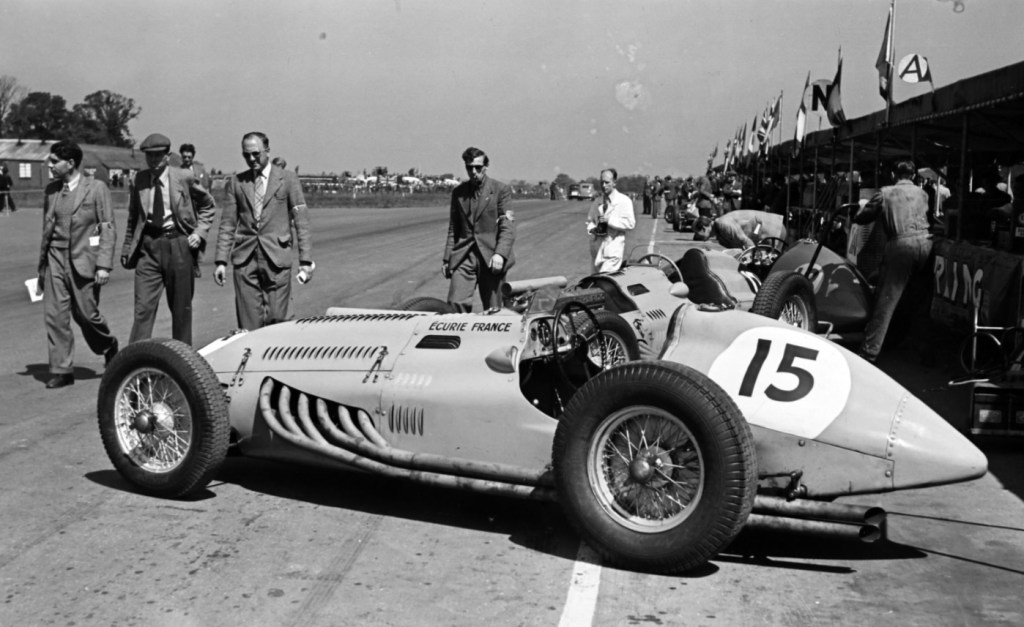
#110007 was part of Paul Vallee’s Ecurie France team between 1948-1950 before being sold, via Henry and Peter Dale, to Geelong’s Tom Hawkes in 1950 and shortly thereafter to Whiteford. See Bob King’s article on the Dales and their contribution to the number of European racers which came to Australia; ‘Words from Werrangourt’ 1, by Bob King… | primotipo…
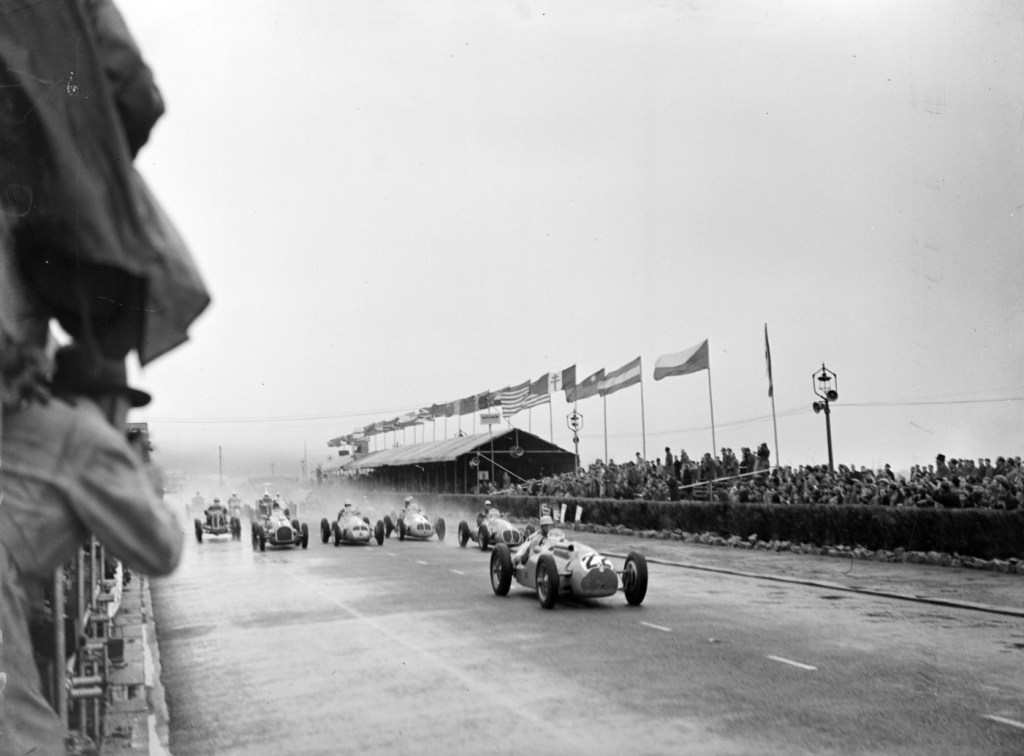
Louis Chiron jumps away from the rest of the field at the start of the April 1949 Jersey Road Race at St Helier aboard 110007. From the left, Raymond Mays’ ERA B-Type, Peter Whitehead’s Ferrari 125, and the Maserati 4CLT-48s of Gigi Villoresi, Bira and Emmanuel de Graffenried. Gerard won from De Graffenried and Mays Chiron DNF brakes (MotorSport)110007 in the Silverstone pitlane during the July 1949 British GP meeting. Q15 and DNF universal joint for Chiron, up front De Graffenreid’s Maser 4CLT-48 won from Bob Gerard’s ERA B-Type and Louis Rosier’s T26C (MotorSport)
Strong results for 110007 before coming to Australia was Louis Chiron’s 1949 French GP victory and Harry Schell’s second place at the Coupe du Salon at Montlhery that October.
The car had chassis rails derived directly from Talbot sports car pattern. Front independent suspension was by lower transverse leaf spring and upper pressed steel rockers while at the rear a simple rigid axle was suspended by semi-elliptic leaf springs. Friction and hydraulic shocks were fitted as were Bendix cable operated brakes. A Wilson pre-selector gearbox was used.
The arrival of this modern straight-six cylinder 4482cc, 210bhp @ 4500rpm triple Zenith/Stromberg fed F1 car (4.5-litres unsupercharged, 1.5-litres supercharged) heralded the need for topline Australian competitors to have cars capable of outright wins as the sport evolved away from handicap events in our premier class.
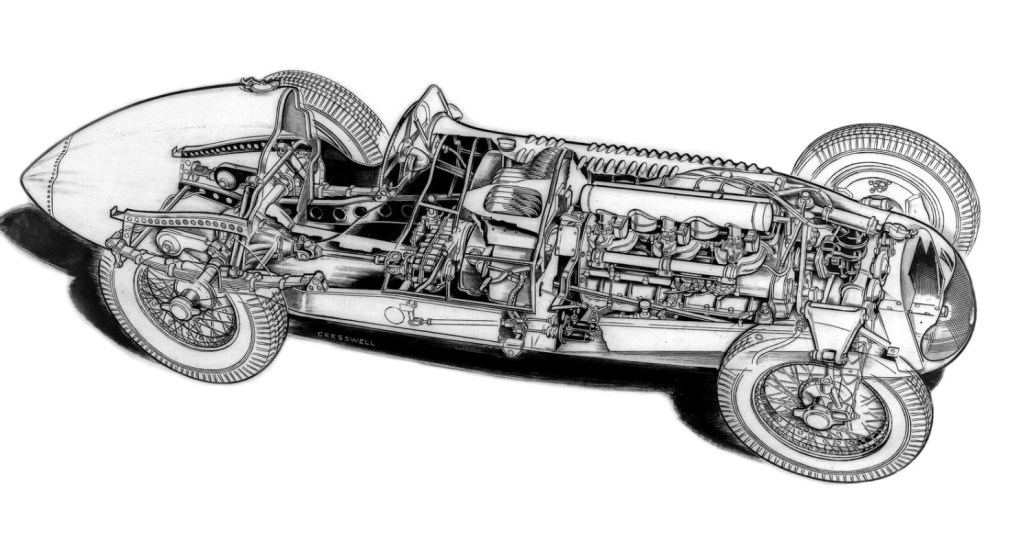
Doug Whiteford passes the abandoned Jack O’Dea MG Spl aboard 110007 during his victorious ’53 AGP run at Albert Park (The Age)1949 Talbot Lago T26C cutaway by Leslie Cresswell
Technical Specifications…
The head and block of Walter Vecchia’s 4482cc six were of aluminium alloy. The engine was considerably undersquare with a bore/stroke of 93x110mm. Its two camshafts were located halfway up the block with short pushrods operating two valves per cylinder, the cost-effective design had some of the advantages of a more traditional twin-cam layout.
It produced circa 240bhp @ 4700rpm in the early stages of development, rising to 280bhp @ 5000rpm in 1950 when fitted with a twin-plug, twin-magneto cylinder head.
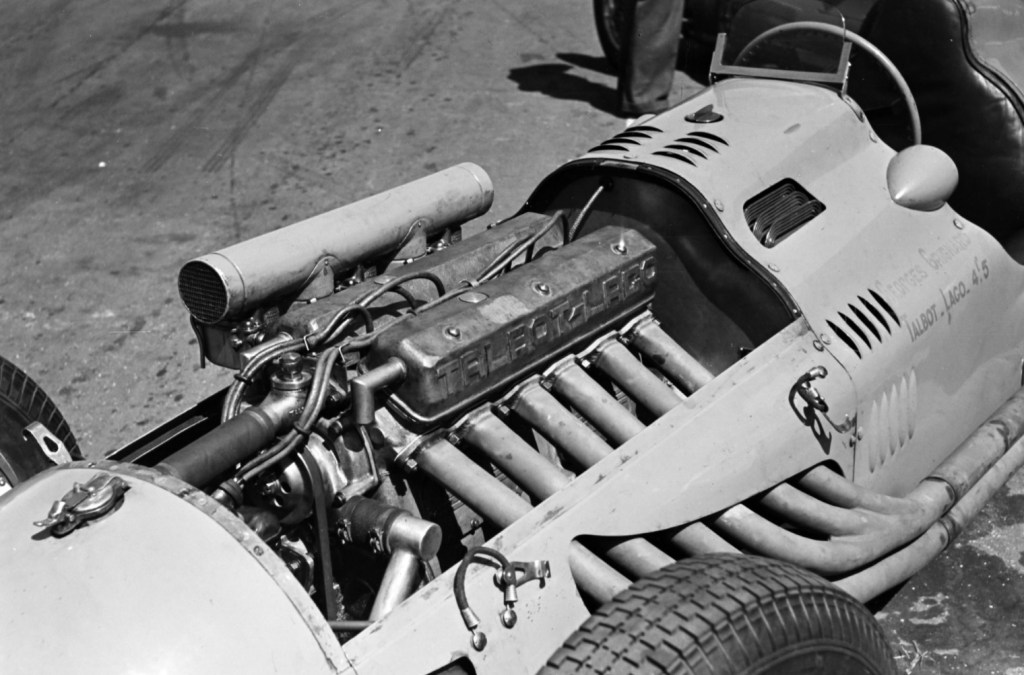
Carburation was by triple downdraught Zenith-Strombergs with two rocker covers proclaiming the name Talbot-Lago. A Scintilla magneto provided the spark, initially to one centrally located plug per cylinder.
Engine shot of Yves Giraud-Cabantous T26C #110006 in the 1949 Silverstone paddock. That motor swallowed a piston after 39 of the 100 laps (MotorSport)
A Wilson preselector gearbox was used, while heavy it was reliable and favoured by the drivers. The prop-shaft was offset to the right to allow a low seating position.
Front independent suspension incorporated top rockers, a lower transverse leaf spring and friction shock absorbers. The rear axle was suspended by good old fashioned semi-elliptic leaf springs, funds didn’t allow development of an independent design; the T26 was the last GP car to use semi-elliptic cart-springs.
Chiron watches while his car is readied at Silverstone in 1949 (MotorSport)
Credits…
The Age/Fairfax Archive, Peter Valentine’s Old Melbourne Town FB page, oldracingcars.com, Leslie Cresswell, Adam Gawliczek
Tailpieces…
(MotorSport)
A swarm of Talbot Lago T26Cs during the 1949 British GP.
‘Our’ 110007 in Chiron’s hands is at left, #17 is Yves Giraud-Cabantous machine (110006), DNF piston and Louis Rosier’s third placed machine #110001 at right.
In mid 1954 Whiteford sold the car after updating to the twin-plug headed T26C #110003. The car was raced by Rex Taylor, Ken Richardson, Owen Bailey and Barry Collerson in-period before becoming a historic racer. Bernard Charles Ecclestone has owned it since the early 1980s.
Whiteford heading up Mount Panorama on the way to victory in the 1952 AGP
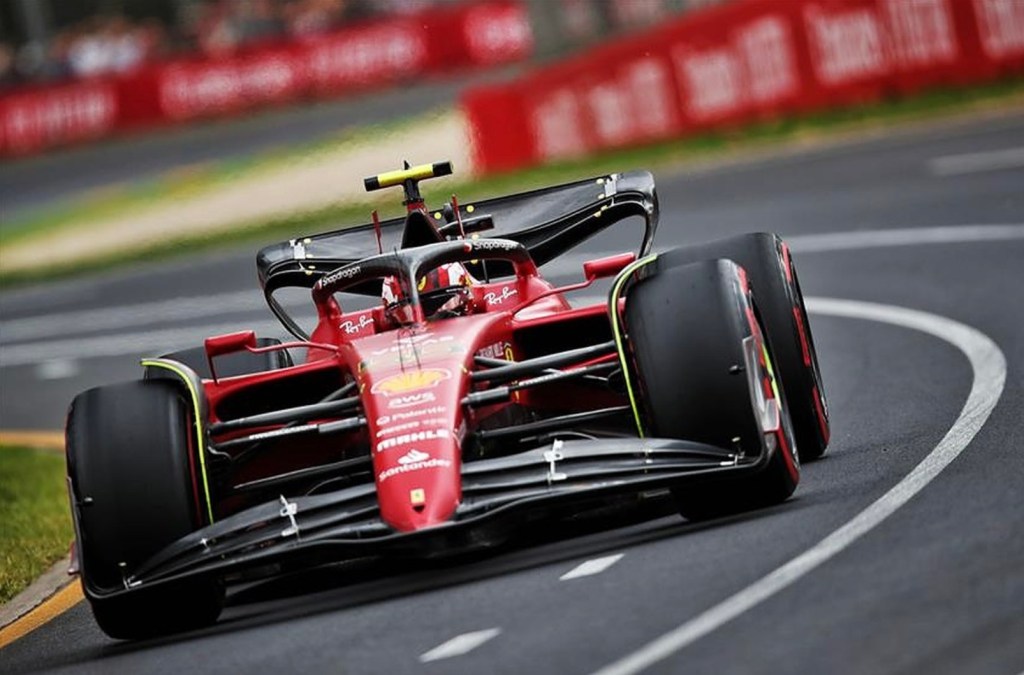
Charles Leclerc, Ferrari F1-75, Albert Park 2022 (formula1news.co.uk)
Ferrari have been fantastic this year, as they often are in seasons of a new F1 formula. Mark Bisset analyses that notion and calculates the Maranello mob’s likely chances of success…
Aren’t the 2022 F1 rules fantastic! The FIA tossed the rule book up in the air – in a highly sophisticated kind of way of course – and it landed as they hoped with a few long overdue changes in grid makeup.
Ferrari up front is good for F1, anyone other than Mercedes will do, their domination of modern times has made things a bit dreary.
It’s way too early to call the season, but two out of four for Ferrari has promise given the budget-cap. “It’ll be ten races before McLaren have their new car. And it won’t be all new, that’s not possible within the budget constraints,” Joe Ricciardo told me on the morning of the AGP.
By the end of the season, the new-competitive-paradigm will be clear to the team’s Technical Directors, next year’s cars will reflect that. In the meantime, we have great, different looking cars the performance shortcomings of which can be addressed, to an extent.
For many years Ferrari was a good bet in the first season of a new set of regulations, let’s look at how they’ve gone since 1950 on the basis that history is predictive of the future…
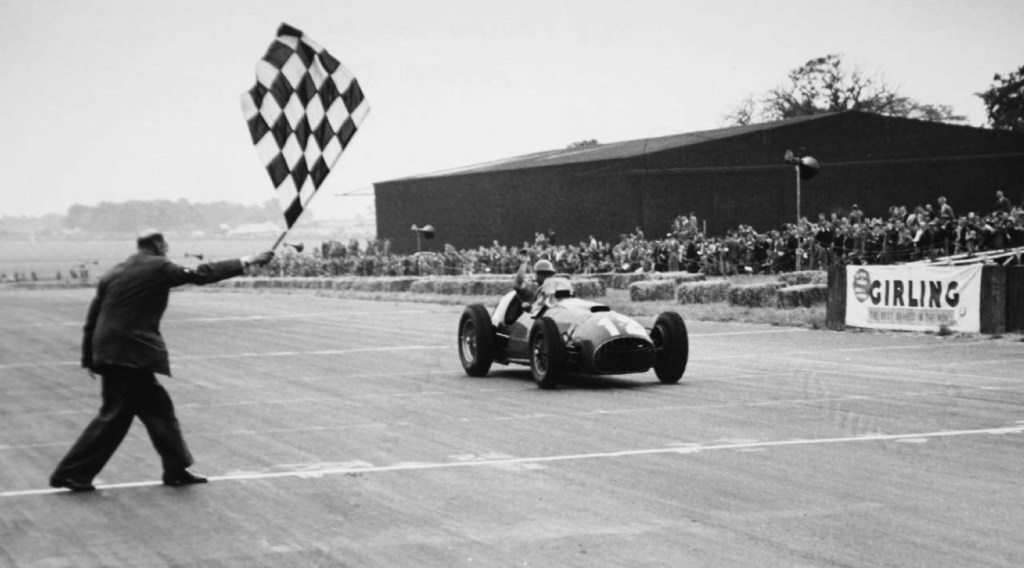
Froilan Gonzalez and Ferrari 375 win the ‘51 British GP from pole. JM Fangio and Gigi Villoresi were second and third in Alfa 159 and Ferrari 375 (goodwood.com)
Enzo Ferrari ran a family business, while he was technically conservative and kept a wary eye on the lire, his first championship GP winning car, the Tipo 375 4.5-litre normally aspirated V12 raced by Froilan Gonzalez in the 1951 British GP at Silverstone commenced a new engine paradigm (achievements of the Talbot Lago T26Cs duly recognised).
Since the 1923 Fiat 805 GP winners had been mainly, but not exclusively powered by two-valve, twin-cam, supercharged straight-eights, like the 1950-1951 World Championship winning Alfa Romeo 158-159s were.
Alfa’s 1951 win (JM Fangio) was the last for a supercharged car until Jean -Pierre Jabouille’s Renault RS10 won the 1979 French GP, and Ferrari were victorious in the 1982 Constructors Championship with the turbo-charged 126C2.
When Alfa withdrew from GP racing at the end of 1951, and BRM appeared a likely non-starter, the FIA held the World Championship to F2 rules given the paucity of F1 cars to make decent grids.
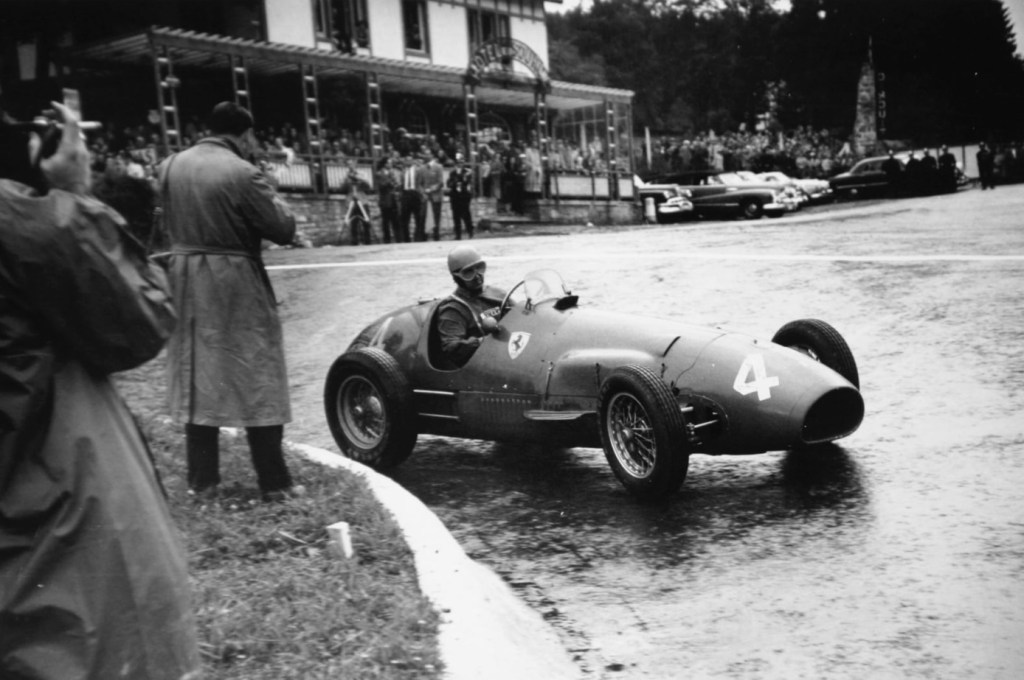
Alberto Ascari, Ferrari 500 Spa, Belgian GP 1952. He won from his teammate Nino Farina and Robert Manzon, Gordini 16 (MotorSport)
Aurelio Lampredi’s existing 2-litre, four-cylinder F2 Ferrari 500 proved the dominant car in Alberto Ascari’s hands taking back-to-back championships in 1953-53.
Alberto’s ‘winningest’ 500 chassis, #005 was raced with great success by Australians Tony Gaze and Lex Davison. Davo won the 1957 and 1958 AGPs in it and our first Gold Star, awarded in 1957. Australia’s fascination with all things Ferrari started right there.
After two years of domination Ferrari were confident evolutions of the 500 would suffice for the commencement of the 2.5-litre formula (1954-1960), but the 555/625 Squalo/Super Squalos were dogs no amount of development could fix.
Strapped for cash, Ferrari was in deep trouble until big-spending Gianni Lancia came to his aid. Lancia’s profligate expenditure on some of the most stunning sports and racing cars of all time brought the company to its knees in 1955.
While company founder Vincenzo Lancia turned in his grave, Gianni’s mother dealt with the receivers and Enzo Ferrari chest-marked, free of charge, a fleet of superb, new, Vittorio Jano designed Lancia D50s, spares and personnel in a deal brokered by the Italian racing establishment greased with a swag of Fiat cash.
Juan Manuel Fangio duly delivered the Lancia Ferrari goods by winning the 1956 F1 Drivers Championship in a Lancia Ferrari D50 V8.
JM Fangio clipping the apex at Copse, Silverstone in 1956 Lancia Ferrari D50. The Alfonso De Portago/Peter Collins D50 was second and Jean Behra Maserati 250F third (LAT)Silverstone again, this time Mike Hawthorn in 1958, Ferrari Dino 246. Peter Collins’ Dino won from Hawthorn and Roy Salvadori’s Cooper T45 Climax (LAT)
Mike Hawthorn followed up with the 1958 Drivers’ Championship victory in the superb Dino 246 V6 which begat Scuderia Ferrari’s next change-of-formula success in 1961.
Concerned with rising F1 speeds (there is nothing new in this world my friends) the FIA imposed a 1.5-litre limit from 1961-1965.
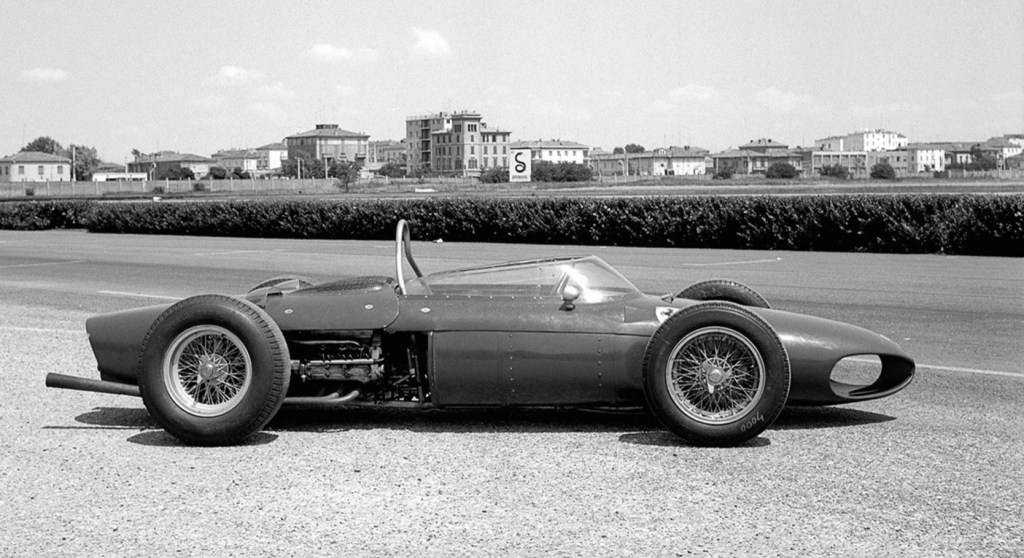
Ferrari raced a 1.5-litre F2 Dino variant from 1958 so were superbly placed to win the 1961 championship despite their first mid-engined 156 racer’s chassis and suspension geometry shortcomings.
The (mainly) British opposition relied on the Coventry Climax 1.5-litre FPF four which gave away heaps of grunt to the Italian V6, only Stirling Moss aboard Rob Walker’s Lotus 18 Climax stood in Ferrari’s way. The championship battle was decided in Phil Hill’s favour after the grisly death of his teammate Count ‘Taffy’ Von Trips and 15 Italian spectators at Monza.
Ferrari 156 at Modena in 1961 (ferrari.com)
By 1964 Ferrari – never quick to adopt new technology back then – had ditched the 156’s Borrani wire wheels, spaceframe chassis and Weber carburettors thanks to Mauro Forghieri, the immensely gifted Modenese engineer behind much of Ferrari’s competition success for the next couple of decades. John Surtees won the ’64 F1 Drivers and Constructors Championships in a Ferrari 158 V8.
With ‘The Return to Power’, as the 1966-1986 3-litre F1 was billed (3-litres unsupercharged, 1.5-litres supercharged) – sportscars were making a mockery of the pace of 1.5-litre F1 cars – Ferrari and Surtees had a mortgage on the 1966 championships until they shot themselves in the foot.
Coventry Climax, the Cosworth Engineering of the day, withdrew from racing at the end of 1965 leaving their customers scratching around for alternative engines.
Ferrari were again in the box-seat in ’66 as their 312 V12 engined racer was ready nice and early. It was an assemblage of new chassis and an engine and gearbox plucked from the Maranello sportscar parts bins. With a championship seemingly in-the-bag, Modenese-Machiavellian-Machinations led to Surtees spitting the dummy over incompetent team management and walked out.
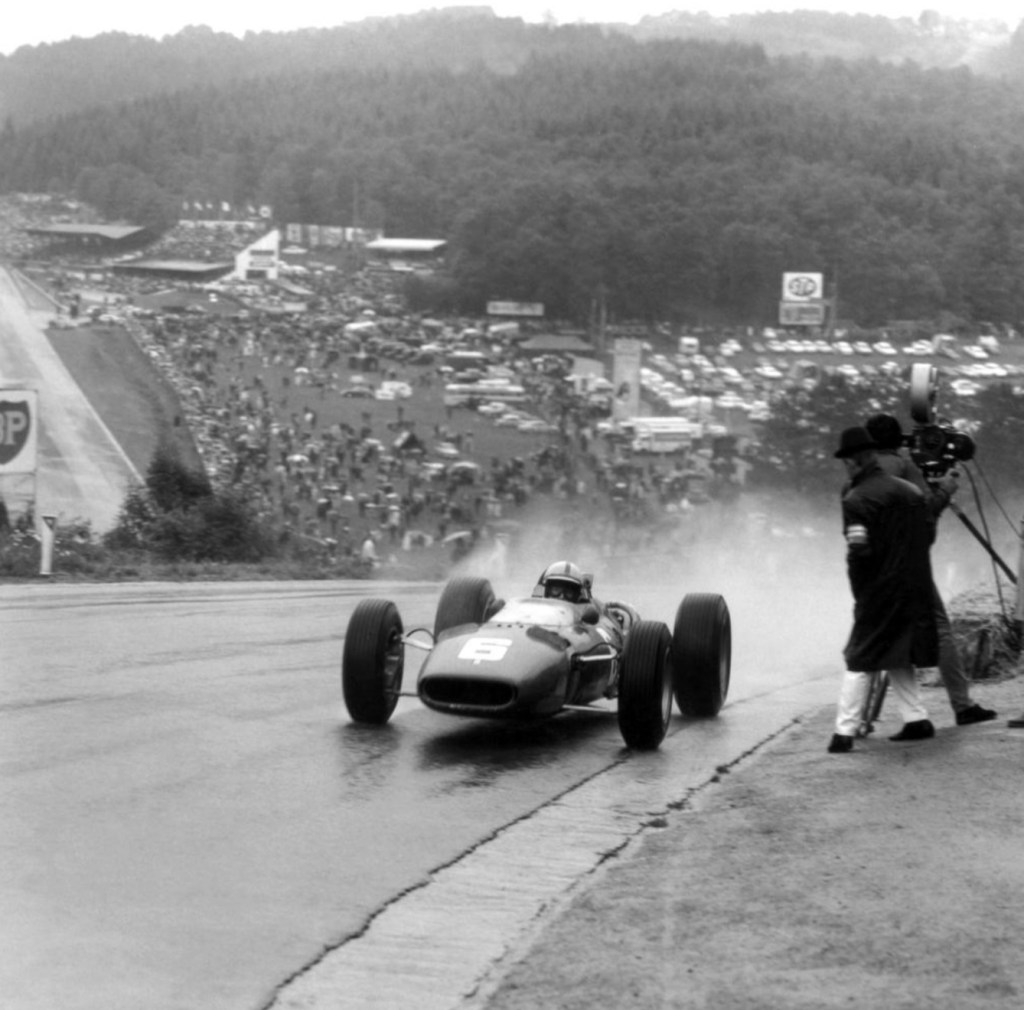
Look out blokes, ‘comin through! John Surtees at Eau Rouge, Spa, Ferrari 312 in 1966, ‘Grand Prix’ cinematographers totally unperturbed by the Flying Ferrari. Surtees won from Jochen Rindt’s Cooper T81 Maserati and Lorenzo Bandini’s Ferrari 158/246 (MotorSport)
It was the happiest of days for Jack Brabham, his increasingly quick and reliable Brabham BT19 Repco V8 comfortably saw off Lorenzo Bandini and Mike Parkes who weren’t as quick or consistent as Big John.
Scuderia Ferrari were then in the relative GP wilderness until 1970 just after Fiat acquired Ferrari, but leaving Enzo to run the race division until his demise.
Fiat’s cash was soon converted into 512S sportscars and the most successful V12 ever built. Ferrari’s Tipo 015 180-degree 3-litre masterpiece won 37 GPs from 1970-1980 in the hands of Jacky Ickx, Clay Regazzoni, Mario Andretti, Niki Lauda, Carlos Reutemann, Jody Scheckter and Gilles Villeneuve. Not to forget Constructors’ titles for Ferrari in 1975-1977 and 1979, and Drivers’ championships for Lauda (1975,1977) and Scheckter (1979).
Oops, getting a bit off-topic.
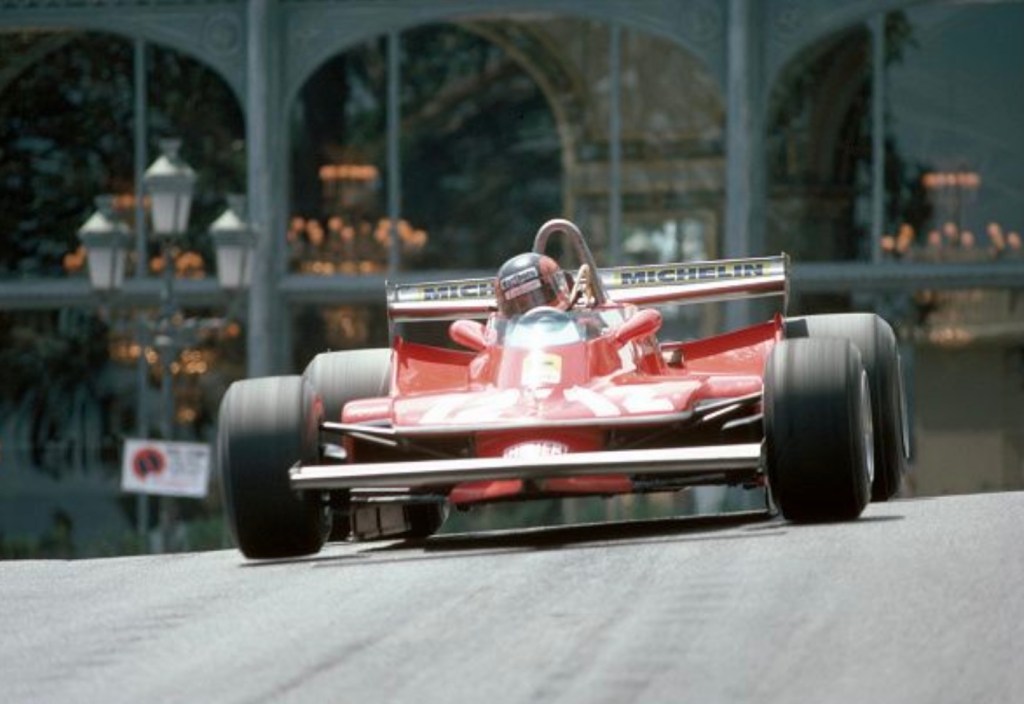
Gilles Villeneuve in the fugly but effective and reliable Ferrari 312T4 at Monaco in 1979. Note the hard working, fully extended skirts. Jody Scheckter won in the other T4 from Clay Regazzoni’s Williams FW07 Ford and Carlos Reutemann’s Lotus 79 Ford (unattributed)
The next F1 step-change wasn’t FIA mandated, but was rather as a consequence of Peter Wright and Colin Chapman’s revolutionary 1977/78 Lotus 78/79 ground effects machines which rendered the rest of the grid obsolete.
Forghieri stunned the F1 world when Ferrari adapted their wide, squat 525bhp 3-litre twelve to a championship winning ground effects car despite the constraints the engine’s width bestowed upon aerodynamicists intent on squeezing the largest possible side-pods/tunnels between the engine/chassis and car’s outer dimensions. Scheckter and Canadian balls-to-the-wall firebrand Villeneuve took three GPs apiece to win titles for Scheckter and Ferrari.
Renault led the technology path forward with its 1.5-litre turbo-charged V6 engines from 1977 but it was Ferrari who won the first Manufacturers Championships so equipped in 1982-83.
The Harvey Postlethwaite designed 560-680bhp 1.5-litre turbo V6 126C2 won three Grands Prix in an awful 1982 for Ferrari. Practice crashes at Zolder and Hockenheim killed Villeneuve and ended Didier Pironi’s career. Keke Rosberg won the drivers title aboard a Williams FW08 Ford in a year when six teams won Grands Prix.
High speed Jarama caravan in 1981. Brilliant drive of controlled precision and aggression by Gilles Villeneuve won the race for Ferrari. His more powerful and more unwieldy 126CK just held his pursuers at bay; Jacques Laffite, Ligier JS17 Matra, John Watson, McLaren MP4/1 Ford, Carlos Reutemann’s, Williams FW07C Ford and the just visible Elio de Angelis, Lotus 87 Ford – they finished in this order (unattributed)
Despite a change to a 3.5-litre/1.5-litres four-bar of boost formula in 1987-88 Ferrari stuck with its turbo-cars. The F1/87 and F1/87/88C designed by Gustav Brunner delivered fourth and second in the Constructors Championships, the victorious cars were the Williams FW11B Honda and McLaren MP4/4 Honda.
Enzo Ferrari died in August 1988, not that the company’s Machiavellian culture and quixotic decision making was at an end…
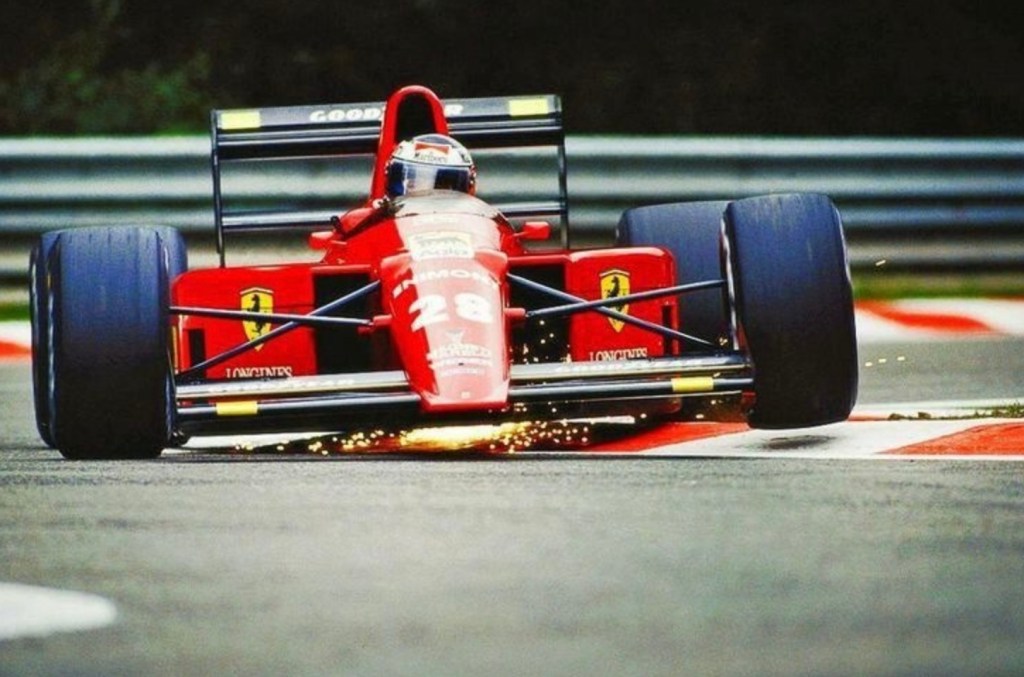
Rock star ex-McLaren designer John Barnard joined Ferrari in 1987. The first fully-Barnard-car was the seductive 640 built for the first year of the stunning, technically fascinating 1989-1994 3.5-litre formula.
This 660bhp V12 machine, fitted with the first electro-hydraulic, seven-speed paddle-shift, semi-automatic gearbox won three races (Nigel Mansell two, Gerhard Berger, one) and finished third in the constructor’s championship.
Innovative as ever, Barnard’s car wasn’t reliable nor quite powerful enough to beat the Alain Prost (champion) and Ayrton Senna driven McLaren MP4/5B Hondas. Despite six wins aboard the evolved 641 (five for Prost, one to Mansell) in 1990 the car still fell short of McLaren Honda, Senna’s six wins secured drivers and manufacturers titles for the British outfit.
Gerhard Berger pings his Ferrari 640 thru Spa’s Bus Stop chicane in 1989, DNF in the race won by Ayrton Senna’s McLaren MP4/5 Honda (unattributed)
F1’s all-time technology high-water marks are generally regarded as the Williams’ FM14B and FW15C Renault V10s raced by Nigel Mansell and Alain Prost to Drivers and Manufacturers championships in 1992-93. They bristled with innovation deploying active suspension, a semi-automatic gearbox, traction control, anti-lock brakes, fly-by-wire controls and more.
As 1994 dawned Ferrari had been relative also-rans for too long, persevering with V12s long after Renault and Honda V10s had shown the way forward. This period of great diversity – in 1994 Renault, Yamaha, Peugeot, Mugen Honda, Hart, Mercedes Benz and Ilmor Engineering supplied V10s, while Cosworth Engineering provided several different Ford V8s, not to forget Ferrari’s Tipo 043 V12 – ended abruptly at Imola during the horrific May weekend when Ayrton Senna and Roland Ratzenberger lost their lives in separate, very public accidents.
In response, FIA chief Max Mosley mandated a series of immediate safety changes and introduced a 3-litre capacity limit from 1995-2004.
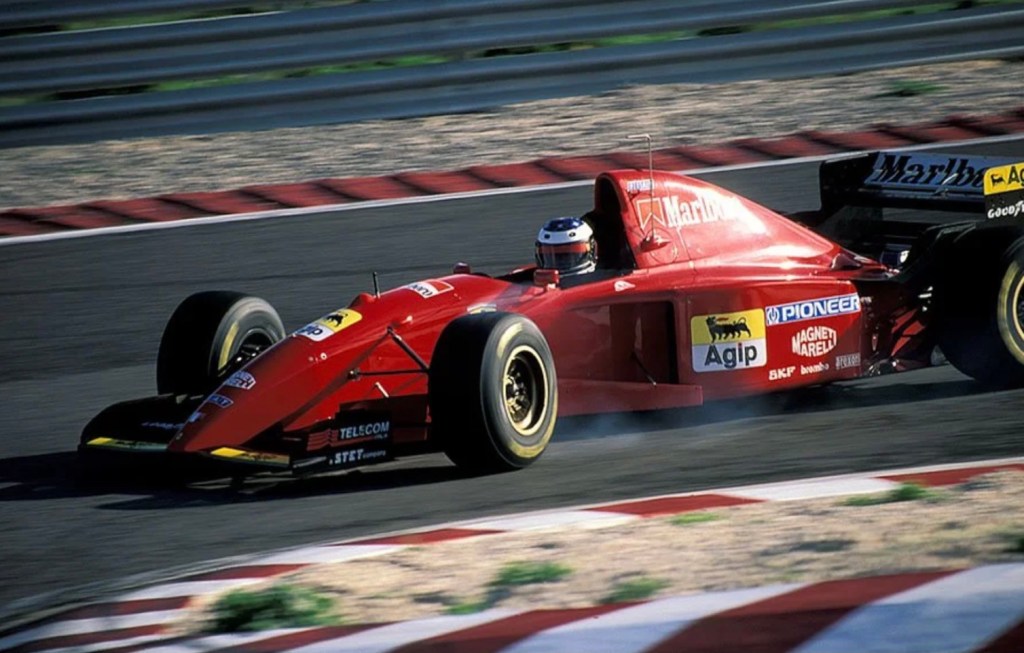
Ferrari’s 412T2 V12s finished a distant third in the 1995 Constructors Championship behind Renault powered Benetton and Williams. Much better was the three wins secured by recent signing, Michael Schumacher aboard the V10 (hooray finally!) engined F310, and four with the 310B in 1996-97. Ferrari’s Head of Aerodynamics in this period was Aussie, Willem Toet (1995-1999).
Michael Schumacher nips a brake testing the Ferrari 412T2 at Estoril in November 1995. His final race with Benetton in Adelaide was less than a fortnight before (unattributed)
Ferrari’s Holy Racing Trinity were anointed when Jean Todt, Ross Brawn and Michael Schumacher (not to forget Chief Designer Rory Byrne) came together as CEO, Technical Director and Lead Driver; six Constructors World Championships flowed from 1999 to 2004.
Renault and Fernando Alonso took top honours with the R25 in 2005, but Ferrari were handily placed for the first year of the 2.4-litre V8 formula in a further emasculation of the technical differences between marques in 2006. Mind you, the primeval scream of these things at 20,000rpm or so is something we can only dream of today.
Ferrari’s 248 F1 used an updated F2005 chassis fitted with the new Tipo 056 715-785bhp V8. It came home like a train in the back end of the season, winning seven of the last nine races, but fell short of the Renault R26 in both the Constructors and Drivers titles.
Alonso beat Schumacher 134 points to 121, and Renault 206 points to Ferrari’s 201 but the 248 F1 won 9 races (Schumacher seven, Felipe Massa two) to Renault’s 8 (Alonso seven, Giancarlo Fisichella one), so let’s say it was a line-ball thing…and Kimi Raikkonen brought home the bacon for himself and Ferrari with the new F2007 in 2007.
Michael Schumacher displays the elegant simplicity of his Ferrari 248 on the way to winning the Italian GP, Monza 2006 (unattributed)
In more recent times the whispering 1.6-litre single turbo V6 formula, incorporating an energy recovery system, was introduced in 2014.
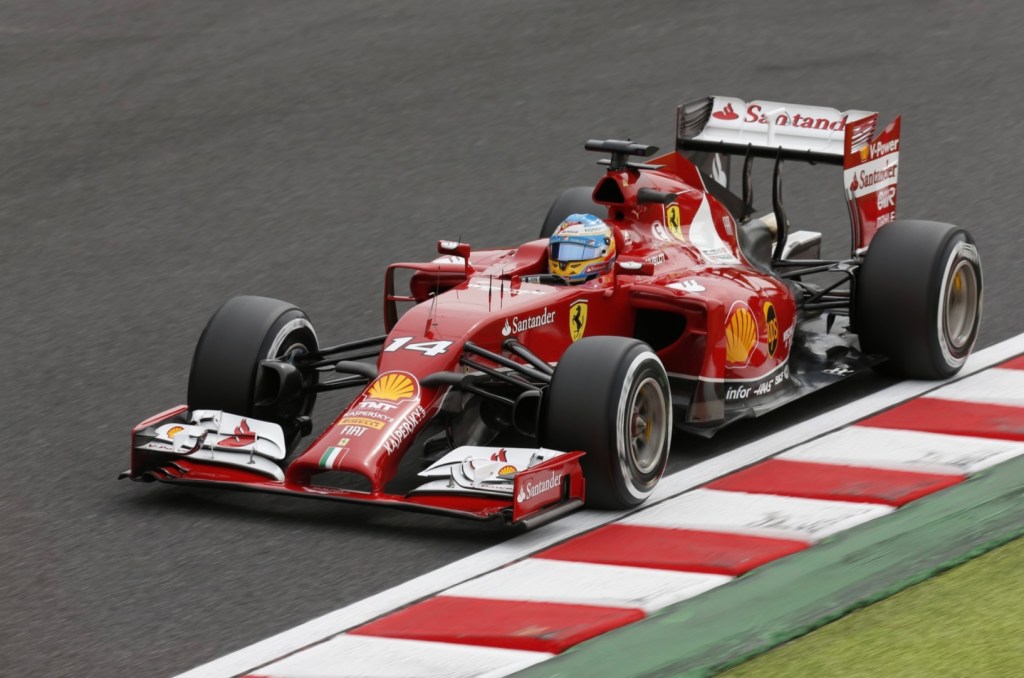
Ferrari fielded two world champions for the first time since 1954 (Giuseppe Farina and Alberto Ascari) when Alonso and Raikkonen took the grid in new F14T’s, but that dazzling combo could do no better than two podiums in a season dominated by Lewis Hamilton’s and Nico Rosberg’s Mercedes F1 W05 Hybrids.
Ferrari’s season was a shocker, it was the first time since 1993’s F93A that the Scuderia had not bagged at least one GP win.
Fernando Alonso, Ferrari F14T at Suzuka in October 2014. DNF in the race won by Lewis Hamilton’s Mercedes Benz F1W05 Hybrid. What visual atrocities the cars of 2014 were (MotorSport)
So, what does history tell us about Ferrari’s prospects in this 2022 formula change year? Given our simple analysis, at the start of the season Ferrari had a 36% chance of bagging both titles, but with two out of four wins early on for Charles Leclerc they must be at least an even money chance now.
I’m not so sure I’d put my house on them, but I’d happily throw yours on lucky red!
Credits…
formula1news.co.uk, goodwood.com, ferrari.com, LAT, MotorSport





















 primotipo...