Doug Whiteford, Ford V8 Spl leads Lex Davison, Alfa Romeo P3 early in the Vintage Festival Championship, Nuriootpa April 1949 (SLSA)

South Australia’s Barossa Valley, 75 km north of Adelaide is one of the states great wine producing areas.

32 km long and 8 km wide it includes the towns of Lyndoch, Tanunda, Greenock, Seppeltsfield, Angaston and just to its north-west, Nuriootpa.

Somewhat unique in Australia, large numbers of Germans settled in the Adelaide Hills and surrounding areas from the 1840s planting some of the earliest grapevines in the country.

By 1949 the Barossa had 22,000 acres of vines producing 60% of the total South Australian Vintage. Keen to maintain some of the cultural traditions of the old world, in 1947 community leaders organised a festival similar to those held in the Rhine Valley at vintage time, to foster a greater sense of community, raise funds for charitable causes and have fun!

The climax of the two day 22-23 April 1949 celebration was a carnival at Tanunda with dancing sideshows, a draught-horse derby and barbeques of three 600 pound bullocks! Not to forget motor racing…

1949 Festival program
Greenock float heading past the Nuriootpa Community Hotel during the 1948 Festival (Advertiser)
Nuriootpa circuit map. In terms of the narrative below, the start/finish is in the top right corner

South Australia hosted Australian Grands Prix at coastal Victor Harbor (correct spelling) in December 1936 and on the daunting Adelaide Hills, Lobethal roller-coaster road course in January 1939, Nuriootpa was chosen as the 1950 venue.

In that sense the Vintage Festival race meeting was a ‘warm up’ for the organisers and racers alike- the Nuri road course was only used on those two occasions seven months apart.

Some maps make the track appear a simple square layout around the town but the more detailed drawing above shows the flat 3.1 mile/4.98 km course to be not quite so easy, whilst not on the same planet of difficulty as Lobethal.

The start line was on the Penrice Road/Research Road corner with cars heading clockwise- the top right corner of the map above, the paddock was on parkland on the outside of this corner.

Racers headed down the straight for a fast run into the double-right hand ‘Atze’s Corner’ and then onto Railway Terrace- gently to the right, then a short straight, then a quick left before another hard application of brakes for ‘Tolleys Corner’- the intersection of Railway Terrace and Nuriootpa’s main drag- Tanunda Road/Murray Street.

There the cars kicked away with parklands on the left, gently left over a wooden bridge to clear the North Para River before heading straight- going past the shops then more hard braking for another right-hander at the Penrice Road intersection.

Exiting, the cars gently curved left and gently right before another straight section past the finish line just before the Penrice Road/Research Road intersection and then another lap…

Bill Patterson, MG TC Spl s/c. Plod on this side, St Johns Ambos on the inside. Probably, as many of these shots are, the intersection of Murray Street and Penrice Road- Bill is entering Penrice for the run to the finish line (HTSA)
Harry Neale’s Ford V8 Spl at left and Jim Gullan, Ballot Oldsmobile on the right (HTSA)

34 cars and 46 motorcycles entered the meeting, no doubt the poor entry of cars was a function of the traditional Easter fixture at Mount Panorama which took place the weekend before.

Top guns at Bathurst were Lex Davison’s 1934 GP Alfa Romeo P3, Frank Kleinig’s legendary Kleinig Hudson Spl, Bill McLachlan’s Mackellar Spl (Bugatti T37A Ford V8) and Jack Murray’s Day Special (Bugatti T39 Ford V8). The feature event, the 25 lap All Powers Handicap, was won by Arthur Rizzo’s Riley Spl from Curley Brydon, MG TC and Kleinig.

Bathurst contestants who made the trip to South Australia included Davison, Tony Gaze, HRG and Bill Patterson, MG TC Spl s/c.

The Davison and Patterson crews had barely 24 hours to give their cars a tickle in Melbourne before loading up again for the 750 km trip on the Western Highway to the Barossa.

Tony Gaze had an amazing couple of weeks- he drove the HRG from Melbourne to Bathurst, raced it to fifth in the All Powers Handicap feature race won by Rizzo, then drove to Nuriootpa, raced it again for a couple of third places and finally drove it back to Melbourne!

Lex’ machine had misbehaved at Bathurst- he had braking problems, nor would the exotic 2.9 litre twin-cam straight-eight reach maximum revs. Patterson didn’t start his events at Mount Panorama so his boys in Ringwood no doubt had a busy night as well.

Other entries included plenty of MGs- John Nind’s TB Spl, plus four South Australians in TC’s of varying specification- David Harvey, Ron Kennedy, Steve Tillet and Harold Clisby- the prodigiously talented, intuitive, eccentric engineer of 1.5 litre Clisby V6 F1 race engine fame, and much, much more who was making his race debut.

John Crouch raced another HRG, Ken Wylie his clever, fast Austin A40 Spl s/c, Eldred Norman ran his Ford Double-8 Spl- which as the name suggests was powered by two Ford V8’s. Later driver of that car, Harry Neale entered his Ford V8 Spl and Les Robinson the ex-Segrave/Hope Bartlett 1922 GP Sunbeam Ford V8 Spl.

Jim Gullan brought from Melbourne his quick Ballot Oldsmobile Spl with close mate Doug Whiteford there to race his legendary Ford V8 Ute based special ‘Black Bess’- a combination which would win the AGP at Nuri seven months hence.

Lex’ Alfa landed in Australia in February 1948, he was still getting the hang of the car without too many circuits upon which to race it at the time. Theoretically it was the fastest car in the country- in reality Alf Barrett’s older Alfa Monza was the quicker combination but the Armadale blue-blood was at the end of his career at 38, ‘retiring’ in 1948 whereas the 26 year old Lilydale blue-blood was just at the start of his long, distinguished career.

Interestingly, Davo’s car was being looked after by later four-time Gold Star champion Bib Stillwell who, at 22, had commenced his first retail and repair automotive business in partnership with respected, experienced, ten years older than Bib, Derry George in January 1949.

‘Magnette Motors’, or more commonly ‘Stillwell & George’ operated from 121 Cotham Road, Kew, a building owned by Bib’s mother- it was the start of Stillwell’s motor businesses which occupied this and adjoining sites into the 2000s. George learned his craft with Reg Nutt and before that legendary outfit A.F Hollins in Armadale, who would ultimately prepare Lex’s cars with great success upon the recommendation of Tony Gaze.

Australian racing events were mainly run to handicaps at this stage. Bill Patterson’s marvellous Reg Nutt/Doug Whiteford built, Bob Baker bodied MG TC Spl s/c was half a chance. Whiteford’s ‘Black Bess’, continually developed by the talented and driven racer/engineer since it first appeared in 1939 was a well known combination to the handicappers, his challenge would be greater.

Jim Gullan commented about how little time there was to practice and had the opposite braking problem to Davison- his anchors were too good!

With the assistance of Jack Pearce at Paton Brake Replacements (P.B.R. later the Repco Brake Company) Jim and Doug Whiteford had been supplied with a new braking package which comprised light commercial drums, aluminium brake shoe castings copied from Jim’s Ballot, aluminium backing plates and large wire air-scoops which looked great and were no doubt a wonderful psyche!

Gullan found his new brakes so powerful that ‘they were bending the chassis, making the car almost unsteerable on the rough Nuriootpa roads. The only thing to do was to apply them gently.’

Jim Gullan, Ballot Olds in front of a group shortly after the start of the over 1500cc Vintage Festival Championship scratch- #2 Bill Wilcox, Dodge Spl, #11 Harry Neale, Ford V8 Spl then #2 folks and in the dust behind, Robinson’s GP Sunbeam Spl (J Gullan Collection)
Davison now in front of Whiteford in their Vintage Festival Championship tussle- from Murray Street and into Penrice Road (HTSA)

A crowd estimated at 30,000 people attended Sunday raceday, the final day of the carnival to see a six event program- it was fine and warm, good conditions for racing.

The lack of practice Gullan commented on was because practice was scheduled to start on raceday at 6 am but there were still revellers from the night before in Murray Street, so the circuit didn’t open until 6.40 am and was then made over to the bikies at 8 am.

The only incidents were spinners John Crouch and John Nind- who bent his front axle in the process.

Whilst the 48 mile, 8 lap Barossa Valley Handicap was nominally the feature event, the Vintage Festival Championship scratch race for the over 1500cc cars was probably the thriller of the day with a wonderful scrap between Davison and Whiteford.

Contrary to modern practice, the fastest cars started from the back of the grid. Whiteford’s Black Bess made the best start, then came Gullan, Ballot Olds, Davison’s P3 and Harry Neale in his Ford V8 Spl.

He was followed by Melburnian Bill Wilcox in the Gullan designed Dodge Special- a Dodge six-cylinder engine and Lancia gearbox clad in a sexy Bob Baker built body of Mercedes Benz GP style, and then Mount Gambier’s Les Robinson in the GP Sunbeam Ford V8.

During lap 2 Davo passed Gullan and ranged up behind Whiteford, Wilcox was close to Neale but behind Robinson.

It took Davison 3 laps to get past the hard driven Bess, which was not as quick in a straight line as the Alfa (Davo did 144 mph on Conrod aboard the P3 in 1949 whilst Doug did 121 mph in Bess in 1950) but stopped better and had Doug’s cornering brio- and then stay ahead of Whiteford. Positions then remained the same to the end of the race, Davison won from Whiteford, Gullan, Neale and Robinson.

Graham Howard wrote that Davison’s win was an important milestone, it was his first victory after only two and a half years racing, discounting a ‘club level’ win on the grass at Nar-Nar-Goon in Victoria.

Davison in front of Whiteford in Nuriootpa village- Murray Street into Penrice Road corner (HTSA)
Ken Wylie, Austin A40 Special s/c (1250cc) on the Murray/Penrice corner- note the ever present, cast iron/concrete ‘Stobie’ poles distinctive to South Australia. Lex Davison famously bent one of these whilst destroying wife Diana’s MG TC Spl at Lobethal in January 1948- and lived, a bit bruised, to tell the tale! (HTSA)

The car racing program opened with the Motors Ltd Championship under 1500cc scratch event over 8 laps, 24 miles.

Crouch’s HRG led for the first lap- Patterson spun with the Tillet and Harvey TCs, Gaze’ HRG and Ken Wylie, Austin A40 Spl coming through in a bunch.

Patterson worked through to the front, overcoming his spin and led from Crouch and Wylie- then Wylie passed Crouch and set the fastest lap of the race, and came to within 12 seconds of Patterson but the Wylies and Gaze cars faded with overheating, the latter having lost its fanbelt.

Patterson won from Crouch, Gaze, Wylie- then Tillett, Kennedy and Harvey having a ball in their TCs then R Head, Riley Spl and I Jackson, GN.

John Crouch had a good year, he won the 1949 Australian Grand Prix that September in his ex-John Snow Delahaye 135CS on the Leyburn ex-RAAF base runways in Queensland- he was 5 minutes ahead of the pursuers led by Ray Gordon’s MG TC Spl.

Tony Gaze would soon return to the UK, having had a distinguished flying career during the war, to say the least, for the ‘serious’ part of his racing career in Europe. Jim Gullan and his wife Christine joined Tony and Kaye Gaze for the early part of that trip, 1951- an interesting story for another time.

In the Barossa Valley Handicap 16 lap feature, Bill Patterson won off 4 minutes 25 seconds.

The cars initially ran in handicap order with Head, Clisby and Ravdell Ford A Model Spl s/c early retirements. After 8 laps Keith Rilstone led in a Morris Minor from the Howard Austin Ulster then the MGs of Tillett, Kennedy and Ohlmeyer (TA).

Patterson was past Crouch, Harvey and Wilcox whilst Davison passed the Ford Double-Eight driven by Eldred Norman- ‘…while Norman was out on the dirt passing Harvey, Davison was dancing from one side of the road to the other, behind them, shaking his fist in search of an opening, Nuvolari style’ AMS reported.

Jim Gullan passed Tony Gaze whose car was boiling, with Patterson taking the lead on lap 14- at this point Rilstone was second from Tillett, Kennedy and Howard.

With 2 of the 16 laps to run Patto had consolidated his lead whilst Tillett was within striking distance of the Rilstone Morris then Wilcox, Dodge and Howard, Austin.

Doug Whiteford only gets a mention towards the end of the AMS report but consistent laps in the 2 minute 30 second mark saw him finish fourth behind the top three- Patterson, Tillett and Wilcox. Kennedy’s TC was fifth, then Gullan, the Crouch HRG, Rilstone, Ohlmeyer’s TA, R Howard’s Austin Ulster, the Harvey TC, Harry Neale’s Ford V8 Spl and the Nind TB Spl.

Bill Patterson first raced a modified MG TC before switching to his new racer (below) which was built in late 1948- he first competed in it at Rob Roy in January 1949, so the Sports Car Club of South Australia handicappers did not have much to work with in the way of results, always handy!

25 year old Bill Patterson in the Nuriootpa paddock after his first big win- the Barossa Valley Handicap in the ‘Patterson’ MG TC Spl s/c’. His ascent as a driver was commensurate with better cars, itself a function of the growing success of his outer eastern Melbourne, Ringwood Holden/truck dealership. Won the Gold Star in a Cooper T51 Climax in 1961, his pace was apparent from the start of his career (R Townley Collection)
Stobie pole growing from the cockpit of the Patterson TC- fine lines, driven and developed further by Curley Brydon after its sale by Patto in 1950 (HTSA)

To qualify for the last event of the day, the Consolation Handicap 6 lapper, entrants had to have not won more than forty pounds in any of the previous races!

For the first 4 laps the lead was swapped between Rilstone and later Australian Tourist Trophy winner, Derek Jolly’s Austin 7 Spl with the race won by  Ron Kennedy from Steve Tillett both in MG TC’s and then John Crouch’s HRG which had a very consistent weekend, then came Gaze, Gullan, Wilcox and Davison who set the fastest race time and a lap record of 75 mph.

Then was Ohlmeyer, TA, Jolly, Austin 7 Spl, the Nind TB Spl, Harry Neale, Ford V8 Spl and the N Jackson GN.

Harold Clisby made the local papers after losing control of his MG TC and backing it into a fence. The Clisby family account is that ‘…he was leading the race until another car cut him off on a corner sending him careering over a bridge with only the fencing wires preventing him ending up at the bottom of a creek.’

Jim Gullan, Ballot Olds, the chassis rails of which have been copiously drilled for lightness, no doubt at the cost of torsional rigidity which probably was not great before he started. Which corner? Dunno. Stobie pole marks the apex (unattributed)

Etcetera…

Jim Gullan and Doug Whiteford were close friends, as noted above, in the best traditions of the day, after the 1950 Nuriootpa AGP ‘…we drove each others car around Albert Park one evening, both previously having driven the other’s car a short distance’ wrote Gullan.

‘My impression of the Ford was it had more power and torque than the Ballot, with a rougher engine. The brakes had a very hard pedal and poor retardation, the steering was light and spongy. The car was tail light, tending to wander at speed, difficult to drive at racing speeds.’

‘Doug’s impression of the Ballot, very smooth high revving (6000 rpm) engine, steering and brakes too sensitive, difficult to drive!’

Gullan, mused over the changes to ‘the scene’ in 1950 with drivers getting faster imported cars and ‘nearly half the field in the 1950 Grand Prix had been made up of MG’s, which made for interesting under 1500cc Scratch Races.’

He concluded that the Ballot had reached the limit of its development without a new chassis fitted with independent suspension.

By the time he returned to Australia after twelve months in Europe, in early 1952, air-cooled Coopers were plentiful, Stan Jones was racing Maybach 1, Doug Whiteford had his first Talbot-Lago T26C and much, much more- the times were changing with much of the evolution due to the growth of scratch racing, to win one needed the equipment to do so.

Yet one more shot of the Davison/Whiteford dice, Doug almost wholly obscured by Davo and the Stobie (HTSA)
(State Records SA)
(SLSA)

This is the only clear motorcycle shot I can find, John Medley identified the rider as South Australian, Les Diener, his machine is a Velocette 350 MkVIII KTT.

He had a great weekend, winning the 5 lap Barossa Junior TT and finished third in the Senior event despite giving away capacity to most other entrants.

Diener and Lloyd Hirst had a good go in the Junior event, Hirst leading for the first 2 laps, in the Senior TT Laurie Boulter’s Norton and Hirst’s Vincent-HRD finshed in front of Diener.

Check out this fascinating article about Les Diener- what a talented rider and engineer he was; https://www.shannons.com.au/club/bike-news/old-bikes-australasia-the-eldee-velocettes/

After the final race the crowd swarmed into Nuriootpa’s main street- Murray Street for the start of a procession of sixty decorated floats. At the end of the day 25,000 people converged on Tanunda Oval above, ‘to see the most lavish spectacle ever staged in a South Australian country town.’

The Barossa Vintage Festival is now held biannually with a week long calendar of events including wine workshops, heritage events and church services- the Barossa’s Lutheran leanings reflect its German heritage, which is about where we came in…

Otto Stone’s copy of the race program, programme I should say! from Stephen Dalton

Bibliography…

‘Lex Davison: Larger Than Life’ Graham Howard, ‘Bathurst: Cradle of Australian Motor Racing’ John Medley, ‘As Long As It Has Wheels’ James Gullan, ‘Harold William Clisby: The Life of a Restless Engineer’ on clisby.com, Australian Motor Sports 16 May 1949 via the Bob King Collection, Stephen Dalton Collection

Photo Credits…

‘HTSA’ History Trust of South Australia, State Records of South Australia, Adelaide Advertiser, State Library of South Australia, Richard Townley Collection

Tailpiece…

(State Records SA)

Grape pickers during the 1949 Festival- its seventy years ago my friends. Lots of happiness and optimism in those pretty smiling faces.

Finito…


David McKay framed by the shadows, eases his Cooper T53 2.5 Climax ‘Lowline’ into Hell Corner for the run up Mountain Straight, Easter 1962…

Cracker of a shot. Its practice, tents of campers have set up for the weekend in the Australian Racing Drivers Club members area in the background, a somewhat ominous sky and the marshall with the ‘brickies’ hat made up of a carefully folded hanky.

A really skinny grid fronted for the Bathurst 100 Gold Star round, an event which had been one of the countries most prestigious.

Despite the small field Lex Davison, Cooper T53 2.7 FPF and Bib Stillwell, Cooper T53 2.5 FPF staged a great battle for 15 laps with Bill Patterson, Cooper T51 2.5 FPF and McKay  a little further back- McKay got past Patterson on lap 11 with Davison’s gearbox failing leaving Stillwell in front to win from McKay, Patterson and Greg Cusack in the older Scuderia Veloce Cooper T51 2.5 FPF.

I have written about this Cooper T53 before, here; https://primotipo.com/2017/09/06/chris-amon-cooper-t53-and-the-australian-grand-prix-1963/

(P Wherrett)

David McKay in the Lowline Cooper T53 with Barry Collerson, Cooper Minx on the outside, Warwick Farm, 5 August 1962.

Credit…

Alan Howard, John Ellacott, ‘Bathurst: Cradle of Australian Motor Racing’ John Medley


Finito…
(N Henderson Collection)

MG on Mount Tarrengower, Maldon, Victoria circa 1946-1947…

Its funny what ya find sometimes, this was a random catch found sitting in front of the tello whilst searching for something else.

The photograph, from artblat.com, is part of the Nicholas Henderson Collection and thought to be Tarrengower given the preponderance of Maldon shots in the collection- further evidence cited the surrounding box-ironbark trees. We had a country drive to Castlemaine, Kyneton and Maldon inclusive of a cruise up the mountain again six months ago-Tarrengower it is i suspect.

I am no pre-war expert but the stance of the machine and its grille reek of MG, perhaps not a supercharged one mind you, so that narrows the model choice somewhat- but it’s no more than a guess, perhaps it’s Peter Vennermark’s Maserati 4CL?

Below are two more cars, one sporting and the other not- love to know what they are, bonus points for the drivers and the date of the meeting.

(N Henderson Collection)

For some of you the dress of the spectators may help give us a fix on the date, as perhaps will the model year of the most recent car built- perhaps the sedan below.

Another car (not shown) in the same batch of photos had a registration expiry date of February 1947 and was therefore indicative of the approximate timing of the photographs to the curator of artblat.com, Dr Marcus Bunyan.

(N Henderson Collection)


1947 postcard of the meeting that year shows the spectator car park at the bottom of Mount Tarrengower- horse and cart is a nice touch!


A little bit more research shows the the first pot-war event was on Easter Saturday, April 5, 1947. The climb has been pretty much in continuous use since the dawn of motoring in Australia. The ninetieth anniversary of the first event was held last year- 2019.

The climb had not been used for a couple of decades until the Vintage Sports Car Club ran an event on 29 February 1964, FTD that day went to Bill Leach in an E Type Jaguar. The club returned that October when FTD was set by no less than Lex Davison’s Cooper T62 Climax 2.5 Tasman car in 50.34 seconds. Davo was a very experienced hill climber with an Australian Championship amongst his many racing achievements, see here; https://primotipo.com/2019/03/05/mount-tarrengower-hillclimb/

I’ve never raced there competitively but I did run my Elfin Crusader Formula Vee up the hill during an Elfin Owners Club event from Bendigo to Mount Tarrengower and back in November 1993. About 40 cars did that event from Peter Brennan’s MR8C Chev F5000 ‘down’ to one or two Vees- a Gendarme up front in a fast pursuit car ensured speeds were civil but quick on 80km of public highways. What fun it was.

Jim Hawker and George Wightman aboard the awesome Chamberlain 8, Tarrengower April 1947 (The Chamberlain)


(Maldon Museum Archive)

A group of competitors gathered in Maldon during the Easter 1947 meeting.

Many thanks to the combination of David Zeunert, Tony Johns, Bob King and Stephen Dalton who between them provided the shots and nutted out the date and competitors.

We are not sure of the white sportscar by the kerb, then the Hugh Stuart aka Tim Joshua Frazer Nash single-seater, Jim Gullan’s Ballot Oldsmobile and at right Lex Davison’s Alfa Romeo 6C1500 s/c Spl aka the ‘Little Alfa’.

Stephen reminded me this site at 51-57 High Street is still a servo, Robert Cox Motors are the current operators.

Entry list of the Easter 1947 meeting (Ash Tracey)


Later 1960’s shot of a Geneer Outlaw VW, I think, gives perspective on the open nature of the tourist road and surrounding terrain (Ken Bolitho)


Peter Vennermark, Maserati 4CL 1.5 at Tarrengower, 24 March 1951 (Maldon Museum)


Lex Davison, Cooper T62 Climax, Tarrengower October 1964- Davo in collar and tie (M Williams Collection)

The climb is about 1500 metres long, the bitumen is narrow, patchy and rough at the edges- the shot above of Lex in 1964 is not that much different to now, it is a tourist road with a lookout at the top. It’s a very fast open climb, a big challenge, I notice that a chicane half way up was used last year which is a bummer in some ways but probably makes good sense.

My first visit to Mount Tarrengower was as an official with a mate in 1978. We camped overnight and took up our post about two thirds of the way up the hill on Sunday, a beautiful clear, hot day. What impressed was the speed of the more powerful cars but the dangers were great given the unguarded edges and unforgiving trees awaiting those who goofed.

During the afternoon we heard the unmistakable wail of a Porsche flat-six off the start line- it was the very impressive Dr Will Darvall’s 2.7 RS mounting another assault. The rise and fall of the engine note indicated his commitment and rapid progress until about 100 metres or so below us the throttle closed rapidly, then followed a sickening series of dull-thuds as the gorgeous car pinged from eucalypt to sheoak. I will never forget that sound.

We looked at one another and said in unison ‘He’s fucked!’ It seemed and sounded that bad. But the good doctor recovered, I know this as he was ‘me mate Big Bad Brucie’s GP in Heidelberg, but he was a sick boy for a long while. The car was rooted, but it too lived to fight another day after bulk dollars were spent on its resurrection around a new shell.

The point to be taken here is that there is no ‘good place’ to leave the road on this challenging mountain.

Maldon High Street 1934 (Maldon Museum)


Maldon High Street circa 1975 (Ellen Hansa-Stanyer)


Maldon High Street 2019, refreshingly little change over the last eighty years or so (Maldon FB)

The Central Goldfields area of Victoria is quite beautiful and so named as a consequence of the 1850’s Gold Rush which attracted massive numbers of fortune seekers from around the world.

The ‘Golden Triangle’ area marked by the towns of Ballarat, Maryborough and Bendigo yielded massive amounts of the precious commodity, Mount Tarrengower is a couple of kilometres from the tiny village of Maldon at the Triangle’s northern end- short walks around and from the village allow this wonderful history to be seen and experienced- the steam train ride is a beauty for ‘big kids’ too.

Maldon is a must visit for any Victorian international tourists list, the town was classified by the National Trust way back around 1970 so the streetscape now is little different to the way it was during that 1947 hillclimb weekend.

Peter Holinger on the line aboard the very fast Holinger Repco ‘620’ 4.4 V8 circa 1978, the dimensions of which were provided by Jack Brabham’s 1969 Tasman contender- Brabham BT31 Repco (John Bowring)

Etcetera…


(M Bisset)

A couple of happy-snaps of the Elfin ‘Tour To Tarrengower’ in November 1993 I mentioned.

The five red cars are Catalina, Mono, Mallala sports, Mono and Catalina, then a white and blue pair of 620s- this is in Bendigo.

Below is Pete Brennan’s MR8 F5000 and the arse of his 400 Chev at right, the big white monster is the ex-Schuppan MR8 in Can-Am dress, now owned by Bill Hemming, it is in F5000 guise. The other white sporty is a 360, a personal favourite.

(M Bisset)

Peter Brennan on the way to FTD circa 1982 in his Elva Mk8S BMW 2 litre.

(P Brennan Collection)


(A Tracey)

Another crop of Peter Vennermark’s Maserati and a report on that meeting below, Easter Saturday 24 March 1951- where he had an off.

Chassis #1555 was later sold to long time racer Cec Warren who alighted the machine during the March 1954 Fishermans Bend meeting for adjustments, collapsed with a heart attack and died.


(A Tracey Collection)


(D Zeunert)

Lovely photo of the vibe in the ‘modern era’, crowd and carpark in the background, 1982 with Stuart Anderson on the line, Maserati 4CM 1100, above and below.

(D Zeunert)


(G Thomas in L Sims Collection)

Bob King has his money on our opening car being the Lindsay Head driven Riley Austin Spl, here being driven over Skyline at Rob Roy in 1946- without its lights, it is a possibility’

Photo and other credits…

Nicholas Henderson Collection on artblat.com, Maldon Museum, Maldon Facebook, Ellen Hansa-Stanyer, Max Williams Collection, The Chamberlain, Tony Johns Collection, ‘Bentley Specials and Special Bentleys’ Ray Roberts, John Bowring, Ken Bolitho, Peter Brennan Collection, Ashley Tracey Collection via Tony Johns, George Thomas in the Leon Sims Collection, David Zeunert/Collection

Tailpiece…

Bentley in High Street, Maldon circa 2018, Tony Johns tells me it’s a 1950 Mk6 rebodied coupe. The Mount Tarrengower road and car park is well worth a visit on race weekend and a tootle up from Melbourne for the day anytime.

The many closed shops in town at the moment are a bit of a worry, I have not seen the place so depressed in all the years of regular visits since 1978.

Back to the Bentley, with a bit of assistance from John’s copy of ‘Bentley Specials and Special Bentleys’.

The car was designed by Queensland graphic designer Ian Shaw who was considerably influence by the Bugatti Type 57SC Atlantic.

The chassis (#B4JO) ‘was reclaimed from an earlier touring body conversion’, seven inches were taken from the frame, the engine moved aft twelve inches and lowered- whilst the ‘X brace’ part of the chassis was removed other cross members were added to restore and enhance torsional rigidity.

Mechanical upgrades include dual boosted hydraulic brakes, Koni shocks, sixteen inch wires and a smaller than standard MkVI steering wheel.

The steel body was built to Ian’s full scale drawings by Venkat, Bodrog and Evans around one inch by one inch steel tubing and incorporates highly modified MkVI front wings, a shortened radiator shell and bonnet.

Initially a 4.25 litre Bentley motor was used, this was later replaced with an ‘S type’ 4.887 litre straight six which was blueprinted and modified by the incorporation of a higher lift cam with the head ported and fitted with larger valves.

This beautiful looking 2+2 motor car is a credit to the fine eye of its creator, it first ‘broke cover’ over the 1998 Bay to Birdwood weekend in Adelaide and is now good for 125mph which would make it a fine interstate express.

Finito…

(T Marshall)

Bryan Faloon, Rorstan Mk1a Porsche during the 1971 New Zealand Grand Prix weekend, at Pukekohe, it’s practice, he didn’t race due to gear selector problems, twelve months hence he died in this car…

Its strange the stuff buried in the back of your head. This racer and car are a couple of fragments of my earliest racing memories.

By the summer of 1972 I was a motor racing fan even though I’d never been to a race meeting. My heroes were Kevin Bartlett and his Mildren Yellow Submarine, and Graeme Lawrence’s Ferrari Dino 246T- these attachments came via magazines.

Finally, I attended the Sandown Tasman meeting, the Australian Grand Prix that year. In anticipation of the big day, I was keeping a close eye on my heroes Tasman progress via press reports,  Sandown was the second last of the eight rounds.

KB was going well in an ageing McLaren M10B Chev. The ex-Niel Allen 1971 NZ GP winning car was doing its third Tasman, but Bartlett picked up points in three of the four rounds including a splendid wet weather win at Teretonga, before heading back across the Tasman to Surfers Paradise, for the first Australian round.

Things were not so hot at Team Lawrence however.

Graeme had a new Lola T300 Chev – arguably THE F5000 car of 1972 (McRae GM1 duly noted) – so he looked a good bet to take on Hailwood, Gardner, Matich, McRae and the rest of the hotshots in the best cars. The machine was assembled in NZ, an initial sortie at  Baypark yielded a first race win, and a DNF later in the day with fuel feed problems.

At the Pukekohe, NZ GP Tasman Cup opener he started sixth on the grid, about a second aft of McRae’s Leda GM1 Chev on pole. He went right to the back of the field on the first lap when his feet and pedals got tangled in the tight Huntingdon tub, and ran on at the Lion Hairpin, or copped a tap up the chuff, depending upon the race account- he let the field go and then started a long climb back through the field.

Up front, Frank Gardner’s works T300 took a lead he didn’t relinquish. By lap 52 Graeme and John McCormack, Elfin MR5 Repco had been in a torrid dice for 20 laps in a battle for eighth, and it was then that an awful racing accident occurred involving poor Bryan Falloon and Graeme, shown below.

(T Marshall)

Bruce Sergent described the accident thus “…Coming up the back straight on lap 52 Lawrence was slip-streamimg McCormack while Falloon, seeing the red Elfin bearing down on him, pulled to the left at the kink to let him through. At the same split second, Lawrence pulled out of the slipstream to pass McCormack, and ran into the back of the Stanton-Porsche at 155mph.”

“The Stanton was launched headlong into an earth safety barrier, taking to the air before crashing down onto its wheels again. The Lola was cartwheeled down the track, totally disintegrating on the way. The Stanton looked intact while the Lola was totally wrecked. The head injuries Falloon sustained in the impact proved fatal. Lawrence suffered broken legs, wrists and concussion.”

Back in Australia, I read about the high speed accident which befell Graeme and Bryan. Whilst relieved Lawrence would survive, it was the first time I realised this racing caper sometimes goes horribly wrong.

So, that incident and Bryan Falloon’s name have been in the back of my brain for decades. This batch of photos took me straight there, whilst I’ve seen a couple of photos of the T300, I’d never seen a photo of the Rorstan aka Stanton Porsche before, what an interesting car it was too.

Rorstan Racing was a partnership of quarry and truck fleet owner Ian Rorison, and Tauranga car dealer Feo Stanton. They had run a number of older cars for a variety of drivers for years, Bryan took the ride prior to the 1970 Tasman.

The car was one of eleven chassis built by Bob Britton on the Brabham BT23 jig he created when asked to repair the ex-Denny Hulme Brabham BT23-5 Ford FVA  F2 car destroyed in another awful Pukekohe crash in 1968. Denny collided with local racer, Lawrence Brownlie, destroying Brownlie’s Brabham, causing him grievous injuries and ending his career prematurely, but not instantly. The prang was one many regard as not exactly Hulme’s finest moment.

The Rorstan Partners bought the Brabham wreck sans engine and sent it to Sydney for repair. They received back a new BT23 copy they called Rorstan Mk1, chassis number ‘RMR1’ to which they initially fitted a Coventry Climax FPF 2.5-litre four cylinder engine.

Britton’s own copies were called ‘Rennmax BN3’, Alec Mildren’s a ‘Mildren’. Whatever the name, the cars were built by Britton at Rennmax Engineering on the ‘BT23-5’ jig.

Australian enthusiast/historian Terry Sullivan wrote an interesting story on the Rorstan Partners cars and drivers on ‘The Roaring Season’, click here; http://www.theroaringseason.com/showthread.php?1824-RORSTAN-TASMAN-SERIES-RACER

For 1969, Rorstan engaged Jim Palmer to drive the machine on the basis that it was to be powered by a 2.5 litre Repco V8. He exited stage left when it became apparent that the car was to be Climax FPF powered- its days were long since past as a competitive Tasman engine.

Dennis Marwood then took the drive. With prior Cooper T66 Climax experience in 1966-1967, he was well aware of the challenge. He achieved little in the way of results, retiring from the Levin and Wigram rounds. He too decamped, out of the fat and into the flames one might say, in the shape of a fairly agricultural old F5000 Eisert JE67 Chev owned by Ian Rorison.

Bryan Faloon was then approached to drive the Rorstan Climax. He  had experience of the demanding 2.5-litre cars aboard an old ex-Stillwell Brabham BT4 Climax in some 1968 and 1969 NZ Tasman rounds. Bryan struggled against a 1970 field of good depth and breadth- a fast mix of 2-litre, 2.5-litre and 5-litre cars.

He was seventh and tenth at Wigram and Teretonga, with DNFs in the other two rounds, both due to engine problems at Levin and Pukekohe.

Graeme Lawrence, Ferrari 246T, Max Stewart, Mildren Waggott, Kevin Bartlett, Mildren ‘Yellow Submarine’ Waggott and then Bryan Faloon, Rorstan Mk1 Climax at the Levin hairpin 1970- Lawrence won from Stewart and Frank Matich, McLaren M10A Chev (T Marshall)

Without funds to buy a new car, the Rorstan partners parted ways. Feo Stanton then looked at alternative, more competitive engines, and decided upon a Porsche flat-eight from Alan Hamilton, racer and head of Porsche Cars Australia – from that point the car was known as the Stanton 1 Porsche.

Alan picks up the story “We assisted Feo Stanton in the purchase of the Type 771 eight-cylinder engine from our Porsche 906 along with a large amount of spare parts.”

“The type 771 engine was developed from Porsche’s attempt at Formula 1 participation. They first modified an
RSK sports car to be a central seater for the then new Formula 2, still using the 1.5-litre four-cylinder quad-cam engine. This car then developed into an open-wheeler F2 car with the cooling system modified to a horizontal fan on the air-cooled four-cylinder engine.”

“In the meantime, Porsche were working on a completely new 1.5-litre, eight-cylinder engine to use in the new F1. Dan Gurney won the French GP, and the GP of the Solitude (a non championship race) with this car/engine combination, known as the Porsche Type 804.”

“Whilst the 1.5-litre version of the engine was retired into history, it spawned the development of its bigger sisters in 2- litre and 2.2-litre capacities. These engines were very successful winning in both under 2-litre, over 2-litre and prototype categories.”

“My original ‘Bergspyder’ 906-007, ran at the Targa Florio as a 2-litre, eight-cylinder prototype, finishing second overall.”

“These engines in both 2 and 2.2-litre capacities were used in the Type 907. It should be remembered that in those days, our premier formula was F5000, but the regulations also provided for cars with pure race engines of a maximum capacity of 2 litres.”

(T Marshall)

“Bobby Britton did all the chassis modifications necessary to fit the engine. The engines were quite complex being the
ultimate development of the original four-cylinder, quad-cam Carrera engine. Just the setting up of the bevel gear drive camshafts took a long time. The factory used to allow about 240 hours to assemble an engine from scratch.”

“I’m sure that the first race for the car was at Sandown, and some of my staff and I joined Feo’s team to watch practice. Bryan Faloon was Feo’s accomplished driver and we all watched as Bryan commenced his first laps. At the start of the second or third lap, a great plume of oil smoke belched from the car as it went past the old pit area between Shell Corner and the start of the back straight. We all kept thinking that Bryan would see the smoke and stop, but the trail continued up the back straight, around Dandenong Road corner and onto the main straight, continuing into the paddock area.”

“My specialist mechanic, Eddy Hackel, quickly removed the oil filter and found it full of bearing material. There was a quick conference, with confirmation that we had spare bearings etc, and the decision was made that Eddy and I would try to rebuild the engine in time for the race.”

“Porsche racing engines were not only air cooled but also oil cooled. They circulate a vast amount of oil compared to conventional race engines. Not only were the oil pipes between the engine and the cooler too small, they had also not been swaged. These restrictions had caused the oil hoses to dislodge from the steel tubes. Never having had any experience with this type of engine, Eddy and I managed to totally dismantle and reassemble the engine overnight, and get it back to Sandown in time to be put in the car for the race. I have no recollection of what happened in the race or even if the car raced at the meeting.”

The car missed the first 1971 Tasman round at Levin, had gear selector problems prior to the NZ Grand Prix and failed to start- and also missed the last two rounds at Wigram and Teretonga. That is, it was entered but did not start.

Hamilton, “Subsequently, in the 1972 NZ Grand Prix, Bryan, driving the Stanton Porsche and Graeme Lawrence, driving an F5000, collided, with Graeme sustaining critical injuries. Bryan’s car finished up in the in-field, somewhat out of sight over a rise. When rescuers approached, it was clear that Bryan was dead, probably from the first impact with Graeme’s Lola, the engine was still running and the nose of the car was buried into a bank and a tree.”

“I obtained the damaged car from Feo Stanton as I wanted the engine and transmission. The chassis went to a friend of mine who wanted to rebuild the car to it’s original condition, before the Porsche installation. The damaged body was given to ‘Women For Wheels’ for fire-fighting practice.”

“And finally, what happened to the engine? In the rebuilding of the engine after the Sandown incident, Eddy and I discovered that it was really a 2.2 litre-unit with around 285 hp. This engine, complete with the type 907 transmission, was sold to Pat Burke who had purchased the Bingham Cobra, my original 906-007 1965 Targa Florio factory Porsche.”

“Pat had also purchased from me, a new 771 engine, but without the air cooling ducting, the whole of the fuel injection system, exhaust system, generator and distributor. Pat had sent the Bingham Cobra to Bill Bradley Racing to restore 906-007 back to its Targa condition, and now there were original engines available to complete the restoration. Pat had the restored car at one of the Adelaide F1 meetings before it was sold overseas.”

Follow this link for an article about Alan Hamilton and his Porsche sports-racers; https://primotipo.com/2015/08/20/alan-hamilton-his-porsche-9048-and-two-906s/

The story/summary of all of the Rennmax BN3s, inclusive of the Rorstan is told here on Allen Brown’s oldracingcars.com; https://www.oldracingcars.com/rennmax/bn3/

Bryan during the 1972 NZ GP weekend, Pukekohe (T Marshall)

Etcetera…

(S Dalton Collection)

Donn Anderson’s tribute to Bryan Faloon from the February 1972 issue of ‘Motorman’.

Photo and Other Credits…

Terry Marshall, Rorstan Racing thread piece by Terry Sullivan on ‘The Roaring Season’, oldracingcars.com, Classic Auto News, Stephen Dalton Collection

Special thanks to Alan Hamilton for his recollections

Tailpiece: Rorstan Climax…

(T Marshall)

Terry Marshall captures Bryan in a nice Rorstan Mk 1 Climax slide during the 3 January 1970 Levin Tasman round- DNF engine after 25 of the 63 laps, Graeme Lawrence won in his Ferrari 246T.

Bryan was a talented driver. With the Stanton Porsche better sorted it would have been fantastic to see what he could have achieved in New Zealand that summer of 1972. Very sadly, at 28 years young, the planets and gods were not aligned in his favour on January 8.

Finito…

Christian Lautenschlager descending the ‘le piege de la mort’ switchback, Mercedes 18/100 HP (4.48 litre straight-four), first in the July 1914 French Grand Prix run over a 752 km road course in a little over 7 hours 8 minutes.

Mark suggested I write something on ten of the more interesting cars I have had the privilege of driving. (Car 2 I have only been a passenger in, but it is included here because of its relevance to Car 1). This could be a challenge for others to produce their lists. Although I have had extensive experience of a few of the cars, the majority are more an exercise in name dropping. Here goes in approximate date of manufacture order:

1. 1914 Grand Prix Mercedes

Yes, I have driven Lautenschlager’s winning car (above).

In 1974 I went to Lyon for a memorable dual celebration of 60 years since Mercedes won the Grand Prix de l’ACF at this venue, coupled with 50 years since the debut of the Type 35 Grand Prix Bugatti on the same circuit. (Incidentally, the latter was the inspiration for my proposal that we similarly celebrate 50 years of the AGP at Phillip Island in 1978).

To cut to the chase; I had a Rosé infused lunch sitting opposite Phillip Mann, the then custodian of the 1914 winning Mercedes. He proposed I ride with him in the afternoon, and handed me the wheel for the last couple of hours.

What a car; a low first gear to cope with starting and the ‘fourche’ at Les Sept Chemin and then three close and high ratios to follow. Quick and light; two-wheel brakes did not seem to be a problem, and when Phillip said, “Bob, if you used third gear more, you would not use the brakes so much” (‘code for have a go’), the car came alive.

As we followed a road that swept beside the twists and turns of the Loire, there were ample opportunities to extend it in third and then into top, which was only a smidge higher ratio. Road holding and steering were what one would expect from a car that had won one of the greatest races of all time. The 750 km. race had taken just over 7hrs – heroes all, those Belle Epoque drivers.

A short piece on the 1914 French GP; https://primotipo.com/2017/05/01/1914-french-grand-prix/


Arthur Duray in the 4.44 litre straight-4 Delage Type S before the off. #9 is Paul Bablot (unattributed)

2.1914 Grand Prix Delage

I am also privileged to have had a couple of rides as passenger in the wonderful Murdoch family Delage, Type S, that raced with the Mercedes at Lyon.

Twin OHC, desmodromic valves, four valves per cylinder, four-wheel brakes, five speed gear box with direct drive on third (two overdrives), and all this in 1914. Usually known as the ‘Indianapolis Delage’, this is a much more sophisticated bit of kit than the Mercedes, but it was not to win that mythic race.

Like the Mercedes, it was designed for the circuit; again a lowish first gear and then a bunch of higher ratios, one for each piece of this track that varied from the aforementioned hairpin to  right angle bends through the town of Givors and then a long fourteen km. straight back to Sept Chemin, necessitating the high gearing of these cars.

The weight limit for this race was 1100 kg’s and with 4 1/2 litres of sophisticated racing engine to propel them, these cars, for their day, had super-car performance with a maximum speed of close to 170kph. Even today this 104-year-old car can hold its own with modern traffic.

Delage were out of luck; two of their three team cars were said to have had valve adjustment issues with their complicated desmodromic valve gear and the third car of veteran Arthur Duray was delayed after running near the front of the race and could only manage eighth place, over 40 minutes after the winning Mercedes.

Regardless of the result, of the two cars, I think the Delage would be my choice based on its sophistication, not to mention its booming exhaust.


The Sunbeam team cars lined up at Strasbourg before the start of the 1922 French GP- #9 Jean Chassagne, #16 Kenelm Lee Guinness and #21 Henry Segrave (Selou)

3.1922 Grand Prix Sunbeam

Four of these Ernst Henri designed cars were at Strasbourg for the 1922 Grand Prix de l’ACF.

The three racing cars broke down with valve trouble through over-revving attributed to low reading rev-counters and the practice car suffered an engine fire before the race. Not an auspicious debut.

This was another epic race over 803kms of public roads won by Felice Nazzaro at an average speed of close to 130kph – these 2 litre cars were not slow.

By December 1925 Jean Chassange’s car was competing at Maroubra in the hands of Hope Bartlett. The car is now in a restored condition in Queensland.

The Sunbeam I drove was imported to Australia in 1984 by Tim Hewison, and it was during his custodianship that I drove it. Having had some experience of the often-underrated vintage touring Sunbeams, I found that the GP car had all the same attributes of light and precise controls – a delight to drive.

Although of only two litres, its twin overhead camshaft engine, coupled with a light racing body, gave it a satisfyingly brisk performance. With direct but light steering, powerful brakes and a delightful gear-change, this would have been a wonderful road-car and an exciting racing car.

My drive was limited to a quick squirt up and down the Flinders-Mornington Road. Unfortunately, the car was only in Australia for a short time and I never had the opportunity to take it for a serious drive.

Hope Bartlett’s GP Sunbeam shortly after its arrival in Australia, Sydney 1925 (H Bartlett Collection)


Bugatti T32 ‘Tanks’during the 1923 French GP weekend at Tours. #18 Prince de Cystria, #16 Pierre Marco and #11 Pierre de Vizcaya. Segrave’s Sunbeam won, the best placed T32 was Ernest Friderich’s in third place (unattributed)

4.1923 Grand Prix Type 32 Bugatti Tank replica

After a satisfactory 1922 Strasbourg GP, with second, third and fifth placings, hopes must have been high at Molsheim for these innovative cars in the 1923 Grand Prix de l’ACF at Tours.

The triangular layout with three long straights had focused Bugattis mind on streamlining, and with only three corners per lap, he was happy to make do with a three-speed gear box, albeit in a trans-axle configuration.

Disappointingly, they could manage no better than third place in yet another marathon event; Henry Segrave’s winning Sunbeam averaged 123 kph for the 800kms. Of the team of five cars one was reconstructed around remaining parts and is now in Italy. Another unmolested example is in the Cité de l’Automobile (Schlumph) museum in France.

Noted Bugatti enthusiast Bob Sutherland was given unrestricted access to the Schlumph car which enabled him to construct a ‘tool-room’ copy, apart from a three main bearing crankshaft; the full roller bearing crankshaft of the team cars was only revealed in more recent times when the Italian car was restored.

Bob Sutherland entrusted me to race his car at three Australian historic meetings – Winton, Sandown and Phillip Island.

The Tank lost in the wide open spaces of Winton (B King Collection)


Tank office, the magneto is on the back of the engine, so the driver sits right amongst the machinery (B King)

Legend had it that these cars were evil handling because of their 3 metre wheel-base coupled with aerodynamic lift engendered by their ground-hugging, enveloping bodywork.  I can categorically say that the rumours were not true; the car was a delight to buzz through bends and there was no sign of lift at 100 mph.

On the flip side, the car was tricky to drive with the gear change to the trans-axle and the lever for the rear wheel brakes being operated by the left hand, while the right foot was busy being a human balance-bar operating the front wheel brakes as well as an almost inaccessible throttle pedal courtesy of the tight packaging of the straight eight engine which intruded into the cockpit. (Braking was not a priority at Tours with only three corners per 23 Km lap).

Once you got your head around the complicated controls, it was a delight to drive, just like any other Bugatti; and fast enough to pass an Alvis 4.3 litre racing car and a Gypsy Moth engined car down the main straight at Phillip Island. In the absence of a rev-counter and in deference to the three main bearing crankshaft fitted to this car, it was thought necessary to lift off well before turn one. Ettore Bugatti must have had sufficient confidence in his new 5 main bearing ball and roller crankshaft to deem a rev counter unnecessary.

A quickie; https://primotipo.com/?s=1923+french+grand+prix

Bugatti T39 #4607 at Stag Corner during the 1985 AGP meeting (B King Collection)

5.1925 Grand Prix Bugatti Type 39

Of Bugattis I have owned, I chose this one as the most delightful to drive.

The Type 39 was the 1 ½ litre variant of the straight eight GP Bugatti – more normally 2 or 2.3 litre. The Type 39 was designed for competition in the Voiturette races in 1925, but initially appeared in the Grand Prix de Tourisme with skimpy touring bodies which barely complied with the rules (and probably not the spirit of the competition).

After the 1000Km touring car race at Montlhery they were rebodied with the familiar GP bodywork and then sent to Italy for the 1925 Italian Grand Prix des Voiturettes. The five team cars were successful in both endeavours.

Remarkably two of the team cars were competing at Maroubra by June 1926, where they met with limited success, being too high geared for the track. However, my car, chassis No. 4607, won the 1931 Australian Grand Prix with Carl Junker at the wheel.

After several blow-ups, the engine was replaced with a Ford V8 in which form it went on to even more fame as the Day Special, driven by Jack Day and then Gelignite Jack Murray. Many years on I was able to restore it using the engine from its sister car.

The car had all the usual attributes of GP Bugatti, as one would expect, with razor sharp steering, a ‘knife through butter’ gear box and powerful brakes. All this was complemented by precise, delicate, handling on beaded edge tyres and an engine that loved to rev courtesy of its short stroke roller bearing crankshaft (60×66 mm). Carl Junker used 7,000 revs through the gears in winning the 200-mile AGP at Phillip Island; almost unheard-of engine speeds for those days. His average speed was 110kph on the rough and dusty roads of Phillip Island.

A bit about the ‘Day Special Ford V8’ aka this Type 39 is here; https://primotipo.com/2018/11/08/the-spook-the-baron-and-the-1938-south-australian-gp-lobethal/

The Type 39 #4607 shortly after its arrival in Australia- here at Maroubra, Sydney note the elaborate scoreboard and banked track in the background (B King Collection)


Type 40 not long after restoration, outside David Mize’s barn in Vermont. The Indo-chine number plate was useful to fuzz the Fuzz (A Rheault)

6.1928 Type 40 Bugatti touring car

Why are Bugattis always so maligned? Is it envy or a dearth of experience of these cars, or is it easy to make fun of some of their antediluvian features?

Of all Bugattis, the Type 40 has suffered the most slings and arrows. Usually passed off as the ‘Molsheim Morris Cowley’, it is a humble car with its 1500cc engine usually burdened with a none-too-light four-seater body. However, it maintains all the usual characteristics that make Bugattis a pleasure to drive, and has a cruising speed half as much again as the maximum speed of the aforementioned Morris.

David Mize was employed by the State Department of the US Government in Vietnam and was able to liberate this original factory bodied Grand Sport Type 40 which he found in the killing fields.

Following light restoration, the Type 40 saw active service on numerous International Bugatti Rallies from the mid-nineties. He and the car visited Italy, France, Luxembourg, Spain, Portugal, England, Scotland, Corsica, Sardinia, Tunisia and Australia, including Tasmania. In Europe it was driven to and from events, usually with the writer at the wheel.

Although outpaced by its more sporting brethren in a straight line, it could usually keep pace with them on twisty roads; so long as the roads did not go up-hill. An epic cross USA adventure came to a premature end when the output shaft of the gear box fractured at a point where an unfortunate modification had been made.

In all, David and I did more than 40,000 kms in the car, but this was the first time that it did not get us home. My last drive was as memorable as my first, from Provence to Luxembourg in 2015; David sadly died in 2018, aged 90, but the car remains on active service with his close friends.

The author enters the car while David Mize makes space in the narrow (and svelte) body, Corsica, 2007 (B King)


Ron Reid in the Sulman Singer chases Colin Bond, Lynx Peugeot s/c at Oran Park 1967 (oldracephotos.com)

7.1935 Sulman Singer

This car might seem a little out of place in this exalted company, but it is included because of its unique place in Australian motoring history.

It was my fortunate lot to be invited to drive this remarkable car at Wakefield Park at an ‘All Historic’ meeting in 2013, through the generosity of Malcolm and David Reid.

This was a car with which I had had many memorable dices in my Anzani Bugatti when it was raced by its long-term custodian, Ron, the Reid boy’s father. Ron mostly had the upper-hand, particularly if he was using a hot motor; if he had a ‘cooking’ motor, then we had great dices.

Singer Le Mans power in a light weight chassis added up to a spritely performance – sufficient for me to pass the ex-Osborne 18 l Hispano-Delage at Wakefield, definitely a case of David and Goliath. Unfortunately, my drive was curtailed by rattles in the engine – the crankshaft had broken at only 4,000 revs. Not to worry said the Reid boys, ‘that was our $10 motor fitted 10 years ago which was about to be replaced anyway’.

Tom Sulman had built the car while living in England and had many successes with it in the pioneering days of speedway in England before repatriating himself and the car to Australia post-war. Tom achieved a memorable 5th place in the 1947 AGP at Bathurst. Raced by two generations of Reids, the Sulman has probably had more starts in Australian Historic Races than any other car.

See here for a feature on Tom Sulman and his cars; https://primotipo.com/?s=sulman+singer

Mal Reid in the Sulman Singer passes George Hetrel’s Bugatti Type 35C at Phillip Island (FB)


‘Nash in England is the car sitting outside the factory in Isleworth on the day the first owner took delivery (G Bain)

8.1934 Frazer Nash TT Replica

Interestingly, in the Australian context, the first owner of this car was mystery man AG Sinclair. However, Sinclair had nothing to do with this car’s arrival in New Zealand in 1936; he had already sold it.

In New Zealand this extensively raced car went through numerous incarnations as a special before being bought by Gavin Bain in 1976 in restored condition, now fitted with a 6 Cylinder 2 litre ohc AC motor in place of the original 4ED Meadows.

In 1984 Gavin invited me to drive it in Dunedin in a hill climb (Bethune’s Gully) and in road races. The road race was a true ‘round the houses’ affair on the historic Wharf Circuit made famous by Peter Whitehead and Tony Gaze in their Ferraris. Tony later told me that part of the circuit was rough gravel in their day – fortunately it was all bitumen by 1984.

Characteristically, Frazer Nashs are defined by the way they ‘hang the tail out’ when cornering. No matter how hard I tried, this car tracked true, possibly because of the extra two cylinders ‘up-front’ altering the weight distribution. What-ever, it was great fun to drive with its rapid gear change courtesy off the chain drive transmission and its direct steering. And I was hooked on around the houses racing; just like the Ards TTs, except that the left-right flick past the butcher’s shop in Comber was replaced by a plumbing supply company in Dunedin.

The author lines up on the front row of the grid, Dunedin Wharf Circuit 1984. Definitely round the houses (G Bain)


The Ferrari 212 when owned by Nino Sacilotto (M Bunyan)

9.1951 Ferrari Type 212 Export Berlinetta Chassis ‘212 0112E’

This fabulous car competed in the Mille Miglia with its original owner, Count Guerino Gerini, having already been uprated to 2.7l, Type 225 specifications.

By 1956 it was in Sydney with Nino Sacilotto, a textile agent and the Italian Consul; he also had a smart Italian restaurant in Kings Cross, where I met zabaglione for the first time. Nino drove it to Melbourne for the 1956 Australian Tourist Trophy at Albert Park. By 1959 it was with Adelaide engineer Harold Clisby who undertook an extensive mechanical rebuild after the crankshaft broke on his delivery drive.

In the sixties it was owned by Ian Ferguson, and I had the opportunity to drive it for several laps at Winton on an early Australian Ferrari Register track day. Ian and I were both Bugatti owners, and I likened it to driving a Grand Prix Bugatti with a roof. Like the Bugatti, one’s left knee rested on the gear box (5 speed with dog engagement); also housed under the unlined aluminium roof was a howling 2.7 l, 12-cylinder engine. Motoring heaven.

One quickly appreciated Sacilotto’s description of the ordeal of driving it from Sydney to Melbourne: “I started out with a full bottle of scotch wedged between the seats; by the time I got to Melbourne, the bottle was empty”.

At a later date I had a number of rides in New Zealand in Phipps and Amanda Rinaldo’s Type 166 Inter Coupe (Chassis 007 – the earliest road registered Ferrari). The contrast was stark. This car with a 2l engine and the usual interior creature comforts was civilized; sure, you could enjoy the whirring 12 cylinders, but there was none of the cacophony of the later racing car – Sydney to Melbourne would have been a pleasure; even without the whisky.


The 375 MM back ‘home’ in Modena (G Bain)

10.1953 Ferrari 375 MM Chassis ‘MM 0370AM’

Again, through the good offices my friend Gavin Bain, I had the opportunity to drive this beast in practice at an All Historic Amaroo meeting – we swapped drives, he drove my Bugatti.

Gavin had replaced his Grand Prix Ferrari 375 F1 with this car which had won the Buenos Aires 1000km in 1954 when driven by Umberto Maglioli and Giuseppe Farina. The fabulous Pininfarina body on it was draped over a bellowing 4.5l, 12-cylinder engine, matched to a close ratio gear box.

Gavin warned me that it had a high first gear and that the clutch was ‘in or out’ and therefore you needed to give it a few revs to get moving. I did just that and went wheel spinning up Bitupave Hill. Wow, how good is this? Real power. I drove it for about 12 laps and cautiously sped up.

By the end of my stint I felt that if I could drive it for week, I just might be able to drive it at racing speeds, but I was well aware of my limitations and felt that I could never be drifting it through corners with only inches separating me from my competitors – I was never going to be a Maglioli or a Farina.

Somewhere in Italy (G Bain)

Epilogue.

Reg Nutt, who as a young fella was riding mechanic to Carl Junker in the winning Bugatti Type 39 in the 1931 AGP, told me that he had raced 27 cars, but had never owned a racing car – an enviable record. I guess I have been lucky to have had, mostly brief, acquaintance with some pretty remarkable cars.

Photo Credits…

Bob King/Collection, Gavin Bain/Collection, Merv Bunyan Collection, Lynton Hemer, A Rheault, Selou, Hope Bartlett Collection

Etcetera…

(G Bain)

Frazer Nash being worked on at Dunedin in 1984 an below in Gavin Bain’s New Zealand yard.

(G Bain)

Finito….

I love watching busy test sessions such as this.

It’s the Thursday or Friday before the second round of the Australian Formula 2 Championship at Oran Park, New South Wales on August 5 1973.

The Birrana Cars onslaught is underway, Malcolm Ramsay and Tony Alcock’s 272 impressed all in 1972 including Leo Geoghegan who drove the car late in the year and was happily seduced back into single-seaters with a works Birrana 273 Ford-Hart 416-B 1.6 for 1973.

Leo mopped up that year winning six of the seven Australian Formula 2 Championship rounds despite opposition from Tony Stewart and Enno Buesselmann in 273s, Bob Skelton’s Bowin P6 and Ray Winter in the old darlin’- the ex-Gardner/Bartlett Mildren Yellow Submarine. Of these Skelton was quick everywhere and led Leo at Amaroo and Symmons, missed the last two rounds and ultimately could not convert the potential of the variable-rate suspension Bowin.

But all of that is in the future, the flurry of activity centres on Leo’s car and a back to back test between Goodyear and Bridgestone tyres- who is the the Goodyear tech looking closely at the right front- i am being assertive with my identification of people but in some cases ‘i think’ should be used- just letting you know rather than write it ten times.

Check-shirt man is Bruce Cary, the driver at left is Ray Winter, to his right in the short sleeved shirt is Bruce Richardson- the car in front of Leo’s is Tony Stewarts, the guy in the Singapore Airlines T-shirt is Malcolm Ramsay and the car at the end of the pitlane is one of the black Bowin P6s- either Skelton’s or Bruce Allison- Bob liked the car more than Bruce!

Goodyears in the first shot, Bridgies here.

All of the Birranas are superb racing cars- FF, ANF3, ANF2, F Pac and the mid-engined Speedway machine, Adelaide strikes again! Those who have driven both cars either say the 273 was a better car than the tidied up in the body and bracketry 274, or its equal- Bob Muir gave Leo ‘absolute buggery’ in the 274 bodied 273 owned by Bob and Marj Brown in 1974 didn’t he?

Note the mounts on the nose to accept another small wing- in search of more front bite.

Business end with Varley battery and oil catch tank- forward of them is a Hewland FT200 five speed transaxle and the Brian Hart Ltd, Harlow, Essex built ‘416-B’ Lotus-Ford DOHC, two valve, Lucas injected four cylinder motor.

This engine was aimed at the large American Formula B market, where all of the British tuners fought a pitched battle and in much smaller numbers Australian F2.

The ‘ducks guts’ variant was alloy blocked, the late Peter Nightingale, who looked after Leo’s and Geoff Brabham’s Harts amongst others quoted 200bhp @ 8500rpm and 130lb/ft of torque @ 7500rpm for the 1973 iron block variant and a ‘minimum’ of 200bhp @ 8500rpm and 125lb/ft of torque @ 8500rpm for the 1974 alloy block.

Line ball call but the alloy block was lighter and in the very best of hands every liddl’ bit counts.

No idea who blondie is but the vertically challenged fella looking at the engine in front is ex-Repco immensely talented engineer and multiple Australian hillclimb champion Paul England looking at Tony Stewart’s Jack Godbehear built engine.

Oh yes, come raceday Leo won from Peter Brock’s 273 and Bob Skelton, i am intrigued to know what tyres the works 273 raced…

Credits…

Brian Caldersmith, Peter Nightingale on The Nostalgia Forum

Tailpiece…

Leo is ready to boogie- fuel check and off. Bearded Ramsay, tall isn’t he, wandering past.

I’ve often wondered what Tony Alcock could have achieved in his second European stint, as most of you know he was in that plane, on that day, and in those circumstances with Graham Hill in 1975.

Finito…

(D Lupton)

Not quite actually.

Lionel Marsh aboard Norman Hamilton’s Porsche 550 at Templestowe Hillclimb’s ‘The Hole’ on Melbourne’s eastern outskirts circa 1961/2.

Denis Lupton took a cracker of a shot- ignore the eucalypts, pretend they are pines and it could be the Eifel Mountains, sorta.

Denis was sure the pilot was Alan Hamilton, son of Porsche Cars Australia founder Norman Hamilton, but after some investigation and comment by Ron Simmonds, Gordon Dobie, Tony Johns and Stephen Dalton, Alan Hamilton resolved the ‘mystery’.

He recalls ‘Sadly, the 550 days were just a bit too early for me. That is Lionel Marsh at Templestowe. I did drive the 550 a couple of times at Fishermans Bend. Sometimes, after the races, Alan Jones and I used to disappear to a deserted end of the airstrips and drive our respective fathers, cars.’

‘I don’t recall how Lionel came to “own” the 550 other than he was a great mate of Jack Godbehear. (a renowned but low profile engine builder) I have a feeling that Jack might have been the owner, or at least, a major shareholder in it. Jack certainly did the preparation for Lionel and in many ways, this was the most successful period of the 550’s
life.’

‘My father and Frank Kleinig took the car to New Zealand to race there in 1956. Frank had difficulty coming to terms with the 550 as it handled total differently to his Hudson Special. Unfortunately, Frank earned the reputation of “hay bail Charlie” because of his habit of hitting hay bails which marked the track limits. My father asked Stirling Moss if he’d like to drive the car in the Ardmore Handicap, which he won.’

‘In about 1964, I located the car in a panel beating shop in Sydney and bought it. The engine was part disassembled, the gearbox was missing, as were the front brakes. The body work was “bruised” in various places. One of the panel beaters from Duttons (our authorised body repairers at the time) commenced work on the “bruises” and I sent the engine back to Porsche for a full rebuild.’

‘I spent six months living and working at Porsche in 1965 and came back with the 906 Spyder, chassis # 906-007. I also came back with a burning desire to race, but with no money. Part of my assets to be turned into cash, was the 550, which was sold to Lindsay Fox with the restoration beautifully completed by Brian Tanti.’

‘Lindsay also owns my 718 RSK which is also beautifully presented in the Fox Classic Car Collection. Incidentally,
the chassis number of the 550 that James Dean was driving when he died was 055, just one car earlier than my father’s car, chassis number 056.’

(D Lupton)

‘I spent 6 months living and working at Porsche in 1965 and came back with the 906 Spyder, chassis # 906-007. I also came back with a burning desire to race, but with no money. Part of my assets to be turned into cash, was the 550, which was sold to Lindsay Fox with the restoration beautifully completed by Brian Tanti.’

‘Lindsay also owns my 718 RSK which is also beautifully presented in the Fox Classic Car Collection. Incidentally,
the chassis number of the 550 that James Dean was driving when he died was 055, just one car earlier than my father’s car, chassis number 056’ Alan conculded.

The close up shot of Hamilton’s ex-works Porsche 904/8- chassis # ‘906-007’ ‘Bergspyder’ is a beauty, Calder 1966- colour too, thanks Denis!

By this stage the machine was fitted with a 2 litre 906 six-cylinder engine, click here for a piece on the car and one of the biggest friends Australian motor racing has ever had; https://primotipo.com/2015/08/20/alan-hamilton-his-porsche-9048-and-two-906s/ . The 550 Spyder is here; https://primotipo.com/2018/06/28/hamiltons-porsche-550-spyder/

(R Simmonds)

Etcetera…

As usual, a flurry of communication with others of our friends after upload of the piece resulted in a few more images.

The first above is from Ron Simmonds, again at ‘The Hole’ with then owner Lionel Marsh at the wheel, whilst below is one from Tony Johns of Stirling Moss having a steer of the car in a sportscar support race- winning the ‘Ardmore Handicap’, as Hamilton notes above, before setting off for a victorious run in his Maserati 250F in the New Zealand Grand Prix at Ardmore in 1956.

(T Johns Collection)


(T Johns Collection)

During the period Norman Hamilton owned #’0056′ it was driven by ‘every man and his dog’- the array of talent included Stirling Moss, Jack Brabham, Frank Kleinig, Bruce Walton, Otto Stone, Eddie Perkins, Ted Gray, Austin Miller and Ern Tadgell, who is shown aboard the car at Phillip Island below.

Credit…

Special thanks to Denis Lupton and Alan hamilton

Ron Simmonds, Tony Johns Collection, Dick Willis, ‘Historic Racing Cars in Australia’ John Blanden

Tailpiece…

(Dick Willis)

Ern Tadgell again, in Dick Willis’ shot, this time at Lowood, Queensland in 1957- the car worked hard all over Australia as one of Hamilton’s primary brand recognition tools all those years ago when the Zuffenhausen giant was a small family business start-up, hard though that is to imagine now!

Finito…

(B Kaine)

Bevan Kaine, Morris Minor with John Charlton in another 1000 alongside him, Longford 1965…

This photo gave me a chuckle, for every Ace who raced at Longford there were dozens of club racers enjoying their motorsport on this supreme challenge of a circuit, lucky buggers.

In fact just about everybody in Tasmania with a competition licence (sic) entered this race, which Ellis French has identified as the 1 March 1965 Sports and Touring Car Handicap, held on the Monday-main -race-day during which Bruce McLaren won the Australian Grand Prix in his Bruce McLaren Racing Cooper T79 Climax. Click here for that lot; https://primotipo.com/2019/09/27/longford-1965/

Peter Turnbull recalled Bevan, and the challenges of setting off in handicaps first, “Bevan had a radio in his car and radio station 7LA used to broadcast the races. In the handicaps Kainey was usually the first away with Bob Jane off scratch. By listening to the radio he always knew where he was in the field and where Janey was,” and therefore the point at which he needed to be on hyper-alert!

(E French Collection)

Series 2 Morrie 803cc A-Series

I’ve a soft spot for Minors, Morrises in general actually.

My Dad’s first car, the family car, was a two door, jet-black Morris Minor 1000. I remember balling my eyes out when it went down the 27 Almond Street driveway for the last time, it’s replacement, a brand new white Morris 1100 appeared that evening.

In some ways the 1100 was a more memorable car. It became Mum’s runabout when Dad got his first company car, Pete hit the bigtime in 1967! I’m saying it flippantly but two car families were not the norm in the middle-burbs like North Balwyn then. I learned to drive in it, did my first circuit laps at Sandown during a Peter Wherrett Advanced Driving course in it, and had my first decent slap and tickle in the back, so it will always be a bit special, but the black Morrie, wow, happy childhood memories.

Dad managed to get five of us with voluminous holiday luggage, three Zippy boards (remember them?) and all the shite that kids need down the beach into the shapely little car or on the packrack atop the roof, then off to Melbourne’s Mornington Peninsula we would go. Usually luck ensured the trip was on a hot Melbourne summers 100 degree day with only Mexican air-conditioning – an open window – to prevent us all becoming potato crisps.

The downhill drop from Riversdale Road and flat terrain past Toorak Road along Warrigal Road suited Morrie wonderfully through Springvale, then flat-as-a-pancake Nepean Highway from Mentone to Seaford, but steep Olivers Hill at Frankston was third gear with a decent run up or valve bounce in second otherwise, the little beastie being blown-off by six-cylinder FB Holdens and the like!

Still those little A-Series motors are tough little buggers aren’t they, just ask Bevan Kaine…

(A Morris)

Bevan was clearly a keen competitor, here he is in front of a group lining up at Penguin during the Tasmanian Hillclimb Championship in 1964, I wonder if this little Morrie still exists?

The varied group of cars includes a Morris Cooper, three Cortinas, let’s assume GTs, a couple of Humpy Holdens, a light green FE, another Humpy and an MGA.

(C McKaige)

Etcetera: A Very Special Morris…

As soon as I popped this article up Tony Johns saw it and said “You must get in touch with Chester McKaige, he has a Coventry Climax engined Minor built by Lyndon Duckett”, so here it is, in Chester’s own words, a fascinating story too.

On the 17th September 1957, Miss Phyllis Davis of North Caulfield, Victoria bought a brand new green two-door Morris Minor saloon registered GSR 580, engine number F5/H/31449 – chassis number 467583/01001. She kept the car for two years before selling it to Lyndon Duckett.

Duckett was born in 1916, his parents for many years ran a hardware store on land now occupied by Myers department store in Lonsdale Street, Melbourne. Lyndon, not interested in the family business, established a garage and workshop, “Duckett Engineering” in the premises of what were originally stables for Cobb and Co. Coaches in Sutherland Place off Little Lonsdale Street.

He was a very gifted engineer, and during the early 1940s restored a 1908 Mercedes that allegedly was built to dominate the Semmering Hillclimb in Germany that year. He also campaigned a black Type 35 Bugatti fitted with a R1 Anzani engine and a 1908 Isotta Fraschini. He owned a number of other cars including the Morris Minor he bought in 1960, a couple of Alfa Romeo 1750s, Aston Martin DB4, Isuzu Bellet and Lancia Fulvia to name a few.

(C McKaige)

He must have had an idea brewing away because in late 1959 he wrote a letter to Lotus Engineering asking if there was an adaptor ring available for mating a TA M.G. gearbox to an F.W.A Coventry Climax engine. The reply back was that adaptor rings for M.G. TCs were widely available for £9.10s and what’s more, ex stock.

At about the same time, his good friend John (Jumbo) Goddard was in England and was commissioned to visit Coventry Climax to purchase an F.W.A. engine and then the M.G. factory where he purchased a new TC gearbox and adaptor ring from Lotus Engineering. The three items were boxed and sent to Australia arriving in Melbourne in mid 1961.

The original Morris engine was removed and the F.W.A. 1100c.c stage-3 tune engine was fitted and mated to the TC gearbox. The brakes were upgraded to Morris Major specs but the rear axle ratio was left alone. Because of the state of tune of the engine (14:1 compression ratio) the car was adjusted to run on methanol through two S.U. carburetors.

It is surprising how easily the motor fitted into the engine bay. The coil and the entire auxiliary under bonnet equipment was retained except for the battery which was repositioned in the boot. The front and rear bumpers were removed and substituted for plain chrome ones. At some stage the bonnet was substituted with one from a Morris commercial van or utility, wheels remained standard.

(C McKaige)

The interior also received some subtle changes, the most obvious being the dashboard. The lid of the glovebox in front of the driver became the instrument housing for Smith’s instruments; oil pressure, amps, gearbox temperature, tachometer and water temperature.

The original Bakelite steering wheel was replaced by a Les Leston timber rimmed wheel of the day. Two horns were fitted, a standard one and a ex-Police type siren which was fitted under the dash, the noise emitting from two Lucas horns mounted on the front bumper bar mounts, the sound was most impressive!

Other small changes included replacing the headlights and the use of safety pins to re-join the Axminster carpet over the transmission tunnel which had been modified to take the M.G. gearbox.

The car was duly finished in 1962 and GSR 580 went over the weighbridge with a tare weight of 16 cwt. Testing of the car was done on Friday afternoons and the writer recalls a conversation with a friend of Lyndon’s that the noise was “something to behold”. The test track was along Dynon Street and what was then New Footscray Road and back to Little Lonsdale Street. Whilst the engine and transmission had the desired effect, the car had endless problems with overheating, so much so that the grille was extended to fit a larger aluminium radiator.

Lyndon used the car at a number of events including the Geelong Speed Trials in 1963 recording 19.10 seconds for the ¼ mile. This was a bit unfair for the car because the Class catered for cars up to 1,600cc and included a Porsche and his friend John “Jumbo” Goddard in a supercharged Morris 850. He also competed in a couple of drag races at Sandown but there are no recorded times for these events.

The addition of the bigger radiator helped somewhat to control the boiling aspect but the problem was not completely solved and the car was relegated to the back of the garage whilst the business grew in leaps and bounds. Both the Mercedes and the Bugatti were sold but he kept the Morris and the Isotta plus a number of other cars which were stored out of sight and out of mind at the rear of the Little Lonsdale Street garage and at his home in Toorak.

I came onto the scene in 1957 and Lyndon became my Godfather as he and my late father had become great friends living a stone’s throw from each other, both sharing the passion for old cars the ten years age difference not a problem in the slightest. As a child, I used to play in the Morris much to Lyndon’s consternation. It was always covered and had a place at the back of the garage.

Chester ‘This photo was taken in Lyndon’s garage off Little Lonsdale Street. He had the habit of changing oil filters and putting the old one back in the box of the new one and putting it back on the shelf. All the oil filters in the picture are used ones!’ (C McKaige)

Fast forward to 1978, I, and a couple of other chaps formed the Morris Minor Car Club of Victoria and my interest in the Morris revived itself once more. I knew Lyndon had no intentions of parting with it although he did help me fit and tune a couple of twin carburetors to a Morris Minor 1000 I had at the time.

Lyndon died in 2003 and at that stage I had a small business distributing Penrite Oil. Over a period of a week, I had numerous phone calls asking what oils should be used in low mileage cars that had been dry stored and would one day be returned to the road. Eventually it dawned on me that the cars mentioned were once the property of Lyndon Duckett.

Knowing who was looking after the estate, I found out that there had been numerous offers for the Climax engine but not for the car and that it was still available. Any thought of separation of car and engine had never entered my head. I immediately got hold of my good friend Thorpe Remfrey and we went halves in the agreed price, and on the 18th August 2003, the Morris was pushed out into the open for the first time in years and trucked to it’s new home in Moorabbin.

A couple of weeks later, we got the car running but at 14:1 compression ratio we decided to detune it to around 10:1 running on 98 octane fuel. The old problem of boiling reappeared but the fitting of a thermatic fan solved it straight away. A couple of other items on the To Do list included a new set of tyres and a complete change of fluids, she then made her first public appearance at the Geelong Speed Trials in November 2003, forty years since her last outing there. We found out later that Lyndon had purchased a ZF gearbox for the car but hadn’t got around to installing it, that would have been the icing on the cake!

So, what is like to drive? In a nutshell, fast. Ok it’s in a different league to more modern engines that are put into Minors these days but compared to contemporary cars of its day it keeps up with most of them. The engine revs freely, which hampers any fast gear changes, as the gearbox is rather slow to engage gear without crunching, the ZF gearbox would have made all the difference.

The mileage when we bought it was 10,00 miles and since 2003 we have done a further 3,000 miles. The body is still very tight with no rattles and still carries the original transfer on the back window “Yes this is a Morris Minor 1000” still in mint condition. The brakes being up-graded Morris Major stop the car very well and the distinct sound of the telemetric Smiths tachometer is very soothing. Of course no heater and radio are fitted. I have since replaced the carpet and the braided door surrounds but the rest of the interior is standard.

I use the car quite regularly here in Tasmania, the roads being so good for old car motoring and have attended numerous old car events both here and on the mainland the car attracting interest wherever parked. It is quite surprising the number of people who say, “I used to have one of them”, my reply being “Bet you never had one like this?” Chester finishes his marvellous article.

Chester comments ‘All works Climax engines were put on the dyno and the results given to the customer.Look at the RPM curve!'(C McKaige)

Credits…

Historic Racing Car Club of Tasmania – Bevan Kaine, Ellis French Collection, Peter Turnbull, Vic Wright, A Morris

Special thanks to Chester McKaige for the article about his Lyndon Duckett built Morris Minor Climax

Tailpiece…

(V Wright)

‘Goin our way?’

Barry Lloyd and Doug Stewart before the Bathurst 1000 Mile Car Trial on 20 September 1955, I wonder how they went, both teams that is?

Finito…

(R MacKenzie)

Pedro Rogriguez BRM P126 V12 howling its way around Surfers Paradise in the summer of 1968, behind is Dick Atwood’s sister car…

This shot is by Rod MacKenzie, loved his work, especially the more creative stuff of which there is heaps- he died last year sadly, see here for some of his work; https://primotipo.com/2018/09/27/oz-racing-books/ and here for the BRM P126; https://primotipo.com/2018/01/25/richard-attwood-brm-p126-longford-1968/


(oldracephotos.com.au/King)

Bob Jane from Allan Moffat in Lotus Cortinas at Mountford Corner, Longford in March 1965.

Didn’t these two characters go at with considerable ferocity for a couple of decades, who won the encounters on this weekend? Click here for the Lotus Cortina; https://primotipo.com/2014/11/16/jim-clark-lotus-cortina-sebring-1964/ and here for Moff’s more formative career years; https://primotipo.com/2020/03/06/moffats-shelby-brabham-elfin-and-trans-am/


(I Smith)

Feel the earth move under your feet- Formula 5000 at Sandown was what hooked me into the sport.

McRae, McRae GM3 Chev, Costanzo, Lola T332C Chev and Kevin Bartlett’s partially obscured Brabham BT43 Chev, another three T332s and the rest on the run down from The Rise down into Dandy Road- Sandown Park Cup, Rothmans International Series, February 1978.

Warwick Brown won from Garrie Cooper and John Cannon- Lola T333/T332C Chev, Elfin MR8-C Chev and March 73A/751 Chev, McRae, Costanzo and Bartlett were all DNFs.

Piece on Graham McRae here; https://primotipo.com/2018/09/06/amons-talon-mcraes-gm2/


(S Jek)

Stan Jones, Maserati 250F during the 1956 Australian Grand Prix.

Taken from the spectator foot bridge on Pit Straight, Stan was fifth in the race won by Moss’ works 250F, see here; https://primotipo.com/2018/01/16/james-linehams-1956-agp-albert-park/


(unattributed)

The Corkscrew, Laguna Seca Can-Am 15 October 1967.

Skip Scott, McLaren M1C Chev from Frank Matich, Matich SR3 Repco ‘620’ 4.4 V8 and Chris Amon, Ferrari 350 Can-Am V12 with a Lola T70 up top.

Bruce McLaren won that day in his M6A Chev- the first of the long series of dominant orange Can-Am Big Macs.

For Matich, his 1967 tour was a toe in the water exercise, but he never did go back with a sportscar, the SR4 chassis and Repco 5 litre 760 engine were both hopelessly late, in the event he used a sledge hammer to crack a nut in torching the local opposition in the 1969 Australian Sportscar Championship- see here; https://primotipo.com/2016/07/15/matich-sr4-repco-by-nigel-tait-and-mark-bisset/


(Peter Weaver Motorsports Photography)

John Smith, Ralt RT21 Holden, Formula Holden, Phillip Island during the opening 1990 Gold Star round in March 1990.

Schmiddy put Dave Mawer’s immaculate car second on the grid but had a mother and father of a prang during the pre-race morning warm up comprehensively destroying the car after a high speed off at Lukey Heights.

I became a Smith devotee in his Bowin P4A Formula Ford days where his dazzling car control was Bartlett-esque, he carried that pace into the Galloway ANF2 and then the ex-Scuderia Veloce/Larry Perkins Ralt RT1 he raced with both pushrod Ford and BDA Ford engines in both ANF2 and Formula Pacific- nifty that, I always thought.

The thinking drivers of that F Pac period were Alf Costanzo and John Bowe- the ‘maddies’ perhaps Andrew Miedecke, Lucio Cesario and Smith- with the latter two probably or possibly the quickest of the five over a given lap and Costanzo and JB more often victorious. Alan Jones duly noted of course.

Alf should have gone to Europe in 1969 (or did he? and returned), Smith in 1979 and Bowe and Cesario in 1981- man there was talent aplenty amongst that lot.

John boofed a few cars mind you- the RT1 was retubbed at least once, ditto one of the RT4s, ditto this RT21 but he was always ‘on it’ in a very European kinda way as was Lucio, and let’s not forget the latter was a Lancia LC2 Ferrari Group C works driver for a season or so- I really must write that story.

John’s Ralt RT4 looking a tad second hand after a difference of opinion with the Adelaide International real estate before the first Gold Star round in 1982 (SLSA)


(T Parkinson)

Bunbury ‘Round The Houses’ down south as the Perthies refer to Margs (Margaret River) and its surrounds.

The real 100S Austin Healey deal ‘AHS3909’ which Tony Parkinson identifies as driven by Perth disc-jockey Mike O’Rourke during the 1963 New Year weekend.

See here for more about these West Australian town venues; https://primotipo.com/2017/03/23/bunbury-flying-50-allan-tomlinson-ferrari-500-et-al/


(Govt Singapore)

John Walker’s Elfin 600B Ford twin-cam leads winner Graeme Lawrence, Brabham BT29 Ford FVC through the tropical jungle alongside the Thompson Road track, Singapore GP 1971.

This piece is about the Singapore GP generally but with a focus on the 1972 event; https://primotipo.com/2016/11/24/singapore-sling-with-an-elfin-twist/


(J Ellacott)

Beautiful John Ellacott shot at Mount Druitt in July 1957.

The two Johns, Ellacott and Medley identify the entrants as the #81 George Websdale MG TC, #9 Howard Hunt MG TA/TC Spl s/c, Jim Johnson MG TC Spl, #20 Don Wright, Citroen Spl and Gordon Stewart in the mid-engined Wheeler MG Spl s/c, and on the second row Ray Walmsley, Alfa Romeo P3 Alvis, unknown, the George Pearse Cooper MG and maybe Ken Bennett’s Austin Healey 100-4, Medley notes in the background the red Jack Robinson Jaguar in the background.

A piece on Mount Druitt is here; https://primotipo.com/?s=mount+druitt


(A Doney)

Soap Box Derby in Bendigo.

Nineteen-forties d’yer reckon? All of us with a billy-cart or three in our past can relate to this wonderful shot. More on billy-carts; https://primotipo.com/2019/02/10/spitty/


Poignant.

The I’ll-fated Rocky Tresise Ecurie Australie Cooper T62 Climax is pushed onto the grid at Longford in March 1965.

Warwick Cumming at the rear, Lou Russo up front- two of the AF Hollins crew who always looked after Lex Davison’s cars.

A rather sad story, a ‘Greek Tragedy’ as some have described it, here; https://primotipo.com/2016/05/20/bruce-lex-and-rockys-cooper-t62-climax/


(Peter Weaver Motor Sport Photography)

Bap Romano, Kaditcha Ford Cosworth DFL, Winton, 1983.

Bap won both heats of the Australian Sportscar Championship that day- I was there and still remember the raucous, sharp exhaust note of Barry Lock’s marvellous car.

It needed a bit of work from ex-Alan Jones Williams mechanic, Wayne Eckersley to get the structure and aero right but it was a jet once they got the thing sorted.

I went to several meetings just to see and hear this car.


(I Nicholls)

Tiger In Your Tank indeed.

Ray Parsons and Jim Clark watched by a fascinated Sandown Park crowd during the 1966 Tasman meeting.

Clark’s Lotus 39 Climax was the least competitive of all of his Tasman mounts, the two BRM P261s were the class of the field that year with Jackie Stewart taking the title convincingly.

See here for an epic on this car which was driven so well for so long after acquired by Leo Geoghegan after the Longford round which followed this Sandown event; https://primotipo.com/2016/02/12/jim-clark-and-leo-geoghegans-lotus-39/


(N Macleod)

Aussie Abroad.

Warwick Brown in Jack McCormack’s Talon MR1A Chev at Mosport during the 1975 US F5000 Championship.

He gave Mario Andretti a surprise that weekend pushing him hard in the heat, in the final he was third behind Mario and Brian Redman’s Lola T332 Chevs.

A bit about Warwick here; https://primotipo.com/2017/03/09/wb-for-73/


(D Simpson)

The old and the new.

There are not too many shots of Bob Jane’s second and third Mustangs together on track together as here during the 1969 Australian Touring Car Championship round at Mallala.

Bob in the 1968 Shelby built Trans-Am leads John Harvey in the GT390 with Terry Allen’s Chev Camaro in shot too.

Pete Geoghegan won the race in his Mustang from Alan Hamilton’s Porsche 911, Bob retired mid-race, not sure about Harves and Terry Allan, I don’t have my ATCC book to hand- folks?

1969 ATCC article here; https://primotipo.com/2018/02/01/1969-australian-touring-car-championship/


(J Ellacott)

Stunning John Ellacott work- look closely, there is so much going on in this magnificent photograph taken during the 1962 Warwick Farm 100 weekend.

Moss practiced this Lotus 21 Climax but preferred Rob Walker’s Cooper T53 so won in that from Bruce McLaren and Bib Stillwell in similar cars.

Read about the Lotus 21 here; https://primotipo.com/2016/04/08/ole-935/


(M Terry)

Aspendale Park 1929.

James Crooke built a race track inside his horse racing course in 1905, the first race meeting was held on 29 January 1906 making it the ‘world’s first purpose built racing circuit.’

I am intrigued as to the cars and drivers above identification folks?

See here a great piece on this Melbourne bayside motorsport 1905 to 1951 race venue, Melburnians who want to check the location should pop Albany Crescent, Aspendale into Google Maps and drive along it- it once was the track’s back-straight.

See here; https://www.hyperracer.com/history


(R Lambert or D Mills)

Surely Garrie Cooper was the most multi-talented man in Australian motor racing apart from Jack Brabham?

Designer, engineer, constructor of production racing cars in some scale for a couple of decades and a bit, small business owner and employer and elite level racing driver- not at the  apex of the latter of course.

Nobody has a bad thing to see about the bloke either, he was a decent, honest man of his word in a sea filled with no shortage of white-pointers.

Here he is aboard his superb Elfin 600C Repco ‘830’ 2.5 V8 during the JAF Japanese Grand Prix weekend in 1969 in this race won by

Per head of population the Elfin 600 was one of the most successful production racing cars ever built- the only model missing from the Edwardstown concerns line up was a Formula Vee variant!

Craig Sparks, Elfin 792 VW inside Bob Prendergast’s Cheetah Mk7 , Winton March 1981


Winton ANF2 championship round in March 1981. John Bowe, Elfin GE225 VW from Ricahed Davison’s Hardman Ford, Russell Norden’s March ‘Aryben’ 793 VW and Peter Macrow, Cheetah Mk7 Toyota. JB wrote of this car ‘Loved that car, would have liked to run it for a bit longer but my sponsor wanted to go Atlantic racing straight away which meant Ralt. I’m sure Garrie could have built an awesome Atlantic car but the time frame was crucial’

I remember looking at John Bowe’s works Elfin 792 VW car at the Winton ANF2 championship round in 1979 and going simultaneously ‘woweee’ and ‘ya missed the boat Gazza’ when first glimpsing the gleaming Ansett sponsored car, it was the year ‘all’ the production racing car manufacturers had a crack at a ground-effect car, ‘black art’ that it was at the time.

The 792 wasn’t a GE car but the GE225 VW F2 which followed it was- and was a quick machine, John Bowe rated it and then Chris Leach, his sponsor, wanted to go Formula Pacific so the car was sold sooner than ideal, so too was the MR9 Chev F5000 but it’s developmental opportunities were not at an end when Garrie died suddenly in early 1982.

I’ve often wondered what he would have achieved had he continued on, for sure the historic restoration work he had commenced would have provided valuable cash-flow as the market for production racing cars got tougher especially as the carbon-fibre era began.

The cars designed and built by Don Elliot, Tony Edmondson and Jon Porter were the real Elfin deal mind you, god bless ‘em for taking the torch forward as they did.

R.IP. GC Cooper- see here for the 792; https://primotipo.com/2016/06/10/elfin-light-aircraft/


Bib Stillwell at Mount Panorama aboard his Cooper T51 Climax in October 1960.

Bib owned and raced more cars than you and I have had hot dinners- the Coopers he had in this period alone takes a bit of reckoning.

This one ‘F2-18-59’ is the car he leased to Lex Davison and in which, despite its 2.2 litre Coventry Climax FPF engine, compared to the oppositions 2.5s, Lex won the 1961 Australian Grand Prix at Mallala, click here for that story; https://primotipo.com/2018/03/29/the-naughty-corner-renta-gp-winner/


(HRCCTas)

Alan Hamilton’s Porsche 904 leads a gaggle of cars into the Viaduct at Longford during the 1966 Australian Tourist Trophy.

Behind him is Lionel Ayers, MRC Lotus 23B Ford, Spencer Martin in the Scuderia Veloce Ferrari 250LM- Frank Matich is up front in his new Elfin 400 Olds and took the win.

Here is a piece on Hamilton’s sportsracer Porsches of this period; https://primotipo.com/2015/08/20/alan-hamilton-his-porsche-9048-and-two-906s/


(Brabham Automotive)

‘Orf with his head!’

Arise Sir Jack, Sir Zelman Cowen, Australia’s Governor General completes the Knighthood ritual in Canberra, 1979.

And rather well deserved too.


(unattributed)

Aussies Abroad, for quite a while the case of these blokes…

Brian Muir, BMW 3 litre CSL chases Frank Gardner, Chev Camaro ZL-1 7 litre at Brands Hatch during a British Saloon Car Championship round in 1973.

Frank left Australia as a sportscar pilot and forged a great career in those things as well as single-seaters and tourers whilst Brian left Sydney as a touring car driver and mixed that in Europe with sportscar drives.

Frank returned to Oz in late 1974 whilst Brian died suddenly in England on 11 September 1983.


(unattributed)

The raucous bellow of the XK Jaguar engine bellows and echoes off the surrounding gums as Ron Phillips’ Cooper T38 exits Kings Bridge during the 1959 Australian Grand Prix at Longford…

Phillips, son of Wangaratta between the wars top racer Jack Phillips didn’t win that day but he won the event at Lowood in 1959.

I’ve an article largely completed on that ex-Whitehead/Jones car and tangentially the driver, I really must get on with it Ian McDonald!


(Castrol)

Bathurst 1000, 2019: Lee Holdsworth, Tickford Racing Ford Mustang GT…

The Mustangs brought a great new shape to V8 Supercars in 2019 with the DJR Scott McLaughlin car taking the title from Shane van Gisbergen and Jamie Whincup.

Holdsworth was ninth at Mount Panorama sharing with Thomas Randle and finished tenth in the overall seasons point score with a best placing for the year third at Sandown.


(P Cross)

Phil West at the wheel of the Scuderia Veloce ex-Gardner Ferrari 275GTB during the 1968 Surfers Paradise 12 Hours.

He finished ninth sharing the car with George Reynolds and – the race was won by the SV Ferrari 250LM driven by the Brothers Geoghegan.

Whilst the 275GTB are somewhat iconic Phil wasn’t impressed at all, his thoughts about it are here; https://primotipo.com/2019/10/24/franks-fazz/


(R Watson)

Bob Jane at Calder aboard his Brabham BT23E Repco circa 1968.

Janey raced single-seaters regularly circa 1964-1966, he had an Elfin Mono Ford ANF1.5 and at that stage more or less switched to touring cars but not exclusively so, when he felt like it he had a whirl in his Elfin 400 Repco, and here aboard his ex-Jack 1968 Tasman machine usually piloted by John Harvey.

This car is covered in this piece here; https://primotipo.com/2015/12/22/jack-brabham-brabham-bt23e-oran-park-1968/

Bob Jane, Elfin Type 100 Ford twin-cam ANF 1.5, Warwick Farm Tasman meeting 1966 (autopics.com)

Photo and other Credits…

Roderick MacKenzie, Sharaz Jek, oldracephotos.com, Peter Weaver Motorsport Photography, Tony Parkinson, John Ellacott, Allan Doney, Ian Nicholls, Norm Macleod, Dick Simpson, Michael Terry, Historic Racing Car Club of Tasmania, Brabham Automotive, Castrol, Richard Watson, hyperracer.com, autopics.com, S5000 Facebook

Tailpiece: Surfs Up…

(S5000 FB)

Tim Macrow testing the prototype S5000 Ligier at Phillip Island on 19 September 2019.

Lovely shot by Peter Weaver, who said all modern circuits are ugly? Weaver is the master at the Island, his work there is exceptional.

This was one of several test days at the circuit before the new categories first race at Sandown several weeks hence, click here for a feature on the class; https://primotipo.com/2019/10/26/progress/

Finito…

(JJ Dallinger)

I’ve long been of the view that one needs to see a racing car in the context of its time to be able to appreciate just how much it sat at the apex of engineering achievement of its time…

So that’s where I am going here. Trying to anyway.

Stuff is sometimes meant to be ‘doncha reckon?

I was looking for racers in a favourite hidey hole and came upon this magnificent photograph of an S Class, Art Deco styled ‘Spirit of Progress’ near Albury on the Victoria/New South Wales border in the early 1950’s.

Then Paul Cummins sent some magic Talbot-Lago T26C shots taken at Southport in 1955- Ken Richardson in Rex Taylor’s car, I popped the shot up a month or so ago.

(Cummins Archive)


(L Hemer)

On the same day, in response to seeing the S Class shot I sent him, our photographer buddy, Lynton Hemer sent his shot taken of ‘a couple of NSWGR Garratts north of Gosford dragging coal to Newcastle’ in 1967.

I was really surprised to see steam locos in Australia then, I thought we were all-electric close to town and diesel otherwise by that stage. At the same time I was fiddling about with the image of Jack below aboard one of his Tasman 2.5 mounts- BT22 Repco in front of the Wigram Hangars in, you guessed it, 1967.

How modern do both cars, roughly twenty years apart in conception, look in the context of, or in camparison with the trains?

Steam was at the end of a two hundred or so year reign, not a bad effort really, whilst the internal combustion engine, in its most edgy, racey form, was in the middle years of its era which will surely be at an end in ten years or so.

Then again, maybe I just have my hand on it and am merely seeking an excuse to use a couple of great non-racing car shots…

Context is everything my friends.

(Brabham Family)

Mind you, if i’m a smart-arse and some of those with strong knowledge of my inclinations may well agree with such a characterisation, the technology deployed in Jack’s 1967 Brabham is about the same or better than that used in Australia for our interstate train services NOW- none of yer ‘very high speed’ trains here that we have all travelled on in France, Italy, Japan and China.

Even the Brits with their high population densities managed better than 100 mph on my short commuter trip from Bourne End to London last year, ditto the Spaniards from San Sebastian to Barcelona, don’t even think about 100 mph plus here folks, we are well and truly rooted in train technology that Stephenson fella could relate to…
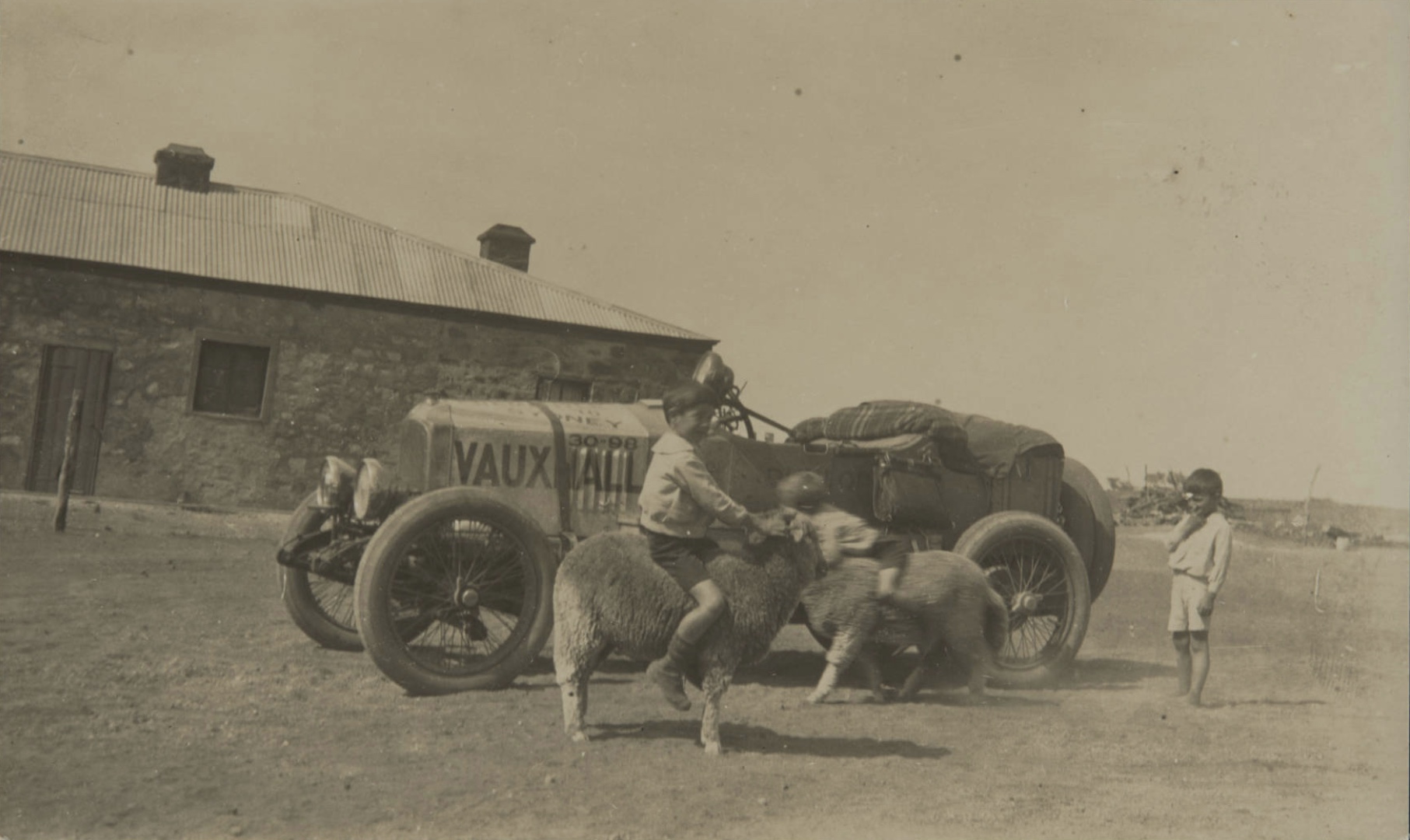
The NSW Trainlink diesel-electric ‘XPT’ entered service in 1982, the design was based on a Brit Rail High Speed Train- the current Paxman Valenta VP185 12 cylinder six-turbo engines develop 2001 horsepower. The things can theoretically do 125 mph but the tracks don’t allow it, the most recent accident in February 2020 cost the train’s driver and pilot their lives (NSW TrainLink)

I’m a big cheat really.

In 1967 that whilst Jack was sitting aboard BT23A and the Garratts were plying their trade in New South Wales the Royal Australian Air Force Dassault Mirage III’s were flying in the skies above- all of a sudden Jack and Ron’s machine does not look so edgy at all, and doubtless some of the ‘American Aviation Heavy Metal’ of the time made the Mirage look like an ‘F2’ machine.

Again, context is everything my friends.

(HARS)

Etcetera…

The S Class were the first ‘Pacific Class’ locos on the Victorian Railways, renowned for their power and speed they did the ‘broad gauge’ Melbourne-Albury run of 190 miles where passengers changed to a New South Wales train running on ‘standard gauge’- adoption of ‘standard gauge’ between Melbourne and Sydney took place in April 1962.

For international readers, Australia was comprised of separate independent colonies until Federation as a country in 1901 so lots of crazy stuff happened, different railway lines/locos/trains across the great brown land being far from the most stupid of decisions.

Only four of these three-cylinder locos were built- fitted with long-range tenders they did the trip non-stop and ran up annual mileages double that of other loco classes used by the VR. Their size and axle load made them unsuitable for regular service other than the Spencer Street-Albury North Eastern line run so within six months of the introduction of new B Class Diesel loos in April 1954 the S Class were withdrawn and scrapped.

Such a shame!- the silver lining in the cloud was the lobbying of the Victorian Government to preserve remaining examples of VR steam locos- all of us Victorian kids have had a trip or two to the Railway Society Museum at Williamstown- ‘Heavy Harry-H220’ is forever etched in my childhood mind, opened in 1962.

The ‘Garratts’ are an AD60 Class Beyer-Garratt patent articulated four-cylinder heavy goods, steam train locos built by Beyer, Peacock and Co in Openshaw, Manchester for the NSW Government Railways.

The final NSW railways steam service was operated by one of these monsters on 22 February 1973- four of them were preserved, well done!

And the Mirage.

A3-42 is a Commonwealth Aircraft Corporation built (CAC built CA-29) IIIO(F) interceptor delivered on 1 August 1966 and served at Butterworth, Malaysia, then Williamtown, NSW before retirement from service in October 1987 with 4,015 hours on the airframe, it was then used for apprentice training at RAAF Wagga Wagga. All Mirages were retired in 1988 and replaced by the General Dynamics F/A-18 Hornet.

‘HARS’- Historical Aircraft Restoration Society Museum at Shellharbour Airport, Albion Park bought the aircraft in March 2015.

Credits…

John J Dallinger, Lynton Hemer, Brabham Family, Wikipedia, HARS, oldracingcars.com, Bob King, NSW TrainLink

Tailpiece…

(B King)

A couple of Bugatti T35B replicas at the Williamstown, Victoria Railway Museum in recent times- the blue Des Dillon and black Bob King machines.

Finito…