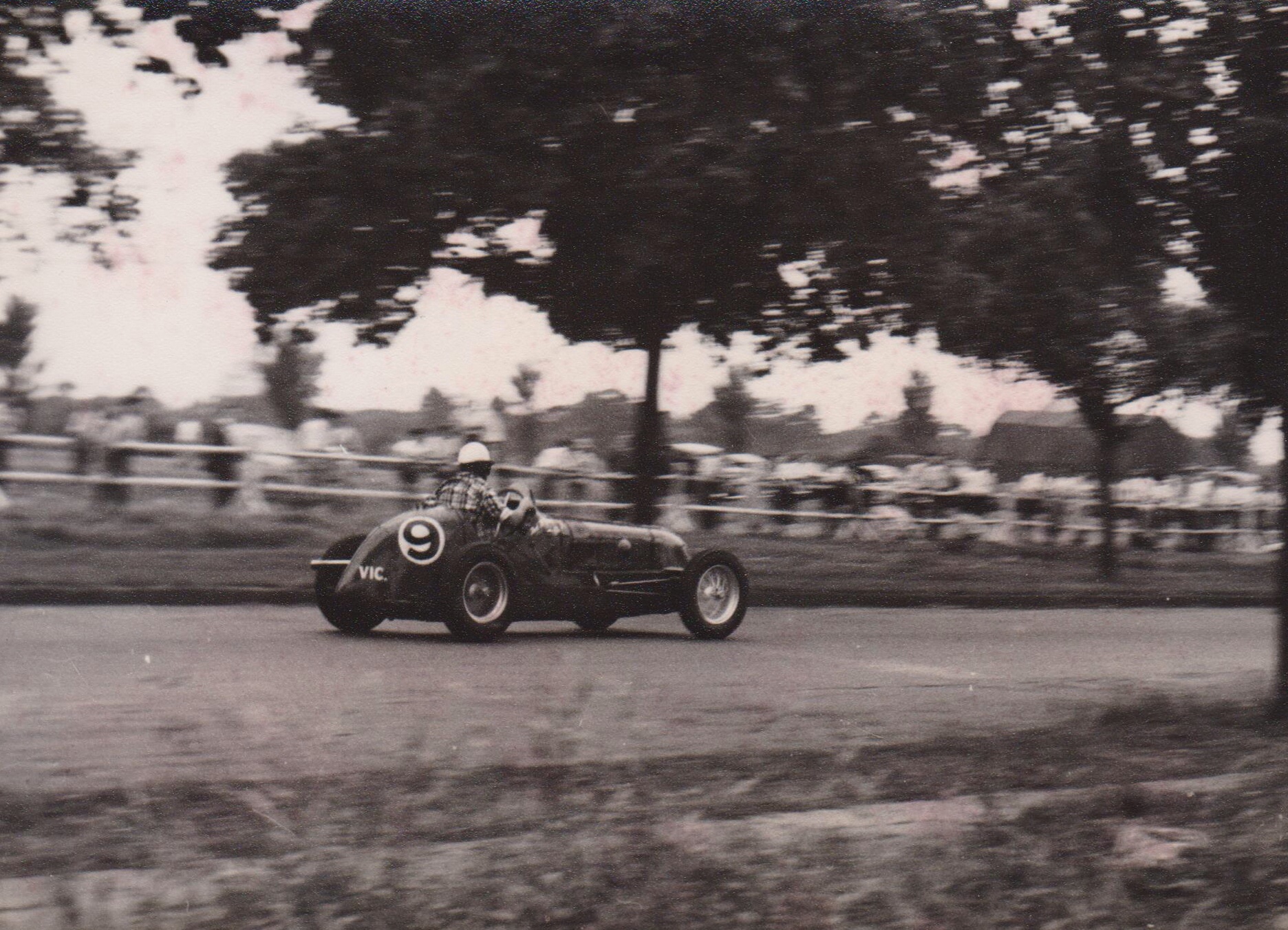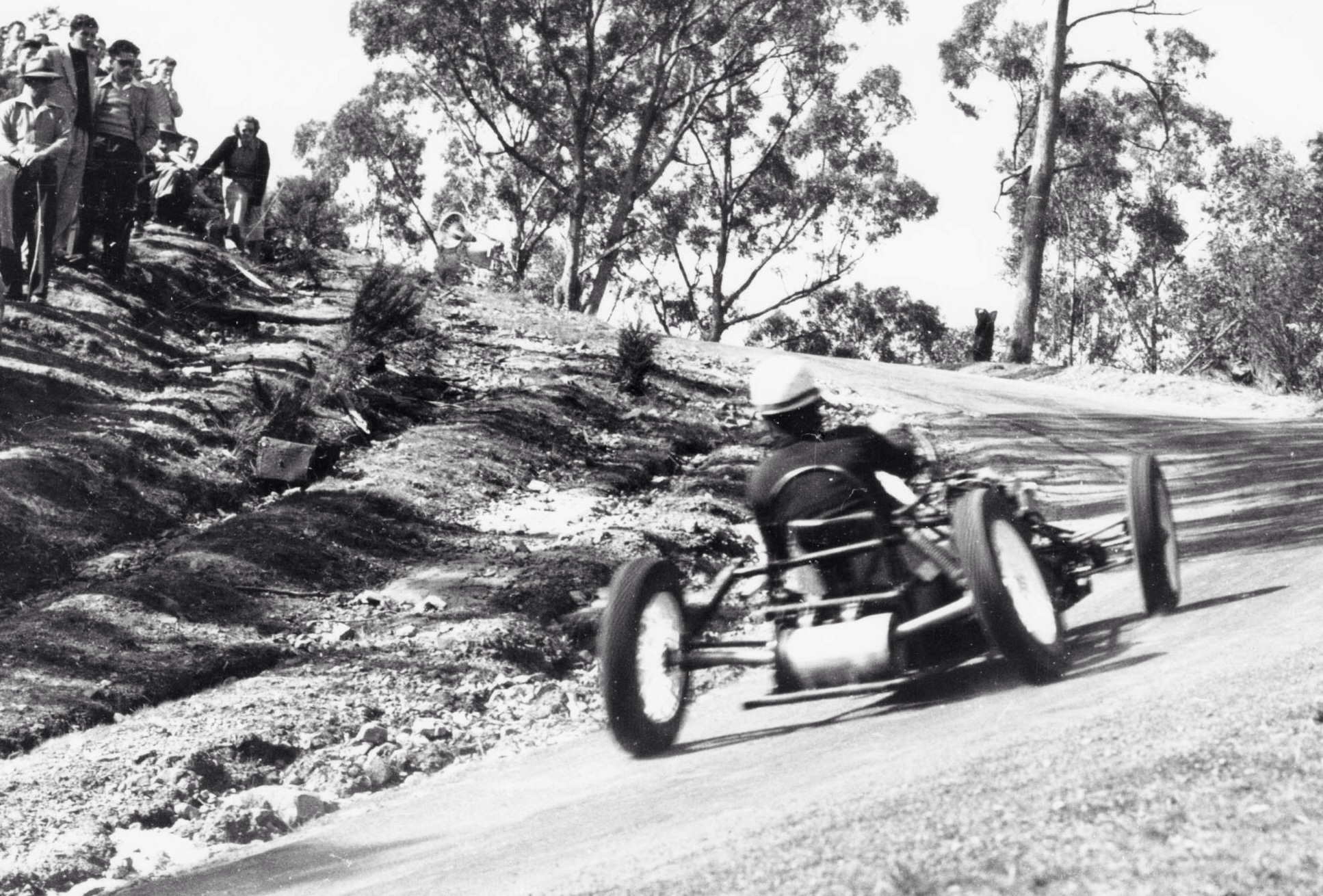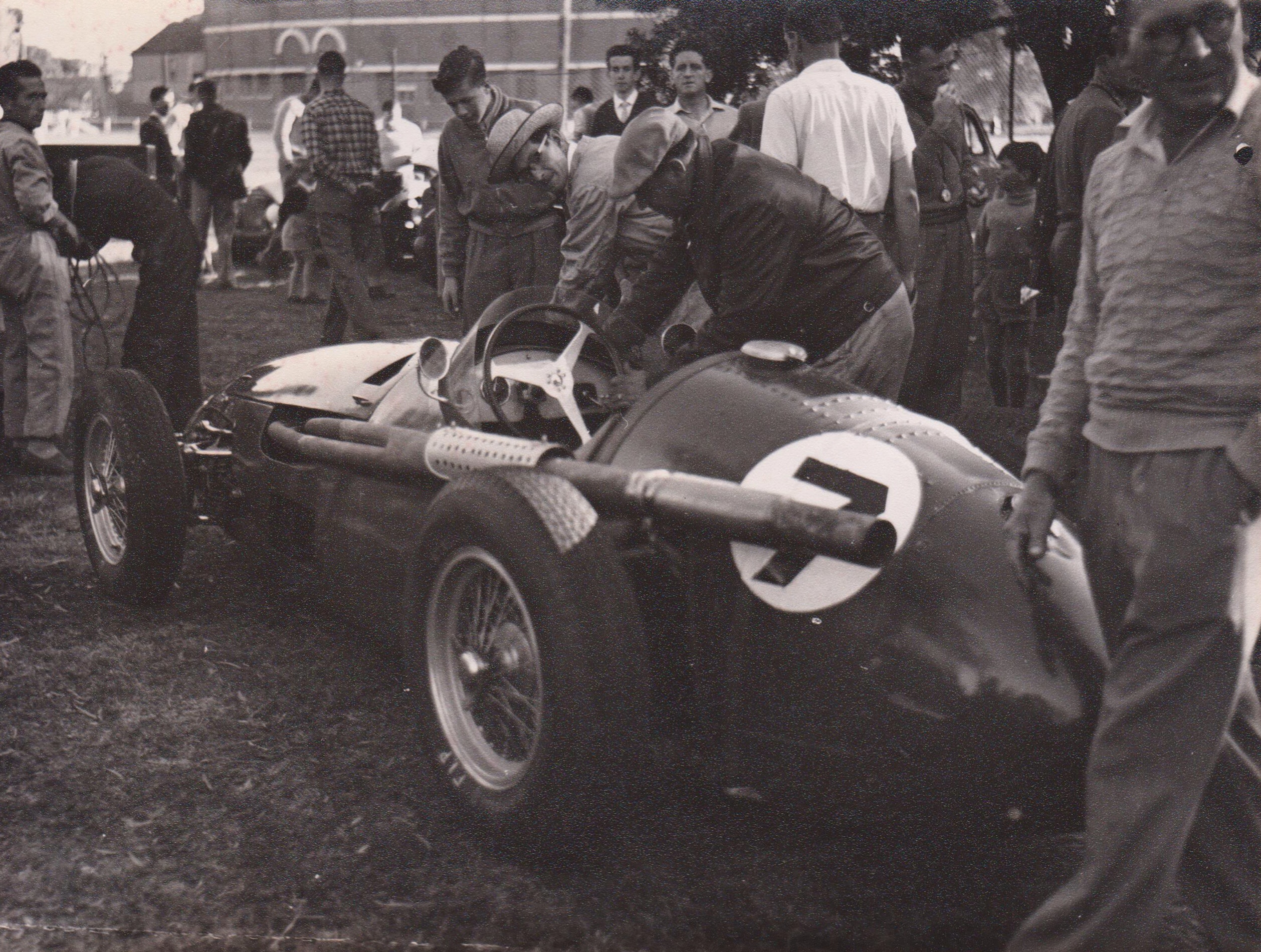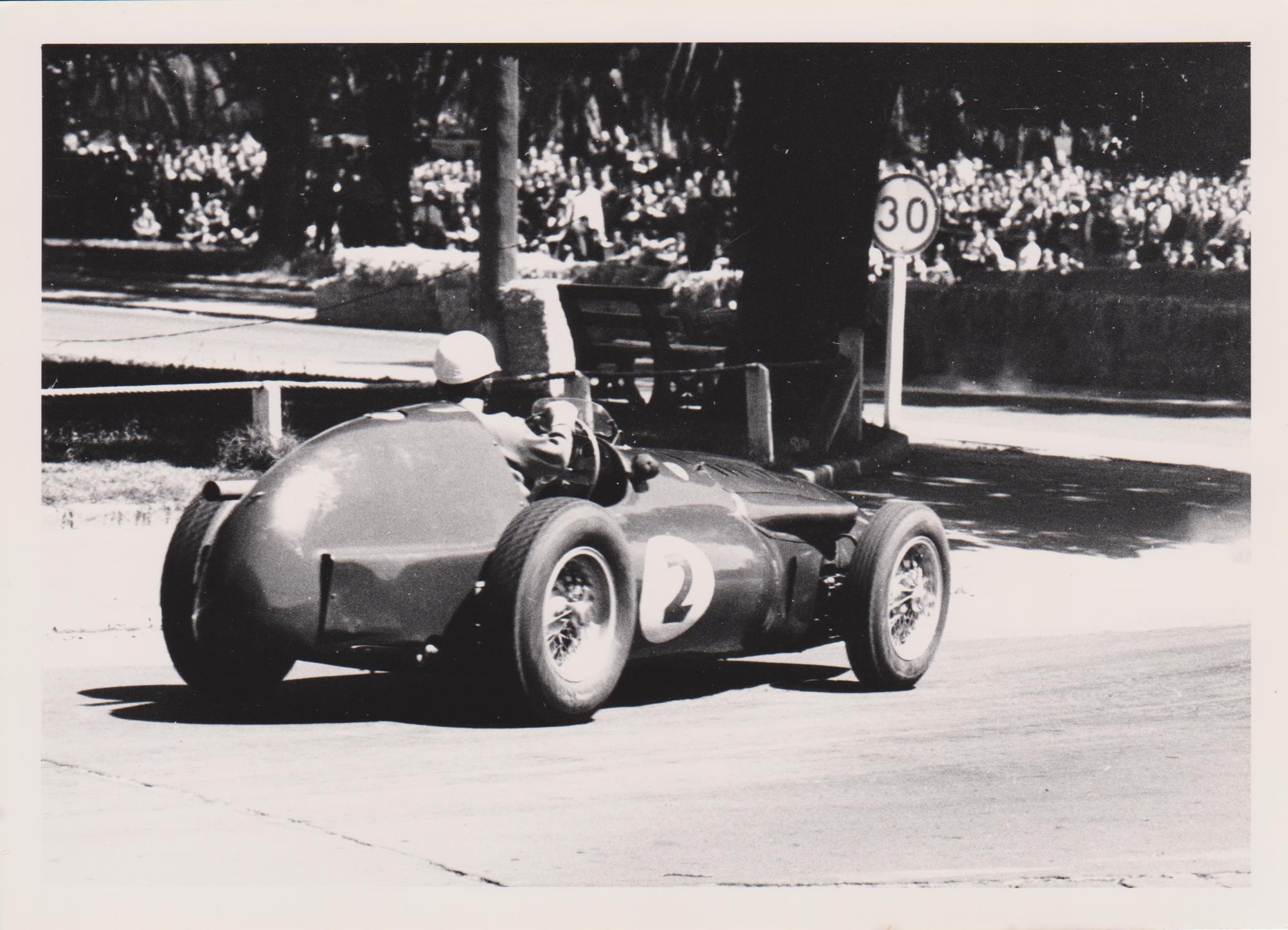
(L Sims)

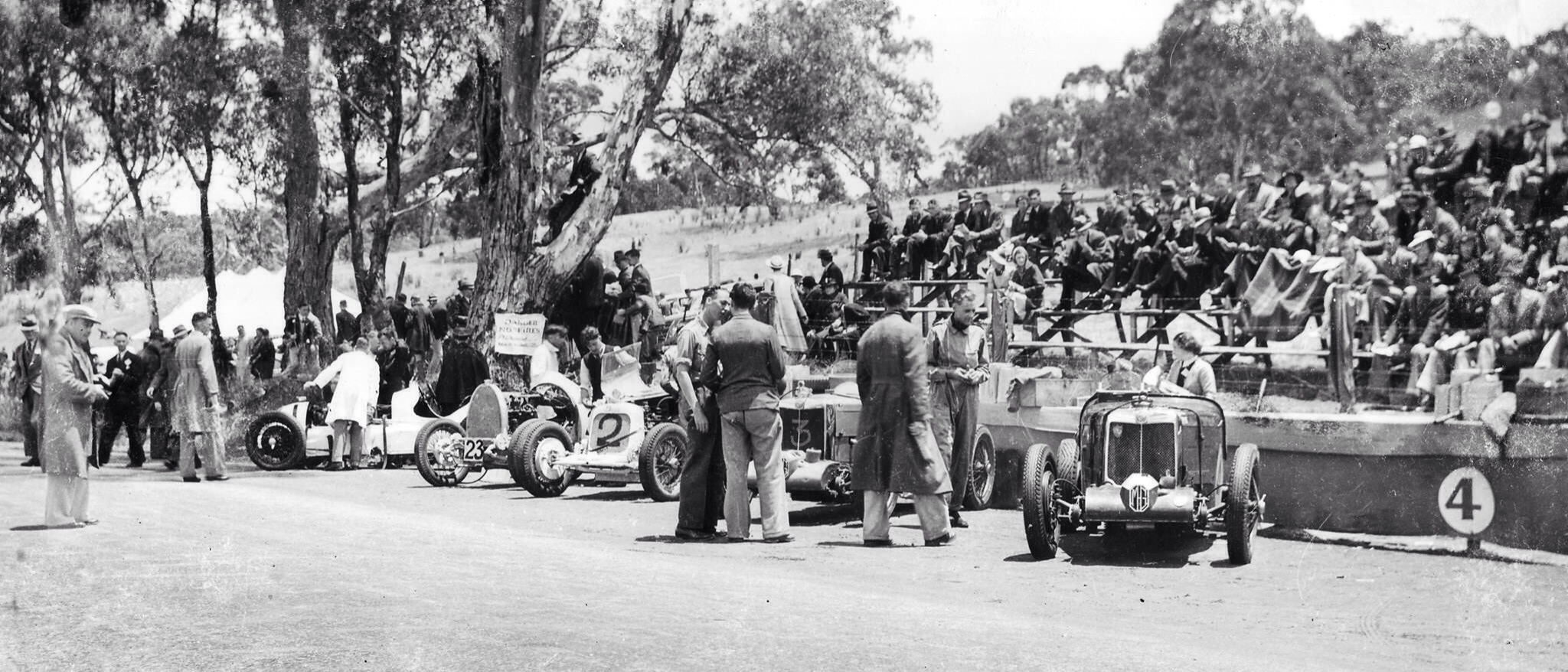
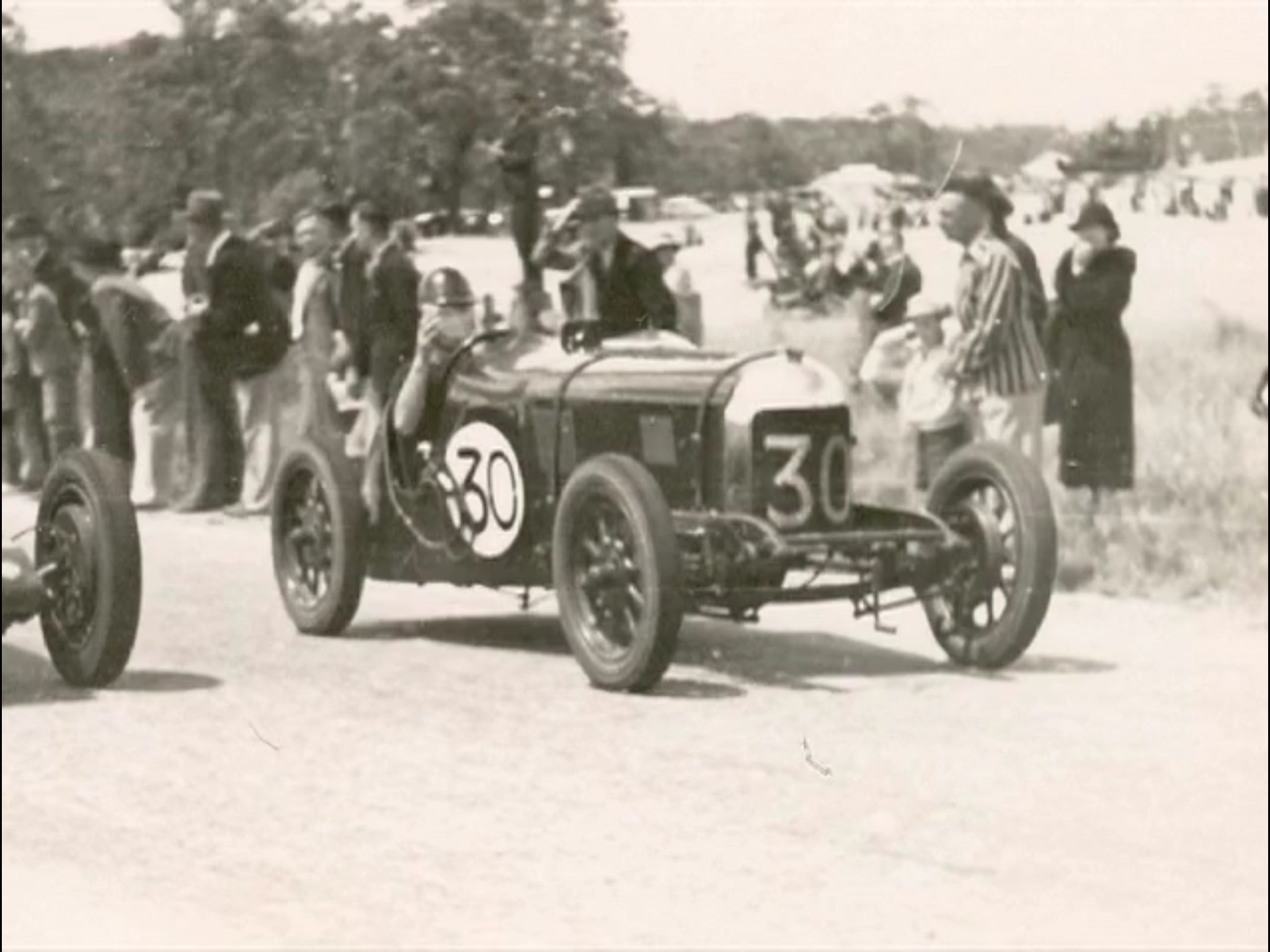
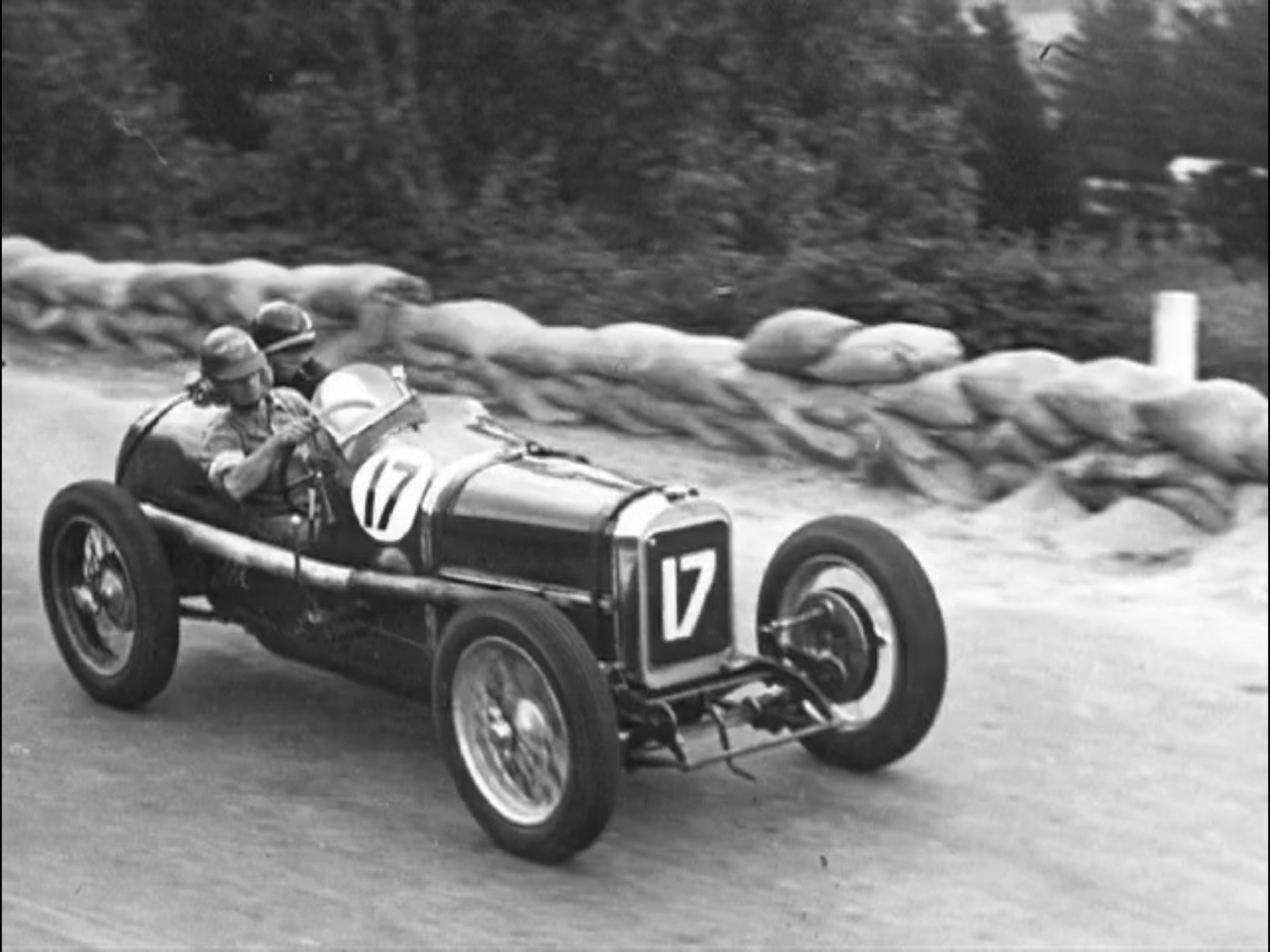
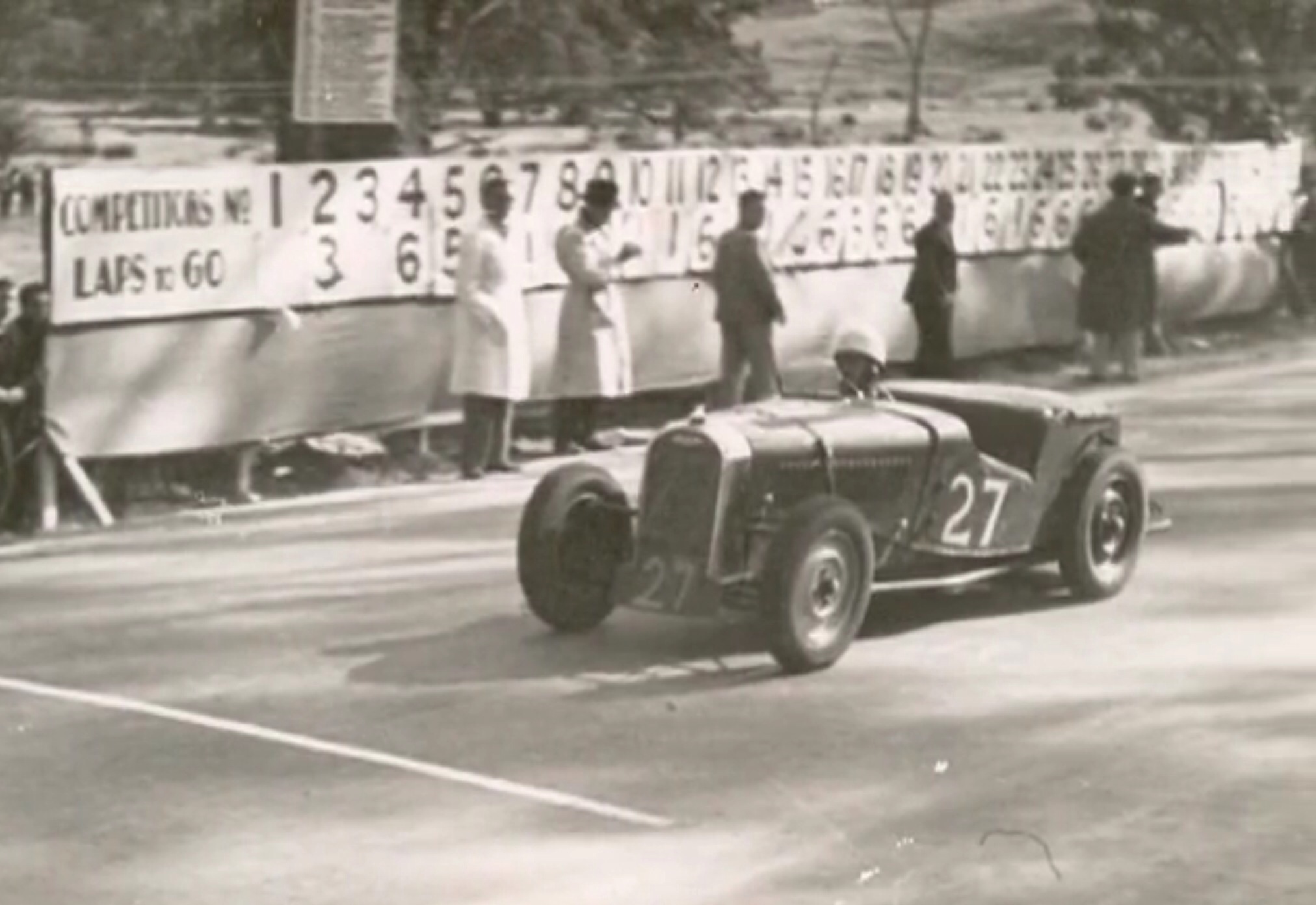
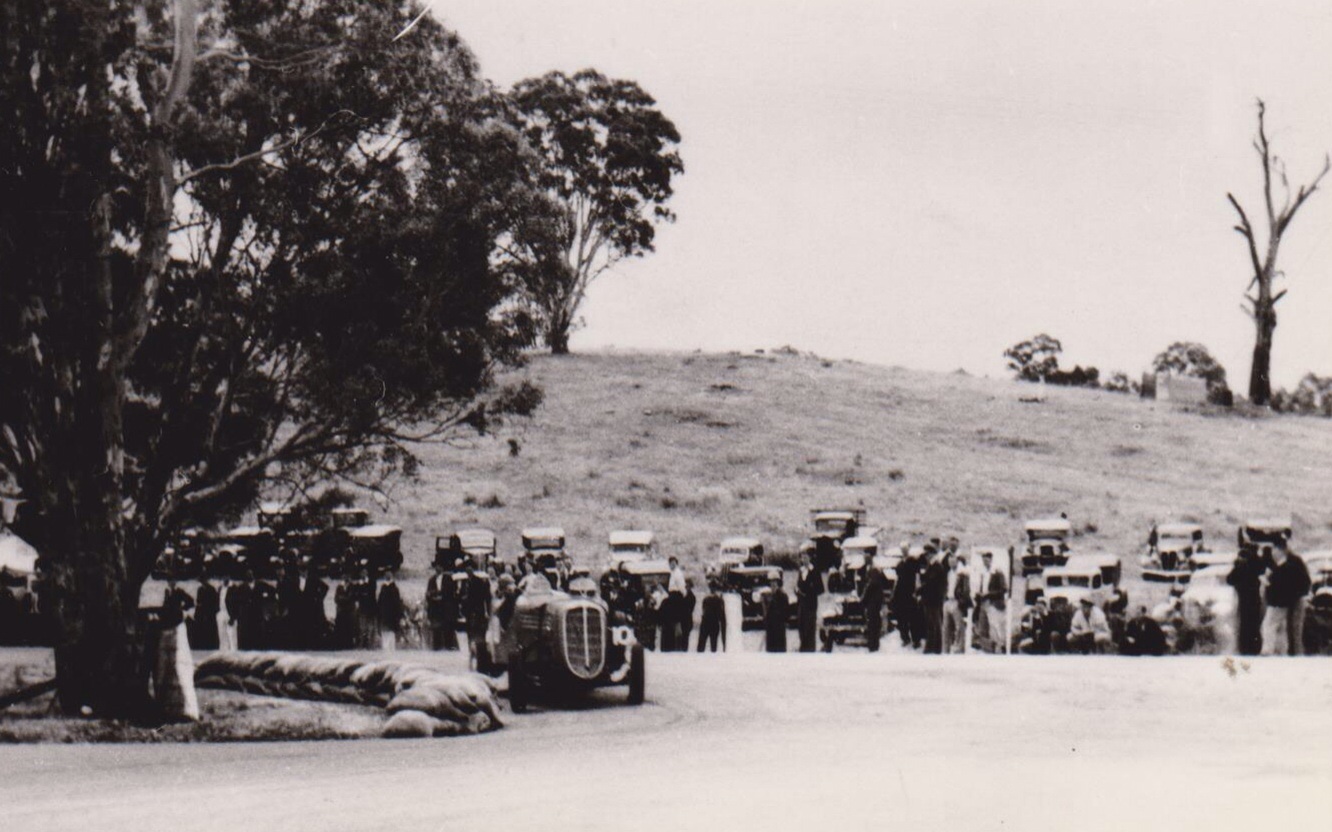
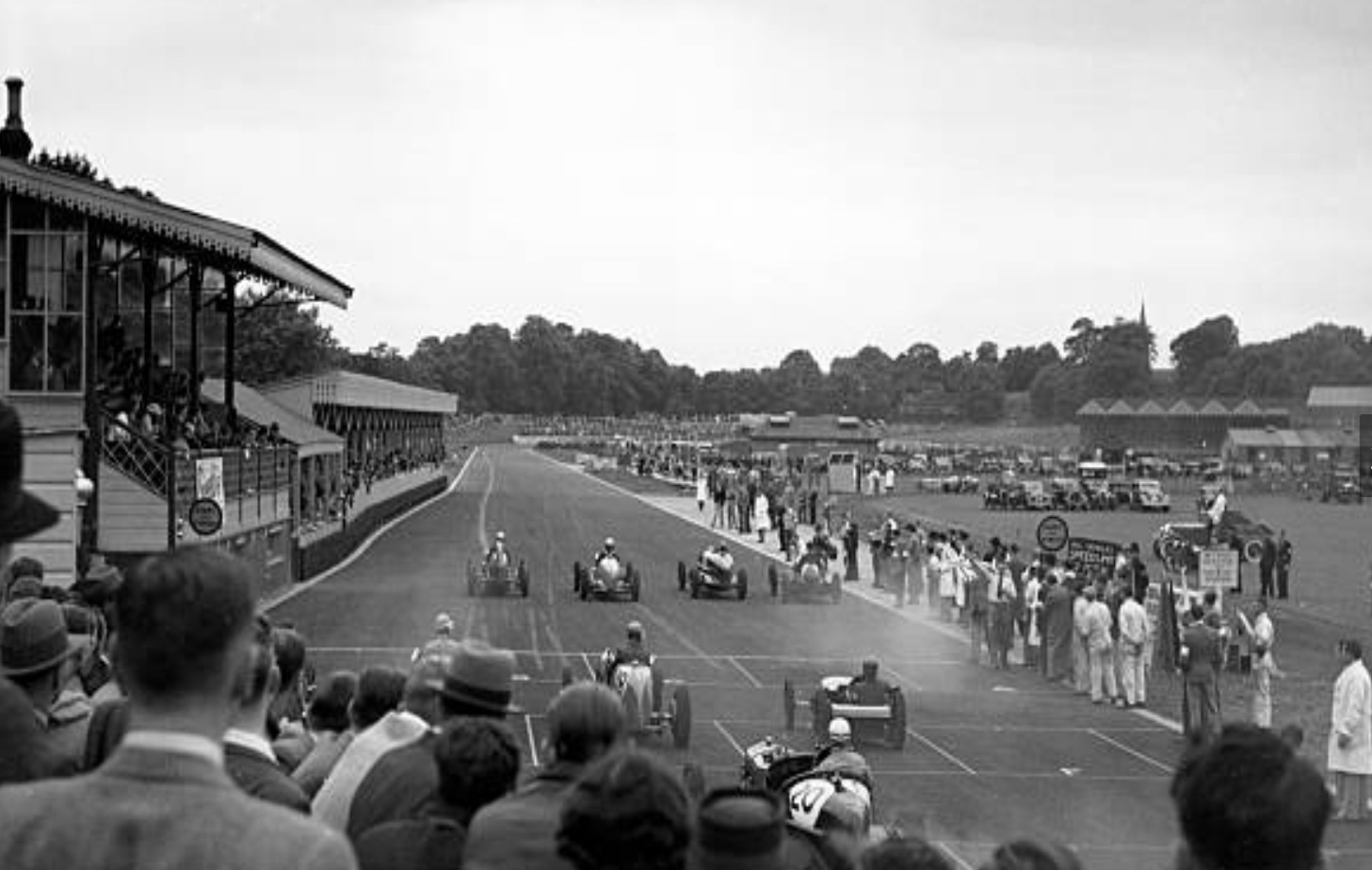
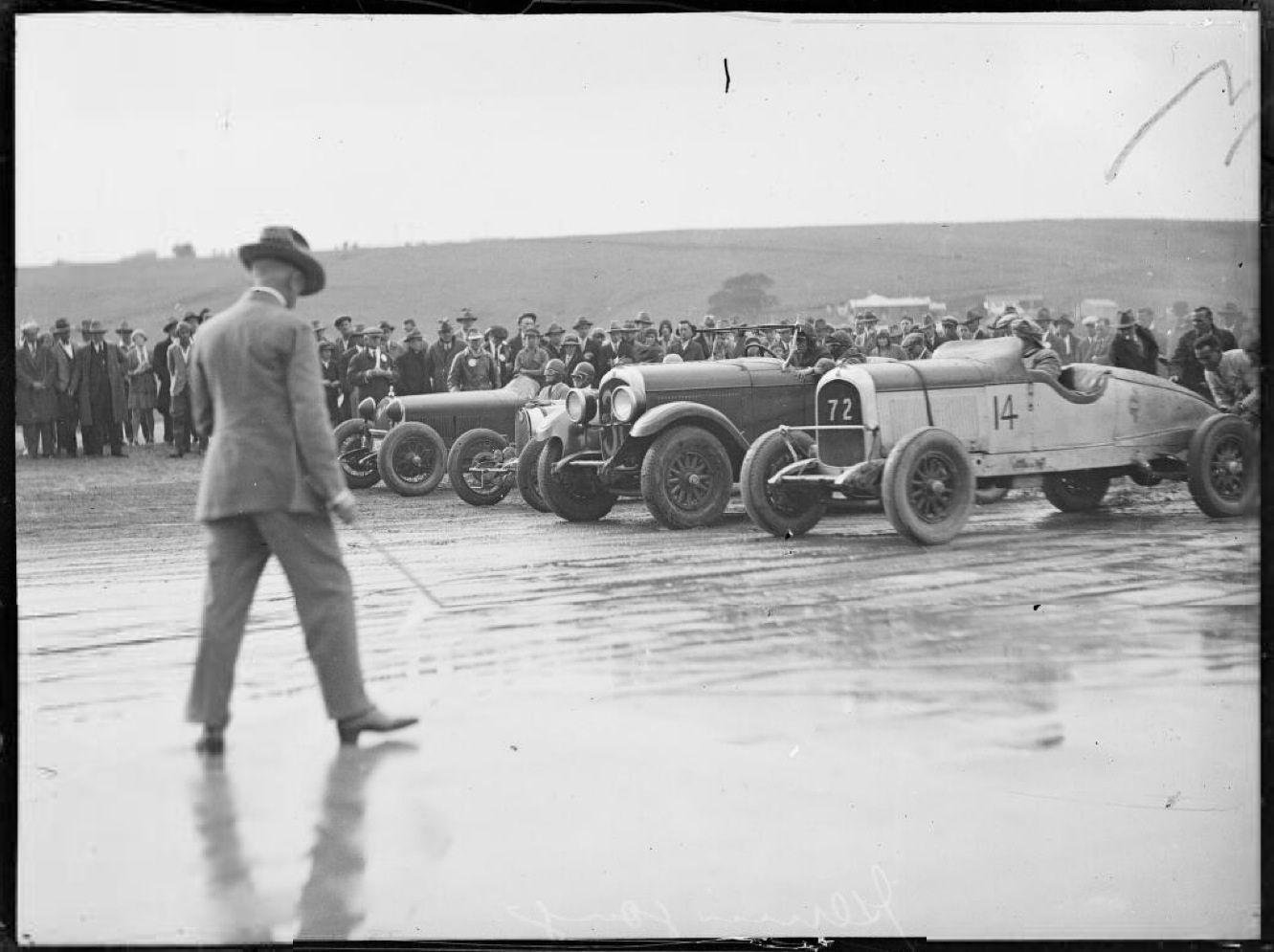
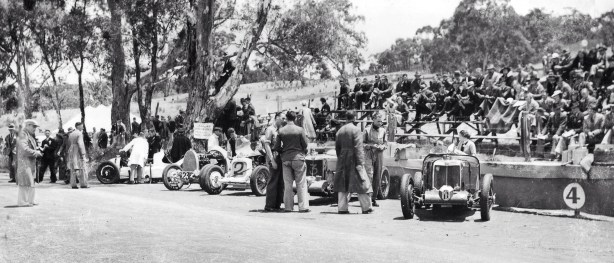
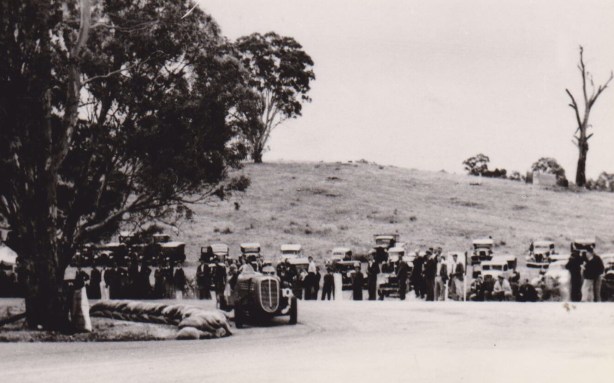
The Alan Sinclair Alta at far left, Jack Day owned Bugatti Brescia driven by Norman Ellsworth, Reg Nutt’s #2 Jack Day Special and two MG K3 Magnettes of Colin Dunne and Lyster Jackson before the off- 3 January 1938 South Australian Grand Prix, Lobethal…

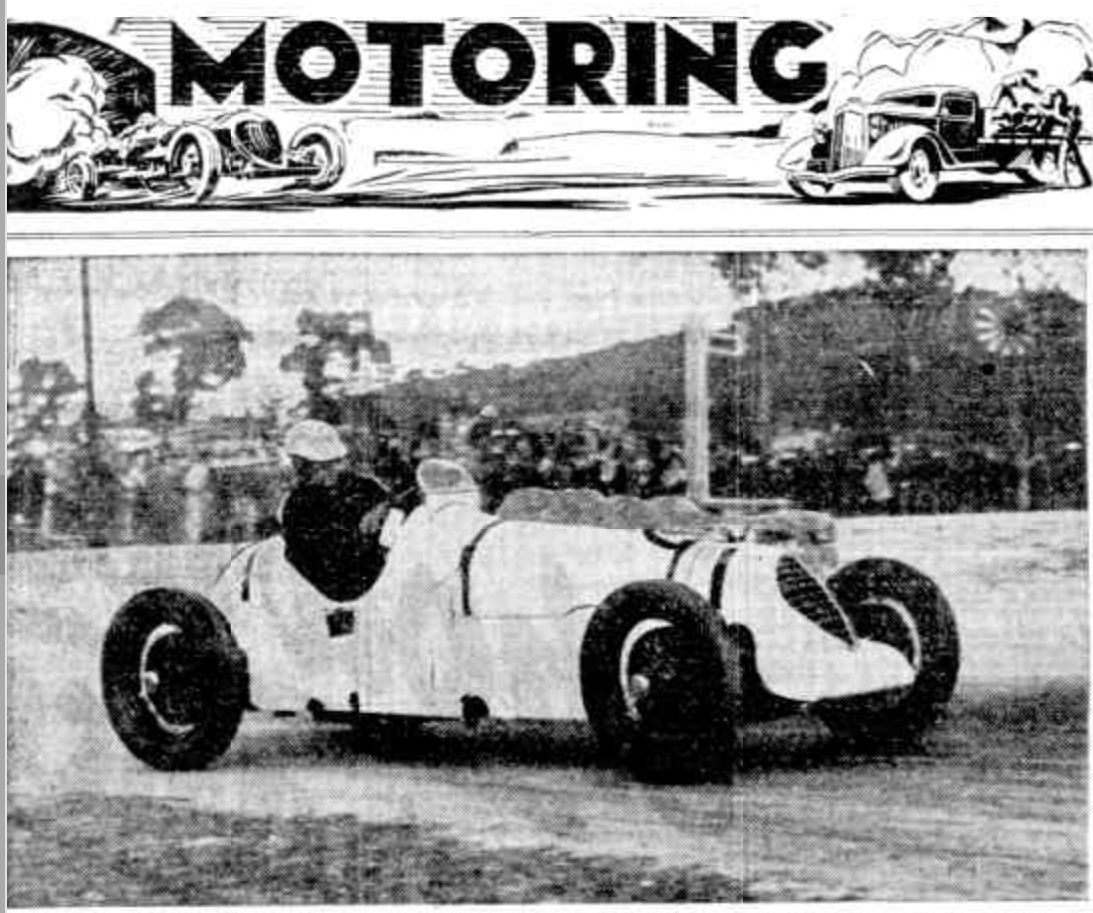
My interest in this race was piqued by Bob King identifying the photograph above as this 1938 event rather than the 1936 South Australian Centenary Grand Prix- aka 1936 AGP- the photo was posted by Leon Sims on his marvellous Rob Roy Facebook page.

To my pleasant surprise good ‘ole Trove (an Australian digital newspaper research tool) produced a couple of comprehensive event accounts to bring some great photos to life.

The race meeting is significant for the fact that it was the very first Lobethal meeting for cars, one for ‘bikes preceded it the week before- that meeting has an air of intrigue about it which we will come to soon.

What was planned as ‘a quickie’ has become a 7,500 word epic as the threads were drawn together, not to forget Bob King’s return from the US and twenty more amazing photos to add to what I already had.

The newspaper accounts are verbatim, I like to reproduce them in full as I love to read the narrative of the time. I have added in snippets about the cars and drivers written ‘in period’ into the two core articles which are from ‘The Adelaide Advertiser’, a publication which exists to this day.

‘Although there are no official scratchings for either the South Australian Grand Prix (100 miles) or the 50-mile handicap, it is probable that five of the competitors nominated in each race will not start, but even so big fields will be left in both races—28 in the Grand Prix and 30 in the shorter event. The nominations are the biggest received for any motor car race in Australia.

The races, organised following the success of the Centenary meeting on the Victor Harbor circuit last year, (the 26 December ‘South Australian Centenary Grand Prix’ subsequently given the erroneous title, ‘The 1937 Australian Grand Prix’) will form the second day’s programme of the motor cycle and motor car speed carnival, and will be held on the new circuit at Lobethal, beginning at 12.30 tomorrow.

Motor cycle races, which were attended by a crowd of more than 20,000 were conducted on the same circuit last Monday 27 December. An even larger crowd is expected for tomorrow’s races. Since yesterday afternoon many camping and caravanning parties have arrived, and have taken places all around the 8 mile course’.
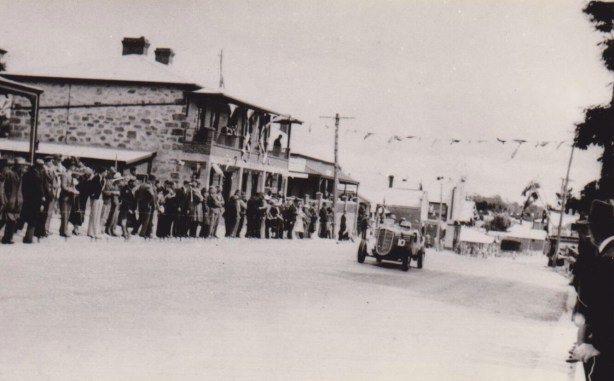
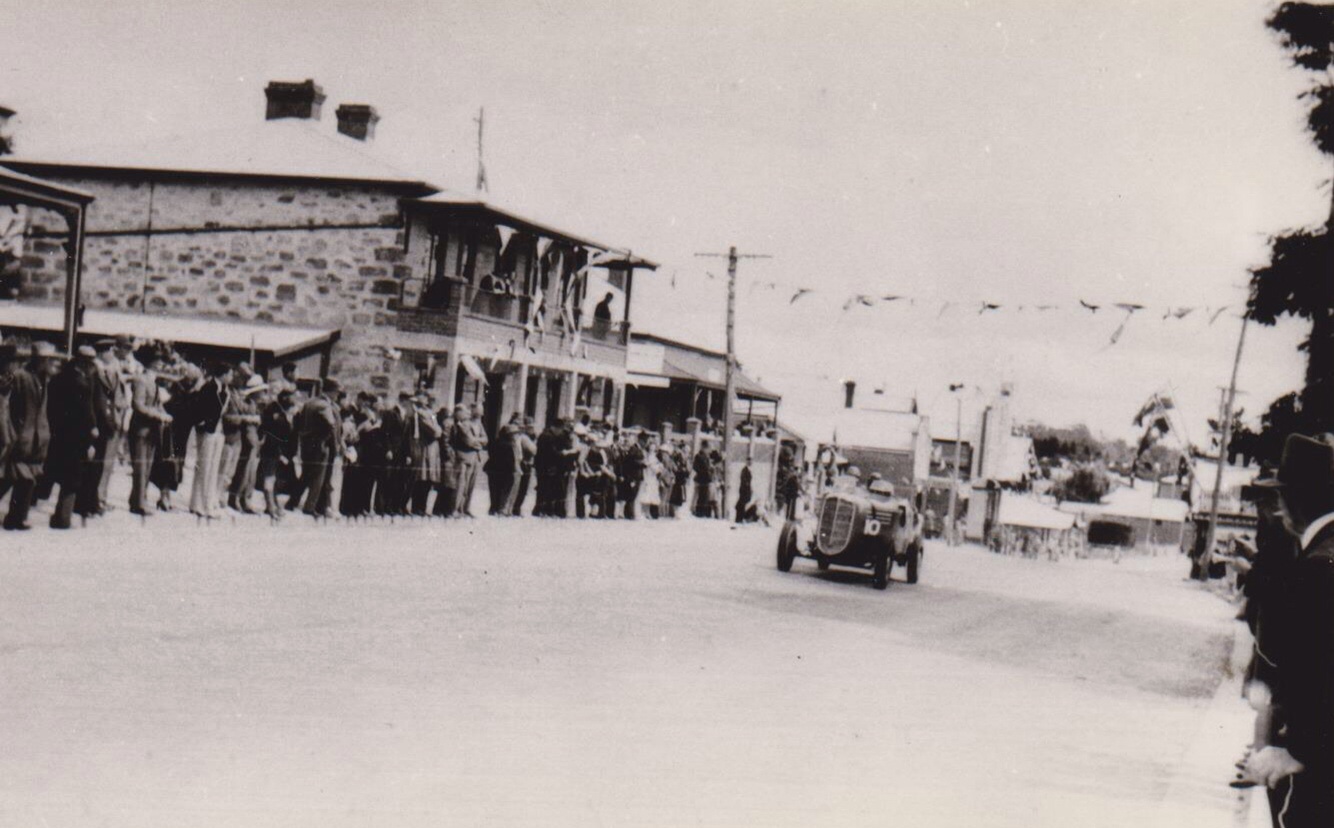
Bob Lea-Wright heads through Lobethal (B King)

Lobethal is 45 Km from Adelaide, I love this old map- a more useful one is at the end of this article inclusive of a description of what was regarded as the most challenging layout in Australia. The lap record referred to above was set by Alf Barrett’s 2.3 litre straight-eight, supercharged Alfa Monza during the 1939 AGP

‘The programme will be:— 12.30 p.m.—South Australian Grand Prix, 100 miles. 3.30 p.m.— 50 mile handicap.A heavy shower of rain delayed practice yesterday afternoon, and left the bitumen track very slippery in places. Immediately after the shower Reg Nutt driving J. Day’s Day’s Special, daringly lapped at more than 80 miles an hour. Considering the treacherous nature of the road and the fact that Nutt had not been on the circuit before, his performance was particularly good.

Alan Sinclair, Alta 1100 s/c (N Howard)

Alan Sinclair, in his supercharged Alta, “a very fast 1100cc Alta racing car…weighs only 10 ½ cwt, is supercharged and is said to be capable of nearly 130 m.p.h.” lapped at almost 80 m.p.h. but it was evident from his driving that he conserved his full power. It has not yet been possible to gauge his best performance, but there does not seem to be much doubt that he will have any difficulty in maintaining an average speed of 84 m.p.h.—an average he must keep up on every lap if he is going to win the race.
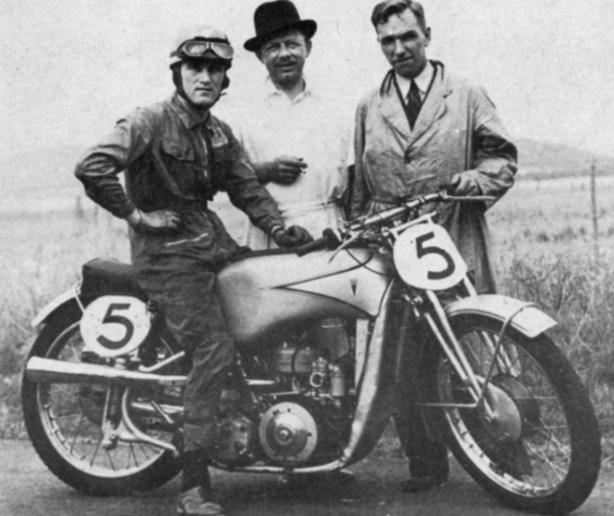
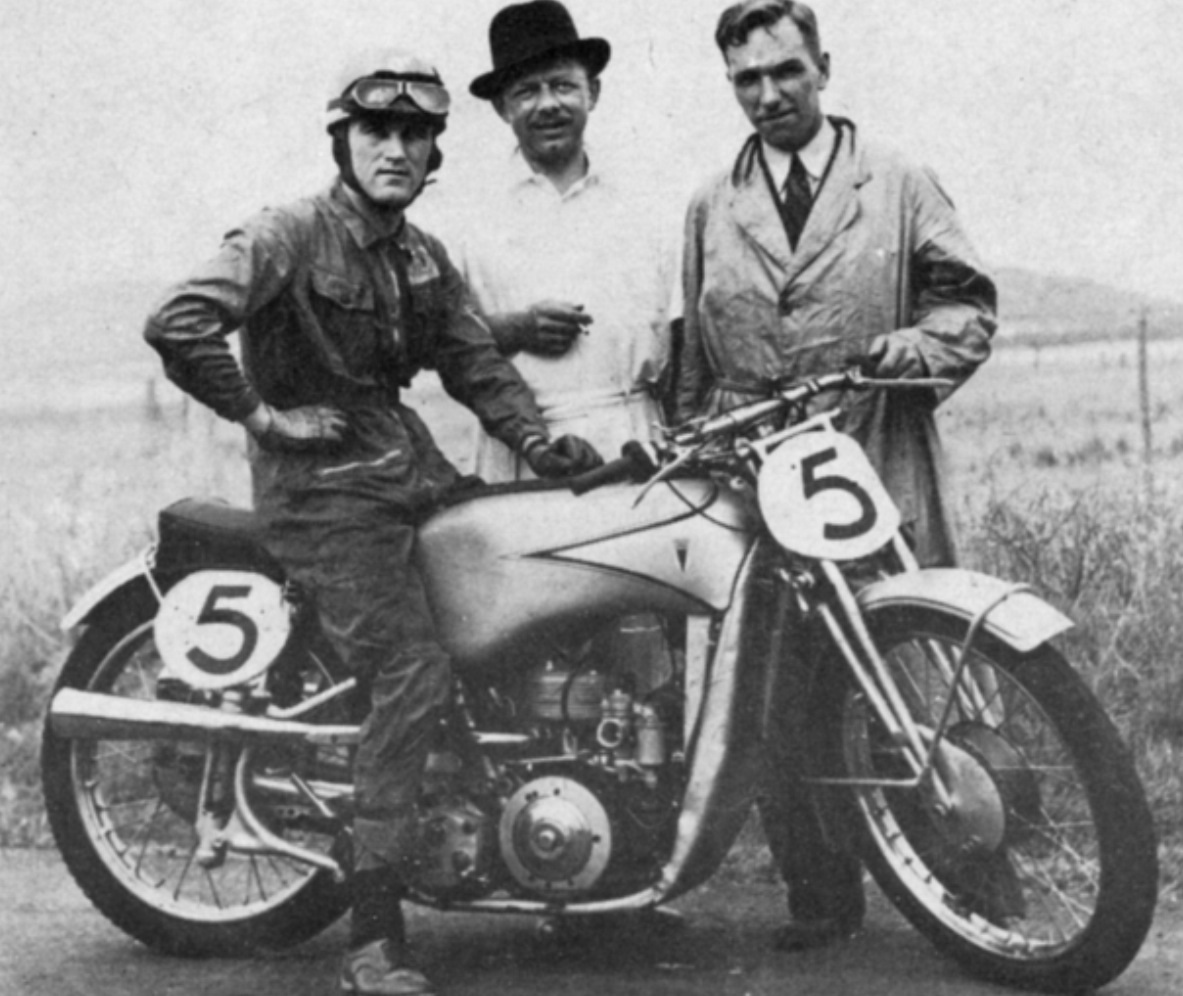
Ewald Kluge, Baron von Oertzen and a Mr Green, the Melbourne DKW agent. Northcott Avenue Canberra before their successful attempts to raise the Australian 250cc Land Speed Record in 1938. DKW SS 250 2 stroke supercharged machine. These were annual events in Canberra at the time, Northcott Avenue slightly busier now (The Velobanjogent)

The Advertiser in its pre-event build-up of the race reported on 16 November that ‘Mr Sinclair is a graduate of Cambridge University and is a partner in a motor firm at Hammersmith, London. He has competed with success at Donington Park and Brooklands and also at Belfast, Ireland. He is coming to Australia specially to compete in motor races in South Australia, Victoria and New South Wales’.

In these dark pre-war days, Sinclair, it later transpired, also had official duties of state to perform in the Adelaide Hills as a member of British counter-intelligence and security agency, MI5!

The German DKW motor-cycle racing team led by champion rider Ewald Kluge, the entourage managed by Baron Claus von Oertzen, was under covert security by Sinclair with ‘much subsequently made of this cold war tactic’ Jim Scaybrook wrote.

Von Oertzen had migrated from Germany to South Africa, its said because of disaffection for the Nazis buoyed by the potential exposure of his Jewish wife in 1935, and imported DKW’s to South Africa. Ever the energetic businessman, Von Oertzen also began eyeing Australia as a potential market for the cars and was highly instrumental in arranging the Kluge visit.

Local authorities began closely observing the movements of the Baron and Baroness, noting that they made contact with many Germans while in Australia (certainly not that difficult in South Australia with its large German population) and that large amounts of money- eleven thousand pounds- were deposited into his bank account. It was later alleged that he was disbursing funds to individuals and groups and that he was listed in the accounts of the Treasurer of the Nazi Party of Australia. He was also accused of photographing strategic installations and trying to arrange for parts of Australia to be filmed from an aircraft’ wrote Scaysbrook.

Kluge led local rider and team-mate Les Fredricks in a 1-2 home in the 250cc Lobethal race in a race time just short of an hour. ‘The 350cc race was run concurrently and Kluge took that out as well after an entertaining dice with Frank Mussett’s Velocette until the British machine expired on the final lap, much to the delight of the huge German spectator turnout’.

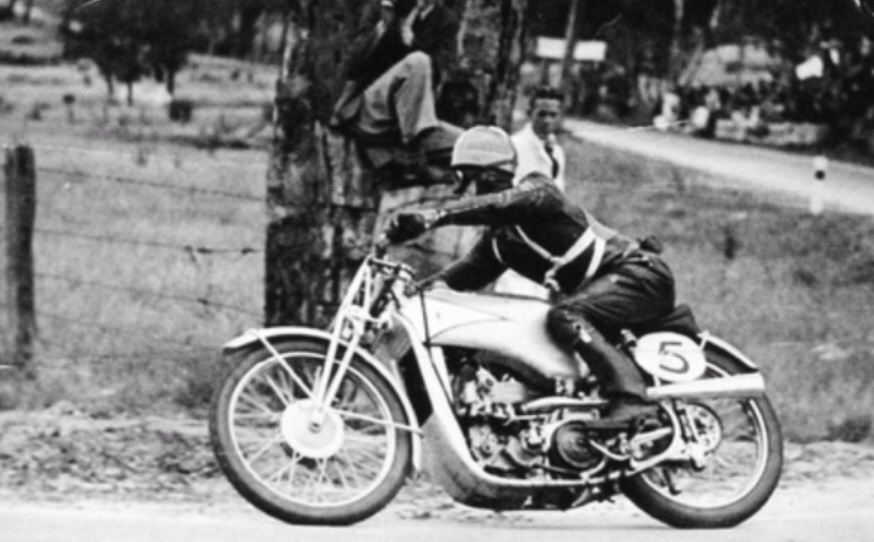
Kluge aboard his DKW SS 250, Lobethal December 1937, Lobethal’s first meeting (T Parkinson/R Trevena)

Ewald Kluge and Baron von Oertzen (Baron Claus-Detlof von Oertzen 1894-1991) (J Scaysbrook)

Lets come back to this ‘spooks in the Adelaide Hills’ tale further on. Sinclair, during practice, had “head gasket troubles with the Alta but with a team of mechanics had the trouble rectified that night…Crowds congregated around the car, it was the first time that a racing car of that description or power has appeared on any racing circuit in Australia”.

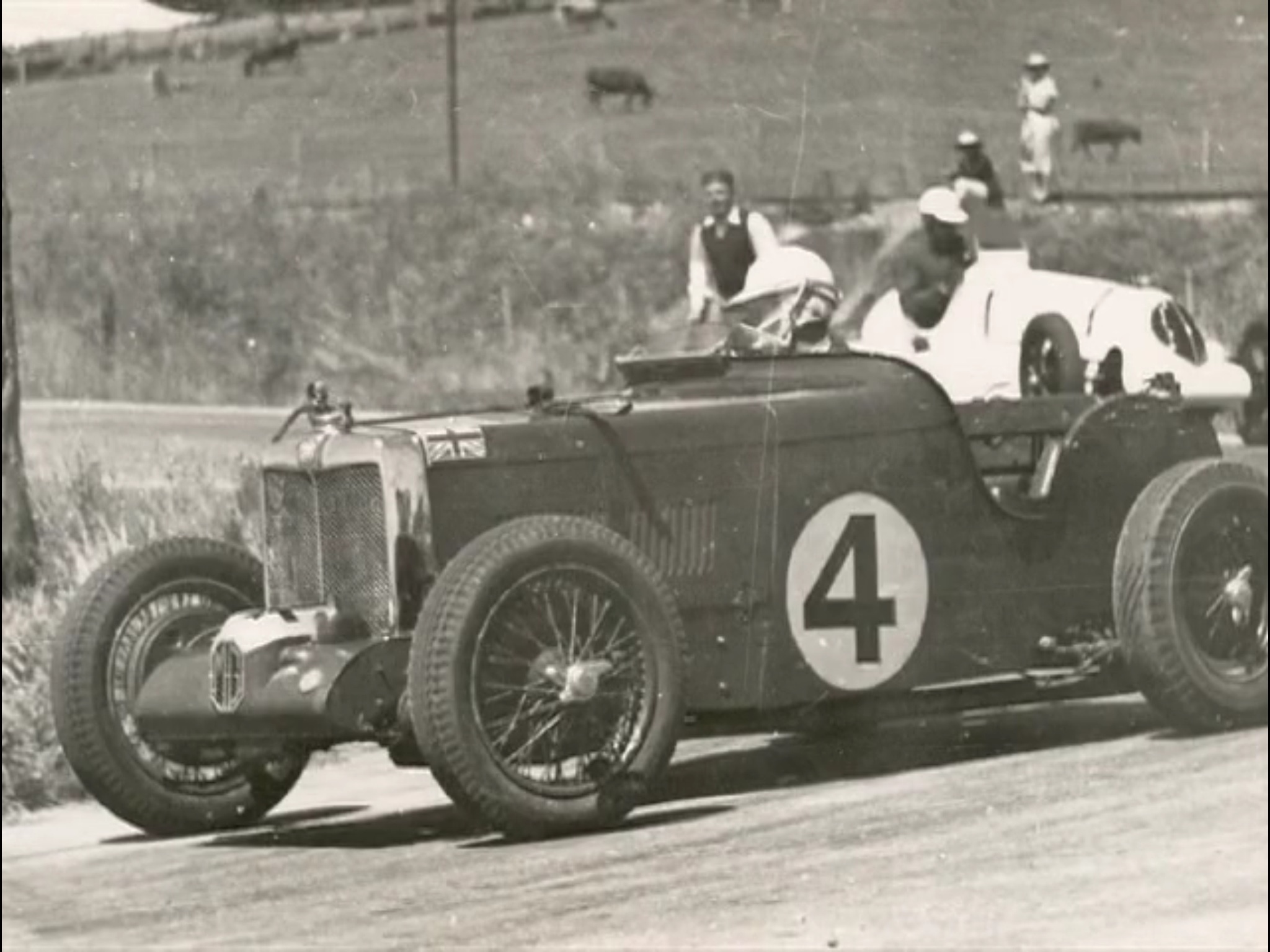
‘Colin Dunne, (MG K3) who established a lap record on Friday, was a few miles an hour slower yesterday, but his time on Friday still stands as the best. As the road dried drivers went faster and all lapped within their handicap’.

Reg Nutt, Day Special- Bugatti chassis and Ford flathead V8. Nutt was both a great racer and Bugatti expert, during the 1931 AGP he sat in the mechanics seat of this car, chassis ‘4607’, alongside Carl Junker when Junker won that Phillip Island race as the car was originally built- a 1.5 litre, supercharged straight-eight Bugatti T39 Voiturette. After the engine failed, liked a few other Bugatti racers in Australia it was given a ‘birthday’ and received an engine the King of Molsheim would not have approved! Its not a tangent for now but Bob King restored this car decades later into its original form- that will be a nice ‘Words from Werrangourt’ topic soon

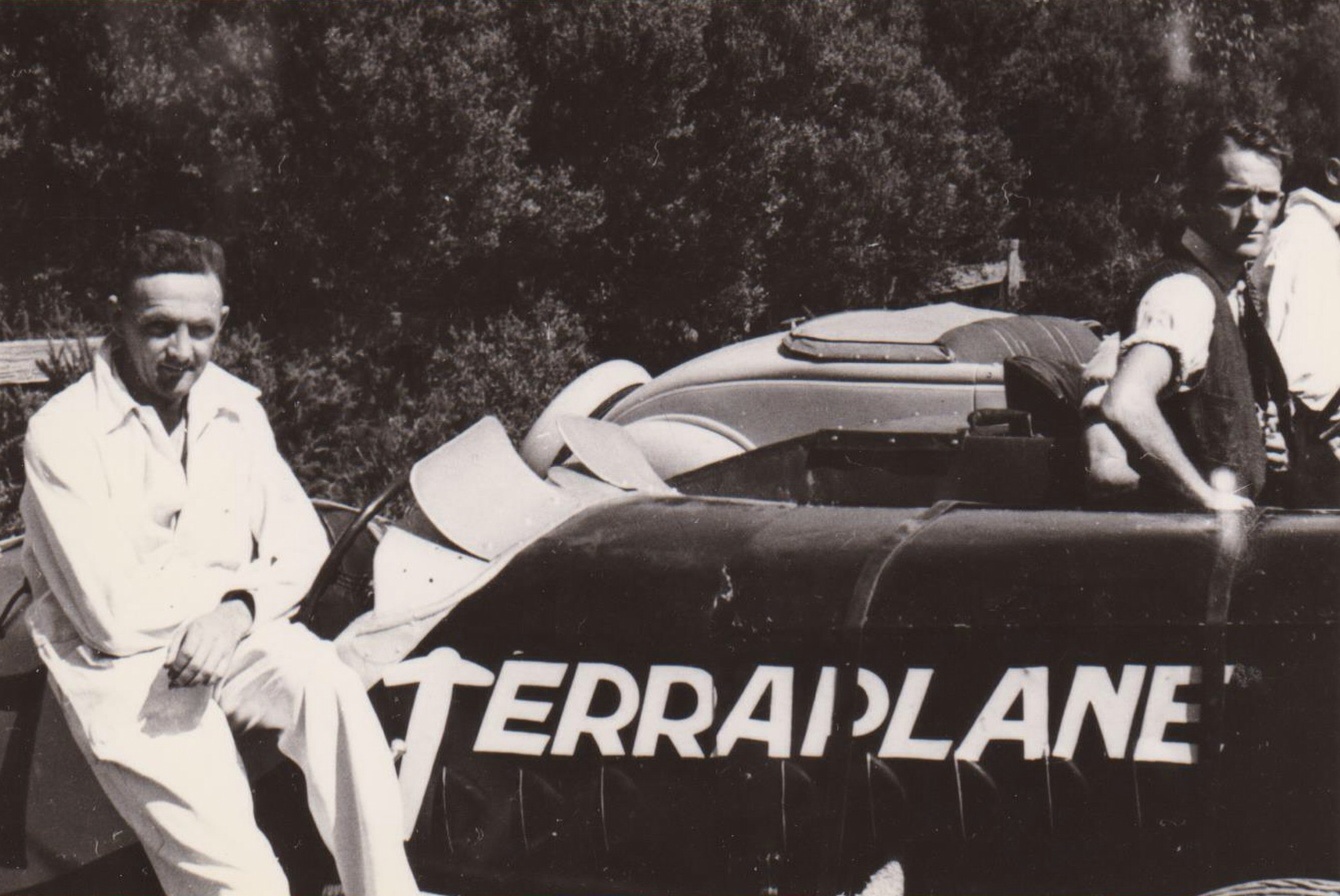
‘Twenty-five cars were at yesterday’s practice, newcomers being Nutt (Day Special) “a Ford V8 engine in a Bugatti chassis and this meeting will be the first time it has raced in South Australia”. J. Phillips (Ford V 8), well known inter-capital record breaker, H.Beith (Terraplane), R. A. Lea-Wright (Terraplane), M. A. Moulden (Sunbeam), D. D. Sowter (MG. Type P), N.Campbell (Singer Bantam) and N. Ellsworth (Bugatti). All the likely starters have now practised with the exception of J. McDonough (Mactonburgh Special) and C. Gartner (De Soto).
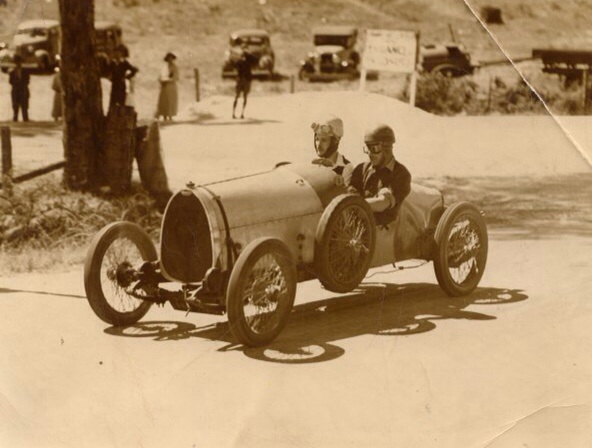
Norman Ellsworth in the Bugatti Brescia just sold to him and entered by Jack Day (B King)

Picking the Grand Prix winner Is more difficult than it was last year, (at Victor Harbor- correct spelling) as the course is harder and the race shorter. All cars are at their top and although the backmarkers may appear to have been severely dealt with by the handicappers, each has a good chance. Driving efficiency will play the biggest part on a course which includes 40 bends and which in parts is barely wide enough to allow two big cars to pass.

Alan Sinclair during practice, Mill Corner, Alta 1100 s/c, Lobethal 1938 (The West Australian)

Sinclair’s Performance

Sinclair (scr.) must average 84. m.p.h each lap and pass the limit man four times to win. Cowper (Morris 8/40), the limit man, must average 60 m.p.h. Sinclair, however, has not only got to pass Cowper four times; he must also pass every other car in the race—and having passed them, keep in front—at least once. He will have to pass the middle-markers—J. McDonough and L. Murphy—at least twice. Sinclair, Day, Dunne driving “Lord Waleran’s K3 MG Magnette (actually owned at the time by Sydney’s John Snow) which gained the fastest time in the 50 Mile handicap last year- Dunne has already created an Australian record in the car”.
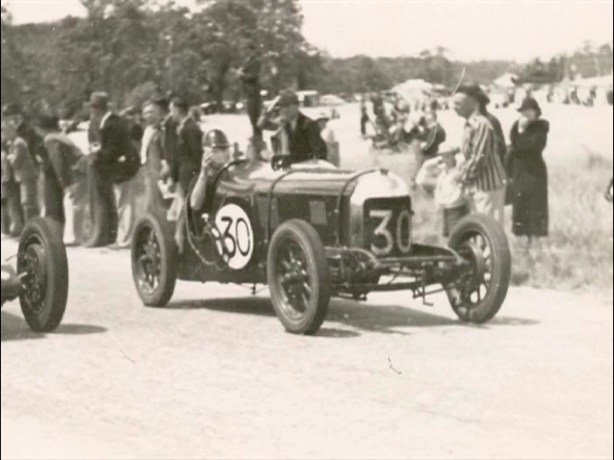
Alf Barrett, Morris Cowley, he was unclassified but would appear with a more formidable weapon 12 months hence over the 1939 AGP weekend, an Alfa Romeo Monza  (N Howard)

Jackson and Joshua will have a very hard task, as Cowper will probably have lapped the course about four times before they start. Jackson and Joshua, both of whom have a handicap of five minutes will have almost completed one lap before Sinclair starts.  Joshua had a much faster machine than Alf Barrett’s MG he raced in the Centenary Grand Prix to second place “It is a specially built Shelsey model Frazer-Nash, which reached Australia on 3 December 1937…and competed in the Donington 200 Miles Race in England recently”.

Tim Joshua’s Frazer Nash alongside the two K3’s of Dunne and Jackson (L Sims)
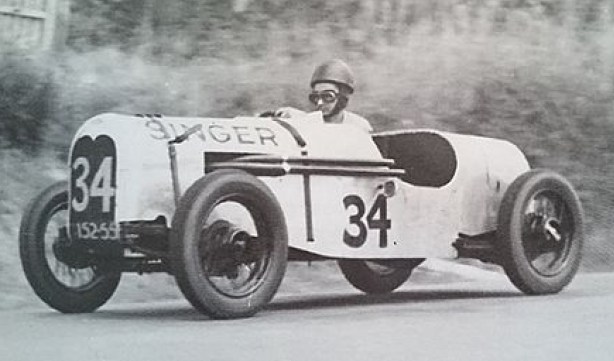
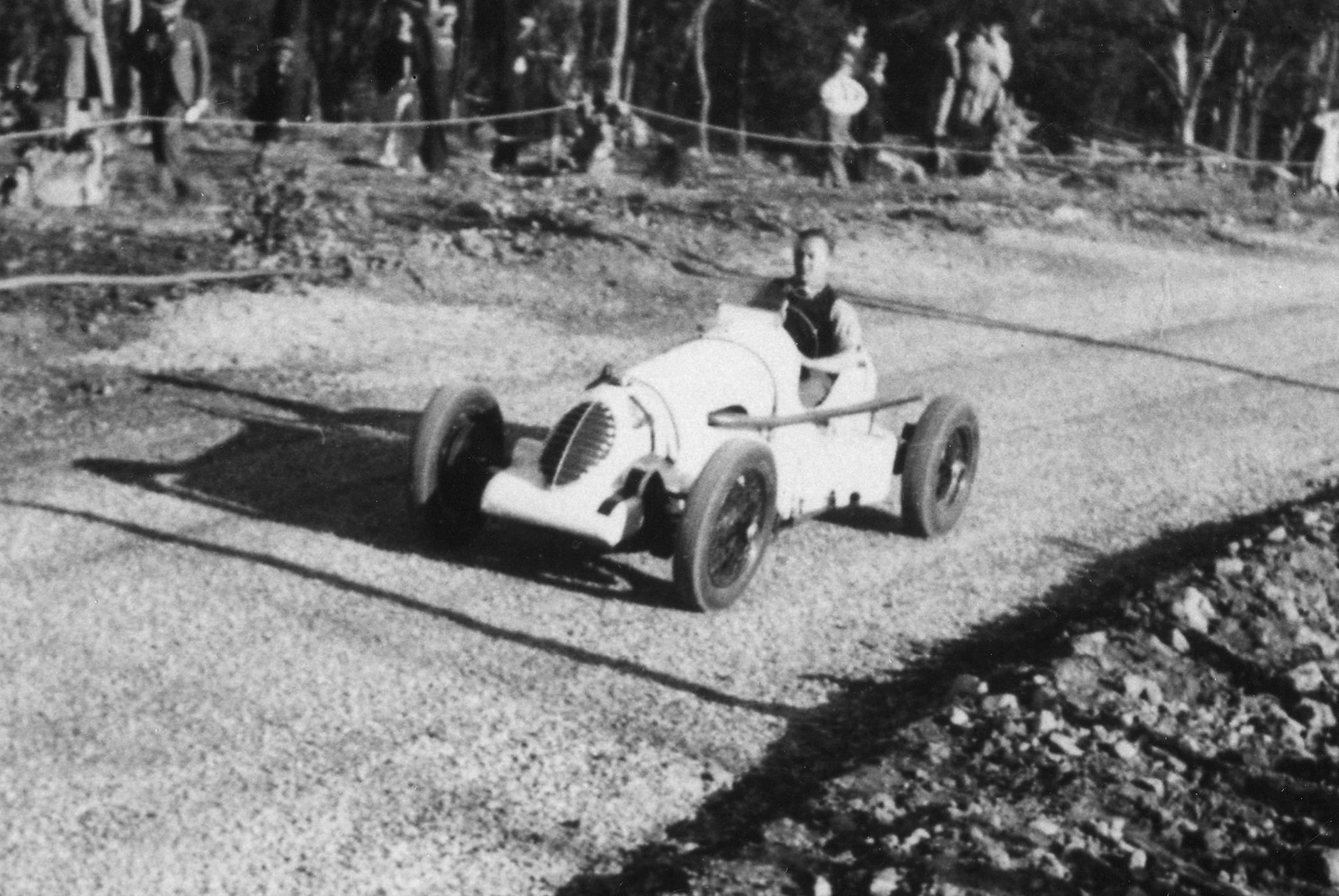
Noel Campbell in his self-constructed and modified Singer Bantam, ‘giant-killer’ of the meeting (unattributed)

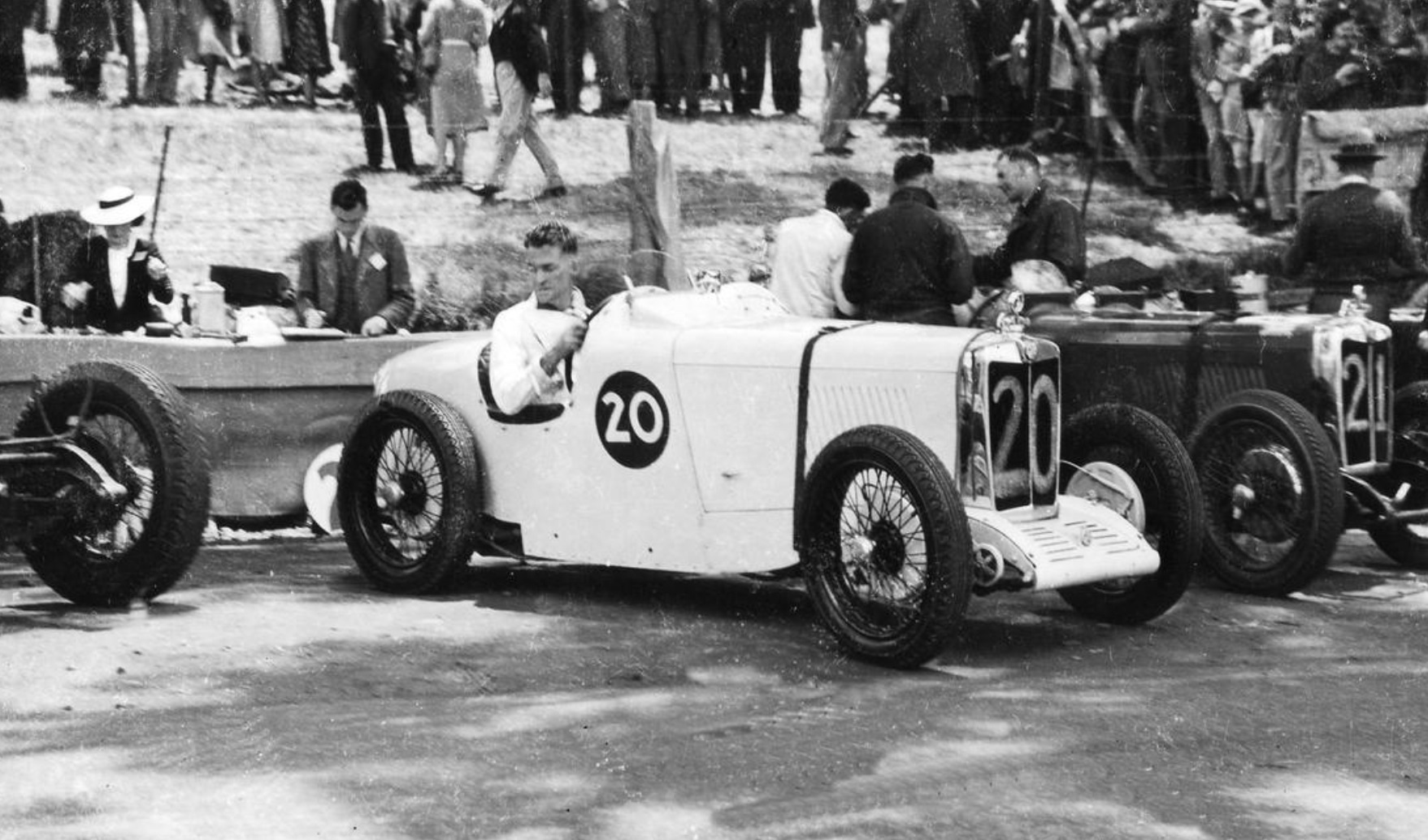
Les Murphy listens intently to the exhaust note of his MG P Type as he warms it up before the event. Car #21 is Arthur Beasley’s P Type (L Sims)

‘Murphy May Win.

With a handicap of 14 minutes and very few big cars to pass, Les Murphy (P type M.G.), winner of last year’s  Centenary Grand Prix has a very good chance of success tomorrow. Murphy, who has three Australian Grand Prix races to his credit, is the most successful driver in Australia. (what about Bill Thompson you schmucks?) He will be driving the same car as last year, “but he has converted the body into a single-seater with advanced streamlining” and it is estimated that he will have to lap at an average speed of 71 to 72 m.p.h. to win. At that speed he will still have plenty of power in reserve. Last night Murphy drove round the course over the exact route that he will take in the race. 

Les Murphy, MG P Type 7th (N Howard)

Most of the other competitors who will leave before Murphy are South Australians and have not had Murphy’s experience. Cowper may have completed almost two laps before Murphy starts, but, indicating how different his task is from Sinclair, Murphy will only have to pass 14 cars provided he can keep in front of the 17 competitors who start after him.

A biergarten arranged by Lobethal Carnivals Ltd, -which with Centenary Road Racers Ltd. is sponsoring the speed carnival, organised (or held under the auspices of) the Sporting Car Club and the Motor Cycle Club of South Australia will be held tomorrow night, when the prize-money and trophies, which include ‘The Advertiser Cup’ silver trophy and 150 pounds in prize money for the Grand Prix, will be presented. The biergarten will be the last event of the carnival which has been held this week to entertain the visiting speed men’.

‘Events To Be Broadcast

National station 5CL will broadcast the races from the Lobethal course today. The Grand Prix and the 50 mile open handicap will be described from four specially selected points from start to finish.’
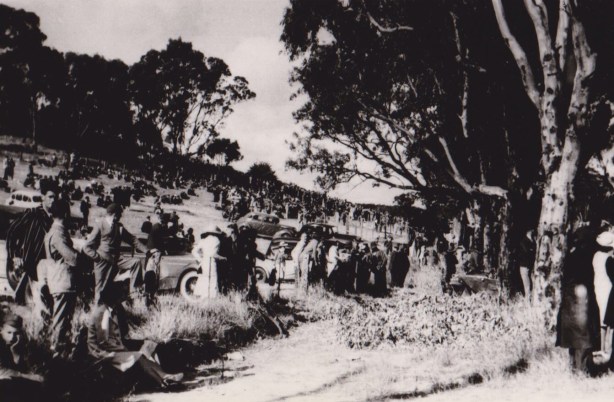
60,000 folks turned up (B King)

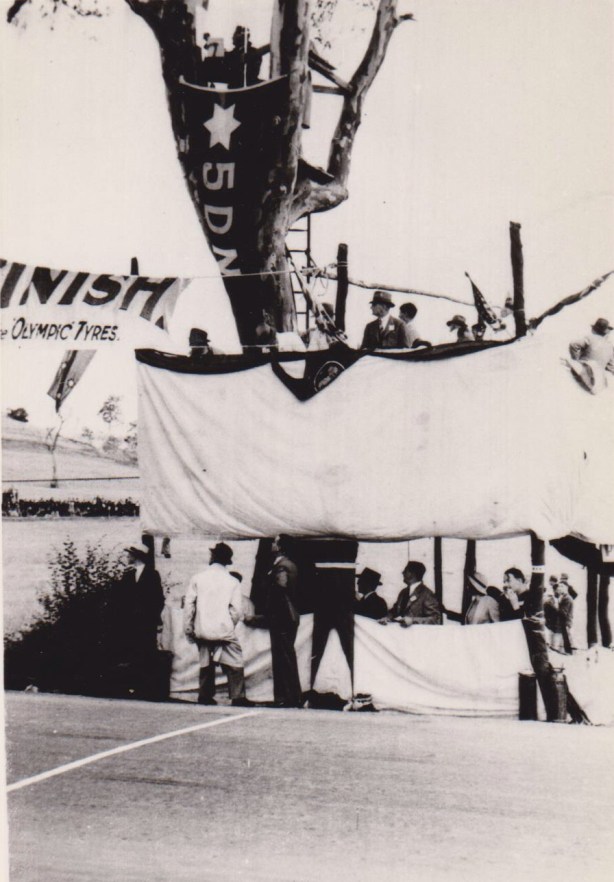
The start-finish podium, or is that tree? (B King)

‘DRIVING a well-judged race in which he consistently averaged about 62 miles an hour on the eight and three-quarter mile circuit, Noel Campbell, a South Australian competitor, won the second South Australian Grand Prix, run over 100 miles, from a field of 24 competitors including interstate and international drivers, at Lobethal yesterday.

The racing, which was witnessed by more than than 40,000 people from vantage points around the course, was full of thrills, but free from serious accidents.
Colin Dunne (Vic), a comparative newcomer to road racing, provided the outstanding feat of the day by gaining second place in the Grand Prix with a handicap of 4 min and later winning the 50-mile handicap from the virtuaI scratch mark after Alan Sinclair, the English driver, had retired. Dunne took many risks, but his driving was masterly. Sinclair was unable to finish the course in either race because of oil trouble, but before he retired he gave an exceptionally good exhibition of driving and cornering.’
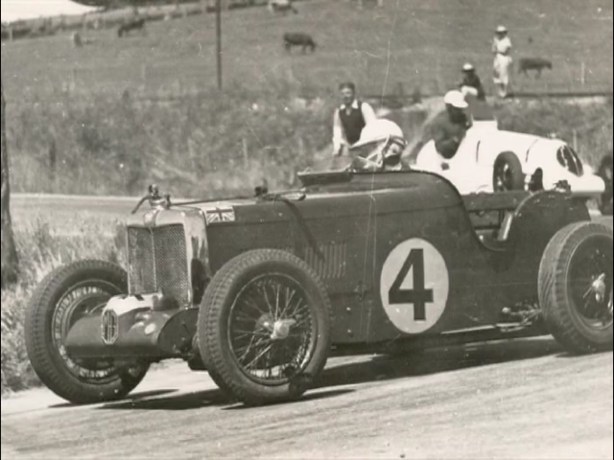
Lyster Jackson, MG K3 ahead of Sinclair’s Alta (N Howard)

Reg Nutt delicately drifting the Day Special around daunting Lobethal

‘Reg Nutt, who drove Jack Day’s Day Special, recorded the fastest time in the Grand Prix 77 min 33 sec, although Dunne did the fastest lap in the Grand Prix (83 1/2 m.p.h.). Nutt bettered that average by 1 m.p.h. in the second race, and recorded the fastest lap for the day. Dunne had the fastest time in the 50 mile handicap to win in 33 min 2 sec. This was the better race. With two laps to go it was anybody’s race, but Dunne, lapping brilliantly at more than 83 m.p. had passed car after car—he even went on the footpath in the Lobethal main street to pass one competitor— and won from J. Boughton.’
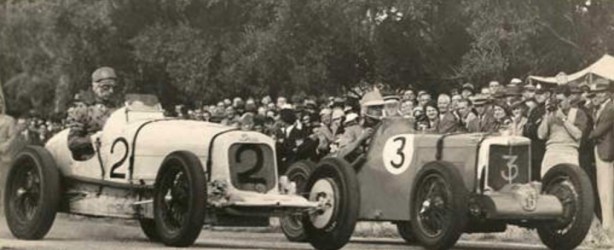
Nutt and Dunne before the off- Day Special and MG K3 (unattributed)

Jim Boughton, Morgan 4/4 from Reg Nutt, Day Spl (B King)

‘Results
South Australian Grand Prix (100 miles)
N. Campbell SA Bantam Singer, handicap 2 min 30 sec, corrected time 97 min 37 sec 1st: C. Dunne Vic MG K3 Magnette 77.39. 2nd: A. Ohlmeyer S.A. T Type M.G. 17 min 90 min 55 sec 3rd: R. E. Uffindel S.A. Austin 4th: Fastest time Reg Nutt, Day Special 77.33. Others to finish in order:— 3. J Boughton Morgan 18  min 92 sec. 54 sec -R. Nutt. 1 min. 30 sec. 77 min 33 sec, L. Murphy Vic P. Type M.G. 14 min 90 min 31 sec, F. J. Thwaites (S.A.). Ford V8. 9 min 30 sec. 89 min. 20 sec.
Fifty-mile Handicap
C. Dunne. 1 min, 30 min 2 sec. 1st: J. Boughton. 8 min, 45 min 30 sec. 2nd; L. Murphy. 6 min 30 sec,  45 min 10 sec 3rd: J. Phillips (Vic) Ford V8. 3 min, 42 min 1 sec 4th. Fastest time—Dunne. 38 min.
2 sec. Others to finish in order:—R. A. Lea-Wright (Vic) Terraplane: A V. McDonogh (S.A.) Ford V8; P. J. Thwaites (S.A.) Ford V8, G. A. Cowper (Vic)  Morris 8/40, A. Beasley (Vic). P Type M.G, N Ellsworth (Vic) Bugatti.
Presenting ‘The Advertiser Cup’ to Campbell, the Chief Secretary Sir Georgie Ritchie paid a tribute to ‘The Advertiser’ for having assisted to make an annual road race for motor cars possible. After handing Campbell the silver cup, he decorated the Grand Prix winner with a floral wreath and presented him with the Grand Prix pennant. The other trophies won during the day were presented at the biergarten arranged by Lobethal Carnivals, Ltd which assisted Centenary Road Races Ltd in arranging the races. ‘
Small, dark, quiet and unassuming the 25-year-old winner of the Grand Prix is a son of Mr. and Mrs. D. Campbell, of Coorara Avenue, Pirie. His success was gained in his first big race, his previous experience being restricted to Sporting Car Club competitions. He has been preparing for the event for six months. He bought the chassis of his car, built the body himself, and increased the power and speed. The gear is now much higher than the standard, and the compression ratio has been altered.’
Singer expert/enthusiast/restorer Nathan Tasca advises that ‘the probable specifications for Campbell’s Singer are sketchy, even from the family…The Campbell car was an early version of the Bantam, sent to Australia as a rolling chassis they were general bodied by Floods in Melbourne, and others including Holden Motor Bodies in Adelaide. The story goes that Campbell (25) had bought the rolling chassis himself and spent six months fettling the engine performance and built the body himself. He used it to compete in several SCCSA events prior to the GP. Post event, Noel moved to Sydney and turned the racer back into a road car, driving it around the streets of Parramatta at least until the late 1940’s. The engine was an OHC 972cc four with a single Zenith carb- basically a detuned version of the earlier Singer Le Mans engine, from which the cars chassis was also derived. This incorporated an underslung rear end sprung by leaf springs and solid axles front and rear. Brakes were hydraulic drums, the first fitted to a mass-produced Singer, the gearbox 3 speed’.

He is off! The little Singer squats at the rear as Noel Campbell starts the SA GP (N Howard)

‘How Grand Prix Was Run
Nine withdrawals from the original nominations left 24 starters.
Campbell had begun his second lap before Barrett got away, and Uffindell had begun his second lap when Beasley moved off. At this stage Cowper had a substantial lead. Sinclair got away well and passed Beasley who was beginning his third lap. Moulden stalled his engine on the first lap but was able to continue. Cowper was already being pushed by Campbell for the lead.
On his first time around Joshua went through the grandstand hairpin and lost valuable time. Dunne turned right around on his first time around and lost about a minute and a half but completed his first lap from a standing start at an average speed of 80 m.p.h.

Sinclair’s Alta from Moulden/Wyatt Sunbeam GP in the early stages of the race (J Blanden)
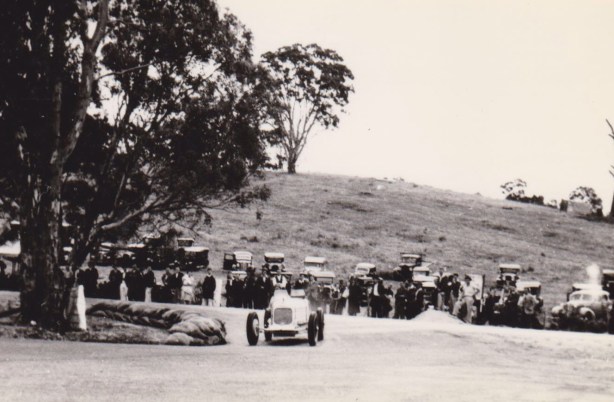
Reg Nutt, Day Spl (B King)

Many of the drivers were having trouble at the grandstand hairpin. Thwaites swung wide and Lea-Wright and McDonough who had started half a minute after him and got through on the corner.  Cowper still led with eight laps to go. The back-markers- Sinclair, Dunn, Nutt, Jackson and Joshua, were travelling at terrific speeds.
With seven !aps to go Campbell took the lead from Cowper and Uffindell was creeping up on Cowper. Barrett was lying fourth. Campbell had a lead of four miles beginning his sixth lap and Uffindell was a similar distance behind Cowper.’

MA ‘Ash’ Moulden and J Wyatt in the Sunbeam GP provided some of the unintended excitement of the day when Moulden lost the car in The Esses. He hit a bank whereupon the occupants were ejected, the car then crossed the road and stopped having mounted that embankment. Moulden had a suspected broken shoulder with Wyatt having cuts and abrasions. Rather a significant car which is a story for another time  (N Howard)

Apropos the above! (B King)

Fred Thwaites, Ford V8 Spl (SLSA)

‘Jackson, with six laps to go was less than two laps behind Campbell. Both Dunne and Nutt were averaging more than 81 mph. Phillips had to retire when he had only four laps to go and Sinclair had oil trouble. Joshua had a long spell in the pits but when Jackson, who started off the same mark had only five laps to go he came back into the race.
Jackson, on his sixth lap averaged  83 m.p.h. Campbell had the race won with three laps to go. He was about half a lap In front of with Offindell with Ohlmeyer third, creeping up.

Fred Thwaites, Ford V8 Spl, 8th (B King)

After Ohlmeyer  came Leith, Boughton and Cowper. Jackson and Dunne were still the best of the back-markers, but after completing eight laps Jackson went into the Pits with plug trouble. Nutt moved up to take Jackson’s place and was lapping at a consistent 81 mph. Campbell still had half a lap in hand with a lap to go and after Uffindel (second) came Ohlmeyer.
Dunne passed Cowper to take sixth place, and Murphy, one of the favorites for race—he won the Centenary Grand Prix last year—was eighth almost a lap behind Campbell. Ohlmeyer passed Uffindell and took second place as he began his last lap. Campbell finished half a lap ahead of Dunne, who was in his last lap passed Boughton, Uffindel and Ohlmeyer. Ohlmeyer was third, Uffindel fourth, Boughton fifth and Nutt, who made up ground, sixth.’

Ellsworth Bugatti Brescia during practice (B King)

Colin Dunne, MG K3 Magnette winning the 50 mile handicap. Car #5 to the side is Tim Joshua’s Frazer Nash (N Howard)

‘Fifty-Mile Handicap
There were 16 starters in the 50-mile handicap. Cowper had completed a lap before McDonough, Thwaites and R. G. Pank left. Sinclair moved off just after Boughton had gone past the start on his second lap and just before Beasley came into the grandstand hairpin on his third lap.
Dunne, driving at terrific speed, left the course at Charleston, but was soon back in the race and did not lose much time catching up again with Nutt, who started on the same mark. Nutt and Dunne averaged about 84 mph on their flrst lap and kept close together on the second. Cowper was still in front when he had three laps to go, but the rest of the field was bunching up.

Colin Dunne, MG K3 – 2nd in the GP, first in the 50 mile race (N Howard)

Les Murphy, MG P Type (B King)

Dunne gave the crowd in the grandstand a thrill as he raced toward the hairpin bend behind Phillips. Before he reached the corner he swung across in front of Phillips and led him round the corner. Nutt had to retire with engine trouble.
With two laps to go Cowper was still in front, but he was being chased by Boughton who was just keeping Beasley out of second place, then came Murphy with Dunne, travelling faster each lap in fifth place. By the end of his fourth lap Dunne had moved up considerably.

Jim Boughton, Morgan 4/4 (N Howard)

Boughton took the lead with two laps to go and Cowper dropped back to lead Beasiey and Murphy with Dunne coming very fast about 150 yards away in fourth place. Dunne and Murphy were very close together at the Mill Corner and Dunne, swinging  wide on to the footpath in the main street of Lobethal, passed Murphy and went into fourth place.

Bob Lea-Wright, Terraplane Spl ( N Howard)

Beginning his last lap Boughton led Dunne by only 400 yards; after Dunne coming Beasley, Murphy, Cowper, Phillips and Lea-Wright. McDonough was providing plenty of thrills with his car swinging all over the road. Dunne chased Boughton towards Kayannie on their last lap and coming towards the Mill Corner went to the front. Murphy went past Beasley into third place, but Boughton managed to bold off Murphy to finish second. Phillips, who came very fast towards the end of the race was fourth.’
Etcetera: Further photos of the SA GP…
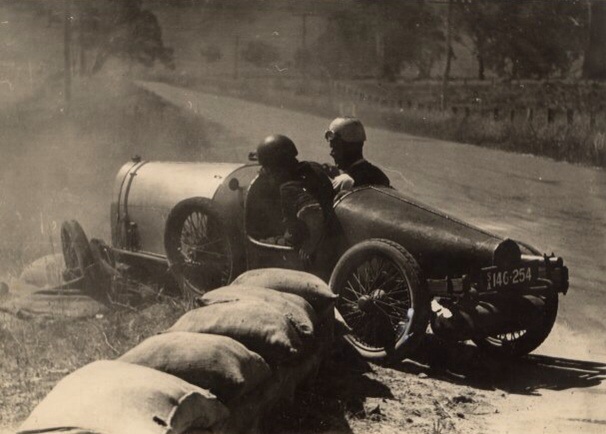
Howard Trotter Bugatti Brescia ‘this might explain why he was a scratching’ Bob wryly observes (B King)

The crew examine Norman’s handiwork ! (B King)
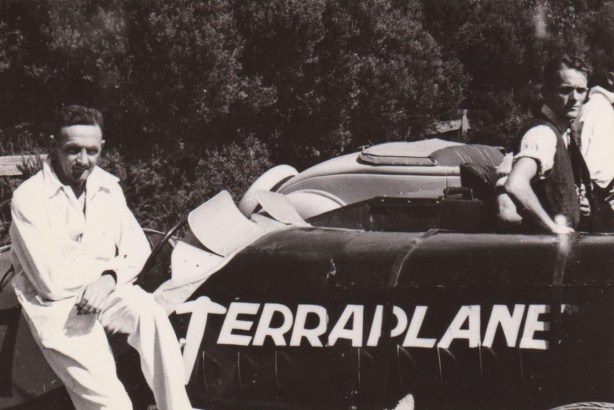
Terraplane, Harry Beith (B King)
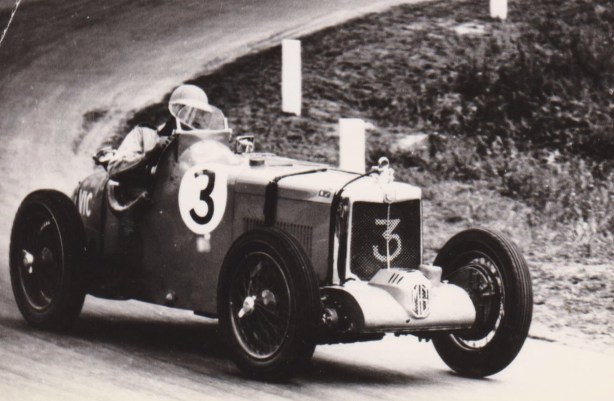
Bob Lea-Wright, Terraplane  (B King)

Arthur Beasley, MG P Type (B King)
Dunne’s MG K3 (B King)

One of the K3’s (B King)

Lea-Wright, Terraplane (B King)

The mysterious Alan Gascoigne Sinclair…
So what do we know about the MI5 spook, motor trader, sailor and racing driver Alan Gascoigne Sinclair?
The Advertiser’s pre-race bio advises us that Sinclair was a graduate of Cambridge University and a partner in a motor firm at Hammersmith, London. He was born in Croydon, London on either 22 May 1905 or 22 May 1906- with 1906 the more likely date even though 1905 is more commonly cited.He died in Cornwall in 1995.
Whilst the local Adelaide press made a big fuss of Sinclair’s presence, by any elite standards he was a racer of limited experience and calibre- Peter Whitehead, who raced throughout Australia in 1938, inclusive of winning the AGP at Bathurst was far more of a ‘top-liner’ but even he was not of the level of Dick Seaman or Prince Bira to name two young thrusters racing in the UK at the time. Nonetheless, a foreign driver in our fields in a car of the Alta’s quality was notable- not that the Alta was an ERA Voiturette let alone a GP Alfa…

AG Sinclair in 1938 (Adelaide News)

The information which follows I have sourced from ‘The Nostalgia Forum’, notably the contributions of Australian racer/historian John Medley and one or two others with avatars. In addition there is a reasonable amount ‘in period’ contained in Australian newspapers of the era in relation to AGS’ racing and other adventures. In part my intention in writing this bit of the story is to ‘flush out’ those who may know more of the mans achievements and escapades in order that we may get a more wholistic perspective of Sinclair’s interesting and unusual life!
Tony Edwards found in his research, that Sinclair suffered a broken arm in a racing accident in 1935 and whilst recovering from that sailed to North America on a 1915 vintage beam trawler named ‘Seaplane’. The craft had been converted to a yacht by its owner, British writer GFG ‘Frank’ Pollard, the boat landed in Halifax, Nova Scotia, Canada in July 1935, and then left for Boston shortly thereafter.
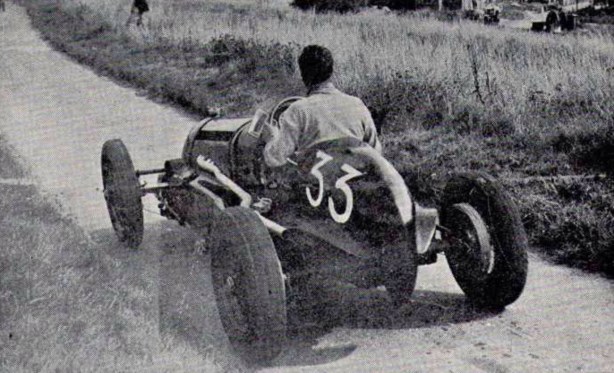
Sinclair, Alta 1100, Lewes Speed Trials, UK 21 August 1937 (MotorSport)

Sinclair’s Alta, was originally a sportscar and later converted into a single-seater, it’s 1933/4 1100cc supercharged engine had chain driven twin-overhead camshafts- an engine which was eventually used to power the Bill Dutton Alta raced by Ted Gray. This chassis (the AGS car) was sold by Sinclair to Bill Reynolds and re-engined with a Ford V8 and then raced by Bill, Arthur Chick, John Read, others and Ted Gray, ‘acting as a test-bed for the ferocious Tornado V8 in the early 1950’s’ John Medley wrote. Ultimately the car was restored by Graeme Lowe and completed in 1999. There is much more to be said about Sinclair’s Alta, but let’s keep on point- which is not about the car!
‘The single-seater Alta was prepared in a garage behind a pub in Hammersmith Street from where Sinclair traded cars. He had a flat close by from where he placed adverts for cars for sale. He was assisted by an Australian spanner-man…’. The passenger list of his ship to Australia in late 1937 lists his address as FAP Motors Ltd, rear of Clarendon Restaurant, Twickenham- 1-5 The Broadway Twickenham.
From the material publicly available it is not clear exactly when Sinclair started racing. It seems his main season of activity was 1937- what follows is a reliable list of UK events in which he participated, mainly in the supercharged 1100cc Alta he shipped to, and remained in Australia after AGS returned to the UK.
Brooklands
Whilst it seems Sinclair was a BARC member from 1933-1938 ‘he only seems to have competed at Brooklands in 1937’, John Pulford, Head of Collections, Brooklands advised Tony Edwards. All of the events listed below were in 1937.
29/3 BARC Easter Meeting Alta , 1/5 Campbell Trophy Alta with PF Jucker- did not get to drive as the Alta 61S failed with Jucker at the wheel, 10/7 BARC Races Alta, 2/8 JCC international Trophy MG with NG Wilson, 16/10 BARC Races Alta
Crystal Palace
24/4/ Coronation Trophy DNS engine, 17/7/ London GP 6th in heat DNF final Alta, 9/10 Imperial Trophy DNF heat therefore DNQ final
Donington
24/7/ 12 Hours, Sincair/NL Wilson Frazer-Nash DNF

London GP Heat 2 Crystal Palace 17 July 1937. Front row from left RW Appleton Appleton Spl 1100, R Parnell MG 1100, Mrs Eccles Rapier 1100, AG Sinclair Alta 1100, middle row, probably AC Dobson ERA 1500, B Bira ERA 1500, R Hanson Maserati 1500, J Bolster ‘Bloody Mary’ 200 and on the back row RC Fleming Alfa Romeo 2600- all cars except Bloody Mary supercharged. Bira won from Dobson, Parnell and Hanson (Getty)

Sinclair was a friend of John Bolster and shared a number of pre-war Frazer-Nash adventures, one of which Bolster records in his book ‘Motoring Is My Business’; ‘The Frazer-Nash was seriously damaged, but we decided we could tow it home, provided that we drove very slowly. All went well until just before our destination, when one of the wheels came off and bounced merrily away in the darkness. We were crossing a bridge over a river at the time, and Alan instantly flung himself over the parapet and plunged into the water with a mighty splash. This, he afterwards explained, was to find the wheel before the ripples subsided, but the tidal wave occasioned by his arrival rather defeated this project. I eventually found the wheel in a hedge some distance away’.
The Adelaide Advertiser did a great job with its pre and post GP reporting to keep the good citizens of South Australia up to date and maximise ‘bums on seats ‘(a temporary 1000 seat grandstand was erected on the corner of the Lobe-Mount Torrens and Charleston-Mount Torrens corner) and more particularly in the paddocks around the long ‘most challenging course in Australia ever’ layout.
Sinclair’s pending arrival was reported in the 9 December issue of The Advertiser which noted that ‘an informal entry had been received from Alan Sinclair (I wonder what an informal entry is?) who was to have left last Saturday’- the ‘Orford’ sailed from London on 6 November and arrived at Port Adelaide on 11 December 1937.
The Alta was said to be an interesting design- of four cylinders, cast in pairs with an aluminium block and steel liners. With a compression ratio of 8.5:1 and a supercharger blowing at 12 pounds of boost a top speed of 130mph was expected with a weight of 10 hundredweight. An ENV ‘special gearbox’ was mentioned.
Sinclair was said to be bringing an ex-Von Delius BMW 1.5 used in the 1935 Alpine Trial and an ex-Peter Whitehead MG Magnette. Another report expected his arrival on the ‘Orford’ with the Alta 1100 he was to race, with other cars, ‘a German BMW’, the ’tiser keen to help the punters understand that cars place of origin! and Sunbeam 1.5 s/c. On the week of 14 December two special Rileys and an MG will arrive. The tax man stood to gain 600 pounds in Customs Duties from this smorgasbord of imported racers! I am intrigued to know the stock list of what actually did come ashore.
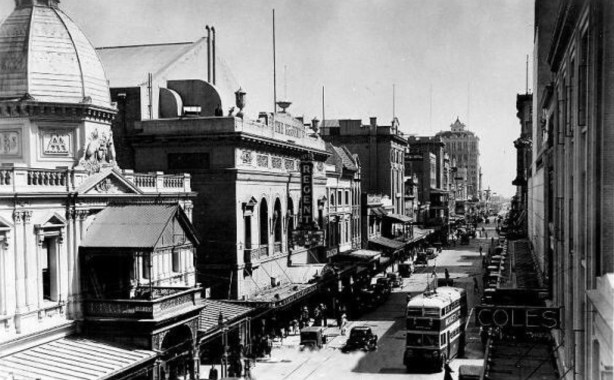
Rundle Street, Adelaide 1938 (The Advertiser)

AGS was given a welcome lunch on Sunday 14 December, I wonder if he wasn’t amazed by all the fuss- Kluge also was honoured with one.
On 19 December the stillness at Parafield (20 Km from the Adelaide GPO) was shattered by the high speed, early morning blast of the Alta on the Main North Road, Alan was sorting carburettor settings of a car said to be the fastest in the Southern Hemisphere. He was confident after a couple of passes at 110mph over a total distance of 8 miles- in which a gallon of fuel was used that he could complete the 100 mile SA GP without stopping for fuel. Sinclair was confident his car could achieve 130mph during the event ‘thereby breaking the Australian record on 120mph’.
In a day of international diplomacy at Adelaide Town Hall on 22 December 1937 ‘The value of international visits in creating good relationships between countries was emphasised by the Lord Mayor (Mr Arthur Barrett, brother of Melburnian racer ace Alf Barrett) and other speakers yesterday when Alan Sinclair, the English racing motorist, and Ewald Kluge, motor cycle champion of Germany and Europe paid an official call on the Lord Mayor’.
‘Sinclair said that a recent holiday he had spent in Germany had been one of the most pleasant in his experience. He found nothing but friendliness toward English people. The Lord Mayor referred to the large German community in South Australia and said that any differences between the British and Germans had been almost forgotten. Also in the party was Baron von Oertzen, general export manager of the Auto Union A.G. of Chemnitz. He and Kluge were accompanied by their wives. Baron von Oertzen said that in South Africa and Australia he had found nothing but friendliness and hospitality. With more international visits there would be less talk of war’ The Advertiser concluded.

Sinclair, Lobethal 1938 (N Howard)

The performance of Sinclair in the SA GP has been well covered above, after the race he was reported to have spent ten days in the summer sun at Victor Harbor and was then was said to be racing at Phillip Island an event at the DKW team were also contesting. It same account has that he was also racing at Albury (Wirlinga road course) and at Bathurst.
Immediately after the Lobethal weekend the DKW team decamped and headed for Ballarat in Victoria to contest events on a specially prepared course at Mount Weatherboard, near Lake Learmonth. Between 6,000-7,000 punters saw Kluge and Fredricks race at a well organised meeting on a very rough course with Kluge taking the 250cc event.
The Germans then headed up the Hume Highway to Canberra where they sought successfully to take the Australian 250cc speed record on 14 January on a stretch of the Federal Highway. Kluge set a time of 94.25mph for the Flying Quarter Mile just eclipsing the previous record. A plan to achieve the Flying Mile was thwarted by good old Canberra rain. Logically AGS would have been in Canberra to keep an eye on Der Deutschlanders but we don’t know that.
Late in the month the DKW crew headed back south for Westernport Bay and the ferry crossing from Stony Point to Cowes for the Phillip Island races at Cowes on 31 January.
There, again, they contested the Victorian Tourist Trophy 250cc Lightweight, and 350cc Junior classes concurrently on the dusty 6.5 mile, original Phillip Island road circuit. Kluge and Fredricks finished one/two in the Lightweight, but Kluge could only manage third on the supercharged 250 behind the Velocettes of Frank Mussett and Don Bain in the Junior.
Whether Sinclair loitered with intent at the ‘Island is unclear.
After the Cowes event two of the three DKW’s brought to Australia were shipped back to Germany leaving one here, it’s subsequent history is an interesting one itself. When ‘Team DKW’ left Australia is unreported but Von Oertzen was certainly still in Australia in March as we shall see in a moment.

Albury GP aka Interstate GP competitor during the 1938 event at the Wirlinga road course close to Albury. ‘The Flying Standard’ Spl driven by K McDonald (J Dallinger)

The 1938 ‘Interstate Grand Prix’, held to celebrate 150 years of the city of Albury was held on the Wirlinga road course in New South Wales on 19 March.
AGS was entered but did not start the 34 lap 148.5 mile journey. Whether this was due to the unreliability of his mount or simply not making the journey to the Victorian/New South Wales border town is unclear. I have sourced plenty of photographs of both the 1938 and 1939 Wirlinga ‘Grand Prix’ events but can see no evidence of the Alta’s presence. Local Wangaratta boy Jack Phillips won the ’38, and 1939 race for that matter, in his Ford V8 Spl from the Terraplane Specials of George Bonser and Les Burrows.
Von Oertzen was in Perth in March and gave a far ranging interview to ‘The West Australian’, a local daily newspaper, the article was published on 11 March 1938. It either presented the facts or extolled the virtues of the Nazi regime others would have you believe Von Oertzen abhorred, depending upon your view of things…
The Baron spoke of the roads in Australia inviting people to buy cars, his surprise at the number of people owning cars; one car to every 9 people in Australia, one in 25 in Germany. ‘The only explanation I can see (in relation to the average income of the people) is that the (Australian) people prefer owning a car to buying their own house’.
‘Discussing the progress of the automobile industry in Germany, Von Oertzen said ‘…that under the Hitler regime there had been a great stimulus. Before the war there had been 1,000,000 unemployed…in the post war period this figure rose to 6,500,000 in 1932, but the Nazi regime had reduced this figure to 400,000. This meant greater general prosperity which was reflected in the motor trade. The smashing of trade barriers by Herr Hitler stimulated industry generally but particularly the motor trade…which also benefited from…no registration fees…nor a charge for a drivers licence…Hitler had caused insurance premiums to be reduced. In 1932, the year before the Hitler regime, the entire German motor car industry produced 42,000 passenger cars and trucks. Five years later, production was 450,000 cars and trucks, and 60,000 cars exported’ Von Oertzen said. The piece concluded that the Baron was to spend a few more weeks in all states and then proceed on his world tour via New Zealand, North and South America and return to his home in South Africa.
Sinclair entered the Victorian Sporting Car Club’s ‘Grand Prix’ meeting at Phillip Island on 28 March in the BMW ‘which has 117,000 miles to its credit but decided to give the old-timer a rest’. Whether he actually practiced the car I am intrigued to know- he was trying to flog the cars to unsuspecting colonials so one would assume a demonstration of his wares made sense? Inter-capital record breaker Arthur Beasley won the 116 mile Grand Prix in a Singer, it was a handicap event as was usually the case in Australia.
In April 1938 Sinclair took the little Alta to Mount Panorama for the circuits first meeting, the Australian Grand Prix, which was won convincingly by Peter Whitehead in ERA R10B aided by an overly generous handicap.
The Alta’s run of unreliability continued when Sinclair was unable to start the race ‘…but that may have had something to do with Sinclair spending the night in the cells on sundry drunk and disorderly charges. His behaviour in Australia seems at odds with the stories of Sinclair the British secret service agent sent to Australia to observe the DKW team…’ John Medley wrote in ‘The 50 Year History of The Australian Grand Prix’.

Sinclair, Alta 1100, Rob Roy November 1938 (L Sims)

Sinclair contested the June 1938 Rob Roy meeting in outer Melbourne’s Christmas Hills in the Alta (where Whitehead set the course record in ERA R10B) and was reported in ‘The Car’ as heading for the bar after setting the under 1100cc blown class in a time of 39.35 seconds. The account noted his bad luck on his tour so far and ‘those present were pleased to see him have a success, although the car is not as fast as he hoped it would be’.
Continuing his magical mystery tour of Australia, ‘The Autocar’ advised its readers in late September 1938 that AGS ‘has appeared again, in Darwin, it seems, attired in blue shorts, a 20 gallon sombrero and a .45 Colt’- no need for German intelligence to keep an eye on our Bond, they could read of his whereabouts in the British motoring press! It seems he ran at Rob Roy that November, these photographs of Sinclair and the Alta are of that meeting.

Sinclair heading up Skyline at Rob Roy in November 1938, Alta 1100 (L Sims)

By January 1939 Sinclair was back in Lobethal and hoping to make amends for the disappointing reliability of the Alta by entering another of the cars he imported, a Sunbeam Special in the ’39 Australian Grand Prix.

By that stage the Australian grids looked a good deal more impressive with several cars imported by John Snow contesting the race- his own Delahaye 135CS, an Alfa Romeo P3 for Jack Saywell, Alfa 8C2300 Le Mans for John Crouch, noting the Colin Dunne entered MG K3- ex-Bira had been imported earlier by Snow- scion of the Sydney retailing empire of the same name. Lets not forget Alf Barrett’s not so long in Oz Alfa Monza too, Barrett was very much ‘the man’ with this car in that immediate pre and post-war era.

Research by Bob King in the eighties determined that AGS’ ‘Sunbeam’ was in fact a special built by Cambridge undergraduate David Pearce in 1936/7. It comprised a Bugatti T44 chassis which was shortened, to which a 1.5 litre, four cylinder, 100bhp, Sunbeam DOHC, Roots supercharged engine designed and built for speedboat record-breaking (successfully) was fitted. The body was made by Pearce with a pointed tail incorporated from an old Alta. Without getting lost in the tangent, after the Sunbeam engine failed, ‘when a gudgeon pin let go’ a Dodge six was fitted, the  the car contested the 1950 AGP at Nuriootpa, Barossa Valley and many other races so engined- and was ultimately restored with a Bugatti T49 motor in the late eighties.

True to form, Sinclair’s Bugatti Sunbeam failed to take the AGP start with sheared blower drive minutes before the race start.  He ‘presented a tragic spectacle when, a few minutes before the starting time of the first race he sat helplessly in his Sunbeam Special in the Lobethal main street. He looked in vain from under his big 10-gallon hat for someone to push him off and start his motor. Pushers who volunteered were quickly exhausted, however and Sinclair did not start’ one local report observed of the poor Brit.

Sinclair was cross entered in a Riley Brooklands he had imported, sharing the car with Clifford Downing, this car also retired having completed only 5 of the 17 laps. Perth youngster Allan Tomlinson took a staggering win in an MG TA Spl s/c- a great story for another time.
The Bugatti T44 Sunbeam at an SCCSA meeting at Buckland Park, a property noth of Adelaide in February 1940. Entered by Tony Ohlmeyer, he was fastest from scratch and 8th in the 16 lap handicap. Photo included to show the ‘Sunbeam’ in the form built by David Pearce and then acquired by AGS just prior to his trip to Oz (Brooks/Harris)

In July 1939 the intrigue continued with Sinclair’s involvement in an attempt to ‘set up a Socialist State in an ideal tropical setting’ in the South Seas.
The ‘Connella’ was bound for the Marquesas, French owned islands in the South Pacific 5,000 miles from Sydney where ‘her crew of four will be the foundation members of a new utopia’ The Brisbane Sunday Mail reported on 9 July 1939.  The ships master, Fred Briggs and his wife, Jack Milne and, you guessed it- Alan Sinclair are members of ‘The International Settlement Organisation’, formed in 1938, which hopes to create a Socialist State in an idea tropical setting. The only thing missing from this Cold War era Bond-esque scene is the tall, shapely blonde minx.
‘They are confident that some day their settlement will be founded’. The voyage didn’t start well, on departure from Hobart ‘her sails were ripped apart by a gale that sometimes rose to more than 50 miles an hour’, the 6.5 ton 54 foot ketch reached Sydney after 12 stormy days coming up Australia’s east coast. The report noted that Sinclair ‘the English racing motorist…spent last winter shooting crocodiles in the Northern Territory’.
Perhaps the true nature of the trip is made clearer in that Briggs ‘is formerly an Australian Airforce survey photographer’, ‘who gave up his post to try to found a new Utopia’. It is intriguing to speculate on the real purpose of the trip- perhaps surveying certain parts of the South Pacific with war by then so imminent?
In February 1940 The Motor reported that ‘Alan Sinclair, who used to drive a single-seater Alta 1100cc and went to Australia about a year ago…came back to join the London Scottish (regiment); he was married in his spare time. Before that he did some racing in Australia and then, so I heard, set sail for the South Seas to find a Utopia on some choice islet. Before that he helped to get a sailing boat across the Atlantic to the States and back which was by way of being an epic…’
In terms of Sinclair’s war service John Medley recalls a conversation with a pre-war Australian competitor ‘who had in fact shared an overnight cell with Sinclair for boyish over-exuberance in South Australia- he knew Sinclair pre-war and walked into a wartime office in England to salute his new commanding officer who was none other than AG Sinclair, now very serious, very formal and correct’.
What more can we add to this picture of a man who seems to have had a very interesting life?!

One of the Lobethal Aces if not The Ace, Alf Barrett, Alfa Monza during the January 1939 AGP weekend (N Howard)

The Challenges and Perils of Lobethal…
Thrice winner of the Australian Grand Prix Doug Whiteford, a man whose career stretched from the pre-war era until the mid-seventies and all of our challenging circuits, rated the rolling hills of Lobethal as the most challenging of them all.
The map below is more detailed than the one early in this piece and will help guide you round the place, its a locals account adapted from narrative on the lagler.com website.

Colin Dunne and MG K3 pop over the top of one of the many Lobethal rises (B King)

From the old start-finish line and grandstand area north of Charleston (top right) you could be forgiven for thinking its nothing special. No really challenging corners just sweeping curves- but put it into context, the cars had spindly wire wheels and tyres, cart springs, beam axles and near useless brakes. These curves are all blind- there are crests preceding all of them, particularly the bridges, which funnel into chutes. Think of these machines dropping onto their suspension in mid-air whilst turning at 100mph.
Through the little town of Charleston, with its pub in Onkaparinga Road (still there) the crowds were thick, with stories abounding of drivers stopping mid-session for a ‘nerve settler’ or two! Out of here are frightening high speed kinks, all blind, all crests and dips. Then a blind right hand kink sucks you into Kayannie Corner, the tight right-hander which takes the intrepid racers towards Lobethal. Plenty of folks spectated in this area as they popped off the train from Adelaide.
The climb up the hill from Kayannie is significant, its straight-ish for the first 2 kays, but at the top ‘the track steals straight from the soul of the Nürburgring. Lined by trees, the blind crest plummets away left, bottoms out right, drops away again into a roller-coaster left’. Then it flattens, raises slightly, then has another drop into the braking area for the hard left-hand Mill Corner into Lobethal’s main street- which isn’t straight. Past the Pub on the right, there is now a little ribbon of Indy style paving across the road and a plaque to commemorate the Lobe racing era.
Heading up the hill the road funnels between shops and houses and then there is the blind, off-camber Gumeracha Corner which claimed lives. The stretch from here to the start-finish hairpin has to be experienced- 5 Km of crests, blind curves, feature changes and undulations. Here is where the truly great drivers such as Allan Tomlinson, Colin Dunne and Alf Barrett made up time on sheer balls, bravery and commitment…
One can still drive these roads my friends, make sure that you do, carefully.

Lobethal Lads: probably 1939, Terraplane Spl’s (unattributed)

Bibliography…

The Adelaide Advertiser various editions, Old Bike Australia article ‘A Tale of Intrigue’ Jim Scaysbrook, Nathan Tasca

On Alan Sinclair- ‘The Nostalgia Forum’ especially John Medley, Vitesse 2, eolith, fivestar

‘The 50 Year History of The Australian Grand Prix’ Graham Howard and others, ‘Bugattis in Australasia’ Bob King, ‘Historic Racing Cars in Australia’ John Blanden, ‘Bathurst: Cradle of Australian Motor Racing’ John Medley

Looking back towards the start-finish line (B King)

Photo Credits…

Bob King Collection, Leon Sims Collection, Gronwy Morris Collection, State Library of South Australia, The West Australian, Getty Images, MotorsSport, Adelaide News, The Velobanjogent, Tony Parkinson/Ray Trevena Collection, John Dallinger

Tailpiece: #7 Jack Phillips Ford V8 Spl, #20 Les Murphy MG P Type, the #2 Jack Day Spl driven by Reg Nutt and finally #23 the Brescia Bugatti raced by Jack Day…
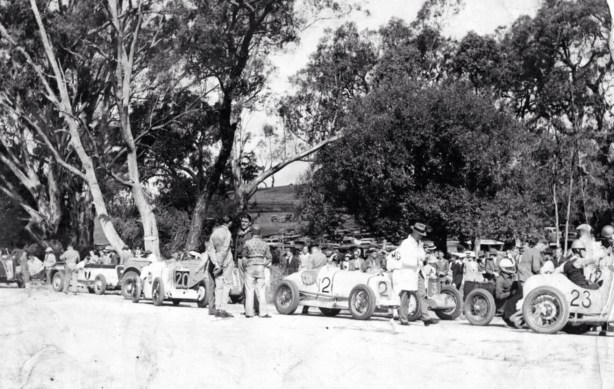
(L Sims)

Finito…

(J Frith)

‘All set, everything ship shape!’…

I’ve already written a couple of articles about Donald Campbell’s achievements against the odds of the weather gods at Lake Eyre, South Australia during the winters of 1963 and 1964.

He had a torrid time from the media, his sponsors- many of whom he lost during that first year, the public and some in the Australian Parliament.

Click below for a brilliant article, the best written, about Campbell’s ultimately successful record attempt by the late Evan Green, a superb Australian motoring and motor-racing journalist, very talented rally and race driver and the man appointed by Campbell’s major sponsor in 1964, Ampol, to manage the program from Muloorina Station and Lake Eyre- so it is very much a first-hand participants account.

It provides useful context for this small random selection of cartoons and photographs.

https://www.whichcar.com.au/features/classic-wheels/classic-wheels-donald-campbell-and-his-bluebird-car-world-speed-record

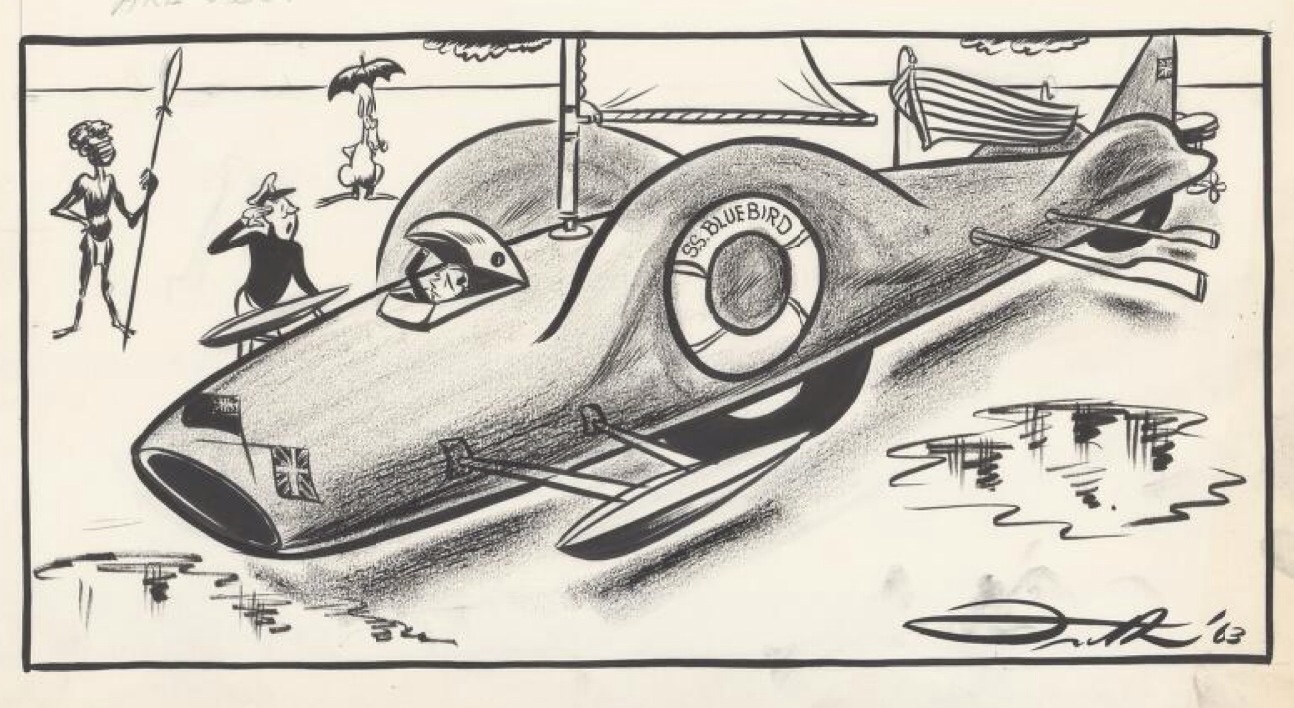
The first cartoon is by John E Frith, one of Australia’s great cartoonists who worked early in his career for the Sydney Morning Herald and later for the Melbourne Herald (as here I suspect) and is dated 26 April 1963.

It shows DC about to close the cockpit of Bluebird, with a dutiful salute being provided. ‘SS Bluebird’ is an amalgam of plane, ship and car carrying the colours of both Britain and Australia, the watching kangaroo and aboriginal are amusing, the latter totally politically incorrect these days!

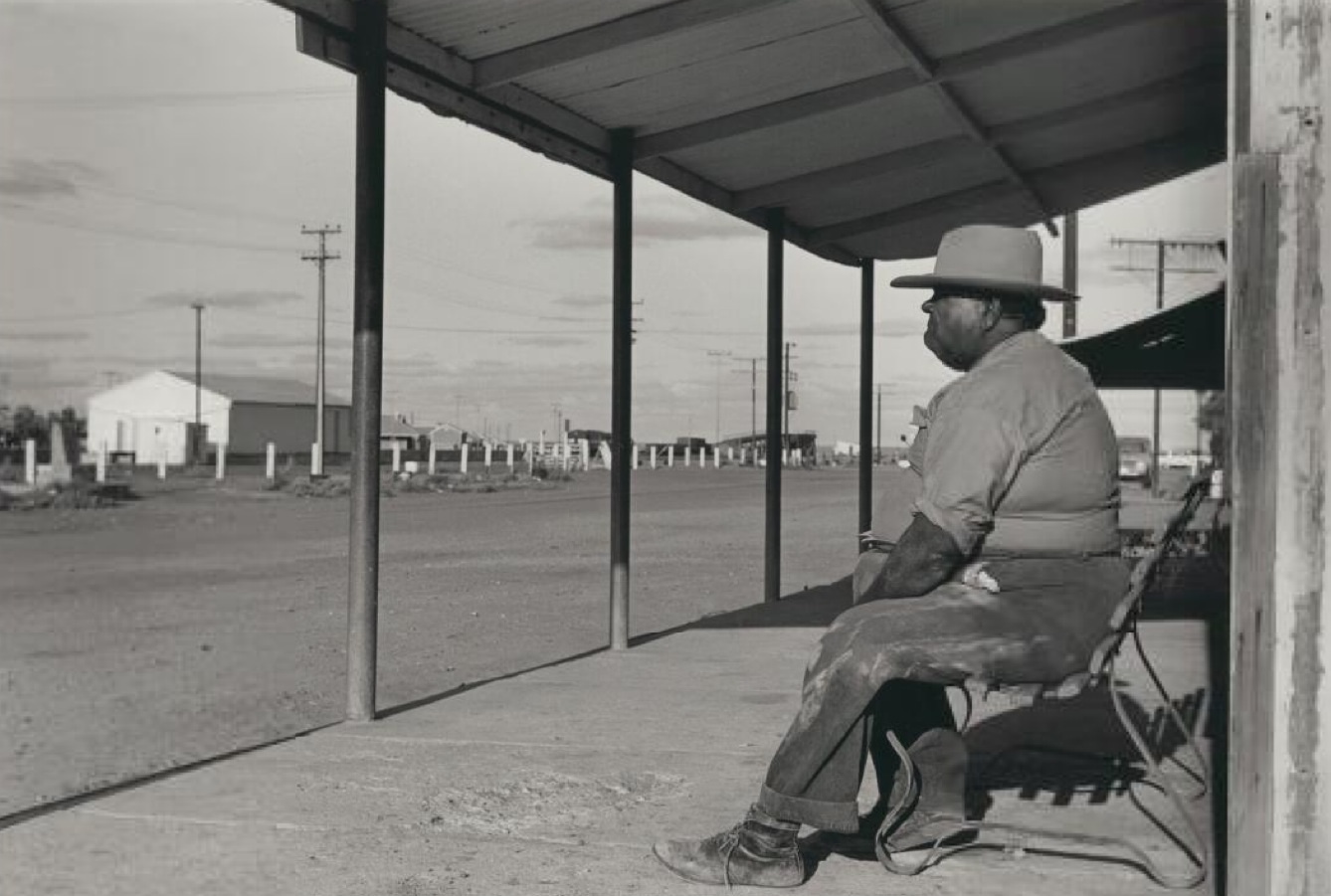
Bluebird Proteus CN7 Lake Eyre 1964 (J Carter)


Jeff Carter’s photo was taken during the 1964 attempt.

His caption reads ‘Donald Campbell’s attempt on the world speed record in a vehicle driven through the wheels (not jet propelled) dragged on for almost two years during the winters of 1963 and 1964.

Fluctuating dampness of the dry saltpan that is Lake Eyre was a major problem, making it difficult to maintain a perfectly smooth, dry, hard surface for the many necessary practice runs and the final attempt.

Sponsors grew impatient with the endless delays and withdrew support. New sponsors had to be found.

Campbell’s unpredictable temperament was a factor in splitting the large group of sponsors, technicians, caterers, time-keepers etc- some 60 or more people in two camps.

Eventually in the late winter of 1964, the 4,500 horsepower jet-engined Bluebird attained a new Land Speed Record of 403.1miles per hour (an average) of its top speeds on two consecutive runs, north and south.

Craig Breedlove, driving a jet-propelled vehicle on a salt lake in the USA achieved a considerably higher speed in 1964. His vehicle was not driven through the wheels. In this photo, technicians, time keepers, photographers and photographers play football beteen practice runs’. (look carefully, you can see the ball)

(J Carter)

Jeff Carter was the official photographer for the attempt, representing the international photo agency ‘Black Star’.

‘When nothing much was happening in the Campbell/Bluebird camp, I and other members of the press would adjourn to Marree, (above) where nothing much was happening either!’

(LAT)

Of course everything did eventually get to a stage where Campbell drove the car in conditions which were still sub-optimal as related in Even Green’s article- but good enough to have a crack and placate those who had been more than patient with him for an inordinate amount of time. 17 July 1964.

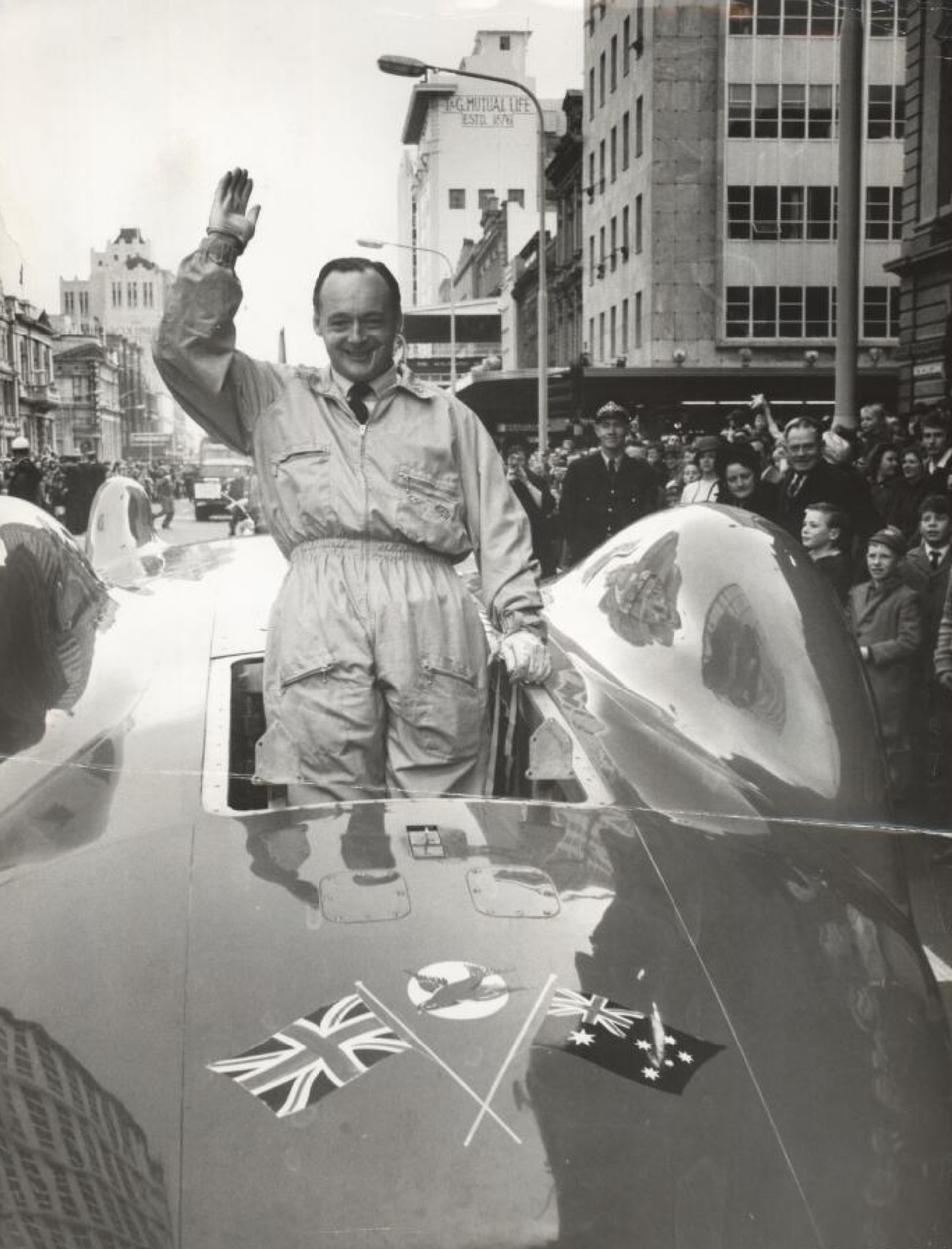
The good citizens of Adelaide, a good proportion of the cities total population turned out to see the Bluebird parade on King William Street, and so they should.

It was a remarkable achievement.

(NAA)

Bluebird…

50 years Ago Today : 17 July 1964 : Donald Campbell Broke the World Land Speed Record in ‘Bluebird’ at Lake Eyre, South Australia, a Speed Of 403.10 MPH…

Credits…

John Frith, Jeff Carter, Article by Evan Green in ‘Wheels’ magazine, National Archive of Australia, LAT

Tailpiece: Ground Control to Major Donald…

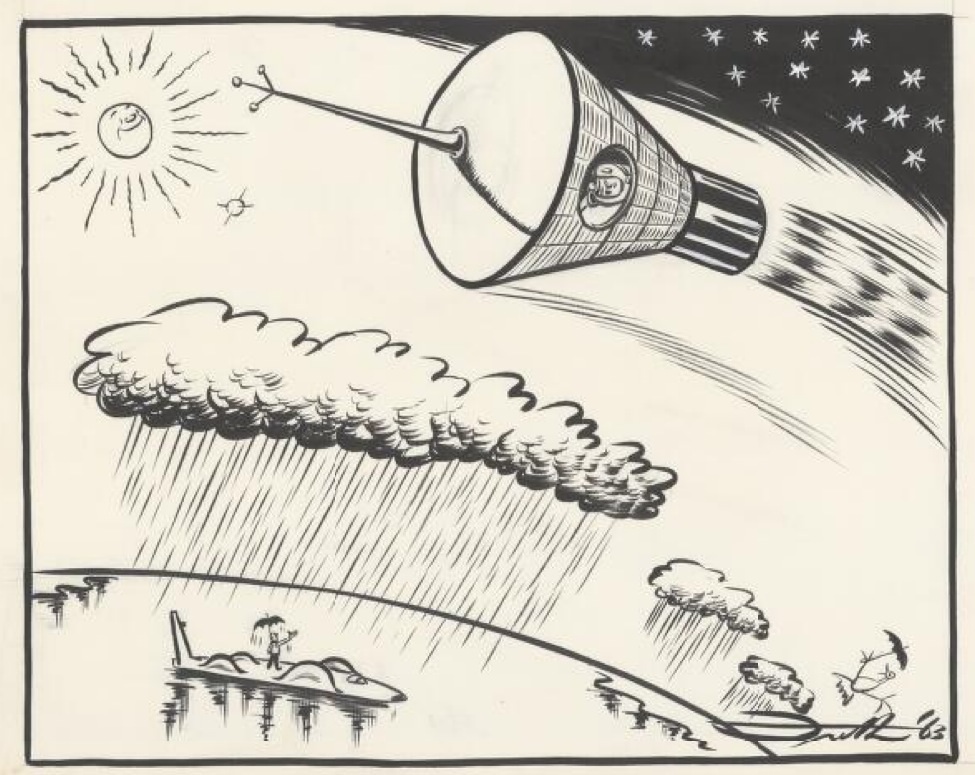
(J Frith)

John Frith has captured the adventure of the times with this cartoon dated 16 May 1963, the Apollo space program is in full swing- the space-race is underway. The astronaut returns to earth in sunny conditions but below him are dark clouds which have caused flooding on Lake Eyre, stranding Campbell and Bluebird with DC atop the troubled vehicle…

Finito…

JMF trying to stay warm at chilly Silverstone, 5 October 1970…

In this day and age of every Tom, Dick and Irving recording their every exploit from the bedroom to the mountain top it’s instructive to look at just how far we have come in camera packaging over four decades or so.

Patrice Pouget is just about to shoot some action footage from a precariously mounted camera atop the svelte tail of a Maserati 250F for a documentary on the great mans life. ‘Fangio’, directed by Hugh Hudson and narrated by the champ himself was released in 1971. The car is ‘2516’, originally a 1955 ex-works car raced mainly by Jean Behra and then sold to Australian Reg Hunt and raced in turn by Bib Stillwell and Arnold Glass before returning to Europe in the sixties and Historic Racing.

I must watch it.

Credit…

Terry Disney

Tailpiece…


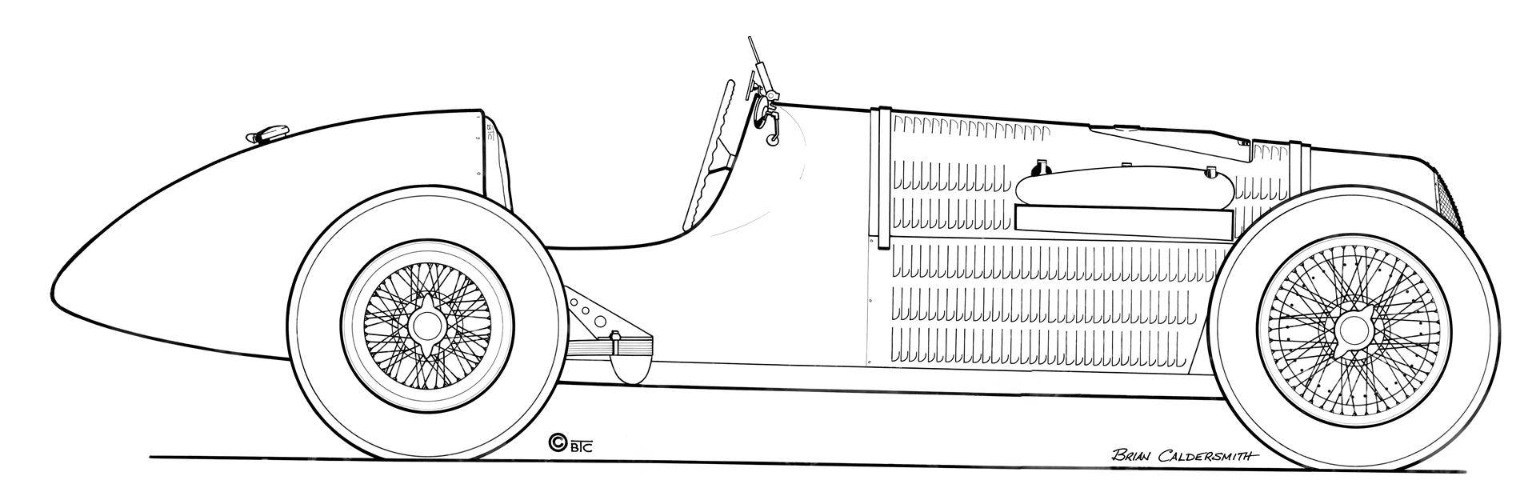
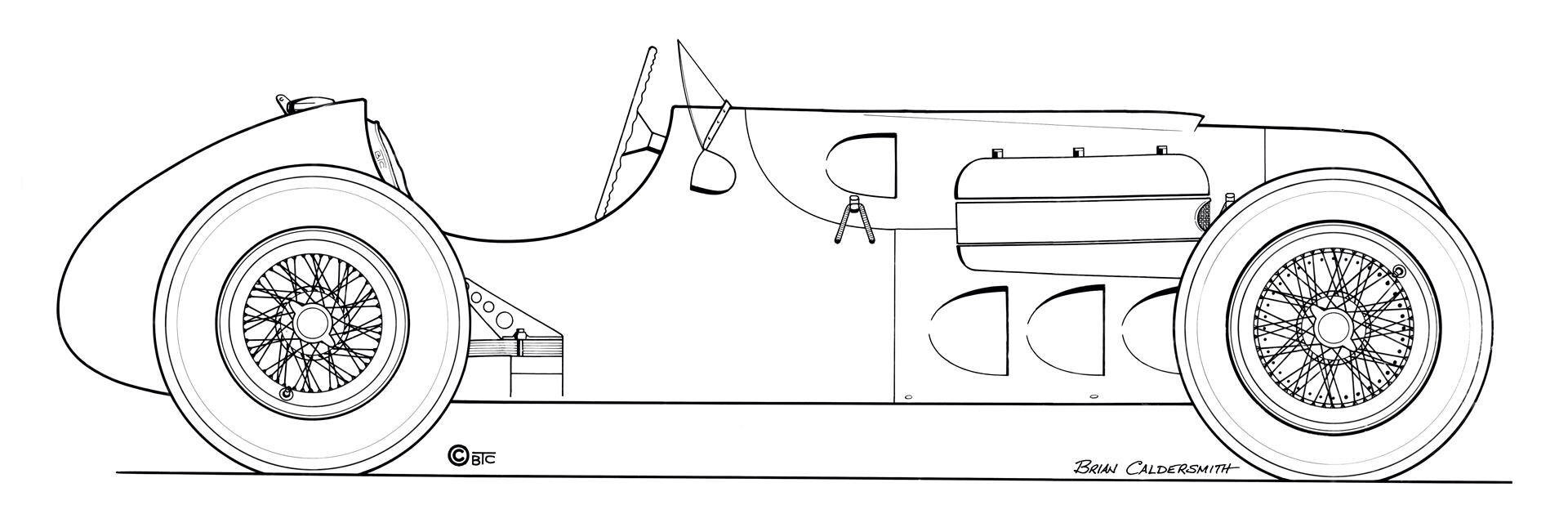
I love these two drawings of two of the fifties Charlie Dean/Repco Research designed and built Maybachs- 1 and 2 by Brian Caldersmith…

I’ve written about both cars before in two articles, one mainly about Stan Jones who raced both machines, the other focussed on the 1954 Australian Grand Prix at Southport Queensland where Maybach 2 (below) met a violent death under Stanley when its chassis broke, or more specifically several rather critical welds failed.

I’m not going to pop up any photos which will draw the eye away from Brian’s artistry.

Stan Jones: Australian and New Zealand Grand Prix and Gold Star Winner…

1954 Australian Grand Prix, Southport, Qld…

Credit…

Brian Caldersmith

Carroll Smith, Frank and Joan Matich (NAA)

Frank and Joan Matich confer during the Warwick Farm Tasman meeting, February 11 to 13 1972…

The ’72 Tasman wasn’t the series the Matich’s expected after the debut win of the Matich A50 Repco at the Farm in November 1971- the brand new machine built closeby won the Australian Grand Prix only days after it’s completion, and looked the goods for the Summer Internationals.

Whilst Matich and his team worked their magic in Brookvale, Kiwi Graham McRae was casting a spell or two in Poole whilst Frank Gardner and Bob Marston were indulging in some F5000 sorcery of their own over at Huntingdon- the cars alluded to are the Leda LT27 aka McRae GM1 and Lola T300.

Mind you, things came good for Frank and Joan at home- Warwick Farm is not too far from the Matich HQ in Brookvale (they moved to Military Road, Cremorne on Sydney’s leafy North Shore circa August 1972) FM was quickest in unofficial practice, qualified on pole on Saturday afternoon and won the race, leading throughout from start to flagfall.

This article is superfluous really, I’ve done Matich and his career pretty well to death, several long pieces inclusive of an 11,000 word monster on his F5000 cars- at the end of this article are links to that piece and a couple of others of potential interest.

But then I came upon this swag of photographs of the Warwick Farm weekend which were too good to ignore. I’ve no idea of the publication for which they were intended or indeed if they ever were published. The shots are from the National Archives of Australia, the photographer uncredited. The series of photos are headed ‘Australia’s Mr and Mrs Motor Sport Sets a Fast Pace’. I’ve other photos of this weekend but I decided to maintain the original intent of whoever commissioned them, keep them together and focus on ‘Team Matich’.

Frank Matich, Matich A50 Repco, Pit Straight, Warwick Farm February 1972 (NAA)

Is ‘Mr and Mrs Motorsport’ apt or a bit of PR Bullshit?…

Its a fair observation I suspect.

Frank was already racing his first competition car, an MG TC when he met Joan, ‘her parents thought the sound of the MG arriving was a plane as they lived at Mascot’ Frank recalled, in fact Joan could be said to be FM’s first sponsor as she lent him 140 pounds to rebuild the TC’s engine not long after they first started going out!

Joan went to many of the test sessions and race meetings down the decades, helped schmooze the sponsors and assisted to run the business which was not insubstantial by 1972. There was the race team chasing national titles, the production of racing cars (sportscars -several SR3 and SR4’s and six F5000’s) Firestone, and then later Goodyear race tyre and Bell Helmets importation and distribution and properties to manage, both domestic and business. Lets not forget the demands of four kids too. (Kris born circa 1958, Kim 1960, Lea 1962 and Katrina 1963)

Frank and Joan were not Mr and Mrs Motorsport in the way that Fred and Christine Gibson and Garth and Leanne Tander were in the sense that both were drivers but I think the ‘Mr and Mrs Motorsport’ label is a fair one.

Joan and Kris Matich- Kris went on to race Van Diemens in Formula Ford in the eighties

1972 Tasman Series Top Guns…

McRae, the reigning champion, Matich, Gardner, Mike Hailwood (Surtees TS8 Chev) and David Hobbs (McLaren M22) were perhaps the dudes most likely to fight for the Tasman Cup but Kevin Bartlett, hamstrung only by the age of his McLaren M10B Chev and 1970 champ Graeme Lawrence, like FG Lola T300 mounted would also be ‘thereabouts’. Then came Teddy Pilette, McLaren M10B Chev, Garrie Cooper, John McCormack and Max Stewart in Elfin MR5 Repco’s- all relative newcomers to F5000, and the rest.

In New Zealand it was all McRae- he started on pole in the first three rounds, won at Levin and Wigram, whilst Gardner took the NZ GP at Pukekohe a race in which Graeme Lawrence and Bryan Faloon had an awful accident killing Bryan and outing Graeme for months.

Derek Kneller pointing, how was it Frank? Ken Symes of Repco in the blue suit FM’s boys in the natty, very American STP togs. Note open top section of ‘bathtub’ aluminium monocoque chassis A50 ‘001/002’ (NAA)

FG boofed his Lola at Levin when the engine suddenly cut out on a high speed corner and he clobbered the fence. Gardner, a very ‘safe driver’ must have had more prangs in the 7 months to January 1972 than at any other time in his career- he wrote off the prototype T300P (akaT242P) at Snetterton in a collision with Brian Redman’s McLaren M18 Chev, when FG on pole and Brian off grid 2 had a territorial dispute, on 30 August 1971.

The quite significant in the history of F5000 cars, seminal, defining chassis T242P/T300P was rooted, destroyed.

Lola quickly built up a replacement car for Frank, ‘HU1’, the first production T300 which Gardner raced to a debut win at Hockenheim in front of Emerson Fittipaldi’s Lotus 56B Pratt & Whitney on 12 September. He took the car to another victory at Oulton and with a second place at the season ending Brands late September round nabbed the 1971 European F5000 Championship. He had been a winner in a Lola T192 earlier in the season prior to the T242/300 race debut, it wasn’t all down to the new car by any stretch.

‘HU1’ was then shipped to Australia in time for the AGP at the Farm, FG crashed it in practice, again the car was re-tubbed before shipping to NZ- only to be boofed again in an accident not of his making at Levin.

He would reappear at Surfers with the repaired car but the chances of the wily veteran winning the series were gone. A shame really as he ‘retired’ from single-seaters after the Sandown round selling the T300 to Sydney F2 pilot Gary Campbell. I say retired as he did a ‘Nellie Melba’ and contested the final round of the 1972 Euro F5000 Championship late in the year to ‘race test’ the prototype Lola T330- ‘HU1’ which became famous in Max Stewart’s hands and is of course still in Australia. A long digression!

Kevin Bartlett took a top win in the final NZ round at Teretonga, driving with a blend of speed and sure-footedness on a wet, difficult track which caught out pole-man Hailwood and McRae. David Hobbs tangled suspension with Matich.

Matich had a shocker of a time in NZ.

He qualified 5th/2nd/5th/2nd- a second at Levin and fourth and fastest lap at Teretonga his best with DNF’s at the NZ GP with engine failure- a broken conrod and a distant 12th at Wigram having only completed 34 laps- KB spun and FM hit him on the way through. Frank pitted and returned 3 laps later completing a further 13 laps before retirement. The sergent.com race report notes ‘…showing the sort of form, had fate not intervened, that would certainly have given him some Tasman points.

A50 left front suspension assembly- top link and swept back locating arm, lower wishbone, coil spring and Koni double-adjustable alloy bodied shocks, adjustable roll bar, big ventilated discs and four-pot Lockheed calipers (NAA)


All was not well in the Matich camp either.

A race team needs stability at the top, Peter Mabey had been the Matich Chief Mechanic since the SR3 period (at least), it was intended that Derek Kneller who arrived with FM’s first McLaren M10A in August 1969, (he had been building cars at McLaren Cars in 1968/9 including the first M10A raced by Peter Gethin) would replace Mabey but Peter decided to stay on to build the monocoque A50, as he wanted that experience and the two worked together well through the repair of FM’s McLaren M10B. The team rebuilt the cars aluminium monocoque rather than buy a repalcement from Trojan, to get some experience of this form of construction in advance of the build of the A50 in 1971.

After the ’71 AGP victory Kneller headed back to the UK, he was homesick, so went home to a gig with Team Surtees. Mabey stayed on but finally cried enough- and left the team after the Levin round having got tired of shouldering the load with other mechanics not pulling their weight the final straw.

Matich did Wigram and Teretonga with the other mechanics and called Derek in the UK, who agreed to return to Australia to assist. ‘I had planned and organised with Frank…to come back to Oz in the middle of the year (1972)…I arrived in Sydney on the Monday after Surfers, Joan picked me up from the airport, I went straight to Brookvale and started work on Frank’s joblist for the car’.

Normally there was a two week gap between the last NZ round at Teretonga and the first Australian one at Surfers Paradise but there was only one week in 1972 making the five day shipment of cars marginal so a group of teams hired a plane to freight the cars by air into Coolangatta, closeby to Surfers.

Derek and Scott McNaughton fitting the drink system- windscreen washer system complete with an electric pump and switch on the instrument panel. neat! (NAA)

Matich had plenty of success at the abrasive Surfers Paradise track over the years, he plonked the A50 on pole at the challenging power circuit and finished third behind McRae and Gardner- FG’s car was re-tubbed and he was back in the game. Kneller notes that the A50 rear suspension geometry was altered with a lighter rear subframe, and raced that way on the Gold Coast.

At the meetings end Frank and Joan jetted from Coolangatta back to Mascot in Sydney, with the A50 trucked back to Brookvale overnight- the team had no spare car, at the time the first customer A50 for George Follmer (Roy Woods Racing) was coming together in a corner of the Matich ‘shop with Carroll Smith assisting.

Kneller set to work preparing the A50 for the ‘Farm.

‘The rear suspension geometry was altered again after Surfers- the rear roll centre was raised…It was at this time the car was given the A50 ‘002’ moniker but it was ‘001’, the same tub, the bodywork was painted in STP colours and the roll bar chrome plated, it appeared different which was a bit of gamesmanship and kept the sponsors happy but it was, and still is the same tub which Bryan Sala now owns. This caused lots of historic (eligibility) grief in later years.’

For the sake of completeness and clarity ‘The same chassis (‘001′) was used for the rest of the 1972 Tasman Series and the 1973 Tasman, at its end it was put on axle stands at the Brookvale factory’ and is very clear photos in the article referred to earlier whilst the two A51’s were built up in advance of their 1973 US L&M Series tour.

A fresh Repco Holden V8 was popped into the rear of the A50 to replace the unit used at Surfers in addition to all of the usual pre-race checks- aided this time by operating from the teams home base rather than the garages used in other cities on tour.

A50 in the Brookvale workshop in the week prior to Warwick Farm. Repco Holden 5 litre Lucas injected V8 giving circa 480 bhp at this point in its development. 1973/4 flat plane crank Repcos the ultimate spec gave circa 520 bhp. Hewland DG300 5 speed transaxle, inboard disc brakes. Rear suspension, Matich designed- Commonwealth Aircraft Corporation cast magnesium uprights, single top link, lower parallel links, radius rods, coil spring/Koni dampers, adjustable roll bar with Aeroquip fittings throughout (NAA)


I’ve always thought Matich and McRae were a couple of peas from the same pod…

Both were from engineering backgrounds, Matich was apprenticed as a Diesel Engineer, McRae completed an Engineering Degree- both knew their way around racing cars from a drivers perspective and also as car conceptor, designer, builder, tester and fettlers. This is a very potent combination to build fast cars, or take what isn’t quick and change it and then keep changing it until the butt-cheeks and stopwatch confirm the steeds speed.

By the time both fellas had success at an international level they were not malleable youths- but rather battle hardened older racers who had cut deals to get where they wanted, with firm, battle-inspired opinions , which meant they were not naturally attractive to team managers after fast but perhaps more obedient youths.

Both proved their pace against the worlds best- lets not forget Matich’s speed against the F1 elite in his two Tasman 2.5 seasons in 1964/5 before his Elfin 400/Matich SR3/4 sportscar phase. He raced with Clark for much of a race at Lakeside and popped his Brabham BT7A, by then not the very latest bit of kit in 1965, on pole at Warwick Farm in front of Clark, Graham Hill, Brabham, McLaren, Phil Hill, Frank Gardner and the rest…

A50 Brookvale, FM at right. Note bathtub aluminium tub- 6 tubs were built, all the same design, 3 by Matich and 3 by Commonwealth Aircraft Corporation at Fishermans Bend, Melbourne- 3 A50, 2 A51’s one of which became an A52, and 1 A53. Note the way the lower suspension wishbone picks up, in part on the A-frame forward of the tub (NAA)

McRae beat the best in the F5000 world in Europe and the US- taking the 1972 US L&M Series in his self-built Leda LT27/GM1 and three Tasmans on the trot from 1971-1973.

Both had F1 offers, in FM’s case he had family and a business in Australia which was a barrier- unfortunately in McRae’s case his only F1 start was with Frank Williams Iso Ford in the 1973 British GP when he didn’t survive the first lap carnage wrought by McLaren’s new cub, Jody Scheckter’s mega first lap M23 Ford lose. McRae wasn’t involved in the shunt but the car’s throttle slides were filled with sand which prevented him taking the restart.

At their respective ‘right peaks’- say 1965 for Matich, (born 1935) and 1971/2 for McRae, (born 1940) both were surely good or better F1 material had they arrived at about those times aboard a halfway decent bit of kit!?

Matich and Bartlett before the off. Matich A50 Repco and McLaren M10B Chev. Just to the left of KB’s helmet is Frank Gardner’s silver Bell Magnum- his Lola T300 is on row 2 (NAA)

Meanwhile back in Sydney the 1972 ‘Warwick Farm 100’ beckoned…

Matich, Bartlett, Gardner and Max Stewart were probably the Warwick Farm aces in this race with perhaps Max to be discounted, his time in F5000 would arrive bigtime shortly, but he wasn’t going to win this race in his Elfin MR5.

Frank did pretty much all of his testing at the ‘Farm, he knew every blade of grass in ‘Gods Acre of Motor Racing’ and so it proved over that February 1972 weekend. The changes the team made to the car gave him the edge and additional confidence he needed, he was comfortably ahead of the field in unofficial practice.

On Saturday he was again the class of the grid popping the A50 on pole by 5/10 second from Kevin Bartlett’s McLaren M10B Chev, Frank Gardner Lola T300 Chev, the similarly mounted Bob Muir, Max Stewart Elfin MR5 Repco, McRae Leda GM1 Chev, who only did 12 laps of the slippery track.

Only the first few laps in the earlier Saturday session were dry, otherwise the track was wet or damp- a light drizzle greeted the drivers at noon as they set out for what would normally be the session in which the quickest times were set with cars by then having chassis’ nicely tweaked for the track.

Teddy Pilette McLaren M10B Chev, David Hobbs McLaren M22 Chev, John McCormack Elfin MR5 Repco and Warwick Brown McLaren M10 B Chev and the rest comprised the balance of the grid. Mike Hailwood had a shocker of a time, he missed much of practice when a tyre deflated, then in a discretionary session to test the car he muffed his entry onto The Causeway and clipped the fence breaking a wheel and causing some suspension damage. His boys had a long night ahead but did make the grid.

The Northern Crossing, formerly a series of temporary road patches laid across the top of the Warwick Farm horse racing track had neen replaced with permanent hotmix- a bump leading onto the crossing and a layer of silt across it made the going tough for the drivers, both Bob Muir and Max Stewart had spins during the day.

Pre-race build up- watching the TV feed of an earlier race. Derek ‘Frank’s gold race suit was given to him by Goodyear, they gave him a new set of race overalls every year, unalloyed Hinchman but for 1972 it was the ‘Fypro’ gold set’ (NAA)


Yerv got a hole in your sock Dad! Make sure you win but be careful all the same- FM and Kris Matich as Frank suits up (NAA)


Kneller belts Matich up so to speak- note the nickel or chrome plated roll bar- the cause of some consternation deacdes later in the ‘A50-002’ debate. There was no ‘002’ but rather a bit of gamesmanship by Matich! (NAA)


Lift off- FM gets the jump, he was never headed. Best view afforded by Max Stewart’s truck-top! (NAA)

Jack Brabham was present over the weekend and started the race at 1.30 pm- Matich led from pole winning the 45 lap, 100 mile race from European F5000 Champion Frank Gardner by 18 seconds and Kevin Bartlett another 30 seconds up the road.

FM started strongly, as did Bartlett who looked for a moment to have gotten off the line best,  and opened up a 2.5 second lead from Bartlett, Gardner, Stewart, Muir and McCormack- the latter made a blinder of a start from row 5 using the grass verge.

Matich widened the gap but the order up front remained the same with much of the race interest surrounding Mike Hailwood and his repaired Surtees TS8 who worked his way up from the back of the field- he was sixth on lap 6 passing Hobbs on lap 2, McCormack on lap 4 and Stewart on lap 5.

Pit board advising all is in hand, ease. STP sponsorship just for the Tasman, gone for the Gold Star Series which FM won convincingly in 1972 (NAA)

By lap 10 Matich was 15 seconds in front and at this early stage the race was looking like a repeat of his AGP effort in November. Bartlett was still in second ahead of Gardner in a nice tussle with a 10 second gap back to Muir, McRae with Michael The Cycle right up their clackers. In a ripper drive Hailwood passed McRae under brakes and then got Bob Muir on lap 12- by then FM up front was lapping the 2 litre Waggotts/BDA’s.

Gardner finally got past KB on lap 12 (or 13 depending upon your source), then came Hailwood, McRae ‘never really at home at the Farm’, Muir, McCormack, Pilette, Hobbs, Brown and Tony Stewart’s Mildren Waggott.

John McCormack Elfin MR5 Repco from Hailwood’s Surtees TS8 Chev, Pit Straight (NAA)

By lap 30 Matich eased the pace a smidge with only Gardner, Bartlett, Hailwood and McRae on the same lap- by lap 35 Hailwood could not catch Bartlett and succumbed to a challenge from McRae after he lost both second (early in the race) and fourth gears in his Hewland DG300 transaxle.

In the final four laps there were no changes so Matich won- setting a new record average speed for the race of 94.85 mph with second placeman Gardner setting a new lap record of 1:24.0 to take six-tenths off the mark set by Matich in November. KB was third 30 seconds behind Gardner, then McRae and Hailwood

John McCormack was 6th in his Elfin MR5 Repco, Mac was still in his formative F5000 phase but would soon be a force, then Teddy Pilette 7th in his VDS Racing M10B with Tony Stewart the best of the 2 litre cars in Max Stewart’s Milden Waggott- the car in which Max had won the 1971 Gold Star, then F5000 newcomer and later 1975 Tasman Champion Warwick Brown in his ex-Hamilton McLaren M10B Chev with American visitor David McConnell 10th in a GRD 272 Ford BDA 2 litre.

The quintessential WF victory shot, chequered flag car not quite perfectly in shot and crowded grandstand (NAA)


The win was just the fillip Matich needed, he carried the speed he had shown at Warwick Farm both to Melbourne at Sandown’s AGP the following weekend and at Adelaide International a fortnight later.

From pole at Sandown he led until lap 5 when an oil scavenge pump failed putting the A50 out, McRae took the win, and in Adelaide he started from pole but on this occasion had gearbox failure with David Hobbs taking the win in a McLaren M22 Chev.

(NAA)

No doubt a Rothmans executive handing over the goodies above as race sponsor, with the distinctive form of Brabham JA at right- he won an international race or three at Warwick Farm.

To the victor go the spoils- the much respected Australian Automobile Racing Club Chief, Geoff Sykes at right, and in the photo below Derek Kneller receives a trophy, perhaps, for the Chief Mechanic of the winning car.

Credits…

oldracingcars.com, ‘The Canberra Times’ 14 February 1972, National Archives of Australia, Derek Kneller, Alan Wood 1972 WF100 race report in March 1972 ‘Racing Car News’

Other Related Links…

Matich and his F5000 cars; https://primotipo.com/2015/09/11/frank-matich-matich-f5000-cars-etcetera/

Repco Holden F5000 engine; https://primotipo.com/2018/05/03/repco-holden-f5000-v8/

Graham McRae and his F5000 cars; https://primotipo.com/2018/09/06/amons-talon-mcraes-gm2/

Etcetera…

(NAA)

Ampol gets a fair crack of the whip in all these shots. Simpson race-boots common at the time at elite levels- FM’s Adidas jobbies are Nomex.

(NAA)

Looks like Derek Kneller at left taking a snap with his iPhone.

Never found the A50 the prettiest of F5000’s, functional and effective may be better descriptors. And successful. Both A50 ‘001’ and Bartlett’s very equally successful ex-Niel Allen M10B still extant and happily in Oz with Bryan Sala and Alan Hamilton respectively.

Debrief (NAA)

Nice shot of the top, or in part lack thereof, of the bathtub monocoque. Note steel structural element between each ally mono pontoon to which the dash is bolted- it contains the usual array of Smiths instruments. Bell Star helmet de-riguer at the time, FM the importer for Oz. The day I bought my first Bell Star circa 1975 from Ken Nancarrow at ‘Racegear’ in Ralston Street, South Yarra (Melbourne) is etched in my memory- remember him? Wonderful fella- you could never get outta the joint in less than an hour by the time he exhausted you with all of his on-point race gossip.

(NAA)

FM usually wore ‘Hinchman’ suits at this stage, remember the classic cream Hinchman of the era with vertical ‘race stripes’ on the left breast with prominent Goodyear embroidered badge? Always aspired to a set of those.

(NAA)


Nah, it’s not gunna rain, the weather comes from the direction of Liverpool.

Cockpit cowling (between Carroll Smith and FM) pretty much the same all the way through the A50-A53 models inclusive of the side-radiator A52 and A53.

I didn’t know who ‘Goodyear Cap Man’ was until reader/mate David Rees/Ray Bell identified him. Derek Kneller clarified the talented American engineer/mechanic/author’s (i’ve got two of his books purchased 20 years ago- ‘Tune To Win’ and ‘Prepare To Win’ from memory) role, which was to build up the A50 ‘003’ for Roy Woods Racing, a car initially raced by ace-racer George Follmer.

(NAA)

By the looks of it the boys are playing around with the steering rack- Matich very mechanically capable to say the least. Both he and McRae were very much in the Colin Chapman, Jack Brabham, Bruce McLaren, Derek Bennett, Garrie Cooper, Dan Gurney, Jim Hall, Frank Gardner, Howden Ganley, Larry Perkins mould of oh-so-capable, muck-in and geddit done types of driver/mechanic/engineer. A breed which no longer exists at elite level.

The A50 was an expression of the F5000 state of the art as Team Matich- FM, Kneller, Mabey and one or two others saw it in 1971. There was no ‘designer’ as such but rather draftsman who put onto paper the conceptual design of the car which was led strongly by the chief.

Tailpiece: ‘It sounds ok, great actually Ken’: Repco’s Ken Symes warms his liddl’ 5 litre baby up…

(NAA)

Repco-Holden F5000 V8 a simply glorious engine to listen to, unmuffled as they were for a few years yet.

Finito…

(NAA)

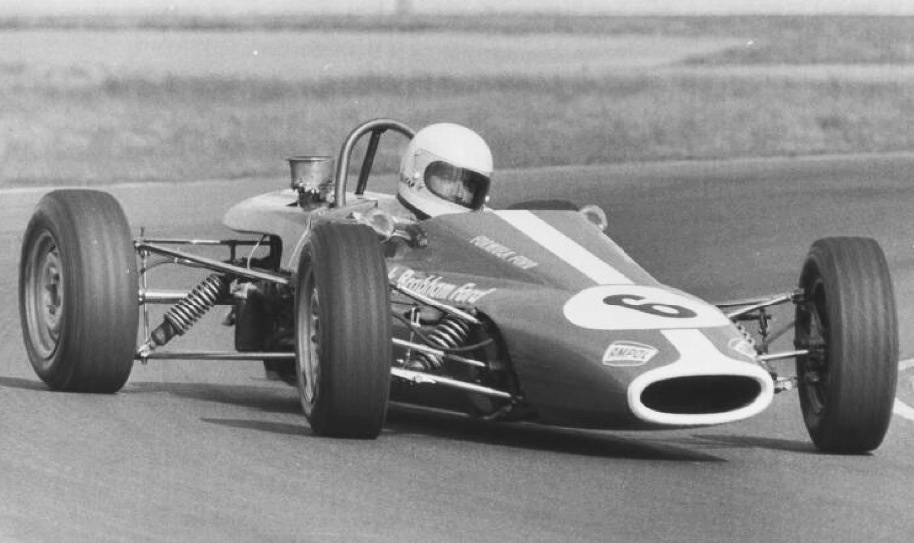
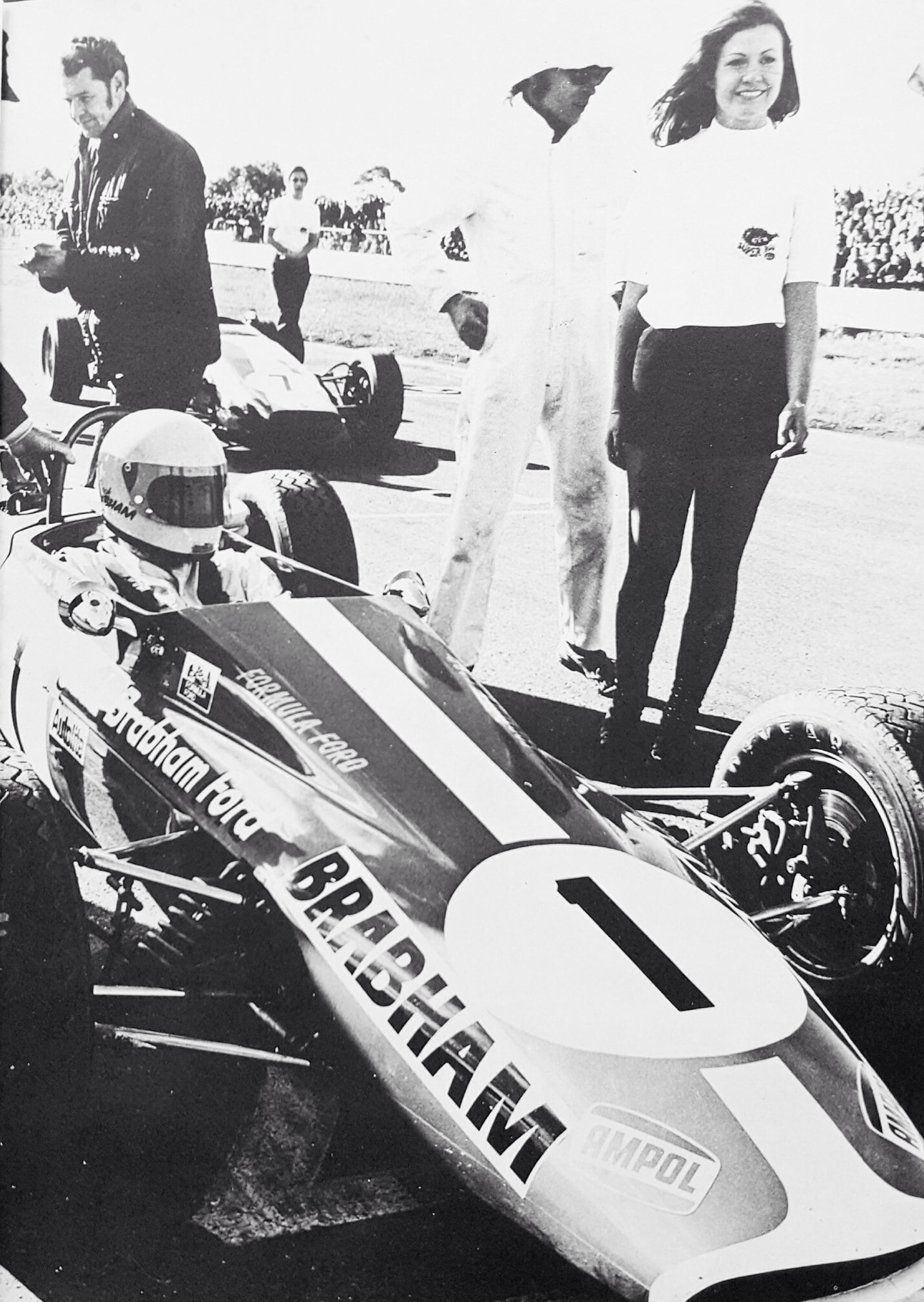
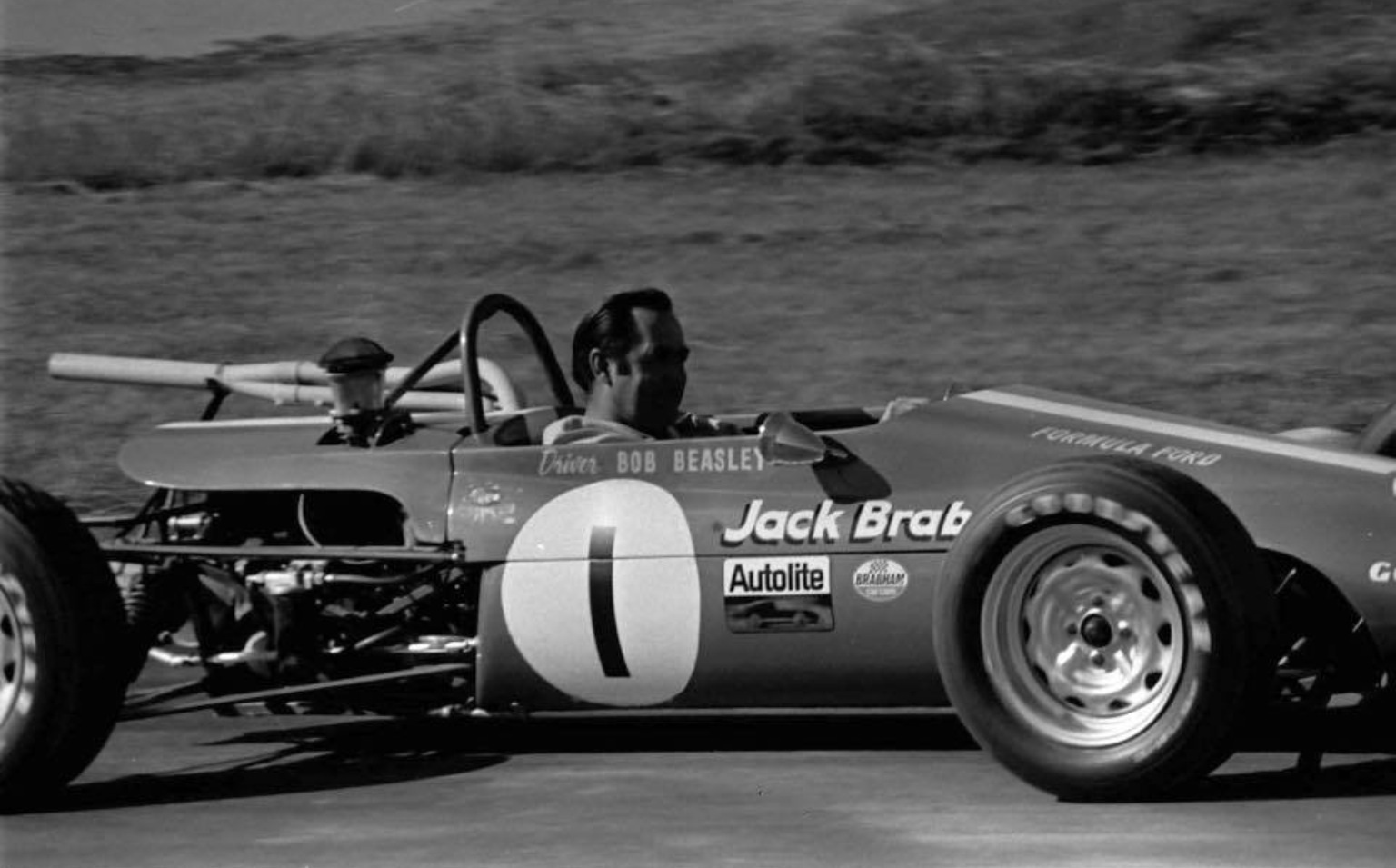
Jack Brabham testing the ‘Jack Brabham Ford’ Bowin P4X Formula Ford normally raced by Bob Beasley, August 1971…

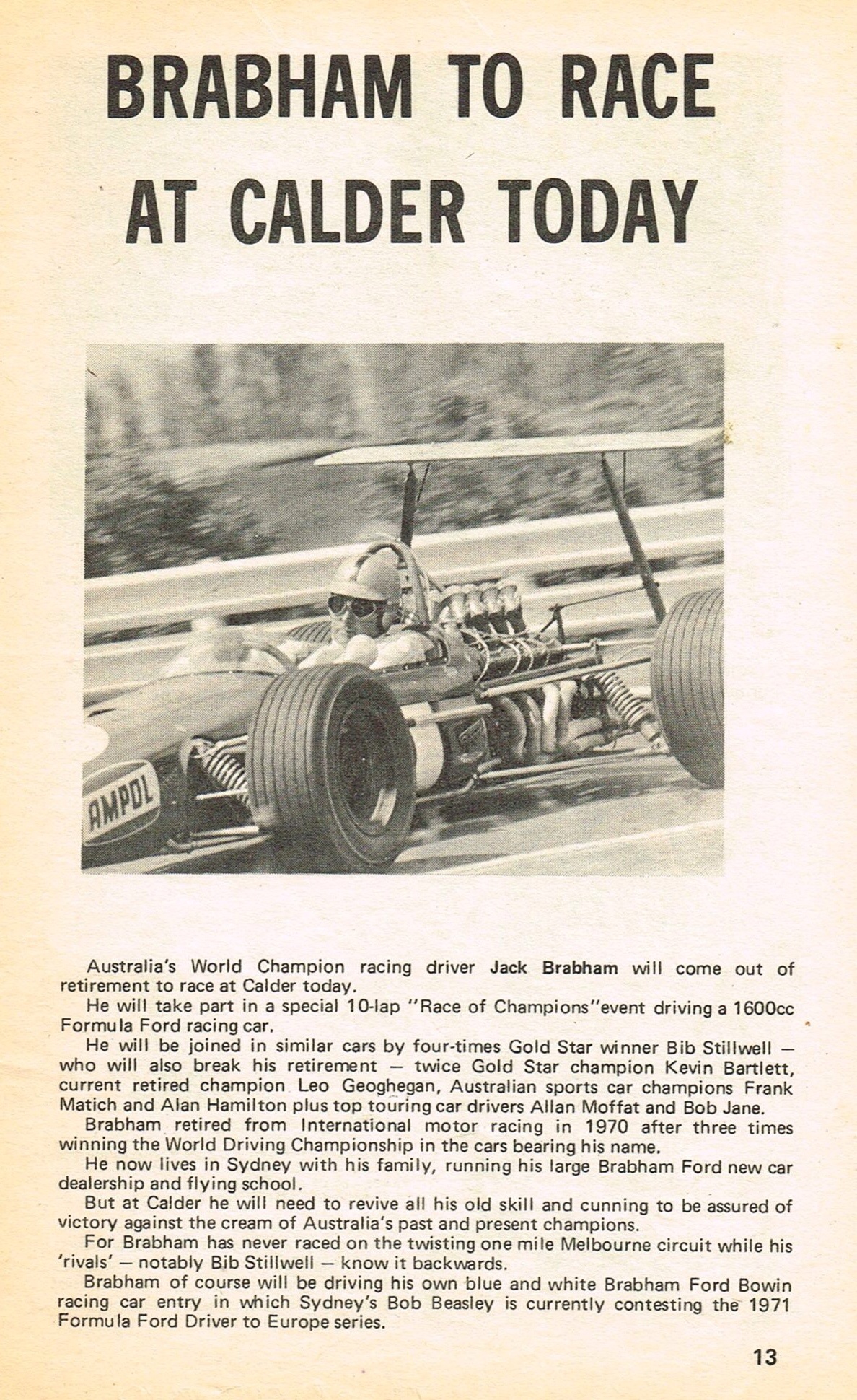
I’ve rattled on a couple of times before about Jack’s last ‘in-period’ race victory being the Calder Raceway ‘Race Of Champions’ on 15 August 1971- he beat a stellar field.

Jack carried #1 on the flanks of the Bowin in the Calder race- its hard to know where this photo is taken, maybe its at Calder on the weekend of the meeting or perhaps Jack is putting in a few test miles elsewhere to get the hang of the car- its 100 bhp and Goodyear RR12 all weather tyres rather than the 440 bhp, slick shod F1 Brabham BT33 Ford he raced in 1970.

Maybe he is thinkin’- ‘i’ll just soften the rear bar a smidge and see if i can get a bit more bite from the back’…

Check out this article for heaps more on the Bowin Formula Fords;

Bowin P4A and Oz Formula Ford Formative…

(R Beckman)


Jack checks his times, eagle eyed Brabham watchers will note the Bell Star as the one he wore thru most of 1970, his last F1 season (R Hawthorn)


Front to rear, Stillwell Elfin 600, Brabham Bowin P4X and Matich Aztec- at right front Jane in the other Stillwell Racing Elfin 600 (Bennett)

The Calder race was a wonderful bit of promotion by Bob Jane- here is Tom Naughton’s ‘Racing Car News’ race report from the October issue of ‘The Monthly Bible’…

‘With all the pomp and ceremony of a Grand Prix, Calder staged a ‘Race Of Champions’ for their 15 August meeting.

Coming out of retirement were Jack Brabham and Bib Stillwell (Australian Gold Star National Champion 1962-1965) along with some of todays champions, and all mounted in borrowed Formula Fords, they turned on a most entertaining race. The ‘Master’ showed the way home, easing effortlessly away from the main scrap and showing that he had lost none of the skill after his period of retirement’. (only 8 months at the time!)

‘Brabham lined up in his own (Jack Brabham Ford, Bankstown, Sydney) FF normally steered by Bob Beasley, while Bib Stillwell took over his number one car (Elfin 600) usually driven by Larry Perkins (he won the Driver to Europe Series that year).

Allan Moffat (in fact the only driver without racing car experience) (not quite true, he had an outing or two in Bob Jane’s Brabham BT23E Repco Tasman car boofing it at Sandown in 1968) took over David Green’s car (Wren).

Bob Jane hopped into Mike Stillwell’s Elfin 600, Alan Hamilton into Graeme Peart’s (Wren) and Kevin Bartlett into Murray Coombs’ car (Wren). Frank Matich took over Mike Hall’s Aztec, while Leo Geoghegan slipped into Peter Edwards’ car (Elfin 600)’.

Moffat Wren, with 3 Elfin 600’s behind him- perhaps Leo G immediately behind him and Jack ranging in, partially obscured to his outside, Jack is ranging in (autopix)


Frank Matich in Mike Hall’s Aztec. In August 1971 FM is up to his armpits in the build of the Matich A50 Repco F5000, so my guess he may have preferred to stay in Sydney, in which he was to win the November AGP at Warwick Farm – wonder what he thought of the Melbourne, Ould brothers built Aztec? (AMRA)

‘That was the field and at the flag Jane was first away, leading from Moffat, Brabham, Geoghegan and Hamilton. By lap 2, the front three had closed up and on the following lap both Moffat and Brabham slipped by at Repco. Geoghegan came up to challenge Jane, while Brabham took the lead on lap 4. He started to ease away from the rest, while Jane slipped Moffat at Toyota, these next three keeping close company. By lap 6, Geoghegan took Moffat, and then inherited second spot when Jane slipped wide at Repco, dropping back behind Stillwell’.

‘Oops! The same thing happened the last time I drove one of these open-wheeler thingies’. Moffat in David Greens slightly second-hand Wren (Bob Jane)

In lap 9, Stillwell started a challenge on Moffat and Hamilton, but in front Brabham was well clear. He took the flag in true champion style, with Leo second, then a scrapping duo of Hamilton and Moffat, with Stillwell hard on their heels, then came Jane, Matich and Bartlett. Leo did the fastest lap, a 48.6.’

The three Brabham sons all had stints in Australian Formula Ford before heading off to Europe, Geoff in 1973/4 aboard Bowin P4X/Elfin 620/Bowin P6F, Gary in 1982 with the Birrana F73 and David in 1986/7 with Van Diemen RF85/86. There is a neat bit of symmetry in the ‘old man’ also having a race win in Oz FF- was it his very last race win I wonder?

Credit…

‘Racing Car News’ October 1971, Laurie and Nick Bennett Collection, Bob Jane Heritage Collection, Autopix, Australian Motor Racing Annual, Jonathon Koch Collection for the program and RCN, National Archives Australia, Lynton Hemer, Russell Beckman, Stephen Dalton Collection, Russell Hawthorn

Etcetera…

(S Dalton Collection)

From the Calder 15 August meeting program. Car in the photo is Jack’s last Tasman mount, the Brabham BT31 Repco at the Sandown Tasman meeting in February 1969

The race certainly had a great entry, for overseas readers, Stillwell, Bartlett, Matich and Geoghegan were all Gold Star Champions and Moffat, Jane and Hamilton national title holders on multiple occasions aboard Touring Cars and Sports Cars in Hamilton’s case. Jack probably requires no introduction…

For the sake of correctness, the car driver/combinations did not quite start as listed in the program.

Brabham was aboard the one off Bowin P4X- slightly different in the suspension to production P4A’s, Matich the Aztec, Jane a Stillwell Elfin 600, Geoghegan the Edwards Elfin 600 with Moffat, Bartlett and Hamilton aboard Wrens.

Brabham doing a parade lap in the P4X at Oran Park on 26 March 1972 (L Hemer)

Tailpiece: ‘It feels a bit like the ‘Stang, gearchange is on the right anyway’…

Moff saddles up in David Green’s Wren Formula Ford, these cars (not to forget his ‘Mk2’s constructed in the later 1970’s) were built in reasonable numbers by Bill Reynolds in his Carlisle Street, St Kilda workshop, not too far away from Calder.

Allan Moffat’s open-wheeler appearances, apart from this, were limited to a couple of races in the States circa 1966/7 (details please) and limited laps in Bob Jane’s Brabham BT23E Repco at Sandown in 1968.

Finito…

(Repco)

Frank Matich aboard his dominant 1969 Australian Sportscar Championship winning Matich SR4 Repco ‘760’, 4-cam, 4-valve 5 litre V8 at Calder Raceway in 1969…

Clearly the Repco PR snapper was there on the day to capture proceedings, i’m not sure of the meeting date, the championship rounds that year were at Warwick Farm, Surfers Paradise and Sandown- the photo is after the Monaco GP high-wing ban, which as you will see in the article attached is the form in which the car raced early in the year. An awesome machine in every respect.

Nigel Tait, the restorer/owner/driver of the car and i did a long feature about this wonderful machine, click here to read it; https://primotipo.com/2016/07/15/matich-sr4-repco-by-nigel-tait-and-mark-bisset/

(Repco)

Credits…

Repco Ltd

Tailpiece: Where is Meppa when I need him?…

Repco’s John Mepstead was seconded to Matich’s Sydney operation to look after the several-of-a-kind, DOHC, 32-valve, ‘760 Series’ Repco, circa 560bhp 4.8-5 litre V8’s which powered this machine.

SR4 was Matich’s proposed 1968 Can-Am contender- it ran way too late in its build so he raced it in Oz in 1969- it was like taking a sledge-hammer to crack a nut such was its local dominance!

Finito…

image

It can only be a Formula Libre race, somehow I doubt 4 year old Ray Dones had a future as a race promoter…

This shot of the little dude and his eclectic grid of racers was taken at the Denver Toy and Hobby Show on 3 April 1965, but it could just as easily be me at the ‘Scalextric’ track at Rosebud on Victoria’s Mornington Peninsula in 1969.

We ‘useter holiday at McCrae during the long, hot Australian summer- in between working on the ‘tan my brother and cousin spent lotsa time and money on donuts and laps at that place up the road in the Summer of ’69.

I never did parlay my Scalextric pace at 11 to exceptional Formula Vee speed at 21, sadly!

Credit…

Georgia Lowell

image

McCrae in the summer of ’69

Finito…
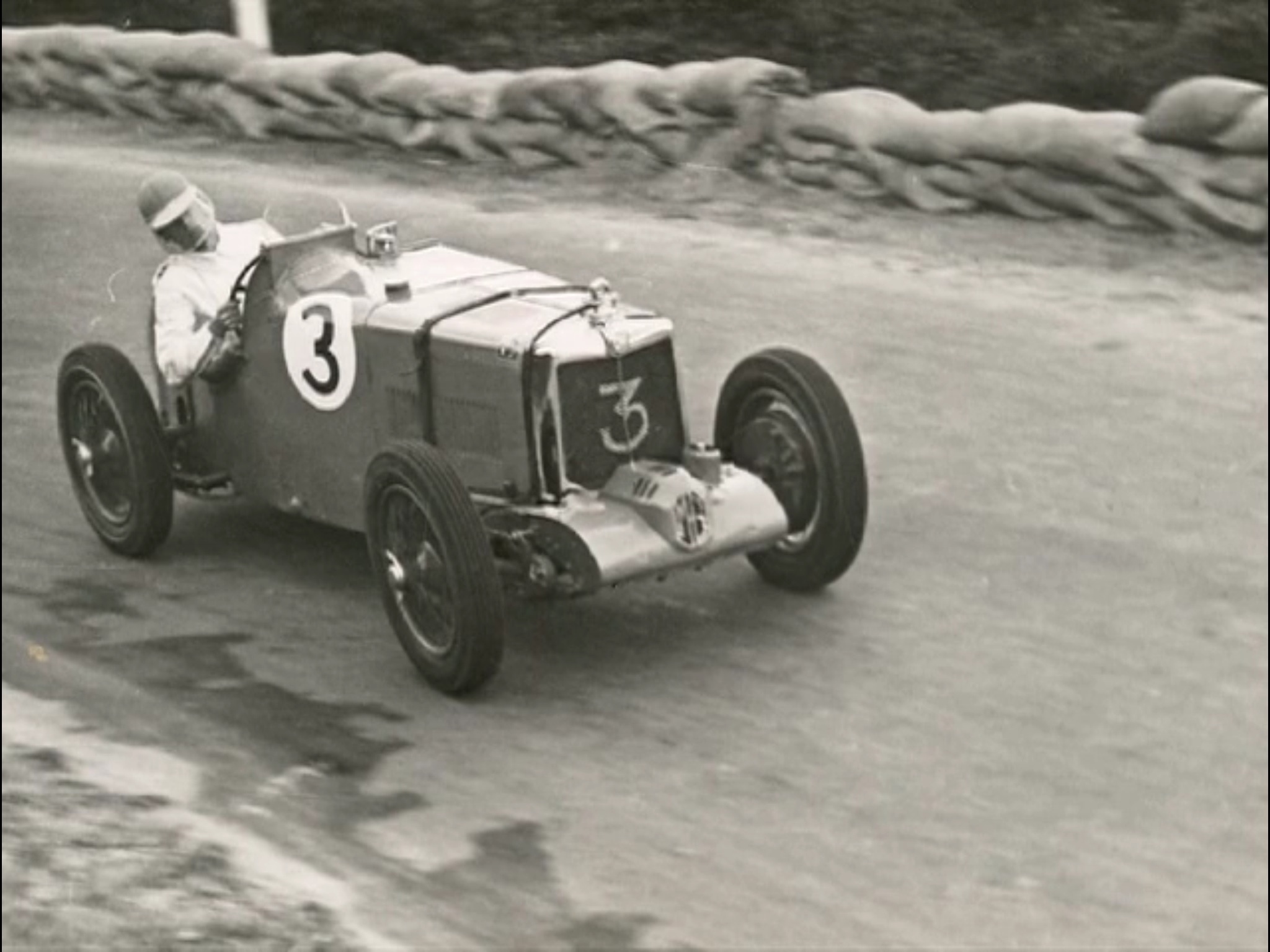
Start of the 50 Mile Handicap heats: Hunter in the Mrs Jones owned Alfa 6C1750 at left, Thompson’s obscured Bugatti T37A and two six-cylinder 4077cc Chryslers of E Patterson and #72/14 HJ Beith (Fairfax)

Bill Thompson’s Bugatti T37A swept all before him at Gerringong Beach on 10 May 1930…

Sydney’s finest was very much the form driver of the meeting, in fact many would say he was Australia’s best driver pre-War. He had not long before won the 1930 Australian Grand Prix at Phillip Island during the 24 March weekend- it was one of his three wins in Australia’s premier event. Bill was also coming off the back of record times at Penrith Speedway and at Kurrajong Hillclimb that season.

Gerringong is 130 Km south of Sydney on the Illawarra Coast, then as now it is a popular holiday destination. Throughout the 1920’s the relatively deserted Seven Mile Beach, between Black Head and Beecroft Head was a place where members of the Royal Automobile Club raced their cars, far enough from Sydney and the long cold stare of the law. These occasions were as much society events as they were motor racing ones.

The Smith/Harkness Anzac Rolls Royce arrives at Gerringong in December 1929 (Kiama Tourist)

Gerringong was very much in the public mind at the time as Norman ‘Wizard’ Smith had set an Australian Land Speed Record testing his Rolls Royce engined ‘Anzac’, at 128.571 miles per hour only months before on 1 December 1929. Wizard and his exploits, and the skill of Don Harkness, a racer himself, and his company which built ‘Anzac’ is a story for another time.

The beach had been the site of horse racing since the 1860’s but the noble beasts ‘could not compete with the speed and excitement of the motor’, mind you the take up of motor vehicles in Australia is indicated by the October holidays in 1919 when there was record volumes of motor traffic through the town, in just two hours, 12 vehicles were counted driving through Fern Street.

The weather on the 10th of May was awful for racing, with rain the night before and drizzle prevailing for most of the day from the 11.40am start of the meeting- only 300 hardy souls watched the race action.

The sand was wet, to the extent that all competitors of the first event had to be pushed out of the sand, into which they had sunk before the race started! The conditions became more difficult for the organisers, the Sydney Bicycle and Motor Club, as the programs timeline grew in inverse proportion to the usable width of beach- which was down to two cars  by the end of the days proceedings. ‘Another five minutes’, a club official said and ‘the tide would have beaten us’.

The ‘Sydney Referee’ report made note of the other difficulties as soft and slippery sand at the turn posts, drizzling rain and some ‘competitors whose race tactics, were, to say the least of it, unsafe’.

Thompson and a young admirer after his Gerringong win (Fairfax)

Thompson’s win of the feature event, the ’50 Mile Handicap’ for cars under 2000cc was described as a ‘great win’, a ‘fine individual effort’ ‘even though there have been better races held in Australia’.

Thomson won the race in the Bugatti T37A in which he was victorious at the AGP in the month before, chassis ‘37358’, which is still in Australia in the process of restoration. See my article at the end of this one on the 2015 Melbourne ‘Motorclassica’ for some information about that car.

Thomson won in 39 mins 4 secs from the CN Jackson MG Midget 847cc s/c, HG Potts Lea Francis 1496cc s/c. Other starters in the final were Charlie East’s Bugatti T37A, RR Hawkes Austin 7 Sports 748cc, N Hodge Morris Minor 847cc and the JAS Jones owned Alfa 6C1750 SS s/c driven by A Hunter, DNF due to splashing through a wave whilst on course. It is not clear if the other cars completed the distance.

The engine of Thonpson’s T37A is fettled before the off (Fairfax)


In other races, Charlie East won the final of the Four Miles Over 1000cc from the JO Sherwood Chrysler and J Aubrey Jones also in a Chrysler. There were three heats in all- won by Bill Thomson’s Bug, John Sherwood’s Chrysler and E Patterson’s Chrysler.

The Eight Miles Club Championship final was won by Thomson, the heats won by HJ Beith Chrysler Sports and Thomson’s Bugatti. Maroubra legend, Hope Bartlett in a Bugatti, did a very quick first lap in heat 1 but forgot the second lap! No pitboards were in use at Gerringong it seems.

The Handicap for Closed Cars was won by J Aubrey Jones Chrysler and the Handicap for cars under 1000cc was taken by the N Hodge Morris Minor.

Thomson said that such was the narrow course- it hardly gave him enough width to clear oncoming cars, that he was about to pull out. ‘It was the hardest event I’ve been in, much worse than the the Phillip Island race’, the ‘Island was famous for the challenging nature of its gravel roads, dust and undulations.

After the conclusion of the meeting Bill Thomson hoped to beat the Gerringong Flying 1 Mile record of 33 3/5 of a second set by Don Harkness in a Hispano Suiza in 1923 but failed to get there given the conditions, his 36 4/5 seconds not as good as he had hoped having changed into top gear a little too early with a head wind doing the rest of the damage to his time.

Another grid this time with two Chryslers to the left, #72 the E Patterson and HJ Beith Chrysler Sports, Charlie East Bugatti T37A to right (Kiama Tourist)

The only major incident of the day occurred when Mrs JAS Jones ‘winged’ one of the Chrysler mechanics (below) when competitors in the second heat of the over 1000cc Four Mile Handicap passed the finishing post and turned too quickly, and spectators pressed forward. Jones, in last place arrived at race speed and had to swerve several times to avoid cars and bystanders. She almost got through but struck Curley, breaking his leg.

(Fairfax)

The ‘Referee’ concluded its report of the meeting by saying ‘All things considered it was a successful meeting. But the supervision left a lot to be desired. It was this fault, plus stupidity on the part of certain competitors, that led to a serious accident. After crossing the finishing line several of the competing cars turned back towards the oncoming cars and one even swung out suddenly across their path. Thereafter the officials made their presence felt. But one subsequent offender should have been severely cautioned’.

Mrs JAS Jones aboard her Alfa 6C1750- a much respected racer and car. Raced by many latterly into the fifties Flathead Ford V8 powered inclusive of an AGP and still in Oz (Fairfax)

Motor Car Racing in Australia in 1930…

I wrote an article a while ago about Penrith Speedway and a championship meeting held there in 1930, click on this link to read it, not least for some context on the state of car racing, especially road racing at the time in Australia.

Penrith’s World Championship Race 1930…

Here are some snippets from that article, but do read the whole thing if you have not.

The Australian Grand Prix was held for the first time on an oval dirt layout around the showgrounds at Goulburn, New South Wales in 1927. The 1928 AGP, ‘The 100 Miles Road Race’ at Phillip Island, the first proper race in Australia on a road, run on a large, rectangular, gravel course was more indicative than Goulburn of the direction Australian racing would take and was indeed the race which started the tradition of road racing in Australia.

Gerringong Corners- two of them, one at end end of the beach, tide issues clear! (Fairfax)

At the time Australian motor racing was largely amateur, a ‘run what you brung’ approach prevailed with most competing cars driven to and from the track. The sport evolved from hillclimbs, sprints and races on horse-tracks, the province of the gentry pre-War, to hillclimbs at Waterfall Gully, Kurrajong, Mount Coot-tha and Belgrave, beach racing at Gerringong and Sellicks Beaches to venues such as the clay pans of Lake Perkolilli in Western Australia, and the Aspendale, Maroubra and Penrith Speedways.

John Medley wrote that ‘it was some time before other groups followed (the Light Car Club of Victoria’s Phillip Island) road racing direction, preferring the simpler expedient of running trials with speed sections included (rather like modern rallies) or contests on simple dirt speedways- both of these being more easily controlled by the organisers and also less accessible to the long arm of the law. One consequence was that their was very much a casual air to the whole occasion, with ‘chop picnics, family gatherings and exuberant overnight parties.’

E Patterson’s 4 litre Chrysler, desolate nature of the area at the time clear, Gerringong 1930 (Fairfax

I have not used the term speedway racing as the ‘forked road’ the sport took in later years had not yet occurred, competitors entered a variety of events as above. In addition solo intercity record-breaking attempts were important with Graham Howard recording that ‘…intercity records…were the most consistent form of competitive motoring in Australia until the late 1920’s, and produced our first household-name drivers…’ In fact the police made illegal the ‘Intercity Record Breaking’ in 1930 with Wizard Smith a household name as a result of these exploits.

A lot would change in terms of road-racing between 1930 and the war- ‘Round the Houses Racing’ in towns became common in Western Australia at places like Albany, Bunbury and Goomalling. Australian Grands Prix were held at Victor Harbor and Lobethal in South Australia and most importantly the Mount Panorama Scenic Drive, at Bathurst- which doubled as a racetrack, opened in March 1938- the 1938 Australian Grand Prix was held there on that weekend. By the war the foundations for car road racing in Australia were well and truly established, something which could not be said in May 1930.

Professor Neville Burkitt’s Mercedes Benz SS- came close to colliding with Bill Thompson’s Bug, or more particularly his Bugatti Thompson was driving!, in his heat (Fairfax)

Etcetera…

(A Patterson Collection)

A ‘Percy’ Hunter and Vida Jones aboard the Jones 6C1750 before one of the events. What a superb spectacle that car and the 37As must have made on that beach!

Bill Thomson and his Bugatti T37A…

Penrith’s World Championship Race 1930…

Bibliography…

Sydney Morning Herald 6 May 1930, Sydney Sun 10 & 11 May 1930, Sydney Evening News 10 May 1930, ‘Bathurst: Cradle of Australian Motor Racing’ John Medley, kiama.nsw.gov.au

Photo Credits…

Fairfax, Adrian Patterson Collection

Tailpiece: Thompson’s Bug blowing off a Chrysler, Gerringong Beach 1930…

Finito…

(unattributed)

‘It is not common for racing cars to be photographed from the rear- more usually from the side or front.
Here are a few rear views (or views of rears) from my archives’ – Bob.
Jack Saywell, above, in his only appearance at Bathurst in his 2.9 Alfa Romeo P3, Easter 1939.
He could do no better than 6th when his engine was reluctant to start after a pitstop to adjust the brakes. The photo below is from ‘The Magnificent Monopostos’ by Simon Moore- this pitstop one of several during the very hot 1939 AGP at Lobethal, the heat caused major tyre problems for the heavier cars which did not afflict winner Allan Tomlinson’s nimble, light MG TA Spl s/c, Jack was 6th again.

(GP Library)

My anal side, not dominant at all in normal life kicks in with a wonderful selection like this- I feel the need to pop in chassis numbers where I can- but I am going to resist given the time required to do so! Good ole Google works pretty well- ‘Jack Saywell Alfa Romeo P3 chassis number’ will give you anoraks a path to finding what you want, otherwise just enjoy these magnificent photographs from Bob’s archive, Mark.

(unattributed)

Paul Swedberg drove John Snow’s Delahaye 135CS to 2nd place at the Bathurst 1939 meeting, in John’s absence overseas. Paul’s own Offenhauser Midget, in which he was virtually unbeatable on the on speedways, was not entered.

(unattributed)

Ted McKinnon finished 13th in the 1953 Australian Grand Prix at Albert Park in his Maserati 6CM. Doug Whiteford won that day aboard the first of his two Talbot-Lago T23C’s.

(S Wills)

An unknown car exhibiting the disadvantages of a swing rear axle system. Something tells me that this is DW Stephenson in his DWS? Templestowe Hillclimb in outer eastern Melbourne, September 1954.

(S Wills)

Maserati’s chief mechanic Guerino Bertocchi is leaning into the cockpit of Moss’ victorious Maserati 250F at Albert Park during the AGP weekend in 1956.
Having debuted as a riding mechanic with Alfieri Maserati in the 1926 Targa Florio and subsequently being riding mechanic in thirteen Mille Miglias as well as the 12 Hour of Pescara, it has always saddened me that he should die in 1981 as a passenger to an American during a trial drive of a modern Maserati. Car enthusiast Peter Ustinov told an amusing story concerning Bertocchi. Guerino delivered a new Maserati road car to Ustinov in Switzerland and said to Peter “I don’t know who you are Senor Ustinov, but you must be important to have me, Bertocchi, delivering your car”.

(S Wills)

Reg Parnell enters Jaguar corner in his Ferrari Super Squalo during the same wonderful 1956 AGP weekend.
The 30mph sign would not have deterred him. It also serves to remind us that ridiculous speed limits are not a new phenomenon – this sign was at the start of Albert Park’s main straight.

(S Wills)

This photograph shows the large SU required to feed the highly modified supercharged Vincent engine in Lex Davison’s Cooper. Phil Irving was the designer and the modifier of this motor – still labelled H.R.D on its timing cover. Templestowe 1957.

(S Wills)

Stirling Moss in the Cooper T45 Climax FPF 2 litre, Melbourne Grand Prix, Albert Park, November 1958.
This photograph is taken during practice – the race was held on a hot day and the Cooper was denuded of much of its rear body work in an endeavour to keep the driver cool. The long shadows show that the photograph was taken in the early morning – I seem to recall that practice was at 6.30am.

In spite of the hour, note the huge crowd at Jaguar corner. In a previous post I have mentioned that Moss really only showed his sublime skill during the 1956 AGP when it began to rain with just six laps to go. On this morning Stirling was struggling with locking brakes and again demonstrated phenomenal car control – I was crowd marshalling at about the point from where this photograph was taken.

(S Wills)

Almost a rear view – note the missing engine cover to cope with the heat. Moss won the 32 lap, 100 mile race from Jack Brabham’s similar Cooper T45 Climax FPF, Doug Whiteford’s Maserati 300S and Bib Stillwell’s Maserati 250F.

Sadly this was the last race meeting at the ‘Park until the modern AGP era.

(S Wills)

Len Lukey (5th) in the Lukey Bristol tailing Bib Stilwell in the 250F Maserati through Jaguar corner in 1958.

(S Wills)

Ted Gray in the Tornado 2 Chev- again at Albert Park of course in 1958, Ted retired the Lou Abrahams car after completing only 4 laps.

(S Wills)

Len Lukey in the eponymous Lukey Bristol at Templestowe 23/3/1958 – or was it still called the Cooper T23 Bristol until it got its Vanwall inspired body?

(S Wills)

JW Philip in an Austin Healey at Templestowe on 20/04/1958. We know nothing of this car and driver.

(S Wills)

Jack French in a  Cooper Norton of only 499cc, but still good enough to break the magic (to me) 30 seconds. His time 28.15 Rob Roy, 1959. Coopers with various power plants were ‘King of the Hills’ in those days.

(S Wills)

At Templestowe in 1958; Bruce Walton in his Walton Cooper. Six times Australian Hillclimb Champion from 1958 to 1963.

(N Hammond)

And lastly, me at Rob Roy in my Type 35 Bugatti in 2008.
Credits…
Bob King Collection
References: ‘AGP – Howard et al’, Bathurst: Cradle of Australian Motor Racing John Medley, ‘ The Magnificient Monopostos’. Simon Moore. ‘Bugattis in Australia and New Zealand, 1920-2012. King and McGann
Tailpiece: Spiro (Steve) Chillianis, Rob Roy 1960, with some work to do …

(S Wills)

Car is the ex-Eddie Perkins rear engined Lancia Lambda Special, now fitted with an Austin A70 engine, or should we say ‘was fitted’. He recorded a time of 80.88 seconds- perhaps the ambulance broke the timing strip?
Finito…