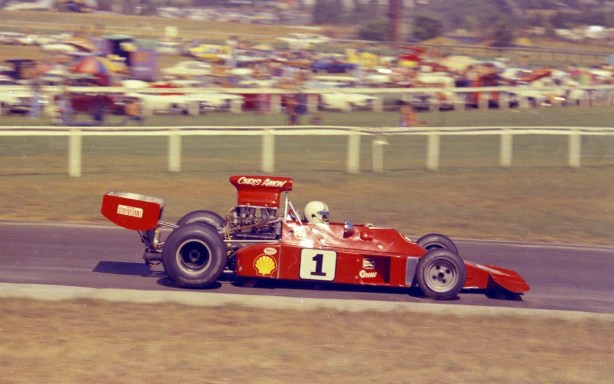
(G Fry)
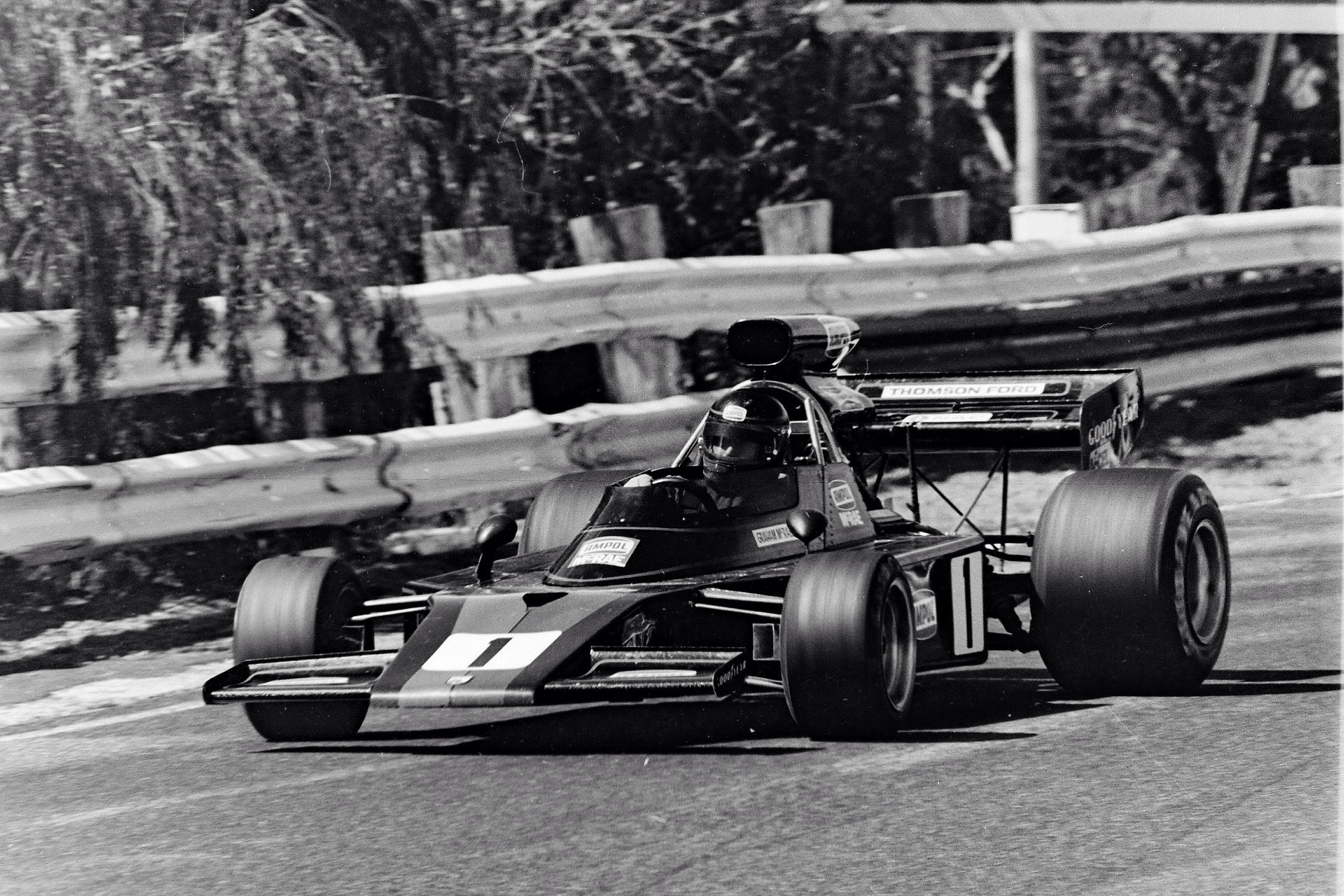
Chris Amon on the downhill plunge from Sandown’s Rise into Dandy Road, Talon MR-1 Chev, Sandown 100, January 1975…
When I first became interested in motor racing Chris Amon loomed large as an ace from ‘across the ditch’, he wasn’t Australian but he was a Kiwi which was more than close enough. Surely no two countries on the planet are closer in every respect?
One of the first posters I had on my bedroom wall was of ‘that shot’-Chris tickling the throttle of his Ferrari 312 into a gorgeous slide at Oulton Park during the Gold Cup in 1968. From that point on I willed him into that championship F1 win that cruelly never came.
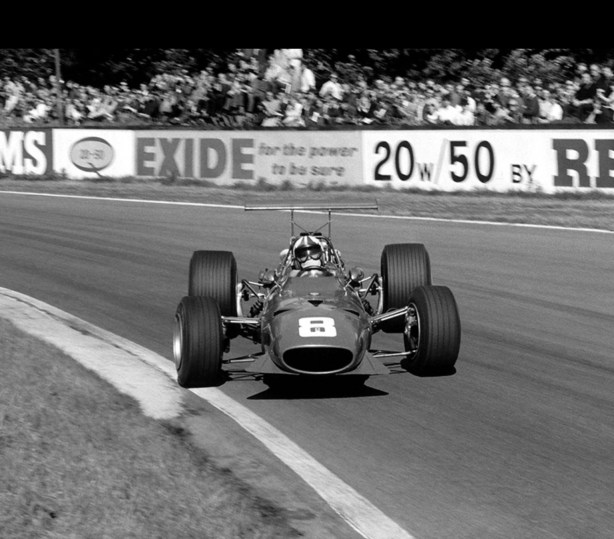
Chris Amon Ferrari 312 on his way to 2nd behind Jackie Stewart, Matra MS10 Ford, Oulton Park Gold Cup in August 1968 (LAT)
By the 1975 Tasman Series Chris had been in a horrid career downer with dogs of F1 cars way beneath him for a couple of years- his own AF101 rocket in 1974 and the two Tecno’s the year before, they were shit-heaps at best.
In fact he had a ‘good finish’ to his F1 career in Mo Nunn’s Ensigns in 1975/6 proving yet again his pace but one mechanical failure too many finally made him chuck it all in at the tender young age of 33- later in ’76- brief Wolf Can-Am interlude in early 1977 duly noted.
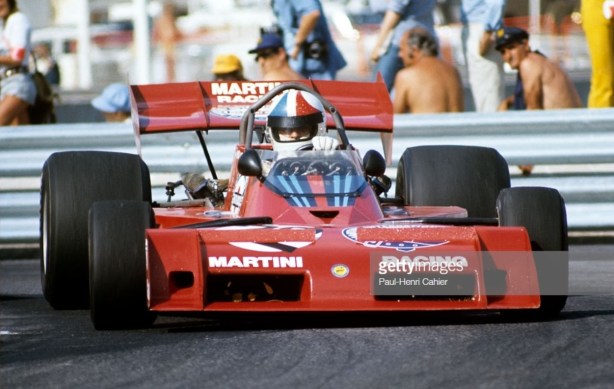
Amon, Tecno PA123, Monaco 1973. Chris put the car 12th on the grid but DNF lap 22 with overheating. Stewart won in Tyrrell 006 Ford (P Cahier)
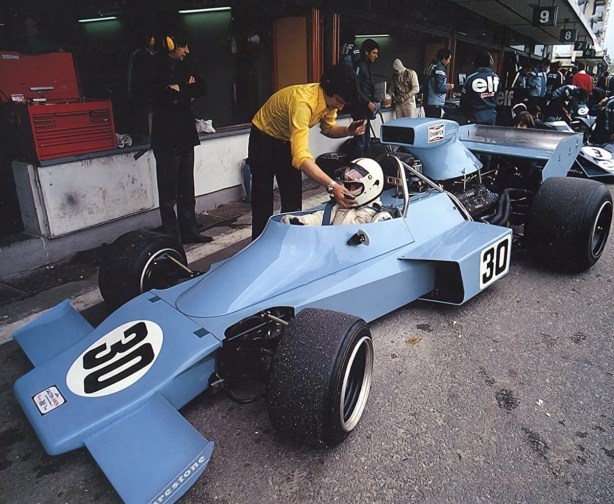
Amon, Amon AF101 Ford, Jarama 1974. Chris Q23 and out with braking problems on lap 22, Niki Lauda won in a Ferrari 312B3 (Twitter)
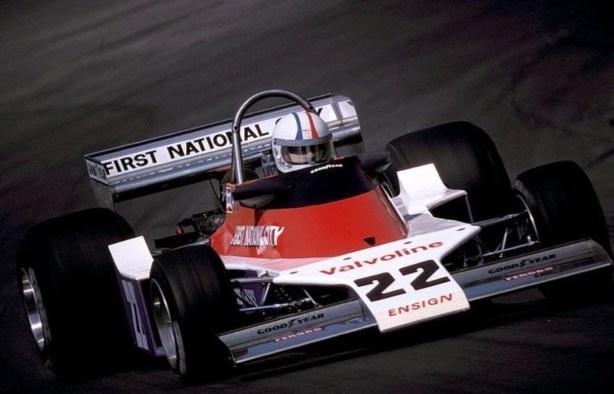
Chris, Ensign N176 Ford, British GP, Brands 1976. Stunning Q6 in the small teams car, DNF lap 8 with a water leak, James Hunt took the win in a McLaren M23 Ford (Pinterest)
But as I trundled out to Sandown in mums trusty Morris 1100 in 1975- I’d ‘conquered Sandown’ only a week or so before, a week after getting my drivers licence during a Peter Wherrett Advanced Course in that performance machine. I was keen to see how Chris handled a layout on which he had last won in 1969 when he wrapped up the final Tasman round, and series win, in his works Ferrari 246T.
Like so many really fast blokes he made it look easy.
Not much attitude on the car at all, but quick. Braking late, with a late blip of the throttle using few revs on the down-changes, he was as smooth as silk throughout. Good with feedback to his mechanics, I stalked him the whole weekend! i could hear some of it, the Jack McCormack Team were a seasoned F5000 outfit having run Sam Posey in the States for some years before.
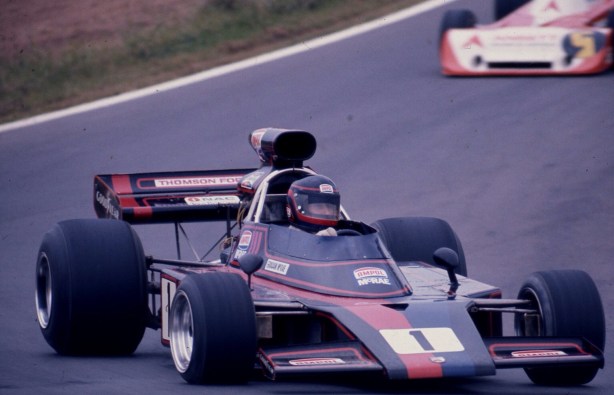
GM ahead of Garrie Cooper’s Elfin MR5 Repco at Oran Park in 1974 (B Stratton)
Both Graham McRae and Chris made those cars- the GM2 Chev and it’s twin, the MR-1 Chev sing that summer but there were way too few finishes to threaten the three fellas who fought out that final Tasman round at Sandown- Graeme Lawrence, John Walker and Warwick Brown all in Lola T332’s- the greatest of all F5000 machines. Brown won the title and John Goss an eventful race in his Matich A53 Repco .
McRae followed up his very successful Len Terry designed Leda LT27/McRae GM1, a car Graham ‘concepted’ together with Terry, with the GM2. It was raced once in the UK- at the final 1973 Euro F5000 round at Brands on 21 October having troubles with a duff shocker- before landing in Australia in time for the November AGP held at Sandown, a race ‘Cassius’ won in his new car by two seconds from John McCormack’s Elfin MR5 Repco and John Walker’s unique, similarly powered Lola T330.
I spectated at the race as a teenager. In the year of the Lola T330 the GM2 was a superb looking, ‘McLaren M23-esque’ machine. With its rocker front suspension, deformable for 1974 mandated side pods and very careful attention to aerodynamics it really looked the goods.
Later in 1973 John Heynes, McRae’s business partner sold their Poole factory to the Penske Team to house their F1 effort- and the drawings and intellectual property rights of the GM2 design to Jack McCormack in California who built several cars designated Talon MR-1 and MR-1A. I will pick up this topic later in the article.
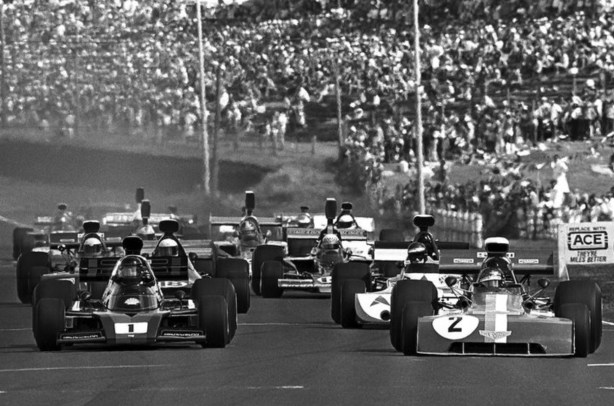
Feel The Earth Move: NZ GP Puke 1974. GM and Peter Gethin, the winner, GM2 and Chevron B24, #18 David Oxton and John McCormack- Begg FM5 Chev and Elfin MR5 Repco. The keen eyed will see the Lawrence and Walker Lolas- T332 and T330 and the rest. Tasman F5000 at its height (T Marshall)
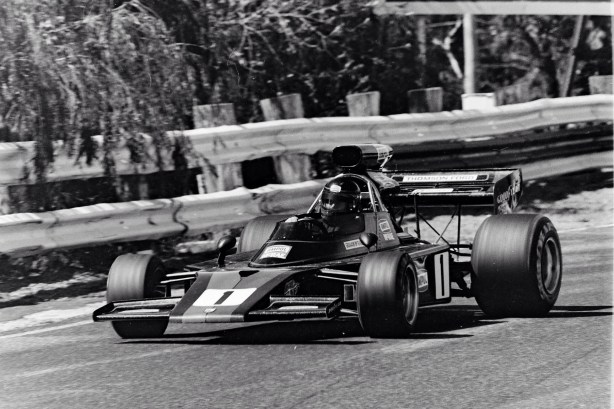
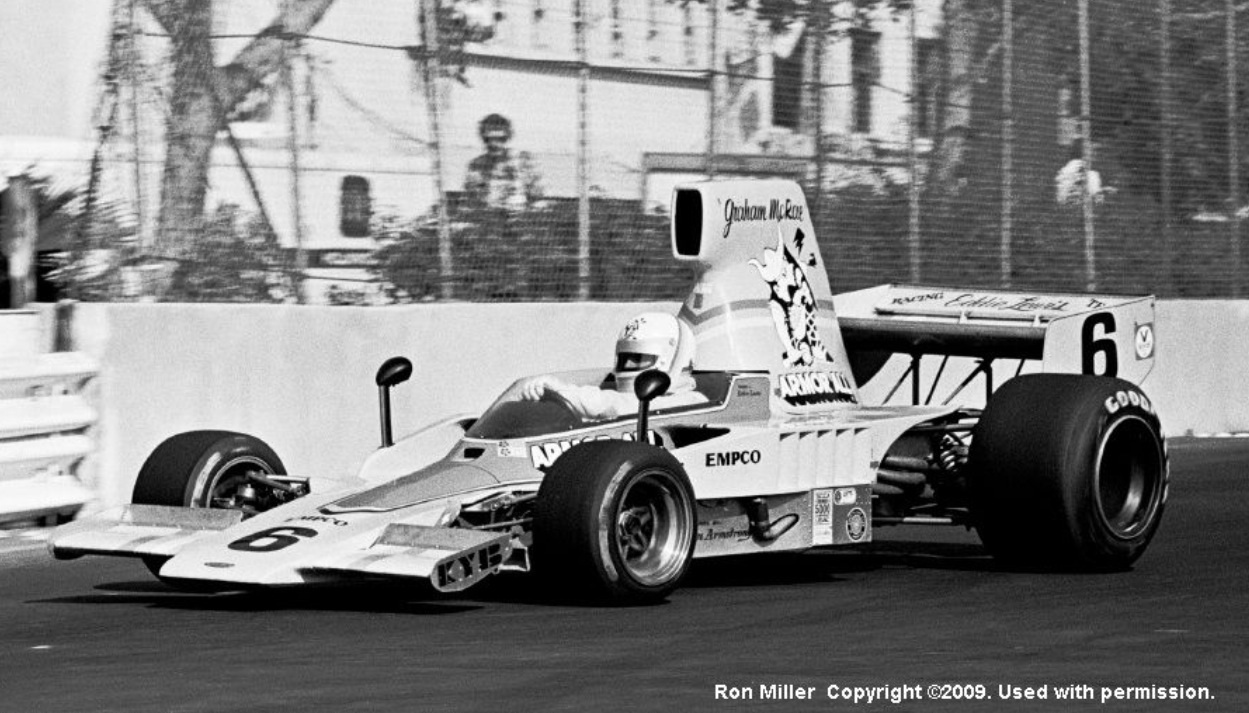
GM exits Torana Corner @ Sandown 1974, check out the front rocker angles as the GM3 is booted hard in second gear for the blast up the back straight (B Keys)
In the 1974 Tasman Series Graham was prodigiously fast starting from pole in the NZ GP at Pukekohe and setting fastest lap in three of the four Kiwi rounds- Levin, Pukekohe and Teretonga but he had problems in three of the races- oil pressure, valve spring and rear aerofoil, 2nd at Teretonga was his only points yield at home.
In Australia he was 6th, 2nd and 7th at Surfers, Sandown and Adelaide and disqualified at Oran Park. The speed he had displayed in the three previous Tasmans was mainly there but the reliability was not, by then the Louis Morand Chevy’s had been replaced by another engine-builder’s products.
Peter Gethin won the championship in a VDS Chevron B24 from Max Stewart’s Lola T330 Chev and John Walker, John McCormack and Teddy Pilette- all on 21 points driving Lola T330 Repco, Elfin MR5 Repco and Chevron B24 Chev respectively.
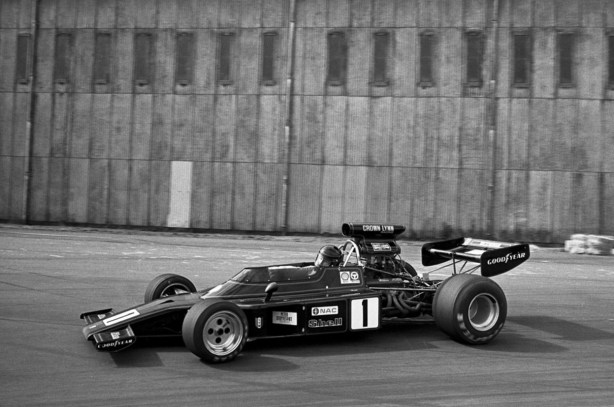
GM, past the Wigram aircraft hangars in 1974 (T Marshall)
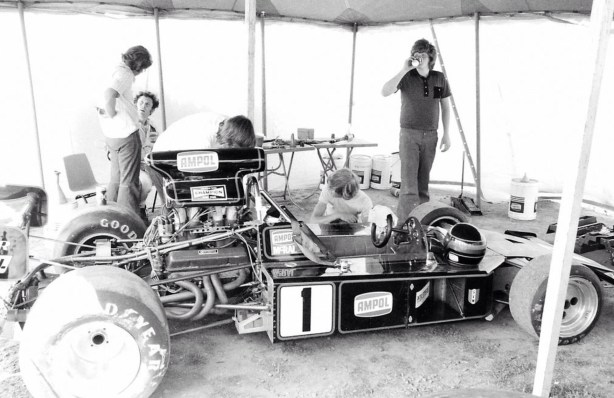
Sandown Tasman 1974 with GM seated. Rocker front suspension in an F5000 of the period unusual, rest of the car typical- and superbly finished and built, the last car built by McRae at Poole prior to the factory sale to Roger Penske. Aluminium monocoque, Melmag wheels, Hewland DG300 ‘box (R Davies)
With money tight GM didn’t contest the European Championship but took the GM2 to the US in 1974.
He started the season in a Talon MR-1, racing it at Mid Ohio and Mosport and then switched to a Lola T332, finishing 4th behind Andretti, Redman and Eppie Wietzes at Watkins Glen, DNF from Q6 at Road America and then raced the McRae GM2 at Ontario Q25 with problems and DNF, Laguna Seca Q16 and 10th. Perhaps the final Riverside round was an indicator of the cars speed against the best in the F5000 world- he was fifth behind the T332’s of Mario Andretti, Brian Redman, Warwick Brown and Al Unser from Q10.
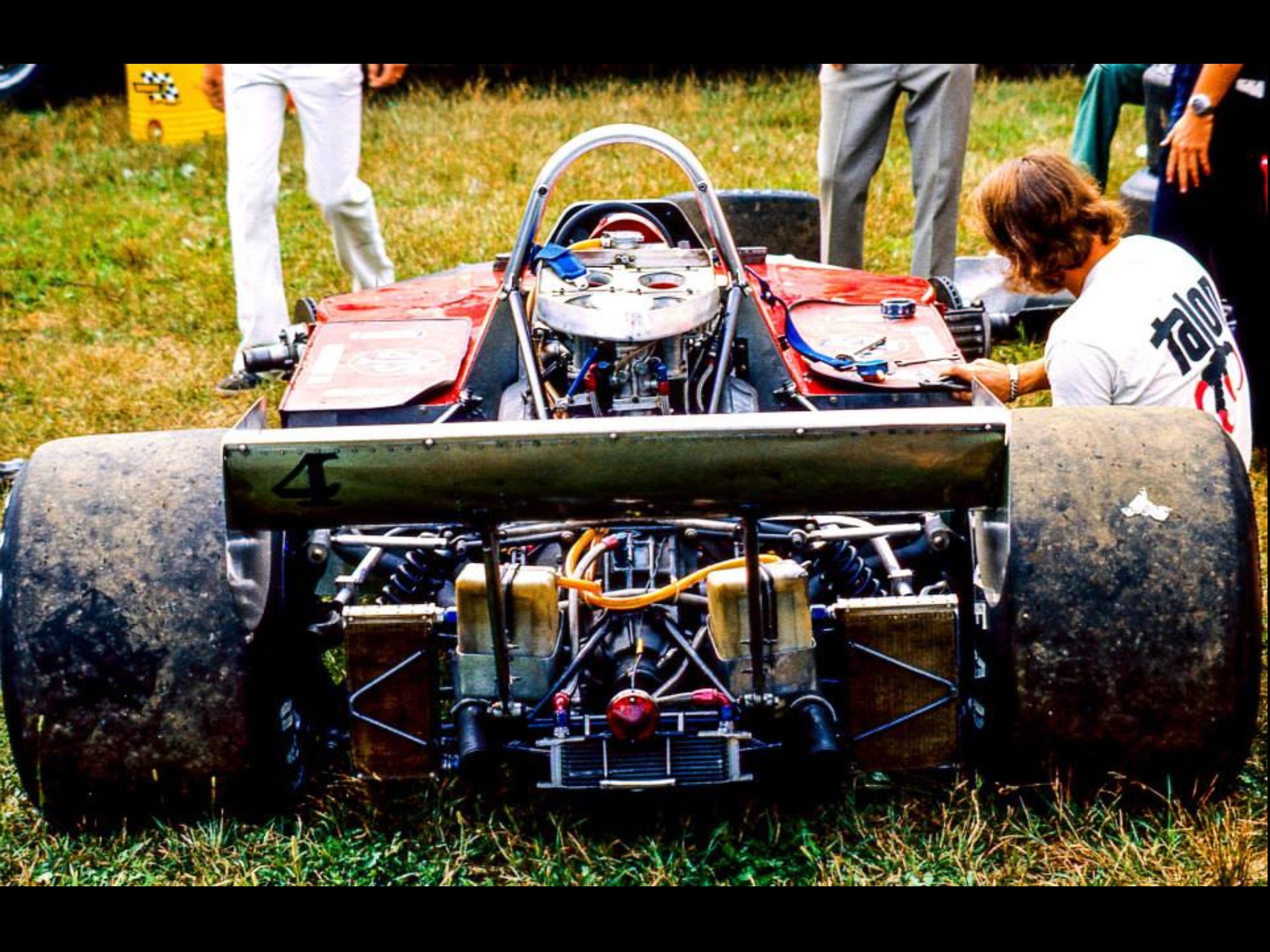
Sam Posey and Jon Woodner also raced Talons that season with Woodner doing the best of the pair.
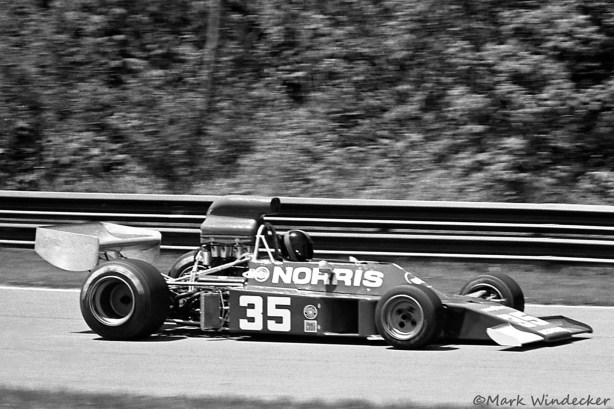
McRae aboard a Talon MR-1 Chev, Mid Ohio 1974 (M Windecker)
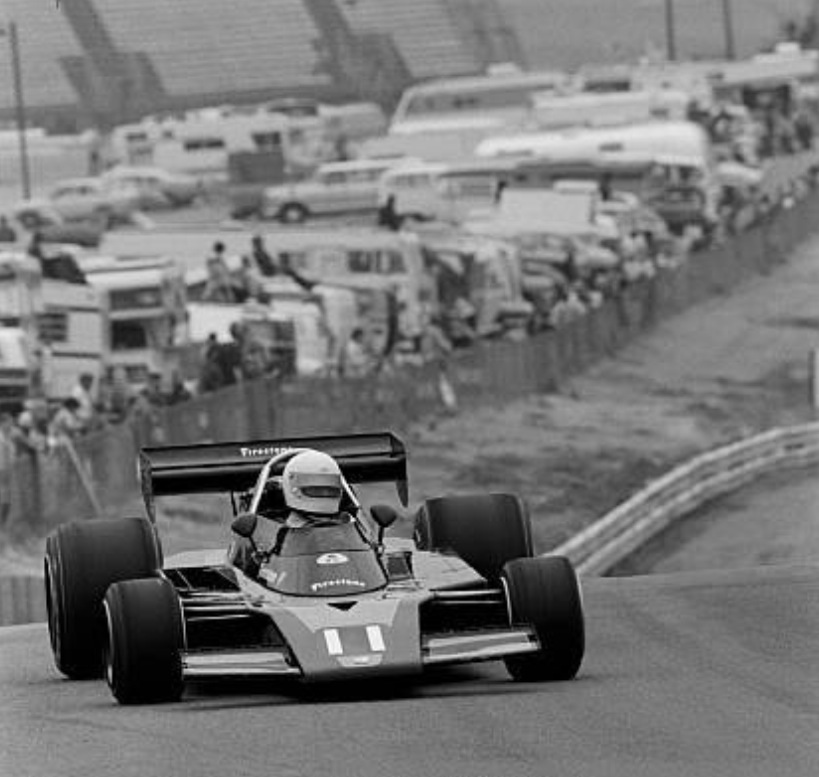
US F5000 Championship Riverside 1974, Graham aboard GM2 ‘001’ (A Upitis)
By the time the 1975 Tasman commenced McRae had shipped the car home to New Zealand and developed the GM2’s aerodynamics with a Ferrari inspired bladed front wing and long fences atop each sidepod.
Clearly, given the speed of GM2 against strong (Tasman) opposition the car was not as bad as has been portrayed in some texts which have not looked carefully at the cars qualifying pace but rather only the results- which are not quite so flash as the machines ultimate pace as expressed in qualifying.
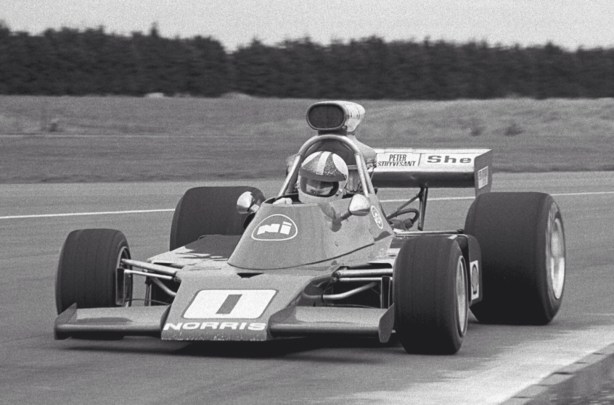
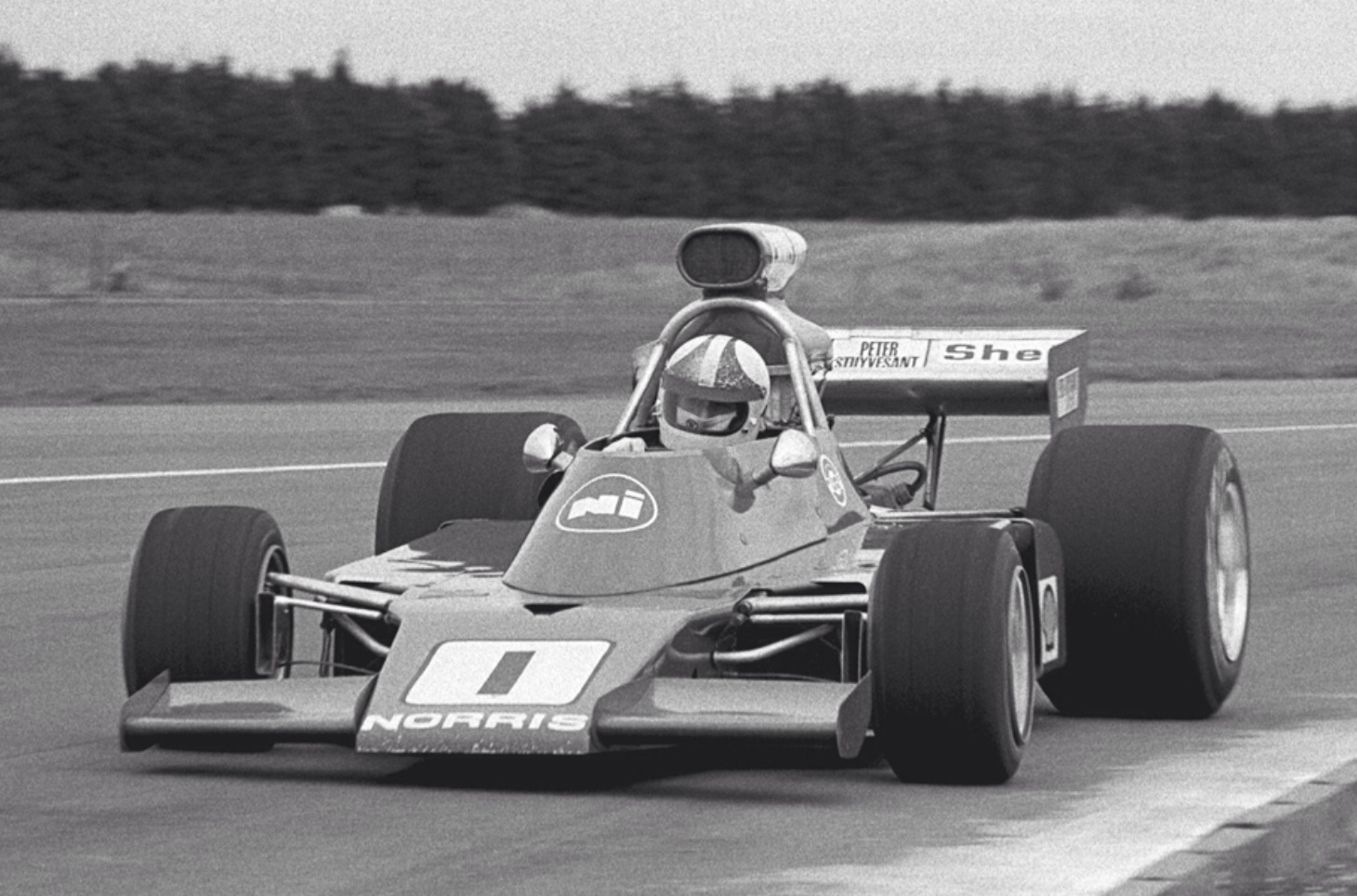
Chris Amon, Talon MR-1 Chev, Wigram 1975 (T Marshall)
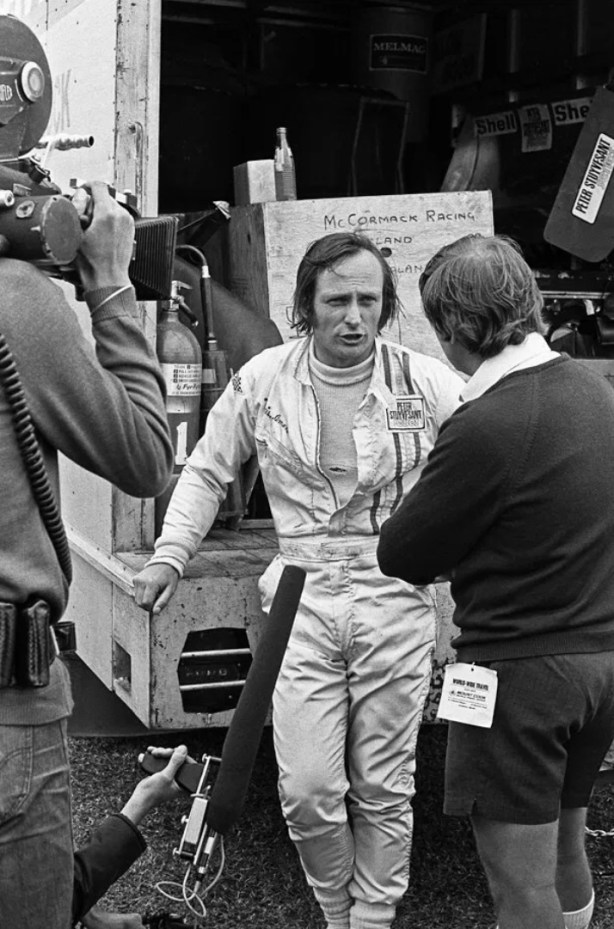
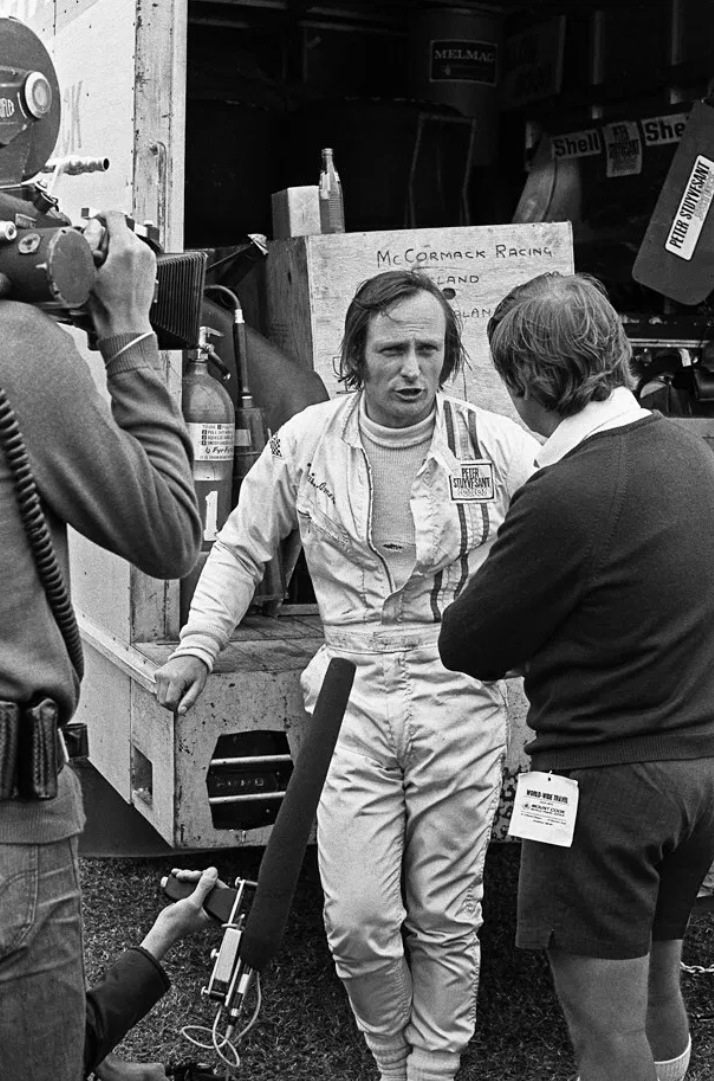
Chris taking care of the media at home in 1975 (T Marshall)
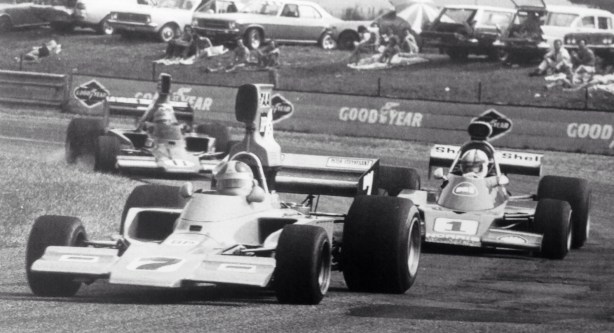
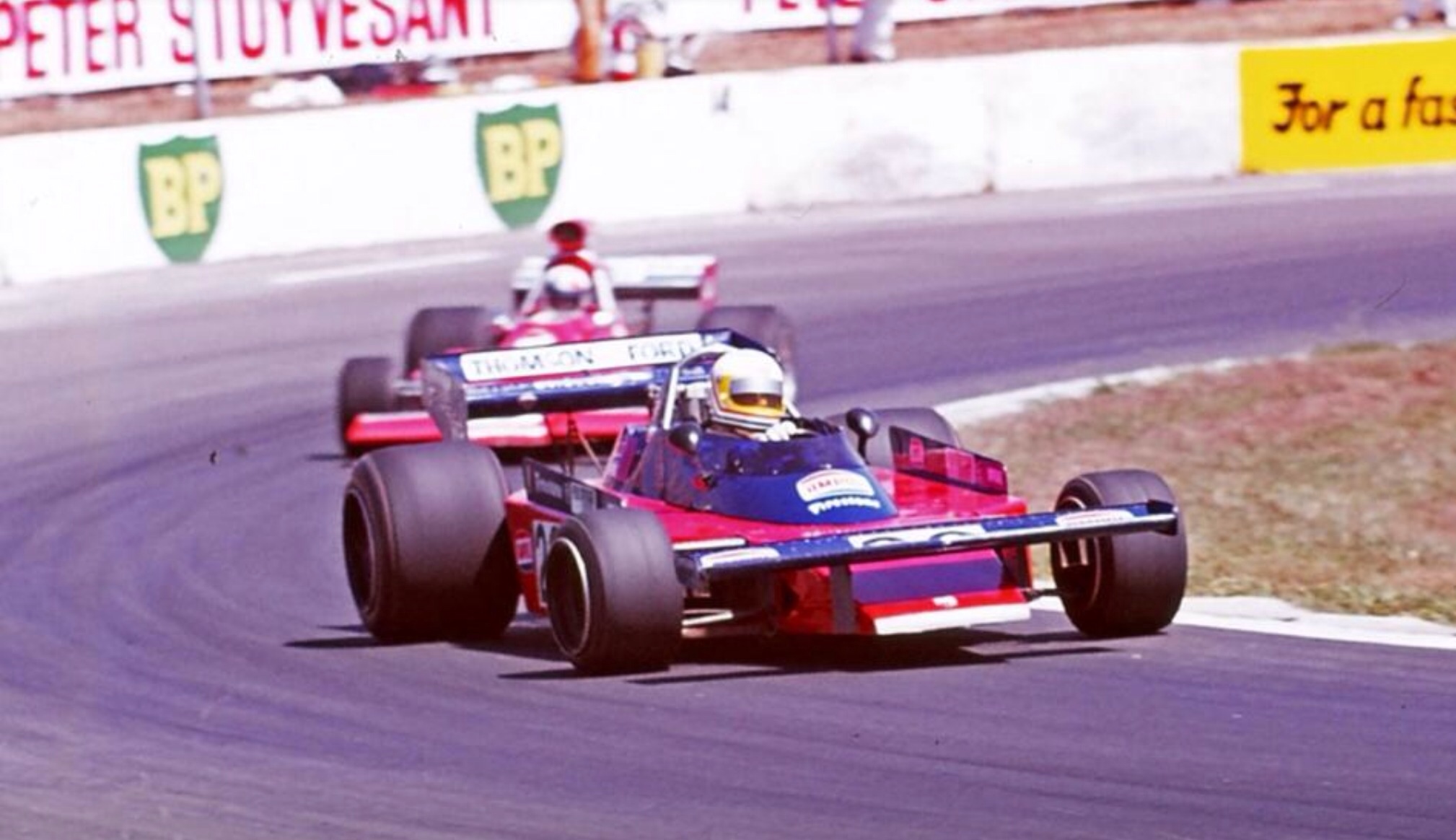
John Walker Lola T332 Repco from Chris and Graeme Lawrence Lola T332 Chev at Surfers Paradise in 1975 (B Thomas)
The GM2/MR-1 was on pole in McRae’s hands at Levin, Pukekohe, Wigram and Teretonga with Chris in his heavy, underpowered MR-1 second on the grid at Pukekohe, Wigram, Teretonga, Oran Park and Adelaide.
They won 2 of the races- McRae at Wigram and Amon the following weekend at Teretonga with Lola T332’s winning five rounds and John Goss in his Matich A53 Repco winning one, Sandown. The Lola T400, the Huntingdon marques new for 1975 machine was in strife with Kevin Bartlett and Max Stewart struggling to find the pace the T332 had- an update kit designed by Patrick Head would do the trick but it was no help for the two buddies from New South Wales, their Tasman was shot.
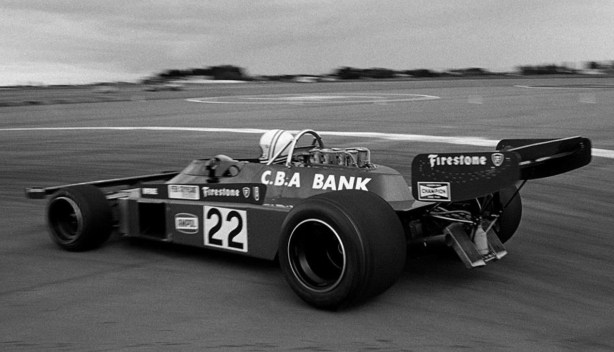
GM, McRae GM2 Chev, Wigram 1975 (T Marshall)
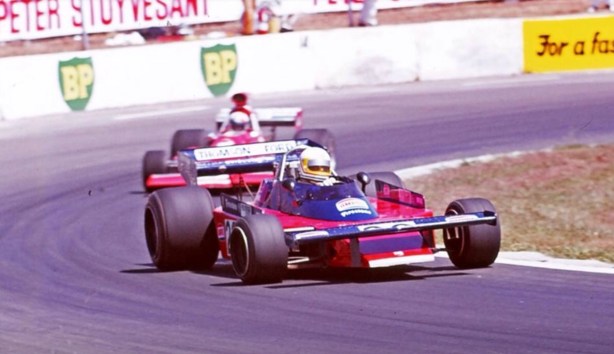
GM and Chris at Oran Park in 1975, GM2 and it’s ‘child’ the MR-1 Talon (V Hughes)
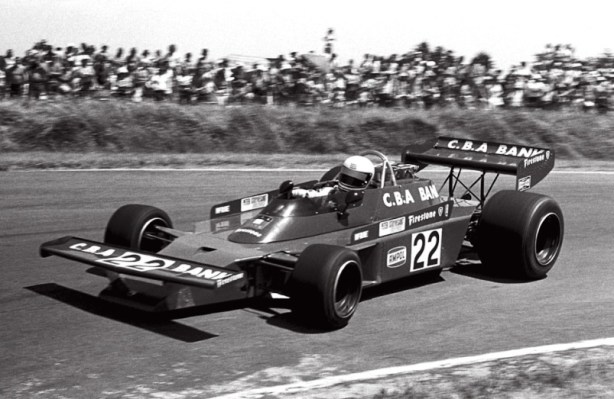
McRae Levin 1975, GM2 (T Marshall)
Into the US Series in 1975 the Talon MR-1A’s were not nearly as quick as the Lola T332C- awesome racing weapons driven by some of the most talented blokes on the planet at the time, and slipped down the grids.
Warwick Brown raced a works MR-1A with his Australian patron, mining magnate, Pat Burke’s support in 1975 but commented more than once that he should have taken his Tasman winning T332 Chev ‘HU27’ back for a full tilt at the title in 1975 given his immediate pace in the small team’s limited 1974 US campaign. There is no doubt in my mind that the self belief for WB to win the ’75 Tasman was a direct result of proving to himself he could do it amongst the big hitters mentioned earlier in this article in the US in late 1974.
Generally the MR-1A fell down the grid from a qualifying perspective from Pocono Q5 and Mosport Q3 early in the season. WB had a year of good reliability from the car and Peter Molloy’s powerful, trusty Chevies with third at Mosport behind the Andretti and Redman T332’s and fourth at Watkins Glen his best performances.
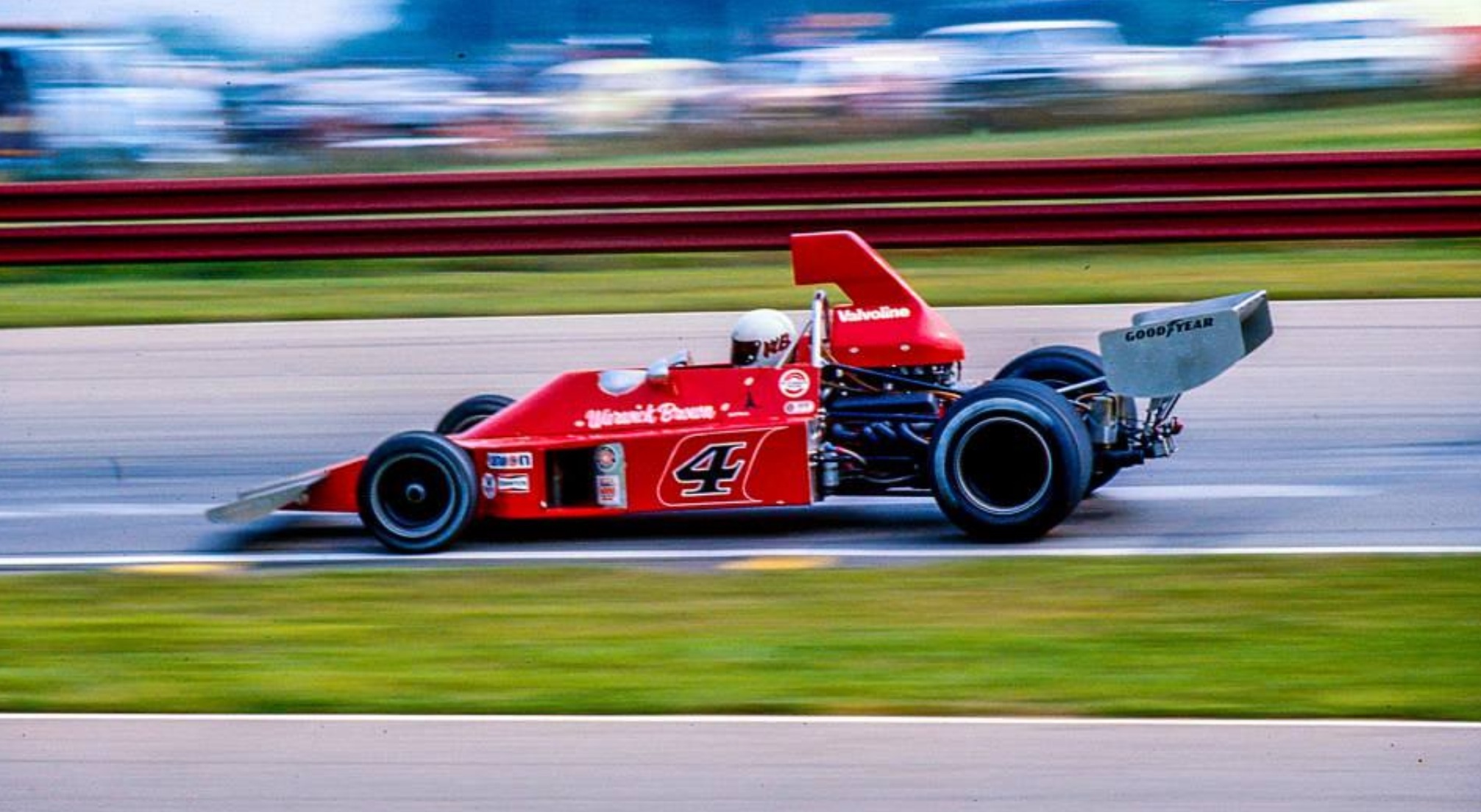
Warwick Brown, Talon MR-1A Chev, Mid Ohio 1975. Slinky from this angle (R Deming)
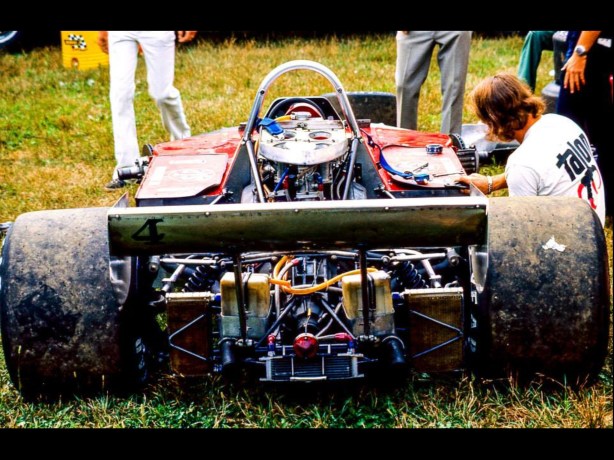
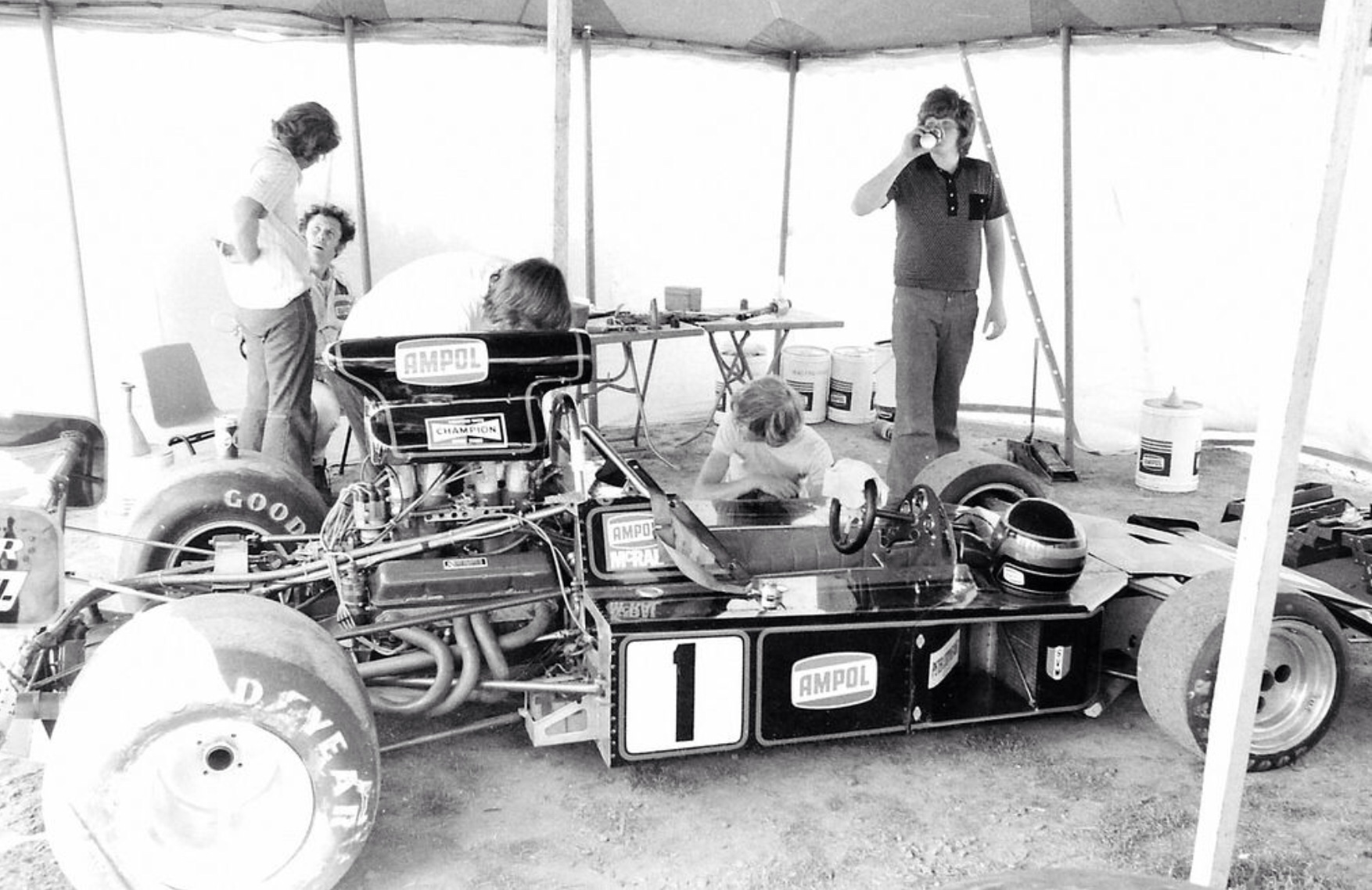
Brown’s Talon in the Mid Ohio paddock 1975 (R Deming)
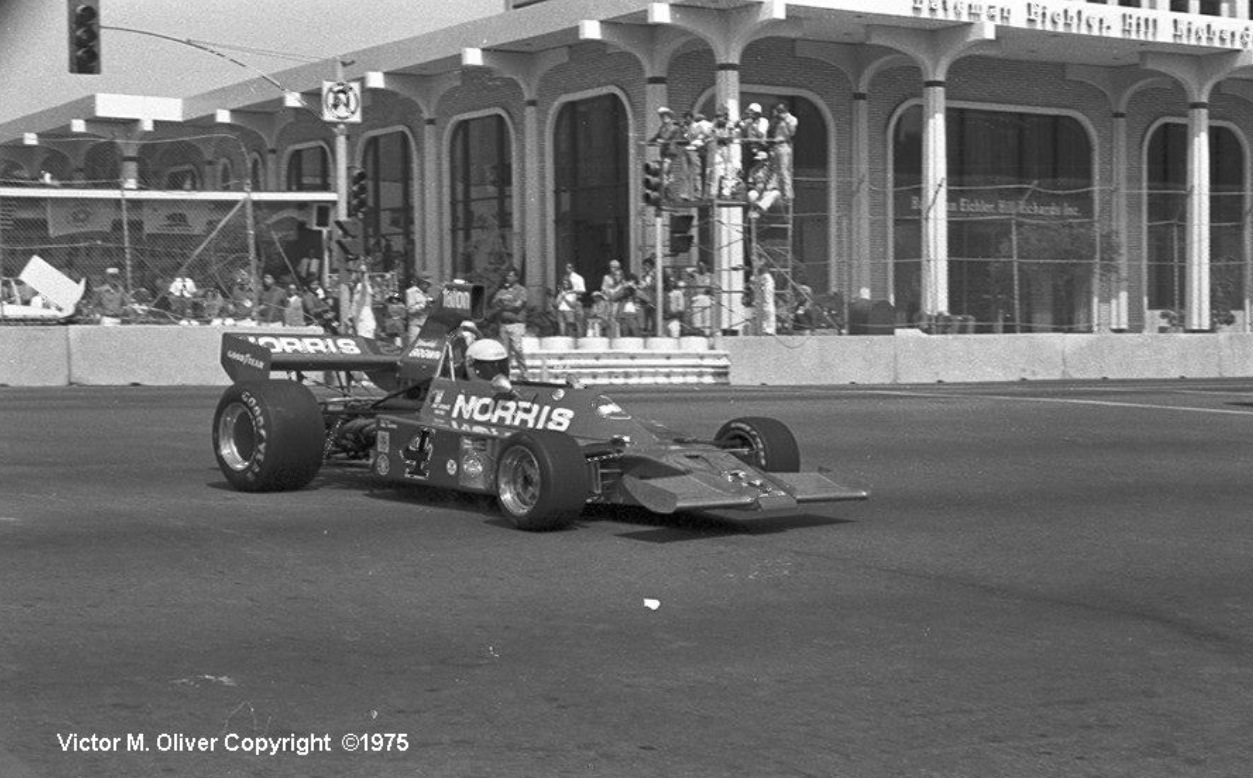
Chris Amon joined Warwick at the marvellous Long Beach GP won by Redman’s T332.
Their qualifying positions were a bit dreary, WB 19th and Chris 26th but both raced to sixth in their heats with Amon fourth in the feature race and Brown two slots behind in sixth. Vern Schuppan was second in Dan Gurney’s Eagle 755 Chev and Eppie Wietzes third in his Lola T400M Chev with David Hobbs fifth in a Lola T330/332 Chev to provide the top six of a race which would be run to F1 from the following year.
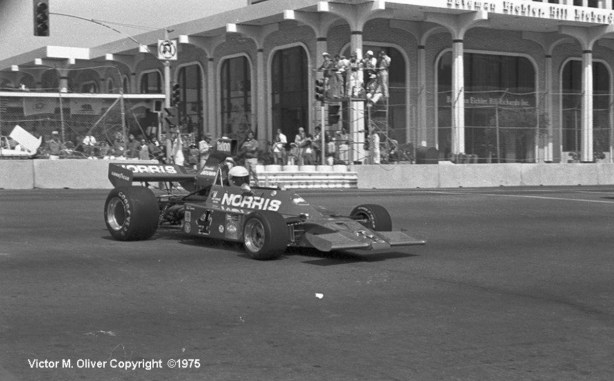
Warwick Brown in the ‘works’ Talon MR-1A Chev he raced during 1975, Long Beach GP
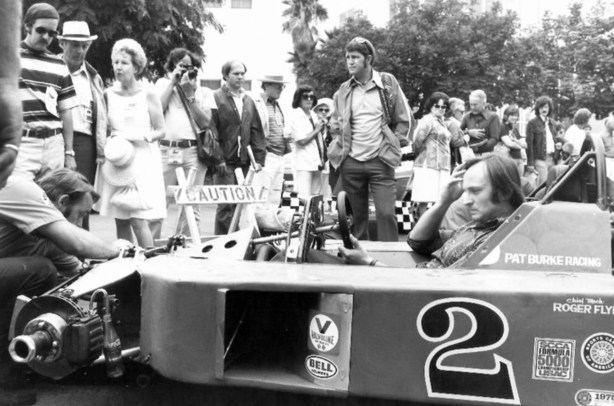
Bleedin’ the brakes, Chris, Long Beach 1975, Talon MR-1A. Poor run in qualifying belied a strong race (K Hyndman)
McRae raced a Lola T332 in the US in 1975.
His results were as follows; Watkins Glen Q9 and DNF suspension, Elkhart Lake Q12 and 7th, Long Beach Q8 and DNF after colliding with John Gunn’s T332 on lap 1. At Laguna Seca he was Q4 and 8th- and 2nd in his heat behind Unser’s T332, and at Riverside Q13 and DNF with engine problems before completing a lap.
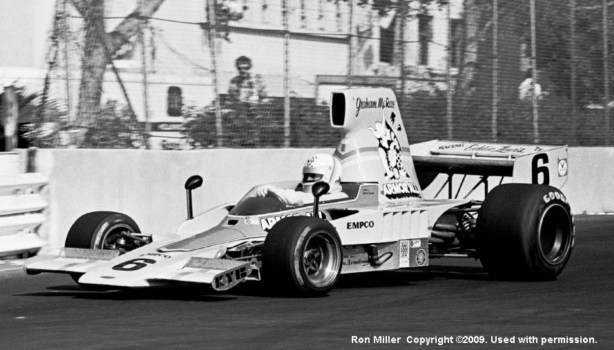
GM, Lola T332 Chev, Long Beach 1975
Back home with the Tasman Series at an end he didn’t race in the Australasian 1976 Internationals- which that year were two separate F5000 series in New Zealand and Australia with different sponsors, it was the first time for the best part of a decade McRae didn’t compete on home turf.
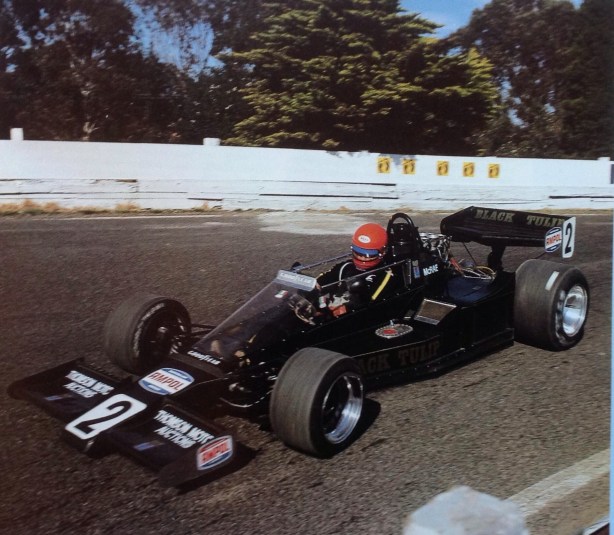
GM, Torana Corner, Sandown on the way to winning the 1978 AGP, McRae GM3 Chev 1978 (HAGP)
Graham McRae’s final car, the F5000 GM3 Chev was radical in looks with its wonderful perspex cockpit bodywork which showed the driver at work is really beyond the scope of this article, its a nice topic for another time, but here is a summary.
Apart from its looks the car was a conventional F5000 machine built by GM in Costa Mesa, California with Graham Lister lending a helping hand on a trip through Los Angeles. The cars race debut was the very last round of the US Championship in 1976 at Riverside for Q22, 6th in his heat and DNF in the final.

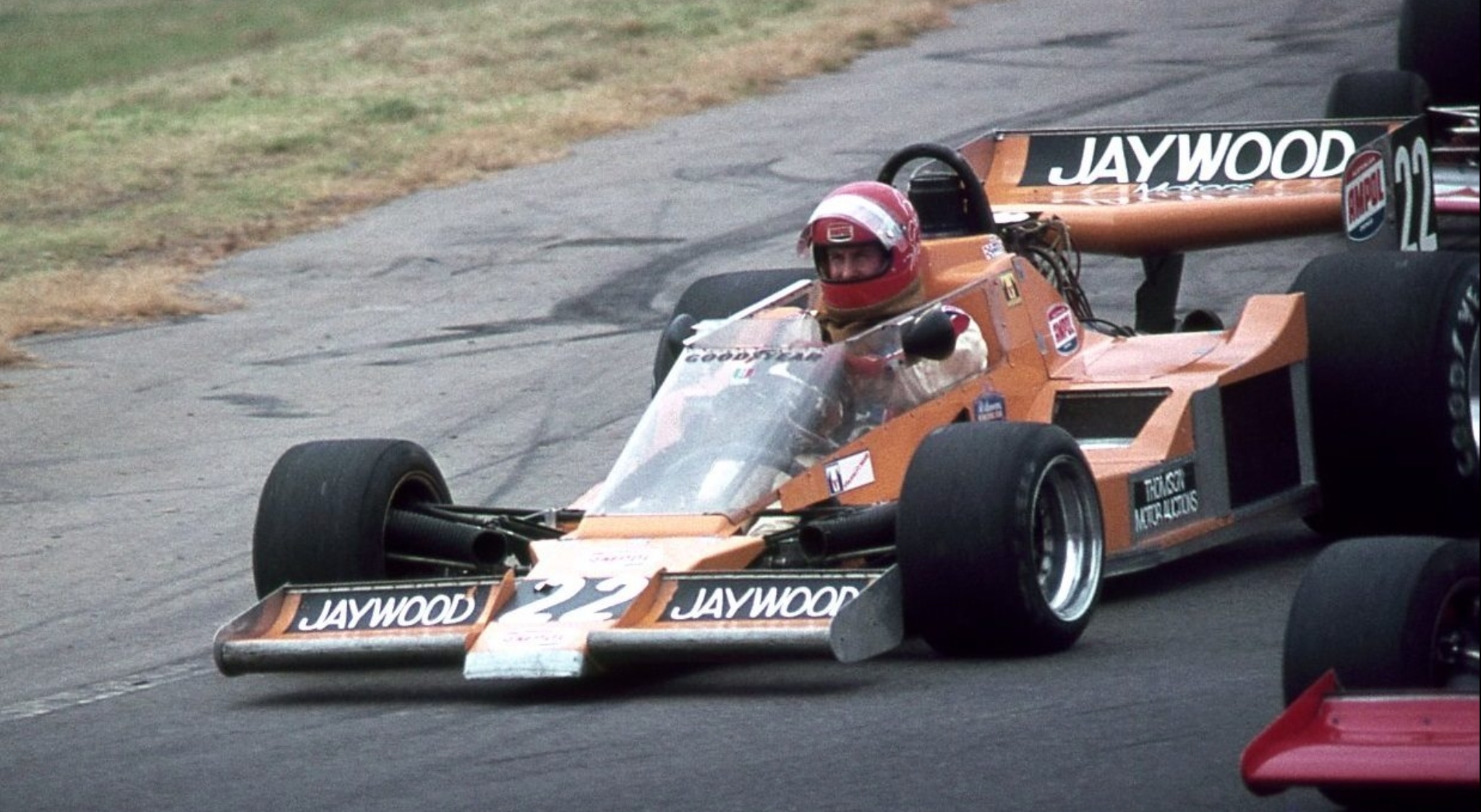
Teddy Pilette, Lola T430 Chev from GM’s new GM3 Chev and Peter Gethin’s one of a kind Chevron B37 Chev- all three of these cars later had successful careers in Australia in the hands of GM himself, Alf Costanzo and Bruce Allison (unattributed)

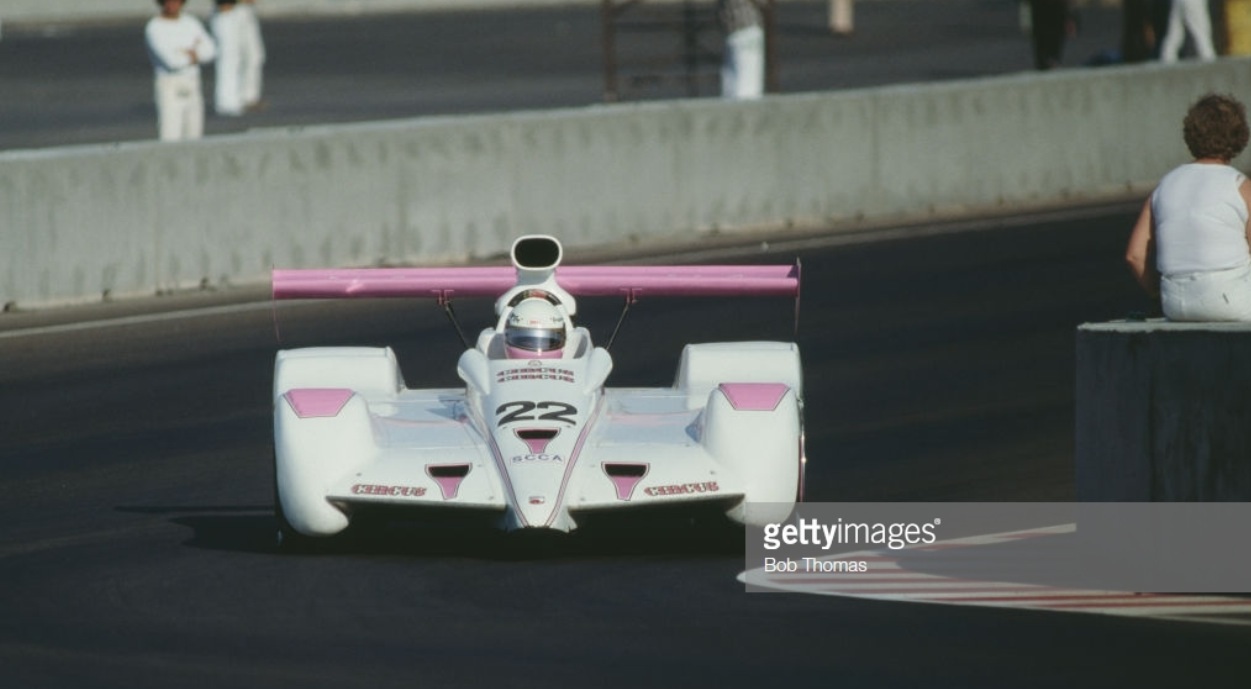
GM in the GM3 Chev Can-Am in 1977, Riverside Turn 6. Check out the vestigial bodywork, almost reminds one of Vern Schuppan’s first Can-Am body on his Elfin MR8? (Eric Schaal)
With that, Graham converted the car into a Can-Am contender with vestigial sportscar bodywork racing it at Watkins Glen, Road America, Mid Ohio and Riverside which yielded his best result, Q11 and sixth.
Gerry LaRue’s magic, ‘right in the cockpit’ shot of GM at Riverside in 1977 below makes McRae’s design intent crystal clear! GM2 Chev Can Am- look closely at this shot and others of the car in F5000 format and you see just how minimalist the sportscar bodywork of the design is.
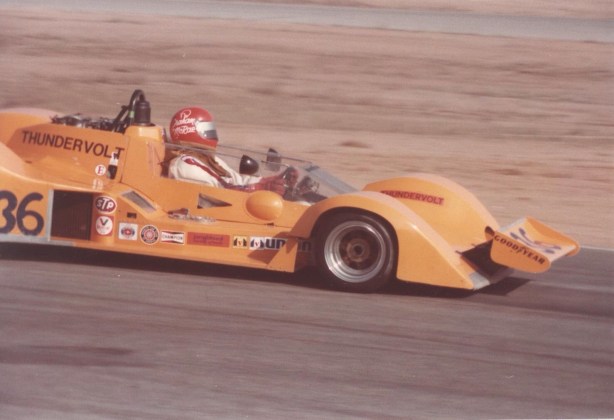
(G LaRue)
At the end of the North American season the Kiwi then converted the chassis back to F5000 specification and shipped it from California to Australia to contest the 1978 Rothmans International Series.
There his results were- Sandown Q3/DNF, Adelaide Q7/5th, Surfers Paradise Q14/7th, and Oran Park Q2/3rd. The car stayed in Australia that season with GM winning both the 1978 Australian Grand Prix at Sandown and the three round Gold Star Series- two round wins, in fact these were his last major victories.
The cars final iteration, and model name change from GM3 to GM9, then took place in New Zealand with the chassis and body substantially modified for GM’s Can-Am final races in the US in late 1980, 1981 and into 1982 and the then the cars sale. It’s still extant in New Zealand.
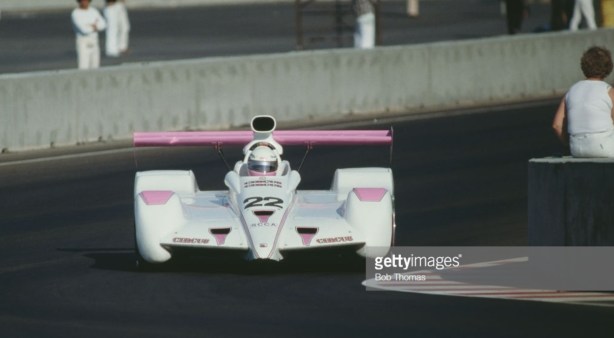
GM, McRae GM9 Chev, Caesars Palace Can-Am October 1981 (B Thomas)
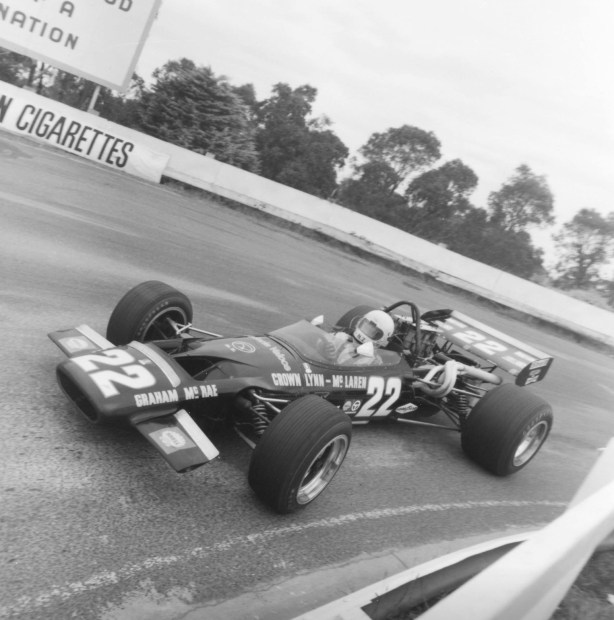
McRae, Sandown’s Peters Corner, on the way to victory, McLaren M10B 1971 (I Smith)
Malaya Garages, Leda Cars and Len Terry…
Let’s now go back a few steps to retrace Graham’s F5000 career from its earliest days.
McRae made his name in small bore single-seaters in NZ, demonstrating his engineering prowess- he is Engineering degree qualified with the twin-cam powered McRae 69 1.5 Ford twin-cam and its forbears giving the Tasman 2.5 machines plenty of curry each summer.
His foray into the big F5000 league was funded by Tom Clark and his Crown Lynn Potteries business which acquired the McLaren M10A Chev ‘#300-6’ GM raced in the 1970 Tasman Series. Clark knew what it was to be a racer, he contested races in both New Zealand and Australia during the 1950’s aboard a variety of cars including a Maserati 8CM and Ferrari Super Squalo 555.
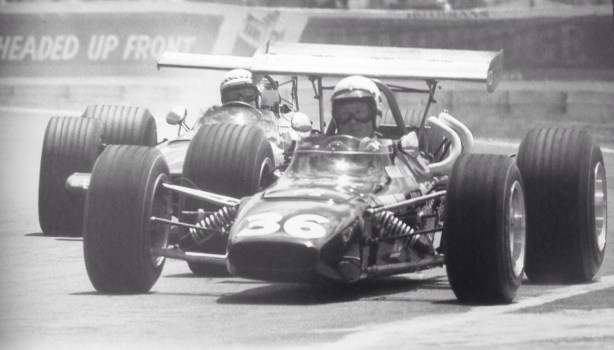
GM’s self constructed McRae S2 Ford 1.5 twin-cam ahead of Graeme Lawrence’s Ferrari Dino 246T at Levin in November 1969- GM finished 6 and 3 seconds respectively behind Graeme in two races that day (T Marshall)
McRae had his first foray in Europe in mid-1969 when he contested six Euro F2 Rounds as his NZ Driver to Europe prize in a Frank Williams run Brabham BT23C Ford FVA. His best result was 4th in the GP of Limbourg at Zolder behind Jochen Rindt, Jacky Ickx and Piers Courage in a car which by then was hardly the latest bit of kit. For the record, he also raced at Thruxton, the GP of Madrid, Hochenheim, Monza and the GP of Reims yielding DNF/DNF/9th/12th/11th.
Contesting the 1970 Tasman in a McLaren M10A he was immediately comfortable in these big demanding beasts of cars taking two of the nine rounds at Teretonga and Surfers Paradise.
That year the series was contested by a mix of F5000’s, Tasman 2.5’s and 2 litre cars with Graeme Lawrence winning in the same Ferrari Dino 246T chassis Chris Amon used to win in 1969.
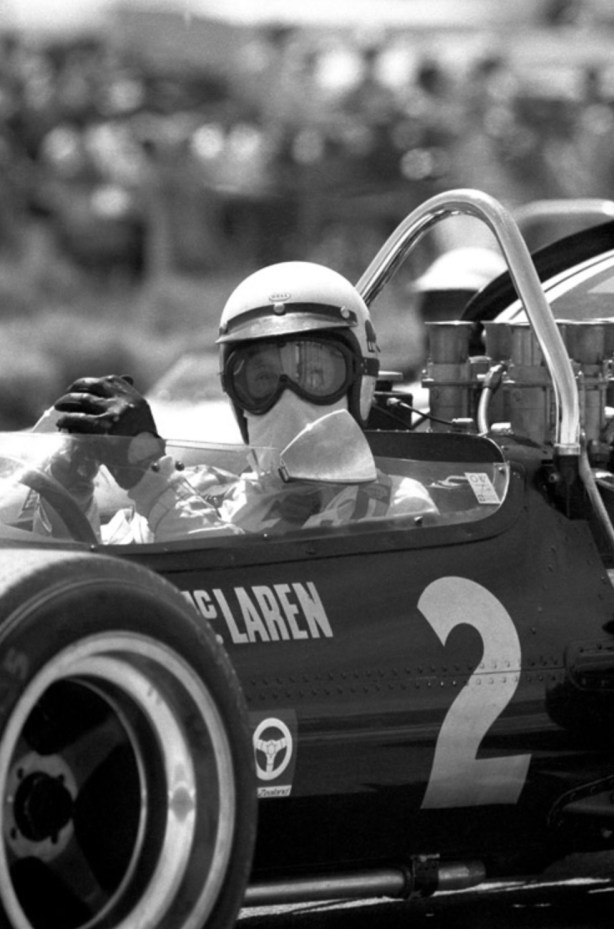
Superb Terry Marshall portrait of GM on the grid at Levin in 1970, McLaren M10A Chev- he stares him down before the off. I love this shot (T Marshall)
The M10A wasn’t going to do the trick in Europe so was replaced by an M10B chassis ‘400-11S’ with which Graham achieved several seconds before taking the final Brands Hatch round in late September to ‘break through’ a long way from home. The series was won by Peter Gethin’s McLaren M10B with other hotshots that year Mike Hailwood, Howden Ganley, Frank Gardner, Trevor Taylor, Reine Wisell and others.
McRae returned home to the Antipodes and brained them with his extensively developed M10B in the ’71 Tasman. In the same chassis he used in Europe he won three rounds of the series- at Levin, Wigram and Sandown and took the first of his three Tasman titles, all of which were won on the trot. Frank Matich’s McLaren M10B Repco and Niel Allen’s McLaren M10B Chev were second and third with Frank Gardner’s works Lola T192 Chev fourth. There was plenty of depth in that field, it was a very good win.
At this point, lets pause for context again.
John Surtees approached Len Terry to design an F5000 car for him- Terry’s Leda LT17 intended for Roger Nathan was taken over by James Garner and John Surtees becoming the 1969 Surtees TS5 with which David Hobbs did so well.
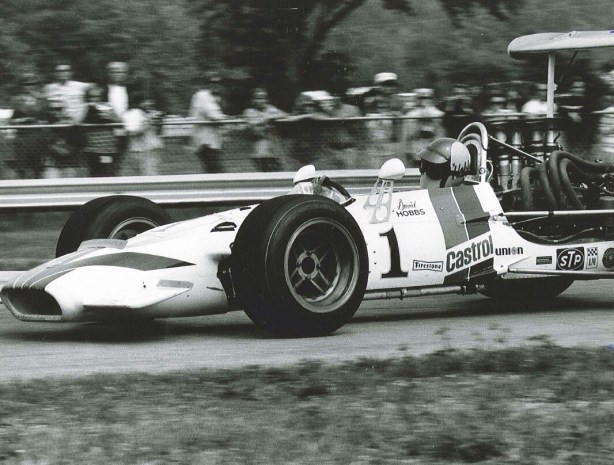
David Hobbs, Team Surtees, Surtees TS5A Chev (Terry’s LT17 design) at Road America, July 1970- 2nd to John Cannon’s McLaren M10B Chev (unattributed)
Terry decided commercially it would be more profitable to build cars in volume rather than design them for a one-off fee. He entered into a commercial arrangement to do so with Malcolm Bridgelands Malaya Garages, who took over the majority interest in Leda Cars towards the end of 1969- the name was one Len had ‘on the shelf’ as an alternative name for business relationship with Dan Gurney during the Eagle phase of his career Le (Len) and Da (Dan).
The successful LT17/TS5 design was replaced by the 1970 LT20, a disaster. It was a lower, lighter version of the Surtees TS5 with totally interchangeable front and rear suspension which simply did not work. In August, one LT22 was built which was an LT20 with conventional multi-link rear suspension, it too was not a star, despite the testing efforts of Roy Pike, Frank Gardner and Graham McRae to get it working better.
Martin Lyons, who worked for Leda Cars relates GM’s Leda test and this Frank Gardner exchange with Len Terry after FG put the LT22 through its paces at Silverstone in 1970;
‘Graham tested the LT22 at Silverstone in 1970 for us.
He shared our workshops in Billingshurst, West Sussex. Graham after a few warm up laps, pitched the car into Woodcote as he would in his M10B. All we heard in the pits was tortured tyre squeals that went on forever (or so it seemed) and we all anticipated that dull crump/thump. It never happened and Graham came into the pits, as white as a sheet!
Len asked Frank Gardner to drive the car as well at Silverstone and after a few laps Frank peeled into the pits, rolled to a halt and killed the engine. Len paced briskly and knelt down next to Frank. After about 30 seconds (which seemed like 5 minutes) Frank drolly said “Congratulations Len!” Another pause, Len thinking a compliment was coming his way, leant further into the cockpit. “You’ve designed one car and made it handle like two!” Frank unbuckles, levers himself out of the car and walks away back down the pitlane. Everyone in our team heard this and are looking away stifling laughter…’
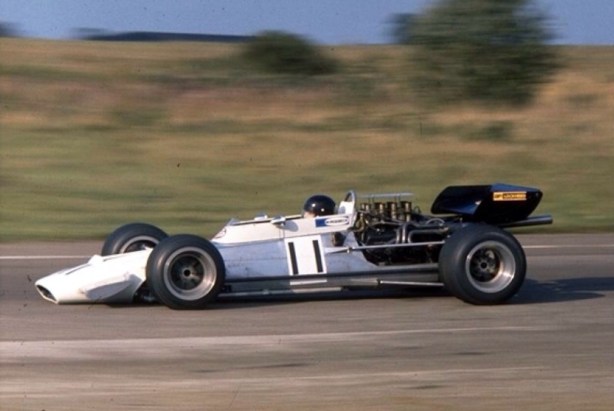
Roy Pike testing the brand new Leda LT22 Chev, Snetterton, 31 August 1970 (J Ballantyne)
The LT22 was replaced with the 1971 LT25 and achieved some top-five placings in the hands of ex-Lotus GP driver Trevor Taylor who had enjoyed some race wins with Team Surtees in F5000 before joining the Malaya Garages outfit.
When Graham McRae returned to the UK in early 1971 he figured he needed a new car so decided upon a McLaren M18- not McLaren’s finest of racing weapons as events transpired, not that the model didn’t win a race or two mind you.
The ‘Team Trojan’ entered M18 ‘500-02’ had one of the shortest of lives of any racing car when Graham boofed it bigtime in private practice at Snetterton before the second round of the European series in early April. He went off sideways at Russell, hit the bank, flew up into the air and landed upside down before the car rolled back onto its wheels. The racer was totally rooted but the hapless driver was AOK and ready to fight another day!
McRae, who had missed the opening round at Mallory Park- and then the Snetterton, Brands Hatch, Mondello Park, the Silverstone International Trophy and Castle Combe rounds, returned with a vengeance to win at Mallory Park in late May with none other than good ole M10B ‘400-11S’! It was a great reminder of who the class of the field generally was even if his car wasn’t the latest bit of kit.
In mid-summer of 1970 Graham came to the arrangement with Malaya Garage’s Malcolm Bridgeland to garage, prepare and transport his McLaren to meetings together with the Leda entries, Martin Lyons mentioned above. Inevitably McRae got to know the crew at Billingshurst pretty well.
At Monza in June he didn’t qualify the McLaren M10B but practiced Len Terry’s Leda LT25 ‘1’ to get a good feel for the car. That weekend was a good one for the team, Trevor Taylor finished second in another LT25 Chev just behind Alan Rollinson’s Surtees TS8 Chev, clearly the car had some merit.
McRae won in the old-nail McLaren again at Thruxton on the August day the F5000 world changed- the Lola T300 prototype made its race debut in Frank Gardner’s hands. The man who concepted the T300 knew a thing or two about engineering racing cars, it would take a couple of rounds before FG took the T300’s first race win but McRae knew he needed something pretty special to be competitive in 1972 given Gardner’s pace in Lola’s existing T192 let alone Huntingdon’s new weapon.
And so it was that Graham explored his ideas about what he wanted in his next car with Terry- thoughts strongly influenced by his McLaren experiences, the Leda LT25 and the Lola T300. He was also mindful of the very competitive ‘pregnant belly’ F1 designs of the time- the BRM P153/160, McLaren M19 and Tyrrell 001-002.
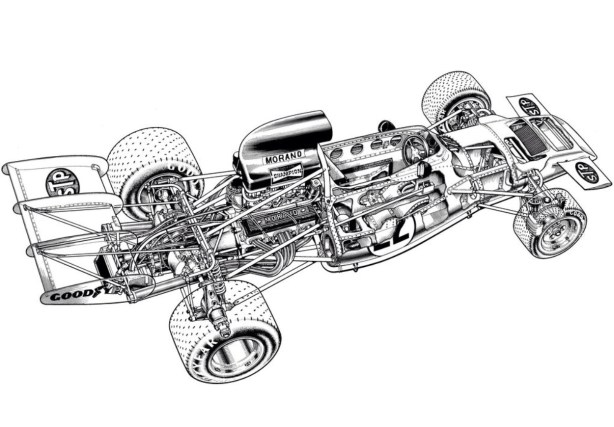
Leda LT27/GM1 ‘001’ 1972 (T Matthews)
Trevor Lister recalls ‘Graham was determined to set his engine as low in the chassis as physically possible so he redesigned the engine sump so there was the minimum possible clearance between the crankshaft and the bottom of the sump. This enabled the engine to be installed lower and reduced ground clearance.’
Perhaps a fair description of the LT27’s design is that conceptually it was largely McRae’s with the detail design and drawing all Terry’s. Along the way they decided to use some McLaren hardware, notably the suspension uprights, which suggests the Leda bits were regarded as inferior to McLaren’s or simply that was what GM wanted- a known quantity which would work straight away.
Lister also recalls ‘At one stage we encountered continual cracking of the brake discs and Graham decided he would drill holes to improve the cooling by dissipating the heat build-up. I remember him standing at the drill-press for hours one day drilling dozens of holes in all the discs, I believe he was the first to do this in F5000 and it was copied by some teams even in F1? He also grooved the discs from inside to outside to improve the clearance of brake dust. Again, other teams copied very quickly but some had the grooves running the wrong way’.
Leda Cars were based in the Malaya Garages premises along with Alan McCall’s (another very talented Kiwi) Tui Super Vee project and a project to build a Morgan like road car. The F5000 plan for 1972 was for McRae and Taylor to race two LT27’s in the 1972 Euro F5000 Championship, but Graham first had his Tasman title to defend.

Ampol ad proclaiming McRae’s 1973 Tasman Series win. Pic is of GM Leda LT27/GM1 Chev ahead of Kevin Bartlett’s McLaren M10B Chev at Adelaide International in 1972- David Hobb’s McLaren M22 Chev won that day
Frank Matich figured he had the goods to win the ’72 Tasman, his new Matich A50 Repco had won right out of the box at Warwick Farm, taking the 1971 AGP from John Surtees amongst others.
The 1972 Tasman line-up was particularly strong with works Surtees, Lola and Trojan Cars entries for Mike Hailwood, Frank Gardner and David Hobbs. In addition there was strong competition from Kevin Bartlett, Max Stewart and the Ansett Team Elfin duo of John McCormack and Garrie Cooper.
It isn’t clear how much testing McRae had completed in his new Leda LT27/GM1 Chev but the neat, squat, STP sponsored machine was fast right from the off complete with powerful, reliable, Weber carbed Morand Chevys.
McRae won at Levin, Wigram, Surfers Paradise and Sandown and took pole at Pukekohe, Levin and Wigram- notable was that the car was quick on a variety of circuits. Clearly Leda had a competitive customer car to compete with the Lola T300 and Chevron B24 which promised to be the marques available in quantity that season.
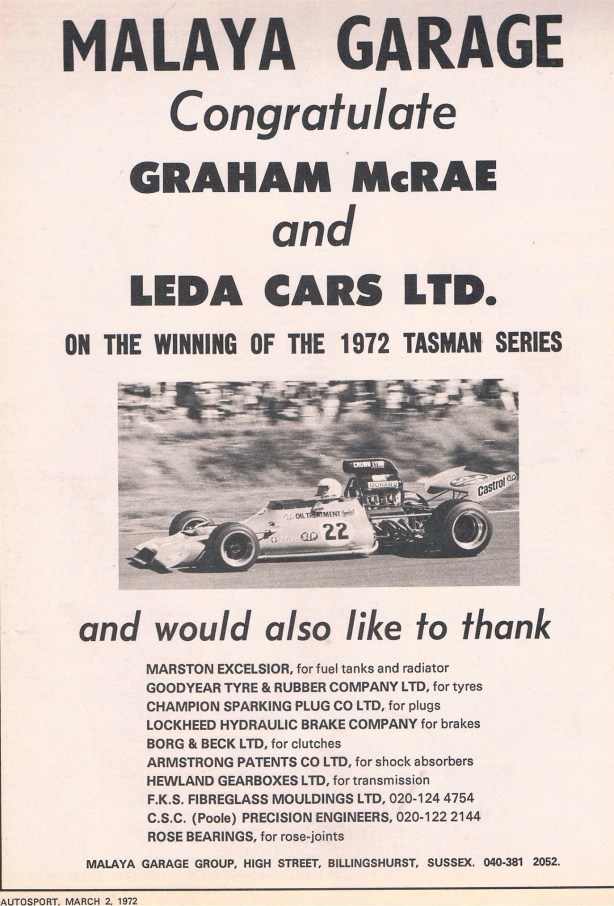
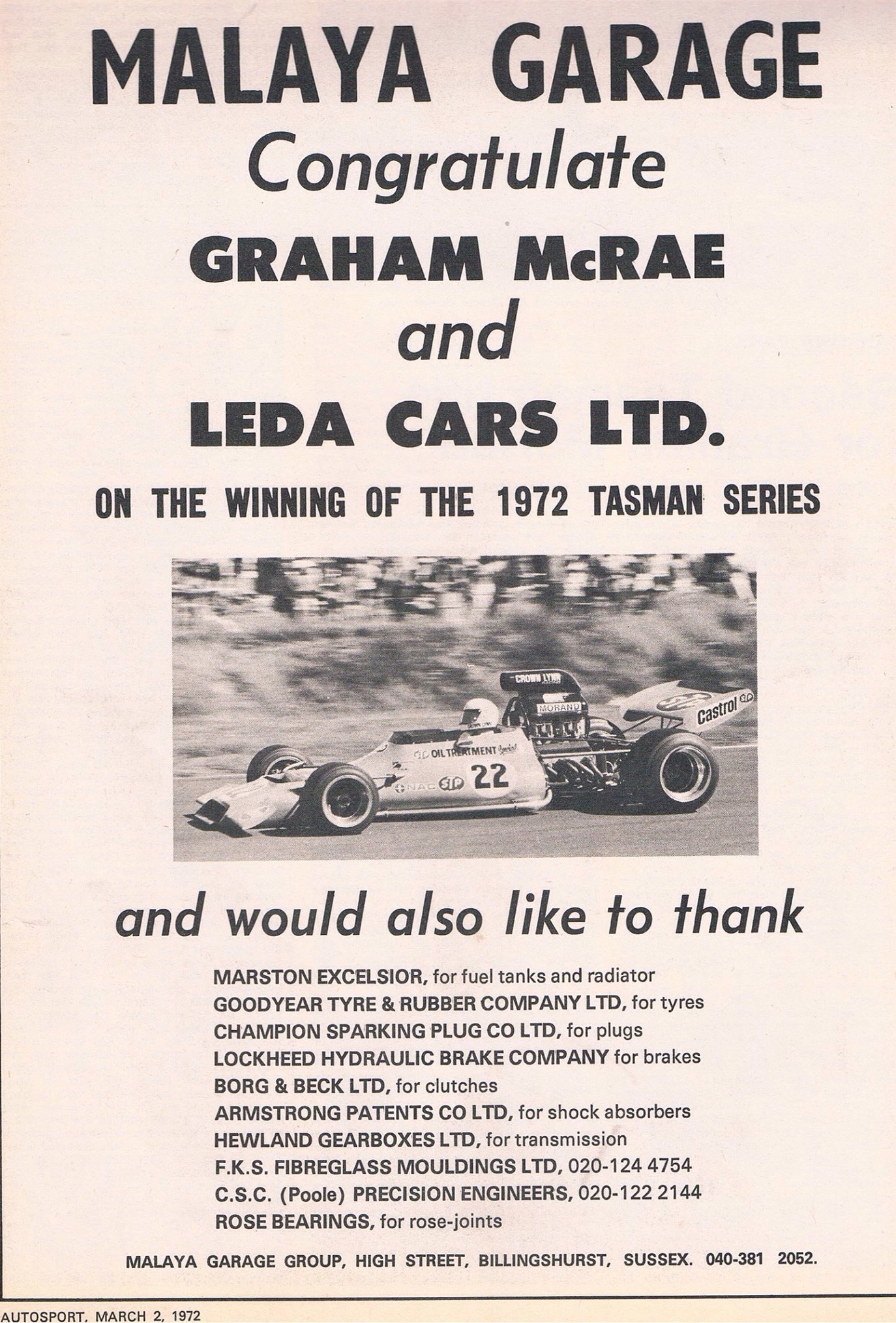
Yay team, Malaya Garages Auosport ad, March 1972 (M Lyons)
McRae returned to Europe and raced the same chassis in the Brands, Mallory Park, Snetterton rounds with dramas in all three races before breaking through for his first win of the championship that year in the April Brands round- a car for Taylor finally appeared at the April Silvertone meeting.
After the first three or four races the Malaya Garages people decided to withdraw their support for the race team with the drivers looking likely to be left high and dry- arguably Taylor already was. A London insurance broker and wealthy motor racing enthusiast, John Heynes came to the rescue and acquired premises in Poole, Dorset installing McRae in charge. Terry resigned his directorship of Leda Cars Ltd and relocated his own business ‘Design Auto’ to his home in Dorset. A contemporary Autosport report has it that Len’s only relationship at that point was as a shareholder of Leda Cars.
With the takeover complete, from 1 July 1972 the LT27 design became known as the McRae GM1 with 14 cars built and sold in 1972/1973. To that point the cover of Leda’s own sales brochure described the car as ‘Leda Type 27/GM’, which should put to an end any conjecture as to what the car’s model designation was formally prior to 1 July 1972.
Whilst all these corporate manoeuvrings were going on McRae had races to contest, his season being set up by STP- who had backed the new car during the successful 1972 Tasman campaign and decided to continue their sponsorship to forays in both the US and Europe.
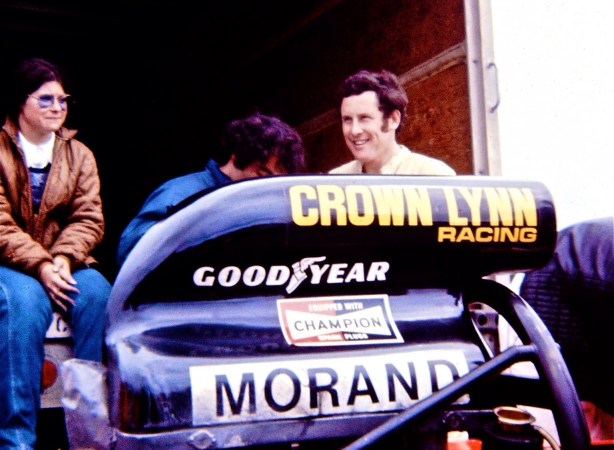
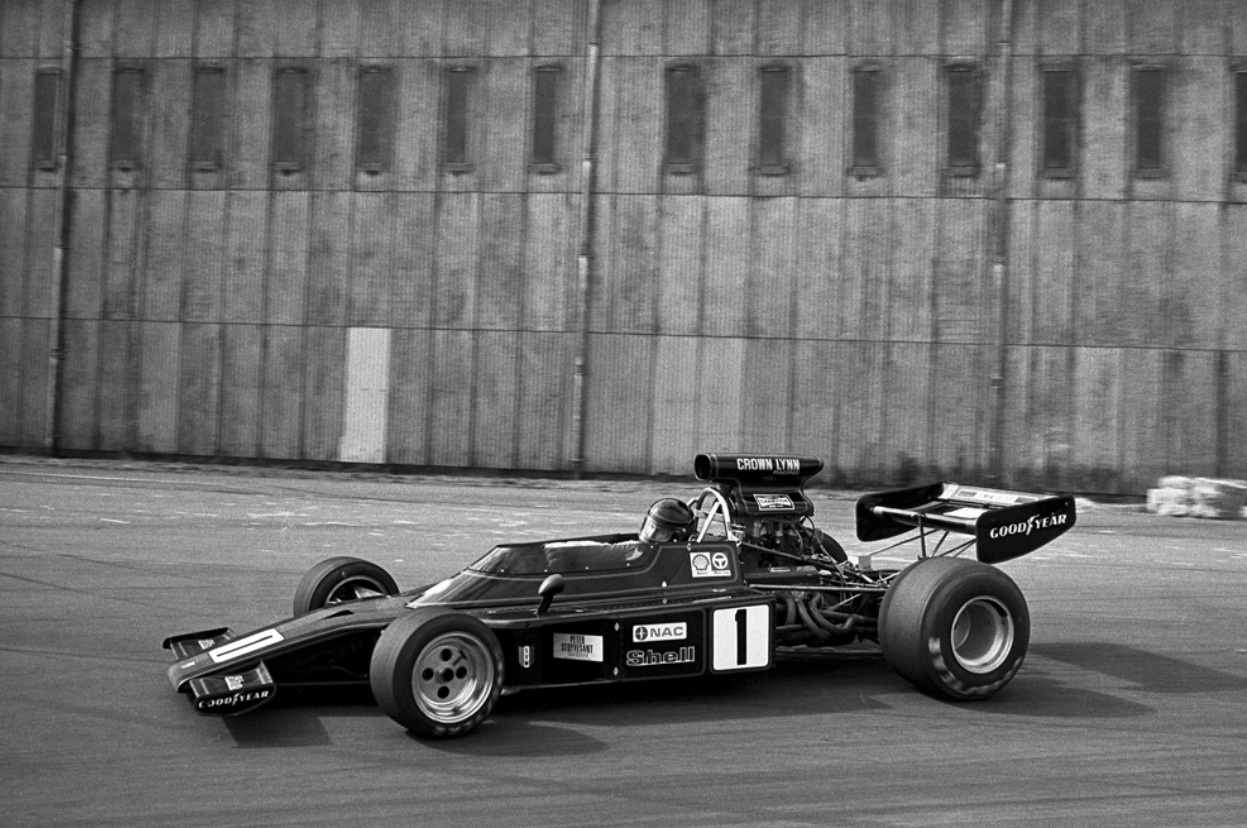
GM and crew, Leda GM1 Chev, Laguna Seca practice 1972 (R Rodgers)
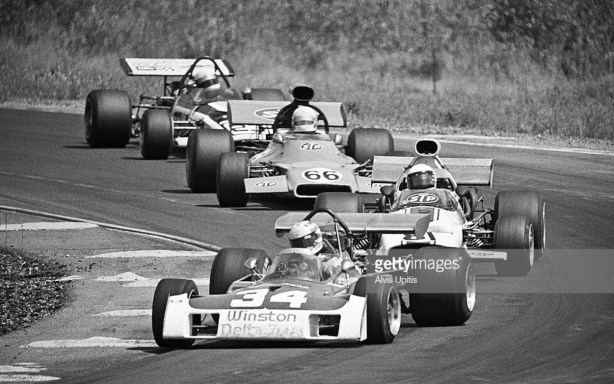
Brainerd Donnybrooke July 1972. Sam Posey Surtees TS11 Chev, John Cannon McLaren M10B Chev, McRae in GM1 (A Upitis)
McRae won the US L&M Championship and surely would have taken the Euro one too were it not for conflicting rounds which precluded him contesting sufficient races to do so- as it was he won the Nivelles, Silverstone, Brands (July) and Oulton Park rounds and finished third in the title chase behind Gijs van Lennep and Brian Redman in Surtees TS11/McLaren M18 and McLaren M10B/Chevron B24 respectively.
In the US McRae faced strong opposition from Brian Redman (also contesting both the European and US titles), David Hobbs, Derek Bell, Peter Gethin and Aussies Bob Muir, Kevin Bartlett- not all these fellas did the whole series mind you.
Despite that and being new to the circuits and having all the logistical challenges of a different country he won the Laguna Seca, Watkins Glen and Road America events of the eight round series taking the ‘SCCA L&M Continental 5000 Championship’ title with 87 points from Sam Posey, Surtees TS11 Chev and Brett Lunger’s Lola T300 Chev.
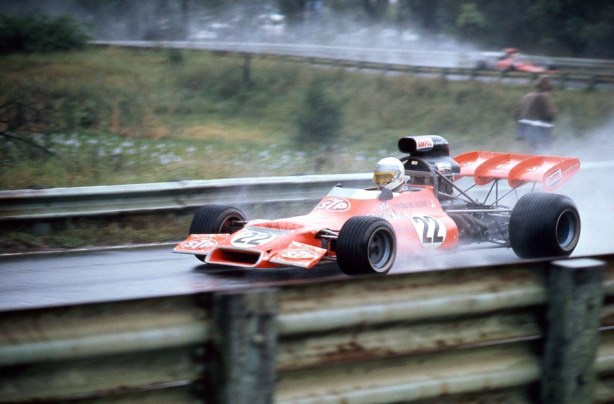
McRae, GM1, Warwick Farm 1973 (B Stratton)
Into 1973 McRae easily again won the Tasman Series, the combination of the GM1 design, Morand engines and McRae’s preparation and driving talent saw off fields of great depth. The GM1 took five of the eight rounds, McRae won four and Alan Rollinson one.
But it was to be a different thing in the US with a double-whammy of plenty of Lola T330’s on the grids and Jody Scheckter aboard a Trojan T101- whatever Ron Tauranac’s design may have lacked in pace relative to the Lola was more than compensated by Jody’s prowess behind the wheel.
During the year McRae’s versatility was demonstrated with a drive at Indianapolis via the relationship he had with the Granatelli’s, there STP company was also the sponsor of the three car Patrick Racing Team. In a superb effort, GM popped the Patrick Eagle Offy 16th on the grid completing 91 of the 133 laps with a header problem- in the process he was awarded the Rookie of The Year trophy.
It was a bitter/sweet weekend for Pat Patrick and the team- whilst Gordon Johncock won the race in another Eagle the teams other car driven by Swede Savage crashed very badly with the hapless young thruster succumbing to his injuries, or more particularly post-surgery complications, five weeks after the race.
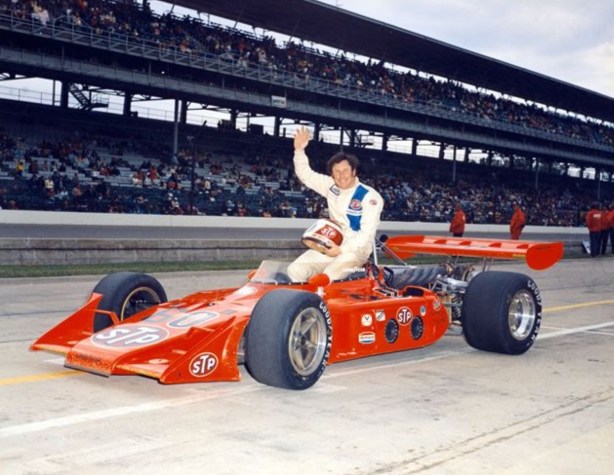
The obligatory Indy qualifying shot- GM in the Patrick Racing Eagle Offy, 1973 (unattributed)
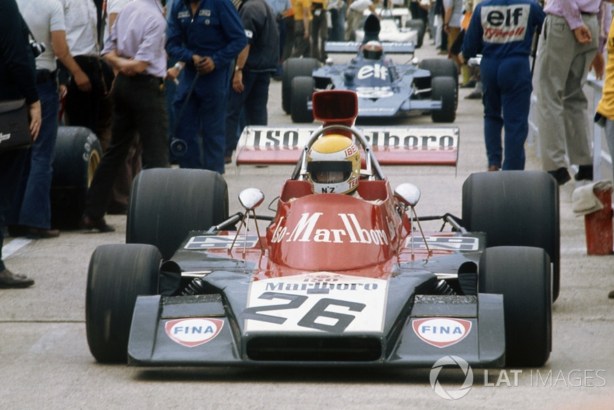
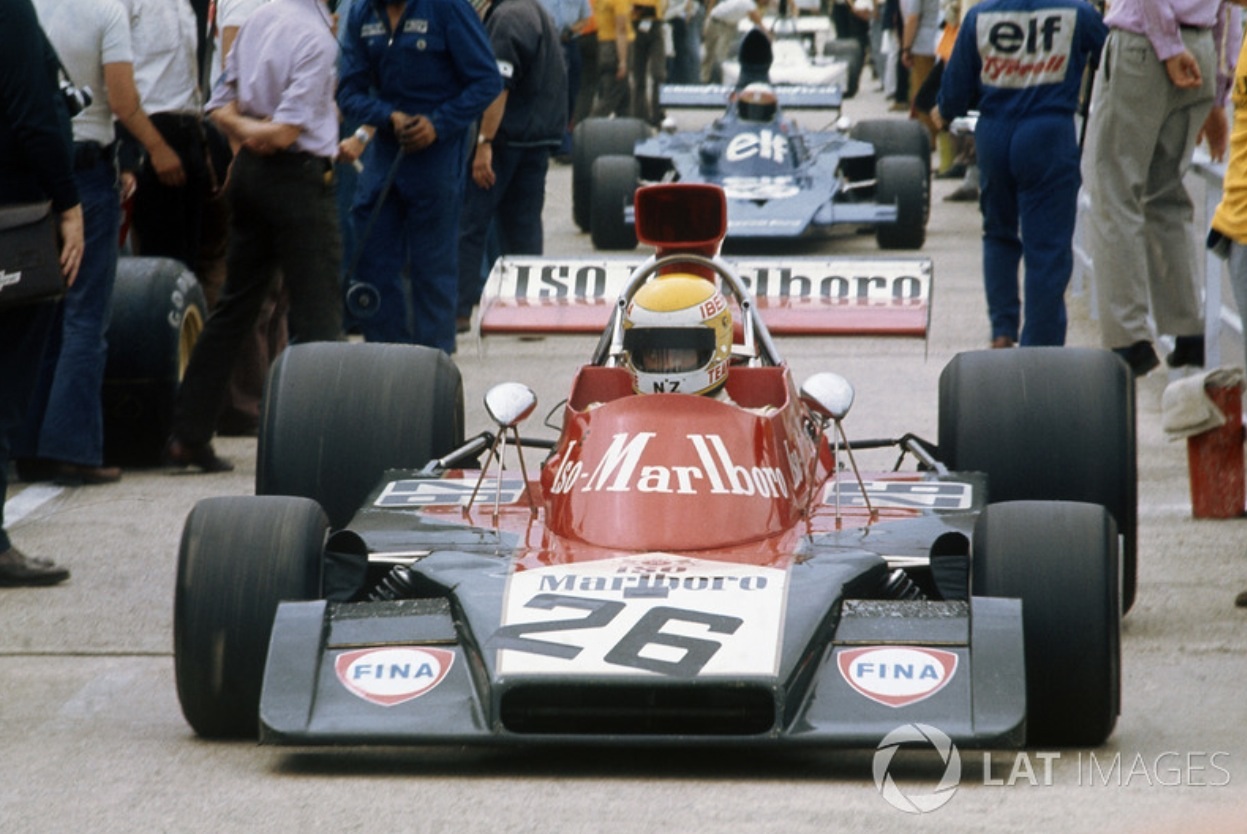
McRae in Frank Williams Iso IR Ford in the Silverstone British GP pitlane in 1973. The eagle eyed will spot Jackie Stewart aboard Derek Gardner’s experimental chisel-nosed Tyrrell 005 Ford behind. This was the chassis Chris Amon was to race in the North American away races- in the end he only raced the car in Canada, Francois Cevert’s death during Watkins Glen practice resulted in the team’s withdrawal from the meeting- which was JYS last GP (LAT)
Needless to say McRae was a ‘man of the moment’ at the time- then like now you need to grab and hold the spotlight with your results to get F1 opportunities. Unfortunately Ken Tyrrell’s offers of a race or two were declined as a result of prior contractual commitments. Unfortunately when the planets did align GM’s F1 career became one of the shortest on record.
Frank Williams was well aware of McRae’s record in the Tasman Series when FW ran a car for Piers Courage in 1969, and of course the Kiwi’s F2 drives with him in early ’69. And so it was that GM raced FW’s Iso IR Ford in the 1973 Silverstone British GP- a race made famous by the huge Woodcote lose of Jody Scheckter which then took out the best part of half the field. McRae’s car was not destroyed unlike many but the Iso’s Lucas injection throttle slides were jammed with sand, so he didn’t take the restart of the race won by Peter Revson’s McLaren M23 Ford.
McRae needed a new F5000- the GM2 was the result drawing upon ideas absorbed from the contemporary racers of the day and built in the Poole workshop. It wasn’t the last racing car built there, Penskes would follow but one can only surmise that John Heynes worked out that the only way to make a lot of money out of motor racing was to start with even more. And so McRae Cars in that incarnation ended, the facility was sold, as were the GM2 design rights and drawings to Jack McCormack.
And that folks, is about where we came in…
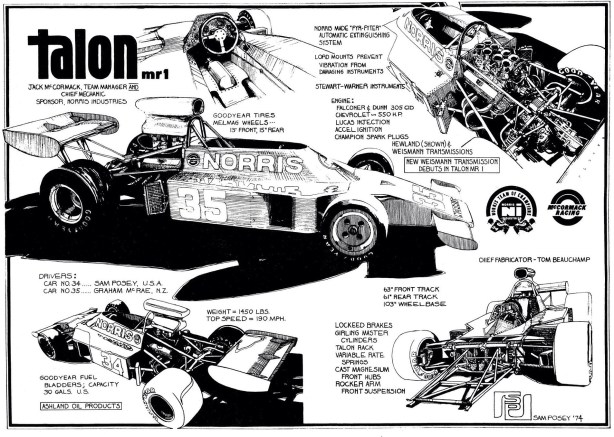
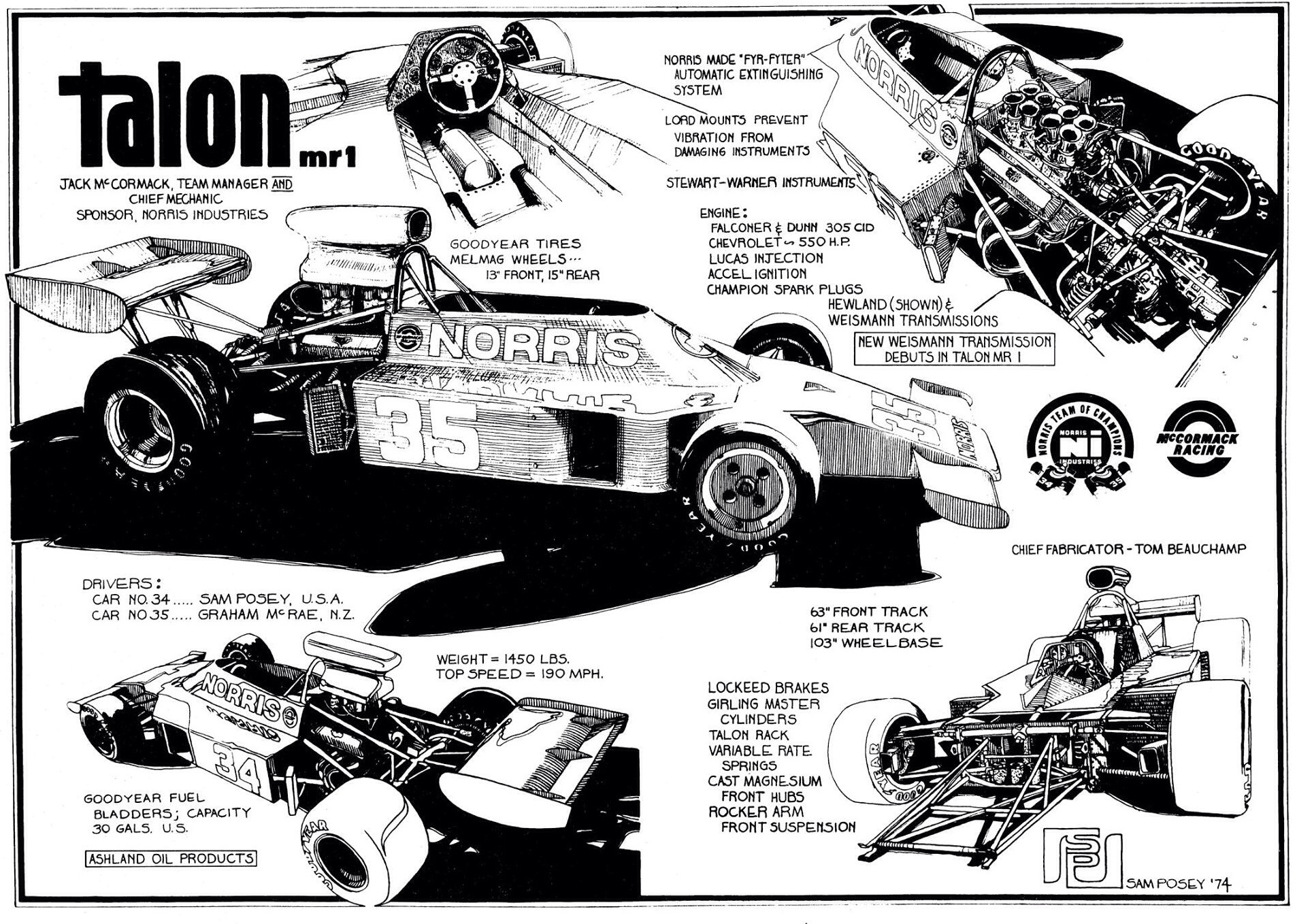
Sam Posey’s, yes the very same! Talon MR-1 drawing
After-thought: Formula 5000 Needed a Production McRae GM2 in 1973/4…
Formula 5000 was dead and buried by the Americans at the end of 1976, the knock-on effect went around the planet other than good-ole Australia who hung on to the class for way toooo long- love the category as I did/do.
The causes of F5000’s demise were multi-faceted but primarily was due to the dastardly Lola T330/332/332C which simply rolled over the top of everything its path including the Lolas designed to replace them- the 1975 T400 and 1976 T430!
The punters were getting bored with ‘Formula Lola’ in F5000 so the nuffies in the SCCA and the circuit promoters created single-seat Can-Am- and preserved Formula Lola as the T332CS/T333CS simply preserved the status quo- a non T332 derivative did not win the Can-Am until the Lola T530 did so in 1980.
And so, my thesis goes the class needed another strong make/model to give drivers another competitive mount and the punters another shape to look at. There is no reason why McRae’s development capabilities could not have turned the GM2 into a winning car built by his Poole factory in numbers exactly as the GM1 was. No doubt John Heynes business decision to sell made perfect sense to him- he saw the books and could no doubt assess the commerciality of the arrangements of a company led by a man at the time who could have been seduced to F1. His main asset could have disappeared from the scene for all manner of reasons- think of Chevron in terms of the impact of Derek Bennett’s death or closer to home Garrie Cooper’s at Elfin Sports Cars.
If the Chevron B28 were quicker, if the Chevron B37 were quicker in 1976, if the Lola T400 and T430 were quicker in 1975/6, if the McRae GM2 were built in numbers- and were quick maybe the variety we spectators like would have been provided and F5000 would have survived a little longer at least.
If yer aunty had balls she’d be yer uncle too, I know…
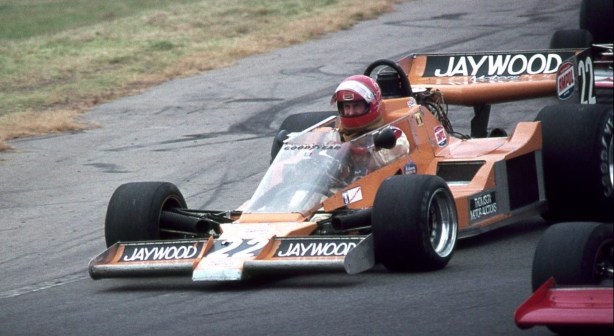
GM at Oran Park, Rothmans International Series 1978, McRae GM3 Chev- soon to be significantly modified in NZ into the Can-Am GM9 (N Stratton)
Etcetera…
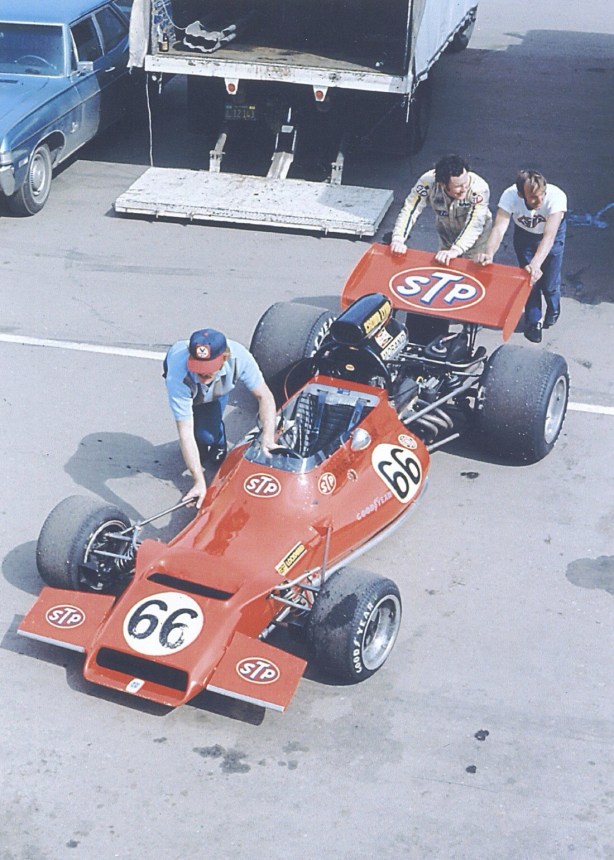
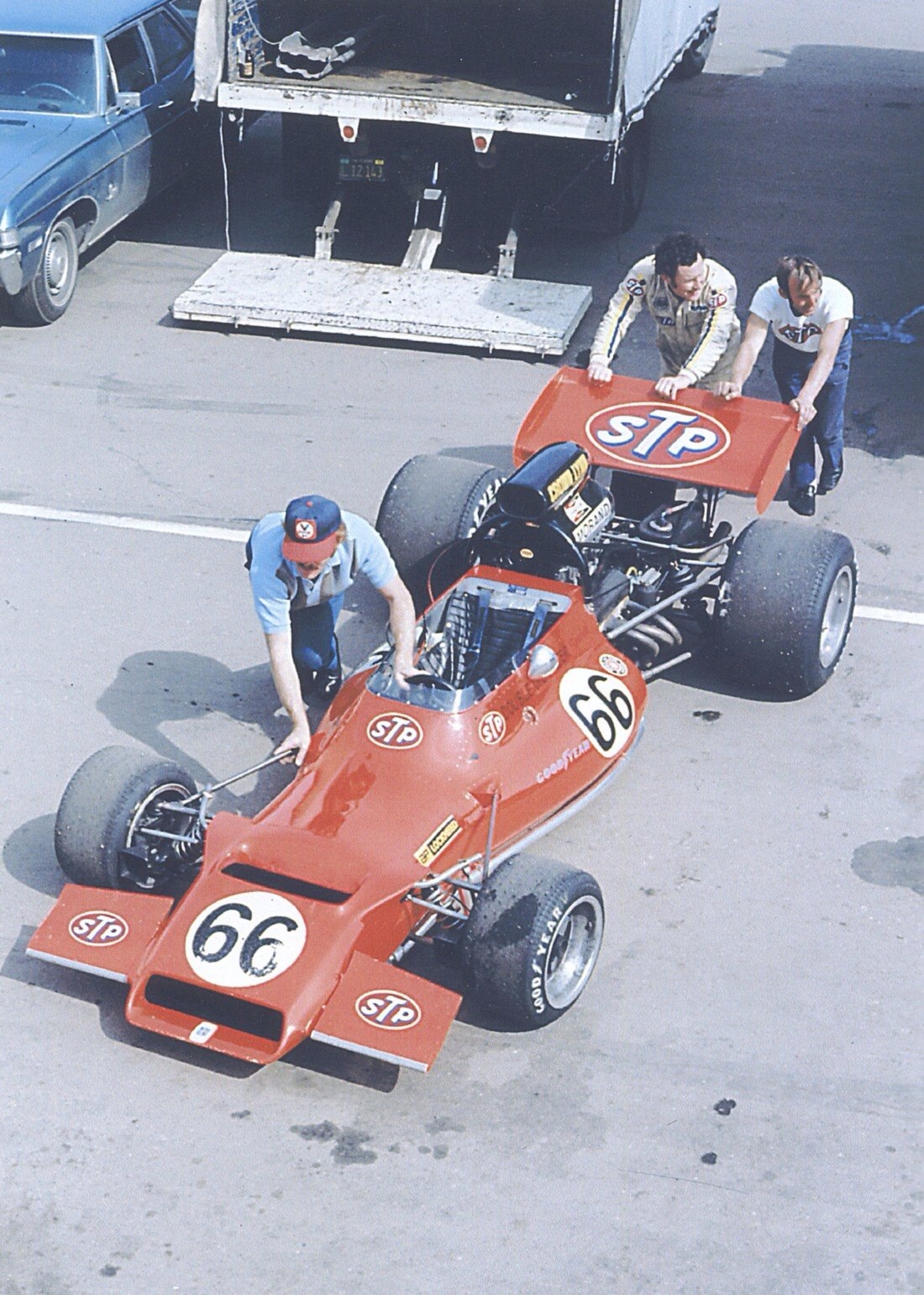
Leda LT27/GM1 in the US early in the 1972 campaign. Ken Stepney steering, Joe Wright pushing with GM sharing a joke. Overhead shot shows the lines of the car and it’s complex, compound curvature to good effect- and its Leda badge on the nose which Martin Lyons dates the shot as pre-July
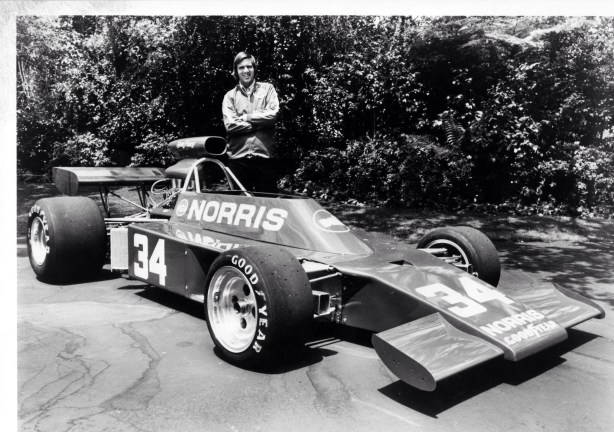
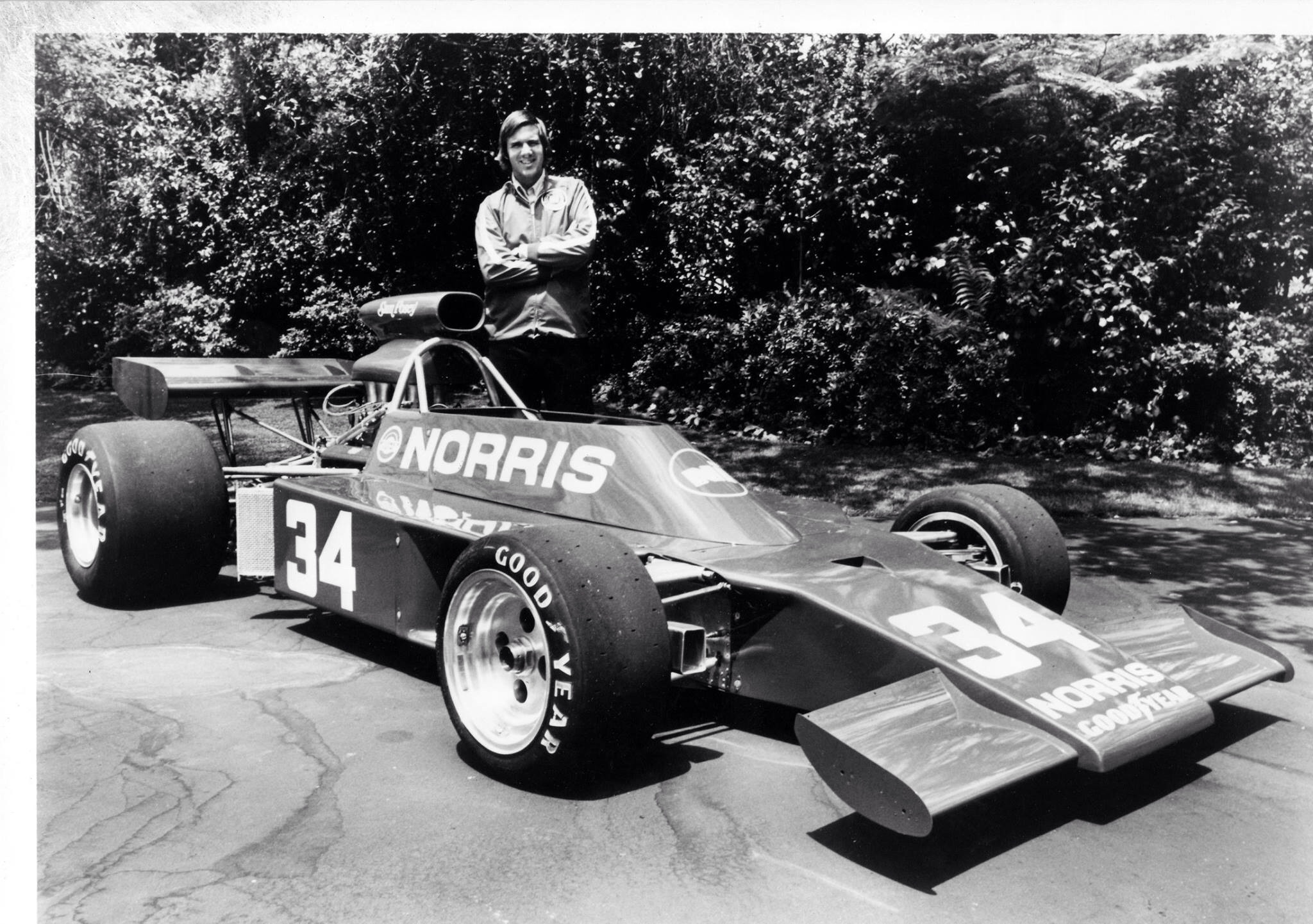
Sam Posey with his Talon MR-1 Chev prior to the start of the 1974 US season (J McCormack)
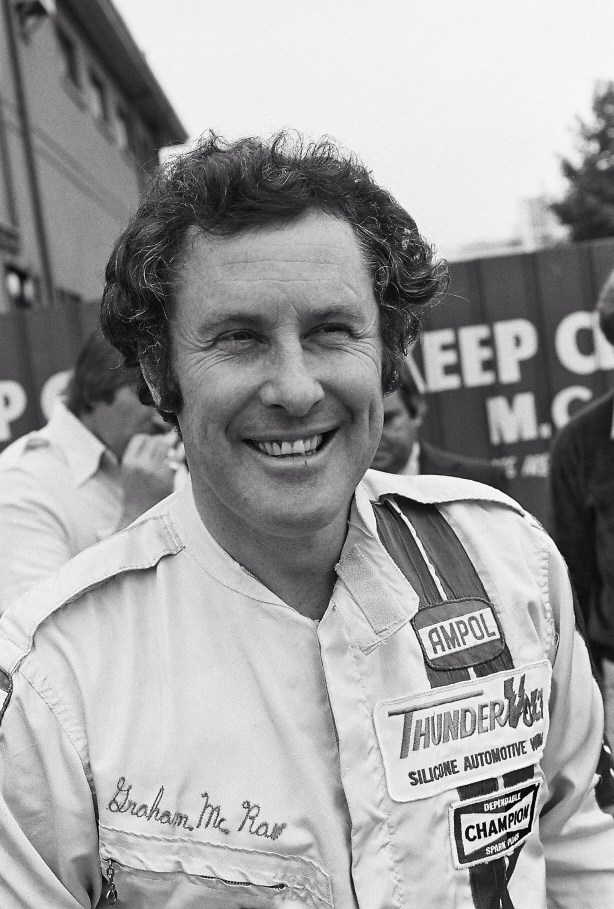
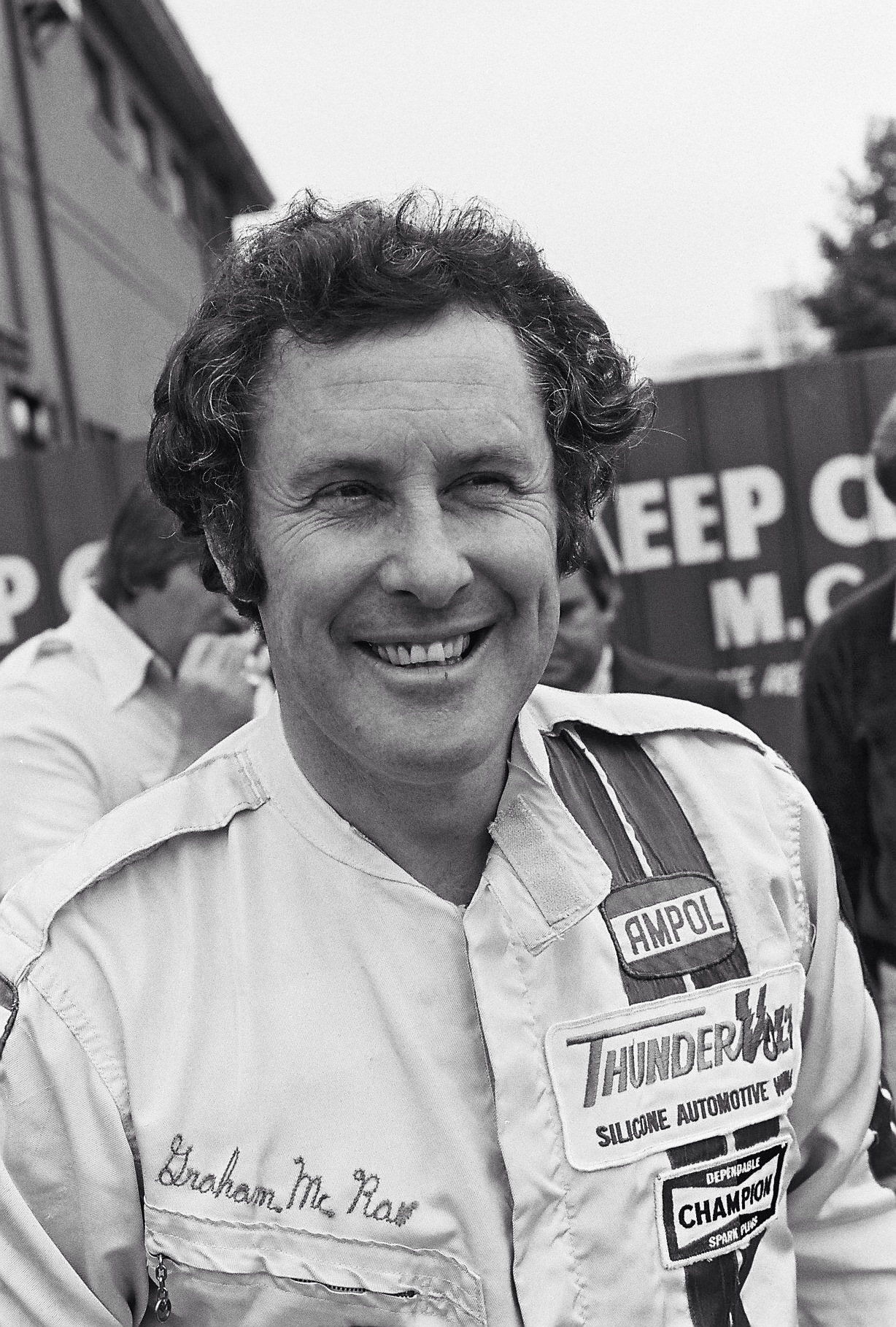
The man in 1978, Sandown or outside the Light Car Club perhaps (I Smith)
Martin Lyons on ‘Living The Dream’ as a young member of the Malaya Garages Team…
‘My first test day with the team was on Wednesday June 9th 1971 at Snetterton race circuit in Norfolk.
I was picked up by Stan, the other race mechanic who had joined us that winter from Rob Walker’s disbanded F1 team. We left Billingshurst at 6.45am in our race-car transporter, which had been owned by the American Eagle F1 team from 1966 to 1968. It still had the AAR badge on the dashboard.
We arrived at the circuit by 10am having emerged from a grey overcast sky to unbroken sunshine only a few miles from Snetterton. The car was unloaded, I filled up the fuel drums with 5-star fuel via handpump.
The car was fuelled and Trevor Taylor, our driver, had arrived in a blue Ferrari Daytona and got changed into his race kit in the transporter. We shared the track with three motorbikes that day (!) and one of them fell off in fright when our car passed him on a corner (or that’s what Trevor speculated!). We were testing a flat plate just above the carburettors and when the car went past the pits you could see a mist of fuel lapping around the plate. It never appeared on the car again. We packed up at about 4.30pm and began the journey home, arriving back in Billingshurst some 4 hours later.
Stan then gave me a lift home in his Mini Traveller (the Mini estate with wooden trims on the body). It had been a day of days. Through my Boots polaroid sunglasses, styled like Jackie Stewart’s the sky looked bluer, the grass looked greener and I was living a dream!!!’
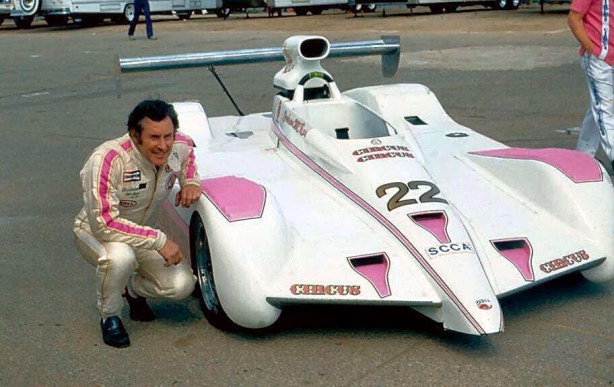
McRae and the curvaceous, wild GM9 Chev Can-Am in 1981/2 (unattributed)
Further information on individual chassis, see Allen Brown’s Oldracingcars…
On McRae http://www.oldracingcars.com/f5000/mcrae/
On Leda http://www.oldracingcars.com/f5000/leda/
Photo Credits…
Special thanks to Terry Marshall for his marvellous evocative work, Gavin Fry, Brian and Neil Stratton, Gerard Richards, Brier Thomas, oldracingcars.com, LAT, Sam Posey, Tony Matthews, R Deming, Mark Windecker, Roger Rodgers, Ian Smith, Bruce Keys, Gerry LaRue, Eric Schaal, Ken Hyndman
Bibliography…
oldracingcars.com, Martin Lyons and his collection
Tailpiece: Finish as we started, Chris, Talon MR-1 Chev, here at Wigram 1975…
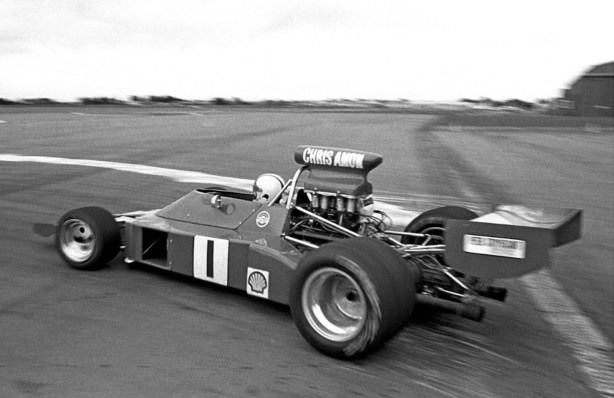
(T Marshall)
Finito…




















 primotipo...