One of the wonderful things about the internet is the constant appearance of material on every topic, in this case a nice batch of photos popped onto it by ‘The Adelaide Advertiser’, here they are, too good not to share.
To celebrate Campbell’s achievement the people of Adelaide turned out in droves- about 200,000 flooded the streets of the small city on 25 July to see and hear Bluebird drive up King William Street to the Adelaide Town Hall. Mind you, ‘Beatle-Mania’ hit Adelaide five weeks before when 300,000 fans of the worlds greatest supergroup flooded into the capital.
Campbell also set the World Water Speed Record in 1964, achieving 276.3 mph at Lake Dumbleyung near Perth in Bluebird K7.
Alec Mildren Racing at Warwick Farm in May 1961, that’s Alec with his back to us and mechanic/engineer Glenn Abbey leaning on the team’s Cooper T51 Maserati back wheel…
The ‘Rice’ Trailer behind proclaims Mildren and the Cooper as winners of the 1960 Australian Gold Star Championship drivers award and Australian Grand Prix. In racing terms Mildren, than 46 years old ‘had been around the block’, racing forever.
This article is about Mildren and the happy confluence of factors that enabled him to achieve Mark Donohue’s ‘Unfair Advantage’, win the titles above and reasonably soon thereafter retire from racing himself to ongoing success as a significant importer, motor-dealer and as a team owner/patron of others.
The factors of confluence were experience, his teams engineering capability, his Maserati connections and economic means. Mildren had raced Coopers for years, first a front engined T20 Bristol and then mid-engined F2 T41, T43 and T45, so his choice of chassis was easy! He was a regular enough customer of the boys from Surbiton that they stocked his hue of ‘Mildren Green’ paint. Cooper despatched a brand new Grand Prix T51, chassis ‘F2-22-59’ to Sydney in October 1959.
The engine was trickier though. 2.5 litre Coventry Climax FPF’s were as rare as hens teeth at that time in the hands of privateers as the works F1 teams had a mortgage on supply. The only dude in Australia who had one was Frank Matich, it was fitted to a Lotus 15 he acquired in the UK- the car was a formidable weapon in Australia’s National F Libre category but not a race winner in Gold Star competition in other than exceptional circumstances. Alec’s single-seater competitors- Bib Stillwell, Bill Patterson and Austin Miller would all be making do with 2 or 2.2 litre FPF’s for a while at least.
The successful Maserati 250S engine, front mounted of course in its original environment, was more of a chellenge to fit, but it could be done, Glen Abbey and Alec had the skills and critically the engine was available, sorted, powerful, and could be acquired by a privateer.
And so it was the Canberra racer cleverly adapted the engine to chassis and gearbox, tested it and then went out, beat the best in Australia and then retired to become the patron, mentor and entrant of Ralph Sach, Frank Gardner, Kevin Bartlett, Max Stewart and others.
Mildren got his timing precisely right- by the start of 1961 he was approaching 46, 2.5 FPF’s were arriving in Australia and Stillwell (born 1927) and Patterson (born 1923) who had also been racing for a long time, but were younger than Alec were starting to peak- win and call it quits, who can argue with that as a good strategy for a professional sportsman?
Mildren was a thoroughly decent man, racer and businessman, the General Motors, Alfa Romeo, SAAB etc dealer was one of those fellas who put far more into motor racing than he ever took out of it.
Mildren with Max Stewart on the Warwick Farm grid in 1970, Mildren Waggott 2 litre’ looks like the tail of Leo Geoghegan’s Lotus 59 Waggott next door (BP)
Going back a step or two Mildren’s parents emigrated to Sydney from Surrey in the UK in 1912…
By the time Alec was born in 1915 at Burwood in Sydney’s inner southwest his father had already established a good business as a master-builder to service the needs of the rapidly growing populations need for housing.
Mildrens interest in cars was whetted at an early age by Vauxhalls his father owned- a 14/40 Speedster and 30/98.
Alec’s drive and determination was no doubt in part due to the difficult circumstances in which he was raised.
On the way back from a holiday over the 1930 Christmas period the family were returning home to Sydney when a tyre of the car his father was driving blew causing the car to roll. Both his parents were killed in the accident, with Alec in the back seat the only survivor. One can only imagine the trauma the 15 year old boy/youth felt. He moved in with his 10 years older brother, wife and family but did not last long, moving out to live on his own aged 16. The brother continued the family home constrction business.
Inner city Darlinghurst was a tough place for a youngster to be but Alec moved into a small bed-sit, and despite the economic savagery of the depression found work pumping fuel and as a milkmans mate. On long walks on the weekend he would surf at Bondi and take a shower.
Before too long he walked into the naval depot in nearby Rushcutters Bay, saw a recruitment ad and joined up. His timing was perfect, having run down the military with budget cuts for years the Australian Government were putting money back into defence as global uncertainty increased- Fascism was on the rise most notably in Germany and Italy.
He was posted to the Communications Centre as a consequence of his education, he had completed his Intermediate Certificate whilst living with his brother. He was later posted to the Flinders base in Victoria and served in the Mediterranean. On a trip to the UK in the late thirties he visited Brooklands and saw the German cars at Donington. He returned from this trip with some goodies for his Austin 7 Ulster- a Laystall crank and rods, Scintilla magneto and a close ratio four-speed gearbox.
By this stage he had met future wife and life partner Marjorie- they were married in August 1939 but soon he was off to War together with most of the other young innocents on the planet. He saw active service in intelligence operations aboard HMAS Hobart in Europe but was invalided out of the Navy as medically unfit after a bad fall aboard ship.
After return to Australia and release from Randwick Hospital he sat his accountancy exams- having studied in his spare time whilst in the Navy and soon commenced working for what is now Price Waterhouse Coopers as an auditor in Sydney. In 1942 son Jeffrey arrived.
He soon moved to The Department of Supply and ‘backyarded’ some used cars- how many racers have motor-trading in their CV?! In a further example of his entrepreneurial flair he bought a cab in 1944 and did very nicely ferrying cashed up ‘Yanks’ around Sydney on shore-leave from ships fighting in the South Pacific, in the same year second son Raymond was born.
At the end of the War Alec sold his ‘taxi-plate’- his licence for a tidy sum and again dealt in cars. Soon he was also employed in the game by ‘University Motor Auctions’. At about the same time he started his long racing career with the purchase of a Singer Le Mans, this was soon replaced by the ex-Ben Tarr Ford Spl.
Mildren in the self built AGM Ford V8 Spl at the Nowra naval base, NSW in 1947 (Mildren)
As Mildren’s business flourished so too did the quality and competitiveness of the cars he raced. In Melbourne his fellow contemporary racers Stan Jones and Bib Stillwell were on similar racing and car dealing journeys- Jones with only his own resources like Mildren and Stillwell with adequate family backing to ease his way into the game.
The Mildren family decision to set up shop in Canberra was made after a number of trips ferrying cars from Sydney to Canberra to a friend who was operating from the national capital. He and Marjorie acquired some land in Lonsdale Street, Braddon and built a small dealership premises and an adjoining flat in which they lived. All of the profits of the business were ploughed back in to finance stock- soon they applied for, and were granted General Motors franchises for Vauxhall and Bedford.
Mildren in the Dixon Riley at Sydney’s Parramatta Park track in 1951 (Mildren)
Alec in this posed shot at Gnoo Blas, Orange NSW 1954. Self developed MG Spl (Mildren)
Whilst the family lived modestly behind the dealership Mildren continued to race contesting the 1948 Australian Grand Prix at Point Cook in Melbourne’s west aboard a self-built AGM Ford V8 Spl he built in 1947.
This was replaced by an MG TB he ran from circa 1949 to 1951 prior to acquisition of the ex-John Snow Dixon Riley which was completely rebuilt upon purchase in 1951, but still gave plenty of grief in terms of the cars speed and reliability!
In 1953 he bought a very famous MG, Alan Tomlinson’s MG TA Spl which won the 1939 AGP on Australia’s most daunting road circuit, Lobethal in South Australia’s Barossa Valley. He replaced the old war-horses heavy body with a Clive Adams built central-seat aluminium one which slipped through the air nicely. The mechanically very capable Alec replaced the TA engine with a supercharged TC unit and close ratio gearbox. The car was very quick- Alec accepted an offer from Curley Brydon to buy it after the Gnoo Blas meeting in 1953.
Mildren Cooper T20 Bristol, Mount Druitt (Des Lawrence)
His passion for Rileys undiminished, he next bought the Rizzo Riley before buying his first ‘outright in the right circumstances’ contender, the ex Rodney Nuckey Cooper T20 Bristol which made its debut at Mount Druitt in 1955.
Jack Brabham’s T23 would have been a better purchase when ‘Blackie’ went off to seek fame and fortune in The Land of The Pom but Stan Jones ‘nicked’ that machine from other locals in his ever expanding garage(s).
Acquired in the UK, Alec’s new car was a serious bit of kit which had won the 1953/4 Helsinki GP’s. He remembers the car mainly in a positive way, he liked the cars handling, braking and steering- ‘I won a few short races with it, but no long ones of any consequence. I can’t say that I went out to buy Bristol engines- the one I had was very temperamental’. In long Australian careers all five of the T20/23 Cooper Bristols which came to Australia had their engines replaced by either Holden ‘Grey’ six cylinder engines, sometimes fitted with a Phil Irving designed Repco ‘Hi-Power’ head or Chev Corvette V8’s.
A mistake in the cars preparation when a fuel line leaked onto the exhaust during the Argus Trophy at Albert Park hospitalised the gritty motor-trader overnight and took a while to recover from but his increasing flair was on display at his first post-prang meeting at Southport, Queensland when he finished 3rd behind Lex Davison’s Ferrari 500/625 and Stan Jones Maybach in November 1955.
The organisers of the New Zealand Grand Prix invited him to contest their 1956 event at Ardmore but the Cooper had the look of a start-line special when the Bristol engines head gasket blew having covered only 20 yards after the start. In late 1956 he also commenced racing an Aston DB2/4- profits were on the up! After the 1957 AGP at Caversham, Western Australia, with Alec fifth in a race famous for its vicious heat, he sold the car to local gun, Syd Negus.
Mildren, Cooper T41 Climax, Lowood 1957 (Mildren)Cooper T41, twin SU fed Coventry Climax 1.5 litre SOHC FWB engine (Mildren)
Mildren went mid-engined for the first time with purchase of Jack Brabham’s 1956 Oulton Park Gold Cup winning F2 Cooper T41 Climax FWB.
‘When I first drove it down my practice strip near home I couldn’t believe how good it was…how the brakes and steering worked and the car drove better than anything I had had. I entered a Bathurst Easter meeting and I couldn’t believe it when I passed the Ferrari’s and Maserati’s (250F) because its such a little car, so handleable!’
By now the self-fulfilling prophecy of better cars giving better results was clear to Mildren- if that was ever in doubt! His next acquisition was his first ‘brand spankers’ racing car- the latest F2 Cooper T43 Climax FPF 1.5 twin-cam.
Mildren wasn’t convinced it was much better a car than its predecessor until taken out to 2 litres with a liner kit, pistons and sleeves he sourced from Coventry Climax via Jack Brabham. In that form he contested the ’58 AGP at Bathurst finishing 7th in the race having been hit during practice and pitting twice.
He won the ’58 Queensland Road racing Championship and Lowood Trophy- beating Stan Jones and Reg Hunts Maser 250F’s, the first time in Oz a Cooper had beaten the Big Red Cars.
This car was sold to Glynn Scott who raced it successfully with Mildren buying a new Cooper T45- delivered to Melbourne prior to the 1958 Melbourne Grand Prix, Alec and Glenn Abbey, then a youth who would become a longtime Mildren mechanic/engineer fitted the 2 litre FPF from the T43.
Alec was in with a shot for the ’58 Gold Star along with Stan Jones and Len Lukey but Stanley won the final round at Phillip Island aboard his Maser 250F and took the title he so richly deserved. Like Alec he was a perennial racer who had been competing nationally for almost as long as Mildren.
Mildren aboard his Cooper T45 Climax 2 litre FPF at Port Wakefield, South Australia in 1959. Those trademark prescription race goggles were made by Merowytch in London- in 1960 he switched to glasses and a visor (K Drage)Bill Patterson’s T51 tail, Keith Rilstone’s Zephyr Spl with Alec, Cooper T45, Port Wakefield 1959 (K Drage)
In many ways Len Lukey’s successful 1959 Gold Star campaign was a prototype of Alec’s in 1960- buy the very best Cooper available, contest all the rounds with adequate back-up, drive fast and well but play the percentages, and the title will surely be yours.
Lukey won at Caversham and Phillip Island and whilst Alec was victorious at Fishermans Bend and Lowood twice, Lukey took the title by only 2 points from Alex with greater consistency.
Magnificent shot of Alec holding off Stan Jones during the Bathurst 100, Cooper T45 and Maser 250F, Easter 1959 (Mildren)
The title could easily have been Alec’s were it not for some misfortune during the Bathurst 100 round. He led until the 5th lap and then pitted to secure the loose bonnet cover having been black-flagged. He re-entered the race and with red mist in his eyes was up to 2nd behind Ross Jensen’s Maser 250F when a conrod bolt broke- he shut the engine down, but it cost him 6 valuable points to Lukey. When they tore the engine down there was damage only to the conrod- the precious crank was ok.
Cooper T51 Maser 250S, Longford 1960 (J Ellacott)Cooper T51 Maserati 250S, a pair of big Weber DCO3 carbs, Warwick Farm (Bob Britton)
As 1960 approached the Cooper Maserati was made race-ready…
The Maserati engine was no fluke, the approach to the factory was a function of Mildren ‘selling a few at the time’, he was an accredited dealer of the marque. The Cooper Masers in the UK suffered chronically from overheating so Mildren specified his to be built to suit methanol fuel, with the motor having a higher compression ratio than usual. These engines were fitted to the (1957) Maser 250S sportscar- four of which were built so fitted. Other 250S engines were fitted to update earlier Maser sporties with some sold to customers and fitted into other chassis’.
Initially the Mildren car used a Cooper Jack Knight splash-fed gearbox, later Alec acquired a pressure-fed ‘box from Jack Brabham after the Longford 1960 meeting. ‘This helped but by no means solved one of the cars problems, the fragility of its earlier model Cooper gearbox. The punch of the Maserati engine could still create little indentations on its bronze bushes, and easily peel the teeth off first gear, even with careful treatment Mildren described it as a “one practice, one race” gearbox before it needed overhauls’ Graham Howard wrote.
T51 first gearbox, Cooper Knight box, ERSA built original ex-Citroen (B Britton)
Despite the bulk of the 250S engine in relation to the mass of the 2.5 CC FPF for which the T51 chassis was built, Mildren and Abbey were able to mount the engine lower in Owen Maddocks frame than the taller FPF. One top chassis tube was modified to clear the twin 48 DCO Webers, the Cooper chassis ‘slightly strengthened’ with water and oil radiators enlarged due to engines requirements, a learning from experience with the motors use in the UK. The team also managed to fabricate driveshafts of equal length, unlike the Cooper Masers in the UK.
An adaptor plate or bellhousing was cast and machined locally to mate engine to gearbox and exhaust pipes were fabricated to clear the frame and ancillaries to dimensions specified by Maserati. The motor gave circa 270 bhp @ 7800 rpm- more than enough to do the goods amongst the 1960 Oz competitor set. Let’s not forget that the car was the first full Grand Prix specification machine Alec had driven, he was stepping up a class from what had gone before.
Alec’s 2 litre Cooper T45 Climax being pushed thru the Gnoo Blas paddock in January 1960- a successful weekend for the team- Glenn Abbey in blue, who is the other chap I wonder (Kelsey)
The season started well with a win in the Cooper T45 Climax at Gnoo Blas, Orange in late January. Alec won the South Pacific Road racing Championship during the Australian Touring Car Championship meeting averaging 103 mph and taking a second off Brabham’s lap record. He sold the car at the end of the weekend to future CAMS President John Roxburgh.
The 1960 Gold Star season started with the International meetings, the frst of which was at Longford in early March, there Alec was 2nd behind Brabham’s Cooper T51 2.5. Whilst in Tassie he accepted an invitation to compete at the opening Symmons Plains meeting- he and Arnold Glass’s 250F entertained the crowds with lots of passing but the Cooper Maser took the honours and its first win.
Longford paddock 1960, Austin Miller topless beside his yellow Cooper T51 Climax, then Arnold Glass’ Maser 250F and Alex fettling his car beside his ‘Rice’ Trailer (R Lambert)Mildren at Longford in 1960, lines of Coopers of this era so distinctive (E French/Walkem Family)
Start of the Longford Trophy in 1960, what a marvellous panorama. Cooper T51’s to the fore L>R Brabham, Millers yellow car and Bib Stilwell, the Glass red 250F further right (Ellis/oldracephotos.com)
At Easter for the Bathurst 100 Mildren took a dominant win with the car timed at 160.71 mph over the flying mile. Glass was 2nd and Bill Patterson 3rd in Maser 250F and Cooper T51 FPF 2 litre. ‘The victory was immensely popular with 25,000 spectators, the crowd giving him one of the loudest ovations then heard at the popular track…to slash more than five minutes from Ross Jensen’s record time’.
The next race was the big one, that year the Australian Grand Prix was held on the Lowood, Queensland airfield circuit.
Alec’s track record there was impeccable- he was without doubt the fastest combination in Australia but a wildcard was thrown into the mix with ‘Dame Nellie Melba’- Lex Davison returning from retirement again to race an Aston Martin DBR4 GP machine powered by a methanol fed DBR1 3 litre sportscar engine.
The cars were hopelessly outclassed in GP racing- the front engined machines were too heavy, underdeveloped and arrived two years too late just like Lance Reventlows Scarabs. Some writers describe them as the ultimate expression of the front engine GP car but that does a grave disservice to the Lotus 16 Climax and the 1960 Ferrari Dino 246. Nonetheless, in Australian F Libre with wily, fast Davo behind the wheel the car was very much a contender, as events proved in spades.
Davison in his 3 litre Aston DBR4/250 during the Lowood ’60 AGP (Davison Collection)
Wide and open Lowood suited the Astons long legs, were the race at Bathurst or Fishermans Bend it would have been a different matter, perhaps.
Davison described the Coopers as ‘anti-Climaxes’, he was said to be emotionally attached to the front-engine machines like his Ferrari 500/625 but he was well aware of the Coopers potency given his hillclimb and short-circuit successes in his own air-cooled Coopers- and of course he was to race the machines in the coming years inclusive of a 1961 Mallala Cooper T51 AGP win. Still, Davo’s choice was an interesting one as he had the wealth to pick and choose from all the options. Davison had practiced the car at Goodwood and Phillip Island where he was 2 seconds from Brabham’s lap record.
The following excerpts are drawn from racer/team owner/journalist David McKay’s Sunday Telegraph and racer/historian Graham Howard’s ‘History of the AGP’ race report/chapter.
McKay wrote ‘Davison came to Lowood supported by his experienced crew…he drew first blood by winning the champions scratch race. Mildren had a lucky break here- 300 yards from the start he broke a halfshaft’. A half hour delay in the program caused by a fire after Ern Tadgell’s aero-engine Lotus 12 crashed and caused a small grass fire allowed Mildren’s repairs to be completed, he took the grid alongside Bib Stillwell, Cooper T51 Climax 2.5 and Davison.
‘The interesting aspect here was that, although the Mildren team carried every necessary spare part, the bushes of the top and bottom wishbones for the car had not been pre-reamed and required a lot of hand work in a very short time if the car was to be ready. Mildren himself had to take over- he had, after all, been building his own AGP cars since 1947- to get the work done…’ wrote Howard.
Alec sets to repairing the T51’s halfshafts in time for the race start. Note the rear disc, curvy Cooper chassis frame, transverse leaf spring, Maser 250S engine (Mildren)
The flag has dropped: Stilwell in the middle gets the initial jump with Alec on this side- hoping his car will be ok after the last minute repairs, and Lex on the outside (P Reynell)
‘From the flag until the end of the race, Mildren and Davison duelled at speeds between 40 and 160 mph and for most of the time separated by a second or less. The small green Cooper Maserati sounded harsher and accelerated harder than the big green Aston which looked noticeably steadier through the corners. Mildren lost the lead in a spot of heavy traffic and then “butterfingered” his car and the resulting excursion into the outfield dented the Cooper’s snout’.
Green ‘While Mildren did indeed grab the lead from Stillwell and Davison on the opening lap after making an understandably gentler start in second gear…a photo…showed Mildren’s unscathed car trailing the Aston Martin. Howard’s account explained that Davison grabbed the front running on lap 16 at Castrol Corner and that Mildren spun a lap later at Bardahl- perhaps caught out by traffic’.
Both Davison and Mildren led the race twice, here the Aston is in front of the little Cooper just before Alec spun (HAGP)
Davison had a 10 second lead, Mildren recalled ‘I did a silly thing- I had so much confidence that I eased off the throttle and dropped the pace by a second or two. When I tried to regain the time, I had to work very hard and told myself I had been a stupid fool. So I drove as hard as I could and eased back the time lost. It was not just a question of catching, but of course passing him’.
McKay ‘ Mildren retaliated and gave chase in true Moss-like fashion. He closed the gap relentlessly and went ahead again when Davison overdid a corner. Averaging 95 mph, these two held the 25,000 paying customers spellbound. Many excellent performances tended to be overshadowed. Stillwell, his rivals drawing away at over 2 sec a lap, motored cleanly and rapidly in third spot- never challenging or being challenged. Behind him was a race long fight between Hall, Leighton and Glass…The leaders rushed past others as though possessed of immense speed and skill to match, everyone except Stillwell suffered the indignity of being “doubled”, some several times’.
Green, ‘No mention is made of Davison regaining the lead within a lap at Mobilgas, or of Mildren retaking it at Castrol two corners later- but such was the case’.
David McKay on the closing stages one of The Great AGP’s ‘Mildren’s engine , due to the damaged nose, was badly overheating and when Davison closed and went to the front just before the end it appeared as though the veteran driver would never realise his ambition, but in a finish to beat all finishes Mildren ducked inside Davison on the very last corner and in the long straight run to the chequered flag we could hear the Aston’s engine being squeezed as never before in a last effort to overhaul the Anglo-Italian car. Davison got the most out of the Aston alongside Mildren’s cockpit as the flag fell. “Mildren of Lowood” had won by 1/20th of a second’.
Metres from the finish, the big Aston ran out of space to run the little Cooper down- a magnificent finish to a fantastic race- difference in the size of the cars mega isn’t it (J Benson)
‘If he never drives again’, McKay wrote ‘Mildren earned himself a place in Australian motoring history by his magnificent drive that day. It was a victory of the highest order- won from a champion and sportsman who made him fight every inch, every second of the way. Mildren now has a stranglehold on the Gold Star award- that and the AGP are the fruits of many years and thousands of pounds spent in the most exacting sport of all’.
Sportsmanship personified: Lex playfully interviews Alec for the crowd, to right is Qld Governor Sir Henry Abel-Smith with Glynn Scott, first Queenslander home in Alec’s old Cooper at far right (Courier Mail)Winners are Grinners, Alec, Jack Cotterill and Glenn Abbey with the AGP Cup (Mildren)
The Gold Star circus returned to Lowood again on the weekend of 4 September with Mildren again victorious, from Stillwell and Davison, albeit this time Bib was in front of Lex. It was another great race in which the lead changed about a dozen times in the opening 5 laps before Alec took the lead and held it.
Brabham returned for the October Craven A International at Bathurst in October as 1960 World Champion. No way was he going to lose that race, he won from Patterson and Stillwell. All three drove T51’s powered by 2.5, 2.4 and 2.2 litre CC FPF’s. Alec failed to finish with a gearbox failure on lap 16.
Jones in blue, Mildren, Brabham up front, then John Leighton Cooper T45 FPF and Bib Stillwell in red, front engined car on row 3 is Arnold Glass Maser 250F, Noel Hall and Austin Miller in yellow. Then John Youl beside Bill Patterson’s white car- the other yellow machine is Doug Kelley’s ex-Miller Cooper T41 Climax FWB. The cars are all T51’s except where specified otherwise (NMRM)Bathurst front row- Jack in the car, Alec #2 Cooper Maser and Stan Jones T51 with Alec back to us talking to Stillwell in the silver helmet? (Aussie Homestead)
A spate of unreliability seemed to have set in with a duff engine at Port Wakefield during the Advertiser Trophy meeting the following October weekend. Lex started from pole and retired on lap 20- the race was won by Stillwell from John Youl, T51 2.2 and Keith Rilstone’s amazing Eldred Norman built, front-engined supercharged 6-cylinder Zephyr Spl. Very much an Australian Special story for another time.
There was plenty of time to take the Cooper back to Canberra and have it well prepared in time for the Caversham, ‘Western Australia Trophy’ meeting on the 5 December weekend.
There Alec’s long desired Gold Star title dreams were realised with victory from Stillwell, his car now fitted with a 2.5 litre FPF and Derek Jolly’s Lotus 15 Climax sportscar. Bib needed 12 points to stay in the title hunt and took the lead from the start but Mildren was soon all over him, pressuring the Victorian into a rare error, Bib spun off at The Esses. By the time Bib got his Cooper gathered up and returned to the fray Alec was a half-lap ahead, a lead he was not to relinquish.
The team celebrated long into the night, the win a very popular one amongst his fellow competitors and race fans across the country- one of the sports perennial competitors had reaped the rewards he deserved.
Mildren did not start the final two major meetings of the year with Bill Patterson winning the Lukey Trophy at Phillip Island and Stillwell taking the Warwick Farm Trophy the week before Christmas 1960.
The final Gold Star pointscore was Mildren on 55 points from Stillwell and Patterson on 41 and 20 respectively.
The successful businessman/racer considered his options for 1961 knowing that Stillwell, Patterson, Youl, Miller and Davison who had retired again- and come back again would be formidable competitors, some with 2.5 litre FPF’s fitted into the back of their Coopers.
Clearly Mildren was at least considering a new car as the Cooper Maser was advertised for 5500 pounds in the November issue of ‘Australian Motor Sports’ but it did not sell so a new Maserati ‘Birdcage’ Tipo 61 2.9 litre engine and 5 speed Colotti Type 21 gearbox was fitted but not in time for the early season internationals.
Alec retired in the Warwick Farm 100 with falling oil pressure, the race was won by Rob Walker’s Moss driven Lotus 18 Climax. Arnold Glass had his first race of his Tommy Atkins built Cooper T51 Maserati 250S, a car he grew to dislike as much as he savoured and did so well in the Maser 250F which went before!
The car was trailered to Ballarat for the Victorian Trophy meeting at Ballarat Airfield on 12 February. There Dan Gurney took the only international win for a BRM P48, Alec was 6th, a lap down on Dan, the similarly mounted Graham Hill, Ron Flockhart’s Cooper T53 with Stan Jones the best of the locals in his T51 2.5 FPF, 4th. Glass was 7th in his Cooper Maser.
At Longford in early March Mildren was 6th, still with the 250S engine fitted with Cooper T51 FPF’s dominating- Salvadori won from Patterson, Youl and local boy Austin Miller.
During the lead up to the Easter Bathurst meeting the Birdcage engine was fitted. Bill Patterson won the ‘Craven A’ Gold Star race convincingly in a run which would win him the 1961 Gold Star aboard his very quick T51. Alec was 5th behind Patto, Stan Jones, Stillwell and Glass. Alec felt the car was quicker than before but not very much so.
Warwick Farm May 1961 and here fitted with the 2.9 litre Maser Birdcage Tipo 61 engine number ‘2475’ and Colotti T21 5 speed gearbox (J Ellacott)
In its new Birdcage/Colotti form he was 2nd in a low-key non-championship scratch race behind Bib Stillwell at Warwick Farm in May- in front of the Noel Hall and David McKay T51’s.
Lowood had been a Mildren happy hunting ground more often than not in the preceding years, and so it was he was 2nd in the Queensland Centenary Road racing Championships Gold Star round in June behind Patterson but ahead of Jones.
And in low key style, that was it for Alec’s racing career, he quietly retired to focus on his business and establishment of Alec Mildren Racing Pty. Ltd as a team owner- his and David McKay’s Scuderia Veloce concern created the first professional racing teams in Australia.
Mildren’s exploits and those of his drivers will be a nice Part 2 of the Alec Mildren story.
Alec Mildren Racing at Longford in 1965. Gardner warms up the Brabham BT11A Climax in the foreground whilst alongside the Mildren Maserati is fettled next door (oldracephotos/H Ellis)
In September 1961 the Cooper, fitted with the 250S engine was sold to Ross Dalton on a time payment deal. In his first meeting with the car at the shortlived Toowoomba Middle Ridge road circuit he lost it in practice- locking the front wheels, broadsided some corner posts and somersaulted over the haybales, the car was ‘not too badly damaged’. Whilst advertised again with the 250S engine and Colotti box in AMS in February 1962 Green’s book says the car reverted back to Alec after the accident.
Entered in the 1963 AGP at Warwick Farm for Frank Gardner the now ‘old nail’ T51 Maser was outgunned by much more modern Coopers, Brabhams, Lolas and Lotuses but gave FG valuable big-car experience before he returned to Europe where he was ‘on the climb’. He DNF for unstated reasons. Gardner’s pattern of driving for Alex every Australasian summer at the end of his European season extended all the way through to 1969- and to the end of FG’s single-seater career post his time with Alec’s team through until 1972.
At that stage it was not uncommon globally for uncompetitive Cooper T51’s to be re-birthed as sportscars, perhaps Roger Penske’s Zerex Special (see my article by keying the name into the primo search engine on this sites front page) is the most famous of these exercises.
Abbey and Mildren’s variation on the theme was for the core components of the car- T61 2.9 litre engine, Colotti box, suspension and brake componentry to be built into a car constructed by Rennmax’ Bob Britton who ended up having an enduring, very successful relationship with the team until its end at the duration of the 1970 season.In essence Britton’s car was a Lotus 19 chassis clone with a 23 style of body.
The car was immediately quick in the hands of Ralph Sach, Frank Gardner and Kevin Bartlett who won the 1965 Victorian Sportscar Championship in it. Its life with the Mildren team ended during the 1965 Australian Tourist Trophy, when, with Gardner at the wheel the engine let go in the biggest possible way spreading expensive alloy shrapnel on Lakesides main straight.
Ralph Sach in the Longford paddock 1965, Mildren Maserati (oldracephotos)Business end of the Mildren Maserati at Lowood (K Bartlett)Ralph Sach, Mildren Maser during the 1965 Tasman meeting at Warwick Farm (B Wells)
At that point the car was advertised and sold to Ross Ambrose (he of Van Diemen and Marcus Ambrose fame) who renamed it, with Mildren’s agreement, as a Rennmax. Fitted initially with a 2.2 litre Coventry Climax FPF it later had installed the ex-Scarab/Stillwell Buick 3.9 litre V8 by Geoff Smedley, the car raced on and still exists.
What about the chassis of the Cooper you ask?
Badly corroded, twisted from a few accidents and by then living in Abbey’s coastal Narrabeen home garage, it was dumped at the Avalon tip circa June 1965- the cars simply were not worth then what they have been since the mid-seventies!
Bits not used in the sportscar build went to other Cooper owners, especially in Tasmania where a few of the Oz T51’s ended up. The 250S engine sold to Terry Clift in 1966 and played an important role in the cars resurrection when he sold it, in badly damaged form, to Sydney’s Paul Moxham who had started the long process of reconstruction of this famous, clever Australian Cooper.
Mildren before a rin in Paul Moxham’s recreation/reconstruction of his old T51 Maser during the 1985 Adelaide AGP carnival (Mildren)
The chassis commercial airline pilot Moxham found for the project was believed to be one of two created ‘in period’ by Len Lukey who fabricated a T51 jig whilst the 1959 Gold Star winner was racing a T51- not the only such jig in the country either!
Moxham created a fibreglass body from a mould taken off the Noel Hall T51 in 1959 by Bob Britton and Chris Conroy- Sam Johnson of JWF Fibreglass made the body. The car was assembled gradually in consultation with Mildren, Abbey and Tim Wall with new wishbones, bushes, front axles, discs, hubs with the engine and gearbox fully rebuilt by 1985.
Alec drove the car during the (first) 1985 Adelaide F1 AGP carnival and looked as pleased as punch with the car and experience. Moxham used the car in historic events from then until 1989 when prominent American racer/collector Peter Giddings acquired it. It still exists…
Longford Trophy 1960: Stillwell has jumped away from winner Brabham in #4 Cooper T51. Arnold Glass 250F clear, #60 Miller’s T51, #24 Mildren, #9 Patterson T51 and #20 John Youl also T51 with the distinctive rear suspension of Ern Tadgell’s Lotus 12 Climax (Sabakat) at right rear. All of the hot shots of the 1960 Gold Star sans Davison are in this shot (K Thompson)
Etcetera: Cooper Maser T51 Technical Specifications…
Chassis
Number ‘F2-22-59’: Mk4 T51 multi-tubular spaceframe
Suspension- Front- unequal length upper and lower fabricated wishbones and coil spring/shocks Rear- adjustable top links, lower wishbones, single transverse leaf spring and shocks. Steering: Cooper rack and pinion. Brakes: Girling discs outboard on all wheels
Dimensions- Front/rear track 1182/1219 mm. Wheelbase 2311 mm. Wheels Cooper cast magnesium 121x381mm front and 159x381mm rear with 5.25/5.5×15 inch front and 6.5×15 inch rear tyres. Weight circa 472 kg dry
Maserati Engines:
250S
All alloy, DOHC, roller follower, 2 valve, dry sumped four cylinder fed by two 48mm Weber carburettors, alcohol fuel.
Bore/stroke 96X86mm- 2489cc, compression ratio 12.5:1. Power circa 270 bhp @ 7800 rpm on alcohol fuel
T61
General description as above
Bore/stroke 100X92mm- 2890cc. Power quoted as 260 bhp @ 7000 rpm with 100 octane. On alcohol a bit more
Gearboxes
Initially Cooper Knight 5 speed, with Maser T61 engine Colotti T21 5 speed when car fitted with Birdcage T61 motor
Bibliography…
‘History of the Australian GP’ Graham Howard and Ors, ‘Historic Racing Cars in Australia’ John Blanden, ‘Driven To Succeed: The Alec Mildren Story’ Barry Green, oldracingcars.com, ‘Maserati: A Racing History’ Anthony Pritchard
Photo Credits…
John Ellacott, Peter Reynell, Bob Britton, Bruce Wells, Kelsey Collection, oldracephotos.com, Australian Motor Racing Museum, Aussie Homestead Racing, Keverall Thompson, John Benson, Mildren- photos from Barry Green book as above, Kevin Bartlett
Tailpiece…
(P Reynell)
Mildren awaits the start of the 1960 AGP at the front of a very crowded Lowood AGP grid. The period immediately before the race had its pressures too. Stillwell and Davison alongside. #87 is the Frank Matich Lotus 15 Climax.
Vic Elford leans his machine gun on moustachioed teammate Lucien Bianchi’s, winged Cooper T86B BRM in search of a Messerschmitt BF109, Nurburgring 1968…
This is a pretty canny bit of impromptu PR by the Cooper boys at the height (sic) of the hi-wings explosion that summer in Grand Prix racing. That trend was all over pretty quickly due to the flimsy engineering of some of the appendages, that story covered by an article I wrote a while back; https://primotipo.com/2015/07/12/wings-clipped-lotus-49-monaco-grand-prix-1969/
Cooper’s built three T86B chassis for the 1968 season by adapting the 1967 Maserati V12 engined T86 design to accept BRM’s sportscar derived customer P101 V12 first used by Bruce McLaren during the later half of the 1967 season in the back of his McLaren M5A.
Cooper T86B- aluminium/electron monocoque chassis, front suspension by top rockers, lower wishbones and inboard mounted coil spring/dampers, rear suspension by single top link, inverted lower wishbones, twin radius rods and coil spring dampers, adjustable roll bars front and rear. Outboard disc brakes front and rear, Cooper steering rack. BRM P101 2998 cc DOHC, 2 valve, Lucas injected 60 degree circa 375 bhp V12, Hewland DG300 5 speed transaxle (Bill Bennett)
The heavy, relatively lower (a Cosworth DFV punched out about 410bhp at the time) powered machines were raced initially by Brian Redman and Ludovico Scarfiotti, who was tragically killed at Rossfeld Hillclimb over the June Spa weekend. He was replaced by Lucien Bianchi, who had an amazing year in sportscars, rally machines and in single-seaters. Click here for an article in part about Lucien; https://primotipo.com/2016/03/22/cowans-grunter/
Quick Vic got the steer after Brian Redman was badly injured at Spa when his suspension failed, the car then crashed into and over a concrete barrier, his progress arrested by a parked Ford Cortina- he escaped with a broken arm and minor burns but was out of racing for a bit. Johnny Servoz-Gavin and Robin Widdows had one-off drives. Best results for the cars were thirds for Redman in Spain and Bianchi at Monaco, whilst fourth places were scored by Scarfiotti in Spain and Monaco and by Elford in France.
German GP start, gloomy to say the least! Denny Hulme’s McLaren M7A Ford in shot, to his left and forward is John Surtees Honda RA302 with Elford’s Cooper to John’s front left. Up front are Ickx and Amon’s Ferrari 312’s, Hill is to Elford’s right in the hi-winged Lotus 49 and a slow starting Stewart, Matra MS10 in front of Hulme (PH Cahier)
Vic popped his Cooper on grid 5 at the Nurburgring but left the road on the first lap of the famously wet and treacherous race won by Jackie Stewart’s Dunlop shod Matra MS10 Ford. He won by four minutes from Graham Hill’s Firestone shod Lotus 49B Ford and Jochen Rindt’s Goodyear tyred Brabham BT26 Repco a further six seconds back. Stewart was magic that day aided by some schmick, trick Dunlop wets- one of his greatest drives in the minds of many including the great man himself.
JYS during his soggy, stunning run, Matra MS10 Ford (R Schlegelmilch)
Love this post by Australian racer/enthusiast Ed Holly on Facebook the other day. He happily reported he still has the record but not the turntable upon which to play it…
The Spotify (you can’t beat it mind you) generation really struggle with records and turntables, mind you vinyl is staging a comeback of sorts.
Didn’t we all have Scalextric sets or a mate who had one? The image gave me all kinds of happy flashbacks. School holidays in the sixties were a blur of train sets, slot cars, a Yogi Bear or Flipper movie with mum at Balwyn Cinema (Melbourne, Victoria, Australia) with WH Lowe’s Ferrari showroom opposite in Whitehorse Road to drool over, choc-top ice cream in hand afterwards- and billy-cart manufacture of course.
Ken Holt, the Caltex Servo owner at Greythorn never did crack the shits no matter how many ball-bearings me ‘an me mates cadged in our quest for ultimate, super steep Fintonia Street speed.
Pram wheels at the front and ball bearings at ze rear was the gun setup which provided speed, plenty of front end bite and bulk oversteer of which Kevin Bartlett would have been proud.
After a couple of hours of that it was time to go inside, sort the brushes on the Chaparral and go Scalextric racing- I never did have that record mind you…
Credits…
Ed Holly, Getty Images
Tailpiece: Christmas shopping 1968- that could be mine…
Ron Flockhart and Mustang P51, Moorabbin Airport, Melbourne 1961…
I wrote an article three years ago about Ron Flockhart’s win together with Ivor Bueb aboard an Ecurie Ecosse Jag XKD at Le Mans in 1957 (he won in a D Type with Ninian Sanderson in ’56 too) and tangentially about his death in a Mustang P51 fighter in Melbourne’s Dandenong Ranges during preparations for his second attempt on the Australia-United Kingdon air record in April 1962. Click here to read it; https://primotipo.com/2015/01/17/le-mans-1957-d-type-jaguar-rout-ron-flockhart-racer-and-aviator/
Recently I came upon some photos of him in during the Summer of 1961 Australian internationals. This led to another Flockhart-Google-cruise and discovery of the substance of this piece, an article first published in Pilot magazine written by Neil Follett and Nick Stroud. That article is written from an aviation rather than a motor racing perspective. I found it fascinating, I know many of you crossover into ‘planes as well as cars so here ‘tis, the racing bits which are mine, will be clear I think.
Ron Flockhart in red and Ivor Bueb with Jag XKD606 after the 1957 Ecurie Ecosse Le Mans win (unattributed)
‘One of the first racing drivers to fly himself to meetings in his own aircraft, Ron Flockhart raced at the top level in sports cars and Formula One before a growing interest in long distance record flights led to high adventure and stark tragedy.
William Ronald Flockhart was born in Edinburgh on 16 June 1923. He began his motor racing career in 1951, going on to win the 24 Heures du Mans race in 1956 and 1957 while driving a D-Type Jaguar with the Scottish Ecurie Ecosse team. Flockhart also participated in Formula One races, entering his first−the British Grand Prix−in 1954 and continuing throughout 1956–60. The Scotsman competed in fourteen F1 races with five different teams, his best result being a third in the 1956 Italian Grand Prix at Monza.
Flockhart also displayed an early interest in flying, owning Auster 5 G-ANHO during 1954–57, and becoming one of the first Formula One drivers to fly their own aircraft to race meetings. In the early 1960s he became interested in record flights between England and Australia, noting that the record was held by Arthur Clouston and Victor Ricketts in the DH88 Comet G-ACSS Grosvenor House.
The Comet won the 1934 MacRobertson Air Race and was the aircraft in which Ricketts and Clouston flew from London to Sydney (and then on to New Zealand) in 80hr 56min in March 1938. Flockhart considered that this record could be bettered. He was also interested in bettering the standing solo Australia−UK record, held by H F ‘Jim’ Broadbent, who had left Darwin in Percival Vega Gull G-AFEH on 18 April 1938, and landed in England on the 22nd having covered 9,612 miles in five days 4hr 21min, the last pre-war record flight between the two countries.
In October 1960, British holding company United Dominions Trust (UDT), through its subsidiary Laystall Engineering, formed an agreement with the British Racing Partnership to form a motor-racing organisation known as UDT Laystall Racing. As an extension of its racing activities, UDT became involved in the purchase of (Commonwealth Aircraft Corporation, Fishermens Bend, Melbourne built) Commonwealth CA-17 Mustang Mk 20 VH-BVM for Flockhart’s record attempt.
This aircraft had originally been purchased from the RAAF by former RAF and RAAF pilot James L ‘Wac’ Whiteman, who intended to enter the aircraft in the 1953 London to Christchurch (New Zealand) Air Race. Wac withdrew from the race when he realised it would not be competitive with the jets entered and in 1954 its ownership passed to Arnold J Glass, a fellow racing driver against whom Flockhart would compete in the 1961 and 1962 New Zealand Grand Prix races. Used latterly for target-towing experiments, it was sold to UDT for around £2,000 with around 100 flying hours on the clock. Flockhart was also able to obtain 63 gallon combat droptanks for about £7 each’.
Flockhart with the unloaded left front of his Cooper T51 Climax just kissing the Warwick Farm Causeway tarmac in 1961 (J Arkwright)
Racing in New Zealand/Australia, Summer 1961…
Ron organised an ex-works Cooper for his limited campaign of races in the Antipodes in the hot summer of 1961. T51 Climax F2-7-59 was ‘ex-Works Car No 3 according to the Cooper Register…believed to be Masten Gregory’s regular car during 1959…Bruce McLaren’s race-winning car at both Sebring December 1959 and at Buenos Aires in February 1960…and may be either the works teams spare car during 1960…or the car sold to Fred Tuck for 1960’ according to oldracingcars.com. Whatever the case, while the T51 was a good jigger, it was no longer in the full flush of youth with the quicker cars that season the T53 ‘Lowline’ Coopers of Brabham and McLaren, the works P48 BRM’s of Graham Hill and Dan Gurney and Rob Walker’s Lotus 18 Climax driven by Stirling Moss.
Flockhart and Denny Hulme fighting for fourth place during the 1961 NZ GP at Ardmore both in Cooper T51 Climax 2.5 FPF, Ron fourth, Denny fifth (sergent.com)
Moss disappeared into the distance in the 7 January NZ GP at Ardmore but was outed with a badly slipping clutch mid-race giving the win to Brabham from McLaren, Hill and Flockhart in a plucky fourth.
With much preparation to do in Australia for his pending flight, he missed the balance of the NZ events and re-acquainted himself with the Cooper T51 at the first international meeting held at the new, technically challenging Warwick Farm circuit laid out amidst a horse-racing facility on the western suburban outskirts of Sydney on 29 January.
Getty Images caption dated 2 February 1961 notes ‘The Flying Scotsman’ is travelling from Australia to England on a dual mission – first to marry BOAC hostess Gillian Tatlow and second to attempt to break the Australia-Britain record for single-engine planes’ (Getty)
He was fifth in the Warwick Farm 100 held in scorching hot weather and won by the Moss Lotus 18 with its side-panels removed to help cope with the extreme conditions. A fortnight later he contested the last race of his ’61 tour, the Victoria Trophy that year held on a circuit laid out on Ballarat Airfield, Ballarat is in Victoria’s Goldfields region 120km from Melbourne.
Flockhart at Ballarat Aerodrome, 1961. This Cooper T53 Climax (autopics.coma.u)
Ron raced a Border Reivers Cooper T53 Climax to third to the works BRM P48s of Gurney and Hill with Dan scoring the only international win for that chassis that weekend. With that, and a fortnight until his scheduled Mustang departure for the UK he re-focused on a high-performance machine of an altogether different type.
Flockhart with G-ARKD, place? (Pilot)
Preparations begin…
‘With the end of the Antipodean motor racing season in early 1961, preparations began for the flight to the UK. Rolls-Royce ran checks on the Packard Merlin 38 engine, which had only run 110 hours since new, and which had never been ‘through the gate’. The magnetos were overhauled in Scotland and Smiths Australia set to work on overhauling the cockpit instruments.
Preparatory work on the airframe was undertaken at the Illawarra Flying School, which modified the fuel system by introducing a manual device by which the system could be de-pressurised. Two static vents were incorporated into the airframe under the cockpit sill, each containing a valve. This would enable Flockhart to run the drop-tanks dry without the risk of sucking air into the system. The system would then be re-pressurised from the exhaust side of the vacuum pump to assist initial transfer. This worked well, although a stiff bootful of rudder was required to counter the rolling moment caused by the change in lateral balance as a tank emptied.
In the limited space available in the Mustang’s cockpit two German Becker VHF radio sets were installed, which provided 36 communication channels, and Lear T12 automatic direction finding (ADF) equipment was fitted in the position usually occupied by the gunsight. No VOR, ILS, HF radio or marker-beacon receiver equipment was fitted−Flockhart held no instrument rating. Normalair supplied the oxygen equipment, Dunlop provided new tyres, and Lodge delivered new plugs. Rolls-Royce suggested that the Merlin be opened up to maximum continuous power every half-hour during the flight and again briefly during descent and approach.’
Bankstown Airport Sydney 1961 (G Goodall)
G-ARKD lookin’ a million bucks outside Fawcett’s hangar at Bankstown after final prep for the 1961 flight (G Goodall)
‘Final preparations and modifications were undertaken by Fawcett Aviation at Bankstown Aerodrome in Sydney, and the Mustang was officially added to the British register on 24 February 1961 as G-ARKD, in the name of Ronald Flockhart. In the days leading up to his departure for the UK Flockhart had logged a mere twelve flying hours in the Mustang.
In March 1961, Flockhart told British magazine Flight that piloting a Mustang for the first time was like ‘driving an ERA after a sports car; things happen very quickly’. He also admitted that it had taken some time to get used to the Mustang’s long nose and the technique of a curving approach, and had accordingly suffered ‘one or two bumpy landings’, but had quickly come to like the aeroplane very much. Flockhart noted that although the Mustang was big and powerful, ‘it was amply stable for the long hours of steady, level cruise’.
The planned route for the flight was Sydney—Alice Springs—Darwin—Sourabaya—Singapore —Rangoon—Calcutta—Karachi—Bahrain—Beirut—Brindisi—Nice and on to London, with overnight stops at Singapore, Karachi and Brindisi. Flockhart’s plan was to fly only during daylight hours and in segments of a maximum of five hours. All fuelling arrangments along the route were to be made by Esso, which Flockhart found to be ‘unfailingly helpful and efficient’
(Pilot)
Setting off…
‘On Tuesday, February 28, 1961, Flockhart and G-ARKD, painted in an overall bright red colour scheme with white detailing, departed Sydney for the first stop at Alice Springs. Enroute from the latter to Darwin, Flockhart experienced a magnetically charged dust storm, which affected his ADF equipment. He settled in at 12,000ft and followed the faint line of a solitary railway across the endless red terrain to Darwin.
The next day Flockhart departed Darwin for Surabaya on Java. Well out over the Timor Sea he saw an ominous line in the distance, marking an inter-tropical front piling clouds up to 50,000ft and higher. From 12,000ft he dived to low altitude to find a hole in the milky mist. After ten minutes the Mustang popped through the other side of the front with most of the paint on its leading edges stripped off. The diversion had cost a substantial amount of fuel and Flockhart elected to divert to Baucau on East Timor for replenishment.’
G-ARKD, Darwin 1961 (L Brighton)
‘After a quick refill from fuel kept in 45 gallon churns in a thatched hut, Flockhart took off for what he later recalled as ‘the loveliest part of the trip’ east-north-east over the Balinese islands and coral atolls to Singapore. The maximum endurance of the Mustang was seven hours, for six of which Flockhart could be on oxygen. Typical cruising speed was 225 knots at 12,000ft, although the speed would increase to 280 with the periodic opening of the throttle, as per Rolls-Royce’s suggestion.
The diversion to Baucau meant a late arrival at Singapore, where Flockhart was further delayed by an accident which had closed the runway at his next stop, Rangoon. Having received the all-clear to depart, Flockhart headed into the darkness, his first experience of flying the Mustang at night. Finding that the ADF equipment functioned better at night, he followed airways all the way to Rangoon, where the scarlet Mustang received a great deal of attention, not least from the Czechoslovakian crew of a SA Tupolev Tu-104.’
G-ARKD- 63 gallon drop tanks being filled, place unknown but looks like Australia (I Leslie)
Across India…
‘The following morning there was still plenty of interest in the aircraft, and on departure for Calcutta Flockhart held the Mustang down on takeoff until he could pull up 4,000ft almost vertically into cloud.
Navigating largely by means of contact flying−using established landmarks−Flockhart experienced difficulties on the leg to Calcutta, becoming embroiled in a cloud layer at 2,000ft which caused him to miss the let-down beacon into Calcutta and overshoot, forcing him to put down at Barrackpore, some fifteen miles north of Calcutta.
After a swift refuelling, Flockhart was off again for the longest leg of the journey, across India and Pakistan to Karachi, which he completed in 5hr 50min using 43gal/hr of fuel. Flockhart later related that he ate only a few Horlicks tablets on this leg, and refreshed himself on landing at Karachi with ginger beer kept cold in the ammunition bays.
At Karachi the Mustang was turned around in less than an hour, Flockhart taking off in the moonlight to follow the Iranian coast to Bahrain. As he later told Flight: ‘Navigation at night was wonderful. There is a great tranquility about it. The isolation and the beauty contrasts sharply with the actions of those on the ground, who try to tie you down with streamers of paper. Flying at night in the moonlight, the only shadows are on the surface’.
It was still night when Flockhart landed at Bahrain, where he discovered that air had been leaking from the port main wheel oleo. This caused little concern however, and after a safe landing the undercarriage was quickly repaired by the RAF. Flockhart was soon off again, to follow an oil pipeline to the mountains of Lebanon and Beirut. He was cleared−and then recalled−by Damascus air traffic control shortly after passing over the city, but, short of fuel, he elected to continue to Beirut and face the consequences there.
It was indeed at Beirut where the trouble started.
Despite the diversions and delays owing to minor repairs, Flockhart was still well ahead of his own schedule when he taxied out at Beirut for the next leg to Brindisi on 3 March.
Confusion on the ground, however, led to the Mustang’s coolant boiling while Flockhart was held while other aircraft landed. The Mustang finally departed for Brindisi but poor weather forced Flockhart to divert to his nominated alternate, Athens.’
G-AKRD on the deck at Athens Airport. Aircraft later damaged by a cockpit fire, left exposed for years in Athens and eventually scrapped, now seemingly resurrected from the dead (I Leslie)
‘Anxious not to lose any more time, Flockhart refuelled quickly and requested clearance from the Tower, which was refused as no flight plan had been filed. Requesting to file an airborne flight plan, Flockhart was refused again, the Tower demanding that he pay landing fees, despite the fact that these had already been seen to by Esso. As Flight elegantly put it: ‘temperatures rose−in the Tower, in the cockpit and in the cylinder heads’.
Realising that resistance was futile, Flockhart retired for a rest, before trying again in a few hours. With the paperwork sorted, he returned to the Mustang in the early morning, but found on starting that steam was issuing from the cowling. Refilling the coolant system, he found that the coolant was running out between Nos 3 and 4 cylinders on the starboard bank. By this time he was twelve hours behind his schedule, but two days ahead of the solo record.
Exhausted and frustrated, Flockhart left G-ARKD at Athens and continued to London by commercial airliner to be married as planned a few days later on 11 March 1961. The Scotsman subsequently told Flight that it was ‘not the flying, nor navigation, nor preparation which was responsible for the failure. It was an air traffic system out of touch with the individual needs of a type of flying that has not yet, by any means, disappeared from the global scene’.
In September 1961 the Mustang was severely damaged by a cockpit fire while being taxied at Athens airport, putting paid to its use in any further record attempt.’
Arnold Glass’ BRM P48 inside Ron Flockhart’s Lotus 18 Climax, DNF for both – Lycoming Special of Forrest Cardon to the right 16th- Maser 250F to the left of Cardon is Chris Amon in 11th to the Lycoming’s left, Ardmore 1962 (sergent.com)
Racing in Australasia 1962…
There was plenty of the depth in the international fields local drivers confronted in 1962. Vsitors included Moss back with a choice of Rob Walker cars – Lotus 21 and Cooper T53, McLaren and John Surtees also ran T53s with Jack in a T55. We had our first look at Jim Clark aboard a Team Lotus Lotus 21 Climax but like Flockhart, Clark was hamstrung a bit by having only a 2.5 FPF, in the hands of the top-liners de-rigeur in ’62 was a 2.7 FPF Indy engine. Ron raced a Border Reivers Lotus 18.
In a bit of Mini Cooper racing trivia, the first such cars were taken to New Zealand and on to Australia by Bruce McLaren and Ron, a third car intended for Roy Salvadori missed the trip. They raced the ‘bricks’ at several of the meetings in which they contested the feature races with their GP cars. The potential of the machines, despite their size, wasn’t lost of any of the racers or spectators who watched cars which of course became icons which define an age.
Dennis Marwood’s Humber leads Jim Steans Mini and the Coopers of McLaren and Flockhart at Wigram in 1962 (J Steans)
It was a mediocre tour really, Ron’s two NZ races were the NZ GP at Ardmore and Lady Wigram Trophy with DNF’s due to engine problems and a failed universal joint respectively. Moss won both races, the NZ GP was famously a very soggy one, in the Lotus 18 2.5 FPF.
Fifth at Warwick Farm was much better for Ron and a high point, Moss took that win too, this time aboard the T53 2.7 having tried both cars in practice. Moss preferred the more-chuckable Cooper to the Lotus around the ‘Farm. Flockhart had an early day in the Lakeside International after a collision on lap 20, the race was won by Brabham’s T55.
Flockhart in the Border Reivers Lotus 18 Climax in the Sandown paddock 1962 (autopics.com.au)
Flockhart missed the Longford round won by Surtees and rejoined for the first Sandown International, like Warwick Farm it was laid out within a horse-racing facility and on Melbourne’s then south-eastern outskirts 40km from the city. Brabham won again with Flockhart suffering bearing failure in what turned out to be his very last motor-race.
Sandown Park is only 10km from Moorabbin Airport and 30km from Kallista in the Dandenongs, both sadly to loom large for all the wrong reasons shortly thereafter.
Flockhart and mount, outside the Brookes Aviation hangar, Moorabbin Airport, fateful morning of 12 April 1962 (G Goodall)
Take two…
Not to be deterred, within months of the 1961 Athens airport fire Flockhart began looking for another Australian Mustang for a second attempt on the record that had eluded him. The aircraft chosen was former RAAF Mustang VH-UWB, acquired on Ron’s behalf by AREF Ltd of Ascot, Berkshire and registered G-ARUK. Flockhart had announced his intention to try and beat the record again, with plans to follow the route Melbourne—Sydney—Darwin—Singapore—Madras—Bahrain—Brindisi—London, starting on 16 April 1962.
‘Jock Garden, chief flying instructor and manager of the Civil Flying School, the flying training arm of the Mustang’s operator in Australia, Brookes Aviation, recalled in his memoirs: ‘Ron arranged to buy VH-UWB from John Brookes, and Brookes Aviation undertook a complete overhaul on the aircraft. Rolls-Royce, as a co-sponsor [of his next record attempt], sent out two engineers from England to service the engine; the aircraft was repainted in red and re-registered in the UK as G-ARUK.
I flew Ron over to Essendon Airport in the [Beech] Debonair early in 1962 and during the flight I asked if he had any recent instrument flying experience. When he told me he had none in the last eighteen months, I suggested it would be wise for him to gain recent instrument flying practice in view of the intended long flight, but he did not follow up on that advice.
‘I had the pleasure of doing the flight-testing of the Mustang on 19 March 1962, after its extensive servicing and it was in perfect condition with the Merlin the smoothest running engine I had ever encountered.’
‘A couple of days before he intended setting out on his record attempt Ron was to fly to Sydney to have maintenance done on his ADF unit. The weather conditions on 12 April were bad, with low cloud and rain, but Ron was determined to go. This proved to be a fatal decision as, within only a few minutes after departure, he lost control in cloud over the Dandenong Range and entered a spiral dive from which he could not possibly recover. He was killed instantly.’
The official report of the accident by the Australian Department of Civil Aviation gives the following conclusion: ‘While there is insufficient evidence to establish conclusively the cause of the accident, the possibility that the pilot temporarily lost control of the aircraft while circling in cloud, and that it subsequently stalled during the recovery and turn to avoid high terrain, cannot be excluded’.
Flockhart was flying the Mustang from Moorabbin to Bankstown to conduct fuel consumption tests and have the ADF equipment serviced. After encountering low cloud, he reported that he was returning to Moorabbin. The Mustang then changed course some 140° before entering a narrow gap between cloud-obscured hilltops in the Dandenongs.
The report stated that ‘the pilot circled in the vicinity of Kallista several times at low altitude and for the most part in cloud. The aircraft then emerged below cloud at a height of approximately 1,300ft, carried out a left turn probably to avoid higher terrain and, in the course of this turn, the nose dropped sharply and the aircraft struck trees and the ground at a steep angle, while rolling and turning to the right’.
At the time of the accident Flockhart held a British PPL endorsed for single-engined landplanes under 12,500lb (5,670kg) maximum permissible all-up weight. His total flying time was 961hr of which 69 were on Mustangs. During the six months immediately before the accident he had flown only five hours. He was not rated for instrument or night flying. In late 1960 he had undergone about 21 hours of ground-based Link trainer instruction on ADF, ILS and VDF procedures, but his logbook showed no record of any instrument flying or Link trainer instruction since that time.
Flockhart’s flying achievements were substantial and deserve a great deal of credit; his Mustang flight from Australia to Athens had been made with limited professional backing by a club-trained private pilot. Sadly, he never got the chance to finish the job — with his death on 12 April 1962, his final race had been run.’
Etcetera…
Flockhart hooting across the braking area for Warwick Farm’s Causeway during the WF 100 in 1961, Cooper T51 Climax ( J Arkwright)
Flockhart’s Cooper T51 Climax in the Warwick Farm paddock in 1961. Car raced to a Longford win by Roy Salvadori the week later and then sale to David McKay at the end of the summer post the Hume Weir meeting also contested by Roy (J Arkwright)
‘Historic Dandenongs’ tribute to Ron Flockhart
Mustang A68-152, 135 and 175. All aircraft issued to 23 Squadron Brisbane so guessing RAAF Amberley circa late 1952/3. CAC Wirraway’s alongside (L Potts)
Etcetera: The Commonwealth Aircraft Corporation Mustang P51’s…
Source: airforce.gov.au- Point Cook Museum, Victoria
‘One of the finest American fighter aircraft of World War II, the North American Mustang owed its origin to a Royal Air Force (RAF) specification for a single-seat fighter to replace the Curtiss P-40. The first flight of the prototype NA-73 occurred in October 1940. Production models reached the RAF in November 1941 and these aircraft became known as Mustang Mk I (P-51) and Mk II (P-51A). The original 1,150hp Allison engine lacked performance at high altitude, and the RAF employed the early Mustangs on low-level armed tactical reconnaissance sorties. Meantime, the US Army Air Force (USAAF) ordered a limited number of P-51s and P-51As as the Apache, to operate in the dive-bomber role.
However, once the basic P-51 design was mated with the proven Rolls-Royce Merlin engine, the aircraft became an enormous success. Through P-51B, C and D models, the Mustang became one of the finest Allied fighters of World War II, and was just as capable at long-range escort as short ground-attack sorties. Fitted with a bubble canopy in place of the earlier ‘Razorback’ fuselage, the P-51D was the most widely produced version of the Mustang, with 8,956 built.
Interesting developments of the Mustang included the XP-51F and XP-51G lightweight versions and, the fastest Mustang of all, the P-51H, with a top speed of 487 mph at 25,000 ft. The ultimate development of the aircraft occurred post-war, when two Mustang fuselages were joined, resulting in the USAAF’s F-82 Twin Mustang.
In November 1944, RAF Mustangs were first flown by the RAAF’s No 3 Sqn in Italy.
Mustang P51D cutaway drawing (Haynes)
In 1943, the Australian government arranged for the Commonwealth Aircraft Corporation (CAC) to manufacture the Mustang Mk IV (P-51D) under licence from North American Aviation. The RAAF urgently needed a new fighter, and so the first CAC Mustangs were built mainly from imported semi-finished parts. A prototype Mustang, A68-1001, was used for development trials and the first Australian production Mustang, A68-1, flew on 29 April 1945. This aircraft was handed over to the RAAF on 4 June 1945 and was used for trials by No 1 Aircraft Performance Unit until October 1946. It was placed in storage until 1953 when it was delivered to the Department of Supply at Woomera.
The first 80 Mustang 20s (A68-1/80) were delivered with Packard Merlin V-1650-3 engines, under the CA-17 designation. A second contract called for 170 improved Mustangs, but only 120 were completed. Known as CA-18, the first 40 were built as Mustang 21s (A68-81/120) with Packard Merlin V-1650-7 engines. The remaining CA-18s comprised 14 Mustang 22s (A68-187/200) with Packard Merlin V-1650-7 engines. A CA-21 contract for a further 250 Mustangs was cancelled and, in lieu of the remaining CA-18s and CA-21s, 298 lend-lease P-51Ds and Ks were taken on strength (A68-500/583 and A68-600/813). In addition, the RAAF also accepted Mustangs for the Netherlands East Indies Air Force (N3-600/640).
Produced too late for World War II, RAAF Mustangs were assigned to Japan for occupation duties and, early in 1946, Nos 76, 77 and 82 Squadrons flew into Iwakuni. In 1949 Nos 76 and 82 Squadrons withdrew to Australian and the Mustangs of No 77 Squadron remained to take part in the Korean War from June 1950 until April 1951, when they were replaced by Gloster Meteors.
In Australia, Mustangs remained in service with Citizen’s Air Force Squadrons until they were withdrawn from service in 1959.’
(MOV)
Technical Specifications CAC CA-18 Mustang Mk21…
Type/Airframe- Single seat long range fighter. All metal stressed skin construction
Dimensions- Span 11.28 m (37 ft): length 9,83 m (32 ft 3 in); height 3.71 m (12 ft 2 in).
Weight- Empty 3567 kg (7863 lb); loaded 4763 kg (10 500 lb).
Performance- Max speed 636 km/h (380 kt); Climb, 13 mins to 30,000 ft (9144 m); Maximum rate of climb 1059 m (3475 ft)/min; Service ceiling 41,900 ft (12 771 m); Range 1529 km (825 nm) on internal fuel tanks.
Armaments- Six 0.50 in calibre machine guns; two 454 kg (1000 lb) bombs or up to 10 rockets
Rolls Royce Merlin cutaway drawing (Aeroplane)
CA-17 A68-34 a pretty picture. Issued to 25 Squadron in 1951/2 so probably in the air over RAAF Pearce, Perth (SLSA)
Plane dudes have as much interest in chassis numbers et al as us car chaps of course, here they are..
A68-5 RAAF Serial no / Type CA-17 Mk20 Mustang / Construction no 1330 NA110-34370 (Flockhart’s 1961 plane)
Early build- 5th of a batch of 80 shipped to Oz as kits of parts, delivered to 1 Aircraft Depot ex-CAC 6 July 1945. To 78 Sqdn, then stored 14/11/45 till sold 30/1/53 to ex-Flt Lt JL Whiteman with only 35 hours up, Sydney- reg VH-BVM. To Arnold Glass, purportedly acquired with winnings from a racehorse ‘Johnny Zero’ which the aircraft was then called, Sydney May 1954. Target towing experiments with Fawcett Aviation in 1959, also flown by A Oates. To Ron Flockhart August 1960 with around 100 hours on the clock- reg UK G-ARKD Feb 1961. ‘Abandoned’ in Greece 4/3/61, cockpit fire whilst being taxied in Athens 7/9/61. Rego cancelled by UK CAA as ‘aircraft destroyed’ 26/11/61. Abandoned and left in the open in Athens 1961-1970. Reportedly broken up for scrap in Athens circa 1970.
6 June 2012 re-registered as G-ARKD to ‘Classic Flying Machine Collection Ltd’, Foulsham, Dereham, Norfolk, UK-‘remains/parts storage for restoration’
A68-113 RAAF Serial no / Type CA-18 Mk21 Mustang / Construction no 1438 (Flockhart’s 1962 plane)
Delivered to 1 Aircraft Depot ex-CAC on 1 April 1948. Issued to 78 Wing November 1949, to 1 AD July 1950, 10 Sqdn Townsville May 1953 for target towing duties. Sold August 1957, then again February 1958- Reg VH-UWB. Sold to Flockhart April 1962- reg UK G-ARUK. Flockhart’s fatal crash at Kallista 12 April 1962. Rego cancelled by UK CAA as ‘aircraft destroyed’ on 23/5/62.
CAC production line, Fishermens Bend circa 1945 (T Lyons)
Photo Credits…
Pilot magazine, Geoff Goodall Collection, W Cdr L Brighton, Ian Leslie, Jim Steans Collection, John Arkwright, autopics.com.au, Lionel Potts, Museum of Victoria, State Library of South Australia, Tony Lyons, Haynes, Aeroplane magazine
Bibliography…
Pilot magazine article by Neil Follett and Nick Stroud via aeroexpo.co.uk, sergent.com, oldracingcars.com, adf-serials.com.au, airforce.gov.au
Max Stewart enjoying the trip back to the hotel aboard his evergreen, fast Mildren from Singapore’s Thomson Road Circuit 8-11 April 1971. Note the tow-rope!…
Max failed to finish in his Mildren Alfa that year, a successful one in which he won the Australian Gold Star Championship, albeit the car was Waggott 2 litre rather than 2 litre Alfa GTAm powered as it is here.
The Singapore race was won by Kiwi, Graeme Lawrence in a Brabham BT29 Ford FVC from the Australian duo- John Walker’s Elfin 600 Ford twin-cam and Bob Muir’s Mildren ‘Yellow Submarine’ Waggott third. It was Rennmax’ galore in this race with Ken Goodwin 6th in his BN3 Ford with Stewart a DNF, his Mildren chassis also built by Bob Britton’s Rennmax concern.
Stewart on the way to his 1972 Singapore GP win, Mildren Ford, behind is Leo Geoghegan in Graeme Lawrence’s Brabham BT30 Ford (SMI)
In 1972 Max brought this car in which he had so much success over so many years back to Singpore and won the race held on 2 April…
The race had depth- Vern Schuppan ran a March 722, Garrie Cooper, the Elfin boss converted his Elfin 600D from Repco V8 to Lotus/Ford twin-cam spec, Leo Geoghegan raced Graeme Lawrence’s Brabham BT30, Bob Muir a Rennmax BN3 and Sonny Rajah his ex-Ronnie Peterson March 712M.
In fact that was the big change to the meeting- the organisers effectively adopted Australian National F2 engine regs which in a practical race winning sense mandated the use of the Lotus/Ford 2 valve, twin cam engine. Max’s car was fitted with a Paul England built mill in place of the Waggott 2 litre 4-valver with which the car won so many events.
Max receives the booty and tells all after his ’72 Singapore GP win (SMI)
Their is a story to tell about fitment of the Alfa GTAm engine to the Mildren for its Asian Tour in 1971 though, and i would love to hear it!
The Singapore GP race in mid-April was well before the start of the Australian Gold Star Series at Lakeside on 6 June. So why was the Alfa engine, no doubt provided by Brian Foley, the only chap in Oz with a GTAm, fitted instead of the usual Waggott 2 litre with which it raced right through the 1971 season by Max and then the 1972 Australian Tasman rounds in Tony Stewart’s hands?…
(NAS)
Etcetera: Stewart, Mildren Waggott, Singapore Grand Prix 1970…
Max during the 1970 GP when the little Mildren was powered by Merv Waggott’s TC-4V 2 litre engine. The race that year was dominated by Stewart’s teammate in the Mildren Alfa 2.5 V8 ‘Yellow Submarine’- Kevin Bartlett won the 20 lap preliminary and led the GP until a valve spring let go, Graeme Lawrence’s ex-Amon Ferrari 246T with whom KB had been dicing throughout, took a popular win. GL won many races in South East Asia for the best part of a decade from the mid-sixties to the seventies. Not sure where Max placed.
Tailpiece…
(K Wyndham)
One article, one car, three pictures- three different engines.
Here is Max’s Alec Mildren owned machine- that’s Mildren talking to Glenn Abbey, his longtime friend and Chief Mechanic behind the truck in the Oran Park paddock in June 1970.
A successful weekend for the team as Max won the Gold Star round powered by a 2 litre Waggott engine from Leo Geoghegan, Lotus 59 Waggott and Garrie Cooper, Elfin 600D Repco 2.5 V8. The dude tending to the front Goodyear is Derek Kneller (his book is on the way and will be a beauty) with Stu Randall at the rear. I wonder who the pretty Missy is with an interest in all things mechanical?
The engine count for this chassis (in fact one car- two chassis frames) is something like- Alfa Romeo 1.6 twin-plug 2 valve DOHC F2, Waggott 4 valve DOHC- 1600/1860/2000cc, Lotus Ford 1.6 litre 2 valve DOHC and Alfa Romeo 2 litre 2 valve twin plug DOHC.
Credits…
Glenn Murphy, Singapore Ministry of Information/Arts, Ken Wyndham, oldracingcars.com, National Archives of Singapore
The Coventry Climax ET199 was said to be the first British produced forklift truck, 8 October 1946…
‘Seen here being demonstrated by a girl worker at the Coventry factory that produces the truck. The demonstration included lifting a racing car weighing nearly one and a half tons’ the Getty Images caption advises. I wonder what the ‘racing car’ is?
So, there you go, a Coventry Climax trivia question the answer to which you have always been waiting for!
Post war ‘Climax changed its focus away from car engines into other markets including marine diesels, fire pumps and forklift trucks. The ET199 was designed to carry a 4,000 lb (1,800 kg) load with a 24-inch (610 mm) load centre and a 9 ft (2.7 m) lift height for those with a particular interest in these devices.
The fire pump market and race adaptations of that engine proved rather successful for the company!
(Mirrorpix)
In another bit of trivia Prince Phillip paid the lads in Coventry a visit on 21 June 1966 and is doing his best to show some interest in a 2 valve Climax FWMV V8. Those with a keen knowledge of the company’s history will recall the only works Climax engines deployed in F1 that year was the special 2 litre, 4 valve FWMV Leonard Lee built for Colin Chapman to tide Jim Clark over until the BRM H16 engine was ready to pop into Col’s Lotus 43 chassis. Click here for a short article on the Lotus 33 which used this engine.
Tailpiece: Clark in the 2 litre Lotus 33 Climax FWMV V8 at Levin, New Zealand in 1967, he won the race and the series in ‘R14’…
(Digby Paape)
Clarks Lotus 33 ‘R14’ was a chassis which had been kind to him. He first raced it at Brands Hatch in July 1966, and, fitted with the super, trick, only 2 litre version of the Coventry Climax FWMV V8 it had served him well, he drove the car when the heavy ‘H16’ engined Lotus 43 was unsuited to the circuit or circumstances. His best result against the new 3 Litre F1’s was a strong third in Holland.
He won the Tasman series in ‘R14’, assisted greatly by the unreliability of the Brabhams and the BRM P261’s which had been so dominant the year before. He raced a Lotus 43 in South Africa, the first GP of 1967, then ‘R14’ for the last time at Monaco, finally getting his hands on the Lotus 49 at Zandvoort. By that time he was a British Tax exile so the first time the Scot saw the car was when he drove it in Holland, he hadn’t even tested the thing!
Jochen Rindt’s winning Lotus 72C Ford in the Brands Hatch paddock at the end of the British Grand Prix, 18 July 1970…
Its a top shot of the rear of a great, long lived racing car. Chapman’s latest masterpiece, the detail design of which was the work of Maurice Phillippe was only several months old- it made its debut at Jarama in mid April, but such were the changes needed to get the concept working as intended, only several months later it was already in ‘C’ specification. I wrote an article about the early 72 and it’s development a while back; https://primotipo.com/2017/05/19/designers-original-intent/
You can see how Chapman was putting more weight on the rear of the car in search of traction- the engine oil tank and cooler and upright Varley lightweight aircraft battery mounted aft of the endcase of the Hewland FG400 gearbox. Look closely either side of the gearbox and you can see the ends of the round tubular torsion bars which provided the spring medium on this car- the two vertical wing stays lower ends pick up on the brackets which support the torsion bars.
I know a bit about the 1970 international season. 1971 was the year of my motor racing awakening, which, having not yet been to a race meeting, was aided and abetted by the 1970 Australian Motor Racing Yearbook and Automobile Year 18 which cover the 1970 season. I borrowed and returned Automobile Year 18 dozens of times during the 1971-1974 period from the Camberwell Grammar School library in Melbourne. I’m such a sick little unit that all these decades later I can pretty much rattle off the winners of each GP and World Endurance event that season!
Keen students of 1970 and thereabouts will know that Jochen Rindt had a shocker of a year with Brabham in 1968- the BT26 Repco was fast but the ‘860 Series’ 32 valve Repco V8’s were fragile so the great Austrian decamped to Lotus for 1969- he finally archieved his breakthrough first championship Grand Prix win at Watkins Glen at the seasons end having comprehensively blown off the reigning World Champion, Graham Hill, from the time he first popped his butt into a Gold Leaf Team Lotus 49 during the Tasman Summer of ’69.
Rindt, Brabham BT26 Repco ‘860’ V8, French GP, Rouen 1968. The ’68 Brabham’s were fast- Jochen started from pole, but the engines were as unreliable as the 1966/7 motors were paragons of reliability. Such a pity Repco and JB didn’t race on into 1969- the ‘860’ 3 litres would have been competitive with development. Ickx’ Ferrari 312 won in France, Rindt DNF with a leaking fuel tank (B Cahier)
Jochen wasn’t a happy Lotus camper at all though, concerned as he was about the fragility of Chapman’s cars, not that his enormous Spanish Grand Prix accident, his worst of the year, was his only component failure or worry. He had raced Brabham F2 cars for years, had enjoyed his season with Jack and Ron Tauranac in 1968 despite the dramas and had agreed terms with Jack verbally to return to the Brabham Racing Organisation for 1970. Jack had told him of the teams plans to build their first monocoque Grand Prix car which promised to have all of the attributes for which Brabhams were justifiably famous- with the added strength, torsional stiffness and safety afforded by such a design. With an ace secured, Jack planned to retire from driving at the end of 1969.
When Rindt told Chapman of his plans Colin put together a deal funded by John Player and Ford- an offer Jochen simply could not afford to refuse. Jochen put the situation to Jack, the ultimate pragmatist graciously did not hold Jochen to the agreement struck and allowed Rindt to stay at Lotus, win the World Title using a mix of Lotus 49 and 72, and, sadly, die in a Lotus 72 as a result of a brake driveshaft component failure at Monza.
Jack and Ron with Brabham BT33-2, Jack’s 1970 chassis. Car tested at Riverside prior to its South African GP debut win. This photo is at the cars ‘press launch’ at MRD, 9 Januray 1970, no frills for the boys from Brabham- start of the final year of such a successful and enduring partnership between two like-minded men (W Vanderson)
With all the best drivers committed for 1970 Brabham raced on for one final year with Rolf Stommelen bringing money from Ford Germany to secure the other Brabham BT33 seat.
Its interesting to look at the ‘Jack and Jochen F1 races’ of 1970, filled as they are with luck, misfortune and fate…
Jack started the season like a youngster, putting the new car third on the grid at Kyalami together with the new March 701’s of Jackie Stewart and Chris Amon.
Stewart jumped into the lead from the off leaving Rindt’s Lotus 49C Ford and Amon to collide at the first corner, with Jochen winging Jack on his way through but not damaging the car. Ickx Ferrari 312B, Beltoise Matra MS120, Oliver BRM P153 and McLaren McLaren M14A Ford got in front of the Australian as a consequence of all this- but Jack quickly recovered and had passed all four of them by the end of lap 6. In a great, spirited drive Jack set off after Stewart and took the lead on lap 20- and held it to the end winning from Denny Hulme’s McLaren M14A Ford and Stewart’s Ken Tyrrell run March 701 Ford.
No doubt Jochen reflected upon the speed of his friends new car as he awaited Chapman’s wedged wonder!
JB, BT33, Zeltweg, Austrian GP 1970. Q8 and 13th 4 laps behind after a troubled run. Ickx won in a Ferrari 312B, Rindt started from pole in his home race but raced behind Ickx and Regazzoni’s Ferraris before popping an engine. Note the ally monocoque tub, fuel filler, shift for the Hewland DG300 and simple ‘non-structural’ dash (B Cahier)
Jochen was frustrated, the Lotus 72 made its debut at Jarama, Spain- unsurprisingly with a somewhat radical car the 72 was not to have the debut wins of the 25 in 1962 and 49 in 1967, both at Zandvoort.
It was clear the 72 needed substantial work (as detailed in the linked article above) so Chapman also tasked his Team Lotus engineers to tweak the 49 one last time to ‘D’ specification, including changes to the suspension geometry and adoption of the 72’s wing package, to provide Rindt with a more competitive car for Monaco.
So Jochen approached this race with a very negative frame of mind. Nigel Roebuck wrote in a MotorSport article about the 1970 Monaco GP weekend that Colin Chapman said “If Jochen felt there was no chance of winning, quite often he just went through the motions…”
Despite the changes to the ‘old girl’ in the first session his 49 was ‘sixth fastest, but his time – 1m 25.9s – was almost two seconds slower than Jackie Stewart’s March; in the second it poured, and Rindt, disinterested, was slowest of all; in the third he felt queasy, and was two seconds off his Thursday time. The problem was seasickness. That weekend Rindt was sharing a private yacht with his good friend and manager Bernie Ecclestone, and while the future ruler of Formula 1 slept soundly through a choppy Friday night, Jochen did not, and that merely added to his despondency about the race. “No chance,” he said to his wife Nina. “I’ll just drive around…” Roebuck wrote.
Brabham in the Monaco pitlane wearing his ‘Jet Jackson’ aircraft type helmet a few of the drivers tried that season- Stewart and Courage also (unattributed)
The front two rows comprised Stewart from Amon, then Hulme and Brabham with Jochen way back in 8th slot. Stewart took the lead from the start and led Amon, Brabham, Ickx and Beltoise.
What about Jochen? In the early laps he seemed to be in ‘cruise and collect mode’, on lap 3 he was passed for seventh place by Henri Pescarolo’s Matra and there he propped with his position gradually improving by attrition. Ickx and Beltoise’ Ferrari and Matra disappeared early, putting Rindt up to sixth, which became fifth when Stewart’s March stopped with engine failure. At this stage, though, 28 laps in, he was already 16 seconds behind Brabham.
‘At least, though, his interest was awakened. On lap 36 he repassed Pescarolo, and set off after Denny Hulme, whom he got by on lap 41: third now, with only Brabham and Amon ahead.’
With a whiff of possible victory, 15 seconds behind the leaders, Rindt now kept pace with them, closing a little and when Amon’s March retired on lap 61- yet another GP win eluded the luckless Kiwi there was only his old employer in the car he could have driven, Brabham ahead.
Look at that crowd, 1970, protection still basic, Brabham BT33 (LAT)
Rindt bearing down upon Jack- second last lap (Deviantart)
Jack was unconcerned though. With Amon gone and Jochen still 13 seconds back, he seemed set for his first Monaco win since 1959 with only 4 laps to run, his lead was still nine seconds.
‘Then everything began to unravel. On lap 77, at the top of the hill, he encountered Siffert’s March, stuttering along with a fuel feed problem, Seppi paying little attention to his mirrors. Obliged almost to stop, Brabham instantly dropped five seconds to Rindt’ Roebuck wrote. ‘Three laps to go, and the gap was 2.4, with Jochen now inspired. On lap 78 Jack ran his fastest lap, 1m 24.4s, but even this was useless, for the Lotus went round in 1m 23.3s.’
‘Still it seemed as though Brabham would hold on, but even on the last lap the fates conspired against him. At Tabac, before the long drag down to Gasworks, he came upon three backmarkers, lost more time, and probably it was this, more than anything else, that unsettled him when he came across Courage.’ In 1970 Piers raced Frank Williams’ De Tomaso 505 Ford, rather than the Brabham BT26 Ford he raced so well for Frank in 1969- he had been in and out of the pits with the recalcitrant car since the start of the race.
You can see Jack’s track down the inside of Piers’ De Tomaso and onto ‘all the shit and corruption’ off line (unattributed)
‘Into the final hairpin Jack went off line – into the marbles – to get by Piers, and when he put the brakes on, his car understeered straight on, thumping into the barrier, right at my feet.’
‘Rindt, meantime, flicked into the hairpin, looking across at the stricken Brabham, shaking his head in disbelief. Finally Jack got on his way again, and managed to cross the line without losing second place. When he stopped finally, he stayed in the cockpit a long time.’
ka-boomba but not fatally so- the marshall referred to by Jack has not appeared- yet! (unattributed)
Moments after the shot above with Jack furiously hitting the starter button, simultaneously, a marshall sought to push the stricken BT33 clear of he armco, into certain disqualification. As Jack released the clutch in reverse the marshall fell onto the Brabham’s nosecone- once the marshall decamped quickly from the car Jack headed for home and second place, crossing the line 23 seconds after the staggered Rindt.
What was I thinking?! The normally unflappable Brabham close to the finishing line (unattributed)
‘Once the course car had been round, I ran the length of the pit straight, arriving in the area of the Royal Box just as Jochen climbed the steps, shook hands with Rainier and Grace, and accepted the garland and the trophy. Trembling, and with tears rolling down his face, he looked like a man coming out of a trance, and probably he was. After the national anthems, the French commentator excitedly announced his time for the last lap: “Une minute vingt-trois secondes deux-dixiemes!” For the first 40 laps of the race, Rindt’s average lap time was 1m 27.0s; for the last 40 it was 1m 24.9s – a full second faster than his qualifying time…’ Roebuck wrote.
‘I can’t believe my luck!’ Rindt, Lotus 49D Ford (B Cahier)
After the Gala Ball at the Hotel de Paris, Jochen came down to the Tip-Top Bar, as drivers did in those days. At midnight he and Nina arrived, swinging the trophy between them. At the Tip-Top they used to run a book on the race, and Rindt wanted to know what had been the odds on him. “Seven to two,” someone said. “Ha!” Jochen grinned. “Was anyone stupid enough to bet on me?”
The Belgian GP at Spa saw ‘BT33-2′ qualify fifth but its intrepid pilot was sidelined first by an off at Malmedy induced by an oily rag in the cars footwell- and then after he passed Rindt and Stewart, by clutch failure on lap 19. That was the epic race made famous by an incredible high speed dice between the BRM P153 of Pedro Rodriguez and Chris Amon’s March 701- Pedro won by just over a second from Chris. To my mind the 701 is a much maligned machine if you look at the number of times those chassis’ were in winning positions that year.
John Miles Lotus 72B, Jochen’s 49C and Jack’s BT33 in the Spa pitlane (unattributed)
In testing at Zandvoort prior to the Dutch GP Jack suffered a sudden left-rear Goodyear deflation. The car ‘…entered a vicious slide, and the deflated tyre left the wheel-rim, which then hit the road. The car broadsided into the sand, the wheel-rim dug in and we flipped, rolling over and over into the wire catch-fencing in which it wrapped itself up, trapping me inside my cockpit, trussed up like the Christmas turkey. I might not (quite) have been stuffed, but I was terrified I might yet get roasted. Had any leaking fuel caught fire, there was no way I could have escaped’ Jack recalled in his memoir written with Doug Nye.
The BT33 came to rest inverted over a ditch, with Jack hanging from his seat belts. ‘Here I was in another test session – on a deserted circuit – out of sight of the pits, trapped in a crashed car. I really was getting too old for this. I’d have needed wire cutters to make my way out. I could smell petrol. My finger was poised (over the extinguisher button). At last I heard running feet and voices. Hands began to yank the wire away. I took that as my cue to twist my safety belt release – forgetting I was hanging by it – and dropped on my head, with my entire weight twisting my neck. The Dutch spectators then managed to raise one side sufficiently for me to wriggle out…I would have a stiff neck for a while’. The car was virtually undamaged, but after two more punctures during the GP itself the Brabham combination finished twice-lapped, He was eleventh in the awful event in which Piers Courage was burned to death in a most gruesome fashion.
The French GP at Clermont-Ferrand resulted in a win for Jochen on this glorious undulating road circuit, together with his joyless victory at Zandvoort he was well on the way to putting a championship winning season together. To further underline his speed Jack finished third and set fastest lap in France, BT33 was as fast on open road circuits as the twists and turns of stop-start Monaco.
By the July British GP Rindt had told Chapman of his intention to retire at the end of the season, that decision no doubt in part due to the deaths of his friends and colleagues Bruce McLaren and Piers Courage at Goodwood and Zandvoort respectively.
In fine weather Rindt took pole from Jack and Jacky Ickx Ferrari 312B- this machine one of the other cars of 1970- the Lotus 72 Ford, Brabham BT33 Ford, Ferrari 312B and BRM P153 the four supreme machines of the year.
Lap 1, the grid exits Druids Hill on the run to Bottom Bend, Brands, British GP 1970. Amons March 701 in shot, from Q17- wonder what happened to him in practice? 5th place (GP Library)
Jack and Jacky got away best from the start with Ickx holding the lead from Brabham until differential failure outed the Ferrari at the start of lap 7 at Paddock Hill bend. At the same time Jochen lunged for the lead and got through Jack’s defences. Jochen didn’t get away from the BT33 though, the guys were close together throughout the race. Oliver’s BRM held 3rd until lap 55 when the big V12 cried enough promoting Denny Hulme’s McLaren M14 Ford to third.
Rindt and Brabham were this close for much of the race- a nice visual compare and contrast between the brand new edgy, wedgy 72 and brand new front-rad ‘old school’ BT33- both equally fast mind you (Getty)
Sex on wheels- 72 visually about as good as a GP car gets- current GP cars can trace their fundamental layout and looks back to this baby, or more particularly the ’68 Lotus 56 Pratt & Whitney Indycar anyway. Rindt Brands 1970 (unattributed)
On lap 69 of 80 laps Rindt muffed a gear change and Jack was through into a lead he promised to keep until on the very last lap the car ran out of fuel on the run to the line- Brabham was able to coast home second with Denny third and Clay Regazzoni’s Ferrari 312B fourth.
Jack glides to the line DFV in silence, but still in 2nd place (Getty)
It was an incredibly lucky win for Jochen and proved to the world, yet again, that at 44 Black Jack- he of the permanent ‘five o’clock shadow’, still very much had his elite level racing mojo.
As Brabham coasted to a stop after finishing, Jack spotted Ron Dennis sprinting along behind him. ‘I thought I bet I know what’s happened, the silly bugger’s left the injection set to ‘Full Rich’ – the setting used to start the engine from cold’ – he shrugged off his belts and leapt out determined to check the setting first. ‘Sure enough, it was on ‘Full Rich’. For thirty years Sir Jack would blame Ron Dennis for the oversight, but at dinner with another team mechanic – Nick Goozee – in 2002, owned up: ‘That wasn’t Ron – it was me’.
Ron Tauranac, Ron Dennis, Nick Goozee? and Jack, Brands pits 1970 (B Cahier)
Rindt won again at Hockenheim and in a season of many different winners- Ickx, Rodriguez, Stewart, Regazzoni, Fittipaldi, Brabham and Jochen, had amassed enough points by the time of his death at Monza in September to win the drivers title posthumously from Jacky Ickx who had a serious shot to overtake Rindt’s points haul in the final three rounds but ‘karma prevailed’, the dominant driver in the fastest car of the year won- albeit he had a bit of luck. Just ask Jack!
‘Cor Jochen, we nicked another one off ‘ole Jack!’ Chapman, Nina and Jochen Rindt (Popperfoto)
One of the many fascinating things about motor racing are its ‘ifs, buts and maybes’- the greatest of 1970 was Rindt winning a World Title in a Brabham BT33 Ford and retiring at the seasons end, alive…
Brabham BT33 Ford cutaway by (Bill Bennett)
Brabham BT33 Etcetera…
Where is that DFV? Never a clearer expression of the structural role played by that particular engine than this one! Austrian GP weekend, Zeltweg (B Cahier)
Ron Tauranac preferred the lightweight, easily-repairable, highly-tuneable, multi-tubular spaceframe chassis construction into 1969, albeit his 1968-69 BT26 and BT26A designs were spaceframes with partially stress-skinned, sheet aluminium to augment the designs rigidity. Whilst the approach could be said to be ‘old school’ compared to the monocoque, the modern expression of which was the Lotus 25 which made its debut at Zandvoort in 1962- the BT26A Ford was one of the fastest cars of 1969 with Jacky Ickx winning at the Nurburgring and Mosport.
1970 revised Formula 1 regulations demanded greater protection for F1 car fuel tanks- bag tanks, which in effect dictated the adoption of fully stressed-skin monocoque construction. Tauranac first monocoque chassis was Brabham’s 1968/9 Indianapolis contender, the BT25 powered by the Repco ‘760 Series’ quad-cam, 32 valve 4.2 litre Lucas fuel injected V8.
Jack’s 1970 BT33 chassis under construction at MRD, Weylock, Weybridge, Surrey 8 January 1970. Technical comments as per text below (Getty)
Motor Racing Developments built three BT33 chassis during 1970- BT33-1 was the car raced by Rolf Stommelen until he damaged it in practice for the British GP. Rebuilt, it was raced by Graham Hill, Tim Schenken and Carlos Reutemann in 1971.
BT33-2 was Jack’s 1970 chassis.
BT33-3 was built after Rolf damaged his car too badly to race during the British Grand Prix meeting- used by him for the balance of 1970, it was raced very competitively in 1971 by Tim Schenken, and by Graham Hill and Wilson Fittipaldi in early 1972.
All of the BT33’s were sold by BRO after the end of their useful frontline racing lives.
The BT33 chassis is an aluminium ‘bathtub’ monocoque with strong bulkheads providing a structure of great strength and structural integrity. Front suspension (see photo above) is inboard by front rocker, lower wishbones and coil spring/damper units. At the rear single top links, an inverted lower wishbone, twin radius rods and outboard coil spring/dampers are used. Adjustable sway bars were fitted front and rear. Steering is MRD rack and pinion, uprights cast magnesium front and rear.
At this stage of its development the 3 litre Ford Cosworth DFV V8 gave around 420 bhp @ 9500 rpm, the gearbox was a Hewkand 5 speed DG300. The engine, as you can see from the colour shot above is a stressed member- it is a part of the cars structure, it bolts to the rear chassis bulkhead.
Whilst far less exotic in its conception than the Lotus 72, Tauranac’s BT33 didn’t give an inch to Hethel’s finest. Jack got every ounce of performance available from that car but Rindt would have squeezed even a smidge more. Oh to have seen him in a Brabham that year…
Credits…
Popperfoto, Getty Images, LAT, Bernard Cahier, William Vanderson, Deviantart, Bill Bennett
Bibliography…
Automobile Year 18, MotorSport Magazine May 2013 article by Nigel Roebuck, ‘The Jack Brabham Story’ Doug Nye, oldracingcars.com
Dan Drinan prepares Michael Andretti’s March 86C Cosworth DFX at Indy, 19 May 1986…
It’s the final few days of preparation before Carb Day and the last chance to test the car before the Memorial Day classic on 31 May. Michael’s cheque for qualifying third is on the wall.
Bobby Rahal won in a similar March with Michael sixth from grid three having led 45 of the 200 laps, including the first 42. In a rout for March, the Bicester concern had cars in nine of the top-ten placings, the only interloper was Al Unser Jr’s Lola Cosworth in fifth.
Rick Mears, Kevin Cogan and Rahal battled for the lead. In an emotional win, Rahal got the jump from Cogan after a lap 194 restart and took victory for team owner Jim Trueman who died of cancer eleven days later. Rick Mears was third.
Michael Andretti, Indy 500 1986, March 86C Cosworth (B Harmeyer)
With an opening photo like that the focus has to be on that magnificent engine and it’s conversion from F1 ubiquity to CART interloper.
John Barnard’s appointment to replace Maurice Philippe as designer for the Vels-Parnelli F1 and Indy team was at the behest of his former Lola colleague, Jim Chapman, then VPJ Team Manager.
Barnard achieved much with VPJ and Chaparral before returning to Europe and staggering F1 success with McLaren. It’s his role in development of what became the Cosworth DFX V8 turbo which is of interest in this article.
John’s primary VPJ role was to design and develop the ground-breaking Parnelli VPJ6B and 6C which introduced the turbo-Cosworth DFX to Indycar racing. Over the next dozen years the engine dominated, winning 151 races, including 10 consecutive Indy 500s from 1978-87.
When Barnard arrived in South California in 1975 he was thrown into the deep end, fettling the team’s F1 car and designing the drivetrain for Parnelli Jones’ off-road Ford truck, you can’t argue with those extremes of variety.
Danny ‘On The Gas’ Ongais, Parnelli VPJ6B Cosworth, Indy 1977 20th from Q7 (B Harmeyer) Al Unsers VPJ6B rear, Indy 1977. Note turbo plumbing and wastegate outlet (B Harmeyer)
Through the early and mid-1970s Indycars were allowed to run unlimited boost, the ageing four-cylinder Offenhauser was finally pushed way beyond its limits. “I was on USAC’s rules committee and we kept blowing up engines,” says Parnelli Jones in a Gordon Kirby article published in MotorSport.
“You could not buy an engine from Drake Engineering (manufacturers of the Offy) and run 500 miles. You couldn’t even run it 100 miles because of porosity in the engines. We had a machine to impregnate the engines so we could keep ours together, but you had to pull it all apart and blueprint it after you bought it…Then USAC cut the fuel mileage back to 1.8 mpg and I said to Vel, “We’ve got those little Formula 1 Cosworths. I think they could work’.”
In amongst the team’s F1, USAC and F5000 programs Barnard was beavering away converting the F1 design into a USAC car using a mix of changes including turbo-charging the Cosworth DFV F1 motor.
John Barnard picks up the design changes: “It was actually a completely new chassis. We put coil springs on the rear, but I kept the torsion bars on the front. The Brit strengthened the car by double-skinning the monocoque and designing a much stronger front bulkhead. “That proved very useful,” Barnard says. “In ’77 we were practising at Indy and Al ran over Janet Guthrie’s turbine wheel, which came out on the track, and had quite a big accident. But he walked away. I was glad I had double-skinned that front bulkhead.”
The resulting VPJ6B was a much smaller overall package than the existing Offy and Foyt/Ford-powered chassis’ then racing.
Ongais again in 1977, note front suspension linkages, torsion bars the spring medium up front (B Harmeyer) Unser 1977, Q3 and third in the race won by AJ Foyt’s Coyote Foyt/Ford V8 turbo and Tom Sneva McLaren M24 Cosworth who started from pole (B Harmeyer)
Barnard also designed many key components for VPJ’s DFX development program. “There was a lot to do on the engine, inlet manifolds and all sorts of things. I was drawing conrods and pistons, an oil pump system, fuel injection and God knows what else. It was fantastic for me because I had never really got into engines much, but we had our engine shop so we could do this stuff to every part of the car and engine. It was fantastic, just like having a toy shop.”
But there was little support from Keith Duckworth for turbocharging the DFV. Duckworth famously didn’t believe in turbos. “I remember him giving me a lecture about turbos,” Barnard adds, “and another one about why 4WD wouldn’t work. I remember Vel reporting that Cosworth told him he was a bit of a twit trying to get all this horsepower out of an engine that was designed to generate 500bhp, and there we were getting more than 800,” Barnard says. “Vel told me, ‘Those bloody guys at Cosworth don’t mind selling me pistons and heads all the time. I’ve spent $100,000 with them just on pistons.’ But they told him we were idiots for making a turbocharged version of their engine.”
Unser and Andretti ran a few practice laps at Indianapolis that year in an early version of the VPJ6. The first complete 6B made its debut in Unser’s hands in 1975’s season-closing race at Phoenix, finishing fifth. “Once we got in the right ballpark with wheel and spring rates we had pretty good balance, and it got better and better,” Barnard remembers. “We continued to muck about with the engine. It was an ongoing programme. I was making wastegates and all sorts of things.”
Unser scored the Parnelli Cosworth’s first win in the Pocono 500 in June 1976, then won again at Milwaukee in August and Phoenix at the end of the season. “We proved that the engine worked and we brought Duckworth over to Pocono because we wanted to get a distributorship for the Cosworth Indy programme,” Parnelli recalls. “So Duckworth came over and damned if he didn’t turn around and steal Larry Slutter and Chickie from us.”
Ongais 1977 (B Harmeyer) Unser 1977, gorgeous bit of engineering kit. Took the first Cosworth DFX Indy win aboard a Chaparral Lola in 1978, 11 of the 33 starters were Cosworth powered (B Harmeyer)
Barnard took a dim view of Duckworth’s manoeuvre. “As soon as we won Pocono, Cosworth saw the light. It wasn’t long afterwards that they nicked Larry Slutter and set their own engine shop up right there in Torrance, which to be honest I thought was pretty mean. “I was told by somebody at Cosworth many years later that the turbo Indy engine programme – the DFX as they called it – was their most profitable programme of all. So I wasn’t impressed with the way they did that. Vel and Parnelli were the ones putting their hands in their pockets to develop this car and engine, and I don’t think they ever got the proper credit.”
After all the money and effort VPJ had put into developing the engine, not being able to turn it into a commercial enterprise was a big blow, playing a role in the team’s demise a few years later. “Of course,” Jones says, “we were in a catch-22 because you had to satisfy your sponsors and we needed to order parts from Duckworth. We could have sued him, but we decided to try to work with him.”
For the 1977 season both McLaren and Penske built new Fl-based cars with DFX engines. Tom Sneva won the USAC Championship aboard Penske’s Cosworth-powered McLaren M24 and Penske PC5. Johnny Rutherford also won four USAC races in the works McLaren DFX, while Unser and new team-mate Danny Ongais each won a single race, with Big Al taking the California 500.
Barnard quipped “I didn’t start the Cosworth programme,” he adds, “but I had most of the input making a car work around that engine. Looking back, I learned massive amounts and enjoyed it, too. It was bloody hard work, but I was a young man and ready to do whatever it took.”
Unser 1977, classic aero of that just before ground effect period. The F1 Lotus 78 raced throughout 1977- the first of the Lotus g/e’s (B Harmeyer)
Bibliography/Credits…
MotorSport article by Gordon Kirby in 2013, Getty Images-Bettman and Bob Harmeyer
Tailpiece…
Cosworth Engineering studio shot of the DFX, engine number unknown.
The covers of some old magazines are amazing aren’t they!?…
Rob Bartholomaeus, one of our friends in South Australia sent me this ‘Motor Manual’ 1950-51 Year Book to assist in the research of the Derek Jolly article I wrote not so long ago.
This magazine lasted well into the 1970’s, to me it was always a distant third behind the two Australian road car monthlies- ‘Wheels’ and ‘Modern Motor’ both of which survive today, the latter title became simply ‘Motor’ in 1992. These yearbooks are research gold now. Mind you Rob and I can make no sense of the painted cover in terms of the cars and places represented, perhaps the blue car has a bit of Maserati 4CL about it- I like it all the same!
The content of the ‘Tailpiece’ is different though- and a beauty it is too from Brian Caldersmith’s collection. It is MM’s Yearbook Number 6 of the 1955 season. The top image is Reg Hunt’s Maserati A6GCM, arguably the dominant car of the season if not the AGP winner. The bottom photo is an Albert Park grid front row with the nose of Kevin Neal’s ex-Hunt Cooper T23 Bristol alongside Doug Whiteford’s blue Talbot-Lago T26C and Hunt’s A6GCM at right.


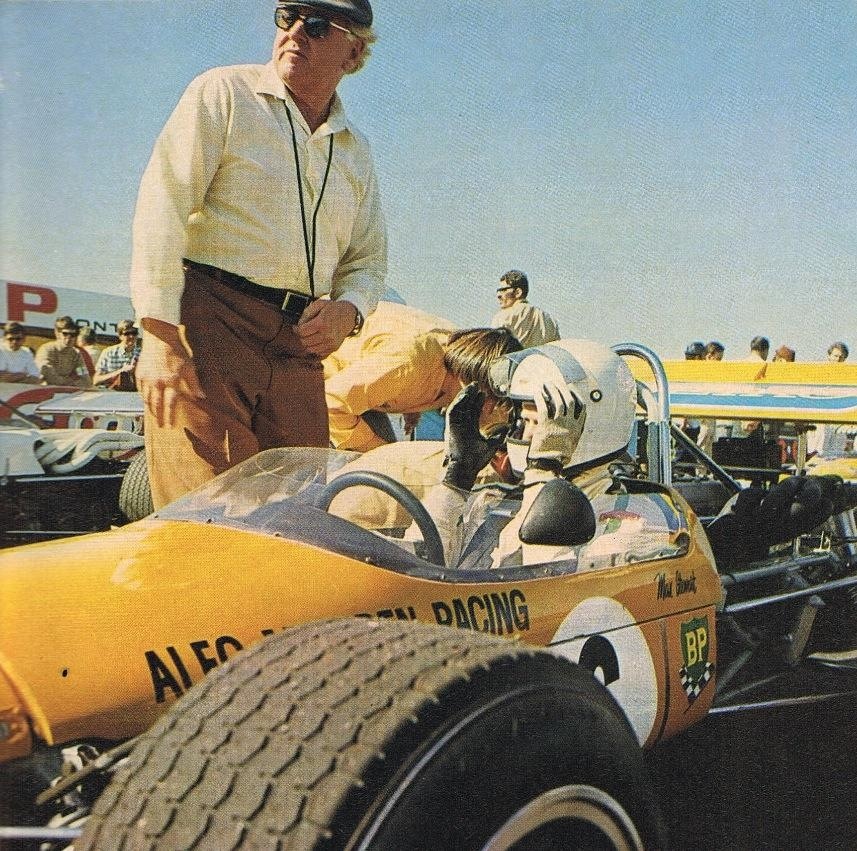
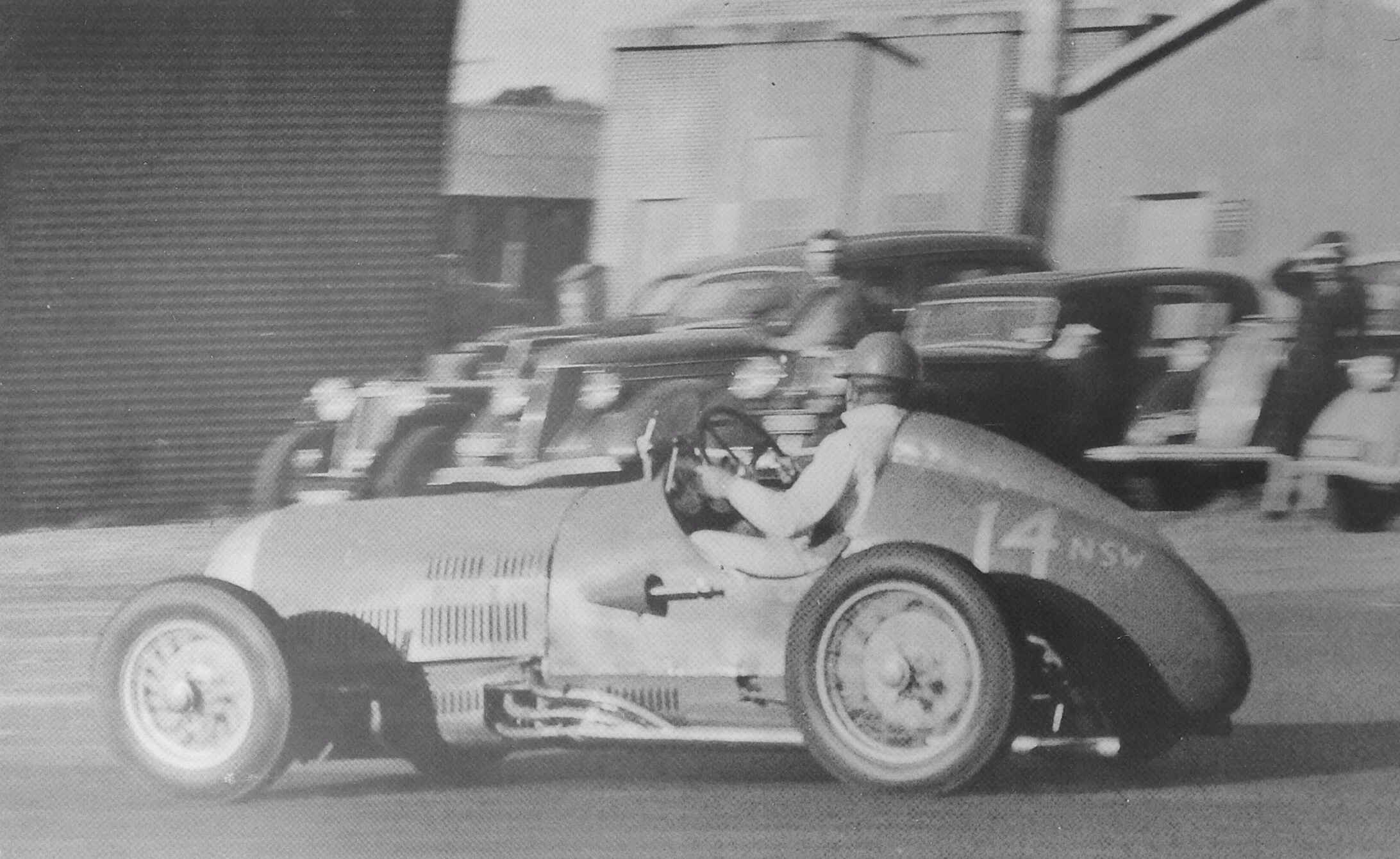


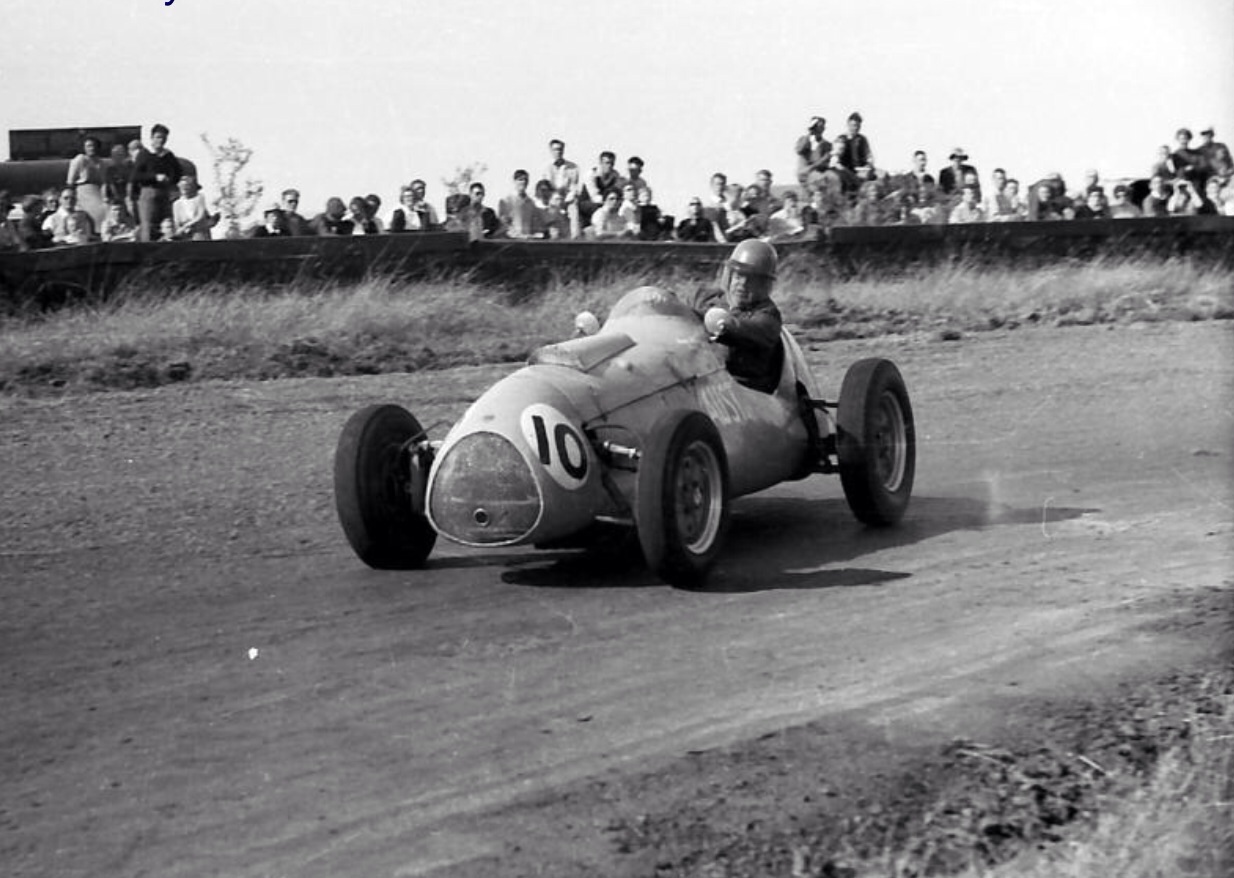


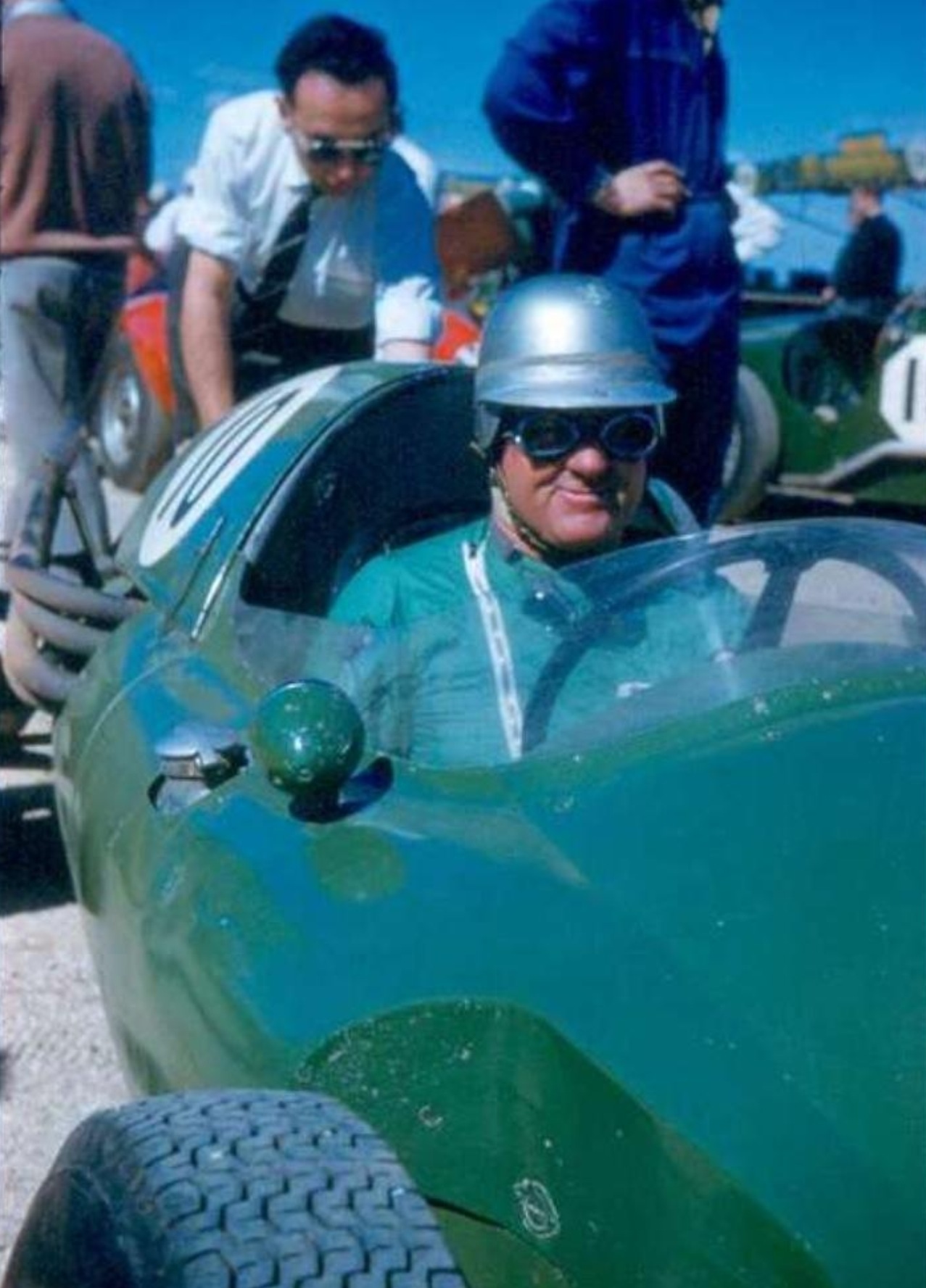
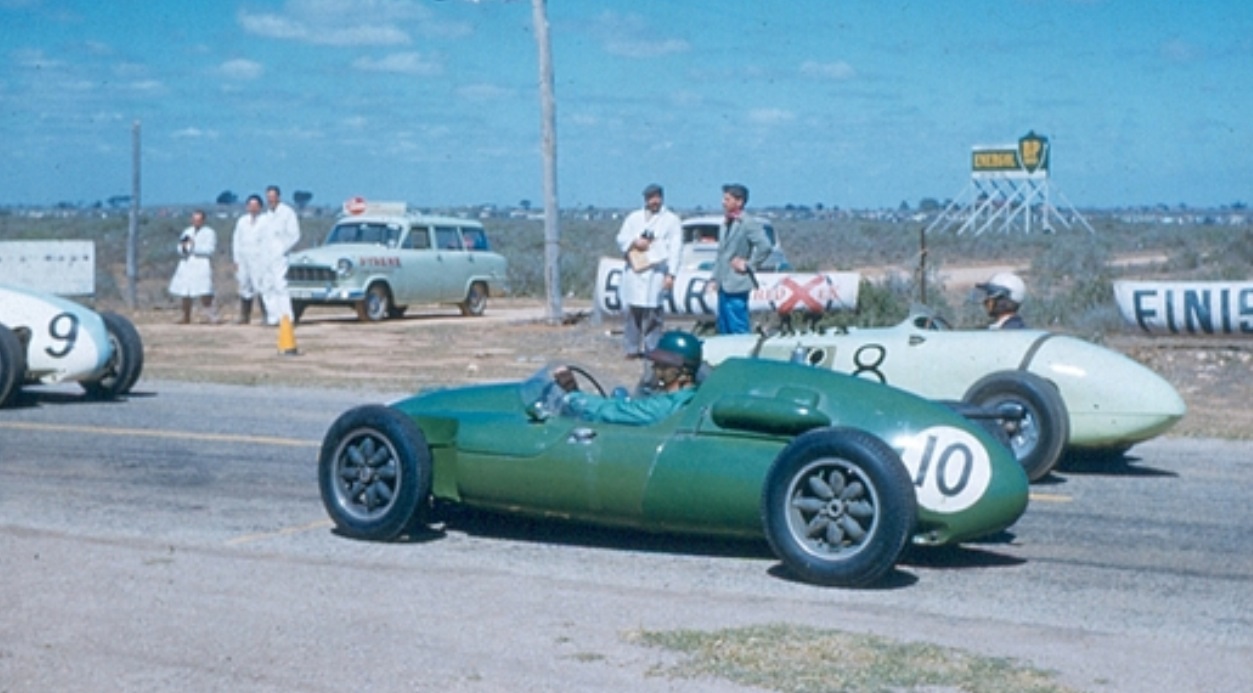

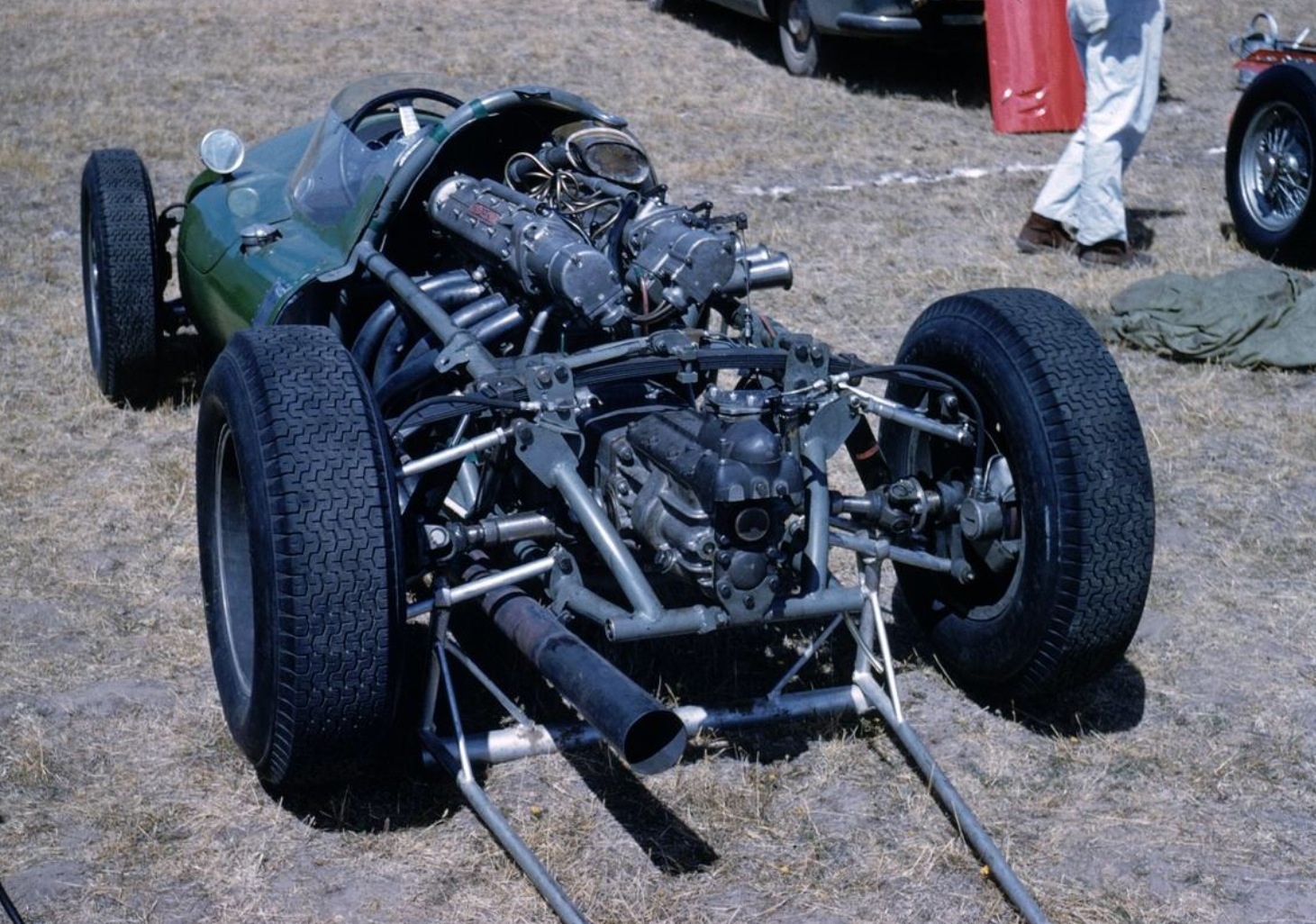
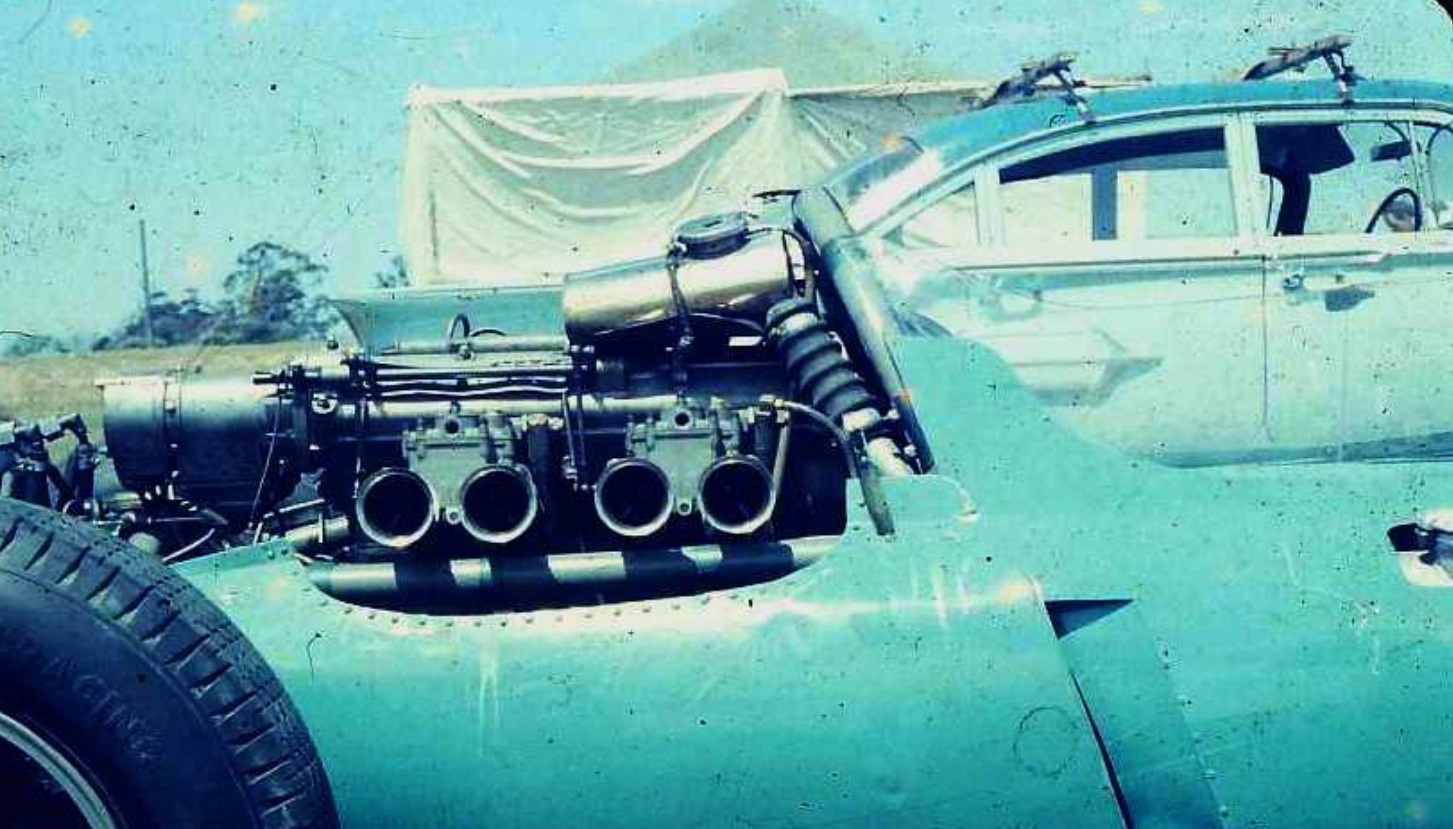
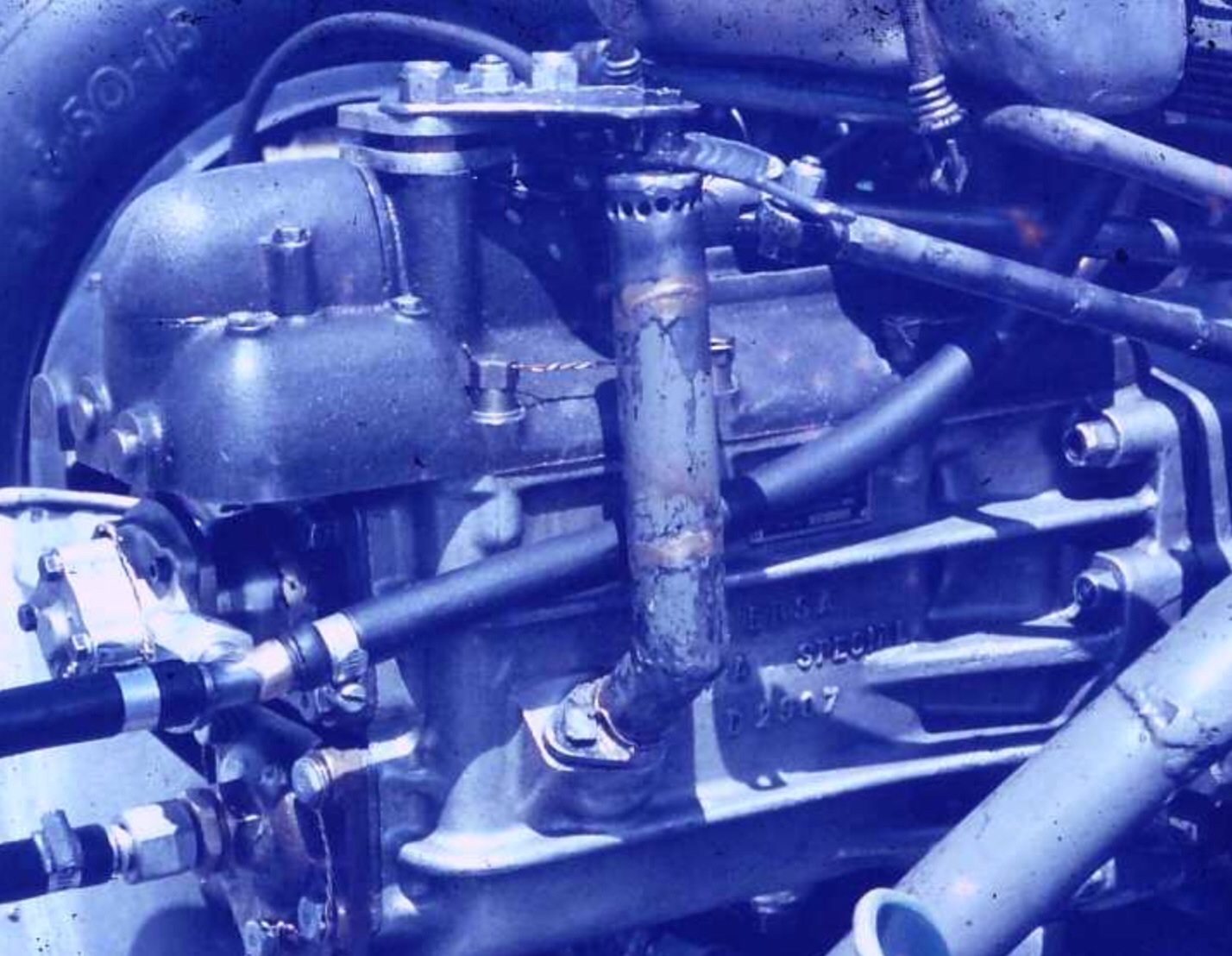


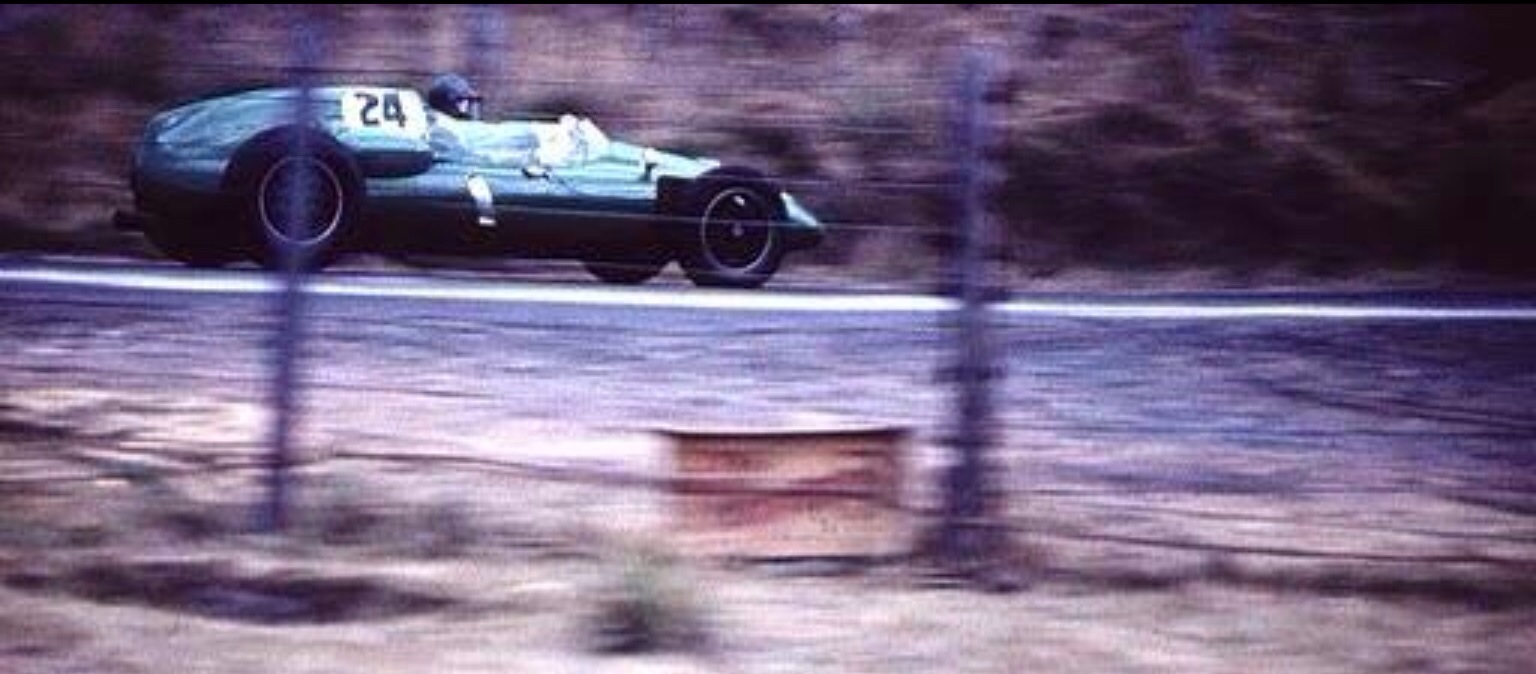
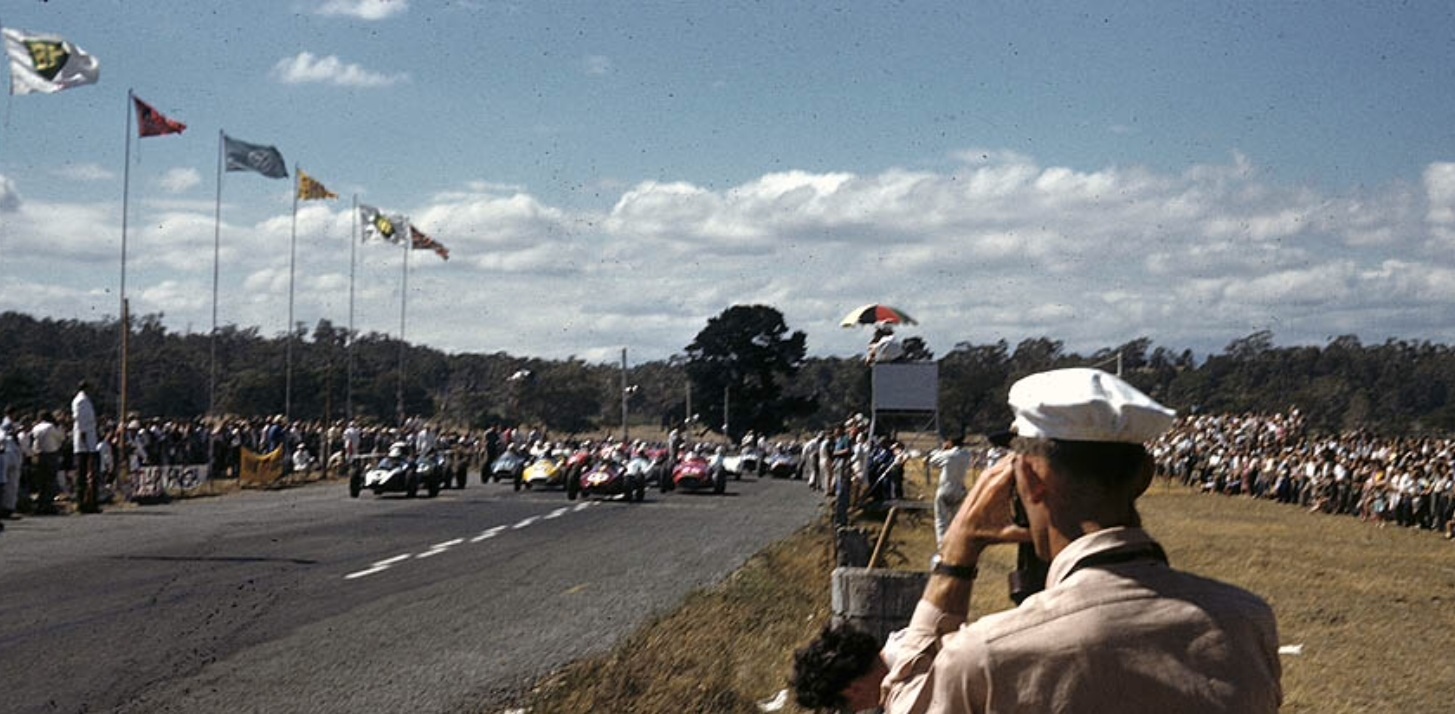
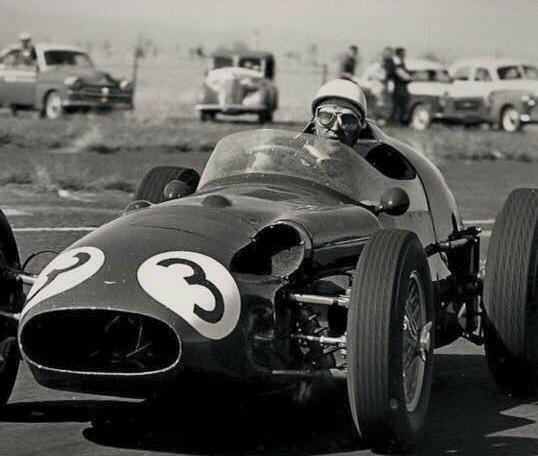

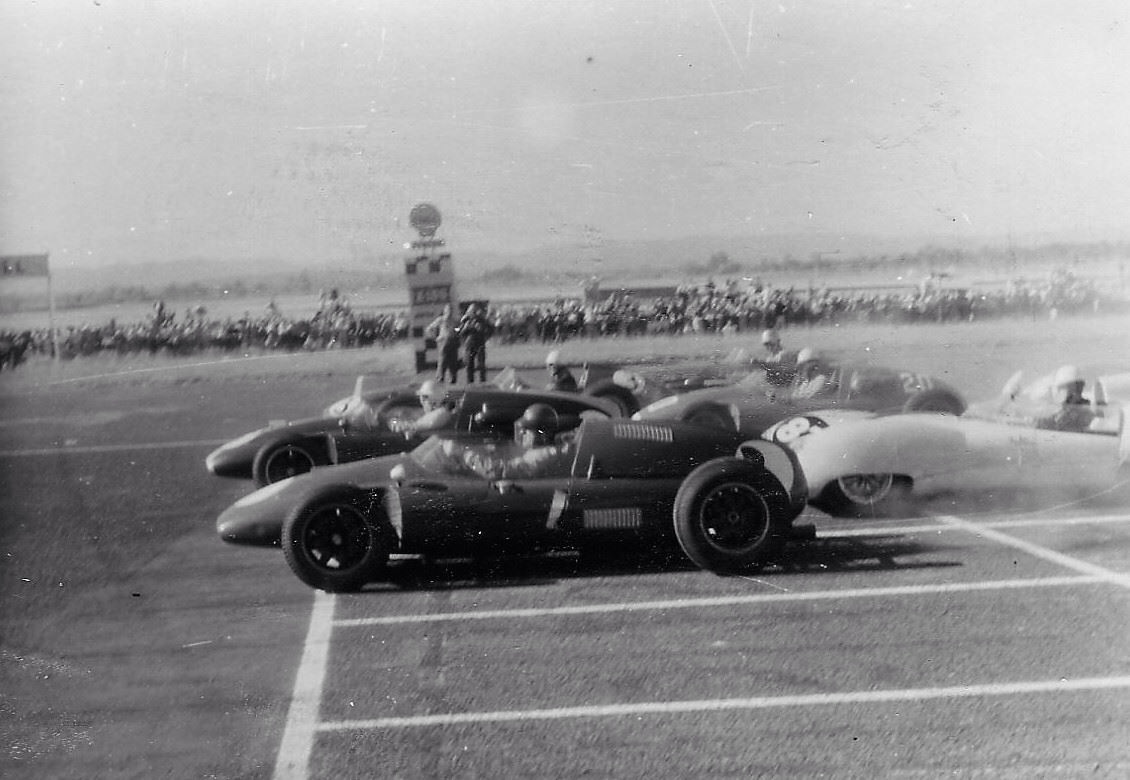

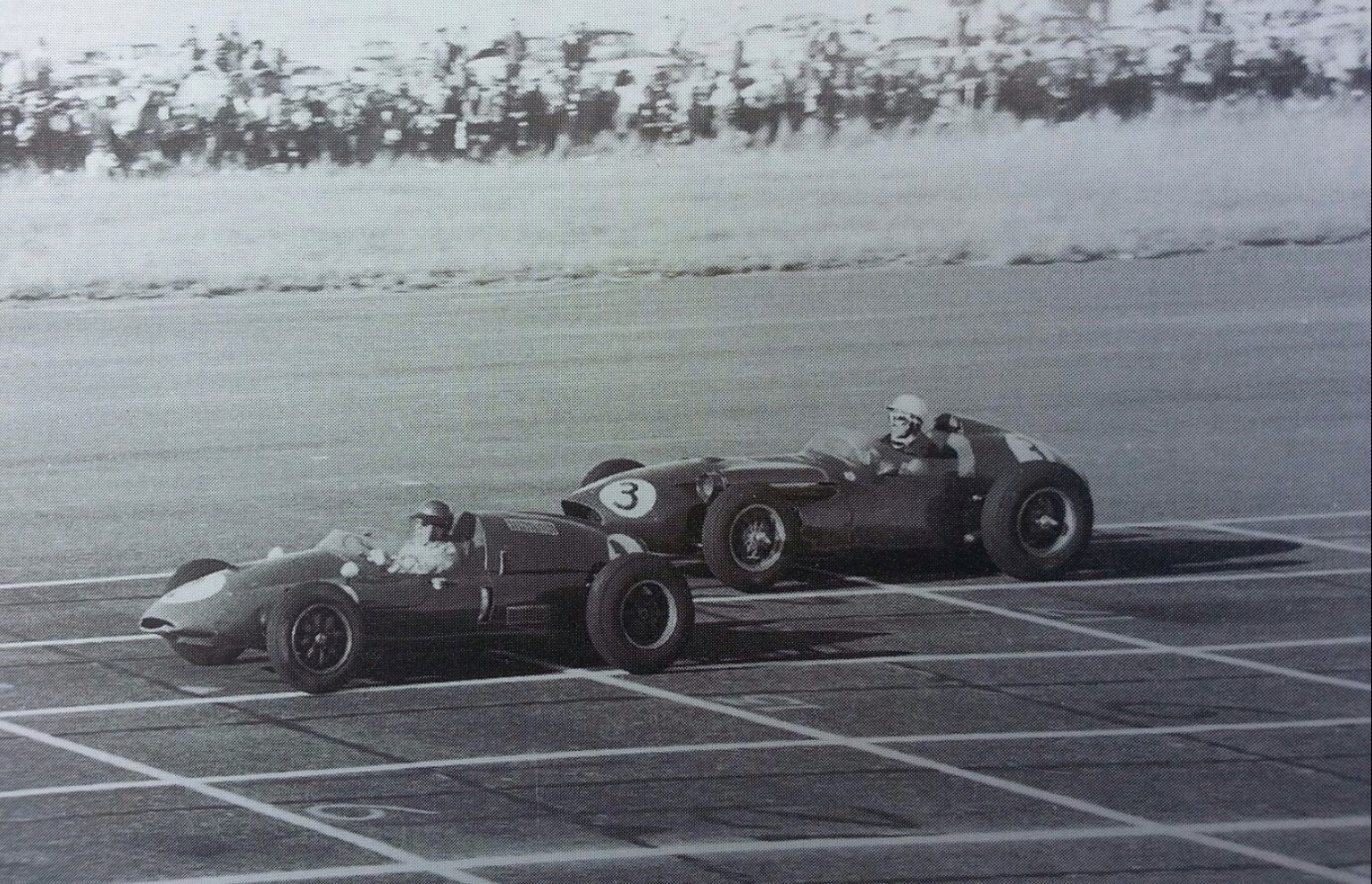


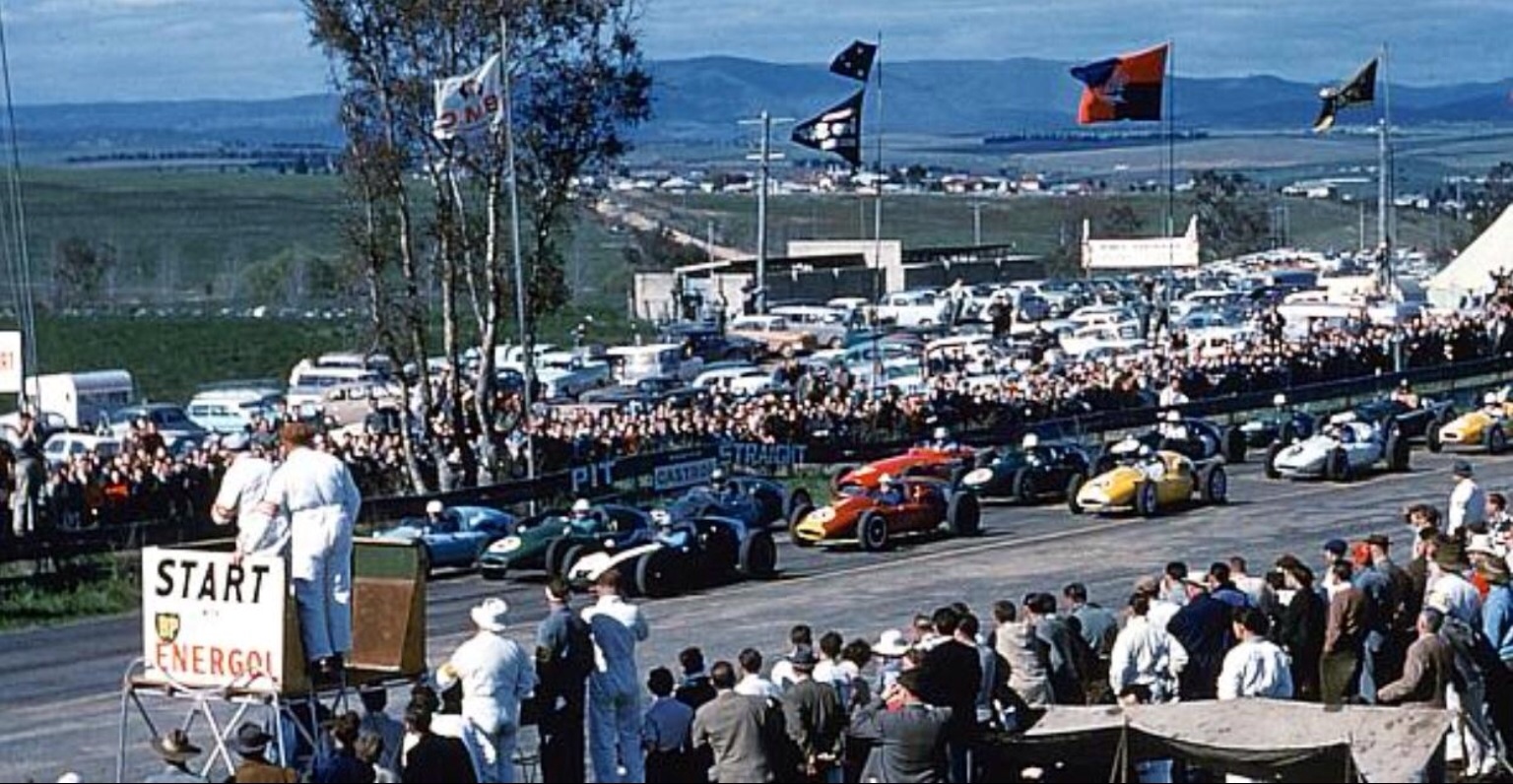
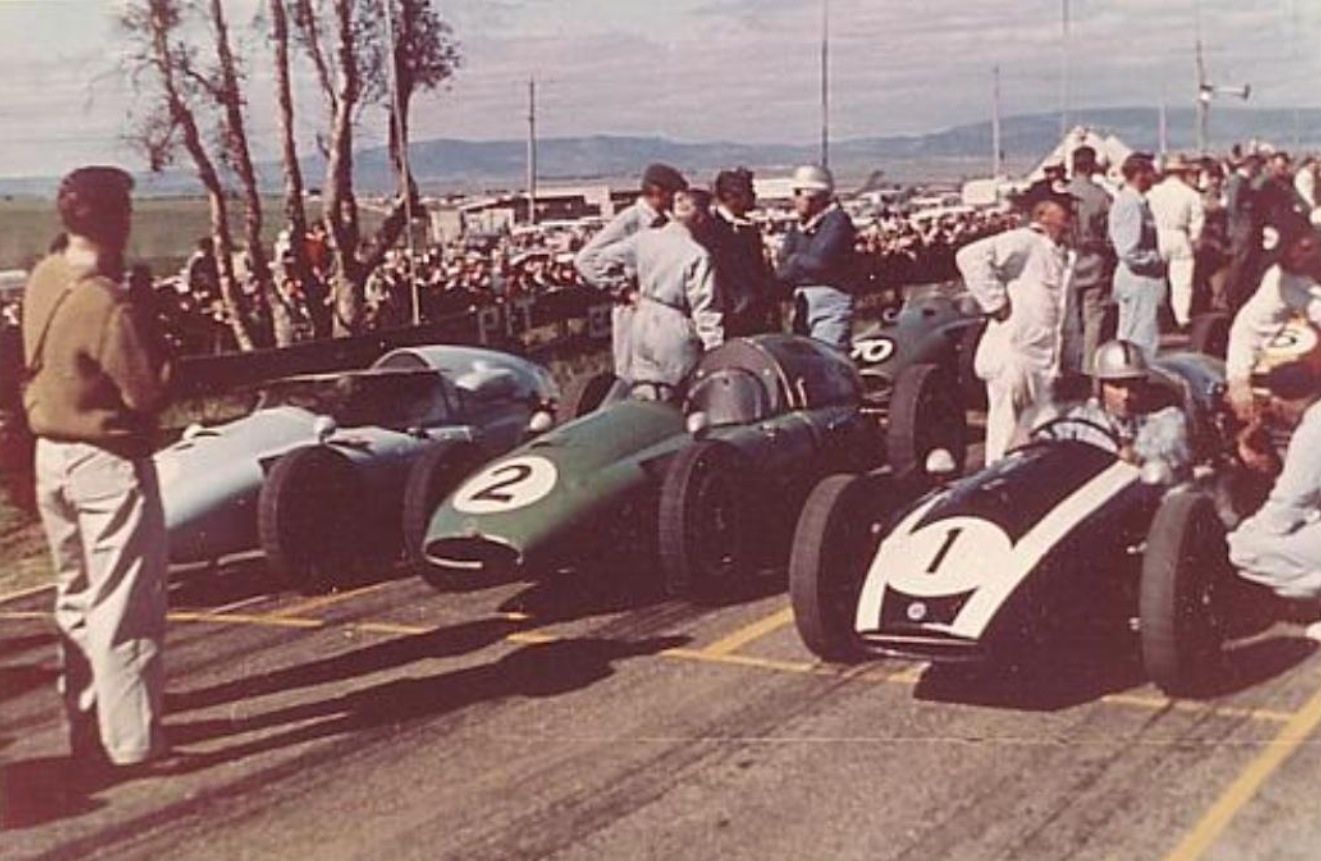
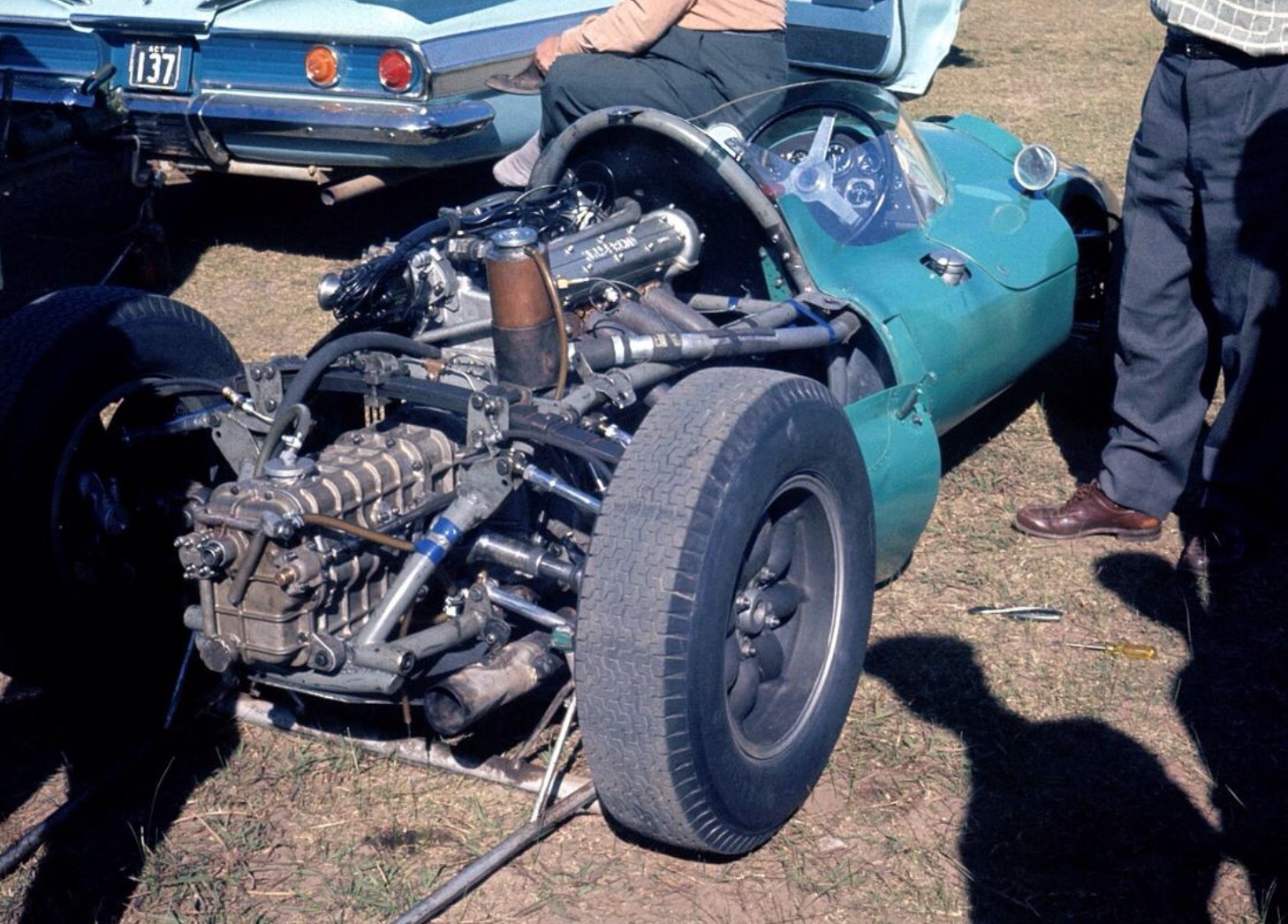

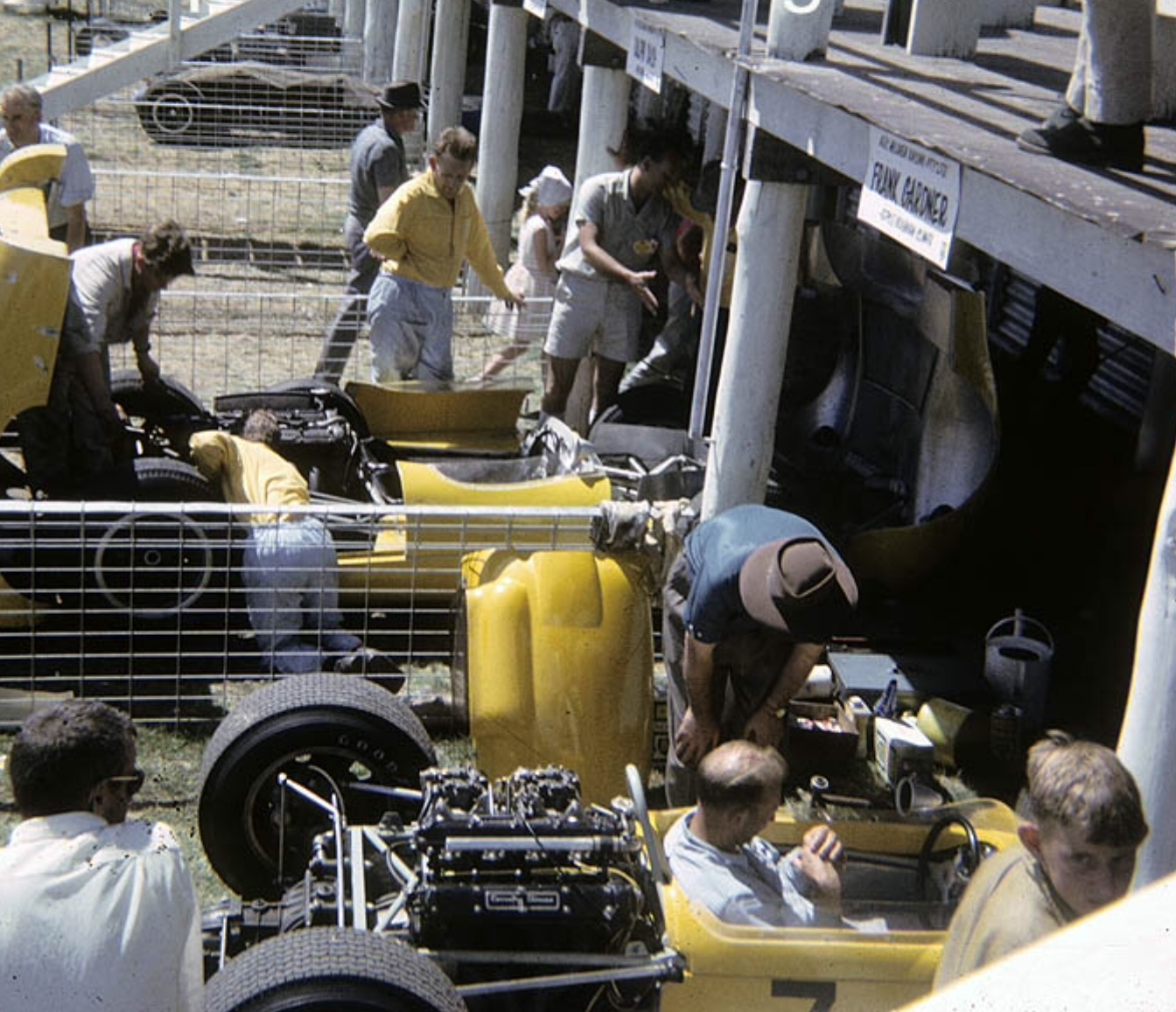
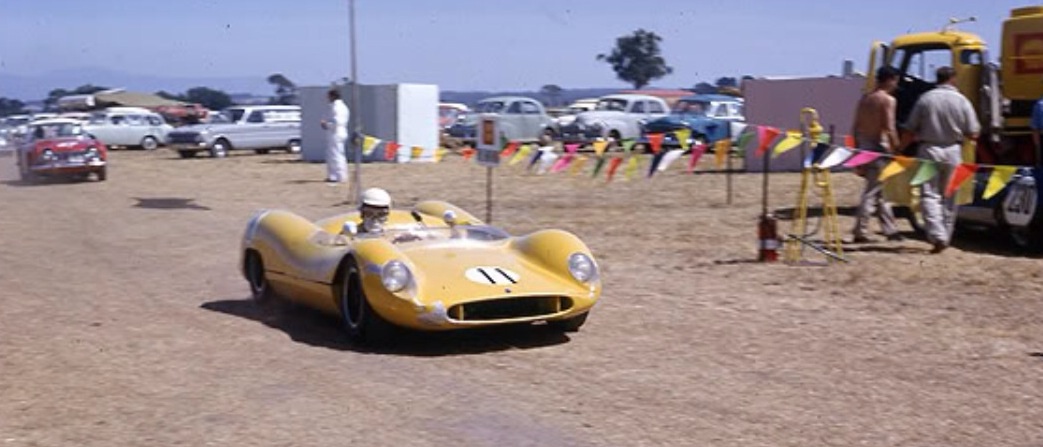

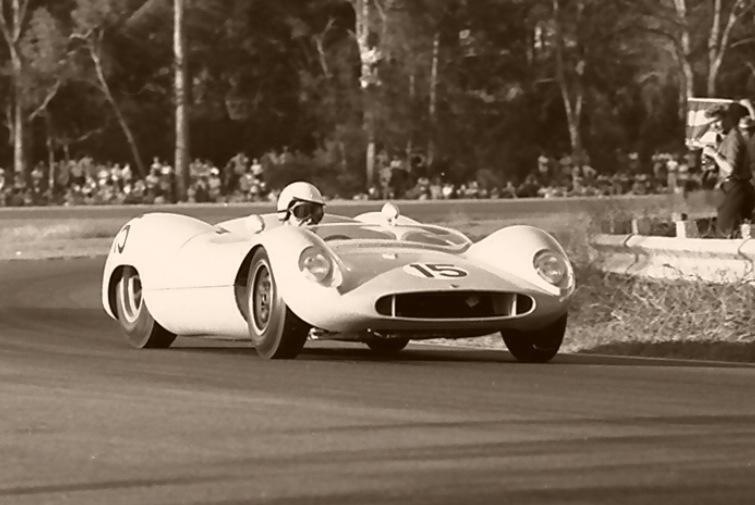

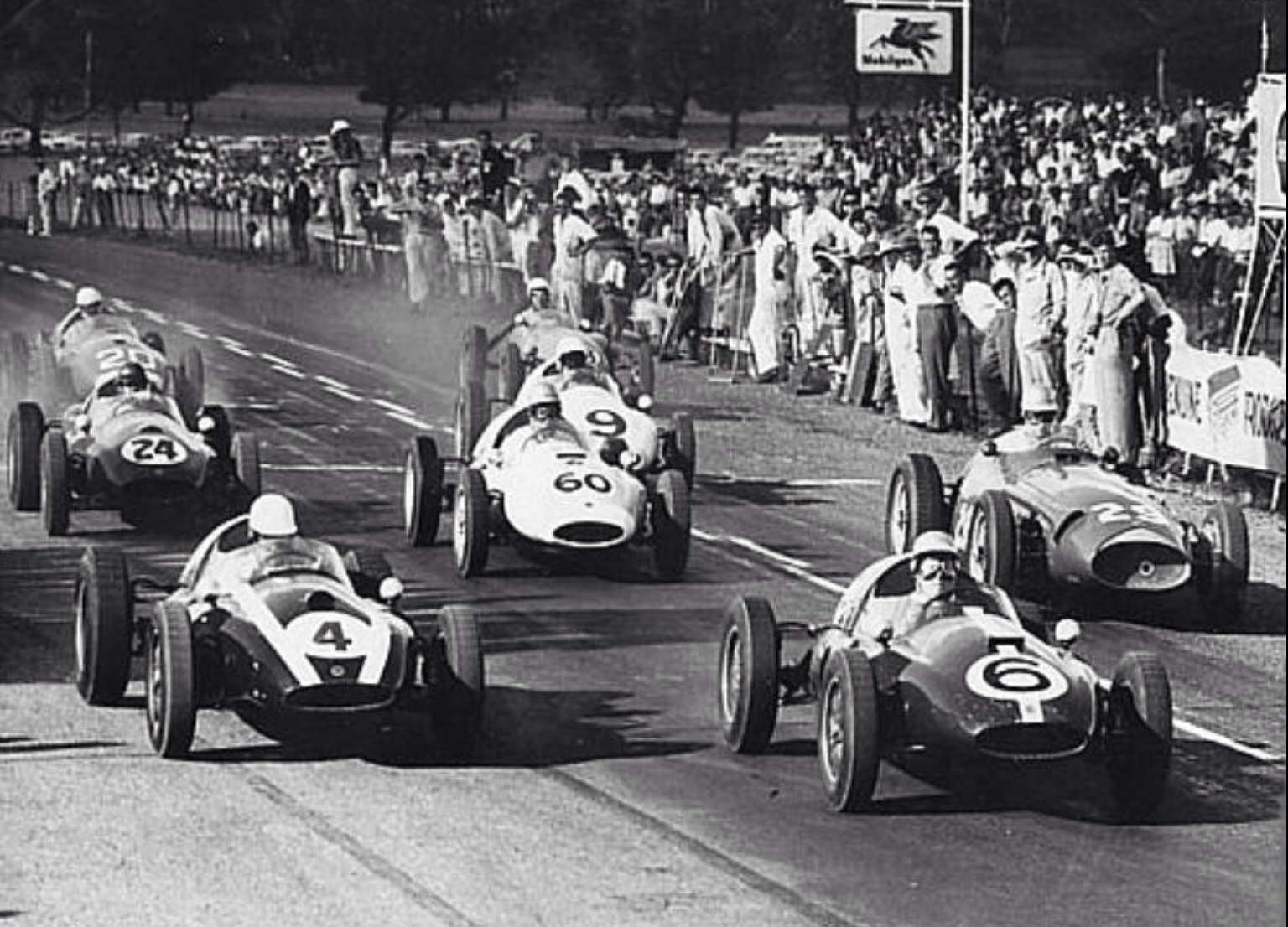


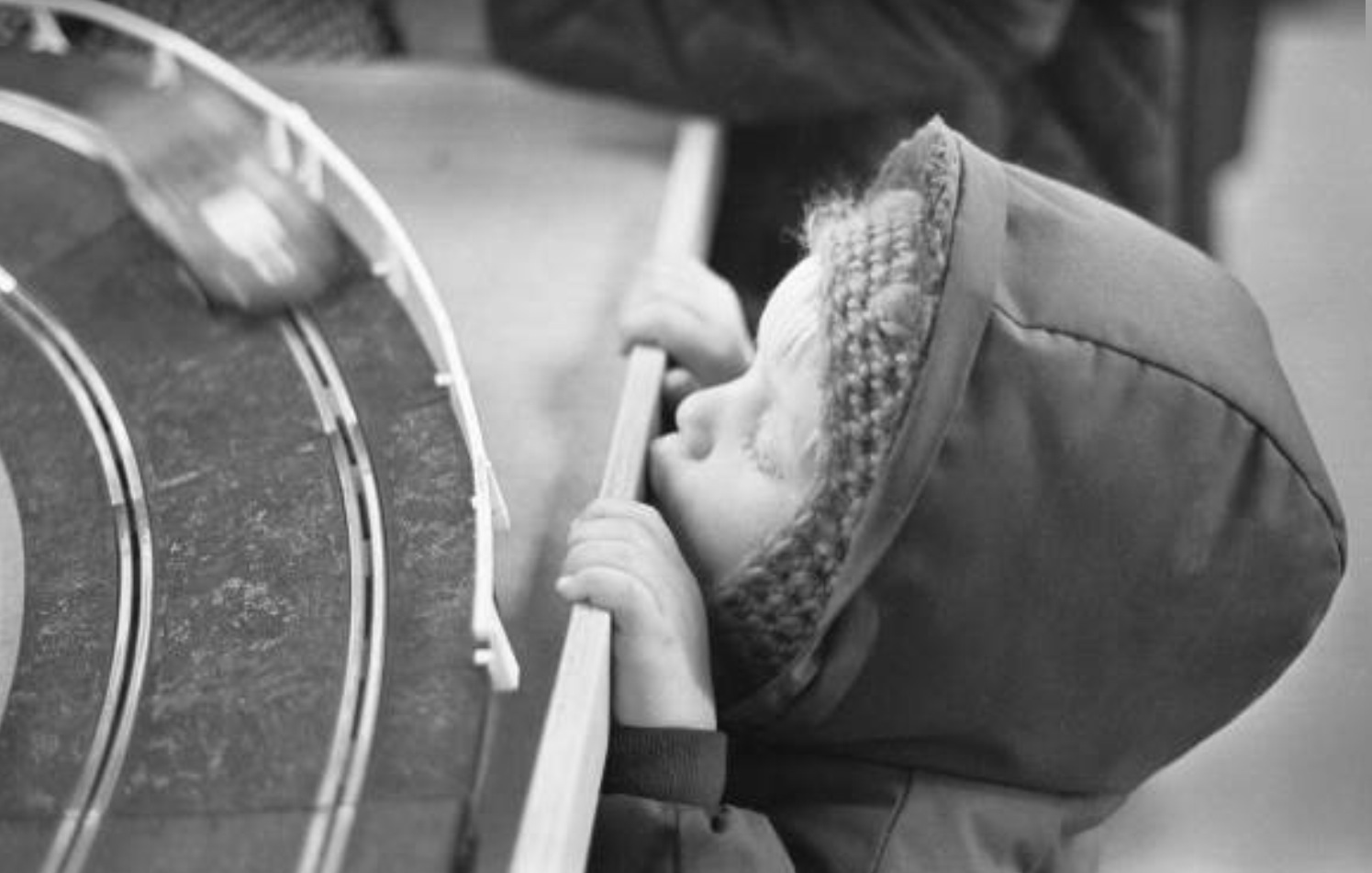


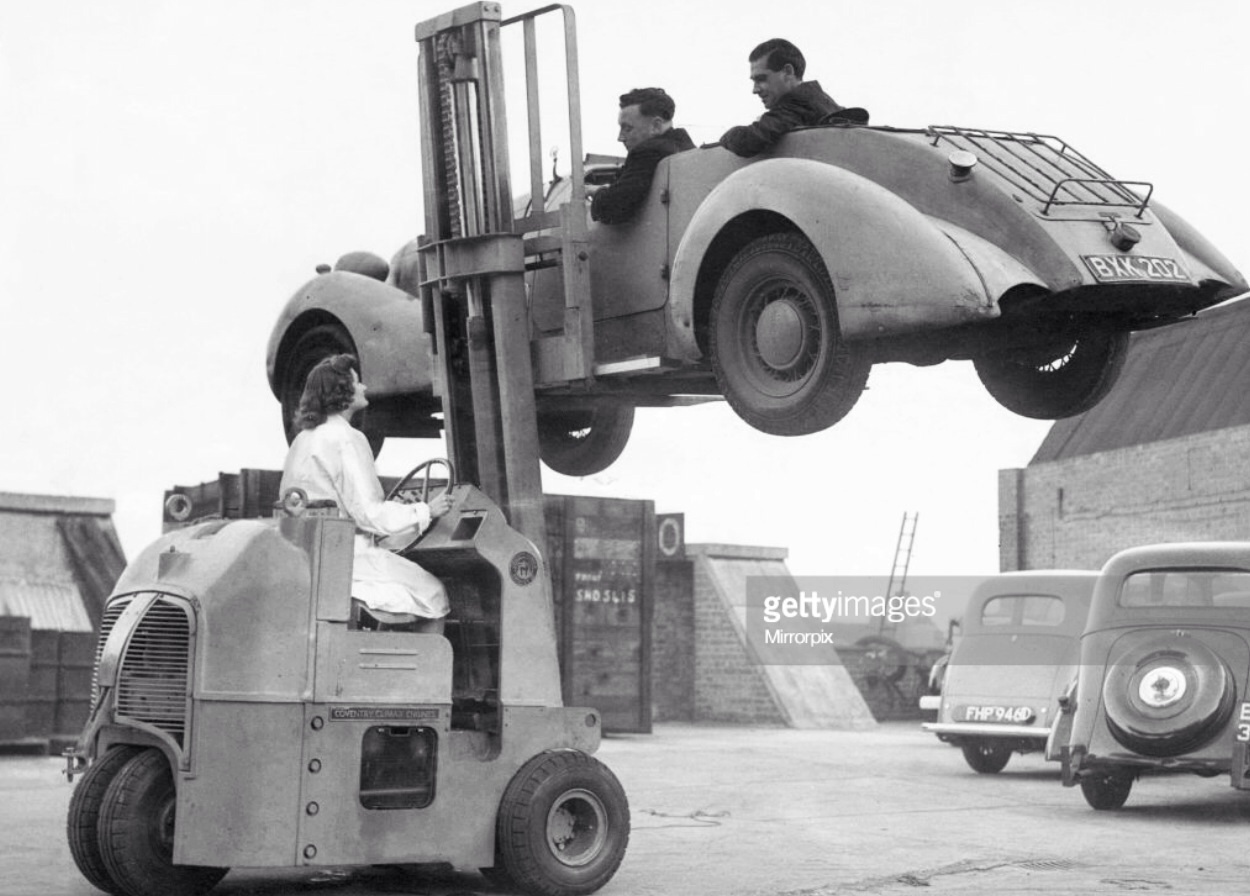
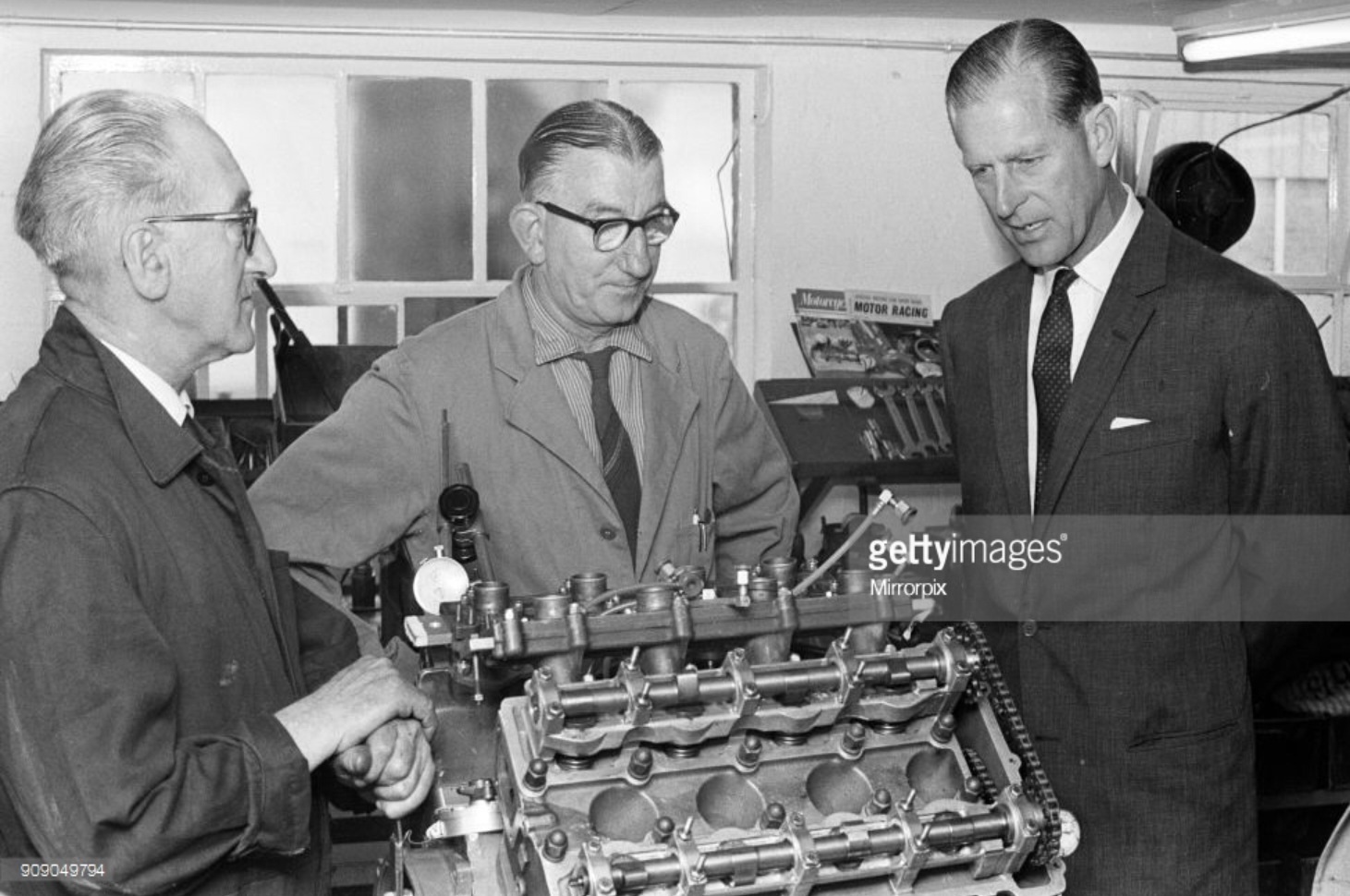
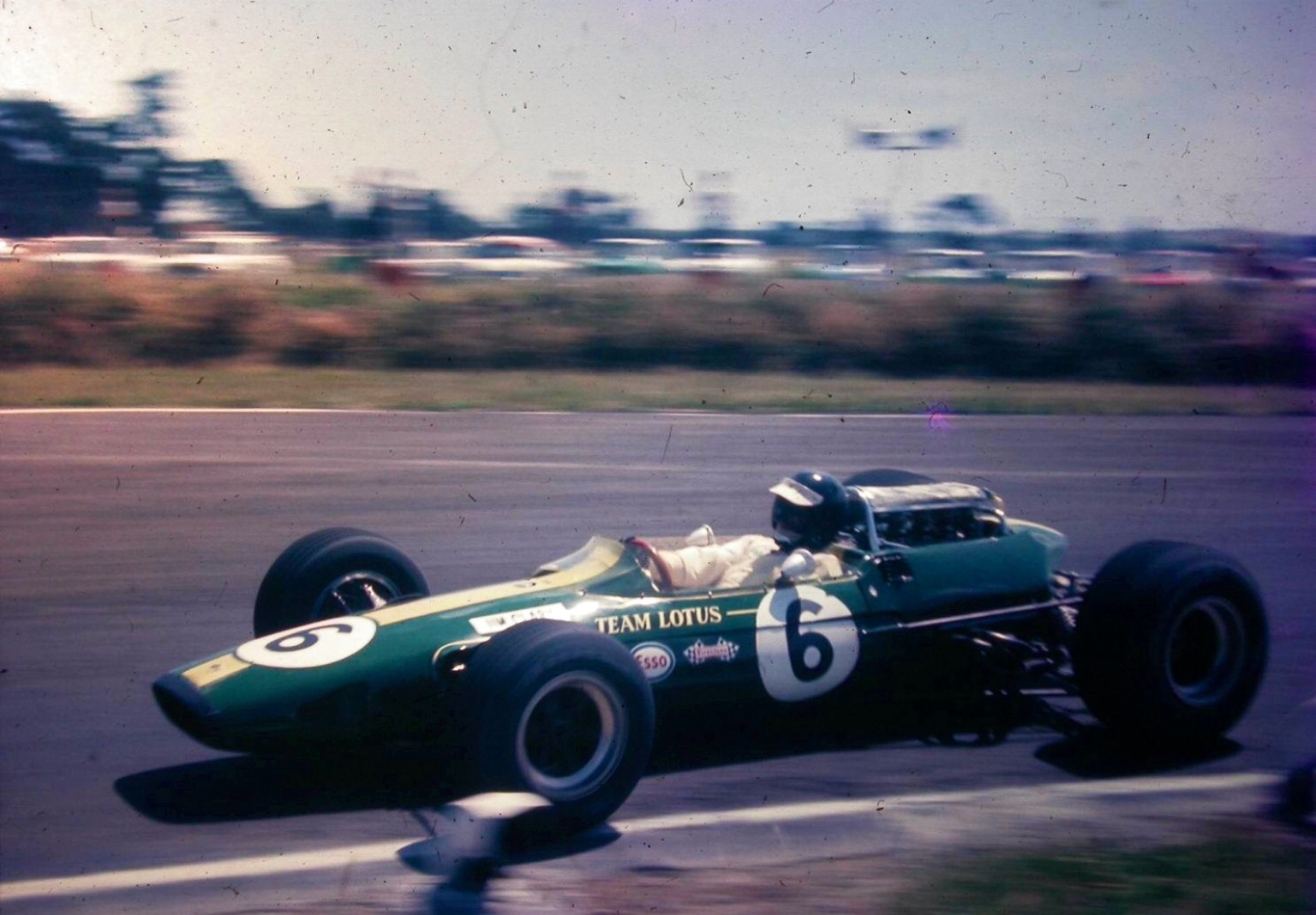


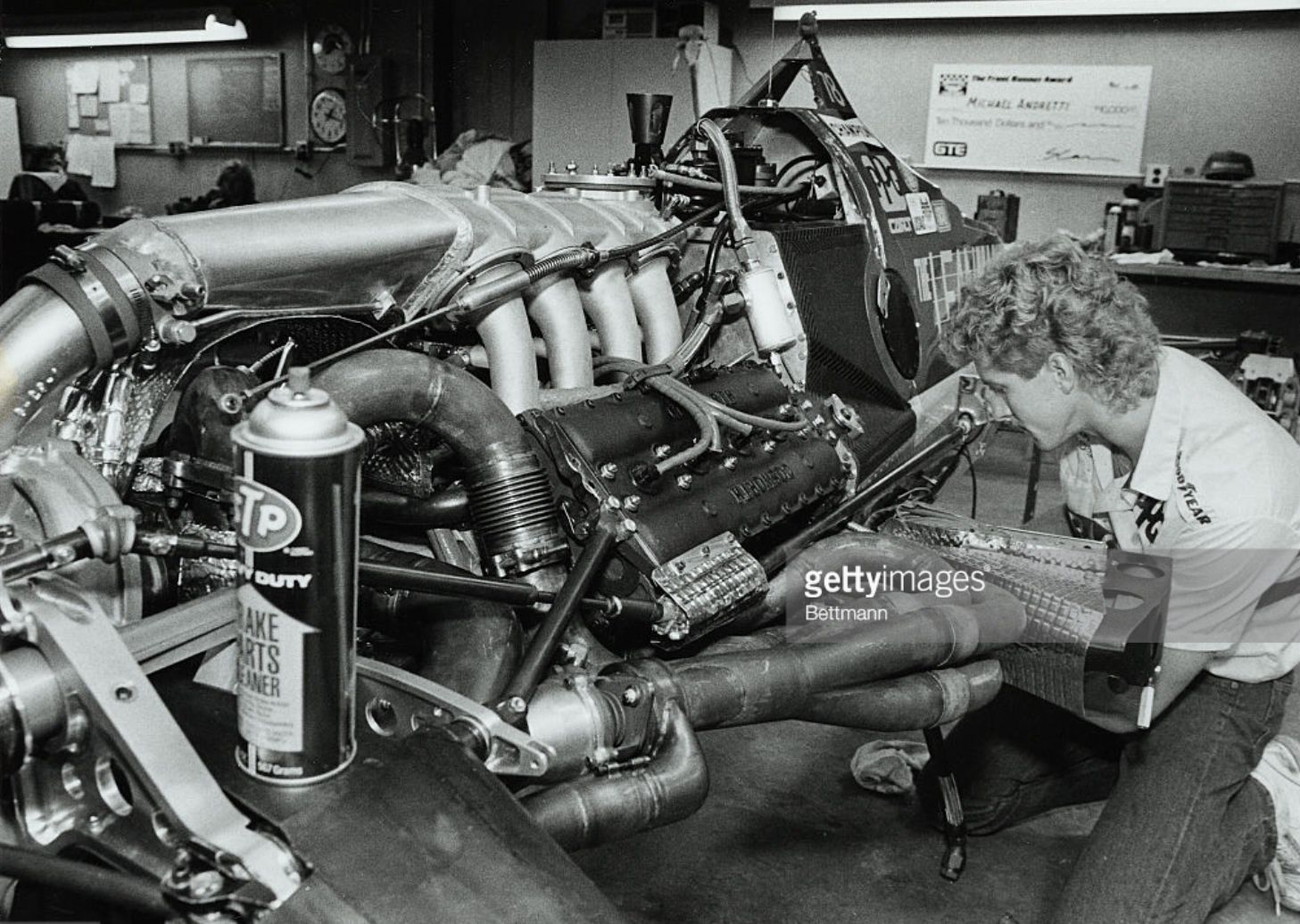


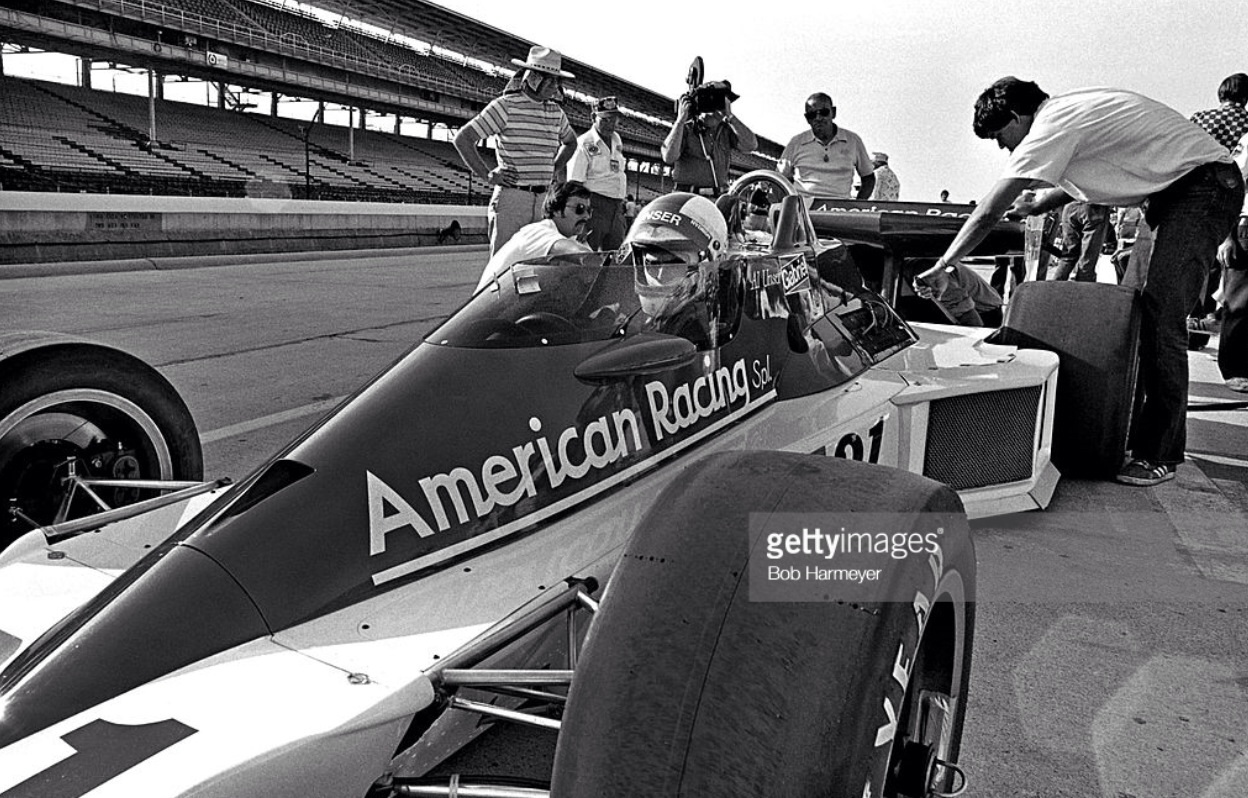
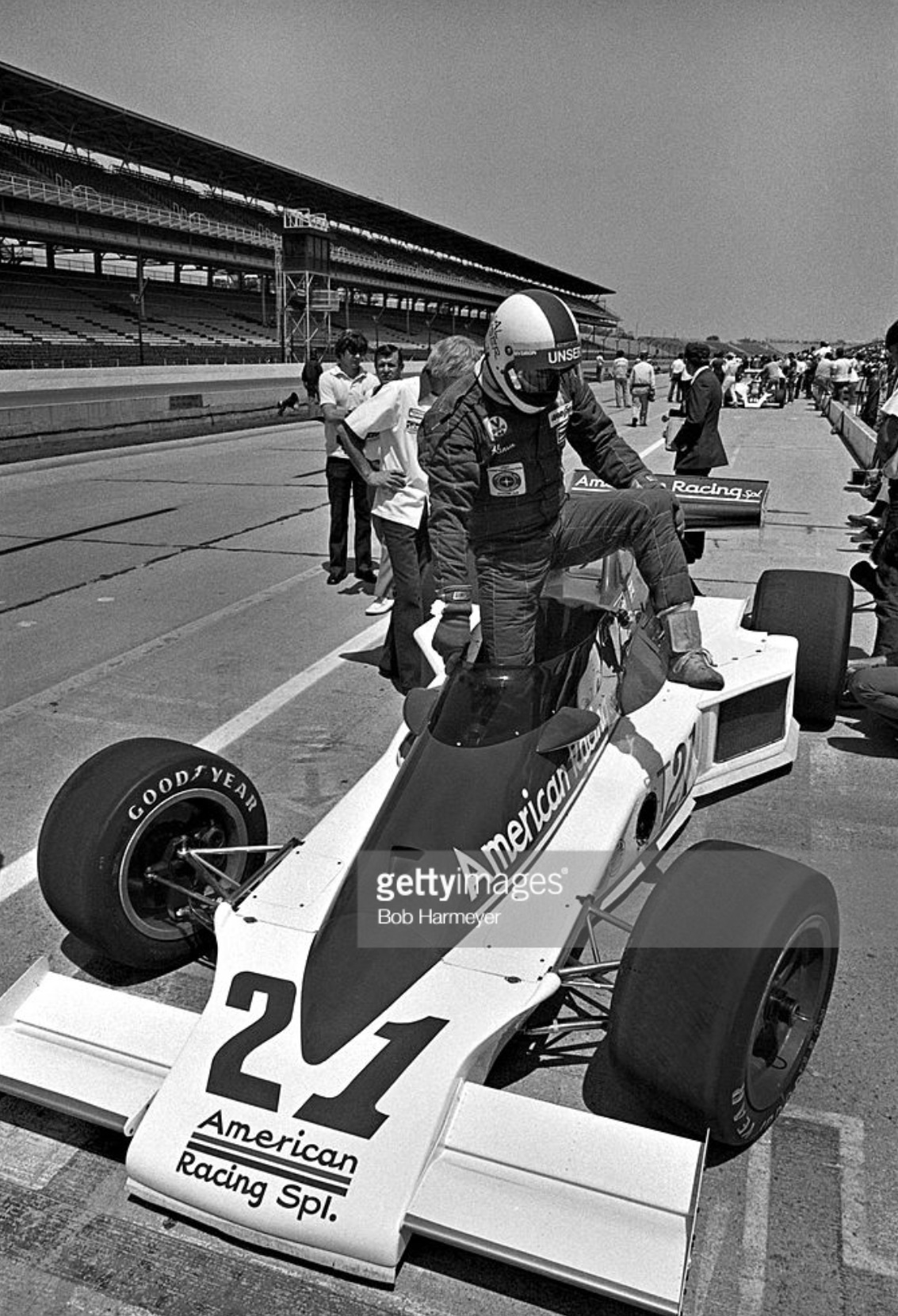
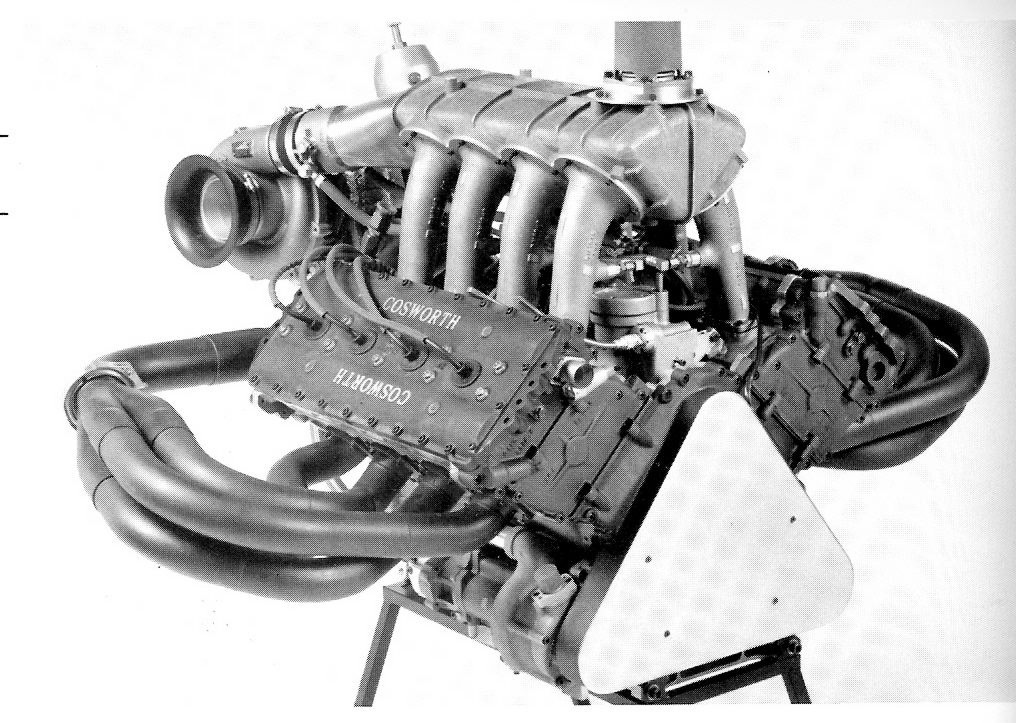

 primotipo...