Posts Tagged ‘Australian Motor Racing History’

(Colin Anderson)

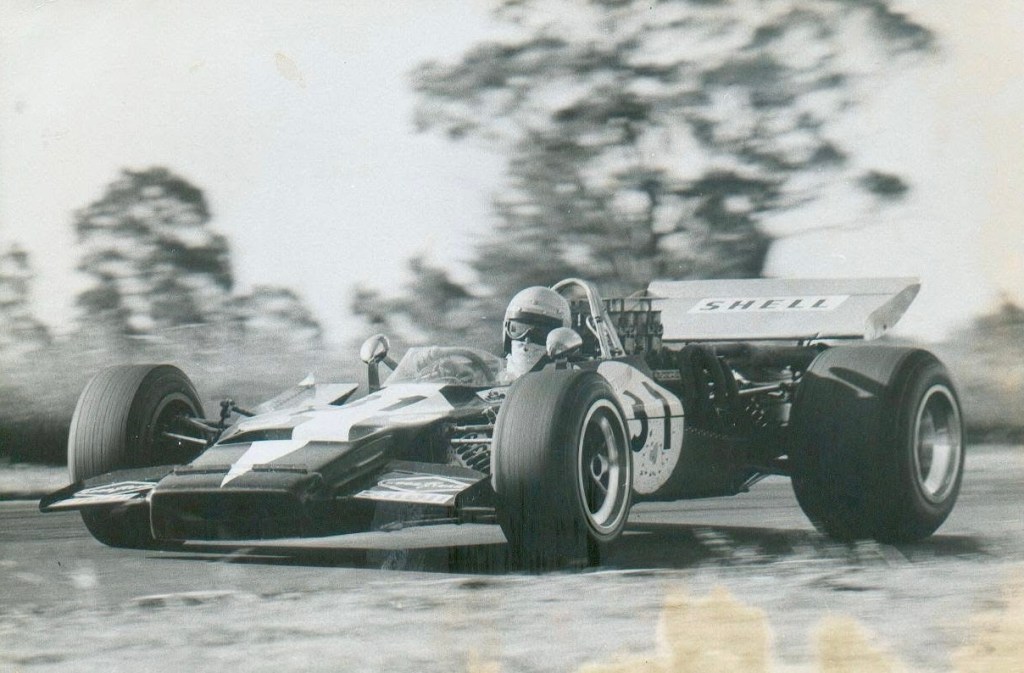
Matich Repco 4.8-litre 760 V8 SR4 that is…

I’ve got Peter Finlay to thank for this piece. I was pondering the name of one of the artists who did the Racing Car News covers in the day on my Facebook page. I got the name right – Colin Anderson – and Peter included a link in his post that took me to this image, original artwork of the cover of the July 1968 issue, still some time away from the car’s first appearance I might say…

(S Dalton Collection)

Oh yes, the fine print on the bottom right of the artwork? Small-talk whinge from Col to RCN owner/publisher Max Stahl about TAA air-express and their shit service. Timelines being rather important and more complex in that pre-Internet age!!

See here for an exhaustive – and exhausting – epic on the SR4 et al: https://primotipo.com/2016/07/15/matich-sr4-repco-by-nigel-tait-and-mark-bisset/

Credits…

Colin Anderson, Racing Car News

Finito…

Way back in Scuderia Veloce’s formative stages David McKay imported two Lolas to Sydney, Australia in October 1960 : an ex-factory Mk 1 Climax FWA engined sportscar, chassis number BR15, and a new Ford engined Formula Junior, chassis number BRJ18.

The letter to owner of the Mk 1 in 1971, Kent Patrick, above is indicative of the way Lola looked after their customers long after the racers in-period lives. I experienced the same type of responses when I sought assistance with my modest 1975 T342 Formula Ford in the late 1990s.

The car specification and maintenance material shared below about the two cars was provided by Lola to McKay at the time of purchase, and remained with subsequent owners of the Mk1. Melbourne man, Kerry Luckins bought the car from Patrick in 1974. Luckins, a well known member of the motorsport community as a senior employee of Paul England Engineering and President of the Light Car Club of Australia accumulated an interesting archive which passed to his nephew, Soren Luckins and recently to another Melbourne identity, Greg Smith.

While the number of Lola owners who can use this information is small, I’m hoping there are enough Lola anoraks out there who will find it interesting and appreciate the quality of the material Eric Broadley and his merry-men provided to purchasers of the then Bromley marque to help them stay in front of the opposition.

This piece about the SV Lola Mk 1 tells its story and also provides some background on McKay and Scuderia Veloce: https://primotipo.com/2018/01/12/bert-and-davids-lola-mk1-climax/ The Lola Heritage website is a sensational resource, check it out here: http://www.lolaheritage.co.uk/index.html

(lolaheritage.co.uk)

Lola Mk 2 Ford…

(lolaheritage.co.uk)

Lola Mk 1 Climax…

Credits…

Greg Smith Archive via David McKay, Kent Patrick, Kerry and Soren Luckins and others, lolaheritage.co.uk

Tailpiece…

Ah, there is nothing like the titallation of an unseen old racing file for a sad ole’ spectrum-dwelling fukkah like moi!

Finito…
(R Button Archive)

‘This BP Press Release was still in its original envelope with some pit pass tags’, Peter Button wrote of his late Uncle, Ron Button’s archive.

‘Ron didn’t talk about his time racing, it’s only on the passing of his son, Phil, that the extent of his motor racing history has become apparent. I’m piecing it together. I have his wooden helmet and Light Car Club of Australia badges, I’m sure he would be glad the racing community is getting something out of them,’ he wrote on Bob Williamson’s Old Motor Racing Photographs – Australia Facebook page, which continues to give…and give. My Lordy-me there is are good goings on, sharing of knowledge on this site and Smithy’s Pre-1960 Historic Racing in Australasia one.

(V Mills)

Star of the show was Ted Gray aboard Tornado 2, just fitted with its new, much modified fuel-injected Chev Corvette 283cid engine. Here he lines up for the start at Tipperary on September 28-29, 1957. It may look old but it sounded pretty much F5000 if some way short of the power of those 1970s roller-skates.

While BP’s spiel describes Tornado as a ‘locally built special’, by 1958 the Gray, Lou Abrahams and brothers Mayberry built Tornado was objectively the fastest Formula Libre road-racer in the country…if not the most reliable. It was quicker than Stan Jones’ 250F and Lex Davison’s Ferrari 500/625, Tiger Ted was no longer a spring-chookin’ by then either.

While Len Lukey’s home-made attempts to streamline his race Ford Customline may look a bit half-arsed, in fact NASA would have been proud of him, the big beast did a two-way average of 123.30mph.

(Chevron)

Back-story…

Prominent motorsport identity/engineer/racer/Australian Rally Champion navigator/CAMS administrator Graham Hoinville was tasked by his employer, BP to find a suitable site to stage some Australian Land Speed Record attempts in early 1956.

About 12 months later he selected from a shortlist, a dead-straight four-mile stretch of the Coonabarabran-Baradine road at Baradine, 535km north-west of Sydney. The road adjacent to the railway line between the two townships he assessed as suitable for some promotional record-breaking. The road ran past the gates of Tipperary Station (farm), locally the event became known as the Tipperary Flying Mile.

Drivers hand-picked to attend the 1957 BP-COR (Commonwealth Oil Refinery) Speed Trial were all BP contracted drivers and riders, including Davison, Ferrari 500/625 – soon to the first Gold Star Champion, the Australian Driver’s Championship – Gray racing Lou Abrahams’ Tornado 2 Chev, Lukey, Cooper T23 Bristol and Ford Customline V8, Derek Jolly, Decca Mk2 Coventry Climax sportscar, John McMillan, Ferrari 555 Super Squalo and Roy Blake’s Cooper JAP. Motorcyclist invitees included Jack Forrest, BMW 500 and Jack Ahearn, Norton Manx 350.

(R Button Archive)

Over 3,000 spectators rocked-up to watch the cars run over a flying kilometre, and the bikes’, a flying half mile. While the road had been resurfaced, it was only 18 feet wide and had a pronounced crown. Strong winds and bushfires in the area added to the challenge…

It was so blustery on the Saturday that the motorcycle attempts were postponed to Sunday when conditions were kinder. In accordance with FIA regs, a run in opposite directions had to be made within an hour, and timed to 1/100th of a second.

(V Mills)

The group of ‘outright cars’ included John McMillan’s Ferrari 555 Super Squalo, Lex Davison’s Ferrari 500/625 3-litre and Ted Gray’s big, booming Tornado Chev, all three of which are heading for the start above.

It all looks suitably casual and bucolic, but some great work was done in what was the first mass attack on local land-speed-records. Almost every local record for cars and bikes was broken. Nationally, that Baradine region feat has never been toppled.

(R Button Archive)
(oldbikemag.com.au)

Jack Forrest set a new outright record of 149mph on his ex-works BMW Rennsport 500 despite a blistered rear tyre and an altercation with a flock of galahs, the damage inflicted by said birds obvious on the fairing. The NSU on the trailer is Jack Ahearn’s Sportmax.

It wasn’t all plain sailing…

Jim Johnson decided to give his MG TC Special a final test run before the off to ensure a misfire was sorted. With the roads still open to normal traffic, Johnson arrived at high speed on the Coonabarabran-Baradine road at the Tipperary Station farm gates at about 6.30am – listening hard to his engine but not necessarily watching fully in front of him – just as a fuel truck turned right into Tipperary. Johnson went straight under the truck, the unfortunate Leichhardt garage proprietor and father died instantly in gruesome fashion. The truck didn’t have external rear vision mirrors so the driver didn’t see him coming. It wasn’t a great start to the event, but the event hadn’t actually started for the day…

Credits…

Ron Button Archive, V Mills photographs in the Coonamble Times, Jim Scaysbrook’s Tipperary Flying Mile article on oldbikemag.com.au dated October 4, 2019, Chevron Publishing

Tailpiece…

(V Mills)

Officialdom ready for the off: the butcher, baker, candle-stick maker and copper. In the manner of the day, everybody pitched in. Note the lightweight battery…

Finito…
(Australian Motor Racing)

Alain Prost came, saw, and conquered the Calder Park circuit to win the 100 lap, 100 mile Formula Pacific Australian Grand Prix on November 8, 1982. His weapon of choice, a Ralt RT4 Ford BDA of course.

Bob Jane, bless the Melbourne entrepreneur, bagged the AGP for his ‘Melbourne International Raceway’ from 1980-84. Roberto Moreno was the dominant racer in that era, winning the Formula Pacific AGPs in 1981, and 1983-84. Alan Jones won the F5000/F1 event in 1980 aboard a Williams FW07B Ford.

The international stars in 1982 also included Roberto Moreno, Nelson Piquet and Jacques Laffitte, while the local hotshots were Alan Jones, John Bowe, John Smith, Alf Costanzo, Andrew Miedecke and Lucio Cesario. The whole lot of ’em were mounted in Ron Tauranac’s Ralt RT4s with the exception of Costanzo who raced an Alan Hamilton/Porsche Cars Australia owned Tiga FA81 with bags of modifications made by Jim Hardman. F5000 became Formula Lola and Formula Atlantic/Pacific became Formula Ralt from the day the first RT4 rolled out of Ron’s Byfeet Road, Weylock Works in Weybridge…

Prost, Laffitte, Costanzo obscured, Bowe and the rest thru Tin Shed on lap 1 of 100, AGP 1982 (R Berghouse)

The Renault team leader – victor of the South African and Brazilian Grands Prix that year aboard 1.5-litre Renault RE30B V6 turbos – bagged pole from Laffitte, Costanzo, Bowe and Piquet and then convincingly jumped-off well from the start and won the race from Laffitte, both of them in Bob Jane Racing owned and prepared RT4s. Roberto Moreno was third, Kiwi, Dave McMillan was next and Alf Costanzo fifth. Alfie’s points – and a spin by John Bowe – bagged him his third Gold Star, the Australian Driver’s Championship.

Moreno shot himself in the foot by stalling at the start, but then provided much of the event’s fizz by driving back through the field. Alan Jones was even less fortunate after his Ralt ‘broke its flywheel’ (WTF does that mean?). A great fifth place dice between John Smith and Nelson Piquet’s Ralts was ruined on lap 35 when a collision between Peter Williamson’s Toleman TA860 Toyota 2T-G and Graham Watson’s RT4 took all four off. Smithy was the only one to continue, he placed ninth.

Alain Prost ahead of Rene Arnoux in the 1982 South African Grand Prix at Kyalami, Renault RE30Bs (unattributed)
(Twitter)

Of course Prost returned to Australia annually in the F1 Adelaide AGP era, winning the race – and his second World Championship on-the-trot – aboard a McLaren MP4/2C TAG-Porsche in 1986.

The shot above shows him ahead of Nigel Mansell’s Williams FW11 Honda at the end of Dequetteville Terrace – the main straight – site of Noige’s spectacular 180mph’ish Goodyear blowout, and William’s correct call for Nelson Piquet in the other William s to take a precautionary pitstop that effectively decided the championship in Prost/McLaren’s favour.

A useless Wiki statistic is that this victory made Alain the only driver to win both ‘domestic’ and World Championship AGPs.

Missed by that much…the great, four-time World Champ looking pretty chillaxed during the Pro-Am golf-day over the South Australian Open weekend at Kooyonga, Adelaide in 1986.

Credits…

Australian Motor Racing, Ray Berghouse on alainprost.net, Twitter, Rennie Ellis, State Library of New South Wales, ‘The Official History of the Australian Grand Prix’

Tailpiece…

(R Berghouse)

Prost about to flick Ralt RT4/81 chassis 263 through the Calder’s Tin Shed left-hander.

This car – raced by Jones in the 1981 AGP – was owned by Bob Jane/related entities forever until sold at auction a couple of years ago, who owns it now?

By the way, Cheviot, the primary sponsor of Alain’s car, was a prominent Australian mag-wheel brand that was acquired by ROH Wheels Australia in the late 1980s. ROH are located at 28 Sheffield Street, Woodville North, South Australia.

There is a British Racing Motors connection here. ROH Wheels, a wholly owned subsidiary of England’s vast vertically and horizontally integrated Rubery Owen manufacturing transnational, commenced making original equipment steel wheels in Woodville for the then nascent Australian motor industry way back in 1946. The assets of the bankrupt BRM Trust, the original manufacturers of BRM cars, were acquired by Rubery Owen in October 1952.

So…the reason the Owen Racing Organisation raced their superb BRMs in New Zealand, and later Australia too, was to help promote the parent group and its far flung colonial enterprises owned way-back in mother-England…

(SLNSW)

Here Jackie Stewart is rallying his BRM P261 on the exit of Peters during his victorious run in the February 27, 1966 Sandown Park Cup, Tasman Series round. Oh yes, he won the Tasman Cup too.

Finito…
(H Brooks)

The BMC Australia entered Austin 1800S Mk2 – SMO 227G – that competed in the November 24-December 17 1968 London-Sydney Marathon in the hands of Evan Green, ‘Gelignite Jack’ Murray and George Shepheard in Ulverstone, Tasmania shortly after the event.

They finished 21st with 332 lost points, the winners, Andrew Cowan, Colin Malkin and Brian Coyle lost 50 in their Rootes Motor Group Hillman Hunter, while the best of the Austin 1800s, second placed Paddy Hopkirk, Tony Nash and Alec Poole lost 56 penalty points.

Grant Brooks posted these photographs on the Old Motor Racing Photographs – Australia Facebook page and wrote, ‘My father, had to pick it up in Hobart and drive it to Ulverstone, (300km from Tasmania’s capital in the south, north to the coast) I was the lucky passenger. Here it’s shown outside Dangerfields BMC garage in Ulverstone. Dad did his apprenticeship with them and continued as a mechanic until they closed the workshop.’

‘The man in the suit is John Dangerfield, the dealer’s son, the mechanic is a dude from the servo over the road.’

(H Brooks)

‘It went well, I can still see the look on the face of a V8 Valiant driver as we passed him selecting top-gear!’

‘There was a hand-pump on the back parcel-shelf to adjust the hydrolastic suspension, a seat sideways mounted in the rear, with the whole interior painted black except for the gauges.’

The full story of the preparation of the Austins and their fortunes in the event is told in this excellent article by Mark Oastler: https://club.shannons.com.au/club/news/racing-garage/austin-1800-the-car-that-should-have-won-the-1968-london-sydney-marathon/

Can anyone assist with life-journey of this machine after BMC had finished with it?

See the links at the end of this article for a couple of other pieces on the London-Sydney. There have been quite a few shots of cars from this event posted on social media over the years, I must scoop them up and pop them in one place to make them easily searchable.

(H Brooks)

The power of the internet never ceases to amaze me. Several hours after uploading this post, enthusiast/historian Laurie Mason got in touch to share these rare colour photographs of car #31 at Wirrealpa Station, a 400,000 acre sheep and cattle farm 570km north of Adelaide in South Australia’s northern Flinders Ranges on December 16, 1968; the events second last day.

The (still) owner of Wirrealpa, Warren Fargher was the photographer, the first of which is the car arriving at Wirrealpa. Interesting piece about Wirrealpa here: https://www.agriwebb.com/blog/blog-pastoral-innovation-wirrealpa-station/

(W Fargher)
(W Fargher)

Laurie Mason, ‘the second shows the car being repaired after a rear wheel bearing seized ending their run for a top finish. This photo was taken halfway across Wirrealpa. Warren and Barbara took us to the exact spot in 2021 when we were doing the recycle for the 2022 Perth-Sydney Marathon. The last is Gelignite Jack and Evan Green in discussion with BMC mechanics at the repair site.’

(W Fargher)

Etcetera…

Long after this article was posted, enthusiast Luke Manton uploaded these photographs below of the Marathon Austin 1800s being built, and before the London start, on social media – Bob Williamson’s Australian Motor Racing Photographs Facebook page – from memory.

(L Manton Collection)

Given that, I’ve ratted Mark Oastler’s excellent Shannon’s piece referenced above on the preparation of the cars; ratted means pinched and paraphrased. Here goes…

The ‘68 London-Sydney Marathon was thin on technical rules, you could run almost any vehicle you wanted, as long as it had four wheels and only two were driven. Vital parts like the bodyshell and engine block were tagged, so if you had to change them, you were out. There was a maximum height limit so the cars fitted in the hold of the P&O SS Chusan when the field was shipped from Bombay to Fremantle.

BMC’s Competition Department in Abingdon committed to building seven Austin 1800s for the Marathon. These cars would incorporate all that BMC had learned from its arduous East African Safari and Acropolis campaigns plus hundreds of hours of destructive testing in the UK.

The four official factory cars and their service car all featured UK rego plates starting with the letters SMO and were to be driven by the some of the sport’s biggest names from Britain, Scandanavia and Australia: SMO 223G Service car, SMO 225G Rauno Aaltonen/Henry Liddon/Paul Easter, SMO 226G Paddy Hopkirk/Tony Nash/Alec Poole , SMO 227G Evan Green/’Gelignite’ Jack Murray/ George Shepheard , SMO 974G Tony Fall/Mike Wood/Brian Culcheth

The other two factory prepared cars were comprised defence personnel teams representing the Royal Air Force and Royal Navy. They were semi-works cars not built to the same peak specs as the ‘SMO’ cars.

The Australian connection came about through Evan Green’s activities with BMC Australia, which had included overseeing the multi-car Mini Cooper S works team winning 1966 Bathurst 500 and his own rally competition in BMC products. His crew consisted of race and rally veteran Jack ‘Gelignite ‘Murray and ace navigator/mechanic George Shepheard.

(L Manton Collection)

The Marathon cars were based on the new sportier Mk2 1800S. Starting with bare ‘shells, weight was reduced by some of the window glass being replaced with Perspex and the doors, bonnet and boot panels were skinned in aluminium. The sump guard was also made from lighter materials.

The bodyshells were beefed up in critical areas including two skins of floor metal and the boots were filled with twin fuel tanks holding 26 gallons (118 litres), each with their own aluminium filler in each rear guard. These extra tanks took up so much space that two spare wheels could be carried on the roof.

The Hydrolastic suspension had larger front actuators also fitted to the rear to cope with heavier loads on rough roads. Front and rear anti-roll bars improved higher speed handling and stability along with Koni adjustable shocks. 

The 4.4:1 ratio rack and pinion steering was sharpened up with a drop to 3.25:1. This increased the turning effort, which is why bus-sized steering wheels (16-inch diameter) were specified to improve leverage.

A stout ‘roo bar’ and powerful driving lights were mounted up front. Thick rubber mud flaps were fitted at each corner to shroud 13-inch Minilite magnesium wheels shod with an assortment of Dunlop rally tyres.

The engines were not highly tuned, as reliability was paramount for such a long-distance event.  The capacity was increased to 1894cc (some say 1846cc), and a standard MGB camshaft grind was used. The heads were reworked to improve gas flow, entering through 1800S inlet manifolds equipped with dual 1.75-inch SU carbs and exiting through special exhaust systems that tucked well away. This mild tuning produced a reliable 100 bhp, not much given the car’s hefty weight plus all the extra equipment and three-man crew. 

Lightened flywheels and rugged competition clutches were fitted, with the standard gearbox ratios matched to a typically short 4.1:1 final drive ratio for improved acceleration.

The interiors incorporated a special rear seat convertible to a makeshift bed. The cabins featured roll cages, rally seats with four-point harnesses, extra switch panels, Halda Twinmaster navigation units and 100 mph (160km/h) speedometers. Given that the finished cars – with full tanks and three crewmen on board – were claimed to weigh close to 2,000 kgs, it gives you some idea why the 100 mph speedos could be considered optimistic.

Evan Green recalled that the highest top speed he saw during the Marathon was only 90 mph (145 km/h) which occurred when descending the steep Lataban Pass in Afghanistan.

Evan Green impressed many with his Austin 1800’s leech-like grip in the loose stuff and its tank-tough construction. These works cars were superbly designed and built for the harshest treatment that long distance rallying could dish out.

(L Manton Collection)

The BMC crews before the London start above, and Evan Green, Jack Murray and Miss World below.

(L Manton Collection)

Graham Hill is amongst the onlookers at the start, under the Australian flag. And who knows where below!

(L Manton Collection)

Credits…

Howard Brooks photographs via his son Grant Brooks, Wikipedia, Shannons, Mini & British Lifestyle, Warren Fargher and Laurie Mason, Luke Manton Collection

Tailpiece…

Works BMC Australia Austin 1800 Ute out front of the Sydney factory in Zetland, circa 1970. See here for more in this vein: https://primotipo.com/2024/05/11/morris-mini-cooper/

Finito…
(AMC)

Or 11, 12 or whatever.

Frank Matich, his creations and his band of merry men are amongst my favourite and most admired of Australian racers.

So why not do something with some of the photographs recently published by Australian Muscle Car magazine, I occasionally write for them after-all. Check out all of the shots here https://www.musclecarmag.com.au/gallery/manufacturer-monday-matich-610582 and subscribe while you are at it!

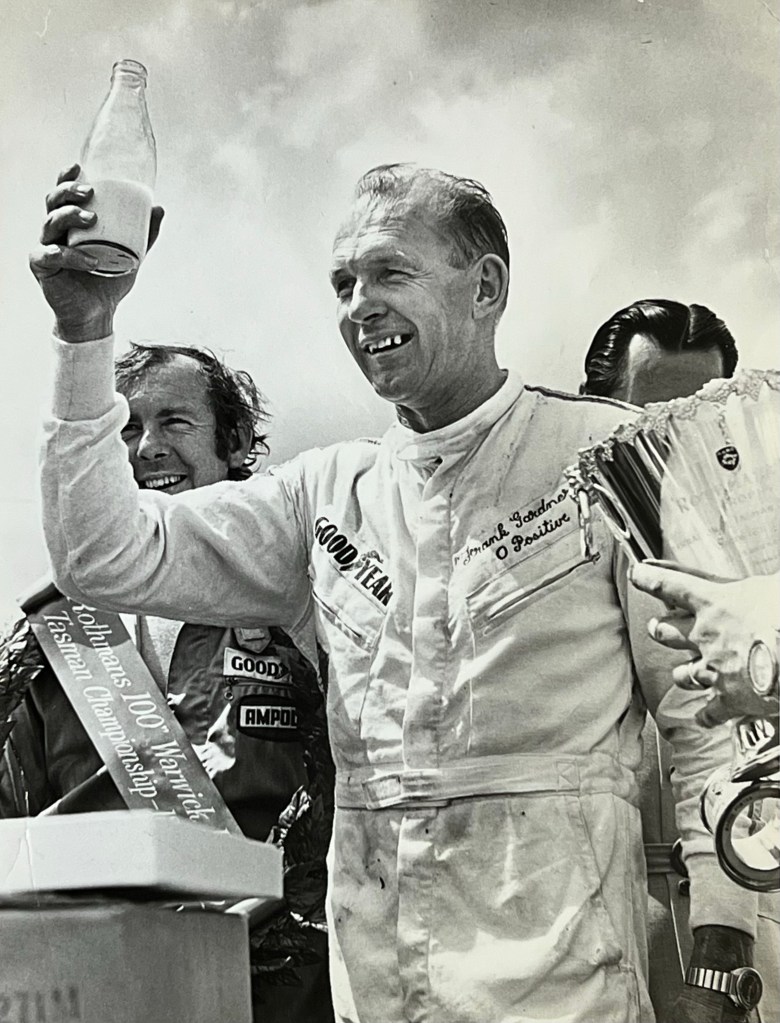
One of FM’s finest moments (above) was his victory in the November 21, 1971 Australian Grand Prix at Warwick Farm aboard the brand-spanking-new Matich A50 Repco-Holden F5000 (001/002) built just across town in Sydney, at Brookvale on the northern beaches.

This win is covered in this feature on all of the Matich F5000s: https://primotipo.com/2015/09/11/frank-matich-matich-f5000-cars-etcetera/

Up close and personal at Peters/Torana corner, Sandown during the April 16, 1972 Victoria Trophy Gold Star round. FM won in A50-001/002 from Bob Muir and John McCormack, Lola T300 and Elfin MR5 (AMC)
A50-001/002 on the grid at Warwick Farm, perhaps the Hordern Trophy Gold Star weekend on November 5, 1972. Matich popped the Gold Star in his pocket on that occasion. Note the multiple top pick-up points for the upper radius rod (AMC)
John Walker, Matich A50-004 Repco-Holden being chased by Garrie Cooper, Elfin MR5 Repco-Holden during the ’72 Sam Hordern Trophy race at the Farm. A DNF for JW (battery) and troubled tenth and last for the Elfin boss (AMC)

The three A50s built were raced with great success from 1971-73 by FM and by Adelaide’s John Walker (004) who used their machines in Gold Star, Tasman Cup, and in JW’s case the 1973 US L&M Championship. Roy Woods bought (A50-003) one, on Carroll Smith’s recommendation, for George Follmer to race in the 1972 US L&M fitted with Al Bartz prepared Boss Ford engines. That program was interrupted by an early season crash and George’s appointment as driver of Team Penske’s Can-Am Porsche 917/10 after Mark Donohue’s bad Road Atlanta accident in July.

Matich, Matich A50 Repco-Holden, Warwick Brown, McLaren M10B Chev, Gary Campbell, Lola T300 Chev, the almost completely obscured Max Stewart, Elfin MR5 Repco-Holden and John Walker, Matich A50 Repco-Holden and an F2 car during the Hordern Trophy, Warwick Farm Gold Star round won by FM on November 5, 1972 (AMC)
(AMC)

Of course, Matich’s plan to take on the Americans was hatched via his sportscar program. The shot above shows FM at Sandown during the 1967 Tasman round weekend aboard his new spaceframe-chassis SR3 Oldsmobile V8.

Behind him is Niel Allen in FM’s year old Elfin 400 Oldsmobile upon which the design of the SR3 was based. Some say the frame, fabricated by Bob Britton at Rennmax Engineering, was a tube-for-tube replica, with a few extra thrown in to strengthen areas Matich felt lacked torsional rigidity in Garrie Cooper’s Elfin design, four of which were built.

By the time Matich and his small team left Sydney to contest the 1967 Can-Am Cup he had sold the car above, SR3-1 to Marvin Webster, and another, SR3-2, to Kent Price, both Californians. Matich raced Price’s car at Road America and Elkhart Lake, and his own car SR3-3 for the rest of the series. SR3-2 and SR3-3 were fitted with 4.4-litre Repco-Brabham 620 V8s (SOHC, two-valve, fuel-injected).

AMC)
(AMC)

The photographs above are of one of the SR3s – perhaps SR3-1 which was sold to Marvin Webster sans engine and transaxle – on the tarmac at Mascot Airport, Sydney being loaded onto a pallet and Qantas Boeing 707 before it’s trip to California in June 1967.

The tale of Matich’s adventures in the US, and details of the Matich sportscar chassis numbers are told in two articles, here: https://primotipo.com/2023/04/02/matich-sr3/ and here: https://primotipo.com/2016/07/15/matich-sr4-repco-by-nigel-tait-and-mark-bisset/

Laguna Seca Can-Am mid-field bunch on October 15, 1967. Skip Scott, McLaren M1C Chev (DNF) Matich in SR3-3 Repco (Q13 DNF oil leak), Chris Amon Ferrari 350 Can-Am (fifth) and a Lola T70. Bruce McLaren’s McLaren M6A Chev won (AMC)
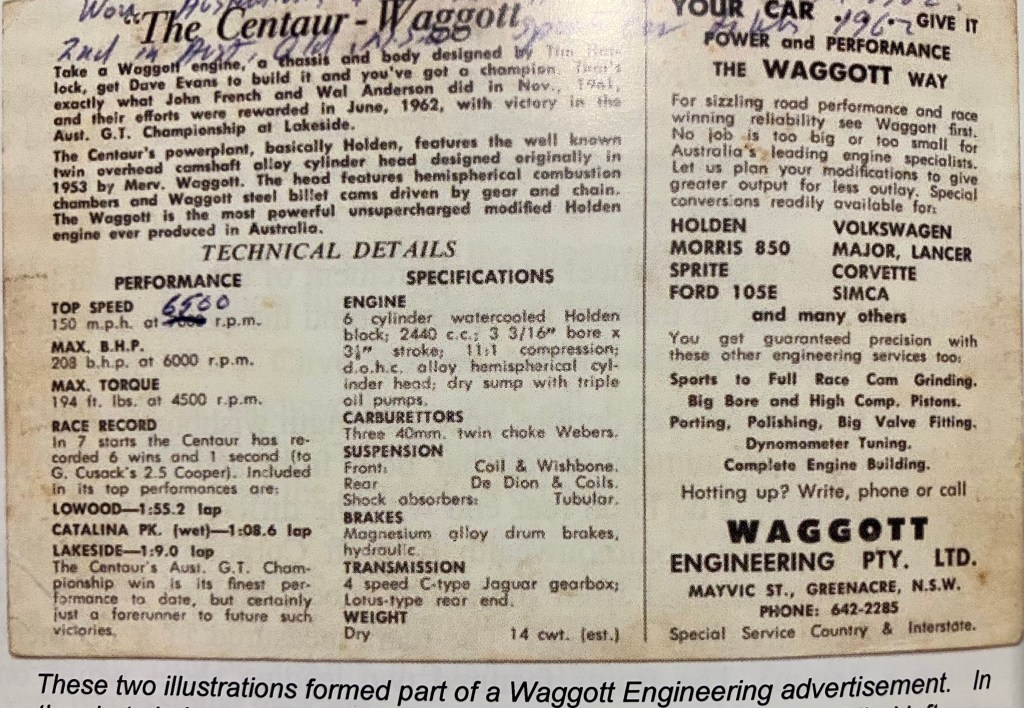
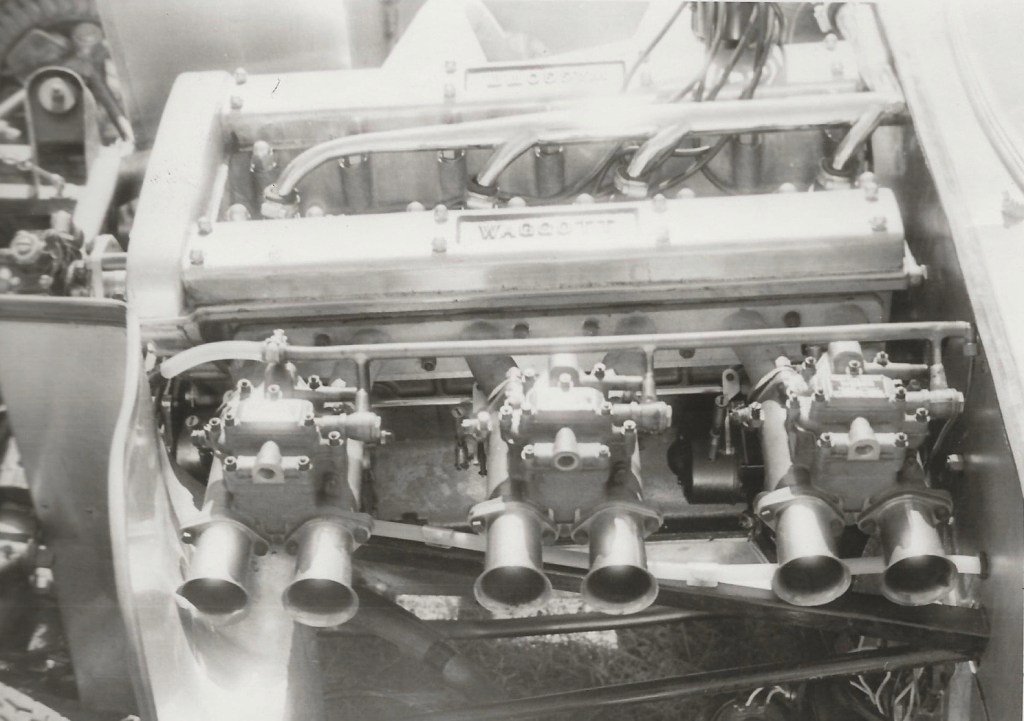
Race shop out back of Matich’s BP Servo on Eastern Valley Way, Castle Cove, Sydney. That’s the SR4 on the left, SR3-3 is in the middle, by that time probably owned by West Australian Don O’Sullivan and maintained by his friend/mechanic/engineer Jaime Gard in Sydney throughout 1969. The frame of SR4B-7 is at the rear. That looks like a Waggott TC-4V engine swinging in the breeze, we can date the shot by knowing when the Waggott replaced the original Lotus-Ford twin-cam originally fitted to this chassis…or is it a twin-cam? Two fuel cells sitting on the high storage rack (AMC)

While Matich had a hard time of it in the US, the intensive, highly competitive series ensured the team had developed the chassis of SR3-3 to a fine pitch before they returned to Sydney.

David McKay (Scuderia Veloce) bought one of the Ferrari 350 Can-Ams (#0858) raced by Chris Amon and Jonathan Williams in the later stages of the ‘67 Can-Am. Amon and Matich faced off in the sportscar support races at Surfers Paradise, Warwick Farm and Sandown in the Summer of ‘68 Australian Tasman rounds. Frank won each of the encounters, sprint races, unlike the 200 mile Can-Am events.

When Amon returned to Europe Bill Brown took over the Scuderia Veloce car but he was no match for Matich with McKay selling the 350 Can-Am to Australian international Paul Hawkins late in the year. See here for the lowdown on those cars: https://primotipo.com/2015/04/02/ferrari-p4canam-350-0858/

SR4 with no shortage of admirers at Warwick Farm in 1969 (AMC)
(AMC)

Frank and his team set to work on their planned 1968 Can-Am weapon, the Matich SR4 which was to be powered by a 5-litre four-cam, four-valve Repco-Brabham 760 V8. Ultimately both the builds of the car and engine ran late, the machine didn’t appear until 1969. Even using the ‘tiddler’ 4.8-litre 760 the machine crucified the local opposition that year in winning the Australian Sportscar Championship. It raced on into early 1970 by which time it was fitted with a 569bhp 5-litre 760 engine built by John Mepstead who was seconded from Repco to Matich to look after the engines.

SR4 was then set aside – it could have won Australian Sportscar Championships for years – and was then sold by Matich to Repco in a prid-pro-quo deal that ensured Matich would focus his attention on his McLaren M10B Repco-Holden F5000 project; FM was Repco’s test driver and received works Repco-Holden engines for the balance of his racing career. That customer engine program, led by Malcolm Preston and Phil Irving, designer of the 1966 F1 Championship winning Repco-Brabham RB620 V8, was Repco’s key racing priority.

Matich aboard the SR4 in hi-winged spec at Warwick Farm, RAC Trophy, first Australian Sportscar Championship heat in 1969. He won the May 4 race. High wings were banned by the FIA/CSI during the May 18, 1969 Monaco GP weekend, a fortnight later (AMC)
This relatively rare body off shot shows Matich aboard the SR4 in 1969. 4.8-litre Repco-Brabham 760 V8 and beefy spaceframe chassis. Originally fitted with a 5-speed ZF transaxle, later in the year a Hewland LG replaced it (AMC)

The Repco-Holden F5000programmes early successes were secured by Matich using a McLaren M10B, victory in the 1970 Australian Grand Prix at Warwick Farm was the first big win.

When the M10B chassis was damaged beyond economic repair in a private practice incident at Oran Park in June 1971 Frank decided his team should rebuild the tub rather than buy a replacement from Trojan Cars to provide them with the experience of making an aluminium monocoque before embarking on the build of what became the Matich A50s.

While Matich had great success in the A50: the 1971 AGP, 1972 Gold Star Series and two Tasman Cup round wins in 1972-73, the car ultimately fell short of Graham McRae’s machines which won the 1972 (Leda GM1 Chev) and 1973 (McRae GM1 Chev) Tasmans, not to forget the oh-so-talented Kiwis’ successes in US and European F5000 events.

The Matich A51 Repco-Holdens, 005 and 006, in the pits at Riverside in April 1973, DNF (C Parker Collection)
(C Parker Collection)

Matich made an all-out assault on the US L&M F5000 Championship in 1973 comprising a two car team, flat-plane crank circa 515bhp Repco-Holden engines, mechanics led by Derek Kneller and locally based on-ground support.

The two A51s were evolutions of the A50 at a time the worlds best F5000s were the McRae GM1 and Lola T300. THE F5000 of 1973 was the Lola T330, variants of which were the greatest ever F5000 and central seat 5-litre Can-Am cars.

The downfall of the ambitious program was oil-scavenging problems with the hitherto bullet-proof Repco-Holden V8s. The constant radius, high speed corners of American circuits were cited as the cause of the issue which was identified and rectified later in the season when one of the A51s was sent back to the Repco Engine Development Company’s Maidstone headquarters. There the engines were tested replicating the effects of these types of corners, and changes to the units scavenging were made.

Interesting is that John Walker had no such problem with the Repco-Holden engines fitted to his very competitive car throughout that same series. That suggests, perhaps, that the problems may have been due to differences in the oil system tanks/plumbing between the A50 and A51 chassis.

Lella Lombardi aboard A51-005 Repco-Holden during the Australian GP weekend at Oran Park in 1974. DNF oil pump (AMC)
FM during his dominant run – for 43 laps – at Surfers Paradise in September 1973. Glyn Scott Memorial Trophy Gold Star round won by John McCormack’s Elfin MR5 Repco-Holden. A52-006 Repco-Holden (AMC)

Influenced by the speed of the Lola T330s stateside, FM and the team quickly converted A51#006 into a side-radiator design designated A52, with changes to the suspension, and the wheelbase using a longer T330 bell-housing.

The car was a rocket at the Surfers Paradise Gold Star round on September 2, 1973. Up there on the Gold Coast on a family holiday I watched Matich piss-orf into the distance until the beautiful exhaust note of the flat-plane-crank 5-litre V8 instantly ceased. The engine’s fierce high-frequency vibrations simply shook the gizzards of the lightweight Varley racing battery to bits…an expensive lesson.

Matich in front of Bruce Allison’s Bowin P6 Hart-Ford ANF2 car – not Bruce’s favourite machine! – at Surfers. Bruce was fourth and second F2 behind Leo Geoghegan’s Birrana 273 Hart-Ford. Again Glyn Scott Memorial Trophy (AMC)
Wonderful profile shot of FM and A53-007 at Adelaide International during the February 24, 1974 Tasman round, fourth (AMC)

The A52 lost its life in a testing accident while being driven by Bob Muir, who had shown stunning pace aboard a Lola T330 Chev in the L&M, at Warwick Farm shortly thereafter. Equipe Matich then built up the last of six identical monocoque tubs made by the team and the Commonwealth Aircraft Corporation – #007 – into the A53, a further refinement of the A52 and intended as FM’s 1974 Tasman and L&M weapon of war.

A boating accident which gave Frank a near fatal electrical shock, and his wife Joan’s illness were catalysts for Matich’s retirement from racing at the end of the ’74 Tasman. Bob Muir raced the car at Oran Park (Q15/DNF fuel pump), and Matich at Surfers (Q4/third), Sandown (Q2/DNF water pump) and Adelaide (Q2/fourth; there was no shortage of pace.

To have seen the A53 battle the American T332 Chevs later in the year would have been something to watch, with the benefit of the character building visit and experiences the year before…

Credits…

Australian Muscle Car, Chris Parker Collection

Tailpiece…

John Goss from Vern Schuppan through Dandenong Road at Sandown in the later stages of 1976 AGP. Matich A53 Repco-Holden and Elfin MR8 Chev. What a thriller it was! (AMC)

While Matich retired, the cars raced on, most notably in the hands of talented sports and touring car driver/mechanic/engineer John Goss.

‘Gossy’ bought A53-007 from Matich in mid-1974 and later A51-005, he converted the latter to A53 spec and generally preferred that car. He took to the brutish 5-litre roller-skates like a duck to water winning a couple of Tasman rounds. While John had the pace to take a Gold Star he never seemed to have the reliability, maybe given the challenges of also preparing and racing Ford touring cars. But it all came good good at Sandown on September 12, 1976 when he beat Vern Schuppan’s works-Elfin MR8 Chev home in a nail-biter of an Australian Grand Prix finish.

Goss out of A53-005 and taking the plaudits of the Sandown grandstand crowd. Note the lack of an airbox, and radiator location ducting changes compared with the A53 in its original form during the ’74 Tasman (AMC)

There were still plenty of sportscar and sports-sedan wins for Repco-Holden F5000 V8s but it was the last hurrah for a Matich chassis, the first of which, Frank argued – and I agree – began with his highly modified Lotus 19 Climax in 1962.

Finito…
(Bob Shepherd)

Credits…

The Car June 1935 magazine and Bob Shepherd drawing are both from the Bob King Collection

Finito…
Evocative shot of Jack Phillips’ Ford V8 Special ascending Rob Roy hill in the Christmas Hills, 50km east of Melbourne

This car was one of the fastest and most successful racers in Australia – where handicap events then were standard fare – in the immediate pre and post-War period. Built by Phillips and Ted Parsons, his riding mechanic and partner in a Wangaratta Ford dealership, I’ve written about the combo before: https://primotipo.com/2023/03/07/jack-phillips-ted-parsons-ford-v8/

I’d love to know the date of the meeting and how Jack went? Before the January 13, 1939 Black Friday fires it seems?

(B King Collection)

Phillips/Parsons (above and below) on the way to a win in the South Australian Hundred on formidable Lobethal in 1940.

(B King Collection)

Credits…

Bob King Collection

Tailpiece…

(B King Collection)

Finito…
Jack Brabham on his way to winning the 1960 Portuguese Grand Prix on the Circuito da Boavista, Oporto on August 14. Cooper T53 Climax, Bruce McLaren was second in the other team T53 while Jim Clark was third in a Lotus 18 Climax.

He won his second drivers world championship that day – round seven of nine qualifying rounds – while Cooper bagged their second manufacturer’s championship too. Jack would collect another F1 title or two, Cooper did not. Sadly.

More about Boavista in this article about the 1958 race: https://primotipo.com/2014/09/24/circuito-da-boavista-portuguese-gp-1958/

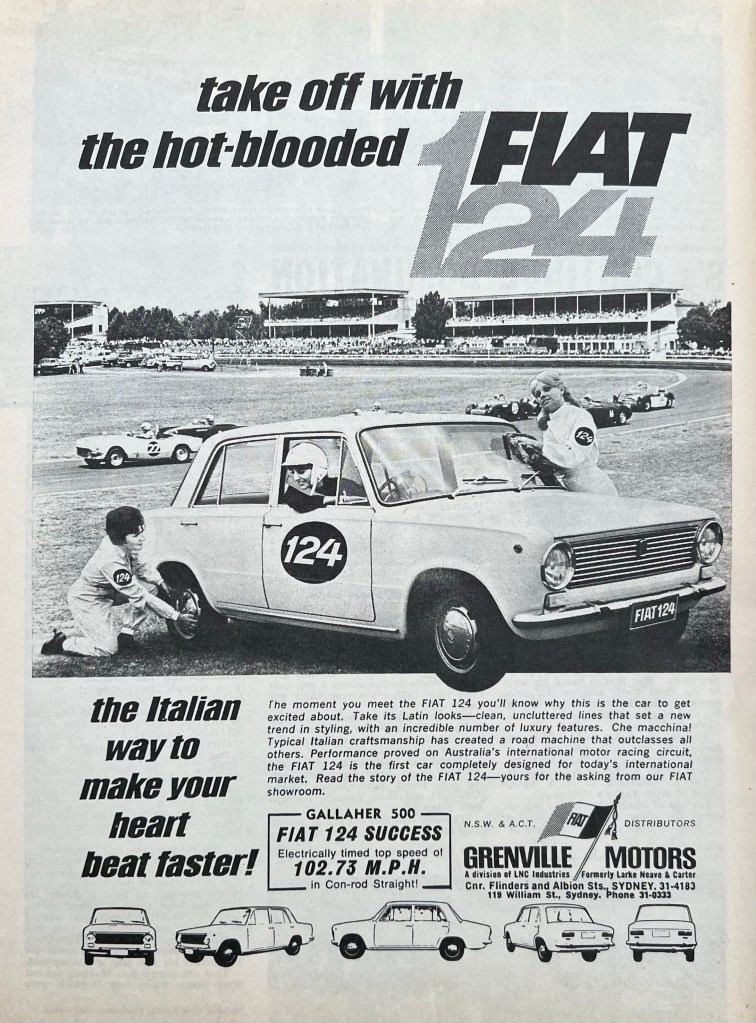
When flicking through old mags the ads are often as interesting as the editorial material.

At that stage ‘yerd be taking your Lotus 7 with the A-series I guess, the release of Ford’s 105E rather shifted the balance of course, especially once Messrs Duckworth and Costin did their thing thereon.

The BRM P48 is a favourite, what’s not to like, here: https://primotipo.com/2018/03/16/bourne-to-ballarat-brm-p48-part-2/ and here :https://primotipo.com/2015/03/26/tony-marsh-boness-hillclimb-scotland-brm-p48-part-1/

Who did the drawing do you think?

Credits…

MotorSport November 1960

Finito…
Chris Amon sneaks a look in his mirrors, no need to worry too much! Ferrari Dino 246T/69 #0008 (MotorSport)

Unlike previous years when the cars had been shipped across The Ditch – the Tasman sea – from New Zealand to Australia, in 1969 they were air freighted as there was only a week between the Teretonga and Lakeside rounds, that year the site of the 1969 Australian Grand Prix held on February 2.

Top Guns were the Scuderia Ferrari/Chris Amon/Scuderia Veloce run Ferrari Dino 246Ts of Chris Amon and Derek Bell and the Gold Leaf Team Lotus Lotus 49B Ford DFW V8’s of just minted World F1 Champion Graham Hill and The Hunter-Jochen Rindt, with everything to prove.

The 1969 Tasman Cup gets underway at Pukekohe on January 4 with the gig-two on the front row. Chris Amon, Ferrari Dino 246T and Jochen Rindt, Lotus 49B Ford. Amon won from Rindt and Courage (MotorSport)

At the end of the four Kiwi rounds Amon was looking the goods for Tasman Cup honours, having won at Pukekohe and Levin and picking up third place points at Wigram and Teretonga. While the Lotuses were the fastest cars, they weren’t as reliable as the Ferraris: Amon and Bell had six out of seven point scoring finishes, while Rindt, Hill and Piers Courage – in Frank Williams Brabham BT24 Ford DFW – scored off only four races. Chris won the cup with four race wins (his two in Australia were at Lakeside and Sandown) to Jochen’s two (Wigram and Warwick Farm) and Piers’ one (Teretonga).

Rindt, Lotus 49B Ford #R10 heads towards The Karussel with Lake (MotorSport)

Practice…
Of the internationals, Only Ferrari and Piers Courage managed to get themselves sorted out in time, Bruce Sergent wrote. “While Lotus had all sorts of problems with customs and freight. It was apparent that Ford Australia weren’t behind the Lotus effort this year, for they had to do most of their own organising right from administration down to transport for drivers and mechanics.” Ferrari, of course had the well drilled David McKay/Scuderia Veloce organisation to deal with the logistics, and it showed throughout the weekend.

The new stiffer rear springs Amon was after from the start of the series were waiting for the two Ferraris in Brisbane, and with these fitted the cars were out early on Friday and soon showed it would be a tough round Lotus to even make a clean breast of. While Amon and Bell were making hay on a clear track, Lotus had only just received their cars and both needed attention. Rindt’s engine was misfiring, and Hill’s blew up shortly after starting up in the garage. Even with getting an engine back from Courage, it still left them with one very sick car, Rindt’s.

On Saturday, Amon comfortably took pole pole from Courage. Gardner had fitted a bi-wing set-up to his Mildren Racing Mildren Yellow Submarine Alfa Romeo V8 like Courage’s in unofficial practice but didn’t have the time to evaluate it and had to remove the front one and save it for testing on home turf at Warwick Farm, Sydney, the following week. Hill broke his wing in practice – the curse of Team Lotus at the time – but still managed fourth fastest, while Rindt was only able to push his Lotus 49B to fifth, creditable under the extreme circumstances.

Piers Courage, Brabham BT24 Ford DFW from Jochen Rindt, Lotus 49B Ford DFW thru the kink. The start-finish line is just out of shot (MotorSport)
They are off: Amon and Courage, Hill and Bell partially obscured by Courage, then the two yellow winged Mildren entries of Gardner and Bartlett (G Ruckert)

Race…
Amon won the jump from Courage and streaked off into the afternoon sun while Hill, Courage and Bell lined up for battle behind, then followed Gardner, Rindt and Kevin Bartlett aboard the Brabham BT23D Alfa Romeo Tipo 33 2.5-litre-V8 that Gardner raced in the ’68 Tasman and was then driven by KB to victory in that years Gold Star, the Australian Drivers Championship. Next was Niel Allen’s ex-Courage McLaren M4A Ford FVA. It was Niel’s first drive at Lakeside after his huge accident during the Gold Star round in July 1968, the car’s monocoque having been rebuilt/replaced by Bowin Cars.

Positions remained static for a bit until Courage closed in on Hill and tried to pass on the outside as they ranged under brakes for BMC bend. But Piers didn’t quite make it and there wasn’t enough room left for both cars, Graham didn’t give way, being on-line for the corner so the two cars touched and Courage suddenly ran out of track and retired the car on the dirt with slightly bent front suspension. Hill lost four seconds giving Bell his opportunity and he went through into second position to make it a Ferrari 1-2 for the first time in the series.

Bartlett retired on the following lap with no water and blown head gaskets, giving away his position to Niel Allen. Then he overdid it under brakes, the front set locked, and he lost four places getting things in hand. He picked up one of the lost places immediately and set out on a long hard haul back through the field.

Rindt hustles his Lotus – engine problem duly noted – into BP Bend, Q5 and DNF. With fresh engine he made good and ‘blew the field off the planet’ in the Warwick Farm 100 one week hence
Frank Gardner, Mildren Alfa Romeo V8 aka the Mildren Mono/Yellow Submarine (MotorSport)

Jochen Rindt made the next move when he displaced Leo Geoghegan’s ex-Clark Lotus 39 albeit with a Repco Brabham V8 rather than the Climax FPF four, on the 13th lap for fifth spot, but Geoghegan was hanging on grimly and didn’t let the Austrian get away from him. But Rindt pulled out every horse he could find in the ailing Cosworth V8 and slipped by Frank Gardner on lap 19, making the order Amon and Bell in Ferrari Dinos, Rindt’s Lotus 49B, Gardner’s Mildren Alfa, Geoghegan’s Lotus Repco, Max Stewart, Mildren Alfa 1.6 F2, Allen, Glyn Scott, Bowin P3 Ford FVA F2 and Malcolm Guthrie, Brabham BT21B Lotus-Ford 1.6.

Rindt held onto this position, trailed by Gardner, who was becoming concerned over oil pressure. His fears were confirmed when the Alfa Romeo engine blew an internal oil line and he was forced out of the race on lap 12. Gardner’s demise brought everyone up a place but Jochen Rindt’s forceful run ended when the Cosworth Ford V8 engine lost power and he quickly shut off and headed for the pits.

Derek Bell, Ferrari Dino 246T/69 #0010. No adjustable wing for Derek (MotorSport)

Chris Amon was busy lapping all but his team mate, Derek Bell, while Leo Geoghegan was sitting in a wonderful position behind Graham Hill in fourth spot. Col Green, ex-Hill/Gardner Brabham BT16 Climax 2.5 FPF was in and out of the pits with gearbox and engine problems while Alf Costanzo, McLaren M4A Ford FVA F2 had retired after a spin over the back of the circuit, then stalled and was unable to restart.

The rear wing on Hill’s Lotus 49 had looked shaky for a few laps and finally it broke and folded over his rear wheel. He tried to keep the car as steady as possible so not to be black flagged, and finally pitted to have the offending piece of iron cut from the car. Geoghegan, meanwhile, seeing Hill’s problem, had speeded up and went by as Hill was having the operation finished to his wing. He came back into the fray bent on getting his third spot back from Geoghegan, but the Lotus was suffering from oversteer with the now, light rear end, and he steadily lost ground.

Graham Hill’s 49B #R8 with the rear wing mount problems that Lotus never satisfactorily solved. No bodily harm caused on this occasion. Ultimately the FIA solved Lotuses problem for them with their intervention over the 1969 Monaco GP weekend (G Ruckert)
Niel Allen, McLaren M4A Ford FVA. #M4A/2 is the ex-John Coombs/Courage ’67 Euro F2 entry, then, in Pier’s ownership his ’68 Tasman machine, and Longford round winner (MotorSport)

Niel Allen, worked hard to make up time lost in two spins and managed to catch Max Stewart in the surviving Alec Mildren Racing entry, the Mildren Alfa/Autodelta 1.6 four-valve F2 car and, now in fifth spot, went on to win the battle of the F2’s. Englishman, Malcolm Guthrie, having sat behind Glyn Scott on the Queenslander’s home circuit, finally made a last-minute burst and finished ahead of the Bowin. Scott was still waiting for a set of rods to come from Cosworth for his FVA engine, he was running on a set borrowed from Allen.

With two rounds to run, Amon’s win put him into an almost uncatchable Tasman Cup points lead. Only Piers Courage, with a bit of luck and by winning the final two races, could take the championship from the New Zealander. Rindt and Hill, equal on 15 points, were at that stage relegated to fighting out second spot.

Ain’t she sweet, Graham Ruckert has captured the car with its unloaded left-front off the deck. Note the hydraulics to operate Chris’ rear wing

Etcetera…

(MotorSport)

Graham Hill blasts through the hole left for him by Glyn Scott at Lakesides flat-knacker Kink.

Bowin P3 Ford FVA 1.6 #P3-101-68 and Lotus 49B Ford DFW 2.5. Hill was fourth and Scott 11th. More about Graham’s car here: https://primotipo.com/2022/02/26/lotus-49b-ford-chassis-r8/

It’s a David and Goliath shot. John Joyce’s superb monocoque was Lotus inspired too, he had a number of senior engineering posts at Lotus between 1963 and late 1967 when he returned home to start P3 – Project 3 – his first two cars (Projects 1 and 2) built before he left for his stint in the UK were a modified Cooper and the Koala Formula Junior. More about Glyn and the Bowin P3 here: https://primotipo.com/2020/07/24/glyn-scott/ and here: https://primotipo.com/2021/05/06/ian-peters-ex-glyn-scott-bowin-p3-101-68/

(MotorSport)

Nah, its too skinny to be Sergeant Schultz! It must be Jochen Rindt with a touch of the Adolfs, not the best protection for the searing Queensland summer sun, and with a smile on his face despite the challenges of the weekend.

Piers Courage took up where he left off in the ’68 Tasman, as a front runner in the clever car Frank Williams assembled for him. Brabham BT24-3 was ex-Brabham/Rindt/Gurney/Ahrens, with its F1 3-litre 740 Series Repco Brabham V8 removed and a 2.5-litre Ford Cosworth DFW installed the bi-winged Brabham was a very competitive car raced ably throughout. Piers ultimate pace was reinforced during that years GP season where he proved one of the quickest men around…he arrived that year big time.

Courage, Brabham BT24 Ford. Generally, but not completely, Ron Tauranac’s wings remained where he intended them from the start to the finish of the weekend (MotorSport)
(MotorSport)

Frank Gardner’s (above) Len Bailey designed, Alan Mann Racing built Mildren Alfa used many Brabham BT23 components and was ‘best of the rest’ behind the big-five. Gardner arrived in New Zealand ‘under-winged’, he scored in four of the seven rounds and would have gained a bit with more downforce from the start of the series.

It’s one of the most iconic and instantly recognisable single-seaters ever raced in Australia by – in turn – FG, Kevin Bartlett, Bob Muir and Ray Winter with Tipo 33 2.5 V8 as here, then Waggott 2-litre TC-4V and finally 1.6-litre Lotus-Ford twin-cam in ANF2 spec.

Derek Bell drove well throughout the series, a pair of seconds at Lakeside and Warwick Farm his bests. He was fourth at Pukekohe, and fifth at Wigram, Teretonga and Sandown. Depending upon your source, Scuderia Ferrari provided four of the latest spec 2.4-litre, DOHC, four-valve fuel injected V6s for the two-car touring team. Bell was given less revs to play with than his team-leader!

More on the Ferrari Dino 246T here: https://primotipo.com/2018/05/01/wings-n-dino-things/ and here: https://primotipo.com/2017/07/21/amons-tasman-dino/ on Piers Courage’s Brabham BT24 here: https://primotipo.com/2016/07/11/brabham-d50/ and on Jochen Rindt’s Down Under summer here: https://primotipo.com/2018/01/19/rindt-tasman-random/

(MotorSport)

Credits…

I truncated and added to Thomas B Floyd’s race report in the Australian Motor Racing Annual 1969, Sutton, MotorSport Images, Graham Ruckert Photography, Bruce Sergent on sergent.com, oldracingcars.com

Tailpiece…

Finito…