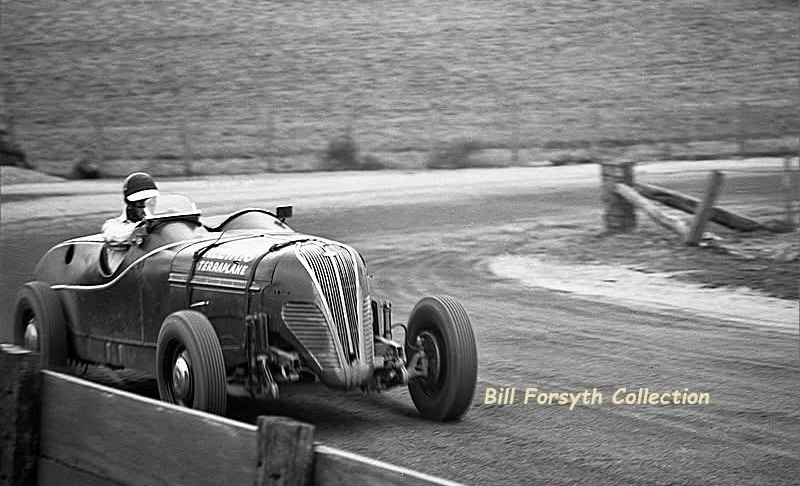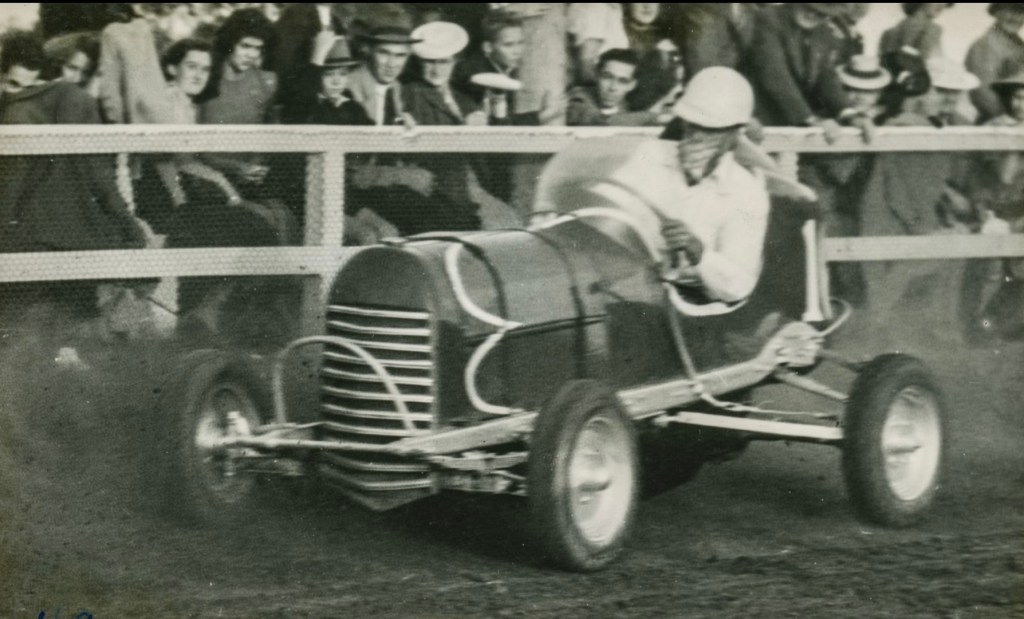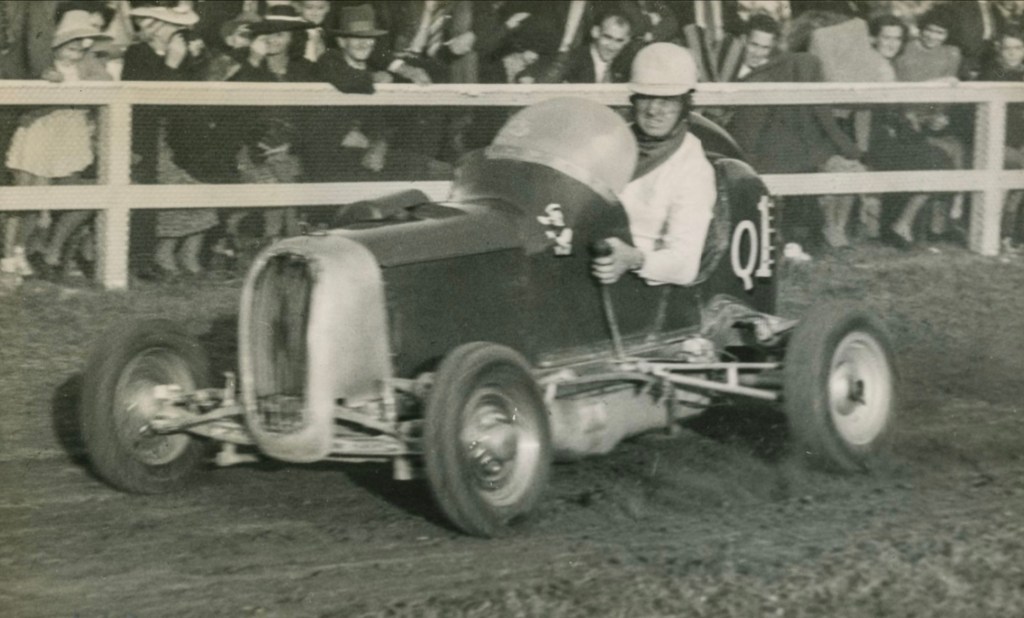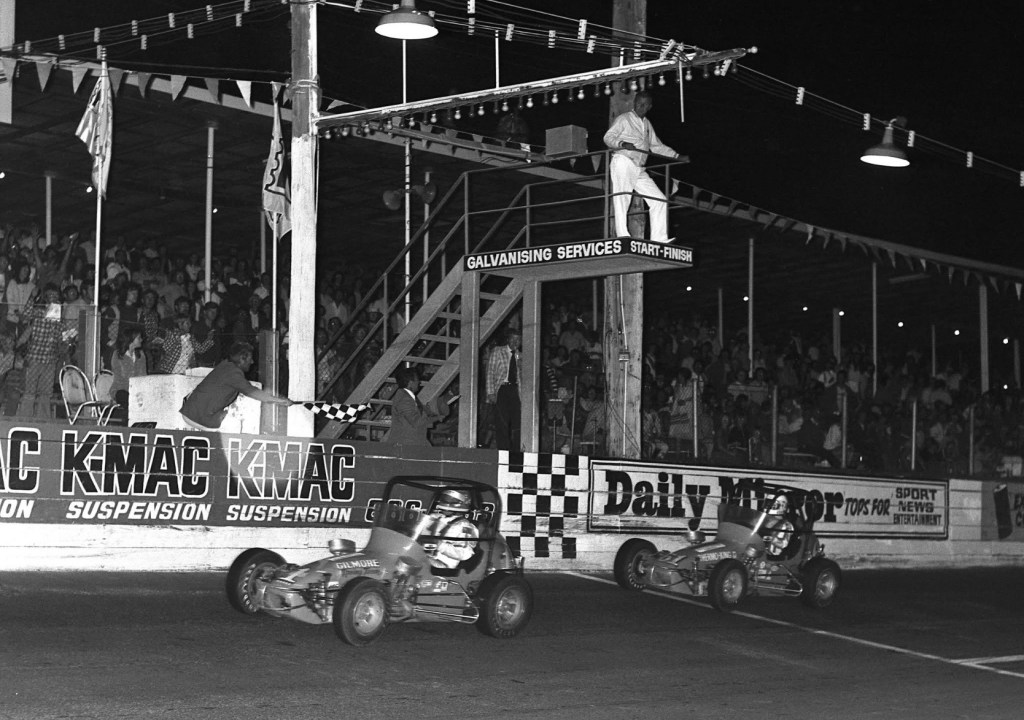
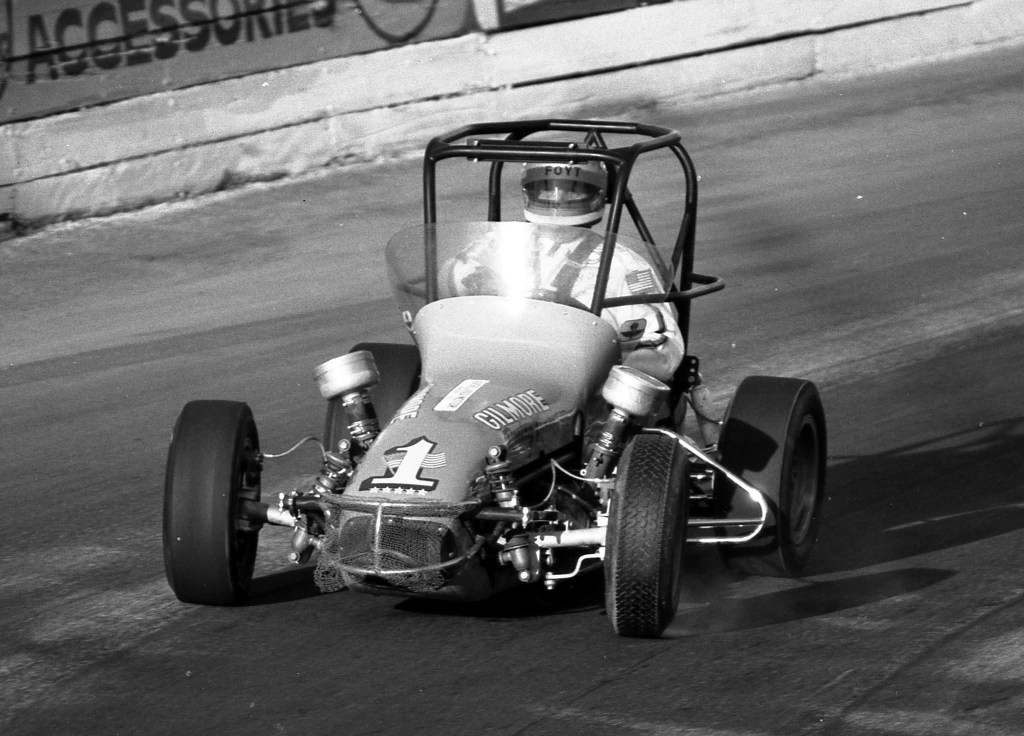
AJ Foyt beats fellow American Mel Kenyon to the chequered flag of the 1975 Australian Speedcar Grand Prix at Liverpool City Raceway, Sydney on January 12, 1975.
The Canberra Times reported the weekend this way, ‘A. J. Foyt, the 39-year-old Texan car racing great, exploded one myth and cemented a reputation during his brief 22-hour Australian visit at the weekend.
Foyt, in Sydney for a one-night speedcar show at Liverpool Raceway last night, fully lived up to his awesome reputation created on the race tracks in America.
After a predictably slow start – it was only his sixth outing in a midget speedway car in 18 years – Foyt demonstrated just why he is said to be the best driver in the history of motor sport.
He qualified fourth fastest in the time trials behind Australian stars Ron MacKay and Jack Porritt, and countryman Mel Kenyon, of Indiana.
However, in the four-lap trophy dash. Foyt drove to a strong win over MacKay and Kenyon. Kenyon reversed this decision in the international scratch race over 10 laps. taking the lead just after the start. Foyt was second.
Foyt then teamed with Californian professional Gary Patterson to defeat Porritt and another Sydney driver Kevin Gormley in a US versus Australia match-race series.
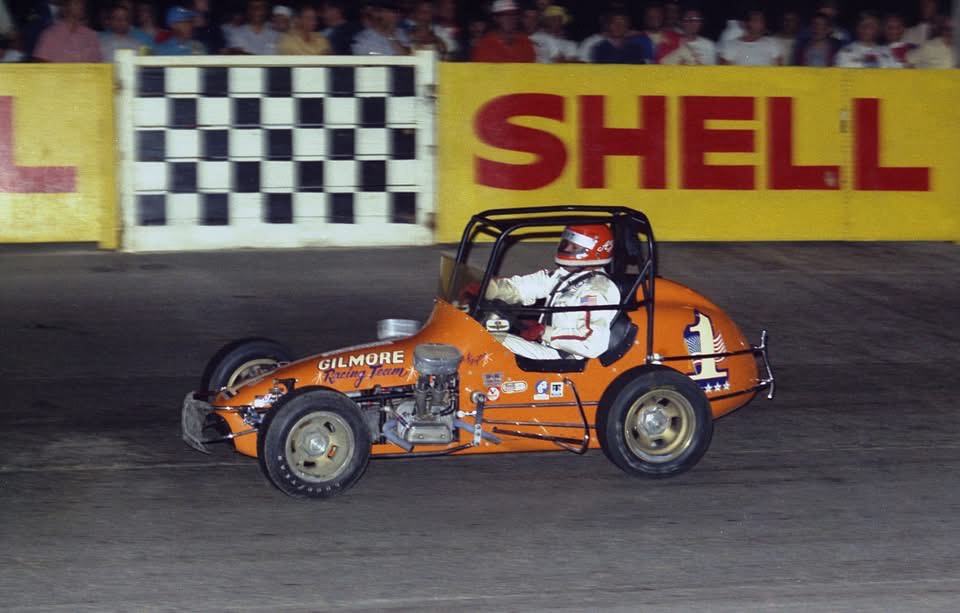
Foyt scored three brilliant wins and a close second to Porritt to score top points in the series. His rare appearances in the midget division did not seem to be any real handicap because he won the Australian Grand Prix race for the class by a considerable margin. He went on to win the Grand Prix itself, over 40 laps.
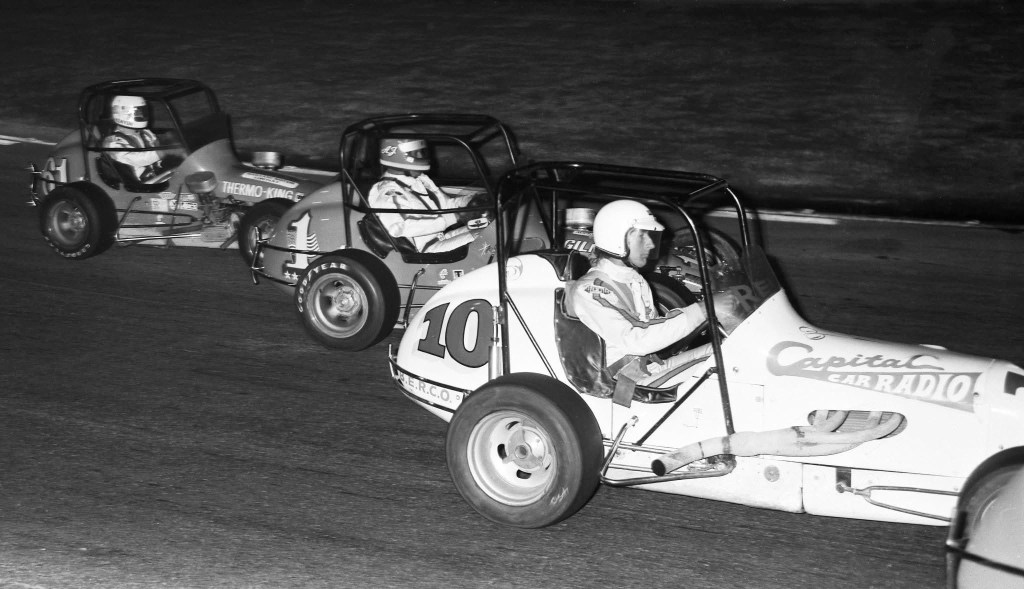
Foyt, Kenyon and the 1973 USAC champion Barry Rice started at the rear of the 20-car field, and with 15 laps remaining, the nose of Foyt’s car sat only inches away from Kenyon’s tailpipe. A tiny lapse by Kenyon allowed Foyt to pass underneath and into the lead.
Foyt said before the meeting that it was the first time since 1956 that he had raced on a quarter-mile paved oval.’
The Americans dominated the GP; the first four placings were Foyt, Kenyon, Larry Rice and Garry Patterson.
The photographs in this article are from Tony Loxley’s Full Throttle Publishing. Full Throttle are the most prolific Australian Speedway racing, Rugby League, and occasionally, road racing, book publisher! Loxley’s ‘Tasman Cup 1964-1975’ and ‘F5000 Thunder’ are brilliant books that live upstairs close to hand rather than in my library down below, constant references as they are. See here: https://www.fullthrottlepublishing.com.au/?srsltid=AfmBOop0cODJjQ-6LK6sYTWn_oWngNnoT90dwsh6OWZQuZfaSpXiuDAo
Loxley observed of Foyt’s trip, ‘AJ Foyt ventured to our shores in 1975 and 1976, a Mike Raymond and Frank Oliveri coup if ever there was one.’
Foyt’s Gilmore VW was built and maintained by Mel Kenyon and his mechanic, Billy Gene Thomas during the meeting. Foyt’s entourage comprised his wife and his Indy sponsor/friends, Jim and Di Gilmore.
AJ raced at Western Springs in New Zealand before his 22-hour Australian whistle-stop. Customs came to the party with priority clearance for the Americans’ cars organised via Liverpool Manager/Commentator Mike Raymond and track owner Frank Oliveri.
Foyt returned for more 12 months later to defend and retain his GP title.
Further context about Speedcard in the 1970s and this event is provided by speedway historian Bill Lawler.
‘The Sydney Showground was continually under fire from local residents and the new Liverpool City Raceway by this time was up and running and after negotiations with Frank Oliveri in the mid 70’s made Liverpool their home.
Between 1970 and 1980, track surfaces went from the traditional dolomite dirt mixture to ashphalt and finally, to a clay compound. Racing on the ashphalt was super fast, the Volkswagen engine was dominating over the long established Holdens and Offenhausers, and racing brought out the best in four drivers, Barry Pinchbeck, Ronald Mackay, Howard Revell, and George Tatnell.
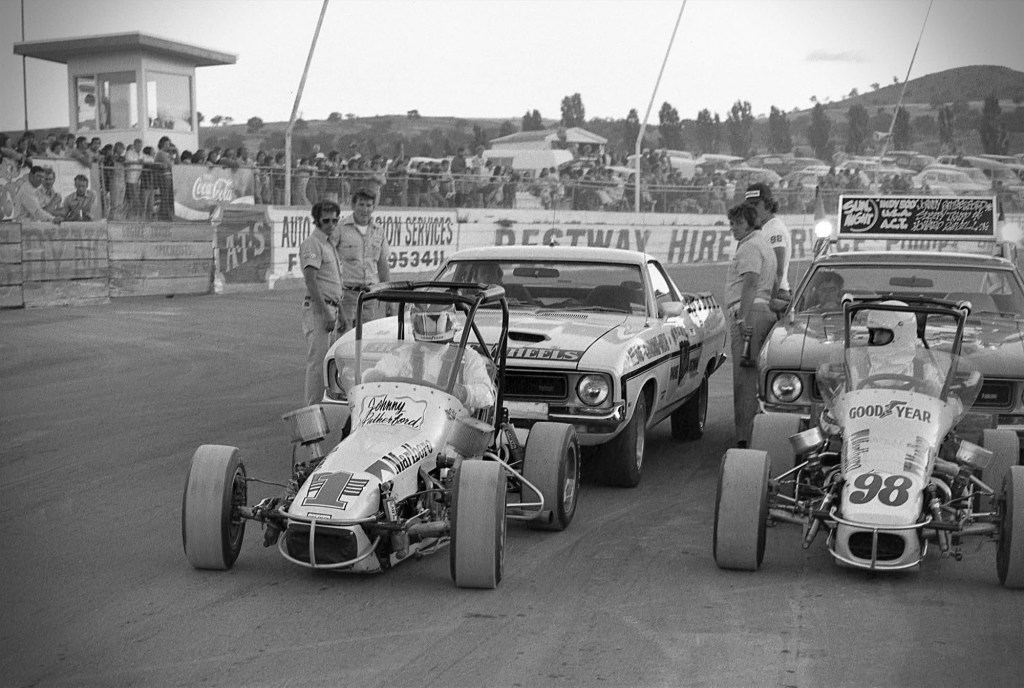
The influx of US midget stars continued (from prior decades) headed by Indianapolis drivers A. J. Foyt, Johnny Rutherford, and Mel Kenyon. They were followed by Pancho Carter, Larry Rice, Sleepy Tripp, and the great Rich Vogler.
There was some incredible racing on the asphalt at Liverpool, but the most outstanding race of that decade had to be the 21st running of the Australian Speedcar Grand Prix. In a masterly display of skillful driving, A. J. Foyt tore through the field, lapping every local car on the way to winning the 1975 Grand Prix from fellow countrymen Mel Kenyon, Larry Rice, and Garry Patterson.
The race went flag to flag and Foyt smashed the existing 40 lap record by 20.24 seconds, averaging 14.371 seconds per lap through traffic.’
Etcetera…
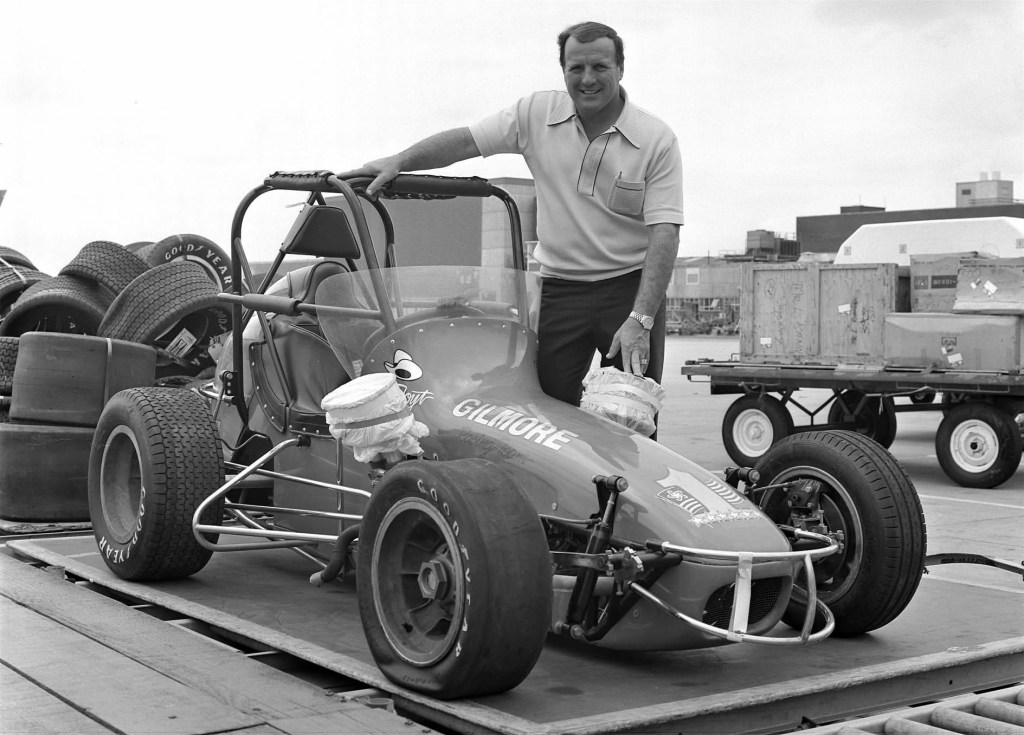
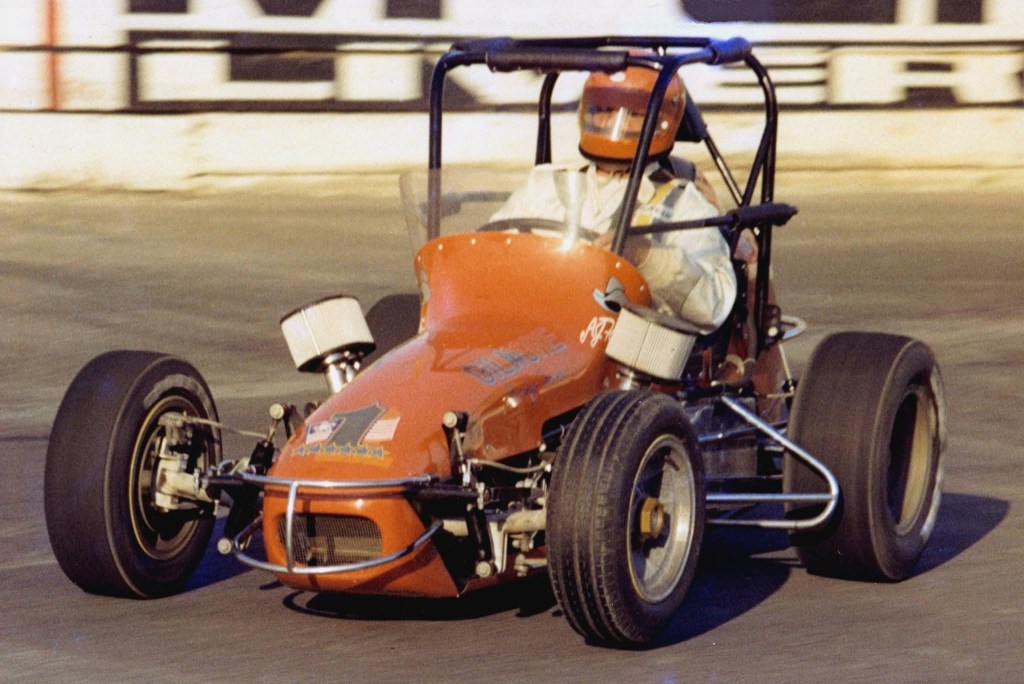
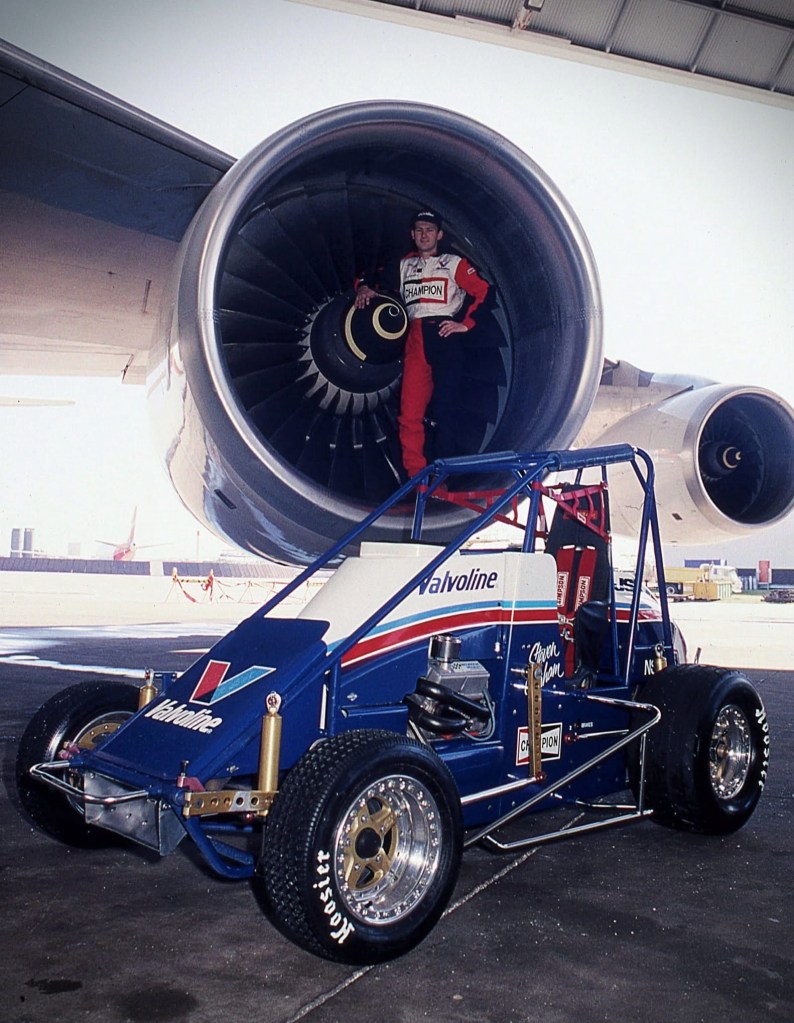
The eagle has landed, Foyt and his Gilmore VW at Sydney’s Mascot Airport on January 11, 1975. The detailed specifications of this circa-2.3-litre VW-powered machine would be gratefully received.
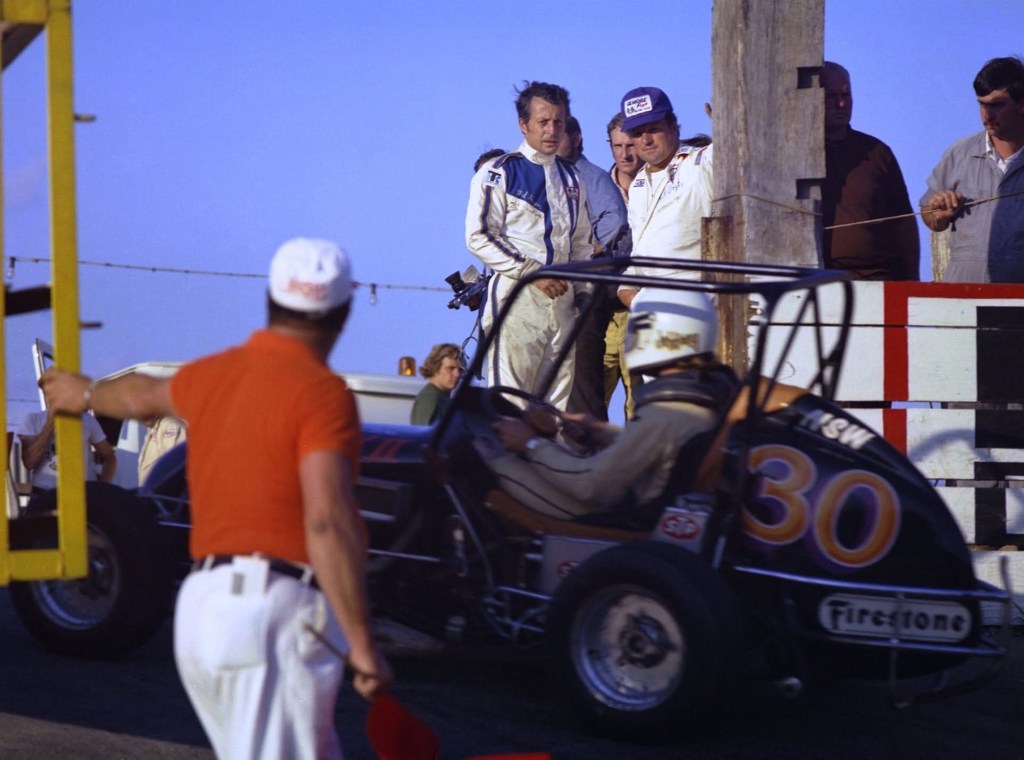
Tony Loxley wrote, ‘The shot above shows the Higgins #30 returning to the pits after engine starts at Liverpool with Mel Kenyon and AJ Foyt looking on.
Foyt, Mel Kenyon, Gary Patterson and Larry Rice were on hand to represent the best of the USA against a host of talented Aussies, all of whom were still – at this period of time – getting used to high-speed pavement racing (Liverpool had only been paved six months earlier) and the intricate nature of that form of racing.
In the end, Foyt won in front of a capacity audience from Kenyon, Rice and Patterson – a USA washout – but the Aussies, none of whom had the latest, updated VW-powered machinery at the time, were learning fast.
Foyt would follow up his AGP win the following year, but it was a lot tougher second time around after the locals had begun to up-date their cars to the latest specs available. Great days in speedcar (midget) racing in Australia.’
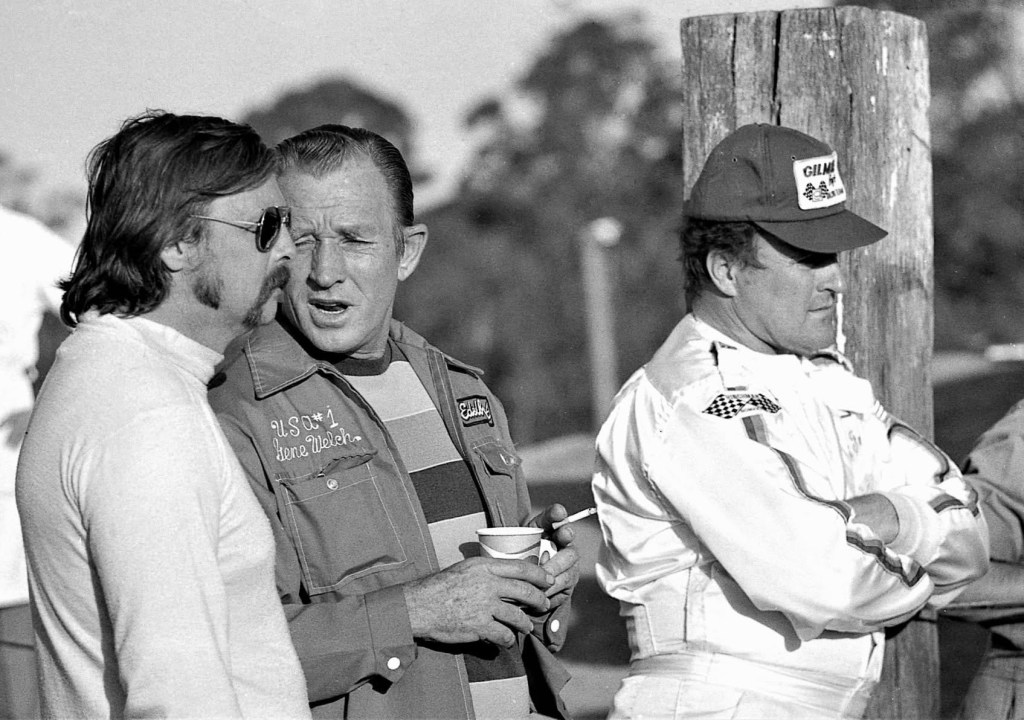
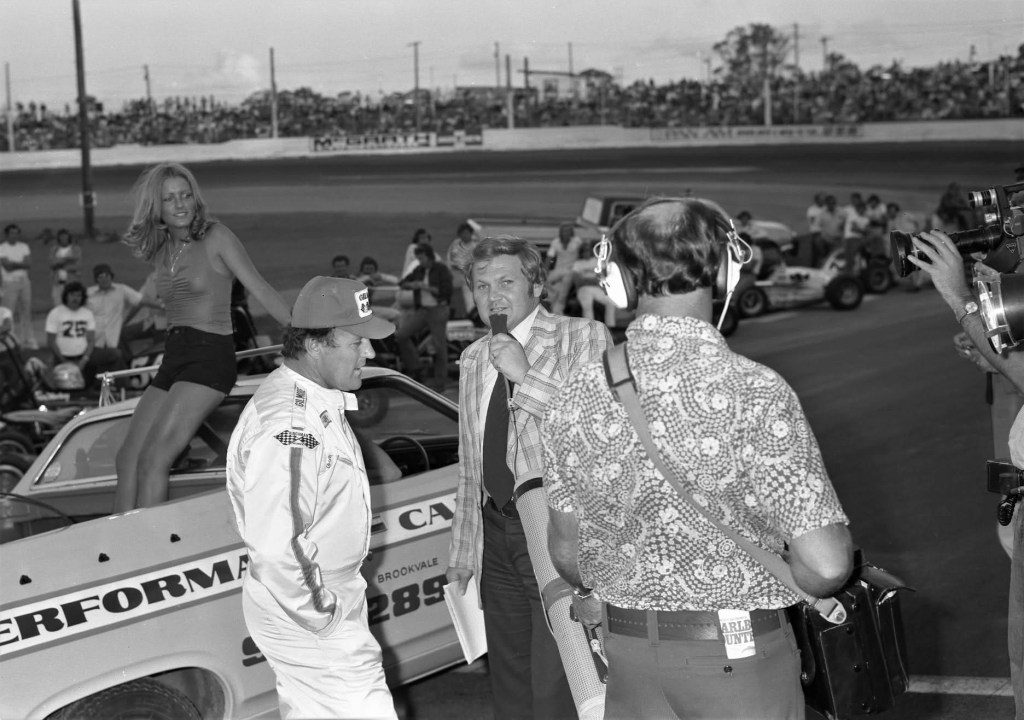
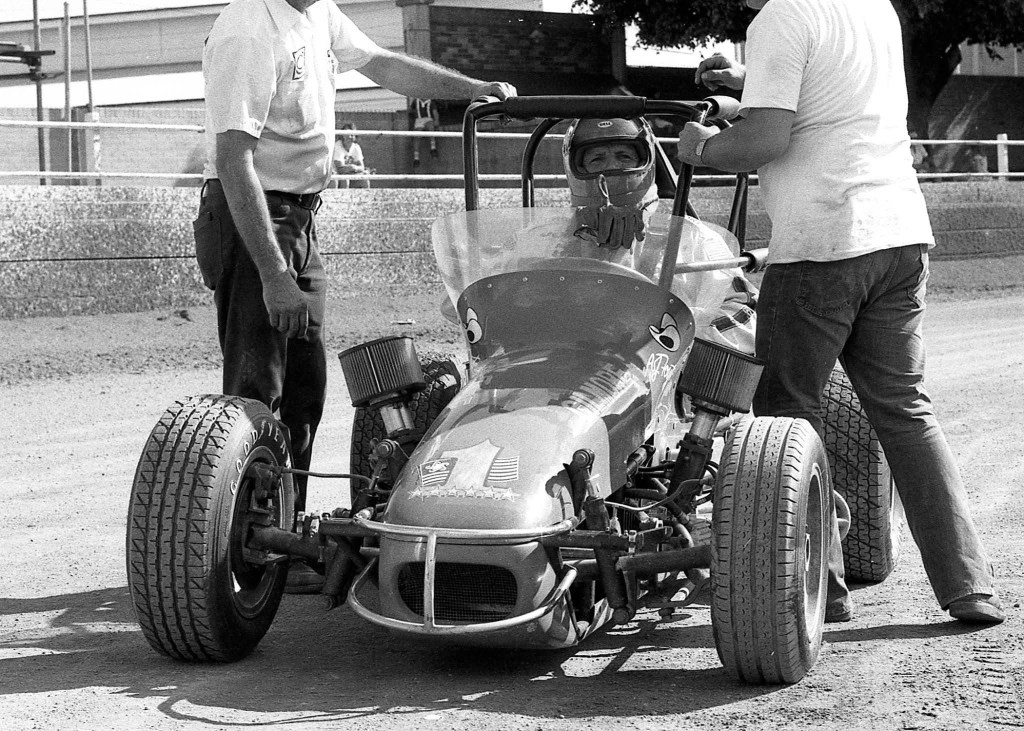
‘Practice for the 1975 event with Gary Patterson and Gene Welch – US-based short-track racers in sprints, midgets and sedans – chatting to themselves with Indy royalty close by.’
And below, Foyt during practice.
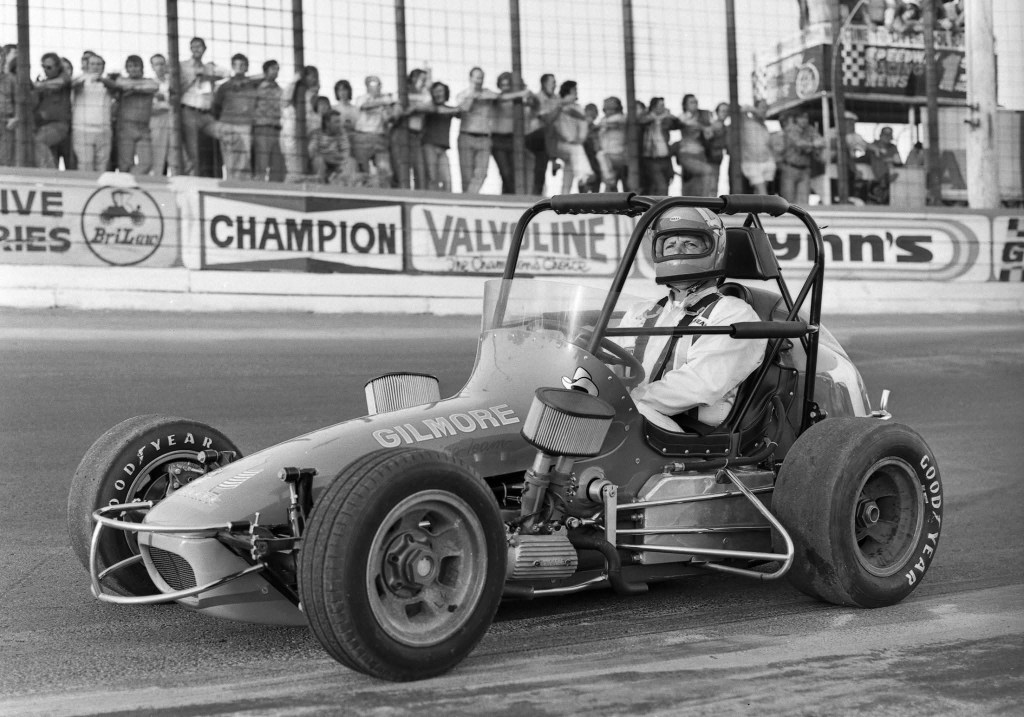
AJ Foyt waits for a push-car at Liverpool above prior to defending his 1975 Australian Speedcar GP win in 1976.
Tony Loxley, ‘Foyt won this time-honoured race again, but this time (1976) the Aussies, now suited up in VWs, made a better race of it. AJ loved Liverpool and stated to anyone who wanted to listen that he thought it was the nicest 1/4-mile track he had ever raced on.’
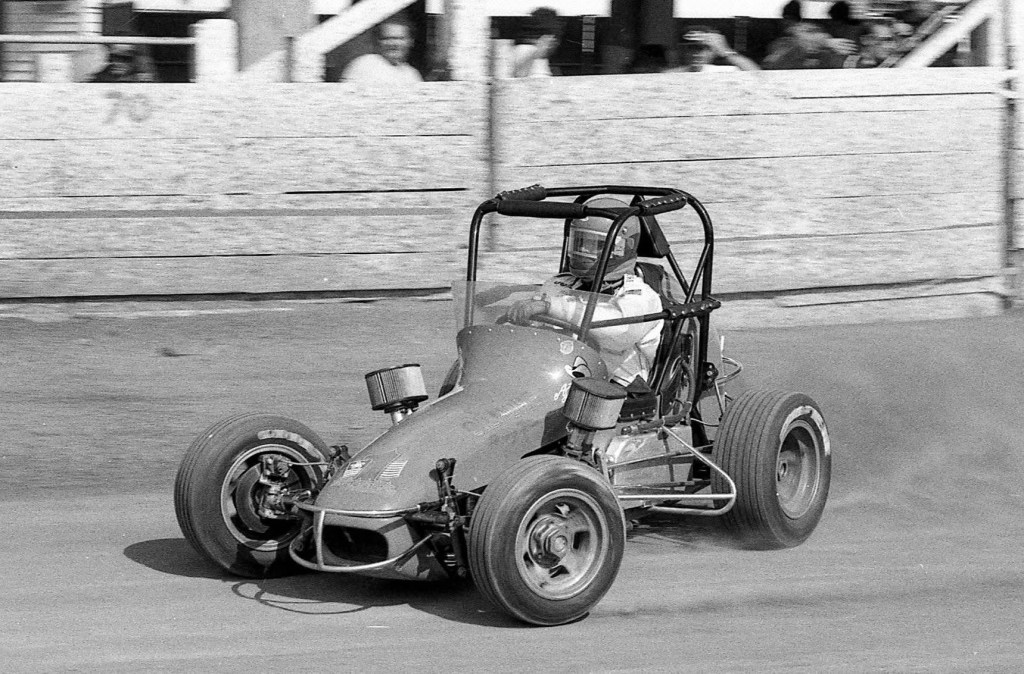
Foyt at the Brisbane Exhibition, ‘the Ekka’ during a practice run before his big show, he won.
Brian Farley, ‘That was very special during that TV and promotional session, particularly special was watching the professionalism of AJ and his crew. They had that VW Midget “sorted” handling and gear set-wise in about three separate runs. Jaws dropped when they got in the last couple of runs. He was the best I’ve ever seen bar none.’
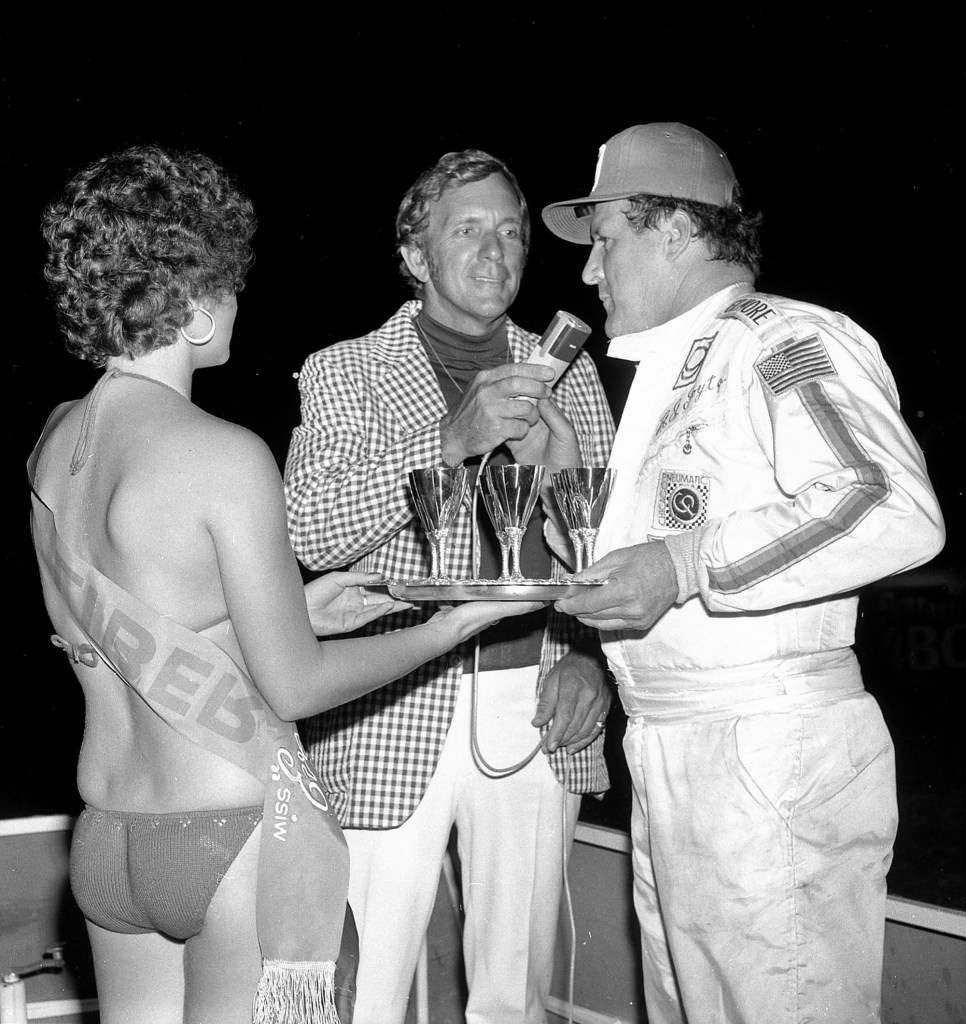
History of Midgets in Australia – 75 Years and Counting…
This piece was contributed to the Speedway Gazette by the late Bill Lawler in 2010 to celebrate the 75th anniversary of Midgets in Australia, the first race having been run at Olympic Park, Melbourne on December 15,1934.
I tripped over this fantastic article on Facebook – the quality of information on social media is amazing sometimes – while researching the Foyt piece. It’s great document of record stuff, I’ve adopted it in full other than the anniversary elements.
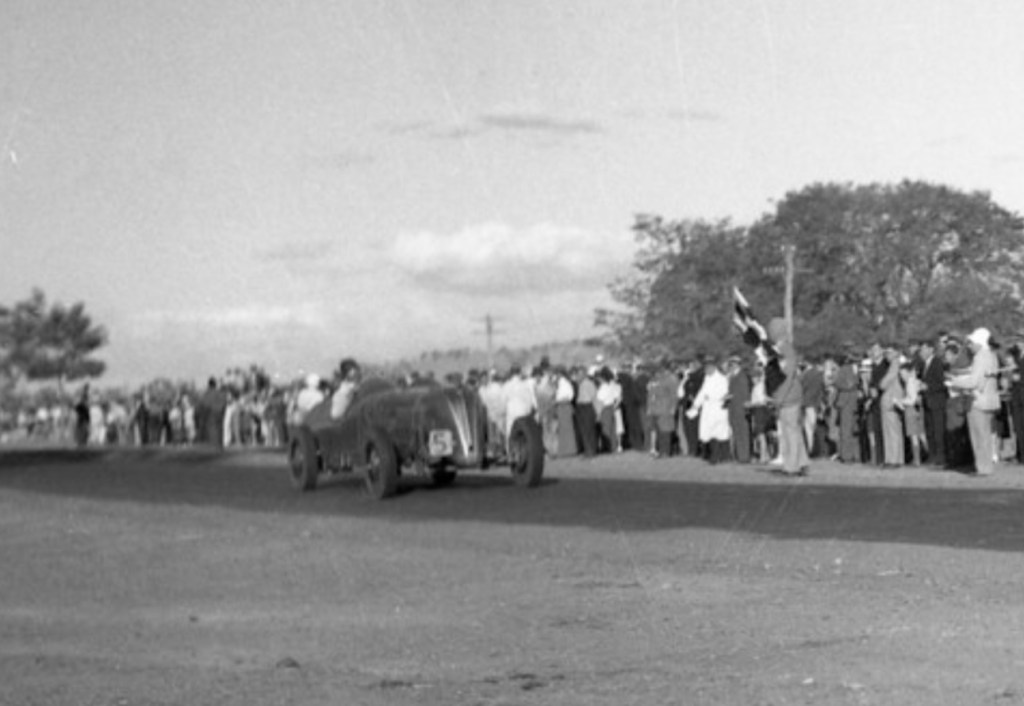
‘The sport of dirt track and asphalt automobile and motorcycle racing in Australia on small, enclosed, circular tracks can be traced, in embryonic form at least, to the 1900’s however it was during the 1920’s that it really became popular with world famous tracks opening such as the Sydney Showground and West Maitland in NSW, Wayville Showground in SA, Claremont Showground in WA, Kardinia Park and Melbourne Exhibition in Vic and the Brisbane Exhibition in Qld.
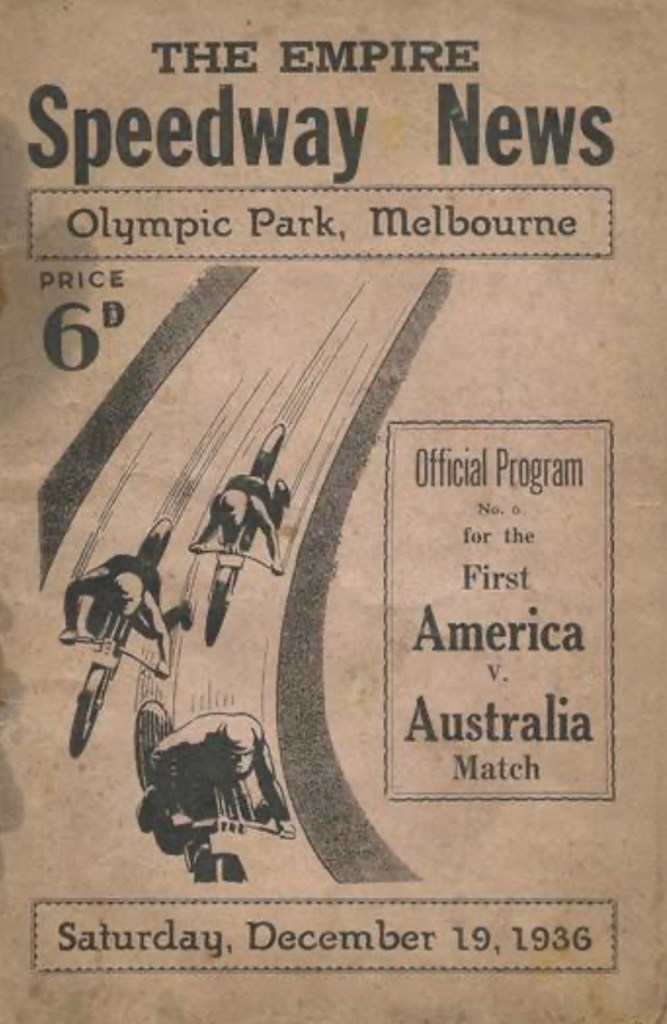
The first official Speedcar or ‘Midget car’ event held in Australia was staged at Melbourne’s Olympic Park on December 15, 1934 under rules and regulations of the Midget Car Drivers Association whose name was later changed to the Victorian Speedcar Drivers’ Association.
The Victorian Speedcar Championship was inaugurated in April 1935 and still stands as the second oldest Speedcar race in the world behind the American Thanksgiving Grand Prix held in November 1934.
The Victorian club also organised the first Australian championship, however, as Speedcar racing spread interstate the official national title is difficult to trace as each rival track and sanctioning body held their own title in each state, this continued even after a national body was formed.
When the sport took off in America like a California fire storm, Bill Allen, a resident Australian visiting the United States, decided that here was a golden opportunity to bring this new form of dirt track racing to Australia, and with an American built midget he headed off back to the land ‘Down Under’. He arrived in early 1934, and the sport may well have had its roots here in Sydney had the entrepreneurs the same faith as many of the road racers to which Allen had spoken, but they declined to take the risk. So Allen headed off to Melbourne where he met with Raymond Lean, a promoter with Sporting Carnivals, and after months of negotiations, put together a program of events incorporating midgets to be held on the newly laid dirt surface at Olympic Park.
In the meantime, cars were being constructed for the event in both Melbourne and Sydney. On that very first night in December, ten drivers from Victoria along with seven from NSW including Bill Allen with his American midget car took to the track for the history making event. For the next four months, midget car racing dragged thousands of new fans through the Olympic Park turnstiles and before that first year was out, this new form of motor racing on dirt became an instant hit with the Victorian public.
Ten months later it was Sydney’s turn, and with the help of W. B. Thompson (thrice winner of the Australian Grand Prix), managing director of National Speedways Ltd. Midget car racing began for the first time on the Wentworth Park cinders track in Glebe. At least a dozen drivers and cars took part in Sydney’s historic event and after practice at the track earlier in the week, one Sydney newspaper wrote; ‘Les Burrows, well-known competition driver, drove from Bowral direct to the track in his midget and drove it home after the practice.’ Then on Saturday night October 5 when Arch Tuckett led home Bruce Leckie and Bill Thompson in that very first 5 lap midget race on the program, little could they know that 75 years on NSW would celebrate that occasion.
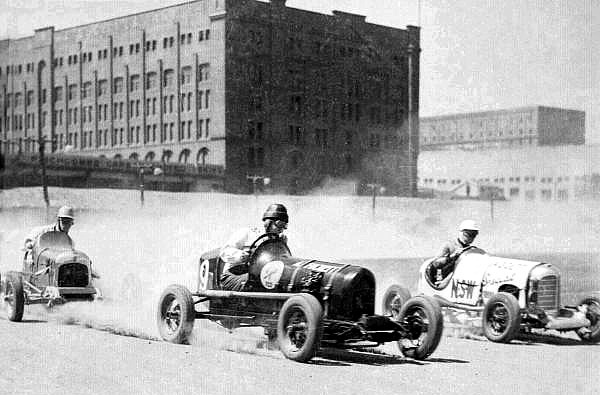
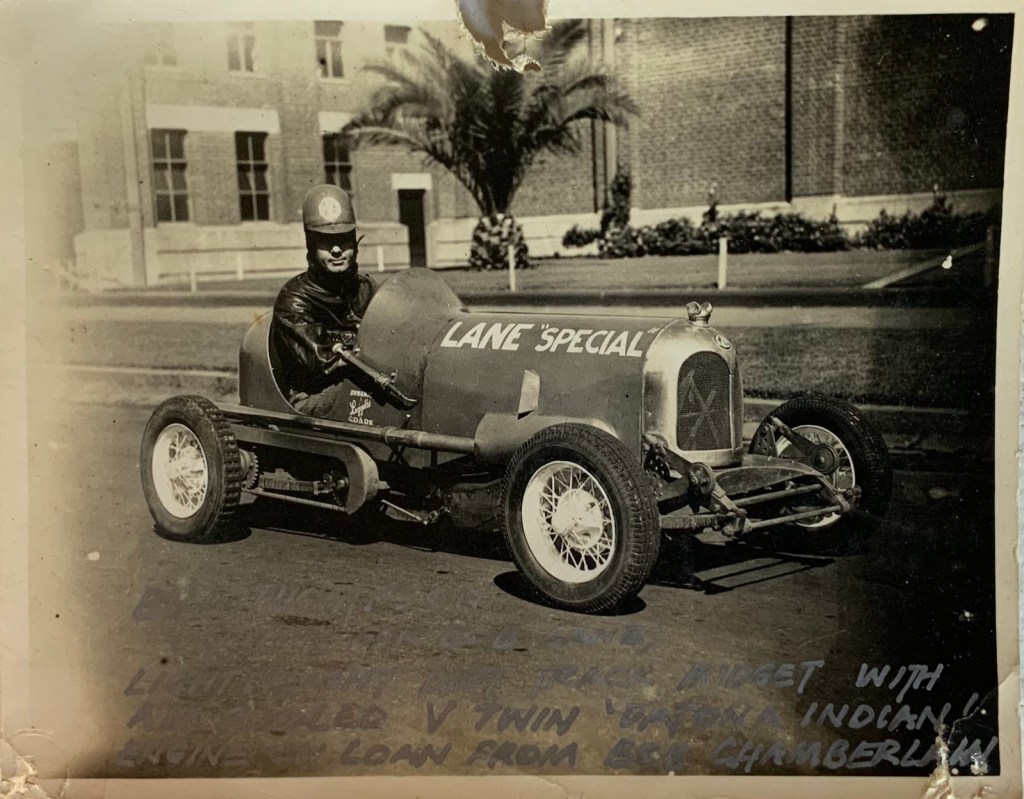
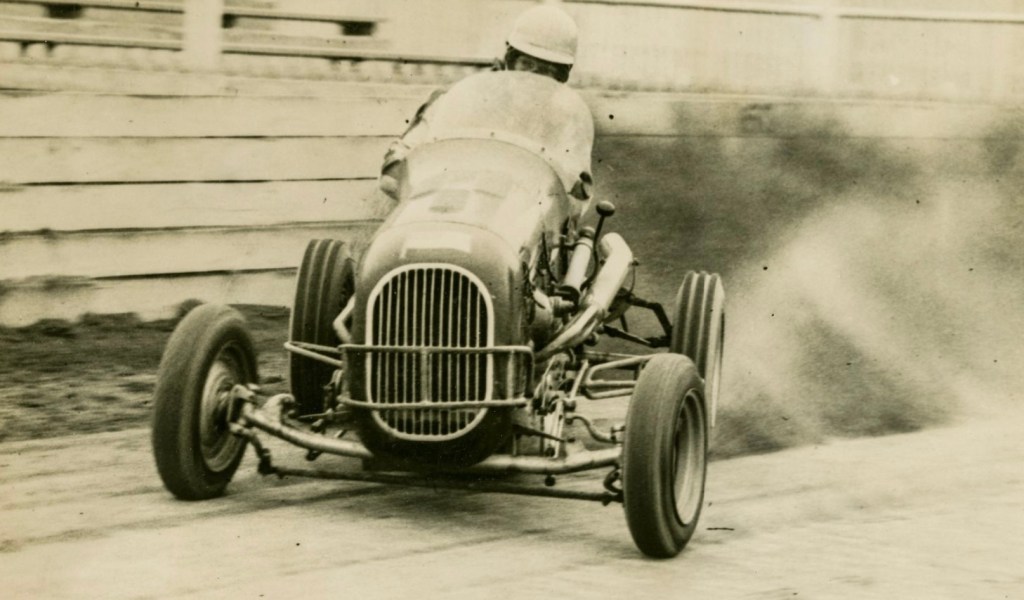
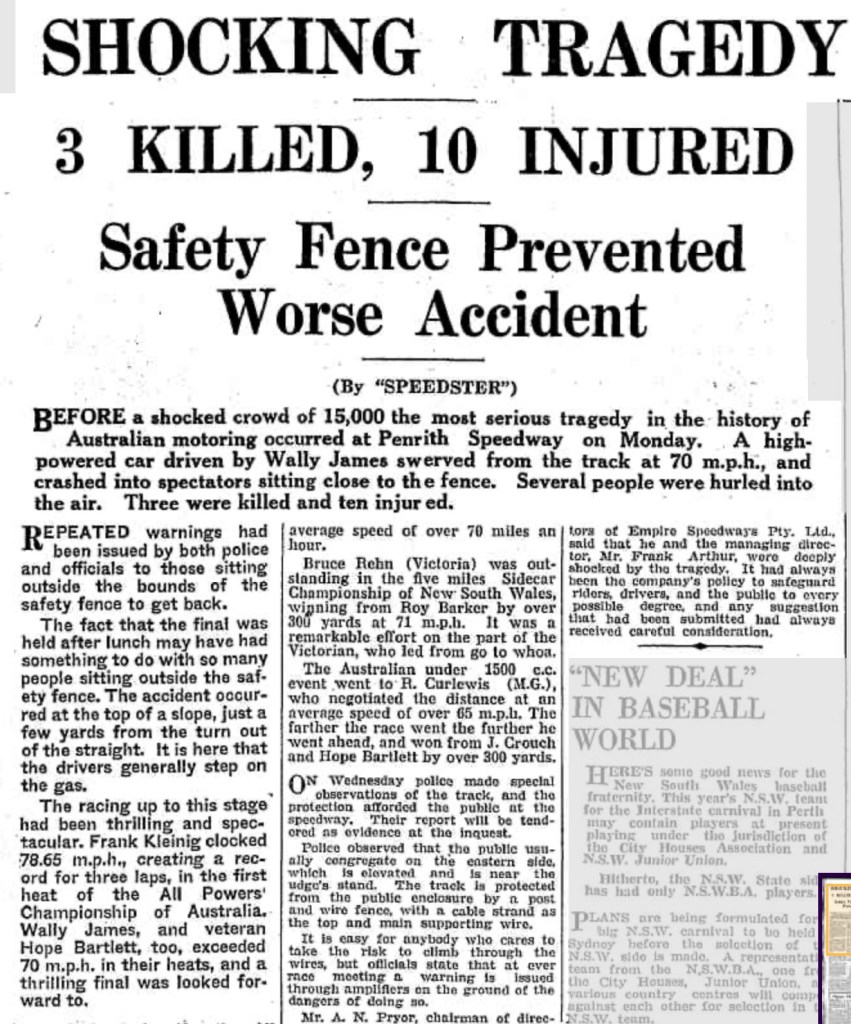
Many of these drivers became household names during the late 30’s. Names like Ted Poole (who would end his racing career after a bad midget crash in England before finally moving to and living out the rest of his life in America), Bill Balgarnie, Bill Thompson, Bruce Leckie, and Sam Aggett. I interviewed Aggett some twenty years ago and he told me of the time he lost control of his midget, crashed clean through the wooden picket fence at Wentworth Park, climbed three rows into the grandstand, and ran down spectator Carlisle Rochester, a local who lived in Burwood. The luckless Rochester was stretchered to an ambulance, taken to hospital for observation, and when Sam visited Rochester in hospital, all he could talk about was where he could purchase one of these midgets so he too could race! Amazingly, Rochester did race midgets and went on to a reasonable career himself at the Sydney Sports Ground up until 1941 when war broke out.
Sam Aggett also told a story of the Newcastle speedway on Union St. “We flat towed our midgets down to the wharf in Sydney, loaded them on board the boat on Friday night, and sailed out from Sydney up to Newcastle. We had breakfast on board the boat on Saturday morning before unloading all the midgets and flat towed them through town over to the track. We raced them Saturday night before re-loading them back on the boat for the trip back to Sydney to be unloaded on Sunday morning.”
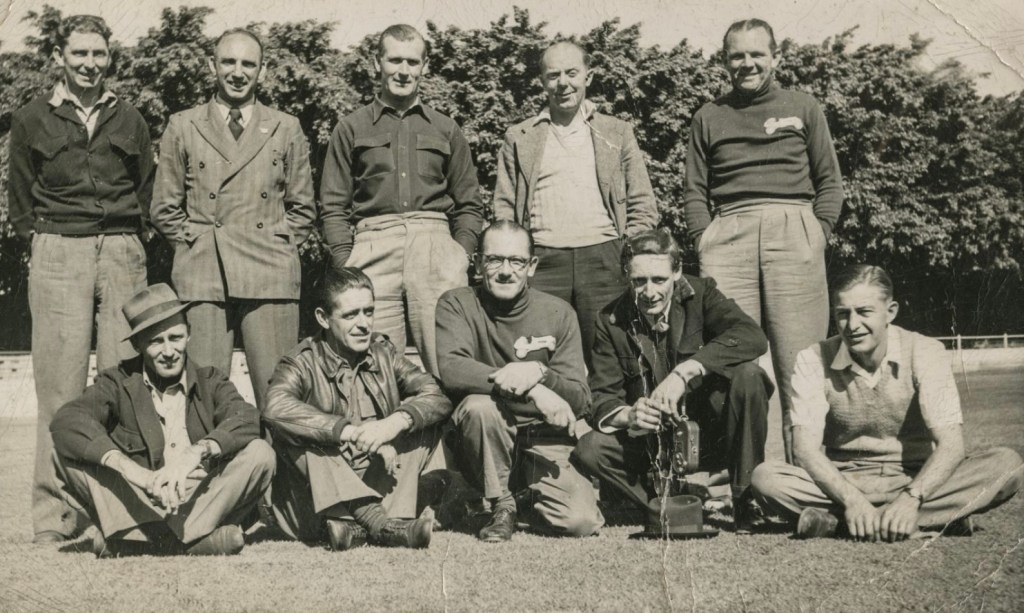
Frank Arthur, managing director of Empire Speedways at the Showground where he conducted solo racing, could also see the potential of this new form of dirt track racing and hoped that they would be as spectacularly popular as they were in the United States and down in Victoria, and while scouting around in Great Britain for potential solo riders for his showground season, he also looked into the midget scene in the U.K. Returning home on the liner R.M.S Orsova, he had with him three English solo riders, Cliff Parkinson, Herbert ‘Dusty’ Haigh, and Les Gregory. Also accompanying Arthur were three U.K. midget drivers and their ‘gnat’ midgets to compete at his opening season at the Showground Speedway. They were Bud Stanley, Ralph Secretan, and Jean Reville. A shrewd businessman, Arthur wasted no time in presenting his new speedway stars to the public. The English midget team and officials were escorted through Sydney in a fleet of cars to radio station 2UW where they were interviewed on air across Sydney before being dined at the Royal Automobile Club. Although the Englishmen were somewhat plagued with engine problems, the tour was a success for Arthur and midget racing. Secretan and Stanley returned to England after their tour, but Jean Reville stayed on in Australia, living out the rest of his life in Queensland.
Being a past international solo rider himself, Arthur stayed committed to the bikes and only ran eight meetings with midgets during the years prior to WW11, opting to leave midget racing in the hands of the promoters next door at the Sports Ground, but obviously keeping a keen eye on the development of the new and fast-growing section. Arthur ran seven meetings with the midgets in the 1935/36 season and, like Wentworth Park, the racing was confined to heat races and triangular match races of three cars. On the last meeting with the midgets pre-war on February 8, 1936, Arthur tried something different. He tried a six lap all-in race that would eventually be known as the feature race. That night, Sydney driver Tom Quinn, led home Englishman Jean Reville and Charlie Spurgeon, winning the very first feature race run in Australia.
South Australia was the next state to run midget/speedcars when a group of drivers assembled with their cars at the Camden Motordrome on December 28, 1935 with further meetings held through to April 4, 1936. They were thin in numbers, and during that time, drivers came from Victoria, NSW, and the visiting Englishmen. Some of the drivers who competed that first season were Aub Ramsay, Bert Woodman, Ted Poole from NSW, and Ralph Secretan and Bud Stanley from England. One of the pioneering South Australian drivers that season was the late and great Alex Rowe. Two years later, a new sanctioning body, South Australian Speedways Limited was formed to control racing and continued at the Camden track until the outbreak of World War 11, the gates were closed to speedway in 1940 and when the war ended, speedway never returned to the Camden track.
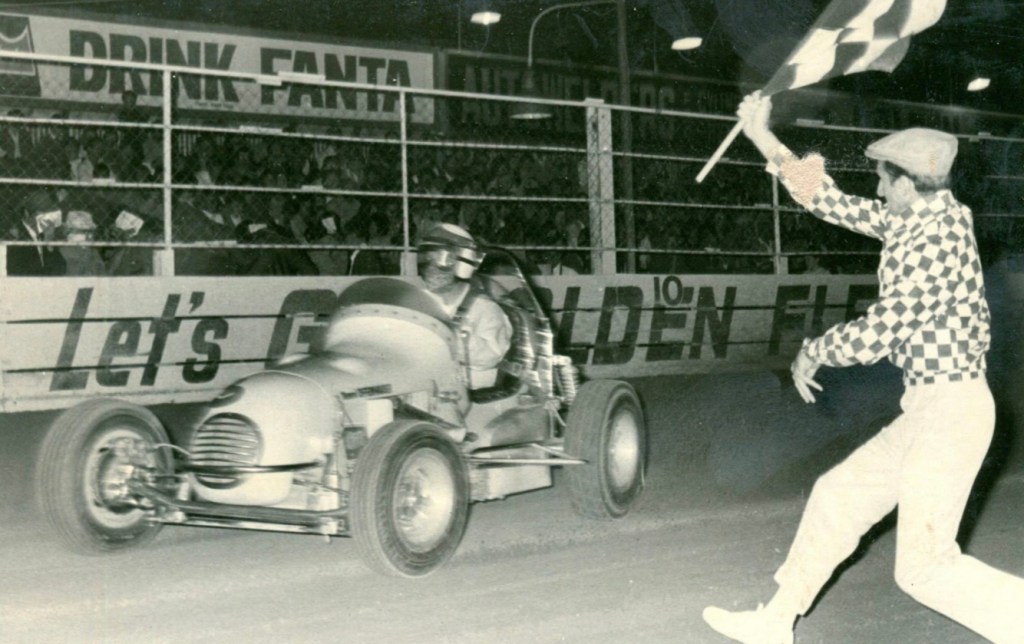
Midget car racing commenced again at the old Rowley Park speedway for its very first season in December 1949 where Harry Neale won the 8 lap feature race and who would go on to win a further 51 A-mains at the track affectionately known as ‘The Brick Pit’. Neale became the winningest driver on the Park from Joe Braendler and Bill Wigzell. Many great stars rose out of the brickpits of Rowley. Champions like Neale, Rick Harvey, Arne Sunstrom, Roy Sands, Kym Bonython, Bill Wigzell, Bruce Rickard, Dean Hogarth, Joe Braendler and Phil Herreen to name a few. Racing continued at Rowley Park for another 28 years before finally closing its doors to speedway when George Tatnell took out the very last feature race, a 15 lapper, and fittingly, it was for the Harry Neale Memorial race who tragically lost his life racing at Claremont speedway on February 6, 1959.
Barely two months later it was Queensland’s turn when another group of New South Wales drivers and two of the English imports, Bud Stanley and Jean Reville arrived at the Brisbane Exhibition grounds, and on Saturday night, February 26, 1936, Queenslanders witnessed midget car racing for the first time. Only four meetings for midgets were run that first season, in fact they were the only meetings run before the outbreak of the war, possibly it may have been the unavailability of Queensland midget cars and local drivers at that time. Some of the NSW drivers who appeared in those four meetings were Bruce Leckie Bill Jeffers, Ralph King, Charlie Spurgeon, Tom Quinn, Norm French, Marco Cox, and two Newcastle residents Lance Wilson and Bill Sticpewitch.
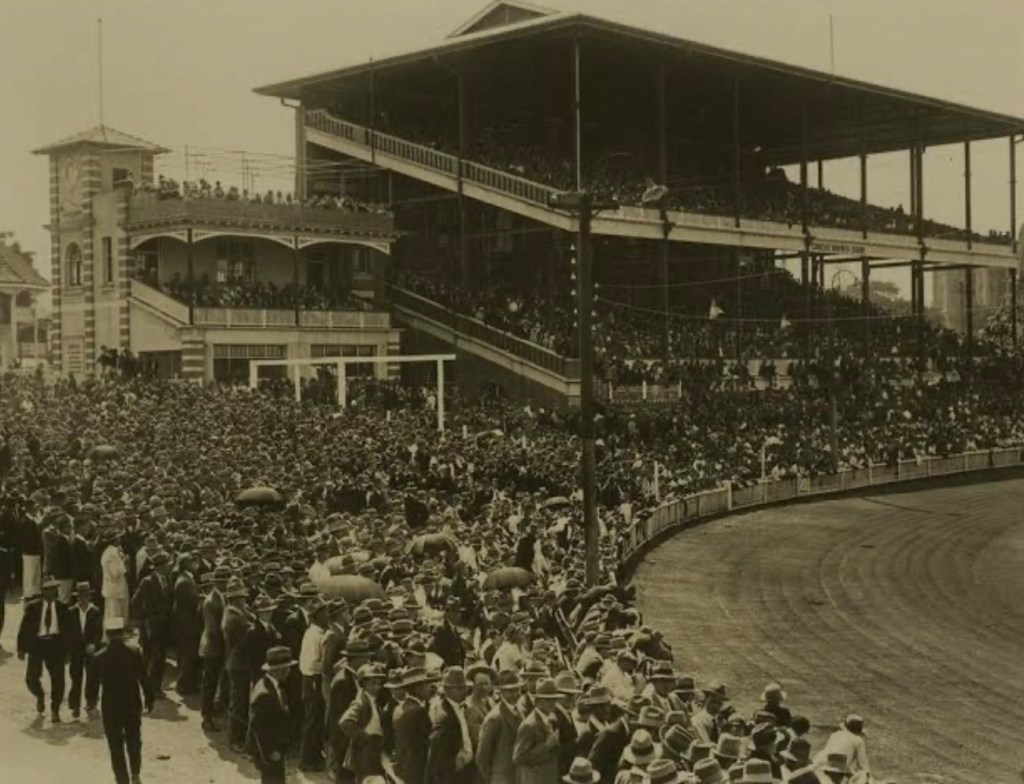
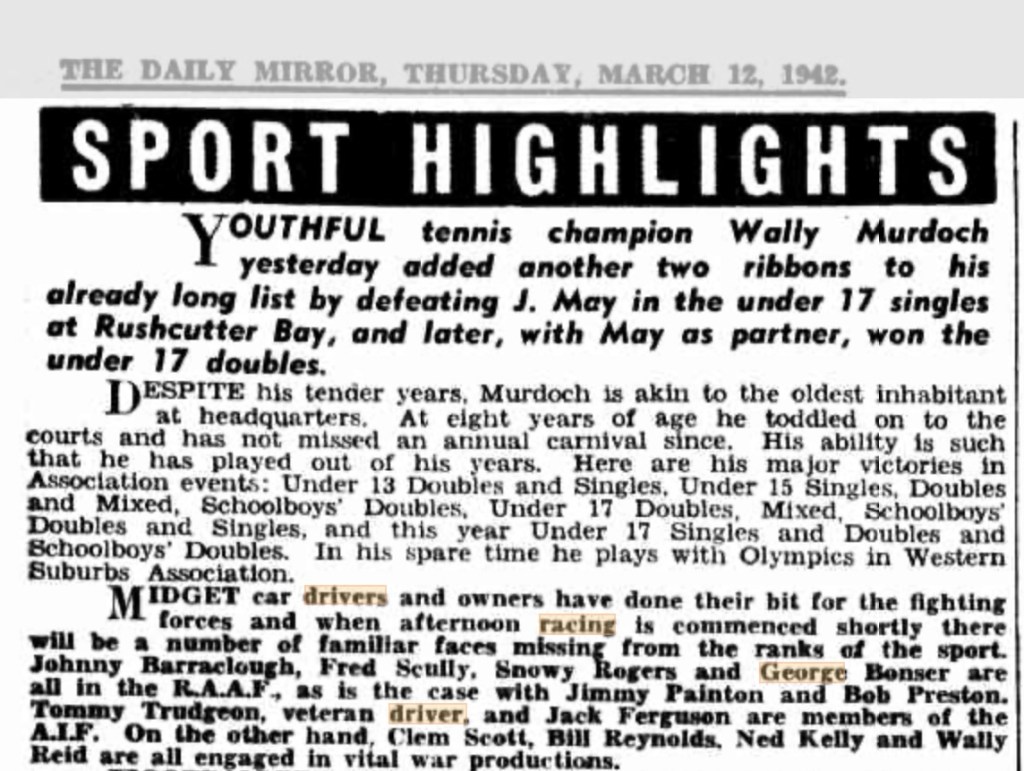
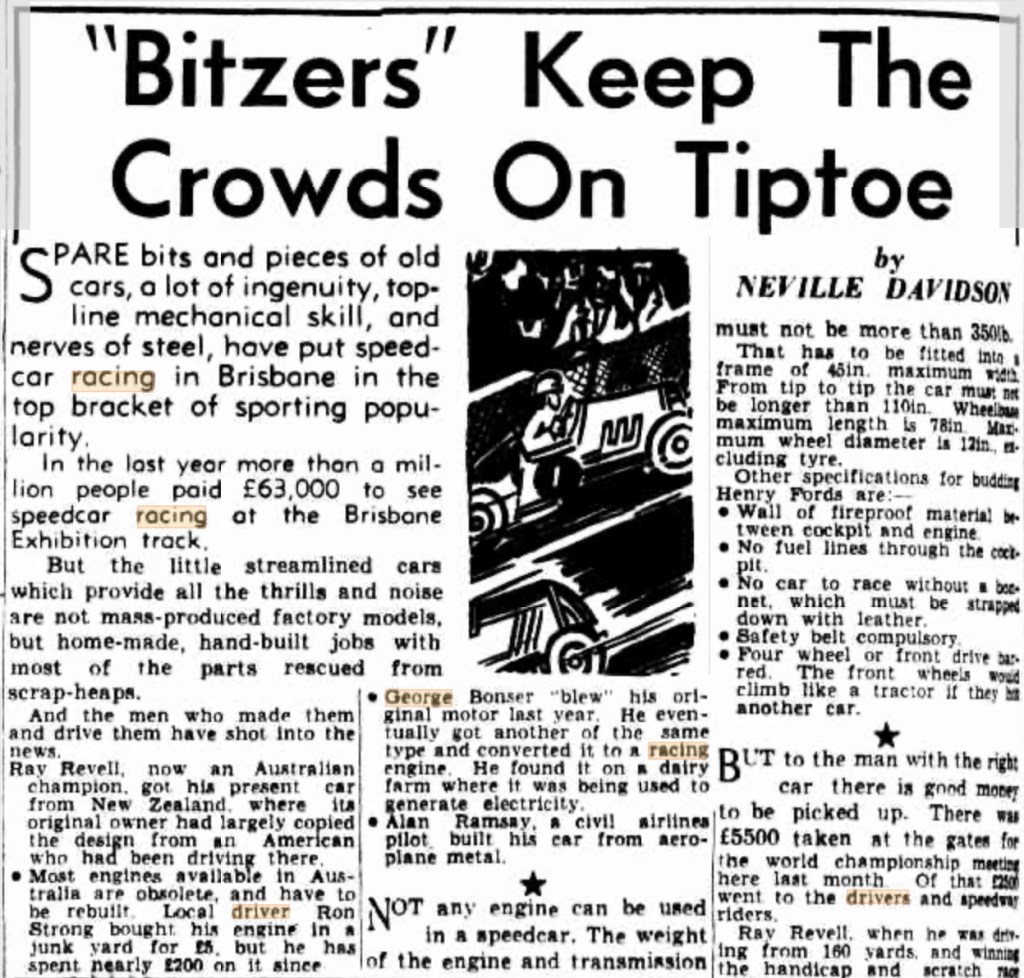
At the end of the war years, the Brisbane Exhibition grounds were re-opened for speedway and on the second meeting of the 1945/46 season the very first feature race was performed for the first time in Queensland over a ten lap distance. The field consisted of Ray Revell, George Bonser, Johnny Read, Bob Playfair, Jim Cross, Fred Barker, Belfred Jones, and Ken Wylie. The race was won by Ray Revell, and one of the first Queenslanders to take up the sport that year was Alan Belcher. That first year saw a test team of midget drivers and cars from New Zealand compete in five test matches. The New Zealand team consisted of Max Hughes, Jack Malcolm, Ken Wylie, and Lew Murphy. The last two were really from Victoria and NSW. Australia won the first test 17 to 9, NZ won the second 24 to 20, and Aust. won the final two 32 to 16 and 31 to 21. The fifth test was abandoned. That first season on the Ekka saw Ray Revell win the first Queensland title, Jack Malcolm win the ¼ mile Australian Championship, and Max Hughes the ‘World Title’. Near the end of that season, Arthur Chick made the long haul over from Western Australia to compete and he took out the 10 lap feature race to become the first West Aussie to do so. Amazingly, only one other WA driver has accomplished a win on the Exhibition, Johnny Fenton. The list of Queensland greats is incredible. Howman, Sendy, Belcher, Jefferson, Goode, Watt, Shepherd, Kelly McClure, Wanless, Morgan, Valentinna, Davidson, Sacre, Mitchell. Queensland was endowed with great stars.
Meanwhile after two seasons at Wentworth Park, midget racing moved to the Sports Ground in 1937 and for the next four years ran as many as 70 or 80 meetings a year, running Wednesday, Friday or Saturday nights and on occasions Sunday afternoons to raise money for Boys Town situated out in the Sutherland shire. On May 22, 1938 Jack Wilson won the 10 lap feature race at the Sports Ground from Bob Preston and Arthur Hyde, but on that same night Les Dillon crashed and rolled his midget. He was thrown out of his car and suffered fatal head injuries. Sadly, the 27 year old Dillon was to become the very first recorded death in midget racing in Australia. Eleven months later, 26 year old Victorian driver Claude Miller, while competing in time trials at the Sports Ground, lost control and rolled over, pinning him underneath his car. He was rushed to hospital, but died from severe head injuries the next day. The promoters and officials tried desperately to keep the news from the papers for fear of public outcries over two deaths in less than a year. Luckily, only one reporter ran a small article about the crash in the Sydney Morning Herald. Fortunately, there were no repercussions towards midget racing over the two deaths.
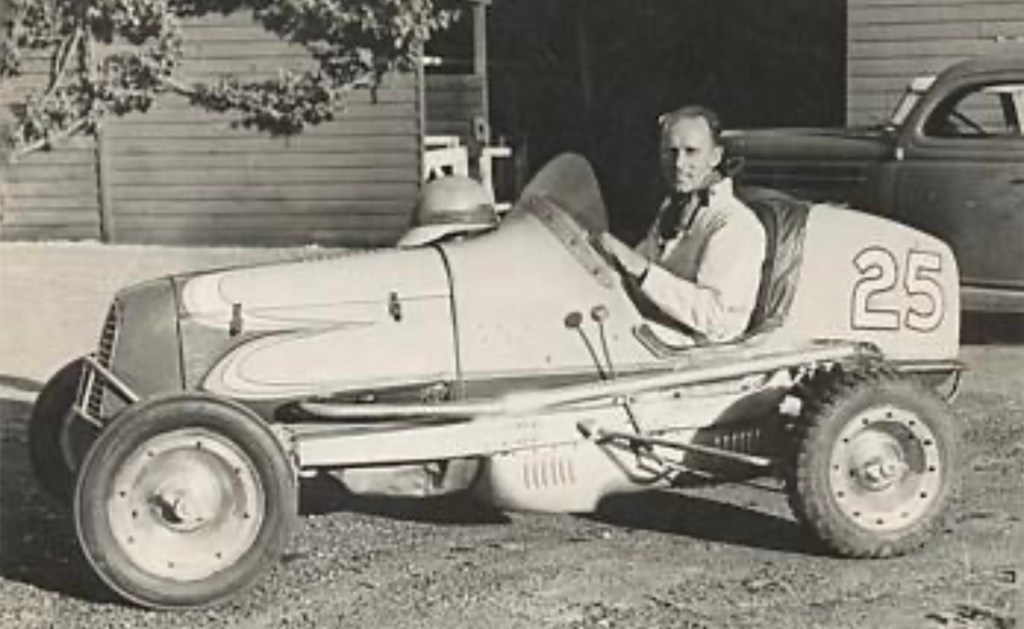
Work boots for racing shoes, coveralls neatly tucked into socks, no seat belts fitted to most of the cars, and in some instances, not even a helmet for protection. Such were the safety needs of those pioneering gladiators in a life-threatening sport. Sitting upright, knees inches from the front engine plate, his back probably the same distance from a crudely constructed fuel tank holding anything up to 20 gallons of petrol, they man-handled their machines around the tiny ¼ mile Sports Ground and the 1/3rd mile Showground Speedways every week throughout our long hot summers.
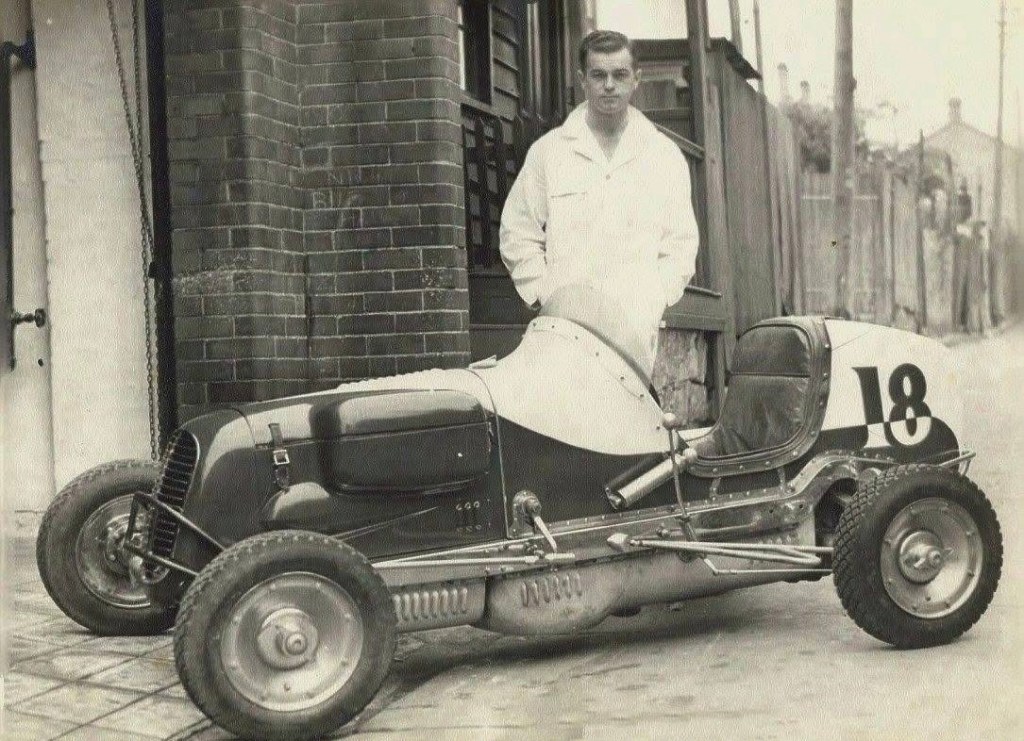
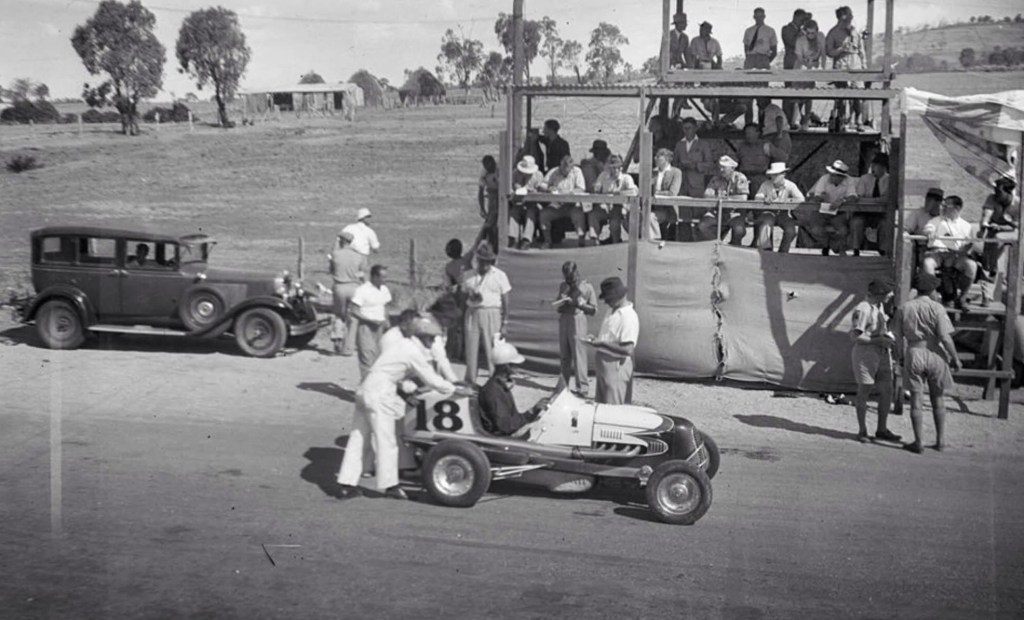
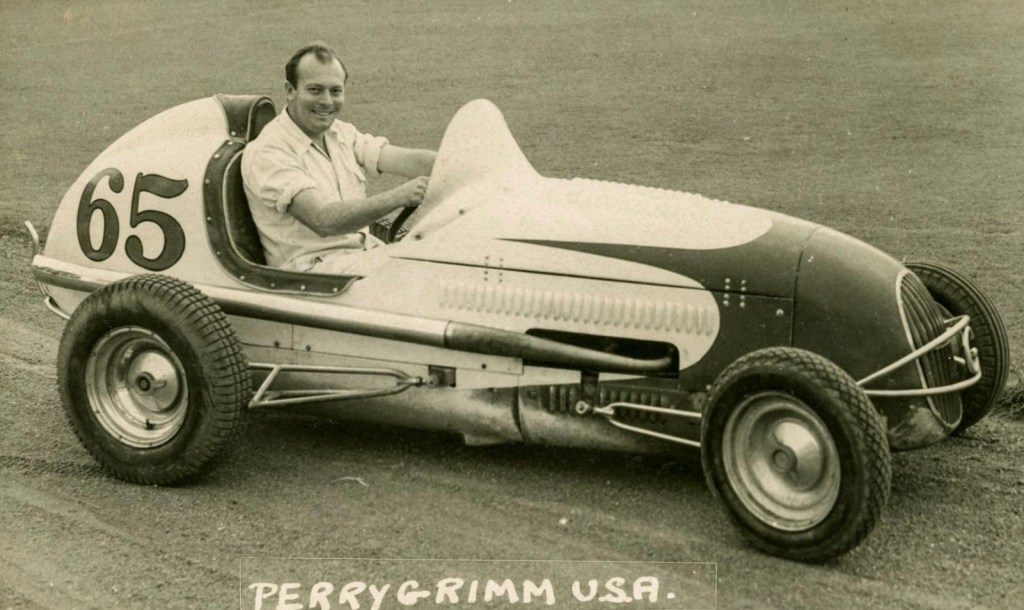
During the 1938 season, and after the success of Arthur’s English imports, the promoters imported two American drivers and their cars who were contracted to race in New Zealand, and after their commitments in New Zealand, they arrived in Sydney for a one-off flying visit for the World Championship at the Sports Ground. Both drivers came with their own American imported midgets. Beale Simmons brought with him the ex-Lou Fageol Hercules #27, and Paul Swedberg had the former Frankie Lyons Elto outboard marine #18. (A midget racer himself, Lyons was a stand-in driver while filming the movie ’10 Laps to Go’ at Gilmore Stadium when he hit an open pit gate. The impact into the gate broke his neck and he died instantly. Not long after, Lyons widow sold the midget to Swedberg.) There were 8 heats for the World Championship, and only the winners of each heat went into the final. Both Americans won their heats easily, and lined up at the rear of the 8 car 10 lap feature race. Swedberg shot to the lead and was never headed, his travelling partner Simmonds finished 4th behind Cec Garland and Bob Hoare.
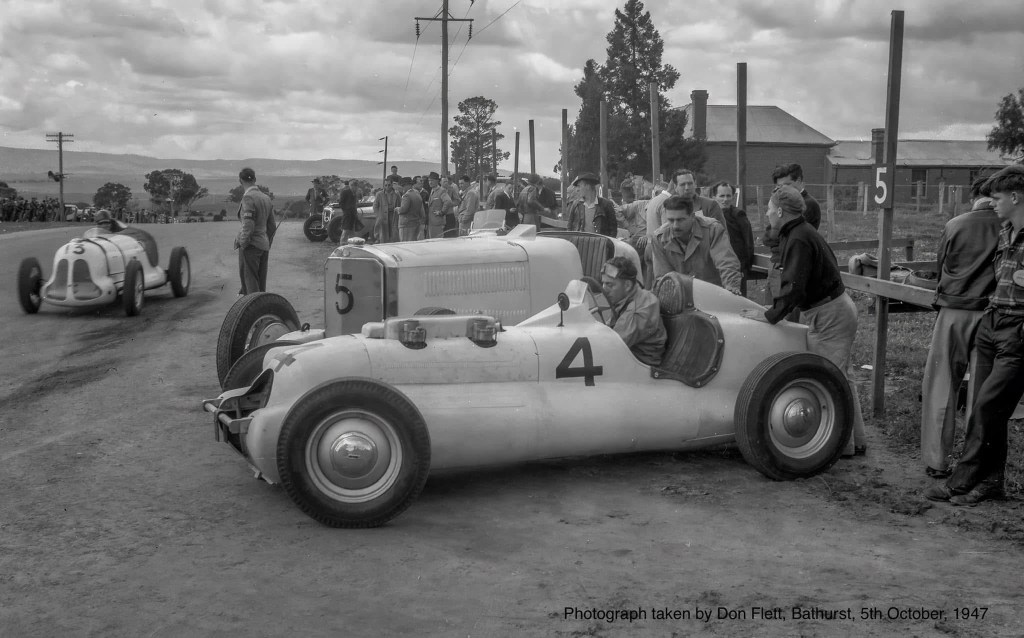
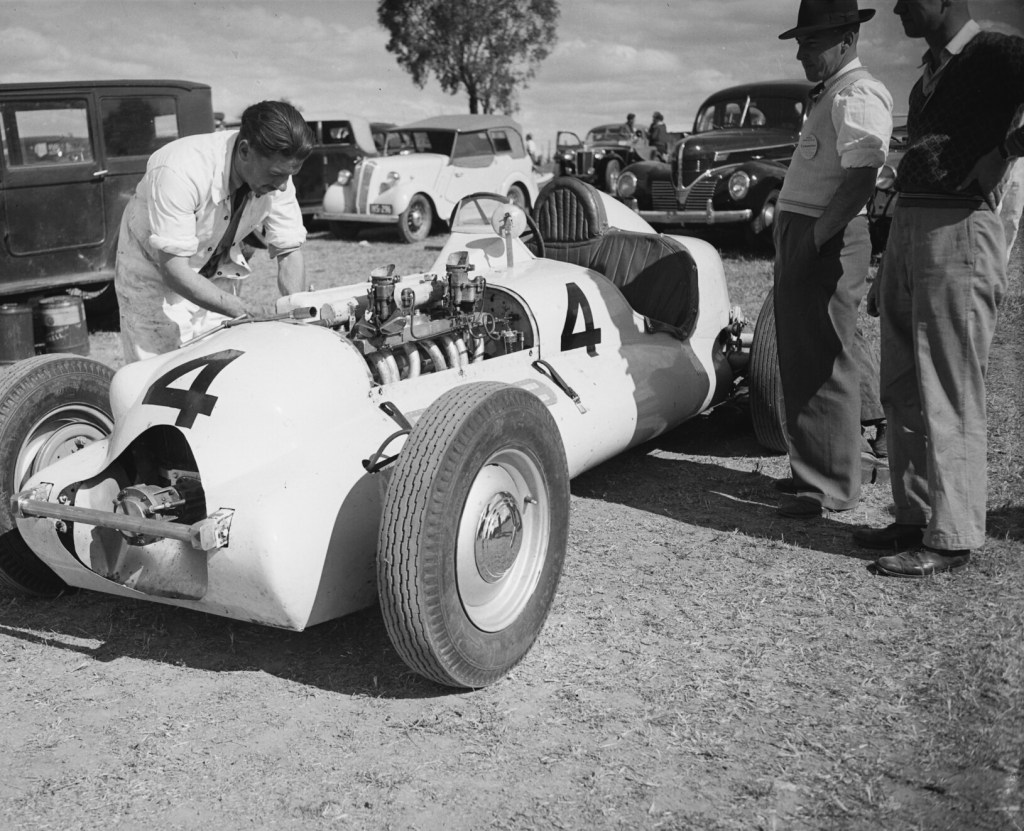
The duo returned the following year, this time, Swedberg brought with him the ex-Don Lee Offenhauser midget which he had purchased from Lee, the first ever Offy to be imported into the country. They stayed for four months campaigning on the Sports Ground. The Sydney drivers and their home-built cars were no match for the Americans in their purpose-built creations, and they tore the opposition to pieces. They competed in a total of thirteen feature races, setting new times for the 10, 12, and 20 lap records. Between them, they won 9 feature races, Swedberg with four, and Simmons with five including the 20 lap Australian Championship won by Simmons in record breaking time. Swedberg made one more visit in 1940 winning a further four feature races including the 30 lap World Derby. He (Swedberg) was invited to race his Offy at the Bathurst races and to the horror of the motor racing fraternity, the Offy was more than capable of mixing it with the established road racers, and only for oil fouling up plugs, Swedberg may quite easily have inflicted more embarrassment on the cloth cap and cravat set.
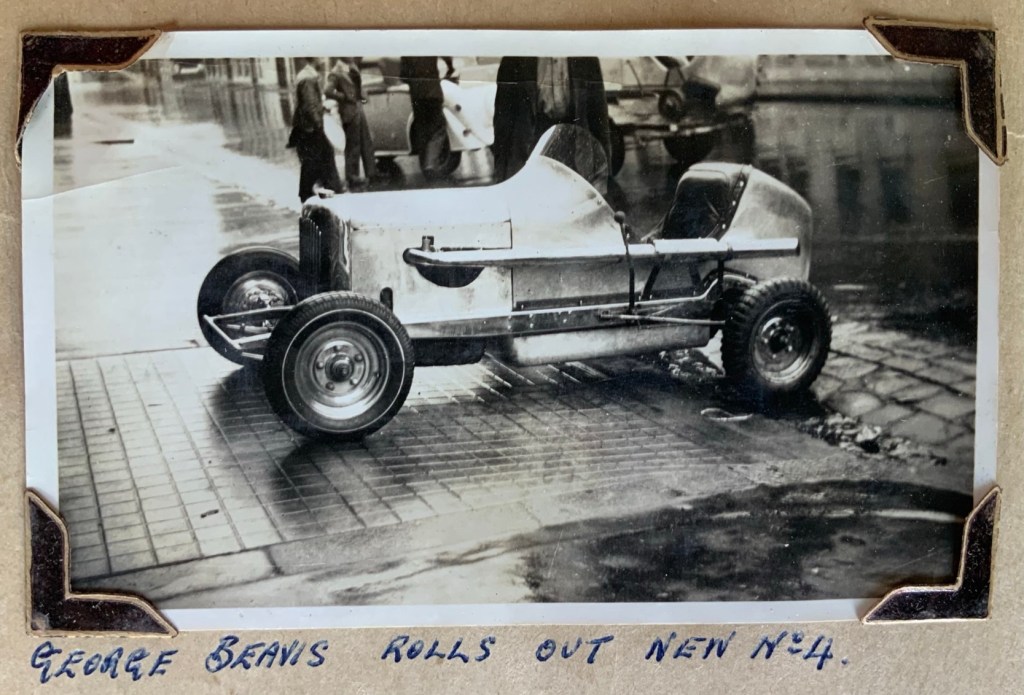
The Americans were an instant hit with the public and it was the beginning of a trend over the next 75 years that has seen an influx of Americans flying halfway around the world to compete in Australia. Sadly, Beale Simmons died during the war on active duty in the Pacific while Swedberg was fatally injured racing at Hughes Stadium, Sacramento, California on May 27, 1946. Before leaving for home, Swedberg sold his Offy to Sydney businessman Wally Reed for Sydney driver Jimmy McMahon to drive, but difficulties maintaining and running the Offy with readily obtainable parts, forced Reed to sell the Offy to Victorian midget driver George Beavis, and he returned with the car to the United States where, after some racing himself, he became a well respected car owner.
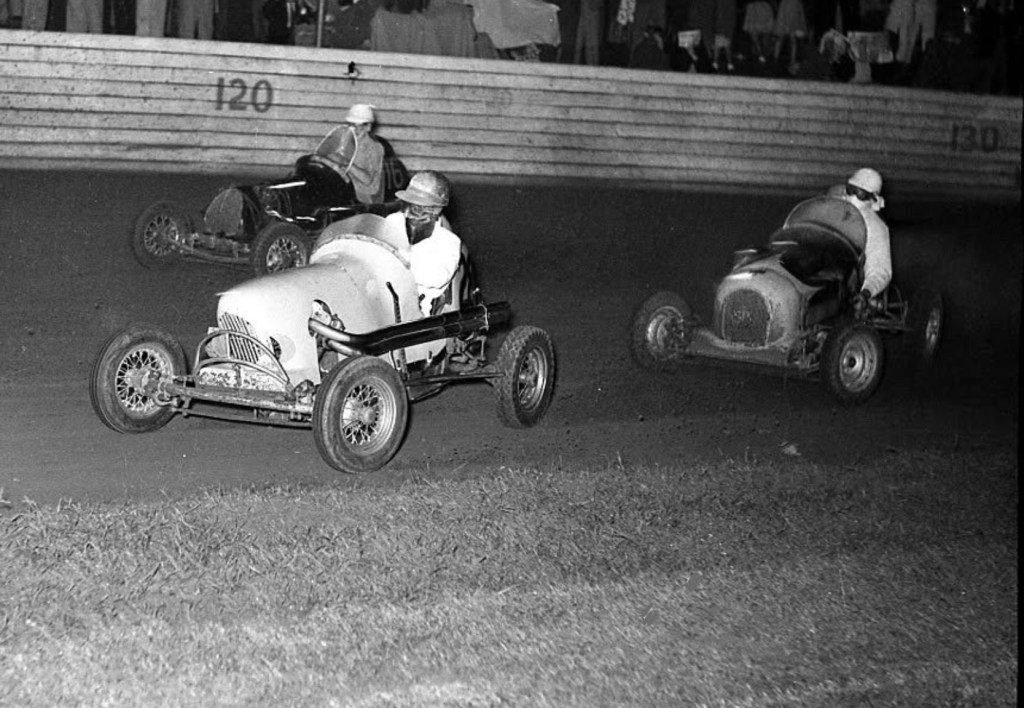
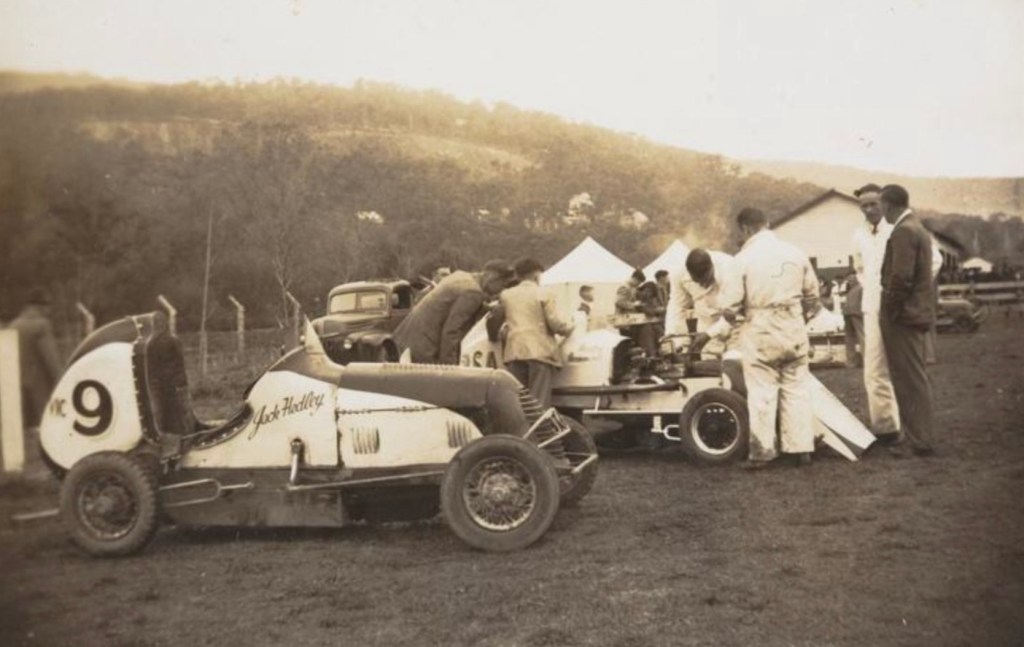
Finally, midget car racing reached the West coast of Australia when, on New Year’s Eve, December 31st 1946, a team of east coast pioneers brought their cars to the Claremont Showground’s and stayed for the remainder of the 1946/47 season. The team consisted of Jim Cross, Ken Wylie, Lew Murphy, Fred Allen, Johnny Maxwell, and Doug Muir. Jim Cross won that inaugural feature race that night and later that season, Ken Wylie would win the very first West Australian title from Lew Murphy and Fred Allen over 10 laps. Major race car building took place in the off-season, and the 1946/47 saw many new names shine in WA midget ranks, Jack Howe, Rod Denney, Bill Smallwood, Harry Lewis, Bill Stitt, Andy Hall, and Ray Arthurell. They would be the forerunners of many great stars to come out of the west. Names like Laurie Stevens, Ron Hall, Ray Clarke, Bill Jost, Geoff Stanton, Noel McDonald, Charlie West, Keith Mann, Johnny Fenton, (who would become the winningest driver at Claremont) Geoff Pilgrim, Graham Jones, Neville Lance, Tommy Watson, and the great Michael Figliomeni.
It would be 28 years before a West Australian driver would win the Australian championship, and a further five years before the west would play host to the coveted title, and in February 1979, Ron Wanless from Queensland would be honoured with Australia 1, leading home Howard Revell and Bill Sutherland. Claremont speedway continued through until its forced closure in 2000, and a new era commenced at the new Kwinana Motorplex
It was to become a tragic year for midget racing in New South Wales during 1947 when the then top Sydney midget drivers Dinny Patterson and Jimmy McMahon both left Australia to compete in America. But before a year had passed, both were killed on American circuits. Both Patterson and McMahon had won the Australian Championship with McMahon the reigning champion winning the title at the Sports Ground before leaving for the United States.
Midget racing continued at the Sports Ground until its closure to speedway racing in 1955, pressured by the promotional impact and expertise of Frank Arthur, John Sherwood and Bert Prior next door at the Showground, a track they dubbed ‘The Speedway Royale’. The Sydney Showground then became the headquarters of speedcar racing in Sydney every Saturday night under the control of the NSW Speedcar Association, while the Sports Ground promotion concentrated their drawing power with local and International overseas solo riders.
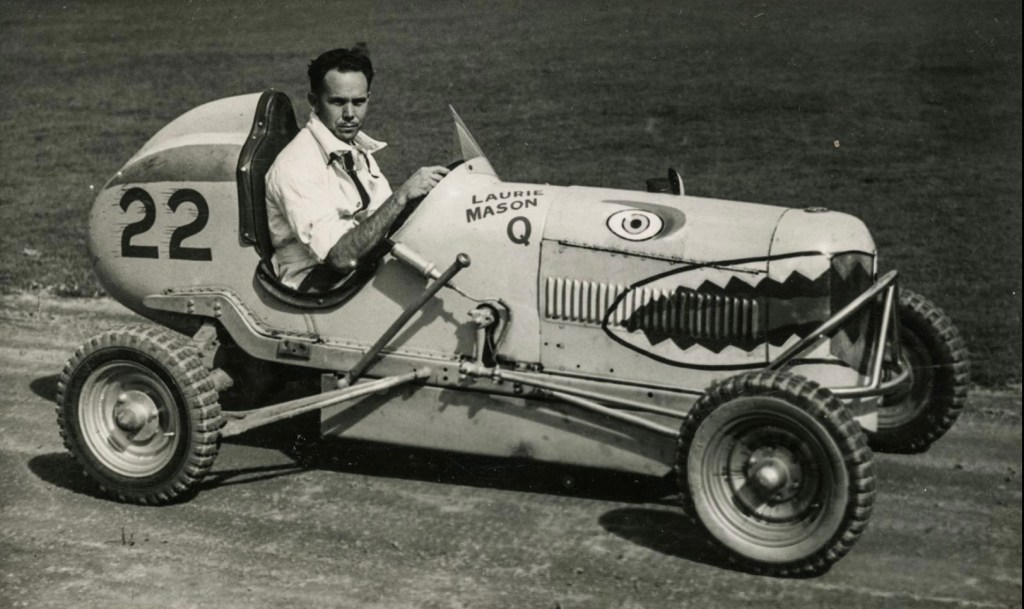
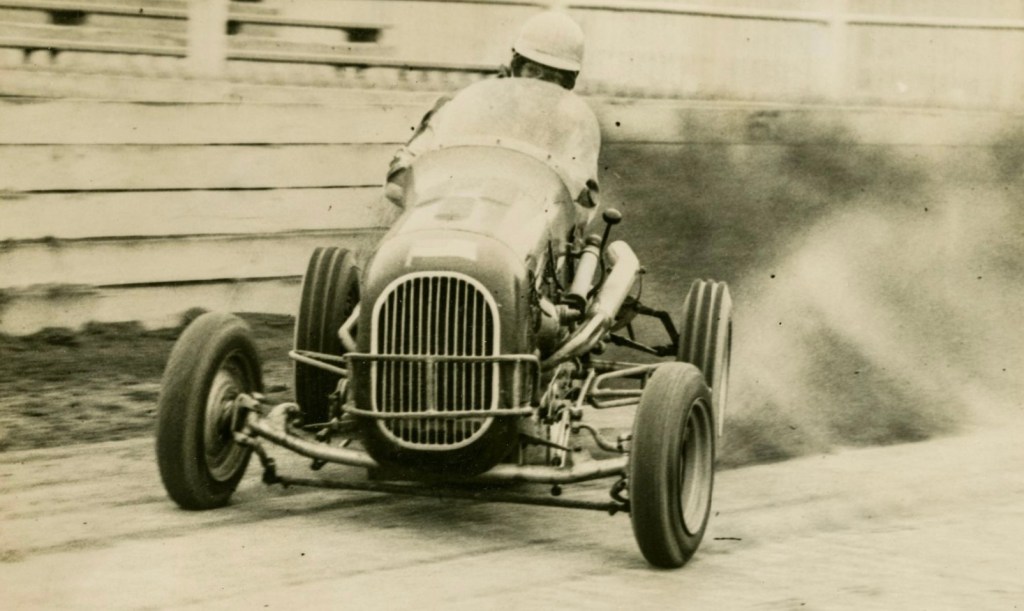
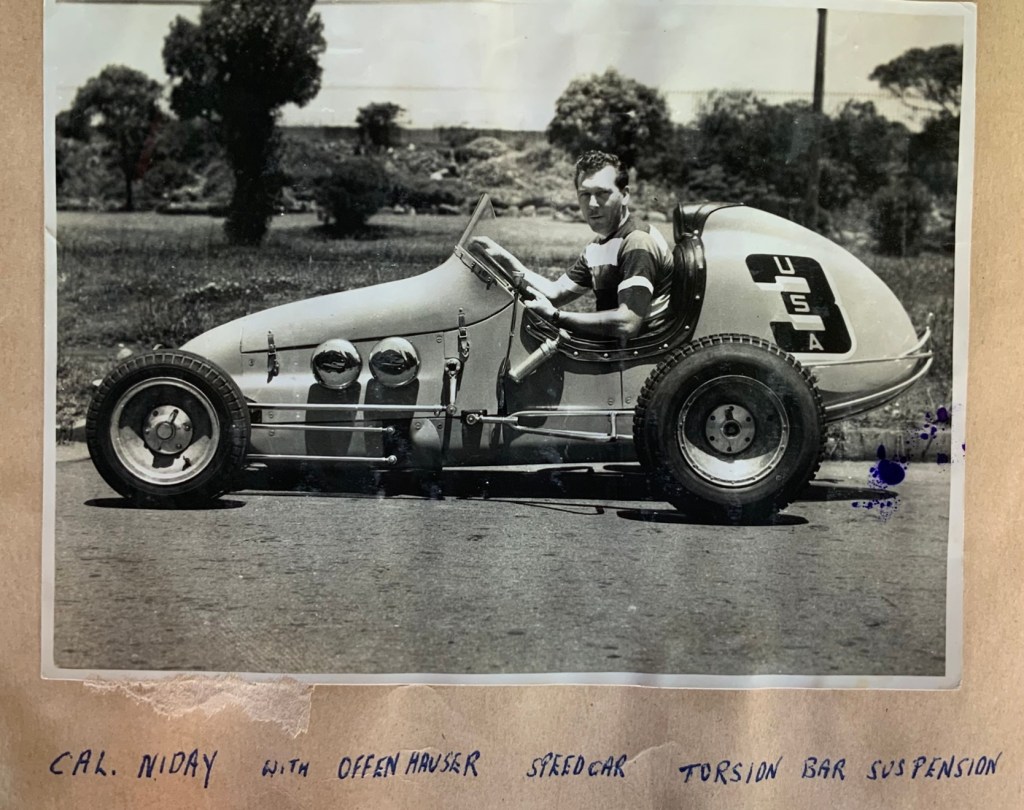
But they weren’t all good years. Members of the controlling speedcar association were feuding over prize money paid by the promoters of the Showground, and it was obvious that the majority of the members were not prepared to continue with negotiations, and by the beginning of the 1951/52 racing season, many of its members walked away from Empire Speedways at the Showground and raced in opposition at Cumberland Oval at Parramatta under the control of the Speedcar Association of New South Wales. Meanwhile, what was left of the city drivers, barely a hand-full, formed the National Speedcar Club, and remained loyal to Sherwood and Arthur.
Over the next four years, bitter rivalry existed between the two clubs, disputes that eventually found their way into the equity court rooms. The National club could barely manage ten cars for a feature race, and on one occasion in 1954, only four cars fronted for the 9 lap feature race, Ray Revell, Lew Murphy, Bill Reynolds, and Johnny Peers, while out at Cumberland Oval, fields of 20 cars were running, consisting of Len Brock, Bill Shevill Eric Morton, Norm Jackson, Bob Playfair, the Olling brothers Jim and Lindsay, Jack Ferguson and more. With depleted fields week after week, midget racing at the showground was slowly dying.
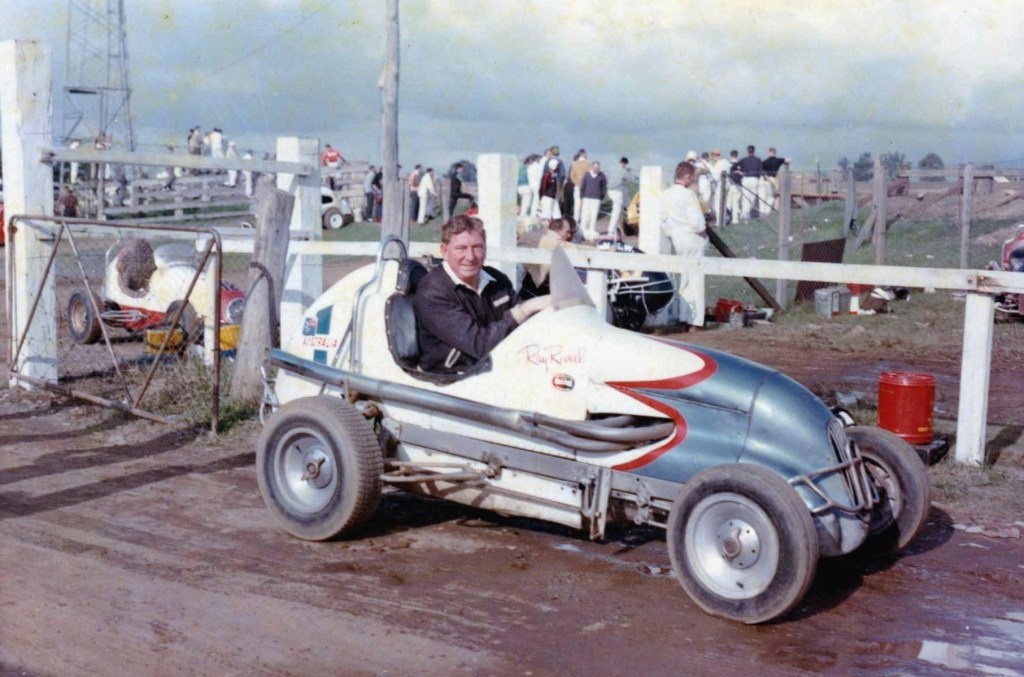
A meeting was finally convened by both warring parties on neutral ground in Victoria. Delegates from both parties met with Sel Payne and Bob Playfair representing the NSW Speedcar Association while the National club was represented by Ray Revell and Bill Reynolds. Also attending the meeting were delegates from South Australia, (Arn Sunstrom and Jack Self) and Victoria (Alf Beasley and Ken Young). Finally, after many hours of discussions, most of the Association drivers finally agreed to race back at the Sydney Showground under the control of the National Speedcar Club. The amalgamation of the warring parties would be midget racing’s salvation that would turn out to be the beginning of a bright new era for the Sydney speedcars.
By the end of the 1950’s, air-cooled motorcycle engines were being replaced by the 6 cyl. Holden. Metal panels were being replaced by fibreglass, and a whole new breed of young drivers was emerging onto the Showground stage. Peter Johnson, Johnny Harvey, Rob Greentree, Jeff Freeman, and a young western suburbs lad called Johnny Stewart. These drivers would leave an indelible mark on the sport through a potent mixture of natural talent and raw determination.
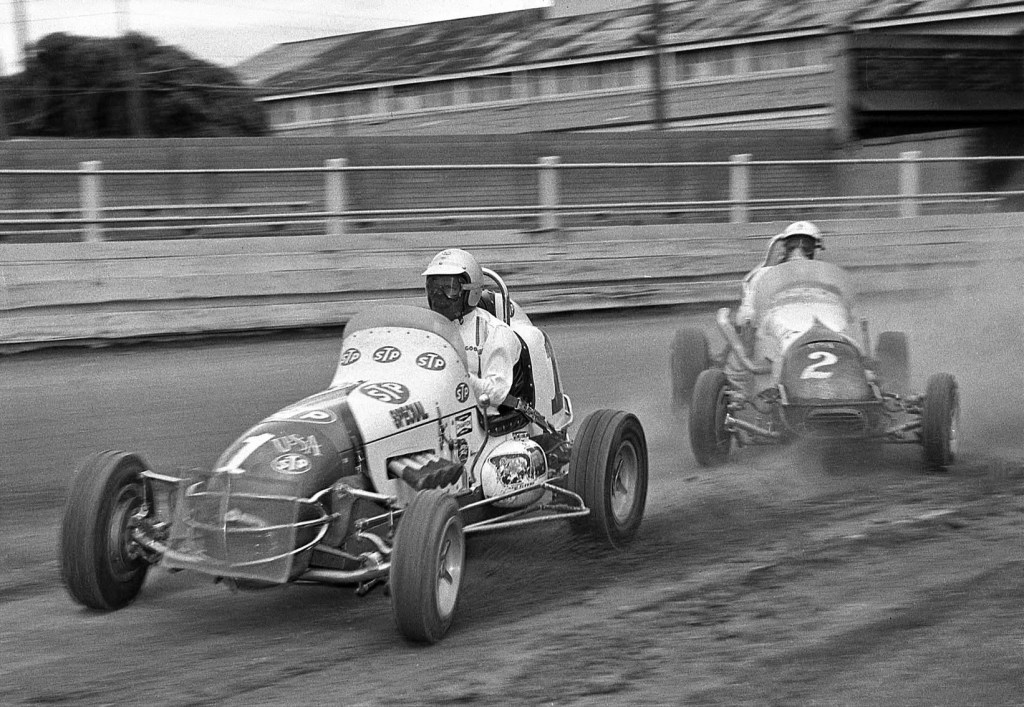
And as they began to write themselves into the speedway history books, along came a tough as teak American WW11 war hero by the name of Robert George Tattersall from Streator, Illinois. He brought with him a fully imported state of the art Offenhauser midget for his Sydney campaign in the summer of 1960. Over the next few years, Tattersall and these young champions would change the art of midget racing forever. Some of the best racing seen anywhere in the world was about to take place on the narrow confines of the speedway Royale and continue throughout the sixties and pack those old Sydney Showground grandstands to the rafters every Saturday night from September to May. Tattersall returned every year for thirteen straight years and earned the respect of all who raced against him and he brought that “I’m here to win” meanness gained while shovelling clods of dirt on the carnival arenas right across the back blocks of the United States.
His main Sydney rivals during the sixties were close friend Jeff Freeman and Johnny Stewart. Johnny was brave beyond belief. He wrung the necks of everything he drove. He had some of the most monumental crashes ever seen in the 75 year history of the sport and walked away time after time only to come back hungry as ever for victory. God he was good on dirt. His fence-scraping rides, millimeters from the safety fence was heart in the mouth stuff. Freeman had a special brand of aggression in his driving. Not one to sit back and wait, he made his own openings and showed Sydney fans the art of wheel-banging, sometimes earning respect from fellow competitors, anger from others. But he had natural raw ability always keeping on top of his rivals and never gave them an even break. Tattersall admired that in a driver and probably why they became good friends. Sadly, Jeff’s career was snuffed out all too short at Westmead on Mother’s Day 1965 when he crashed cockpit first into the safety fence. It was a terrible blow to Sydney speedway. Freeman was by far, the country’s greatest driver at that time. And spare a thought for Don Mackay who owned the two American Offenhausers driven by Freeman and Nick Collier, losing both his drivers in fatal crashes in just three months. 1965 brought more internal unrest in the National Speedcar Club that saw the top Sydney A grade drivers resigning en masse. Unable to hold power within, they re-formed under the banner of the Eastern States Racing Association (ESRA) with Len Steele at the helm as their president.
The 1960s could never have been more scripted. It had everything. The infamous 9-car pile-up on the pit bend. Bob Holt and Peter Cunneen both cheating the Grim Reaper as they rode out separate horrifying crashes that saw both their cars flip high into the track lights level with the front row spectators seated above the pits. Bryan Cunneen’s firey crash on the Bull Pen’s corner the car and driver enveloped in flames. The Barry Butterworth riot during the running of the 1966 Internationale feature race where hundreds of fans swept across the infield in protest at his disqualification, Howard Revell, the only car still running in the 1967 100 lapper as all other drivers were out at the ¾ mark, and the very first and only all-speedcar meeting mid-week in 1968. The yearly imports of top shelf American midget drivers combined with our local stars produced some of the best midget racing seen anywhere in the world attracting excellent coverage in Sydney newspapers week after week and television exposure across all TV stations throughout New South Wales. Sadly, it was also a period fraught with danger every Saturday night in every lap in every feature race. The injury and death toll was alarmingly high during that decade. So concerned by the deaths and injuries in the sport, the controlling Sydney club was forced to make roll-cages mandatory on all speedcars by the end of the 1971 season. Unfortunately it came all too late for Peter Johnson and Jack Bissaker (1961) Barry Robinson (1963) Nick Collier, Jeff Freeman and Tony Burke (1965) and Ted Fluett in 1968. But it was an incredible decade of talent, an absolute plethora of great drivers like Marshall, Middlemass, Bowland, Oram, Park, McClenahan, Myers, Noble, McKittrick, Manion, Clark, Hunt, Collier, Archibald, Morton, Holt, Peers, the Cunneen brothers and more. Any one of these drivers could snare a feature win, and most did. And a Tempe Service Station proprietor was beginning to make his mark. George Tatnell.
By the end of the decade, the stars of the fifties and sixties were making way for the new. Names like Ronald Mackay, Barry Graham, Stan Lawrence, and a stocky, slightly short wheel-twisting dynamo named Pinchbeck. It was the dawning of yet another era full of many changes. The Sydney Showground was continually under fire from local residents and the new Liverpool City Raceway by this time was up and running and after negotiations with Frank Oliveri in the mid 1970’s made Liverpool their home. Between 1970 and 1980, track surfaces went from the traditional dolomite dirt mixture to ashphalt and finally, to a clay compound. Racing on the ashphalt was super fast, the Volkswagen engine was dominating over the long established Holdens and Offenhausers, and racing brought out the best in four drivers, Barry Pinchbeck, Ronald Mackay, Howard Revell, and George Tatnell. Between these four, they had accumulated over 120 feature race victories on their home track at Liverpool. In the 1975/76 season, they accounted for 24 of the 39 feature races. The influx of US midget stars continued with some of the most famous names in American motor racing history headed by Indianapolis drivers A. J. Foyt, Johnny Rutherford, and Mel Kenyon. They were followed by Pancho Carter, Larry Rice, Sleepy Tripp, and the great Rich Vogler. There was some incredible racing on the ashphalt at Liverpool, but the most outstanding race of that decade had to be the 21st. running of the Australian Speedcar Grand Prix. In a masterly display of skillful driving, A.J. Foyt tore through the field, lapping every local car on the way to winning the 1975 Grand Prix from fellow countrymen Mel Kenyon, Larry Rice, and Garry Patterson. The race went flag to flag and Foyt smashed the existing 40 lap record by 20.24 seconds, averaging 14.371 seconds per lap through traffic. But the 1970’s belonged to the diminutive Barry Pinchbeck with over 40 career feature races at Liverpool including five state championships, one World Cup, one World Derby, the Ray Revell Memorial, the Australian Grand Prix, and the Australian Speedcar Championship along with two track records.

As the curtain came down on the ’70’s ex-sprintcar driver Sid Hopping had constructed a new speedway inside the Granville trotting track specifically for sprintcars running Friday night meetings while Liverpool continued to run on the Saturday nights. Liverpool ran big fields of early model sedans with a new section called Grand National sedans, along with Compact Speedcars (originally junior speedcars) and these sections began to rise in big numbers and strong fields. Between that and sprintcars at Parramatta, the midgets were finding it difficult to get meetings, and it was only when the two tracks found time in their season schedules that the midgets were allocated meetings. Times were certainly tough on the midget scene. In fact, speedcar racing dropped so low in NSW that for five years (1983 to 1988) no one seemed bothered to run the prestigious state title! And if all that wasn’t enough, the final bombshell that fell on the midget ranks Australia wide was the introduction of wings that divided state clubs across the country and all but destroyed the old and historic South Australian club. Fortunately, common sense and safety prevailed, but not before deep scars were left behind throughout the sport. Scars so deep that even to-day, South Australia is still attempting to rebuild their numbers. But still, the 1980’s brought new faces to the NSW speedcar ranks. Names like Ian Saville, Ron Mankey, Gavin Leer, Michael Meyer, Aaron Benny, brothers Edward and John Dark, Norm Jackson Jr, and Glenn Cox, and some of the old guard of Howard Revell, Barry Pinchbeck, Garry Rush and Kevin Gormly. These four drivers were into their third decade of racing and were still showing the new breed the way to the chequered flag. The Volkswagen engine was still the motor of preference while some were experimenting with factory engines like Nissan, Mitsubishi, Subaru, and the Mazda Rotary with some success. The 1980’s saw the visit by Americans Ron Shuman, Mark Passerelli, P. J. Jones, Kevin Olson, and Johnny Pearson. When Olson arrived, he had with him an engine that would soon change racing in Sydney and would dominate feature race win results for the next 20 years. He brought with him the all-conquering Fontana. Today, the Fontana holds the record for the most feature race victories at Parramatta City Raceway, and the Fontana engine is still winning races in 2010. Ian Saville and Steven Gall dominated racing at Parramatta during the 1980’s with 14 victories between them.
The era of the 1990’s dawned with an amazing group of young talented drivers to join the established stars. Names like Jason Gates, Peter Burke, the Jenkins brothers Troy and Darren, Steven Graham, Adam Clarke and Mark Brown a young Victorian driver who would re-plant his roots in Sydney. The 90’s saw more horsepower with Pontiac, V4-Scat, Cosworth, the ever reliable Chevy 11, and as stated, American engine builder Joe Fontana’s new creation. These motors were gradually taking over from the Volkswagen engine.
Speeds were becoming faster with 14 track records broken in the first three years of the 90’s. Suddenly after a hiatus of nearly 24 years when Ted Fluett passed away in a racing accident at Westmead Speedway in the winter of 1968, the Grim Reaper cast its shadow over Parramatta Speedway during the 1992/93 season when young Rodney Day lost his battle for life after a serious crash on the main straight. Within less than a year, the Sydney speedway fraternity was rocked by the death of two more Parramatta midget drivers in Joe Farrugia and Steven Thode. Once more, it was a wake-up call and a stark reminder that auto racing is a dangerous and hazardous profession. Sadly, injuries and fatalities are a part of the vocation that sometimes brings superstition and strange habits that only those within the Inner Sanctum of speedway can explain. Many more safety regulations were implemented in the years following those deaths with more advanced roll cages constructed, mandatory new high-back and wrap-around seats and the Hans device keeping head and neck movement to a minimum in a rollover. These were just some of the measures put in place for safety.
We have now travelled back in time, passing back through and into a new millennium and are now coming to the end of yet another exciting decade. This last ten years have seen new young-guns take to the stage in NSW. Nathan Smee, Tim Evans, Matt Young, Rod Bright, Matthew Smith, Richard and Trevor Malouf, Anthony Brien, a third generation racer Matthew Jackson to take on the resident hot-shoe, Mr Excitement, Mark Brown in his 27th year of racing. Over the last ten years, speedway fans have witnessed some of the best midget racing ever seen over the past 75 years thanks to the continual injection of new and exciting talent. In 2008, fans witnessed one of the most exciting 50 lap feature races ever at the Tyrepower Sydney Speedway. Steven Graham emerged as the highest ever feature race winner at Parramatta before a crash put paid to his racing career. Mark Brown, after moving from Victoria to settle in Sydney in 1991, matured to the point that he now holds claim as the fourth highest New South Wales feature race winner in the 75 year history with 56 victories behind Ray Revell (115), Ronald Mackay (73), and Barry Pinchbeck (59).
With the calibre of drivers we have today, midget racing in New South Wales could quite easily continue to go forward and only time will tell what the future will bring. Queensland has risen as the dominating state as far as car numbers are concerned, while Victoria, South Australia and Western Australia are attempting to build their numbers back. In the greater scheme of things 75 years is but a tiny blip on the radar screen of history, but those 75 years have brought us a mosaic of memories indelibly printed into our minds, some good, some tragic. We shed tears of joy for great victories, and cried tears of sorrow and mourn those lost to us far too soon from our sport.
Credits…
Full Throttle Publishing, The Canberra Times January 14, 1975, John Anderson, Martin King, David Cumming, Bill Meyer, Gordon Hogarth, Noel O’Connor Collection, Brian Darby Archive, Steve Magro Archive, Frank Le Breton, State Library of Queensland, Gordon Hogarth, Betty Watkins-State Library of Victoria, Ron Edgerton Collection
Finito…