Posts Tagged ‘Jack Brabham’

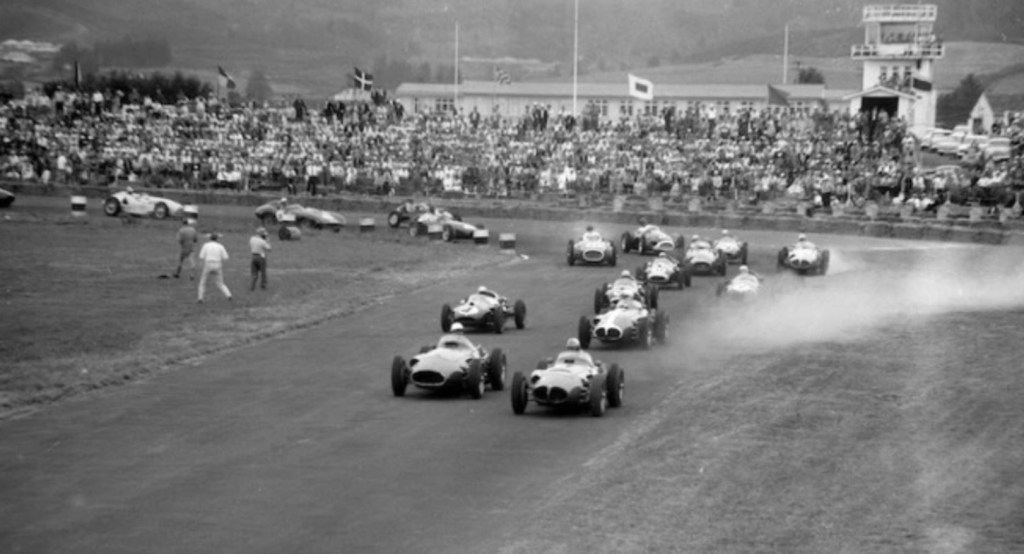
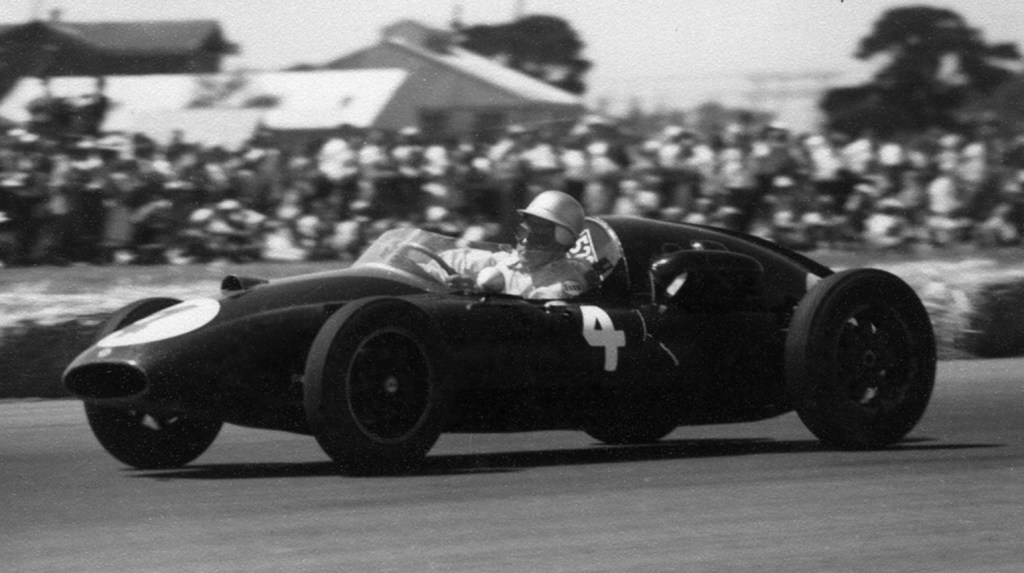
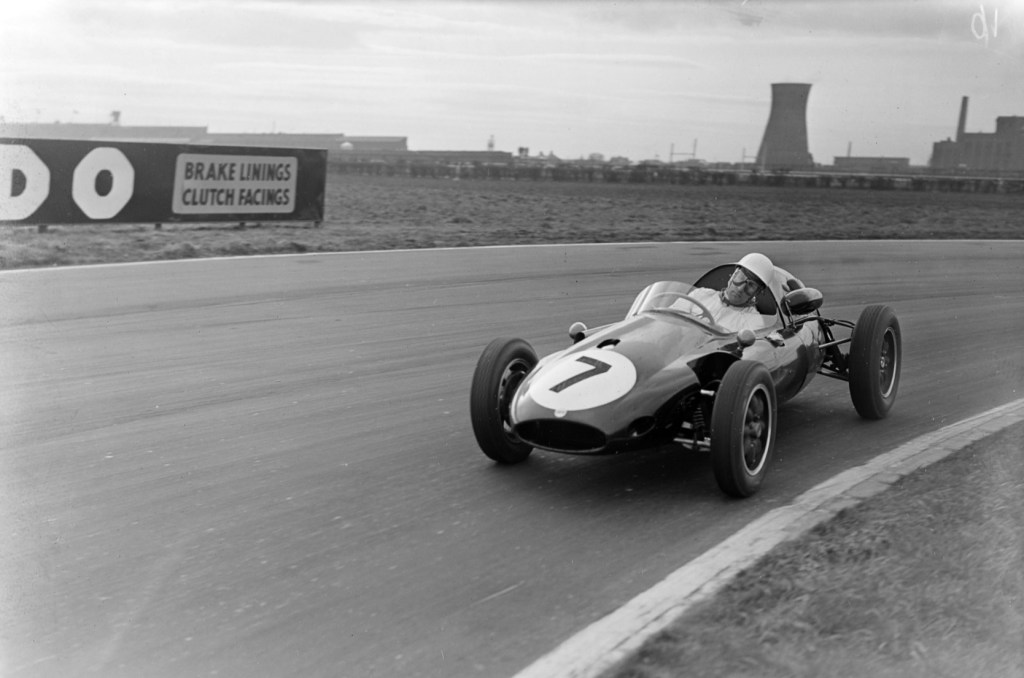
By 1957 Jack Brabham was getting the hang of this European racing caper, he was the winningest Formula 2 driver in in the winningest car that year.

Cooper’s Type 43 was powered by the brand-new 1475cc Coventry Climax twin-cam, two-valve FPF four-cylinder engine.

Coopers entered Jack in nine F2 races that year and he won five of them, most were blue-riband events too: the London Trophy at Crystal Palace, Prix de Paris, Montlhery, the Rochester Trophy at Brands and Oulton Park’s Gold Cup.

Motor Racing’s fantastic cover shot – very well-used down-the-decades and perhaps taken by Geoff Goddard – above was taken at Goodwood during the Woodcote Cup on September 28, where Jack’s teammate, Roy Salvadori triumphed in another works T43. Roy also won the BRDC International Trophy at Silverstone a fortnight before, other 1957 Cooper T43 winners were George Wicken and Tony Marsh.

The Haves in 1957 used a Cooper chassis and a Climax FPF engine, the rest made do with a Climax single-cam FWA or FWB engine and another chassis.

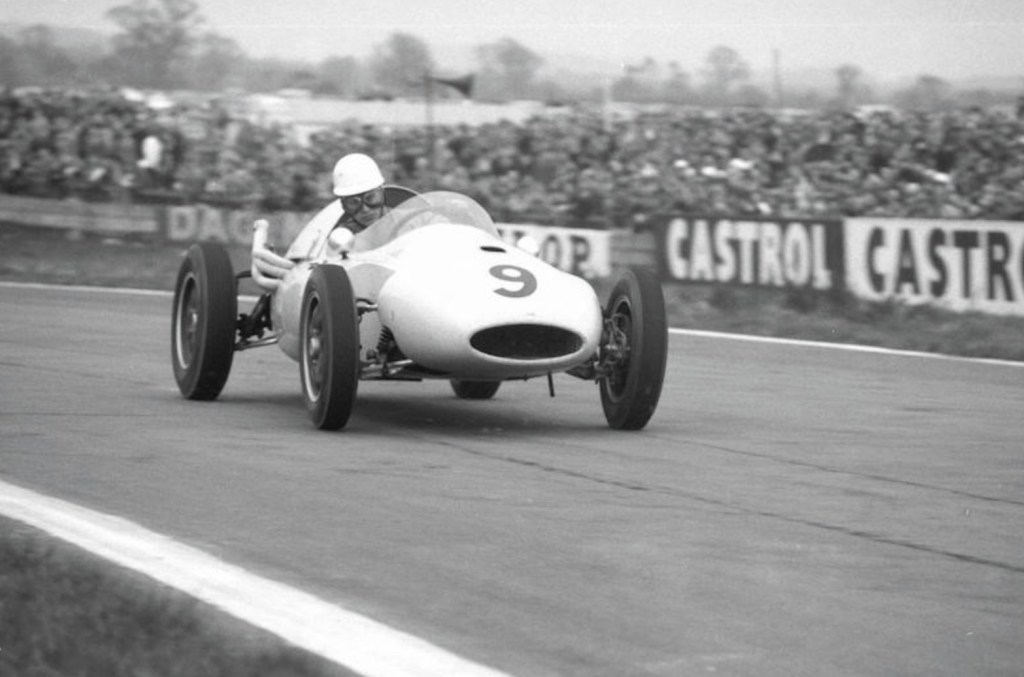
Funnily enough Lotus’ best ‘F2 result’ for the year was Tom Dickson’s victory at Snetterton on May 19 aboard a Lotus 11 FWA during a combined F2/sportscar race. The much vaunted, light, clever, gorgeous, front-engined, and fragile F2 Lotus 12 FPF (below) flattered to deceive: its best results were a second and a third placing for Cliff Allison in the Gold Cup, and Woodcote Cup respectively.

Lotus 12 Coventry Climax FPF to be precise

Other F2 winners in ’57 were Maurice Trintignant aboard a works Ferrari Dino 156 in the Coupe Internationale de Vitesse at Reims in July and Edgar Barth’s victory in the F2 race within a race, at the GermanGrand Prix at the Nurburgring in August aboard a Porsche 500RS.

That Dino spawned a series of V6 cars, race and rally engines that were still winning well into the mid-1970s.

By mid-1959 Brabham was looking a fairly complete professional…

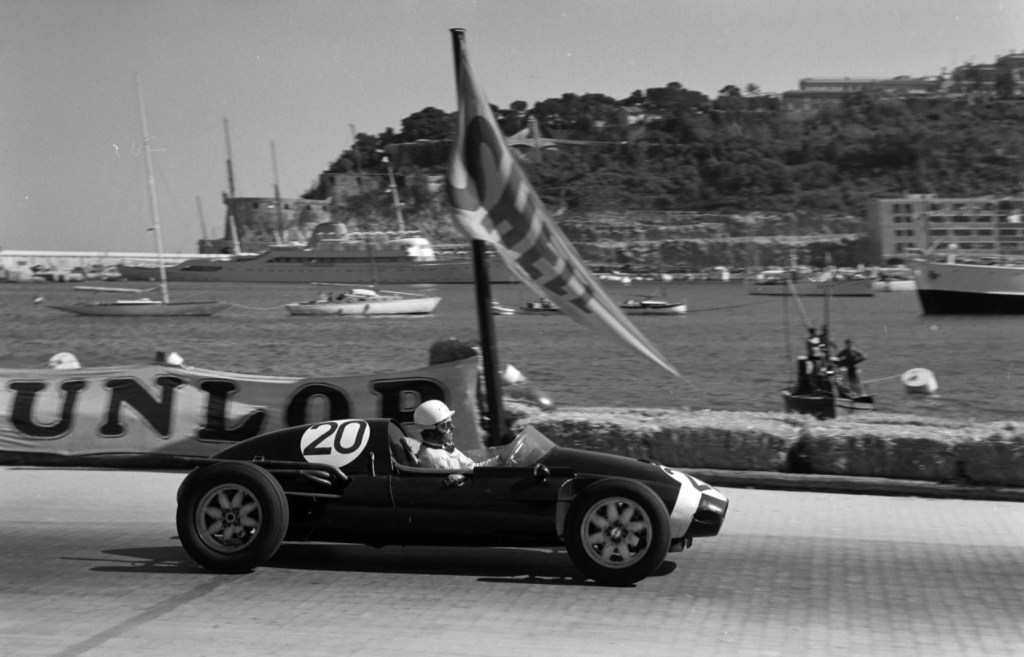
Jack and (the works team) Cooper had just taken their first Grand Epreuve wins at Monaco on May 10, while Motor Racing’s cover above shows Jack on the way to victory in the BRDC International Trophy at Silverstone on May 2.

By then Brabham’s Cooper is a Type 51 and the engine a 2.5-litre FPF. The F2 youth of 1957 had grown into a dominant adult by 1959. It may have been a simple motor but it was oh-so-sweet.

See here for a long feature on Cooper Types 41/43/45/51/53: https://primotipo.com/2019/10/04/cooper-t41-43-45-51-53/ More about Jack in ’57: https://primotipo.com/2020/01/28/cooper-t39-climax-le-mans-1957-brabham-raby/

Motor Racing magazine, as the covers note, was the official organ of the British Racing and Sports Car Club. It succeeded Iota and was published from January 1954 to February 1970…bloody good too!

Credits…

Motor Racing magazines – fantastic they are too – many thanks to Bob King

Finito…
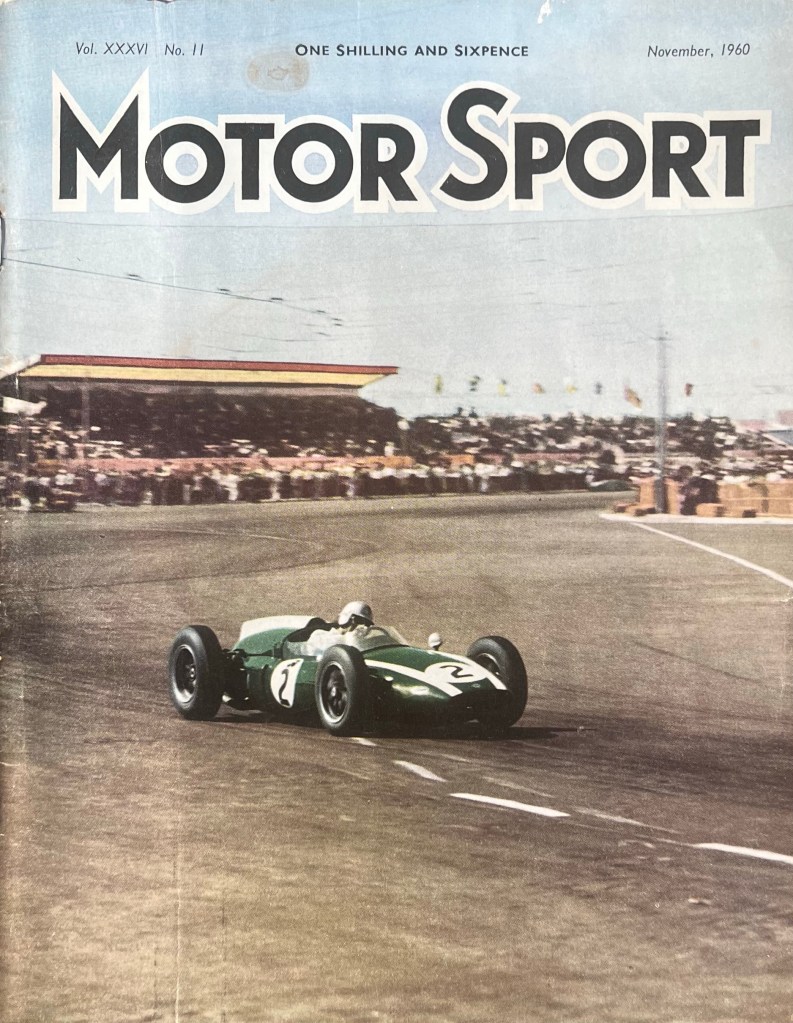
Jack Brabham on his way to winning the 1960 Portuguese Grand Prix on the Circuito da Boavista, Oporto on August 14. Cooper T53 Climax, Bruce McLaren was second in the other team T53 while Jim Clark was third in a Lotus 18 Climax.

He won his second drivers world championship that day – round seven of nine qualifying rounds – while Cooper bagged their second manufacturer’s championship too. Jack would collect another F1 title or two, Cooper did not. Sadly.

More about Boavista in this article about the 1958 race: https://primotipo.com/2014/09/24/circuito-da-boavista-portuguese-gp-1958/

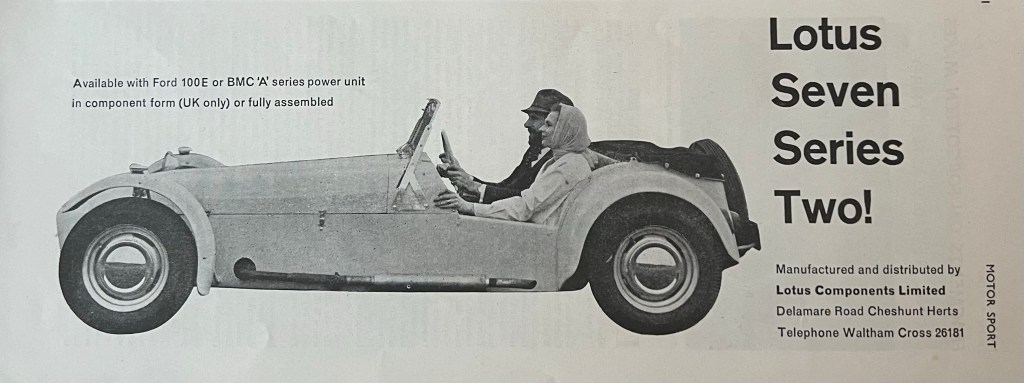
When flicking through old mags the ads are often as interesting as the editorial material.

At that stage ‘yerd be taking your Lotus 7 with the A-series I guess, the release of Ford’s 105E rather shifted the balance of course, especially once Messrs Duckworth and Costin did their thing thereon.

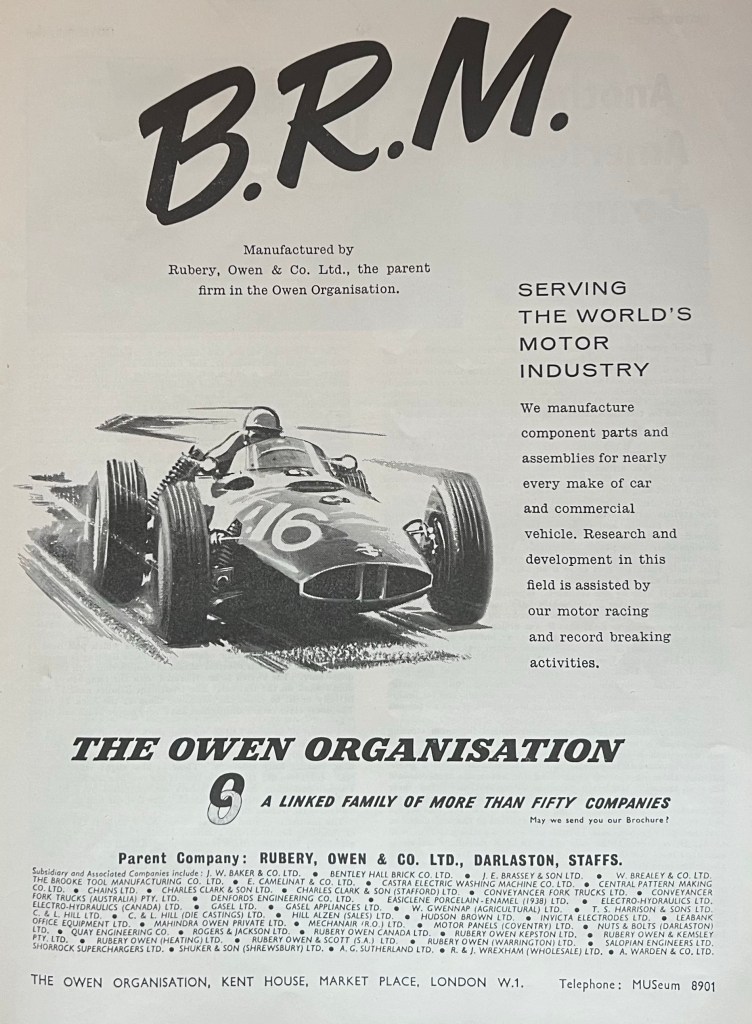
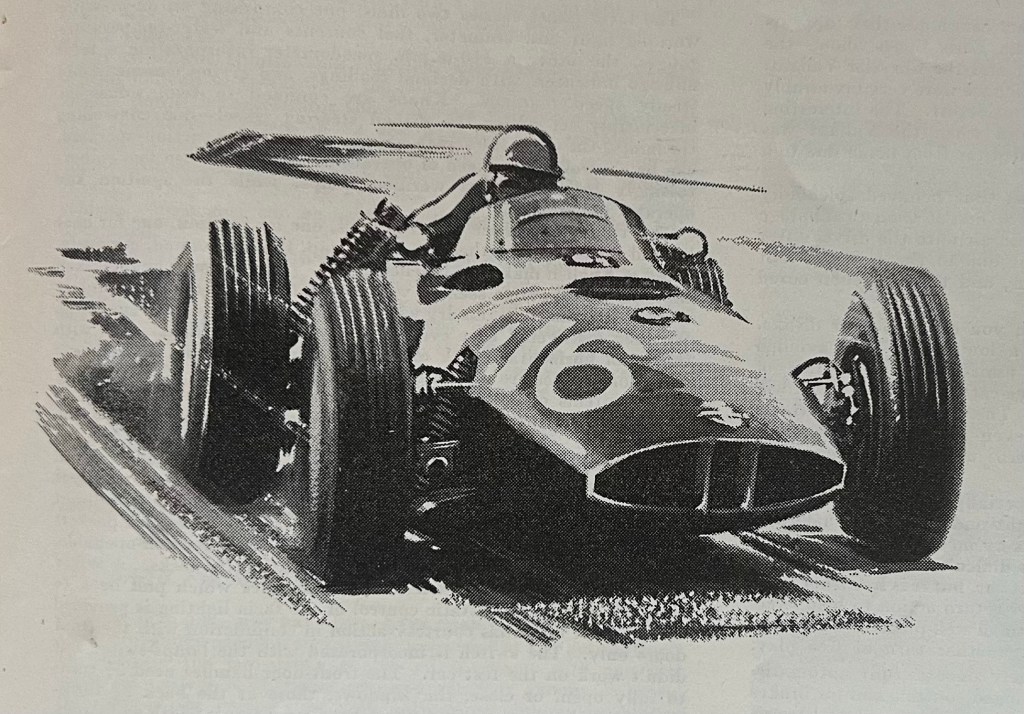
The BRM P48 is a favourite, what’s not to like, here: https://primotipo.com/2018/03/16/bourne-to-ballarat-brm-p48-part-2/ and here :https://primotipo.com/2015/03/26/tony-marsh-boness-hillclimb-scotland-brm-p48-part-1/

Who did the drawing do you think?

Credits…

MotorSport November 1960

Finito…
(P&O Heritage)

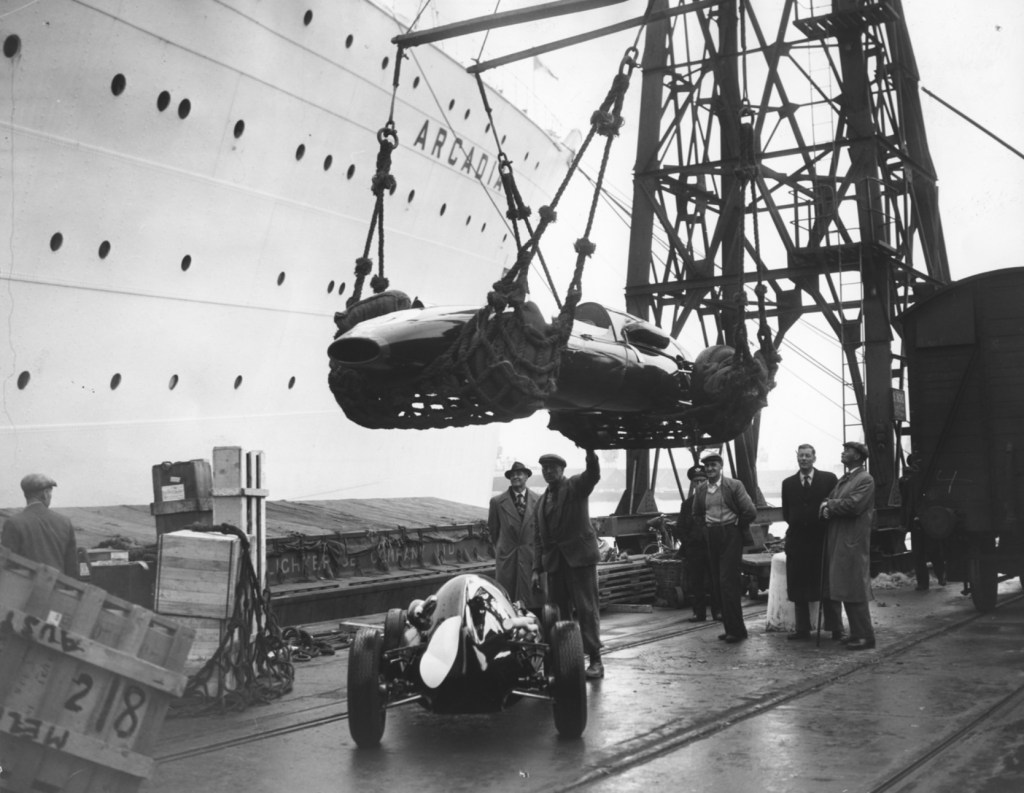
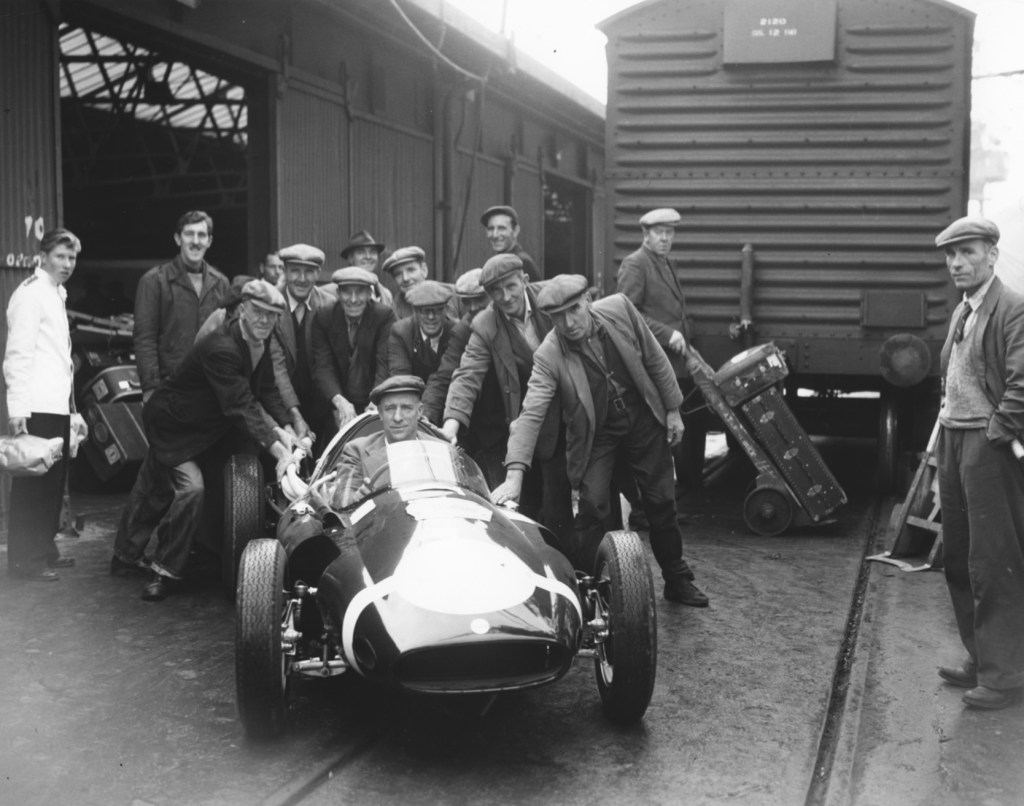
Jack Brabham’s Cooper T45 Climax (F2-10-58) enroute to the hold of P&O Line’s 30,000 ton SS Arcadia while Stirling Moss’ similar Rob Walker car (F2-9-58) awaits its turn at Tilbury Docks.

It’s October 20, 1958, seven weeks before the Melbourne Grand Prix at Albert Park on November 30 where this pair of drivers and cars were the star attractions in a 19 car field. The Arcadia arrived 11 days before the race allowing plenty of pre-event promotion.

I was contacted by P&O Heritage in June last year requesting assistance in identifying the cars and the event to which they were travelling, with the assistance of my good friend, Cooper expert Stephen Dalton, that wasn’t a drama. With their exhibition now well over we can share the shots.

(P&O Heritage)

Arfur Daley! was my first reaction, look at them all with their peaked-caps to ward off the brisk River Thames air. It’s Stirling’s Rob Walker owned T45, chassis F2-9-58, no less than the car in which Maurice Trintignant won the ’58 Monaco GP, and with which Moss was victorious in the non-championship F1 Aintree 200 and Caen GP that year.

Brabham’s F2-10-45 was acquired from the British Racing Partnership: Alfred Moss and Ken Gregory. It had been raced in 1.5-litre F2 events continuously throughout 1958 by Stuart Lewis-Evans in between his Vanwall F1 commitments and Tommy Bridger otherwise. Lewis-Evans had many top-5 placings and one win at Brands in June.

Maurice Trintignant during the 1958 Monaco GP. The Walker T45 F2-9-58 won from the two works Ferrari Dino 246s of Luigi Musso and Peter Collins (MotorSport)
Stuart Lewis-Evans on the hop at Goodwood during the April 1958 Lavant Cup. He was fourth in BRP’s T45 F2-10-58 behind Brabham’s works Cooper T43 and Graham Hill and Cliff Allison’s works Lotus 12s; all cars 1475cc Coventry Climax FPF powered (unattributed)

Still fitted with 1.5-litre Climax FPF, BRP entered Bridger in the Moroccan Grand Prix at Ain Diab. His only GP start, in a six-Cooper F2 race within a race, ended in tears after Tommy spun and crashed on oil dropped by Tony Brooks’ Vanwall the lap before, Bridger completing 30 of the 53 laps. He wasn’t badly hurt, but poor Lewis-Evans died from burns sustained after a separate accident caused by his Vanwall’s engine seizure.

BRP returned the car to Coopers for repair, Brabham then bought it and installed a 2.2-litre Coventry Climax FPF to race in the Antipodes, while the Moss car was fitted with an Alf Francis built 2015cc Climax.

(AC Green)

The trip from Tilbury to Port Melbourne back then took on average, four-six weeks, here the new Arcadia (b1953-d1979) is tied up at Station Pier, Port Melbourne in late March 1954. The trailer leg to transport the cars to Albert Park is a short 6km.

(B King Collection)

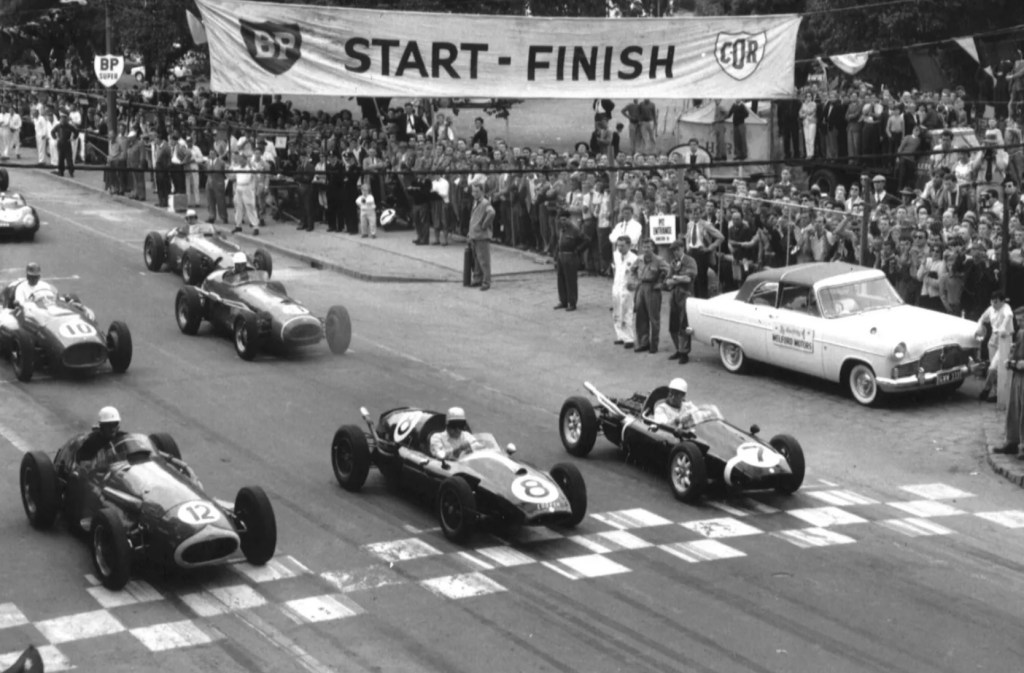
The 32 lap, 100 mile Melbourne GP was the eighth of nine Gold Star rounds that year, Stan Jones in the #12 Maserati 250F won the ‘58 title.

Brabham is in #8, #7 is Moss, while another Jones, young Alan is the small white clad figure leaning on the nose of the Ford Zephyr. Moss won the race from Brabham with the very quick Doug Whiteford, Maserati 300S in third

Bib Stillwell was fourth in another 250F with Len Lukey fifth in a Lukey Bristol – Len’s evolution of a Cooper T23. Car #10 is Tom Clark’s 3.4-litre Ferrari 555, the car alongside him is Ted Gray, Tornado 2 Chev.

Moss and mechanic, name please? and T45 F2-9-58 on the Albert Park grid. That November 30, 1958 event was the last at Albert Park until the modern AGP era commenced in 1996 (S Dalton Collection)
NZGP, Ardmore, January 10 1959. The Schell, Bonnier and Shelby Maserati 250Fs used their 2.5-litre torque to lead for a bit on lap one. #4 is Brabham’s Cooper, with Moss #7 behind and between Jack and Carrol – and the rest (LibNZ)

Both cars were then shipped across the Tasman to contest the Kiwi Internationals. Moss won the New Zealand Grand Prix at Ardmore from Brabham in a big field that included Bruce McLaren, Carroll Shelby, Jo Bonnier and Harry Schell on Maserati 250Fs, and Ron Flockhart’s works-BRM P25.

Brabham aboard F2-10-58 at Ardmore in 1959, second to Moss (T Marshall)

Moss (and the Cooper) then returned to Europe for his other commitments while Brabham did the Lady Wigram Trophy and Teretonga International for second/third, then returned home to New South Wales where he won the South Pacific Trophy at Gnoo Blas.

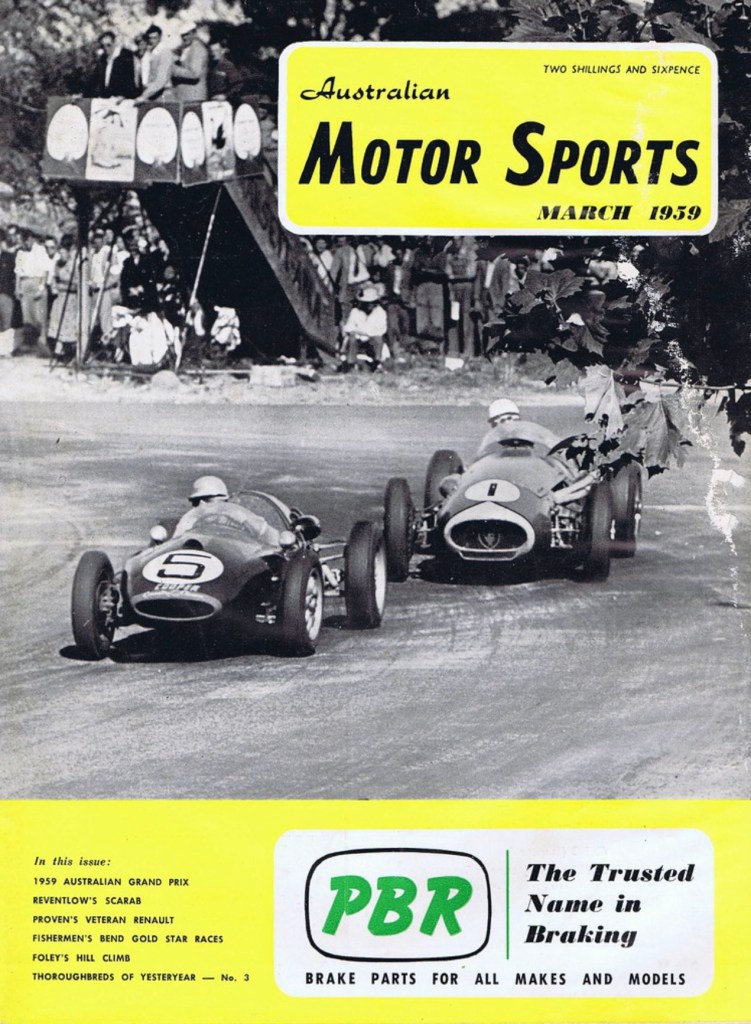
Jack then travelled to Cordoba to begin his F1 season with the February 16 Buenos Aires GP, but not before selling F2-10-58 to Len Lukey. The Melbourne Lukey Mufflers manufacturer used it to good effect to win the 1959 Gold Star, the highlight of which was an epic dice between Len and Stan Jones’ 250F in the AGP at Longford (AMS cover below) which was resolved in Stan’s favour.

The T45 remained in Australia forever, and in a nice bit of Cooper T45/Albert Park symmetry, Stirling Moss drove his Dad, and Jack’s old car in the historic car demonstrations during an Australian Grand Prix carnival in the early 2000s. Both cars are extant…

Etcetera…

(MotorSport)

An unmistakable Aintree shot of Stirling Moss aboard Walker’s T45 F2-9-58 on the way to victory in the BARC 200, April 1958.

(unattributed)

Tommy Bridger holding off Bruce McLaren’s works Cooper T45 Climax and Ivor Bueb’s Lotus 12 Climax aboard the BRP T45 F2-10-58 during the May ’58 Crystal Palace Trophy. He was second, bested only by Ian Burgess’ works Cooper T45, in a great performance.

Credits…

P&O Heritage, Allan C Green-State Library of Victoria, Bob King Collection, Stephen Dalton Collection, sergent.com.au, MotorSport Images, unattributed shots via Bonhams photographers unidentified, Terry Marshall, National Library of New Zealand

Tailpiece…

(MotorSport)

Tommy Bridger in the 1.5-litre F2 BRP Cooper T45 Climax F2-10-58 chasing Gerino Gerini’s Centro Sud Maserati 250F at Ain Diab during the October 19, 1958 Moroccan Grand Prix. Gerini was 11th from Q17 and Bridger DNF from Q22 after the accident described earlier.

The race-within-a-race of six Cooper F2 cars comprised T45s raced by Salvadori, Brabham, McLaren, Bridger and Andre Guelfi, plus Francois Picard’s older T43. Bridger qualified behind the works-Coopers of Roy, Jack and Bruce…he was pretty handy. See more about him here: https://500race.org/people/tommy-bridger/

Finito…
(MotorSport)

Dan Gurney’s – Brabham Racing Organisation – Coventry Climax FWMV 1.5-litre V8 during the 1963 Monaco Grand Prix weekend. F1-1-63’s second race.

The car is a Brabham BT7, the second type of GP Brabham, Jack having debuted the BT3 Climax in 1962. Two F1 BT7s – there was also two BT7A Intercontinental/Tasman Formula cars – were built. Dan debuted BT7 F1-1-63 at the International Trophy, Silverstone on May 11, 63, and Jack first raced F1-2-63 at Zandvoort on June 23, 1963.

(LAT)

Dan in front of Tony Maggs (fifth) and Willy Mairesse (DNF final drive) at Monaco that year: Brabham BT7 Climax, Cooper T66 Climax and Ferrari Dino 156. Gurney was out with crown wheel and pinion failure in the race won by Graham Hill’s BRM P57 from teammate Richie Ginther’s P57. Bruce McLaren’s Cooper T66 was third.

(MotorSport)

Gurney on the way to an historic first Championship Grand Prix win for the Brabham marque aboard his BT7 at Rouen-les- Essarts, France in June 1964. Dan also won the non-championship 1964 Mexican GP with this F1-1-63, while Jack’s best in F1-2-63 was a pair of wins in in the Aintree 200 and the Silverstone International Trophy in April/May 1964.

Somewhat incredibly, Allen Brown records the last of 48 in-period race meetings for this (Jack’s) car was at Indianapolis, where Dave Rines won the SCCA Regional at Indianapolis Raceway Park in May 1968, at which point the car was powered by a 3-litre Coventry Climax FPF-four.

Dutch GP: second, Clark won in a Lotus 25 (MotorSport)

Credits…

MotorSport Images, LAT Photographic, oldracingcars.com: https://www.oldracingcars.com/brabham/bt7/

Tailpiece…

(MotorSport)

Coventry Climax FWMV 1.5-litre Mk3 V8: Lucas fuel injected, DOHC, two-valve, 195bhp @ 9500rpm. Early five speed Hewland HD gearbox with distinctive upside-down VW Beetle case, but not yet with neato, bespoke side-entry rear housing. The ‘vertical bomb’ is Lucas’ hi-pressure fuel pump. Rear end comprises mag alloy uprights, inverted wishbones at the top, single links at the bottom plus two radius rods doing fore-aft locational duties. Ron changed his mind about the respective locations of the wishbones and links pretty soon after this.

Finito…

(I Smith)

Small things amuse small minds, mine that is.

Jack Brabham being pestered by Frank Matich before the start of the Tasman Series Sandown Park Cup on February 16, 1969. Frank is after some tips on how to extract the best sponsorship deal from Repco Ltd management.

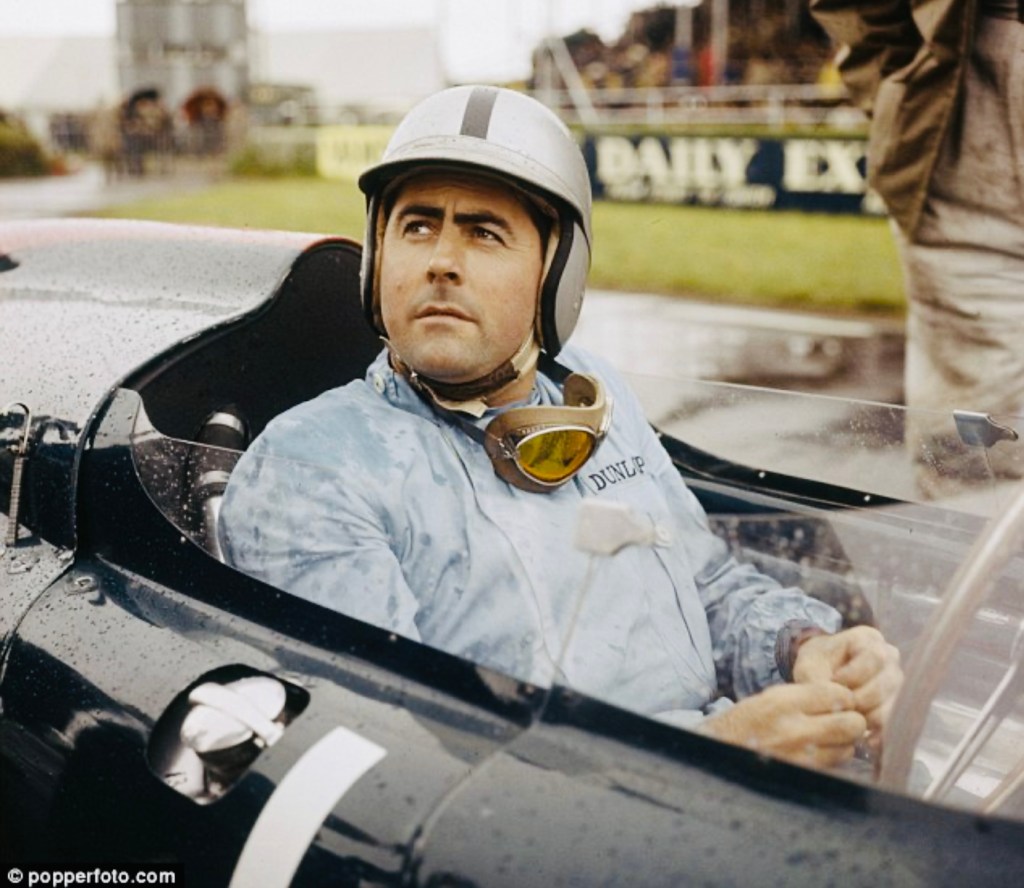
It’s intrigued me that Jack clearly forgot to bring his nice modern Bell Magnum helmet home with him when he jumped on his Qantas 707 at Heathrow for Sydney in December 1969.

When his Brabham BT31 Repco was finally offloaded at Port Melbourne and had its nice new RBE 830 V8 fitted at Repco Brabham Engines in Maidstone, he cast around for a skid-lid and – seemingly – this circa 1960 helmet and pair of goggles were the only ones available to head off to Calder to test the car two days before the Sandown race. See here for a BT31 epic: https://primotipo.com/2015/02/26/rodways-repco-recollections-brabham-bt31-repco-jacks-69-tasman-car-episode-4/

The lovely shot above seems to be the helmet in question sitting atop Jack’s noggin on the grid of the BRDC International Trophy at Silverstone nine years before, May 14, 1960: second in his works-Cooper T53 Climax behind Innes Ireland’s Lotus 18 Climax.

(unattributed)

Our very own Jack during the ‘69 Sandown Cup. He is on the run out of Peters above, and on the way into Dandy Road below, wearing the same 1960 helmet or one very much like it.

Small things as I say…mind you, I don’t like ‘yer chances of racing with a nine year old helmet in today’s homogenised, pasteurised over regulated times.

Brabham finished third in the race, proving brand-new BT31 was quick right out of the box, which was won – so too the Tasman Series – by Chris Amon’s Ferrari 246T. Jochen Rindt was second in his Lotus 49B Ford DFW.

(R MacKenzie)

Jack returned that Easter to fulfil his final Australian Repco commitments, winning the Gold Star round at Bathurst in BT31. This time (below) Jack remembered to pack the Bell Magnum but not his modern goggles…

(B Frankel)

More on Jack’s helmets here: https://primotipo.com/2020/07/11/jack-piers-and-helmets/

Credits…

Ian Smith , popperfoto.com, Rod MacKenzie, Bob Frankel

Finito

(MotorSport)

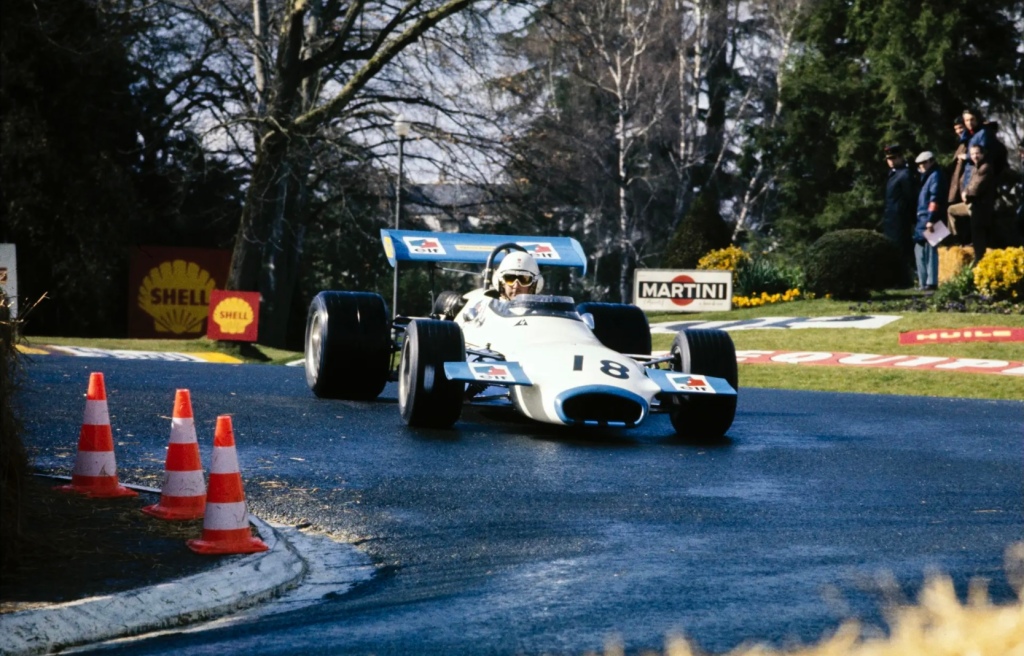
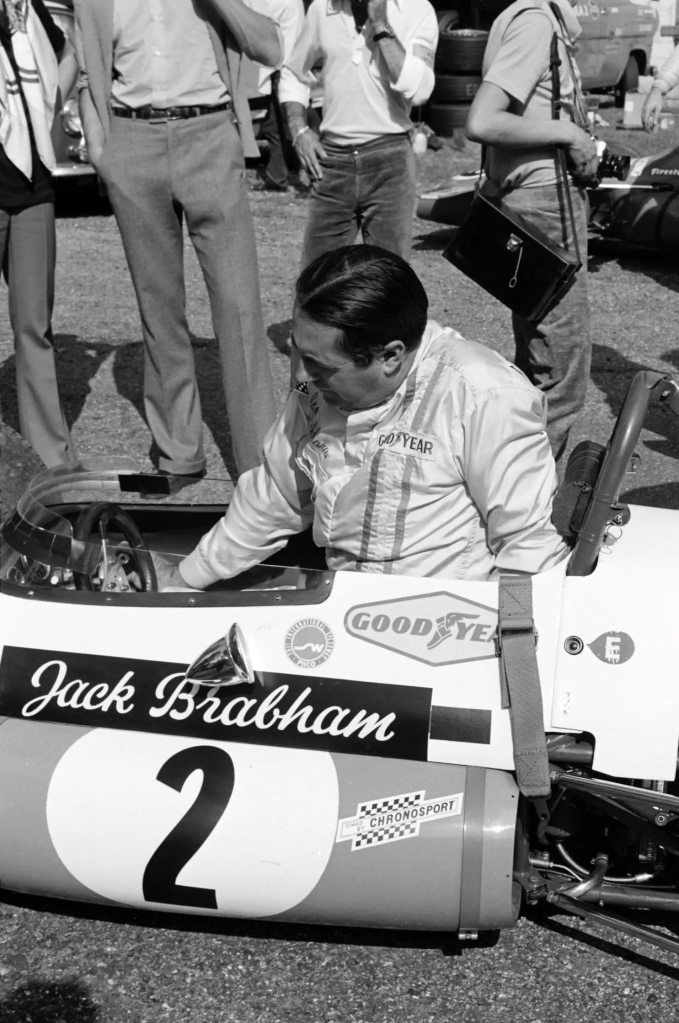
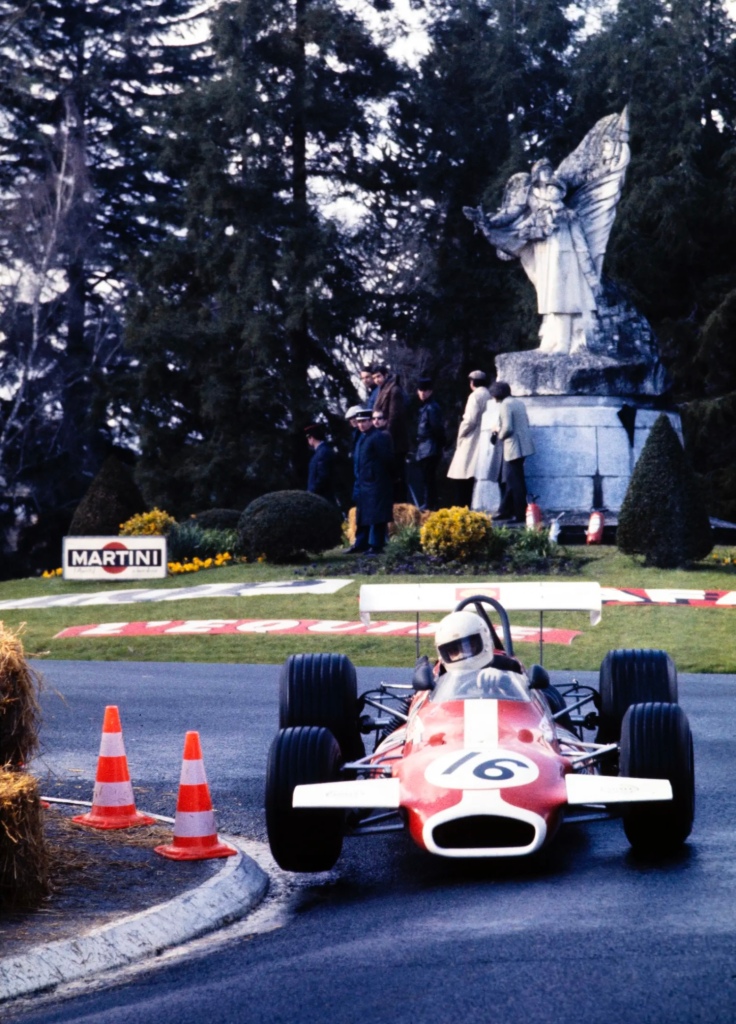
Jack Brabham negotiates the tight confines of Pau during the April 5 weekend. Got his Jet Jackson helmet on too, hasn’t he, see here; https://primotipo.com/2020/07/11/jack-piers-and-helmets/

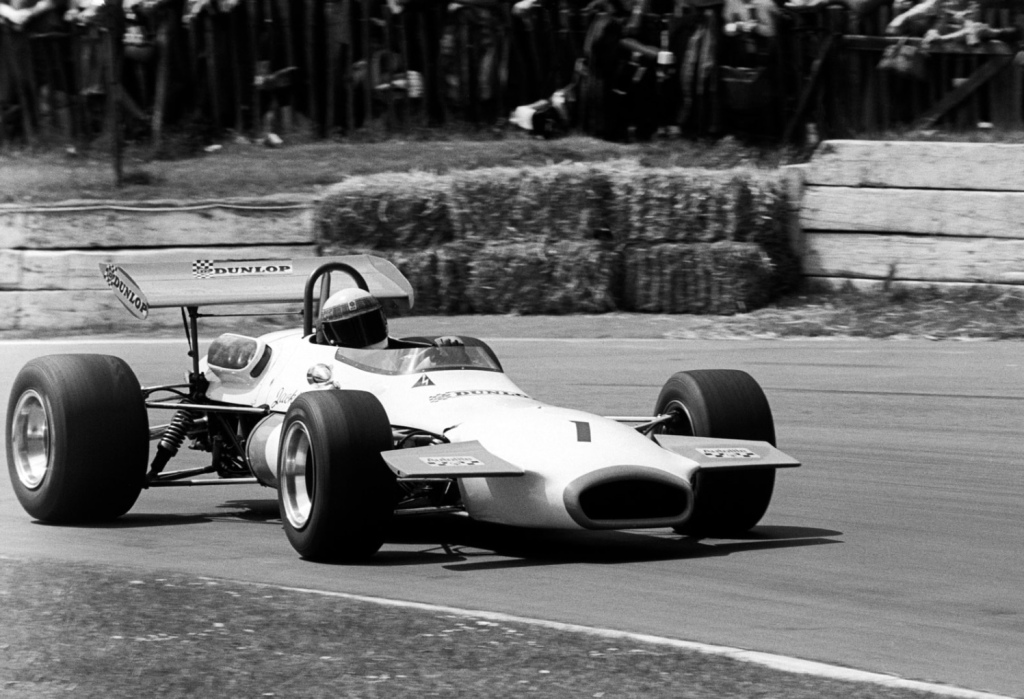
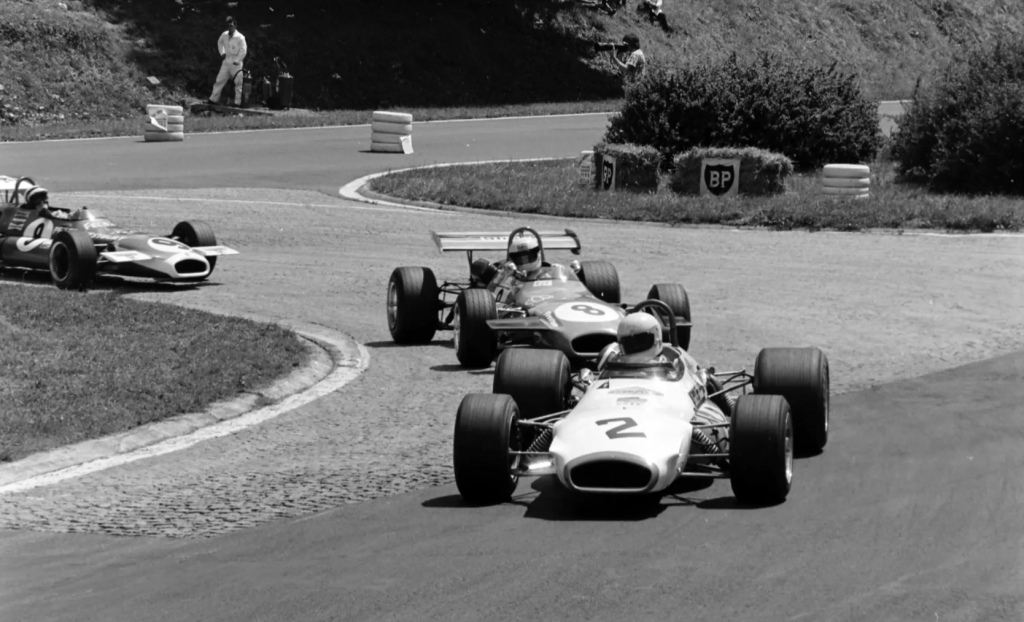
The car is Brabham BT30 chassis # 17 owned by ex-racer/businessman/team owner John ‘Noddy’ Coombs, the machine was shared by Jack and Jackie Stewart that season

Brabham didn’t finish at Pau, fuel metering unit problems intervened. Jochen Rindt won in a works/Jochen Rindt Racing Lotus 69 Ford FVA from four BT30s: the machines of Henri Pescarolo, Tim Schenken, Derek Bell and Francois Mazet.

(MotorSport)

“Yeah, its not a bad little jigger, we’ve won a few races with BT30s in the last twelve months, I suppose. It’s a lot tighter than I remember when I tested it for Ron last year, mind you…”

Jack gets out of BT30/17 over the June 28, XVIII Grand Prix de Rouen-les-Essarts weekend, where he was eighth in the race won by Jo Siffert’s BMW 270.

BT30/17’s best results that season were Jackie’s second place at Thruxton and victory at Crystal Palace, while Jack was second at Tulln-Langenlebarn. Coombs shipped the car to Japan in May, where JYS won the Formula Libre Japanese Grand Prix at Fuji with Ford Cosworth FVC power.

Stewart bagged the Quadrella in the London Trophy at Crystal Palace in May. He won his heat, the final from pole, bagging fastest lap along the way (MotorSport)
(MotorSport)

The Brothers Brambilla compound during the Hockenheim 11, 1970, weekend. The car in the shot is Tino’s #7 Brabham BT30/21 (DNF) during the 1970 Preis von Baden – Wurttemberg und Hessen Euro F2 Championship round. Dieter Quester had a home win for BMW; he prevailed in an M11-powered BMW 270. The exhaust of Vittorio’s car, BT30/22, is at right.

The essential elements of customer F2 Brabhams of the era are on display: a spaceframe chassis, Ford Cosworth 1.6-litre FVA 210bhp engine and Hewland FT200 five-speed transaxle. It was then up to the driver to make these immensely robust, chuckable, fast, Ron Tauranac-designed cars do the rest.

Chassis fetishests should check out Allen Brown’s detailed review of all BT30s built on oldracingcars.com, here; https://www.oldracingcars.com/brabham/bt30/

Etcetera…

(MotorSport)

Jack toyed with wings on and off at Rouen, racing without the appendages. Here he is showing the way to customers, Derek Bell (seventh) and Peter Westbury (tenth).

(MotorSport)

Another lovely Pau GP shot, where Tim Schenken was third in the Sports Motors International Brabham BT30.

That year, the European F2 Championship was won by Clay Regazzoni’s Tecno 69 and 70 FVAs with 44 points, from Derek Bell’s BT30 (he also bagged one point in a BMW 270) 35 points, and Emerson Fittipaldi’s Lotus 69 FVA on 25.

‘Graded drivers’ – in essence and summary, drivers who had scored points twice in the Top Six of a Grand Prix in the previous two years, and the World, F2, Indy, and Can Am Champs of the previous year – were ineligible for Euro F2 championship points.

In 1970, Rindt won at Thruxton, Stewart at Crystal Palace and Ickx at Tulln-Langenlebarn. Of the non-graded drivers, Regga won at Hockenheim, Enna-Pergusa and Imola – and won his first Grand Prix for Ferrari that September at Monza -, for Derek Bell at Montjuich Park, Barcelona, and Dieter Quester in the final Hockenheim round.

Credits…

MotorSport Images

Tailpiece…

(MotorSport)

The ‘guvnor keeps an eye on his protege during the Rouen weekend. Brabham and John Coombs, who bought his share of Brabhams over the years. See here for a MotorSport interview with John: https://www.motorsportmagazine.com/archive/article/may-2009/71/lunch-john-coombs/

Finito…

image

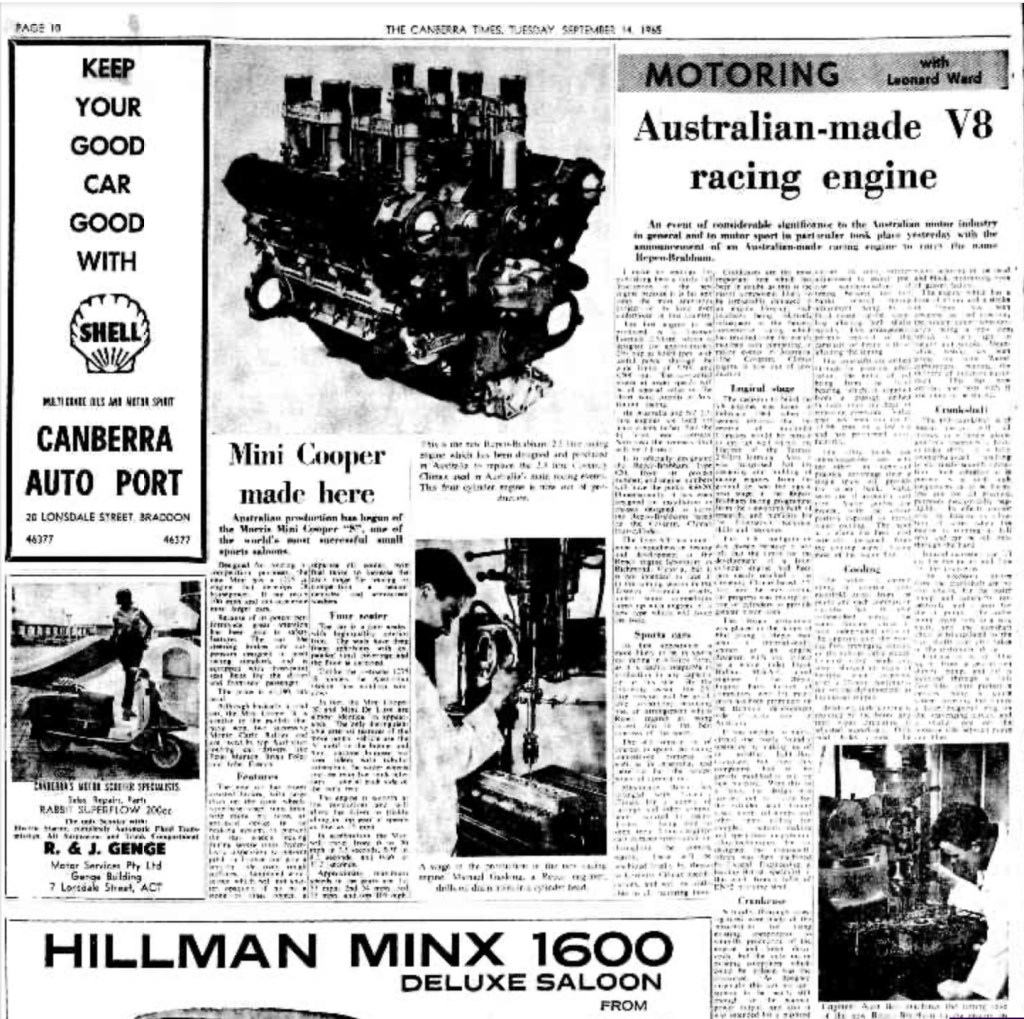
The Repco Record cover girl for September 1965 is the prototype 2.5-litre Repco Brabham 620 V8. Engine #E1 first spluttered into life on the Repco Laboratory testbed, Richmond on 26 March 1965…

She is quite a cutie replete with Weber carbs rather than the Lucas fuel injection with which the Repco engines always raced. Click away at the links below for plenty of articles on this engine, this is another piece from Michael Gasking’s wonderful collection of Repco memorabilia.

image

The public announcement of the engine was made by Repco on Monday September 13, 1965. Many thanks to historian David Zeunert who forwarded a copy of Leonard Ward’s piece about the initiative which was published in the Canberra Times the following day.

It includes an unusually detailed technical description of the engine, but makes no mention – at that point at least – of a 3-litre 620 variant for the new F1 which commenced in 1966.

That the 1275cc Morris Cooper S – ‘one of the worlds most successful small sports saloons’ – has gone into production at BMC’s Australian plant at Zealand, inner-Sydney would have been big news too, albeit well-known to enthusiasts.

Credits…

Michael Gasking Collection, Repco Ltd, Canberra Times via David Zeunert Collection

Finito…

(Draper Family Collection)

One upon a time Grand Prix drivers weren’t paid fees that make the GDPs of third world countries look small.

I guess that over 20 Grands Prix and the associated test and race-simulation loads keep them busy, the rest of the time is devoted to the body-beautiful, PR and the needs of the girl/boyfriend.

At the dawn of the space-age, wily Jack Brabham worked all the angles to optimise his earnings, short and perilous as it was in the days when drivers died in the cockpit as a matter of routine.

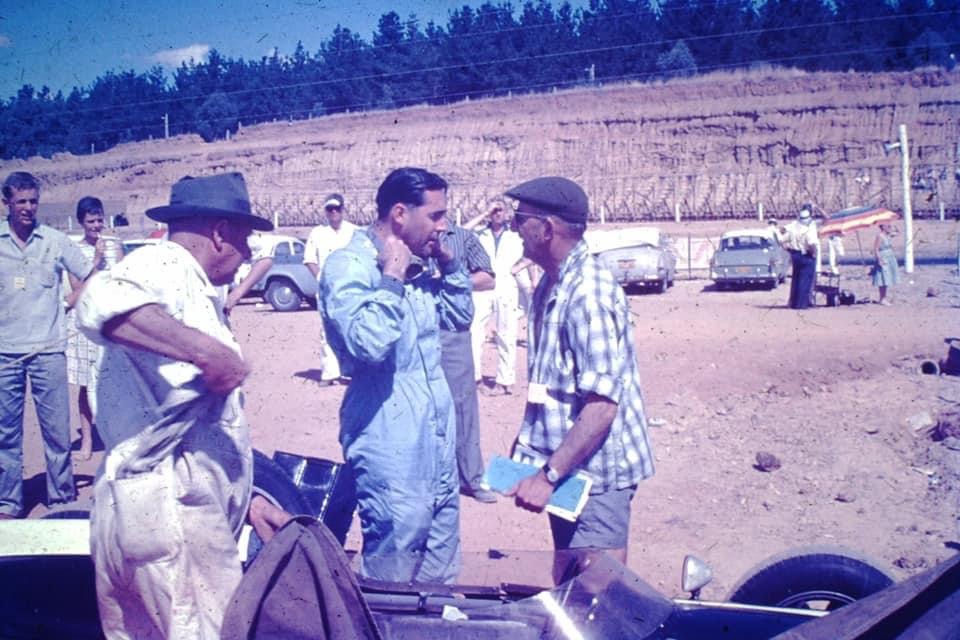
John Cooper paid him a retainer and a percentage of his winnings. He ghosted magazine articles, had a motor garage and dealership or three, drove cars for others and owned and entered cars for himself and others. That’s how he found himself in the New South Wales/Victorian border-town of Albury, on the Murray River, for the Craven-A International at the small, new, Hume Weir circuit over the March 12/13 1961 weekend.

(Draper Family Collection)
(G Garth)

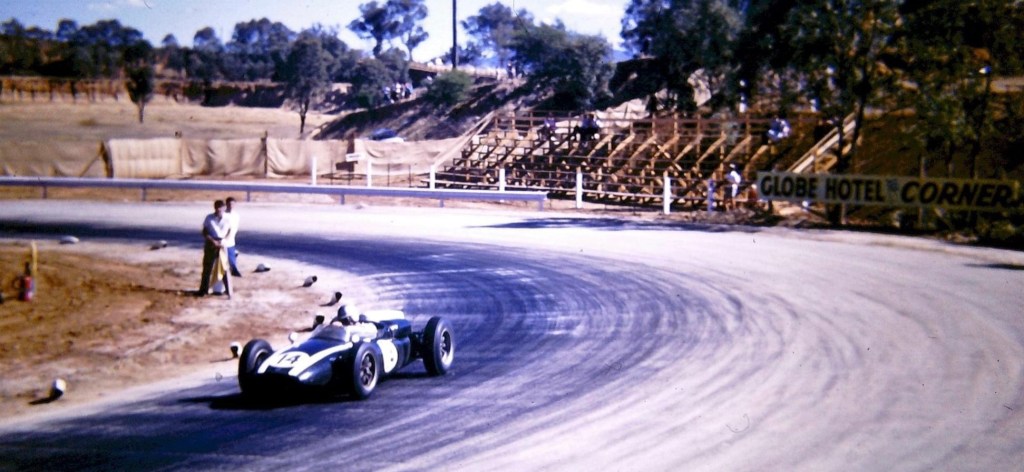
That summer he’d brought a Cooper T53 Climax (chassis F2-8-60) and Cooper T51 Climax (F2-5-57 or F2-7-59) home to do the Kiwi and Australian Internationals.

He did pretty well too, winning the New Zealand Grand Prix on the Ardmore aerodrome and the Lady Wigram Trophy on the RNZAF base of the same name in the T53. Ron Flockhart that car on pole at Ballarat, and finished third, while Ron’s best with the Cooper T51 was fourth at Ardmore and fifth in the Warwick Farm 100 where Stirling Moss won the first international held on the great Sydney track aboard Rob Walker’s Lotus 18 Climax.

(J Richardson)

Roy Salvadori – who had raced a Reg Parnell Lotus 18 in New Zealand that summer – took the wheel of the Cooper T51 in Tasmania, winning the Longford Trophy (above) but his weekend wasn’t so successful in Albury where he was fourth in the Saturday 20-lapper, and failed to finish the equally hot Sunday race. Brabham won both races in the T53 in skinny six/seven car grids.

Our Jack dragged in he crowds, doubtless Craven A sold a few cancer-sticks, so everybody went home happy. Brabham always flogged the cars he brought to Australia at the end of his tour but on this occasion both Coopers returned to the UK and equally oddly both disappeared into the ether later in the year.

(Draper Family Collection)

Credits…

John Richardson, Draper Family Collection, Glenn Garth, oldracingcars.com

Tailpiece…

(Draper Family Collection)

Roy Salvadori reflecting on the size of his ‘Gregory Peck’ at the Weir while entertaining the crowd, announcer’s name folks?

Finito…

(wfooshee)

It looks pretty good to me, not exactly Margaret River, but hey, what’s all this nonsense about the grim North Sea?

Jack Brabham was never the life of the party, seemingly, but he had a pretty good sense of humour, here making his way to the grid for the 1966 Dutch Grand Prix and addressing head-on media comments about his advancing years, complete with ‘walking stick’ and beard. He had turned 40 on April 2, like a fine wine he got better really, not too many of the over-40s won races in their final season, 1970 in Jack’s case. Ignoring the occasional touring car outings back in Australia.

(wfooshee)

He had the last laugh too, he had won the previous two Grands Prix in France and the UK and was on the-roll that delivered his third World Drivers Championship that year. He beat Graham Hill, BRM P261, and Jim Clark, Lotus 33 Climax to win at Zandvoort, then repeated the victorious dose at the Nurburgring a fortnight later. See here for a piece on his ’66 championship year; https://primotipo.com/2014/11/13/winning-the-1966-world-f1-championships-rodways-repco-recollections-episode-3/

Two 3-litres ahead of two 2-litres in the Dutch dunes. Brabham and Denny Hulme, Brabham BT19/ BT20 respectively from Jim Clark’s Lotus 33 Climax and Graham Hill’s BRM P261 (MotorSport)

BT19 F1-1-65 defines simplicity.

Spaceframe chassis, and a repurposed one at that, Alford and Alder (Triumph) front uprights and povvo Repco RB620 290-310bhp, SOHC two-valve, Lucas injected V8 with a block donated by an Oldsmobile roadie. Can’t be true, surely? It’s an unusual angle of Jack’s weapon of war for 95% of 1966 in Tasman 2.5 and F1 3-litre Repco guises, it raced on towards the end of ‘67 too, no rest for the wicked, World Champ or otherwise.

Credits…

wfooshee, Bernard Cahier-Getty Images, MotorSport Images

(MotorSport)

Tailpiece…

Brabham rounding up Guy Ligier’s Cooper T81 Maserati V12, he was ninth and last, six laps adrift of the winner. At the end of the season Jack sold Guy one of BRO’s Brabham BT20 Repcos (Denny’s F1-2-66), so impressed was the rugby-international watching them go past at close quarters that season.

Finito…

Jack Brabham put the cat amongst the Indy pigeons in 1961 together with John Cooper. Their Cooper T54 Climax FPF 2.7 blew the minds of the establishment. They were stunned by the speed of the itty-bitty, mid-engined roller-skate despite giving away 1.5-litres to the bulky Offy engined roadsters – which hung onto The Milk until 1965 of course.

Brabham returned in 1964 with Ron Tauranac’s BT11 derived, spaceframe BT12 powered this time by an injected 4.2-litre Offenhauser twin-cam, two-valve four. The pacey package also featured a robust Colotti Francis T37 transaxle.

BT12-1 in build at Motor Racing Developments, Weybridge, Surrey circa April 1964. Long-stroke, 4128cc, 420bhp @ 6600rpm Offy sits tall in the frame, Colotti-Francis GSD transaxle and inverted lower wishbone, single top link, two radius rods and coil spring/shocks, rear discs, knock on hubs and beefy driveshafts all clear (MotorSport)
Spaceframe chassis, upper and lower wishbone/coil spring-shock and roll bar suspension. Note the bungee’d in place oil tank and top-of-chassis little fuel tank. Note too the main tanks offset to keep the bulk to the inside. About 59 gallons of fuel when full (MotorSport)
Indy 1964 (MotorSport)

Jack didn’t qualify well with a multitude of problems, not least spring/shocks which were way too soft (as specified by car owner John Zinc), and time, pulled as he was by his GP commitments to straddle both sides of the Atlantic.

Famously wary at the start of that race – having been warned about how dangerous the Mickey Thompson built Thompson Ford was by Masten Gregory, who didn’t qualify his – Brabham picked up a small fracture in one of those ginormous aluminium fuel tanks in the horrific lap two accident caused by Dave MacDonald losing control of his Thompson Ford in the middle of the field. MacDonald, very much a man of the future, and the much-loved Eddie Sachs, Halibrand Ford, perished in the horrific conflagration. Brabham was out after 77 laps, the race was won by AJ Foyt’s Watson Offy from the similar front-engined roadsters of Rodger Ward and Lloyd Ruby.

Jim McElreath on the way to victory in the Trenton 500 during 1965, Brabham BT12 Offy. Note in the other Trenton shot below the symmetrical fuel tank setup compared with Jack’s at Indy the year before (DJ Teece)

When Jack returned to Europe, the John Zinc owned car was raced with plenty of speed by Jim McElreath, and a few decent hits too. The final shunt at Indy was a biggie, it wasn’t worth repairing the mild steel tube frame, in part because it would not have been legal under USAC’s 1965 rules.

Clint Brawner therefore built two chrome-moly steel tube copies of the BT12 late in 1964, one for Zinc/McElreath, and one for his – Al Dean sponsored – outfit to be driven by a talented young rookie named Mario Andretti.

A very young and happy Mario Andretti at Indianapolis in 1965 aboard the Brabham BT12 Ford aka Hawk 1 65 Ford. Apart from the Ford V8 installation note the changes to the bodywork which were thought later to provide some ground effect. This car was a rocket in 1965-66 despite the presence of plenty of Lotus 34 and 38 machines (unattributed)
The Dean Van Lines/Brawner outfit called their Brabham BT12 Ford a Brabham for a while, as proved above. They then named it a Hawk, and later a Brawner Hawk, not unreasonable given the evolution of the body and modifications to fit the Ford Indy V8
Andretti during practice at Indy in 1966. Still aboard his favourite BT12/ Hawk 1 65 Ford. He raced with #1, popped the car on pole, choosing to race it rather than the Lotus 38 he also had at his disposal (Dave Friedman/MotorSport)

Andretti loved the ‘Hawk Ford’ (chassis Hawk 1 65), winning the USAC Championship in it in 1965-66. In ‘65, McElreath was one of his closest competitors in the Zinc Brabham Offy, finishing third. The following year he went one better and placed second to the future 1978 F1 World Champ, this time Ford Indy V8 powered.

Another two BT12 copies were built for Jim Hayhoe’s outfit, with drawings provided, perhaps, via Jack Brabham in 1968.

One of these Offy powered BT12s, with suitably updated body by Jud Phillips, finished fifth in the 1971 Indy 500 as the catchily named Sugaripe Prune Spl with Billy Vukovich at the wheel. In a strong year for the seven year old design, and three year old chassis, Vukovich was third in the USAC points table. His haul included two third placings at Milwaukee and Phoenix, and a staggering second to Mark Donohue’s state-of-the-art Penske McLaren M16A Offy at Michigan.

Bill Vukovich, Brabham BT12 Offy t/c at Indy in 1971, looking slightly different! to Jack’s BT12 Offy seven years before. I dare say the suspension geometry copped a tickle to accommodate the advance of tyre technology over that period (IMS)
(unattributed)
Rick Muther in the ex-Andretti BT12/Hawk 1 65 chassis, now fitted with an Offy turbo at Indy in 1970. Q15 and eighth, race won by Al Unser, Colt 70 Ford
Shit shot of a Fugly Cup contender. Rick Muther in the ex-Andretti Hawk 1 65 Offy t/c before the 1971 Indy 500 (unattributed)
Muther, hanging onto his helmet while travelling sideways along Indy’s front chute at well over 120mph – no he didn’t go over. Chassis a tad second hand after this lot, Indy 1971

Equally amazing was that Andretti’s old nail – the Hawk 1 65 – that he raced so successfully in 1965-66, by then owned by Jack Adams, also started the 1970 and that ’71 500 with Rick Muther the driver.

The Offy powered, Arkansas Aviation entered car was involved in a spectacular accident with David Hobbs’ Penske Lola after completing 85 laps of the race won by Al Unser’s Colt 71 Ford. Hobbs engine blew, then Muther, immediately behind him swerved in avoidance, pegged the inside wall, then veered right into Hobbs’ path and the outside wall, taking both of them out in a lucky escape.

Who said that spaceframes were old hat by the end of 1962!?

Spaceframe BT12 out front of MRD. Note the Halibrand wheels (MotorSport)

Credits…

The MotorSport Images shots at MRD were taken by David Phipps, DJ Teece, Indy Motor Speedway, Bill Daniels Collectibles

As always, thanks to Allen Brown’s mind-blowing OldRacingCars.com – racing car history results and database website. I simply cannot get the level of historic accuracy – facts – into some of these articles without his one-of-a-kind website. Click on this link to Allen’s main Indy page Indy 500 and USAC racing 1971-1978 « OldRacingCars.com then you can scroll for yourself through far more details about the BT12 cars; Brabham, Hawk and Hayhoe

Tailpiece…

Brabham ready to boogie aboard the Zinc Trackburner Special on raceday at Indianapolis in 1964.

Such an influential car the BT12, an unsung, or at least an under-recognised Brabham in some ways.

Finito…