Posts Tagged ‘Jack Brabham’

(R Wolfe)

Bugger!

Led Zeppelin first recorded ‘Communication Breakdown’ in 1969, although it was part of their live set from 1968. My whacko brain thought of that song and riff upon seeing this bit of ye olde school communication…

It would have been perfect if the song originated from 1967 given the date of the Brabham Racing Organisation team-leader’s (thaddl be Brabham JA) letter to the General Manager of Repco Brabham Engines Pty Ltd, Frank Hallam Esq is, according to Rodway Wolfe’s handwritten scrawl, 24 May 1967.

These days we have that internet thingy which makes our lives so instant in terms of communication, back then it was ‘snail mail’ or Telex machine if you were from the big end of town. I guess airmail from Surrey, UK to Maidstone, Victoria, Australia was three days or thereabouts? And the same in return with a neato ‘Par Avion’ sticker and a more expensive stamp affixed.

Jack’s note was sent between the Monaco and Dutch GP’s.

BRO had shown plenty of pace early in the season with Brabham and Hulme on pole and with fastest lap respectively at Kyalami albeit Pedro Rodriguez took the South African GP win in his Cooper T81 Maserati.

Jack flicking BT19 around with the abandon so characteristic during 1966-7. RBE740 powered, here ahead of Jim Clark’s Lotus 33 Climax FWMV 2 litre DNF, with Jack’s motor about to go kaboomba (unattributed)

At the following championship round- Monaco, Jack was on pole deploying the new RBE740 Series V8’s power and big, beefy mid-range punch for the first time in a championship round. But an unhappy early ending to the weekend was the Aussie’s new moteur breaking a rod on the first lap of the race. Denny won his first GP in a 620 engined BT20, so it was far from all bad from the team’s perspective- the race tragic for the sad demise of Lorenzo Bandini after a fiery crash aboard his Ferrari 312.

Merde! or Australian vernacular to that general effect- Brabham checks the hole in his nice new 700 Series Repco block, carved up somewhat from an errant conrod- Monaco 1967

But all the same their would have been a bit of consternation in the camp at the time, no doubt a phone call to Hallam was made about the buggered rod, or maybe Frank read about it in the late edition of Monday’s Melbourne daily ‘The Sun’?

The Lotus 49 Ford Cosworth DFV changed the GP world when it appeared in the hands of Clark J and Hill G at Zandvoort on June 4- the need to lift was clear!

So, lets address Jack’s requests.

Sorry about that sketch of Brabham’s requested 700 Series block modifications! Sadly we don’t have it- which is a bumma.

The modified Daimler rods and caps are RB620 bits, not 740- so Jack is after some bibs and bobs to keep alive some of the RB620’s by then in circulation in Europe. Not to forget Denny was still using RB620’s until he got a 740 for Spa in mid-June. The ‘620 Series’ Repco was the first of the Repco Brabham Engines series of race V8’s and was based on the standard Oldsmobile F85 block- ‘600 Series’ block and ’20 Series’ cross-flow heads in Repco nomenclature. The ‘740 Series’ was the new for 1967 motor- ‘700 Series’ bespoke Repco designed block and ’40 Series’ exhaust within the Vee heads.

The water rail changes appear routine race experience evolution, in fact whilst the whole letter is dealing with normal stuff its still interesting, if you know what i mean? And the engine fitters will have been given the bief to watch the chain tensioner fit.

Jack’s checklist of engine parts is interesting.

I thought all of the RBE engine rebuilds happened at Maidstone but clearly that is not the case, some engine work was being done in The Land of The Pom. Interested to hear from you RBE lads on this point.

Brabham and Hallam at Sandown with their newborn, January 1966 (R Wolfe)

The photograph above is of the two participants in the above correspondence at Sandown Park, Melbourne during the 1966 Tasman round. It is a ‘pose for the press’ shot given the race debut of the Repco V8 in the companies home town.

It was the second race for the RBE620 Series V8- the first was a 3 litre unit used by Jack during the non-championship South African GP weekend on 1 January, DNF with a fuel injection pump problem.

The engine above is a 2.5 litre jobbie- easily picked by its long Lucas injection trumpets, this time an oil pump broke- the chassis is the one and only BT19 which carried Jack to the 1966 title, and as can be seen in the Monaco photographs, well into 1967. The RBE620 became a paragon of reliability after some initial traumas were rectified…

The RBE 620 Series engine story is here;

‘RB620’ V8: Building The 1966 World F1 Champion Engine…by Rodway Wolfe and Mark Bisset

The RBE 740 Series engine story is here;

‘RB740’ Repco’s 1967 F1 Championship Winning V8…

Tailpiece: Denny en-route to Monaco victory aboard an RBE620 powered Brabham BT20, Jo Siffert’s Rob Walker Cooper T81 Maserati behind DNF…

Credits…

Rodway Wolfe Collection, Getty Images, Bernard Cahier

Finito…

(Bennett)

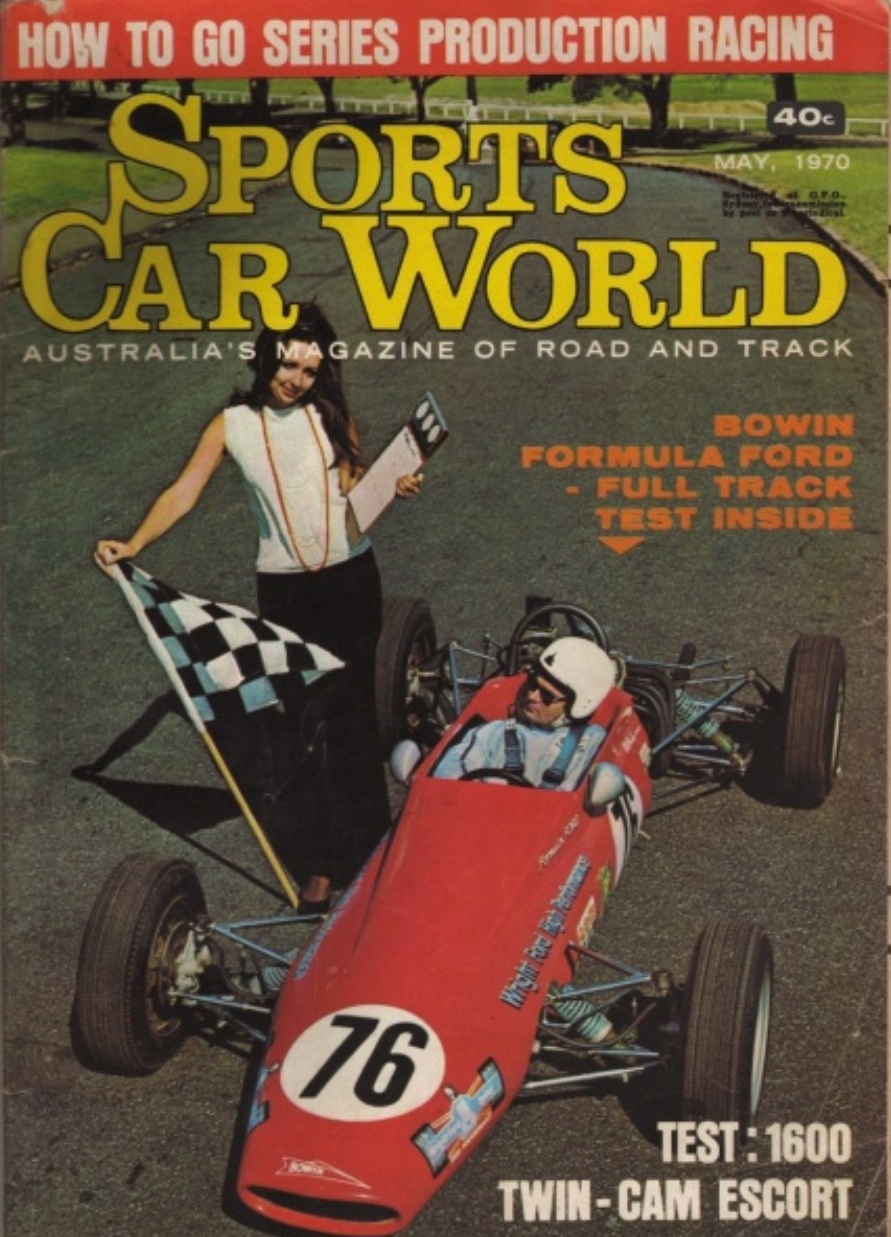
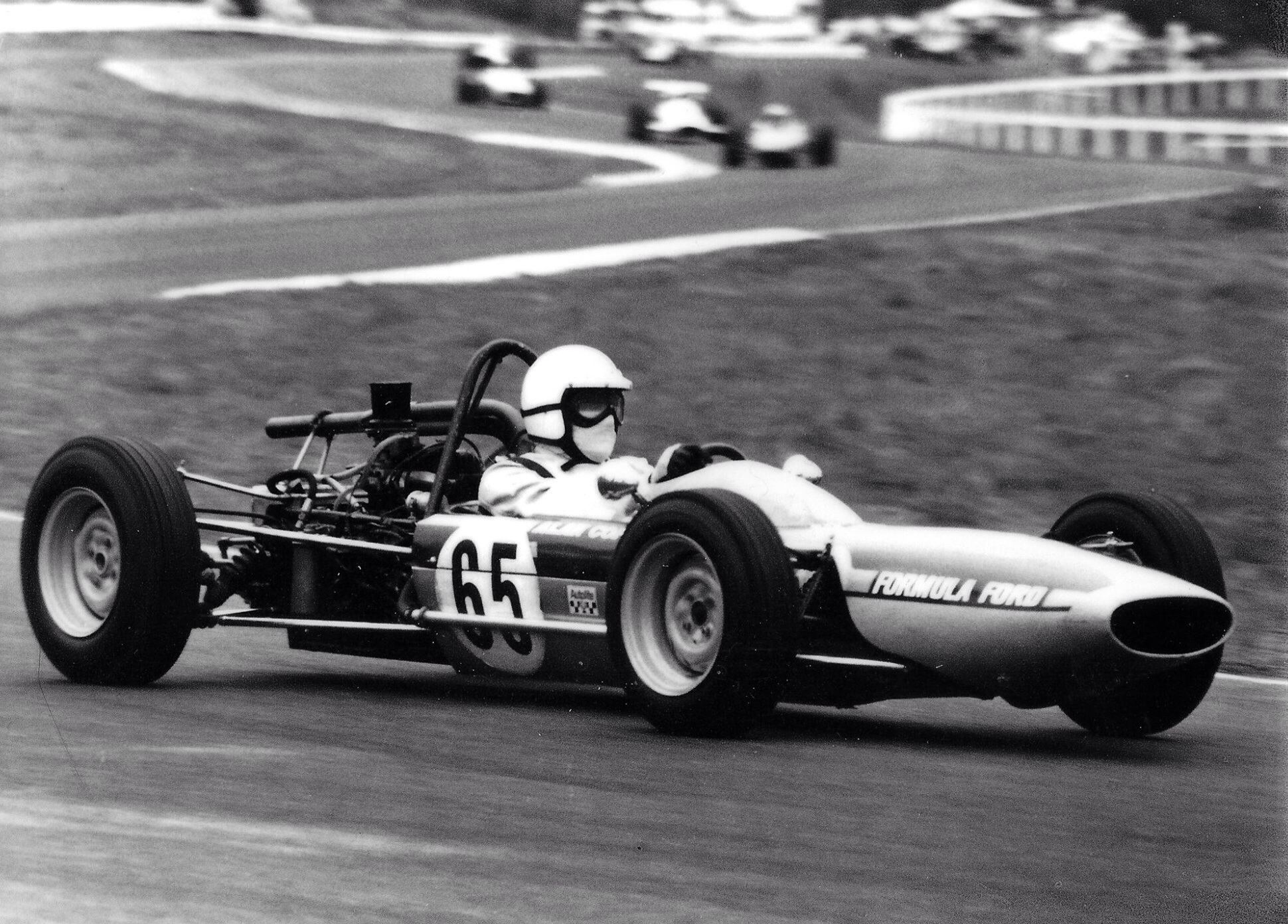
It’s an exciting time for Formula Fordsters in Australia, the fiftieth anniversary of the first FF race in Australia, at Sandown on 25 November 1969, takes place in 2019…

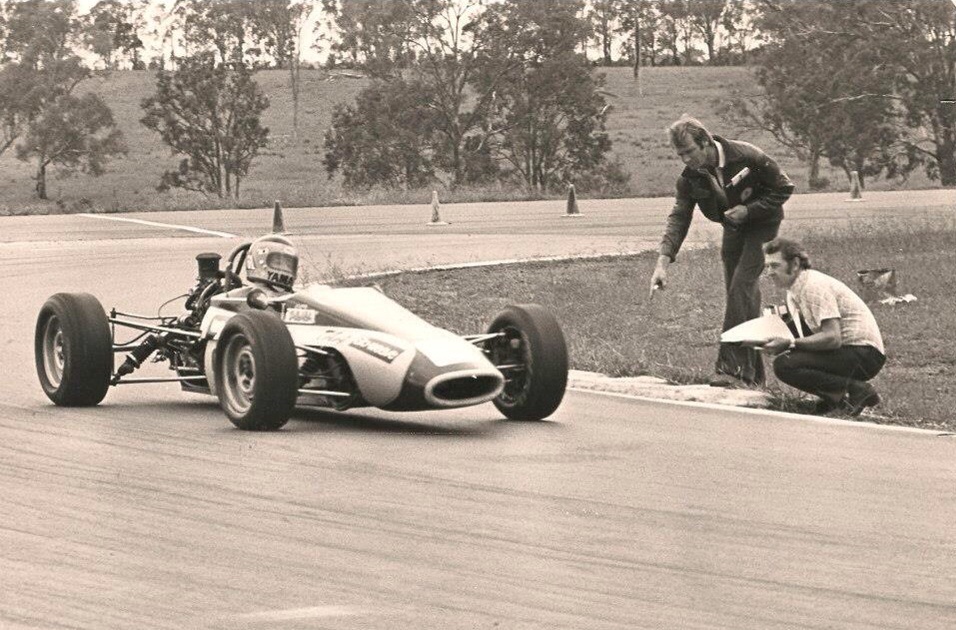
The shot above is of Paul Harrington keeping an eye on a journalist about to have a spin aboard a Bowin P4A at Calder, date and drivers name folks? John Joyce built twelve P4’s, one of which was acquired by Ford for promotional purposes, this car, chassis ‘P4A-108-70’ still exists in the hands of Geoff Fry at Bathurst.

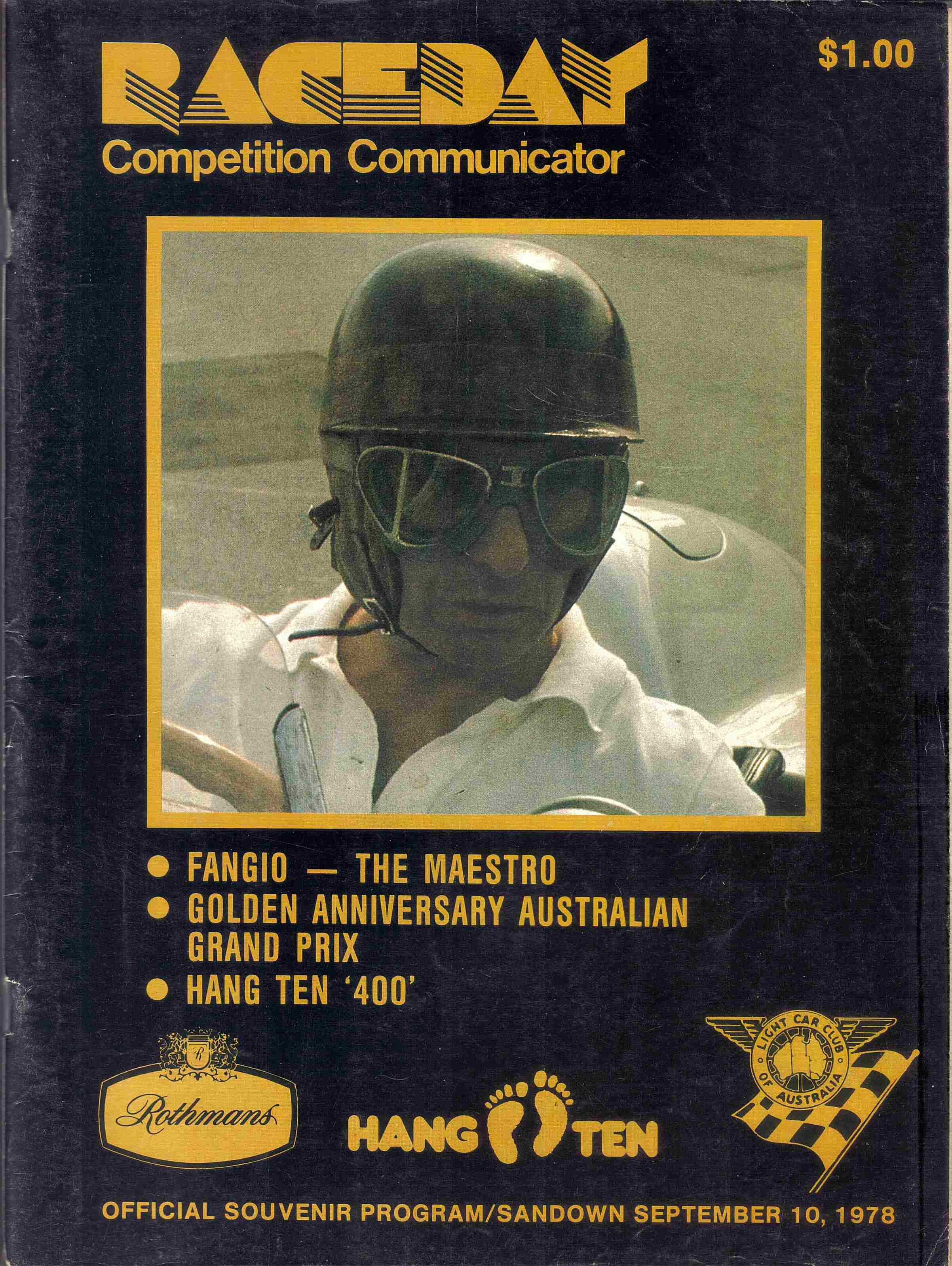
LCCA Sandown program entry for the first FF race in Australia in November 1969 (A Mann)

Harrington came to Australia from the UK in the late sixties and was initially employed as General Manager of the Queens Road, Melbourne based Light Car Club of Australia, well known to Australian enthusiasts as the promoters of Sandown and Lakeland Hillclimb in its latter days and venues such as Albert Park earlier on. Harrington joined Auto Action in 1971, a magazine which exists to this day, although Paul died some years back.

He is at Calder given the role the LCCA had in providing administrative support for the FF category which continued until the clubs demise as a result of the fiscal disasters which occurred due to running two poorly attended World Sportscar Championship races in the mid-eighties. Jon Davison saved the sports bacon by picking up the circuit lease but that central LCCA gathering place and watering hole on the corner of Roy Street and Queens Road for Victorian racing folks has never been replaced.

That first Australian FF race at Sandown on 25 November 1969 was contested by a mix of bespoke FF’s and converted Formula 3 cars. The race was won by Richard Knight’s Bib Stillwell owned Elfin 600 from Murray Coombs’ Lynx and Allan Ould’s Aztec AR8 driven by Bob Minogue- many years later a fast F5000 competitor in the ex-Brown/Hamilton/Costanzo Lola T430 Chev. The Elfin 600 is still about with Allan Ould looking for a Hewland Mk4 or 5 gearbox to complete the Aztec in time for the Sandown fifty year celebration meeting. The Lynx, I’m not so sure about.

Bowin Clan Meeting in early 1975 at Oran Park: Track day attended by John Joyce on the lectern’s left with John Leffler in dark Grace Bros clobber standing on the start line addressing the troops. Sitting down on the tyre opposite Leffo is Paul Bernasconi, shortly off to Ralt and European F3. Cars are a mix of front radiator P4A’s and chisel nosed P6F’s- front and centre is Leffler’s P8 Chev F5000. The day was reported at length by Barry Lake in Sports Car World magazine- drivers and their fettlers were coached on car preparation, set-up, with on-circuit suspension adjustments made throughout the day inclusive of reasons for the changes recommended (SCW)

When John Joyce- I’ve another article on Bowin half-cooked which provides the background to the marque, returned from his long stint with Lotus in the mid-sixties he initially built three monocoque F2 cars.

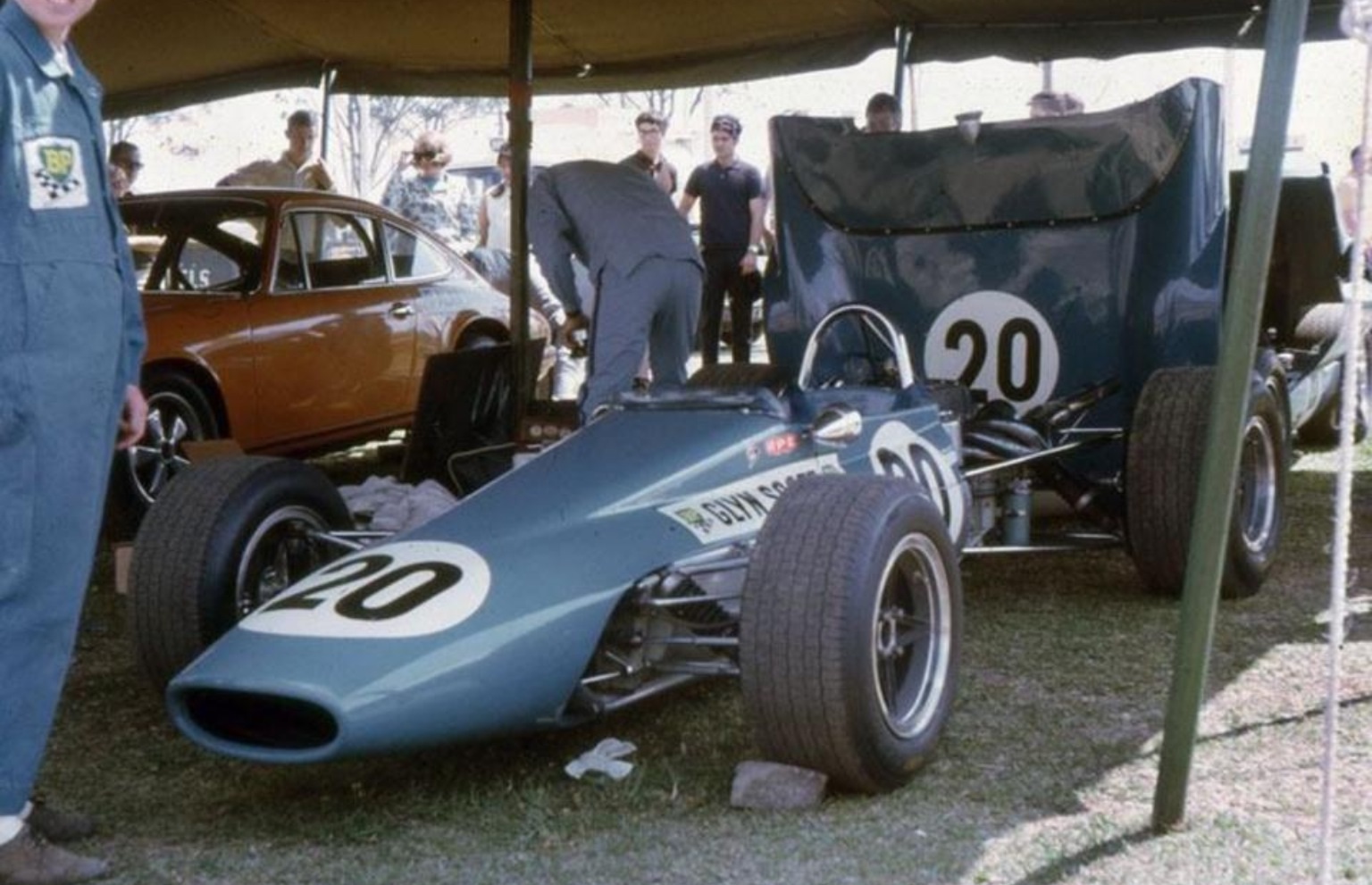
These machines designated ‘P3’ (Project 3) were raced initially by Glynn Scott, Ian Fergusson and Barrie Garner. Glynn’s was the first built and was fitted with an ex-Piers Courage Ford FVA engine, Ian’s with a Lotus/Ford twin-cam whilst Barrie’s was a hillclimb machine powered by a Holden ‘Red’ six cylinder motor.

Joyce’s 1959 ‘P1’ and 1962 ‘P2’ were both Formula Juniors- one was Cooper based and the second was named ‘Koala’, both cars raced by John.

Barrie Garner in his Bowin P3 Holden at King Edward Park Hillclimb, Newcastle, NSW in 1971 (D Harvey)

Glynn Scott’s Bowin P3 Ford FVA and Lotus 23B Ford in the Lakeside paddock in October 1968. The 911 T/R is Alan Hamilton’s, just arrived and so impactful in the 1969 ATCC (G Ruckert)

With the advent of FF in Oz, Joycey adapted the P3 design’s conventional upper and lower wishbone and coil spring/shock front- and single top link, inverted lower wishbone and twin radius rod, coil spring/shock rear suspension design to a (mandated) spaceframe chassis to suit FF.

Power was of course the class issue cast iron, four cylinder, Ford 681M, 691M, 2737M- and from 1971 in Australia the 711M 1968/69/70/71 Cortina/Escort/Capri pushrod, OHV, twin-choke Weber fed 105bhp’ish motor. Hewland Mk8 or Mk9 4-speed transaxles completed the key mechanical elements of the package.

Mike Stillwell in Graham North’s Wren- the first FF Wren built by Bill Reynolds, Graham Gilbert’s self built Corsair FF and Brian Beasy’s self built Beasy FF at Calder in 1970. These days, since 1972! Ian Mayberry owns the Wren with the Corsair and Beasy still extant (A Clifford)

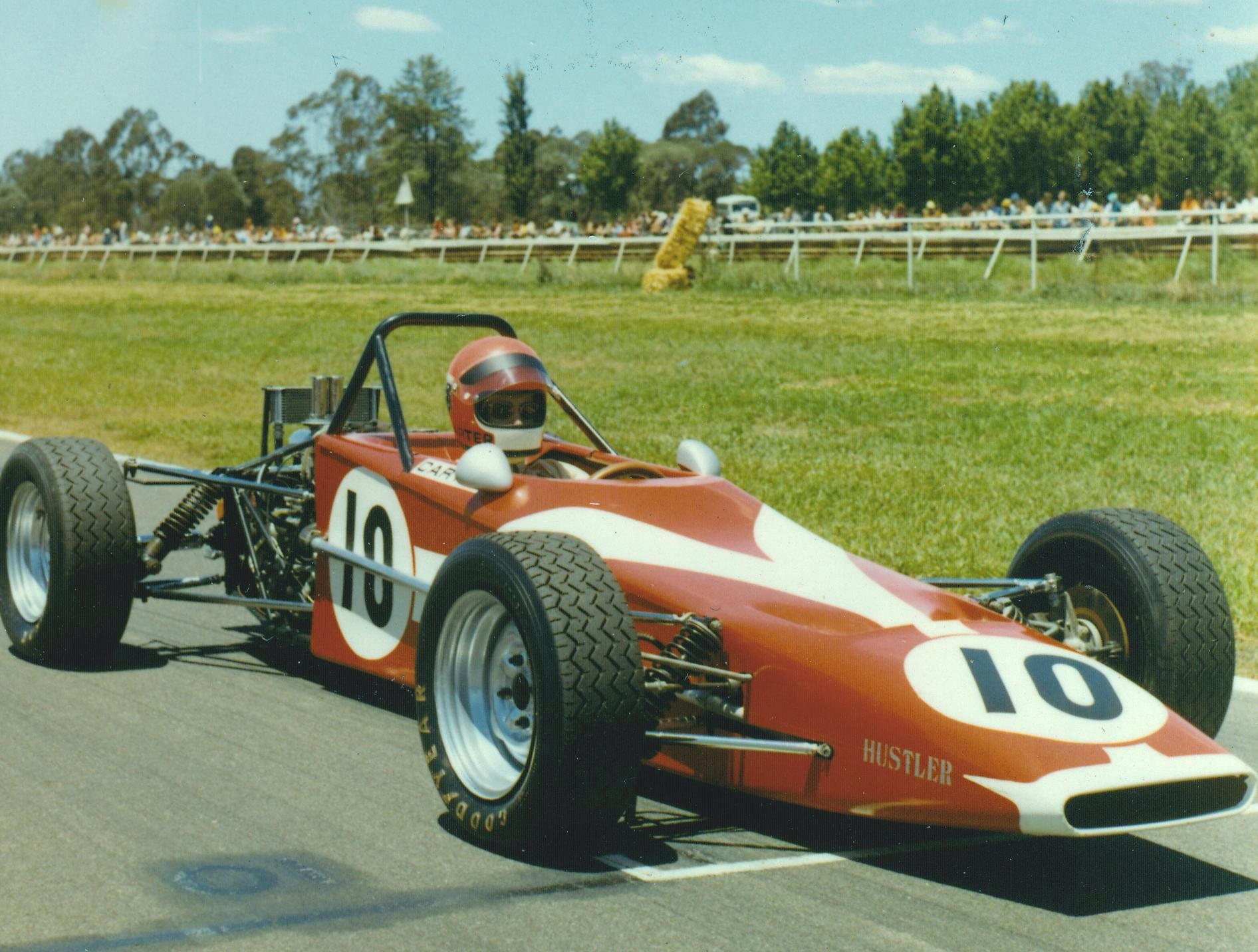
Richard Carter in the Tony Simmons built Hustler FF, Warwick Farm circa 1972. Tyres are Goodyear RR12’s (N McDonald)

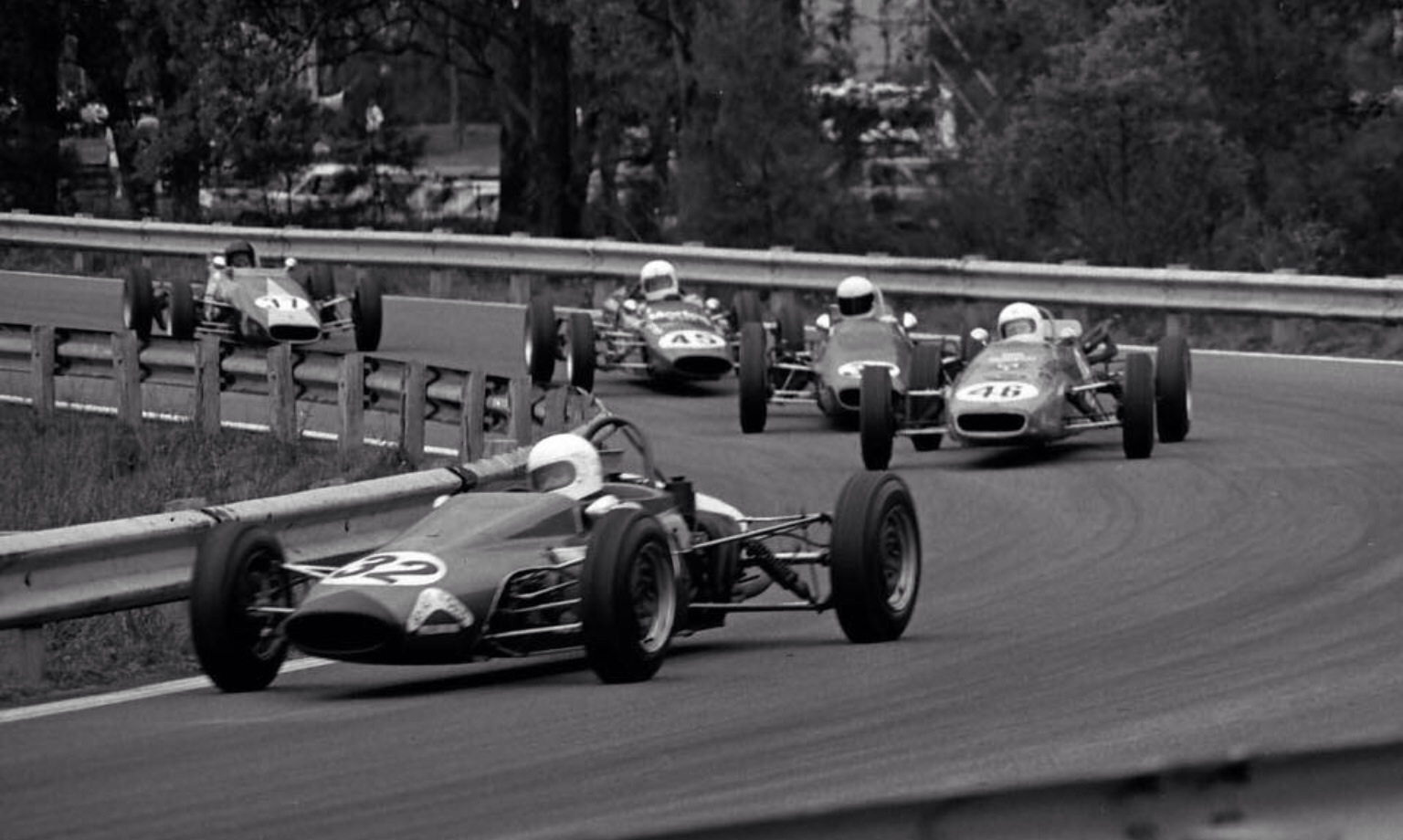
One of the neat things about the class in its early Australian days were the number of one or two off cars encouraged by rules which initially excluded foreign designs. So, in those early years Corsair, Aztec, Hustler, Fielding, Beasy, Nota and others chased race wins together with ‘factory’ built Wrens, Bowins, Elfins and a little later Birranas.

The WA built Fielding FF driven by future quick Bob Creasy during the 1971 Warwick Farm Tasman meeting (L Hemer)

Garrie Cooper’s highly adaptable Elfin 600 design (variants of which won in FF, ANF3, ANF2 and ANF1!) ‘dominated’ early on with Richard Knight, who made his name in an Improved Production Cooper S the winner of that first Sandown race in 1969 and victor in the Bib Stillwell owned 600 of the first national FF Championship in 1970.

Knight moved to the UK, racing a ‘Palliser WDF3 FF at the head of the UK/Euro fields against Scheckter et al until funds ran out. After several attempts in other categories including F5000 he set up Richard Knight Cars and became a highly successful Mazda and Lancia dealer in the UK’ wrote FF and Hillclimb ace Peter Finlay.

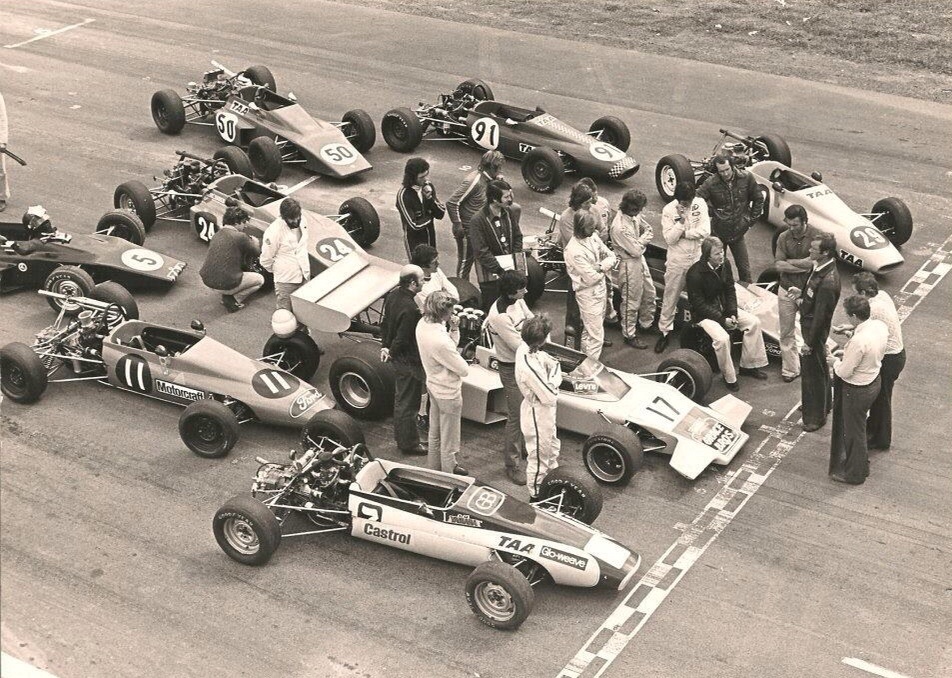
Larry Perkins in another of Bib’s 600’s won the title in 1971 and took his Trans Australia Airlines sponsored ‘Driver to Europe’ prize in late 1972 contesting the inaugural Formula Ford Festival at Snetterton in the first Elfin 620 FF.

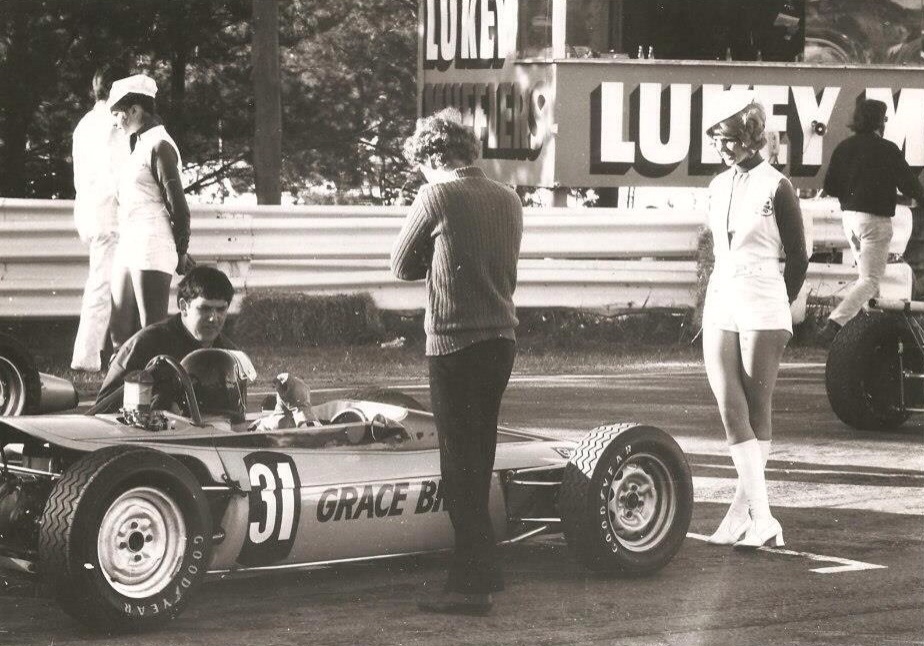
John Leffler in his P4A at Hume Weir in early 1973. TAA (later absorbed into Qantas) were the then government owned domestic airline carrier and provided great support sponsoring the ‘TAA Driver to Europe Series’ for well over a decade, inclusive of providing some ‘hosties’ at some of the rounds. These days from amongst the old gay blokes and boilers you couldn’t put any eye candy on a grid from inside a Qantas cabin…(Bennett)

1972 Bowin P4A DTE champion with his new P6F- the very first one built, chassis ‘P6F-119-72’ alongside Larry Perkins equally new Elfin 620 far, far from home in the Snetterton paddock during the Formula Ford Festival weekend. Rising or progressive rate suspension linkages of the P6 clear. This chassis returned to Oz, and fitted with Hart/Ford twincam, Hewland FT200 box, appropriate wings, wheels, tyres and brakes contested the 1973 ANF2 Championship. Larry stayed in England and did rather well, the 620 came home (Bennett)

Fellow Aussies John Leffler and Bob Skelton also made the trip and raced Bowin P4A and brand new P6F respectively. I wonder how Skello would have gone had he raced the known quantity P4A in England in which he won the 1972 DTE rather than the radical, chisel shaped, side radiator, rising-rate suspended and ultimately very successful P6F?

Leffler and Skelton finished fourth in their respective heats but did not make the final in which Perkins was third behind Ian Taylor and Derek Lawrence. Aussies Buzz Buzaglo ran in third early and then faded when his distributor shifted and Peter Finlay was tenth in his Palliser in a field which included later F1 drivers Danny Sullivan, Patrick Neve and Tiff Needell in addition to Larry.

Skelton, Leffler (who won the 1973 DTE title in a P6F) Bob Beasley and speedway star Garry Rush- who Joyce rated very highly in a conversation I had with him in the early nineties, were early very fast P4 exponents.

Garry Rush Bowin P4A leads Phil Webber Elfin 600, another Elfin then David Green Wren and Richard Knight, Elfin 600 in the November 1970 DTE round at Warwick Farm (L Hemer)

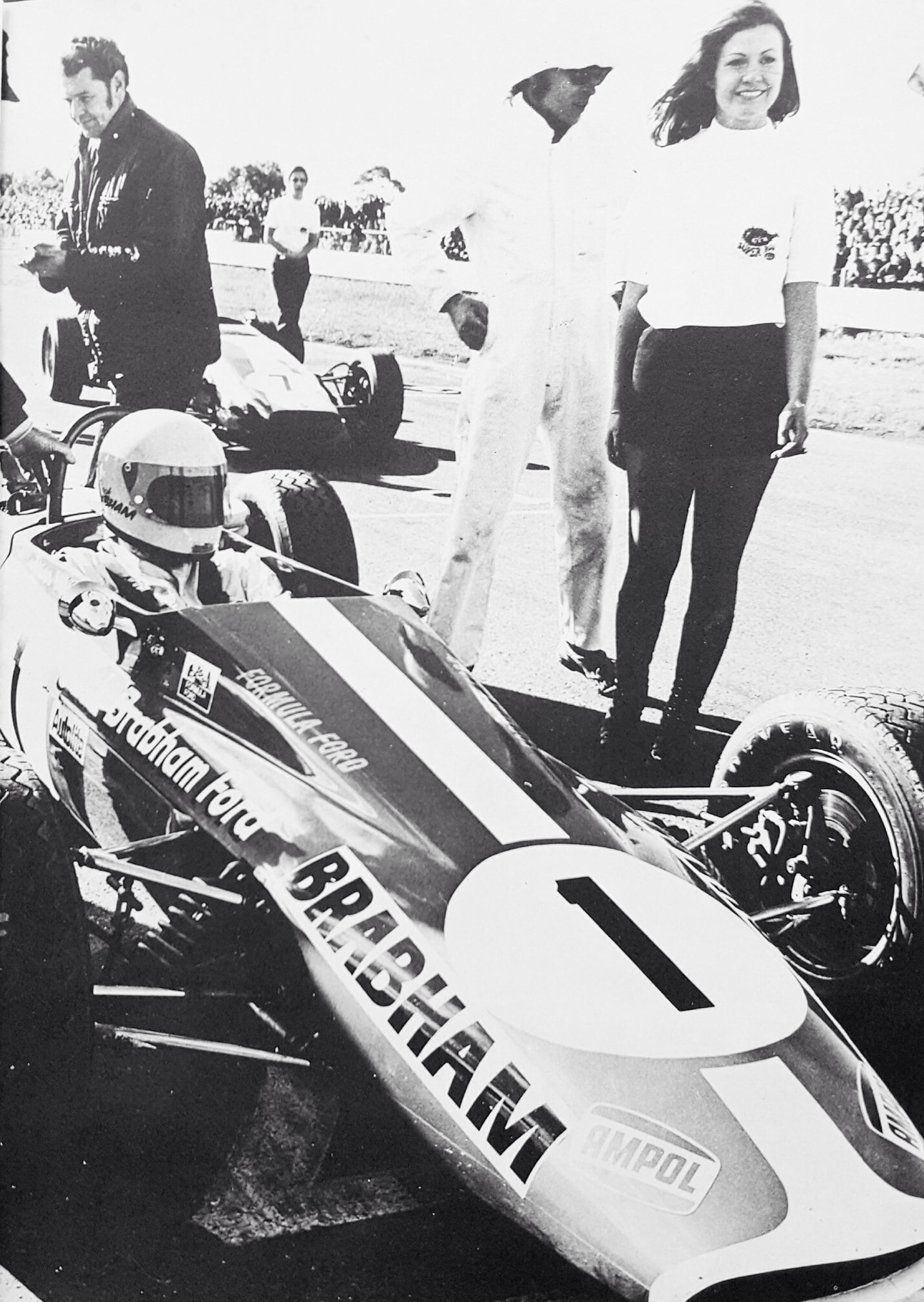
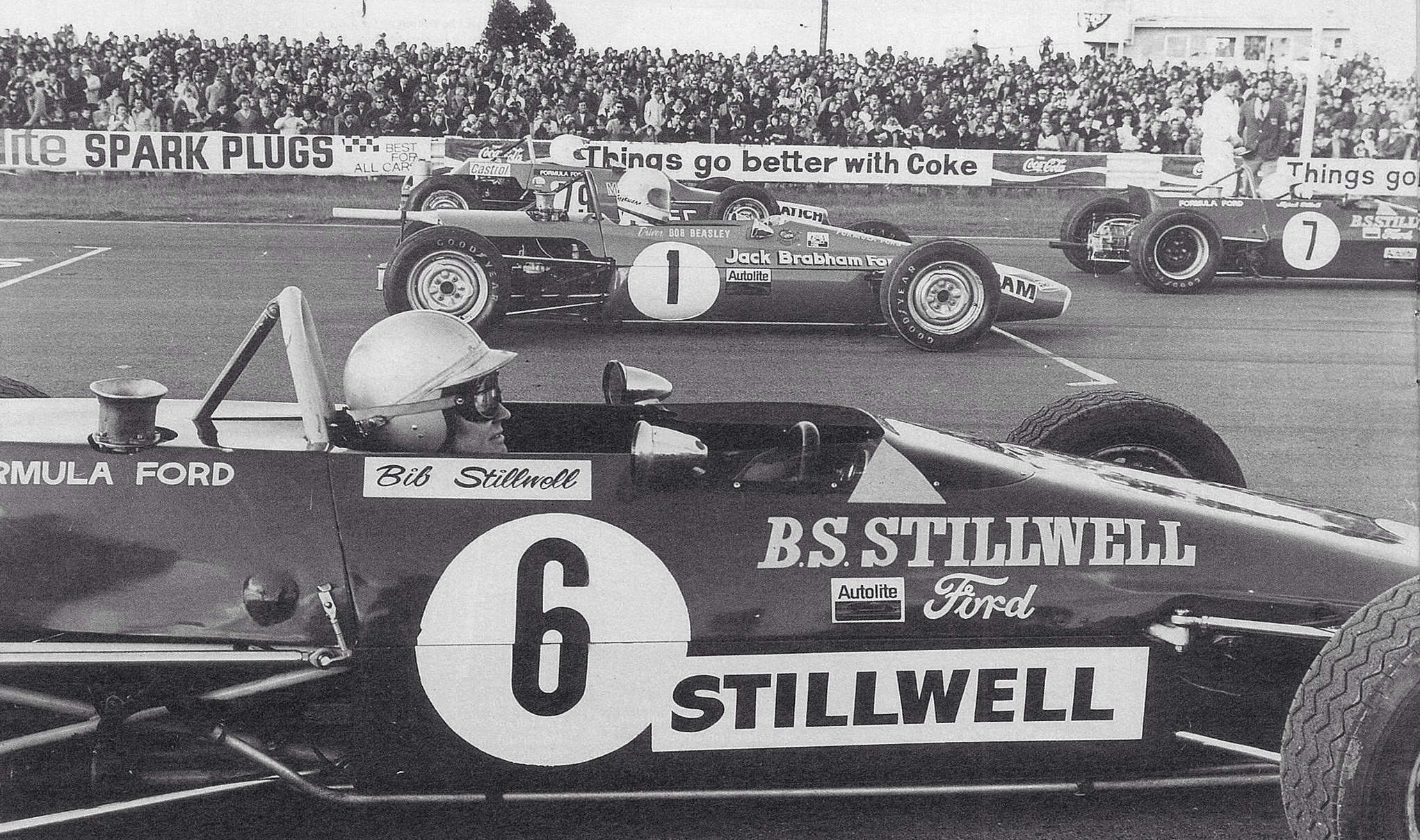
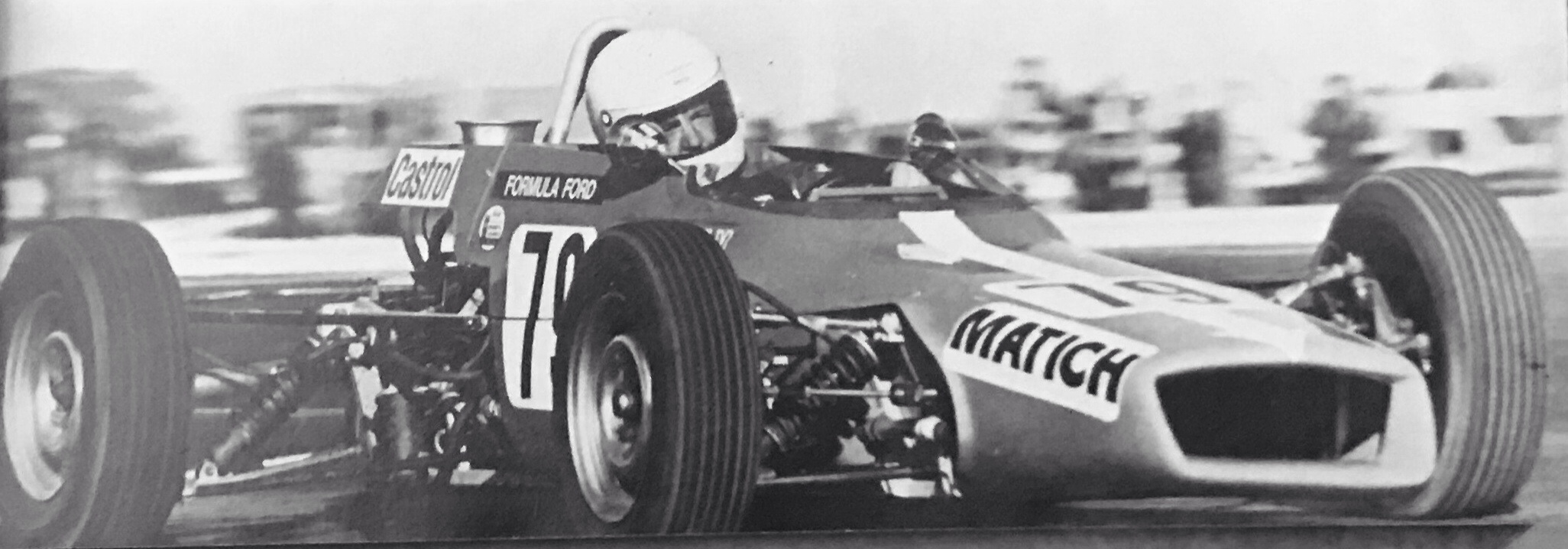
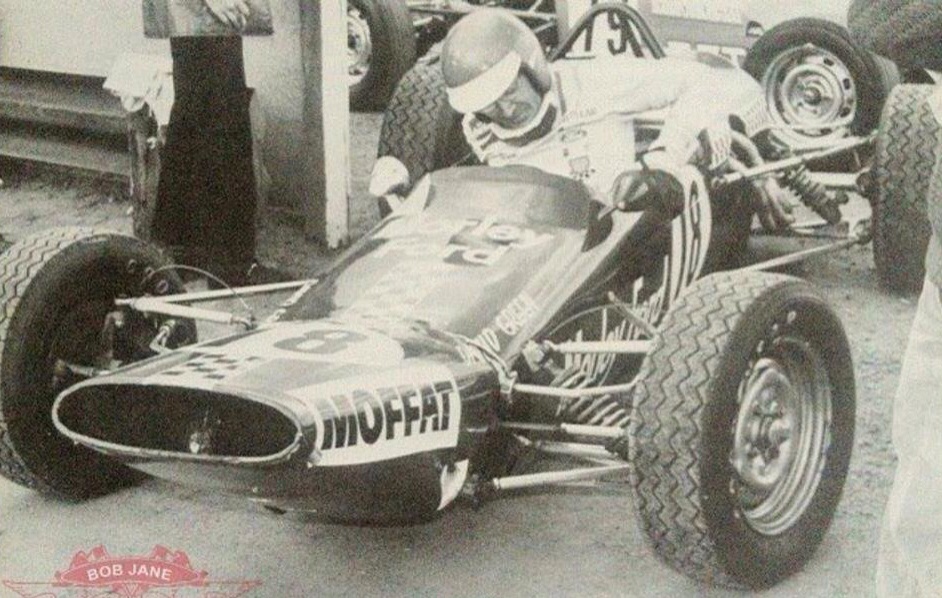
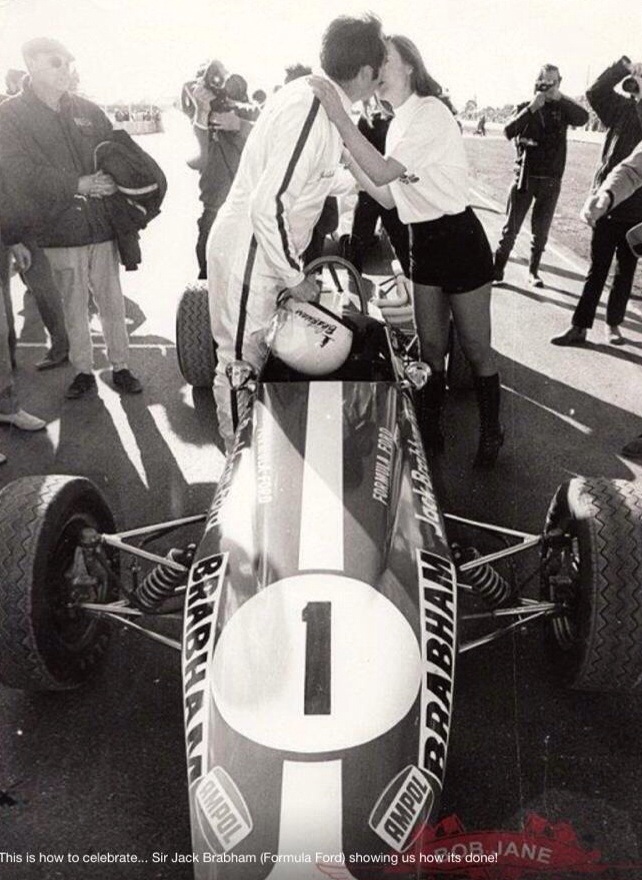
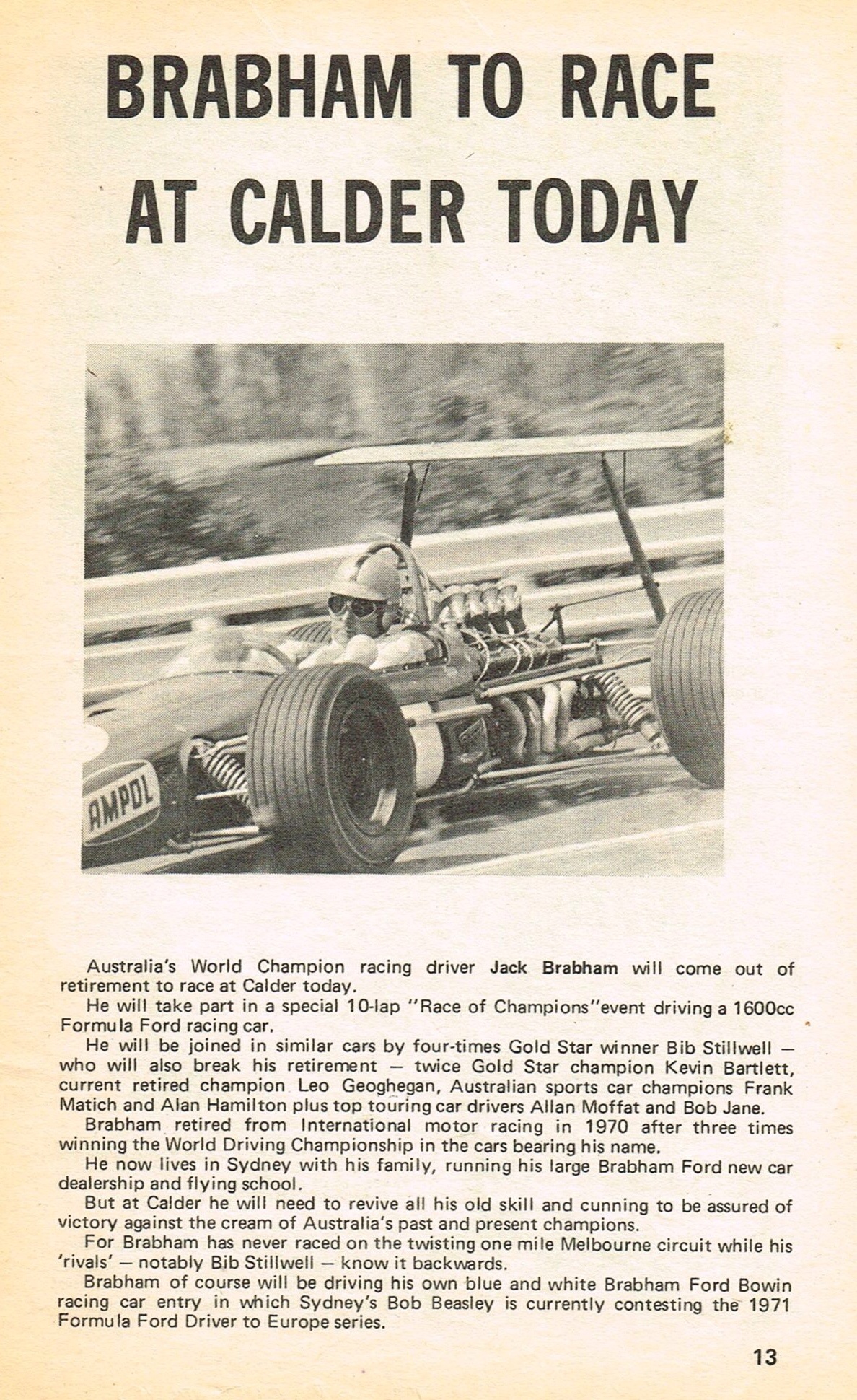
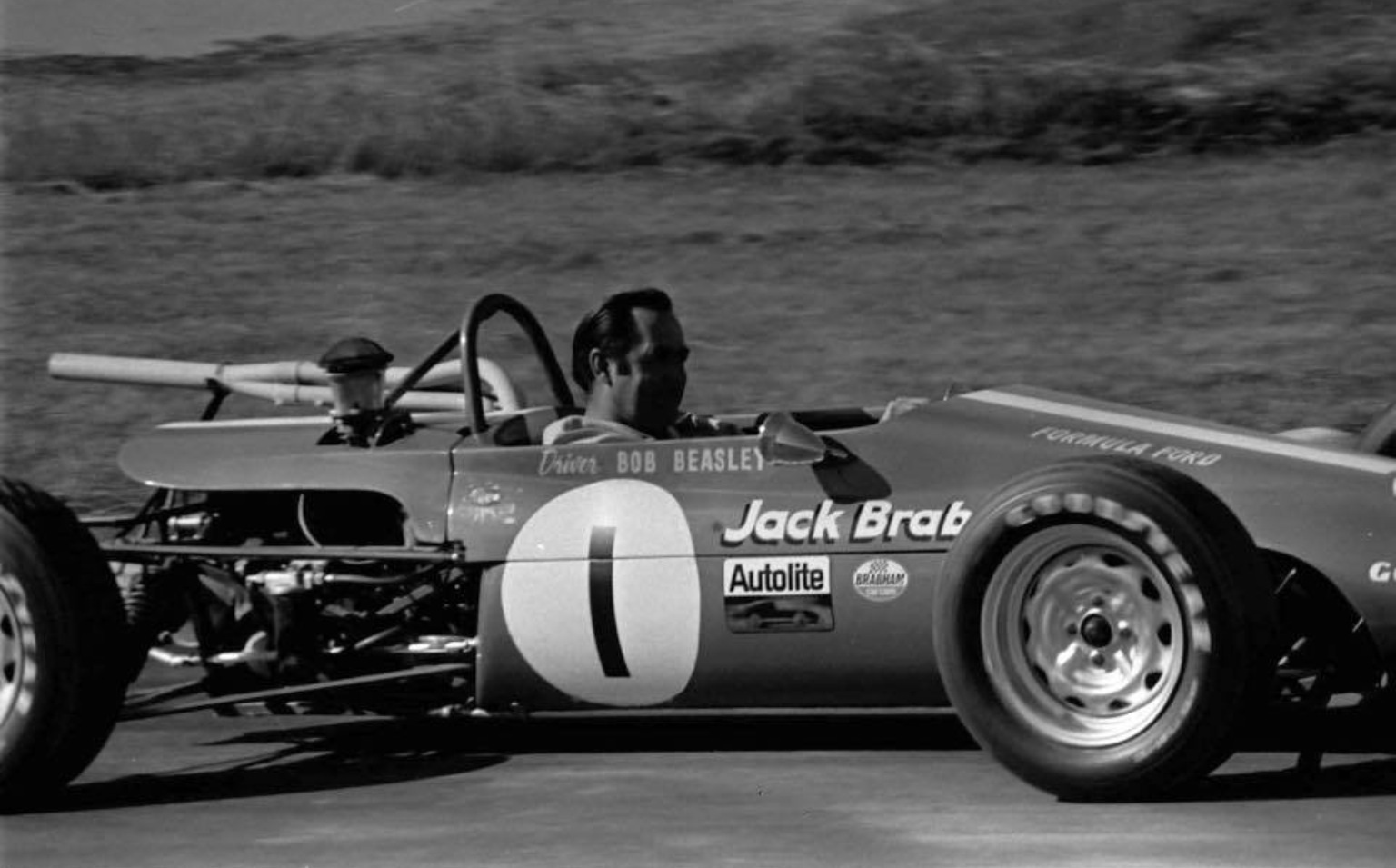
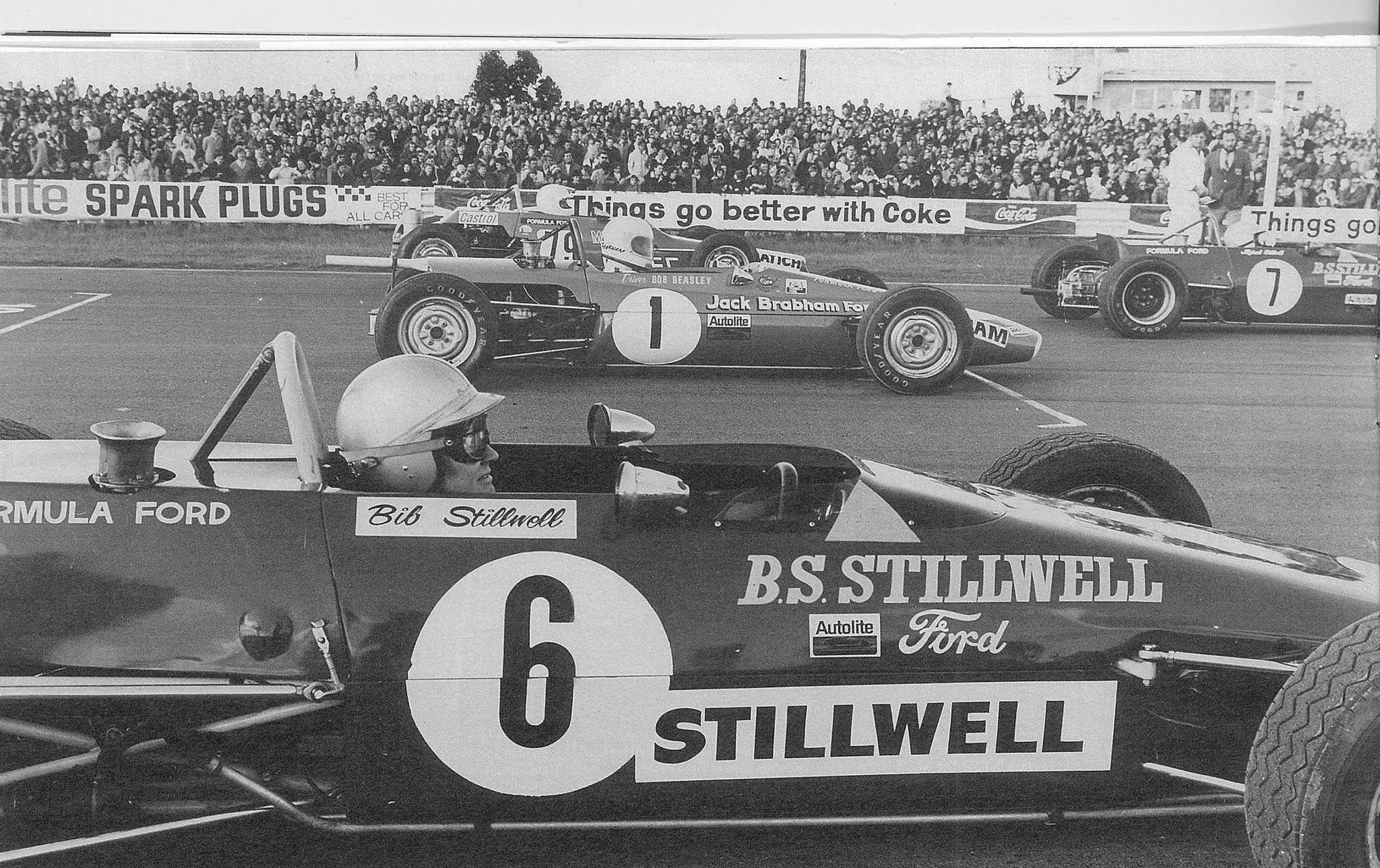
Perhaps the best credentialed of all Bowin P4 pilots was Australian triple world champion Jack Brabham in car #1!, the P4X raced that year with Jack Brabham Ford sponsorship by Bob Beasley. Jack won this 1971 Calder Park ‘Race of Champions’, his last event ‘in period’- he retired at the end of 1970 of course but could not resist appearing at this meeting- I wonder how much practice he did at Oran Park in this car?! Calder was not new to him- he tested his BT31 Repco Tasman machine at Calder on the day it’s assembly was completed in January 1969. The field for the ROC included Bib Stillwell #6, and Bob Jane #7, both in Stillwell Elfin 600’s raced that year by Larry Perkins and Mike Stillwell in the DTE Series, Frank Matich is alongside Jack with Allan Moffat, Kevin Bartlett and Alan Hamilton the other starters (Bennett)

The P4 design had a second wind in the mid-seventies with the sudden 1975 mid-season change in Australian FF regulations back to road tyres.

Australian FF evolved from mandated road tyres from the classes introduction, to the Goodyear RR12 ‘all weather’ race tyre and then to a Goodyear slick- shortages of that tyre forced a mid-season change to the Bridgstone RD102 during 1975- a great road-going radial of the time, I had a set on my uni-student special (read rooted) burnt orange Capri.

After cutting his teeth in Australian Formula Vee Peter Finlay left Australia and lived the life of a racing gypsy with his wife in the UK, doing so very successfully for several years, finishing third in the EFDA/European FF Championship in 1973. Peter recalls ‘coming back from the UK to Australia at the end of 1973, my Palliser WDF2 arrived early in 1974 and I fitted Goodyear slicks straight away. The ‘wets’ were Goodyear ‘RR12’s. In 1975 I joined the Grace Bros team and we ran the Goodyear slicks and a different type of Goodyear wets until Matich (Frank Matich was the Goodyear Race Tyre importer) was unable to continue supply from about mid-year. I was on the Formula Ford Australia Committee and used my car to test the Bridgestone RD102 radials…They were as cheap as chips but the car(s) handled poorly…Having driven the Palliser on Goodyear slicks I can’t say that the Bridgestones were any fun at all’.

It soon became clear that the good-ole P4 and its suspension geometry suited the tyres very well so the sight of the old-school, front-radiator Bowins knocking off the vary latest of FF designs from both Australia and Europe- imports by then were allowed, became the usual sight in mid-later seventies Oz FF.

John Smith in his Grace Bros sponsored P4A at Oran Park in very Smithy- and very Bridgestone RD102 radial tyre slide. Not necessarily what the drivers preferred (in terms of a tyre) but very crowd pleasing (Bennett)

1976 DTE round at Amaroo Park. Richard Carter Birrana F73 on pole- unseen on the front row is his Grace Bros teammate John Davis in the P4X, in blue is John Smith and yellow Mike Quinn, both P4As. The red car is Birrana F71/1 with Terry Shiel at the wheel- the very first Birrana initially raced by John Goss. Carter won the 1976 DTE with the P4’s of Smith, Davis and Quinn second to fourth (Bennett)

Gerry Witenden Birrana F71/1 (same car above albeit modified by Elwyn Bickley) ahead of 1978 DTE Champ John Wright P4A and Richard Davison, Hawke DL17 getting a helping hand from a P6F, Amaroo Park 1978 (C Davison)

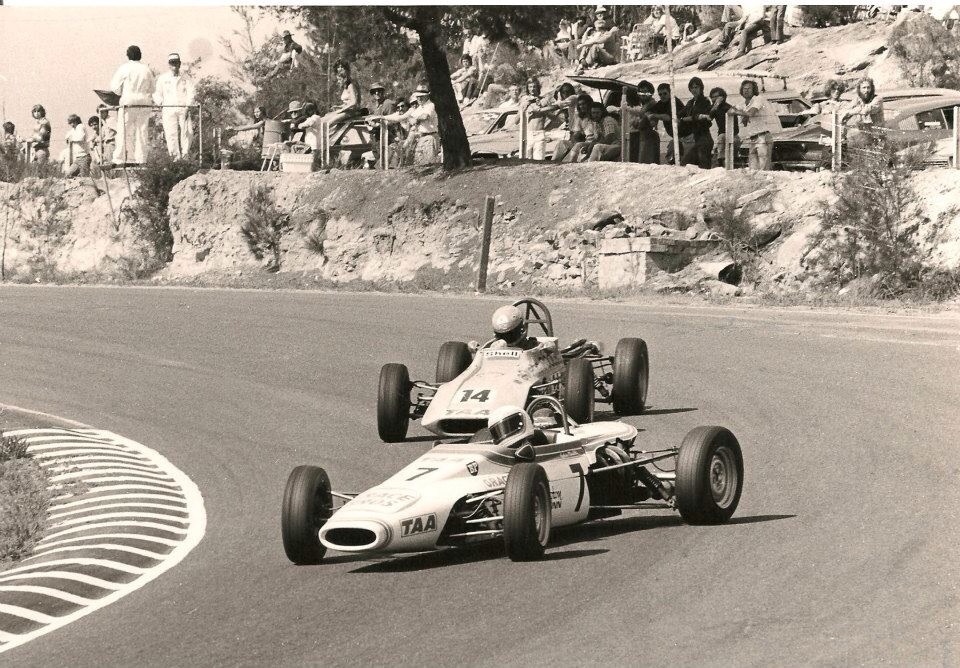
Great P4 exponents in this later renaissance era for the older chassis were John Davis, Mike Quinn, Warren Smith, Graham Smith, John Wright and John Smith (none of the Smiths related)- the latter one of the high-priests of Australian FF and a bit later Formula Pacific. Smithy and John Wright won the DTE in 1977 and 1978 respectively. Wright was also an awesome racer who jumped straight from FF to the ex-Leffler F5000 Lola T400 Chev, and made the thing look as easy to drive as the FF he had just stepped from.

Who is that man in a P4? Surfers circa 1978. Meanwhile Ron Barnacle, later DTE winner in a Royale RP31 in 1984 makes up ground having done some lawn-mowing for circuit owner Keith Williams, Elfin 620B (C Davison)

Oran Park 1976 DTE Bowins as far as the eye can see! John Davis, John Smith and Mike Quinn all in P4s, then Richard Carter Birrana F73- Carter still prodigiously fast in historic racing to this day (Bennett)

1976 Oran park P4A butt-shot, Quinn chasing Smith. Mk9 Hewland box, single top link, lower inverted wishbone, coil spring-/shocks and mechanic adjustable roll bar all period typical albeit by this stage a few rockers were starting to appear on cars such as the Royales and Lolas in Oz (Bennett)

These days Bowins are not the familiar sight they should be in very healthy Australian Historic Formula Ford despite classes which should encourage all to compete. A number of us, me included, pushed hard to admit cars built up to 31 December 1989 into historic FF which has had the knock-on effect of drivers buying cars of this later period- owners of the pre-1977 and pre-1983 classes these days stay away in droves. Come back folks!- please bring your Elfin 600, 620B, Birrana F71-3, Lolas, Royales, Hawkes, and especially your P4 Bowins along…

Smithy made it look so easy- rest assured folks it is not! Here the maestro leads Grant Walker, the Kiwi aboard a Tiitan at Amaroo in 1977. A year later I was lookin’ after me mate Alan Bisset’s ex-Brabham/Davis Bowin P4X at Amaroo and witnessed some almighty ANF2 racing between ex-FFers Smith and Larner in the Ford pushrod powered Galloway HG1 and Elfin 700 respectively on this late, lamented outer Sydney circuit (Bennett)

By the late-seventies the going was getting tough for the old P4 with a swag of English cars adapted locally to suit the needs of the Bridgestones and some newer local designs on the scene. The Richard Davison Hawke DL17 developed by Bill Reynolds, the ‘everybody raced’ ex-Arnel Lola T440, several Royale RP21’s and Van Diemen RF77’s, David Earle’s Elfin Aero and Elwyn Bickley’s superb Elwyn 02 all spring to mind.

Warren Smith (no relation) still made Smithy’s old jigger sing well enough to finish second in the 1980 DTE with one win, but time for a car first built in late 1969 had finally arrived…

We have lift off- Sandown DTE 1978. Elwyn Bickley Elwyn 02, obscured Peter Krefel Royale RP21, Richard Davison #5 Hawke DL17, to the right near the fence Lyndon Arnel Lola T440- look down on the fence side of the grid and you can see the distinctive P4 nose of that years champ- John Wright’s car (C Davison)

Etcetera…

Bowin…

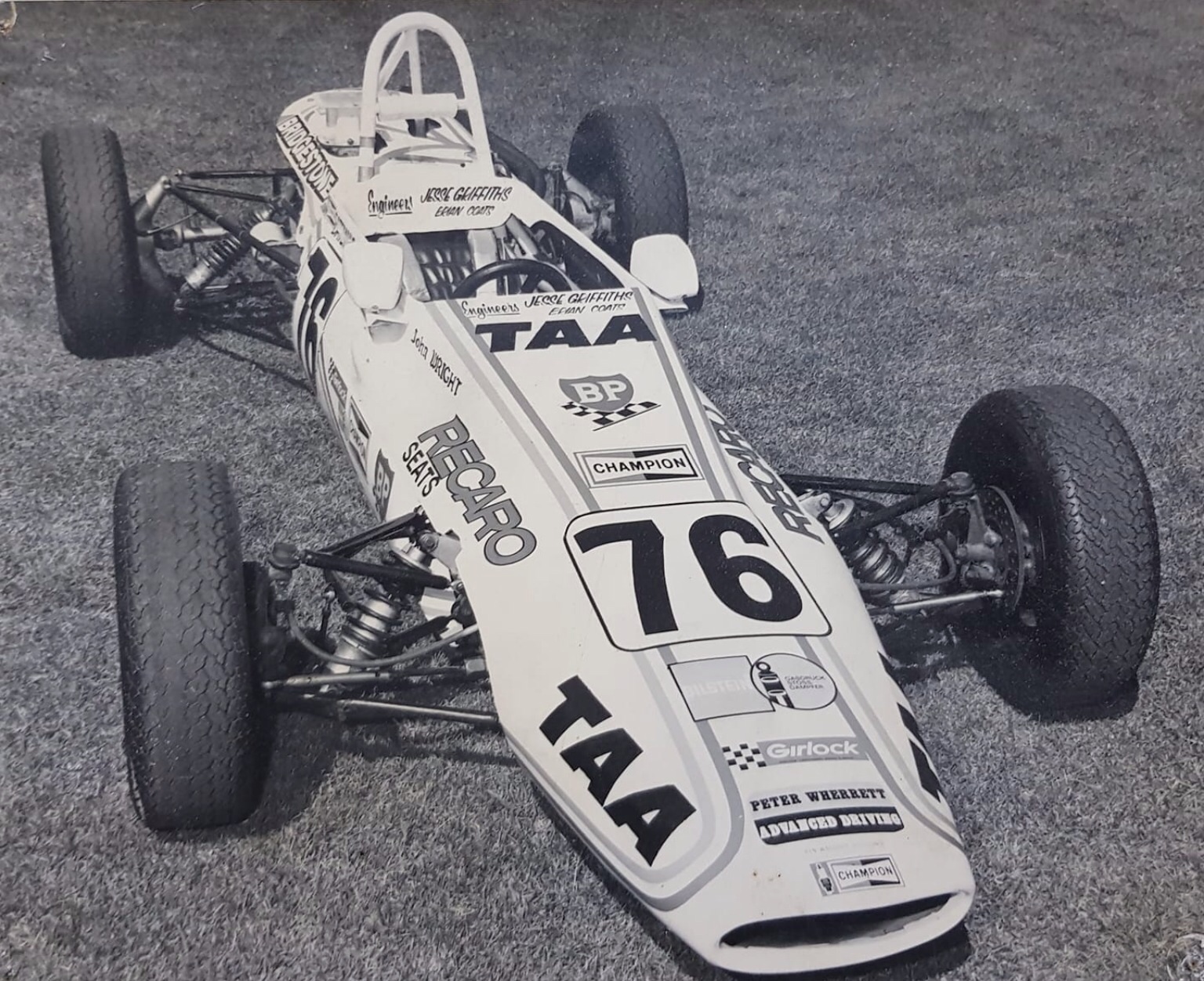
The Bowin P4A- PR shot of John Wright’s chassis. 12 cars built between 1969 and 1972 (Bennett)

The Bowin P6F, John Leffler at Amaroo Park in his 1973 DTE winning mount ‘P6F-120-72’. Geoff Brabham also raced this chassis doing his first full year of FF in 1974- he won the 1975 ANF2 Championship in a Birrana 274 Ford/Hart and then left for European F3. 26 cars built between 1972 and 1976. Leffo perhaps the greatest of all the Bowin racers?- winner in the P4 and P6 in FF, in the P8 ANF2 car and a ‘coulda been’ 1975 AGP winner aboard the much maligned P8 Chev F5000 machine had the planets been aligned and the cars ignition not drowned in the latter stages of the Surfers Paradise race, won in the end by Max Stewart’s Lola T400 Chev (Bennett)

Sandown November 1969…

Brian Beasy, Beasy FF exiting Dandenong Road with a gaggle of cars including a winged F3 or F2 car. Decades later Historic Formula Ford in Australia would not have happened without the late Brian’s influence and guidance in the CAMS Historic Commission on all things related to FF inclusive of car eligibility (Beasy Family)

Bob Minogue, Aztec AR8, Sandown, Dandenong Road, November 1969 (autopics.com)

Allan Ould’s Aztec AR8 was raced to 3rd as in this photo in the November 1969 first Oz FF race

FFA membership list as at the end of 1970

Current historic Van Diemen RF86 racer Anthony Mann dreaming of his own Formula Ford as a 9 year old kid aboard the FF ‘display car’ a Wren FF in Shepparton 1969 (Mann)

Arcane and Irrelevant…

Australian Formula Ford tyres- strictly for FF anoraks only! List developed during some Facebook banter mainly between me, Peter Finlay and Nick Bennett

1969-1971 Road tyres of drivers choice. In the UK Finlay notes the Firestone Torino ‘wide ovals’ were a road crossply with a racing compound

1972-1973 Goodyear RR12 all weather

1974-1975 mid-year Goodyear slick with RR12 wets and very expensive but superior G10 winter treads for sopping wet races

1975-1980 Bridgestone RD102 road radial

1981-1983 Dunlop slick ‘592’ compound

1984-1994 Dunlop CR82 all weather

1995-2015 Avon ACB10 all weather

2016 on Yokohama A048 all weather

Peter Finlay, Palliser WDF2 from Peter Larner, Elfin 620B, Calder early 1975 just before the Goodyear slick- check out the tyre distortion folks, were changed due to supply problems to the Bridgestone RD102 radial. Finlay won 3 rounds that year and Larner 1 with both tied for second in the title chase won by Paul Bernasconi in a Mawer 004. Finlay later owned and ran Peter Wherrett Advanced Driving and was a hillclimb ace- Larner still is a great engine builder and raced an AGP or two in the Formula Pacific era (Finlay)

Photo and Other Credits…

Laurie and Nick Bennett Collection, Chris Davison, Nick McDonald, Oz Classic FF Facebood site, Lynton Hemer, Dale Harvey, Anthony Mann, Sports Car World, Peter Finlay, Graham Ruckert, Beasy Family Collection, A Clifford, Grant Burford

Tailpiece: In Search of An Apex…

(SCW)

John Leffler, Australian Gold Star Champion in a Lola T400 Chev in 1977 and kneeling John Joyce trying to get their Bowin charges to apex correctly during the Oran Park Bowin test day in early 1975.

Harry Macklin aboard the ex-Leffler P4A John raced in the early 1973 DTE rounds before switching to his new P6F.

Finito…

(B Howard)

The Light Car Club of Australia achieved a major promotional coup by securing Juan Manuel Fangio’s attendance at the fiftieth anniversary of the first Australian Grand Prix, at Sandown, Melbourne on 10 September 1978…

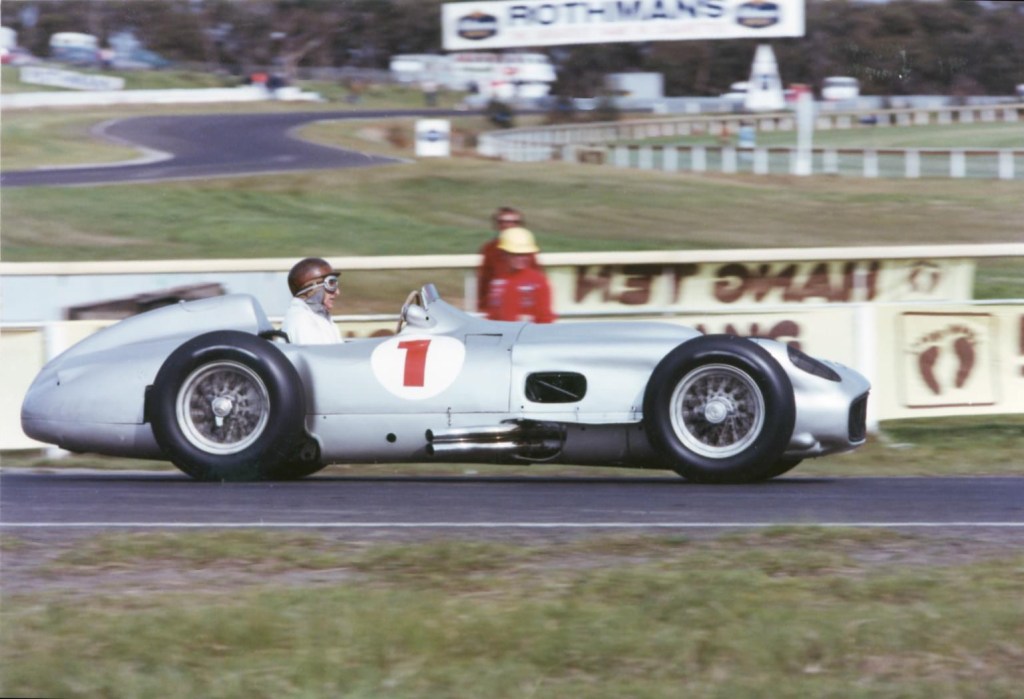
Here the great man ponders his car during practice. Fangio raced a Mercedes Benz W196 straight-eight Grand Prix car, the design with which he won his 1954-55 World Championships: whilst noting the two wins he took in Maserati 250F’s in 1954 before joining Mercedes, from the French Grand Prix.

JMF wanted to drive in a Polo-Shirt as he did in the day but the Confederation of Australian Motor Sport would have none of that, hence the overalls over his normal clothes.

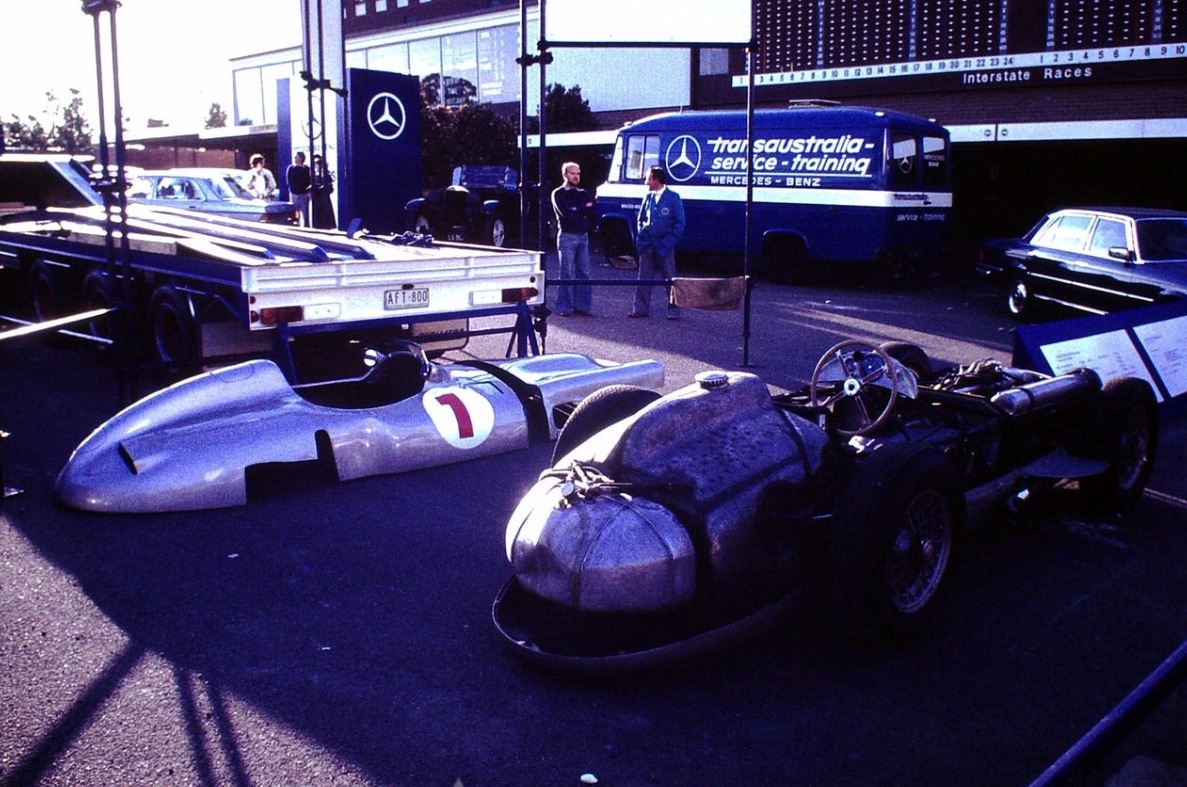
Fangio W196 on display behind the Sandown grandstand- the ‘Interstate Betting’ is a function of the place’s prime function- donkey races (mouserat159)
(S Dalton Collection)
Fangio hooks the big Mercedes into Dandenong Road corner at Sandown (I Smith)

The Sandown event created huge interest far beyond the racing fraternity, including articles in such unlikely places as the Australian Womens Weekly – normally the province of the Royal Family, cooking recipes and similar – such was the mans immense global stature decades after his last championship win in 1957. He won five F1 titles of course: 1951 in an Alfa 159, 1954/5 Benz W196, 1956 Lancia-Ferrari 801 and the final in 1957 aboard a Maserati 250F.

It was the Argentinians first visit to Australia, he had planned to race in the 1956 Melbourne Olympic Games GP at Albert Park, a race won by Stirling Moss in a Maser 250F, but in the end conflicting commitments scuttled the idea. He returned to Melbourne in 1981 and came to Adelaide twice I think, the sight of him blasting along Adelaide roads during the wonderful 1986 ‘Eagle On The Hill’ run from the city up through the Adelaide Hills to the top of Mount Lofty is not something any of the large number who saw it will readily forget either. He drove a Mercedes sports-racer, a 300SLR on that occasion. If memory serves he may have boofed an Alfa Romeo Alfetta 159 of the type he raced in 1951 at Adelaide doing a demo- by that stage he would have been well into his late seventies mind you.

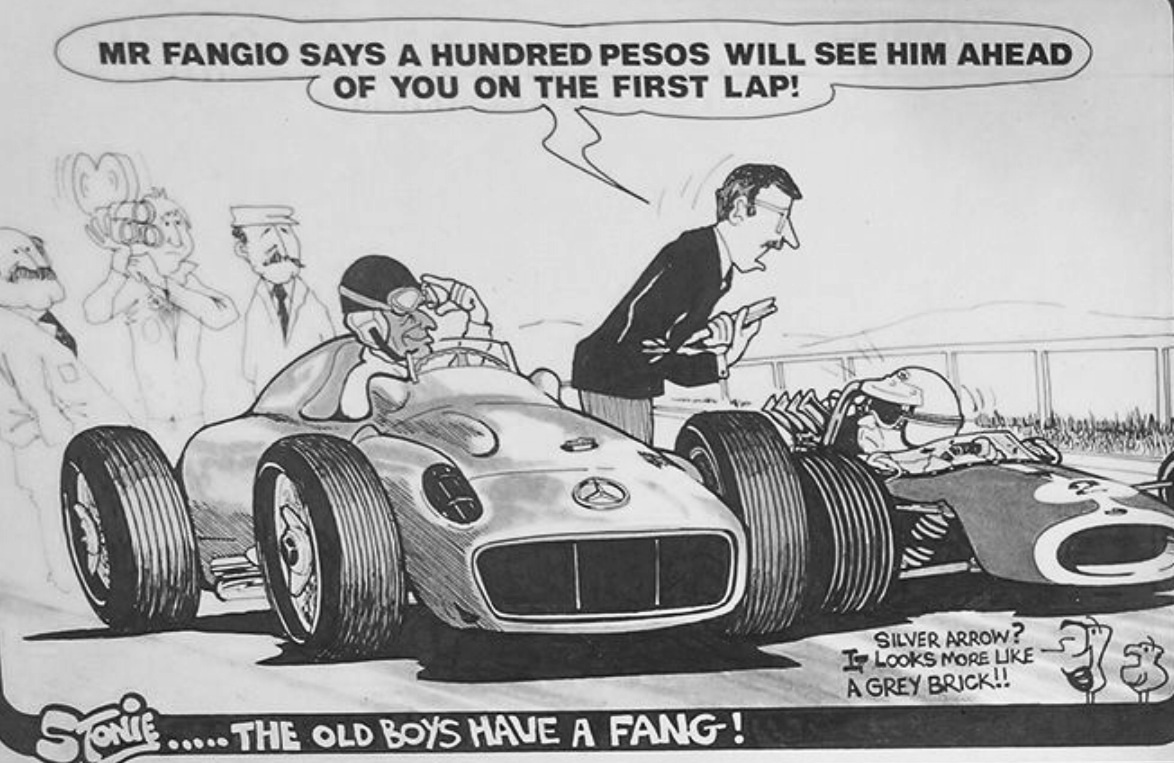
Fangio contested a ‘Race of Champions’ at Sandown which included Jack Brabham aboard his 1966 championship winning Brabham BT19 Repco 620, and former Australian champions Bill Patterson in a Cooper T51 Climax and Bob Jane in a Maserati 300S. Both were cars they had raced in period and retained.

(mouserat159)
(C Griffiths)
(I Smith)

All eyes were on the Fangio, Brabham ‘battle’ over the three lap journey of course, the footage well known to most of you says it all in terms of the speed and spirit in which the cars were driven, note that JMF was 67 at the time and had suffered two heart attacks in the years before his visit.

The sight and sound of Fangio driving the big, noisy W196 on the throttle, kicking it sideways in the manner for which he was famous lap after lap in practice around Sandown’s third-gear Shell Corner onto Pit Straight is forever etched in my memory – he could still boogie at that stage, well and truly.

As you all know, normally the paddock is a hive of activity with mechanics and engineers getting on with necessary preparation of their steed for the next session or race. Sandown’s then layout afforded those in the paddock a great view of the cars on circuit from or near the pit counter. On the occasions that Fangio was on circuit the tents in the cuddly-small Sandown paddock were empty as drivers and mechanics watched Fangio strut his stuff. It was simply not to be missed whatever the competitive needs of the moment were.

It’s always funny to re-live discussions of that-weekend with fellow enthusiasts as so many of us were there from all over this vast land, all having a different experience or highlight but equally excited recollections of it all despite the elapse of forty years. As a student at the time I was there from the meetings start to finish, it was sad when it was all over, I was very conscious of the fact that I had witnessed something special.

Fangio was the President of Mercedes Argentina and owner of two dealerships when he visited Oz and had to sing-for-his-supper over the week he was here. He did a range of promotional events, dinners and drives with motoring writers to promote, mainly, the ‘Benz 450 SEL 6.9 which was the range-topper at the time, a snip at $A68,500 in 1978.

(C Griffiths)

Postscript…

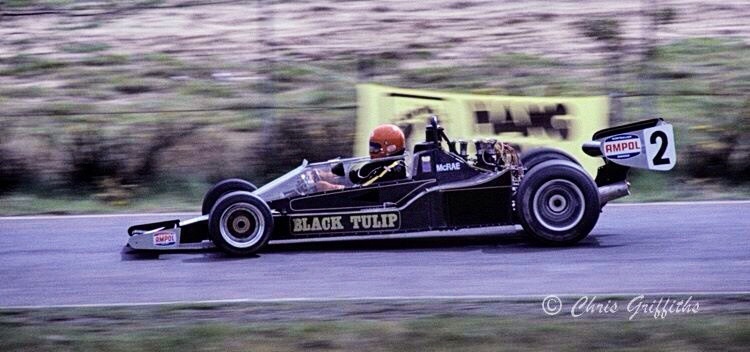
The 1978 AGP, held to F5000, was a race of attrition won by Graham McRae in his see-through perspex cockpit McRae GM3 Chev from John David Briggs and Peter Edwards in Matich A51 Repco and Lola T332 Chev respectively.

In fact it was an entirely forgettable AGP. Very bad accidents hurt both Garrie Cooper, Elfin MR8 Chev and Alan Hamilton, Lola T430 Chev. These very high speed shunts, together with a tangle that eliminated second placed Jon Davison’s T332 and Vern Schuppan’s Elfin MR8 Chev on lap 28, and a broken head-gasket for pole-sitter John McCormack’s unique ex-F1 McLaren M23 Leyland, conspired to rob a race which had lots of potential.

An arcane end to this piece.

It’s a long story, but a decade or so ago, an Australian enthusiast ‘discovered’ in contemporary newspaper reports that a very short race named ‘Australian Grand Prix’, was contested on an oval layout at Goulburn’s racecourse, New South Wales on 15 January 1927.

This race was shortly thereafter recognised by many, but not all historians as the first Australian Grand Prix thereby replacing the previous event which held that honour, the ‘100 Miles Road Race’ held at Phillip Island in 1928, later recognised as the first AGP.

So, Juan Manuel Fangio was here in 1978 to celebrate the 51st AGP not the 50th…

Photo / Other Credits…

Bruce Howard, John Stoneham aka Stonie, Chris Griffiths, Stephen Dalton Collection

Tailpiece: I wonder which particular W196 chassis Fangio ran here in 1978?…

(mouserat159)

Big butt isn’t it? All fuel and oil tank, its an object lesson in Vittorio Jano’s design intent with the D50 Lancia to get the fuel between the wheelbase via his pannier-tanks. I’ve a vague recollection this particular chassis was fitted with a 3-litre SLR engine for demonstration purposes rather than the GeePee 2.5? Interesting the way the body comes together too.

Finito…

(I McCleave)

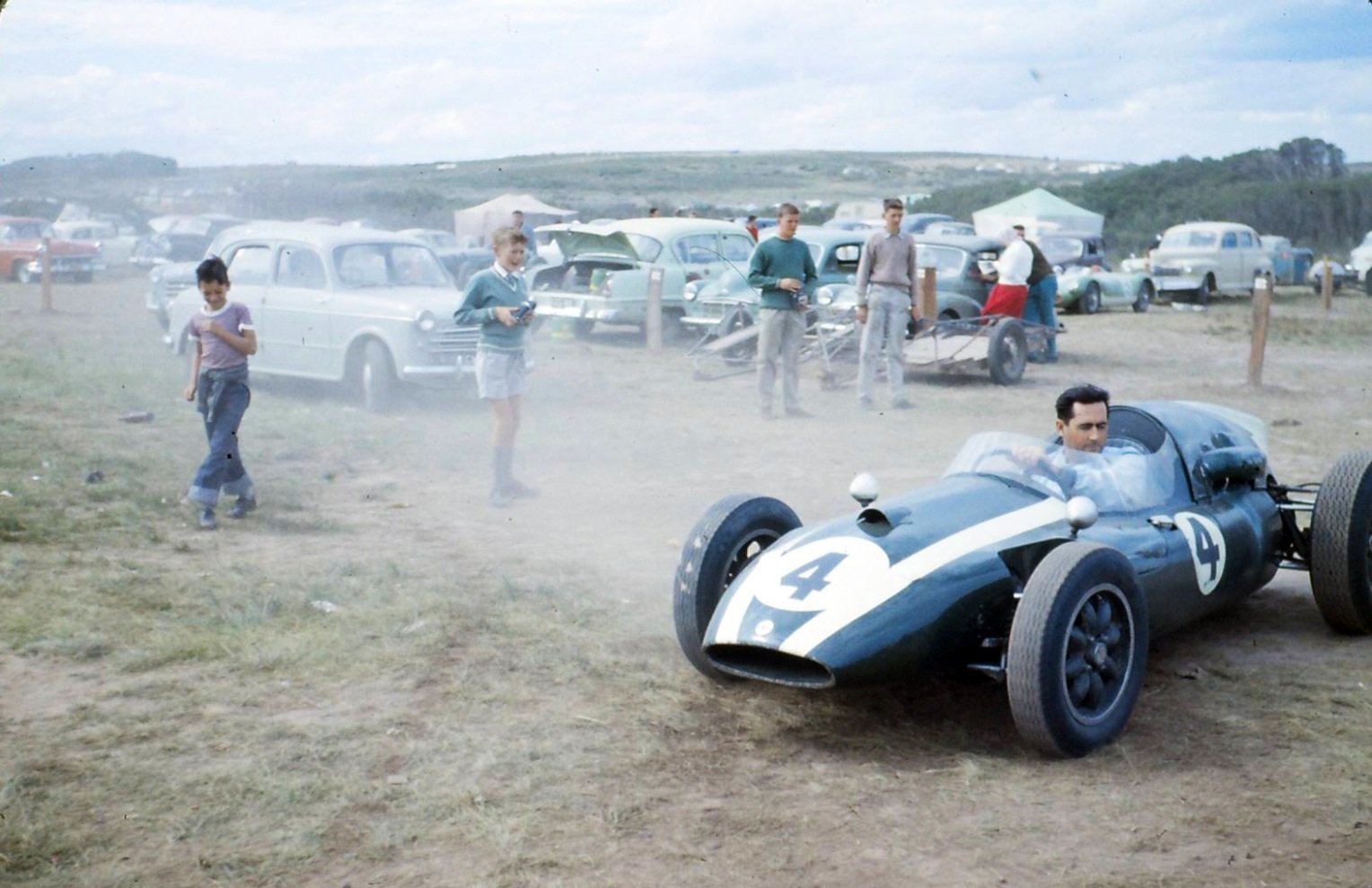
Jack Brabham playing with the kids in the Phillip Island paddock, Cooper T51 Climax, 14 March 1960…

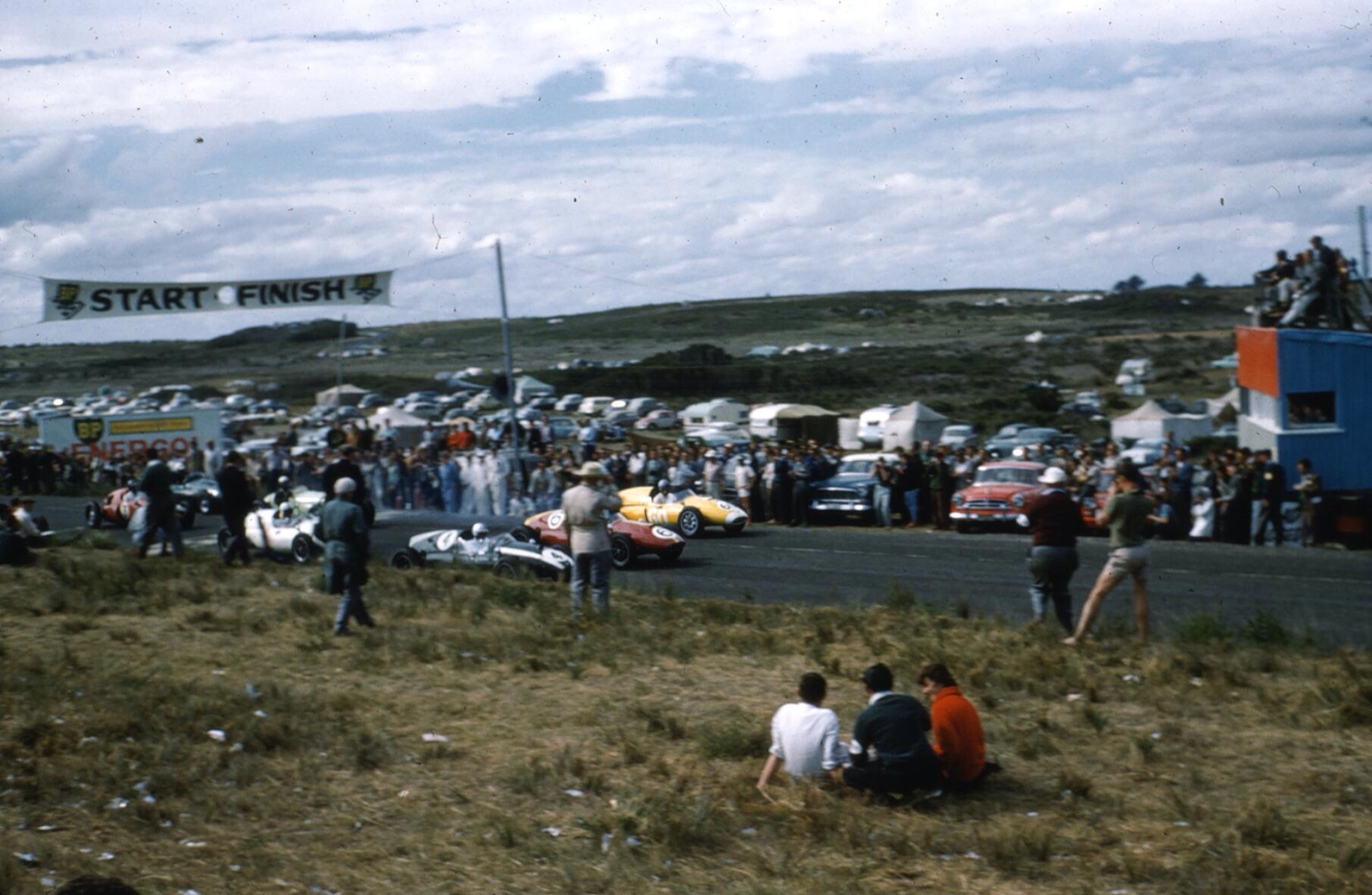
Jack won the Repco Trophy over 16 laps in a T51 rout from Bill Patterson, Bib Stillwell and Austin Miller in similar cars. None shared the latest 2.5-litre Coventry Climax FPF fitted to Jack’s F2-4-59 said to be ‘Brabham’s main car during the early part of 1959’. Austin’s motor was 2.2-litres, Bib and Bill’s 2-litre units.

Brabham had a successful fortnight during his short 1960 Australian summer racing tour, three races from three, winning the Longford Trophy, Light Car Club of Tasmania Trophy on 5 and 7 March at Longford the week before.

Ian McCleave took the opening photo of ‘A youthful Jack Brabham showering my younger brother in dust…I seem to recall Dad charged with adrenalin winding the Austin A95 up to 90 mph on the way back to Melbourne!’ Lukey Heights is well familiar to ‘Island regulars in the background, its a top shot and another enthusiast that day, Robert Jones caught the start of the race, below.

(T Johns Collection)

Australian Motor Sports Review 1959-60 wrote that “During these hectic two days , Brabham more than simulated his performance at the opening meeting of Phillip Island in December 1956.”

“On that occasion driving a Cooper sportscar he won the three races he entered including the Formula Libre event ahead of Ted Gray’s Tornado Ford V8 and Lex Davison’s 3-litre Ferrari 500/625. Three years later, Brabham as you would expect from a World Champion, won every scratch race he entered; but unlike the first meeting, he competed in five events, but won only four, having been beaten into second place in the Racing Car Handicap on the first day.”

(Ron Jackson)

Credits…

Ian McLeave, Robert Jones, Tony Johns Collection, Ron Jackson, Australian Motor Sports Review 1959-60

Tailpieces…

(R Jones)

The off, Brabham, Stillwell and Miller, with Bill Patterson in white, on row two.

(T Johns Collection)

Finito…

image

Frank Matich, Brabham BT7A Climax tries to outbrake Bib Stillwell #6, Brabham BT4 Climax, December 1963…

Photographer John Ellacott upon posting this shot online described it as ‘the two great rivals on Hume Straight’…Matich braking down the outside on the run into the slow second gear ‘Creek Corner’. Frank’s car was brand new, just unpacked, it had only turned a wheel for the first time several days before the 1 December ‘Hordern Trophy’, the final round of that years Gold Star, the Australian Drivers Championship.

Frank’s car was fitted with 2.5-litre ‘Climax FPF, Bib’s older chassis had an ‘Indy’ 2.7- a fair duel, one guy with the edge in chassis perhaps and one with a bit more power?

Stillwell led from the start of the 34 lap race and then FM began to reel him in, finally catching the Victorian on lap 20, the pair tangling in The Esses. The collision was enough to put Matich out of the race but Stillwell finished fourth, the race was won by John Youl in his Cooper T55 Climax 2.5 from David McKay’s ex-Brabham BT4.

frank and bib wf discussion
Frank left and Bib – looking very natty is his BRDC blazer – developing his listening and empathy skills by the look of it after the Hordern Trophy. Great rivals with a lot of respect for one another’s abilities (Sports Car World)

In the 1964 Tasman Series which followed the month after this race Youl was the most successful of the locals. Stillwell only contested three Australian races gaining a strong second in the AGP at Sandown whilst Matich was prodigiously fast but had woeful reliability, we shall pick up the Tasman shortly.

I described the rivalry between Frank and Bib in a post about the Stillwell Cooper Monaco;

It’s fair to say Stillwell, born 31 July 1927 took a while to mature as a driver. He started racing MGs in the late 1940s and as his motor dealerships became more successful throughout the 1950s he acquired and raced some expensive, fast cars, D-Type Jag and Maser 250F included. By the time he commenced racing Coopers he had well over 15 years of experience and was ready to take on anybody, winning his first Gold Star in 1962 and the last in 1965, four on the trot.

Matich, born 25 January 1935 was a more precocious talent who first competed in an MG TC at Foley’s Hillclimb circa 1954 and raced seriously from later in the decade after selling his Austin Healey and purchasing the ex-Frank Gardner Jaguar XKC. He soon drove cars for Leaton Motors who employed him as Sales Manager. Bib was more the silver-spoon-special born on the right side of the tracks and funded into his first dealership with family money. Mind you, whatever Bib started with he multiplied many times over, he was an extremely successful businessman in Australia and then became an executive of global calibre inclusive of being President of the Gates Learjet Corporation in the US.

Frank, the young pro, was cut from totally different cloth. He was educated at De La Salle College, Marrickville in Sydney’s inner west and was apprenticed as a 15 year old Diesel Engineer at Sydney’s Kurnell Oil Refinery before progressing through Butlers Air Transport and in 1954 to Selected Sportscars where he first came into contact with the Englishman who owned the MG TC Frank prepared, and both men raced.

FM’s ability and gift of the gab attracted patrons and commercial support from very early on in his career, Matich too was shortly to do well out of the business of motor racing with Australian franchises for Firestone, and later Goodyear racing tyres, and Bell helmets, apart from the sale of some of the Matich sports and F5000 cars he built.

Matich and Stillwell were intensely competitive, driven, successful men, they had far more in common I suspect than not, especially in terms of mindset and will to win. The battles between the pair were absorbing, Matich very quickly got on the pace of the big 2.5 Climax Formula Libre cars (the 2.5 Tasman Formula started in 1964, Australia’s national F1 ANF1 was F Libre till then), having come out of powerful sportscars- Jags C and D Types, Lotus 15, 19, 19B and small bore single seaters, works-Elfin FJ Ford and Elfin Catalina Ford 1.5.

At the time, these 2.5/2.7 litre F Libre/Tasman cars were the fastest road racing cars in the world, F1 having changed from a 2.5 to 1.5 litre formula from 1 January 1961. Given his experience it was not a surprise when Frank was on the pace straight away as he jumped out of his Lotus 19B sporty and into the new Brabham acquired with the French Oil Company, Total’s, support.

Well before the Tasman Series commenced in 1964, we had a strong International Series of races in Australasia in January/February, with enough of the best in the world to test the locals in equal cars Matich was more than a match for any of them. So was Bib on his day.

matich wf private practice brabham
Matich mounted up and ready for his first test of the naked BT7A, devoid of all signwriting and in civvies at Warwick Farm the week before the Hordern Trophy above. Brian Darby, at the rear, picked the car up from the Port Melbourne wharves the week before, Bruce Richardson is the other mechanic in shot. Note reinforced wide based top front wishbone and rubber mounted ball joint, inverted wishbone at the top and single lower link in the rear suspension. The later BT11A had the opposite rear set up, single top link and inverted lower wishbone (John Ellacott)

Matich was very quick in the Brabham throughout that ’64 Tasman Series and the short period in which he raced the BT7A, its interesting to look back at his time in the car. The late 1963 pre-international events in New Zealand are covered in this article here;

The first 1964 international was at Levin, which Frank missed, at Pukekohe, the NZ GP on 11 January, he ran strongly behind Brabham, McLaren, Tim Mayer and Hulme. He passed Mayer for third only to pop his engine on lap 26, McLaren won the race in a Cooper T70. After Puke he shipped the car home to Australia and re-joined the circus at Sandown on February 9. There he ran ahead of the locals before suffering crown wheel and pinion failure on lap 4.

At the Farm, Matich’s home turf, he started from pole, followed Jack away, then passed him but muffed his braking at Creek and ran off the road. Off to Queensland, at Lakeside, he was driving away from everybody before the engine let go, a Weber ingested a stone and the expensive motor went ka-boom on lap 8. After the long tow to Tasmania he finished third in the race won by Graham Hill’s BT4 and was first of the locals despite a misfire, and a revolution amongst his mechanics who pushed the car onto the grid but left his employ after the race.

Ray Bell wrote that ‘He had a mixed bag of results in shorter races during the middle part of the year, taking a number of outright lap records, then came the Gold Star closing events. Lakeside…pole and the lead before an oil line came adrift; Mallala he didn’t turn up (Stillwell basically could not be beaten for the Gold Star by this stage) and he led the Hordern Trophy till half distance before yet another engine failure’.

The 1965 Tasman Series was won by Jim Clark’s Lotus 32B Climax. Despite not contesting the four Kiwi rounds Matich was right on the pace at Warwick Farm, the first Australian round, starting from pole and leading to Creek corner, he then raced with Brabham behind Hill and Clark up front. ‘Both Hill and Matich had troubles in this race with cement dust getting into the steering, Hill spinning on the last lap because of it and failing to finish. Matich was third behind Clark and Brabham’s BT11A, Stillwell (BT11A) was thirty seconds behind him’ wrote Bell.

matich bt7a lakeside 1964
Matich in his semi-nude BT7A in the hot 1964 Lakeside summer sun, puddle notwithstanding! He is trying to stay cool in the searing Queensland heat, lower side panels removed. Shot shows the proximity of the aluminium side fuel tanks containing lots of Avgas, no rubber bag tanks prior to circa 1970 (Peter Mellor)

Down south at Sandown he ran just behind the internationals ahead of Stillwell only to retire with ignition failure, a rotor button on lap 10. During the AGP at Longford he pitted with suspension problems on lap 5 whilst best of the locals having run in sixth place. At Lakeside he contested the non-championship Lakeside 99 and made it a real race dicing with Clark on this high speed, demanding circuit for most of the race. ‘They traded places many times, but Matich did have a pitstop and lost some laps before rejoining the battle’. It was a race FM rated as one of his best.

Into the domestic season Stillwell won the Victorian Road Racing Championship Gold Star round in April after a couple of Matich spins, albeit FM was second despite a failing engine, and started from pole a half-second clear of Bib.

That was all the racing he did in that car. At Lakeside’s Gold Star round in late July, he crashed his Lotus 19B Climax, he took the sportscar to the meeting to test it in advance of the Australian Tourist Trophy which was held at the circuit later in the year, was burned and hospitalised and in the aftermath Total took the decision to cease their racing program and sold the cars and parts.

The story of the next phase of Frank Matich’s career in sportscars, initially with the Elfin 400 aka ‘Traco Olds’ is told in links within this article.

Frank Matich was one of Australia’s many F1 mighta-beens, to me the most likely to succeed of all, but with a young family and business ties in Oz it never happened despite offers being made to him on more than one occasion to go to Europe. As noted, Matich didn’t race single seaters for long at this stage of his career, from 1963 to 1965, racing sports cars very successfully until 1969 when he came back to open wheelers with the advent of F5000 – where he was a star as both a driver and constructor. Click here for an article on this phase of his career;

It’s a shame he didn’t drive Tasman 2.5 cars throughout this golden-era of single-seater racing in Australasia, his battles against the internationals as well as the local hotshots in both Tasman races and domestic Gold Star competition would have been sensational. Matich mixing it with Bartlett, Martin, Geoghegan, Harvey and the rest would have added depth to Gold Star fields which were increasingly  skinny as the decade wore on.

Stillwell retired at the end of 1965, he was certainly as quick as anybody on his day and arguably had not quite peaked when he did retire. No less an observer of the local scene than journalist/racer/Scuderia Veloce owner David Mckay believed that by 1965 Stillwell had reached F1 standard, not least for his ability to drive fast without mistakes or destroy the equipment.

brabhams longford 1965
Intercontinental Brabhams at Longford, AGP 1965. Stillwell’s dark blue #6 BT11A (6th), Matich BT7A (DNF) and Frank Gardner in Alec Mildrens yellow BT11A (eighth), the race won by Bruce McLarens’ Cooper T79 from Brabhams’ BT11A (Kevin Drage)

The Intercontinental Brabhams…

brabham caversham bt4
The first of the Intercontinental Brabhams. Jack in BT4 ‘IC-1-62’ on its debut at the Australian Grand Prix, Caversham, WA on 18 November 1962. He retired after colliding with another car whilst lapping him, Bruce McLaren won in a Cooper T62 Climax (Milton McCutcheon)

When Jack started his climb to the top in Europe he returned and raced in Australia each summer, bringing a Cooper with him and racing it successfully, then selling the car to one of the locals before returning to Europe. It was a nice little earner and helped fund his way in Europe as he fought to gain a toehold in international competition.

Cooper sold a lot of cars in Australia, Jacks business brain was as sharp as his cockpit skills so it was natural that some of the earliest Brabham production racing cars were for Australasian Formula Libre and from 1964, the 2.5 Tasman Formula- which in effect meant cars built for Coventry Climax FPF ex-F1 engines- 2.5 litres but increasingly 2.7’s after Jacks successful Indy 500 run in 1961 in the Cooper T54 with its 2751cc FPF engine. The Tasman Formula mandated 2.5’s of course.

Soon Repco were making Climax parts and eventually building the engines in totality under licence in Australia. The bits were plentiful which was just as well as the level of competition was such that the long stroke donks were being pushed well beyond their limits with spectacular blow-ups fairly common.

stillwell lakeside 1963
Bib Stillwell in his BT4 Climax ‘Lakeside International’ 1963, 2.7 FPF powered. 3rd in the race won by John Surtees Lola Mk4A Climax 2.7 (Bruce Wells/The Roaring Season)

The first Intercontinental Brabham, i use that descriptor as that was the chassis prefix for each car (‘IC’), the design intended for the shortlived Intercontinental Formula created in response to the new 1.5 litre F1- was the BT4 based on the first Brabham GP machine, the 1.5 litre Coventry Climax FWMV V8 powered BT3.

The first Brabham, retrospectively referred to as ‘Brabham BT1’, was the MRD, an FJ machine first raced by Gavin Youl with the BT2 an evolution of the MRD/BT1. The Intercontinental cars which followed the BT4 were the BT7A in 1963 and BT11A in 1964, both F1 cars adapted for Climax FPF engines.

Some incredibly talented guys raced the ‘IC’ Brabhams- Internationals such as Brabham, Hulme, Gardner, Hill and Stewart as well as Australian champions including David McKay, Lex Davison, Stillwell, Matich, Spencer Martin, Kevin Bartlett, John Harvey, John McCormack and other drivers in New Zealand and South Africa.

Jack Brabham won Australian Grands’ Prix in a BT4 and BT7A in 1963 and 1964 respectively. The cars won the Australian Drivers Championship, the Gold Star for Stillwell in 1963 and 1964 aboard his BT4, in 1965 with a BT11A and for Spencer Martin, again BT11A mounted in 1966 and 1967.

hill and stillwell longford brabhams
Graham Hill ahead of Bib Stillwell, BT4 Climaxes, first and fourth. South Pacific Trophy, Longford March 1964 (Rod MacKenzie)
bib stillwell wf 1965 bt11
Bib Stillwell in his final and successful Gold Star year 1965. BT11A at Warwick Farm. His final year of racing, he had a top year in the car at WF, finishing fourth in the Tasman race albeit behind Matichs’ BT7A in third and first in the Hordern Trophy at the end of the year (John Partridge Collection)

The ‘Brabham IC Australian party’ ended in 1968 when Kevin Bartlett won the Gold Star in BT23D/1, a one off car built for Alec Mildren’s Team around Alfa Romeo Tipo 33 2.5 V8s he secured to add a bit of Italian flavour to the local scene, Mildren was an Alfa Romeo dealer.

The Intercontinental cars were typically fast Tauranac designs of the period. They had rugged spaceframe chassis, suspension by upper and lower wishbones at the front with Armstrong shocks and coil springs. At the rear there was a single upper link, inverted lower wishbone, twin radius rods and coil spring damper units with adjustable sway bars fitted front and rear. With Jack doing all of the initial chassis setup work the cars were quick and chuckable ‘straight out of the box’.

Hewland HD5 gearboxes were used in the main (Colotti in the BT4) and rack and pinion steering completed the package with the cars clad in a slippery fibreglass body.

brabham bt 4 from rear
Bib Stillwell’s Brabham BT4 Lakeside February 1963. 2.7 litre Indy 2751cc Coventry Climax FPF engine, 58mm Webers, Colotti T32 five-speed ‘box. Rear of the spaceframe chassis apparent. Suspension- inverted upper wishbone, single lower link and twin radius rods for location, coil spring damper units, no rear roll bar here. Stillwell’s cars famously immaculate in preparation and presentation (Peter Mellor/The Roaring Season)

After Repco’s 2.5 litre Tasman V8 engine made its debut in BT19, Jacks victorious 1966 F1 winning chassis, in 1966 the Tasman Brabhams were variants of the BT23 frame (BT23A and BT23E) with the exception of the very last BT31 for the 1969 series. See Rodway Wolfe’s article about BT31 which he owned for many years; https://primotipo.com/?s=brabham+bt31

Once the 1.5 litre F1 ended in 1965 BRM quickly realised a stretched variant of their P56 V8 in a P261 chassis would be a Tasman winner and ‘their endeth the locals’ in Climax engined cars taking on the Internationals similarly mounted on more or less equal terms.

The Repco Tasman V8’s provided a supply of competitive customer engines for locals so the Tasman Formula continued into 1970 with engines capable of matching the internationals when the ever expanding F1 season and more restrictive driver contracts made eight weeks in January/February in Australasia no longer a proposition for the best in the world. With it went a wonderful decade or so of intense but sporting summer global competition in our backyard.

Those Intercontinental Brabhams were gems though and gave both the international aces and local hot-shots very effective tools with which to strut their stuff, not least Messrs Stillwell and Matich…

matich longford grid 1964
The Matich BT7A being pushed onto the Tasman grid, Longford 1964. Steering is Graham Matich, looking down at the rear is Geoff Smedley. Matich finished third, just in front of Stillwell, Graham Hill won the race in a BT4 (oldracephotos.com)

Tailpiece: Wanna buy a car matey, or a plane?…

bib and jack and bedford
Stillwell and Brabham, rivals and friends in the Longford paddock 1965. They are sitting on Bibs’ Bedford truck, BT11A up above…I doubt Jack sold anyone more cars over the years than he did Bib?! Bib put them to very good use mind you (Kevin Drage)

Frank Matich on dealing with ‘Wily’ Jack Brabham…

http://www.motorsportmagazine.com/halloffame/jack-brabham/frank-matich-on-jack-brabham/

(P Stephenson)

As nice a posed portrait of Jack and his BT11A ‘IC-5-64’ as you will ever see. The combination are in the old Sandown pitlane in February 1965 before he went out and won the Sandown Cup from Jim Clark, Lotus 32B and Phil Hill, Cooper T70, all Coventry Climax 2.5 FPF powered of course.

Etcetera…

matich hordern trophy 1964
Matich in his BT7A contesting the ‘Hordern Trophy’ at Warwick Farm in 1964. DNF in the race won by Leo Geoghegan in a Lotus 32 Ford 1.5, a great win for Leo, he and his brother Sydney Lotus dealers, Leo graduated to the ex-Clark Lotus 39 Climax at the end of the 1966 Tasman series (John Ellacott)
matich bt7 longford 1965
The Matich BT7A sitting in the Longford paddock in 1965. DNF with suspension failure in the race won by McLarens’ Cooper T79 Climax. Rear suspension by this stage to BT11A spec (Kevin Drage)
matich magazine
Front page spread in ‘Australian Motor Sports’, no advertising allowed on racing cars in Australia in those days but the colors on the nose of Franks’ Brabham (Leo Geoghegan’s Lotus alongside) are those of ‘Total’ the French oil company who were prominent in Australia at the time, the spread no doubt a ‘cross promotion’ as the modern marketers would call it!
stillwell rcn
Racing Car News and Stillwell’s Gold Star win in 1964. Brabham BT4 Climax.

Photo and Other Credits…

John Ellacott, Milton McCutcheon, The Roaring Season/Peter Mellor/Bruce Wells, Kevin Drage, Rod MacKenzie, The Nostalgia Forum, Australian Motor Sports, Racing Car News, Peter Stephenson

theroaringseason.com, oldracephotos.com, Ray Bell on The Nostalgia Forum

Tailpiece: Matich, Brabham BT7A, and Graham Hill, red BT11A and Clark, Lotus 32B, Warwick Farm 100 1965…

(J Ellacott)

Finito…

(N Tait)

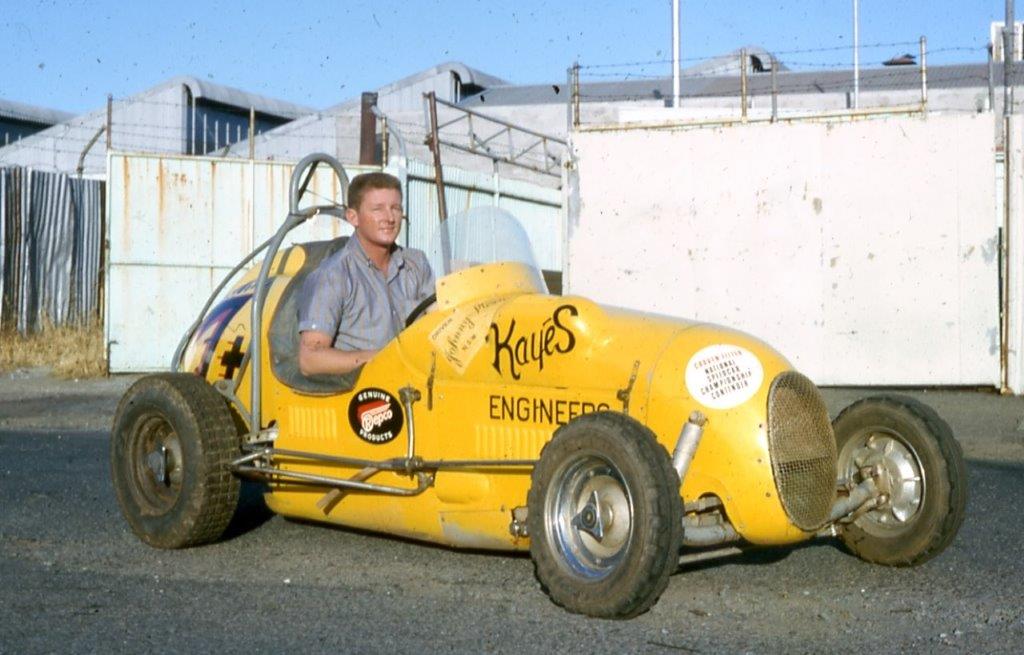
Jack Brabham and his ‘Repco Special’, Hay Street, Subiaco, Perth 1962…

With a bit of detective work from West Australians Ken Devine and Billy Hughes this photo from Nigel Tait’s Collection, which was originally thought to be of Jack Brabham in Sydney was taken during Jack’s 1962 trip to Perth for the Caversham Australian Grand Prix, won by Bruce McLaren’s Cooper T62 Climax. Click here for an article about that meeting; https://primotipo.com/2016/05/20/bruce-lex-and-rockys-cooper-t62-climax/

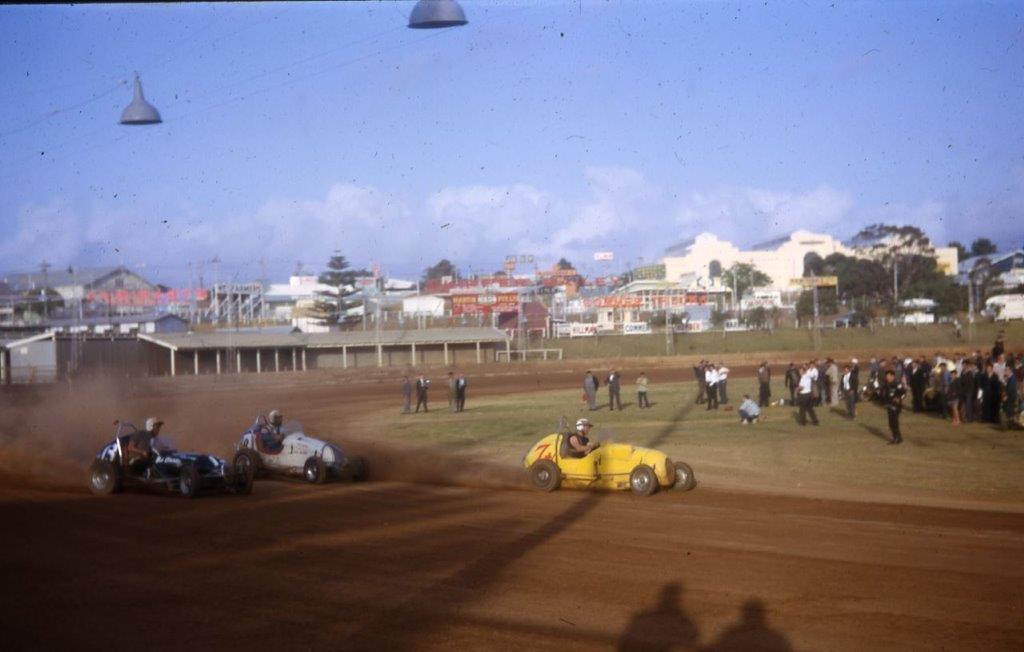
The speedway midget is ‘definitely Bill Kirkham’s WA7 Repco Special driven by Laurie Stevens…looks like Jack sitting in the car and shaking the proprietors hand’ Billy Hughes wrote, another Perth enthusiast/photographer Gary Russell-Brown agrees.

‘Kayes’ was a Repco aligned engine reconditioner in Hay Street Subiaco, an inner Perth suburb. Clearly Kayes’ owner Kirkham had enough ‘pull’ to entice Jack back into the cockpit of a speedway car from whence he came!

Jack’s very first race, a speedway event of course, was at Cumberland Oval, Parramatta on 5 December 1947, click on this ‘Loose Fillings’ link to an interesting article written by Terry Wright article on these formative, successful Brabham racing steps/successes; https://loosefillings.com/2017/07/15/its-amazing-whats-still-out-there-2/

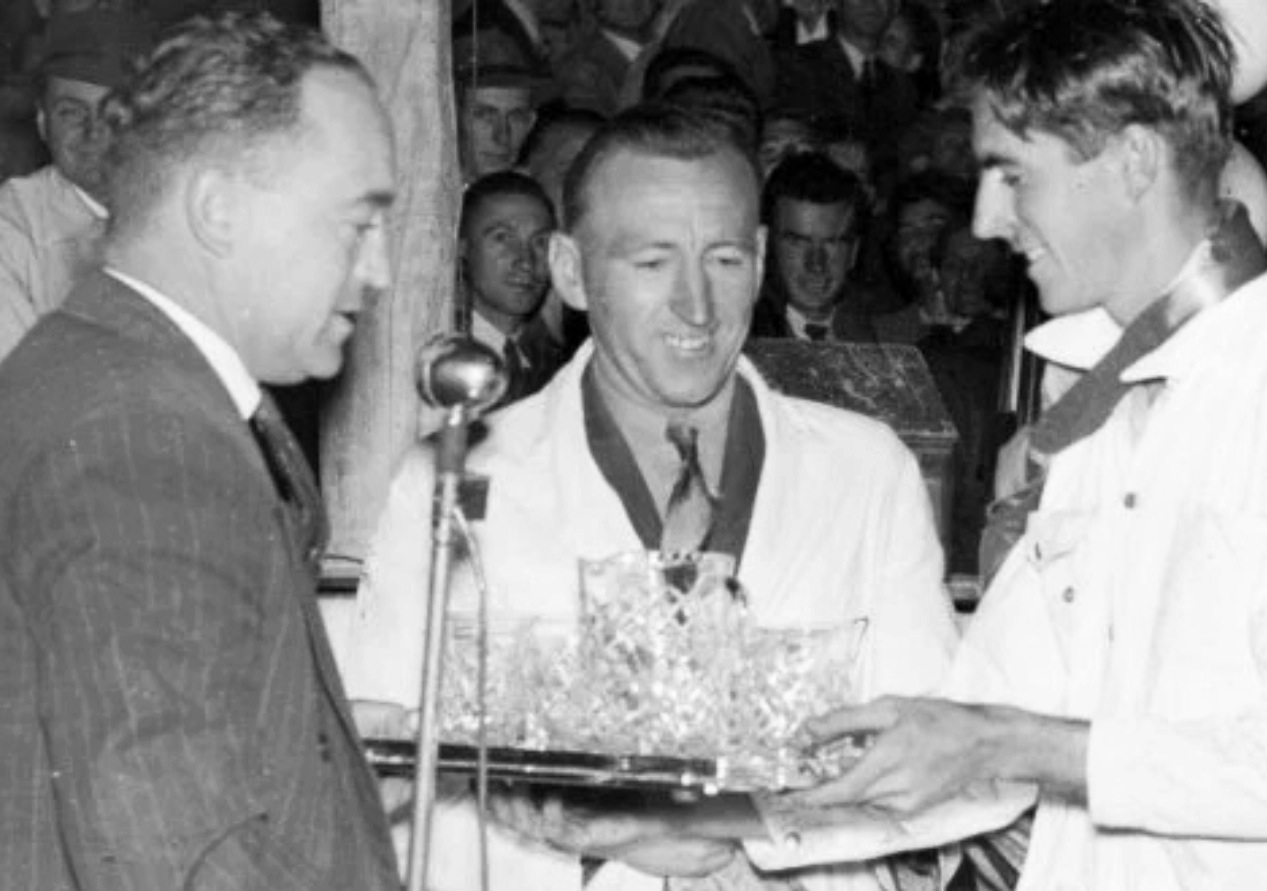
Brabham, 22 years old, receives the Australian Championship tray at Kilburn Speedway, Adelaide, 25 February 1949.

(vintagespeedway.com.au)


Jack during his first raceday at Parramatta Speedway, December 1947 (Brabham Family)

Perth enthusiast, Gary Russell-Brown provides some more information on speedway racing in Western Australia and photographs of the Kirkham midget in particular.

‘Dirt track speedway racing started in Australia in the late 1930’s – solos initially then followed by sidecars and speedcars or ‘midgets’. Before its relocation to the Kwinana Motorsports complex circa 2002 Perth’s Claremont Speedway was recognised as the longest running speedway in Australia, it opened in 1927.’

‘At 641 yards it was longer than most- its long straights resulted in higher top speeds than most as well,this may have been the reason for the venues shocking mortality rate- seventeen over the years. Speedcars were ill equipped in terms of safety until recent times.’

(G Russell-Brown)

Claremont Speedway and panorama #7 Stevens in the Kayes Repco Spl then eastern staters R Clarke from NSW and Victorian D Maher, they were here for the WA round of the 1964-1965 Australian Speedcar Championship’ Gary recalls.

The shot below is of Johnny Stewart in the car, ‘He crashed his own car in Adelaide, the previous weekend in January 1965 and through a connection between Kim Bonython and Bill Kirkham it was arranged for Stewart to use 7+ which wasn’t racing at that stage, Laurie Stevens having retired.’

Claremont is a western suburb of Perth- ten kilometres from the CBD on the north bank of the Swan River.

(G Russell-Brown)

‘Visting internationals came to the track with the peak years of Australian speedway racing perhaps the fifties and sixties. Bill Kirkham was keen to get involved as speedcars gained in prominence, his Subiaco engineering business ‘Kayes Engineering’ acquired, owned and raced #7.’

‘Bills son Ross Kirkham worked for Repco, along the way he moved to Melbourne and became a key engineer on the Repco Brabham Engines F1/Tasman/Sportscar program in the early to later 1960s- he sent west one of the first Repco Hi-Power cylinder heads made which was fitted to the ‘Holden Grey’ six and made #7 very quick.’

‘Laurie Stevens drove the car very well in that era and had amazing success with it against the east-coasters and Americans including some Offy powered cars.’

(G Russell-Brown)

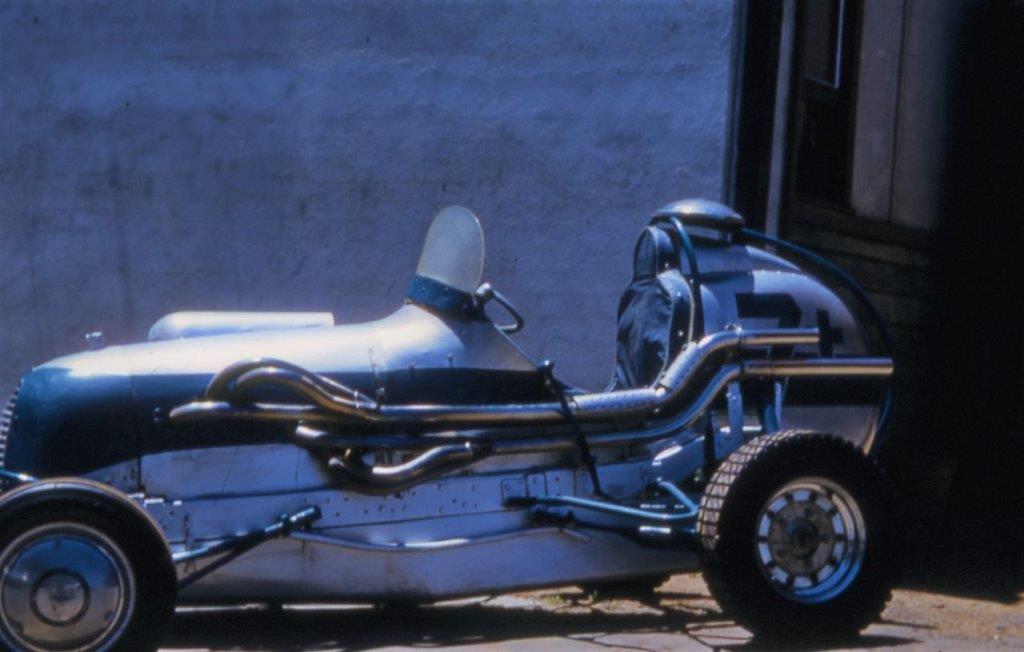
The car above is the original #7, which had the added ‘+” after its first outing with the Repco modifications in 1959.

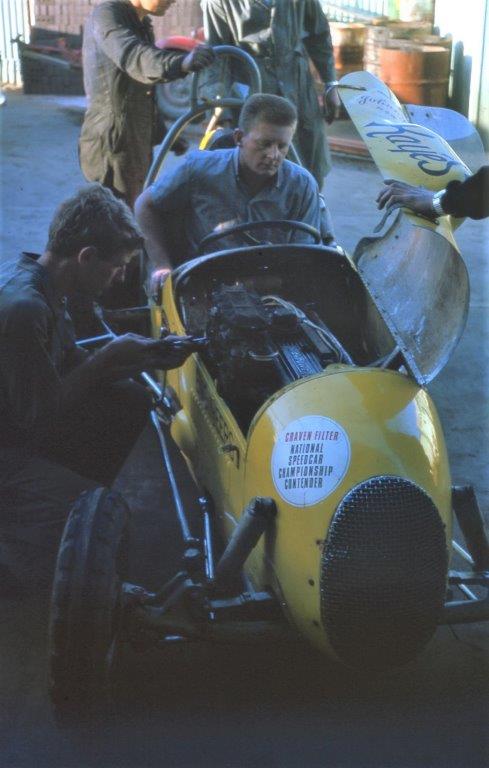
‘See above the distinctive, tuned exhaust system fitted to the Repco Hi-Power Holden six- it was an aluminium cross flow Phil Irving design, in this application fitted with twin-carburettors, Solexes, i think, which you can see in the shot below.’

‘Lynn Kirkham is fettling the car below with Johnny Stewart up in January 1965.’

‘The yellow version was a totally new car built, perhaps, for the 1961-1962 season

(G Russell-Brown)

Etcetera…

(G Russell-Brown)

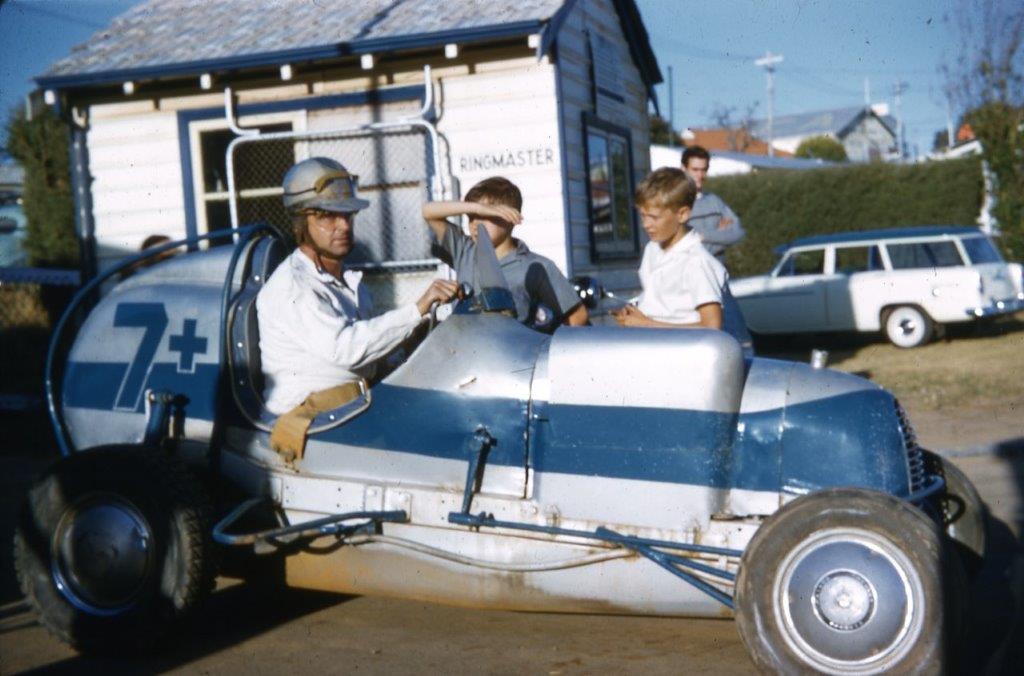
A couple of Claremont fans looking for an autograph from Laurie Stevens- love the ‘Ringmasters’ office, these days the more grandiose ‘Circuit Manager’ title would be applied!

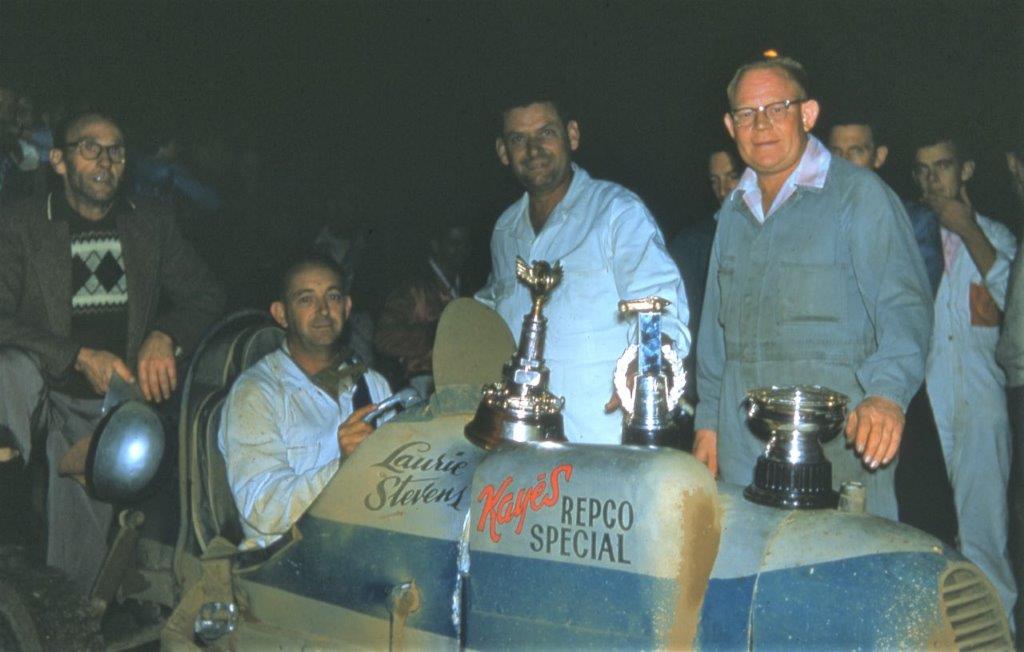
Bill Kirkham behind his car, Laurie Stevens at the wheel, chief mechanic George Williams and a Claremont official after Equipe Kirkham’s first state title.

(G Russell-Brown)


(Repco)

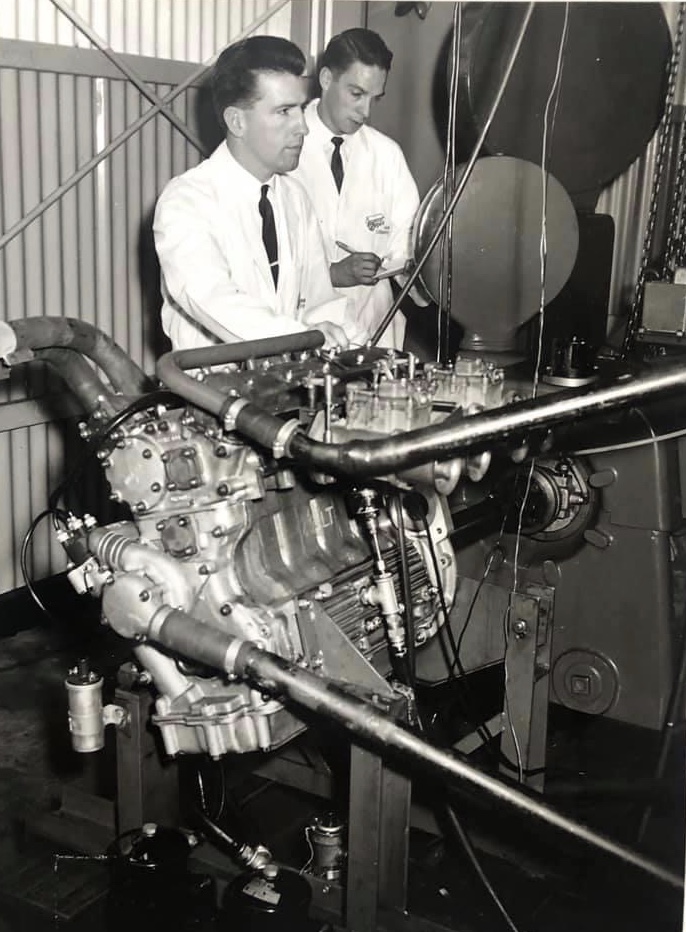
For the sake of completeness here is a photograph of Ross Kirkham manning the controls of a Repco Engine Lab dyno circa 1964- testing a Coventry Climax four-cylinder FPF race engine of 2.5 or 2.7 litres capacity.

Former Repco engineer/racer/restorer Nigel Tait recalled ‘Then Engine Laboratory Manager and Senior Product Development Engineer Ross Kirkham and Senior Technician Mchael Gasking. Ross was my boss when i started there as an Engineering Cadet- a very clever and terrific guy. The dynamometer is our Heenan and Froude GB4. It’s in a tin shed in an otherwise residential area (Richmond, Melbourne) and as you can see there was no sound insulation.’

‘Work on the RB620 V8 would have commenced by then…by 1965 the first 2.5 litre V8 would have been run on the same dyno- for sure Michael Gasking would have assenbled this one and all of the early engines.’

Photo Credits…

Nigel Tait Collection, Repco, vintagespeedway.com.au, Billy Hughes, Gary Russell-Brown

Tailpiece…

(G Russell-Brown)

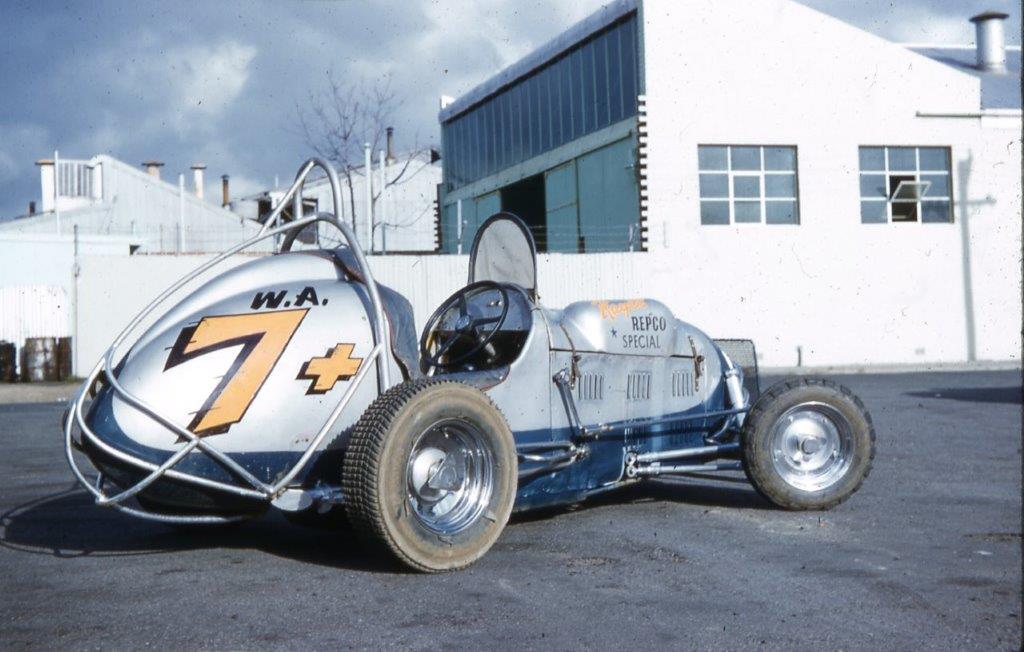
#7+ Kirkham Repco Special tail shot for the tailpiece! Out back of the Kayes Engineering workshop in Subiaco.

Finito…


(AMR)

Bruce McLaren points his Ford F3L/P68 into Druids Hill Bend during the 1968 Brands Hatch 6 Hour on April 7…

I guess we all have our favourite racing eras, my own are the seventies and eighties but visually the ‘last front engined decade’, the fifties and the ‘first mid-engined decade’, the sixties have to be right up there.

In sportscar terms the latter is stunning- the bill of fare without limit from the Ferrari 250P early in the decade to the 512S at its end (1969 design and 1970 raced), Lola Mk6 to T70 Mk3B, Chaparral 2 to 2H, Porsche 904 to 908, Elfin Mallala to ME5 and Ford GT40 to F3L.

The F3L has to be a candidate for the hottest of hotties with its extravagant length, voluptuous but subtle compound curvature- it’s possibly the spunk-muffin of them all but sadly, as is so often the case with stunning chicks, the beauty was only skin deep.

On the face of it Fords 3 litre Group 6 challenger- the designation is an acronym for Prototype 1968 Ford 3 Litre had all it needed to succeed; the backing and funding of Ford UK, Castrol and Goodyear the most punchy, torquey and reliable F1 engine of the day- the Ford Cosworth DFV, it was designed by the very well credentialled Len Bailey- then on the payroll of Harley Copp, Ford Director of Engineering and built by Alan Mann Racing in Byfleet, Surrey. On top of that the roll call of drivers included the best GP and sportscar racers of the day. How could they fail? But tank they did, by early 1969 the project was dead. What went so terribly wrong?

No less than father of the Ford DFV program, Ford’s European Director of Public Affairs, Walter Hayes launched the F3L at a large function of motor racing’s great and good at the Hilton Hotel in early 1968.

The car blew the brains away of all present in terms of its looks, aerodynamics and advanced specification- it was indeed an amazingly compact, fully-enveloped two-seater Grand Prix car in its conception and execution.

(AMR)

Len Bailey was apprenticed at Austin and moved to the US in 1955 where he worked for American Motors and Ford in Dearborn. He was part of a team which worked on Fords racing efforts and then returned to the UK, still employed by Ford as Chief Draftsman on the Ford Advanced Vehicles GT40 project designed by Eric Broadley. The body shape of the GT40 in its successful form was designed by Bailey in the workshops of Specialised Mouldings with assistance from stylists from Ford UK and US. Bailey designed the Mirage adaptation of the GT40 raced by John Wyer in 1967 and the engineering of many of the Alan Mann Racing touring cars.

In Australia Bailey is best known for his late 1968 Alan Mann Racing built, monocoque Mildren ‘Yellow Submarine’ single-seater, which used some Brabham BT23 componentry (uprights, wheels, steering rack) and was raced very successfully by Frank Gardner, Kevin Bartlett, Bob Muir and Ray Winter way into 1974 powered by Alfa Tipo 33 2.5 V8 and Waggott 2 litre TC-4V engines in ANF1 and finally the Ford Hart 416B twin-cam ANF2 motor.

Frank Gardner in Len Bailey’s AMR built Mildren Alfa Romeo Tipo 33 2.5V8 Tasman Formula car in the Warwick Farm Esses during the sodden ‘WF 100’ won by Jochen Rindt’s Lotus 49 Ford DFW in a blinder of a wet weather drive, FG was third in this excellent car. It was a front three car, the absence of wings before the Australian leg meant the car didn’t realise its ultimate pace that summer- god knows why it was delivered from the UK sans wings, its not as tho Bailey or FG didn’t know they were needed?! Superb car which won races throughout Australasia and Asia thru till 1974. Still extant in the hands of the Ayers Family in Waggott engine form (B McInerney)


Superb Ford Cosworth DFV V8 cutaway by Vic Berris (Autocar)

Bailey was inspired to build the F3L by the Ford Cosworth DFV given its small size and light weight. Len decided it would make an ideal sprint engine but Keith Duckworth questioned the engines durability, it was designed for 200 mile Grands Prix events after all- so in the first year, 1968, it was not intended to contest Le Mans.

Despite the DFV being concepted by Colin Chapman and designed by Duckworth to be a stressed member of a car the aluminium monocoque Bailey laid down provided for the engine to be carried by traditional aluminium side booms, a choice which was both unnecessarily heavy and problematic in terms of utility. It took too long to remove and replace th engine and it was said heat problems were caused.

The choice of the chassis design is intriguing- whether it was Bailey’s choice or one imposed on him ‘due to political problems within Ford’ is unclear. The latter seems odd- by the end of 1967 Chapman had agreed to Hayes request to make the engine more widely available in 1968 to other teams ‘so as not to destroy Grand Prix racing’, as Hayes was fearful the Lotus 49 Ford cars would do. So Chapman agreed to that, despite his contract providing Lotus with engine exclusivity for a period of time. The point in this chassis design context is that McLaren and Matra, in designing their 1968 M7A and MS10 GP cars located their engines exactly as Chapman did on the 49- they were bolted the the rear chassis bulkhead, that is used as stressed chassis members rather than supported as Bailey/Mann chose to do, or were forced to do, with their F3L sportscar.

Inperial College wind tunnel in 1967 (unattributed)

To finish this long treatise on the F3L chassis Autosport’s John Bolster in an article he penned about the car in March 1968 reported it ‘was a full monocoque with riveted and bonded aluminium panels; in fact the only unstressed panels are in the small removable nose section and the tail. The skin is of 0.03 inch malleable aircraft alloy throughout, and the shape of the body is intended to produce the lowest possible drag while keeping the small, light car on the ground. At 200 mph it is calculated that a downward force of 600 pounds will be generated’.

The compact size of the F3L is stunning in any picture of it, this is in part due to the cars wheelbase which was a short 7 feet 3 inches with a track of 4 ft 7 ins. The wheelbase was ‘considerably shorter than that of the grand prix single-seaters employing the same power unit’ Bolster wrote. He continued, ‘No doubt this short wheelbase can be used because of the stability conferred by the body shape, and in particular by the Ford-patented vortex generating tail. The overall length is 13 ft 10 ins, the width 5 ft 10 ins, the height 2 ft 11.5 ins and the frontal area 14 sq ft’. Whilst the car undoubtedly had the hands of stylists involved, the fundamental shape was developed with the aid of extensive testing in the Imperial College Wind Tunnel during 1967.

Suspension was GP car standard of the day- upper and lower wishbones with coil spring/damper units at the front and single top links, inverted lower wishbones, two radius rods and again coil spring/dampers at the rear. Roll bars were of course adjustable at both ends. Girling brakes of 11.5 inches diameter were carried inboard of the uprights in the interest of cooling with drive from the hubs provided by short live axles. Light alloy wheels used three-eared knock-on hubs, with peg drive and were 15 inches in diameter with rim widths of 8/9 inches at the front and 14/15 inches aft. Goodyear tyres were used which, given the tyre contracts of the day meant that only Goodyear contracted drivers could be used- not that in any way that limited the talent pool available! Uprights were cast magnesium, steering rack and pinion and the gearbox was a Hewland DG300, relatively understressed in this application.

The 3 litre Ford DFV developed around 420 bhp @ 9000 rpm at this stage of its development, the radiator was mounted at the front of the car with electrics and fuel injection the same as those used in the single-seaters mentioned above. The fuel filler was concealed in the scuttle, the fuel tank capacity was 26.5 gallons, the mandated spare wheel was carried flat behind the engine with compulsory luggage capacity also in the tail. The minimum weight for Group 6 cars was 1435 pounds, the F3L in its early form weighed in at a comparatively svelte 1480 pounds.

Breathtaking artistry of Theo Page- F3L P68

Bolster reported that ‘It is intended that 1968 be a development season for the car, and Alan Mann will enter it in five or six races. Most of the test driving will be performed by Denny Hulme and Frank Gardner, but Jim Clark/Graham Hill and Bruce McLaren/Denny Hulme are scheduled to drive the cars at the BOAC 500 at Brands Hatch on April 7, which will be the first public appearance’.

If only Jim Clark had raced the F3L that fateful weekend the course of motor racing history would have been quite different, instead the Lotus/Firestone contracted driver raced an F2 Lotus Ford FVA F2 car to his death at Hockenheim.

Bolster concluded his article with the observation that ‘This brilliant design will allow the Ford Cosworth V8, hitherto a Formula 1 unit, to appear in a new sphere. Though the enclosed two-seater is heavier than the single-seaters, its vastly better aerodynamic shape will enable it to reach higher speeds and over 200 mph will certainly be within its compass. This is yet another proof that when Fords go motor racing, they employ all the latest advances in technology and there are no half measures.’

All of Bolster’s observations held true with the exception of half-measures- it was only half-measures in terms of commitment to the cars development which precluded the success that was well within its performance reach…

Gardner’s Nurburgring crutch. The tall, lanky pilot had an extra one and a half inches added to the wheelbase of ‘the second chassis’ built to give him a bit more ‘wriggle room’ (Getty)

The legendary bearded scribbler, Denis Jenkinson, of course attended the cars launch and spoke extensively to Frank Gardner about the car during the function- he was keen for a ride in the new machine with Gardner happy to oblige, a Goodwood test date was soon sorted.

Jenkinson takes up the story in MotorSport ‘I spent a whole day at Goodwood watching Gardner drive the car and he didn’t like the way it steered, though he was unable to explain clearly why. The front end gave no hint of confidence on fast bends and seemed to want to step out sideways, but he could offer no technical suggestions and Bailey and Mann seemed out of their depth with a car they had conceived but were unable to suckle. Jack Brabham was there testing one of his F2 cars (BT23C Ford Cosworth) so Alan Mann asked him to try the Ford. On three laps Brabham approached the chicane and at the last moment thought the better of it and took the escape road. After about 5 laps he drew into the pits, opened the door, and before anyone could speak, he said, in that dead-pan voice that is so typical of Brabham, “How brave do you want me to get?” Without more ado he got on with his Formula Two car and left Gardner, Bailey and Mann scratching their heads, not knowing where to look for the root cause. The late Mike Spence tried the car and was more explicit, describing the movement of the car as being as if the steering rack was moving, making the car step sideways at the front when the torque was applied to the steering wheel. Some primitive, strong arm stuff with long levers indicated that the front structure was rigid enough, and Spence did wonder if the car was aerodynamically unstable, but this was out of the question, for the Ford publicity boys had written pages on the new secrets of the aerodynamics of the tail section which gave the car very special stability. Before the abortive day finished I suggested to Gardner that I’d still like a run around in the passenger seat, if only to be able to see at close quarters what they were complaining about. He was adamant; he said he was reluctantly prepared to risk his own life, but he was not prepared to risk somebody elses. It must have been bad, so I went away and got on with something else’ Jenkinson concluded.

Nonetheless the testing of the car continued, Gardner, Richard Attwood, Mike Spence and John Surtees all drove it and assisted in its development and by the time of the intial Brands outing the car was quick- if unreliable. This is of course not unexpected- the 917 was a pig in 1969, Gardner famously thought he and David Piper should have been awarded an Iron Cross for wrestling it around the Nurburgring 1000 km when none of Porsche’s contracted drivers would- won Le Mans in 1970.

Lets have a look at how the F3L fared at each of its competition appearances.

Alan Mann and Walter Hayes in suit, and the lads, Brands 1968. McLaren/Spence car (AMR)

1968 Season…

Brands Hatch 6 Hour (April 7)

The two-car Alan Mann transporter rumbled into the Brands paddock late for the first day of practice, the second P68 having been just completed. The cars were to be driven by Rindt/Spence and McLaren/Hulme (substitutinq for Clark/Hill, Clark having to take late Lotus 48 FVA F2 commitments at Hockenheim).

McLaren was second fastest in practice with the works Siffert/Hermann Porsche 907 on pole. The other F3L broke its engine and was withdrawn due to the lack of a spare. As a consequence the driver pairings were shuffled with McLaren/Spence teamed to race. McLaren drove a great race, the engine hesitated off the line with Bruce dropping to sixth, but he recovered to lead after 30 minutes. A great dice with Jo Siffert and Vic Elford in works Porsche 907’s saw some place-changing, but McLaren still led at the first pit stop. Spence resumed in third place, but within 20 mins coasted to retirement opposite the pits with a broken driveshaft coupling. The Ickx/Redman John Wyer Ford GT40 won from Q5 with the Porsche 907’s of Mitter/Scarfiotti and Elford/Neerpasch second and third.

Denis Jenkinson saw the race and observed ‘The lone race entry completed only 65 laps, but it held the lead at times, which was most impressive, and when it retired with a broken driveshaft joint everyone was genuinely sorry and we all thought “that car is a certain winner when they get it sorted out”. Oddly enough the strange handling experienced at Goodwood was an aerodynamic instability, and tail spoilers were claimed to have cured all the troubles, as simply as that. For a first attempt in an experimental year the BOAC outing was fair enough, for the car was clearly a winner.’

Gardner, Karrussell, Nurburgring 1968 (unattributed)

Nürburgring 1000 km (May 19)

In a shocker of a meeting for the F3Ls- two cars were entered for Pedro Rodriguez/Chris Irwin and Attwood/Gardner, Irwin crashed at Flugplatz during practice, receiving severe head injuries. The car landed badly on its tail, flipped end to end, the ferocity of the prang caused injuries which hospitalised him for some time.

Interestingly Irwin had done an 8:40.4 lap- quicker than Gardner’s 8:42.5 and good enough for fourth on the grid had be been able to start. On the ultimate test of handling the F3L’s were fast- off the pace of the fastest 907’s but they were very much on home turf and crewed by drivers who knew the place like the back of their hands.

Attwood started the race, but on lap 1 the retaining clip on the right front brake caliper disappeared and the brake pads fell out, Attwood limped back to the pits. On lap 2 the driver’s door came open and twisted itself out of shape, to compound a shocker of a weekend the right rear tyre punctured. On lap 3 Attwood got going again a lap and a half behind the leaders. After a few more laps the engine died due to a broken ignition transistor, the sleek coupe was retired out on the long circuit.

The Siffert/Elford 908 won from the Hermann/Stommelen 907 and then the Ickx/Hawkins Wyer GT40- just under four minutes covered the top 3 cars after 1000 Km of racing.

Chris Irwin about to saddle up for his last, fateful, motor racing laps, Nurburgring 1968, F3L P68 (unattributed)

In a June 2008 MotorSport interview Chris Irwin spoke of that fateful weekend which ended his incredibly promising motor racing career.

‘How the accident happened and why it happened don’t know. I have no memory of it whatsoever. All I can remember of the weekend is that the car I was driving went incredibly quickly and every time I came in I asked them to put a higher top gear in it. We were doing something like 240 mph on the straight. It really was the most lovely piece of equipment before I finished with it.’

Irwin’s completely wrecked F3L P68 ‘1002 or ’02’ after its Flugplatz landing. I wonder who the Ford fellow with the helmet is? (M Forster)

Irwin spent ten days on life support following the accident. ‘When I woke up they asked me how I felt and I said my right ankle hurt. I’d got a broken ankle and they didn’t know about it. I had to go back to hospital quite a few times for further surgery. I had some very good treatment; the finest that money could buy. I was left with epilepsy as a legacy of the accident, which is controlled by pills, and i’m still allowed to drive’ Irwin concluded.

It is ironic that the death of another F3L driver, Mike Spence at Indianapolis could have opened up a seat for Irwin, with ten GP starts behind him, at BRM for the balance of 1968. The ifs, buts, and maybe’s of motor racing fortunes…

Chris Irwin, BRM P261, Longford, The Viaduct, during the 1967 Tasman Series. Irwin raced this chassis when Richard Attwood returned to Europe- he contested the Warwick Farm, Sandown and Longford rounds for a DNF, 4th and 3rd (DKeep/oldracephotos)


Spa 1000 km (May 26)

The single surviving F3L was driven by Gardner and German racer Hubert Hahne.

High speed stability and predictability are all for driver confidence on the Ardennes Forest daunting road circuit as is the aerodynamic efficiency of the car.

The early handling developmental problems of the F3L seemed to be cured with Gardner taking pole at 145.8mph, with a huge 4 second margin from Jacky Ickx’s John Wyer Ford GT40-and this on a circuit Ickx knew like the back of his hand. The F3L achieved 211 mph on the Masta Straight.

The good work in practice was ruined in the race however. Ickx led Gardner through Eau Rouge, but the F3L slipped to 10th and pitted after the first lap. This was the car’s first run in the rain and cool air ducting funnelled water all over the electrics. Given there was no easy fix the team withdrew the car- again a developmental issue which should have been foreseen but was not difficult to put right with appropriate changes to the machine.

The race was won by the Ickx/Redman Wyer GT40 from the Porsche 907 of Mitter/Schlesser and Hermann/Stommelen 908.

These two front and rear shots are of the Gardner/Hahne F3L at Spa 1968- the car an absolute (unattributed)


RAC TT, Oulton Park (June 3)

A single car was entered for Attwood who took pole at 1:36.0. The F3L led for 10 laps but retired with a Hewland differential failure.

Lacking confidence in the ability of the car to finish the race, Attwood had also been nominated as co-driver in David Piper’s Ferrari 412P- they drove superbly to second place just 9.4 secs behind Hulme’s winning Lola T70 Chev after three hours’ of racing. Paul Hawkins was third in his GT40.

Martini Trophy, Silverstone (July 27)

Another good performance was spoiled by fragility.

Frank Gardner qualified second behind Hulme’s Lola T70 Mk3 Chev, but led from the off staying there for 41 of the 65 laps, causing Denny to spin in his spirited pursuit of the red Alan Mann car. With 16 seconds in hand the DFV engine lost oil pressure, FG retired the car after 41 laps rather than pop the expensive motor. During the race Gardner proved the cars speed setting a new lap record of 1:28.6.

The race was won by Hulme’s Lola from the GT40’s of Paul Hawkins and Ed Nelson.

Later in the year the car was entered in the (sportscar) Austrian Grand Prix at Zeltweg in late August but was withdrawn, Jenkinson said because of ‘political strife at Ford’.

The 1968 Manufacturers Championship was won by Ford with 45 points from Porsche on 42 and Alfa Romeo on 15.5.

Gardner testing the new P69 at Goodwood. Poor quality shot shows front wing between the two guards and fully enveloping nature of the body  (D Phipps)


Due to changes in the Group 6 regulations made by the CSI in relation to windscreen heights amongst other changes Bailey designed a new car for 1969, it was essentially an open version of the P68 but much more revolutionary in its aerodynamic specifications.

When announced to the press on 7 April the P69 was described by Ford as ‘a research vehicle…designed as an integral airfoil study…the P69 continues the (F1) study to the sports prototype field. The P69 integral airfoil utilizes a system of interconnected adjustable airfoil wings mounted at front and rear. Action of the two wings is controlled both mechanically and hydraulically with the pitch angle being governed directly by air pressure bearing on the wing surfaces when the car is in motion’.

‘The front airfoil is mounted low down between the extended front fenders. The rear airfoil is attached by its leading edge to the upper surface of the car. The prototype has a maximum speed in excess of 200 mph and is 15 inches shorter, 5 inches lower, and 2.5 incjes wider than the P68 prototype- a closed car- which first raced last year’.

Len Bailey is quoted as saying ‘We have set out to promote positive downward lift forces with a minimum of drag. Later it is envisaged the rear flap will serve as an air brake which will be directly controlled by the driver’. The engine was of course the Ford Cosworth DFV as used the year before ‘with the water radiator in a special duct at the rear of the car while ducts are cut into the side and underside of the car for the engine and transmission oil cooler as well as the rear brakes and engine trumpets’.

The chassis, suspension and brakes are similar to the P68. At the time of the public announcement wind tunnel tests had been completed at at the MIRA facility at Nuneaton and Gardner had completed a ‘comprehensive test at Goodwood. Drivers announced for the 1969 Brands Hatch BOAC 500 on 13 April were the Australian duo of Gardner and Brabham.

Gardner on the move at Goodwood, shots of car rare, especially in its original form, rear wing/spoiler clear (D Phipps)

Talk about Mann and Bailey doubling their bets!?

You might think the safe move, the winning one would have been to make reliable what was clearly the fastest sportscar of 1968 and win in 1969. But instead the AMR crew added more complexity. One can’t help but wonder if the car wasn’t some type of publicity stunt- the press release said the car had moveable aerodynamic devices which were illegal under the rules then and now. Predictably, the FIA acted swiftly, before the P69 had even raced!

With its moving aerofoil flap between the front headlights and enclosed ‘single-seat’ cockpit there was no way the car could be made compliant without spending a great deal of money. The cars rear mounted radiator was said to be 30% more efficient than the one in the front of the F3L coupe, but if the cars central body section was altered the performance advantages would be lost.

In order to race the car at Brands the car was fitted with a pair of conventional free-standing wings mounted to the front and rear uprights…

Gardner in Ford jacket, Alan Mann a couple of blokes away to his left. Wings added clear, Brands Hatch (unattributed)


Ditto above (unattributed)

1969 Season…

Brands Hatch 6 Hour (April 13)

The new open-bodied P69 ran its bearings in practice, yet again this problem had ruined a race weekend.

Various reports have Brabham not wanting to have anything to do with the car at all having initially driven it but even in the limited practice laps at Brands completed the car recorded a 1:33.0 lap- way off Siffert/Redman Porsche pole of 1:28.8 but again, limited laps were completed and it was the cars first race run.

Hulme?Gardner F3L on the 1969 Brands 6 Hour grid (unattributed)

In any event, that now left the P68 coupé- with a suspension-mounted rear wing, in the hands of Hulme/Gardner to start the race without its younger sibling . The car qualified 3 seconds adrift of pole with tired engines a continuing problem, the car, driven by Denny Hulme retired with low oil pressure on lap 14, he held 5th position at the time.

Porsche 908/2’s took the placings- the Siffert/Redman crew won from Elford/Attwood and Mitter/Schutz.

P69 at Druids Hill, Brands 1969, probably Frank Gardner at the wheel (unattributed)

The ongoing engine failures were odd, the motors were not racing beyond GP distances but were failing consistently with atypical bottom end problems.

Richard Thwaites, who acquired the 1968 BOAC chassis #1000 in the nineties identified the cause of the engine problems.

‘When I bought the car ‘chassis No 1000′ was dynotaped to the dashboard, I belive this was original as it was exactly the same faded dynotape as the labelling for all the switches. I had the car restored by Hall & Fowler 1994-96…with regard to the engine problems in 1968 which were mainly bearings, when we restored the car we found a major design fault with the oil tank. Whilst the oil was collected from the bottom of the tank, the outlet pipe came out of the top of the tank and over the monocoque before going down to the oil pump. The oil had to be sucked up about 18 inches and I believe that with the thick oils that were used at the time, it caused cavitation in the oil pump which led to bearing failure. We changed the oil tank so the pipe came out of the bottom of the tank and did not have any problems’ Thwaites wrote.

By this stage faith in the project was well and truly disappearing.

Alan Mann had wanted to gain experience from racing the cars whilst Ford had not wanted to race them until they were race-worthy so there was a certain amount of deadlock. From Ford’s perspectine the good old reliable GT40 had won at Le Mans in 1968 and of course the same John Wyer run chassis ‘1075’ took victory again in 1969- they hardly needed Alan Mann’s cars, as it turned out

Gardner’s F3L P68 in the Silverstone paddock, Martini Trophy meeting 1969 (unattributed)

Martini Trophy, Silverstone (May 17)

Frank Gardner repeated the  previous year’s pace, by taking pole with 1:28.0. There was very heavy rain on race day, so the team removed the rear wing because speeds would be lower. The engine badly misfired with wet electrics on the warm-up lap, Bailey recalled ‘…suitable rain shields were available , but they were not fitted when the car set off on its warming up laps. The engine popped and banged over the deep Silverstone puddles and there was nothing Gardner could do when seven or eight cylinders all chimed in together at an unexpected moment and put the car off the track.’

Chris Craft won the race from Brian Redman, David Piper and Paul Hawkins, all four raced Lola T70 Mk3B Chevs.

The F3L’s were put to one side in a corner of Mann’s workshop, the final ignominy was for them to be raided as a suspension parts source for AMR’s second Can Am car- the ‘Ford Open Sports’- has there ever been a more sexless name for a spectacular racing car?

But let’s come back to that tangent in a moment, a Ford Cosworth DFV engined car did win an endurance event in 1969- the Imola 500 Km in September.

Ickx at the wheel of the Mirage M3/200 Ford Coupe, Nurburgring 1000 Km 1969 (unattributed)

Mirage M2-300 and M3-300 Fords…

When legendary team boss/manager John Wyer considered his JWA Automotive options for the new sportscar rules of 1968 he was keen to get hold of the DFV too- he planned to build a ‘sprint’ car like Alan Mann to supplement his GT40’s which he suspected may struggle with ultimate speed. That option wasn’t available to him as the supply of the motors was limited and AMR got the sports-racer gig.

Undeterred, Wyer briefed Len Terry to design a 3 litre Coupe powered by the BRM ‘sports car’ V12 which Bruce McLaren first used in his McLaren M5 in late 1967 GP events. Whilst quick, the BRM engined cars were not fast enough with Wyer finally getting his hands on the DFV in 1969.

The team quickly modified their existing chassis to accept the smaller, punchier DFV with the M2-300 Coupe having its first race start in the hands of Jackie Ickx/Jackie Oliver in the 1 June Nurburgring 1000 km, why not start with one of the toughest of all events, after all the chassis was well sorted?! The coupe qualified fifth and retired with rear suspension failure.

Bonnier/Muller Lola T70 Mk3B Chev alongside the Ickx/Oliver Mirage M3/300 Ford, further back is the Matra MS650 of Servoz-Gavin/Rodriguez (unattributed)


Jackie Oliver in the Mirage M3/300 Ford, Osterreichring 1969 (LAT)

At Watkins Glen the same pair raced an M3-300 Spyder- JWA made some minor changes to the racers spec and hacked off most of the heavy body. Q5 and DNF with camshaft failure on lap 112 was the result. Off to the Osterreichring in August Ickx popped it on pole but steering failure stopped the pair short on lap 199- at this stage the Mirage appears to have a ‘touch of the P3L’s- lotsa speed but no endurance!

But Ickx and the little racer redeemed themselves at Imola on 14 September winning the 500 km race in a classy field which included works Alfa Romeo T33/3’s driven by Ignazio Giunti, Nanni Galli and Andrea De Adamich as well as works Porsche Salzburg 908/02’s piloted by Kurt Ahrens, Rudy Lins, Vic Elford and Hans Herrmann.

Giunti’s 2nd placed Alfa T33/3 alongside Ickx in the Mirage M3/300 Ford 1st and Art Merzario’s Fiat-Abarth 3000 behind DNF. Imola 500 Km start 1969 (unattributed)

To rub salt into his F3L wounds Frank Gardner co-drove Mike De Udy’s Lola T70 Mk3B in the race and had a front row seat to view the Mirage’s pace as it lapped his troubled Lola several times…

Ickx won from the Giunti T33/3 and Van Lennep/Ortner Fiat Abarth 2000. What Alan Mann and Len Bailey made of this win when they read about it in that weeks Autosport is unrecorded, but if it had been me I would have said- ‘There ya go, you should have stuck with us Walter, we would have got there eventually!’ Perhaps Walters polite response would have been ‘Well Alan, waiting till hell freezes over was longer than acceptable’.

Ickx, Giunti and Merzario from the off, Imola majesty (unattributed)

Where were we?

The F3L’s had been cast to one side in AMR’s workshop as Len Bailey embarked on the design and construction of their last car, the ‘Ford Open Sports’ Can Am racer.

This aluminium monocoque machine was built during early 1969 and tested by Frank Gardner and Can Am ace Denny Hulme before delivery to the ‘States where it was raced in the final two rounds of the 1969 Championship- at Riverside, DNF halfshaft failure by Frank Gardner and at Texas International where Jack Brabham raced it.

Jack qualified the experimental Holman Moody prepped alloy 494cid injected Boss V8 engined car seventh and worked his way up to second late in the race before being slowed by an oil leak which dropped him to third behind Bruce McLaren’s dominant McLaren M8B Chev and George Eaton’s McLaren M12 Chev.

Had the swoopy, curvaceous car been built and tested earlier in the season who knows what the 740 bhp, Hewland LG600 5 speed equipped racer could have achieved?

‘Certainly the potential was there. And yet the Open Sports Ford vanished as quickly as it appeared. Perhaps a victim of Ford Motor Companies lack of commitment to the Can Am, or its drastic budget slash for 1970, or Alan Mann Racing closing its doors at the end of the 1969 season, but the Open Sports Ford never raced again’ wrote Steve Holmes. Click here for more about this interesting car, rather than me getting lost in this tangent- the car still exists too, on Steve’s ‘The Roaring Season’ website; http://www.theroaringseason.com/showthread.php?53-The-Open-Sports-Ford

Gardner testing the Ford Open Sports at Goodwood in mid-1969 (AMR)

FOS- 494 cid ally Holman Moody prepped Ford V8, circa 740 bhp (TRS)

Jack Brabham, Ford Open Sports with Chuck Parson’s Lola T163 Chev at Texas International (unattributed)

After the closure of Alan Mann Racing the two remaining Fords ‘languish under dust covers in a hangar on an aerodrome in Surrey… neither of the surviving cars has suspension, gearbox or engine installed. The suspension was robbed to be put on the Ford Open Sports…In view of the poor results obtained the top brass at Ford were probably happy to see the project at an end. But they had provided one of the most exciting looking sports cars ever seen. Furthermore it was an All-Ford effort which is praiseworthy, and a contrast to other Ford-financed racing ventures’ MotorSport wrote.

One of these Ford financed racing ventures MotorSport referred to was the Ford Cosworth DFV mind you! They go on ‘Bailey is obviously sorry that his baby should have been spurned by its godparents, and indeed thinks it could still be competitive (in April 1970). Weight could come down by replacing the metal nose and tail sections with glass-fibre parts and he still thinks the car would give a Porsche 917 a good run down the Mulsanne Straight’.

Doug Nye picks up the story of the F3L’s in the late 1970’s ‘…I was telephoned by Harry Carlton who was head of Ford’s press department at Warley, Essex’.

‘Knowing of my connection with Tom Wheatcroft and the Donington Collection he told me that Ford’s management had just concluded that the progressively deteriorating pair of Ford P68’s they owned were simply a waste of space. “Unless we can find a home for them, they’re going to be cut up- d’you think Tom might be prepared to house them?”.

‘I told Harry I was sure he would, to guard the P68’s with his life and I’d get straight back to him. I called Wheatie “Ooh aye lad, bootiful, bootiful, get ’em to send ’em oop ‘ere all right”. I called Harry back and put him in direct contact with Wheatie. I think the cars were removed to Donington’s store the next day. One was quite sad and sorry, the other a little less damaged. One of them had a door come open while being trailed back from a motor show…and the airstream on the motorway had then ripped the door clean off…Like so many Len Bailey designs it looked terrific but was somewhat deficient in many areas, not least its nervous SWB handling and-I was told-its structural strength was inadequate to contain the DFV’s devastating vibration’.

‘Tom subsequently, as I recall, part-exchanged one of the cars with Gavin Bain in New Zealand in return for the remains of the Alfa-Aitken Bimotore. The other went to David Piper, and he subsequently built a replica with a slightly longer (more congenial) wheelbase…or something like that.’

‘Richard Attwood recalls one of his greatest disappointments as being in the P68 in the Oulton Park TT. It was so immensely superior to anything else in the field around Oulton, that he was absolutely confident of success- only to be sidelined by some pettifogging fault…I’m quite proud that in small part I contributed to the car’s survival’ Nye concluded on The Nostalgia Forum.

F3L, Brands 1968, McLaren/Spence (AMR)

So, what do we make of the F3L program and why it failed? What would it have taken to succeed? Why did Ford get the jitters?…

 Whatever the design shortcomings of the car, the F3L P68 was an incredibly fast car on medium/quick Brands Hatch, the blinding speed of Spa and the tremendous, unique test of chassis the Nurburgring represents. The speed of the thing is not in doubt.

 The ability of AMR to respond to the necessary developmental changes and preparation is though.

In 1968 AMR built and prepared the Lotus Cortina and Ford Escort twin-cam in which Frank Gardner retained his British Touring Car Championship crown won the year before in an AMR Ford Falcon Sprint. So, its not as though the team ‘lost their touch’, and to be fair the only problems with the P3L which were repeat ones rather than one-offs or learnings were engine ones- which they really should have solved.

Maybe the perfect combination in 1968 was Alan Mann built cars raced by JW Engineering who did know a thing or two about sports-prototype preparation and development!

FG and Peter Arundell play follow my AMR twin-cam leader during the Silverstone BTCC round on 27 July 1968 (unattributed)

The P69, unless there were political reasons for doing it was bonkers. The ‘68/9 winter would have been far better spent sorting what they already had- a very fast but unreliable P68. Had Alan Mann Racing done that and raced the cars perhaps Ford would have won the 1969 manufacturers championship with points gained by its 3 litre P3L and the 5 litre GT40- a win at Brands in early 1969 possibly would have breathed life into a program which was from that moment ‘dead in the water’.

 Its said money was tight and that Ford equivocated in their support. What certainly changed or continued in 1968 was that the GT40 was still a reliable car and a race winner- the venerable Mk1 may have had its sad moments early on in its racing life but it paid back bigtime in 1968/9! Wins at Monza, Spa, Watkins Glen and Le Mans in 1968 and Sebring and Le Mans in 1969 apart from secondary level events fell to the 5 litre beastie. From Ford’s point of view, as 1968 unfolded, they didn’t need the P3L as they thought they did when the car was mooted in mid-1967.

Denny Hulme, McLaren M7A Ford- 2nd behind Graham Hill’s Lotus 49 Ford, 1968 Mexican GP Jarama (unattributed)

Whilst the Ford DFV delivered bigtime in F1 from its debut win at Zandvoort in 1967 it was a sprint not an endurance design, the 3.9 litre endurance DFL Le Mans winner came much later. As the roster of GP teams and privateers formed a queue at Duckworth’s Northhampton door he was up to his armpits in conrods keeping up with the manufacture of engines, rebuilds and ongoing development of the 90 degree V8 to keep ahead of the Matra, BRM and Ferrari twelves. He didn’t have time to mess about with the changes necessary to evolve the DFV into an endurance motor and may well have expressed to Hayes his reservations about the engines being used in an unintended application, with resultant failures- and the risk to Ford’s reputation in relation thereto!

 In addition ‘Going Ford Is The Going Thing’; Ford were winning Grands Prix and World Titles, the Escort was winning rallies, the Ford Indy engine won its share in the US, the Boss 302 Mustang was a winner on three continents- ‘who needs a sportscar program when we have winning global programs and local ones?’ such as that in Australia where Ford GTHO’s were dominant/competitive in touring car racing- may well have been the views of FoMoCo’s top brass.

 On 12 March 1969 a Porsche 917 was unveiled at the Geneva Motor Show- the ante was being upped by the 4.5 litre Porsche, and soon too Ferrari with their 5 litre V12 512S, the P3L was destined to be a bit player in this company even if they were reliable.

‘And so there was no further P3L publicity from the prolific Ford writers, no explanations, no excuses as to why they hadn’t swept the 1969 board: in fact nothing more than a deathly hush’ wrote Jenkinson…whilst the remains of the P68’s left over from the Ford Open Sports build were moved, interred really, to a hangar at Fair Oaks aerodrome, near Chobham, Surrey not too far from Byfleet where they were born little more than eighteen months before.

 Sad really for such stunning, fast, under-developed and prepared cars- the P3L’s were on the cusp of delivering all their looks promised but for the application of some race and developmental basics for a professional team like Ford/AMR…

Designers original intent- Ford press shot (Ford)

Chassis Numbers et al…

Treat this as being indicative rather than definitive, none of my usual online sources have neato, fully debated and therefore resolved  summaries of which P68 is which. I have relied mainly on the opinion of Richard Thwaites who owned ‘1001’ for years- but provided the information on the P68’s after he had sold his car and therefore he had no vested interest in the outcome of his particular version of events.

Owners claims always need to be treated with a degree of circumspection during the period in which they own cars in my experience. In most cases the connection between bullshit and the upward trajectory of the fiscal sale implications of the bucket of bolts in question seems way too often to be a temptation even the most devout Catholic of owners fall prey to.

McLaren F3L P68 with one of the works Porsche 907’s behind, Brands 6 Hour 1968 (AMR)

F3L P68 #’1000′ or ’01’

The #34 McLaren/Spence Brands 1968 car Richard Thwaites believes is the car he acquired from Australian Ian Cummins who in turn bought it from Kiwi Gavin Bain who had part-exchanged it in a deal with Tom Wheatcroft.

‘..I am sure it is the one that raced in the BOAC 500 in 1968 as the bodywork is identical to race pictures and the car came with solid discs. I believe David Piper’s original car is the one that was built after Irwin’s crash and subsequently raced in the 1969 BOAC 500. My car did not have the holes in the alloy bodywork for the wing supports, nor were there any signs of welded patches. When I bought the car chassis ‘No 1000′ was dynotaped on the dashboard…the car was later sold by Gregor Fisken’

Rare shot of Jochen Rindt in an F3L P68 before the engine popped, Brands 6 Hour practice 1968 (LAT)

F3L P68 #’1001′ or ’02’

Rindt/Spence car at Brands 1968-unraced. Destroyed in Irwin’s 1968 Nurburgring crash.

One version of events is that the car was progressively stripped of useful parts and the remains scrapped- this is the theory to which I subscribe.

The other (David Pipers) is that the remains were retained by Len Bailey after AMR closed and were rebuilt by ex-AMR chief mechanic Brian Lewis in modern times. Raced by Piper and others and later bought by Alan Mann.

Richard Thwaites ‘The Piper continuation car has nothing to do with F3L history. No part of the car is original and it only looks like an F3L because it has a fibreglass replica body with about 10 inches added on the engine cover to cover the extended wheelbase’.

Car has a modern AMR chassis plate ‘P67-F3L-002’ (P67 is not a typo

1969 Brands 6 Hour vista behind Amon’s Ferrari 312P. 55 Elford/Attwood and 54 Mitter/Schutz Porsche 908/02’s, 58 Denny Hulme aborad the F3L P68 he shared with Frank Gardner, 908/02 alongside is Herrmann/Stommelen, blue T70 Mk3B Lola is Taylor/Dibley, red Lola T70 3B is Hawkins/Williams and the white one Sid Taylor’s car driven by Revson/Axelsson…and the rest! (unattributed)

F3L P68 #’1002′ or ’03’

New car built up after the Irwin crash. Raced in the 1969 BOAC 500 by Hulme/Gardner. Eventually to Tom Wheatcroft and then to David Piper

Gardner, F3L P69, Brands 1969- pretty as a picture without the wings! (unattributed)

F3L P69

The car was cut up by AMR after the BOAC 500 debacle in 1969- tested and practiced but did not race.

No doubt the chassis number mystery is ‘resolved’ in the Ed Heuvink book ‘Alan Mann Racing F3L/P68’- if anybody has a copy fill us all in. The jist of the above is right even if the precise minutae is not- noting the veracity and precision of the minutae is critical in these matters of historic accuracy.

Talented craftsmen at AMR Byfleet during the first F3L build. Alan Mann in suit (AMR)

Arcane Irrelevance…

After his first lap in the early, unwieldy, recalcitrant Porsche 917 during the ’69 Nurburgring 1000 km, I’m sure Frank Gardner wished he was in his nifty, nimble, small, responsive, fast…if somewhat unreliable P3L- he qualified the P3L fifth in 1968 and tenth in the Panzer-Wagen in 1969. Mind you, the pace of change, particularly in tyre technology back then is such that his time in the 917 was 4.7 seconds quicker than in the F3L the year before. Gardner and David Piper were 8th in the race won by the Jo Siffert/Brian Redman Porsche 908/2.

(unattributed)

Bibliography…

Autosport 22 March 1968 article by John Bolster, ‘The Nostalgia Forum Ford P68’ thread in particular the contributions of Doug Nye and Richard Thwaites, ‘Classic and Sportscar’ February 1996, MotorSport April 1970 article by Denis Jenkinson and June 2008 article by Paul Lawrence, Darren Galpin’s International Race Report

Photo Credits…

Alan Mann Racing, Getty Images, Vic Berris, Brendan McInerney, David Keep/oldracephotos.com.au, Manfred Forster, David Phipps, LAT, The Roaring Season

Tailpiece: Ain’t she sweet…

(AMR)

Finito…

(Getty)

Jochen Rindt’s winning Lotus 72C Ford in the Brands Hatch paddock at the end of the British Grand Prix, 18 July 1970…

Its a top shot of the rear of a great, long lived racing car. Chapman’s latest masterpiece, the detail design of which was the work of Maurice Phillippe was only several months old- it made its debut at Jarama in mid April, but such were the changes needed to get the concept working as intended, only several months later it was already in ‘C’ specification. I wrote an article about the early 72 and it’s development a while back; https://primotipo.com/2017/05/19/designers-original-intent/

You can see how Chapman was putting more weight on the rear of the car in search of traction- the engine oil tank and cooler and upright Varley lightweight aircraft battery mounted aft of the endcase of the Hewland FG400 gearbox. Look closely either side of the gearbox and you can see the ends of the round tubular torsion bars which provided the spring medium on this car- the two vertical wing stays lower ends pick up on the brackets which support the torsion bars.

I know a bit about the 1970 international season. 1971 was the year of my motor racing awakening, which, having not yet been to a race meeting, was aided and abetted by the 1970 Australian Motor Racing Yearbook and Automobile Year 18 which cover the 1970 season. I borrowed and returned Automobile Year 18 dozens of times during the 1971-1974 period from the Camberwell Grammar School library in Melbourne. I’m such a sick little unit that all these decades later I can pretty much rattle off the winners of each GP and World Endurance event that season!

Keen students of 1970 and thereabouts will know that Jochen Rindt had a shocker of a year with Brabham in 1968- the BT26 Repco was fast but the ‘860 Series’ 32 valve Repco V8’s were fragile so the great Austrian decamped to Lotus for 1969- he finally archieved his breakthrough first championship Grand Prix win at Watkins Glen at the seasons end having comprehensively blown off the reigning World Champion, Graham Hill, from the time he first popped his butt into a Gold Leaf Team Lotus 49 during the Tasman Summer of ’69.

Rindt, Brabham BT26 Repco ‘860’ V8, French GP, Rouen 1968. The ’68 Brabham’s were fast- Jochen started from pole, but the engines were as unreliable as the 1966/7 motors were paragons of reliability. Such a pity Repco and JB didn’t race on into 1969- the ‘860’ 3 litres would have been competitive with development. Ickx’ Ferrari 312 won in France, Rindt DNF with a leaking fuel tank (B Cahier)

Jochen wasn’t a happy Lotus camper at all though, concerned as he was about the fragility of Chapman’s cars, not that his enormous Spanish Grand Prix accident, his worst of the year, was his only component failure or worry. He had raced Brabham F2 cars for years, had enjoyed his season with Jack and Ron Tauranac in 1968 despite the dramas and had agreed terms with Jack verbally to return to the Brabham Racing Organisation for 1970. Jack had told him of the teams plans to build their first monocoque Grand Prix car which promised to have all of the attributes for which Brabhams were justifiably famous- with the added strength, torsional stiffness and  safety afforded by such a design. With an ace secured, Jack planned to retire from driving at the end of 1969.

When Rindt told Chapman of his plans Colin put together a deal funded by John Player and Ford- an offer Jochen simply could not afford to refuse. Jochen put the situation to Jack, the ultimate pragmatist graciously did not hold Jochen to the agreement struck and allowed Rindt to stay at Lotus, win the World Title using a mix of Lotus 49 and 72, and, sadly, die in a Lotus 72 as a result of a brake driveshaft component failure at Monza.

Jack and Ron with Brabham BT33-2, Jack’s 1970 chassis. Car tested at Riverside prior to its South African GP debut win. This photo is at the cars ‘press launch’ at MRD, 9 Januray 1970, no frills for the boys from Brabham- start of the final year of such a successful and enduring partnership between two like-minded men (W Vanderson)

With all the best drivers committed for 1970 Brabham raced on for one final year with Rolf Stommelen bringing money from Ford Germany to secure the other Brabham BT33 seat.

Its interesting to look at the ‘Jack and Jochen F1 races’ of 1970, filled as they are with luck, misfortune and fate…

Jack started the season like a youngster, putting the new car third on the grid at Kyalami together with the new March 701’s of Jackie Stewart and Chris Amon.

Stewart jumped into the lead from the off leaving Rindt’s Lotus 49C Ford and Amon to collide at the first corner, with Jochen winging Jack on his way through but not damaging the car. Ickx Ferrari 312B, Beltoise Matra MS120, Oliver BRM P153 and McLaren McLaren M14A Ford got in front of the Australian as a consequence of all this- but Jack quickly recovered and had passed all four of them by the end of lap 6. In a great, spirited drive Jack set off after Stewart and took the lead on lap 20- and held it to the end winning from Denny Hulme’s McLaren M14A Ford and Stewart’s Ken Tyrrell run March 701 Ford.

No doubt Jochen reflected upon the speed of his friends new car as he awaited Chapman’s wedged wonder!

JB, BT33, Zeltweg, Austrian GP 1970. Q8 and 13th 4 laps behind after a troubled run. Ickx won in a Ferrari 312B, Rindt started from pole in his home race but raced behind Ickx and Regazzoni’s Ferraris before popping an engine. Note the ally monocoque tub, fuel filler, shift for the Hewland DG300 and simple ‘non-structural’ dash (B Cahier)

Jochen was frustrated, the Lotus 72 made its debut at Jarama, Spain- unsurprisingly with a somewhat radical car the 72 was not to have the debut wins of the 25 in 1962 and 49 in 1967, both at Zandvoort.

It was clear the 72 needed substantial work (as detailed in the linked article above) so Chapman also tasked his Team Lotus engineers to tweak the 49 one last time to ‘D’ specification, including changes to the suspension geometry and adoption of the 72’s wing package, to provide Rindt with a more competitive car for Monaco.

So Jochen approached this race with a very negative frame of mind. Nigel Roebuck wrote in a MotorSport article about the 1970 Monaco GP weekend that Colin Chapman said “If Jochen felt there was no chance of winning, quite often he just went through the motions…”

Despite the changes to the ‘old girl’ in the first session his 49 was ‘sixth fastest, but his time – 1m 25.9s – was almost two seconds slower than Jackie Stewart’s March; in the second it poured, and Rindt, disinterested, was slowest of all; in the third he felt queasy, and was two seconds off his Thursday time. The problem was seasickness. That weekend Rindt was sharing a private yacht with his good friend and manager Bernie Ecclestone, and while the future ruler of Formula 1 slept soundly through a choppy Friday night, Jochen did not, and that merely added to his despondency about the race. “No chance,” he said to his wife Nina. “I’ll just drive around…” Roebuck wrote.

Brabham in the Monaco pitlane wearing his ‘Jet Jackson’ aircraft type helmet a few of the drivers tried that season- Stewart and Courage also (unattributed)

The front two rows comprised Stewart from Amon, then Hulme and Brabham with Jochen way back in 8th slot. Stewart took the lead from the start and led Amon, Brabham, Ickx and Beltoise.

What about Jochen? In the early laps he seemed to be in ‘cruise and collect mode’, on lap 3 he was passed for seventh place by Henri Pescarolo’s Matra and there he propped with his position gradually improving by attrition. Ickx and Beltoise’ Ferrari and Matra disappeared early, putting Rindt up to sixth, which became fifth when Stewart’s March stopped with engine failure. At this stage, though, 28 laps in, he was already 16 seconds behind Brabham.

‘At least, though, his interest was awakened. On lap 36 he repassed Pescarolo, and set off after Denny Hulme, whom he got by on lap 41: third now, with only Brabham and Amon ahead.’

With a whiff of possible victory, 15 seconds behind the leaders, Rindt now kept pace with them, closing a little and when Amon’s March retired on lap 61- yet another GP win eluded the luckless Kiwi there was only his old employer in the car he could have driven, Brabham ahead.

Look at that crowd, 1970, protection still basic, Brabham BT33 (LAT)

Rindt bearing down upon Jack- second last lap (Deviantart)

Jack was unconcerned though. With Amon gone and Jochen still 13 seconds back, he seemed set for his first Monaco win since 1959 with only 4 laps to run, his lead was still nine seconds.

‘Then everything began to unravel. On lap 77, at the top of the hill, he encountered Siffert’s March, stuttering along with a fuel feed problem, Seppi paying little attention to his mirrors. Obliged almost to stop, Brabham instantly dropped five seconds to Rindt’ Roebuck wrote. ‘Three laps to go, and the gap was 2.4, with Jochen now inspired. On lap 78 Jack ran his fastest lap, 1m 24.4s, but even this was useless, for the Lotus went round in 1m 23.3s.’

‘Still it seemed as though Brabham would hold on, but even on the last lap the fates conspired against him. At Tabac, before the long drag down to Gasworks, he came upon three backmarkers, lost more time, and probably it was this, more than anything else, that unsettled him when he came across Courage.’ In 1970 Piers raced Frank Williams’ De Tomaso 505 Ford, rather than the Brabham BT26 Ford he raced so well for Frank in 1969- he had been in and out of the pits with the recalcitrant car since the start of the race.

You can see Jack’s track down the inside of Piers’ De Tomaso and onto ‘all the shit and corruption’ off line (unattributed)

‘Into the final hairpin Jack went off line – into the marbles – to get by Piers, and when he put the brakes on, his car understeered straight on, thumping into the barrier, right at my feet.’

‘Rindt, meantime, flicked into the hairpin, looking across at the stricken Brabham, shaking his head in disbelief. Finally Jack got on his way again, and managed to cross the line without losing second place. When he stopped finally, he stayed in the cockpit a long time.’

ka-boomba but not fatally so- the marshall referred to by Jack has not appeared- yet! (unattributed)

Moments after the shot above with Jack furiously hitting the starter button, simultaneously, a marshall sought to push the stricken BT33 clear of he armco, into certain disqualification. As Jack released the clutch in reverse the marshall fell onto the Brabham’s nosecone- once the marshall decamped quickly from the car Jack headed for home and second place, crossing the line 23 seconds after the staggered Rindt.

What was I thinking?! The normally unflappable Brabham close to the finishing line (unattributed)

‘Once the course car had been round, I ran the length of the pit straight, arriving in the area of the Royal Box just as Jochen climbed the steps, shook hands with Rainier and Grace, and accepted the garland and the trophy. Trembling, and with tears rolling down his face, he looked like a man coming out of a trance, and probably he was. After the national anthems, the French commentator excitedly announced his time for the last lap: “Une minute vingt-trois secondes deux-dixiemes!” For the first 40 laps of the race, Rindt’s average lap time was 1m 27.0s; for the last 40 it was 1m 24.9s – a full second faster than his qualifying time…’ Roebuck wrote.

‘I can’t believe my luck!’ Rindt, Lotus 49D Ford (B Cahier)

After the Gala Ball at the Hotel de Paris, Jochen came down to the Tip-Top Bar, as drivers did in those days. At midnight he and Nina arrived, swinging the trophy between them. At the Tip-Top they used to run a book on the race, and Rindt wanted to know what had been the odds on him. “Seven to two,” someone said. “Ha!” Jochen grinned. “Was anyone stupid enough to bet on me?”

The Belgian GP at Spa saw ‘BT33-2′ qualify fifth but its intrepid pilot was sidelined first by an off at Malmedy induced by an oily rag in the cars footwell- and then after he passed Rindt and Stewart, by clutch failure on lap 19. That was the epic race made famous by an incredible high speed dice between the BRM P153 of Pedro Rodriguez and Chris Amon’s March 701- Pedro won by just over a second from Chris. To my mind the 701 is a much maligned machine if you look at the number of times those chassis’ were in winning positions that year.

John Miles Lotus 72B, Jochen’s 49C and Jack’s BT33 in the Spa pitlane (unattributed)

In testing at Zandvoort prior to the Dutch GP Jack suffered a sudden left-rear Goodyear deflation. The car ‘…entered a vicious slide, and the deflated tyre left the wheel-rim, which then hit the road. The car broadsided into the sand, the wheel-rim dug in and we flipped, rolling over and over into the wire catch-fencing in which it wrapped itself up, trapping me inside my cockpit, trussed up like the Christmas turkey. I might not (quite) have been stuffed, but I was terrified I might yet get roasted. Had any leaking fuel caught fire, there was no way I could have escaped’ Jack recalled in his memoir written with Doug Nye.

The BT33 came to rest inverted over a ditch, with Jack hanging from his seat belts. ‘Here I was in another test session – on a deserted circuit – out of sight of the pits, trapped in a crashed car. I really was getting too old for this. I’d have needed wire cutters to make my way out. I could smell petrol. My finger was poised (over the extinguisher button). At last I heard running feet and voices. Hands began to yank the wire away. I took that as my cue to twist my safety belt release – forgetting I was hanging by it – and dropped on my head, with my entire weight twisting my neck. The Dutch spectators then managed to raise one side sufficiently for me to wriggle out…I would have a stiff neck for a while’. The car was virtually undamaged, but after two more punctures during the GP itself the Brabham combination finished twice-lapped, He was eleventh in the awful event in which Piers Courage was burned to death in a most gruesome fashion.

The French GP at Clermont-Ferrand resulted in a win for Jochen on this glorious undulating road circuit, together with his joyless victory at Zandvoort he was well on the way to putting a championship winning season together. To further underline his speed Jack finished third and set fastest lap in France, BT33 was as fast on open road circuits as the twists and turns of stop-start Monaco.

By the July British GP Rindt had told Chapman of his intention to retire at the end of the season, that decision no doubt in part due to the deaths of his friends and colleagues Bruce McLaren and Piers Courage at Goodwood and Zandvoort respectively.

In fine weather Rindt took pole from Jack and Jacky Ickx Ferrari 312B- this machine one of the other cars of 1970- the Lotus 72 Ford, Brabham BT33 Ford, Ferrari 312B and BRM P153 the four supreme machines of the year.

Lap 1, the grid exits Druids Hill on the run to Bottom Bend, Brands, British GP 1970. Amons March 701 in shot, from Q17- wonder what happened to him in practice? 5th place (GP Library)

Jack and Jacky got away best from the start with Ickx holding the lead from Brabham until differential failure outed the Ferrari at the start of lap 7 at Paddock Hill bend. At the same time Jochen lunged for the lead and got through Jack’s defences. Jochen didn’t get away from the BT33 though, the guys were close together throughout the race. Oliver’s BRM held 3rd until lap 55 when the big V12 cried enough promoting Denny Hulme’s McLaren M14 Ford to third.

Rindt and Brabham were this close for much of the race- a nice visual compare and contrast between the brand new edgy, wedgy 72 and brand new front-rad ‘old school’ BT33- both equally fast mind you (Getty)

Sex on wheels- 72 visually about as good as a GP car gets- current GP cars can trace their fundamental layout and looks back to this baby, or more particularly the ’68 Lotus 56 Pratt & Whitney Indycar anyway. Rindt Brands 1970 (unattributed)

On lap 69 of 80 laps Rindt muffed a gear change and Jack was through into a lead he promised to keep until on the very last lap the car ran out of fuel on the run to the line- Brabham was able to coast home second with Denny third and Clay Regazzoni’s Ferrari 312B fourth.

Jack glides to the line DFV in silence, but still in 2nd place (Getty)

It was an incredibly lucky win for Jochen and proved to the world, yet again, that at 44 Black Jack- he of the permanent ‘five o’clock shadow’, still very much had his elite level racing mojo.

As Brabham coasted to a stop after finishing, Jack spotted Ron Dennis sprinting along behind him. ‘I thought I bet I know what’s happened, the silly bugger’s left the injection set to ‘Full Rich’ – the setting used to start the engine from cold’ – he shrugged off his belts and leapt out determined to check the setting first. ‘Sure enough, it was on ‘Full Rich’. For thirty years Sir Jack would blame Ron Dennis for the oversight, but at dinner with another team mechanic – Nick Goozee – in 2002, owned up: ‘That wasn’t Ron – it was me’.

Ron Tauranac, Ron Dennis, Nick Goozee? and Jack, Brands pits 1970 (B Cahier)

Rindt won again at Hockenheim and in a season of many different winners- Ickx, Rodriguez, Stewart, Regazzoni, Fittipaldi, Brabham and Jochen, had amassed enough points by the time of his death at Monza in September to win the drivers title posthumously from Jacky Ickx who had a serious shot to overtake Rindt’s points haul in the final three rounds but ‘karma prevailed’, the dominant driver in the fastest car of the year won- albeit he had a bit of luck. Just ask Jack!

‘Cor Jochen, we nicked another one off ‘ole Jack!’ Chapman, Nina and Jochen Rindt (Popperfoto)

One of the many fascinating things about motor racing are its ‘ifs, buts and maybes’- the greatest of 1970 was Rindt winning a World Title in a Brabham BT33 Ford and retiring at the seasons end, alive…

Brabham BT33 Ford cutaway by (Bill Bennett)

Brabham BT33 Etcetera…

Where is that DFV? Never a clearer expression of the structural role played by that particular engine than this one! Austrian GP weekend, Zeltweg (B Cahier)

Ron Tauranac preferred the lightweight, easily-repairable, highly-tuneable, multi-tubular spaceframe chassis construction into 1969, albeit his 1968-69 BT26 and BT26A designs were spaceframes with partially stress-skinned, sheet aluminium to augment the designs rigidity. Whilst the approach could be said to be ‘old school’ compared to the monocoque, the modern expression of which was the Lotus 25 which made its debut at Zandvoort in 1962- the BT26A Ford was one of the fastest cars of 1969 with Jacky Ickx winning at the Nurburgring and Mosport.

1970 revised Formula 1 regulations demanded greater protection for F1 car fuel tanks- bag tanks, which in effect dictated the adoption of fully stressed-skin monocoque construction. Tauranac first monocoque chassis was Brabham’s 1968/9 Indianapolis contender, the BT25 powered by the Repco ‘760 Series’ quad-cam, 32 valve 4.2 litre Lucas fuel injected V8.

Jack’s 1970 BT33 chassis under construction at MRD, Weylock, Weybridge, Surrey 8 January 1970. Technical comments as per text below (Getty)

Motor Racing Developments built three BT33 chassis during 1970- BT33-1 was the car raced by Rolf Stommelen until he damaged it in practice for the British GP. Rebuilt, it was raced by Graham Hill, Tim Schenken and Carlos Reutemann in 1971.

BT33-2 was Jack’s 1970 chassis.

BT33-3 was built after Rolf damaged his car too badly to race during the British Grand Prix meeting- used by him for the balance of 1970, it was raced very competitively in 1971 by Tim Schenken, and by Graham Hill and Wilson Fittipaldi in early 1972.

All of the BT33’s were sold by BRO after the end of their useful frontline racing lives.

The BT33 chassis is an aluminium ‘bathtub’ monocoque with strong bulkheads providing a structure of great strength and structural integrity. Front suspension (see photo above) is inboard by front rocker, lower wishbones and coil spring/damper units. At the rear single top links, an inverted lower wishbone, twin radius rods and outboard coil spring/dampers are used. Adjustable sway bars were fitted front and rear. Steering is MRD rack and pinion, uprights cast magnesium front and rear.

At this stage of its development the 3 litre Ford Cosworth DFV V8 gave around 420 bhp @ 9500 rpm, the gearbox was a Hewkand 5 speed DG300. The engine, as you can see from the colour shot above is a stressed member- it is a part of the cars structure, it bolts to the rear chassis bulkhead.

Whilst far less exotic in its conception than the Lotus 72, Tauranac’s BT33 didn’t give an inch to Hethel’s finest. Jack got every ounce of performance available from that car but Rindt would have squeezed even a smidge more. Oh to have seen him in a Brabham that year…

Credits…

Popperfoto, Getty Images, LAT, Bernard Cahier, William Vanderson, Deviantart, Bill Bennett

Bibliography…

Automobile Year 18, MotorSport Magazine May 2013 article by Nigel Roebuck, ‘The Jack Brabham Story’ Doug Nye, oldracingcars.com

More 1970 Reading…

Brabham’s 1970 season; https://primotipo.com/2014/09/01/easter-bathurst-1969-jack-brabham-1970-et-al/

Lotus 72; https://primotipo.com/2014/09/08/flowers-mark-the-apex-jochen-rindt-lotus-72-ford-dutch-gp-1970/

Ferrari 312B; https://primotipo.com/2016/02/26/life-is-all-about-timing-chris-amon-and-the-ferrari-312b/

Matra MS120; https://primotipo.com/2014/07/06/venetia-day-and-the-1970-matra-ms120/

March 701; https://primotipo.com/2014/05/15/blue-cars-rock/

Spanish GP; https://primotipo.com/2015/11/14/spanish-barbecue-1970-gp-jarama/

Belgian GP; https://primotipo.com/2014/10/03/ferrari-312b-jacky-ickx-belgian-grand-prix-spa-1970/

The one that really did get away: Brabham, BT33 Brands 1970- leaping out to check the DFV’s fuel injection settings…

Finito…

(R Lambert)

‘It goes just like a bought one Bib!’…

Jack Brabham about to give Bib Stillwell’s newish Cooper T51 Climax ‘F2-18-59’ a whirl during practice for the Longford Trophy in February 1960. Bib and his mechanic Gerry Brown are giving the car a shove.

Nobody knew those little babies like Jack of course. There was nothing wrong with the car a 2.5 litre Coventry Climax FPF would not fix, but neither love nor money would get you one of those in Australia at the time.

Jack and Bib swapping notes @ Longford in 1960. ‘What ratio did you say again mate’. These fellas had much in common-racing, business and aviation. Bib bought a heap of stuff off Jack- Coopers, Brabhams and planes! (K Drage)

Stillwell’s new car was shipped from Surbiton to Australia in July 1959. Fitted with a 2.2 litre Coventry Climax FPF engine, Bib first raced it in the 1960 NZGP at Ardmore where he finished 3rd behind the Brabham and McLaren 2.5 litre T51’s.

Back home, he won the Victorian Trophy Gold Star round at Fishermans Bend in February before the Longford International where was 2nd to Jack. He contested the Repco Trophy at Phillip Island in March where he was 3rd behind Brabham and Bill Patterson, Patto’s car 2 litre FPF powered like Bib’s that weekend.

Bib oversees Gerry Brown’s fettling of his Cooper in the 1960 Longford paddock. Near new car superbly prepared and presented as the racer/businessmans cars were right thru to the end of his historic racing career in the nineties (R Lambert)

The naughty corner bit came as a result of an accident Stillwell had at Easter in 1960.

He had won his Bathurst 100 heat but had an indiscretion with the fence at the bottom of Conrod Straight in the final, damaging the front of the car. Alec Mildren’s Maserati 250S engined T51 was victorious that weekend at the start of a very successful season for the veteran racer/motor dealer- he carted away the AGP and Gold Star.

Repaired, Bib’s machine was fitted with a 1.9 litre FPF and became his spare car  parked in the corner of his workshop. He focussed his affections on the just acquired ‘Victa’ T51- David McKay’s car ‘F2-14-59’ which was carefully assembled by Victa’s factory Foreman, Jim Roberts at Coopers before shipment to Sydney. The car, of similar leaf spring rear suspension specification to ‘F2-18-59’, was on the market after ‘Victa Consolidated Industries’, manufacturers of iconic Australian lawnmowers, decided to sell it rather than have David continue racing it after only 2 events.

The interesting part of the story, you knew I would get there eventually didn’t you?, is that in a quirk of fate and fortune the spare car in The Naughty Corner of Stillwells Cotham Road, Kew workshop won the 1961 Australian Grand Prix at Mallala, South Australia.

The sequence of events goes like this.

Lex Davison raced his Aston Martin DBR4/250 3 litre GP car to 2nd by a bees-dick to Alec Mildren’s Cooper T51 Maserati in the 1960 AGP at Lowood in June. He raced the car again at Lowood and Warwick Farm in 1960 and the Farm, Ballarat Airfield and Longford in early 1961 before shipping it to the UK.

Lex Davison’s Aston DBR4/250 outside Gino Munaron’s Cooper T51 Maserati during the Guards Trophy Intercontinental race at Brands Hatch in August 1961. There were 17 starters with Brabham’s Cooper winning a race of attrition, the only other finishers Salvadori, Davo and Bandini. With the new 1.5 litre F1 ‘taking off’ this was the last Intercontinental race (Getty)

He raced it throughout 1961 in the Intercontinental Formula races prevalent that year during an extended family trip and racing holiday. He also contested some sportscar races and Le Mans with Stillwell in an Aston DB4GT Zagato, click on the link below for some information on that adventure.

Aston Martin DB4GT Zagato ‘2 VEV’: Lex Davison and Bib Stillwell…

When it became clear the Aston DBR4 would not arrive back in Oz in time for the 9 October Mallala race he sought an alternative and immediately thought of his Melbourne competitor, friend and fellow Holden Dealer, Stillwell, who had five Coopers at the time according to Graham Howard! (4 single-seaters and a Cooper Monaco sports-racer I think)

Melbourne Holden Dealers meeting? Stillwell, Davison and Patterson cluster around Lex’s renta-drive soon to be AGP winning Cooper at Mallala in the lead up to the ’61 race. They had Holden dealerships in Kew, Richmond and Ringwood respectively until Bib jumped ship ‘sensationally’ from Holden to Ford circa 1965 (Davison)

Bib kindly agreed to rent Lex one of these, his Naughty Corner spare ‘F2-18-59’, fitted with a 2.2 litre FPF.

By that stage Bib’s frontline tool of choice was a T53 ‘Lowline’ Cooper fitted with a 2.5 FPF. Whilst he wanted Lex in the field Bib did not figure the ‘Crafty Cobbler’- Davison’s primary family business was in shoe manufacture and distribution- three time AGP winner would present too much of a problem to he and the T53 who, together with Bill Patterson’s T51 were the quickest combination in Oz at the time.

A quarter page agreement between the two racers dated 5 October- four days before the race provided for a hiring fee of £100 with the car to be returned in a condition satisfactory to the owner. If the racer was written off, Bib was to be paid £3000.

Stillwell T53, David McKay T51 and the nose of Jones T51 before the start of a Mallala heat. Stan DNS the GP itself with mechanical mayhem- a great shame. Gerry Brown is behind Bib’s car in the top shot with Kevin Drage leaning on the cars tail (K Drage)

In a race full of irony, David McKay, by then aboard his Scuderia Veloce ex-works T51 which Brabham raced in Australia that summer of 1960/61, was adjudged by the Race Stewards to have jumped the start. This is still a controversial decision in the view of objective observers all these years later- he was punished a minute for his alleged misdemeanour.

Bill Patterson dominated the race from the start in another T51 before fuel vaporisation problems caused multiple stops.

Bib was never a threat as his team managed to fit the wrong tyres to his T53. Accounts of this vary, but Graham Howard’s ‘History of The AGP’ version is that the team erroneously had a Dunlop R5 D12 and a D9 fitted to the rear of the car with a matched set of D12 R5’s at the front. The result was difficult handling and a ZF slippery diff which was worn out by the races end.

Lex took the win behind McKay on the road but ahead after application of McKay’s penalty. The Naughty Corner Car had been beautifully prepared by Stillwell’s Kew based team led by Gerry Brown before handover to Davison’ s crew led by Alan Ashton’s AF Hollins boys in Armadale not too far away from Stillwell’s Kew Holden Dealership and race workshop in Melbourne’s inner east.

Davison’s Cooper rolled to a stop several hundred yards after the finish of the race- a fuel union attachment on one of the cars fuel tanks had cracked when he hit a straw-bale after a spin at Woodrofe Corner, the borrowed Cooper was out of fuel, it could not have raced any further! Lex’s luck extended to the start of the race too when his crew noticed a gearbox leak which they plugged with a rag soaked in gasket goo.

Sometimes things are just meant to be!

Many say Lex was lucky with all of his four AGP wins, he was too. But he made his own luck in that his cars were always beautifully prepared and driven very fast with mechanical sympathy- he finished races where others did not. Was 1961 his luckiest win?, only he can say.

Ecurie Australie onto the grid. Peter Ward, Lex in his usual cloth cap, Alan Ashton, Warwick Cumming with T51 ‘F2-18-59’.  McKay’s car behind with then, I think then the amazing, fast, radical Eldred Norman built Zephyr Spl driven by Keith Rilstone (Davison)

Lex may have been a dark horse before the start of the weekend, his disdain of the ‘Anti-Climaxes’ as he called the Coopers a matter of record- then he won the AGP in his first race of a water-cooled Cooper, amazing really.

But he was hardly a Surbiton novice having raced air-cooled Coopers for years in hillclimbs and shorter circuit events, the Cooper Irving/Vincent s/c was a very potent device. He knew the probable handling characteristics of the T51 prior to commencement of Fridays practice in a car beautifully prepared by Gerry Brown but cared for by Lex’s mob- Alan Ashton and Warwick Cumming over the race weekend.

Further, like Patterson and Stillwell, he was razor sharp. Whilst Bill and Bib were the form drivers locally, Lex had been sharpening his skills in the UK in the DBR4 and some drives in a DB4 Zagato. He arrived home very much ‘ready to boogie’- the Cooper may not have been instantly familiar but he was in the zone from the moment he arrived in South Australia. Another factor to Lex’ advantage is that the 2.5’s were having trouble getting their power to the road. Mallala was a brand new facility, the bitumen was slippery, his 2.2 litres in the circumstances were enough to do the job that weekend.

Finally, the ‘rear-leaf sprung’ T51’s (later series T51’s had coil spring rear suspension) were very chuckable, forgiving devices. The Mallala layout then is the same as it is now with many tight corners- the circuit is a delight if your open-wheeler has good front end bite and a tad of oversteer on exit- the Naughty Corner Car was just the right spec T51 for that circuit on that particular weekend.

Last word on Mallala to Graham Howard in his biography of Lex; ‘On lap 31 Patterson pitted…Lex…in his first race with an “anti-Climax”- was leading an Australian Grand Prix. It was an odd situation, but even odder were Lex’s repeated attempts to overtake McKay (with a minute penalty applied): Lex only had to follow him over the line to win. Lex’s needless repeated attacks and waved fists spelled it out: he drove most of this race with almost red-mist passion.’

Back to the history of the AGP winning Cooper.

In late 1961 after occasional use by Stillwell and three-time Australian GP winner Doug Whiteford, the naughty Cooper was sold to Tom Wilson, then to Frank Coad who raced it on the Victorian country circuits. Barry Stilo was up next in 1965, then Ray Deighton in 1967 and later Michael Robinson.

For many years the car was owned and used in the early days of historic racing in Australia by Stan Rumble. I recall seeing it race a few times in that period. It was sold by him in 1996 to Sydney’s Peter Landan who completely restored it. I’m not sure who owns it these days.

T51’s to the fore, bucolic Bathurst ‘Craven A’ Gold Star race Easter 1961. Stan Jones from David McKay and Bill Patterson on the run to Forrests Elbow- Patterson won the 19 lap race from Jones and Stillwell- T51 2.5’s, 2.3 in Stan’s case (J Ellacott)

The Cooper T51 is one of the great customer Grand Prix cars. Its up there with the Bugatti T35 and Maserati 250F as the best of competitive tools for the privateer which could be acquired off-the-shelf.

Eleven factory built T51’s were resident in Australia ‘in period’, an amazing number given the size of the country and the racing scene at the time. The previous sentence was easy to write, but the research carried out to come up with the number was robustly tested and discussed by a group of very knowledgeable Cooper enthusiasts on ‘The Nostalgia Forum’ between January and March 2010. Click here to read the thread, don’t do so unless you have 90 minutes though!

http://forums.autosport.com/topic/122950-how-many-cooper-t51s-came-to-australia/?hl=%20cooper%20%20t51

So, many thanks to Dick Willis, Stephen Dalton, the late David McKinney, Jim Bradshaw, David Shaw, Eldougo, Ken Devine and Ray Bell for their painstaking research through old records, race accounts and results, photographs and car sale advertisements.

The list is as follows, the fellows above were smart enough not to apply chassis numbers, I have done so using Allen Brown’s oldracingcars.com to assist but any additions to the experts narrative or errors of interpretation are all mine…

‘F2-20-59’: Bib Stillwell’s red and yellow new car. Delivered to Stan Jones and transferred to Bib Stillwell, then to Austin Miller incl Chev Corvette V8 fitment and Australian LSR (extant)

‘F2-18-59’ Bib Stillwell’s darker red car, Davison’s ’61 AGP winner, Whiteford, Wilson, Rumble et al as story above (extant)

‘F2-4-59?’: Bib Stillwell’s ex-works 2.5, Sternbergs in Tasmania (extant)

‘F2/14/59’: Victa Consolidated Industries/David McKay new car, Stillwell, Bryan Thomson (extant)

‘F2-15-59’: Bill Patterson’s new, first car crashed at Lakeside 1961, to John Brindley (unknown)

‘F2-2-57 or F2-5-57’: Bill Patterson’s replacement car, 1961 Gold Star winner, apparently ex-works via either Atkins or Tuck team (extant)

‘F2-16-59’: Noel Hall’s new car, destroyed in 1961 but parts used in the build of his Rennmax Climax 2.2 FPF (extant)

‘F2-22-59’: Alec Mildren’s new car, Maserati 250S and later T61 engine, 1960 AGP and Gold Star winner, dismantled and parts used to construct the Rennmax built Mildren Maserati sports-racer. Replica or reconstruction later built for Paul Moxham by Gary Simkin and Ivan Glasby (extant)

‘F2-7-60’: Stan Jones light blue new car 1960, later Sternbergs Tasmania (unknown)

‘F2-9-60’: John Youls 1960 car, stayed in Tasmania (Hobden, Curran) (extant)

‘F2-5-57 or F2-7-59’: Scuderia Veloce ex-works car, McKay, Cusack, Amon driven (extant)

Note that the Arnold Glass raced T51 Maserati 250S engined car ‘CTA/59/F1’ is excluded from the list as a machine built ‘offsite’ by Harry Pearce at Tommy Atkins workshop rather than at Cooper’s Surbiton factory.

Stillwell, T51 , Forrests Elbow, Easter Bathurst 1961, Gold Star round- this car the ex-works ‘F2-4-59?’ (J Ellacott)

Bibliography…

‘Historic Racing Cars in Australia’ John Blanden, The Nostalgia Forum, ‘Lex Davison: Larger Than Life’ Graham Howard, ‘History of The Australian GP’ Graham Howard and Ors, oldracingcars.com, The Nostalgia Forum

Photo Credits…

Ron Lambert Collection, John Ellacott, Kevin Drage, National Motor Racing Museum, Davison Family Collection, Getty Images

Tailpiece: Like ‘r-soles really, everybody has one! A plague of Cooper T51’s, ‘Craven A International’ Bathurst 2 October 1960…

Jones in blue, Mildren, Brabham up front, then John Leighton Cooper T45 FPF and Bib Stillwell in red, front engined car on row 3 is Arnold Glass Maser 250F, Noel Hall and Austin Miller in yellow. Then John Youl beside Bill Patterson’s white car- the other yellow machine is Doug Kelley’s ex-Miller Cooper T41 Climax FWB. The cars are all T51’s except where specified otherwise (NMRM)

Finito…

(T Walker)

Jack Brabham attacks the Longford Viaduct in 1964, Brabham BT7A Climax…

His differential failed on lap 21 of the ‘South Pacific Trophy’, victory went to the Scuderia Veloce Brabham BT4 Climax driven by Graham Hill from Bruce McLaren’s Cooper T70 Climax.

I’ve accumulated a heap of photos of Jack Brabham, many of which are ‘human interest’ type shots taken in the paddock or at other important events. I’ve packaged them up in chronological order with some comments around the shot or the event, I hope you enjoy the selection.

(Fairfax)

Speedcar: Parramatta Speedway, Sydney 26 February 1954…

This photo is late in Jack’s speedway career, I’m not sure which chassis he is aboard above, he travelled to the UK in 1955 remember. In 1948 and 1949 he won the Australian Speedcar Championship in his #28 JAP 880 Midget.

In ’54 he was also racing his highly developed road racing Cooper T23 Bristol, contesting amongst many other events the ’54 AGP at Southport and the NZ GP at Ardmore. It was his showing in NZ which was one of the factors which convinced him to try  his hand in Europe.

Brabham’s first road racing competition was with his dirt midget, fitted with four- wheel brakes he won the 1951 Australian Hillclimb Championship in it at Rob Roy, in Melbourne’s outer east at Christmas Hills!

Cooper T43 Climax FPF: ‘Rochester Trophy’ Brands Hatch, 5 August 1957…

Jack and Geoff Brabham in the Brands paddock prior to this F2 race, he won both heats from two other Cooper T43’s of George Wicken and Ronnie Moore.

Jack looks so young- but he is already 31 and a veteran of nine years of competition, much of it on the dirt speedways of eastern Australia. Geoffrey is five- his racing car debut was in an Elfin 620 Formula Ford in 1972 or 1973, his first full season was aboard a Bowin P6F Formula Ford in 1974. Click here for an article on Geoff;

Geoff and Jack Brabham, Monza 1966…

That season Brabham also won F2 events at Brands in June, the London Trophy at Crystal Palace, the Prix de Paris at Monthlery and the International Gold Cup at Oulton Park. In Grands Prix he contested the Monaco, French, British and Pescara events driving 2 litre FPF powered T43’s, his best, sixth place at Monaco.

Bursting onto stage…

Quite literally, Jack motors into the Dorchester Hotel, London ballroom to be presented with a BRDC Gold Star in 1960. By then he had won two World Titles on the trot of course, in Cooper T51 and T53 Climax in 1959 and 1960 respectively.

Jack and Bruce, Sandown Park, 12 March 1962…

Two great buddies, Jack instrumental in Bruce going to Europe and in ploughing the same path Bruce took with his own cars, three years later.

Jack has just left Cooper’s and ran a private ex-works Cooper T55 Climax 2.7 FPF in the Australasian Internationals that summer. Bruce also ran a Cooper T53 Climax FPF 2.7, like Jack, his own equipe prepared and entered the car.

Jack won the ‘Sandown Park International’ on the Sunday with Bruce third behind John Surtees in another (Yeoman Credit) T53 FPF 2.7. It was the opening meeting of the Sandown circuit, built as it is within the confines of a horse-racing facility. Its still in use, long may it continue!

Which Cooper are they leaning on? Dunno.

There are quite a few shots and information on that meeting in this article I wrote about Chuck Daigh a while back. Click here for a peep;

Chuck’s T-Bird…

(Getty)


Icy Pole…

There are quite a few shots of Jack cooling down and warding off dehydration with a medicinal treat! Here its aboard his Lotus 24 Climax during the 1962 Belgian GP weekend at Spa. He was sixth in the race won by Jim Clark’s Lotus 25.

He left Cooper at the end of ’61 and raced the Lotus until the new Brabham BT3 was ready- its first appearance was in the German GP in early August.

Click here for an article about Jacks experience with the Lotus and the first F1 Brabham BT3; https://primotipo.com/2015/11/06/brabhams-lotuses-and-first-gp-car-the-bt3-climax/

(K Drage)

Sandown Park paddock 1964, Brabham BT7A Climax…

This is the business end of the ‘Intercontinental’ Brabham shot in this articles first photograph at Longford.

Bruce won the first ’64 Tasman Series in the ‘very first McLaren’ his self built Cooper T70 Climax but Jack had a pretty good tour winning three of the races with Graham Hill picking up another in the David McKay owned BT4 as did Denny Hulme in his Motor Racing Developments BT4.

2.5 litre Coventry Climax FPF engine and using a Hewland HD5 gearbox- this very successful model, the BT7A and its BT11A successor won many races in Australasia and South Africa.

‘Warwick Farm 100’ paddock 12-14 February 1965…

Long time BRO mechanic Roy Billington looks on as Jack makes final adjustments to the Repco built and maintained Coventry Climax 2.5 litre FPF engine.

Jack finished second in the 45 lap race behind Jim Clark’s Lotus 32B Climax- Jim won the race, and three others to take the 1965 Tasman for Team Lotus. It was the start of an unbelievable year for the talented Scot who also won the F1 World Championship and Indy 500 in Lotus 33 Climax and Lotus 38 Ford respectively.

Repco obtained the rights to build CC engines in the early sixties- they did a nice trade supplying the locals and Internationals CC 2.5 bits, for many years the engine de jour of the category.

The Charlie Dean/Stan Jones fifties Maybach racing programs run out of Repco Research in Sydney Road, Brunswick created the ‘Repco Racing Culture’ and a swag of gifted engineers, fitters and mechanics who went on to do great things within Repco- and outside it.

The short ‘Coventry Climax Phase’ under Frank Hallam’s leadership in Richmond was an important bridge to the ‘Repco Brabham Engines Phase’ at Repco in terms of men and Hallam’s assembly of the necessary equipment to build and maintain the engines. He bought tools, milling machines, lathes etc. Frank used his budgets wisely to both buy new clobber and refurbish older but far from inadequate machinery.

In essence, the Repco Board believed they had the capacity to build racing engines when Canny Jack pitched the RBE 2.5 litre, Oldmobile F85 based Tasman V8 engine to them in 1963/4.

So, lets not forget the role the maintenance and limited development of the oh-so-successful Coventry Climax 2.5 litre FPF played in Repco’s ultimate 1966-1979 success. Why 1979 you say? The final national championship won by an RBE V8 was Paul Gibson’s win in the 1979 Australian Tourist Trophy at Winton in a Rennmax Repco powered by a 5 litre ‘740 Series’ RBE V8.

Monaco 1966, Brabham BT19 Repco at rest…

Jack resting with a Coke whilst being offered some encouragement from a couple of supporters. He wasn’t well, feeling off-colour, in addition BT19 was late due to a waterside workers strike in the UK.

He had just taken the newish BT19 Repco ‘620 Series’ V8 combinations first win in the Silverstone ‘International Trophy’ a fortnight before so much was expected of the combination in the principality of dreams. In the event the car jammed in gear from a lowly starting position leaving Stewart to win in a BRM P261- a 1.5 litre F1 car with a 2 litre ‘Tasman’ V8 fitted.

Jack’s title winning run started at Reims in July. Click here for my feature on the ’66 season;

Winning the 1966 World F1 Championships: Brabham BT19 Repco…

OBE from HM The Queen…

Betty, Jack and Geoff Brabham having collected Jack’s Order of the British Empire from the Queen at Buckingham Palace in 1967. He was further honoured with a Knighthood, ‘Knight Bachelor’ in 1979.

Jack looks pretty schmick in tails but I imagine he could not get the ‘Topper’ off his head quick enough!

Victorious French Grand Prix, Le Mans 1967…

Jack won the race from Denny with Jackie Stewart third in an old BRM P261. I wrote an article about this meeting, click here to read it;

Le Mans French GP 1967: Powerrrr…

It was the fifth event of the championship season and the first win for the reigning champion. Meanwhile Denny was racking up a more than handy pile of points- which would win him the title from Jack and Jim Clark’s new Lotus 49 Ford DFV.

Ain’t she sweet! Ron Tauranac’s ’67 Brabham BT24 was one of his nicest, most cohesive, balanced GeePee designs. It had just enough of everything to do the trick and no more.

Note the characteristic duct to take cooling air within the Vee to keep stuff cool down there, not least the Lucas fuel metering unit. Duct used in the warmer ’67 races.

Mixing With The Big Shots, Melbourne Reception 1967…

Jack with Sir Charles McGrath, long time CEO and later Chairman of Repco Ltd and longtime Premier of Victoria Sir Henry Bolte to honour the achievements of both Brabham and Repco in 1966.

Jack’s suit lapel contains Repco and Goodyear pins reflecting the enormous contribution made by those companies to that success. Jack was a Goodyear early adopter and reaped all the benefits, in no small measure due to his ongoing testing feedback about the product.

McGrath was a Brabham believer, without his ongoing support there would have been no engines. At the time Repco Ltd were an Australian Stock Exchange Top 100 listed company, ‘Dave’ McGrath oversaw the exponential growth of Repco both within Australia and overseas from the time he was appointed Managing Director in 1953. He strode the local corporate scene like a colossus as a Director of Repco and other companies. Click here for his biography;

http://adb.anu.edu.au/biography/mcgrath-sir-charles-gullan-dave-15173

Gelato @ Monza ’67: ‘Streamliner’ Brabham BT24 Repco…

Proof positive he likes his icecream!

However light Ron Tauranac’s BT24 chassis was, the Repco ’67 ‘RB740’ V8 was still only good for 330 or so neddies compared with the 400’ish of the quad-cam 32 valve, new Ford Cosworth DFV. This aero experiment was successful in making the car slip through the air better but Jack had difficulty placing the car accurately through the complex, compound curvature of the screen so the project was abandoned. A works BT23 F2 car was also tested in similar manner.

This was the famous race in which Jack lost out on a last lap, last corner, braking manoeuvre with John Surtees Honda RA301 V12- losing out to finish second with Denny again behind in third. The big, beefy ‘Hondola’ had heaps more power than the Aussie V8 but equally as much bulk- the ‘pork chops’ of the era were the Hondas and BRM P83 H16. The leading ‘lithe and nimbles’ were the BT24 and Lotus 49.

Click here for an article on the ’67 Brabham BT24 including a ‘compare and contrast’ with the Lotus 49 Ford DFV;

Give Us a Cuddle Sweetie…

Biggles Brabham at Bankstown, Sydney…

Brabham was a leading light of the fifties and sixties racer/pilots wasn’t he? Chapman, Hill, Clark and Reventlow all spring to mind. But there were plenty of others.

Here Jack has just arrived from the UK to Bankstown, Sydney on 11 February 1968.

That year he did a truncated two race Tasman in a beautiful Brabham BT23E Repco ‘740 Series’ V8. It was another lightweight purpose built Tasman jigger built on Tauranac’s F2 BT23 jig that could have nicked the title had he raced at all of the rounds. Mind you Jack would have had to knock over the two Gold Leaf Team Lotus Lotus 49 Ford DFW’s of Clark and Hill to do so. Clark was on tip-top form winning the championship with four victories.

I wrote an article about the BT23E, click here for it;

Jack Brabham: Brabham BT23E Repco, Oran Park 1968…

Michael Gasking in the light grey, Jack and the rest of the Repco crew, ‘830 Series’ 2.5 litre SOHC V8. That is an old helmet he is wearing!, it musta been lying around in the Repco Maidstone workshop. A Bell Magnum it ain’t! (M Gasking)

The Lowest Mileage Works Brabham: BT31 Repco…

Jack testing his 1969 Tasman mount, his just assembled BT31, in the late afternoon at Calder the day before it’s race debut at Sandown for the final Tasman round. Chris Amon won the race and the series that year in his works Ferrari Dino 246T V6.

My mate, Repco’s Rodway Wolfe helped Jack assemble BT31 that February day. Years later he owned the car, read his definitive story of this two races in period only, works Brabham!

Brabham BT31 Repco: Jacks ’69 Tasman Car…by Rodway Wolfe

Tribute to Brabham Meeting, Brands Hatch, November 1970…

Brabham accepts the plaudits of the crowd after the last ‘drive in anger’ of his BT33, seven demonstration laps, it was his farewell appearance in the ‘Salute To Brabham Meeting’, behind him is Ron Tauranac his business partner and designer of their cars.

Many of this crowd of 8000 will have seen Jack lose the British GP at Brands only months before due to too little fuel in the car- the cars Lucas fuel injection was left on its starting ‘rich’ setting before the off by mechanic Nick Goozee. The details of the BT33 are here; https://primotipo.com/2018/05/24/jochens-bt33-trumped-by-chunkys-72/

Tailpiece: Suss the atmospherics of this Sandown Tasman shot 1965…

(R Lambert)

Whenever I see this fence I think of the number of times I jumped over it as a youngster. Not right there mind you, that spot was way too public. Clark’s victorious Lotus 32B Climax FPF is at left- he won five of the seven Tasman rounds and Jack’s Sandown winning Brabham BT11A is being fettled by Roy Billington and the chief himself. The senior advisor, Gary Brabham is just short of 5 years old i think. Check out the ‘Sandown muffler’ on JB’s car.

And the crowd takes it all in.

The original Sandown paddock did get a bit squeezy but boy it was a wonderful place to look at cars, drivers and the racing from the pit counter. Them was the days my friends…

Bibliography…

oldracingcars.com, F2 Index

Photo Credits…

Getty Images, Fairfax Media, Kevin Drage, Michael Gasking, Rainer Schlegelmilch, Ron Lambert Collection

Endpiece: JB, Jack Brabham Ford, Bankstown, Sydney 11 March 1971…

Jack retired from F1 and racing, sort of, he actually won a Formula Ford Race Of Champions in a Bowin P4X in 1971, at the end of 1970. Then there was his touring car ‘Dame Nellie Melba’ return in Taxis in the mid-seventies.

He sold his interest’s in Brabham Racing Organisation and Motor Racing Developments to Ron Tauranac and returned to Australia, at that stage having essentially an aviation business, Jack Brabham Ford on the Hume Highway at Bankstown and a farm at Wagga Wagga, 450 Km from Sydney, where he hoped to keep his sons well way from motor racing!

I’m such a sad little unit I can identify that tyre as a G800 Goodyear, not a bad radial in 1971 when this shot was taken. Jack was a ‘Goodyear Man’, I suspect this is some sort of promotion for the tyre and or the Ford Falcon XY behind the great one. Jack Brabham Ford offered a range of ‘tricked up’ Fords.

I wrote an article about Jack’s 1969/70 and retirement returns, click here;

Easter Bathurst 1969: Jack Brabham 1970 and Retirement…

Finito…