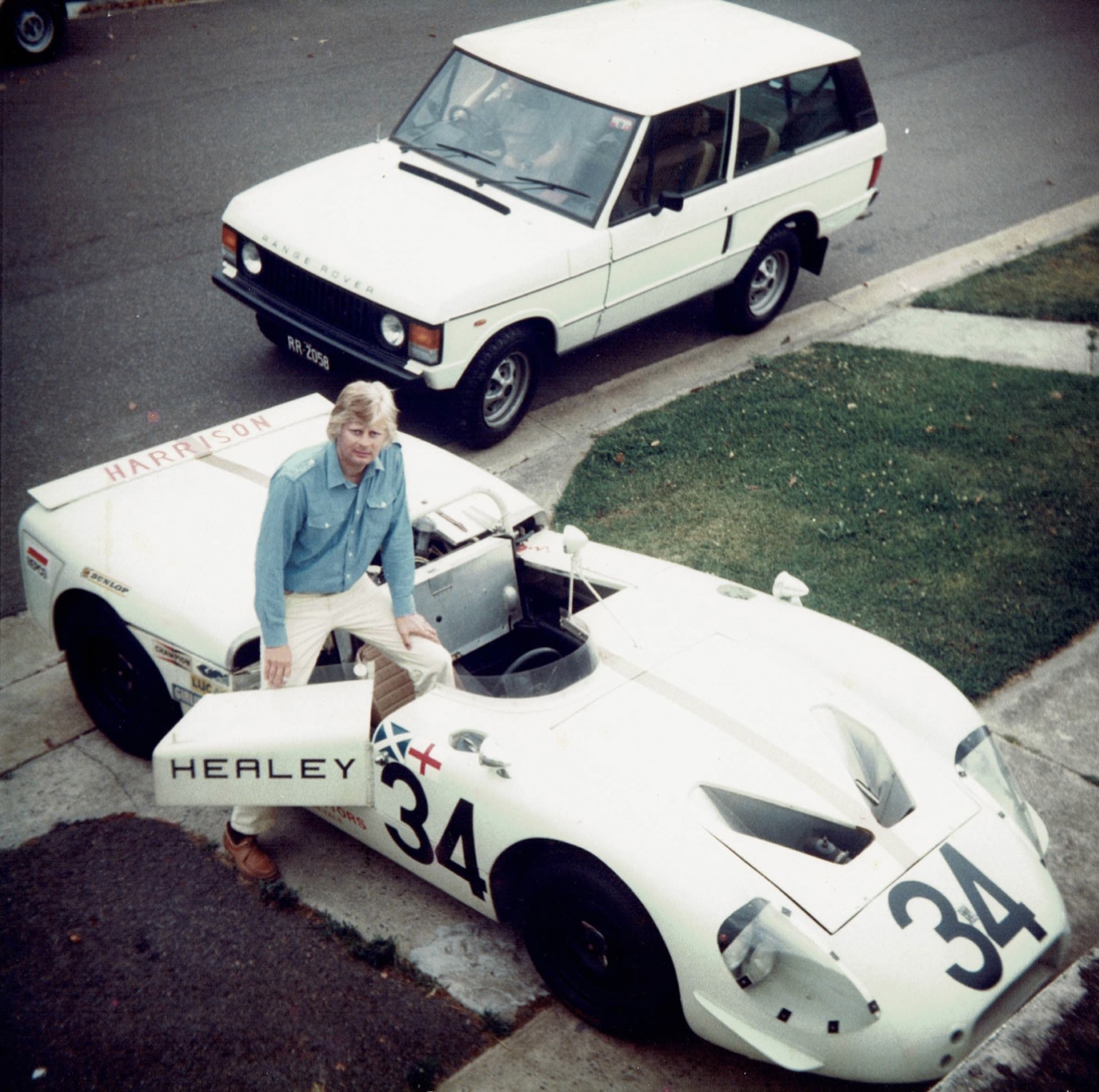
Healey’s Last Le Mans Hurrah: The SR Climax and XR37 Repco V8s
The writing was on the wall for Donald Healey’s future within the British Leyland conglomerate, but while he still held the cheque book, he had one last crack at Le Mans…three actually!
In November 1967, just as the final acts were being played out in his crumbling relationship with the British Leyland Motor Corporation (BLMC), 69-year-old Donald Healey decided to enter Le Mans with a modern mid-engined sports prototype.
The Donald Healey Motor Company (DHMC) had an impressive Le Mans record, having first competed there in 1949 with a Healey Riley. They managed fourth place in 1950 with a Nash-powered Healey Silverstone, sixth in 1951 using a Healey Sport Coupe Nash and then a great third in 1952 with a Nash Healey driven by Leslie Johnson and Tommy Wisdom.
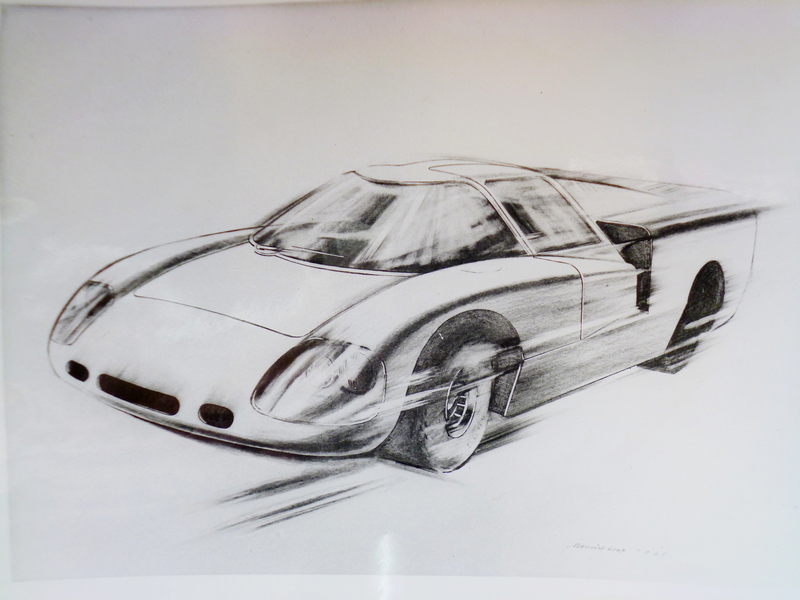
Design and Construction
Healey had to be mindful of BLMC, to which his financial umbilical cord was attached. Still, the slab-sided and otherwise swoopy machine that popped its nose into the sunlight from the Donald Healey Motor Co’s, Coten End, Warwick Experimental Department in February 1968 was a far more serious endurance racer than the modified production class Healeys that had done so well hitherto.
Given his need for speed and secrecy over the winter of 1967-68, the car was designated SR-Sub Rosa or secret in Italian.
Chief Engineer Geoff Healey set to work on the chassis and body design of the SR with Barrie Bilbie, draughtsman/chassis designer, and Derek Westwood. They hit the phones too, calling BLMC buddies and some of the top Motorsport Valley subbies that helped make the United Kingdom the world’s motor racing capital.
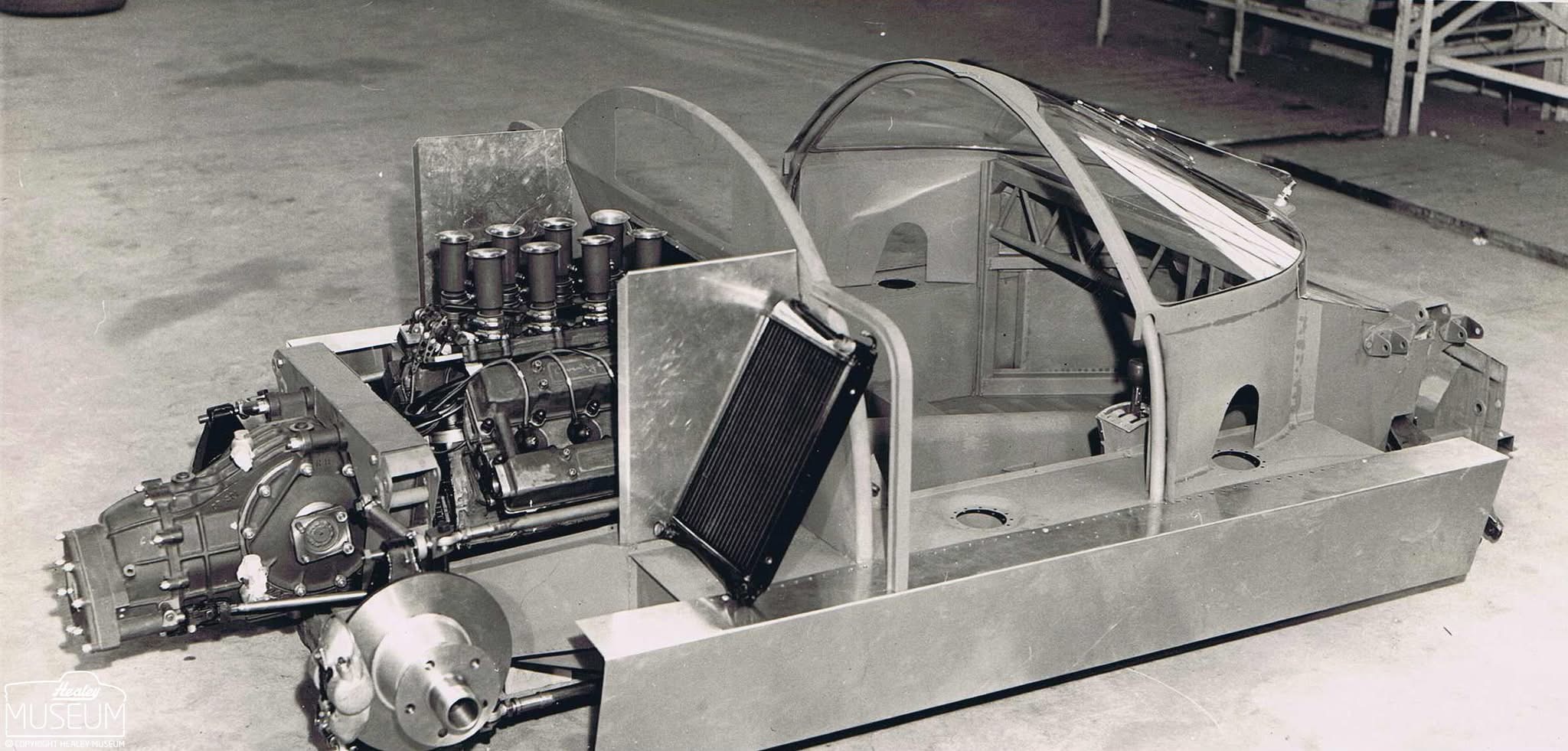
The chassis floor pressing was made by Healey, with other steel and aluminium fabrication by the legendary John Thompson’s TC Prototypes. One complete monocoque chassis was made, plus a spare floor pressing.
The boys at Abingdon provided an MBG rack and pinion steering assembly and MGC front uprights; the rears were of fabricated steel. Front and rear suspension was a period-typical mix of unequal-length wishbones at the front and a single top link, inverted lower wishbone and two radius rods at the rear. Coil springs, Armstrong shock absorbers, and adjustable roll bars completed the mix.
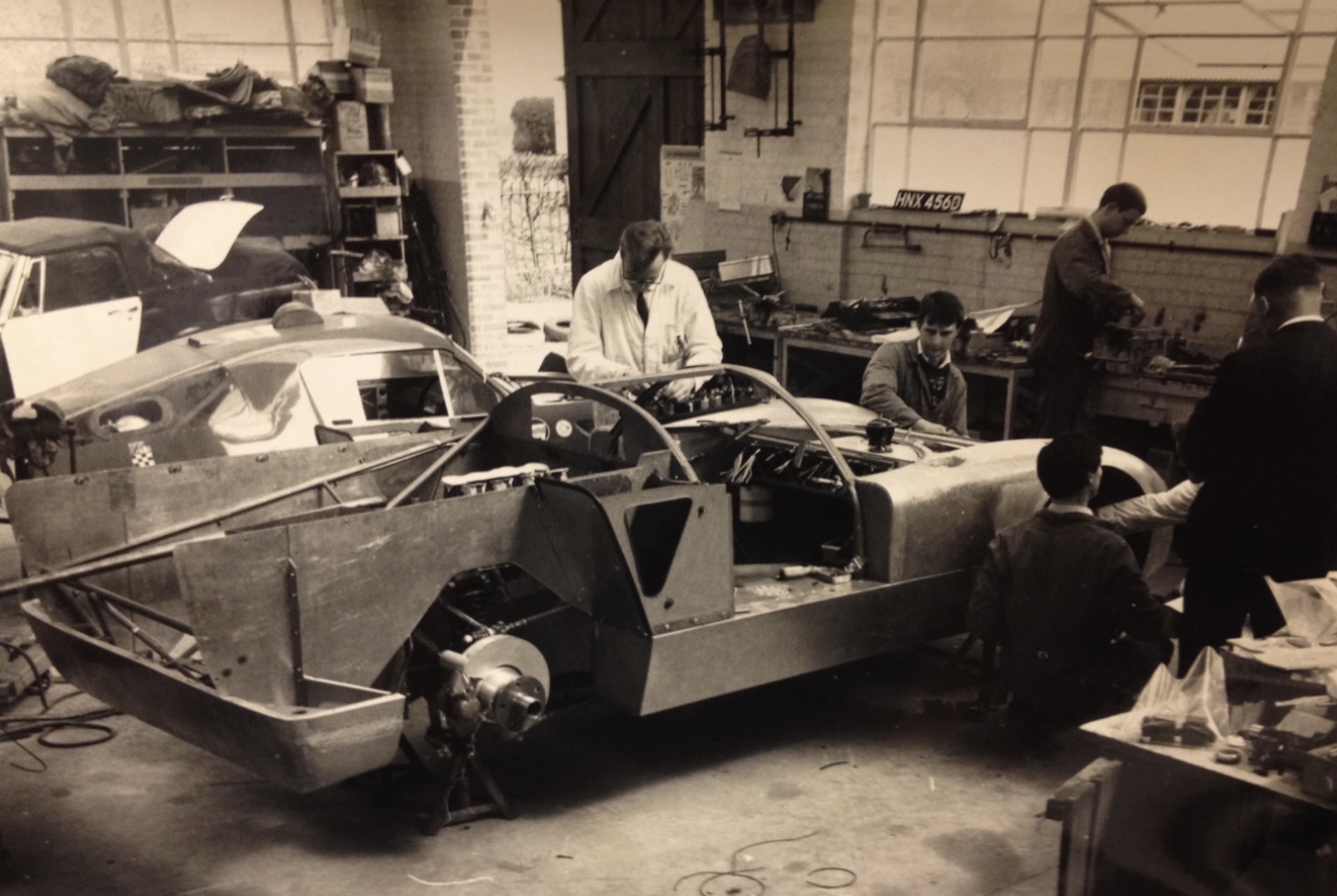
The lightweight body was pure 1960s but distinctive too. Made of Birmabright aluminium-mag alloy sheet formed around plywood body bucks, Bill Buckingham and Terry Westwood crafted it in the Healey body shop. Westwood was an ace welder who fabricated many other components.
Coventry Climax, by then owned by Jaguar, came to the party with the loan of one of the two F1 244bhp @ 8900rpm, two-valve 2-litre Mk 8 Coventry Climax FWMV V8s built for Team Lotus to tide them over in 1966. BRM’s brutal F1 3-litre H16, which was to power Lotus’ planned Type 43 ‘66 GP car, was running hopelessly late.
Looked at objectively, the choice of a highly-strung GP engine built for 200-mile Grands Prix rather than a 24-hour grind seems a tad optimistic, but as events transpired, the SR Climax never lasted long enough on circuit to put the engine to the ultimate endurance test!
‘Wally Hassan, the famous Jaguar and Coventry Climax engine designer, came through (the Experimental Department) on numerous occasions when we were working on the SR project,’ former team member, Paul Stanforth recalled.
The Climaxes’ power hit the road via a Hewland DG300 five-speed transaxle, an F1 ‘box that was vastly over-engineered for this application, and Healey also specified an oil pump and oil cooler. The brake rotors and calipers were Girling, while GKN Kent Alloys provided the electron, peg-drive, centre-lock wheels, to which Dunlop tyres were fitted. Smiths naturally provided the instruments and Moto-Lita the steering wheel in a who’s who supplier list of the era.
The Healey SR Climax was released to an enthusiastic public on February 16, 1968, with early shake-down runs at MIRA and Silverstone carried out by regular test drivers Clive Baker, ‘who came up from Devon, and Coventry-based John Harris,’ Stanforth said.
‘DHMC’s race focus then was on Sprites, which mainly competed at Le Mans, the Targa Florio, Sebring and Nassau, then along came the big SR project.’

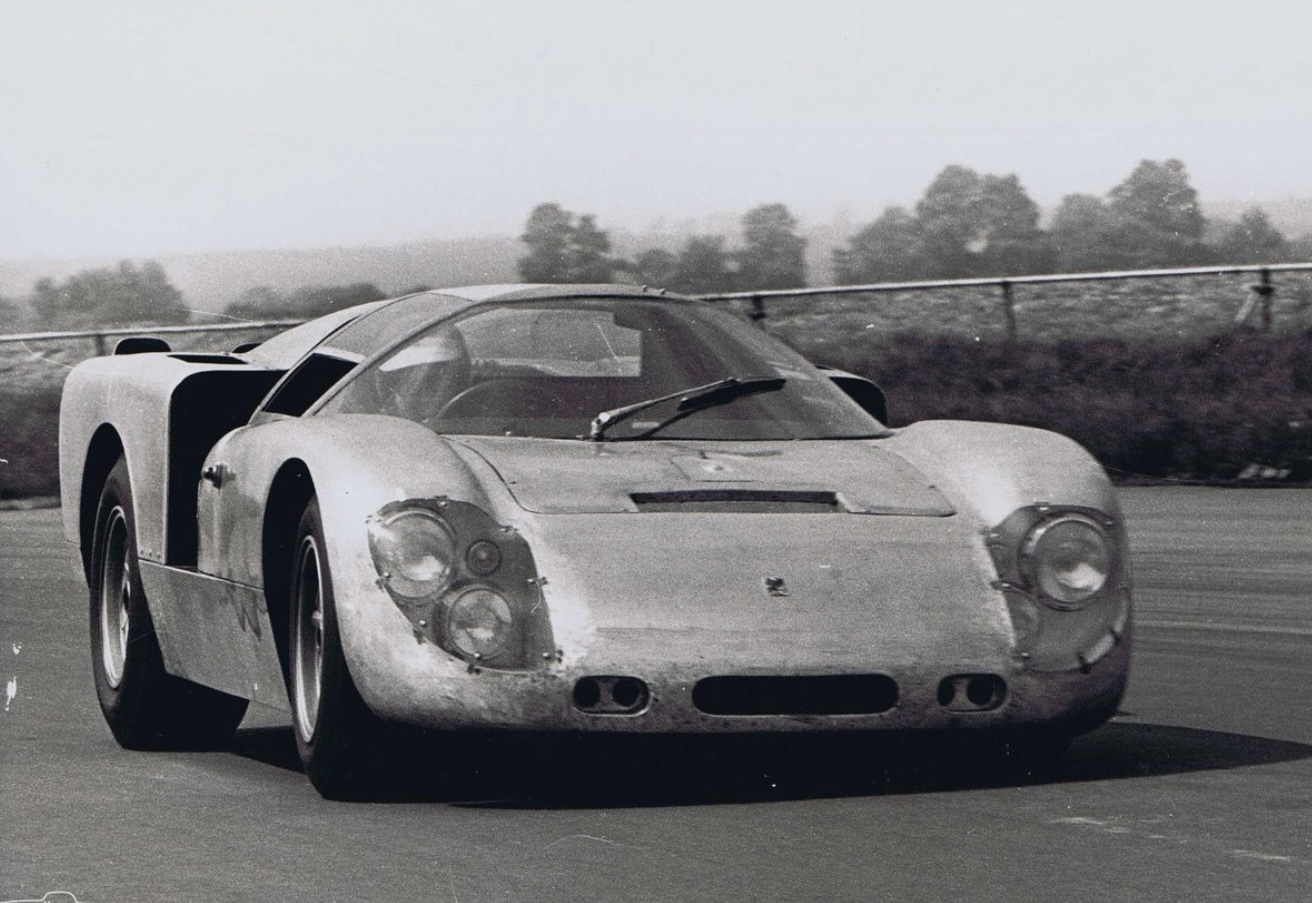
Several setbacks slowed development, and in relatively unsorted form, the SR was taken to the Le Mans test weekend on April 7.
The 1968 classic endurance event was postponed from its usual June date until September, given political unrest in France at the time; a development bonus for Healeys!
The SR was officially launched at the Austin Healey Club’s Silverstone race meeting in August, where John Harris ran some fast test laps and provided plenty of press photo opportunities.
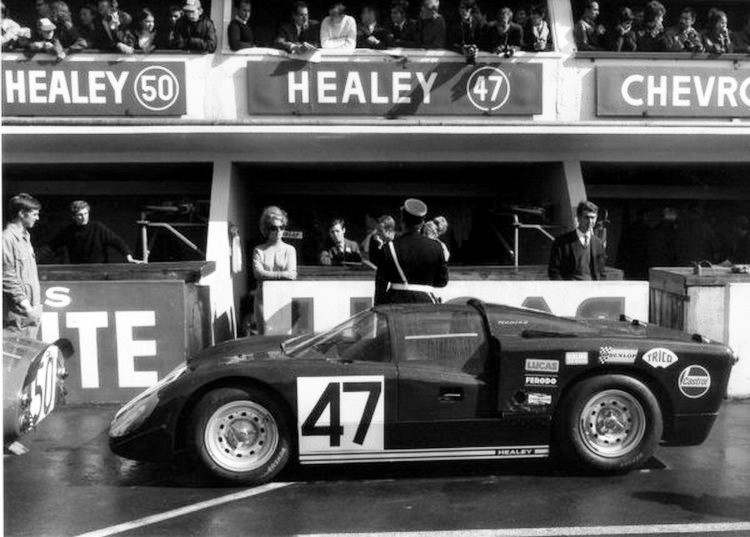
Le Mans 1968-69: Healey SR Coventry Climax 2-litre
DHMC took a Sprite and the SR, a 2-litre prototype, to La Sarthe in ’68. The Top 2-litre Guns were the Alfa Romeo T33B/2 V8, Porsche 910 and Ferrari Dino 206S.
‘I was taken over together with Clive Hendry and Mick Guest, the two main mechanics and a couple of others, to look after the Sprite.’
Andrew Hedges and Clive Baker were the SR’s drivers. Hedges mixed appearances for Britain in Alpine two-man bobsleigh competition, including the ’64 Olympics at Innsbruck, with his burgeoning motorsport career. Baker was a talented Torquay businessman who first raced a Sprite for DHMC at Le Mans in 1964.
After some gear ratio and set-up changes, particularly the addition of an aluminium scoop fabricated to enhance airflow over the windscreen to the Lucas fuel-injection system, the car was credited with a 4:22.1 qualifying time, and all looked good for the race.
A wet track and damp ignition caused an early unscheduled pit stop, but the car retired after completing only 14 laps during the fourth hour. A clutch release bearing seized to its sliding spigot. With the clutch in the released position, no drive made its way to the gearbox.
After substantial debriefing sessions with the drivers and engineering team, the car was modified before another assault in France the following year.
While Koni adjustable shock absorbers replaced the Armstrongs, most of the changes were made to the body and related aerodynamics, the rear of which was lowered by three inches.
The two small water radiators mounted on either side of the body were replaced by a single unit mounted behind a slightly smaller air intake. The oil cooler was moved from the front to the rear wings, and a small aerofoil was fitted to the rear. This resulted in improved cooling and reduced the frontal area, and the SR’s top speed on Le Mans’ long straights was enhanced.
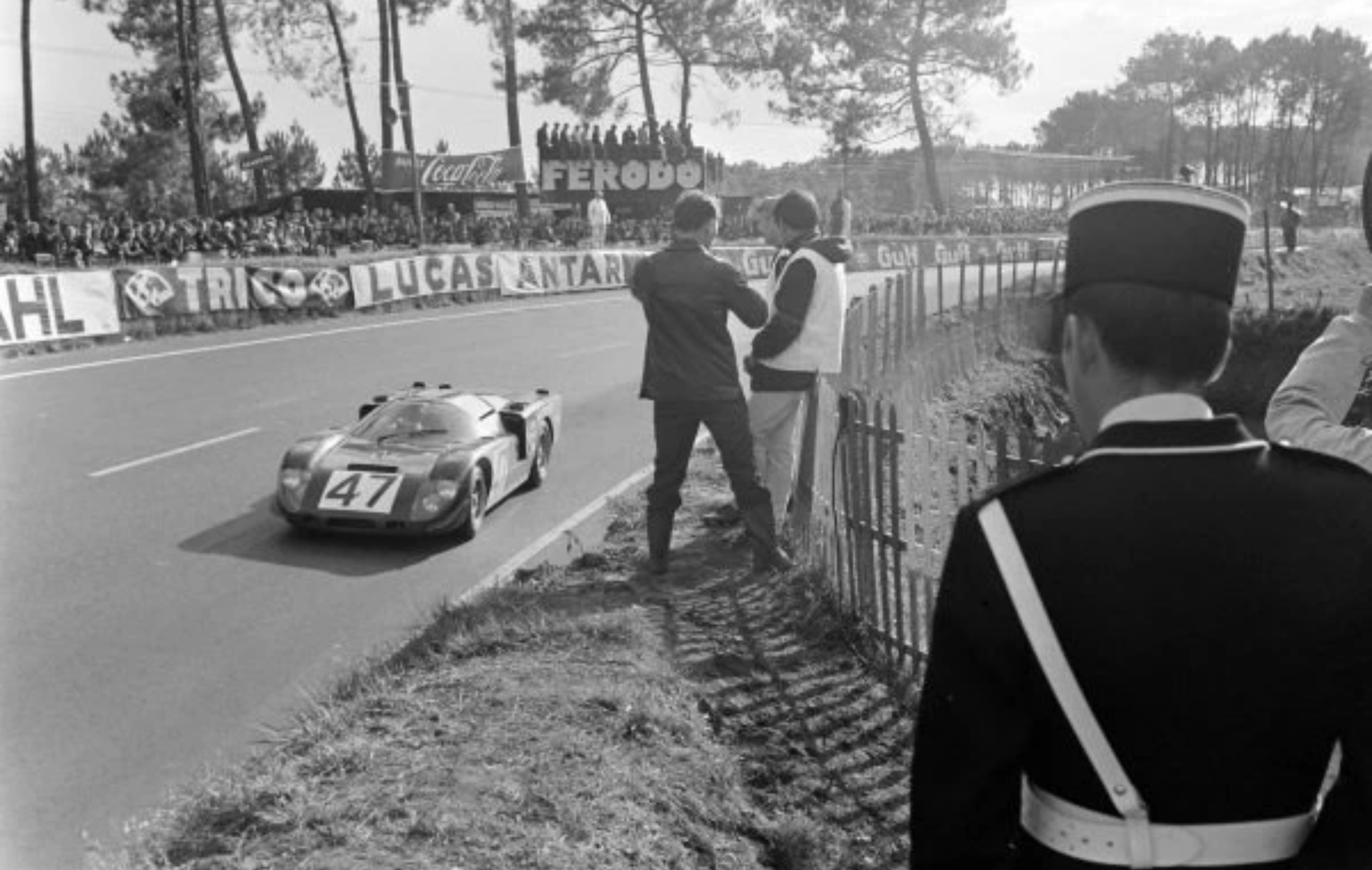
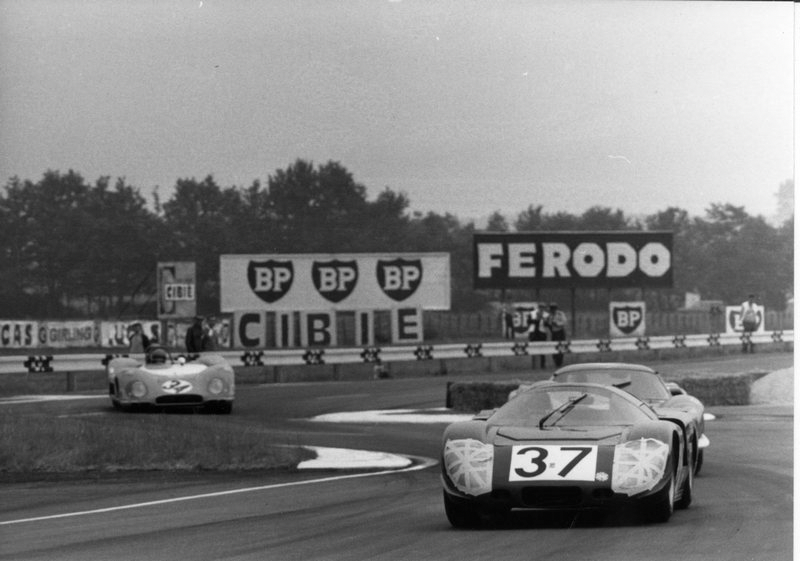
Not only was the machine slipperier, but it was a smidge lighter too; the Le Mans scrutineers tipped the SR on its scales at 928kg in 1968 and 920kg in 1969.
John Harris did a 4:19.2 lap during the Le Mans test weekend on March 29/30, 1969 and raced the car with Baker. Harris recalled, ‘Clive knew Le Mans like the back of his hand, having driven there for ages. We were there for hours, and it ran perfectly with no problems.’
Baker and Harris were mates. John came up through the ranks from an Austin 7 Special, then Minis, a Sprite and an ex-DHMC Austin Healey 3000, his performances in which caught the work’s attention.
Harris wasn’t keen on the non-synchro Hewland DG300; he was a champion of the ZF 5DS five-speed synchro-box fitted to the Ford GT40 (#P1023) that he raced throughout 1967. ‘I drove that car for a whole season, and the synchros never failed. Eventually, after many two-hour stints, you’ll not be changing gear quite as well. With a ZF synchro box, there wouldn’t be a problem.’
The SR’s qualifying time of 4:13.7 was respectable enough, but again, the race ended in early departure and disappointment.
Baker did the first stint during which the now front-mounted radiator was damaged from debris caused by the lap one fatal accident that befell John Woolfe’s Porsche 917, and the resultant overheating caused head gasket damage.
The 2-litre prototype class was won by the Christian Poirot/Pierre Moublanc Porsche 910, which was ninth outright, with the Jacky Ickx/Jackie Oliver Ford GT40 up front.
The borrowed Coventry Climax V8 was returned to Coventry Climax as DHMC’s thoughts focused on the 1970 event.
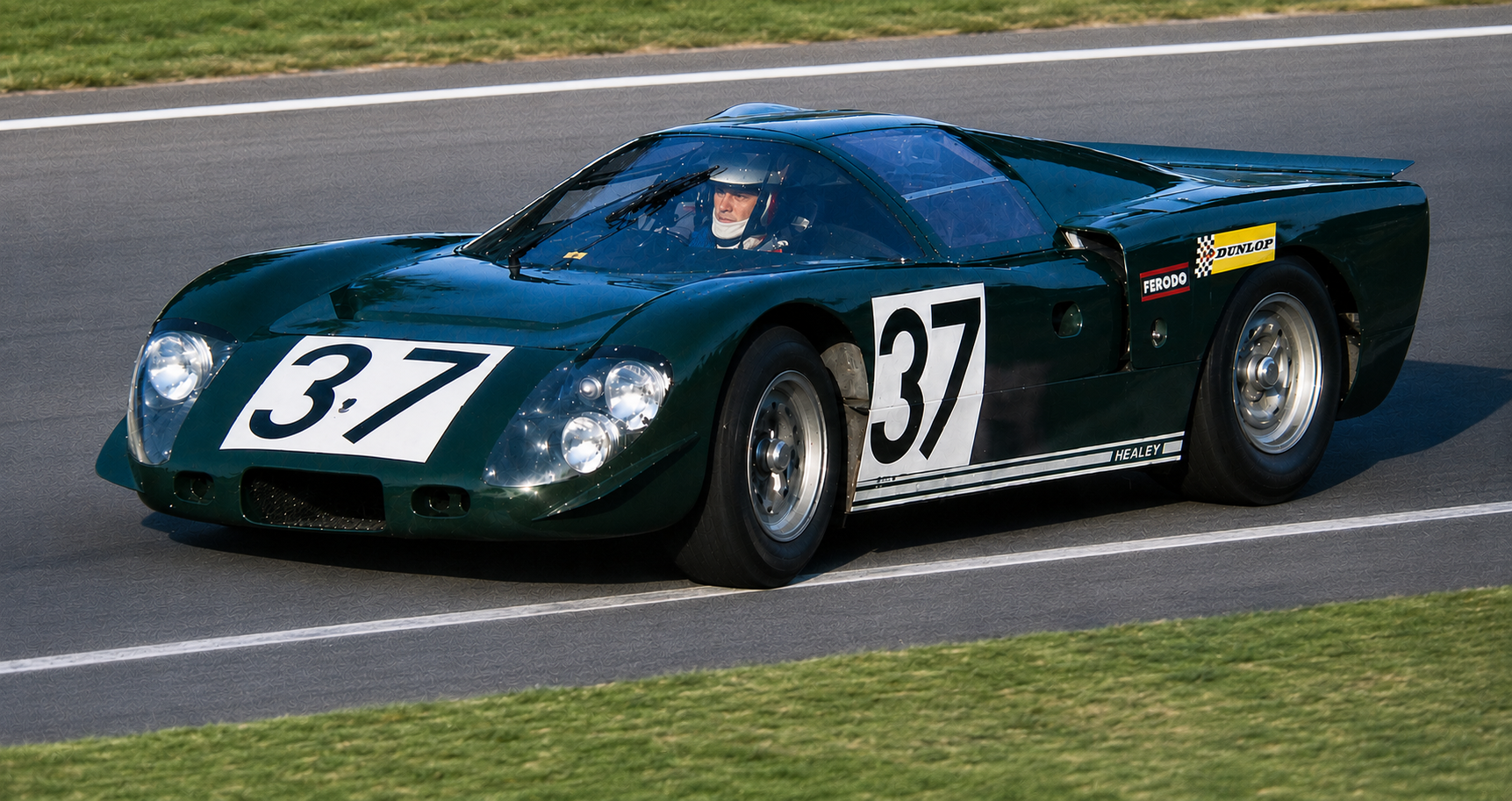

Le Mans 1970: Healey XR37 Repco-Brabham 3-litre
If Healey raced at Le Mans again, they had to come up with a new car as the rules provided that a prototype could only compete twice.
The company’s cagey response was to use the same chassis reconfigured as an open Spyder. ‘Jaguar’s Bill Heynes and Malcolm Sayer helped with the body aerodynamics,’ recalled later owner Robert Harrison.
Other substantial changes involved an increase in wheelbase by six inches to provide greater stability, and wider wheels and tyres to exploit the prodigious advances in tyre technology. Bigger brakes were fitted, ventilated on the front, and the circa-240 bhp 2-litre Climax V8 was replaced with a 340bhp @ 8500rpm 3-litre Repco-Brabham 740 V8.
‘The Brabham Racing Organisation loaned the RB740 to Healeys when they were based in Guildford. It was about the time Jack Brabham’s and John Judd’s Engine Developments business started in Rugby,’ Harrison said.
Australian racer Mike Stillwell did a stint at Engine Developments in 1970 and recalled that ‘the workshop had lots of Repco-Brabham V8s in various stages of completion and sale. Brian Muir – UK-domiciled Australian sports and touring car racer – was working on them.’
Brabham had sold his shares in Motor Racing Developments (Brabham Cars) to Ron Tauranac at the end of 1969. Doubtless, realising the value of now surplus Repco-Brabham V8s – Brabhams having gone with Ford Cosworth DFVs in 1969 – Jack was keen to sell all of the old Repcos.

While it, too, was an F1 engine, the RB740 was a canny choice. Norman Wilson’s 1967 F1 Drivers (Denny Hulme) and Manufacturers Championship-winning engine was a simple, and relatively under-stressed, low-revving, all-aluminium, chain-driven, SOHC, two-valve, Lucas fuel-injected V8 that had plenty of mid-range torque, about 230 lb-ft from a low 6500rpm; a hallmark of all the RB V8s. It wasn’t a bad bet that was designed to be used in front of the DG300 Hewland.
A new car needs a new name, of course, XR37 was arrived at thus: X-ex, R-Racer and #37 was the SR’s ’69 Le Mans number.

The car was driven very well in the race by Andrew Hedges and Roger Enever. Enever, the son of MG Chief Engineer, Syd Enever, made his name with great pace in 138DMO, a factory Mk 2 Midget. He later raced a works Sprite to 11th place at Le Mans in 1968.
The light, 845 kg – remember, the ’69 SR was 920 kg – car missed the Le Mans Test Weekend but had done plenty of laps in the hands of its drivers at Silverstone.
There was no shortage of 3-litre prototype works-team contenders that year: Porsche 908/02 Flat-8, Alfa Romeo T33/3 V8, Matra-Simca MS650/660 V12, plus an ex-works Ferrari 312P V12.
The battle for outright honours was famously fought between the works Porsche 917 4.5/5-litre Flat-12s and Ferrari 512S 5-litre V12s, with Porsche taking their first outright victory, the winning car driven by Hans Hermann and Richard Attwood.
In a race of unbelievably high 3-litre prototype attrition, the low-budget Healey driven by a pair of experienced endurance campaigners rose as high as tenth before retiring only 14 minutes short of the 24 hours!


The Healey lost over an hour and a half while a faulty clutch ring was replaced, and later had a minor shunt with a Porsche in the rain. Works supervisor, Jim Cashmore, rose to that challenge by lying on the pitlane road and bending the bodywork back into shape with his long, strong legs!
‘The Le Mans engine prepared by Judd gave 322bhp @ 8500rpm and 306bhp @ 7500rpm, and at that 7500rpm limit, the car lapped at an average of about 126.5mph when the body was intact. Andrew Hedges claimed a top speed of 205mph,’ Harrison wrote.
Jack Brabham showed plenty of paternal interest in the car, ‘spending a lot of time in the Healey pits after his Matra failed.’ Brabham, in his final international season, shared a works Matra MS650 with French rising star Francois Cevert; the pair had engine failure in the 7th hour.
Repco’s F1 V8 did rather well until an ignition ballast resistor retaining rivet shook loose. Without sparks, the motor died, and with it went a seemingly certain 14th place. Only three of the 3-litre prototypes finished – first in class was the third outright Martini Racing Porsche 908/02 crewed by Rudy Lins and Helmut Marko – with the 17th placed Hedges/Enever Healey beating all of the works Alfas and Matras! It was quite a performance despite the setback so close to the end…
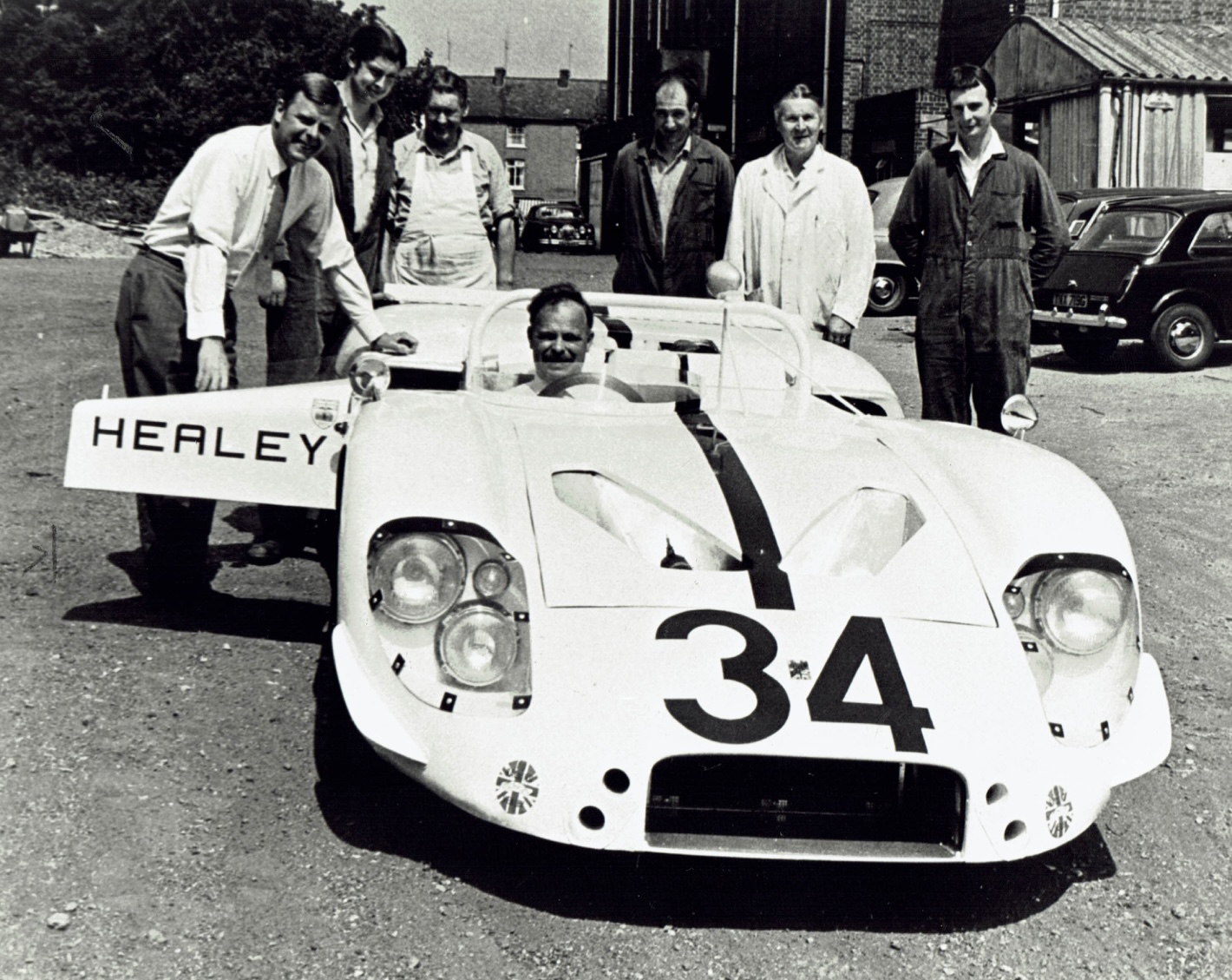
Healey XR37 and Premature Retirement
‘Immediately after Le Mans, Steve McQueen, a great friend of Donald Healey’s who had raced a factory Sprite Mk 2 at Sebring in 1962, asked Donald if he could use the XR in the filming his epic Le Mans film, but the damage to the car made that difficult, so too were the logistics of looking after it, but the car appears in the movie.’
When the team returned to Warwick, the engine was dispatched back to Engine Developments, and the DHMC put the SR-XR37 up for sale, with Australian Healey enthusiast Robert Harrison the purchaser.
He had Austin Cooper S and Elden Formula Ford race experience in the UK, had not long before bought an Austin Healey 3000 Mk3 BJ8, and his father had become a mate of Brian Healey.
‘I’d got interested in Healeys via my father in the 1950s. I bought the BJ8 on credit and repaid it over four long years! When the XR37 came up for sale, I just had to have it. I loved the thing, even drafting a cutaway drawing and making a model of it during my engineering course,’ Harrison recalled.
‘Dad knew I’d want to race it if I bought it, so I waited until my parents went overseas, then bought it and then faced the music when they got home!’
Robert shipped it to Australia, but not before trying unsuccessfully to obtain Australian backing for another Le Mans attack in 1971! It has been in Robert’s hands since.
‘Healeys had returned the Repco engine they had raced, another 740 engine, worth about £2000 then, which had a slightly different sump, came with the car and parts I bought. Jack and John Judd supplied comprehensive installation drawings, instructions and parts in a huge, turquoise-painted wooden box with “MRD F1” painted on it in yellow.’
‘They and the Healey family were incredibly helpful, remaining friends; I still keep in occasional touch with John Judd,’ Robert Harrison said.
‘We (DHMC) planned to enter the XR at Le Mans in 1971 after I bought it. I approached Qantas, the Commonwealth Sugar Refinery, the Australian Wool Board and some other corporates for sponsorship. Qantas showed initial interest, but the deal fell through when somebody internally discovered a clause in their constitution which precluded them from sponsoring dangerous activities,’ Harrison ruefully recalls.
In their later publicly listed form, Qantas were a naming rights sponsor of the Australian F1 Grand Prix on eight occasions, all of which were a long way off in 1971!
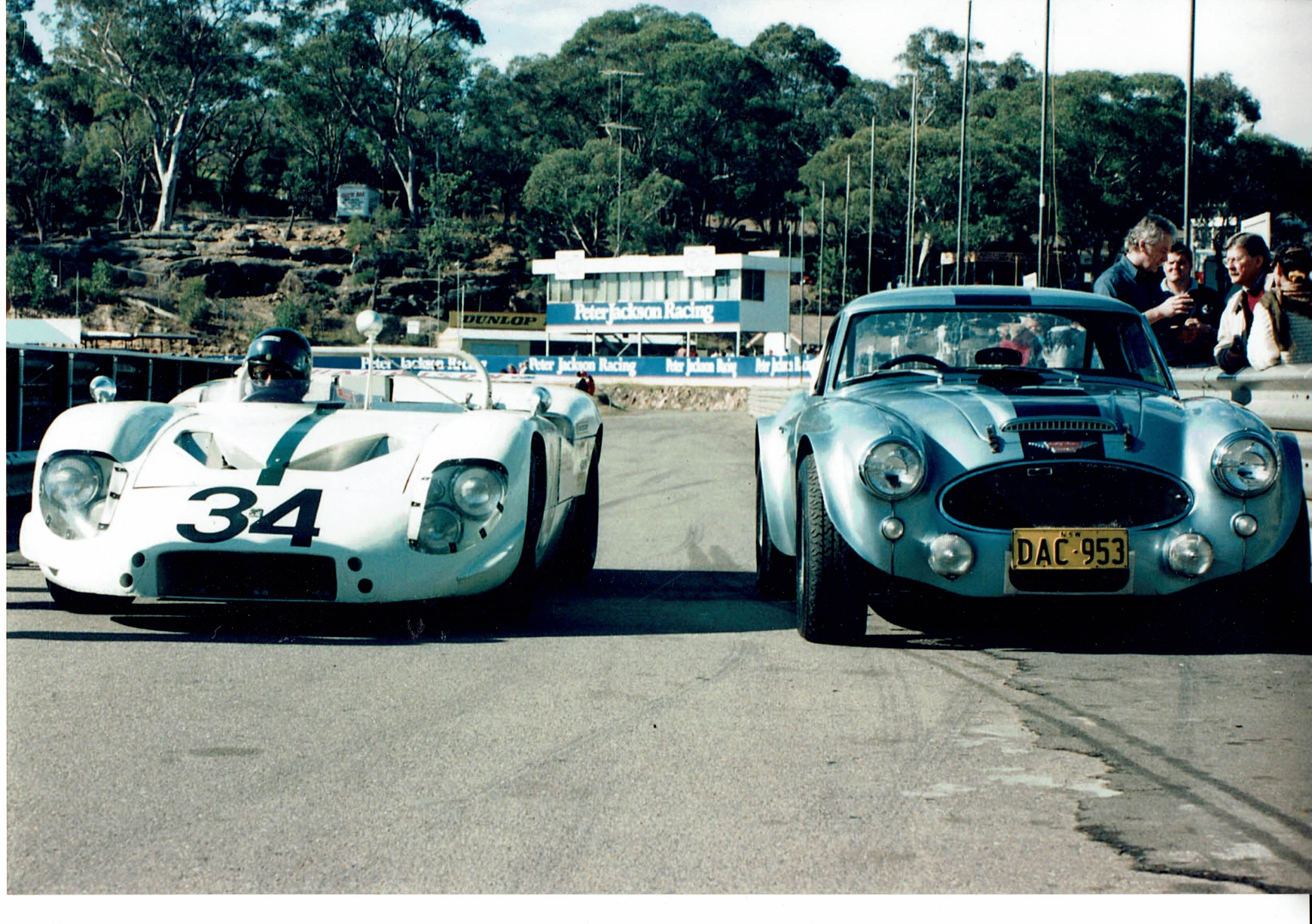
While the car missed Le Mans, the XR37 Repco would have been a competitive machine in the Australian Sports Car Championship for several years, but Robert was true to his word with his parents and didn’t ever race it.
Four of the top six cars in the 1971 championship were powered by Repco-Brabham V8s, with John Harvey’s Bob Jane-owned McLaren M6B Repco 740 5-litre V8 at the head of the pack. SR XR37 would have been up there!
‘The car was rather heavy; I refrained from racing it here against the lightweight racing sports cars of the day, the Elfins and Rennmaxes. The magnesium body is prone to damage too.’
The XR37 broke Australian cover at the Sydney Motor Show at Moore Park in October 1971 and has been an occasional – and wonderfully unrestored – beauty-queen at Sydney car club/concours events over the years, such as the Seaforth Grand Prix sprint meeting, in amongst many enjoyable on-circuit test-sessions in Rob’s hands.
‘I’m glad the XR wasn’t damaged as it’s an unrestored time warp and I love the smell of Avgas and R30 that permeates the car to this day,’ and so say all of us, Robert Harrison!

Reconstructions and Replicas
Remember that second-floor pressing? It and a bundle of parts were bought by Geoff Healey from DHMC in March 1970 (above). The receipt records: ‘From DHCM to GC Healey for the purchase of 1 Used Healey 2-seater Sports Car, Regn.No. RUE716G, Chassis No. S.R.2. Engine No. 33107 (V8 Oldsmobile) Colour: Green. dismantled.’
Geoff didn’t keep the SR for long before selling it to his friend Owen Swinerd, with an agreement that Geoff had first right of refusal if Owen wanted to sell. Healey progressively found Owen many of the original drawings and factory photographs of the SR build, as well as publicity shots and related bits and pieces.
Owen kept it for many years after Geoff’s death, before eventually offering it for sale. The successful purchaser was Adelaide Healey, owner/businessman Tom Barr-Smith. His pile of components included bits left over when the 1968 SR was modified for the ’69 race; he bought a Healey Elliott at the same time.
The Healey Factory in Melbourne and renowned Adelaide race-shop K & A Engineering then created the Healey SR that took an international bow at the 1998 Goodwood Festival of Speed, having already done the Classic Adelaide Rally and various Healey club events in Australia.
The SR was recreated with a 3.5-litre aluminium 405 bhp Oldsmobile F85 V8 running four downdraft Weber carburettors. It’s an apt choice as the early-1960s aluminium BOP (Buick Oldsmobile Pontiac) motor was considered for the SR in 1967. It can be seen on a workbench behind the car in some construction shots; it’s the motor described as #33107 on the 1970 DHMC invoice.
Subsequently, with a global epidemic of replica construction, an SR replica was built in the UK by Brian Wheeler. With an aluminium chassis, this car is powered by a 3.5-litre Rover engine and uses a Renault 30 transaxle and suspension components from a variety of donor cars.
The Healey SR/XR isn’t perhaps the ex-racer most likely to make die-hard Healey traditionalists all misty-eyed, but didn’t Donald Healey have a red-hot go with those three final Le Mans campaigns? Healeys to remember indeed!
Etcetera…

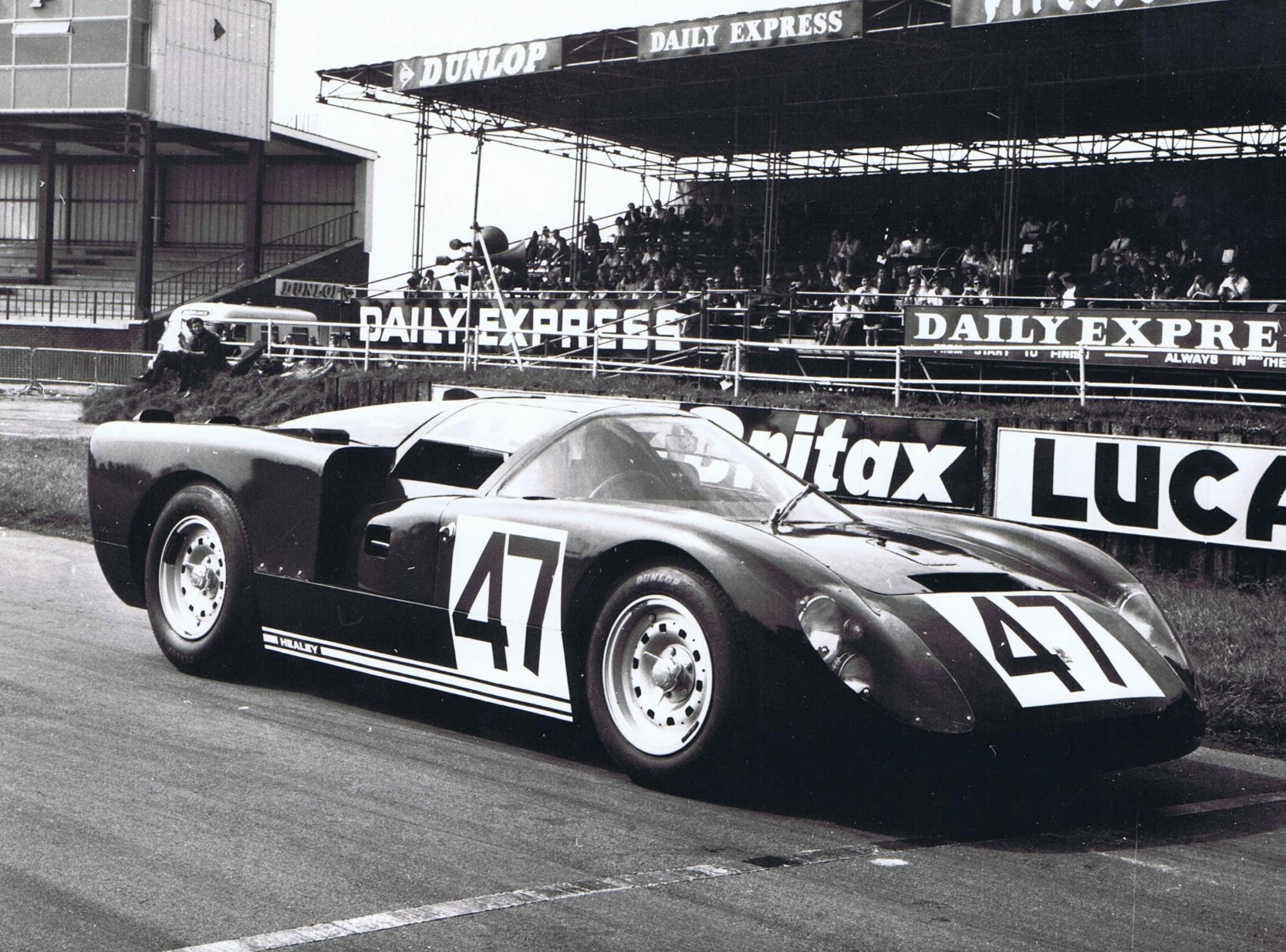
Silverstone is the site of these two images, with John Harris the driver. The event was an Austin Healey Club event in August 1968, before Le Mans, which was that year run in September that year, given the civil unrest in France at the time.
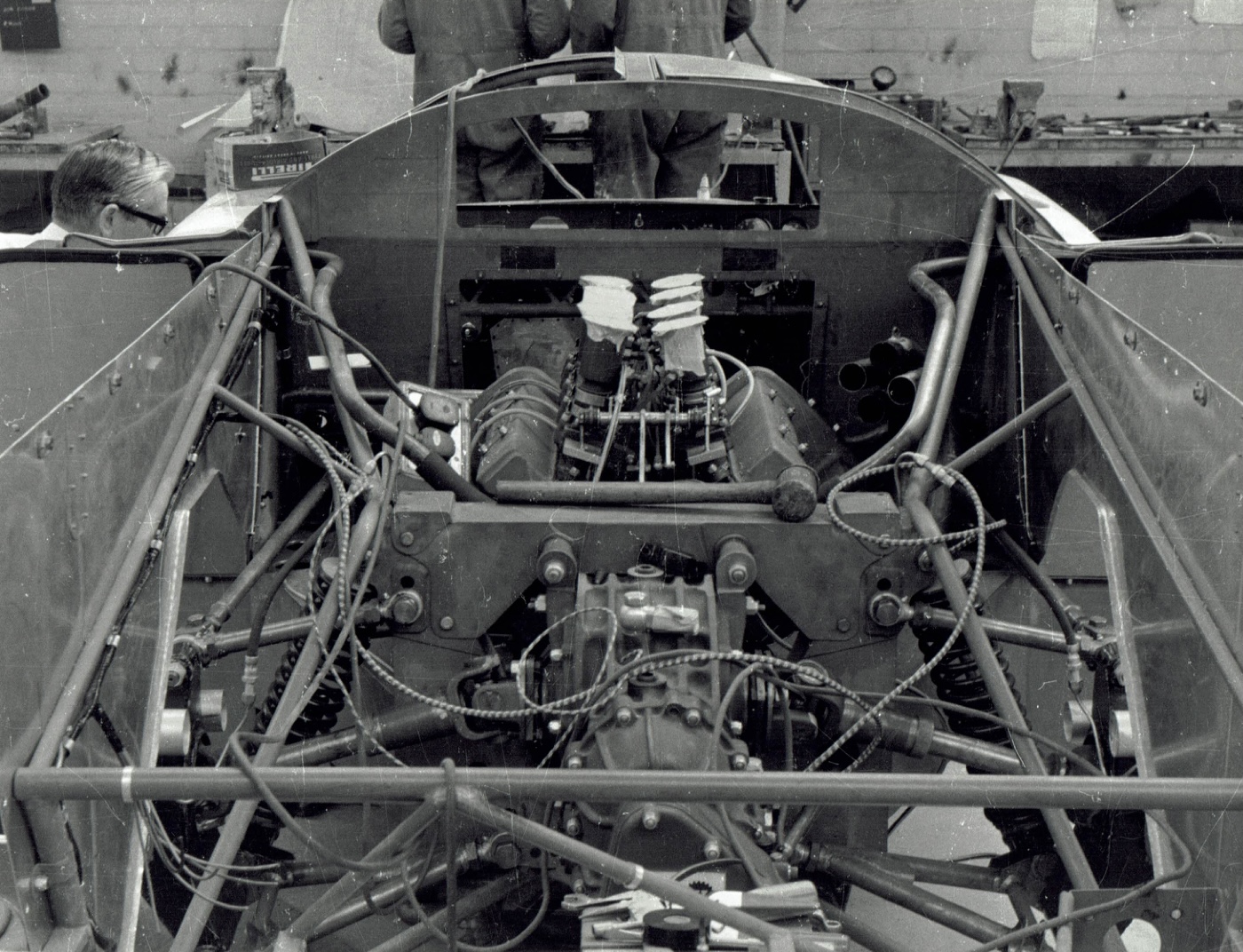
SR in-build in early 1968. Note the very substantial fabricated steel diaphragm/bulkhead to which the Coventry Climax FWMV 2-litre V8 and Hewland DG300 gearbox are attached, which is in turn attached to the monocoque chassis by a network of round steel tubes.
The rear suspension is a period-typical mix of single top links and inverted lower wishbones, coil spring/damper units, fabricated steel uprights and an adjustable roll bar.
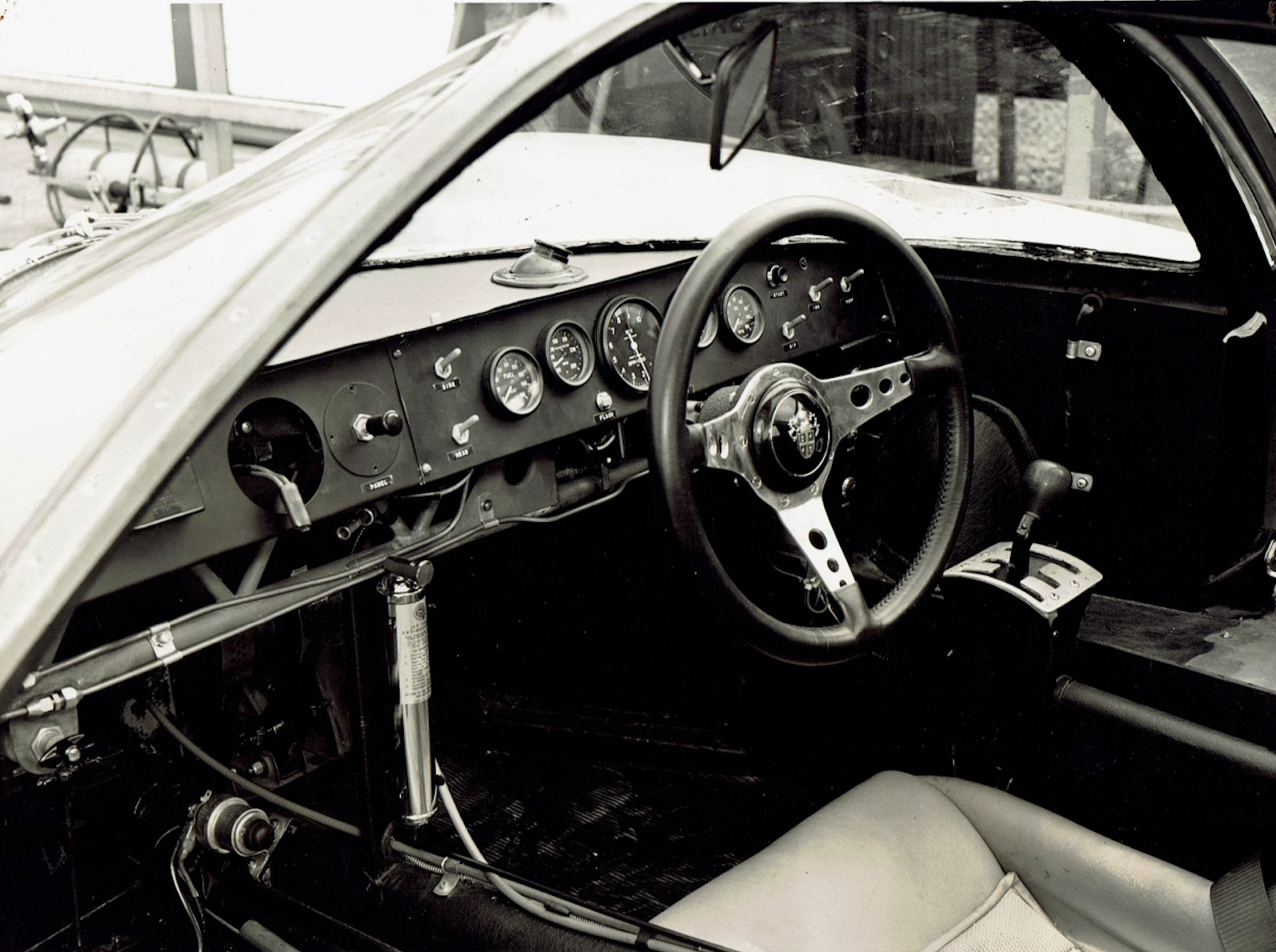
That Moto-Lita steering wheel would be familiar enough to many of us who fitted them to our roadies together with a Paddy Hopkirk pedal-extension! The gate for the DG300 is unusual, but doubtless helped avoid wrong-slotting. Smiths instruments and switchgear of course.
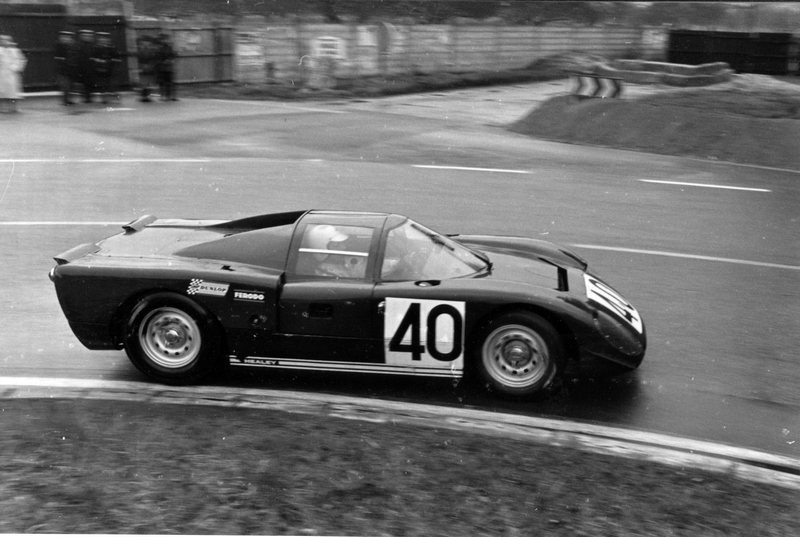
John Harris in the Esses at Le Mans during practice in 1969 with the SR Climax V8 using its original number 40, it raced wearing #37. Clive Baker qualified it 32nd with a time of 4:13.700, an average of 191.120 kmh.
Credits…
Tony Parkinson, Stephen Dalton, Robert Harrison, many thanks for working with me to create something accurate, Maurice Heap, Healey Archive/British Motor Industry Heritage Trust, Jim Culp, Sports Car Digest, Stuart Spencer
Finito…

