Posts Tagged ‘John Surtees’

image

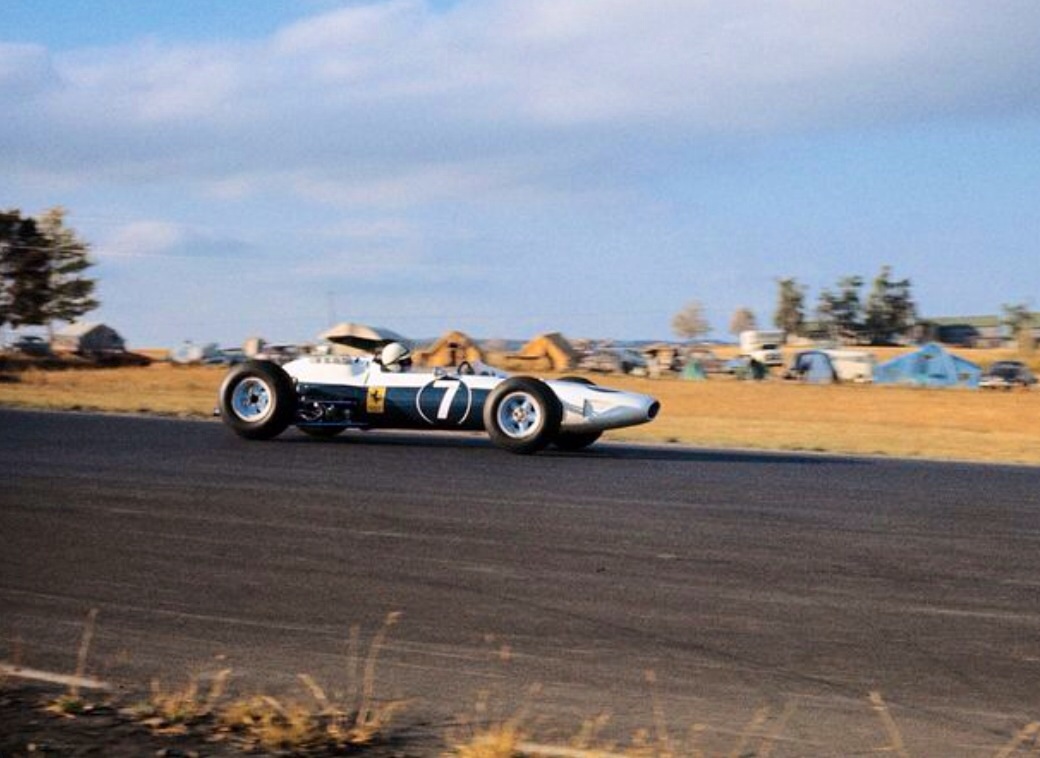
John Surtees races his North American Racing Team Ferrari 158 to second place at Watkins Glen on October 4, keeping alive his ultimately successful 1964 title chances…

Enzo Ferrari was in a spat with the Italian governing body at the time over its refusal, Ferrari having failed to build the minimum number of cars, to homologate the sports/racer Ferrari 250LM as a Sportscar. The result of which forced entrants to race it as a Prototype, a category in which it was not competitive and not designed for; putting aside the lucky, outright 250LM Le Mans win for Masten Gregory and Jochen Rindt in 1965!

image

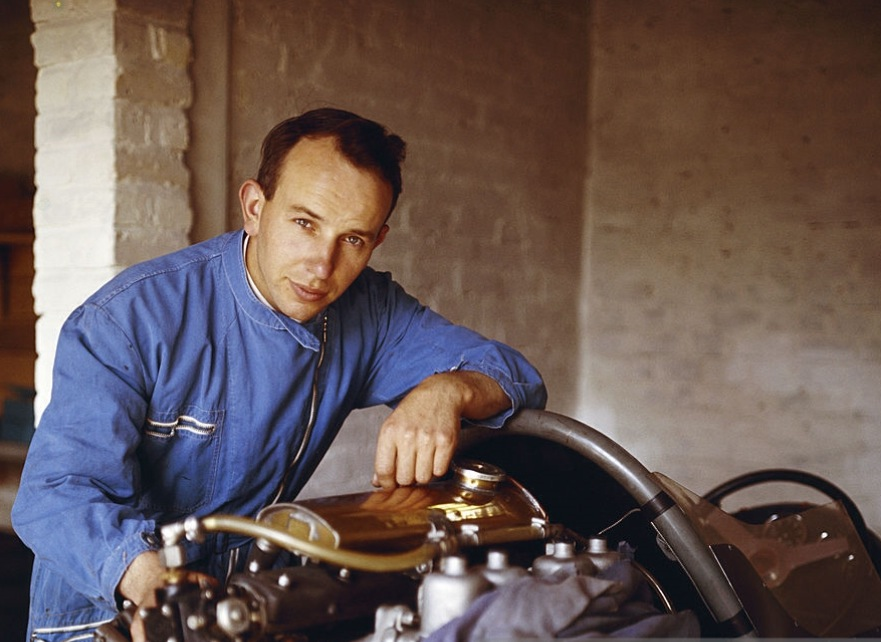
Test session for the Ferrari 158’s, one of which is in NART colors, on 15 September 1964. John Surtees in drivers overalls, Technical Director Mauro Forghieri to his left, mechanic Giulio Borsari in the white cap. Modena Autodrome (GP Photo)

Not that the Italian autocrat was going to let principle, as he saw it, get in the way of practicality.

There were Grand Prix World Championships to win so rather than race in traditional racing red he ‘relinquished his entrants licence’, the cars, works cars in every way, shape and form being entered by Ferrari’s concessionaire in the US, Luigi Chinetti’s N.A.R.T at both the final two 1964 championship rounds at Watkins Glen, New York State and in Mexico City.

Surtees second placings in both races gave him the Drivers title and Ferrari the Manufacturers from Graham Hill’s BRM P261 by 9 points.

‘Honour’ and title won, the Ferrari’s raced on in Italian Racing Red and the 250LM as a prototype, much to its private entrants chagrin.

image

Surtees ready for the off, Modena 15 September 1964 (GP Photo)


The Vic Berris cutaway above is terrific in showing the semi-monocoque ‘aero’ construction Ferrari used for years whereby aluminium sheet was riveted and glued to a frame, let’s call it a spaceframe underneath.

image

Etcetera…

Lorenzo Bandini being attended to in the Spa pits during the June 1964 Belgian Grand Prix weekend.

Great shot of the engine and gearbox and bulkhead in between- note also inboard rear discs and calipers. #10 is the nose of the Surtees 158.

It wasn’t a great weekend for the Ferrari boys, both retired with engine dramas, John in the lead after completing only three laps and Lorenzo after eleven- Jim Clark won in a Lotus 25 Climax.

Photo Credits…

For all shots ‘Grand Prix Photo’ except Vic Berris cutaway drawing

Tailpiece: Camper’s delight as Surtees Fazz speeds past, Watkins Glen ’64…

image

(unattributed)

Finito…

image

Barry Sheene laps Brands Hatch in a 1976/7 Surtees TS19 Ford in his first F1 drive on 25 April 1978…

It would have been interesting if Bazz gave cars a ‘red-hot’ go from about then, born in 1950 he was 28 and had already won the 1973 Formula 750 and 1976/7 500cc World Titles for Suzuki.

Not too many motor-cyclists have made the transition from bikes to cars successfully at elite level. Three spring to mind; John Surtees, Mike Hailwood and less obviously Johnny Cecotto. His speed and race wins on bikes flowed into F2 drives, badly broken legs in his Toleman Hart during 1984 British GP practice, he had already banged himself about on bikes, ended an F1 career of great promise.

image

Buckle up. At the time the Surtees TS19’s were being raced in the British F1 Series, so were ‘still current’

Sheene still had unfinished business on bikes though; always a threat when on a decent machine, he raced on in 500’s, his battles against Kenny Roberts the stuff of legend, his last win the 1981 Swedish GP.

An accident at Silverstone during 1982 British GP practice was one too many. He hit a fallen competitors obscured bike at around 160mph, slid for 150 metres, breaking both legs again, and an arm. Undimished, Sheene had enormous courage and resilience, he raced on into 1983 on a semi-works Suzuki even finishing 8th in the British GP 12 months after the awful accident. Unsurprisingly, his ultimate edge was dulled, he retired from bikes in 1984.

image

Place, date and bike unknown (unattributed)

Barry did race touring Cars and trucks prior to emigrating from the UK to Oz in the late 1980’s, he left his beloved Britain in search of sun to help ease arthritis partially caused by his many race prangs down the years.

An immensely likable character, he was soon as popular here as in Europe mixing property development, motorsport TV coverage and commentary with product endorsements. He and Oz Touring Car Legend Dick Johnson did a series of TV ads for Shell for years which both polished its brand and were iconic in terms of their laconic humor. Sadly lost to cancer at the all-too-young age of 53 in 2003.

image

Isle of Man 1971, Barry Sheene at Quarter Bridge after crashing out of the race in apalling conditions whilst 2nd in the 125cc race on his Suzuki. His only IOM TT race. 21, how young does he look!? (Bob Thomas)


image

‘you missed the apex by that much!’ Sheene, George Harrison and John Surtees, Brands during the test

image

Barry, George and those Linea Sport overalls so period!

Credits…

Roger Lings, Bob Thomas, Patrick Litchfield, Keystone France

Tailpiece: You can be certain the one thing, ‘the two amigos’ aren’t talking about is Texaco…

image

22 May 1978 (Litchfield)


surt

(Getty)

John Surtees smiles for the cameras with his Ken Tyrrell Racing Cooper T51 Climax in April 1960…

The much anticipated switch of the British multiple bike champion to four wheels took place when he contested the Formula Junior races at the ‘BARC Members Meeting’ at Goodwood on 19 March 1960.

Ken Tyrrell entered him in a Cooper T52 BMC, the ‘novice’ raced into second between the Team Lotus duo of Jim Clark and Trevor Taylor both mounted in Lotus 18 Fords, more competitive cars. The field also included other later GP drivers Peter Arundell and Mike Spence.

surt cooper

John Surtees, Cooper T52 BMC FJ, Goodwood, 19 March 1960 (Getty)

It was a great debut so why not jump into the deep end?

The Non-Championship F1 ‘Oulton Park Trophy’ took place at the Cheshire circuit on 2 April, with limited testing the talented Brit took on a field of some depth, starting the race from pole and again finishing second. Innes Ireland took the win in a Team Lotus 18 Climax with the very experienced Roy Salvadori third in another Cooper T51 Climax. The field also included Harry Schell and Chris Bristow.

Surtees had arrived in cars! He mixed racing two wheels and four in 1960 but focussed on cars from 1961…

Photo Credits…

Getty Images

Tailpiece…

surt mv

Surtees winning the Isle of Man Senior TT in 1956. MV Agusta 500 (Getty)

stew laguna

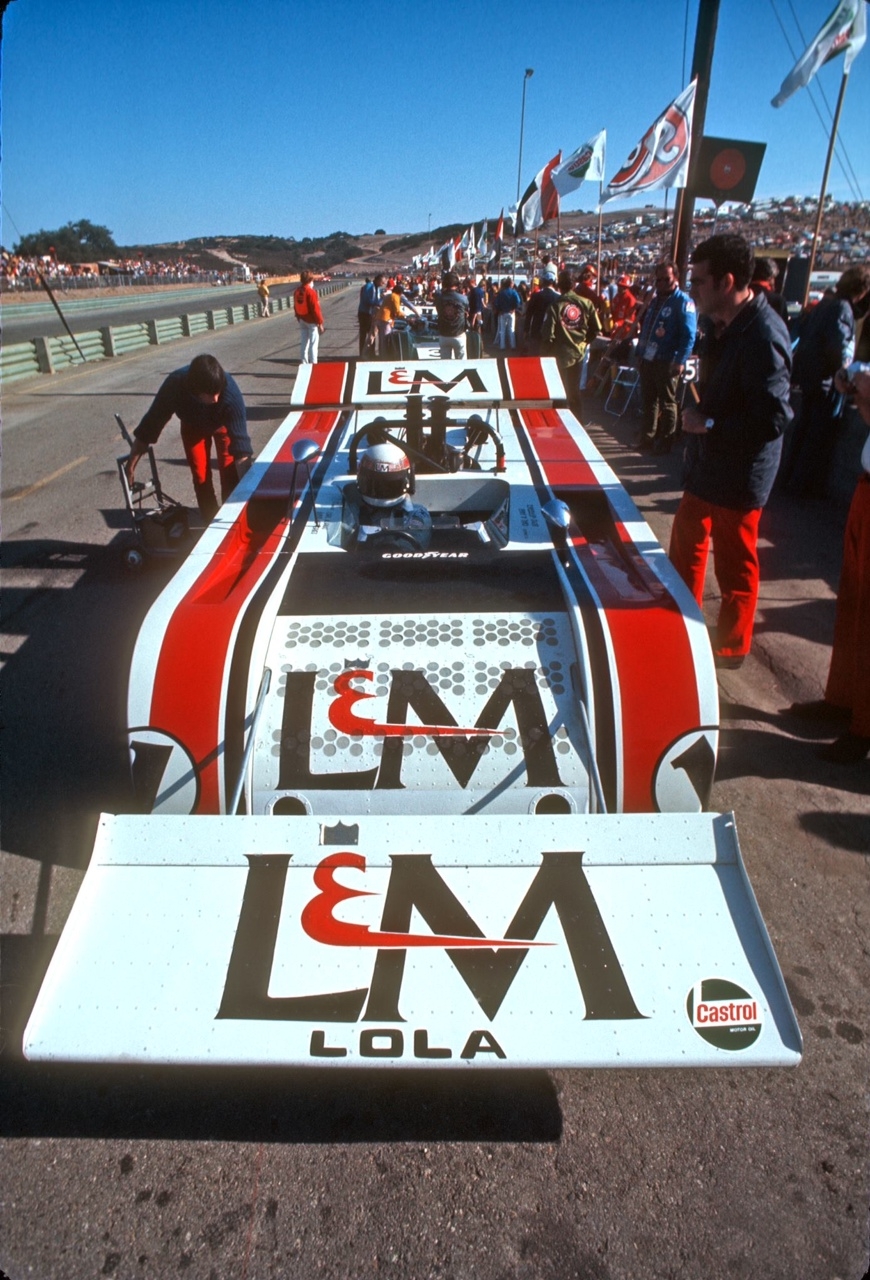
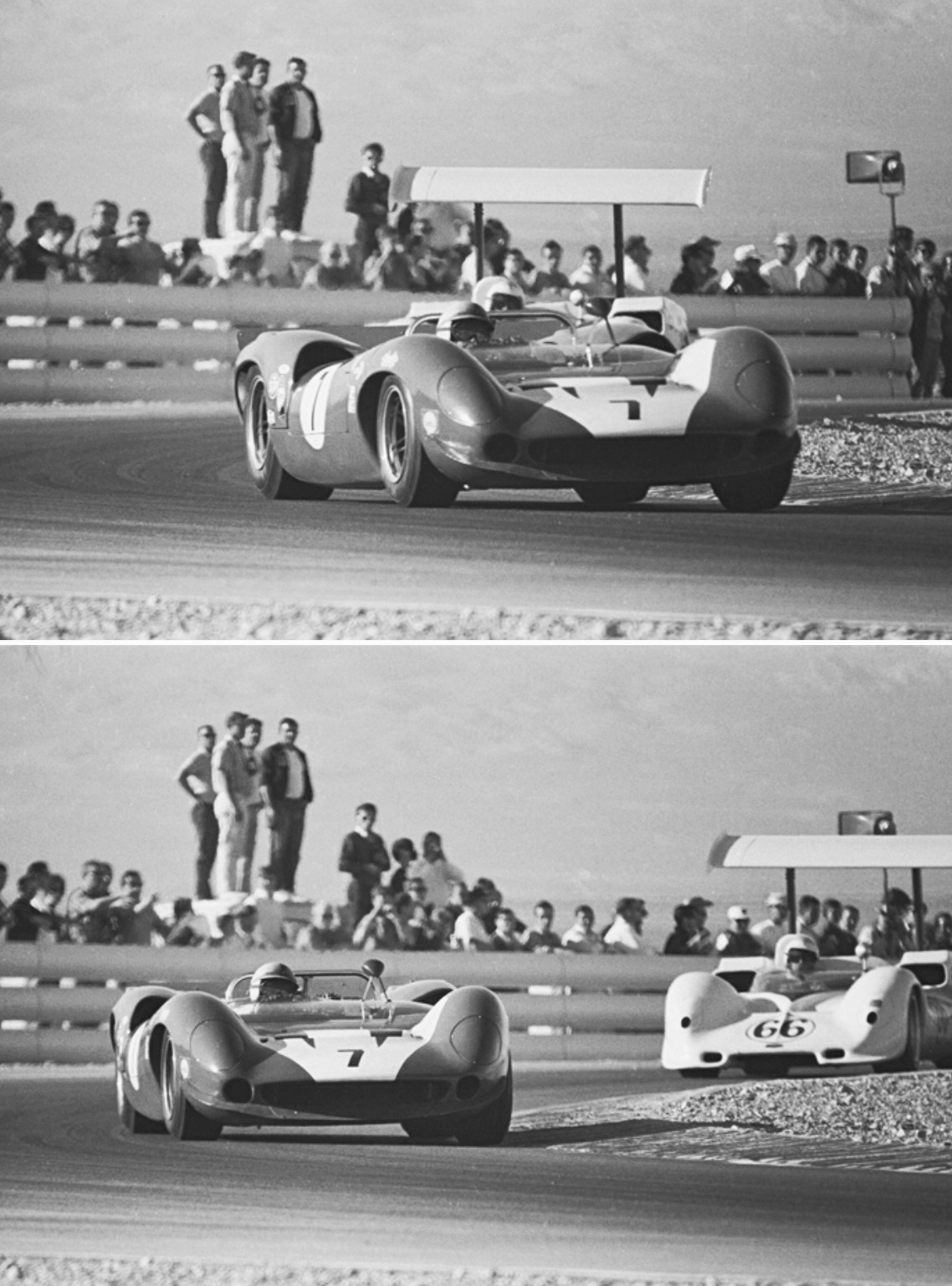
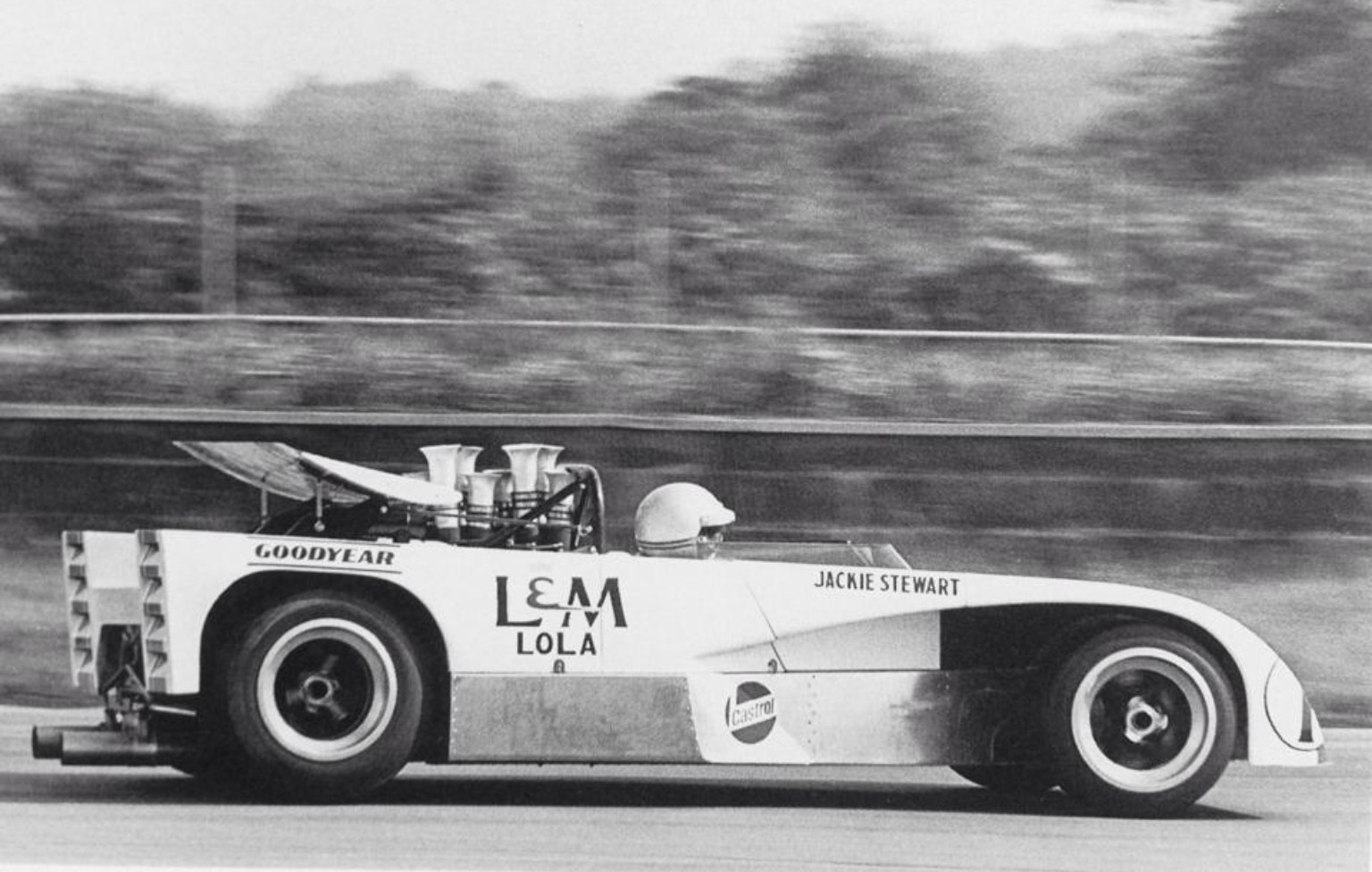
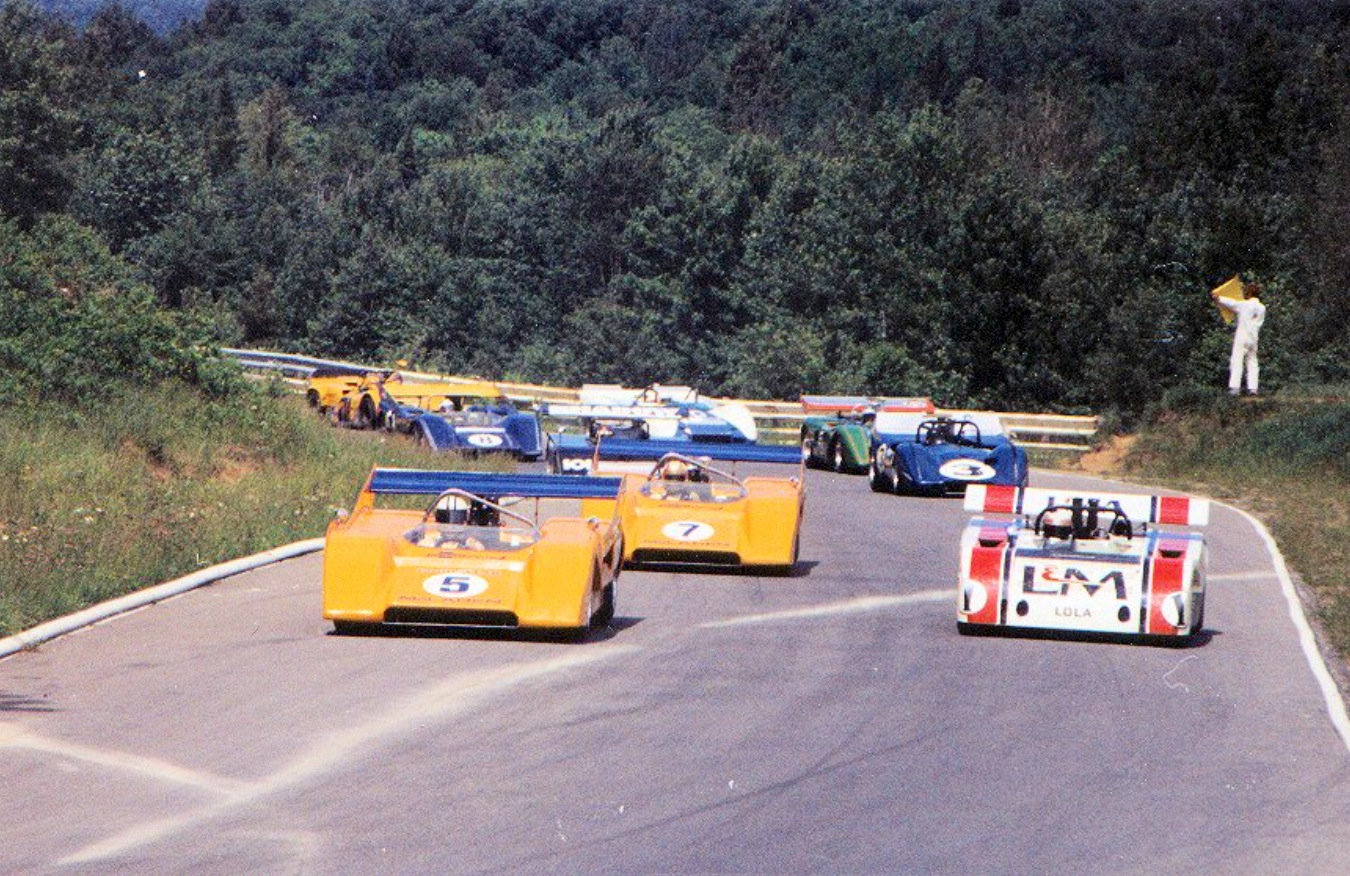
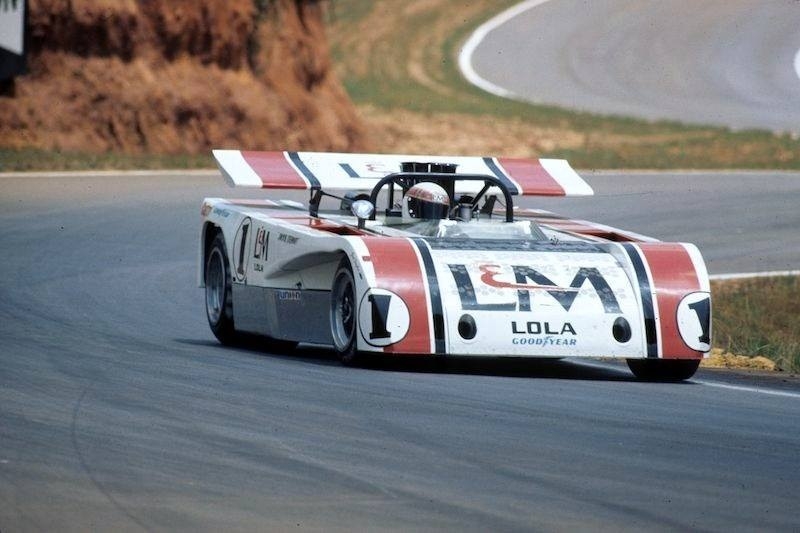
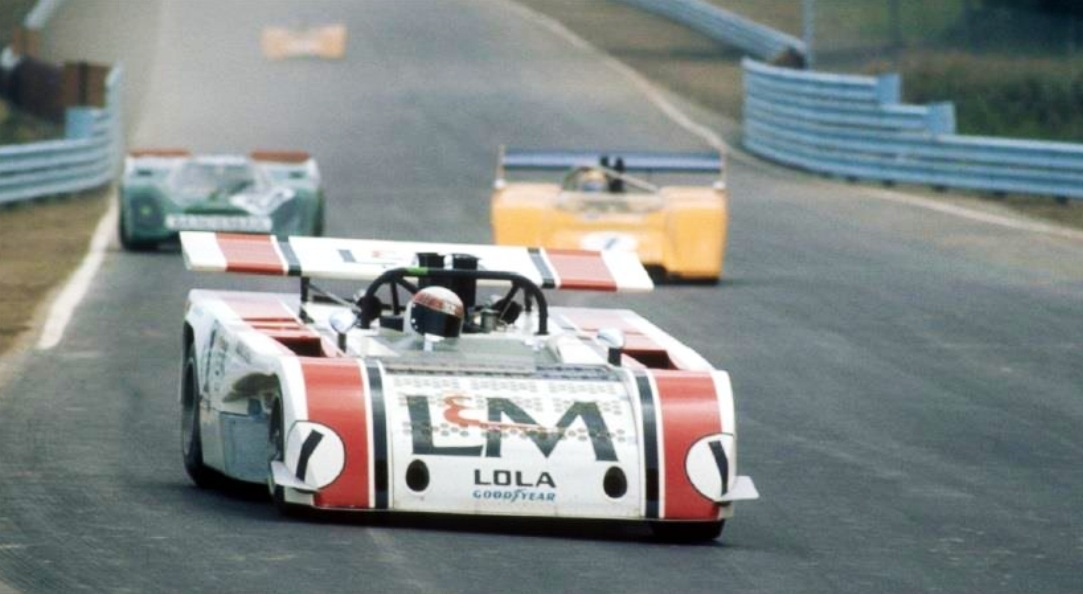
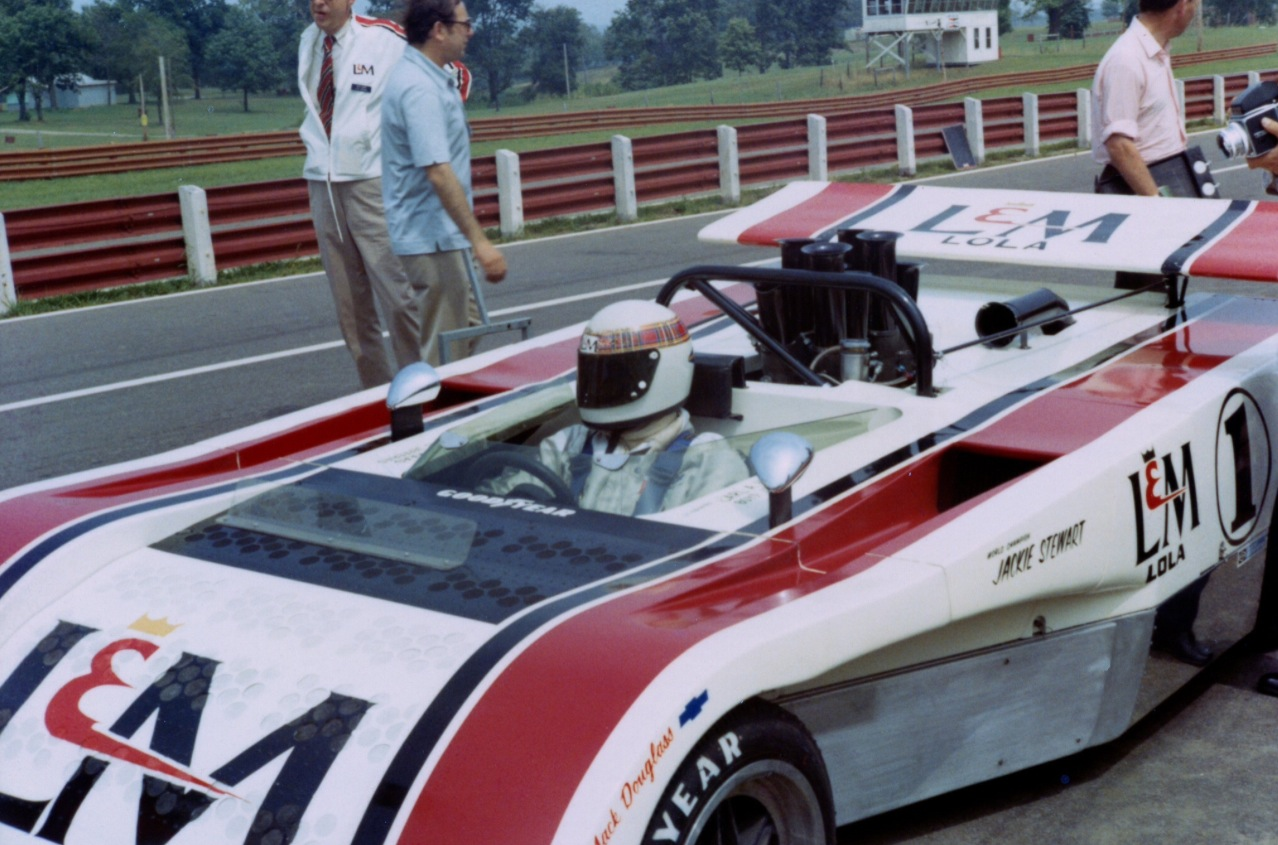
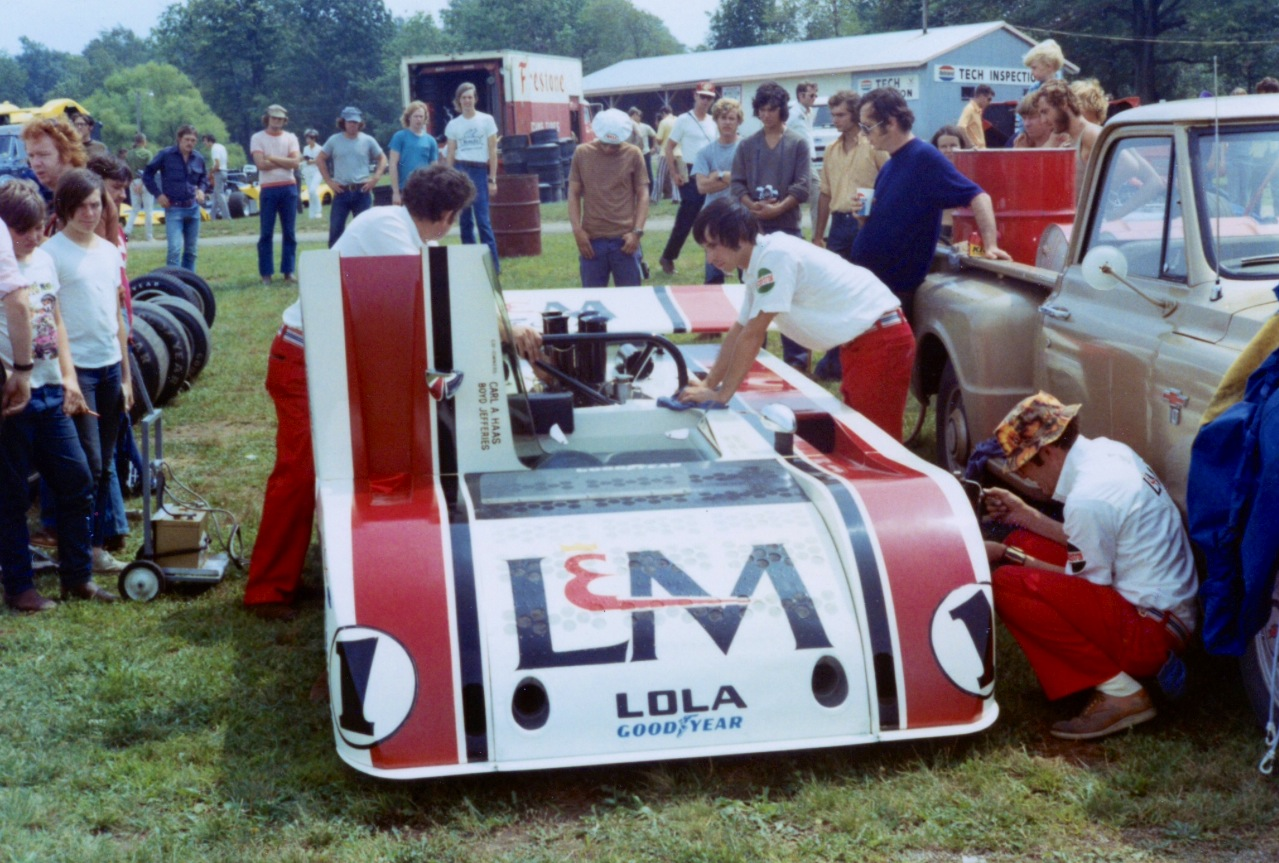
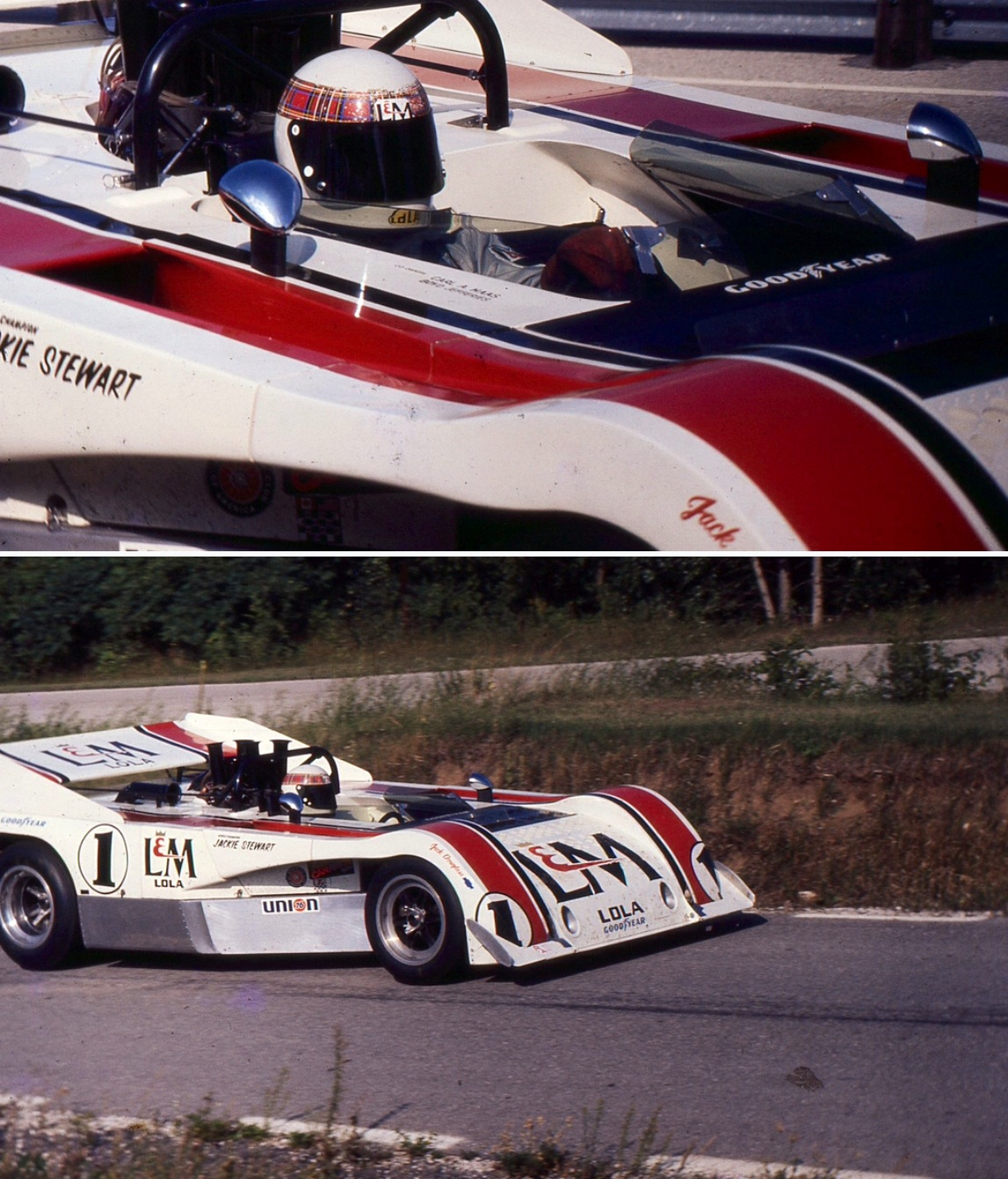
Jackie Stewart and his ‘Cowcatcher Winged’ Lola T260 Chev, Laguna Seca 1971 (Pete Biro)

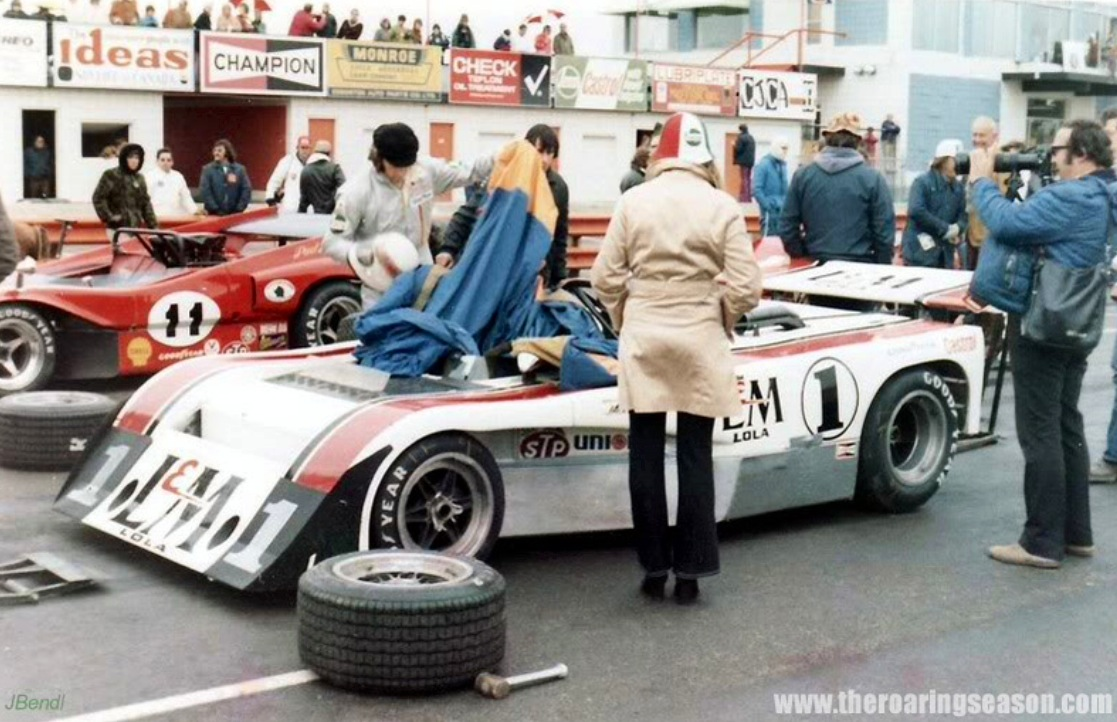
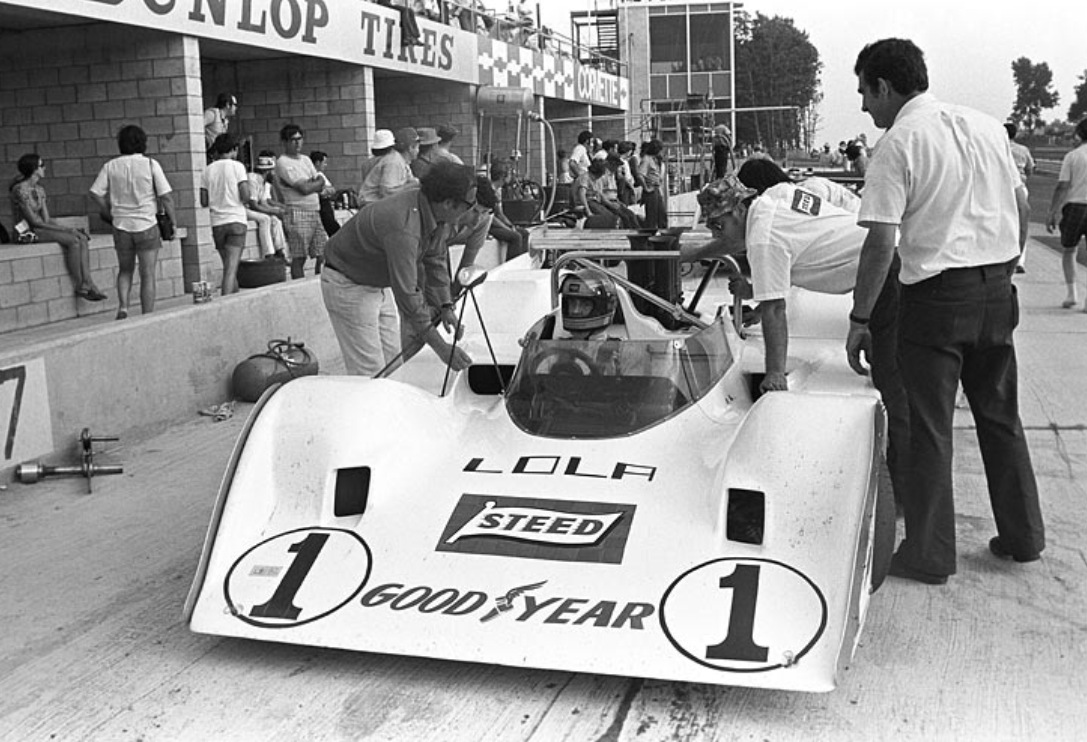
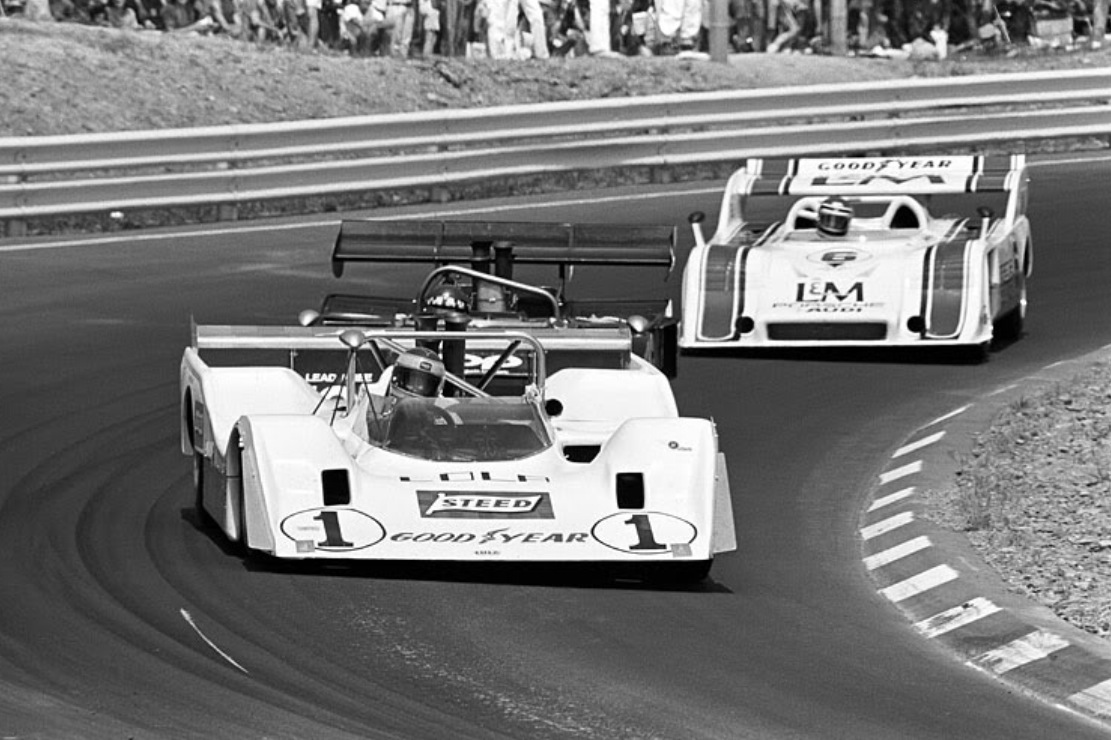
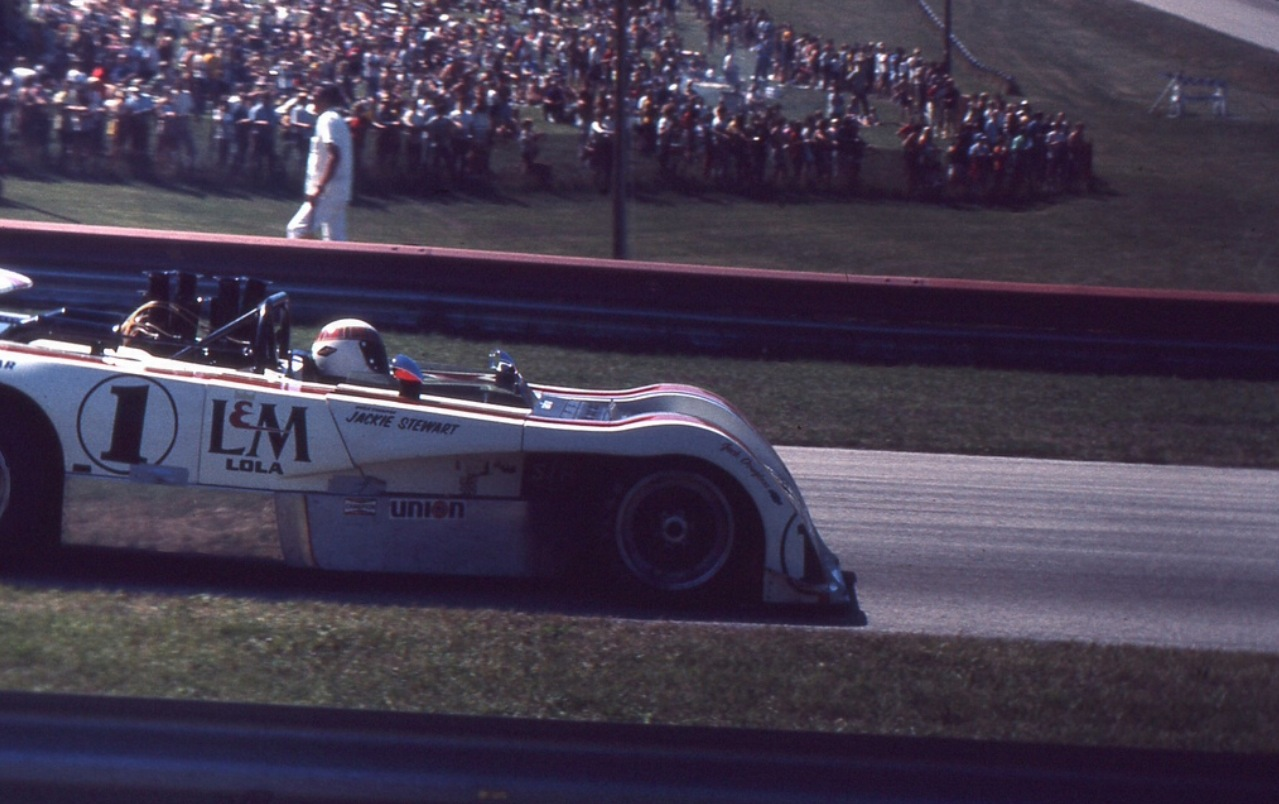
It was always going to be tough to beat the dominant McLaren team, but the combination of World Champion Jackie Stewart and Lola, who had a strong Can-Am track record looked a good combination to give them a run for their money in 1971…

team meeting

JYS convening a team engineering and set-up meeting in the Road America paddock, August 1971. Bob Marston in red shirt, JYS and in the green hat George Woodward (Jim Buell)

Part 1: Lola and the Can-Am Challenge…

john and bruce

John Surtees, Lola T70 Mk2 Chev leads Bruce McLaren’s McLaren M1B Chev at St Jovite, Mont Tremblant, 11 September 1966, they finished in this order. (unattributed)

The Can-Am morphed out of a series of professional level sports car races which had taken place for over a decade, in 1965 this comprised four events, three were won by the Chaparral 2 and one by a Lola T70.

surteees monterey

John Surtees, Lola T70 Mk2 Chev at The Corkscrew, Laguna Seca, 1966 (Dave Friedman Collection)

The first Can-Am series held in 1966 was won by John Surtees in a quasi-works Lola T70; ‘Big John’ won three races, Dan Gurney and Mark Donohue one apiece in Lola T70s, with Phil Hill taking a solitary win aboard a Chaparral 2E.

While Colin Chapman designed the first modern-monocoque single-seater, the Lotus 25, which made its debut at Zandvoort in 1962, it was Eric Broadley who first applied the new construction technique to a sports-racer with his 1963 Lola Mk6 Ford.

lola mk 6

Augie Pabst’s John Mecom owned Lola Mk6 Ford, Road America 500 1964 DNF (unattributed)

Chapman was convinced the backbone chassis which worked so well in his Elan road car would migrate to sports-racing success but the Lotus 30/40 chassis were as floppy as a centenarians todger with results reflecting same; even Jim Clark could not make those cars sing.

So impressed were Ford with Eric’s Mk6 he was famously contracted to lead the design team of its GT40, a car with a steel tub.

monterey vista

Monterey Grand Prix, Laguna Seca, 16 October 1966. Phil Hill won in a Chaparral 2E Chev. Bottom left is Dan Gurney with his Ford powered Lola T70 (Dave Friedman Collection)

surtees

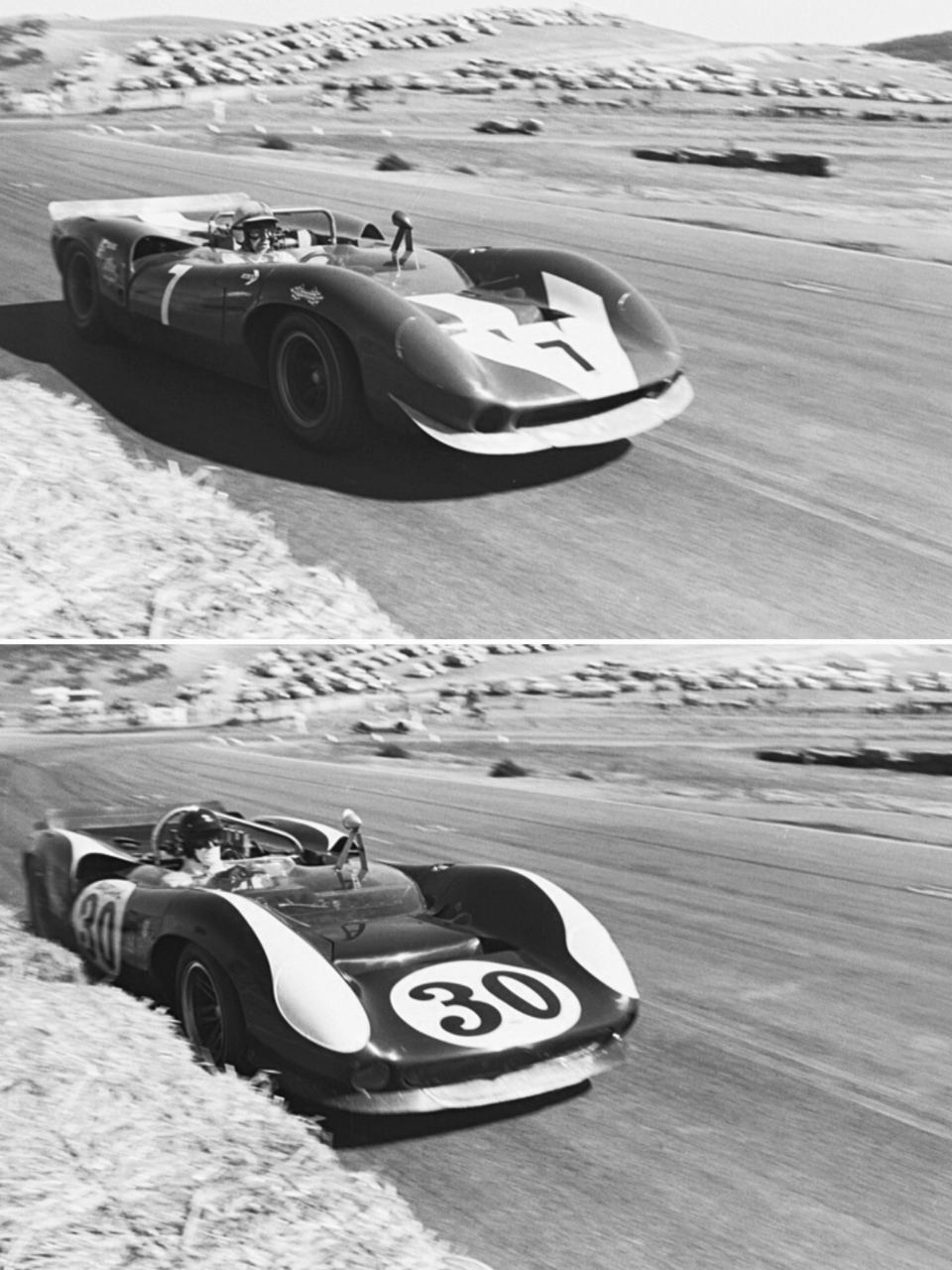
#7 John Surtees Lola T70 Mk2 Chev 12th and #30 Dan Gurney Lola T70 Ford DNF, Laguna Seca, October 1966 (Dave Friedman Collection)

The aluminium tubbed T70 was one of his first designs after his Ford sabbatical, that design process was useful in terms of evolving the car Eric thought Ford should have built in the first place!

In all its variants the T70 remained a competitive tool in both Group 7 (Can-Am) and Group 5 World Sports Car Championship events into the dawn of the 1970s. Teddy Pilette qualified his Team VDS Mk3B 19th at Le Mans in 1971, not bad for an old car with a pushrod OHV V8 against the might of the 5-litre, 12 cylinder Porsche 917 and Ferrari 512!

In endurance racing the T70 was really only held back by a suitable engine, the 12/24 hour longevity or lack thereof of the Chev engines usually chosen to power it. The small block Chev didn’t have the benefit of factory investment in its development in the same way Ford’s Le Mans winning small block Windsor V8 did.

sebring

Roger Penske’s Donohue/Parsons Daytona winning Lola T70 Mk#B Chev at Sebring in 1969. Here DNF driven by Ronnie Bucknum and Mark Donohue (unattributed)
interview

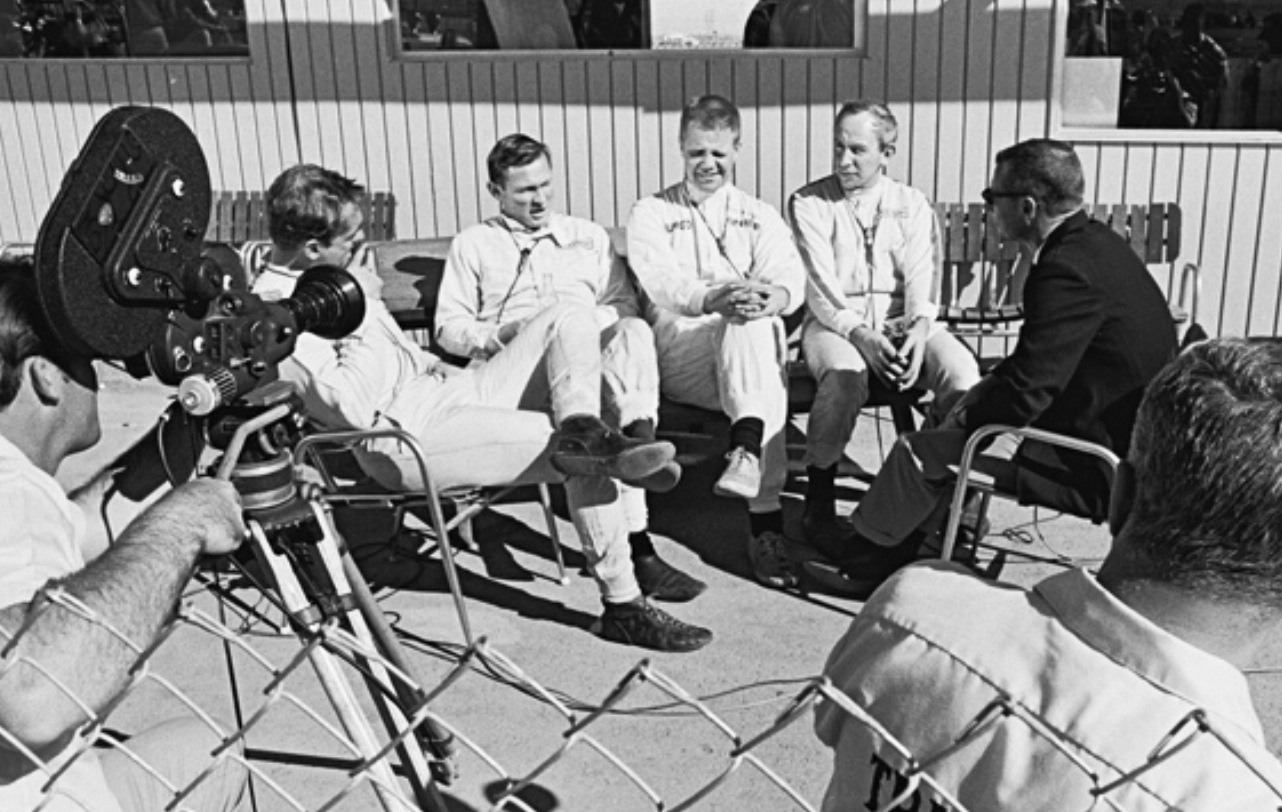
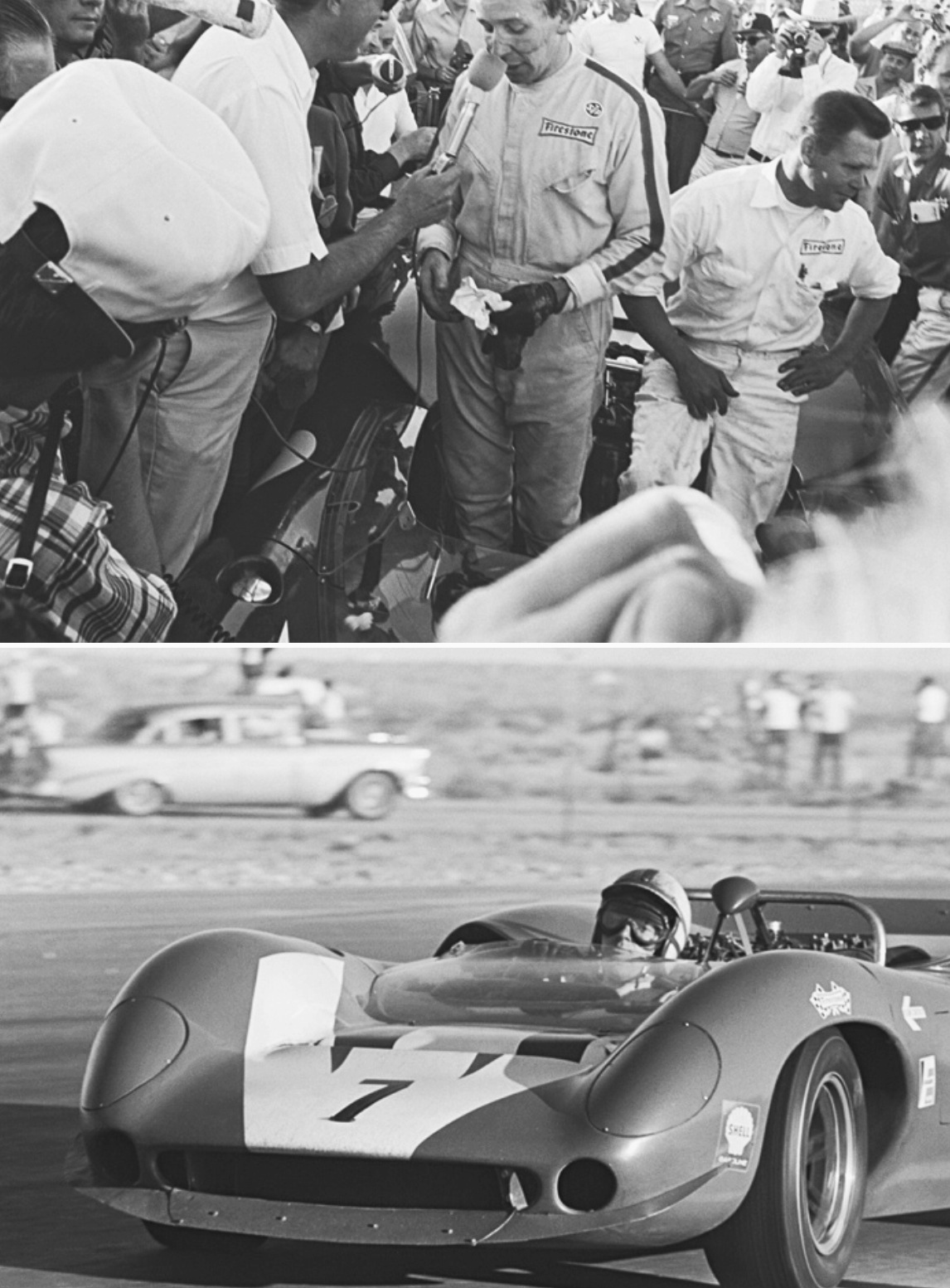
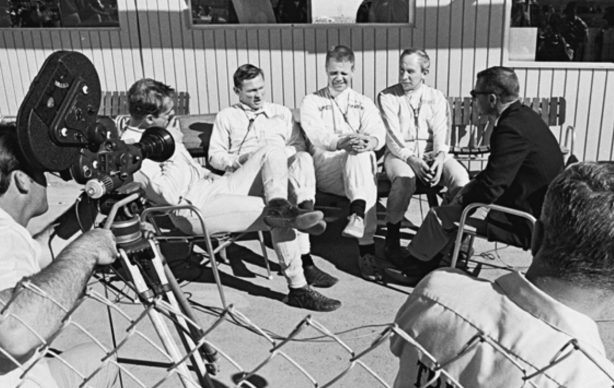
Top Guns interviewed for the TV, Las Vegas 1966: McLaren, Parnelli Jones and Surtees (Dave Friedman Collection)

start

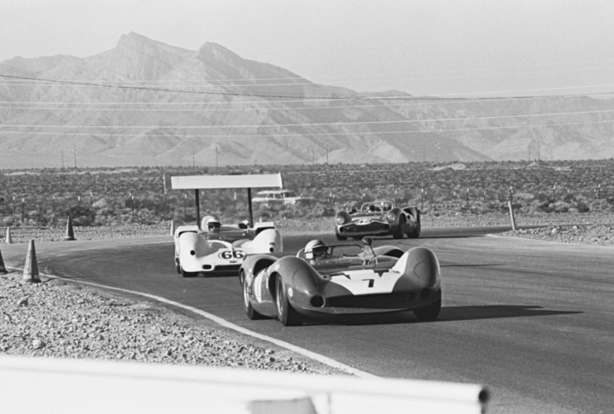
Stardust Grand Prix 13 November 1966, Las Vegas 1966 start. #7 Surtees Lola T70 Mk2 Chev first, #65/66 Phil Hill seventh, Jim Hall DNF both Chaparral 2E Chev, #5 Chris Amon McLaren M1B Chev DNF (Dave Friedman Collection)
surtess 2

Surtees from Jim Hall’s Chap 2E Chev early in the race. Vegas 1966 (Dave Friedman Collection)
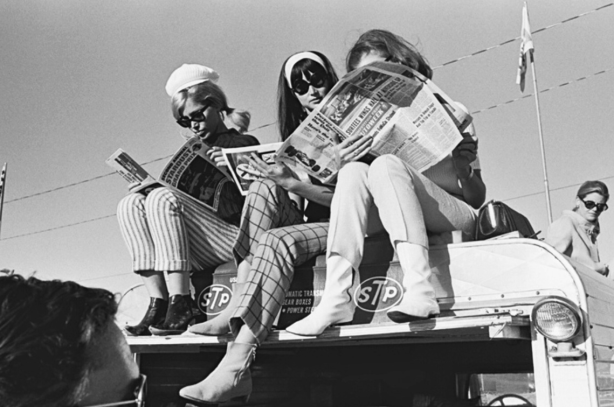
gals

Las Vegas 1966 (Dave Friedman Collection)
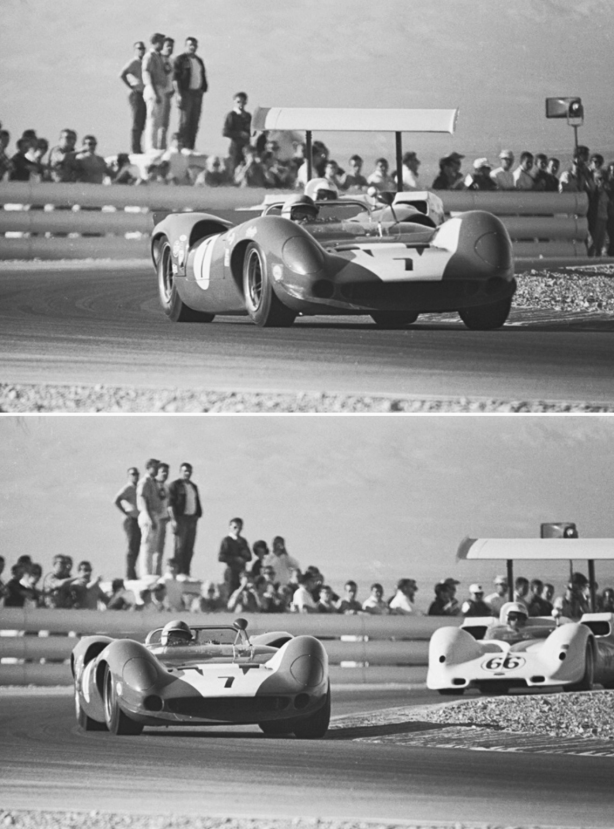
surtees and hall

Surtees from Jim Hall’s Chaparral 2E Chev, first and DNF. Las Vegas 1966 (Dave Friedman Collection)

surtees 3

Surtees, Lola T70 Mk2 Chev, Las Vegas 1966 (Dave Friedman Collection)
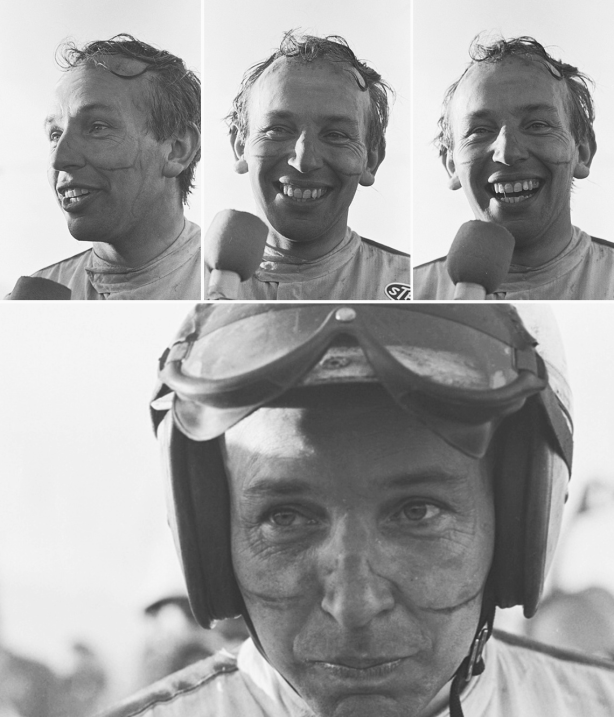
surtees happy

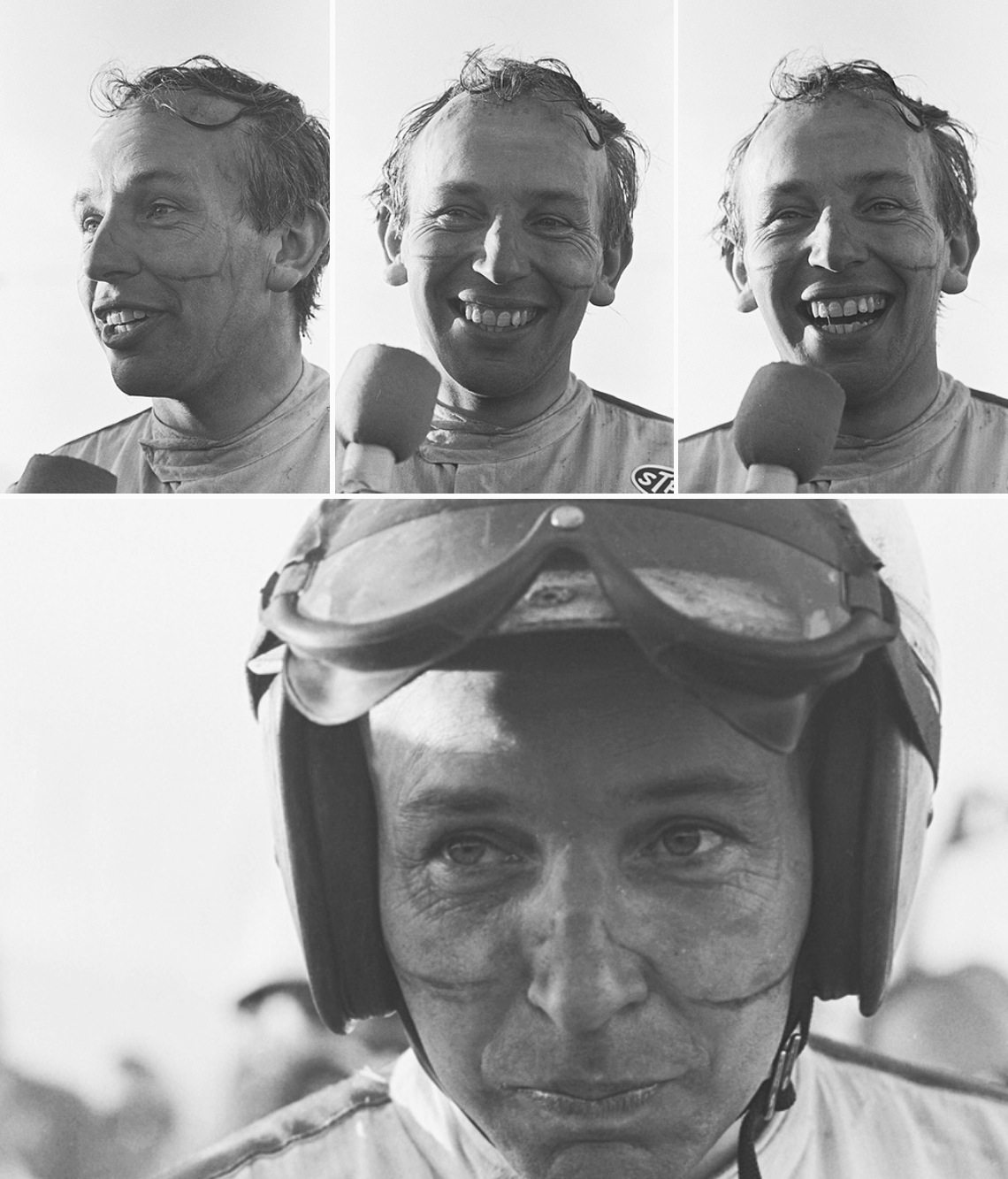
Happy Chappy. Surtees after his race and Can-Am series win, Las Vegas, November 1966 (Dave Friedman Collection)

Things would get tougher for Lola, Chaparral and the rest of the grid for the 1967 Can-Am.
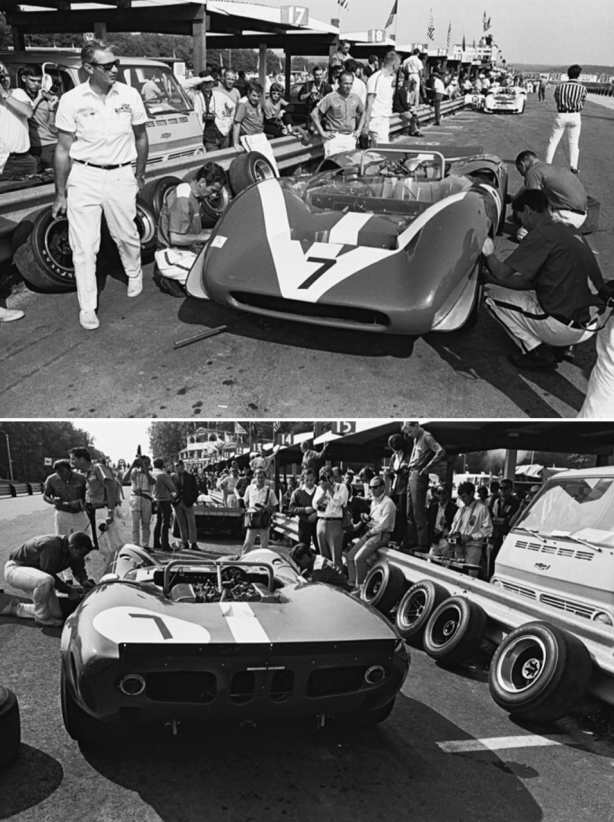
surtees bridge

Surtees Lola T70 Mk3B Chev in the Bridghampton pitlane, September 1967, fourth (Dave Friedman Collection)

Jim Hall made it tough for himself  in ’66/7 by chasing championships in both Europe and the US, Chaparral sought titles in both the World Sportscar Championship and the Can-Am. They were always a threat with their unique blend of factory Chev engines, stunning chassis and aerodynamic innovation and quasi General Motors support.

Click here for an article on his 2F and it’s 1967 endurance campaign; https://primotipo.com/2014/06/26/67-spa-1000km-chaparral-2f/

But Bruce McLaren was the dark horse challenger.

McLaren had been racing in US sportscar events since his Cooper days, he became more serious with the acquisition of Roger Penske’s Cooper/Zerex Special, click here for an article on that car;

Roger Penske’s Zerex Special…

The Zerex became a test-bed for his own cars, the M1 which he raced in the UK and US until 1966. These light spaceframe cars handled well but the aluminium Oldsmobile V8s deployed – which provided weight and balance advantages – were limited by their power. The blocks maxxed-out at about 4.5-litres so the cars gave away plenty of mumbo to those running 6-litre engines.

McLaren and Chris Amon ran Chevs in their factory M1Bs in 1966 so Bruce had clarity about the bigger engine and its packaging needs, the Kiwi had a clear fix on what was needed to win in the Can-Am. He couldn’t match Jim Hall’s innovation but perhaps he could with a mix of sound design, engineering and good aerodynamics.

In essence this was the design brief McLaren gave to Robin Herd, the 6-litre monocoque McLaren M6 was the result. The M6 started the Bruce and Denny Show with five wins and Bruce deservedly taking the championship.
las vegas

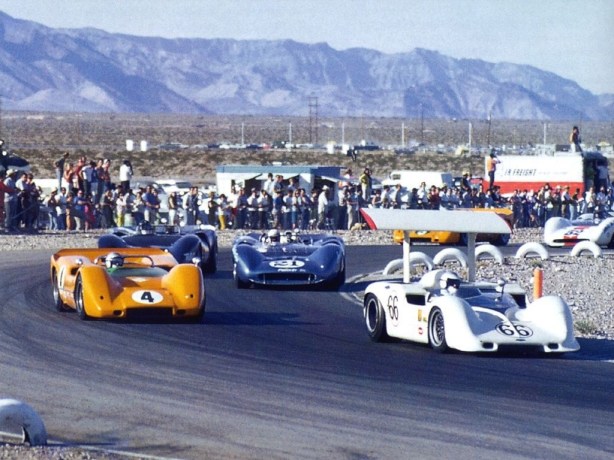
Class of ’67 at Las Vegas, 12 November. Jim Hall’s Chaparral 2G Chev from #4 McLaren’s McLaren M6A Chev, #21 Parnelli Jones’ Lola T70 Ford…all DNF, the race won by Surtees Lola T70 Mk3B (unattributed)

The dominance of the McLaren was a function of several elements. The design and execution of simple well engineered cars. Shaking them down thoroughly in England meant they were race-ready when the short season began. The team comprised three cars and world class drivers every year. They had a US base in Livonia, Detroit and their own engine program, its 6-litre Chevs were built by George Bartz and tuned and assembled in-house under Gary Knutsen’s supervision. Finally the team had adequate sponsorship to do things properly.

The 1968 McLaren M8 was a clean sheet design built from the learnings of the M6; the M8B, M8D and M8F works cars of 1969/70/71 were all evolutions of the M8A with sufficient change to stay ahead of the pack.

The dominance of McLaren was enhanced by ex-works cars passing into the hands of the best privateer drivers at the end of each season and customer cars available to whoever wanted one. Last years works-car became this year’s customer car, such bolides were built by Trojan Industries so the works team didn’t have to worry about pesky customers! By the end of 1968 at least, Lola’s dominance of grid numbers was over.

Such was the challenge Lola, Chaparral, John Surtees, Dan Gurney and the other best team owners faced.

Eric Broadley updated the T70 into the Mk3B for 1967, Surtees and Donohue were third and fourth in the Championship with John taking a win at Las Vegas at the seasons end.
bridge start

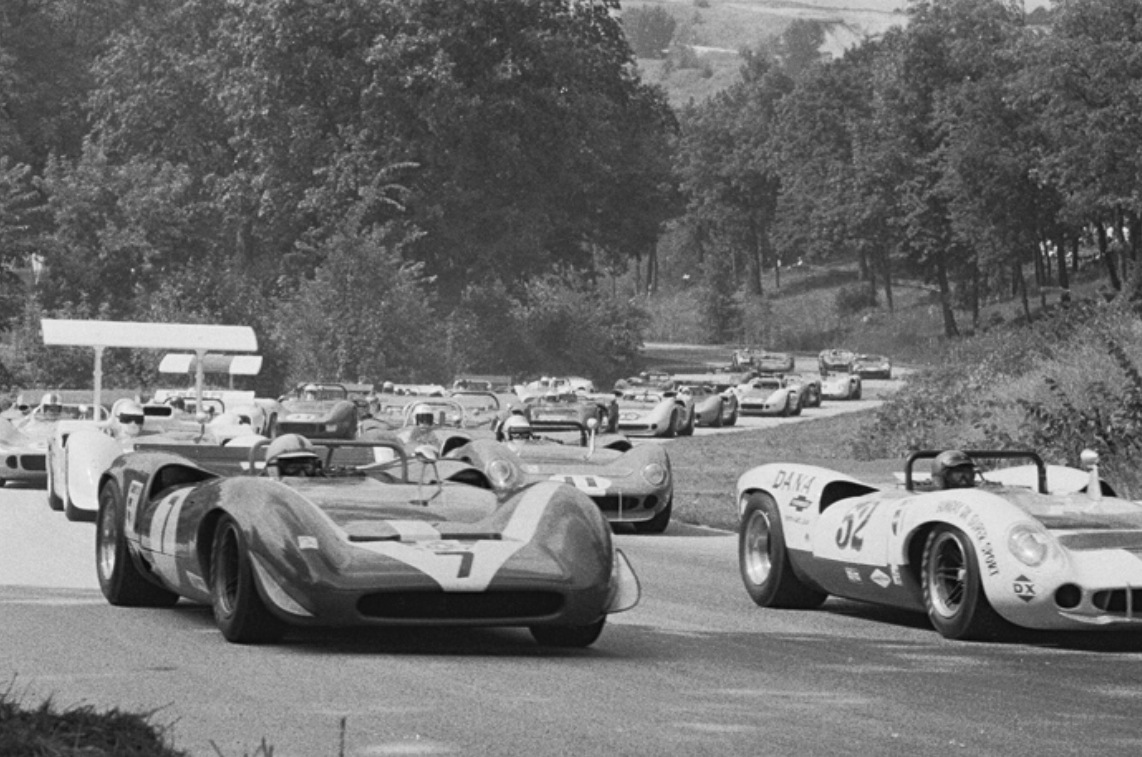
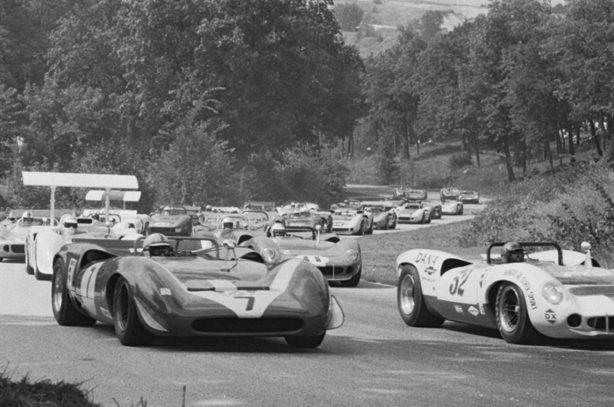
Bridghampton September 1967 start; the McLaren M6As of McLaren and Hulme are in front of this group headed by #7 Surtees and #52 Revson both in Lola T70 Mk3B Chevs, #11 Motchenbacher’s T70 Chev, Jim Halls winged Chaparral 2G Chev clear. Hulme won (Dave Friedman Collection)
lola ts

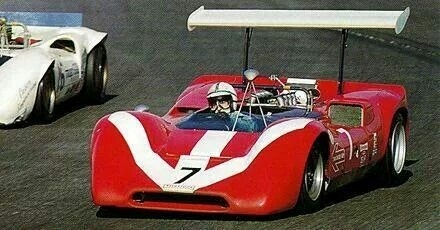
John Surtees much developed Lola T160/TS Chev at Bridghampton, September 1968, DNF having qualified 10th (unattributed)

The T160, Lola’s 1968 car was in essence a development of the T70. Surtees only raced in several rounds of the championship, Sam Posey was the best placed Lola T160 driver, finishing ninth in the drivers championship.

la times 1

Surtees in his modified Lola T160/TS Chev. LA Times GP, Riverside, 27 October 1968. DNF water pump in the race won by McLaren’s M8A Chev (Dave Friedman Collection)

For Surtees it was time to do his own thing, his first customer car was the Surtees TS5 F5000 car for 1969. In the Can-Am he jumped out of the fat and into the flames, Jim Hall’s 1969 Chaparral 2H was not his best car. Surtees got a taste of the M8 McLaren when Hall realised he had built a clunker and bought an M12 customer McLaren for John to drive whilst the team sorted the 2H, Surtees revelled in the car on the few occasions he raced it!

la times 2

Surtees T160 at Riverside from the rear. Top left Surtees in the pits, right Mark Donohue talking with his crew (Dave Friedman Collection)

Commercially for Broadley the appointment of Carl Haas as the Lola importer in 1967 was an astute move and provided the base for both firms success for decades with Haas having the required attributes above to take on the papaya McLarens.
chuck

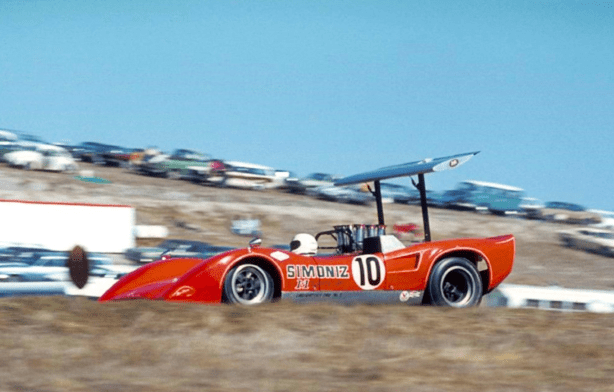
Chuck Parsons in Carl Haas ‘factory’ Lola T163 Chev at Laguna Seca in 1969. 3rd in the race won by Bruce’s McLaren M8B Chev (T Ferrari)

In 1969 Chuck Parsons proved the Lola T163 was not too bad a car, he finished third in the points chase, while the Chaparral was not a threat, and Porsche first appeared with the 917PA, the Can-Am variant of its dominant in 1970 and 1971, 917 endurance racer.

chap 2 j

Painting depicting Vic Elford’s Chaparral 2J Chev leading Peter Revson’s Lola T220/2 during 1970 (unattributed)

1970 was one of the great years of the Can-Am. The sound, conservative engineering of the McLaren M8D was juxtaposed by Jim Hall’s outrageous Chaparral 2J Chev, one of the most stunning, original, innovative, epic racing cars ever built. The two stroke engines which created the vacuum for its ground effects were its weak link and the cause of too many retirements but the car was stunningly fast while it lasted in Jackie Stewart’s and Vic Elford’s hands.

The Establishment had it banned at the end of the season of course; ‘movable aerodynamic devices were illegal’ but the Can-Am lost its soul and it’s ‘unlimited nature’ in making that decision, Hall told the organisers to go jam it and with it the Can-Am lost its biggest draw if not its most successful team.
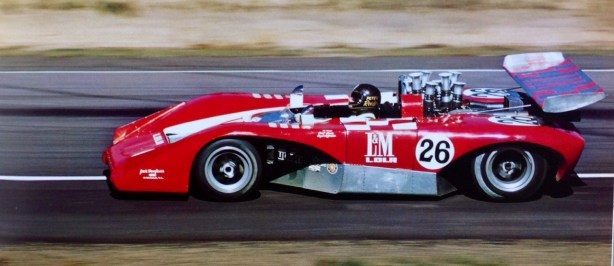
revson

Peter Revson destroyed his Lola T220 Chev after a 180mph tyre blowout at Road Atlanta in 1970. He raced a new 10 inch longer wheelbase car, 98 inches, the T222 for the rest of the season. Here at Watkins Glen he was third (Automobile Year)

Haas convinced Broadley to design a new Lola for 1970 and signed Peter Revson, just peaking as a world class driver, to get the best from it.

The gorgeous, swoopy T220 had a very short 88 inch wheelbase which made it difficult to drive, a tyre failure at 180mph at Road Atlanta destroyed it, but fortunately not Revson. It was a blessing in disguise as the replacement T222 had an additional 10 inches added to its wheelbase which made it a much more competitive car.

t220

Revson’s T220 at Road Atlanta and destroyed that weekend. ‘Fence’ an addition from original body spec (Jim Hayes)

Having said that the T220 was fast if unreliable. Revvie qualified it second at Road America, third at Mid Ohio and fourth at Watkins Glen and Mosport, his best finish was second to Hulme at Mid Ohio.

With the longer wheelbase T222 he immediately banged the car on pole at Donnybrooke, finishing third behind the two McLarens and qualified third at both Laguna Seca and the final Riverside round for a third and DNF respectively.

So, by the end of the year the Lola car/driver combination was close to the McLarens, Hulme took the 1970 title with Revson sixth. He was off to McLaren for 1971, all Lola/Haas had to do was build a better car and hire a driver of the required calibre.

Part 2: The Lola T260…

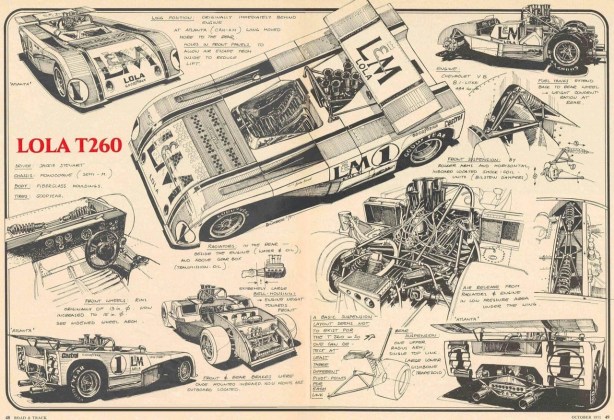
t260 cutaway

Lola T260 Chev cutaway (Tom Strongman)

Having had a taste of the Can-Am in 1970 and earlier years Jackie Stewart was keen to return. TThe professionalism of the Carl Haas team and Lola, a marque familiar to him having raced a T90 successfully at Indy together with Graham Hill in 1966, had appeal. He could fit the series into his 1971 F1 program with Tyrrell, or so he thought. Click here for an article on the Lola T90 and the 1966 Indy 500;

Graham Hill’s ‘American Red Ball Spl’ Lola T90 Ford: Indy Winner 1966…

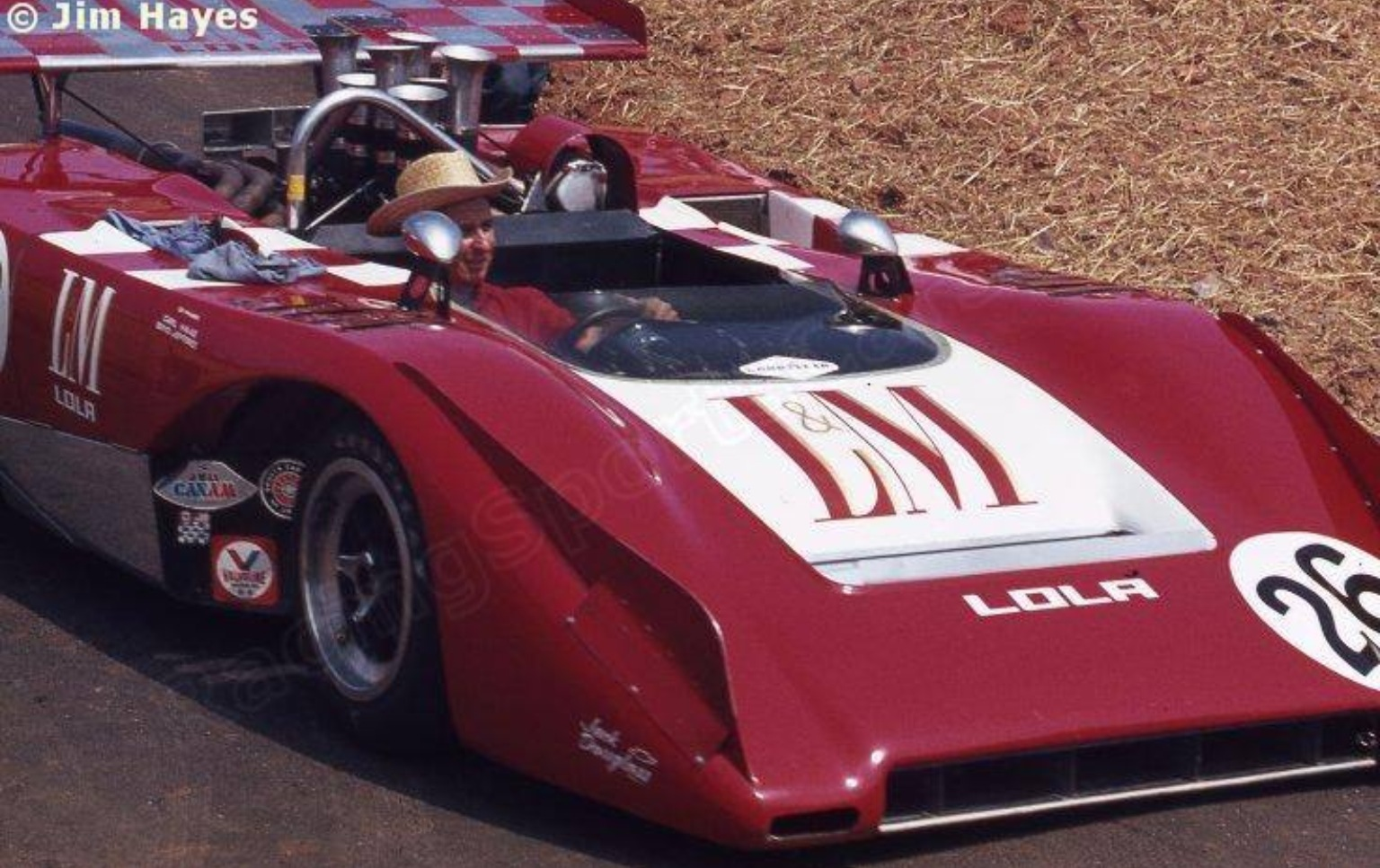
Lola’s mount for Stewart was designated the T260 which was designed by Bob Marston with Eric Broadley’s guidance.

Lola Heritage; ‘The chassis was a…Lola full monocoque in L72 and NS4 light alloys bonded and riveted together with the fuel bags in either side of the tub with a total capacity of 60 gallons. The oil tank was contained in the rear of the left-hand fuel section. The rear of the monocoque extended to the back of the engine which was sandwiched between two bulkheads, a bell-housing supported the gearbox and absorbed suspension loads.

Cooling was via two brass-finned Serck radiators mounted behind the driver’s shoulder level and fed by two large NACA ducts on the top of the bodywork, the radiators vented through large louvres in the rear bodywork. Two oil coolers were mounted behind the water radiators and used the same ducts, an additional transmission cooler lay flat over the gearbox.

The bodywork was evolved following extensive tests in the Specialised Mouldings wind tunnel and featured a short, bluff nosecone with gauze-covered holes on the top to equalise pressure. At the base of the nose were two air ducts to feed air to the front discs, at the rear two ram pipes on the top of the rear body section collected the cooling air for the rear discs’.

Pete Lyons described the cars aerodynamic approach ‘The T260…was built to an aerodynamic theory already embodied in a few small-bore sports cars of the day. The intent was a shape that would bullet through the air on the straights and also remain stable as the car’s pitch attitude, ride height and positioning behind other cars changed everywhere else. In particular…a more conventional downforce-producing wedge nose, such as McLaren’s…could abruptly change from downforce to lift under certain conditions…’

t 260 aero

CAD sketch showing the T260 aero treatment. (unattributed)

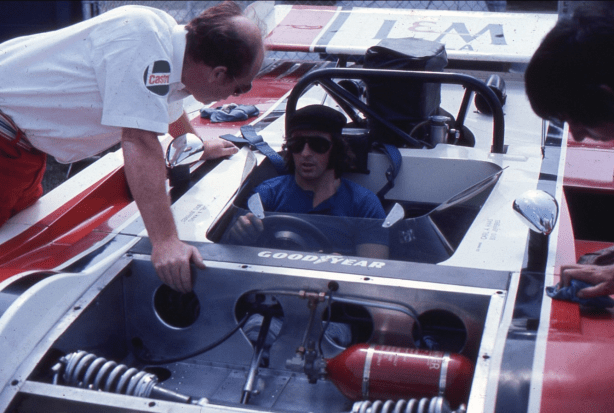
‘The front suspension on the T260 comprised unequal length wishbones, the upper ones were triangulated to form bell-cranks that operated Bilstein dampers and coil springs which lay almost horizontally across the front of the tub. The unusual spring-medium location freed space for the front brakes to be mounted inboard. Eric Broadley’s intention was to reduce the unsprung weight of the front wheels by moving the brakes inboard from their conventional hub location. This would have permitted the lighter wheel assemblies to ride better over the often bumpy Can-Am circuits. Jackie Stewart was adamantly opposed to inboard brakes after the death of his close friend Jochen Rindt due to the failure of an inboard-brake driveshaft on his GP Lotus 72 at Monza in September 1970. Conventional outboard brake mountings were used on the finalized T260 instead.’

A tangent is the fact that later JYS was comfortable enough with Engineer Derek Gardner’s approach to inboard front brakes, his 1973 Championship winning Tyrrell 005/006 being so equipped.
front

T260, Stewart up, Road America. Shot included to show the unusual location, for the time, of the spring/shocks referred to in the text. Graviner fire extinguished ‘bomb clear in shot. Chassis aluminium full monocoque (Jim Buell)

Rack and pinion steering was ahead of the front suspension.

Lola Heritage; ‘At the rear there was a short top link and a long radius arm attaching to the front engine bulkhead, a lower member extended rearwards to a cross-member bolted to the rear face of the gearbox. The springs and dampers fixed to the lower member and transmitted their load to tubular outriggers on the gearbox bell-housing.

Lola-made centre-lock, peg-drive magnesium wheels were fitted, their diameter 15 inches with 10.5 inch front and 17 inch wide rear Goodyears. The battery was mounted in the nose and a Graviner onboard fire extinguisher was fitted behind the dashboard’.

Two cars were built for Haas, chassis HU1 was Stewart’s race chassis, HU2 was an unused spare  in 1971.

The engine was a 496 cu in (8.1-litres) V8 Chevrolet tuned by George Foltz, it produced circa 700 bhp and 618 lb/ft of torque, Lucas fuel injection was fitted with a Scintilla Vertex magneto and a Hewland LG600 four-speed gearbox transmitted the power.

engine

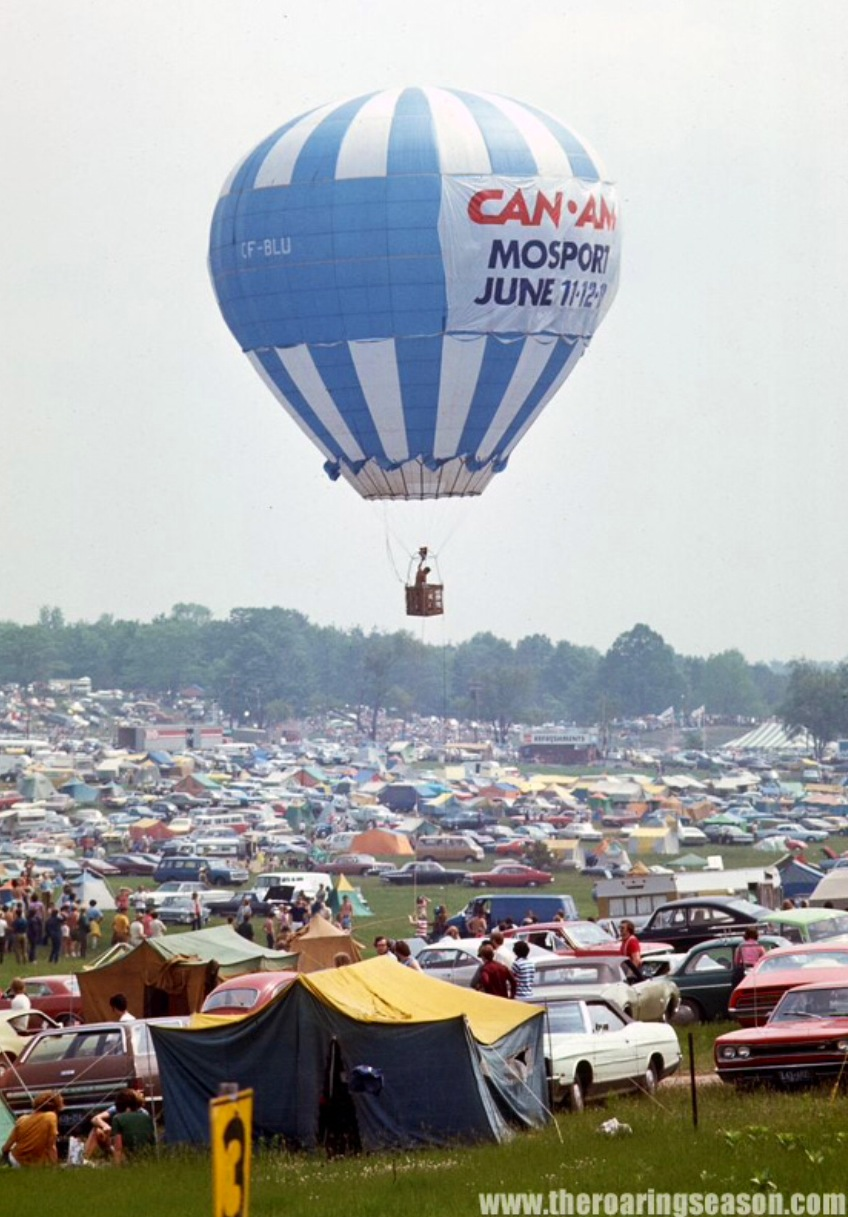
Aluminium block 8-litre engine of the T260 at Mosport. June 1971 (Jerry Bendl Collection/The Roaring Season)
lola t260

(Werner Buhrer)

gardenr back

Frank Gardner testing the Lola T260 at Silverstone in May, note how far forward the rear wing is in relation to shots taken later in 1971 (LAT)

When completed the car was tested by Lola racer/tester/development engineer Frank Gardner at Silverstone in May, FG was also turning his mind and skills into getting more speed from Lola’s F5000 T190/2; no doubt the F5000 was a kiddy-car compared to its 8-litre big brother!

Stewart drove the car in a rain soaked run at Silverstone prior to the cars shipping to Canada for the season opening Can-Am round at Mosport, Canada.

gardner side

Gardner in T260 HU1 at Silverstone, the shortness of the car and different to anything else in the Can-Am aero-treatment, clear in this shot (unattributed)

stewart sikverstone

Ropey shot of Stewart sheltering from the Silverstone weather during his brief drive of the T260 prior to shipment to North America, June 1971 (Sutton Images)

Other 1971 Can-Am Contenders…
hulme and stewart

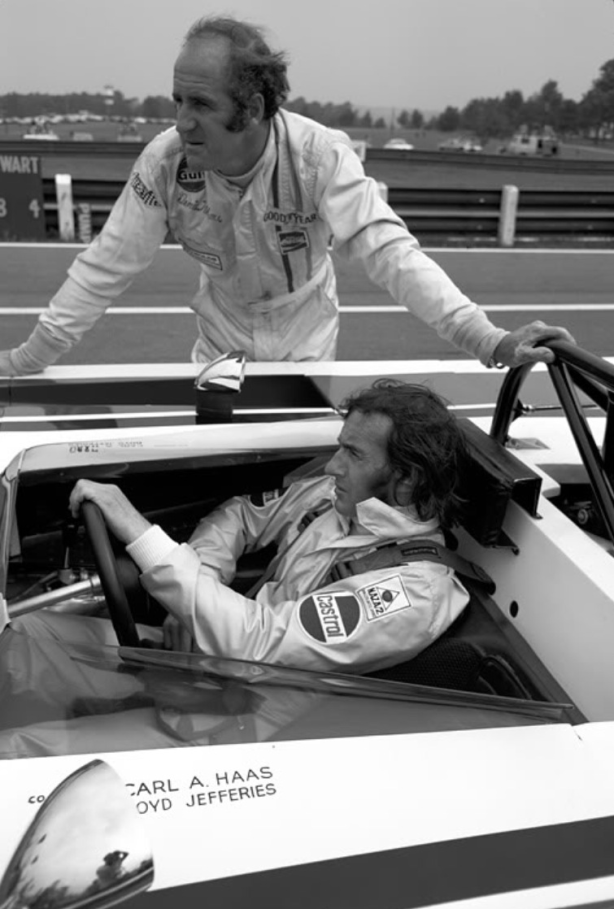
Denny Hume and Jackie Stewart at Mid Ohio 1971. Stewart in his T260 office (Ron Laymon)

road mclaren

Denny Hulme, McLaren M8F Chev, Road America, August 1971. DNF engine. Engine 494cid Reynolds aluminium block Chev, circa 740bhp @ 6400rpm (Jim Buell)

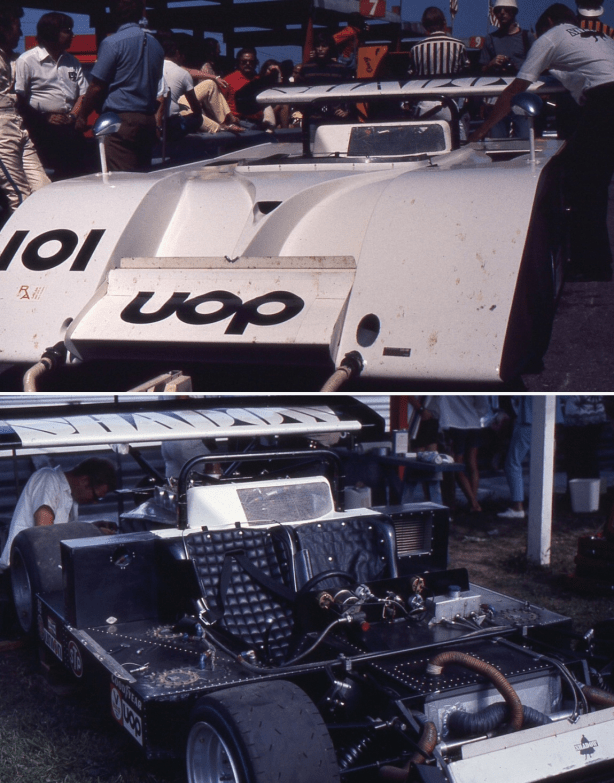
In reality the likely outright contenders in 1971 were the factory McLaren M8Fs, Stewart’s T260 and Jackie Oliver’s Shadow Mk2 Chev, designed by Peter Bryant.
road shadow

Jackie Oliver’s Shadow Mk2 Chev, Road America 1971, 12th in the race (Jim Buell)

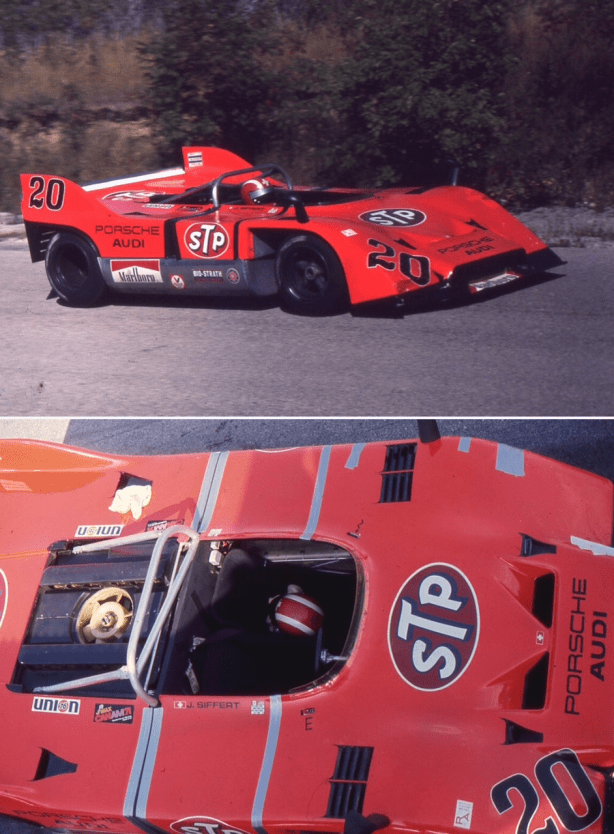
Jo Siffert’s Porsche 917/10 was gathering valuable data for a serious tilt in 1972. In exceptional circumstances (the wet) it was a contender as were a number of the best privateers in either ex-works or carefully developed M8’s: Lothar Motschenbacher, Vic Elford and Tony Adamowicz the most likely.
road pors

Siffert’s Porsche 917/10, Road America 1971. Spaceframe chassis, 5-litre flat 12 (Jim Buell)

road revvie

Peter Revson, Jackie Oliver in the helmet and front suspension detail of a McLaren M8F in the Road America paddock, August 1971 (Jim Buell)

The detailed specification of the McLaren M8F I wrote about a while back; click on this link to read the short article; https://primotipo.com/2015/03/08/peter-revson-mclaren-m8f-chev-1971/
watkins grid

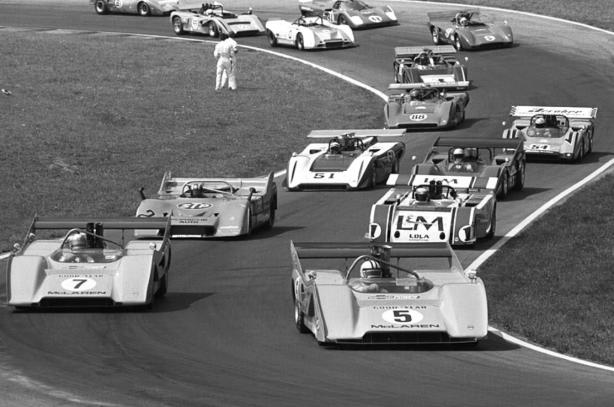
1971 Mid Ohio rolling grid. #5 Hulme, #7 Revson, #1 Stewart, #2 Jo Siffert,Porsche 917/10, #51 Dave Causey Lola T222 Chev, #54 Tony Adamowicz, McLaren M8B Chev, #88 Hiroshi Kazato, Lola T222 (Ron Laymon)

Part 3: Racing: 1971 Can-Am Round by Round…
mosport 1

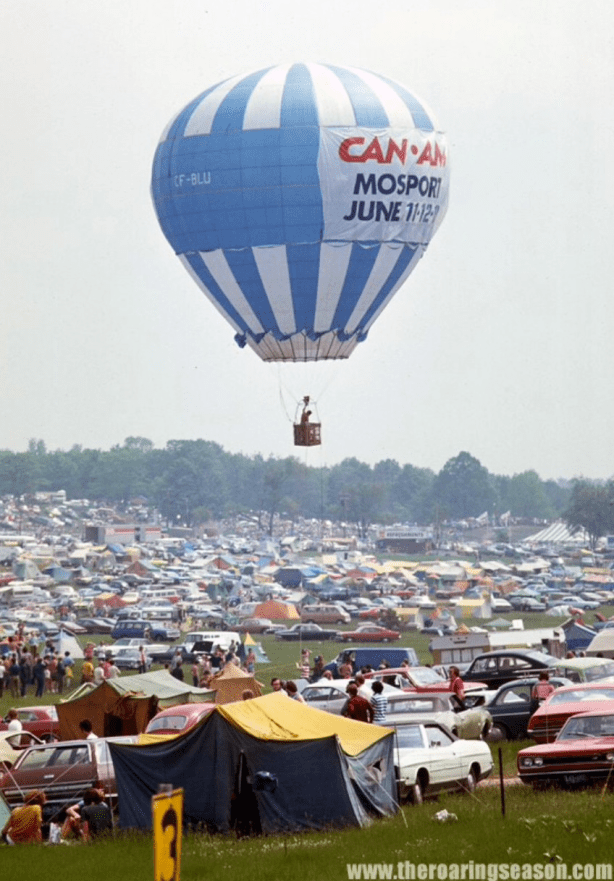
Mosport 1971 vibe, looks fantastic! (Jerry Bendl Collection/The Roaring Season)

Round 1: Mosport, Ontario Canada 13 June 1971
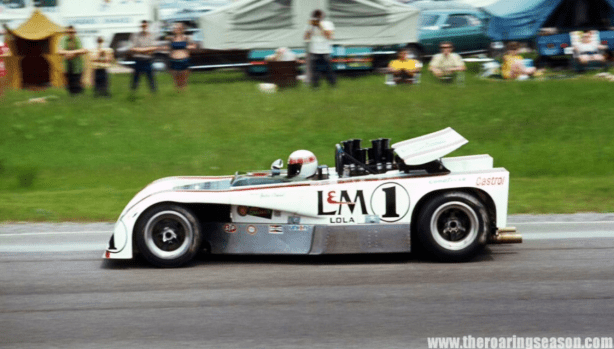
Stewart grabbed pole position from the works McLaren M8Fs of Hulme and Revson then led the race from Hulme, an oil leak from the LG600 Hewland ‘box resulted in its seizure on lap 18.

Hulme won from Revson and Lothar Motschenbacher in one the 1970 ex-works McLaren M8Ds.
mosport 2

Pan of Stewart at Mosport shows the cars original aero treatment before ongoing modifications and experiments. Rear wing far forward and nose devoid of appendages (Jerry Bendl Collection/The Roaring Season)

Rounds 2 and 3: St Jovite, Quebec Canada 27 June and Road Atlanta, Georgia, 11 July
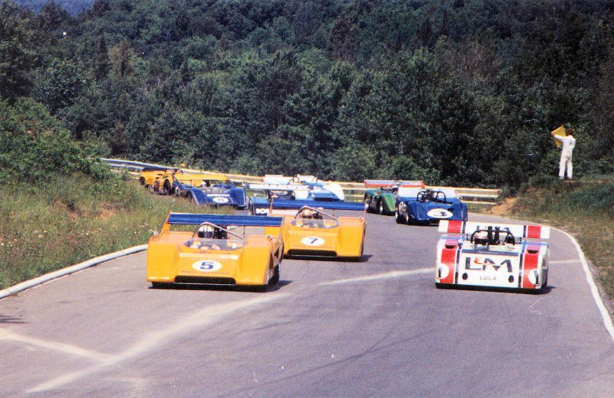
Stewart put the T260 on the front row next to pole sitter Hulme’s McLaren M8F at St Jovite. Denny led from the start but Stewart sat in second until lap 52 when Hulme, tiring from a stomach bug, had to slow due to exhaustion. Stewart won from Denny and Peter.
st jovite

Stewart a race winner at St Jovite, here beside Hulme with Revson just behind (Lola Heritage)

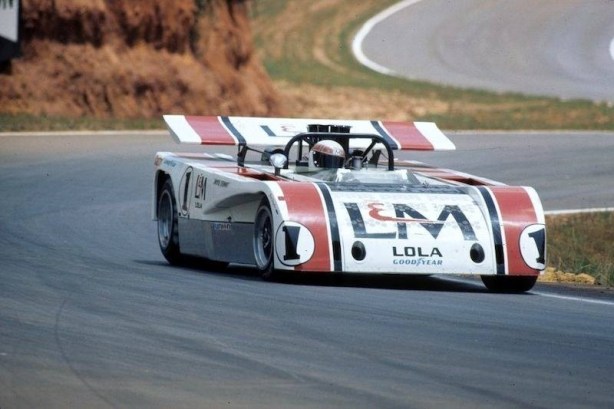
Stewart recalled in an interview with Gordon Kirby, ‘St Jovite was a good win because with that car, that track was hard work! The other race where we did quite well was at Road Atlanta. We led the race then had a puncture and a whole series of other problems but still turned the fastest lap of the race, quicker than Hulme’s pole time’.  Revson won from Hulme and Motschenbacher.
road atlanta

Stewart had great pace at Road Atlanta, wonderful high speed shot of the short, squat, original T260 (unattributed)

watkins glen

Stewart ahead of Revson, Mario Cabral Porsche 917K and Hulme in the distance, Watkins Glen, 1971 (unattributed)

Round 4: Watkins Glen, New York, 25 July
The T260’s speed was not in doubt, it was back on pole again with Hulme and Revson right behind. Stewart got the drop putting the T260 into the lead from Revson, the Lola and McLaren diced until Stewart pitted with another puncture, losing a lap while the wheel was changed.

Stewart returned to the race and began to fly, setting the fastest lap but on the 56th lap he retired the car after detecting vibrations which proved to be a failing transmission. Revson won from Hulme and Siffert’s factory Porsche 917/10.
stew watkins

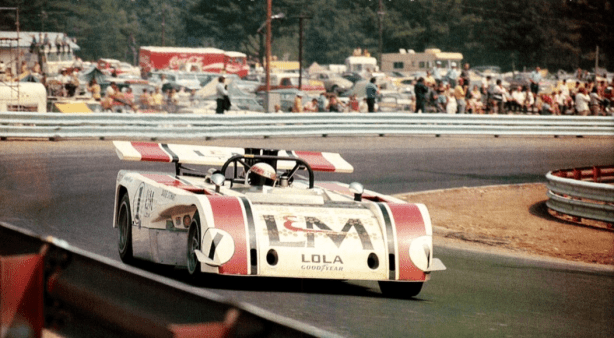
JYS at Watkins Glen, site of the US GP in upstate New York, it was a circuit he knew well (LAT)

jackie

Stewart loaded up and all ready to go in the Mid Ohio pitlane (Terry Capps)

Round 5: Mid Ohio, 22 August
Stewart, famously a successful campaigner for better circuit safety, was unhappy with the track; its surface was excessively bumpy and the presence of trees and telegraph poles surrounding the course meant mistakes would be punished severely.

Much overnight work was carried out to remove some of the trees and poles, and add straw bales where possible, but after looking at the result Stewart declared he would ‘run but he wouldn’t race’. Stewart’s position could be appreciated after the bumpy track caused three rear suspension failures to the T260 during qualifying.
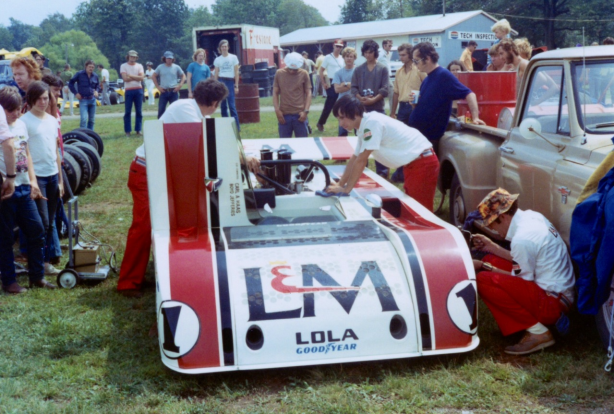
front f

Bucolic Mid Ohio paddock. Team busy this meeting, several suspension failures over the bumpy circuit. Standard-aero at this point (Terry Capps)

Stewart qualified third and was second behind Revson at the end of lap one but the McLaren drew away as Stewart drove well within himself. On lap 72 Revson’s driveshaft universal joint failed (the same problem sidelined Hulme) and Stewart took the lead and race win from Siffert’s Porsche and Tony Adamowicz’ 1969 ex-works McLaren M8B Chev.

back

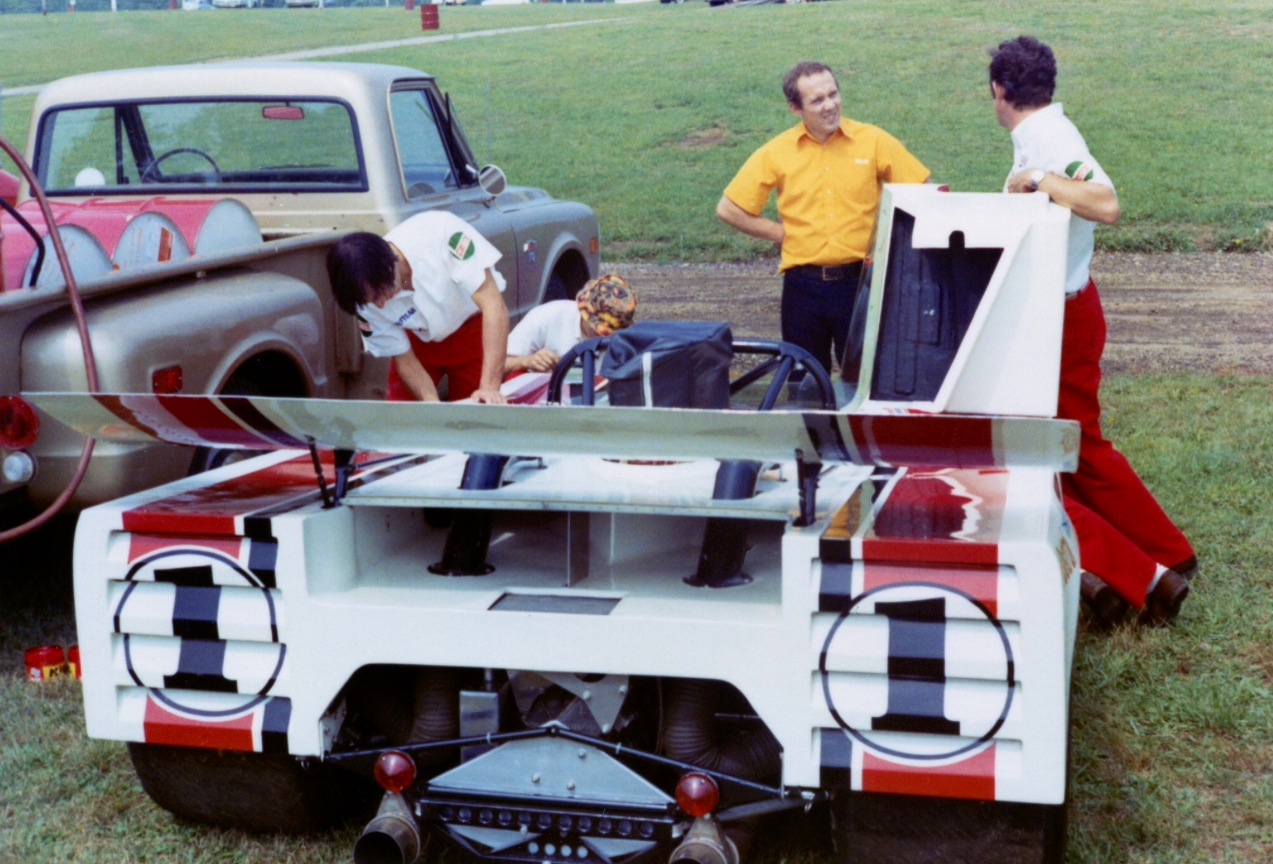
Mid Ohio paddock, this time a butt shot. Neat brackets to support beefy exhausts and lights, black ducts are cooling for inboard discs located beside the Hewland ‘box. Note also ducts/louvres on the rear of the bodywork to exhaust hot air (Terry Capps)

From this point on, the continual development of the McLarens told while the Lola effort didn’t improve enough. McLaren were a well drilled team and both drivers were  experienced campaigners with whatever changes needing to be made could be done quickly in their Detroit workshop or back at Colnbrook.

While the T260 was effectively a works effort run by the marques US importer, Lola were at their core a manufacturer of customer racing cars with many customers, not a race team with only one focus.
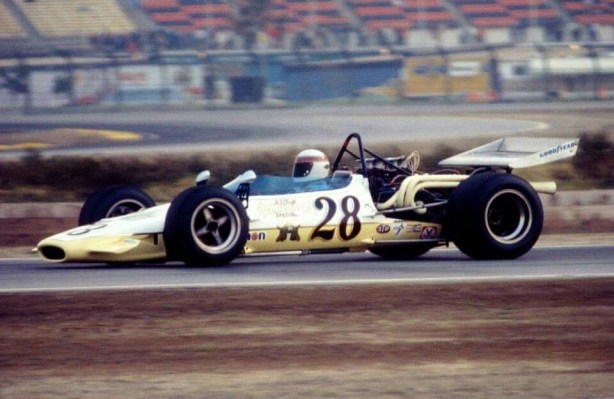
stew m10b

Included in JYS program for 1971 was the Questor Grand Prix at Ontario Speedway in March. He was second in his Tyrrell to Mario Andretti’s Ferrari 312B…but here Jackie is putting in a few laps in AJ Foyt’s McLaren M10B Chev in his only F5000 drive?? (Getty Images)

Jackie Stewart on driving the T260 and stresses of two major campaigns, F1 with Tyrrell and the Can-Am Lola in 1971…

Stewart related to Gordon Kirby and Adam Cooper in separate MotorSport magazine interview’s; ‘There were no wind tunnels in those days and Eric (Broadley) would suddenly arrive and under his arm was a new front wing. There was one we called ‘the cowcatcher’. It was hung out front of the car and what it was doing I just don’t know’

‘The car was very short wheelbase and very difficult to drive. In comparison to the McLarens, (Stewart was approached to drive for them in 1972 and actually signed to do so but withdrew when the extent of his health problems were clear) the car was just a monster to drive and we were just trying to keep up’.

‘I tested the McLaren and it was just like a passenger car compared to the incredibly nervous, pointy, short wheelbase Lola where you were a millisecond from an accident all the time.’

Stewart said the Lola T260 was the most physically demanding car he raced in his career ‘On the very fast circuits like Riverside it was awfully tricky because you never knew where you were going’. In order to make up for its shortcomings ‘I sweated more. It was just a difficult car to drive. There are some cars which are easy to drive and others not and that was one of the ones that was not’.

In a contest for the worst car he ever drove; ‘The Lola T260 Can-Am car would probably make that one…the H16 BRM runs it a close second’.

The main problem was dire understeer in addition to ultimate twitchiness at speed. The Lola’s blunt nose was dotted with mesh covered holes through which the underbody air could pass. In theory this helped provide some downforce. In its initial guise the shape of the front didn’t seem to have any obvious way of providing grip. Broadley deliberately opted not to have a fashionable chisel nose. But the lack of downforce at the front was borne out by the position of the giant rear , which was usually far forward, just behind the injection trumpets  in an attempt to achieve some sort of balance.

A combination of racing around the world in two series and lots of promotional work gave Stewart mononucleosis. ‘I was flying back and forth from Europe to do F1, I won the world championship that year and two Can-Am races, but I also got mononucleosis (glandular fever), a really debilitating disease that took your energy away. You couldn’t sleep and yet you were overly tired. So it was a tough year, a really exhausting year’.
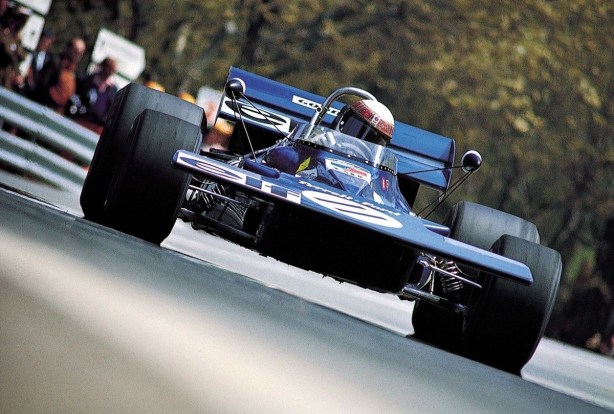
stew montjuic

Stewart racing his Tyrrell 001 Ford to victory in the Spanish GP, Montjuic Park, Barcelona on 18 April. He took six wins in 1971 and his second drivers title (unattributed)

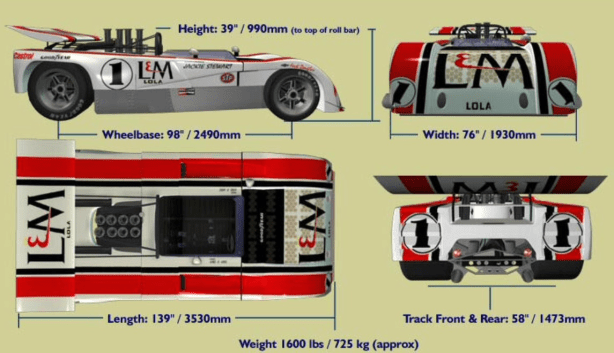
It’s interesting to reflect on Jackie’s comments on the differences between the two cars. In fact both the T260, which retained the same wheelbase as the T222, and the M8F had 98 inch wheelbases.

The front/rear track of the Lola was 58 inches, of the M8F 60/57.75 inches, while the overall length of the Lola was 139 inches compared with the much longer M8F’s 167 inches. The aero treatment was radically different of course, a lack of downforce something the team chased progressively throughout the season.

road america

Stewart in the T260 at Road America and trying a different aero configuration comprising; a new profile ‘clip’ on the lower nose at the cars front and McLarenesque wing and integrated mounts, wing now much further back than the original (Jim Buell)

Round 6: Road America, Elkhart Lake, Wisconsin, 29 August
Stewart was third fastest in qualifying but his engine, also used at Mid-Ohio, was tired.

A new Chev was fitted for the race but high temperatures during warm-up were hoped to be vapour lock in the cooling system.
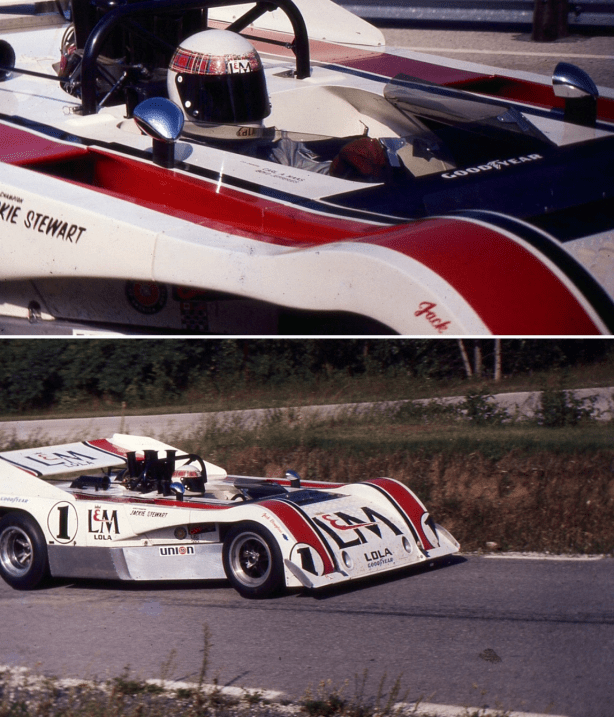
road am 1

Stewart ready to rock at Road America and a close-up of the configuration pictured above (Jim Buell)

Stewart ran second early on but after 10 laps the engine was smoking so Jackie parked it. Later examination showed a dropped cylinder liner was responsible for the high engine temperatures.

Revson won from Siffert and Vic Elford’s McLaren M8E Chev.
stew road am

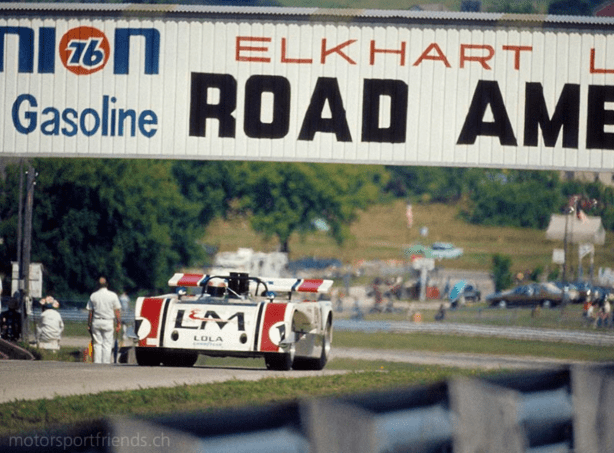
Stewart T260 Road America, note that in this shot he is running the original nose and rear wing setup (Carl Knopp)

Round 7: Donnybrooke, Minnesota
The T260 had revised rear suspension but the McLarens were continually being developed as well, Stewart’s third fastest time was two seconds adrift of the factory M8Fs.

Stewart got away well and led for two laps until Revson found a way past, Hulme was unable to pass Jackie as the McLaren was losing grip in the Lola’s slipstream. The positions remained until lap 22 when Stewart felt something amiss and pitted, nothing could be found, he resumed in 10th a lap and a half down.

The Scot raced the T260 back to fourth but another puncture saw Stewart back in the pits, the T260 finished sixth, two laps down. Revson again won from Hulme and Gregg Young’s McLaren M8D/E Chev in third.
edmonton

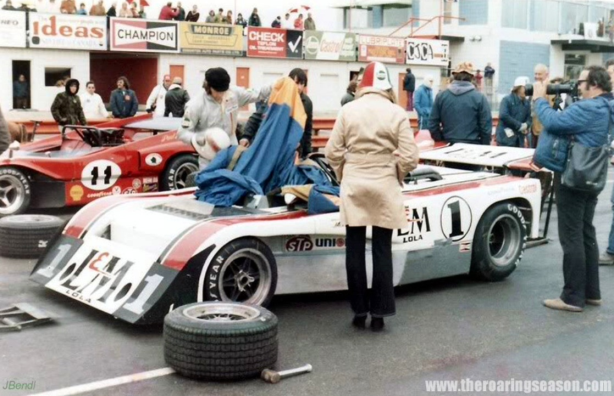
Stewart about to load up on the wet Edmonton grid, September 1971. #11 is Motchenbacher’s McLaren M8D . See another variation of the T260 nose, the front ‘clip on’ less bluff than the original and more ‘scooped’. Rear wing mounted back (Jerry Bendl Collection/The Roaring Season)

Round 8: Edmonton, Alberta Canada, 26 September
The T260 featured a revised nose shape designed to give more downforce while the rear wing was moved back to balance the new nose.

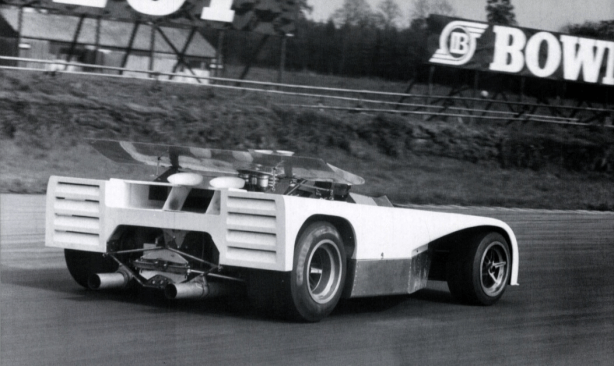
Stewart qualified third again and had a great start on the wet track and led. The T260 was handling well in the rain, the Scot extended his lead over Jackie Oliver’s Shadow and Hulme’s McLaren. Stewart was still leading at half distance but a trip onto the grass when lapping Motschenbacher’s M8D lost the Lola’s handling balance.

Gradually Hulme closed the gap and he suddenly found himself in the lead with 13 laps remaining, the deteriorating handling caught Stewart out and he spun. The T260 resumed in second but with it’s competitiveness lost Stewart settled for a safe second. Jackie Oliver finally got the Shadow Mk2 into the points in third place.
cow catcher

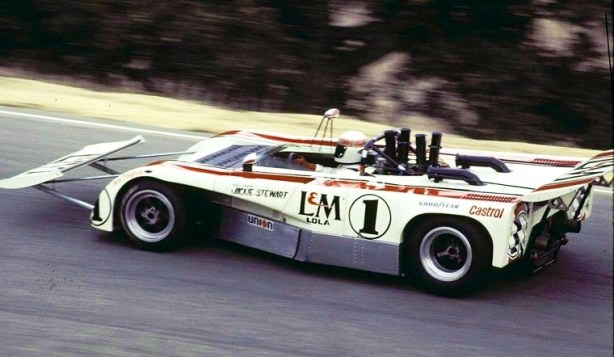
Stewart runs the cow-catcher set up at Laguna Seca, in search of downforce or what! Far forward wing and much larger rear wing to balance things up (Tony Ferrari)

Round 9: Laguna Seca, California, 17 October
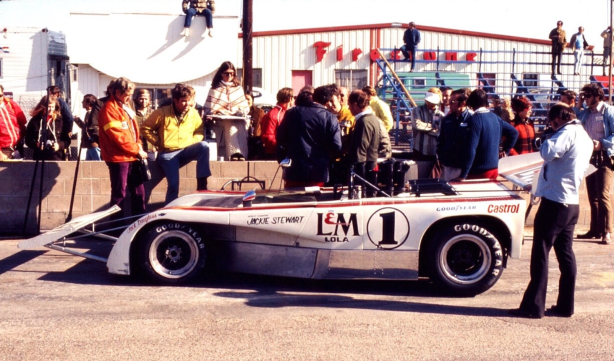
At Laguna Seca the T260 had lost its high downforce nose from Edmonton and now featured a huge, front cow-catcher wing projecting out in front of the nosecone.

Stewart managed fourth on the grid behind the McLarens and David Hobbs in the Ti22 Chev.

Stewart soon passed Hobbs – David raced the Carl Haas factory Lola T310 in 1972 – and after 10 laps passed Hulme who had some broken valve springs.

Revson seemed secure 25 seconds ahead of Stewart but a collision with a backmarker required a pit stop to secure a loose door. Stewart was now nine seconds behind. Revson started to pull away again but with 20 laps to go Revvies engine lost power, he nursed it over the remaining laps but with two to go the M8F was puffing blue smoke.

He drove the last two laps cautiously to win and but Stewart took the chequered flag as Revson had been shown a black flag, Revson claimed he hadn’t seen it.

The Carl Haas team protested Revson, the results were pending for some hours, but eventually Revson got the win but received a $250 fine. Hulme was third.

corkscrew

Stewart ahead of David Hobbs Ti22 Chev, Jackie Oliver Shadow Mk2 Chev, another unidentified car with Jo Siffert Porsche 917/10 at rear. Corkscrew, Laguna (Hal Amarantes)
riverside

riverside 2

Stewart at Riverside, again with the cow-catcher aero setup. Side on profile shot gives an idea of just how far forward the front wing was and how big the rear one was! Lola T260 Chev (MP Hewitt)

Round 10: Riverside, California, 31 October
The series’ final round was at Riverside on October 30, only 3 1/2 short months since its commencement in mid-June.

Stewart again qualified third, the T260 now had bigger sideplates on its rear wing.

Hulme took the lead at the start but Stewart got up to second as Revson, looking for points to clinch the Championship, didn’t make it difficult. Unable to challenge Hulme, Stewart was running happily in second until a piston failed in the big aluminium Chevy on lap 27.

Hulme won from Revson and Howden Ganley in the BRM P167 Chev.

The end of the 1971 Can-Am Championship resulted in Peter Revson as champion with five wins to Hulme’s three, Stewart finished an honourable third to the two McLarens…

As Lola Heritage puts it ‘He had been their only consistent competitor over the ten rounds and there was a certain ‘what may have been’ feeling over the whole series, if only reliability had been better and punctures had been less’.

In addition to that it’s a shame the car hadn’t been finished earlier and tested extensively at Goodwood and Silverstone prior to crossing the Atlantic, but it wasn’t and the dominant McLaren’s reaped the rewards.
t310 front

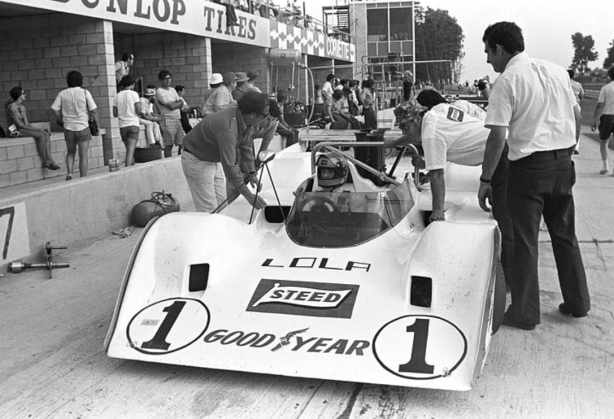
David Hobbs in the Watkins Glen pits 1972, Lola T310 Chev (unattributed)

For 1972 Lola again contested the championship with a new car, the T310, McLaren built a new car, the M20 Chev to take on the pride of Stuttgart, but the mighty turbo-charged Porsche 917/10 was battle ready in the hands of the Penske Team and Mark Donohue in a way the 1971 Lola/Carl Haas/Stewart combination were not…
t 310 watkins

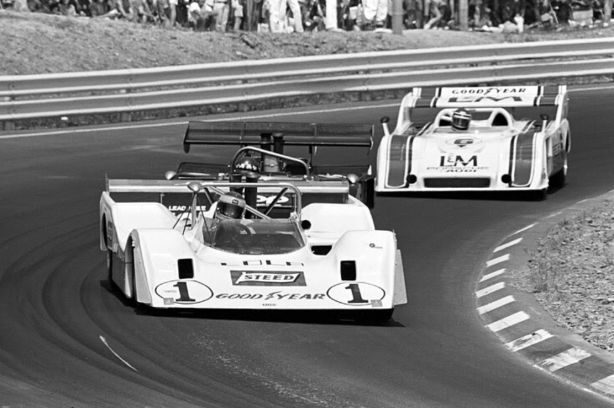
David Hobbs Lola T310 Chev fourth ahead of Jackie Oliver’s Shadow Mk3 Chev DNF and the dominant Porsche 917/10 turbo of George Follmer fourth. Hulme won this round in an M20 McLaren. Watkins Glen 1972 (unattributed)

Etcetera…
dimensions

Bibliography…

Lola Heritage, MotorSport October 2000 article by Adam Cooper and December 2013 article by Gordon Kirby, Automobile Year 19, ‘Can-Am’ Pete Lyons

Photo Credits…

Lola Heritage, Ron Laymon, Getty Images, LAT, Jerry Bendl Collection/The Roaring Season, Automobile Year, Jim Hayes, Tom Strongman cutaway drawing, Carl Knopp, Jim Buell, Terry Capps, Hal Amarantes, Tony Ferrari, MP Hewitt

Tailpiece…

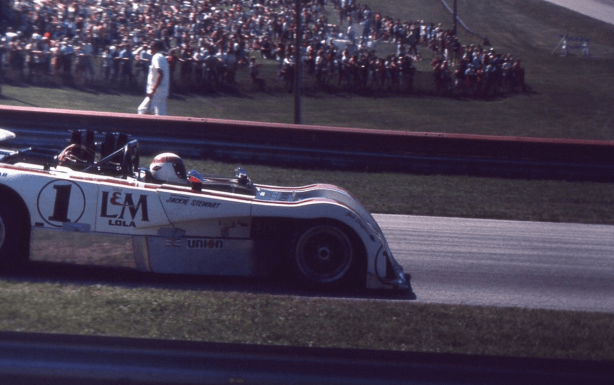
Turn in Biiitch!
bitch

Stewart Lola T260, Road America 1971 (Jim Buell)

Finito…

image

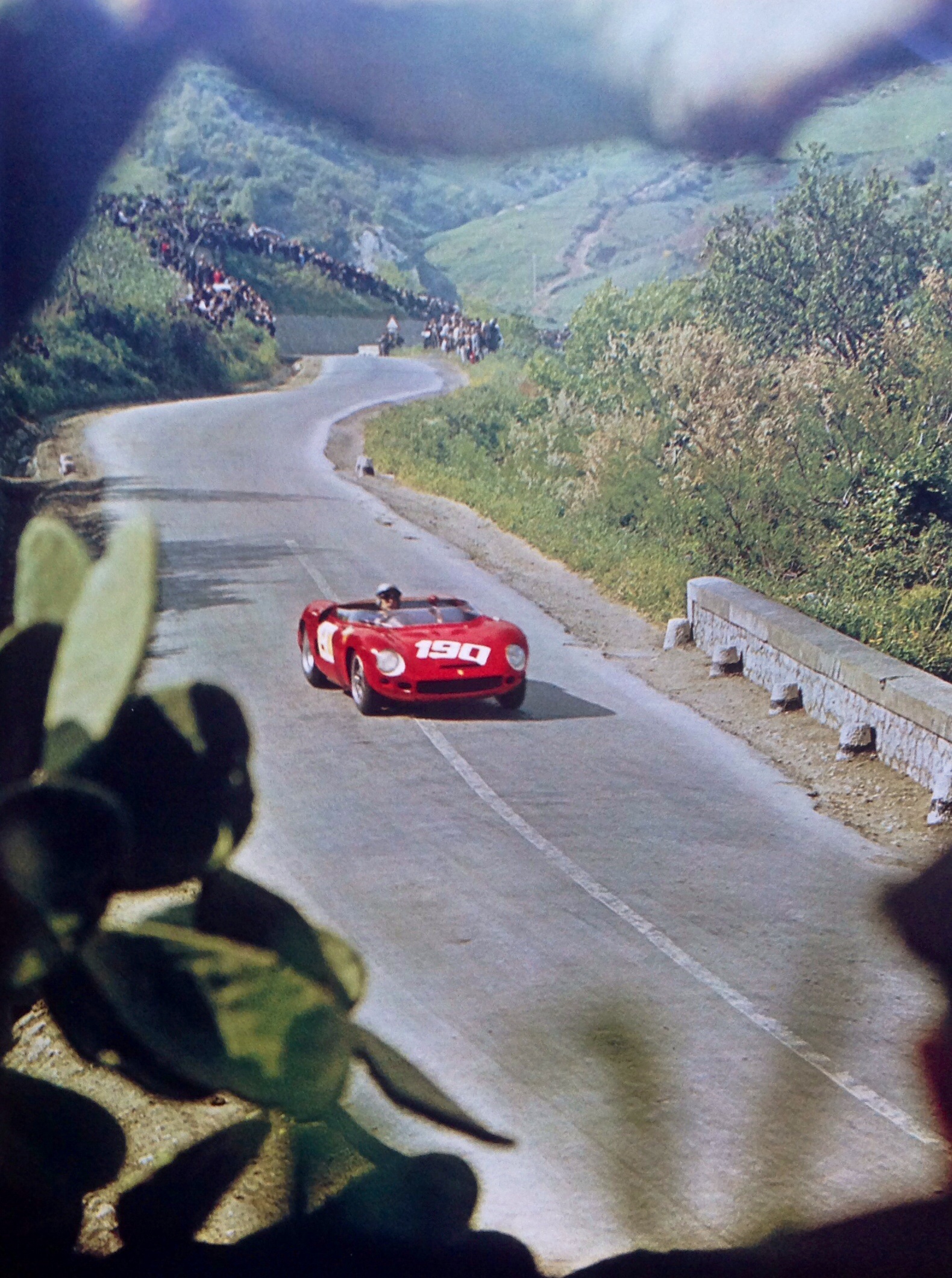
Bonnier/Abate Porsche 718GTR in the Sicilian Hills. (Yves Debraine)

Jo Bonnier victorious in the Porsche 718GTR together with Carlo Abate…

The 718 Porsche was a development of the earlier, successful 550A/RS61, the GTR coupe the ultimate expression of the 718 was developed for the 1961 Le Mans classic. It was fitted with either the earlier 1.5 litre 4 cylinder or as here, a 2 litre variant of Porsches’ flat 8, quad cam F1 engine developing around 210bhp all of which hit the road through a 5 speed gearbox. Disc brakes were used, torsion bar suspension, the car very light at circa 570Kg.

The 904 followed the 718 as Porsches’ next racer hence the family resemblance…

Very successful, 718 variants won Targa in 1959/60/63 and the Sebring 12 Hour enduro in 1960.

The Bandini/Scarfiotti/Mairesse Ferrari Dino 196SP looked a certain winner until Willy lost the car on the last lap, he recovered but fell short of victory by 12 seconds.

It wasn’t Willy Mairesse’ race, he had started in a 250P 3 litre 12 cylinder Ferrari co-driven by Ludovico Scarfiotti and managed to hit a bump which flattened a fuel line, ultimately putting the car out of the race.

John Surtees then blotted his copybook, chucking the leading 250P co driven by Mike Parkes into the bushes leaving Lorenzo Bandini to uphold Ferrari honours with the 2 litre V6 Dino.

image

Scarfiotti/Bandini/Mairesse Ferrari Dino 196SP. Nowhere quite surpasses the rugged majesty of this place? (Yves Debraine)

Scarfiotti was enlisted to assist in the Dino to uphold Maranellos’ honour, the Bonnier Porsche very competitive in the cool, experienced and fast hands of the Swede.

Abate wasn’t as quick as Bonnier, slowly the Ferrari gained the lead, Ferrari team-manager Eugenio Dragoni putting Mairesse into the car as a fresh driver for the last two laps. A fresh driver but perhaps not the most ‘calm’!

The Sicilian weather deteriorated, rain began to fall and poor Mairesse goofed under brakes as he approached the finishing straight and off the road he went. He gathered up the car, dragging the engine cover along the ground as Bonnier looked on, the Ferrari just falling short of Bonniers time by 12 seconds…

image

The Ferrari boys watch their clocks! Bonnier has finished, it’s all down to Willy Mairesse as the weather deteriorates. Bandini in the pale blazer beside the ‘Wallopers’ and Scarfiotti to the left of Lorenzo. (Bernard Cahier)


image

Mairesse finishes the race dragging the engine cover of his Ferrari behind …(Bernard Cahier)


196 sp cutaway

Ferrari Dino 196SP: multi-tubular spaceframe chassis, 690Kg, 1983cc 60 degree V6, SOHC per bank, 3 Weber carbs. 210bhp @ 7500rpm, 5 speed transaxle. (Unattributed)


targa 'motor racing' mag

‘Ludovico Scarfiotti shakes the quiet Sicilian village of Campofelice in his 3 litre Ferrari 250P’, the first of 2 Ferraris’ crashed by Willy Mairesse, this one on on lap 4… (Stephen Dalton Collection)

Bibliography…

Automobile Year 11, Yves Debraine, Bernard Cahier, Stephen Dalton Collection


image

The beautifully finished and trimmed cockpit of Clarks’ Lotus 25 at Monaco 1963. Leather bound Mota-Lita steering wheel, a dash full of Smiths instruments including its famed chronometric tach and right hand change for the 5 speed ZF ‘box. Naked aluminium of the monocoque chassis below the shift lever. (Yves Debraine)

The tell-tale on Jim Clarks Lotus 25 after his retirement from the 1965 Monaco Grand Prix is at 9500rpm…

He was comfortably in the lead of the race by 14 seconds when the car engaged 2 gears at once on the entry to the Gasometer hairpin. Graham Hill inherited a lead he maintained to the race’ conclusion.

image

Clark in classical pose. Lotus 25 Climax. (Eric Della Faille)

The Lotus 25, the first ‘modern monocoque’ appeared at the Dutch Grand Prix in 1962 and was much copied for the 1963 season. For ’63 the car remained much unchanged other than small details and power increases from the Coventry Climax FWMV 1.5 litre quad cam, 2 valve V8.

Lucas fuel injection was adopted and a changed bore/stroke ratio allowed higher rpm and power.

Lotus retained the ZF gearbox but also tried a 6 speed Colotti-Francis ‘box and later in the season a Hewland 5 speed transmission which would soon become ubiquitous.

image

Surtees gesticulating at the fast approaching Ginther. (Marti)

John Surtees and Richie Ginther in Ferrari T56 and BRM P57 respectively scrapped for much of the race, this shot is on the entry to the Gasometer hairpin. Ginther tries to pass with Surtees gesticulating in protest.

Ginther finished second to teammate Hill, with Surtees, sitting in a pool of oil and with falling oil pressure finished fourth and set fastest lap on the last lap and the lap record. McLaren was third in his Cooper T66 Climax.

image

John Surtees eyes focused on a Monaco apex, Ferrari T56/156. (Yves Debraine)

Ferrari competed with interim cars for much of the season using the V6 engines which won the World Championships in 1961. The 1964 car appeared at Monza powered by a V8, the development of the car in ’63 setting up Surtees’ tight title victory in 1964.

dark

Surtees again, here chasing winner Graham Hill’s BRM P57. (unattributed)

clark monaco lotus 25

Clark enroute to what seemed a certain victory, before the intervention of gearbox dramas in his lithe, lissom utterly luvverly Lotus 25. (Unattributed)

hill winner

To the victor, the spoils. Graham Hill ‘The King of Monaco’ after the first of his 5 wins in the Principality. (Getty Images)

image

Lotus 25 Climax cutaway drawing by James Allington…

This short article makes no attempt to put into perspective one of the most successful and influential racing cars of all time, the first ‘modern monocoque’ includes amongst its relatives all monocoque racing cars built since its debut at Zandvoort in May 1962.

‘Monocoque’ construction by riveted ‘D section’ light alloy longerons attached to fabricated steel bulkheads front and rear.

Front suspension by upper top rocker operating inboard mounted coil spring /damper unit, lower wishbone and adjustable sway bar. Rear suspension by upper top link, inverted lower wishbone and coil spring/damper unit and adjustable sway bars. Cast alloy uprights front and rear.

Girling disc brakes, rack and pinion steering.

Wheelbase 91 inches, track front 51.5 inches, rear 51.75 inches, overall length 146 inches, dry weight 990 pounds. Wheel sizes 5X15 front and 6 or 6.5X15 inches at rear.

Coventry Climax FWMV 1.5 litre 90 degree V8. Bore 67.8mm, stroke 51.6mm, 1496cc, Lucas fuel injection, compression ratio 10.5:1, weight 290lb, 194bhp @ 8500rpm.

ZF gearbox mainly used in 1963 but Colotti and Hewland also tried.

Clark and Chapman

Clark and Chapman with a ’63 spec 25, its essential elements as described above. (Unattributed)

Clarks 1963 Championships…

Clark Zandvoort 1963

Jim Clark, Dutch Grand Prix June 1963. Jim zooms his Lotus 25 between the North Sea sand dunes at Zandvoort on his way to victory. (Yves Debraine)

That Jim Clark and the Lotus 25 were the fastest combination in 1962 was not in doubt but Coventry Climax reliability was not as great as BRM’s that year. In 1963 the promise of ’62 was realised with Clark winning five Grands’ Prix and both the Drivers Championship for himself and the first Manufacturers Championship for Lotus.

Clark finished second in a Lotus 29 Ford in his first foray to Indianapolis and further demonstrated his versatility with wins in cars as diverse as the Lotus 23 sports car and Ford Galaxie touring car/saloon that year.

Clark became the standard by which other drivers were judged in 1963, if not earlier.

Auto Year 13

The cover shot of Clark is at the Dutch Grand Prix, Clark won on the 25’s debut there in 1962 and in 1963 and 1964, all in 25’s and in 1965 in the updated Lotus 33 also Climax FWMV V8 powered.

Oulton Park Gold Cup 1963…

clark winning oulton gold cup 1963

Not only did Jim Clark win the Oulton Park Gold Cup during 1963 but he also recorded some stunning in car footage at the Cheshire circuit in his Lotus 25, such footage very rare at the time.

http://m.youtube.com/watch?v=PffCawETtK8&autoplay=1

There were four Non-Championship F1 races in the UK alone in 1963, lucky Brits! The footage is amazing on so many levels not the least of which is a drivers eye period view of the circuit; typical track edges, the lack of run off areas and the topography of trees, ditches and the like for the unwary…and this is a circuit devoid of the ‘special obstacles’ of the ultra dangerous road circuits of the day on which Clark raced. The Nurburgring, Spa, Reims, Pescara and Longford here in Australia spring to mind.

Ok, he is not racing but the precision and accuracy for which he was renowned is also on display…

An ace in every sense of the word.

clark atop 25 oulton park 63

Etcetera…

Lotus 25 camera car

Clark tootling thru the Oulton paddock in his ‘camera car’, its a bit hard to pick out the beefy mount against the dark background. And to think in the day of the ‘GoPro’ this was how it was done only a short time ago. Even when the specialists at Channel 7 in Australia popularised in car footage in the ‘Bathurst 1000’ in the late 70’s the heavy rig occupied a good percentage of the rear seat area…progress! (Unattributed)

image

Photo Credits…

Yves Debraine, Eric Della Faille, Marti, James Allington cutaway drawing, Automobile Year 13, Peter Windsor

Finito…


nurburgring 1000 km 1963

Surtees races through the ‘Green Hell’ to victory, Nurburgring 1000Km, his Ferrari 250P shared with Belgian Willy Mairesse, 1963…

It was a Ferrari 1-3 with a 250GTO and 250 Testa Rossa in second and third driven by Noblet/Guichet and Abate/Maglioli respectively.

The 250P was Ferrari’s first mid-engined V12 sports prototype and the class of the year, comprehensively winning the championship for the Scuderia.

The 3 litre V12 engined cars won the Sebring 12 Hour, Nurburgring 1000Km and Le Mans 24 Hour classics and spawned the 250LM, effectively a 250P with a roof and 3.3 litre engine. The 250/275LM won Le Mans in 1965 after the GT40’s and Ferrari P2’s fell by the wayside. https://primotipo.com/2014/07/03/pete-geoghegan-ferrari-250lm-6321-bathurst-easter-68/

Credit…

(Automobile Year 11)

Finito…

image John Surtees clipping the apex in Mexico in his North American Racing Team ‘NART’, factory, Ferrari 158. Ferrari was in dispute with the Italian national automobile club over its refusal to homologate his 250LM sportscar into Group 5 despite having not built the minimum number of cars to do so…the hissy-fit reflected in the cars being entered in the blue/white of Luigi Chinettis’ American NART rather than Italian national red…(Bernard Cahier)

John Surtees pilots his ‘NART’ Ferrari 158 to second place in the 1964 Mexican Grand Prix, clinching the drivers World Championship for him and the Constructors Championship for Ferrari…

On the day that Lewis Hamilton won the 2014 Championship i was flicking through some old magazines and reflected on the remarkably diverse career and achievements of Surtees.

In similar fashion to 2014 the 1964 title was also decided at the last race, in Mexico that year.

Graham Hill, Jim Clark and Surtees were all winners depending upon who finished where. In a race of changing fortunes Clark lead from the start, and was on track for the race win and his second title when his Climax engine started to lose oil and seized seven laps from the end. Surtees’ engine misfired early but sorted itself, teammate Bandini allowed him into second and the points he needed to defeat Hill, who had been given a ‘tap up the chuff’ by Bandini earlier in the race, causing a pitstop and damaged exhausts ruining his chance.

Mexico 1964, Surtees and Bandini Surtees in his Fazz 158 ahead of teammate Bandini in the flat-12 1512 early in the Mexican GP (unattributed)

Dan Gurney won the race in his Brabham BT7 Climax and Surtees the title. He was to win only six Championship GP’s throughout his long career, 1960-1972, not reflective of his talent but indicative of team choice, he wasn’t always in the right place at the right time.

Drivers Mexico 1964 Gurney, Clark, Surtees, pensive as always and Phil Hill prior to the ’64 Mexican GP. Looks like Brabhams’ haircut behind Clark? (Bernard Cahier)

Famously the only driver to win World Championships on two wheels and four…

He was born into a motor-cycling family and progressed from his fathers’ sidecar to solos and many Norton victories, before too long signed by Count Agusta to MV.

image Surtees bump starts his MV350 prior to the start of his run around the daunting Isle of Man, Senior TT 1957 (unattributed)

The departure of Gilera and Moto Guzzi allowed Surtees and MV to dominate the bigger classes, he won 350cc titles in 1958/9/60 and 500cc championships in 1956/8/9/60.

Before too long he wanted to race cars, making his GP debut for Team Lotus at Monaco in 1960, he mixed cars and bikes that year his best result second in the British GP.

Surtees on the road Riverside 1960 Surtees being blown off by a Ford Fairlane…on the way back from Riverside, USGP practice 1960. Lotus 18 Climax. 2.5 FPF Climax an incredibly tractable engine! (Bernard Cahier)
Surtees Portuguese GP 1960 Surtees made his F1 debut with Lotus at Monaco 1960, mixing a season of F1 with winning the 350 & 500 titles on bikes…here at Oporto in the Portuguese GP, he retired on lap 36 having qualified on pole on this challenging road course. Lotus 18 Climax (Bernard Cahier)

He drove a Reg Parnell/Bowmaker racing Cooper in 1961 and a Parnell/Bowmaker Lola in 1962 commencing a relationship with Eric Broadley’s marque which continued for most of his career in categories outside F1…although the F1 Honda of 1967 was famously a ‘Hondola’, being the marriage of in essence the Lola T80/90 chassis with the big, powerful 3 litre Honda V12.

Surtees AGP WF 1963 John in the Lola Mk4A Climax enroute to 2nd behind Jack Brabhams’ Brabham BT4, both 2.7 Coventry Climax FPF powered. Australian GP, Warwick Farm, Sydney 1963 (John Ellacott)

The most productive phase of his career was with Ferrari from 1963 to mid 1966, winning in both sports cars and in F1…

The Palace Coup and Purge of key Ferrari staff in late 1962 gave Surtees his Ferrari chance, joining them in early 1963. Arguably he was a good bet for the 1966 Championship won by Jack Brabham but inept, political management by team-manager Eugenio Dragoni resulted in his departure from the team mid season, his talents rewarded with two wins for Cooper that season, he then moved to Honda.

Its ironic that Ferrari intrigue gave him his Ferrari chance, and Ferrari intigue got the better of his sense of fairness in the end, read the MotorSport article below for Surtees’ own version of these events.

Surtees and Hill Monaco 1963 Surtees (4th) leads Graham Hill (1st) at Monaco 1963, Ferrari T56 and BRM P57 respectively (unattributed)
Forghieri and Surtees Ferrari 1512 Surtees looks typically concerned, there are not too many smiley shots of ‘Big John’, this was a serious business and all too often he was far from happy with his mount! Mauro Forghieri adjusts his ‘wedding tackle’. Ferrari 1512 1965, Nurburgring…look at all those coils trying to spark the high revving 1.5 litre flat 12. Technically interesting car with the 180 degree flat-12 used as a stressed member, years before the much touted Lotus 43/49 deployed the technique in 1966/7 respectively. Look closely and you can see the engine attachment point to the cast rear chassis bulkhead. Chassis still semi-monocoque tho. And lovely V12 still a 2 valve engine, rev limit and higher-frictional losses of the 12 and power developed  did not outweigh its complexity and higher fuel consumption relative to the 158 V8 in 1964. By the end of 1965 Surtees considered the car to have a decisive advantage over any other car but time had run out…Ferrari expected the 1.5 F1 to continue on, this engine needed to peak 12 months earlier than it did. Ferrari won no GP’s in 1965, Lotus and BRM had the edge that year. (unattributed)
Ferrari 158 cutaway Surtees 1964 championship winning Ferrari 158. Chassis semi-monocoque, aluminium panels welded to tubular steel frame. IFS front by top rocker, lower wishbone and coil/spring shock unit. Rear by single top link, inverted lower wishbone, twin radius rods and coil spring/damper units.Adjustable roll-bars front and rear. Dunlop disc brakes , 468 Kg total. Engine ‘Tipo 205B’ 1489cc 90 degree all alloy V8. Chain driven DOHC, 2 valves per cylinder. Twin plugs fired by Marelli coils (4) and distributor. Bosch direct fuel injection, 10.5:1 compression ratio, circa 220bhp @ 11000rpm. 5 speed transaxle with ratios to choice,’slippery diff’ (Bruno Betti)
Surtees Spa 1966 John avoided the multiple spins and accidents caused by the lap 1 deluge of the Belgian GP at Spa in 1966, winning the race. He was shortly to walk out of the team and with that action ended his, and Ferraris’ hopes of a World Championship that year. Camera crew handily placed on the Eau Rouge apex… (unattributed)
Surtees Ferrari 312 Monza 1966 Happy JS testing his F1 Ferrari 312 at Monza in 1966 before the Monza 1000Km race. Cars behind are Ferraris’; Dino 206S and P3. The event was in April ’66, Surtees had a win in a P3 partnered by Mike Parkes…Bandini in the drivers overalls and brown sweater ? (unattributed)

1966 was capped with a dominant win in the first CanAm Championship in his self-run Team Surtees Lola T70Mk2 Chev, defeating Mark Donohue in a similar car and Bruce McLarens’ own M1B Chev, the McLaren CanAm steamroller commenced the following year.

Las Vegas Can Am 1966 John Surtees in his Lola T70 Mk2 Chev leads the field into turn 1 at ‘Stardust International Raceway’, Las Vegas 1966. The hi-winged Chaparral 2E Chev’s of Jim Hall and Phil Hill stand out. #98 is Parnelli Jones, #18 behind Hill George Follmer, #43 Jackie Stewart and #6 Mark Donohue are all in Lola T70 Chevs. #4, 5 , 88 are McLaren, Amon and Masten Gregory all driving McLaren M1B Chevs…Surtees victorious that year in a field of great depth (unattributed)

The Honda RA273 was a big heavy car, the marriage of Lola chassis and Honda engine, the RA300, was more competitive winning Surtees his sixth and final Championship Grand Prix victory at Monza in 1967, just pipping Jack Brabham in a last corner tactical battle/sprint to the line.

Surtees South Africa 1967 Surtees in his Honda RA300, the big V12 ahead of Graham Hills’ Lotus 49 Ford. Clarks’ Lotus 49 won the race, his last GP victory. Surtees 8th, Hill 2nd Kyalami , South Africa 1968 (unattributed)

Honda withdrew from F1 to reappear in the 1980’s, Surtees F1 season with BRM in 1969 was a poor one, the Tony Southgate designed BRM P153/180 were competitive cars but John was a season too early, his timing again was not quite right.

Surtees BRM 1969 Spanish GP JS 5th in the 1969 Spanish GP but 6 laps behind winner Stewarts’ Matra Ford in a debacle of a race when Rindt/Hill Lotus 49’s lost their rear wings…hi-wings banned at Monaco several weeks later. BRM P138. (unattributed)
Chaparral 2H Laguna 1969 The truly wild Chaparral 2H Chev 1969, Surtees wrestling with the beast at Laguna Seca. An article in itself deserved on this car, composite chassis, low, low driving position, raised at Surtees insistence, De Dion rear suspension and more…here in search of downforce with what, even by Jim Halls’ standards, is a BIG WING! (unattributed)

His 1969 Chapparral CanAm season was even worse.

Jim Halls 2H Chev was an extraordinary car of immense innovation, but was totally uncompetitive, despite the best efforts of development of both Hall and Surtees. The 2J ‘ground effect sucker car’ of 1970 was even more avant garde and competitive but Jim Hall and Surtees was not ‘a marriage made in heaven’, a second season was not going to happen.

Jim Hall and Surtees Can Am 1969 Communication breakdown…Jim Hall and Surtees, Edmonton Can Am 1969, John in the seat of the recalcitrant, avant garde Chaparral 2H Chev. Franz Weis looks on (unattributed)
Surteees Nurburgring 1970 Ferrari 512S All is forgiven…back in Scuderia Ferrari in the 1970 512S squad…here at the Nurburgring in front of the much more nimble and victorious Porsche 908/3 of  Elford/Ahrens. John was teamed with Niño Vaccarella, they finished 3rd. (unattributed)

It was time to control his own destiny, build his own cars which he started to do with the Len Terry designed TS5 F5000 car in 1969…the Surtees TS7 Ford F1 machine made its debut in Johns’ hands in 1970.

Surtees Cars won the European F2 Championship with the works TS10 Ford driven by Mike Hailwood and the 1972 British/European F5000 Championship, Gijs van Lennep driving a TS11 Chev.

john surtess Surtees in his own TS8 Chev F5000 car Australian GP 1971, Warwick Farm. He was running second behind Frank Matich’ winning Matich A50 Repco, then had a puncture DNF. Here he is leading Max Stewart’s 2 litre Mildren Waggott DNF engine. (Dick Simpson)

In F1 the cars were competitive over the years, the TS19 ‘Durex franger’ sponsored chassis of 1976-7 perhaps the pick of them albeit results were still not great, John finally gave up due to the difficulty in funding in 1978.

Surtees retired from F1 as a driver after the Italian GP, Monza 1972, fitting as it was the scene of his final championship F1 victory in 1967.

He was competitive to the end winning two F2 races in his Surtees TS10 Ford that year. He continued to test the F1 cars, much to the annoyance of some of his drivers who would have preferred the ‘seat time’ themselves…

He is now 80 years old, happy in retirement and still a respected commentator on the current scene…

Surtees Italian GP 1972 John Surtees contesting his final GP, Monza 1972 is his TS14 Ford. He retired on lap 7 with fuel vaporisation problems, teammate and fellow ex-motor cycle champion Mike Hailwood finished second in his Surtees TS9B Ford..his and the marques best ever championship result. Emerson Fittipaldi won the race and the Championship in his Lotus 72 Ford (unattributed)

Etcetera…

Motor Sport

Read this fantastic article, John Surtees on working with the ‘Italian Racing Aristocrats’, Count Agusta and Commendatore Ferrari…

http://www.motorsportmagazine.com/archive/article/august-2009/46/count-and-commendatore

Read this fantastic article on the Surtees Racing Car marque…

http://www.motorsportmagazine.com/halloffame/john-surtees/keeping-the-name-alive/

Surtees and Count Agusta Signing on the dotted line for MV, a very youthful JS, 22 years old, with Count Agusta 1956 (unattributed)
Surtees Longford Winning the ‘South Pacific International’, Longford, Tasmania, Australia March 1962. The ‘Yeoman Credit’ Cooper T53 Climax 2.7 is exiting the Viaduct. He beat Jack Brabham and Bib Stillwell also in Coopers (Keverell Thompson)
Enzo, Surtees and Ferrari 158 Modena Enzo Ferrari, John Surtees with crossed arms in the driving suit behind him. Surtees grumpy, perhaps early tests of the 158 at Modena are not going well…(Bernard Cahier)
Surtees and Bandini Monaco 1965 Love this shot of Surtees in his Ferrari 158 chasing teammate Bandini in a 1512 in the 1965 Monaco GP. Bandini 2nd, Surtees 4th and out of fuel, Hill victorious in his BRM P261 (Rainer Schlegelmilch)
Surtees pits Can Am 1966 Team Surtees 1966 CanAm Champions…the way it was. Racer, truck, mechanics, driver, ‘works car’ and a series win! Surtees supervising @ rear, circuit anyone? (unattributed)
Surtees and McLaren Can Am 1966 John Surtees ahead of Bruce McLaren, Lola T70 Mk 2 and McLaren M1B, both Chev powered. St Jovite Can Am Canada 1966 (unattributed)
Lola T100 Surtees Testing ! the Lola T100 Ford FVA F2 car at the Nurburgring, 1967 (Alexandre Willerding)
Surtees TS7 Ford cutaway drawing Surtees TS7 Ford, JS 1970 & 1971 F1 contender. A well executed ‘Cosworth kit car’ of the period, general layout by JS, detail design by Peter Connew and Shabab Ahmed. Aluminium monocoque chassis, Ford Cosworth DFV 3 litre V8, circa 430bhp @ 10200rpm in 1970. Hewland DG 300 5 speed ‘box. IFS front by top rocker, lower wishbone and coil spring/ damper units and rear by single top link, single top radius rod, twin parallel lower links and coil spring/damper units, F5000 TS8 of the time a variant of this chassis. The car won some championship points and the Non-Championship Oulton Park Gold Cup in 1970 (cutaway by Bill Bennett)

Photo and Other Credits…

The Cahier Archive, Alexandre Willerding, Keverell Thompson Collection, John Ellacott, Dick Simpson, Bruno Betti, Bill Bennett, Rainer Schlegelmilch

Finito…
 

512s
(R Schlegelmilch)

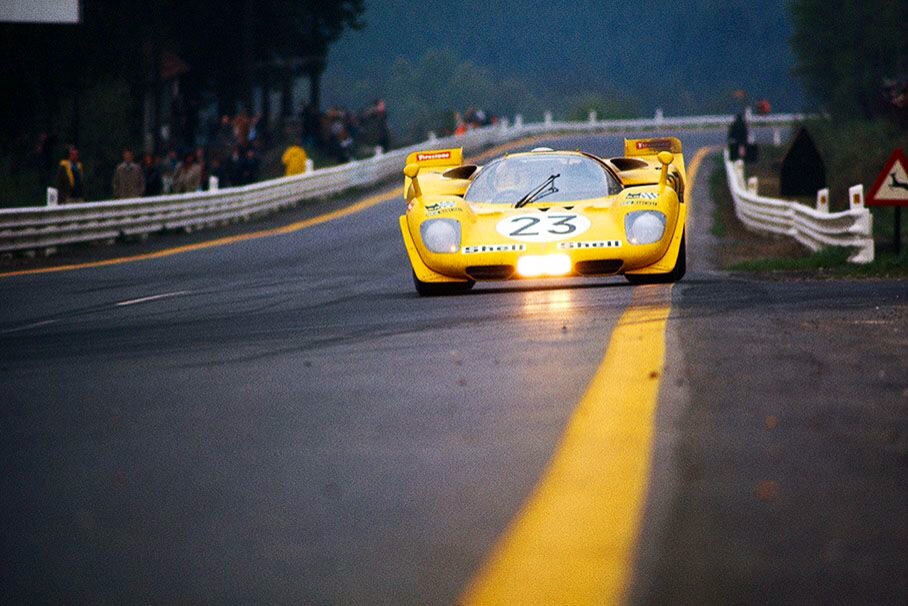
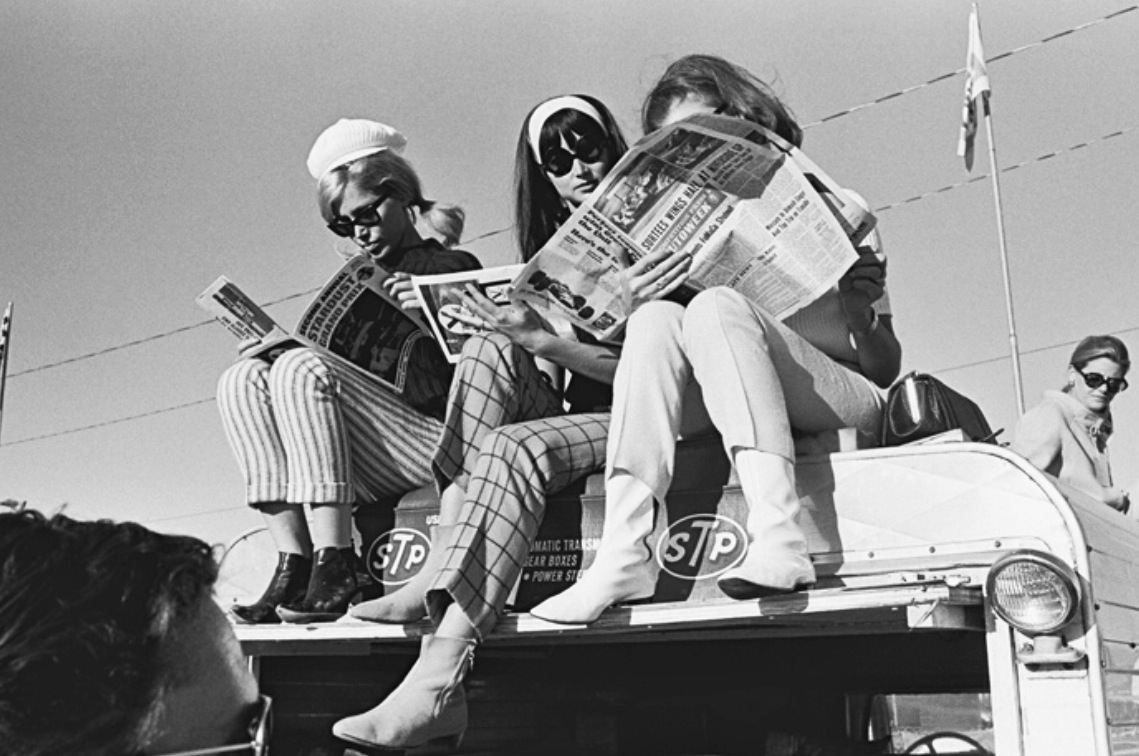
Fabulous shot of Derek Bell bang on the yellow line on the approach to La Source hairpin during the Grand Prix de Spa in 1970, he finished eighth sharing this Ecurie Francorhamps 512S with Hughes de Fierlant…
Jo Siffert and Brian Redman won the race in the dominant car of 1970/71, the Porsche 917K. These 5-litre 12-cylinder, 450-550bhp cars are still spoken of in awe 45 years later by those fortunate enough to see or drive them.

Ferrari were very busy in 1970 with F1 and their beloved sportscar programs. Porsche kept it simple, subcontracting the preparation and racing of their factory cars to John Wyer Engineering and Porsche Salzburg, they were not distracted by F1.

(unattributed)

On paper, the V12, spaceframe chassis 512S should have given the flat-12, spaceframe chassis 917 a better run for its money than it did. An early season Sebring 12 Hour win by Ignazio Giunti, Nino Vaccarella and Mario Andretti (above) flattered to deceive in a season the 917 hordes belted Ferrari into submission. What races the 917 didn’t win the lithe, nimble 3-litre flat-8 908/3 did.

Ferrari’s suitably tweaked 512S-1971-updated 512M showed  early potential to serve it up to the 917 horde, but the Ferrari factory didn’t race it in ’71, the 15 cars built or converted from 512S spec were raced by privateers, while Scuderia Ferrari raced a single 3-litre 312PB in advance of a change in regulations from 1972. It was strategy that was most effective, but they probably left a win or two on the table in 1971 as a consequence.

(UPI)

Enzo Ferrari, second from the right, and buddies launch the new Ferrari 512S to the press in Modena on November 6, 1969. Key elements of the spiel with this photograph was ‘Latest Ferrari Sports Model’ was a 5000cc 12-cylinder engine producing 550bhp @ 8,500rpm and an ‘extremely low streamlined body with a panoramic cockpit in the forward position.’

Whether the shot below was taken on the same day is unclear, the very tall Mike Parkes stands out mid-pic with liddl’ Art Merzario second left and Clay Regazzoni to the right of the car, closest to us.

(UPI)
homologation
(unattributed)

25 512S, Maranello late 1969…

Twenty five cars were required by the governing body, the CSI for homologation into Group 5. The cars are all lined up ready for inspection, the yellow Francorchamps car stands out. Porsche were awfully keen for the Ferrari production audit to be as vigorous as their own, the Scuderia’s ability to count having been proved poor in the past, the 250LM springs to mind…

The investment was huge compared with the small production runs of previous models, only three P4s were built, plus one P3 converted to a P4. Fiat acquired 50% Ferrari, taking control of its road car division in 1969 and put racing support arrangements in place going forward. Without that there would have been no 512 program, the company would not have had the working capital to build so many cars with sales of them far from certain.

Spa 1000 Km 1970 pits
(CA Caillier)

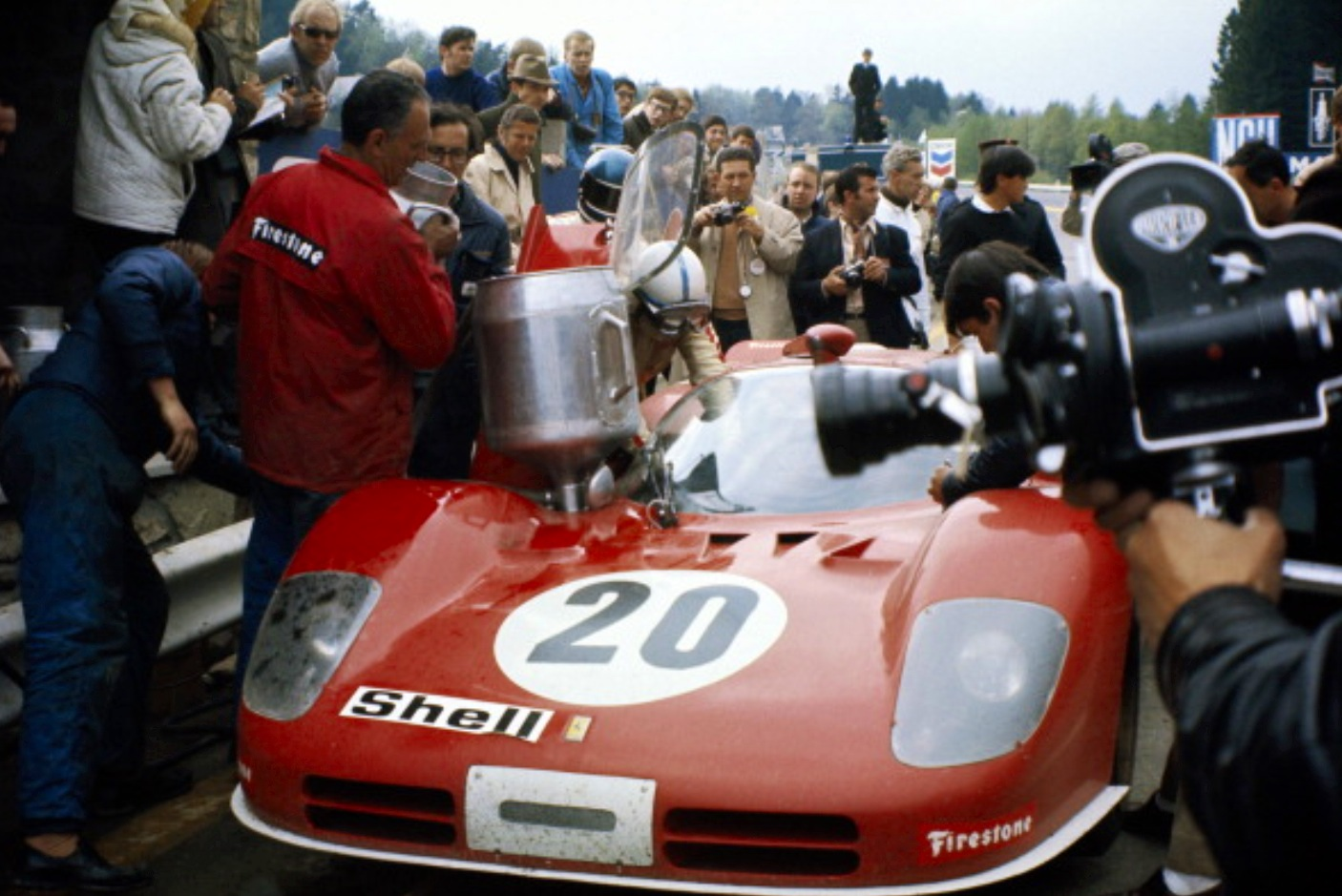
All the fun of the fair and more 512S all in a row, mechanics fettle Bell’s car, #21 is the seventh placed Schetty/Merzario Scuderia Ferrari 512S, the best placed 512S was the Ickx/Surtees machine in second.

Technical Specifications…

512 spa camera
Busy pit stop for the Ickx/Surtees second placed 512S. Surtees jumping in, Ickx clear in the helmet behind, Spa 1970 (Rainer Schlegelmilch)
(ferrari.com)

“Put together in just three months by a team headed by Mauro Forghieri”, Ferrari wrote. The steel tubular space frame chassis was developed with learnings from the P4 and 612, with the polycarbonate Berlinetta and Spyder bodywork designed by Giacomo Caliri.

4.06 metres long, 2 metres wide, 972mm high with a wheelbase of 2.4 metres and front and rear tracks of 1518mm/1511mm. Fuel capacity 120 litres, weight 840kg dry.

Andretti at Daytona in 1970, he was third in the car shared with Arturo Merzario and Jacky Ickx, the Pedro Rodriguez/Leo Kinnunen/Brian Redman Porsche 917K
(ferrari.com)

Front suspension by upper and lower wishbones, coil springs/Koni shocks and adjustable roll bar. At the rear the period typical layout was adopted as well; single top links, inverted lower wishbones, twin radius rods and again coil spring/Konis. Magnesium uprights and wheels were used and tyre sizes 4.45-11.50-15 inches front and 6.0-14.50-15 inches at the rear. Steering was rack and pinion.

Engine, transmission and rear suspension detail of one of the works cars at Daytona in 1970
(ferrari.com)

The engine was a Ferrari classic 60-degree all-alloy DOHC V12, of 4993.53cc; 87x70mm bore/stroke. The design incorporated four-valves per cylinder, Lucas indirect fuel injection, used a compression ratio of 11.5:1, one plug per cylinder and was of course dry-sumped. Quoted power, as cited earlier was 550bhp @ 8,500rpm. The gearbox had 5-speeds and reverse.

(ferrari.com)

Etcetera…

The Ferrari compound above at Le Mans in 1970.

The Dick Attwood/Hans Hermann Porsche 917K won the race with the best place of the eleven 512S which started the race was the NART entry driven by Sam Posey and Ronnie Bucknum.

#8 is the Art Merzario/Clay Regazzoni entry DNF after 38 laps with a collision, the #5 Jacky Ickx/Peter Schetty was also involved in a collision in which a marshal was killed after completing 142 laps. The car to the left without a number showing is the Derek Bell/Ronnie Petersen car which had a valve fail after only 39 laps- worse was bearing failure of the #6 Nino Vaccarella/Ignazio Giunti 512S after only seven laps were completed. Not a memorable Le Mans for Ferrari at all.

512S Long-tail during the filming of Steve McQueen’s Le Mans in 1971 (Getty)

Credits…

ferrari.com, A Caillier, Rainer Schlegelmilch, Getty Images, United Press International

Tailpiece…

512 spa schetty
(R Schlegelmilch)

Superb Spa panorama in 1970 by Rainer Schlegelmilch shows the seventh placed factory 512S chasing the winning Jo Siffert/Brian Redman John Wyer Porsche 917K.

Finito…