Posts Tagged ‘Niki Lauda’

(NAS)

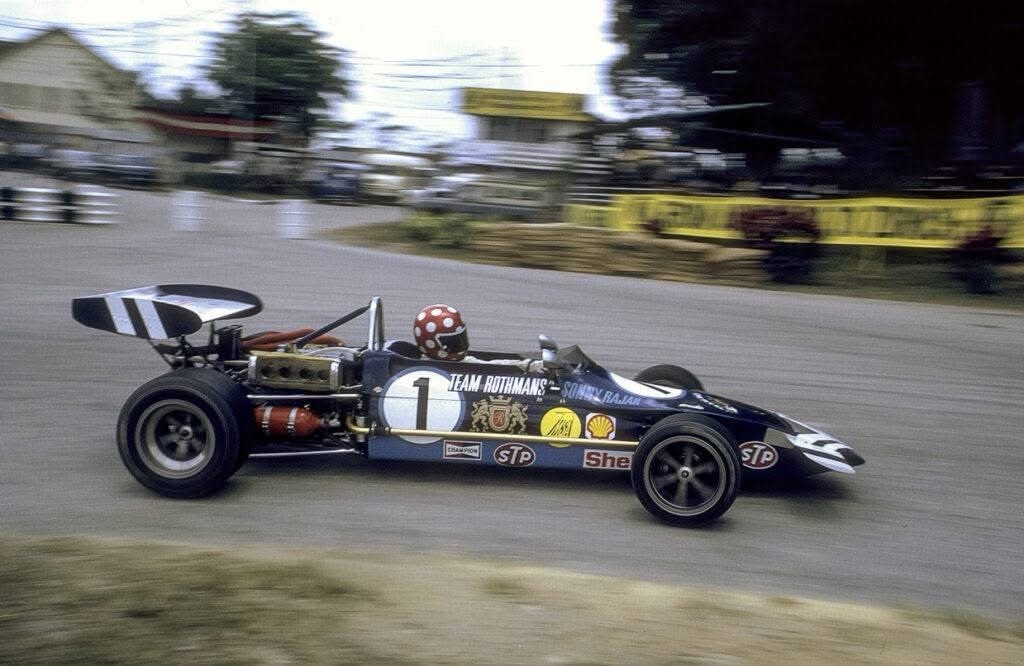
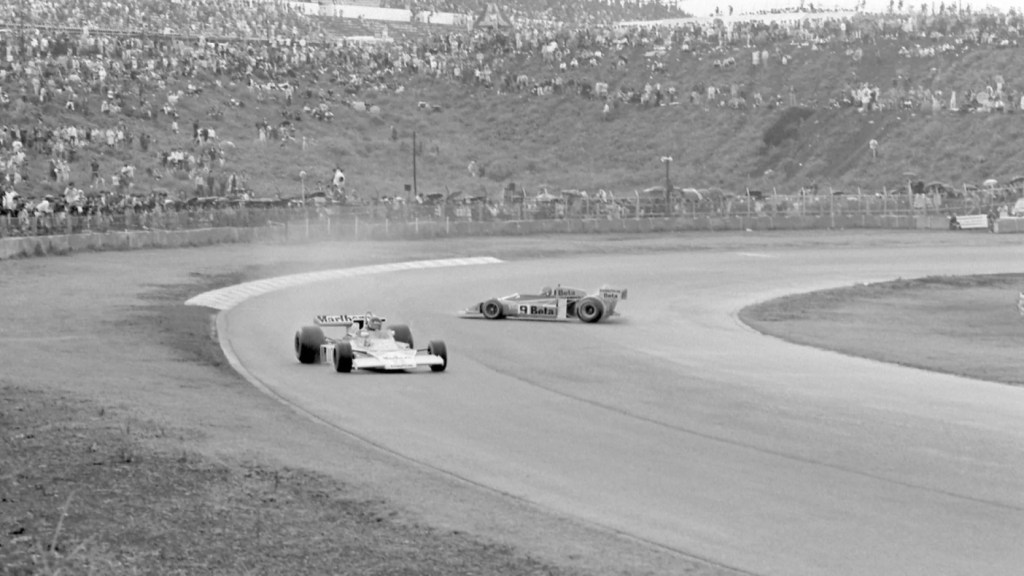
Sonny Rajah negotiates the tricky Thomson Road circuit during the 1972 Singapore Grand Prix aboard his March 712M Lotus-Ford twin-cam, chassis #712M-7, the same car in which Ronnie Peterson won the 1971 European F2 Championship.

Max Stewart won that race from Vern Schuppan and Bob Muir – Aussies first to third – with Singaporean local, Sonny fourth. Stewart raced his venerable Mildren, Schuppan his March 722 and Bob Muir his Rennmax BN3, all of the cars were Lotus-Ford 1.6 powered.

Eli Solomon wrote in MotorSport that ‘Sonny Rajah had struck up a partnership with the ex-Ronnie Peterson March 712M. He was the local hero and looked the part with his long hair and Zapata moustache. But to gain admittance into a country (Singapore) where long hair was associated with drugs, he had resorted to wearing a short-hair wig! A fellow competitor once remarked: “He had brilliant car control but someone other than bullshit-artists had to take him in hand! Natural talent and character too boot.”
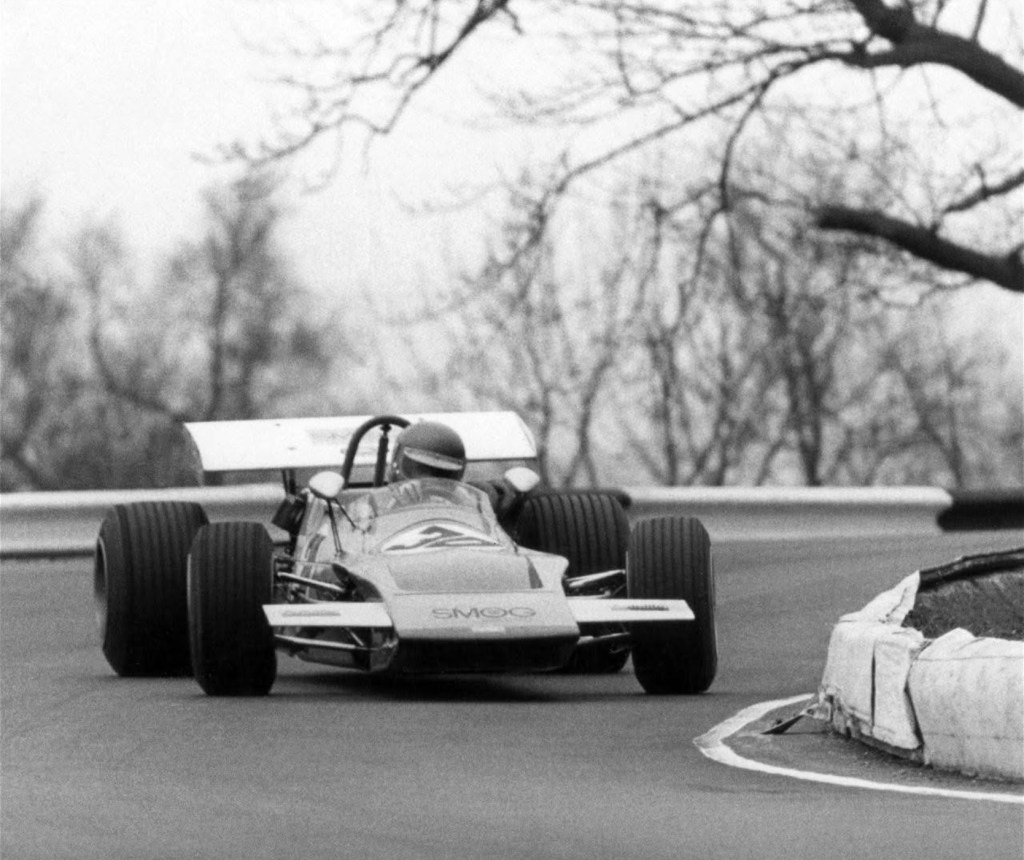
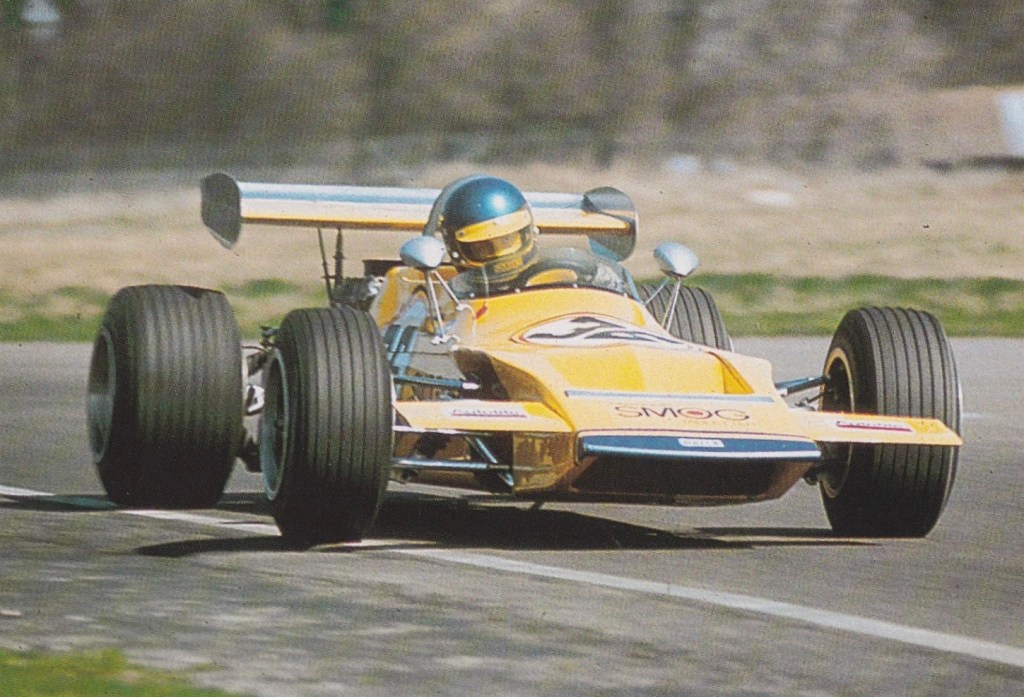
Signature Peterson. ‘Very fast, off-camber, downhill, made for Ronnie Peterson’, Yoshiaki Hirano said. Mallory Park non-championship (n/c) March 14: accident in heat 1, DNS heat 2. Winner Henri Pescarolo in a Frank Williams 712M FVA (C Walker)
Peterson bagged first place F2 Championship points – Graham Hill won the race, as a Graded Driver he was ineligible for points – in the Jochen Rindt Memorial Trophy at Thruxton on April 12 (unattributed)

Ronnie Peterson bagged maximum points in five of the ten F2 championship rounds he contested and won the title from Carlos Reutemann’s Brabham BT30/Brabham BT36 and Dieter Quester’s March 712M BMW.

Ronnie won at Thruxton, Rouen, Mantorp Park, Tulln Langenlebarn and the GP di Roma at Vallelunga. Note that Graham Hill (Brabham BT36) won at Thruxton – a real tear-jerker for race-fans as it was Graham’s first race-win since his huge Lotus 49 Watkins Glen crash at the end of 1969 – but as a graded-driver Hill was ineligible for Euro F2 Championship points.
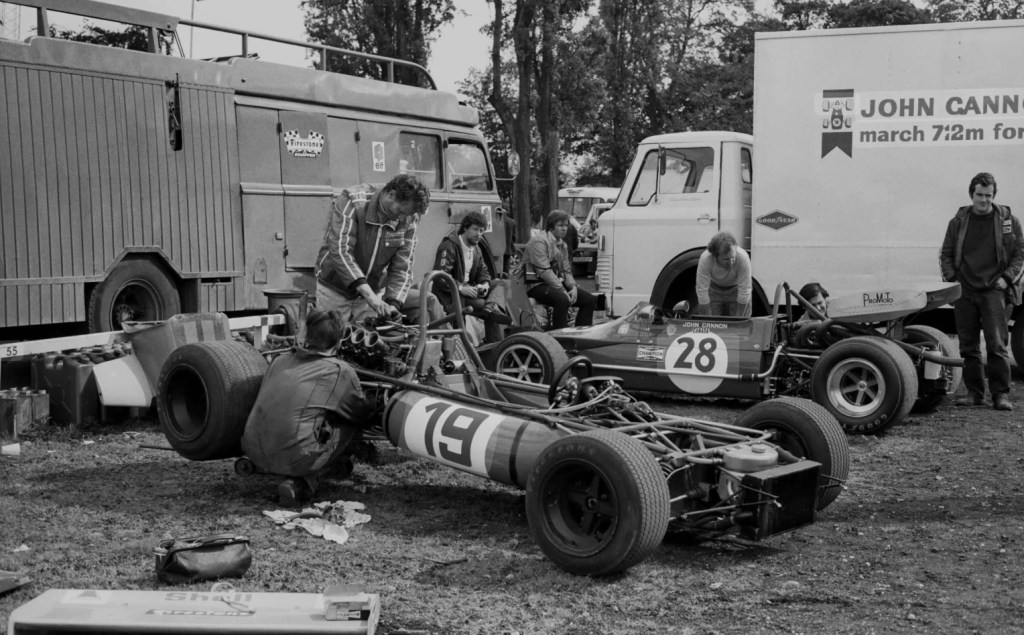
London Trophy weekend at Crystal Palace, May 31, 1971. Adam Potocki’s spaceframe Brabham BT30 is made ready for battle while John Cannon’s monocoque 712M is similarly fettled (J Fausel)

F2 Wind-Shift from Spaceframes to Monocoques…

This season marked a shift in F2 with Brabham’s dominance – and spaceframes’ dominance – at an end. March Engineering led the charge with their 712M, while Lotus continued with the 69 and Brabham and Tecno stuck to their successful spaceframes.

It wasn’t that cut and dried though: Alan Rollinson won the Bogota GP n/c (non-championship round) in his Brabham BT30, Graham Hill at Thruxton in his BT36 and Carlos Reutemann, BT36 at Hockenheim n/c.

Noteworthy was Carlos Reutemann’s pace in both his Brabham BT30 and BT36 all year, so too Tim Schenken’s BT36 speed throughout without actually winning a round.

It was all over at the end of ’71 in the sense that Ron Tauranac sold Brabham to Bernie Ecclestone late that year with Bernie building monocoque customer F3 and F2 cars in 1972 before pulling out of production racing car manufacture at the end of that year.

Technical interest in the era of Absolute Ford FVA dominance was provided by Tecno in 1971 who fitted in-house-prepped Ford BDA engines which bagged two-championship wins at Hockenheim and the Nurburgring, and a non-championship victory at Vallelunga for Francois Cevert.

Emerson Fittipaldi won at Madrid, Crystal Palace and Albi, and Reine Wisell at the GP de Pau n/c in monocoque Lotus 69 FVAs but Emmo was a graded driver so didn’t bag F2 championship points.
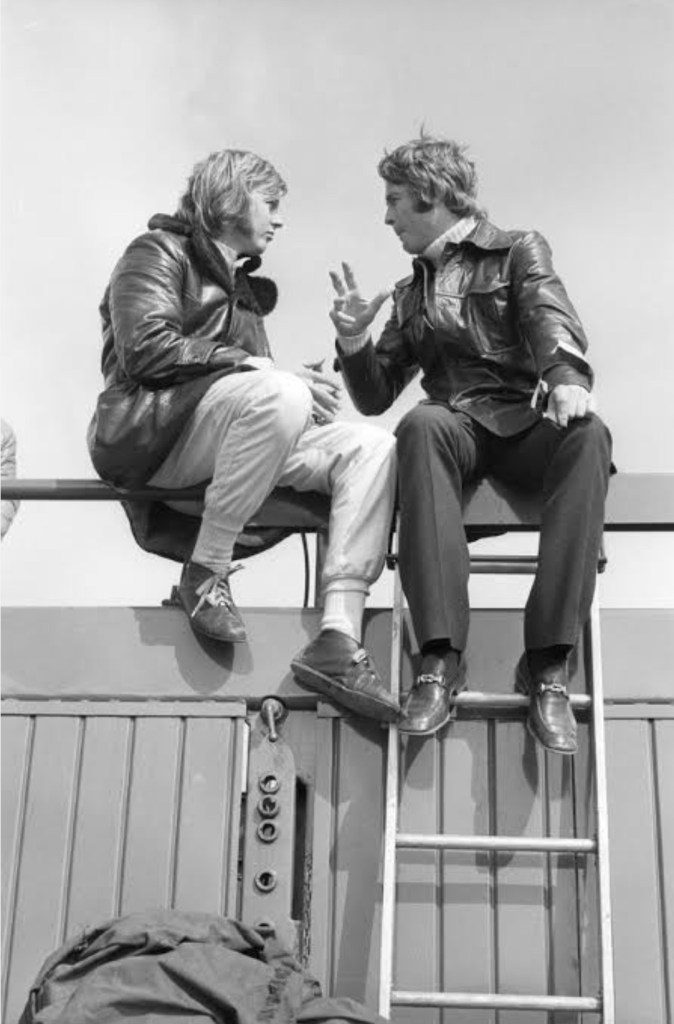
Potent partnership: Ronnie Peterson and Max Mosley at Thruxton at the start of a great season for them both in F2 and F1 (J Fausel)

The 712M in the March Pantheon

That the 712M was a good customer car was proved by the number of drivers who won in them apart from Ronnie: Henri Pescarolo at Mallory Park n/c, Dieter Quester Monza n/c, Carlos Pace Imola n/c and Mike Beuttler the GP Madunina at Vallelunga.

Quester’s 712M was fitted with a works BMW 1.6-litre, four-valve, M12/2 engine providing the category with much-needed and ongoing technical interest, and plenty of pace: third place in the championship with five second places on top of his non-championship Monza win was a great season.

Critically, it was the start of a relationship with BMW Motorsport that was so important commercially and competitively for March from 1973, the second year of the 2-litre F2.
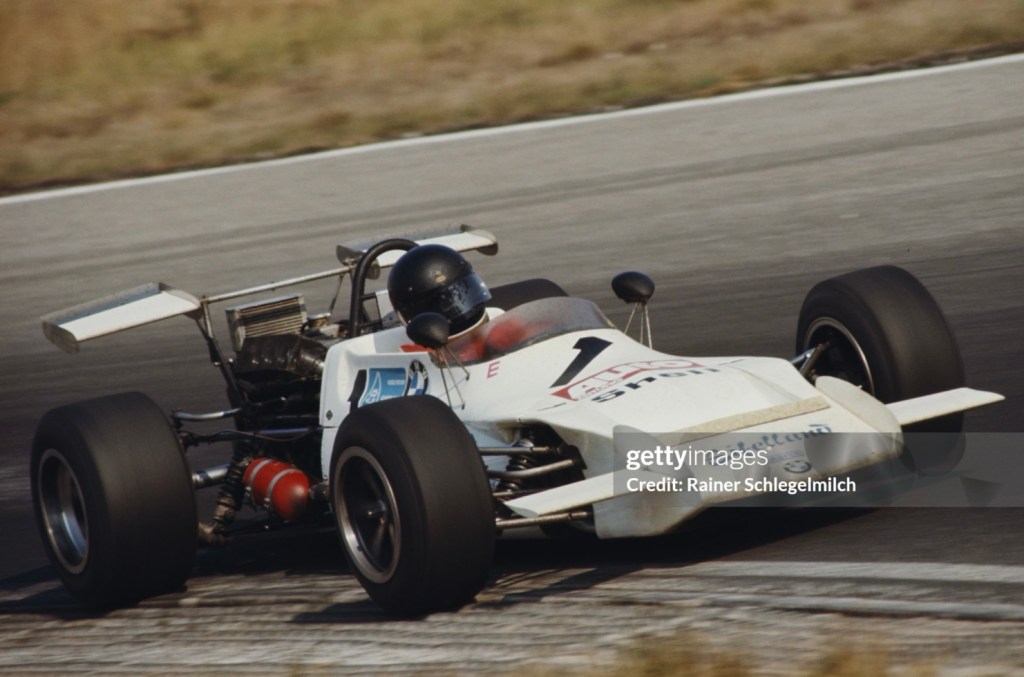
Dieter Quester, March 712M BMW at Hockenheim in October 1971 (R Schlegelmilch)
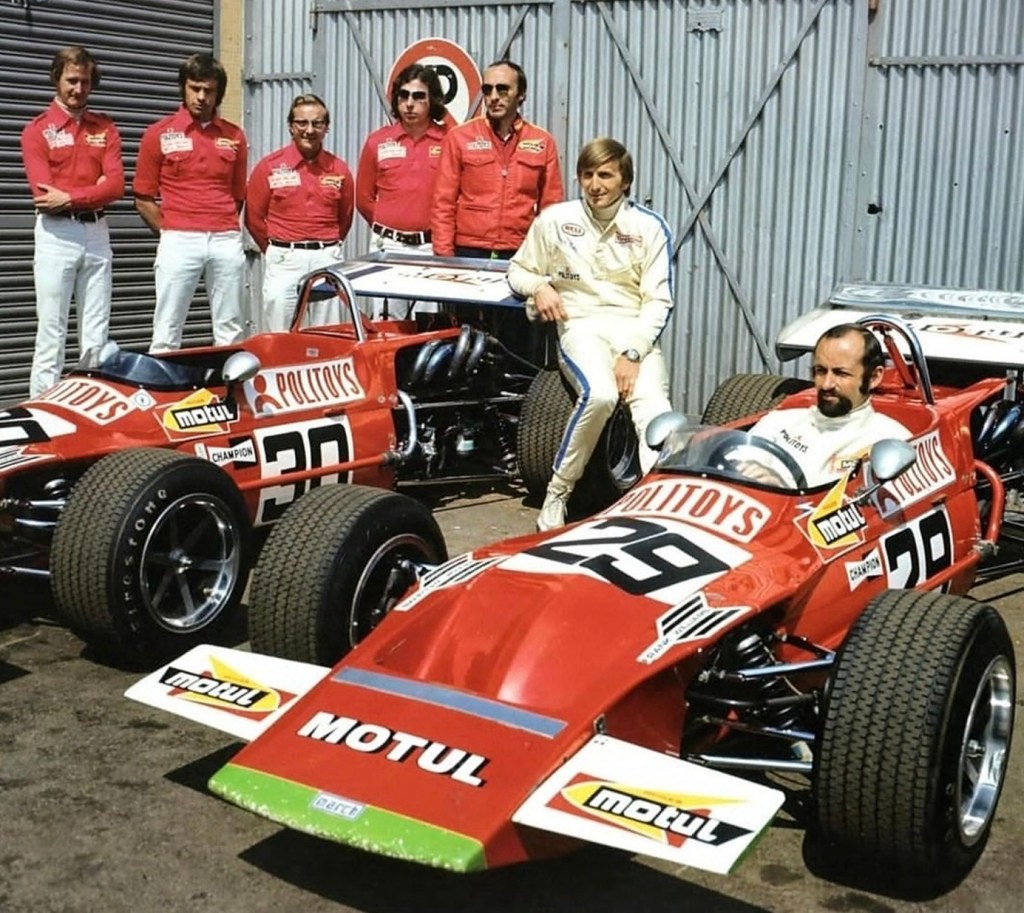
Derek Bell and Henri Pescarolo and Frank Williams 712M FVAs at the Nurburgring in 1971 (unattributed)

‘What makes March’s 1971 F2 season all the more creditable is that no fewer than 16 drivers went on to works F1 drives, nine would win Grands Prix and two, Lauda and Fittipaldi, would become World Champions.’ March biographer, Mike Lawrence wrote.

Beyond that, the 712M wasn’t a one-hit wonder, it just gave and gave. Its aluminium monocoque provided sterling service from 1971-77 in F3, F2 and F Atlantic form; it was a ‘banker’ at a critical time in March’s history.

Mike Lawrence picks up the thread, ‘Robin was getting on with the job of designing both the new F1 car and, what in the long term was to be more significant, a monocoque for F2 and F3.’

Herd, ‘It took us three or four goes to get it right; I did the detail mechanical design, Roger Silman and Dewar Thomas who made the prototypes put in a lot of their ideas as well, and John Thompson’s operation actually built the production tubs. Apart from the fact that it worked, and was still winning races in 1977, it was very well production engineered and I think we can be pleased with it. When the car was finished, I was away at an F1 race, so Dewar simply took it up to Silverstone and did 60 laps in it, which is something one cannot imagine happening today.’

‘Apart from the sharp new body and the monocoque itself, which had the engine as a semi-stressed member supported by the detachable multi-tubular frames, the broad layout of the design was similar to the 1970 cars, although there were detail changes such as such as narrower wishbones and the use of foam-filled fuel Carl’s which were required by the new regulations.’
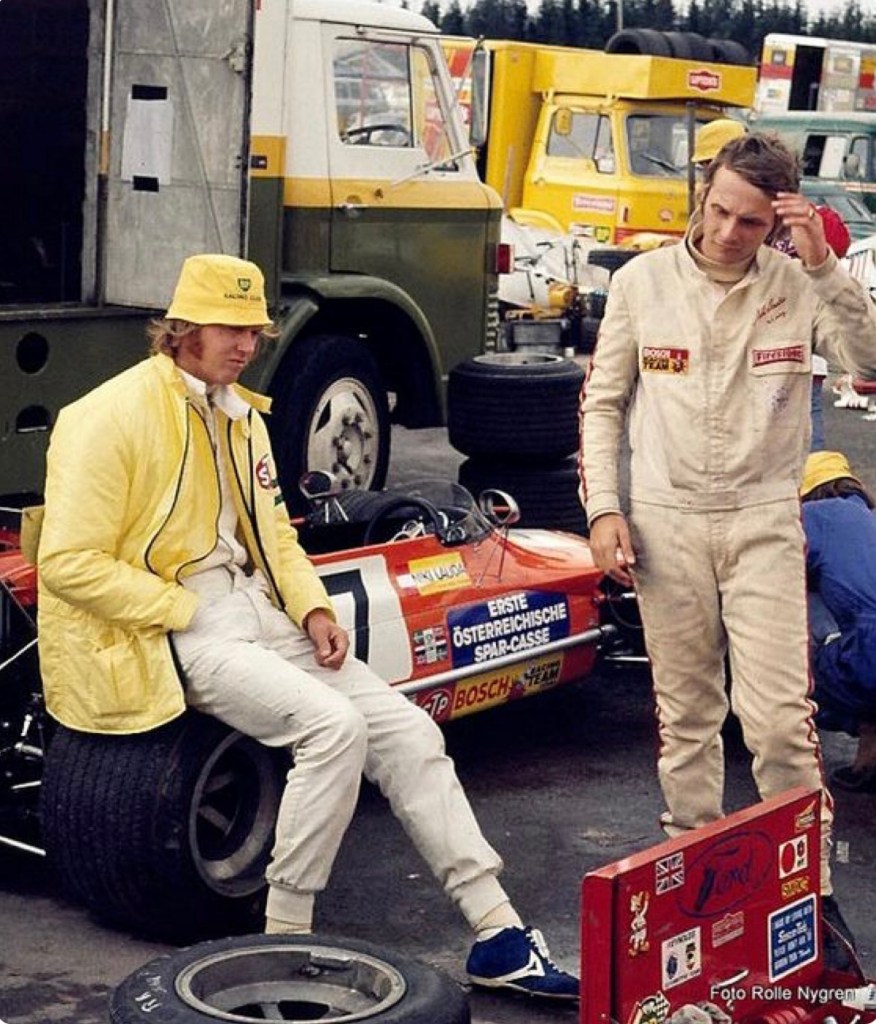
Ronnie sits on Niki Lauda’s tyre at Mantorp Park in August. A win for Ronnie and seventh in the first heat and DNS the second for the Austrian who raced a works-entered 712M (R Nygren)
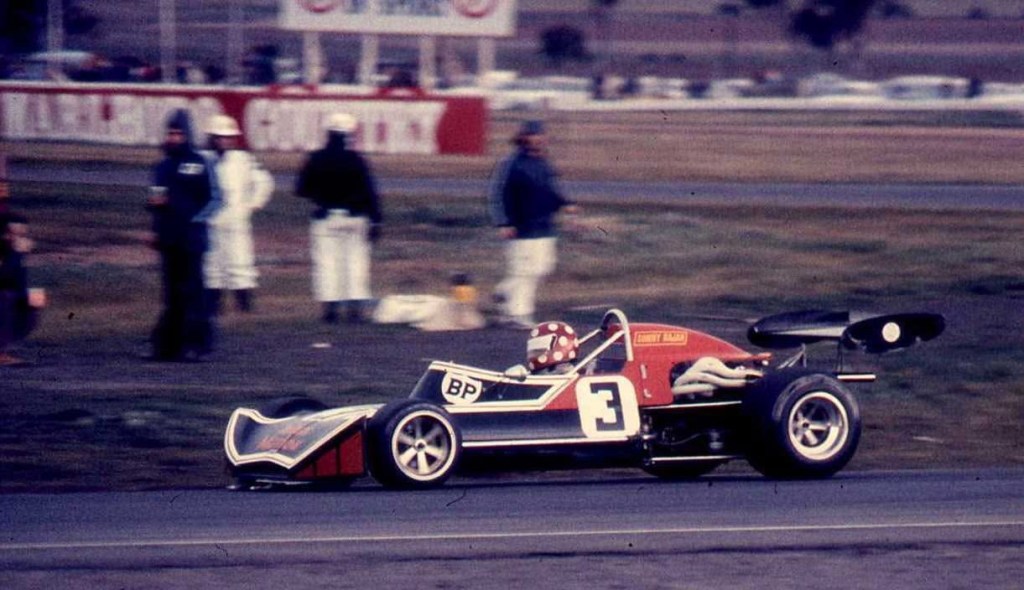
Sonny during the Calder AF2 championship round in August 1974, March 712M Lotus-Ford. 11th in the race won by Leo Geoghegan’s Birrana 274 (S Gall)

Sonny Rajah raced an ex-James Hunt F3 Lotus 59/69 by then fitted with a Lotus-Ford twin-cam in the 1971 South East Asian season for a best of second place in the Malaysian Grand Prix at Batu Tiga on September 5 behind John MacDonald’s ex-Mike Costin Brabham BT10 Lotus-Ford twin-cam.

By the commencement of the 1972 South East Asia season – the April 4 Singapore GP- Sonny was racing his new, ex-March-Peterson 712M. his strong performance in Singapore was succeeded by victory in the April 9 Malaysian GP at Batu Tiga in front of Ken Smith, Lotus 59/69, Vern Schuppan March 722 and Kevin Bartlett, Brabham BT30 – all Lotus-Ford twin-cam powered. He was third in the season-ender at Macau on December 4 behind John MacDonald’s Brabham BT36 Lotus-Ford and Max Stewart’s Elfin 600B Lotus-Ford.
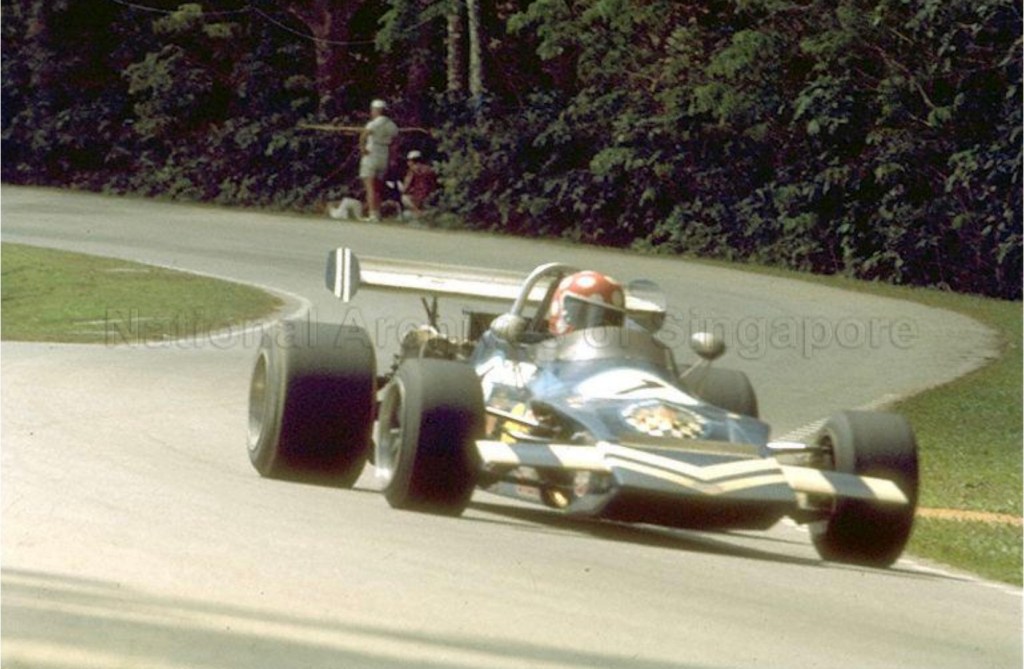
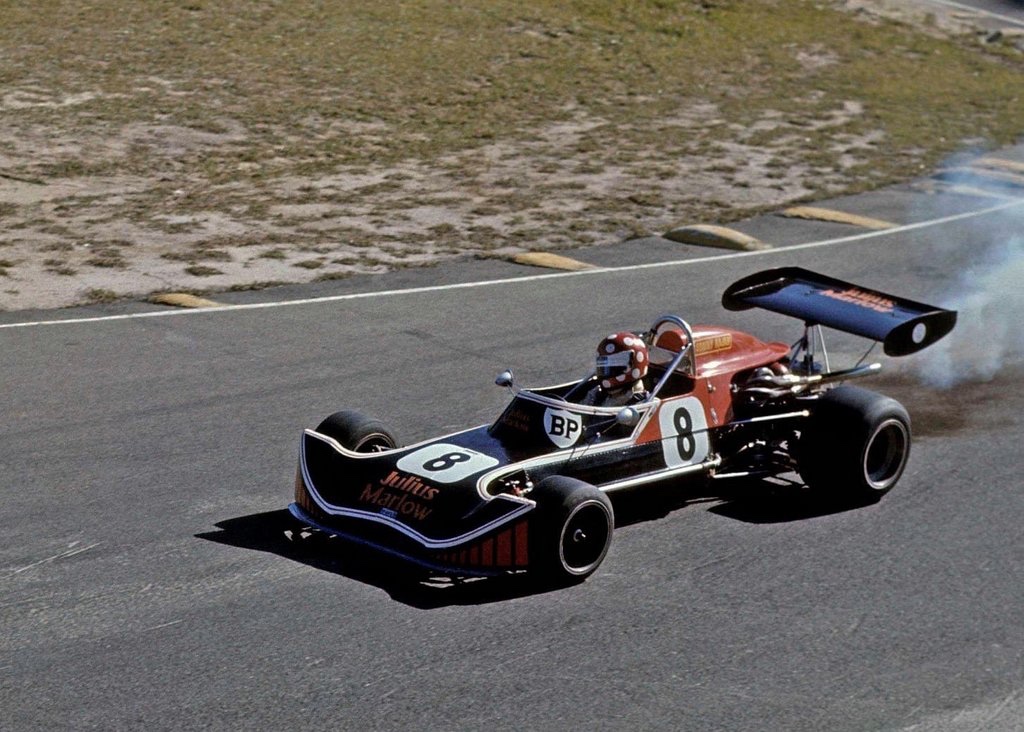
Rajah on the jungle-surrounded Thomson Road track, Singapore GP weekend 1972. March 712M-7 (NAS)
Rajah, March 732/712M Hart Lotus-Ford twin-cam, Amaroo Park July 21, 1974 (B Henderson)

In 1973 Sonny bought a March 732B in the UK and took in a number of British Formula Atlantic Championship rounds from late May to late July. With best results in the highly competitive championship of ninth at Silverstone in May and fourth at Mallory in July he was sharpish by the time he returned home and promptly won the September 9 Selangor Grand Prix at Batu Tiga aboard the 712M-7! Graeme Lawrence was second in his Surtees TS15 and Percy Chan was third in the March 732B raced by Rajah in the UK. He capped off a busy season with second place to John MacDonald’s Brabham BT40 at Macau in the now 732 bodied 712M (probably says Allen Brown).

Into 1974 he had time to run the March 732 bodied 712M-7 in the Malaysian GP on April 7 DNF, before shipping the car to Australia before the first Australian F2 Championship round – also a twin-cam, two-valve formula – at Hume Weir on June 16.
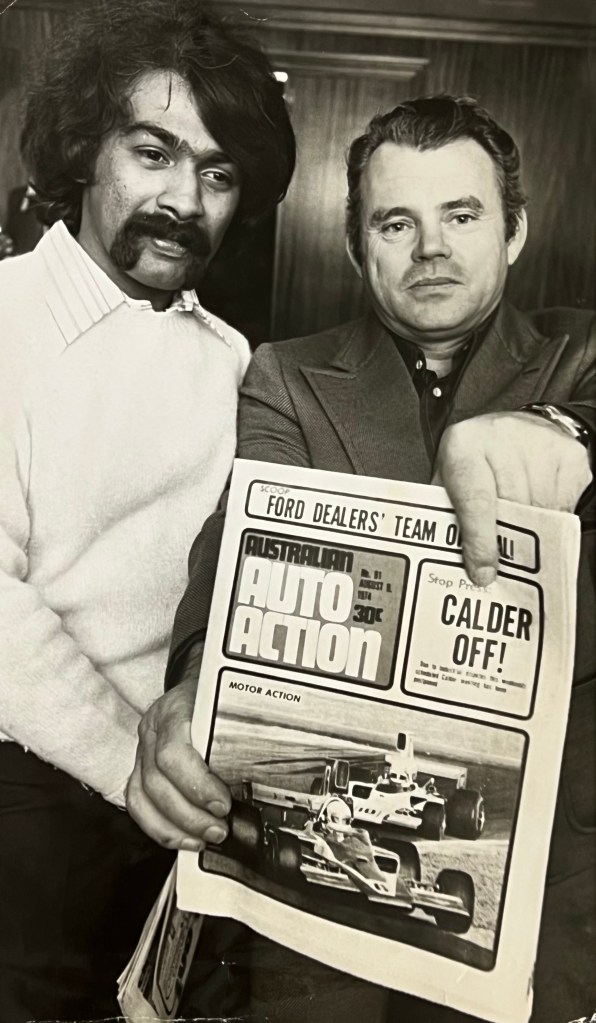
Sonny Rajah and Bob Jane in August 1974 (Auto Action)

The popular Singaporean born racer, Rajah contested the full eight race 1974 championship with the March, updated, as already noted, with 732 bodywork in a low-budget campaign run largely out of Paul England’s workshop in Moonee Ponds, Melbourne

It was the most competitive second-level motor racing championship ever run in Australia thanks to the support of Van Heusen Shirts, the story of how that came about is one for another time

Rajah in the Julius Marlow Shoes sponsored 732-712M from Ray Winter, Mildren Yellow Submarine Lotus-Ford and Bruce Allison, Birrana 274 Lotus-Ford at Adelaide International. Rajah ninth, Winter fourth and Allison seventh in the race won by Bob Muir, Birrana 273 and John Leffler, Bowin P8 (Auto Action)

Up front the contest was between the Birranas of Leo Geoghegan and Bob Muir, and when he got it sorted, John Leffler’s Bowin P8; all of these cars were powered by Brian Hart built ‘416-B’ Lotus-Ford 1.6-litre, DOHC, two-valve (mainly) fuel injected engines giving about 205bhp.

Rajah’s contested all eight rounds with his best third place at Symmons Plains and sixth at Hume Weir. He’s not listed in the point score because – I guess – he wasn’t a CAMS licence holder.

Leo Geoghegan won the title in his works-Birrana 274, Bob Muir’s Bob and Marj Brown owned Birrana 273 and Leffo’s ‘works’-Bowin P8.

Etcetera…
(LAT)

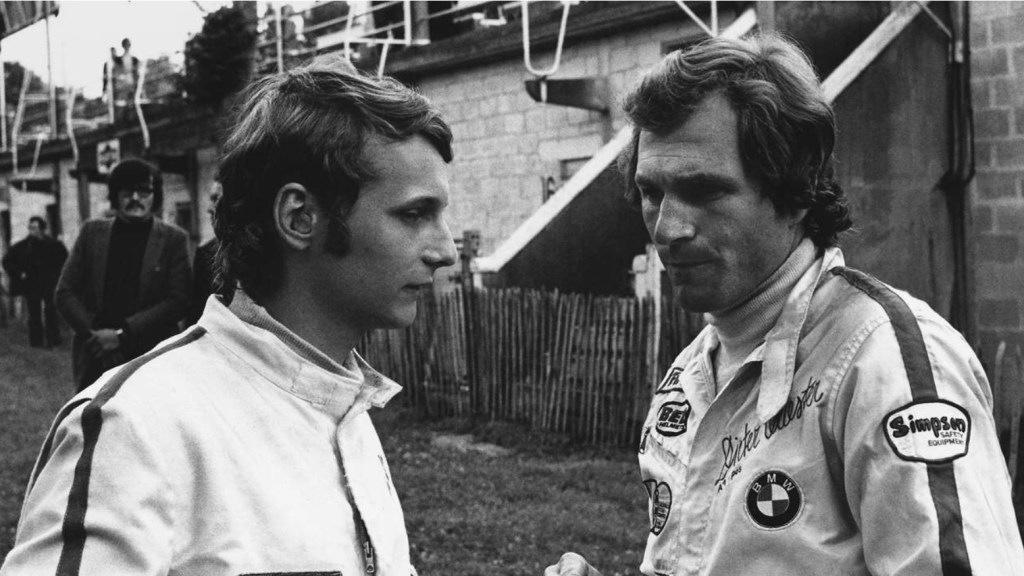
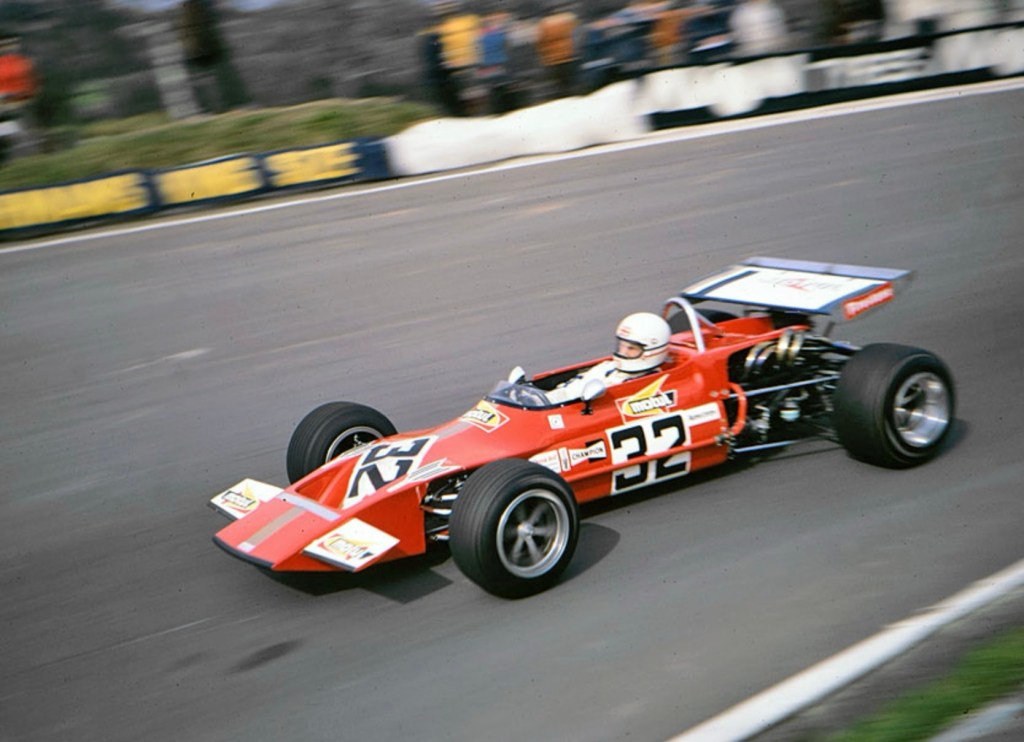
March 712M Brothers in Arms Niki Lauda and Dieter Quester swap notes during the Rouen-Les-Essarts June 27 weekend in 1971. Peterson won from Quester and Graham Hill’s Brabham BT36 with Niki fourth.

Niki at Mallory Park (below) at for the F2 season-opener – non-championship – Speed Championship Trophy over the March 14, 1971 weekend.

His works-March-Bosch Racing 712M-9 didn’t finish either heat. The renta-driver had plenty of top-six finishes that season and memorably duelled with Graham Hill and Peter Westbury at the Nurburgring for fourth place. In the first heat at Rouen, he almost sling-shotted past Peterson to win, dipping out on the line and finishing second by 0.1 secs…

(I Hubbard Collection)

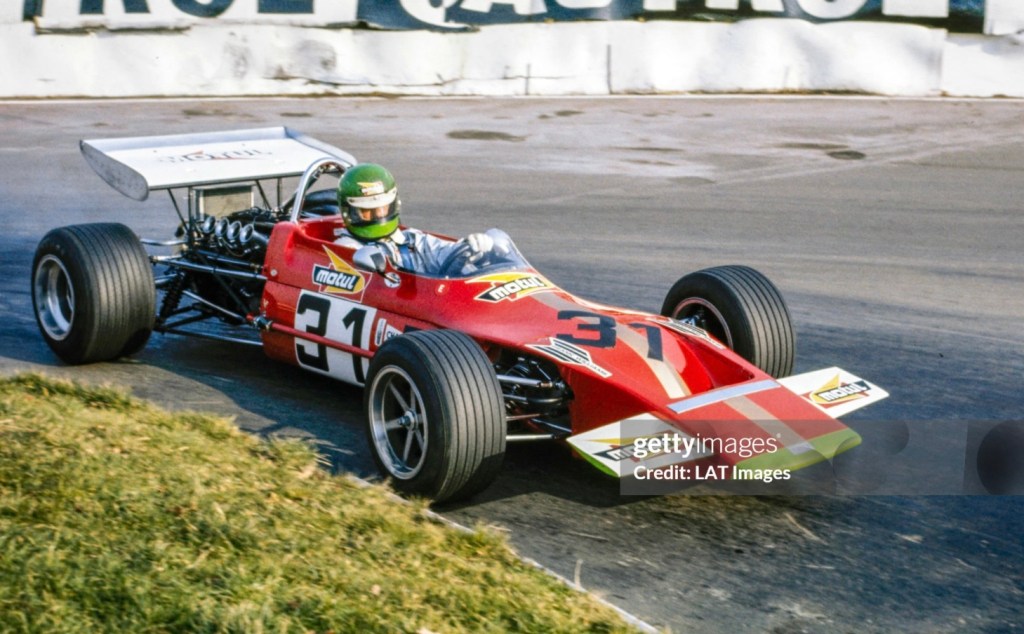
Still at Mallory Park, Derek Bell 712M-2 and Henri Pescarolo 712M-4, below, in the Frank Williams March 712M Ford FVAs. Henri won from Gerry Birrell’s Lotus 69 and Brian Hart’s Brabham BT30.
(Ed Brunette Collection)

Tino Brambilla tests his March 712M Ferrari Dino 206 V6 at Monza in 1972. This chassis is the ex-Pescarolo 712M-4.

Its amazing that a family of engines born in 1957 were still being used in 2-litre form at the dawn of the 1980s, not very successfully mind you! See here: https://primotipo.com/2023/06/17/ralt-chevron-and-minardi-ferrari-dino-206-v6s/

Tino retired his ‘Ferrari’ retired from the Monza Lottery non-championship F2 race – Gran Premio della Lotteria – won by Graham Hill from Silvio Moser and Jean Pierre-Jarier: Brabham BT38 Ford BDA, Brabham BT38 Ford BDE and March 722 Ford BDE.

(J Benak)

James Hunt in the Hesketh Racing March 712M-5 Ford BDA during the September 16, 1972 British F2 Championship race at Oulton Park. The soon-to-be F1 Star was third behind the works-March 722 Fords of Ronnie Peterson and Niki Lauda.

In several late season Euro F2 rounds in September-October he was Q3 and DNF at the Salzburgring, Q 11 and fifth at the Albi GP, Q12 and eighth at Hockenheim.

(B Henderson)

Rajah at Amaroo Park, Sydney on July 21, 1974. DNF engine in the race won by Bob Muir’s Birrana 273.

I’m intrigued by what Allen Brown (oldracingcars.com) makes of the photos in this article which show the obvious difference in ‘our car’s’ bodywork – 732 rather than 712M – but in addition the roll-bar mounts are different between the two cars. I do wonder whether the car that came to Australia by then had a 732 tub. we know Sonny raced a ‘mystery’ ‘732B’ in British Atlantic then took it back to Asia. I wonder whether the car in Oz was the 732 chassis rather than the 712M?

Credits…

National Archives of Singapore via Rewind Media via Ed Brunette, Clarke Walker, Rolle Nygren, ‘The Story of March : Four Guys and a Telephone’ Mike Lawrence, Stephen Gall, Jutta Fausel, Ed Brunette Collection, Bryan Henderson, Auto Action, Ian Hubbard Collection, Singapore Fling : Singapore GP piece in MotorSport by Eli Solomon

Tailpiece…
(J Fausel)

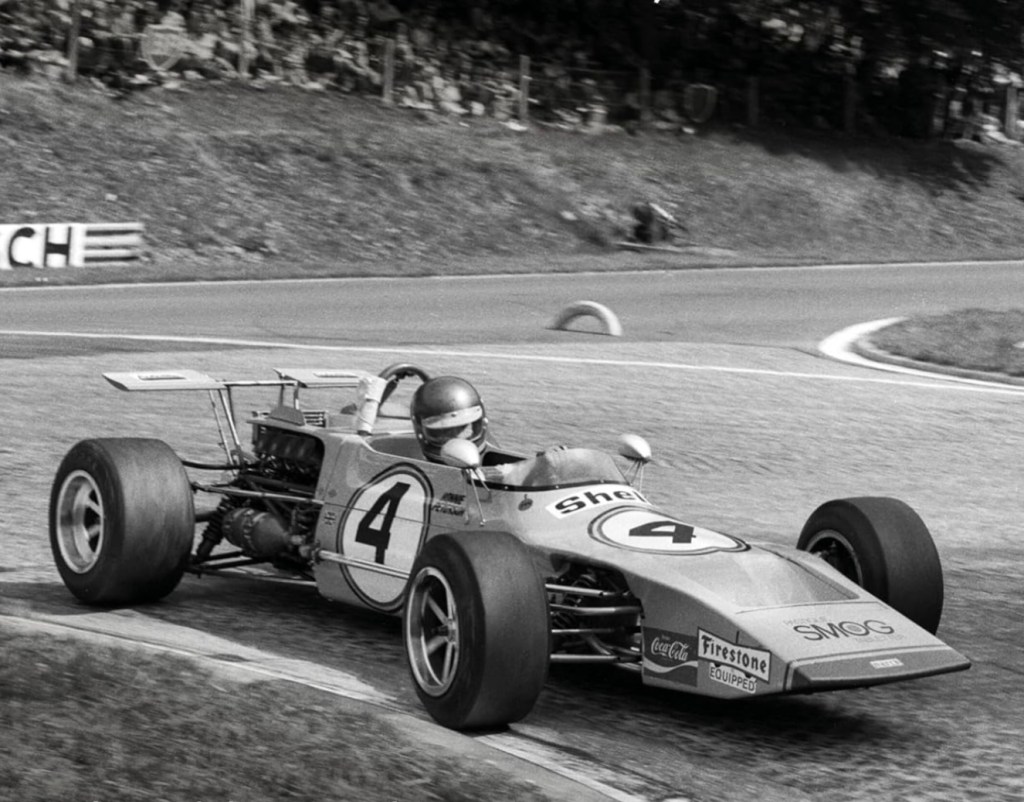
Ronnie during the Grand Prix de Rouen on June 27, 1971.

The Swedish Star won from Dieter Quester’s 712M BMW and Graham Hill’s Rondel Racing Brabham BT36 and Lauda’s works-712M. Graham was still a plenty-quick F2 driver in that lovely Ron Dennis prepped BT36 that year. Always loved those March wheels…
Quite a few of the photos in this article are by now US domiciled German photographer Jutta Fausel who I collaborated with in an article published in MotorSport a couple of years ago on the 1970 Israel Grand Prix, an obscure F2 race.

I really must buy her book, F2 Devotee as I am, which comes highly recommended!

Finito…
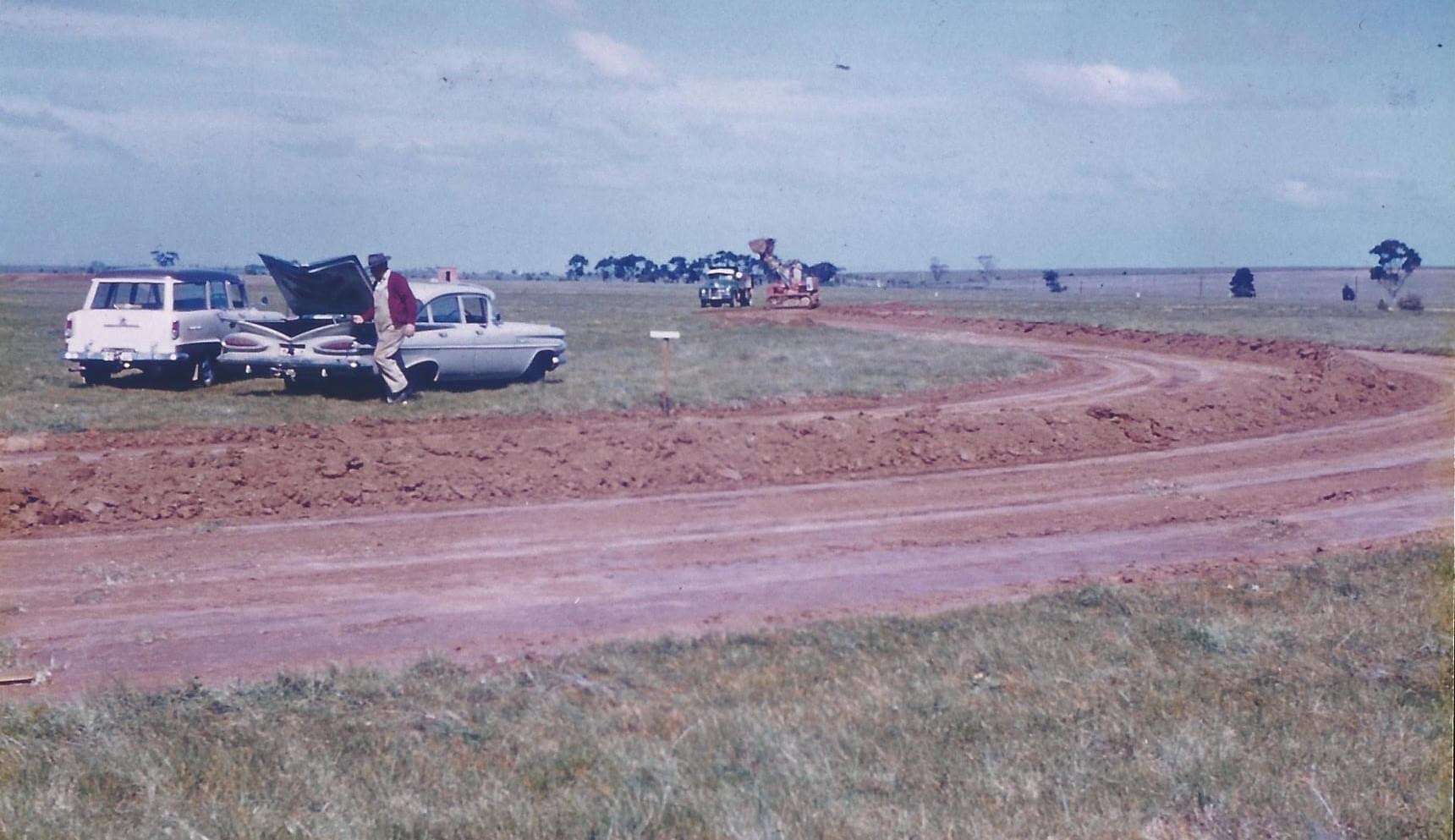
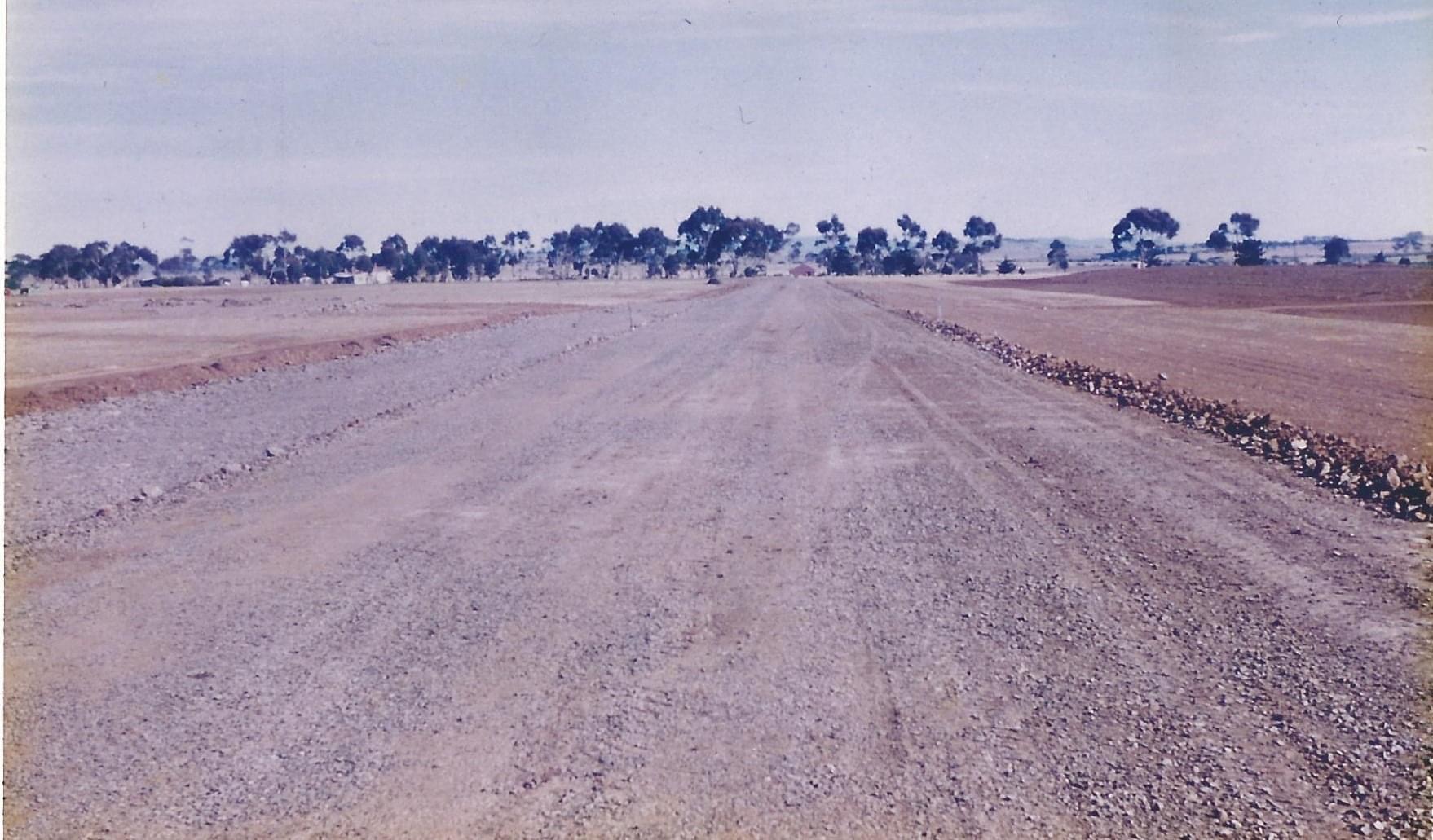
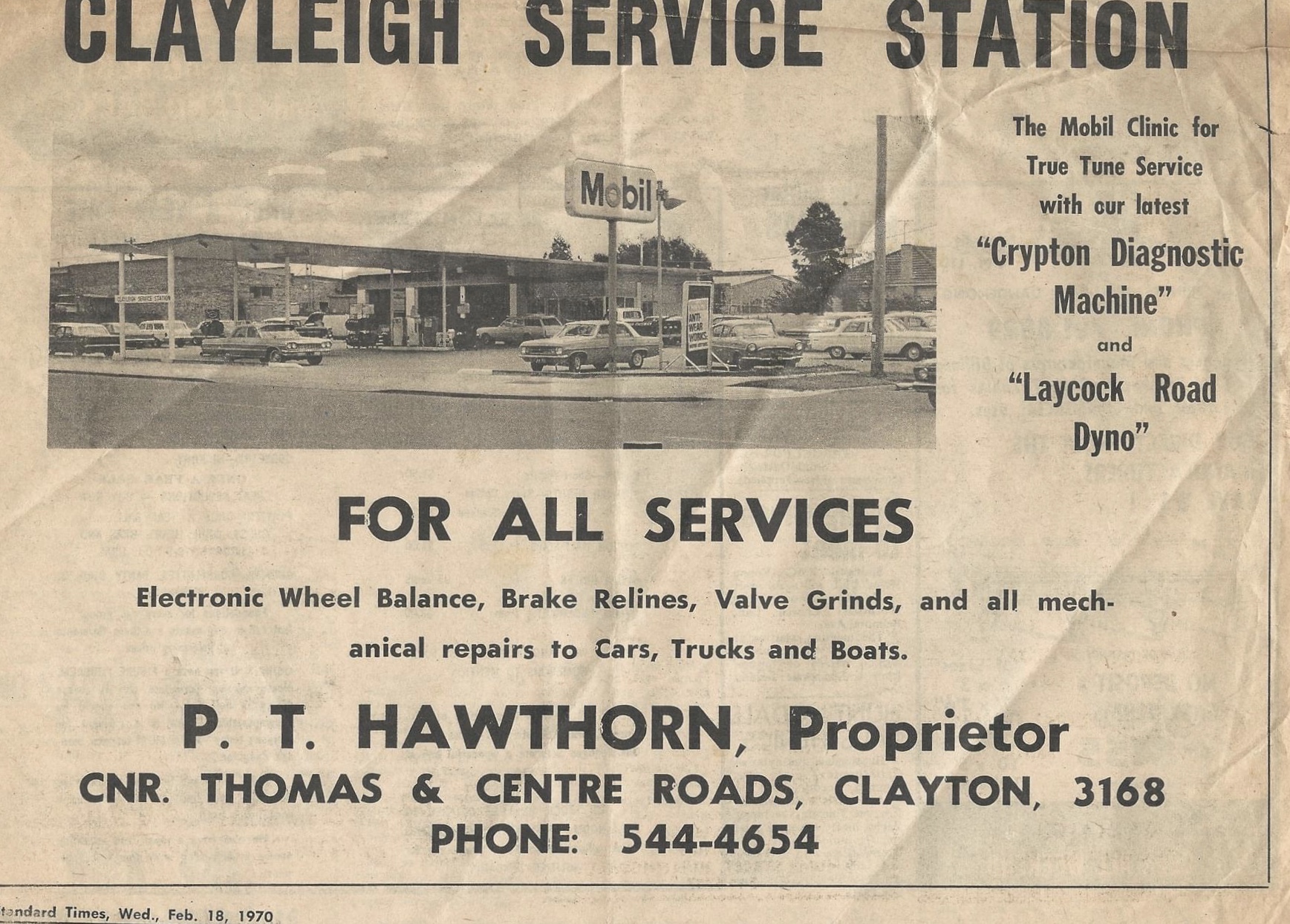
Calder Raceway underway in 1961, Pat Hawthorn’s Holden and Jim Houlahan’s Chev on site (Hawthorn Family

Pat Hawthorn’s team turn the first sods of soil to create Calder Raceway, 30km west of Melbourne later in 1961…

I’ve always had a bit of a love-hate relationship with the place. On one hand it’s the first place I drove a racing car – an Elfin 620B Formula Ford at the Jane-Gardner Race Driving School in mid 1975 – but on the other I’ve always thought the flat, featureless hot n’ dusty or freezin’ and wet joint a bit of a shit-hole. Gimme Sandown, the Island, Winton, Eastern Creek, Wakefield or Mallala.

But it’s close to Melbourne, I’ve probably done more laps there than anywhere else despite it being closed forever. While the layout has always been simple (Thunderdome challenges duly noted) the challenge of doing a great time are there given ya have so few corners to work with.

I thought Keilor farmer Jim Pascoe built it, then Bob Jane bought it in the early seventies, several years after Pascoe died. The Jane Estate still owns it, how wrong about the early days I was though.

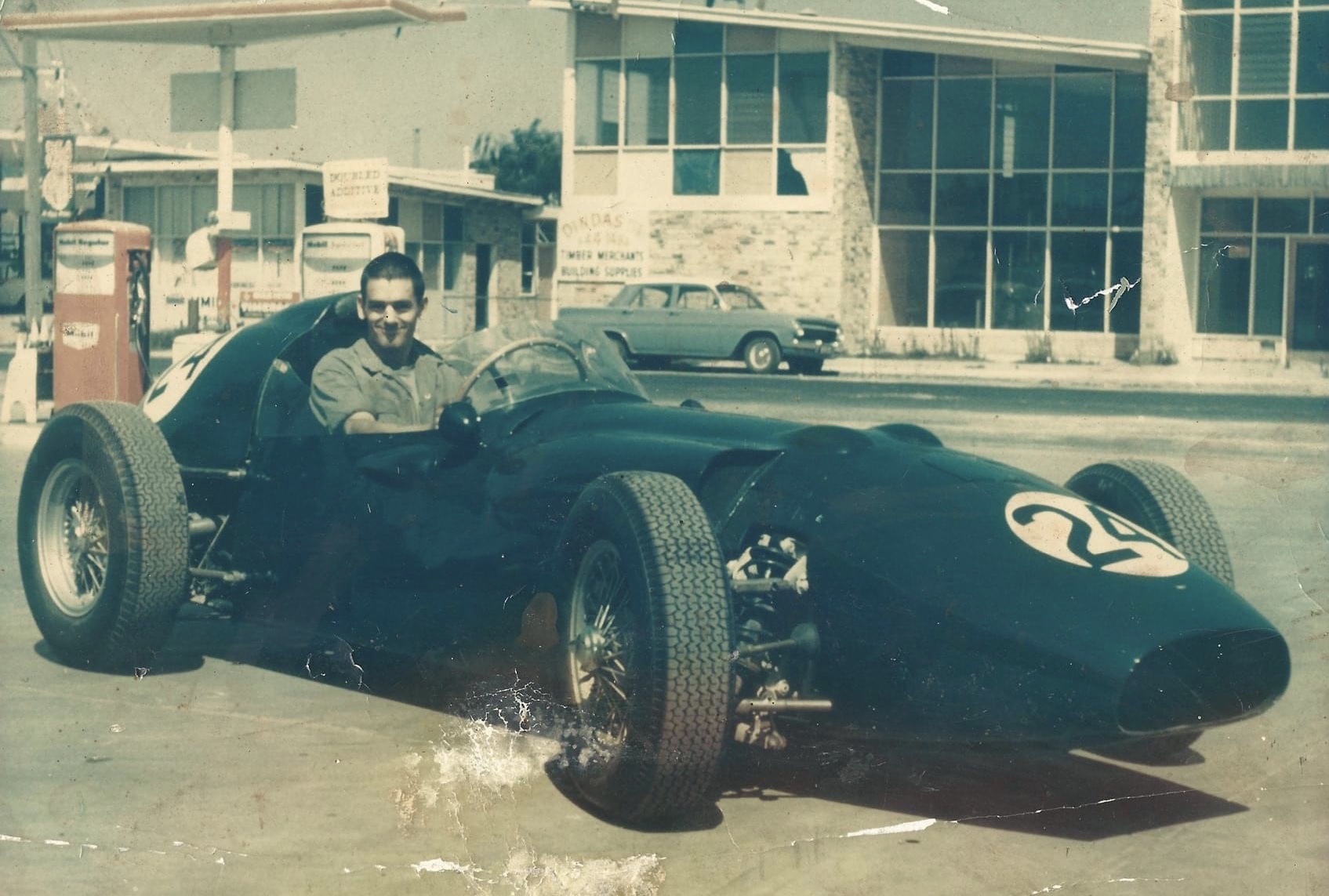
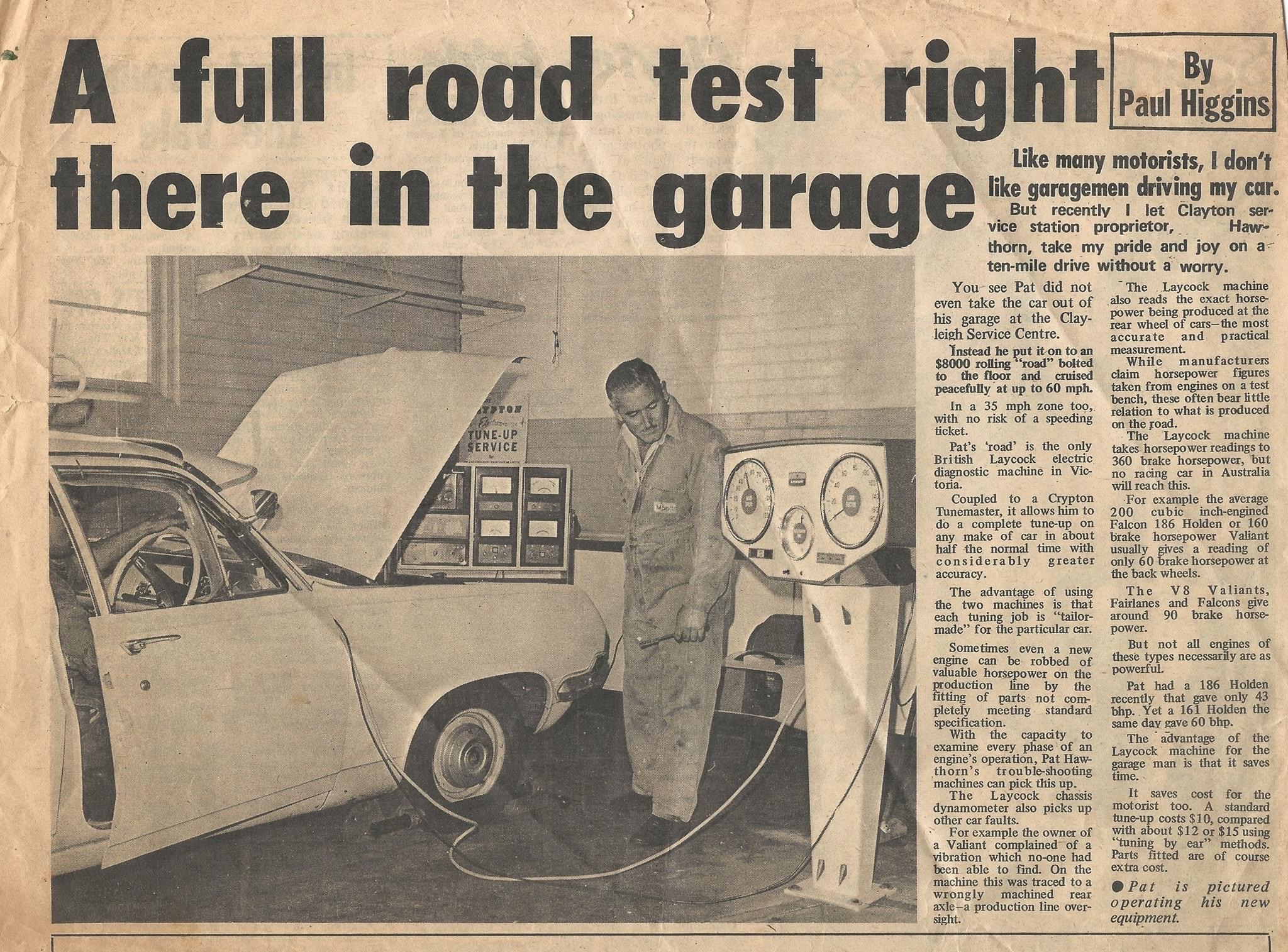
Pat Hawthorn aboard his ex-works/Davison Aston Martin DBR4/250 3-litre F1/F Libre car at his servo in Clayton, on the corner of Thomas and Centre Roads. While there wouldn’t have been another Aston Martin resident in that part of the world, for some time, new AMs were retailed from a showroom in Springvale Road, Springvale – right ‘on’ the railway line near Sandown. A most unlikely place as well, the good residents of Toorak struggle to go further east than Glenferrie Road let alone Burke Road (Hawthorn)
The Spanos sportscar is an Elfin Streamliner Coupe, a car George owned all of his life, and still retained by his family I think
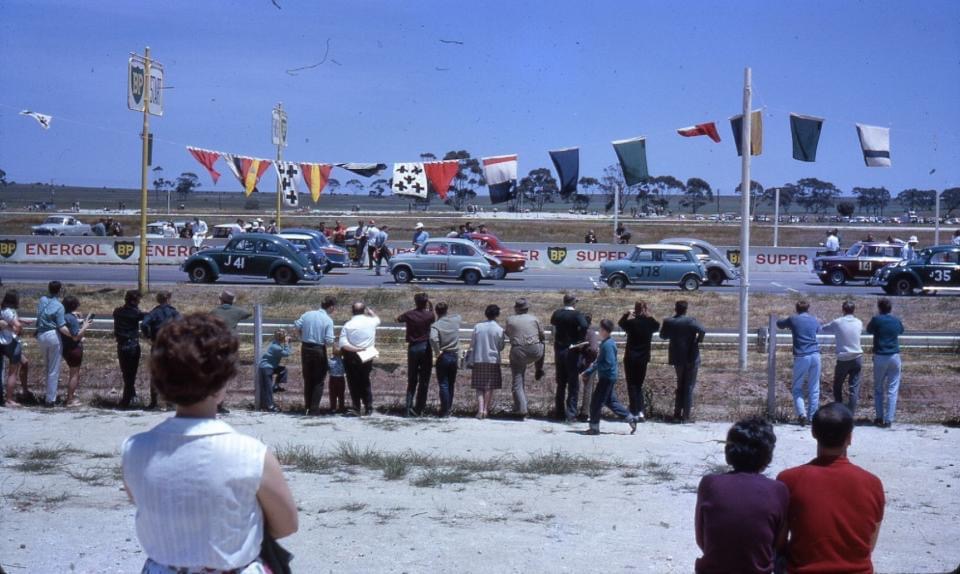
1962 meeting at Calder, advice welcome on whom is whom (O Campion)

It turns out that racer/garage proprietor Pat Hawthorn is the man we should all thank for the original entrepreneurship.

For some years Pat had a servo in Clayton. One of his regular customers, Jim Houlahan had land on the Calder Highway, he wondered if Pat would be interested in helping develop it for use as a wreckers yard.

Pat thought the location was ideal for a race track, a dream he had for a while. Soon a company was incorporated with funds provided by Melbourne bookie (bookmaker) John Corry and Jim Pascoe. His business interests spanned several fields including Drive-In-Theatres (very much a sixties and seventies thing) and race-horse training.

A simple layout to Pat’s design provided the track layout, a fundamental element of which was that spectators be able to see most of the action.

Australia had a shortage of racetracks from the beginning of time. With a global economy that was booming, a strongly growing Australian population thanks to post-war immigration, and plenty of young men with money in their pockets resulted in an epidemic of circuit construction. Within a short space of time circuits popped up across the country; Lakeside, Warwick Farm, Catalina Park, Oran Park, Hume Weir, Winton, Sandown, Calder and Mallala were all built over a span of four or so years.

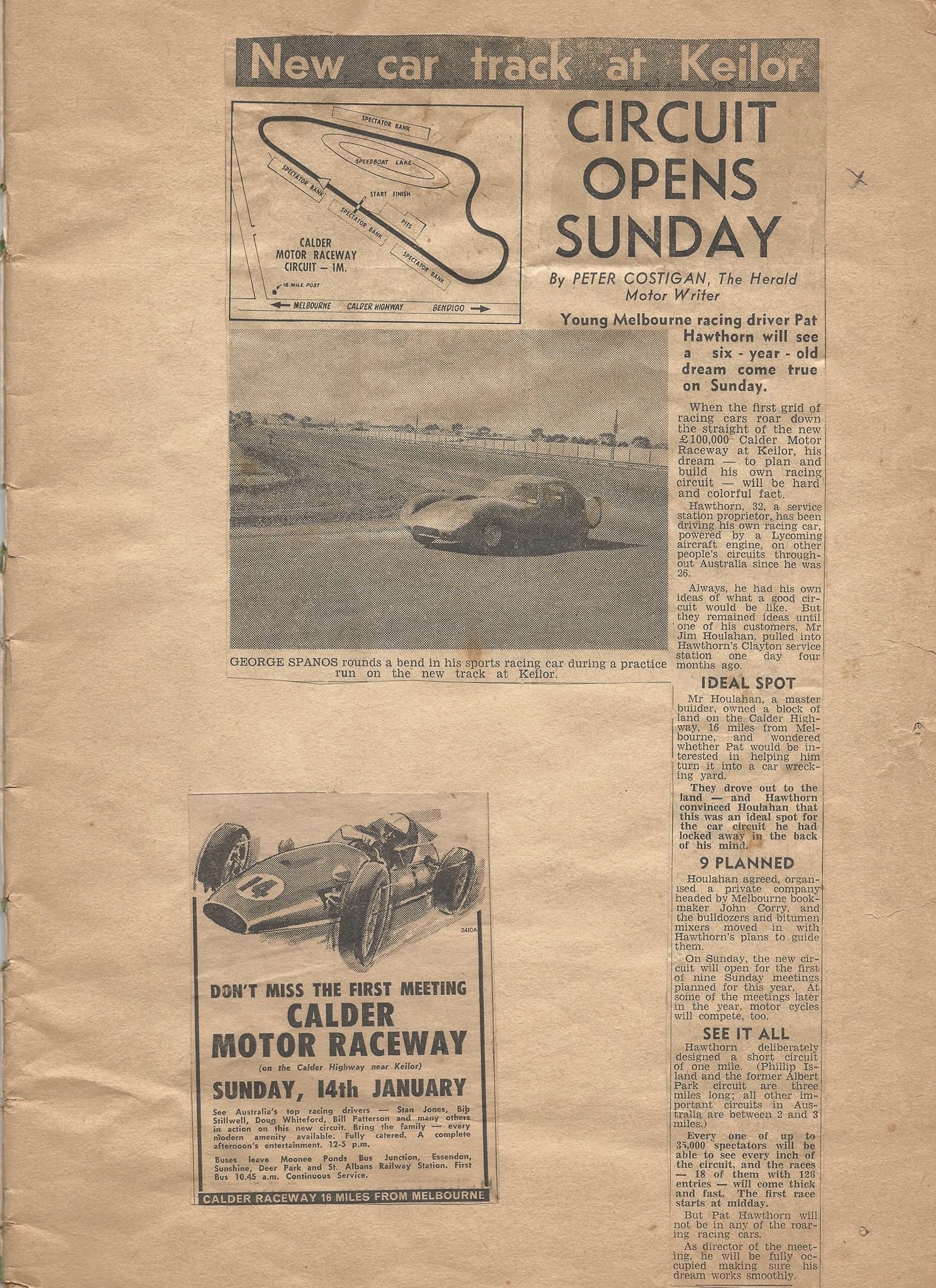
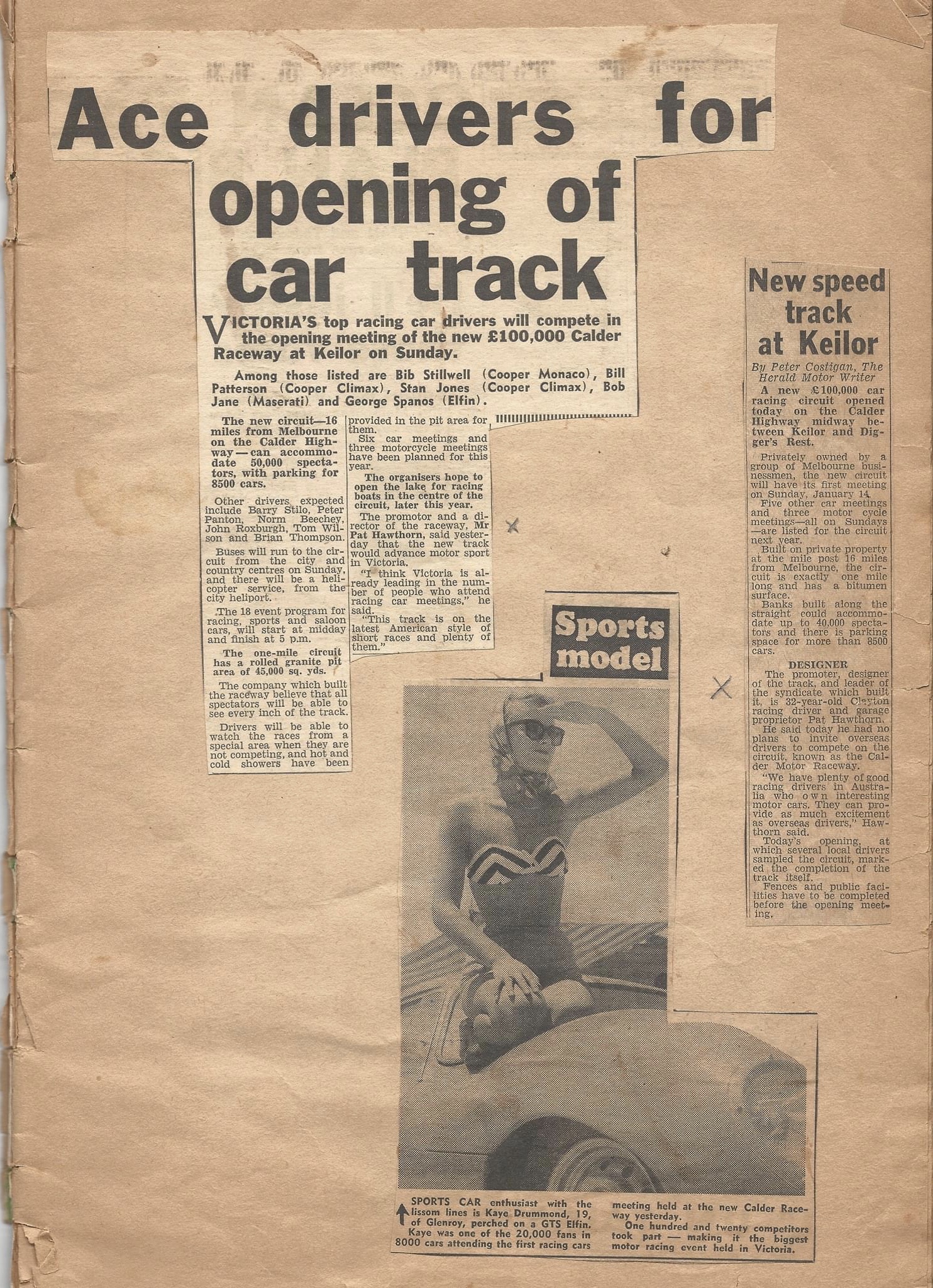
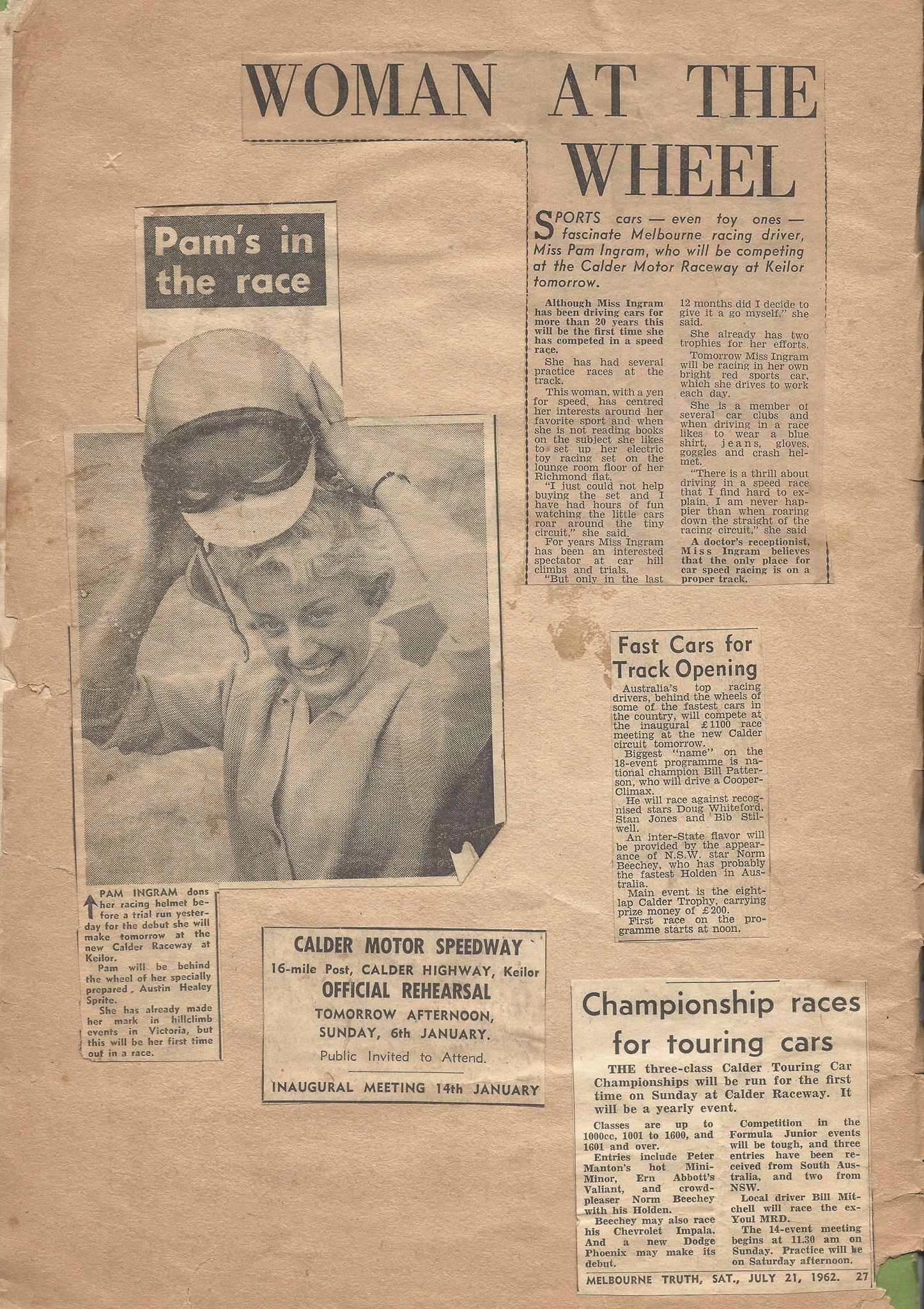
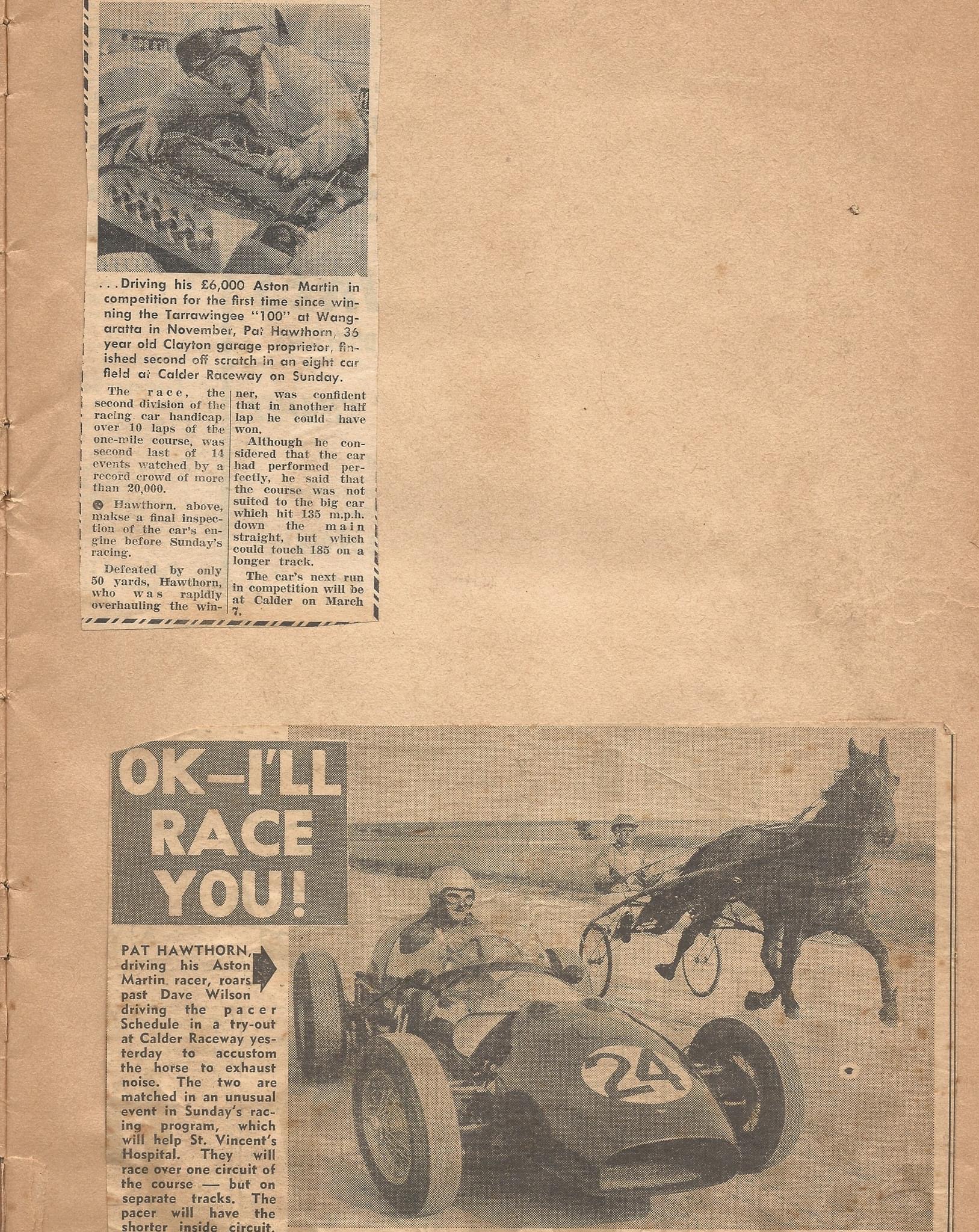
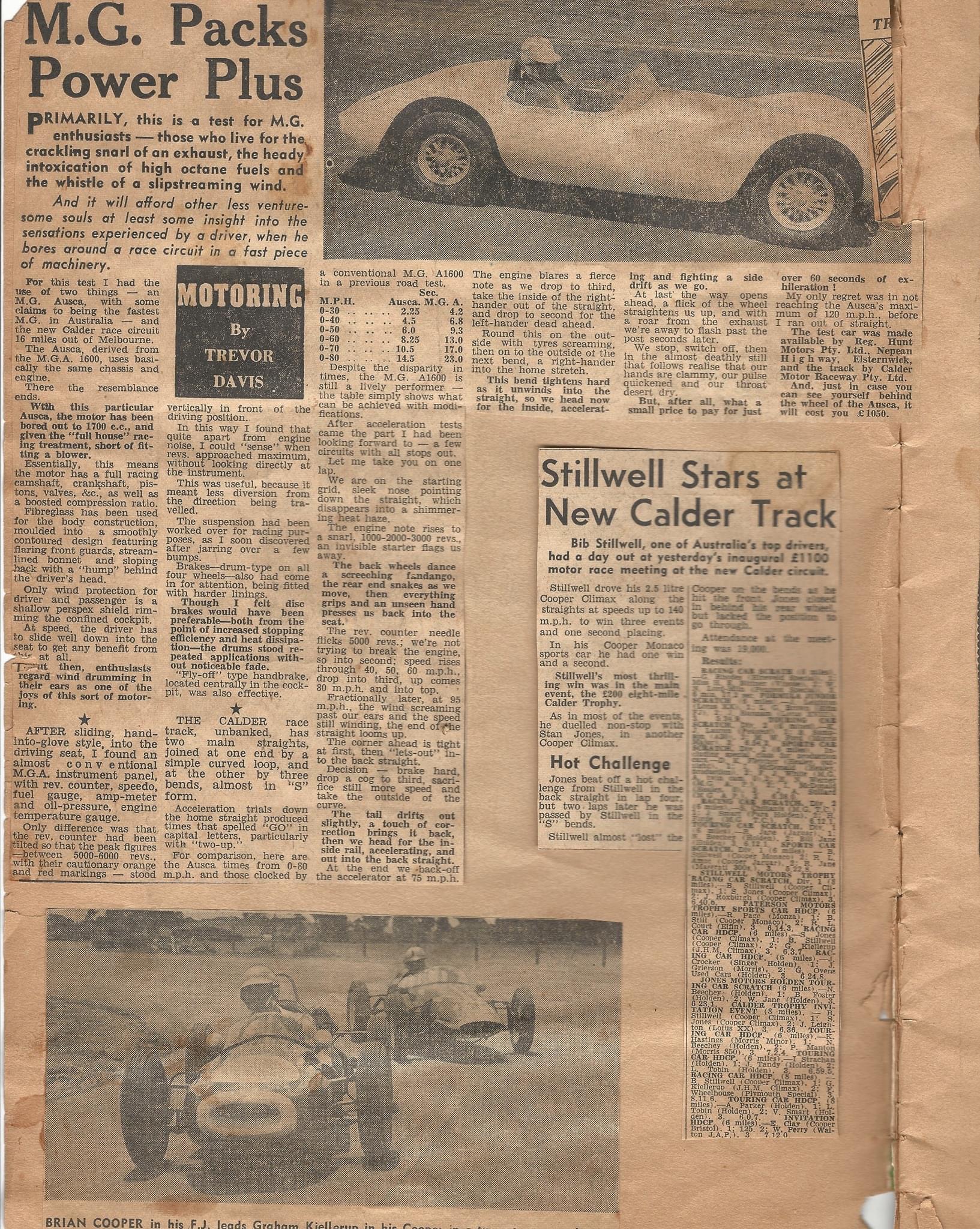
I don’t propose to write the history of Calder, but rather to put on-the-record some wonderful pages of the late Pat Hawthorn’s scrap-book posted on Bob Williamson’s Australian Motor Racing Photographs Facebook page.

While Pat Hawthorn died some years ago, we have his son Russell Hawthorn to thank for sharing these invaluable records for preservation. Click here for a piece on the Aston Martin DBR4 Grand Prix cars, including Pat Hawthorn’s; Lex’ Aston Martin DBR4/250s… | primotipo…

Back Straight, one turns right at the end  (Hawthorn)

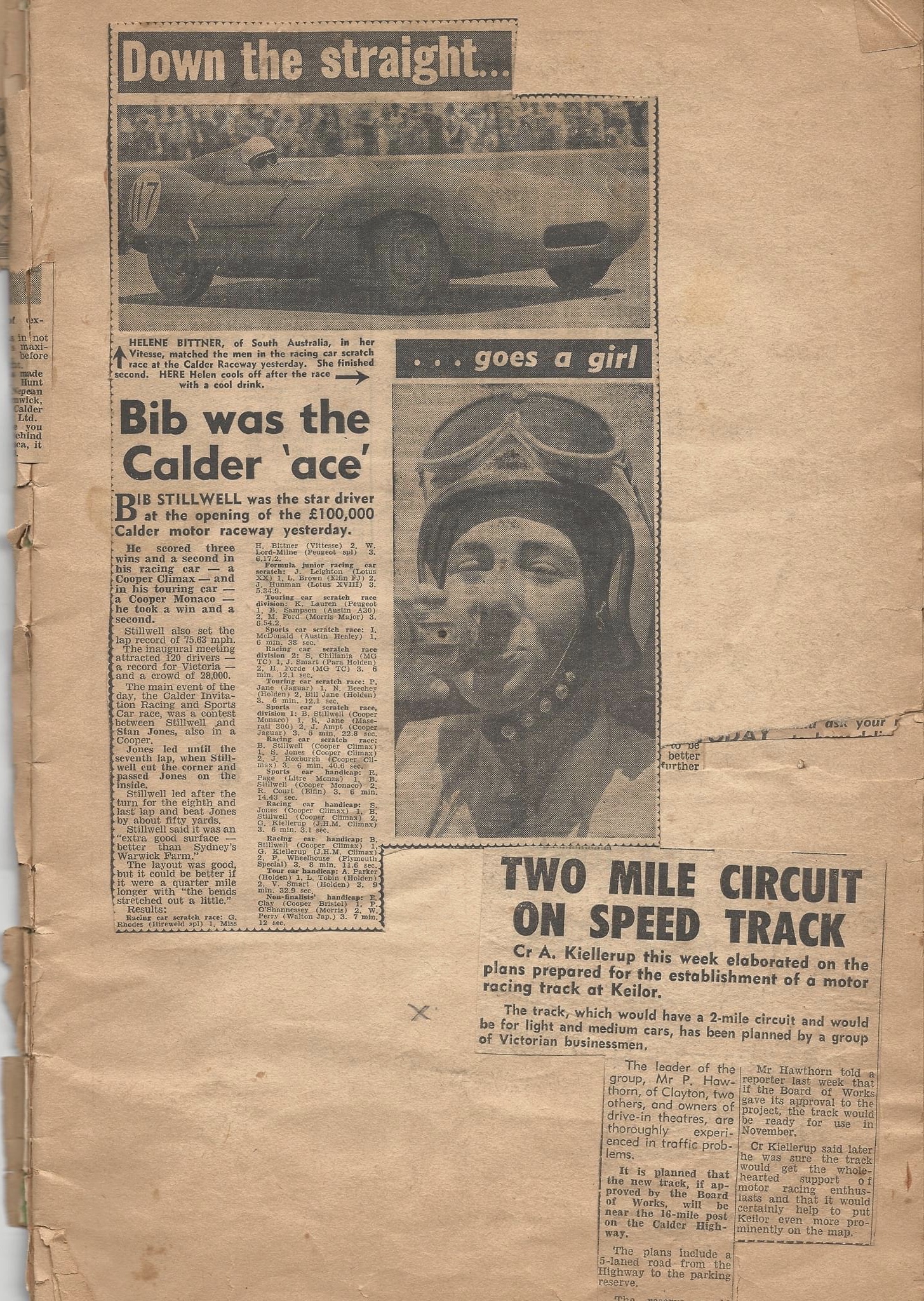
As the newspaper articles tell us, the star of the first meeting held on Sunday 14 January, 1962 – the public were invited to the rehearsal on 6 January (a freebie I wonder?) – was Bib Stillwell who had wins in both his Cooper T53 Climax Formula Libre single-seater and Cooper Monaco sportscar.

A quick glance at the results shows many of the names-of-the-day supported the opening meeting including Stan Jones, Jon Leighton, Jack Hunnam, Brian Sampson, Ian McDonald, Harry Forde, Norm Beechey, Bill and Bob Jane, John Ampt, John Roxburgh and Bob Page.

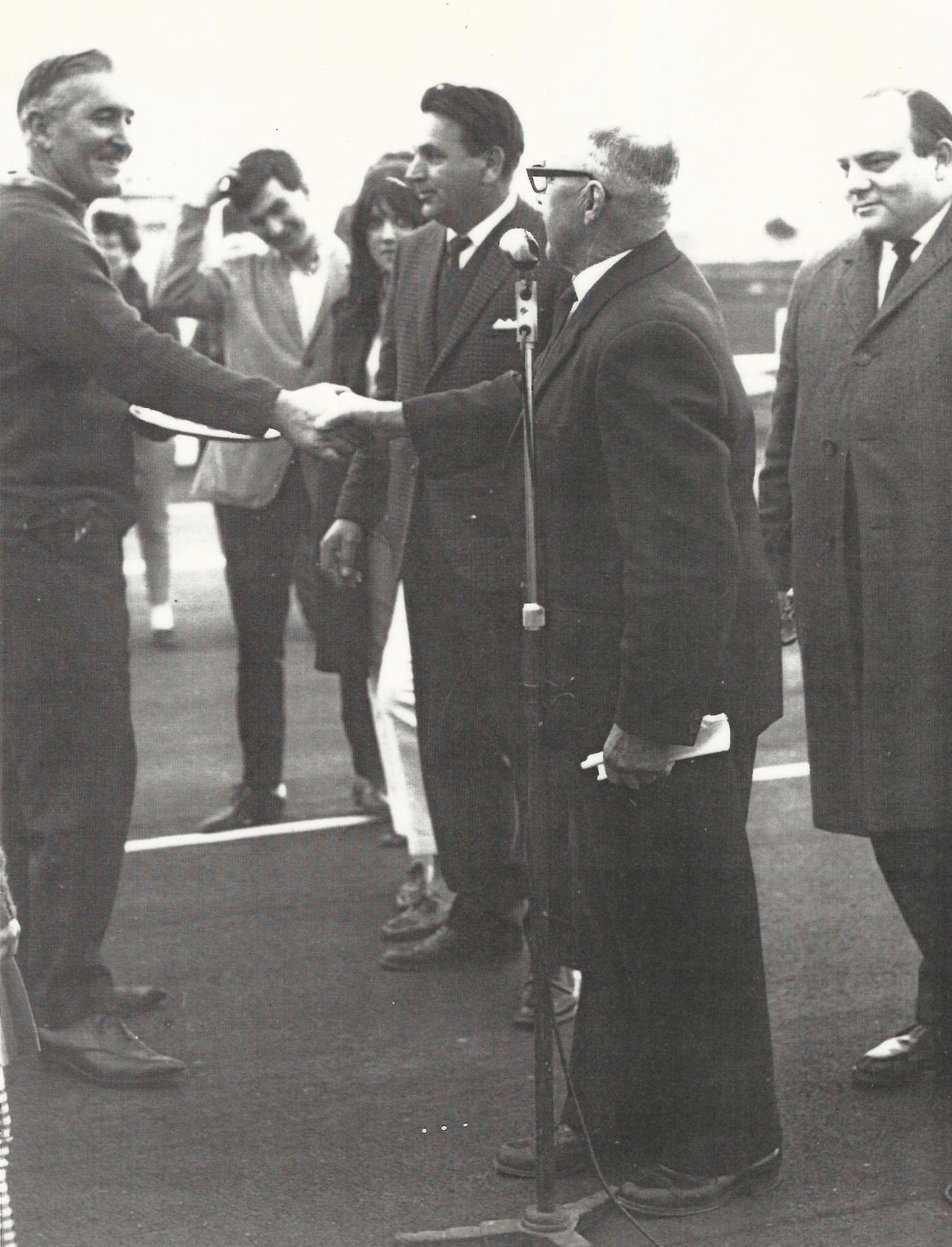
Pat Hawthorn receiving a trophy at Calder from the then Victorian Government Minster for Sport. The man in the suit behind the microphone is Jim Pascoe- both part-owners and directors at the time, date uncertain (Hawthorn Family)

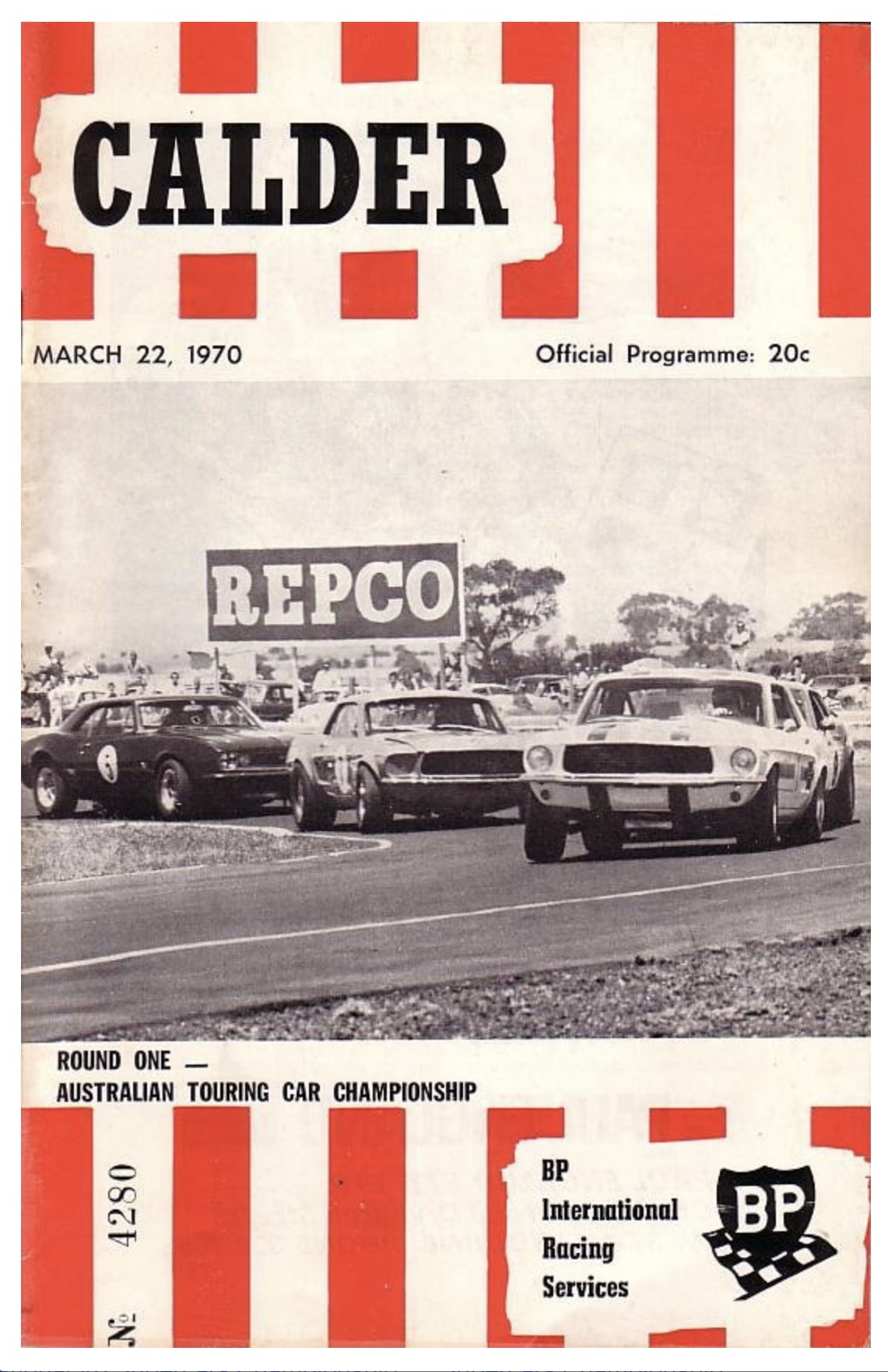
Before too long the ownership of the business changed from the syndicate of businessman to Jim Pascoe solo. While Warwick Farm and Sandown were the blue-blood Tasman Cup venues, shorter tracks like Oran Park and Calder also thrived. Calder held a round of the Australian Touring Car Championship for the first time in 1969, that was symbolic of the venue’s rise in the tracks-of-Oz pecking order.

Geoghegan, Moffat, Jane and Thomson (?) at Calder in late 1969

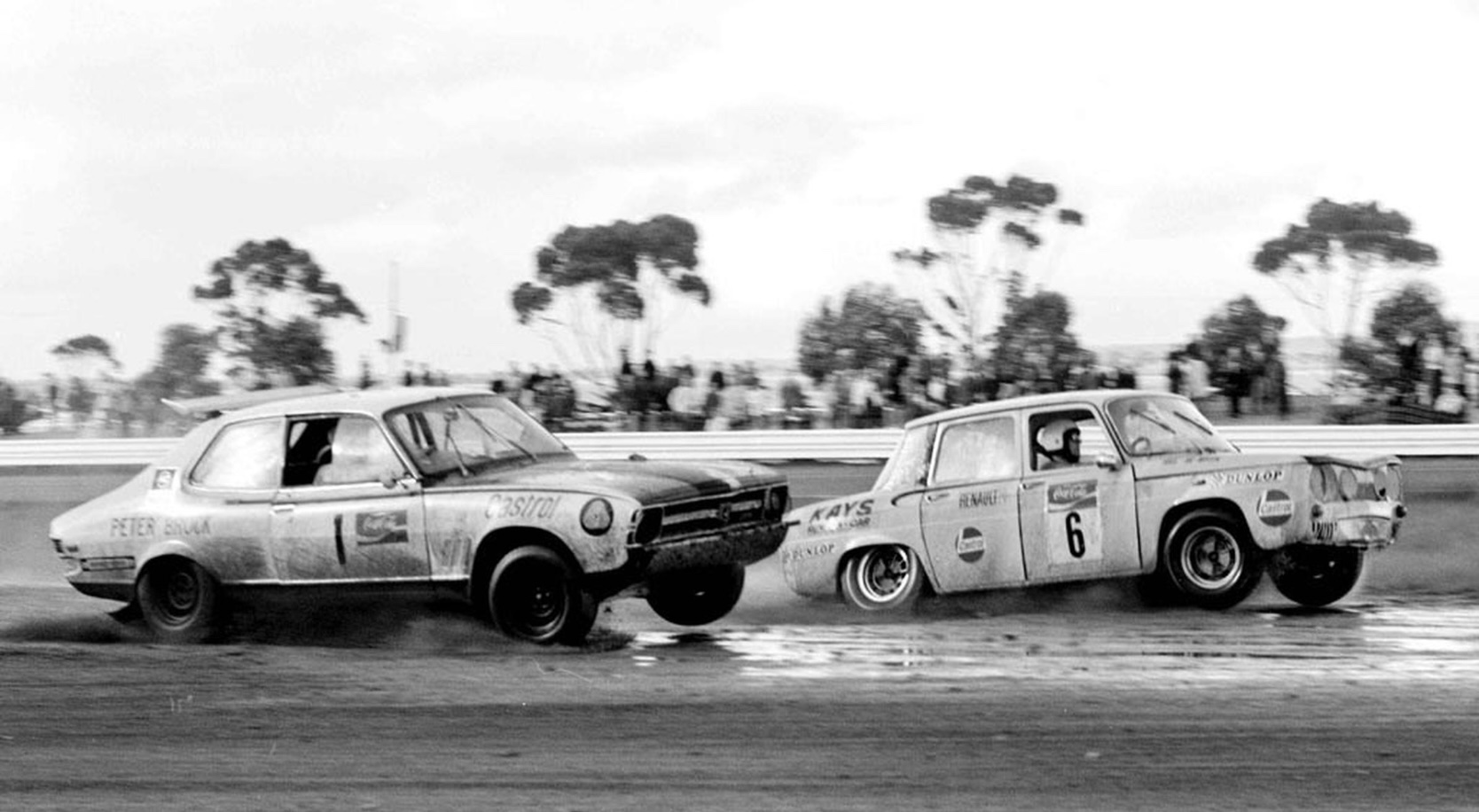
Peter Brock and 1970 Australian Rally Champion, Bob Watson during a 1970 Calder rallycross event. HDT LC Holden Torana GTR XU1 and works-Renault R10 Gordini (I Smith)

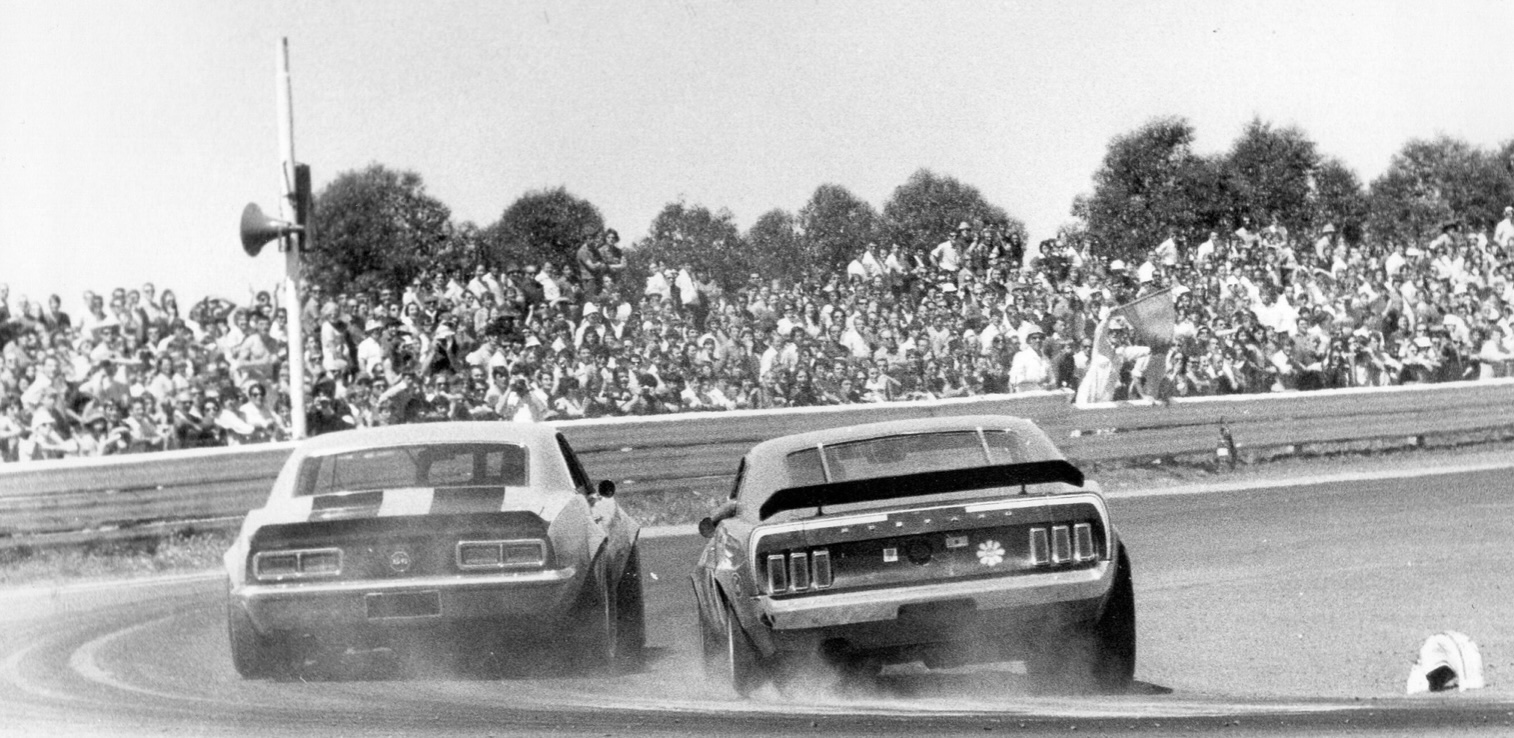
Look at that crowd! Bryan Thomson’s Chev Camaro SS outside Allan Moffat’s immortal Trans Am Mustang as they blast onto the main straight in 1970 (R Davies)

Kevin Bartlett’s Lola T300 Chev during one of the Repco Birthday meetings in 1972. ‘Grandstand dreaming’ as per text below (I Smith)

Later, when Bob Jane bought the place it was subjected to constant change, development and improvement.

I can remember going to a meeting as a teenager with my father in the early seventies. At one stage Bob was standing at the very top of the new, but not quite opened grandstand at the start of the main straight, he was staring into the distance, all alone and dreaming of what might be. Perhaps he had aspirations of the Thunderdome even then?

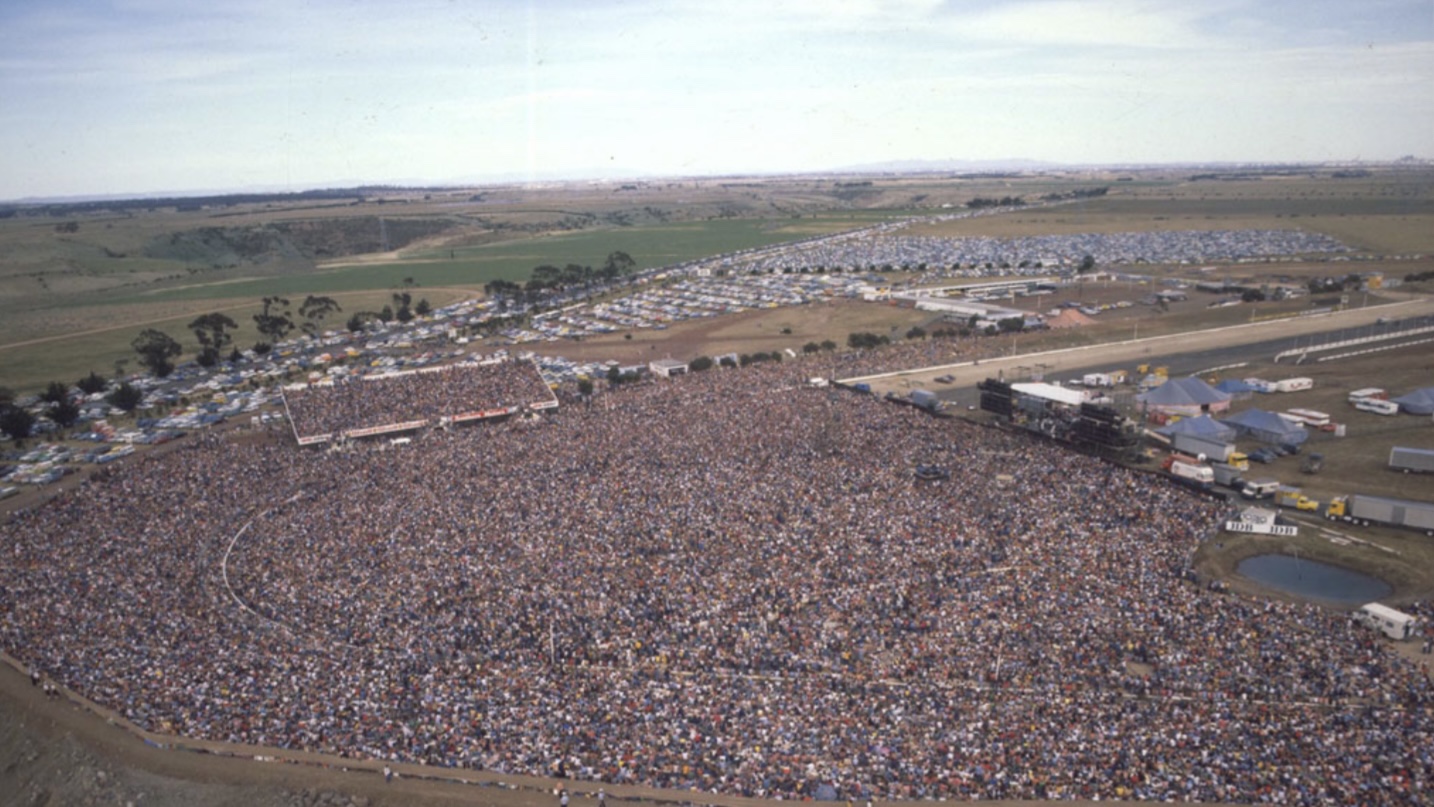
At various times the venue hosted many international rock concerts (I couldn’t think of a worse place to see a band) and became a wonderful rallycross track, you could see all of the action, such was the compact nature of the place.

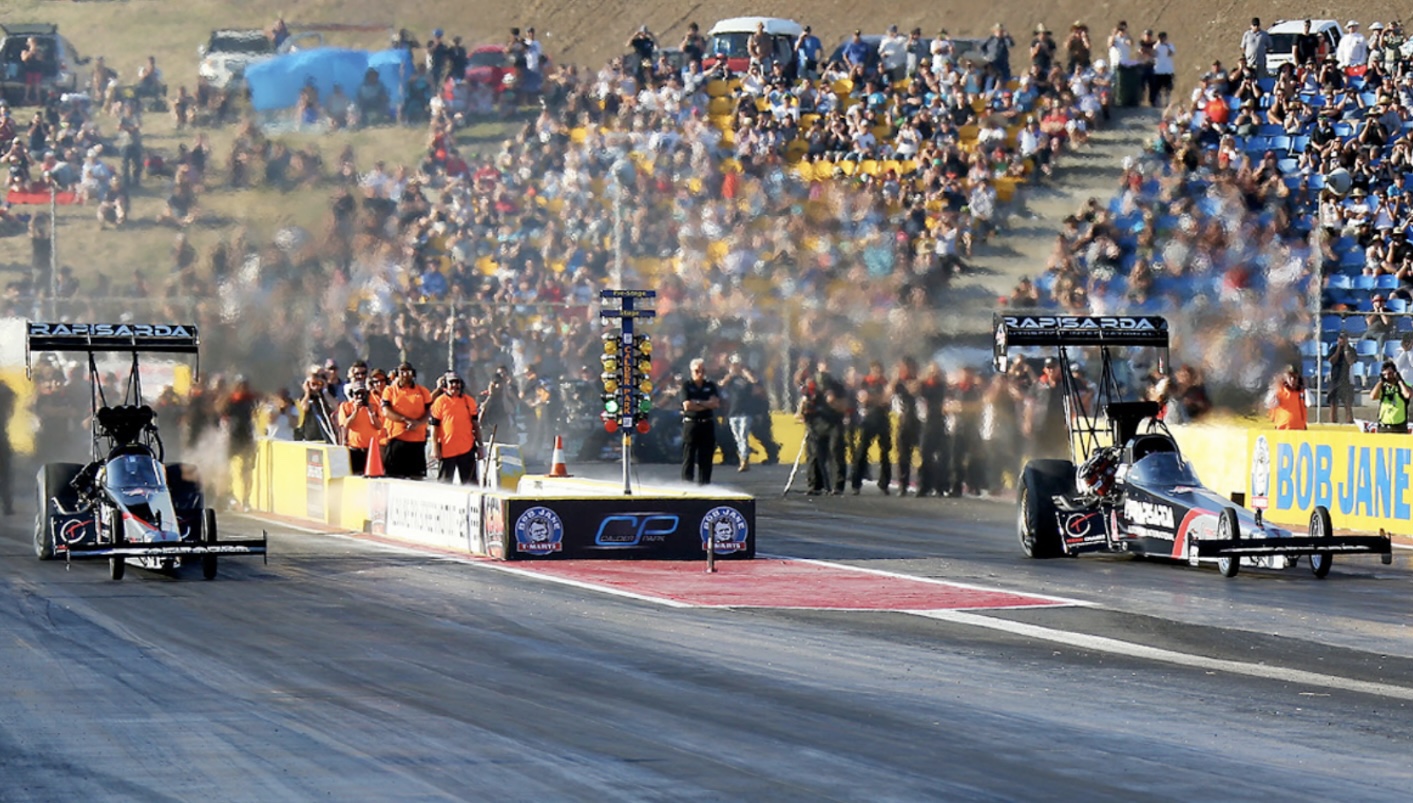
For decades the place was the capital of drag racing in Victoria, if not Australia. To see a pair of Top-Fuel dragsters do five-second (or whatever it was) passes is indelibly etched in my mind, that evening is the only day of race spectating where I felt I ‘tasted’ the cars. It was such a visceral, tactile assault on all of ‘yer senses.

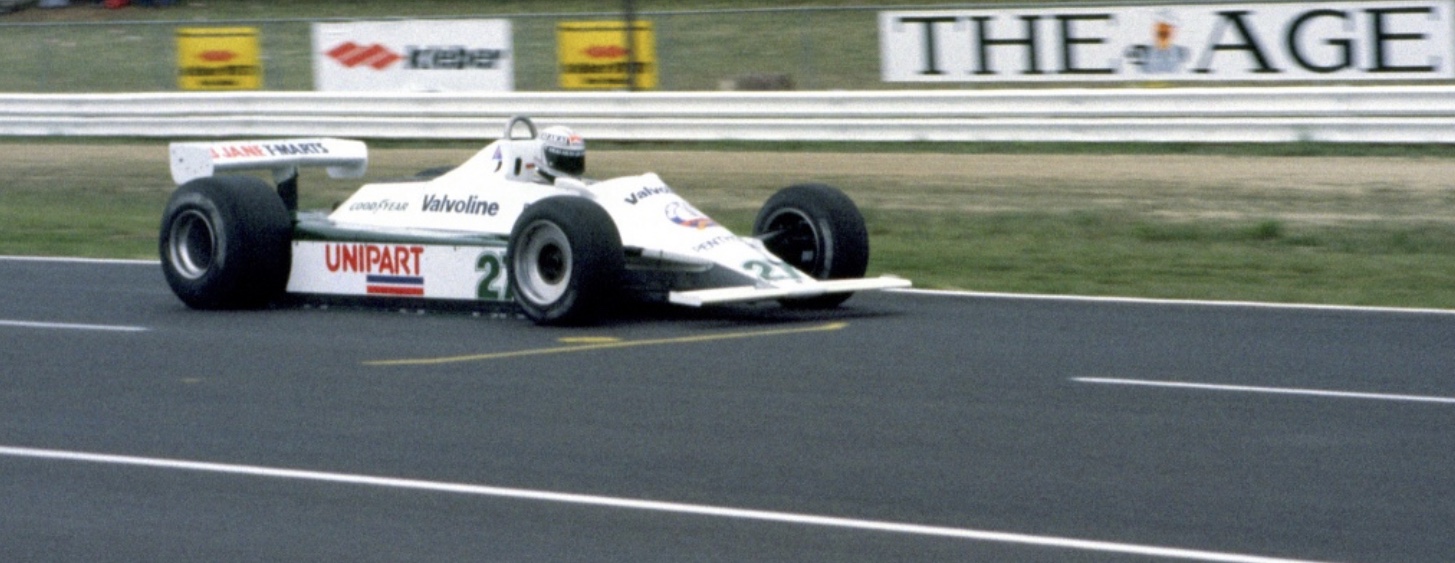
Alan Jones on the way to winning the 1980 AGP at Calder, Williams FW07 Ford (unattributed)
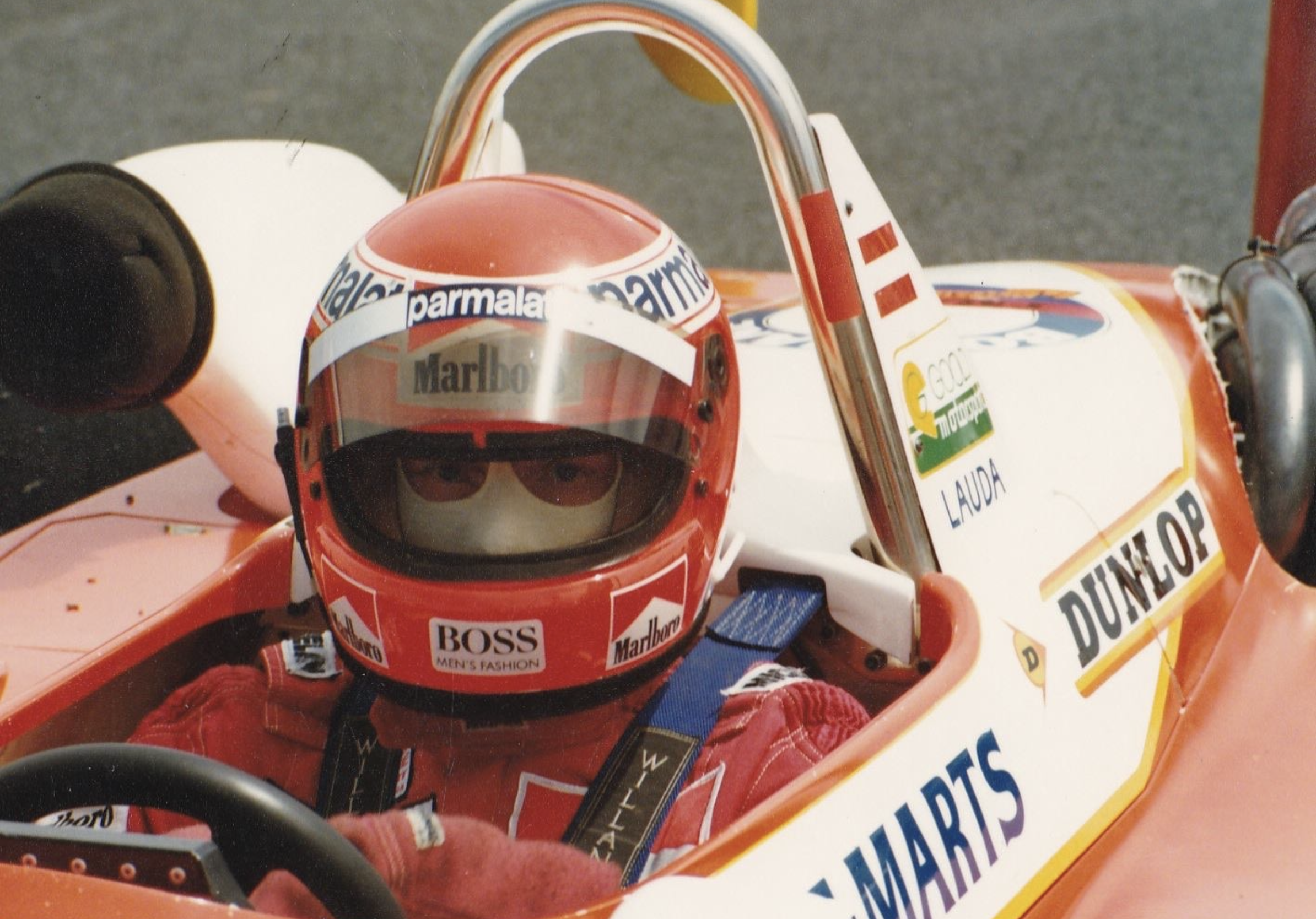
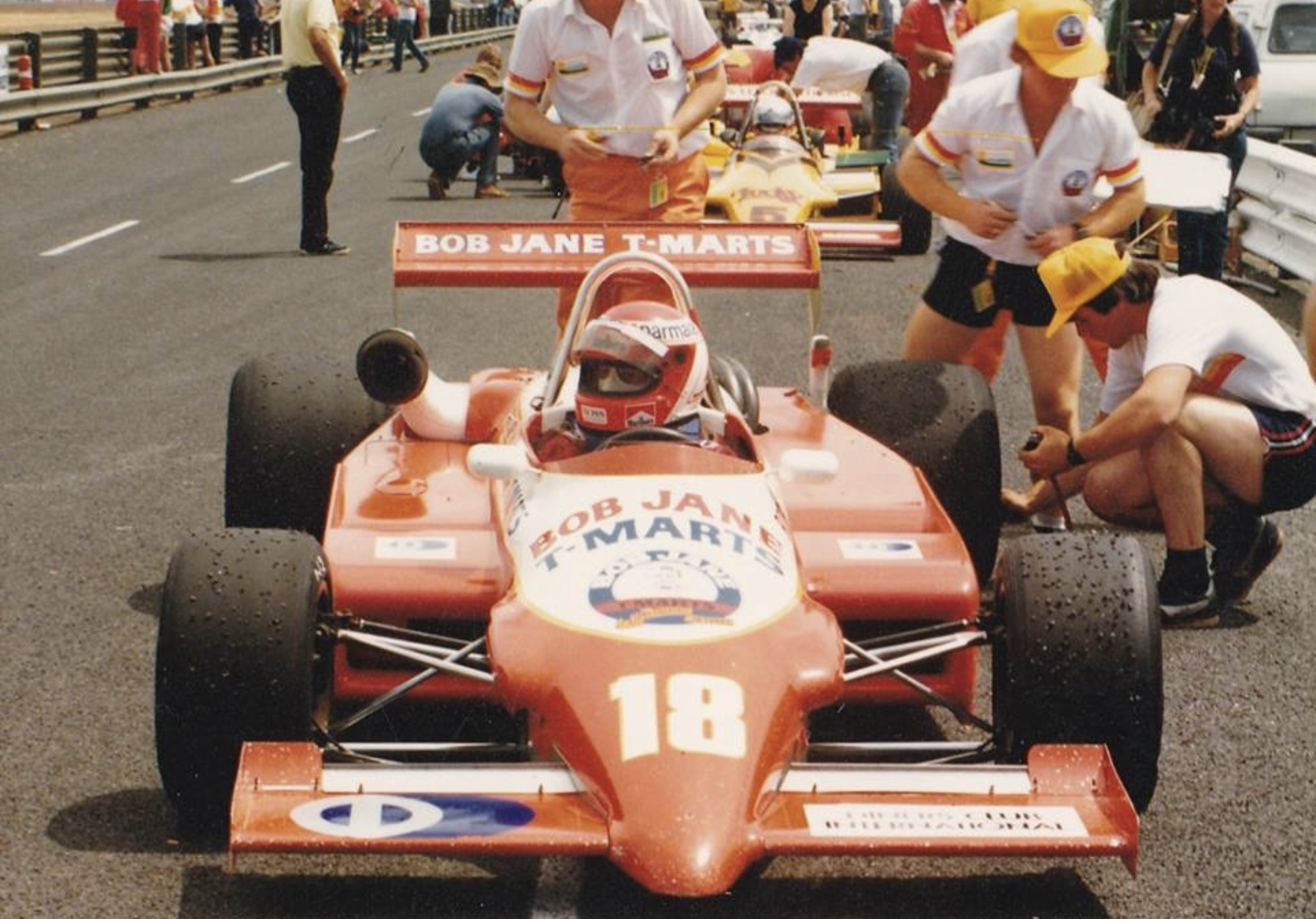
Niki Lauda, Ralt RT4 Ford BDA (and below) during the 1984 AGP won by Roberto Moreno in another RT4 (C Jewell)

Recent drag racing action, advice as to chassis/drivers/date welcome (calderparkdragracing.com.au)

Whilst Calder never held an F1 AGP, as Bob hoped, the 1980 Formula Libre AGP at Calder, and the 1981 to 1984 Formula Pacific AGPs were important steps in the direction Adelaide eventually seized.

I always thought ‘If only Bob owned Phillip Island instead of Calder’ his great acts of promotion could have played out on a vastly more impressive stage, but hey let’s be thankful for a venue so close to home.

It must be fifteen years since I last had a gallop there, in the last VHRR’s Summer Test Days they ran annually. I’m a regular traveller up the Calder Highway, it’s sad to drive past that huge wasted resource and think of the clusterfuck of family and CAMS disputation dramas that stopped the joint dead in its tracks, pun intended.

Mind you, the tom-toms are rattling a little at the moment, it might not be all over, after-all…

‘Rockarena’ at Calder in November 1977. Fleetwood Mac headlined and were supported by Santana, Little River Band, Kevin Borich Express and Creation (jpjaudio.com.au)

Etcetera…

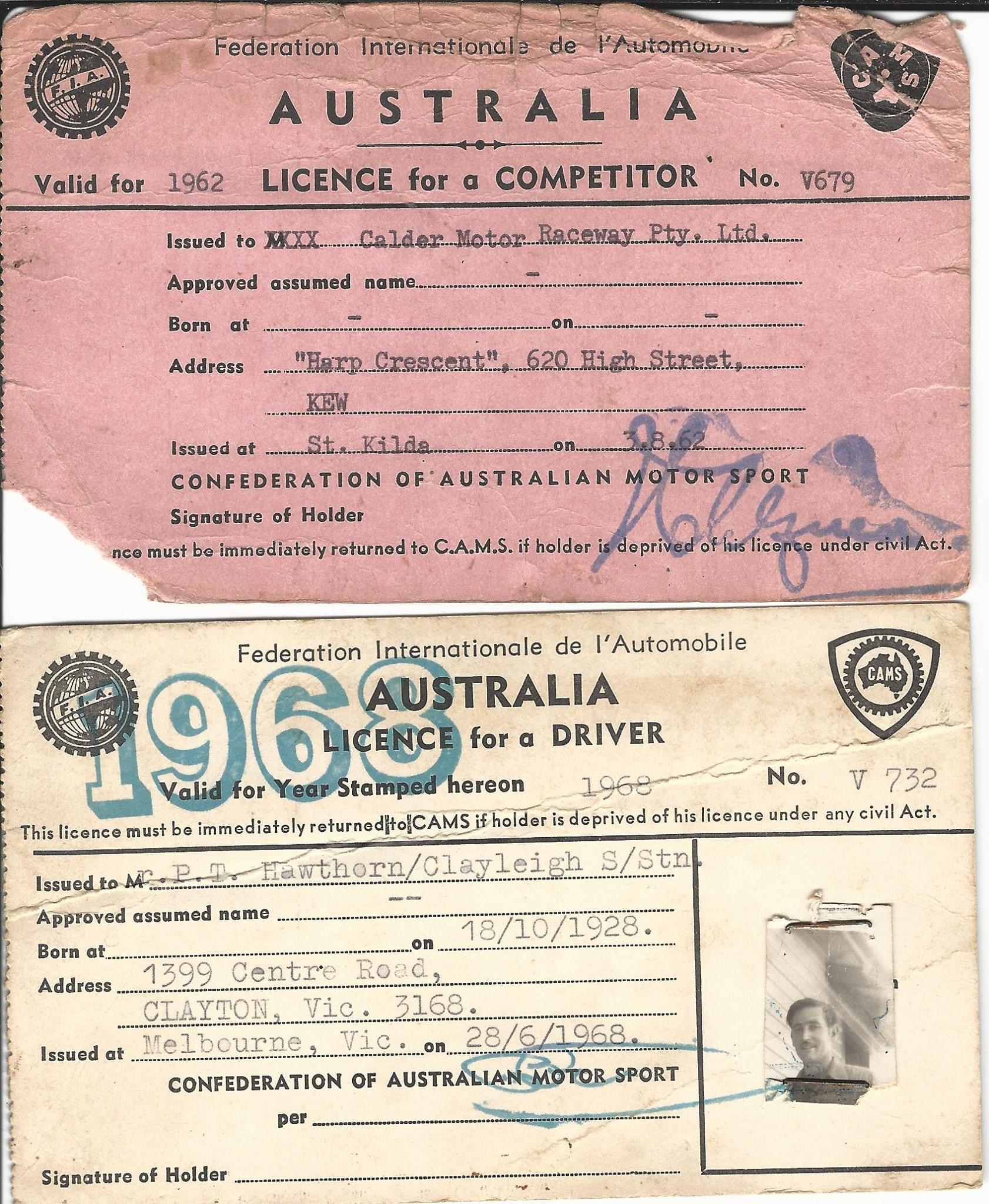
I love improvisation, it seems CAMS didn’t have a Track Licence form so they adapted a Competitor Licence and issued that to Pat and his partners – ‘Calder Motor Raceway Pty. Ltd’, that registered address is at Kew Junction, a drop kick from Bib Stillwells’ then Holden dealership.

Bob Jane in his period of ownership tried plenty of great ideas as a promoter, but a race between Pat Hawthorn’s Aston and a trotter is very much on the innovative side!

Credits…

Pat Hawthorn Collection via Russell Hawthorn, Chris Jewell, Ian Smith, Ollie Campion, Robert Davies, jpjaudio.com.au, calderparkdragracing.com.au

Tailpiece…

Finito…
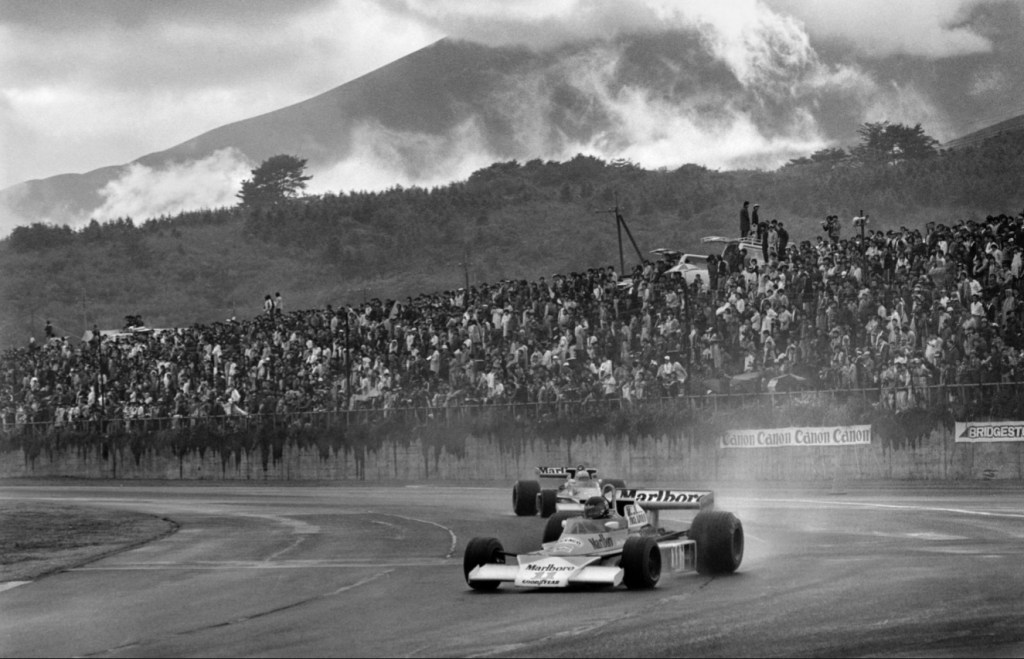
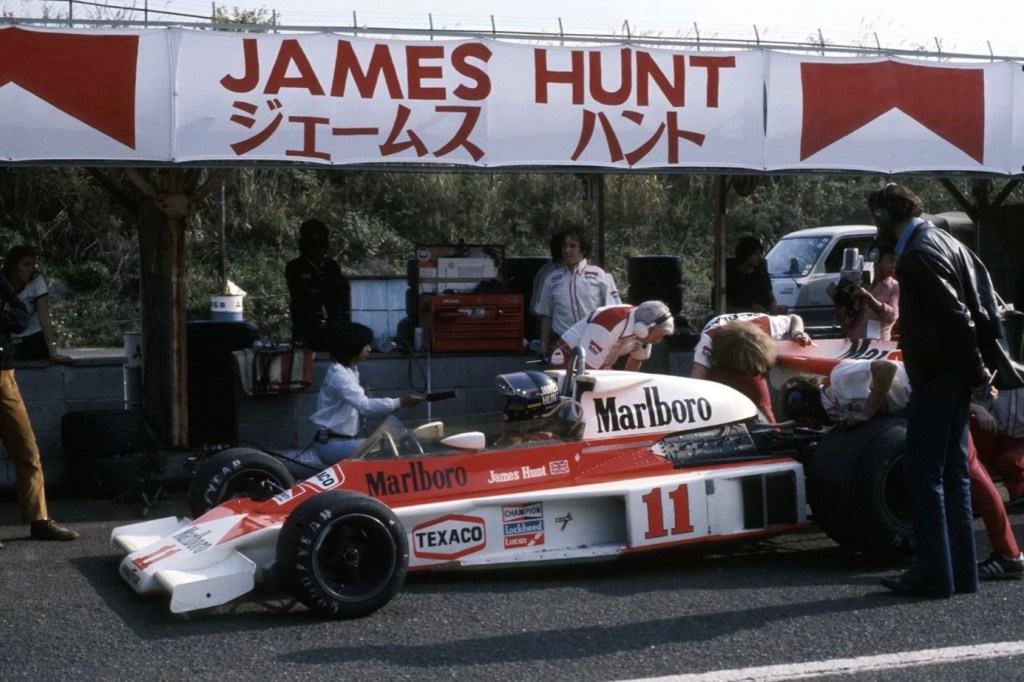
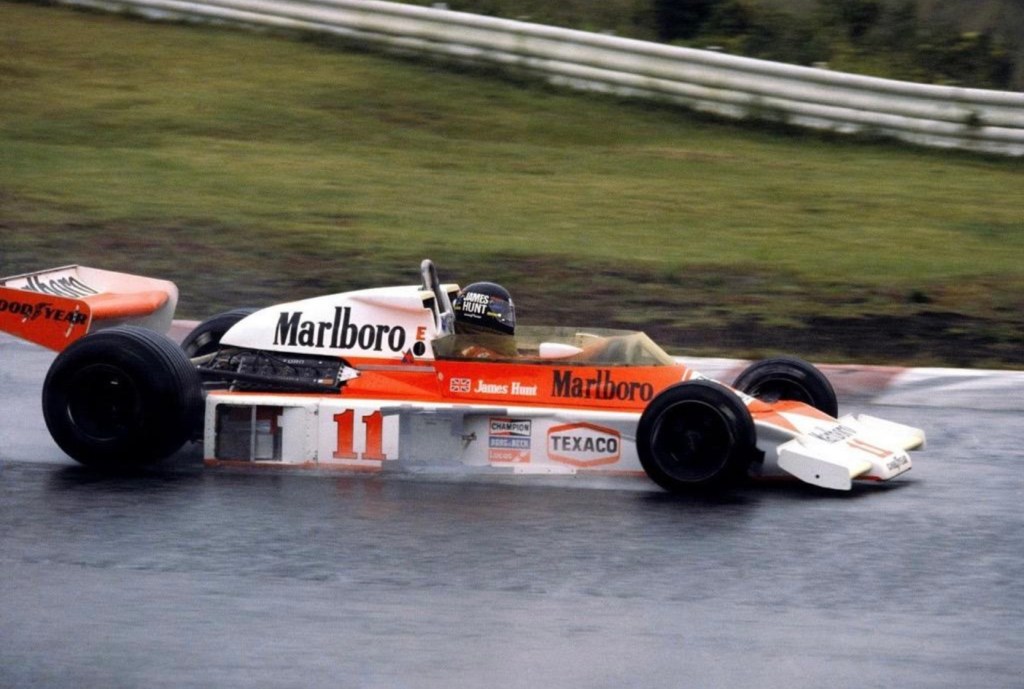
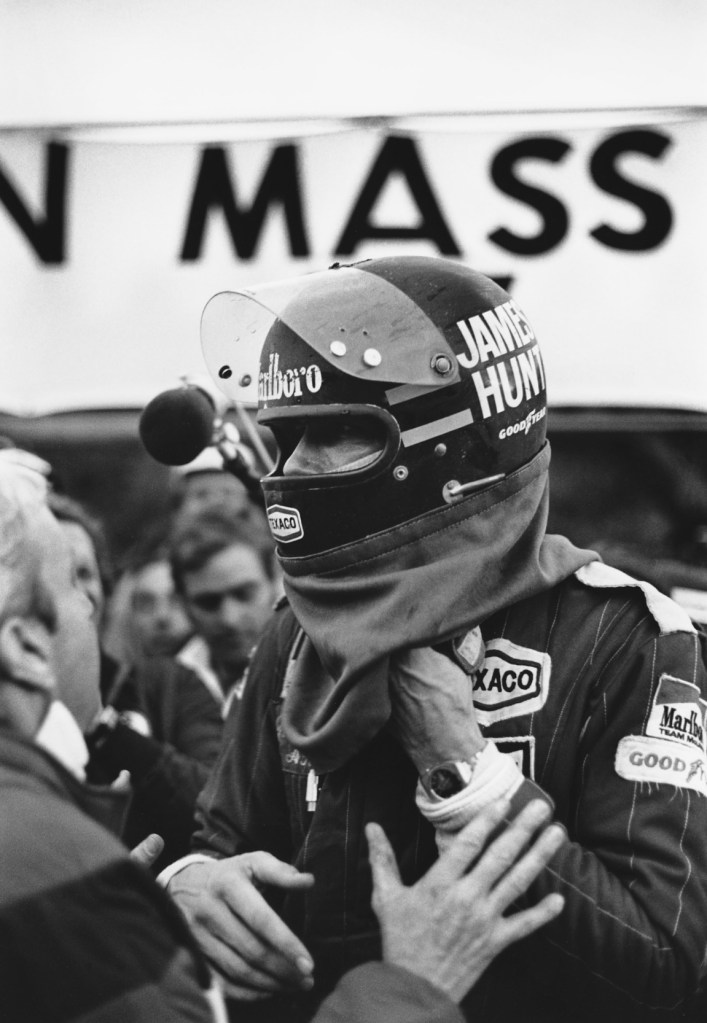
James Hunt and Jochen Mass, McLaren M23 Fords, Fuji 1976 (MotorSport)

We all have favorite Grand Prix seasons, for me 1976 was an enchilada with the lot.

It was a technically interesting year filled with pathos, drama, politics and a cast of personalities the spreadsheet jockeys who own F1 this week can only dream about.

Early in the season Ferrari appeared likely to take back-to-back titles. Mauro Forghieri’s 1975-76 3-litre flat-12 engined 312T/312T2 machines were amongst his best work in a long career with the Scuderia. Reigning champion Niki Lauda won in Brazil and South Africa, then his teammate, Clay Regazzoni prevailed at Long Beach.

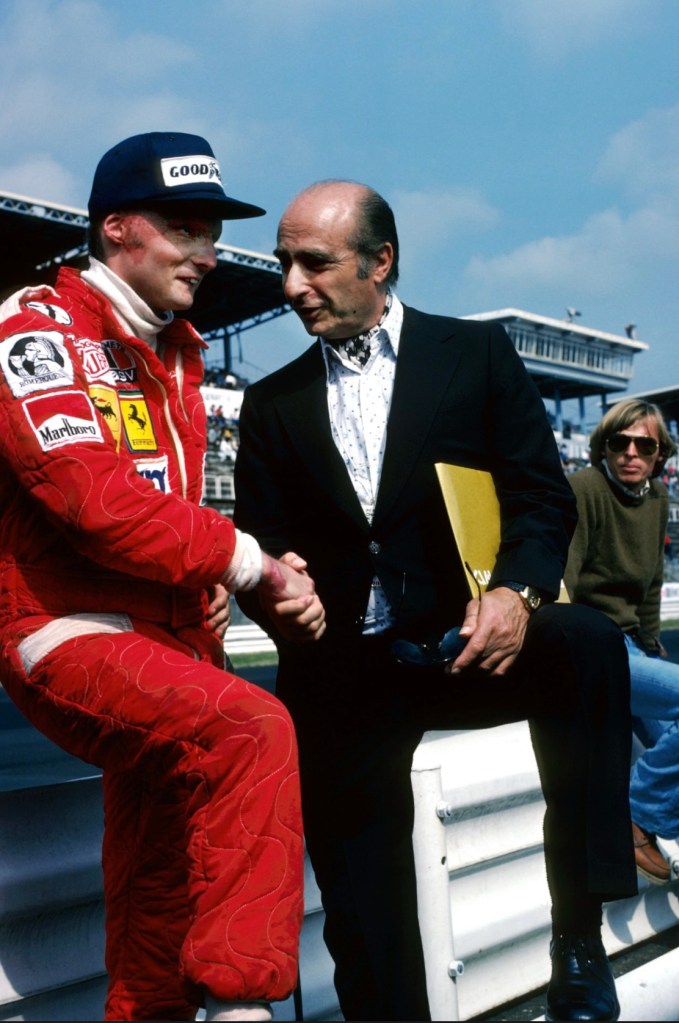
Lauda and Fangio, two of the bravest of the brave at Fuji (MotorSport)
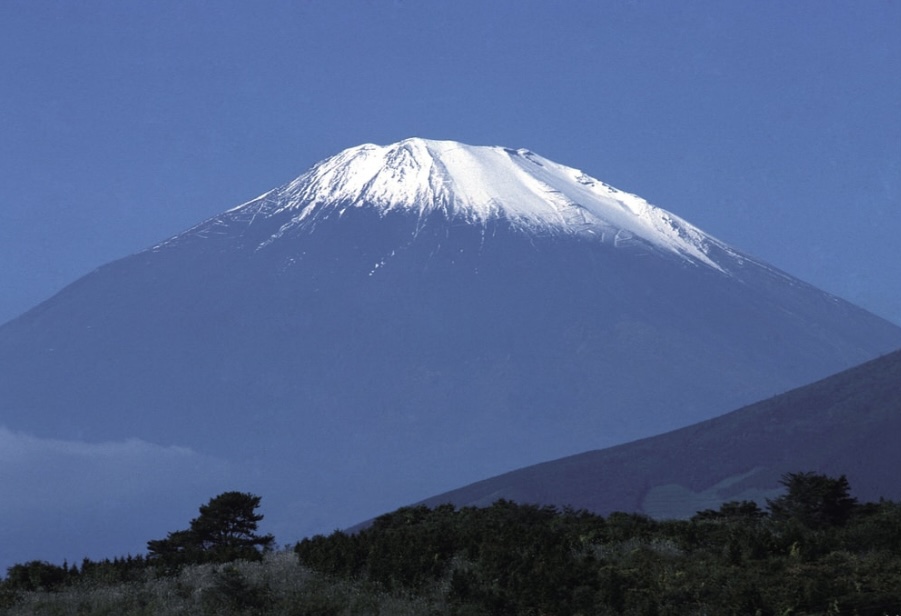
Mount Fuji during the 1976 race weekend, not a race-day happy-snap mind you (MotorSport)
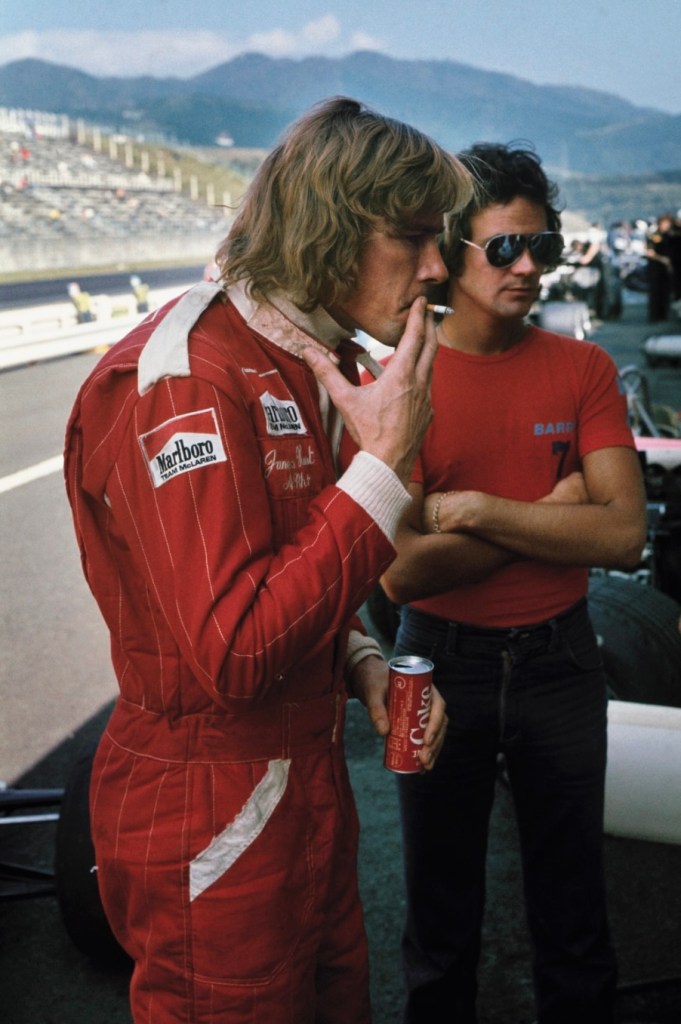
Breakfast of champions for James, while Barry Sheene, World 500cc Champ that year on a Suzuki RG500, looks on. Fuji 1976 (MotorSport)

James Hunt had been threatening from the get-go. Starting from pole at Interlagos and Kyalami, he finally won at Jarama with the big-league Marlboro McLaren outfit.

He’d been racing for the Boats-Bolly and Big-Boobies Hesketh outfit – Silverstone International Trophy and Dutch GP wins duly noted and admired – and got his chance in the majors after Emerson Fittipaldi committed F1 suicide by leaving McLaren for his brother’s Fittipaldi Automotive outfit.

Stuff brotherly love, I’ll take a competitive car every day of the week.

That Jarama weekend was notable for the first race-appearance of Ken Tyrrell and Derek Gardner’s absolutely wild P34 six-wheeler, and because Hunt’s win was swiped from him. His car was measured as being too wide in post-race scrutineering.

McLaren appealed on the grounds that this was due to the expansion rate of the tyres during the race. Two months later the appeal was surprisingly upheld, after all it’s up to the team to manage the width of the car in accordance with the regs knowing full well the behaviour of its Goodyears.

When Lauda won in Monaco he had a massive 33 point lead in the drivers championship from Regga and Hunt.

Teddy and ‘Kojak’ – what is the name of the mechanic with the wild and woolly hair? – and Alistair Caldwell look after Hunt’s M23. Gotta’ be amongst everyone’s favourite GP designs, long-lived as it was? (MotorSport)
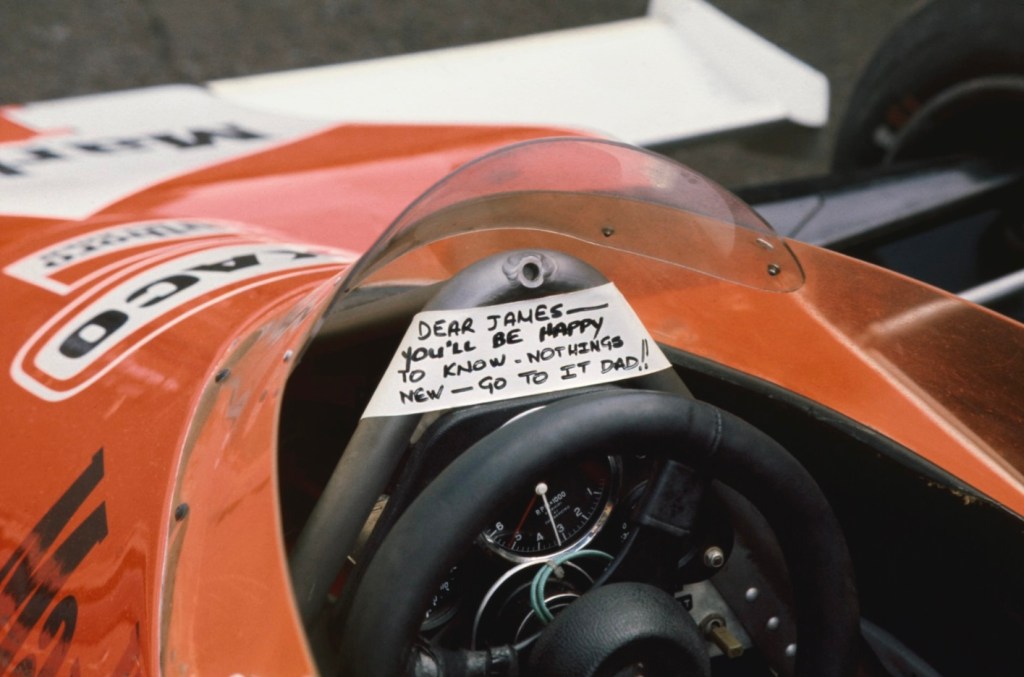
The usual witty McLaren mechanic’s missive to their pilot, Hunt’s raceday message (MotorSport)
Ermanno Cuoghi and crew attend to Lauda’s Ferrari, Daniele Audetto, team manager at right. The 1975-1979 312T-312T4 were fast, reliable jewels of cars driven by some of the worlds best (MotorSport)

Who can forget the stunning shots of the P34s opposite locking their way around Anderstorp’s constant radius turns on the way to a history making one-two; Jody Scheckter from Patrick Depailler.

Hunt won from pole at Paul Ricard but only after Niki’s Tipo 015 525bhp flat-12 went pop while in the lead.

Niki Lauda took pole at Brands Hatch from James, then came Mario Andretti who again reinforced the growing pace of the Lotus 77 Ford. Colin Chapman, with Andretti’s developmental help, was finding his mojo again after a year or so in the wilderness.

The British GP controversy started when Regga tagged Lauda after the start and took out Hunt as the Swiss spun. In contravention of the rules, Hunt, Regazzoni and Jacques Lafitte started in their spares. Lauda led the restarted race until halfway, then slipped back with a gearbox problem, then the hometown boy was through and took a hugely popular, well merited win…for a while anyway.

Despite starting Regga in their spare, Ferrari, Tyrrell and Fittipaldi appealed against Hunt being allowed to start in McLaren’s spare. Two months later, amid great controversy Hunt was disqualified gifting Lauda the win.

I thought this was, and still do think this was a bum-deal. I would have pinged the organiser for allowing three teams to start drivers in their spares, but allowed the results to stand.

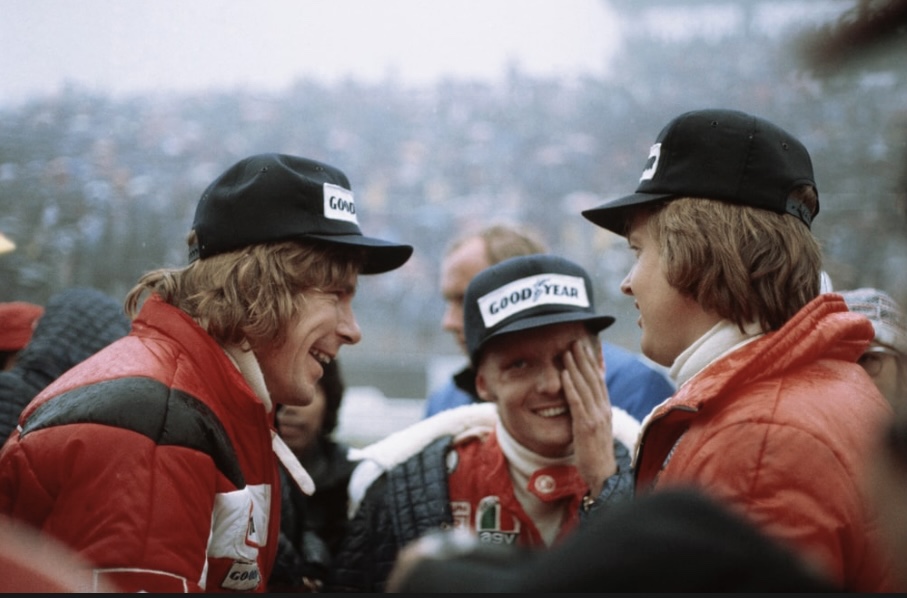
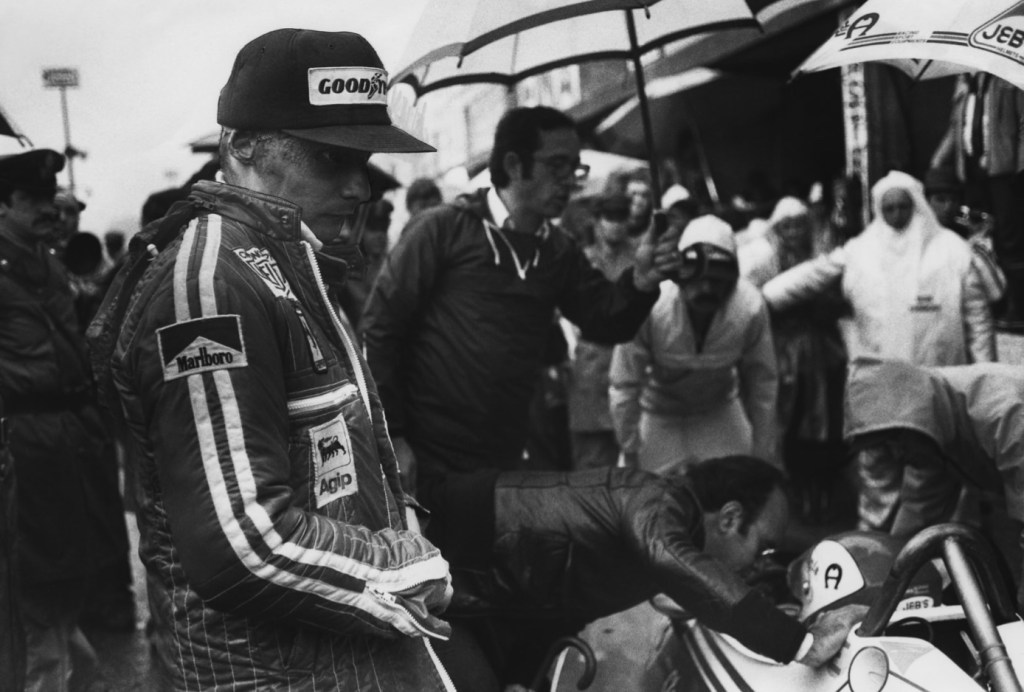
It looks jolly enough, and I’m sure it was, but laced with no shortage of tension as well given the stakes. James, Niki and Ronnie at Fuji as officialdom rubs its Chrystal Ball as to the likely weather patterns for the balance of a Fuji Sunday (MotorSport)
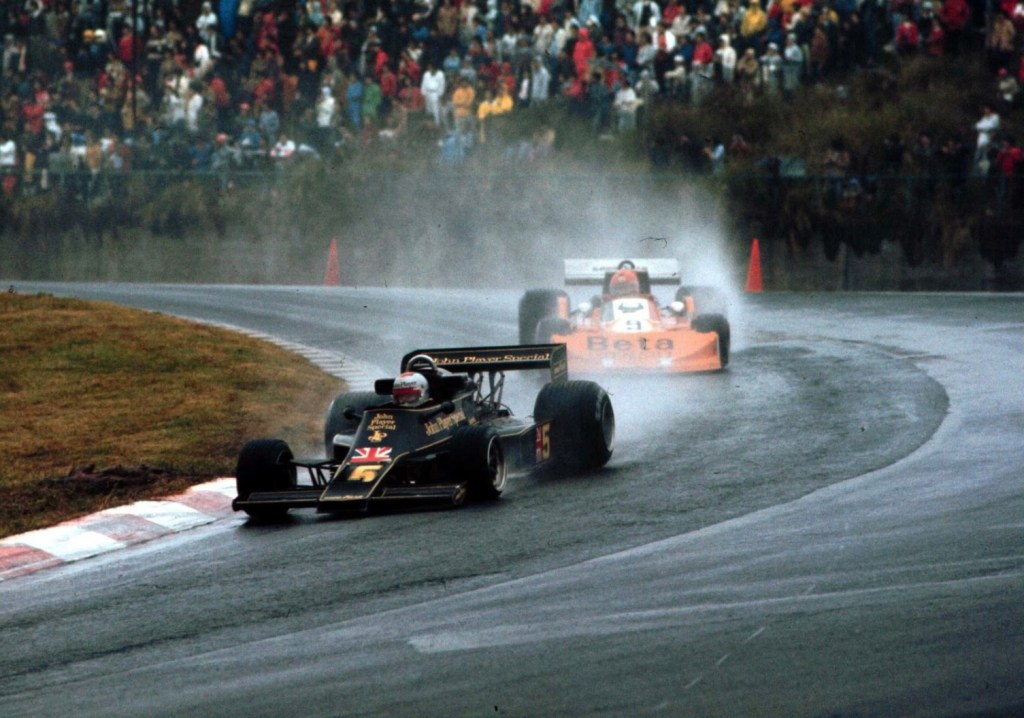
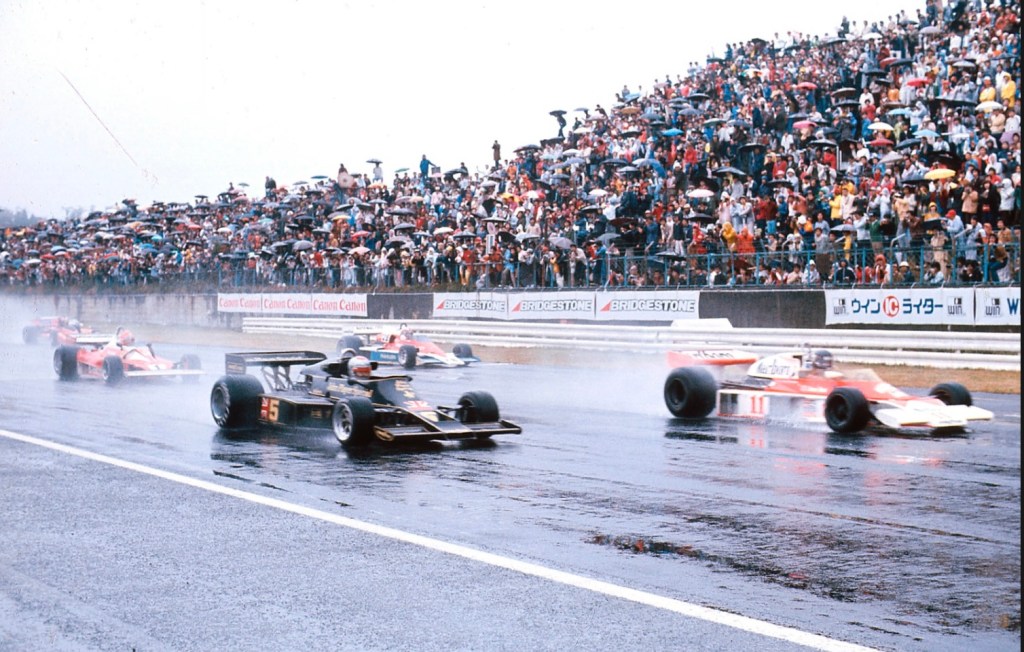
Slightly soggy Fuji start…Andretti on pole, Lotus 77 Ford, Hunt alongside in his M23, Niki behind, Ferrari 312T2, and John Watson’s Penske PC4 Ford by the fence. The other car in the distant gloom is Carlos Pace’ Brabham BT45 Alfa Romeo. Goodness gracious, all that variety, three V8s and two different makes of flat-12, something Liberty Media’s Q-Department only have in their wet-dreams (MotorSport)
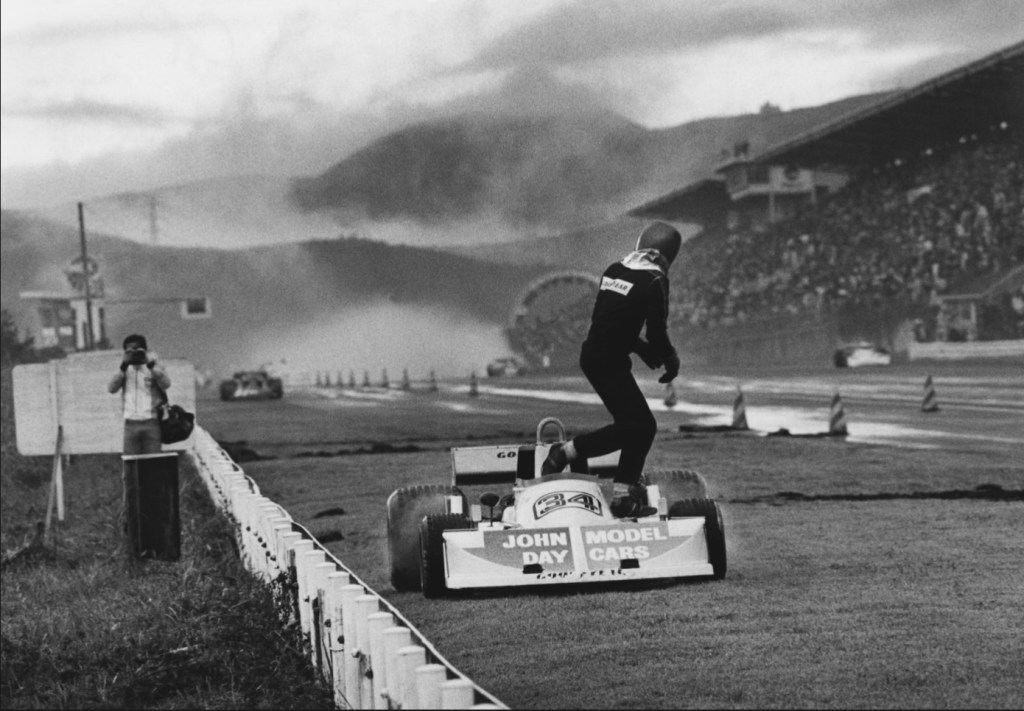
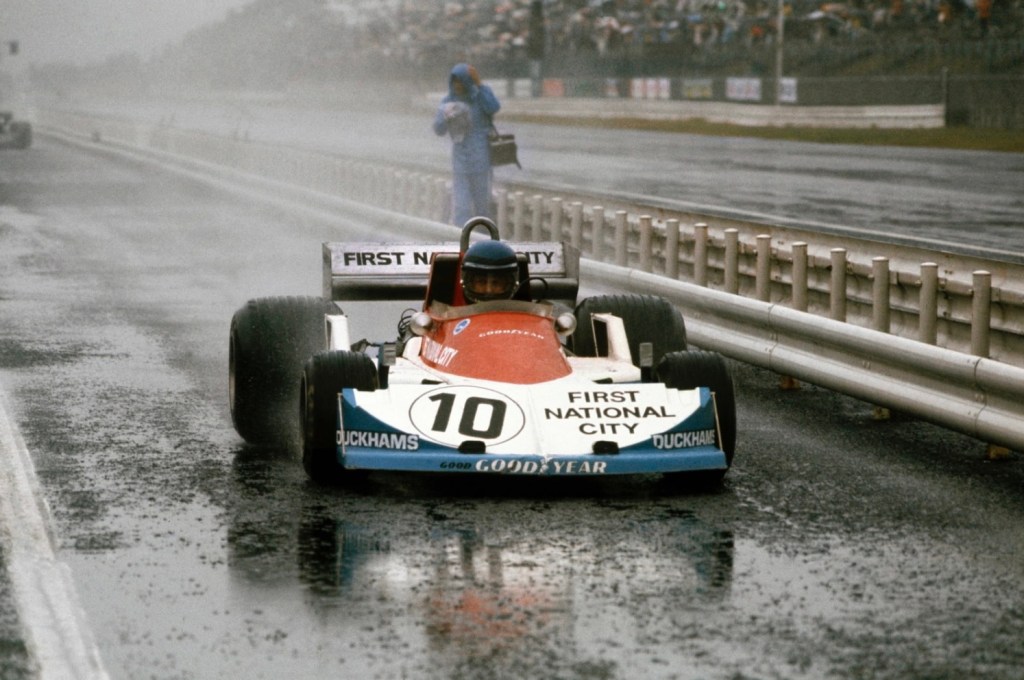
This shot of Ronnie Peterson retiring his March 761 Ford without completing a lap due to engine problems further reinforces the staggering amount of water on circuit (MotorSport)

Then it was off to the Nurburgring where Hunt put in some scintillating laps to start off pole from Lauda who was nine-tenths adrift of his British buddy.

Niki’s terrible, lap two accident on the left kink before Bergwerk was probably caused by rear suspension component failure. Were it not for the efforts of Guy Edwards, Brett Lunger, Harald Ertl and Art Merzario to get Lauda out of the car – in advance of the arrival of marshals – he probably would have been fried alive there and then.

Instead, the staggering Lauda, having been given the last rites at the Ludwigshafen Hospital trauma unit, showing indomitable will of human spirit, returned two races and just six weeks later at Monza.

While Lauda set about the business of survival and recovery, Hunt won the restarted German GP, and the Dutch at Zandvoort. John Watson (Penske PC4 Ford) took a well deserved and very popular win for Roger Penske on the Osterreichring in between Hunt’s victories.

Lauda out of the car, content with the decision he had made to stop. Regga was fifth (MotorSport)
(Gloomy isn’t it. Hans Stuck out with drowned electrics, March 761 Ford (MotorSport)
Battle for second between Mario Andretti and Vittorio Brambilla, aboard Ford Cosworth powered Lotus 77 and March 761 (MotorSport)

When Niki Lauda appeared at Monza he stunned everyone, not least Enzo Ferrari who had hired Carlos Reutemann to drive in his place.

In great pain, his burns not fully healed with balaclava and skin enmeshed in blood, the crazy-courageous Austrian finished the race in fourth place behind Ronnie Peterson’s March 761 Ford, then Regga second and Jacques Laffite, Ligier JS5 Matra V12, third. Hunt collected no points having spun on a charge up the field.

In the week between Monza and Mosport James’ British GP disqualification was made. So, with three races to run – Mosport, Watkins Glen and Fuji – Hunt had 47 points to Lauda’s 64. It seemed and was a tall order for the British babe-magnet.

Undaunted by the Mosport challenge, James took pole and led from lap 10 having made a typically tardy start, while Niki ran fifth but faded with handling issues.

It was then well and truly game on, Lauda’s margin slimmed to eight points, there was plenty of debate globally between racing mates about which of the drivers you wanted to prevail.

I was in Niki’s camp, his sheer bravery and dogged – cussed – will to go on and win was and still is an outstanding moment of human spirit in any sport.

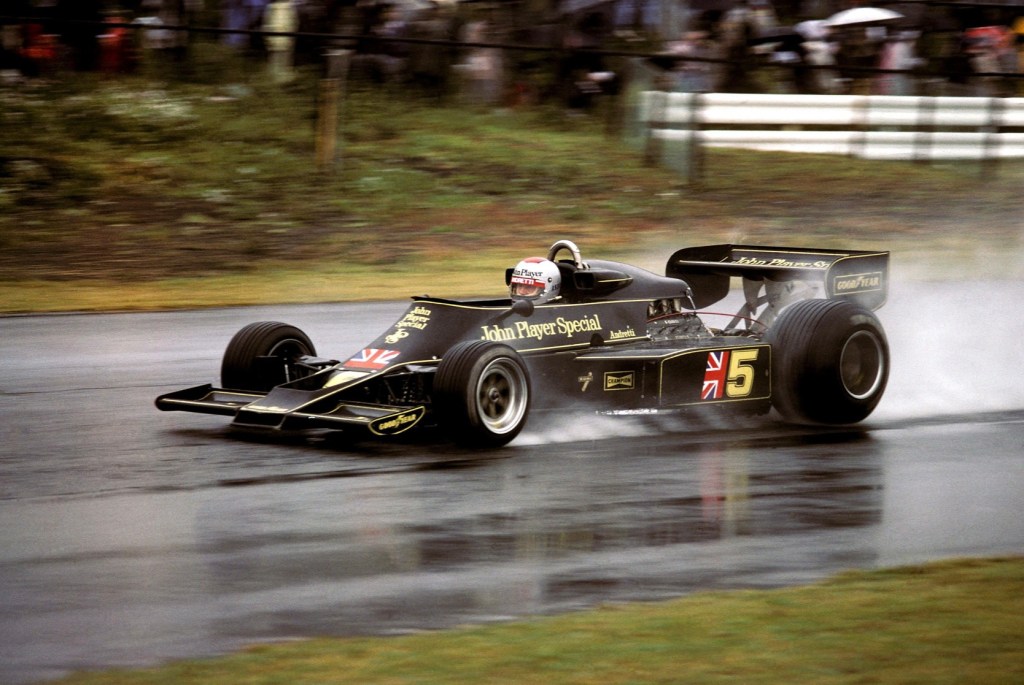
Andretti’s Fuji winning Lotus 77, look at the volume of water early in the race, Hunt below looking similarly soggy (unattributed)
(unattributed)
Brambilla dived down the inside of Hunt on lap 20 but James anticipated the move so the Italian didn’t take him out in the process (MotorSport)

But Hunt kept on coming. Watkins Glen was one Grand Prix racing’s great challenges, he popped his McLaren on pole – his eighth of the year – and won the race after a duel with Scheckter’s six-wheeler while Lauda bagged the other podium spot.

As the teams travelled to the orient, Niki’s margin was down to three points, it was a showdown that either racer could win.

I remember trying to follow events at Fuji over the weekend in those far way pre-internet days with shithouse international motor racing coverage in the local Melbourne ‘papers, the sporting coverage of which extended to footy (Aussie rules), cricket (a British insomnia cure), donkeys and dish-lickers (greyhounds).

I negotiated with my father captaincy of the TV set at my nana’s place. There was a family celebration at her joint, at all costs I wanted to watch the scratchy Channel 2/BBC (?) coverage of Fuji. Do you (Australians) remember that we only got colour-telly in March 1975?

Such were the dramas that year that many non-racing folk were interested in the Japanese Grand Prix with most I knew rooting for that plucky Austrian.

The Fuji weekend was ruined by the tropical Sunday rain, Mario Andretti’s Lotus was on pole from Hunt and Lauda.

There was intense, long debate about whether the race should start at all, such were the challenges of fog, rain and vast amounts of running water all over the track. But the decision was to race, the majority of drivers didn’t disagree.

Hunt led from Watson and Andretti, then Watson went down an escape road on lap two, on that lap Lauda pulled in. Larry Perkins completed one lap, Carlos Pace seven, and Fittipaldi nine. The Brabham duo came in, I think, on the command of Generalissimo Bernie. In all of the circumstances who could blame Niki. His courage was not in doubt.

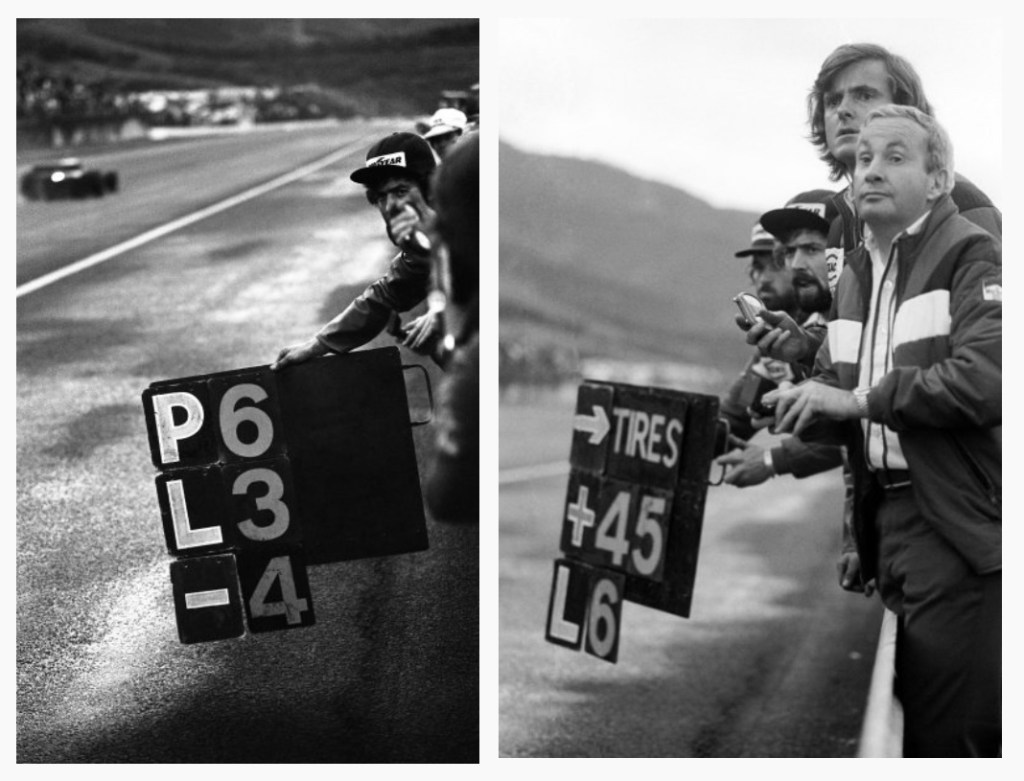
McLaren pit – sixth with 3 laps to run and 4 seconds adrift of Depailler, James’ task is clear. Teddy and Alastair Caldwell at right with 6 to run, 45 seconds in hand and tyre stop pending (MotorSport)
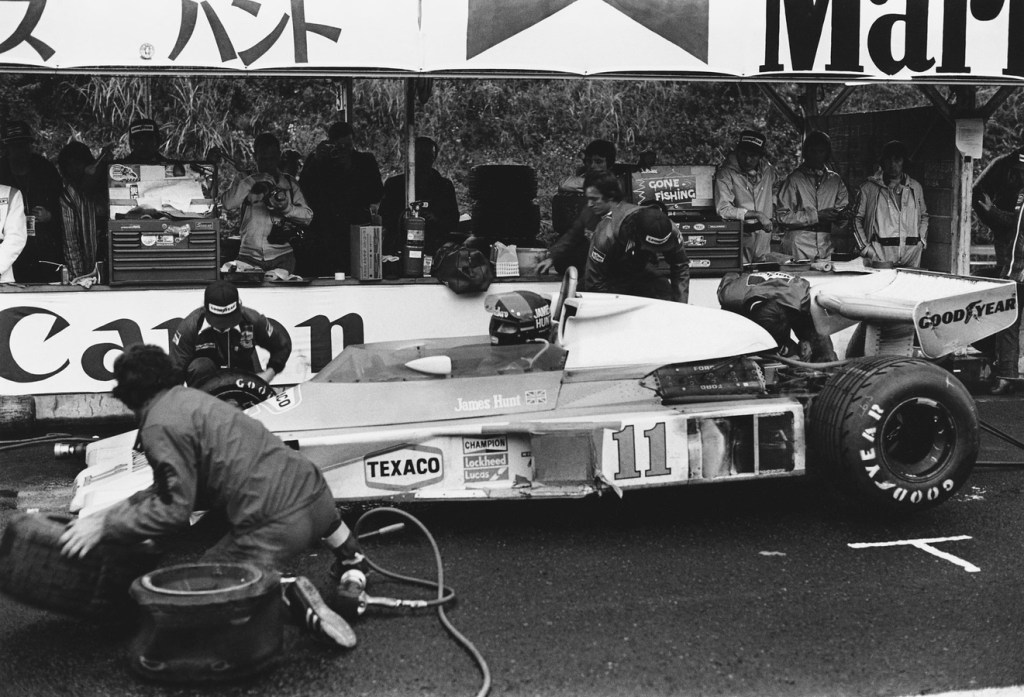
Hunt’s critical tyre change on lap 68 of 73 laps – you can see how shot the discarded left-front is (unattributed)
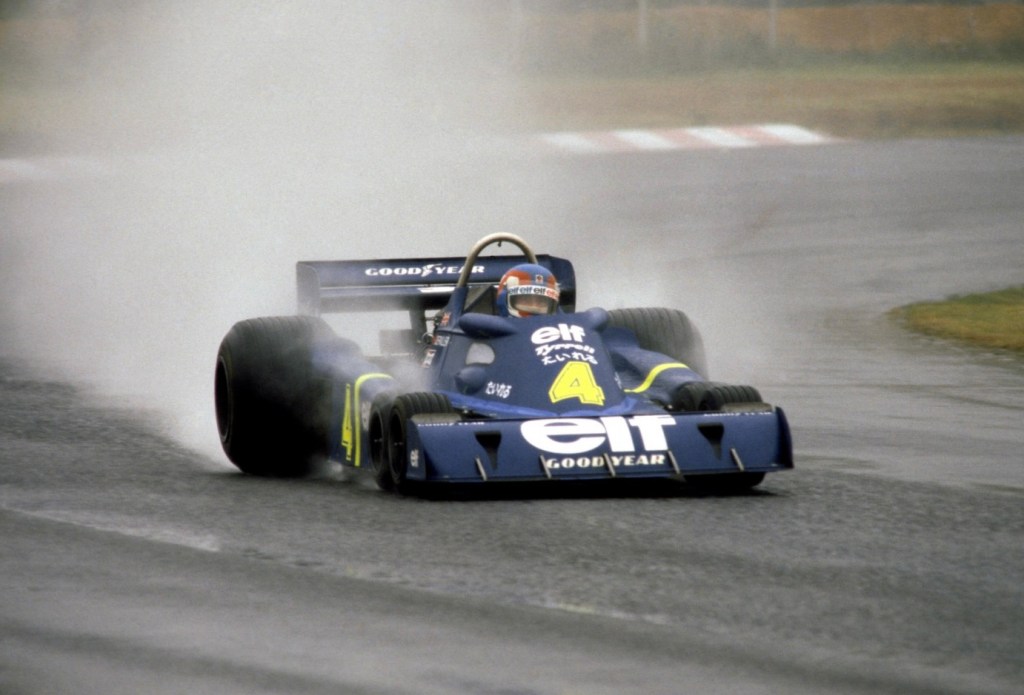
Patrick Depailler’s Tyrrell P34 Ford when running second (MotorSport)

James still needed points, he had to finish no lower than third in immensely difficult conditions, no pressure…

He continued to lead, by lap 10 his margin was greater than eight seconds. For a while local boy, Kazuyoshi Hoshino’s privately run Tyrrell 007 Ford was running third, from grid slot 21! He failed to finish after one of his Bridgestones (yes Martha) failed.

More worrying for Hunt was the second place contest between Andretti and Vittorio Brambilla, March 761 Ford. Vit was pretty-pacey in the wet – remember his ’75 Austrian GP win – soon passed Mario and on lap 20 challenged for the lead but spun. Anticipating/seeing the move, James gave him room then cut-back inside the hapless Italian.

Hunt then seemed set for the win, his team mate Jochen Mass was second with Andretti slipping back, but Hunt lost ground as the track began to dry.

He took no notice of pit signals to cool his soft-wets by seeking out the still watery sections of the track, as Mass was. Andretti picked this up, cooled his tyres and never pitted, while Mass closed on his team leader, then spun on lap 36.

By mid-race Merzario, Watson and Brambilla had succumbed to mechanical dramas, Stuck to drowned electrics, Hoshino with tyre troubles, while Mass’ car was damaged after his spin.

Trance like, Hunt continually stuck to his dry line, his choices then were to pit for new tyres or tough it out and hope others wouldn’t run him down.

His choice was settled on lap 68 when both left-hand tyres deflated due to excessive wear. He scraped into the pits and endured a long pitstop – the well-drilled pit-stoppers were nearly a decade away – then emerged in fifth place with four laps to run and needing third to win the title.

For two laps he didn’t progress, then with two to go he passed Alan Jones’ Surtees TS19 Ford on the exit of turn one, only Regga was in the way now.

The tough, swarthy, experienced Swiss normally would have been a big, probably insurmountable problem, but he’d already been sacked by Ferrari for 1977, so when Hunt’s intent was clear, Regga all but waved him past. Faaark Ferrari team orders/expectations he not unreasonably thought.

Hunt endured a nail-biting two final laps, but with third place points he snitched the title from Lauda

It wasn’t all bad for Ferrari though, they won the Constructor’s Championship, meanwhile Mario Andretti, somewhat forgotten a bit in all of this melodrama, won the race in a portent of what Lotus had to come, with Depailler a very well deserved second.

Even Liberty Media couldn’t have written a script like this. And yes, I know Ron Howard, or rather Peter Morgan did.

What a year and race it was…

At the end of the race James remonstrates with Teddy Mayer thinking he had fallen short, he had not! (MotorSport)

Credits…

MotorSport Images

Tailpiece…

(MotorSport)
(MotorSport)

Finito…
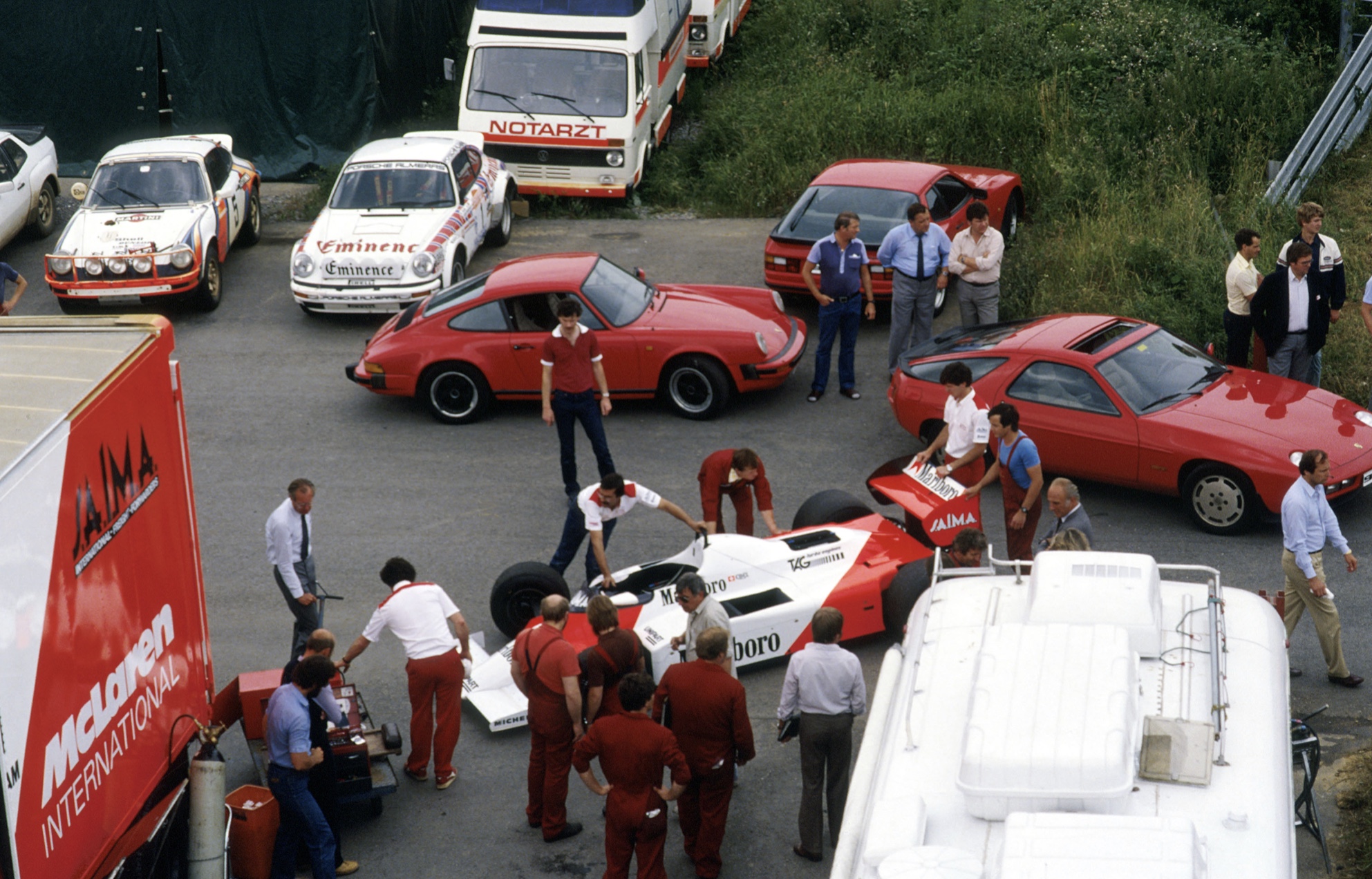
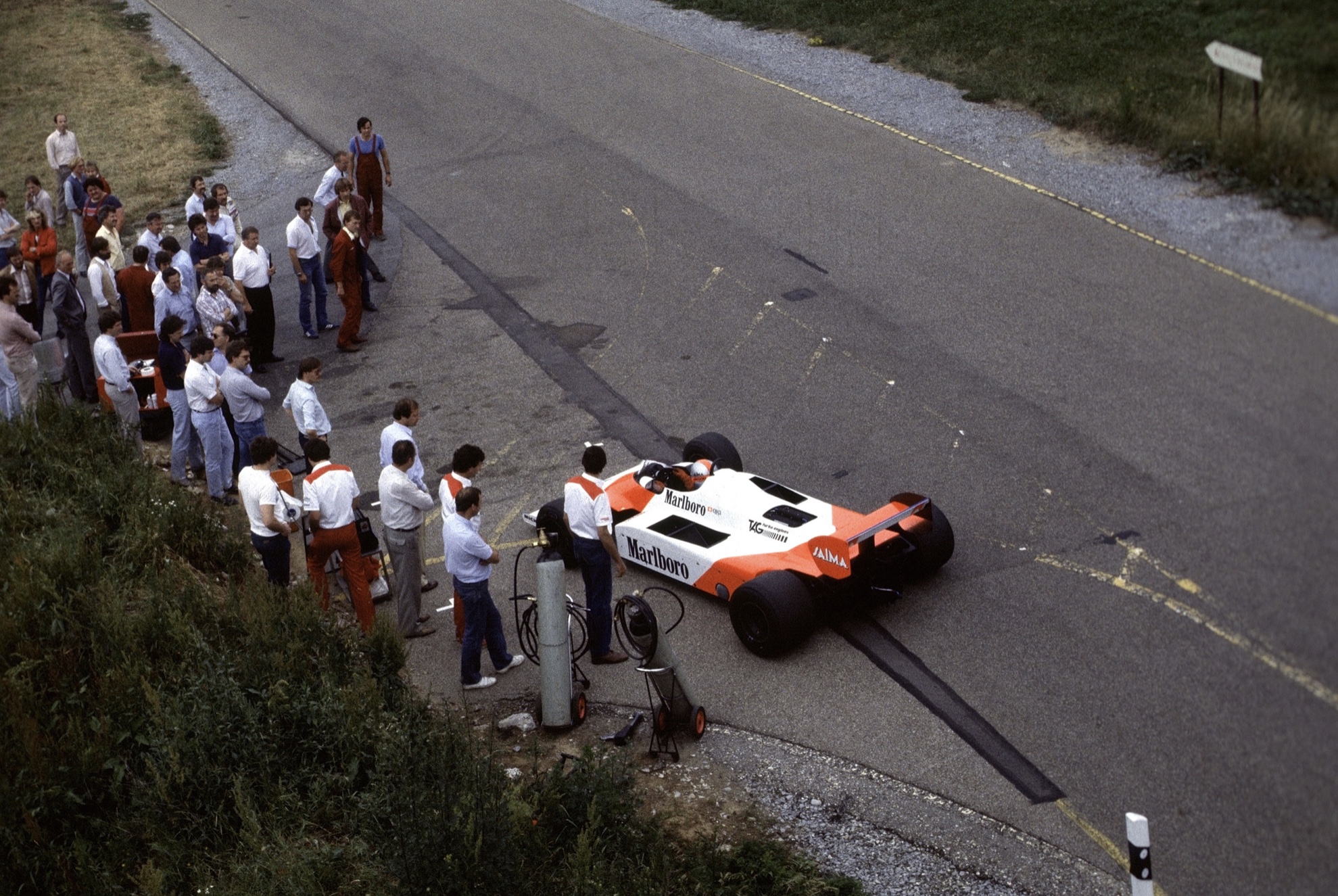
A McLaren MP4 TAG-Turbo was not a run of the mill testing sight at Porsche’s Weissach test track, so it is hardly surprising to see most of the workforce down tools for the occasion on 29 June 1983…

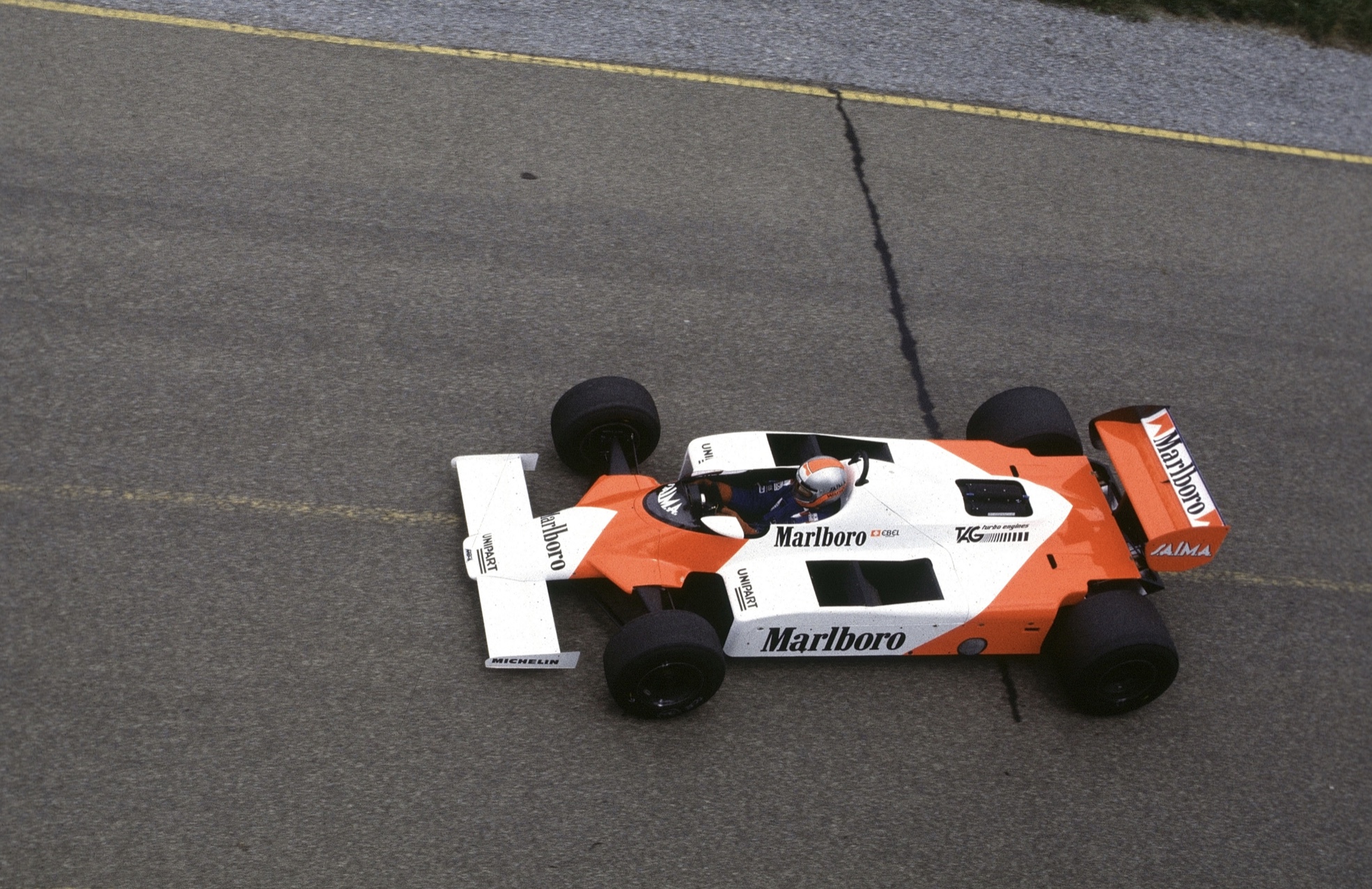
The race debut of a Porsche-turbo powered McLaren at Zandvoort in the hands of Niki Lauda is only two months away. On this fine, cool day John Watson put McLaren’s test hack MP4-1D TAG through its paces for the first time at Porsche’s renowned test track.


McLaren created a new paradigm with the debut of the carbon-fibre tubbed MP4 Ford in 1980. Whilst the cars were the best of the Ford brigade going into 1983, 550 bhp of normally aspirated Cosworth DFY V8 was no longer a match for 700 bhp plus turbo-charged Brabhams, Ferraris and Renaults. The ‘boiling tea kettle’ days of the first Renault V6 turbo-charged engines were a long time in the past.

McLaren International’s Directors pondered the available engines they may have been able to acquire or lease but design chief John Barnard rejected those as either compromised designs- the BMW-four and Renault V6 or insufficiently developed and compromised- the Hart-four.

The very focused Barnard held sway over matters technical and was determined, as Colin Chapman had been with Keith Duckworth in developing the Ford DFV, to very tightly prescribe the overall layout, dimensions, location of ancillaries and attachment points to the chassis of his new engine.

It was the era of ground effect tunnels, McLaren’s engine had to be designed in such a way that their efficiency was not compromised given how critical aerodynamics were to the overall performance of the car.

Watson in a Ford engined MP4/1C Ford DFY at Monaco in 1983, just to remind us of what McLaren’s primary contender looked like in 1983. Despite running Ford DFY’s both cars failed to qualify as a result of poor handling on the Michelins they had on Thursday and rain on Saturday…Rosberg won in a Williams FW08C Cosworth

Porsche had more turbo-charged road and race experience than any other manufacturer at the time, as a consequence they had been approached to build an F1 engine by others on a customer basis but Ron Dennis’ pitch to Porsche’s R&D Chief Engineer Helmuth Bott in the winter of 1981/2 was different in that his enquiry was to ascertain the companies preparedness to build an engine for McLaren International, who would pay for it. A novel concept in motor racing of course where nobody wants to pay for anything.

In short order John Barnard wrote a tight specification of his requirements which outlined in detail a narrow engine with a small frontal silhouette, it’s exhaust plumbing raised high each side to clear the raised underfloors.

Doug Nye wrote that his requirements to Hans Mezger of Porsche’s engine design unit included the maximum crankcase width and height, and maximum width across the cam-boxes. Pumps for oil and water had to go to the front of the engine within its crankcase silhouette. Exhaust pipes had to leave the heads horizontally, not downswept so as to leave the underfloors high on both sides.


Nye goes on to explain that the engine had to be a stressed member of the chassis just as the DFV and it’s successors were- Barnard wanted it to pick up similarly to the chassis. He even specified a precise crankshaft height, the same as the DFV, to offer the best design parameters for the whole car. It could have gone lower but John had concerns about potential piping and underbody problems. He had concluded that a V6 would provide the optimum blend of size and power but sought Porsche’s opinion in that regard.

Porsche R&D were an organisation notorious for the cost of their services but eventually Ron Dennis signed a contract for design of the engine and prototype build after which the design rights would be McLaren International property. The time allocated was six months which gave Dennis the period in which to embark on a journey to find a commercial partner to fund the cost of the engines themselves and their ongoing development.

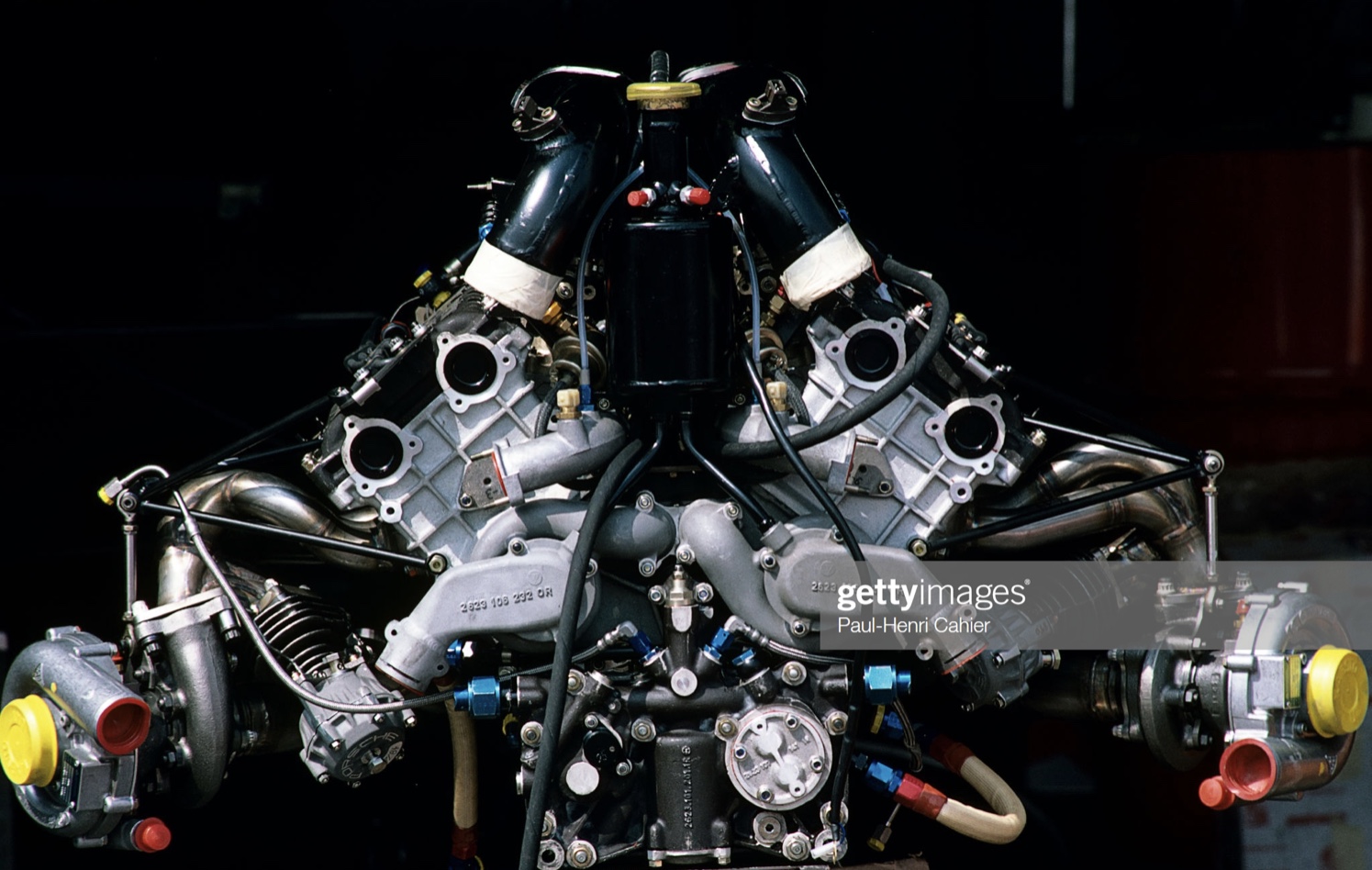
Porsche modelling determined a V6 was the best approach with an 80 degree included angle between the two banks of three cylinders the optimum in terms of structural strength of the block, primary balance and room within the Vee for ancillaries.

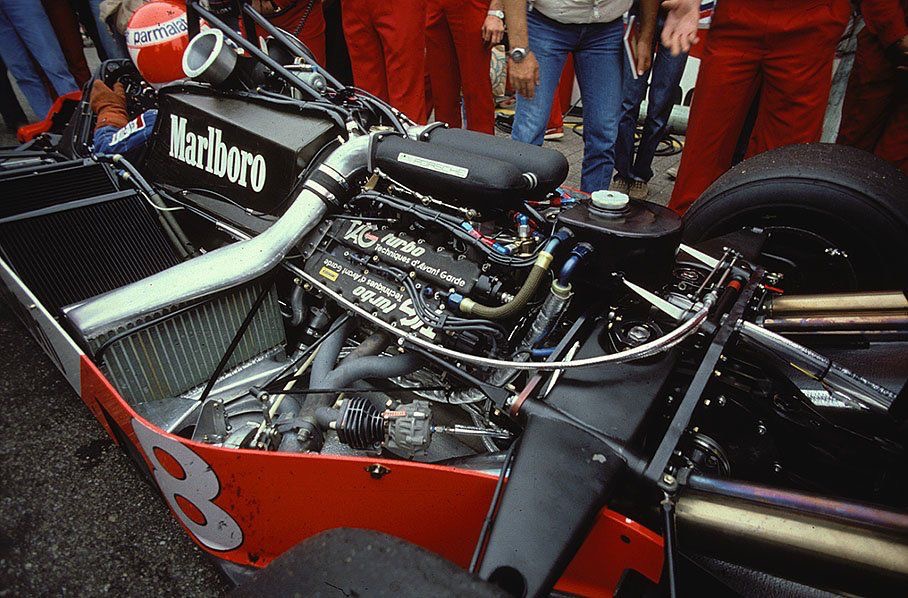
The quoted bore and stroke of the TTE-PO1 V6 motor was 82mm x 47.3 mm for a capacity of 1499cc. The design of course included four gear driven camshafts and four valves per cylinder. Traditional Porsche suppliers Bosch and KKK provided the sparks, fuel injection and two turbo-chargers. Quoted power was initially 600 bhp with peak power produced at between 10000 to 11500 rpm, total weight ready to pop into a McLaren chassis was 330 pounds.

Dennis approached a number of potentional backers, Mansour Ojjeh’s Techniques d’Avant Garde were the successful partner- TAG Turbo Engines was duly incorporated with the production contract signed by Porsche in December 1982. By that time the prototype engine had been humming away on a Weissach dyno since the eighteenth of that month…

The prototype engine was shown for the first time at the Geneva Salon in April 1983.

McLaren used a float of 15 engines in 1984, the TAG truck and Porsche technicians would have been very busy


Nye explains at length the adversarial and on many occasions difficult relationship between customer and client which extended to the testing of the engine. Porsche wanted to run the motor in a 956 test hack whereas McLaren sought all of the testing to be done in an F1 car.

Porsche went ahead anyway, little was learned by Niki Lauda and John Watson in the 956 prototype but ‘…Lauda drove very hard, ignoring the meagre safety facilities of the undulating test track. He revelled in the new engines smoothness after the Cosworth V8’s vibration. And there was no doubting the power “Incredible, Fantastic, just like being hit from behind by a bomb” Nye quoted Lauda as saying having tested the 956. Importantly, with both drivers doing plenty of miles, engine reliability was good.

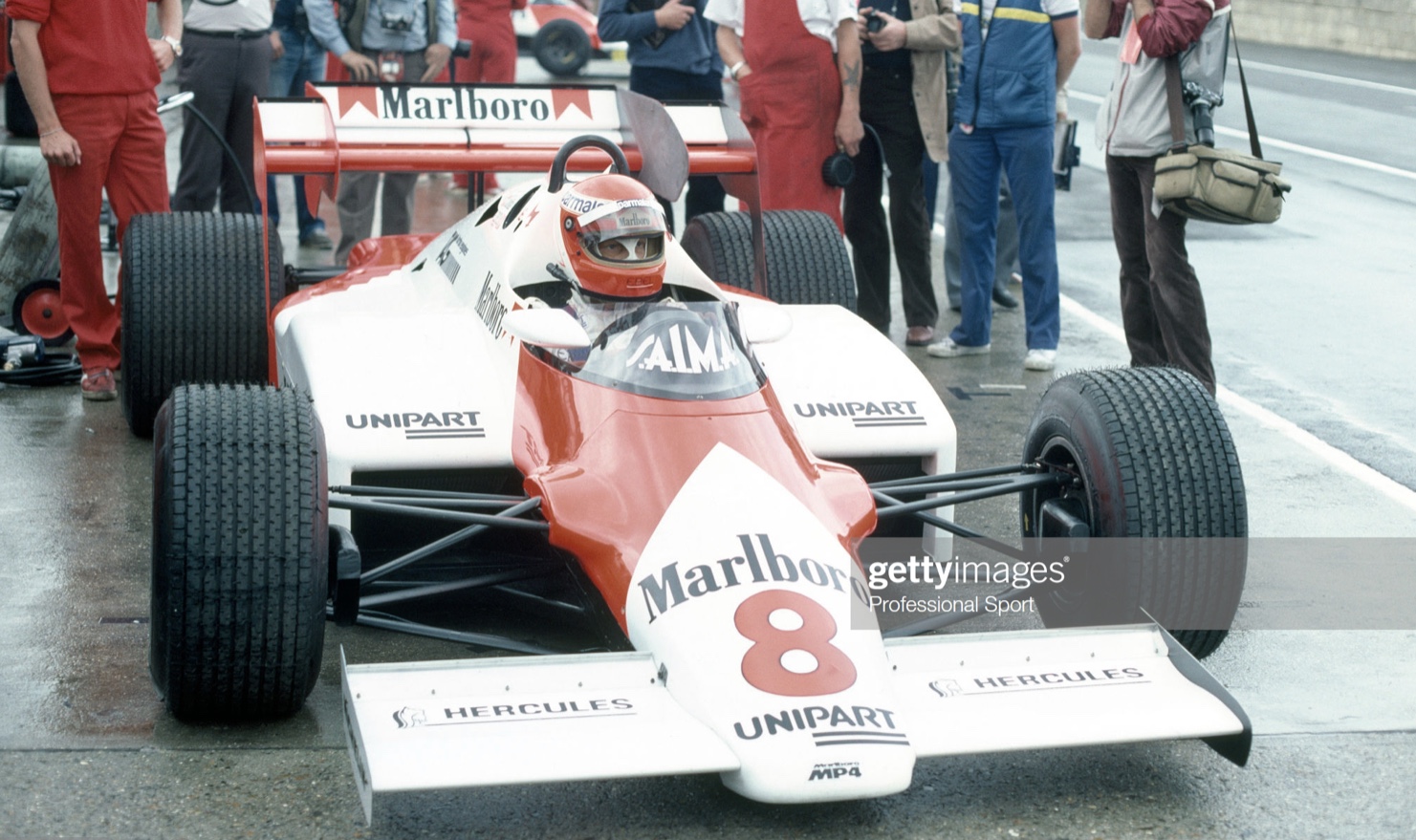
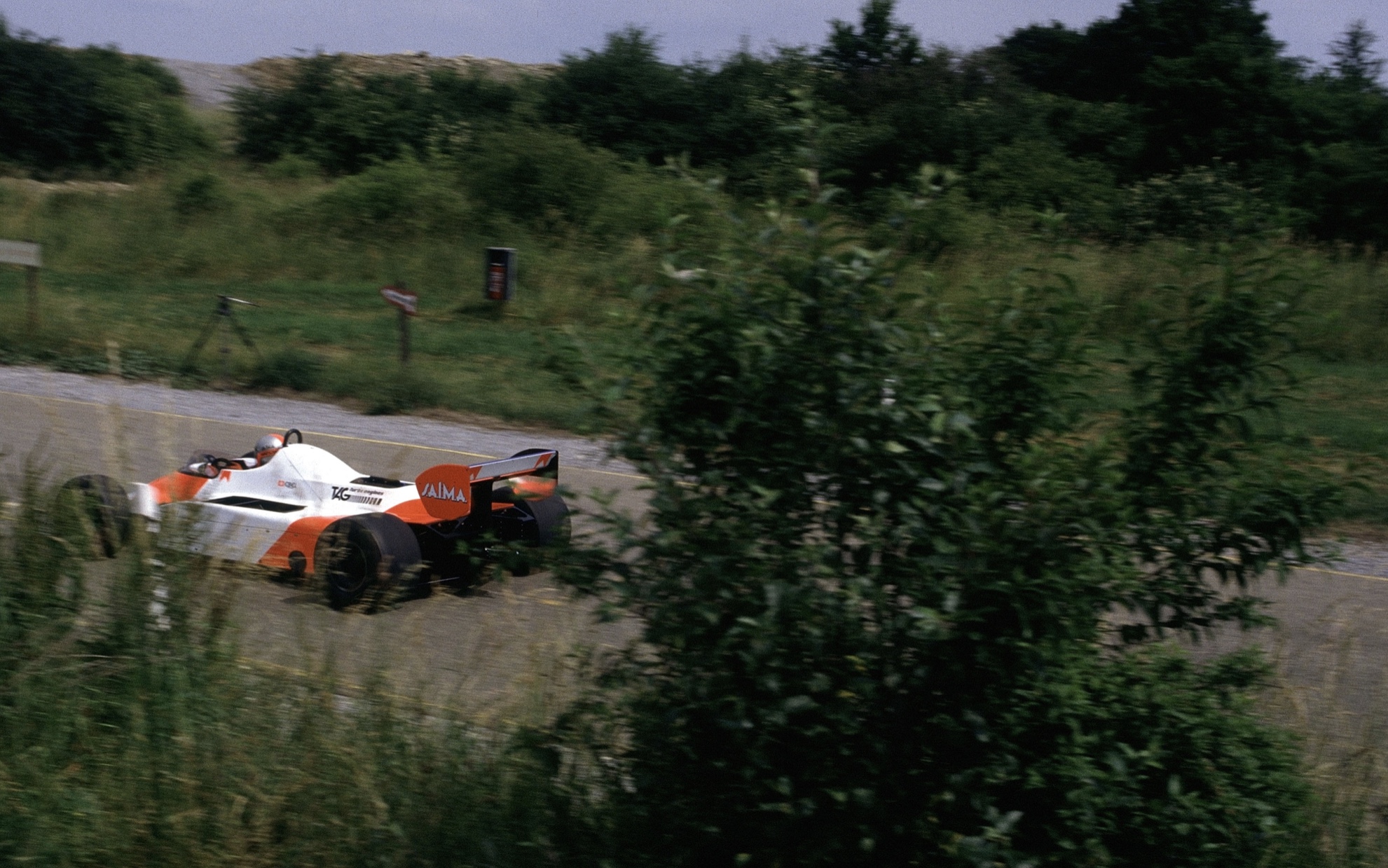
The car Watson is testing in these shots is McLaren’s original prototype carbon fibre chassis MP4/1-1 with 1982 straight sided bodywork- converted into the turbo test hack it was dubbed MP4/1D.

Initial problems centred around excess turbo-lag which had been disguised in the much heavier 956 sports prototype, and oil consumption. Porsche set to in solving both problems, with changed KKK’s and exhaust sizes the lag fixes. At Silverstone on test Lauda was delighted to be whistling along Hangar Straight at 186 mph, far quicker than he had ever gone before.

A major battle then erupted within McLaren between Lauda who wanted the car to be raced immediately, on the basis that there was no substitute for the sorts of pressures of a race weekend, and Barnard who wanted to continue testing but take the time needed to refine the design of his 1984 package.

Lauda’s car in the Zandvoort paddock


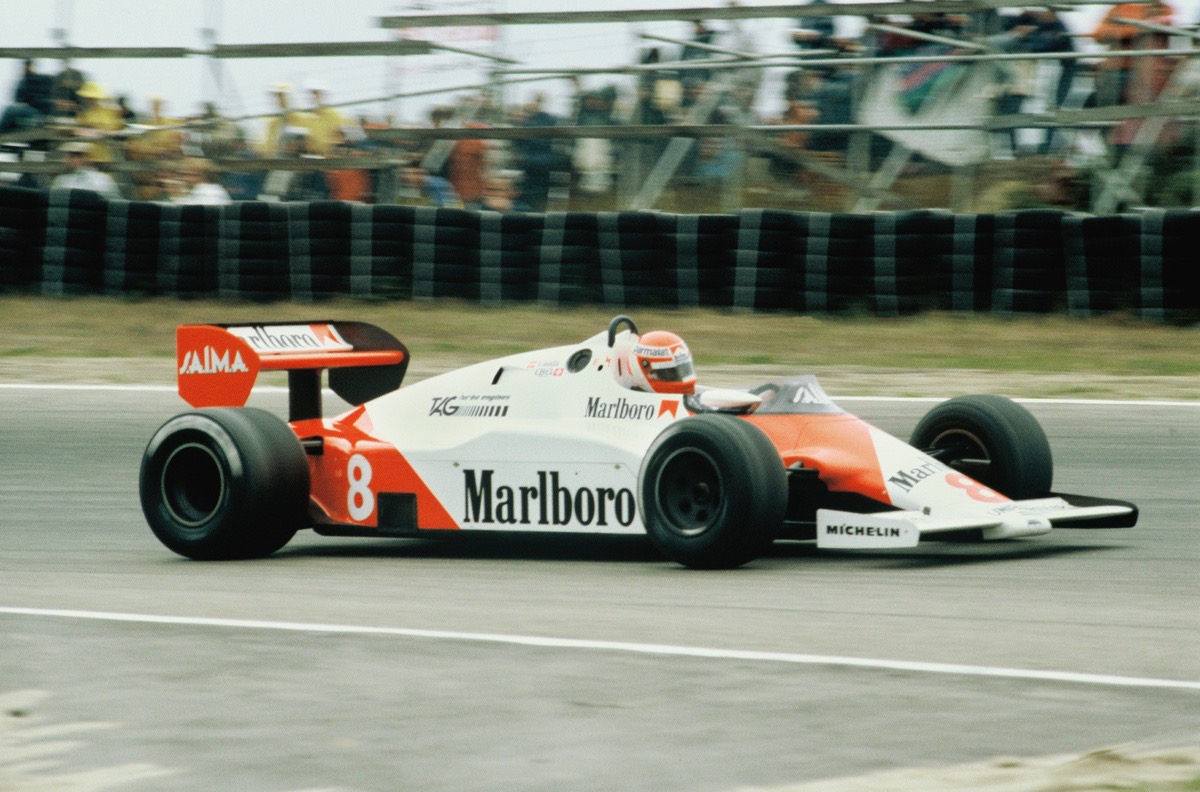
Lauda in MP4/1E at Zandvoort, not a bad looking car for one knocked together very quickly (unattributed)

The politically astute, wiley Lauda lobbied sponsor Marlboro and prevailed, so ‘in six weeks our blokes built two cars- well one complete runner and one 85% complete- ready for Zandvoort’ said Barnard. The new cars were allocated the tags MP4/1E-01 and 02, they were based on former chassis, MP4/1C-05 and 06.

At Zandvoort ‘Niki was unbelievably quick on the straight (in MP4/1E) but basically the Cosworth wing package download was way deficient with turbo power. We cooked the brakes in the race, a function of the turbo car going about 30 mph faster down the straight than the Cosworth’ said Barnard.

The Dutch GP was won by Rene Arnoux’ Ferrari 126 from the sister car of Patrick Tambay with Watson’s Cosworth powered McLaren in third.

Zandvoort again, photos emphasise just how much space was taken up by the turbo-chargers and related ancilliaries in these 1.5 t/c cars


Lauda, MP4/1E in the Kyalami pitlane, mid October 1983. Lauda Q12 and DNF electrical on lap 71 of 77 whilst poor John Watson was disqualified for passing a couple of cars on the parade lap. Piquet won the race and took the drivers title, Brabham BMW the constructors one

McLaren and Porsche were away, there were huge Bosch fuel injection problems to solve to develop their ‘Motronic MS3’ electronic injection system to meet the fuel restriction rules of 1984 but the 1984 McLaren MP4/2’s triumphed, Alain Prost took the first race win in the opening  round of the championship in Brazil- and won seven GP’s but he still lost the title by a smidge to Lauda who won five races but had greater consistency throughout the year.

Prost took the title in 1985 racing an MP4/2B to five wins, with Lauda winning another in his final year of racing. Watching him retire after a minor crash in Adelaide caused by locking brakes whilst well in the lead was a real bummer in his very last race for we Australian Lauda fans!

Hans Mezger getting the lowdown from John Watson, Weissach

Zandvoort 28 August 1983, McLaren TAG race debut…

I

‘l am telling you Ronnie, ve vill schitt on zem all next jahr! Say nuzzinc to any of zem journalists!’

Renault’s Gerard Larousse looking very thoughtful at right rear and thinking ‘holy merde’ this thing will be quicker than a Matra air to ground missile- and it was.

‘I’ll bet I am going to pay for a few more of these Turbo thingies in the next few years!’ is perhaps what Dennis is thinking above.

The first ‘in the field’ KKK change perhaps?


More power, gimme more! is perhaps Niki’s exhortation.

The engine itself is tiny, note the water and oil coolers in the sidepods and beefy intercooler.

Another TAG-Porsche powered MP4 1983 shot above of Lauda during the European GP weekend at Brands Hatch in September- Q13 and DNF whereas Watson was Q10 and DNF accident. Nelson Piquet won in a Brabham BT52 BMW from Alain Prost’s Renault RE40 with Nigel Mansell’s Lotus 92 Ford Cosworth the best of the normally aspirated brigade.

Credits…

‘The History of The Grand Prix Car’ Doug Nye

Getty Images- all Weissach photographs by Hoch Zwei

Tailpiece…

The Swabian Hills are alive with the sound of Vee-Six Turbo Music- Watson up in June 1983.

Ya kinda get the impression it was an important day in Porsche history as indeed it was. Ditto McLaren International…

Finito…


image

Henri Pescarolo in BRM P160E-10 18th, ahead of Ian Scheckter Lotus 72E Ford, 13th during the 1974 South African GP, Kyalami (unattributed)

One of my favourite designers is Tony Southgate, ‘tops’ for me of his many great cars are the 1970 P153 and updated and evolved 1971-4 BRM P160 GP winning machines…
‘Every man and his dog’ drove these cars from champions to journeymen, the last of the 10 built, the ex-Lauda/Pescarolo ‘P160/10’ is now owned by Sydneysider John Gale who is writing a fascinating, detailed blog as he and his team of artisans restore the car, here ‘tis, have a look at it;

http://brmp160e10.blogspot.com.au/p/about.html

image

Niki’s ‘brand spankers’ BRM P160E-10 upon its race debut at Monza in 1973, DNF (unattributed)

I thought my series of articles on the reconstruction of Peter Brennan’s ex-Lombardi Lola T330 Chev ‘HU18’ were detailed but they were ‘high level summaries’ compared with this engaging blog!

I’ve a piece in process about the BRM CanAm car with P153/160 tangents I’ll upload in the next month or so but in the meantime lose yourselves in this wonderful site for an hour or three!…

Tailpiece: BRM team at Watkins Glen 1973, Lauda’s #21 new P160E-10, Beltoise #20 and Regazzoni’s similar cars…

image


image

Ian Ashley’s Williams FW03 Ford sits forlornly beside the Pflanzgarten Armco while Niki Lauda turns in, Ferrari 312T, Nurburgring, German GP practice 1 August 1975…

Ashley had his car, teammate Jacques Laffitte was quick in the evolved FW04 that year, in 20th grid position, when he had one of several huge career shunts, not of his own making. Ian takes up the story;

‘I had several things go wrong in practice, including a stuck throttle, which turned out to be a broken engine mount. There are four plates which used to hold the Cosworth onto the monocoque, and the top left plate had snapped. They didn’t check any of the others, and on the final qualifying run, and I was up to 9th or 12th by then – I hadn’t actually done a flying lap, only what they call a rolling lap, and my fastest lap was on my warming-up lap – I was ten seconds up on my flying lap when one of the bottom engine mounts snapped, and it just turned sharp left along the straight, and I went straight into the armco at 160mph. Nobody realised straight away what had happened, and I had chipped an ankle, so I missed one race of the F5000 series, but I managed to hang on to my lead’ (of the European F5000 Championship in which he ultimately finished 4th in Lola’s T330 and T400)

image

Marshals gather the remains of Ian Ashley’s ‘lightened and modified’ Williams FW03 Ford, Nurburgring 1975. The dangers of frontal impacts in aluminium monocoques of the period 1962 to circa 1982 readily apparent and certainly greatly superior to the chassis of earlier times! He was lucky the result was not a good deal worse, the car, originally designed by John Clarke in 1973 stood up to the big impact pretty well. The dude holding the helmet, to state the obvious, is the pilot of the medical chase car not Ashley…(unattributed)

For an interesting interview/summary of Ian Ashley’s career, and the trials and tribulations of trying to get into F1 with underprepared cars and/or ‘shitboxes’, click on this link;

http://8w.forix.com/ashley.html

In the GP Lauda was 3rd, Carlos Reutemannhttp won in a Brabham BT44B Ford and Laffitte was a career-enhancing 2nd and off to the new Ligier Matra outfit at seasons end.

image

Ian Ashley in Frank William’s FW03 before the engine mount failure, German GP practice 1975 (unattributed)

Credit…

Rainer Schlegelmilch, 8w.forix.com, motorsport.com

image

Carlos Reutemann on his way to German GP, Nurburgring victory in August 1975. Brabham BT44B Ford (unattributed)

Tailpiece: Ian Ashley in recent times in an historic Elden Mk8 FF…

ashley

lauda mclaren mp4 cockpit

Niki Lauda at rest and awaiting qualifying set-up tweaks, staying ahead of ‘Frenchy’ Alain Prost the challenge of the year…

Experience, cunning, speed and consistency won him his third and final title with McLaren in 1984 but Alain prevailed in 1985, Nikis’ last season of racing and Prosts’ first title.

Click on this link for an interesting, short visual comparison of the evolution of McLaren steering wheels down the decades, as good as any an indicator of ‘progess’! http://www.motorsportretro.com/2014/11/mclaren-f1-steering-wheels/

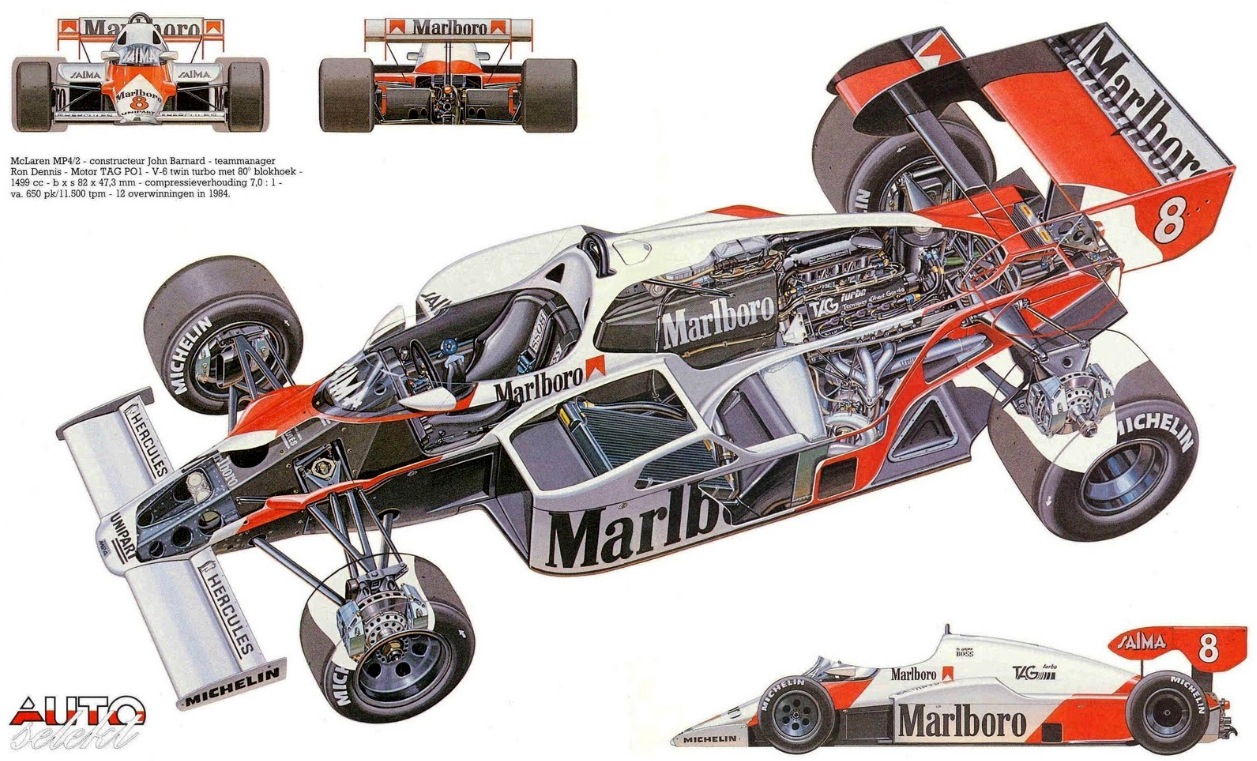
mclaren mp4 2 cutaway

1984 McLaren MP4/2 Porsche: carbon fibre honeycomb chassis, double wishbones and pushrod suspension front and rear, carbon fibre brakes, 540Kg. TAG/Porsche 1499cc DOHC twin turbo V6, circa 750bhp in ’84 spec. McLaren/Hewland FGB 5 speed transaxle

(Unattributed)

niki

Niki Lauda aviating his 312T in the Eifel Mountains, 1975…

He won the race and the world championship for the first time that year.

Ferrari turned the corner of uncompetitiveness with the 312B in 1970, the combination of chassis and new ‘flat 12’ engine was very competitive in the second half of the season.

Into 1971-3 they largely lost the plot with their chassis…Mauro Forghieri returned from the wilderness in late 1973.

The 1974 combination of Lauda, then in his third year of F1, Ferrari ‘returnee’ Clay Regazzoni, Forghieri and very young Luca Di Montezemolo as Team Manager commenced an era of Ferrari success if not dominance.

The cars were powerful, relatively light despite the additional fuel load needed by the Flat12 relative to the Ford Cosworth V8, handled superbly and were as aerodynamically advanced as the competition, until the ‘game-changing’ Lotus 78 arrived at least .

Lauda, Regga, Reutemann, Villeneuve, and Scheckter extracted all the performance as well.

The 1975 312T, so called because of the transverse location of the gears within the ‘box was the start of a series of cars which won drivers world titles in 1975, ’77, and ’79 for Lauda twice and Jody Scheckter once.

The car was not the prettiest of the mid-70’s to my eye but was an incredibly cohesive, beautifully integrated design. Without doubt one of Ferraris finest.

Lauda was up for the developmental and testing task, it was why Ferrari hired him but he also proved he was a winner. Montezemolo welded the group into an effective fighting unit, rather than the ‘Palace Intrigues’ of Maranellos’ past holding the Scuderia back …

regga

Clay Regazzoni, Ferrari 312T, Nurburgring 1975. DNF engine. (Pinterest)

fazz

niki

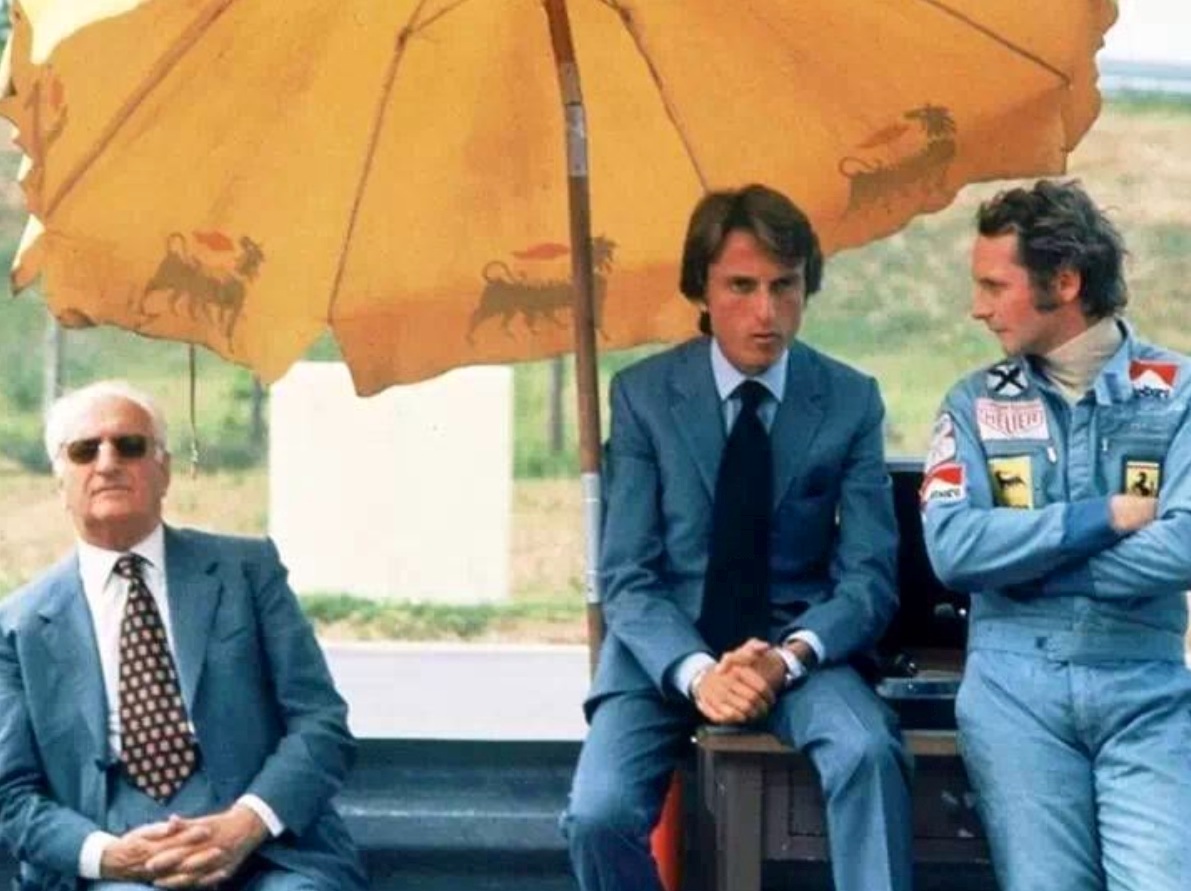
Enzo Ferrari, Luca Di Montezemolo & Niki Lauda, test session at Fiorano 1974 (Pinterest)

Photo Credits…

Pinterest unattributed, Werner Buhrer drawings