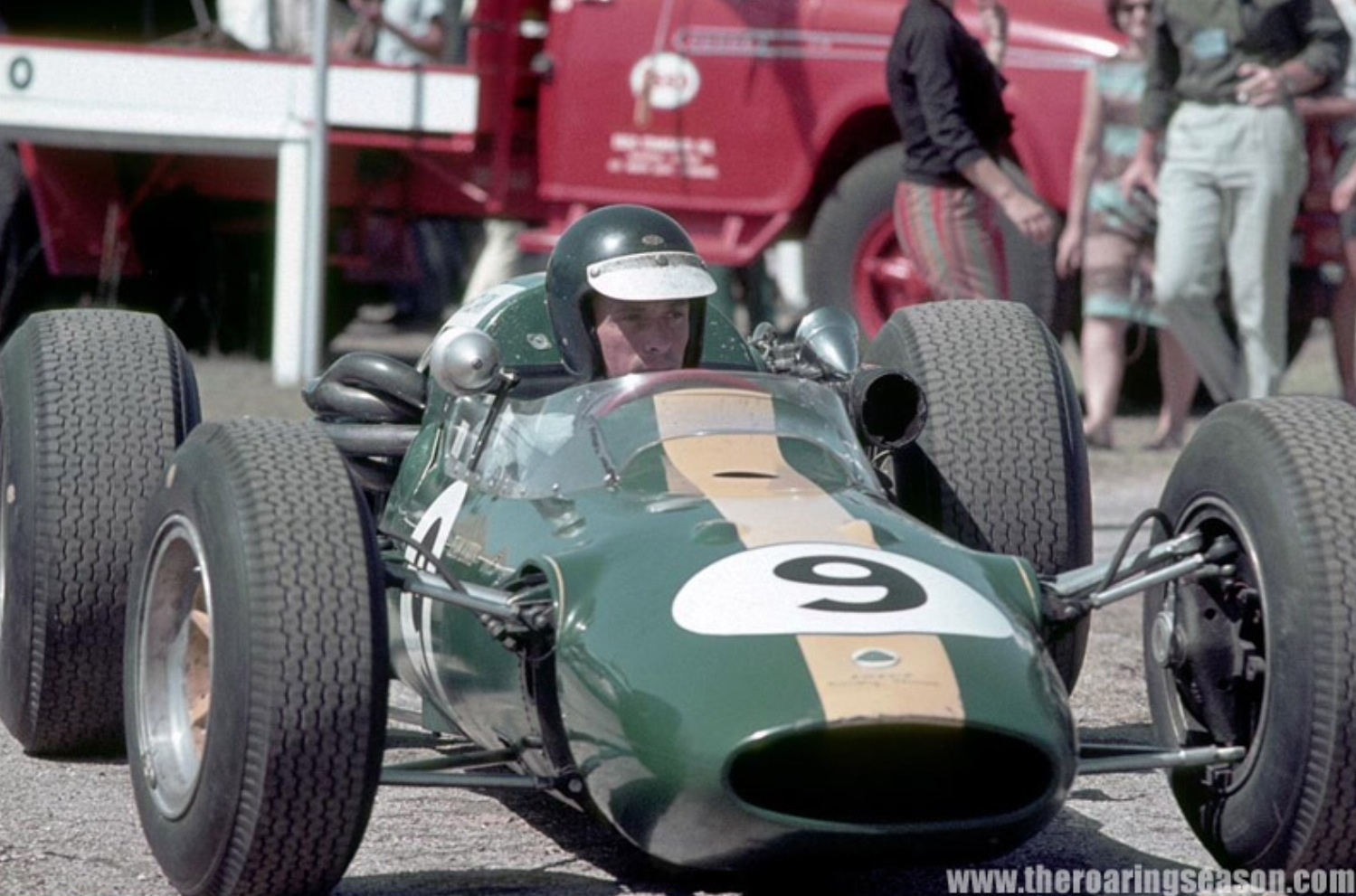
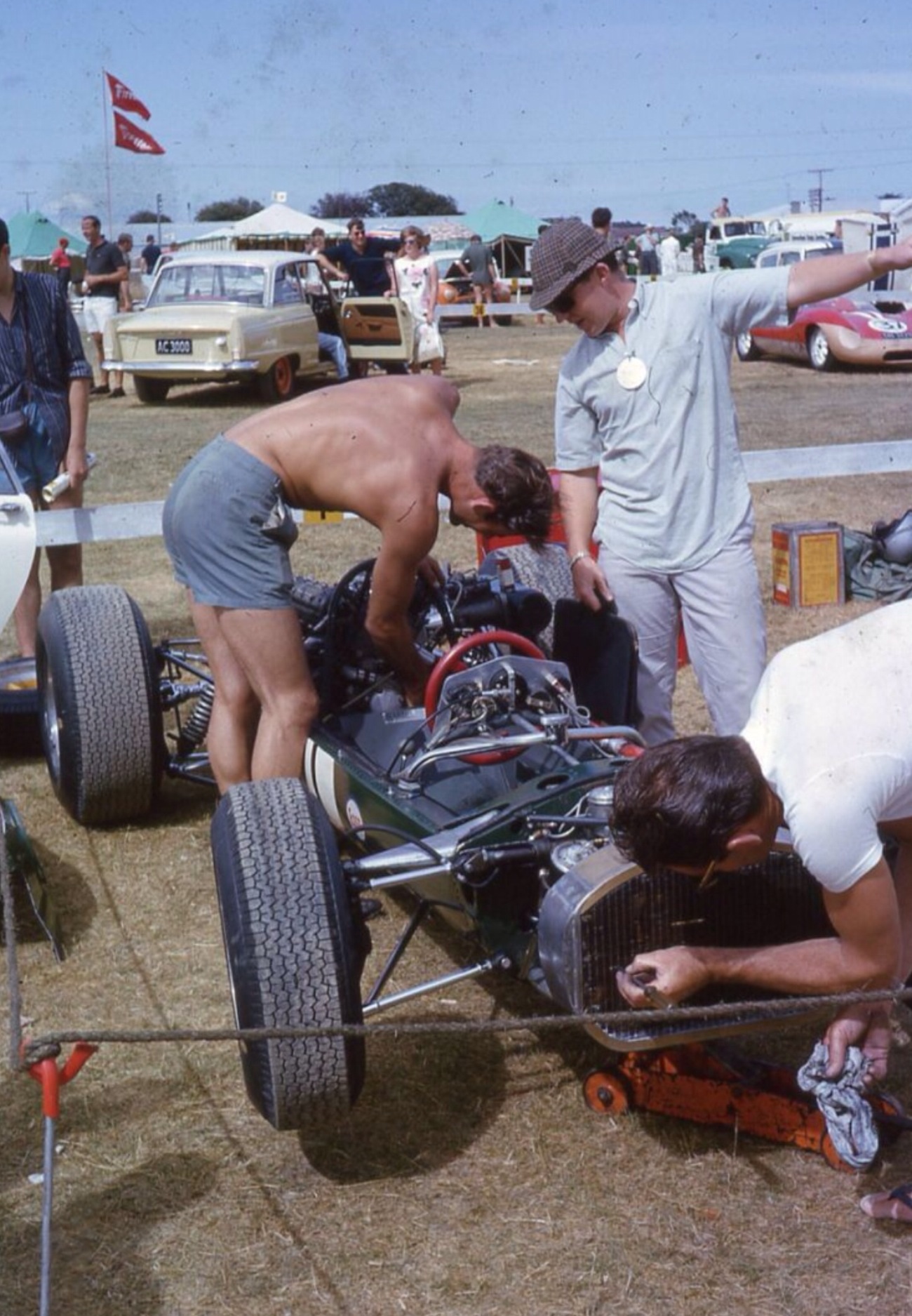
Posts Tagged ‘Phil Hill’

(D Shaw)

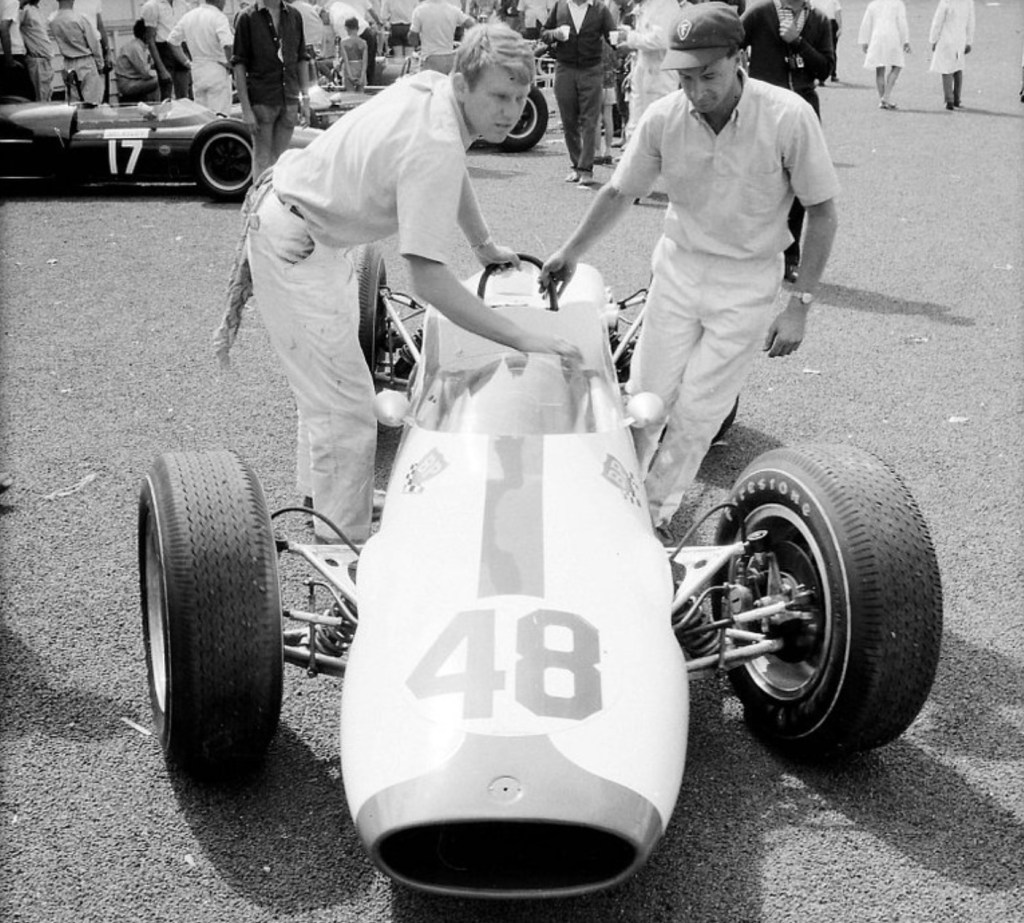
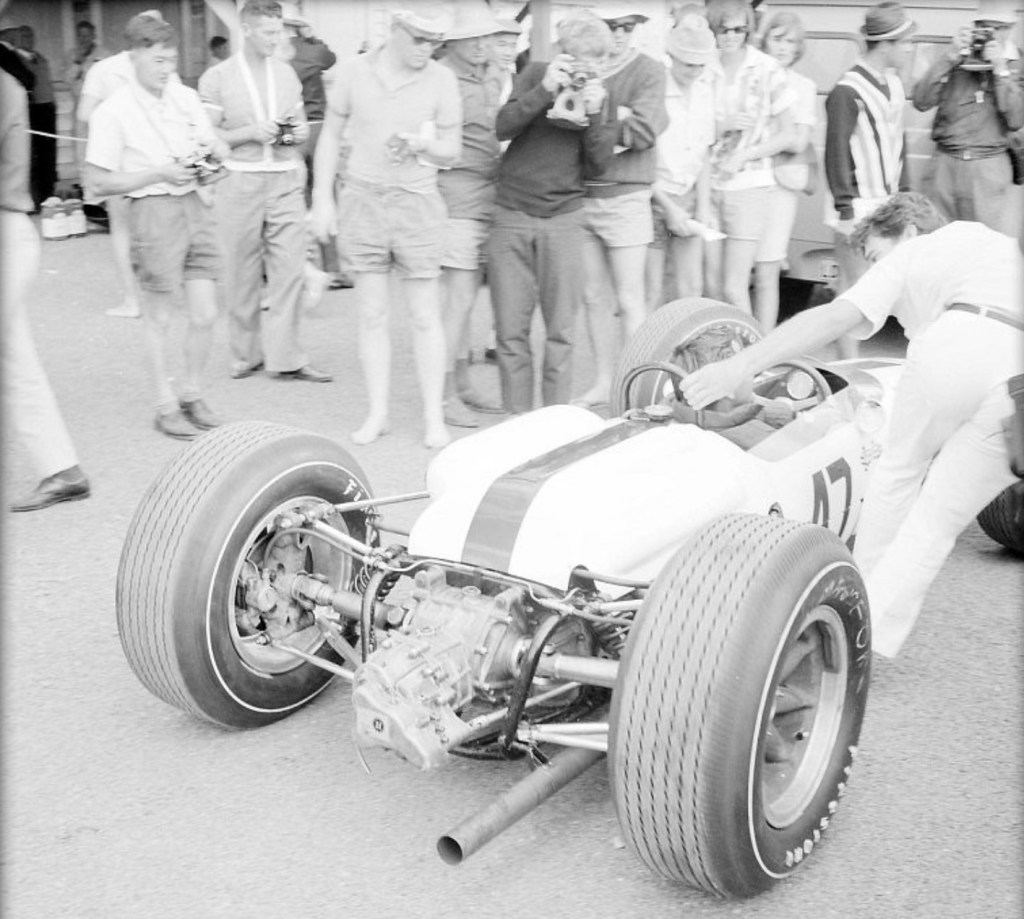
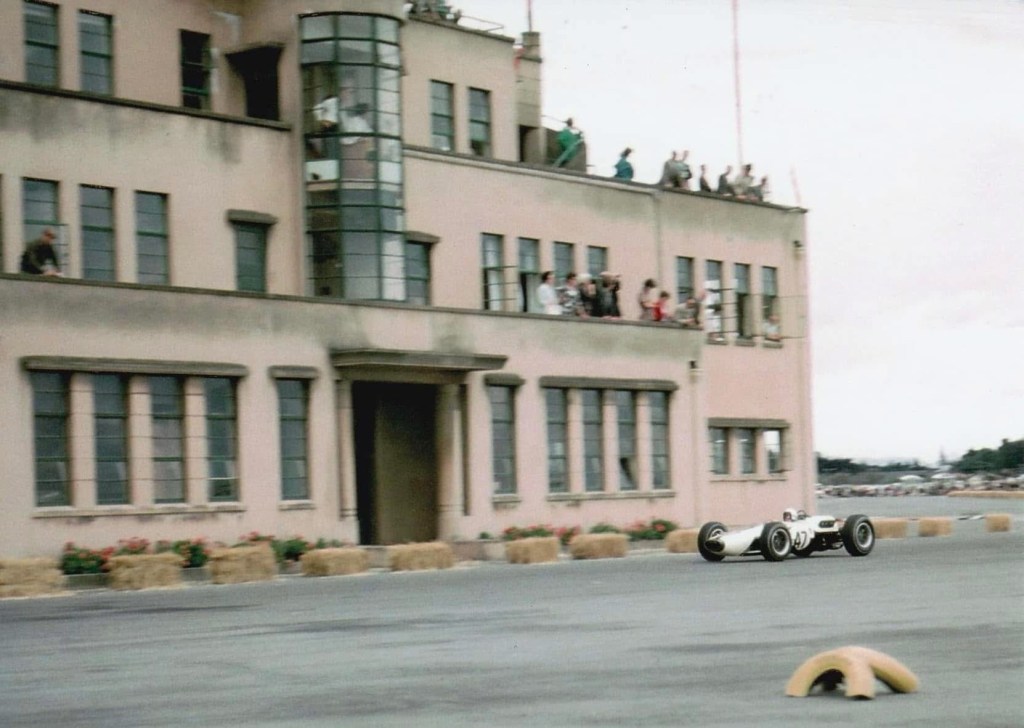
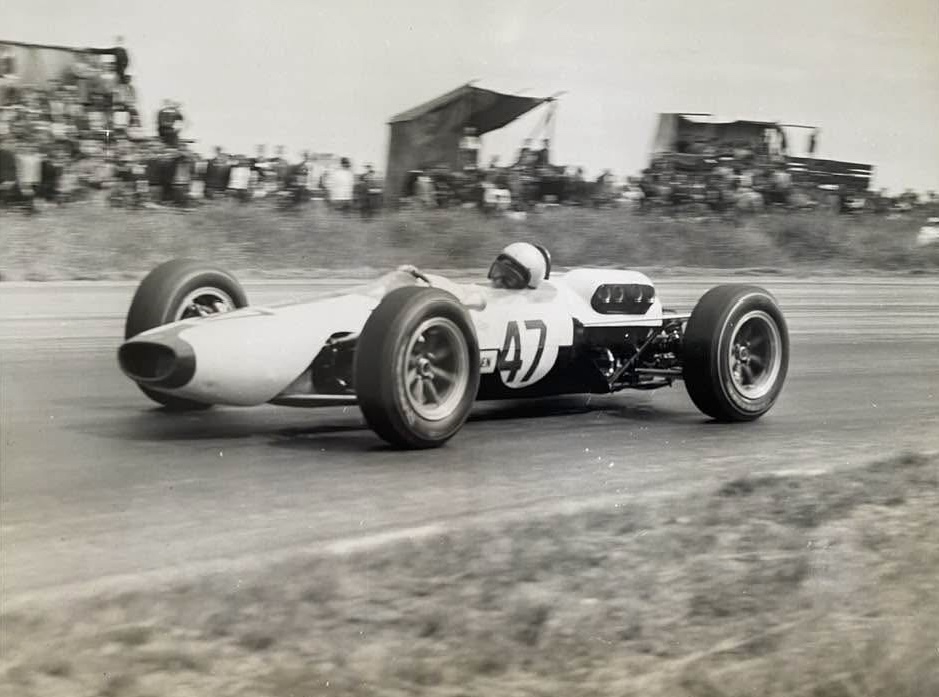
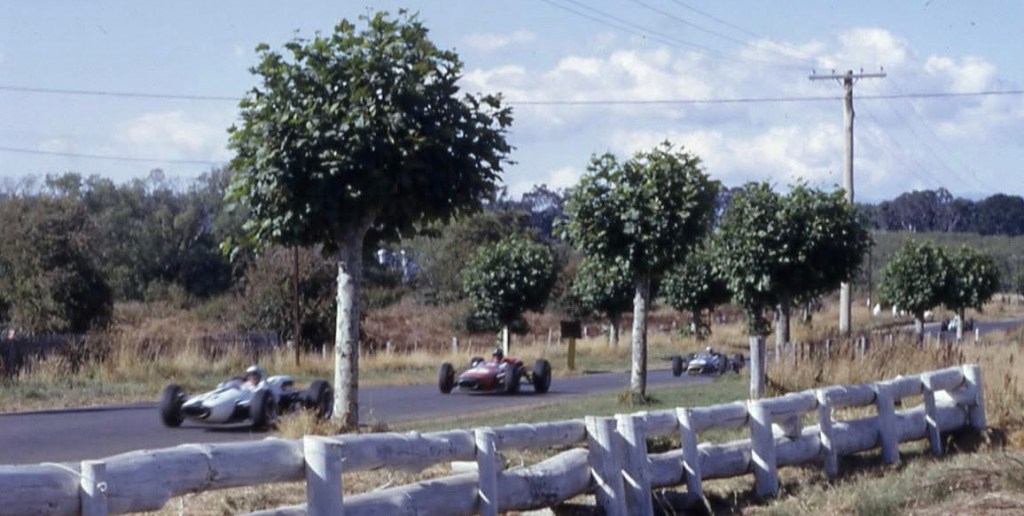
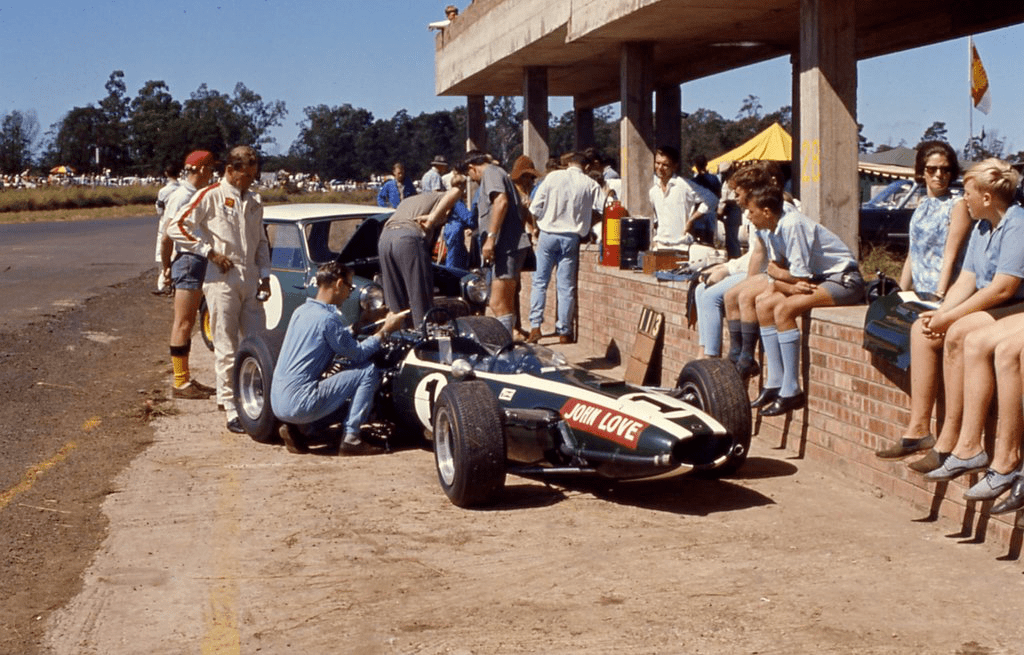
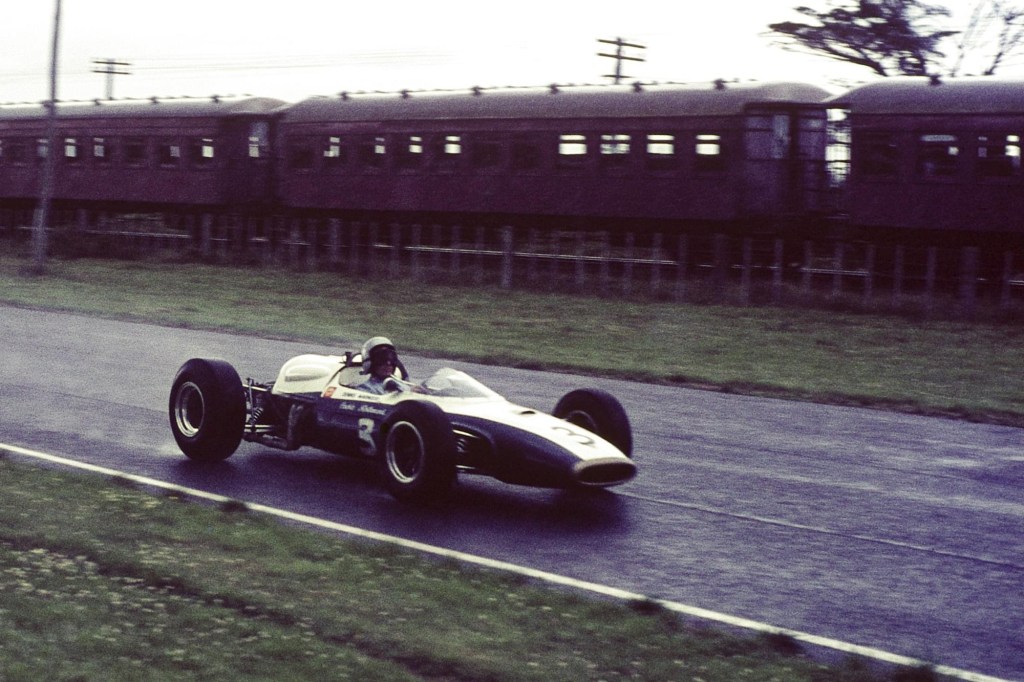
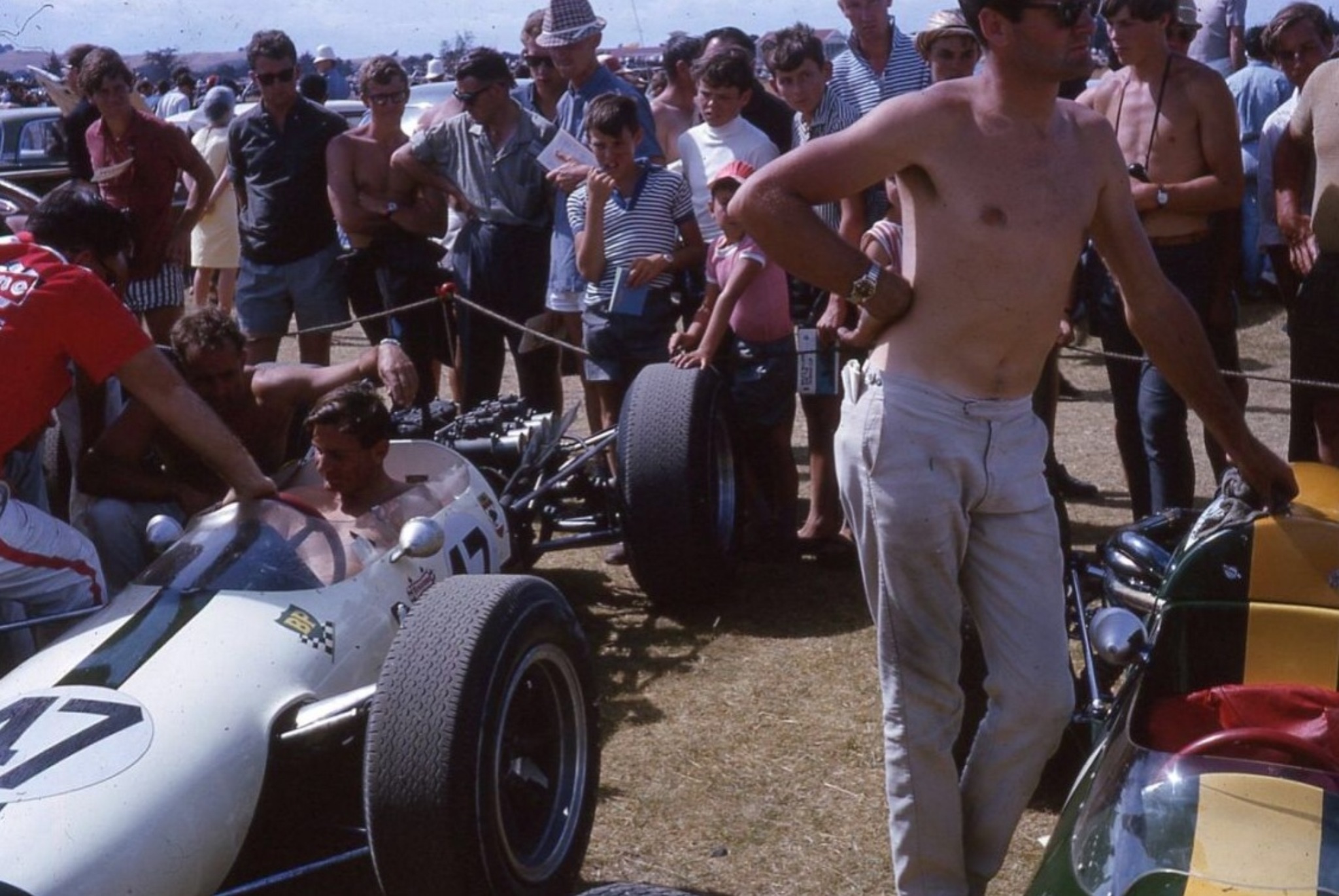
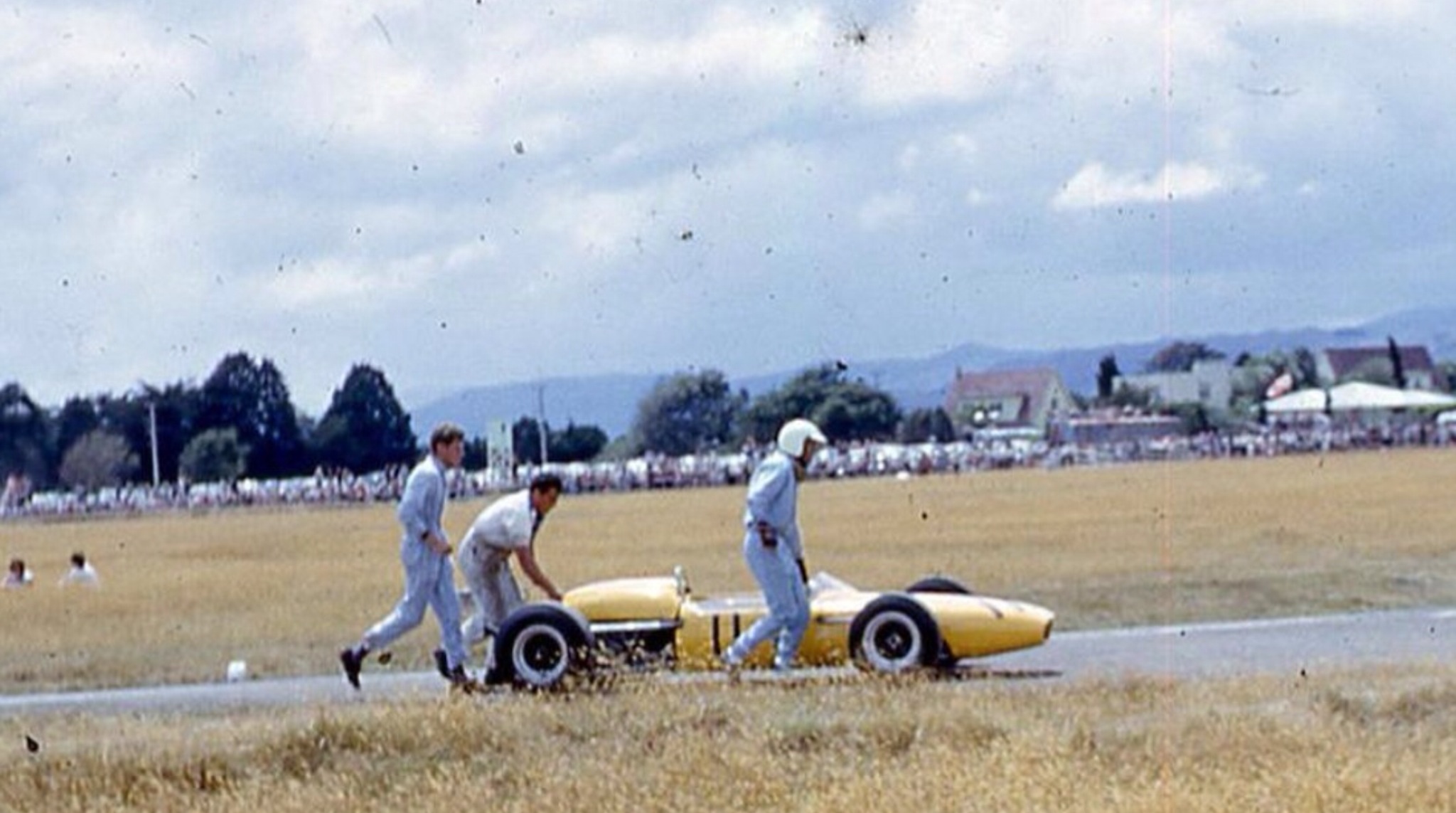
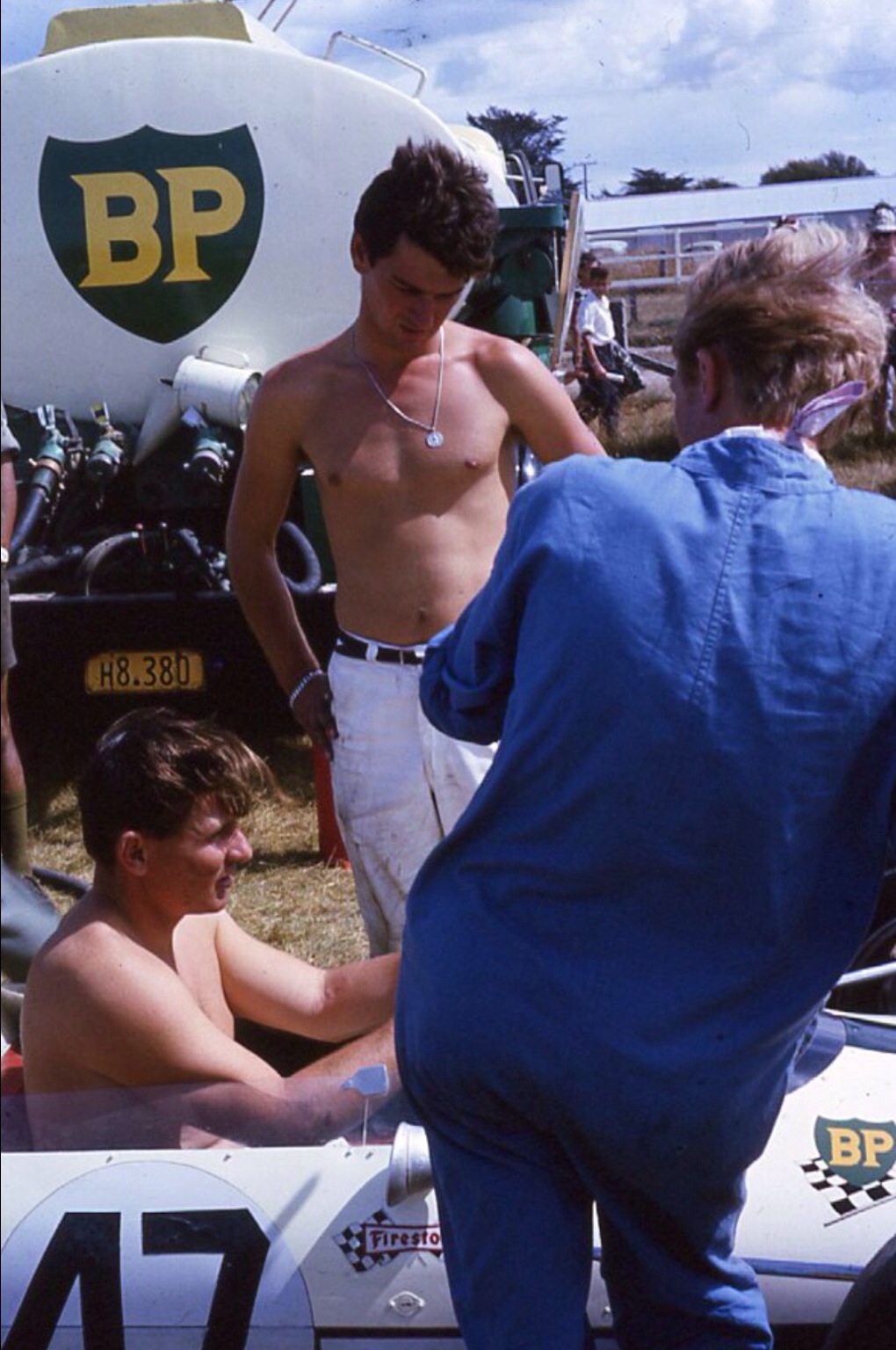
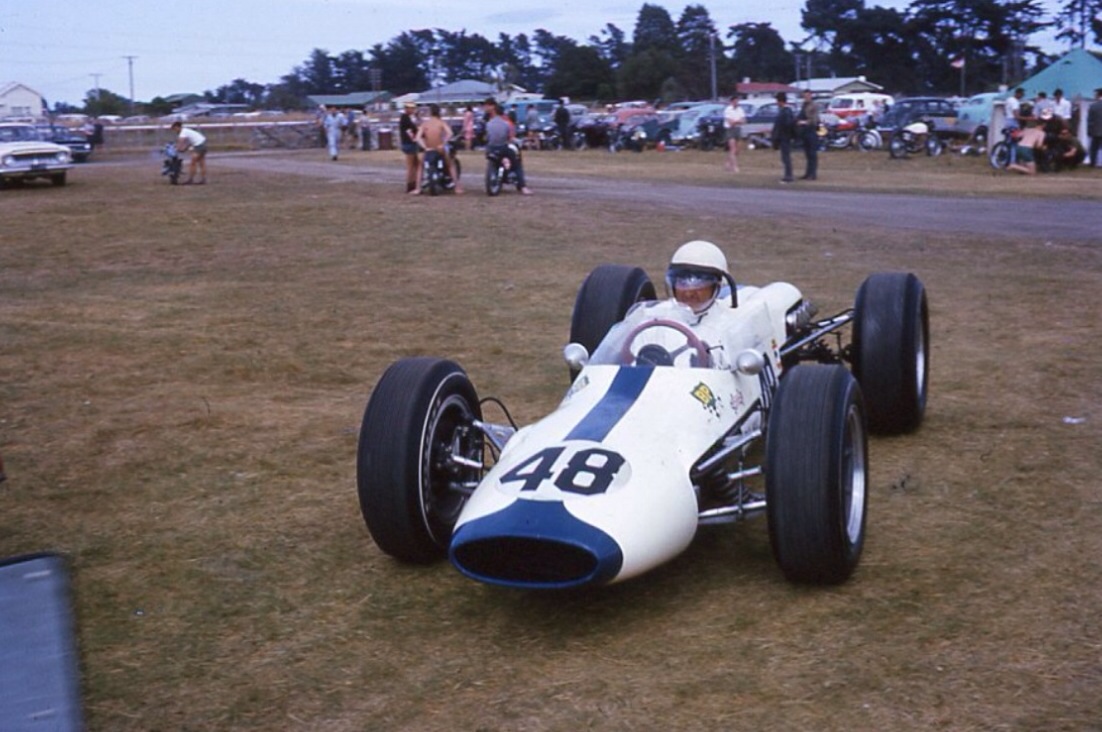
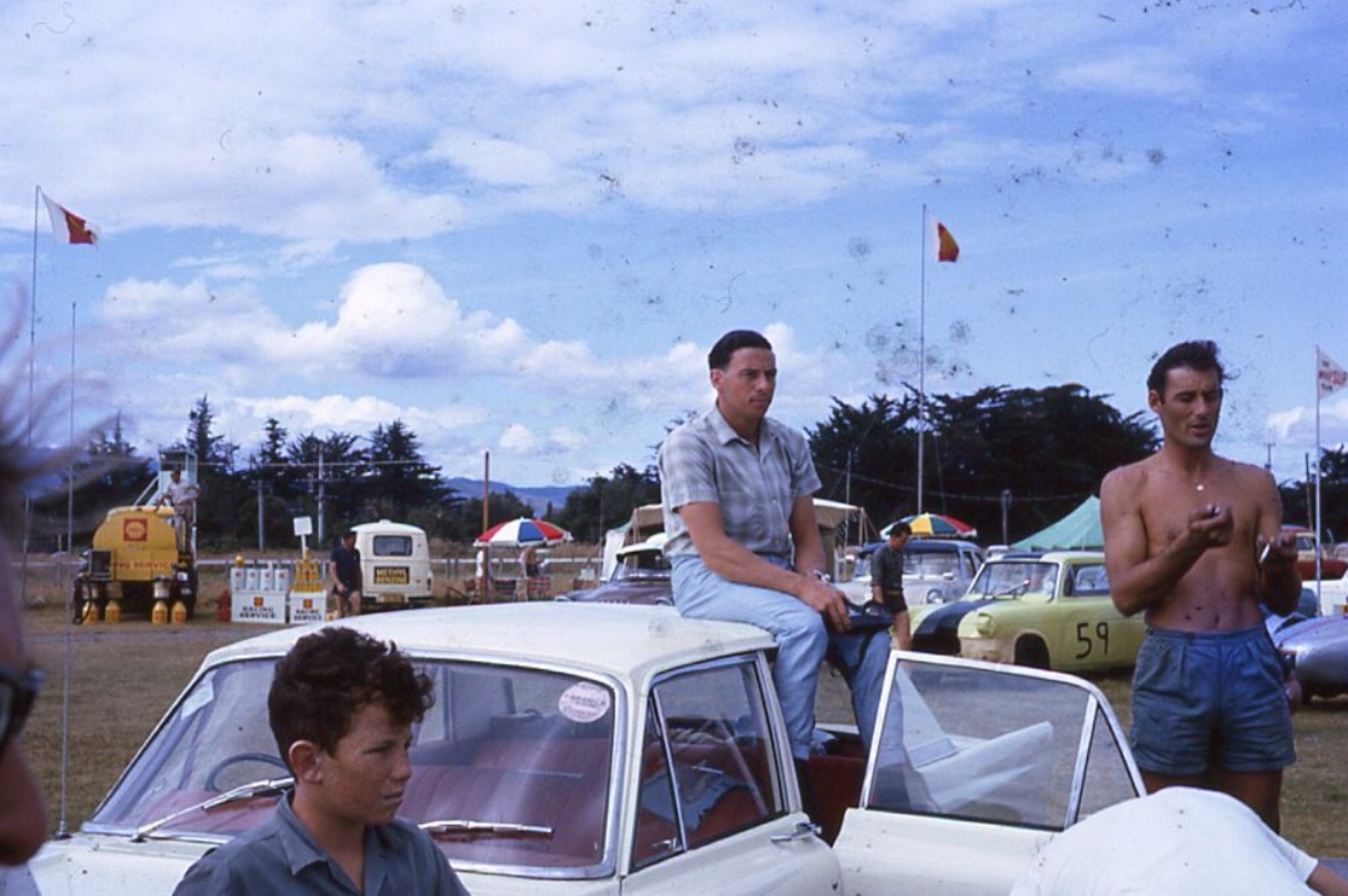
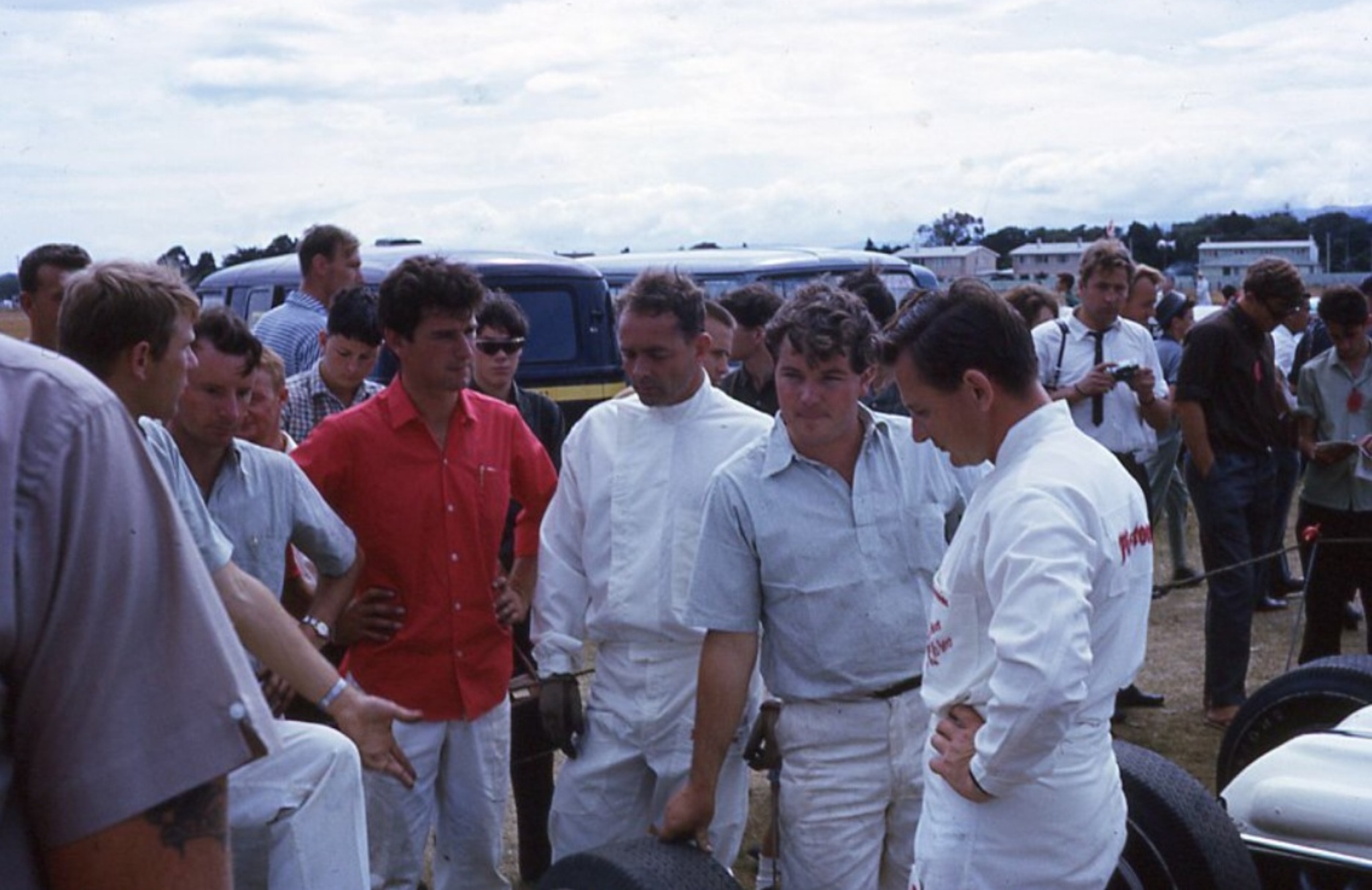
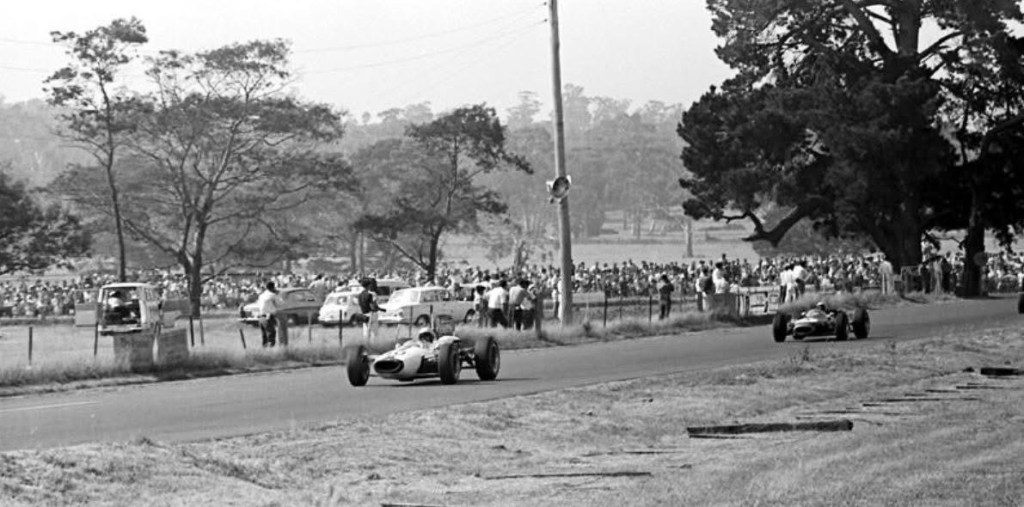
Tyler Alexander at left with Phil Hill’s Bruce McLaren Motor Racing Cooper T70 Climax FPF 2.5 at Pukekohe, Auckland during the January 9, 1965 New Zealand Grand Prix meeting. Car #17 is John Riley’s Lotus 18/21 Climax.

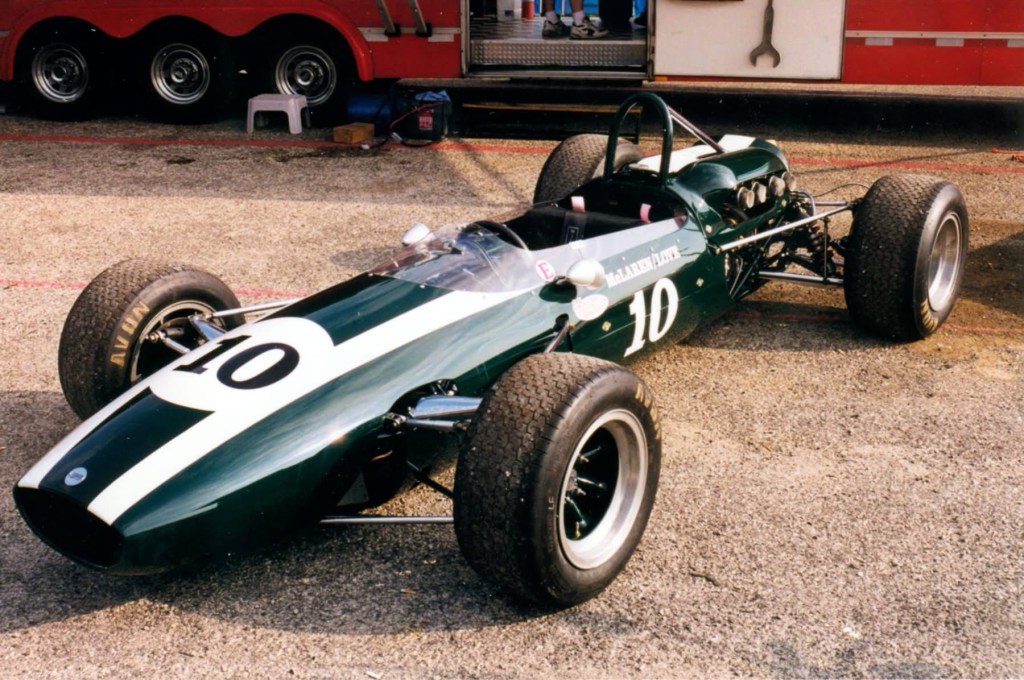
This car was an updated version of a chassis Bruce and the late Tim Mayer raced the year before – T70 FL-1-64 – while The Chief raced a new design designated the T79: T79 FL-1-65. It’s pretty familar turf to us, see here: https://primotipo.com/2016/11/18/tim-mayer-what-might-have-been/

(D Shaw)

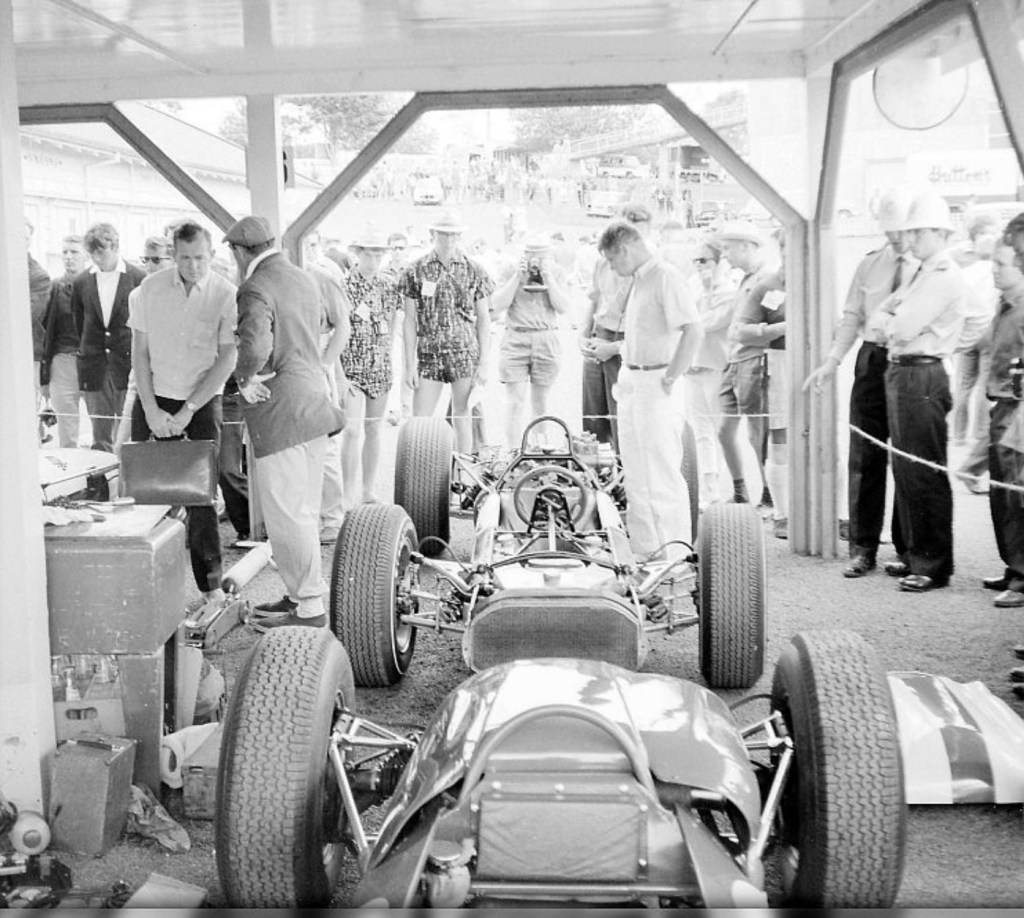
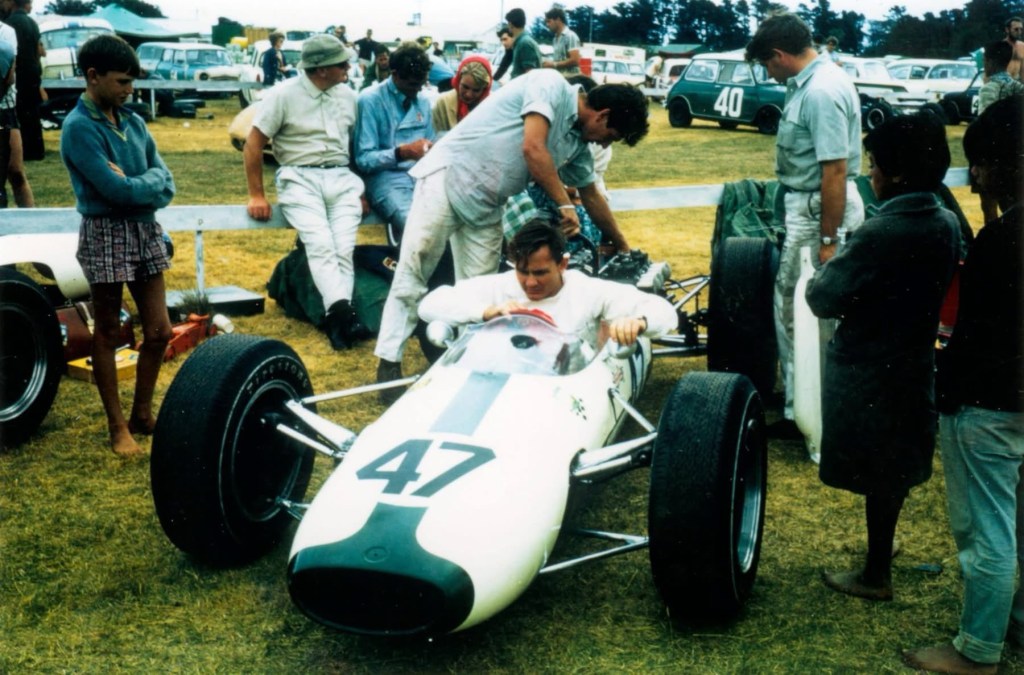
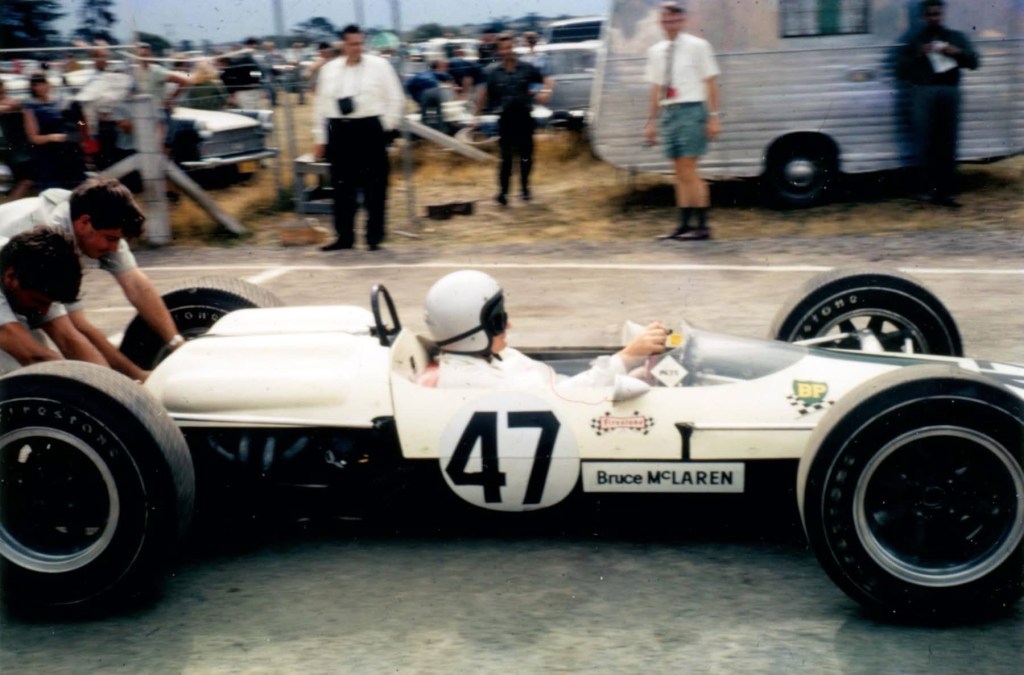
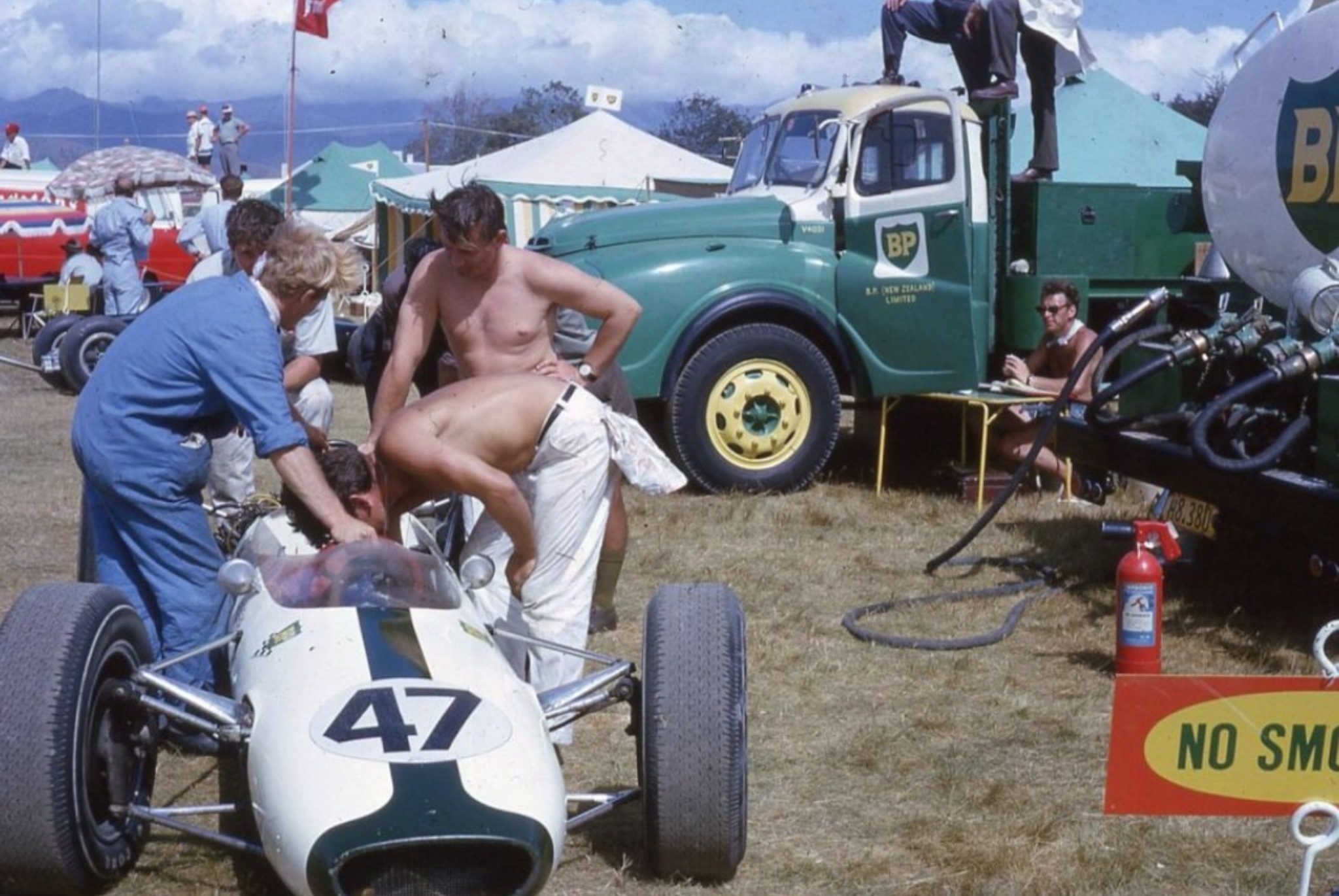
That’s the chassis of the T70 above at Pukekohe – with a Brabham BT4 in the foreground – while Bruce is settling himself into the T79 at Levin, the second Tasman round below.

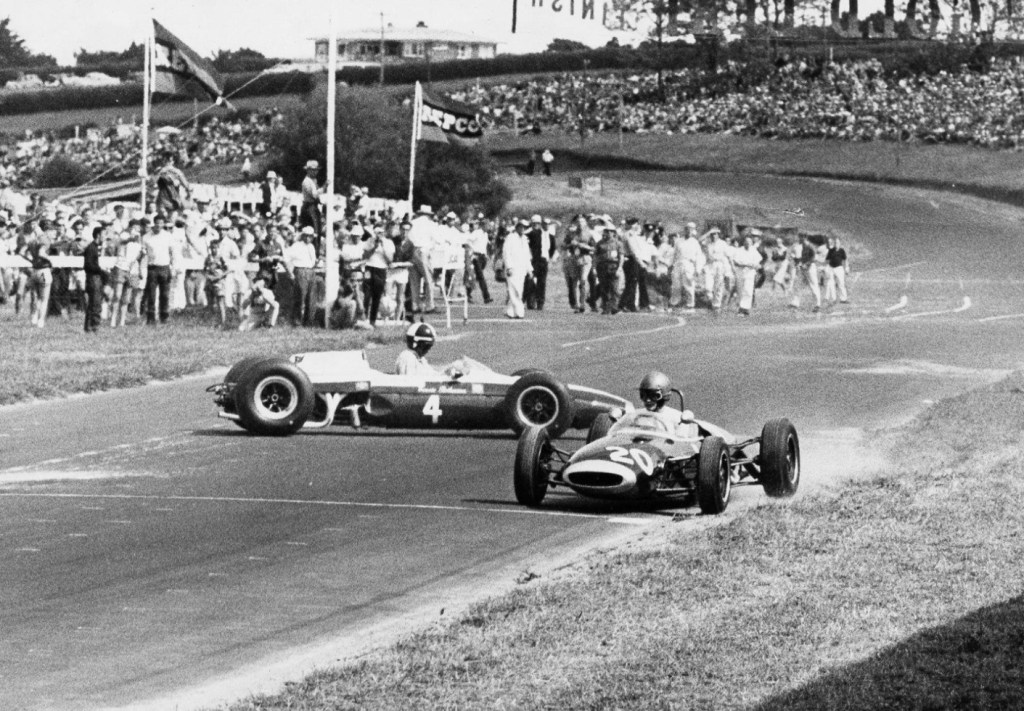
Bruce and Jim Clark collided in one of the Pukehohe heats. While Jim started the GP in his works Lotus 32B Climax, Bruce’s Cooper’s T79 was hors d’combat for the weekend, so he commandeered Phil’s T70 but succumbed to gearbox failure after 13 of the race’s 50 laps. Clark lasted only 2 laps before suspension problems, leaving Graham Hill to win the race aboard his Scuderia Veloce Brabham BT11A Climax.

(unattributed)

McLaren was fifth at Levin, with Jim Clark’s Lotus 32B Climax the race winner. Jim was the Tasman Cup victor too, with four wins from the seven championship rounds or five wins from eight races, including the Lakeside 99 non-championship round. Not to forget, however many heats Clark won.

Bruce’s Tasman plans were thrown somewhat up in the air. The two Coopers were designed around 13-inch Dunlops but Bruce had signed a contract with Firestone for supply of tyres. Defining though the deal was commercially, in the short term the hard, American 15-inch covers were shite for road racing.

The bigger wheels resulted in handling problems which would normally have been sorted before the long trip south. As it was, the necessary makeshift modifications were made between races.

NZ GP at Pukekohe, Bruce didn’t start the T79 having collided with Jim Clark in a heat. Note the Hewland HD 5-speed transaxle and tall Firestones (D Shaw)
(unattributed)

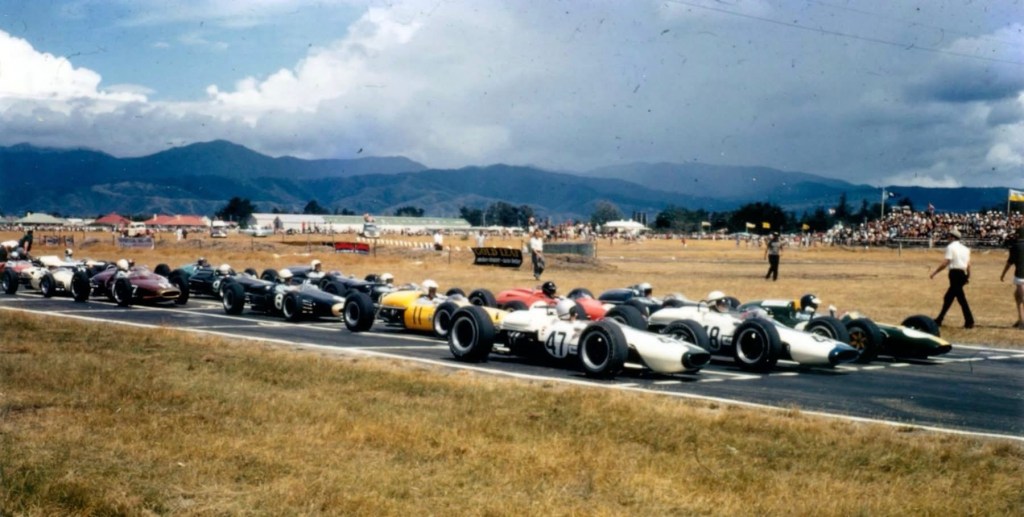
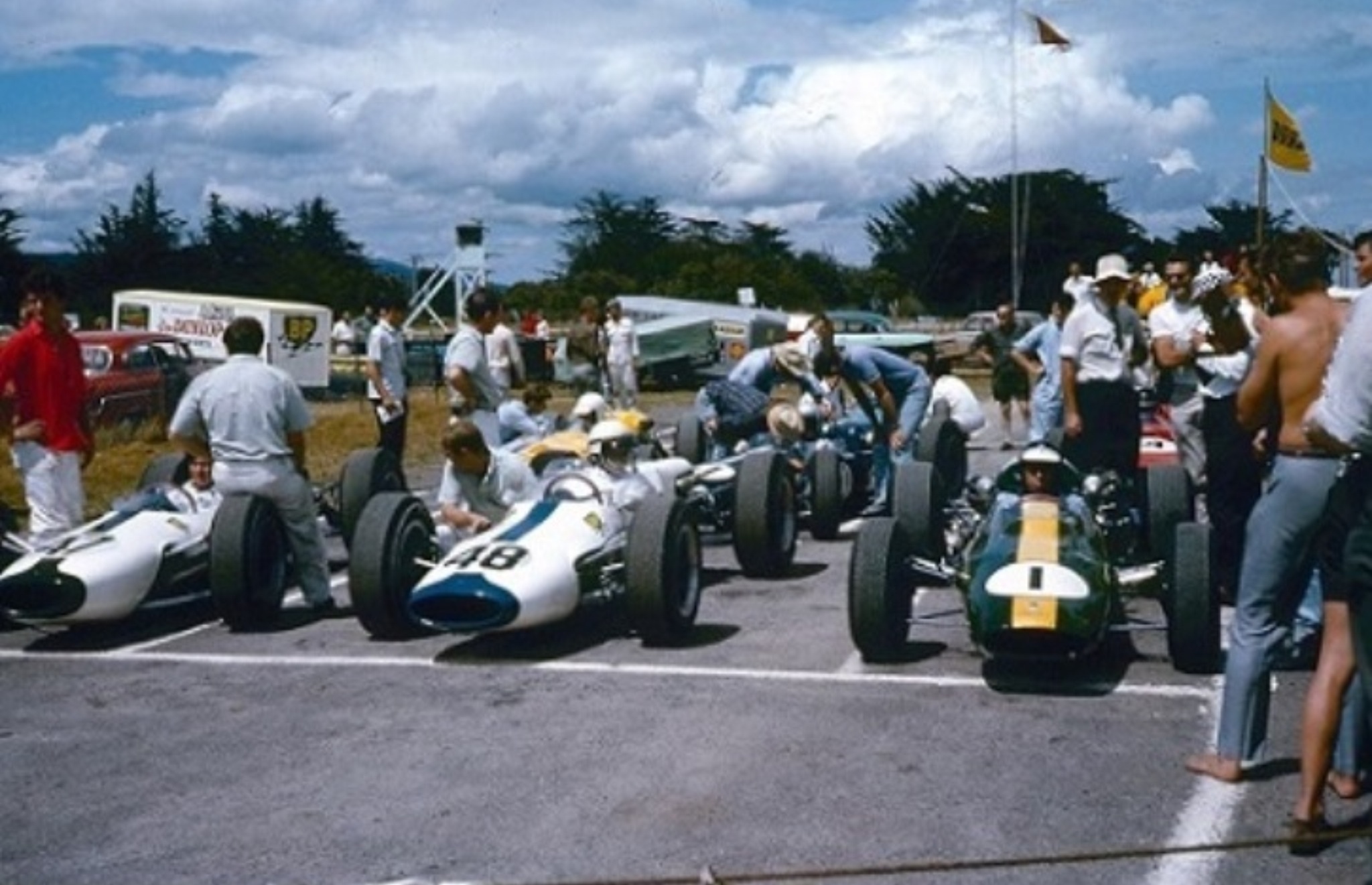
The Levin International start on January 16, with Phil and Bruce alongside Clark despite problems adapting Bruce’s new Firestone tyres to a chassis designed with Dunlops in mind.

Despite these difficulties McLaren did Wigram and Teretonga races in faster times than those which gave him his 1964 victories.

In Australia, once 13-inch wheels were available, McLaren was fourth at Sandown and won the Australian Grand Prix final round at Longford from pole to finish the Tasman series runner-up to Clark, while Phil Hill was a well-merited third. There is no doubt that if pre-trip testing time had been on their side, the Cooper-Climax drivers would have made a much better showing in New Zealand.

McLaren, T79 Cooper, Levin 1965 (unattributed)
(E Sarginson)

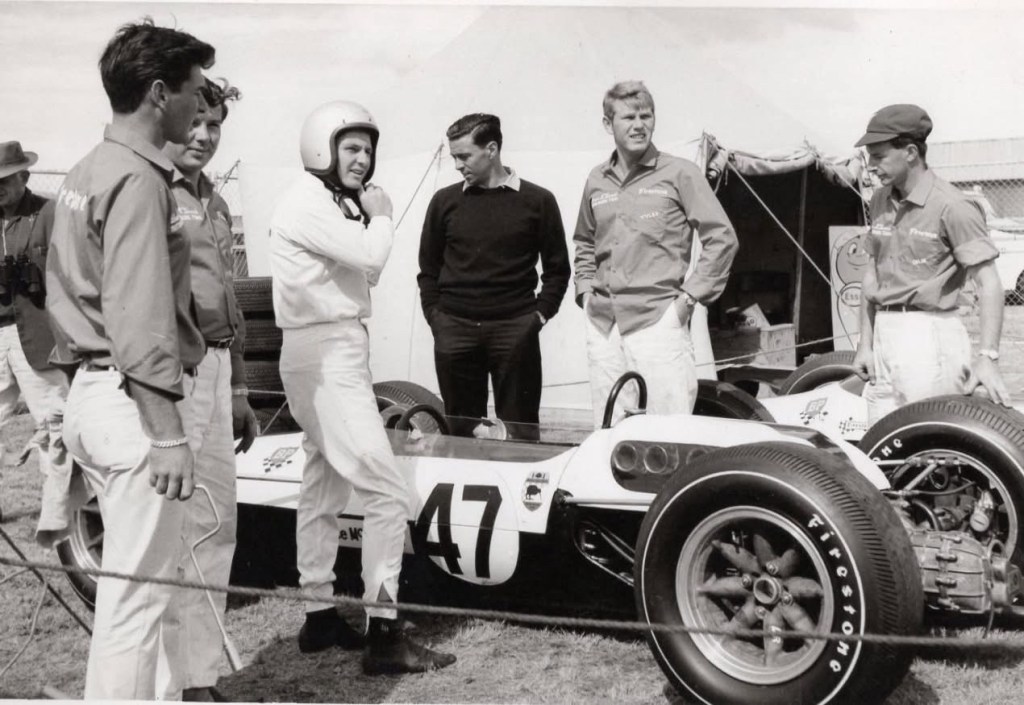
Pop McLaren, Wally Willmott, Bruce Harre, Bruce McLaren, Jim Clark, Tyler Alexander and Colin Beanland David Oxton informs us, in the Wigram paddock, over the January 23, 1965 weekend.

Showing real progress, McLaren, below, was second to Clark’s Lotus with the well-driven Brabham BT7A Climax of Jim Palmer in third.

(CAN)
(A Horrox)

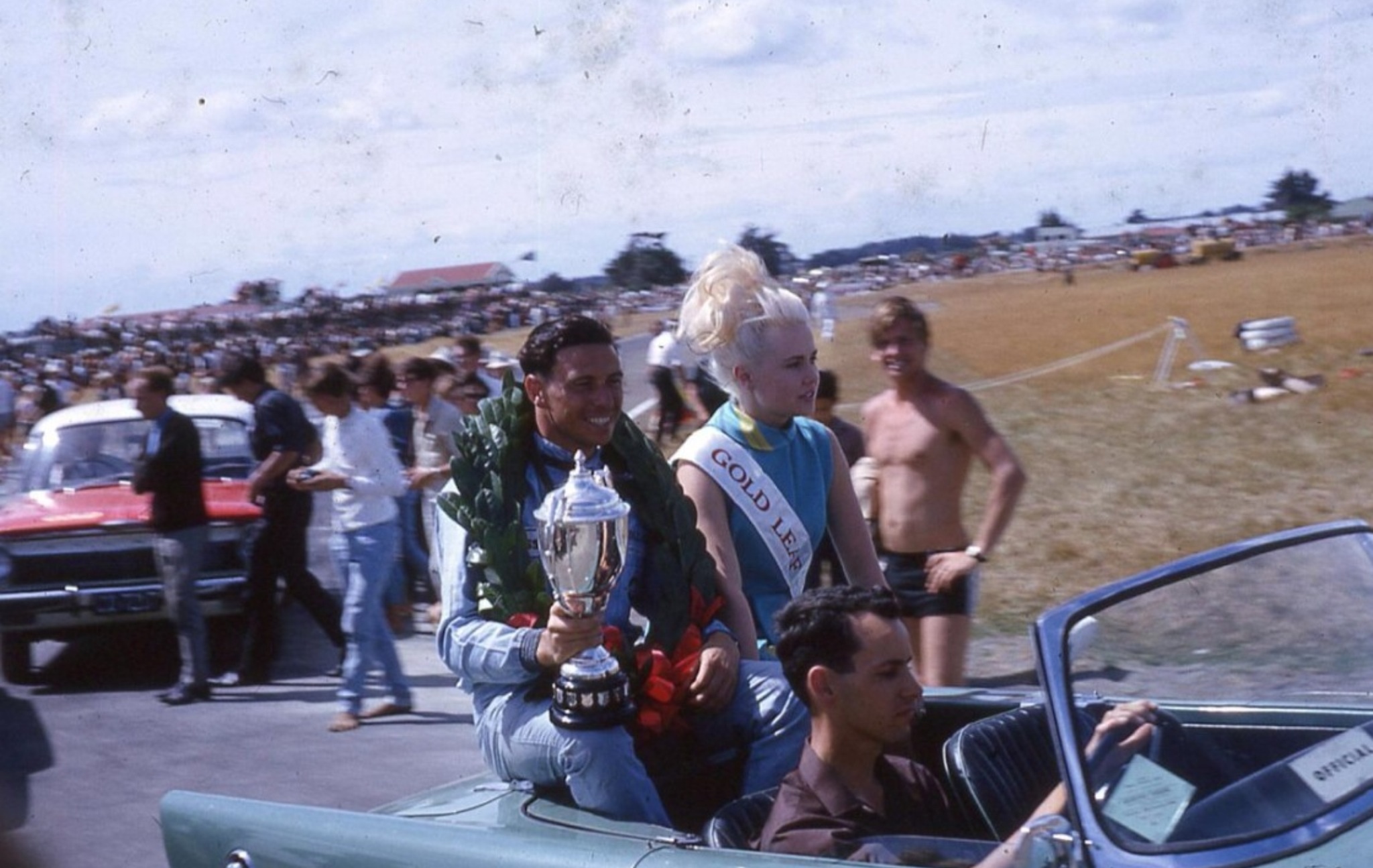
Teretonga, above, was better still with a team two-three – McLaren from Hill – but Jim Clark was still the man in the front of the field with three wins on the trot, only Graham Hills Scuderia Veloce Brabham BT11A Climax win in the New Zealand Grand Prix at Pukekohe at the start of the month ‘rained on Jimmy’s Lotus parade.’

(K Wright)

Bruce McLaren leads Graham Hill and Jack Brabham early in his victorious run in the AGP into Longford village: Cooper T70, and Brabham BT11A’s by two, all Coventry Climax FPF 2.2-litre powered. McLaren and Brabham below.

(GP Library)
(MotorSport)

Every Dog Has its Day – perhaps every car too!

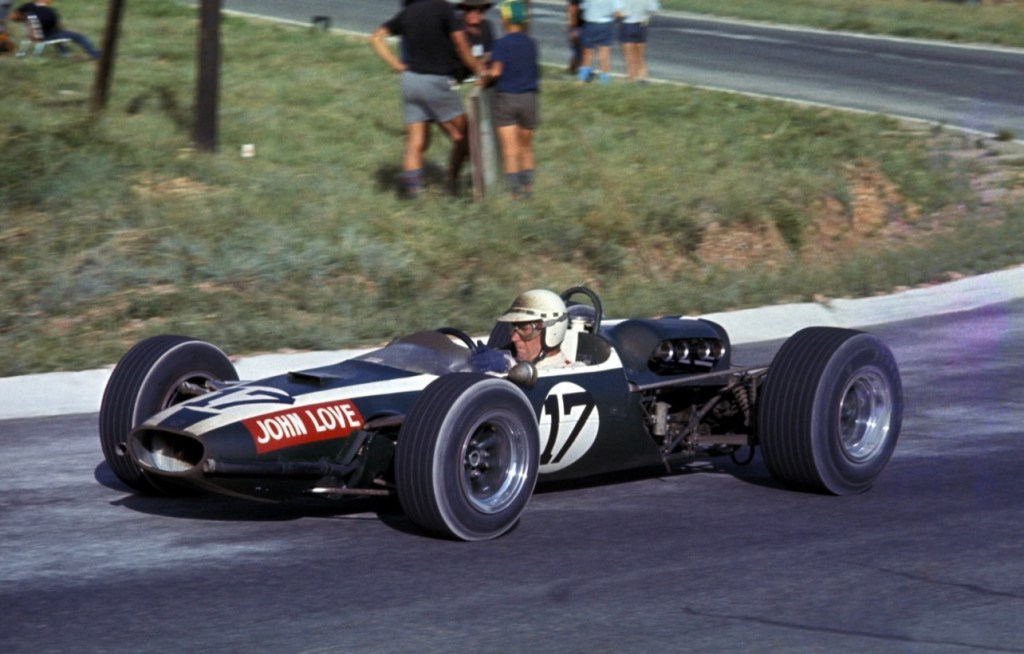
At the end of the Tasman, Bruce McLaren sold the T79 to South African ace, John Love. The shot above shows him on the way to a brilliant second place in the 1967 South African Grand Prix.

The machine was a star-car in Africa, winning the 1965, 1966 and 1967 South African National F1 Championships, co-credits to Love’s Cooper T55 Climax and Brabham BT20 Repco in 1965 and 1967 duly noted.

See here on Allen Brown’s oldracingcars.com for the T70s: https://www.oldracingcars.com/cooper/t70/and here for the T79: https://www.oldracingcars.com/cooper/t79/

Love, T79, Kyalami pits circa 1967 (unattributed)

Etcetera…

(unattributed)

The Cooper T79 returned to the UK in 1968 and has pinged around the historic racing world since as per the oldracingcars.com reference.

(unattributed)

Credits…

Doug Shaw, Andrew Horrox, Euan Sarginson via Greg Bramwell, CAN- Classic Auto News, Kay Wright, GP Library, MotorSport

Finito…

(FoMoCo)

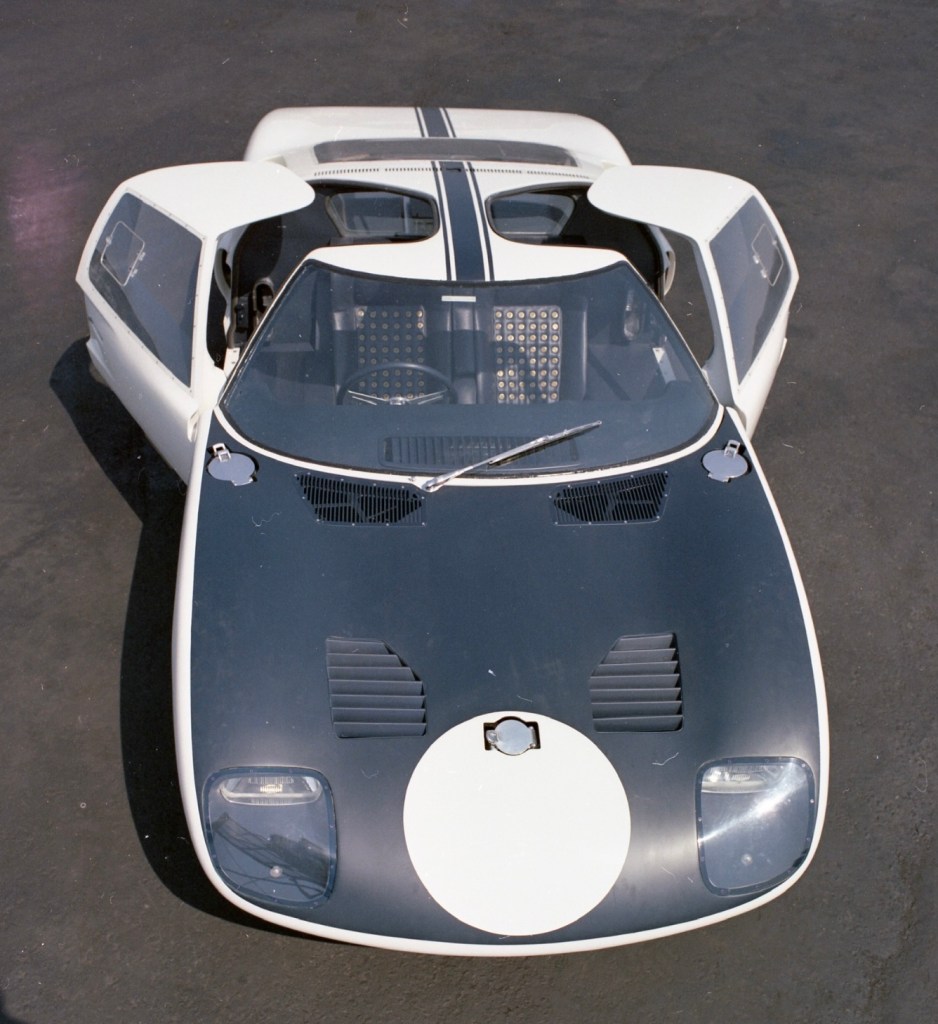
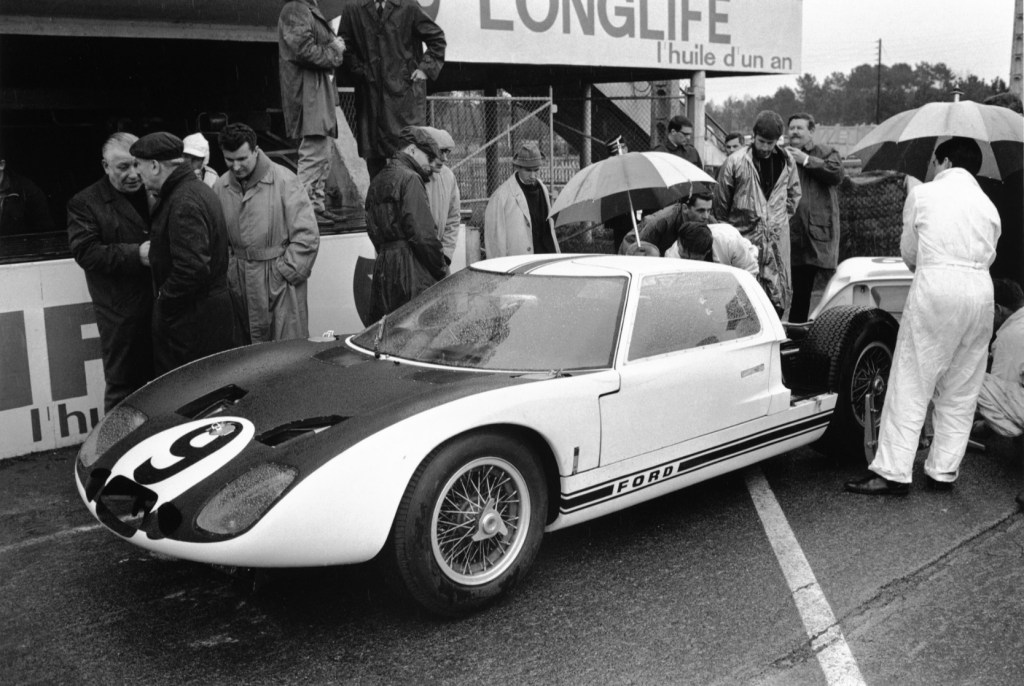
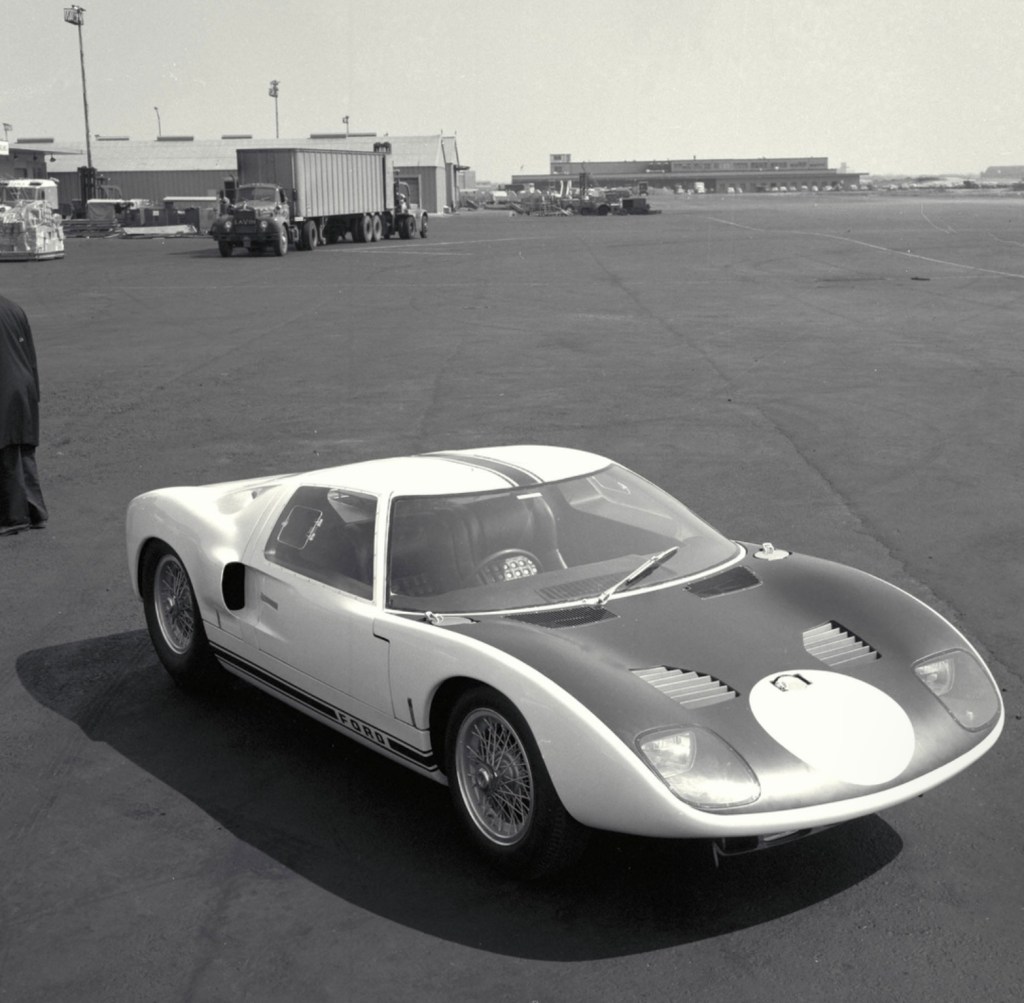
Ford GT40 chassis 101, the first of 12 prototypes built, on the runway at JFK Airport, New York, in early April 1964…

The machine is on its way to the New York International Auto Show, having been presented publicly to journalists in an open day at Slough, then outside the offices of Trans World Airlines at Heathrow on April Fools Day, before it was flown to the US “to be used for a press conference prior to the Mustang launch,” then display between April 4-12.

The car was a starlet for only the briefest of times, it was destroyed in an accident in the wet while being driven by Jo Schlesser during the Le Mans test weekend on April 18.

Jo Schlesser, Le Mans test weekend, Ford GT40 #101, April 1964 (MotorSport)
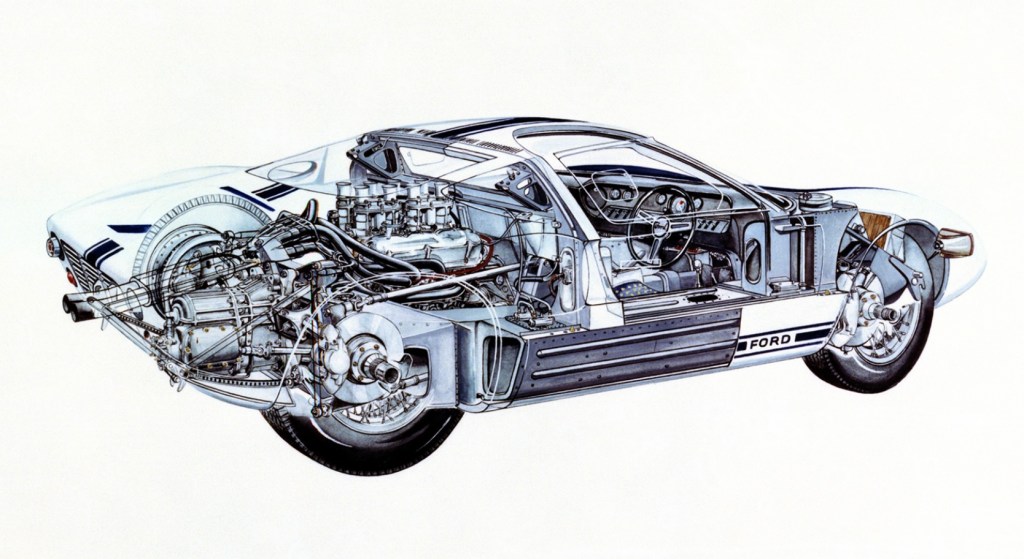
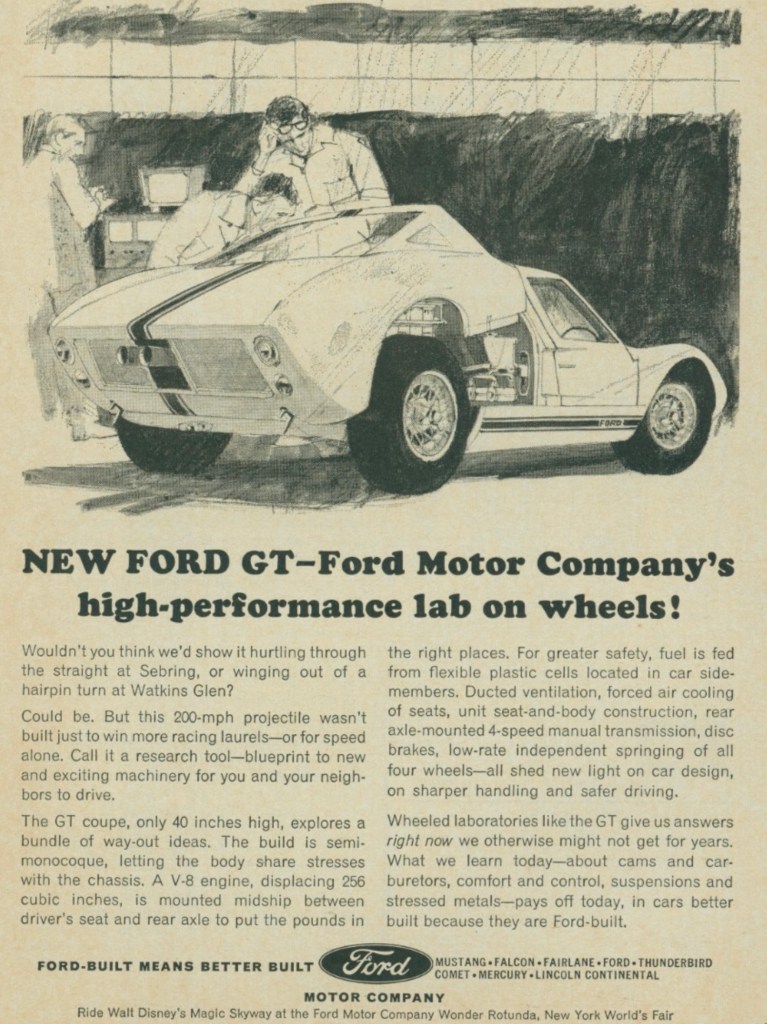
Ford GT40 1964 cutaway (FoMoCo)

Ford’s blunt telex on May 22, 1963 announced the end of discussions of the takeover of Ferrari by the Detroit giant. “Ford Motor Company and Ferrari wish to indicate, with reference to recent reports of their negotiations toward a possible collaboration that such negotiations have been suspended by mutual agreement.”

A month later Ford created the High Performance and Special Models Operations Unit – catchy ‘innit? – to design and build a Le Mans winner. Members of that group included Roy Lunn and Carroll Shelby. Kar Kraft was established within FoMoCo to oversee the Ford GT program, with Lunn its manager.

They soon identified and contracted Eric Broadley as project engineer, his monocoque Lola Mk6 GT Ford, which had performed well at Le Mans in 1963, despite not finishing, was a ground-breaking sports-prototype. As part of the deal Ford acquired the two existing Lola GTs, giving them a nice head start. John Wyer was appointed as race manager, a role he had performed at Aston Martin when Shelby co-drove an Aston Martin DBR1 with Roy Salvadori to Le Mans victory in 1959.

“The four pronged team comprised Lunn and Broadley designing and building the cars, Wyer managed the operation with Shelby acting as frontman in Europe,” Ford wrote.

(FoMoCo)

Key members of the Slough design team included Broadley, Lunn, Phil Remington and Len Bailey.

In the 10 months prior to the ’64 Le Mans classic the program got underway at Lola’s premises in Bromley. The Ford Advanced Vehicles (FAV) operation later moved to a factory in Slough, alongside Lola, who moved as well – in the middle of what is now referred to as Motorsport Valley – in the Thames Valley.

Some development work was carried out in Dearborn, but in essence the Ford GT40 was a British design funded by US dollars. The Ford contribution – most critically was absolute monetary and management commitment from the top to succeed – included engines and aero-modelling in which a scale model of the car was tested in their Maryland wind tunnel. Computer aided calculations related to aerodynamics under braking was undertaken and anti-dive geometry explored. The two Lola Mk6 Fords were used as mobile test-beds in the hands of Bruce McLaren and others until the end of 1963.

Le Mans test weekend (MotorSport)
(FoMoCo)

Let’s go back to the April 1964 logistics of #101. Ford GT40 anoraks shouldn’t get too excited by this piece, the words are a support for a bunch of great Ford Motor Company photos taken at JFK and in the studio I’ve not seen before. After the New York International Auto Show, the car retuned to the UK and was transported to the Motor Industry Research Association (MIRA) test track at Nuneaton where private shakedown tests took place.

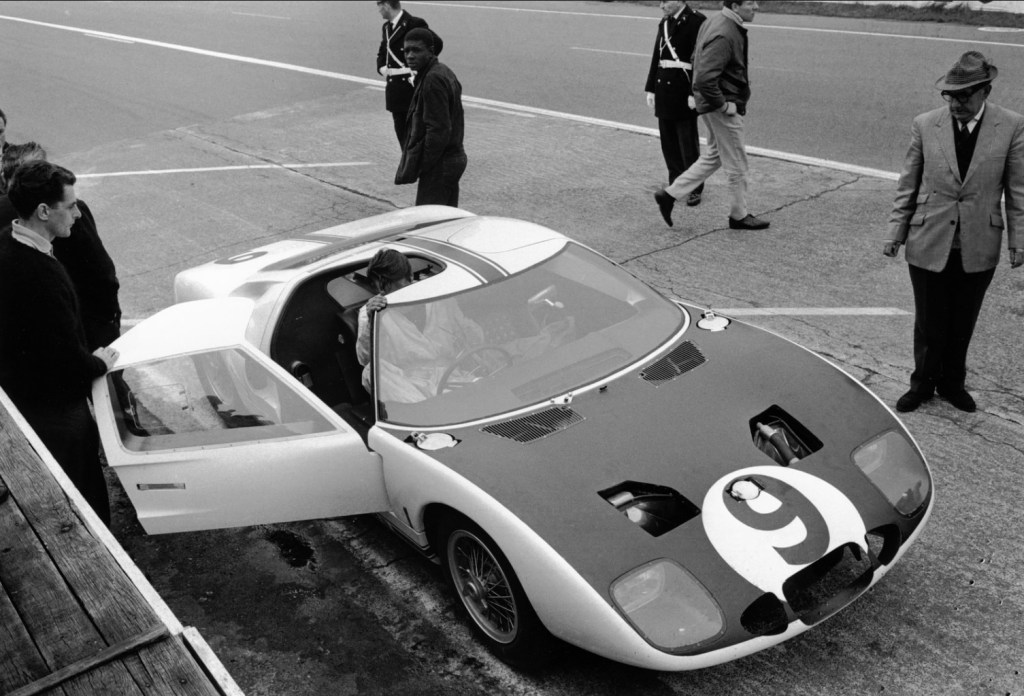
The Le Mans test weekend followed on April 18-19. Jo Schlesser was allocated #101 and Roy Salvadori #102. Jo had already complained about high speed directional instability, when, on his eighth lap, he lost control in the wet at over 150mph. Miraculously, the car didn’t roll or hit trees, but it was destroyed with Schlesser copping only a minor cut to his face. Lady Luck was with him that day…not so at Rouen in 1968.

(FoMoCo)

Chassis and Suspension…

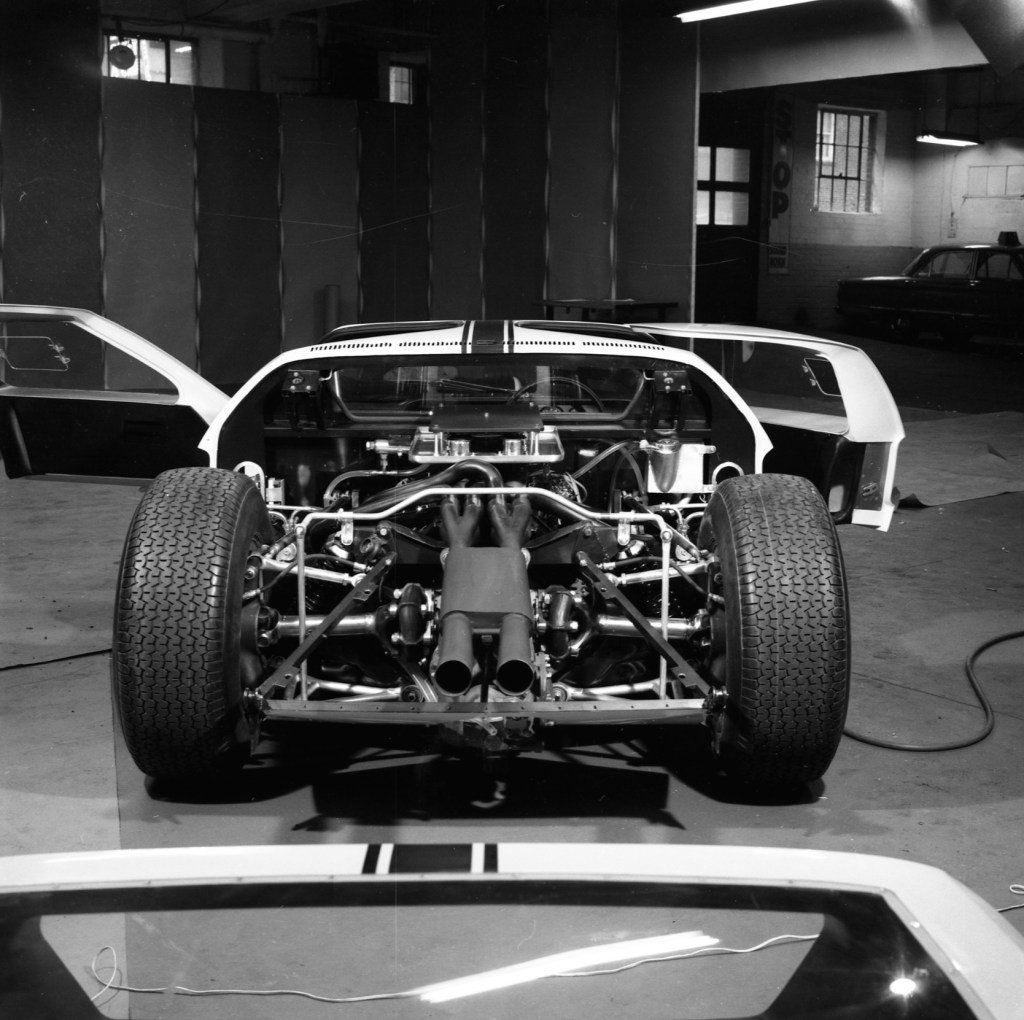
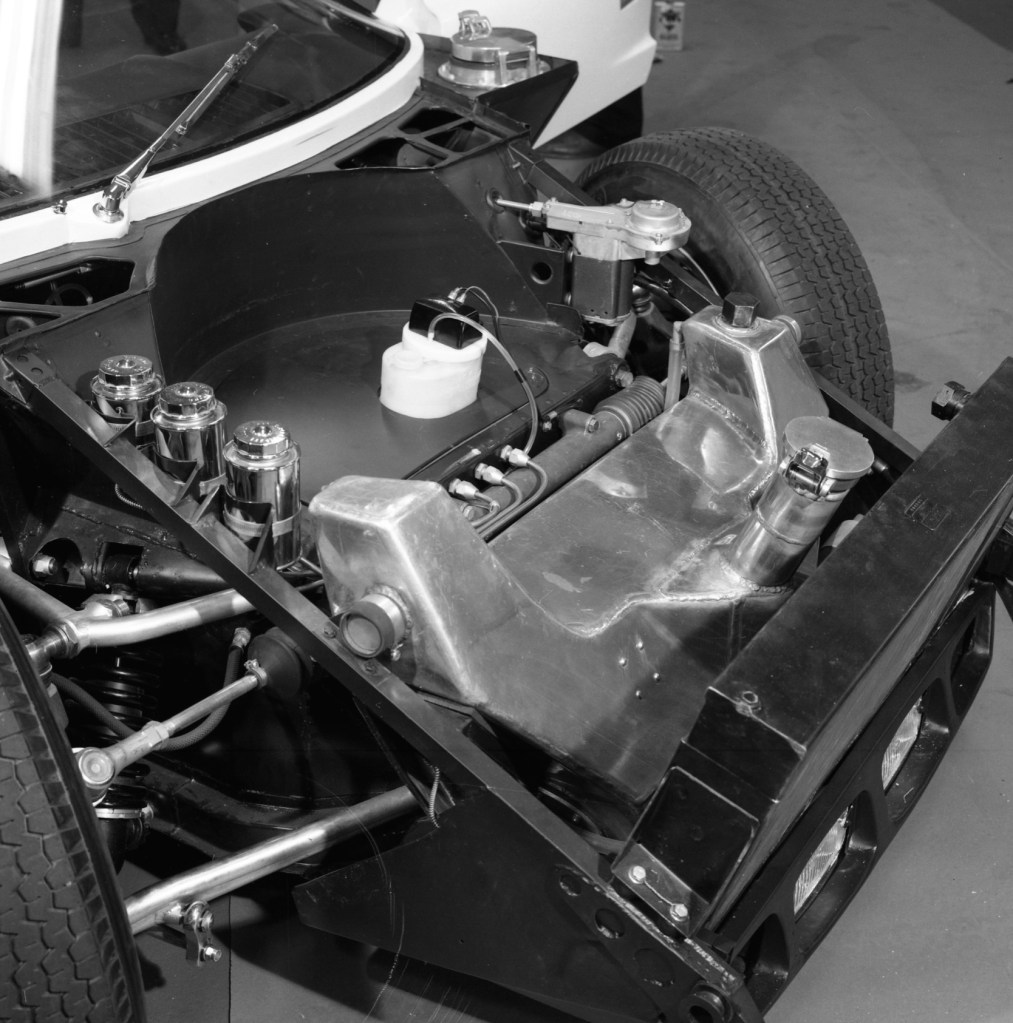
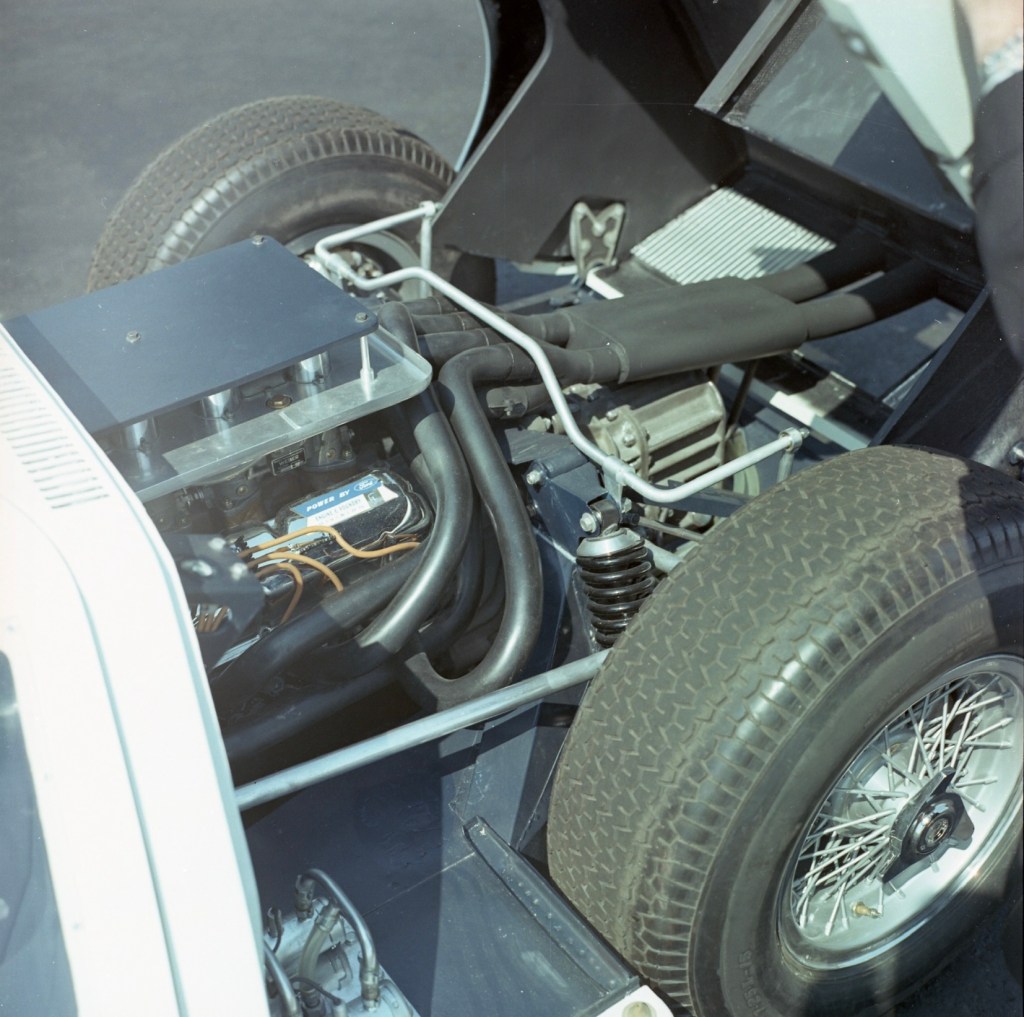
The Abbey Panels built steel monocoque – Eric Broadley wanted aluminium, while Ford wanted steel – incorporated two square tube stiffeners that ran from the scuttle to the nose. At the rear was a lightweight detachable subframe which supported the engine and suspension. Each sill-panel housed a bag-type fuel tank. The car weighed circa 865kg.

(FoMoCo)
(FoMoCo)

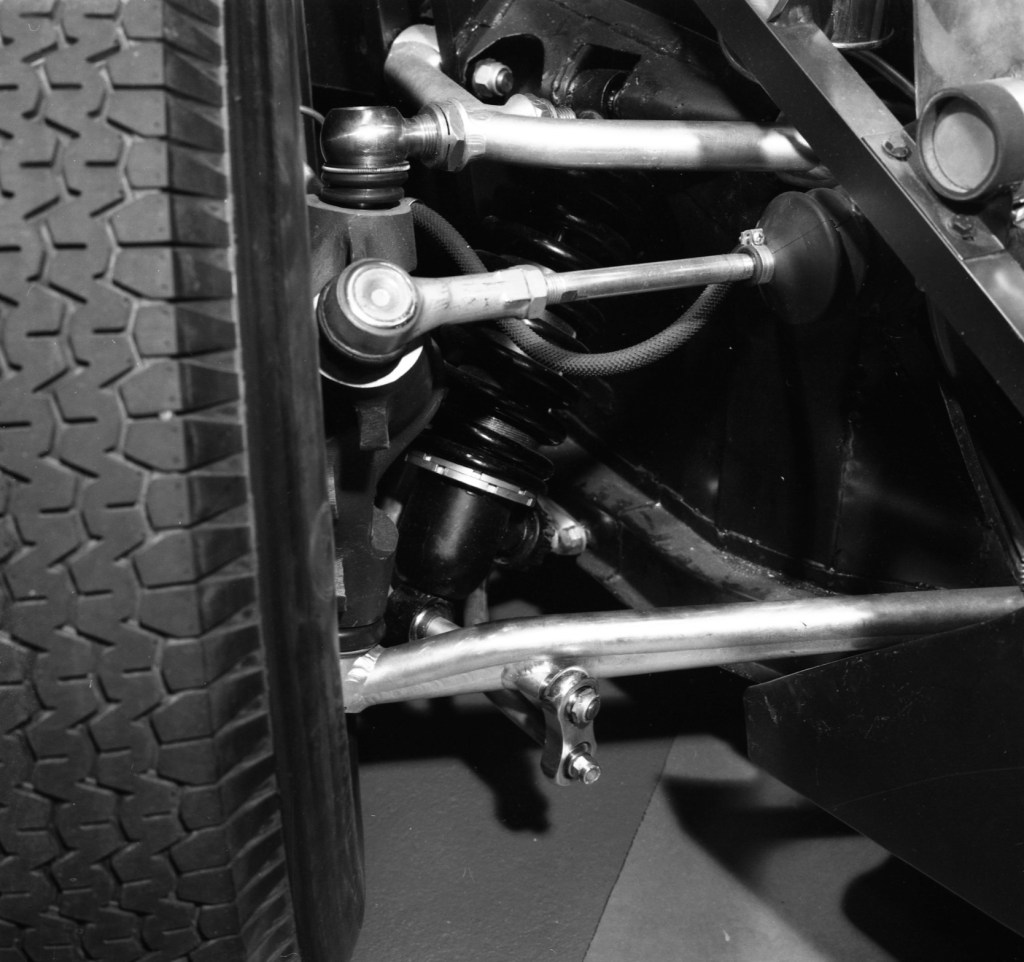
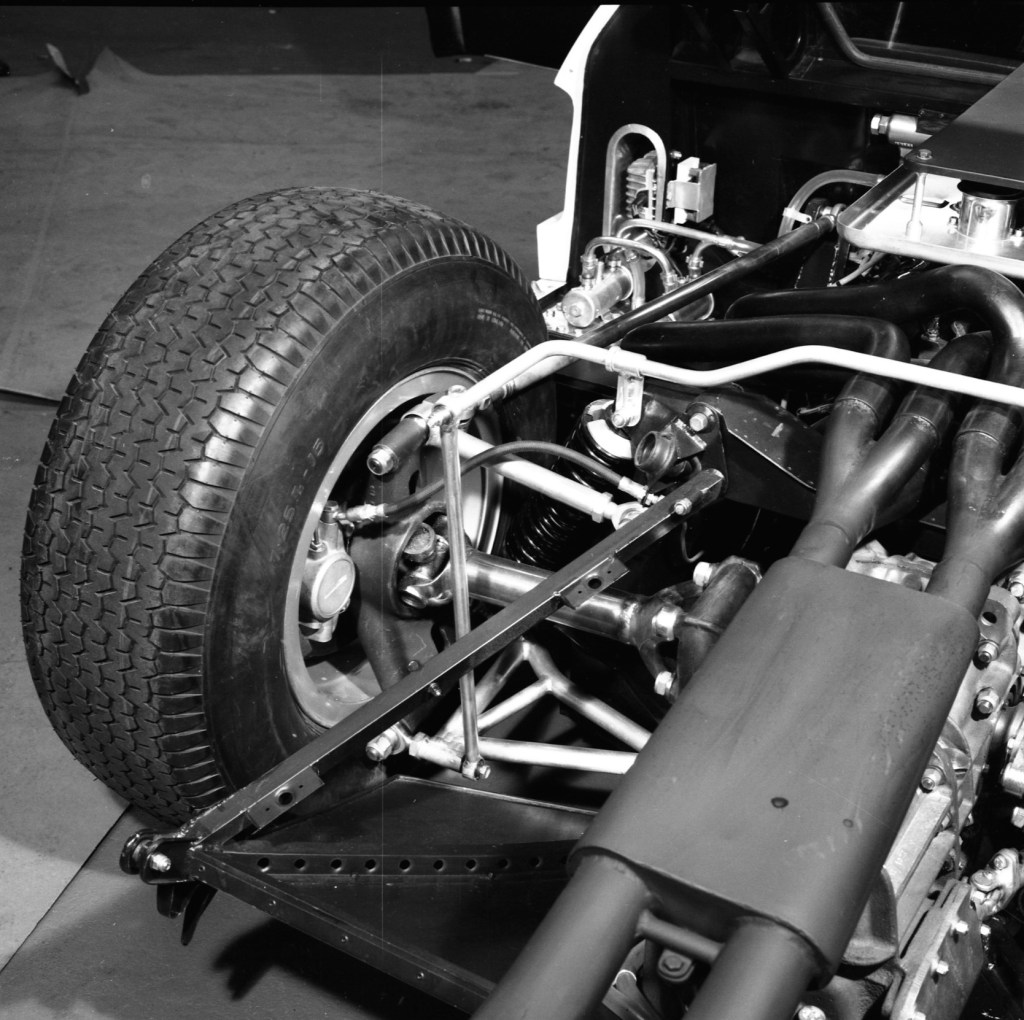
Front suspension was period typical upper and lower wishbones and coil spring/ Armstrong damper units, and an adjustable roll bar, the uprights were made of magnesium alloy. There was nothing radical at the rear either. Again the uprights were mag-alloy, there were single top links, lower inverted wishbones, coil spring/dampers and two radius rods looking after fore-aft location, and an adjustable roll bar.

(FoMoCo)

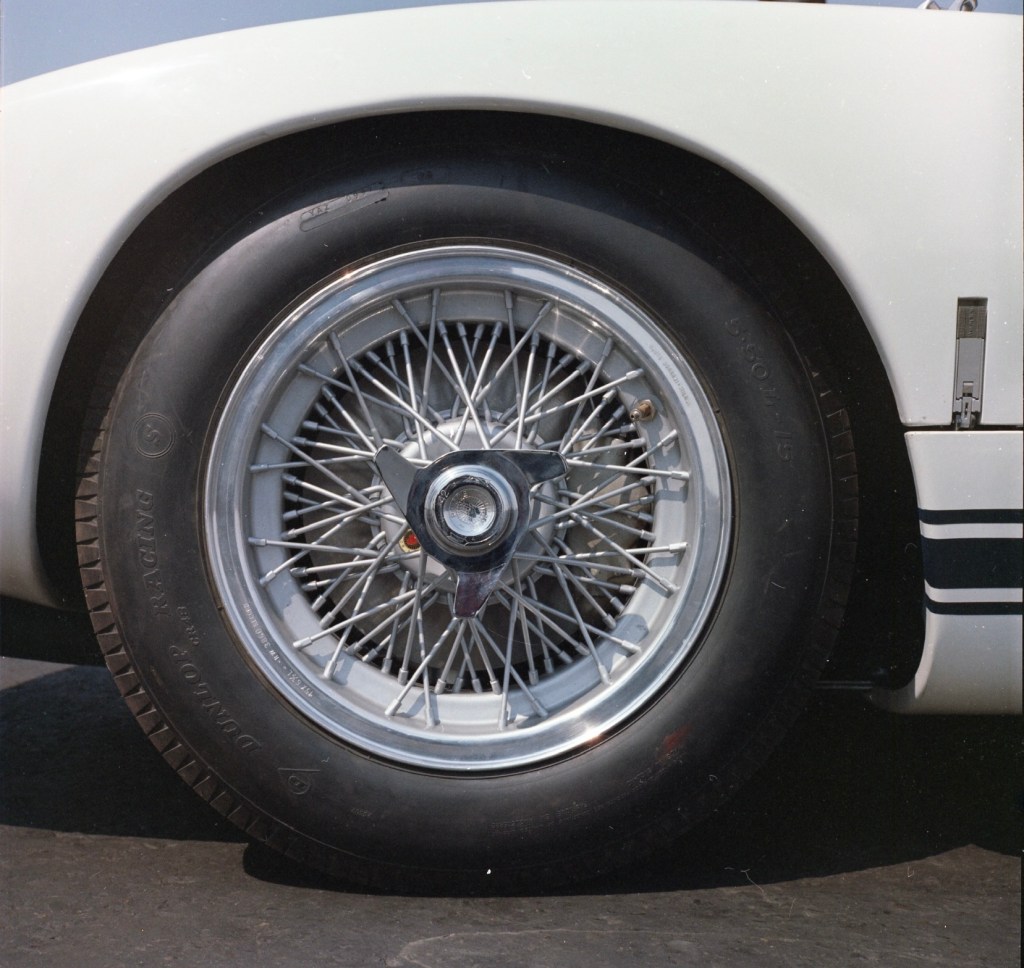
Brakes were 11.5 inch Girling rotors and calipers, while the wheels were heavy 15-inch Borrani wires, pretty naff by that stage given the modern technology used throughout the design; and addressed by Shelby American when they took over developmental charge of the race program from the end of 1964. The knock-off Borranis were 6.5-inches wide at the front and 8-inches up the back. ‘Boots’ were Dunlop R6s.

(FoMoCo)

Engine and Transmission…

The engine was a Ford Windsor small-block, cast iron, pushrod 90 degree 255cid V8. With a bore-stroke of 95.5 x 72.9mm, the four 48IDA Weber fed 4183cc engine developed circa 350bhp @ 7200rpm and 299lb-ft of torque at 5200rpm using a compression ratio of 12.5:1.

Colotti provided their Type 37 four speed transaxle which incorporated a limited slip diff to get the power to the road via a Borg and Beck triple plate clutch. Gear ratios were of course to choice, with a top speed of 205mph quoted with Le Mans gearing.

(FoMoCo)

Bodywork and Aerodynamics…

The GT40 name came about by picking up on the cars incredibly low height, two inches lower than than Broadley’s Lola Mk6.

Specialised Mouldings, a Lola supplier, based then in Upper Northwood, made the fibreglass bodies, the aerodynamics of which took much time to get right. Shelby ‘perfected’ the sensational, muscularly-erotic shape of the cars which won Le Mans in 1966-68-69 over the winter of 1964-65. The ’67 Mk4 being a different aerodynamic kettle-of-fish.

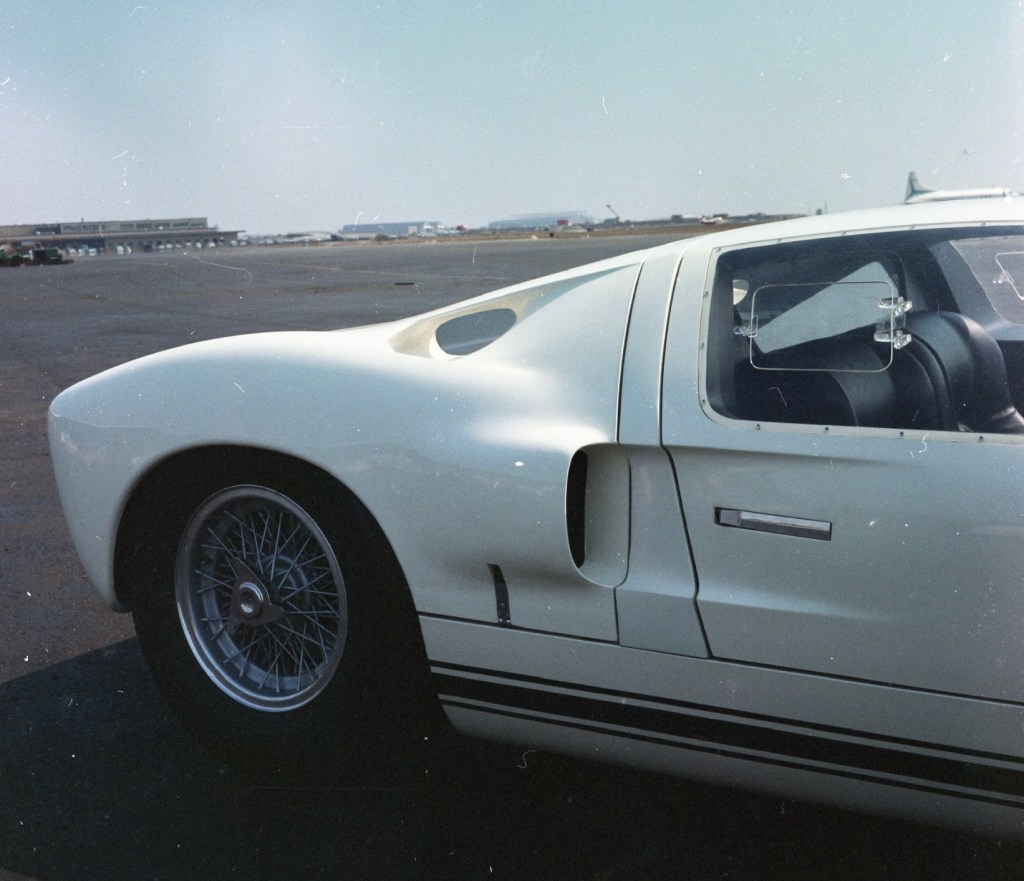
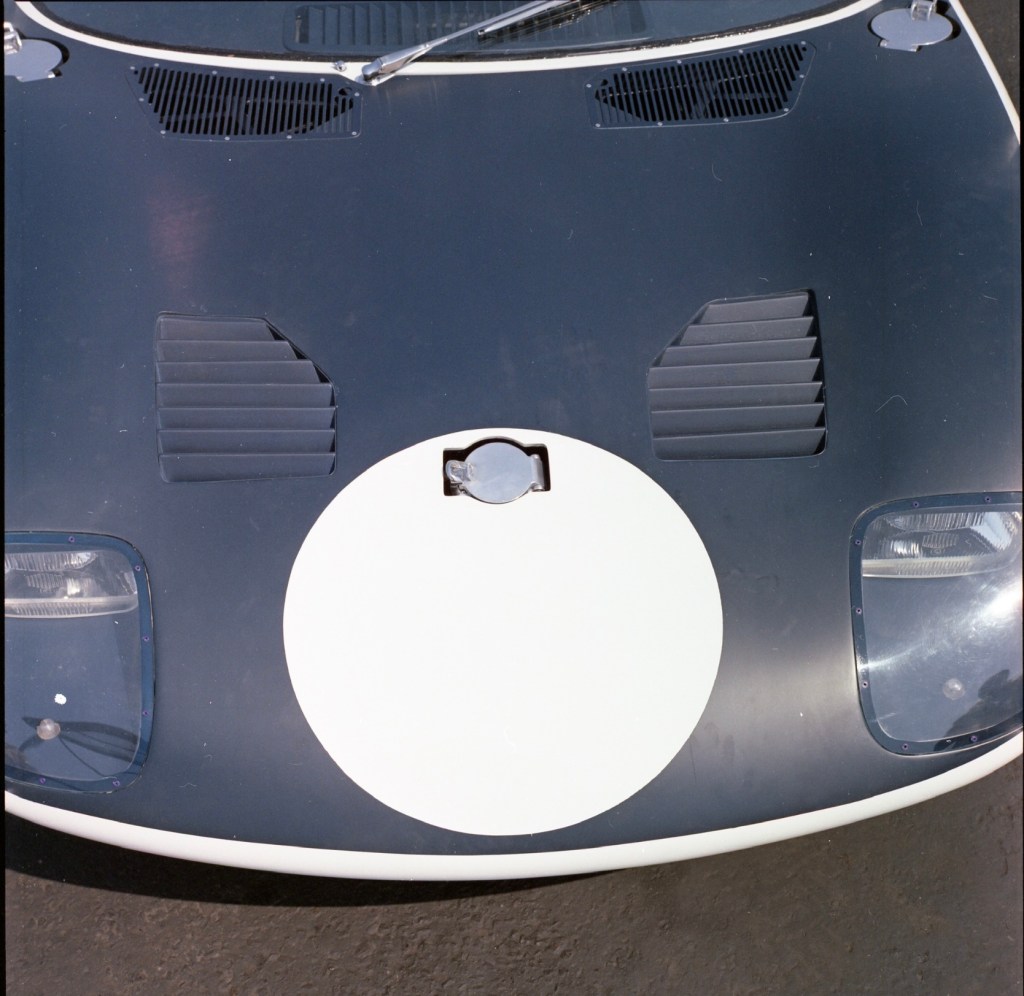
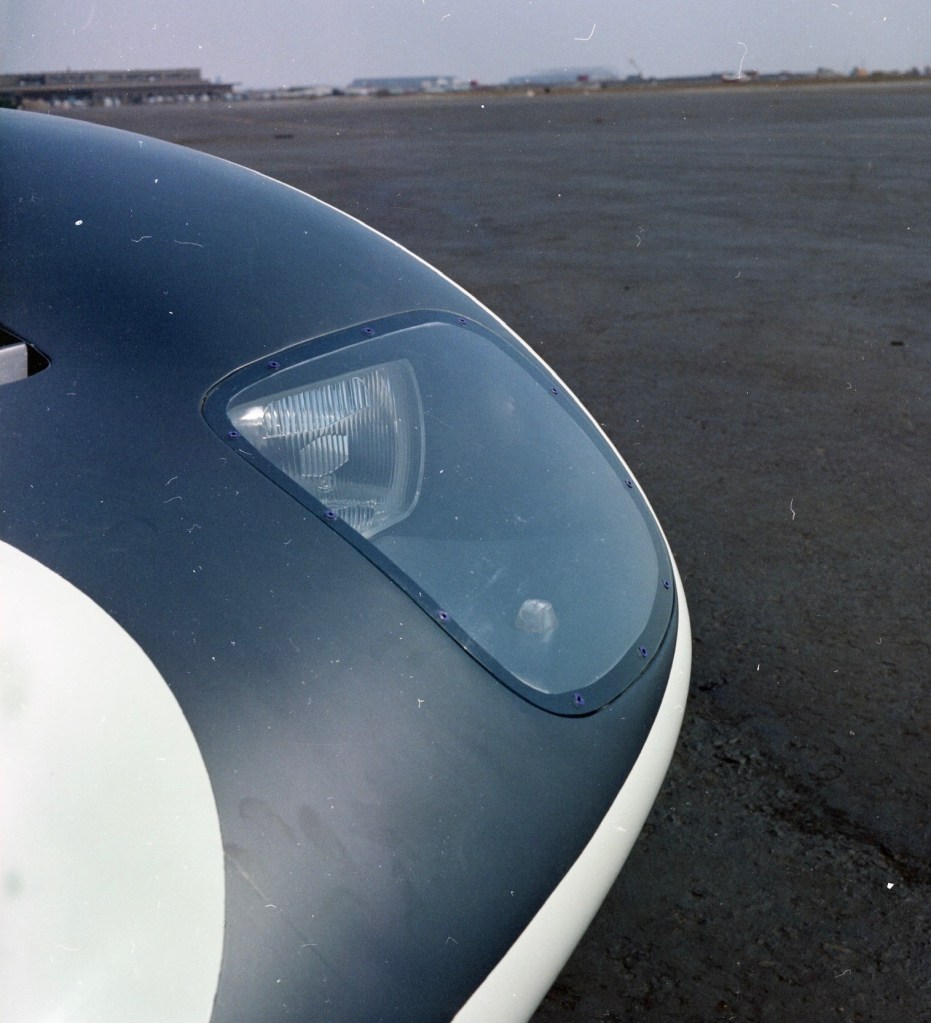
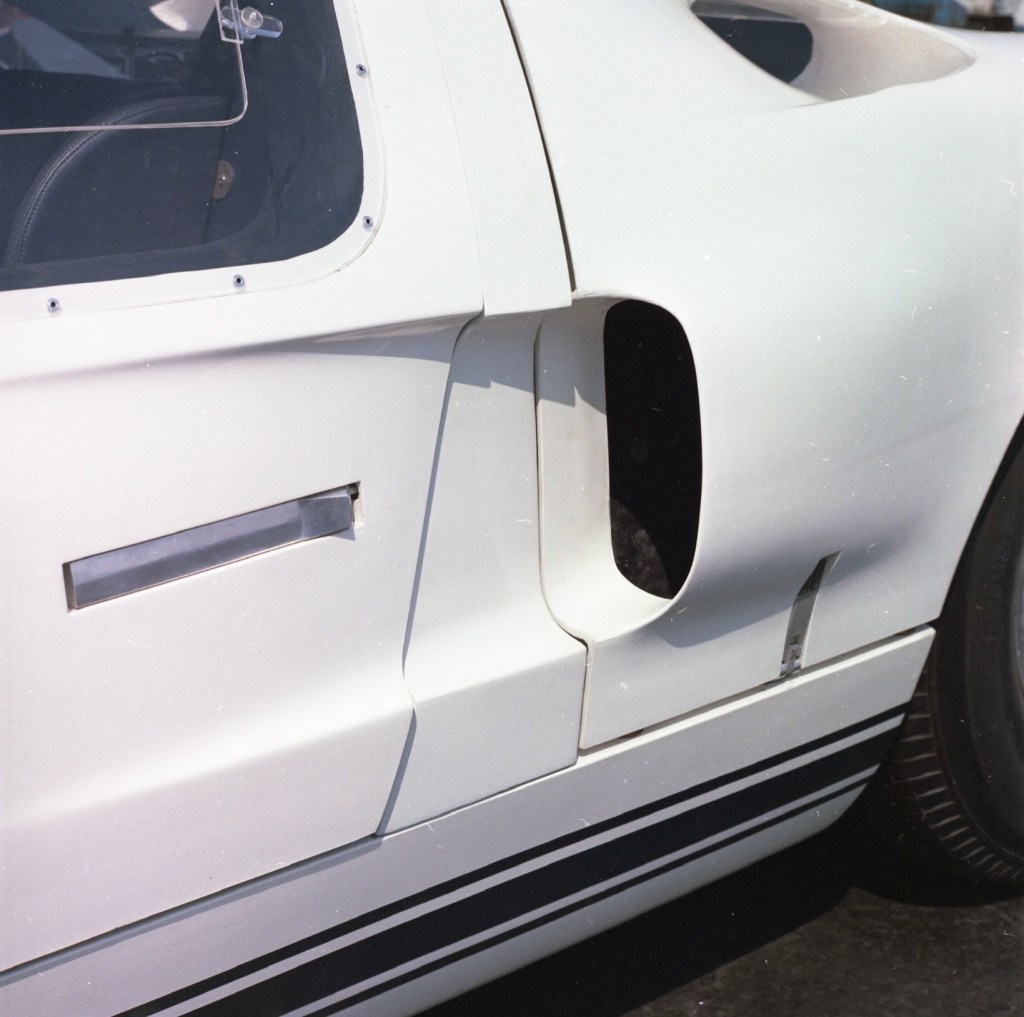
The headlights were fixed under clear Plexiglass covers with additional spotlights inboard of the brake ducts. Two big air intakes were sculpted into each flank to assist engine cooling with additional ducts on the panels each side of the rear screen.

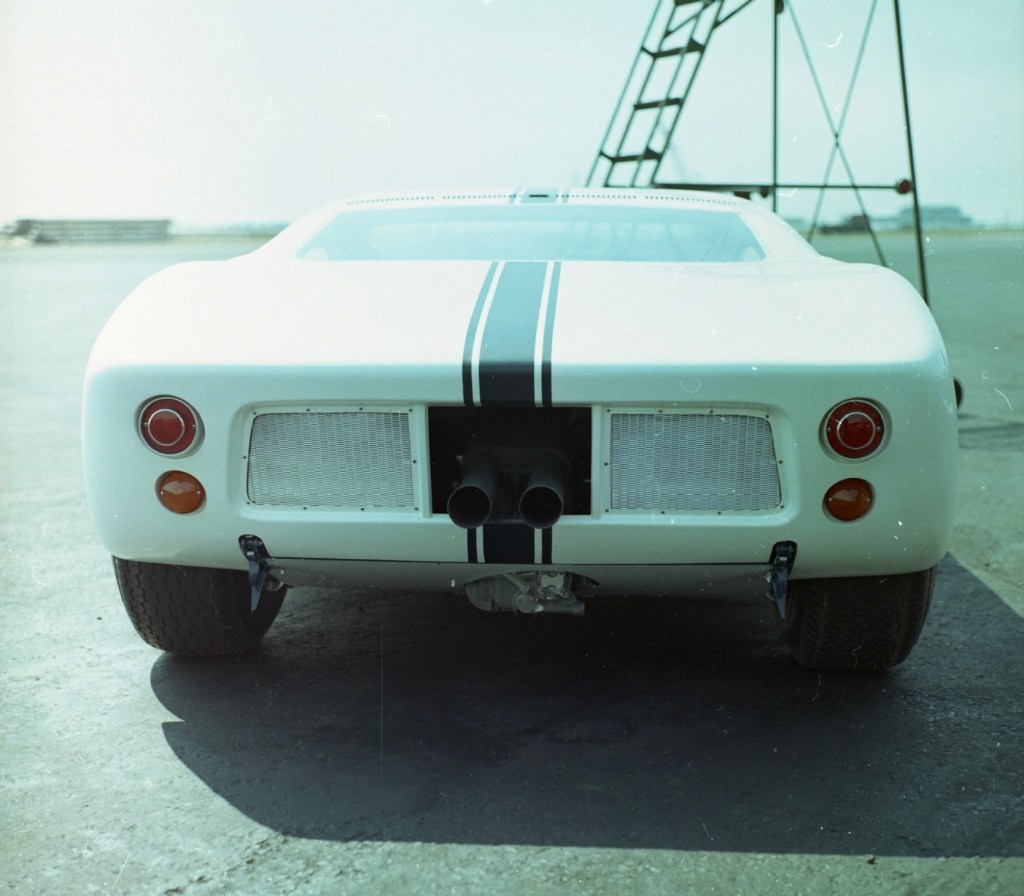
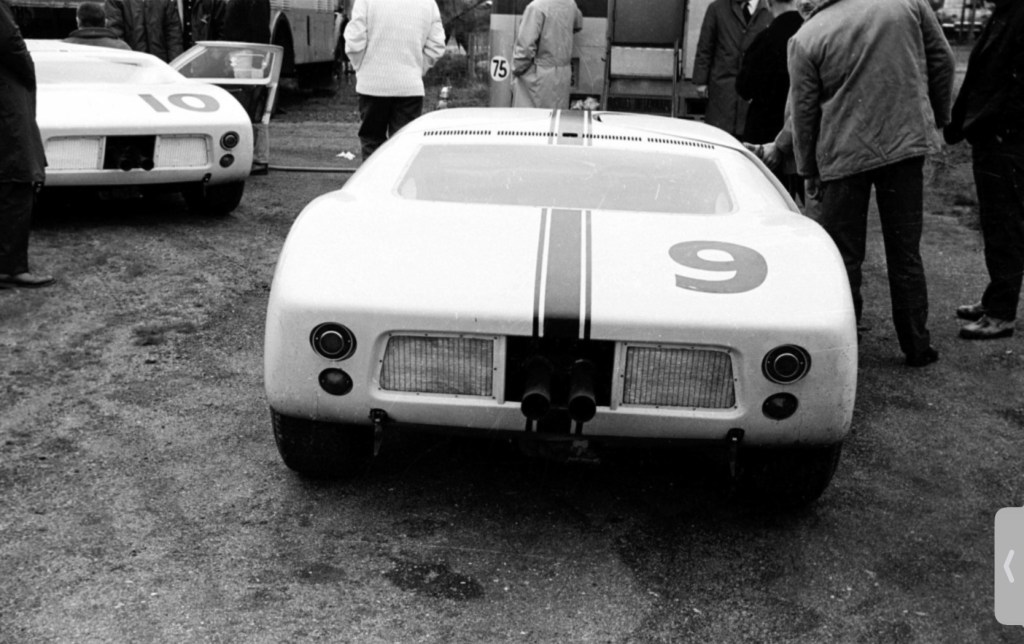
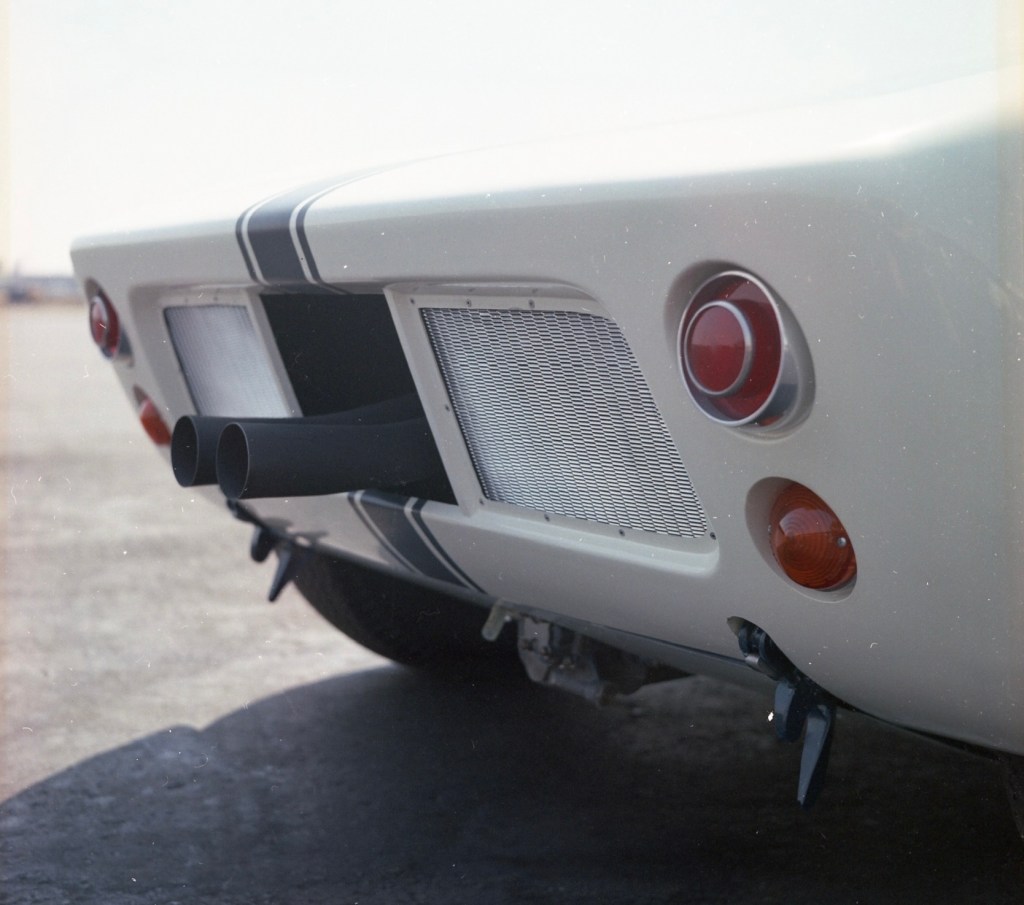
At the rear were meshed cooling vents through which the raucous V8 exited its gasses. The body was slippery enough but not yet effective.

(FoMoCo)
(FoMoCo)

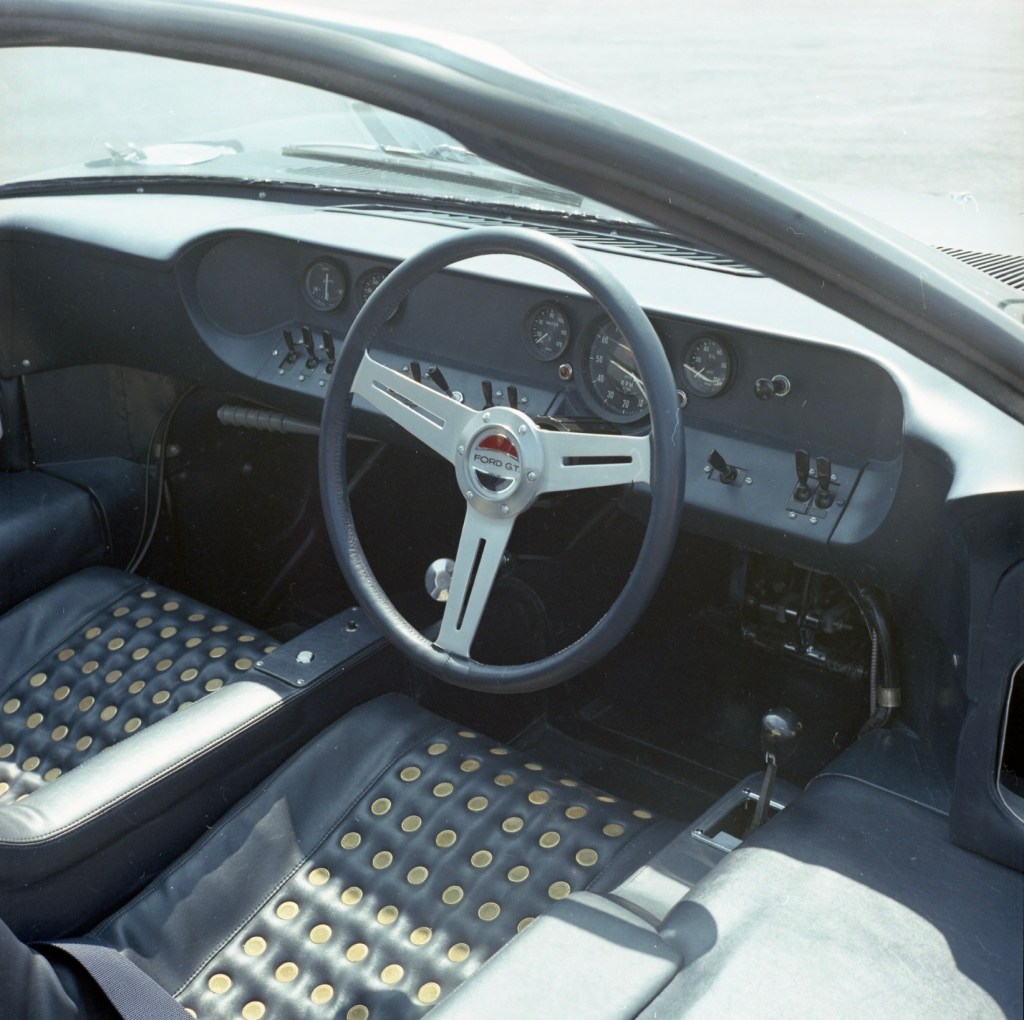
Driver ergonomics were very much to the fore. The top off each door was cut deeply into the roof. Once the driver cleared the wide-sill of the RHD, right-hand shift machine, he popped his arse into a light, fabric, perforated seat fixed in location; the pedals were adjustable.

I’m not sure if the 12 prototypes were built in this manner, but Denis Jenkinson described the GT40 production process in MotorSport as follows.

“The steel body chassis unit, made by Abbey Panels, of Coventry arrives in Slough in a bare unpainted form. Front and rear subframes are fitted, for carrying body panels etc, and then the unit goes to Harold Radford Ltd, where the fibreglass doors, rear-engine hatch which forms the complete tail, and front nosepiece, which is a single moulding, are cut-and-shut to fit the chassis/body unit, these panels then being marked and retained for the car in question. The fibreglass components are made by Glass Fibre Engineering of Farnham, Surrey and then delivered to Slough in the bare unpainted state. When the chassis/body unit is returned from Radfords the factory at Slough then assembles all the suspension parts, steering, wiring, engine, gearbox and so on, the final car being painted in the particular colour required by the customer.”

Checkout this evocative piece at Abbey Panels and Le Mans…

Many thanks for the tip-off Tony Turner!

1964 Season…

Given the lack of development time before the GT40 was raced, the initial races were pretty much a disaster.

Ford lost #101 (Schlesser) during the Le Mans test, while Salvadori gave #102 a gentle run, they were 12th and 19th quickest.

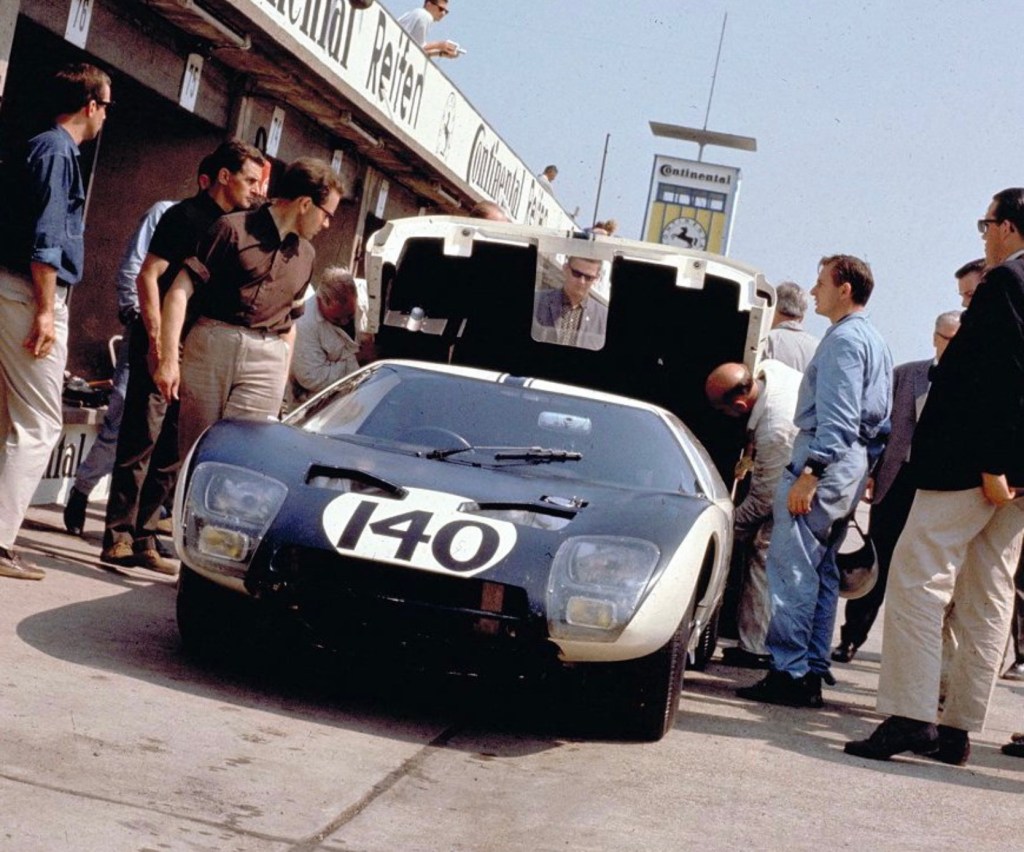
Six weeks later #102 contested the Nurburgring 1000km with a modified front clip manned by vastly experienced racer/engineers, Bruce McLaren and Phil Hill. Bruce was the lead test-driver on the GT40 programme. They qualified the car second behind the Ferrari 275P of John Surtees and Lorenzo Bandini. Phil ran between second and fourth in his stint but the car was retired with suspension damage early after Bruce took the wheel.

Broadley in brown, McLaren in blue, #102 in white. Nurburgring 1000km 1964 (unattributed)
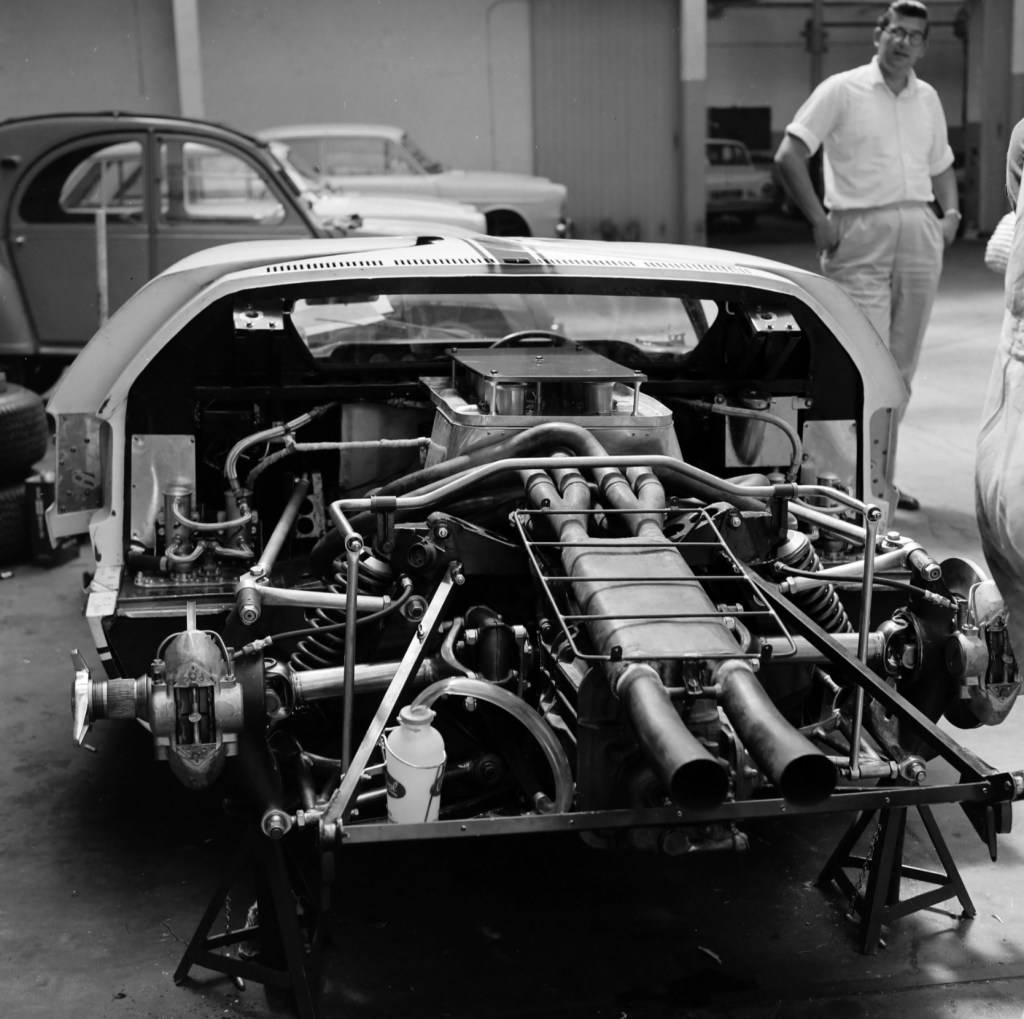
Business end of one of the GT40s at Reims in 1964 (MotorSport)
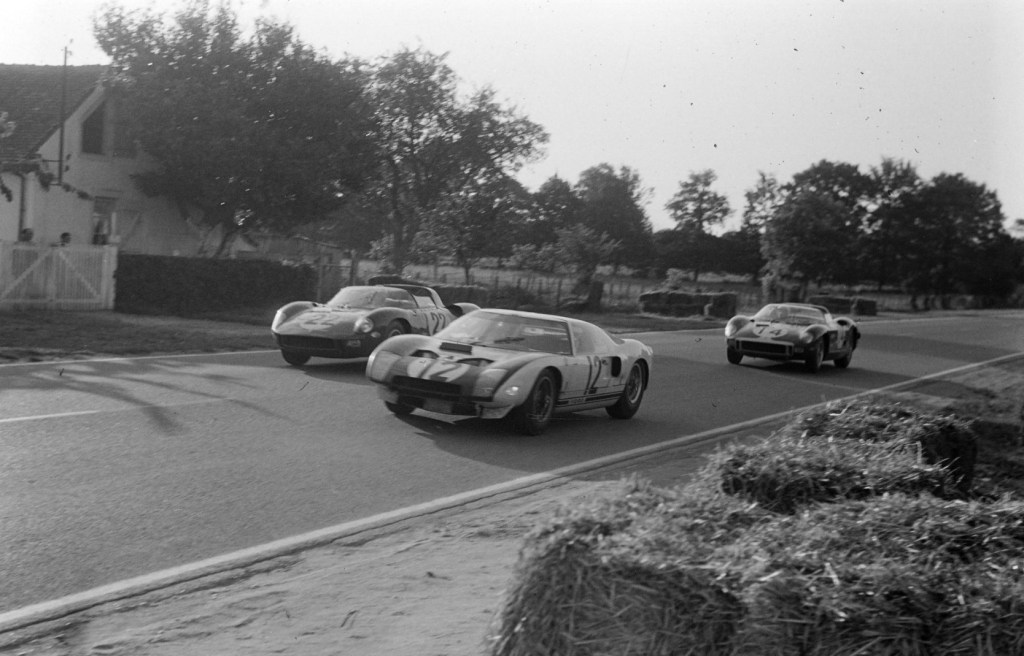
Le Mans 1964. Attwood/Schlesser GT40 from the Baghetti/Maglioli, Ferrari 275P and Bonnier/Hill Ferrari 330P (MotorSport)

At Le Mans three cars were entered for Hill/McLaren, Richie Ginther/Masten Gregory and Richard Attwood/Schlesser. While Ford set a lap record, all three cars retired; the Attwood car caught fire, with both other cars retiring with gearbox failure.

The two cars that appeared at the Reims 12 Hours a fortnight after Le Mans were #102 and #103, plus a new car, #105, powered by Shelby prepared 289 V8 giving about 390bhp at a lower 6750rpm – 341lb-ft of torque was up too. New third-fourth selectors were fitted to the Colotti ‘boxes, and the dog-rings hardened. The Surtees/Bandini Ferrari 250LM started from pole, but by lap 10 the Ginther GT40 led McLaren. Richie’s lead ended with crown wheel and pinion failure on lap 34, Atwood’s with a plug that had come out of the gearbox, while the Hill/McLaren car blew its engine.

Chassis 103 and 104 were then raced in the Nassau Speed Week by Hill and McLaren fitted with 289 V8s (4.7-litres). Only Phil made it through the Nassau Tourist Trophy qualifier, Bruce had suspension problems in 104. Hill’s car suffered the same fate in the feature race.

Without a finisher in four meetings, chassis #103 and #104 were shipped to Shelby American in California. “The decision was made in Dearborn to move the (development) work back back to the US, with Carroll Shelby given operational control and Lunn engineering control.” Ford’s website records.

Over that autumn and winter an intensive development programme together with with FAV produced a race winner, not a Le Mans winner mind you, but that would come soon enough…

And what happened to #101 you ask?…

The car’s odometer recorded only 465 miles at the time of its death. It was written off with many parts salvaged…the monocoque may have been repaired and renumbered. Ford has never released the details of what became of the various components, not least the all-important chassis. There is a replica of course, no point letting a vacant chassis number go to waste, it won an award at Pebble Beach, so I guess it’s a very shiny one.

Etcetera…

(FoMoCo)

(FoMoCo)

‘Total Performance’, ‘Going Ford is The Going Thing’, and the rest.

I lapped it all up! What was not to love about a global transnational with such commitment to motor racing in every sphere? From Formula Ford to Formula 1, Bathurst to Brands Hatch and the high banking of Daytona to the Welsh forests…God bless ‘em I say.

#102 and #101, Salvadori and Schlesser, Le Mans test weekend, April 1964 (unattributed)
(FoMoCo)
(FoMoCo)
(FoMoCo)

Credits…

Ford Motor Company, corporateford.com, MotorSport Images

Tailpiece…

(MotorSport)

If Enzo started it all by ending negotiations with Ford, Eric Broadley finished it, unintentionally.

His Lola Mk6 Ford GT was so late for Le Mans that Eric sent drivers Richard Attwood and David Hobbs ahead and he drove the car to La Sarthe. What a road car…

The two Brits raced it as it arrived at the track; there were no alternative springs, bars or ratios. A missed shift by Hobbs of the tricky Colotti box ended their race too.

Eric Broadley bet-the-farm on that brilliant car but it paid off rather well!

Finito…

(MotorSport)

The victorious Olivier Gendebien/Phil Hill 4-litre Ferrari 330 TRI/LM V12 chassis # 0808 blasts through The Esses on the way to victory at Le Mans over the June 23-24, 1962 weekend.

Ferrari finished 1-2-3 in a dominant display. The one-off car of the Belgian/American duo completed 331 laps with Pierre Noblet’s Ferrari 250GTO five laps in arrears, the driving duties shared with Jean Guichet. In third was the Leon Dernier/Jean Blaton Equipe National Belge entered 250 GTO on 314 laps.

In fourth and fifth place, best of the rest, were two of the new Jaguar E-Type Lightweights, Briggs Cunningham and Roy Salvadori in an open drophead, and Peter Lumsden and Peter Sargent aboard the latter’s coupe.

Superb weather to start the race. Paddy Hopkirk in the Sunbeam Alpine he shared with Peter Jopp (DNF) with Leon Dernier in the third placed Ferrari 250 GTO alongside (MotorSport)
330 TRI/LM in 1962 (MotorSport)

When the CSI created a new 4-litre GT class for 1962, the ACO were keen to retain big-open sportscars to draw the crowds, so they adopted an ‘experimental’ class of 4-litres as well. Ferrari built one final variant of its long running, successful Testa Ross series and ‘threw the keys’ to their most experienced endurance pairing, the Gendebien/Hill duo who had won at La Sarthe in 1958 aboard a Ferrari TR/58, and in 1961 with a Ferrari 250 TRI/61. Gendebien was also victorious in 1960, sharing his Ferrari 250 TR59/60 with Paul Frere. See here for this feature about Olivier: https://primotipo.com/2014/10/29/olivier-gendebien-sports-car-ace/

Olivier Gendebien practising the mid-engined Ferrari 268 SP during the Targa weekend in May 1962. The car didn’t start after Phil Hill ran off the road in practice when the throttle jammed open (MotorSport)

The Maranello mob had been focusing their energies on new fangled mid-engined Dino V6 and V8 sportscars (above), but rightly figured they may be able to squeeze one more win out of old hardware. In so doing the Ferrari 330 TRI/LM #0808 – the design of which was commenced by Carlo Chiti and finished by Mauro Forghieri after the ‘Maranello Palace Coup’ – became the last front-engined car to win the 24 hour classic outright.

(MotorSport)

The 1962 Le Mans winner (above) started life as 250 TRI/60 chassis, #0780TR, a Fantuzzi Spyder that was badly damaged by Cliff Allison at the Targa Florio in March 1960 when he had a front tyre blowout in practice. Back at Maranello it was rebuilt from bits donated by the wrecked 250 TR59/60 #0772TR, then raced at Le Mans. Willy Mairesse and Richie Ginther drove the car but retired with a broken driveshaft on the Sunday morning.

#0780 was then returned to the factory and fitted with a TRI/61-style high rear body incorporating a Kamm tail, the front was unchanged. In this form it was used as an aerodynamic test-bed by Carlo Chiti and Giotto Bizzarini to develop the definitive ’61 TRI body.

The Mairesse/Parkes Ferrari 250 TRI/61 chassis #0780 on the way to second place at Le Mans in 1961. This swoopy, sensational car was torn down and donated much of its parts except engine, chassis, body, etc (sic) to create 330 TRI/LM #0808 (MotorSport)

The car was raced extensively in 1961, placing second at Sebring (Giancarlo Baghetti, Ginther, Taffy von Trips) and at Targa where it was crashed. The car was fitted with another TRI/61 nose before finishing second at the Nurburgring 1000Km driven by the Rodriguez brothers, Ricardo and Pedro. A late pitstop to replace a broken front wheel lost the NART entered car a chance to win. Mairesse and Mike Parkes raced it at Le Mans, finishing second behind the winning sister, works Gendebien/Hill Testa Rossa. The chassis finally bagged an overdue win when Lorenzo Bandini and Georgio Scarlatti won the Pescara 4 Hours late in the year.

Gendebien, Le Mans 1962 (MotorSport)
#0808 at Le Mans in 1962, Tipo 163 4-litre circa 390bhp SOHC V12 (MotorSport)

Convinced that one of their big front-engined TRs could still do the trick, #0780 was torn down and rebuilt around a new chassis – #0808 – and a Tipo 163 Colombo 4-litre SOHC, two-valve V12. The dry-sumped, 60 degree, 3967cc (77×71 mm) engine had Testa Rossa cylinder heads incorporating bigger valves. Fed by six twin-choke Weber 42DCN carbs, it gave about 390bhp @ 7500rpm, 50bhp more than the 250TR unit. The five speed gearbox was modified to take the extra power and torque.

The new chassis was a more sophisticated mix of the traditional ladder frame, and multi-tube spaceframe. It was 63mm longer than the 250’s, in part this was to accommodate the slightly longer engine and to improve overall balance. Suspension design was a carryover from the 250; upper and lower wishbones, coil springs and Koni dampers both front and rear. Steering was by way of worm and sector.

Nice shot showing the the rear aero/roll bar of #0808 in 1962, whereas the shot below is of the cockpit 12 months hence at Le Mans, with the aero structure removed by NART (MotorSport)
(MotorSport)

Wheels/tyres were Borrani wire/Dunlop-6×16 inch and 7x16inch front/rear, brakes were Dunlop disc front and rear, front/rear tracks 1225mm, the wheelbase 2400mm – same as the short-block – and weight quotes vary from 685Kg to 820Kg!

To cap it all off, Carozzeria Fantuzzi built a new, Pininfarina designed body. It was developed with the aid of Ferrari’s small wind tunnel installed in 1960, and incorporated an aerodynamic roll hoop which served to aid the flow of turbulent air caused by the cockpit/windscreen, and therefore improved high speed stability.

#0808 first appeared at the Le Mans test in April driven by the defending winners, Gendebien and Hill. It recorded fastest time of the day despite damp conditions and being fitted with only three Webers, so wasn’t raced in the following enduros, but was rather developed at the factory and one test session at Monza before dominating Le Mans.

The off, Le Mans 1962. From left, the McLaren/Hansgen Maserati T151 Coupe, the winning Gendebien/Hill Ferrari 330 TRI/LM, #3 white Kimberley/Thompson Maserati T151 Coupe, #9 Sargent/Lumsden Jaguar E-Type Coupe Lwt, #23 Tavano/Simon Ferrari 250 GTO and #12 Kerguen/Dewez Aston Martin DB4 GT Zagato (MotorSport)
Phil Hill up, #0808 Le Mans 1962 (MotorSport)

It wasn’t a complete cakewalk though. Hill broke Mike Hawthorn’s long-standing 1957 lap record (4-litre Ferrari 335S Spyder) in practice by over two seconds (3:55.1) but both drivers experienced a slipping clutch all weekend. This had to be managed by precise ‘changes and using a taller gear than optimal, neither driver expected it to last the race.

The major potential opposition comprised a mix of other Ferraris, three 3.9-litre, 360bhp V8 engined Maserati Tipo 151s entered by Briggs Cunningham and the works 4-litre, 330bhp Aston Martin DP212.

The 330 TRI led the first hour from Graham Hill in the Aston DP212 and three Maserati 151s of Bill Kimberley, Maurice Trintignant and Bruce McLaren. After the first round of pitstops, the Rodriguez’ better handling Dino was soon up to second, while Phil Hill broke Hawthorn’s race lap record in the third hour.

Two Maseratis retired during the night – Thompson and McLaren – while the two Ferraris swapped the lead with the leading 250 GTO, Noblet’s in third.

Sunday dawned sunny with 33 of the 55 starters still running. Ferrari were looking good but the Rodriguez’ Dino broke its final drive at about 4.45am allowing Gendebien and Hill to be gentler still, albeit Olivier had a big moment avoiding a dawn-light spinner.

Positions remained static for the last four hours with Hill/Gendebien a comfy five laps ahead of the Noblet/Guichet GTO and the similar Dernier/Blaton machine. Only four of the 15 Ferraris finished the race but they were four of the top six!

Phil takes the chequered flag (MotorSport)
Gendebien and Hill (MotorSport)

Don Rodriguez acquired the car after the race, with Pedro driving the NART prepared car – now devoid of roll hoop which Chinetti didn’t consider aerodynamic – to a Bridghampton GP win and second place in the Canadian GP in late ’62. After Ricardo Rodriguez was killed during unofficial practice over the Mexican GP weekend (right-rear suspension failure aboard a Rob Walker Lotus 24 Climax), Masten Gregory raced #0808 to fourth in the Nassau Trophy.

Into 1963, Pedro and Graham Hill raced the car to third at Sebring behind two new, mid-engined 3-litre V12 Ferrari 250Ps. At one stage the 330 led by three laps until a combination of mechanical, electrical and exhaust manifold problems intervened.

Graham Hill, #0808 at Sebring in 1963 (L Galanos)
Pedro Rodriguez during a pitstop at Le Mans in 1963 (unattributed)
Roger Penske, Le Mans 1963, NART 330 TRI/LM (MotorSport)

NART entered the car at Le Mans to defend its title. Pedro and Roger Penske started from pole, then trailed the works 250Ps until a conrod failed during the ninth hour. Lubricant on tyres can be a lethal mix, Penske lost the car and took Jo Bonnier’s Porsche 718/8 GTR out in the ensuing prang which left Roger uninjured but #0808 severely damaged, never to be raced again.

Returned to the factory for repair, the car was fitted with a Fantuzzi coupe body (below) and returned to the US where it was purchased by Hisashi Okada who used it as roadie from 1965 to 1974. Pierre Bardinon used it similarly briefly, until commissioning Fantuzzi to return it back to ’62 specs in 1974-75. It continues its life as global investment commodity today.

Scrappy, crappy shot of #0808 in Fantuzzi coupe guise circa 1963 (Wikipedia)
Le Mans 1963 (MotorSport)

Etcetera…

(MotorSport)

The Mairesse/Parkes 250 TRI/61 #0780 – the 330 TRI donor car – with a touch of the opposites at Le Mans in 1961.

(MotorSport)

“The clutch Mauro, the clutch…”, “Treat it like your girlfriend Pheel…very, very gently.” Or words to that general effect. Phil Hill at 36 was the reigning F1 World Champion, and Forghieri at 28 was Technical Director-Racing Cars, a position he held at Ferrari until 1984.

(MotorSport)

Works Scuderia Ferrari line up before the off at Le Mans in 1962. Tail of the 330 TRI, the Parkes/Bandini 330 LM/GTO DNF 56 laps, blocked radiator, then the almost totally obscured Dino 248 SP of Scarfiotti/Baghetti, DNF gearbox 230 laps, and then the #28 Rodriguez/Rodriguez Dino 246 SP, DNF gearbox after 174 laps.

1962 (Motorsport)
(MotorSport)

330 TRI/LM during 1962, feel the vibe, assistance with the corner names welcome folks.

(L Galanos)

Pedro Rodriguez 330 TRI/LM at Sebring in 1963, he shared the car with Graham Hill to third place.

(MotorSport)

Pedro Rodriguez and Roger Penske at Le Mans in 1963 above, and below in #0808, DNF engine.

(MotorSport)

Credits…

MotorSport Images, LAT, Wikipedia, Louis Galanos, F2 Index

Tailpiece…

(MotorSport)

Silhouette of a Shell sign as night falls, oh to have been there in 1962…

Finito…

image (Schlegelmilch)

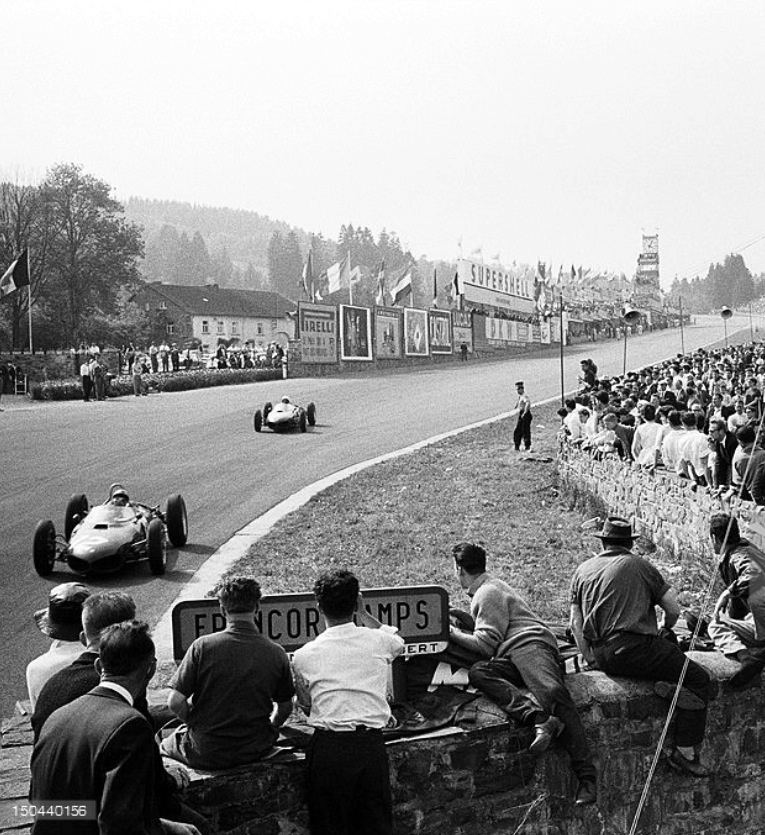
Phil Hill leads teammate Ricardo Rodriguez, both aboard Ferrari 156s, Belgian GP, 17 June 1962.

There was plenty of colour photography around by 1962 but monochrome is still rather powerful and evocative. The troops look more relaxed than the Ferrari pilots on the oh-so-fast turn into Eau Rouge, it always was and is an ultimate test of testicular girth.

Not a great season for Scuderia Ferrari in 1962 of course, the engine which kept the cars in front the season before – despite chassis deficiencies relative to the British cars – was no help in ’62 when said Brits had better Coventry Climax and BRM V8s than the Italian V6s and vastly superior chassis.

Here, Hill and Rodriguez are scrapping for third place in a season when the reigning 1961 World Champion, Hill P didn’t take a win, ceding the title to Hill G’s BRM.

Click here for the story of this race; https://primotipo.com/2014/12/21/ferrari-156-duet-ricardo-and-phil-spa-1962/

Credit…

Rainer Schlegelmilch

Finito…

(Terry Marshall)

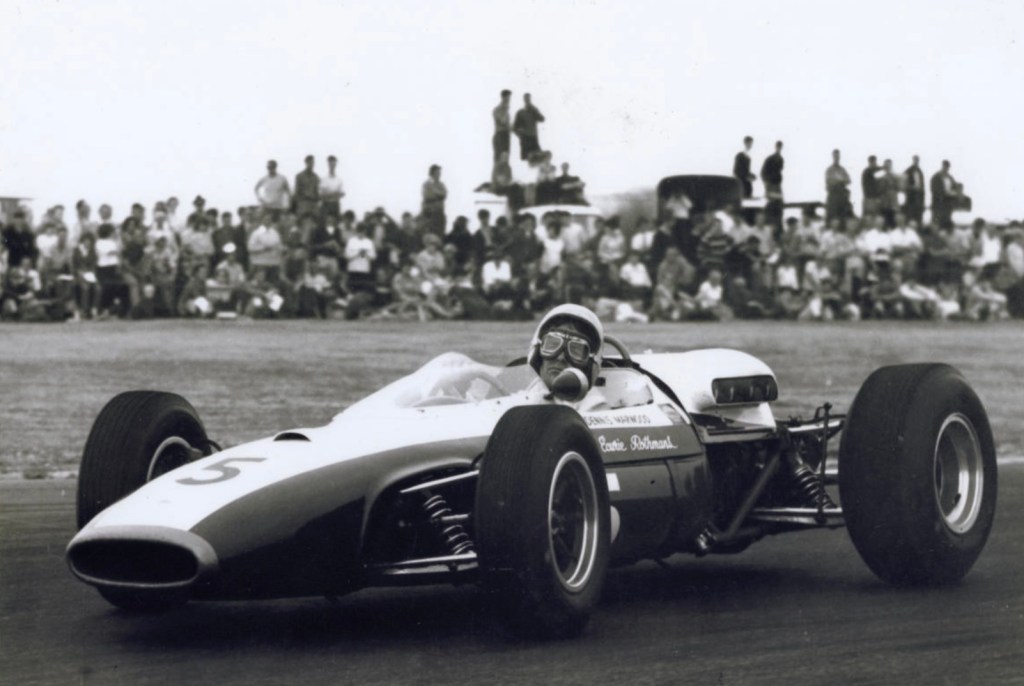
Dennis Marwood tries to focus on the job at hand while the 2.30pm Pukekohe-Auckland express rattles past: New Zealand Grand Prix, Pukekohe, January 8, 1966.

He did well too, placing his ex-works Cooper T66 Climax 2.5 FPF – chassis FL-6-63- fourth in the race won by Graham Hill, from Jackie Stewart aboard works BRM P261s, and Jim Palmer racing the ex-Clark Lotus 32B Climax.

Cooper’s best F1 days were well-past by 1963 when the spaceframe T66 was designed and built by Owen Maddock and his Surbiton team. An advance on the prior T60, the car was still a mid-grid machine despite being lighter, stiffer and slimmer. Driven by Bruce McLaren and Tony Maggs, McLaren’s second place at Spa was the team’s best result.

1964 was even grimmer, despite ’61 World Champ, Phil Hill, joining the squad. In a season of insufficient speed and lousy reliability, Bruce was seventh (5 retirements in 10 rounds), and Phil equal 19th in the World Drivers Championship. “Poor preparation, and indifferent engines supplied by Climax who now recognised Lotus as their major client and development partner, with Brabham next in line, cost them dear”, wrote Doug Nye.

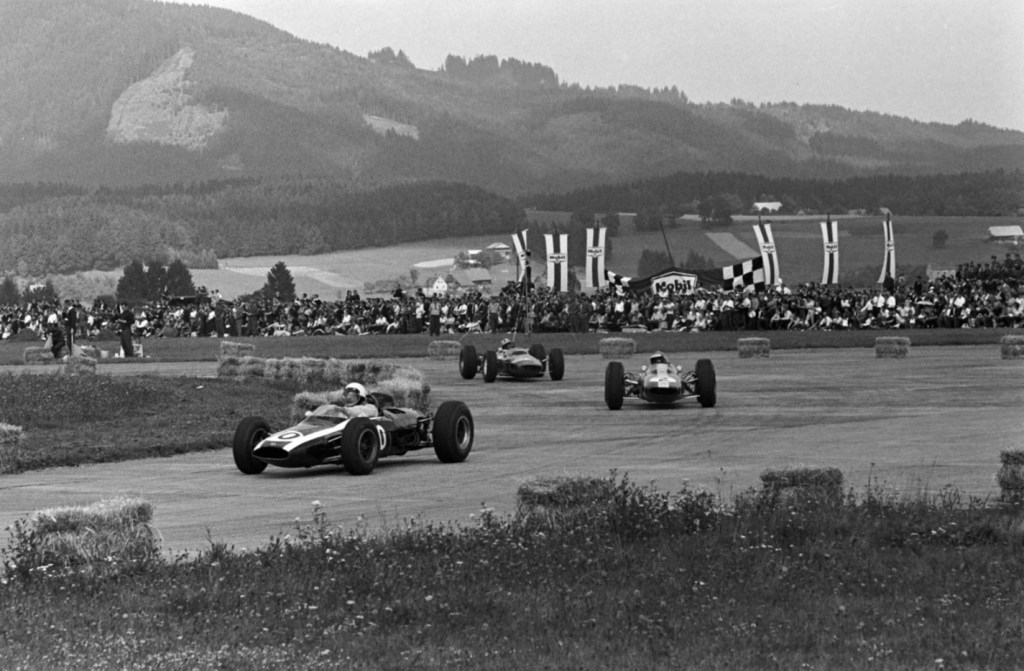
Zeltweg vista. Phil Hill leads Jim Clark’s Lotus 33 Climax and Chris Amon, Lola (MotorSport)
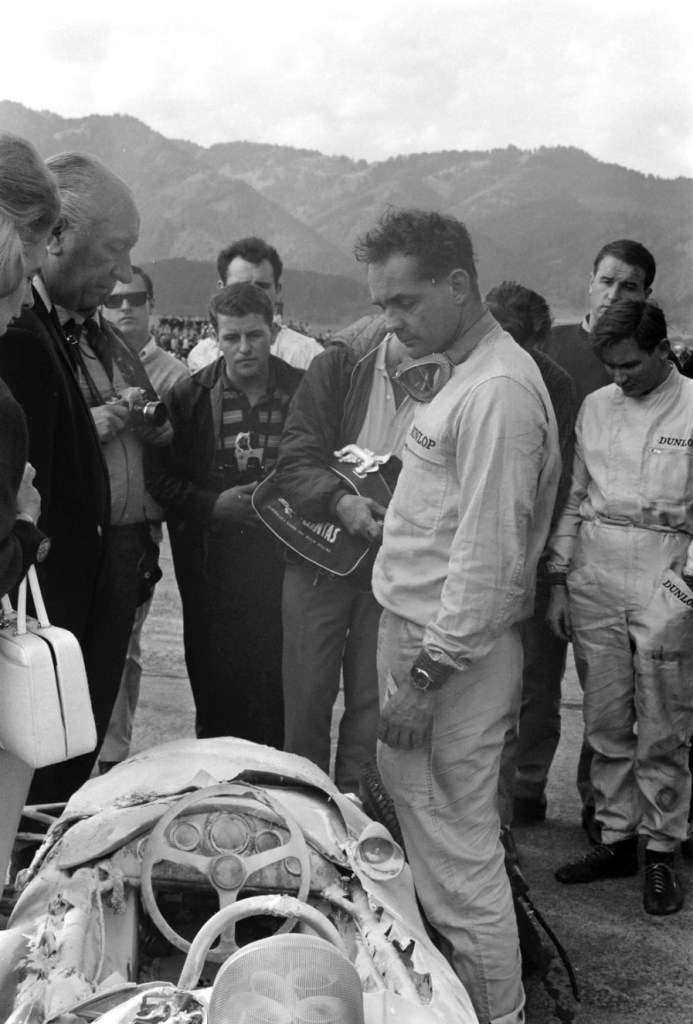
Ooooh-sheeeet and Holy Moses, or thoughts to that general effect. Phil examines his fried Cooper while Bruce McLaren tries not to think of John Cooper’s reaction. Wonder who the visitor with the Qantas travel bag is? (MotorSport)
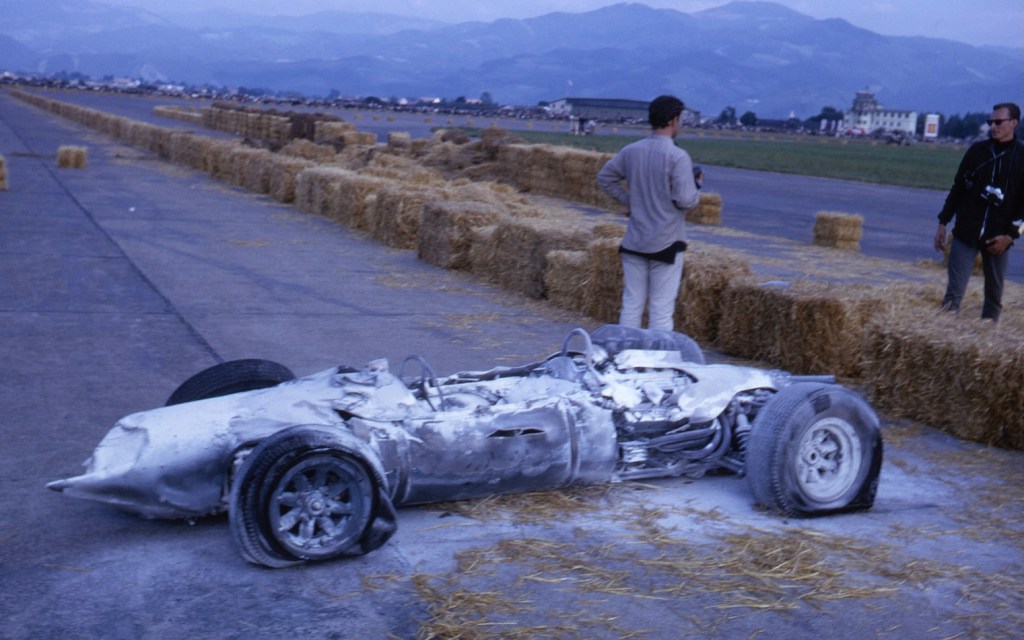
F1-6-63 doesn’t look too flash but chassis damage was minimal, so not too dramatic a repair for a crew of talented Kiwis…(socalclicker@esc)

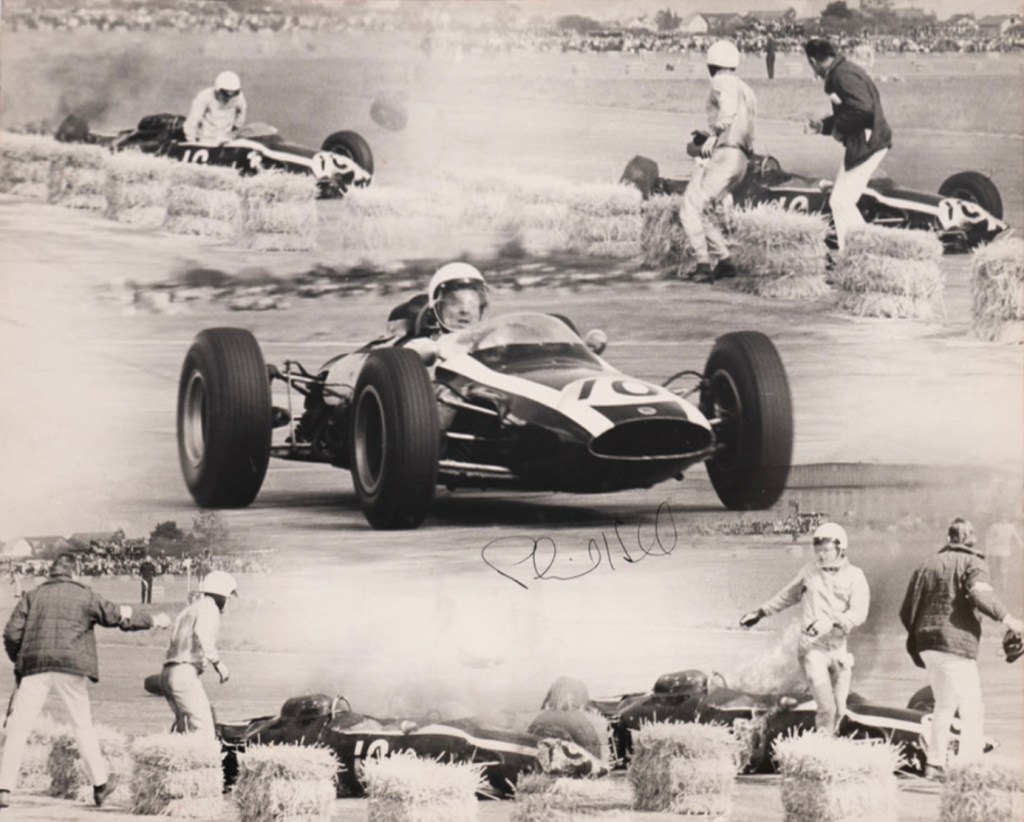
Phil’s nadir was on the Zeltweg aerodrome, Austrian GP weekend where he crashed his Cooper T73 during practice, then repeated the dose on the same corner in his replacement machine, T66 F1-6-63, during the race, albeit this time component failure may have been the cause.

The car struck the wall of straw bales on the entry to the runway section of the track, rear suspension collapsed, and caught fire. Phil escaped quickly, unscathed while the car burned to a crisp in a spectacular, frightening display of pyrotechnics. Up front Lorenzo Bandini’s Ferrari 158 won a race of constantly changing fortunes.

John Cooper fired Phil, but they later kissed-and-made up allowing Hill to finish an awful season. His confidence was restored with some stonking drives aboard a Bruce McLaren Racing Cooper T70 Climax during the ’65 Tasman Cup.

Oopsie, Bruce Abernethy deals with a Cooper T66 moment during the 1965 NZ GP at Pukekohe, while Ken Smith takes to the track fringes in avoidance, Lotus 22 Ford 1.5 – Kenny still racing and just turned 80. DNF for Bruce, 12th for Kenny, Graham Hill won in the Scuderia Veloce Brabham BT11A Climax (unattributed)

While the Cooper had been ‘thoroughly-heat-treated’, the chassis was ok, and was quickly bought by visiting Kiwi, Bruce Abernethy, who shipped it home. It was repaired and modified by Bill Hannah at his Havelock North workshop to take a Coventry Climax 2.5-litre FPF four-cylinder engine, for Tasman racing, rather than the 1.5-litre Climax FWMV V8 with which it was originally built.

Abernethy negotiated a deal whereby the car was owned and raced by the Rothmans Driver Promotion Scheme (later Ecurie Rothmans). The team overseen by Rothmans boss, Ken Simich, MANZ and Pukekohe chief Ron Frost, and former Kiwi ace, Ross Jensen.

Abernethy had a poor season and was replaced by Paul Fahey, he had some good drives in the car but decided touring cars were more his thing. In mid-1965, Morrisville dairy farmer, Dennis Marwood was tested, along with two other drivers, and got the gig.

Marwood aboard T66 F1-6-63 during the January 1966 Lady Wigram Trophy (motat.nz)
In the best of company, Marwood being lapped by Graham Hill, BRM P261 during the 1966 Lakeside 99

Despite a touring car background, Dennis took to the challenging open-wheeler like a duck-to-water in his first drive in November 1965. He was immediately on the pace of the front-running locals in Gold Star events; second at Pukekohe in December.

During the ’66 Tasman Cup, his best results were a pair of fourths at Pukekohe and Teretonga from six races, including the Lakeside and Warwick Farm Australian rounds. Later that year he won the Pukekohe and Renwick Gold Star events – and again at Timaru in 1967, but reliability and budget issues got in the way of results. The team had only one, old FPF and suggestions to ‘buy some new tyres’ were rebuffed by Jensen.

Dennis aboard the Rothmans Cooper during the Pukekohe reverse-direction meeting, September 1966 (J Inwood)

Rothmans considered purchase of a more competitive 2.1-litre ‘Tasman’ BRM P261 V8 – mighty quick machines – but decided they had had enough and sold the car to Peter Maloney.

Marwood went into business with Ray Stone, in South Auckland based Performance Developments, and a stellar career in single-seaters and big tourers. Click here for more on Dennis; Tasman Cup F5000 Racing – Dennis Marwood – Jim Barclay

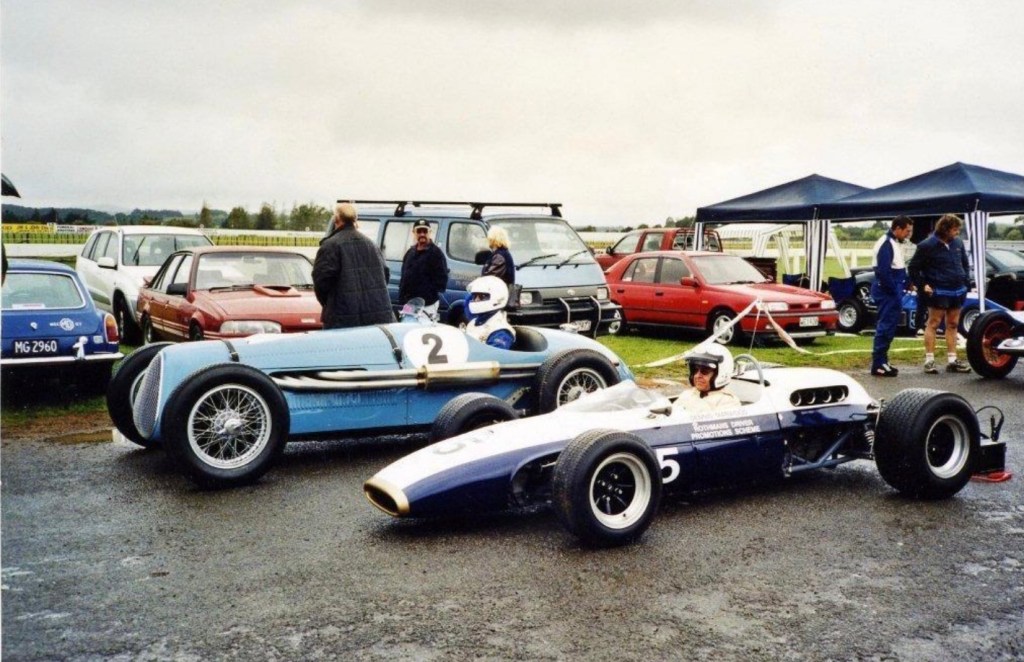
T66 F1-6-63 was restored and lives a sedentary life in New Zealand. Dennis Marwood (below) reunited with his old car, at Pukekohe in April 2009. Bob Harborow is alongside in the John Sheppard built Maybach 1 Replica, winner of the 1954 NZ GP in Stan Jones’ hands.

(jimbarclay.nz)

Etcetera…

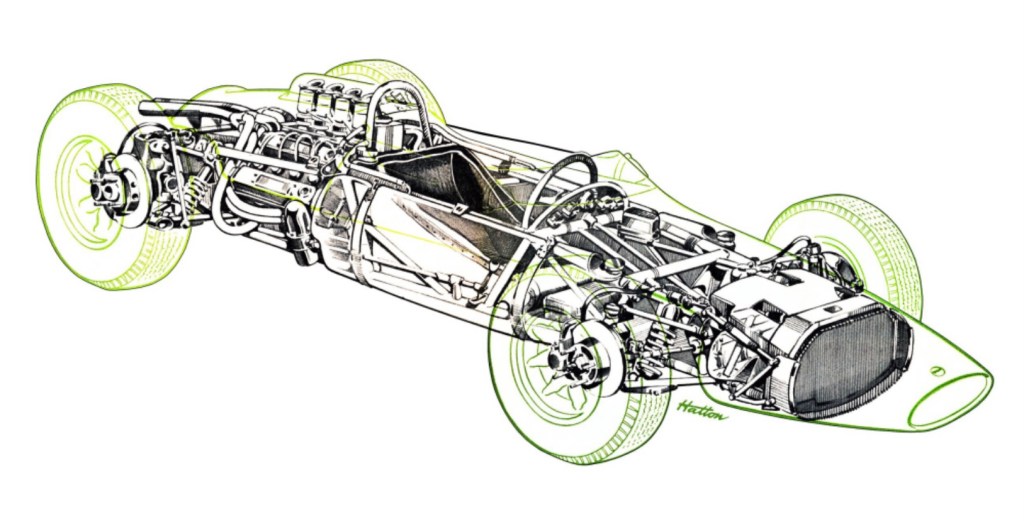
Cooper T66 Climax FWMV V8 cutaway (B Hatton)

The Cooper T66 chassis remained a spaceframe despite the monocoque onslaught around it, not that such technology was a barrier to ongoing Brabham success. Of multi-tubular construction, the frame comprised 1 3/8 and 1 1/2 inch 18-gauge steel tubing with smaller transverse and diagonal members, plus triangulation of the corners of the cockpit opening. Mild sheet steel reinforcement was welded to the floor section between the front and rear bulkheads.

Suspension used Alford & Alder (Triumph) uprights, upper and lower wishbones at the front, coil spring/dampers and adjustable roll-bar. The rear used cast magnesium uprights, fabricated upper and lower – wide based – wishbones, coil spring/dampers and adjustable roll-bar.

Brakes were Girling disc, 10.25 inches/9.75 inches in diameter front/rear. Cooper cast magnesium wheels were 13-inches in diameter and 6/7 inches wide front/rear.

The F1 engine was the ubiquitous Coventry Climax FWMV 1.5-litre, DOHC, two-valve, Lucas injected circa 200bhp V8. In Tasman spec the equally ubiquitous Climax FPF 2.5-litre, DOHC, two-valve, Weber 58DCO fed four gave about 235bhp. The transaxle was Cooper’s own C65 six-speed.

Credits…

Terry Marshall, Allan Dick in Classic Auto News, ‘History of the Grand Prix Car’ Doug Nye, Jack Inwood, Gooding & Co, socalclicker@esc, Museum of Transport and Technology, oldracingcars.com, jimbarclay.nz, Brian Hatton

Tailpiece…

(Gooding & Co)

Montage of Phil Hill’s Zeltweg accident and lucky escape. This mix excludes the mighty conflagration which followed once the fire took hold, aided and abetted by the hay-bales, there with safety in mind…

It was only when poor Lorenzo Bandini – winner of this race – perished in a gruesome firey accident aboard his Ferrai 312 during the 1967 Monaco GP that haybales were finally excluded from the standard suite of race organiser safety precautions.

Finito…

(Getty Images)

Evocative shot of Peter Collins in his Ferrari Dino 246, 1958 #246/002, during the July 1958 British Grand Prix at Silverstone.

He won the race by 24-seconds from Mike Hawthorn who took the World Drivers Championship that year, before perishing in ‘that’ road-dice with Rob Walker shortly thereafter.

I’ve done these cars to death, both front-engined F1 jobbies and their related mid-engined Tasman cousins, but another bunch of photos got the juices flowing again.

In an enthralling, tragic season, Luigi Musso died at Reims, then Peter Collins crashed fatally at the Nurburgring only weeks after Silverstone (in this same chassis) during the German Grand Prix. Vanwall, with whom Ferrari battled all year – winners of the Constructors Championship – also lost a driver at the season’s end when Stuart Lewis-Evans died of burns sustained at Ain-Diab in Morocco several days after the race.

(MotorSport)

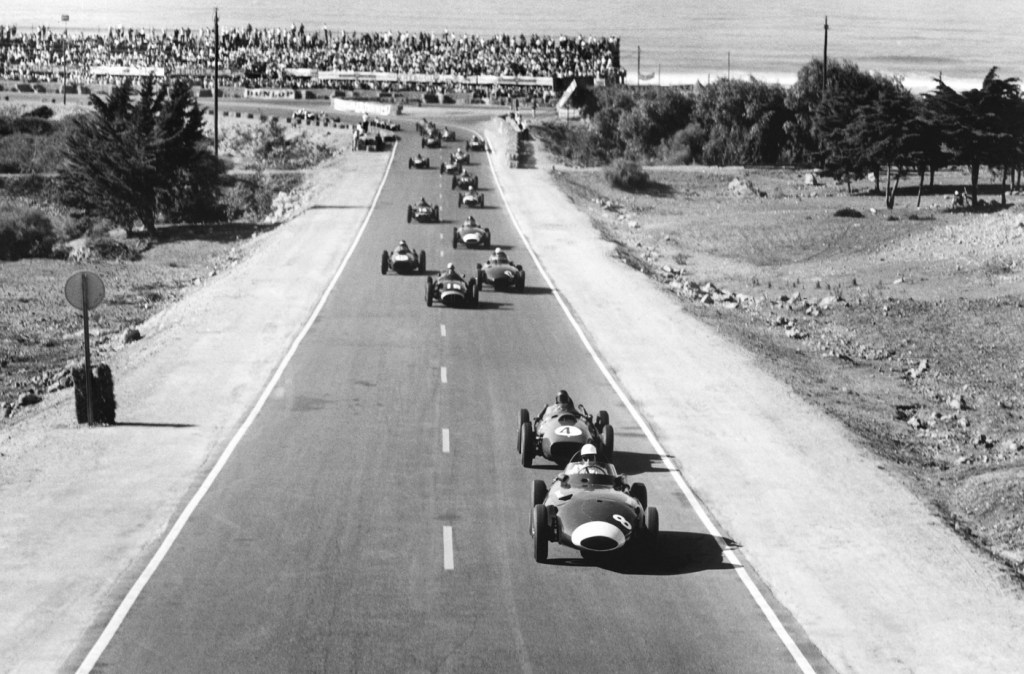
This Moroccan GP start-shot of Vanwall mounted Stirling Moss bolting away from a Ferrari, this time with Phil Hill at the wheel, says a lot about the rivalry between the teams during a year in which British F1 pre-eminence began. Vanwall and Cooper, to whom Tony Vandervell would pass the torch, were on the rise.

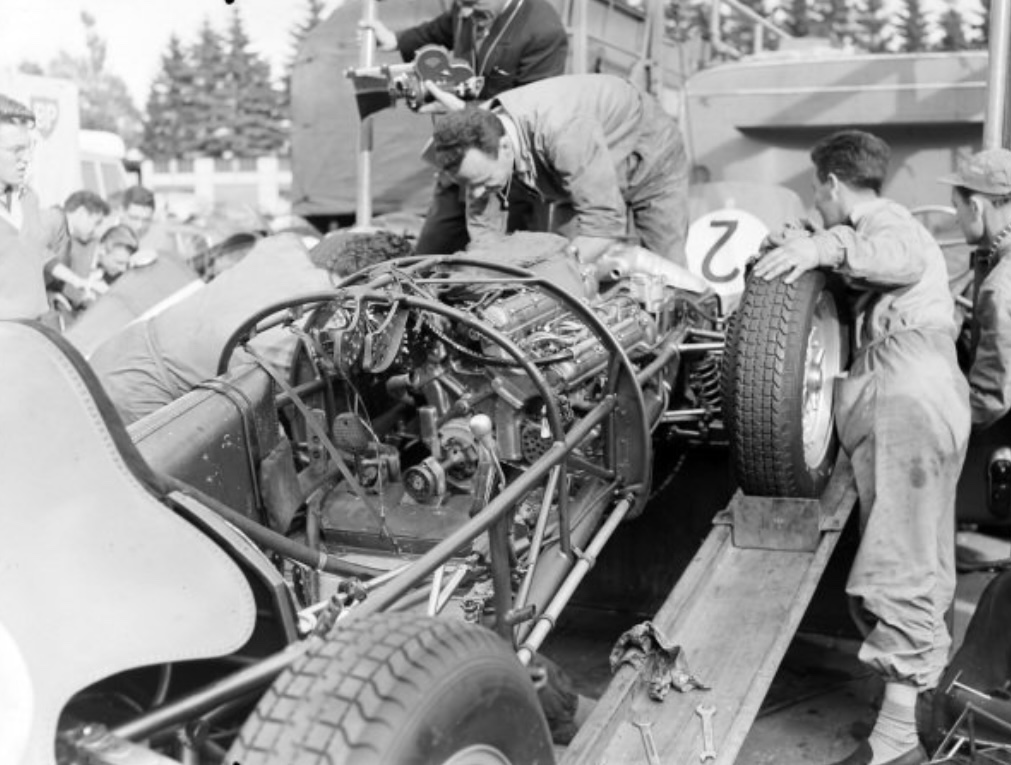
The shot below shows Hawthorn’s car (1958 #246/003) being attended to in the Silverstone paddock. Note the traditional twin-main tube Ferrari chassis, and subsidiary tubes, and powerful V6 engine canted to the right to allow the driveshaft to pass alongside the driver.

By contrast, the Vanwall had a Colin Chapman designed, light, multi-tubular spaceframe chassis, and far less sexy, but powerful, torquey, twin-cam, two-valve – same as the Ferrari – in-line four cylinder engine.

(MotorSport)
(MotorSport)

At the start of its life the Dino rear end (Collins’ car at Silverstone above) comprised a De Dion axle, transverse leaf-spring, twin radius rods, Houdaille shocks and drum brakes. By 1960 it was independent with coil springs, telescopic shocks and disc brakes, such was the relentless pace of change and level of competition wrought by the mid-engined Cooper T51 and Cooper T53 Climaxes in 1959-1960.

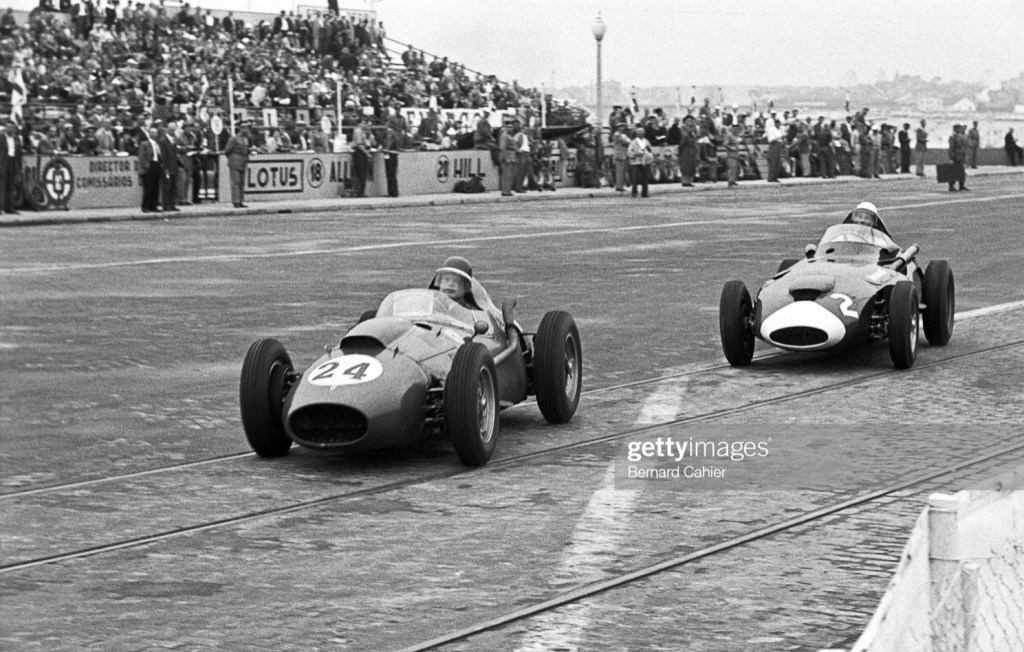
In late August, Hawthorn and Moss battle on the Boavista seafront in Portugal. Stirling won on the cobblestones by five seconds from Mike, settling up a nail-biting end to the season at Monza and Ain-Diab.

Brooks’ Vanwall won from Hawthorn at Monza, while Moss had a gearbox failure. In Morocco, Hawthorn put his car on pole from Moss, in the race the positions were reversed. Mike took the title by a point from Stirling in a season in which the best five placings were counted.

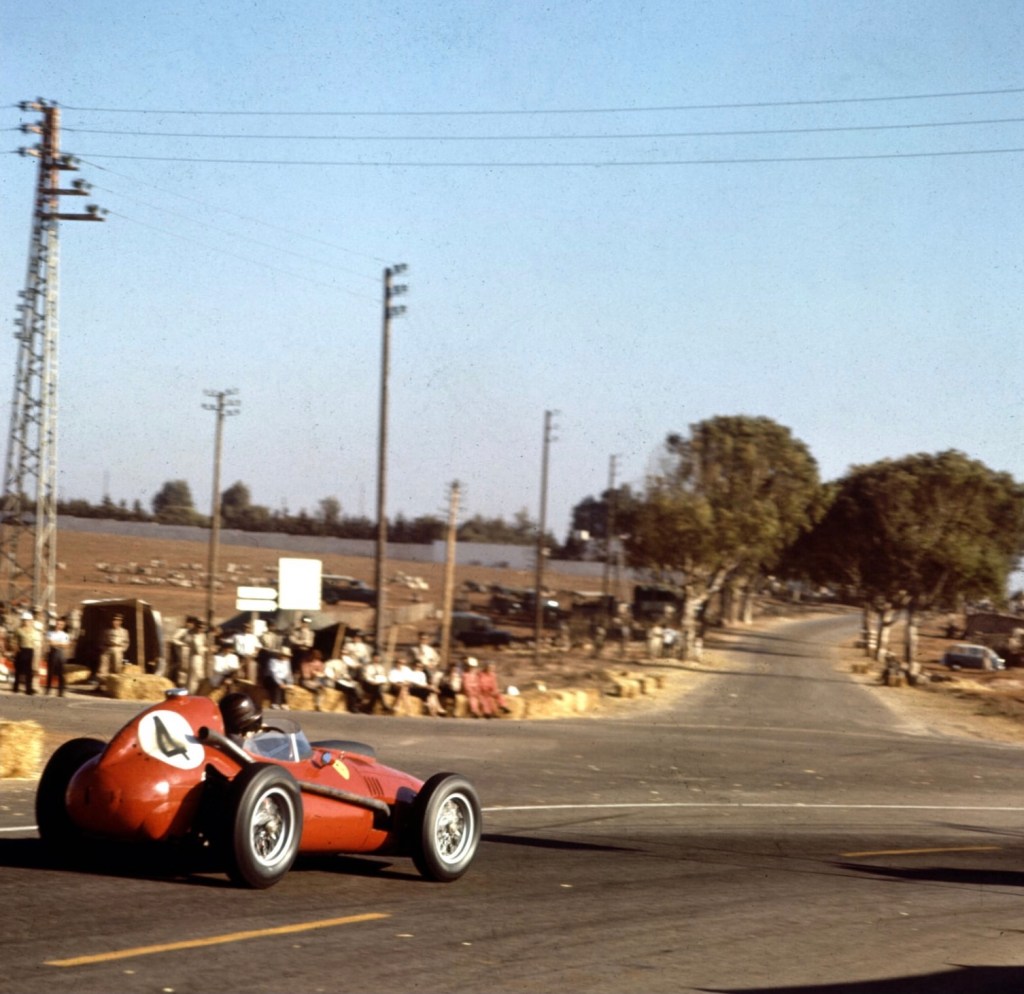
The stunning shot of Phil Hill below, hooking his Dino (1958 #246/004) into a right-hander in the wilds of Morocco shows all that was great – and incredibly dangerous – of Grands Prix racing compared with the (sometimes) between the white lines ‘car park’ F1 competition of today. Grand Prix Racing it ain’t…

(MotorSport)

Credits…

MotorSport and Getty Images

Finito…

(Theo Page)

Perhaps MG saved the best till last?

EX181 was the marque’s final record breaker, which commenced with the 1930/1 EX120…

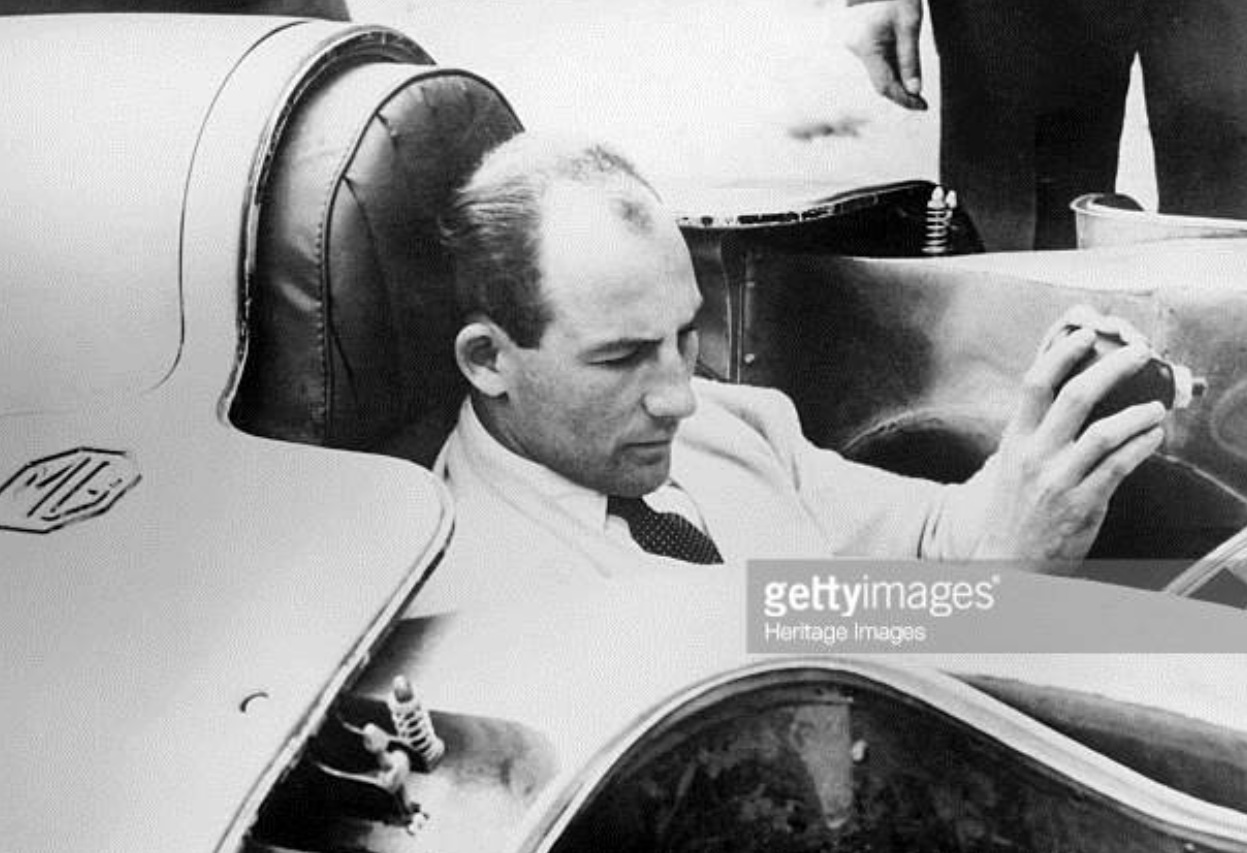
The famous company, in part built its brand very cost effectively by setting a number of Land Speed Records down the decades. Stirling Moss did 245.64 mph and 245.11 mph for the flying kilometre and flying mile respectively in August 1957, and Phil Hill 254.91 mph and 254.53 mph over the same distances in October 1959 with EX181’s engine increased in capacity from 1489cc to 1506cc- this allowed the sneaky Brits to bag both under 1500cc and under 2000cc records, both at Bonneville.

Twin inlets in the cars nose pushed air thru ducts either side of the driver and flow to the radiators, carb inlets, the engine and transmission- outlet ducts clear (unattributed)

The Roaring Raindrop was not just a teardrop shape known to give minimum aerodynamic drag at subsonic speeds- in side elevation it also had the cross section of an aerofoil to a wing section of Polish origin which was identified by MG Chief Engineer Syd Enever as ideal for the task. His theory was tested by Harry Herring in the Armstrong Whitworth wind tunnel.

The Morris Engines Experimental Department in Coventry developed an MGA twin-cam, two valve engine which had many trick lightweight competition internals ‘off the shelf’ and a massive Shorrock supercharger driven by a spur gear from the front of an extended crankshaft fed by two whopper 2.5 inch SU carbs. The fuel mix was one third each petrol, benzol and methanol.

The 1957 1489cc engine developed 290 bhp @ 7300 rpm and 516 lb/ft of torque @ 5600 rpm using 32 psi of boost. Cooling of the motor was achieved by the use of two curved radiators from an Avro Shackleton marine reconnaissance aircraft.

(mgaguru)


(mgaguru)

EX181 was built under the supervision of Terry Mitchell using a bespoke twin-tube chassis with MGA derived suspension at the front- wishbones, coil springs and lever arm hydraulic shocks and a de Dion rear setup deploying quarter elliptic leaf springs and again lever arm shocks.

Cooling for the single Girling disc brake was provided by a small hinged rear flap on the central spine of the machine aft of the cockpit, this popped  up when the driver pushed the brake pedal and also acted as an air brake.

The final essential element in the cars record breaking specification was Dunlop 24 inch diameter tyres capable of inflation to in excess of 100 psi.

Snug in there, Moss Bonneville 1957

Etcetera…

(S Dalton Collection)

Credits..

Autocar, Theo Page, MotorSport article August 2008, mgaguru.com, Stephen Dalton Collection

Tailpiece: Phil Hill, EX181 Bonneville, 1959…

(unattributed)

Finito…


The way it was.

Pat Hoare’s Ferrari 256 V12 ‘0007’ as despatched by Scuderia Ferrari in early 1961…

It was just another chassis after all, Enzo Ferrari was not to know that Dino 256 ‘0007’ would be, so far at least, the last front engined championship Grand Prix winner, so it seemed perfectly logical to refashion it for a client and despatch it off to the colonies. Not that he was an historian or sentimentalist anyway, the next win was far more important than the last.

This story of this car is pretty well known and goes something like this- Phil Hill’s 1960 Italian GP winning Ferrari Dino 256 chassis ‘0007’ was the very last front-engined GP winning machine- a win made possible due to the sneaky Italian race organisers running their GP on the high-speed banked Monza circuit to give Ferrari the best possible chance of winning the race- by that time their superb V6 front engined machines, even in the very latest 1960 spec, were dinosaurs surrounded as they were by mid-engined, nimble, light and ‘chuckable’, if less powerful cars.


Hill and Brabham- 256 Dino ‘0007’ and Cooper Climax T53 and during Phil and Jack’s titanic dice at Reims in 1960 (Motorsport)


Phil on the Monza banking, September 1960, 256/60 Dino ‘0007’

Pat Hoare bought the car a couple of months after that win with the ‘dinky’ 2474cc V6 replaced by a more torquey and powerful 3 litre V12 Testa Rossa sportscar engine.

After a couple of successful seasons Hoare wanted to replace the car with a 1961/2 mid-engined ‘Sharknose’ into which he planned to pop a bigger engine than the 1.5 litre V6 original- but he had to sell his other car first. Enzo didn’t help him by torching each and every 156 mind you. Despite attempts to sell the 256 V12 internationally there were no takers- it was just an uncompetitive front-engined racing car after all.

Waimate 50 11 February 1961, Pat was first from Angus Hyslop’s Cooper T45 Climax and Tony Shelly’s similar car (N Matheson Beaumont)


Pat Hoare, Ferrari Bob Eade, in the dark coloured ex-Moss/Jensen/Mansel Maserati 250F Dunedin February 1962. Jim Palmer, Lotus 20 Ford won from Hoare and Tony Shelly, Cooper T45 Climax (CAN)

Unable to sell it, Hoare had this ‘GTO-esque’- ok, there is a generosity of spirit in this description, body made for the machine turning it into a road car of prodigious performance and striking looks- the artisans involved were Ernie Ransley, Hoare’s long-time race mechanic, Hec Green who did the body form-work and G.B McWhinnie & Co’s Reg Hodder who byilt the body in sixteen guage aluminium over nine weeks and painted it. George Lee did the upholstery.

Sold to Hamilton school teacher Logan Fow in 1967, he ran it as a roadie for a number of years until British racer/collector Neil Corner did a deal to buy the car sans ‘GTO’ body but with the open-wheeler panels which had been carefully retained, the Ferrari was converted back to its V6 race specification and still competes in Europe.

Low took a new Ferrari road car, variously said to be a Dino 308 or Boxer in exchange, running around Europe in it on a holiday for a while but ran foul of the NZ Government import rules when he came home and had the car seized from him by customs when he failed to stump up the taxes the fiscal-fiends demanded- a sub-optimal result to say the least.

Allan Dick reported that the Coupe body could be purchased in Christchurch only a couple of years ago.

Hoare aboard the 256 Coupe at Wigram circa 1964 (Graham Guy)

The guts of this piece is a story and photographs posted on Facebook by Eric Stevens on the ‘South Island Motorsports’ page of his involvement with Pat Hoare’s car, in particular its arrival in New Zealand just prior to the 1961 New Zealand Grand Prix at Ardmore that January.

It is a remarkable insiders account and too good to lose in the bowels of Facebook, I am indebted to Stephen Dalton for spotting it. Eric’s wonderful work reads as follows.

The Arrival of Pat Hoare’s second Ferrari…

‘…that Pat Hoare could buy the car was not a foregone conclusion. Ferrari sent him off for test laps on the Modena circuit in one of the obsolete Lancia D50 F1 cars. Probably to everyone’s surprise., Pat ended up, reputedly, within about 2 seconds of Ascari’s lap record for the circuit.’ (in that car for the circuit)

‘The Ferrari was schedued to be shipped to New Zealand in late 1960 in time to be run in the 1961 Ardmore NZ GP, in the event the whole program seemed to be running dangerously late. The first delay was getting the car built at the factory. Then, instead of just a few test laps around Modena, the car became embroiled in a full scale tyre testing program for Dunlop on the high speed circuit at Monza.’

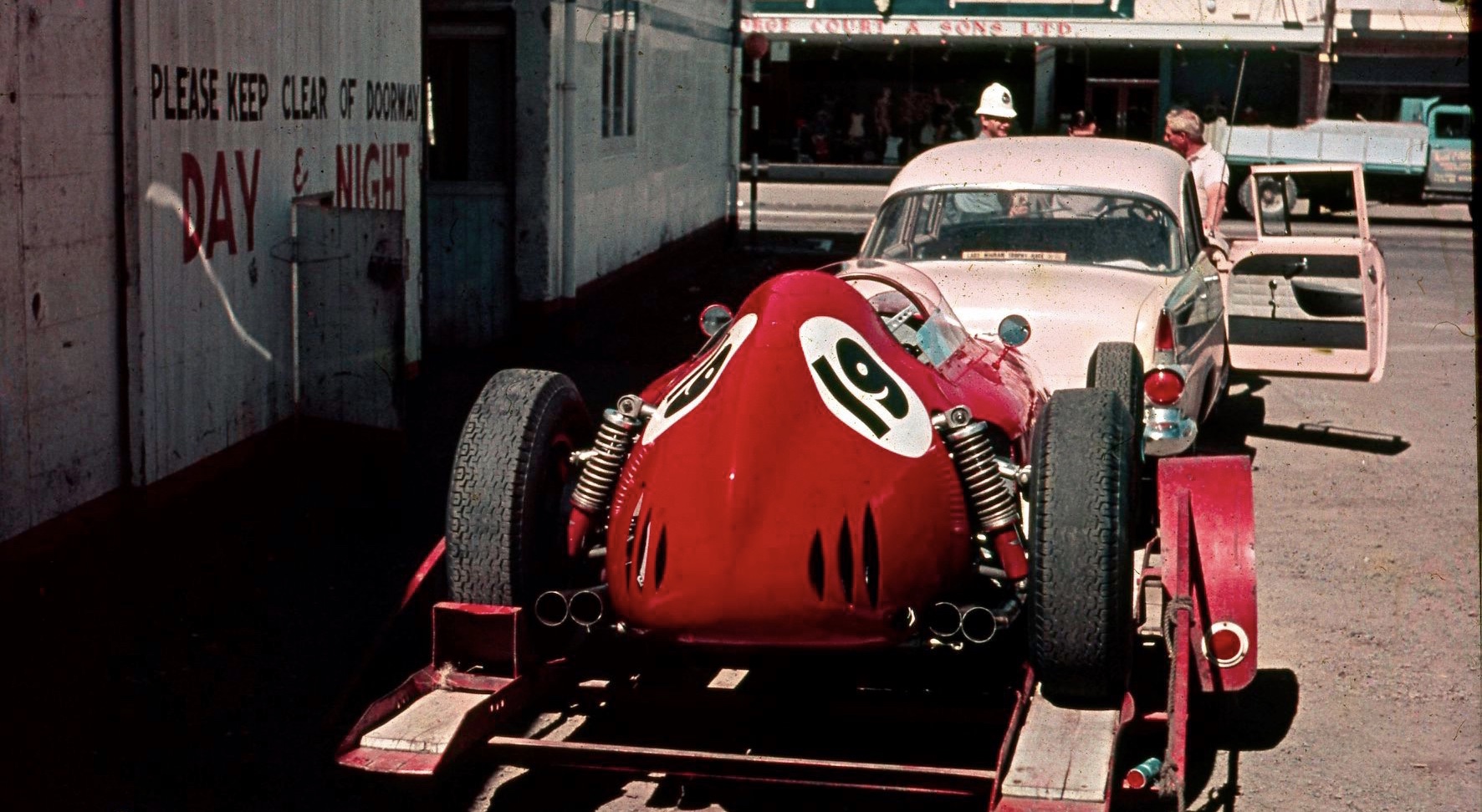
‘It can be seen from the state of the tyres (on the trailer below) that the car had obviously seen some serious mileage. Also there were some serious scrape marks on the bottom of the gearbox where it had been contacting the banking. Nobody in Auckland knew what speeds had been involved but upon delivery the car was fitted with the highest gearing which gave a theoretical maximum speed of 198mph.’

(E Stevens)


(E Stevens)

‘The car was driven straight from Monza to the ship. I was later told by Ernie Ransley that the car was filled with fuel and the delivery driver was told he had approximately an hour to deliver the car to the ship which was somewhat more than 120 miles away.’

‘Then the ship arrived later in Auckland than expected and although Pat had arranged to get the car off as soon as possible there was great panic when at first the car could not be found. Not only was the Hoare team frantically searching the ship, so too was the local Dunlop rep- eventually the car was found behind a wall of crates of spirits in the deck-liquor locker.’

‘Then there was the problem of the paperwork. At first all that could be found was an ordinary luggage label tied to the steering wheel in the opening photograph, this was addressed to; PM Hoare, 440 Papanui Road, Christchurch NZ, Wellington ,NZ. No other papers could be found but an envelope of documents was later found stuffed in a corner. The car had obviously arrived very late.’

(E Stevens)


The 3 litre variant of the Colombo V12 used in the Testa Rossas was based on that used in the 250 GT road cars, the primary modifications to the basic SOHC, two valve design were the adoption of six instead of three Weber 38 DCN carbs, the use of coil rather than ‘hairpin’ or torsion springs- this released the space to adopt 24 head studs. One plug per cylinder was used, its position was changed, located outside the engine Vee between the exhaust ports, better combustion was the result. Conrods were machined from steel billet- the Tipo 128 gave 300bhp, doubtless a late one like this gave a bit more. These Colombo V12’s provided the bulk of Ferrari road engines well into the sixties and provided Ferrari their last Le Mans win- Jochen Rindt and Masten Gregory won the 1965 classic in a NART 250LM powered by a 3.3 litre Colombo V12


(E Stevens)

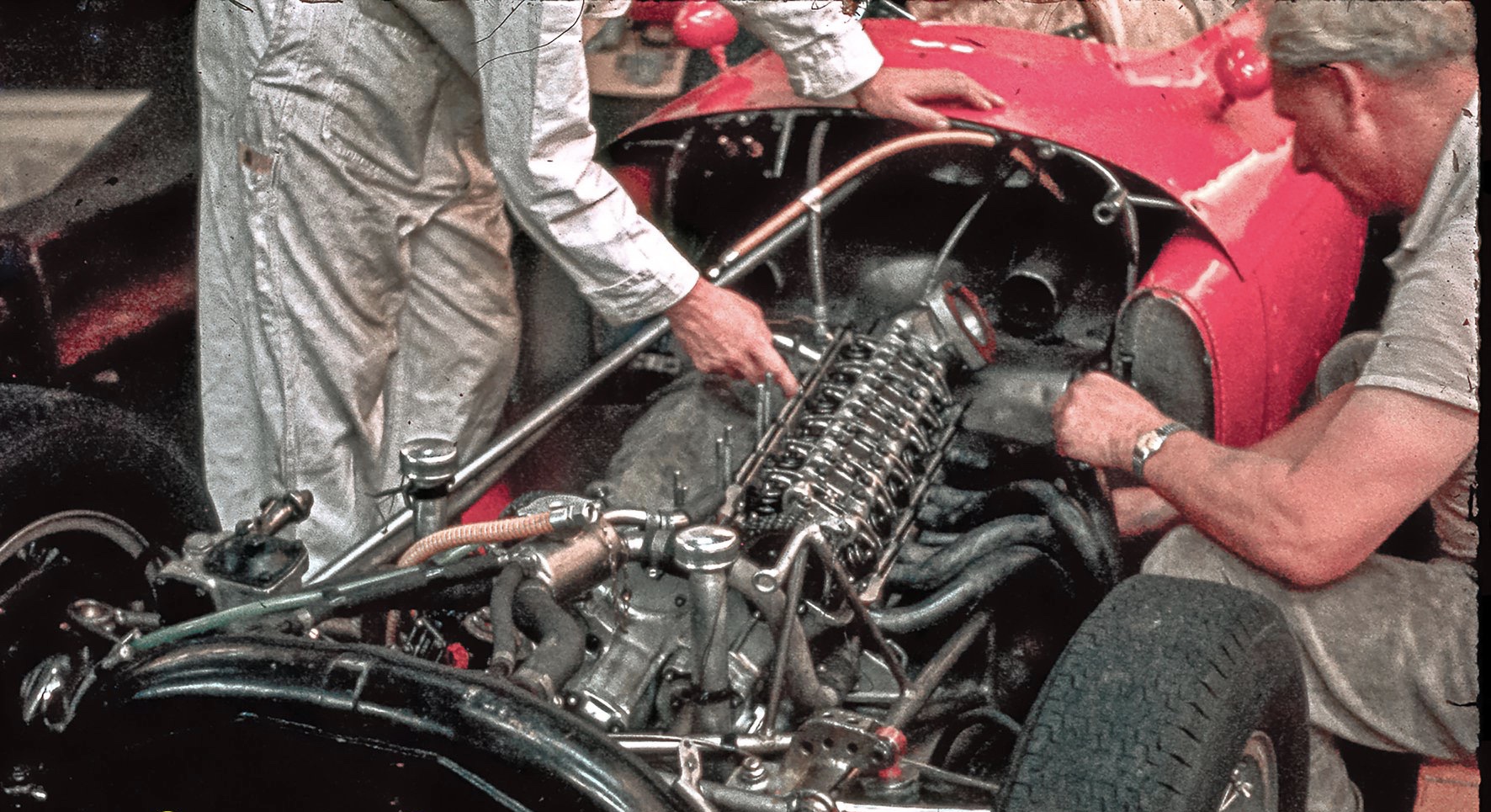
‘The day after collecting the car, and after fitting of new tyres, we took it out to the local supermarket car park for its first run in NZ. Pat climbed in and we all pushed. The car started easily but was running on only 11 cylinders and there was conspicuous blow-back from one carburettor- the immediate diagnosis was a stuck inlet valve.’

‘There was no time to get new valves and guides from the factory but Ernie Ransley was able to locate a suitable valve originally intended for a 250F Maserati and a valve guide blank which, while not made of aluminium bronze, could be machined to suit. Over the next day or so the engine was torn down, the new valve and guide fitted, and all the remaining guides were lightly honed to ensure there would be no repeat failure.’

‘The rest is history.’

‘I musn’t forget the tyres. They were obviously worn and would have to be replaced. They had a slighly different pattern from the usual Dunlop R5 and Ernie Ransley had a closer look at them to see what they were. When the Dunlop rep arrived next Ernie asked him “What is an R9?”. “Oh, just something the factory is playing with” was the answer. In fact they were a very early set of experimental rain tyres, the existence of which was not generally known at the time. There had been no time to get them off the car before it left Monza for the ship. No wonder the Dunlop rep was keen to help us find the car on the ship and get the new tyres on the car as soon as possible.’

It is long- i wonder how much longer in the wheelbase than the 2320mm it started as ? (E Stevens)


Good look at the IRS wishbone rear suspension, rear tank oil, inner one fuel with the rest of that carried either side of the driver (E Stevens)

The repairs effected by the team held together at Ardmore on 7 January 1961.

Pat qualified fourteenth based on his heat time and finished seventh- the first front engined car home, the race was won by Brabham’s Cooper T53 Climax from McLaren’s similar car and Graham Hill’s works BRM P48.

Jo Bonnier won at Levin on 14 January- Pat didn’t contest that race but followed up with a DNF from Q14 at the Wigram RNZAF base, Brabham’s T53 won. The internationals gave the Dunedin Oval Circuit a miss, there he was second to Hulme’s Cooper T51 from the back of the grid. Off south to Teretonga he was Q3 and fourth behind Bonnier, Cooper T51 and Salvadori’s Lotus 18 Climax.

After the Internationals split back to Europe he won the Waimate 50 from pole with Angus Hyslop and Tony Shelly behind him in 2 litre FPF powered Cooper T45’s and in November the Renwick 50 outside Marlborough.

1961 NZ GP Ardmore scene- all the fun of the fair. Ferrari 256 being tended by L>R Doug Herridge, Walter ?, Ernie Ramsley, Don Ramsley and Pat. #3 McLaren Cooper T53, David McKay’s Stan Jones owned Maserati 250F- the green front engined car to the left of the Maser is Bib Stillwell’s Aston Martin DBR4-300 (E Stevens)


Hoare, Ardmore 1962 (E Stevens)


Pat during the Sandown International weekend in March 1962 (autopics.com)

Into January 1962 Stirling Moss, always a very happy and popular visitor to New Zealand and Australia won his last NZ GP at Ardmore in a soaking wet race aboard Rob Walker’s Lotus 21 Climax from four Cooper T53’s of John Surtees, Bruce McLaren, Roy Salvadori and Lorenzo Bandini- the latter’s Centro Sud machine Maserati powered, the other three by the 2.5 litre Coventry Climax FPF, and then Pat’s Ferrari. The car was no doubt feeling a bit long in the tooth by this stage despite only having done eight meetings in its race life to this point.

Pat didn’t contest Levin on 13 January, Brabham’s Cooper T55 Climax took that, but the Sunday after was tenth at Wigram from Q12 with Moss triumphing over Brabham and Surtees in a Cooper T53.

At Teretonga it was McLaren, Moss and Brabham with Pat seventh albeit the writing was well and truly on the wall with Jim Palmer, the first resident Kiwi home in a Cosworth Ford 1.5 pushrod powered Lotus 20.

Having said that Pat turned the tables on Palmer at Dunedin on February 3- this was the horrible race in which Johnny Mansel lost his life in a Cooper T51 Maserati. A week later at Waimate it was Palmer, Hoare and Tony Shelly in a 2 litre FPF powered Cooper T45.

Hoare decided to contest Sandown’s opening meeting on 12 March so the gorgeous machine was shipped from New Zealand to Port Melbourne for this one race- he didn’t contest any of the other Australian Internationals that summer, perhaps the plan was to show it to a broader audience of potential purchasers.

The race was a tough ask- it may have only been eighteen months since the chassis won the Italian GP but the advance of technology in favour of mid-engine machines was complete, as Pat well knew. Jack Brabham won the 60 lap race in his Cooper T55 Climax FPF 2.7 from the similarly engined cars of John Surtees and Bruce McLaren who raced Cooper T53’s- the first front-engined car  was Lex Davison’s Aston Martin DBR4/250 3 litre in eighth.

Pat was eighth in his heat- the second won by Moss’ Lotus 21 Climax and started sixteenth on the grid of the feature race, he finished eleventh and excited many spectators with the sight and sound of this glorious, significant machine.

And that was pretty much it sadly…

Hill in ‘0007’ and Brabham’s Cooper T53 Climax ‘Lowline’ went at hammer and tongs for 29 of the 36 laps in one of the last great front-engine vs rear-engine battles- here Jack has jumped wide to allow Phil, frying his tyres and out of control as he tries to stop his car- passage up the Thillois escape road, French GP 1960 (Motorsport)

Ferrari Dino 256/60…

I’ve already written a couple of pieces on these wonderful Ferraris- the ultimate successful expression of the front engined F1 car, here; https://primotipo.com/2017/07/14/composition/ and here; https://primotipo.com/2014/07/21/dan-gurney-monsanto-parklisbonportuguese-gp-1960-ferrari-dino-246-f1/

The history of 256/60 ‘0007’ and its specifications are as follows sourced from Doug Nye’s ‘History of The Grand Prix Car’, a short article i wrote about the car a while back is here; https://primotipo.com/2015/11/09/pat-hoares-ferrari-256-v12-at-the-dunedin-road-race-1961/

The 1960 Dinos had small tube spaceframe chassis, disc brakes, wishbone and coil spring/dampers front- and rear suspension, de-Dion tubes were gone by then. The V6 engines, tweaked by Carlo Chiti were of 2474cc in capacity, these motors developed a maximum of 290bhp @ 8800rpm but were tuned for greater mid-range torque in 1960 to give 255bhp for the two-cam and 275bhp @ 8500rpm for the four-cammers. Wheelbase of the cars was generally 2320mm, although shorter wheelbase variants were also raced that year, the bodies were by Fantuzzi.

‘0007’ was first raced by Phil Hill at Spa on 19 June-Q3 and fourth, Brabham’s Cooper T53 Climax the winner, he then raced it at Reims, Q2 and DNF gearbox with Jack again up front, Silverstone, Q10 and seventh with Jack’s Cooper up front again and in Italy where Hill won from pole before it was rebuilt into ‘Tasman’ spec. Obviously the machine had few hours on it when acquired by Hoare- it was far from a worn out old warhorse however antiquated its basic design…

Nye records that seven cars were built by the race shop to 1960 246-256/60 specifications- ‘0001’, ‘0003’, ‘0004’, ‘0005’, ‘0006’, ‘0007’ and ‘00011’. ‘0001’, ‘0004’, ‘0006’ and ‘00011’ were discarded and broken up by the team leaving three in existence of which ‘0007’ is the most significant.

The 250 Testa Rossa engine is one the long-lived, classic Gioachino Colombo designs, evolved over the years and designated Tipo 128, the general specifications are an aluminum 60 degree, chain driven single overhead cam per bank, two-valve 3 litre V12- 2953cc with a bore/stroke of 73/58.8mm with 300bhp @ 7000rpm qouted. The engine in Hoare’s car was dry-sumped and fitted with the usual visually arresting under perspex cover, battery of six Weber 38 DCN downdraft carbs.

(E Stevens)


Pat Hoare in his first Ferrari, the bitza 625 four cylinder 3 litre at Clelands Road, Timaru hillclimb date unknown (E Porter)

Enzo Ferrari, Pat Hoare, Colombo and Rita…

Many of you will be aware of the intrigue created down the decades by Pat Hoare’s ability to cajole cars from Enzo Ferrari, when seemingly much better credentialled suitors failed.

I don’t have David Manton’s book ‘Enzo Ferraris Secet War’ but Doug Nye commented upon its contents in a 2013 Motorsport magazine piece.

‘Neither Mr Ferrari himself nor Pat Hoare ever explained publicly their undeniably close links. The best i ever established was that Hoare had been with the New Zealand Army advancing up the leg of Italy in 1943, and was amongst the first units to liberate Modena from the retreating German Army. David Manton has plainly failed in pinning down chapter and verse to unlock the true story, but he does reveal startling possibilities.’

‘When Mr Ferrari wanted a trusted engineer to realise his ambitions of building a new V12 engined marque post-war, he sought out Ing Gioachino Colombo, his former employee at Alfa Romeo. In 1944-5, however, Colombo was tainted by having been such an enthusiastic Fascist under Mussolini’s now toppled regime. With Communist Partisans taking control, Colombo was fired from Alfa and placed under investigation. His very life hung by a thread. He could have been imprisoned or summarily shot.’

‘Manton believes that Hoare- who had met Ferrari as a confirmed motor racing enthusiast from the pre-war years- may have been instrumental in freeing Colombo by influencing the relevant authorities. Certainly Colombo was able to resume work for Ferrari when some of his former Party colleagues remained proscribed, ar had already- like Alfa Romeo boss Ugo Gobbato and carburettor maker Eduardo Weber- been assassinated.’

‘But David Manton presents the possibility that such mediation might have been only a part of a more intimate link. Pat Hoare’s personal photo album from the period includes several shots of an extremely attractive Italian girl identified only as Rita. He was an un-married 27 year old Army officer. She was a ravishing 18, believed to have been born near Modena around 1926 and raised not by her birth parents, but by relatives. Some of Pat Hoare’s old friends in Christchurch, New Zealand- while fiercely protective of his memory- share a belief that the lovely Rita was not only just an early love of his life, but that she was also the illegitimate daughter of Enzo Ferrari…which would explain so much.’

‘Nothing is proven. David Manton’s book frustratingly teases but so- over so many decades- has the intrinsic discretion and privacy of the Italian alpha male. As American-in-Modena Pete Coltrin told me many years ago, Mr Ferrari was sinply a “complex man in a complex country”. He had a hard won reputation as a womaniser, which itself earned the respect, and admiration of many of his Italian peers and employees. But if Mr Manton’s theories hold any water they certainly go a long way towards explaining the Pat Hoare/Enzo Ferrari relationship, which both considered far too private ever to divulge to an enthusiastic public…’ DC Nye concludes.

Every Tom, Dick and Irving…

I look at all the fuss about Hoare’s purchase of his two Ferraris and wonder whether every Tom, Dick and Harry who had the readies and wanted an F1 Fazz could and did buy one in the fifties?

Ok, if you got Enzo on a bad day when Laura was pinging steak-knives around the kitchen at him for dropping his amply proportioned tweeds yet again he may not have been at his most co-operative but if you copped him the morning after he bowled over Juicy Lucia from down the Via you could probably strike a quick deal on any car available.

Putting all puerile attempts at humour to one side it seems to me Ferrari were pretty good at turning excess stock (surplus single-seater racing cars) into working capital (cash), as every good business owner- and it was a very good business, does. Plenty of 375’s, 500’s, 625’s and 555’s changed hands to the punters it seems to me.

Just taking a look at non-championship entries in Europe from 1950 to 1956, the list of cars which ended up in private hands is something like that below- I don’t remotely suggest this is a complete, and some cars will be double-counted as they pass to a subsequent owner(s), but is included to illustrate the point that in the fifties ex-works Ferrari F1 cars being sold was far from a rare event.

Its not as long a list as D Type Jaguar or DB3S Aston owners but a longer list than one might think.

Peter Whitehead- 125, 500/625 and 555 Super Squalo Tony Vandervell- 375, Bobbie Baird- 500 Bill Dobson-125 Chico Landi- 375 Piero Carini- 125 Franco Comotti- 166.

Four 375’s were sold to US owners intended for the 1952 Indy 500

Rudolf Fischer- 500,  Jacques Swaters ‘Ecurie Francorchamps’- 500 and 625, Charles de Tornaco ‘Ecurie Belgique’- 500, Louis Rosier ‘Ecurie Rosier’- 375, 500 and 625, Tom Cole- 500, Roger Laurent- 500, Kurt Adolff- 500, Fernand Navarro- 625, Carlo Mancini- 166, Guido Mancini- 500, Tony Gaze- 500/625 Reg Parnell ‘Scuderia Ambrosiana’- 500, 625 and 555 Super Squalo

Ron Roycroft- 375, Jean-Claude Vidille- 500, Alfonso de Portago- 625, Lorenzo Girand- 500, Centro Sud- 500, Jean Lucas- 500, Georgio Scarlatti- 500, Berando Taraschi- 166, Pat Hoare- 500/625 ‘Bitza’ and 256 V12

Don’t get me wrong, I do love the intrigue of the stories about the Enzo and Pat relationship but maybe its as simple as Hoare rocking up to Maranello twice on days when Enzo had had a pleasant interlude with Juicy Lucia on the evening prior rather than on two days when his blood was on the kitchen floor at home.

Etcetera…

(CAN)

Pat Hoare in his first Ferrari ‘bitza’, a 3 litre engined 625 (ex-De Portago, Hawthorn, Gonzales) at Dunedin 1958.

He raced the car for three seasons- 1958 in detuned state the car was not very competitive, in 1959 it kept eating piston rings and in 1960 it was fast and reliable, nearly winning him the Gold Star.

Its said his trip to Maranello in 1960 was to buy a V12 engine to pop into this chassis to replace its problematic four-cyinder engine but Ferrari insisted he bought a whole car.

The specifications of this car vary depending upon source but Hans Tanner and Doug Nye will do me.

The chassis was Tipo 500 (other sources say 500 or 625) fitted with a specially tuned version of a Tipo 625 sportscar engine bored from 2.5 to 2.6 litres. A Super Squalo Tipo 555 5-speed transmission was used to give a lower seating position and a neat body incorporating a Lancia D50 fuel tank completed the car.

When entered in events Pat described it as a Ferrari 625 and listed the capacity as 2996cc.

Pat Hoare portrait from Des Mahoney’s Rothmans book of NZ Motor Racing (S Dalton Collection)

Special thanks…

Eric Stevens and his stunning article and photographs

Photo Credits…

Allan Dick/Classic Auto News, Graham Guy, Mike Feisst, Stephen Dalton Collection, autopics.com

Bibliography…

‘History of The Grand Prix Car’ Doug Nye, grandprix.com, the Late David McKinney on ‘The Roaring Season’, Motorsport February 2013 article ‘The Old Man and the Kiwi’ by Doug Nye

Tailpieces…

(M Feisst)

The NZ built ‘Ferrari GTO’ pretty in its own way but not a patch on the genuine article without the extra wheelbase of the ‘real deal’.


(E Stevens)

Bag em up Pat…

Finito…

fazz 1

(GP Library)

Brand spanking new Ferrari 156, the aluminium body still unpainted awaits its Modena test in early 1961…

fazz 2

(Klemantaski)

Its all happening in this shot.

Its the first track test in April 1961 of the new 120 degree 1.5 litre DOHC, 2 valve V6 which offered a lower centre of gravity to the dominant cars of that year. Phil Hill was crowned World Champion of course, in a year of tragedy for the team, ‘Taffy’ von Trips lost his life at Monza late in the season.

Bending over the car’s nose is Luigi Bazzi, Ferrari’s ‘Senior Technician’ of the time, the large fella to Bazzi’s left is famed ‘panel basher’ Medardo Fantuzzi who made the sexy bodies of these cars and many other Ferrari’s. Carlo Chiti, the cars designer, has his hand in the cockpit. Richie Ginther, ace racer/tester gets comfy before the off. In the hat behind Richie is Romulo Tavoni, Team Manager and leaning against Enzo’s Ferrari 250GT is the chief himself and Phil Hill.

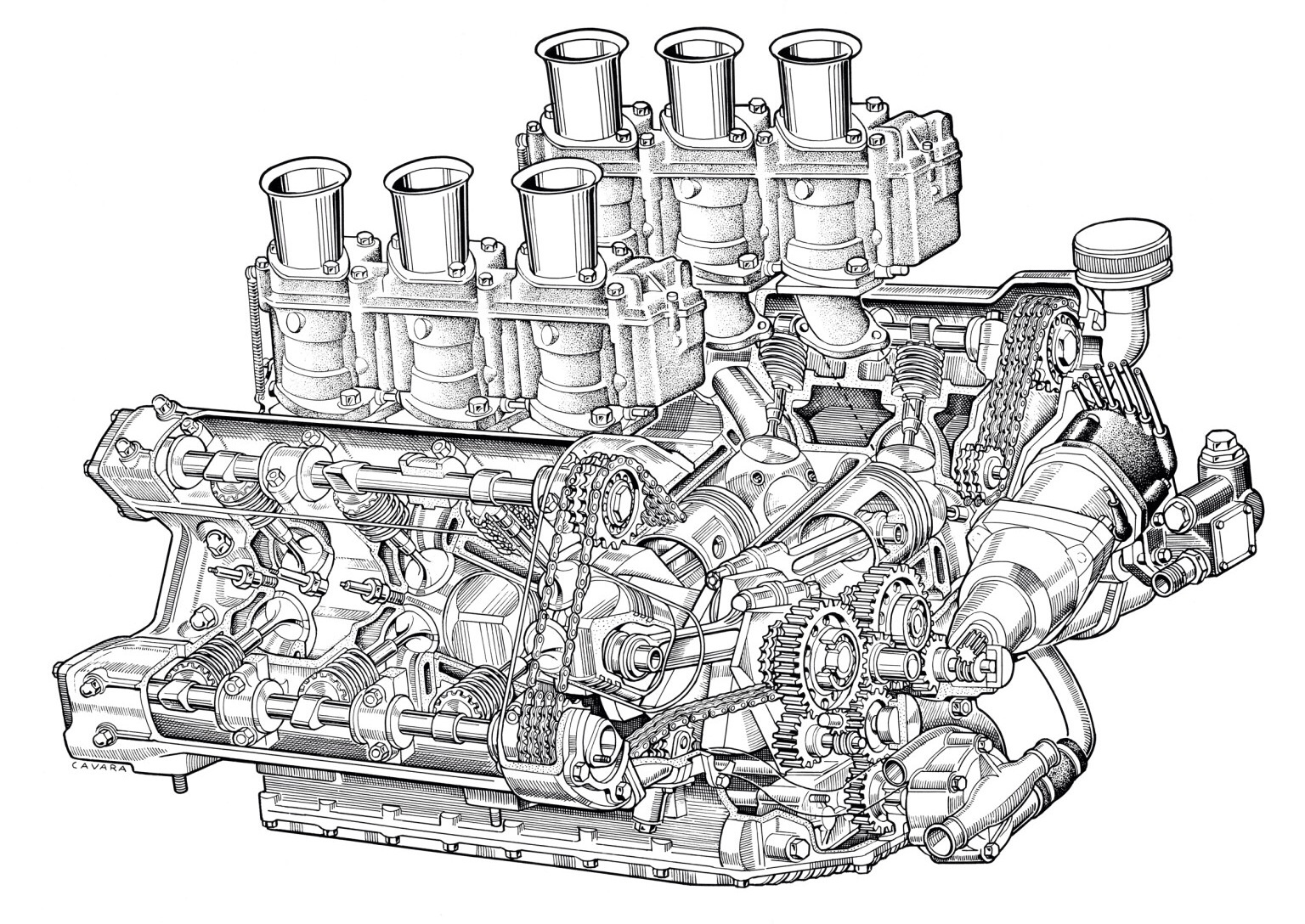
Superb G Cavara cutaway of the jewel like Ferrari 120 degree V6, the key elements of which are beautifully clear

Etcetera…

Rear suspension and bodywork detail at Zandvoort during the Dutch GP weekend in May 1961.

Upper and lower wishbones- the bottom one quite widely based, with coil spring/Koni shocks and an adjustable roll bar.

Cockpits of the day were minimalist- we are a year or so away from leather bound wheels in Ferrari cockpits.

Veglia tach and gauges probably displaying water temperature and oil temperature and pressure. Classic Ferrari ‘open gate’ change to the right which lasted all the way to the semi-automatic paddle-shift boxes pioneered by Ferrari in the 3.5 litre 640 V12 in 1989.

Ferrari 156 at the Nürburgring during the August 1962 German GP weekend, by this stage of things the dominant car of 1961 has been well and truly surpassed by the Lotus 25 Climax and BRM P57- Graham Hill won aboard the latter that weekend,.

65 degree V6 in this chassis, note the spaceframe chassis which looks a bit ‘wonky’ in the length above the cam covers of the engine- Doug Nye christened the Ferrari welders of the day ‘Mr Blobby’ given the finesse and finish displayed. They worked ok in 1961 mind you!

(B Cahier)

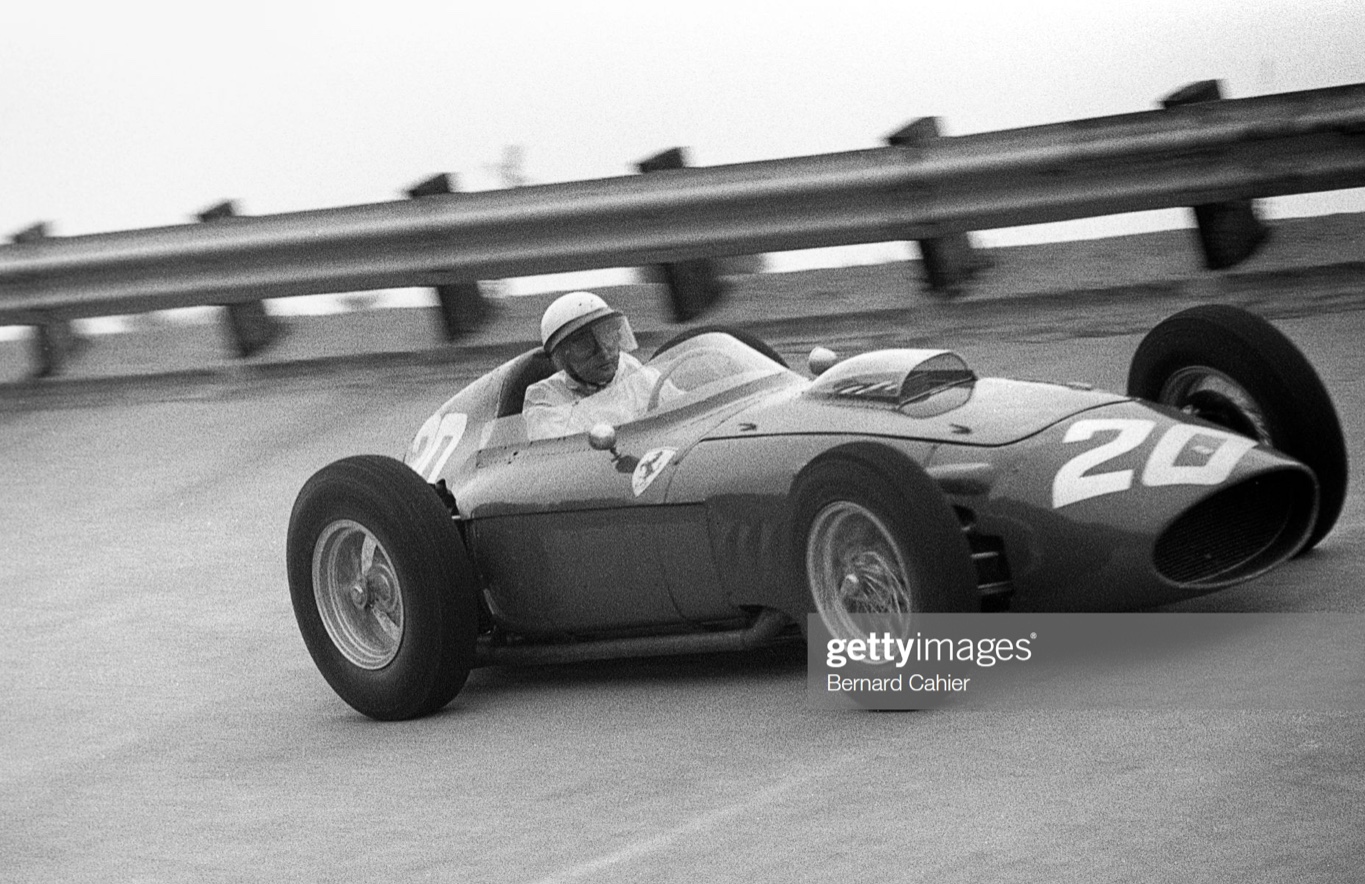
Four 156’s were entered at the Nürburgring in 1962, here is the World Champion, Phil Hill. He DNF with suspension failure after 15 laps, Ricardo Rodriguez was the best placed Ferrari driver in sixth, Giancarlo Baghetti was tenth and Lorenzo Bandini DNF after an accident on lap 5.

Credits…

GP Library, Louis Klemantaski Collection, G Cavara

Tailpiece…

enzo

(Klemantaski)

An earlier test than the one above, this chassis fitted with the 65 degree V6. Chiti is at left then the boss, another gent and copiously making notes is famous Ferrari engineer, Mauro Forghieri, then in his early days with the Scuderia. I’m intrigued to know who the mechanic is.

Its a stunning shot of the cars unbelievable lines, their purity complete with the Borrani’s off the car…

Finito…
(Fistonic)

Jim Clark takes in a few rays and a touring car race from his grandstand atop a Ford Zodiac, Levin, New Zealand Tasman, January 1965. In the distance are the Tararua Ranges, alongside the Team Lotus mechanics are fettling Jim’s Lotus 32B Climax.

The champions relaxed nature and the scene itself epitomises all that was great about the Tasman Series. We had the best drivers on the planet visit us every summer and whilst the racing was ‘take no prisoners’ the atmosphere off track was relaxed- the parties, water skiing, golf and annual cricket matches at the Amon family beachhouse are stories told many times over.

Jim Clark cruising through the Lakeside paddock during the 7 March 1965 weekend. The ‘Lakeside 99’ wasn’t a Tasman Round in 1965 but Internationals Clark, Gardner and Grant contested the event- Jim won from Gardner and Spencer Martin in the Scuderia Veloce Brabham BT11A just vacated by Graham Hill’s return to Europe (Mellor)

Few racing drivers have had a season like Jim Clark did in 1965, surely?

He started the year in Australasia and took the Tasman series with four wins in a Lotus 32B Climax FPF, won the F1 Drivers Championship in a Lotus 33 Climax with 6 wins and topped it all off with victory at Indy aboard a Lotus 38 Ford. In between times he contested the usual sprinkling of F2 events and some Touring Car races in a Lotus Cortina. Lets not forget a few longer sportscar races in the Lotus 40 Ford Group 7 car in the US. Not to mention other races as well. Amazing really.

 We were lucky enough to have the immensely likable Scot in the Southern Hemisphere at the seasons commencement though.

Colin Chapman had the Lotus Components lads build up a Tasman Special for Clark which was a mix of an F2 Lotus 32 chassis, 2.5 litre Coventry Climax 4 cylinder FPF engine and ZF gearbox. The combination was very successful taking race wins at Wigram, Teretonga, Warwick Farm and here at Levin on 16 January 1965. 

Kiwi international journalist and early member of Bruce McLaren Motor Racing, Eoin Young providing direction to the Lotus mechanics looking after Clark’s Lotus 32B. Technical specs as per text but note rocker/inboard front suspension and filler for twin tanks contained in each side of the monocoque chassis pontoons.Lola Mk1 Climax in the distance? (Fistonic)

Twelve Lotus 32 chassis were built plus Clark’s Tasman one-off car which was built around chassis or tub number 32/7. Unlike the 1 litre Cosworth SCA powered F2’s which used a full-monocoque chassis the 32B used a monocoque front section with the rear section removed and replaced by a tubular steel subframe to which the 235bhp, 2495cc, 4 cylinder Coventry Climax FPF engine was mounted. Otherwise the cars suspension, inboard at the front by top rocker and lower wishbone and outboard at the rear was the same as the F2 32. The gearbox was a ZF rather than the Hewland Mk6 of the F2 car. The car chassis plate was tagged ’32-FL-8′ where ‘FL’ was Formula Libre.

This car still exists and is owned and raced by Classic Team Lotus, a shame really as its entire racing history was in Australasia.

Clark won the Tasman in it, the car was then bought by the Palmer family, Jim raced it to NZ Gold Star victory and very competitively in the ’66 Tasman before selling it to Australian Greg Cusack. The car was also raced by South Australian Mel McEwin in period, albeit it was becoming uncompetitive amongst the multi-cylinder Repco’s and the like by then.

Eventually it passed into the very best of Lotus hands- the late John Dawson-Damer acquired it and restored it, eventually doing a part exchange with CTL to allow them to have a Clark Tasman car in their collection. John received a Lotus 79 Ford DFV as part of the deal, he already had Clark’s ’66 Tasman car in his wonderful collection, the Lotus 39 Climax, so it was a good mutual exchange.

Local boy McLaren surrounded by admirers in the Levin paddock. Cooper T79, alongside is the green and yellow of Clark’s Lotus 32B (Fistonic)

Clark won the ’65 Tasman title 9 points clear of 1964 champion Bruce McLaren aboard his self constructed Cooper T79 Climax and Jack Brabham’s BT11A Climax. Given the speed of the BT11A, it was a pity Jack contested only the three Australian Tasman rounds. Frank Gardner also BT11A mounted and Phil Hill were equal fourth with Phil aboard McLarens updated ’64 Tasman car, a Cooper T70 Climax.

Graham Hill was 7th in David McKay’s Brabham BT11A Climax with other strong contenders Frank Matich Brabham BT7A Climax, Kiwi Jim Palmer similarly mounted, Bib Stillwell in a BT11A, Lex Davison in a BT4 Brabham. In addition there were a host of 1.5 litre Lotus Ford twin-cam powered cars snapping at the heels of the 2.5 FPF’s and set to pounce as the bigger cars failed.

In this article I focus on one round, the Levin event held on 14-16 January 1965.

Kiwi enthusiast Milan Fistonic took some marvellous photos at the event which are posted on Steve Holmes ‘The Roaring Season’ website, check it out if you have not, it’s a favourite of mine. They are paddock shots which ooze atmosphere- Milan focuses mainly on local boy Bruce McLaren and Clark, they are magic shots which I hope you enjoy. This account of the weekend draws heavily on the sergent.com race report. It is another ripper site I always use as my Kiwi reference source.

Start of the 1965 NZ GP at Pukekohe, winner Hill on the outside, Clark in the middle and Lex Davison on the inside- Brabham BT11A, Lotus 32B and Brabham BT4 all Coventry Climax FPF powered (unattributed)

The 1965 Tasman series commenced the week before Levin with the New Zealand Grand Prix at Pukekohe. Graham Hill took a great win in David McKay’s new BT11A, straight out of the box, from the equally new Alec Mildren BT11A driven by Frank Gardner and Jim Palmer’s year old BT7A. How about that, Brabham Intercontinental cars from first to third places, with Jack not driving any of them!

Ron Tauranac’s first in a series of three very successful Coventry Climax engined cars, Tauranac tagged them as ‘IC’ for ‘Intercontinental’, was the 1962 BT4, based on that years BT3 F1 FWMV Coventry Climax 1.5 litre V8 engined car.

Jack raced the first of these in the 1962 Australian Grand Prix at Caversham, Western Australia, having a great dice with Bruce McLaren’s Cooper T62 until a back-marker took him out late in the race. This was followed by the 1964 BT7A and the 1965 BT11A.

Frank Gardner’s Mildren Brabham BT11A Climax being pushed onto the grid. The lanky chap at the back is Glenn Abbey, long time Mildren and Kevin Bartlett mechanic (Fistonic)

The BT11A’s were phenomenally successful in both Australasia and South Africa, winning lots of races and championships not least the 1966/7 Australian Gold Star Championship for Spencer Martin in the very same chassis raced by Graham Hill to victory at Pukekohe.

The cars were utterly conventional, simple and oh-so-fast spaceframe chassis cars with outboard wishbone suspension out the front and outboard multi-link at the rear- single top link, inverted lower wishbone, twin radius rods and coil springs with Armstrong shocks. Like all customer Brabhams they went like the clappers straight out of the box as the base suspension setup was done on circuit by Jack’s ‘highly tuned arse’. Many championships were won by Brabham customers not straying too far from factory suspension settings!

After the NZ GP the Tasman circus upped sticks from Pukekohe and drove the 500 km from the North of New Zealand’s North Island to its South, not too far from Wellington. Levin is now a town of about 20,000 people, then it would have been less than half that, and services the local rural and light manufacturing sectors.

Bruce, Ray Stone in blue and Wally Willmott? Cooper T79 (Fistonic)

Jim Clark quickly got dialled in to his new Lotus 32B and down to business, opening his Tasman account by winning the Levin Motor Racing Club’s 30.8-mile ‘Gold Leaf International Trophy’ at fractionally more than 76.6 mph.

The Flying Scotsman cut out the twenty-eight laps in fine style in 24 min. 5.9 sec and put in his seventh lap in 49.9 sec. In 1964 Denny Hulme (2.5 Brabham-Climax) had set records of 24 min 36.8 sec and 50.3 sec in this event. Repeating their NZGP form, Brabham-Climax conductors Frank Gardner and Jim Palmer, filled second and third spots, while next in line were the Bruce McLaren Motor Racing Team 2.5 Cooper-Climaxes of Phil Hill, T70 and McLaren, T79.

Graham Hill, Lex Davison and Arnold Glass shipped their cars to Australia after the NZ Grand Prix. Wanganui driver, and later multiple Kiwi Champion, 1970 Tasman Champion and winner of many Asian Grands Prix, Graeme Lawrence had at last got hold of his Brabham BT6 which was making its first appearance at Levin. As noted above Brabham was having a Christmas break and did not join the series until the first Australian round at Sydney’s Warwick Farm in mid-February.

Levin is a tight, twisty and bumpy circuit. Newcomers Clark and Hill quickly had the 1.1-mile track sorted. Clark’s qualifying lap was a 49.4 whilst Phil Hill managed 50 sec, the same time as his team leader McLaren.

Phil Hill aboard the updated Cooper T70 Climax raced by Tim Mayer and Bruce McLaren in 1964. Compare and contrast with the ’65 model T79 below (Fistonic)

Bruce had a bitter-sweet 1964 Tasman Series. He won the championship in one of two Cooper T70’s he and his Kiwi mechanic Wally Willmott built at the Cooper Surbiton works.

These cars, raced by Bruce McLaren Motor Racing, are generally acknowledged as the first McLarens, built as they were in a corner of the Cooper factory to McLaren’s design. The second car was raced by American ‘coming man’ Tim Mayer with great speed and skill until he made a mistake on the daunting, fast, unforgiving Longford road circuit in Tasmania which took the young drivers life.

The undamaged T70 was updated during the winter to be raced by 1961 F1 World Champion Phil Hill with Bruce racing a new chassis, an evolved T70 designated T79, a spaceframe chassis was again used. The main difference between the cars were inboard front suspension on the T79 whereas the older T70 was outboard. The T79 used a nice, reliable but then new Hewland gearbox whereas the T70’s used a Colotti in one chassis and a Cooper/Citroen CS5 in the other. I wrote an article about Tim Mayer a while back, read it by following the link at the bottom of the page for details of the T70 design rather than repeat it all again here.

Hill P had a terrific Tasman which was a tonic for him as his single-seater career had stalled somewhat since his F1 title winning year. 1962 was a shocker for him with Ferrari who had failed to develop the 156,1963 in an ATS was far worse and his drives for Cooper reflected the fact that design wise, their cars were becoming outdated. If there was any doubt about Hills single-seater speed, he proved he ‘cut the mustard’ aboard a competitive year old car in the ’65 Tasman.

Bruce McLaren aboard his Cooper T79 Climax in the Levin paddock (Fistonic)

The Mayer/McLaren/Hill Cooper T70 Climax raced by all three drivers, originally carrying chassis plate ‘FL-1-64’, re-plated by McLaren prior to the ’65 Tasman to ‘FL-2-64’ passed through the hands of Bill Patterson for driver John McDonald, Don O’Sullivan and others before being acquired by Richard Berryman in 1974. The car was eventually beautifully restored by his son Adam in Melbourne, who retains and races it. The T79 was sold after the Tasman to John Love in South Africa who won many races in it before it later returned to the UK, it too still exists.

Back to Levin practice and qualifying…
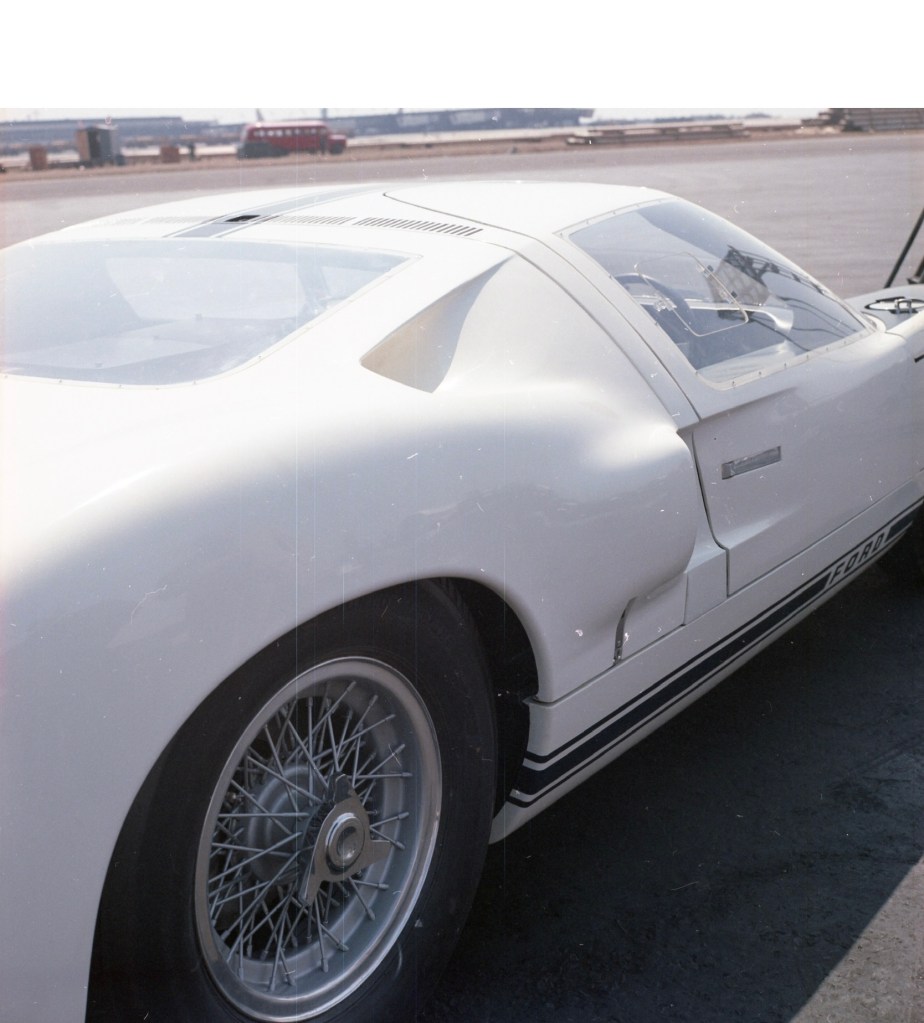
Levis with the 1.5 Brabham BT6 Ford was in the groove with a brilliant 51.1 sec, his time put all the 2.5 drivers to shame. Palmer could only manage 51.7 sec in his Brabham BT7A, Grant 51.9 sec in his BT4, Abernethy did 52.2 in his Cooper T66 and Gardner was credited with 53.5 sec in Alec Mildren’s BT11A. Grant was a late arrival. His Brabham-Climax had undergone a major engine rebuild since the discovery of a cracked crankshaft on the eve of the Grand Prix. Second quickest 1.5 was Buchanan’s Brabham BT6 Ford with 52.0 sec. Qualifying times were academic in the sense that grid positions for the feature race were decided on heat results.

Jim Clark again chillin at Levin ’65 (Fistonic)

The eight-lap heat on raceday morning contained all overseas drivers and favoured locals.

‘Clark, sharing the front row with McLaren and Hill, jumped into the lead from the start and remained there to the finish. Hill, McLaren, Palmer and Grant settled into the next four spots after Gardner had dropped out with distributor trouble. The contest was enlivened a little by Palmer catching Grant napping on the seventh lap and assuming fourth place. Clark won in 6 min 49.8 sec and set a new lap record of 49.9 sec’ sergent.com reports.

Council of war- Phil Hill in the pristine white race suit with Bruce front and centre, his allegiance to Firestone clear. Who are the other dudes? (Fistonic)

Levis had things all his own way in the second heat, winning in 7 min 13.5 sec, with Andy Buchanan, also in a 1.5 Brabham BT6 Ford, next. Third and fourth were Red Dawson Cooper T53 Climax 2.5 and John Riley in a Lotus 18/21 Climax 2.5. The situation was confused by Gardner who, anxious to make sure all was well with his car, was permitted to use the heat as a test run and took the lead in the last two laps.

Before the title race there was some feverish work in the Palmer pit to replace a cracked universal joint in his Brabham BT7A Climax. In a drama filled day for the team, an hour before the race was due to start, another close inspection revealed a hairline crack in a half-shaft. A replacement was found and fitted minutes before the cars were gridded.

Dummy grid or form up area prior to the Levin International- Clark on pole then McLaren and Hill, the yellow of Gardner on row 2 (Fistonic)

Clark, Lotus 32B had pole position in the main event with Hill, Cooper T70 and McLaren, Cooper T79 outside him.

In rows of three, the rest of the field comprised Palmer, Brabham BT7A, Grant, Brabham BT4, Gardner, Brabham BT11A; Levis, Brabham BT6 Ford 1.5, Buchanan, Brabham BT6 Ford 1.5, Abernethy  Cooper T66; Dawson, Cooper T53, Thomasen, Brabham BT4, Brabham BT4 Riley; Flowers, Lola Mk4A, Smith, Lotus 22 Ford 1.5 Lawrence, Brabham BT6 Ford 1.5; and at the back Hollier, Lotus 20B Ford 1.5. As the cars were forming on the grid, Abernethy could not select a gear and he had to abort the start’.

‘Clark made a good start with Grant, Hill and McLaren right with him. To the elation of the partisan crowd, Grant proceeded to take McLaren and Hill on braking into the hairpin. When they came round the first time the leaders were Clark, Grant, Phil Hill, McLaren, Palmer, Gardner and Levis

A 51.6 sec second lap gave Clark a 3 sec lead over Grant. In his fourth lap Palmer took McLaren and in another two laps had moved to third place ahead of Hill. Clark held on to his lead over Grant. There was then a gap of 3 sec to Palmer, with Hill and Gardner next in line. McLaren, probably to his embarrassment, had the 1.5 drivers Levis and Buchanan looming large in his mirrors.

Clark on the way to Levin International victory 1965, Lotus 32B Climax (sergent.com)

The pattern changed dramatically during the tenth lap. Grant tried to correct a slide at Cabbage-Tree Bend, dropped a rear wheel into the rough and spun off the course to lose all chance in such a short race. Palmer took second spot, but not for long. Gardner in the next three laps bridged the gap to take over second place just 5 sec behind Clark. Next in line were Hill, McLaren and Levis. Flowers was out with transmission failure in the troublesome Lola on lap 14.

Those opening laps had been fast and furious. In their sixth lap Grant and Gardner had returned 50.6 sec in the midst of heavy traffic. A lap later Clark equaled his morning record of 49.9 sec.

As the race reached the last stages, Clark continued to circulate in a steady 51 sec. Gardner in two laps reduced Clark’s advantage from 11 sec to 9 sec while Palmer closed up to be 2 sec behind the Australian, but Clark was given the ‘hurry’ signal and moved out again with effortless ease to come home 11.3 sec ahead of Gardner with Palmer 4.7 sec further back. Thomasen retired with only a handful of laps remaining.’

BP all the way, Bruce and Ray Stone in blue fuelling up the T79. Front on shot shows the top rocker/inboard front suspension of the car (Fistonic)

Bibliography…

sergent.com, oldracingcars.com

Cooper T70/Tim Mayer Article Link…

https://primotipo.com/?s=tim+mayer

Photo Credits…

Milan Fistonic, Peter Mellor, The Roaring Season

Tailpiece: Winners are grinners, the first of many such occasions for Jim Clark in 1965 at Levin…

(Fistonic)

Finito…