Reg Hunt working his Maserati A6GCM-250 hard at the Bathurst Easter meeting in 1955.
He won the 26 lap Bathurst 100 feature from Ern Seeliger aboard Stan Jones’ ex-Jack Brabham Cooper T23 Bristol and Lex Davison’s HWM Jaguar, below.
(I Arnold)(I Arnold)
Clive Adams’ drove Stan Coffey’s Cooper T20 Bristol skilfully but lost an early joust for third place with Davison, spinning at Forrest’s Elbow on the run down the mountain.
By 1955 the ex-Jack Saywell Alfa Romeo P3 had passed through the hands of Julian Barrett and Bill Murray and was powered by an Alvis engine. Sold by Murray to Gordon Greig, the car was involved in a terrible accident after Greig pitted, feeling sick, on lap 16.
Gordon Greig, Alfa Romeo P3 Alvis at Hell corner above, and below, before the disaster (I Arnold)
Tony Bourke, one of Greig’s crew, jumped aboard to finish the race and promptly lost control of the car over Conrod’s final hump, spun and went backwards off the track through the crowd killing one, mortally wounding another and injuring 20. Bourke stepped from the car unhurt and was later treated for shock.
Changes were were made to eliminate spectators from this area after the Coroner’s Inquest and public and press reaction. Bourke died after a Midget crash at Westmead Speedway in 1965.
(I Arnold)(I Arnold)
Col James MG Spl s/c and Ray Fowler, MG Spl, negotiate Hell Corner in the Group B Racing Car Scratch. They were third and fourth in this 3 lapper won by Stan Jones’ Cooper 1100.
(I Arnold)
Tom Jordan’s 1949 2.5-litre Riley engined Healey Silverstone (above) ‘was raced as a factory entry by Tony Rolt in the UK in 1949, then raced by Charles Mortimer in 1950 – he wrote a book about it, Racing a Sports Car – and was then returned to the factory, bought by Queenslander Colin Leagh Murray and raced and hillclimbed by him in Queensland before being sold to Jordan who had many successes with the car,’ wrote John Medley.
Etcetera…
(I Arnold)
It’s doubtful that Lex would have listed the HWM Jaguar – an ex-Moss HWM Alta 2-litre F2 chassis – amongst his favourite cars but he and his team coaxed enough speed and reliability out of the C-Type Jaguar powered jigger to win the 1954 AGP at Southport, aided and abetted by the breakage of a chassis weld on Maybach 2 when Stan Jones seemingly had the race ‘in the bag’.
By 1955 the HWM Jag was off the ultimate pace, Hunt had reset the local bar with his Maserati and Lex would meet the challenge in early 1956 with the purchase of Tony Gaze’ Ferrari 500/625 3-litre.
(I Arnold)
October 1955…
(I Arnold)
C James MG Spl S/c from Ted Gray, Tornado Ford, Hell corner, during the 3 lap Group A Racing Car Scratch.
On the last lap Tiger Ted lost the new car coming down the mountain near Griffin’s destroying it and hospitalising himself for months. Tornado 2 Ford would emerge in due course and Tornado 2 Chev became the fastest car in the country by later 1957, read here: https://primotipo.com/2015/11/27/the-longford-trophy-1958-the-tornados-ted-gray/
(I Arnold)
Touring car racing was steadily gaining in popularity with Jack Myers easily winning the sedan car handicap in his well developed, black-roofed, yellow Holden 48-215. ‘Holden wonder-man of the mid-1950s’ as John Medley described him. Here he is alongside George Pearse’s Ford Zephyr. See here for more on Jack: https://primotipo.com/2024/05/02/jumpin-jack-myers/
(I Arnold)
Jack Robinson’s Jaguar XK120 Special.
(I Arnold)
Dr John Boorman on the rise out of Hell corner on his way up Mountain Straight, ‘off scratch in the 6 lap Sports Car Handicap made no impression at all on Shmith’s new Austin Healey 100S which did 124mph through the timed quarter while Boorman did 125,’ Medley wrote. More about this car here: https://primotipo.com/2014/08/05/gnoo-who-gnoo-blas-circuit-jaguar-xkc-type-xkc037/
Postscript: Easter Bathurst tragedy…
After publishing this article, journalist/historian Ray Bell emailed me excerpts from ’emails I sent to the sister of Gavin Larnach’, one of the Bathurst accident victims.
1. That this whole thing is surrounded by lies and cover-ups is simply disgraceful. One can readily understand Mark’s state of mind and applaud him on his pursuit of the facts.
One such fact is that this car was very unstable after it had the very heavy Alvis engine installed. Ray Wamsley told me this, he was the next owner of the car, and he said it was absolutely transformed when he fitted a GMC truck engine after the Alvis unit failed.
2. I’ve subsequently spoken a journalist of the time, about the cover-ups. He told me that he always understood it was the local member who pushed for the hushing of everything with a view to ensuring that the racing wasn’t shut down. The local member was Gus Kelly, who was a Cabinet member with some influence and had been the local member for many years, so that makes sense.
Two factors come into play here. In 1946 there was difficulty getting the racing off the ground because of police resistance. Additionally, a driver and a spectator had been killed at the Gnoo Blas race meeting in January, 1955. The fear throughout the two organising clubs would have been quite pronounced and it was just eighteen months later that the whole of motor racing in NSW had to comply with the new Speedways Act, which introduced standards for safety fencing etc.
3. What is really bugging me is John Medley’s comment thatsomeone who gave evidence wasn’t actually in the country when the crash occurred. Not so consequential if he was just giving evidence about something technical, but still it appears from John’s comment that it might matter.
Reg Hunt, Maserati 250F, on his way to winning the Victorian Trophy at Fishermans Bend on February 12, 1956
Context…
Australian motorsport’s governing body was the Sydney based Royal Automobile Club of Australia until 1953 when the Melbourne based Confederation of Australian Motor Sport took over. CAMS Ltd trading as Motorsport Australia (CAMS) still rules the roost today.
One of the CAMS’ rare acts of decision-making excellence was the creation of the Australian Drivers Championship – the Gold Star – from 1957.
Lex Davison, Ferrari 500/625 was the first recipient of the award for points gained in nine rounds spread across all states except Tasmania – remedied in 1958 – on an 8-5-3-2-1 points basis for first to fifth places in each round.
1956 Faux Gold Star Championship…
I’ve thought for a long while that it would be interesting to summarise our elite level Formule Libre racing results by seasons, if for no other reason than when I want to research one thing or another a summary of the competitor set exists. Why not, I thought, extend the idea to calculating notional Gold Star points?
Of course it’s a fucking stupid thing to do as it simply didn’t happen! In the words of that great Australian philosopher, ‘Sir’ Frank Gardner, “If yer’ Aunty had balls she’d be yer’ Uncle”. In other words, deal with what is/was, rather than what isn’t/wasn’t.
But of course CAMS run a who-gives-a-fuck-about-facts (WGAFAF, pronounced ‘woggafaff’) motor racing history model. They don’t recognise the January 1927 Australian Grand Prix at Goulburn as the first AGP, yet we have 1928 and 1937 Australian Grands Prix, apparently, neither of which actually took place then, as officialdom chooses to brand them now. So, in accordance with established Oz-racing fast-and-loose WGAFAF precedent, what follows is a summary of the 1956 Gold Star, Faux Division.
Officialdom awaits the ‘Champion of the Day’ of the 100 Miles Road Race at Phillip Island held on Saturday 31 March, 1928. Oopsie, sorry there were two 100 Mile Road Races that day. The morning one started at about 11am, oopsie again, sorry, B-Class started at about 11am, and D-Class at about 11.05am. The afternoon race, races really, started at about 2.25pm for A-Class and then C-Class at about 2.30pm. All ‘Akin to European GP practice’ is the favoured line of some
The readily apparent State-The-Obvious flaw in my Faux Gold Star award is that as there was no such championship, drivers didn’t enter meetings they may have otherwise if they aspired to win such a title. However, the rich/well-funded in every era raced far and wide beyond their local meetings, this was certainly the case for the 1956 motor trader front runners, so I’m not so sure the top-3 are impacted by this factor.
Some criteria points. I’ve basically followed the equivalent 1956 meetings that CAMS recognised in ’57, even though some of the races are too short, in my mind, to be of championship length. Where there were two Formula Libre races of ‘championship length’ – over 75 miles – at the one meeting, such as the Albert Park Moomba meeting, the longer, feature event prevails. Results are scratch based only. I’m only awarding points for first to fourth placings as those are the records I have. If someone has more comprehensive records, spreadsheet skills and OCD knock yer’ socks off and I’ll update this masterpiece.
Away we go.
Reg Hunt on Gnoo Blas’ Main Straight while the 4.05pm to Sydney gets ready to depart. Maserati 250F (GB.com)
Gnoo Blas, Orange, New South Wales (NSW) : South Pacific Championship : January 30, 1956
This season opening race meeting on the Gnoo Blas road circuit at Orange, 260 km west of Sydney had become Australia’s only international meeting in prior years. The Australian Sporting Car Club always managed to entice a few of the drivers doing a full southern summer season In New Zealand across-the-ditch to the Great Brown Land before they headed back to Europe. As an aside, the Kiwis were five years or so in front of us in the Big Race Stakes.
Our Jack was the only international in ’56 mind you. He raced the 2-litre Cooper T40 Bristol that he built for himself at Surbiton to make his championship GP debut at the British Grand Prix at Aintree in July 1955. Brabham brought the car home at the end of the year, winning the AGP with it at Port Wakefield after frontrunners, Stan Jones in Maybach 3 and Reg Hunt’s Maserati A6GCM/250 (a 2.5-litre 250F engined A6GCM 2-litre F2 car) had problems, then did the Kiwi season and would sell it to Reg Smith before heading back to the UK.
To rub in his advantage, Reg Hunt brought along both the Maserati he raced throughout 1955 and his new 250F on the long tow from Melbourne to Orange, then disappeared into the distance, winning the 27 lap, 100-mile race in the 250F from Brabham.
Stan Jones gave vigorous chase, but blew the 3.8-litre Maybach SOHC six fitted under the long bonnet of Maybach 3 sky-high on lap 22 when 39 seconds adrift of his fellow Melbourne motor trader.
That blow-up proved a defining moment in Australian Motor Racing History of that era as it marked the end of the Charlie Dean/Repco Research/Stan Jones/Maybach period. Repco’s stock of 3.8 and 4.2-litre Maybach cylinder blocks was at an end, so the car couldn’t easily be rebuilt. In any event, Stan realised he needed a Big Red Car to remain competitive, taking delivery of a 250F later in the season. Ern Seeliger created the very fast Maybach 4 Chev V8 of course, it proved to have a surprise or two in 1958-59, but the big-blue Maybach sixes were no more.
Kevin Neal was third in his Cooper T23 Bristol, then came Curley Brydon’s ex-Peter Whitehead – present at Gnoo Blas in the previous two years – Ferrari 166 and then Col James’s MG Special. Jack was a non-resident by then so he doesn’t get Gold Star points for his second place, so we have our top-four below.
1.Hunt Maserati 250F 8 points 2.Neal Cooper T23 Bristol 5 points 3.Brydon Ferrari 166 3 points 4.James MG Special 2 points
End of an era. Jones aboard Maybach 3 – very Mercedes W196’esque in appearance – before the engine let go, South Pacific Championship, Gnoo Blas in 1956 (GB.com)
Fishermans Bend (once Fishermen’s Bend) Melbourne : Victorian Trophy : February 11, 1956
Top guns entered for the 24 lap, 52.8 miles Formula Libre race included Hunt’s Maserati 250F, Lex Davison’s HWM Jaguar (“now with latest D-Type head and Weber carbs” according to AMS), Doug Whiteford’s Talbot-Lago T26C, Stan Jones’ Cooper T38 Jaguar sportscar, Brabham’s Cooper T40, Tom Hawkes Cooper T23 Bristol and Bill Craig’s Alta Holden.
While billed as on international meeting to attract some spillover visitors to New Zealand that summer, the only ‘internationals’ were Brabham from New South Wales and Craig from South Australia…
Hunt romped away, Whiteford’s old T-L, somewhat surprisingly, proved quicker than Davison’s ’54 AGP winning HWM Jag, then Davo spun, while broken throttle linkages accounted for Jones and Hawkes.
1. Hunt, Maserati 250F 8 points 2.Whiteford Talbot-Lago T26C 5 points 3. K Neal Cooper T23 Bristol 3 points 4.W Wilcox Ford Special 2 points
Albert Park, Melbourne : Moomba Meeting – Argus Trophy : March 18, 1956
Albert Park – promoted by the Light Car Club of Australia – hosted a pair of international two-weekend carnivals in ’56: the Moomba meeting in March and Olympic meeting in November/December.
The feature on March 11 was the Moomba Tourist Trophy for sportscars. Tony Gaze won that 150-miler in his HWM Jaguar VPA9, from Bib Stillwell’s brand-spankers Jaguar D-Type and Ron Phillips’ Austin Healey 100S.
F.A.O. Gaze DFC and Two Bars, OAM had decided to retire from racing and sold his HWM and ex-Ascari Ferrari 500/625 to his good mate, Lex Davison before the meeting. Tony had raced both cars in New Zealand that summer together with Peter Whitehead. Davison’s deal included racing the Ferrari in the Argus Trophy, the Formula Libre, 48-lap, 150-mile feature on the following weekend, March 18.
Davo had some serious opposition though, not least Hunt’s 250F and Melbourne haulier, Kevin Neal, who had bought Hunt’s immaculate A6GCM/250. Other expected front-runners included Hawkes’ Cooper Bristol, Stillwell’s D-Type, not to forget Arthur Griffiths, who had bought the ex-Moss HWM Jaguar just vacated by Davison, and Reg Smith in the Cooper Bristol similarly vacated by Jack Brabham.
Somewhat predictably, Reg Hunt won the race in his current model Maserati 250F – one of the great GP cars of any era – from Davison, with Neal, Hawkes and Stillwell third to fifth.
Lex’s old-bus dated back to 1952 – in 2-litre spec it was Alberto Ascari’s main weapon of choice in his triumphant 1952-53 World Championship years – but fitted with a 3-litre DOHC four-cylinder ‘Monza’ engine it proved for several years to have the measure of the fastest cars in the country thanks to a combination of Davo’s speed and almost peerless reliability. Tony Gaze had the Ferrari prepared by Alan Ashton and his AF Hollins crew in High Street, Armadale. He implored Lex to continue the relationship, Davo did so and it was key to his ongoing success with this car.
Reg Hunt from Lex Davison during the Argus Trophy at Albert Park, March 1956. Maserati 250F and Ferrari 500/625 (D Meale)
Port Wakefield, South Australia : Easter Saturday : March 31, 1956
Not all the serious boys spent Easter at the traditional Bathurst fixture, some contested the 50-lap, 65- miles Wakefield Trophy at Port Wakefield, South Australia: Tom Hawkes, Cooper T23 Bristol, Kevin Neale, ex-Hunt Maserati A6GCM/250, Ted Gray, Tornado 2 Ford, and Derek Jolly, Decca Mk1 Climax FWA Spl included.
The weekend feature was for the 20 fastest cars. Soon after the start, the race developed into a Cooper and Maserati duel a lap in front of the rest of the field. Hawkes, in a great performance in the slower of the two cars, won from Neal’s Maserati, Ron Phillips’ Austin Healey 100S and TE Stevens, MG TC Spl.
Interesting are the top speeds recorded on Century Straight (all mph): Gray Tornado Ford V8 110.5, Neal Maserati 2.5 108.5, Hawkes Cooper Bristol 2-litre 104.7, Eldred Norman in the legendary Norman Zephyr Spl s/c 102.5, Murray Trenberth, Vincent 1000, 100, and Eddie Perkins, VW Spl s/c 99.5
The 26-lap, 100-mile handicap, Bathurst 100 had a huge field, “more entries from interstate than Bathurst has seen for some time” wrote Australian Motor Sports. Stan Jones and Jack Brabham weren’t at the meeting, Maybach 3 was dead and Stan’s 250F hadn’t arrived, while Jack had returned to the UK.
The handicap was won by Davison from Hunt, Bib Stillwell, Jaguar D-Type, and Paul England’s Ausca Repco-Holden. To be consistent, Gold Star points are awarded for the scratch results: Hunt, Maserati 250F, Lex Davison Ferrari 500/625 3-litre, Stillwell D-Type, and Tom Sulman’s Aston Martin DB3S.
1.Hunt Maserati 250F 8 points 2.Davison Ferrari 50/625 5 points 3.Stillwell Jaguar D-Type 3 points 4.Sulman Aston Martin DB3S 2 points
Port Wakefield Road Races : South Australian Trophy : June 4, 1956
Stan Jones took delivery of his Maserati 250F in May, demonstrating it in an untimed run at the Geelong Sprints meeting on May 27, Port Wakefield was chassis #2520’s Australian baptism of fire.
Other fast cars which took the trip to the desolate, wind-swept permanent race track included Davison, Stillwell and brilliant, intuitive Adelaide engineer, Eldred Norman in his Norman Zephyr Spl s/c. Most significantly, Ted Gray was present in the Lou Abrahams owned, Gray/Mayberry Bros/Abrahams built Tornado 2 Ford. Tornado 1 Ford died a terrible death at the October ’55 Bathurst meeting, Tornado 2 was a new car using few of T1’s bits, amongst the exceptions were the Ford Ardun/Abrahams fuel injected OHV V8 and Ford truck ‘box. Ted was ok after a very long convalescence too.
At this point of 1956 the key machines of Australian Formula Libre racing from 1956-59 were in place: the two Maserati 250Fs, Davo’s Ferrari and Tornado 2…two-litre Coopers were still to come.
Held in a big rainstorm, the 30 lap South Australian Trophy race, early on was a close contest between Stillwell – pretty comfy in his Jag sportscar – with Stan all over him, but unable to pass and see…
Davo spun on lap 3, so too later in the race did Gray, although another column in AMS says Ted didn’t even start the race due to a broken CV joint… The race was won by Stillwell from Jones, Norman and ??
Somewhat prophetically, Bob Pritchett wrote in the July 1956 issue of Australian Motor Sports, “Who said Ted Gray’s Tornado Special doesn’t handle. Ted was, I think, the only high-powered operator who did not spin off in the meeting (the guy that wrote the race report sez otherwise!) and in winning the A-grade scratch race 6-lapper, held Stan’s Maserati for four laps until Stan spun off in the wet.”
In the same column, Pritchett reported that Tom Hawkes was considering a Maserati four to get more speed out of his Cooper T23 Bristol, that engine being at the end of its development potential; a Repco-Holden Grey shortly thereafter provided a potent and more cost-effective solution.
Similarly, he mused about the possibilities of Maybach 3, “by dropping in one of those 300-plus USA V8 monsters that are now available.” – the very path followed by Ern Seeliger, and Ted Gray with hot 283 Chev Corvette V8s being popped under the bonnets of Maybach and Tornado before too long.
Yes, the little-tacker in the lower shot is Alan Jones. He has recounted over the years his disappointment in finding Dad’s new, red Italian car was a Maserati and not a Ferrari! Bob Chamberlain at left Bob King thinksTed Gray from Stan Jones during their Port Wakefield scrap in June 1956. Tornado 2 Ford V8 and Maserati 250F; plenty of scraps to come from this pair from 1956-59. Gray’s experience went all the way back to giving Peter Whitehead and ERA R10B a run for their money at Aspendale and Rob Roy in 1938 aboard a speedway-midget
Lowood Airfield Queensland : Lowood Trophy : June 3, 1956
“Queensland Racing Drivers Club conducted this year’s ‘Lowood Trophy’ meeting in typical Queensland winter sunshine, before a crowd of about 6000. The 2.7-mile circuit was in good condition…34 entries was received, including eight from NSW…” recorded AMS.
Top guns included Arthur Griffiths’ ex-Davison HWM Jaguar, Ken Richardson’s ex-Whiteford Talbot-Lago T26C, Steve Ames aka Count Steve Ouvaroff ex-Davison Alfa Romeo P3, John Aldis’ ex-Whitehead/Jones Cooper T38 Jaguar and Arnold Glass’ Maserati 4CL; it wasn’t a great entry of modern cars.
The 12 lap, 32 miles Lowood Trophy results were as follows:
1.Griffiths HWM Jag 8 points 2. S Mossetter Austin Healey 100S 5 points 3.R Weintraub Healey Silverstone 3 points 4.J Johnson MG TC 2 points
Bathurst : NSW Road Racing Championships : September 30, 1956
A crowd of 8-10,000 people fronted up to cold, blustery conditions for the second traditional Bathurst meeting a year, October fixture.
While Stan Jones was present to sharpen his skills in advance of the Australian Grand Prix two months hence, Lex Davison and Reg Hunt were notable by their absence, ‘preserving the machinery’ or whatever.
Bill Pitt was there in the Geordie Anderson/Westco Motors Jaguar D-Type and Jack Myers in the WM Special, a much-modified (by Myers, a highly skilled Sydney mechanic-cum-engineer) Cooper T20 fitted with a Waggott-Holden twin-cam, two-valve circa 200bhp ‘Grey’ six-cylinder engine.
Handicaps were still prevalent, if not the norm in Australian racing, with the 26 lap NSW Road Racing Championship (Racing Cars) no exception. Jones set a new lap record of 2min 44sec without being hard pushed. While ‘J Archibald’ (who was he?) won the handicap classification in his MG Spl, the scratch results and Gold Star points allocations are as follows:
Fishermans Bend, Melbourne : Astor Trophy : October 14, 1956
You might think the Victorian Contingent would be out in force in advance of the rapidly approaching AGP, but not so. While Hunt, Whiteford, Neal and Gray were present, Davison and Jones were AWOL.
Then, having satisfied himself that his 250F was all tickety-boo in a 5-lapper, Reg Hunt didn’t take the start of the start of the 24-lap, 52.8-mile Astor Trophy feature.
While Kevin Neal’s Maserati A6GCM/250 was a far quicker car than Doug Whiteford’s – relatively new to him, but geriatric – Talbot-Lago T26C, there was no way Neal was going to beat the aggressive, cagey, vastly experienced triple AGP winner! Ted Gray and Owen Bailey were/are the other recipients of Gold Star points aboard Tornado 2 Ford and ex-Whiteford Talbot-Lago T26C respectively: third and fourth placings.
“Tell him, he’s dreamin…’ Count Stephen Ouvaroff aka Steve Ames offers his ex-Scuderia Ferrari/Davison Alfa Romeo P3 chassis #50003 for sale, £895 is the ask. In 2024 dollars that is $A32,700, the value of a P3 is, however, in the ‘your guess is as good as mine’ categoryMoss Mastery – high speed drift at Albert Park, Maserati 250F, AGP December 1956
1956 Australian Grand Prix : Albert Park : December 2, 1956
120,000 people watched 22 starters contest the ’56 AGP held in the afterglow of Melbourne’s staggeringly successful Olympic Games.
Furriners included a five-car squad from Officine Maserati: three 250Fs and a pair of 300S (sportscars for the Australian Tourist Trophy contested and won by Moss from Behra the week before) for works drivers Stirling Moss and Jean Behra, while Peter Whitehead and Reg Parnell raced their 3.4-litre Ferrari 555s.
Moss disappeared into the distance, winning the 80-lap 250-miles race in 2hr 36min 15.4sec, over two minutes ahead of Behra, then came Peter Whitehead.
The battle-within-the-battle was a local Melbourne Holden Dealer Derby – Davo’s farming and shoe making interests duly noted – between the 250Fs of Reg Hunt and Stan Jones, and Lex Davison’s Ferrari 500/625.
Graham Howard points out in his 1956 chapter of the ‘History of The Australian Grand Prix’ that “It was to be, surprisingly, the first encounter of the Hunt and Jones’ 250Fs, and Davison – at that stage the only driver to beat the Hunt 250F – was also there in his Ferrari.”
“Hunt and Jones had, to be strictly correct, lined up against each other the weekend before, in a short sprint race in the supporting program to the Tourist Trophy, but it had been inconclusive. With Hunt on pole position and Jones right beside him, the race had an explosive start as Jones – ‘jockeying for position’, as AMS discreetly termed it – hit the kerb and then a tree on Hunt’s side of the course within a hundred metres of the start. The car was fortunately not too badly damaged and was ready for the AGP the following weekend.”
At the start of the Grand Prix, Moss led from Behra, the Whitehead and Parnell Ferrari Super Squalo’s, then the Trident Trio: Hunt, Neal and Jones. Davison was slowed by engine maladies.
By lap 5 Jones was behind Hunt, and after two fast laps, passed him, where he stayed – with Hunt pacing himself behind – for 35 laps, “With both driving with a concentrated ferocity, which was almost tangible – no errors, no let- up, certainly no smiles.”
When Stan’s Maserati started to blow smoke from under the bonnet, he eased on lap 40, gifting his place to Hunt. Post-race the problem was disclosed as a broken breather.
The Gold Star points go to the fifth, sixth, seventh and eighth placed local finishers:
Reg Smith competing at Templestowe hillclimb outside Melbourne in May 1956. His Cooper T40 Bristol was Jack’s ’55 British GP car and AGP winner. He can’t have been enamoured of the Cooper, replacing it with one of Officine Maserati 300S sold at the end of the ’56 AGP weekend
Gold Star Championship Points and Observations…
Drum roll…the winner of the 1956 Australian Gold Star Faux Championship is Reg Hunt, Maserati 250F, with 40 points, well clear of Kevin Neal’s 21 points gained with Cooper T23 Bristol and Maserati A6GCM/250, then Stan Jones, third on 18 points in his new 250F. Fourth was Whiteford, Talbot-Lago T26C 15 points, then the Davison Ferrari 500/625 on 13 points with Bib Stillwell sixth, on 11.
What does it all prove? Absolutely sweet-f-all, but I enjoyed it, which is all that really matters here.
I wish I could show you a neato little points chart or a spreadsheet of results for the year but I don’t know how to do those, so this hand-job will have to do, a remedy with which many of you will be familiar. Since publishing this, Stuart Murray – bless him – has done the vastly better spreadsheet which appears further below.
In my mind I’ve long thought Reg Hunt was the rock-star in 1955-56 aided and abetted by having The Best Equipment in the country in those two years by far. I’ve not done this exercise for 1955 yet to further prove the point, I’ll get around to it some time.
Having ‘came, saw, and conquered’, Reg retired from racing at the end of the season, aged only 33, to focus on his family and in building a staggeringly successful motor-dealership empire centred on his ‘Golden Mile of Cars’ in Brighton, Melbourne. He returned to historic racing in the 1980s with a Maserati 300S and Talbot-Lago T26C and died just shy of 100 on August 22, 2022.
Fellow Melbourne motor trader and later four-time Gold Star champ, Bib Stillwell bought the Hunt 250F (chassis #2616) but couldn’t resist the temptation of a factory freshen-up, so didn’t see it for the best part of 12 months. It’s a long boat ride between Port Melbourne and Genoa and back, and Maserati had bigger fish-to-fry, not least a World Championship to win with JM Fangio at the wheel of factory 250F’s.
At the end of ’56 the stage was set, the key players in 1957 seemed likely to be Jones, Davison and Gray with a tight contest likely given all three were well-funded ‘pro-outfits’ by Australian standards of the day. In the end Davo’s Ferrari 500/625 crushed the opposition with five Gold Star wins in nine rounds, a story for another time…
Credits…
Australian Motor Sports all 1956 issues, ‘Bathurst: The Cradle of Australian Motor Racing’ John Medley, ‘The History of The Australian Grand Prix’ edited by Graham Howard, ‘A History of Australian Grand Prix 1928-1939’ John Blanden, VSCC Victoria Collection, David Meale-Collections Victoria, gnooblas.com, Paul Cummins/Cummins Archive, Stuart Murray
Tailpiece…
(Cummins Archive)
Champions cockpit…the 1958 one’s actually – Stan Jones’ Maserati 250F chassis #2520, not Hunt’s #2516.
Paul Cummins wrote, “On the back of the photo it reads – this is the cockpit of Victorian racing driver Stan Jones’ new 2 1/2 litre ‘250F’ model Maserati which he has just imported from Italy. When that revolution counter shows 7800rpm his engine is developing 270hp giving a speed in excess of 165mph. It is expected to be the fastest car in Australia. It cost £7,200, but with freight cost and spare parts (including a 3-litre 300S engine), the actual landed cost is expected to be nearly £12,000.”
“The Maserati which will be using Mobilgas Racing Fuel and Mobiloil exclusively was built in October last year (1955) and taken to South America for the Argentine Grand Prix Season, but it was never raced. Stan Jones will race it for the first time at Port Wakefield South Australia on 4 June.”
Veglia instruments, right-hand shift for the 5-speed transaxle, note the far-left clutch location given Stan sits astride the driveline tunnel – Jones has clearly specified a ‘conventional’ right-hand throttle and central brake setup.
Finally, while Maserati’s bullshit story to Stan may have been that #2520 was a new car, in fact it was slightly shop-soiled. It had been raced as a works-car by Froilan Gonzalez at Buenos Aires on 22 January 1956 (DNF) and by Pablo Guile at Mendoza on February 5 (eighth).
The nose of the car as landed in Australia in the earlier arrival photographs rather suggests the car was shipped straight from South America rather than via the Modena paint-shop. What is in no doubt is that 250F #2520 has one of the simplest, most straight-forward histories of all Maserati 250F’s, so too does #2516 for that matter.
Racing a Grand Prix Maserati around the short, tight Darley circuit outside Melbourne would have been somewhat akin to racing in ‘yer backyard…
Reg Hunt pretty much became-the-pace when he imported this 2.5-litre Maserati A6GCM (chassis ) to Australia, he was stiff not to win the ‘AGP at Port Wakefield, South Australia with it in 1955.
These two Australian Motor Manual excerpts highlight the controversy surrounding the selection of Port Wakefield as the AGP venue that year given its short length – only the Goulburn course used for the first AGP in 1927 was shorter – and put in the electronic public domain Hunt taking the Darley lap record in his lead up preparation to the AGP.
Alec Mildren’s new, fifth-placed Cooper T43 Climax FPF 1.5 during the February 23, 1958 Gold Star weekend.
Stan Jones won the 28 lap, 50 mile ‘Victorian Trophy’ race in his Maserati 250F from Arnold Glass’ Ferrari 555 Super Squalo and Doug Whiteford’s Maserati 300S sportscar.
Many thanks to Melbourne enthusiast Peter Jones for sharing his photographs taken during a number of Fishos’ race meetings in the mid-fifties when he was in his mid to late teens. Thanks to Stephen Dalton for painstaking research post-publication to nail all the meeting dates.
Don’t Peter’s marvellous colour shots bring a drab airfield circuit to life? Many of the photographs were taken at this Victorian Trophy weekend, the second of nine Gold Star rounds, the title won by Stan Jones that year.
‘Patons Brake Replacements’ were omni-present at the time, a major trade supporter of our sport, they were ultimately absorbed within the Repco Ltd automotive manufacturing conglomerate. See this piece about the inner-suburban Melbourne airfield track; https://primotipo.com/2016/04/15/fishermans-bend-melbourne/
October 1957 (P Jones)
Tornado 2 Chev, the most successful form of the Lou Abrahams/Ted Gray/Jack and Bill Mayberry two racers. Bill and Lou are at far left.
Ted led the race early and was running in the top 4 when he pitted to address throttle linkage problems on lap 10. He rejoined and was third by lap 20 but the engine lost its edge, finally retiring after 26 laps.
Tornado won the Longford Trophy the following weekend. It was without doubt one of the fastest-if not the fastest car of 1958 together with Jones 250F, Ern Seeliger’s Maybach 4 Chev and Lex Davison’s Ferrari 500/625 when it raced. It was not the most reliable though.
Sabina Motors entered, Reg Nutt driven Cisitalia D46 Fiat 1,100, October 1957 meeting. Bailey’s Talbot-Lago T26C alongside.
This car was imported by Melbourne’s Dale Brothers in the early fifties but seems never to have been raced ‘really intensively’ in period. I recall it appearing at Sandown in the mid-seventies in one of the historic events which supported the annual taxi-enduro. At that stage it was part of the Leech Brothers Collection in Brighton, Melbourne. Long since departed our shores.
Owen Bailey’s ex-works-Whiteford Talbot-Lago T26C from ace racer-engineer Otto Stone, MG K3.
The French machine won AGPs for ‘Dicer-Doug’ in 1952 and 1953 at Mount Panorama and Albert Park before it was replaced by an older and supposedly quicker machine.
Owen Bailey lined up for the start but transmission failure meant his race ended before it started. He did not have a great deal of luck racing this car.
The car first raced at the 1956 March Moomba meetings at Albert Park. Meeting date 13/14 October 1956, Jack Davey was the next owner in early 1957. See this feature for a full history of ‘XKD520’; https://primotipo.com/2020/04/17/stillwells-d-type/
(P Jones)
(P Jones)
Terry McGrath advises the XK120 #45 above is Murray Carter’s car.
(P Jones)
Poor Arnold Glass is stuck in the intake of his glorious ex-works-Reg Parnell Ferrari 555 Super Squalo ‘555-2’ during the ’58 Gold Star weekend. ‘It’s arrived not long ago from New Zealand, still has the NZ rego #495795 on the nose’ said Dalton.
Glass was second behind Jones’ 250F and in front of Whiteford’s 300S.
Australia’s ‘Big Red Car’ era ran from the arrival of Reg Hunt’s 2.5-litre Maserati A6GCM in 1954 and ended, say, after Stan Jones AGP win at Longford in March 1959. The little marauding Coopers were well on the march by then but not yet dominant.
The fans were excited by Lex Davison’s Ferrari 500/625, the 250Fs of Hunt, Jones, Bib Stillwell and Glass, the 300S of Doug Whiteford and Bob Jane and this car raced by Glass. It wasn’t the quickest thing around, he got on better with his ex-Hunt-Stillwell 250F but it was still a fast, spectacular car the very successful motor dealer drove capably.
Bib Stillwell discusses progress with a mechanic, ex-Hunt Maserati 250F chassis ‘2516’.
He ran well in the first couple of laps with Stan Jones but then pulled over at Matchless Corner with bent valves. Bib raced with his usual race number 6, these shots of the car the October 1957 Fishermans Bend meeting.
October 1957 (P Jones)
October 1957 (P Jones)
Stillwell’s preparation and presentation was five-star, it is intriguing why he has not re-painted Reg Hunts luvverly Rice Trailer in his own colours. Make and model of the American car folks?
Reg Hunt tested and acquired the machine at Modena in December 1955, first racing it in Australia at Gnoo Blas. He won the South Pacific Championship in it and ‘was the class of 1956’ behind it’s wood-rimmed wheel. Who can fault his choice of early retirement to focus on his growing dealership empire but our grids were robbed of a great competitor. See here; https://primotipo.com/2014/07/19/reg-hunt-australian-ace-of-the-1950s/
October 1957 (P Jones)
By this stage of his career Stillwell’s Kew Holden dealership and related enterprises were spitting off serious wads of cash, the quality of his racing cars reflected this.
An arch enthusiast, as well as an elite level racer- no driver other than Bob Jane had so many sensational racing cars ‘in period’ and later in his life when he returned to racing ‘historics’ globally.
(P Jones)
With a keen eye on the growing speed of Coopers, Bib bought the T43 Climax (above) Jack Brabham raced in the 1958 New Zealand Internationals and South Pacific Championship race at Gnoo Blas in January. Jack won the Levin International and the Soupac Championship in the 2.2-litre Climax FPF engined machine.
Bib practiced both the Cooper and Maserati at Fishos, he elected to race the 250F.
He entered the Cooper in the Bathurst Easter meeting where the 1.7-litre FPF engined car (presumably Jack took the 2.2 back to England) was very fast. In a 3 lap preliminary Bib started from pole but his new Cooper jumped out of gear. He quickly plucked it and set off amongst the mid-field bunch but touched wheels with Alec Mildren’s similar car (our opening shot machine) in the first turn- Hell Corner. The car somersaulted several times before landing back on its wheels. Bib was ok with facial cuts and abrasions but the Cooper was a tad worse for wear. After repair it was sold to Bill Patterson who raced it for the first time at Lowood in August.
Stillwell raced the 250F throughout the rest of 1958 and sold it to Arnold Glass in early 1959 after a good run to sixth in the Ardmore NZ GP. Carroll Shelby’s 250F was the best placed front-engined car that afternoon, two laps adrift of Stirling Moss winning 2-litre Cooper T45. It was very much time to sell, Arnold did very well with it in 1959-1960 all the same!
October 1956 (P Jones)
Paul England and Bill Hickey’s Ausca Holden-Repco is one of the sexiest and quickest of Australian sportscars of the period.
Ya can’t go wrong with styling nicked from the Maserati A6GCS! The ladder-frame chassis machine was built after-hours by Paul and Bill at Repco Research in Sydney Road Brunswick. It used a Holden front-end, rear axle and engine. It was the rolling test bed for the Repco Hi-Power Holden Grey-Six engine developments.
England’s skill at twiddling a wheel did the rest. Happy to have this little baby in my garage. Not sure of the meeting date.
October 1956 (P Jones)
October 1956 (P Jones)
Hedley Thompson’s Edelbrock Special.
Thompson, a highly skilled welder/fabricator employed by Trans-Australian Airlines operated from a workshop behind his home in Melbourne’s inner-eastern Deepdene. The car used a ladder frame chassis and Ford V8 with lots of Vic Edelbrock bits within- hence the name. The gearbox was also Ford, the rear end incorporated a quick-change Halibrand diff. A Delage donated the brake-drums which used Holden cylinders and Holden worm and roller steering.
The car made its debut sans-bodywork at Hepburn Springs in 1956 and later passed to Barry Stilo who made it sing. It exists today, a quite stunning car.
(P Jones)
Ern Seeliger’s Maybach 4 Chev in the ’58 Fishermans Bend paddock.
This thing was still quick in 1959, Stan Jones won the Port Wakefield Gold Star round in it.
Seeliger did a mighty fine job replacing the Maybach SOHC-six with a Chev Corvette V8. Additionally, considerable changes were made to the rear suspension and other refinements- Maybach 3 became Maybach 4.
Ern was like a rocket at the Bend! He hassled Stan early then passed he and Glass for the lead. The look on the face of the cars owner- Stan Jones would have been priceless! But it was not to be. Ern started the race with worn tyres, he was black-flagged when the stewards caught sight of white breaker-strips on the hard worn tyres!
Doug Whiteford’s Maserati 300S was one of the best prepared and presented racing cars- all of the work done by the three-times Australian Grand Prix winner himself.
Bill Patterson’s Cooper T39 Climax, wouldn’t it have made an ideal road-car.
Patterson’s outer-east Melbourne Ringwood Holden dealership was not too far from Templestowe and Rob Roy hillclimbs, close enough for a bit of lunchtime practice or failing that a romp through the Dandenongs.
The plucky racer was one of the very fastest of his day, a Cooper man throughput after his formative MG stage. See here; https://primotipo.com/2017/02/02/patto-and-his-coopers/ Stephen reckons the side view of the car alongside the T39 above is Brian Sampson’s Morris Special- ‘Sambo’, was very close to the start of a long, diverse and successful career which was only finished by a road accident not so long ago.
He won the Gold Star in 1961 aboard a Cooper T51 Climax, the machine below is the T43 Climax FPF ex-Brabham-Stillwell #5 referred to above, perhaps in 1959.
(P Jones)
Note John Roxburgh standing at right and what looks a bit like Bib Stillwell in the cream jumper? Holden Ute and wonderful colour gives us a perspective on male fashion of the coolish day- October 1958 or February 1959 meeting.
(P Jones)
Len Lukey’s Cooper T23 Bristol, probably, ace Cooper historian Stephen Dalton thinks, during the October 1957 Fishos meeting where the car carried #33.
He surmises, based on AMS magazine reports, that Len’s team fitted the longer nose in an attempt to make the car more slippery before the Commonwealth Oil Refinery (C.O.R. later BP) sponsored speed-trials held at Coonabarabran, New South Wales in September 1957.
Reg Hunt’s Maserati 250F below, it is chassis #2516 featured above, bodied as it was when Reg first imported it in early 1956, this probably the October 1956 meeting.
(P Jones)
Peter with a modern Yamaha, above leading Eric Debenham and Eric Hindle at Oran Park on the TR500 in 1970. With ‘mo’ after a win on the TR500 in 1970 (Old Bike Australasia)
After completing the piece to this point via to-and-fro emails I gave photographer Peter Jones a call to thank him and find out a bit about him. To my pleasant surprise I learned he was an Australian champion motor-cyclist in the sixties and seventies, so lets have a look at his career! What a fascinating journey Peter’s has been.
Born in 1942, he was raised in Melbourne’s Kew and then Beaumaris. Qualified as a fitter and turner he commenced his racing career aboard a a Yamaha YDS2 jumping in right at the deep end- his first meeting was at Bathurst in Easter 1964, third in the 250cc Production race was a good start on this most daunting of circuits!
He progressed through an Aermacchi Ala d’Oro 250 pushrod single as below. ‘Built 1963 or 1964, I bought it second hand from the distributor. It was a toss-up between this and a Yamaha TD1-A and I went with this. Great handling and brakes but in my ownership it was lacking in reliability, which in hindsight was a combination of me and the bike.’
‘The battery has a Yamaha logo on it, I knew the Yamahah importers well and had owned two Yamaha 250cc road bikes so when I needed batteries I went there. Back of the photo says Calder February 1965. That’s my Holden FC Ute behind.’
(P Jones)
(P Jones)
Peter then bought a Yamaha TD1-B which allowed him to demonstrate his talent and progress to B-Grade, the bike is shown exiting Griffins Bend at Mount Panorama in 1966 above.
‘I enjoyed this bike a lot, had some success with it while still learning my way. I had a very experienced racing mechanic, Les Gates of Murrumbeena, looking after me so reliability was not a problem. A great weekend was 4 or 5 riders working on our bikes in his backyard with us doing the simple things and Les the more complex. The machine was painted in standard Yamaha colours of white with a red stripe. My Cromwell jet-helmet was white, I painted it blue on each side. The emblem on the front of the helmet is the Sandringham Motorcycle Club- spoked wheel with wings, the club still exists today.’
Graham Laing at Melbourne Motorcycles invited him to assemble a batch of Suzukis which had arrived in December 1965. This led to a full-time gig and the offer to race a Suzuki TR250 production-racer in 1966, I looked after this bike. After a lot of work to improve the performance of the bike Peter hit the big time at the Bathurst Easter meeting. He finished second to Bryan Hindle’s Yamaha TDC-1 in the B-Grade Junior and then second to Eric Debenham’s big Vincent in the B-Grade Unlimited. He was second behind Ron Toombs’ Yamaha in the Junior GP. Better still, a slow-starting Toombs gave Jones the break he needed to win the Lightweight GP in 1969.
The Auto Cycle Union of Victoria provided a grant for Peter to represent the state in the Australian Championships at Surfers Paradise- he was nominated in the 250, 350, and 500 races, all aboard the TR250. The young rider won the 250 and 350, and then the 500 as well. Ron Toombs led on the latter aboard his Matchless but then DNF’d.
(P Jones)
‘The shot above is my first meeting aboard the Suzuki TR250 at Mallala in January 1966. It must be during practice as the engine mounts cracked so I didn’t start. It’s the left-hander after the hairpin, the bike in front is a Kawasaki 250 production racer.’
Peter built up a 500 from a road-going T500 on which he won the Jack Ahearn Trophy at Amaroo Park. A promised TR500 which was due for early in 1970 finally arrived late in the year but without the rear wheel assembly including Ceriani rear brake. Suzuki sent it anyway! and Peter completed it with road parts.
Determined to race in Europe in 1971, Graham Laing agreed that Jones could take the TR500 with him. En-route to the UK Jones ordered and bought a TR250 from Ron Grant (which turned out to be a very poor replica which brings a twitch to my left eye when i think about it!) who was racing at Daytona. He also took his T20 roadie on which he learned the Isle of Man course in the week before the race!
Jones was awarded a Bronze Replica for his performance on the 250 and a Silver on the 500 but admitted, ‘for me, the races were sort of fast touring’. He also rode a Suzuki GB entered T350 in the Production Race.
Later in the season Peter and very-good British rider Keith Martin, aided by Australian mechanic Dave Hall rode the same machine to seventh in the 24 Hour classic at Montjuich Park, Barcelona. ‘Dave Hall was touring the UK and Europe on his BMW. We first met up at the IOM but he assisted in the meetings I raced including manning our Barcelona pit for the full 24-hours, an amazing effort. He later worked for the Suzuki GP team and sponsored riders on a 250cc production bike when he returned to Australia.’ Other non-championship internationals were at Hengalo, Holland and the Southern 100 at Brands Hatch.
In 500s ‘The only works team at the time was Ago and the MV’s, but even that was just a van and some mechanics. The biggest team was the Dutch Van Kreidler team in the 50cc class.’
‘On the 500’s the guys chasing Ago were Keith Turner, Robert Brom and Jack Findlay on his TR500 engined bike. I did the TT, the Swedish GP in torrential rain and the Spanish GP at Jarama where i got seventh in the 500 GP for four world-championship points. The shot below is at the Isle of Man in 1971 aboard my 1970 Suzuki TR500, it was a great bike, easy to ride, I enjoyed it a lot.’
(P Jones)
Back at home with new wife Lyn early in 1972 with the overseas racing bug out of the system, the TR250 and 500 were converted to run on methanol in an attempt to keep them competitive. Later a water-cooled TR500 was little better.
Peter contested the Amaroo Park Castrol 6-Hours in 1970 and 1972 but lap scoring which left a lot to be desired was no incentive to maintain his interest. Peter won the 1973 ‘King of The Weir’ at, you guessed it, Hume Weir.
Peter’s waning interest was piqued with the purchase of a fabulous Suzuki RG500 square-four in time for the infamous Laverton RAAF base February 1976 Australian Tourist Trophy meeting. This was headlined by Giacomo Agostini’s works MV Agusta 500-four.
Jones qualified second behind Ken Blake’s RG500, ahead of Ago on the 5.3km circuit. In the race he muffed the start and finished fourth behind the victorious Blake, then Agostini with Greg Johnson on another RG500 in third.
‘Below is the RG500, now that was a racing bike! Square-four, great power delivery and handling, everything you could ask for. Here braking for Laverton’s far-hairpin, we did a U-turn around the hay-bales and then back up the other side. My last racing motorcycle as I retired during 1976.’
(P Jones)
It was time to hang up the helmet for the Service Manager role at Melbourne Motorcycles. Senior executive roles followed at Suzuki Australia, Yamaha’s Milledge Brothers and Yamaha Motor Australia where Jones had a support role in the early 2000’s with the companies’ Australian Superbike and Moto GP rounds.
Retired in Sidmouth, Tasmania, Peter has his TR250 and air-cooled TR500 to restore and in more recent times has been carefully sorting rather a nice collection of his photographs…
Photo and other Credits…
Peter Jones- many thanks for sharing your story and photographs with us
Peter Jones Old Bike Australasia article by Jim Scaysbrook, Stephen Dalton, Terry McGrath
Tailpiece…
(P Jones)
‘I obviously like the colour of it’ Peter quipped, there were quite a few shots of the same car. N Ronalds, MGA, during the October 1956 meeting.
Stan Jones in typical press-on style aboard his Maserati 250F #2520 during the 1958 Melbourne Grand Prix at Albert Park on 30 November- Stan The Man often wore these super short shirts when he raced, his tensed muscles were always a good indication that the cars of this era had a physicality about them the nimble mid-engined cars which followed did not quite so much.
A couple of those nimble machines were up front of this race- the Stirling Moss and Jack Brabham 2 litre Cooper T45 Climaxes finished first and second, Stan was a DNF after loss of oil pressure having completed 19 of the 32 laps- 100 miles in total.
The ‘John Comber Collection’ piece aroused plenty of interest- in particular from enthusiasts who remembered it racing at Sandown that November 1963 sans bonnet.
A volley of emails followed including this one from David Zeunert, a Melbourne Maserati enthusiast and historian – here ’tis for all to enjoy – and shortly thereafter, Stephen Dalton, Rob Bailey and Bob King chipped in with comments/and/or photographs. It was all great stuff which should be shared as there is some gold amongst the silver and bronze, where ‘the bronze’ is defined as stuff which is pretty well known amongst older Australian enthusiasts at least.
‘I was very fortunate to buy the Stan Jones Maserati cylinder head in a Jeff Dutton auction many years ago, from memory he had owned it for a long time, he held an auction in a large factory in Cremorne Street, Richmond, not his famous car store in Chapel Street, South Yarra. At the time he was closing this and moving to a new outlet in Cromwell Street, South Yarra, and was raising capital for that venture.’
‘There was spirited bidding and it got close to $1,000 but hey the money is forgotten later and it is a Very Special Maserati Memory of “Stan The Man”- I have seen other original 250F pieces around, once again I think when Stan sold out there were spares that Colin Crabbe, who bought the car, did not get hold of. When Bill Leech sold his Cisitalia and Maserati 300S to Steve Forristall (Texas Wheeler racing car dealer) in the late 1980s I am pretty sure he got a spare Maserati 3 litre engine as part of the deal. Forristall only had the Maserati 300S – chassis #3055/Behra’s car back in the USA a short time before he flogged it.
Stan Jones, 250F at Sandown, St Vincents Hospital charity historic meeting during practice- look carefully and you can see the bonnet does not appear to be seated properly on its leading edge- on Sunday raceday he ran sans bonnet as shown below where Melbourne’s cooler weather kicked in- note the natty v-neck jumper (J Comber)
(R Bell Collection)
‘The Maserati Team brought a heap of spares with them for the 1956 Australian Grand Prix and Tourist Trophy races. Being short of money, Team Manager Nello Ugolini sold the two 300S Maseratis soon after the race. Chassis #3059 went to Reg Smith – the father of Gary and Warren Smith – Melbourne car traders and much later a Maserati Bi-Turbo agent’s in Oakleigh. Chassis #3055 was sold to Doug Whiteford and then in the late 1950’s early 1960s to Bill Leech.’
‘I still have fond memories of Bill Leech driving the road registered 300S – WL333 – down at Pearcedale, Bill at this stage lived in Humphreys Road, Mt Eliza, I had the pleasure of visiting Bill and viewing his Bugatti, Cisitalia and Maserati 300S all together in his garage.’
‘Another piece of Maserati trivia, for years I believed the visiting Maserati Team (two mechanics – team manager – head mechanic plus Stirling Moss and Jean Behra) had stayed at the Esplanade Hotel in St Kilda but found this to be incorrect. I speak regularly with Adolfo Orsi in Modena, Adolfo is the grandson of the owner of Maserati from 1939 – 1968. I exchanged some rare photographs of the team in Melbourne and surprise-surprise, he told me he has receipts of their stay in Melbourne at The Brighton Club Hotel, then owned by the Sierakowski family, now Dan Murphys in Brighton just 300 metres from Reg Hunt’s garage where all the team’s racing cars, plus Hunt’s and Ken Wharton’s were fettled prior to Albert Park.’
Bob King, ‘Maserati Chief Mechanic and Test Driver, was, needless to say, Guerino Bertocchi, I think another was Ermanno Lotti, who later returned to Australia to look after Reg’s 300S and then worked for my mate Ron McCallum as a machinist, very good he was too. Ron, 96 today, re-metalled one big-end bearing on the Moss 250F, which involved pulling the engine down overnight.’
Zeunert, ‘As is well known, Bertocchi and the mechanics drove the cars along Brighton Road and the Nepean Highway from Reg’s workshop to Albert Park, exactly as they often did in Europe. I believe BP UK stumped up the money to enable the Maserati team – six people, five cars and a whole heap of spares, to come to Australia – BP’s local subsidiary was the Commonwealth Oil Refinery.’
‘Ken Wharton was a close friend of Reg Hunt and was the driver who suggested to Reg that he approach Maserati to buy a racing car – he ended up buying two from the Orsis in the 1950s (2.5-litre A6GCM and 250F) and the rest is history…Ken was killed in early 1957 in New Zealand’ racing a Ferrari Monza in a support sportscar event immediately prior to the NZ GP at Ardmore.
Albert Hunt admires his son’s new 250F, chassis #2516 prior to rolling it off the trailer in Elsternwick (B King Collection)
Leech 300S at Pearcedale on a Maserati Owners Club run circa 1988/9 (D Zeunert/B King Collection)
Maseratis as far as the eye can see! Reg Hunt’s Elsternwick garage- from left, a box of spares, Moss’ 300S #3059, Behra’s 300S #3055, team spare short nose 250F, Behra 250F long-nose #2521, Moss long nose 250F #?, Hunt’s short nose 250F #2516 with Hunt’s Cooper T23 Bristol at far right. DZ ‘Probably a BP PR shot, there was a cocktail party @ Hunts to welcome the team to Melbourne and one @ ‘Killara’ the Davison family farm near Lilydale- a traditional Aussie BBQ’ (R Hunt via D Zeunert Collection)
Adolfo also has the 1956 Australian Grand Prix cup awarded to Stirling Moss for his win in the 250F, I have asked him to email me pics, the Maserati 250F head is as light as a feather, the Italians were masters of the dark art of light weight foundry production, this goes right back to 1926 when Isotta Fraschini did all the special casting for the Maserati brothers for their emerging racing cars.’
‘Reg Hunt and his wife and son Graeme arrived in Australia circa 1948, Reg’s grandparents had been involved in the motor industry around Manchester in the 1890’s. I believe his grandmother raced motor bikes even back then, Reg was introduced to the family business, a motorcycle shop in Salford Road, Manchester, almost from birth running errands for pocket money before the 1930s, his parents taught him very early the good habits of thrift and saving for a rainy day.’
‘Reg was also involved in racing motor bikes however the second world war put an end to that. Reg told me he worked on tanks in England during this time of war, afterwards Reg was married with a son and was looking for a better place than the danky-cold Manchester where he grew up. He considered going to Canada but saw some motoring magazines from Australia and decided to bring the three of them ‘Down Under; no he was not a “Ten Pound Pom” to the best of my knowledge.’
‘He brought with him the bare bones of a special in suitcases to form the Hunt Special or “Flying Bedstead”, he then honed his skills and basically went on from there. I believe his parents came out after Reg settled here in Melbourne – Bert and Edna – his brother also made the journey and became an employee of Reg Hunt Motors.’
‘Reg then bought some better race cars and eventually the two Maserati racing cars in 1954 and 1955 to race the following seasons here and in NZ, there are a million stories with Reg and I am gradually working thru his photographs and digitising them for all to see.’
‘In terms of his business, Reg started selling used cars from his first home in Noble Park, then a friend advised him to move closer to the city so he bought in Elsternwick and again did very well. He then thought he needed more exposure to the moving traffic so he rented the car park of the Church of England on the corner of the Nepean Highway and Glenhuntly Road, Elsternwick, it’s now a Zagame used car outlet.’
‘Reg being Reg, he decided, as time moved on to move further down the road and gradually bought up space to create the “Golden Mile of New and Used Cars” in the 1950s, Reg told me he knocked down over 300 houses to create his various dealerships there. He is an amazing man and still with us, my wife and I have dinner with he and his long term partner, Julia Hunt as often as we can – 97 years old this May just gone,’ David concluded.
Who is the pretty boy then!? Reg Hunt looking very cool and dapper with sports jacket, flat-hat and Raybans, near the old army drill hall where the swim/basketball stadium is today, Albert Park. DZ suspects this is a pre-event AGP PR shot by ‘The Argus’ newspaper (D Zeunert Collection)
Moss’ works Maserati 250F, 1956 AGP weekend at Albert Park with Guerino Bertocchi tending. Bob King thinks it may be Sil Massola by the car’s tail (B King)
Whiteford trailer after restoration by Kerry Manolas (R Bailey)
Stephen Dalton chips in, ‘Reg Smith was indeed Garry and Warren’s father. He originally had Smith’s Radios in Smith Street Fitzroy, but branched into the car trade as ‘Reno Auto Sales’, his race entries can be found with either of those business names as the entrant.’
‘Before the 300S he had a pair of air cooled Coopers and Jack Brabham’s 1955 AGP-winning Cooper Bristol T40 – the rear engine ‘Bobtail’ type car. He only had the 300S for about six months before trying to move it on. I’m (currently) aware of adverts in the July 1957 AMS and the June 1957 Rob Roy programme. There was obviously no takers, until Bob Jane came along in late September/early October 1958. The sale is recorded in the 15 October 1958 Australian Motor News – a fortnightly late 1950s Auto Action type publication.’
‘Bob got the 300S after Reg had purchased a new Ford Thunderbird, then at the following weekend Jane ran the 300S at Fishermans Bend. Reg Smith was one of many to lose his life on Conrod Straight at Bathurst, driving a Porsche 356 during the October 1960 meeting. Graham Hoinville once stated to me that at Reg’s funeral there was talk of his generosity to the needy around his business area.’
‘My understanding is that the Leech brothers took over ownership of the Doug Whiteford 300S in or around August 1961. The car was run at the 27/8/61 Geelong Speed Trials by old and new owners. It’s recorded in the Nov 1961 AMS within the 10/9/61 Rob Roy report that Doug was having his second run in the 300S after the change of ownership.’
Now Rob Bailey, note that we all terribly biased Stan Jones fans here…’A long term family friend Don McDonald (Black Mac) who raced in the 1953 AGP at Albert Park always told me that Jones was the best racer of the period and would have made it overseas, Peter Brock even mentioned that Jones was one of the period drivers that “Straight lined” or “line drove”.
Regarding Rice trailers, Glenn Coad had in storage, up to a few years ago the Whiteford one all restored sitting in a factory behind Izy Hertzog’s business in Port Melbourne, whilst the sister trailer was owned till his passing by that very fine gent John Best who would park it around the corner from Barkers road Hawthorn East, his son Roy had it for sale several years ago.’
Derek Rice owned Rice trailers (no relation to the UK Rice trailers) was a man of taste who acquired from Bernard Down the Rolls Royce Phantom #lll 3AZ158 the Gurney Nutting three position sedanca; for many the most magnificent Rolls-Royce or Bentley to have ever reached these shores. Rice hit hard times in the 1960s. As a child I can remember being with my father going to his home in the Murrumbeena area when he purchased the Phantom…’
‘Its interesting how Walter Baumer’s Maserati 300S book notes that the Moss/Jane car #3059 was raced in the 1956 Mille Miglia by Taruffi for second place and the same years Targa Florio (Taruffi) and also won the 1956 1,000 km Nurburgring – such a wonderful reference book…’
Bob Jane 300S- where/when folks? (unattributed)
Etcetera…
(S Dalton Collection)
Australian Motor Sports piece on the occasion of the arrival of Stan Jones’ 250F in Australia and spare 3- litre 300S engine.
Moss exits Jaguar Corner on the way to a most impressive demonstration of high speed car control during the AGP.
Credits…
Many thanks to David Zeunert, Stephen Dalton, Rob Bailey and Bob King
S5000 Facebook page, Rob Bailey, David Zeunert Collection, Reg Hunt, Bob King Collection, Ray Bell Collection, John Comber, Bill Leech Collection
Tailpiece…
(B Leech/COR via D Zeunert Collection)
Stunning shot of the visting Officine Maserati team to Australia for the Melbourne Olympic Albert Park race meetings, again at Reg Hunt’s Elsternwick garage.
From the left-Nello Ugolini, Team Manager, Emmore Manni, Mechanic usually associated with JM Fangio, Guerino Bertocchi, Chief Mechanic and Test Driver, Jean Behra, Beppe Console, Mechanic and Stirling Moss. Then Dennis Druitt, BP UK head, funds from BP allowed the Maserati entourage to Australia in full force, Ken Wharton and Reg Hunt on the far right. The 250F is Jean’s #2521.
Stirling Moss was at his impeccable best in his works Maserati 250F in winning the 1956 Australian Grand Prix held over 250 miles at Albert Park, 2 December 1956…
With six laps remaining it suddenly rained and it was only then we saw what a true master Moss was- controlling his slipping and sliding car on the treacherous track with sublime skill.
Stirling is probably being interviewed by a journalist, or perhaps he is attending to an autograph? Known for his love of sleek cars, it is said he was not averse to sleek women. We think the young lady at right is his current friend. Does anyone have any clues as to her identity? What about the Moss wrist-watch, a distinctive part of his race apparel at the time- can any of you horologists advise us of make and model?
In the photograph below he may have been telling Reg Hunt, fourth and first local home in his 250F, how easy it was. Reg is already in street attire whilst Moss has not had a chance to change. We know the curly, dark headed boy is John Calligari, but who is the partially obscured driver on Reg’s left?
Look at all the boys, young and old, their eyes riveted on the man of the moment, or more particularly one of the two men of the era…
(S Wills)
Regular readers may recall the first of racer, restorer and author Bob King’s ‘Words from Werrangourt’ article a month ago. Bob has amassed an immense collection of photographs in sixty years of intense interest in motorsport which he is keen to share.
My traditional Sunday offering is a ‘quickie’- a few words and an image or two. This format will be used to gradually get the work of some wonderful photographers ‘out there’- fear not, there is enough to keep us going for a decade or so. And many thanks to Dr Bob!
Reg Hunt, second from right, and his band of merry men fettle his Maserati A6GCM at his 182 Brighton Road, Elsternwick, Melbourne car dealership prior to the late March, Moomba races in 1955…
The car is being readied for the Labour Day long weekend, Moomba Races at Albert Park in which Reg did rather well. He won the Saturday 50 mile ‘Argus Cup’ from Doug Whiteford’s Talbot-Lago T26C and Ted Gray’s Tornado Ford V8. On the Sunday he was victorious in the first heat of the ‘Argus Trophy’ and was well ahead in the 100 mile final when the Maser’s crown wheel and pinion failed, giving the win to Whiteford.
Otto Stone, racer/engineer looked after this car, it appears a few ‘technicians’ have been grabbed from Reg’s dealership workshop for this photo taken by the crew of ‘The Argus’ newspaper. The publication was a major sponsor of the race meeting as reflected in the silverware won by Reg, no doubt they published an article encouraging the crowds to come and see the ‘KLG Maserati, the fastest car in Australia’.
After a successful season racing a Cooper 500 in the UK in 1954 Reg travelled to Modena and acquired this ex-factory chassis ‘2038’ to race back in Australia.
Toulo de Graffenried aboard his 2 litre Maser A6GCM ‘2038’ in the Goodwood paddock during the Lavant Cup meeting- an event he won on 6 April 1953 from the Roy Salvadori and Tony Rolt Connaught A Types. I wonder who the driver behind the car is? (Getty)
‘2038’ was originally built as a 2 litre F2 car in 1953- raced by Emmanuel de Graffenreid.
Many of you would know the class of the 2 litre 1952-1953 F2/Grand Prix formula- F2, which at short notice became the category to which championship Grand Prix events were run given the paucity of cars at the start of 1952 with Alfa Romeo’s withdrawal from GP racing and BRM’s non-appearance- were the simple, fast, four cylinder Ferrari 500’s. Especially chassis ‘0005’, the car raced by Alberto Ascari to a record number of wins and two World Championships in those two years, that chassis was sold to Tony Gaze and later Lex Davison, it was an iconic racer in Australia in the fifties.
The great engineer Giacchino Colombo joined Maserati from Alfa Romeo for a consultancy which ended about June 1953, he first applied his magic touch to the 1953 A6GCM, squeezing closer the performance gap between the Maserati and Ferrari 500.
He changed the engine from square to oversquare, a bore/stroke of 76.22 x 72mm, squeezing a few more revs and raised the power of the 2 litre, DOHC, 2 valve, 40 DCO3 Weber carbed, Marelli sparked six cylinder engine to circa 190 bhp @ 9000 rpm.
Other tweaks were to the suspension- the inclusion of an ‘A-bracket’ to better locate the rear axle, and to the brakes. Otherwise the Maserati 4CLT derived twin-tube chassis with hoop shaped bracing at the front and cockpit area, quarter elliptic sprung rigid rear axle with ZF slippery diff, twin front wishbone suspension and excellent Valerio Colotti designed 4 speed gearbox, which mated directly to the engine, were unchanged.
By the end of 1953, it seems fair to say, that the high-revving Maser was better suited to the high speed circuits than the Ferrari 500, and whilst the Maser may have had an edge in top speed the de Dion rear end of the Ferrari put its power down more effectively than the ‘cart sprung’ A6GCM. Maserati would remedy this shortcoming with the design of the 250F of course.
The talented Swiss Baron’s car was mainly entered by Enrico Plate’s team. His best results in 1953 were first placings in the Lavant and Chichester Cups at Goodwood, a heat of the International Trophy at Silverstone and the Eifelrennen at the Nurburgring in May- he was also victorious at the Freiburg Hillclimb in Switzerland.
At championship level his best result was fourth in the Belgian GP when the car was a works rather than a Maserati-Enrico Plate entry. The car was also entered by the works at Zandvoort, the Dutch Grand Prix, two weeks earlier using a new chassis- the car first raced at the Siracuse GP on 22 March 1953, it raced on nine occasions with the original frame.
A chassis of the same number is said to have been raced and crashed by Fangio at Monza on 8 June 1952, breaking has neck. The great man crashed 2 laps into his heat as a result of being fatigued after travelling from the Ulster Trophy race, where he drove a BRM. He flew from Belfast to Paris but could not take his connecting flight to Milan due to fog. He drove a Renault 750 borrowed from Louis Rosier all night to contest the non-championship GP of Monza Auto Club. The great man arrived exhausted, started the race from the back of the grid and crashed on the events second lap having run wide at Lesmo, and was then thrown out of the car.
Mind you, other sources have the chassis used that day as ‘2034’…
Harry Schell contesting the non-championship Berlin GP at The Avus in 1954 aboard his Maser A6GCM ‘2038’. 8th in the race won by Karl Kling’s Mercedes W196 (Getty
Rebuilt with a Maserati 250F engine, the car was raced during the new 2.5 litre F1 in 1954 by Harry Schellas a private entry with the exception of the Pau GP, when it was works entered.
Schell’s best results in fifteen races was a first in a heat of the Circuit de Cadours, France, second in the GP di Roma at Castel Fusano and thirds at Aintree’s Daily Telegraph Trophy and the Circuito di Pescara on the wild Pescara road course beside the Adriatic.
Harry’s last drive of the car was at Aintree on 2 October, ‘2038’ was sold to Hunt shortly thereafter and was soon aboard the ‘Oceania’ heading south for Port Melbourne. Reg was reported as pacing Station Pier anxiously like an expectant father as he waited an hour for the notoriously ‘Bolshie’ Melbourne waterside workers to carefully unload his precious car on Friday 31 December 1954.
In the best tradition of this series of cars, the A6GCM and 250F, there are quite a few variations on the chassis theme, that is, which one is which.
I reference the 8W: Forix records as the most authorative source drawing together research of recent decades, particularly the exhaustive, scholarly, work of David McKinney and Barrie Hobkirk. The sharing and debating of evidence on the internet is a luxury not available to earlier 250F authors. Click below for all of the detail you could wish for, chassis by chassis and author by author including the way the views of the same author changed over time as more exhaustive research was undertaken allowing them to re-appraise conclusions they had earlier reached.
Chassis ‘2038’ was never allocated a 250F number when fitted with the 2.5 litre engine- although chassis ‘2503’ is the number occasionally cited. Nye concludes in relation to ‘2503’ ‘Serial never applied to a true 250F’, McKinney ‘Never built as a 250F’, Pritchard ‘Number not used’.
Given the foregoing, to be clear, ‘2038’ was built in 1953 or 1952 as a 2 litre A6GCM. Fitted with a 2.5 litre 250F engine, but otherwise the same in specification, ‘2038’ is one of the ‘interim A6GCM/250F’ chassis.
Reg Hunt in the Maser A6GCM during the Albert Park, Moomba meeting in late March 1955 (unattributed)
The car arrived in Melbourne in late 1954, Reg soon shook it down at Fishermans Bend before popping it back on a boat to contest the 1955 NZ GP at Ardmore.
He was immediately on the pace qualifying fourth, was second in a heat and ran second to Prince Bira’s 250F until fading brakes slowed him, finally finishing fifth.
Back in Australia the car was the quickest device around winning the Victorian Trophy at Fishermans Bend, the Bathurst 100 scratch race and was hot favourite for the Australian Grand Prix at Port Wakefield in October but was slowed by a cam follower problem- he was second to Brabham’s Cooper T40 Bristol having led initially.
In November the car won two events at Fishermans Bend- the ‘Racers Trophy’ and ‘Lucas Trophy’ both from Lex Davison’s HWM Jaguar. Lex was soon to acquire the Tony Gaze Ferrari 500/625 with which he is so readily associated.
Official extricate Neal from the badly damaged Maser towards the end of the 1956 AGP at Albert Park (unattributed)
The Maserati was sold to Melbourne haulier Kevin Neal after Reg’s 250F ‘2516’ arrived in early 1956- the car was badly damaged in the ’56 AGP at Albert Park when Neal lost control during a shower of rain late in the race.
Looking as elegant as ever, beautifully repaired, the car reappeared again at a minor sprint meeting at Eildon in country Victoria in 1960, the car was sold to Melbourne’s Colin Hyams in 1962, he used it occasionally, as below at Fishermans Bend.
(C Hyams)
The car then went to the UK in 1965, passing through the hands of Colin Crabbe and Dan Marguiles to Ray Fielding in Scotland in 1972. After many years owned by him and his estate ‘2038’ now resides in a Swiss collection.
(AMS)
Reg Hunt aboard ‘2038’ at Easter Bathurst 1955.
He won the A Grade scratch race and the scratch class of the Bathurst 100 setting the fastest time, an average of 77.8 mph. Reg was expected to take the lap record but was hampered by lack of his tall diff ratio, this component was damaged at Albert Park the month before, here Hunt is exiting Hell Corner to start his run up the mountain.
Reg Hunt in 2017…
(D Zeunert)
This photo and those of the Maser which follow were taken by David Zeunert, President of the Maser Club of Victoria- many thanks to David for sending them in to round out the article, it was taken early in 2017 at Reg and Julia Hunts home on Melbourne’s St Kilda Road- they have a floor in an old historic building.
Reg is a spritely, fit 94 and David says is still working in real estate apartment development with his grandson. The trophy is ‘The KLG Trophy’ with two Masers in is base
Etcetera…
(E Gobell)
The very rare photographs of the car in colour were taken during the 1955 Australian Grand Prix meeting at Port Wakefield- technical specifications as per text.
(E Gobell)
Reg only raced the A6GCM for not quite a year, here is the ad for its sale in Australian Motor Sports February 1956 , I rather like the ‘no idle curiosity’ bit! (D Zeunert)
The photos below via David Zeunert are of the car at home in Switzerland.
Bibliography…
‘Historic Racing Cars in Australia’ John Blanden, 8W Forix.com, ‘Maserati: A Racing History’ Anthony Pritchard, Australian Motor Sports
Photo Credits…
Fairfax, GP Library, Australian Motor Sports, Michael Hickey/Museum of Victoria, David Zeunert Collection
Tailpiece: Brake Engineer, Bart Harven, Reg Hunt, beautifully cast Maser brake drum and sublime A6GCM- circa 240 bhp from its 2 valve, Weber DCO carbed, DOHC 2.5 litre, 6 cylinder engine…
Etcetera: ‘2038’ The Movie or TV Star…
(MOV)
A mystery to solve folks! Since posting the article, reader Michael Hickey posted these amazing photos of ‘2038’ in an Australian movie, or perhaps more likely, TV show on the primotipo Facebook page.
He found the shots on the Museum of Victoria website but they are devoid of details. Tony Matthews thought the ‘driver’ of the car may be Bob Hope- it certainly looks like him. I’m not sure that he did any movies in Australia though. The ‘driver’ could be Charles ‘Bud’ Tingwell, a distinguished but now deceased Australian actor. He was in dozens of movies throughout a long career, the most iconic perhaps ‘The Castle’. I don’t recognise the babe, mechanic or baddie.
The crook only has a little gun- ‘yerd reckon they would give him a big one. Lovely A6GCM front suspension detail shot tho! Finned brake drum, forged upright and upper and lower wishbones all clear, as is roll bar. Shocks are Houdaille (MOV)
I can’t make the films Tingwell appeared in work with the photos mind you. Which means it isn’t Bud or perhaps the scenes are from a TV show. You can just make out Reg’s name on the car in the first shot, the limited caption information dates it as October 1955. TV didn’t commence in Australia until the second half of 1956. All ideas or the definitive answer appreciated!
In a Battle of Melbourne Motor Dealers,Stan Jones struggles to keep Maybach 3 in front of Reg Hunt’s Maser A6GCM during the first lap of the 1955 Australian Grand Prix at Port Wakefield, South Australia, October 10…
The two cars were arguably Australia’s fastest special and production racing car at the time. Mind you the ‘special’ descriptor belies the tool-room quality of the Maybach series of cars in terms of both design and execution by Charlie Dean and his team at Repco Research in Melbourne. The Maserati A6GCM/250 and 250F family are members of one the greatest series of production racing cars ever built. Not that either car won this particular contest!
Jack Brabham on the way to victory, Cooper T40 Bristol (Adelaide GP)Hunt, Maserati A6GCM/250 and Jones’ Maybach 3 on the front row with Brabham and Whiteford’s Talbot-Lago T26C on the second row (Cummins Collection)
Jack Brabham returned home from his first season in Europe replete with a self-built Cooper T40 Bristol, winning the Port Wakefield race in the 2-litre, 150bhp, 1100lb, mid-engined car. Was it the first time a modern-era post-war mid-engined car won a national Grand Epreuve?
Brabham had luck that weekend in South Australia in a car which later became notorious for its unreliability. He won the race after the retirement of, or problems encountered by some of the event’s heavy-metal including Jones works-Repco 3.8-litre Maybach, Hunt’s Maser 250F engined Maserati A6GCM – A6GCM/250 to some – and another Melbourne motor-trader, Doug Whiteford’s 4.5-litre Talbot-Lago T26C.
Clem Smith’s Austin Healey 100, DNF suspension being rounded up by the first and second placed cars of Brabham and Hunt: Cooper T40 Bristol and Maser A6GCM 2.5 (unattributed)Doug Whiteford’s (second) Talbot Lago T26C, note the three whopper SUs, on the grid in front of Greg McEwin’s Austin Healey 100. And below, in the centre with his crew before the off (JA Denniston)(JA Denniston)
Hunt and the Maser were the form combination at the time. Reg took the lead from Jones on lap one and led the race convincingly until the failure of a finger type cam follower forced the Maser onto five-cylinders, Brabham was soon past and into a lead he held for the races duration. Jones had clutch dramas, with Whiteford third, behind Hunt, in a car which raced too late after it’s initial arrival in Australia – devoid of some of the trick bits Doug paid for – shifty furriners! See here: https://primotipo.com/2022/05/04/doug-whiteford-talbot-lago-t26c-take-3/
The 80 lap, 104 mile event was the twentieth AGP and is noteworthy as the first on a purpose built circuit. Port Wakefield is 100km north of Adelaide in flattish, coastal, saltbush country. Previous AGPs were held on closed roads or airfields. ‘Wakefield, 1.3 miles in length, was used from 1953 to 1961, when Mallala, built on a disused Royal Australian Air Force airfield, became the main South Australian circuit.
(JA Denniston)
Not especially clear, but an interesting panorama with Hunts A^GCM in the foreground and a ‘cine-camera’ atop the pits. Makes you wonder if some footage is still kicking around somewhere.
(unattributed)
Stan Coffey, Cooper T20 Bristol from Murray Trenberth, Vincent Spl and John Cummins, Bugatti T37 Holden in one of the qualifying heats. Stan again below, this time having passed the spinning Cummins Bugatti in one of the qualifying heats. Cummo did not take the start in the GP.
(unattributed)(N Tasca Collection)
Etcetera…
(E Gobell)
Charlie Dean beaming with pride aboard his latest creation, or rather the Repco Research team’s latest. Maybach 3 with its fuel injection system dominant atop the heavy, cast iron Maybach SOHC, two-valve 3.8-litre straight six laid-over at 65 degrees.
Greg Smith notes that the fuel injection system clearly shows the fuel rail and injectors, and that the throttle-bodies are actually single-choke 36DO2 units which were later (after the engine blew at Gnoo Blas with Stan at the wheel in early 1956) used on the Norman Wilson built Laydown Holden Special. See here: https://primotipo.com/2024/01/08/stan-jones-won-the-1954-nz-gp-70-years-ago-today/
(E Gobell)
Reg Hunt’s Maserati A6GCM above and below. This model is a 2-litre F2 car of the 1952-53 Grand Prix formula fitted with a 250F 2.5-litre SOHC, two-valve, triple Weber fed straight-six. About 240bhp at this early stage of the engine’s development. Hunt raced the car for little more than a year before progressing to a 250F in 1956, his final season in an oh-too-short elite level career. See here: https://primotipo.com/2017/12/12/hunts-gp-maser-a6gcm-2038/
(E Gobell)(JA Denniston)
Melbourne businessmen/racers/Light Car Club of Australia supremos Bill (left) and Jim Leech admire the brand new Austin Healey 100S, chassis #3905 perhaps, in the Port Wakefield paddock. Stephen Dalton advises that this car, the first 100S in Australia was driven from Sydney to the meeting by motor dealer and 1949 AGP winner, John Crouch.
(JA Denniston)
Bill Craig’s Alta Holden – 1952 chassis F2/5 ex-Peter Whitehead – (above and below), with its distinctive alloy wheels, and perhaps, BP’s Tom Stevens the onlooker. Ken Devine advises the car was later owned and driven by Murray Trenberth, Jack Ayres and David Rockford in Western Australia before being sold overseas.
(JA Denniston)
Two shots of the famous Eldred Norman built Zephyr Spl s/c. Tony Johns, “The starting grid photo shows the Zephyr alongside #8 Tom Hawkes’ Cooper T23 Bristol, probably a preliminary race.”
Credits…
State Library of Victoria, Reg Fulford Collection, Graham Howard and others ‘The 50 Year History of The Australian Grand Prix’, JA Denniston via Tony Johns, Edward Gobbel, Cummins Collection via Paul Cummins
Tailpiece…
The ’55 AGP third qualifying, 20 lap heat is underway. As a cursory glance of the mix of competitors shows, the race is a Formula Libre event.
On the second row is Brabham’s streamlined, central-single seater Cooper T40 Bristol and thrice AGP winner Doug Whiteford’s Talbot-Lago T26C. It’s rather a neat contrast of post and pre-war technology. On the next row is the Austin Healey 100 of Greg McEwin and Bill Wilcox’ Ford V8 Spl, South Aussies both.
Lex Davison’s ‘Little Alfa’ leads Lyndon Duckett’s Bugatti Type 35 Anzani, the brand new body of the Alfa gleaming in the winter sun, Balcombe Army Camp, Victoria, Australia 12 June 1950…
The ‘race meeting’ at Balcombe was a small but historically significant part of Australian Motor Racing history, this wonderful shot is from the Dacre Stubbs Collection.
Balcombe paddock with Lyndon Duckett’s Bugatti T35 Anzani and the Davison Little Alfa in foreground (G McKaige)
It goes something like this, as reported in Barry Greens fine book ‘Glory Days’ which records the history of Albert Park in the 1950’s.
The army were keen to raise money for their canteen fund and asked the Light Car Club of Australia (LCCA) to run a race meeting using the grounds of their camp. The race meeting was a financial success, but key to the creation of a circuit was closure and use of a section of the Nepean Highway, the main road between Melbourne and the Mornington Peninsula- permission was not forthcoming from the relevant authority
So the Balcombe meeting occurred as more of a sprint event given track limitations with two cars on the track at a time, and a series of eliminations on the day to determine the winners of the various classes.
Charlie Dean in Maybach 1- handsome and fast beast that it was, sold to Stan Jones a year or so later but maintained and developed by Charlie and his boys at Repco Research in Brunswick in the years which followed. Winner of the 1954 New Zealand GP in Jones’ hands. Recreated by John Sheppard in the eighties (G McKaige)
‘The Royal Australian Signals Corp Sprint’ for under 1500cc, ‘The Survey Corps Sports Sprint’ for over 1500cc and ‘Balcombe Apprentice School Trophy’ for outright cars were catchy names indeed!
Doug Whiteford won the outright final in his 1950 Australian Grand Prix Winning Ford V8 Spl, ‘Black Bess’, from Bill Patterson’s supercharged MG TC and Stan Jones HRG. All three were subsequently Australian champions and AGP winners.
Reg Hunt’s Hunt JAP ‘Flying Bedstead’ Spl, it’s engine installation pictured below. By 1955 he had raced 500’s for a year in the UK and was one of the fastest combinations back in Australia aboard a Maserati A6GCM- stiff not to win the AGP that year at Port Wakefield (G McKaige)
(G McKaige)
The historically significant bit is that when Bill Leech, lifelong competitor, car collector and LCCA President at the time discussed the meeting and its shortcomings as a circuit sans Nepean Highway with the Commander of Army Southern Command, he was asked ‘what can we use as an alternative’? Whereupon Leech replied ‘what about here?’. Here being Albert Park where Southern Command were based, and the rest as they say is history and covered a while ago in another post.
In an amusing end to the weekend the Hobart ‘Mercury’ reported that the Melbourne Traffic Police Chief described many motorists returning from Balcombe as ‘reckless road-hogs’- harsh language indeed.
‘Many of them drove like whirlwinds’ in attempts to emulate the skilled drivers with several booked for speeding at 75 miles an hour. The racers themselves were spared the blame- perhaps the ‘need for speed’ stretch was the straight road from Mornington along past Sunnyside to Mount Eliza? I guess Pt Nepean Road is what we now know as the Nepean Highway.
‘Little Alfa’ engine bay at AROCA Spettacolo, 2014. (M Bisset)
Balcombe will be well known to Melburnians of a certain age…
It was towards the top of the hill on the Nepean Highway as you leave Mornington and enter Mount Martha and these days is the site of a school, Balcombe Grammar and housing. The last army training units left the area in 1983.
For international readers Mount Martha, of which Balcombe is a part are on the shore of Port Phillip Bay, the vast expanse of water one can see in the distance on the AGP telecasts from Albert Park. The Mornington Peninsula, both it’s beaches and wineries are worthy additions to your tourist agenda when you visit!
The US Marines also played a part in construction of the circuit being credited with building both Uralla Road through the camp and Range Road locally to access a rifle range.
As World War 2 approached countries globally prepared for the inevitable, the 4th Division of the Australian Army were located at a camp in Balcombe on 209 acres of land compulsorily acquired from local landowners to defend Port Phillip and the Morninton Peninsula.
Tony Gaze, Alta Sports (G McKaige)
Derek Jolly, Austin 7 Spl over from Adelaide- road registered, I wonder if he drove his racer across? (G McKaige)
The army presence had a huge local impact, at the time their were 104 houses in Mt Martha- by mid 1940 over 3000 militia soldiers of the 4th division- trainees were located at four temporary campsites between the Nepean Highway and the coast just south of Bay Road.
Press reports at the time the camp was built said it was the most pleasant site for an army camp in the country, a point not lost on the ‘Army Brass’ one suspects, the Peninsula then as now is a popular summer playground.
The 1st US Marine Division, relieved from the strategically critical Coral Sea campaign at Guadalcanal, arrived in 1942 and used Balcombe Camp as a rehabilitation centre.
It became headquarters for the 1st Division of the USMC in 1942, the corp trained in the area including carrying out beach landing exercises using the ship ‘HMAS Manoora’.
Post war the Army Apprentices School was located there until 1983, and once, just once, it was used as a race track!
Davison ‘Little Alfa’…
Lyndon Duckett and Lex Davison, right, with their collections of cars at Rob Roy Hillclimb, Christmas Hills, Melbourne 1946. L>R. Ducketts’ 1908 Isotta Fraschini, Bug T35 powered by an R1 Anzani DOHC engine and Davisons’ ‘Little Alfa’ in 2 seater form as first modified by Barney Dentry, Mercedes SSK (Culture Victoria)
Lex Davison was one of Australia’s greatest drivers, the winner of four Australian Grands’ Prix and father and grandfather of two generations of racing drivers- grandsons Will and Alex are V8 Supercar Drivers and James an Indycar racer competing currently in Australia and the US respectively.
In 1950 Lex was still four years away from his first AGP win, he competed in everything everywhere and had just acquired an Alfa P3 in a progression which would take him to be a consistent front runner in the decade to come.
‘Little Alfa’ started life as a Tipo 6C 1500 ‘Normale’- chassis #0111522 was imported by Lex’ father in 1928 in chassis form as a road car. The original fabric body by Martin and King was replaced with a steel body built by Terdichs’ in 1945, both Melbourne firms.
Lex took over the car after the death of his father, Barney Dentry, a top driver of the day himself, stripped it and Kellow Falkiner built a two-seater body.
Always an exciting driver, Davo contests the 11th Rob Roy 1946. This wonderful shot by George Thomas shows the lines of the car to good effect after its first evolution from Tourer to Racer (George Thomas)
Lex slightly! sideways at the second hairpin, Cape Schanck Hillclimb on Victoria’s Mornington Peninsula in 1946. ‘Little Alfa’ here in ‘evolution 2’ not its final spec (Cars and Drivers #1)
Little Alfa, Balcombe 1950 (G McKaige)
John Blanden records that the car became well known over the following years and was set aside when Davison acquired a Mercedes SSK. Dentry again ministered to the car and before it was completed the P3 arrived from the UK…as a consequence the 6C1500 became henceforth the ‘Little Alfa’.
Dentry shortened the chassis, lightened the brakes, replaced the rear axle with one from a 1750 SS Alfa, fitted a Rootes cabin mounted blower and moved the engine back 6 inches.
The chassis was then taken to renowned race body-builder Bob Baker who constructed a derivative but distinctive aluminium single-seater body with a pointed tail.
The cars first outing was at Balcombe as recorded above, coming second in its semi-final. The Alfa didn’t race much, the P3 was the front line car until the AGP winning HWM Jag was acquired/built later.
The Little Alfa was retained by the Davison family and moved from property to property before finally being restored by Nick Langford’s restoration business in Castlemaine. It made its debut in December 1979.
Lex’ son Chris driving in the car, with daughter Claire, post restoration, Amaroo Park Historics 1986. (Gordon Graham)
‘Little Alfa’ was run in historic events by Diana Davison, Lex’ widow and quite a driver in her own right, son Chris and WW2 Spitfire Ace and post war racer Tony Gaze, who married Diana in 1977. Chris, a very quick Formula Ford racer in period and historic competitor now, recalls with great fondness the car…
‘It was a massive honour for me to drive ‘Little Alfa’. The car was purchased by my grandfather in 1928 and used as the family car until his death in 1942. It was only then that Lex got hold of it and started racing it. Of course this is the same car that Lex and Di drove to Bathurst for their honeymoon and also became one of his first racing cars. But he only did a handful of races in it. I am not sure that it was going to be competitive and he got the opportunity to purchase the P3, or ‘Big Alfa’ as it was known in our house. This is why the cars were known as the ‘Little Alfa’ and the ‘Big Alfa’.
‘In terms of actually driving it, i am taller and broader than average so it was a real squeeze to fit in. We took out the seat and I sat on the floor on an old sheep skin. The first thing you notice is that it has an accelerator pedal in between the brake and the clutch, and this does take some time to get used to. With no actual fuel pump, you must ‘pump up’ the air pressure in the fuel tank with a dash mounted pump and if you get busy around the circuit its easy to forget to do this and next thing the engine starts to die from lack of fuel. The alcohol fuel used to cause problems with the supercharger freezing up, so it was very important to get the fuel mixture right’.
‘Being a tight fit in the car, I used to feel the chassis rails flex whenever I went around a corner or hit a bump.With no seat belts or roll bar, driving the car flat out up the back straight at Sandown was one of the most dangerous things I have done in motorsport, especially as I was virtually held in the car by a low piece of bodywork and hanging onto the steering wheel for grim life’.
‘The term ‘brakes’ could be described as an overstatement, ‘restrainers’ more accurate. The car weighed 1500kgs and with a blown 1500cc engine on alcohol, you picked up quite a bit of pace down the long straights. I did give the fence a whack at Sandown once when I arrived at the end of the old pit straight and had ZERO brakes. The mechanic had forgotten to adjust the length of the brake cable and the shoes were barely even touching the brake drums’.
‘The best the car ever drove was at the 1986 Amaroo Historic Meeting, i could actually get some attitude and drift going. Frank Gardner spoke to me after one of the races, he had been standing right on the start of the pit apron, where you would aim the car at the turn in point for the corner onto the straight. He commented that seeing the car in a full drift coming straight toward where he was standing sure got his attention!’
‘The biggest problem I had at that meeting was once I really got the car going well, the speed up the straight and through the kink was such that both front wheels vibrated very badly, which was a real concern when you were so close to the old quarry wall. In the wet the car was a nightmare with levels of understeer that could only be described MASSIVE. With very old tyres and little adjustment on the car, I used to use the handbrake on turn in to try and get the rear end to generate some changes of direction. But I walked a fine line and really had to get the timing right, requiring a flick into the corner, quick pull on the handbrake to get the rear to slide and power on to keep up some attitude. If you got it slightly wrong it was back to uncontrollable understeer and all I could see from the cockpit was a VERY long red bonnet and two front tyres wasting their time with massive levels of lock’.
‘It was fabulous to see Mum and Tony on the circuit in the ‘Little Alfa’ but Mum did find it difficult to drive. So we ‘retired’ the car after the 1986 Amaroo meeting satisfied that we had actually seen the car fire a shot in anger’.
Chris and Claire Davison in the ‘Little Alfa’ at the 1986 Amaroo Park meeting Chris speaks about in the text. These days Claire is a mum, she, husband Johnny and Chris race a team of 3 Reynard FF’s in Australian Historic Racing. Lex’ ‘Ecurie Australie’ races on…(Chris Davison)
‘Little Alfa’ remained in the Davison family until sold some years ago but thankfully remains in Australia in the hands of a caring Alfista, the car has an entirely Australian history since it’s departure from Italy in 1928.
Chris Davison…’I know that all of our family are delighted to see Trevor Montgomery now driving the car at most of the historic race meetings in the south. I feel that he understands and respects our family’s connection to this unique car and unique piece of Australian motorsport history’.
Paddock scene from gentler more relaxed times, Tony Gaze, Diana Davison and Lex, Rob Roy Hillclimb 1950. (Dacre Stubbs Collection)
‘Little Alfa’ current custodian Trevor Montgomery and Chris Davison at Sandown Historics November 2009…looking as pristine as it did in 1950. (Chris Davison)
Etcetera- Balcombe…
(G McKaige)
Derek Jolly’s Austin 7 Spl, he later won the 1960 Australian Tourist Trophy- a decade hence aboard an ex-works Lotus 15 Climax. I wrote about he and his cars a while back.
(G McKaige)
(G McKaige)
Love these these two shots above of Lyndon Duckett and George McKaige preparing the Anzani Bugatti before the event on a frosty Melbourne day in ‘Duckett’s Lane’- Towers Lane behind Duckett’s Towers Road, Toorak home. Road car is a Rover P3.
(G McKaige)
(G McKaige)
MG K3 and Engine above- here unsupercharged.
(T Johns)
Race Program courtesy of the Tony Johns Collection…
(T Johns)
(T Johns)
(T Johns)
(T Johns)
(T Johns)
(T Johns)
(T Johns)
(T Johns)
(T Johns)
(T Johns)
(T Johns)
Credits…
Chris Davison, many thanks for the recollections of driving the car and photos from the family collection
John Blanden ‘Historic Racing Cars in Australia’, Barry Green ‘Glory Days’, ‘Cars and Drivers’ magazine, Dacre Stubbs Collection, Culture Victoria, George Thomas, Gordon Graham, Hobart Mercury 14 June 1950, George McKaige via his son Chester, Tony Johns Collection
(G McKaige)
Tailpiece: The New and the Old…
The Keith Martin (John Medley thinks) Cooper Mk IV JAP 1000- which must have looked ‘other worldly’ to the good citizens of the Peninsula in 1950.
The modern as tomorrow Cooper is nicely juxtaposed with Doug Whiteford’s self-built #4 pre-war ‘Black Bess’ Ford V8 Special which won that years AGP at Lobethal six months before- and on the day at Balcombe. There were no Coopers at Lobethal but two made the long trip to Narrogin, down south of Perth for the 1951 AGP, Martin’s car and a later MkV driven by John Crouch.
#1 is Tony Gaze’s Alta and to its right Maybach with the bonnet covered- there was plenty of life in the front-engined cars at that stage of course, but the mid-engined era was underway from that little factory in Surbiton.
I wrote an article a while back about Reg Hunt…a little known Australian Champion Driver of the 1950’s and a very successful business man subsequently. At the time i was searching for ‘that shot’ to go with the article but my own library of 50’s stuff is a bit skinny and ‘google’ wasn’t friendly either, so i went with what i had.
I enjoy country drives with ‘der Fuhrer’ for a whole lotta reasons not the least of which are the places in the country with some automobilia, i do that whilst the chief looks at retro-dresses, art and other such chick stuff.
Throw in a nice meal, a bottle of vino and everybody is happy, a temporary state i grant you!
One of our favourite day trips from Melbourne takes in Kyneton/Daylesford/Maldon and return, a run up Mount Tarrengower hillclimb at Maldon is a plus. Overseas readers should add these locales to your Victorian travel agenda, essentially the villages are in the old Victorian Goldfields,
‘Junked Restoration’…at Kyneton has become a stopover on these jaunts, it has rather a nice gallery/design studio as well as the car stuff so the ‘mutual satisfaction’ criteria above are met.
At the weekend i approached the magazine racks and there staring me in the face was Reg in his Maser 250F, on the cover of ‘Sports Cars and Specials’ October 1956, its not even a local magazine i had heard of.
Even more bizarre is the article on the cover comparing Reg Hunt, Stan (father of Alan) Jones and Lex Davison…it just so happens i was in the process of completing the article on Stan, i uploaded two weeks ago, about whom little has been written.
Stan was an interesting character and successful driver, i had been searching the blogosphere for some contemporary information on where he ‘sits in the pantheon of Australian champion drivers’ of the day and found nothing.
What are the chances of finding that!?
I would rather have won ‘Lotto’ of course but its still an amazing bit of chance, i literally didn’t move a magazine, it was just there waiting for me to pick it up, ’twas meant to be.
The magazines’ writers include Ian Fraser, decades later the editor and ultimately owner of English magazine ‘Car’, the best road car magazine in the world…so not only did the article fall into my lap but its also credible.
Some days yer can be lucky!
Mind you, i did get ‘pinged’ for speeding on the return trip to Melbourne!
‘Junked Restoration’ is at 98a Piper Street, Kyneton, there are many top spots for food and wine on this street…then do Daylesford/Castlemaine/Maldon and come back thru tiny Blackwood which has a good pub…The Daylesford Market, open every Sunday is also a good place for automobilia hunting, whilst i am playing tour guide!


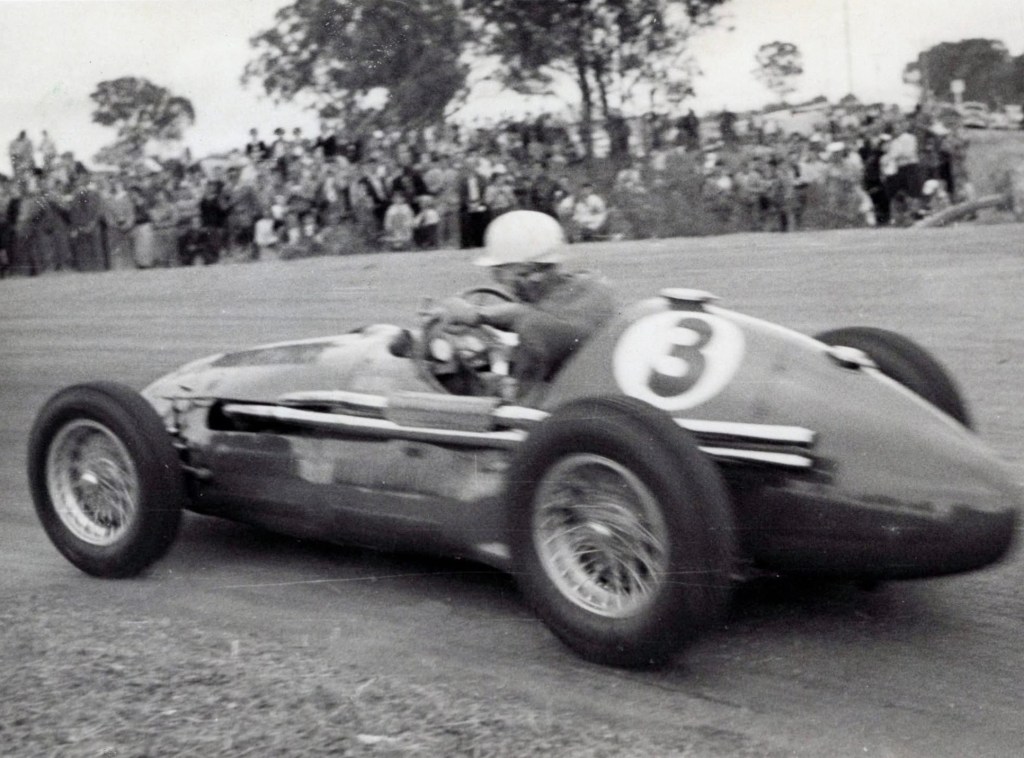
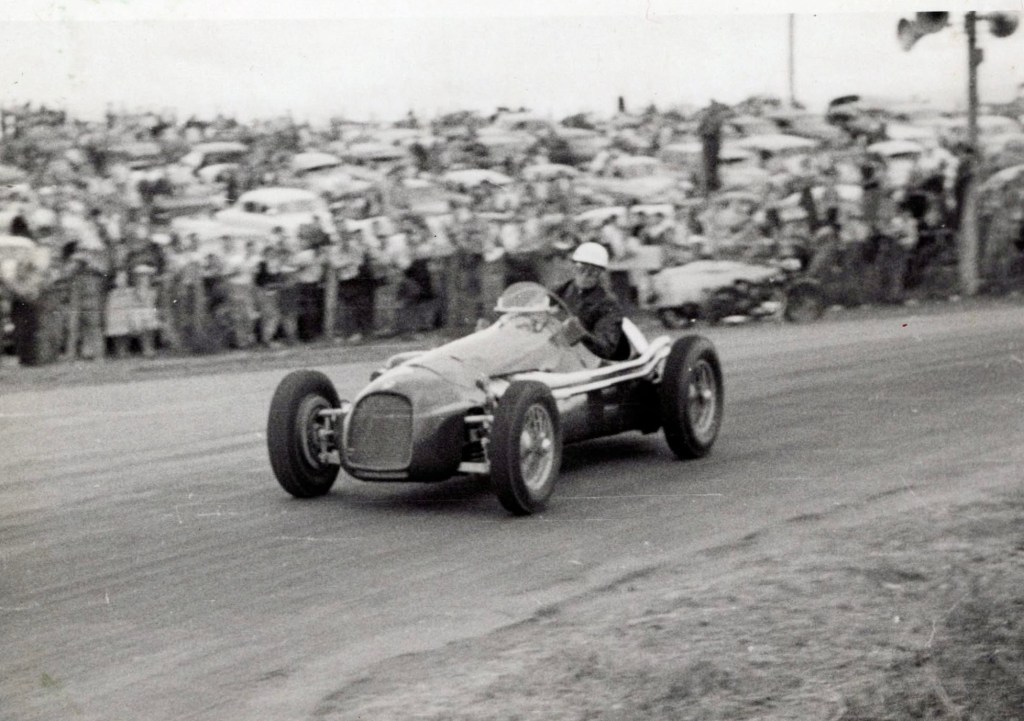
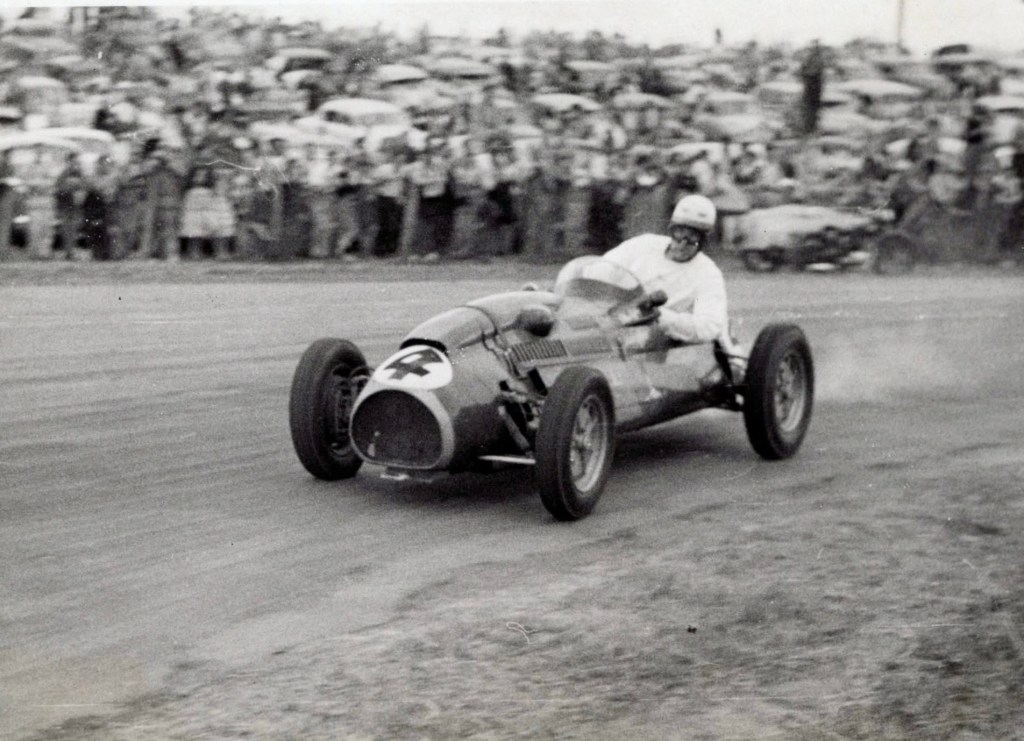
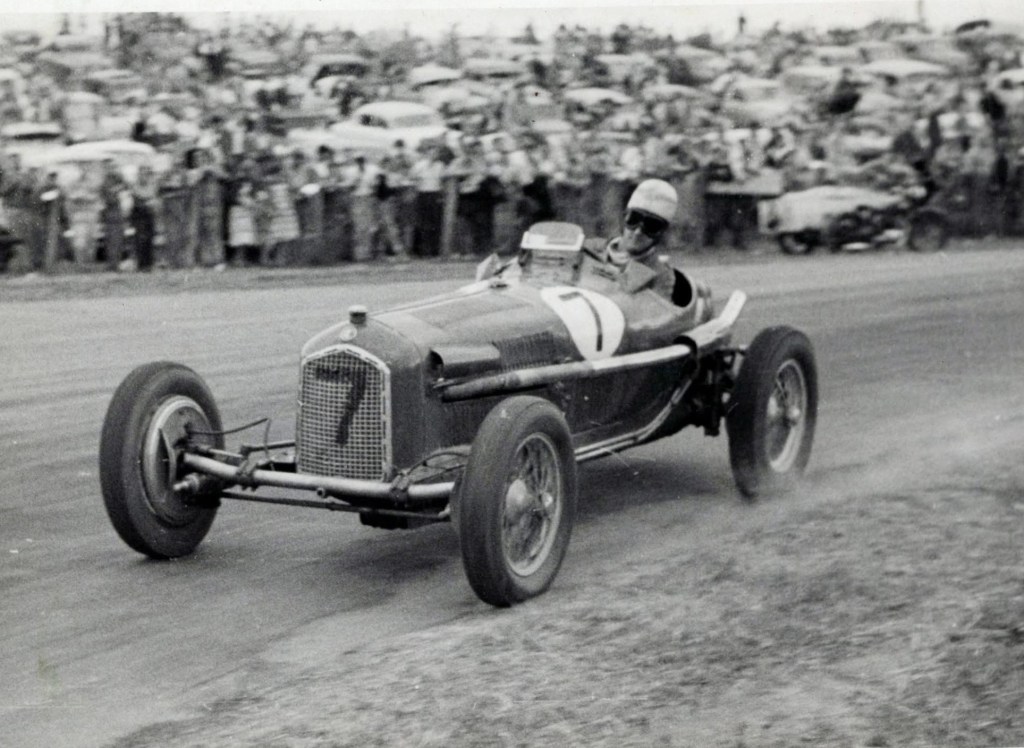
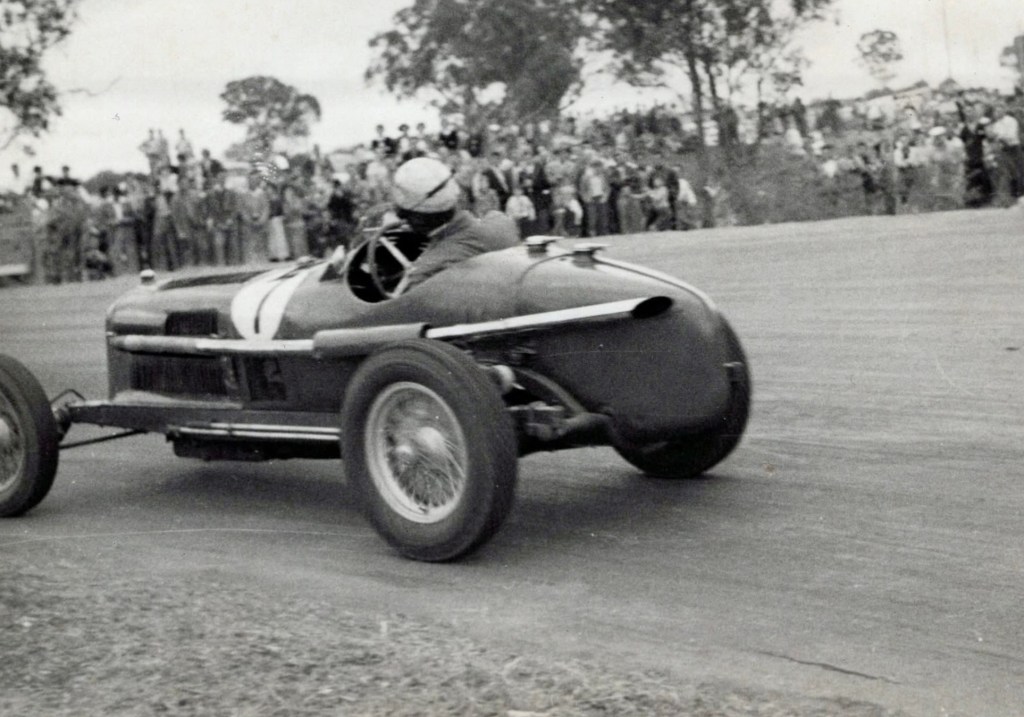
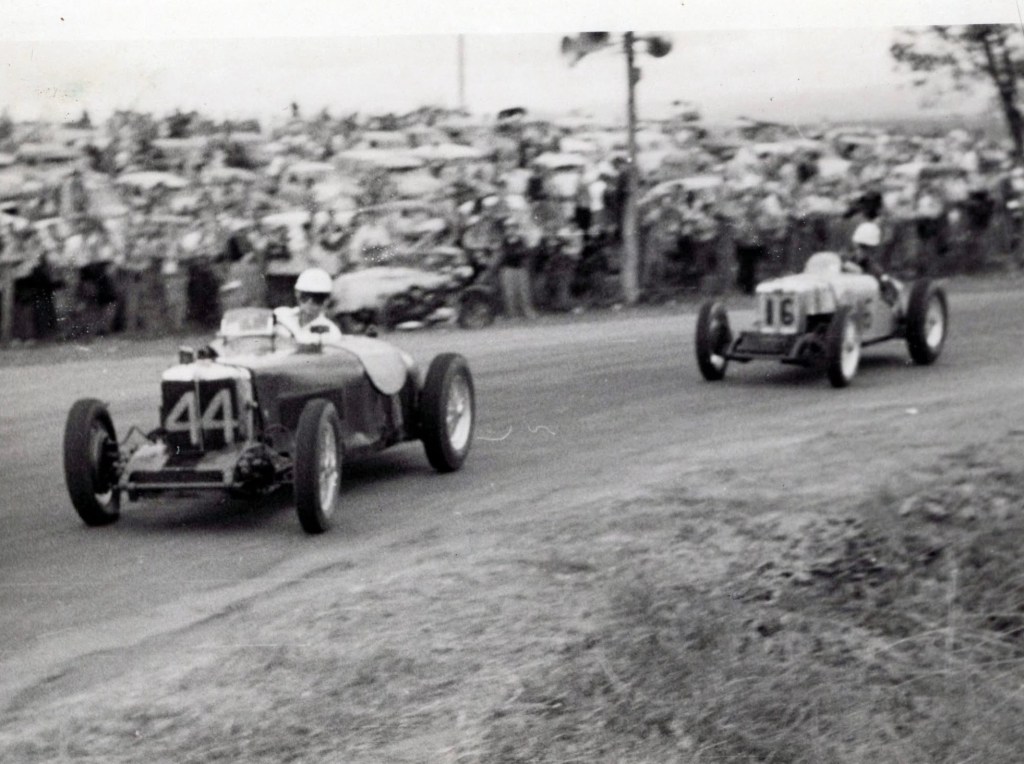
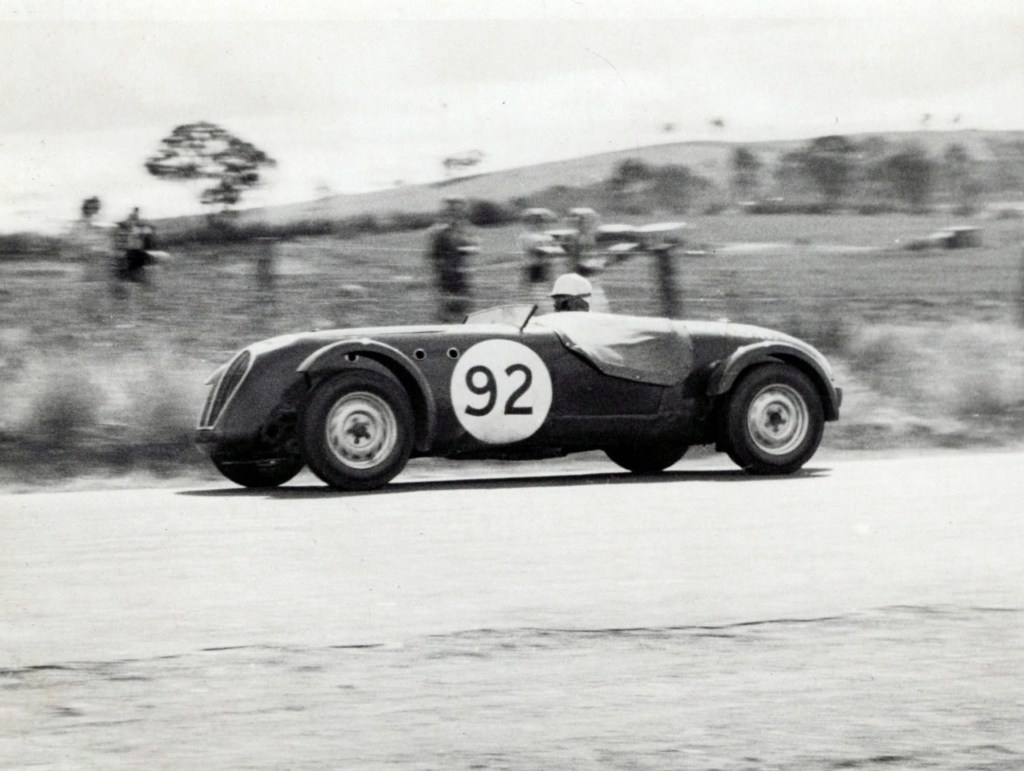
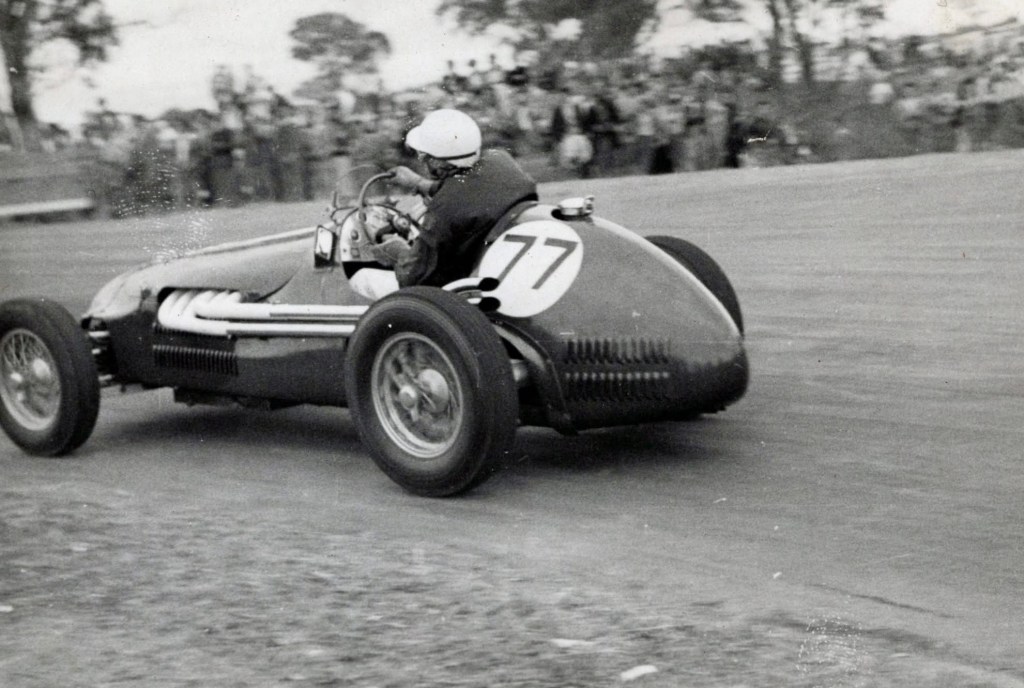
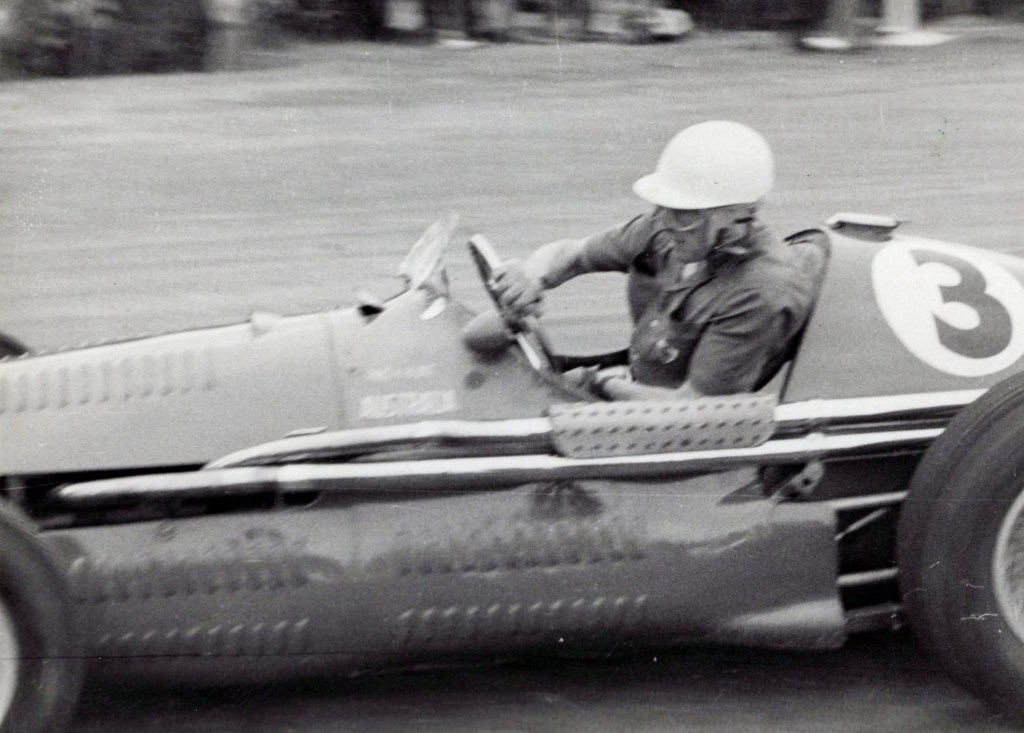
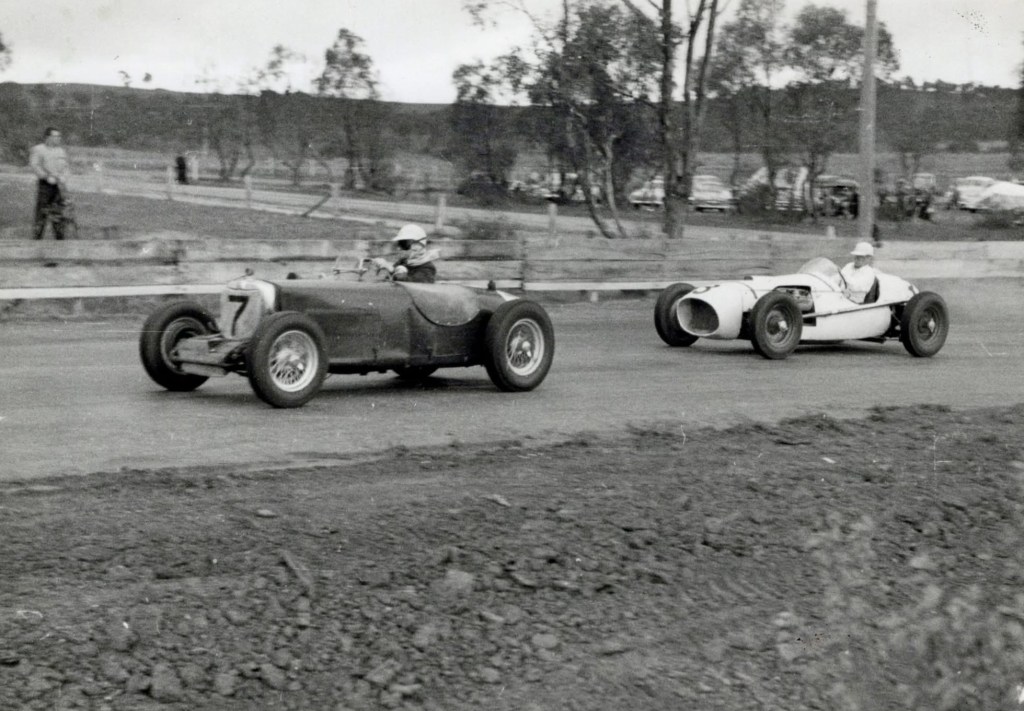
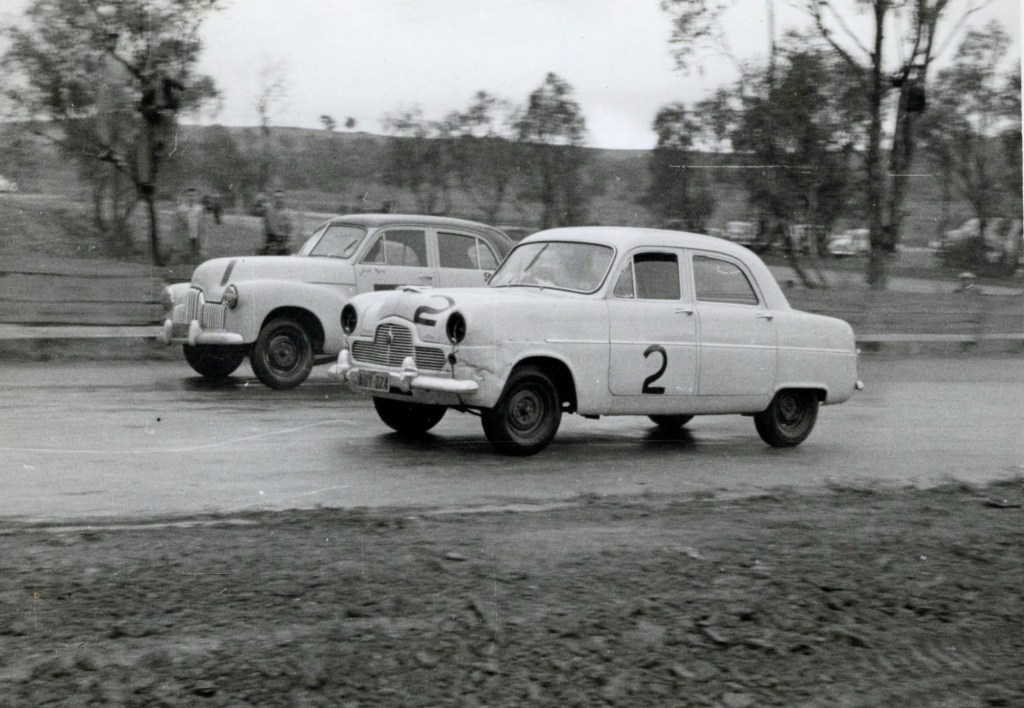
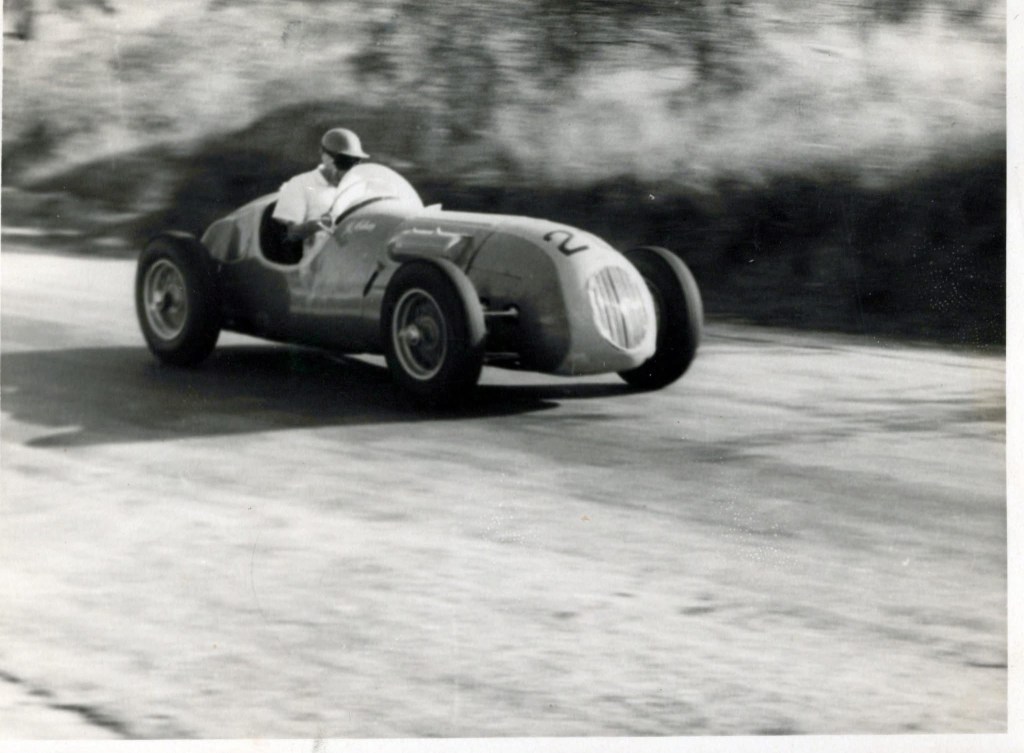
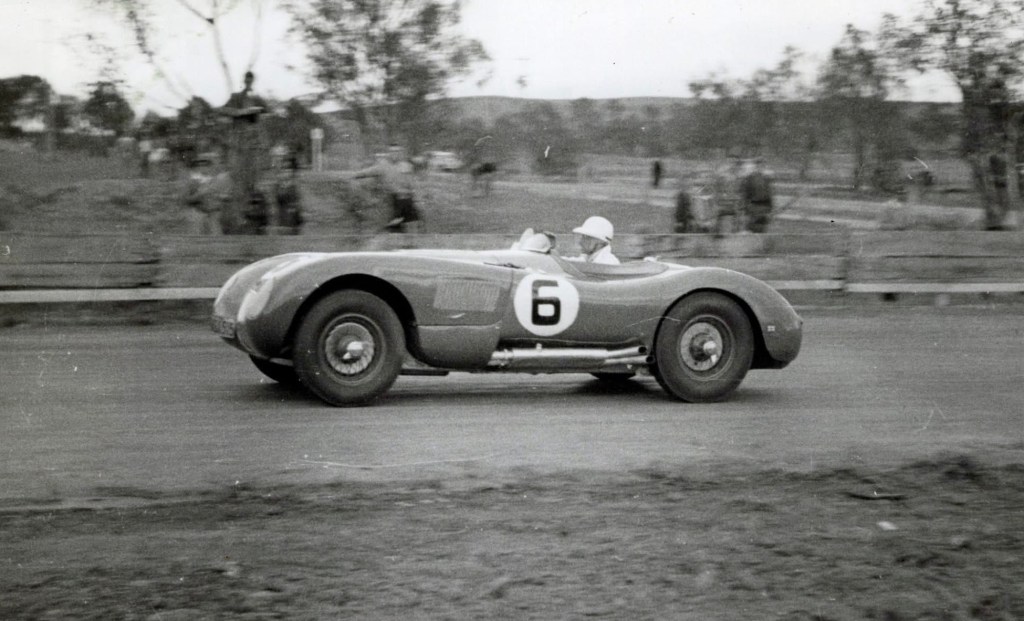


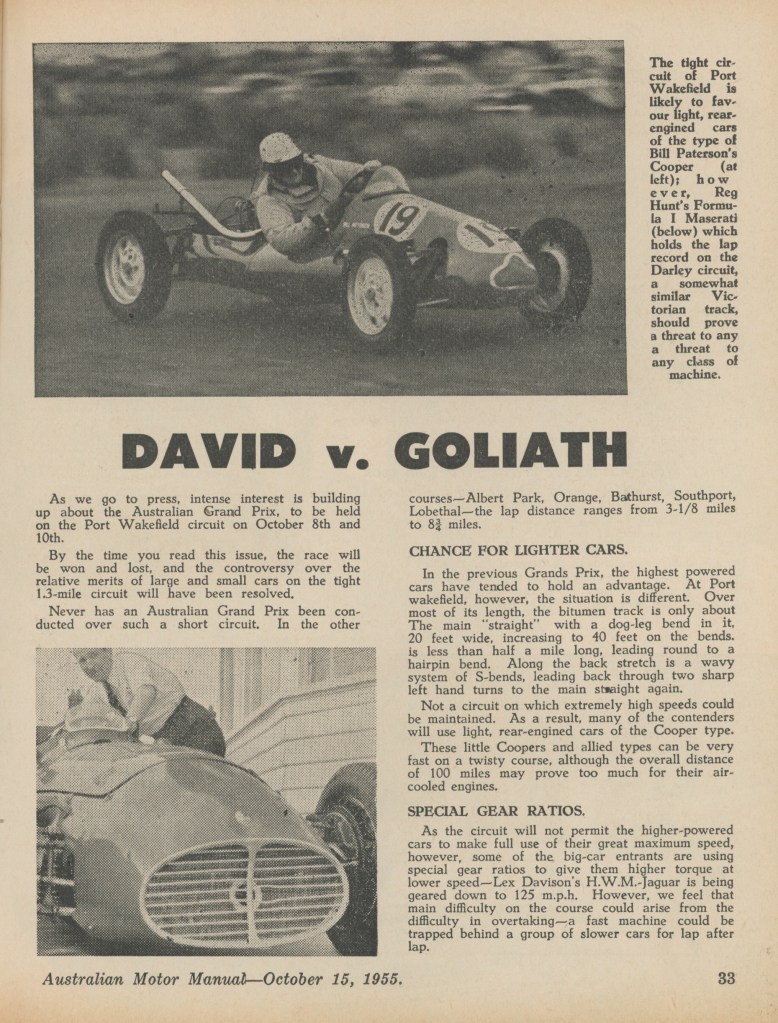
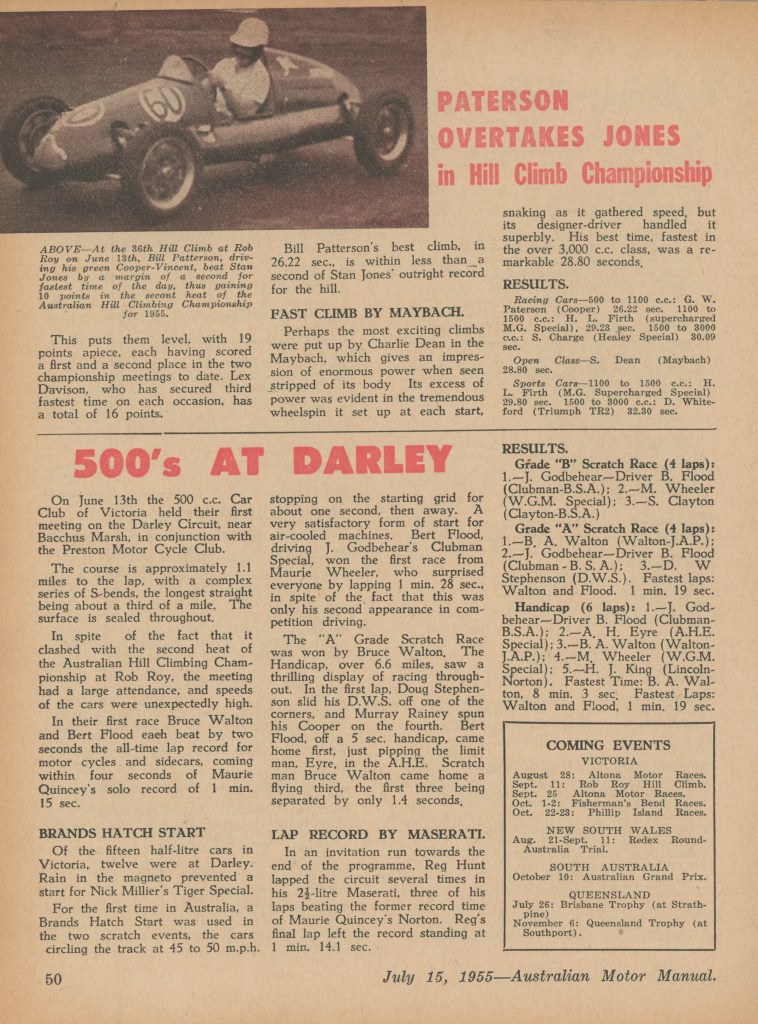


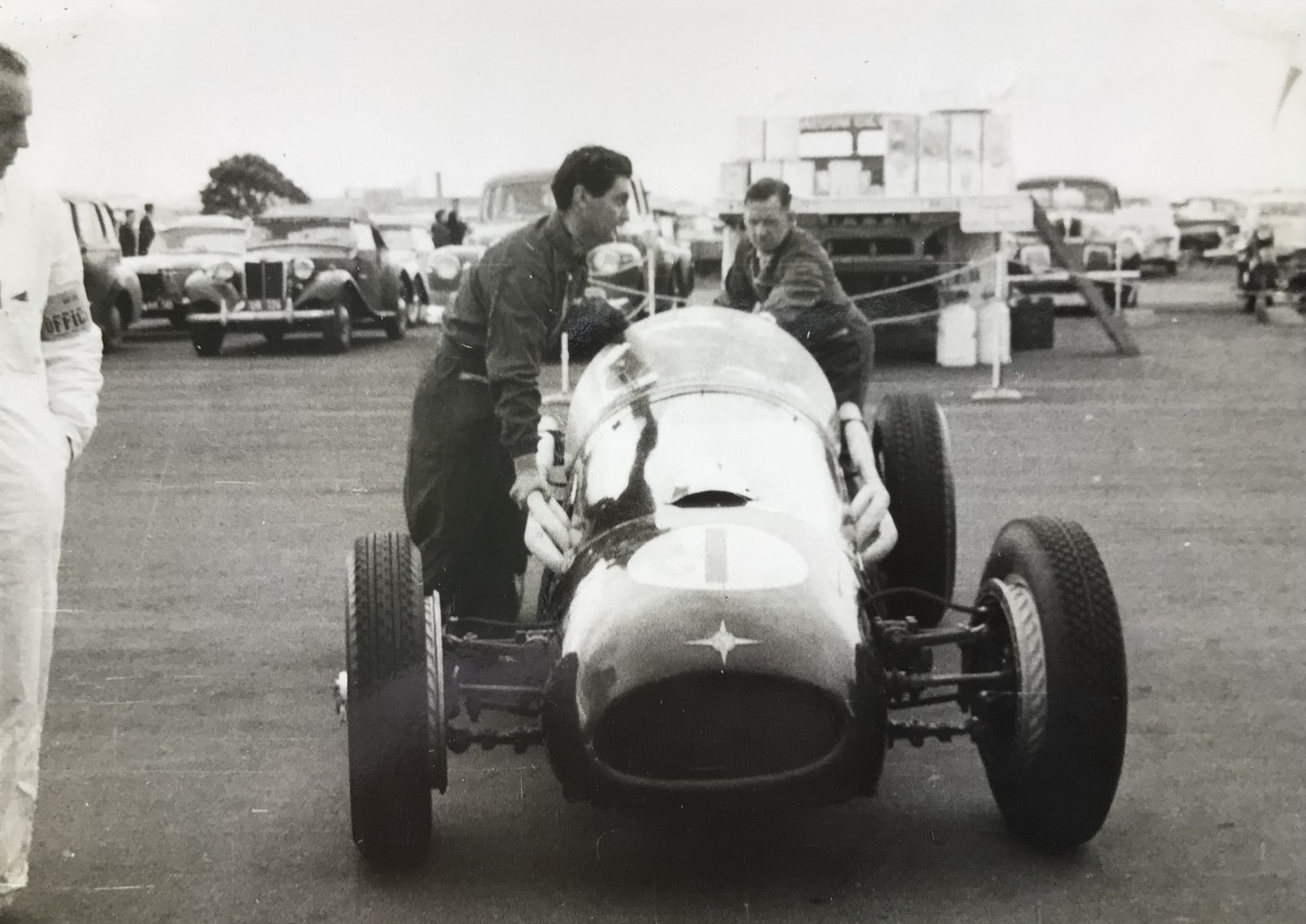

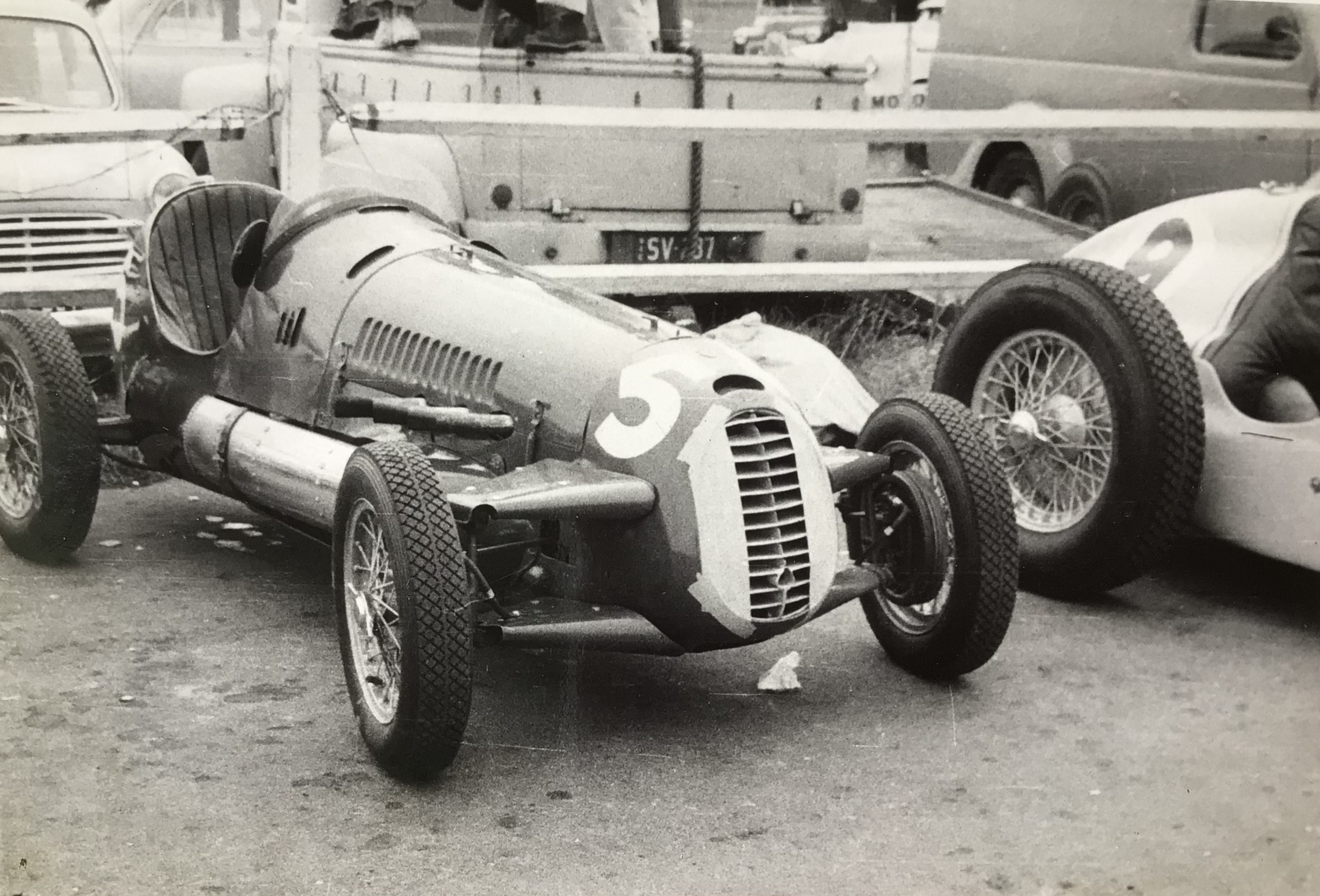

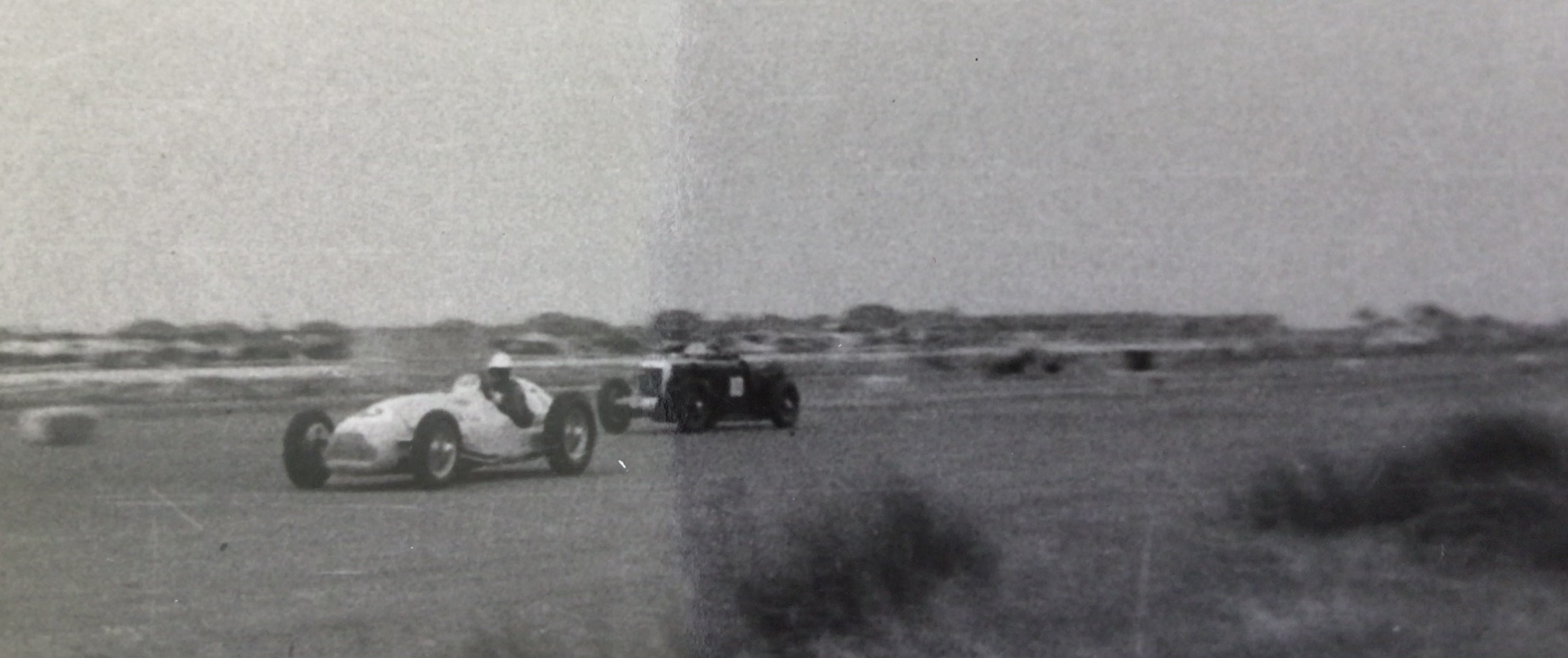


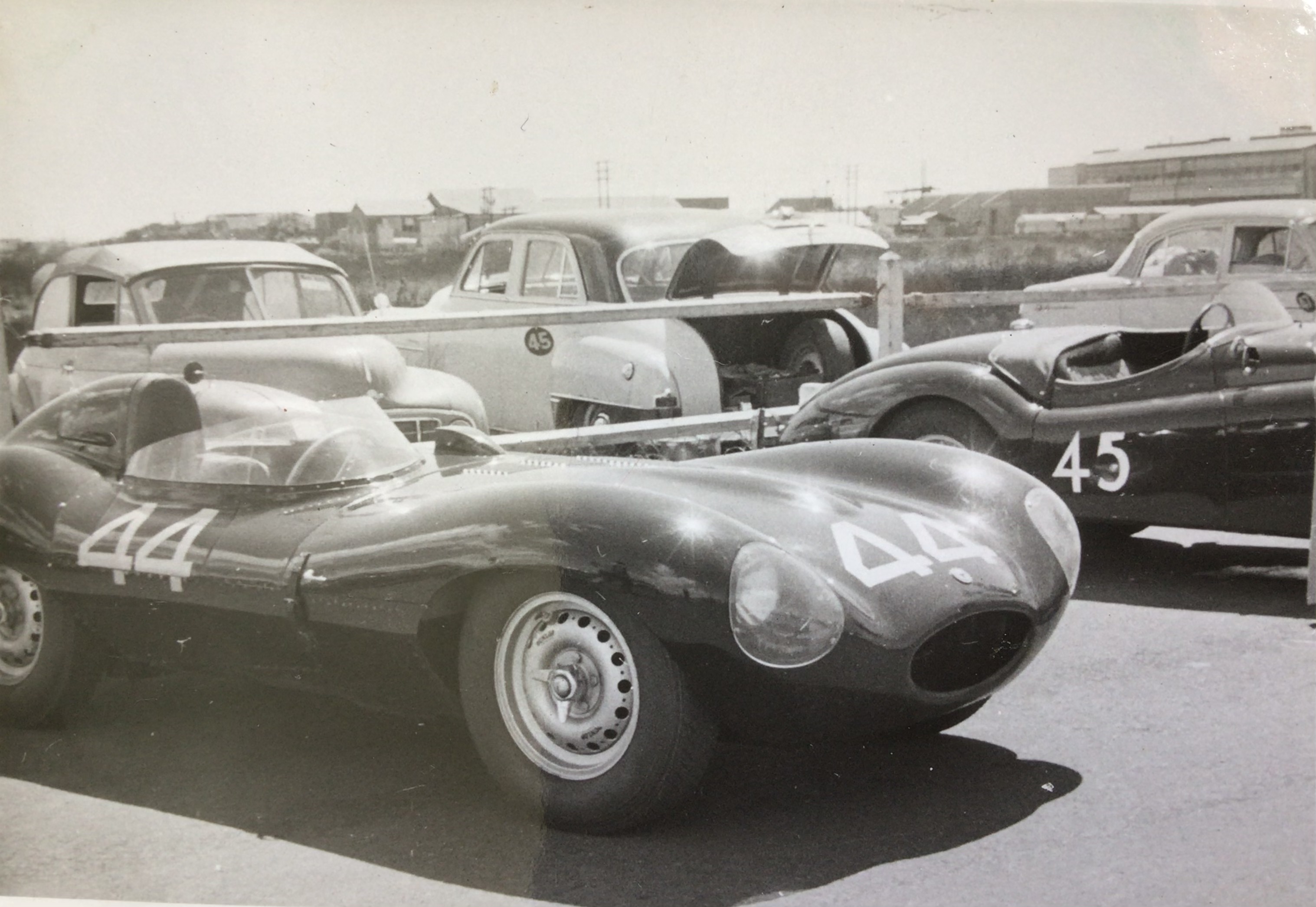


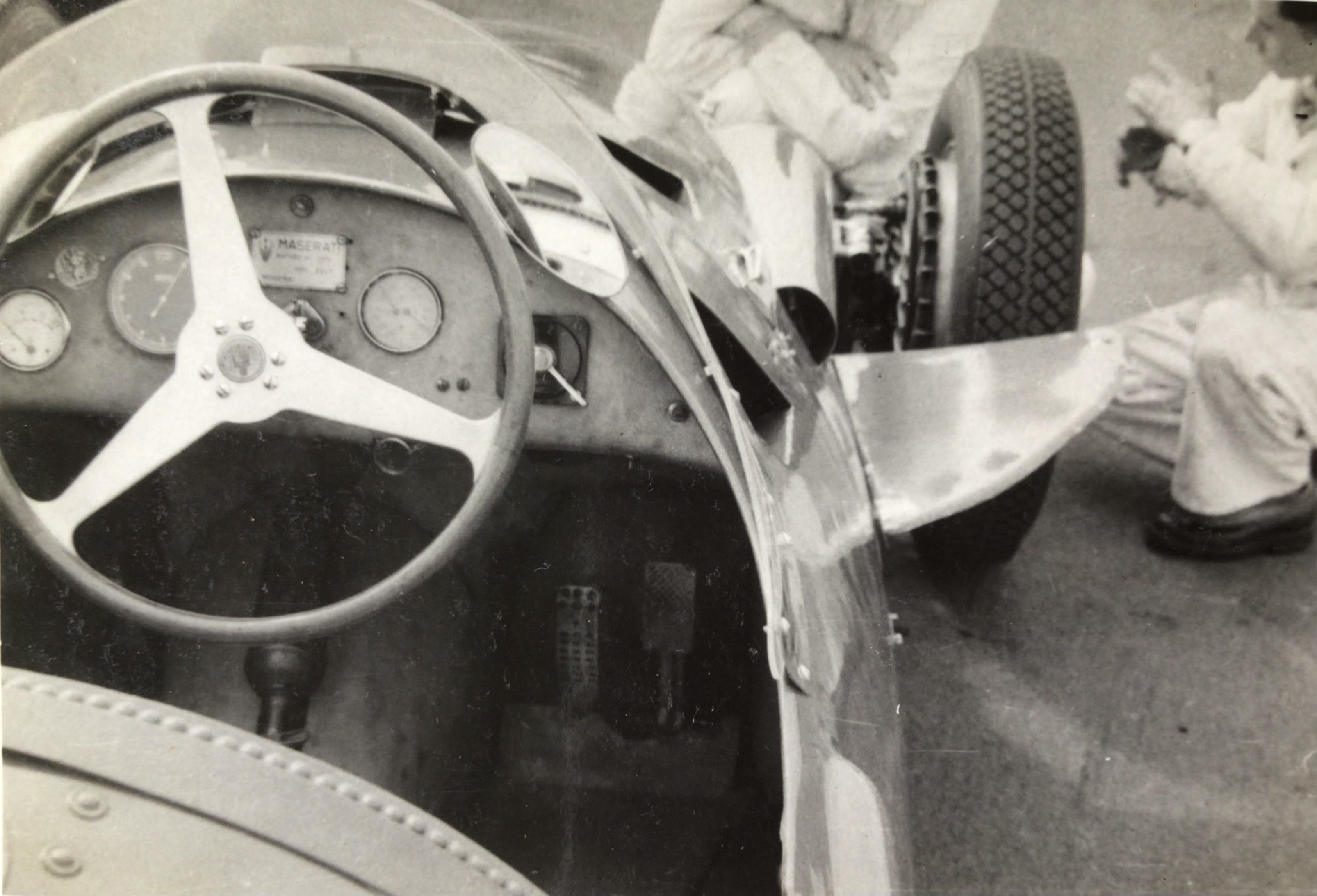

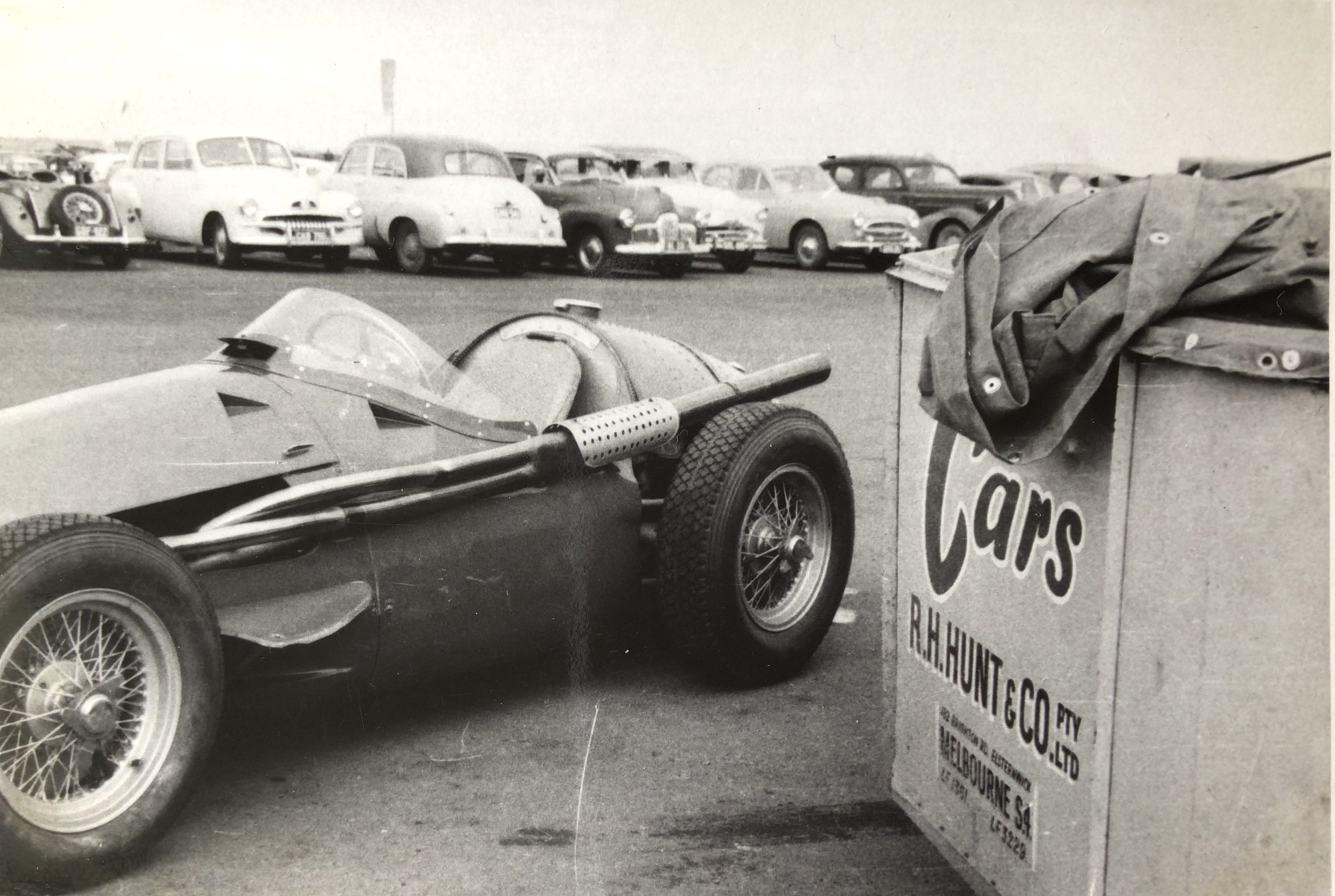


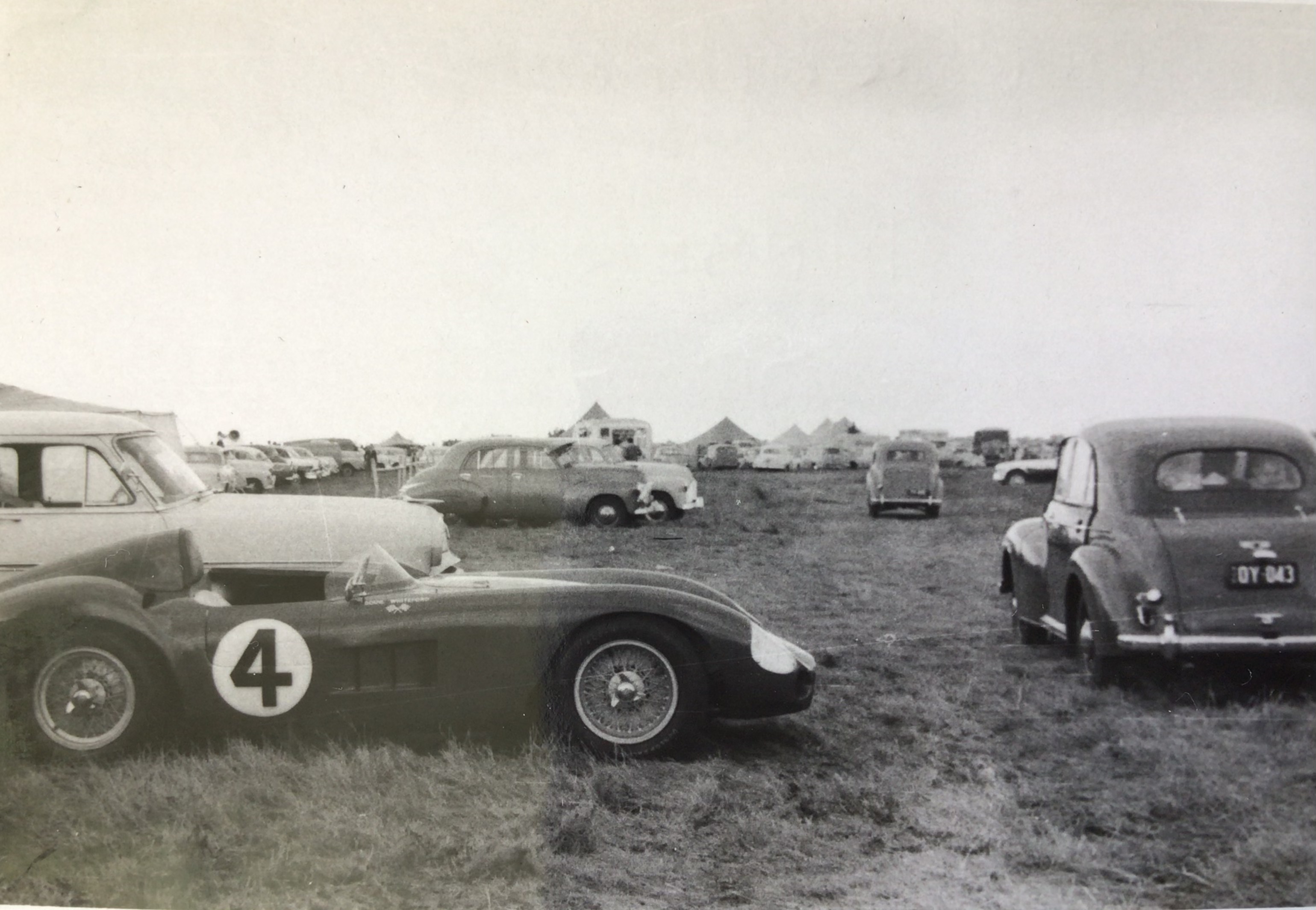




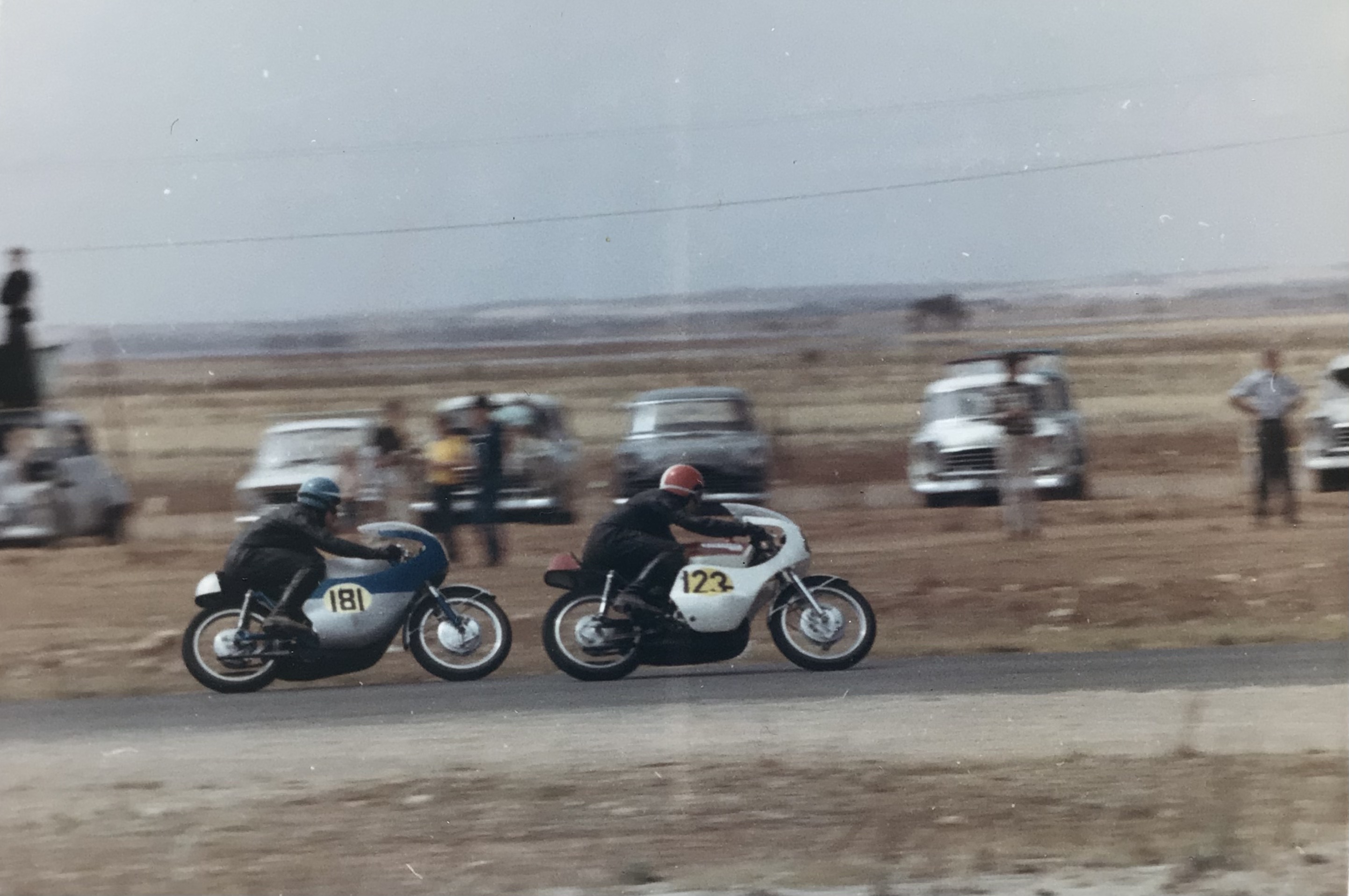


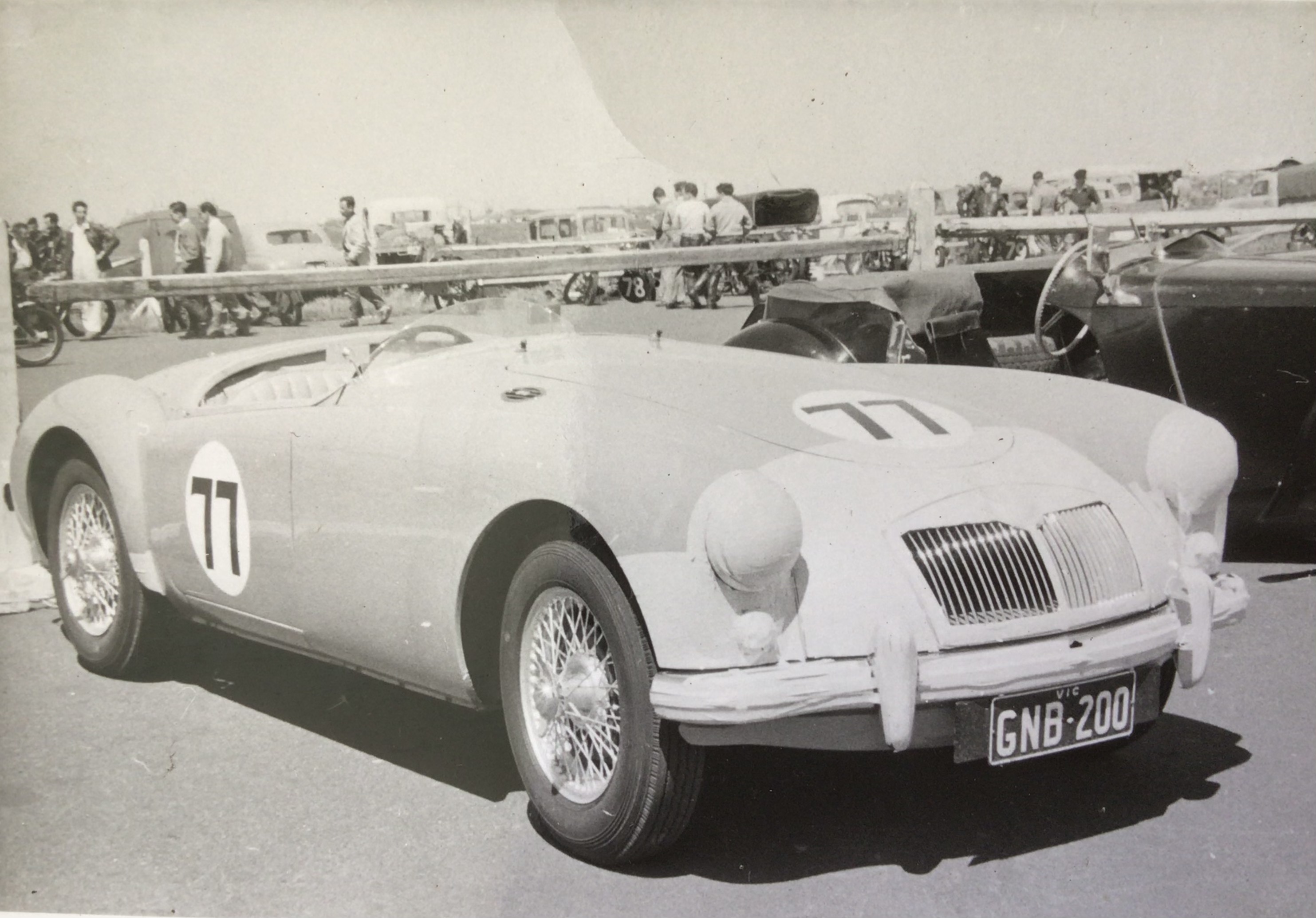


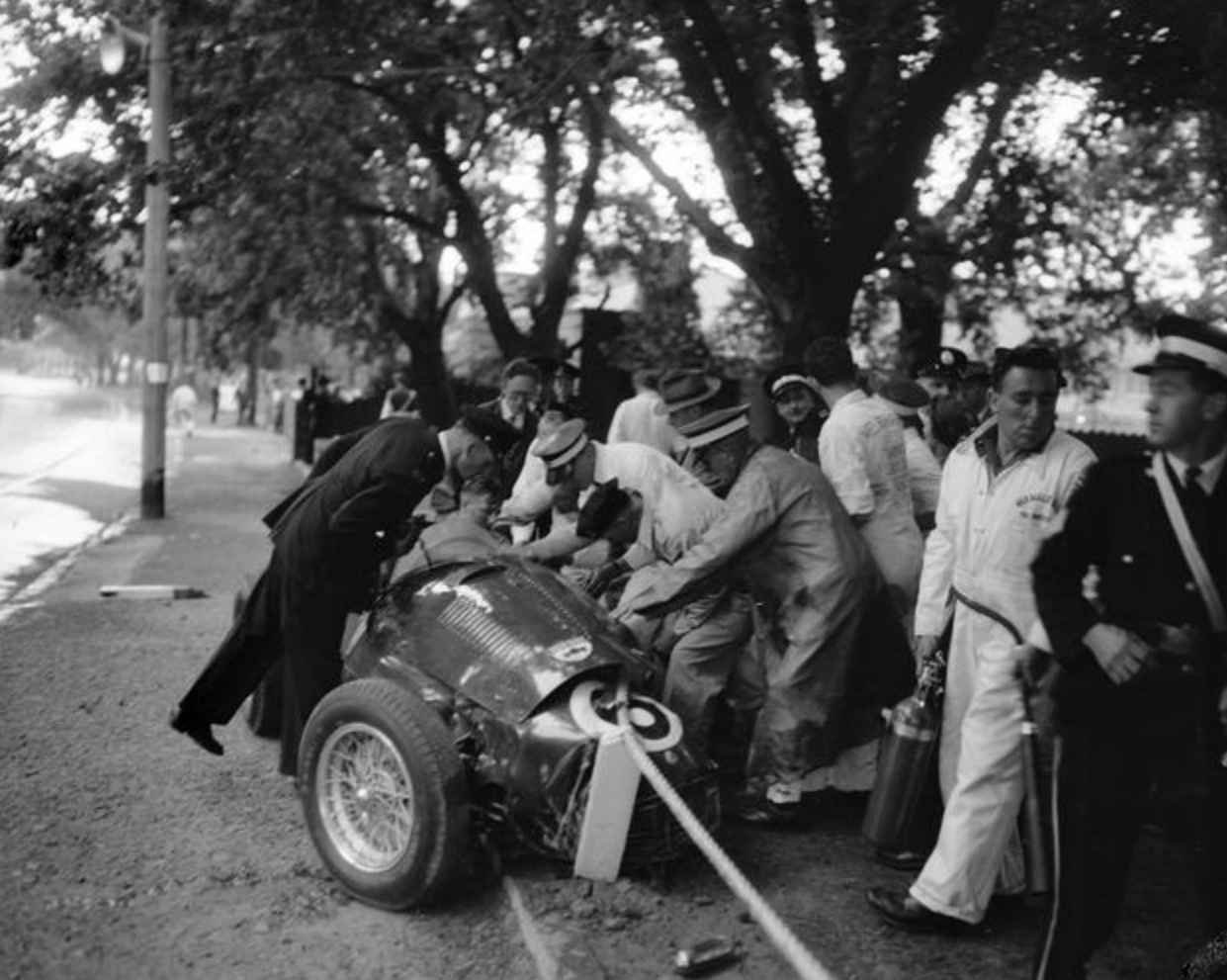
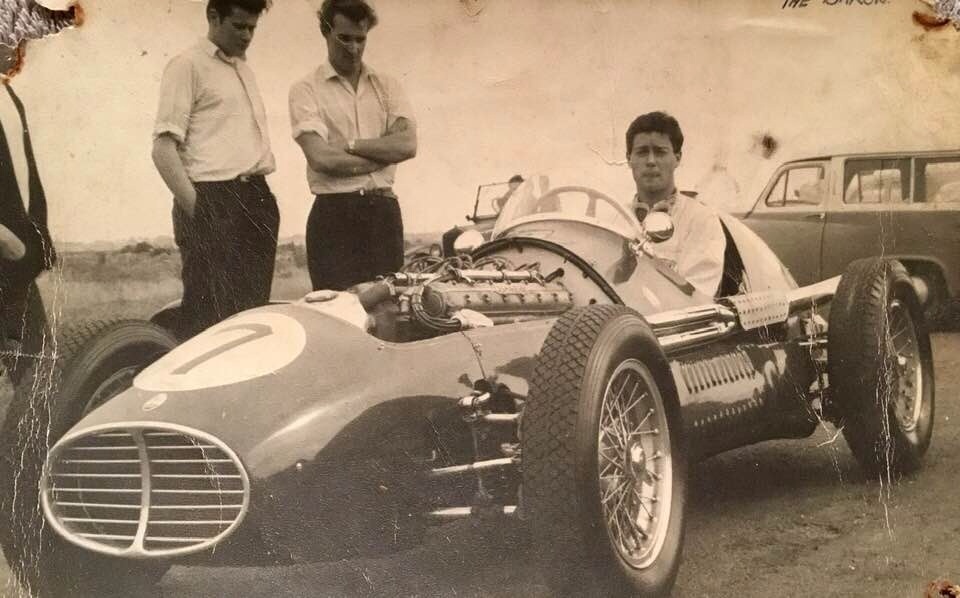


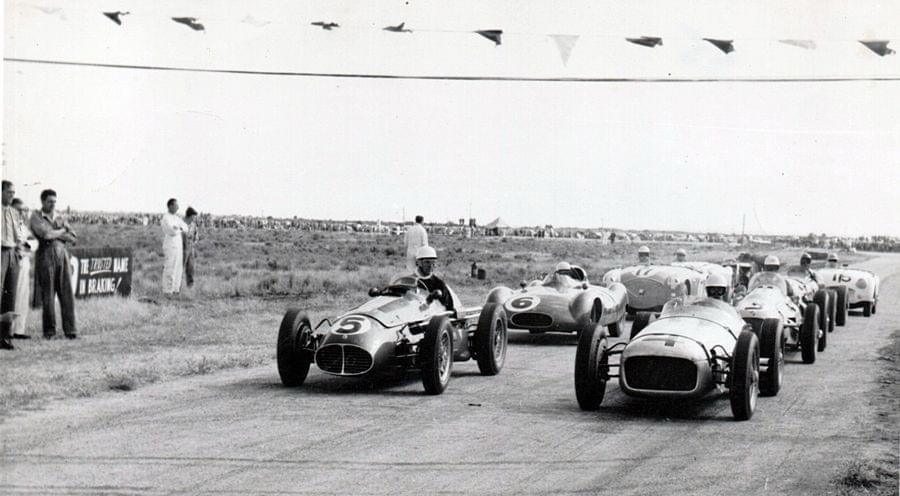


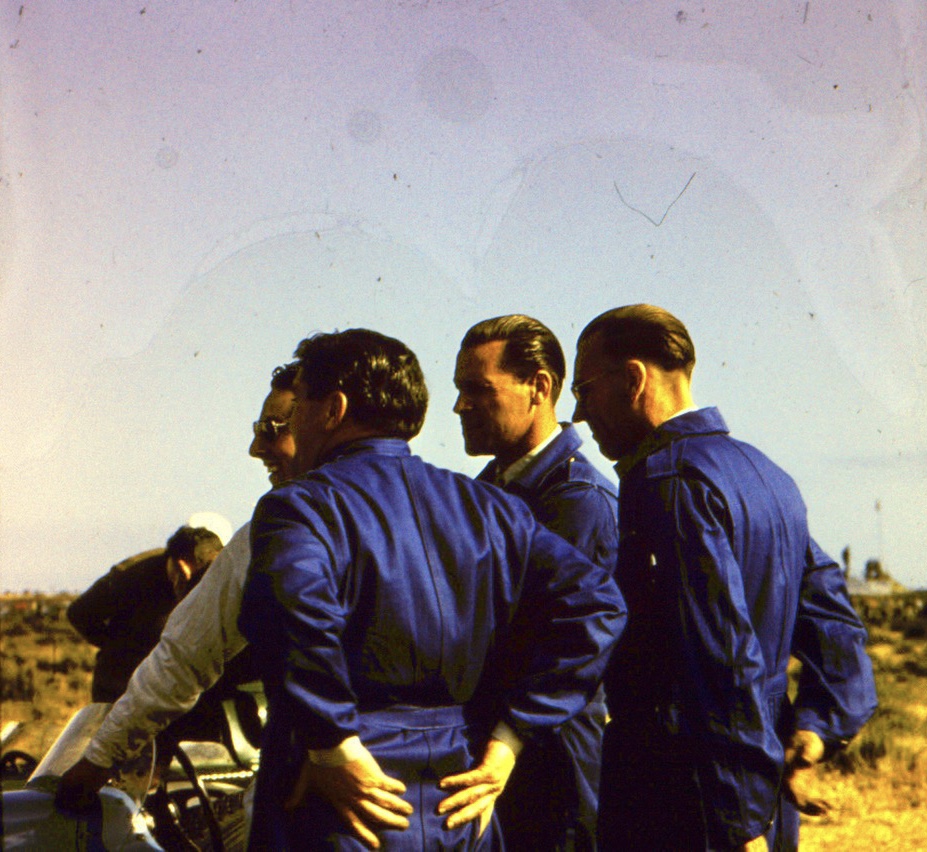

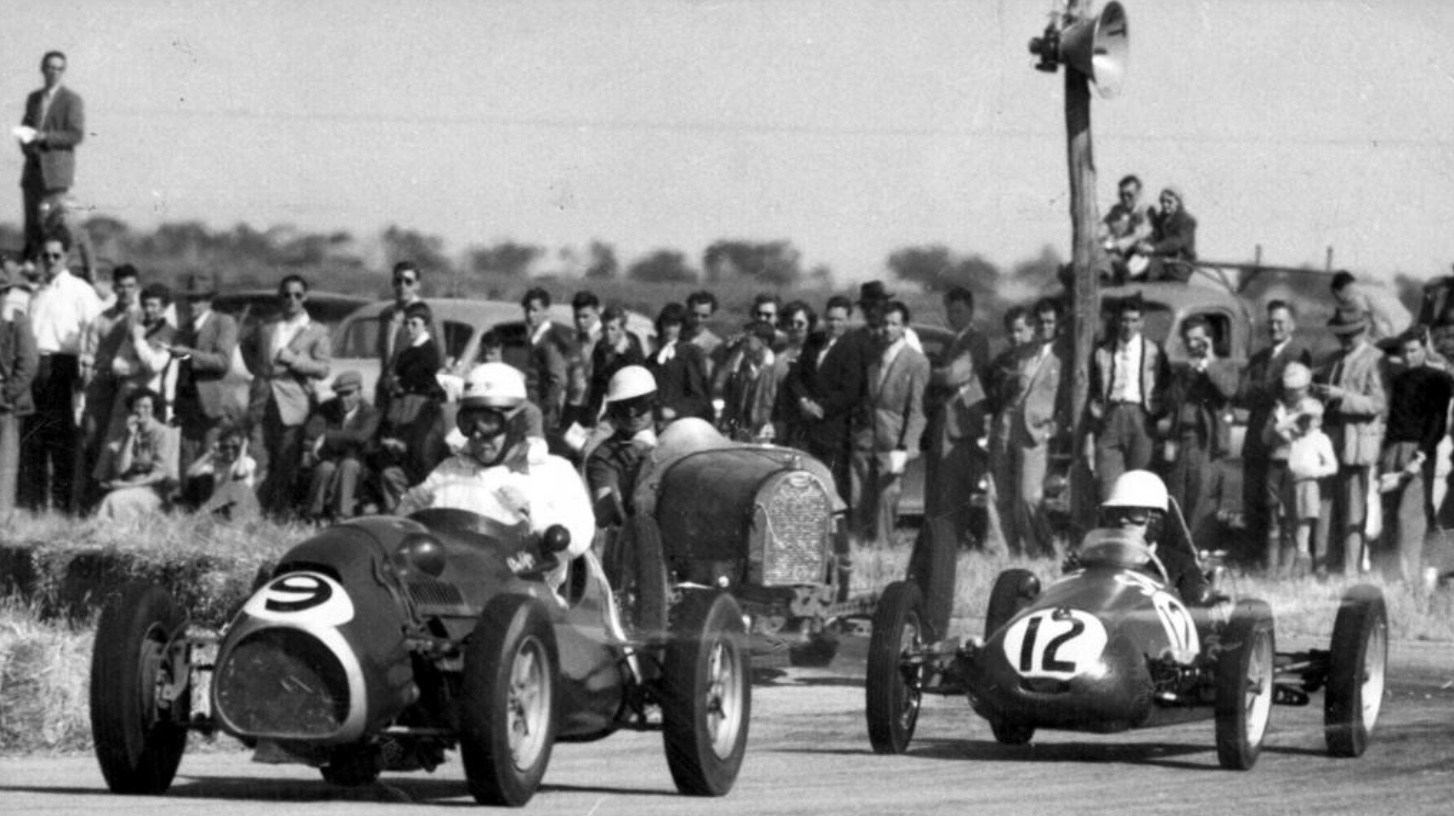


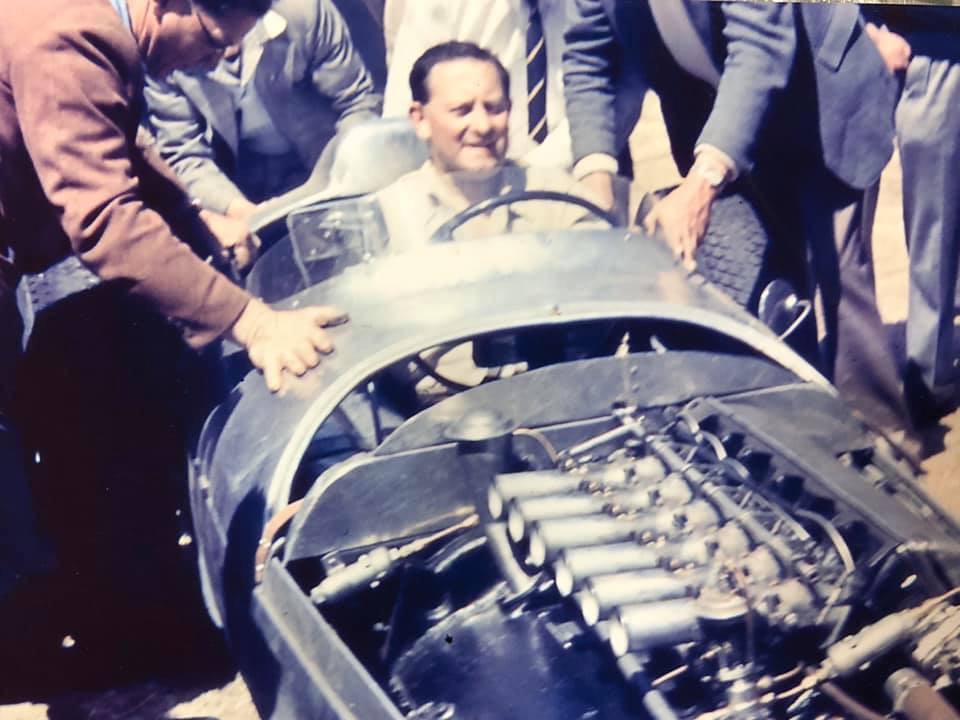


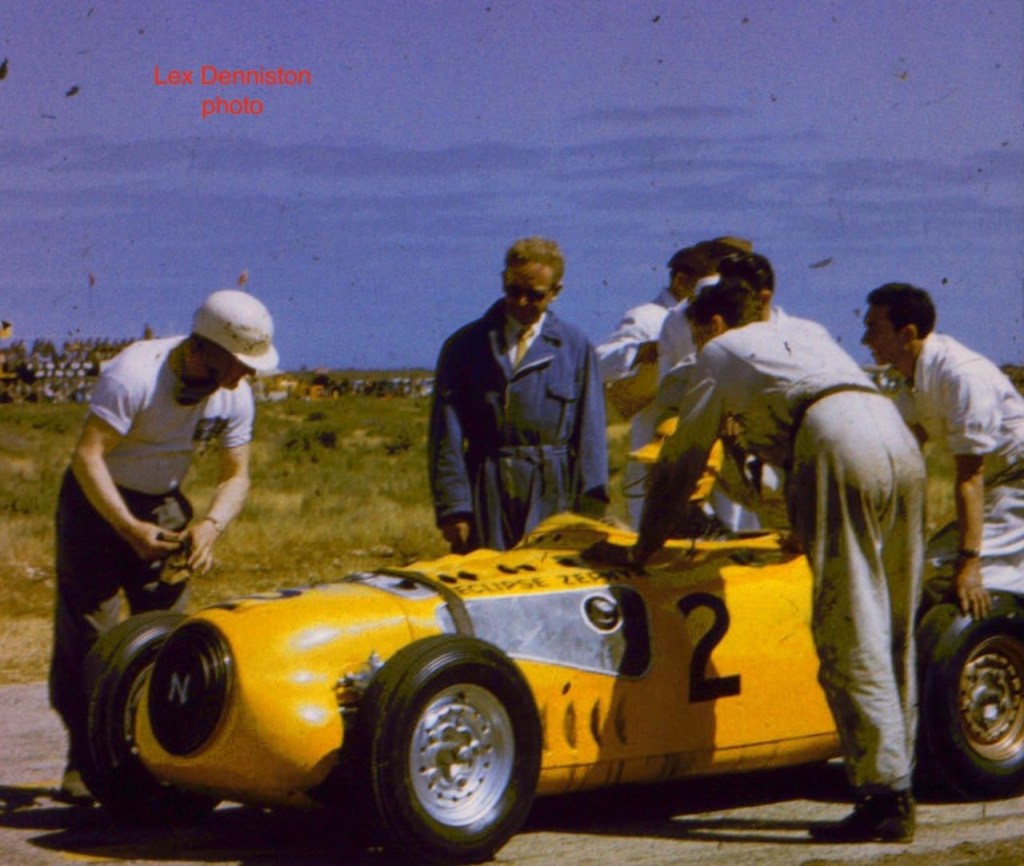

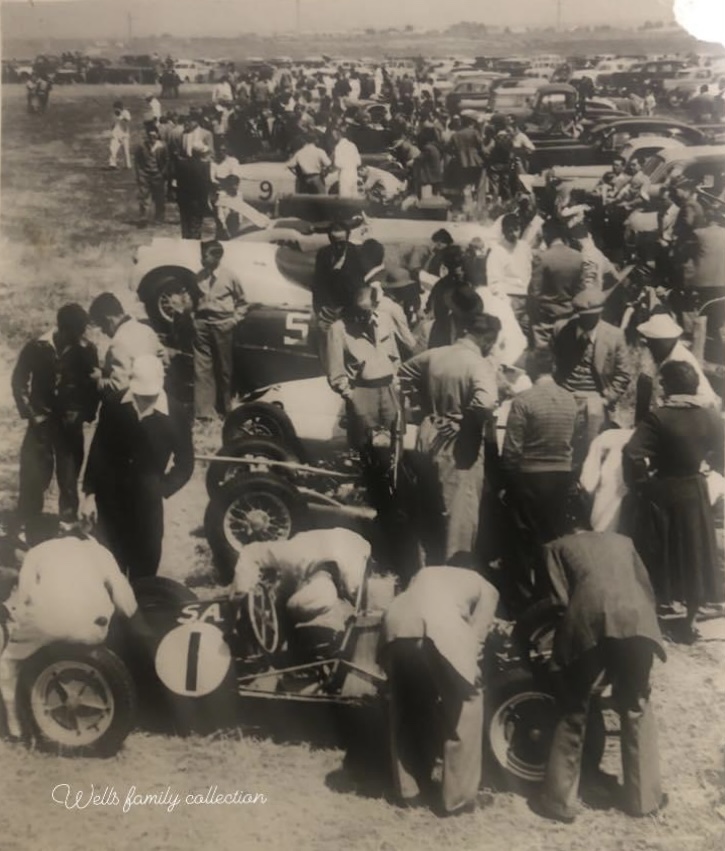

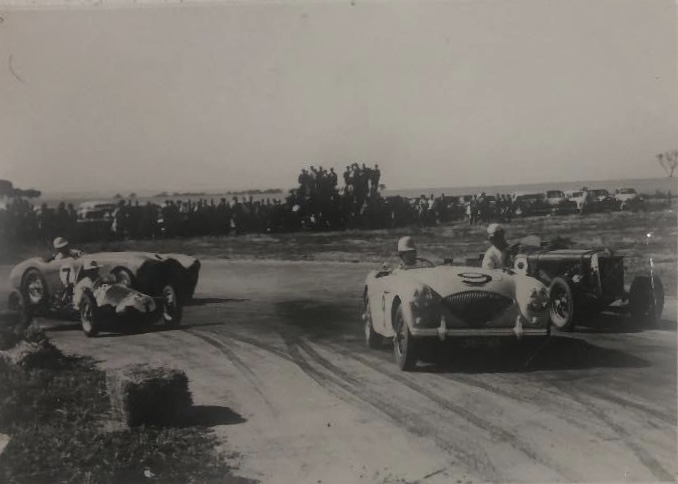
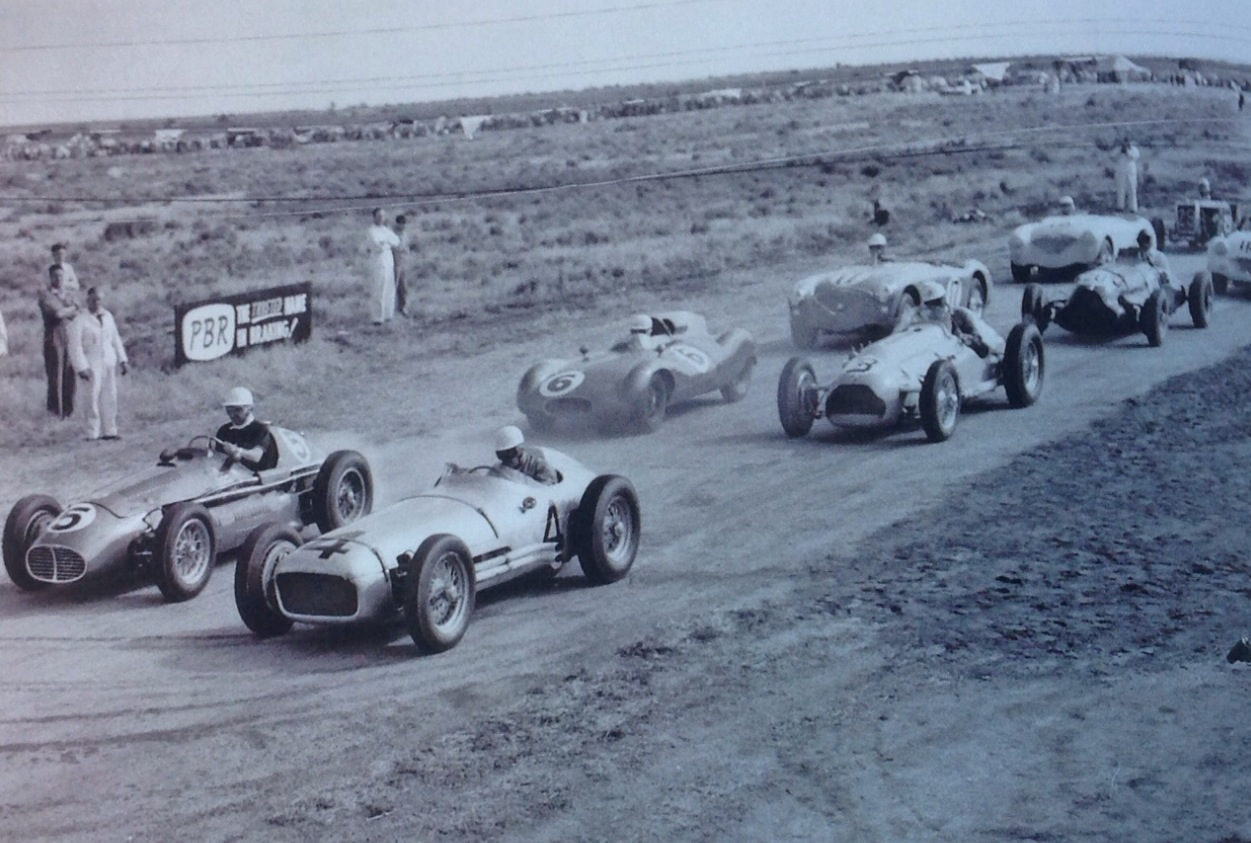


 primotipo...