Posts Tagged ‘Stirling Moss’

(N Tait)

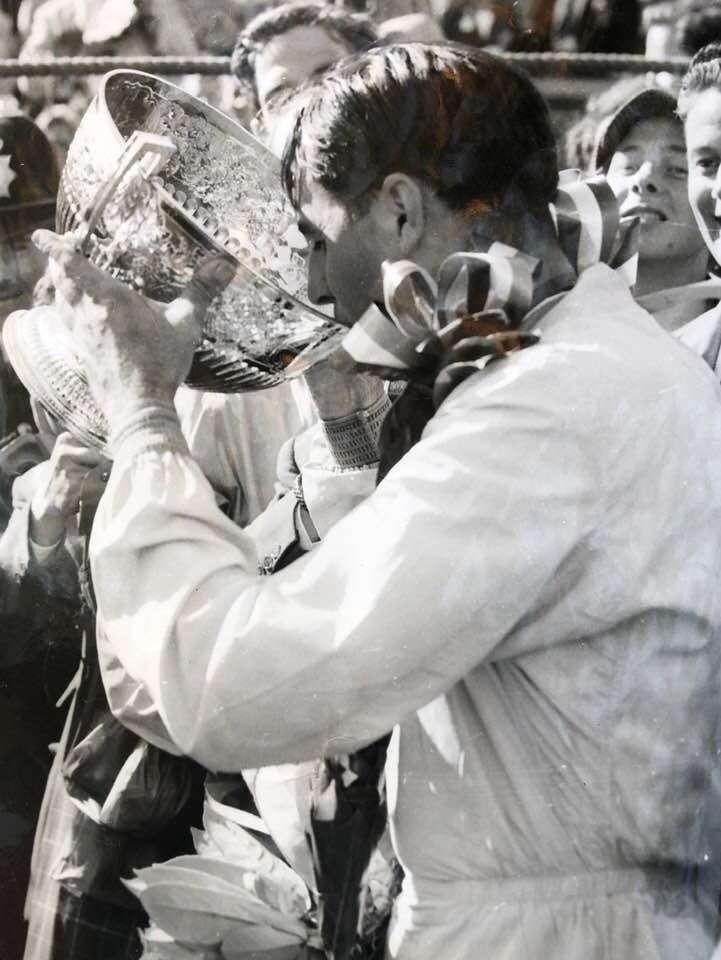
‘Victory Swig’: Jack Brabham partakes of the winner’s champagne, Aintree, 18 July 1959…

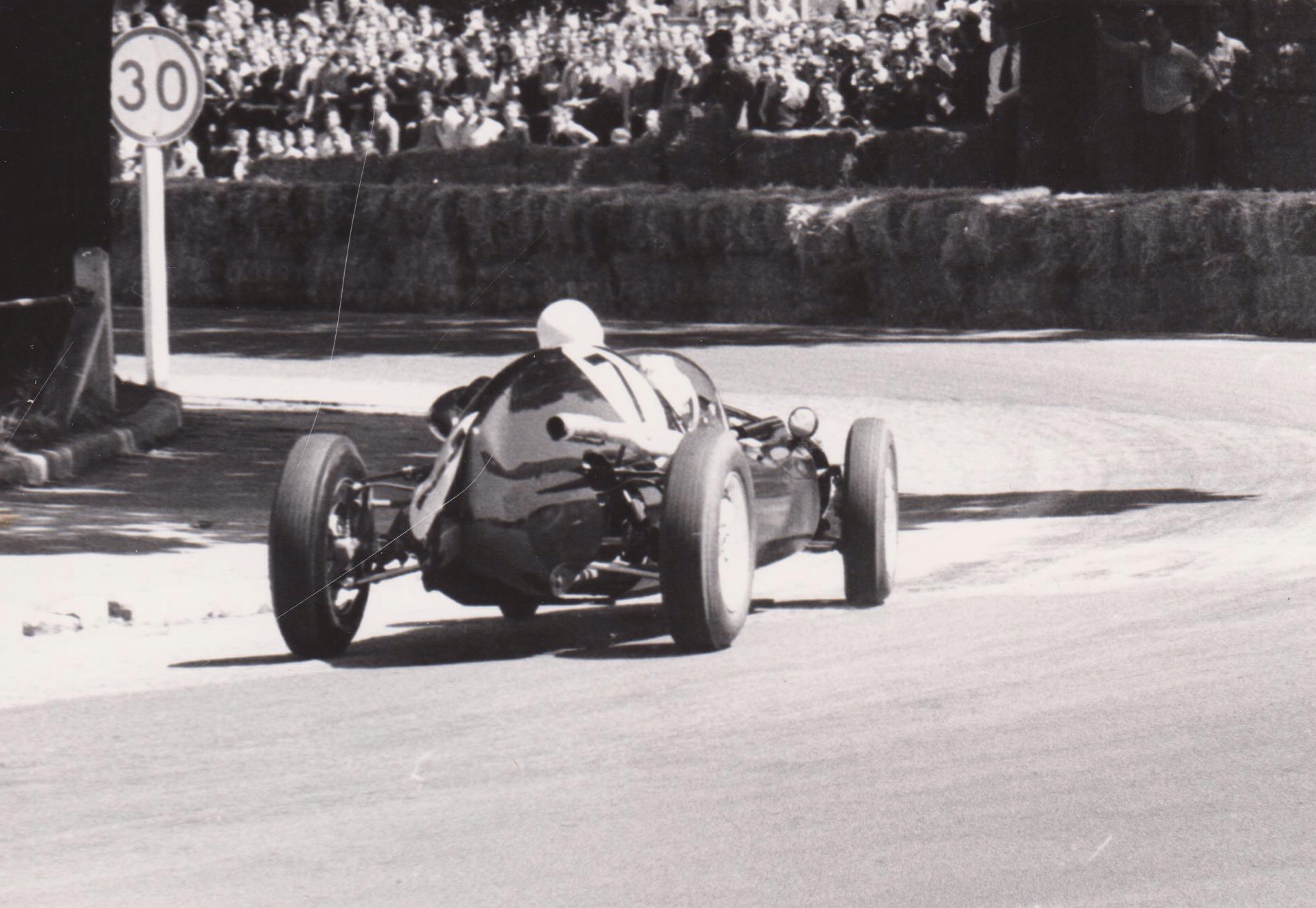
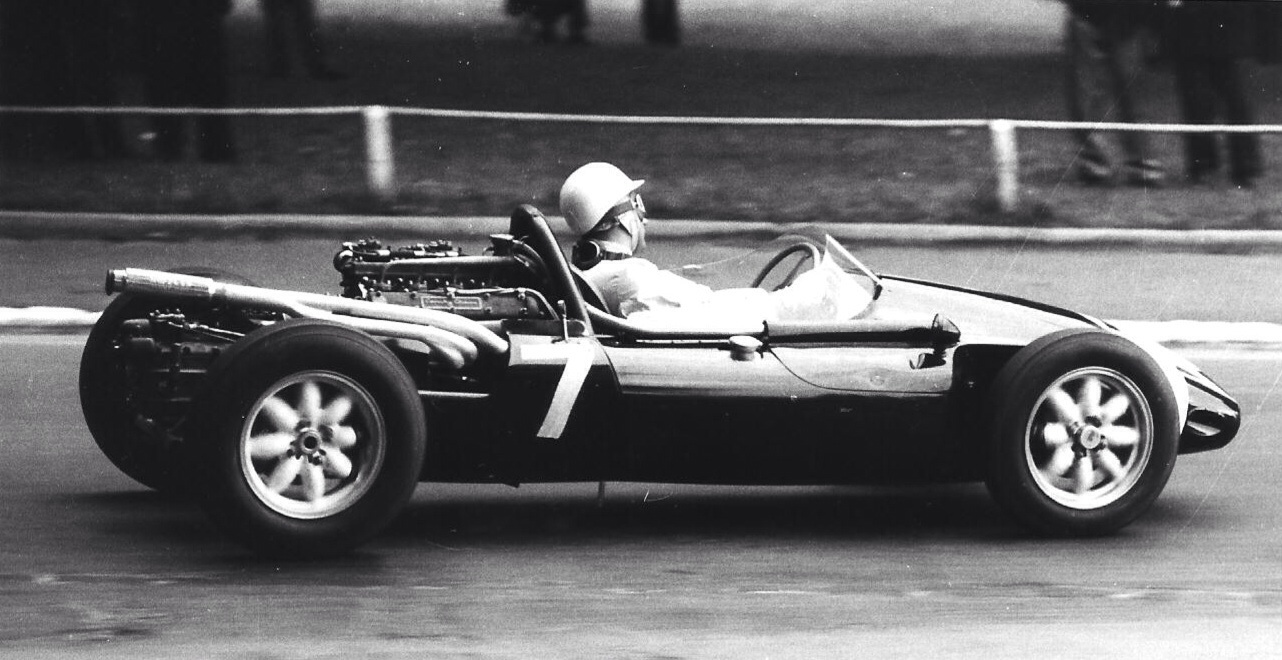
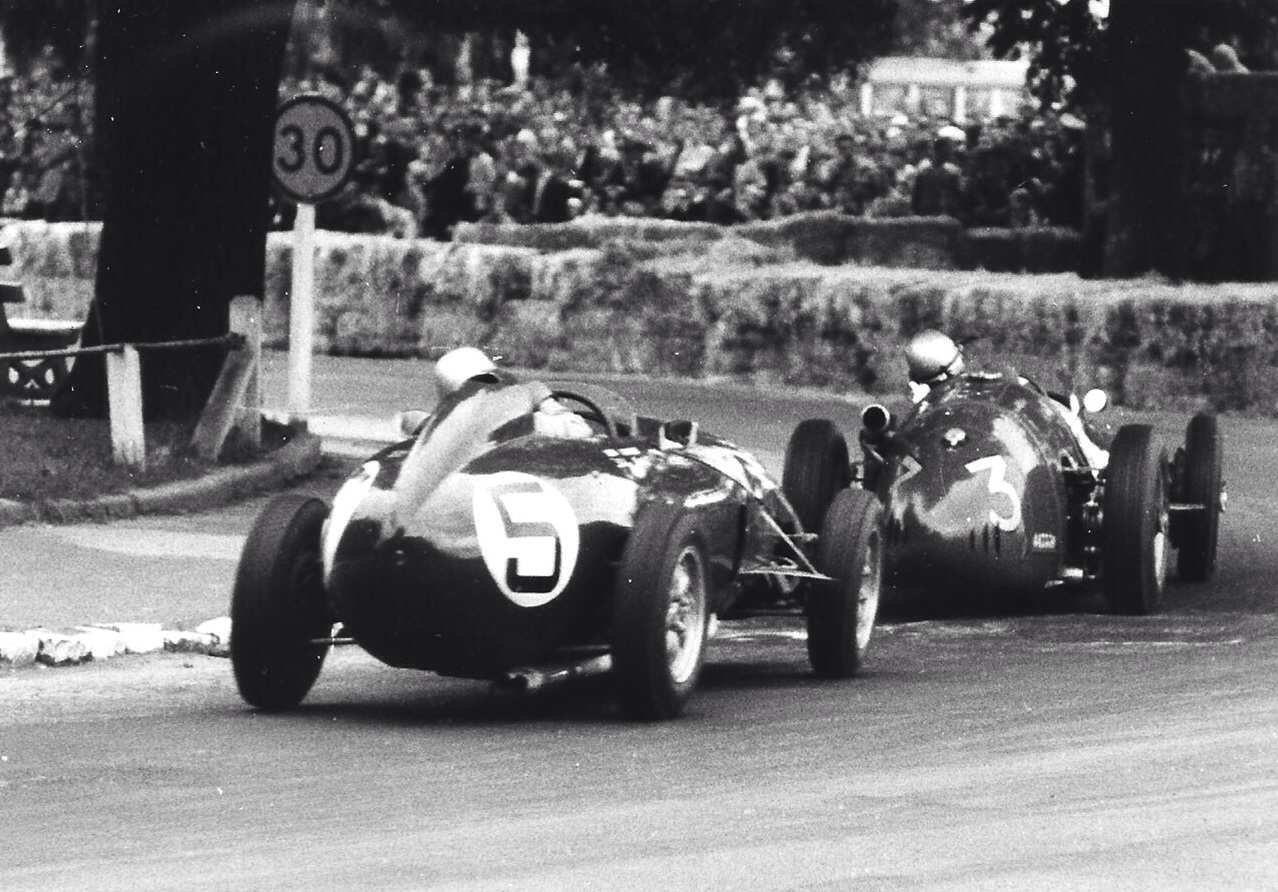
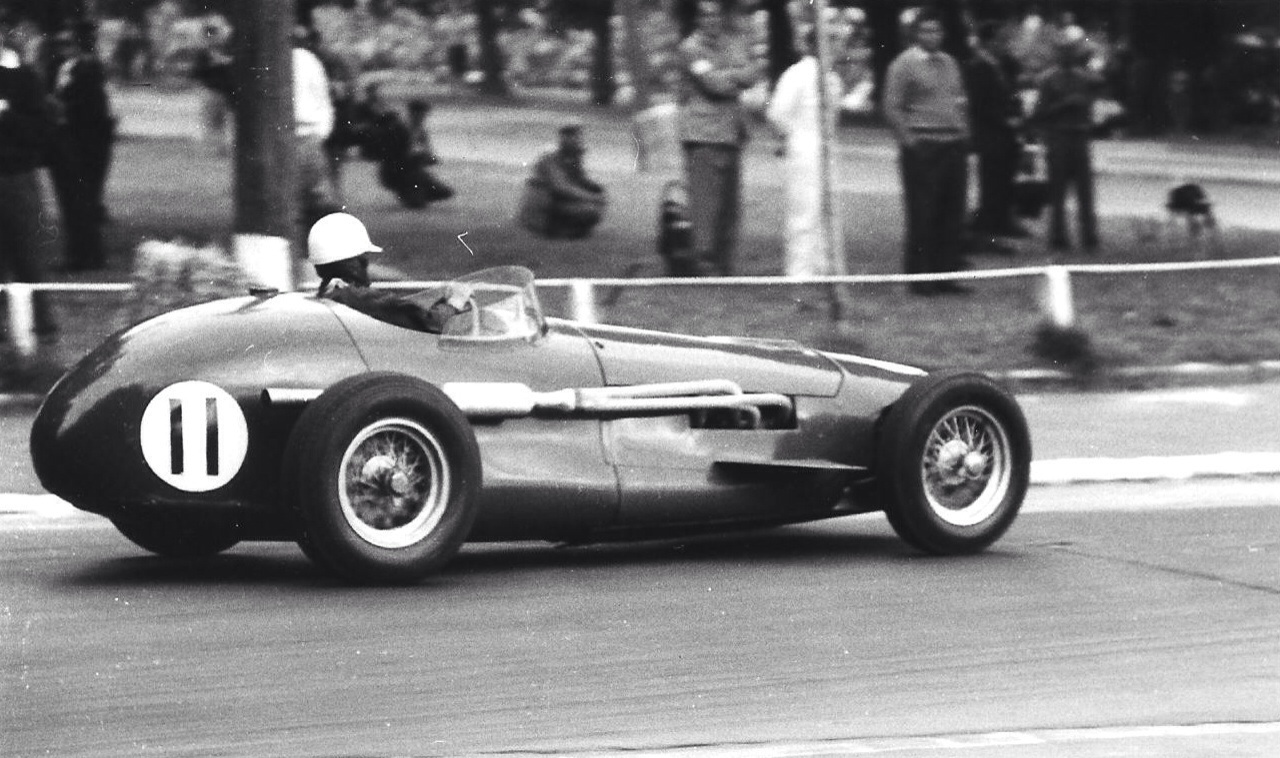
Brabham won the British Grand Prix from the British Racing Partnership BRM P25 driven by Stirling Moss and Bruce McLaren’s Cooper T51- Jack similarly works mounted to Bruce.

This story of the race was inspired by a couple of marvellous pieces from Nigel Tait’s Repco Collection. I wrote a largely photographic article about this weekend a while back too; https://primotipo.com/2014/11/01/masten-gregory-readies-for-the-off-british-grand-prix-aintree-1959/

(N Tait)

The reality of the win was a bit more complex than the Telex back to Repco HQ of course.

Brabham was aided by the very latest version of the Coventry Climax Mk2 FPF 2.5 ‘straight port, big valve’ engine as Doug Nye described it, and the very latest version of the modified Citroen-ERSA gearbox which used roller rather than plain bearings and oil pumps to aid the reliability of the transmission which was being stretched beyond its modest, production car design limits by the increasingly virile FPF. The short supply of 2.5 litre Climaxes was such that Denis Jenkinson noted ‘…Lotus have to share theirs between F1 and sportscars and a broken valve or connecting rod means a long delay’ in getting an engine returned from rebuild.

This you beaut gearbox was not made available to Stirling Moss or Maurice Trintignant, driving Rob Walker’s T51’s so Moss elected to race a BRM P25- he had lost leading positions in the Monaco and Dutch GP’s due to dramas with the new Colotti gearboxes the team had been using in their Coopers. The BRM was prepared by the British Racing Partnership given Moss was not confident in the Bourne marque’s standard of race preparation after brake failure of his works Type 25 at Silverstone in May.

(Getty)

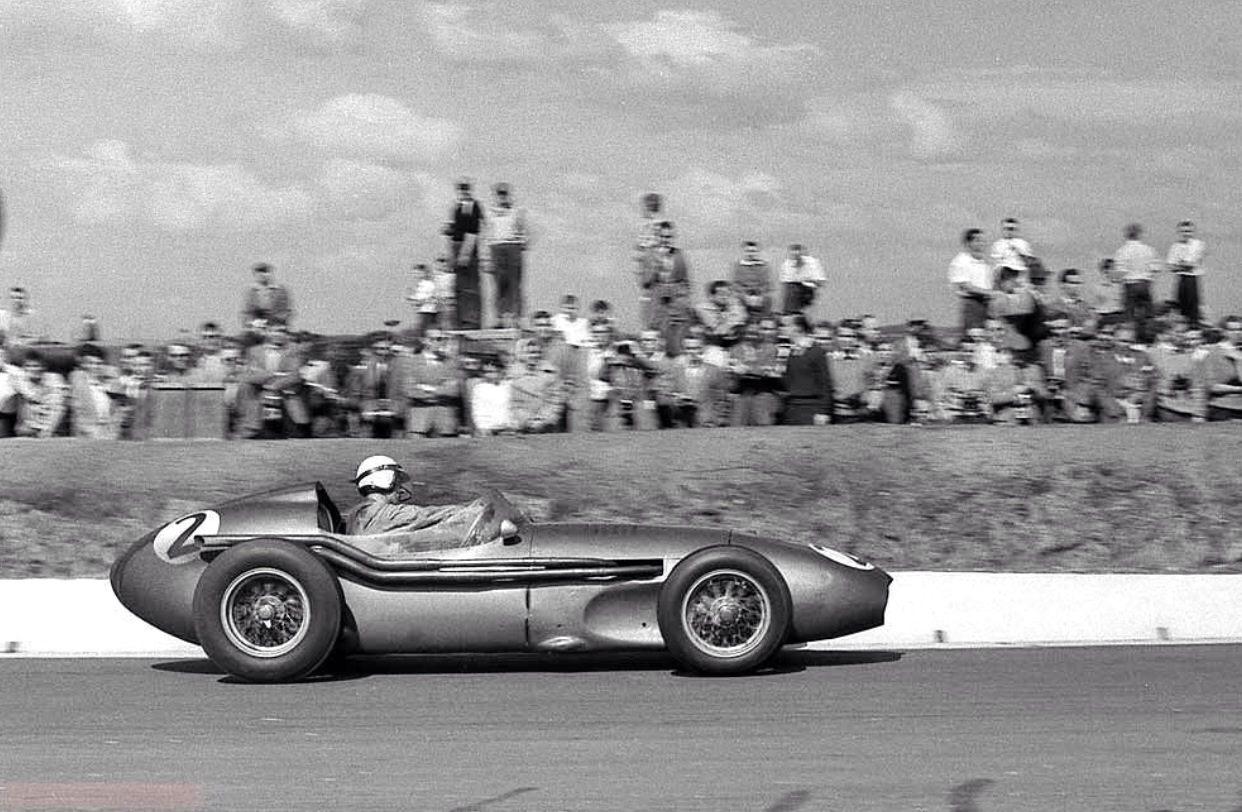
Moss in the BRP BRM P25- he raced the cars in both Britain and France (Q4 and lap record but disqualified after a push start) with Brooks #20 trying to make the most of a Vanwall VW59 that lacked the advantages of monthly competitive pressures and consequent development in 1959. The champion marque or ‘International Cup’ winner in 1958 of course.

Ferrari stayed in Italy due to industrial unrest, the metal workers were on strike. On top of that Jean Behra bopped Team Manager Romolo Tavoni in an outburst of emotion after Tavoni glanced at his tachometer tell-tale after the conclusion of the French GP and challenged his driver. His Ferrari career was over, and all too soon, two weeks after the British GP, he died in a sportscar race which preceded the German GP at Avus.

Without a ride in his home GP, Ferrari driver Tony Brooks (works Ferraris were raced by Brooks, Behra, Phil Hill, Cliff Allison, Olivier Gendebien, Dan Gurney and Wolfgang von Trips in 1959- no pressure to keep your seat!) raced an updated Vanwall instead. He was without success, back in Q17 despite two cars at his disposal and DNF after a persistent misfire upon completing thirteen laps.

The Vanwalls were the same as in 1958 ‘except that the engine had been lowered in the frame, as had the propshaft line and the driving seat, while the bodywork had been made narrower and some weight reduction had been effected’ noted Denis Jenkinson in his MotorSport race report. Such was the pace of progress the Vanwalls had been left behind after their withdrawal from GP grids on a regular basis. Nye wrote that the performance of the car was so poor Tony Vandervell gave Brooks all of the teams start and appearance money in a grand gesture to a driver who had done so much for the marque.

(unattributed)

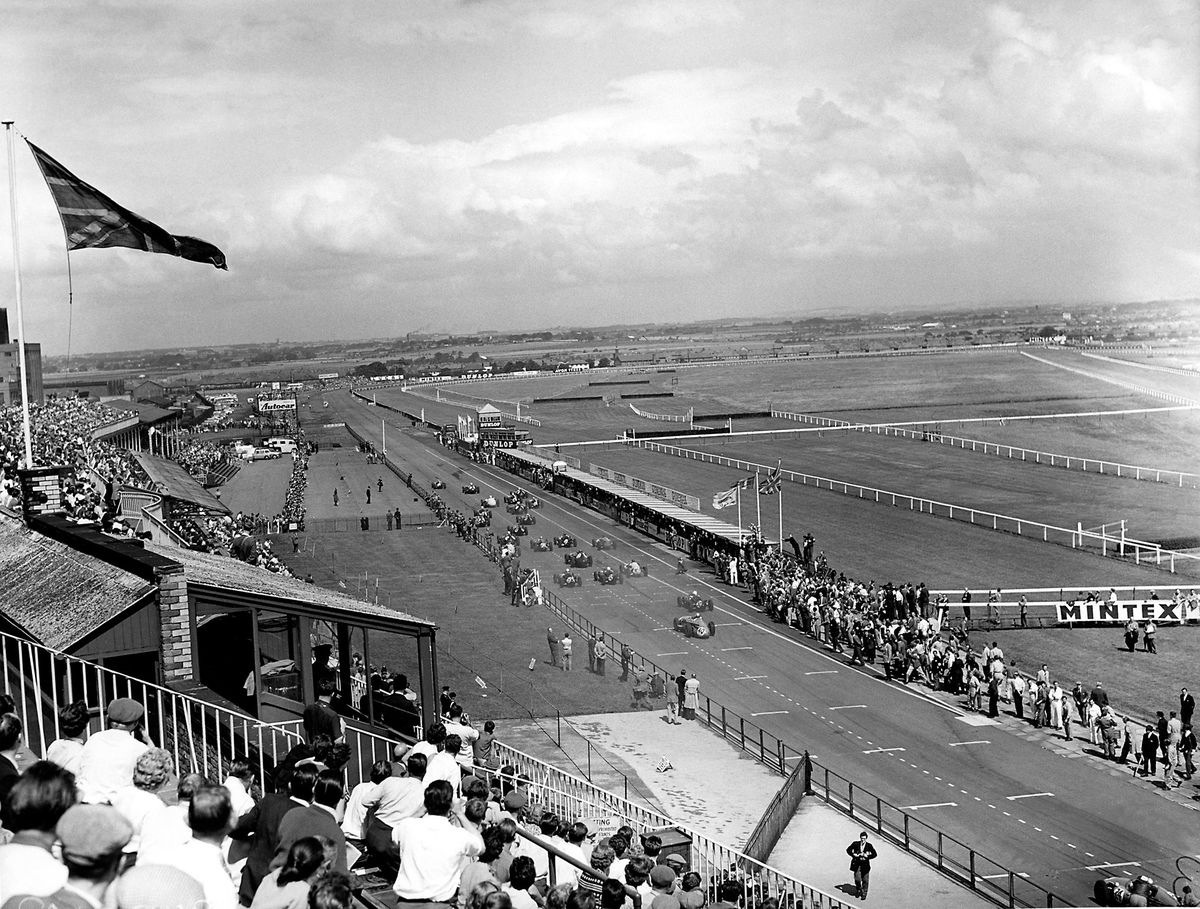
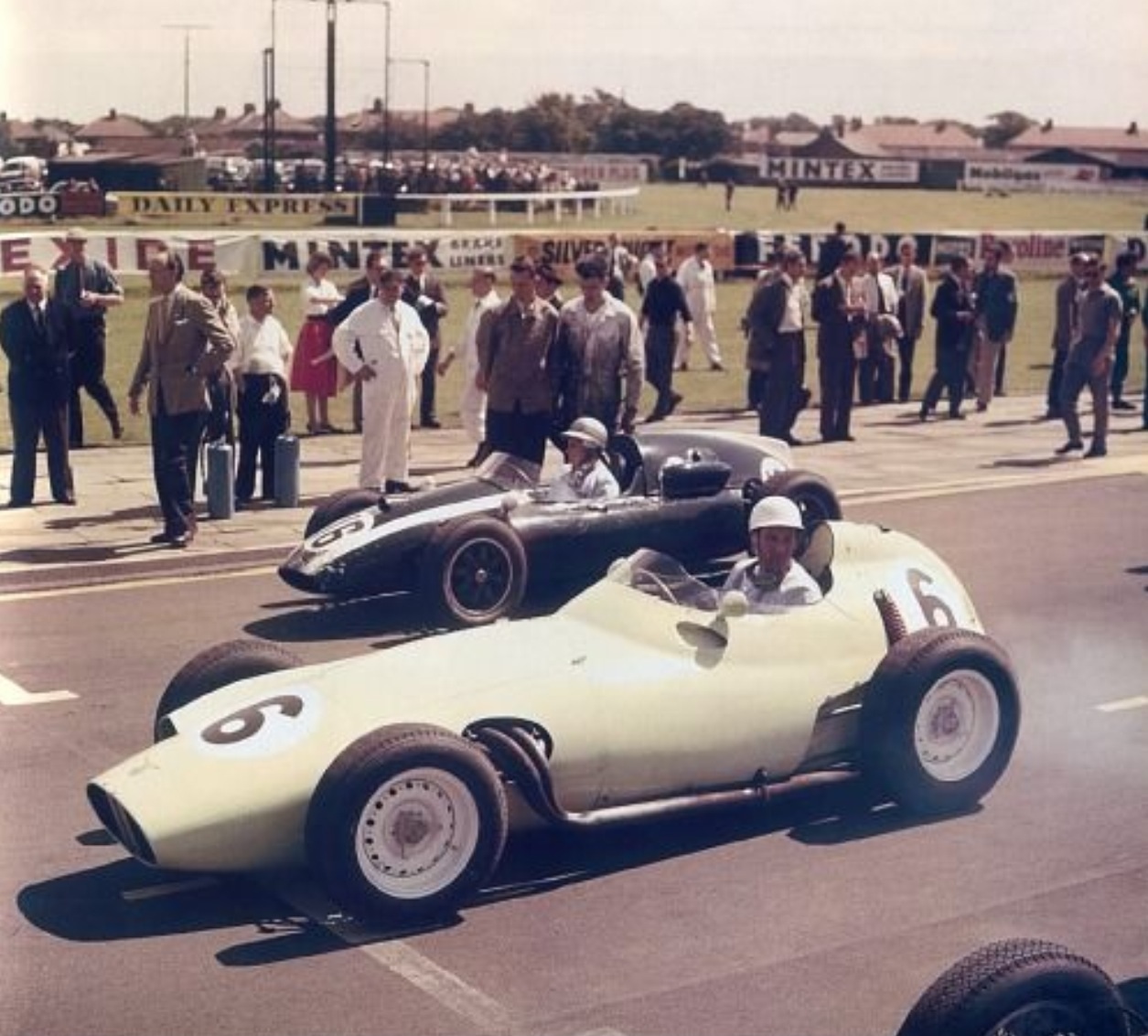
Aintree vista above as the field roars away from the grid, at the very back is Fritz d’Orey’s Maserati 250F- whilst at ground level below Jack gets the jump from the start he was never to relinquish. Salvadori is alongside in the DBR4 Aston and Schell’s BRM P25 on the inside. Behind Harry is Masten Gregory’s T51- and then from left to right on row three, McLaren T51, Moss P25, and Maurice Trintignant’s Walker T51.

(J Ross)

So the race was a battle of British Racing Greens- BRM, Cooper, Lotus, Vanwall and Aston Martin- in terms of the latter Roy Salvadori popped the front-engined DBR4 in Q2, he did a 1 min 58 seconds dead, the same as Brabham but did so after Jack. He faded in the race in large part due to an early pitstop to check that his fuel tank filler cap was properly closed- an affliction Carroll Shelby also suffered. The writing was on the wall, if not the days of the front-engined GP car all but over of course- there were three front-engined GP wins in 1959, two to the Ferrari Dino 246, in the French and German GP’s to Tony Brooks. At Zandvoort Jo Bonnier broke through to score BRM’s first championship GP win aboard a P25.

The stage was nicely set for a Brabham win from pole but it was not entirely a soda on that warm summers day ‘The big drama was tyre wear. I put a thick sportscar tyre on my cars left-front. Even so, around half distance i could see its tread was disappearing…so i began tossing the car tail-out in the corners to reduce the load on the marginal left-front.’

‘Moss had to make a late stop, and that clinched it for me. I was able to ease to the finish with a completely bald left-front’ Brabham said to Doug Nye. The Moss pitstop for tyres was unexpected as the Dunlop technicians had calculated one set of boots would last the race but they had not accounted for Stirling circulating at around two seconds a lap quicker than he had practiced! Moss later did a fuel ‘splash and dash’, taking on five gallons, as the BRM was not picking up all of its fuel despite the driver switching between tanks.

(MotorSport)

Whilst Jack won, the fastest lap was shared by Moss and McLaren during a late race dice and duel for second slot- Moss got there a smidge in front of Bruce ‘…as they accelerated towards the line, which was now crowded with photographers and officials, leaving space for only one car, Moss drove straight at the people on the right side of the road, making them jump out of the way, and to try and leave room for McLaren to try and take him on the left. This was indeed a very sporting manoeuvre…’ wrote Jenkinson. McLaren won his first GP at Sebring late in the season delivering on his all season promise. Harry Schell was fourth in a works BRM P25 and Maurice Trintignant fifth in a Colotti ‘boxed’ T51 Cooper despite the loss of second gear, with Roy Salvadori’s Aston, after a thrilling, long contest with Masten Gregory’s works T51, in sixth.

(BRM)

Nearest is Schell’s fourth placed BRM, then Trintigant’s T51- fifth, and up ahead McLaren’s third placed T51. BRM took the teams first championship win at Zandvoort in late May. No less than nine Cooper T51’s took the start in the hands of Brabham, McLaren, Trintignant, Gregory, Chris Bristow, Henry Taylor, Ivor Bueb, Ian Burgess and Hans Hermann

Photo and Research Credits…

Nigel Tait Collection, MotorSport 1959 British GP race report by Denis Jenkinson published in August 1959 and article by Doug Nye published in December 2009, Getty Images, John Ross Motor Racing Collection, BRM, Pinterest

Etcetera…

(unattributed)

The relative size of the McLaren Cooper T51 and Moss BRM P25 is pronounced on the grid. The pair were to provide lots of late race excitement after Stirling’s second pit stop.

(J Ross)

Wonderful butt shot of the Salvadori Aston Martin, #38 is the Jack Fairman driven Cooper T45 Climax, DNF gearbox, and Graham Hill’s Lotus 16 Climax up the road- he finished ninth.

(J Ross)

Roy Salvadori racing his DBR4 hard, he was at the top of his game at that career stage- if only he had stayed put with Cooper for 1959! He recovered well from an early pit stop but ultimately the car lacked the outright pace of the leaders however well suited to the track the big beast was. Carroll Shelby failed to finish in the other car after magneto failure six laps from home.

Two of these magnificent machines found good homes in Australia in the hands of Lex Davison and Bib Stillwell in the dying days of the Big Cars- Lex only lost the 1960 AGP at Lowood from Alec Mildren’s Cooper T51 Maserati by metres after a magnificent race long tussle.

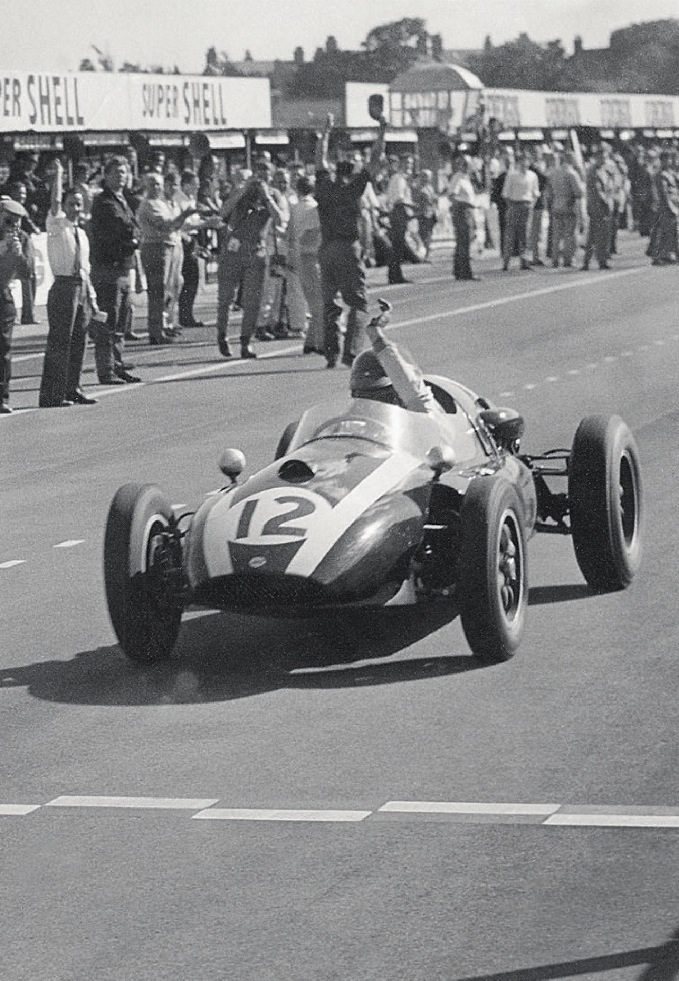
Tailpiece: Brabham, Cooper T51 Climax, Aintree…

(MotorSport)

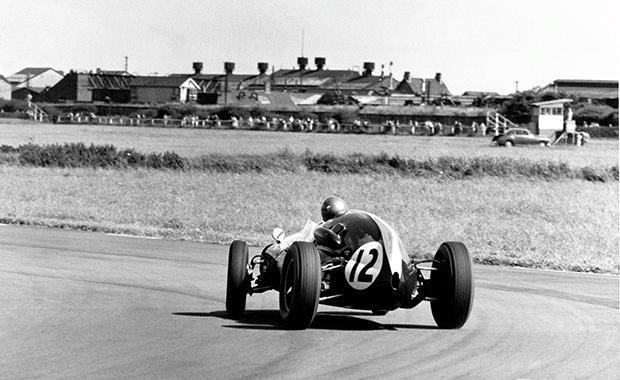
It’s almost as though Jack is giving us a lesson in Cooper designer/draftsman Owen Maddock’s T51 suspension geometry arcs!

Jack was famous for his ‘tail-out’ speedway style of driving, one eminently suited to the Coopers of the era. Lets not forget, according to Jack’s account of the race, he was accentuating this aspect of his driving to save the load on his increasingly threadbare left-front Dunlop.

Jenkinson in his race report observed that ‘The Coopers, both F1 and F2, were going extremely fast, and looking horribly unstable, yet the drivers seemed quite unconcerned, whereas drivers of more stabile machinery following behind were getting quite anxious at the twitchings and jumpings of the Surbiton cars.’

However untidy it may have all been, they were mighty fast, robust weapons of war.

Finito…

Frank Matich in his new Elfin 400 Olds nee ‘Traco Olds’ at Warwick Farm during the 1966 Tasman Meeting (Russell Thorncraft)

The very best of the seasons greetings to you all, wherever you may be. May all of us get the luck we deserve in addition to a healthy, wealthy, wise and generous 2019…

It was May 2014 when I first started fiddling around with what has become somewhat of an obsession, I have promised myself I will re-commence racing my Van Diemen RF86 Formula Ford in 2019- ‘doing it’ rather than just writing about it!

I have no strategy with primotipo other than writing about what interests me, the article ideas are generated by a photograph and it is in that context that the direction of the thing has shifted much more to an Australian bias this past year.

DIY Davo: Jon Davison looking after a wheel or pressures in the Oran Park pitlane prior to the 1977 AGP. Car is his ex-Walker Matich A50 Repco. Davo become a mighty fine F5000 driver with the purchase of an ex-Teddy Yip/Alan Jones Lola T332 Chev 12 months hence. Behind Jon are the Team VDS entries of race winner, Warwick Brown, Lola T430 Chev and Peter Gethin Chevron B37 Chev (Adam Thurgar)

A limiting factor until recently has been access to lots of interesting Australian photographs. This has changed in that Bob Williamson’s ‘Old Motor Racing Photographs-Australia’ and the ‘Historic Racing Car Club of Tasmania’s’ Facebook pages and meeting Bob King and Ken Devine in recent times has allowed me to explore topics I never would have contemplated without the visual stimulation of ideas provided by their archive/collections.

So special thanks to those organisations/fellows in addition to the photographers who have been very supportive right from the get-go. John Ellacott, Rod MacKenzie, Lindsay Ross, Dick Simpson, Lynton Hemer, Kevin Drage and Dale Harvey. Terry Marshall’s New Zealand work gets a regular run too.

Len Lukey’s Lukey Bristol chases Bib Stillwell, Maserati 250F, Melbourne Grand Prix, Albert Park 1958. Stirling Moss won in a Cooper T45 Climax- Len was 5th and Bib 4th (Simon Wills via Bob King Collection)

Bob King’s ‘Words from Werrangourt’ articles have been very popular, Rod MacKenzie’s and Bruce Polain’s pieces were beauties, and I have unpublished manuscripts from Peter Finlay and Ray Bell to pop up in the coming months- thanks to you all.

Ray, Stephen Dalton and Rob Bartholomaeus have been great ‘sub-editors’ in advising errors post-upload of articles which has helped the accuracy of primotipo big-time. Stephen and Rob have also provided research material which has given me ‘reach’ beyond my own collection. The collective global wisdom of The Nostalgia Forum is also an ongoing source of nuanced information which goes way beyond the books we all have.

Stan Jones and Cooper T51 Climax at Caversham, West Australia in October 1959. WA Road Racing Championships Gold Star round. Len Lukey won the race in the green Cooper T45 alongside, Stan was 2nd. He won the AGP at Longford in March aboard his Maserati 250F (Ken Devine)

The readership has increased nicely again by over 30% with the Australian readership now 30% of the total compared with 17-20% of the last two years. So, it seems you International folks aren’t turned off by the greater Australian content. The top ten countries in terms of readership in order are Australia, US, UK, France, Italy, Germany, Spain, Japan, the Netherlands and Brazil. Exactly the same as last year actually, albeit the order was a smidge different.

Last, but far from least, thanks for reading it!

The balance of this piece are some randomly chosen photographs from the sources above I’ve not published before…

(Chris Robinson)

Bob Skelton contesting the Symmons Plains round of the Australian Formula 2 Championship in September 1973.

He was second to Leo Geoghegan’s works Birrana 273 Ford Hart that weekend and was third in the seven round series behind Geoghegan and Enno Buesselmann in another 273.

Skello first raced this chassis- the very first Bowin P6 built, in the 1972 Formula Ford Festival at Snetterton in the UK before returning home and ditching the Ford 711M Kent motor and Hewland Mk9 gearbox in favour of a Brian Hart built 1.6 litre Lotus-Ford, Lucas ‘416B’ injected engine and five-speed Hewland FT200 ‘box as well as wings and slicks etc.

He did well in 1973, it was a shame he did not race on in the Finnie Ford supported car- without doubt the 1972 FF Driver to Europe Winner (Bowin P4A) had talent aplenty.

Ex-Lotus engineer, Bowin Designs John Joyce’s spaceframe P6 and monocoque P8 designs bristled with innovation having the Lotus 56/72 wedge shape and hip-mounted radiators and JJ’s own very clever variable or rising rate suspension front and rear. Whilst the P6F won an FF title in John Leffler’s hands in 1973, F2 and F5000 Championship success eluded these wonderful cars.


(Matt Liersch)

Stirling Moss and minder wander down the new Sandown pitlane with ‘Peters Corner’, the left-hander onto the Back Straight behind them. Notice the kerb, trees and lack of Armco on the outside of Pit Straight and between the circuit and pitlane.

The March 1962 ‘Sandown Park International’ was the track’s first meeting with Moss fifth his Rob Walker Lotus 21. Jack Brabham won from John Surtees and Bruce McLaren- in Coopers T55, T53, and T53- all powered by Coventry Climax 2.7 litre ‘Indy’ FPFs.

(Matt Liersch)

Jack Brabham either pulling into or out of pitlane in the Cooper T55 Climax which was then acquired by John Youl and raced by he and engineer Geoff Smedley with great success over the next couple of years.

(Matt Liersch)

Melburnian’s of a certain age will remember Channel 9 sports broadcaster Tony Charlton here getting the story from Moss and Brabham. He was more a cricket and footy kinda-guy but did a workmanlike job whatever the sport.

‘ole 935…


(Brian Caldersmith)

Maybach 3 was Charlie Dean’s Repco Research built cars definitive specification in six-cylinder Maybach engine form- Maybach 4 was this chassis modified by Ern Seeliger in various ways inclusive of fitment of a Chev 283 cid small-block V8.

Here the car is showing off its Phil Irving developed fuel injection at Gnoo Blas, Orange during the January 1956 South Pacific Championship weekend.

(Brian Caldersmith)


(Brian Caldersmith)

Stan Jones was running well in second position behind Reg Hunt’s new Maserati 250F, and ahead of Brabham’s Cooper T40 Bristol in third when the Maybach motor let go in the biggest possible way on lap 23, an errant rod broke causing the car to spin down the road.

With little in the way of spares now remaining- and the speed of Hunt’s Maseratis (A6GCM and 250F) apparent Jones ordered a 250F and Maybach 3 was put to one side until Seeliger’s mechanical magic was worked upon it.

Stan Jones: Australian and New Zealand Grand Prix and Gold Star Winner…

(Chris O’Connor)

Cheetah as a marque all too often slips under the radar, a bit like the car’s designer, builder and driver Brian Shead- he won the 1979 Australian F2 Championship in a Cheetah Mk6 Toyota.

Shead built ANF3 and 2 cars, two Clubmans and a Formula Holden, well over forty cars in all in his small Mordialloc, outer Melbourne bayside workshop. ‘The Two Brians’ Shead and Sampson (above) dominated ANF3 in the mid-seventies, the 1975 Bathurst 1000 winner (together with Peter Brock in a Holden Torana L34) is on the downhill plunge into Dandenong Road corner at Sandown in 1973 or 1974.

The car is a Cheetah Mk4- a spaceframe chassis powered by a pushrod, OHV, ‘Motor Improvements’ modded Toyota Corolla 1.3 litre, twin-42 DCOE carbed 135 bhp engine. Motor Improvements was Sambo’s business in the Nepean Higway St Kilda, at the time ANF3 was a 1300cc OHV/SOHC category.

ANF3…

(Dennis Cooper)

Clark, Amon, Hill: Lotus 49 Ford DFW by two and a lone Ferrari Dino 246T, Longford 1968.

Not the South Pacific Championship Tasman race mind you- that was held in the pissin’ rain and won by Piers Courage’ McLaren M4A Ford FVA. This is the dry Saturday preliminary which was won by Clark.

Longford Tasman: ‘South Pacific Trophy’ 4 March 1968 and Piers Courage…

Credits…

Russell Thorncraft, Quentin Miles, Adam Thurgar, Simon Wills- Bob King Collection, Brian Caldersmith, Matt Liersch, Chris Robinson, Ken Devine Collection, Dennis Cooper, Chris O’Connor

oldracingcars.com

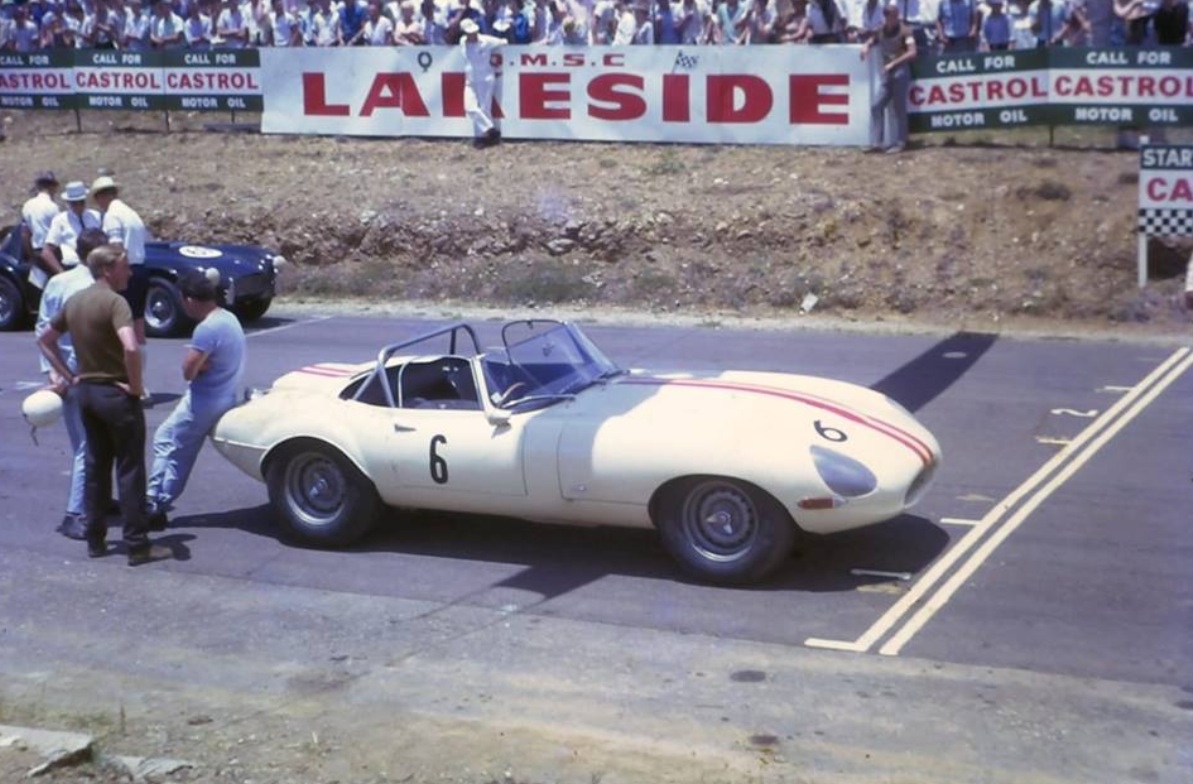
Tailpiece: Bob Janes and Jaguar E Type Lightweight, Lakeside circa 1965…

(Quentin Miles)

Ron Thorp’s AC Cobra is on the second row, it looks hot so perhaps its the summer Tasman meeting.

The Jag was an interesting choice, it was never going to be an outright machine in the sportscar sprint events which predominated in Australia at the time. The Bib Stillwell Cooper Monaco, Frank Gardner/Ralph Sach/Kevin Bartlett Mildren Maserati, Lotus 23’s and increasingly V8 mid-engined cars ruled the roost.

Nonetheless the E was a welcome addition to the local scene and a car Bob retained in his collection for decades- it shared garage space with a Maserati 300S, Jag D Type, Brabham BT11A Climax, McLaren M6B Repco, Ralt RT4 Ford, Chev Camaro ZL1 and various other bits of mouth-watering kit.

Finito…

(D McPhedran)

Jack Brabham’s Cooper T53 Climax during the Warwick Farm 100 on 29 January 1961…

Jack didn’t figure in the race with fuel dramas, it was won by Stirling Moss’ Rob Walker Lotus 18 Climax from Innes Ireland’s similar works machine and Bib Stillwell’s Cooper T51 Climax.

Moss, Lotus 18 Climax with body panels removed to better ventilate the cockpit (Getty)

Moss, Gurney and Hill are on the front row, the latter two fellas in BRM P48’s. Ireland and Brabham, to the right, are on row two. Row three comprises Ron Flockhart, Austin Miller and Bib Stillwell in T51’s, with row four again T51’s in the hands of Bill Patterson and Alec Mildren.

Moss and Warwick Farm supremo Geoff Sykes before the off, car to the right is Austin Miller’s Cooper T51 Climax.

Crazy men in long strides, long sleeved shirts and ties on a scorcher of a Sydney day.

(R Donaldson-SLNSW)
(WFFB)

Moss, Gurney and Hill on the front row, Lotus 18 and two BRM P48s, then Innes Ireland, works Lotus 18 Climax and Jack Brabham, Cooper T53 Climax and then Austin Miller and David McKay in Cooper T51s. #9 in the shot below is Bill Patterson in another T51.

Fourth to and fifth places were bagged by Miller and Flockhart with the rest of the starters, nine cars, failing to finish the 45 laps in a race of attrition run in scorching, humid, Sydney heat.

Etcetera…

(R Donaldson-SLNSW)

Note the left-hand shift of the 5-speed Colotti transaxle, it wasn’t the first time Moss shed body panels in the heat, but perhaps it was the last.

(R Donaldson-SLNSW)

Graham Hill qualified his BRM P48 third behind Moss and his teammate, Dan Gurney but was out after 10 laps with a fuel tank problem.

The BRM’s best result of that Australasian Tour was Gurney’s win – the only international win for the P48 – in the Victorian Trophy on the Ballarat airfield circuit a fortnight later. Moss and Brabham were absent by then mind you…

Tailpiece…

The worlds best credentialed driver coach! Stirling Moss shows Innes Ireland the fast way around Warwick Farm, here crossing the causeway. The car is Tom Sulman’s Aston Martin DB3S, a machine rather familiar Moss as an ex-works Aston pilot.

Credits…

Don McPhedran, Getty Images, oldracingcars.com, Australian Motor Heritage Foundation via Brian Caldersmith, Bob Donaldson via the State Library of New South Wales

Finito…

(unattributed)

‘It is not common for racing cars to be photographed from the rear- more usually from the side or front.
Here are a few rear views (or views of rears) from my archives’ – Bob.
Jack Saywell, above, in his only appearance at Bathurst in his 2.9 Alfa Romeo P3, Easter 1939.
He could do no better than 6th when his engine was reluctant to start after a pitstop to adjust the brakes. The photo below is from ‘The Magnificent Monopostos’ by Simon Moore- this pitstop one of several during the very hot 1939 AGP at Lobethal, the heat caused major tyre problems for the heavier cars which did not afflict winner Allan Tomlinson’s nimble, light MG TA Spl s/c, Jack was 6th again.

(GP Library)

My anal side, not dominant at all in normal life kicks in with a wonderful selection like this- I feel the need to pop in chassis numbers where I can- but I am going to resist given the time required to do so! Good ole Google works pretty well- ‘Jack Saywell Alfa Romeo P3 chassis number’ will give you anoraks a path to finding what you want, otherwise just enjoy these magnificent photographs from Bob’s archive, Mark.

(unattributed)

Paul Swedberg drove John Snow’s Delahaye 135CS to 2nd place at the Bathurst 1939 meeting, in John’s absence overseas. Paul’s own Offenhauser Midget, in which he was virtually unbeatable on the on speedways, was not entered.

(unattributed)

Ted McKinnon finished 13th in the 1953 Australian Grand Prix at Albert Park in his Maserati 6CM. Doug Whiteford won that day aboard the first of his two Talbot-Lago T23C’s.

(S Wills)

An unknown car exhibiting the disadvantages of a swing rear axle system. Something tells me that this is DW Stephenson in his DWS? Templestowe Hillclimb in outer eastern Melbourne, September 1954.

(S Wills)

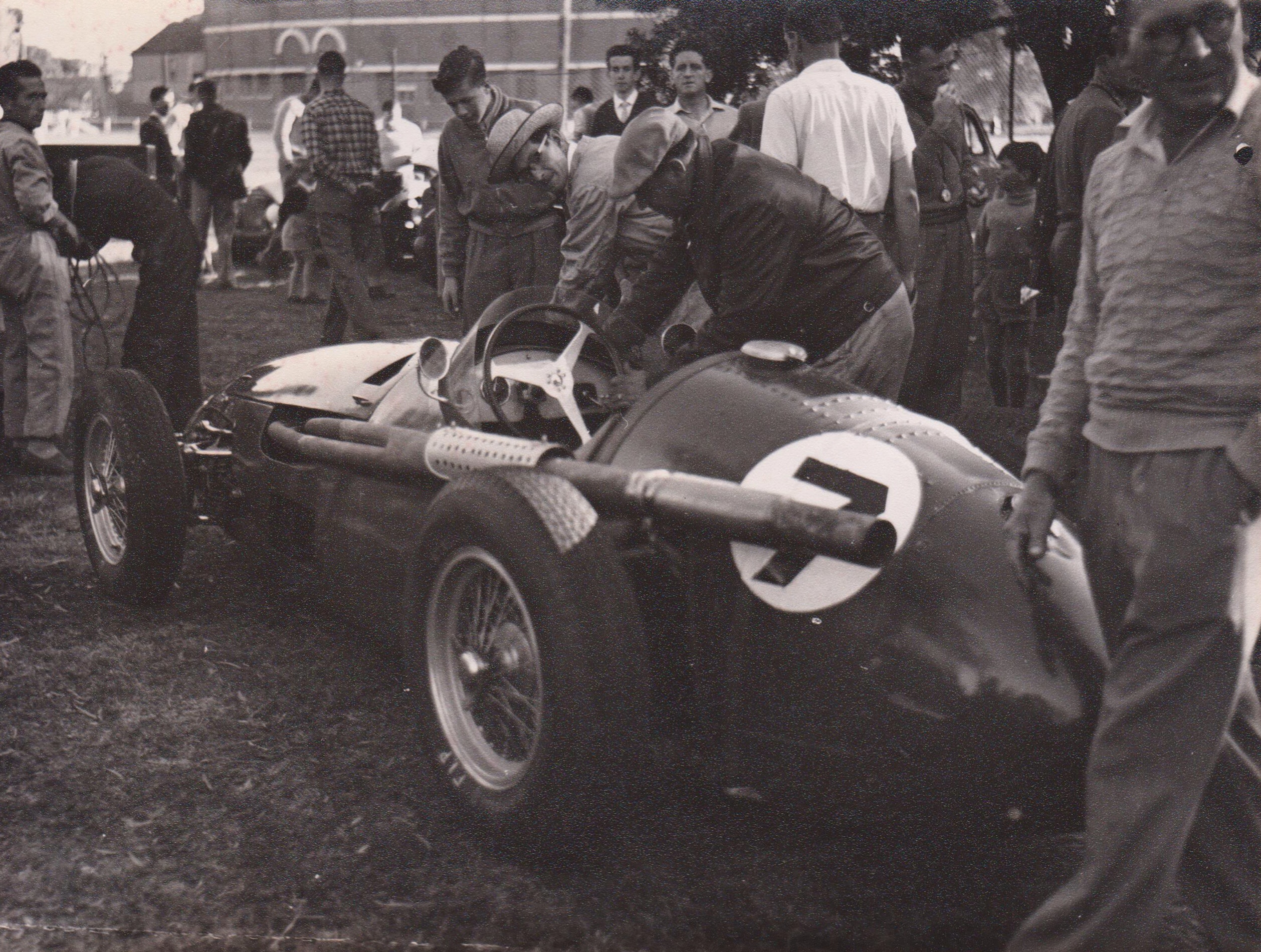
Maserati’s chief mechanic Guerino Bertocchi is leaning into the cockpit of Moss’ victorious Maserati 250F at Albert Park during the AGP weekend in 1956.
Having debuted as a riding mechanic with Alfieri Maserati in the 1926 Targa Florio and subsequently being riding mechanic in thirteen Mille Miglias as well as the 12 Hour of Pescara, it has always saddened me that he should die in 1981 as a passenger to an American during a trial drive of a modern Maserati. Car enthusiast Peter Ustinov told an amusing story concerning Bertocchi. Guerino delivered a new Maserati road car to Ustinov in Switzerland and said to Peter “I don’t know who you are Senor Ustinov, but you must be important to have me, Bertocchi, delivering your car”.

(S Wills)

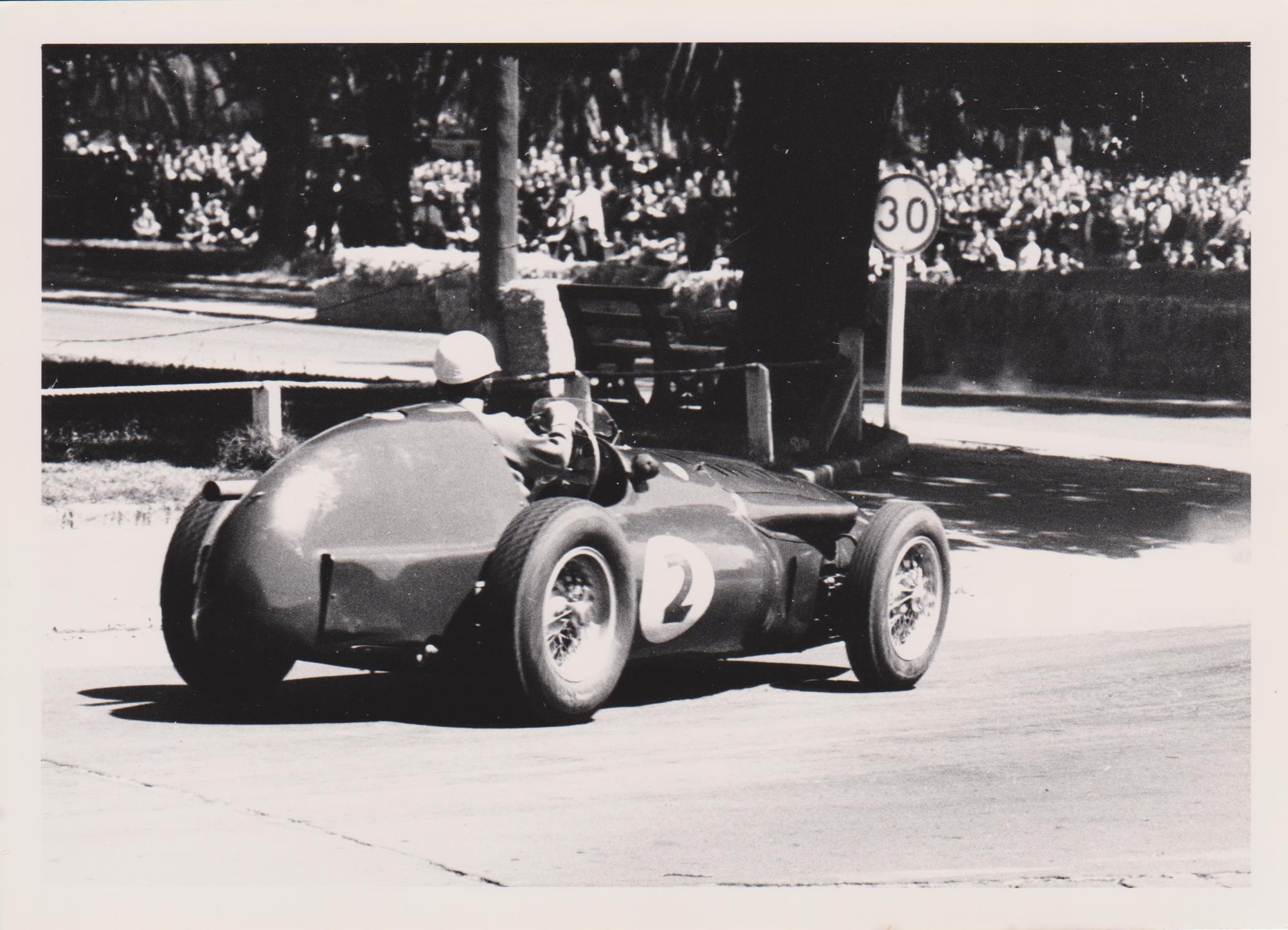
Reg Parnell enters Jaguar corner in his Ferrari Super Squalo during the same wonderful 1956 AGP weekend.
The 30mph sign would not have deterred him. It also serves to remind us that ridiculous speed limits are not a new phenomenon – this sign was at the start of Albert Park’s main straight.

(S Wills)

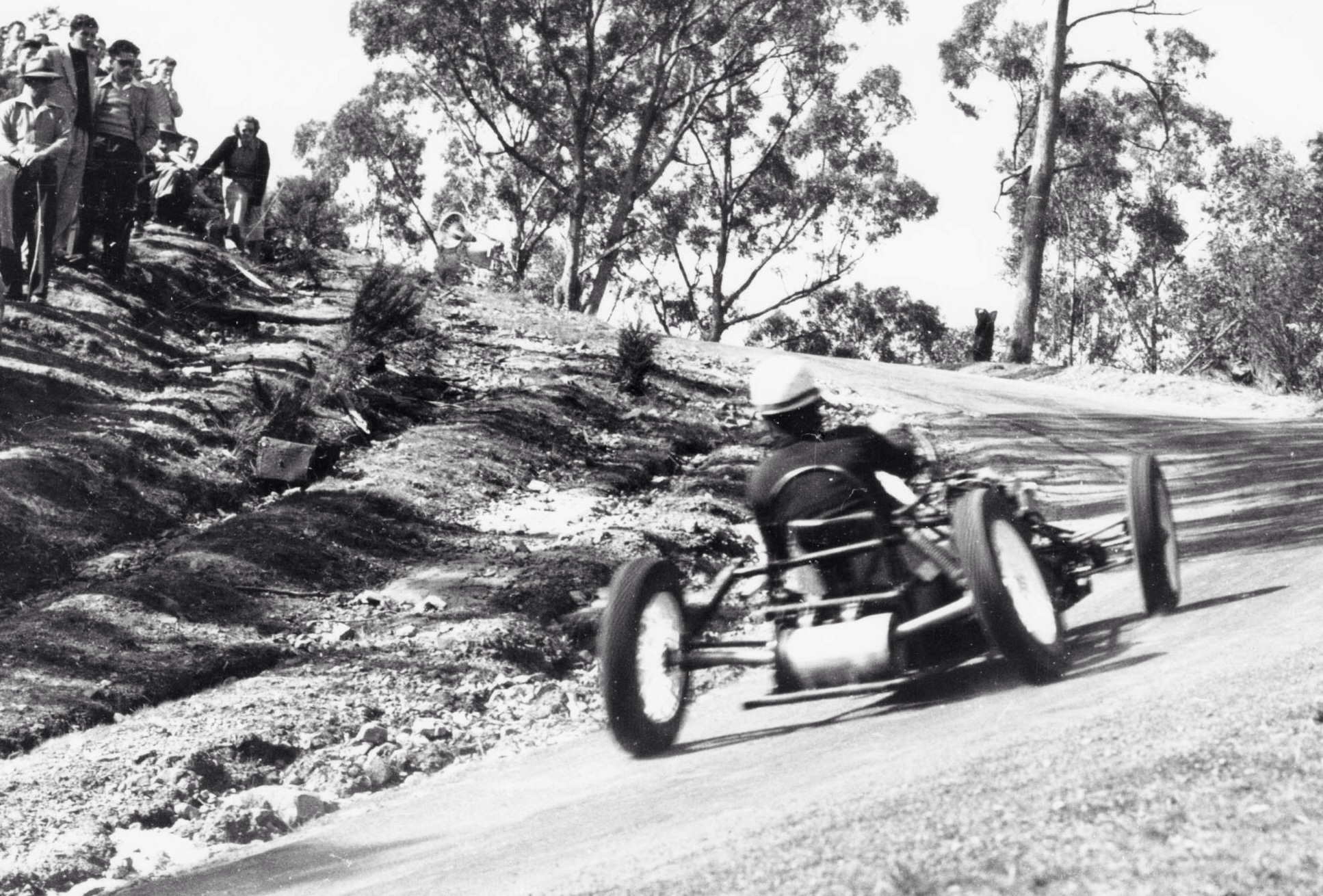
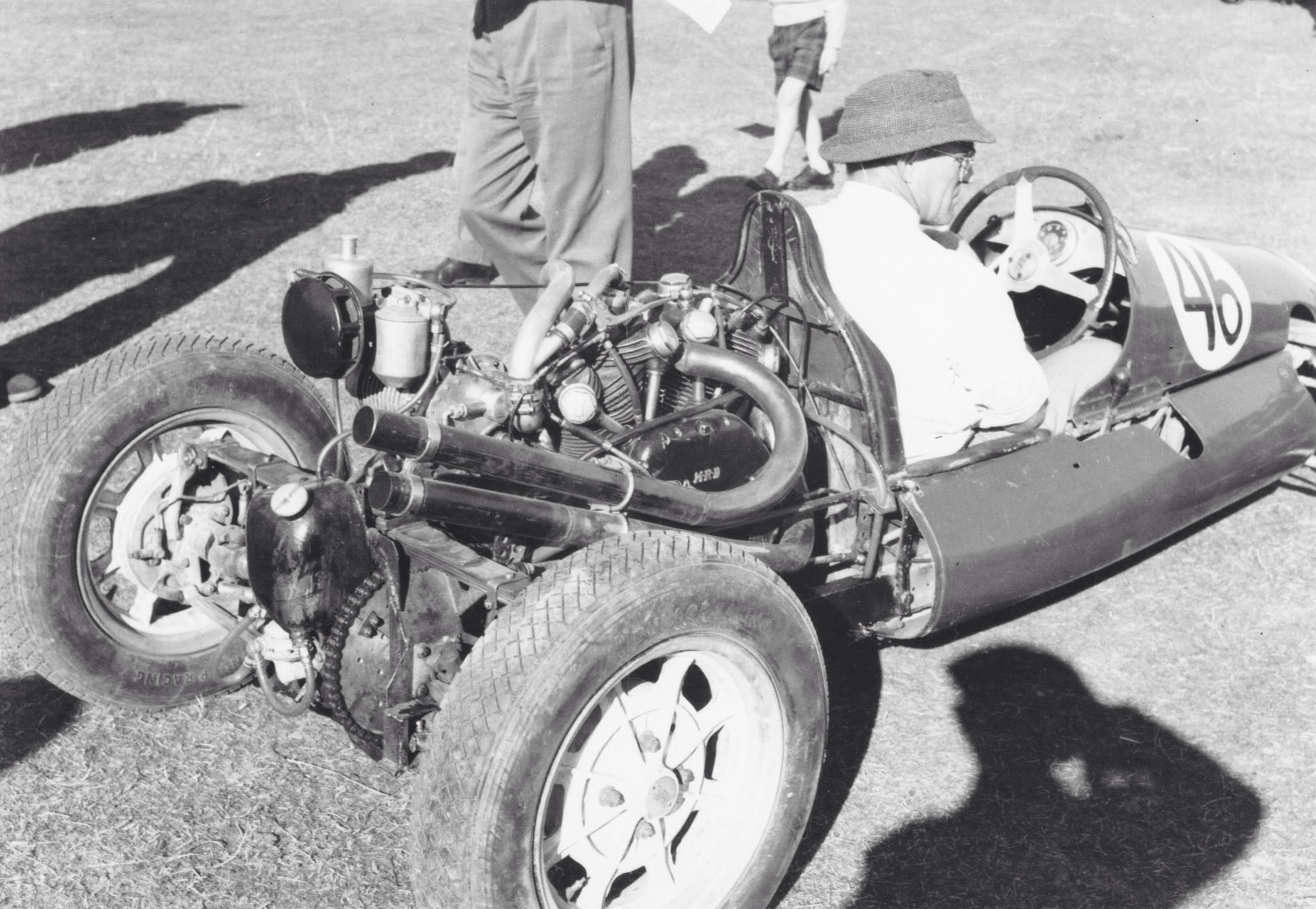
This photograph shows the large SU required to feed the highly modified supercharged Vincent engine in Lex Davison’s Cooper. Phil Irving was the designer and the modifier of this motor – still labelled H.R.D on its timing cover. Templestowe 1957.

(S Wills)

Stirling Moss in the Cooper T45 Climax FPF 2 litre, Melbourne Grand Prix, Albert Park, November 1958.
This photograph is taken during practice – the race was held on a hot day and the Cooper was denuded of much of its rear body work in an endeavour to keep the driver cool. The long shadows show that the photograph was taken in the early morning – I seem to recall that practice was at 6.30am.

In spite of the hour, note the huge crowd at Jaguar corner. In a previous post I have mentioned that Moss really only showed his sublime skill during the 1956 AGP when it began to rain with just six laps to go. On this morning Stirling was struggling with locking brakes and again demonstrated phenomenal car control – I was crowd marshalling at about the point from where this photograph was taken.

(S Wills)

Almost a rear view – note the missing engine cover to cope with the heat. Moss won the 32 lap, 100 mile race from Jack Brabham’s similar Cooper T45 Climax FPF, Doug Whiteford’s Maserati 300S and Bib Stillwell’s Maserati 250F.

Sadly this was the last race meeting at the ‘Park until the modern AGP era.

(S Wills)

Len Lukey (5th) in the Lukey Bristol tailing Bib Stilwell in the 250F Maserati through Jaguar corner in 1958.

(S Wills)

Ted Gray in the Tornado 2 Chev- again at Albert Park of course in 1958, Ted retired the Lou Abrahams car after completing only 4 laps.

(S Wills)

Len Lukey in the eponymous Lukey Bristol at Templestowe 23/3/1958 – or was it still called the Cooper T23 Bristol until it got its Vanwall inspired body?

(S Wills)

JW Philip in an Austin Healey at Templestowe on 20/04/1958. We know nothing of this car and driver.

(S Wills)

Jack French in a  Cooper Norton of only 499cc, but still good enough to break the magic (to me) 30 seconds. His time 28.15 Rob Roy, 1959. Coopers with various power plants were ‘King of the Hills’ in those days.

(S Wills)

At Templestowe in 1958; Bruce Walton in his Walton Cooper. Six times Australian Hillclimb Champion from 1958 to 1963.

(N Hammond)

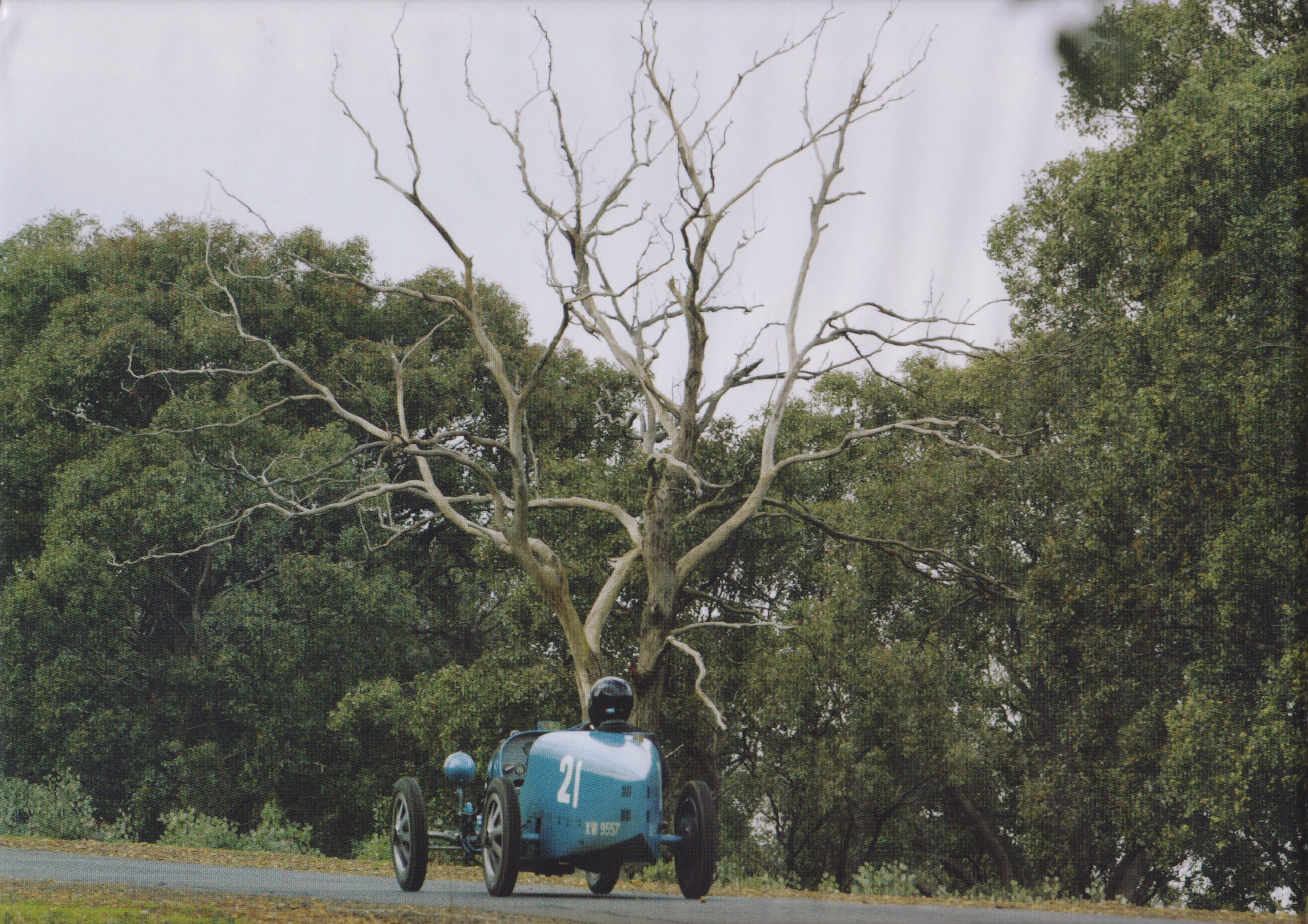
And lastly, me at Rob Roy in my Type 35 Bugatti in 2008.
Credits…
Bob King Collection
References: ‘AGP – Howard et al’, Bathurst: Cradle of Australian Motor Racing John Medley, ‘ The Magnificient Monopostos’. Simon Moore. ‘Bugattis in Australia and New Zealand, 1920-2012. King and McGann
Tailpiece: Spiro (Steve) Chillianis, Rob Roy 1960, with some work to do …

(S Wills)

Car is the ex-Eddie Perkins rear engined Lancia Lambda Special, now fitted with an Austin A70 engine, or should we say ‘was fitted’. He recorded a time of 80.88 seconds- perhaps the ambulance broke the timing strip?
Finito…

(S Wills)

Stirling Moss was at his impeccable best in his works Maserati 250F in winning the 1956 Australian Grand Prix held over 250 miles at Albert Park, 2 December 1956…

With six laps remaining it suddenly rained and it was only then we saw what a true master Moss was- controlling his slipping and sliding car on the treacherous track with sublime skill.

Stirling is probably being interviewed by a journalist, or perhaps he is attending to an autograph? Known for his love of sleek cars, it is said he was not averse to sleek women. We think the young lady at right is his current friend. Does anyone have any clues as to her identity? What about the Moss wrist-watch, a distinctive part of his race apparel at the time- can any of you horologists advise us of make and model?

In the photograph below he may have been telling Reg Hunt, fourth and first local home in his 250F, how easy it was. Reg is already in street attire whilst Moss has not had a chance to change. We know the curly, dark headed boy is John Calligari, but who is the partially obscured driver on Reg’s left?

Look at all the boys, young and old, their eyes riveted on the man of the moment, or more particularly one of the two men of the era…

(S Wills)

Regular readers may recall the first of racer, restorer and author Bob King’s ‘Words from Werrangourt’ article a month ago. Bob has amassed an immense collection of photographs in sixty years of intense interest in motorsport which he is keen to share.

My traditional Sunday offering is a ‘quickie’- a few words and an image or two. This format will be used to gradually get the work of some wonderful photographers ‘out there’- fear not, there is enough to keep us going for a decade or so. And many thanks to Dr Bob!

Feature on the ’56 AGP…

Moss at Albert Park…

Credits…

Bob King Collection- photographer Spencer Wills

Finito…


(Popperfoto)

Stirling Moss does his thing…

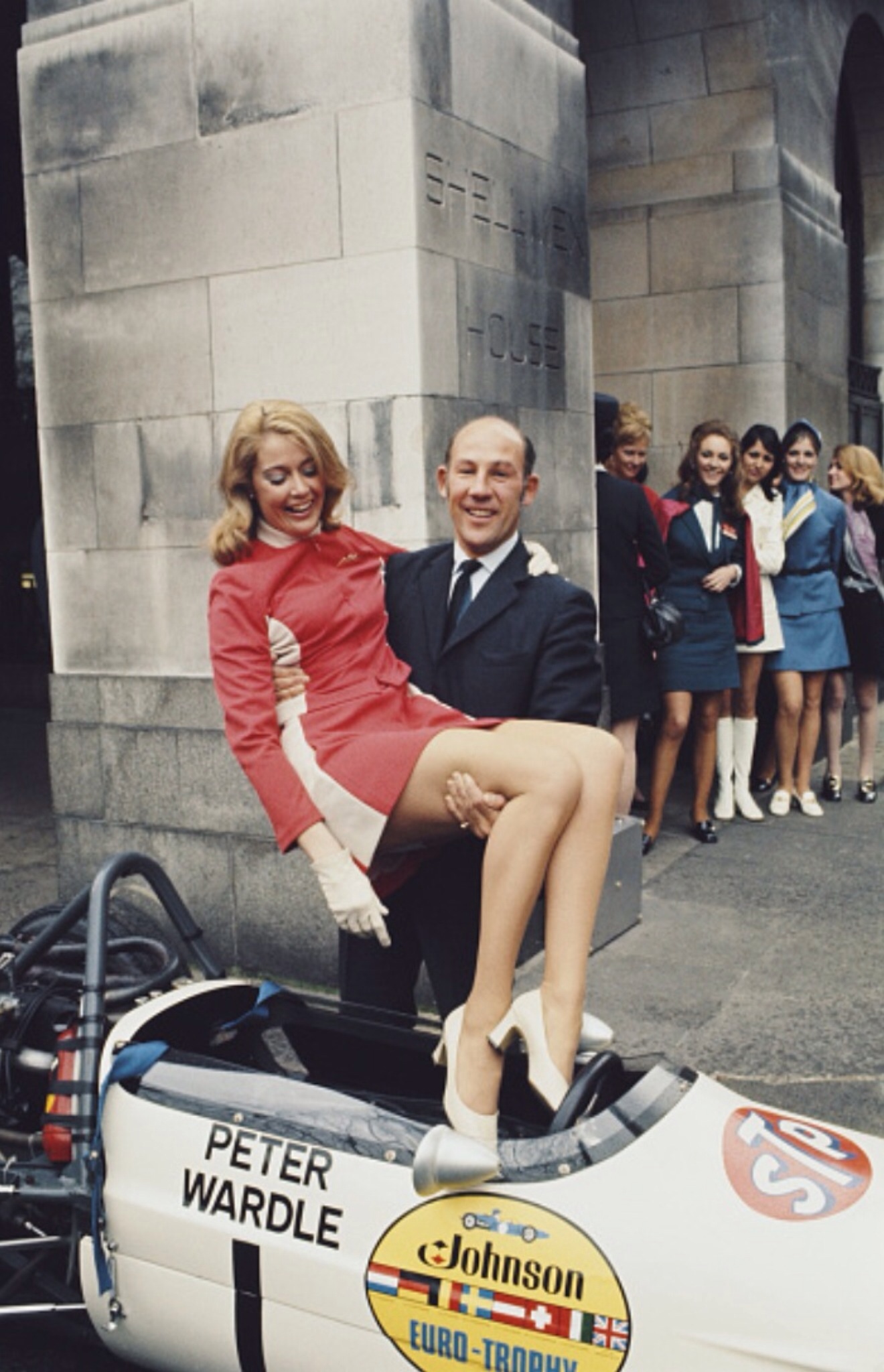
Here he is gently hoisting Miss Heathrow, Carol Marshall, into the cockpit of Peter Wardle’s Lotus 59 Formula Ford outside the Savoy Hotel on 16 April 1970.

Its the press launch of the Johnson Wax Euro Formula Ford Trophy with Stirling present in his capacity as ‘Director of Racing for Johnson Wax’- Claude Bourgoigne won the 1970 championship in a Lotus 69F.

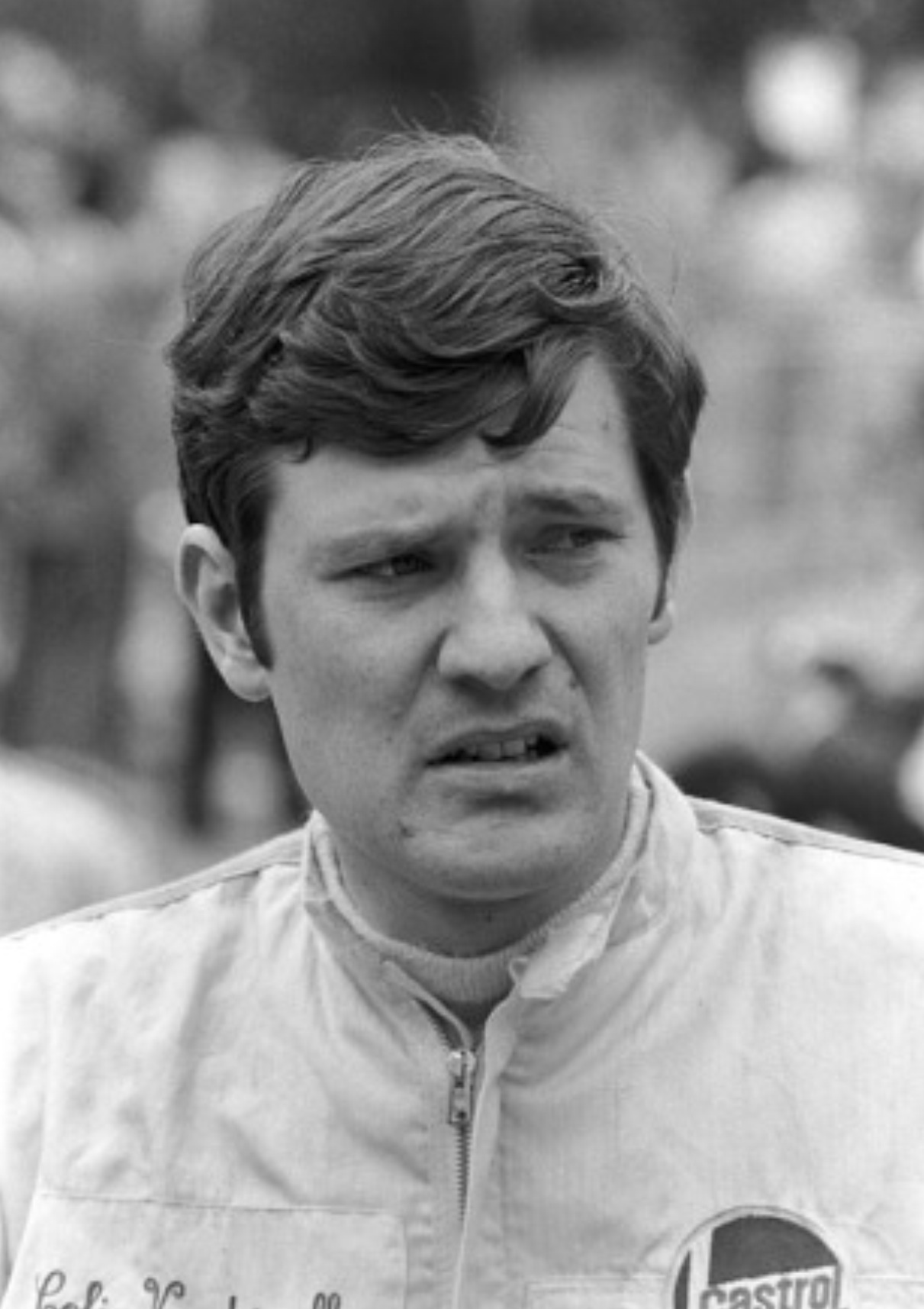
I was researching the winner of the series and found this gem by Marcus Mussa on tentenths.com. Its British Formula Ford and Formula Atlantic champion, Grovewood Award winner and ‘Vanwall’ Tony Vandervell heir Colin Vandervell providing his recollections of the 1970 ‘EFDA European Formula Ford Championship’ series- he was second in the ‘Magic Merlyn’, the Mk11A chassis also raced by Emerson Fittipaldi and Jody Scheckter.

Colin Vandervell pensive, atypical it seems (ESPN)

‘The series was run initially by Nick Brittan and I seem to remember Tony Dron was involved (maybe he was Nick Brittan’s assistant at the time). I spoke to Colin Vandervell, who is blessed with an incredible memory- who told me a bit about the 1970 season. The series was sponsored by Johnson Wax. First prize was a F3 Lotus, with Holbay engine and a full budget for 1971!
First round – Zandvoort. Nick Brittan would not let Colin enter as he considered him not experienced enough! Race was won by Tony Trimmer.
Second round – Zolder. Colin got in and finished 2nd, miles behind Claude Bourgoignie, thanks to a lot of cars dropping out/crashing etc.
Third round – Anderstorp. Colin won
Fourth round – Salzburgring. Colin won
Fifth round – Hockenheim. Colin finished 4th. The first 20 cars were inside and all over each other- no chicanes at the time! Colin describes the race as “highly dangerous”. He was in the lead for most of it with Trimmer then the main pack caught them two laps from the end and they were swamped.
After Hockenheim there was a hill-climb in Switzerland, which Bourgoignie won.
Then at Imola Colin was 1.5 secs quicker than anyone in practice but (Colin) Chapman arranged for a bunch of Lotus drivers to enter with instructions to take Colin out! At the first corner two Lotuses (Loti?) hit him, Mo Harness barrel rolled 15 times and ended up in a ditch, bits of his rear suspension ripping off one of Colin’s brake lines.
Imola and Hockenheim were very, very fast tracks at the time. Colin says he used a 25/25 (24/24?) top gear at these tracks, higher even than Silverstone.
The final was at Brands Hatch and Colin won again.
In the end Bourgoignie was champion by only 3 points by virtue of winning or being well placed every time. Colin is sure he would have won if Brittan had let him into the first race.
Colin was of course driving his Merlyn (ex Emerson Fittipaldi, future Jody Scheckter and Frank Sytner!). In those days FF ran on road tyres – Avon crossplies in the dry and Firestone radials in the wet (for the wealthier drivers!).’
1970 EFDA/Johnson Wax Series Results
I’ve included the full list to enable you to cast your eyes over the array of talent, many of whom came through into the professional ranks in the coming years if not F1.
1. Claude Bourgoigne (B) Lotus-Holday 69F
2. Colin Vandervell Merlyn-Rowland Mk11A
3. Tony Trimmer Lola-Steele T200
4. Tom Belso (DK) Hawke-Lloyd DL2A
5. Jac Nelleman (DK) McNamara-Steele
6. Ian Taylor March-Spence 708
7. Hans Meier (A) Hawke-BRM L2A
8.Peter Lamplough Palliser-BR MWDF2
9. Brian Nelson (IRL) Crossle Nelson 16F
10. Huub Vermeulen (NL) Lotus-Holbay 61M
11. Tom Strous (DK) Lotus-Holbay 61M
Charles Carling Crossle Lucas 16F
Bob Evans Palliser-BRM WDF2
Derek Lawrence Titan-Lucas Mk6
Hakan Dahlqvist (S) Lotus-Holbay 61M
Peter Wardle Lotus-Holbay 69F
Vern Schuppan Palliser BRM WFD2
Mike Fraser Royale-RP RP3
Giancarlo Naddeo (I) De Sanctis
Mo Harness Lotus-Holbay 69F
Theo Koks (NL) Lotus Holbay 61M
Crystal Palace F3 Final, 10 September 1971…
Before and after!
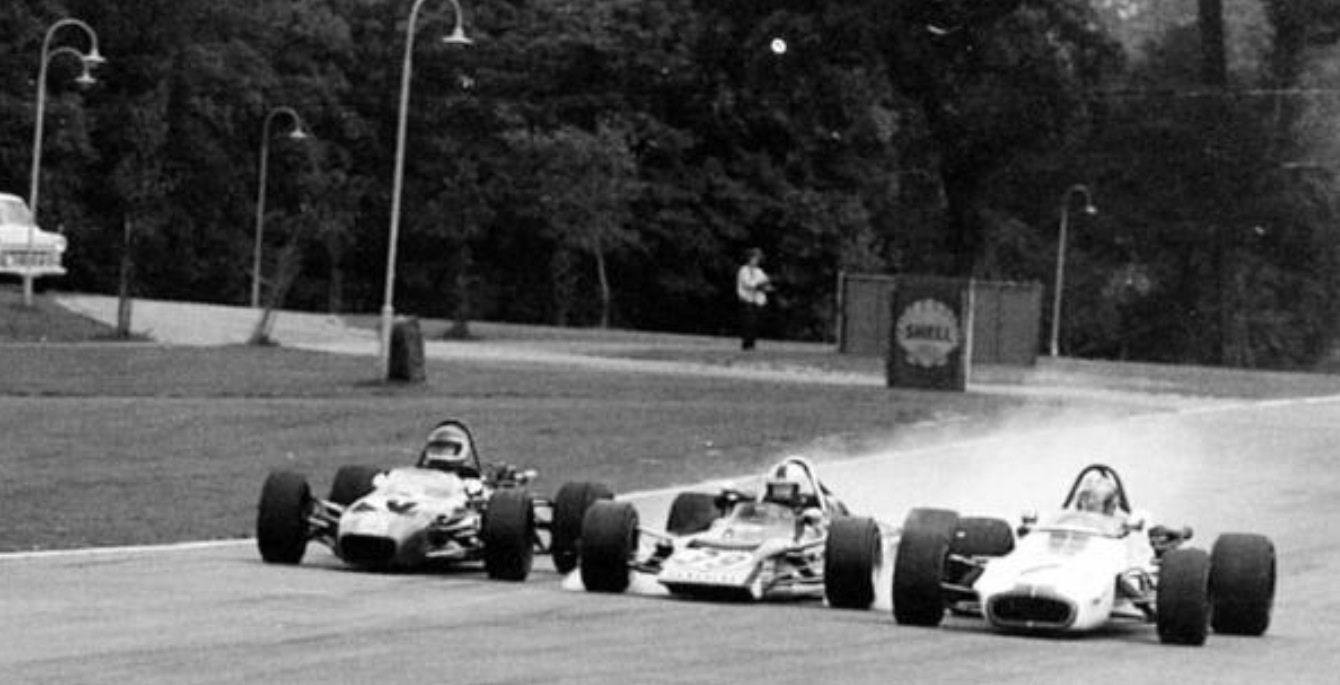
The plunge for the lead coming into the kink before North Tower. Jody Scheckter, Merlyn Mk21 Ford, Dave Walker, Lotus 69 Ford and on the right Colin Vandervell, Brabham BT35 Ford. Jody has plunged down the inside just as Walker popped out of Vandervell’s slipstream with the Lotus and Merlyn about to lock wheels- all three cars made contact.
Roger Williamson won that day in Tom Wheatcroft’s March 713M Ford.

(unattributed)

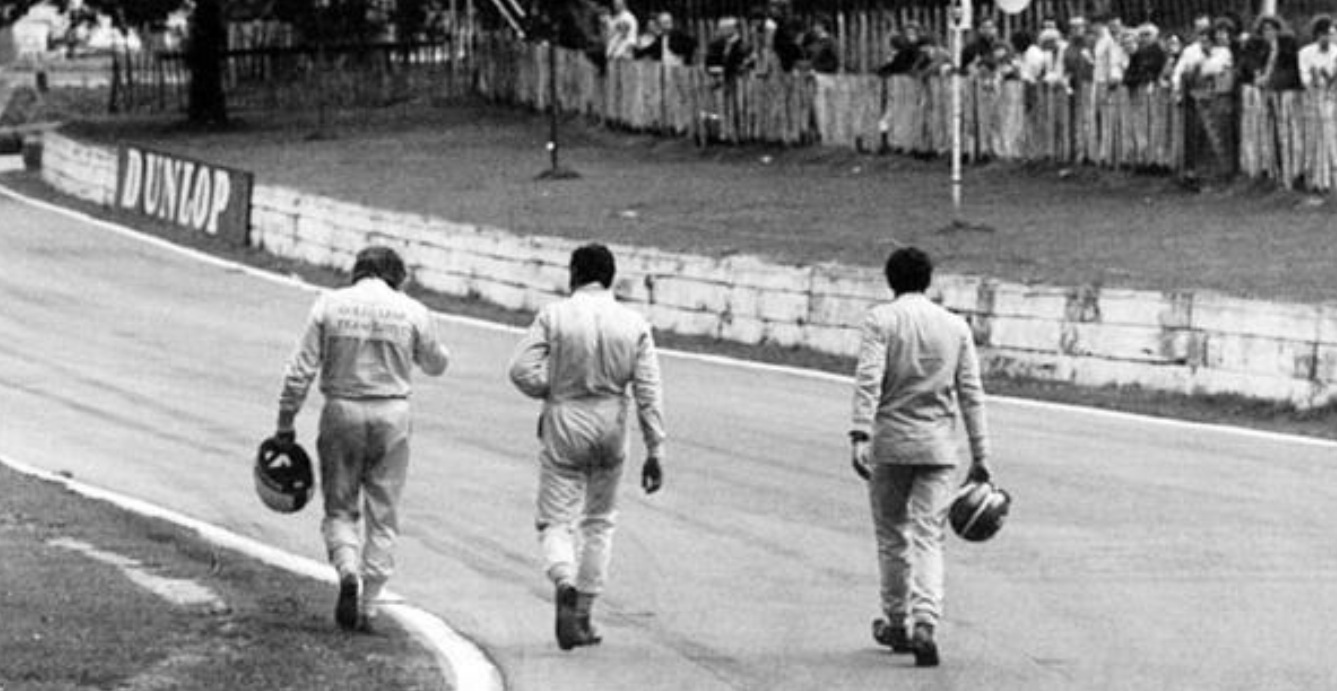
Walker, Scheckter, Vandervell- the long walk home! (unattributed)

Check out this summary of Colin Vandervell’s career written by Andrew Marriott…

http://en.espn.co.uk/f1/motorsport/story/9325.html

Photo and other credits…

Popperfoto, ESPN, f3history.co.uk

Finito…

image

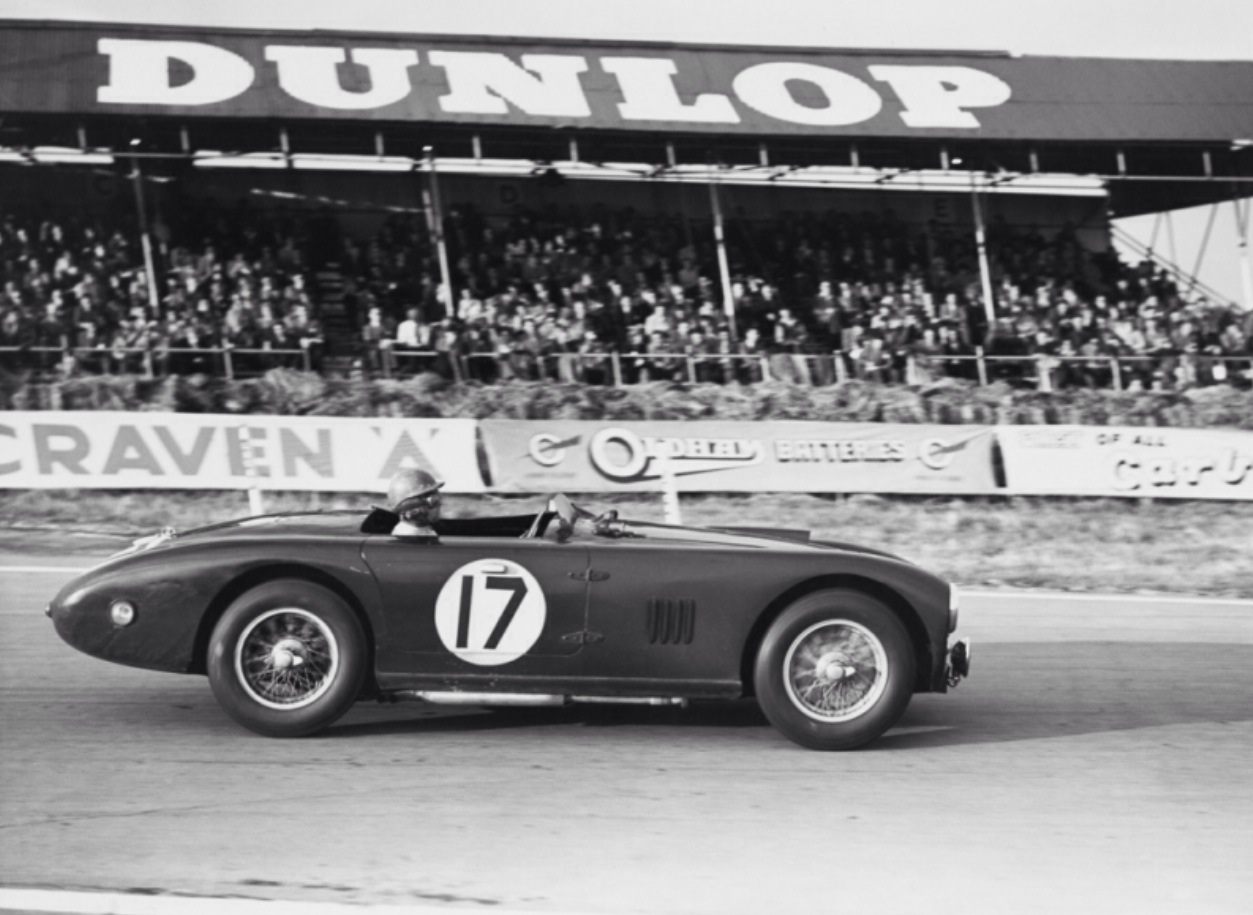
Stirling Moss guides his works Jaguar C-Type through Fordwater on his way to fifth place at Goodwood sharing with 1951 Le Mans winner Peter Walker…

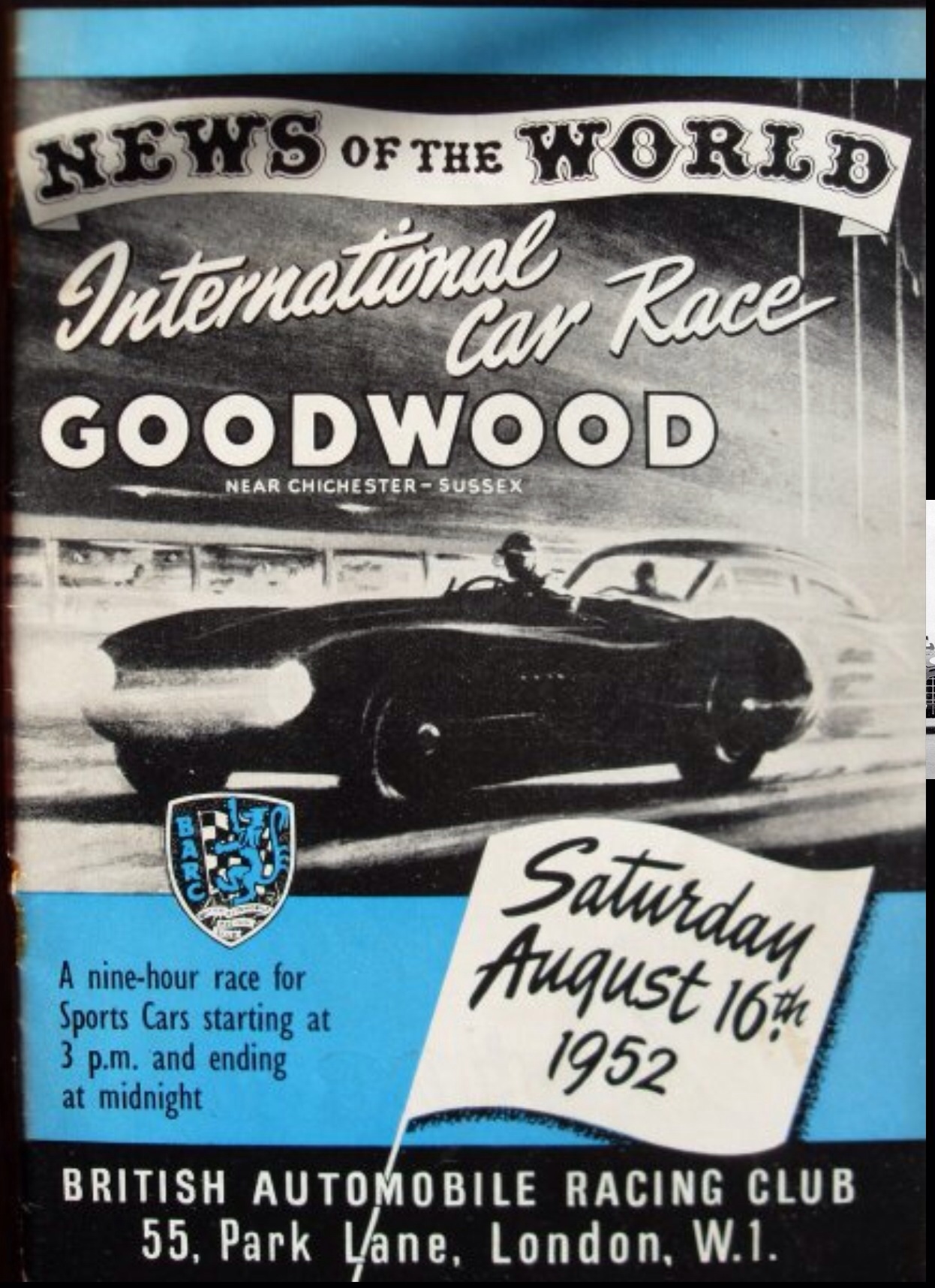
Britain’s first night race took take place at Goodwood on 16 August 1952. The British Automobile Racing Club hoped to emulate the commercial success of Le Mans, that classic a race of 24 hours duration of course.

The Goodwood enduro was a nine-hour event with a 3pm start to allow the spectators to see the cars in all their spectacular glory in the half-light and full darkness.

Modifications were made to the circuits infrastructure by fitting floodlights to illuminate the grandstands and pits, the kerbs were given a coat of luminous paint and a beer tent was laid on, although due to post-war licensing laws it had to stop serving grog before the race ended! Sponsorship and plenty of pre-event publicity was provided by ‘The News of The World’ newspaper inclusive of £2,500 in prize money which represented a powerful incentive for the ‘local’ works teams and privateers to enter in force.

Jaguar and Aston Martin entered three-car teams of C-types and DB3s in the field of 32 cars. Both teams had much to prove. The C-Types were quick at Le Mans in June, but all three cars retired with engine cooling-related issues. The new Ferrari 250S and Mercedes-Benz W194 had been faster than the Jags, victorious at Le Mans in 1951, at the Mille Miglia in May.

As a consequence, Jaguar had designed a more aerodynamic body with a slightly smaller radiator. Jag’s cooling problems became apparent in practice, despite hasty modifications; solutions were not found pre-race. Peter Whitehead/Ian Stewart retired with a failed head gasket during the second hour, Stirling Moss/Peter Walker with engine problems in the third, and the remaining Tony Rolt/Duncan Hamilton car with a head gasket failure in the fourth hour.

Le Mans 1952: #26 the Poore/Griffith Aston DB3 Spyder alongside the Parnell/Thompson DB3 Coupe, all three factory cars DNF (unattributed)

The new Aston DB3 ‘Spyders’ also failed to finish, Dennis Poore/Pat Griffith in the third hour with water pump failure and Lance Macklin/Peter Collins towards the finish with an accident in the twenty-second hour of the long, unforgiving race. The works DB3 Coupe driven by Parnell/Thompson retired in the second hour with gearbox dramas. The ’52 Le Mans was won by the Benz W194, Hermann Lang and Fritz Riess from the sister car of Theo Helfrich/Helmut Niedermayr.

The chance to make a good showing on home turf was therefore ‘manna from heaven’.

Jaguar used the same driver combinations they deployed in France, whilst Aston’s pairings were Reg Parnell/Eric Thompson, Peter Collins/Pat Griffith and George Abecassis/Dennis Poore.

Other strong entries included Pierre Levegh’s Talbot-Lago T26GS, famously for being so nearly the winner driving solo at Le Mans in 1952 before missing a gear very late in the race. Ferrari 225S’ were entered for Tom Cole/Graham Whitehead and Bobbie Baird/Roy Salvadori, a works Allard J2X for Anthony Hume and George Thomas plus a swag of Healey Silverstone, Frazer Nash Le Mans Rep, Jag XK120, Cooper T14 MG, HRG and HWM cars. In short, an interesting field that lacked only works Ferrari and Mercedes entries.

image

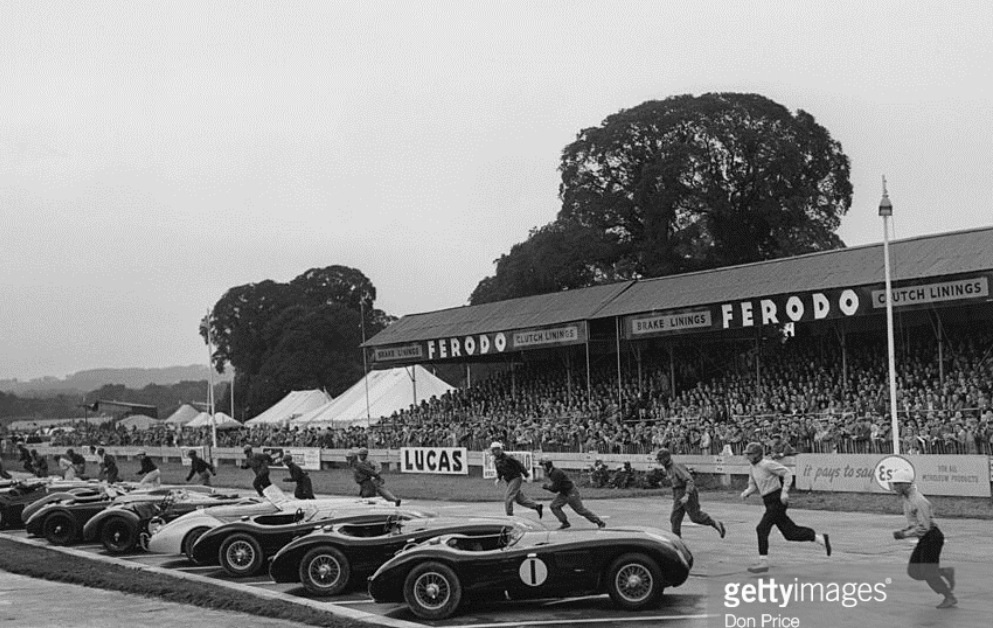
At the start, Moss, at right, as usual, won the sprint to his car, but Tony Rolt, to Moss’ right led on lap one, but he was soon overtaken by Parnell’s Aston…

At the end of the first hour the order was Parnell, Rolt, Abecassis, Moss and Baird, Ferrari 225S, then Whitehead.

Then the weather started to improve, and as the track dried, the Jaguar’s pace became apparent with both Rolt and Moss passing Parnell. So, Jag, Jag, Jag, Aston, but then Whitehead crashed his C-Type.

Disaster struck the Feltham team on lap 91 during a routine refuelling pit stop when Parnell’s car caught fire, burning two of the crew and team manager John Wyer. Parnell showed great leadership and strength of character, whilst his race drive was over he stood in for the injured Wyer to take over the critical team management role.

 At half distance the Moss/Walker Jaguar C Type led from the sister XKC of Rolt/Hamilton. The third C-type had crashed at Madgwick and retired whilst the DB3 of Abecassis/Poore had also dropped out of contention.

By 9pm, the drivers had switched their headlights on, the spectacle of racing at Goodwood at night was fantastic, but within half an hour, a half shaft broke on the Rolt/Hamilton C-Type, which allowed the remaining Aston of Collins/Griffith through; that car was then overtaken by the quick Ferrari 225S driven by Bobby Baird and Roy Salvadori.

Eric Thompson came into the pits 3 hours into the race with smoke pouring from the rear of the car. Wyer and mechanic Jack Sopp pulled up the seats to investigate whilst Fred Lowndes refuelled. Spilt fuel from the last churn went onto the tail of the car and ran down onto the undertray where it was ignited by hot oil from a leaking fuel seal- within seconds the car was engulfed in flames and smoke. Wyer and Sopp suffered bad burns, Lowndes not so much but all 3 were taken to hospital whereupon Reg Parnell took charge. Aston DB3/3 was destroyed- and later rebuilt, Parnell, drove it to 5th in the 1953 Mille Miglia (unattributed)

Half an hour later Jaguar’s collapse was complete when the leading Moss/Walker car entered the pits with a broken rear radius arm that would take nearly an hour to repair. It is said that Jaguar boss Sir William Lyons was blissfully ignorant of all of the dramas which befell his team as he had retired to Goodwood House from the pitlane to enjoy what appeared to be a certain win!

image
The doomed Parnell/Thompson Aston DB3/3 earlier in the race prior to its demise (Getty)

In a race of rapidly changing fortunes, the Baird/Salvadori Ferrari 225S had gone from fourth to first in little more than an hour. Still, in a final twist of fate, on its last pit stop, the jack intended to lift the car sank into the patch of tarmac, softened by the earlier Aston DB3 fire! The loss of time was sufficient to put the Collins/Griffith DB3 into the lead with just an hour of the race left. That pairing duly won despite an exhaust valve breaking an hour before the event’s end, from the two privateer Ferrari 225S’ driven by Cole/Whitehead and Baird/Salvadori.

Collins in the winning Aston DB3 early in the race (unattributed)

The Telegraph reported that ‘The Nine Hour had all the ingredients of a classic race; the changing weather, the drama of the pit fire and a dramatic fight for the lead, not to mention the fact that so many of the cars were competing on home soil. Yet the spectators were distinctly unmoved, many only arriving once the night racing began, and few staying for the duration. These were people who attended Goodwood for a grand day out – a nine-hour endurance race, where the leader wasn’t always obvious, was simply too long.’

‘When the Nine Hour race returned the following year it did so without any newspaper sponsorship to offer pre-event coverage. Spectators numbers fell as a result and with them the carnival atmosphere that made Le Mans such a success. Those who did go frequently left when it got dark, defeating the event’s raison d’être. It didn’t matter that the racing was first class (Aston would win again in ’53 and, after the race skipped a year, scored a third victory at what would be the last Nine Hour race in ’55) if nobody was there watching it. Perhaps the British will always see night racing as too good an excuse for a holiday abroad.’ the Telegraph concluded.

There was no World Sportscar or Manufacturers Championship in 1952, that competition started in 1953. However the classic race spoils went to Mercedes Benz W194/300SL at Le Mans and the Carrera Panamericana with a Ferrari 250S victorious at the Mille Miglia and a Lancia Aurelia B20 at the Targa Florio

Vaino Hollming Jag XK120 leads Pierre Levegh Talbot-Lago T26GS then the Lawrence Mitchell Frazer Nash High Speed, Goodwood 9 Hour (Getty)

Aston Martin DB3 Technical Specifications…

Ex-Auto Union design team member Robert Eberan-Eberhorst first worked for ERA when he come to the UK post-war. He was contracted for 3 years from November 1930 to design a sports-racer for Astons which was to use the AML LMB 2.6 litre 6 cylinder engine and a David Brown five-speed gearbox.

He chose a period typical ladder frame chassis design, the main members made from 16-gauge, four inch chrome-molybdenum tubes with substantial cross-bracing by three 14-gauge five-inch tubes.

Front suspension was similar to the DB2- trailing links, transverse torsion bars, piston type shocks and a roll bar. At the rear a more sophisticated De Dion rear axle was deployed. This was constructed from three steel sections welded together and was located by a Panhard Rod and parallel locating links. The upper links ran fore and aft, the lower links angled. Each of the lower links engaged by serrations with a transverse torsion bar. Armstrong double piston dampers were used. The car weighed circa 2165 pounds/980Kg with nine gallons of fuel.

RE Poulton for Autocar

Steering was by rack and pinion with two turns lock to lock, brakes were Al-fin drums, inboard at the rear. Spoked wire wheels were, of course, used with Rudge-Whitworth knock-off hubs.

The DB3 first raced in 2580cc form, with triple 35DCO Weber twin-choke carburettors. The alloy, DOHC, two valve head engine developed 133bhp @ 5500rpm. The gearbox was a DB S527, five-speed with overdrive top gear. From July 1952, a DB S430/63R four-speed box was used.

Into 1952 the engines ran Weber 36DCF carbs making 140bhp @ 5200rpm, still way too little. By the 1952 Monaco GP a 2922cc engine developed 147bhp @5000rpm but any increase in capacity of the LB6 engine was impossible as each pair of bores were siamesed.

163bhp was achieved from an engine with 35DCO twin-choke Webers and connecting rods with offset big ends at the Goodwood 9 Hour in 1952.

Bibliography…

Article by Chris Knapman in The Telegraph April 2011, ‘Aston Martin: The Racing Cars’ Anthony Pritchard

Photo Credits…

Getty Images, Klemantaski Archive, Don Price, Autocar

Tailpiece…

image

Finito…

(J Lineham)

Reg Hunt #5 and Guerino Bertocchi #7 in Maserati 250Fs prior to Saturday practice, Albert Park, Australian Grand Prix, 1 December 1956…

Hunt looks pretty happy with himself whilst Maserati’s legendary tester/mechanic Bertocchi wonders if everything is AOK with the Moss #2501. To the left of Hunt’s car is Tom Sulman’s Aston Martin DB3S.

James Lineham had a fantastic day at the ‘Park, the sun shone making it ideal for spectators, especially those with cameras. He used his expensive colour film wisely in the paddock, his camera wasn’t sophisticated, so best to take snaps of stationary or slow moving cars. Then he shot off some monochrome action work whilst he walked Albert Park’s huge expanse.

Bib Stillwell’s Jag XKD perhaps, on Lakeside Drive looking to the south of Albert Park Lake (J Lineham)
Paul England’s superb Ausca Holden-Repco, built after-hours by England at Repco Research (I Curwen-Walker)

James life spanned 1925 to 1997, he was a young enthusiast aged 31 when he attended this meeting. After his death his wife carefully went through all of his precious belongings, found these photographs and donated them to the State Library of Victoria for enthusiasts like you and I to see, in 2014.

Many thanks James and Catherine Lineham. Blurry though some of them are, they ooze atmosphere of a weekend spoken about in reverential terms by those fortunate enough to have attended. One of the journalists of the day, wrote of the weekend as ‘when Australian motor racing came of age’.

Moss or Behra Maser 300S on the pit or main straight, Aughtie Drive. Race direction these days the other direction, or clockwise (J Lineham)
Tom Sulman’s Aston Martin DB3S with Tom in the blazer at right (I Curwen-Walker)
Circuit map from the meeting program (G Dobie)

I’m obsessed with a few circuits in Australia in particular; Warwick Farm, Mount Panorama, Longford, Lobethal and Albert Park – Longford and the ‘Park especially. I live in Windsor 750 metres from Albert Park’s Austin Healey Corner/Turn 13, the Union Street/Queens Road second gear right-hander.

I run around it every other day, I think about the fellows who conquered it’s oh-so-quick unguarded challenges in the 1950s and do so in much more safety today. I feel its wonderful rhythm, vibe and sense of history all the time. These snaps gimme that vibe, Albert Park is a wonderful place to be even at 5.15am with only the park’s Daffy Ducks as company!

When originally posted, the article comprised James’ shots only, but the piece has grown over the years as other photographs have appeared online and I have plucked them from certain obscurity on FB.

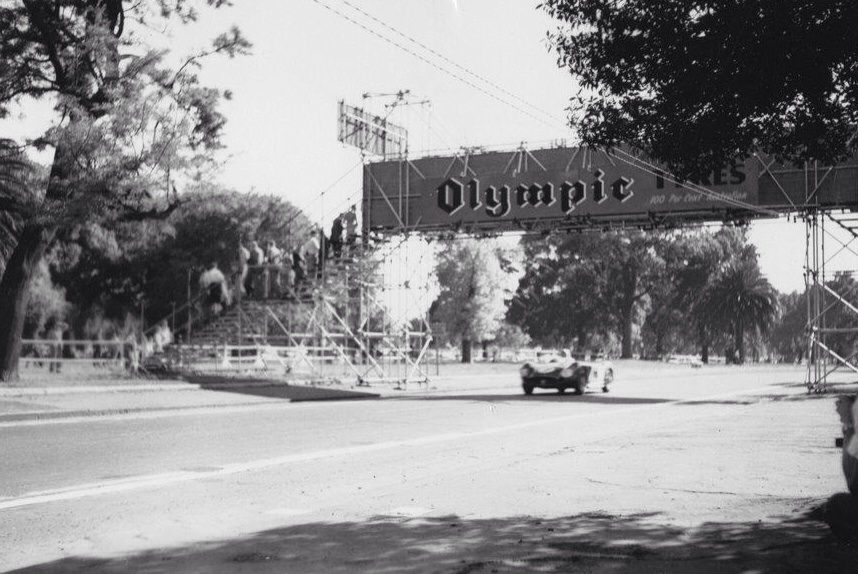
Vrrooom in a six-cylinder 3-litre, DOHC kinda-way. Moss Maser 300S. Aughtie Drive from the Olympic Tyres Bridge (J Lineham)
Reg Parnell’s Ferrari 555 Super Squalo with Peter Whitehead’s similar car at left (I Curwen-Walker)
3.4-litre, DOHC, two-valve engine of Parnell’s car (I Curwen-Walker)

Attached are links to articles already written about this motor racing fortnight during the 1956 Melbourne Olympic Games which ‘put Melbourne, if not Australia on the map’.

In fact James had a big choice to make that day. He could have taken a vantage point on the men’s marathon course from Clayton to the Melbourne Cricket Ground. Algerian born Frenchman Alain Mimoun won it in 2:25.00 from Franjo Mihalic of Yugoslavia a minute and a half behind.

The Australian Tourist Trophy; https://primotipo.com/2016/01/29/1956-australian-tourist-trophy-albert-park/ and Australian Grand Prix; https://primotipo.com/2016/12/27/moss-at-albert-park/

Jean Behra, Maserati 250F (J Lineham)

The short story of the race is that Stirling Moss won the 80 lap, 250 mile event on 2 December 1956…

He did so by a lap from teammate Jean Behra, Peter Whitehead’s Ferrari 555 Super Squalo, Reg Hunt’s Maserati 250F and Stan Jones’ similar machine. It was a dominant display from the plucky Brit who was always, and still is immensely popular when he visits Australia.

International representation included the two works Officine Maserati drivers Moss and Behra (#1 above) who brought no less than five Masers with them. They shipped three 250Fs, two of the latest specification and an earlier chassis, and two 300S sportscars both of which remained in Australia post event. The cars were based at Reg Hunt’s Holden Dealership just up St Kilda Road on the Nepean Highway in Elsternwick a few kilometres from the circuit, the 300S’ being famously driven between workshop and racetrack.

Stirling Moss enroute to victory in his Maserati 250F (Melbourne Argus)
Prince Bira and Jean Behra in the Albert Park paddock (S Landrigan)

Jean didn’t have a great year, being comprehensively bested by one of the most gifted drivers in the world, but third places at Buenos Aires, Monaco, Reims, Silverstone and at the Nurburgring is hardly shabby. Over the two weekend Australian carnival it was Moss winning both the AGP and the Australian Tourist Trophy held the weekend before.

Moss raced #7 250F chassis number 2501 and Behra #1 2522. The spare car – 2507 – was driven by both Moss and Hunt during practice. At one point it was thought Jack Brabham may race it, not having an AGP ride that year, but it was not to be. A pity, by that stage Jack had two seasons of racing in Europe behind him so would have given all but Moss and Behra a good-go.

Two of the three Officine Maserati works 250Fs, chassis numbers as per text. #1 is Behra’s machine (I Curwen-Walker)

Scuderia Ambrosiana entered two Ferrari 555 Super Squalos powered by 3.4-litre 860 Monza four cylinder engines.

The AGP at this time was run to Formula Libre rules, the cars above were driven by #2 Reg Parnell, chassis number FL9002 and #3 Peter Whitehead, chassis FL9001. Whitehead was a regular visitor to Australia dealing with the family wool business and had won the Australian Grand Prix way back in 1938 aboard his ERA chassis R10B, when he was 24, in 1956 he was 42 years of age.

Whitehead started the carnival well winning the Bryson Industries Cup support event to the Australian Tourist Trophy the week before, ahead of Hunt and Kevin Neal, Maserati A6GCM.

Whitehead and Parnell were unlikely to be on the pace of the works Masers but would be good bets as best of the rest, as indeed they were, Peter was third and Reg sixth. The Parnell car remained in Australia, click here to read about it;

Car #9 in the background of the photo above is Lex Davison’s Ferrari 500/625, Alberto Ascari’s 1952/3 dual World F1 Championship winning chassis #0005, iconic in Australia and winner of the 1957 and 1958 AGP’s at Caversham and Bathurst respectively. The 3-litre car, which then carried chassis number #0480 was seventh, five laps behind Moss with various problems.

Behra and Moss at the driver’s briefing (S Landrigan)
(J Lineham)

Ken Wharton was a well credentialled Brit in both single-seaters and sportscars, but his ‘Ecurie Du Puy’ (John Du Puy was an American resident in Switzerland) silver Maserati 250F was said to be, and looked, tired.

Chassis #2521 had been Behra’s works machine – a new car that season – and raced in eight events earlier in the year before being sold to Du Puy. But it looked in-need-of-a-birthday before leaving Europe, it was the latest bit of kit, properly prepared the car was a top-three contender.

Ken retired the car on lap 19 and then journeyed on to race the Maserati and his Ferrari Monza in New Zealand that summer, unfortunately dying in a tragic accident aboard the Monza on 12 January 1957 at Ardmore during the NZ GP weekend.

The best prepared and equipped of the locals were the well-heeled Victorian motor dealers, Reg Hunt and Stan Jones in Maserati 250Fs of similar specification and cobbler Lex Davison, who owned a shoe manufacturing and distribution business.

Lex’ Ferrari was older than the 250Fs but was quick with its 3-litre four cylinder, DOHC engine and was beautifully prepared by Alan Ashton at AF Hollins motor engineers just up the road from the ‘Park in Armadale. In fact all three of these cars lived close to the circuit. Hunt was fourth, and best of the locals, Jones fifth and Davison seventh.

(J Lineham)

Doug Whiteford was another local – very – his dealership/workshop was in Carlisle Street St Kilda, a drop-kick from Albert Park.

Whiteford’s first Talbot-Lago T26C, chassis #110007 was an astute purchase, the robust, simple design was well suited to Australian events. It was beautifully prepared and driven by ‘Dicer Doug’ who won two of his three AGPs in it, at Bathurst in 1952 and at Albert Park in 1953. Click here for a piece on Doug’s TLs;

The purchase of the second T26C (photo above) wasn’t quite so smart though. An earlier chassis #110002 but later spec mechanically than #110007 sounded ok but the game in Oz had moved on. He needed something more modern and competitive.

Whiteford was a consistent third in the ’55 AGP at Port Wakefield behind Brabham and Hunt but by ’56 the old Talbot Lago was simply not on the pace. Still, his bankroll was more modest at the top level than most. A shame, as Doug, 42 then and as vastly experienced and tough as they come didn’t give a yard to any of the locals. Whiteford in a 250F or something of that performance envelope would have been worth travelling a few miles to see. It’s a shame he bought a 300S off Maserati after this meeting rather than a 250F.

The Whiteford Talbot Lago T26C in the paddock, and below being pushed by Doug and the crew towards the start (I Curwen-Walker)
(unattributed)
Kevin Neal, Maserati A6GCM 2.5-litre (J Lineham)

Reg Hunt made everybody take notice in his ‘Flying Bedstead’ Hunt JAP Spl in hillclimbs and on the circuits in the late 1940s/early 1950s and then refined his craft with a season racing a 500 F3 Cooper machine in the UK in 1954.

On his way back to Oz he acquired a superb Maserati 250F engined Maserati A6GCM chassis #2038 (above with Kevin Neal at the wheel) with which he belted the locals in 1955. Only mechanical failure kept him from the ’55 AGP won by Brabham’s Cooper T40 Bristol. Hunt ordered a 250F for ’56, he was allocated a rebuilt 1955 works machine chassis 2516 with Melbourne haulier Kevin Neal – who had also raced an ex-Hunt Cooper T53 Bristol – the purchaser of the A6GCM.

Neal had a shocker of an AGP, bending the car severely and injuring himself late in the race when he lost the car in the greasy conditions. I wrote a long feature about the A6GCM;

Stan Coffey’s Ferrari 750 Monza sportscar below. He raced the car in the Australian TT, DNF in the classic won by Moss from Behra and Ken Wharton’s Ferrari Monza.

It’s a rare, clear shot of the man, now whatever became of him? There is an obscure article topic, he raced a few interesting cars too, Cooper Bristol etc…

(J Lineham)

Entry List…

(B Moyle)

Etcetera…

(J Hunting)

The photograph above is in the AF Hollins Pty.Ltd workshop in 604 Hight Street, Armadale (the building still exists as a tyre fitter/retailer). Julian ‘Gib’ Barrett’s #19 Alta GP-2 1.5 s/c alongside Lex Davison’s Ferrari 500/625. Behind are the two Ferrari 555s, Reg Parnell’s partially obscured on the left and #3 Peter Whitehead on the right. The other car we can just see at far left is the Wharton silver Maserati 250F.

(Gray Family)

Reg Parnell’s Ferrari Super Squalo, Lex Davison’s Ferrari 500/625, looking smaller in comparison, and the dark coloured Kevin Neal Maserati A6GCM which did not look quite so pristine at the end of the weekend.

(I Curwen-Walker)

Quite what is going on here I’m not sure, it’s most certainly not the start of the touring car race!

(I Curwen-Walker)

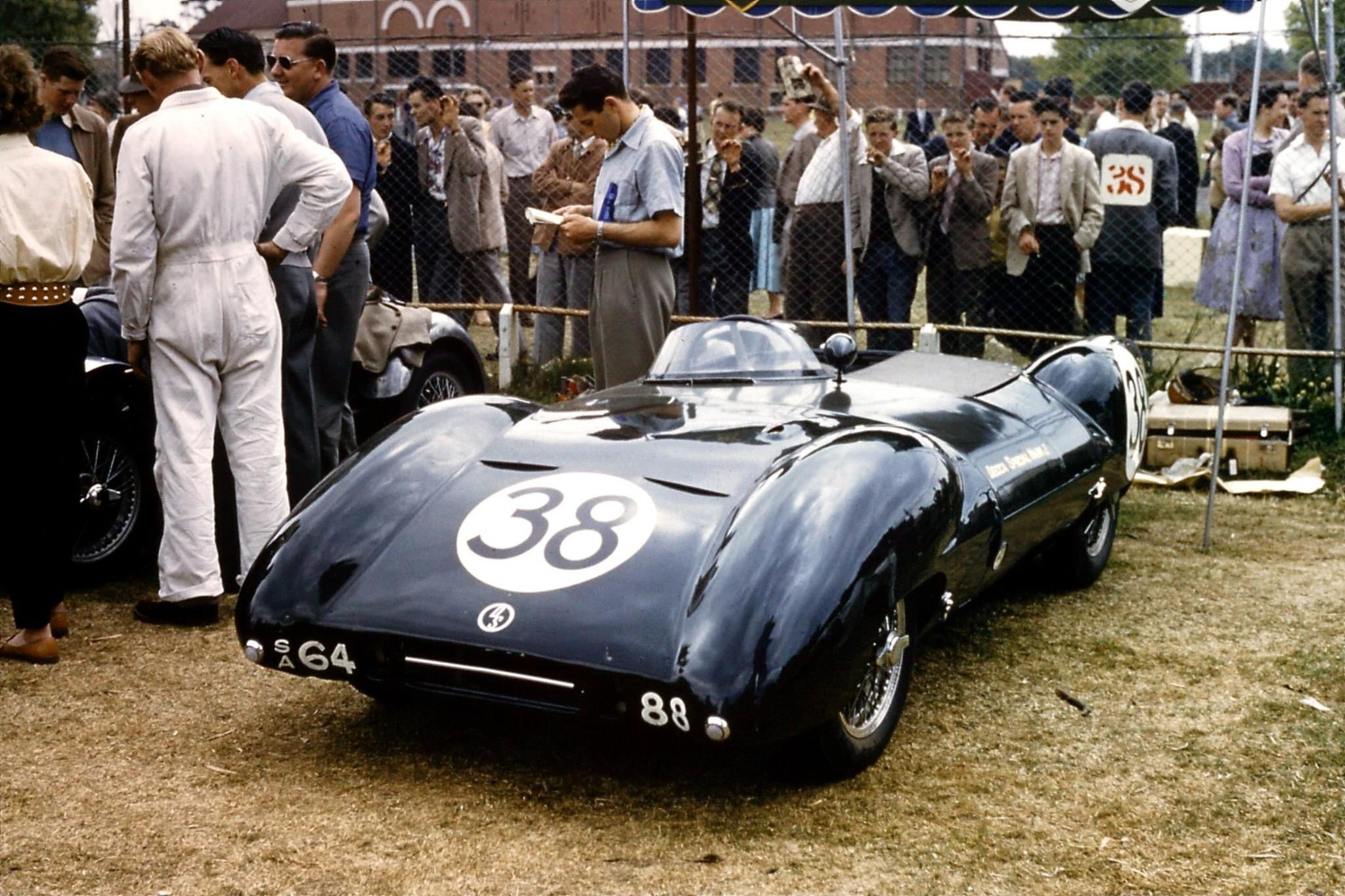
Derek Jolly’s very successful Lotus 11-esque Decca Mk2 Climax. 13th outright and first in class in the Australian Tourist Trophy won by the Moss Maserati 300S. See here for more on Derek and his cars; https://primotipo.com/2017/11/09/dereks-deccas-and-lotus-15s/

(R Jackson)

Otto Stone’s MG K3 looking very lonely in the seemingly deserted Albert Park paddock.

Stone was a legendary driver/engineer who fettled all manner of exotic machinery not least Stan Jones’ Maserati 250F during Stan’s glory years including his 1958 Gold Star and 1959 AGP Longford campaigns.

Stone placed second in the curtain raiser, opening event on the first weekend of the carnival, the 16 lap Argus Cup handicap for racing cars. Neil Charge won aboard the Charge brothers MG Special with the C Martyr Sunbeam third.

(R Jackson)

Our engineering oriented friend is taking a good, hard look at Jack Myers’ Cooper T20 Waggott-Holden aka WM Holden. The 2.4-litre Waggott twin-cam head, six-Amal fed Holden Grey six-cylinder engined Cooper placed 12th and last in the AGP. The story of the car and its amazing driver/engineer is here; https://primotipo.com/2015/02/10/stirling-moss-cumberland-park-speedway-sydney-cooper-t20-wm-holden-1956/

(O Plada)

Bibliography…

 8W.forix.com on Maserati 250F chassis numbers, oldracingcars.com

Photo Credits…

James Lineham, State Library of Victoria, Simon Landrigan, Brian Moyle Collection, Gordon Dobie Collection, Oscar Plada, John Hunting, Gray Family Collection, Ian Curwen-Walker, Melbourne Argus, Ron Jackson

Tailpiece…

(I Curwen-Walker)

The Maserati corner of the Albert Park paddock, how good would that have been! The factory spare and Behra’s race-car in shot with Kevin Neal’s 2.5-lite A6GCM behind being looked after by the short-arse mechanic.

Finito…


hawt hill

I don’t think of Mike Hawthorn as a Lotus driver but here he is with Graham Hill, rather similar in age, they were both born in 1929…
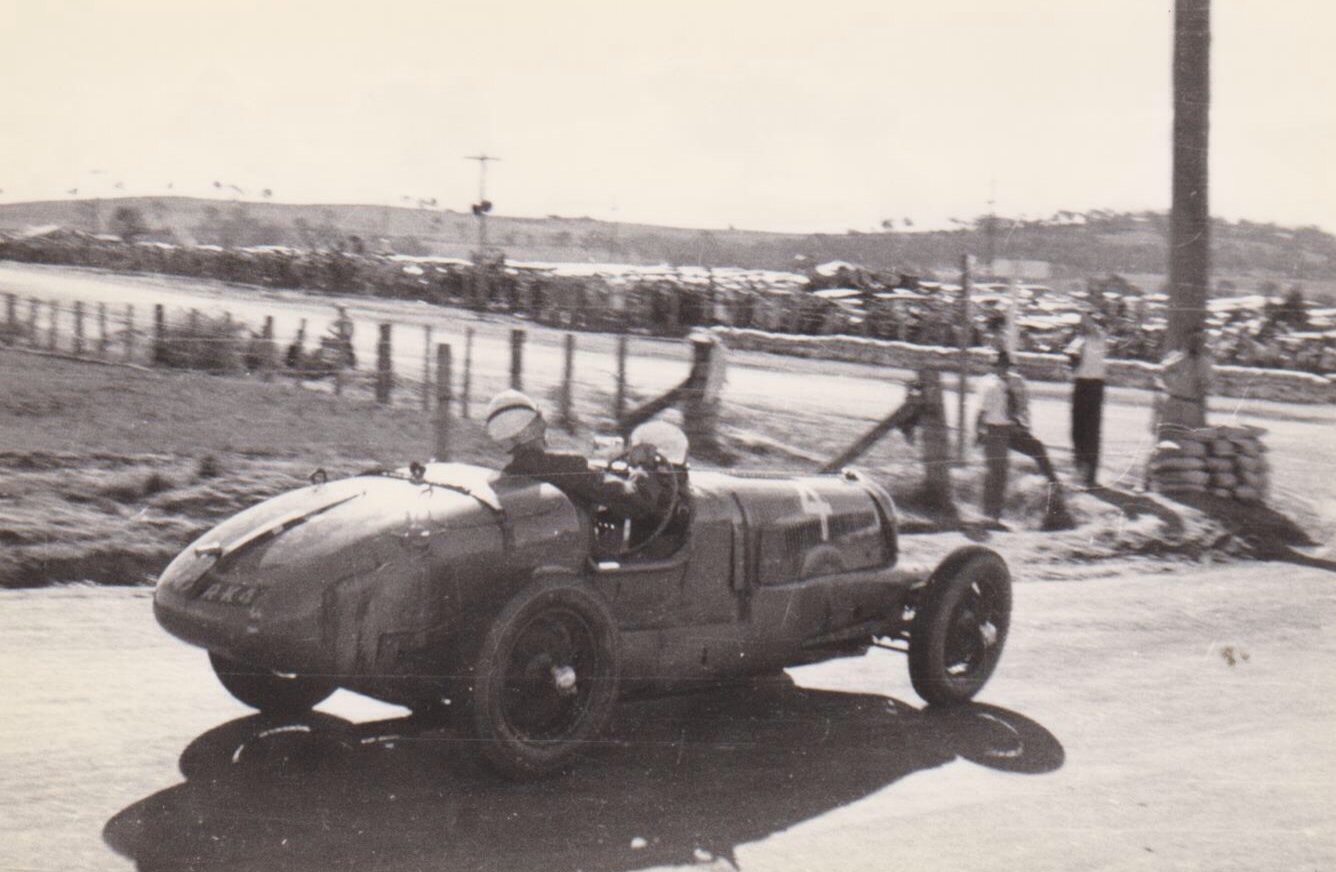
Amazing really, grafter Hill worked hard to get into motor racing, his GP career started not long before Hawthorn’s finished and went well into the 1970’s, not to forget Graham’s Le Mans and Indy wins of course. Mike’s racing entree was smoothed by his fathers wealth, it’s intriguing to guess what he may have achieved had he raced on into the 1960’s and applied his considerable skills to Chapman’s works of Lotus art.

Both Hill and Hawthorn are English to the core albeit completely different charcters. And personalities they certainly were. It’s a wonderful shot.

image

Hawthorn, Lotus 11 Climax, Oulton Park, Cheshire April 1955 (Popperfoto)

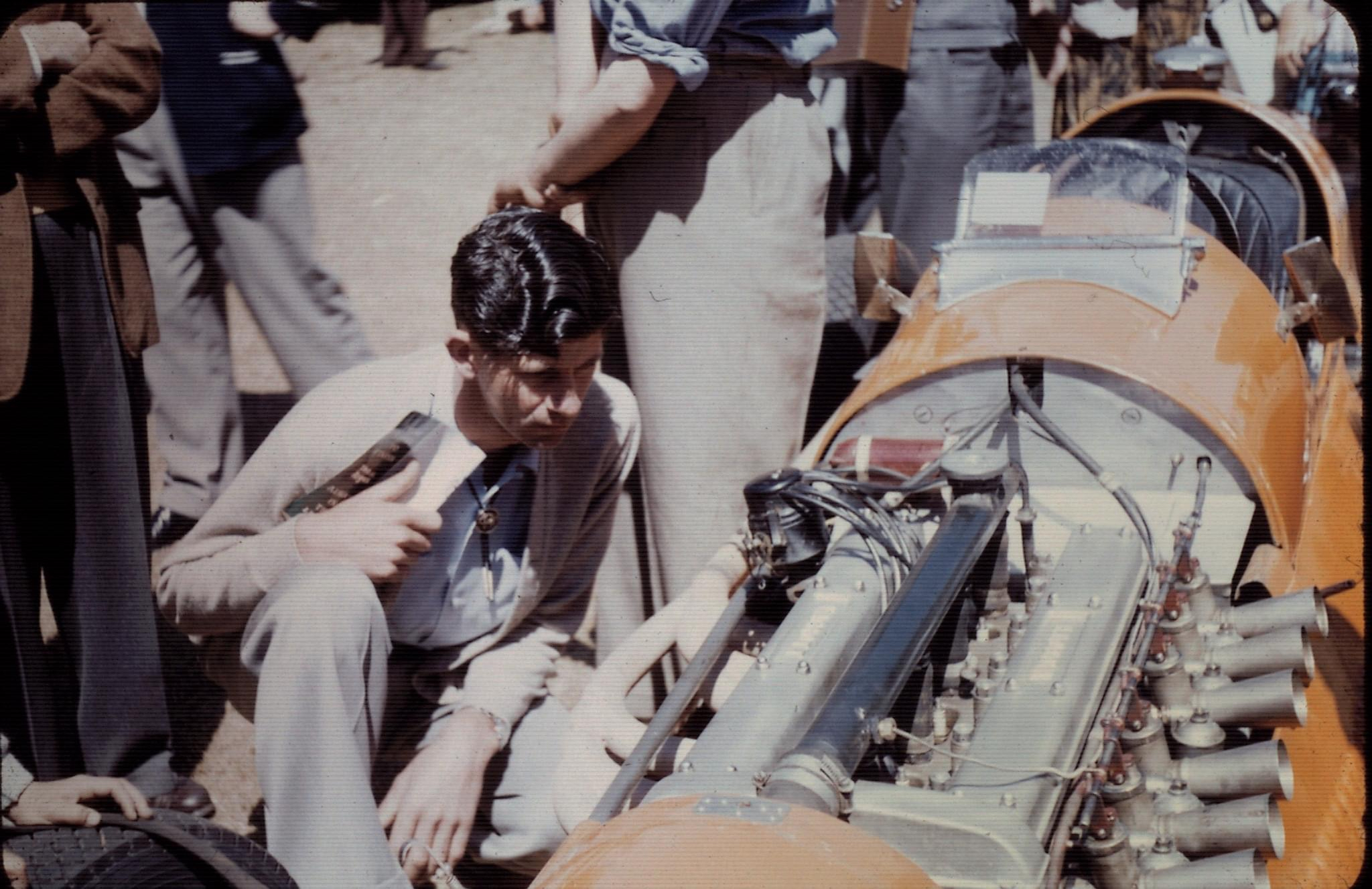
The event or reason for the Hill/Hawthorn shot is unrecorded but dated 12 April 1956 as is the photo of Hawthorn with Stirling Moss below. Its dated 11 May 1953, i am interested if anybody can assist with the places and occasions…
hawt moss

Credits…

Getty/Manchester Daily Express, Popperfoto

image

There is no such thing as too many shots of the great Brit in a Maserati 250F, and I have posted a few…

According to the photo caption the meeting is on 7 June 1954 at Goodwood. The meeting’s F1 race was the ‘BARC Trophy’, Reg Parnell won it in a Scuderia Ambrosiana Ferrari 625, but Moss wasn’t entered, so, a bit of a mystery.

Perhaps it’s the ‘Goodwood Trophy’ on 25 September 1954, he won that event in 250F #2508 and carried his #7 personal preference race number.

Credit…

Universal Images Group