Local boy Nino Vaccarella wrestled his big Ferrari into third place around the ‘Piccolo Madonie’ circuit in 1970…
Sensational Rainer Schlegelmilch shot captures the very essence of Targa, its geography and contrast of tradition and contemporary technology.
Porsche had ‘the game covered’ in 1970/71, they had the nimble, light 908/3 for Targa and the Nurburgring and the legendary 917 for power circuits such as Le Mans, Daytona and Monza. Brian Redman and Jo Siffert won the race in a 908/3 from Pedro Rodriguez and Leo Kinnunen in the other JW Automotive Porsche.
Ferrari only entered one factory car, Vaccarella partnered by compatriot Ignazio Giunti, a promising driver who made his F1 debut with Ferrari in 1970. He perished in a tragic accident in Argentina in 1971 when his Ferrari 312P (sports car) ran into the back of Jean Pierre Beltiose’ Matra 660 which he was pushing along the track, having run out of fuel.
Nino Vaccarella was a good bet for the win though, a local, he grew up in Palermo and knew the circuit ‘like the back of his hand’. He started the season well winning the Sebring 12 Hour with Giunti, and Mario Andretti. He won Targa thrice; in 1965 in a Ferrari 275 P2 and in 1971 in an Alfa T33/3. His final win was in an Alfa TT12 after Targa became a National Italian event, Targa losing its championship status after 1973 when the cars simply became too quick for the circuit on Sicilian open roads…not too quick for an Italian event however!
Vaccarella also had some Grand Prix experience, his best GP result ninth in the 1962 Italian Grand Prix in a privately entered Lotus 24 Climax. Predominantly a sportscar driver, he also won the 1964 Le Mans 24 Hour classic sharing a Ferrari 275 P with Jean Guichet and the Nurburgring 1000Km with Ludovico Scarfiotti in another 275P. He is still alive and well living in Sicily.
Stunning shot and an epic vantage point for the boys, Collesano. Vaccarella/ Giunti Ferrari 512S Spyder in shot (Pinterest)Vaccarella in the Sicilian countryside, the unique challenges of the circuit and driving a 5 litre 550 BHP V12 Ferrari 512S apparent (Pinterest)Vaccarella in the car he shared with Ignazio Giunti, Targa 1970 . A second Ferrari 512S was entered by Scuderia Fillipinetti driven by Herbie Muller and Mike Parkes finishing sixth (Pinterest)Vaccarella finishes his 11th lap, the event which started and finished in Cerda. The lap record for the course was set by Helmut Marko in an Alfa 33TT3 in 1972 at an average speed of 128.253 KmH for the 72Km course on Sicilian open roads. (Pinterest)Cutaway of the Ferrari 512S. Space-frame chassis, 5 litre, DOHC V12, circa 550BHP. 5 speed gearbox, independent suspension by wishbones at front with coil spring/dampers (Koni), and single top link, inverted wishbone, radius rods and coil spring/damper units at the rear. A superb car if never as successful as the Porsche 917, its direct rival. (Pinterest)
Etcetera…
Nino Vaccarella, Targa 1970 (The Cahier Archive)Vaccarella competed for Ferrari in the 1965 Italian GP in a 158. His engine failed in the race won by Jackie Stewarts’ BRM P261, the first of his 27 Grand Prix victories. (Pinterest)Jo Siffert in the 1970 Targa Florio winning Porsche 908/3 he shared with Brian Redman (Pinterest)
Photo Credits…
Rainer Schlegelmilch, The Cahier Archive, Pinterest
Mika Hakkinen under moonlight, British GP Silverstone 1994…
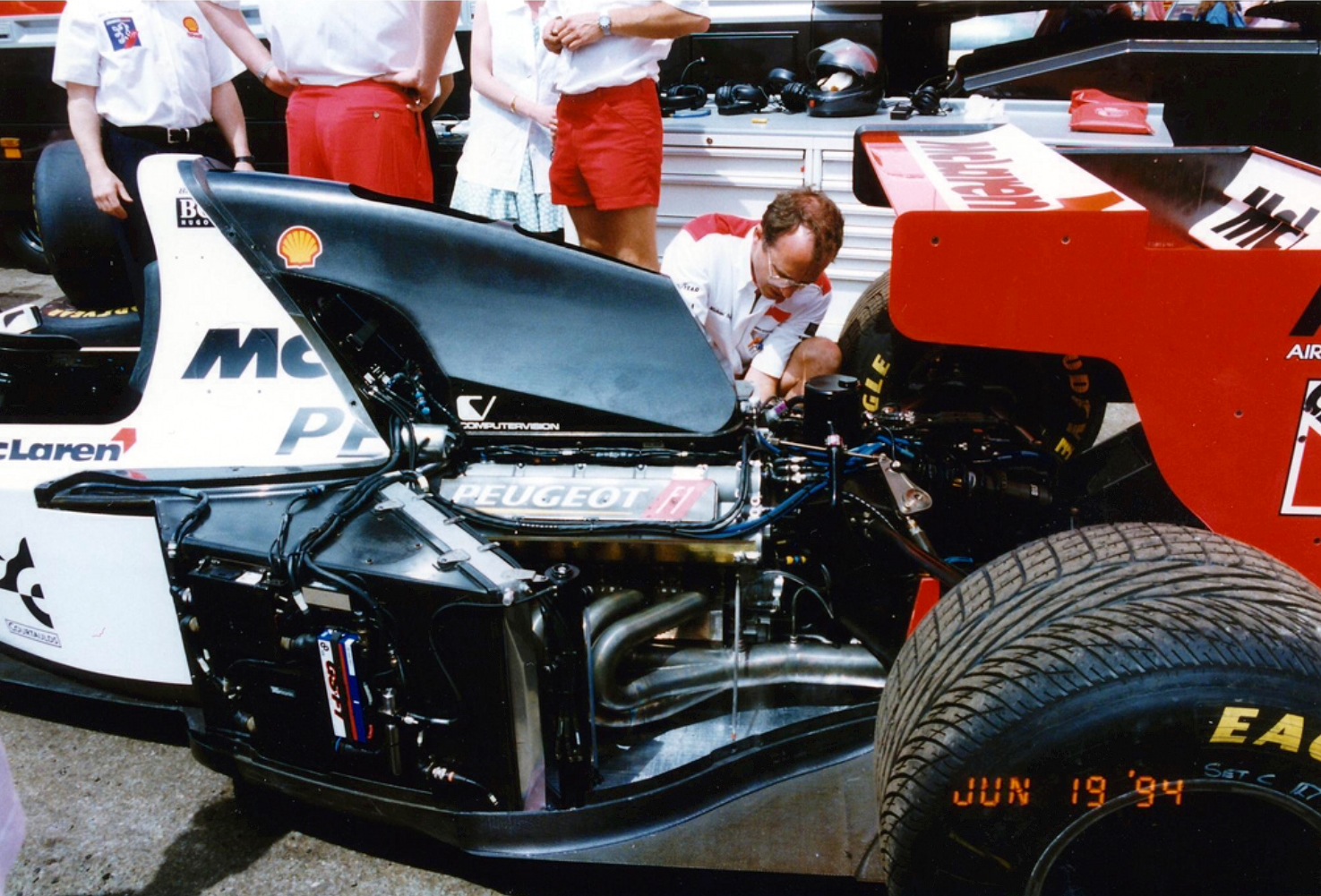
On the face of it the Peugeot V10 made sense, it had won LeMans in the French company’s 905 sportscar twice, and McLaren wanted a long term contract with a major manufacturer of the type it had with Honda, and would start with Mercedes in 1995…
Hakkinen and Martin Brundle struggled with the cars, Nigel Oatleys chassis was fine but the Peugeots were ‘hand grenades’ often exploding with fundamental structural engine failures.
Ron Dennis had had enough by mid year, a deal was brokered which saw Jordan using the engines, and later Prost…all failing to achieve the points haul McLaren did in ’94, still Peugeot have achieved a good ‘bang for their buck’ in rallying , who needs F1?!…
Peugeot A4/A6 3.5 litre V10, 3499cc circa 700-760BHP. McLaren TAG 6 speed, transverse semi-automatic gearbox (Anthony Fosh)
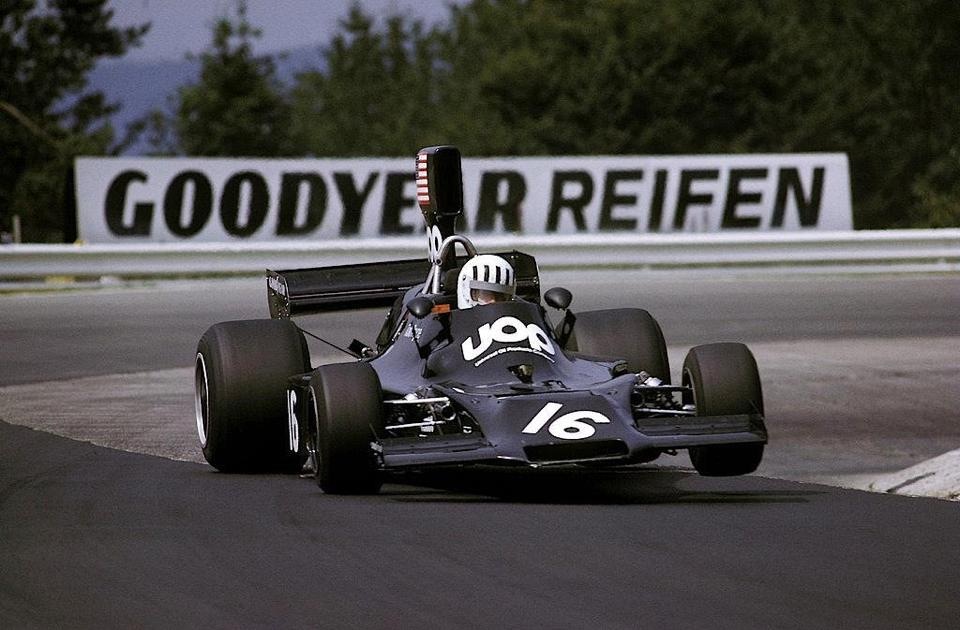
Tom Pryce, Karussell, Nurburgring, German GP 1975. Shadow DN3A Ford. Sixth in the race won by Cay Regazzoni’s Ferrari 312B3 (Pinterest)
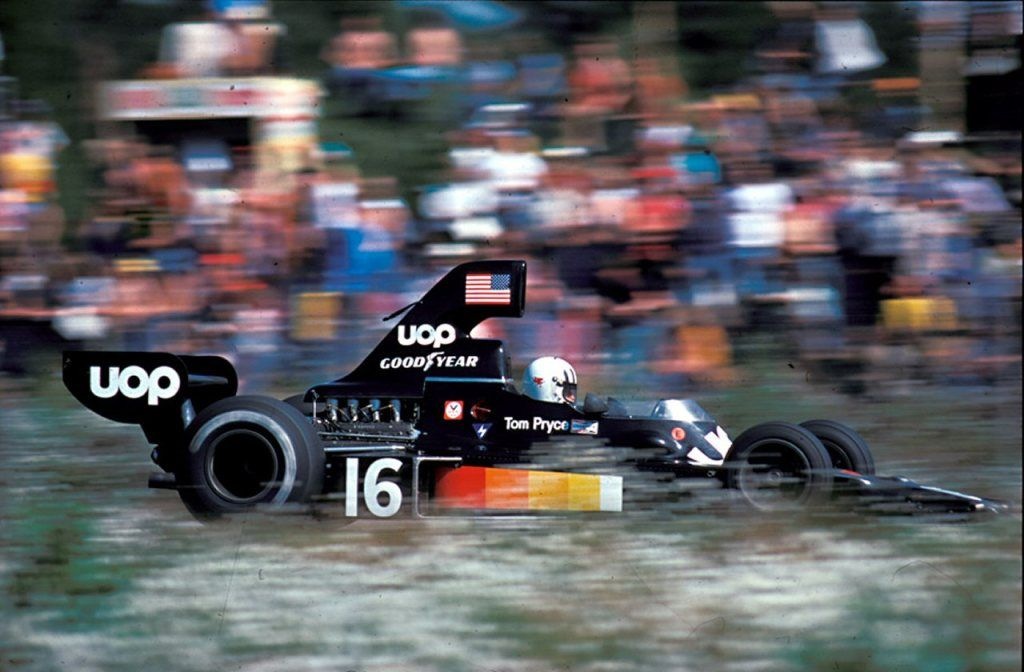
These great shots are of Tom Pryce in his Shadow DN3A Ford during 1974…
Pryce was one of ‘The Lost Generation’ of young Britsh F1 drivers killed in their prime, all of a similar age, at about the same time. The other two drivers featured in David Tremaynes’ book of that name are Roger Williamson and Tony Brise.
I’d add Gerry Birrell, an F2 pilot and Ford factory Capri RS2600 driver to the list, i was following his career as a teenager at the time.
All were products of the ‘British Racing Driver Production Line’ of the day starting in small sedans or Formula Vee and progressing through Formula Ford, F3 and eventually getting their Formula 1 break.
All were F3 stars and showed F1 promise, in Birrells case he was one of the drivers spoken of as Jackie Stewarts’ replacement at Tyrrell for 1974.
All died grisly deaths in racing cars except Brise who perished in the plane piloted by Graham Hill which crashed and killed the key members of his team upon return from a test session in France to the UK to Elstree Airport in November 1975.
Deaths in racing cars were all too common until the ‘carbon-fibre era’ which commenced with the first Mclaren MP4 in 1981. Arguably designer John Barnard’s pioneering use of the material in racing cars has saved more lives than any other initiative down the decades?
Shadow DN3 Ford…
The Shadow, an English car and team funded by American Don Nichols United Oil Products, could be said to the ‘standard English kit car’ of the 1970’s.
It featured an aluminium monocoque, ubiquitous Ford Cosworh DFV engine, so reliable one wag described it as ‘the spacer between the driver and gearbox!, albeit a 500BHP spacer. The also ubiquitous Hewland FGA400 gearbox was a part of the package but Designer Tony Southgate, knew what he was about and put all of the knowledge gained at BRM from his successful P153/160 and P180 cars into the design, drivers Pryce and Jean-Pierre Jarier providng the other essential element.
Pryce won the 1975 non-championship ‘British Race of Champions’at Brands Hatch a DN5 beating Scheckter, Watson, Petersen, Ickx, Fittipaldi, Jarier and Donohue. He was a driver ‘on the up’ perhaps staying at Shadow too long. In a team with a competitive car he was a grand prix winner if not a potential World Champion.
He died in the 1977 South African Grand Prix, colliding with a marshall running across the track to put out a fire. The marshall was unsighted by Pryce, closely following another car. Both were killed in the very tragic accident.
Tom Pryce, Swedish GP, Anderstorp 1975. DNF, spun. Lauda won in a Ferraari 312T on his way to his first World Championship (Pinterest)
Tom Pryce looking very English for a Welshman, British GP 1974 (Pinterest)
Ecetera…
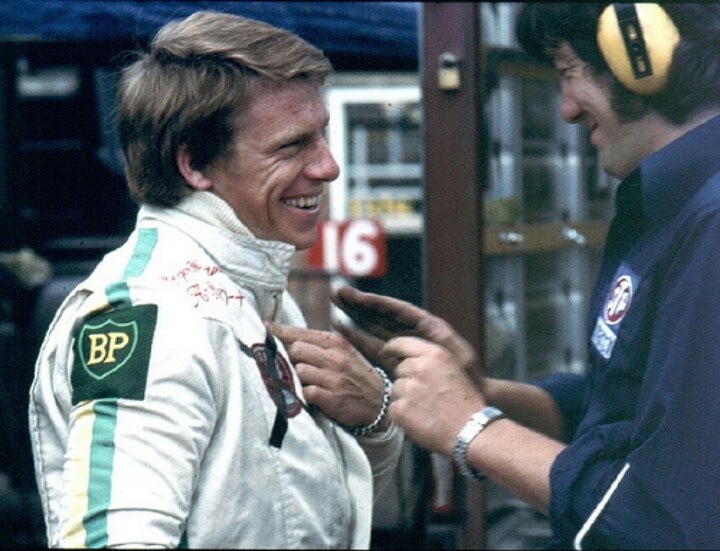
Roger Williamson and a March engineer share a joke, British GP 1973. It apperas to be about a covered up sponsors logo on his race suit…no captions of value on Pinterest so who knows!
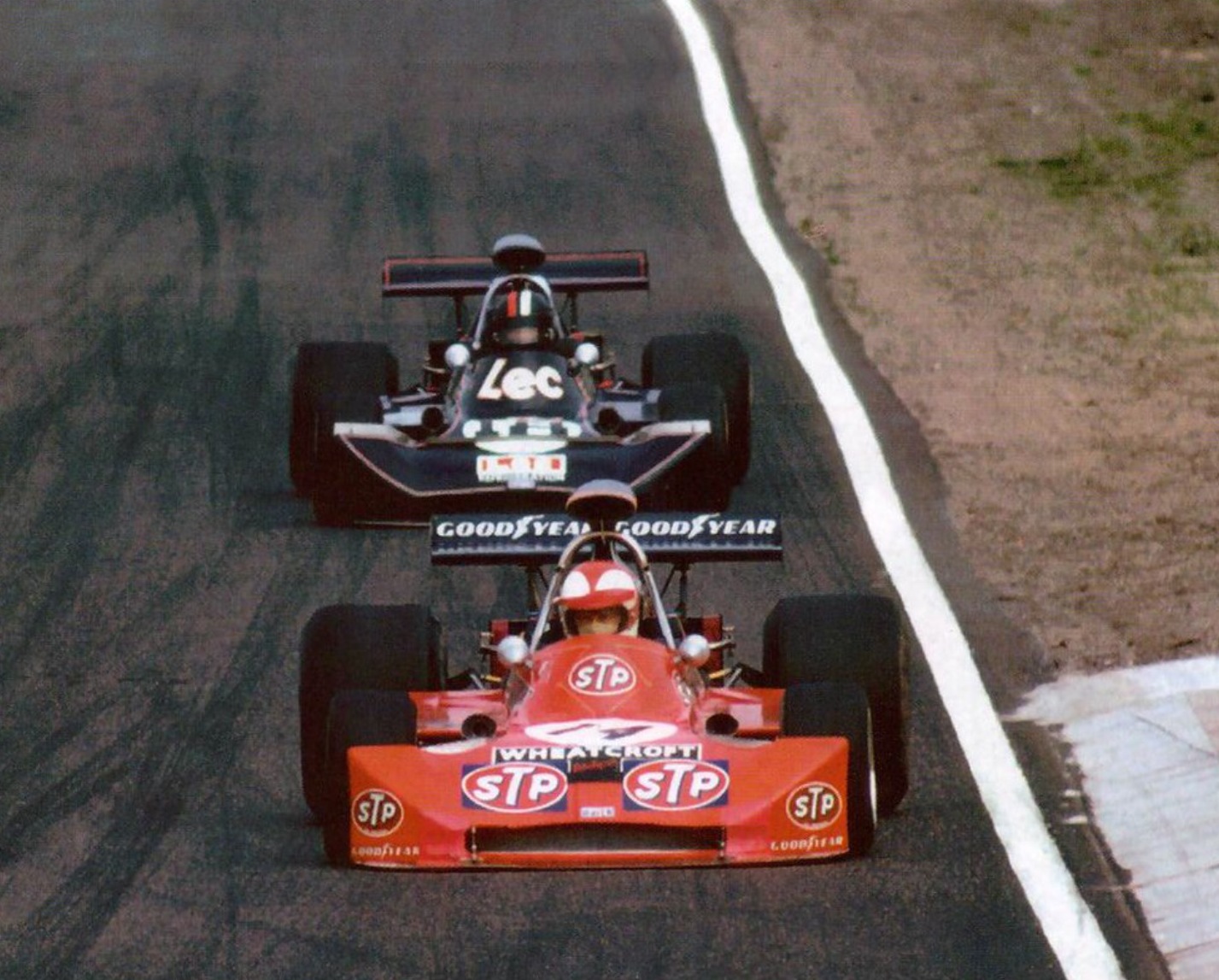
Roger Williamson ahead of David Purley, both in March 731 Fords, early in the 1973 Dutch Grand Prix. Williamson crashed after a suspected tyre failure and died of asphyxiation after Purleys valiant and heroic attempts to right the overturned car failed (Pinterest)
Graham Hill, for whom he drove in 1974/5, and Tony Brise. (Pinterest)
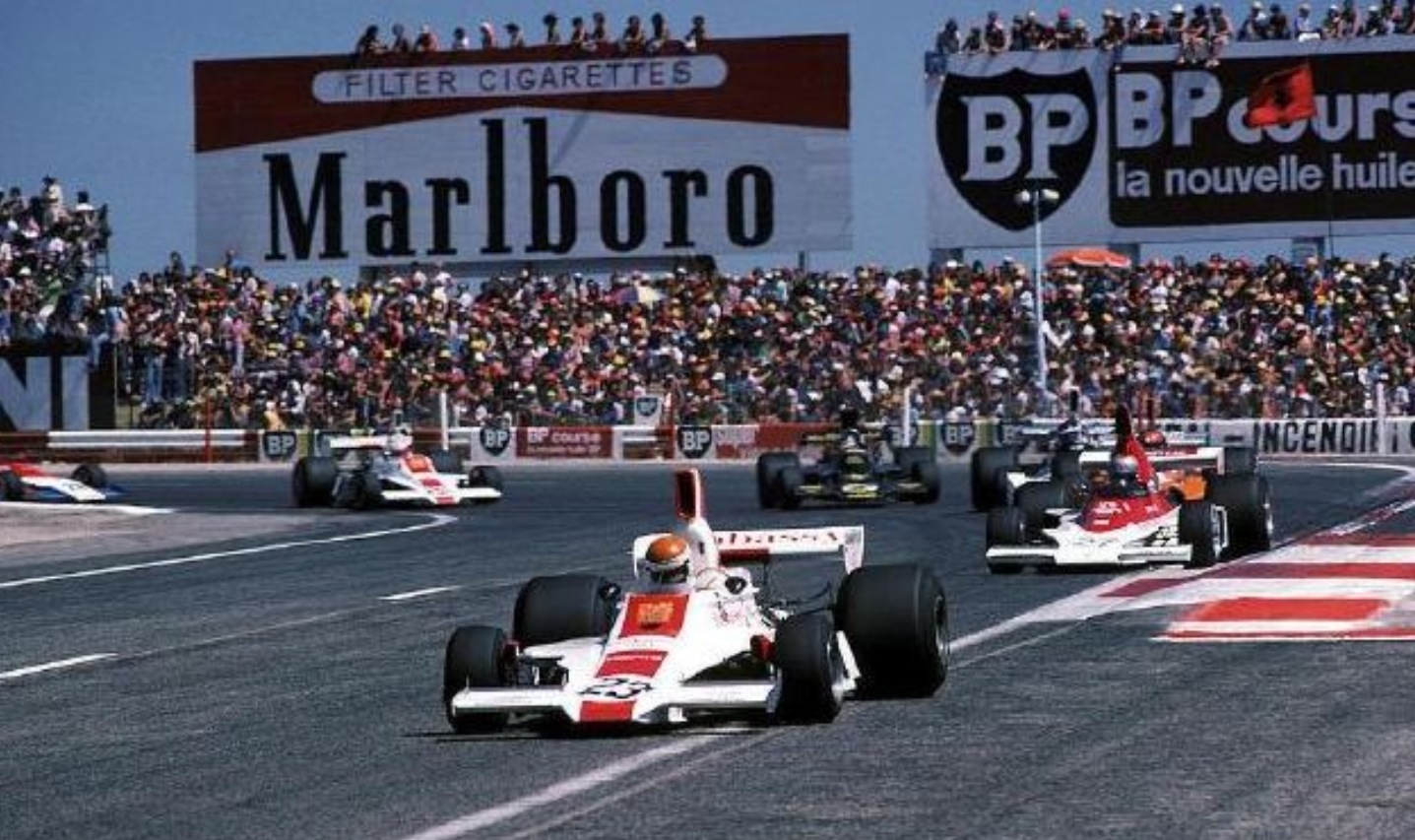
Tony Brise leads a gaggle of cars in the 1975 French GP, Hill GH1 Ford, he finished 7th in the race won by the Lauda Ferrari312T. Mario Andretti Parnelli VPJ4 Ford, Brambillas’ obscured March 751 Ford… the black car is the Ickx Lotus 72E Ford, the white car is Alan Jones in the other Hill, last in shot the nose of, i think, Donohues’ Penske PC1 Ford (Pinterest)
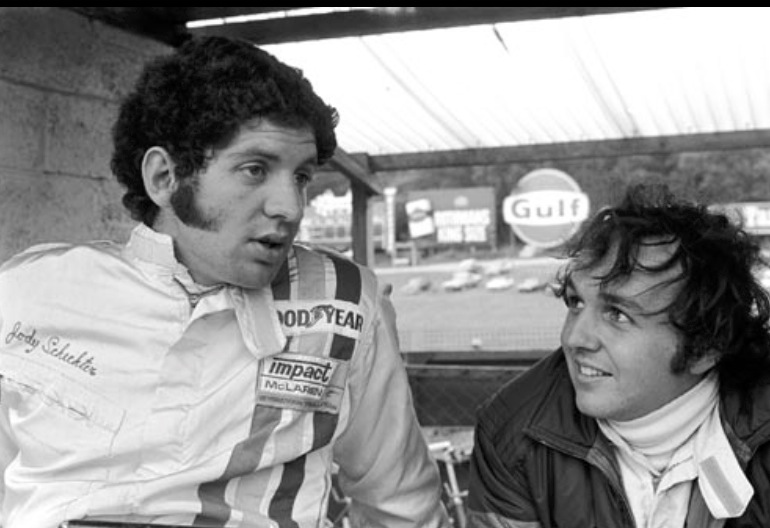
Jody Scheckter & Gerry Birrell, Brands Hatch ‘Rothmans 50000’ 1972. McLaren M21 and March 722 F2 drivers that year. (Pinterest)
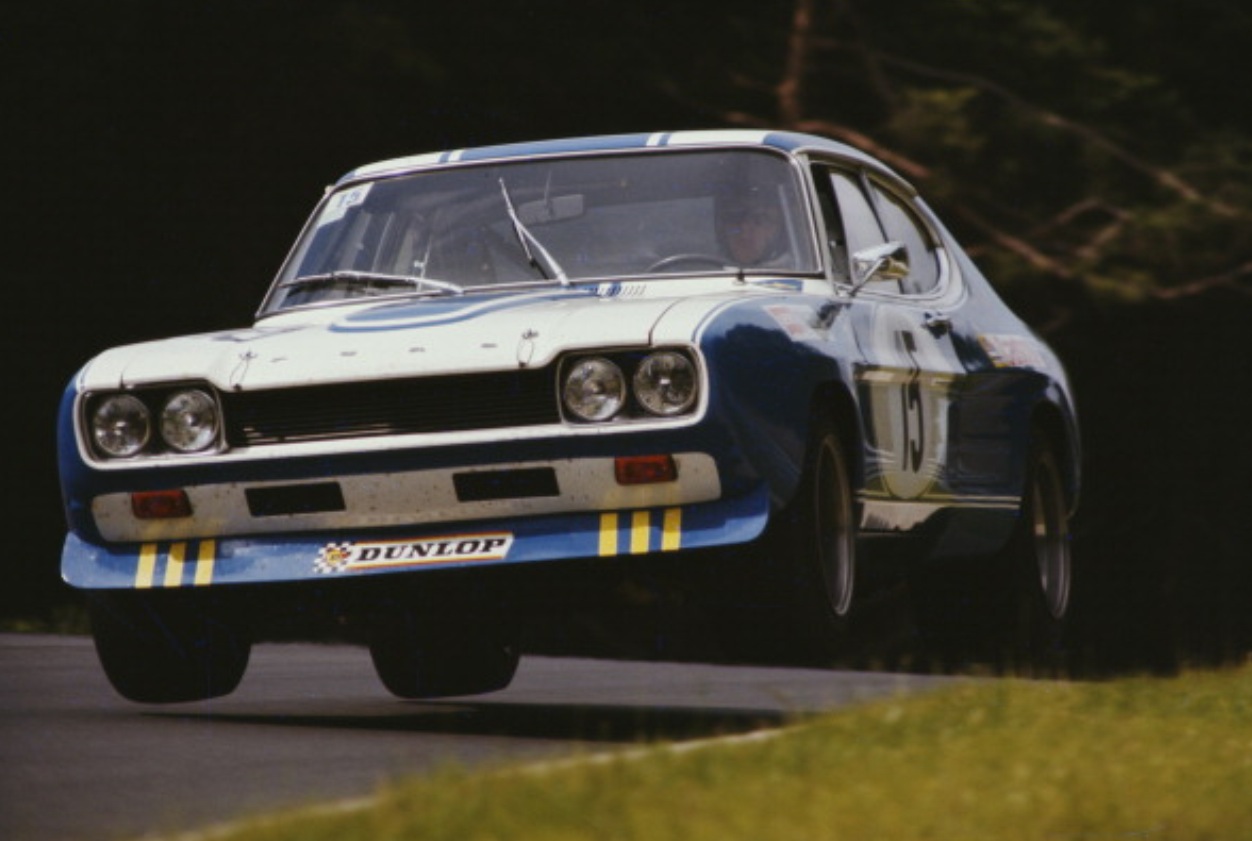
Gerry Birrell in the factory Ford RS2600, ETCC 6 Hour Nurburgring july 1972. Birrell was both race and a test driver for this very successful program (Rainer Schlegelmilch)
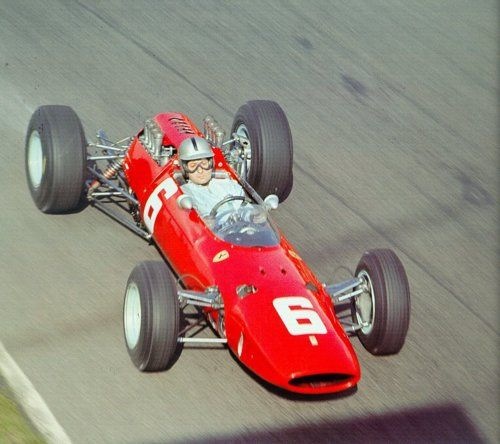
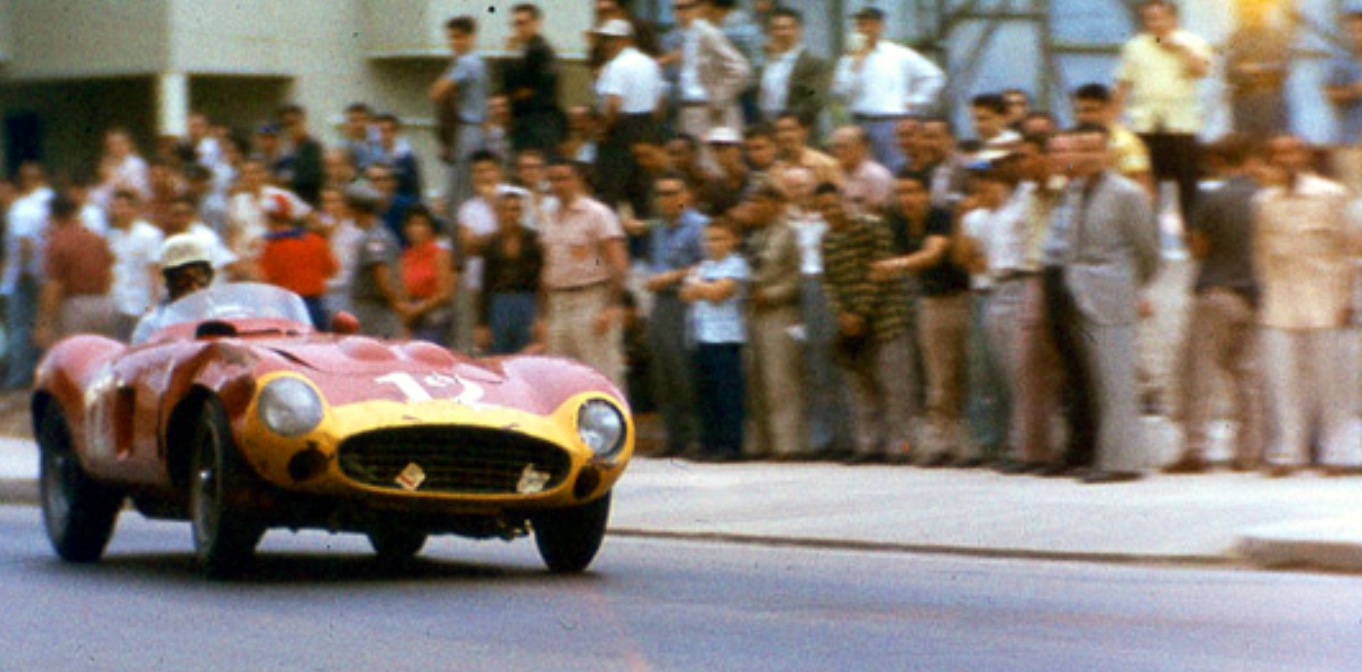
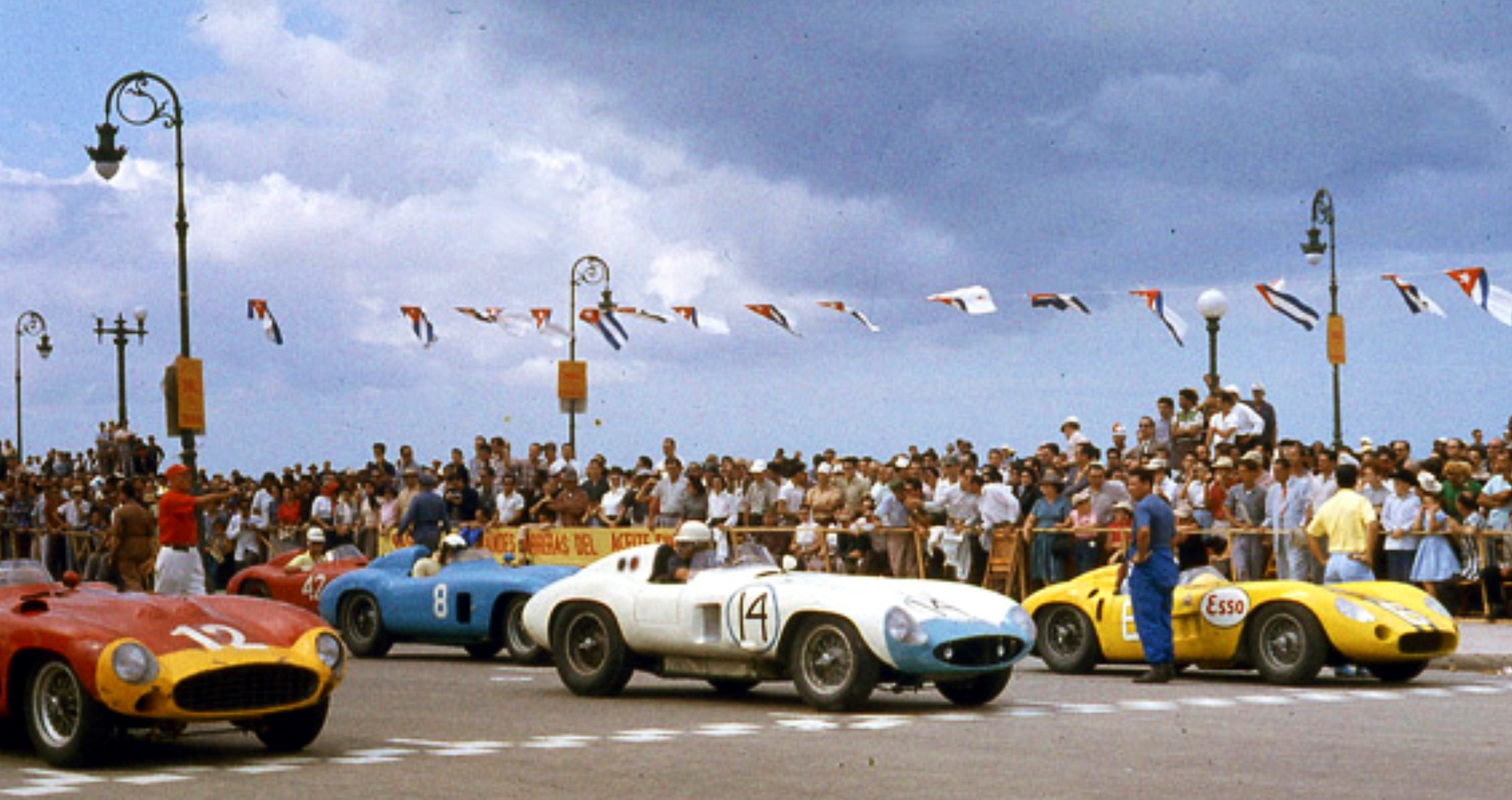
Despite its sculptured Scaglietti flanks, never has an 860 Monza looked quite so good…actress Linda Christian adorns Fon de Portago’s Ferrari
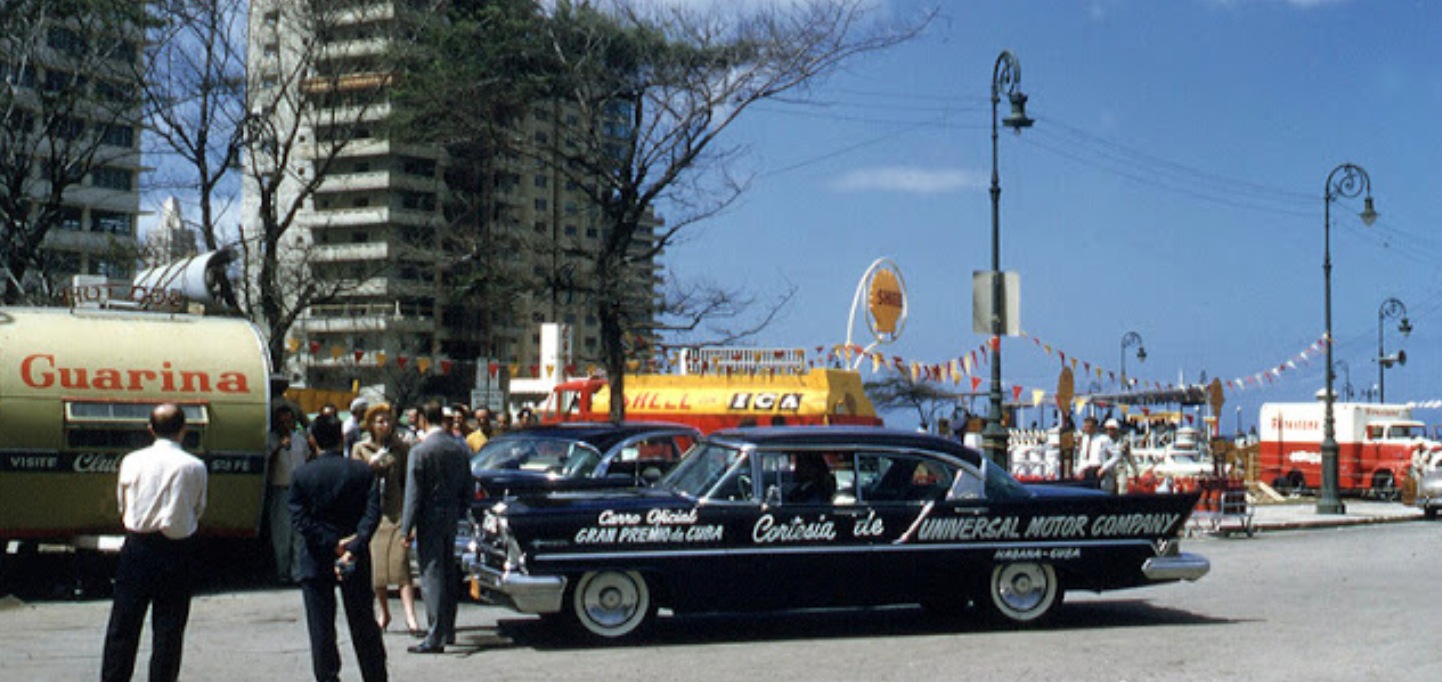
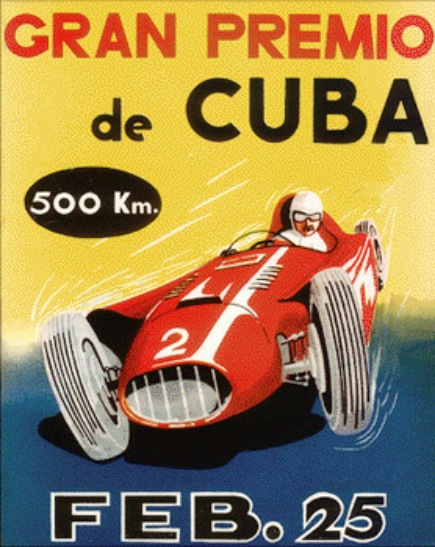
The Marquis Alfonso De Portago, Spanish nobleman and journey-man driver was accompanied by Linda Christian at the 1957 Cuban Grand Prix sports car event.
Fidel Castro’s insurgents were on the move in the countryside but for the Batista’s’ life went on. Keen to attract wealthy American tourists to the country to pump much needed funds into their moribund economy, an annual motor race was part of a plan to raise Cuba’s profile and provide an event to attract the punters.
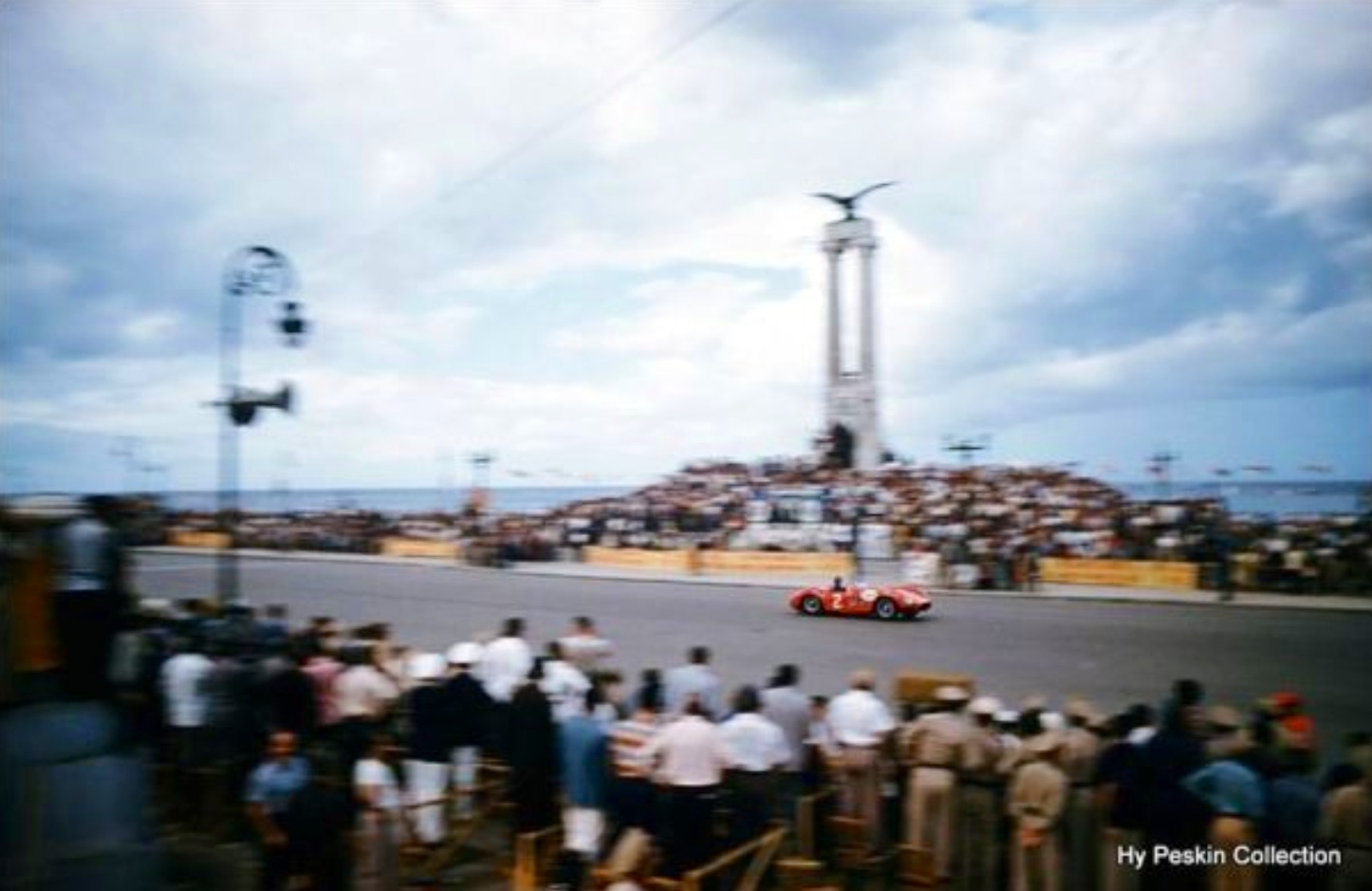
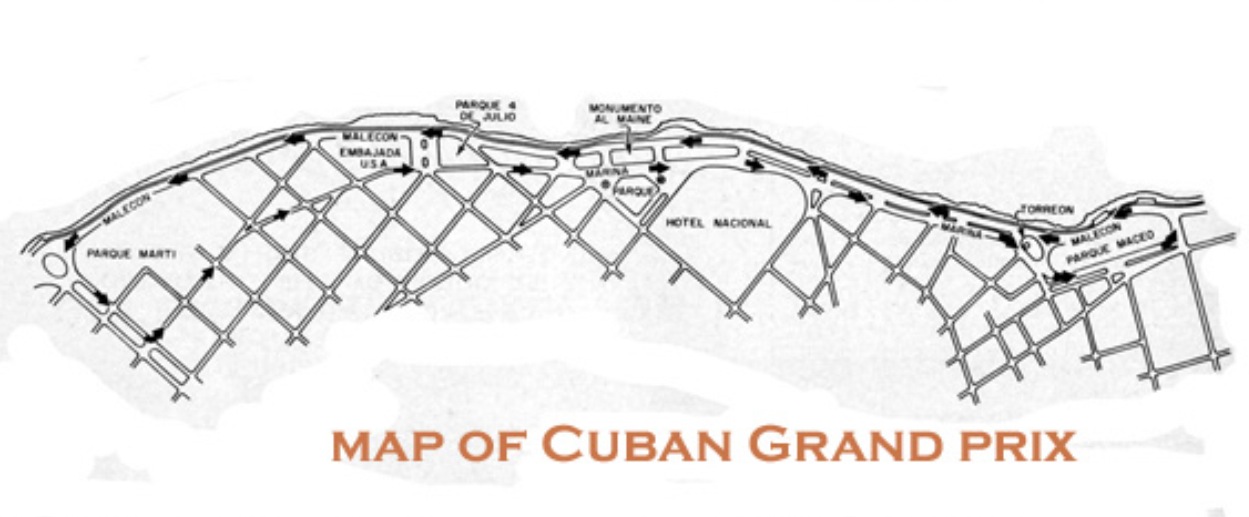
Out of focus and slightly surreal as a result…Fangio in his Maserati 300S, Malecon Boulevard, Havana, 1957 (Hy Peskin Collection)Wonderful panorama of Havanas Malecon circuit. 14 is the Phil Hill Ferrari 857S, De Portago’s Monza behind it with Linda Christian alighting. #16 also a Ferrari, driver unknown (Pinterest)
Ferrari 860 Monza…
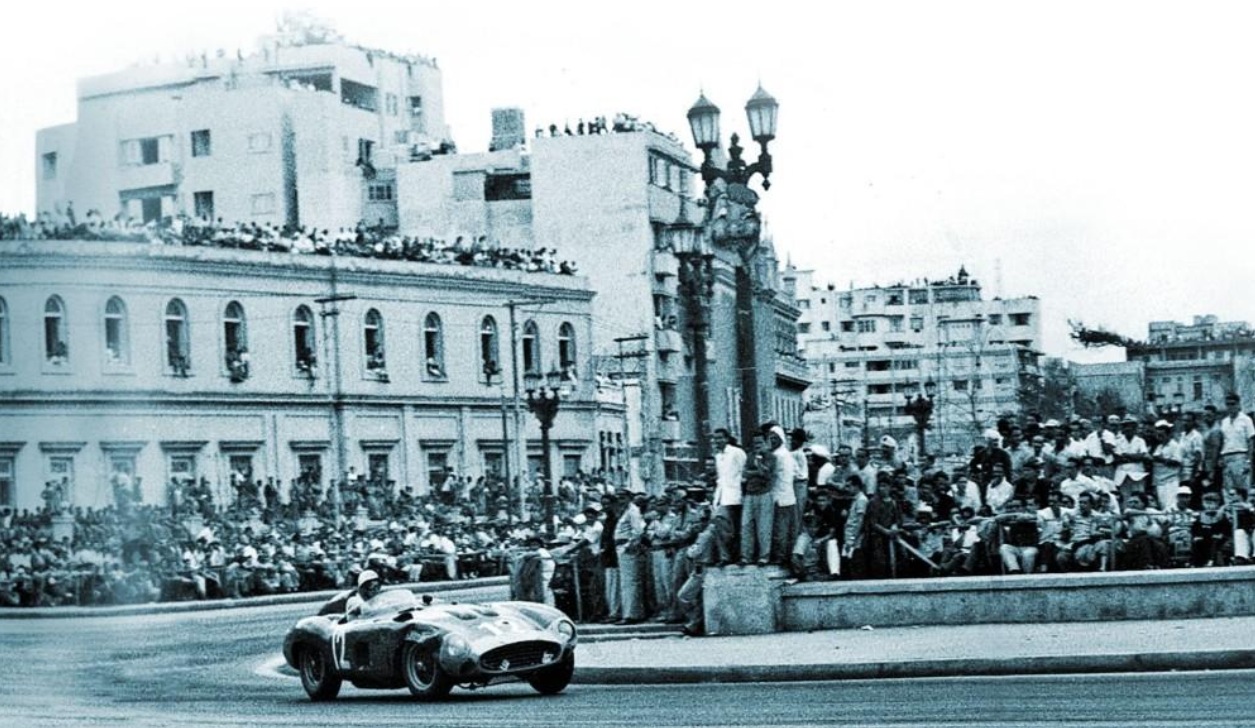
‘Fon De Portago Ferrari 860 Monza, unprotected nature of the circuit clear, seven spectators were killed in the 1958 event (Pinterest)
The 860 Monza was Ferrari’s front line sports car weapon, together with the V12 290MM in 1956.
It was part of the family of sports cars built over much of the ’50’s based on the Lampredi designed DOHC, two valve, Weber carbed four cylinder engine which first found success in the Tipo 500 F2/F1 cars. Ascari won the World Drivers Championship in 1952 and 1953 in the Tipo 500.
The engine gave circa 310bhp from its 3431cc, gearbox was four speed. The usual Ferrari ladder frame of the period was used, drum brakes all round stopped the relatively light car which tipped the scales at 860kg. The cars curvaceous body was built by Scaglietti.
Independent front suspension by wishbones and coil springs was new for the 860, and effective. A De Dion rear axle was at the rear, sprung by a transverse leaf spring.
Three cars were built, the model’s most notable victories were at the ’56 Sebring 12 Hours and the Rouen GP.
The field before lining up pre grid on Malecon Avenue, Havana
The Race and Aftermath…
On the front row, De Portago Ferrari Monza, Phil Hill Fazz 857S Monza and Schell in the yellow Maser 300S, all the fun of the fair, over 100,000 spectators (Pinterest)
De Portago fought a race long battle with Fangio’s 300S and Carroll Shelby’s Ferrari 410, finishing third on the Havana waterfront street circuit.
The public relations opportunities for Batista evaporated when the Presidential motorcade, enroute to his palace, was confronted by a relatively small group of ‘natives’ seeking favours from the President. Armed escorts beat them with unbelievable ferocity and brutality. This fueled the flames of the resistance movement further .
Start of the race, Moss Maserati 300S, D Type Jag #24 of local driver Alfonso Gomez-Mena (Pinterest)Fangio #2 passes De Portago who is slowing a bit on lap 69 in Parque Mart. Maserati 300S and Ferrari Monza (Pinterest)
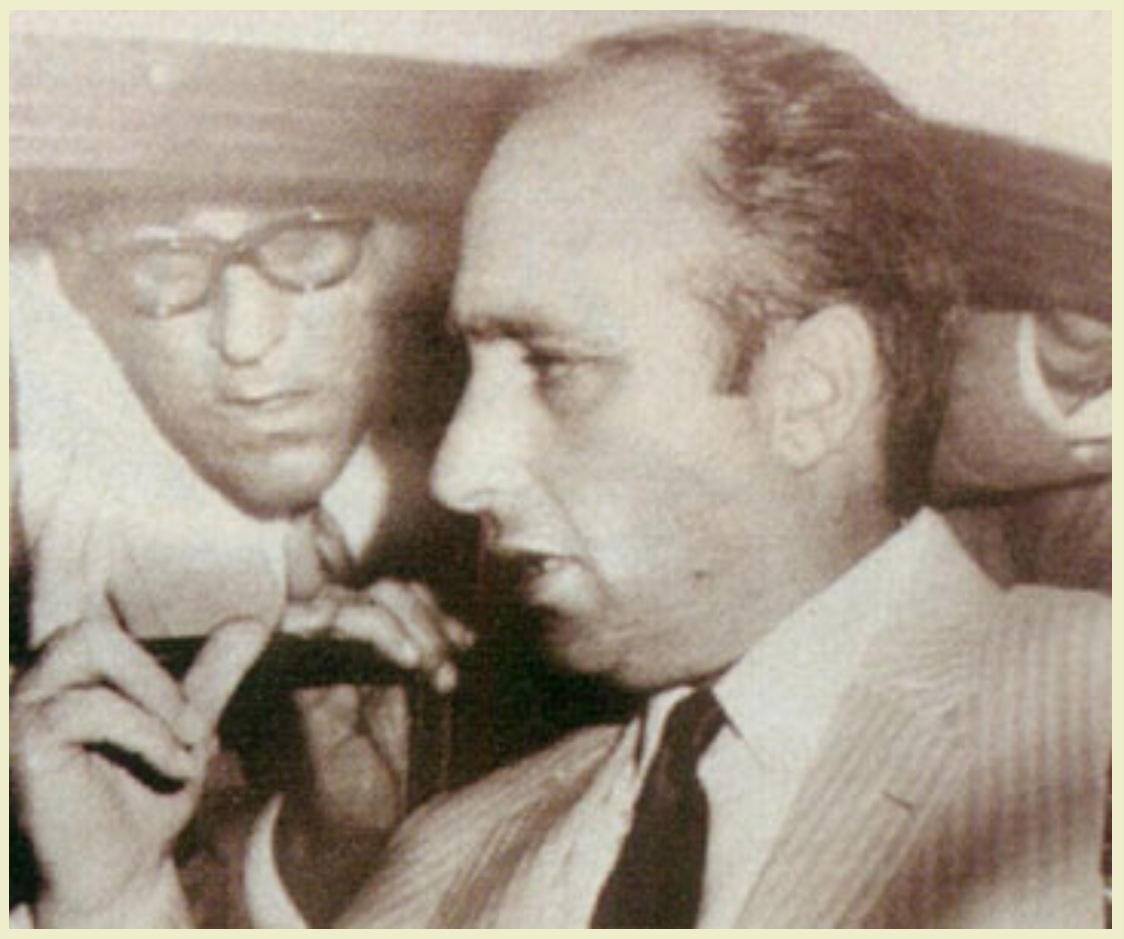
Jumping forward a year Fangio was kidnapped at gunpoint from his hotel the evening before the race by the rebels. He was returned to the Argentinian Embassy after the abortive event in which 40 spectators were injured and seven died after local driver Armando Cifuentes lost control of his Ferrari and ploughed into the unprotected crowd.
The race lasted 15 minutes or six laps, Stirling Moss was declared the winner in his Maserati 300S.
Fangio was later to say he was never concerned for his safety, he was held in a comfortably appointed apartment, was fed well, given a radio to listen to the race, and was personally apologised to by Castro’s second in command.
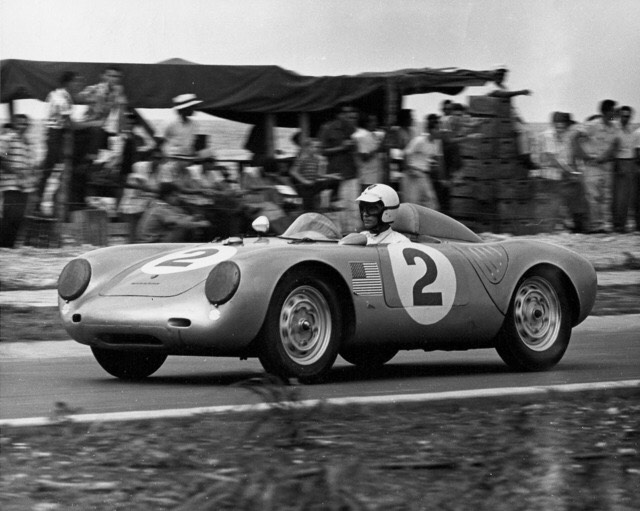
Joe Sheppard races to victory at Ala-Mar in 1959 aboard Porsche 550RS #550A-0144 (J Shea Collection)
In 1959 a four hour race held around a 2.8-mile course at Ala-Mar, a Havana suburb, was won by ‘The Tampa Hotshoe’, Joe Sheppard and Fritz Schiedel in a Porsche 550RS. It was Sheppard’s first race in his new car – very familiar though he was with 550s – so it was quite a debut! Schiedel was Sheppard’s mechanic.
With Castro’s revolution in its final stages, in 1960 he had power, anxious to create a sense of normality, the race proceeded, albeit on a circuit at army Camp Freedom, Moss was the winner in a Maserati Birdcage.
Such grubby bourgeois activities as motor racing ceased and Camp Freedom was used to house the sort of people who attended such events…
The beauty of the city and enthusiasm of the crowd, and its size come thru in all these shots! De Portago, Ferrari Monza 860 (Pinterest)
Linda Christian and De Portago…
Linda Christian was a successful Mexican/ American actor who starred in the first TV adaptation of the Bond novel Casino Royale and in Tarzan, amongst many others. She was with De Portago during that fateful Mille Miglia weekend later in 1957.
De Portago kissed Christian, jumped into his Ferrari 335S, and 70km before Brescia the car blew a tyre, ploughed into the crowd killing Portago, co-driver Ed Nelson, nine spectators and the Mille Miglia.
De Portago and Phil Hill before the race, Havana 1957 (Pinterest)
Etcetera…
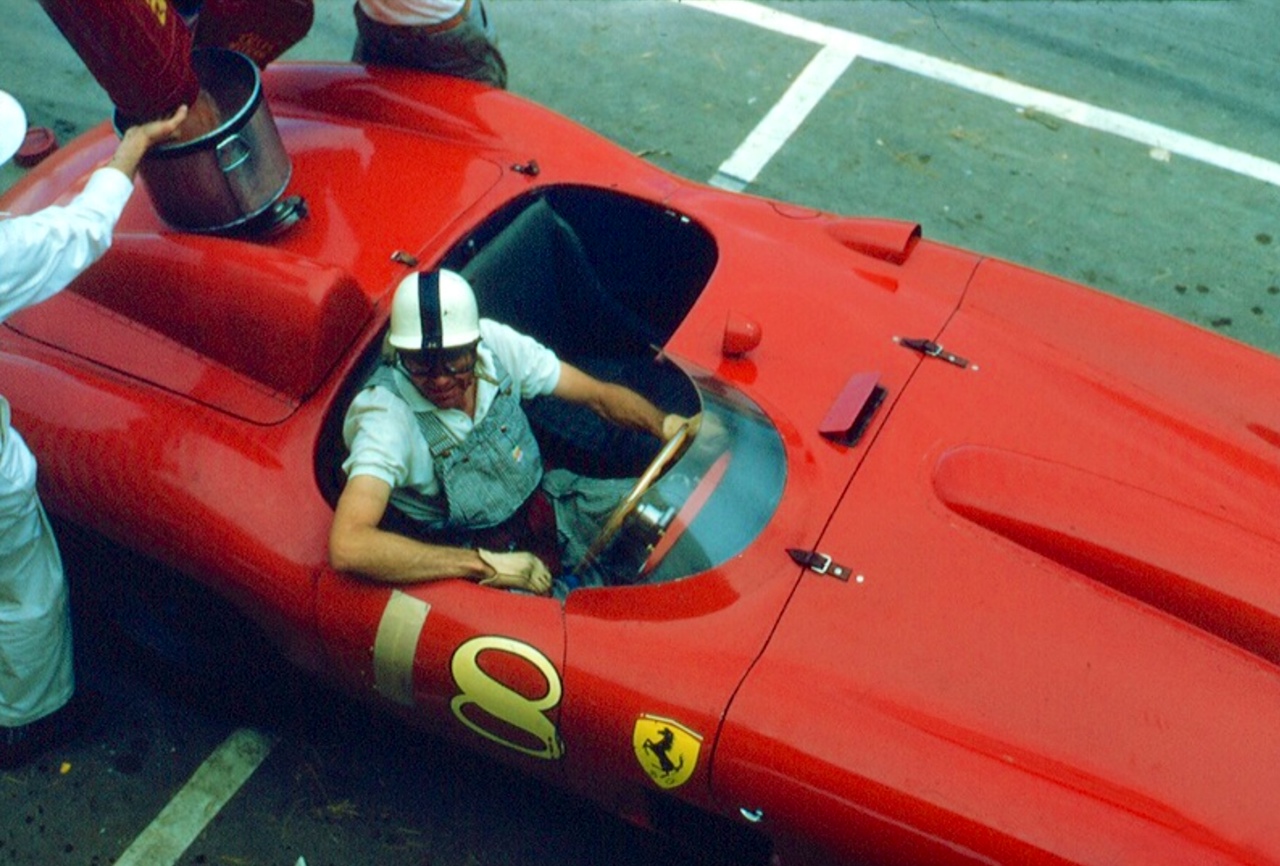
Hill/O’Shea Ferrari 857S Monza, Malecon Circuit pits, Cuba 1957 (Pinterest)The Castellotti Ferrari 290MM, V12 engined compared with the Monza four cylinder engine, both were Ferrari works 1956 Sports Car Championship entries. Castellotti in yellow polo shirt (Pinterest)‘Chicken-plucker’ Carroll Shelby in trademark farmers overalls in the third place Ferrari 410, 1957 would be a great year for him (Pinterest)Military very much to the fore. Fangio Maserati 300S #2 and Castellotti Ferrari 290MM #10 (Pinterest)Juan Manuel Fangio beside his Maserati 300S in Cuba at the start of his final full season of racing in 1957. He drove for Maserati in both Sports and Grand Prix events, winning his fifth F1 World Title in the fabulous, and by that time evergreen Maserati 250F; that car finally getting the title it long deserved (Pinterest)Moss Maserati 300S beside the John Edgar owned #78 Ferrari 4.9 driven by Carini (Pinterest)Hill/O’Shea Ferrari 857S Monza, Cuba 1957. Paul O’Shea checking out the engine (Pinterest)Fangio after the 1958 Cuban Grand Prix and release by his Castro captors…(Pinterest)It is not recorded if Che and Fidel attended one of Cuba’s Grands Prix…Entry list for the 1960 event at Camp Freedom (J Shea Collection)
Photo and Other Credits…
Pinterest, Havana May Blogspot, Hy Peskin Collection, John Shea
BT24/1 was Brabhams’ car for the ’67 Grand Prix season, the title won by his Kiwi teammate Denny Hulme that year…
Looks comfy in there; no belts, they arrived in GP racing in’68, Smiths chronometric tach, ‘tell-tale’ showing 8600 RPM, leather bound steering wheel, aluminium fuel tanks by your hips on each side, no ‘bag tanks’ till 1970 so fire risk in the event of an accident enormous.
Bandinis’ horrific ’67 Monaco Ferrari crash a case in point.
‘Varley’ lightweight battery is under the cover over which your legs will stretch. Grey ‘stove enamelled’ chassis rails of the ‘space frames’ used by Brabham F1 cars till the end of ’69 under the shift lever, who needs those new-fangled monocoques anyway?! Fibre-glass body apparent on all sides.
Right hand shift controls a ubiquitous and reliable 5 speed Hewland DG300 gearbox. Its attached to a Repco ‘740’ Series SOHC 2 valve V8, being gently warmed up at 3400RPM. The engine gave circa 340BHP, far less than the new Cosworth DFV but enough to do the trick in ’67!
Oh! The little red plaque riveted to the dash says ‘Speed Should Not Exceed 170MPH’!
Brabham Racing Organisation always saw the lighter side of life under the surface of intense competitiveness and success.
Oh so period, just luvverly…
Brabham in BT24-1 at Silverstone , British GP ’67, he finished 4th. Trusting photographer on the inside of Woodcote Corner (Mike Hayward)
Jack Brabham, Repco engineer Nigel Tait, and Brabham BT19 Repco. Sandown Park Melbourne for its Tasman Series debut, January 1966. RB620 ‘E2’ engine in 2.5 litre capacity. (Australian Post magazine)
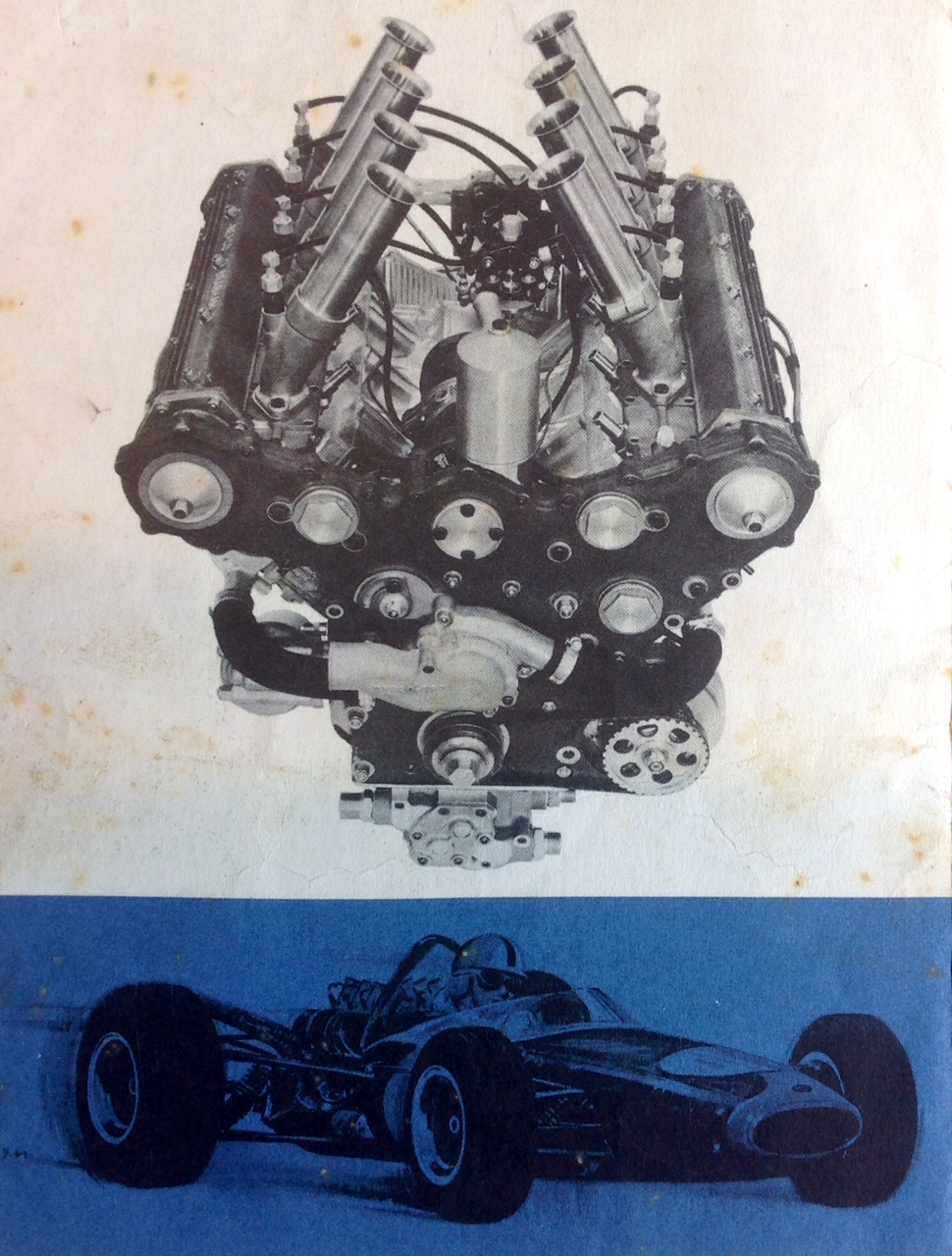
Repco Brabham ‘RB 620 Series’ 3 litre SOHC V8 engine. The ’66 World Championship winning engine. Circa 310 bhp @ 8000 rpm. Weight 160 Kg, the ‘600 series’ block was F85 Oldsmobile based, ’20 series’ heads early crossflow type (Repco)
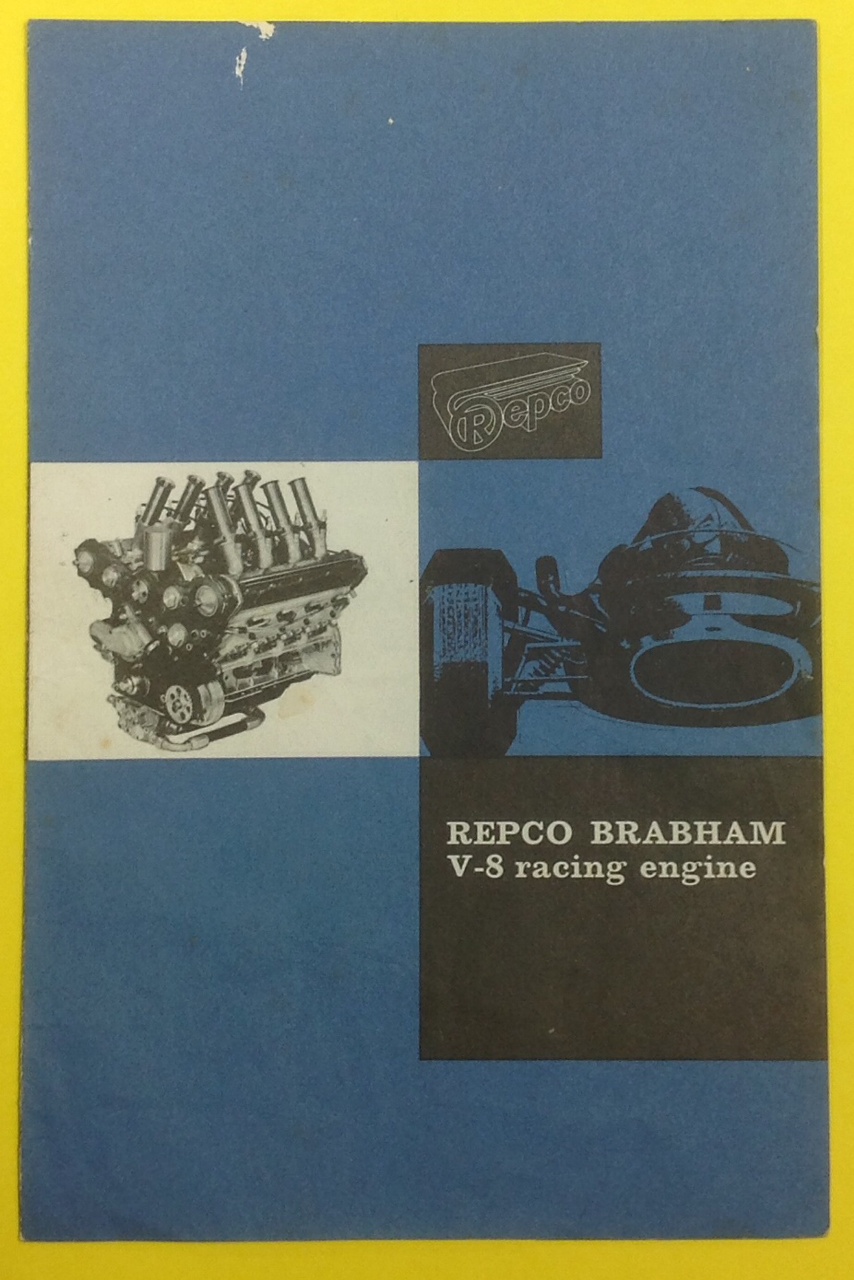
In this Repco article we start with a summary of the events leading to Repco’s involvement in Grand Prix Racing, then identify key team members, the equipment used to build the engines and finally have a detailed account of the 1966 championship winning engines construction…
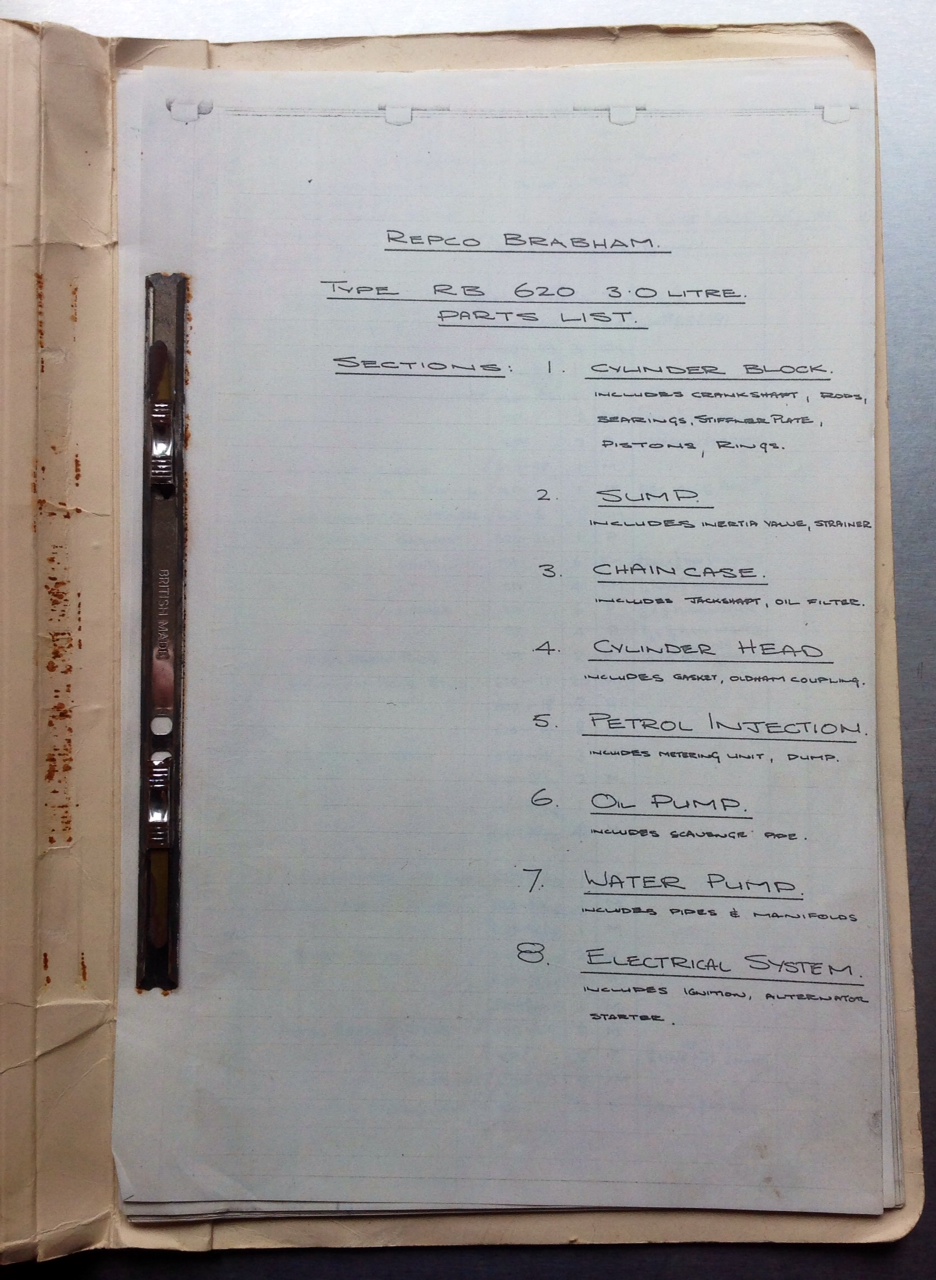
RBE factory records ’60’s style (Wolfe)
Why did Repco Commit to Grand Prix Racing?…
Younger readers may not know the background to Australian automotive company, Repco’s involvement in Grand Prix racing in the mid-sixties.
Coventry Climax, the Cosworth Engineering of their day caused chaos for British GP teams when they announced they would not build an engine for the new 3 litre F1 commencing in 1966.
Repco had serviced the 2.5 litre Coventry Climax FPF four cylinder engines, the engine ‘de jour’ in local Tasman races, but were looking for an alternative to protect their competitive position, Jack Brabham suggested a production based V8 to them.
Brabham identified an alloy, linerless V8 GM Oldsmobile engine, a project which had been abandoned by them due to production costs. Jack pitched the notion of racing engines of 2.5 litre and 3 litre displacements using simple, chain driven SOHC, two valve heads to Repco’s CEO Charles McGrath.
GM developed a family of engines comprising the F85 Oldsmobile and Buick 215. They were almost identical except that the F85 variant had six head studs per cylinder rather than the five of the 215 and was therefore Brabham’s preferred competition option.
Jack had first seen the engines potential racing against Chuck Daigh’s Scarab Buick RE Intercontinental Formula mid-engined single seater in a one off appearance by Lance Reventlow’s outfit at Sandown, Australia, in early 1962.
The engine’s competition credentials were further established at Indianapolis that year when Indy debutant Dan Gurney qualified Mickey Thomson’s 215 engined car eighth, the car failing with transmission problems after 92 laps. It was the first appearance of a stock block engined car at Indy since 1945.
Jack Brabham looking carefully at the Buick 3.9 litre engine in the mid-engined Scarab RE at Sandown Park, Melbourne in 1962, filing the information away for future reference! (Doug Nye with Jack Brabham)
Whilst the engine choice was not a ‘sure thing’ its competition potential was clear to Brabham, as astute as he was practical.
At the time the engine was the lightest mass production V8 in the world with a dry weight of 144 kg and compact external dimensions to boot. Its future at GM ended in 1963 due to high production costs and wastage rates on imperfectly cast blocks, about 400,000 engines had been built by that time.
New Kid on the Block…
‘Having talked my way into the Repco Brabham Engine Co with a promise of hard work and a 3 weeks trial I was very happy’ recalls Rodway Wolfe.
I was given a nice grey dustcoat with a lovely Repco Brabham insignia on the pocket and shown around the factory and introduced to everyone- I was the seventh employee. Repco had picked the cream of their machinists from throughout the empire to work at RBE, they were great guys to work with and willing to share all their skills.
The three-week trial period was a gimmick, after a few days I had settled in as one of the team. After the trial my wage was increased to slightly higher than my previous job in the Repco merchandising company.’
People: Key Team Members…
L>R: Phil Irving, Bob Brown, Frank Hallam and Peter Holinger dyno testing the first 2.5 litre Tasman RB620 engine at Russell Manufacturing’s engine test lab in Richmond in March 1965. Weber carbs borrowed from Bib Stillwell, the engine did not race in this form. The engine initially produced 235 bhp @ 8200 rpm, equivalent to a 2.5 Coventry Climax engine. ‘Ciggies a wonderful period touch (Repco)
The first prototype RB engine was built at the Repco Engine Laboratory in Richmond, Victoria, an inner Melbourne suburb, then a hub of manufacturing now a desirable inner city place to live, 1.5 km from the CBD.
It was designated the type ‘RB620’, which was the nex file number of the various laboratory, research and development projects in process at the time.
‘Frank Hallam was General Manager and Phil Irving was Project Engineer together with Nigel Tait and others. Peter Holinger made the components and Michael Gasking tested the engines. There were others involved before my time, those mentioned were involved at Richmond’.
As an industrial site using steel garages in Richmond the RB project received comment in various overseas publications as the ‘World Championship Fl engine built in a tin shed in Australia’.
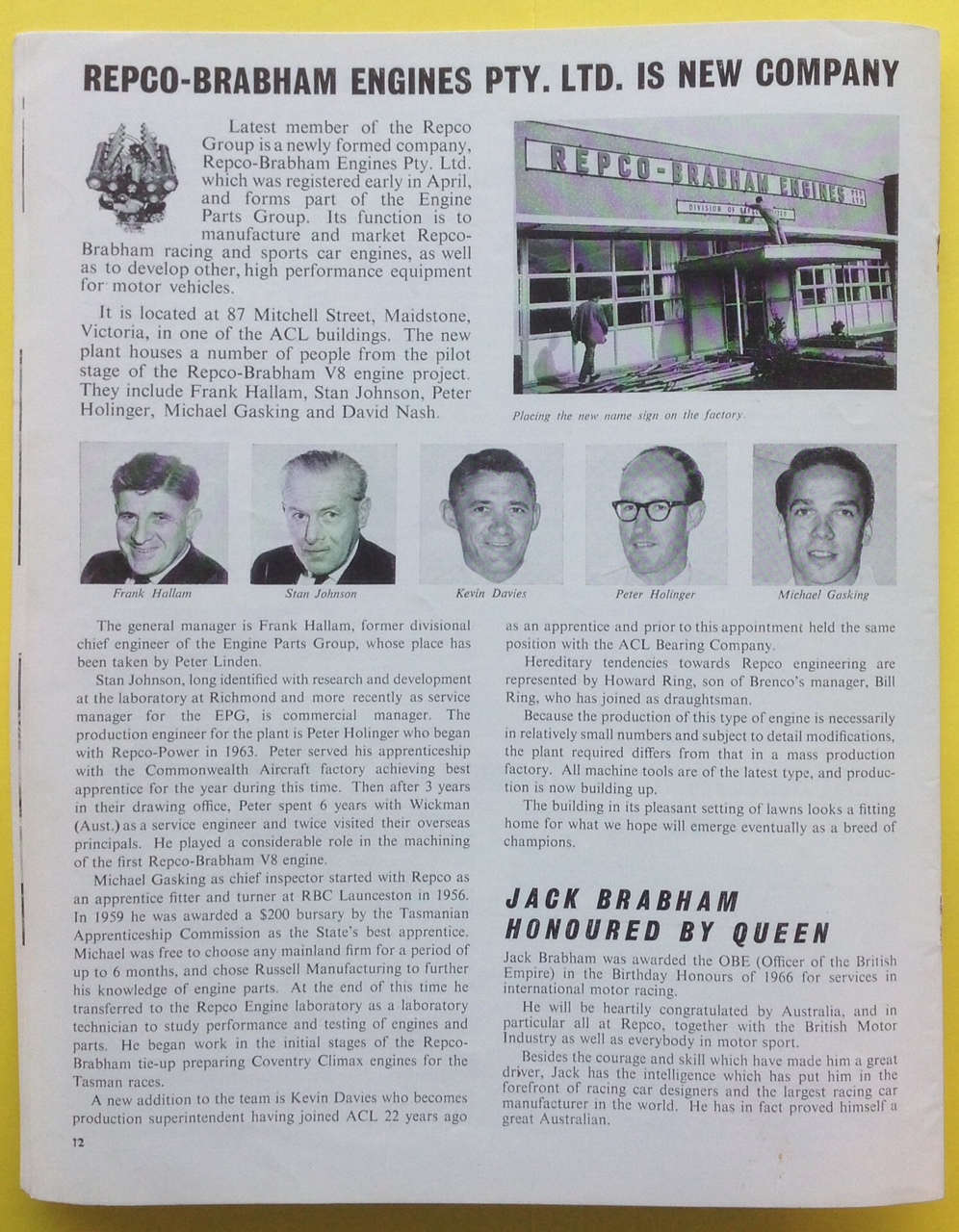
When I joined in late 1965 the project had just arrived at the Maidstone, Melbourne factory. (87 Mitchell Street, Maidstone, then an industrial Melbourne western suburb, 10 km from the CBD) The Manager was Frank Hallam. In the drawing office, the Chief Engineer was Phil Irving, the Production Manager Peter Holinger, Production Superintendent Kevin Davies and the machine shop leading hand was David Nash. We also had a Commercial Manager, Stan Johnson who came and went’.
Frank Hallam and Jack Brabham discuss the turning of camshaft blanks on the Tovaglieri lathe (Repco)
‘Around this time Michael Gasking also transferred from the Richmond Laboratory- he was Chief of Engine Assembly and Testing. Also on the machine tools was John Mepstead who was a great all rounder and later appointed to help Michael with engine assembly. He eventually joined Frank Matich to ‘spanner’ the 1969 Australian Sports Car Championship winning Matich SR4 Repco.
Frank Hallam arranged for me to attend RMIT night school, Repco picked up the bill. Those Tuesday and Thursday nights for 4 years helped me immensely, over the period I obtained a certificate in ‘Capstan and Turret and Automatic Screw Machines’ operation and a certificate in ‘Product Drafting’. My status was as a First Class Machinist in the Repco Brabham factory.
If I had any queries I would also ask Phil Irving who loved a yarn and was a huge bank of knowledge. I felt so honoured to to work for him, and learned so much’.
‘Repco Record’, the internal Repco staff magazine announces the formation of Repco Brabham Engines Pty. Ltd. (Repco)
Machine Tools…
‘Frank Hallam was a machine tool enthusiast.
It was a big help, he made sure we worshipped our machines, blowing away the swarf with an air hose. I learned respect and cleanliness of all machine tools. Few machine shops were as clean or free of swarf and mess everywhere with the exception of Holinger Engineering, Peter was also fastidious.
We were lucky to have top machines in the workshop. Our biggest was an Ikegai horizontal boring machine. RBE had two lathes- a Dean Smith & Grace English machine and also a Tovaglieri Italian unit.
We had a small Deckel horizontal borer and a couple of mills- a Bridgeport and a French Vernier. The older machine was a Herbert capstan lathe, I used this to make every stud for all the future Repco Brabham engines- main bearing and cylinder head studs, a very big variety in different steel types, it was repetitive stuff that would normally be boring but I didn’t care, we were winning the World Championship’…
‘When he drew a new design of stud, Phil Irving would come out and check my thoughts on being able to make it with what we had and other various things. We would do a yield point test in a vice where we measured the length of the new stud after I made a sample and then tension it to a nominated foot pound tension and we would keep increasing the tension until the stud refused to return to the original length. That tension was known as the yield point so Phil would pick a tension somewhere in a safe range under that yield point’.
RB620 Series Engine: Machining and Modification of the Oldsmobile F85 block…
Not the sharpest of shots but a rare one showing the ‘production’ Olds and RB620 engines. RB620 on the right. The engine was the lightest production V8 in the world at the time (unattributed)
‘When I arrived there were a lot of aluminum cylinder blocks along one factory wall. Repco acquired twenty-six Oldsmobile cylinder blocks from General Motors in the US. (2 of the 26 were prototype engines E1 and E2 which were built up in Richmond)
One of my first jobs was to remove all the piston assemblies from those twenty-four blocks. They were not short blocks as known in Australia (here they are complete without sump or cylinder heads) but these were not complete to that stage. They had crank bearings in place, all main bearing caps and the 3.5 inch liners were cast into the block. We didn’t use the cast iron main bearing caps or bolts, replacing them with steel caps and high strength studs.
The RB 620 used the original 3.5 inch cast in sleeves but practically everything else was changed.
All surfaces were re-machined for accuracy, all bolt thread holes re-tapped and recessed to accept studs of superior material. The camshaft bearings were in the valley of the block of course but we pressed them out and rotated them 45 degrees and pressed them back in place to cut off the original oil galleries as our engine ran twin overhead camshafts, one per cylinder bank.
The front original camshaft bearing was left intact and the second camshaft bearing was removed and fitted was a sleeve with an INA roller bearing.
We made up little jackshafts which were driven from the crankshaft by a duplex chain, which also drove the single row chain driving the overhead camshafts. These jackshafts used the first original Oldsmobile slipper bearing and a small roller type bearing in the second original cam bearing location. The chains etc, were all enclosed inside the RB chain-case.
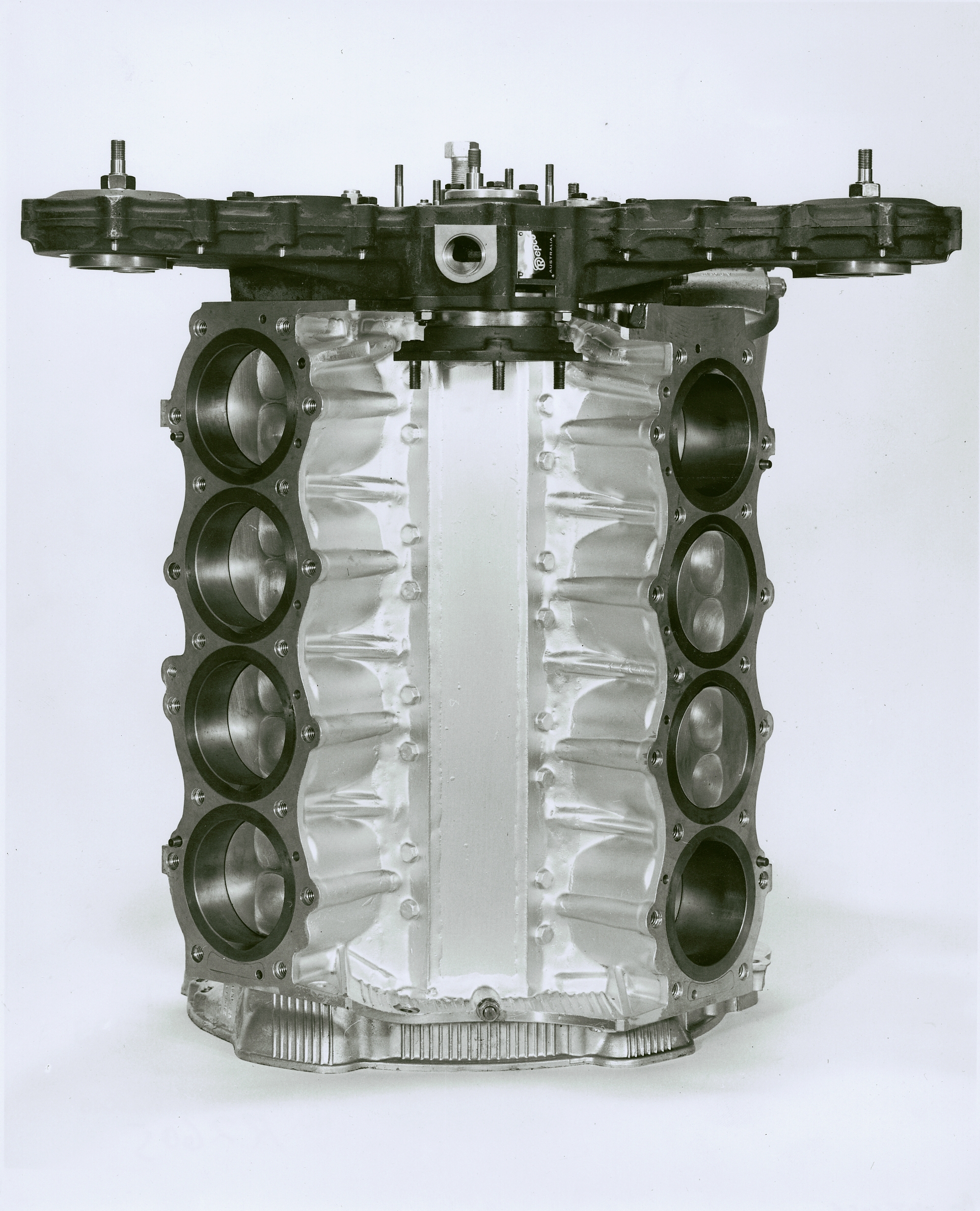
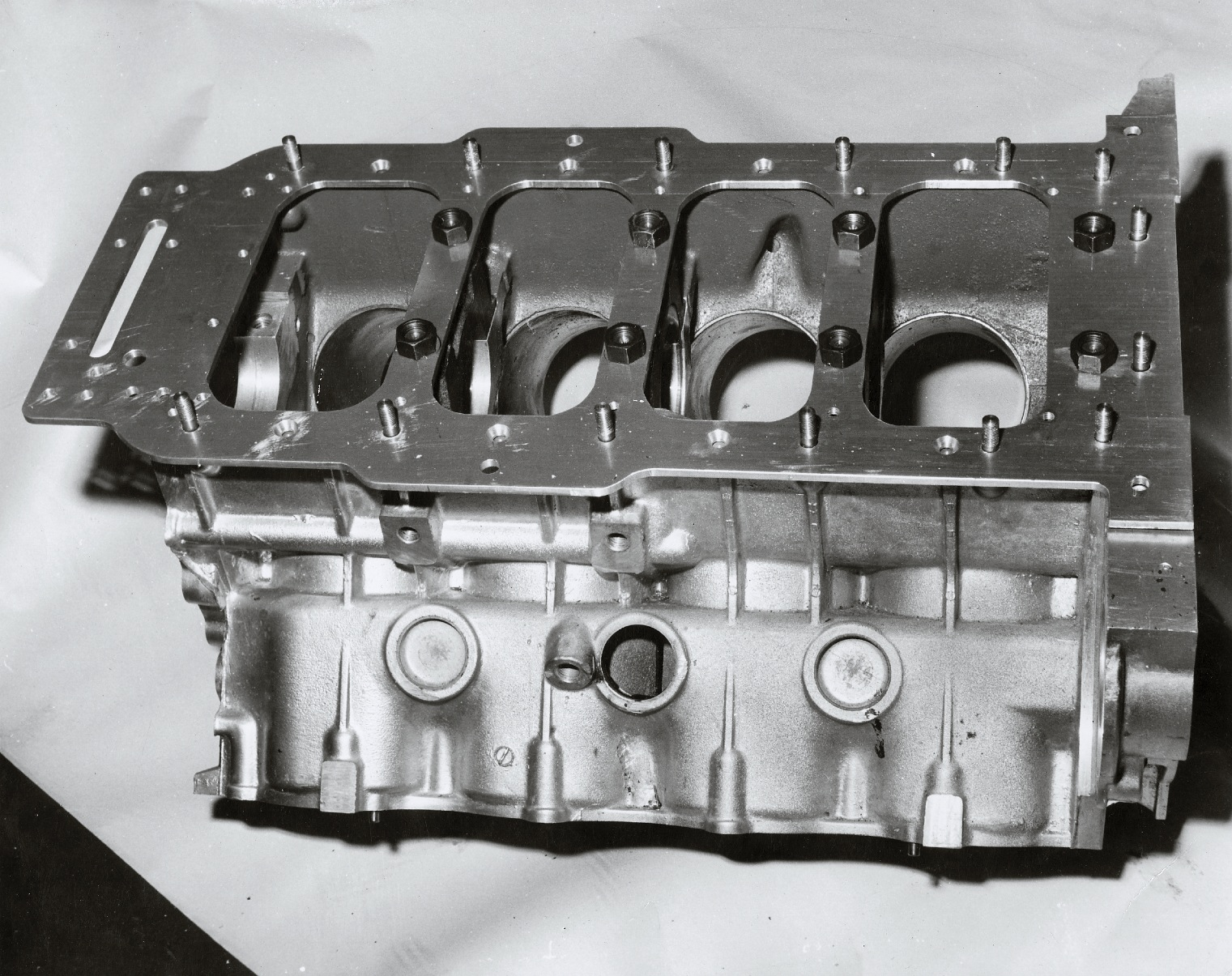
RB600 F85 Olds block from above. Note the valley cover of aluminium sealed ‘with a sea of Araldite then painted over with Silverfros- those blocks which are still in service today still retain the Araldited plate and still do not leak’ comments ex RBE engineer Nigel Tait. Phil Irving’s design had lots of clever bits including the timing chain arrangement which allowed the heads to be removed in the field without disturbing the engine timing- and was also clever in that the same head could be used on either side of the engine (Tait/Repco)
600 block and timing case, ‘Purolator oil filter housing, timing chain single row (Repco)
‘A lot of people in 1966, including the international motoring writers, did not realise the extent of the machining required to the F85 Oldsmobile cylinder block to use as our race engine base. It was more work and and involved to adapt the F85 than in machining our new Repco cast blocks (700 and 800 Series) used later in the project.
It used to annoy all of us when our engine was referred to as ‘based on a Buick’ in various world motoring magazines. It also added insult to injury by them adding ‘Built in a tin shed in Australia’!
We then had to close up the large cavity in the valley where there used to be a cover plate, pushrods and cam followers in the original engine.
We spent many hours fettling aluminum plates by hand and fitting them into the valleys to cover the original cam followers and holes etc. When we had a very good fit of these plates we mixed two pot resin (Araldite) with additional aluminum powder and filled up the valley seams around the plate.
Then with some elaborate heating systems we invented, we dried the Araldite in place. This also gained us the reputation of the ‘The Grand Prix engine held together with Araldite’ in various magazine articles!’
RB600 block on the left, Olds’ F85 unmodified block on the right. The 600 block has the pushrod holes covered with the Araldited aluminium plate. ‘The 1/4 inch thick block stiffener plate protrudes from the top of the modified block. This gives the effect of cross bolting…note also the Repco designed magnesium sump’ notes Tait (Tait/Repco)
‘I finished the job of dismantling the blocks, we only worked on two or three at a time during the early months of 1966. Unless the parts were an easy item or required substantial machine set up we only made a few of each component as design changes were ongoing. Not critical large changes but small subtle ones’.
‘We didn’t have any problems with the Oldsmobile block by there was one race in 1966 when a cylinder liner failed. As explained, we used the cast in liners and retained the 3.5 inch bore.
BRO, (Brabham Racing Organisation) sent back the failed engine block and we bored out the remains of the cylinder liner. There was a casting cavity behind the liner which caused the weakness and failure. This was a problem that could not be dealt with without boring out all the liners and fitting sleeves. Otherwise there could be more failures due to bad castings. From that date we used dry liners and eradicated the risk of it occurring again.’
Jack and Phil specified this aluminium plate to add stiffness to the production F85 Olds block, big holes to provide rod clearance obviously. ‘This block would have had dry sleeves which led to considerable blowby problems due to distortion and eventually wet sleeves were specified by Phil Irving’ notes Nigel Tait (Tait/Repco)
UK Components: Crankshaft etc…
Phil Irving completed most of the design of the engine in England, he rented a flat in Clapham in January 1964 close to BRO and together with Jack they settled on a relatively simple single overhead camshaft configuration compatible with the block and fitment into the unused Brabham BT19 spaceframe chassis. This simplen specificaton is what Jack pitched to the Repco board at the projects outlet.
The BT19 frame had remained unused throughout 1965 when the engine for which it was designed, the Flat-16 Coventry Climax FWMW, was not released to Brabham, Lotus and Cooper as planned.
To expedite things in the UK, whilst simultaneously mailing drawings to Australia, Phil commissioned Sterling Metals to cast the heads. Prior to his return to Australia in September 1964, HRG machined an initial batch of six heads, fitting valves and seats to Irving’s specifications.
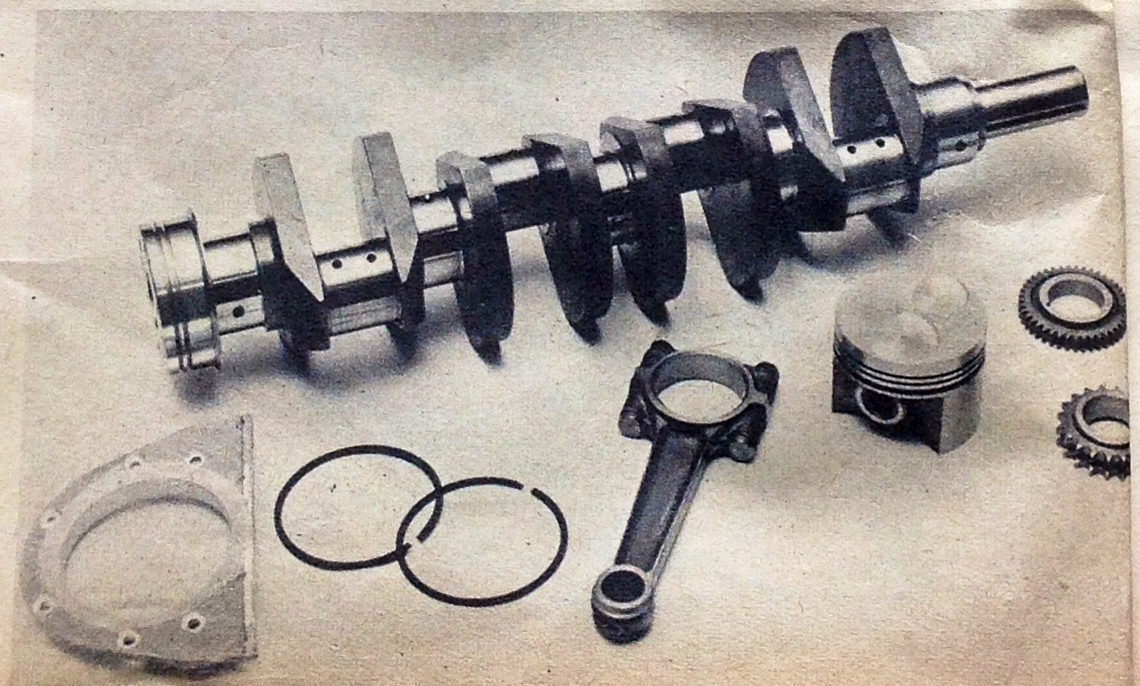
‘Laystall in the UK also made the crankshaft. Constructed from a single steel billet the ‘flat’ nitrided crankshaft was a wonderful Irving design. I don’t recall any updates or changes to the design of the crankshaft over the years the RB engines were built. It was supplied in 2.5, 3 litre and 4.2 litres for the Indy engines- also 4.4, 4.8 and 5 litre sportscar versions. All crankshafts were of the same bearing dimensions etc’.
‘The term ‘flat-crank’ refers to the connecting rod journals being opposite each other and not in multi-plane configuration as is usual in production V8’s. It meant the engine was not such a well balanced unit at low revolutions but it actually converted the engine to virtually two four cylinder units and either cylinder bank would run quite smoothly on its own. The layout also enabled the superior use of exhaust configuration eliminating the need for crossover exhaust pipes to obtain full extraction effect’.
Crankshaft was made by Laystall to Phil Irving’s design, pistons and rings by Repco subsidiaries. (Repco)
Pistons…
‘Repco is a piston ring manufacturer and very experienced in ring design which meant that we were well ahead in that regard.
The famous SS55 oil rings were well known already around the world. The pistons were Repco Products.
No other F1 engine constructor of the sixties made their own pistons. The experience we gained with the supply of Coventry Climax pistons and rings contributed to this success.’
Bearings: Vandervell Interlopers and ‘Racing Improves the Breed’…
‘Repco was already supplying engine bearings to various manufacturers globally from the Tasmanian based Repco Bearing Company, we obtained these components as required.
During 1966 an advert appeared in a British motoring magazine, ‘French Grand Prix won on Vandervell bearings’. Vandervell are of course a British bearing company, Repco were furious and telex messages to and from BRO (Brabham Racing Organization) revealed that Jack Brabham was not happy with the depth of the lead overlay on our copper/lead crankshaft bearings.
Our bearings had a lead overlay of .001 inch and the Vandervell bearings an overlay of .0005. So I was instructed to pack away all our existing bearings and mark them not for use, our bearing company came up with the improved design bearings with the lesser overlay in time for the next GP. Racing certainly improves the product!
Before I transferred to the RB project, i worked in Repco merchandising and received brochures and information about a new Repco alumina/tin bearing known as the ‘Alutin’ and advertised by Repco as a new high performance product. Repco were promoting them as a breakthrough design.
I learned these new bearings had been unsatisfactory under test in the F1 engine and within a short period no more was said about the new product ‘Alutin’. They were inclined to ‘pick up’ on the journals at high rpm – another example of how racing improves the product. This problem had not been evident in the engine testing of the product by Repco to that date.’
‘Racing Improves the Breed’…Repco Ad 1966
Outsourced Items…
‘There were some components we did source outside the Repco Group.
There were cam followers, Alfa Romeo cam buckets, valve springs from W&S, valves manufactured by local company Dreadnaught. The ignition system was sourced from Bosch by Brabham.
The collets were from the UK and were a production car or motorcycle collet, the name escapes me. We made the valve spring retainers and collet retaining caps. Over the project we made changes to the collet retainer material from aluminum to heat treated aluminium bar and later titanium. Not a lot was gained as titanium fatigues as well, as we found out.’
Lucas Fuel Injection…
‘The fuel injectors and fuel distributor were Lucas items, the system was in early stages of development. It consisted of an injector for each cylinder, in our case installed in the inlet trumpet a short distance from the inlet port in the cylinder head.
The system is timed with a fuel distributor in the engine valley driven from the chaincase by the distributor drive gear. The fuel is supplied at 100psi from an electric pump. The fuel pressure supplies and operates small shuttles which are constantly metering supply according to the length of shuttle travel. The amount of fuel supplied to the injectors is controlled by a variable small steel cam which is profiled to suit the particular engine size etc. The steel cam therefore controls the actual fuel mixture and is linked to the throttle inlet slides’.
‘It is interesting to note that although the fuel distributor can be timed to any position in the engine cycle, injecting at the point of the inlet valve opening or with it closed or wherever, it does not make any important difference in engine performance but as Phil Irving explained to me there is a point of injection that lowers engine performance so therefore the fuel distributor is timed in each installation to avoid the undesirable point of injection. The air inlet trumpets were cut to length spun and profiled.
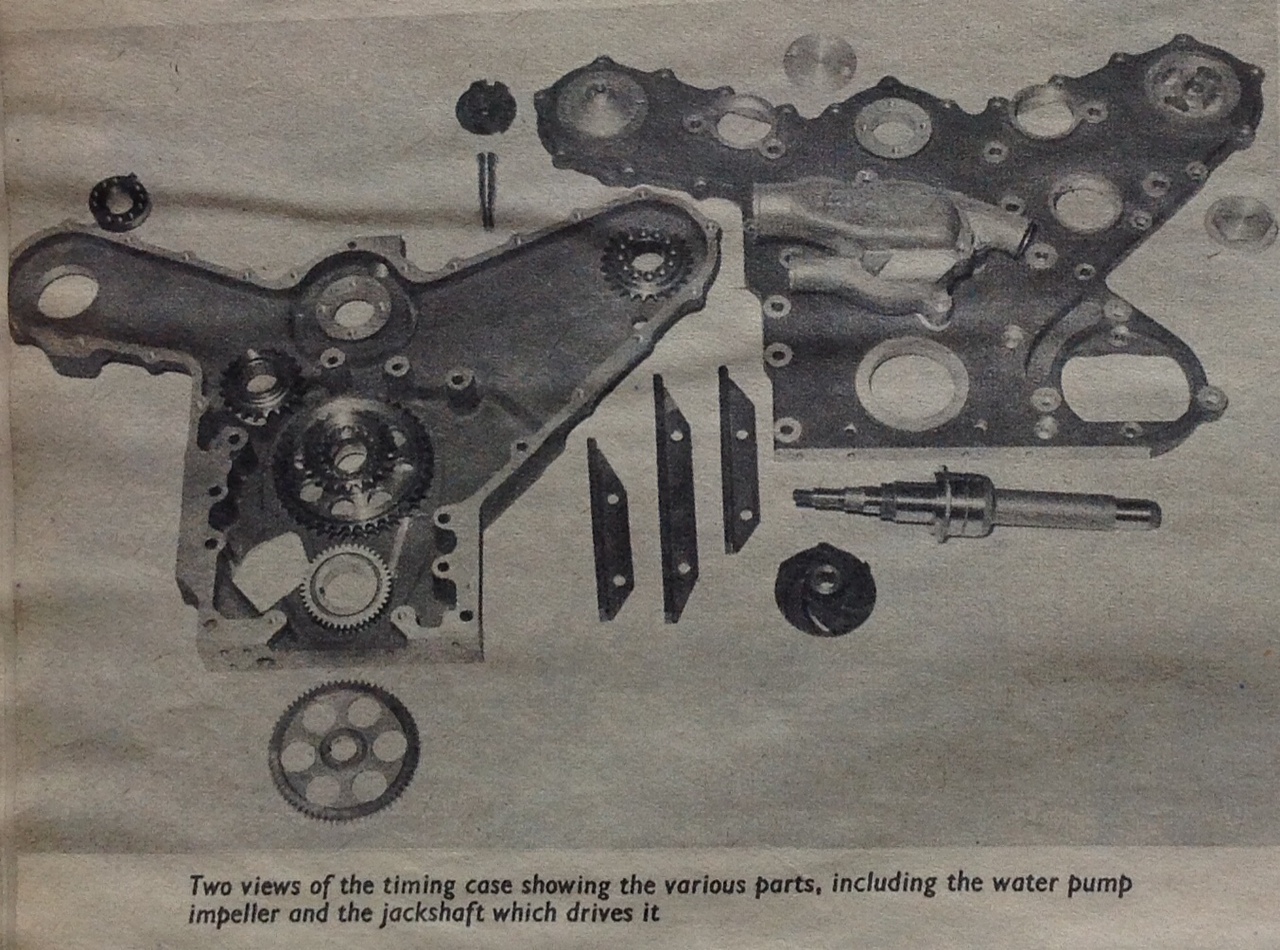
The chaincase was a magnesium casting and the ‘620’ 1966 World Championship engine used a single row handmade chain imported from Morse in the US. We cut all the sprockets and manufactured all the camshaft couplings etc. We used an SCD hydraulic chain adjuster, a standard BMC component.
The cam chain was driven by a small jackshaft which was fitted in the front two original camshaft bearing spaces of the original Olds block. The jackshaft was driven by a Morse duplex chain from the crankshaft sprocket, also Repco made. The crankshaft had a small gear driving the oil pump mounted underneath the chain case.’
Assembly of chain in the magnesium timing case of an RB620 engine (Repco)
Oil Pump…
‘The oil pump was a wonderful Irving design, simple to service but a small work of art. It featured flexible supply hoses with snap fittings and was a combination of oil supply pump which supplied the engine with oil up through a gallery in the chaincase and also a slightly larger scavenge pump connected to each end of the engine sump- it was also a magnesium casting. The pump assemblies, sump and all components were made by Repco.
The system consisted of a sump with an inertia valve located in its lowest point. If the car was braking the inertia moved the valve forward which opened a cavity in the front of the sump causing oil to be drawn from the front. Under acceleration the inertia valve moved backwards and the forward cavity closed and the rear cavity opened. This meant a minimum of blowby and air to be pumped by the scavenge system. I don’t recall any failure of this system apart from the Sandown debut race of our ‘620’ Series 2.5 litre engine in January 1966′.
‘The ‘Tasman’ cars were held on the grid for rather a long time and as a result the oil had cooled in the Repco Brabham. Jack left the line with plenty of revs, the cold oil and resulting oil pressure split the pressure pump gears. The first engines used cast Fordson Major tractor pressure pump gears and one gear had split due to the extreme pressure. Jack Brabham did 3 or 4 laps from memory.
I arrived at work on Monday morning and in typical Irving style found a drawing for the supervisor for the construction of new steel gears and a ‘Do Not Use’ request for all the Fordson gears in stock. Phil had arrived at the drawing office on Sunday evening after the Sandown meeting and made the modifications straight away’.
‘The chaincase featured a couple of inspection caps which were removed to allow for chain tension adjustment etc. We made these caps and when it came to cutting the retaining threads in the chaincase we could not obtain the required thread tap anywhere. Phil had specified similar threads to the Vincent Motorcycle chain adjuster cap threads so that’s exactly what we used. Irving brought in the original Vincent motorcycle thread tap and we used that to thread all the chaincases under manufacture at the time, actually going back to valve spring collet retainer caps.
I recall that the first engines used BSA motorcycle collet retainers. One of the things I enjoyed so much working with Phil was that he did not waste time on risk taking design, he used tried and tested systems from his past. He once said “There is really nothing new, it is just changed around in some way”- well he sure proved that with the first RB620 engine!’
Cylinder Heads…
‘The cylinder heads were cast aluminum of crossflow design, the cam covers cast magnesium. All our cast magnesium and aluminum components were supplied by CAC in Fishermans Bend, Melbourne, with the exception of the first batch of six heads cast in the UK. (Commonwealth Aircraft Corporation).
Phil was remarkable with his engine design skill in that he could see the item in reverse or three dimensions and could design all the sand boxes etc and patterns required to arrive at the finished item.
The engine used no bolts as the original Olds did. Cylinder heads, cam covers, main bearing caps, sump, oil pump and chaincase were fitted with, or retained by high tensile studs.That was my department and apart from the first couple of prototypes I made all the studs for the 1966/67 RB engines. Some were quite a challenge, the thread specification and tolerances were exacting.
The crankshaft rear bearing seal was a slipper ring design with a bolted on ring retaining flange. The slipper rings were supplied by our Russell Manufacturing Co, we made the outer flange in the factory. The steel flywheel was also turned and made by Repco’.
Conncting Rods and Ease of Servicing…
RBE conrod drawing (Repco)
‘We used modified Daimler connecting rods and competition Chevrolet and Repco rods. In later engines we occasionally used Warren rods from the US. In the valley of the engine a small drive housing held the vertical ignition distributor and also the fuel distributor. Sometimes in the larger engines we also fitted a mechanical fuel pump to this housing.’
‘The type 620 engine engine had throttle slides running on small grooves with 1/8 inch steel rollers to prevent lock ups which would be a disaster. The slide covers were fastened directly to the cylinder head and in later engines were changed to fully assembled units and fastened directly to the cylinder heads for ease of changing if required. They were then complete units with studs bolting them to the inlet flanges’.
A big feature of servicing the RB620 engine was that either cylinder head could be removed without disturbing camshaft timing or the camshaft from the cylinder head, a great time saver. (See the photos in the block section above which clearly shows this)
The oil pump can be removed in one small unit and replaced with no other dismantling. Or the two cylinder heads can be removed without disturbing the timing of the camshafts or the chain case. All very important design features for use ‘in the field’.
RB620 engine assembly early 1966, Maidstone (Repco)
First Test…
The first engine, a 2.5 litre Tasman engine designated ‘E1’ was fired up on March 26 1965, almost twelve months to the day Phil Irving commenced its design.
It was initially run with Weber 32mm IDM carbs and after a checkover fitted with 40mm Webers. The engine produced 235BHP @ 8200RPM, equivalent to a good Coventry Climax 2.5 FPF at the time.
Repco committed to build 6 engines for the 1966 Tasman Series, later changed to three 2.5 litre Tasman engines and two 3 litre F1 engines, the first race for the new engine was the non-championship South African Grand Prix on January 1 1966, the next part in the Repco story is the 1966 race program for the new engine.
‘2.5 litre 620 V8 E1 on the Heenan and Froude GB4 dynamometer in Cell 4 at Richmond, 1965. The exhausts lead straight out through a hole in the wall. Also there was minimal noise insulation in the tin shed that served as a test cell. Vickers Ruwolt across the road blamed us for the large crack that developed in their brick wall on the other side of Doonside Street!’ recalls Nigel Tait (Tait/Repco)
Photo & Other Credits…
Autocar, ‘Jack Brabhams World Championship Year’, Repco Record, ‘Doug Nye with Jack Brabham’, Australian Post, ‘From Maybach to Repco’ Malcolm Preston, Rodway Wolfe Collection, Nigel Tait recollections and his Collection, Repco Ltd photo archive
Etcetera…
Original RBE Pty.Ltd. Letterhead. Jack Brabham had no financial (equity) or directorship involvement in this company, it was entirely a Repco subsidiary.
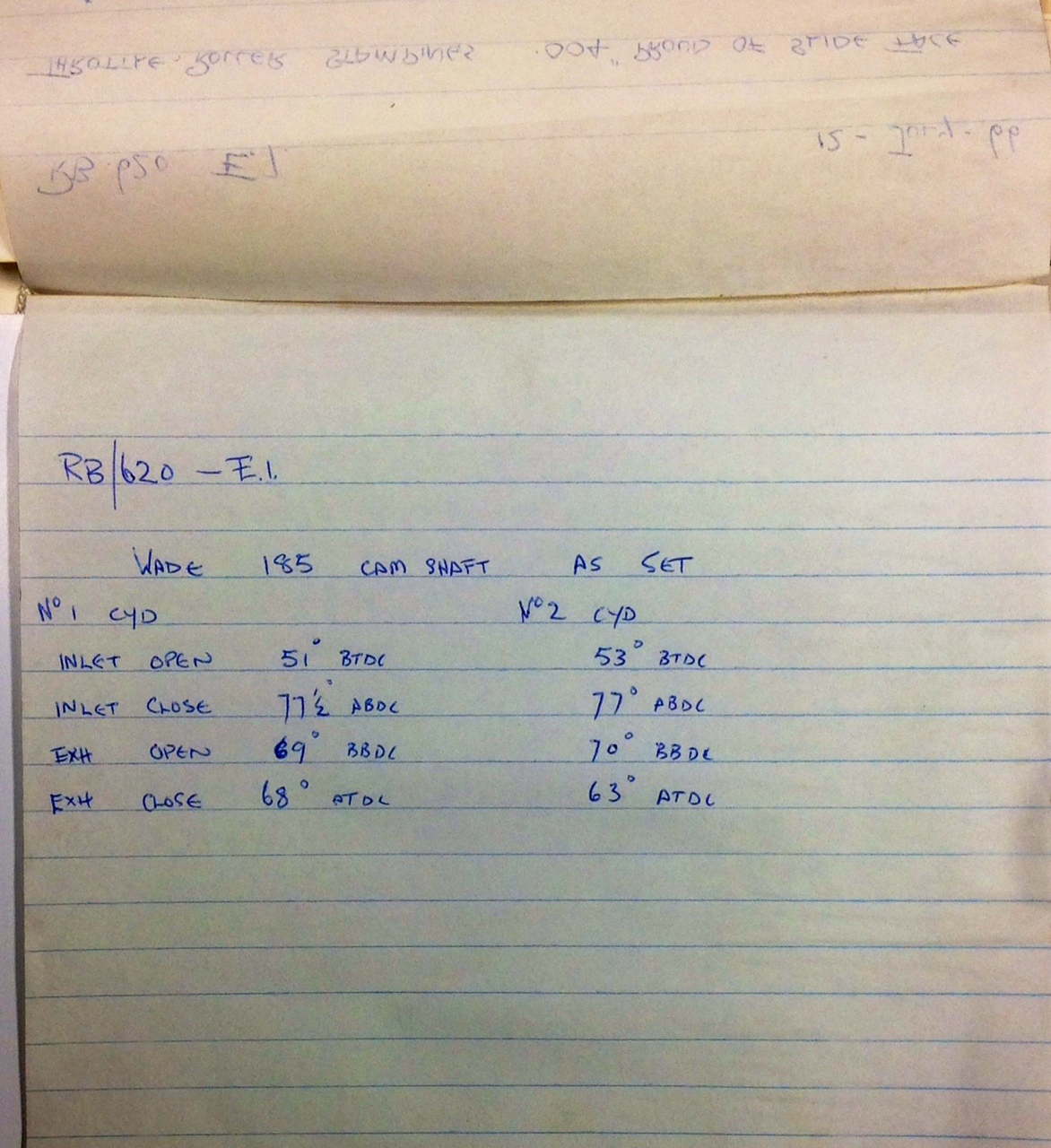
‘E1’ was the RB620 prototype Tasman 2.5 litre engine. Most of the entries in this exercise book are dated, this one is not, but its mid 1965, the book records the use of cams with the ‘Wade 185’ grind and the valve timing, no dyno sheets sadly! (Wolfe/Repco)
Have a look at this Repco film produced in mid-1965…
It covers some interesting background on the relationship between Brabham and Repco, footage of Jack at home in the UK, the Brabham factory in New Haw, some on circuit footage at Goodwood and then some sensational coverage of the 1965 Tasman Series in both NZ and Oz. The latter segues nicely into footage of the first ‘RB620’ 2.5 Tasman V8 engine ‘E1’ on the dyno at the Repco Engine Laboratory, at Russell Manufacturing, Richmond in ’65…
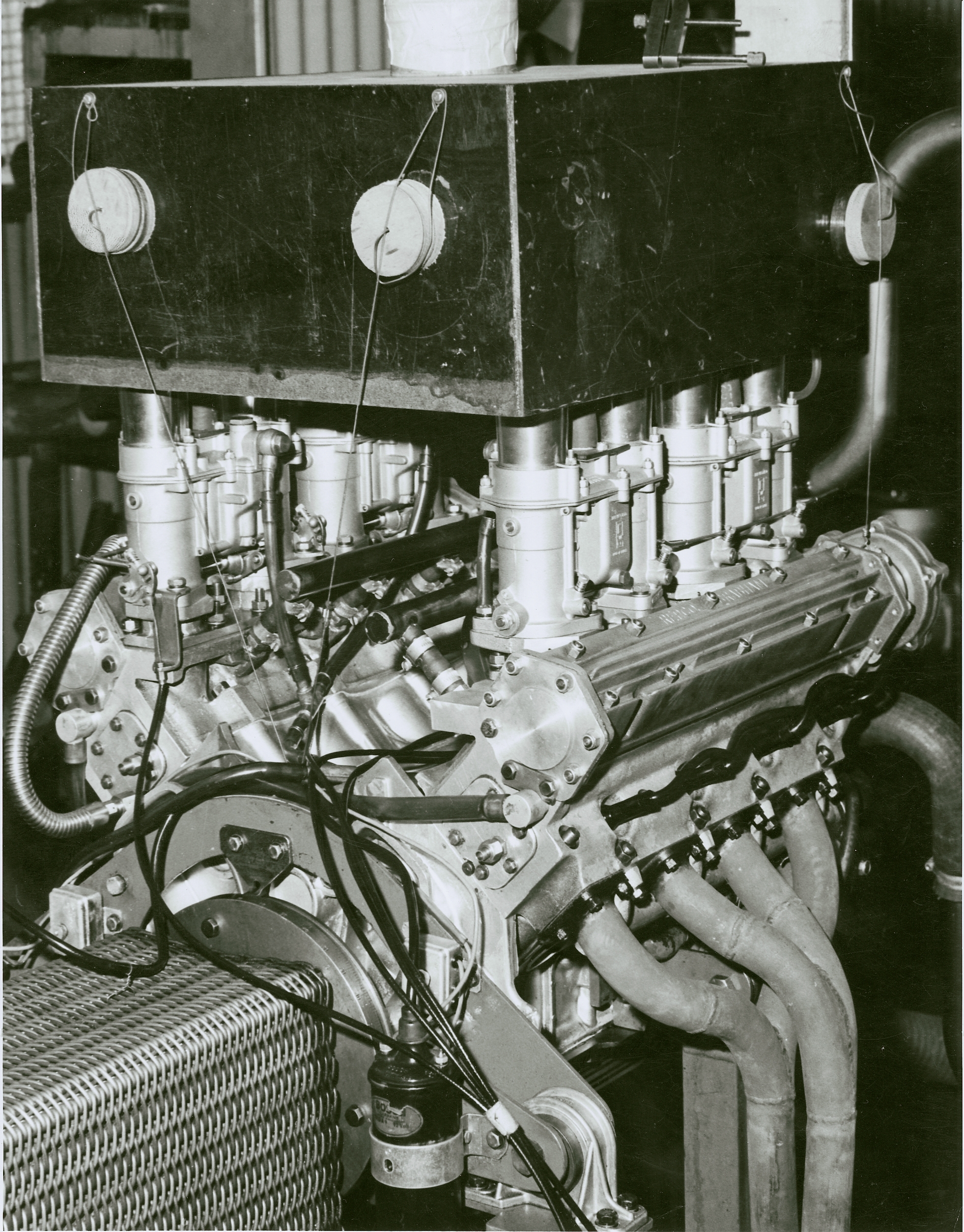
Tailpiece: #1-RBE620 2.5 litre ‘E1’, the prototype Tasman 2.5 V8, fitted with Webers on the GB4 dyno- Repco Engine Lab at Russells, Richmond 1965. The box over the Webers is for airflow measurement notes Nigel Tait…
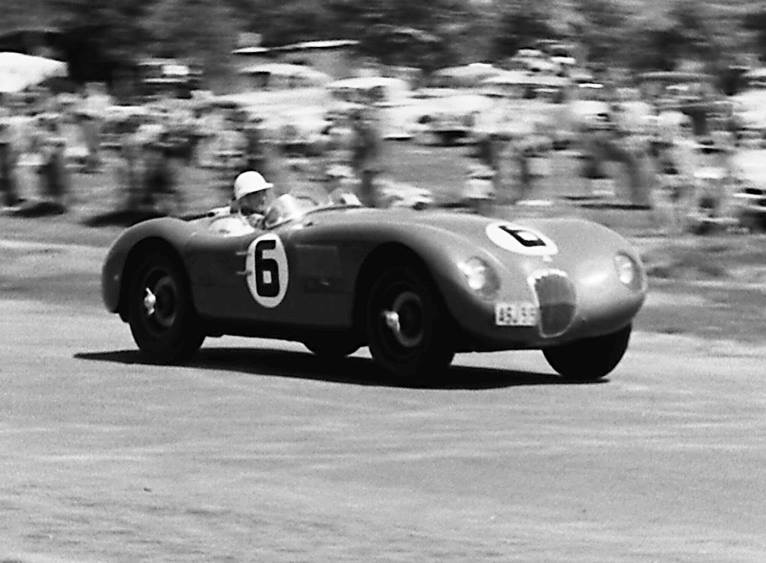
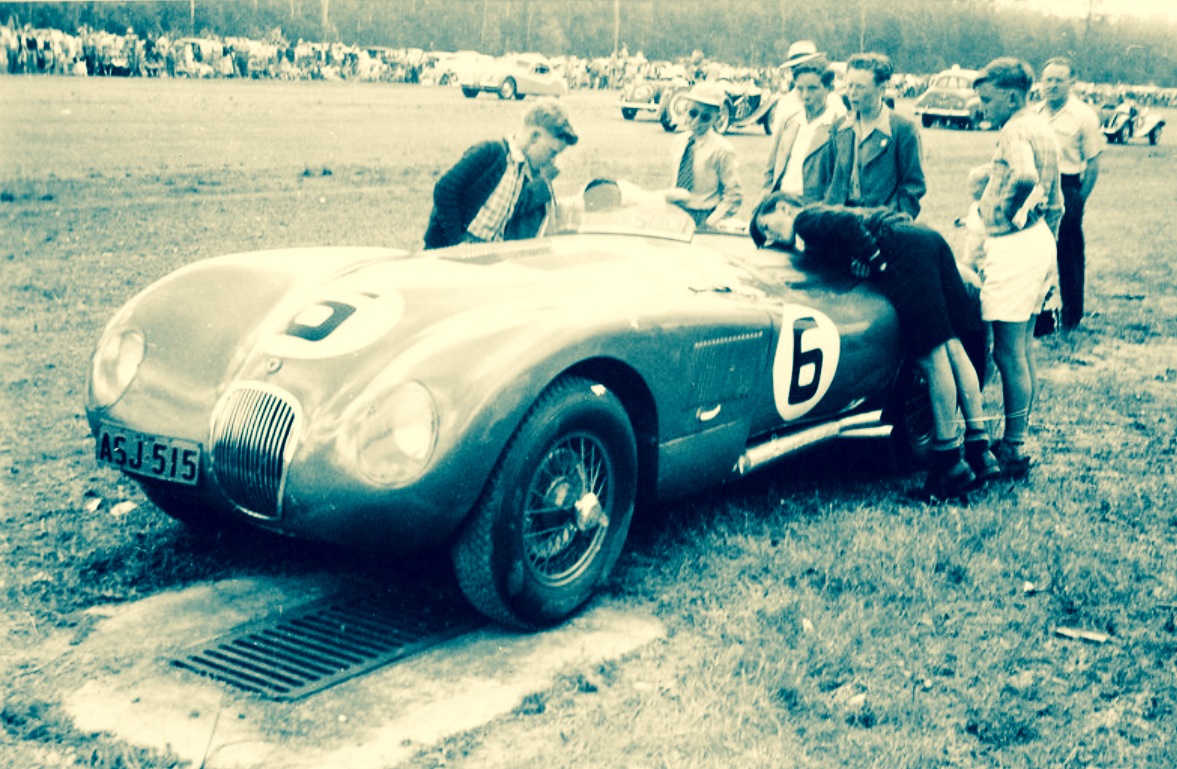
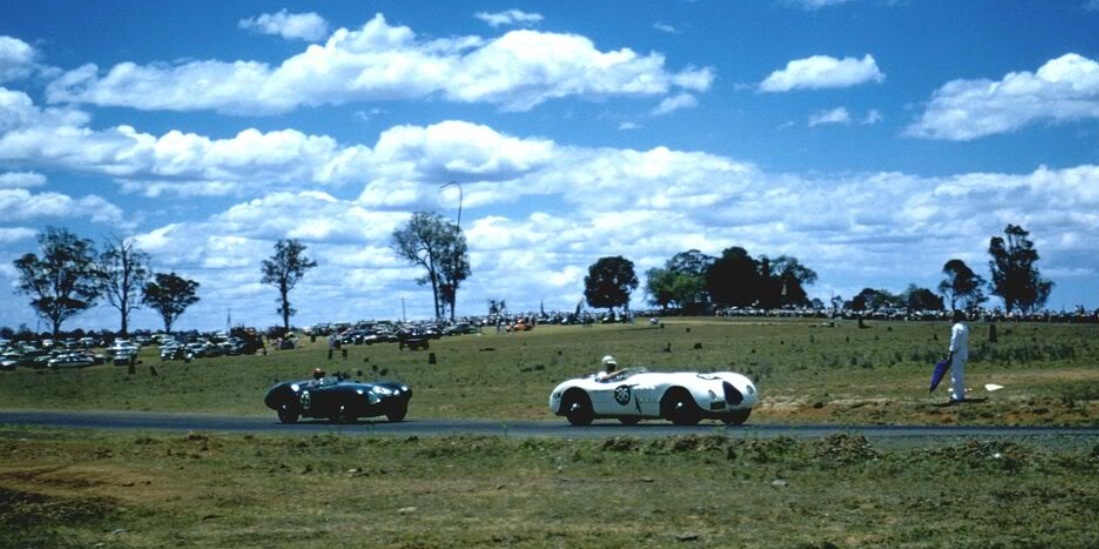
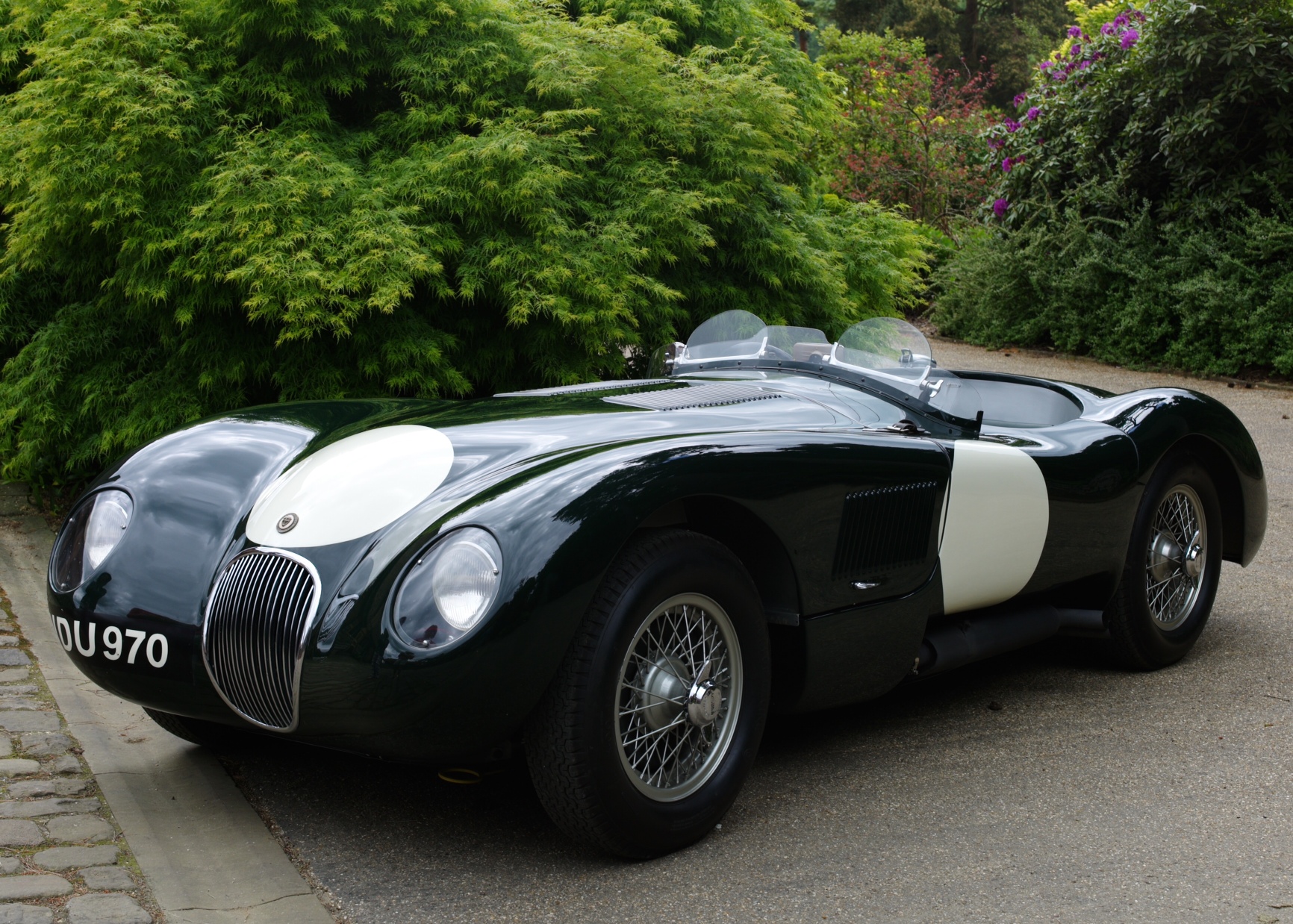
Superb, evocative Gnoo Blas shot. Ross Dalton, C-Type Jag, February 1960 (John Ellacott)
Gnoo Blas actually! Ross Dalton and his Jaguar C-Type, February 1960…
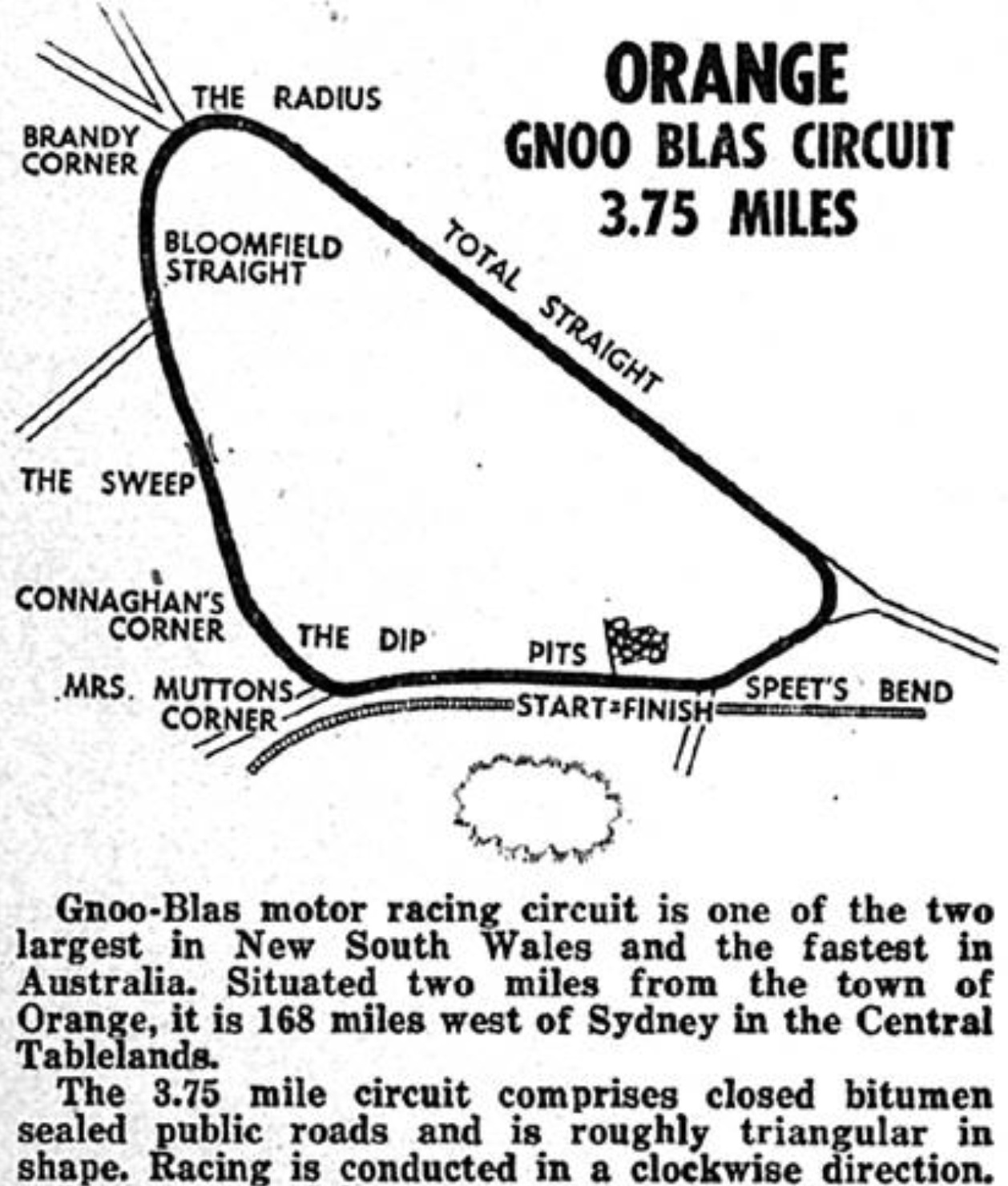
Gnoo Blas was a circuit around the public roads of Bloomfield Hospital in Orange, in the Central West region of New South Wales, 250km west of Sydney. Gnoo Blas is the aboriginal name of Mount Canoblas nearby.
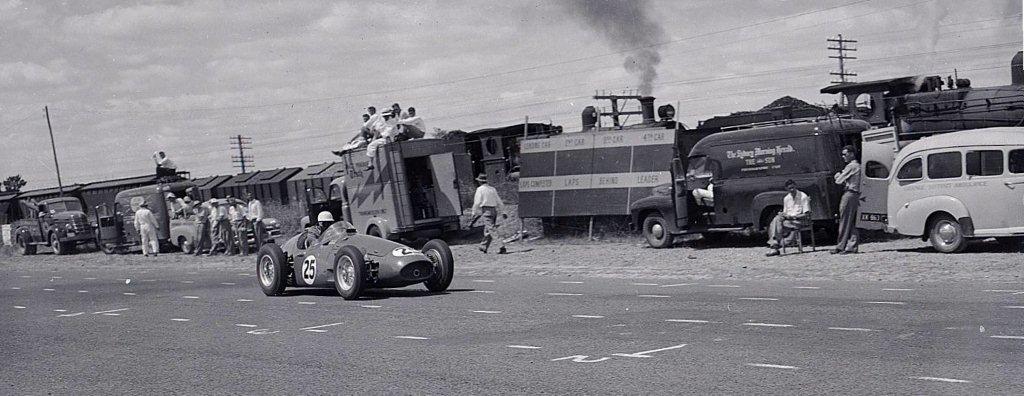
The superb opening photo, taken by John Ellacott, is one of those ‘ the more you look the more you see shots’. Note the ‘fag’ between the driver’s fingers, plastic raincoat, overloaded control tower, Kombi with ‘tarp drying on top, official with ‘cuppa. All are about as far from Bernie’s ‘manicured paddocks and corporate scene’ as it’s possible to be. And thank the good Lord above for that.
As the Australian economy recovered from World War 2 and disposable incomes increased, together with the availability of consumer credit, motor racing and racing circuits were opportunities for individuals and communities alike. Circuits popped up all over the place. Oranges’ ‘Cherry Blossom Committee’ saw an opportunity to establish a circuit as the promoters of the Easter Bathurst meeting ‘up the road’, the Australian Sporting Car Club were in dispute with local Bathurst authorities and were looking for an alternative venue.
The 6.03km, triangular shaped circuit opened in January 1953, the South Pacific Road Racing Championship attracted 12,500 spectators.
All of the stars of the period raced there including Prince Bira, Peter Whitehead, Tony Gaze, Ted Gray, Doug Whiteford and Jack Brabham who made his road racing debut there in 1952 in a Cooper Mk IV and held the lap record until the circuits’ final meeting.
John Boorman on the way to a win in XKC037, Gnoo Blas 1955 (J Psaros)(Orange & District Historical Society)
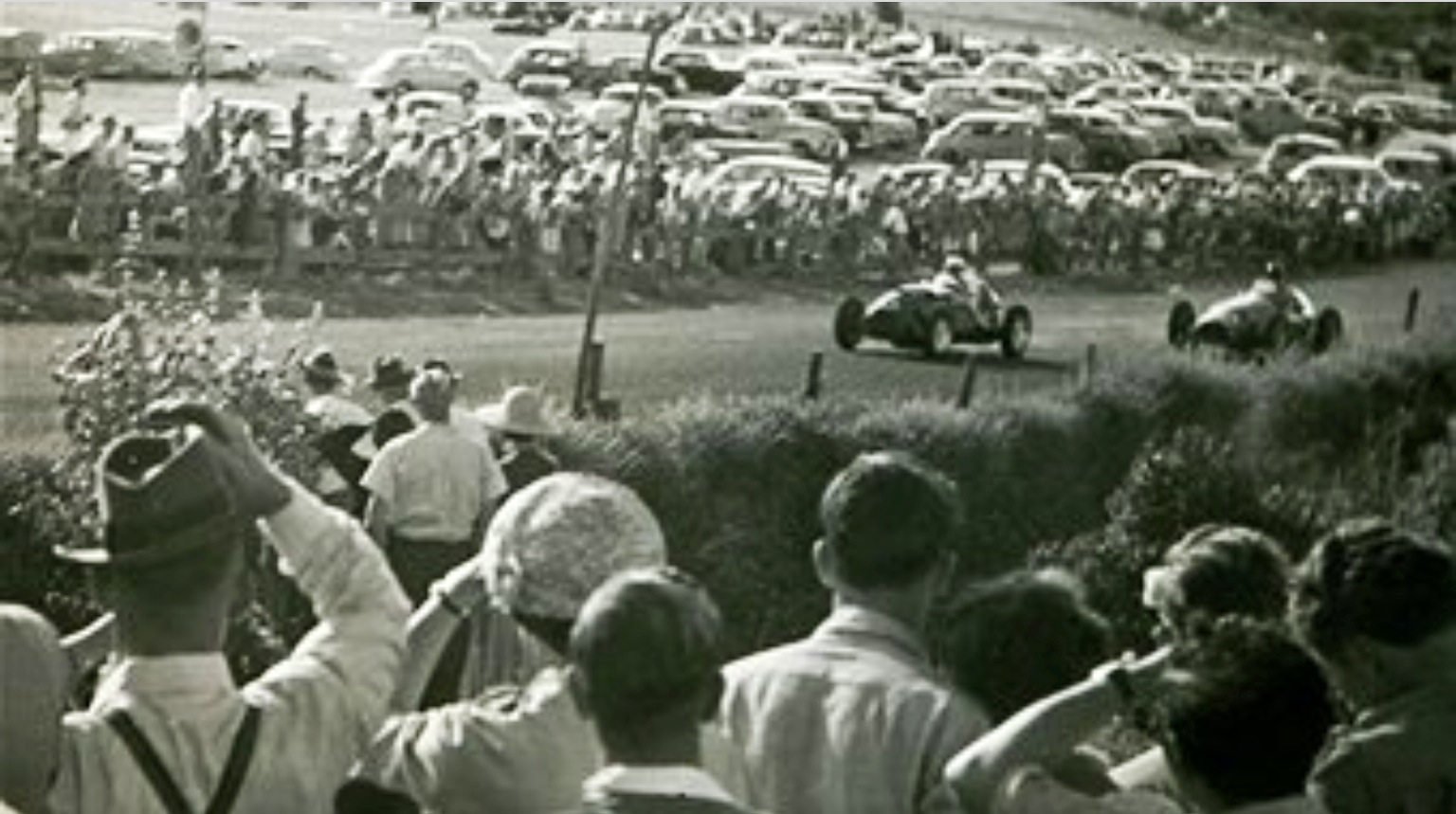
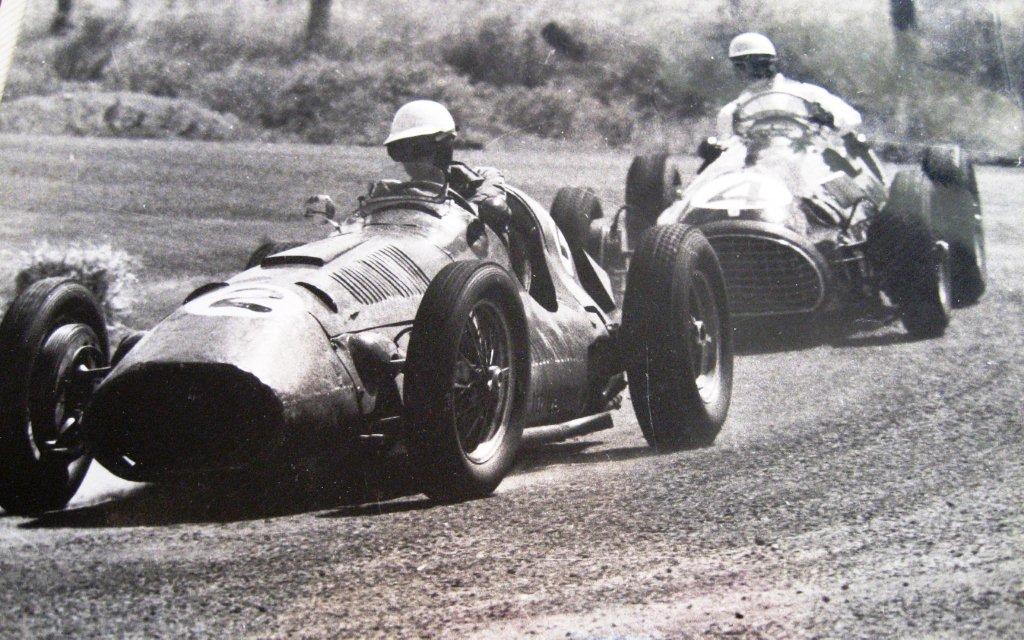
The shot of above shows the atmosphere of the place and time. John Medley IDs the shot as lap 1 of the 1955 South Pacific Championship, ‘Brabham leading Whitehead- a remarkable performance.’ F2 Cooper T23 Bristol from Formula Libre Ferrari 500/625.
Dwindling crowds, debts owed to the original investors and difficulties in renewing the track licence with the NSW police led to the circuits closure in October 1961, the lap record was then held by Jon Leighton’s Cooper Climax at 105.2 mph. One era and circuit closed with Warwick Farm shortly to open in Western Sydney, another era commenced.
Reg Hunt on the way to victory in the South Pacific Championship on 30 January 1956. Maserati 250F. Check out the ‘steaming train’, Sydney Morning Herald van, the general oh-so-casual scene. Road racing at its best (Gnoo Blas Classic Car Club)
South Pacific Road Racing Championships 1956…
One of the best promoted meetings was the ‘South Pacific Road Racing Championship’ contested on 30 January 1956.
20,000 spectators crowded into Orange on race day to see a quality field of cars and drives; Reg Hunt in his new Maserati 250F, Jack Brabham and Ken Neal in Cooper Bristols, Curley Brydon Ferrari 125, Stan Jones in Maybach 3 and Alf Harvey in the ex-Bira Oscar V12.
Hunt dominated, he lapped the field, took the fastest lap and set the highest top speed at160mph over the Flying Quarter. Jones withdrew with a ‘leg out of bed’, a rod poking outside the block of the precious six-cylinder engine. Brabham and Neal were second and third in their Cooper Bristols.
Gnoo Blas European Exotica. Alf Harvey’s ex-Bira OSCA V12 ahead of Curley Brydon’s Ferrari 125, South Pacific Championship, January 1956 (Gnoo Blas Classic Car Club)pwoooaaah! Boys will be boys. XKC037 during John Boorman’s ownership at a meeting at Tomago Airstrip, near Newcastle NSW, 1955 (Dick Willis)
Ex-works- Frank Gardner/Frank Matich Jaguar XKC037…
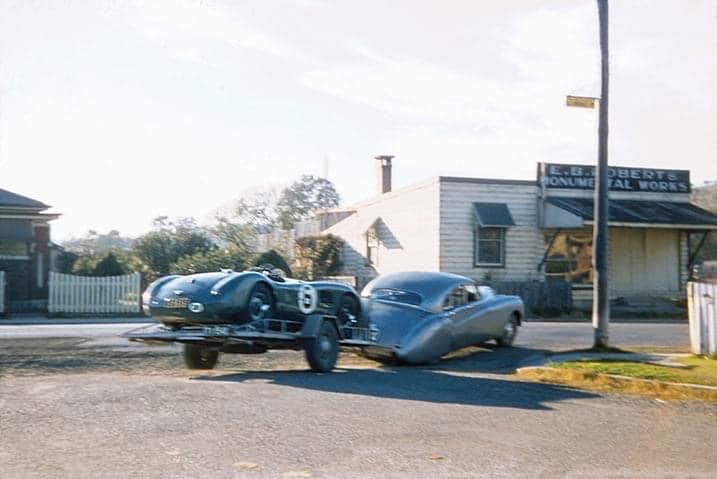
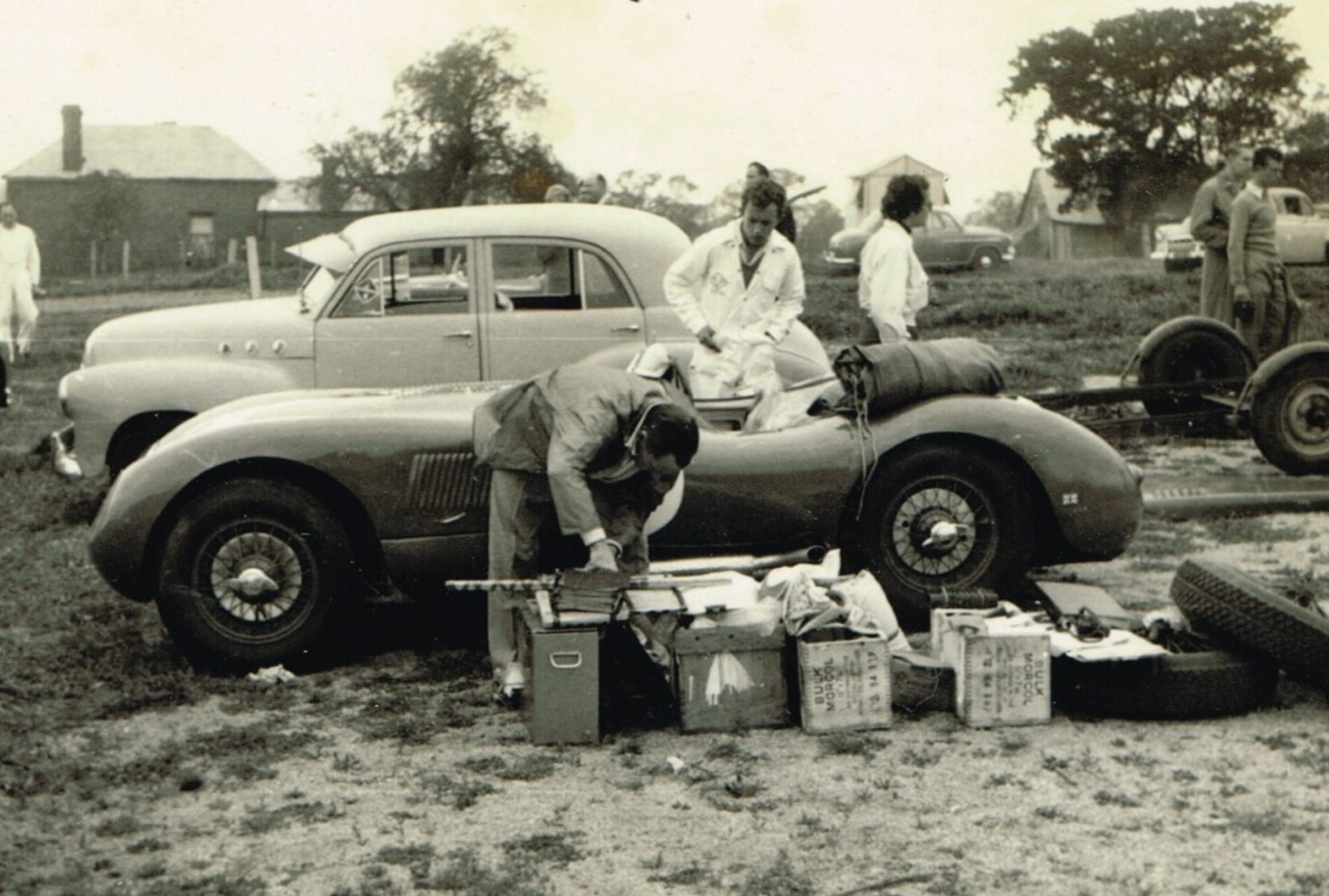
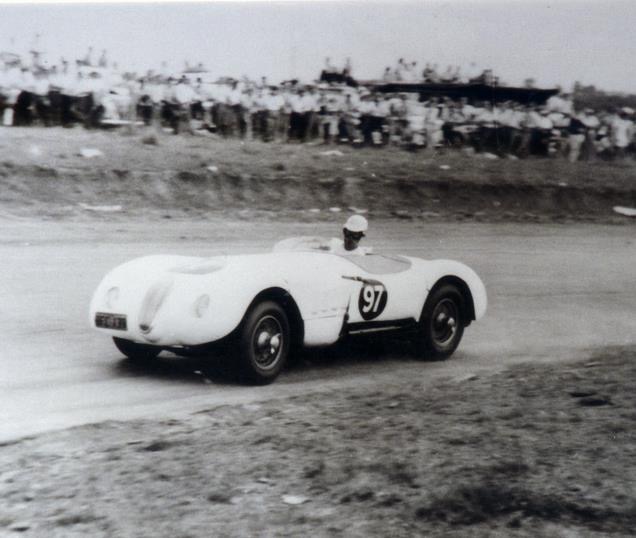
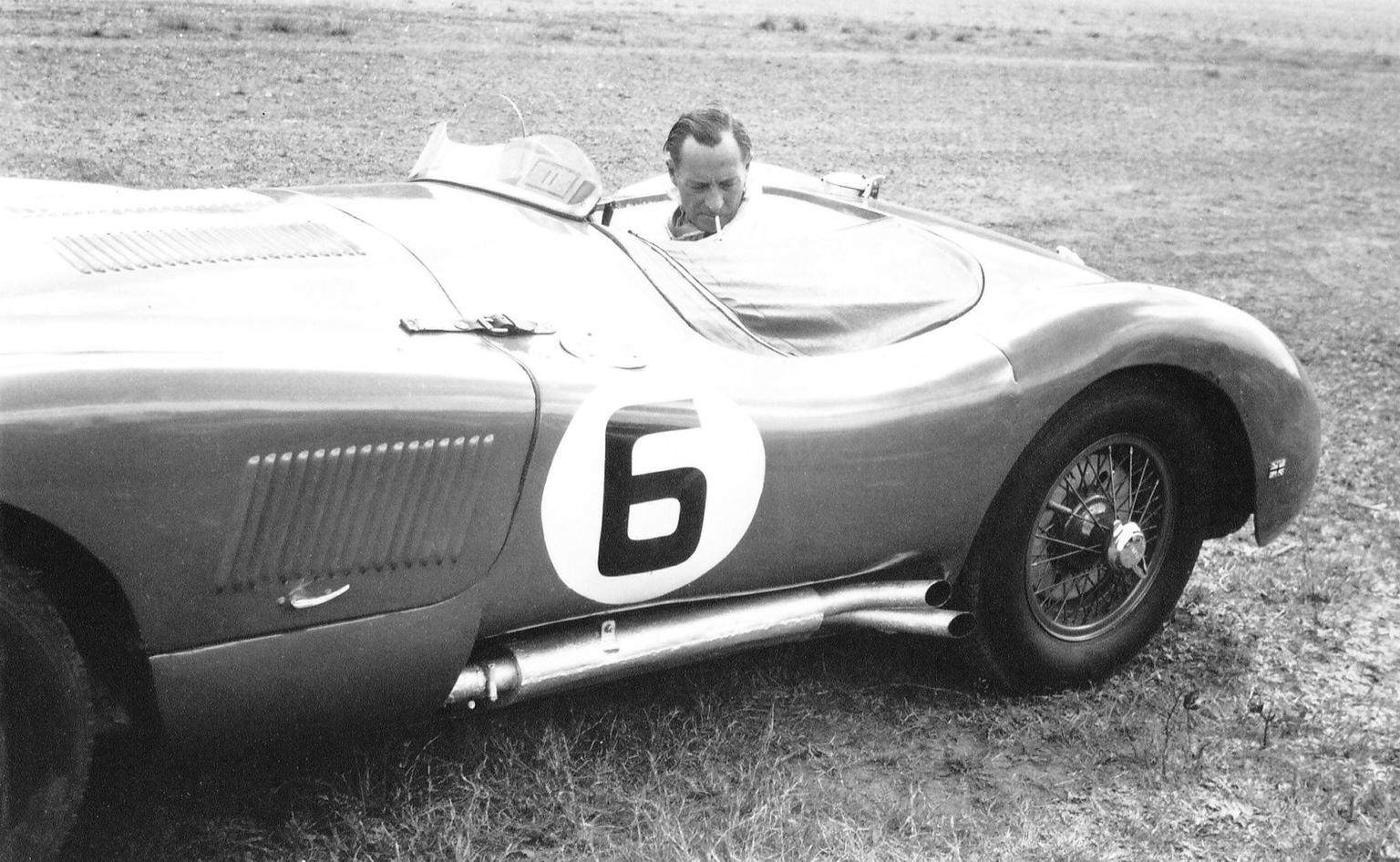
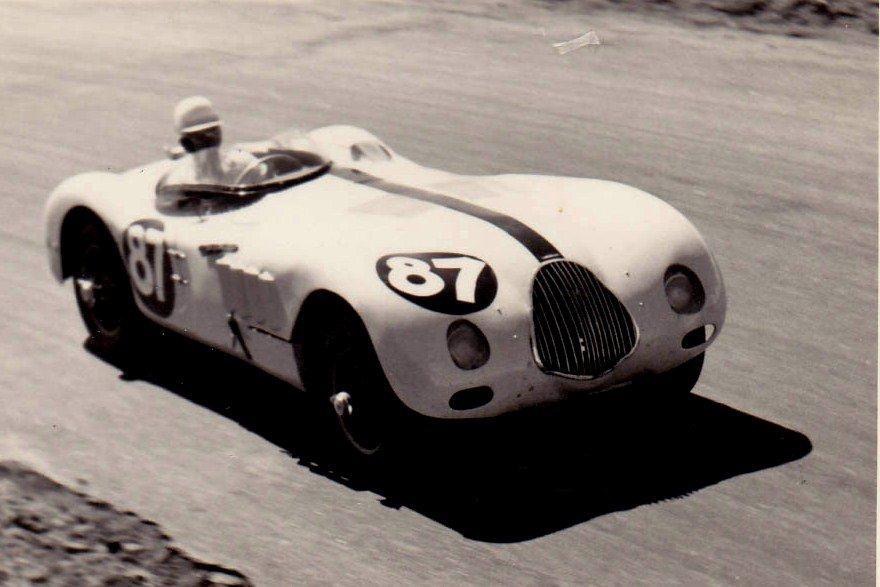
The ‘happy chappy’ in the Jaguar in the first photo at the top is Ross Dalton who acquired the car from Frank Matich. XKC037 started life as a works car. It was built as a standard specification reserve 1953 Le Mans entry in case the advanced lightweight cars under development failed in testing (XKC038 and XKC039 were built for the same purpose).
Stirling Moss raced it at Silverstone in May 1953 and rolled it. XKC037 was then rebodied and sold to the Kenyan Coca Cola bottler John Marussis who entered it at Reims but wrecked it at Dundrod.
Rebuilt again, it was then sold via 1951 Le Mans winner, Peter Whitehead to Cessnock, New South Wales doctor, John Boorman.
Frank Gardner bought the car as an insurance write-off after it was involved in a fatal accident. Gardner recalled in a ‘Motorsport’ interview ‘…Boorman hit a Ford Customline, killed the (two) occupants and ended up down a ravine (near Tamworth NSW)…I wrote to Jaguar asking for information so i could rebuild it… a few weeks later a package arrived with all the drawings so I knew which way to go to get it sorted’.
‘I did it right because even then a proper C-Type meant something and I thought if I bastardise this thing it will look like cleaning up a bloody Rembrandt with aftershave lotion! But I couldn’t get it to run cool so I altered the radiator grille a bit…’
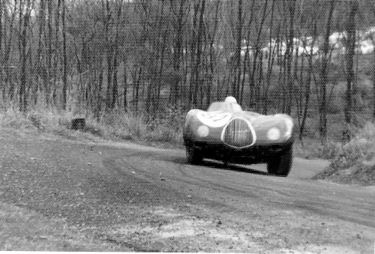
Former Cessnock resident Michael Hickey identifies this shot as Allandale Road, Cessnock. Equipe Boorman- C Type and Mk7 Jags, is on the way to Mount Panorama in 1955- he raced in both the Easter and October meetings (Jaguar Magazine)Boorman at Mount Panorama, Bathurst date uncertain (unattributed)FG in XKC037 when first rebuilt and fitted with one of Frank’s XK120 grilles and fibreglass bonnet, circuit unknown (unattributed)
The C Type replaced FG’s lightweight XK120 Jaguar and was an important stepping stone in the careers of both he and Matich, both progressed to D=Types after the C.
Years later XKC037 was acquired by Sydney Jaguar identity, Ian Cummins who completed its restoration in the mid 1970s. It left our shores in 1984 for a sum considerably greater than the £2000 Ross Dalton paid in 1960!
C-Type Jags won Le Mans upon debut in 1951 and again in ’53.
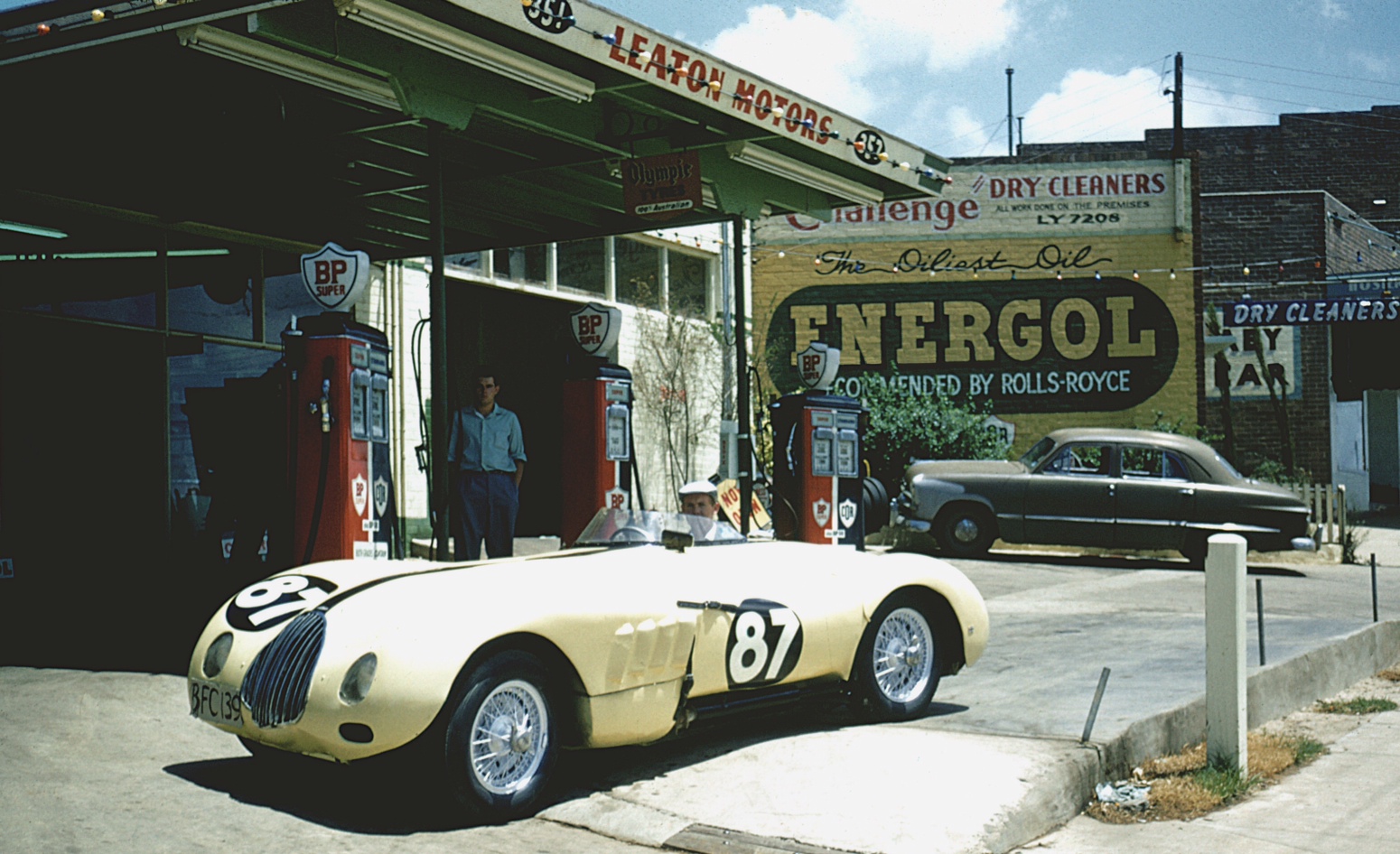
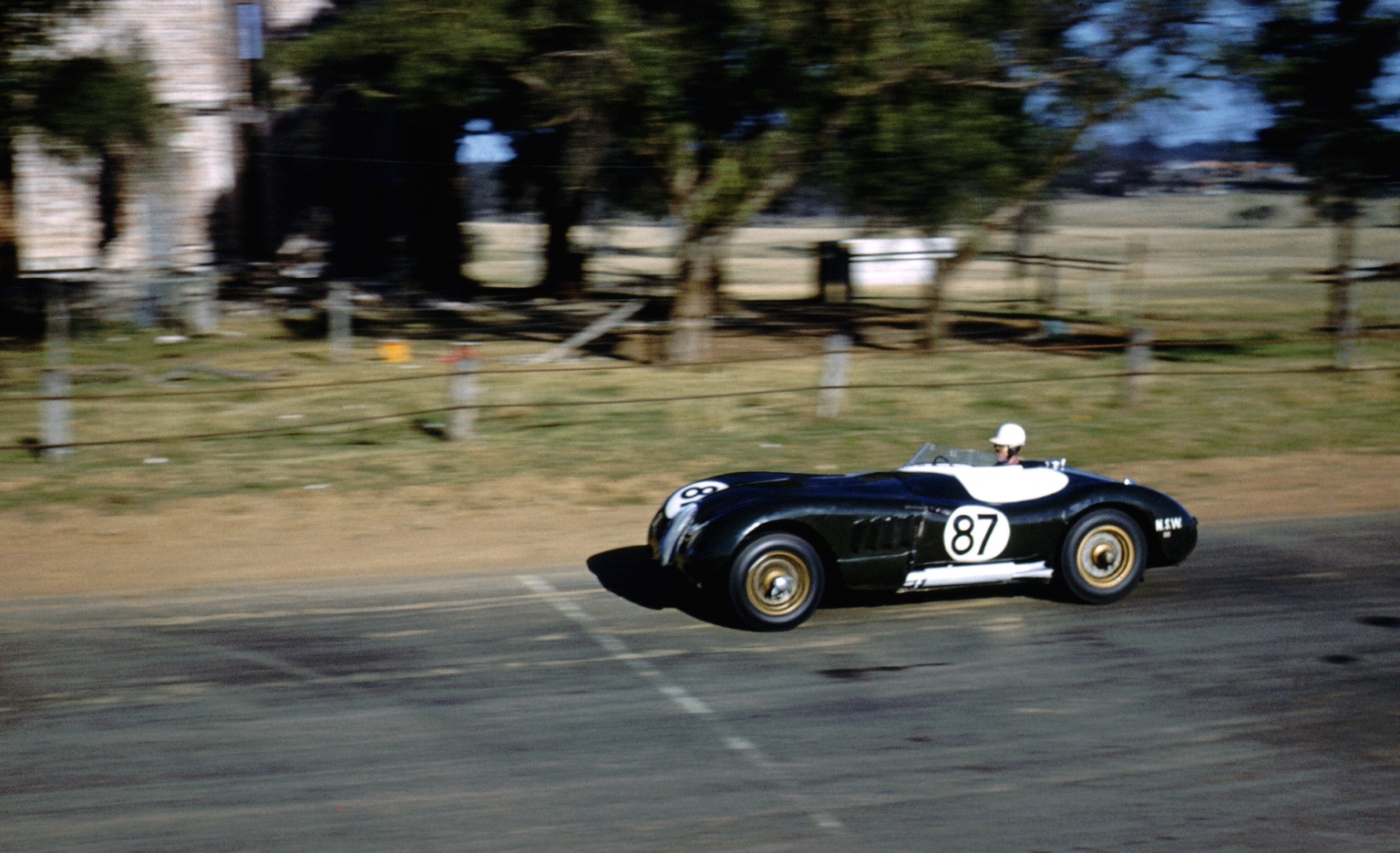
Frank Matich in XKC037 out the front of the cars owners, Leatons Motors workshop, 351 Stony Creek Road, Kingsgrove, Sydney in October 1958. What a shot! Love the Energol ‘The Oiliest Oil’ sign (John Ellacott)
Etcetera: XKC037….
(Dick Willis)
Dr John Boorman, XKC037 at Tomago Airstrip, NSW 9 April 1955.
(J Psaros)
Frank Gardner at Mount Panorama in 1957.
(John Ellacott)
Tom Sulman’s Aston Martin DB3S chases Frank Gardner’s Jag XKC037 at Mount Druitt, November 1957.
(unattributed)
FG ascending Silverdale Hillclimb during the 1957 NSW Hillclimb Championships, he won his class and was quicker than Arnold Glass in the ex-Lex Davison Australian Grand Prix winning HWM Jaguar.
(John Ellacott)
Frank Matich Jag C during private practice at Mt Druitt, Sydney in 1959.
(Kevin Drage)
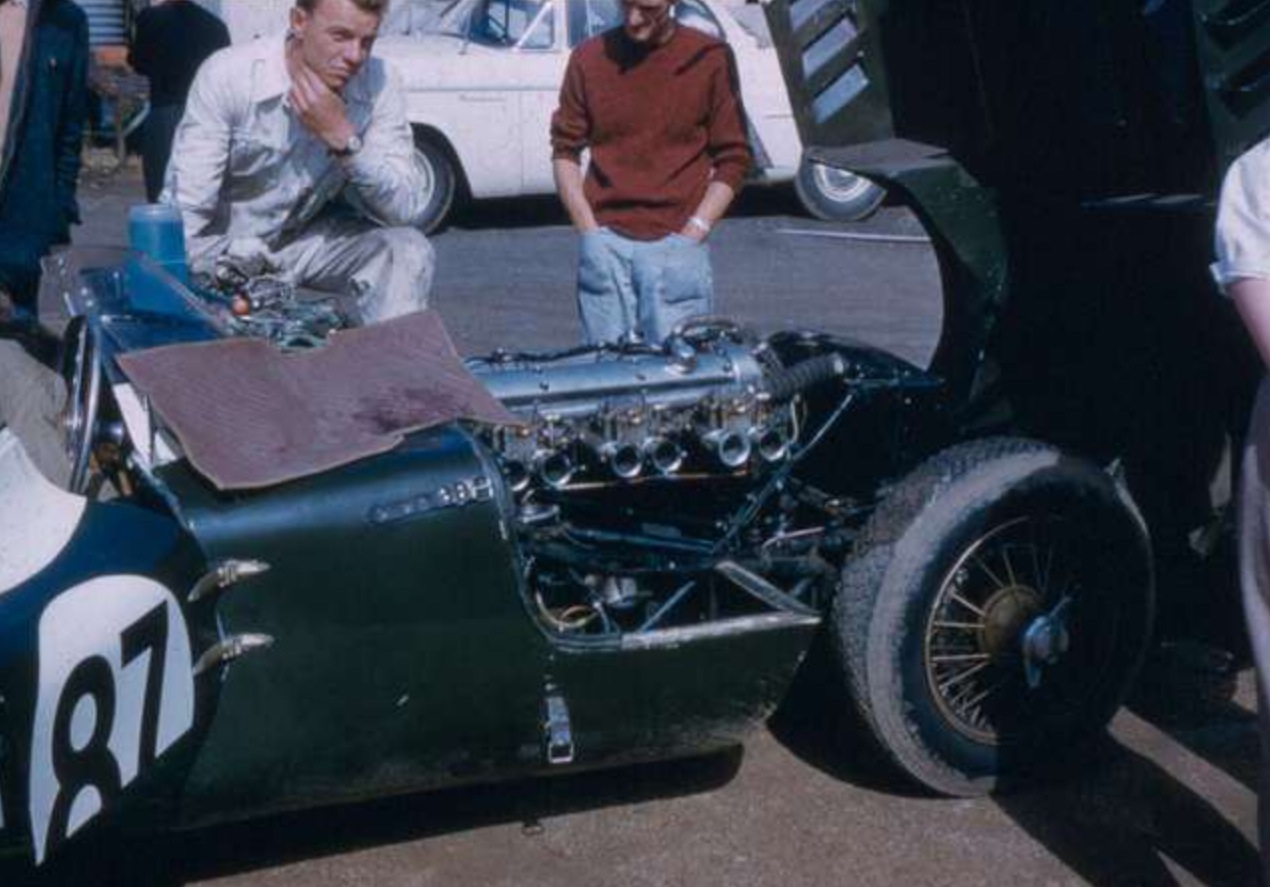
The engine of XKC037 as raced by Frank Matich for Leaton Motors at the October 1958 Bathurst meeting.
The car contested the Australian Tourist Trophy, FM finished fourth, David McKay won the race in his second, ex-works Aston Martin DB3S.
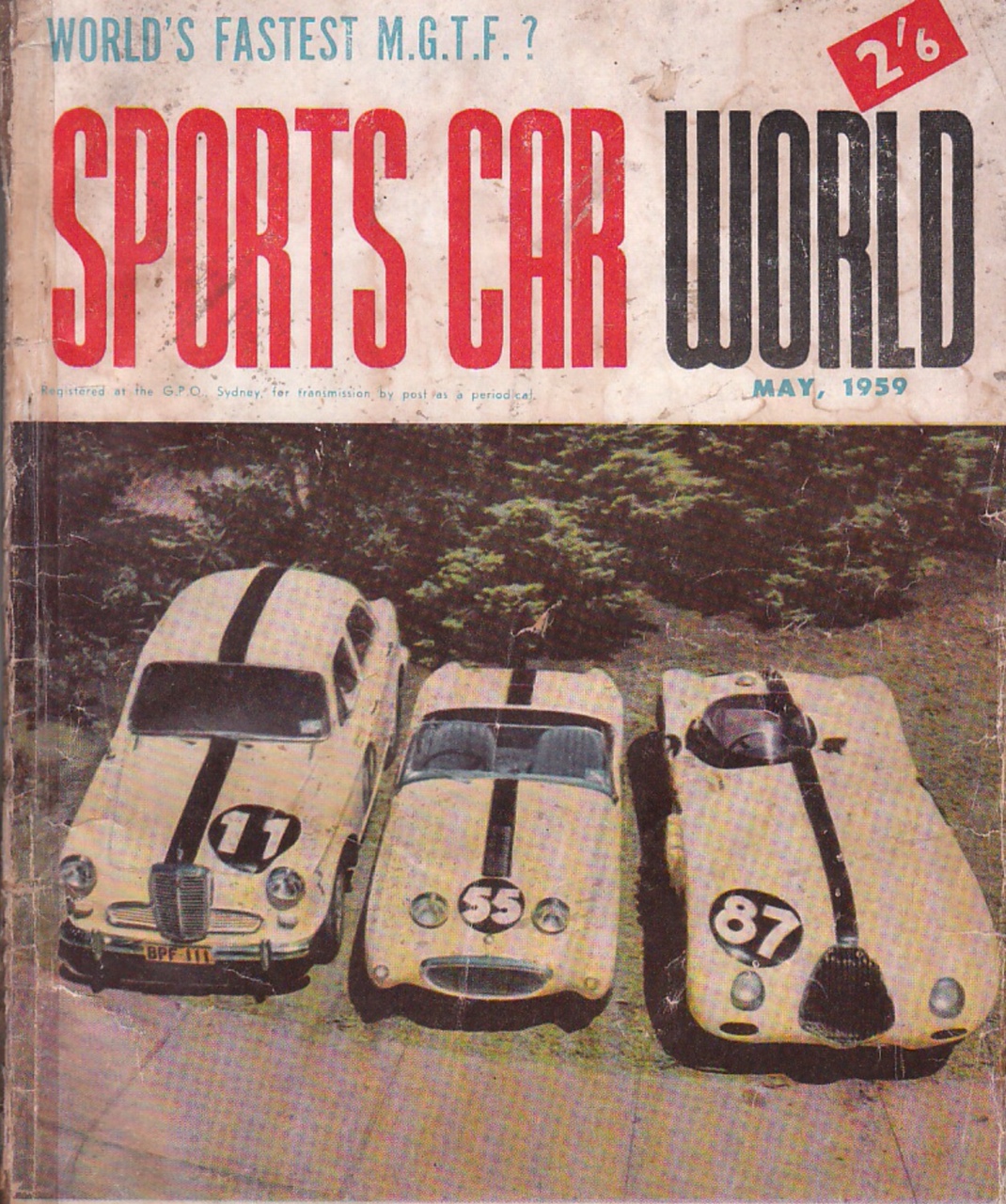
Advertorial 1950s style! The Leaton Motors Team on the cover of Australia’s Sports Car World magazine; the Austin Lancer dvr Brian Foley, AH Sprite dvr Doug Chivas and XKC037 dvr Frank Matich (Sports Car World)
The current owner of this wonderful car, John Corrie, recently (March 2015) got in touch and sent these shots of the C Type, great to see it still being raced, Messrs Gardner, Matich and Dalton would be pleased!
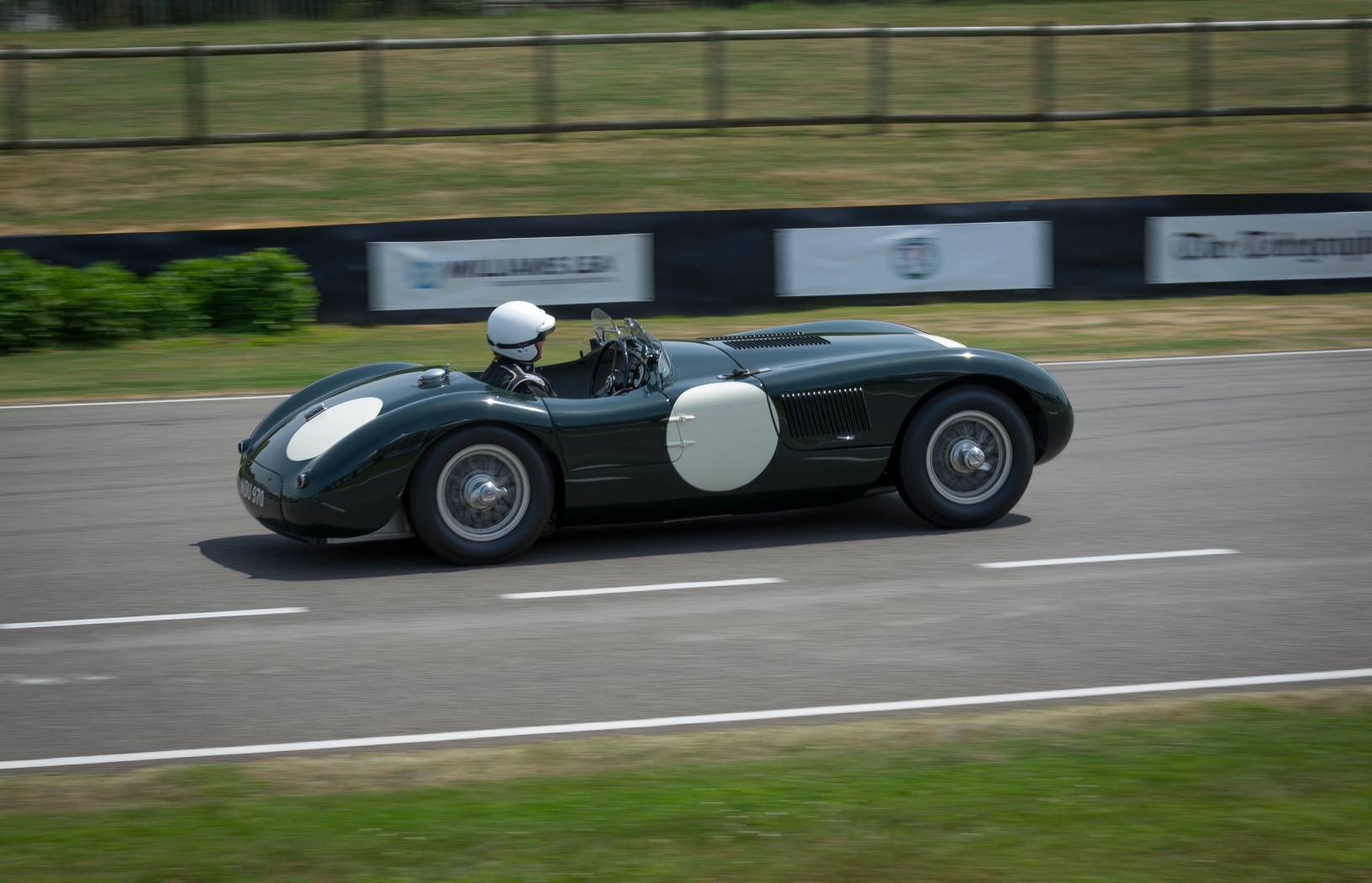
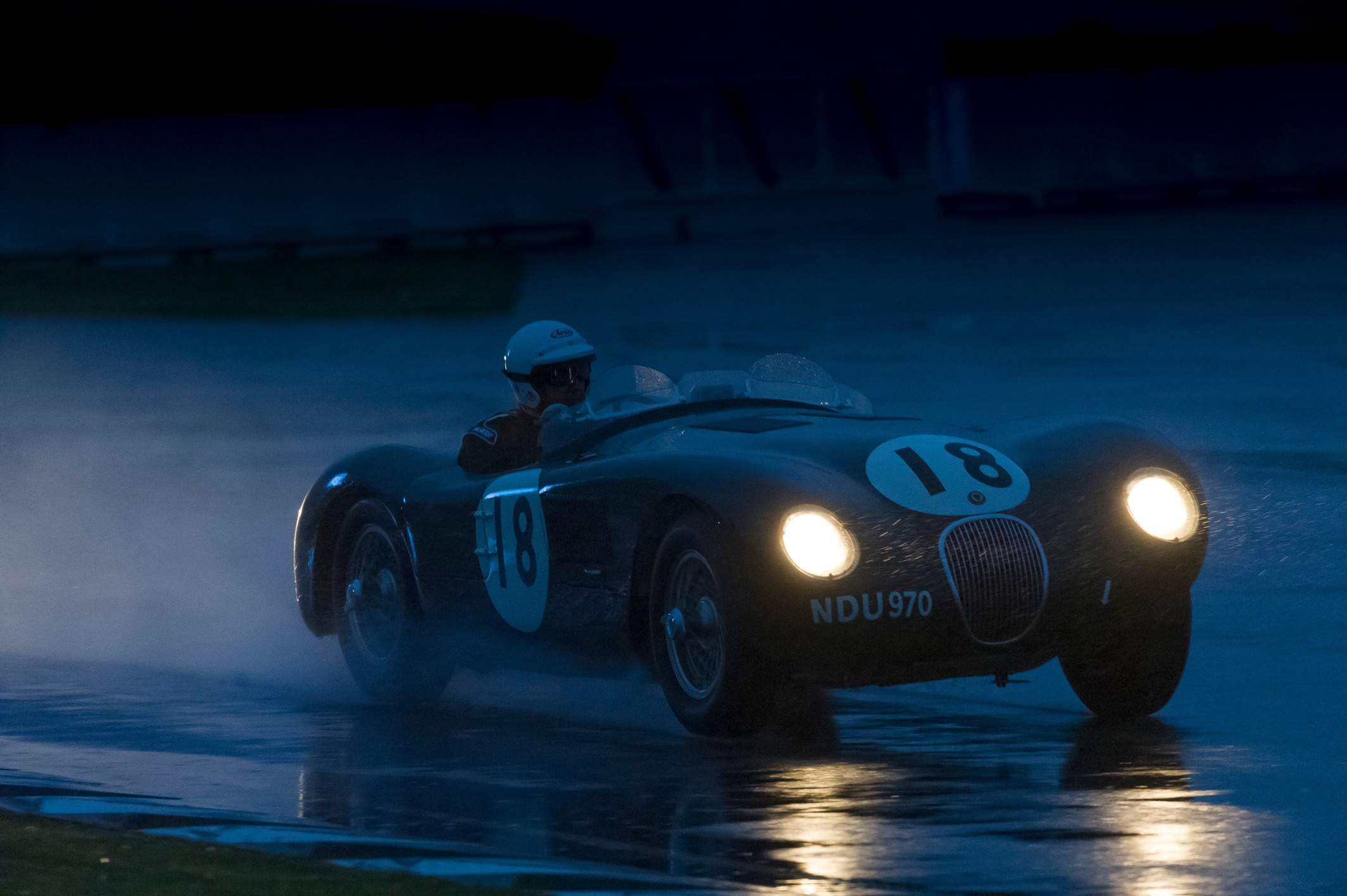
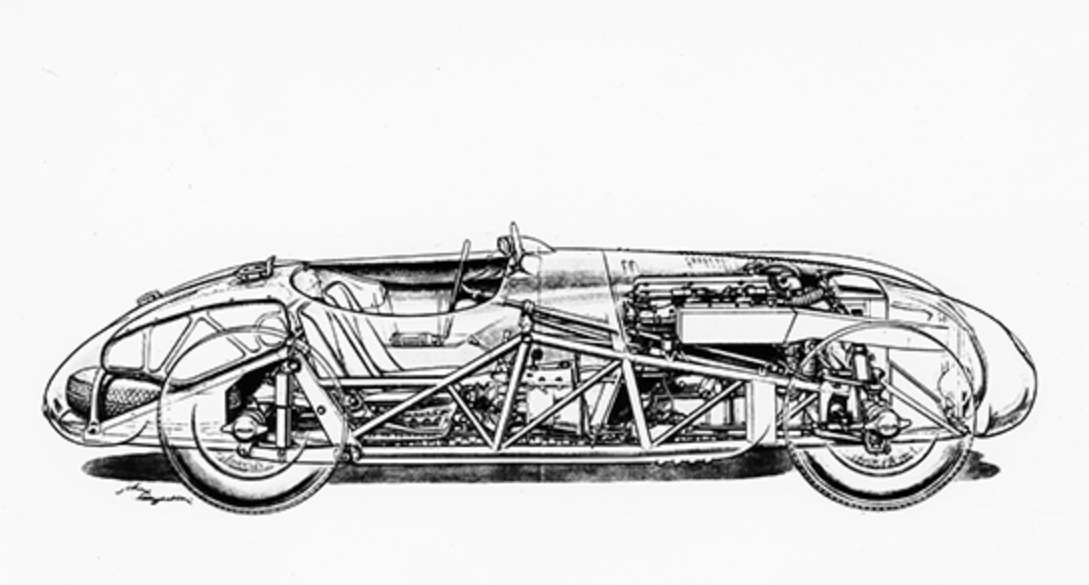
David Brazell in John Corries’, ‘XKC037’, Goodwood Track day practising for the 2013 Revival meeting (Chris Perrett)Superb shot in the English Summer…’Goodwood Revival 2013 during the Freddie March Trophy which was stopped after an hour the weather turned really bad’. David Brazell in John Corries car (Chris Perrett)XKC037 looking rather more immaculate than in its days as a workhorse for Frank Gardner and Frank Matich in Australia (John Corrie)C-Type cutaway drawing (Jaguar Heritage)(Unattributed)
Etcetera: Gnoo Blas 1960 Australian Touring Car Championship meeting…
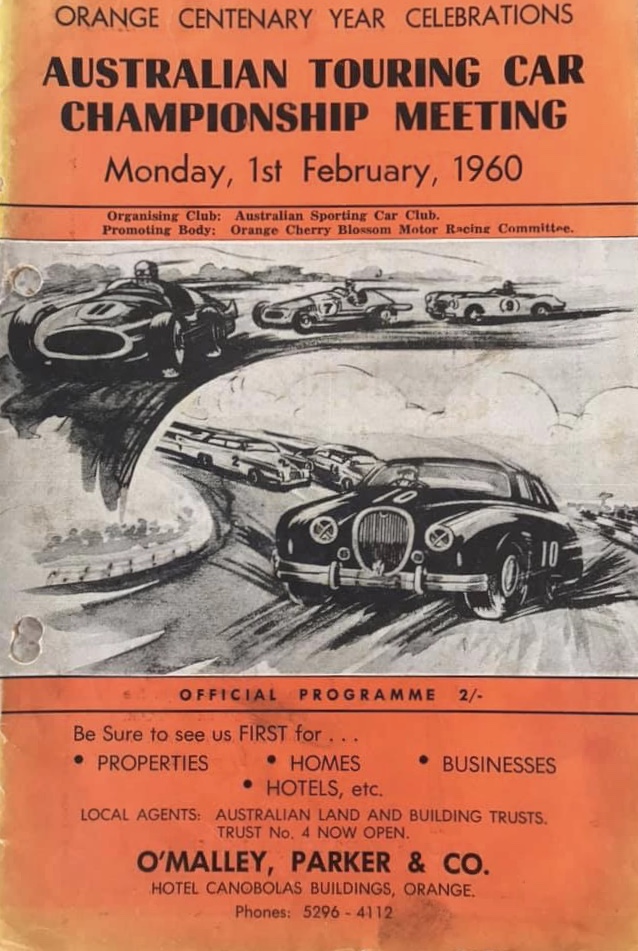
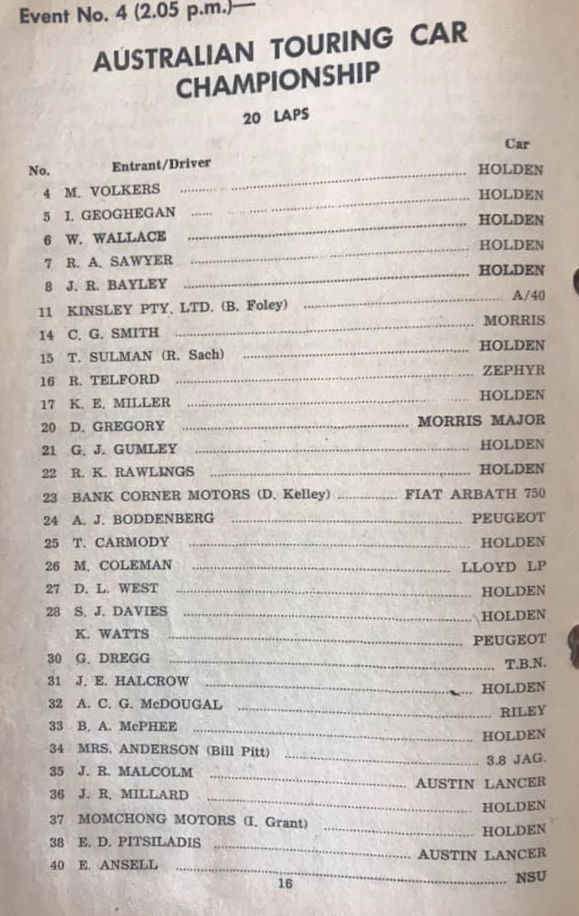
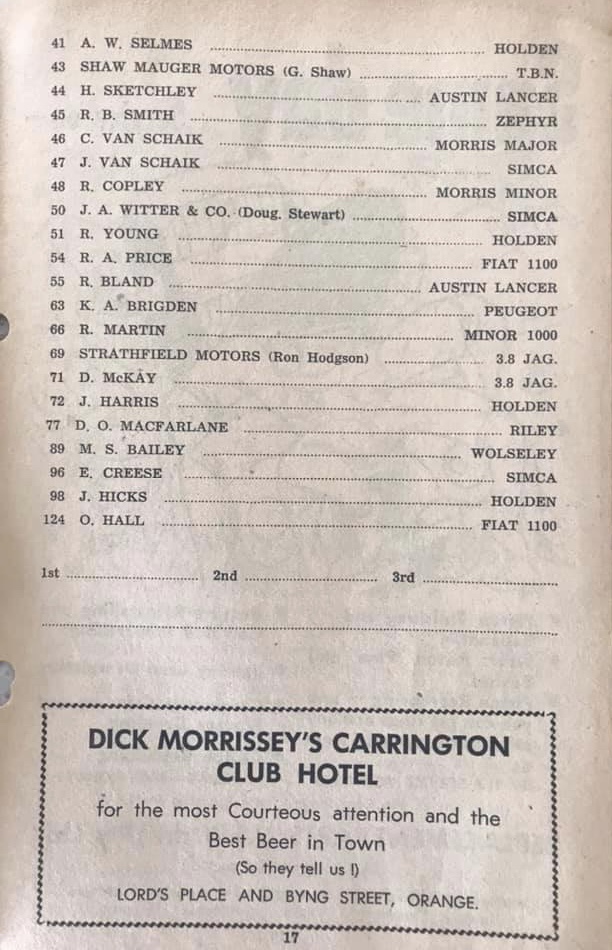
Start of the one race, ‘the first’, Australian Touring Car Championship at Gnoo Blas on 1 February 1960.
Left to right are the Jag Mk1s of Ron Hodgson, Bill Pitt and David McKay from pole who won the race.
Hodgson led early, the three Jags pulled away from the rest of the field, he ran wide and the other two spun at Windsock on lap 1 then he did the same on lap 2 letting McKay and Pitt through. Max Volkers was fourth in his Holden FJ and Pete Geoghegan fifth in his Holden 48-215 until head gasket failure intervened.
By lap 14 McKay had a 26 second lead over Pitt, then rain fell catching Ron Sawyer’s Holden FJ out. He spun on the crest of Connaghans Corner hitting the inside bank and rolling, help was at hand when Des West stopped to assist the hapless driver from the car. McKay’s path was blocked by a Ford Zephyr which had also stopped (driver unknown) ‘McKay used his car to move the Zephyr out of the way’.
Further excitement occurred on the following lap when McKay spun yielding the lead to Pitt but the overdrive mechanism on that car began to fail allowing David McKay to regain the lead two laps from the end. He won the race six seconds ahead of Pitt with Ron Hodgson a minute in arrears then came Max Volkers a lap down in fourth.
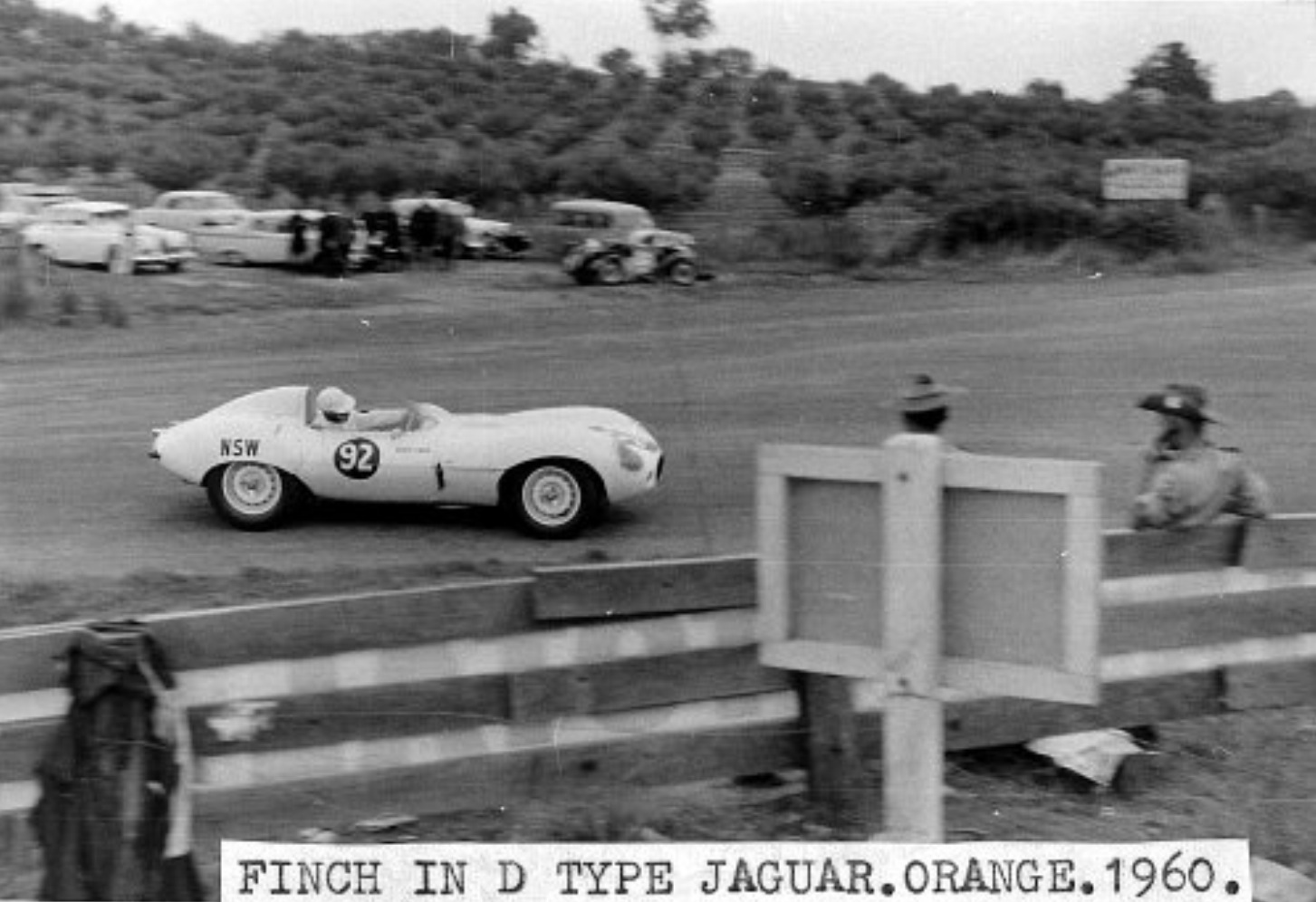
(Ian Lord Collection)David Finch, Jag XKD Type ,Windsock Corner, Gnoo Blas 1960 (Don Read Collection)
Bibliography…
‘Historic Racing Cars in Australia’ John Blanden, John Medley, Michael Hickey
Photo Credits…
John Ellacott, Jaguar Heritage, Orange & District Historical Society, Paul Cross, Don Read Collection, Dick Willis, Chris Perrett, John Corrie, Frank Gardner ‘Motorsport’ magazine interview March 2008, Gnoo Blas Classic Car Club, Jock Psaros, Jaguar Magazine, Ian Lord Collection
Colin Chapman and Ronnie Peterson ‘chewing the fat’ on the French GP grid, Clermont Ferrand 1972. Car is a March 721G Ford, Peterson finished 4th in the race won by Jackie Stewart (Pinterest)
‘C’mon Ronnie, its time to move to Hethel?! Other than Bernard Charles Ecclestone there were few people with Lotus boss Colin Chapmans’ charm, and powers of pursuation when it suited him…
I doubt the weather was the topic of conversation! Ronnie learn’t his F1 stuff with March, starting with a quasi-works 701 in 1970, but the 721G, on which he is leaning, was an F2 car onto which a Ford Cosworth engine was grafted after the failure of its 721X and not as quick as the Lotus 72 Chapman is talking to Ronie about!
Ronnie replaced Aussie Dave Walker at Lotus in 1973, Peterson proving quicker than Emerson Fittipaldi, the 1972 World Champion. As is usually the case, these ‘Dream Teams’ usually end in tears.
Chapman refused to apply team orders later in the season, costing Fittipladi, the better placed driver, his second title, Lotus did pick up the Manufacturers Championship however.
Fittipaldi decamped to McLaren at the years end and a second title in ’74, Ronnie and Jacky Ickx were quick in the Lotus 72 in ’74 but it was getting long in the tooth and Lotus missed Emerson’s testing and development skills, neither of which were Petersons’ forte…
Gethin gently pursuades his beast to turn into Riversides’ turn 6; all 7.6 litres and 670 BHP of it, he is sitting so low spotting apexes must have been a challenge…
Denny Hulme won the 1970 series in the sister car, a fitting result for the team after Bruce McLaren was tragically killed in pre-season, M8D testing at Goodwood .
Gethin was recruited to fill Bruce’ F1 seat and later in the year scored the CanAm drive as well. Dan Gurney partnered Hulme initially until conflicting oil company sponsorships forced DG to relinquish the seat. Peter finished third in the championship despite missing the first three rounds.
Gethin thru the Laguna Seca chicane, M8D October 1970 DNF with failed battery. Difference in height between tall Dan Gurney, who used this chassis prior to Gethin apparent from the roll bar extension installed for Dan but redundant for Peter! (The Enthusiast Network)
Check out Dans set in the cockpit to illustrate the point made in the previous photo! Here Dan in chassis #M8D/3 at the season opening Mosport, Canada round, 12 days after Bruce’ Goodwood death. Tyler Alexander, Team manager/Crew Chief at right. Gurney put the car on pole and won the race, a fitting tribute to McLaren and demonstrating the crews determination and resilience (Bob Harmeyer)
Major opposition to the McLaren Team in 1970came from teams running ex-works and customer Mclarens, the factory/Carl Haas LolaT220 driven by Peter Revson, Jackie Oliver in the Ti22, and of course, Jim Halls sensational, outrageous, revolutionary ground effect Chaparrall 2J. The latter banned at years end after representations from all and sundry, including McLaren.
The McLaren domination of the CanAm Series commenced with the M6 in 1967 and still had a year to run with the M8F. Porsche were looking for something to do with its 917 program rendered obsolete by changes in World Sportscar Championship rules at the end of ’71, the CanAm series was chosen place to use the cars… The turbo-charged Porsche 917/10 rewriting the record books as the ‘orange McLarens’ had…
Chassis of riveted and bonded aluminium with fabricated steel bulkheads. Engine a stressed part of the chassis, also supported by tubular steel ‘A frames’ . Brakes Lockheed.(Profile Publications)
Suspension: single top link, inverted lower wishbone, twin radius rods and coil spring/shock unit. Gearbox: Hewland LG600. Engines prepared in-house, Chev ZL1 Aluminium block, mainly 7.6 litres or 465CID. 670 BHP @ 6000 RPM. Hulme used 430 CID engine when some overheating was experienced . Full monocoque but ‘rear sponsons’ non load-bearing the engine bolted directly to a magnesium plate at the rear bulkhead, also supported by a steel, tubular ‘A-frames’. (Autosport)
Wheelbase 239cm, track F/R 157/147cm, overall length 391cm, height to roll bar 91cm. Car christened ‘The Batmobile’ as a consequence of beautifully integrated rear wing, the high wing of the ’69 M8B outlawed along with all high wings by the FIA in all classes.(Profile Publications)
Shot of Dan Gurney with dave Friedman early in 1970 showing the cars essential elements ‘laid bare’. (Pinterest)
Peter Gethin was the son of a jockey, his compact dimensions a contrast to Tim Parnells’ whose father Reg was a farmer! Peter explains the handling of his BRM to team boss Tim at the 1972 British GP (Pinterest unattributed)
Superb Tony Matthews cutaway drawing of ‘HU18’ in 1973 spec…
The first instalment of Peters’ restoration of the Lola was its history, acquisition of the car and its journey from Portland, Oregon to Melbourne, Australia…
Once unloaded, there was no doubt, not that there ever was, that the chassis was completely hors’d combat, so the big initial question was who to get to repair it. This months account is essentially the first 8 months of work…
HU18 tub as it arrived in Melbourne. Note delicate placement of Hewland bellhousing, general state of tub, RH front aluminium melted by workshop fire and ‘fried’ state of steering rack. Original Lola wheels crack-tested ok, ‘wets’ use perhaps.
Monocoque…
‘Unpicking’ the old tub at Borlands. Fire damage clear, side pontoons in front
‘My choices were the Kiwi’s, Mark Bahner (in the US) or a local. Price-wise their was little difference between the US and NZ once exchange rates were taken into account but I wanted to be involved in the actual build itself. I was never going to be happy just sending $ overseas, then there are airfare costs to keep an eye on things so I settled on Mike Borland of Borland Engineering. He had done tubs from scratch for 2 mates and some great work over 10 years on a range of other cars and he was happy for me to be involved. His workshops in Mordialloc are a helluva lot closer to home than the West Coast of the US!’
Borland Racing Developments are a renowned local builder of Spectrum Formula Fords, and a whole lot more, rather than go off on that tangent here is a link to their website…
‘Decisions needed to be made regarding its construction, the original alloy sheet was 1.3mm, no wonder they were called the ‘flexi-flyer’! We decided on 1.6mm, marginally heavier, but they are my legs!’
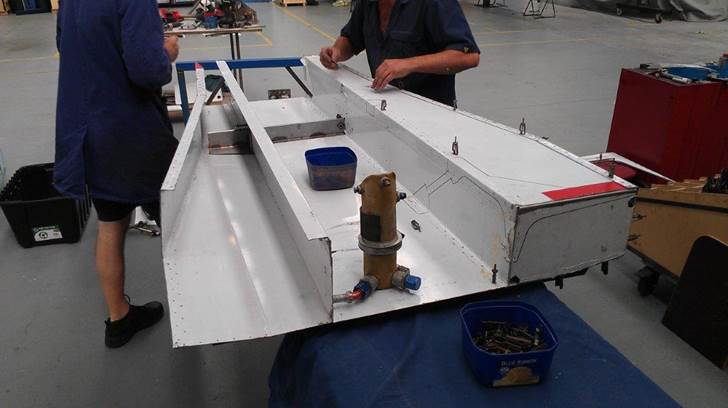
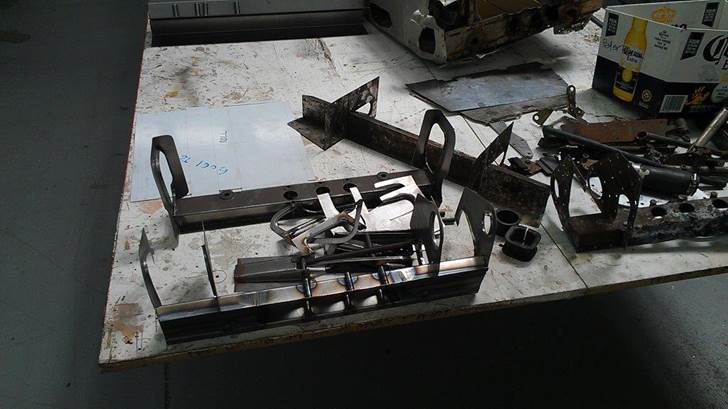
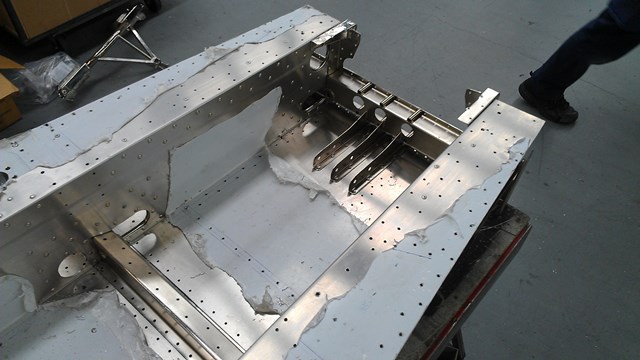
‘The task was a big one though, the RT4’s I have rebuilt have been relatively simple. In essence the tub is laid on the floor, templated, holes punched and popped into a folder. The Lola was far more complex, we ‘unpicked’ the tub, what a mess. We were never likely to be able to salvage much of the ‘tinware’. There was a huge amount of work to duplicate the inner support panels. Everything is handmade. There are metal bits inside the tub, which are beaten, riveted works of art. Internal brackets are then solid riveted to external panels’.
Fabrications, old & new
‘We borrowed the wrecked tub of ‘HU1’ off Darcy (Darcy Russell owns the ex-Stewart T330 HU1, and had Chas Talbot build a new tub for it having destroyed the old one in an Eastern Creek accident some years ago) to help with key measurements and reference points. We kept the front and rear roll hoops of HU18 but the rest was rooted. All internal bulkheads had to be remade, new front suspension ‘top-hats’, gearshift linkages etc.’.
The process commenced before Christmas 2013 and took around 8 months.
Steering mount/roll hoop. Front master cylinder bulkhead in front
Continuing assembly, constantly measuring and checking images as reference, steering mount/roll hoop original.
Carefully squaring the chassis up pre-drilling rivet holes
Front of new monocoque
Chassis workmanship apparent, front bulkhead in situ. Centre section cross beam also in place. Steering mount/roll hoop on the floor behind.
The rear attachment point for the lower front wishbone is weak in a frontal impact, this in period ‘Lola Limp’ brace connects the two pickup points and minimises the risk of part of the A arm /wishbone piercing ones leg…
Dummy fit of steering mount/roll hoop, roll bar, suspension top mounts, nose-cone support. Roll-over bar leg just visible in far left middle of shot.
‘Harmon’ 60 litre fuel cell sourced in the US. Front & rear rollover fabrications original.
Suspension…
‘The suspension was all pretty good. All the wishbones are made of T45 steel, we oxide blasted, then crack tested using magnaflux the lot, Paul Faulkner helping us out. The cross beam which mounts the lower ‘A arm’ or wishbone was remade, as was the anti ‘Lola-Limp’ cross beam, refer to the photo above.
‘Finally we nickel plated the lot, all new spherical bearings used throughout of course’
‘The uprights both front and rear were also all good. Oxide-blasted, crack-tested, then re-diechromated. This blackens everything and gives a nice finish, but also protects the magnesium to which we apply WD40 regularly to keep it (the magnesium castings) moist.’
Hewland DG300…
Hewland had been reputedly rebuilt 30 years before and then unused…as was the case
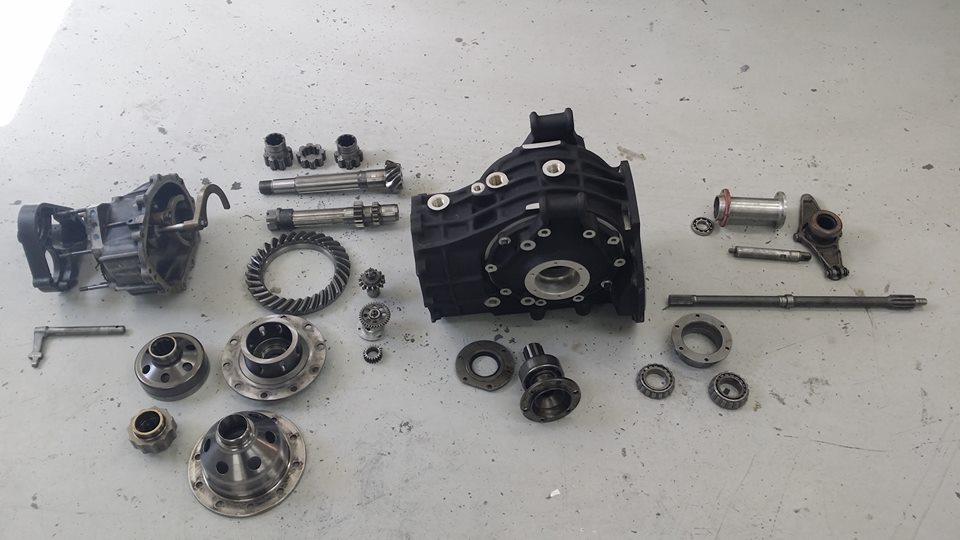
‘As I had been told, it had been rebuilt years before but it was all good. No surprises. We still had to pull it apart to diechromate it but that was just time not bulk $.’
Shot of dismantled DG300 courtesy of Motorsport Solutions NZ
Fuel Cell…
‘People who have never taken on one of these projects before would be stunned on how much stuffing around there is just on the relatively small things.The Marston fuel cell was useless of course. One of the poor bits of the original design is that whilst the cells hold 100 litres of fuel, the last 20 litres in each isn’t picked up. Our historic races are short so in the end we sourced a cell from ‘Harmon’ in the US , 1 60 litre cell on the left handside only.’
Steering Rack…
‘The steering rack was a complete pain in the arse, i couldn’t find one anywhere in the world. Its Lolas own rack, in the end it turned out Jay Bondini, a mate in Melbourne had one. It was bent but I was able to create one good rack using Jays bent one, the centre section in all Lola’s racks are common, they then have different ‘ends’ to suit the particular application…and the centre on my ‘fried’ one was ok’
Radiators and Additional Ducts…
‘The radiators were an interesting exercise as I think we may have worked out the reason the car was fitted with the odd additional ducting to keep the thing cool. My bloke is a racer himself, ‘Aussie Desert Cooler’s in Thomastown. When Norm looked at them he found there were no dividers in the radiators so that the coolant goes across the core, and down and back the other side. The coolant was going straight down and not through the core and therefore not working effectively. No other 330 seems to have had a cooling problem so i think we have idntified what they did not in 1973-4’
This shot is of Lella at Brands at the 1974 ‘Race of Champions’ in which she finished fourth. This close-up shot shows the additional aluminium panel (the mirrors are mounted to it) made to inprove airflow into the radiators, which 40 years later trnaspired to be radiators which were not properly made…(Unattributed)
Wheels…
‘I got a swag of wheels, original Lolas’ which all crack-tested ok and may be alright for wets. I looked at the available alternatives , in the end Noel Robson and I had some centres cast and machined and then had Whitehorse Industries ‘spin’ the outers at their Lilydale facility’.
Addendum…
‘Lola Heritage’ shot of assembly of the T332, late 1973 or 1974, Huntingdon factory.






































 primotipo...