Maybe they will hasten the demise of F1 as we currently know it and therefore they would be a wonderful thing…
‘What the f@ck have they done!?’ my middle son asked as we stood atop ‘Brocky’s Hill’ as the new, whispering V6 hybrid F1 cars did their first laps of Albert Park during the 2014 Australian Grand Prix weekend. He is a fringe fan but his reaction was spot on. When you can comfortably take your girlfriend to a Formula One race the whole point of it is lost. When most of the support event cars are more spectacular than Gee Pee cars, something is terribly wrong.
There is of course plenty amiss but the problem is not easily fixed as the ‘sport’ has been in the wrong hands since BC Ecclestone acquired the commercial rights from the FIA in 1992.
Hopefully Halos will drive TV and on circuit numbers down even lower so F1 implodes. What does implosion mean?
.Someone(s) steps in with deep enough pockets to start a rival series with all of the complexity that would involve
.Earnings of its asset plunge so low that current F1 owners Liberty Media offload it- and the FIA, that is us, we enthusiasts, get back what was acquired by Ecclestone for five-eigths of fuck-all 30 years ago.
Purpose of this article…
Like many enthusiasts I am frustrated by the progressive emasculation and corporatisation of Grand Prix racing which has limited its appeal compared to the good ‘ole days. Its always dangerous when old fokkers talk like this I know. But Grand Prix racing as we know it seems in a progressive decline which the existing paradigm of regulators hand in glove with the sports commercial owners seem unable to arrest.
This article explores a few things;
.That F1 is in the wrong hands and needs to be re-acquired by the FIA (with its governance processes being overhauled before doing so to ensure that body has the skills to run it- a big assumption that this is possible)
.In the absence of the above taking place that someone(s) with deep enough pockets starts a rival series
.Explains that the commercial needs of the arms length owners of F1 are are at odds with those of enthusiasts
.Proposes, for debate, some changes to F1, ‘Renaissance GP’ to return its appeal and excitement
My basic contention is that F1 has diminished since the involvement of third party owners such as Venture Capital firms and now Liberty Media they are simply the wrong owners of the asset, for us, the enthusiasts at least.
I’ve no issue with VC’s generally, I was a partner and CEO of Grant Thornton Sydney, a global mid-tier Chartered Accounting firm and saw many clients benefit from the injection of working capital and management expertise the clients would not otherwise have been able to obtain via traditional sources of investment. So, I geddit, what they do and bring.
Fundamentally though they acquire a business, cut costs, build, expand and ramp up earnings to flog to the next guy, typically with a window of around 4/5 years. They don’t tend to play a long game. We enthusiasts are around for the duration, we understand all the nuances of the evolution of the sport from the city to city GP’s of the Edwardian days to the 2 hour sprints of the last fifty years. We are not concerned with a quick buck but the longevity of the sport and the excitement it has usually provided down the decades. We love it for its own sake rather than extraction of financial returns.
So, all the crap seen in the last 20 years or so; deals with countries none of us had even heard of to host GP’s at the expense of established circuits in countries with motor racing cultures and heritage, control tyres made to degrade, KERS, double points races, DRS and all the rest of it is short-term stuff to spice up the show to increase earning. The flim-flam, tricky-dicky gimmicks can’t hide the fact that the core product needs change.
Businesses like F1 are valued and sold on a ‘multiple of earnings’. The more stable and dependable the earnings, the higher the multiple. And the higher the earnings year on year, ‘future maintainable profits’, the cunning linguists in the accounting profession call it, the higher the value. The value of what is being sold, in simple terms, is the figure arrived at by multiplying the future maintainable profit number by the multiple. That is, if the FMP of F1 were $B1.6, and the multiple is 5 times, the value of F1 commercial rights is $B8 being 5 times $B1.6. It just so happens that Liberty Media paid $US8 billion for the rights recently. (announced by them on 23 January 2017)
The point here, the accounting lesson, is that if you understand what their game is, that is to ramp up the earnings in the short term and then flog them, what the VC’s do makes sense to them. But that’s not necessarily good for us.
We are custodians of F1 for now and into the future for generations of enthusiasts like us. If the owners of the business are us (the FIA) then the returns the business makes are up to the FIA to determine, they would not be driven by the needs of corporate owners. It is the statutory mandate of company directors to act in the best interests of their shareholders, which is to maximise the value of the company within the law. If the FIA were happy with a lower return than a corporate owner for example, circuit owners do not need to be screwed so much for race fees to such an extent that only government funded GP’s, in countries of dubious motor racing merit, make the annual fixture of events.
So, as a VC firm you fatten and flog an asset to the next schlepper. Who tries to do it again. Liberty Media’s declared schtick is to do a better job with the ‘digital experience’ than Bernie did and ramp up earnings that way as well as do all the other stuff which has worked in the last 20 years. So expect more tricks particularly aimed at millennials who are turning off, or not turning on much at all to current F1. In my view that makes ‘em discerning sods.
So, are the financial returns really that much? What is all the fuss about?…
Absolute shedloads my friends is the answer. The return on investment for Ecclestone and some other investors along the way has been truly staggering. Mind you, so have the losses for some who borrowed too heavily and could not stay aboard the F1 gravy train as other issues in their businesses forced them to sell.
Mark Hughes in an article on the future of F1 in MotorSport in 2014 wrote of the earnings of Grand Prix racing.
Formula One generates about $B1.5 in annual revenues of which 40% is paid as dividends to the owners, then Delta Topco, now Liberty Media. Despite such large sums of money being generated by the show, many of the teams remain under great financial stress. It is a statement of the bleeding obvious, that without competitors there is no show.
CVC Capital’s investment in F1 is an example of a reasonably successful financial play for its investors. They paid $2B for a majority share of F1 (Delta Topco) in 2005. Since then they took out over $B5 in dividends, and sold 30% of their stake to other investors for $B2.1. Liberty Media paid $B8 to Atlas Topco for 100% ownership of F1 in January 2017. On that basis CVC Capital’s total return on an initial investment of $B2 is in excess of $B9.9- not bad going in 12 years!
In the 1990’s the commercial F1 rights were leased from the FIA (then owners) to FOCA (the Formula One Constructors Association- the teams). The lease expired in 1992. With longtime Ecclestone associate Maxwell Rufus Mosley installed as FIA President, by vote, replacing Jean-Marie Balestre, Ecclestone reapplied for the rights for himself, rather than as head of FOCA. Hughes writes that it was the teams fault they lost the lease- they assumed Bernie would continue to lease the rights as their representative, but he was not duty bound to do so and you have to get up early in the mornin’ to match the wily Brit.
The rights were then extended in 1998 to 2010 and then, in the deal of the century, only two years later, Ecclestone secured the rights for 100 years (from 2010-2110) for the princely sum of $US360 million. This amount, Hughes states was about the same paid at the time for NASCAR’s commercial rights- for one year!
Whilst its amusing to think of ‘Bern and ‘Mose doin’ the deal before lunch and then retiring early to ‘knock the top off it’ at one of Maxxies favourite ‘Hanky Schpanky’ clubs in Mayfair, the FIA’s corporate governance processes do make you wonder a tad. Still, it would be legally imprudent of me to suggest such fine gentlemen, and the FIA’s board acted in anything other than the best interests of their members, that is, all of us in doing the deal. No doubt an independent valuation by a corporate banking or accounting firm of international repute of said rights was obtained to ensure BCE’s offer was at or above market. As I say, no doubt it was all kosher.
Later the rights were owned by other entities as BCE sold on, some becoming insolvent in the process with eventually CVC Capital becoming the majority shareholder.
The interesting thing, Hughes writes, is ‘That at the time CVC was seen as taking a big risk- because no major law firm could be found to state categorically that the commercial rights definitely belonged to Bernie to sell. That risk has paid off bigtime for CVC, but there still remains ambiguity about a 100 year deal because of its length. Its validity has not been legally challenged, but there might be grounds for doing so.’ Clearly Liberty were confident enough of what they were purchasing to stump up $US8 billion, mind you. So, it’s a forlorn hope for enthusiasts that the deals can be knocked over or declared null and void. It would be a very brave soul who took such vested interests on.
So, to be clear, the rivers of cash are wide and deep. I, for one, am staggered by BCE’s rise and rise, as a business person his capabilities are once in a century stuff. From nuthin to untold wealth in 20 years, let alone what he did in the next 40 defies belief.
The Halo thing proves Liberty just don’t geddit. Danger is part of what we are attracted to in motor racing, whether we are competitors or spectators.
We want to see dudes wrestling their steed, mano et mano, against the forces of physics and one another with an element of danger. The accidents of Webber, Kubica even the high-speed attempted homicides upon their colleagues inflicted by the likes of Ayrton Senna and Herman The German, ole Schumi, will happen from time to time when ‘shit happens’. Who knows, maybe in its new incarnation the FIA can grow some testicles to deal with the driving transgressions of its stars without fear or favour? A side issue I guess.
Racing is safer than in Tazio’s day and so it should be. My first year of interest in F1 was 1970. Long before I ever saw a car ‘in the aluminium’ I remember thinking ‘what kind of sport is this’ which seems to kill a participant every month or so (Courage, McLaren testing a Can Am McLaren M8D, Rindt all died in 1970), eighteen F1 drivers were killed between 1966 and 1970.
Jackie Stewart’s brave campaign from 1966 for greater safety in cars, circuits and circuit organisation- read marshalling, fire control and adequate on-circuit medical facilities gathered momentum to the extent that motor racing fatalities are now a rarity. But they still occasionally happen and will as there is risk in sports like motor racing as there is in sky diving, scuba diving, rock climbing etc. You cannot race 800 plus bhp open-wheeled cars wheel to wheel safely. Full stop. People will occasionally be killed when the planets are unfavourably aligned. If one doesn’t like that don’t race em. If one doesn’t want to see an accident don’t go along.
Branding practitioners talk about the essentials of a product or service as its ‘Brand Essence’.
This is the guiding light stuff, a filter you apply within a business to decide if what you do or want to change fits- in this case Halos. The Brand Essence of GP racing should include descriptors like speed, danger, excitement, noise, passion, cutting edge, ultimate open-wheel single-seat road-racing cars, sex, extrovert, random, surprising, unpredictable and innovative. There yer go, $50K of consultancy in the 45 seconds it took to type. The point is that if any proposed changes don’t fit with an organisations carefully developed Brand Essence yer don’t do it. So Halos are out as they simply don’t fit within F1’s Brand Essence as defined above.
The Halo is just a step too far. Visually it doesn’t work, we will see even less of the driver than we do now. Halos are another reason for fans to turn off the Teev and not come to the races. And that’s good as Liberty’s earnings will decline and the FIA can buy them back. Or the existing F1 vested interests say ‘f@ck this’ and create a new F1. Sorry that name is taken.
To move on. We don’t own F1- the asset was sold to Bernie who has since made more out of it than the Gross Domestic Product of some small countries. Those who do own the commercial rights have short term interests which history suggests does not improve F1 from an enthusiasts perspective. Sure, every now and again a good decision might be made.
The only way the ‘good guys’ can regain control is buy the rights back or an alternative category be created.
So, lets assume we (the FIA) have bought the rights back, whadda we do then. What is the plan- its easy to criticise, what are we going to do better than the current schmucks in control of the show?
So, what are the new elements of Renaissance Grand Prix (RGP)?…
Earnings and Ownership..
The sport will be owned by the FIA- if it acquired the commercial rights even at ‘bargain basement’ the interest on borrowings will be a significant burden for the first decade or so. But that’s ok as we are in it for the long haul- not 4 years or even the 12 years of CVC Capital. The bulk of the revenues, say 40 or 50% of RGP Net Profits should be split up amongst the competing teams on a basis that needs careful thought! Its an important detail mind you, but the principal is the important one, the contestants share most of the spoils. Like any business, the teams need to be profitable and be able to survive year to year. Receiving profits means the ‘renta driver’, a scourge really, would be sidelined. Drivers should be there on merit not because daddy owns an IT Company or because some shitty country buys them the ride.
The balance of F1 revenues becomes part of the FIA ‘consolidated revenue’ but to be specifically allocated to other motor racing initiatives or budgets, not road car stuff. The ‘dividend’ to the FIA for running the show is, say 10% of the earnings. So to be clear. After deduction of funding costs 40-50% goes to the teams, up to 40% for ‘other motor racing categories’ and 10% to the FIA as a return on capital.
So, instead of half F1’s earnings leaving the sport and ending up in the pockets of investors, most of the profits stay within the sport. This bit is the critical aspect as it is the financial foundation upon which the ideas and changes below sit.
The conceptual good sense and equity of this is hopefully readily apparent.
The Cars..
Where we all get a bit lost, me included,is to suggest F1 cars should be at the cutting edge of new technology. Whilst GP cars have in any era looked like the cutting edge of automotive technology Grand Prix racing has tended to be an ‘early adopter’ of innovations from elsewhere rather than said innovations being first fitted to a GP car.
There may have been an exception or two, in Edwardian times, Ernest Henry’s DOHC engine in the 1912 Peugeot is good example. Why then and not now? Because the major manufacturers were in Grand Prix racing at the time and GP cars were not too far divorced from their road going brethren.
Lets look at just how innovative or cutting edge GP racing has not been.
Remember, in the context of this argument ‘at the cutting edge’ are innovations being developed in F1.
The aircraft industry gave us fuel injection, which was in use at Indy long before F1. Planes also gave us monocoque chassis and disc brakes, the latter appeared on the C Type Jag several years before F1. Turbo-charging was developed in trucks, in the air and pioneered on the road before it got anywhere near a sports-racer or single-seater Renault. Wings appeared on Chapparral’s well before Ferrari/Brabham GP cars in 1968, mind you Michael May played with them on his Porsche in the late 1950’s before Jim Hall embraced them. Spaceframes were first used in the building industry. Seat belts were in road cars and in Indycars well before F1 where they were mandated in 1968. Modern electronics developments, maybe? Automatic transmissions, nope- in road cars and used in racing by Porsche in the 962 before F1. How about fuel chemistry- maybe but not really, the cocktails the Silver Arrows used pre-war were largely aviation brews. Tyres, well yep, I think so, polymer chemistry advanced as it relates to tyres partially thru motor racing- but not just F1. Racing cars aerodynamics have advanced massively since 1970 but little filters thru to road cars as they are not single seaters and need clearance so ‘ground effects’ are hard to harness in the average family 4WD. I doubt the ‘F Duct’, an F1 innovation will increase the speed of my Lotus Elise either.
In reality, putting the spin and bullshit to one side F1 is a follower and, sometimes but not always, an early adopter of technology developed elsewhere. F1 is usually not an originator of technology. Which brings us to Hybrids, which F1 adopted well after its application in road cars. Depending upon the reference source the first hybrid was built in 1886 or 1888.
If you accept F1 has rarely been right at the absolute cutting edge of automotive technology, we don’t need to be zealots about that. Lets look as though F1 is at the cutting edge but focus on the spectacle, the sporting contest is what most of us want to see- the whole lot underpinned by engineering excellence.
We don’t need the nexus to technology the rule-makers have sought to do with Hybrids, most of us recall Toyota as the ‘pioneer’ with the Prius in the nineties for goodness sake. That was before some of the current drivers were born.
In changing the rules to make the cars use aspects of current technology the sport may have ‘become more relevant’ but in the process has lost the ‘feel of the earth moving under your feet as the racer is driven on the razors edge of physics’- who gives a rats toss about how much power the hybdrid engine is giving to the front wheels. These current cars, I don’t doubt they are difficult to drive, are shit boring to spectators, knowledgeable and otherwise.
The current rules are way too prescriptive, most say the sport has been at its best when there has been diversity in both the look of the cars and the mechanical packages which are chosen by different marques. So we need less prescriptive rules to allow designers the latitude to explore all kinds of engineering solutions. This great restriction effectively dictates the mechanical and aero approaches used, and forces, as a consequence of such a tightly specified package, the creation of something as incredibly arcane as McLarens 2010 ‘F-Duct’ to obtain a small, but significant performance advantage.
So, to be clear and without wanting to belabour the point- F1 cars have always looked at the cutting edge of automotive technology but in fact have rarely been at its forefront. So, why not focus on cars which;
.look cutting edge and ‘other worldly’
.look different from one another
.make very loud, primeval, socially unacceptable, thrilling sounds which make the hair on the back of your neck stand up
.are demonstrably difficult to drive- the step up from more junior categories should not be easy for anyone other than ‘the gods’
.in every respect have that WOW! factor as they blast past at insane speeds with the driver clearly struggling to maintain control. Senna at Suzuka in a 3.5 litre McLaren Honda is the image in my head
.change the balance of the equation back to the ‘gladitorial’ contest between drivers whilst still having as a foundation stunning engineering.
.eliminate the insanely significant role played by engineers and race strategy during every race
Lets look at some aims, some principles, if not precise rules, those with vastly greater engineering knowledge than mine will need to do the detail of rule drafting.
The cars should be hard to drive and to be seen as such- we all say there needs to be a surfeit of power over mechanical and aerodynamic grip. I’m thinking between 750-850 bhp.
Some invest all of the earths sins in wings which is a tad harsh.
But the wing and underbody aero packages need to be massively restricted and changed to eliminate the role they have played since 1968 and especially since Chapman’s Lotus 78/79 ‘ground effects car’ of 1977/8- all GP cars since are related to these babies. Mind you, because the mechanical package will be ‘free’ in time, there will be far less spent on arcane aerodynamic advances as same will not be the only way to competitiveness in packages which have been hitherto very tightly defined.
The intent is to vastly reduce aerodynamic grip, the wake the cars create is mainly created by wings, and we want cars to able to stay close without losing grip as a result of being in the wake. So the wings are small, tightly controlled ‘trim tabs’ with the cars underbodies providing most of the grip. This solution does not create the bad air behind the car which discourages close racing for the reasons stated.
We need to reduce cornering power and lengthen braking distances, carbon brakes are still allowed. Lets have an excess of power over both mechanical and aerodynamic grip though. The cars are to be very difficult to drive, the emphasis is a total lack of electronic aids, a refocus on core driver skills and technique with mistakes punished by the drivers ability to break things as a consequence of errors. Clutches and gearboxes for example.
‘One make’ anything has been poor for motor-racing including having one provider of tyres. Three tyre contracts will be available, these manufacturers will pay for the pleasure of being involved in F1, and the promotional benefits of victories will return as their will be winners and losers amongst the three said suppliers. For the teams, some will be with the right supplier, some the wrong one in any particular year- this will create desirable performance outcomes by mixing it up.
Engines
I reckon the first 5 years of RF1 should be a simple engine formula, we need to win back the faithful in that period, knock their socks off and then do something edgy. So, 3 litres or so with a turbo-charged smaller engine option, equivalence factor to be decided and a desired output of circa 850bhp.
I do like the current engine longevity rules and the penalties which go with them- lets hang onto those, its in everyones interests the engines last longer than for shorter times and it puts constraints on the development of expensive ‘hand grenade’ moteurs. The rules I propose above encourages the chasing of very high revs- the need for the engine to last multiple meetings mitigates against that.
All ‘large manufacturers’ will make available ‘engine/transmission assemblies’ to at least one other constructor at prices to be capped. In that manner we are ensuring the ‘small fry’ can get hold of a competitive mechanical package. Remember too, all teams get a share of F1’s income, so, apart from sponsorship the teams will all get a bigger share of the sports income. The income distribution will be biased in favour of the back of the grid teams, which is sort of a tax on the successful who will probably be better sponsored in any event.
From year six, having regained the faithful, we need to get more adventurous though.
Some type of fuel or energy flow formula is the go which should encourage all alternatives to be ‘on the table’.
Conventional normally aspirated engines, turbo-charged ones, hybrids, two and four wheel drive. The lot. Consistent with our Brand Essence the cars need to be loud, fast, edgy, (in look if not in fact) and aesthetically pleasing.
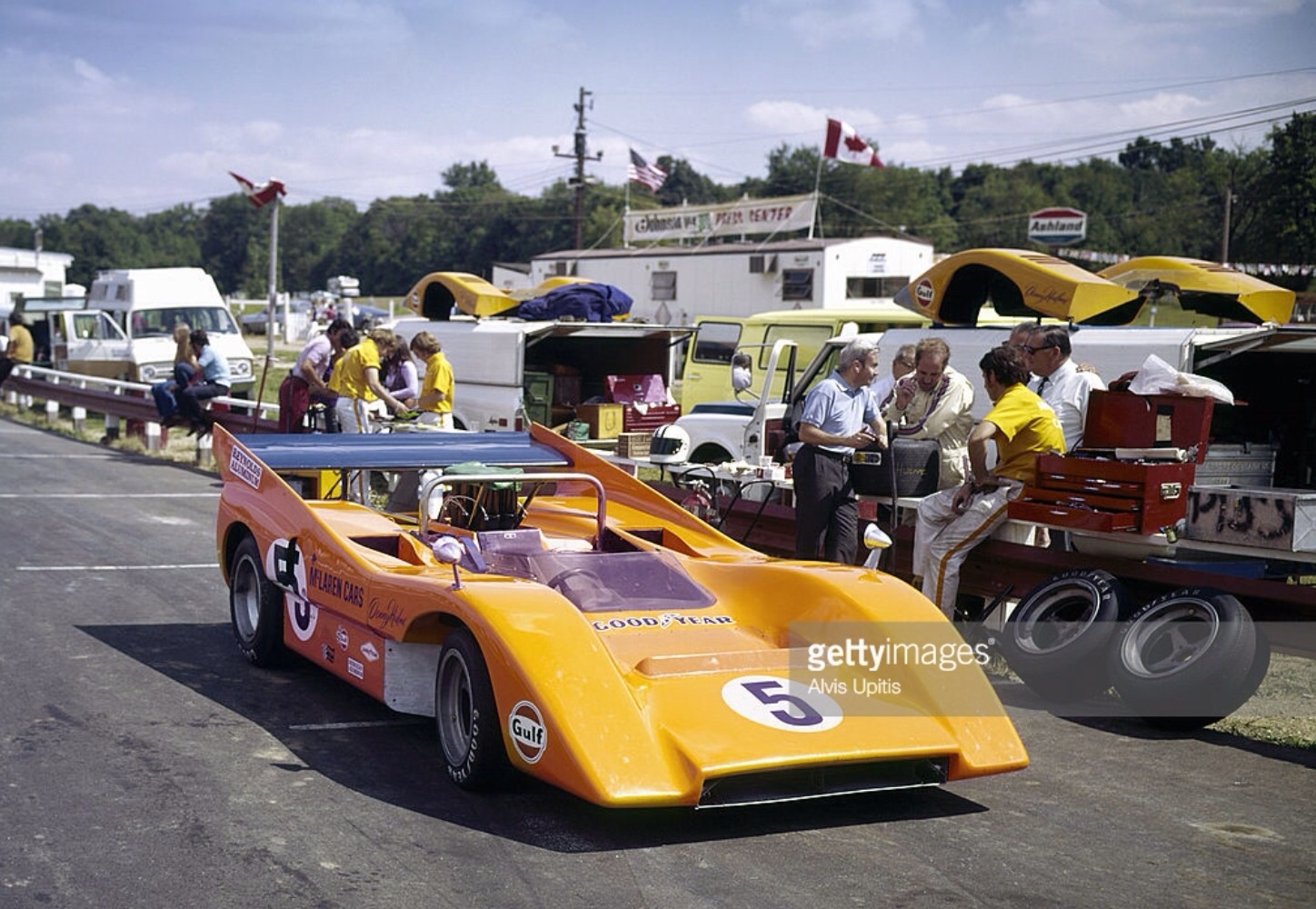
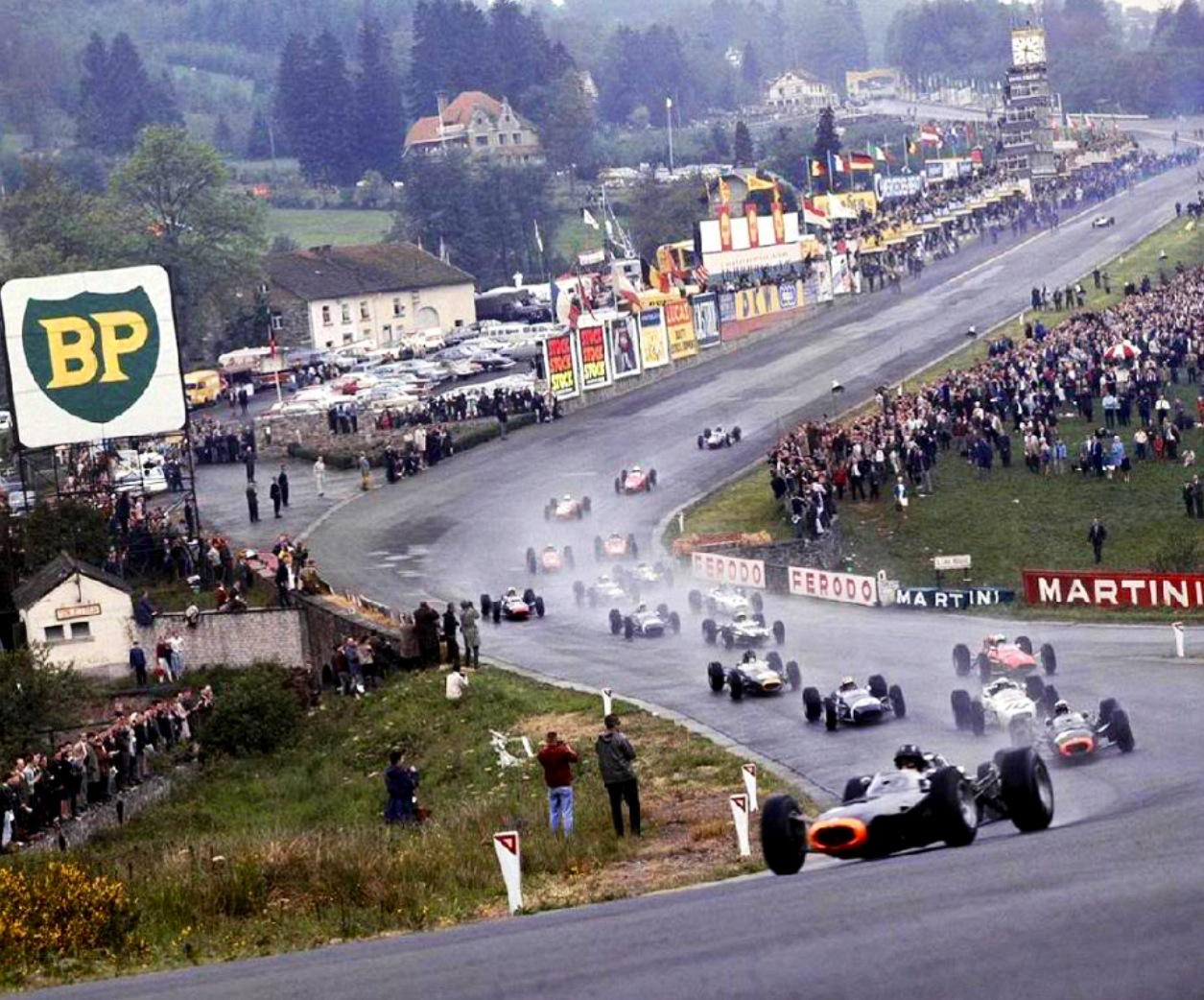
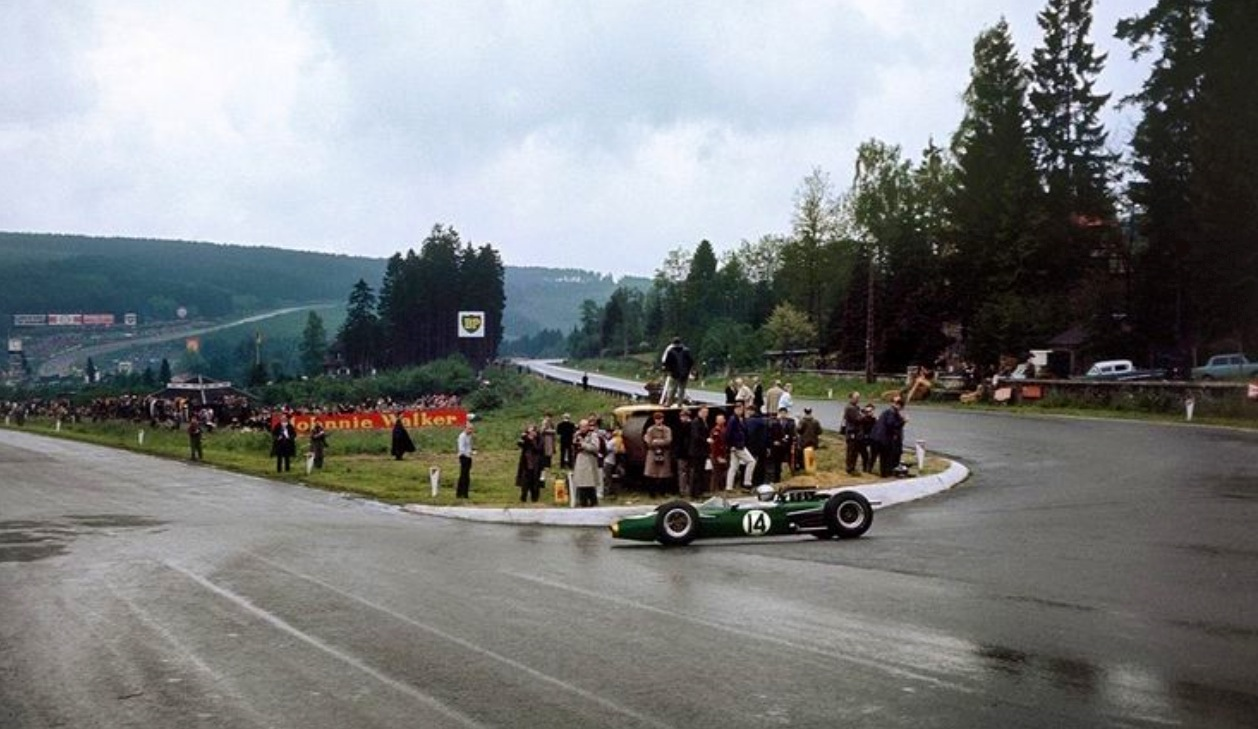
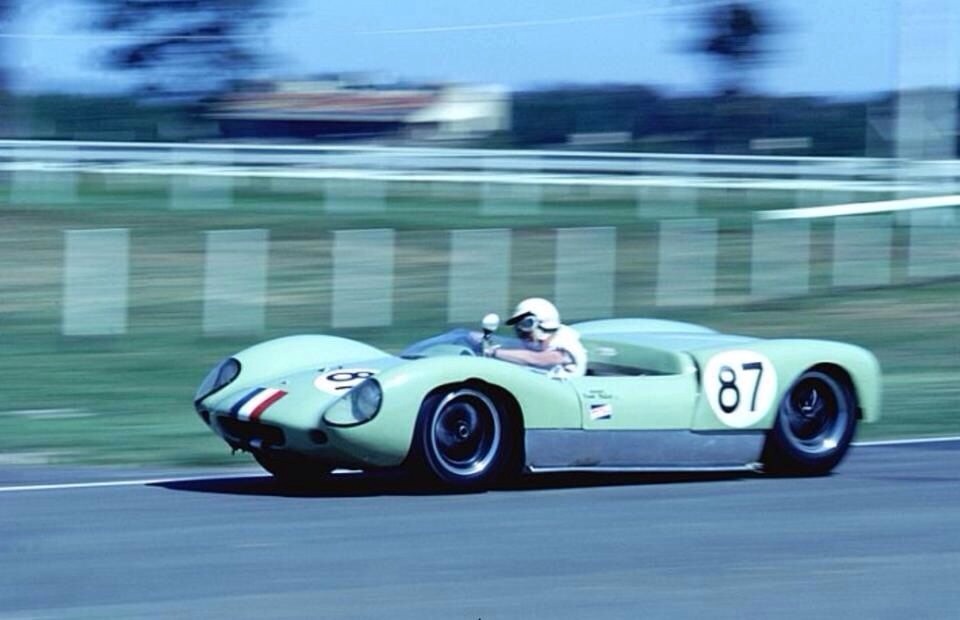
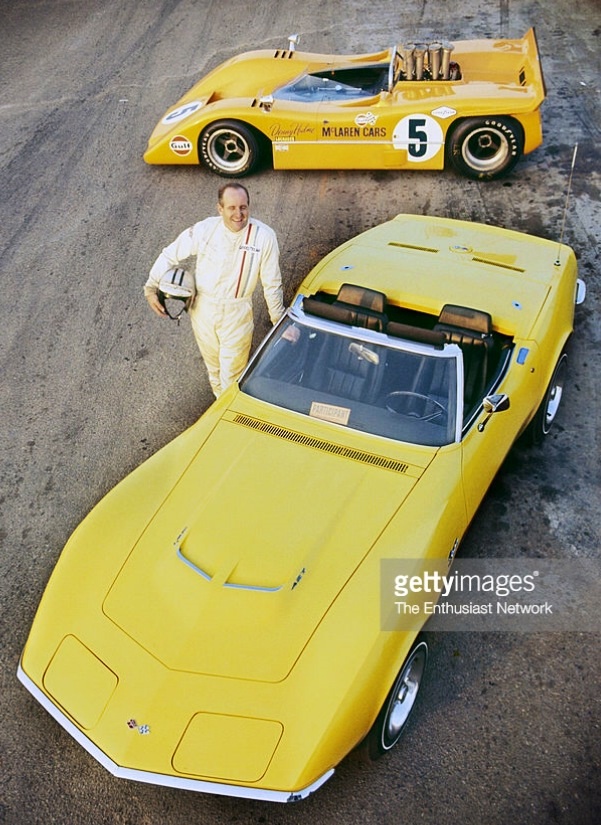
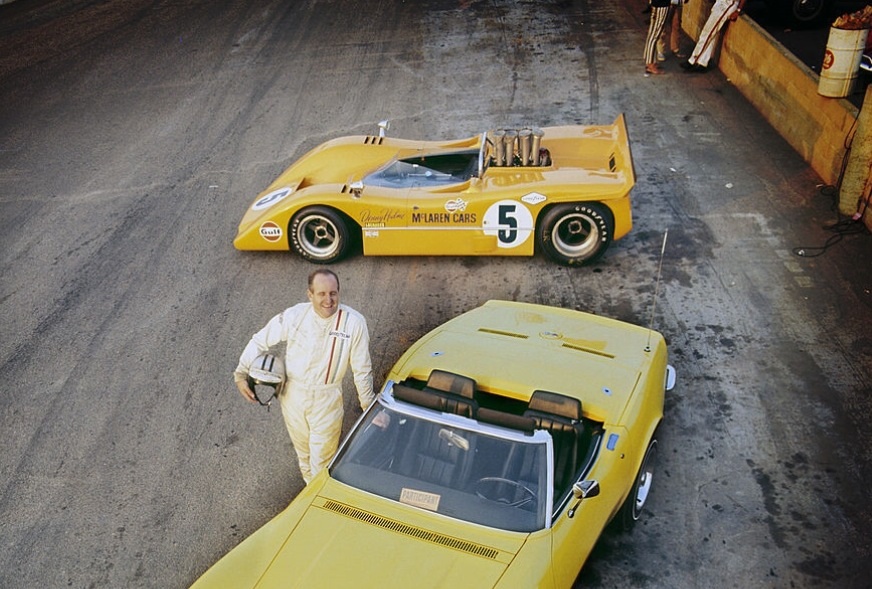
The golden years of F1 diversity have to be the 1960’s and 1970’s, the Can Am of 1966-1970 was rolled gold as well, mainly due to its lack of rules. A bit of free formula thinking on the motive packages- engines and transmissions will, as night follows day produce cars which look different to one another if only for reasons of packaging. So, lets embrace change secure in the knowledge that the big manufacturers have to supply at least one other team with their engine/transmission package.
Again, the flow of F1 earnings remains within the sport so the teams have the incomes to able, maybe in commercial partnership with others, develop innovative ideas
Aerodynamics
The size of both wings and underbodies will be much smaller than now with the objects of stability, not losing grip whilst travelling close to another car, lengthen braking distances and fundamentally have an excess of power over grip in medium fast corners.
It should not be easy for drivers to progress from the more junior formulae to RF1, as stated above
Gearboxes
Four wheel drive is allowed, as above from year 6 but not years 1 to 5, where conventional rear, two wheel drive is mandated.
With the focus on core driver skills old-school H-pattern changes are compulsory together with driver operated clutches. The notion is to be able to break a gearbox, clutch and over-rev an engine. Yep, its old school but consistent with a focus on core driver skills- those skills include ‘shiftin gears yourself. Maybe sequential boxes if I have to compromise but I’d rather not.
Weight
Same weight for all cars years 1-5, perhaps differentials in weight after year 6 as part of the equivalence rules between the different combinations contemplated above
Aids
No DRS, ABS, KERS, active suspension, push-button passing or any of that absolute crap. The difficulty with this stuff is to me is that its all or nothing. We either allow the lot- active suspension was far from a gadget, it had applicability to road cars, its impact on performance of the Williams was immense but the decision to ban it was in essence around cost. The sport could not afford it. So, if it is all or nothing, I’m for nothing.
Sporting Regulations..
Test days of only a nominated amount seems a wise cost saving ideas but the number of test days to be reviewed and increased. The teams have greater income and will be able to afford test. Three tyre suppliers means the need for more testing- as does making the cars harder to drive. Blooding drivers needs more test days
Communication
No radio communication, pit boards only. We are back to the gladiatorial contest with the driver having a tank of fuel, a set of tyres and then his brain to do the best he can rather than the current rubbish of team strategy determining the race result. This gradual shift is some of the nonsense to attempt to spice up the show and is totally out of keeping with our F1 Brand Essence.
The driver should be able to win or lose a race, the driver should not lose the race because his team manager belches at the wrong moment and so botches the call on a pitstop. Its bollocks this nonsense.
Racing and Practice Sessions at GP’s
Have been rationed down it seems to me in recent years.
There will be two untimed sessions on Thursday with all sessions on Friday and Saturday morning timed for grid positions. Pole scores a championship point
The final event on Saturday is a 50 mile preliminary race (Petite Prix!) with championship points awarded from first to sixth place (9/6/4/3/2/1 points) with an additional point for fastest lap
Sunday Grand Prix
One 30 minute warm up / test session on Sunday morning
The GP to be a race of 150 miles on Sunday afternoon with points awarded first to sixth as above but double points including fastest lap. No refuelling for pitstops allowed. The same type of tyres (compound) for the GP to be used as during the shorter race
As stated above the emphasis is back on the driver to manage the races himself, look after the tyres, make the onboard adjustments he can, not on sparkling up the show by making pitstops and potentially losing the race because of them. A consequence will be to make the races easier to follow for spectators at the circuit and on TV.
The emphasis of a GP weekend is getting greater value for the punter, more laps for the price of an entry ticket- which will reduce because our business model won’t be as greedy. We want more on more on track time and a second race, it gives the spectators a reason to buy at least a two day ticket.
Telemetry
One way- from car to pit
Public Relations
No flunkies at the circuit looking after and monitoring drivers every utterance and movement.
Half they time the drivers look and sound as much like corporate accountants as racing drivers. David Coulthard was so polished he could have been the press spokesman for a US President (not the current nutbag mind you) We need drivers, some at least to be Innes Ireland, Eddie Irvine and James Hunt in style- brash, unpredictable, independent of thought word and deed, perhaps a bit uncouth sometimes and preferably rampant rooters like the days of old. At 15 I absolutely wanted to be James Hunt in 1973- he had it all. Pick one of the current pericks you would want to be like?!
In all seriousness the whole show is way too controlled, a GP weekend is like a big, carefully orchestrated corporate event, some of the ‘random’ is necessary to mix it up. The standard prize giving ceremony with the crappy music and insipid, anodyne interviews afterwards are a waste of time. Getting rid of all the naughty boy ‘bringing the sport into disrepute’ rules will encourage people to say what they think and occasionally act like young males do juiced with adrenalin- with impetuousness.
So there you have it my friends, its all pretty easy to change the show when you control it and you don’t have shareholder interests to worry about.
I spose the sport just splutters on really, spitting off heaps of cash to owners with no interest in the sport, make that business, other than financial ones. All of the above is just a pipedream, still its been cleansing to think about what I would do should I have control! Don’t get too hung up on my RGP rule ideas, I am interested in getting others thoughts, the main game is to regain control of the commercial rights and the rivers of cash which need to be kept within the sport to feed it. The sport is then self-sustaining to a large extent.
It goes without saying that the dangers ye olde Halos are trying to prevent are minor compared with the inherent terrors of open-wheel, very high powered cars racing so closely together. Lets hope Liberty jump aboard that one, to turn F1 into a closed wheel category toot-sweet thereby hastening the demise of F1 as we know it even faster then I could have hoped! The more the owners of the current paradigm shag Grand Prix racing over the better. Lets all help hasten its demise by not going to GP’s and not watching the boring coverage.
‘The King is Dead. Long Live The King’; Renaissance GP can take its place rightfully owned by the FIA who should never have sold it in the first place- where was the much-maligned whacko, Jean-Marie Balestre just when we needed him most?…











 primotipo...